Business RadioX ®

  • Home
  • Business RadioX ® Communities
    • Southeast
      • Alabama
        • Birmingham
      • Florida
        • Orlando
        • Pensacola
        • South Florida
        • Tampa
        • Tallahassee
      • Georgia
        • Atlanta
        • Cherokee
        • Forsyth
        • Greater Perimeter
        • Gwinnett
        • North Fulton
        • North Georgia
        • Northeast Georgia
        • Rome
        • Savannah
      • Louisiana
        • New Orleans
      • North Carolina
        • Charlotte
        • Raleigh
      • Tennessee
        • Chattanooga
        • Nashville
      • Virginia
        • Richmond
    • South Central
      • Arkansas
        • Northwest Arkansas
    • Midwest
      • Illinois
        • Chicago
      • Michigan
        • Detroit
      • Minnesota
        • Minneapolis St. Paul
      • Missouri
        • St. Louis
      • Ohio
        • Cleveland
        • Columbus
        • Dayton
    • Southwest
      • Arizona
        • Phoenix
        • Tucson
        • Valley
      • Texas
        • Austin
        • Dallas
        • Houston
    • West
      • California
        • Bay Area
        • LA
        • Pasadena
      • Colorado
        • Denver
      • Hawaii
        • Oahu
  • FAQs
  • About Us
    • Our Mission
    • Our Audience
    • Why It Works
    • What People Are Saying
    • BRX in the News
  • Resources
    • BRX Pro Tips
    • B2B Marketing: The 4Rs
    • High Velocity Selling Habits
    • Why Most B2B Media Strategies Fail
    • 9 Reasons To Sponsor A Business RadioX ® Show
  • Partner With Us
  • Veteran Business RadioX ®

Search Results for: marketing matters

How Headshots Build Personal Brand Power, with Sarah Adams, Blue Chip Branding & Headshots

May 5, 2025 by John Ray

How Headshots Build Personal Brand Power, with Sarah Adams, Blue Chip Branding & Headshots, on North Fulton Business Radio with host John Ray
North Fulton Business Radio
How Headshots Build Personal Brand Power, with Sarah Adams, Blue Chip Branding & Headshots
Loading
00:00 /
RSS Feed
Share
Link
Embed

Download file

How Headshots Build Personal Brand Power, with Sarah Adams, Blue Chip Branding & Headshots, on North Fulton Business Radio with host John Ray

How Headshots Build Personal Brand Power, with Sarah Adams, Blue Chip Branding & Headshots (North Fulton Business Radio, Episode 868)

In this episode of North Fulton Business Radio, host John Ray welcomes Sarah Adams, founder of Blue Chip Branding & Headshots. Sarah shares her journey from college photographer to personal branding expert, explaining how a single headshot can transform how professionals present themselves. She discusses what most people get wrong about headshots, why branding matters in visual presentation, and how subtle changes in posture or expression can shift perception. With a background in marketing, Sarah brings a unique approach that blends creativity, strategy, and confidence-building. Whether you are a business owner, executive, or professional looking to elevate your image, this conversation will change how you think about being seen.

John Ray is the host of North Fulton Business Radio. The show is produced by John Ray and North Fulton Business Radio, LLC, an affiliate of Business RadioX®, and is recorded inside Renasant Bank in Alpharetta.

Sarah Adams, Blue Chip Branding & Headshots

Sarah Adams, Blue Chip Branding & Headshots
Sarah Adams

Sarah Adams owns Blue Chip Branding & Headshots, a photography studio that specializes in standout professional headshot photography for individuals and companies.

With a background in digital marketing, Sarah founded her business in 2022 with the belief that human connection is the number one factor that affects business success. Today, Sarah marries her photography and marketing expertise by crafting images that send the right message to each client’s intended audience.

Outside the studio, Sarah loves spending time outdoors with her husband and young daughter. She is a graduate of the University of Georgia and is on a mission to become Atlanta’s most well-known and trusted headshot photographer.

Website | LinkedIn | Instagram | Facebook

Topics Discussed in this Episode

00:00 Introduction to North Fulton Business Radio
00:27 Guest Introduction: Sarah Adams from Blue Chip Branding & Headshots
02:14 Sarah Adams’ Journey into Photography
05:04 The Importance of Headshots in Personal Branding
07:30 Sarah’s Unique Approach to Photography Sessions
10:07 John Ray’s Personal Experience with Sarah’s Photography
11:39 Making Clients Comfortable During Photo Sessions
18:10 Building Confidence in Photo Sessions
18:30 The Role of Collaboration in Photography
19:46 Understanding the Client’s Perspective
20:38 The Value of a Professional Headshot
23:46 The Aspirational Aspect of Headshots
27:03 When to Refresh Your Headshot
29:35 Connecting with Clients During Photo Sessions
34:19 Conclusion and Contact Information

About North Fulton Business Radio and host John Ray

With over 860 shows and having featured over 1,300 guests, North Fulton Business Radio is the longest-running podcast in the North Fulton area, covering business in our community like no one else. We are the undisputed “Voice of Business” in North Fulton!

The show invites a diverse range of business, non-profit, and community leaders to share their significant contributions to their market, community, and profession. There’s no discrimination based on company size, and there’s never any “pay to play.” North Fulton Business Radio supports and celebrates businesses by sharing positive stories that traditional media ignore. Some media lean left. Some media lean right. We lean business.

John Ray, host of  North Fulton Business Radio, and Owner, Ray Business Advisors

John Ray is the host of North Fulton Business Radio. The show is produced by John Ray and North Fulton Business Radio, LLC, an affiliate of Business RadioX®, and recorded inside Renasant Bank in Alpharetta.

The studio address is 275 South Main Street, Alpharetta, GA 30009.

You can find the full archive of shows by following this link. The show is available on all the major podcast apps, including Apple Podcasts, Spotify, Google, Amazon, iHeart Radio, and many others.

John Ray, The Generosity MindsetJohn Ray also operates his own business advisory practice. John’s services include advising solopreneurs and small professional services firms on their value, their positioning and business development, and their pricing. His clients are professionals who are selling their expertise, such as consultants, coaches, attorneys, CPAs, accountants and bookkeepers, marketing professionals, and other professional services practitioners.

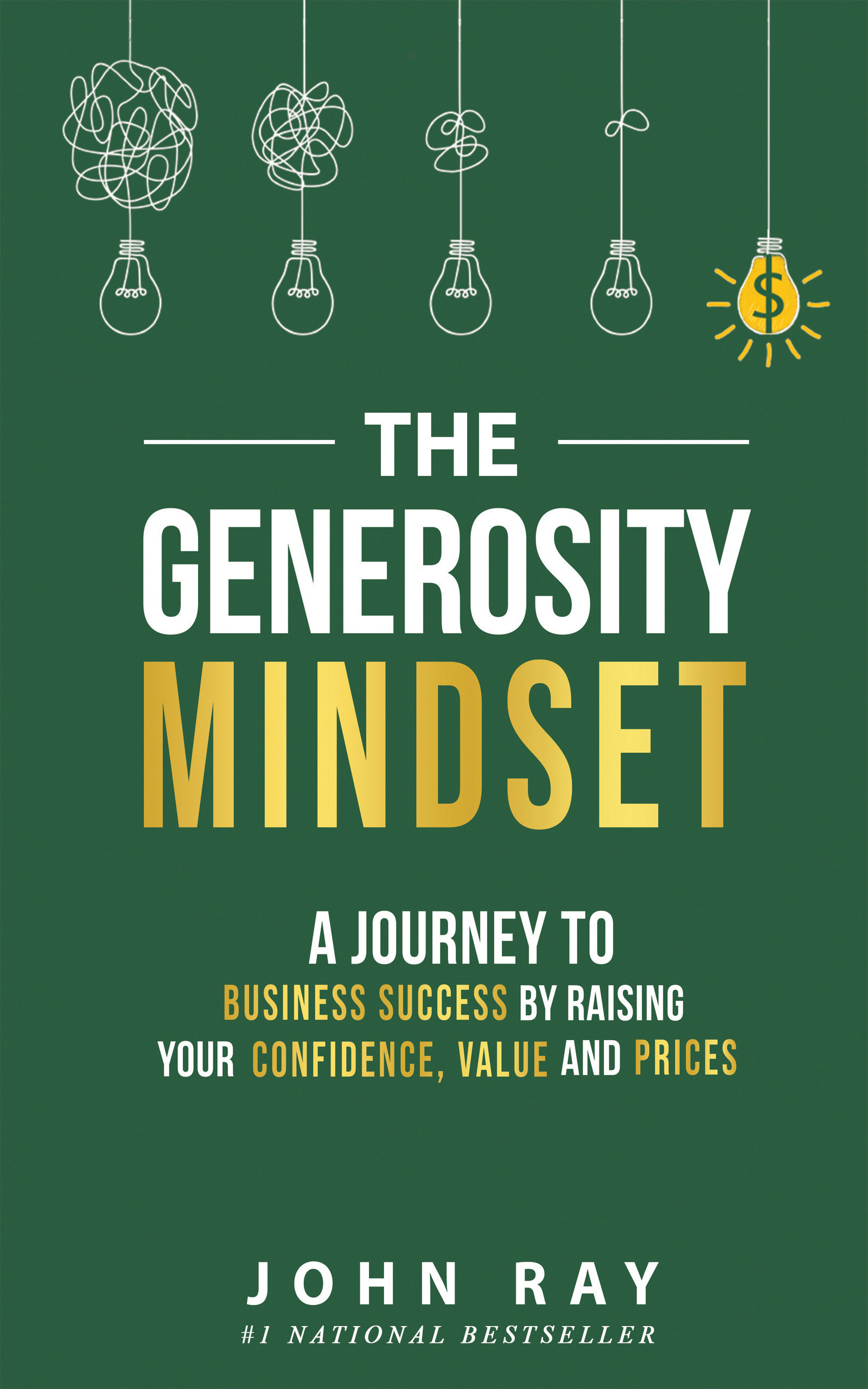
John is the national bestselling author of The Generosity Mindset: A Journey to Business Success by Raising Your Confidence, Value, and Prices.

Tagged With: Blue Chip Branding & Headshots, executive image, Headshot Photographer, headshot photography, headshots, image, John Ray, North Fulton Business Radio, personal brand, personal branding, Photography, professional branding, Sarah Adams

Leisa Reid With Get Speaking Gigs Now

April 28, 2025 by Jacob Lapera

High Velocity Radio
High Velocity Radio
Leisa Reid With Get Speaking Gigs Now
Loading
00:00 /
RSS Feed
Share
Link
Embed

Download file

Do you want to be a speaker, but aren’t sure what to talk about, where to go to find gigs, or how to offer your services from stage? As the Founder of Get Speaking Gigs Now, Leisa Reid trains entrepreneurs who want to use public speaking as a soul-fulfilling marketing strategy.

Clients who work closely with her build their speaking skills and confidence through the Speaker’s Training Academy. They get their “Talks Ready to Rock,” and learn how to STAY booked as speakers through easy to implement strategies.

As a speaker herself, she has successfully booked and delivered over 600 speaking engagements. She is the CEO of the International Speaker Network, a community of heart centered speakers who value collaboration, relationships, results and fun.

In her book, Get Speaking Gigs Now, she shares her 7 Step System to Getting Booked, Staying Booked & Attracting Your Ideal Clients Through Speaking.

Connect with Leisa on LinkedIn and follow her on Facebook.

What You’ll Learn In This Episode

  • How can entrepreneurs tell if speaking is the right marketing strategy for their business
  • What’s a simple way speakers can attract ideal clients without feeling pushy
  • What’s the biggest obstacle aspiring speakers face—and how can they quickly overcome it

Transcript-iconThis transcript is machine transcribed by Sonix.

 

TRANSCRIPT

Intro: Broadcasting live from the Business RadioX studios in Atlanta, Georgia. It’s time for High Velocity Radio.

Lee Kantor: Lee Kantor here. Another episode of High Velocity Radio and this is going to be a good one. Today on the show, we have Leisa Reid, who is with Get Speaking Gigs Now. Welcome, Lisa.

Leisa Reid: Hi, Lee.

Lee Kantor: I am so excited to learn what you’re up to. Tell us about your company. How you serving folks?

Leisa Reid: I serve entrepreneurs who have a deep calling to use public speaking as a way to attract their clients.

Lee Kantor: So what’s your backstory? How did you get involved in this line of work?

Leisa Reid: Well, I. My dad would say I probably started in preschool when I started teaching other kids how to speak English, when he wanted me to go to a Spanish speaking school and learn Spanish. But I started professionally speaking in In 2013, and my first year I booked 83 speaking engagements in my local area, brought in hundreds of clients to the company I was representing, and started an organization for speakers and network, and people started asking me for help all the time and I told them no until eventually one day I decided to tell them yes.

Lee Kantor: Now tell us about how that beginning started, where I guess you were working for someone and they said, you know what? As part of our marketing, we’re going to use speaking. And FYI, you’re the speaker. Like, how did that all kind of bubble up?

Leisa Reid: It was a company that has been around for decades and they’re still around. So they’ve probably been around over 40 years now. So they had started that model a long, long time ago. And it really worked. They do experiential work. And so it helped to give people an experience of the work. It was like a personal development model. And so that had worked for them for years. I loved the work that they did. And when they said, would you like to be a speaker for us? I said, yes, I actually have a bachelor’s and master’s degree in speech communication. So it wasn’t like a total 180 from what I love to do. I just hadn’t done that professionally.

Lee Kantor: So now if a person is kind of in a boat where maybe in a similar way where they’re thinking, hey, you know what, maybe I can be a speaker too. What are some of the, I would guess, foundational things you have to really get right before you can even attempt getting that first speaking gig?

Leisa Reid: Yeah, there are some things I call it getting our ducks in rows and we would want to what I call get your talk ready to rock. Meaning you need to have it decide what your talk is going to be called. What’s the title, what’s the description? What are the learning points for the audience, and what’s your call to action? Those are the key decisions that you want to make right out the gate. Because once you say that you’re a speaker, even if you’re at a barbecue or you are saying it on LinkedIn or wherever on your website, people are going to ask you, what do you speak about? So that would I would think that’s the first step. But you also want to consider who is going to be hearing that talk. Who would be best served by your knowledge. So there’s this thing that happens where both of those things need to happen somewhat simultaneously.

Lee Kantor: Now when you work with clients, are they coming to you as like, say, I’m an entrepreneur and, you know, maybe I’m an accountant and I’m like, you know what? I’m pretty good speaker. So I think I’m going to use speaking as a way to get my name out there and get the word out about what we do. Um, or are they coming to you with, hey, I’m want to be a speaker for a living. And that’s, you know, I think I can be the next Tony Robbins.

Leisa Reid: Uh, most of my clients are utilizing public speaking as a way to generate clients. So if they’re an accountant and they want to use speaking to get clients, or they’re an attorney or a doctor or a coach, a nutritional coach, a healer, those are different types of people that have I’ve worked with and they just have a desire to do it. They enjoy it, they think it’s fun. You got to do sales and marketing anyway. Might as well enjoy yourself doing it. When someone comes to me and they just want to be like, no, I only want to be a full time speaker, that’s it. I’ll typically refer them out if like, especially if they don’t have a program at all. It really depends. If they’re newer into speaking, then it’s actually a really good idea for us to work together so that they can start to get an idea of what they need to put together and how they would start to approach it, especially if they have something to offer. If they don’t have anything to offer, like they’re they’re just going to generate money through a speaker fee and nothing else. Then I usually refer them out to someone else.

Lee Kantor: That’s so interesting because in our business, we work with entrepreneurs and we tell them the same exact thing. If you want to be famous, um, you know, we can have the beginning steps, but that’s not what we do. We’re here to help an entrepreneur kind of leverage the platform to make more money in whatever they’re doing.

Leisa Reid: Exactly. And I think a lot of times people miss that. There’s a lot of misconceptions. I’m sure that you find this, too, Lee, in the speaker world, because that is how it used to be. It was like you are a speaker, period, and you don’t do anything else. But now it’s like, no, it’s a platform. You you can utilize the platform and leverage it to do the thing that you love. The other thing. So for me, it’s about like, well, can we make marketing and sales fun? And if you enjoy speaking then yes, you can. You can make it fun.

Lee Kantor: Yeah. That’s so interesting that a lot of people think that whatever the it doesn’t matter really, the platform is that their first inclination is I’m going to do it to become famous like that. It’s a path for me to become famous or, you know, make a viral video. Whatever the thing is, whatever the new platform is, they think it’s a means for them to be famous. But that’s such a lottery ticket effort to to be famous in doing anything.

Leisa Reid: I think that’s I can really relate to what you’re saying, Lee, because when someone comes, I don’t get that too often in my industry. But there is a couple of times I’ll get that where I get the sense that they just want to be like, I want to be on the biggest stages ever and be like, Tony Robbins or whatever. That’s not really my client. Um, and that’s there’s nothing wrong with those desires. That’s just not my area of focus. I definitely work with, and we’re probably aligned here. I work with people who want to make a difference. People who want to make an impact, people who have a purpose. They’re a little more heart centered, um minded, and they just really want to educate people because what they’re doing matters and they’re actually providing solutions for people, but they need to attract more people.

Lee Kantor: Right? Yeah. No, it’s just interesting that there were these parallels. I never connected the dots that you would have those same issues that we have that uh, sometimes, you know, like your lane sounds like our lane. Look, we’re here. We are very specific skills. And if you want to do this thing, we can help you. But if you want to do this other thing, uh, you know, we probably can give you some general advice, but you’re better served going somewhere else. And and that’s probably a good lesson for entrepreneurs at all. You got to know when to say yes and when to say no to anything.

Leisa Reid: I agree, like you’re creating your own path, your own, your own lane. What do you want that to look like? What do you enjoy versus what you think you might enjoy. And everyone has a different approach to that. And that’s totally okay.

Lee Kantor: Now, when you’re working with us for an aspiring speaker or sometimes these people have never spoken before, they just think they would be good at it.

Leisa Reid: I do have occasionally some people who’ve never actually spoken before. Usually they come to me and they already know they’re good at it. Maybe it was something they did a long time ago and they just really enjoyed it. Or they volunteer for things like that, or they get asked to speak because they’re really good in front of an audience, but they don’t have a strategy or a plan. It’s kind of been happenstance. It hasn’t really happened on purpose. There’s been no intention. It’s more reactionary. Um, occasionally I will get someone who’s never spoken like officially before. And depending on the skill sets they bring to the table, we’ll just start where they are. I was I gave up a long time ago, Lee, of thinking that everyone was going to come to me at exactly the same point. I have found that what we do, especially when we have, like our speaker readiness assessment call, I will say, okay, tell me what you’ve got. You know what, what holes are in the boat. What do we need to do to get you to the place that you want to be? And we start from there.

Lee Kantor: Now, are there certain things that are maybe, uh, indicators that you’d be good at it? Like if you’re if you’re the person they ask to do the sales presentations or you’re the person that they asked to go to networking meetings, like, are there certain kind of indicators that, hey, you probably can pull this off?

Leisa Reid: I think it’s really a personal, internal, personal desire. I because I don’t want to get into like, oh, you need you know, you need to be an extrovert or an introvert or whatever. I have had clients who fall along all those different spectrums. So it doesn’t mean that you aren’t shy potentially, but what? Or that you’re really outgoing. It could be any of those things. But what I have found, the commonality is when my clients come to me like before, they’re my clients. They will confess to me. I’ve always wanted to do this. Like, I look at that speaker when I’m. I’m in the audience and I think I could be up there like I should, I should be doing this. And they have talks that start occurring in their mind like they’re they’re crafting them. And they’ve always secretly wanted to do it and they just didn’t know the roadmap. So we take like whatever that desire is, whether they’ve done it before or not. How can we get them that clear roadmap so then they can go out and do that thing that they’ve been dreaming about for a long time.

Lee Kantor: So really at the heart of it is if there is a desire to do it, then you can give them a pretty good shot at at getting some momentum. And maybe that escape velocity needed to launch their career.

Leisa Reid: Yeah. And and not just the so there’s desire. But then now we’re talking about entrepreneurs. So it’s like we’ll have a very candid conversation. All right. What are your programs. What are your offerings. Does this make sense for you to do this? If you’re selling a book for 14.95 and that’s all you have on the shelf, you’re probably going to need to develop some programs first or some services or some products or something that you can offer because, uh, a lower ticket is going to be a little tricky if there’s no sales funnel behind that.

Lee Kantor: And then in order to have a sales funnel that sells an inexpensive item, you better have a lot of money behind that.

Leisa Reid: Yeah. Or what? Yeah. However, however, it’s going to look like I do work with a lot of coaches, which is usually pretty simple. Their programs are 1000, 3000, 5000, 10,000. Something along those lines. So even if they got one client from one talk. Usually they’re going to get their investment back pretty quickly.

Lee Kantor: Right. So now let’s talk about uh, you mentioned coaches. So a business coach comes to you. Says I’m in. What do I have to do? So what are can you walk me through kind of. The steps that you or the maybe that initial conversation you’re having with. That business coach in order to, um, build out their, uh, talk.

Leisa Reid: Yeah. We have a. Get your talk ready to rock session. And it’s a two hour deep dive where we decide their title, description, learning points and call to action. Not necessarily in that order, but that’s what they come out with. Then they can go and work on their slides, or we discuss what’s the what’s the next step for them and then start practicing it and refining it, shifting it, letting it evolve until it’s ready to until they feel like, okay, I am ready now to take this to the market. We’ll do that within the first 30 days of working together, because that is the catapult to all the other stuff. So once you have your talk decided, then you can start creating your speaker sheet. You can start adding it on to your website. You can start talking about on social media. You can start practicing it. Then you start all of a sudden you start getting booked and we figure out, like, where’s your ideal audience going to be? How would you field questions? How would you create the conversation in order to get booked? How do you start to develop your own comfortability with, um, those kind of conversations and tracking it all and really having a system to being a booked speaker.

Lee Kantor: Now, how long is a typical talk nowadays?

Leisa Reid: I create a 30 minute talk because in my opinion, and I don’t know if you agree with this, Lee, but it’s much easier to cut than or it’s much easier to expand than it is to cut. So if we created a 60 minute talk, the person would be like, oh my gosh, what do I cut? This is so hard. Everything’s so important. If we create a 30 minute talk, you can always add in more stories, more engagement, more exercises, more whatever. You know, depending on the person’s style. Um, it’s much easier to add than it is to, to cut. And I find I usually talk for 30 minutes is very standard 45 minutes an hour. Those are those are pretty standard.

Lee Kantor: Now, the speaking opportunities that will be presented to your clients or prospective clients, are they all paid or are they all not paid? Like how does the kind of the money work when it comes to speaking?

Leisa Reid: That’s a great question. And I get that, gosh, if I had a dollar for every time I had that question. So the how I look at it is what I call monetize your speaking. So if we have a plan that you can monetize your speaking regardless of the speaker fee, that’s what we want to do. Um, so that way that client could go for speaking engagements that have a fee or don’t have a fee, but know that, oh, I’m in the right room with the right offer, with the right talk. Um, probably going to have good odds of of receiving some clients or some traction there. So that way we can not limit ourselves on just the speaker fee alone, because sometimes that would be way less than it would be if you received a few clients out of the speaking engagement.

Lee Kantor: And then, um, where do they go for these speaking opportunities? Is there is it just locally or is the world your oyster?

Leisa Reid: Well, the world is our oyster right now, which is pretty exciting. Again, this this is really depends on the person. So it’s not a cookie cutter standard. This is the exact model for every single person. So what we do is we figure out okay, what’s your lifestyle? What’s your personality, what’s your desire? What are your business goals. And we put all those things into the the filter and figure out okay then this is the kind of engagements that you’re going to be going for. This is the kind of engagements you’re probably not going to want. So we figure that out. It’s different for every single person. But with zoom now when I used to speak in person. Nine. 99% of the time. Plus I also was, um, you know, selling to a local event. So there was a reason why I stayed close by. But once Covid hit, nearly all my speaking engagements are virtual now. So it depends on the on the client and where they live and what they’re trying to achieve.

Lee Kantor: Now, are there different speaking mechanics? Um, when you’re doing something virtual as opposed to in person?

Leisa Reid: Oh, yeah. Yes, definitely. Slight. I call them like fraternal twins. You know, they a lot of things could be similar but could be similar. Excuse me, but I had to really adjust when I went back in person after the pandemic. Kind of lifted a little bit. I had forgotten all the things that I needed to to bring. I was like, oh yeah, I need a cord, and I need, I need a clicker, and I need to make sure my slides are, you know, going to be on the computer wherever I’m going. Did they receive them like just little things like that. Handouts for the tables. How many people are going to be there? Those things I used to do hundreds of times before the pandemic. But then I had a couple of years where everything was virtual and I had forgotten. Wait. All these things I need to remember. So, uh, there there’s pros and cons to both. But I would say for virtual, it’s pretty simple. You click, you know, as long as you have your links and everything ready to go in the chat, you have slides. If you’re using slides and you have a great microphone and a webcam, uh, you are good to go. When you’re speaking in person, you need to remember to bring some extra things.

Lee Kantor: And then, um, when you’re helping your clients get launched and maybe book that first, um, gig. Is there some do’s and don’ts or is there is there kind of places to look early on to get some just flight time.

Leisa Reid: Yeah, there’s definitely places to look. And again, it would depend. We still want to go for something that’s, um, you know, kind of an easy yes or somewhere you would feel comfortable. Oftentimes we’ll start with a warm, I call it start with your warm market. Who do you know? Who might you know, who knows someone who books speakers or who belongs to an organization that brings in outside speakers? So Warm Market is an easier place to go because you’re probably going to get an answer. You’re probably going to get someone on the, you know, on a on a zoom call to to talk or a phone call. Uh, they’ll be more apt to give you an opportunity if they’ve never heard of you. That type of a thing.

Lee Kantor: Now, if you’re doing, um, a talk to an organization, how do you kind of elegantly weave in some sort of offer to buy stuff? If everybody’s kind of an employee of a company?

Leisa Reid: Yeah. That’s different. So again, I love this question because speaking is like a deck of cards. There’s a lot of different games you can play, but you need to know what game you’re playing and how to win. Right? So we don’t want to offend or give an offer that seems awkward or outside of the scope of the event, because no one’s going to, you know, it’ll it’ll create a little awkwardness. It really depends on what you’ve discussed with the organizer and what our what’s the framework of you being there, for example, if gosh, that’s such a good question. I have so many thoughts because if you were there speaking to, let’s say, a lunch and learn and they’re an organization brings you in, they might pay you to deliver this lunch and learn to their employees and to provide value. You might be working on a contract with the with the organization to offer something for all their employees. So you’re not necessarily selling to the employees. You might be already sold, you may already have a contract tract created or you’re looking to create a contract. But if you’re if you’re saying, well, I’d like to reach these employees because there’s this, let’s say a nutritional coaching and you want to they they’re like, yeah, fine.

Lee Kantor: Right. Everybody eats. So everybody’s my prospect. Yeah.

Leisa Reid: So then, so then if it’s okay and and they say you can offer this thing that you’re doing whether it’s a free something to get on a mailing list or a free a low ticket offer to try something out or, or maybe it’s let’s have a conversation about coaching. So again, it will depend on the venue and the conversations and the purpose. All that needs to be nuanced. And I think that’s where speakers get stuck. They think, oh, just one offer for everything, and I’m going to just force it on every single audience I have. And I don’t agree with that. I think you should have a monetization menu, and you pick and choose depending on, on the venue that you’re at and the rules And because you don’t want to burn those bridges.

Lee Kantor: Now, is there, um, some best practices when it comes to the actual next, uh, the call to action you’d like when you’re having, uh, speak, uh, talk like I know you mentioned it depends whatever that call to action might be, but is there, like, is it better to have a free thing versus a paid thing or, um, you know, like there’s a whole menu of calls to action, right? It could be by my annual, um, coaching package. It could be, you know, here’s a PDF of the ten things you should do the next time you’re doing whatever I’m an expert in.

Leisa Reid: Yeah, it depends on how the person’s business model is set up. Like if, for example, I have one client who, um, she she’s just getting her slides together right now. She wants to sell her course that she’s creating, um, versus doing more coaching for people. So she’s kind of not necessarily interested in jumping on a phone call with them. She’d rather them just go to this thing, purchase the course and be done with it. And that’s where she is in her business, where I have another client who has a mastermind and uses a phone call, a free phone call to generate clients to join her mastermind. But she wants to have a conversation with them first, because she wants to make sure that you know, she’s protecting who else is in the mastermind and needs to interview them. So it really depends. Um, another client I had, she wasn’t. She was in between business, like she was selling one of her businesses and moving into another one, but wanted to really boost her Instagram and her email list so she would use those as her calls to action. Since she didn’t, she was still kind of baking her new business idea. Um, behind the scenes.

Lee Kantor: Now, is this a reason? I mean, because it sounds like a compelling reason, just as it is to work with you or somebody on your team. Because if you can help me get that right, I’m just leaps and bounds ahead of somebody who’s just throwing stuff against the wall and hoping it works and then seeing, you know, oh, well, that didn’t work. Let me try this other thing. But by having an expert by my side, I’m probably closer to the bull’s eye than I would be if I’m just throwing the dart. Um, you know, on my own.

Leisa Reid: Absolutely. And I think one of the biggest mistakes people make is they spend all the time when they’re speaking at the beginning. They spend all their time on this content and trying to whittle down all their expertise into, you know, 30 minutes and they then forget to do the call to action. They haven’t even thought of what the call to action is going to be. And then it’s like this afterthought, and they will forget to do it completely run out of time. Or it’s really clunky. It doesn’t, it doesn’t. It’s not consistent throughout the whole thing and it gets people off guard. So there’s all these different mistakes that I’ll see people make when it comes to the call to action, then it’s usually because they’ve never had sales experience, which is fine. It’s not taught in most college courses and which I don’t know why that that is astounding to me.

Lee Kantor: That should be an elementary school skill. I know.

Leisa Reid: I don’t know, especially in elementary school. They’re so primed they they have no problem bugging you over and.

Lee Kantor: Over, right. To buy, uh, wrapping paper or popcorn or cookies like they.

Leisa Reid: Yeah. Well, if any any parent, I mean, any parent can definitely agree that kids can be persistent as all get out so they’re primed and ready to go to be salespeople. I don’t know why they don’t teach that in elementary school and high school and college, but they don’t. So.

Lee Kantor: So it’s your job now. Now, I guess you’ve taken on the charge here.

Leisa Reid: Yeah. They don’t teach it in medical school or law school either. So sometimes I’ll have a medical doctor or a or, you know, PhD, uh, client or an attorney who’s like, why, why is this not working? And I’m like, well, you’re not. Have you ever sold before?

Lee Kantor: Right? Like.

Leisa Reid: You know.

Lee Kantor: You got to ask them to buy something at some point. Yeah.

Leisa Reid: So it’s a different animal.

Lee Kantor: So, um, so what’s the, uh, for anybody listening here? And they’re contemplating speaking. So what’s the path for them to, you know, what’s your call to action to get them, uh, at least into your funnel and into kind of your, uh, speaking universe?

Leisa Reid: There are a couple ways, uh, one, you can get five top tips to get more speaking gigs now. So that’s further information than what we’ve talked about today. If you’re like, oh man, I really do want to be a speaker. I don’t want to think about that. I want I could use that. And that’s easy. You can just go to get speaking gigs. Now.com it’s right there for you. And if you are thinking, I need to talk to her like yesterday, and I want to start getting booked on stages quicker, and I and I need to figure out this roadmap so that I can catapult my business and really use speaking to attract my clients. Then you can go. You can. We can have a conversation at the get speaking gigs now.

Lee Kantor: Good stuff. Well congratulations on all the success. And I know you have an academy also, right?

Leisa Reid: We do. Yeah, we have the speakers training Academy, and that’s for people who are like really serious about. Yep. I want to get I want to get to the front of the line, get me closer to the target. So I’m not trying to figure this out on my own.

Lee Kantor: Well, again, thank you so much for sharing your story today. You’re doing such important work and we appreciate you.

Leisa Reid: Thank you. Lee.

Lee Kantor: All right. This is Lee Kantor. We’ll see you all next time on High Velocity Radio.

Tagged With: Get Speaking Gigs Now, Leisa Reid

Georgia Technology Summit 2025: Laura Gibson-Lamonthe with Georgia Fintech Academy

April 24, 2025 by angishields

ABR-Georgia-Fintech-Academy-Feature
Atlanta Business Radio
Georgia Technology Summit 2025: Laura Gibson-Lamonthe with Georgia Fintech Academy
Loading
00:00 /
RSS Feed
Share
Link
Embed

Download file

Georgia-Technology-Summit

Georgia Technology Summit brings together 1000+ Georgia-focused technologists to network, learn, and engage with the latest trends in Georgia innovation. This year’s summit was held at the Woodruff Arts Center, a stunning and iconic cultural landmark located in the heart of Midtown Atlanta.

Laura-Gibson-LamontheAs the Executive Director of the Georgia Fintech Academy, Laura Gibson-Lamothe’s primary objective is to drive meaningful impact within the industry through the implementation of a comprehensive diverse talent development program.

The Georgia Fintech Academy focuses on educating and empowering the next generation of fintech professionals by fostering collaboration with 26 institutions aligned with the University System of Georgia, as well as private universities and HBCUs. Our commitment extends to creating academic pathways to fintech at the secondary level, strategically cultivating a reservoir of talented individuals poised to shape the future of the industry.

Connect with Laura on LinkedIn.

Transcript-iconThis transcript is machine transcribed by Sonix.
 

TRANSCRIPT

Intro: Broadcasting live from the Georgia Technology Summit 2025 at the Woodruff Arts Center. This is Business RadioX. And now here’s your host.

Lee Kantor: Lee Kantor here, broadcasting live from the Woodruff Arts Center for the Georgia Technology Summit 2025. So excited to be talking to my next guest, Laura Gibson-Lamonthe. And she is with the Georgia Fintech Academy. Welcome.

Laura Gibson-Lamonthe: Thank you. So happy to be here.

Lee Kantor: Well, I’m so excited to learn what you’re up to. Uh, catch us up. Tell us about the Georgia Fintech Academy. How you serving, folks?

Laura Gibson-Lamonthe: Yes. So we are a talent development initiative within the University System of Georgia, serving all 26 public facing institutions across the state with a fintech curriculum. And so we’re not only providing this the skills and education for our students, but helping them navigate pathways into this industry. So it’s an exciting opportunity to join industry at events like this one. Um, and so we’re here today with several students representing a number of different universities, giving them access to the network and the insights from a technology perspective right here, live in action on campus here at the Woodruff Center.

Lee Kantor: So fintech is one of the, uh, hubs that we have here in technology in the metro Atlanta area. How do you develop the, uh, curriculum for your academies? Are you partnering with the enterprise organizations, like what does that kind of collaboration look like?

Laura Gibson-Lamonthe: Yeah, I like to say we are in lock step with the industry. The industry is evolving so quickly. It’s such a dynamic, uh, field and an exciting time around innovation. And so for us to innovate on the curriculum and how we deliver it means that we have to continuously refine and ensure that we have a close understanding of where the industry. Trends are heading and how we can best provide some of that education in. The curriculum. And so we work with a lot of our partners and have developed a routine where we’re reviewing the curriculum. We’re allowing industry to opine upon that curriculum, and then we’re making curriculum enhancements along the way. And so it’s it’s been exciting to to come and attend these events where, you know, people are showcasing real time some of the technology developments that they have on their radar. And we’re already, you know, writing down notes, um, have conversations, follow ups, obviously, I and embedded payments and some other trends are at the forefront of conversations. We now have to kind of take that back into our, our our mothership. I say, and dissect what that means from an education perspective and ensure that our curriculum is reflective of what the industry is doing and focusing on.

Lee Kantor: So, uh, tell us a little bit about the student who is attracted to this. Like, when does their interest begin? Is it something that you have to even start thinking about? Let’s create some curriculum for elementary and middle and high school.

Laura Gibson-Lamonthe: Yes, yes. So we work closely with the Department of Education. We have students that are taking under the dual enrollment program, uh, focused uh, classes on fintech. Uh, but then outside of that, we’re also providing some exposure early on. I think one of the things that’s a prerequisite to fintech is financial literacy. Um, which is a whole nother conversation we should have in the future. Right. But for math, I mean.

Lee Kantor: That’s critical for even if you’re not going to pursue it as a career, that just that kind of base education is invaluable.

Laura Gibson-Lamonthe: Yep. And I think financial literacy is almost the gateway to fintech for me personally, financial literacy and having to overcome some challenges, um, that I’ve had navigating, you know, just being a consumer, um, and someone who is, you know, starting to earn money and learning how to, you know, best, manage money. It it opened the doors to conversations around the technology that’s providing solutions and services for people to, uh, basically transact, uh, financially. And so for me, it became a career through my financial literacy journey. And I think for students, it’s about educating them about, you know, traditional finance, um, you know, best practices. And it kind of opens that door for, hey, there’s a career in this industry for me, right?

Lee Kantor: My dream is if education could explain to a young person the power of compounding, if they could just do that at a super young age. Um, I think it’s a game changer.

Laura Gibson-Lamonthe: Yes, it is. And I think one of the things that’s really exciting for me is to start seeing some of the students who are taking that, uh, extra step to become founders. So they’re identifying the pain points and the challenges through that financial literacy journey to say, I actually want to be a part of the solution, um, and bring that to the table. So it’s not necessarily just traditional pathways. We’re also focused on entrepreneurship as well.

Lee Kantor: So now, um, has how long has the academy been around?

Laura Gibson-Lamonthe: We’re about to celebrate our five year anniversary. So super excited. 10,000 students.

Lee Kantor: 10,000 students. Yeah. I mean, can you imagine 10,000 people going through the how? That’s so important.

Laura Gibson-Lamonthe: It is, it is. And it’s it’s all happening right here in Georgia. So we’re getting major focus from some of our competitors. And I think, you know, states outside of the state of Georgia that are looking in, uh, at the success of the program and what we’ve been able to achieve. But our focus now is, is really emphasizing the need for jobs, um, internships, full time placement. Obviously, the market is is, you know, taking a shift lately. And our focus is really trying to identify where those opportunities are and help students get placed in them. So we’re constantly facilitating those conversations with companies.

Lee Kantor: Now, has there been any, uh, graduates that have gone on either to start their own business or any kind of success stories you can share?

Laura Gibson-Lamonthe: Yeah, I think one of my favorite success stories, um, only because I’m here in the, uh, the Georgia Technology Summit, uh, last year at, uh, one of the other partner events, Fintech South, we had a student who was literally manning the table, the booth in the expo hall for Truist. Uh, and that student was a recent graduate of the Georgia Fintech Academy. We also had around 30 students attending that event, just as, uh, registrants for and participating in that event. They saw her and were like, that’s what we want to get to. We want to be on the other side working and representing that Truist brand. And I think for me, that was a full cycle of seeing that student, obviously, um, for me seeing her sophomore, junior, senior year and then now working as a career professional at Truist. But then seeing the students who were reflecting on that near peer as a as a goal for what they were aspirational.

Lee Kantor: And now it’s real.

Laura Gibson-Lamonthe: Exactly, exactly. And then the other.

Lee Kantor: Could be you.

Laura Gibson-Lamonthe: Yes, exactly. It could be you. It’s attainable. I think so many times students see, especially at these conferences, they see the executives. Right. You know, folks who are more, you know, tenured and senior in their roles. And it’s a little bit out of touch, right?

Lee Kantor: They don’t see they don’t connect the dots how that’s kind of viable for them. But when they see somebody they know or seen around, all of a sudden they’re there. Yep. Then why not me?

Laura Gibson-Lamonthe: Yes, yes. And we talk about representation that really matters. Representation means a lot of things. Um, it could be, you know, something where it connects with the student and they can they can now kind of realize that that goal and that, that focus. So, um, those opportunities are there’s so many of them that I’ve come across and watching students, you know, get on the stage and represent their own brands as entrepreneurs or as another one. Um, and we’ve had students that, you know, apprentice with some startups here in the state. Um, you know, we’ve had students go over and work at the Atlanta Tech Village, which is doing exciting things here in Atlanta and Georgia as well. Um, and so being able to see them shine in different ways, in different capacities and kind of broaden their horizons as far as where their career pathway could lead them has been been really rewarding.

Lee Kantor: So what do you need more of? How can we help you?

Laura Gibson-Lamonthe: Yes, I need jobs. I need job. Job jobs, I need internships. I’m looking for internships and and and jobs. Full time placement opportunities. These roles, um, vary. I think in the fintech space, people think, you know, traditionally data science, cybersecurity. But we have, you know, students that are navigating pathways towards product, uh, management, product development, project management, marketing, even, um, consulting sales. There are so many different segments in this space. And I think for our students, we’re we’re now looking at, uh, just the industry much more broadly. And so for for folks who are in an organization who are looking for early talent, um, and not just early talent, we also have, uh, folks that are continuing ed, they have, you know, more years of experience under their belt who are coming back into the academic fold to, you know, continue to refine their skills. And so we do have a growing portfolio of experienced professionals and some that are just embarking on their journey at the early talent stage.

Lee Kantor: Now, um, why was it important for you? Are you attending the event here or are you did you bring some students with you?

Laura Gibson-Lamonthe: I did bring some students with me. Um, and they’re they’re being good. They’re in the the main session right now and the main stage. Um, you know, we actually had a pep talk coaching session where we did kind of, like networking best practices, how to maximize what you’re getting out of this event. And so they’re they’re out here, um, meeting and learning and soaking up everything they can. Um, and so for us, it’s been, you know, kind of helping facilitate the, the networking, getting them warm and comfortable in this space. I think this also gives them an opportunity to demonstrate what they’ve learned, since they don’t necessarily get that, they get that with their peers. But to put them in a in an immersive experience where we are putting them, you know, with a couple of hundred or more, uh, professionals is is something that really gets them to, to get that practice and that skill refined.

Lee Kantor: So when you’re working with enterprise level organizations, or I’m sure you’re open to having conversations with startups as well. Yeah. Who at that organization is the right person for you to talk to? So you can explain the value of collaborating?

Laura Gibson-Lamonthe: Yeah. I think, you know, initially we start off with a lot of the folks in the talent space, air recruiting. Um, but for me, it’s really been, uh, extremely beneficial to, to meet with the folks that are on the tech side. You know, tech managers, leaders who are driving the talent acquisition strategy versus the execution of that strategy. So if you are anyone that’s influencing, uh, the plans for scalability within your organization when it comes to human resources and, and, and the people within your organization, that’s that’s who I really want to talk with. Um, for us, it’s going beyond the fact that you might have an immediate need to start starting to get more strategic about future state and what your growth goals are. Um, because those change over time and as we talked about earlier, the economy and where it stands today, and it’s a luxury to really invest in early talent, but it’s an imperative, uh, for the sustainability of any organization, no matter what stage you are in. Um, a matter of fact. So I think for having that conversation really requires leaders who are transforming and building and developing their organizations.

Lee Kantor: So if somebody wants to learn more, what’s the best way to connect with you or somebody on your team?

Laura Gibson-Lamonthe: Yes. So I would recommend going to our website, Georgia Fintech Academy. Org or you can find me on LinkedIn Laura Gibson Lamoth. Um, or if you just look up Laura Gibson, I pop up, uh, as well. Um, but we are always active. Um, you can find us at a lot of the industry events, uh, coming up, um, as well as, uh, some of the things that we’re doing on various campuses. So look out for us on on either channel.

Lee Kantor: Well, Laura, thank you so much for sharing your story today. You’re doing such important work and we appreciate you.

Laura Gibson-Lamonthe: Thank you for having me.

Lee Kantor: All right. This is Lee Kantor back in a few at Georgia Technology Summit 2025.


Tagged With: Georgia Fintech Academy, Georgia Technology Summit 2025

Finding Financial Happiness as a Couple, with Anthony Chen, Host of Family Business Radio

April 21, 2025 by John Ray

Finding Financial Happiness as a Couple, with Anthony Chen, Host of Family Business Radio
Family Business Radio
Finding Financial Happiness as a Couple, with Anthony Chen, Host of Family Business Radio
Loading
00:00 /
RSS Feed
Share
Link
Embed

Download file

Finding Financial Happiness as a Couple, with Anthony Chen, Host of Family Business Radio

Finding Financial Happiness as a Couple, with Anthony Chen, Host of Family Business Radio

In this commentary from a recent Family Business Radio episode, host Anthony Chen underscores that beyond monetary concerns, understanding what constitutes happiness for couples is crucial.

Anthony’s commentary was taken from this episode of Family Business Radio. Family Business Radio is underwritten by Anthony Chen with Lighthouse Financial Network.

Transcript

Now it was closing out the show as a kind of our regular listeners, a segment called Anthony’s Financial Take, as you all hear of setting boundaries, having communication in a family business being the key hallmark of being able to have a successful or a little contentious working relationship.

Not so much different in the financial world, especially as I’m working with families. The conversation or attention sometimes comes around, especially when money subject matters coming to mind. The biggest question isn’t so much what is the dollar amount? What is not just only the monthly budget or what is the retirement number look like?

But more so, what is happiness for us as a couple? And for our listeners my question revolves around a lot of purpose and kind of drawing back to the origin of the story. What got us together? And let’s not forget that. So that when we do chart a course, whether it’s for retirement planning or succession planning for the family business, we can always go back to that North Star, and that’s a little bit closing out from Anthony here.

Thank you for listening in to Family Business Radio.

Anthony Chen, Host of Family Business Radio

Anthony Chen, Host of Family Business Radio

Family Business Radio is sponsored and brought to you by Anthony Chen with Lighthouse Financial Network. Securities and advisory services are offered through OSAIC, member FINRA/SIPC. RAA is separately owned, and other entities and/or marketing names, products, or services referenced here are independent of OSAIC. The main office address is 575 Broadhollow Rd., Melville, NY 11747. You can reach Anthony at 631-465-9090, ext. 5075, or by email at anthonychen@lfnllc.com.

Anthony Chen started his career in financial services with MetLife in Buffalo, NY, in 2008. Born and raised in Elmhurst, Queens, he considers himself a full-blooded New Yorker while now enjoying his Atlanta, GA, home. Specializing in family businesses and their owners, Anthony works to protect what is most important to them. From preserving to creating wealth, Anthony partners with CPAs and attorneys to help address all of the concerns and help clients achieve their goals. By using a combination of financial products ranging from life, disability, and long-term care insurance to many investment options through Royal Alliance, Anthony looks to be the eyes and ears for his client’s financial foundation. In his spare time, Anthony is an avid long-distance runner.

The complete show archive of Family Business Radio can be found by following this link.

Tagged With: Anthony Chen, couples, Family Business Radio, financial happiness, financial planning, retirement

Cliff Nonnenmacher with Franocity

April 18, 2025 by angishields

FMR-Franocity-Feature
Denver Business Radio
Cliff Nonnenmacher with Franocity
Loading
00:00 /
RSS Feed
Share
Link
Embed

Download file

Franocity-logo

Cliff-NonnenmacherCliff Nonnenmacher began his career as an investment banker at Morgan Stanley. After leaving his Wall Street career in 2003, he acquired a Master Franchise for New York and Connecticut, diving headfirst into the franchising industry.

Since then, Cliff has owned and operated various franchise businesses, including Cartridge World, Personal Training Institute, PuroClean, and Maid Right, as well as non-franchise companies. He has also developed well-known domestic and international brands like Four Seasons Sunrooms, Contours Express, Island Fin Poke, and Krak Boba.

With over 25 years of experience in franchising, finance, and business, Cliff has been involved in every aspect of the franchisor-franchisee relationship. Cliff now uses his extensive knowledge to assist corporate executives in building generational wealth, diversifying their investment portfolios, and navigating career transitions through franchise ownership.

Connect with Cliff on LinkedIn.

Transcript-iconThis transcript is machine transcribed by Sonix.

 

TRANSCRIPT

Intro: Coming to you live from the Business RadioX studio. It’s Franchise Marketing Radio. Ready to revolutionize your franchise with AI? Franchise now empowers franchises with advanced AI solutions, automatic processes, and enhanced marketing strategies. From personalized customer interactions to predictive analytics, we help you harness AI to drive growth and efficiency. Transform your franchise with the power of AI. Visit Franchise Now to learn more and take your business into the future. Now here’s your host.

Rob Gandley: Welcome back, everybody to Franchise Marketing Radio, where we spotlight brands, leaders, game changers that are shaping the future of franchising. Today is no different. My guest is a powerhouse in franchise consulting and the franchise consulting world. He’s been on both sides of the table as a multi-unit franchisee. As a franchisor executive and now as the founder and CEO of Franocity. And basically, he is redefining how candidates find their perfect franchise fit and how franchisors recruit high performance owners. He’s been featured in The Wall Street Journal, The New York Times, CBS, moneywatch. Cliff Nonnenmacher, welcome to the show. Good to have you.

Cliff Nonnenmacher: Yeah, man, thanks for having me. I’m happy to be on. Well, no, you got well known, well known show in our industry that I’ve never been on, so I’m really happy to be here.

Rob Gandley: Very cool, I appreciate that. Well, I’m trying to keep making it known, so make sure you’re sharing it out there if you enjoy the conversation. I usually wait till the end, but I wanted to say that. So it’s great to have you listen. One of my favorite questions to start with is always. And for those listening that just kind of sit on the fence for a while about, you know, starting a business, you’re not only helping people get into franchising and start a career as an entrepreneur, but you are one. And so you had to do that thing. So tell me a little bit of how this all started and how did you wind up where you are today?

Cliff Nonnenmacher: Yeah, I appreciate that. I mean, a lot of my clients are not, let’s say, lifelong entrepreneurs. They were in corporate America. I happen to be I was born a business person. Quite frankly, I knew as early as you can know what you want to do that I wanted to be self-employed. I started at a very young age, raking golf balls out of country club ponds and selling them and cleaning them and doing all random things. I actually started literally right out of high school. Uber Eats before Uber Eats even existed. So 1990, 1991 I created a food delivery company on Marco Island, which is three miles by six miles, and I delivered food using cell phone, pager technology and then ultimately cell phones. I say ultimately cell phones, because in 1990, 1991, you were between a dollar and $2 a minute to use a cell phone, and it was the size of a of a of a handbag. It was large. It was right. But but I actually had it. Believe it or not, my little island had a tower on it. So I don’t know if you know Marco Island. It’s just south of Naples, Florida. Yeah, you look like you know it. Okay, so I did that for years. I delivered hundreds of deliveries a day, I do believe, and I’ve said this publicly, that I’m the first subcontractor for McDonald’s in the US.

Cliff Nonnenmacher: I had a dedicated cash register just to me, uh, to that’s how many deliveries we were doing. Approximately 100 a day just for McDonald’s. We were doing 300 total. We deliver for Little Caesars. I made Domino’s Pizza change owners, I think 3 or 4 times while I was doing it, because remember, their whole value proposition is delivery. Well, when I was delivering, that’s not a value prop anymore. Remember John’s commercial today is, uh, remember, uh, grab a bucket. Remember the commercial with, hey, we’re speedy. Grab a bucket. The guy throwing a house fire and the and the firemen are like, hey, grab a bucket, grab a bucket. Well, guess what? With Uber Eats, there’s no more value proposition in delivering. So I started doing it 1990, 1991, started delivering auto parts, delivering prescription drugs. And then I got involved in the water sport industry because I was delivering to all the hotels and the Hilton and the Hilton Grand Vacation asked me to put in bids for parasail boats, beach concessions. So I started doing that. For years I had operations on the new Jersey, uh, the Jersey shore, which would be Long Beach Island, LBI. I had operations in Marco Island Hilton, and I had operations at the Hilton Grand Vacation and rented fleets of jet skis, catamarans, you name it, sold sundries. Uh, I mean, literally everything that you could possibly do at a beach.

Cliff Nonnenmacher: Parasailing was one of our big, uh, operations because it’s just more involved. That evolved into making money at a young age, which evolved into trading, which took me into investment banking. And then from investment banking, I had an experience in corporate America. That’s my real first experience in corporate America. I’m now 25. Um, I’m in a group. We’re managing around 250 million. I’m with a group of guys called Comprehensive Wealth Management that operated within Salomon Smith Barney. Today is Morgan Stanley. And, uh, I had a moment with a boss, and it was kind of a weird moment where I asked him for a printer on our side of the building and said, if you want one, you buy it. So I bought it. It cost me $250 to buy a cartridge for it. So I figured out how to refill the cartridge for really pennies on the dollar. And then and then I found a company in Australia that reverse engineered printer consumables. The inks replicated anti-coagulation agents anti-corrosive agents. Gents chip resetting technology, where you put a little device on a chip on a cartridge and it would reset head, faking the printer into believing it was an OEM original original equipment manufacturer. Right. And I ended up buying the rights with a partnership to the entire state of New York and Connecticut.

Cliff Nonnenmacher: So I began my my my entrance into franchising began as a master for the state of New York and Connecticut. And then, of course, I owned my own locations. And then I scaled 36 locations and then sold it, moved to Florida and did it over again and started buying failing. Now my now my focus shift with my my now business partner Justin. My focus now shifts to buying blood in the street. I want to buy failure. Right? Because being an investment banker, listening to, let’s say, Warren Buffett, you buy when there’s blood in the street and you sell the bugles. So I’m like, you know what? I’m going to start looking for really fundamentally sound Franchise concepts that are bleeding, and I will pay them pennies on the dollar. I’m going to turn them around and I’ll sell them for a multiple. And that’s what we did. My business partner and I started buying gyms and then we bought restoration companies, water, fire, mold and biohazard, and we continue to scale from there. And then at that moment, Rob, we looked at each other and said, do you realize that we are buying businesses from people who had no business owning them to begin with? They think about that. It’s actually profound. And it was a moment in our career where we realized people do not have any adherence to due diligence.

Cliff Nonnenmacher: They lack discipline as investors. They are highly emotional and illogical. And and I say this not to be sarcastic, but it’s a it’s a term that I’ve come up with, which is this most people are broadly ignorant and narrowly intelligent. They’re really good at what they do, but outside of that, they’re kind of clueless. And I use the term ignorant, being uninformed, not stupid, right? So if you actually break down what I’m saying, it’s not to be mean. Most people are broadly ignorant, broadly uninformed. Right? And narrowly intelligent. And that’s what we learned. And then we realized we’re going to become we’re going to create a consulting company. We are not going to have commission breath, and we are going to advise people properly on how to navigate this process, even if it includes talking them out of it and saying, you are not a fit, you’re not a fit. And we we do that more. Unfortunately, I guess it’s the upside of being wealthy. We do that more than talking people into it is talking people out of it and saying, look, you’re not a fit. Like you don’t even have a voicemail recording. I mean, how do you you don’t even not only do you not have a voicemail recording, your spouse’s phone says voicemail is not even set up. Like, how are you? How are you? How are you doing this?

Rob Gandley: Yeah. How do you live that way in this world?

Cliff Nonnenmacher: Seriously, I it always blows my mind when someone wants to become a business owner and I’ll call them up, either a voicemail full or the subscriber you’re calling doesn’t even have a voicemail set up. And I’m like, what kind of business owner is this? Anyway.

Rob Gandley: That’s that’s classic.

Cliff Nonnenmacher: That’s my cliff note version of my journey. Rob.

Rob Gandley: That’s an amazing journey. Worth, uh, worth the answer. Thank you for for that. It’s amazing. I think I remember early on I told you my journey started in the 2000, and I think one of the concepts, I remember being very familiar with those concepts that would replace the inks and how powerful that was. Fairly new then. But, I mean, you sound like you might have been the first, like hooked up with the first group.

Cliff Nonnenmacher: I was.

Rob Gandley: But anyway, it was big.

Cliff Nonnenmacher: Then tip of the spear. Yeah, I was I was a very early adopter of that technology because I, I personally I like to invest in two things solutions to problems and good feelings. My Paris up boats, my jet skis, my all that stuff. Like that’s all good feelings. You’re on vacation. Spend, spend, spend and enjoy life, right? And then there are solutions to problems, which is I literally just spent $100 on a black inkjet cartridge. It’s like, can this really be worth $100? And the answer is no. It’s like it’s like 90% water. Yeah. I don’t know if you know this. If you ever extrapolate black ink or or toner or, you know, uh, cyan, magenta and yellow inks, if you actually extrapolate them, you’re paying more for an inkjet cartridge than Chanel number five. Dude. It’s crazy.

Rob Gandley: It’s ridiculous.

Cliff Nonnenmacher: It is.

Rob Gandley: Ridiculous. Why? They just kind of arbitrarily set that market right. Those manufacturers are smart guys. They they wanted to make sure they had a nice little cash stream in there. Thus the problem. And you solved it. Love capitalism. Um, but, uh, yeah. So so you said something at the end of the last part of your answer that I think is kind of tease up my next question, and I want you to kind of I want you to share a little bit of what makes you guys unique at, you know, the way you approach, uh, the process, both from a franchisor angle. So when you’re talking with a franchise brand, your approach when you’re talking to them, this is why it’s important. And then when you’re talking to a candidate, as you said, your approach is unique for them and it revolves around the fit, right? It’s getting the right people in the right position. And so how does that work and how do you explain your unique process?

Cliff Nonnenmacher: Yeah, I would explain it. I think experience matters. And I think that our industry has a very low barrier to entry, where you could just say that you were a displaced, you know, corporate executive, and now you’re going to become a consultant and begin advising people on how to buy a business, when in fact, you’ve never owned a business yourself. You’re not entrepreneurial. You’re really don’t understand investing, right? So when you really unpack all of that. You’re like, wow, that person really isn’t qualified per se, to advise me on how to create wealth or how to create a legacy for my children or grandchildren, or really understanding even how to put the deal together. Rob, with my investment banking background. Right. Which was really extensive, and my entrepreneurial background and the fact that I’ve owned about 12 companies to date and currently have investments in two, uh, both in the food and beverage space. It’s it’s just a force multiplying effect for our clients. Like, wait a minute, man, this is great. You’re talking at a level that I haven’t even heard from other consultants. And all you do is ask questions. It’s seek to understand before being understood. Like you just keep asking questions to understand. What are my investment objectives? Why am I here? Do I have a working spouse? Do I have cashflow? What’s my financial situation? What’s my risk tolerance? Right? I mean, it’s so important. Where do you live? Where do you want to operate? What are the demographics of that community? Let’s look at discretionary spending. Nobody’s doing what we’re doing. Risk mitigation strategies, exit strategies, liquidity events. How many little birds do you have chirping in the nest versus being an empty nester investor? These are these are game changing questions that the average person unfortunately is not asking.

Cliff Nonnenmacher: Here’s a perfect example right before today just meeting with you. It’s a perfect example. I met with a guy and he’s like, yeah, no, man, I, I’ve already spoke to like three consultants. I’m good. I’m like, well, you haven’t spoken to me yet, so let’s discuss what you’re trying to do. So he goes into he’s like, I already know what I’m doing. I’m buying this pressure washing brand. It was presented to me by a broker. I mean, really cool. They do some bizdev, they generate leads. I go, who’s involved in this business? Tell me, let’s just level set for a minute. He goes, oh, it’s me and three other guys. I go, so it’s four people. He goes, no, no, no, it’s three people. I go, okay, it’s three investors. And do you guys want to make a living? He’s like, you know, he laughs at me. I go, what is your earnings history? What what lifestyle are you accustomed to? He goes, all of us make 150 minimum a year. I go, okay, so the three. Yeah. You just went off camera. So the three of you are going to pool your resources. You’re going to invest in the lowest barrier to entry business called pressure washing okay. Which is a commoditized business mainly based on price, which means low price wins. Low price wins equals low margin equals good luck. And he’s like, Holy shit, I go, why don’t you be disciplined and say this as a starting discipline? Uh, as an investor, we are only going to look at businesses with a $1 million minimum item, 19 in the home services space like that right there is.

Cliff Nonnenmacher: I know to you, it may seem deceptively simple to you because you’re in our industry and you’re like, there’s nothing there’s no revelation there, Rob, To the average investor, that’s the difference between failure and creating wealth. Was that little bit of advice to say time out, slow down, stop talking about brands, and let’s start talking about you and what you want and what you like and what you need to earn. And it was like, I can’t even believe it’s like, I’m so glad I took your call. We had a very lengthy conversation after that about what’s trending in the United States, what he should and should not be looking at, and why. I like certain things and don’t. So experience, right? We live in a time now where millennials want to graduate college and be CEO. Like that’s what the time we live in. There is so much to be said for experience. I love a gray haired doctor. I love someone with battle scars, I love wisdom, I love life experiences and. And what’s that worth? You know, to me it’s it’s invaluable when you’re getting advice from someone that actually knows what they’re doing and is going to keep you and your family out of trouble. Yeah. So, Rob, I could do. I could make an episode out of the value that we add. I have a ton of experience negotiating commercial leases. And when it comes to brick and mortar brands, I could tell you that there is a gaping hole in brick and mortar lease negotiation in our industry. It’s actually disgusting. It’s disgusting. I go ahead.

Rob Gandley: Go ahead. No, I was just going to comment on, on I, I you had said a little earlier that, you know, it’s probably pretty obvious to me, right. Kind of thing. And I’m thinking, no, man, it the way I always I think math, the simple idea of understanding math and then being honest, like you said, you got three people that need to make a certain amount or would guess that you’d be more comfortable making and not the same amount. If you’re going to start a business, there’d better be some serious motivation there, because making the same amount will never get you through. Not in my experience, if that’s the goal. So like just understanding the math, and then you’re saying, okay, then that’s pretty straightforward. When you look at it that way, then you need $1 million business that that is, you know, and here’s an industry that is typical for that. And so brilliant the way you frame that because it was true. And honestly, you could fight that if you want. Uh, but you’re not going to you’re not going to be satisfied in the end. The broker that was brilliant.

Cliff Nonnenmacher: Yeah. The broker is getting fired, right. The other broker is now fired, and it’s like they’re going to hitch their wagon on our firm, and we’re going to take them, hopefully to the finish line and advise them prudently and be good stewards. And I oh, I’m not a fiduciary, as you know, but I always act like a fiduciary because as an investment banker, I don’t know any other world to live in, but to behave like a fiduciary when you’re dealing with other people’s money, investments and advice. So that’s kind of how we act.

Rob Gandley: And it’s one of those rules that was invented for, you know, to to protect people doing the wrong thing. It’s not like you shouldn’t do that anyway. Like you the way what that means is you’re just really good at your job and you’re helping think for your clients. And and I would say, you know, no, I don’t when I interview or meet people in your space doing what you do. Not many have that background what you’re talking about.

Cliff Nonnenmacher: No, I agree with you and I’m happy to be able to share our story. Thank you.

Rob Gandley: And I do have a finance degree from from my undergrad. And so I did I did think about that pathway. I should have known you. I should have gone your route. I’m more like like your DNA. Not not a guy that sits around in front of a computer all day and I just go to Wall Street.

Cliff Nonnenmacher: You’re a beast. You’re the jack of all trades, man. You’re involved in everything.

Rob Gandley: Yeah, yeah, that’s that’s how I. That’s why I’m an entrepreneur, right? Anyway, you start to figure yourself out as you get older, and it does take some wisdom to actually get it right. So anyways, um, alright, so wanted to get your feedback, you know, you know, my background a little bit just in talking to me briefly is in technology and obviously a lot’s been going on in technology. It just seems to be, you know, propelling and increasing in momentum, whether we’re talking AI or get into all kinds of other technologies that could be disruptive. Um, and so and technology itself has been kind of a thing to think about in the 2000. Right. It was sort of, you know, building a little momentum. Maybe you’re thinking you need a website by the 20 tens, maybe some of the brands that we better get websites for the franchisees and so forth. Right. And then social media comes and mobile comes. And tell me about AI from your point of view, like you’re and, you know, as an investor, as a business owner, from every perspective you can think of, how do you properly filter the noise? How do you know where to focus that? Because we know it’s happening. We know that you got to be innovative, but how do you do it right? And what are you looking for when you look at a brand when you when you think of that.

Cliff Nonnenmacher: Okay, so I love AI. Let’s start there as a blanket statement I love AI. It’s game changing technology. But I’m not going to be clueless to the fact that it’s going to displace hundreds of millions of jobs across the planet. There’s no doubt about it. Um, I am now using. So our industry uses a term unskilled labor. You’ve heard this term a million times. Unskilled labor. It’s used everywhere. I actually use the term skilled labor. And I’ve been using it for years. And people get caught off guard when I say de-skilled and they’re like, you mean unskilled? And I’m like, no, I mean de-skilled unskilled labor doesn’t mean that it’ll be replaced by AI or a humanoid or a robot. D skilled labor means exactly that. I’m buying into a franchise. Let’s say the head count is five. D skilled employees. That means in the future. The future is now. I have the opportunity to replace five employees with AI automation. Routine task. Humanoids. Uh, Tesla. Uh, Optimus bots. Et cetera. Et cetera. There’s a big difference between between saying, well, I trim trees. Right. That’s unskilled labor. So you have a guy that climbs up a tree, uses a chainsaw, and he’s.

Cliff Nonnenmacher: And he chops it down. I don’t see a runway in the next five years where Optimus is doing that. I just don’t see that happening yet. Right. So there are there are businesses that I look at where I truly feel that when you buy it within the next 36 to 60 months, you are going to grab operational efficiencies by replacing people with AI. Look, it’s another reason why we have a president that wants to bring all the jobs back. You know why he’s doing it? Because he knows no human beings are going to be doing most of the work. He knows it. That’s why he’s not worried about paying 14,000 for an iPhone, because it’s never going to happen. See that that that what’s happening right now and it’s not a political discussion. I don’t want to go there. But that move right there tells you that there is no expectation of human beings filling in those roles on manufacturing. They know it’s going to be automated, they absolutely know it. And we’re going to start to see that automation in franchising. Look at outbound, look at scheduling. You could do scheduling. Oh come on. They they speak.

Rob Gandley: Obvious.

Cliff Nonnenmacher: Yeah. Rob they speak 120 languages. I mean can you imagine dialing the phone. And I say Rob, it’s Cliff. Hey, by the way, do you speak? Do you speak? Fill in the blank and you go I speak 128 languages. Please let me know which one you want to speak. That’s where we’re at. Scheduling confirmation. Basic things like giving an estimate, all this stuff. Now you’ve got. Instead of guys climbing on a roof, you have drones doing it. So there’s all sorts of efficiencies that are coming. Here’s what I tend to look at with my clients. I tend to look at businesses, Rob, that I believe have at least a ten year runway and anything involving the use of a tool, a tool held in a hand with some type of hand. Dexterity. Right, like HVAC, HVAC. I don’t see that being replaced. And I always refer to an optimist bot because I think he’s really close to having that thing pull up, and I really do. I think Elon, with his optimist, is very close to having a Tesla vehicle pull up in front of your house in Colorado and fix something in your house. I really do, I think we’re we’re we’re kissing the reality of that. So I’m looking for tools, HVAC, things that are more involved require some, you know, maybe some human, you know, involvement and decision making, uh, reasoning skills, communicating with the homeowner. I do like anything beauty, vanity, anti-aging. I love that category. I love anything involving, uh, the humanization of pets and animals. 150 $60 billion market cap. Whether it’s grooming, boarding, you know, training, daycare I. The silver tsunami I’ve heard on your show a million times.

Cliff Nonnenmacher: We all know what’s happening. I’m. I’m aging your agent. We’re all aging. But guess what? Our parents are older, and they need these services right now. And you and I will need them later. And again, there’s an industry that will. I guarantee you, I guarantee you that this age as well, there will be a humanoid that will show up to my house in the future to make sure that I’ve taken my medication to deal with a wound vac, to make sure that I’m getting up and I’m doing physical therapy or rehab. It’ll be a humanoid, no doubt. We don’t have the workforce today to deal with this issue. You don’t have caregivers, CNAs, Lpns RN’s. People don’t want to be doctors. They don’t want to become CPAs anymore. They’re all being replaced by AI. I mean, it’s it’s this is just happening. People don’t want to. They always want to, like, straddle the fence with this AI stuff and build like both arguments. It’s going to be okay. It’s not going it. It’s going to be very different world. And I think it’ll be the first time that we are living in a deflationary environment. Because products and services are cheap. They’re cheap. It’ll deflate. The kids will be able to buy a house, kids will be able to buy cars. They you know, it won’t be this whole story about $9 eggs, like all that stuff is going to change. So I think we’re at the peak of inflation. And I think as we introduce AI, robotics and humanoids and and oh, we didn’t even talk about quantum computing. And I won’t even go there.

Speaker4: No, no.

Rob Gandley: We have to come back.

Cliff Nonnenmacher: That’s exactly, exactly. So mind boggling is my prediction. Deflationary is my prediction. Focus on five categories. Anything involving the use of tools, anything involving the war on men. I put it in the same category. I call it the feminization of men in America. They can’t use tools. They have low t low sperm. Right. So disaster franchises, backfill solutions, anything involving the silver tsunami, anything involving the humanization of pets and animals, anything involving anti-aging, biohacking, peptides and testosterone therapy, and anything involving youth enrichment. I’m all in. I’m going along, and I think you have a ten year runway before you’re disrupted.

Rob Gandley: Yeah, that was beautiful. Thank you. I think we need to write. Write some notes down if you’re listening. Summarize this bad boy. Uh, but that that that really does sum it up. I’m. I’m paying attention to what you’re saying, and I it resonates with me 100%. It’s very much about relationships. When we think about, like when we think about franchising. And I’m going to ask you a follow up question here in a second. But when we think about franchising, it really is about this person, this idea that you want to do more right with your life. There’s a purpose. You have something you want to create, right? Something inside you. I feel like the future is you’re not going to have a choice. You’re going to have to figure that out. You. Because. Because you won’t have to do the work that. Is that the kind of work that most of us don’t want to do to make the world work, right? There’s all these types of roles we have to make the world work. Doing things that a lot of us don’t want to do so those things can be replaced. That seems obvious. The real question is what would be someone’s purpose? What would be the thing they do with the extra time? Or if there is a new economic structure where there’s money coming in and now you have more time, what will you invest in? Well, we still are people and our fundamental needs won’t be any different. That’s right. So we’ll have time to give back to that. Whatever that looks like. It will be an entrepreneur’s Paradise because it will require some great creativity. But we’ll have it. We’ll have the resource. So I’m excited, but it is a little unknown. I don’t know what it’ll look like, you know, but I wouldn’t hold on to those certain jobs. I always think, why would you want that job anyway? You know?

Cliff Nonnenmacher: Oh, totally. Yeah. I had a guy want to a tax accounting Franchise to put in class C space in a strip mall. And I’m like, man, you know? That like, that profession’s dead. It’s dead. Yeah. Like, I mean, TurboTax was just the beginning. The final nail in the coffin is going to be quantum computing meets a humanoid. Says, I could do your taxes and save you more money. Do it. Do it perfectly the first time. Like, literally perfectly accounting is a. And that’s why no one wants to get in the profession. It needs to be perfect. You I could I could misquote a word. I could misquote something. I could make a mistake right now on this call. Right. And then I could recover from it. It’s not a big deal. And it doesn’t hurt anybody. Accounting it like it needs to tick and tie back one plus one equals two. It needs to balance out. Accounting is a grueling profession. I have the utmost respect for people that enter that profession. But it is not an easy profession. And unfortunately, everything we’re talking about today is the first time in history that technology is not attacking a blue collar worker on an assembly line. It’s going after the smartest people in our society doctors, lawyers, CPAs. And I feel bad if you’re a teacher and I feel bad if you’re a professor. I mean, because I’m telling you, you’ve outlived your usefulness for about five years already. Honestly?

Rob Gandley: Yeah. It’s, uh. I love how I learned today. I I’ve always been a self learner, obviously, like yourself. And, you know, you kind of, you kind of learn things and figure things out as you go. And the internet created this opportunity in our lifetimes. Right. I got out of school, uh, in the early 90s. I won’t say exactly, uh, say 92. I’ll just date myself. That’s fine. But there was no real. Oh, there you go. So? So, like, there was no official internet. Really? Uh, when I left school, we weren’t using it like we were using, you know, computer processors to write papers and print them. And so here you go. As soon as I get out, we’re we’re now in this world of wireless and the internet emerges. And it was just it was for for someone who wants to learn and evolve. It was beautiful, right? And now I takes that to a level I can’t even. It’s amazing to me how much I can learn in such a short period of time really will benefit all those that know things. So people are our age, really have an advantage if they open their mind to it.

Rob Gandley: That’s what I share. I agree with you is that because it makes you smarter and but you got to kind of bring your own smartness to it still, and that helps create even better results. But anyway, big fan of it, but I wanted to circle back uh, to because you guys really you said earlier, you know, just because you’re a corporate executive doesn’t mean that maybe it’s still not a fit, right? There are some attributes, and I know for me, I learned it the hard way because I did get into the corporate world. I was in tech. I enjoyed that, but at the same time it was still a corporate job and I was in sales and a lot of those types of positions. So it was more of a do it yourself thing, but it’s not the same as business ownership. So it took me some time to kind of figure that out. Tell me when you’re getting to know a corporate executive or someone coming from that space, what do you try to find in themselves? What do you help them kind of see so that they know they can make the right decision?

Cliff Nonnenmacher: This this is probably one of the most popular questions. I’m sure you would agree on anything involving franchising and business ownership. The flip side to this would be how do you know how to hire people? Right. It’s always about people because it’s business people, product process. You just described business. So when I and I’ve listened to a lot of these podcasts, Rob, and it’s interesting that everyone really has the same answer. Follow a system. You got to be coachable. You have to be all these things. I’m going to tell you something I learned years ago reading a great book by Jack Welch, who I’m a huge fan of. Uh, Jack Welch has probably groomed and created more CEOs than any single person in corporate America history. He’s a beast. I love his teachings. I love his era and the way he ran his companies. This this is interesting. And I think the audience will will benefit, you know, from from this conversation. People have asked him, what do you look for when you hire someone? He goes, it’s simple. I look for the 4E1P principle. The first E is do you have energy? Do you know how many IT executives I speak to on a daily basis that can’t even finish a sentence? And they have sweaty palms just talking to me because they really don’t like talking to people, right? Yeah. They’re making a buck 50. Writing code for Amazon.

Cliff Nonnenmacher: They have zero energy. Zero. When you have zero energy, it brings me to the next e. How do you energize your staff if you’re low energy? So you need to be energized. You have to have the ability to energize others. You have to be able to execute. That’s the coach ability. That’s the follow the model piece. You got to execute, execute flawlessly. Here’s the blueprint. Here’s the roadmap. Follow it. Don’t change it right. Next is edge. Can we live in a time where we have silenced the intelligent? To not offend the stupid? You have to have edge. You have to be able to make difficult decisions. You have to be able to tell someone what if they’re not coming to work on time? If they’re not doing the right job, you have to be able to make difficult, edgy decisions in business. And last is P for passion. People, employees and others follow passionate people that speak with conviction they want. They will follow you off of a cliff and you to be a good leader, to be a good franchisee. It actually drives me nuts to listen to podcasts where industry professionals you need to be coachable. You need to follow a proven system. It’s like it’s like hiring a consultant. What was that famous quote? Even a broken clock is right twice a day. That’s like the broken clock thing, right?

Speaker4: I love it. You gotta.

Cliff Nonnenmacher: Be coachable. Yeah. It’s like, no, you got to have energy. You have to energize your employees. You have to be able to execute flawlessly. You have to have edge. You got to make difficult decisions sometimes, and you got to be passionate. To me, that’s everything that that’s. I wish I created it, I didn’t. It comes straight out of the book winning by Jack Welch, and I’ve lived my life by it.

Rob Gandley: I think he is probably, at least in my lifetime. He probably was the most famous CEO, and I know a lot has evolved. Now we’re getting older. But when I was a young guy, you know, he was the guy.

Speaker4: So yeah, I know amazing about him. Yeah, yeah, I know.

Rob Gandley: And I but my goodness, like, I don’t think you need to hear anything else than what you just said. And the question would be that first one, if you don’t have the energy, maybe. Why? Why is that right? And that answer tells you if you can move forward. Because you got to change that, that one thing. And if you can’t change that, maybe you’re not interested enough. Maybe you’re not willing to take the risk. But you got to know, will you have that energy? And will you have that energy when you’re faced with the adversity of starting a business right the day to day.

Cliff Nonnenmacher: Do you know how many times we we will refer a client to a brand? The brand will call us back. Hey, listen, I just spoke to Blank man. Not a fit. What happened? Really? Low energy. No questions. It seems like complete disinterest. Okay, you just heard what I said. Ready? We call the client. How did that call go with brand A? Great. Wait a second, I. I never understood this quote. These two stories can’t be true until you get in this business, right?

Speaker4: Yeah. So.

Cliff Nonnenmacher: So I’m like, wait, so you think it went great? Oh, I thought we had a great call. I scheduled my next call for next week I can’t wait. Listen, they think you have no energy. You have no enthusiasm. You ask no questions. Now we’ve got to coach this guy. And the. But here’s a here’s a lesson to everybody. The buyer’s attitude is wait a minute, I’m the buyer. Like, if I want to buy their franchise, I’ll buy it. I’m like, no, no, this is a mutual evaluation process. You’re looking at the brand, and the brand is looking at you. You’re looking for fit. The brand’s looking for fit. And so far they want to close your file and never talk to you again. Right. So when I tell you how often we have this conversation, it’s often because the people live in this consumer attitude where the customer is always right, the customer is always right, okay, that doesn’t exist in buying a franchise. It’s their brand, and they want to award a franchise to the most qualified person. So jack up your energy levels, show some enthusiasm, do some homework, do some research, and ask some really good questions to show them that you have a relative degree of business acumen and you can manage this thing. And it’s amazing how many people just go into this like I’m the consumer. He who has the gold rules. Wrong. Wrong answer. Yeah, man.

Rob Gandley: Totally totally wrong. And and and I’d still question why. Why are you there? Like, it’s hard for me. I always joke when I’m on the show. I’m, like, usually by the end of the show, if I’m ready to buy the brand, you know what I mean? Like that’s normal. I feel like this is an awesome business model. Like, I love talking to the CEO or whoever it might be because they’re fired up about their brand. I mean, you got to figure out, why aren’t you there? I just and I know the coaching can still be necessary for a lot of folks. That’ll be fine. But, man, you should almost have it out of the gate. And certainly you’re not going to affect anyone around you. And that’s a very difficult thing. In sales. It’s all about confidence. And as you said, you know, until someone proves until someone does make a mistake, most will listen and believe in you. Right. If you are confident and you can have that energy. Right. At least give you the chance to go a little deeper with with your conversation.

Speaker4: True. I used to tell my team.

Cliff Nonnenmacher: All the time, the prospect can’t get any more excited than you. It’s impossible. You set the tone. You’re setting the energy level. They know when you really like a brand and you really know what you’re talking about. And the prospect also knows when you don’t like a brand and you have no interest in it, and you’re uncomfortable presenting it so the prospect can’t get any more excited or disinterested than you. The the the friend dev director sets the tone. The broker sets the tone on the brand presentation. So I completely agree with you.

Rob Gandley: That’s so cool. Um, that’s what it’s all about. That’s why I’m in this business. I like energy. I need either need to get it or give it, but I do like to be around it. Um, so so with that thought in mind, you know, when you think about emerging franchisors and there’s probably a loose definition of that, I would say under 100 units, let’s.

Speaker4: Say.

Rob Gandley: You know, certainly there’s the kind that just getting started and that’s a certain equation. But what just keeping it however you want to answer in terms of emerging, but what do the emerging brands have to think about with sales and marketing to ensure they’re doing what we’re saying? They’re finding the right fit. They’re building the brand early on, right to get the right momentum. But what how do you advise franchisors when they’re hiring you to kind of partner with them? What are you looking for to make sure it’s someone you want to recommend and, and how do you kind of deal with these emerging guys that might be somewhat new, uh, to to what they’re doing?

Cliff Nonnenmacher: Are you talking about acquiring customers or acquiring franchisees?

Rob Gandley: Franchisees? Like when when you’re talking about franchise expansion and getting more franchisees. And they’re kind of in that, that that phase where they’re not quite all the way. They have to keep bringing in franchisees to keep things running. They’re not they’re not, uh, sufficient with just operational, uh, revenues. Right. So they have to recruit. And so there’s a little bit of a pressure there, right? And so but they have to. So what do you advise them on and what are you looking for before they’re in your portfolio. You know.

Speaker4: Yeah. I mean.

Cliff Nonnenmacher: Right. I’m not under a hundred. I’m okay with. I, I have concerns with brands with less than 20. I think that, you know, there’s huge flags there. Most brands will never as you know, most brands will never see 100 locations operating in their lifetime. Um, a lot of brands will never see it. Like, ever. There’s just too much attrition. They’re just on a treadmill. It’s it’s five in. It’s seven out. Right. So a lot of brands will never get there. But if a brand has 20 locations, let’s say, and they’re scattered about the US. So we have different markets, different demographics, different climates, and we have proof of concept, which is another thing I’m looking for, which is proof of concept telling me you have a great brand and, uh, you know, Southern California with household income of 250 and a surrounding five mile radius, that that’s not exactly proof of concept that’s going to work anywhere in America. And I see these brands popping out. It’s like, yeah, we operate. We’re doing 2.5 million with massages in California. Yeah, put that in Illinois and you’ll drop down to 600,000, you know. So it’s like these certain markets, they just are not replicable across the United States. So I’m looking for brands with with tight leadership. I’m looking for brands that get it. And you know when someone gets it you could have a couple of conversations. And you know that these people are in franchising for the right reasons. And many people become franchises for the wrong reasons. You have to have an undying devotion to not only the brand, but to people who put up their life savings to buy it.

Cliff Nonnenmacher: Right. It’s you should be sleepless at night when you have franchisees that are failing, literally sleepless. If you’re not, you don’t care enough because. Because here’s the difference. Franchisors that obsess over their royalty collection and top line, they need to pivot and start obsessing over the bottom line of the franchisees. And that becomes the self-fulfilling prophecy. And that’s when, you know franchisors get it. When it’s less promotions, less driving revenue. Revenue is great. Bottom line is better, right? I don’t need to do 10 million a year and net 100 grand, right. Give me a million with a 20% net and I’m happy as hell. So a lot of these brands just keep driving. It’s like you’re not focusing on efficiencies and all that stuff, which means you don’t have a tight ops department. You really don’t know what business you’re in. You only own one corporate store. You’re still not in the trenches. I love brands that eat what they cook, which means they own and operate the business that they’re selling. Nothing drives me crazy. Then when I meet a franchisor and I’m like, well, well, my place is 6000ft². Feet. Okay. What are you telling franchisees to do? A thousand. What is your revenue? We’re doing 2 million at a 6000ft². Right. And it’s like, what are they doing? Well, they’re doing for 4 or 500, but they’re ramping up. I don’t like brands where you’re selling something that isn’t what you created and doesn’t resemble how you’re making 2 million.

Speaker4: Yeah.

Cliff Nonnenmacher: I don’t like weak financials yet. And in this case, never. Um, I don’t like weak financials. I think a lot of new franchisors, uh, they’re not properly capitalized. Some of them are worse capitalized than franchisees that are coming in. The financials are audited. It’s on full display in the FD. And they’re weak. And they need to really go out. And someone needs to educate them on you’re going to need to get some cash and do a funding round, uh, because you don’t have enough money to add the infrastructure you need to add. As David Barr quite rightly says, you are in franchise hell from 0 to 100 locations. It is a very difficult place to be as a franchisor, and you better be properly capitalized to get through that, uh, that growth phase, right, where royalty collection starts to catch up. So, I mean, there’s a lot of things that we unpack just the, the executive team, the ops team, the training. And you want to know something, Rob, where we get really the best information is a term you’ve heard called trust but verify. So I’ll trust the executive team. But I’m going to verify everything they say with their franchisees and find out is this system healthy. There’s only 20 people to call in this example. Are these 20 people happy? Are they validating? Are they recommending people buy this franchise? Validation calls are some of the most powerful due diligence calls you could ever make. When you exit the franchisor, the system will tell you with blinding clarity and honesty how healthy the system really is. And I love that.

Rob Gandley: Absolutely. And that’s one of the challenges, right? Um, and that’s why what you said earlier is so blunt and so obvious and so right. And that is, if you’re in that, you’re in that stuck mode where, okay, there’s some mistakes and maybe some of your franchisees didn’t perform as well over the last however long that was. You have to invest in the business, right? To get over that hump. You have to innovate. You have to put the investment in and show the network that you’re doing it, and then tell the new candidates that’s what you’re about and move forward. Right? You can’t get away from that. Right? Because it is so obvious if things are going in the wrong direction. It’s very it’s very much amplified to anybody that’s coming, coming towards you. And it becomes very hard. But it just comes down to, you know, and I’ve been involved with brands that have turned themselves around because they invested. And, uh, that’s the bottom line. You just got to make it better. And if it wasn’t perfect, you can say, well, we weren’t perfect. We’re going to make it better. But you can’t just stay. If you do, then you’re one of the ones you’re mentioning. And that’s that’s good advice to be able to sort and sift the right ones for your candidates.

Cliff Nonnenmacher: So have you interviewed John Ritchie? Have you interviewed John Ritchie from Fran? Fran Worth?

Rob Gandley: I don’t I don’t know if I did I don’t know if I have.

Cliff Nonnenmacher: He said something years ago at a convention I was at, he was a panelist. And he said in my corporate office, I have a picture of every franchisee wrapped around the perimeter of the wall. He goes, and it breaks my heart. If I ever have to take one of those pictures down. And the way he said it, it was genuine. He obsesses over the success of his franchisees. It was eye opening to me and it’s like, that’s the attitude. If you want to become a franchisor, you want to get in this business. That’s the attitude you have to have. That really stuck with me. John is a great guy, great company, has surrounded himself with great people. Um, you should have him on your show. He’d do a great interview.

Rob Gandley: I’d love to. I’d love to. Sounds like he’d be. He’d be, uh. Again. Just enjoy the conversation. Um, but most of the guys I do interview, it is in their heart, like they’re one of the best upsides of becoming a franchise brand. A franchisor is the the the gift of helping other people change their life and do that thing, that gift that we just talked about coming from the corporate world into business ownership. That is a big deal for folks, right? Not to just talk about the financial side, but it’s a big deal and what they’re trying to do with their life. And so the franchisor should love that. And it should be one of their favorite things is when they see successes and breakthroughs and and yeah. And it pains them to take a picture down. So very cool. So as we wrap things up, I appreciate you. And I told you we’d keep things to an hour. We could probably talk for hours. So do enjoy it and we’ll have more of these. Um, but I wanted to kind of talk about your podcast, and I know that, uh, you know, you have some interesting guests on the show, and it’s, uh, I want to make sure I get the name Pursuit of Profit. Right? That’s right. And I wanted to just kind of say, you know, out of all the guests you’ve had, is there anything that you just picked up and thought, man, I love that. It was one of those. Anything you could think of that you want to leave with our audience? Uh, that just kind of. I’m sure there’s a lot of them, but.

Cliff Nonnenmacher: There is a lot of them going through my head. There. There are some standouts, you know, where, uh, I don’t interview franchisees. I interview, uh, founders or C-suite franchisors. If a franchisee comes on the show, they have to be like ten X-ing the item 19 earnings claim. Okay, so you got a visual. I have an opportunity to bring this couple on the show. I am I’m blown away by these two. They’re with express personnel, as you know, probably one of the best multi-billion dollar staffing franchises. These folks are doing 70 million a year. 70. And I have both of them on camera on the show. They are as. And I say this respectfully. They’re as ordinary right as you can get. It’s not like. Yeah, that’s because they’re from Goldman. Oh, that’s because they went to Wharton. Oh, that. No. These are regular people that that evaluated some franchise concepts. She she was already in staffing. She actually met her husband because he was an employer. And she would bring him donuts and stuff like that. And it’s like, how did you scale the business? And it’s like, the franchisor covers our payroll for 90 days. A lot of people don’t know this. It’s one of the reasons why most people in staffing fail. They can’t front the payroll to their entire organization and then carry the account receivables, waiting for the money to come in from the law firm. The accounting firm, the engineering firm. Well guess what? Express personnel fronts all of your payroll for 90 days so that you could get your invoices out. Yeah, that. And it’s like with that, we were able to scale our little business.

Cliff Nonnenmacher: I want to say there in Michigan, it was either Michigan or Illinois, uh, 70 million. And here here’s the assumption I go, I go clearly you’re number one in the system. They go, no, we’re not. We’re number two. I’m like, get the I go, get out of here. They go, yeah, there’s actually someone bigger than us. So people investors come in. I don’t want to pay more than 6% royalty. You’re looking at this all wrong. Price is only an issue. In the absence of value, I will pay a 30% royalty. If you could get me to 70 million a year as a regular husband and wife team, grinding it out somewhere in middle America. Come on. This is the greatest business methodology ever invented to create wealth. It is the single greatest model to collapse time and to create wealth without inventing anything. Nothing. You’ve invented nothing. You go from your corporate America job. Hate it. Boss Underpays you two hour commute round trip, you slip into a franchise. You have all the answers to the test and start scaling it. It’s the best. This is the best life ever. It is. It is the best life and best business methodology ever devised. And I echo your comments on capitalism and franchising and free market. I mean, come on. And I love my I quote and I know I people listen to me like you say this all the time, but it’s the truth. Ralph Waldo Emerson said, if you think becoming a millionaire in America is difficult, you haven’t tried. Period.

Rob Gandley: Yeah. And I love his quotes. Um, but, you know, to me, franchising is like America, right? It’s the American dream. It’s the middle class. It’s the, you know, uh, really most of the most of the economic output is from small business, right? We think it’s big corporate, but it really isn’t. It’s it’s the small business and franchising such a big chunk of that. But I can’t think of another way to get into business that actually works, right? Where you’re things like that, where they say, we know cash flow will be a problem in this business model. If we can solve that problem, give a 90 day float, solve that little innovation. I don’t know if that was from the very beginning. It doesn’t matter. But the point is, it’s innovative. But they knew that would be the stumbling block. That’s the beauty of franchising. And I always say it not only the innovative business models where they already know what problems you have to solve, but it’s also the network of people around you. And I know you’ve probably you’ve been in a lot of groups, a lot of business people. You’ve learned from a lot of people. It’s not free to get coaching or to be in a mastermind, or to learn from another guy that does similar things or can help you to be in a network like that with that kind of talent and to learn from it. Again, that’s what it takes to be a business owner. That’s what it takes to be successful. A lot of it is just baked into franchising, which I like because I like that people have a great shot. Again, if you haven’t tried, if you if you think it’s hard, you haven’t tried. So and work with a guy like Cliff because you do need to find the right model because it can be extremely hard. But if you do find the right one, there’s no better way than franchising, that’s for sure.

Cliff Nonnenmacher: I agree.

Rob Gandley: So all right, well, I want you to just if you could share with the audience, uh, how to get hold of you, how to get a hold of your brand, if they’re interested, uh, in taking this journey.

Cliff Nonnenmacher: Yeah. You could reach me at go to our website. Com f r a n o I t y. Com and I’m Cliff Nonnemacher. I co-founded it with my business partner, Justin Guevara. Um, and if you want to just play in traffic and listen to different shows. The pursuit of profit. It’s similar to what you’re doing, and I think this is an outstanding show. And I went through a lot of your episodes. Uh, you have phenomenal guests on and I think this this this is a great you do a great job on this show, which is one of the reasons why I wanted to be on it. I think it’s excellent. So I appreciate you letting me plug my show. And I hope people do reach out because we could definitely help you navigate this process. I don’t know if we mentioned Rob, the services are free. Nobody believes free. So I do say it twice. We work. We represent the buyer for free. We’re paid by the seller at the seller’s expense. So the services are free. You’re not obligated to anything. And, uh. And I would not do this alone. It’s 4000 brands in this country. Many of them are not worth buying. You know, align yourself with a professional advisor to help you navigate it.

Rob Gandley: Exactly. It is the best industry in the world, but you still got to navigate. There’s there’s certain we we explained it earlier. So that’s right. I highly recommend it. I really appreciate you being on the show. I echo what you said. It was very. It’s fascinating. And whenever I walk away from conversations smarter and I absolutely did, this time in a big way. I appreciate you, man. Thanks for the work that you’re doing and thanks for giving back, because you could probably do a lot of things and you decided to kind of invest. And that’s why don’t be confused with the word free, because the value of talking with a guy like you is it’s not usually accessible. So take advantage. If you get a chance to talk with Cliff and his team. I appreciate you being on the show.

Cliff Nonnenmacher: Thank you Rob.

Rob Gandley: You got it. And so thanks to our audience again, if you found it, if you found the episode helpful, please share it and we’ll talk again soon. Thanks for tuning in. Bye for now.


Reclaiming Your Business Purpose: Strategies to Simplify and Thrive

April 17, 2025 by angishields

GPBR-Rebecca-Brizi-Feature
Greater Perimeter Business Radio
Reclaiming Your Business Purpose: Strategies to Simplify and Thrive
Loading
00:00 /
RSS Feed
Share
Link
Embed

Download file

In this episode of Greater Perimeter Business Radio, Ramzi Daklouche engages with Rebecca Brizi, a business strategist and founder of RGB Consulting. Rebecca shares her journey from managing client relationships at a startup to consulting for small businesses. She emphasizes the importance of aligning mission and values with business operations to combat decision fatigue. Rebecca discusses her services, including team alignment workshops and operational strategy development. The conversation also covers the role of AI in business, effective networking, and the significance of referrals. Rebecca’s insights provide practical advice for entrepreneurs aiming to streamline their operations and stay true to their core purpose.

RGB-logo

Rebecca-BriziAsk 12 Italian grandmothers for their tomato sauce recipe, and you will get thirteen different answers. They will all use tomatoes, olive oil, basil… but the quantities will vary, as will the one special ingredient everyone has.

Every business has to have a loyal clients, dedicated employees, and business goals, but the specific recipe is unique to each entity.

Rebecca Brizi examines each business to discover what their special, unique recipe is, and build a plan for all those separate ingredients to function well together, so business owners can focus on what they do best: their craft.

Connect with Rebecca on LinkedIn.

Transcript-iconThis transcript is machine transcribed by Sonix.

 

TRANSCRIPT

Intro: Broadcasting live from the Greater Perimeter. It’s time for Greater Perimeter Business Radio. Now here’s your host.

Ramzi Daklouche: This episode of Greater Perimeter Business RadioX is brought to you by V.R. Business Sales of Atlanta. Your trusted partner in business transactions. Whether you’re planning your exit, preparing for growth, or seeking the right buyer, we are providing expert guidance with transparency and strategy to help you close the right deal at the right time. Learn more at world.com. I’m your host, Ramzi Daklouche. And today I’m excited to welcome Rebecca Brizi, business strategist, speaker, and founder of RGB Strategy. Rebecca’s work focuses on simplifying the day to day reality of running a small business. Her unique approach aligns mission, values and process to build culture, empower employees, and bring the owners vision back to life. You can explore more about her methodology at www.rgbrizi.com. Let’s dive in. Rebecca, how are you today?

Rebecca Brizi: I am well, thank you for having me.

Ramzi Daklouche: So thank you for joining us. I really appreciate you and I’m looking forward to this episode.

Rebecca Brizi: Me too.

Ramzi Daklouche: So before we start, tell us a little bit about yourself. And, you know, how do you start with this? What’s your background like? Nobody kind of wakes up in the morning, say, I’m going to be coach. They had a background. So tell me a little bit about what you do.

Rebecca Brizi: That’s that’s very true. Nor did does anybody or most people, I presume, grow up thinking when I grow up, I’m going to be an operational strategist. So it does kind of happen to you? Yeah. My background, prior to starting my consultancy, I, uh, ran a software business, so I joined a what was at the time a startup. Um, a couple of years into that, I was brought in as a partner, and the first thing I did there, we were very much a startup, and there were three of us. And I was told, we’ve got about 50 clients. They’re large corporations and large law firms. We need to show them some care. But it’s just three of us. So call them up and make them happy. And that’s what I did. And I came from a completely different industry. So it was very much learning by doing. But I would hold up all these clients and essentially say, how is the product, how is the service? And occasionally they would start to say, well, there’s this or there’s that. And I would say, well, tell me more about that. And what I realized was that the other vendors they were working with were mainly large household name type technology vendors were nobody was asking them, tell me more about that.

Rebecca Brizi: And through this, I built very strong relationships with these customers and was able to give a lot of useful information internally as to how we could develop these relationships. Um, we built a strong, as I say, relationship, very high retention. But over the years, as the business was growing, and especially once I came on as a partner, what I realized was turning those skills inward. I was good with the customer relationships, not very strong necessarily in sales and marketing. That’s not where my strengths were. But using that same approach of listening, solving problems internally is really where I started to shine. So as we were hiring people, as we were growing, as we were entering new markets, developing our product, figuring out the strategy for continuous growth and continuous improvement. So that’s what I did with that business for many years. Eventually I moved to the. This was in the UK. I moved to the United States to open a US office for that business. Got to kind of do it all over again, setting up the US operations. Um, and eventually I took my show on the road and do it now as a consultant.

Ramzi Daklouche: That’s awesome. It’s interesting you say you’re not a sales person, because I’m sure you’re very good at it, because anybody that asks the question, tell me more about that are curious in nature, right? Sure. And people like to talk about tell me more about that. So if you ask me that, it’s great because I could tell you all I want about then I’ll buy anything from you because you allowed me to speak and or allowed me to be heard, which is very important. Any sales. Right.

Rebecca Brizi: So to say.

Ramzi Daklouche: Solving so solving problems for people is actually sales more than anything else. So instead of just, you know, uh, you know, introducing a product and just talking about the product and throwing up at people, I used to say, don’t throw up at people. Listen to them. Right. Rebecca, you say running a small business should be simple and fun. What’s getting in the way of most owners today?

Rebecca Brizi: You think that, um, there’s it’s there’s just so much to do. I mean, at the risk of seeming to oversimplify running a small business, there’s so much to do. I talk a lot about decision fatigue, for example. And it’s it’s, you know, managing clients and employees and internal operations and, you know, the craft of the business as well as the management of the business. Think of everything that a large business does. And now all of that has to happen with so many fewer resources. Nobody starts a business saying, well, I really hope that it’s overwhelming and complex, and I don’t sleep at night. And yet, for how many business owners does that become a reality at some point? Yeah. So I so so that’s what gets in the way of it. It’s it’s there are too many options. Sometimes there are too many directions I could go in. There are too many moving parts. There are too many variables. So simplifying that is about putting in place a structure that simplifies that decision making, set some standards, makes it easy for people to know what matters and frankly, what doesn’t. And so only focusing on the things that matter. And the fun part I let let us all have fun on the thing that we have to do with our lives every single day. And and that drives our business, which, um, you know, it’s what we spend majority of our waking hours doing.

Ramzi Daklouche: Exactly. Especially small business. Right? Yes. And I, uh, I see a lot of people from corporate come into small business and they forget that they have an army behind them that can help them with decision making. Yes. And it doesn’t matter if you are a big consultant in a, you know, top five firm, open a bakery. The work is completely different. You don’t have an army. It’s just you.

Rebecca Brizi: Exactly.

Ramzi Daklouche: You and you. Right? Yes, exactly. So. But I think people forget how hard it is to run a small business. Yeah.

Rebecca Brizi: Absolutely.

Ramzi Daklouche: Absolutely. Okay. You often work with clients to realign them with their mission. How do you reconnect someone with the why behind their business?

Rebecca Brizi: I ask them over and over, you know, it’s the five whys, essentially. But, um, what I also find is that often what we think our why is or the first answer to that question, is often aspirational and not always, uh, a reflection of the truth. And so by going through. Yes, but why that and why that. And then also it’s not enough to just figure out what drives us and what makes us happy and motivates us. But putting that in context because, okay, but now you also have to do a run a business and do a thing every single day. So how do we connect that to the service you’re providing and the reasoning behind it, and also make it very tangible? That’s another big thing I talk about a lot is this cannot just be a concept or an idea. This has to be recognizable so that anybody who hears you saying this is picturing the same thing that you’re picturing. Yeah. So don’t. So don’t just let it be words that sound good on paper or that maybe mean something to you alone. You need to also take it a step further and give it that full explanation.

Ramzi Daklouche: Yeah, in small business, you know, the small business is defined differently, right? Some sometimes, you know, a sole entrepreneur is some small business. And sometimes they have ten, 15, 20, 50, 200 people. Still small business. So what’s this sweet point? Because if you’re talking to somebody who has only a few people, he is or she is a technician of their business, they really are not thinking about a mission or a vision. They have dreams maybe, or aspirations just to pay the bills sometimes, right? But how how does it, uh, how do you treat it differently from depending on the size of the business?

Rebecca Brizi: Not not very differently, to be honest. I mean, even with a one person business, I’m going to talk about mission and values with the one person business. I will still build an organizational chart because all of the things sort of to your point earlier that have to happen in a in a business of any size, there are certain things that always have to happen or always need to be accounted for. So those don’t change. The fact of needing these elements doesn’t change much based on the size of the business. What they are will may change, and how they’re rolled out can change. In a business of three people, we work on mission. Everybody’s in the room. We’re doing this together. In a business of 100 people. We can’t bring 100 people together to drive the mission. And yet you still want, you know, the the 95 people who are not in senior leadership to buy into that mission. So the way that that we can embed that in the business looks different. But the element of having a mission, of having values, of making all these things well defined, that doesn’t change.

Ramzi Daklouche: Yeah. Do you find that in small business, specifically in small business, typically the mission reflects the dream of the owner.

Rebecca Brizi: Yes. And that is sometimes part of the problem. Sometimes that’s part of the block is that, uh, that’s when I say putting that into context. If it is a reflection of the dream of the owner, that is a starting point. But then sometimes we have to work beyond that and say, okay, now let’s we need a practicality to this as well. What is realistic? What are the available resources, the people who work for you and with you? What motivates them? Um, what’s going to get them on board with their dream? Is it a dream that you can share?

Ramzi Daklouche: Their dream may be completely different than yours. You have to find a common ground.

Rebecca Brizi: Absolutely. Yeah.

Ramzi Daklouche: Very good. Okay. How can a clear mission and value system impact how a team makes decisions and even reduce decision fatigue?

Rebecca Brizi: Uh, the mission and values of a business, and I when I write values, I use the term guiding principles simply because to me it’s more descriptive of what the value is. It is a, uh, a value, something that’s important to us, but it needs to reflect a behavior. And so that’s a guiding principle, what those two things do. Having those two elements in place, that is the framework for making decisions when the business needs to make a major decision, strategic or even operational. Going back to those and saying, if we make this change, if we do this thing, if we hire this person, make, you know, create this role, enter this new market, does that further our mission? Yes or no? Does that respect and uphold our values, our guiding principles? Yes or no? So that gives a framework to making decisions which simplifies the decision making. There are really two products, shall we say that I that I offer. One is the is team alignment workshops. Those are that’s when I go into a business. It happens in three steps. There’s a planning session with the owners to design the workshop. We then do a company wide or team wide workshop. The purpose there to do a lot of the things we’ve been talking about. And so there are different topics that we use depending on what they need. We pick the right one and do a team workshop altogether. And then there’s output. So I give homework and I review that. That’s stage three. So that’s one option. It’s $2,500. The other thing I do, um, if they want something more hands on, is to design that whole operational strategy. So writing out that mission vision, the org chart KPIs and then implementing that is a six month commitment. Um, we spend three months with the more intense planning and then three months to roll it out so that I’m there as they implement those changes as well and make sure that all happens smoothly.

Ramzi Daklouche: Yeah. Do you work? I mean, most of your clients are at the beginning stage startup clients or are they different stages? And what percent do you think like because the second program you have is incredible for somebody starting company, right? Yes. To build the strategy and also to build the culture, what they expect of themselves, what they expect of employees.

Rebecca Brizi: Yeah. Um, most of my clients are actually not brand new businesses. Um, the some are and but if they are, they generally have, uh, have had a business before and they sort of know, um, some of the basics. What I will say is a brand new business. Um, can engage me. I’m happy to talk to them and see, but I, I if I think they they don’t need me. Um, you know, they might not if they can be scrappy at first, especially if it’s a brand new business. Um, somebody who’s new to doing it. It’s okay to try a lot of different things and figure out what works in those first couple of years. Um, use the resources you have available, even if they’re limited to try a lot. Don’t, don’t don’t get too much into long term commitments for your business. Um, try different clients. Try different way different business models, different pricing, different ways of acquiring clients and start to figure out both what works and what doesn’t, but also what you like and what you don’t. And then let’s talk again in 18 or 24 months, and we’ll start to put the standards in place that because to your point, you know, good values should stay the same for a very long time. Yeah they should so and so take a couple of years to figure out first what what they should be. It’s okay not to know on day one.

Ramzi Daklouche: Yeah that’s awesome. So some of the questions I’m going to ask you now are really just my curiosity. My personal curiosity. I is, you know, been used now in just about every business. How is it used in your business?

Rebecca Brizi: It’s it’s a great support tool. Um, it’s it’s a good starting point for brainstorming. For example, when I’m working with clients, if I want them to go away and do something before our next meeting, I’ll say, go into your I chat tool and ask the AI tool the question. They’ll spit out some statistics, some facts, some ideas. That’s your starting point. So you don’t start with a blank page. Um, so I think it’s a great brainstorming tool. It’s a wonderful research tool. You must check your sources so, you know, make sure you know, you know, your AI tool is either giving you the source or you can ask it for the source so you know exactly what information you’re dealing with. But it’s all there. And it it’s it’s Google but cutting down the time, um, you know, giving you a more.

Ramzi Daklouche: Direct.

Rebecca Brizi: Answer. So yeah, I mean absolutely use it use it to your advantage.

Ramzi Daklouche: Yeah, I actually built the company. Mostly on AI tools and not ChatGPT. I mean, there’s so many of them, right? I mean, ChatGPT is the basic of it, and I appreciate it. Makes me faster, better and clearer.

Rebecca Brizi: And remember that you’re the one putting in the prompts, right? So. So don’t be afraid of AI thinking that it’s going to control you. You control it. To your point, there are all these AI tools out there, and you made them work for you because you knew how to prompt them to do the thing you needed, not the other way around.

Ramzi Daklouche: Yeah, prompting that’s a coaching session should be given by somebody. How to prompt ChatGPT. I think it’s very important. Okay, so I know you do a lot of networking and we all are looking for the same thing that next customer that we can work with. So let’s talk about that a little bit. What advice do you have. You’ve been doing this for eight years now. So you know you have your own way of doing it. You have your own structure of doing it. Maybe you have your own days and times that you like to do networking. Other days you’re producing. So how does it look like for you? Because it’s very important for a business of any size. I think the number one struggle for Struggled for small, small businesses, right? 3 to 1015 people is where do I get my customer? Where’s that next customers coming from? Where do I find them? Right. Yeah. Besides referrals and good reputation that really you cannot beat that. That’s that’s easy one because if somebody refers me 100% now I’m going to get that business.

Rebecca Brizi: Yes.

Ramzi Daklouche: Because of trust between the, you know, the people that referred me. Yes. To the to the new person. But otherwise how do you do your networking.

Rebecca Brizi: It’s so you say retention or sorry referrals and reputation. And I completely agree. To me that’s the foundation. I will grow my business through a good reputation and through referrals. So what can I do that will constantly give me referrals and a good reputation? That’s really my starting point. And so then bringing that into networking, I do network quite a bit. I enjoy meeting new people. What I’ve found is, is um, a the fun factor is important if, if I’m not having this is true for all of us, if we’re not having fun doing the thing we do to market our businesses. We won’t be successful at it anyway. So it’s, you know, finding where I like to network, how I like to network, what kind of structure to your point. Time of day. I mean, that matters if you’re more of an evening person, go to the evening events. Don’t go to the morning event. It’s okay. Right? So be be true to yourself in what will work for you. Um, time management of course is important. So there’s that always prioritizing client time. But so plan ahead. You know I like to do a lot of one on ones with people. I’m not going to organize it for later this week. It’s probably going to be in two weeks. So that I know that the time that I have to assign to clients and other work is safe. Um, but, you know, connecting. If there were one thing specific to networking that I would say is important, it’s being consistent. So be yourself. Be, you know, be the natural person that you are so that you will always be consistent. And so you’re building that reputation that is solid, that doesn’t you know, people don’t have different views of you or see you as completely different person depending on context.

Ramzi Daklouche: Yeah. It’s networking. I’m with you 100%. It’s an art. It’s not really like if you just go to these network events like in Hear chamber once a week, you really it’s like going to church but not praying. Any time after that, you’re just kind of, hey, you go, I’m here. You saw me. I’m done. Right? It is spending time with the one on one’s own stuff. Second thing I really love what you said is structuring your day right. I am not a night person. I’m an early morning person. Right? If I have a meeting after seven, I have to take a nap to make a 7:00 pm meeting because I wake up way too early in the day. So I know me and I’ll do all my networking literally early, early in the morning. And then I can start, you know, the other work. And I know that after 3 or 4:00 pm, I don’t want to talk to anybody. I’m just tired at that. I just wanted to so know yourself. I’m thinking networking. So don’t just accept any networking event or just show up for no purpose. Make sure you’re on purpose with the networking events, right? And how do you work with referrals? Like, you know, like how do people refer people to you? What does it look like? Do you meet a lot of people? Like for me, this is a referral vehicle. What does it look like to you?

Rebecca Brizi: One thing I do say is I appreciate that what I do is, um, can feel nebulous to some people if they’ve never had the experience, if they’ve never done it. Um, it’s it’s, you know, it’s hard to point to business operations and say, see, she she sells this thing. So, um, so one thing I, I’m happy to do, and because I like networking anyway, so it serves me well. I’m happy to be the first conversation with somebody. If you don’t know exactly what somebody needs, I will talk to them. And, um, and perhaps I have what they need, but if I don’t, I can then redirect them to another resource because I keep the CRM, this Rolodex of contacts, and I want to be able to refer to others as well. So that’s one thing I do. I don’t expect other people, those referral partners or sources to be able or to to have to explain what I do in detail or, you know, fully understand it. That’s that’s not their job. So, um, happy to be the first conversation. I’ll hop on a half hour call with anybody, um, and see exactly what they need and pass it on. And that, as I say, serves me well. It helps me serve my network as well.

Ramzi Daklouche: That’s exactly right. Perfect, perfect. Well, listen. Thank you very much. It’s been fun. Fantastic. And I love the clarity of how you coach and what you coach. I think it really comes through. Thank you very much. So, Rebecca, thank you for joining us today. For anyone listening, if you’re a business owner looking to realign your operations with your mission, or if you’re someone who regularly for small business for strategic support, Rebecca is a great resource. You can learn more and get in touch with Rebecca at. And if you are thinking about selling your business or just want to understand your options, feel free to reach out to me Ramzi Daklouche at Business Sales of Atlanta. You can find us at Vrbas World.com. We’re here to help you plan a successful transition with confidence. Again, Rebecca, thank you very, very much for today’s episode.


About Your Host

Ramzi Daklouche is Principal at VR Business Sales. His mission is to facilitate seamless transitions for business owners looking to sell or scale. The organization’s four-decade legacy in managing transactions, from modest enterprises to extensive mergers, resonates with his expertise in mergers and acquisitions. Our collaborative approach consistently unlocks the true value of businesses, ensuring sellers’ peace of mind throughout the process.

His journey began when he left corporate world to venture into the challenging realm of entrepreneurship. After running their own business for several years and earning accolades for their dedication to service and quality, he decided to establish VR Business Sales Mergers and Acquisitions Atlanta. Their mission is to provide unmatched value through transparency, security, diversity, service, and experience.

At VR Business Sales Mergers and Acquisitions Atlanta, they empower business owners and buyers with clear, honest guidance and exceptional service throughout every step of the transaction process. While their office is based in Atlanta, they offer their services nationally and globally, embracing diversity and engaging with a broad spectrum of communities and businesses.

With decades of industry expertise, they aim to build lasting relationships based on trust and excellence, enabling their clients to achieve their business goals with confidence and peace of mind. Whether they are transitioning from owning their business or moving toward ownership, they’re here to support every step of the way, navigating the vibrant landscape of Atlanta’s business community and National & Global markets for remarkable success.

Connect with Ramzi on LinkedIn.

Mastering the Balance: Time, Money, and Impact in Entrepreneurship

April 10, 2025 by angishields

CBRX-040825-Feature
Cherokee Business Radio
Mastering the Balance: Time, Money, and Impact in Entrepreneurship
Loading
00:00 /
RSS Feed
Share
Link
Embed

Download file

CBRX-4825-banner

Brought to you by Diesel David and Main Street Warriors

CherokeeSponsorImageDieselDavidMSW

In this episode of Cherokee Business Radio, host Joshua Kornitsky facilitates a dynamic discussion with guests Colin Devaney, Matt Koop, and Gretchen Kornutik. The conversation highlights the significance of mentorship, effective processes, and making a positive impact, offering valuable insights for aspiring and current entrepreneurs.

Colin-DevaneyColin Devaney started It’ll Buff Detailing out of a ford transit van when he graduated high school.

For the past 4 years It’ll Buff Detailing has serviced Woodstock, GA with high quality detailing packages, paint correction, and ceramic coatings.

Whether you are looking to restore your cars finish, or protect it for the long haul, experience the difference at It’ll Buff Detailing!

Connect with Colin on Instagram.

The-New-Flat-Rate-Logo

Matt-Koop-bwMatt Koop is from the Home Service Field Trades to Business Development and Pricing Specialist, and an original founder of The New Flat Rate and Freedom Builders University.

The past 25 years has been a whirlwind of growth to say the least. Today Matt works hand in hand to help business owners understand the “Buying Psychology” of their customers, in order to help them close more deals, increase customer satisfaction and grow by as much as 400%.

Connect with Matt on LinkedIn.

Gretchen-Kornutik-AirBnb-logo

Gretchen-Kornutik-bwOriginally from New England, Gretchen Kornutik began her academic journey at Quinnipiac College and the University of Massachusetts, Boston. She then relocated to Atlanta, where she worked with Ted Turner’s Family and Foundation.

It was during this time that she and her husband, Mark, discovered their shared passion for investment properties—a spark that would ignite a remarkable career. She lived the corporate life, building a scaling real estate asset management while growing a loyal team that has been with her for the long haul.

Her path has had multiple crash and burn learning experiences that carried her into Jacksonville Florida, and back to Woodstock GA. By 2018, Gretchen began shaping the concepts that would evolve into Salt Air Stays Consulting and All Things Short Term Rentals, officially launched in 2022.

Today, as the CEO and President of ALL Things Short Term Rentals she mentors and teaches investors, property owners, and agents about ethical and effective short-term rental management. Through Stephen Toni Rentals, her boutique full-service property management company, Gretchen continues to close the gap between traditional real estate and hospitality, setting a new standard for the short-term rental industry.

Beyond that her non negotiable is taking care of her team and people. This includes Owners, Guests and Employees. Outside of her professional endeavors, Gretchen is a mom of 21 year old twins, a self-proclaimed beach enthusiast, an adventurous traveler, a passionate foodie, and someone who treasures her time with her beloved “Girl Tribe.”

Connect with Gretchen on LinkedIn and Facebook.

Transcript-iconThis transcript is machine transcribed by Sonix.


TRANSCRIPT

Intro: Broadcasting live from the Business RadioX studios in Woodstock, Georgia. It’s time for Cherokee Business Radio. Now, here’s your host.

Joshua Kornitsky: Good morning. Welcome to another exciting episode of Cherokee Business Radio. I’m your host, professional EOS implementer Joshua Kornitsky. And the guests I have with me in the studio today are really interesting. I’ve got Colin Devaney, Matt Koop, and Gretchen Kornutik that’ll be here, uh, to go through and share with us some interesting and exciting things about their business. So good morning, everybody. Colin, let’s start with you. So Colin Devaney, owner of It’ll Buff Detailing. Tell me, Colin, what do you do?

Colin Devaney: Hey, Josh, uh, my name is Colin. I own It’ll Buff Detailing here in Woodstock, Georgia. So we have a shop here. We do detailing full in and out detailing. We do paint correction, we do ceramic coating, we do a lot of restoration work and we offer detailing products and stuff for sale.

Joshua Kornitsky: Okay. So how did you get into this? Because obviously anybody can just wash a car, right. What makes it different when you’re touching it?

Colin Devaney: Absolutely. So I’ve always had a passion for cars and keeping them looking their best. So I started out in high school. I just really enjoyed, you know, washing cars, keeping them clean and everything like that. Um, so I started, you know, taking care of my neighbor’s cars, taking care of my friends cars. I started getting equipment and products so I could do a better job for them. And then when I graduated high school, it’s just what I really wanted to do. And I started pursuing it. So I got a van and went out and started doing it mobile. And it’s just kind of grown from there.

Joshua Kornitsky: So it’ll buff is a mobile service?

Colin Devaney: Uh, so when I started out, I had started with a van and I was going out to people’s driveways with a water tank and generator and things like that. But no, now we have a shop here in Woodstock. Um, but would eventually like to bring back the mobile maintenance cleanings and things like that as well, because.

Joshua Kornitsky: And where’s the shop located?

Colin Devaney: Right behind the Stars and Stripes bowling alley on highway 92.

Joshua Kornitsky: Okay. So fantastic. So let’s talk a little bit about what you do. So you, you and you had shared with me, and I think it’s important to note for everybody, the reason Colin mentioned, uh, when he was in high school is, is he’s a very young entrepreneur, but he’s already been at this for four years. And, uh, that’s something that I want to share because it’s important you guys understand that before you call somebody, you want to make sure they know what they’re doing. And in Colin’s case, he’s he’s a bit of an expert at this point because of what he’s been doing about it. So we were talking earlier about paint correction and about ceramic coating. Let’s let’s take each one of those. Can you tell me what is paint correction.

Colin Devaney: Absolutely. So paint correction would be taking your old ugly faded swirled scratched whatever’s wrong with your paint. Uh, we can buff, polish and restore that paint to, you know, looking like, brand new for you. And then we offer ceramic coatings, paint protection, films, things like that, which will help protect your finishes on your vehicle and keep them looking new for a long time so you don’t have to go through with these restoration services.

Joshua Kornitsky: Okay, so what is ceramic coating?

Colin Devaney: So ceramic coating is going to be a more durable. Yep. So we offer. Exactly. So it actually did come from appliances uh aircrafts things like that. But ceramic coating is going to be a more durable. Think of it like a sealant or a wax that’s going to really protect your paint. Like on steroids. Uh, so the coatings we offer lasts 5 to 7 years. They offer very minimal maintenance and things like that. So it’ll provide your car with a very high shine. Ease of cleaning. A lot of protection from the elements. You know, UV rays, things of that nature, uh, while just keeping it very simple and easy.

Joshua Kornitsky: All right, so let me ask you a question. If I’ve got a newer car, let’s say sake argument, let’s say I just went and bought my new car. Yes, sir. Do I wait till the paint looks old and crappy before I bring it to you? So what’s the best time to to show up?

Colin Devaney: So the best time to do it is when it’s brand new. Um, of course, that’s going to be easiest for, you know, doing the work. So it’ll save you money when it’s brand new to get it done then. Um, but it’s not that we can’t restore an older vehicle as well and then still protect that. Also, if you have one that needs a little bit more love.

Joshua Kornitsky: So you can work the magic both old and new, but is it easier if we bring it to you sooner?

Colin Devaney: It’s much easier and it saves you some money as well.

Joshua Kornitsky: All right.

Joshua Kornitsky: Good to know. Good to know. And you said that new vehicles or an older vehicle. So now let’s talk a little bit about your business itself. Every entrepreneurial journey is different right. So tell me what are some of the challenges you’re having growing your business.

Colin Devaney: So I guess right now, uh, I was just talking to Matt here about, um, it’s just hard, you know, growing from a small business to trying to start to move towards a bigger operation and bring on employees and offering more services and things like that can be hard when you’re doing it all yourself. So right now, that’s the journey I’m making is trying to expand, uh, having, you know, my part time guys become more full time guys and then expanding from there. I’ve just moved into product sales, so we’ll be offering detailing products and supplies up in the front of the shop. So trying to get a person in there to take care of that and marketing and everything like that is definitely hard when it’s all on your shoulders.

Joshua Kornitsky: But it’s all about having the people that that share your core values and understand what matters to you matters to them.

Colin Devaney: So growing a good team has definitely been one of the biggest struggles so far that I’ve had.

Joshua Kornitsky: So as it happens, you’re in the room with a bunch of folks that can help. One thing you might want to look for, if you have not already, is, is seek out either a mentor or a coach that can work with you, but we’ll talk more about that later. That’s just a suggestion for you, because they’re the good news is, is most of the challenges that you’re encountering others have encountered before. Um, but let’s go back to talking about it’ll buff. So one of the questions that occurs to me, and I had mentioned to you earlier that I sort of grew up in, in the automotive business is, is as you’re trying to grow, where do you really want to take the company? What do you think? As, as as you begin to find the right people and you’ve got the right products, what’s next?

Colin Devaney: So I guess the whole goal for my company is to make it very easy for my customers to take care of their vehicle and love their vehicles. So my idea is to provide my customers with, you know, the base point. We provide them a beautiful vehicle. It’s very easy for them to maintain and then provide the education and the products for them to keep their vehicle looking their best. And, you know, keep loving it for years to come.

Joshua Kornitsky: Well, so let’s talk about that. The importance of proper vehicle care. So let’s say I came to you and you performed detailing service at whatever level I was prepared to engage you at. Sure. What do I do after that? Just drop it by once a week and throw you the keys? Or are there things I can do.

Colin Devaney: So we can do that? We can, of course. Take care of your vehicle for you too. If you don’t have the time to do that yourself. Um, or if you don’t want to take care of it yourself. Of course we can do it too. Um, but it’s also, you know, we can set you up so that it’s very easy for you with, you know, minimal products to take care of your vehicle and keep it looking its best. Um, really, the biggest thing is just maintenance. Uh, you know, you wouldn’t think it’s too much, but just keeping your vehicle clean, you know, regularly keeping up with protecting things in your vehicle, like your plastic trims and things like that.

Joshua Kornitsky: I mean, are we talking about three hours a week? Are you talking about ten minutes?

Colin Devaney: If you do it every week, it’s super easy. It could be an hour, uh, to take care of your vehicle if you want to do it every six months or so, it might turn into a whole day. Two day job.

Joshua Kornitsky: Well, I mean, if I guess I made the investment in a new car, it does seem sort of silly to ignore it. Although, in your experience, how often does that happen?

Colin Devaney: Most of the time. Unfortunately. You’d be very surprised. Yeah. Um, we try to get people to do their very best with taking care of their cars, and a lot of people do, especially once they get it protected and looking its best. Um, but then a lot of people neglect their cars and they want the best out of it, but they don’t take care of it enough. Um, so then you got to bring it to somebody like us, and we got to do a little bit more intensive service.

Joshua Kornitsky: That just seems counterintuitive. Absolutely.

Joshua Kornitsky: Okay, well, so what are you doing with regards to it above detailing? How are you promoting your business? How are you letting people know you’re you’re existing and that you’re there?

Colin Devaney: Yeah. So I do a lot of, um, social media marketing, Instagram and Facebook is huge for me. That’s where we do a lot of content and reels and educational content and things like that. Um, we’re on Google. We do Google advertising as well. Um, as well as just trying to get out, get in the car shows things like that, meet with the community.

Joshua Kornitsky: So are you just posting pictures of people’s pretty cars?

Colin Devaney: Oh, so we do a lot of reels with, you know, the process. We do education on coatings and you know how these products can help protect your vehicle and things like that. Uh, before and after is, of course, things like that.

Joshua Kornitsky: Sure. People must love that.

Colin Devaney: Absolutely. Yeah. Those are always one of the most popular.

Joshua Kornitsky: As I mentioned, I sort of grew up in the car business, and one of the things that always stuck out to me is the the worst thing you can do is hand somebody a power buffer that doesn’t know how to use a power buffer. So do you train your folks on on the on the appropriate ways to use things, because you can take paint right off a brand new car. I’m sorry to say I’ve seen it.

Colin Devaney: Oh, and I’ve seen a lot of it. And I’ve fixed a lot of it. Um, yeah. If you don’t know what you’re doing, you got to be careful. Um, but we definitely try to take the time and slowly educate the guys that are doing work for me. I’m always there watching over them. That’s one of the hard parts about growing that I was touching on earlier was just kind of taking my hands off and letting somebody else do the things that I love to do can be very difficult. Um, but.

Joshua Kornitsky: I’ve heard that can be a challenge. It’s it’s having to be everywhere all at once. And that’s, uh, that’s always interesting and exciting to keep you from being bored. So how, uh, what are your hours of operation? If somebody wants to come by the location.

Colin Devaney: Generally, they’re Tuesday to Saturday, so we keep that weekend day open for people, which helps out a lot with people scheduling. Uh, and generally their 9 to 5 on Tuesday through Saturday. Um, but like I said, we’re a small business and we’ll always be there if you need us.

Joshua Kornitsky: Sure. Do you accept bookings, reservations, or is it just first come, first served.

Colin Devaney: So we are appointment only. If you go over to the website you can find all of our contact information there as well as we have an online portal where you can go through, you know, our services, our packages, our pricing, everything like that. And you can also schedule an appointment yourself from the website.

Joshua Kornitsky: Okay. So that’s great. And we will put up on the Cherokee Business Radio website, all of your your socials and your website. But what is the best way for people to get in touch with you?

Colin Devaney: Uh, best is to contact me, uh, all of our phone numbers, emails, everything right there is right on the website. So we can really talk to you and find out what’s best for you and your vehicle and go from there.

Joshua Kornitsky: And what is your website?

Colin Devaney: It’ll buff detailing. Com.

Joshua Kornitsky: Okay, so one of the things that I like to always ask is a little bit of a thinking question as we start to wrap things up. And my question to you is whether it’s in the detailing side of things or in the business side of things, what’s what’s a mistake that you’ve made that you learned from?

Colin Devaney: Ooh, made a lot of mistakes.

Joshua Kornitsky: That’s the only way we learned. So that’s a good thing.

Colin Devaney: Um, I guess, yeah, I guess I’ve made a lot of mistakes. Um, I’ve had mistakes on the detailing side of things. I mean, we’ve, we’ve I’ve messed up vehicles before. Of course. I think everybody has when they’ve worked on cars. Um, but, you know, going back and making that right with the customer and making sure you take care of your customer. 100%. I think that speaks volume. Um, and then, you know, just problems with employees, like I said, you know, um, just making sure employees do their job properly and staying on top of that and just making sure you provide the best service you can for your customers. Um, I always think, you know, we’ll never be perfect, but as close as you can get to that, you’re doing pretty good.

Joshua Kornitsky: Well, and and as long as you’re taking care of the, the customer, and if the customer is identifying an issue and you’re making sure that that they’re satisfied before they roll out, I guess that’s for sure.

Colin Devaney: Everybody makes mistakes, but it’s just how you take care of those mistakes and move forward with them. I’ve earned lifelong customers by fixing things and making them right for the customer.

Joshua Kornitsky: Uh, as as my dad used to say, there, there. There’s no right. There’s no wrong time to do the right thing. No, sir. So that’s good to know. Well thank you. Colin Devaney of It’ll Buff Detailing. We appreciate you sharing your story with us, and I hope you’ll be able to hang out, because I think there’s some real interesting, uh, things that we can all learn from the folks we’ll be talking with. So please stay with me. Thank you very much.

Colin Devaney: Yes, sir.

Joshua Kornitsky: Thank you.

Matt Koop: Well, can I ask him a question?

Joshua Kornitsky: By all means. Matt.

Matt Koop: So, hey, this is Matt. Uh, Colin. So just a question. You know, I bought, uh, my my daughter a new car last year, and she was pulling into the garage because, you know, she’s the lady, and I let her use the garage, keep her safe, and my son can control the garage door from his cell phone. So he decided to start closing the garage door at the same time he was pulling in, and it just scratched the shit out of the top of her car. And, um, so I’m just wondering, would that ceramic coating you’re talking about have protected that?

Colin Devaney: So ceramic coating wouldn’t have helped you there? Um, unfortunately. Probably not. Closing the garage door on the car would have helped. Um, no. So it wouldn’t have helped you there. Uh, we do offer paint protection film, which is a film that would protect from scratches and rock chips of that nature. Uh, but, you know, within reason, if you hit a wall or something like that, it really just depends on how bad the damage is, I guess.

Matt Koop: So I might just have to bring it to you to see if you can.

Colin Devaney: You might need to bring it to me or send me some pictures, and I could give you a little better answer there.

Joshua Kornitsky: But the good news is, Matt, we’ve got a guy here that can fix the ceramic coating.

Colin Devaney: Might not have protected it, but we might be able to fix it for you.

Matt Koop: We’ll have to talk later.

Joshua Kornitsky: Well, that’s a good question. Thank you for asking. All right, well, our next guest is, uh, Gretchen Kornutik, CEO and founder of All Things Short Term Rental. Welcome to Cherokee Business Radio, Gretchen.

Gretchen Kornutik: Thanks. How are you?

Joshua Kornitsky: Doing very well. Thank you so much for being here with us today. So I know, uh, all things short term rentals sounds pretty self-explanatory, but I know that that doesn’t really even begin to cover it. So tell us a little bit about what you do and how you help the folks that you help.

Gretchen Kornutik: Yeah, of course I am a serial entrepreneur. Um, I’ve had multiple businesses and continue to. I’ve got my my hand in, in many buckets. But my passion, uh, about the time that Airbnb started to become a company, they weren’t a company at the time. Uh, I got into short term rentals, and it was the wild, wild West, and, uh, and I built that property management company. Uh, it’s it’s now located in five states. Um, I’m here based in Woodstock. Okay. Um, and I’ve, I’ve grown it into multiple different platforms, but consequently finding the ideal client through all things short term rentals, uh, led me to just a passion project of teaching young entrepreneurs the right way to scale, grow, and then exit a business successfully. Um, and setting those steps up. So that’s that’s kind of the the 50,000 foot view of of my world.

Joshua Kornitsky: Okay. Well, let’s let’s drill down into that just a little bit if we may. So I know so Gretchen and I had chatted a little bit beforehand and, and one thing she hadn’t said, which is just a wonderful piece of information, is that in 2024, she was the Jacksonville, excuse me, Jacksonville Small Business Leader of the year. And that’s really quite an accomplishment. And you had said that you’re now in Woodstock. Were you previously located in Florida?

Gretchen Kornutik: I was yeah. So, uh, so, uh, the, the much larger company that I was a part of that I built, scaled and exited, uh, in 2021, um, the home office was in Jacksonville, and actually my, my current main office, if you will. The people who are working boots on the ground is based out of Jacksonville, Florida, even though I’m in Woodstock. Okay. Um, yeah. I do not need to be where it is because I’ve set up systems and processes that work.

Joshua Kornitsky: So you’ve got your feet in multiple states.

Joshua Kornitsky: As you do, and just you’re on the state line. Well, so let’s talk a little bit about the the coaching. It’s not really like traditional coaching though is it. The what you what you offer to the folks that you try to help.

Gretchen Kornutik: It’s not, you know, listen. So, uh, when I got into business right over, over 25 years ago. So, uh, I when.

Joshua Kornitsky: You were four.

Gretchen Kornutik: Years old. When I was four. That’s awesome. Lemonade stand. Um, yeah. I’m much older than you think I am. And, um, anyway, I, you know, I always looked for a mentor. You always have a mentor, and you always are a mentor. That is the most successful way to go through this. You should always be changing. You should always be growing. You should always be pivoting. And, um. And so I did that without somebody telling me right at that point there weren’t really coaches. And, um, and I have done a ton of networking in 30 years. And one of the things that I’ve noticed recently is that business coaches are everywhere, right? There’s business coaches and networking, etc. all different strategies. But most of them, I say that loosely, right? These are broad strokes statements. Most of them have not actually built, scaled and exited an $85 million company. Um, they haven’t lived through those actual steps. Uh, and so they’re going off maybe a booklet that tells them what they might could do or, or a checklist rather than, hey guys, there’s some KPI strategies here that you should be aware of. Um, and so that’s what happens with, um, with, uh, with actual experience. And so it happened kind of by accident. I, my ideal client has has been realtors and brokers. And so I became certified through the states. Uh, I’m the only short term rental certified expert in the state of Georgia.

Joshua Kornitsky: Well, and didn’t you tell me you also helped teach and certify?

Gretchen Kornutik: Yes, 100%. Um, and so because of that. Right, that was my ticket to my referral source, and I fell in love with it. It was a passion project of sitting down and saying, hey, guys, listen, you are looking at this completely wrong. Um, and and just giving them the knowledge, uh, and the vision. If if you are a business owner successfully, you understand that the vision is based on that business owner, not your vision as the coach. And so, um, it was just something that I, I fell in love with doing. And so it kind of happened by accident.

Joshua Kornitsky: Well, it seems like, uh, I’ve shared this before. My favorite quote is, I may not have gotten where I was going, but I ended up where I needed to be from the great Douglas Adams. So what are the ways that you work with some of the folks that you coach that that help them understand the that it’s not just a by the book follow, you know, follow the the dots to get to the end prize.

Gretchen Kornutik: Yeah. It’s it’s dialing in on their specific thing. Right. The most affordable way to do it is through my mastermind group. So I have an online mastermind group.

Joshua Kornitsky: Oh, really?

Gretchen Kornutik: Okay. And I also have a, uh, an in-person mastermind group that both both of which meet twice a month. Um. And we dial in they they are private, uh, closed groups where people can come in and it is it is honest. I’ve had people crying on my couch before. Um, because you’re not going to get to the crux of the matter if you can’t get transparent and honest and real. Um, and so those those are two of the ways. And then just 1 to 1 consulting, mentoring, uh, working with people online classes.

Joshua Kornitsky: Well, so for the, for the mastermind is, is that a you had said that it’s both one on one but also a group environment is.

Gretchen Kornutik: It’s two different options. Oh yeah. Yeah, yeah, there’s two different options.

Joshua Kornitsky: So there’s a peer aspect or, or 1 to 1 where you’re offering direct coaching 100%.

Gretchen Kornutik: The person who’s wearing that hat and thinks that they have to wear all the hats, or thinks that they have to do all the things right. That’s what a that’s what an introductory entrepreneur does. But for them to be successful, they move from that to the island of Misfit Toys, and then they move from the island.

Joshua Kornitsky: So hang on, let me stop you. Explain what I know what you mean by the Island of Misfit Toys. Yeah. And I recently had a young entrepreneur on who said he’s trying to do everything in every chair. So maybe we can we can accomplish two things. When you say moving to the island of Misfit Toys.

Gretchen Kornutik: Yeah. Yeah. I mean, so so they think that they have to marry, you know, get in bed and marry their cousin. Who who is the the social media marketer? Or they have to use this person because it’s, uh, it’s cheap. Advertisement. Or I’m going to use this salesperson because I only have to pay them a little bit or a commission, and I don’t have to pay them. I don’t have to get into payroll. Right. You start to build this island of misfit toys, of people who may specialize or may not specialize because you think they’re helping you.

Joshua Kornitsky: Are you saying that the path of least resistance is often not the right path?

Gretchen Kornutik: That is 100% true. Uh.

Joshua Kornitsky: So the easiest solution may not be the right one.

Gretchen Kornutik: 100%. Woo! That is a hard lesson.

Joshua Kornitsky: Um, and typically an expensive one.

Gretchen Kornutik: Yeah, very expensive one. And a more expensive one is the entrepreneur who literally thinks that what they do can’t be replaced without them. Um, if you are a true business owner, then you should not be working in your business. You should be directing and putting those people in place so that you can scale and then have passive income in multiple other areas. And uh, and that is a misstep from people who go from that single entrepreneur, uh, to the island of Misfit Toys. And then the big wall right in the glass ceiling of moving into professional kind of standing, having an actual air, having actual CEO, CFO, things of that nature. Um, and having an exit plan. Right. So people don’t go into business with an exit plan? Sure. It’s one of the worst things you could do.

Joshua Kornitsky: So it sounds to me like, based on your own experience, these are sort of steps you’ve already experienced, in many cases, more than once.

Gretchen Kornutik: Correct? Yes, that is correct.

Joshua Kornitsky: So as as you share their journey with them, they’re they’re able to seek the guidance from you in, in, uh, I guess we’d say proven strategies.

Gretchen Kornutik: Yes. 100%. Right. And they’re not mine. We we don’t need to reinvent the wheel. We need to have somebody who handholds us through the steps in the correct order. And, uh, and recognize the pivoting steps and markers as to when you should shift and change.

Joshua Kornitsky: And, and is that the same for everybody?

Gretchen Kornutik: You know what? Listen, it it is okay. Um. It is, but the timing isn’t the same. What that looks like isn’t the same, but the steps are the same. Yeah.

Joshua Kornitsky: So, okay, so what you’re saying is, is, is that if you follow sort of a proven process when it’s appropriate for you, you, you can still reach the right destination.

Gretchen Kornutik: Yeah. Those are broad strokes, right? Is that when people have these businesses and they grow from one step to the next, um, there are certain vital missing pieces that are are just not there. And it’s not. Hey, do I, uh, do I do my accounting practices this way or do I handle my CFO this way? Um, do I have X amount of employees? It’s not that. It’s. How am I tracking it? What are my what are my attainable goals on my numbers? And am I reaching those goals? Are things happening in the successful line? And why aren’t they right? There are steps that entrepreneurs just simply aren’t doing. They’re kind of throwing everything they can at a wall and hoping it’ll stick. And not understanding what did stick and why.

Joshua Kornitsky: Okay, so so if I understand sort of the organic growth path of the average entrepreneur may have some blind spots in it, and that’s where you’re shining the light.

Gretchen Kornutik: Yes, 100%. Yeah. For their vision.

Joshua Kornitsky: Well, and that I think leads to the the logical question is if somebody is considering a coach or a mentor, how do they go about finding the right person.

Gretchen Kornutik: Yeah. I mean, that’s that’s a pivotal thing. I think you sit down and talk to somebody. If you look at the most successful people in the world, you look at the Jeff Bezos and the, you know, high functioning people. Um, they don’t sit down with one person and hire them. That never happens. Uh, people who are developing software technologies sit down and talk to technology experts at a number of 120 to 200 people and ask each of those people who their best person is to get to that answer. We are lazy as entrepreneurs to not get to the right seat. And um, and and Josh because of what you do. Right. Ios which I’ve, which I’ve implemented in my previous company and was forever grateful um, is is understanding putting those the correct people in the correct seat and in the correct location. And um, and we don’t want to go through that because we’re afraid we’ll upset the apple cart or ego gets in the way, or we’re just lazy and, we don’t realize if we make those steps and we do it correctly and efficiently, that we are opening ourselves up to unlimited possibilities.

Joshua Kornitsky: Sure. And one of the things that I often encounter, and I know you’ve shared this with, uh, with me as well, is that that that quest to be the perfect solution gets in the way of any solution, right? Progress is is impeded by the quest for perfection.

Gretchen Kornutik: Yeah. I mean, not every coach is the right person for everybody. Not every realtor is the right realtor for everyone. Um, not every car person is going to be the right car person. I mean, we have got to get out of the thought process of just working with a friend and figuring out what we actually need and finding that person, uh, within our circuits. And as soon as we do that, then we’re in alignment. And, yeah, it’s amazing.

Joshua Kornitsky: Kind of a game changer.

Gretchen Kornutik: It is a game changer.

Joshua Kornitsky: Well, so as I had asked Colin, I’ll ask you. There’s I always like to ask at least one question that makes you think a little bit. So in, in the case here first, uh, before I close, I’ll make sure that we know how to get in touch with you and anyone that’s interested in exploring either the mastermind or the short term rental advice. Uh, and management knows which is which and how to engage you. Right. But if you were going to offer a piece of advice to an entrepreneur, not necessarily a young entrepreneur, because you can be 60 years old and be a brand new entrepreneur, or you can be 21 years old and added for five years, right? So if you were to speak to someone who was a newer entrepreneur, regardless of of their age, more in their experience side, what’s a what’s a solid piece of advice you could offer them that would make a difference for them as they begin to grow? Because obviously not everybody can, can afford or understand the need for a coach or mentor right out of the gate.

Gretchen Kornutik: 100%. Yeah. I mean, I think they need to have conversations with people who are smarter than them. Um, uh, I did that. Um, it doesn’t cost you money to sit down and have one to ones with people who are in different areas of industry and ask them questions, but have a plan. Write it down. It doesn’t need to be a full business plan. People get so nervous, oh, I don’t know how to write a business plan. I don’t know how to have the financials or I don’t math well. Well, great. Thank you for letting us know what you’re not great at. Um, by the way, not everybody is great at everything, and they’re not supposed to be. So, um, so recognize what your passion is as an entrepreneur. Recognize what you’re good at, and then talk to people who are smarter than you.

Joshua Kornitsky: That’s fantastic. When I was a young entrepreneur, there was no one smarter than me.

Gretchen Kornutik: I bet that’s.

Joshua Kornitsky: True. As I got older, I realized there were almost all of them. Everyone but that. That’s the curve, right? That, as they say. Well, thank you, Gretchen. So let me ask the the differentiation. It’s it’s the salt air kisses consulting is is am I getting that correct?

Gretchen Kornutik: So yeah. Right. There’s multiple companies that are under me. I touch a lot of things. Okay. I have, uh, I have a couple of, of real estate brokerages as well as the short term rental property management. Um, not to be confused with long term property management. I have some great referrals for that, but that’s not what I do. Okay. Um, I also on the side have a distributor for tiny homes that are modular and a window company and a flooring company, etc..

Joshua Kornitsky: So it sounds like you know who you’re the right person to call to find out whatever we need to find.

Gretchen Kornutik: Yeah, but but I mean, right, I don’t I don’t touch those things because it’s set up correctly. Um, but to find me and to get to the crux of all of it is just all things short term rentals. Com, perfect. Um, there’s a contact card there. There’s a scheduler, there’s a list of classes. There’s things that I attend, events, conferences that I’m at, things of that nature. So that’s just a great central location. And it feeds to my other sources.

Joshua Kornitsky: So it’s a single point.

Gretchen Kornutik: It is a single point.

Joshua Kornitsky: I’m sorry I was.

Gretchen Kornutik: In short term rentals.com.

Joshua Kornitsky: All things short term rentals.com. And obviously as as I mentioned to Colin earlier, we’ll have that on our website so that people can find you through Cherokee Business Radio. Um, amazing. I can’t thank you enough for sharing your your wisdom and your experience with us. Uh, do you have any events or anything coming up in the immediate future that you want to share?

Gretchen Kornutik: Uh, yeah. I mean, so I’m doing my my, uh, Georgia Real Estate C class this Friday online. And, um, on May 1st, we’re going to launch a new group, uh, cohort. Mastermind group.

Joshua Kornitsky: Oh, great.

Gretchen Kornutik: Um, yeah. So, so that’ll be on the website for, uh, for logging in to. And, you know, I’m I’m available. I’m transparent. Uh, people can call me and ask me questions. I’m not that untouchable or such.

Joshua Kornitsky: You don’t have seven layers of blockers.

Gretchen Kornutik: I really just don’t. Uh, if I am available, I answer the phone.

Joshua Kornitsky: That’s fantastic. Yeah, well, thank you again, Gretchen. Critic of all things short term rental. And if you’d be kind enough to hang out, we’re going to talk next with Matt Koop. So Matt, thank you so much for making the drive down here because Matt came from Matt wins the award for the for the furthest trip. But we sure appreciate it. Matt is the vice president and founder of both the new Flat Rate and Freedom Builders University. Um, you know, Matt, uh, you and I have known each other for a little while, but let me ask you, what is the new flat rate?

Matt Koop: Well, I can tell you, Josh. And first of all, thanks for having me. And I’m happy to make the drive. Um, the new flat rate, uh, just to to be transparent there. We specialize in home service, help with, uh, contracting companies, but really small businesses in general. We’re a process development company. But outside of that, it’s really more about what what our mission and focus is. Because the new flat rate, uh, we keep families together.

Joshua Kornitsky: That’s a pretty bold statement. What do you mean by that?

Matt Koop: Well, you see, when it comes to spousal and partner arguments. Uh, you know, Josh, what do you think the number one thing is that starts most arguments?

Joshua Kornitsky: Well, let’s see, I’ve been married almost 23 years.

Matt Koop: Other than that.

Joshua Kornitsky: No, it’s money.

Matt Koop: It is money, isn’t it? You know, it’s it’s pretty much always money. And so, uh, we do that by helping businesses become more profitable. Uh, and our specific niche is, uh, increasing revenue and profits in the contracting space. So, like heating and air conditioning, electric and plumbing companies.

Joshua Kornitsky: Okay.

Matt Koop: Uh, and we do that through process development to help them, uh, kind of automate their communication and discussions between their office and the consumer at the end, as well as, uh, their service technicians and the customers and even the management team to the staff that works with them, because that’s not always flow in the way that it should.

Joshua Kornitsky: Okay. So you’re you’re making it easier for the company to deal with the customer or the the front line individual to deal with the customer, or both.

Matt Koop: Ultimately both. Really?

Joshua Kornitsky: How do you do that?

Matt Koop: Well, that’s a good question. So first of all, um, we have an automated system in our app. So we developed an app that kind of bridges the communication gaps for the sales process. Uh, because ultimately I think anybody that’s ever had a plumber or an HVAC tech or anything in, uh, anybody that’s had a plumber or an HVAC technician in their home, uh, generally they would agree that they’re not always the best communicators. And so it’s like, hey, what’s wrong with my system? And then they’ll give you this roundabout, uh, message. And so what our app does is it allows the technician just to tell the app what they found, and then the app automatically kind of transcribes everything into consumer language and gives the customers their options and says, hey, here’s all your options for your sink sync, and it automatically brings in the things that most of the service technicians would have missed as well. Uh, because in the home service trades, we’ve kind of been trained that things are either broke or they’re good.

Joshua Kornitsky: Okay. And there’s like it’s binary. Either it works or it doesn’t work. And there there’s no half working faucet.

Matt Koop: Right. But but if you really think about it in the world of mechanics, that’s not true. Uh, if I have one part that failed in one spot and everything in that area is the same age, it’s pretty common to know that the part right next to it is probably on the way out the door, too.

Joshua Kornitsky: So the sink on the left dies. The sink on the right is probably not far behind it in in a plumbing.

Matt Koop: And the thing is, is we we, uh, are in all 50 states all across Canada and Australia now, too. Oh, wow. And so our systems used over 30,000 times a week. And so the data that we receive. Um, just proves that, like, I had somebody that says, well, Matt, you don’t know, you know, when that other thing’s going to fail. I’m like, that’s true, but I do know how long it’s been there and the condition of it. Sure. And so what our app does is it automatically tells the homeowner, hey, here’s what’s going on. But by the way, with all these other options, if you want us to while we’re here, we can just rebuild this whole area. And the cool thing is, is when customers take the top option, um, it triples the amount of time between breakdowns for the end customer.

Joshua Kornitsky: So that’s interesting. You’re also keeping the families of your customers together by not getting angry about the fact that something that just got fixed didn’t break, or the one next to it didn’t break.

Matt Koop: That’s exactly right.

Joshua Kornitsky: That’s a that’s an interesting perspective.

Matt Koop: So it saves the end customer money. Ultimately the average customer saves, uh, you know, usually over $500 worth of repairs in one area when they take a better option. Right. Which is really cool because we can do the work for less because we’re already there, but yet it increases the profitability for the home service company by over 300%.

Joshua Kornitsky: So, I mean, it sounds like a lot of thoughts gone into this. Are you a software developer from long back? How did you how did you come up with the the concept here that you put in place?

Matt Koop: It’s funny. You know, I like to I like to go out, you know, and uh, have fun sometimes on the weekends or whatever, like anybody and anytime I’m, I’m out with friends, somebody is inevitably Josh having a problem with the phone or something. And they’re all like, hey, give it to Matt. He’s this software guy. And, uh, just for the record, I really don’t know shit about, uh, fixing, uh, I mean, about about programing or any of that. I build the process and this is what I want it to do. And then we have lots of programmers that make that dream come to life.

Joshua Kornitsky: Okay, so. So how did you learn about the different trades then?

Matt Koop: A great question. So the reason why we kind of fell into all of this goes back in about 2001, 2001. My father came to me and and was talking about some issues he was having in his home contracting business. It was heating, air, electric and plumbing company.

Joshua Kornitsky: Oh, so it’s a it was part of your family already? It is. I see.

Matt Koop: We’re from the trades and and, um, he was talking to me and I said, well, if you can tell me what you’re trying to do, I maybe can help. And he was telling me. And so ultimately he asked me to go to trade school. And so I actually started as a home repair service technician, uh, back in 2001.

Joshua Kornitsky: Gotcha.

Matt Koop: And, um, learned very quickly that there was some major problems in the space. Uh, started having customers get upset when I did things the way the industry taught me to do them. And so I just developed a curiosity to ask the question. And the question, Josh, was Why, uh.

Joshua Kornitsky: How dare you? How dare you, sir?

Matt Koop: I pissed off a lot of people with that, too. But, uh. Why does the industries that we serve do things the way that they do?

Joshua Kornitsky: Did you get an answer?

Matt Koop: Uh, you know, the funny thing is, is I’m also a a, uh, a follower of self-made billionaires. Okay. You know, Gretchen, you were talking about, uh, how everybody has a mentor and is a mentor. And so when I look at at these self-made billionaires, most of them will agree that the leading cause of that kind of the number one business killer is that line. That’s the way we’ve always done it. Mhm.

Gretchen Kornutik: Such a true statement.

Matt Koop: And that’s what I kept hearing.

Joshua Kornitsky: Hey the way we’ve always done it isn’t good enough.

Matt Koop: Well I mean grandpa and I love grandpa but you know grandpa that started the company or Great Grandpa back in 1928. Uh, I’m not saying that he was doing anything wrong. But what we learned is that most business processes were actually supposed to be one offs, like a customer was upset about something and somebody called the boss and said, oh my gosh, we have a problem. You know, Josh, how do we fix it? And you said, oh, just do this. Just make them happy this one time. But that one thing out of your mouth as the business owner just became God in your company.

Joshua Kornitsky: And that’s it. From that day forward, it’s the marching orders.

Matt Koop: From that day forward.

Joshua Kornitsky: You had shared with me previously a story about the twice a year visits to people’s homes.

Matt Koop: Oh my goodness.

Joshua Kornitsky: Yes. And so that’s a great example to sort of, if you don’t mind sharing to illuminate. Why do why does my HVAC guy want to come twice a year?

Matt Koop: You know, it’s so funny that you say that and you’re gonna I hope people don’t hang up because of this, especially those HVAC guys. But, um, so the home service space, they always talk about annual maintenance and getting your heating and cooling system inspected twice a year. But the funny thing is, is that methodology actually came from the 60s and 70s. How so? Because back then furnaces had what’s called a standing pilot. They had a fire that had to burn all the time. And but it cost you about 12, 11 to $12 a month worth of gas to burn it. And so what you would do is you would blow it out in the summertime, so you didn’t have to pay that money when you didn’t need your heat. Sure. But then the air conditioning units outside it was customary back then also to cover those up in the wintertime. And so what was happening is these home service contractors, come summertime, they were getting hundreds and hundreds of phone calls every day from all these customers that heating and cooling systems didn’t work or the cooling systems didn’t work. And they would go out there, and it was because there was a darn tarp over.

Joshua Kornitsky: It.

Matt Koop: You know. And so it couldn’t breathe. It couldn’t run. And so it was keeping them from being able to, uh, actually, you know, get to customers that really needed them because they were going out and just uncovering units all the time. And so what they ended up doing is, is a gentleman named Ron Smith developed a process of a maintenance agreement where they would he would tell the customers, hey, sign up for this program. Let us come out when it’s convenient for us in the spring. In the fall, we’ll uncover your air conditioner to get it ready for summer. We’ll blow out your pilot to save you money in the. In the fall, we’ll do the same. We’ll cover your air conditioner. We’ll light your pilot. And that allowed them to get to the other customers in the summer. But over the years, that methodology was lost. Uh, because today they don’t make furnaces that have standing pilots anymore. And with powder coating technology and things, you don’t have to cover your air conditioners.

Joshua Kornitsky: But that’s the way we’ve always done it.

Matt Koop: But it’s just how we’ve always done it.

Joshua Kornitsky: So that’s a perfect segue and a great story. Thank you for sharing. So. So is is it that type of insight that led to Freedom Builders University?

Matt Koop: You know, it actually is. I like how you tie that together. Thank you for that. So, uh, in 2018, uh, we had a whole bunch of, uh, of our members, uh, that were using the new flat rate that started coming to me, and they were saying, Matt, we love how you solved this problem for our profitability with the options and everything that you guys do with the new flat rate. What about these other areas of business? And so they said they just wanted our thoughts on it. And so we founded a program called Freedom Builders University for small business entrepreneurs to help tie these other sides of the business together and bring some some better ideas and some good resources and kind of a let’s just call it a central point of truth. Uh, you know, I find truth all over the place. But, sure, a lot of these guys, you know, Gretchen like what you were talking about. They just, um. They just don’t know.

Gretchen Kornutik: They’re missing a step.

Matt Koop: Oh, a lot of steps. But, you know, it really comes down to the fact that they’re usually just good at fixing things. And so they started a business, but they don’t know about payroll. They don’t know about taxes. They don’t know about, uh, about any of this stuff. So we founded Freedom Builders University, uh, with the premise of helping them get their life together and experience the freedom that they wanted from business in the first place. And really, it comes down to Josh that, um, there’s this thing that as business owners, many of us fall into, uh, which is called the, um, what is it, the the life, uh, it’s the work life exchange. It’s like work life balance. Kind of. We exchange our, you know, we go to work hoping for a, you know, it’s like an exchange of life for work. But at the end of the day, Freedom Builders is about helping them experience the life worth living exchange.

Joshua Kornitsky: Okay.

Matt Koop: Um, in other words, I want them to go to work and when they leave to actually feel good. Uh, not stressed because, you know, Gretchen, with everybody you’re talking about, I know you run into it. They go home at night and they can’t turn off their brain.

Gretchen Kornutik: Well, not only that, they just, um, they’ve given themselves a job rather than a business.

Matt Koop: Well, and some of them, I think. And I was going to ask you about that. I think some of them, they wanted a job, right. You know, because that’s what they’re good at.

Gretchen Kornutik: That’s their vision. Yeah. So you have to tie into that. I love I love what you’re doing.

Joshua Kornitsky: So. So how do you help them?

Matt Koop: So we focus. We were looking at the world of freedom. And we said, well, what does it mean to feel successful, to feel free with your business. And we were looking for kind of a formula and it was difficult to find. And so we built one. And so the formula that we follow is money plus time plus impact equals freedom. And so money is the fact that as a business entrepreneur and a business owner, if you don’t have profitability and cash flow, you’re making decisions from a position of desperation. And most of those decisions will be wrong because they’re just like, just hire that person because they’re breathing. They can wipe down cars for us.

Joshua Kornitsky: Oh, wait, we talked about the path of least resistance.

Matt Koop: It is. But so so we help them get profitable. And so right away we help them get profitable. And on that note, our average Freedom builder member today is running over 17% in net profit. Wow. Which is in our in the spaces that we serve is triple the average.

Joshua Kornitsky: And and in that regard, does that impact customer satisfaction?

Matt Koop: Ironically, you know, people think like well Matt, how can you charge so much money? We find that the more money that we are able to acquire from the end user. Even though this sounds weird. The happier they are because we’re able to do more for them.

Joshua Kornitsky: Well, sure, because they feel like they’re getting value for the. The exchange. Right. Right. That that if I. Most people don’t complain if the service that they’ve engaged. Works the way that they expected it to work and that the. That the individuals performing the work have done so in, in an effective and efficient manner without walking in flipping a switch, saying that’s $1,000 and walking out the door.

Matt Koop: Well, exactly. And for all the business owners, especially that are listening, if you go and you look at your reviews and your complaints, your any any of your lower star reviews on Google or any of your complaints you’ve had over the years, uh, you can tie usually well over 90% of them to the people that paid the least.

Joshua Kornitsky: Uh, really.

Matt Koop: Just it’s just always, gosh.

Gretchen Kornutik: That’s that’s uniform for all business. Yeah.

Matt Koop: 100%.

Gretchen Kornutik: Yeah. Let’s. Yeah, that’s that’s where tracking methods I love this. I mean, you and I could probably have hours conversation on this. Well, we need to. Yeah.

Joshua Kornitsky: My dad, who’s the original source of wisdom for me, always said that if you make one customer happy, they might tell another. If you make one customer unhappy, they’re going to tell everybody.

Gretchen Kornutik: Yes. True statement.

Matt Koop: Yeah, absolutely. So that’s the first thing we do is we help them become more profitable, get their pricing in line in our space. We’re kind of considered the pricing experts, which is one of our core values as as a company as well. So we we help them do that. And side note, even away from me, I like to give plugs with great products and books. If you like reading a book, there’s a great book out there by a lady called Casey Brown, which is Fearless Pricing. And I love that book because in it she talks about how to be more profitable. And she says that if you’re already a 10% profit company, if you raise your prices only 1%, 1%, that is a 10% increase in profitability. Wow.

Joshua Kornitsky: Simple but really effective.

Matt Koop: Simple. And then also, you know, people might charge $100 for something, but they’re like, well, change it to $99. Well, that $1 drop was a 10% decrease in profitability. Sure. And so it would be better to go to 100 and $100.99 than it would be to drop back to $99.

Joshua Kornitsky: Do you find that even with the clients you’re working with, that are established businesses that they’re challenged to ask for money?

Matt Koop: Oh my goodness. You know, I don’t know what all I should say on the radio. Uh.

Joshua Kornitsky: Yes. Yes you do.

Matt Koop: I heard I heard somebody say something though. It’s it’s terrible, but it’s it’s down south. And it was talking about. Hey, he said down south here. Josh. Um, there’s two things that we don’t talk about from the time we’re really, really young. It’s sex and money.

Joshua Kornitsky: Okay.

Matt Koop: And he’s like, we have a lot of all of it. We just don’t talk about it. It was funny. But when you think about it.

Gretchen Kornutik: It’s a great statement.

Matt Koop: Oh, it’s so important, though, because we were ingrained by the time we were little kids to not talk about money. We would be like, oh my gosh, look at that car, mom, how much does that person make? And she would be like, shh, that’s rude. Don’t talk about that. And so we were brought up with this fear of asking for money because it was wrong. And but I have a different belief that I’ve, I’ve learned and cultivated, which we teach our members in freedom builders and the new flat rate, which is, um, we believe that 100% of our customers called us with the intention to buy. And once you understand that, that they wouldn’t have taken time out of their day, Colin, to bring you their car if they didn’t want it to be awesome. And so if you knew that somebody booked an appointment with you and that they 100% were going to buy from you and pay you money, would it take the pressure off of asking for the money?

Colin Devaney: Absolutely, I think so.

Matt Koop: Yeah. It would, wouldn’t it for sure. So just believe it because that’s true. Yeah. Because they didn’t take time out of their work schedule. Get a ride to your place to drop off their car if they wanted to say no. Right. And so we’ve just kind of paired that into other things that we, we, we train on that says just take the yes before you even get there and go in and show them the options and they’ll and they’ll buy and they always do well.

Gretchen Kornutik: And it sounds like you’ve also mastered the, the other piece of the equation, which is time. Right. If somebody can afford what it is they’re shopping for, um, and, and they are your client, uh, time will matter. Uh, somebody who has the money in their pocket. Um, they don’t care if it’s $300 or $100. If it’s going to save them time. They don’t have to think about it. They can check the box and they know it’s going to be done, right. I mean, I just I love that, um, you, you you go after the ideal client and, uh, and not everybody is that that check box? Yeah.

Matt Koop: We don’t always think we do, Gretchen, but we we all believe. We believe what you just said to an extent that it understands. Um. I can’t make more time. Right? You know, we have 86,400 seconds a day. Nobody has any more than that. And. But I can make more money. So, you know, I only have so many seconds in my in my life. So if I can trade a little bit of the money, which I can’t take with me to get more seconds with my children, with my family, with other things that are important to me. The answer is always yes if I can make the connections work 100%. And so I like that other statement. There’s no such thing as a lack of resources. Just resourcefulness.

Joshua Kornitsky: I like that.

Matt Koop: And it goes a long ways. So to kind of wrap that up, Josh, I know you’re you’re probably saying, hey man, this guy talks a lot. No, no.

Joshua Kornitsky: It’s all good information. So money plus time plus impact equals freedom.

Matt Koop: So the time part of it in Freedom Builders is the starts with the work life balance is we have to help them. If they’re going to experience freedom we have to help them develop a work life balance. Now sometimes according to what piece of their entrepreneurial journey journey they’re on, they might have to work more today to save time in the future. Sure. So eventually you got to get shit done whether you’re busy or not. Right. And so, um, when it comes to the work life balance, we help them do that through scalable processes. And so the big issue here is, is most of the companies we work with their owner operators. And so the owners are still working daily in the company. And they don’t know they’re always looking for that unicorn employee being like, hey, I just gotta have somebody that can do everything that I can do. Sure. And I’m like, oh, there’s lots of those. They just own their own company already, you know? And so, uh, stop looking for the unicorn and instead appreciate the people you have and build a unicorn out of multiple people. And so you do that with processes that say, hey, here’s this one thing that consumes a certain piece of my time. Just one thing like payroll we were talking about, you know. And so let’s train and write a simple process. One page. Here’s ten steps how we do payroll here in our company so that you can slide it over to somebody. And we teach how to make it so incredibly simple that it would save you time to do it, and you wouldn’t even mind keeping it, but at that point, give it away.

Joshua Kornitsky: That makes perfect sense. Delegate and elevate.

Matt Koop: That’s it. And so we get their work life balance going. Help them, uh, start setting alarms to just leave work. Because there comes a point when your productivity just absolutely goes to zero. And then we focus on impact. And impact is their legacy in life. It’s not always global. Sometimes it has to do with just their people that are in their life and their business, the other employees. I’ve got a one owner I work with who is just an incredible person. He doesn’t have he doesn’t have anything to leave his legacy to anyone. And so and he’s built not I don’t think 85 million but he he exited some 50 plus million dollar companies. And so he’s currently building this plumbing company out in California with the entire intention of just turning it over to the employees. That’s awesome. He says he’s like, I don’t want anything. I says, I just these are my people. I just want to help all of them. He says. I don’t have anybody else. And so he’s building this, this big company and his mission is just incredible. But that’s an impact. But what we have to understand about impact is impact is always something that will cost you time and or money. And so if you’re struggling financially, really hard to donate to that charity you like, if you’re struggling, if you’re struggling with not being able to leave the office, it’s really hard to go, you know, volunteer somewhere. And so at Freedom Builders, we just we just help them get their life together.

Joshua Kornitsky: That sounds like a noble cause, and one that really does help keep the families together. Well, so so let me ask you this as as sort of a closing question on that front. Right. What’s a piece of advice that you would give to someone regardless of business? Kind of like something that they should remember. I think that that the impact costs you either money or time is a great point. But what’s one single piece we could leave people with that, that that you think will be universally valuable?

Matt Koop: Can I give to you?

Joshua Kornitsky: Of course.

Matt Koop: Uh, so the first one, uh, goes with, uh, what Gretchen was talking about. Uh, step out and join some masterminds. Uh, we put on a big retreat style mastermind once a year. Uh, you’re welcome to come to that. Uh, but then all we also do a different version. We call them quarterly workshops, where we go and visit, uh, our other member locations, and we bring contractors with us, and so find a way to do that. So if you’re in our space and you want to join with one of us, then, then come on. Uh, but find a way to go visit other contractors, other other business owners in your, in your arena because you can learn so much from just seeing how they do things. And I always tell people some of the best things I’ve learned from doing that, Josh, is the things that I feel like they’re doing wrong is, is when I go and look at it and I’m like, yeah, I don’t want to do that. But that saves me millions of dollars by not making that mistake. And so you can get good ideas and things that you don’t want from from visiting those. And then the second thing that I would always say is, is really probably the most important in any business is when you’re going to deliver or ask the customer to buy your products and services.

Matt Koop: Always start with your best first. And so think about forget about even what they quote unquote need and think of, hey, what is the absolute best that I could do for this, for this situation, this job, this customer, what they have. And I always I train it this way. I say if you were going to work on something, an air conditioner or a plumbing thing, an electrical, a car, a house, and you were going to do a certain amount of work on it, but you I told you. Okay, so here’s the thing, Colin. I want you to go ahead and do a great work on this, but I’m going to mount a plaque on it when you’re done. And it’s going to say, Colin, did this work, right? All right. But now, not only that, then I’m going to take everybody else in your industry and workspace. And when you’re done, I’m going to march them past it in single file with a clipboard and let them pick what you did apart. If you knew that was going to happen, what would you what what level of work would you want to do?

Colin Devaney: Well, you’d want to sell them your absolute best.

Matt Koop: You would want to be your best.

Joshua Kornitsky: Do your.

Matt Koop: Best, and you would want everybody that looked at it to say, that is the best work I’ve ever seen. It looks incredible. And so then think about how much you would have to charge to deliver that level of service. And, uh, my dad always says and then add $800.

Gretchen Kornutik: So at least 20%.

Matt Koop: At least 20%, you can add more. And the thing is, is because this is my best. And I learned over the years that my best kept costing more and more money because I didn’t want to have to watch the clock. I learned to.

Joshua Kornitsky: Do it the right way.

Matt Koop: That was one of the worst things is if I felt like I was in a hurry and trying to do my best at the same time. And so I ended up getting to the point as a trade technician to where my best was, my day. And so I’ll just sell my whole day. And so hey, my my best option. Boom, you get me for the day. I’m your tech for the day. So that’s what I would say. Because if you offer them your best first, they can always take less. And the less will always give them a financial relief if they need it.

Joshua Kornitsky: Sure. That’s great advice, Matt. Thank you for sharing, uh, all of that with us. I think that’s universally useful. Um, do you have any events coming up, anything people should know about?

Matt Koop: Man, I have so many events. Um, first of all, we always do different things in Freedom Builders. We have a twice a month, uh, group coaching call. It’s a zoom call you can jump on. It’s the second and fourth Tuesday of the month. Uh, no. Thursday. Sorry. Second and fourth Thursday of the month. Uh, where you can just kind of interact with other other contractors and business owners and get a lot of good ideas. Plus we have different topics and stuff we go through. Okay, so that’s a great group going on, but some big events which you’re actually going to be at one Josh I’m excited about is at the end of April, it’s April 28th through May 2nd, uh, and it’s our annual retreat mastermind this year located in Nashville, Tennessee. And, uh, the cool thing about that mastermind event is it gets you away from everything. It gets you away from your business, uh, in with other entrepreneurial peers. And we’re doing something really cool. It sounds weird as a business people, but we are going to a archery range where we are going to shoot each other.

Joshua Kornitsky: Wow.

Matt Koop: Yeah. Sounds fun.

Joshua Kornitsky: I’m going to be sick that night.

Matt Koop: Yeah, I thought you would. Uh, no, we actually are. So they actually have special darts that aren’t going to hurt you. Oh, okay. But we’re going to play archery tag with all of the owners that come and all the managers that come. And the reason we do that is to let everybody’s guards down so that everybody realizes that we’re all real people. And so that they stop putting on their suits and ties and pretending that they’re successful. Sure. Because even though they have successes in their life, they wouldn’t be there if they didn’t have.

Joshua Kornitsky: And who doesn’t want to shoot? Their favorite customer.

Matt Koop: Doesn’t want to shoot them. So we’re going to go shoot each other, and then we’re going to mastermind and work with our leaders like yourself. We’ve got life coaches, business coaches, financial consultants and mentors and trainers that will be there to work with them one on one and in group settings to really help them get to that next level. And so that’s coming up. Uh, and.

Joshua Kornitsky: And so how will people if they want to learn more about that, where would they go? And yes, we’ll have all of this on the website, but I want to give you the chance to.

Matt Koop: Everything I do with both these companies is all tied under the umbrella company, which is the new flat rate. So if you just go to the new flat rate comm, you can see more information about that. But if you click on resources there you’ll see a tab that says attend to Mastermind. And so you can click on that. And whether you want to attend the mastermind or even some of the group calls. Just fill out that information and we’ll reach out and we’ll get you in whatever you want.

Joshua Kornitsky: Awesome. Well, I can’t thank you enough for sharing. And again, this is, uh, Cherokee Business Radio. I want to thank my guests, uh, Colin Devaney of It’ll buff detailing. Gretchen Korneitsik, CEO and founder of all Things Short term Rental, and Matt Coupe, vice president and founder of the new Flat Rate and Freedom Builders University.

Matt Koop: It’s cope.

Joshua Kornitsky: Josh cope.

Matt Koop: Cope.

Joshua Kornitsky: Cope. That’s embarrassing. Matt Cope. This is Joshua Konicki, professional US implementer and slightly embarrassed guy saying thank you. And please join us again next week. We’ll see you then.


Tagged With: All Things Short Term Rentals, It’ll Buff Detailing, The New Flat Rate

The Evolution of Intelligence: How SCIP is Shaping the Future of Data Utilization

April 1, 2025 by angishields

ALR-SCIP-Feature
Association Leadership Radio
The Evolution of Intelligence: How SCIP is Shaping the Future of Data Utilization
Loading
00:00 /
RSS Feed
Share
Link
Embed

Download file

In this episode of Association Leadership Radio, Lee Kantor is joined by Paul Santilli, CEO of the Strategic Consortium of Intelligence Professionals (SCIP). They discuss SCIP’s mission to promote effective data use for organizational growth and personal development. Paul highlights SCIP’s evolution from a focus on competitive intelligence to encompassing broader disciplines like economic and social intelligence. The conversation covers the impact of COVID-19 on data utilization, the challenges of distinguishing valuable data from noise, and the importance of critical thinking. Paul also emphasizes the role of education and global collaboration in building a robust intelligence community.

Paul-SantilliPaul Santilli is the Chief Executive Officer and Executive Advisory Board Chair Emeritus of the Strategic Consortium of Intelligence Professionals (SCIP) organization and is active in several advisory roles to academia, business, and government organizations.

Paul presents worldwide on Intelligence, Innovation, and Strategy in keynote and executive coaching capacities, and has published numerous papers in industry and academic journals related to Intelligence Modeling, Innovation, Disruption, and Strategy.

He is a recognized thought leader in this space and chairs multiple Executive Customer Councils and Industry Advisory Boards globally.

Paul is also Founder and CEO of Strategence LLC, a company that provides proprietary advisory and business insights & analytics to companies for intelligence-based business growth strategies.

Prior to his current role, Paul was a long-term veteran of Hewlett Packard Enterprise (HPE) and most recently headed up the HPE Worldwide (WW) Industry Intelligence & Strategy Organization for the Original Equipment Manufacturer (OEM) Solutions Business. scip-logo

Paul also contributed at Apple Computer in various leadership roles around Quality, Operations and Product Development.

Paul has a Bachelor’s degree in Engineering from the University of Michigan, and a Master’s degree in Engineering and Business from Stanford University.

Connect with Paul on LinkedIn.

What You’ll Learn in This Episode

  • What is SCIP and what they do
  • Why Data and Intelligence is important
  • How SCIP works with individuals and organizations to expand the role of Intelligence
  • Some of the globalization efforts SCIP is doing
  • How to become a part of this “Consortium”

Transcript-iconThis transcript is machine transcribed by Sonix.

 

TRANSCRIPT

Intro: Broadcasting live from the Business RadioX studios in Atlanta, Georgia. It’s time for Association Leadership Radio. Now here’s your host.

Lee Kantor: Lee Kantor here, another episode of Association Leadership Radio. And this is going to be a good one. Today on the show, we have Paul Santilli, who is the CEO with Strategic Consortium of Intelligence Professionals, SCIP. Welcome, Paul.

Paul Santilli : Thank you Lee. Pleasure to be here.

Lee Kantor: I am so excited to learn what you’re up to. Before we get too far into things, tell us about SCIP. How you serving folks?

Paul Santilli : So SCIP, Strategic Consortium of Intelligence Professionals. We are the world’s largest global intelligence association. We’re a nonprofit community. We have over 25,000 individuals in 120 countries. And our mission is really to promote, develop, share knowledge around data, the use of data, and how data can be transformed into intelligence and insights that can be used to build organizational growth, improve personal development, improve societal issues and things of that nature. So we are an institution that has a lot of thought leadership, that provides that sort of value and content to a greater population.

Lee Kantor: So what was the genesis of the idea? How did this come about?

Paul Santilli : Actually, SCIP’s been around for many years, over 30 years as a nonprofit, and it’s been traditionally in what we call the competitive intelligence platform footprint. Really looking at what are your competitors doing, how are they performing, what are their customers and products and pricing and marketing strategies and all those kinds of things, and use that information then to develop your own competitive positioning and how you can compete better in the marketplace and, and hopefully get your products to sell and gather market share and so forth. Over the last few years, I’ve taken leadership of SCIP. I’ve been affiliated with SCIP for a long time on the board of directors and so forth. But now, as a leadership position with SCIP, I’ve realized the importance of the fact that you have to really go beyond just the competitive intelligence landscape that is forever critical, absolutely critical in any intelligence modeling effort, but we want to build off of that to include other data driven intelligence disciplines, such as economic intelligence and social intelligence and human intelligence, and all the other types of applications anywhere there’s data generated. For example, the electric car gets anywhere from generates anywhere from 4 to 20GB worth of content, terabytes, I should say, of content every day. Now that data that’s being used there is being used by many, many different people downstream. A lot of the advertisers and the manufacturers of the tires and and all of these sorts of things in terms of how they use that data to create a strategy to promote certain elements in your lifestyle, or to promote a business development plan or whatever the case might be. So this use of data is critical and very important for all individuals to really understand how to use that data to create a strategy that can help you and your organization grow.

Lee Kantor: Well, I think your associations more and more important, especially in an age we’re living in now with the with AI and large language models and machine learning, it seems like what you’re doing goes hand in hand with that effort.

Paul Santilli : Yeah, absolutely. See, the the intent here is, I think what’s happened over the last few years, especially with Covid, has really come to make organizations and individuals realize the importance of data. You know, the use of data to digitally transform. You might have used that. Heard that term used before in the industry. Digitally transform your organization to be one by which they use the data to be able to understand customer behaviors. Using data to improve your infrastructure. Using data to improve how you market and price and position your products in the marketplace. And Covid, a lot of organizations because of all the restrictions that were put on on companies and individuals. Many companies failed because they didn’t have this data centric mentality in the organization. Now, from the learnings from that, we’re able to to have a pretty comprehensive understanding of how data can get you into this digitally transformed, 21st century type of a company that is so crucial to be able to compete in today’s world.

Lee Kantor: Now, do you find that we’re getting to the point where so much data is being, um, captured that without a strategy on how to learn from it, it’s kind of you’re just doing something. It sounds like you should be doing. But if you’re not kind of learning from it or connecting dots from it, it’s kind of a silly pursuit, right? Like, if you’re not able to do anything with it, then why are you doing it?

Paul Santilli : Absolutely. And that’s the whole crux of what SCIP is all about. We help individuals understand the fact that the data is there, you can collect it, but it’s how you analyze it and how you use it in order to make it a growth enabler for you and your organization. And you mentioned AI earlier. Um, you know, interestingly, AI has been around for at least 50 years. I took an AI course in college 100 years ago. So that tells you how old this AI has been around, right? The reason why it’s really taken off over the last few years is because of two things. One, the fact that we have the data because we didn’t have the data enough for the models to learn from, and B we have compute power, the compute technology, in order to run these algorithms, you know, very effectively and quickly. So with that now in play, you’re able to have these AI algorithms as as tools in your toolbox to analyze the data, to come up with behaviors and experiences and hopefully get to a point where you can project future situations. We call this scenario planning or futures planning, and understand what the future may hold for a different organization. You know, doing extrapolations and in roadmaps and technology trends, and vertical market trends and things of this nature, and then come up after that, really a prescription of how the organization needs to behave in order to respond to this sort of scenario that’s been painted by AI.

Lee Kantor: Now, how do you help or advise people to kind of separate signal from noise and to know what are the metrics that matter? Because there’s so much data, it might be easy to see something, but it may not be the thing that really matters. Like just because you can capture something easily or you can count it doesn’t mean that it’s, you know, worth counting. Like, how do you is that an area that you help your members with?

Paul Santilli : Well, without a doubt. I mean, it’s, you know, I call it trying to extract the golden nuggets of information from that vast population of noise out there. And if you look at different sources, I mean, social sources, for example, has a tremendous amount of noise. But there are golden nuggets you can extract around customer sentiment and behaviors and things of that nature, uh, structured data that comes out of, um, you know, corporate environments or, or public domain content. There’s always information to pull from that. And again, the tools you use and the way you’re able to interpret the content that these tools generate the content from are really the way that you need to do that. And the key to this is employing not only the technology around AI and all the other sophisticated knowledge management tools out there, but it’s also the human intelligence element that’s a very critical component to help eliminate bias and help eliminate hallucinations in your AI algorithm and help eliminate, you know, the the the trends that are strictly data centric when in fact society has accepted a different perspective. They may not be representative of the factual data that comes out of out of the AI information. Many times in history, we have instances where the societal acceptance of a perspective is what dictates the future trends, and that may not be based on the actual data that comes out of the research. So you have to be able to differentiate and know which one do you want to use as the data source for your strategy and growth? Uh, opportunity for you and your company now?

Lee Kantor: Yeah, absolutely. And I think it’s so important to have this knowledge and the ability to think critically about all of this because it’s it’s permeating every aspect of our, our world right now. And if you don’t like if we can’t agree on certain things as facts, it’s hard to have conversations about data. And, um, and the importance of it and what’s true and what’s not true and what’s a hallucination? What’s not a hallucination? If we can’t all agree with this, it gets really challenging.

Paul Santilli : And it’s that’s, you know, that’s a whole nother podcast episode that’s probably at least two hours long, to be honest with you, Lee. Uh, I talk in this topic quite often, and, uh, it is certainly a challenge to, uh, What I like to call the the intelligence professionals out there. Um, this expanded perspective of using data around all types of things that are intelligence based. You know, competitive, as I mentioned, with all the other types of intelligence, even intelligence and sustainability and social responsibility. This is something that SCIP is active upon and using and educating individuals and organizations how to use your data and intelligence to create what we like to call, uh, a consortium for the betterment of people and planet. How do you use this data to to improve your infrastructure, to improve societal, uh, challenges and behaviors and things like that? And the, the, the aspect around SCIP is really these individuals who understand the need of intelligence. And also SCIP is comprised of experts in the field, people who understand and have the tools to be able to analyze this. So we are a consortium of this intelligence, thought leadership and intelligence subject matter experts that are able to educate and train and show people how to use data in order to create this better environment we’re trying to get to.

Lee Kantor: Now, under your leadership, you mentioned you’ve kind of, um, made the tent larger, maybe, and or including people in other areas in other industries that maybe weren’t first part of this.

Paul Santilli : That’s absolutely yes. We call this expanded perspective. What I like to call the intelligence ecosystem. It’s really that expansion of all things generated from data. And so this again applies to many different applications. But we’ve not only expanded the reach of where data can take us and intelligence can take us, but we’ve also expanded ourselves significantly in the global sense. And what I mean by that, we’ve expanded our major events that we have around around the world. We used to be primarily North American focused. We’re now in Europe, Asia, Africa, um, putting one in South America, uh, Japan, so forth and so on. So we’ve expanded our international conferences, but we’ve also put together what I, what I call these intelligence centers of excellence, iQOS. These are regional communities that are extensions of Skype that reside all over the globe to talk about the regional data and intelligence needs and challenges. How does the intelligence and data management and the maturity of the intelligence model exist over in Africa versus Indonesia versus, you know, Romania versus Silicon Valley? And as you can imagine, the maturity levels between those areas are going to be very, very different. So it’s not a one size fits all in the intelligence business. The the having these intelligence centers of excellence all over the globe allows us to get a footprint of how the intelligence model behaves in these other regions so that we collect the information from all these regions. And now we can disseminate best practices to everybody so that everyone can get up to speed, and the learning curve becomes that much faster for those organizations and countries that have a very low maturity model, for example.

Lee Kantor: Now, since doing this effort and expanding the participants as well as the reach, have you had those kind of serendipitous connecting the dots that maybe no one had connected because there hadn’t been that many disparate individuals doing, you know, disparate things all in one place now, but now they have kind of a, a common playbook that maybe they can all, you know, there’s now a more common language that you’re you’re connecting the dots between people that maybe hadn’t really maybe they had been siloed previously.

Paul Santilli : Yeah. So I referenced these intelligence centers of excellence. We started this a little over a year ago. Uh, we we kicked it off with eight locations around the globe. We currently have 22, and we’re going to probably have 30 or so in the next 3 to 4 months. That’s how much traction we’re getting in the international community. So these are areas that are hearing what we propose and what we want to do and are in dire need of being able to understand the value of data in today’s environment, especially around, you know, countries around Africa, countries of Southeast Asia. These are emerging markets that really need to have a better understanding of how to use data. Now we coupled that also with what we call our affiliate program. Now our affiliates are partnerships with other international and local um intelligence organizations that have a similar but different sort of intelligence mission and focus. For example, there’s there’s um, several of them in Africa we’ve dealt with where we only US based, um, intelligence organization that has partnered on a, on a grand scale with a number of different African intelligence communities. We have intelligence relationships and affiliates with several different universities around the world who are helping us develop our educational content that we put together. Um, so these affiliates have, have are starting to fill in the gaps in the overall intelligence ecosystem model that I painted and are really helping us to become much more broad in our intelligence applications. As I mentioned from this, uh, data centric perspective that I painted.

Lee Kantor: Now, I would imagine that in certain places they’re just hungry for this type of interaction and this type of education and this type of sharing. It must be so rewarding to be able to give these people a place to go and a community to become part of where where everybody is kind of talking the same language and really passionate about the same, uh, things.

Paul Santilli : It’s without a doubt. And, you know, there’s one thing to build an organization, but to do it for the right reasons and to have a, a, a, a, um, global impact, uh, and have an impact on societal behaviors and organizational behaviors. And underdeveloped countries like we’re working now with Africa, uh, is truly rewarding. And I think that’s the real value you get from this. It’s not only the, you know, the ability to create a strategy for your business grows better and you make more money and so forth. But it’s also to help those organizations that are underdeveloped in infrastructure, you know, helping them use data to understand, you know, what is needed to put sanitation systems or water water cleanliness system or help to, you know, eliminate, uh, the destruction of native native habitat and so forth and so on. These are very rewarding things that are part of the model to use data and intelligence, as I say, for the betterment of people and planet. So it is very, very rewarding in that sense.

Lee Kantor: So who should become a member? Who are the people that you want in this ecosystem? And you mentioned a variety of groups and industries and and organizations. But who should consider being becoming a member of SIP?

Paul Santilli : Yeah. So the beauty of this is, you know, the question to ask is what individuals or who are the individuals that use data to make informed decisions and to create intelligence to make informed decisions in the workplace or even in their individual personal lifestyle or whatever. And it’s hard to say hard to find somebody who doesn’t or shouldn’t use data. And that’s the whole context here is the fact that, you know, we call these I call these people intelligence professionals. Well, they’re more of people who can understand the value of data and how to use that not only to you can grow your your organization, but to provide a skill set for yourself as an individual, to be more knowledgeable and better equipped with tools and the way you look at data and analyze information, the logic applied and the intelligence you can derive from that, and how to implement and take action on these things to make a change rather than, you know, sitting on your hands and kind of waiting for everyone else to do it. So the door is open. We have a very broad membership community portfolio you can join for free and be on the receiving end of a lot of very valuable content, or for a nominal fee. Every year you can get access to literally thousands of pieces of assets webinars, papers, podcasts, all different kinds of things we generate that can be used as, um, content to equip you with the knowledge that you need. Plus the training. We offer very broad education program and access to workshops and webinars and and all kinds of things in that space to get you more equipped. As you know, again, it’s adding the tools in your toolbox and increasing your brand as an individual with the intelligence knowledge that will help you, uh, be better in industry and in life in general.

Lee Kantor: So in a given business, um, who is typically the like, what’s the title of the person who is the member in an organization?

Paul Santilli : Well, it could be anywhere from a data analyst. Uh, there’s, there’s people who are in the competitive intelligence role in different industries, but it can also be folks in marketing and sales and product development and strategy. You can have mid-level and upper level management who are looking at supply chains and logistics and, and even all the way up to C-suite. And we have a C-suite program in development right now, um, an advanced Education degree program in intelligence and data management. This is something we’re developing because it’s so important to have the leadership of your organization be data driven and understand the data requirements that organizations must have, that digital transformation mindset that organizations must have in order to to create a culture that uses data within all of its decision making context. And once you have that at the top level, you know, the the trickle down effect within the organization that much more efficient and more usable for other people to then gain that knowledge and make it a priority in their everyday efforts.

Lee Kantor: Now, what about for the young people out there? Uh, is there a career path or a, um, maybe a like what? What would be their major? What would be their, um, kind of the direction they should go in in order to really, uh, learn more and get more involved in data and intelligence.

Paul Santilli : There’s a number of, uh, universities around the world that offer intelligence, uh, career path intelligence curriculum, I should say. Um, one of them we partner with, they’re an affiliate as well as a provider of curriculum for our education program. And I’m going to give a plug here to Mercyhurst University out of Pennsylvania. They’re very much advanced. And one of the world leaders in the intelligence development, business, community development, education and curriculum. So for young people getting into the into this environment and getting into this industry, it’s really you can start it at the, at the education, you know, school level. And then you can take that as a part of SCIP to help you nurture it along within your career all the way through to, you know, senior management type levels of applications. So there’s really a a groundswell, but there’s also an executive swell that’s happening simultaneously. And when you have both of those growing, you know, they’re going to then encompass the entire, you know, Ecosystem of of of the range of people that are affected then by in organizations by this whole data centric perspective.

Lee Kantor: Now, do you have any advice for other association leaders that would like to expand the reach and expand the types of members of an organization? That was probably a big lift, and it was probably took some negotiation to even get the board and everybody kind of on the same page of, hey, we used to do this, but now let’s aim higher. Let’s think about this more holistically. Um, can you share some strategies or some ways you were able to kind of get everybody on board with this?

Paul Santilli : Certainly challenges and there’s setbacks, but then there’s, you know, two steps forward, one step back, sometimes three steps back. It depends. But it all begins with a vision. It’s all begins with how you want to paint the world. And once the you know, from a leadership standpoint, when you have the vision, the next part of your your, your responsibility as a leader is to garner the troops around to follow that vision and support them every step of the way to achieve the, you know, not only the trajectory, but to achieve that vision over time and that that involves trust and and support and behaviors. Um, that’s the sort of thing that I, that I think is a critical element for anybody trying to take an existing organization, um, and kind of expand the box or get out of the box to create a different environment. Today’s world is so small, and the data has made it that way, such that if you try to stay within some sort of a niche geographic or product or services niche, I think you’re going to be limiting yourself in terms of the longevity and your ability to compete.

Paul Santilli : Now there’s exceptions, of course, but I’m talking about, you know, the the world being so small, the globalization effort is, is really, I think, where there’s opportunities and that’s happening all around us. Mergers and acquisitions and, and, you know, different perspectives to being taken on from a, an international, um, business relationship standpoint and, and all of the things happening in this context. I think the the ability to bring in partners, you know, the consortium we’re building has grown significantly over the last two years. And I’m very, very excited and happy about that. But to me, this is still scratching the surface. I’m trying to create what’s called what I call intelligence gravity, where as you build more and more of an intelligence consortium, you tend to draw more and more intelligence related entities into your consortium such that you have this gravity effect. And I think organizations in general have to really reach out and try to determine how do they affect this sort of gravity behavior of other organizations to build that sort of consortium model to have an impact, especially in the areas that we’re trying to focus our energies at.

Lee Kantor: So if somebody wants to learn more about SCIP or connect with you, what’s the website? What’s the best way to connect?

Paul Santilli : Yeah, obviously LinkedIn profile, you can reach out to me by all means. I’m more than happy to have a have a frank discussion with anybody who’s interested, but our website’s websites. Wwe. Has all the content there you can join for free if you’d like. Or as I say, you can pay a nominal fee and get all the great content, literally thousands of pieces of information and access to a ton of other content that can really help you develop as an individual and also help you develop the tools needed to help your organization grow and be a part of the consortium. So that was how I would recommend reaching out and connecting.

Lee Kantor: Well, Paul, thank you so much for sharing your story today, doing such important work, and we appreciate you.

Paul Santilli : Lee. I appreciate the opportunity. I had a great time and uh, hopefully, uh, you know, we can make a difference out here. So thank you again for the opportunity.

Lee Kantor: All right. This is Lee Kantor. We’ll see you all next time on Association Leadership Radio.


Tagged With: SCIP, Strategic Consortium of Intelligence Professionals

Navigating Business Growth: Essential Sales Strategies and Risk Management for Small Business Owners

March 28, 2025 by angishields

CBRX-32525-Feature
Cherokee Business Radio
Navigating Business Growth: Essential Sales Strategies and Risk Management for Small Business Owners
Loading
00:00 /
RSS Feed
Share
Link
Embed

Download file

CBRX-32525-banner

Brought to you by Diesel David and Main Street Warriors

CherokeeSponsorImageDieselDavidMSW

In this episode of Cherokee Business Radio, Joshua Kornitsky interviews Jeane Gutierrez, founder of Action Plan Sales, Dana Dorris, senior partner at Risk and Insurance of North Georgia, and Richard Flournoy with Flournoy Consulting. Jeane discusses how she helps business owners enhance their sales by identifying common mistakes and implementing structured sales processes. Dana shares her extensive experience in the insurance industry, emphasizing the importance of risk management. Richard provides insights into his consulting work, highlighting unique challenges and solutions for various industries. The episode provides valuable insights into improving sales strategies, understanding risk management, and navigating industry-specific challenges, offering practical advice for small business owners aiming to scale their operations and prepare for future transitions.

Jeane-Gutierrez-hsGrowing sales shouldn’t feel like guesswork.

That’s why Jeane Gutierrez helps business owners and CEOs build a clear, repeatable path to more revenue.

With 20+ years of experience and Sales Xceleration’s proven systems, she works alongside teams to develop scalable sales strategies, target the right customers, and build high-performing sales teams. Action-Plan-Rocket-Logo

As a Fractional VP of Sales, she can also provide hands-on leadership —delivering results without the full-time cost.

With a background that spans cultures and industries, Jeane takes a creative and adaptable approach to problem-solving and sales growth.

Outside of work, she enjoys yoga, tennis, and discovering new places and cuisines—always up for a great conversation!

Connect with Jeane on LinkedIn.

Risk-Insurance-Consultants-of-North-Georgia-logo

Dana-Dorris-hsDana Dorris is a seasoned insurance professional with over 20 years of experience in risk management and insurance.

As a Senior Partner at Risk & Insurance Consultants of North Georgia, she specializes in personal lines and small business insurance, ensuring her clients receive tailored solutions to safeguard their assets.

Dana takes great pride in her ability to craft comprehensive insurance strategies that provide peace of mind and financial security. Her deep industry knowledge and client-focused approach have made her a trusted advisor in the field.

Beyond her professional expertise, Dana is passionate about traveling the world and cherishing time with her family. She also has a strong affinity for collector vehicles and motorsports, a passion that fuels her appreciation for the unique risks associated with high-value assets.

With a commitment to excellence and a personalized approach to insurance, Dana Dorris is dedicated to protecting what matters most to her clients.

Connect with Dana on LinkedIn.

Richard-Flournoy-hsRichard Flournoy is the founder of Flournoy Consulting and Luxe + Roam Travel. Through Flournoy Consulting, he helps businesses achieve measurable growth by aligning strategies with clear goals. Luxe-Roam-Travel-logo

Luxe + Roam Travel offers busy professionals transformative luxury travel experiences, blending seamless planning with exclusive partnerships to inspire and rejuvenate.

Richard’s work reflects his passion for unlocking potential in both business and life.


Transcript-iconThis transcript is machine transcribed by Sonix.
 

TRANSCRIPT

Intro: Broadcasting live from the Business RadioX studios in Atlanta, Georgia. It’s time for High Velocity Radio.

Joshua Kornitsky: Welcome to Cherokee Business Radio, where business leaders get the word out about the important work they’re doing to serve their market, their community, and their profession. I’m Joshua Kornitsky here with you. And today we’ve got three guests in the studio. And I’d like to start by introducing Jeanee Gutierrez, the founder of Action Plan Sales. Jeanee, good morning. Welcome.

Jeane Gutierrez: Good morning. Happy to be here. Thanks for having me.

Joshua Kornitsky: Thank you for coming in. We sure appreciate it. So tell me a little bit about what you do.

Jeane Gutierrez: Sure. So what I do is I help business owners get more sales. That’s what I tell a five year old.

Joshua Kornitsky: Well, then you’re on the right. The right track with me.

Jeane Gutierrez: So basically, um, to kind of break it down is, um, I build a path to more sales so that it’s consistent and repeatable, and that’s what I do because there’s so many small business owners out there.

Joshua Kornitsky: So what types of things do you see when you’re working with these business owners? Do they make a lot of the same mistakes?

Jeane Gutierrez: Yes, they absolutely do because you really think about it, right? You’re a small business owner. You go into business. Why? Because you have a passion or you have an expertise in a certain area. Um, but did you go into it because, hey, I really love sales quotas. I really love sales training and metrics. You know. No, that’s not why. So.

Joshua Kornitsky: Okay, so when you’re helping the folks that you’re helping, um, you know, what are some of the reasons that they struggle?

Jeane Gutierrez: Oh, gosh. I would say the biggest thing when it comes to small and medium business owners is they struggle because they’re growing. And what they do is they promote or they put someone in that business sales spot or a business manager, their top person. So, you know, maybe they their their partner or someone who is great in operations and great out in the field doing whatever it is in the trades or a professional person. They put them in the sales role and you know, that’s not the right thing. I mean, so you’re actually promoting someone, but they’re not a salesperson. So that’s the biggest mistake.

Joshua Kornitsky: So if they’ve let’s say they’ve put that person in and they may be the wrong person in the wrong seat or even the right person, but in the wrong seat, what do you do when you get involved with them to help get that on track?

Jeane Gutierrez: Okay. So the first thing is, um, and they’re not they’re not um, so everyone does this. It’s it’s not unique. And the reason they do this is because they say, well, this person has done such a great job, they know the business. And it could be even the owner, the owner themselves, they know the business so well, so of course they’re going to be the ones to sell it, to do the sales. And in the beginning, yes, that works. But when you’re trying to scale, what I do is I come in and see what the gaps are first, you know, you got to assess and a lot of a lot of times the number one thing is they don’t have a process. It’s all in their head. So it’s really hard when they’re trying to hire that next person to get all that stuff out in the head and, you know, verbally or do a ride along and you know, that only works so much. So basically you have to have something that’s very concrete, like what is the strategy? Who are you trying to target? And then what is that actual process look like from getting the lead in how to close the sale. And then really, you know, how do you follow up there and how do you track, um, success? All of those things are things that have to be put down, like in a sales playbook.

Joshua Kornitsky: So that’s a great concept. The first thought that occurs to me because using the example of of having that person who grew with the business sort of organically, right. They don’t necessarily know what all those steps are. All they’ve done is repeat what’s worked and avoided what hasn’t worked. So how do you help them kind of make sense of the chaos?

Jeane Gutierrez: So what’s great is I come in and sometimes I don’t even know what the business is. And that’s better because, you know, you have that blind spot because like you said, you know so much about it. So the customer or your target market does not. And you’re trying to solve a problem that they may not know that they have or a pain point. So it’s really asking questions like a five year old why why this why that. By doing that then you can actually break it down so that it’s very easy to explain and very easy to ask questions. And I’m going to get into that later. But the most important thing is oh, we were some of my colleagues here were talking about that. You know, when you’re selling something, people buy based on emotion, it’s not logic. Um, and they can’t buy on emotion unless they feel something. They can’t feel something if they don’t understand. So there are all these things happening in the background. But that business owner, they just know it. It’s part of their DNA. They hire someone, they’re not going to know it. So you got to break it down. It’s like when you’re training someone, you know, you’re a car mechanic and of course everything is, you know, it’s it’s second nature to you. You come in, I’m like, okay, I know I can do it if you just tell me what’s what.

Joshua Kornitsky: So, okay, you’ve, you’ve gone and you’ve you’ve helped them create a playbook. They’ve now got a process and they begin to sell. What happens when when the sale outpaces or the selling outpaces their ability to manage or to lead that. Because oftentimes you’ve got the, you know, the founder who’s busy doing other things right. And and now they’ve got this gap where they’ve got selling, but they don’t have leadership. How does that.

Jeane Gutierrez: Oh, okay. So, um, well, that’s a key to their selling, but they really should have someone that’s managing the day to day. The questions that they have. So, you know, salespeople are innately very self-sufficient. They want to be, you know, um, do you have the right incentives in place? Do you have the right commission in place? Um, you know, depending on what your company goals are, what are you trying to sell? So you put the incentives focused on that. Then you have to look at their activities. Because you know what? If you don’t put that in there, um, you may have someone just making 1 or 2 calls a day. Uh, so there’s lots of things that a manager looks at. It’s not a fun thing, but it’s something that needs to happen.

Joshua Kornitsky: Right. But do you help them in the event?

Jeane Gutierrez: Yes, I can help them as well. Um, so what I do is I’m, I’m what’s known as a fractional VP of sales. And so what that does is for small businesses, they may not be able to afford a full time sales manager. So I can help manage maybe one day a week, maybe a couple hours a week, whatever it is to scale. So the idea is that I help them grow to a point where they can now hire a full time sales manager, because a sales team does need someone managing them.

Joshua Kornitsky: So you’ve come in, you’ve established a playbook, you’ve helped them work out their compensation, their bonus plan, and then you’ve kind of rode shotgun while they get everything tightened up in an order. Do you just wash hands or do you help them find that next right person to fill that chair?

Jeane Gutierrez: Oh, I love how you tee that up. Yes, that is something that I can do as well. So it’s really just as from beginning to end. Beginning like really putting a strategy in place, rolling up my sleeves, putting that process together and then finding that person. So yes, there are things to look for. Um, you know, to make sure that there’s a personality fit, a culture fit, a skill set fit, depending on that industry.

Joshua Kornitsky: That makes perfect sense. So how did you learn to do all of these things?

Jeane Gutierrez: Oh my gosh, it’s just over time. Um, I started out actually in advertising. So a creative, uh, um, field and marketing. Um, but I fell into sales. But I was very fortunate because I ended up with a fortune 500 company. And, um, so they have the resources, those large companies, you know, they spend so much money on training. So I was trained for so many things. Um, and I didn’t realize that those processes that I learned that I, um, you know, used was what helped me become successful. Um, and then later, when I was in leadership, I just kind of used use the process as that, that I was taught. But, um, then later, um, when I wanted to find something more meaningful because, you know, big companies, you’re just looked at as a, um, you know, as a number, right? So even though I was doing well, it starts over and resets the next year. So I’m like, what is wrong?

Joshua Kornitsky: What have you done for me lately?

Jeane Gutierrez: Exactly. So the most meaningful was when, um, someone said, you know, there’s this business owner. Um, he’s got a small business, $3 million, and he’s struggling, and but he’s been in business for 20 years. And when I went in, I’m like, okay, let me see what I can do. And I was like, really surprised that they didn’t have a CRM, which is, you know, a software to be able to track activities. They didn’t they didn’t. They kept going through salespeople every, um, every nine months, which is crazy because they did not know who they were hiring. They were promoting people from within that they thought was good, and it would be frustrating for them for both sides, or they would hire outside, think, oh, you know, this person did really well in sales in this industry. Well, so there’s just there’s just a lot of things that go into it. So but I found that helping him, the CEO, um, was much more meaningful because I felt like I could see the impact I was making by just putting processes in place. He was he’s not alone. I mean, there’s so many businesses owned a business owners out there that just don’t have these because like I said before, they go into business not thinking about this, they’re just focused on that one product or service. Um, and then they get to this, you know, usually they’re very successful because they have 1 or 2 really large clients and it’s referral based, and they hit a plateau. Yeah.

Joshua Kornitsky: Well, and you and I were talking earlier and you had mentioned that there was this really complex relationship between competition and business growth. And I feel like this is maybe where that wood would fall in. So can you explain so that people understand?

Jeane Gutierrez: Yeah. So actually, you know, a lot of people, I mean, owners and salespeople are afraid of competition. And I had to learn this over time. The competition is actually good, especially if you really know, um, who you are as a company, what your value is and how you’re different, because then you can capitalize on that and really set yourself apart. Um, and actually, um, kind of brainstorm on what additional value you can bring. But, but you need to do the work. You need to understand who your competition is. Right. But also the reason competition is good is, um, because if you’re the first to market, you have to spend all this marketing dollars to really educate people. If there’s competition out there, people already know what your product or service is. You just need to stand out. And so that is a marketing and a sales um feat in in marketing and sales are different.

Joshua Kornitsky: No question at all. No question at all. Two completely different disciplines. So when you’ve helped people and they begin to grow and they they start to experience a level of success, is that the end of your engagement with them, or do you work with ownership to continue on towards some eventual sunset?

Jeane Gutierrez: Yeah, that’s the goal because the goal is I, I am not looking to work full time for a company. I’m looking to help several. And that’s like I said, that’s what’s meaningful for me. I’m now able to put in, see, um, the impact that I make. So that is my goal is to get to that point where they’re self-sufficient and it really depends on them. Um, maybe I’ll check in once a year. But really, the goal is for them to be self-sufficient with a sales manager, and they can do it on their own.

Joshua Kornitsky: So what advice do you give a business owner who say wants to exit at a certain point?

Jeane Gutierrez: Oh, you mean like exit? Like.

Joshua Kornitsky: Like we’ve talked about your exit. But let’s talk about their exit. Their exit. You’ve helped them achieve a level of success, and now they start looking towards their own future. And often business owners do have a long term plan of of exiting at some point. Right. Are you able to help them with that?

Jeane Gutierrez: Yes, I can, and actually, if they have someone like me from the beginning to set this in place when they exit, their valuation will be so much more than if they didn’t. So so if I if I was in their, then they have everything in place to be able when they, um, you know, bring on um, someone who does the valuation. All of that will be, you know, because their contracts are sticky, meaning that, uh, someone I’m not a financial person, but. So someone financial will look at it and they see, oh, wow, there’s this many contracts so I can give a higher valuation on the contrast. If a business owner says, you know, I think I’m going to, um, exit in a couple of years, but they don’t have anything in place. They’re going to get a much lower valuation because they don’t have a process. They’re going to be in the business probably, um, helping, um, after they sell because, um, they, they are not able to scale without them. They can’t remove them. So how much time? I was just going to say something that’s really quick.

Joshua Kornitsky: At least we got all the time you need.

Jeane Gutierrez: Because it’s interesting you bring that up because right now, you know, everyone’s heard of baby boomers, right?

Joshua Kornitsky: I’ve encountered 1 or 2.

Jeane Gutierrez: 1 or 2, and we don’t know. In this room everyone looks young, so there’s probably no one in here.

Joshua Kornitsky: There’s a baby outside. It helps.

Jeane Gutierrez: But baby boomers, basically, um, they’re born between, I think 46 and 64. It’s a huge I mean, they’re 40, 40% of business owners are small, are our baby boomers. So they’re going to retire. And 10,000 baby boomers retire each day. So this is a huge group of people. What’s going to happen? Are they going to get the most out of it? You know, are they going to, um, what’s the succession plan? Are they going to sell to someone? Are they going to have a family member take over or someone? Those are all questions they need to ask themselves, and they really need a 3 to 5 year, um, what is that called, path or runway?

Joshua Kornitsky: Gotcha.

Jeane Gutierrez: To to do it successfully.

Joshua Kornitsky: Okay. Well, first, thank you for sharing your knowledge and your insight. But second, I want to ask you one last question before I ask how people can get in touch with you. What would you say is the best piece of advice you’ve gotten in your career?

Jeane Gutierrez: Okay, there’s a tie for two, and I think it’s really important. And, um, one of them is, you know, you can have a million problems until it’s a health problem. Then you only have one. So we can talk about business, we can talk about career and goals. But really, you Do you know when you’re on a plane and you know, the flight attendant says, put on your oxygen mask before you put it on someone else? Well, you’ve got to always take care of your health because then you that’s your physical and your mental and emotional health. Then you’re able to be a good family member and then that. See, we’re a whole person. We’re not just a business owner. Then you’re able to be successful in your business. So I think that’s that’s one the other one is love who you are, because all your little quirks and everything, that’s what makes you different and that’s what makes your business different.

Joshua Kornitsky: My mom says it makes me special.

Jeane Gutierrez: Yep. That’s right.

Joshua Kornitsky: Well, Jeanene, thank you again. Uh, Jeanene Gutierrez, founder of Action Plan Sales. And, Jeanene, what’s the best way for folks to reach you?

Jeane Gutierrez: The best way is to go into the Cherokee Business Radio website.

Joshua Kornitsky: Okay. We will have all that contact information posted there. Uh, I hope are you able to hang out while we talk to the rest of our guests?

Jeane Gutierrez: Oh, absolutely. I can’t wait to hear.

Joshua Kornitsky: Really appreciate that. Thank you so much. Thank you again. Jeane Gutierrez action plan sales. So moving on to someone I’ve known for, well, let’s just say a little while, but certainly longer than a moment. I’d like to introduce my friend, my own personal insurance broker, and, uh, an unbelievable senior partner with Risk and Insurance of North Georgia. Dana Dorris. Good morning.

Dana Dorris: Joshua. I’m glad to be here. Thanks for inviting me.

Joshua Kornitsky: Thanks for being here. So tell us a little bit about what you do and how you help.

Dana Dorris: Okay, so I am a 20 year veteran. That makes me sound old in the risk management.

Joshua Kornitsky: You started at 2.

Dana Dorris: That’s right. In the risk management and insurance industry. I have worked both on in the agency field as well as on the corporate side. So it enables me to understand, you know, what goes on behind the scenes with underwriting and rating and product solutions and that sort of thing, as well as being able to serve the community as an insurance agent.

Joshua Kornitsky: Okay, I said broker, I apologize. It’s okay, it’s okay.

Dana Dorris: It’s fine.

Joshua Kornitsky: It’s fine. Sorry. Um, so in in the time we’ve known one another and as you mentioned, you’ve kind of held different roles within the sphere of insurance. What would you say are the biggest things you’ve learned on that journey?

Dana Dorris: So I mean, gosh, it’s such a wide spectrum of of things that I’ve learned. Um, I think, you know, when the rubber meets the road, so to speak, I think that it comes down to serving the client. And I think that you learn throughout, whether you’re the, um, feet on the street, talking with the clients in the community or you’re at the senior most corporate level, the end result is the same that you’re trying to serve that client and do what’s best for them. So I think that’s the most important lesson is just when you peel the onion back, you’re at the end of the day, you’re taking care of the client.

Joshua Kornitsky: Okay, well, and in taking care of the client in particular to that journey, tell us a little bit about about risk and insurance of North Georgia, because I happen to know they take good care of their clients.

Dana Dorris: Right, right.

Joshua Kornitsky: So so what makes you different?

Dana Dorris: Okay. So, um, risk and insurance consultants I’m going to start there is our Atlanta office. And it was founded back in 2006 by, um, two gentlemen, Bobby Kitchen and Steve Molina. And they have a great agency. And in 2022, I decided to partner with them to open risk and Insurance Consultants of North Georgia is a local agency, is quite different. The Atlanta office focuses a lot on large commercial. They do have a personal lines department, life and health, all of all of the things. Right. But, uh, the North Georgia office was specifically designed to be that neighborhood agency where we could really focus in on the community and be that, um, that one stop shop there in our our North Georgia location. Uh, we focus primarily on personal lines. We do some small business as well. And, um, it’s been great. It’s been a lot of fun integrating into the North Georgia community. That’s where, uh, Steve, who serves as the president of risk and Insurance consultants, and then, um, I, we both live in the Emerson area, and the agency is right there.

Joshua Kornitsky: Sure. And you and I run into each other at networking events all the time. We do. Um, so I know when we were talking earlier, you had mentioned that there were really, uh, some interesting new products that that you’ve embraced and kind of created to bring forward. Uh, I think one of them was the, the essential and then the, the Rev Match Motorsports insurance. Can you tell us a little bit about those, so that people that are looking for those things will know they’re available?

Dana Dorris: Sure, sure, sure. So, um, listening to Jeanee speak about marketing and, and sales plans and that sort of thing, it, it it kind of ties in. Um, so the insurance market has changed dramatically over the last three years. I’m sure you all see it within your pocketbook, right? As you’re paying premiums and as you’re shopping your insurance and and all of the above. Well, essential was born, um, November of 24 out of a need. And so basically what essential is, is a nonstandard Department of risk and insurance consultants of North Georgia. And what do I mean by that. So underwriting guidelines really, uh, tightened the market became what we call in the insurance industry, a hard market. And we had to start looking for other solutions for our clients so that they could even qualify for auto insurance.

Joshua Kornitsky: Really, it’s become that big of a problem.

Dana Dorris: Some people that, yes, some people that, um, you know, had standard insurance all of a sudden became substandard. And we, we felt like it was our, our responsibility and duty to make sure that we were able to provide a product to them, for them. Um, you know, so that they could, could meet the guidelines for the state of Georgia. So essential was born out of a need. And it just so happened that we had a, uh, an employee at risk and Insurance consultants of North Georgia that had previously specialized in the, um, nonstandard market. So she came in and we’ve been able to to, you know, find a solution for our clients, which has been really great.

Joshua Kornitsky: And has that been something that they’ve adopted.

Dana Dorris: It is, it is. It’s nice. It’s nice to be able to, you know, they call in for an auto quote in, in our agents that would typically say, I’m sorry, we can’t help you. It’s been nice to be able to offer something that’s, you know, taking care of their need. In addition, we’ve become a referral, um, source for other exclusive agents in our area that that doesn’t have that nonstandard.

Joshua Kornitsky: That’s fantastic. So it’s something that you can offer.

Dana Dorris: It is, it is. And the time back how I started with, with Jeane is that, you know, we we looked at a sales plan where we couldn’t sell a lot of auto insurance to on our side. So, um, it was we were able to, you know, think about how can we help our community, but also bring in a different sales acquisition process. So a little bit of both.

Joshua Kornitsky: Sure. And and the rev match Motorsports.

Dana Dorris: So rev match is is just launching now. I’m really excited about it.

Joshua Kornitsky: Um, tell us about it.

Dana Dorris: Yeah. So it is a motor sports insurance. Motor sports insurance. Um, department, we’ll call it a department of, of our agency. And so we will be specializing in collector cars. Um, which we’ve done a lot of anyway. Uh, race teams, racing facilities. Um, you know, a lot of, of things that pertain to cars. So performance shops. I’m just trying to think off the top of my head. I have.

Joshua Kornitsky: A list. How did you get into that space?

Dana Dorris: Okay, so Joshua and I met, um, 25 years ago. We were both in the car business.

Joshua Kornitsky: It was. It was more of a daycare center.

Dana Dorris: Uh, well. Well, we’ll let you go with that. Fair enough. Um, but basically, um, I love cars. I think it stems from being a young girl and my dad and my brother fixing up old cars in the garage at our house, you know, just fixing up and and car shows and, you know, all the things that that muscle cars looked like in the, the 80s, right? And so for me, um, I’ve always enjoyed going to car shows. I’m lucky my husband loves cars, and so we may have too many at our house right now. Uh, kind of thing.

Joshua Kornitsky: I know a lady that can get great insurance.

Dana Dorris: I know, I know. And then, um, Steve Molina, who I mentioned earlier, serves as our president of risk and insurance consultants. He, too, loves cars. And so he was doing a lot on the, um, racing side, and I was doing a lot on the collector car side. So we decided to brand this thing and name it Rev match. And Rev match has a specific meeting. Steve can explain it way better than I can, but when you’re racing, it has to do with the RPMs and the gas that you you give and it’s and it translates over translates over to insurance because for us, it’s all about the risk management side and making sure that we are understanding our clients and we are understanding what we need to do to provide them the best overall coverage that’s going to take care of their needs. And so we’ve been, um, you know, dabbling, dabbling in this motor sports insurance and just decided to attack it full force. Because what we’ve learned being out in the industry is that not a lot of people understand cars, understand, um, the racing, but they also don’t understand the risk management component because there are a lot of things that we do anyway. And we might do it for a restaurant, we might do it for a car dealership, we might do it for a manufacturer already. That just translates beautifully over to this motor sports arena, because we are able to make sure they have everything in place. There’s a lot of different areas.

Joshua Kornitsky: I can’t even begin to imagine, but I would have to think that the person that’s drawn to motorsports, they understand risk management in a different way, right?

Dana Dorris: That’s right, that’s right.

Joshua Kornitsky: How fast can I go around the corner? Is their version of risky?

Dana Dorris: I know, I know. So we’re really excited about it.

Joshua Kornitsky: Well, see, you touched on earlier, uh, the fact that you grew up around cars that your dad and your brother, uh, we’re into cars, but it makes me ask the question of thinking about your life and your work. Your your active. I know for a fact in the community to an extreme level. You’ve got new products that you’re offering at work. How do you keep it all balanced?

Dana Dorris: Oh, well, you know, sometimes there’s not enough hours in the day. That is absolutely for certain. But, um, I think it’s important at the end of the day to make sure that, um, you know, what comes first comes first. And my family is very, very important to me. So sometimes I do have to turn it off just like everybody else, to be able to go home and spend time with the ones I love. But as I mentioned earlier, it’s I’m in a little different scenario now. Um, maybe I’m a little seasoned, seasoned agent in more ways than one, right? My kids are grown. My husband loves cars. Um, my husband is also in the insurance industry, so he brings a whole nother level of education and experience from the claims perspective. That helps me, um, with my clients. Make sure too, that we’re handling everything professionally and to the best of our ability because I know what goes on on the other side of the the coin when the the claims happen.

Joshua Kornitsky: So you’re able to collaborate and.

Dana Dorris: We collaborate all the time, maybe a little too much.

Joshua Kornitsky: That’s great. Well, that’s but that’s the secret to success both personally and professionally. Learning to work with one another. Right? Right. Um, so I guess the the listening to the personal side of your life a little bit and trying to understand more about that and knowing that that in in the foundational days of our mutual careers, we worked with some pretty incredible people and some remarkable people using that word in its broadest sense. Uh, I know what I took away from it, but what would you say is the best piece of advice you’ve ever received?

Dana Dorris: Um, I’m going to I’m going to say two things. Uh, number one. Uh, my dad always says that if you love what you do, it’s not a job. Okay. And I do love what I do. And so I feel a passion, still, 20 years later, about helping people and making sure that, um, you know, they have what they need. Uh, my little tagline has always been protecting today and preparing for tomorrow. So I feel I own that, I own that, and then my my other thing is, you know, things don’t always go as you expect for them to go in your career, right?

Joshua Kornitsky: No.

Dana Dorris: Sad but true. You may have the best intentions, but sometimes things don’t work out. And I know in 2020, I was involved in a in a reduction in force. Right. And so I lost my job after 16 years with the same carrier. And it was very difficult. You know, I used to feel sorry.

Dana Dorris: For people who. Right. Who go through half are forced to go through a career change. Um. And I was 50. So you know it. I felt sorry for people who had to go through that. And then all of a sudden, I was one. And I was on, um, the great base of wisdom Tree called LinkedIn.

Joshua Kornitsky: We can all get a good laugh out of that.

Dana Dorris: Right? I saw a quote and it stuck with me and it basically said, you can get bitter or you can get better. It’s your choice. And so I chose to get better. And that’s when when Risk and Insurance Consultants of North Georgia was born. And I think that was excellent advice from an unknown source.

Joshua Kornitsky: Well that’s fantastic advice. And it’s and it’s a great point for us to to wrap up. Thank you for sharing. Uh, everything about risk and insurance consultants of North Georgia. Um, quick question. The the, uh, essential and the rev match. Are those both available now? They are wonderful. What’s the best way for folks to reach you?

Dana Dorris: So our main agency line is (470) 689-0151.

Joshua Kornitsky: Okay.

Dana Dorris: And I can be reached there.

Joshua Kornitsky: Fantastic. And we’ll also have the information on our website when all of this goes live. So anybody that didn’t get that number can, can check there to get a hold of you via all the, the normal social ways and, and even pick up some some additional insight from the occasional anonymous quote. Misquote. Are you able to stay with us for just a little bit longer?

Dana Dorris: I am, I’m looking forward to it. And thank you again for having me today, Joshua.

Joshua Kornitsky: Thank you. And Jeane, thank you as well for being here. So let me introduce our third guest. Uh, this is Mr. Richard Flournoy. And Richard and I met through professional channels. He was actually a client of mine. And then he was not a client of mine through no choice of our own. But he became a fantastic friend, uh, a trusted consultant, an advisor. And, uh, I’ve learned more from him than I think I ever taught him as a as a teacher. Uh, let me please introduce Richard Flournoy, uh, the founder co-founder of Lux and Roam Travel out of White, Georgia, also the co-founder of Deep Dive Plumbing and Drain and a consultant with Service Titan. So, Richard, welcome. What on earth are you doing now? Well.

Richard Flournoy : When Joshua called me to ask me to do this, I was like, what in the heck is this about? And I and I said, well, really, do you really need to think about what this is about? Is Joshua just do it? So I didn’t put much thought to it and I just showed up. And I don’t know if any of y’all have ever heard of Doctor Mehrabian of UCLA, but he has a seven 3855 rule and 55% of communication is the body language, 38% is your tone and inflection, and 7% is the words you say. Now, I know none of y’all can see the body language in this room, but it’s absolutely amazing what I realize that this show is about people helping people because we’re all in the people business. And as I’m listening to both these ladies talk, I’m like, I could use her in my future business and I could absolutely use her and my future business and their their stories are amazing and and the tone and you can tell by the tone and inflection by how genuine they are. But watching their body language tells the whole story. And while we won’t remember everything that they said, I’ll remember how they made me feel today and the way Joshua made me feel in this room. So, uh, thank you for inviting me on here.

Joshua Kornitsky: Well, thank you for being here. So. So let’s take them one at a time. And I actually skipped over one of your businesses, which is Flournoy Consulting, which you’ve already led with. So tell us a little bit about what Flournoy Consulting is and who you help and how you help. Well, I.

Richard Flournoy : If we could go back in time a minute, I would rather go back in time. So in 20, I’m sorry. 2001, the day after September 11th, I started my first business, a Total Plumbing. And I had a very, very weak why I wanted to start it because I didn’t like working for somebody. So for the first 16 years of that business, I operated by the law of accident, which means that I didn’t have a plan and I just just kind of floundered around. And in 2016, I discovered, I’m sorry, 2017, I discovered the law of cause and effect. And what that means is that if you have a plan and you execute on that plan and you learn and you do and you learn and you fail and you fail and you do and you learn that you’re going to succeed. And I also learned that if you have a strong enough why, you can bear any what. So the why went from I didn’t want a boss to I want to be a provider for my family, my wife Felicia, who’s also a master plumber, my daughter, who just got accepted into law school, congratulations. My 21 year old son that lived his first year of life in HOA and they sent him home after a year, said he’s not going to make it very long, but we want you to spend time with him. He’s been on a on a ventilator since birth. And because because he was such a strong. We had such a strong.

Richard Flournoy : Why? To take care of him. Now he’s 21, about to celebrate his 22nd birthday. And we went to our first adult hospital. And they’ve never seen a kid like Jackson that’s on a ventilator because typically they don’t live this long. And so they didn’t really know how to do it. Which which is a testament to the love and the power of God and the, uh, goal setting and the strong. Why? But he’s going to be 22. And then my why is still the same provide for my wife and kids. And so I kind of do a lot of things. But the primary thing that I want to do is help people, whether it’s through Flournoy Consulting, whether it’s through transformative travel, through Lux and Rome Travel, or whether it’s through Flournoy Consulting. Um, uh, I started when I started that first business. It was with a rented van that I paid $50 a week to my grandfather and it had no air conditioning. It was painted with house paint, and I literally had $250 in the bank. And I grew it, and I sold it for ten figures in 2022. And then I read, and then I resold it a second time and made more money off of it. And then I thought I was done with the plumbing business. So I started a consulting company, and I became a professional speaker and coach. And I so far I’ve coached, uh, an OCD therapist, an attorney, a heating and air company and a plumbing company.

Joshua Kornitsky: And what type of coaching do you provide, Richard?

Richard Flournoy : Um, so I do mindset, uh, and goal setting because business is 95% mindset and 5% strategy. But that 5% strategy has to be so good that it equals that 95%. But if you don’t have the mindset, then the strategy is worthless, absolutely worthless. So I help I help bridge the gap to just know that you can do it. But you got to. You got to have clear written goals, uh, and you got to have the right mindset and you got to have that deep why. And like you can have everybody has a why. But you have to clarify it and you have to write it down. And then the mind can only think about one thing at a time, whether positive or negative. And so anytime I had a negative thought, I pull out this index card and it would have my why. Or I’d look at a picture of my son and my wife and my daughter, and then it would say, that’s why you got to keep going.

Joshua Kornitsky: Pretty powerful motivation.

Richard Flournoy : So that’s a little bit about me and I, and I know the looks and Rome. It sounds like I’m doing a lot of things, but they all complement each other because travel is one thing that people neglect that they a lot of people work, work, work, work, work, work, work, work, work. And they’ll go on a little vacation here and there, but they don’t truly release. And in order to really activate your super conscious mind, you’ve got to go on a vacation where you forget about the world. Here, here. Forget about everything. So?

Joshua Kornitsky: So tell us about that. Tell us what? What? So you’ve. You and Felicia and your family have traveled quite a bit, as you’ve shared with me. What drew you to this completely different arena from from where you had been?

Richard Flournoy : So my daughter and I had, because of our son that’s on a ventilator. Um, my wife and I have to juggle trips, so she’d have to go on a trip. I’d have to go on a trip because the logistics are just too difficult, because Jackson is so medically fragile. So my daughter and I had been on many trips. My wife had been on many trips with my daughter, and then I was like, you know, you can accomplish any goal if you have a strong enough why. And I’m like, I can figure out a way for us, for me and my wife to go on a really good trip. So two years ago, I went on a trip, took my wife to Italy, and the logistics to set it up was a lot, sure, but I wrote wrote down the goal, and then all of a sudden you go to sleep and you wake up the next day and you’re like, you can do this, you can do this, you can do this. So we laid out a plan, a backup plan so that for people to take care of Jackson. And we went on a trip to Italy.

Richard Flournoy : And the first two days, even though I was not in any business at all at that point, because I’d sold my business and I hadn’t started Flournoy Consulting, and I hadn’t started luxury travel yet. So the first two days I’m still thinking about, I’m like, calling Josh and Josh is like, quit calling me. You’re on vacation. And and so it took me two days to get into it. But then when we, we were in Italy and we just, we started going around and I’m like, you know what? This is something I neglected. My whole career is travel. Like traveling, because it’s while it’s extremely fun and rewarding to travel with one of your family members, it’s much more rewarding to travel with everybody in your immediate family. So I was like, how can I give back and teach people about going on transformative trips that will transform their lives. And I’m like, I can start a travel agency. And then I can start a consulting business. And so immediately when I went to when I started the consulting business, I had two people call me and just randomly say, hey, could you help us with our business?

Joshua Kornitsky: So back up. Basically what you’re saying is leisure travel opened your mind and relaxed your brain enough that you you immediately came back and thought of new business.

Richard Flournoy : 100%. And that’s and so that’s how it it works altogether.

Joshua Kornitsky: So so you heard it here. You need to take a vacation, take a clarity break in order to have a.

Richard Flournoy : Really good vacation. And whether you book, like if you contact me through Loxodrome, whether you book a trip through me or you just want me to help you come up with some ideas, I’ll do it. No charge. Like that’s it’s more important for me to help you, um, than it is for me to make money. 100%. Um.

Joshua Kornitsky: That’s a great perspective. Information is is what changes everybody’s perspective on everything. And I think that it was Mark Twain who said something to the effect about how travel opens the mind. So until you get around the planet, some you don’t really have that great perspective. So we’ve got Lux in Rome, we’ve got Flournoy Consulting. Let’s talk a little bit about Servicetitan and a little bit about deep dive plumbing and drain.

Richard Flournoy : So Servicetitan, I was a customer of service titans.

Joshua Kornitsky: So back up. For those who don’t know, could you tell us what Servicetitan is?

Richard Flournoy : Servicetitan is a software company that handles everything from taking the call all the way through the documenting of the work order, and then integrates with the like, QuickBooks or sage intact. So basically it’s a field management software.

Joshua Kornitsky: For, for all industries.

Richard Flournoy : Uh, for um, uh, plumbing, heating and air roofing. Uh, electrical, uh. Pest control.

Joshua Kornitsky: Okay. All right, so I’m sorry I interrupted you. So you you help bridge the gap in knowledge there? Is that what you do in the role with Servicetitan?

Richard Flournoy : Well, so I put a I put a goal on a vision board to get a job at Servicetitan because I really loved the people and the culture, but that’s all I put on there. So I ended up going to a speaking academy class in San Diego, California, and the chief revenue officer of Servicetitan lives out there, and I had met him and became friends with him because we were a customer, and I told him I wanted to, I wanted a job there. And he’s like, well, what would you do? Uh, I sold him on giving me a job, but neither one of us knew what I was going to do there. Okay.

Joshua Kornitsky: So so so sales coaching also.

Richard Flournoy : So he he he gave me a job, and then they I work in the sales team, and basically I do, uh, Up sell core product which is new customers. I sell pro products and then I also coach team members that work in the in the, um, in servicetitan.

Joshua Kornitsky: Okay. Thank you for sharing that with us. And then last we round out on on deep dive plumbing and drain.

Richard Flournoy : So sometimes you set a goal and you’re led to something else. So um, not change the goal but led to something else. So I had set a large revenue goal, uh, for my consulting business and travel business. And then all of a sudden, this opportunity pops up where I could restart a plumbing company, and I don’t know if it’s God’s way or the universe’s way of telling me that, hey, this might be a little bit of a stretch. And in those spaces or if we’re just going to exceed that goal and have another business and they all work together because it when I open this business, it’s not going to I’m not going to actually work in the business. I’m going to work on the business. Uh, my wife is going to work in the business, but it’ll be more of a coaching and training perspective. And, uh, so the goal is to have it open by May 28th.

Joshua Kornitsky: Okay.

Richard Flournoy : Um, and the goal is to to get to 12 trucks by the end of 2026.

Joshua Kornitsky: That’s certainly an ambitious goal. But you’ve done this before. So I think you, uh, you, you know, that arena. Um, well, then then let me ask you this, um, last closing thoughts are, you know what? What’s, uh, what’s a mistake that helped shape your career? What’s what’s something that you did wrong that helped get you right?

Richard Flournoy : I would say that. It. Everything. I mean everything.

Joshua Kornitsky: Well, clearly you haven’t done everything wrong.

Richard Flournoy : No no, no. So it’s. It’s fail and learn. Don’t be afraid to fail. Success is goals. And all else is commentary. And and to go back to it like the biggest killer of success is inaction. You can have all the greatest ideas in the world. But if you don’t get up and try it, then what good is it? And so if you try it, people don’t try stuff because they’re worried about failing. But don’t worry about failing because guess what? Most people that like I’m a I’m a black belt and don jitsu Ryu. Uh, martial arts. The hardest step for somebody to become a black belt is to become a white belt, because most people don’t even start.

Joshua Kornitsky: That’s a great perspective.

Richard Flournoy : And so just starting will help you finish and just stick with it.

Joshua Kornitsky: Well, my head is full of lots of quotes because my mom was a librarian, now retired, and I think it was Walt Disney that said a journey of a thousand miles begins with a single step. He also said it all began with a mouse. So, you know, take what you want from Walt. But thank you for sharing your your your insight, Richard. Thank you for sharing your guidance. Any final piece of advice for anybody that’s that’s looking to get started on goals?

Richard Flournoy : Um, my passion is, is the consulting. Uh, so if you wanted to reach out to me and do like, a free session, like just to learn about your why and your goal setting and look, you can read, you can find a hundred books on digging into your why and goal setting, but I can put it in a way that you can actually get it accomplished in your life. And if you want to do that single session, I wouldn’t charge anything for it. And as far as contacting me, I’m going to defer to my colleague and you’re going to look on the website for my contact information.

Joshua Kornitsky: That’s our closing question to ask the best way to reach you. So, uh, we’ll have your information along with, uh, Janine Jeanene Gutierrez from sales or action plan sales. Uh, Dana Doris from North Georgia. Insurance consultant. Insurance rate risk and insurance consultants of North Georgia. I knew I’d get it right. It’s it’s a tongue twister. And Richard Flournoy from Flournoy consulting luxe in Rome. Travel, uh, service titan and ultimately, deep dive plumbing and drain. Thank you all for coming in and for sharing your your experience, your perspective and all of the things that you do to help the people of our community excel.

Jeane Gutierrez: Thank you. It was fun.

Dana Dorris: Thank you for having us.

Joshua Kornitsky: Thank you. This is Joshua Konicki saying goodbye for now from Cherokee Business Radio.


Tagged With: Action Plan Sales, Flournoy Consulting, Luxe + Roam Travel, Risk & Insurance Consultants of North Georgia, Sales Xceleration

  • « Previous Page
  • 1
  • …
  • 13
  • 14
  • 15
  • 16
  • 17
  • …
  • 65
  • Next Page »

Business RadioX ® Network


Our Most Recent Episode

CONNECT WITH US

  • Email
  • Facebook
  • LinkedIn
  • Twitter
  • YouTube

Our Mission

We help local business leaders get the word out about the important work they’re doing to serve their market, their community, and their profession.

We support and celebrate business by sharing positive business stories that traditional media ignores. Some media leans left. Some media leans right. We lean business.

Sponsor a Show

Build Relationships and Grow Your Business. Click here for more details.

Partner With Us

Discover More Here

Terms and Conditions
Privacy Policy

Connect with us

Want to keep up with the latest in pro-business news across the network? Follow us on social media for the latest stories!
  • Email
  • Facebook
  • Google+
  • LinkedIn
  • Twitter
  • YouTube

Business RadioX® Headquarters
1000 Abernathy Rd. NE
Building 400, Suite L-10
Sandy Springs, GA 30328

© 2025 Business RadioX ® · Rainmaker Platform

BRXStudioCoversLA

Wait! Don’t Miss an Episode of LA Business Radio

BRXStudioCoversDENVER

Wait! Don’t Miss an Episode of Denver Business Radio

BRXStudioCoversPENSACOLA

Wait! Don’t Miss an Episode of Pensacola Business Radio

BRXStudioCoversBIRMINGHAM

Wait! Don’t Miss an Episode of Birmingham Business Radio

BRXStudioCoversTALLAHASSEE

Wait! Don’t Miss an Episode of Tallahassee Business Radio

BRXStudioCoversRALEIGH

Wait! Don’t Miss an Episode of Raleigh Business Radio

BRXStudioCoversRICHMONDNoWhite

Wait! Don’t Miss an Episode of Richmond Business Radio

BRXStudioCoversNASHVILLENoWhite

Wait! Don’t Miss an Episode of Nashville Business Radio

BRXStudioCoversDETROIT

Wait! Don’t Miss an Episode of Detroit Business Radio

BRXStudioCoversSTLOUIS

Wait! Don’t Miss an Episode of St. Louis Business Radio

BRXStudioCoversCOLUMBUS-small

Wait! Don’t Miss an Episode of Columbus Business Radio

Coachthecoach-08-08

Wait! Don’t Miss an Episode of Coach the Coach

BRXStudioCoversBAYAREA

Wait! Don’t Miss an Episode of Bay Area Business Radio

BRXStudioCoversCHICAGO

Wait! Don’t Miss an Episode of Chicago Business Radio

Wait! Don’t Miss an Episode of Atlanta Business Radio