Business RadioX ®

  • Home
  • Business RadioX ® Communities
    • Southeast
      • Alabama
        • Birmingham
      • Florida
        • Orlando
        • Pensacola
        • South Florida
        • Tampa
        • Tallahassee
      • Georgia
        • Atlanta
        • Cherokee
        • Forsyth
        • Greater Perimeter
        • Gwinnett
        • North Fulton
        • North Georgia
        • Northeast Georgia
        • Rome
        • Savannah
      • Louisiana
        • New Orleans
      • North Carolina
        • Charlotte
        • Raleigh
      • Tennessee
        • Chattanooga
        • Nashville
      • Virginia
        • Richmond
    • South Central
      • Arkansas
        • Northwest Arkansas
    • Midwest
      • Illinois
        • Chicago
      • Michigan
        • Detroit
      • Minnesota
        • Minneapolis St. Paul
      • Missouri
        • St. Louis
      • Ohio
        • Cleveland
        • Columbus
        • Dayton
    • Southwest
      • Arizona
        • Phoenix
        • Tucson
        • Valley
      • Texas
        • Austin
        • Dallas
        • Houston
    • West
      • California
        • Bay Area
        • LA
        • Pasadena
      • Colorado
        • Denver
      • Hawaii
        • Oahu
  • FAQs
  • About Us
    • Our Mission
    • Our Audience
    • Why It Works
    • What People Are Saying
    • BRX in the News
  • Resources
    • BRX Pro Tips
    • B2B Marketing: The 4Rs
    • High Velocity Selling Habits
    • Why Most B2B Media Strategies Fail
    • 9 Reasons To Sponsor A Business RadioX ® Show
  • Partner With Us
  • Veteran Business RadioX ®

Succession Planning with Steve Fisher and Bryan Preston

November 13, 2025 by John Ray

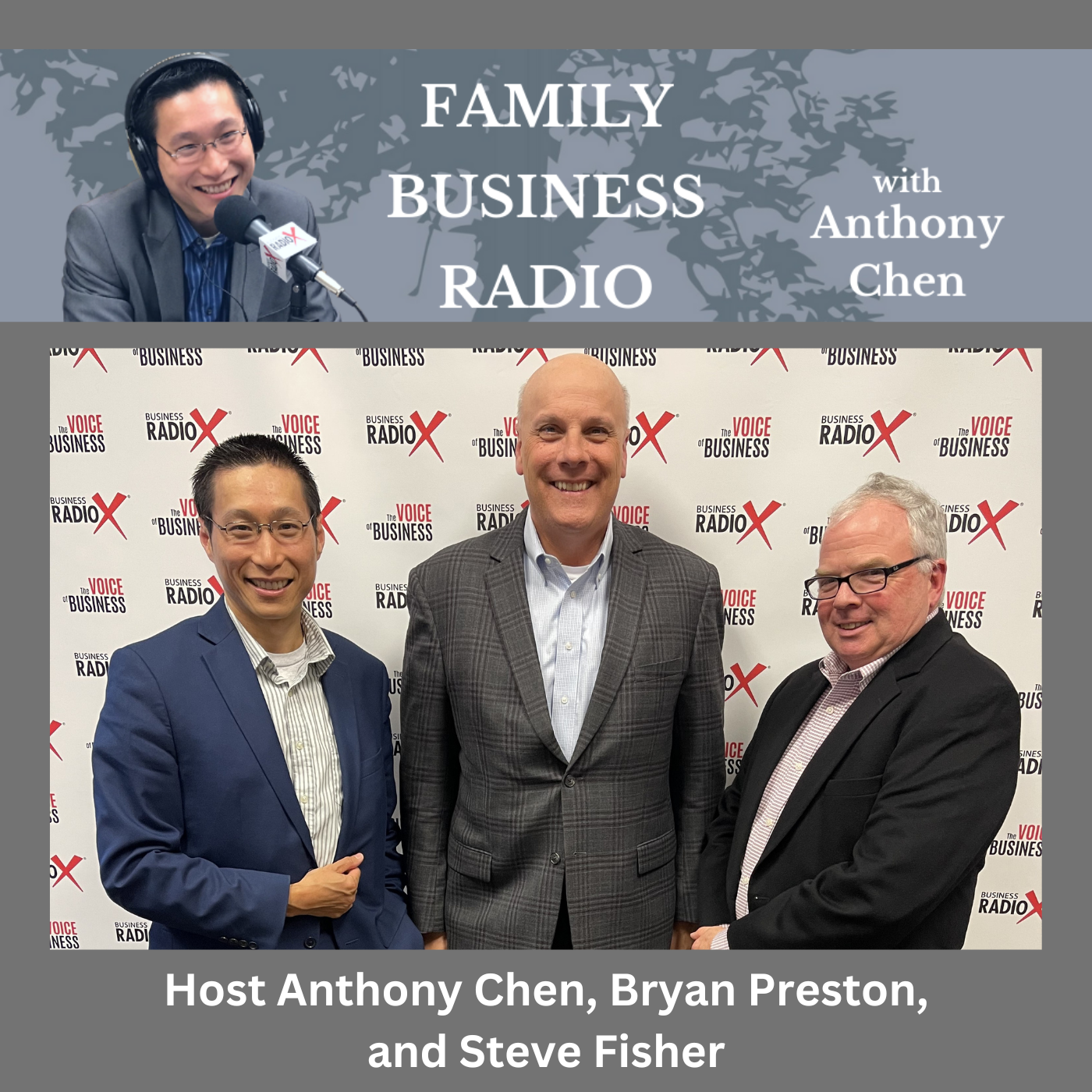
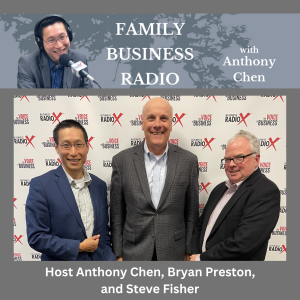
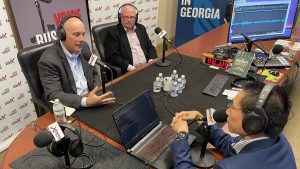
Succession Planning with Steve Fisher and Bryan Preston, on Family Business Radio with host Anthony Chen
Family Business Radio
Succession Planning with Steve Fisher and Bryan Preston
Loading
00:00 /
RSS Feed
Share
Link
Embed

Download file

Succession Planning with Steve Fisher and Bryan Preston, on Family Business Radio with host Anthony Chen

Succession Planning with Steve Fisher and Bryan Preston (Family Business Radio, Episode 70)

In this episode of Family Business Radio, host Anthony Chen is joined by Steve Fisher from Strategy Partners Group and Bryan Preston from Gaelic Business Solutions for a candid conversation about the real challenges that prevent family businesses from growing and transitioning successfully.

Steve shares how his journey from being an engineer to becoming a longtime CFO, which included navigating a stressful acquisition and downsizing, ultimately led him to advise business owners on strategic, operational, and financial issues. He explains why most businesses plateau because the owner becomes the bottleneck, how weak financial reporting and “shoebox” accounting quietly destroy valuation, and why a buyer is purchasing the company’s future potential, not the owner’s heroic history.

Bryan draws on his corporate background and his experience growing up in a declining mill town to explain why healthy small businesses are vital to the communities they serve. He discusses the danger of running a family business like a family instead of a business, how to free up owner time by building repeatable processes and delegating effectively, and why owners should be spending a significant portion of their week working on the business instead of just in it.

Together, Steve and Bryan present practical low-hanging fruit that family business owners can address immediately, including establishing clean books and standard operating procedures, as well as tackling difficult questions about succession, legacy, and the true requirements for successfully passing the torch.

Family Business Radio is underwritten and brought to you by Anthony Chen with Lighthouse Financial Network. The show is produced by John Ray and the North Fulton affiliate of Business RadioX®.

Key Takeaways from This Episode

  • Start with the end in mind. Steve says owners should think about their exit when starting a business, as every owner will leave eventually, and the only question is how much control they will have over that transition.
  • Owner dependency kills value. Both guests note that the greater the business’s reliance on the owner’s daily involvement and crisis management, the less attractive and valuable it becomes to potential buyers or future successors.
  • Clean financials are nonnegotiable. Many family businesses rely on checkbook accounting or neglect their balance sheets and cash flow, making it difficult to run the company and even harder to sell it. Establishing solid, understandable financial statements is a foundational step.
  • Documented processes are an asset. Written, current, and consistently followed standard operating procedures make a business more turnkey, easier to scale, and significantly more appealing to successors or acquirers who need to understand how operations function without the owner’s presence.
  • Delegation is about trust and monitoring. When owners refuse to delegate responsibilities to capable team members, it often indicates a trust issue, either regarding the employee or the owner’s ability to supervise effectively. Learning to delegate tasks and then monitor the results is essential for growth.
  • Family must act like a business at work. Bryan highlights that family dynamics, charitable payroll decisions, and unresolved personal issues can undermine performance and value. Buyers will not pay to support family dynamics, so these issues must be addressed well before any transition.

Topics Discussed in this Episode

00:00 Introduction to Family Business Radio
00:41 Meet Steve Fisher: From Engineer to CFO
02:03 The Rise of Fractional CFO Services
03:16 Challenges in Family Businesses
05:10 Succession Planning Insights
08:09 Personal Experience and Lessons Learned
10:01 Common Mistakes in Family Businesses
12:30 The Importance of Delegation
19:28 Unique Client Stories
21:53 Future Aspirations and Goals
24:52 Introduction to Bryan Preston
25:02 Bryan’s Corporate Journey
25:46 Helping Small Businesses
29:07 Challenges in Delegation
30:51 Vision and Growth
33:13 Succession Planning
36:15 Family Business Dynamics
38:15 Final Thoughts and Contact Information
43:51 Closing Remarks and Financial Advice

Steve Fisher, Founding Partner, Strategy Partners Group

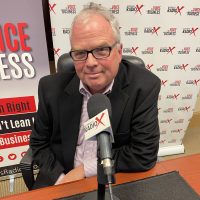
Steve Fisher, Strategy Partners Group, on Family Business Radio with host Anthony Chen
Steve Fisher, Strategy Partners Group

Steve Fisher is the founder of Strategy Partners Group and brings more than 30 years of leadership experience as a CFO, management consultant, and advisor to growing companies. With a background in industrial engineering from Virginia Tech and a long tenure as CFO of a national financial services firm, he helps business owners and executive teams improve financial performance, manage risk, and build companies that are prepared for growth or exit. His expertise includes financial analysis and modeling, regulatory compliance, process improvement, and building monitoring and accountability systems that support better decision-making.

Known for making complex financial topics understandable to non-financial leaders, Steve has co-developed and delivered “Finance for Everyone,” contributed as a subject matter expert to executive training programs, and spoken to groups ranging from Emory University’s continuing education programs to private business networks. Through Strategy Partners Group, he works with C-suite leaders to design and support strategic, value-enhancing initiatives across their organizations, including succession and exit strategy planning.

Website | LinkedIn

Bryan Preston, Owner, Gaelic Business Solutions, LLC

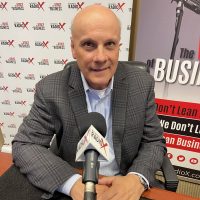
Bryan Preston, Owner, Gaelic Business Solutions, LLC, on Family Business Radio with host Anthony Chen
Bryan Preston, Gaelic Business Solutions, LLC

Bryan Preston is the owner of Gaelic Business Solutions, LLC, a consulting firm focused on small and mid-sized businesses. He brings more than 30 years of executive experience from large organizations, where he served in roles such as Vice President of People and Culture, Senior Vice President of Talent Management and Community Relations, Interim CIO, Senior Vice President of Marketing and Product Management, Managing Director of New Product Development, Vice President and Business Unit Leader, and Vice President of Operations. Bryan holds a bachelor’s degree in quantitative economics from Framingham State University. Bryan has been married to his wife, Lori, for 39 years, and together they have three grown children and five grandchildren.

Gaelic Business Solutions partners with mid-market leaders who have outgrown basic business tactics but do not fit the mold for enterprise playbooks. Using its Mid-Market Optimization Method™, the firm provides strategic advice grounded in Bryan’s cross-industry executive experience. The focus is on practical, executive-level insight tailored for operators who want results and clarity, not theoretical frameworks or unnecessary complexity that slows execution.

Website | LinkedIn

Anthony Chen, Host of Family Business Radio

Anthony Chen, Host of Family Business Radio

Family Business Radio is sponsored and brought to you by Anthony Chen with Lighthouse Financial Network. Securities and advisory services are offered through OSAIC, member FINRA/SIPC. RAA is separately owned, and other entities and/or marketing names, products, or services referenced here are independent of OSAIC. The main office address is 575 Broadhollow Rd., Melville, NY 11747. You can reach Anthony at 631-465-9090, ext. 5075, or by email at anthonychen@lfnllc.com.

Anthony Chen started his career in financial services with MetLife in Buffalo, NY, in 2008. Born and raised in Elmhurst, Queens, he considers himself a full-blooded New Yorker while now enjoying his Atlanta, GA, home. Specializing in family businesses and their owners, Anthony works to protect what is most important to them. From preserving to creating wealth, Anthony partners with CPAs and attorneys to help address all of the concerns and help clients achieve their goals. By using a combination of financial products ranging from life, disability, and long-term care insurance to many investment options through Royal Alliance, Anthony looks to be the eyes and ears for his client’s financial foundation. In his spare time, Anthony is an avid long-distance runner.

Follow this link to access the complete show archive of Family Business Radio.

Tagged With: Anthony Chen, Bryan Preston, business coaching, business strategy, business transitions, business valuation, cash flow management, checkbook accounting, Delegation, exit planning, exit readiness, Family Business, Family Business Radio, financial statements, Fractional CFO, Fractional Executive, Gaelic Business Solutions, growth plateaus, owner dependency, selling a business, small business consulting, standard operating procedures, Steve Fisher, strategic planning, Strategy Partners Group, Succession Planning

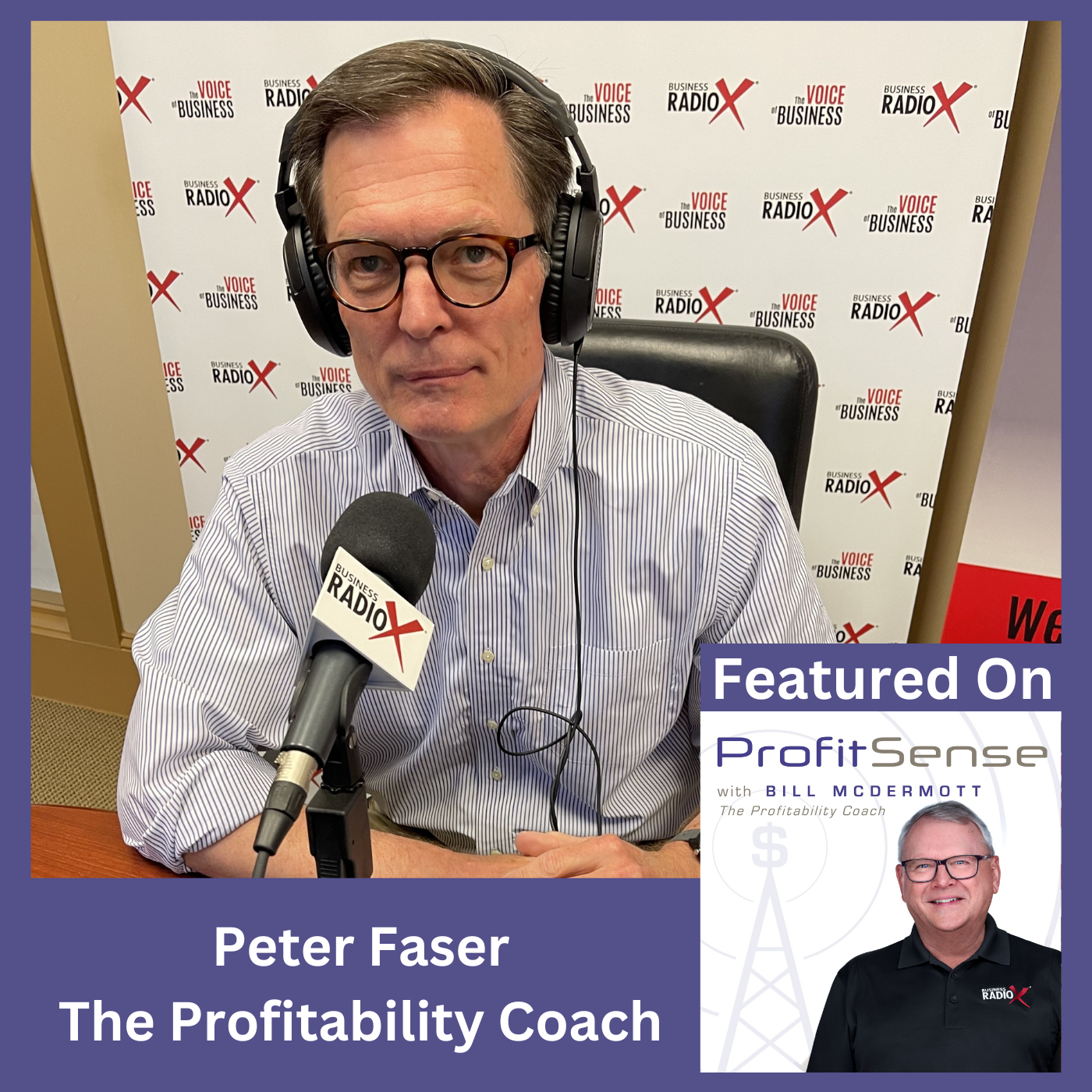
Challenges in Exiting a Business, with Peter Faser, The Profitability Coach

May 28, 2024 by John Ray

Challenges in Exiting a Business, with Peter Faser, The Profitability Coach
North Fulton Studio
Challenges in Exiting a Business, with Peter Faser, The Profitability Coach
Loading
00:00 /
RSS Feed
Share
Link
Embed

Download file

Challenges in Exiting a Business, with Peter Faser, The Profitability Coach

Challenges in Exiting a Business, with Peter Faser, The Profitability Coach

Peter Faser: I think, the first challenge you always run into is valuation expectations. Having a good understanding of what recent trades are in a specific industry is vital to understanding what your company is worth.

I think a tendency of business owners, because they live it day to day and because they’re emotionally attached to it, is to always think that it is worth X. Like anything, it is worth what someone is willing to pay for it, and especially in businesses, it is worth whether you’re running a discounted cash flow analysis or you’re running an enterprise value based on an EBITDA number.

Where I think I can be most helpful is I’ve spent a lot of time in my career helping clients get to the point where they are ready to sell. But also on the flip side, running due diligence, I worked for two years for an investment bank out of Birmingham, Alabama. And I led the due diligence team because they wanted to expand their line of business.

They wanted to bring a company into the fold, into the holding company. And getting into the weeds of what you look for, the interviews that you’re conducting, the questions you’re asking, and getting into the war room, if you will, of what are the financials really telling you. about the institution that wants to be acquired.

And when you’re on the flip side, I think having worked both sides of the trade, I think I can be very instrumental in helping business owners think through, okay, what is that going to look like for me?

Listen to Peter’s full ProfitSense with Bill McDermott interview here.

Peter Faser, The Profitability Coach

Peter Faser has over 25-years of commercial, corporate and investment banking experience.  His passion has always been helping his clients get to a better place financially, whether they are a small business or a publicly traded company.  He began his career with Trust Company Bank in Atlanta, managing a portfolio of middle-market clients and guiding them in appropriate balance sheet management and income statement efficiencies.

Peter Faser, The Profitability Coach

Peter then pivoted to specializing in the banking of other financial institutions, and for the next 17 years, Peter assisted his clients with debt and equity capital solutions to promote growth, along with providing startup capital solutions for de novo institutions.  Additionally, Peter and his team ran due diligence on potential acquisition targets in the banking space and assisted in getting his clients ready to sell.

For seven years, Peter worked with Truist Securities, where he originated a new line of business designed to help corporate and investment banking clients recognize human capital efficiencies by increasing productivity, engagement and retention levels.  Through this experience of working with over 500 clients across the country, Peter recognized that the level of advisory services offered to smaller clients was not as prevalent as it once was, and he found that most clients were so focused on running their businesses day to day that they were missing the sensitivity analysis required to move their business forward.  He has now joined forces with his former teammate, Bill McDermott, to help fill this educational gap.  He is excited to be working with The Profitability Coach and getting back to the fundamentals of helping small businesses discover the right path to profitability.

LinkedIn


The “One Minute Interview” series is produced by John Ray and the North Fulton studio of Business RadioX® in Alpharetta. You can find the full archive of shows by following this link.

Renasant Bank has humble roots, starting in 1904 as a $100,000 bank in a Lee County, Mississippi, bakery. Since then, Renasant has grown to become one of the Southeast’s strongest financial institutions, with over $13 billion in assets and more than 190 banking, lending, wealth management, and financial services offices in Mississippi, Alabama, Tennessee, Georgia, and Florida. All of Renasant’s success stems from each of their banker’s commitment to investing in their communities as a way of better understanding the people they serve. At Renasant Bank, they understand you because they work and live alongside you every day.

Tagged With: Bill McDermott, business exit, business valuation, Peter Faser, ProfitSense, ProfitSense with Bill McDermott, The Profitability Coach

Understanding The Importance of Regular Business Valuations, with David Hern, Sofer Advisors

January 3, 2024 by John Ray

David Hern, Sofer Advisors
North Fulton Business Radio
Understanding The Importance of Regular Business Valuations, with David Hern, Sofer Advisors
Loading
00:00 /
RSS Feed
Share
Link
Embed

Download file

David Hern, Sofer Advisors

Understanding The Importance of Regular Business Valuations, with David Hern, Sofer Advisors (North Fulton Business Radio, Episode 736)

On this episode of North Fulton Business Radio, host John Ray talked with David Hern, CEO at Sofer Advisors. David highlighted the importance of regular business valuations and shared why it’s a key metric that businesses should track. He also talked about how valuations are tied to both tangible and intangible assets, as well as the significant role valuations play in strategic decision-making. David shared anecdotes from his career and explained how company valuations help in disputes or potential mergers. He also discussed how his firm helps businesses understand and evaluate their own worth.

North Fulton Business Radio is broadcast from the North Fulton studio of Business RadioX® inside Renasant Bank in Alpharetta.

David Hern, CEO, Sofer Advisors

David Hern is the founder and chief executive officer of Sofer® Advisors, LLC, focusing on business advisory services related to litigation assistance, estate and tax planning, and business enterprise valuations for various privately held and public companies.

He is a qualified financial analyst with a proven ability to simply and clearly communicate analysis to boards of directors, presidents and CEOs, CFOs, controllers, and private equity portfolio managers.

Mr. Hern has been recognized for enabling organizations to determine their enterprise and equity value for a variety of situations, including strategic planning, sale or IPO, mergers and acquisitions, financial reporting (common stock, stock option grants, purchase price allocations, impairment analyses, etc.), and tax compliance (estate & gift, 409A, NUBIG). Industry experience includes, but is not limited to, professional services, business services, healthcare, information technology, financial services, and manufacturing and distribution.

LinkedIn

Sofer Advisors

Sofer® Advisors was created in 2019, but their experience with valuation goes back over a decade. Their CEO, David Hern, has worked in the business valuation field at both boutique advisory firms and large international financial services companies.

While at these firms, David recognized the need for a boutique financial advisory firm in the Atlanta area to serve the business valuation needs of small- and medium-sized businesses.

These businesses have unique needs that require an advisor who can both empathize and have the agility to deliver prompt insights. Sofer® Advisors was formed to fill this void while providing high-quality business valuations to the lower and middle markets.

Since its inception, Sofer® Advisors has quickly added associates to help with the growing business. The firm specializes in providing a neutral third-party valuation of closely held businesses. The valuation and its insights will give the business owner the confidence they need when contemplating a material but uncertain financial decision.

After determining a company’s value, they communicate that information to the relevant stakeholders, including company management, the board of directors, shareholders, and financial or legal advisors.

This process involves more than just providing accurate numerical valuations. They put numbers into proper perspective, giving you key insights when making critical business decisions.

Their “Heart of a Teacher” approach is designed to help you understand the data we provide and how to use these insights to immediately benefit your organization.

Valuation services are applicable in many situations where business value may be uncertain and critical. These situations include litigation assistance, estate and gift tax planning, financial and tax reporting, and other contexts for public and private companies.

Website | LinkedIn | YouTube

Topics in this Interview

00:04 Introduction
01:20 Welcoming Guest: David Hearn, CEO of Sofer Advisors
01:33 Understanding Sofer Advisors and Their Services
02:21 David’s Journey and Passion for Business Valuation
09:40 The Importance of Business Valuation in Different Contexts
20:09 The Role of Intangible Assets in Business Valuation
27:50 Success Stories and Impact of Regular Valuations
30:53 Connecting with Sofer Advisors
32:00 Closing Remarks and Show Wrap-up


North Fulton Business Radio is hosted by John Ray and broadcast and produced from the North Fulton studio of Business RadioX® inside Renasant Bank in Alpharetta. You can find the full archive of shows by following this link. The show is available on all the major podcast apps, including Apple Podcasts, Spotify, Google, Amazon, iHeart Radio, and many others.

RenasantBank


Renasant Bank has humble roots, starting in 1904 as a $100,000 bank in a Lee County, Mississippi, bakery. Since then, Renasant has become one of the Southeast’s strongest financial institutions, with over $13 billion in assets and more than 190 banking, lending, wealth management, and financial services offices in Mississippi, Alabama, Tennessee, Georgia, and Florida. All of Renasant’s success stems from each of their banker’s commitment to investing in their communities as a way of better understanding the people they serve. At Renasant Bank, they understand you because they work and live alongside you every day.


Tagged With: advisory firm, business valuation, business valuations, closely-held businesses, david hern, estate planning, John Ray, litigation, North Fulton Business Radio, Sofer Advisors, valuations

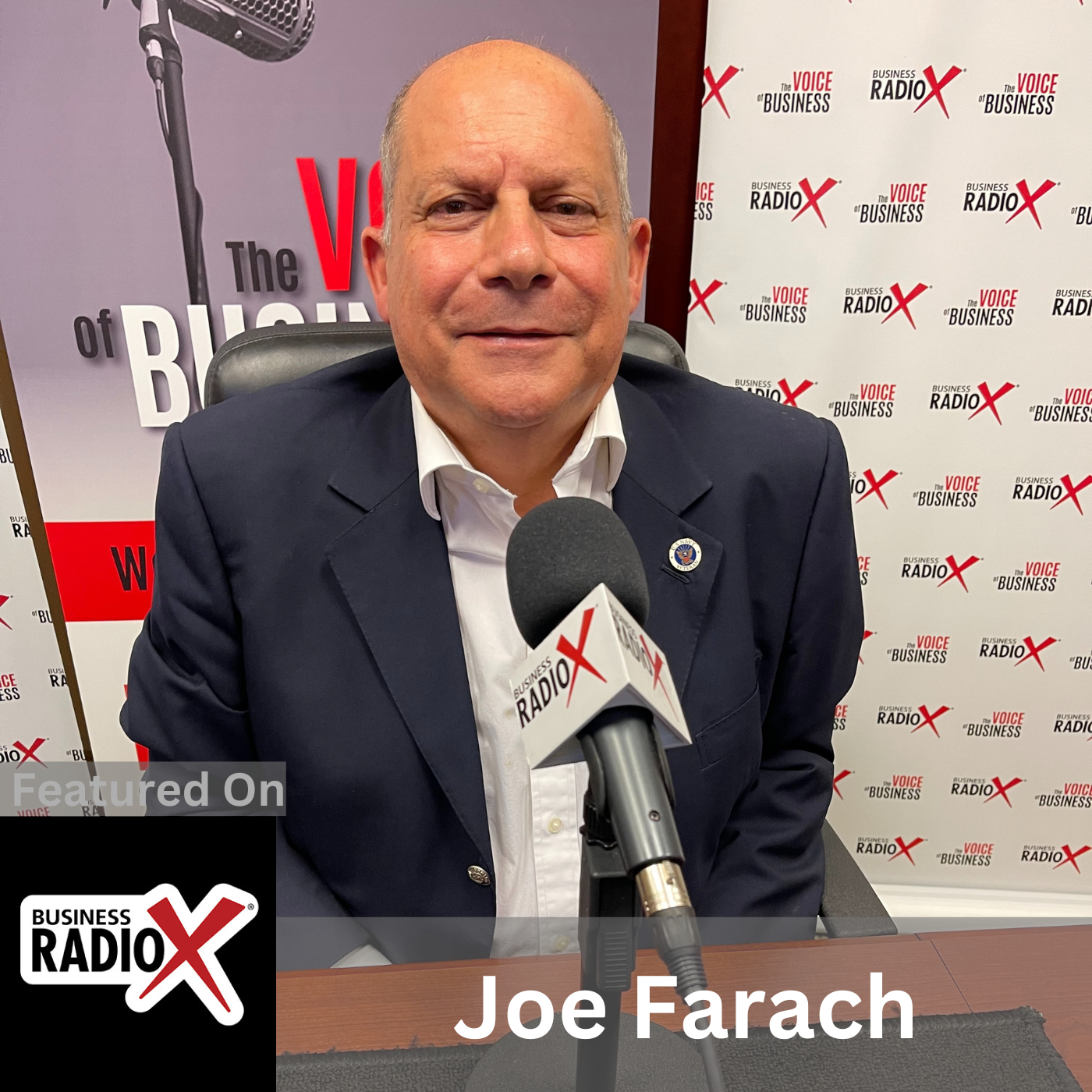
Maximizing Value in Your Business Exit, with Joe Farach, Revenue Igniter Group and Neri Capital Partners

December 18, 2023 by John Ray

Joe Farach
North Fulton Business Radio
Maximizing Value in Your Business Exit, with Joe Farach, Revenue Igniter Group and Neri Capital Partners
Loading
00:00 /
RSS Feed
Share
Link
Embed

Download file

Joe Farach

Maximizing Value in Your Business Exit, with Joe Farach, Revenue Igniter Group and Neri Capital Partners (North Fulton Business Radio, Episode 734)

On this North Fulton Business Radio episode, host John Ray welcomed Joe Farach, a seasoned expert in business growth and exit planning. Joe’s remarks centered on preparing businesses for sale, process optimization, handling due diligence, and building a robust management team. He further highlighted the need to start considering exit planning as early in the business’s inception as possible to anticipate challenges and ensure a more seamless transition. Other key topics Joe addressed include business valuation, leadership development, overcoming challenges in the selling process, the role of strategic thinking in business growth, and success stories from his work.

North Fulton Business Radio is broadcast from the North Fulton studio of Business RadioX® inside Renasant Bank in Alpharetta.

Joe Farach, Revenue Igniter Group and Neri Capital Partners

Joe Farach brings over 35 years of experience in strategy formulation, business development, market expansion, operations improvement, leadership development, and M&A. He has diverse experience working for global Fortune 500 companies, private family-owned companies, ESOPs, and starting his own business.

His career highlights include starting a manufacturing and service company in Brazil, acquiring and integrating a $200 million multi-plant business in the U.S., turning around a Mexican subsidiary, developing international capital investment projects, and formulating and implementing a global M&A strategy. He also led and grew P&L in companies and divisions ranging from $1 million to $300 million. Joe started his career as a nuclear submarine officer in the U.S. Navy.

Joe is a Certified Exit Planning Advisor and a Certified Mergers and Acquisition Advisor. He holds a B.S. Mechanical Engineering degree from California Polytechnic University, Pomona, and an M.B.A. from Villanova University. In addition to English, he has native fluency in Spanish and Portuguese.

Joe’s LinkedIn Profile | Revenue Igniter Group LinkedIn | Neri Capital Partners website

Questions and Topics in this Interview

00:04 Introduction and Welcome
01:15 Introduction of Guest: Joe Farach
01:27 Discussion on Business Exit Planning
02:58 Joe’s Personal and Professional Journey
08:04 Insights on Business Valuation and Exit Planning
10:47 Challenges in Business Selling and Exit Planning
24:24 Success Stories and Client Experiences
28:02 Contact Information and Closing Remarks


North Fulton Business Radio is hosted by John Ray and broadcast and produced from the North Fulton studio of Business RadioX® inside Renasant Bank in Alpharetta. You can find the full archive of shows by following this link. The show is available on all the major podcast apps, including Apple Podcasts, Spotify, Google, Amazon, iHeart Radio, and many others.

RenasantBank


Renasant Bank has humble roots, starting in 1904 as a $100,000 bank in a Lee County, Mississippi, bakery. Since then, Renasant has become one of the Southeast’s strongest financial institutions, with over $13 billion in assets and more than 190 banking, lending, wealth management, and financial services offices in Mississippi, Alabama, Tennessee, Georgia, and Florida. All of Renasant’s success stems from each of their banker’s commitment to investing in their communities as a way of better understanding the people they serve. At Renasant Bank, they understand you because they work and live alongside you every day.

Tagged With: Business Exit Planning, business selling, business valuation, exit planning, Joe Farach, John Ray, Neri Capital, Neri Capital Partners, North Fulton Business Radio, Revenue Igniter Group, selling a business, strategy

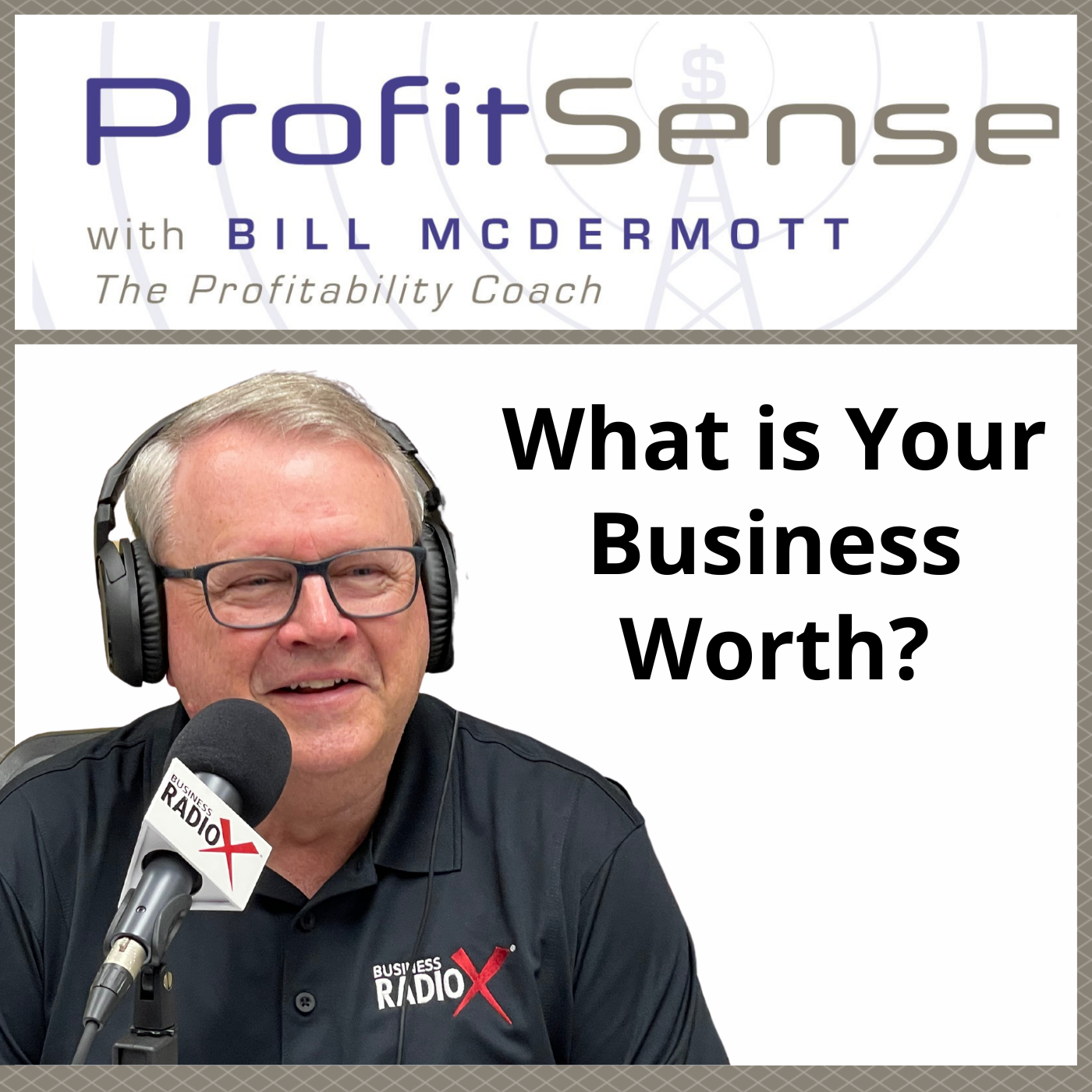
What is Your Business Worth?, with Bill McDermott, Host of ProfitSense

December 14, 2023 by John Ray

What Is Your Business Worth?

What is Your Business Worth?, with Bill McDermott, Host of ProfitSense

In this commentary from a recent episode of ProfitSense, Bill McDermott asks business owners to consider what their business is worth, and why an informed answer to that question is so important.

Bill’s commentary was taken from this episode of ProfitSense.

ProfitSense with Bill McDermott is produced and broadcast by the North Fulton Studio of Business RadioX® in Alpharetta.

Bill McDermott: I’d like to talk about the one question every business owner should be able to answer, and that’s: what’s my business worth?

In a recent study, business owners were asked what they estimated the value of their business to be. Ten percent didn’t have a clue. The other 90% answered in a wide range between $500,000 and $100 million.

When asked how they arrived at that valuation, two-thirds answered that they had no specific method or that they used some kind of informal methodology. Only 1/3 answered that they obtained an independent valuation from a qualified professional.

But it’s crucial to know the true value of your business for two main reasons:

  1. To make informed decisions about the future, such as whether to sell, expand, or make other major changes. For example, if you know that your business is worth a significant amount of money, you may be more likely to consider selling it in the future. Or, if you know that your business is growing rapidly, you may be more likely to consider expanding into new markets.
  2. To attract investors or partners.  If you are looking to attract investors or partners, knowing the value of your business can be a valuable asset. Investors and partners will want to know how much your business is worth before they commit any money or resources. By having a professional valuation, you can show potential investors and partners that your business is a sound investment.

Typically, our business is the largest asset on our personal financial statement. We should know the value to make informed decisions.

About ProfitSense and Your Host, Bill McDermott

Bill McDermott
Bill McDermott

ProfitSense with Bill McDermott dives into the stories behind some of Atlanta’s successful businesses and business owners and the professionals that advise them. This show helps local business leaders get the word out about the important work they’re doing to serve their market, their community, and their profession. The show is presented by McDermott Financial Solutions. McDermott Financial helps business owners improve cash flow and profitability, find financing, break through barriers to expansion, and financially prepare to exit their business. The show archive can be found at profitsenseradio.com.

Bill McDermott is the Founder and CEO of McDermott Financial Solutions. When business owners want to increase their profitability, they don’t have the expertise to know where to start or what to do. Bill leverages his knowledge and relationships from 32 years as a banker to identify the hurdles getting in the way and create a plan to deliver profitability they never thought possible.

Bill currently serves as Treasurer for the Atlanta Executive Forum and has held previous positions as a board member for the Kennesaw State University Entrepreneurship Center, Gwinnett Habitat for Humanity, and Treasurer for CEO NetWeavers. Bill is a graduate of Wake Forest University, and he and his wife, Martha, have called Atlanta home for over 40 years. Outside of work, Bill enjoys golf, traveling, and gardening.

Connect with Bill on LinkedIn and Instagram, and follow McDermott Financial Solutions on LinkedIn.

Tagged With: Bill McDermott, business valuation, McDermott Financial Solutions, Profitability Coach Bill McDermott, ProfitSense with Bill McDermott, small business, valuation

How Divorce Impacts a Business Sale, with Melissa Gragg, Bridge Valuation Partners, LLC

January 31, 2023 by John Ray

Melissa Gragg
How to Sell a Business
How Divorce Impacts a Business Sale, with Melissa Gragg, Bridge Valuation Partners, LLC
Loading
00:00 /
RSS Feed
Share
Link
Embed

Download file

Melissa Gragg

How Divorce Impacts a Business Sale, with Melissa Gragg, Bridge Valuation Partners, LLC (How To Sell a Business Podcast, Episode 9)

Certified Valuation Analyst Melissa Gragg, managing partner of Bridge Valuation Partners, LLC and host Ed Mysogland explore the complex issues that arise for the business when a business owner divorces. They address topics of navigating the emotions of the parties, disputes over the value, tips to prevent a deal from falling apart, the problem with buy/sell agreements, and much more.

How To Sell a Business Podcast is produced and broadcast by the North Fulton Studio of Business RadioX® in Atlanta.

Bridge Valuation Partners, LLC

Bridge Valuation Partners, LLC conducts business valuations for estate tax purposes, divorce litigation, partner disputes and mergers and acquisitions. Bridge Valuation Partners, LLC works to provide attorneys with a complete understanding of the financial issues in litigation cases involving breach of conduct, patent infringement, acts of fraud, asset misappropriation, breach of fiduciary responsibility and partnership disputes.

They have experience providing financial calculations for family law and personal injury cases as well as testimony in deposition and trial. Bridge Valuation Partners, LLC also serves as a subcontractor providing business valuations, lost profits calculations, lost wages calculations and forensic services to consultants including: accounting firms, investment banking firms, business valuation firms and sole practitioners involved in consulting.

Company website | LinkedIn | Twitter | YouTube

Melissa Gragg, CVA, MAFF, CDFA, Managing Partner, Bridge Valuation Partners, LLC

Melissa Gragg, CVA, MAFF, CDFA, Managing Partner, Bridge Valuation Partners, LLC

Melissa provides litigation support services and expert witness testimony for marital dissolution, owner disputes, commercial litigation, business interruption claims, personal damage calculations, lost profits and personal injury. She also conducts business valuations for purposes of estate planning as well as mergers and acquisitions.

  • Certified Valuation Analyst (CVA)

  • Certified Fraud Examiner (CFE)

  • Master Analyst in Financial Forensics – Matrimonial Litigation (MAFF)

  • Certified Divorce Financial Analyst (CDFA)

·    Possesses over 16 years of experience in providing valuation and consulting for companies ranging in size from large, publicly-traded firms to small, privately-held operations and family limited partnerships (FLPs)

·     Expertise performing valuations in numerous industries, including automotive/car dealerships, construction, electrical contracting, fast-food retail franchises, financial services, food and produce distributors, gas stations, hospitality services, healthcare (pharmacies, rural health clinics, nursing homes, doctors, dentists, orthodontists, chiropractors), insurance companies, industrial, landscaping, law firms, marketing research, nuclear power plant, payroll services, plastics (injection molding, thermoforming, packaging), printing and imaging, specialty retail, restaurants, technology, trucking and website developers.

LinkedIn

Ed Mysogland, Host of How To Sell a Business Podcast

Ed Mysogland, Host of “How To Sell a Business”

The How To Sell a Business Podcast combines 30 years of exit planning, valuation, and exit execution working with business owners. Ed Mysogland has a mission and vision to help business owners understand the value of their business and what makes it salable. Most of the small business owner’s net worth is locked in the company; to unlock it, a business owner has to sell it. Unfortunately, the odds are against business owners that they won’t be able to sell their companies because they don’t know what creates a saleable asset.

Ed interviews battle-tested experts who help business owners prepare, build, preserve, and one-day transfer value with the sale of the business for maximum value.

How To Sell a Business Podcast is produced virtually from the North Fulton studio of Business RadioX® in Alpharetta.  The show can be found on all the major podcast apps and a full archive can be found here.

Ed is the Managing Partner of Indiana Business Advisors. He guides the development of the organization, its knowledge strategy, and the IBA initiative, which is to continue to be Indiana’s premier business brokerage by bringing investment-banker-caliber of transactional advisory services to small and mid-sized businesses. Over the last 29 years, Ed has been appraising and providing pre-sale consulting services for small and medium-size privately-held businesses as part of the brokerage process. He has worked with entrepreneurs of every pedigree and offers a unique insight into consulting with them toward a successful outcome.

Connect with Ed: LinkedIn | Twitter | Facebook

TRANSCRIPT

Introduction: [00:00:00] Business owners likely will have only one shot to sell a business. Most don’t understand what drives value and how buyers look at a business. Until now. Welcome to the How to Sell a Business podcast where every week we talk to the subject matter experts, advisors and those around the deal table about how to sell at maximum value. Every business will go to sell one day. It’s only a matter of when. We’re glad you’re here. The podcast starts now.

Ed Mysogland: [00:00:35] In this podcast, I had the opportunity to visit with Melissa Gragg. And for those of you who have either been divorced, know somebody that got divorced that owns a business or is thinking about getting a divorce, this episode’s for you.

Melissa is just dynamite. She has been in this world of disputes and complex valuation matters for years. I’ve followed her career. She writes an awful lot about the topic. And just a few things about her. You know, she’s a certified valuation analyst. She’s a certified fraud examiner. She’s a master analyst in forensic, financial forensics specializing in matrimonial litigation. And finally, she’s a certified divorce financial analyst. And in our time together, there was no shortage of tips about these complex matters where there’s emotions involved and what is fair may not necessarily be equal. So, I hope you enjoy my conversation with Melissa Gragg.

I’m your host, Ed Mysogland. On this podcast, I interview buyers, sellers, dealmakers, and other professional advisors about what creates value in a business and how that business can effectively be sold at a premium value. On today’s show, I am so stoked. I have Melissa Gragg of Bridge Valuation Partners and The Valuation podcast. I came to know her years ago. She’s going to give me grief about it, but she was a prolific author. And I read about her in the Trade Magazines, and she was always that person for divorce and complex issues. And I just enjoy reading about her. And at some point, I was going to get her on the podcast, and I finally have done it. And this is round two because I screwed up the technology the first time. So, Melissa, welcome to round two.

Melissa Gragg: [00:02:51] Thank you. So good to be here, again.

Ed Mysogland: [00:02:54] Right. So, before we get started, I kind of gave an overview about just your background, but you know, can you talk a little bit about how Bridge Valuation Partners came to be, as well as your own podcast?

Melissa Gragg: [00:03:13] Yeah, sure. I mean, Bridge Valuation Partners, I kind of had to come up with a name at some point because we all start with a company working for others and then we create our own company. And I was like, well, what do I really do? I kind of am the bridge between two people that are disagreeing, whether they’re a couple or a business owner, and things like that. And so, most of my practice has been around litigated matters or when people are fighting. And I started to realize that if I could work for both of them, it was a little bit easier because being impartial in the middle is easier when you work for both sides. So, I kind of have been doing a lot of joint work or working as a joint expert and then doing mediation, which is kind of like doing the same thing just outside of court.

Ed Mysogland: [00:04:07] Well, let’s start with divorce. In my world, that is the kiss of death. I mean, it is if someone shows up and says, I want to sell my business because I’m getting divorced, I know that it is guaranteed to be a mess. And chances are it’s never going to sell because somebody is not going to be happy. So, I guess that’s kind of where I wanted to start, was if that’s the decision, whether it’s one party or the other, let’s go ahead and sell, I mean how do you manage that process when both parties, you know, it’s an emotionally charged event? And how can you help somebody through that process? Because I can tell you, we’ve been — I don’t want to say we do a pretty good job of it, but it still breaks down and for no apparent reason other than I’m pissed at the other party. You know what I mean?

Melissa Gragg: [00:05:14] Right. Right. Well, I mean, I think you have a lot of factors. One is traditionally in every state is different, but traditionally, in a divorce setting, if one party wants to keep the business and maybe the other party doesn’t, then we’re going to value it. Right. And one party is going to keep it and the other is going to get equivalent assets. So, then you have a situation where maybe they can’t agree to the price and now you have well, you buy it. No, you buy it. Maybe it’s a passive interest, right? Maybe we’re just a 10 percent owner in something and we don’t want to split it, or it can’t be split.

So, then you have a situation where is the judge forcing the sale? And the judge could say, well, if you guys can’t agree to it, then we’re going to have kind of a liquidation, if you will. And now, we switch over into the M&A world. Well, in the M&A world, what do we want to do? We want to prep for the sale. We want to get our client in the best light possible. And you are literally starting with, we’re getting divorced, we’re selling the company. And so, you’re in a fire sale. A perception to the buyer, I think is part of the bigger issue. And then you have the distracted owner.

Ed Mysogland: [00:06:32] You know, one of the most — we took it on the chin on this divorce because but at the same time, I was kind of impressed that they did it this way. So, the parties couldn’t agree to value so they put it on the market. And I’ll bet you, it was a great business and we had ten plus offers in a real short period of time. And we got down to the person that they were going to sell to, and the wife bought him out. She used that offer as proxy for fair market value, which to me I mean like I said, it forced me to change my engagement agreement from that point forward. But at the same time, we were pretty impressed that what a great way to, you know, if you can’t resolve who’s going to pay what, all right, you put it on the market. The market will tell you what the value is. And that’s my next question is the difference between fair market value in a divorce setting versus what I just described.

Melissa Gragg: [00:07:42] Well, and what you just described is when somebody is getting divorced, if it’s their first time, they don’t know what to do. A lot of the attorneys are kind of like giving advice on what to do. So, when we have a house, we’re like, oh, call an appraiser, get an idea. Just get a rough estimate of what it’s going to cost. And that might cost a couple hundred bucks to get an appraiser to tell you value your house. Now they say, oh, well, you know, there’s these business brokers, these appraisers, like go out and get an idea for them. So absolutely it has been used as a ploy to determine what the fair market value is.

Now, realistically in valuation, any type of merger is going to have some inkling of a strategic value. And so, when you have a strategic value, it’s that I know something about the market that makes me smarter and or I think I’m getting a deal because you’re going through the divorce or whatever the reasons are they might come up with it. Fair market value is willing buyer, willing seller. And that’s usually one of the edicts for a divorce, is that it just has to be you can’t pay a premium or you can’t get a premium for it.

Ed Mysogland: [00:08:56] Well, that’s what tripped me up. Why not in a million years did I think that we were — that at the end of the day, this is how it was going to work, because I figured somebody would put their hand up and say, this isn’t fair market value. This is something other than that. And it didn’t. And I mean, the judge was tickled pink that, you know, I mean you can’t argue about it.

Melissa Gragg: [00:09:20] The problem is judges, attorneys, everybody in divorce court, when you even describe fair market value and you’re like willing buyer, willing seller, the first thing they say is like, we’re not selling, we’re not selling, we’re not going to market. This isn’t how we should look at it, like it’s all me. You can’t sell me and all of these things which fair market value is the hypothetical. Like it is the assumption that you’re going to put it on the market and what would somebody pay for the cash flow?

And so, I think in in some capacity, when you have an unwilling business owner that is willing to sell out, but maybe not internally because again, you’re never going to know the true value if you’re just a warring couple or warring partners. Like you’re always going to assume that you’re getting screwed over. So, an outside buyer comes in and offers that price. The judge is going to love that because they’re going to say, well, somebody on the outside was willing to pay that and you now paid it. So that person got what it was worth. And they think that that is absolutely the proxy. And even if you have a conversation of, well, we had five buyers and we worked up the price and it’s now a 20 percent premium, quite frankly, then they would probably turn around and say, okay, well, are you willing, sir, to buy your wife’s shares out?

Now, to me, if the wife comes in and buys it at that point, then there was still an implicit understanding that it was worth more. And so now, you’re arguing against a kind of an assumption that’s probably erroneous. But like we’ve talked about this before, they’re locking in on that number and nothing even a willing buyer out in the open field offering to buy this, if they still think that it’s worth more. You know, like right now in divorce, the attachment to property is a big deal. So, the attachment to a business that’s maybe been in the family, or you have children that are working in the business, you have more complexity. Normally, these businesses provide the lifestyle for everyone involved. So, you can’t get rid of the business because then we don’t have an income. And if we don’t have an income, we can’t pay alimony and we can’t pay for the houses. So, it’s kind of a catch 22.

Ed Mysogland: [00:11:44] Play that out. So, what do you do? I mean, that wasn’t where I was going, but I’m interested in what in the world do you do when you have that level of complexity in a family business that the income stream is the source of income for a bunch of family members? Yeah. How do you do that?

Melissa Gragg: [00:12:05] Well, I mean, one is can it continue? And because once we start to take a look from a business valuation standpoint, we start to see some of the nuances, like we have to dial back some of those expenses to understand what the true cash flow is. But in those situations, when it’s providing for the family, a lot of times, I mean quite frankly those are the situations when you have a privately held company, majority owned by one person, right, the father, the grandfather, the mother, the grandmother, whatever, that hierarchy, and you have all these kids. Well, both spouses have an interest to have the kids still employed. But now you’re looking at, most of the time the other spouse is concerned that a lot of personal expenses are being run through the business.

And so, you have this kind of this thing of like, well, we want to dig deeper. Almost always there’s some issue of what has been done from an accounting standpoint, but it’s never in the best interest for the parties to go down that path of like threatening, well, I’m going to call somebody and you’re going to get in trouble for doing these things, putting personal expenses on your business. It’s really starting to educate them on the fact of that sometimes one income stream was great for one household, but it wasn’t great for two. And so, in looking at it, you don’t want to blow it up, right, because it’s still going to be funneling through one party to the other.

But then it becomes, is it rehabilitative, you know, like maintenance, paying somebody should get them to another spot, but that’s not always what it’s used for. So, it becomes a very difficult situation. But you don’t want to like throw the baby out with the bathwater. Like you don’t want to call the IRS or call the Feds to come in because my husband’s doing something or my wife’s doing something when it will crater the entire thing. It’s better to kind of come in and say that there’s a lot of discretionary items that should be done differently.

And as evaluators, we’re not coming in to say that the taxes were done incorrectly, right? We’re making the assumption that they were done properly with the CPA. So, if you have a business owner that does their own taxes, it’s a little bit different. You have to do your own professional due diligence and say, does it make sense? I mean, we had one just yesterday. We presented it. And they were very concerned. And it was based in an industry that has so much fraud in it. So, the odds are there’s something going on. But when we compared it to the bank statements and the tax returns and the financials, guess what, they weren’t too far off. Because the reality is most people aren’t criminals, they’re just trying to like get away with a little bit.

Ed Mysogland: [00:15:06] Yeah, minimize taxes.

Melissa Gragg: [00:15:07] Back it out in the valuation. Yup. Can we look at what it looks like without it? Yup. And that’s really how we approach it.

Ed Mysogland: [00:15:14] And then how do the parties feel about that? Because now, you’re a little bit different, like because you’re hired by both parties to mediate a value. So, your findings are, look, they are what they are. I don’t represent either one of you or I represent both of you. And here’s where it lands. But I guess as you start uncovering the discretionary expenses or you start uncovering getting the business down to truly what you’re valuing. And I mean, how is your level of scrutiny felt by the parties? Is it good or bad? I would imagine it’s good. At least somebody knows that this is going on well. At least one party does, you know.

Melissa Gragg: [00:16:08] Yeah. And I’m not always hired for both parties, but I think you have to operate in this space as if you are always are hired by both parties. Like really looking at it from a neutral standpoint. But then in kind of taking that one step further, if I’m working for both parties and I’m in the middle, I literally am telling them like everybody has their mediation spiel at the beginning. I’m telling them crazy stuff. Like everybody else wants to say, talk nice and be nice. And I’m like, no, I’m there to protect you from yourself and from everybody else in the room. And I’m there to provide education on the value and there’s always going to be gray.

So, in a lot of times, I have to bring the gray up. Like, oh, parties, are you aware, since this is a business owned by one spouse, about the double dip? And they’re like, no, I don’t know about the double dip. And I’m like, well, the double dip is, we can only have income be either salary or profit. And they’re like, okay, well, tell me more. And we talk about that. Well, of course, some of these things are on the side of one party or the other. But if I say it to everybody involved and I say, here are the positives and negatives, and I create it as a situation that we just talk about, it diffuses it.

And if there is an issue, if you spent $1,000, let’s say $10,000, make it good, $10,000 at a jeweler. And I ask what was bought and it was not to your wife, it still is. You control the vibe and the energy of the room. And so, if I’m like, well, what is this $10,000? Did you buy a diamond? Or if I’m just like, it looks like there was $10,000 to Diamond Company, is everybody aware of what was purchased? And one person might say no. And I’ll say, okay, what was purchased? Was it for business purposes? And then it will typically, if there’s infidelity, it’s already known. And we’re quantifying it to say, okay, you spent $10,000 on the paramour. But the thing is, most people use their bank account for multiple expenditures, but the tax accountant is allocating it out and saying this is to the business and this is to you personally. But the spouse doesn’t know that process and doesn’t see that process.

And so, I’m like, yeah, I know he’s using the card, but it’s still the accountant is not putting that as an expense. So, some of it’s education, some of it’s identifying the issues when we have inheritances involved or settlements from suits that’s going to have a little bit more houses, have a little bit more energy. More than houses, vacation homes, because vacation homes are where we went when we were happy as a family. And we want to continue to be happy as a family, even if it’s without that one spouse. So, I’ve seen vacation homes become more of like both parties can use them. But you need to identify where the emotion is going to be because when you mix emotion and numbers, they don’t match. You have to deal with the numbers in a very different way than you have to deal with the emotions. So, when the numbers are tied to the emotion, if you don’t know that going in, how do you back down off of that emotion?

Ed Mysogland: [00:19:52] So in a sale environment, I mean what’s the tip or what’s the tell that things are going to go awry. So, if I’m getting divorced, I want to know, people that are listening, what am I looking for, or how do I know this path? What’s going to happen to me? Or what is the scrutiny? Is this really the colonoscopy I’m told it’s going to be? That kind of thing.

Melissa Gragg: [00:20:28] If you’re the broker, if you’re the M&A advisor and somebody is going through a divorce, you have to be very clear. I would almost get both parties in the room and have the discussion like this is the process. We’re going to get offers, because if you can in the room zoom, however you do it at this point. But if you can lay eyes on that out spouse, the spouse that’s not part of it, and everybody is saying, yes, we are selling this company. If that person is sitting back and being like, well, like how much? Like what is it going to entail? Those are going to be your signs that that’s going to, like if you don’t answer those questions now, eventually that’s almost like your second seller, right? So, you get everything.

So, your first seller is the person that’s totally making the decisions and yet they still have the second seller in the back that could trump everything. So, unless you know the relationship and you’ve put eyes on it because guess what? In a divorce, there’s three stories. Wife, husband, husband, husband, wife, wife. However, you want to look at, there’s two sides, and then there’s the truth. And the problem is, if you don’t put eyes on that situation and it’s acrimonious or it’s okay or they are not aligned, I would almost step back from the situation because you’re just punting that issue until you get closer to a close date and then it’s going to just ruin it at that point. So, I think you’ve got to get both. And who’s making the decision? Like if the court has determined that it’s going to be sold, then there is a written court order for the sale of that company. And so, then you’re working. Now, can somebody break it? Sure, they’re people.

Ed Mysogland: [00:22:16] Well, the funny thing is most of the blowups in recent memory has been once we get an offer and we start moving down that path of this is, you know, how much we’re getting, what’s the promissory note? If there’s a bank involved, is there sub debt? And the prospect of I’m going to have to defer part of my purchase price with this guy I’m trying to totally divest myself of, you know, it hasn’t gone well. And again, as well as due diligence.

Due diligence is another thing, especially if you’ve got husband and wife that have been working in the business and now buyer has to rely on them collectively to provide whether it’s a quality of earnings or whether it’s just your normal due diligence. It is a total pain and that’s where it falls apart. So, I guess that’s where my next question is, you know, now you know where it is, what do you do? I mean, have you seen anything effective that would help me not allow the, I shouldn’t say not allow, how to prevent the deal from blowing up once we agree on purchase price? We’re only about 30 percent of the way there. now we’ve got to verify.

Melissa Gragg: [00:23:51] I think you have to frontload it. So, I think you have to frontload all the work. But the thing that somebody says when they’re in a divorce and when they’re selling their company is the same, it’s my second job. And so, when you’re in a divorce selling your company and running a company, you now have three jobs. And the problem is three jobs is going to stress out anybody, but then you have a divorce which is highly emotional. And then, quite frankly, we are discounting the fact that selling your baby, I mean, your company is highly emotional.

So, when you combine those three, you either have to lower your expectation for quickness and that’s never a good thing in a deal. Right? Like we can’t just like, oh, you have due diligence requests, we’ll get back to you next month. That’s the close. Like you don’t have that space. So, in my mind, if I see somebody that’s in a divorce and every end, like we’re going to talk about all the issues at the beginning, all the negotiations, we’re going to have everything ready for due diligence before it’s even requested. And just be prepared for that capability because I don’t want to disclose it to the buyers of like, oh, you know, like will you be patient with my client because they’re going through a divorce. Like, they don’t care. They see blood and they’re just going to go for you and they’re going to be like, oh, fine, yeah, we’ll give you more time. We’re going to ding you on the price too.

So, in my mind, it’s really having, like everything I think is setting the expectation. And so, if you set the expectation with the couple and you’re like, I don’t know if this is going to be a good time or not or who is the front person, like what things do we have to agree with and what things that we don’t? Because the moment you continue to leave out a spouse, especially gender related, that spouse is not your gender, right, so you keep on leaving out the wife, you’re going to be the bad guy, he’s going to be the bad guy. And it’s going to be a perceived not disclosing the information. You could be giving them everything but the perception.

And so, I think when you get involved in these like people don’t like divorce because half of it’s on perception. There’s no logic about it. There’s no real thing happening. It’s just the perception like, oh, you didn’t have a conversation with, I’m the owner too. And as a woman, we are constantly put to the side in those situations, especially when it’s male advisors. And so, I think that in anything you have to do your own due diligence, the way I do mediations or when I work for a joint party, we have very clear communication. You do not get to talk to me without me responding with your original email. So, if you email me and say I hate this person and the value should be this, I’m going to say thank you for your email. And I’m going to respond to everyone, your spouse, the advisor, everyone. And I’m going to say, I’m going to clarify the situation. And so, in my mind, that keeps me away from having any confidential discussions. Now, I can tell you how we use confidential discussions, but for those from the very beginning until I get the trust of everyone, everything has to be communicated to the whole.

Ed Mysogland: [00:27:15] Well, I’ll tell you, one of the things that you just said was I think really impactful is front loading. That if you’re going to go through a divorce, you need to prepare much more. The normal data room is not adequate. You need a full due diligence uploaded and ready to go because I think the shorter the time from offer to close, even though that’s best practice anyway, in that case you have to do it. That was really great.

Melissa Gragg: [00:27:59] But realistically in a divorce, the discovery process is very extensive. So, in some capacity, if you’re selling after you’re getting divorced, in the divorce is a lot of the documents. Now, if you’re selling and then getting divorced, it’s the vice versa. Like you have all the documents. And in those cases, if you are not hiding the ball, if you are not trying to keep documents away from your spouse, it doesn’t even make sense. Like you are a couple, your money comes from one pot and yet you’re going to take your money and pay two different people to value the same thing. And they’re guaranteed going to come up with different numbers for sure, going to come up with different numbers. And then you’re just going to pay them to fight. And nobody else in the room even knows what they’re talking about.

So, I think that the documents might be there, but they may not be. I mean you’re not going to be ready for equality of earnings. You’re going to have it. And for the most part, I think business brokers and M&A advisors, we know what is going to be needed. And so, from my standpoint, if you see kind of slow times in the process from the divorce standpoint or whatever, because like divorces could take a year or two.

Ed Mysogland: [00:29:16] I get it.

Melissa Gragg: [00:29:16] You might sell a company and still be getting divorced. So, I think you just have to know where you’re at in the process. And then the additional pieces, is this business cyclical? Because if this business is cyclical and we’re heading into Christmas season and that’s their time, you all just have to stop. Like at some point, you just have to be like, this is not going to work. Because if you start to crater the business owner like and with mental health at an all-time high issue, it could be more impactful. So, I just think that having them understand that each of these takes time and a process and that hey, you have the time now, get the documents now, let’s answer the questions. I mean, even doing preliminary valuations, I tell people it’s going to help you know the answers that you have no clue. Like what happened to that expense? I just asked a client, what is this $700,000 other income?

Ed Mysogland: [00:30:21] What was it?

Melissa Gragg: [00:30:22] Like it’s not like $7. It’s like $700. And you know what he said to me? And I said, it was last year, last year, like, we’re right there. Right. And he’s like, really? I wonder how that could be. And I was like, do you think your accountant knows? Oh, yeah, I’m sure she knows. Wait, wait, it could have been literally he named four different things that it could be. So, you have to understand the level of business of what you’re, like does the owner have a hand on every single thing? Or is the owner — I mean because the companies that are selling are $25, $50 million, right? These owners are not doing everything.

And so, they don’t know the answer, but they’re sitting in the room negotiating these. Like you’re negotiating these prices with them. And then they ask one question of like, well, where’s that $700,000 of other income? And you’re like, hey, guy, what’s that 700? And he’s like, oh, it could have been a lot of things. Is it recurring? Is it going to happen again? I don’t know. I don’t know. So, I think that a lot of it’s your due diligence so that you can conduct it without the owner there. And most of the time, we want to conduct all of this with the owner.

Ed Mysogland: [00:31:33] Yeah, no, no.

Melissa Gragg: [00:31:34] But there are going to be times where they’re just going to disappear because they’re going to be so overwhelmed by all of this.

Ed Mysogland: [00:31:40] Yeah, I follow. Well, I want to conclude the story of the woman I told you that used us for fair market value. And her husband was just, I mean just that kind of guy, good for her for getting divorced kind of guy. And she turned it and flipped it. She bought it and flipped it. And I’ll bet you, she made — it wasn’t times two, but it was a good one and a half times, and it was within months. She knew exactly what she was doing. And I loved it because, like I said, it was you don’t wish divorce on anybody, but, boy, you know, this guy was just not, it was a good situation.

Melissa Gragg: [00:32:29] So, I think the hardest issue in divorce valuation in general is that when we’re doing strategic value, when we’re looking at investors, when we’re working for the company, right, and talking about how to grow it, sell it, buy it, whatever, we’re looking at really like what is the potential, right? And we’re kind of ignoring the probability that that’s going to happen because we’re speculating. And quite frankly, even sometimes when I get into these businesses, I was like, yeah, I see it. I see the future. It is bright, it’s going to be beautiful, but it hasn’t happened.

And like, as much as I believe that it could happen, in a divorce we are looking at what has happened, because in some courts they think that a future or a projection or a DCF, a discounted cash flow model is future projections and its future value. Right. And sometimes, we can’t explain that away because they’re just like, no, you’re not. And in divorce, you’re sometimes not entitled to future value. You’re entitled to what this value is today. And so, I think in that capacity, it’s hard because you get in these situations and you feel and you hear the impassioned business owner and they always think that their business is worth more, way more money until they get divorced and then it’s worth nothing, you know. So, you always have that issue.

But for me, it’s kind of getting out of the speculation and the belief that it is going to happen because these people are usually brilliant and they’re coming up with great ideas and they may have a lot of cash flow that’s coming in or investors, but we can’t speculate. Like if you haven’t proved it, and that’s the hard part. Like somebody could say, oh, okay, you’re going to go sell this business for $1 million. I got somebody who’s willing to pay $2 million. Why? Because I sold them on the dream, right? It’s still the same business, but I was able to create a vision that they bought into better than you. Okay. But either way, even if they walked away and that spouse bought it from you, like she probably needed to still pay the deal fees, right?

Ed Mysogland: [00:34:47] No. That’s my point. No, no. That was the whole point. She was excluded from our agreement. It was third party. That’s why I said we changed all of our agreements. If that changes hands from a family member, we’re getting paid. And in this case, it was an intercompany sale. So, yeah, we took it on the chin on that one. But like I said, you know, we paid the tuition and that’s okay. It hasn’t ever happened again.

So, the remaining time that we have, I wanted to talk to you about the work you’re doing with selling companies, because regardless of who you use or how you get your business sold, ultimately the goal is to have a successful exit. And the model that, what you’ve taken as far as the mediation process and applied it to selling a company, to me I think that is fascinating and truly a great way to exit a business. So, can you talk a little bit about your process and the evolution of it I guess to begin with and then how you do that and what has been most effective on, you know, as far as the exit?

Melissa Gragg: [00:36:12] I think lately I’ve seen more partnerships either buying in or buying out. And most of it’s because we either got money sitting on the side or we need the money, right? And so, somebody will come to me and they will say, hey, I got a person, they’re thinking maybe they’re employee, maybe they’re an outside, they want to buy the company. And I need to know what it’s worth because we need to start these negotiations. And then I say, great. And usually, it’s the business owner, right? And sometimes it’s the person buying in. I’m going to buy into this company, can you tell me if it’s going to be worth it?

A lot of times, I’m telling them like, you don’t need a valuation report. Like you need numbers run and depending upon your credential, you can either run those numbers and give a smaller piece of paper or not, but you have to understand your own standards. But it’s really, though, because what I tell them is I can give you a number, I can look at the business, and I can give you the number. And that’s going to be the starting point of the negotiation.

And whatever number you tell them, depending upon what side you are, is either where you start and you’re going to pay more, or you are going to get less. But either way, you have to determine where that starting point is. And I say, a way to do this if we don’t start right now is you go back to that person, that partner, and you say, hey, do you want to do it together? You split the fees or in some cases, if it’s you’re buying out a partner, it’s the company. And I come in and I do the same thing. It’s the communication has to be clear, communication with all parties.

And we go in and we look, and I get them to all sign off on the history, the adjustments. I still do the math, but I’m like, hey, does this adjusted EBITDA make sense? Does this projection make sense? And they come back, and they argue the inputs, the assumptions basically. They’re like, oh, I think it’s going to be growing faster. Well, now you think a 3 percent growth rate. He thinks a 15 percent growth rate. I think I have an industry report that says seven, but I show you what seven and ten looks like. And eventually, I will offer them, so we negotiate.

And then at some point I say, okay, are we good on the numbers? Like you understand what I’m saying as the cash flow going forward if you’re doing capitalization of earnings? They say yes. And I say, okay, boop, here’s the value. And they’re like — and they should be, each of them should be moderately okay and moderately, that they’re going to like sit there and be like, are you okay with it because, wait, because they don’t want to get screwed. You just don’t want to get screwed in this situation. But what happens is I’m defending the number, not them. So, they can still remain friends because I’m the enemy and I’m the enemy to both of them, because one of them wants it higher and one of them wants it lower.

So, they’re going to come at me from both sides. But what they’re not having conversations with is each other. Because if you negotiate just two people, you made up your numbers. And if you made up your numbers, I just don’t like yours and you don’t like mine and there’s no basis for them. So, now we’re in this tit for tat and we’re not probably going to be happy after it because you’re both going to feel screwed. And so, in doing this in the middle, we show the number and then I say, hey, you each get an hour with me by yourself. And they’re like, what? And I’m like, yeah, so we’re going to take these models or templates. And we’ve done this with family members of four different parties warring. Everybody gets an hour and we use the models and the templates to run your numbers.

So, you thought it was a 3 percent growth rate. You thought that we would have to get debt. You thought that that was a bad ad back. Whatever it was that you just didn’t like, I get to show you what the number means now. Sometimes I do it with both of them there and say, oh, you wanted these things. The value is now it’s not a million anymore, it’s $990,000. And then I go over to this guy, and I say, you know, you wanted this and the value is $1.1 million. And so, and maybe it’s $1.2, right? So, it’s a little bit down on this guy, but a little bit more up on this one.

Now, I’ve established the range that you guys negotiate and then I tell them now the value is one issue. We have to negotiate employment contracts, earn outs, buyouts, the timing for the buyout. So, now you’re arguing the facilitation of the buyout as opposed to the number of the buyout, right? And that’s where it kind of changes. And quite frankly, if you’re buying in, this is a bigger deal because now you’re going to buy — you now have an unequal distribution of power. And unless I level the playing field from a power standpoint, the person that doesn’t have control over it is always going to think I am in the corner of the businessperson.

Ed Mysogland: [00:41:16] So doesn’t the business owner, in their operating agreement or bylaws, isn’t there something that governs people buying in? And do you kick that to the curb and say, you know what, I get it, but this is how we’re going to do it? Or better yet, Mr. Owner, this is what we’re going to have to supersede this agreement in order to get that party into this business if you truly want him as him or her as an investor, how does that work?

Melissa Gragg: [00:41:48] I will say a buy sell agreement. I haven’t seen one written properly or well. And I think a lot of people go and try to help people come up with better buy sells so that they can avoid this. I will tell you for the most part, and I can’t say all the way and I can’t say every state, for the most part when I’ve been involved in litigation where there was a very specific buy sell, almost specific enough to say we determine the EBITDA based on this, this is the multiple, blah, blah, blah, and there’s some room to allow the valuation, the court throws it out.

Ed Mysogland: [00:42:26] Really? Why?

Melissa Gragg: [00:42:27] I have very rarely seen a buy sell with upheld. One is because most of the things that they say is going to happen in the buy sell that they’ve covered is not what is happening. And then the divorce is kind of different. So, if the divorce says, oh, it’s going to be book value, yeah, that’s not an equitable situation. So, the court could just say that’s not equitable, that’s not fair. And then I come in anyway. And so, for the most part, and I think that where we went wrong as we figured out a long time ago that we would negotiate from a position that we make up. And I am finding that if we negotiate from some solid numbers with some decent multiples and decent cash flow, because the reality is, what am I buying? Am I buying $500,000 of cash flow? Am I buying $100,000 of cash flow? And if I can’t get to that point where we all agree to it, why am I buying into it?

So, it’s really going to uncover how do they — and I will tell both of them, I said, how you deal with this is a very good indication of how you deal with this going forward and all issues that you’re going to talk to about being two owners. And so, it just started as a thing that I just did a couple of times, and then it became like, I value the company every year for whoever buys in and buys out. Quite frankly, I believe that if you want to lock in a buy sell, you need to value the company every single year. And that value becomes the value that anybody over the next year can buy in or buy out for.

And then it’s been determined. It’s a consistent process. You have a pattern. To me, in any of this, especially if you’re going to continue to buy in and buy out like an ESOP, any sort of employee, like employees buying in and out because that’s how the boomers and everybody is going to exit, right? There has to be like, you can’t just be bought out sometimes. Like sometimes there’s going to be family members and things like that. It’s going to be a transition period, but you’re going to be working. Even if somebody comes in and buys your company out totally, one to three years you’re going to be working with them.

So, if you hate them on day one, this is not the endeavor that you want to go about. And you’re hating them because they didn’t like your number, but your number was pulled from the sky. And it’s what you felt it was worth, but I try to encourage people to have solid foundation to negotiate because there’s always ways to give. Like if I come in and I do the valuation right, and I’ve done it for so many families. And that’s where it becomes key.

Niece is buying out of business, right? I’m coming in and trying to save those relationships from the negotiation process. But if I don’t have some support for that position, now if I come in and say this is worth a million and you really want to sell it to them for $800,000, there’s nothing that prevents you from doing that. I’m just giving you a rubric or a container of here’s the reasonable value. If you decide to go outside of the reasonable value, what do we know in mergers and acquisitions? You can go outside any you want. Maybe that niece is like, no, no, auntie, I want to make sure you get at $1.5 million. Okay, but I want you to continue to work.

Again, we were solving situations with a number that we just thought everybody would seal on, and they’re not. There’s no number. That’s the hard part for people to understand. Even if I do this for a living and I come up with numbers for four companies, there really is no number. There’s a range of reasonable value. Hopefully, both experts, or multiple experts would all be in that range, but there’s a range of reasonable value and then there’s negotiating the intricacies of the deal. So I might take $800,000 because I want a two year salary.

Ed Mysogland: [00:46:44] So in your practice, one of the things, I mean you’re able to facilitate exits and not just with family members. And in our original conversation, you’re dealing with people that have received indications of interest and actually helping those two, I don’t say merge, but there’s an exit. But you’re right in the middle of it. I don’t want to say — I mean you’re a value broker is I think the term I used before. I mean, you’re right in the middle of brokering that value. So, you know —

Melissa Gragg: [00:47:25] I think business brokers and M&A advisors, because I was in that field, right, that’s where I started. We were always trying to get these great companies to sell or buy. The good companies, EBITDA of $1 million or more, $5 million. And the reality is I’m valuing companies every year just for strategic planning. And what I am seeing, and this is post pandemic, this was not pre-pandemic, this is post-pandemic, this is very much business owners that are 55, 65, 75, I am seeing so much money in the hands of private equity and big companies that they are just coming to my client’s door and knocking on the door. And they’re like, Hey guys, are you for sale? And my clients like no. And they’re like, how about name your price. And then they’re like, name my price?

Okay. So, then they come back to me and they’re like, hey, somebody wants to name their price. I know we were worth a million dollars at the year end, but do you think we can get three? And I’m like, I don’t know. Let’s take a look at it. So, it’s negotiating that purchase price up. But what I say, so I come in there and I say, hey, can you go hire my guy, Ed, because he’s going to help you like make sure you get the right. And you know what the owners say, why would I bring in Ed? Like, I can do this. And you know what the buyer says? Why are you bringing in Ed? We want to screw the seller over. Don’t bring in Ed. Ed’s going to protect them.

And so, we’re going in this interesting space where business owners are doing their own deals, regardless of what you say. And so, and I’m like I got people that won’t charge you on the deal fee. Like they’ll just charge you by the hour. Now, they’re like, I got you. Can we just use you? And I’m like, What? But the reality is they’re getting it done and some of the buyers and sellers just want to do this business owner to business owners. So, they’re not — like sometimes it’s an unsophisticated buyer. I had an unsophisticated buyer and seller where literally they were both like, okay, Melissa so should we both just hire the same attorney? Like, who should we hire to do that? And that, quite frankly, after being in a lot of deals that were really bad or went wrong or had post litigation after the deal, like one of my deals literally within a month, they already had an issue, right, because of some stuff.

Ed Mysogland: [00:50:00] Totally. Yeah, stuff.

Melissa Gragg: [00:50:01] That’s what’s happening. And it’s interesting to me because these are the clients I always wanted when I would go to M&A, right. And I could never get them because they were kind of untouchable because they had so many advisors around them. But the reality is this valuation is kind of the carrot and they want to know because they want to negotiate themselves. And then when they’re not good at it, they need us to help them, in the wings though. Half the time, I’m helping them but not a leader.

Ed Mysogland: [00:50:36] Yeah. I’ll tell you. And in our shop, I mean, I can tell you with certainty, if you do valuation work, I mean digging in, not necessarily a full blown report, but digging in and understanding the value and understanding how the buyer is going to look at. You got 87 percent of the time, your business sells. I mean, that’s a huge number. And at the same time, I wish and I think I’m going to, just because you said it, I’m going to start keeping track of our profit center of unscrewing up people’s original work, not value work, but negotiation work. And just what you describe, hey, I’ve got a buyer or I’ve got multiple buyers. You know, I get these letters every day and now what? Well, you know, I got this far and you know, the —

Melissa Gragg: [00:51:33] And I told my guys I was like, if you get calls every week, write down the names.

Ed Mysogland: [00:51:37] Right.

Melissa Gragg: [00:51:38] Write down the names. Just write down. Like that’s our short list of if we did want to do. Because what I see is when really profitable companies go to sell, there’s usually an event, a health event, a situation that happens that makes it be like, okay, we got to sell in six months. And the reality is when the person comes knocking, if you are ready and if you know the worth, your worth, right, then you’re in a better situation. If you also, you know, it’s not like, oh, doing a valuation makes you better prepared. No, doing a valuation or having some consistent advisors in general, they’re going to be like, hey, why are you doing that? Oh, that’s not good. Don’t do that. Stop. Get an accountant. Clean up the books.

And so, when they come, quite frankly, if somebody does a quality of earnings on one of my deals, it should go smooth because we already knew, you know, or even like we talked about this, we’ll negotiate the holdback. Like I will negotiate the whole back at the LOI stage and they’re like, why are you negotiating this? And I was like, Because you’re going to come back and ding me on it at the end. Like, let’s talk about everything right now.

Ed Mysogland: [00:52:51] It’s funny you say it because I was just squabbling with another deal person and they were like, you got to be kidding me. Well, I told you I had Elliot Holland from Guardian Due Diligence on the podcast a couple of weeks ago. And I was saying, boy, if you could just show up to a buyer, show a buyer here’s where the quality of earnings, wouldn’t it make the whole process go infinitely easier? And the opposing viewpoint was why in the world would I air my laundry and get dinged at the beginning? And I’m sitting here going, well, I’m not really certain. I’m questioning how big are the ding you would receive. I mean they may look at and say, yeah, you know what? It may not be worth as much as we originally thought. But I have to believe downstream, after everybody’s put some time into it, they’re going to get dinged worse. You know what I mean? From a value penalty. What do you think?

Melissa Gragg: [00:53:58] If you have a skeleton in the closet, period, point blank, we have to pull them out. We have to dress them up. We have to put lipstick on them. We have to make it look good. But we need to tell them selling your company is like a relationship, okay. So, if you have, I don’t know, a really big issue, an STD, you probably should tell that person before you do that next step. And so, in selling your company, if you know that when they come to your facility, you know something’s going to be there that they’re not aware of, then why wouldn’t we prep? Why wouldn’t we just — here’s the thing is, why aren’t we just honest? Right? Just be honest. You want to buy it or not buy it.

And I think that that’s where these business owners are, because if they’re being approached, then they’re kind of like, okay. And I do say let’s anchor the deal. Like, let’s put that number out there because I want them to negotiate off of our number as opposed to, they come in and you want $5 million and they tell you $1, guess what’s going to happen? Every single day if you do that deal, you’re going to remember that day. Right? And you’re going to think that they tried to screw you and it’s just going to blow up. Like so much trust is built in the deal process with those two owners that if you — like we had a situation where there like there was some adjustment. And they’re like, oh, we don’t need to tell them about that. Oh yes, we do. Or we bought out — one of our deals, we bought out an owner like at a year before at a very different price. And they said do you have a valuation for that buyout, a report? And they said nope. Well, how did you buy him out? Oh, we did the analysis with Melissa, but we never summarized it in a report. Oh, really?

So, I presented the value to all the partners jointly, and they purchased each other out at that price or a similar price. And when they did it, they said, okay, well, we need it in writing so that everybody, I said no, I would not put it in writing. And they’re like, Why? I said, because when due diligence comes. And they say, can you give us your past valuation reports for the past five years, you get to say the truth, which is you don’t have one.

Ed Mysogland: [00:56:25] That’s great. No, that’s great.

Melissa Gragg: [00:56:26] So that’s how I protect you from yourself in the deal.

Ed Mysogland: [00:56:30] That is such great advice. And the funny thing is that these sellers, to me, the level of scrutiny and the amount of professional advisers that are going to be in this deal, it’s going to be found out. Whatever you think you’re going to hide, there’s no way that anybody’s going to not find it. And so, this caveat emptor stuff because you know, like I said, this other deal guy you know I’d never put a quality of earnings up front. Yeah. Well, I am totally on the opposite end of the spectrum, and it sounds to me like you are too.

Melissa Gragg: [00:57:17] Well and if you don’t give them the report, I think you have to do the work. I think if you’re going to consider — I mean, and you know, this is the stuff that we say. But if you’re going to consider selling, cleaning up your books, getting an idea of the value, because the reality is you’re going to think it’s worth more than it is figuring out what the after-tax effect, because guess what, there are taxes in these deals. That’s why we do stock — understanding a stock or asset sale. Like why do I care? Understanding what happens if you sell a C-Corp or an S-Corp. These are little things, but I think that that’s how you can start to educate the client is how do you do some of these things.

Now, I think that this is kind of different, but I think that we’re going to start moving towards a private marketplace and we’re going to start moving towards like a matchmaking kind of situation because like I have a certain type of company that my buyer wants, right? And they want a certain type of company. I was like, okay, we’re going to go look for it. And then the next week I get a call from somebody who wants to sell that company. And I was like, what? I was like, you know, I already have a buyer, but I’ll do that work, but I’m going to value it and I’m going to say what it’s worth because we have to do it for certain other purposes. And I can’t, it’s my reputation so I got to do it right.

But I think I could go back to my buyer and say, I already did this valuation. She doesn’t want that because it’s fair market value. She wants more. And now, conceptually — so like let’s say right now you and I are both businesses and my price tag says $10 million and yours says $7, right? So, you come to me and you’re like, hey, your price tag says $10 million like a matchmaking site kind of, right? Your price tag says $10 million. I said, oh, no, no, no, no. Yes, that’s what it’s worth. But like, for me to sell now, it’s going to be $12.

Now, what am I going to negotiate? I’m negotiating the premium. Everybody’s aware of what the fair market value, the base value. Now, do you want to buy it for a premium? What is your premium compared to that person’s premium? And now, I’m going to get what I’m worth, but I want more. Now you’re like, well, but your price tag says $10 million. I was like, yeah, I know, but that’s in five years. Thanks. Bye. $12 million today. Now you might say I would — now I got cancer and I’m like, they go, okay, will you take $9 million? And I’ll be like, yeah, I’ll take it right now, but it creates this openness about what the issues are. And we’re open dating, right. Because most for the most part, people don’t want to sell their company. When you ask business owners, do you want to sell your company, they say, no, we want to grow it. We want to expand. But they’re going to get the knock at the door. And that’s, I think what you have to be prepared for is when the knock comes, are you ready?

Ed Mysogland: [01:00:17] That’s a good point. All right. I appreciate you going over our time. So, my last question is the one I ask every guest is, what is the one piece of advice that you could give to the listeners that would have the greatest impact on their business? How’s that?

Melissa Gragg: [01:00:40] So, what I normally always tell people is know your numbers so you can be a brilliant marketer, you can be a brilliant rainmaker, you can have the personality the size of Texas. Everybody will love you. But there’s veracity and understanding behind numbers. And when you can at least talk the numbers, and if you can’t talk numbers, if numbers is not your strong point, then have somebody that does that you can understand from or like even attorneys. I’m like, you got to start understanding what the business mean. What do these business things mean? Because quite frankly, you know, like I’ve been talking to a lot of people about like chat GPT and stuff like that and AI. And I was like, AI is going to take away everything, all of this bullshit that comes out. Oh, can we just take that out? Any of that bull that comes out of our mouths can be created by AI.

So, you have to figure out why do they need you in the room, the virtual room, the actual room. So, if you’re just coming in and you’re spitting out or just doing this rote stuff because you heard somebody wants to buy a company, oh, you’re going to pay five times, three times EBITDA. If you don’t really know why somebody would pay a premium for you, if there’s not a differentiator, then there’s a problem. If you can’t walk away from it, you know, like I got a guy, he’s running an amazing company. And I was like, your goal is to leave for two weeks and not take a call. And he’s like, no. And I was like, okay, well, maybe it’s next year’s goal.

Ed Mysogland: [01:02:23] Right.

Melissa Gragg: [01:02:24] This year’s goal might be a little bit different, but I don’t think business owners understand that letting go of their business takes time. And so, you have time to get to know your numbers. You have time to know why things are moving, because, quite frankly, start budgeting, start projecting, work with somebody to see if you even line up with the projections and start to take a more calculated. Because for me personally, companies sell amazing on two to three years of great trajectory of growth and they sell well on top. You take that one dip down, it’s not so good anymore. So, it’s really like when’s the right timing and opportunity? And if somebody is going to come knock at your door, be ready, because that’s going to be the easiest deal you probably have ever done.

Ed Mysogland: [01:03:19] Hundred percent. And the fact of the matter is, is that there is so much activity of buyer. You know, it used to be that we were the kind of the conduit to the marketplace anymore. Oh, my gosh. You know, the work that we do to find buyers, anybody can do it. We may know different buyers and better buyers, but generally speaking, you know, the process of procuring a seller list and targeting and so on, so forth, there’s all kinds of books on it. But again, it is what it is.

Melissa Gragg: [01:03:58] I think people will move and shift towards more partnerships, more buying initiatives, trying to get lower costs on supplies and things like that. But the old, you know, merging and somebody is just going to take away all the risk and give you all the money, I don’t think that necessarily happens unless you have heavy equipment companies. But these service companies and things like that, I think you just have to be — you have to know how you are making money, if it can continue, and what reliance it has on you. And if you can answer those questions, those are going to be the bigger questions that a buyer is going to ask. And if the buyer doesn’t think they can ask you questions, how are they going to keep you around and how are they going to think that you’ve done something that’s sustainable? It’s your credibility at that point.

Ed Mysogland: [01:04:53] It is. Well, thanks twice for your time. You were awesome the first time. You were even better the second time. So, where can where can listeners find you?

Melissa Gragg: [01:05:08] Well, currently we have valuationmediation.com, which is really what we’re doing a lot of our valuation in some sort of collaborative fashion. Whether it’s really called mediation or not, it’s really just working with one person when you have multiple parties that just need a number. But that’s a good way to reach out to me. You can connect on LinkedIn. I’m always connecting with LinkedIn, people, even strangers. I know that’s verboten, but I’m fine with it. And reach out to me. Most people have my cell phone and it’s pretty much everywhere on the websites. And if I have the capability to answer, I do. So, I get a lot of calls from like, I saw a video and I have a question and I’m like, great. And sometimes they result in like great cases or clients. So, I think just put yourself out there and be available.

Ed Mysogland: [01:06:02] I got it. And you also have a podcast too.

Melissa Gragg: [01:06:06] Oh yeah, I forgot about that. Yeah, we do have Valuationpodcast.com. This is what happens when you get two podcasters together. Like really, what? Like I’m in the role of I don’t have to worry about that, but we do. We also have a mediatorpodcast.com Which is for the mediation side of it because I think that’s going to be really big in the future as well.

Ed Mysogland: [01:06:28] I agree. Well, Melissa, it’s been great. I sure appreciate your time and I can’t wait to hear the feedback from people because this is a different way of looking at a common issue. So, I’m so grateful for our time. Thanks again.

Melissa Gragg: [01:06:44] All right. Well, thanks, Ed. I appreciate it. Not a lot of people have me on other podcasts, so this is awesome.

Ed Mysogland: [01:06:51] Well, they’re just going to have to listen to this one and they’ll figure out what a great guest you are. Thanks again.

Male: [01:06:58] Thank you for joining us today on How to Sell your Business podcast. If you want more episodes packed with strategies to help sell your business for the maximum value, visit HowtosellaBusinesspodcast.com for tips and best practices to make your exit life changing. Better yet, subscribe now so you never miss future episodes. This program is copyrighted by Myso Inc. All rights reserved.


Tagged With: business owner, business sale, business valuation, buy sell agreement, CDFA, Certified Divorce Financial Analyst, divorce, divorce settlement, Ed Mysogland, Family Business, How to Sell a Business, How to Sell a Business Podcast, valuation

How Wineries Create Value, with Genevieve Rodgers, PEMDAS Winery Solutions

January 24, 2023 by John Ray

PEMDAS Solutions
How to Sell a Business
How Wineries Create Value, with Genevieve Rodgers, PEMDAS Winery Solutions
Loading
00:00 /
RSS Feed
Share
Link
Embed

Download file

PEMDAS Solutions

How Wineries Create Value, with Genevieve Rodgers, PEMDAS Winery Solutions (How To Sell a Business Podcast, Episode 8)

Award-winning winemaker, consultant, engineer, and professed math geek Genevieve Rodgers of PEMDAS Winery Solutions joined host Ed Mysogland on this episode of How To Sell a Business Podcast. Genevieve gave an overview of the major roles in a winery business, the key elements that impact the winery’s success (it’s not just about the wine), how wineries get financing, what questions buyers should be asking, how a winery creates value, risk management, and much more.

How To Sell a Business Podcast is produced and broadcast by the North Fulton Studio of Business RadioX® in Atlanta.

PEMDAS Winery Solutions

PEMDAS Solutions offers winery consulting solutions to meet clients needs. Services include: winery business development, design, winemaking consulting, financial forecasting, winery business education and project management.

With over twenty years of experience in the wine industry, PEMDAS Solutions has the knowledge and experience that helps clients create and grow successful businesses in the wine and spirits industry. PEMDAS has worked with wineries, vineyards, cideries and spirits producers from startups to existing businesses.

Their clients are small (less than 1,000 cases) to mid-size (500,000 cases) and span the globe. If you are looking for someone who has experience working in all aspects of this exciting industry, PEMDAS Solutions can help.

Company website | LinkedIn | Facebook | Instagram | Twitter

Genevieve Rodgers, Owner, PEMDAS Winery Solutions

Genevieve Rodgers, Owner, PEMDAS Winery Solutions

Genevieve Rodgers, owner of PEMDAS Winery Solutions, a winery and business consulting company in the US, has over twenty years of experience in winemaking and start-up winery business consulting. Genevieve brought her engineering and business management background to Sonoma, California in 1997 to help start her family’s winery. She went on to manage the estate vineyard, produce award winning wine and start her own winery before adding winery business consulting to her repertoire.

Genevieve has experience in all aspects of the wine business from vineyard design to sales and marketing and is an award winning winemaker with experience making wines from over a dozen grape varieties. She is fortunate to help people all over the world realize their winery business dreams.

Genevieve holds a Bachelors of Science in Mechanical Engineering from the University of California at Davis, a Masters in Business Administration from Chapman University, California, USA and an advanced, Level 3, Certification in Wine from the Wine & Spirits Education Trust.

LinkedIn

Ed Mysogland, Host of How To Sell a Business Podcast

Ed Mysogland, Host of “How To Sell a Business”

The How To Sell a Business Podcast combines 30 years of exit planning, valuation, and exit execution working with business owners. Ed Mysogland has a mission and vision to help business owners understand the value of their business and what makes it salable. Most of the small business owner’s net worth is locked in the company; to unlock it, a business owner has to sell it. Unfortunately, the odds are against business owners that they won’t be able to sell their companies because they don’t know what creates a saleable asset.

Ed interviews battle-tested experts who help business owners prepare, build, preserve, and one-day transfer value with the sale of the business for maximum value.

How To Sell a Business Podcast is produced virtually from the North Fulton studio of Business RadioX® in Alpharetta.  The show can be found on all the major podcast apps and a full archive can be found here.

Ed is the Managing Partner of Indiana Business Advisors. He guides the development of the organization, its knowledge strategy, and the IBA initiative, which is to continue to be Indiana’s premier business brokerage by bringing investment-banker-caliber of transactional advisory services to small and mid-sized businesses. Over the last 29 years, Ed has been appraising and providing pre-sale consulting services for small and medium-size privately-held businesses as part of the brokerage process. He has worked with entrepreneurs of every pedigree and offers a unique insight into consulting with them toward a successful outcome.

Connect with Ed: LinkedIn | Twitter | Facebook

TRANSCRIPT

Intro: [00:00:00] Business owners likely will have only one shot to sell a business. Most don’t understand what drives value and how buyers look at a business. Until now. Welcome to the How to Sell a Business Podcast, where, every week, we talk to the subject matter experts, advisors, and those around the deal table about how to sell at maximum value. Every business will go to sell one day. It’s only a matter of when. We’re glad you’re here. The podcast starts now.

Ed Mysogland: [00:00:35] On today’s episode, I had the opportunity to visit with Genevieve Rodgers of PEMDAS Winery Solutions. And, boy, I can’t even begin to tell you everything that we learned during her episode. It went a little bit longer and she was so generous with her time. But she’s a winery consultant, and if you just Google her name, you will find that she is everywhere.

Ed Mysogland: [00:01:03] So, she’s an MBA. She’s an engineer by trade. She’s also a Level 3 of the Wine and Spirit Education Trust. She does all kinds of work as far as strategic planning, company or winery positioning. And she was just such a wealth of knowledge. And I guess the reason I really wanted to have her on was, number one, I don’t know anything about wineries. We’ve sold a few in the last, probably, five, ten years, but they were difficult sales.

Ed Mysogland: [00:01:40] And believe it or not, there are a lot of wineries throughout the country, and those business owners, at some point, will want to sell. So, the rough rule of thumb is that it takes one to two years to sell a winery. And I wanted to learn where’s the risk in the winery, how to mitigate that risk, and then how to effectively transfer those businesses. And she did not disappoint. She was, like I said, so generous with her time and such a wealth of knowledge. So, I hope you enjoy my conversation with Genevieve Rodgers of PEMDAS Winery Solutions.

Ed Mysogland: [00:02:22] I’m your host, Ed Mysogland. On this podcast, I interview buyers, sellers, and advisors about what creates value in a business and then how that business is effectively sold at a premium value, because sellers and business owners now understand what creates values in their company. So, on today’s show, you have no idea how excited I am to visit with Genevieve Rodgers from PEMDAS Winery Solutions.

Ed Mysogland: [00:02:53] And I am such a novice at anything wine related. I have a buddy of mine, John Baker, that always makes me look good as far as wine selection. So, I’m fortunate to have somebody in my corner, but now I’m going to get a lot smarter because I got Genevieve. So, Genevieve, welcome to the show.

Genevieve Rodgers: [00:03:14] Thank you, Ed. I am pleased to be here.

Ed Mysogland: [00:03:18] So, tell me about PEMDAS Winery Solutions. I haven’t seen any business named PEMDAS, but I know what it means. So, tell me about it.

Genevieve Rodgers: [00:03:30] Well, that’s why I picked it. And I’m an engineer by my original training and so sort of a math geek. So, when I started this business, I really wanted to help people work through how to start a winery, how to run a winery, how to have a winery in an organized manner. And so, being a math geek, I came to PEMDAS, which is how you, in an organized method, solve a mathematical equation.

Ed Mysogland: [00:04:09] You know what? That makes total sense. That’s a great way to look at how your practice is. I wouldn’t have guessed it, but, you know, I always just figured you were just messing with acronyms. But there was substantially more thought that went into it and that’s awesome.

Genevieve Rodgers: [00:04:28] Probably too much thought, but yes, yes. And it’s interesting to me, there’s people who are in certain groups that see PEMDAS and say, “Oh, I know what that is. Isn’t that math?” And people who look at me and say, “What is that? I have no idea,” which I think is really interesting. But since I like math, it works for me.

Ed Mysogland: [00:04:58] I get it. So, you’re based out of Oregon, right?

Genevieve Rodgers: [00:05:02] Well, that’s where my home is. But my clients are all over the United States and I have some international clients. So, I do a lot of my work from home office, a lot of my work over the internet with clients, things that can be shared electronically. And then, I do winemaking consulting onsite for clients, and so then I travel and I’ll be at the winery.

Ed Mysogland: [00:05:34] Well, awesome. So, I’ll apologize in advance for some of the silly questions that I’m certain I’m going to ask that probably would be rudimentary to folks like you. So, I appreciate the latitude. But the first thing that I guess we should talk about is that there’s differences in wineries. Like you were talking about, case thresholds, there’s the larger operations versus the smaller operations. And I think the people that listen to this podcast are probably more geared to the smaller side because there are some substantial differences, right, other than volume?

Genevieve Rodgers: [00:06:20] There are some really big differences and it’s almost like being in two different industries. And people can think about it in the difference between your local hardware store and Home Depot. And that’s kind of where the winery is. So, you have some really, really big players in the United States and across the world that make millions of cases of wine. But most of the wineries in the world, most of the wineries in the United States, are making less than 5,000 cases of wine annually.

Genevieve Rodgers: [00:06:58] So, what you see in the stores, and if you’re going to grocery stores, you’re seeing primarily the big wineries, really big million cases annually of wineries. And then, you might see some local wineries that are smaller scale. And you might see some wineries that are kind of mid-size that make specific products to specific value that they’re big enough to be picked up through distribution and sold across across the nation.

Genevieve Rodgers: [00:07:35] But the majority of wineries are really fairly small, under 10,000 cases. And wineries that are family-owned, they’re small. So, the cost basis is very, very different and the way they sell wine is very different. Because their cost base is so different than selling through the distribution market, it’s taking their margin and cutting it at least in half. So, that becomes a real boundary for small wineries, is like, when I have a higher cost basis, am I going to be able to sell it at half or just sell it to a distribution? So, it sets up almost two different industries.

Ed Mysogland: [00:08:43] Yeah. So, that explains a little bit about why you see all of these small operations having – what’s the best way to put it? – onsite – I don’t want to say tourism type winery, but it seems as though that is more so why they do it because that’s how they get the distribution as opposed to going through your normal distribution chain, right?

Genevieve Rodgers: [00:09:17] That’s correct. And, really, if you look at the sales distribution for small wineries, and you look at averages, and you look at wineries that are doing well, they should be selling 85 plus percent of their sales directly to the consumer. So, you’re either doing it through your tasting room, you’re doing it through your wine club, you’re doing it through your website. That’s your direct to consumer market.

Genevieve Rodgers: [00:09:53] And for small wineries, like if you’re under 20,000 cases, the vast majority of your sales should be through those markets. So then, you need a tasting room, somewhere where you connect with customers. If you’re a huge winery, there’s not a whole lot of value in that for you.

Ed Mysogland: [00:10:17] I get it. That totally makes sense. One of the things, I guess, can you take me from cradle to grave? So, we start with grapes and then we end with a bottle of wine in the consumer’s hand. I mean, what is the mechanics of all of that from a high level? You don’t have to get too far in the weeds. But I know you work with startups.

Genevieve Rodgers: [00:10:42] I do. I do work for a startups. So, I like to say that there’s three different types of people in a winery. The first type of person is a farmer. So, you’re going to grow grapes. And grapes are a perennial. They’re a lot more like having an orchard than other other types of fruit, because you’ll plant and you’ll plant for the next 25 years. That plant is going to grow for 25 years, if not more. So, it’s a real dedication to the land, to that crop, to those individual plants.

Genevieve Rodgers: [00:11:21] And you want a good winery that has its own grapes. You don’t have to, but a good winery that has its own grapes is growing grapes that work with that climate and those soils, and that produce a wine that customers like. And you have to do all of those things. So, grapes are kind of a weed. They’ll grow anywhere. But what you need is you need a grape that will grow well, that will give you volume and quality in which to make a product that people are going to like at the price point that you need to sell it for. You have to do all of those.

Ed Mysogland: [00:12:06] Can I ask you a question? Can I ask you about the grapes?

Genevieve Rodgers: [00:12:12] Sure.

Ed Mysogland: [00:12:12] So, if I’m a farmer, does the winery owner, if I don’t own the farmland, do I get exclusivity? Is that how it works? Or if I’m a farmer, I’m going to sell it to anybody that needs my grapes?

Genevieve Rodgers: [00:12:34] You know, most wineries have contracts with farmers. It a little bit depends on the area that you’re in and the ability to get grapes. If you’re a farmer and you are growing grapes really well, you should look for contracts that are long term and you build a relationship. And that’s really what a winery wants, too, because the winemaker wants consistency and they want to be able to direct the grape growing practices. And so, for that, you need a relationship.

Ed Mysogland: [00:13:18] So, the winery that contracts with the farmer, they have control over certain aspects of the farming other than just the product?

Genevieve Rodgers: [00:13:33] You know, it’s by contract. And so, everything is a little bit different. Sometimes wineries will have long term contracts, and then it makes sense for those two organizations to work together and farm in a certain manner. And then, wineries will often get to a point where they’ll be growing or where the volume that they’re getting from one farm isn’t enough because of the year, and they buy, basically, on the spot market. And then, you’re just getting whatever someone grew.

Ed Mysogland: [00:14:14] I see. All right. So, first thing you said is three parts. We had farmers. What’s our second part?

Genevieve Rodgers: [00:14:20] The second part is the winemaker. So, the winemaker is this person who has a really high attention to detail, is somewhere between a scientist and an artist. They make the wine. And I like to say, a good winemaker is a little bit OCD. There’s a lot of attention to how the wine is made on a daily, hourly basis. And you want someone who’s really methodical.

Genevieve Rodgers: [00:14:53] And so, that person is going to bridge the two parts. They will direct some of the growing to get the raw product that meets their quality standards and their chemistry that they’re looking for. And then, they work with the sales, which is the third person, to make the wine that’s going to match what’s being sold.

Genevieve Rodgers: [00:15:23] So, the winemaker is going to get the grapes in. They process it through the harvest. You ferment it. There’s different processes during fermentation. And then, you press it and you put it into tanks or barrels to age it, and then you bottle it. And bottling then goes to this third person who is the sales management person.

Ed Mysogland: [00:15:54] Got it. So, on the scientist or the chemist, how hard is it to find somebody that does that? Is that just somebody you hire or is that typically the owner?

Genevieve Rodgers: [00:16:10] Yes. For small wineries, it is typically the owner. And the owner either has that background – and I see a lot of first time owners that have backgrounds in engineering. So, the owner either has that background or they go out and get that.

Ed Mysogland: [00:16:37] How do you get it?

Genevieve Rodgers: [00:16:38] Well, there are programs around the country that teach winemaking to adults who have already graduated. So, Cornell has a program, Penn State has a program, University of California, Davis has a program, San Luis Obispo. There’s a whole bunch of programs around the country where you can take online or in-person classes as a professional already. And you get a certification.

Ed Mysogland: [00:17:12] Finish your thought.

Genevieve Rodgers: [00:17:13] You get a certification in winemaking.

Ed Mysogland: [00:17:17] And that gives you enough knowledge to produce a commercial grade wine, huh? I wouldn’t have known that.

Genevieve Rodgers: [00:17:29] Yeah. And you can go the route. I mean, that’s sort of the route I took. I have an engineering degree. I have an MBA. When my family started a winery, nobody had ever made wine. And so, I took classes. I became the winemaker with my engineering degree and my MBA. And I took classes and I worked with a couple of consultants, and so I was learning. The consultant would say, “Do this today,” and I would go and do that. But then, I was learning at the same time.

Genevieve Rodgers: [00:18:09] So, you can do both. You can do one or the other. It really depends on your temperament and how much work you want to put into it. Because there is a lot that you need to know to make wine well. Or you can hire someone.

Ed Mysogland: [00:18:27] Well, and that’s what I was getting at, is that it seems like the astute wine people in my life, they are always talking about different things about the wine. And so, when we’re talking about chemistry and stuff, I’m sitting here going, “Okay. How do I learn this online in order to be able to produce something in a manner that is attractive to the consumer?” You know what I mean? But I mean, it makes sense. So, you worked with somebody and that’s probably what other people can do.

Genevieve Rodgers: [00:19:13] And it’s one of the things that I do, is, I come to wineries and I train people to take over my job, basically. And while I’m not there, they’re doing the work. We’re talking, I’m saying do this, they do that. But they’re also learning intensely on why this is happening so that they can then take over.

Ed Mysogland: [00:19:38] Yeah. I thought it was so much more about tasting and tailoring it based on kind of a palate that you were going for.

Genevieve Rodgers: [00:19:52] It is. It is too. So, that’s why I said that it’s science and art. Because you can’t do it straight on the chemistry. So, wine is made usually during fermentation. It’s really when the wine is made. And that’s a couple of weeks. So, if I’m making wine and I’m at a winery, I will taste every single tank, barrel, lot in the winery at least once a day, if not twice a day, if not three times a day. And then, I will make changes to how the fermentation is going based on those tastes. So, you do have to do both.

Genevieve Rodgers: [00:20:50] And you also have to understand, if I want a product that tastes a certain way at the end after it’s aged, what do I need to do now during fermentation in order to get that? And that’s something that you have to have the mind for it, but you also have to have some experience doing it.

Ed Mysogland: [00:21:15] I get it. All right. So, you had talked on the third part, which is the sales. So, what is at this level? I mean, what is the optimum route to maximum value? I think we’ve established that probably you don’t want to go to a distributor because you don’t have the volume to accommodate that. So, it sounds to me that it’s direct to consumer, and the ways – if I heard you right – was your tasting room, events, and online. Those are the three or areas did I miss any?

Genevieve Rodgers: [00:21:54] And wine club, which is actually the backbone. So, if someone has a winery or starting a winery, the most important thing that they can do is determine what experience they are creating their wine. That is by far the most important thing that a winery can do to be successful, is, what experience do I want people to have when they visit, when they come to my winery and come to an event, when they taste my wine at home, when they come to my website, what do I want them to feel? What am I creating for them?

Genevieve Rodgers: [00:22:43] Because people who love wine and get into the industry, I think that it’s all about the wine. Because that’s what’s been important to them while they’ve been drinking wine, it’s about the wine. This wine is fantastic because of this criteria. But that’s not actually how wine is sold. Wine is sold based on the experience that people have, and the wine is integral. But it’s not always the most important, but it is integral. So, that’s the first thing that people should do.


Genevieve Rodgers: [00:23:23] And if they have a winery and they’re thinking “I would like to sell this at some point,” they need to nail that down, what am I creating? And then, figure out, is that what I think I’m creating or what I’m actually creating? Because those two things can be different. And then, does everything match? Is the experience I’m trying to create, does that match the wine that I’m selling? Does it match the prices that I’m selling it at? Does the label match? How about the packaging? How about my website? And when people call me on the phone, is it all consistent?

Ed Mysogland: [00:24:11] But when you’re sub-20,000 cases – is it cases?

Genevieve Rodgers: [00:24:18] Cases.

Ed Mysogland: [00:24:18] Cases. So, I mean I follow what you’re saying. What I’m trying to reconcile with is, can they create that brand consistency that you’re talking about? And, again, it’s back to the wine. You know, so you have a great product, so how do I make everything downstream tied together? You know what I mean? And I’m certain that’s the trick in your industry is, if they knew, you wouldn’t have a job.

Genevieve Rodgers: [00:25:11] That is true. And this is where I get myself out of the job, I teach people how to do this. So, you start first with the experience and what do you want people to have. So, there’s a winery in Napa called Opus One. And I use it because lots of people know it. They make a single wine. One wine a year. Period. And they tell you this is a singular wine. It’s part of their vision statement. A singular wine that transcends generations, that’s their vision statement. So, that’s what they do.

Genevieve Rodgers: [00:25:56] So, if you imagine in your head, “Okay. Well, what does that look like?” The place is going to be something you remember. You’re going to look at that building, “Oh. That’s it. That looks like an imagé to wine. That looks like a wine museum where the best wines would be stored. Then, your price is going to match that. So, that’s not a $20 bottle of wine. That’s a $300, $400 bottle of wine. So, they do a really good job. And that’s why I use them is because everything matches.

Genevieve Rodgers: [00:26:41] But it doesn’t have to be the best of the best. You can have a place where families come and they have a great time together. Well, what does that look like for a wine? It’s going to be a lower price point. You’re going to have a bigger breath of wine. Some of it will probably be sweeter off-dry if you’re going to have whites and reds. That’s kind of how you progress through this.

Ed Mysogland: [00:27:10] I get it. And I think that’s where business owners get themselves in trouble, is, they’re looking at volume rather than playing the long game and get the experience down, and the money and the profit will follow. That totally makes sense.

Genevieve Rodgers: [00:27:29] And part of the thing is something that you kind of maybe didn’t realize you were alluding to at the beginning. Most consumers don’t really know a lot about wine. Like, you are not unusual. Most consumers don’t know a lot about wine. They like what they like. They’ve tasted the wine. It tastes good to them. That’s what they know.

Genevieve Rodgers: [00:27:55] And so, when you think about it in that manner, it’s really not as much about the wine itself, because people don’t know a lot about the wine. What they know is that they had a good time. Everybody enjoyed themselves. Or someone that they know recommended this, they probably drank it together. And so, wine, especially for small wineries – and this is hard because I’m a winemaker – you really need to get out of this idea that it’s all about the wine, because it’s not.

Ed Mysogland: [00:28:42] Okay. No, that’s great advice. So, we were talking about the farmers earlier, I mean, we’ve got some pretty funky weather going on these days, you know, because one of the things you were talking about when we talked last was how important it is to kind of foresee what is the outlook for the region. And I guess as a business owner, I value companies all the time. And one of the tendency is, what does the future look like for this particular investment? And I’m looking at a winemaker and they’re trying to forecast what the farmland and the farmer and the climate looks like down the road. So, how do you do that? And how do you pivot if it goes back?

Genevieve Rodgers: [00:29:54] So, you know, one of the benefits for winemaking is, like I said, grapes are kind of like a weed. They will do well in a climate range. But you do want to target the varieties that is going to do better in your climate range. And there’s a lot of them. And part of it is, if you’re in the United States, you go to your extension program, which works with agricultural and farms, and you say to them, “What’s brewing in my state?” And you work to make sure that the land is going to be good for grapes and that you pick the right grapes for it.

Genevieve Rodgers: [00:30:54] And then, there is some looking forward, and it depends on how much risk you want to take. If you plant a grape right now, you’ll get a good crop in five years. The climate is probably not going to change substantially in that five years to make this grape nonviable. It’s still going to be viable. It will still be viable in ten years.

Genevieve Rodgers: [00:31:21] There might be a grape that’s kind of on the edge of your climate that you may take a risk on and say, “I’m going to plant that now because I can see what’s been happening with the climate in my region, and this is going to be really good in ten years.” That’s a risk, and it depends on how risk-averse you are.

Ed Mysogland: [00:31:54] You know, we were talking and it was a question I was going to ask that little down the road was, you know, especially in selling wineries, you’re talking one, two years to sell it, to find the right buyer and to sell it. And then, on top of it, trying to see into the crystal ball what my crops are going to look like or what my grapes are going to look like, you know, 5, 10, 15 years down the road. And I guess my question is, do I lock-in the farmer? Do contracts go out that far? Or are they one year and then one year renewable? You know what I mean?

Genevieve Rodgers: [00:32:36] Contracts are all over the map. And contracts in the Midwest are very different than contracts in California, where 85 percent of the wine in the United States –. So, what is common is a multi-year contract that is more like four or five years or one year renewable contract.

Genevieve Rodgers: [00:33:00] And the contracts are with the business, but there’s a lot of contracts that are really with the owners. So, if you’re purchasing a winery that doesn’t have its own grapes, you want to talk to their grape sources and get a feel for do I want to work with these people, are they going to give me the quality that I need, are they going to give me the volume that I need so I can be consistent and have a consistent cash flow.

Ed Mysogland: [00:33:36] So, if I’m a buyer and you’re a seller, and I meet your farmer and I like him or her and we kind of get along, why wouldn’t they want to do business with me? I mean, is it all economic?

Genevieve Rodgers: [00:33:58] No, it’s not. It’s not all economic. No, it’s not.

Ed Mysogland: [00:33:58] Because we were talking about this the other day about goodwill.

Genevieve Rodgers: [00:34:02] And, you know, it’s hard for me to answer that question because I’ve seen vineyard owners that say, “I want a five year contract and let’s write out how we’re going to value the crop so that it’s reasonable for everyone. I want to do that. And I want you to take all of my crops. Like, everything I grow, I want you to take.” And then, I’ve seen some growers who say, “I want five buyers every year. I don’t want one buyer because I don’t trust that they’re going to do right by me every year.”

Genevieve Rodgers: [00:34:44] And so, it’s very individual. And part of it also depends on where you’re located. And what experience those growers have makes a big difference too. And when I say experience, I mean experience working with wineries.

Ed Mysogland: [00:35:06] Yeah. Yeah. I follow you. Well, like I said, it’s one of those things of – boy – everything is sizing up risk and the prospect of losing your supplier. I guess my question then becomes, does the farmer have the leverage over the business owner or the winemaker? Who has leverage in that —

Genevieve Rodgers: [00:35:41] It depends on the scarcity, really. If you’re the only grower, then you’re the only grower, you’re the only game in town. If you’re one of 50, then it doesn’t. So, that’s where it really starts to make a difference. And then, it’s personality. You’re working with people and it’s getting a good mix that people work together.

Ed Mysogland: [00:36:08] Okay. So, what do typical owners look like these days? What’s an owner of a winery?

Genevieve Rodgers: [00:36:15] For a small winery, it’s all over the map. If I look at my clients, I have clients who started wineries who are retired, they made money. And one gentleman who is just opening a winery in New Jersey said, “You know, Genevieve, I spent my career making money and doing things for other people. Now, I want to do something for me. This is for me.” So, that is one group.

Genevieve Rodgers: [00:36:58] Another group is, I get a lot of people who are younger than I am – I mean, I guess at my age a lot of people are younger than I am – they’re in their 20s and 30s, and some of them have legacy farms in their family. And so, now they’re going to turn a legacy farm that is growing corn or soybeans or something else and change the way that farm works.

Genevieve Rodgers: [00:37:36] And then, it’s all over the map. Usually, it’s people who have liked wine and who want to do something different, and they want to do something that they’re going to love. And that’s really important if you’re going to buy a winery, because people who buy wineries, unless you’re buying it for someone else to run, it will become your life. There’s really not an in-between. So, you want to love it.

Ed Mysogland: [00:38:11] I get it. So, it strikes me that the avatar of somebody that wants to get into this business is a high net worth individual that is either on one side of the scale, meaning they’re at retirement age looking for kind of the next chapter of their life, or they’re on the younger side and they’re trying to set the world on fire but yet they have the net worth to pour into something like this. Is that true or not?

Genevieve Rodgers: [00:38:53] I think that’s true for the most part. I find that the people who are younger, who are starting this, they’re really bootstrapping it. But they don’t have to purchase the land. And so, that makes a huge difference in how much money and capital you need to start over. And you can do that. But I think you’re right, for the most part you’re going to be looking at people who have equity and have money to spend or have equity and have a group behind them that has the capital.

Ed Mysogland: [00:39:36] I get it. So, I know you just alluded to private investment. I mean, do these things get financed through conventional means, like through the SBA or through conventional banks? Are you familiar with that? And I know I’m kind of jumping all over here, but I’m just kind of curious to see how that works.

Genevieve Rodgers: [00:40:07] The bigger startup wineries do get with commercial banks and conventional loans. For smaller wineries, it’s harder. You really have to make the case. And it is one of the things that I do. So, I create ten year financial forecasts that you can take to a bank. But you have to take it to a bank who understands what’s going on. Because this is not something that you can just turn around the next year. This is a long term project.

Genevieve Rodgers: [00:40:50] So, startup wineries do not make money the first year or the second year. And they start getting to the block on an annual basis in their third or fourth year. But it does take five, six, seven, eight years to actually get truly profitable where you’ve paid back your loans and all of your capital, and now you’re actually making money.

Ed Mysogland: [00:41:32] Now, are those capital sources exclusive to the industry? I mean, my point is I’m certain there’s a lot of people that are probably listening saying, “You know what? If I get a buyer, I’m going to call Genevieve because she knows where the capital is. I have lenders that specialize or understand this industry and the risk profile.” You got those people?

Genevieve Rodgers: [00:41:54] Let me just say, it’s not my forte. But, yes, there are. A lot of them are in California or they’re ag based banks. You can qualify for SBA loans. It’s sort of a hard sell, but you can do it. And I’ve worked with the SBA.

Genevieve Rodgers: [00:42:31] And you probably have had this experience, when someone’s trying to get funding for a project, if you’re buying a winery, first, you’re looking at their cash flows. Do they have positive cash flows for years, not just this year? But do they have a history of positive cash flows? That goes a long way to a lender saying, “Yeah. I’ll lend that to you,” because they’re looking at their years of positive cash flow. If you’re starting up, that’s a more difficult sell.

Ed Mysogland: [00:43:12] Yeah. Sure. It always is. I get it. I’m bumping up on time. Do you have time for a few more questions?

Genevieve Rodgers: [00:43:26] I do.

Ed Mysogland: [00:43:26] All right. So, on the coronavirus, how did that affect the smaller business? Did it affect the supply chain as much as it did for a lot of the larger wineries or not?

Genevieve Rodgers: [00:43:43] It did. It did affect the supply chain. For smaller wineries, primarily at the end of making wine, which is bottling. Small wineries have and continue to have a very difficult time getting bottles. And that’s been a problem. Yes. And it’s been a really, really substantial problem that is ongoing, because what is happening in the Ukraine is affecting the cost of energy in Europe, where a lot of the bottles are made. And bottle making is high energy usage. And so, not only are costs going up, the supply is going down.

Ed Mysogland: [00:44:34] I had no idea.

Genevieve Rodgers: [00:44:35] That’s been the biggest as far as supply chain that’s hit the industry is in bottles. The pandemic affected the industry differently in that it closed a lot of tasting rooms and the ability for people to come in to your tasting room. And so, wineries had to pivot. And the wineries that did well did pivot. They kept in touch with all their consumers. They worked their wine club. They worked online sales and classes and meet the winemaker. They did all that. And the industry in the United States actually grew through the pandemic.

Ed Mysogland: [00:45:26] Yeah. And that totally makes sense. And as you know, one of my questions was, as restaurant usage is declining, the consumer usage is growing. And based on what you were saying on the areas where you create value through the tasting room, through online, and through the wine club, the pandemic for the smaller wineries, if you played it right, probably, it did pretty good for you. That your margins actually probably improved, right?

Genevieve Rodgers: [00:46:15] The small wineries that had a wine club, to start with, and built consumer loyalty, and built interactions with their consumers over the years before the pandemic, they were able to leverage that and continue to give real value to their customers who stayed with them. And not only did they stay with them, but they bought more wine. And their cost basis then went down because they didn’t have an employee in a tasting room and have to staff that. Now, they’re staffing someone shipping wine and moving wine as opposed to tasting them.

Genevieve Rodgers: [00:47:02] So, the wineries that did that really well, they made out, because now all of that infrastructure is still good. It’s still viable. People still buy wine over the internet. They still want that interaction. So, if I’m a winery buyer, show me how you did during the pandemic. What is your wine club like now? How are your interactions? Because those have real values.

Ed Mysogland: [00:47:42] But, conversely, if I’m the buyer and I’m saying, “Oh, you didn’t capitalize on the wine club, you didn’t capitalize on online,” from a buyer standpoint, am I not sitting there saying, “Wow. I have a tremendous opportunity to take advantage of something you didn’t?” Or has that ship already passed?

Genevieve Rodgers: [00:48:03] It has not. That opportunity is always there. And, really, from a buyer point of view, what you would do is you would look – and I say – wine club is based on the brand. The value of the wine club is how you value the brand. And so, if they haven’t done that, then the value of the brand – which is what we call this goodwill amorphous value that we put on when we’re selling something – declines. And most likely you’re going to come out with a new brand and do something else. So, yeah, it does give you that opportunity but your starting point, though, is then lower from a sales perspective.

Ed Mysogland: [00:49:01] Right. Right. But if I’m the seller, maybe I wasn’t aware of what to do. But, nevertheless, that’s where the value is. And you talked about this a little bit when we originally talked was, the goodwill component tends to erode very quickly. Meaning that you’ve got inventory, you’ve got the equipment, and now you have what we’re talking about is goodwill. And then, goodwill separates into personal goodwill or the branding. And then, you have corporate goodwill is the earnings that you can forecast.

Ed Mysogland: [00:49:54] So, where I was going with this is, I’m curious to know if you’re coaching a seller, how do I sell that I have that goodwill? Because the equipment is what it is. How do I demonstrate that I do have the goodwill? So, I’m certain it’s mailing list, wine club. But how am I going to withstand the scrutiny of a buyer? How would you coach in that scenario?

Genevieve Rodgers: [00:50:37] So, the goodwill you’re looking at a couple of things. One, you’re looking at the wine club, which is an annual income that is really easy to forecast and put a value on. So, that’s a big piece and that’s probably going to be a significant portion where you say, “Look. I’ve got this value because I have a wine club and it’s this size.”

Genevieve Rodgers: [00:51:12] Another thing that you’re going to look at is how many people walk through your door. And if you’re going to sell your winery, you should be counting those people and literally tallying every single person who walks through your door.

Genevieve Rodgers: [00:51:28] Because there’s lots of potential sale. And as a winery consultant, I can tell you what that potential sale is. There’s a real value — many people walk through your door. You may take advantage of it or you may not. But I think that’s a piece of the goodwill. And that has to do partly with your location, partly with your marketing, how you’re branded, how people know you.

Genevieve Rodgers: [00:52:00] So, those would be the two biggest things that I would say maximize your value of those two things because you can really sell those and those have that goodwill value.

Ed Mysogland: [00:52:21] Again, what do buyers look like? I mean, I know we said here’s what a seller looks like. We’re on both sides of the spectrum. So, buyers these days, is it the same avatar? I guess the first question is, are you seeing wineries sell? And two, who’s doing the buying?

Genevieve Rodgers: [00:52:50] So, small wineries, the reality is most small wineries don’t actually sell well. And you talked about this, like, it takes a couple of years. Most small wineries don’t actually sell well and most of them just close.

Ed Mysogland: [00:53:09] Because of what?

Genevieve Rodgers: [00:53:12] They don’t have these cash flows. Either they don’t know how or they were not able to, for whatever reason, they don’t have this. And so, their winery brand doesn’t have a lot of value. Now, their property has value. The buildings have value. Their equipment may or may not have value.

Genevieve Rodgers: [00:53:41] I was asked today by someone who’s starting a winery and he says, “Well, how long do I keep this?” And I told him, I said, “Well, I can hear your children in the background, they’re the ones who will replace this equipment that you’re buying.” That’s the lifespan of equipment. And his children were young.

Genevieve Rodgers: [00:54:03] So, we were talking about what does this person look like? One, most wineries don’t sell. That’s just the reality. Most wineries close. The wineries that sell are selling to someone who wants this as a lifestyle, because it is a lifestyle. You may be selling it to someone who has made money, who has been a real high achiever, like a lawyer or a surgeon or someone who’s been in construction or building and they’ve done something for a long period of time. They have equity and they have capital. Now, they want to do something for them. And that’s the kind of lifestyle that they want to lead. Those really are the buyers.

Ed Mysogland: [00:55:03] Okay. Back to the sellers, though, and I have two questions that kind of go hand in hand. If I’m a business owner, can you coach me into making my winery a marketable asset to a buyer? And if so, how long does it take? And then, I guess the third question is, how do I work with someone like you? It seems to me like you’re going lots of places. How do we work together as a seller?

Genevieve Rodgers: [00:55:41] If you’re a seller and you want to sell your winery, it’s a long term process, unless your winery is sale ready.

Ed Mysogland: [00:55:59] So, what does that mean? Tell me what that means.

Genevieve Rodgers: [00:55:59] So, if you’re sale ready, you have years of cash flow that are positive, that are consistent. You can show that you have put in money to keeping up your equipment, to training your staff, to your facility. You have been doing ongoing maintenance and everything is in real working order. You’ve got those two things from just a straight production business side.

Genevieve Rodgers: [00:56:34] The next thing that you need to have is you need to have wine, that is – what we call in the industry – clean. It needs to be good wine. And so, it needs to be free of faults. Because faults are a winemaking problem that make the wine not taste good to consumers. Also, wine that has faults has no value to a buyer. So, if I’ve got a whole bunch of wine and tank, but that wine has faults, that wine has no value to a seller. It’s bad inventory. So, I would work with you to fix that, but that takes one to two vintages minimum because you have to get through that wine. So, you do those things and then work to build your wine club.

Ed Mysogland: [00:57:29] What is vintage? Sorry about that.

Genevieve Rodgers: [00:57:34] Okay. Grapes are harvested one time of year in the United States. We put the vintage, which is the year that you see on the bottle, is based on when we picked those grapes. So, right now, the vintage that is in tanks at people’s wineries is 2022. But what you’re seeing coming out in the marketplace would be 2021 and ’20. So, it takes a while.

Ed Mysogland: [00:58:11] Okay. That makes sense. Got it. Thanks.

Genevieve Rodgers: [00:58:12] So, if you want to get there, you’ve got to get through a couple of vintages, which is years, to get sale ready.

Ed Mysogland: [00:58:23] Okay. So, I need a couple of years with you to get sale ready. And during that time, you’re going to work on faults. You’re going to work on how to improve cash flow and how to shore up the online, the wine club, and tasting at this level. Okay.

Genevieve Rodgers: [00:58:41] It depends on what people need, but some of it I come onsite. So, I would come onsite and we’d taste for all your wine, every single thing you have. And we would talk about what’s going on, where you need to go, and how you get there. And then, some of it is one hour sessions where we talk on the phone and you say, “Okay, Genevieve. This is what I’ve been doing. This is where I am.” And I say, “Okay. Well, here’s your next steps. Like, this is where you need to concentrate. What questions do you have? How can I help you understand?” And then, as the winery owner, you then have to execute.

Ed Mysogland: [00:59:30] Got it. And I always kind of conclude every podcast with, you know, what is the one piece of advice that you would give that would have the most impact on somebody’s business? And I’m assuming it’s preparing, but I may be wrong.

Genevieve Rodgers: [00:59:48] If you want to go into this industry or you’re in this industry, if you’ve got a winery, you want to start a winery, the most important thing that you can do is fully understand, write down and encompass what is the experience you’re creating. How are you creating it with every single thing you do? In this industry, that is going to be the most impactful for your business and the wine industry.

Ed Mysogland: [01:00:27] Awesome. So, number one, how do people connect with you? And number two, how does your process work? How do I work with Genevieve?

Genevieve Rodgers: [01:00:38] So, the best way is my website, winery.consulting is my website. Or if you go to Google and you type in winery consultant, I’m at the top of the list. That is the easiest way to find me. And then, you go on my contact page and it sends me an email and says, “Genevieve, here’s what I’ve got, let’s connect.” And then, we set up a one hour phone call or video conference.

Genevieve Rodgers: [01:01:11] Usually one hour works and people say, like, “This is what I need.” And we’ll decide, like, am I the right person for you? Because it’s important to me that we get the right fit, and then we go forward. And it depends on what you need. Sometimes people need hourly work, sometimes they need me onsite for a day, two days, a week. I’m flexible in that. And then, we go from there.

Ed Mysogland: [01:01:45] Yeah. So, you scope the work and this is what I need. And you scope it, this is kind of the mechanics and the deliverables, and you go from there.

Genevieve Rodgers: [01:01:55] That’s my background, too, so that’s exactly what I do. It’s like,
here’s my deliverables, here’s my — this is how much it costs. That’s what I do.

Ed Mysogland: [01:02:10] I get you. Well, Genevieve, I’m telling you, we’re probably bumping up into 80 episodes, and normally I’m fairly versed at a lot of the things that I’m talking about. But you enlighten me so much about how this world works. And my buddy, John, he’s our wine guy. You know, you were talking about the experience. He’s the guy. No one knows what to drink other than him and he hooks us up every time. And so, I’m so grateful that you have now given me something to talk to him about, because this is awesome.

Ed Mysogland: [01:02:59] And I’m certain that our listeners have learned a lot because what a unique business. Everybody drinks a lot of wine, and to learn how this is made and the mechanics behind it, I hope we’ll find some some people that are willing to give it a go and get into this industry. So, thanks for all your time. I know we went long and I’m certainly grateful that you were willing to take a couple extra minutes with me.

Genevieve Rodgers: [01:03:29] Well, it was a pleasure. It was a pleasure talking with you. And since I love what I do and I love the industry that I’m in, it’s really easy to talk about it.

Ed Mysogland: [01:03:43] Yeah. Well, you made it super easy for someone like me to understand it. And if I can understand it, others will too. So, everything about you will be in the show notes. So, those of you listening, don’t hesitate to look to the show notes, because everything that we’ve talked about and more will be there. All right. Well, Genevieve, thank you so much. And I am so happy that we finally got together.

Genevieve Rodgers: [01:04:15] It was a pleasure, Ed. I’m very happy to be on your show. And it was fun.

Ed Mysogland: [01:04:24] Right on.

Outro: [01:04:27] Thank you for joining us today on the How to Sell Your Business Podcast. If you want more episodes packed with strategies to help sell your business for the maximum value, visit howtosellabusinesspodcast.com for tips and best practices to make your exit life changing. Better yet, subscribe now so you never miss future episodes. This program is copyrighted by Myso, Inc. All rights reserved.


Tagged With: business consultant, business owner, business valuation, Ed Mysogland, How to Sell a Business, How to Sell a Business Podcast, PEMDAS Winery Solution, start-up winery, transfer value, value, vineyard, wine farmer, wine industry, winemaker, winery, winery business, winery owner

Ron Bracewell, BatesCarter, and Grant Brim, Brim Law, LLC

July 14, 2022 by John Ray

BatesCarter
North Fulton Studio
Ron Bracewell, BatesCarter, and Grant Brim, Brim Law, LLC
Loading
00:00 /
RSS Feed
Share
Link
Embed

Download file

BatesCarter

Ron Bracewell, BatesCarter, and Grant Brim, Brim Law, LLC (ProfitSense with Bill McDermott, Episode 34)

Host Bill McDermott was joined by two superb guests on this edition of ProfitSense. Ron Bracewell of BatesCarter discussed business valuation from his perspective as a CPA. Ron covered how a valuation can be used in planning an exit, issues a business owner needs to consider in getting a valuation, and more. Business attorney Grant Brim also joined the show to discuss various legal problems he’s seeing among small businesses today, including trademark infringement. Finally, Bill closed with a commentary on key performance indicators.

ProfitSense with Bill McDermott is produced and broadcast by the North Fulton Studio of Business RadioX® in Alpharetta.

BatesCarter

BatesCarter is a full-service firm founded in 1962, offering traditional accounting, tax and audit services, enhanced with a range of advisory, valuation and consulting services. Their clients are closely held businesses, not-for-profit organizations, government entities and individuals.

They are uniquely experienced and trained to assist clients at every stage of growth, helping them reach their goals and build value, now and in the future. Just like their clients, they are business people, sharing the same challenges and facing the same decisions their clients do. They know that the financial decisions their clients make today will shape their future.

For that reason, they are dedicated to doing their very best every day. As trusted advisors they know that their clients rely on them for timely, relevant guidance. They look forward to exceeding expectations. Always.

Company website | Facebook | LinkedIn

Ron Bracewell, CPA, APV, Managing Partner, BatesCarter

Ron Bracewell, CPA, APV, Managing Partner, BatesCarter

Ron Bracewell is a CPA with nearly 40 years experience in a variety of areas of public accounting including audit, tax and consulting. He is also Accredited in Business Valuation (ABV) recognizing his substantial experience and knowledge in valuations of closely held businesses.

In addition to his technical responsibilities to his clients, he is the Managing Partner of BatesCarter attending to its administrative and strategic needs. Much of Ron’s time is devoted to his clients’ business transfer challenges including estate, gift and valuation consulting for succession planning as well as M&A consulting for sales of entire companies or controlling interests.

Ron and his wife, Susan, just celebrated their 35th anniversary and are the proud parents of 3 sons. They are also blessed with 2 grandsons. Over his career, he has held a variety of leadership positions in community, religious, and business organizations.

When not working or volunteering, he enjoys golf, guitar, and of course, grandchildren!

LinkedIn

Brim Law, LLC

Brim Law represents businesses throughout the state of Georgia as their outsourced in-house counsel. The firm’s services cover a variety of issues, including consultation and document preparation, employment relationships, vendor agreements, general contract review, asset purchases, mergers, and brand protection, to name a few.

Brim Law strives to provide the highest quality legal representation to each and every client. The firm works closely with its clients to answer their questions, explain their rights and obligations, and ultimately to protect their interests.

Company website | Facebook | LinkedIn

Grant Brim, Founder, Brim Law, LLC

Grant Brim, Founder, Brim Law, LLC

Grant Brim is a business attorney in Roswell, and the founder of Brim Law, LLC. Grant has been in practice for fifteen years and started his firm in 2011. After graduating from Georgia State University Law School in 2007, Grant practiced primarily as a litigator for several years. His litigation experience informs his work daily as he understands the mistakes and pitfalls that can expose companies to unforeseen and costly liabilities. Over the years, Grant’s practice evolved from litigating business disputes to helping prevent them in the first place.

His legal services are geared towards helping clients navigate the often treacherous legal landscape that comes with running a business. Grant is focused on providing quality representation to his clients. He appreciates the opportunity to develop relationships with his clients that will endure over the life of their businesses. Grant’s goal is to be a trusted advisor for his clients for the myriad of legal issues that small and medium size businesses face.

Grant has lived in Roswell since 2009 with his beautiful wife and best friend, Elina, and their son, Nathan.

LinkedIn

About ProfitSense and Your Host, Bill McDermott

Bill McDermott
Bill McDermott

ProfitSense with Bill McDermott dives into the stories behind some of Atlanta’s successful businesses and business owners and the professionals that advise them. This show helps local business leaders get the word out about the important work they’re doing to serve their market, their community, and their profession. The show is presented by McDermott Financial Solutions. McDermott Financial helps business owners improve cash flow and profitability, find financing, break through barriers to expansion, and financially prepare to exit their business. The show archive can be found at profitsenseradio.com.

Bill McDermott is the Founder and CEO of McDermott Financial Solutions. When business owners want to increase their profitability, they don’t have the expertise to know where to start or what to do. Bill leverages his knowledge and relationships from 32 years as a banker to identify the hurdles getting in the way and create a plan to deliver profitability they never thought possible.

Bill currently serves as Treasurer for the Atlanta Executive Forum and has held previous positions as a board member for the Kennesaw State University Entrepreneurship Center and Gwinnett Habitat for Humanity and Treasurer for CEO NetWeavers. Bill is a graduate of Wake Forest University and he and his wife, Martha have called Atlanta home for over 40 years. Outside of work, Bill enjoys golf, traveling, and gardening.

Connect with Bill on LinkedIn and Twitter and follow McDermott Financial Solutions on LinkedIn.

Tagged With: attorney, BatesCarter, Bill McDermott, Brim Law, business valuation, CPa, ProfitSense with Bill McDermott, Ron Bracewell, The Profitability Coach

Decision Vision Episode 169: Should I Have My Business Valued Every Year? – An Interview with Doug Marshall, Marshall+Viliesis, LLC

May 19, 2022 by John Ray

Doug Marshall
Decision Vision
Decision Vision Episode 169: Should I Have My Business Valued Every Year? - An Interview with Doug Marshall, Marshall+Viliesis, LLC
Loading
00:00 /
RSS Feed
Share
Link
Embed

Download file

Doug Marshall

Decision Vision Episode 169: Should I Have My Business Valued Every Year? – An Interview with Doug Marshall, Marshall+Viliesis, LLC

Doug Marshall, Partner at Marshall+Viliesis, LLC, joined host Mike Blake to cover the process of having a business valuation done, and whether doing a valuation every year is advisable. They discussed the factors which impact a business’s value, ways it can be valued, reasons to do it annually, whether it should be done in-house or independently, and much more.

Decision Vision is presented by Brady Ware & Company and produced by the North Fulton studio of Business RadioX®.

Marshall+Viliesis, LLC

Marshall+Viliesis, LLC is a firm dedicated to helping owners Value & Protect their largest and most important asset.

Business Value Protection Planning™ is a proprietary system developed by Marshall+Viliesis to help owners through the planning process with speed and accuracy. It guides them through the four critical areas of Succession, Retirement, Estate and Key Stakeholder. Planning.

Starting with a valuation Business Value Protection Planning™ has the ultimate goal of planning which is Current, Complete and Coordinated. Business owners think differently than the wealthy affluent and deserve a better planning experience designed for them.

Company website | LinkedIn

Doug Marshall, Founding Partner, Marshall+Viliesis, LLC

Doug Marshall, Founding Partner, Marshall+Viliesis, LLC

Doug Marshall is a founding partner at Marshall+Viliesis, LLC. He is focused on helping owners get the planning they deserve to protect the wealth, income, and legacy of their business.

Along with his partner Peter Viliesis he created Business Value Protection Planning™, a system designed to deliver planning that starts with a valuation of the business. Knowing the current value of a business helps an owner make better decisions for the business. It helps the owner make better decisions for growth, decisions for protecting the business value, and decisions to help unlock business value.

Previously Doug has worked with Nationwide, Manulife/John Hancock in the Corporate Products division where he developed and marketed Corporate-Owned and Bank-Owned Life Products. He has been associated with Penn Mutual on the brokerage side as well.

He is located in Seattle Washington where the state is home to over 400 Craft Breweries. Much of his focus is working with Brewery Owners, a fascinating manufacturing industry. If you are ever in Seattle he will be more than happy to take you on a tour!

LinkedIn

Mike Blake, Brady Ware & Company

Mike Blake, Host of the “Decision Vision” podcast series

Michael Blake is the host of the Decision Vision podcast series and a Director of Brady Ware & Company. Mike specializes in the valuation of intellectual property-driven firms, such as software firms, aerospace firms, and professional services firms, most frequently in the capacity as a transaction advisor, helping clients obtain great outcomes from complex transaction opportunities. He is also a specialist in the appraisal of intellectual properties as stand-alone assets, such as software, trade secrets, and patents.

Mike has been a full-time business appraiser for 13 years with public accounting firms, boutique business appraisal firms, and an owner of his own firm. Prior to that, he spent 8 years in venture capital and investment banking, including transactions in the U.S., Israel, Russia, Ukraine, and Belarus.

LinkedIn | Facebook | Twitter | Instagram

Brady Ware & Company

Brady Ware & Company is a regional full-service accounting and advisory firm which helps businesses and entrepreneurs make visions a reality. Brady Ware services clients nationally from its offices in Alpharetta, GA; Columbus and Dayton, OH; and Richmond, IN. The firm is growth-minded, committed to the regions in which they operate, and most importantly, they make significant investments in their people and service offerings to meet the changing financial needs of those they are privileged to serve. The firm is dedicated to providing results that make a difference for its clients.

Decision Vision Podcast Series

Decision Vision is a podcast covering topics and issues facing small business owners and connecting them with solutions from leading experts. This series is presented by Brady Ware & Company. If you are a decision-maker for a small business, we’d love to hear from you. Contact us at decisionvision@bradyware.com and make sure to listen to every Thursday to the Decision Vision podcast.

Past episodes of Decision Vision can be found at decisionvisionpodcast.com. Decision Vision is produced by John Ray and the North Fulton studio of Business RadioX®.

Connect with Brady Ware & Company:

Website | LinkedIn | Facebook | Twitter | Instagram

TRANSCRIPT

Intro: [00:00:02] Welcome to Decision Vision, a podcast series focusing on critical business decisions. Brought to you by Brady Ware & Company. Brady Ware is a regional, full-service accounting and advisory firm that helps businesses and entrepreneurs make visions a reality.

Mike Blake: [00:00:21] Welcome to Decision Vision, a podcast giving you, the listener, clear vision to make great decisions. In each episode, we discuss the process of decision making on a different topic from the business owners or executives’ perspective. We aren’t necessarily telling you what to do, but we can put you in a position to make an informed decision on your own and understand when you might need help along the way.

Mike Blake: [00:00:42] My name is Mike Blake, and I’m your host for today’s program. I’m the Managing Partner of Brady Ware Arpeggio, a data-driven management consultancy, which brings clarity to owners and managers of unique businesses facing unique strategic decisions. Our parent, Brady Ware & Company is sponsoring this podcast. Brady Ware is a public accounting firm with offices in Dayton, Ohio; Alpharetta, Georgia; Columbus, Ohio; and Richmond, Indiana.

Mike Blake: [00:01:07] If you’d like to engage with me on social media with my Chart of the Day and other content, I’m on LinkedIn as myself and @unblakeable on Facebook, Twitter, Clubhouse, and Instagram. I also recently launched a new LinkedIn group called Unblakeable’s Group That Doesn’t Suck, so please join that as well if you would like to engage.

Mike Blake: [00:01:25] Today’s topic is should I have my business valued every year? And this is a topic that I have avoided. It has been suggested to me that I really should be doing more valuation stuff, because at least nominally, that’s the field that I’m in. But to be perfectly candid, I’ve been reluctant to do it, because I didn’t know how to do it in a way that just wasn’t completely self-serving. And those of you who know this podcast, who have hung around and listened to a few of these, you know that I have no interest in turning this thing into an infomercial.

Mike Blake: [00:02:04] We put information out there that we hope and believe is useful to our audience. We bring experts on that can talk about the topic and just sort of let it go at that. But the fact of the matter is that valuation of a business is important, and it’s important for a lot of reasons, whether you’re thinking of selling your business, you’re positioning it to be transferred to a family member or somebody else, there are tax planning implications, all kinds of reasons why you ought to know or at least have some idea as to the value of your business should you decide to sell it or another business should you decide to buy it.

Mike Blake: [00:02:49] But I didn’t want to get on here and basically just do a monologue, and again, be sort of Ron Popeil selling the Ronco Rotisserie Showtime grill, which, by the way, as an aside, is fantastic. I’ve had one for like 15 years. I got one as a Christmas present for my mother, and I thought, for sure, this is going to be one of these things that goes into the attic with like 25 years of fruitcake, but I’ll tell you, the damn thing works. It actually does make the best tasting chicken and turkey we’ve ever had. So, they’re not a sponsor of the show, and as far as I know, Mr. Popeil, I actually think, passed away about 10 years ago. But anyway, that’s a sort of an aside there. If you’re thinking of getting one, go ahead and get one, because I think they’re pretty neat.

Mike Blake: [00:03:34] So, helping me out here to make sure that this isn’t an infomercial, and frankly, just to sort of keep me in line is my friend joining us from Washington State, Doug Marshall, who is a founding partner in Marshall|Viliesis, LLC. He’s focused on helping owners get the planning they deserve to protect the wealth, income, and legacy of their business. Along with his partner, Peter Viliesis, he created Business Value Protection Planning, a system designed to deliver planning that starts the valuation of a business.

Mike Blake: [00:04:03] Knowing the current value of a business helps an owner make better decisions for the business and helps the owner make better decisions for growth, for protecting the business value and decisions to help unlock business value. And I think that second part is very important and is very overlooked, especially when times are good, but protecting value is so important, and I think that it’s not as sexy as growth or profit, but, boy, building resilience into your business, or as Nicholas Taleb would say, antifragility into your business, I think that it is an incredibly important concept that maybe we’ll dive more deeply in another show.

Mike Blake: [00:04:48] Previously, Doug has worked with Nationwide Manulife John Hancock in the Corporate Products Division, where he developed and marketed corporate-owned and bank-owned life products. He has been associated with Penn Mutual on the brokerage side as well. He’s located in Seattle, Washington, with a status home to over 400 craft breweries. Much of his focus is working with brewery owners, a fascinating manufacturing industry. That’s something that we have a guy in our practice who owns Sizemore, does a bunch of as well. If you’re ever in Seattle, he’ll be more than happy to take you on a tour. So, with that, I’d like to welcome Doug Marshall to the Decision Vision podcast.

Doug Marshall: [00:05:25] Thank you, Michael. It’s a pleasure to be here. Really appreciate the opportunity.

Mike Blake: [00:05:30] So, explain to our list, and of course, I know the answer to this question, but most of our listeners don’t, what is a business valuation?

Doug Marshall: [00:05:41] Well, it doesn’t come with a set of steak knives, so we definitely are not doing an infomercial here. But I think that most business owners have a notional value of what their business is worth, because they talk to other business owners, right? Yet, at the same time, very few go through the formal process of getting a valuation, of having somebody take all of their financial data, look at what the business is expected to do over the next few years, and come up with a number that says, this is what your business is worth, and having that knowledge is rather important.

Doug Marshall: [00:06:23] So, in your practice, in my practice, what we will do when we’re working with the business owner is we’ll collect three, maybe five years of historical financial data. We’ll do an interview and we’ll find out what the business owner is about and what’s going on with the business, and we’ll do a projection of what the expected cash flows are to be, and we’ll come up with a number.

Doug Marshall: [00:06:46] And there are a number of different valuation numbers. There’s equity value, and I don’t expect that we’ll go into all of this detail now, but there’s equity value, asset sale value, enterprise value, liquidation value, book value. So, there are a number of different measures and a number of different ways to look at the value of a business, but it’s important for an owner to know. Did I answer the question alright for what we wanted to do?

Mike Blake: [00:07:10] Well, I think so. So, at the end of the day, evaluation, it sounds like, is a third-party, and I think importantly, an independent view as to what the business is, at least, ostensibly worth. Let me ask this. I’m very curious to get your view on this. In your experience, do you think that more business owners are likely to think their business is more than it’s actually worth, what it would likely sell for, or less than what it would likely sell for? In other words, are business owners too optimistic or too pessimistic?

Doug Marshall: [00:07:50] I think it’s 50-50, and I think it also depends on their mood. They could have come off a crappy week, and they could say, well, I’m not that optimistic that anybody’s interested in my business, I don’t know how to transfer it, my kids aren’t interested in it. So, they don’t really know. And then, they’ll be with their buddies. I mean, business owners tend to hang with business owners, and I know this is true in the brewery business, but they’ll say, my business is worth a certain multiple of earnings or EBITDA and there will be this rule of thumb in there, but it’s not necessarily what their business is worth, and I also want to make sure that everybody understands that I can value a business for $10 million and it sells for $13 million, but that was kind of a strategic purchase, possibly.

Doug Marshall: [00:08:42] So, just because I come up with a range of value, you come up with a range of value doesn’t mean that that’s what the business is going to sell for. So, ultimately, if somebody’s looking to sell a business, which is usually why people think that they should get a valuation, they’re in a position where they may or may not get that number, but I think it’s all over the map.

Mike Blake: [00:09:05] Yeah. And I think that that point is very important, in that defining value is actually deceptively hard. And Warren Buffett would say where price is what you pay, value is what you get, we know the technical definitions of value in terms of buying and willing informed seller and buyer, and the fact of the matter is that most of the time, an asset, particularly if it’s not on a liquid public market, an asset trades for, it’s something that can be quite far from what you and I might say is fair value, and that’s because the markets aren’t all that efficient.

Doug Marshall: [00:09:51] Right. Because it’s very limited and people don’t really pay attention to that, but you also might be a minority shareholder, so your value is less. You might not have marketability of your stock, so your value is less. You might have controlling interest, so your value is more. Yeah, but lack of marketability really creates a problem to get a true value for an owner. That’s why I think it’s so important to know the value well in advance of any event that takes place so that you’re not caught off guard.

Mike Blake: [00:10:23] Now, in your practice, what is involved in a business valuation? You talked about reviewing and analyzing historical financial data up to five years, but I imagine it’s much more than that. Can you share with our audience kind of what other processes and procedures enter into a business valuation process?

Doug Marshall: [00:10:45] Well, I know that we’re going to get to this question later, but predominantly, I’m using an online algorithmic system called BizEquity. And the reason for that is that I’m trying to not have the valuation process get in the way of the answer that the business owner really, really needs. And that is approximately, how much is my business worth? And this is well in advance of when they’re looking to sell it, so that the business owner can put in three years of financial data, we can do some projections out, and we come up with a report that will give them insight into the different valuation numbers for them.

Doug Marshall: [00:11:22] And it’s important to know, because if you’re going to do a buy-sell agreement with a partner, you want to know that that business is approximately worth seven-and-a-half million dollars, and you want to know that if I need to buy out my partner, it’s going to cost me three-and-a-half, if that’s what we agreed to. So, our process is relatively simple, because we want fast, inexpensive, and non-intrusive.

Doug Marshall: [00:11:51] Typically, and a lot of the work that you do, Mike, entails a lot of time and a lot of expense, and you’re worth it, but that’s because you’re trying to grind down the numbers so that you can support it legally from a tax standpoint, or you might have a litigation matter, or you’re doing something that’s highly subjective, saying, I don’t know what the future holds, so here’s this range, if anybody knows about your practice and the things that you do.

Doug Marshall: [00:12:20] I think one of the primary reasons, that I think there are two primary reasons why business owners don’t typically get a valuation. And the first reason is time and expense. It’s just like, it’s too much time, and owners, they have drive and discipline to grow their business, they’re not looking to spend time doing this other stuff that’s not directly growing their business. And to be quite honest, since more than 90% don’t keep valuations current, 90% of business owners don’t keep valuations current, business has gotten along fine without having formal valuations done on a regular basis, right? I mean, it’s not like we’re seeing businesses collapse, because they haven’t done these valuations.

Doug Marshall: [00:13:02] You know what I mean? If they need valuations to succeed, the business would be thriving and we’d have more than 10,000 professionals doing valuations throughout the country, but that’s not the case. So, normally, and I think owners also think that the only time that I really need a valuation is when I’m contemplating doing something like a gifting program, which that’s required. Like if I’m going to sue somebody, that might be required. If I’m going to transfer ownership, that’s going to be required. So, they’re only doing it when they’re required to do it, and I think having that knowledge well in advance makes a lot of sense for them, though.

Mike Blake: [00:13:39] And you mentioned the reasons why business owners don’t do valuations, I actually think there’s a third, and I’d love to get your view on it, and that is that I think that our profession has a little bit of a credibility problem. I think that, and for some reason, our profession largely is kind of okay with this. I think we have too much of a sense of humor about it, but I think we’re too willing to cave in to the argument that value is what somebody is willing to pay for it, which I’m not going to off-ramp onto that.

Mike Blake: [00:14:13] There’s a Freudian slip there, because I could easily rant on that for an hour, but I do think that a lot of people don’t know that there are people who do what we do, and I think our profession, frankly, has done a poor job of explaining to people, to the public what goes into a business valuation or appraisal, and I think there’s a distinction there that you’re kind of illustrating very nicely, actually. And I think that our profession hasn’t done enough to say, look, actually, there is some method to the madness here, really isn’t just shaking a magic eight ball, but there is some rigor that can lead you to make better decisions if you allow it.

Doug Marshall: [00:15:03] Oh, by all means. I always talked to owners about if an unexpected opportunity comes along, how are you going to measure that opportunity if you don’t really know the value of your business, for your business? Is that going to positively or negatively impact the value of my business? And should I be keeping—sometimes, what we’ll do with owners is we’ll do what ifs.

Doug Marshall: [00:15:28] We’ll say if you change this cash flow, if you reduce this expense, if you add this payroll, how much additional revenue is that going to create? How much risk is that creating for you, the owner? How much opportunity is that creating for you with growing your wealth? And you have to be really careful with the business, because you mentioned this before, it’s an illiquid and concentrated asset, it’s unlike anything else that somebody owns on the personal side, and that creates a lot more risk. So, knowing the value does make a lot of sense.

Mike Blake: [00:16:05] So, we touched on it, but I want to make sure we hit this clearly, because I think it’s central to the conversation, and that is, what exactly are the reasons why a company would want to have a valuation of their business done on a regular basis, whether it’s annually, semi-annually, biannually? What are the reasons for that?

Doug Marshall: [00:16:27] Yeah. Even if the business is not growing, it’s just pretty steady in sales, it’s doing $10 million of sales a year, its expenses remain relatively the same, I think just the very discipline of going through the process and establishing the value for the business, which might have a little bit of variation because of external factors, the economic climate and interest rates, of course, but just being able to show that this is something you were paying attention to, I mean, it’s not too different from showing that you’ve got good books and you can account for the money over the past 5 to 10 years.

Doug Marshall: [00:17:06] That shows that you are a disciplined business person and that your business has some value based on that. You want to show that you are a well-run business. So, knowing the value also puts you in that position of just being able to make better decisions on a regular basis, and then you also understand what drives the value. Very often, we will talk about, okay, what’s your equity value and what’s your liquidation value?

Doug Marshall: [00:17:33] I think those are two important numbers for a business owner to understand when it comes to protecting the value of your business, and this is a practical matter. So, your business value might be worth $10 million as a going concern, but only 2 or $3 million if you just have to shut the doors, because you haven’t done any proper planning or you become illiquid. So, that’s the amount that’s at risk, and I think facing that risk every year motivates someone to do some planning to make sure that that’s protected.

Doug Marshall: [00:18:05] Our buddy, Chris Mercer, he talks about the 1% solution, and he talks about, you should take 1%, or thereabouts, 1% of the value of your business and carve that off as a budgeted item to pay for your attorneys, and your CPAs, and your wealth advisors, your insurance people to make sure that you are doing the planning that is protecting the wealth, helping to unlock that wealth, ultimately, of that business, and not pay more taxes. There are all sorts of ways in which you can lose money in the ultimate transaction of transferring the value, because you’re paying too much in taxes, you’re not getting as much as you should for the business, because you were disorganized in the process and you haven’t positioned the business correctly to be sold.

Mike Blake: [00:18:58] And I think one of the things you said is really smart, which is I think that in a valuation process, the why is much more important, or at least as important, but I would argue more important than the what. We’re giving you numbers in round figures—giving a client a number, I should say, your business is worth $1,000,000, the end. I mean, yeah, that’s nice, but on the other hand, your business is worth $1,000,000, but it could be worth more, because of these five—if you do these five things, which, by the way, some of them may not be very hard to do at all. That’s easily worth a multiple of the fees that were invested in the valuation in the first place.

Doug Marshall: [00:19:40] Exactly.

Mike Blake: [00:19:42] So, let me get to some of the mechanics here. I think for many people, especially if they’re approaching business valuation for the first time and they may or may not have heard of people like us that do this for a living, they probably will turn to their CPA first. And there’s a rationale to it, right? They’re financially oriented. Some CPAs are, in fact, professional business appraisers or valuation analysts. Some do it a lot, some dabble. And of course, there’s an institutional knowledge of the company, most likely, at least for some period of time. Should the first place or should a company just sort of default to turning to their CPA to do the valuation of the company for them?

Doug Marshall: [00:20:34] Well, one, if the CPA does have experience in doing valuations and has really taken the time to learn how to do it, I would say, sure, that’s not a bad place to turn, yet at the same time, I think getting a secondary objective opinion on the value of the business, the range of value on the business does make sense. Another difficult thing, and this is nothing against the CPA profession, but they’re very seasonal. And so, they go through seasons where they are 100% unavailable because of the workload. And then, there are other times when they’re available. So, it’s not really in their business model to be doing valuations. And in your firm, I mean, you’re not doing tax work anymore, right?

Mike Blake: [00:21:25] No, I never was.

Doug Marshall: [00:21:29] And Owen, so I mean, you have a different side. So, I wouldn’t object to a CPA firm that had a valuation arm in it, I don’t think that’s a problem, but here has to be that relationship and there has to be experience in doing valuations for the particular type of industries, right? So, if you’ve never done a brewery before, you’ve got a learning curve as a valuator.

Mike Blake: [00:21:56] Now, what if the company is large enough that they have a CFO or a controller, is it a good idea maybe to say, hey, you’re a CFO, I’m paying you to do finance stuff, you tell me what the business is worth?

Doug Marshall: [00:22:10] Mm-hmm. I mean, once again, they can give you a general version, the idea of what the business is worth, but then you have to look at, what is the level of objectivity here? I don’t want, as the CPA, to be the person who should be telling the owner, that you think it’s worth 20, but it’s really worth 15. I’m not sure I really want to be put in that position. And then, with people in value, people that do valuations full time, even they’re going to come with their certain set of—they’re going to have bias in how valuation should be done. They’re going to have bias toward industry.

Doug Marshall: [00:22:52] And there are the human factors that you want to get as much out of the human factor as possible. If I wake up on Monday morning and start evaluation and I did not have a very good weekend, that might color my world a little bit to where my process is going to be different. And I think the same thing can happen to a CFO, so it’s better to have somebody to come in and do something objective. I don’t think having your CFO give an estimate is a bad idea, but I also wouldn’t take the CFO off of CFO type of stuff to go through a full-blown valuation, because that is going to take time.

Mike Blake: [00:23:39] And you mentioned something that I think is really important, and that is the independence. In the CPA example, can you really trust your CPA to tell you that your baby is ugly, or are they going to be a little concerned that in doing that, that the fees for their other services might be in jeopardy, or the CFO might be concerned that his or her job might be imperiled if you come back and say, your baby is ugly, this company isn’t really worth very much?

Mike Blake: [00:24:16] And candidly, that’s something that I address here at Brady Ware. When we receive an internal referral from an existing client, one of the first questions I—the first question I ask is, is there any scenario under which the answer that we come up with would make the client mad at us? And if the answer is yes or even if it’s supposedly infinitesimally small, and it probably isn’t, it’s probably bigger than we think it is, then even I’ll refer it out, because it’s just not worth it.

Doug Marshall: [00:24:52] I hear you on that. And I’m not trying to be self-serving for the two of us saying, you shouldn’t use your CPA, you shouldn’t use your CFO, I’m saying, as is good practice, there’s a lot of reasons to look outside to get that information.

Mike Blake: [00:25:08] So, I think the most common or maybe most accessible thesis for this is to have a valuation done annually, because you’re in a mode now where this might be the year that you’re going to sell, either you just decide that you want to throw it in, or this is the year that somebody calls you on the phone and makes an offer that you don’t hang up on them on. Are there other reasons to do it annually other than just be ready for a proposal to sell?

Doug Marshall: [00:25:40] I think it’s going to be easier if you do it on an annual basis. It might not be as costly, because a lot of the information is already there, and you just have to check and see what has changed. I think the habit of it is going to make it easier if you do it every five years. It’s like, you might say, ah, we can wait another year. But doing it every year probably makes the most sense, because then, I can quickly look at a company’s financials, and say, not much has changed here, so we’re probably not going to come up with too far of a different result, but it’s good to know.

Doug Marshall: [00:26:16] And I also might want to ask, why haven’t you grown, or why did your sales fall off, or why did your expenses go higher? What’s really fascinating about a valuation is that when you look at your accounting statements, your cash flow, your net cash flow statement, your gross revenue, your balance sheet, you can kind of pick and choose what numbers you focus in on to make yourself feel better as a business owner, and we’re just human, right? But the valuation puts together all of that stuff and comes out with one number. So, it throws it all in the mix, does all the calculations, looks at the future cash flow, and it acts as a barometer. So, it doesn’t allow the owner to kind of cheat themselves by telling them a story that’s not necessarily true.

Mike Blake: [00:27:12] And you touched on something that I think is worth pausing on for a minute, which is, again, the why, and even if your business likely has remained static in value over a year or two years, whatever, in the financial markets, they have a concept called performance attribution, and I think that applies here as well, in that why the business value has changed or not changed I think is important. Is it because you did something great or not as great, or some function of your company did something great or not as great, or were you bailed out by or were you hurt by simple market movements? And that’s just something that’s environmental and it doesn’t necessarily mean that you did anything right or wrong.

Doug Marshall: [00:28:08] Mm-hmm. And I’ve had owners that have said, “How much cash should I leave in my business?” And I don’t have a specific answer for them, but they say, “If I leave this million, how does that impact the value, as opposed to taking out 750,000?” We can do a quick calculation, so they can see what happens there, and then we can kind of talk about, does it make sense to leave it in the company or take it out of the company and redeploy it in other ways? So, there are forensic things that you can do and pro forma things that you can do in valuation to do what ifs, which helps in planning for future events.

Mike Blake: [00:28:51] Now, as you’ve touched upon, sometimes, companies will need to engage a valuation or an appraisal for something that is compliance-related. It could be for a gifting event, could be for, I don’t know, stock options, 83(b) elections, something having to do with gap, take your pick. Can a client simply take a document like that or a valuation, and then rely on that as the same document for strategic positioning?

Doug Marshall: [00:29:23] Yes and no, and I don’t want to be elusive on that because every valuation has a purpose and a goal. So, if you are doing something for a state planning purposes and gifting purposes, you might want to have to be able to justify a certain value for that gifting program. That might not be the same value that you would want if you were going to go sell the company or you are going to make a strategic decision. So, I mean, the number shouldn’t be that far off, but you have to keep in mind that if you had a different purpose for the valuation, the numbers might be a little bit different.

Mike Blake: [00:30:05] Now, our term of art that we use is something you and I, meaning, and others like us is we apply what’s called a standard of value, which really just means. It’s a definition of value or a context of value. And of course, for most tax things, it’s fair market value. For most accounting things and some litigation, it’s fair value. For transactional work, it might be something called investment value or synergistic value. But when we’re talking about having a valuation done as a strategic planning document, what standard or definition of value do you typically recommend, and why?

Doug Marshall: [00:30:46] I am more going toward the neutral fair market value, because there’s a lot less baked in. Now, I mean, now, what you can do from there is you can say from the fair market value, if the valuation is 10 million, maybe there is a strategic play out there that’s 15 million, but it’s only that 15 million because there’s somebody on the other side that has a different motivation than you do possibly for keeping it.

Doug Marshall: [00:30:46] So, I just kind of stick with the fair market value, because that’s the basic. I also think that one important point that we need to keep in mind is that since there are these different standards of value in a buy-sell agreement, now, this is going a little bit off the beaten path, it is important in your legal documents to establish which standard of value you’re going to use, because those numbers can be widely varied. And if you have not defined those things, then we start to get into the litigation process between business partners, and that’s one thing that we want to avoid by doing the valuations every year.

Doug Marshall: [00:32:06] Chris Mercer talks about having a single appraiser do a—select the appraiser at the beginning of the year, value the business at the beginning of the year, and all of the partners, if there are multiple owners, agree what the price would be for a buy-sell, what the price would be if somebody wanted to get out, rather than waiting for the event, going through the process of hiring an appraiser at that point in time, and then having them come up with a number that’s a complete surprise. So, being proactive on the valuation side definitely makes a lot of sense.

Mike Blake: [00:32:43] Yeah. Let’s pause on that, and for the record, I’m a big fan of Chris Mercer’s work on that. I’ve had his book in my library for years. I’ve expanded a little bit upon what he’s written, at least in that edition, but it really is an outstanding book. And I agree, if you can agree on a single appraiser and get rid of these sort of dueling appraiser things, processes, I think that’s really a fantastic way to go. But interestingly, you bring up a scenario that I have not encountered as much, I haven’t thought of as much, frankly, and that is the business partner scenario.

Mike Blake: [00:33:23] And I want to pause on that because I’ve done my share, I’m working on my share of resolving buy-sell agreements, and as I think through a lot of those assignments, boy, a lot of them could have been resolved much more easily had there simply been a trusted party by both or more, by all stakeholders involved to perform an independent appraisal, and then that number is just sort of there, as opposed to waiting. And then, like you said, the surprise that when you get a surprise valuation that you don’t like, that’s when the next call is to the lawyers, then you’re off to the races.

Doug Marshall: [00:34:01] And now, you’re talking significant money. So, I mean, you and I own a business for $5 million. We agree that the price is 5 million. If something happens to you, I agree to buy out your spouse for two-and-a-half, and if something happens to me, you agree to buy my portion out for two-and-one-half million dollars. And so, we each have to ask ourselves the question, am I satisfied with getting two-and-a-half or having my estate get two-and-a-half million, and am I satisfied with having to pay out two-and-a-half million? But I’m dealing with that ahead of time, rather than at the time that the event occurs.

Doug Marshall: [00:34:37] So, we can—and you and I might decide, well, that’s going to be a little too rich for our blood. I constantly run into owners that do have that situation to say, “Man, our business grew fast, but I don’t think that I have the liquidity to buy out my partner.” And now, they have to plan for, what can we do? And they might structure their buyout over a period of time, because it’s going to take them a period of time. And you can go back and look at the controlling documents and save people a lot of pain if they know what the dollar number is going to be.

Mike Blake: [00:35:18] Yeah. And I also think that perhaps having an independent appraisal done or valuation done regularly on a partnership like that eliminates or greatly reduces partner arbitrage. And what I mean by that is I think, in particular, when you have buy-sell agreements that call for either a formula or a specific price at which a buyout would occur, eventually, it becomes clear to one party or the other that they would benefit very much from being on one side or the other of a buyout. And there’s at least a financial incentive, ethics aside, there’s a financial incentive to manipulate that buyout, because there’s a substantial financial benefit to you. With an independent valuation or appraisal, I think a lot of that goes away and provides for a more kind of transparent and ultimately harmonious partnership.

Doug Marshall: [00:36:24] 100% agree on that.

Mike Blake: [00:36:27] So, when you get the valuation done, who should have access to it? Right? There’s a document, a work product, usually, of some kind produced, who should have access to that?

Doug Marshall: [00:36:45] Well, I think all key stakeholders that are responsible for driving the company. And I mean, maybe that doesn’t go all the way down to the bottom, but anybody that should know and should understand that this is now being used as a strategic document to guide us forward into the future, they need to understand what that is, whether they are an owner or not. So, you could have several key people where the owner says, “I just did a valuation of my company and it’s $9 million, and my goal is to get it up to $15 million in a certain period of time, and we need to work toward that goal.” So, anybody who’s a key stakeholder in that fashion needs to understand, I think the attorney needs to understand, the accountant should have that information, family members should also have that information as well.

Mike Blake: [00:37:44] And probably, the owner’s wealth advisors as well, I would imagine.

Doug Marshall: [00:37:48] Yeah, I meant to say that. Yes, of course.

Mike Blake: [00:37:54] And that work product, is that something that the business owner should be walking these people through? Should the provider be walking people through it to make sure everybody understands? Because despite our best of intentions, some of these documents can be quite hard to read, especially if you don’t have a lot of economics and finance training. Should the owners sort of set aside time to make sure that they understand and all the other stakeholders understand them?

Doug Marshall: [00:38:30] I think it’s worth taking the time. I don’t necessarily think it is the owner’s responsibility to put that together. I don’t think it’s that hard to put together a two-page summary of the valuation, what was done, the conclusions that were drawn, and some of the major factors that influenced the valuation of that, and what it means. So, it shouldn’t be in Greek, in a difficult to explain language, but I don’t necessarily think it’s the owner’s responsibility to do that, maybe it would be the CFO’s responsibility if the company is large enough to have one.

Mike Blake: [00:39:08] Now, I don’t know if you’ve encountered this, but I encounter a number of people who already “know” at least the multiples for being paid for companies in their market. They may get that from industry associations. They may get it from bankers. They may get it from competitors who may or may not be lying to them. They may get on the golf course. With people like that. What do you say to people like that that think that they kind of know their market multiples? What’s the argument that they may want to have a valuation done anyway?

Doug Marshall: [00:39:47] Well, before I answer that question, I would say, if you’re a franchise, you probably have a pretty good idea based on how the franchise works, especially if it’s a large one. So, I think the rules of thumb multiples in those particular situations are fairly accurate. The problem that I have with general rule of thumb multiples is that they end up becoming a self-fulfilling prophecy, and that’s not good, because the valuation is still the economics of the company, how much cash flow is expected to generate, how much discretionary cash flow is available to the owner, and what’s the projected increase in the growth in that cash flow, and what’s the risk that that is not going to happen? Right?

Doug Marshall: [00:40:34] Those are the basics, right, Mike? And so, you could have a rule of thumb multiple that doesn’t make sense as it relates to the cash flow, because over time, that multiple has eroded into a self-fulfilling prophecy. And it may be to the detriment of the owner. It might say—the multiple might be telling the owner that your business is worth less, that your business is worth more. So, I think that the rule of thumb can be used after you understand the value of your company and you have something professionally done.

Mike Blake: [00:41:17] I’m talking with Doug Marshall on the topic, as should I have my business valued every year? One question I want to ask, I want to make explicit, we kind of danced around it, but I want to kind of nail it, and that is once you have a valuation in your hand, as a business owner or executive, what do you do with it? What are the next steps after you have that document?

Doug Marshall: [00:41:47] One, I would say, is, are you happy with the number? I might go to a business broker, and say, this is the valuation that I have, just in general terms, you think I could sell my company for that? That you could go to your attorney, your tax attorney, and say, hey, my business is worth this, is my estate plan in order based on the value of this business?

Doug Marshall: [00:42:19] You could go to your accountant, and say, hey, this is the value of my company, but I think that I could be a little bit more tax efficient, what could we be doing with that? So, I mean, anybody that’s going to help you make decisions about what to do for your personal planning and your business planning, you can use that document as something to stimulate some conversation and also give some insight into the conversation.

Mike Blake: [00:42:48] So, when we talk about an annual valuation, should it be treated as an update of an existing valuation or should it be considered almost a brand new blank sheet of paper kind of valuation every year? And I can see the arguments for both. The argument for one is obviously cost and efficiency, and institutional knowledge. On the other hand, the argument for sort of a de novo valuation would be to reduce the risk of bias materially impacting or influencing the valuation. Where do you fall on that?

Doug Marshall: [00:43:31] I don’t think that you have to do a brand new, clean slate every year, but maybe every five years, I would. Just say, let’s tear it all up and see what we’ve got. Let’s look at this whole thing all over again.

Mike Blake: [00:43:51] Does an annual valuation make sense for everybody? For example, are there cases where you’ve spoken to somebody and maybe they think they want an annual valuation or they’ve been told they should get one, and you sort of say, you know what, no, I don’t really think this is right for you? Has that ever happened, or what is the case—who shouldn’t necessarily have a valuation done every year?

Doug Marshall: [00:44:17] Well, if the business too much depends on one person, I don’t think that you can really get a clean, accurate valuation. And so, you’re talking about a smaller company. But I think once you get into a larger company size, where it is beyond one particular owner, I think having that knowledge is important. And I mean, I’m not trying to do the infomercial here, but I think that there is a legitimate place for the online algorithmic valuations that are kept up to date.

Doug Marshall: [00:44:47] And as long as the operator understands how these things are working and what can possibly go wrong by getting bad data into it, you can have a relatively good piece of information. I mean, you even have large accounting firms that now use independent valuation tools that are online just to confirm the stuff that they do and also to bring the cost of the valuation down for some of their clients that might not want to spend a five figure number to get a valuation on an annual basis.

Mike Blake: [00:45:21] So, here’s part of the hardest question I’m going to ask in the interview, and it’s pretty much coming at the end, if you or I do provide a valuation for a company, and then it sells for a price that’s materially different from what our conclusion was, does that mean that we are wrong?

Doug Marshall: [00:45:45] No, not in the slightest, unless you hired me to evaluate what you could sell your company for in the market conditions that exists today, but I think that’s more the role of a business broker or somebody in the M&A field, because they have connections with those people who might want to buy, who might want to pay a premium or might want to find a value in the marketplace. So, once again, our valuations are going to have a range of valuations that might differ by 20%.

Doug Marshall: [00:46:26] You might say your business is worth between 10 and $12 million. And so, if it doesn’t sell—we had one recently where the company sold for almost a third more, but a lot of that was because it had fully depreciated equipment that with the supply chain problems, they would not be able to replace that equipment. So, the equipment had significant value in addition to the company itself, the company’s ability to generate revenue. Does that make sense?

Mike Blake: [00:47:00] Yeah, it does. And it’s important, I think, and sometimes, I think it’s overlooked that nowhere in the professional standards does it say that the object of what we do is to get the right number, because as a recognition, I think one of the things our profession does well, there’s a humble recognition that there isn’t necessarily a right number to get, but one that’s credible and reliable.

Mike Blake: [00:47:29] But market conditions are idiosyncratic, and you may be selling a company under duress, for example, if it’s under a buy-sell, or there are so many things that can go wrong that aren’t—or right, frankly, that aren’t considered under the laboratory conditions of a conventional appraisal that even under the best of circumstances, I think what we do should be considered a starting point, not necessarily an ending point.

Doug Marshall: [00:47:58] And business owners deal with uncertainty all the time, so delivering them a number that is not necessarily going to be black and white, the same way that you expect their accounting to be black and white, right? I expect accounting to account for every dollar down to the penny, but we can’t do that, because there’s so much uncertainty out there in the world, but there is also a way to kind of predict what is the range of the value that is likely to be there for you at some point in time in the future or right now.

Mike Blake: [00:48:31] Doug, we’re running out of time, this has been a great conversation, but I’m sure there are questions that either some of our listeners wished that I would have asked or wish we spent more time on, if somebody wants to follow up with you about any of the topics we’ve covered today, can they do so? And if so, what’s the best way to do that?

Doug Marshall: [00:48:49] I am always happy to either have a conversation about this, answer any questions, they can email me at dougm, Doug Marshall, M is my last initial, @marshallviliesis.com, or feel free to call me on my cell, talk, text, it’s 206-605-4695.

Mike Blake: [00:49:16] That’s going to wrap it up for today’s program. I’d like to thank Doug Marshall so much for sharing his expertise with us. We will be exploring a new topic each week, so please tune in so that when you’re faced with your next business decision, you have clear vision when making it. If you enjoy these podcasts, please consider leaving a review with your favorite podcast aggregator. It helps people find us so that we can help them.

Mike Blake: [00:49:37] If you would like to engage with me on social media with my Chart of the Day and other content, I’m on LinkedIn is myself and @unblakeable on Facebook, Twitter, Clubhouse, and Instagram. Also, check out my LinkedIn group called Unblakeable’s Group That Doesn’t Suck. Once again, this is Mike Blake, our sponsor is Brady Ware & Company, and this has been the Decision Vision podcast.


Tagged With: Brady Ware & Company, business valuation, business valuations, Decision Vision, Doug Marshall, ebitda, Marshall+Viliesis, Mike Blake, valuation

  • 1
  • 2
  • Next Page »

Business RadioX ® Network


Our Most Recent Episode

CONNECT WITH US

  • Email
  • Facebook
  • LinkedIn
  • Twitter
  • YouTube

Our Mission

We help local business leaders get the word out about the important work they’re doing to serve their market, their community, and their profession.

We support and celebrate business by sharing positive business stories that traditional media ignores. Some media leans left. Some media leans right. We lean business.

Sponsor a Show

Build Relationships and Grow Your Business. Click here for more details.

Partner With Us

Discover More Here

Terms and Conditions
Privacy Policy

Connect with us

Want to keep up with the latest in pro-business news across the network? Follow us on social media for the latest stories!
  • Email
  • Facebook
  • Google+
  • LinkedIn
  • Twitter
  • YouTube

Business RadioX® Headquarters
1000 Abernathy Rd. NE
Building 400, Suite L-10
Sandy Springs, GA 30328

© 2025 Business RadioX ® · Rainmaker Platform

BRXStudioCoversLA

Wait! Don’t Miss an Episode of LA Business Radio

BRXStudioCoversDENVER

Wait! Don’t Miss an Episode of Denver Business Radio

BRXStudioCoversPENSACOLA

Wait! Don’t Miss an Episode of Pensacola Business Radio

BRXStudioCoversBIRMINGHAM

Wait! Don’t Miss an Episode of Birmingham Business Radio

BRXStudioCoversTALLAHASSEE

Wait! Don’t Miss an Episode of Tallahassee Business Radio

BRXStudioCoversRALEIGH

Wait! Don’t Miss an Episode of Raleigh Business Radio

BRXStudioCoversRICHMONDNoWhite

Wait! Don’t Miss an Episode of Richmond Business Radio

BRXStudioCoversNASHVILLENoWhite

Wait! Don’t Miss an Episode of Nashville Business Radio

BRXStudioCoversDETROIT

Wait! Don’t Miss an Episode of Detroit Business Radio

BRXStudioCoversSTLOUIS

Wait! Don’t Miss an Episode of St. Louis Business Radio

BRXStudioCoversCOLUMBUS-small

Wait! Don’t Miss an Episode of Columbus Business Radio

Coachthecoach-08-08

Wait! Don’t Miss an Episode of Coach the Coach

BRXStudioCoversBAYAREA

Wait! Don’t Miss an Episode of Bay Area Business Radio

BRXStudioCoversCHICAGO

Wait! Don’t Miss an Episode of Chicago Business Radio

Wait! Don’t Miss an Episode of Atlanta Business Radio