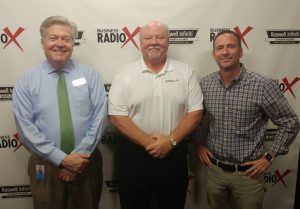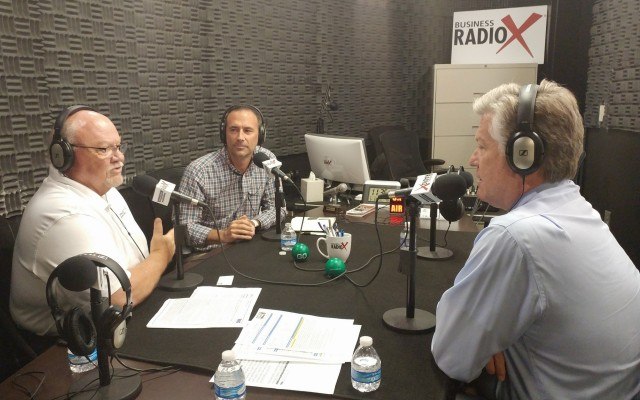
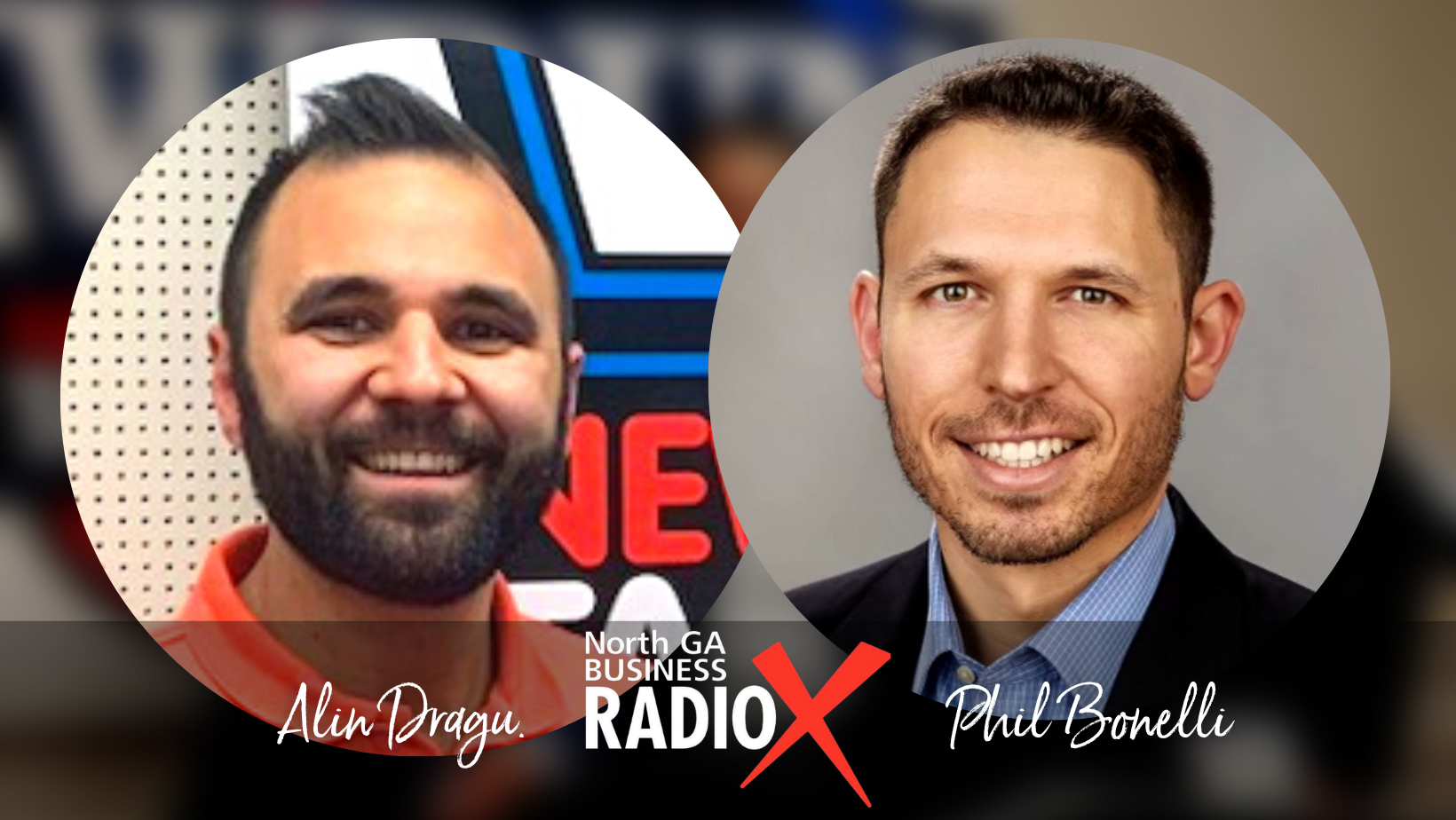
Alin Dragu | Senior Director of Operations at Missio Digital
/
RSS Feed
Share
Link
Embed
Never underestimate the importance of practically everything…
Alin Dragu, Senior Director of Operations at Missio, a digital marketing company for faith-based organizations and leaders is our special guest today. Alin is a marketing guru and marketing and leadership thought leader.
He’s also a fantastic guitarist, self-proclaimed Sneakerhead, and soon-to-be published author — be on the lookout mid-November for “Thirty-Eight Simple Principles to Make Your Marketing Match Your Mission.”
Phil and Alin talk about why your marketing should be tied to your mission and needs to be represented through all-inclusive value alignment. They are also speaking about how to you get what you value most in life and business. HINT: It happens when what you say, do, and celebrate are 100% aligned. And why mastering the art of 90/90/1 just four times a year leads to incredible productivity and results…
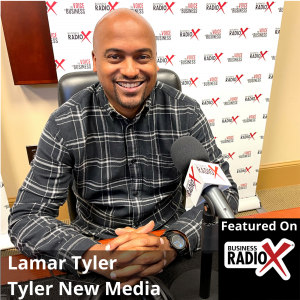
Lamar Tyler, Tyler New Media (North Fulton Business Radio, Episode 451)
Lamar Tyler, CEO of Tyler New Media, joined the show to share the work he and his wife Ronnie do at Tyler New Media. Lamar talked about how they got started through the Black and Married with Children blog (BMWK), how Traffic Sales and Profit (TSP) grew out of it, how to leverage digital marketing and social media, TSP as a mechanism to create more successful entrepreneurs, the upcoming TSP LIVE event at The Hotel at Avalon in Alpharetta, and much more.
Tyler New Media is the home of TSP (Traffic Sales and Profit), and BMWK (Black and Married with Children).
The founders Lamar and Ronnie Tyler have been named one of Ebony Magazine’s Power 100, a list of the top 100 movers and shakers in the black community, finalists for Black Enterprise’s Family Business of the Year, finalists for Infusionsoft’s Small Business ICON award and winners of the ClickFunnels Two Comma Award. They’ve been featured in Essence Magazine, Ebony Magazine, Jet Magazine, Parenting Magazine, CNN, HLN, Good Morning America, The Today Show, and many other press outlets.
BlackandMarriedWithKids.com is the largest independent African American marriage and parenting site on the web.
TSP Is The Premier Community for Purpose-Driven African American Entrepreneurs. Through their events, courses, & TSP Mastermind, they share the best strategies to help you exponentially grow your business.
They teach entrepreneurs across various niches and markets how to generate profit with ease in the shortest amount of time – regardless of email list size or budget.
TSP LIVE 2022 is coming up June 23rd- 25th at the Avalon Hotel in Alpharetta. More about TSP LIVE here.
Lamar Tyler is CEO of Tyler New Media and heads a digital marketing education and consulting brand Traffic Sales & Profit. He performs public speaking at events and conferences across the country, conducts workshops and seminars, and hosts discussions on topics such as entrepreneurship and digital marketing.
Using his motto “The Gatekeepers Are Gone,” Lamar has leveraged digital marketing to move his online brands from small personal blogs to an international brand with over 700,000 social media fans and 60 thousand plus customers in all 50 states and 43 countries around the world.
Among the recognition received for his work, Lamar, along with his wife Ronnie was named one of Ebony Magazine’s Power 100, a list of the top 100 movers and shakers in the black community, finalists for Black Enterprise’s Family Business of the Year, finalists for Infusionsoft’s Small Business ICON award and winners of the ClickFunnels Two Comma Award. Additionally, in 2021 Lamar’s company Tyler New Media was ranked #2040 on the Inc. 5000 list of the country’s fastest-growing private companies and won the ClickFunnels Two Comma X Award for doing over 10 Million in sales using the ClickFunnels software platform.
Tell me about how you formed both of these businesses?
Why did you start your BMWK blog as a business?
Who do you work with at TSP?
What are the biggest mistakes businesses make online in digital marketing?
Tell us about the impact of TSP
Tell us about making the Inc. 5000 Fastest-Growing Private Companies List
How to start a business effectively
TSP LIVE at the Avalon Hotel
North Fulton Business Radio is hosted by John Ray and broadcast and produced from the North Fulton studio of Business RadioX® inside Renasant Bank in Alpharetta. You can find the full archive of shows by following this link. The show is available on all the major podcast apps, including Apple Podcasts, Spotify, Google, Amazon, iHeart Radio, Stitcher, TuneIn, and others.
Renasant Bank has humble roots, starting in 1904 as a $100,000 bank in a Lee County, Mississippi, bakery. Since then, Renasant has grown to become one of the Southeast’s strongest financial institutions with over $13 billion in assets and more than 190 banking, lending, wealth management and financial services offices in Mississippi, Alabama, Tennessee, Georgia and Florida. All of Renasant’s success stems from each of their banker’s commitment to investing in their communities as a way of better understanding the people they serve. At Renasant Bank, they understand you because they work and live alongside you every day.
Special thanks to A&S Culinary Concepts for their support of this edition of North Fulton Business Radio. A&S Culinary Concepts, based in Johns Creek, is an award-winning culinary studio, celebrated for corporate catering, corporate team building, Big Green Egg Boot Camps, and private group events. They also provide oven-ready, cooked from scratch meals to go they call “Let Us Cook for You.” To see their menus and events, go to their website or call 678-336-9196.
Having an entrepreneurial spirit was a common theme throughout this episode. Business owners should have a passion for their business and the drive to go out everyday to work hard and commit to achieving their goals. A lot of times, business owners don’t really know what they need to get there and that’s where Fasturtle can help. They commit a lot of time to learning about their clients upfront and know just the right digital marketing package to deliver the goods.
Eric was a wealth of digital marketing advice. He talks about the importance of engagement, tracking your results, and knowing when it’s time to make a change if results are matching the effort you put in. Listen to the episode to learn a few quick tips to improve your website.
Fasturtle is a leading provider of Digital Marketing Solutions; including website design, search engine ranking, and digital marketing strategy. We are an Arizona based, top 10 ranking internet marketing firm specializing in helping small-medium size businesses, non-profit organizations, and service industry professionals. Since 2000, we have successfully delivered the most innovative and cost effective tools to expand your brand online. Working with clients in many different industries we have the skills to develop revenue generating solutions while keeping your costs down.
Fasturtle has been consistently ranked one of Phoenix, Arizona’s Top 10 Website Design and Internet Marketing Companies by Ranking AZ and the Phoenix Business Journal. With over 14 years of experience, an “A+” Rating by BBB and numerous other design and marketing awards including the American Marketing Association 2012 Spectrum Award, we proudly offer the highest level of customer service and results oriented internet marketing solutions.
Fasturtle: Fast Turtle (N) /fast/ tur·tle /ˈtərtl/ – Many groups and cultures around the world symbolize the turtle as the wisest of all, good health, long life and protection. We at Fasturtle view our business integrity, operations model and scopes of work in the same light. We are committed to authentic, honorable, effective and long lasting business relationships with all of our clients. Our Fasturtle programs be it SEO Management, Email Marketing or Website Design are spearheaded and developed for long term sustainability.
Eric Olsen is a serial entrepreneur; he has spent over 20 years in the website and digital marketing industry.
A national speaker, a frequent contributor to the Phoenix Business Journal, and a thought leader in the digital marketing space. His most important position is as a husband and father of three teenagers here in Phoenix AZ.
Austin Peterson is a Comprehensive Financial Planner and owner of Backbone Financial in Scottsdale, AZ. Austin is a registered rep and investment advisor representative with Lincoln Financial Advisors. Prior to joining Lincoln Financial Advisors, Austin worked in a variety of roles in the financial services industry.
He began his career in financial services in the year 2000 as a personal financial advisor with Independent Capital Management in Santa Ana, CA. Austin then joined Pacific Life Insurance Company as an internal wholesaler for their variable annuity and mutual fund products. After Pacific Life, Austin formed his own financial planning company in Southern California that he built and ran for 6 years and eventually sold when he moved his family to Salt Lake City to pursue his MBA.

After he completed his MBA, Austin joined Crump Life Insurance where he filled a couple of different sales roles and eventually a management role throughout the five years he was with Crump. Most recently before joining Lincoln Financial Advisors in February 2015, Austin spent 2 years as a life insurance field wholesaler with Symetra Life Insurance Company. Austin is a Certified Financial Planner Professional and Chartered Life Underwriter.
Austin and his wife of 21 years, Robin, have two children, AJ (19) and Ella (16) and they reside in Gilbert, Arizona. He is a graduate of California State University, Fullerton with a Bachelor of Arts in French and of Brigham Young University’s Marriott School of Management with a Master of Business Administration with an emphasis in sales and entrepreneurship.
Landon Mance is a Financial Planner and founder of YourFuture Planning Partners out of Las Vegas, Nevada. His firm came to life in 2020 after operating as Mance Wealth Management since 2015 when Landon broke off from a major bank and started his own “shop.”

Landon comes from a family of successful entrepreneurs and has a passion and excitement for serving the business community. This passion is what brought about the growth of YourFuture Planning Partners to help business owners and their families. At YourFuture, we believe small business owners’ personal and business goals are intertwined, so we work with our clients to design a financial plan to support all aspects of their lives.
In 2019, Landon obtained the Certified Exit Planning Advisor (CEPA) designation through the Exit Planning Institute. With this certification, YourFuture Planning Partners assists business owners through an ownership transition while focusing on a positive outcome for their employees and meeting the business owner’s goals. Landon is also a member of the Business Intelligence Institute (BII) which is a collaborative group that shares tools, resources and personnel, and offers advanced level training and technical support to specifically serve business owners.
Landon enjoys spending time with his beautiful wife, stepson, and new baby twins. He grew up in sunny San Diego and loves visiting his family, playing a round of golf with friends, and many other outdoor activities. Landon tries make a difference in the lives of children in Las Vegas as a part of the leadership team for a local non-profit. He regularly visits the children that we work with to remind himself of why it’s so important to, “be the change that you wish to see in the world.”
Landon received his B.S. from California State University Long Beach in business marketing and gets the rest of his education through the school of hard knocks via his business owner clients.
Whether you’re an established local company, or a brand new start-up, you can count on GBS to be a part of your family.
We’re not just any benefits consulting firm, we’re GBS. We have nearly 30 years of experience in group benefits, a strong sense of purpose and it shows.
Austin Peterson and Landon Mance are registered representatives of Lincoln Financial Advisors Corp. Securities and investment advisory services offered through Lincoln Financial Advisors Corp., a broker/dealer (member SIPC) and registered investment advisor. Insurance offered through Lincoln affiliates and other fine companies. Backbone Financial and Your Future Planning Partners are marketing names for registered representatives of Lincoln Financial Advisors Corp. CRN 3453141-021621
Lincoln Financial Advisors Corp. and its representatives do not provide legal or tax advice. You may want to consult a legal or tax advisor regarding any legal or tax information as it relates to your personal circumstances.
The content presented is for informational and educational purposes. The information covered and posted are views and opinions of the guests and not necessarily those of Lincoln Financial Advisors Corp.
Business RadioX® is a separate entity not affiliated with Lincoln Financial Advisors Corp.
Now What?, Part 2; An Interview with Betty Clark, CPMedia & Marketing (Inspiring Women, Episode 28)
/
RSS Feed
Share
Link
Embed
Now What?, Part 2; An Interview with Betty Clark, CPMedia & Marketing (Inspiring Women, Episode 28)
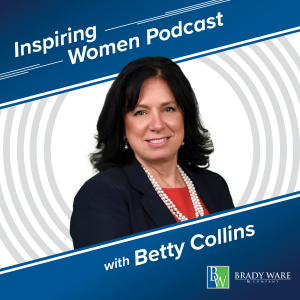
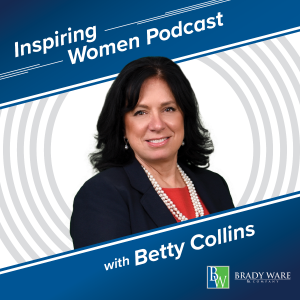
On this edition of “Inspiring Women with Betty Collins,” Betty continues her consideration of lessons learned in 2020 begun in the last episode. She is joined by Betty Clark of CPMedia & Marketing, who offers her perspective on how marketing & advertising are changing. “Inspiring Women” is presented by Brady Ware & Company.
Betty’s Show Notes
2020. It’s not quite over. But Now What?
It’s a question I think we should be asking pretty constantly as we navigate through these times.
In this episode, we’re going to talk a little bit about reflection and embracing the last two actions from my Now What, Pt 1 episode, Assessing and Moving.
The basics of business haven’t changed through this time. And one of those basics is marketing.
I work with Betty Clark of CPMedia with my marketing. My interview with her covers a lot of ground. I know you there lots of marketing tips you will come away with from this interview. Don’t hesitate to contact her, and tell her you heard my interview with her. She can be found at CPMedia & Marketing.
As Betty Clark explains about CPMedia:
CPM has been in business for close to 30 years now. Throughout the years, we’ve discovered that a lot of businesses just simply lack the time and expertise in marketing their company in a way that’s going to get the results and the phones to ring. At CPM, we take a company’s budget and their goals and we use our marketing expertise to create a marketing plan. Then we implement them through that plan, through the use of traditional and digital advertising tactics, so a business can stand out from their competition and they can get more leads, which is going to turn into customers.
Ultimately, you’ve got to embrace the new day. It’s here, ready or not. It’s been here; it’s not gone. This has been hard for me. This has been one of the toughest things for me to grasp as a business owner, as a mom, as a wife, as a church member, any of it.
It’s been hard.
I don’t want this new day. I still don’t want this new day, but as we know, “life is like a box of chocolates.”
I’ve always been amazed at the resilience of the people in our country. I believe that if you keep asking Now What? and be ahead of it, no matter how the year closes and what the New Year brings, I think that you will have some success that you will really enjoy your life.
After you listen to this episode, go to www.BradyWare.com and look up Betty Collins, my podcast will be right there. There will be handouts that summarize all this.
I’d love to talk to you about it, because it’s something that I’m passionate about. Because when the marketplace works in this country, the country works. Right now, it needs businesses to work. It needs employers to have success.
Betty Collins, CPA, Brady Ware & Company and Host of the “Inspiring Women” Podcast
Betty Collins is the Office Lead for Brady Ware’s Columbus office and a Shareholder in the firm. Betty joined Brady Ware & Company in 2012 through a merger with Nipps, Brown, Collins & Associates. She started her career in public accounting in 1988. Betty is co-leader of the Long Term Care service team, which helps providers of services to Individuals with Intellectual and Developmental Disabilities and nursing centers establish effective operational models that also maximize available funding. She consults with other small businesses, helping them prosper with advice on general operations management, cash flow optimization, and tax minimization strategies.
In addition, Betty serves on the Board of Directors for Brady Ware and Company. She leads Brady Ware’s Women’s Initiative, a program designed to empower female employees, allowing them to tap into unique resources and unleash their full potential. Betty helps her colleagues create a work/life balance while inspiring them to set and reach personal and professional goals. The Women’s Initiative promotes women-to-women business relationships for clients and holds an annual conference that supports women business owners, women leaders, and other women who want to succeed. Betty actively participates in women-oriented conferences through speaking engagements and board activity.
Betty is a member of the National Association of Women Business Owners (NAWBO) and she is the President-elect for the Columbus Chapter. Brady Ware also partners with the Women’s Small Business Accelerator (WSBA), an organization designed to help female business owners develop and implement a strong business strategy through education and mentorship, and Betty participates in their mentor match program. She is passionate about WSBA because she believes in their acceleration program and matching women with the right advisors to help them achieve their business ownership goals. Betty supports the WSBA and NAWBO because these organizations deliver resources that help other women-owned and managed businesses thrive.
Betty is a graduate of Mount Vernon Nazarene College, a member of the American Institute of Certified Public Accountants, and a member of the Ohio Society of Certified Public Accountants. Betty is also the Board Chairwoman for the Gahanna Area Chamber of Commerce, and she serves on the Board of the Community Improvement Corporation of Gahanna as Treasurer.
“Inspiring Women” Podcast Series
This is THE podcast that advances women toward economic, social and political achievement. The show is hosted by Betty Collins, CPA; Betty is a Director at Brady Ware & Company. Betty also serves as the Committee Chair for Empowering Women, and Director of the Brady Ware Women Initiative. Each episode is presented by Brady Ware & Company, committed to empowering women to go their distance in the workplace and at home. Other episodes of “Inspiring Women” can be found here.
Show Transcript
Betty Collins: This is Betty Collins, and today, we’re doing part two of Now What?, which is something I put together after the year we’ve had with 2020; it’s not quite over, but Now What? is a question I think we should be asking pretty constant as we navigate through these times. When we talked first, I said it was all action by you; knowing, assessing, moving. Today, we’re going to talk a little bit about reflection and embracing the last two actions. When we talked about knowing the basics of business- and by the way, this is on my website that you can get these handouts related to it, gives you an overview, but we talked about the basics of business. That hasn’t changed. Just how we’re doing business has changed. Just how we’re living our lives have changed. The basics are still there. So, what are those? Revenue in customers, expenses, debt, cash flow, who our advisors and partners are, versus our transaction vendors, marketing and technology and company structuring. We talked about those things, went into a lot of detail about that.
Betty Collins: Then we assessed; assess the damage. The tornado came through and now, we’re standing, going, “Do we have a house left or are we going to rebuild?” But it’s all about moving forward, not just assessing and planning. We talked about hope is not a strategy, so you can’t just hope it all comes together. We talked a lot about your financial position and profitability … Debt, and that life will go on beyond 2020. One of the things I didn’t spend a lot of time in on the last part one of Now What? is the marketing and technology area. I’m fortunate enough, I get to work a lot with Betty Clark, CPMedia and she is a marketing person who has had to say, “Wow, how do I help my clients market? What is it that they need?” She had to do a lot of pivoting with thinking in how she’s gotten put together. I’m going to interview her next, and we’re just going to talk about marketing today, versus marketing in February, 2020; two very, very different things.
Betty Clark, CPMedia: As we’re in this time of Now What?, every business needs to be asking now what?, as I’ve talked about, with the basics of business; they haven’t changed. One of those basics are marketing and technology. For me, I really had to dig into this because I’m one who’s out in the marketplace. I’m either public speaking, I’m either at an event, I’m involved with different boards where I get opportunity. So, for me, I’ve never had to do a lot internally, back here. I don’t look at- so, I’ve really had to do the pivot thing and figure it out. I worked with Betty Clark of CPMedia in marketing, and we just started putting together a plan. Really, it’s stuff that … It’s not like it’s rocket science necessarily, and it’s stuff I know, but putting it all together in a plan that bounds it all is big. I want her to talk to us today about Now What? in marketing and technology. Betty, welcome to the program. Appreciate you being here. I want you to tell us a little bit about CPMedia and marketing. Tell us what you do.
Betty Clark, CPMedia: Well, CPM has been in business for close to 30 years now. Throughout the years, we’ve discovered that a lot of businesses just simply lack the time and expertise in marketing their company in a way that’s going to get the results and the phones to ring. At CPM, we take a company’s budget and their goals and we use our marketing expertise to create a marketing plan. Then we implement them through that plan, through the use of traditional and digital advertising tactics, so a business can stand out from their competition and they can get more leads, which is going to turn into customers.
Betty Collins: Well, I know for me, I’m a CPA, so marketing is not coming natural to me. It doesn’t make sense to me. I think if I just get out there and sell myself, it’s all good, which just isn’t the case. This plan was what I had to really put together. Really, 2020 forced me to do that. I really didn’t have a plan before. I was just doing a bunch of things all over the place and we consolidated that. For me, every business and industry has witnessed a change. What I do in business hasn’t changed. It’s how I do it; that’s what’s changed. Accountants don’t change very, very easily, so. I’m assuming marketing is no different. You’ve witnessed this change. Tell us about that.
Betty Clark, CPMedia: Well, actually, I would say that marketing has not changed, but certainly, the advertising tactics have evolved. When I first started my career, the primary way to market any business was through the Yellow Pages or traditional media vehicles like the newspaper and running ads on billboards, TV and radio. Then throughout the years, it evolved to include cable, the internet, social media and all the digital advertising elements that are out there. With this pandemic and 2020, we’ve had to approach target audiences in a more digital world, versus a traditional world.
Betty Clark, CPMedia: People spend more time now on their computers, their smartphones, their smart TVs, so we look at advertising and marketing opportunities, those vehicles instead. The marketing basics still remain the same. Companies need to identify their ideal client. They need to know their core message. They need to make certain that their image matches their message. They need to have products and services in place for every stage of a client’s development. Marketing material should be one that educates people, and they need to make certain that their website is one that can work 24 hours, seven days a week, and plus, they need to get their entire team on board with their marketing efforts.
Betty Collins: I know for myself, when we were devising my plan and we’re still- it’s still evolving. It’s always going to keep changing because opportunities change. One of the things that was surprising to me was how much I needed my database now, because I’m not out there and how incorrect and a mess it was. It ends up I have a thousand people and then I did- it’s not even a thousand people, which is overwhelming, but a thousand contacts sorted by industry or sorted by ownership or doing different than- I mean, I’ve now got that put together. I wouldn’t have been messing with that. I just would have hoped I could email them or, “Let’s send out a mass whatever,” and 50 emails come back. It’s forced me to go back to basics so that I can use them, though maybe in a different way. A lot of the technology, to me, has been here.
Betty Collins: Zoom has been here, but now we’re all using it. I got this stupid folder on my desk that has seven ways to get on a call because everyone’s different. People are now using things that have been in existence. It’s just been interesting, for sure. It’s helped me realize what I should be going after, and it is. I’m sticking with basics like you’re talking about, so we don’t have to get crazy about it. I can’t speak right now and I can’t go to events right now, so I have to have something that works. That’s been very helpful to take that. What do you think a business should do, going forward, in 2021? We’re all waiting for 2021. We all want that new year.

Betty Clark, CPMedia: Can you imagine what New Year’s Eve is going to be like? It’s going to be a blast. Just like you, everyone should create a plan. Just like we had to create a plan for you. In doing so, now is the time to make sure that all your programs, your people, your technology, that everything is working well and in tip-top condition, and everybody knows how to utilize all the digital aspects that are out there, like Zoom.
Betty Collins: Because we’re not going back. We’re not going back.
Betty Clark, CPMedia: That’s right. It will never be the- it won’t be the same. Then you also need to be creative and innovative in your marketing mix, just like we, again, using you as an example, like we did with you. Let’s look at different ways that we can market the Betty Collins when it’s not face to face. Businesses need to review their objectives, see how well they can achieve them without the programs that they were forced to eliminate in 2020. Perhaps the programs that were replaced with the traditional ones that they have been using, perhaps are more profitable, that they have found out that the ROI was better. That would be one to continue on for 2021.

Betty Clark, CPMedia: Create a list of possibilities to explore. There’s many things that still haven’t been tried yet, and how to do things. Then once you have that plan in place, then begin to prioritize. That, look what is currently running your budgets and maybe you need this for 2021. You might need to shift some dollars around or look at your advertising message that’s currently running. Now’s the time to evaluate the language that is being used, the images, and perhaps that right now, you’re using a picture with lots of people touching one another, being hugging or close to one another. I would suggest changing that and show a little social distancing.
Betty Collins: I was at a restaurant the other night and they requested that because you could obviously have your mask up while you’re eating, they did not want pictures taken at the restaurant- because people do that. They take pictures of their food, everyone comes close in the booth, and they said, “Please don’t do that,” and put it out there. If you’re going to have a picture taken, we want you to have a mask on, because they want that image of, “We’re practicing things safely here.”
Betty Clark, CPMedia: I’ve not ever heard of that.
Betty Collins: Well, I was there and that’s what they did.
Betty Clark, CPMedia: I don’t know if I would go that far, but-.
Betty Collins: They were thinking about their image. That’s what you’re saying.
Betty Clark, CPMedia: Yes, that you need to think that. I mean- and people want comfort and security. They want to feel secure and safe in whatever they do. It doesn’t matter what kind of business you are, you have that ability to provide that to everyone.
Betty Collins: People are much more aware of surroundings now, that’s definite. They probably are looking at what your image is, much differently, just because they are more aware.
Betty Clark, CPMedia: I would also suggest that everyone take a hard look at their target audience. What you have been using has your ideal client before. Perhaps, your ideal client that has changed. I’m assuming that it has and that the same benefits don’t apply right now as they used to. You need to evaluate that and also, see what your competitors are doing; that’s key. See what their position has been and what actions that they’re taking, so you’re able to to counter that. Certainly, nobody knows what’s going to happen in the future. I wish that we all did, but we do know that it- and I think we all discovered this, this year, that when you have a plan in place, that it’s easy to do the pivot and make some changes. But you need to have a clearly defined communications strategy and have that innovation.


Betty Collins: Because for me, and probably most people, as we’re doing this Now What?, now what? What I do for people is no different than what I did in February, as I did in March of this past year.
Betty Clark, CPMedia: They still have those same needs.
Betty Collins: They still have those same needs. I have identified, “Here’s,”- because maybe they didn’t maybe know that I did these things, too. It was opportunity to go, “Hey, I can do this, too, for you during this time, but I can do this all the time.” It’s not that I’m not doing the basics in the same business, it’s just how I’m doing it. Even, I’ve been involved with some online events tomorrow. I’m involved with one, and they don’t want this to be one big Zoom call, because everyone did that at first, and all these people who had events trying to do an event online, it was a big Zoom call. Where they’re doing it- no, you’re at the event and the precision of people coming on and off and the backgrounds, all of it. I mean- so, they’re just doing it differently now, even within this year of, “Hey, we can do a virtual summit.” No, it’s a big Zoom call. Or we can do a virtual summit that really looks like you’re there. The planning helps. It has really helped me for sure, which is why I wanted you to be on today’s. We’re talking about these basic businesses. Let’s close with this, is there anything they shouldn’t do?
Betty Clark, CPMedia: Ah, yes. Doing nothing.
Betty Collins: Doing nothing. Hope is not a strategy, and by the way, it’s not coming back. We changed.
Betty Clark, CPMedia: We all have evolved and we need to look at the pandemic situation as an opportunity, not as a challenge or an obstacle. Yes, it’s certainly closed some doors, but it has opened others. As we know that by having a well-organized plan going into 2021, knowing that you might have to adjust some things, as they ebb and flow, you’re going to be fine.
Betty Collins: Well, I appreciate you coming today and talking with this part of the Now What? It’s a huge area. I didn’t feel competent to come and talk about it. It’s a pretty specialized area, and so, I appreciate you coming. How can people reach you? What’s your website?
Betty Clark, CPMedia: They can reach me at CPMedia.com, or BClark, C-L-A-R-K, at CPMedia.com.
Betty Collins: Great. Well, thank you, and hopefully, we will get to 2021 first and have a big celebration on New Year’s Eve this year and keep moving forward, because it’s not a matter of what if, it’s a matter of when.
Betty Clark, CPMedia: That’s [CROSSTALK].
Betty Collins: We have to ask the question, now what? Thank you, Betty. I so appreciate you coming on today and talking about the marketing and technology aspects of things. I know you’ve been working with me personally on just, ‘how do I market myself?’ Because it’s been pretty tough when I’m a person who gets on stage and speaks, and I’m at events and I- you might chair boards for nonprofit organizations where there’s a lot going on. I’m out in that marketplace and I haven’t been able to do that. You’ve been helping me with understanding what other capabilities and avenues that I have. We’re going to finish- first, we know the basics. We assess and keep moving, and now we’re going to reflect.
Betty Collins: Reflecting, I’m not sure that I want you to think this is sitting in a dark room humming and meditating. I guess it could be; maybe that would work for you. I think many people, when you go, “Let’s reflect, let’s go back, doing,”- and it’s like, “Do we really have to do that?” “Yeah, you do.” Because this was a moment where you probably learned a lot, and so, you got to take that knowledge that you learned and you got to apply it. You got to reflect. Reflecting, to me, is you’re giving some really intentional, serious thoughts to the past- past being this year, so that you can make sure the present and the future are successful. Because remember, again, I’ve said, it’s not a matter of if, it’s a matter of what. COVID-19 and a pandemic is pretty major, but there’s other things. There’s recessions. I’ve sat through several of them since 9/11. There’s things that- health, all the sudden. There’s things of the market bottoms out. It’s the if … It’s not a matter if, it’s a matter of when.
Betty Collins: You have to go back to February 2020. I did this the other day because I was going through, looking for who I’d met with through the year and who I still needed to meet with. I’m looking at my calendar in January and February going, “Oh man, I forgot I got to do all those things and have all that time,” but when I went back and then, of course, you get to March and April’s calendar, it looked completely different, even May. I look back at what worked. I dealt with the would’ve, coulda, shoulda. You have to do that and then you got to critique your performance.
Betty Collins: Some people did really well. Most of us gained weight, but there are those few that said, “This is going to be my opportunity. I can exercise because I’m working at home and I can actually go down to my basement and work out in my gym. I can eat better,” although we are all just buying comfort food, I think. The would’ve and the could’ve been the should’ve, identify those; it’s really important. Critique your performance, so that you can take that and use it in the future. There’s been some really big success stories coming out of COVID-19 with all kinds of industries. Reflect on that past so you can impact your present and your future.
Betty Collins: You got to ask the question, “What’s going to- what will return to the way the things they were, and what is not coming back?” Many things will never be the same. I don’t know that that’s not bad. I like the dividers in the restaurants now. I like that. It cuts down sound, yet the restaurant’s full because they put up dividers. By the way, I haven’t been sick all year and I wonder if it’s because I’m not getting someone else’s germs and they’re not getting mine.
Betty Collins: I love now, the flexibility of my office. I didn’t like it at first. I did not embrace it. I did not think that it was good. I wanted everyone here. I wanted the parking lot full. I like the buzz of the office. That’s not happening, but I do now work out of my house and I have a system and liking it. Quite frankly, I love less traffic. I crave personal connection, so please, don’t get me wrong. We’re off a long way from doing that. In your business, you pivoted- tired of that word. You got to look back and go, “We pivoted. It worked. We’re going to pivot again. We’re going to pivot again and we’re going to pivot again.” I look at restaurants and now, I don’t think curbside service is ever going away. You know why? Because I like it.
Betty Collins: The customer likes that everything’s done. Someone comes out to my car and then gives me a bag. I love it. More online shopping continues to happen; that was already happening. Bank branches are closing. People are finding a way to deposit their checks as calling their phone. Works, right? Telemedicine, why would we go back? Man, you could just call your doctor and in eight minutes, somebody will be on screen with you, especially when it’s a common cold or something minor. I just don’t see some of those good things changing. Zoom is tough. Virtual events are not ideal right now. We’re still all adapting, but I guarantee you, somebody is going to come up with a way to make that appealing. I guarantee you that’s going to come.
Betty Collins: You have to look into your business and be realistic of what’s not coming back. You have to sit and go, “Hoping for the good old days, not a strategy.” You have to really identify probably, what isn’t going to come back. Then, is your competition winning because they did change and or they embraced the change and they’re looking at this as this isn’t going to be temporary? You have to be- you have to ask yourself, “Am I ready for what is not coming back?” Then there’s the, “Am I, will I or can I adjust accordingly?” I think most people have already done some of that, but some of us are still not. By the way, we’re probably going to have to still do a bunch of “Am I, will I or can I adjust?” If you don’t adjust, you’ll be left behind. You may not need to do a lot of that, but you probably will be left behind. Curbside is great for fast food and casual dining. They’re busting it, but fine dining, struggling.
Betty Collins: That’s why- I talked earlier in my podcast, part one of this is Jeff Ruby’s Restaurants. It’s about amazing steak, but it’s also about the experience of going there. They just do a fantastic job. I’m not going to buy an expensive steak and heat it up in the microwave. They were brilliant. They came up with, “Here’s your steaks, choose them.” You get so many. “Here’s your salad, it’s tossed. Here’s your bread. Just warm it. Here’s your mac and cheese, ready to go. Desserts already done. All you have to do is cook your steaks.” Well, I don’t want to cook $100 steaks and burn them, so they sent a video saying, “Here’s how you cook them and here’s the seasoning.” We did that in April or May, just for something different. We ate them out on our deck with some friends and we loved it.
Betty Collins: We had thirty minutes in this entire meal, besides going to pick it up. They just … You talk about pivoting, that’s brilliant. That was a great way to go. I had another place where I saw they were trying to do the same thing and they sent you baked potatoes. I can do baked potatoes, but I can’t make Jeff Ruby mac and cheese. They just did it right. They took signature products and said, “It’s ready to go, put it in the oven for thirty minutes.” Am I, will I or can I adjust accordingly? Adjustment’s a must, but new revenue streams are only half of it; that’s only half of the adjustment. So is the expense side. Just as I was saying in my company, the travel, the meal costs have gone down really, really big. For accountants, we’re like, “Yay, we’re spending less on that,” but that’s why we- that’s what got us into the marketplace where we met new people, new connections and build relationships. That’s going to have some effect, so we got to adjust accordingly. What do we replace that with? It’s probably going to be a cost that we’re not even anticipating, but we need to be saying, “Can we adjust to that? Am I, will I or can I?” It’s not too late to adjust your thinking. It will pass; it’s not really an option.
Betty Collins: How do you adapt to the changes? You’ve got to have a long-term plan. Many, many people do budgets, and they think that it’s the long-term plan. It really goes beyond that. I think we’ve learned something in that, for sure. Hopefully, in our country, we’ll make a lot more things here. We’ve learned that, you know what? We need to produce this stuff here so that when we have a pandemic or we have something that breaks out, we have the product right here. We’re not waiting and we’re not having to make emergency, “Wherever, someone please make masks.” Now, we’re just going to have lots of masks, and we’re going to make them here because we saw a need that could continue on.” We need to take a long-term team approach, not just you.
Betty Collins: Brady Ware really did well because our team got involved with the changes that we needed to make. Our team got involved with the new products that we were selling. Our team had to learn and educate and do. It’s going to be continual learning because of the environment we’re in. If you did not lead the way in changing, then you know what? Look at your competition and look at success around you and get your gear going, because we’re a long way from being done, I think, in this environment. It’s not too late, but you got to have a long-term plan. It just isn’t, “We survived it. We got through PPP, we spent our PPP cash and sales are starting to come back.” You got to have a long-term plan. What opportunities are being created because of the changes? What am I missing out on? I think that’s the most important thing your team sits and does.
Betty Collins: I just do. Brady Ware really seized the moments from the beginning, but it took top leadership. It took the board. We were ahead of the game from the beginning. In our industry, knowledge is what you need, so education and training of our team was huge. We knew that our whole tax season year was crazily broken up and stressful. It was a long seven months, six months. You had t- it just took long hours, too, but you got to look for those opportunities in your industry. Instead of giving someone steak to heat up, give them the real steak with the YouTube video on how to cook the steak with the seasoning. Totally different service.
Betty Collins: You have to get real information in real time to seize new opportunities. The guy that makes the pillows from Minnesota, he immediately went, “I doubt people are going to buy pillows,” so he made masks. He started ventilators, I think, as well, because- but he was doing it based on real time, real need, act now, no time for planning, no time for a retreat to go talk about it. That takes real information, real time. You need to know that. So, how do you do that? Well, your industry probably has associations. There’s government representatives called Senators, and you need to be really involved with them now. I think we’ve all learned that local leadership counts because they’re making decisions right now, that are huge, so be engaged with them. There’s a ton of new regulation, especially for certain industries. If you’re a hair salon, you better know. If you’re a restaurant, you better know. If you’re a CPA, you better know all of the stuff that rapidly got passed, because your clients want to know. Shoot, when stuff passed on a Friday afternoon, they were called on a Saturday morning. You have to be involved with real information in real time.
Betty Collins: Just like the restaurants, they were- they closed and they had to figure out how to stay open. They also had to drive their industry with ideas and help each other. Then they definitely were at the pulse with the government. Cameron Mitchell in Ohio was definitely on a committee with DeWine’s team, to go. This is what we need to do as a restaurant. What a great guy, to do that. I mean, he went from, “I built this whole thing. I know what it’s like to be a small business owner and a large one.” To know the opportunities, you have to understand what your client needs and then you learn to service it. You have to see the need that is not being met. That is basics 101 economics. See the need that is not being met and you won’t be able to sell enough. It’s not always easy.
Betty Collins: The last thing, we talk about knowing, assessing, moving and reflection. The last thing you got to do, sorry, it’s all action. You’ve got to embrace the new day. It’s here, ready or not. It’s been here; it’s not gone. This has been hard for me. This has been one of the toughest things for me to grasp as a business owner, as a mom, as a wife, as a church member, any of it. It’s been hard. I don’t want this new day. I still don’t want this new day, but as we know, life is like a box of chocolates, as I will take. We all know what that means. Part of a success is answering now what? by embracing the new moment. How do I deal with the fatigue of COVID-19?
Betty Collins: I will tell you, March and April were exhausting for me and by the end of May, I just had to get away. That was the turning point in my fatigue. I got away. Well, how do you do that when you can’t go anywhere? You can. You take a risk when you go, and I did. I took a risk and I flew somewhere that was very quiet and in the middle of nowhere, but I did certain other things, too. I started just working 40 hours a week and shutting my phone down because it was exhausting. Everybody was exhausted. I started enjoying more outside. It was amazing how many outside people were walking our streets in Gahanna. Everybody was out walking. I hired a personal trainer because of just weight and laziness. I rested on my weekends and said, “Okay. It’s getting done, I’m going to do it.” I made sure my office at home was something I liked to go into. It wasn’t just some table and chairs from the basement. It motivated me a little bit more, but I did go on vacation to a secluded place. I took a weekend in Ohio and focused on parks and simple trails, and good food and a really good friend.
Betty Collins: We just- those are the things that got me away. Those are the things that helped me with the fatigue of COVID-19. It doesn’t matter what it is, whether it’s COVID-19 or whatever the circumstance you’re in, you have to, sometimes. You got to get away from the circumstance. How do I stay positive and energized? I’m going to say this very, very clearly. I shut off Facebook, deleted my Twitter account, watch very, very minimal news. I’m very selective who I get my news from, but I know I need to be informed, especially in the time that we live. I chose crosswords over negative and awful TV and movies that are intense, because I didn’t [LAUGHTER], and time by myself became part of my routine.
Betty Collins: Sometimes, the time by myself was too much, actually, because I miss the marketplace. But then I found, “I can enjoy this.” I also looked at the very core of who I was during this new day. I think we- a lot of us have, whether it’s your family, or your faith, causes, focus on that. It probably will energize you. It’s not business as usual, and you got to look at the mindset and skills that you need, like the mindset of that kid who had a fish, who said it was for bait, not just eating for today and throwing out. Plenty of Zoom in webinars for sure on all these topics to the point of nauseum, probably. But there’s a lot of good free Zoom webinars right now and YouTube videos that can pull you out of some of this stuff. I would, “How do you stay positive and energized?” Ask other people what they’re doing to stay positive and energized. You’ll be amazed and then you got to do it.
Betty Collins: This is year has infected us all, personally, not just in our business, in our careers, but in our personal lives from distancing with our families and all of that, to not being able to maybe go to your church and you’re seeing it on Zoom, to just the uncertainties. I’ve always been amazed at the resilience of the people in our country. I believe that if you keep asking now what? and be ahead of it, no matter how the year closes and what the New Year brings, I think that you will have some success that you will really enjoy in your life. Again, on my web page, we have these handouts that show you my outline and all those lovely questions that I told you to ask yourself on knowing the basics. I’m Betty Collins. Have a great day.
Marketing in a Covid-19 Environment, with Bonnie Mauldin, The Mauldin Group
/
RSS Feed
Share
Link
Embed
Marketing in a Covid-19 Environment, with Bonnie Mauldin, The Mauldin Group (North Fulton Business Radio, Episode 239)
Bonnie Mauldin of The Mauldin Group joined the show to discuss marketing in a Covid-19 environment, starting a successful advertising program, developing and nurturing leads, and much more. The host of “North Fulton Business Radio” is John Ray and the show is produced virtually by the North Fulton studio of Business RadioX® in Alpharetta.
The Mauldin Group is a professional web design and digital marketing agency, that specializes in branding and lead generation for small business. The goal of The Mauldin Group is to offer small to mid-sized corporations creative, results-driven, lead generation and branding solutions.
Since its founding, The Mauldin Group has continued to grow, establishing itself as not just a leader in the Atlanta market but as an international company. Through Bonnie’s revolutionary internet marketing practices and savvy networking skills, TMG has grown to a team of twelve.
Bonnie was named a Business Person of Excellence by the Greater North Fulton Chamber of Commerce in 2019. The Mauldin Group is the proud recipient of the Forsyth Chamber of Commerce Business of The Year Award, Best of Atlanta by the AJC, and ranked as one of the Top 10 SEO Agencies in Atlanta by Expertise.com.
To find out more on The Mauldin Group, go to their website or call 678-846-2306.
Questions and Topics in this Interview:
Overview of the Mauldin Group
Marketing in a Covid-19 Environment
The difference between marketing and advertising
Crucial steps in connecting with a new lead
Enhancing the connection with new leads
Starting an advertising program
Planning an advertising program
What to do if an advertising program is not producing enough leads
North Fulton Business Radio” is produced virtually from the North Fulton studio of Business RadioX® in Alpharetta. You can find the full archive of shows by following this link. The show is available on all the major podcast apps, including Apple Podcasts, Spotify, Google, iHeart Radio, Stitcher, TuneIn, and others.
Renasant Bank has humble roots, starting in 1904 as a $100,000 bank in a Lee County, Mississippi, bakery. Since then, Renasant has grown to become one of the Southeast’s strongest financial institutions with over $13 billion in assets and more than 190 banking, lending, wealth management and financial services offices in Mississippi, Alabama, Tennessee, Georgia and Florida. All of Renasant’s success stems from each of their banker’s commitment to investing in their communities as a way of better understanding the people they serve. At Renasant Bank, they understand you because they work and live alongside you every day.
IT Help Atlanta with Rick Higgins: Marc Apple, Forward Push, and Al Simon, Sandler Training by Simon Inc.
/
RSS Feed
Share
Link
Embed
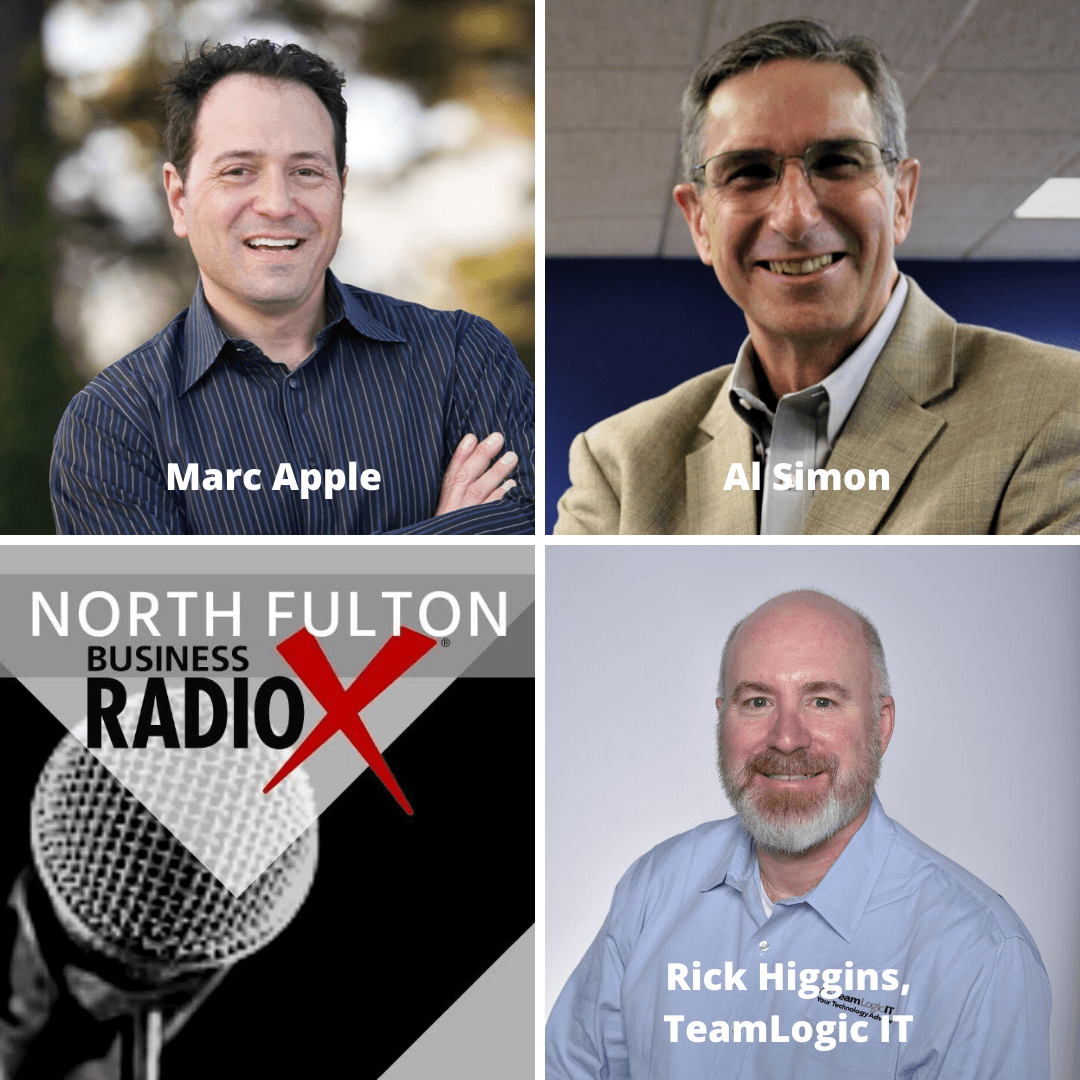
Clockwise from Upper Left: Marc Apple, Forward Push, Al Simon, Sandler Training, and Rick Higgins, Host of “IT Help Atlanta”
IT Help Atlanta with Rick Higgins: Marc Apple, Forward Push, and Al Simon, Sandler Training by Simon Inc.
On this edition of “IT Help Atlanta,” Host Rick Higgins welcomed Marc Apple, Forward Push, to talk about digital marketing for businesses. Al Simon of Sandler Training also joined the show to discuss his sales consulting and training practice. “IT Help Atlanta” is brought to you by TeamLogic IT, your technology advisor.
Marc Apple, Forward Push
Marc Apple is the Owner and Inbound Marketing Specialist with Forward Push. Forward Push is an award-winning marketing agency that believes that you don’t have to grow your company alone. Through a team of creative thinkers and analytic problem solvers, Forward Push is ready to challenge the status quo while staying rooted in the research.
The team accomplishes this through specializing in content-driven strategies for small and medium-sized businesses. Based on your unique needs, Forward Push creates a custom strategy that takes account for the ever-changing landscape of digital marketing and looks to future developments. This approach includes website design and development, social media management, blogging, video production, digital advertising and branding.
Through this, Forward Push optimizes your online presence and propels you to your goals by implementing, testing, and refining so your brand is always leading, not following. It’s the Forward Push way. Learn more about their process at forwardpush.com or get in touch directly with Marc by email.
Al Simon, Sandler Training by Simon Inc.
Al Simon, Sandler Training by Simon
Al Simon is the President of Sandler Training by Simon Inc.
Sandler trainers have already had highly successful careers as sales and management professionals, and now use the Sandler sales methodology in their mission to train and mentor others to be successful. Other companies employ trainers who may have never actually sold or managed.
The Sandler sales methodology fosters an attitude of leadership, rather than just emphasizing technique. Reinforcement training facilitates the development of new and empowering behaviors, attitudes, and sales skills, mapping a unique road map to lasting success.
Over 250 local training centers in major U.S. cities and more than 27 countries, plus materials translated into 20 languages, allow us to support our clients almost anywhere in the world, whether you’re a small to mid-sized company or a large organization.
For more information, go to Al’s website or contact Al directly at 770-622-7000.
About “IT Help Atlanta”
Rick Higgins, Host of “IT Help Atlanta”
“IT Help Atlanta” profiles small to mid-market businesses and highlights how those companies use technology to succeed. The host of “IT Help Atlanta” is Rick Higgins.
“IT Help Atlanta” is brought to you by TeamLogic IT, your managed services technology advisor specializing in cybersecurity, cloud and business continuity solutions. TeamLogic IT leverages cutting edge technology to solve all types of business problems.
Announcer: Broadcasting from the Business RadioX studios in Atlanta, it’s time for IT Help Atlanta, brought to you by TeamLogic IT, your technology advisor. Now, here’s your host, Rick Higgins.
Rick: Hey, good morning, everybody. And welcome to the IT Help Atlanta radio show, the show that profiles small, and medium-sized market businesses and highlights how those companies use technology to succeed. IT Help Atlanta is brought to you by TeamLogic IT, your managed services technology provider. Specializing in cybersecurity, cloud, and business continuity solutions, TeamLogic IT leverages cutting-edge technology to solve all types of business problems. Go to ithelpatlanta.com for audio archives of this show and to learn more about our sponsor, TeamLogic IT. I’m your host Rick Higgins. And today’s special guest is Marc Apple with Forward Push. Good morning, Marc.
Marc: Morning, Rick. How are you today?
Rick: Oh, man, I’m doing great. Thanks. I’m really glad to have you on the show. Marc, tell us who you are, and what do you do?
Marc: Sure. Thank you for having me. My name is Marc Apple, and I am the founder of Forward Push. We are a marketing agency that specializes in helping small businesses and startups to get back to doing what they love to do, which is typically their job, and they don’t have time for marketing. That’s where we fill in. We are their marketing agency.
Rick: And Marc, you guys are so much more than that. I know that a big part of what you do is website work. Could you drill into that or lean into that and talk to us about what you do with website and how that works with your marketing?
Marc: Sure. There’s a good percentage of our clients that come to us because they have a need, just like you said for a website. We all know nowadays that it’s one of the first things that people do. So, they search, they needed something, they have a problem, they go to the Internet, and you lead them to your website. And that’s where our engagement starts with our clients. But you’re right, it is so much more. After that website is built, what are you gonna put on that website so it keeps engaging people? And that’s really where our work comes in.
So, for the small business owners and the startups. We’re writing their monthly blogs for them. We are doing infographics, design work. We’re doing videos. We’re creating their email newsletters. We’re running their Google ads, their Facebook campaigns. So, it’s a full-service agency. And the idea is that the small business owner is super busy. They don’t have time to do all of these things or maybe just some of these things. So, they’re able to work with us because we love working with them. So, it’s a smaller scale operation on how we work with them, but it’s a long-term thinking and it gives them the ability to compete with the bigger players in the market.
Rick: So, that actually leads me into my next question. And you say you work primarily or maybe even exclusively with small businesses. But can a small or local business compete with large competitors?
Marc: A hundred percent. A hundred percent. We find that day in and day out. It’s certainly a long-term strategy because if you’re going up against a billion-dollar company in your industry, they’re spending money like water, but that doesn’t mean that you have to spend money like water as a small business owner. So, what we tend to do is take a really hyper-local focus. Most small businesses, for the most part, are working in their neighborhoods or in a metro city location. And while those bigger companies certainly are working in those metro locations, they tend to be focused on, for an example here, the whole country. And we know that people like doing business with people. So, when you take that local attitude and that strategy, combining that with the know, like, and trust of working with someone local that you can see, that you can talk to, you can go into their store, they can come to your location, it makes it almost very easy to compete because we have a very tight focus on where we’re attracting clients to our clients.
Rick: Well, you talk about not spending money like water, and I know for all the small business people out there, myself included, they really appreciate that. How as a small business owner should I determine what my marketing budget should be? Is there like an ideal metric for that?
Marc: There is. And typically, we’re looking probably in the 10 to 15% of annual gross as a marketing budget. And so that 10 to 15%, it can be a wide range. Certainly, when we’re working with a small business owner, I like to say that we’re not looking for a big check right away. That’s not even in our plan. Our idea is to start, not conservative so that you’re not doing anything, but start so that you can get some movement, start gaining traction on the low-hanging fruit, and then you can move up that scale to spend more because you’re actually making more.
Rick: Right. So, that 10 to 15%, you’re talking about gross of a startup company or does that carry forward into a mature small business?
Marc: Mature business as well. So, that’s for this annual sales…
Rick: Gotcha.
Marc: …is a good number to start at. Yeah.
Rick: Okay. Well, thanks for that. Thanks for diving deep on that. Hey, Marc, give us a success story. And it doesn’t have to be anything recent. I mean, something that you’re really proud of. Talk to us about how you help someone or solved a particular problem with someone.
Marc: I think what I’ll do is I’ll touch on a story of something that’s happened recently since we’re kind of going through this pandemic. And it’s sort of hoarding small business owners, you know, and businesses across the country, not only here in Atlanta. But we work with a healthcare provider that does elective surgery. And basically, as soon as the pandemic started, they had to shut down. They weren’t allowed to see prospective patients or even patients or even provide the surgery at their location. So, it was almost an immediate shutdown for them, which is devastating to them. We were able to offer telemedicine to them, but in a unique way. So, if you go to their website now, one of the first things you see is that you can text message the doctor. And this actually goes through a HIPAA-compliant system that we have for them. So, you’re not actually text-messaging the doctor’s actual cell phone. It’s through, again, a HIPAA server.
And the doctor is able to converse with the prospect or a patient as if it’s a text message conversation. But to even make it better and where we’re seeing the success is that he can do consultations. You actually can click a button on your phone and you’re able to open your camera and you can have an actual conversation with the doctor. You can show the doctor the part of your body that you’re talking about. You can upload images to them. So, the doctor is now able to do consultations when he actually can’t be physically in front of anyone. The best part of it is that his schedule is completely booked out for next month on the condition that we’re gonna be able to see patients next month. So, it’s finding those ways when there is something that’s facing us that’s a real stumbling block, it’s a roadblock, and saying, “Okay. Well, how can we sort of maintain business as usual in these times where it’s not so unusual?
Rick: My key takeaway on that particular answer was that you put the system on a HIPAA-compliant server. Could you talk more about that and why that’s important?
Marc: Sure. So, it’s important because it has to do with the regulations of the healthcare industry. And when you start to fill out a form, in this case, on a website that has to do with a medical practice, your information is either secure or it’s not secure. So, a HIPAA-compliant server where that information that the person puts into the form, and that can be anything from your name to your date of birth to even saying, “I have a pre-existing condition,” or, “I have this condition,” is sensitive information. So, when you hit submit, if that’s not secure, that information can be hacked. And it basically can be out there for anyone to see. So, a HIPAA-compliant server allows the information to be secure. And when it reaches the doctor, the endpoint, they also have it secured on their side as well when they’re replying. So, it has to do with security, it has to do with the patients, their confidence, and making sure that their information stays secure.
Rick: That’s great. And Marc, I appreciate that deeper dive on that aspect because, you know, obviously, the show is about you and your company. But, you know, as you got from the intro is we definitely want to talk about how companies like yourself are using technology and, in this case, it seems like special technology to serve your client base. So, thank you for that.
Marc: You’re welcome.
Rick: So, you know, as a marketing company, what… I know that you talk the talk, but do you walk the walk with what you do? I mean, how do you find your clients?
Marc: Yeah. We certainly do walk the walk and the talk 100%. One of my rules for Forward Push is that we won’t recommend anything to a client without doing it ourselves first. So, if a new technology comes along, we’re the guinea pig. I’ll invest the money in that platform, in that software, in that marketing tactic first to figure it out, to see how it works. What are the opportunities? So, we’re doing everything from blogging consistently. We have an email newsletter that goes out a couple of different times a month. I also have my own podcast that turns into a video podcast that we put out. We also do our own social media. So, all of the things that we offer to our clients we’re doing ourselves. And when we see a change in what we’re doing or, again, maybe there’s a new platform coming out, we’re shifting just as we would tell one of our clients to do, following best practices.
Rick: Do you wanna give a plug and promote your video podcast right here?
Marc: Sure. Thank you very much. It’s called “Your Marketing Minute.” And that can be found on YouTube and if you listen to audio on any of the podcast channels.
Rick: That’s great. I’m definitely gonna check that out.
Marc: Thank you.
Rick: Here’s an interesting question for you, Marc. It’s one that I always like to ask and what’s an aspect about your business that people don’t generally think about, but that you wish people would ask you about?
Marc: That’s good. I love that question, Rick. Thank you for asking that. I think one of the things is that we all have this perception that the internet is instant, and in some cases, it is. You’re gonna record this podcast today. It literally can be upon your website this afternoon, right? In real-time, this could be a live stream. You could write a blog post this afternoon, hit submit, and it’s live on your website. So, things are instant, right? You can go on Amazon. You practically can have your groceries in a couple of hours if you wanted to. So, it is instant. The flip side of it when you talk about for a small business and marketing is things aren’t that instant. Certainly, you can do the same thing. Write that blog post and hit submit for that small business website. It doesn’t mean that Google is gonna all of a sudden start driving traffic to it.
And that’s one of the biggest misconceptions that I usually end up speaking to our clients about is that these things do just take time. So, it’s not only the blogging example, but you could start a pay-per-click campaign today on Google or you could start a Facebook advertising campaign. It takes these powerful algorithms and these powerful companies to figure out how to serve your ad best. Even in Facebook, if you were to run advertising, for the first couple of weeks or so, and that’s sort of a general until it’s starting to get enough data, it actually says in the ad portal learning, meaning that it’s still trying to figure out who best to serve your ad to. All the while it’s charging you for this learning experience.
Rick: Yeah. So, this is the algorithm that’s saying that it’s learned? Is that what’s going on?
Marc: Yes. Yes. So, that’s what’s going on. And so that also happens on Google with pay-per-click. So, it’s the instant of, I’m running ads, but the actual conversions or starting to see sales can take some time because there’s a lot of things that go into play, so a lot of moving parts. And that’s one of the questions that I think, for me, that I have to kind of make sure small business owners understand. So, it’s not one I get asked often, but it’s one that I’m giving the answer often.
Rick: Got it. I’m gonna lean into that a little bit more. Full disclosure to the audience here, Marc and I are friends. We’ve been friends and business associates for some time now. And, Marc, I’ve heard you talk before about how important the local aspect of internet and website marketing is as compared to national stuff. And you mentioned I think the statistic was that 40% of website clicks are for localized searches. Could you talk about that?
Marc: Yeah. I think you’re talking about a stat that you and I were conversing about that last year of all the Google searches, so all the searches, 48% had some local intent.
Rick: There you go.
Marc: Yeah. What that means by local intent, somebody put in a city name. So, they put in Atlanta or they put in the zip code 30341 with whatever they were looking for. So, it might have been a Chinese restaurant, Chamblee, Georgia. It’s a local intent versus putting Chinese restaurant. The same thing looking for a managed service IT provider. If you’re not putting in that city or zip, the results that you’re going to see are gonna be kind of scattered for the most part. There are some instances where you will sort of get the best local results, but just even think about your own habits, Rick. Probably when you’re searching whether it is that Chinese restaurant or a new place to go out to or whatever it is, you’re probably including some type of localization characters to get the best results for you.
Rick: You’re right. I do. I don’t even think about it. I just type it in. I might even type in just my zip code.
Marc: Yeah. And we see that a lot. The other thing that people are starting to do is even take it one step further and Google sort of has been encouraging this is that you start to type in, you know, Chinese restaurant and it starts to tell you, “Near me, nearby,” and that’s because we’re all searching on our phones nowadays. And as you know best, this phone is connected to a GPS system that knows exactly where I’m standing. So, when you do that search, and you do the near me, nearby, it knows exactly where you are. And it will tell you how many feet away you are from that restaurant or how many miles away, right?
Rick: A little bit scary.
Marc: A little bit scary, but also quite useful for a small business owner to realize that this is how, you know, the most powerful search engine in the world, Google, is steering how people find you. And if you don’t have a website that’s built on local intent, you can start missing out. And that’s the scary thing as well. I would say that’s almost scarier than, you know, a giant GPS system knowing where you’re standing.
Rick: Yeah. Yeah, you’re right. Marc, what do you like best about being a small business owner?
Marc: I like the independence of it. I come from a Fortune 500 background. I worked for some pretty big, well-known companies. And the reason I left it was, like, I kind of got fed up. I saw a lot of small business owners spending money with these big companies and not having success because they were sort of just another client. It’s different with me and how I act and how my team acts. So, for us, you know, every client we have, we know who their kids are, we know when their birthdays are, and we know a lot about their business. It kind of goes back to how we started this conversation, Rick. It’s like how we positioned Forward Push and the work we do is we are the marketing team for that small business. And that means that my team has to know sort of as much about the business as the owner does. And we’re working with a bunch of clients. So, for me, I just love knowing and working with a bunch of different business owners that all sort of have the same mentality. They all want success. That’s what every small business owner wants because they’re the ones writing the checks. When you start to work with the corporate clients, it’s just a person coming in there that’s got a spend budget that quarter, and they’re not really attached to the check. That’s the difference and that’s what makes me get up in the morning.
Rick: That’s great, Marc. That’s a great answer. Marc, tell the audience how to get in touch with you.
Marc: Yeah. The best place to find me is forwardpush.com. That’s our website. And if you’re on social media, all of our channels are under Forward Push.
Rick: That’s great. Marc, thank you so much for being a guest today on IT Help Atlanta. We really appreciate you. And folks, go to ithelpatlanta.com for audio archives of this show and learn more about our sponsor, TeamLogic IT. Go to forwardpush.com to learn more about Marc Apple and his wonderful company, Forward Push.
Tom Martin with Proactive Payroll and Ben Huard with GO
/
RSS Feed
Share
Link
Embed
John Ray, Tom Martin, Ben Huard
Tom Martin/Proactive Payroll
Proactive Payroll is a small business payroll service for employers with 1 to 100 employees. Tom Martin has been a CPA for over 40 years. He uses that experience to help small business in many ways. Proactive does not sell insurance, bookkeeping, retirement or tax services, but is extremely knowledgeable in all those areas. Proactive helps their clients by referring them to the best providers in the payroll ancillary businesses with total independence. Proactive Payroll also focuses on referring clients to each other. At Proactive, they provide clients with their cell phone number so you can reach them when you need to.
Ben Huard/GO
GO is a group of entrepreneur-minded creative individuals who have joined forces to become an award-winning full-service marketing and communications agency with offices in Hartford, CT and Atlanta, GA. Since 2004, they’ve believed that their client’s goals come first – not their services. It’s easy to create cookie-cutter marketing solutions that fit every client. But GO are not ones to take the easy road. Instead, they approach each client open and fresh, building unique strategies based on your intended outcomes. And yes, they have all the internal marketing and communications capabilities to do so. But so do a lot of agencies. What makes GO different is their ability to use those capabilities – creatively, efficiently, successfully.
This week I caught up with Eric Jones from Jellyfish, the digital strategy experts. We talked about Pay Per Click Advertising, mistakes that can be made, things to think about when planning your campaign, and why it makes sense to work with experts such as those at Jellyfish to engage in a digital marketing campaign that employs pay per click advertising.
Having tried our hand at DIY Google AdWords campaigns that quickly cost us $$$ while getting us no conversions, our business can surely say there is value to working with experts who can guide you and help you spend wisely. Eric talked about the value of analytics to track the effects of a given campaign, as well as why it’s important to consider the page on your website the ads direct your prospective customers to.
Eric shed some light on how the bidding process works in determining where your ads will rank, ultimately controlling where your ads will be displayed (1st page?, top of 1st page? etc). We talked about how when there is much competition for a given set of keywords the cost per click can rise significantly, so advertisers must be prepared for that.
I also discussed some guests who have been on the show before that our listeners could benefit from getting to know. I’m planning to incorporate some occasional shout-outs to be sure the companies who need their solutions can link up with them. We hope you enjoy our show and subscribe to the podcast. Let us hear from you with feedback, guest recommendations, and where you’re listening from. If you tweet us questions or put them up on Facebook we’ll try to get them on the air and/or follow up with the guests after the fact to get you answers. Thank you for listening to us! Looking forward to 5000 downloads!