Business RadioX ®

  • Home
  • Business RadioX ® Communities
    • Southeast
      • Alabama
        • Birmingham
      • Florida
        • Orlando
        • Pensacola
        • South Florida
        • Tampa
        • Tallahassee
      • Georgia
        • Atlanta
        • Cherokee
        • Forsyth
        • Greater Perimeter
        • Gwinnett
        • North Fulton
        • North Georgia
        • Northeast Georgia
        • Rome
        • Savannah
      • Louisiana
        • New Orleans
      • North Carolina
        • Charlotte
        • Raleigh
      • Tennessee
        • Chattanooga
        • Nashville
      • Virginia
        • Richmond
    • South Central
      • Arkansas
        • Northwest Arkansas
    • Midwest
      • Illinois
        • Chicago
      • Michigan
        • Detroit
      • Minnesota
        • Minneapolis St. Paul
      • Missouri
        • St. Louis
      • Ohio
        • Cleveland
        • Columbus
        • Dayton
    • Southwest
      • Arizona
        • Phoenix
        • Tucson
        • Valley
      • Texas
        • Austin
        • Dallas
        • Houston
    • West
      • California
        • Bay Area
        • LA
        • Pasadena
      • Colorado
        • Denver
      • Hawaii
        • Oahu
  • FAQs
  • About Us
    • Our Mission
    • Our Audience
    • Why It Works
    • What People Are Saying
    • BRX in the News
  • Resources
    • BRX Pro Tips
    • B2B Marketing: The 4Rs
    • High Velocity Selling Habits
    • Why Most B2B Media Strategies Fail
    • 9 Reasons To Sponsor A Business RadioX ® Show
  • Partner With Us
  • Veteran Business RadioX ®

How to Level Up Your Digital Marketing Strategy E41

August 28, 2023 by Karen

How-to-Level-Up-Your-Digital-Marketing-Strategy-E41-feature
AZ TechCast
How to Level Up Your Digital Marketing Strategy E41
Loading
00:00 /
RSS Feed
Share
Link
Embed

Download file

How-to-Level-Up-Your-Digital-Marketing-Strategy-E41

How to Level Up Your Digital Marketing Strategy E41

From SEO to paid media to website design, refining your company’s digital marketing strategy can be overwhelming. But if created intentionally, it can be a critical step towards meeting key business goals.

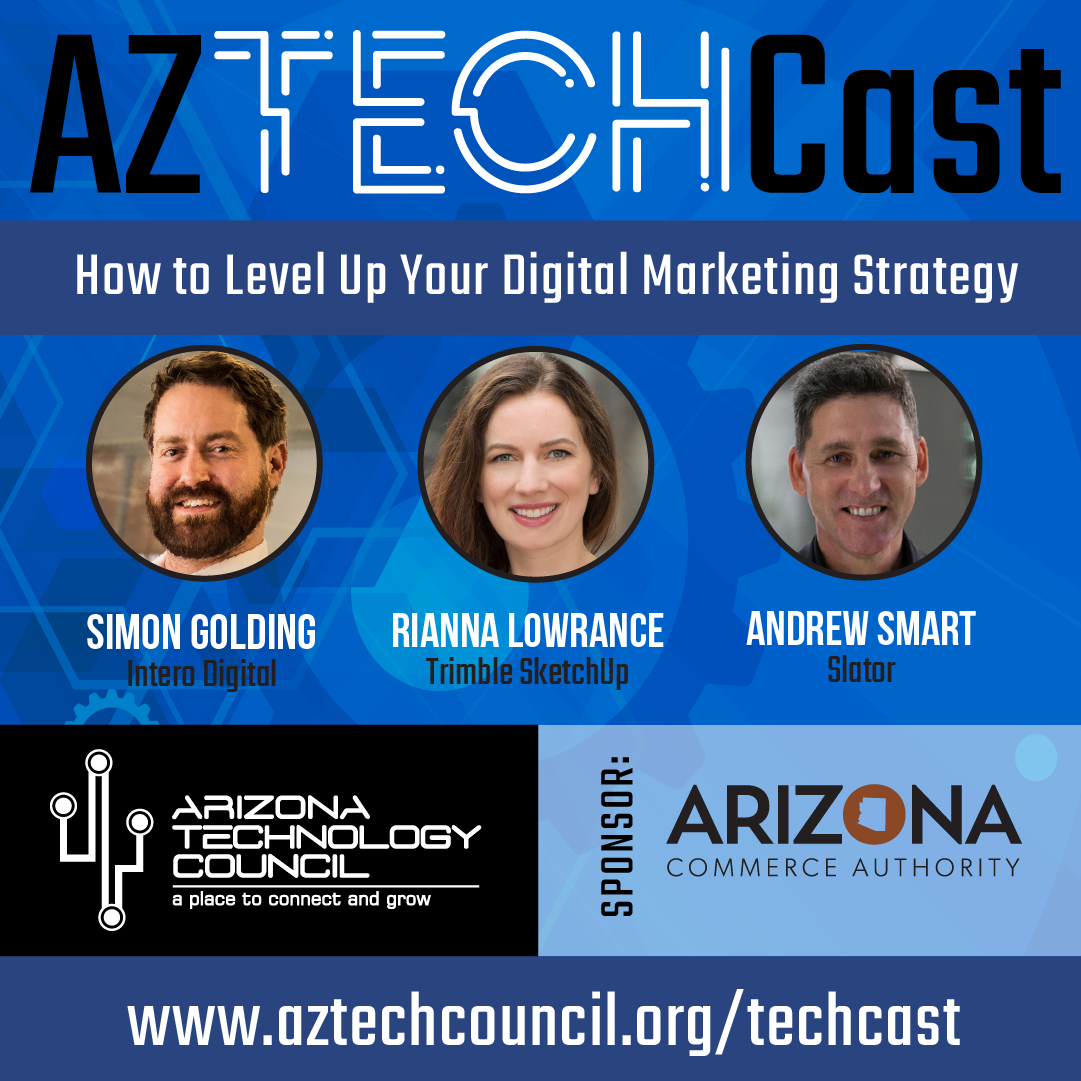
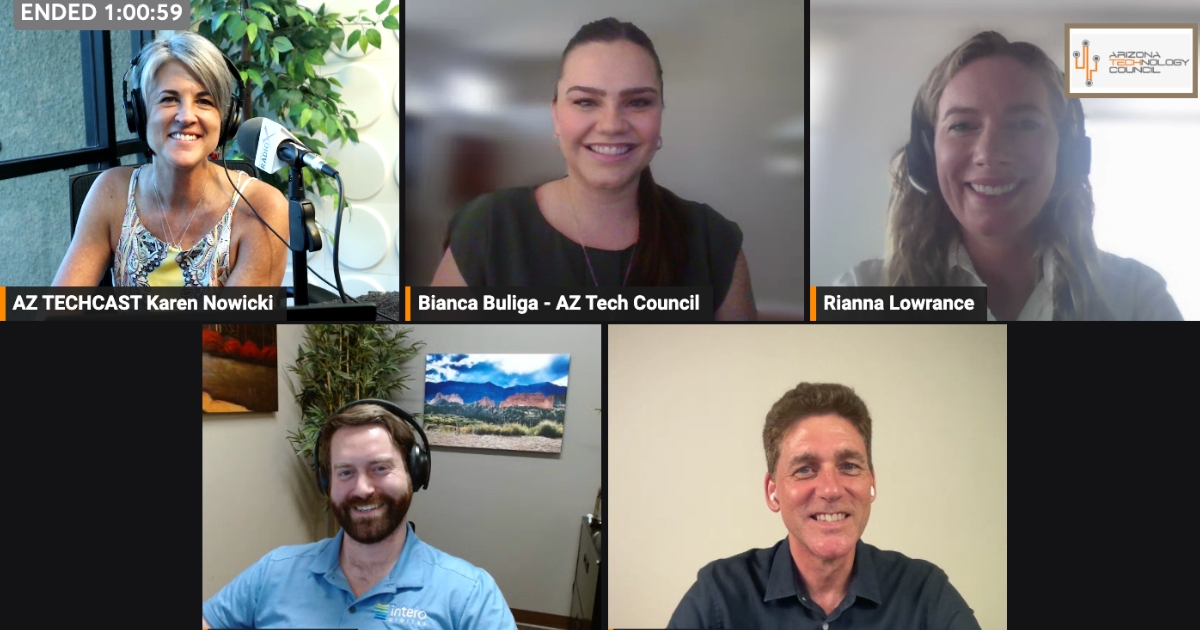
The August 2023 episode of the Arizona Technology Council’s AZTechCast podcast featured experts including Simon Golding, senior digital marketing consultant at Intero Digital; Rianna Lowrance, content marketing manager at Trimble SketchUp; and Andrew Smart, co-founder and commercial director at Slator. These leaders joined Bianca Buliga, director of marketing and communications at the Council, and Karen Nowicki, president and owner of Phoenix Business RadioX, in shedding light on the up-and-coming digital marketing solutions that can give your company a competitive advantage.

In this hour-long episode, the panel of three experts discussed the evolution of marketing from a traditional or physical format to a digital modality, the most in-demand digital marketing services in today’s world and the biggest challenges that they see companies needing support with that digital marketing agencies can help tackle.

Throughout the conversation, the speakers shared specific use cases of companies that turned to digital marketing agencies to help achieve business objectives, the solutions that were implemented and the results they have seen. Finally, they suggested useful metrics to track when introducing a new digital marketing platform, highlighted the role that technology plays in improving a company’s digital marketing strategy and provided myriad tips for how to select an effective agency and build a lasting relationship with them.

Intero-tm-allcolor-logo

Intero Digital is an agile and forward-thinking digital marketing solutions provider headquartered in Colorado Springs, Colorado, that’s dedicated to helping businesses reach their full potential.

With a passion for innovation and an expert team of highly skilled professionals, Intero Digital offers a comprehensive range of 15+ services, including SEO, SEM, content and PR, social media, video, influencer marketing, web design and development, and more.

Intero Digital’s commitment to delivering exceptional results and personalized solutions — coupled with industry-leading proprietary technology — has earned the agency a reputation as a trusted partner for companies of all sizes.

Simon-Golding-AZ-TechCastWith over 10 years of experience in business intelligence, marketing strategy, and digital marketing, Simon Golding’s depth of digital marketing understanding is well-matched by the breadth of contexts in which he can actualize his wisdom.

From multinational corporates to sole traders, from neuromarketing to print marketing, and everything in between, Simon’s colorful marketing journey has given him the skills to help every kind and size of business.

When he’s not translating marketing jargon into plain English, you’ll likely find him contemplating and philosophizing over a bottle of wine, reading non-fiction, listening to intellectual debates, or playing games on his latest PC build.

Follow Intero Digital on LinkedIn, Facebook and Instagram.

SketchUp-logo

With more than 33 million users, Trimble SketchUp is the premier design software among creative professionals across architecture, interior design, construction, and more. Creativity, flexibility, and connected workflows are at the core of Trimble SketchUp and allow users to actualize big-idea concepts.

From interior projects and custom home builds to intricate, energy-efficient buildings, Trimble SketchUp makes it easy to get your creative juices flowing to define, refine, and build out those award-winning designs. Facilitate cross-functional efficiency with 3D modeling and markups, pre-built parametrically configurable objects, task assignments, 2D documentation, virtual reality viewing, clash detection, and sustainability tools to ensure your net-zero goals are met.

Rianna-Lowrance-AZ-TechCastAs a marketing and communications professional with over six years of experience, Rianna Lowrance specializes in creating and executing innovative campaigns that build brand awareness and drive engagement.

Her content creation skills and her passion for storytelling have allowed her to create impactful content that resonates with audiences and inspires action. She has a strong background in project management and cross-functional collaboration and has a proven track record of delivering results.

Follow Trimble SketchUp on LinkedIn, Facebook and Instagram.

Slator-logo

Slator is the leading source of news and research for the global translation, localization, and language technology industry. Our advisory practice is a trusted partner to clients looking for independent analysis. Headquartered in Zurich, Slator has a presence in Asia, Europe, and the U.S.

Andrew-Smart-AZ-TechCastAndrew Smart co-founded Slator and provided its online media strategy and business model to create what is now the No. 1 news and research site for the global translation, localization, and language technology industry. He led the development of Slator.com, defining its content, information architecture, ad products and pricing, and e-commerce sales model.

He established and runs the event business, including the SlatorCon conference series, roundtables, and training workshops. Andrew also provides business advisory and content marketing services. Most importantly, he leads sales as commercial director to a global client base and drives revenue growth.

Follow Slater on LinkedIn, Facebook and Twitter.

About Your Hosts

Steven-ZylstraSteve Zylstra serves as president and CEO of the Arizona Technology Council, a role he assumed in 2007. He is responsible for strategy, operations, finance and policy development. Zylstra is a vocal spokesman for the value technology can provide in raising social and economic standards in Arizona.

Zylstra serves on numerous councils, committees and boards, was named “Leader of the Year, Technology,” by the Arizona Capitol Times, and “Most Admired Leader” by the Phoenix Business Journal. In addition, he was awarded an honorary doctorate of science in technology from the University of Advancing Technology in Tempe, Ariz.

Zylstra earned a bachelor’s degree in automotive engineering technology from Western Michigan University.

KarenNowickiv2Karen Nowicki is a successful author, speaker and the creator of Deep Impact Leadership™ and SoulMarks Coaching™. She is a two-time recipient of the prestigious national Choice Award® for her book and personal development retreat. Karen was crowned the first-ever “Mompreneur of the Year” Award in 2010 for the southwestern states. She was recognized for her leadership, business acumen, and work-life balance.

Karen has been an expert guest on regional TV and radio shows, including Fox Phoenix Morning Show, Sonoran Living, Good Morning Arizona, The Chat Room, and Mid-Day Arizona. She has been a regular contributor to many print and online magazines – publishing articles and blogs for business and education.

In addition to working with private coaching clients, Karen is also the Owner & President of Phoenix Business RadioX. The Business RadioX Network amplifies the voice of business – serving the Fortune 500,000, not just the Fortune 500. Phoenix Business RadioX helps local businesses and professional associations get the word out about the important work they’re doing to serve their market, profession, and community.

Of all the experiences Karen has had the privilege of participating in over her vast career, she shares that Phoenix Business RadioX is a pinnacle adventure!

Connect with Karen on LinkedIn and follow Phoenix Business RadioX on Facebook and Instagram.

bianca-buliga-aztechcastBorn in Phoenix, Arizona, Bianca Buliga is a trilingual first-generation American of Romanian ethnicity. A marketing professional with experience in both the nonprofit and for-profit sectors, Bianca currently works as Director, Marketing & Communications for the Arizona Technology Council.

Previously, Bianca worked as Marketing Communications Lead at Proctorio, a learning integrity platform that offers remote proctoring software ensuring exam integrity for learners around the world.

Bianca also worked as Senior Marketing Manager at SEED SPOT, a social impact incubator that educates, accelerates, and invests in impact-driven entrepreneurs creating market-based solutions to social problems. In January of 2020, Bianca was selected as an awardee of the Mandela Washington Reciprocal Exchange Program and traveled to the African island of Mauritius to run entrepreneurship programming for 15 impact-driven ecopreneurs on behalf of the U.S. State Department’s Bureau of Educational and Cultural Affairs.

Bianca has also completed comprehensive consulting projects for IBM, ESAN Business School, and the Peruvian government, and interned at the Arizona House of Representatives and U.S. Embassy in Bucharest, Romania.

Bianca earned her Bachelor’s degree in International Affairs from Northern Arizona University in 2014 and her Master’s degree in Global Affairs and Management from the Thunderbird School of Global Management in 2017. She is an avid reader, yogi, and world traveler always planning her next trip.

Connect with Bianca on LinkedIn.

About Our Sponsor

The Arizona Technology Council, Arizona’s only statewide organization serving the technology sector, fosters a climate of innovation to enhance technology in Arizona.

A trusted resource in strengthening Arizona’s technology industry, the Council proactively eliminates impediments that companies face, accelerates the entrepreneurial mindset in the state’s expanding innovation ecosystem, and works to create a destination for companies to be, thrive and stay.

Follow Arizona Technology Council on LinkedIn, Facebook, and Instagram.

AZTClogomainRGBPNG300DPI

Tagged With: 3D design software, 3D modeling, 3D modeling tools, 3D rendering, 3D visualization, advisory services, architectural design, architectural visualization, CAD software, design software, digital marketing agency, digital marketing experts, digital strategy, digital transformation, entrepreneur, full-funnel solution, global language services, language ai, language localization, language service providers, market research, Mergers and Acquisitions, natural language processing, ppc agency, SEO experts, translation news, translation technology, UX/UI design

Decision Vision Episode 112: Should I Market with Search Engine Optimization (SEO)? – An Interview with Ian Lurie, Ian Lurie, LLC

April 15, 2021 by John Ray

Ian Lurie
Decision Vision
Decision Vision Episode 112: Should I Market with Search Engine Optimization (SEO)? - An Interview with Ian Lurie, Ian Lurie, LLC
Loading
00:00 /
RSS Feed
Share
Link
Embed

Download file

Ian Lurie

Decision Vision Episode 112:  Should I Market with Search Engine Optimization (SEO)? – An Interview with Ian Lurie, Ian Lurie, LLC

Ian Lurie nerds out, as he terms it, on SEO, considering it both an art and a science. On this edition of “Decision Vision,” Ian and host Mike Blake discussed how SEO impacts a business’s visibility and success, mistakes businesses make with SEO, why good SEO is akin to building an asset, and much more. “Decision Vision” is presented by Brady Ware & Company.

Ian Lurie, CEO of Ian Lurie, LLC

Ian Lurie, LLC provides digital strategy, content, and SEO consulting to small businesses and Fortune 500 companies alike.

Ian Lurie is a digital marketing consultant, SEO, content guy, and overall digital marketing nerd. He has 40,000+ hours of experience in internet marketing. Ian uses both sides of his brain as a content creator, search engine optimization nerd, and data addict. He is a speaker and author as well.

Ian founded Portent, a digital marketing agency, in 1995, and sold it to Clearlink in 2017. He’s now on his own, consulting for brands he loves and speaking at conferences that provide Diet Coke. He’s also trying to become a professional Dungeons & Dragons player, but it hasn’t panned out.

He has a TikTok profile, but his kids are embarrassed by it, so we’ll leave that out.

Company website | LinkedIn

Mike Blake, Brady Ware & Company

Mike Blake, Host of the “Decision Vision” podcast series

Michael Blake is the host of the “Decision Vision” podcast series and a Director of Brady Ware & Company. Mike specializes in the valuation of intellectual property-driven firms, such as software firms, aerospace firms, and professional services firms, most frequently in the capacity as a transaction advisor, helping clients obtain great outcomes from complex transaction opportunities. He is also a specialist in the appraisal of intellectual properties as stand-alone assets, such as software, trade secrets, and patents.

Mike has been a full-time business appraiser for 13 years with public accounting firms, boutique business appraisal firms, and an owner of his own firm. Prior to that, he spent 8 years in venture capital and investment banking, including transactions in the U.S., Israel, Russia, Ukraine, and Belarus.

Brady Ware & Company

Brady Ware & Company is a regional full-service accounting and advisory firm which helps businesses and entrepreneurs make visions a reality. Brady Ware services clients nationally from its offices in Alpharetta, GA; Columbus and Dayton, OH; and Richmond, IN. The firm is growth-minded, committed to the regions in which they operate, and most importantly, they make significant investments in their people and service offerings to meet the changing financial needs of those they are privileged to serve. The firm is dedicated to providing results that make a difference for its clients.

Decision Vision Podcast Series

“Decision Vision” is a podcast covering topics and issues facing small business owners and connecting them with solutions from leading experts. This series is presented by Brady Ware & Company. If you are a decision-maker for a small business, we’d love to hear from you. Contact us at decisionvision@bradyware.com and make sure to listen to every Thursday to the “Decision Vision” podcast.

Past episodes of “Decision Vision” can be found at decisionvisionpodcast.com. “Decision Vision” is produced and broadcast by the North Fulton studio of Business RadioX®.

Connect with Brady Ware & Company:

Website | LinkedIn | Facebook | Twitter | Instagram

TRANSCRIPT

Intro: [00:00:01] Welcome to Decision Vision, a podcast series focusing on critical business decisions. Brought to you by Brady Ware & Company. Brady Ware is a regional full service accounting and advisory firm that helps businesses and entrepreneurs make visions a reality.

Mike Blake: [00:00:21] Welcome to Decision Vision, a podcast giving you, the listener, clear vision to make great decisions. In each episode, we discuss the process of decision making on a different topic from the business owners’ or executives’ perspective. We aren’t necessarily telling you what to do, but we can put you in a position to make an informed decision on your own and understand when you might need help along the way.

Mike Blake: [00:00:40] My name is Mike Blake, and I’m your host for today’s program. I’m a director at Brady Ware & Company, a full service accounting firm based in Dayton, Ohio, with offices in Dayton; Columbus, Ohio; Richmond, Indiana; and Alpharetta, Georgia. Brady Ware is sponsoring this podcast, which is being recorded in Atlanta per social distancing protocols. If you would like to engage with me on social media with my Chart of the Day and other content, I’m on LinkedIn as myself, and @unblakeable on Facebook, Twitter, Clubhouse, and Instagram. If you like this podcast, please subscribe on your favorite podcast aggregator, and please consider leaving a review of the podcast as well.

Mike Blake: [00:01:16] So, today’s topic is, Should I market with Search Engine Optimization or SEO? And before we dive into that, you may hear some pauses throughout this podcast. I came down with a touch of bronchitis yesterday. But I’m a lunch pail guy. I don’t have a lot of talent, but I play hard to make sure I stay on the team. So, I think that we’ll get through it. So, if you notice some gaps, that’s just me trying not to blow your eardrums out as I’m hacking something up. But on with the show.

Mike Blake: [00:01:47] So, I want to talk about SEO because I think SEO has sort of fallen to the background a little bit in terms of the common vernacular, and, certainly, it hasn’t gone away by any stretch of the imagination. But I think there’s a lot more chatter right now around marketing, through LinkedIn, and marketing through Facebook, and marketing through YouTube. And, of course, you know, the podcast we do does have marketing value to it. I’m not going to sit here and say that it doesn’t.

Mike Blake: [00:02:19] But, you know, before the advent of social media, really everything was about SEO. It’s all about where are you going to fall in terms and be presented in a search. And what we’re going to talk about today is that, you know, there are lots of sneaky search engines around there that, if anything, have made SEO more pervasive rather than less. But it may have changed.

Mike Blake: [00:02:44] And to be perfectly candid, I have not looked at SEO in a meaningful way, I think, in ten years. It just hasn’t been on my business radar screen personally. But I’m sure it’s on the business radar screens for you guys, at least some of you. And I may learn in this podcast that it needs to be on my radar screen. So, you know, it’s a topic that I think is sort of one of these unsung heroes and one of these topics that’s sort of in the background. And I want to give it the light of day that it deserves.

Mike Blake: [00:03:17] And joining us today is Ian Lurie, joining us from California, who is a digital marketer and with a 25 year intolerance of trendy concepts and nonsense – so a man that is near and dear to my heart. Someone told him to say no to bullshit – I can say that because this is the internet – so he’s trying really hard not to. Ian uses both sides of his brain as a content creator, search engine optimization nerd, and data addict. Ian founded Portent, a digital marketing agency in 1995, and sold it to Clearlink in 2017.

Mike Blake: [00:03:53] He’s now on his own consulting for brands he loves and speaking at conferences that provide Diet Coke. He’s also trying to become a professional Dungeons and Dragons player, but it hasn’t panned out. He has a TikTok profile, but his kids are embarrassed by it – so we’ll leave that out. Ian Lurie, welcome to the program.

Ian Lurie: [00:04:09] Thanks, Mike. If you start coughing, I never shut up so I can always fill in the gaps.

Mike Blake: [00:04:15] Well, good. You’re going to be my human cough bud, so that’s good.

Ian Lurie: [00:04:19] And the other thing is never call someone from Washington, never say that they’re from California. I’m actually based in Seattle, Washington, right now.

Mike Blake: [00:04:27] I beg your pardon.

Ian Lurie: [00:04:28] It’s okay. I just wanted to make clear that, you know –

Mike Blake: [00:04:31] No. I’m glad that you reminded me. I knew that. And you know what? I’m just going to blame it on the Sudafed and Mucinex that I’m on.

Ian Lurie: [00:04:41] Yes. Absolutely.

Mike Blake: [00:04:41] That sort of blanked out on me.

Ian Lurie: [00:04:42] The big difference is we don’t have a basketball team, so just kind of keep that in mind.

Mike Blake: [00:04:49] That is a shame, isn’t it? I’m old school enough that I remember back then they were called the Seattle SuperSonics because of only being in town. But I think you’re supposed to get a team in the next couple of years. If I’m not mistaken, you guys are going to get the next expansion team.

Ian Lurie: [00:05:05] Yeah. Yeah. We’re supposed to win a World Series, too.

Mike Blake: [00:05:07] So, before I get into this, I don’t understand why it hasn’t panned out to become a professional Dungeons and Dragons player. Just do what critical role does, become professional voice actor yourself, get five or six other professional voice actors, get your own studio, and produce a video cast of your game every week, and off you go.

Ian Lurie: [00:05:30] I shouldn’t say it hasn’t panned out. I should say it doesn’t make any money. I could be a professional Dungeons and Dragons player. I’m just not going to make any money doing it. That’s the difference.

Mike Blake: [00:05:44] Fair enough. So, Ian, thanks for coming on the program. You’re a good sport. I like to remind everybody what is exactly search engine optimization?

Ian Lurie: [00:05:56] So, SEO is about improving visibility anywhere anybody searches for anything online. And I suspect we’re going to talk more about this, but Google is the big one. The main thing is, an SEO works to ensure better visibility on any search engine.

Mike Blake: [00:06:19] And you’re right, we’re going to talk about this a little bit later so I don’t want to get ahead of myself. So, instead, what I want to do is I want to draw the line between SEO and something called search engine marketing. Is SEM still a thing? And if it is, what is the difference between the two? How are they related? How are they different?

Ian Lurie: [00:06:38] So, SEM is definitely still a thing. There used to be a big argument about whether SEO is part of SEM or not. But, now, as the accepted definition is that SEM is paid search advertising. You, actually, are paying by the click. It’s an auction of some kind where you say to Google, or Bing, or Amazon, or whoever, you’re going to pay X number of dollars every time someone clicks on your ad. And in exchange for that, you will be positioned in a certain place in those paid ads. There’s a lot of bits to it. There is an algorithm that helps.

Ian Lurie: [00:07:10] But with search engine optimization, you are not paying Google, nor can you pay Google to improve your rankings. There’s no way to influence those rankings by sending money to Google. You can send it to me. I’ll do my best. But Google will not accept money in exchange, nor will Bing, nor will Amazon, or anybody else.

Mike Blake: [00:07:34] And you say that in kind of an interesting way. So, they will not accept money, I mean, is it a matter of principle because they’re trying to keep their search engine optimization engines and the reputation clean and they just want to create that clear delineation? Or they just haven’t figured out how to monetize it that way yet?

Ian Lurie: [00:07:51] Well, paid search ads, search engine marketing, that is how they monetized it. Because the paid ads show up above and below the organic results, the unpaid results. That is why Google can now buy and sell the entire planet any time they want, is because businesses everywhere pay them by the click to occupy real estate that surrounds – what we call – the organic results. The results where you can’t pay. The results that you influence through SEO.

Ian Lurie: [00:08:21] Google won’t accept money for those, in part, because they want to maintain their credibility. And Bing is the same. They want to maintain their credibility as a search engine, in part, because the antitrust lawsuits would ramp up that much faster. And in part, because, I think they want to deliver good results. And results that are based on paying by the click can be good. And as I said, Google and Bing have algorithms that try to make sure that you place ads that will satisfy the user, but it’s not quite the same as a completely organic algorithmic search result. And, by the way, tell me if I’m nerding out too far, too fast here. Just say interesting or something and I’ll stop and I’ll rewind.

Mike Blake: [00:09:05] Well, I’ll tell you what, I’ll blink three times if that happens.

Ian Lurie: [00:09:09] Okay. All right.

Mike Blake: [00:09:09] But I think this is great because I do think that even if you’re not a tech, if you’re going to make an informed decision about this stuff, you need to have at least a remedial knowledge of how this works. Because, otherwise, you don’t really know what you’re spending money on. You don’t know if you’re spending it on the right team, on the right technology, on the right processes. And that’s no good.

Ian Lurie: [00:09:33] Another way to look at it is, if you do the right things for SEO, there’s a certain amount of a flywheel. This guy, Andy Crestodina, a colleague of mine who’s way smarter than me, talks about how SEO is a sailboat and SEM is a rowboat. So, to some extent, you still have to maintain the sails and everything. But to some extent, the wind keeps you going. You don’t have to keep pouring money into ads.

Ian Lurie: [00:10:00] SEM, you can accelerate whenever you want, you can turn whenever you want, but it requires constant energy to keep it going. So, each has an advantage. But that’s probably the biggest difference. You will always pay for SEO, but you will not pay for every single person who comes to your site. You will not pay more because you’re getting more traffic from organic search.

Mike Blake: [00:10:21] That’s really interesting. So, in the terms of a finance nerd like me might understand, SEO is more about building an asset, whereas, SEM is paying for a service.

Ian Lurie: [00:10:31] Yes. Yeah. That’s a very good way to put it. SEO, I always used to call it an annuity, which I probably just mangled it. But you’re putting money in, you’re investing in it, and you will steadily get a return. Whereas, SEM is much more you’re paying for something that you’re going to get right then and you must continue to pay for it if you want to continue to get it.

Mike Blake: [00:10:54] And of course – I shouldn’t say, of course – but it seems to me that the notion of ad retargeting on social media, that’s really just a cousin or on the family tree of SEM, correct?

Ian Lurie: [00:11:06] It’s another form of paid media. I mean, if we go back before the internet, there was earned media, which is the ability to get a cool story written about you in the newspaper or wherever. And then, there’s paid media, where you buy a T.V. ad or something like that. Paid social advertising is paid media. Getting someone to say something wonderful about you in social media is earned media. And it’s the same with search, organic search SEO is about earned media, paid search. SEM is about paid media.

Mike Blake: [00:11:35] So, the next question, which is an important question, but I think it’s hard even for somebody like you to answer, because I suspect the answer is so expansive. But what are the elements of SEO? What are the things that – I know I used to go into SEO. I don’t even know if those things are relevant anymore. But as of today, 2021, what are the elements that go into it to make it work?

Ian Lurie: [00:11:58] So, I can give you three elements that never change, and I can give you a few details about each one. So, search engines require visibility, relevance, and authority. Visibility is about ensuring that a search engine can find you and crawl your website. So, it’s just making sure that Google, Bing, whoever, can actually get through your content. If you’re on YouTube, it’s making sure that your content is rendered sufficiently well that YouTube can figure out what’s there. So, that’s visibility, it’s just making sure that computers can see “your content”.

Ian Lurie: [00:12:34] Relevance is making sure that search engines, whatever they are, can understand what you’re talking about and match you up with whatever the query is. So, visibility is making sure you’re available. Relevance makes sure that it makes sense. Authority is all about – and everyone talks about links – links are part of it, but depending on the search engine, it may also be sales per click. It may be shares and likes and plays, whatever. But authority is the measure of how important you are compared to other folks in your space.

Ian Lurie: [00:13:09] Visibility is all about technology. It’s making sure that your site – that’s where I would have to nerd out pretty deeply – but it’s about how your site is built and delivered. Relevance is about content, how you say it, how you structure your site. Authority is about how many people see and care about what you do and say. So, those are the three basics. The tactics involved, we could spend a week, so I’ll stop.

Mike Blake: [00:13:35] Okay. Maybe if we have time we’ll come back to that. But that segues nicely into the next question, which is, when we think of SEO, I think now most of us think of Google. Now, I’m of a certain age and I think you are, too, that we remember such names as Web Crawler, Lycos, AltaVista, Ask Jeeves. Google didn’t use to be a thing, right? But I think there’s a temptation to think that we only now have one, or maybe two search engines if you think Yahoo! is still relevant, I’m not sure it is. But, certainly, Google is out there. But my impression is that search engines have simply migrated into different platforms haven’t they?

Ian Lurie: [00:14:21] Yeah. I mean, Google still dominates the planet. But YouTube is the second biggest search engine on the planet. Amazon is probably number three. Bing is number four. And understand, Bing has five to ten percent of the market, but that’s five to ten percent of everything. Right? That’s a big five to ten percent.

Mike Blake: [00:14:40] I’m surprised it’s that high.

Ian Lurie: [00:14:42] This is just for me looking at client data. Some of my clients get only one percent or two percent of their traffic from Bing. Some get as much as 15 to 20 percent. But most of them are in the five percent range. Google, obviously, is still the biggest generator of traffic, and YouTube is owned by Google. If you sell a product, though, on Amazon, obviously, Amazon is the search engine that you care about. So, there’s more to it than Google. But, yeah, Google dominates the landscape.

Mike Blake: [00:15:12] Is there a search engine that you’re aware of on the Apple side of ecosystems?

Ian Lurie: [00:15:18] Apple is building a search engine. So, we’ll see. Hopefully, it goes better than Apple Maps when it launched.

Mike Blake: [00:15:25] It couldn’t go worse.

Ian Lurie: [00:15:26] Yeah, it couldn’t go worse. I am skeptical. And, again, we can do another podcast about this, but I’m skeptical about Apple’s ability to seize a large part of the market. I think that they can grab Apple users to some extent. But as much as I love to talk about it, we are a very small slice of the population.

Mike Blake: [00:15:46] Yeah, me too. I’m a Mac user and Apple mostly through our ecosystem too. But as you mentioned, I kind of wonder if they’re kind of too late to the party like they were with Homepod. Homepod could have been a player in the home automation market, but I think you’re too late. And I think they’re probably five years too late in the search engine area, unless they just come up with something that just blows you away somehow.

Ian Lurie: [00:16:16] I mean, again, this is going to sound terrible, but it can’t be Safari versus Chrome, right? They’ve got to do something better than that. So, we’ll see. I mean, Apple, in my opinion, is great at certain things. And we’ll see if they can match up with a company whose sole purpose in the universe is to build a great search engine. That’s going to be the biggest obstacle they’re going to face.

Mike Blake: [00:16:41] So, as I mentioned at the top of the program, I looked into SEO quite a bit a decade ago. I have not paid that much attention to it. You’ve been in it for pretty much your whole career in some form or fashion. How has SEO changed since the last time I looked at it, say, around 2010, to today in early 2021?

Ian Lurie: [00:17:05] So, there’s really two big changes, one nerdy and one not. The non-nerdy one is how much more complicated the search results have become. Google and Bing have a lot more search features in them now. So, if you do a search result, you’ll see like a box at the top. Sometimes it has the shortest answer to your question. Google or Bing may be pushing in some kind of scraped result or tool. So, like, if you try to do a speed test right now of your internet connection on Google, instead of just showing you speedtest.net, there’ll actually be a box that shows up that let’s you use Google to do the speed test. If you ask, “How do I cook pancakes?” You’ll actually get a recipe at the top of the page.

Mike Blake: [00:17:44] That’s true. Yeah, I hadn’t noticed that. That’s very subtle. But you’re right.

Ian Lurie: [00:17:49] And it’s a subtle way, again – hopefully, not many people from Google listen to this. I’m a fan of a lot of people at Google – that Google is attempting to become a publisher instead of a search engine and keep you on Google at all times. It’s basically the real estate dedicated to what used to be called the 10 blue links. The traditional search results has become smaller and smaller. All of those search features, like that answer box, those are still part of a search engine and you can optimize for those locations, but search has changed.

Ian Lurie: [00:18:24] Now, the nerdier side is, of course, Google and Bing have both gotten – but Google in particular – much better at understanding language. Google’s ability to understand a query, what you really mean when you search for something in the context of other searches you’ve made and other searches other people make, has grown by leaps and bounds. Their ability to figure out the true meaning of words on a page has also grown by leaps and bounds.

Mike Blake: [00:18:50] I agree. And, in fact, this show is very much a beneficiary of that. Because the reason that we retitle our shows as questions is because Google now allows and really encourage you just to simply type out a question. And that’s been a big hit. And I don’t want to steal a thunder away from our producer, it’s really John Ray who thought of it. But I think we kind of stumbled upon it. We didn’t really know that. But once we figured it out, we discovered that we were drawing a much larger audience from Google, from search engines just by that tweet.

Ian Lurie: [00:19:29] Mm-hmm. Well, you know, you remember Ask Jeeves, right?

Mike Blake: [00:19:33] I do.

Ian Lurie: [00:19:33] And their whole thing was you could just ask it a question. Well, guess what?

Mike Blake: [00:19:38] And in fact, I believe it was Google who bought Ask Jeeves, if I’m not mistaken.

Ian Lurie: [00:19:41] I think so. Yeah. I’m not sure.

Mike Blake: [00:19:43] At that time they’re ask.com, I think, or something like that.

Ian Lurie: [00:19:46] Yeah. That’s right. But the complexity of results, I think, is the most obvious change for the average person. Just how much more stuff there is that shows up on the page.

Mike Blake: [00:19:57] Yeah. And I guess getting into that, too, because it used to be that the search engines would pretty much just bring you to other web pages. Now, they’re bringing you podcasts. They’re bringing you video clips. They’re bringing you social media fragments. So, the universe of things to be searched and the format of the results is vastly expanded too. I think, suddenly, because of this conversation, I’m gaining in admiration for just how deep this technology has gotten in such a short period of time.

Ian Lurie: [00:20:31] Yeah. I have a genuine nerdy admiration for it. And as a marketer, I have a grudging admiration for it. And as a free speech advocate, I have a grudging respect for it.

Mike Blake: [00:20:47] So, my impression – and correct me if I’m wrong – and one of the reasons I kind of stepped away from SEO is that, it seems like an all or nothing game. That, you’re either at the top of a search engine results or you’re just nobody, nowhere to be found. Is that true? Was that ever true and I just didn’t get it? And if it’s not true, how can that kind of be nuanced? And I say that in this context, that, my impression of SEO is that, in many cases, it’s not just a pay to play, it’s a pay to win game. And if you don’t have a certain budget, why bother? Because if you’re a retail store and you’re in there with Walmart, you’re just not going to be able to match them dollar for dollar. So, that’s a long preamble to the question of, if you can’t match your competitors dollar for dollar for SEO, is it still worth doing?

Ian Lurie: [00:21:42] So, that’s a two part question. The first one, is it a zero sum game? And the answer is, if you look at one term, it’s a zero sum game. But smart SEO doesn’t focus on one term. It focuses at an enormous number of terms, some of which you don’t even optimize necessarily for most of the individual search phrases. That’s that visibility part. And that relevance part is, make sure that your site is visible so that Google and Bing can crawl it and find all the stuff. And then, work on relevance first to make sure that Google, Bing, YouTube, whoever, can figure out what you’re talking about in this stuff. And you will start to rank for things.

Ian Lurie: [00:22:25] Everyone can’t optimize for everything. Even Walmart can’t optimize for everything. So, if you do it right and you’re persistent, you will probably match up with them at some point because you will start to rank for terms that they simply miss.

Mike Blake: [00:22:40] Go ahead.

Ian Lurie: [00:22:40] The other real quick thing is, companies like Walmart are very good at certain kinds of SEO. But what they’re terrible at is changing and fixing things. And I have some wonderful clients that are very large, and I shouldn’t say they’re terrible at it. They are not structurally built to make rapid change. There are many things where they have to be much more deliberate.

Ian Lurie: [00:23:06] So, if you are a smaller organization, a small business, one advantage you have is that you can make changes and adjust much more quickly. If you want to become more relevant for a particular concept, you could theoretically put together stuff and publish it much more quickly. You could do a set of videos much more quickly because you don’t have to go through legal, and a marketing team, and a branding team. If you have a visibility issue on your site and you need to change something in WordPress or change something in the way your videos are done, you don’t have to go through a whole IT team. At most, you’ve got to go on Upwork and hire a developer to fix it for you. It’s a much quicker process.

Mike Blake: [00:23:47] Okay. So, that’s really interesting, and I think it gives hope to our listeners. I don’t think any of them are working for Walmart at a high level. And it leans actually nicely into the next question, which is, how much of this is art and how much of this is science? If I’ll just direct this to you, Ian Lurie, do you distinguish yourself as somebody who sort of understands SEO from a different angle, a different perspective, maybe from other SEO experts. And, therefore, there’s a potential for creative differentiation that you can find those search terms that others might be missing, or those other tags, or other SEO elements that others are missing, and, therefore, creates sort of an outsized performance for the client.

Ian Lurie: [00:24:41] So, I flatter myself by thinking that I have a foot in both the left and right brain sides of this. So, I do work on the technical stuff quite a bit on visibility, and that’s much more science. And I work on the relevance and authority side, which is much more art. There is science involved with relevance and understanding how machines process language. But, ultimately, Google and Bing do not give us a manual regarding their algorithms.

Ian Lurie: [00:25:15] So, no matter how much science you apply, at some point, you are making highly educated guesses and doing a lot of research and thinking about what your audience is going to best respond to as one way to generate a positive outcome in SEO. So, it’s a little bit of both. I’m not going to try and suggest that I’m even among the best at SEO. There are a lot of amazing SEOs out there. But that is what a lot of folks bring to SEO. It’s why I love it. Because I come from a creative background and both my parents are scientists or a liberal arts background and both my parents are scientists. Being able to put those two things together is a professional paradise for me.

Mike Blake: [00:26:03] Yeah. So, my impression and you’re starting to dispel it, but I want to drill a little bit deeper because I think this is really interesting and relevant. We had a guest on a few weeks ago, his name is Adam Houlahan, and he’s one of the top experts on LinkedIn. And he actually has a bank of people under his employ whose sole job is to understand the nature of LinkedIn algorithms so that he can then help his clients monetize their own LinkedIn presences better. Do people do something like that with search engines as well to try to understand it or glean their algorithms better or somehow reverse engineer it? And if so, is that even a useful thing?

Ian Lurie: [00:26:56] I don’t want to start a nerd fight, but when I ran my agency, I had teams of people who also did their best to understand the Google algorithm. But you can no more confirm and scientifically prove how the LinkedIn algorithm works than you can the Google algorithm. I just got to put that out there.

Mike Blake: [00:27:15] I think in fairness, you can say that he could prove it. I think just simply said that they were able to run tests that led data to ease you in a certain direction.

Ian Lurie: [00:27:25] Yeah. And you can do the same thing with Google to some extent. And it pays to chase the algorithm a little bit. But there are those three basic rules of visibility, relevance, and authority. And you don’t need to understand the algorithm to understand those. Now, knowing the algorithm can help you avoid some kind of tricks that people recommend, the tactics that don’t really work but make people think they work. And knowing the algorithm can also help you figure out that there are certain things that are more important on a page than others. You know, a good title tag, writing really well as opposed to repeating the same keyword 52 times on the page. That’s where understanding the algorithm can really, really help.

Mike Blake: [00:28:19] Now, there was a time when entrepreneurs and small businesses could effectively put into place some kind of useful SEO. And maybe I’m talking about 20 years ago or 15 years ago. Has SEO simply grown up so much that maybe that’s no longer feasible? Or are there scenarios where somebody could plausibly apply some DIY, maybe with a little bit of effort and learning, to raise the SEO effectiveness of their own web presence?

Ian Lurie: [00:28:56] I think you absolutely can. I worked with a lot of really, really small clients. A lot of it is relative, like, maybe you’re not going to compete with Walmart, but maybe you can triple your organic search traffic. SEO is DIY. No matter how big your organization is, eventually you have to look to visibility, relevance, and authority. And someone’s going to have to make those changes.

Ian Lurie: [00:29:23] So, again, you’ve got some advantages as an individual or a really small business as much as you don’t have an IT team. That also means you don’t have to worry about IT resource constraints. You know, somewhere along the way, you can find someone to help you work on that site. Creating content, you have less time, maybe you don’t have a team to do it. On the other hand, it’s going to come directly from the person who knows most about it. So, you’re probably going to create the best content on a particular topic. So, you absolutely can DIY it. And, in fact, it’s easier to compete in the SEO world than in the SEM world.

Mike Blake: [00:29:56] And I think that’s right. Before I joined Brady Ware, I guess, about three-and-a-half years ago now, I had my own company, Arpeggio Advisors. Now, I was pretty active in terms of creating content for that website. And I’m in a niche business valuation and so forth, so, fortunately, I didn’t have that many competitors online. But even with the modest amount of content that I create, I might have had like 30 pieces up there or something. I think even at least two years after I stopped using the website entirely, it’s still ranked in the top five for business valuation firms in Atlanta.

Ian Lurie: [00:30:36] Again, it’s an annuity, right? You don’t have to buy inventory. You’re not paying constantly for advertising. Stuff you write now will probably pay off later. Videos you record now will pay off later. So, yeah. No, that totally makes sense to me.

Mike Blake: [00:30:53] I’m going off script a little bit here, and I’m also sort of cornering you in a little bit of free advice while I’m doing a podcast interview, but I think others will benefit too. Is there a kind of a minimum amount of content you have to shoot for before you start getting some leverage behind your SEO?

Ian Lurie: [00:31:14] No. Usually, the biggest obstacle I find for clients is visibility, not relevance. And any content is better. Steady growth is very important. And stuff that’s truly useful for your audience. So, if you sell running shoes, writing 52 articles about the history of the running shoe is probably not as important as two really good articles on selecting and sizing the best running shoe. So, I would always look to that.

Ian Lurie: [00:31:50] Assuming you could produce great content, more is always better. But none of us have infinite resources. So, I was just going to say, you also have to remember that everything you have on your site is content, product description, service descriptions, descriptions of what you do, case studies. Everything is content, so optimize what you got first.

Mike Blake: [00:32:12] So, this brings up – and you touched on it earlier, but I think it’s such an important point, I want to underscore it – that SEO is a commitment, right? One of the things I’m curious about whenever I have these conversations is, who shouldn’t do it SEO? And it sounds like somebody who shouldn’t do SEO is somebody who isn’t willing to kind of make the commitment into the flywheel to initiate the flywheel, sort of apply at least some minimum momentum to keep it going. If you really just want a one-off step, then just go over to the SEM side.

Ian Lurie: [00:32:47] I mean, probably you already can tell I have opinions. Don’t invest in SEO if you don’t want to grow your business. And that sounds like really cheesy marketing speak, and I’m not coming at it from that direction. Again, investing in SEO starts with visibility. If you’re not willing to make the investment in a website that a search engine can easily crawl and index, then I would say you’re probably at a point where you’re not really investing in your online business. And I’m not saying that that is a choice. And I’m not saying that’s wrong. It’s all about context. But if you’re investing in a quality website and you’re spending time on quality content, including product descriptions, then you’re already investing in SEO. So, you should definitely do it.

Mike Blake: [00:33:41] So, we’ve probably covered this indirectly, but I want to make it explicit. What is the most common mistakes you see being made with SEO?

Ian Lurie: [00:33:55] Websites that are invisible in some way, especially folks who hire developers who say that they know SEO and then build a site that is completely invisible to search engines. Quantity over quality is the most common SEO issue. I see hiring someone for $5 a blog post to write 200 blog posts, Google has actually specifically put together algorithms that hammer sites like that now.

Mike Blake: [00:34:23] Oh, really?

Ian Lurie: [00:34:24] Oh, yeah. Oh, yeah. So, quantity over quality is a mistake. Attempting to manipulate lengths and gain links in manipulative ways is another common mistake. But the biggest one is that initial investment, it’s how you build your site. And this is, unfortunately, the hardest part for a business owner to understand and grasp because it requires technical expertise. And it’s not fair that a business owner should have to understand that. But there is a little bit of caution when you’re building the site. And I’m not talking about a beautiful design, which is great. I’m talking about just basic functional, useful website infrastructure.

Mike Blake: [00:35:10] I mean, does that go into the architecture of the site too? Is that SEO managing, for example, site bounces which can include just people being frustrated with a poorly functioning site and they throw their hands up and go someplace else.

Ian Lurie: [00:35:23] Yeah. I mean, bounce rate is a hard one because sometimes a high bounce rate means people are getting exactly what they want. The Portent blog, my old agency, had an 88 percent bounce rate. But that was because people found the article, got what they wanted, and left. But bounce rate is an important one of site performance. Ignoring the SEO side, just paying attention to one of the indications of quality of your site. If it takes five seconds or ten seconds for a page to load, that’s a problem. Does your site work on mobile? Does it offer really good experience on mobile? Is all the same content visible on mobile? Those are all important things as well.

Mike Blake: [00:36:05] I’m glad you mentioned those two things because I wanted to get into that just a little bit. So, you do think that mobile is important? Sort of what I’ll call mobile desktop parity is important.

Ian Lurie: [00:36:17] It is no longer a parity. Google has said that they are shifting to a mobile only index. Meaning that if content is not visible on mobile, they will not index it. We’re not accessible on mobile, they will not index it.

Mike Blake: [00:36:30] Wow. Okay.

Ian Lurie: [00:36:31] Yeah. They talked about mobile first for a long time, but there was a minor nerd riot on Twitter because it became clear that Google is actually moving to mobile only.

Mike Blake: [00:36:44] That is interesting. So, I mean that’s a big learning point for our audience, is that, you know, ignore mobile at your peril because it can effectively invalidate all your other SEO.

Ian Lurie: [00:36:59] I mean, anyone building you a reasonably good website should be building a site that offers a really good mobile experience. If it does not, then – I’m sorry this is another opinion of mine – but you should not be paying them to build your website.

Mike Blake: [00:37:15] I mean, do the the Squarespace’s and the Wix’s of the world, are those templates reasonably mobile friendly?

Ian Lurie: [00:37:23] Some of them are very mobile friendly. You need to test the templates. But, you know, it is all about the template. And, yes, some of them are great.

Mike Blake: [00:37:34] Okay. So, how long does it take to kind of see results from improved SEO performance? Is it a right of way? Do you have to kind of wait a few weeks, a few months?

Ian Lurie: [00:37:50] In the SEO industry, the going joke is the phrase, it depends. Because almost any question you ask can be answered that way. And it does depend. If your site has a technical problem, a visibility problem, it is possible that when you fix it, you will see results very quickly because Googlebot and Bingbot will suddenly be able to crawl your content. On YouTube, if there’s something that was just preventing your content from appearing, obviously, you fix it and you see results right away. If you have a different issue, if there’s a relevance challenge, something like that, it could take quite a bit longer. And there’s this subtle, messy in-between space where you’re probably looking at, you know, anywhere from weeks to months to move up. So, if you think about the sailboat analogy, it takes some time to get going.

Mike Blake: [00:38:41] Yeah. Okay. Now, in terms of web functionality, I think there are websites out there that you can basically put in your domain and they’ll issue a report that talks to you about your web functionality, accessibility, broken links, et cetera. Are those useful kind of self-help diagnostics or do you really kind of need to bring somebody in who’s an expert to test your website for you to figure that out?

Ian Lurie: [00:39:06] It depends on the tool. Most of the free diagnostics are not terrific. There are companies out there like Moz and folks like that that offer decent diagnostics. But all that stuff has to be taken in context. Those tools will give you objective measurement of things that you’re doing. And they don’t necessarily understand your industry. They don’t understand your own resource challenges. They don’t understand the history behind the building of your site.

Ian Lurie: [00:39:32] And just so you know, you can send me questions and I will not charge just to answer basic questions. I would recommend talking to someone who knows something about this stuff. And always keep in mind visibility, relevance, authority. Keep it that simple in your mind. If you’re looking at your site and you see an issue that is affecting visibility, if you think it’s very difficult to figure out what a page is about, those are problems and you need to think about them. If it’s very hard to find a piece of content on your site, that’s a problem you need to think about it. So, there’s a lot you can do. Use those tools, but be very careful when you look at their feedback.

Ian Lurie: [00:40:12] Also, the stronger the sales pitch after you run the tool, the more suspicious you should be. And if the tool requires that you register before you get the report, don’t use it. Sorry. I have a lot of friends who will get mad at me, but just don’t. Just because I’ve built those myself, and I’m telling you right now, I’m only giving you one tenth of the story.

Mike Blake: [00:40:32] Well, I mean, clearly, they’re simply lead generation funnels or something else. We’re talking with the Ian Lurie of Ian Lurie LLC. And the topic is, Should I market with Search Engine Optimization or SEO? We’ve touched on this a little bit, but I want to make this clear. And that is, my impression is that at the end of the day, if it’s my website, I still don’t really own that real estate. Google does for all intents and purposes. And, therefore, I shouldn’t necessarily expect to have 100 percent control over my SEO outcomes. It doesn’t entirely depend on what I do, is it or does it? Is there, in fact, a perfect algorithm, perfect conversation, perfect combination, perfect best practices? Or if I do everything right, that I’m just almost guaranteed success?

Ian Lurie: [00:41:30] Patience definitely makes a big difference. You know, consistent application of good tactics makes a difference. But in the end, algorithms change, Google changes. I’m always telling clients – because I don’t just do SEO – to diversify channels as much as they can, diversify search engines as much as you can, and understand applying the right tactics and strategies will help you. And it will get you consistent and consistently improving results.

Ian Lurie: [00:42:05] But in the end, it is Google’s world and we live in it. And to some extent it’s true with Bing as well. There are things you can do to perform better within those algorithms. But we will never have complete control over it.

Mike Blake: [00:42:21] Again, the boat analogy, I think, seems to apply because I can control what I do on the boat, but I can’t control the current and I can’t control the wind.

Ian Lurie: [00:42:30] Yeah. You can take best advantage and you can position yourself to take best advantage of the wind, and the currents, and the weather. And even in a rowboat, you’re still somewhat subject to them, but you can do your best to be ready and to capitalize.

Mike Blake: [00:42:48] So, let’s say that somebody in our audience – I hope somebody in our audience – is now thinking they want to up their SEO game and they feel like they need help from somebody like you to help them do that. How do you find somebody that’s really good? I guess the question is, are there any credentials, any special training, or degrees that people normally get to demonstrate their command of the SEO world? Is there anything like that? And if so, which are the ones that clients ought to be looking for?

Ian Lurie: [00:43:26] I’m a history major. I was a history major, so there’s definitely no degrees. I actually think a lot of it is about ability to explain what you’re going to do and why it matters. There is no credentialing. There is no good credential out there. There is no good certificate out there, partly because it evolves so quickly, partly because we don’t know the algorithm, and partly because I just haven’t seen a good credentialing system. And it’s been tried in our industry many, many times.

Ian Lurie: [00:43:55] But find someone who can explain what they’re going to do and why it matters. Truly explain it, like it makes sense to you. Not saying, “You need more links because”. But explain why. You know, “I would like you to make this change to WordPress because” and make it make sense. If they can’t do that, I would be concerned. And then, look at whether you’re comfortable with that person. Because you’re hiring a consultant or a consulting agency like you hire any other consultant or consulting agency. You need to be able to work with them and you need to want to work with them.

Ian Lurie: [00:44:33] Unfortunately, that’s the best I can do. The two danger signs are, if someone tells you that they know someone who used to work at Google or they have some kind of inside track, there is no such thing. And the other one – you may want to edit this one out – if they are making a big deal out of the fact that they have a credential from somewhere, that makes me a little bit nervous. And maybe they’re legit, but it makes me a little nervous because it’s impossible to be credentialed for something when there are a couple of hundred algorithm updates every single year.

Mike Blake: [00:45:15] Well, first, whenever somebody says you may want to edit this out, that guarantees we’re not going to edit it out.

Ian Lurie: [00:45:21] Well, that’s why I didn’t say it before.

Mike Blake: [00:45:23] It’s too juicy. It’s too juicy. But, I mean, look, it’s not unfair. In my industry, we do have professional credentials. And while I do think they have some meaning, I tell people that if there are people have a bunch of letters after their name that I would not trust to do a valuation of a lemonade stand. And there are people who are completely uncredentialed that are very competent business appraisers that can do a great job for you. And credentials are fine, but at the end of the day, all the credential really says is that, “I passed a series of exams and I paid to take those courses. I’m current on the annual fee. And I haven’t done something so egregious as a professional that they’re taking it away from me.”

Ian Lurie: [00:46:11] They threw me out.

Mike Blake: [00:46:12] That’s it.

Ian Lurie: [00:46:14] Yeah. A big difference with SEO and a lot of marketing is, there has never been an accepted curriculum that will make you good at SEO or really good at marketing. And that makes it even more difficult. And by the way, I have a law degree, too. I never practiced. But there is a certain set of things you must learn to be minimally qualified to be an attorney. And those things, to some extent, can be quantified because you took the bar and you passed it.

Ian Lurie: [00:46:42] With SEO, it is far more difficult. Even as a technical SEO, it’s difficult. You can look at what I know about websites and computers and how websites work. And assuming you can actually understand any of what I talk about – and I’m not saying that you don’t understand it because you’re dumb. I’m saying you don’t understand it because you actually have a life. Even assuming you could understand it all, that doesn’t mean that I’m establishing my qualifications as a consultant. So, it is very similar in a lot of ways. And in some ways, it’s even more difficult because there is no primary credentialing body for SEO and there may not be for decades.

Mike Blake: [00:47:22] I want to go back and underscore the I know a guy at Google kind of thing. You know, I would imagine the reason that cannot possibly be true is because Google will fire and then sue anybody that is disseminating information about their algorithm, because that’s a trade secret. And that person will be blackballed from their job, from that industry, and they’ll be paying Google for the rest of their lives.

Ian Lurie: [00:47:48] Yeah. I mean, there’s that. There’s also, I’m pretty sure Google plants some kind of explosive in people’s brains when they leave. People at Google don’t become SEOs. People who truly understand the ins and outs of the algorithm don’t become SEOs. Try to prove me wrong. I dare you. You will not.

Ian Lurie: [00:48:14] I can hire someone who worked at Google, but they’re not search engineers, because they’re the ones who signed the non-competes and the nondisclosures and the non-everything else. So, it’s very unlikely I’m going to find someone from Google who’s going to truly give me an advantage as an SEO.

Mike Blake: [00:48:33] Well, even if you did, how long before their knowledge becomes obsolete? Six months maybe?

Ian Lurie: [00:48:39] There’s that too. Yeah, there’s that too. You know, things evolve awfully quickly, and it might be a couple of years, but at some point their knowledge will become obsolete.

Mike Blake: [00:48:50] You want to become a professional Dungeons and Dragons player, well, what [00:48:55] edition? [00:48:56] If you’re a first edition player, your knowledge is not going to be that useful in fifth edition.

Ian Lurie: [00:49:03] Well, and then, of course, now that there’s the internet, there’s new rules and things for Dungeons and Dragons coming out on a daily basis. So, even somebody who works at Wizards of the Coast, the company that makes it, they cannot give you all the secrets of Dungeons and Dragons.

Mike Blake: [00:49:16] No. That’s right. Ian, this has been a terrific conversation. And I learned stuff and I’m very confident the audience has learned some very valuable things. If people want to contact you for more information, either to ask a question we didn’t cover or go into more depth than something that we did, how can people best contact you?

Ian Lurie: [00:49:36] So, you can reach me, just email me directly. It’s ian, I-A-N, @ianlurie.com. Or just send me a tweet just @ianlurie. Either one of those works. My last name by the way is L-U-R-I-E, I can barely spell it.

Mike Blake: [00:49:52] Very good. Well that’s going to wrap it up for today’s program. I’d like to thank Ian Lurie so much for joining us and sharing his expertise with us.

Mike Blake: [00:50:01] We’ll be exploring a new topic each week, so please tune in so that when you’re faced with your next business decision, you have clear vision when making it. If you enjoy these podcasts, please consider leaving a review with your favorite podcast aggregator. It helps people find us that we can help them. If you like to engage with me on social media with my Chart of the Day and other content, I am myself on LinkedIn, and @unblakeable on Facebook, Twitter, Clubhouse, and Instagram. Once again, this is Mike Blake. Our sponsor is Brady Ware & Company. And this has been the Decision Vision podcast.


Tagged With: Brady Ware, Brady Ware & Company, digital marketing, digital strategy, Ian Lurie, Michael Blake, Mike Blake, search engine marketing, search engine optimization, SEM, SEO, SEO consulting, seo optimization

Brittany Thoms with See.Spark.Go

May 10, 2020 by angishields

See-Spark-Go
Atlanta Business Radio
Brittany Thoms with See.Spark.Go
Loading
00:00 /
RSS Feed
Share
Link
Embed

Download file

Onpay-blue

Brought to you by OnPay. Built in Atlanta, OnPay is the top-rated payroll and HR software anywhere. Get one month free at OnPay.com.

Brittany-ThomsSee.Spark.Go Co-Founder, President and publicity maven, Brittany Thoms began her career in fast-paced agencies promoting national accounts through entertainment and sports-related events.

At age 25, with a desire to return to the city that captured their hearts— Athens, Georgia—Brittany and her husband Andy decided to strike out on their own. Together, they founded See.Spark.Go in 2007.

Brittany has worked closely with North American marketing departments at companies including Nike, Motorola, General Mills, Columbia Sportswear, Airstream, Kanakuk and Mutual of Omaha. See.Spark.Go has become a signature agency for public relations, digital media strategy, social media and marketing communications for local, regional and nationally-recognized brands.

She also serves as a board member for Eagle Ranch, Break Into Business, and advises several other nonprofits on a regular basis. Brittany prides herself on the fact that See.Spark.Go tells the best stories in the world — stories that matter.

Connect with Brittany on LinkedIn and follow See.Spark.Go on Facebook and Instagram.

What You’ll Learn in This Episode

  • The importance of marketing and PR
  • Preparing now for the next season with communications
  • 3 tips for managing a team through change
  • Why your marketing agency or dept. shouldn’t be the first to go
  • Defining Relationships AND Results + Enthusiasm Wins
  • Being a mom and a business owner during COVID-19

About Our Sponsor

OnPay’sOnPay-Dots payroll services and HR software give you more time to focus on what’s most important. Rated “Excellent” by PC Magazine, we make it easy to pay employees fast, we automate all payroll taxes, and we even keep all your HR and benefits organized and compliant.

Our award-winning customer service includes an accuracy guarantee, deep integrations with popular accounting software, and we’ll even enter all your employee information for you — whether you have five employees or 500. Take a closer look to see all the ways we can save you time and money in the back office.

Follow OnPay on LinkedIn, Facebook and Twitter.

Tagged With: digital strategy, franchise, lifestyle, Nonprofit / Faith-based, Public Relations, Social Media Content Marketing

GWBC Radio: Montina Young Portis with CIA Media Group

May 6, 2020 by angishields

GWBC Radio
GWBC Radio
GWBC Radio: Montina Young Portis with CIA Media Group
Loading
00:00 /
RSS Feed
Share
Link
Embed

Download file

MontinaYoungPortisMontina Young Portis is the founder and CEO of CIA Media Group. CIA Media Group is an award-winning, client-first digital agency founded in 2013 that helps businesses rethink business for the digital age and certified companies win more business.

With 50+ combined marketing years of experience, she and her team have produced thousands of successful digital, and corporate campaigns helping companies with growth strategies and digital marketing.

Certified woman and minority-owned, the company has established a model of integrity, excellence and many long-standing client relationships. Clients include Law Firms, Fortune 500 companies, government agencies, mid-sized companies, certified businesses and more.

Connect with Montina on LinkedIn and follow CIA Media Group on Twitter.

Show Transcript

Intro: [00:00:04] Broadcasting live from the Business RadioX studios in Atlanta, Georgia, it’s time for GWBC Radio’s Open for Business. Now, here’s your host.

Lee Kantor: [00:00:19] Lee Kantor here. Another episode of GWBC Open for Business. And today, we have with us Montina Young Portis. And she is with CIA Media Group. Welcome, Montina.

Montina Young Portis: [00:00:30] Hi, Lee. Thank you for having me.

Lee Kantor: [00:00:32] Well, before we get too far into things, tell us about CIA Media Group. How are you serving folks?

Montina Young Portis: [00:00:39] So, we help our clients rethink business for the digital age. And we actually help certified businesses win more business. And we do this by helping our larger clients identify and solve internal problem with creative and innovative digital transformation solution. And we help our certified businesses that are DBEs, MDEs, and of course, our WBEs win more business by helping them understand how to leverage their certification.

Lee Kantor: [00:01:08] So, you’re kind of a matchmaker for both sides of the equation there?

Montina Young Portis: [00:01:13] We’re not a matchmaker. So, we are a service-based business. So, we work with Fortune 500 companies. We work with law firms. We work with housing authorities. Actually, one of the largest housing authorities, the largest here in Atlanta. And we, actually, go and create a solution. So, it might be video production. It might be training, marketing, digital solutions. And then, for our certified businesses, we have a library of content available that helps them understand how to leverage the certification. And we, ourselves, actually do work with a lot of the primes and Fortune 500 companies. So, we do it from the standpoint that what we’re teaching, we’re also doing.

Lee Kantor: [00:01:53] Now, do you find that that’s a missed opportunity for some small to mid-sized companies that they’re not pursuing certification, and they’re missing out on some opportunities that are available to them?

Montina Young Portis: [00:02:04] Absolutely, absolutely. So, I am a huge advocate for minorities, women and veterans being certified because it opens up so many doors and pathways to opportunity. Others that are in business like you, one of the things I love about being certified and being part of the Greater Women’s Business Council is that they have opportunities for us to network. And so, typically, outside of being certified, if I had a competitor in my industry, we wouldn’t work together. But through GWBC, when I have a competitor, we’re looking for opportunities to work together because the corporate opportunities are sometimes large enough where we can’t handle them by ourselves, and the corporate supplier diversity professional like to see us working together. They call it WBE to WBE spend. So, they want to see us spending our dollars with other women-owned businesses.

Lee Kantor: [00:02:56] Now, how did you learn about certifications? And how did you begin leveraging those certifications to grow CIA Media Group?

Montina Young Portis: [00:03:04] So, for me, my company was certified women-owned in 2013. And I was informed but, unfortunately, I was confused, I was frustrated, I had no idea how to leverage the certification. I wasted a lot of money, time and resources. And this was actually when I started my company back in 2013. We didn’t have any money to lose. I walked away from the largest IT financial company in the country. So, I really wanted to use my dollar wisely.

Montina Young Portis: [00:03:30] 2018, I actually had to get certified to participate in an event. My business was transformed because I picked the certification that was right for my business. I ended up cracking the code, one tier, one supplier of the year up to one million through the Georgia Minority Supplier Development Council and was a nominee for the Lace Awards through the Greater Women’s Business Council. So, I knew that the certifications were out there, but until my business was more mature, I didn’t truly understand how to leverage them.

Montina Young Portis: [00:04:00] But once I did, I used them to connect with other business owners, like I said earlier, that can guide me through the challenges and actually celebrate my successes. I use them to meet corporate suppliers that are actually interested in procuring my services. And then, I use them to build relationships, which resulted in an invitation to the White House in March of 2020. And actually, I was identified as a game changer in the entrepreneurial fields. So, leveraging certifications, minority-owned, women-owned really helped me scale my business.

Lee Kantor: [00:04:31] Now, do you think that some of the reasons that people don’t pursue these certifications, they think it’s too complicated, or there’s too many forms to fill out, or it’s too expensive? Like, what are some of the … Like why wouldn’t everybody kind of take advantage of these opportunities that are there?

Montina Young Portis: [00:04:48] Well, everyone cannot take advantage of the opportunities, which is why I like being a certified woman-owned minority business because certifications are really out there to help level the playing field. And like I said, many people are afraid to apply for the certifications. And money, of course, comes into it. But what I love about the WBENC or GWBC certification, which is a woman-owned, it’s based on your sales. So, it’s based on your revenue. So, I think the certification can be $300, and then it goes up in scale. So, $300 to get in front of a Fortune 500 supplier diversity professional isn’t a lot of money.

Montina Young Portis: [00:05:27] And then, on the federal level, the certifications are free. They are absolutely free. You can be certified woman-owned, veteran-owned. And then, also, one that’s available for everyone, regardless of color or minority status, is a hub zone. You just have to have your business in, at least, 75% of the employees that work within your business in an under-utilized served area. So, there are opportunities available for everyone to take advantage of these.

Montina Young Portis: [00:05:57] But there is a lot of paperwork, I will tell you. We have a lot of certification – federal, national, state, local – and the disadvantaged business enterprise is by far the most difficult certification to get, but it can be one of the most lucrative. There is an $11 billion, let’s call it MMIP Program in the State of Georgia. It’s the largest in the southeast. There are 23% DBE goals. So, for the DVE that take advantage of that, which in the State of Georgia, at the time, in 2020, is about 3000 but not a lot of people. There are some vast opportunities available. But a lot of apprehension of all the paperwork, and that’s one of the things my company does, actually, for free. We have free videos about that. We walk them through the paperwork because it’s something that they can do themselves. But we encourage people that can to leverage certifications to grow and scale their businesses.

Lee Kantor: [00:06:57] But this isn’t something that, “I’m going to get certified, I pay the money, I fill up it other forms. And then, I just sit back. And then, people just keep calling me up for business,” right? You still have to be proactive, and network, and get yourself out there.

Montina Young Portis: [00:07:12] Business is always about building relationships. And it’s funny because even though with my company, we do a lot of marketing, digital strategy, going and training, helping companies, specifically restaurants, we don’t work with restaurants at the time, but it’s something specific. I’m going to give you an example about rethinking business for the digital age because a lot of companies don’t understand how to think about their business as a digital business. I was invited to Google last year in 2019. And I went through, and they said every business is a digital business.

Montina Young Portis: [00:07:44] So, during COVID-19, when we’re going to pick up food, three things that I often wonder why I’m not asked when I go to get food is, number one, get my email address. Pick that up. You are a digital business. Collect texts, the cell phone number, so you can text message me. Do I have dietary preferences? I tend to be a very routine person. I like to order the same things. And so, am I celebrating something? So, now, as a digital business, you’ve captured me. There might be a day that I don’t want to cook, or there’s a special occasion. Now, you can reach back out to me.

Montina Young Portis: [00:08:21] So, again, that’s helping these companies rethink the business. And once you get certified, you still have to go out and do the work. But the best part about doing the work, with GWBC, I’m on the marketing committee, we have a committee set up. So, again, you can connect with other people in your industry. I’m also with the Georgia Minority Supplier Development Council, GMSDC. And on there, I’m a chair for one of the minority groups for professional services. We have monthly meetings available.

Montina Young Portis: [00:08:48] So, once you’re certified, there are opportunities that you do need to know that you need to go out and do the work. You need to be the absolute best that you can be in your industry. And you want to make sure that you have a website present, LinkedIn present because that’s where the supplier diversity professionals, government professionals and other professionals in your industry are. And make sure that you’re out there for the people who know what you do and how you do it.

Lee Kantor: [00:09:13] And that’s great advice for someone that is new to joining these associations or getting involved. You can’t just pay your membership dues and just think you’re involved. You have to volunteer, take leadership roles, demonstrate your skills by actually doing some work in front of people that matter.

Montina Young Portis: [00:09:32] Absolutely. And then. Again, it’s all about relationships. Even virtually, reaching out and building relationships because just because you’re the best at what you can do doesn’t mean that you’ll get the business.

Lee Kantor: [00:09:44] Now, do you have any advice for the small business owner that is maybe going through this pandemic, and they are at a lost that they feel like, “Oh, my normal business, I did it a certain way that I can’t do it now, and I’m going to have to make some changes”? Do you have advice for that person to help them rethink maybe some of the assets they have or how to remarket themselves?

Montina Young Portis: [00:10:10] First, just let go and breathe. I’ve been in business since 2013, and none of us have seen anything like we’re experiencing now. Before this, I worked at the largest IT financial company in the country and, ironically, I worked in the Business Continuity and Disaster Recovery Department. So, we were planning for a pandemic 10 years ago. We were planning for things like this but never at this scale. I have a friend that’s done over $10 million easily in her business. It’s the salon business. And I thought, how does she now transform her business?

Montina Young Portis: [00:10:46] And the biggest thing, I think, that business owners need to understand right now while we’re going through this that will get through this is to use their intellectual property. One of the reasons we expanded CIA Media Group to help certified businesses understand how to leverage their certification and add that as a service is because we saw that there were so many business owners that were struggling in that space. So, intellectual property. How did you start your business? What did you do as you grew your business? What would you have done differently in your business?

Montina Young Portis: [00:11:19] Over the past two years, we actually built up our business credit. And I just focused on it, put out 30 to 40 free videos on YouTube about it, and come to find out, so many people were coming to me that we were invited to a CEO school to actually start teaching business credit. So, that’s the advice I would give. Right now is the time to be using intellectual property, putting out content, making sure that you’re seen as that leader and that authority, and answering the question, and seeing right now if there is an opportunity for you to charge for that as a consulting service.

Lee Kantor: [00:11:56] So, creating content that’s built around maybe your day-to-day work that you’re doing that, sometimes, business owners take for granted a lot of their intellectual property. They don’t kind of appreciate that other people might not only appreciate learning from them, but also you might be able to charge for it. Is that what you’re saying?

Montina Young Portis: [00:12:17] Absolutely, absolutely. I actually spoke with the author of Boss Life, Paul Downs, which is what, my favorite business book, and we actually discussed that. He wrote this book, he was actually blogging. And literally, it was a blog in day-to-day operations. And he runs this phenomenal business that does work for the government. The other thing that I want encourage small businesses to do is to look at certifications one, but you don’t have to be certified to do business with corporations or the government.

Montina Young Portis: [00:12:45] But the second part of that is the government is not going out of business. They’re spending dollars. They’re spending a lot of money right now. Department of Transportation, I see construction going on. So, again, there are opportunities around us that we just really need to open up our eyes to see. If I run a restaurant, how can I provide catering for a construction site? So, again, those are just other opportunities. And again, how can I now work with another small business that’s in my space?

Lee Kantor: [00:13:17] Now, a lot of times, businesses have plateaus where it just seems like they’re just running in place. Do you have any advice or some strategy that can help them get their business to the next level?

Montina Young Portis: [00:13:32] Well, one is to reach out to your small business development center. They have been instrumental in our business and our growth for over a decade when I had a hobby that I started that I wanted to turn into a business before I had a business. I’m also on the advisory board for the Small Business Development Center in Georgia. And I can tell you, they truly do care. But I did want to mention, with that right there, there’s eight functional areas. I love to read, I love business books, and actually talk about these books a lot of my LinkedIn. And there’s eight functional areas from one of my favorite books called Simple Numbers, Straight Talk, Big Profit. And as a company, we want to look at those areas. The CEO, sales, marketing operations, IT, finance, customer service, and your HR function.

Montina Young Portis: [00:14:22] And with that right there, that strategy, you want to think about how you can leverage and look at those functions as you’re growing and scaling your business to the next level. What do you need to change? What do you need to assign to someone else? What are you doing that you shouldn’t be doing? I actually love that one, making the money as the CEO. I didn’t like my bookkeeping function. I had to make sure that I was not handling that. Again, even for us, doing a lot of marketing, we then outsourced our marketing to another company because we were too close to it. So, again, thinking about the function, especially right now that we can outsource or, at least, the future thing about outsourcing to someone else that can do it better.

Lee Kantor: [00:15:04] Now, you mentioned earlier the importance of having a way to contact your customers, whether it’s e-mail, text. Do you have any tips on how to create a mechanism that captures those kind of emails and texts in an elegant, maybe non-salesy way?

Montina Young Portis: [00:15:24] Well, it depends. So, for the type of companies I work with, I’m not interested so much in capturing email. So, a lot of internet marketing teaches, “Hey, you want to go around and have this free offer?” And it’s a free … I have a meeting coming up today with a large company that, I mean, if I name them, it doesn’t operate that way. So, the best advice that I would give for true business owners … I shouldn’t say true business but for business owners, especially, leveraging certification would be to invest in a CRM, which is a client relationship management tool. The one that I do like … well, I’m not going to endorse. Of course, I won’t say. But there is a client relationship management tool, Google CRM, but that’s where you should be putting email addresses then. In every three months, every quarter, just go in and send out an email. I mean, a lot of this, when you’re dealing with large corporations, when you’re dealing with federal agencies, needs to be authentic. So, it’s not something that you want to automate. It needs to be authentic.

Lee Kantor: [00:16:37] And that goes back to your earlier advice about the relationships matter and how to kind of stay top of mind by nurturing those relationships.

Montina Young Portis: [00:16:47] Yes.

Lee Kantor: [00:16:49] Now, if somebody wanted to learn more about CIA Media Group and have more substantive conversation, what’s the website?

Montina Young Portis: [00:16:57] You can visit us at ciamediagroup.com. And I am active on LinkedIn. I love having conversations on LinkedIn. So, you can just search Montina Portis, and I’m going to come right up.

Lee Kantor: [00:17:07] Good stuff. Well, thank you so much for sharing your story today, Montina.

Montina Young Portis: [00:17:11] Thank you. And again, I’m proud to be a woman-owned, minority-owned business. The Greater Women’s Business Council is absolutely amazing and has monthly workshops and opportunities available to help women grow in scale their businesses.

Lee Kantor: [00:17:25] Good stuff. Thank you again.

Montina Young Portis: [00:17:28] Thank you.

Lee Kantor: [00:17:29] All right. This is Lee Kantor. We will see you next time on GWBC Radio.

About Your Host

Roz-Lewis-GWBCRoz Lewis is President & CEO – Greater Women’s Business Council (GWBC®), a regional partner organization of the Women’s Business Enterprise National Council (WBENC) and a member of the WBENC Board of Directors.

Previous career roles at Delta Air Lines included Flight Attendant, In-Flight Supervisor and Program Manager, Corporate Supplier Diversity.

During her career she has received numerous awards and accolades. Most notable: Atlanta Business Chronicle’s 2018 Diversity & Inclusion award; 2017 inducted into the WBE Hall of Fame by the American Institute of Diversity and Commerce and 2010 – Women Out Front Award from Georgia Tech University.

She has written and been featured in articles on GWBC® and supplier diversity for Forbes Magazine SE, Minority Business Enterprise, The Atlanta Tribune, WE- USA, Minorities and Women in Business magazines. Her quotes are published in The Girls Guide to Building a Million Dollar Business book by Susan Wilson Solovic and Guide Coaching by Ellen M. Dotts, Monique A. Honaman and Stacy L. Sollenberger. Recently, she appeared on Atlanta Business Chronicle’s BIZ on 11Alive, WXIA to talk about the importance of mentoring for women.

In 2010, Lewis was invited to the White House for Council on Women and Girls Entrepreneur Conference for the announcement of the Small Business Administration (SBA) new Women Owned Small Business Rule approved by Congress. In 2014, she was invited to the White House to participate in sessions on small business priorities and the Affordable Care Act.

Roz Lewis received her BS degree from Florida International University, Miami, FL and has the following training/certifications: Certified Purchasing Managers (CPM); Certified Professional in Supplier Diversity (CPSD), Institute for Supply Management (ISM)of Supplier Diversity and Procurement: Diversity Leadership Academy of Atlanta (DLAA), Negotiations, Supply Management Strategies and Analytical Purchasing.

Connect with Roz on LinkedIn.

About GWBC

The Greater Women’s Business Council (GWBC®) is at the forefront of redefining women business enterprises (WBEs). An increasing focus on supplier diversity means major corporations are viewing our WBEs as innovative, flexible and competitive solutions. The number of women-owned businesses is rising to reflect an increasingly diverse consumer base of women making a majority of buying decision for herself, her family and her business. GWBC-Logo

GWBC® has partnered with dozens of major companies who are committed to providing a sustainable foundation through our guiding principles to bring education, training and the standardization of national certification to women businesses in Georgia, North Carolina and South Carolina.

Tagged With: business growth strategy, digital marketing, digital strategy, Industry Leaders, Minority and Woman Owned Certifications, supplier diversity

Businesses With Integrity

March 30, 2016 by angishields

Midtown Business Radio
Businesses With Integrity
Loading
00:00 /
RSS Feed
Share
Link
Embed

Download file

integrity
Bo Wilkins and Steve Hunter

Businesses With Integrity

I continued our series with Life University’s Dr. Gilles LaMarche, focusing on business leaders with integrity.  The series is a lead-in to Life University’s Life Talks World Congress event coming up May 12-13.  The 2 day event will be featuring numerous subject matter experts on relationships, personal and professional, and various aspects of our lives where we can improve how we experience others and how they experience us.  Last year’s event was very popular with its attendees, with many proclaiming it to have made significant impact on their lives for having gone.

Gilles introduced us to Chuck Papandrea, of Life Leadership (unrelated to Life University).  His firm works with businesses seeking to increase morale, productivity, and customer satisfaction through improved communication and leadership.  He has seen his small- to mid-sized business clients experience major turn-arounds in morale and employee retention, coupled with growing revenues as employees begin to truly personalize their work and the company.

integrity
Chuck Papandrea and Dr. Gilles LaMarche

Bo Wilkins of SoundRiver advisors works with business owners and entrepreneurs to help them plan and execute transition of their business through successful sales or migration to heirs/family.  He talked about how challenging it can be for a busy owner to effectively manage the business and coordinate what is a multi-person team who needs to be evaluating and in some cases modifying elements of the business’s financial plan and execution.

Bo explained how important it is to begin planning for a transition 3-5+ years ahead of an anticipated move to sell or transfer the company, as it can take that long to have all elements lined out that affect sale value and pay-outs, viability of the business after the owner moves aside, etc.

He introduced us to Steve Hunter, of Greene, Holcomb, and Fisher.  With offices in Minneapolis, Phoenix, Seattle and Atlanta, is an investment banking firm that specializes in mergers and acquisitions, private placements and financial advisory services for the middle market.

At Greene Holcomb Fisher, experience from nationally prominent investment banks and leading law firms is blended with senior-level attention and entrepreneurial ingenuity to deliver creative services to high quality companies.  The firm’s investment bankers specialize in the Consumer, Food & Agribusiness, Healthcare, Industrial Products & Services, Business & Education Services, Technology and Energy & Infrastructure sectors.  Greene Holcomb Fisher provides global reach through Clairfield International.  For more information, please visit www.ghf.net and www.clairfield.com.

J Cornelius of Nine Labs stopped by to talk about how his company helps companies insure they are effectively projecting their brand across digital platforms such as website and social media, and mobile devices.  The company also provides consulting services that seek to clearly identify the client’s true customer base such that messaging will be appropriate to meet the needs of that customer, who is often not who the business initially thought they were.

With a complement of experts in branding, digital media, and web design, J’s team at Nine Labs help companies to know the time and revenue invested in their website and branding is actually achieving the desired goal and allowing it to create the ROI that should come with such efforts.

Sabetay Palatchi, of Just Military Loans shared information about their service, providing active duty and military veterans with access to needed capital through small loans and other options.  He talked about some of the challenges military personnel face getting access to loans such as frequently moving and/or being deployed, which occasionally results in negative credit events.  Just Military Loans is able to work with military personnel with a personalized approach that helps them re-establish their good credit and take care of personal business in need of funds.

Special Guests:

Dr. Gilles LaMarche, DC, VP of Professional Relations at Life University  youtube logo linkedin_small1  twitter_logo_small-e1403698475314  facebook_logo_small3  smugmug LOGO

Life University

Chuck Papandrea, Member, Life Leadership  youtube logo  twitter_logo_small  Pinterest-logo  linkedin_small1  instagram-logo-transparent-png-i11 (16x16)  google-plus-logo-red-265px  facebook_logo_small3  

integrity

Bo Wilkins, Partner, SoundRiver Advisors  Linkedin    

SoundRiver Advisors

Steve Hunter, Managing Director, Greene, Holcomb, Fisher  linkedin_small1  twitter_logo_small

integrity

J Cornelius / Nine Labs Linkedin Twitter

integrity

Sabetay Palatchi, Partner, Just Military Loans  linkedin_small1  

integrity

Tagged With: CW Hall, digital strategy, Gilles Lamarche, Greene Holcomb & Fisher, J Cornelius, Life Leadership, Life Talk World Congress, Life University, M&A, Mergers and Acquisitions, military loans, mobile strategy, NineLabs, Sabetay Palatchi, sale of a business, SoundRiver Advisors, Steve Hunter, transition planning, web design

Digital Marketing with Richard Warner

January 19, 2016 by angishields

Midtown Business Radio
Digital Marketing with Richard Warner
Loading
00:00 /
RSS Feed
Share
Link
Embed

Download file

Digital Strategy

Richard Warner talks digital strategy

Digital Marketing with Richard Warner

Long-time Georgia media personality, Richard Warner, joined me in the studio this week.  He spent over 30 years in front of microphone and camera on TV and radio and was awarded the Career Achievement Award by the Georgia Radio Hall of Fame.  He hosted Georgia’s Business on Georgia Public Broadcasting, and served as a business commentator and host for 11 Alive, WSB Radio, and WGST.  But he’s not just a successful media talent.  He’s also and expert in digital marketing strategy.

In addition to serving as on on-air talent for several decades, talking about business, Richard is also a successful entrepreneur.  He founded What’s Up Interactive in 1990, which after transitioning from building a successful information service utilizing then-innovative fax technology, now provides media production, digital strategy, web design, and SEO services.

We talked about some things a business owner needs to be cognizant of regarding their approach to their online presence.  With Google’s frequently-updated search algorithms placing ever-more emphasis on relevancy and freshness of content on a site, along with how frequently it’s consumed, linked, and shared, it is very important to have a good strategy for telling a company’s story and sharing useful, topical information to its clients and prospective clients.

Special Guest:

Richard Warner, CEO/Founder, What’s Up Interactive  facebook_logo_small3  linkedin_small1  twitter_logo_small  instagram-logo-transparent-png-i11 (16x16)  google-plus-logo-red-265px

digital marketing

  • ABJ, Broadcast News, University of Georgia
  • Former Host/Managing Editor, “Georgia’s Business, Georgia Public Broadcasting
  • Recipient, Career Achievement Award, Georgia Radio Hall of Fame
  • Board Member, Georgia Chamber of Commerce


Tagged With: CW Hall, digital strategy, Midtown Business Radio, Richard Warner, Talk Radio, website design, Whats Up Interactive

Pay Per Click Advertising

March 7, 2015 by angishields

Midtown Business Radio
Pay Per Click Advertising
Loading
00:00 /
RSS Feed
Share
Link
Embed

Download file

Pay Per Click Advertising

This week I caught up with Eric Jones from Jellyfish, the digital strategy experts.  We talked about Pay Per Click Advertising, mistakes that can be made, things to think about when planning your campaign, and why it makes sense to work with experts such as those at Jellyfish to engage in a digital marketing campaign that employs pay per click advertising.

Having tried our hand at DIY Google AdWords campaigns that quickly cost us $$$ while getting us no conversions, our business can surely say there is value to working with experts who can guide you and help you spend wisely.  Eric talked about the value of analytics to track the effects of a given campaign, as well as why it’s important to consider the page on your website the ads direct your prospective customers to.

Eric shed some light on how the bidding process works in determining where your ads will rank, ultimately controlling where your ads will be displayed (1st page?, top of 1st page? etc).  We talked about how when there is much competition for a given set of keywords the cost per click can rise significantly, so advertisers must be prepared for that.

I also discussed some guests who have been on the show before that our listeners could benefit from getting to know.  I’m planning to incorporate some occasional shout-outs to be sure the companies who need their solutions can link up with them.  We hope you enjoy our show and subscribe to the podcast.  Let us hear from you with feedback, guest recommendations, and where you’re listening from.  If you tweet us questions or put them up on Facebook we’ll try to get them on the air and/or follow up with the guests after the fact to get you answers.  Thank you for listening to us!  Looking forward to 5000 downloads!

Special Guest

Eric Jones VP, Client Strategy with Jellyfish  Twitter 16x16  Facebook  Linkedin  youtube logo  google-plus-logo-red-265px

Jellyfish

  • CEO, Avenue J Development LLC
  • Previous Board of Directors member, Toolbank Baltimore
  • >10 years in leadership roles in digital strategy/marketing companies

Lara O’Connor-Hodgson, CEO of Nowaccount Network Corporation  Twitter  LinkedIn  Facebook


HEAR LARA’S FULL INTERVIEW HERE

Nowaccount Network Corporation

  • MBA Harvard Business School
  • Former Adjunct Professor of Finance, Georgia Institute of Technology
  • Board of Directors, Georgia Regional Transportation Authority
  • Owner, Insomnia Group
  • Chairman of the Board, Atlanta Heights Charter School
  • Second Language–Japanese

LeeAnn Maxwell, CEO/Co-Founder of Vixen Vodka  Facebook  Twitter  LinkedIn  Pinterest


HEAR LEEANN’S FULL INTERVIEW HERE

Vixen Vodka

  • 28 years experience in finance sector
  • former Director, Client Services of AccousTech Music Productions
  • Crossfit fan
  • 50% Firecracker
  • 50% Do-It-Yourself Woman

Jesus Ricardo (Rick) Tapia, Founder of La Bodega International, LLC and Creator of J.R. Revelry  Facebook  Twitter 16x16

JR Revelry

  • 17 years of experience in alcohol beverage industry
  • Successful entrepreneur
  • Actively involved in the community, supporting Hispanic and Latin American Chambers of Commerce
  • BA, Boston University
  • Speaks Fluent Spanish

Ron Herman, CEO of SionicMobile  google-plus-logo-red-265px  Facebook  Twitter 16x16  Linkedin  

HEAR RON’S FULL INTERVIEW HERE

SionicMobile

  • Founder and Former CEO, Urban Informatics Corporation
  • >19 years of Executive Leadership roles in Technology Start-up to Fortune 500 Companies
  • Former CEO, Intellione Technologies

Mario Montag, CEO, Co-founder of Predikto Analytics  Linkedin  Twitter 16x16


HEAR MARIO’S FULL INTERVIEW HERE

Predikto Analytics

  • > 15 years of experience developing transformational technology solutions for Fortune 500 companies
  • Former Director, North America Oracle Master Data Management practice
  • MBA, IT, and International Business, Georgia State University J. Mack Robinson College of Business
  • Fluent in Spanish
 Bill and Diedre Plunk of CimCo Commercial Collections  Linkedin 

CimCo Commercial Collection

  • BS in Education, Minor in Business, Northeastern State University
  • Former Teacher and Coach, Oklahoma Public Schools
  • Board Member, River of Praise Ministries

Tagged With: conversion, corporate collections, customer loyalty, CW Hall, digital advertising, digital marketing, digital payments, digital rewards, digital strategy, echeck, eCommerce, Eric Jones, factoring, google, Google AdWords, high-value assets, ION Loyalty, ION Rewards, landing page, Lara Hodgson, lead generation, LeeAnn Maxwell, Manufacturing, Mario Montag, merchant services, Midtown Business Radio, NOWaccount, oil & gas, pay per click advertising, predictive analytics, Predikto Analytics, railroad, Rick Tapia, Ron Herman, search engine marketing, SEM, SEO, SionicMobile, small business loan, Transportation, Vixen Vodka, vodka

Government Contractors Association, Modavate, Amyra Tutoring Services, and SuiteLife Systems

December 30, 2014 by angishields

Midtown Business Radio
Government Contractors Association, Modavate, Amyra Tutoring Services, and SuiteLife Systems
Loading
00:00 /
RSS Feed
Share
Link
Embed

Download file

Government Contractors Association

Government Contractors Association, Modavate, Amyra Tutoring Services, and SuiteLife Systems

I got to sit down with experts from Government Contractors Association, Modavate, Amyra Tutoring Services, and SuiteLife Systems this week.  Recently on LinkedIn I read a great post by Abe Xiong, of Government Contractors Association.  I related to much he shared in his article about his pleasant surprise encounter with a stranger who had hit his car while he was on a trip.  The stranger who had bumped his fender was kind enough to leave their contact number and had already contacted their insurance company about the incident when he called.  I thought it was a great story to share and that inspired me to look into what Government Contractors Association was all about.  Given their expertise in the steps required to secure a contract with a government agency I thought it would be great to have him join us on the show.  Abe shared some excellent information about the association and if you have a business that has a potential to grow through doing business with the government (as Abe points out, the largest customer in the world), membership with Government Contractors Association is a must.  They provide coaching along the way and serve up an array of tips and information that increase the likelihood a company can successfully do business with a government agency.

Abe introduced us to Buki Opanuga, of Modavate.  They’re a digital marketing and technology company.  They help businesses develop a plan for and executing a marketing strategy across the full gamut of digital platforms.  Their suite of services includes web design, SEO, SEM, social media marketing, and more.  They work with a wide range of companies and even organizations such as CDC.  Buki talked about how Modavate came to be and how they had hoped to grow by expanding to include government agencies as clients.  She linked up with Government Contractors Association and took advantage of the helpful services they provide, ultmately becoming 8(a) Certified, which has lead to even more opportunity.  She gives some great advice for business owners thinking about vying for a government contract.

Barbara Culp, of Amyra Tutorial Services, also a member of GCA and benefactor of their expertise, joined us to talk about their K-12 tutoring services.  She shared how she became inspired to open her business and the meaning behind the name she chose.  It’s clear she has a passion for helping children learn and now, by being able to effectively engage with the public school system, she is starting to see great potential for her company to grow.

Kenny Miller is the National Director of Sales for SuiteLife Systems.  They offer a software solution that gives an enterprise a platform through which they can monitor mission-critical equipment for trouble in an effective, easy-to-use interface that lets their users achieve efficiencies in how they monitor/react to problems, and even how they consume power.  Data their solution provides empowers users to moderate the way they manage their power consumption in ways that lead to substantial cost savings overnight.  SuiteLife Systems solutions make sense for a wide variety of enterprises and even organizations like schools and churches that have large operations and/or media networks/content generation services.

Special Guests:

Abe Xiong, President of Government Contractors Association  Linkedin  Facebook  Twitter  Blogger 2

Government Contractors Association

  • Bachelors, Business Management, Minor in Leadership, Shorter College
  • Former President/Founder, Metro Furniture
  • Co-Founder, Fmr. President, Government Business Consultants
  • Fluent, Hmong

Buki Opanuga, CEO/Digital Marketing Strategist of Modavate  Twitter 16x16  Facebook  Linkedin  google-plus-logo-red-265px

Modavate

  • Masters, Internet Marketing, San Francisco University
  • Former Product Support Specialist, Onity
  • Successful Freelance Web Designer
  • Second Language, Yoruba

Barbara Culp, President of Amyra Tutorial Services Facebook  

Amyra Tutorial Services

  • Certified National Trainer, Time To Teach
  • Former Clinical Supervisor, School of Education, Brenau University
  • Retired Principal, Atlanta Public Schools
  • MA, Education, Clark University

Kenny Miller, National Director of Sales of SuiteLife Systems and NFB Consulting  Twitter  Facebook  LinkedIn  

SuiteLife Systems

  • Former Senior Account Manager, Comprehensive Technical Group
  • Former Manager, Society of Motion Picture & Television Engineers
  • Former Senior Account Manager, Niche Video Products


Tagged With: CW Hall, digital strategy, government contracting, government contractors, Government Contractors Association, Internet Of Things, machine data, Midtown Business Radio, modavate, NFB Consulting, Predikto Analytics, SEM, SEO, suitelife systems, system data, system monitoring, Technology Solutions, trade association, Tutorial Services, web design, website design

Marketing Eye, SolTech, Cox Digital Solutions, and Pindrop Security

November 11, 2014 by angishields

Midtown Business Radio
Marketing Eye, SolTech, Cox Digital Solutions, and Pindrop Security
Loading
00:00 /
RSS Feed
Share
Link
Embed

Download file

soltech marketing eye

Marketing Eye, SolTech, Cox Digital Communications, and Pindrop Security

Today, I had the opportunity to feature another four technology companies that help businesses grow and operate more efficiently.  I was pleased to host Marketing Eye, SolTech, Cox Digital Solutions, and Pindrop Security.  Mellissah Smith, founder and CEO of Marketing Eye brought along Veanne Smith, Vice President of SolTech, an innovative Atlanta technology company and client of Marketing Eye.  One of the digital strategy experts from Cox Digital Solutions, Drew Erickson, joined us to talk about why it makes sense to work with Cox Media and their digital team to maximize ROI on investing in a digital marketing strategy.  And Matt Anthony, VP of Marketing for Pindrop Security stopped by to talk about how they help companies avoid falling victim to phone fraud of a variety of types, protecting them and their customers from financial loss.

Marketing Eye is a disruptive marketing consulting firm that delivers small to medium-sized businesses with an experienced marketing team for a small, weekly fee. Their outsourced marketing solution delivers exponential growth to the companies we work with through a strategic approach and clear understanding of marketing strategy, creative, brand, lead generation, public relations, and sales and marketing automation.  Marketing Eye’s model is simple; they provide businesses with a marketing manager and outsourced marketing team dedicated to ensuring that your business achieves its marketing goals. Complete with branding, graphic design, web development, search engine optimization, social media, lead generation and direct marketing expertise – Marketing Eye is the ultimate results-orientated marketing solution in Atlanta.  Whether you need a marketing resource to accelerate your business growth, or a more strategic approached aligned to your business outcomes, Marketing Eye is well known for high performance, technology-driven marketing campaigns that deliver results for their clients.

SolTech is a Custom Software Development, Web Applications Services, IT Staffing and Technology Consulting Company in Atlanta, GA.   The company, now in its 16th year, helps companies fulfill visions of success and goals for growth through custom software development, strategic technology consulting, system integration, application infrastructure support, and staff augmentation. Using proven, structured methodologies to ensure outstanding deliverables, SolTech provides a quality alternative to high-priced consulting firms. Their promise to their staff and clients: to be honest about their capabilities, to stay focused on core services, and to remain committed to delivering quality results. To find out more about how SolTech can turn your company’s ideas into reality now and as you grow, visit their website.   The company is a Microsoft Gold Partner, Sitecore Partner and a Java certified developer.

1111mbr

Drew Erickson, Digital Sales Manager for WSB-TV and Cox Media Group. He consults with clients to develop a strategy for digital marketing, advertising, audience insights and lead generation programs. He’s been with Cox Media Group for over 10 years, all in digital marketing and advertising.  Their staff, comprised of a team of highly-experienced digital marketing experts, work closely with their clients to determine what their goals are.  They review what they have been doing to date to grow awareness of their brand, how effective those measures have been, and come up with a comprehensive set of recommendations that encompasses the variety of media types at their disposal to create a campaign that gives the greatest likelihood the brand gets its message in front of their target customers.  Cox Digital Solutions takes full advantage of today’s mobile technology, enabling their customers to display ads to prospective customers based on geo-location, allowing their clients to be very specific about where and when their message is displayed.  Cox Digial Solutions also leverages their role as a Google Premier Partner to take advantage of the wealth of analytics data available to them to place Search Engine Marketing (SEM) and Pay Per Click (PPC) text and display ads that much more effectively.  They combine these tactics with recommendations for improvements to their clients’ websites to insure the landing page for displayed ads provides the highest likelihood of conversion once a prospective client visits the website.  As someone who has worked with the team at Cox Digital Solutions I can tell you it will quickly become apparent they are invested in your success as an advertiser investing money with them to grow your business.

Matt Anthony is the VP of Marketing for Pindrop Security.  I was fortunate to link up with them via Twitter and looked into what they do.  Prior to that I knew phone fraud occurs but I didn’t realize that it’s not only still going strong, it is as Matt put it, “a growth industry”.  Thieves have become experts at “social engineering”, meaning they are adept at personifying an authentic customer in an effort to obtain sensitive data from a helpful call center agent.  This puts any business that possesses sensitive information at risk for significant financial loss.  Pindrop Security has developed technologies that enable their client businesses to determine with a high degree of accuracy that a given call to their call center is likely a fraudulent attempt to breach their system.  The process of evaluating voice, originating device, and geographic location happens as quickly as 20 seconds into the call.  This means Pindrop Security customers are able to terminate those calls or lock down the account that the caller is attempting to access to prevent the theft before it happens.  This means that Pindrop Security clients are able to avoid significant  financial losses and potential legal issues that arise when their systems are breached, allowing sensitive data to be stolen.

Special Guests:

Mellissah Smith, Managing Director/Founder of Marketing Eye  Facebook  Twitter 16x16  Linkedin  Pinterest  feed logo

Marketing Eye

  • Founder/Owner, Insomnia Marketing and Communication
  • Founder, Marketing Eye Magazine
  • Author, “108 Ways to Market Your Small Business”
  • #2 Marketer to follow on Twitter, >47,000 followers on Twitter, >11,000 connections on LinkedIn
  • Hundreds of thousands of readers follow her blog

Veeanne Smith, Vice President/Founder of SolTech  Facebook  Pinterest  Twitter 16x16  Linkedin

SolTech

  • Former VP, Computer Management Services/Computer Associates
  • Former Professional Services Manager, Computer Task Group/ctg
  • CS Advisory Board Member, Kennesaw State University
  • BS, Computer Science, Illinois State University

Drew Erickson, Digital Solutions Manager, Cox Digital Solutions/ WSB-TV  Twitter 16x16  Facebook  google-plus-logo-red-265px  Linkedin

Cox Digital Solutions

  • Former Owner, Drew Erickson Productions and Marketing
  • Former Sales Account Manager, Cox Radio
  • Former Digital Web Master, Cox Radio
  • IAB Digital Media Sales Certification, Interactive Advertising Bureau


Specialties

Custom Software Development, Technical Recruiting & Staffing, Mobile Application Development, Hosting & Hardware Support, Strategic Consulting


Tagged With: Cox Digital Solutions, CW Hall, digital media, digital strategy, display ads, disruptive marketing, Drew Erickson, Gamut, Gamut Smart Media, geo-locating, IT consulting, it services, IT staffing, lead generation, marketing, Marketing Eye, marketing eye magazine, Matt Anthony, Mellissah Smith, Midtown Business Radio, mobile ads, New Media, pay-per-click, Pindrop Security, PPC, Public Relations, search engine marketing, search engine optimization, SEM, SEO, software development, software support, SolTech, tech start-up, Veanne Smith, web design, web development, website development

  • 1
  • 2
  • Next Page »

Business RadioX ® Network


Our Most Recent Episode

CONNECT WITH US

  • Email
  • Facebook
  • LinkedIn
  • Twitter
  • YouTube

Our Mission

We help local business leaders get the word out about the important work they’re doing to serve their market, their community, and their profession.

We support and celebrate business by sharing positive business stories that traditional media ignores. Some media leans left. Some media leans right. We lean business.

Sponsor a Show

Build Relationships and Grow Your Business. Click here for more details.

Partner With Us

Discover More Here

Terms and Conditions
Privacy Policy

Connect with us

Want to keep up with the latest in pro-business news across the network? Follow us on social media for the latest stories!
  • Email
  • Facebook
  • Google+
  • LinkedIn
  • Twitter
  • YouTube

Business RadioX® Headquarters
1000 Abernathy Rd. NE
Building 400, Suite L-10
Sandy Springs, GA 30328

© 2025 Business RadioX ® · Rainmaker Platform

BRXStudioCoversLA

Wait! Don’t Miss an Episode of LA Business Radio

BRXStudioCoversDENVER

Wait! Don’t Miss an Episode of Denver Business Radio

BRXStudioCoversPENSACOLA

Wait! Don’t Miss an Episode of Pensacola Business Radio

BRXStudioCoversBIRMINGHAM

Wait! Don’t Miss an Episode of Birmingham Business Radio

BRXStudioCoversTALLAHASSEE

Wait! Don’t Miss an Episode of Tallahassee Business Radio

BRXStudioCoversRALEIGH

Wait! Don’t Miss an Episode of Raleigh Business Radio

BRXStudioCoversRICHMONDNoWhite

Wait! Don’t Miss an Episode of Richmond Business Radio

BRXStudioCoversNASHVILLENoWhite

Wait! Don’t Miss an Episode of Nashville Business Radio

BRXStudioCoversDETROIT

Wait! Don’t Miss an Episode of Detroit Business Radio

BRXStudioCoversSTLOUIS

Wait! Don’t Miss an Episode of St. Louis Business Radio

BRXStudioCoversCOLUMBUS-small

Wait! Don’t Miss an Episode of Columbus Business Radio

Coachthecoach-08-08

Wait! Don’t Miss an Episode of Coach the Coach

BRXStudioCoversBAYAREA

Wait! Don’t Miss an Episode of Bay Area Business Radio

BRXStudioCoversCHICAGO

Wait! Don’t Miss an Episode of Chicago Business Radio

Wait! Don’t Miss an Episode of Atlanta Business Radio