Business RadioX ®

  • Home
  • Business RadioX ® Communities
    • Southeast
      • Alabama
        • Birmingham
      • Florida
        • Orlando
        • Pensacola
        • South Florida
        • Tampa
        • Tallahassee
      • Georgia
        • Atlanta
        • Cherokee
        • Forsyth
        • Greater Perimeter
        • Gwinnett
        • North Fulton
        • North Georgia
        • Northeast Georgia
        • Rome
        • Savannah
      • Louisiana
        • New Orleans
      • North Carolina
        • Charlotte
        • Raleigh
      • Tennessee
        • Chattanooga
        • Nashville
      • Virginia
        • Richmond
    • South Central
      • Arkansas
        • Northwest Arkansas
    • Midwest
      • Illinois
        • Chicago
      • Michigan
        • Detroit
      • Minnesota
        • Minneapolis St. Paul
      • Missouri
        • St. Louis
      • Ohio
        • Cleveland
        • Columbus
        • Dayton
    • Southwest
      • Arizona
        • Phoenix
        • Tucson
        • Valley
      • Texas
        • Austin
        • Dallas
        • Houston
    • West
      • California
        • Bay Area
        • LA
        • Pasadena
      • Colorado
        • Denver
      • Hawaii
        • Oahu
  • FAQs
  • About Us
    • Our Mission
    • Our Audience
    • Why It Works
    • What People Are Saying
    • BRX in the News
  • Resources
    • BRX Pro Tips
    • B2B Marketing: The 4Rs
    • High Velocity Selling Habits
    • Why Most B2B Media Strategies Fail
    • 9 Reasons To Sponsor A Business RadioX ® Show
  • Partner With Us
  • Veteran Business RadioX ®

Continuing the Conversation with GYP: Diverse Experiences in the Workplace

May 28, 2021 by Mike

Gwinnett Business Radio
Continuing the Conversation with GYP: Diverse Experiences in the Workplace
Loading
00:00 /
RSS Feed
Share
Link
Embed

Download file

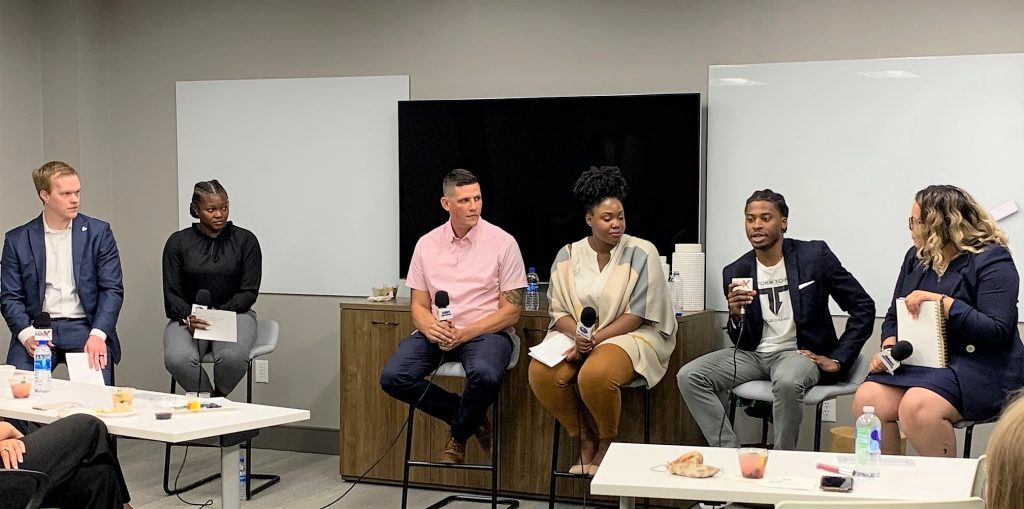
Less than a week after the Gwinnett Chamber of Commerce hosted it’s inaugural Diversity, Equity and Inclusion (DE&I) Summit, Gwinnett Young Professionals (GYP) hosted it’s very own “Continuing the Conversation” Summit on May 26, 2021 to dive deeper into the diverse experiences of young professionals in the workplace.

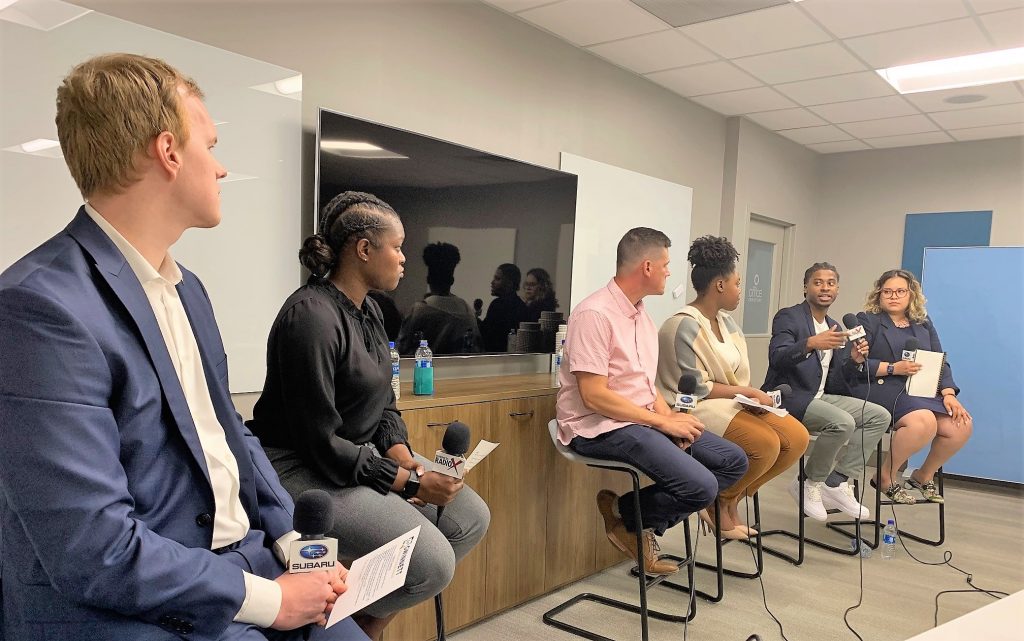
The event began with a guided exercise to allow attendees to get to know each other. That was followed by a panel discussion which offered honest, positive, respectful, open-minded and productive dialogue about diversity, equity and inclusion in today’s society and workplace from a young professionals’ point of view.

PANELISTS:

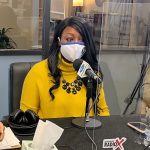
Nury Castro | Administrator, Georgia Gwinnett College

Nury Lizeth Castro is a dynamic and forward thinker, intentional community builder, and healing agent. Her practice is guided by scholarship, theory, intersectionality, critical consciousness, and principles that center community and social equity. Her natural talent, unwavering tenacity, and ability to center theory-to-practice have allowed Nury to serve in various roles as a university and college administrator. Nury is currently a doctoral student at the University of Dayton and she received a Master of Public Administration and Bachelor of Science from North Carolina State University.

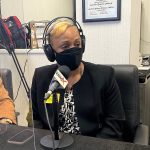
Janelle King | Founder, Excel Leadership

Janelle King is an I/O Consultant and Certified Life & Leadership Coach. It is her mission to help organizations, teams, professionals, and people reimagine and redesign the way they do life and work through the power of purpose and the science and practice of industrial-organizational psychology. She is currently living out this mission as an I-O Consultant to organizations through her company Excel Leadership, where she creates purpose-driven and engaging cultures for organizations, teams, and professionals to excel and thrive in the workplace. She also serves as a Certified Life & Leadership Coach through her personal and professional development company, Life Designer University, where she coaches women to design a life and career they love.

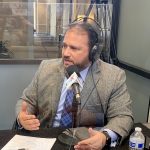
Cole Porter | Vice President, Porter Steel

Cole Porter is the current Vice President of Porter Steel and past owner of multiple small business ventures. A graduate of the University of Georgia and a lifelong Atlanta native, Cole focuses most of his energy today on facilitating growth, development, and efficiency in his employees, work processes, and business relationships. Additionally, he places a large emphasis on community involvement and integrity in business.

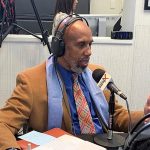
Kam Phillips | Founder, The Kam Phillips Group

Kam Phillips is a certified Life & Leadership Coach and Inspirational Speaker who specializes in developing teens, students, and early career professionals into emerging leaders. After graduating with a Bachelor’s in Economics from Emory University and excelling in the corporate world with firms such as ETRADE, AllianceBernstein, and JPMorgan Private Bank, Kam decided to walk away from his career in finance. Kam now uses his gifts to help students and young adults navigate through difficult transitions by providing speaking engagements that positively impact their personal development, emotional well-being, and career trajectory.

MODERATORS:

Jasmine Billings | Community Development Manager, City of Lawrenceville
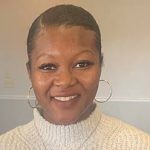
Jasmine Billings is a vibrant, intentional community builder, passionate about growth in the community through building relationships, developing partnerships, supporting youth advocacy, and strategic civic engagement/awareness. Serving as the Community Development Manager for the City of Lawrenceville, Jasmine is experienced in Event Management and Community Outreach, with a passion for Sport Management. Through connectivity and shared experiences, her drive is to educate and engage with youth and create awareness through workforce development.

Tommy Easley | Ticket Sales Director, Atlanta Gladiators

Tommy Easley is the Ticket Sales Director with the Atlanta Gladiators Professional Hockey Club. He is entering his 5th season with the club where his focus is on business development through season tickets and premium hospitality. Tommy is a current member of the Gwinnett County Young Professionals Board. Prior to joining the Gladiators, Tommy has worked with the Chicago Bulls and Cincinnati Reds.
Audio Presentation of “Continuing the Conversation” Presented by

Tagged With: cole porter, dan miller, DEI, dei summit, diversity, Diversity Equity and Inclusion, equity, excel leadership, gwinnett young professionals, GYP, inclusion, janelle king, jasmine billings, kam phillips, kam phillips group, nury castro, porter steel, wealth horizon

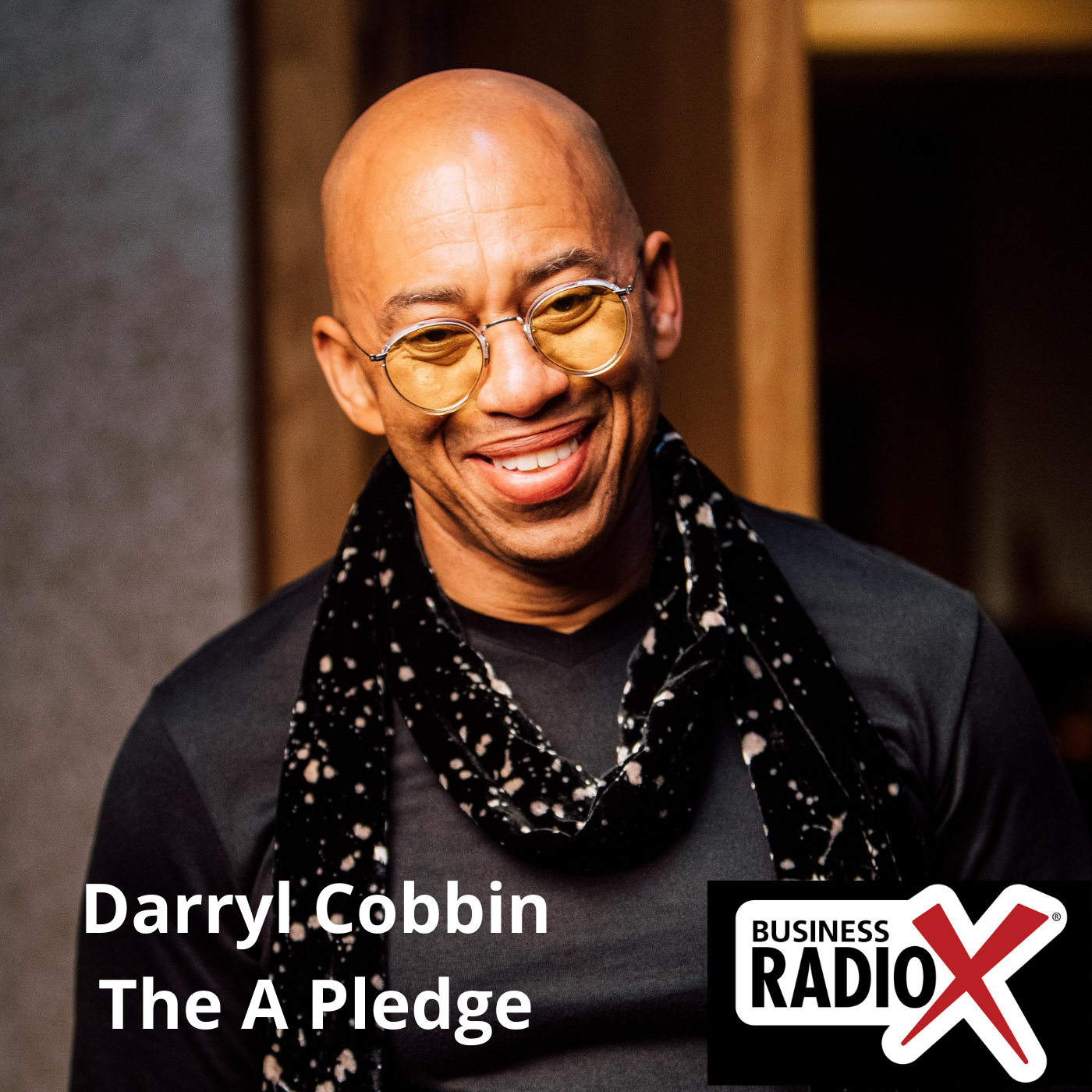
Darryl Cobbin, The A Pledge

December 16, 2020 by John Ray

The A Pledge
North Fulton Business Radio
Darryl Cobbin, The A Pledge
Loading
00:00 /
RSS Feed
Share
Link
Embed

Download file

Darryl Cobbin, The A Pledge (North Fulton Business Radio, Episode 312)

Branding and marketing veteran Darryl Cobbin joined host John Ray to discuss The A Pledge. This collective initiative, by his firm and others in the Atlanta marketing community, seeks to increase inclusive opportunities in the industry. “North Fulton Business Radio” is produced virtually from the North Fulton studio of Business RadioX® in Alpharetta.

The A Pledge

The A Pledge is a call to Atlanta advertising and marketing agencies to come together in a committed effort to create inclusive opportunities within the industry. Over the next decade, members of this initiative will make the changes needed to ensure their teams reflect the diversity of the Atlanta community. As they do, they look for systemic opportunity to grow in the industry, our city, and our nation.

To learn more, visit The A Pledge website.

Darryl Cobbin, The A Pledge

Darryl Cobbin is an award-winning branding expert, author, and speaker. He is widely recognized for leading game-changing marketing approaches that result in #1 business growth positions across diverse industries.

At The Coca-Cola Company as Vice President, Sprite Brand Business Unit he co-led Sprite to become the #1 growth soft drink Brand in the U.S. As CMO of Boost Mobile (later acquired by Sprint Nextel), the start-up became the #1 growth brand and redefined marketing in the wireless space. And as EVP of Marketing for 20th Century Fox films, Darryl co-led the development of the marketing strategy for Avatar, the #1 Box Office Movie of All Time.

He is currently President of Brand Positioning Doctors; a marketing firm that focuses exclusively on helping clients build better brands. Cobbin is a contributing blogger for The Huffington Post and his business results have been chronicled in multiple books including The Tanning of America, The Big Payback, and Romancing The Brand, among others. Cobbin is also the recipient of the Brandweek Marketer of the Year Award.

Cobbin currently resides in Atlanta and is the father of three daughters.

Questions/Topics Discussed in this Show

  • What is The A Pledge?
  • Who’s behind The A Pledge?
  • What Atlanta agencies and brands are involved?
  • What is the pledge looking to accomplish?
  • Why is this pledge unique?
  • How will you hold agencies and brands accountable?
  • What can we expect year one?

North Fulton Business Radio” is hosted by John Ray and produced virtually from the North Fulton studio of Business RadioX® in Alpharetta. You can find the full archive of shows by following this link. The show can be found on all the major podcast apps by searching “North Fulton Business Radio.”

Renasant Bank has humble roots, starting in 1904 as a $100,000 bank in a Lee County, Mississippi, bakery. Since then, Renasant has grown to become one of the Southeast’s strongest financial institutions with over $13 billion in assets and more than 190 banking, lending, wealth management and financial services offices in Mississippi, Alabama, Tennessee, Georgia and Florida. All of Renasant’s success stems from each of their banker’s commitment to investing in their communities as a way of better understanding the people they serve. At Renasant Bank, they understand you because they work and live alongside you every day.

Tagged With: atlanta, Atlanta Marketing agency, Brand Positioning Doctors, Darryl Cobbin, diversity, diversity and inclusion, inclusion, inclusion in the marketing industry, The A Pledge

Let’s Continue the Conversation: A Discussion on Race and Equality

December 2, 2020 by Mike

Gwinnett Business Radio
Let's Continue the Conversation: A Discussion on Race and Equality
Loading
00:00 /
RSS Feed
Share
Link
Embed

Download file

Moderator Jocelyn Dorsey leads a panel discussion featuring honest, positive, respectful, open-minded and productive dialogue about current events, inequality and racism, and how to work together to achieve a more harmonic community. The panel includes the newly-elected chairperson of the Gwinnett County Board of Commissioners Nicole Love Hendrickson; Gwinnett Chamber of Commerce President & CEO Nick Masino; Waffle House executive Njeri Boss; and longtime law enforcement official John Pearson.

Nicole Love Hendrickson/Gwinnett County Board of Commissioners

Nicole Love Hendrickson is a mom, social worker, and community advocate. She is no stranger to the Gwinnett Community. She has dedicated nearly 15 years to serving the citizens of Gwinnett County in many different capacities and has led efforts to ensure that a diversity of voices were reflected in decision-making at all levels.

She co-led the strategic grassroots and community planning efforts during her 8-year tenure with the Gwinnett Coalition for Health & Human Services. She inspired civic involvement through the Gwinnett Neighborhood Leadership Institute which boasts more than 600 alumni who are ingrained in Gwinnett’s civic infrastructure. She pioneered strategies to enhance small business development through the Gwinnett Unity Group, serving on the front line to establish the county’s first homeless shelter – the Norcross Assessment Center on Jimmy Carter Blvd.

Nicole is a bridge builder and the “go to” person for all things Gwinnett. With a global community represented by more than 100 countries around the world, she has revolutionized the way in which Gwinnett County and other local governments interact with its residents. She led the charge to build a government that is equitable, inclusive and people-focused. She believes that this is an essential element to good governance.

As the newly-elected Chairman of the Gwinnett County Board of Commissioners, she believes in the Gwinnett of the future – where government looks like and understands the needs of ALL its residents; a place where people flock to because of diversity and forward-thinking government; and a place where all residents can work and succeed without fear. Nicole believes that she can best represent the voice, values, and needs of the next generation. She is committed to working together to improve the lives of all Gwinnett residents and businesses to ensure a healthy community and a prosperous economy.

Nick Masino/Gwinnett Chamber of Commerce

Nick Masino heads the Gwinnett Chamber, one of the largest suburban Chambers of Commerce in the nation, after serving as the Chief Economic Development Officer for the Gwinnett Chamber & Partnership Gwinnett for over a decade. Masino joined the Gwinnett Chamber in 2007 and has served in the key economic development leadership role for the past 12 years. He oversaw the business recruitment and retention efforts for Gwinnett, as well as the implementation of the Partnership
Gwinnett Strategy. To create this community-focused economic development (ED)
organization, Masino worked with public and private leadership to commission ED studies
in 2011 and 2016; and spearheaded the implementation efforts of the initial plan in 2007 –
which has since brought approximately 250 company expansions or relocations, more than
23,000 new jobs, and more than $1.7 billion in investment to Gwinnett.

Masino’s economic development career began in February 2007, when he accepted his current role, but he was no stranger to the field. In December 2007, he ended his second term as mayor of the City of Suwanee having been one of the youngest mayors in Georgia’s history. During his tenure as mayor, the city of Suwanee embarked on a comprehensive economic and community development project highlighted by the construction of a 24,000 square foot City Hall and the popular 65-acre Suwanee Town Center, which led Suwanee to be named a CNN-Money magazine’s Top 10 Town in America. Prior to his position with the Gwinnett Chamber, Masino spent 12 years in the recruiting and staffing industry.

Njeri Boss/Waffle House

Njeri Boss is a graduate of the Dekalb County school system. She has a BA in Journalism from the University of Iowa and a Law Degree from California Western School of Law in San Diego, California. After her undergraduate work, Njeri worked as a reporter for several years before attending Law School. After Law School, she was a practicing attorney for about 12 years.

In 2016, Njeri joined Waffle House as a Manager Trainee and rose up in Operations to the District Manager Level before transitioning to the Corporate Office in August of 2019. There she initially joined the Training Department as a Special Projects Coordinator. In December of 2019, she was selected to become Waffle House’s next Director of Public Relations.

John Pearson/Law Enforcement

John Pearson Sr. has dedicated more than 35 years to the community as a Law Enforcement Executive. He served as Deputy Director of Police Services with the DeKalb County Police Department. At the time, it was the second largest police department in the State of Georgia. During his 25 years with DeKalb, he used his leadership skills in numerous positions, including SWAT Commander, Drug Unit Commander and Assistant Commander of Criminal Investigations Division.  He also has served as the Assistant Police Chief for Hogansville, Georgia, Chief of Investigations and Deputy Commissioner for the Department of Juvenile Justice.

Chief Pearson is an Instructor for the Georgia Association of Police Chiefs, where he mentors and teaches a class for newly appointed Chiefs. John is a graduate of the FBI National Academy, the US Department of Justice Drug Commander School, the Georgia International Law Enforcement Exchange between the State of Georgia and Israel (GILEE), and a Georgia Peace Officers Standards and Training (P.O.S.T.) Certified Instructor. He is a Dean’s List graduate of Atlanta Metropolitan State College.

Jocelyn Dorsey/Moderator

Jocelyn Dorsey retired from Channel 2 WSB-TV after 45 years of service. She had been the Director of Editorials & Public Affairs at Channel 2 since 1983. From 1973-83, Jocelyn was an anchor/ reporter/ producer and assignment editor for WSB-TV’s Channel 2 Action News. In fact, she was the first African-American anchor of a Channel 2 newscast as well as the first African American news anchor in the Atlanta market. Jocelyn was also Executive Producer and regular contributor to People 2 People, a weekly half-hour public affairs program broadcast on Channel 2.

Among her personal honors; Jocelyn was recognized on the floor of the U.S. House of Representatives,
by several members of the Georgia Congressional Delegation for her induction into the Georgia Association of Broadcasters Hall of Fame. She was recently inducted into the Atlanta Press Club Hall of
Fame. She has been awarded the City of Atlanta’s Highest honor, the Phoenix Award, and issued special
proclamations by The Atlanta City Council and the Fulton County & DeKalb County Board of
Commissioners both for her years of service as well as retirement.

Jocelyn has won numerous other awards for her work with WSB-TV, including seven Southeast Regional
EMMYS for Editorial Excellence from the National Academy of Television Arts & Sciences. She was the first African-American inducted into the same organization’s Silver Circle, for more than 25 years in the field of journalism. She was also the first woman and first African-American to receive the Georgia Association of Broadcasters (GAB) Broadcaster’s Citizen of the Year Award, a lifetime-achievement award.

CLICK HERE for the video of this panel discussion.

Presented by

Tagged With: dan miller, diversity, eliminating racism, gwinnett chamber, Gwinnett Chamber of Commerce, gwinnett commissioners, Gwinnett County Board of Commissioners, inequality, let's continue the conversation, let's start the conversation, nick masino, nicole love hendrickson, panel discussion, race and equality, race discussion, Racism, wealth horizon

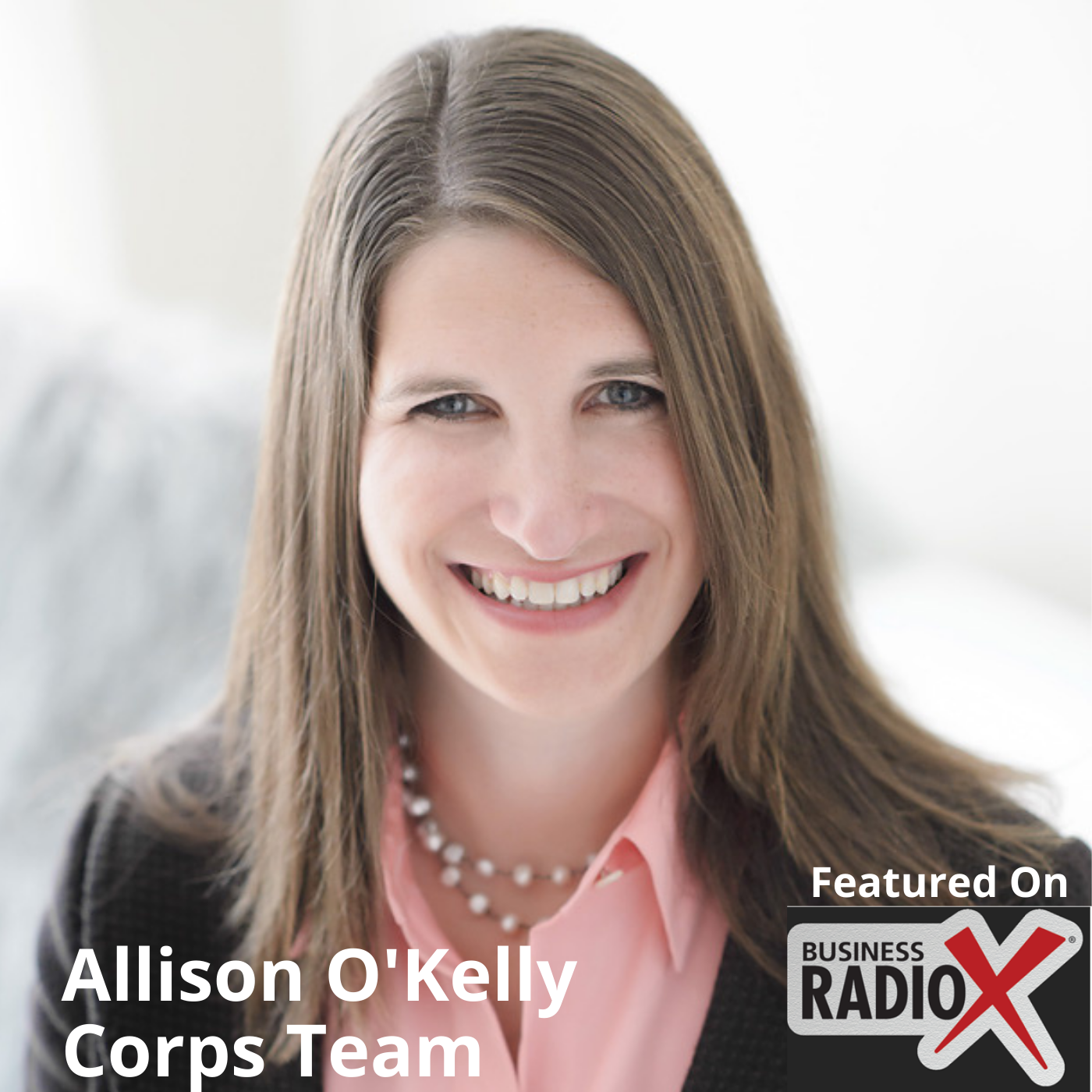
Recruiting a Diverse Workforce, with Allison O’Kelly, Corps Team

October 27, 2020 by John Ray

NFBR-Allison-O'Kelly
North Fulton Business Radio
Recruiting a Diverse Workforce, with Allison O'Kelly, Corps Team
Loading
00:00 /
RSS Feed
Share
Link
Embed

Download file

Recruiting a Diverse Workforce, with Allison O’Kelly, Corps Team (North Fulton Business Radio, Episode 299)

Corps Team Founder and CEO Allison O’Kelly joins host John Ray to discuss the increased efforts companies are making to employ a diverse workforce, tips for companies seeking to widen diversity in their ranks, and much more. Allison also addresses job seekers who are candidates for diversity hiring. “North Fulton Business Radio” is produced virtually from the North Fulton studio of Business RadioX® in Alpharetta.

Allison O’Kelly, Founder and CEO, Corps Team

Allison O’Kelly is the Founder and CEO of Corps Team and a talent acquisition expert who partners with CEOs, executives and hiring managers to recruit exceptional talent into their organizations.  Allison has grown her business from an idea to a search and staffing firm that has placed thousands of professionals in companies nationwide.

Prior to Corps Team / Mom Corps, Allison was a CPA with KPMG in Atlanta, and was in a Leadership development program with Toys R Us where she served in various roles including launching the original Babiesrus.com site, Store Director of an $11 million Toys “R” Us Store, and multi-unit store management.

Allison has been recognized in the news media (TODAY Show, Wall Street Journal, CNN, Forbes) and awarded on a national level (EY Winning Women, Working Mother, Inc. 500, Conference Board). Corps Team was named a Top 20 Woman-Owned Business in the Atlanta Business Chronicle in 2019.

Allison’s current nonprofit boards include the Alliance Theater, Harvard Business School Club of Atlanta, Galloway School Annual Fund, and UGA Terry College Emeritus Alumni Board. Allison received her MBA from Harvard Business School and her BBA in Accounting from the University of Georgia. Allison is a CPA, licensed in Georgia

Company website

LinkedIn

Facebook

Twitter

Questions/Topics Discussed in this Show

  • Tell us about what you are seeing here in Atlanta regarding diversity hiring?
  • Is it increasing significantly?
  • What are some of the businesses where you are seeing more diversity hiring? Can you cite an example?
  • What positions are you seeing an uptick in diversity hiring?
  • Do you have any tips for those who will be applying for these jobs?
  • Tips for your clients who are trying to include more diversity among their ranks?
  • What are some goals for companies to keep in mind before they begin this process? What should they think about?
  • How does diversity hiring change the way you conduct advertising?
  • How if at all has the pandemic affected hiring in general, but in regards to diversity hiring?
  • How should diverse candidates approach this new hiring process?

North Fulton Business Radio” is hosted by John Ray and produced virtually from the North Fulton studio of Business RadioX® in Alpharetta. You can find the full archive of shows by following this link. The show can be found on all the major podcast apps by searching “North Fulton Business Radio.”

Renasant Bank has humble roots, starting in 1904 as a $100,000 bank in a Lee County, Mississippi, bakery. Since then, Renasant has grown to become one of the Southeast’s strongest financial institutions with over $13 billion in assets and more than 190 banking, lending, wealth management and financial services offices in Mississippi, Alabama, Tennessee, Georgia and Florida. All of Renasant’s success stems from each of their banker’s commitment to investing in their communities as a way of better understanding the people they serve. At Renasant Bank, they understand you because they work and live alongside you every day.

Tagged With: Allison O'Kelly, Corps Team, diversity, diversity hiring, Mom Corps, Recruiting, recruiting agency, search firm, staffing, staffing firm, talent acquisition

Exploring Ways STEM Rocks E6

October 2, 2020 by Karen

Exploring-Ways-STEM-Rocks-E6-Feature
Phoenix Business Radio
Exploring Ways STEM Rocks E6
Loading
00:00 /
RSS Feed
Share
Link
Embed

Download file

Exploring-Ways-STEM-Rocks-E6

Exploring Ways STEM Rocks E6

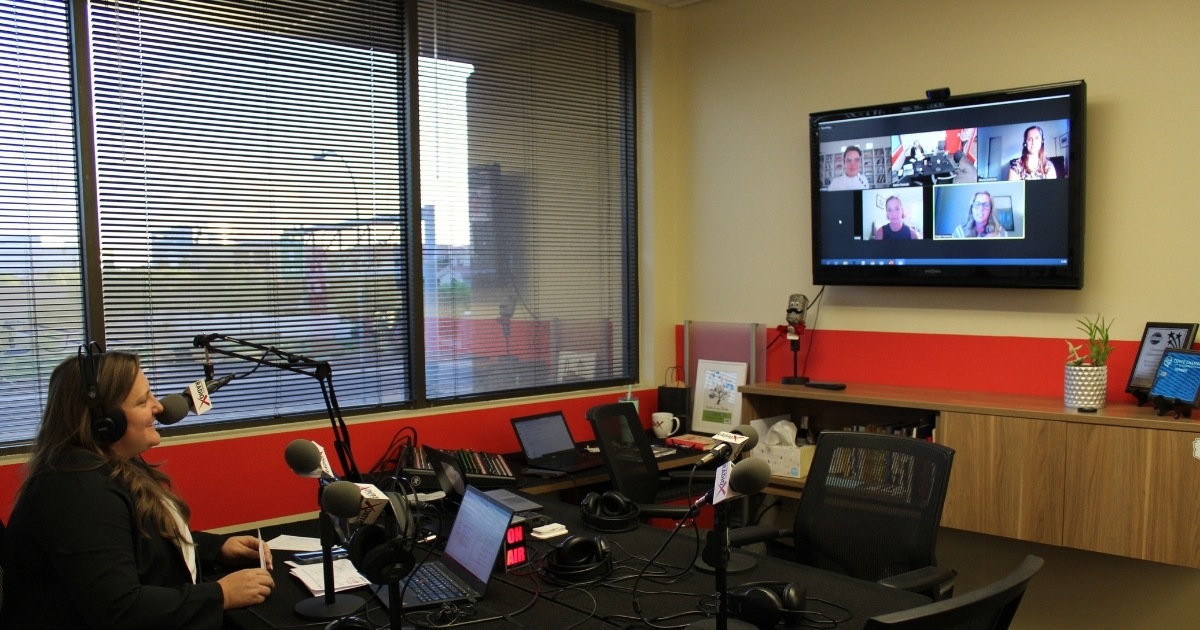
During the month of September, SciTech Institute wanted to highlight the ways STEM rocks. In this episode, we connected with four women in mining to highlight their passion for geology. We want to recognize the effort from Freeport McMoRan and the Arizona Chapter of WIM to highlight the opportunities in our state.

Exploring Ways STEM Rocks listeners will want to tune in to hear ways to get connected in Arizona.

FCXCorpColorLogoJPG

Freeport-McMoRan (FCX) is a leading international mining company with headquarters in Phoenix, Arizona. They operate large, long-lived geographically diverse assets with significant proven and probable reserves of copper, gold and molybdenum. Their portfolio of assets includes the Grasberg minerals district in Indonesia, one of the world’s largest copper and gold deposits; and significant mining operations in the Americas, including the large-scale Morenci minerals district in North America and the Cerro Verde operation in South America.

The safety and health of all employees is their highest priority. Management believes that safety and health considerations are integral to, and compatible with, all other functions in the organization and that proper safety and health management will enhance production and reduce costs. Their approach towards the health and safety of their workforce is to continuously improve performance through implementing robust management systems and providing adequate training, safety incentive and occupational health programs.

FCX is a founding member of the International Council on Mining and Metals (ICMM). Implementation of the ICMM Sustainable Development Framework across the company results in site-level sustainability programs that meet responsible sourcing objectives for the global marketplace.

Their stock trades on the New York Stock Exchange under the ticker symbol “FCX.”

Angie Harmon is Freeport-McMoRan Inc.’s Regional Community Development Manager, North America. She is based in Phoenix, AZ at the company’s corporate headquarters.

Angie supports Freeport’s investment in community-related programs and initiatives across the US, aligning the company’s philanthropic outreach with overall corporate goals through the work of the Freeport-McMoRan Foundation.

In addition, she works in partnership with the company’s North American mining operations in their community development functions including stakeholder engagement and strategic contributions. Angie is on the board of the Arizona Science Center and the SciTech Institute.

Angie has a BA in political science as well as her MBA. She and her husband have two sons and live in Scottsdale, AZ.

Follow Freeport-McMoRan on LinkedIn, Facebook, Twitter and Instagram.

Women in Mining Arizona’s vision is to be a non-governmental organization that focused on attracting, retaining and advancing professionals in the mining industry as well educating the members and the public in the various aspects of mining. We are an inclusive organization, everyone is welcome to participate. wimazLogoPurple

Molly Radwany is a Master of Science student in the Mining Engineering department at the University of Arizona with a focus on geometallurgy. She currently works as an engineering intern at Call & Nicholas and formerly worked as a geology intern for Freeport-McMoRan. Molly is passionate about a future career in mining and working to address the obstacles that face women in the industry.

Julia Potter is a geologist and geotechnical engineer with Call & Nicholas, where she specializes in geostatistics and 3D block modeling. She enjoys applying a creative approach to her technical work, which has included open-pit and underground mining operations at every stage of project development, throughout North America, Western Turkey and central Africa. Julia holds a BS in Geology and History from the University of Wisconsin – Eau Claire and a Master of Engineering from the University of Arizona.

Maria Bertram is WIM AZ’s Vice President. For the last five years, Maria has worked in Freeport-McMoRan’s recruiting department as an events planner and college recruiter. In her role she is responsible for managing the Company’s relationship with universities across the country, and engaging with students and new graduates on and off campus. Prior to joining Freeport-McMoRan, Maria worked in the marketing departments for Arizona Snowbowl and the Flagstaff Chamber of Commerce in Flagstaff, Arizona. She has a Bachelor’s degree in Journalism from Northern Arizona University and is pursuing her MBA through University of Illinois – Urbana-Champaign.

Follow Women in Mining Arizona on LinkedIn and Instagram.

About Our Sponsor

SciTech Institute™ was established as the Arizona Technology Council Foundation as the conduit for collaboration among STEM industry, academia, civic, and non-profit organizations in Arizona. Now, rebranded and named the SciTech Institute™ the goal centers around aligning assets and resources to motivate individuals to pursue STEM-related educational and career paths or find a passion while engaged in community events during the SciTech Festival. Exploring Opportunities for Students EP 5

The Chief Science Officer program highlights the 6th-12th graders that have been selected as leaders in their schools and communities to receive training to build a world-class community of diverse STEM-literate workers and knowledgeable, engaged citizens. Science For All allows for tax credit donations to provide engaging experiences for students while RAIN (Rural Activation Innovation Network) focuses on resources for the rural areas of Arizona.

As a STEM Learning Ecosystem, SciTech Institute™ focuses on collaboration and connecting individuals with opportunities! STEM Professionals are encouraged to engage with the future workforce by serving as a mentor, leadership coach, panelist, keynote and session trainer during a variety of conferences hosted or sponsored by SciTech Institute™ and The Arizona Technology Council.

Teachers and Administrators are invited to connect with the resources available while activating a large network of STEM champions for student projects, judges at events, volunteers, exhibitors and more. SciTech Festival Event Coordinators are supported during the planning and execution of community STEM events around the state by the SciTech STREET Team Members and the growing network of volunteers. The possibilities are endless! SciTech Institute™ looks forward to connecting with you today. Visit SciTechInstitute.org today for more information.

Follow SciTech Institute on LinkedIn, Facebook, Twitter and Instagram.

About Your STEM Unplugged Host

Kelly-Greene-on-Phoenix-Business-RadioXAfter graduating from Bolivar-Richburg High School in rural western New York and joining the United States Army, Kelly Greene learned quickly to adapt to her surroundings to be successful. She attended Wittenberg University in Springfield, Ohio and played shortstop on the Tiger softball team while earning her Bachelor’s Degree in Elementary Education.

After graduating from Basic Training and Advanced Individual Training, she traveled the world with the military. While stationed in Misawa, Japan, Kelly fell in love with learning about cultures around the world. Even as a deployed Soldier during Operation Iraqi Freedom for two tours, she found opportunities to connect with the local children to form the Victory Base Council Girl Scouts with her fellow servicemen.

In 2013, she was deployed to Afghanistan in support of Operation Enduring Freedom and traveled the country by air and had the opportunity to utilize the most advanced technologies available to the tactical HUMINT operations in theater. Upon return from combat, she retired with 21 years of service and began teaching 6th grade Math.

After being selected as a Westside Impact Teacher of the Year and having her Fiesta Bowl Charities Wish Granted for a morning news studio, she was asked to begin a new class on campus – 7th grade STEM! Using her enthusiastic nature and combined with her strong classroom management she was able to design curriculum based on the Engineering Design Process to have her 7th graders complete a new project every 2 weeks!

She is excited to serve as the Director of Student Success for the rapidly expanding Chief Science Officers Program. Her goal is to push students just a bit outside of their comfort zone so they can see for themselves the power of their own ideas.

Tagged With: arizona mining, diversity, STEM, women in mining

Learning Insights Radio: Matthew Harrison with Jackson Healthcare

July 19, 2020 by angishields

Jackson-Healthcare-logo
Learning Insights
Learning Insights Radio: Matthew Harrison with Jackson Healthcare
Loading
00:00 /
RSS Feed
Share
Link
Embed

Download file

Matthew-Harrison-Jackson-HealthcareMatthew S. Harrison, PhD currently works at Jackson Healthcare as Vice President, Human Resources. In this role he is responsible for planning, directing, and overseeing all human resources and administrative service functions for various Jackson Healthcare companies, and leads delivery in the areas of talent management/acquisition, learning & development, employee relations, performance management, organizational development, change management, job & compensation analysis, HR metrics & reporting, and diversity & inclusion.

Previously, Dr. Harrison served in leadership roles at Manheim, McKesson, The Weather Channel, and Comcast focusing on talent management/acquisition, learning & development, organizational effectiveness, diversity & inclusion, and HR business partner work.

Dr. Harrison also currently serves as a Clinical Assistant Professor of Industrial/Organizational Psychology at The University of Georgia. He is a published diversity researcher and is renowned for his research on the topic of colorism. His master’s thesis received wide publicity–being featured on websites such as CNN, CNBC, ABC News, was reported in various newspapers and media outlets across the US (and United Kingdom), and received an initial inquiry from an executive producer of The Oprah Winfrey Show.

Focusing in the area of workplace diversity, Dr. Harrison has authored a number of books chapters as well as several academic journal articles. He currently serves as a member of the American Psychological Association, Society for I/O Psychologists, Academy of Management, and sits on a few local boards in the Atlanta area.

Most recently, Dr. Harrison was recognized as one of Emory University’s Distinguished 40 Under 40 Alumni and was listed as an “Influencer” by The Atlanta Tribune magazine. He has also received Diversity Leadership Awards from the National Diversity Council and the Technology Association of Georgia.

Dr. Harrison is a graduate of Emory University (B.A.) and The University of Georgia (M.S. & Ph.D.).

Connect with Dr. Harrison on LinkedIn.

Tagged With: diversity, equity, health technology, healthcare staffing, inclusion, Physician Search

Angry Black Woman E2

July 10, 2020 by Karen

E2-Racism-in-Small-Business-and-the-Arts
Phoenix Business Radio
Angry Black Woman E2
Loading
00:00 /
RSS Feed
Share
Link
Embed

Download file

E2-Racism-in-Small-Business-and-the-Arts

Angry Black Woman E2

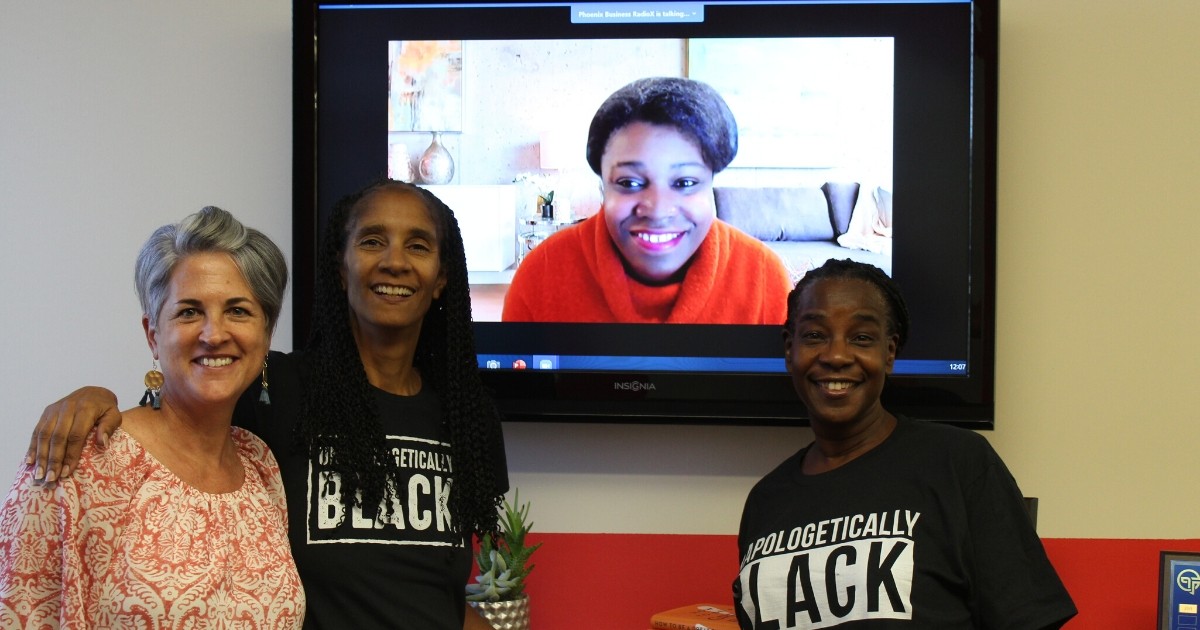
Three African-American panelists discuss how and why the angry black woman description may or may not be a myth. Panelists shared experiences with white Americans that may trigger reactions commonly described as being an “angry black woman”. Experiences include interactions experienced in the military, corporate America, and tech fields that would cause the average person to express anger.

For those who are not people of color, you’re getting a rare chance to walk in the shoes of a person of color to understand the subject of racism, and better be able to see it when it rears its ugly head.

Wendy C Williams, Intl. provides leadership consulting, coaching, speaking and training services in-person and online. They coach new leaders within corporations, small business owners and solo entrepreneurs how to run teams with high performance, engagement and loyalty. wendy-c-williams-international-logo-4

Their unique approach to building leadership skills includes teaching each new leader how to tap into their inner wisdom, strength and confidence so that they may become a servant based leader grounded in values.

They also teach solo entrepreneurs how to easily attract and build relationships with their first clients without cold calling, a website, or list building online.

Lunch-and-learn sessions and speaking engagements on leadership, team building, career success and inclusion topics are available as well.

wendy-williams-on-Phoenix-Business-RadioXWendy C. Williams, MS, EFT-Adv. is a trained counselor, international speaker, educator and course creator. She has lived and worked overseas in many European countries in her technology career which includes time as a Director of Professional Services at a tech startup.

Currently, she is a coach, consultant and mentor for many people providing career guidance, small business consulting and leadership training. As a spiritual teacher, she trains people to tap into their source of personal power and mental fitness through meditation and intentional focus.

She is the associate director of the Sacred Inclusion Network, a non-profit focused on the intersection of spirituality and inclusion. She is also the director of an online academy providing training on personal growth, spiritual growth, the arts and food.

When the world is not on lockdown, Wendy loves to live and travel all over the world as a digital nomad.

Connect with Wendy on LinkedIn, Twitter, Facebook and Instagram.

The Emerson Theater Collaborative (ETC) is a 501(c)(3) non-profit organization whose mission is to serve youth, under-represented communities and artists with an emphasis on diversity, by producing innovative and thought-provoking theater both in southeastern Connecticut and Sedona, Arizona. One such example is a wonderful play called Vivian’s Music 1969 by Monica Bauer that was a featured program at ETC in February 2020.

Camilla-Ross-on-Phoenix-Business-RadioXCamilla Ross is the President and Chairman of Emerson Theater Collaborative, Inc., Producer and Actress (Portray’s Harriet Tubman – Harriet Tubman’s Dream written by Lisa Giordano). She is also the President and Chairman of the Sedona Arts Academy.

“To be a catalyst for social change is really where it’s at for me,” Camilla said. “I believe theater should always be a venue for social change. I love the art of live theater and love what it does to the human soul and spirit. It moves us to look at life differently. To leave off the rose-colored glasses and really see the human condition.”ETC is a shining example. Founded in 2008 to give voice to actors’ innate talent for character development, Camilla has since produced more than 20 inspired, original performances. Emerging and professional cast and crew have blossomed under her guidance. And together they’ve created profound, can’t-ever-forget shows that illuminate social issues, and transform audience curiosity into concern and action. ETC_Logo_CMYK

Camilla has a deep well of experience and mentorship to tap into for her ETC roles—from her days at Emerson College and then in regional theaters and commercials. Among her favorite portrayals? Capturing the heart, spark, and essence of Harriet Tubman in the one-woman show Harriet Tubman’s Dream. Camilla is also deeply involved with youth, their visions for social change, and the desire to see the world as a stage of peace. To that end, she’s a tireless advocate for children and adults with Asperger’s Syndrome. She gives kids and teen real-life theatrical experience through ETC’s Summer Youth Program and enlivens their eagerness to learn about the history and genuine heroes through ETC’s school programs. Camilla is a steadfast suicide prevention advocate too, helping teens and adults avoid this tragedy and move forward to a happier, more positive future.

Camilla has taught business courses part-time at Three Rivers Community College since 2005, Sat on the Emerson College Alumni Board for ten years, and is past president of the Connecticut Alumni Chapter. In May 2014 Camilla was honored by the Writer’s Block of New London, Conn., for her past work as an instructor. In June 2013 she was named Woman of The Year by the Women’s Network of Southeastern Connecticut, and she’s been featured in many periodicals for her community service. In 2019 Emerson Theater Collaborative was nominated as Collaborator of the year in Sedona AZ. A veteran of the U.S. Navy and member of Kappa Beta Delta, Camilla earned her BA in Performing Arts: Acting from Emerson College in 1985 and her MBA in Finance from Baker College in Michigan.

Connect with Camilla on LinkedIn and follow ETC on Facebook, Twitter and Instagram.

Karen-Loomis-on-Business-RadioXKaren Loomis, Oracle and Founder of No Moss Brands, is no stranger to the impact of racism; not only in her personal life, but professional life as well. In 2000, Karen moved from Spokane, Wa to Phoenix, AZ to find better opportunities as promised by the fifth largest city in the U.S. With only 2% AA, Spokane proved to be a challenging environment, as is Phoenix, with only 6% AA.

Karen has never shied away from the many barriers racism presented. She has always felt her extensive education and professional experiences could overcome these often invisible challenges.Unfortunately, institutional racism has proven to be too big of a hurdle for one person to take on. Using No Moss Brands as the vehicle, Karen will use her voice to open the eyes of others who are willing to join all People of Color on this journey to change. You in?

Connect with Karen on LinkedIn and follow No Moss Brands on Twitter and Facebook.


Tagged With: diversity, Entrepreneurship, Leadership, personal growth, spiritual growth

Race, Diversity, and Business, with Dr. Dionne Wright Poulton, Care New England and Poulton Consulting Group

June 17, 2020 by John Ray

North Fulton Business Radio
Race, Diversity, and Business, with Dr. Dionne Wright Poulton, Care New England and Poulton Consulting Group
Loading
00:00 /
RSS Feed
Share
Link
Embed

Download file

Race Diversity and Business

Race, Diversity, and Business, with Dr. Dionne Wright Poulton, Care New England and Poulton Consulting Group (North Fulton Business Radio, Episode 244)

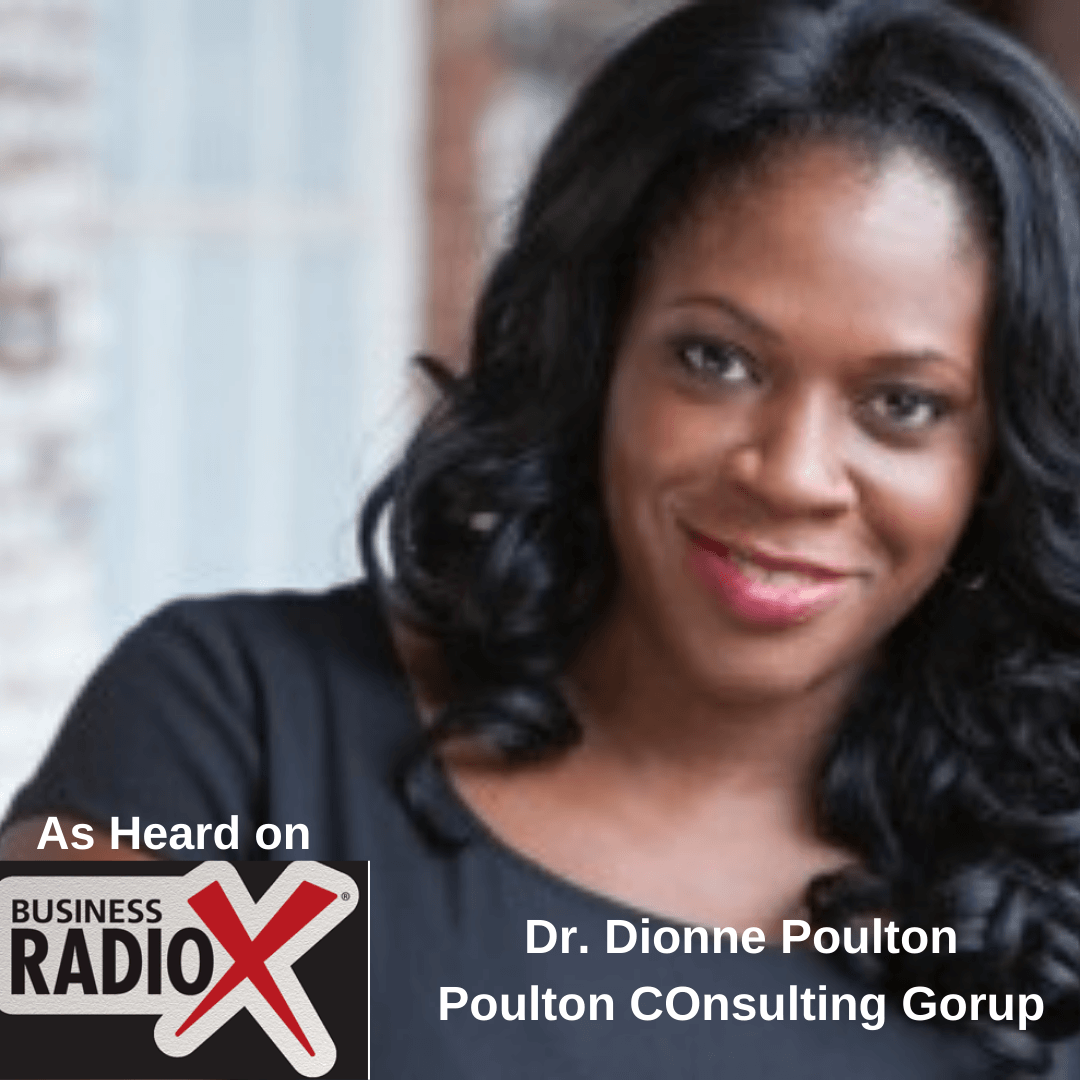
Diversity and inclusion authority Dr. Dionne Poulton tackles issues of race, diversity, and business in this episode of “North Fulton Business Radio.” In this interview with host John Ray, Dr. Poulton, Chief Diversity Officer for Care New England, offers vital, frank insights for executives and business owners as they address race and inclusion issues with their employees and wider constituencies. “North Fulton Business Radio” is produced virtually by the North Fulton studio of Business RadioX® in Alpharetta.

Dr. Dionne Wright Poulton, Owner, Poulton Consulting Group

Dr. Dionne Wright Poulton is an Educator, Diversity and Inclusion Consultant and Conflict Mediator with 20 years of experience specializing in youth and adult education, adult learning and behavior, intercultural dialogue, and addressing and mitigating bias in the workplace.

Dr. Poulton currently serves as Chief Diversity Officer at Care New England. Care New England is a hospital and health system with roughly 8,000 employees headquartered in Providence, Rhode Island.

A graduate of the University of Georgia where she earned a Ph.D. in Adult Education, Dr. Poulton was granted permission by UGA to use her professional development workshop she created in 2004 called Think You Are An Unbiased Teacher? Think Again! as the basis for her dissertation.  As a result, Dr. Poulton acquired empirical evidence to prove the efficacy of her workshop’s methodology (she created), and its ability to initiate and sustain open and honest dialogue across racial, gender and cultural lines, in a non-threatening manner. Since 2004, Dr. Poulton has been invited to facilitate her workshops all over the world, including in Paris, France, Canada, Bermuda, and across the United States. Dr. Poulton’s work has also been advertised on CBS radio stations in Atlanta, Georgia where she has also been invited as a guest speaker and commentator.

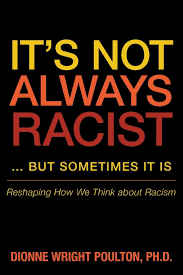
Race Diversity and BusinessAdditionally, Dr. Poulton is author of the acclaimed book, It’s Not Always Racist…but Sometimes It Is, which has received incredible attention, including an outstanding review from world-renowned Kirkus Media. This book is an extension of Dr. Poulton’s PhD research and her experiences as an educator and professional trainer of employees in academic and business environments. In her book, Dr. Poulton stresses that there is a fundamental difference between racism and racial bias, and argues that it is normal for ALL of us to “judge” others based on race. However, this does not mean we are all racist. Like race, it is normal to also judge based on other factors such as age, height, weight, beauty, ability, or disability, but when our sometimes negative assumptions, perceptions and expectations go unchecked, we find ourselves in trouble. Dr. Poulton has been invited to discuss her groundbreaking book on several radio shows across the US, including on Tavis Smiley’s radio show.

Dr. Poulton is also Host of The Dr. Dionne Show, a podcast which in which she addresses issues of leadership, diversity and inclusion, equity, bias, intercultural communication, adult learning, adult behavior, and conflict mediation.

In addition to her PhD, Dr. Poulton also holds three other professional degrees, including a Master of Arts Degree (M.A.) in Administration and Interdisciplinary Studies in Adult Education with special emphasis in Equity and Social Justice from San Francisco State University, a Bachelor of Education Degree (B.Ed.) from the Ontario Institute for Studies in Education at the University of Toronto (OISE/UT), and a Bachelor of Arts Degree in Kinesiology and Health Sciences from Rice University in Houston, Texas where she earned her degree while competing as an NCAA Division 1 track and field scholarship athlete.Dr. Poulton is also a certified K-12 teacher and adult educator with 20 years of cumulative teaching, administrative, and curriculum and course design experience in public and private high schools, in universities, and for State and provincial governments in the US and Canada. She has also previously worked with street youth in emergency shelters, and has almost two decades of experience coaching track and field in high schools and in universities.

Dr. Poulton, nee Wright, is originally from Toronto, Canada and is a former member of Canada’s National Track and Field Team. She is an exceptional leader with an international perspective, and an uncanny ability to reach and teach all people regardless of any difference. With ease, she can encourage the most quiet and reticent to speak up, while convincing the most defiant and obstructive to get on board. Because of her vast experience and education in many different industries, including academia, K-12 schools, sports, non-profit, and government, she is well positioned with her experiential knowledge to understand and solve any challenges.

Find out more at the Poulton Consulting Group website, or contact Dr. Poulton directly by email.

Show Transcript

Intro: [00:00:05] Live from the Business RadioX Studio inside Renasant Bank, the bank that specializes in understanding you, it’s time for North Fulton Business Radio.

John Ray: [00:00:20] And hello again, everyone. Welcome to yet another edition of North Fulton Business Radio. I’m John Ray, and we are still virtual. No, we’re not back in our studio inside Renasant Bank at the moment, but we hope that will come sometime soon. But in the meantime, folks, we’ll be in touch on that. And also, stay in touch with your folks at Renasant. They’ve done a great job helping small businesses through this environment. And if you’re in need of a better experience for your small business with your bank, check them out. Go see your Renasant banker at the branch. You’ll need to make an appointment. They will see you inside the branch, but you do need to make an appointment. So, give them a call or go to the website, renasantbank.com. Renasant Bank, Understanding you. Member FDIC.

John Ray: [00:01:16] And now, we want to turn to an old friend, Dr. Dionne Poulton. And Dr. Dionne Poulton used to be around this area, but she, like, bugged out on us, right?

Dr. Dionne Poulton: [00:01:32] I still have my home. I still have my home in Gwinnett.

John Ray: [00:01:32] Okay, okay. Well, that gives me hope, right? Though, seriously, you’re up to some good things in New England. You’re now the Chief Diversity Officer at Care New England, right?

Dr. Dionne Poulton: [00:01:47] That’s right.

John Ray: [00:01:48] Yeah. So, I’ll let you introduce yourself. For those that don’t know, you give a little overview of the world of Dr. Dionne Poulton.

Dr. Dionne Poulton: [00:02:01] Well, once again, good to be with you, John. It’s been a long time. And I’m always great to be with you, my friend.

John Ray: [00:02:06] Yeah.

Dr. Dionne Poulton: [00:02:06] So, what should I say? I started off as a high school teacher. I taught for about six years and that morphed into teaching at the university level. And I came into diversity just kind of just by chance. I kind of fell into it. Long story short, I was teaching a grade nine boys class and discovered that they were pretty successful in my class and not in others, and not because I lowered the standards but because I realized there was something happening in that transaction. There was something that was … I didn’t know what it was, and that led me to just do some research.

Dr. Dionne Poulton: [00:02:38] So, I did my master’s degree in San Francisco looking at the multicultural implications of education and how teacher comfort levels and with respect to race as well. And then, that led me to my PhD at the University of Georgia. And I looked at the unconscious biases of educators, not just in K through 12 but educators in all different industries from entertainment to law and just to see if there was – what’s the word – any consistency or there’s any common experience amongst all the educators. And it was determined – surprise – that everybody has biases. And that’s regardless of age, race, profession. We all have them. And so, that’s what I did my research.

Dr. Dionne Poulton: [00:03:27] And then, after that, I started my own business. And that’s how I ended meeting you and Sammond. And actually, Mike Sammond, to give a little plug here, he’s the one that interviewed me the first time with RadioX and then said, “Hey, you want to try having a show?” And so, I tried that and I loved it. And so, I’ve actually been doing it. For now, this the fourth year, which is crazy, but anyway. But  I credit both you and Mike. And I miss you guys.

John Ray: [00:03:58] Well, we miss you, but we can connect with you, as you said, through your podcast. So, it’s The Dr. Dionne Show. And you’ve kind of re-engineered or re-energized – that’s the word I’m trying to get to – here lately and put out some more episodes. So, congratulations on that.

Dr. Dionne Poulton: [00:04:24] Thank you so much.

John Ray: [00:04:25] Yeah.

Dr. Dionne Poulton: [00:04:26] Thanks, John.

John Ray: [00:04:26] Yeah. And I think part of what you have done in that show, it really kind of lights the trail for those that don’t know how to respond to all they see right now, and that is to ask questions and listen.

Dr. Dionne Poulton: [00:04:45] Yes. That very simple yet rare art of asking question, waiting for an answer and listening. Absolutely. And that’s one thing that you … Especially in diversity, that’s something that you have to do in order to get it right.

John Ray: [00:05:01] So, people are gonna think I’m like Dr. Dionne’s PR person, but I want to push your book too. So, I’m pushing your podcast but, also, you’ve got a new book coming out, and we won’t get into that yet. But you wrote a book a few years ago called It’s Not Always Racist … But Sometimes It Is, which I highly recommend to people if they have not read the book. And one of the things that you talk about in that book is the difference between racism and bias. Why don’t you unpack that?

Dr. Dionne Poulton: [00:05:38] Sure. And thanks for that. And I did that back in 2014, actually. And I wrote that book after the senseless killing of Trayvon Martin. And I was frustrated looking at the news, and people talking about the incident, and trivializing whether it was racist or whether it was not. And I realize there need to be some clarity in terms of terminology. And that was just three years after I got my doctorate at UJA in the same area. So, nonetheless, I wrote the book.

Dr. Dionne Poulton: [00:06:11] So, racism put simply through my research, you can think of an equation. It’s called racism equals prejudice plus power. So, it’s prejudice plus power; meaning, that person who has the prejudice has to have the ability to stop somebody else, whether physically, emotionally, socially to achieve their ideals. On the other hand, bias is just that. It’s just bias. It’s a prejudgment. And everybody has that. All of us have it, regardless of who we are as I stated. And it’s a natural brain function, so to speak. The brain naturally makes sense of the world by categorizing and compartmentalizing. So, it’s a natural function. But where we get into trouble is when we start to assign value or devalue people based upon our misperceptions and our biases. So, that’s the distinction.

John Ray: [00:07:12] So, let’s talk about what is happening right now and I guess a couple things. One is I think there are a lot of white folks that are caught by surprise, and they don’t understand the depth of what’s happening. And maybe some of them discount it because they think all this is just going to blow over. But what has happened over the last few weeks, I think for those that are maybe a little more aware, feels a lot different.

Dr. Dionne Poulton: [00:07:50] Absolutely. And I’ve been saying just in conversations with the staff where I am, and I put out a statement myself, this feels different and it is different. And I’ll tell you why. Many people have been killed in the past, many unarmed black men have been killed in the past, but I think the difference here is we almost watch it in real time. There was a video rolling of a police officer with his knee on George Floyd’s neck. And I spoke to a friend of mine who was a former police chief, and he kind of described it as it being in slow motion, and that’s the way it felt. And so, for that officer to casually and callously have his knee on George Floyd’s neck with his hands in his pocket, almost like he was posing for the camera, it was shocking, utter disbelief.

Dr. Dionne Poulton: [00:08:51] And I’ll tell you, John, I have never witnessed a murder in my life, and using that word is difficult, but the officer was charged with murder. So, essentially, we all individually and collectively witnessed a murder. And it’s riveting. And there’s no speculation as to what happened, did he do something wrong. It’s all there on tape for eight minutes and 46 seconds. This morning, I’ll share, at one of the hospitals where I work at Women Infants Hospital New in Rhode Island, the residents, the physicians said, “We want to do something.” So, they organized a silent protest. We had the media there. It was streamed live on Facebook. And we said our words at the beginning,  myself and and the CEO. And then we had to kneel for eight minutes and 46 seconds. And I have to tell you, it took everything in me not to cry. Eight minutes and 46 seconds feels like an eternity.

Dr. Dionne Poulton: [00:10:06] And the difference is with what happened today – and I cannot imagine how George Floyd felt – was that I knew at the 46 second of the eight minutes that I was going to be able to stand up and walk off and be fine. But he didn’t have that opportunity. He suffered a slow death and he suffered. He called for his mother. So, to go back to your question, I don’t know who can look at that and not be changed. I don’t know who can look at that and trivialize it and not say, “You know what? Something needs to be done.”

John Ray: [00:10:51] So, if I can, I mean, how are you doing in all this? I mean, because you’ve got a professional stake in all this, a professional obligation. You’re shepherding an organization of 8000 employees through this time. But how are you doing in all this?

Dr. Dionne Poulton: [00:11:16] Thank you for asking. It’s interesting because after I released a statement, myself and the CEO, we decided to host a town hall, basically, for all of the employees. And I shared a story. I’ll share with you, it’s relevant to Georgia. When I was driving to University of Georgia doing my doctorate, I was in the car, and I saw a police officer that was on … I can’t remember what the name of the highway is now. And I passed the officer, and I knew I’d be pulled over. And it was a two-lane highway. It was me and another truck, and I was keeping my distance. The police officer pulled pulled me over, and he walked up to the car, and I’ve been taught to kind of just be friendly and speak first. So, the officer came and I said, “Hi, officer. How are you doing?” He goes, “Oh, you changed too close to that truck.” I’m thinking, “Sure, I did.” And he goes, “Can I have your license?” I said, “Sure.” I gave him my license, he checked me out, he came back, and he goes, “Okay, you’re good to go.” No ticket, no warning, no nothing.

Dr. Dionne Poulton: [00:12:32] Then, I had to continue on to school. I had to sit in my class at UGA like that didn’t happen, like I was terrified, and I, then, had to focus on my schoolwork. And I share this story as I did with the employees because  to use a social work term, people of color and black people in this situation are forced to separate and function. We have to separate all of the junk that we go through in order to function and still be expected to function normally. So, to go back to your question, it has been very difficult. And I think it is important for people to ask each other, “How are you doing?” and not just how are you doing and keep walking. It’s, “How are you doing?” And wait for the answer. Actually ask, and wait for the answer, and be ready for the answer.

Dr. Dionne Poulton: [00:13:25] And so, I appreciate you. You’re the second person to ask me this question, like, really without being prompted. So, thank you, John. And I’m doing okay. I have a great support system. I make sure that I laugh every day, even if it means putting on a comedy to laugh, I do that. I like to still work out. I listen to music. I just try to make sure that I spend time for myself. And my kids bring me joy as well. So, that’s how I survived this. But in addition to that,  you know when you know you’ve been born to do something, this is in me. This is what I do, and it’s what I love, and what I believe I’m good at. So, it doesn’t feel like it’s a job. This feels like it’s an extension of why God put me on this earth.

John Ray: [00:14:16] There’s nobody that’s white that understands the concept of racial trauma. I mean, let’s just say that, right? So, talk about racial trauma. Talk about what incidents like this do to black employees in the workplace and why it’s a tough time for them right now, very tough time for them right now to function normally at work. Put it in that context because we’re a business show and we got business owners listening to this show and company executives listening to the show. So, maybe we can put it in that context.

Dr. Dionne Poulton: [00:15:04] Sure. And I’ll put it in the context of just the work that I’ve done. So, I knew it was important. When we recognized what was happening, I knew it was important to put out a statement. I knew it was important for the employees to have an outlet with which to speak and to be heard. And I knew it was important to meet with the employees. And I’ve been doing a lot of just individual sessions with different departments. I can’t even tell you how many hundreds of employees I’ve trained the last couple of weeks.

Dr. Dionne Poulton: [00:15:40] And in the context of a workplace, I will say to anyone listening who’s the head of a company or a business, if you have not addressed this yet, you have failed your employees because, again, it’s the separate in function. If your employees, and I know with respect to COVID, we’re now at home and working remotely, but we’re still being affected by that. And so, the racial trauma that you just shared, it’s extremely difficult to to separate. So, for example, everyone saw George Floyd on the ground, basically. And as a black person, I could not help but substitute and say, “That could have been me. That could be my husband. That could’ve been my brother. It could have been my cousin, my uncle, my nephews.” And so, it’s hard to separate. And because it was so random and because he did nothing, except perhaps maybe they think, allegedly, he passed a dummy $20 bill, does that warrant him losing his life? And we also know, we look at look at Ahmaud. What’s his last name? Sorry. Ahmaud.

John Ray: [00:16:59] Arbery.

Dr. Dionne Poulton: [00:16:59] Arbery, sorry. The gentleman who was jogging in South Georgia.

John Ray: [00:17:04] Right, here in Georgia.

Dr. Dionne Poulton: [00:17:07] In Georgia, he was jogging. How many times have I gone out jogging? So, the trauma here is that the system of racism exists, that we’re always functioning under anyways. And so, with that, I’ll say that in this system of racism, it assumes a pervasive white cultural norm. And that means that everything, the way the system is designed is for white people. And I know it’s hard to digest and it’s hard to hear but, essentially, when we think about it, the lighter you are, the greater the opportunities you have. The lighter you are, even the pretty you are. The pretty you are. It’s the lighter you are, the more benefit of the doubt that you get. If you’re darker skinned, you’re more likely to be considered a criminal.

Dr. Dionne Poulton: [00:18:04] And I’m not going to give an example. I can put on the most beautiful dress or suit, and I can go into any store and still be followed because people don’t know my education, they don’t know anything about me but, unfortunately, we have been taught what skin color is, and what it means, and it’s unfortunate. And you did reference white people, but I got to tell you, I’ve had black people do the same thing to me. I’ve had Indian people do the same thing to me and Asian people. So, it’s not just white/black. And I’m saying we have been inundated with messaging from the media in different places about who is more valuable than others.

Dr. Dionne Poulton: [00:18:48] If we think about the word Native American, you do line up 10 people, I’m sure at least eight of them will have something negative to say about them because that’s the way we’ve been taught about who people are and whose lives are worth more. And so, that’s why in my teachings, in my approach to this work, it’s telling people to be cognizant all the time of what you believe. Why do you believe what you believe? Why did you learn what you believe? And how can you unlearn some of the junk that we all have in our minds that we don’t even know that’s operating in our minds and that’s playing out in the workplace and playing out in the things that we’re doing with other people.

John Ray: [00:19:26] You mentioned something really important there. Folks, we talk with Dr. Dionne Poulton, who is the Chief Diversity Officer at Care New England and the host of Dr. Dionne Show. You mentioned something very important there, and that is the things that we have learned that are under the surface that we don’t even know we’ve learned. I mean, that’s another way of saying unconscious bias.

Dr. Dionne Poulton: [00:19:58] Exactly, yes. And we all have it. We all have them. And I sit here as the so-called expert, but I had them as well. We all have them. But the goal is, how do you mitigate those unconscious biases? What do you do to make sure that when you’re in the moment that you’re not necessarily caught? So, one thing I did learn through my research is the more that you are cognitively tired or preoccupied, the more likely your biases will come out.

Dr. Dionne Poulton: [00:20:31] So, let me give an example. So, most recent one, I would say, is when Kobe Bryant passed away, there was a reporter who was talking about the LA Lakers, and she inadvertently said the LA … I think she said the N-word. And we can Google it and look it up.

John Ray: [00:20:55] Oh my.

Dr. Dionne Poulton: [00:20:55] Oh, yeah. And so, she said that and it kind of rolled off her tongue because she was cognitively preoccupied. And so, the lesson there is if we don’t do the work and we don’t make sure that we are really, really trying to  be better in terms of what we think, it comes out and it comes out when we’re tired. So, that’s an example of how things can just kind of roll off the tongue and people don’t even realize it.

Dr. Dionne Poulton: [00:21:26] Another example is I think last year, there was a meteorologist who was talking about … he’s representing the park in Martin Luther King Day. And he was on air, and was looking at the video, and he said, “Oh, yes.” And he said – I’m paraphrasing – “Oh, look at the picture on Martin Luther Coon Day.” That’s what he said. And he was immediately fired. And he swore up and down, “No, I would never say that on air,” but again, when you are preoccupied, what you really think and what you said a thousand times will come out.

Dr. Dionne Poulton: [00:22:04] And so, back to your question, back to what you’re saying, that’s why I always advocate don’t just order from a beautiful Chinese food restaurant, go to Chinatown. When you go on vacation, of course, there’s some safety issues in some places but don’t just stay on the resort. How about go into the local areas, mingle with the people, get some immersive options or opportunities to really, really, really get to meet other people? Go visit a black church, go to a mosque, go different places because that’s the way that you reduce prejudices. And that’s by having meaningful episodes of contact with people. That’s the only way. I’m not saying that I got a black neighbor, I’ve got a white neighbor. It’s having meaningful connections with people, and that’s the way you really, really learn how to break down biases.

John Ray: [00:22:52] And that’s more than just having your black friend you’ve always had. I mean, right?

Dr. Dionne Poulton: [00:22:59] Exactly.

John Ray: [00:22:59] I mean, it’s going not just one step beyond several; steps beyond that. I mean, it’s about seeking out, sometimes, uncomfortable situations that may end up uncomfortable because you’re in a place where your bearings are off.

Dr. Dionne Poulton: [00:23:21] That’s right. And sometimes, we do have to actually intentionally try to cultivate those kind of relationships. So, you and I,  I’ve known you now for years and we’ve we’ve established a friendship. You’re a white man and I’m a black woman. And I met your daughter, I’ve talked to your daughter, I know about your family, and you know about my family. And people will think, “Oh, that’s unusual.” It’s not unusual because you and I were both open, and we met each other beyond business, and I’m going to say it right here, you have always been in my corner. And I appreciate you. I mean, to no end, you’ve always been backing me.

Dr. Dionne Poulton: [00:23:59] And so, it’s important to try and seek out those kind of friendships. You have no idea what you’re missing if you don’t try and just go outside your own comfort zones. And so, I ask the question, including my book, who’s your dentist? Who is your doctor? Where do you live? Who do you invite over for dinner to your house? Whose house do you go to for dinner? Who do you invite to conversations? Who do you go to lunch with at work?  And if all those people are largely monolithic, then you have intentionally created a life of lookalikes. And so, you want to look into yourself and say, “Okay, so why have I created that kind of atmosphere to live in?” It’s 2020, and we’re in a diverse community. So, why have I intentionally created an environment that is monolithic to live in? And it’s important to ask that question.

John Ray: [00:24:52] Let’s talk a little bit about another incident, if you don’t mind.

Dr. Dionne Poulton: [00:25:01] Sure.

John Ray: [00:25:01] So, it’s one thing to talk about what happened to George Floyd, which is it is murder. I mean, let’s just say that because that’s what it was. I was struck by the incident that occurred in Central Park. And I’m struck by it because that’s the one … and I know it doesn’t involve murder but that’s the one nobody’s talking about or seemingly less so. And that’s the one that involves a situation where a white woman calls in, really, weaponizes this man’s race against him, black man’s race against him. Someone who happens to be in charge of the Audubon Society. He’s there watching birds, for crying out loud. And she doesn’t have her dog on the leash, like she’s supposed to in that part of the park apparently. I don’t know what part of park that is, but apparently that’s the rule. And he’s trying to make that right and get her in compliance with what’s supposed to be going on there. And she calls the police and makes up a story. Now, it’s one thing to talk about police misconduct and we can all march about that, but that’s a little closer to home, right? I mean, that’s something that gets into weaponizing race that any of us can be guilty of.

Dr. Dionne Poulton: [00:26:48] Absolutely. And so, you started off by saying that it was different than the George Floyd murder and that it did not end up in murder. But you know what, John? It could have.

John Ray: [00:27:00] It could have. Yeah, for sure.

Dr. Dionne Poulton: [00:27:01] If the wrong officers showed up, it could have. And I’ll tell you why. So, that woman in Central Park knew her privilege. She knew as a white woman that if she called the police that the police will show up and they will believe her over the black man. And that goes back to what I said that some people are stigmatized. Some people are assumed criminals before we even know. We know his credentials, you just shared them, but not everyone sees that. They see the skin color and they decide, “Okay. Oh, white woman, black man.” There’s also a gender dynamic there as well. But if not for that video, it probably would have been very different. It probably would have been a different outcome.

Dr. Dionne Poulton: [00:27:51] And what she did there was extremely scary. And we know historically, I’m just doing real talk here, historically, a lot of people, black men, lost their lives because when white women said that black men did whatever to them. And still came to mind that was circling a lot on Twitter, and it has happened historically. So, that incident also kind of ties to … I actually wrote an article in Forbes talking about the Starbucks issue, the same situation. So, we had black men sitting in Starbucks just minding their own business, and the white barista called the police assuming that they were criminals. And there’s a parallel there.

Dr. Dionne Poulton: [00:28:46] And I mentioned that article because I said in that article that that was not unconscious bias. That’s another thing that people kind of just get mixed up. That was conscious bias. She consciously saw those two black men in Starbucks, went to the phone, and called the police. She did not do that unconsciously, much like the woman in Central Park. She actually said, she articulated, “I’m going to call the police and tell them an African-American man is threatening me,” on camera. So, you can’t be more conscious. You can’t be more aware of what you’re doing.

Dr. Dionne Poulton: [00:27:51] And then, I’ll just tie that back to the system and with racism, and that’s the structure of racism that allows that to continue to happen because, again, as I said, we live in a culture that assumes a white cultural norm. And it also assumes that white people are right. So, when an officer shows up, the white person always gets the benefit of the doubt. And it’s hard to say it, but that’s the case. And it’s up to us as people of color to prove, “No, no, no, no, no. You’ve got it wrong. No, no, no. We didn’t do anything wrong.”

Dr. Dionne Poulton: [00:29:57] So, it’s a very complex thing, and that goes back to the trauma that you asked about. It’s when you live under that consistent and persistent state of, “What’s gonna happen now? If something happened to me, if someone did cross the street because they see me, I’ve been followed in a store, if someone is going to lock the doors, I’m questioned first.” I mean, it’s daunting. It really can get exhausting. And now that I’m actually in health care, we talk about health disparities a lot. And so, it’s not a surprise that people of color have high blood pressure or black people have high blood pressure because when you are living under a constant state of stress, that hormone or the cortisone levels, I mean, of course, it’s going to affect you over time. So, things need to change.

John Ray: [00:30:55] We’re speaking with Dr. Dionne Poulton. And she is the Chief Diversity Officer at Care New England. Dionne, I’m interested in, I guess, it would seem to me that companies are figuring out that their diversity program is not quite adequate. Is that a fair statement? I mean, because that word has been … the edges of that word that ought to stay there have been rounded off a little bit maybe. Maybe that’s the way to say it over the years.

Dr. Dionne Poulton: [00:31:41] Yeah, I think this situation with the George Floyd, I think it’s opened up many things, including also a glimpse into how organizations are run. And it’s 2020 and organizations, I know many of them have been kind of caught off guard because they never believed that diversity was really important. But we do know that research shows that the more diverse a team is, the more productive they are, the more innovative they are, and they also make more money. So, from the business sense, for a company not to have diversity, you’re actually missing the mark, and you’re missing out on … first of all, it’s the right thing to do to be inclusive, but you’re also missing out on potential profits.

John Ray: [00:32:32] Absolutely. Oh, and by the way, their stock outperforms. Let’s throw it in there too, by the way.

Dr. Dionne Poulton: [00:32:37] Bingo!

John Ray: [00:32:37] That’s been documented too. So, this is documented research we’re talking about here, so.

Dr. Dionne Poulton: [00:32:44] Exactly, exactly, exactly. And then, in terms of these situations, we no longer have this public/private domain anymore. Social media has really blurred those lines. And so, when something happens in society, we don’t just leave, and then come back into our businesses or into our homes and, “Oh, it’s all over.” No, we are inundated with messaging all the time. We don’t think things will get turned off. And so, it is actually not fair for employees to go into the workplace and expect things not to be addressed. They can’t just turn things off. They have to be able to go into the workplace and say, “You know what? This is what happened that’s happening in society. And this is how it’s affecting me,” because it affects your work. It affects how people do the job.

Dr. Dionne Poulton: [00:33:36] And so, that’s why it’s extremely important to make sure you not just have a diversity person in place but somebody who knows what they’re doing because I’ve also seen situations where people just, “Oh, yeah, I’m going to create a position and just throw somebody in there.” No. I make the analogy, John. I say, “I pay the finances in my home. I have all the bills. That doesn’t mean that I’m qualified to be a chief financial officer,” right?

John Ray: [00:34:02] Yeah, sure.

Dr. Dionne Poulton: [00:34:03] But many people assume, oh, because I’m a person of color, or because I read this course, or because I read this book, that somehow I’m an expert. No, this is an actual position, and it takes years of experience to do this right and to respond right. And in the context of responses, if things are not handled properly, a person can actually do extra damage or more damage to employees than the initial thing because it wasn’t handled properly, and they can kind of re-traumatize people and say, “You know what, this person doesn’t get it.” And then, it evokes anger. So, when we have these discussions, it has to be done properly.

John Ray: [00:34:45] And how do I know if I’m a company legitimately trying to get it right? And that’s what my motivation is. I mean, how do I know that I’m on the right track with my diversity program?

Dr. Dionne Poulton: [00:35:03] I think it’s important to survey your employees all the time. So, a big part of … we discuss in my business, a big part of my business when I was consulting and still a little bit now, but when I consult is doing surveys that can be presented to the employees. And so, you ask them outright, “How are we doing? What’s your experience been like? How are your managers responding to you? Are your managers equipped to handle diverse issues?” There’s a whole range of issues that can be asked or questions that could be asked. And you look at the results, you have to look at the data and say, “Okay, what does that data mean?” You have to analyze it and say, “What does this data mean?” And what are the implications for this data in terms of your procedures, your policies, your education, your training? And you can really get a picture of what’s happening. And those results will also tell you the efficacy of the diversity person you have in place.

John Ray: [00:36:12] You mentioned social media. So, let’s talk a little bit about words versus deeds. So, it’s real easy. I mean, there’s a whole lot of folks that are out there posting about Black Lives Matter, companies that you never thought would post something like that posting. But it seems like those are words for some that may be popular in the moment or maybe they feel like they need to check that box. And so, what about those companies that are seeking really to truly make a difference, what do you suggest for the beyond just the social media and in posting the right message?

Dr. Dionne Poulton: [00:37:15] Well, again, it’s checking in with your employees and asking them, as you did, “How are you doing?” and really be willing to hear what they have to say to you. And there’s nothing better than getting the experiential knowledge of people who are living with what’s been happening in society. So, listening is huge. Listening and acting is huge. And just understanding that it’s a marathon, you’re not going to make these grand changes in one day, and then all of a sudden, you arrived and everything’s fine. It’s ongoing, and things change over time, and you have to pivot, and be willing to be flexible.

Dr. Dionne Poulton: [00:37:15] And a huge part, and I would say why it’s important too about the leader who leads this, they have to be really, really comfortable in their skin and really, really comfortable with being uncomfortable and being able to address conflict. Because if not, people sweep things under the rug all the time. And then, next thing you know, you’re faced with some kind of lawsuit because you have now created or sustained a hostile working environment for people of color. And not just people of color but LGBTQ community. You have to address these issues head on.

John Ray: [00:38:42] This goes beyond just companies. Also, I think, about small business owners and how they relate to each other. I’ve had conversations with black small business owners that say to me, “Has it ever occurred to you why I don’t have my picture on my business card?”

Dr. Dionne Poulton: [00:38:42] Yeah.

John Ray: [00:39:11] Yeah, “Because I’m concerned about that I might not get that call for my services or for my product.” And those are eye-opening conversations. And so, part of it, even if you’re a small business owner, there is a place for those conversations. I mean, you’re not off the hook just because you don’t have a lot of employees and a diverse group of employees.

Dr. Dionne Poulton: [00:39:47] Yeah, that’s really tough, and I identify with that. So, when I was starting off with my business, it was difficult. And  I did, actually, go back and forth, but I said, “You know what?” I’m speaking for myself. I said, “You know what? I’m going to just put my picture there. I’m going to just say this is who I am. I’m not going to deny who I am.” And quite frankly, if someone doesn’t want to do business with me because of how I looked, then I don’t even want your money.” Like, not all money is good in my opinion.

Dr. Dionne Poulton: [00:40:14] And so, I’m thinking back as a so-called hungry entrepreneur and just starting out. I can see that retrospectively. But ultimately, I think people have to do things within their own comfort zone and whatever makes them feel okay. I remember attending a conference, and there was a black woman who owned a business, and she was married to a white man. I remember her saying that she would send her white husband to get the contracts initially. And then, they would recognize over time that she was behind the scenes or that she was actually the owner. And I get it. And it makes sense because, unfortunately, again, people have the assumption, “Oh, it’s black-owned. Oh, it cannot be run well. Oh, they’re not above board.” I mean, there’s all these stereotypes that play into it. So, I totally get it. But over time, for me, it got exhausting. I said, “You know what, I’m putting it out there.” And I ended up meeting people like you, and I had a very thriving and successful consulting business.

John Ray: [00:41:27] Well, I guess, the … and I’m coming at it from the point of view of a white man. I mean, I’m challenging folks that are white that are small business owners to go have those conversations with their black small business … fellow small business owners and to understand some of the things that they deal with that are exhausting that you, as a white business owner, do not have to deal with. As tough as what you think you’ve got, there are some things you don’t have to deal with.

Dr. Dionne Poulton: [00:42:05] And that’s true. And I think we’ve had these conversations. We had a similar conversation. And I know you’re the expert in terms of upsetting your pay, right?

John Ray: [00:42:15] Pricing.

Dr. Dionne Poulton: [00:42:15] Your rate.

John Ray: [00:42:16] Right.

Dr. Dionne Poulton: [00:42:16] And we’ve had discussions because another extension of this conversation is because you’re a black-owned business that people want to lowball you. And that happened over and over again. And then, eventually said, “You know what, I know my worth. I know what I have to offer. And so, if you’re not going to pay me my rates, then we can’t do business.” And I had to turn down a lot of things because people expect you to either lower your rate and/or volunteer your time. And it’s, “Oh, what do you think? What do you think? What do you think? What do you think?” It’s like, I understand there’s a conversation and maybe there’s some kind of reciprocity, but if it just continue on, then maybe say, “You know what, I should actually compensate you for all the time that you’re spending.” Talking to all your people and giving advice because you wouldn’t do that with a lawyer, right?

John Ray: [00:43:17] Right.


Dr. Dionne Poulton: [00:43:18] It’s something with the profession. So, to your point, my advice for a lot of these business owners is to be cognizant of that and ask people, “What can I do to support you?” And I would even go a step further. I saw a couple of days ago Sephora, the makeup place, they decided to allocate 15% of their shelf space to minority-owned businesses. And so, that’s been a movement that a lot of these corporations are doing now. They’re now starting to expand and, now, inviting businesses of color to be sold through their businesses. So, the same can be done in this context because there are a lot of really incredible people doing great work, running great businesses, and they just happen to be of color.

John Ray: [00:44:12] For certain.

Dr. Dionne Poulton: [00:44:12] And it should not be a disqualifier.

John Ray: [00:44:16] Absolutely. Well, this is true for all young people. Let’s just say that because there’s some unconscious bias that goes on from folks that are my vintage. I’m not going to say what that is because it’s too old. It’s too old, Dionne. But that-

Dr. Dionne Poulton: [00:44:37] No, you’re not.

John Ray: [00:44:37] I think all those millennials, right? But there’s a special burden that a young black man that’s in business carries or a young black woman because you’re mixing in the youth and their blackness.

Dr. Dionne Poulton: [00:45:04] Yeah, I would say that … well, I could talk about my oldest daughter. She’s 16, and she’s not a millenial. I think she’s a Gen-Z but she gets it. She’s quite the activist actually and all about social justice. And it’s just remarkable to hear her and see her speak. And so, the way that I’ve raised her is to understand who she is, embrace herself as a black woman but, also, to be open to other cultures as I am. And so, speaking to her, she has, I mean, every type of person you can think of as friends, including also people from the LGBTQ community. She’s an open heart and flexible by girls. And I love that.

Dr. Dionne Poulton: [00:45:54] And it’s interesting she shared this with me a couple days ago. Her name is Ella. So, Ella said to me, she goes, “Mommy,” she goes, “I’m not understanding.” She goes, “Even the white people who actually get it are trying hard to not appear racist because of what happened with George Floyd.” And that was so profound, so profound and deep. And so, what she was saying is she has friendships, she’s got people that are in her life that she doesn’t think are thinking of her as being less than. But because of what happened, people are now kind of working overtime, and they’re trying not to appear a certain way when they’re already not that way, if that makes if that makes sense.

John Ray: [00:46:42] Sure.

Dr. Dionne Poulton: [00:46:42] And I share that too because I think that the millennials, even though they may be part of different demographics, and you mentioned the black men, the black women, and I’m not saying that they don’t experience racism and they probably do, but I think the younger people are so refreshingly open and not as hung up with race the way our generations are. And that’s encouraging and that is exciting. And then, we can see that’s indicative of how people are marching. You can see just how diverse people are marching in the streets. The protests, we have all different types of people that are marching and kneeling, and even police officers in conversations. And it’s not even along racial lines.

Dr. Dionne Poulton: [00:47:39] And I think I start off by saying, “What happened there? This is right or wrong?” And I said, “If you look at that, if you look at what happened, and you still don’t get it that it was wrong, then something’s up. And I think right or wrong transcends any difference that we have. What happened there was wrong and it cannot be trivialized.”

John Ray: [00:48:02] We’re speaking with Dr. Dionne Poulton. And she is the Chief Diversity Officer at Care New England and the author of a forthcoming book that she won’t like let me get into right now. See, I’ve tried to reel you in for whatever that book comes out, okay? But she’s also the author of of a book called It’s Not Always Racist … But Sometimes, It Is, and a book that I highly recommend. Dionne, this has been great. And you’re obviously extraordinarily busy right now, and I really appreciate your time being here. I guess, why don’t you sum up kind of what your thoughts are on where we are and what do you recommend? I mean, we talked about listening to people. We talked about stepping out. We talked about listening with a nonjudgmental presence maybe. But what else do you recommend folks do that feel like, “Hey, I’m I’m behind and I need to understand”?

Dr. Dionne Poulton: [00:49:24] Well, I think educating ourselves is is a good thing. Continue reading and just seeking out opportunities to talk to people, different people because I do think that you can learn a lot more from the personal anecdotes of people than just going to a book and just reading it. So, engaging conversations, and coming to these conversations curious, and saying, “You know what? I don’t have all the answers. Can I talk to you? I’m curious to know.” I think it’s just having authentic conversations will definitely help.

Dr. Dionne Poulton: [00:50:02] And I’ll just also echo what I said earlier is I think we’re now in a moment where we need to start recognizing who’s on the margins, who doesn’t have the opportunities. So, my kids always joke with me – actually, my family does – even before this, every time I go into a restaurant, if I ever have a a black male waiter, in particular, I always tip him and tip them extremely well. And why? Because, John, I know what it’s like, the difficulty that black men, in particular, go through in society. And so, for him to be there working, and fighting against the stereotype, and just doing the right thing, I like the support. So, in that regard, you can support people. And so, the businesses, seek out different types of people to support your work and your endeavors. Get a diverse client to come in and do a consulting gig for you. There are many things that you can do.

John Ray: [00:51:03] Well, this has been great. And if someone wants to reach out to you, are you open to that? And how can they do that?

Dr. Dionne Poulton: [00:51:15] Sure. So, I still have my my my business email. So, it’s dionne@poultonconsultinggroup.com. And I’m on LinkedIn at Dr. Dionne Poulton, and also on Twitter. And you can Google and you can certainly find a way to reach me. And also through you.

John Ray: [00:51:15] Yeah, that’s true. Well, this is awesome. Care New England, do they know how lucky they are to have you?

Dr. Dionne Poulton: [00:51:51] Oh, that’s a sweet question. You have to ask them.

John Ray: [00:51:53] Okay. I bet they already do.

Dr. Dionne Poulton: [00:51:56] But I think so. It’s a great environment. It’s really great people trying to do the right thing. There are four hospitals and three medical centers across Rhode Island. So, it’s a big job, and we’re doing a lot of great work, and they’re committed to fighting health disparities  and making sure that everybody has an equal shot at health care. So, it’s a great place to be.

John Ray: [00:52:19] That’s awesome. Well, I’m grateful for you, grateful for your work. Dr. Dionne Poulton, thanks so much for being with us.

Dr. Dionne Poulton: [00:52:27] Thanks so much for having me. Good to see you again, John.

John Ray: [00:52:29] Great to see you too. Folks, just a reminder, you can find this show on any of the major podcast platforms. That would include Apple, Stitcher, Google, Spotify, iHeart Radio. Do I have to go on? I mean, we’re on all of those platforms. And you can find us at North Fulton by searching North Fulton Business Radio. That’s how you can find us on any of those platforms. We’d love it if you could give us a nice review because it helps folks find the show and promote the great work of folks like Dr. Dionne Poulton and the other business leaders that we’ve had over the last four years. You can also go to NorthFultonBusinessRadio.com and find our show archive there as well. On LinkedIn, Twitter and Facebook, we’re @northfultonbrx on all those platforms. So, for my guest, Dr Dionne Poulton, I’m John Ray. Join us next time here on North Fulton Business Radio.


North Fulton Business Radio” is produced virtually from the North Fulton studio of Business RadioX® in Alpharetta. You can find the full archive of shows by following this link. The show is available on all the major podcast apps, including Apple Podcasts, Spotify, Google, iHeart Radio, Stitcher, TuneIn, and others.

Renasant Bank has humble roots, starting in 1904 as a $100,000 bank in a Lee County, Mississippi, bakery. Since then, Renasant has grown to become one of the Southeast’s strongest financial institutions with over $13 billion in assets and more than 190 banking, lending, wealth management and financial services offices in Mississippi, Alabama, Tennessee, Georgia and Florida. All of Renasant’s success stems from each of their banker’s commitment to investing in their communities as a way of better understanding the people they serve. At Renasant Bank, they understand you because they work and live alongside you every day.

Tagged With: bias, conflict mediation, diversity, diversity and inclusion, Dr Dionne Poulton, dr. dionne show, intercultural dialogue, race, the dr. dionne show

Portia Mathis with BarBella Co

June 5, 2020 by angishields

BarBella-logo
Atlanta Business Radio
Portia Mathis with BarBella Co
Loading
00:00 /
RSS Feed
Share
Link
Embed

Download file

OnPay-Banner

Portia-Mathis-BarBellaCreated and founded by Portia Mathis, BarBella Co. was born due to a lack of representation of women of color in the nail care industry. We primarily focus on the creation of innovative and safe nail products, which provides & creates a lasting nail experience. We want to help inspire a sociable experience!

Who said nails did not have to be FUN! Trendy colors and innovative nail products are our passion. We strive to deliver high quality, non-toxic, and at least 5-free products to nail artists/salons all over the globe.

Our goal is to redefine the status quo by diversifying the nail care industry with people in under-represented communities locally & globally.

Connect with Portia on LinkedIn and follow BarBella on Facebook.

What You’ll Learn in This Episode

  • What inspired Portia to start her business and build her brand
  • The best part of being a business owner in Atlanta
  • Why community is an important part of entrepreneurship, especially for female and minority business owners
  • About Ureeka, and how has BarBella Co. been able to expand since working with them
  • The challenges COVID-19 has posed for BarBella Co.
  • The lessons COVID-19 has taught Portia as a business owner and plans to incorporate solutions into her business model moving forward

About Our Sponsor

OnPay’sOnPay-Dots payroll services and HR software give you more time to focus on what’s most important. Rated “Excellent” by PC Magazine, we make it easy to pay employees fast, we automate all payroll taxes, and we even keep all your HR and benefits organized and compliant.

Our award-winning customer service includes an accuracy guarantee, deep integrations with popular accounting software, and we’ll even enter all your employee information for you — whether you have five employees or 500. Take a closer look to see all the ways we can save you time and money in the back office.

Follow OnPay on LinkedIn, Facebook and Twitter.

Tagged With: Beautiful, diversity, Passionate

  • « Previous Page
  • 1
  • 2
  • 3
  • 4
  • Next Page »

Business RadioX ® Network


Our Most Recent Episode

CONNECT WITH US

  • Email
  • Facebook
  • LinkedIn
  • Twitter
  • YouTube

Our Mission

We help local business leaders get the word out about the important work they’re doing to serve their market, their community, and their profession.

We support and celebrate business by sharing positive business stories that traditional media ignores. Some media leans left. Some media leans right. We lean business.

Sponsor a Show

Build Relationships and Grow Your Business. Click here for more details.

Partner With Us

Discover More Here

Terms and Conditions
Privacy Policy

Connect with us

Want to keep up with the latest in pro-business news across the network? Follow us on social media for the latest stories!
  • Email
  • Facebook
  • Google+
  • LinkedIn
  • Twitter
  • YouTube

Business RadioX® Headquarters
1000 Abernathy Rd. NE
Building 400, Suite L-10
Sandy Springs, GA 30328

© 2025 Business RadioX ® · Rainmaker Platform

BRXStudioCoversLA

Wait! Don’t Miss an Episode of LA Business Radio

BRXStudioCoversDENVER

Wait! Don’t Miss an Episode of Denver Business Radio

BRXStudioCoversPENSACOLA

Wait! Don’t Miss an Episode of Pensacola Business Radio

BRXStudioCoversBIRMINGHAM

Wait! Don’t Miss an Episode of Birmingham Business Radio

BRXStudioCoversTALLAHASSEE

Wait! Don’t Miss an Episode of Tallahassee Business Radio

BRXStudioCoversRALEIGH

Wait! Don’t Miss an Episode of Raleigh Business Radio

BRXStudioCoversRICHMONDNoWhite

Wait! Don’t Miss an Episode of Richmond Business Radio

BRXStudioCoversNASHVILLENoWhite

Wait! Don’t Miss an Episode of Nashville Business Radio

BRXStudioCoversDETROIT

Wait! Don’t Miss an Episode of Detroit Business Radio

BRXStudioCoversSTLOUIS

Wait! Don’t Miss an Episode of St. Louis Business Radio

BRXStudioCoversCOLUMBUS-small

Wait! Don’t Miss an Episode of Columbus Business Radio

Coachthecoach-08-08

Wait! Don’t Miss an Episode of Coach the Coach

BRXStudioCoversBAYAREA

Wait! Don’t Miss an Episode of Bay Area Business Radio

BRXStudioCoversCHICAGO

Wait! Don’t Miss an Episode of Chicago Business Radio

Wait! Don’t Miss an Episode of Atlanta Business Radio