Business RadioX ®

  • Home
  • Business RadioX ® Communities
    • Southeast
      • Alabama
        • Birmingham
      • Florida
        • Orlando
        • Pensacola
        • South Florida
        • Tampa
        • Tallahassee
      • Georgia
        • Atlanta
        • Cherokee
        • Forsyth
        • Greater Perimeter
        • Gwinnett
        • North Fulton
        • North Georgia
        • Northeast Georgia
        • Rome
        • Savannah
      • Louisiana
        • New Orleans
      • North Carolina
        • Charlotte
        • Raleigh
      • Tennessee
        • Chattanooga
        • Nashville
      • Virginia
        • Richmond
    • South Central
      • Arkansas
        • Northwest Arkansas
    • Midwest
      • Illinois
        • Chicago
      • Michigan
        • Detroit
      • Minnesota
        • Minneapolis St. Paul
      • Missouri
        • St. Louis
      • Ohio
        • Cleveland
        • Columbus
        • Dayton
    • Southwest
      • Arizona
        • Phoenix
        • Tucson
        • Valley
      • Texas
        • Austin
        • Dallas
        • Houston
    • West
      • California
        • Bay Area
        • LA
        • Pasadena
      • Colorado
        • Denver
      • Hawaii
        • Oahu
  • FAQs
  • About Us
    • Our Mission
    • Our Audience
    • Why It Works
    • What People Are Saying
    • BRX in the News
  • Resources
    • BRX Pro Tips
    • B2B Marketing: The 4Rs
    • High Velocity Selling Habits
    • Why Most B2B Media Strategies Fail
    • 9 Reasons To Sponsor A Business RadioX ® Show
  • Partner With Us
  • Veteran Business RadioX ®

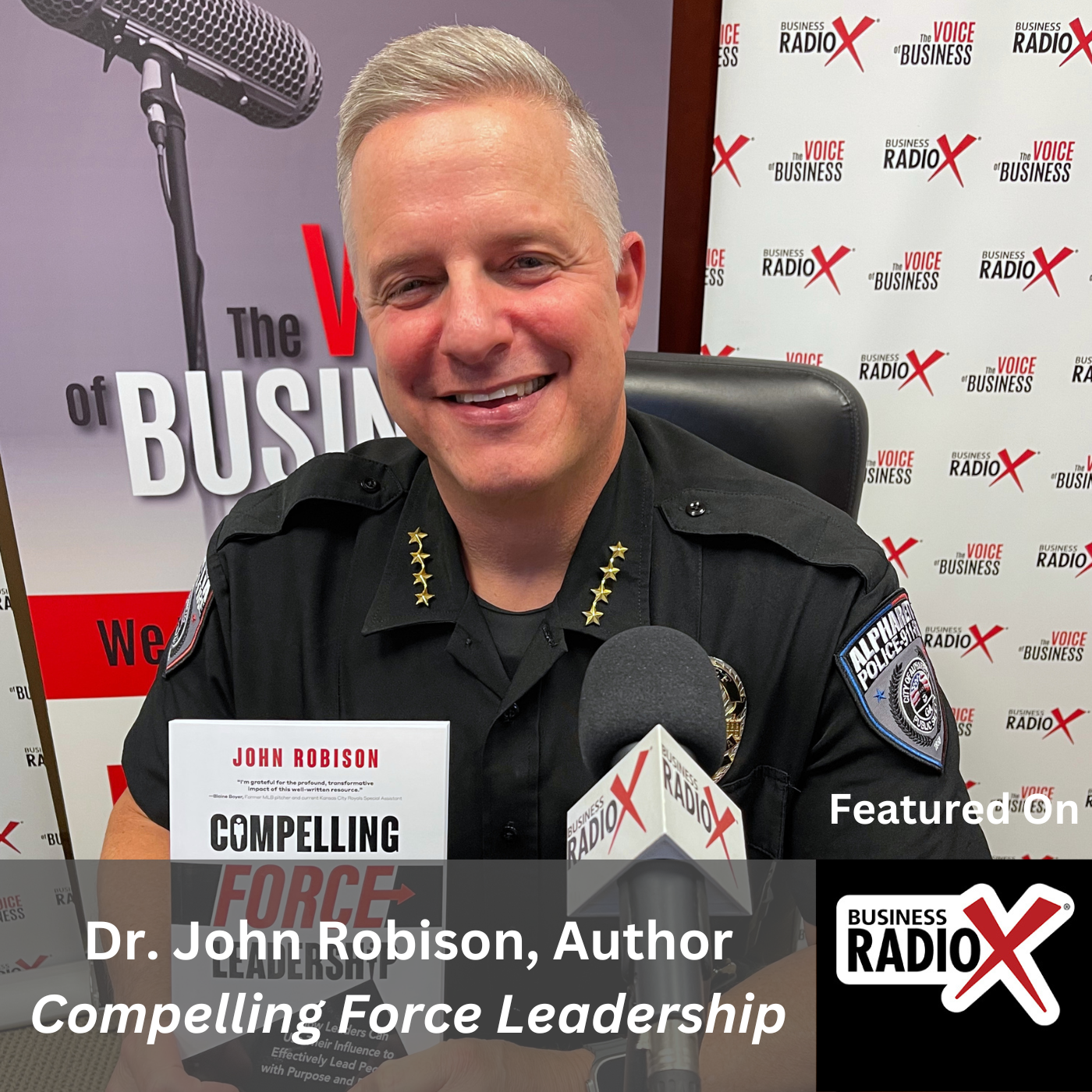
A Transformational Approach to Leadership, with Chief John Robison, Ph.D., Alpharetta Department of Public Safety, and Author of Compelling Force Leadership

September 25, 2023 by John Ray

North Fulton Business Radio
A Transformational Approach to Leadership, with Chief John Robison, Ph.D., Alpharetta Department of Public Safety, and Author of Compelling Force Leadership
Loading
00:00 /
RSS Feed
Share
Link
Embed

Download file

A Transformational Approach to Leadership, with Chief John Robison, Ph.D., Alpharetta Department of Public Safety, and Author of Compelling Force Leadership (North Fulton Business Radio, Episode 700)

Chief John Robison, Alpharetta Department of Public Safety, and author of Compelling Force Leadership, joined host John Ray on North Fulton Business Radio to talk about a transformational approach to leadership. They discussed his book and why he wrote it, why it is so important to understand your purpose as a leader, why you need to be intentional in your engagement with your team members, how to ensure you are growing as a leader, and much more.

North Fulton Business Radio is broadcast from the North Fulton studio of Business RadioX® inside Renasant Bank in Alpharetta.

Compelling Force Leadership: How Leaders Can Use Their Influence to Effectively Lead People with Purpose and Passion
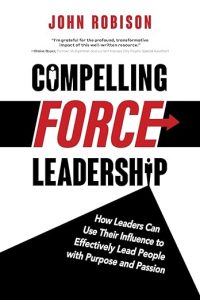
Today’s leaders are challenged more now than ever to create and maintain vibrant organizational cultures. In this book, Dr. John Robison shares what he has gained through research and his personal leadership experience to help equip current and future leaders with the tools needed to create a dynamic workplace environment.

Readers will gain a working knowledge of ways to increase employee job satisfaction and commitment to the organization. Whether you are a seasoned leadership veteran or brand new to leadership, the mindset and tools you will gain from this book will help ensure you are a COMPELLING FORCE leader by adding value to your people through leading with purpose and passion.

Amazon

Alpharetta Department of Public Safety

It is the mission of the Alpharetta Department of Public Safety to enhance the quality of life of those that live, work, and play in the City of Alpharetta.

They do things a little differently than your average emergency services department. Unlike most jurisdictions, their services are not separated into different departments. Police, fire, and 911 are all part of a single, streamlined team. This allows each service to work more closely, train more efficiently, and communicate together to provide the optimal service to those in Alpharetta. For the community they serve, that translates into low crime rates, faster responses to emergency calls, and the lowest possible ISO rating so homeowners enjoy lower insurance rates.

Chief John Robison serves as Director of Public Safety for the Alpharetta Department of Public Safety

Website | LinkedIn | Facebook | Instagram


Chief John Robison, Ph.D., Author of Compelling Force Leadership and Director of Public Safety, Alpharetta Department of Public Safety

Dr. John Robison, Author of Compelling Force Leadership and Director of Public Safety, Alpharetta Department of Public Safety

Dr. John Robison has over 15 years of leadership experience in the public safety profession, and he currently serves as Director of Public Safety with the Alpharetta Department of Public Safety. He leads over 250 police officers, firefighters and 911 dispatchers. John is also a leadership instructor for a national training agency where he teaches and develops leaders from organizations throughout the country. Additionally, John works as an instructor for two different universities in Georgia.

LinkedIn | X


Questions and Topics in this Interview:

  • What led to your decision to write a book on leadership?
  • Why do you so strongly believe in a transformational leadership approach? Discuss your dissertation research on transformational leadership.
  • Why is understanding your purpose as a leader so important?
  • You talk a good bit about engagement in your book. Talk about why you emphasize the need for leaders to be intentional when it comes to engaging with their people.
  • Talk about the importance of always growing. What are some keys to ensure you are growing as a leader?
  • What do you hope people will take away from your book?


North Fulton Business Radio is hosted by John Ray and broadcast and produced from the North Fulton studio of Business RadioX® inside Renasant Bank in Alpharetta. You can find the full archive of shows by following this link. The show is available on all the major podcast apps, including Apple Podcasts, Spotify, Google, Amazon, iHeart Radio, Stitcher, TuneIn, and others.

RenasantBank


Renasant Bank has humble roots, starting in 1904 as a $100,000 bank in a Lee County, Mississippi, bakery. Since then, Renasant has become one of the Southeast’s strongest financial institutions with over $13 billion in assets and more than 190 banking, lending, wealth management, and financial services offices in Mississippi, Alabama, Tennessee, Georgia, and Florida. All of Renasant’s success stems from each of their banker’s commitment to investing in their communities as a way of better understanding the people they serve. At Renasant Bank, they understand you because they work and live alongside you every day.

Since 2000, Office Angels® has been restoring joy to the life of small business owners, enabling them to focus on what they do best. At the same time, we honor and support at-home experts who wish to continue working on an as-needed basis. Not a temp firm or a placement service, Office Angels matches a business owner’s support needs with Angels who have the talent and experience necessary to handle work that is essential to creating and maintaining a successful small business. Need help with administrative tasks, bookkeeping, marketing, presentations, workshops, speaking engagements, and more? Visit us at https://officeangels.us/.

Tagged With: Alpharetta DPS, Compelling Force Leadership, Dr. John Robison, Employee Satisfaction, engagement, John Ray, Leadership, Leadership Growth, Leadership Tools, North Fulton Business Radio, Public safety, Transformational Leadership

Using Demand Generation to Scale Revenue, with Josh Sweeney, FounderScale

August 7, 2023 by John Ray

Josh Sweeney
North Fulton Business Radio
Using Demand Generation to Scale Revenue, with Josh Sweeney, FounderScale
Loading
00:00 /
RSS Feed
Share
Link
Embed

Download file

Josh Sweeney

Using Demand Generation to Scale Revenue, with Josh Sweeney, FounderScale (North Fulton Business Radio, Episode 687)

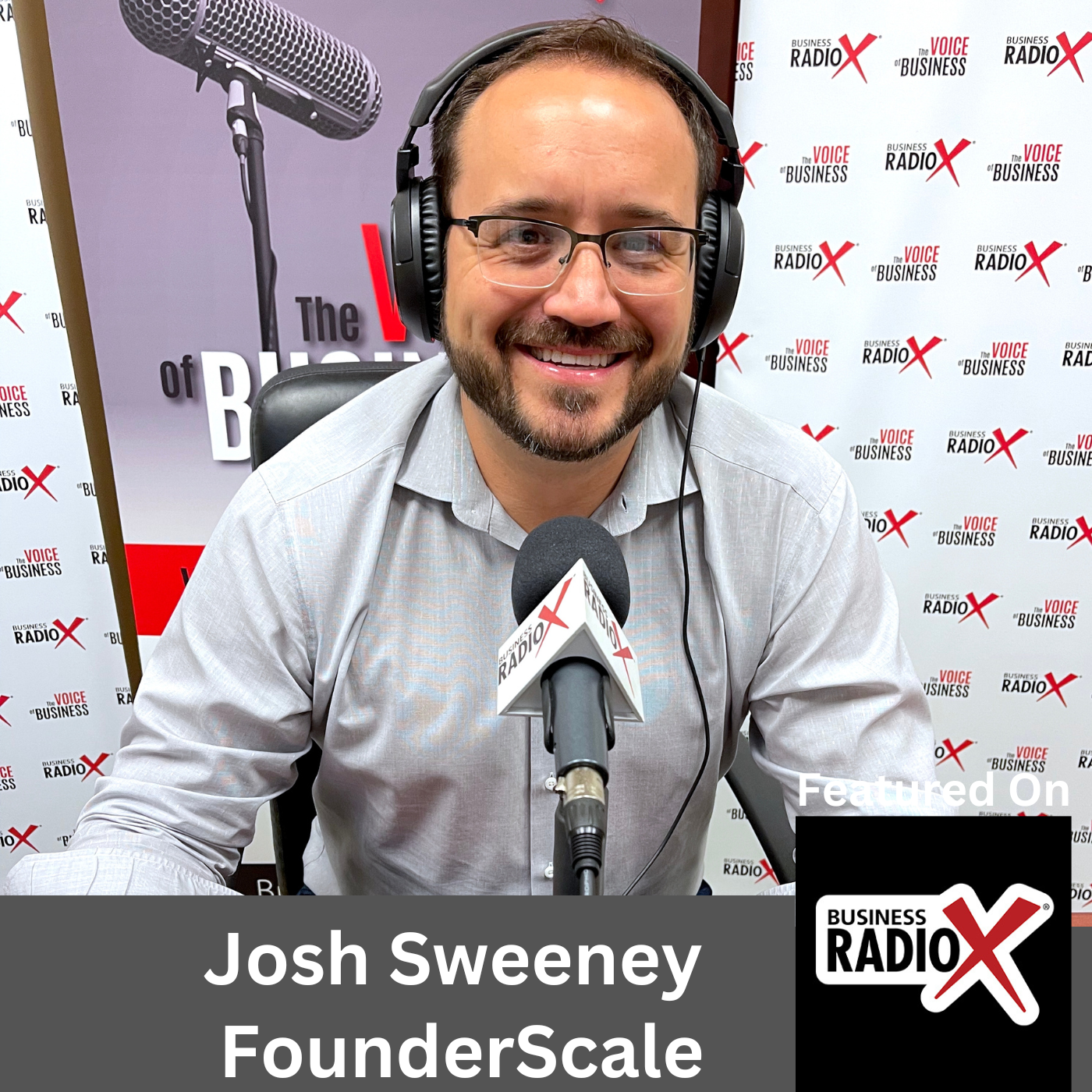
Josh Sweeney, CEO at FounderScale, joined host John Ray to discuss how his firm helps business owners scale their revenue. He talked about the limitations of lead generation, the difference between lead generation and demand generation, planning for revenue growth and being patient, customizing strategies based on the business, when to start demand generation, and much more.

North Fulton Business Radio is broadcast from the North Fulton studio of Business RadioX® inside Renasant Bank in Alpharetta.

FounderScale

FounderScale’s goal is to work with team members and clients who share the company values: people who love what they do, take ownership, have an open mind when solving problems, and desire to go big in their endeavors.

FounderScale offers fractional CRO services, demand generation, and HubSpot consulting to engage prospects, build relationships, and scale revenue. 

Website | LinkedIn

Josh Sweeney, Founder & CEO, FounderScale

Josh Sweeney, Founder & CEO, FounderScale

Josh Sweeney is a seasoned entrepreneur whose mission is to help founders increase revenue so that they can have a positive impact on their team, family, and community.

He delivers on that mission by helping founders go from founder revenue to scalable revenue.

LinkedIn | Instagram


Questions and Topics in this Interview:

  • How to Scale Revenue with Demand Generation
  • Founder Revenue to Scalable Revenue
  • How Marketing for Small B2B Companies Differs from General Perception
  • Entrepreneurship & Exits
  • Founder Peer Groups, Mentoring, & Forums

North Fulton Business Radio is hosted by John Ray and broadcast and produced from the North Fulton studio of Business RadioX® inside Renasant Bank in Alpharetta. You can find the full archive of shows by following this link. The show is available on all the major podcast apps, including Apple Podcasts, Spotify, Google, Amazon, iHeart Radio, Stitcher, TuneIn, and others.

RenasantBank


Renasant Bank has humble roots, starting in 1904 as a $100,000 bank in a Lee County, Mississippi, bakery. Since then, Renasant has become one of the Southeast’s strongest financial institutions with over $13 billion in assets and more than 190 banking, lending, wealth management, and financial services offices in Mississippi, Alabama, Tennessee, Georgia, and Florida. All of Renasant’s success stems from each of their banker’s commitment to investing in their communities as a way of better understanding the people they serve. At Renasant Bank, they understand you because they work and live alongside you every day.

Since 2000, Office Angels® has been restoring joy to the life of small business owners, enabling them to focus on what they do best. At the same time, we honor and support at-home experts who wish to continue working on an as-needed basis. Not a temp firm or a placement service, Office Angels matches a business owner’s support needs with Angels who have the talent and experience necessary to handle work that is essential to creating and maintaining a successful small business. Need help with administrative tasks, bookkeeping, marketing, presentations, workshops, speaking engagements, and more? Visit us at https://officeangels.us/.

Tagged With: b2b sales, demand generation, engagement, Entrepreneurs, founderscale, hubspot, John Ray, josh sweeney, lead generation, North Fulton Business Radio, Office Angels, renasant bank, revenue, Scalable revenue

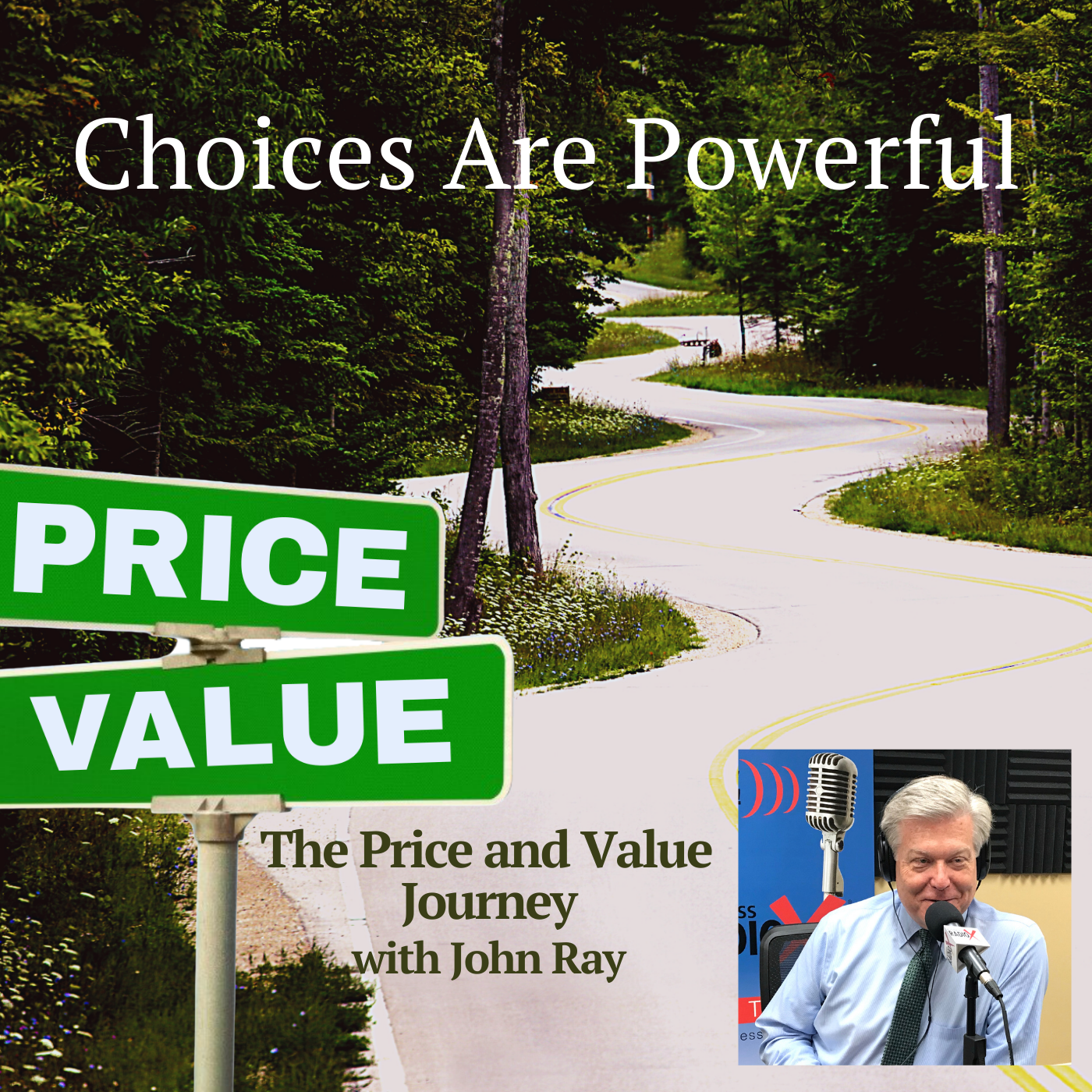
Choices Are Powerful

February 18, 2022 by John Ray

Choices are Powerful
North Fulton Studio
Choices Are Powerful
Loading
00:00 /
RSS Feed
Share
Link
Embed

Download file

Choices are Powerful

Choices Are Powerful

Human beings prefer choices, and therefore choices are powerful. When you offer choices in proposals to clients, you’re not only harnessing that power to your advantage, but it’s better for the client, too. The Price and Value Journey is presented by John Ray and produced by the North Fulton studio of Business RadioX®.

TRANSCRIPT

John Ray: [00:00:00] And hello, I’m John Ray on the Price and Value Journey.

John Ray: [00:00:04] Choices are powerful. Human beings prefer choices which offer a sense of control versus receiving an ultimatum. If you’ve ever had teenagers, you know that’s true. It’s just the way we’re wired. It’s really true for all of us.

John Ray: [00:00:25] Here’s one area that this fundamental aspect of human behavior is playing out right now. That’s getting employees back to work or back to the office or whatever you want to call it. I suspect that a big explanation of why some companies are challenged by getting their employees back into the office has to do with a take it or leave it mandate that’s delivered from on high, the old command and control way of managing a firm. Conversely, it looks like those companies who are successfully dealing with those return-to-office issues are those that are offering options to their employees.

John Ray: [00:01:10] Options are powerful because they invite engagement. They invite a dialogue that’s focused on problem-solving between two parties. If command and control CEOs, instead of issuing edicts, asked questions and fostered communication, they might find workable solutions which engage their workforce. It’s one example for you as a professional services provider of why offering options is so powerful. Your proposal, now I prefer the term engagement options, but I’ll call it a proposal. Your proposal should have different options, three ideally, which provide varying levels of engagement. When you offer engagement options, you invite a dialogue which leads to better outcomes for both the client and for you.

John Ray: [00:02:10] Choices are powerful. Offering options is essential to maximizing the value you offer to clients.

John Ray: [00:02:21] I’m John Ray on the Price and Value Journey. If you’d like to connect with me directly, you can go to my website, johnray.co. You can also send me an email, john@johnray.co. If you’d like to subscribe to this podcast, you can find it on your favorite podcast app, and you can also find a complete show archive at pricevaluejourney.com. Thank you for joining me.


About The Price and Value Journey

The title of this show describes the journey all professional services providers are on:  building a services practice by seeking to convince the world of the value we offer, helping clients achieve the outcomes they desire, and trying to do all that at pricing which reflects the value we deliver.

If you feel like you’re working too hard for too little money in your solo or small firm practice, this show is for you. Even if you’re reasonably happy with your practice, you’ll hear ways to improve both your bottom line as well as the mindset you bring to your business.

The show is produced by the North Fulton studio of Business RadioX® and can be found on all the major podcast apps. The complete show archive is here.

John Ray, Host of The Price and Value Journey

John Ray The Price and Value Journey
John Ray, Host of “The Price and Value Journey”

John Ray is the host of The Price and Value Journey.

John owns Ray Business Advisors, a business advisory practice. John’s services include advising solopreneur and small professional services firms on their pricing. John is passionate about the power of pricing for business owners, as changing pricing is the fastest way to change the profitability of a business. His clients are professionals who are selling their “grey matter,” such as attorneys, CPAs, accountants and bookkeepers, consultants, marketing professionals, and other professional services practitioners.

In his other business, John a Studio Owner, Producer, and Show Host with Business RadioX®, and works with business owners who want to do their own podcast. As a veteran B2B services provider, John’s special sauce is coaching B2B professionals to use a podcast to build relationships in a non-salesy way which translate into revenue.

John is the host of North Fulton Business Radio, Minneapolis-St. Paul Business Radio, Nashville Business Radio, Alpharetta Tech Talk, and Business Leaders Radio. house shows which feature a wide range of business leaders and companies. John has hosted and/or produced over 1,100 podcast episodes.

Connect with John Ray:

Website | LinkedIn | Twitter

Business RadioX®:  LinkedIn | Twitter | Facebook | Instagram

Tagged With: engagement, John Ray, options, Price and Value Journey, pricing, professional services, professional services providers, proposals, solopreneurs, value

We’re Engaged!

May 26, 2021 by Mike

StatusLIfewithLetaBannerTile
Gwinnett Studio
We're Engaged!
Loading
00:00 /
RSS Feed
Share
Link
Embed

Download file

Let Leta take you on a journey of faith, life, travel, and interior design. Leta Brooks is the star of the hit podcast “Status Life With Leta.” Reaching a record number of downloads in a very short amount of time, Leta engages her audience with her honesty, captivating stories, and her talent for teaching. “Status Life With Leta” is a lifestyle podcast and blog which focuses on everything you need to know to enhance your life, your health, and your home.

Leta uses her 20+ years of experience as a practicing interior designer to teach trends, design styles, and tips on how to make a house a home. She also guides her followers to a lifestyle of better mental, physical, and spiritual health. With her “sweetie”, Derek Hays, as her co-host, they entertain listeners with playful banter and real life situations. Her mission is to help each and every listener #designyourlife.

Status Life with Leta is brought to you by Status Home Design, and by the Law Office of Derek M. Hays at 404-777-HURT.

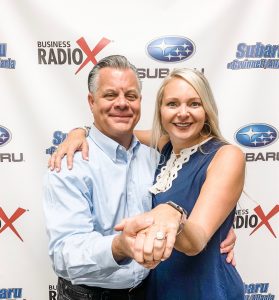
On this episode, Leta and Derek share the exciting news about their official engagement!

Leta Brooks/Status Home Design

Status Home Design is a 12.000 sq ft retail store located in the Kohls Plaza of Hamilton Mill at 2240 Hamilton Creek Pkwy, Dacula, Georgia. They have 70 different merchants inside the store selling furniture and home goods of various styles. Their Status Carpenters can rehab, refinish, or repaint almost anything. This fantastic team of carpenters also custom builds tables, bookcases, cabinets, and barn doors. Status Design Studio, Inc., their award winning full-service interior design firm is also located inside the store. Their designers, provide exemplary service for all your home and business needs. Status Home Design’s knowledge of the latest trends and access to an abundance of manufacturers for furniture and all home decor items, sets them apart from the rest. Last, but certainly not least, they have an in-house seamstress and upholstery workshop.

Contact Leta at lbrooks@statushomedesign.com

Follow Us On Social Media!

Status Home Design on Instagram
Status Life with Leta on Instagram

Status Home Design on Facebook
Status Life with Leta on Facebook

Visit Our Websites!
Status Home Design and Status Life with Leta

Tagged With: business radio, Business RadioX, derek and leta, derek and leta engagement, Derek Hays, engagement, interior decorating, interior design, law office of derek hays, Leta Brooks, Radiox, shops at status, Status Home Design, status life, status life with leta

Franchise Marketing Radio: Daniel Shub with SignStream.net

December 5, 2019 by angishields

Franchise-Marketing-Daniel-Shub-Feature
Atlanta Business Radio
Franchise Marketing Radio: Daniel Shub with SignStream.net
Loading
00:00 /
RSS Feed
Share
Link
Embed

Download file

Franchise-Marketing-Daniel-Shub-Group

Brought To You By SEO SAMBA . . . Comprehensive, High Performing Marketing Solutions For Mature And Emerging Franchise Brands . . . To Supercharge Your Franchise Marketing, Go To SEO SAMBA.com

For the last 10 years, Daniel Shub, CEO of SignStream.net, has bridged the gap between the needs of business owners and evolving technology. Clients such as Cox Enterprises, Home Depot, Sprint, and Tech Alpharetta have benefited from his knowledge to connect customers to solutions.

SignStream.Net helps businesses capture the attention of current and new clients to highlight promotions, engage them while upselling products and services, and bring in revenue from other businesses who want to reach their customer base.

How does it work? Take an existing or new TV screen or monitor and create a TV channel with the type of content you want your customers to see.

Don’t have a screen or work remotely? Feature your company content where it will be seen.

⇒ Communicate an upcoming event or promotion you want current customers to know about and then tell others.
⇒ Promote your business on screens in other companies where your targeted market visits.
⇒ Strengthen your company brand and communicate company values by the type of content you present.

It not only brings in new business, it creates loyal raving fans from the current business you have.

Connect with Daniel on LinkedIn and follow SignStream.net on LinkedIn and Facebook.

Tagged With: digital signage, engagement, Franchises, local cross marketing, marketing, org structure

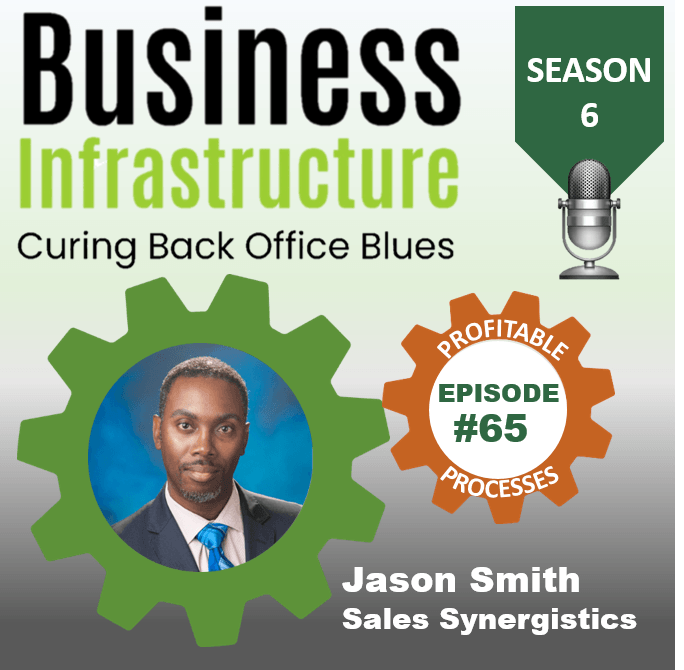
Episode 65: Jason Smith’s Sales Synergistics Process

October 11, 2019 by Mike

Business Infrastructure
Episode 65: Jason Smith’s Sales Synergistics Process
Loading
00:00 / 34:27
RSS Feed
Share
Link
Embed

Download fileDuration: 34:27

EVERY business exists to make money. Without it, they will surely fail. This #1 need kickstarts the sales process and it’s the reason we’re kicking off Season 6 (Profitable Processes) with the topic. In this episode, sales guru Jason Smith shares his sales synergistics process for aligning all business units of a company to maximize revenue potential. Learn about his 5-ring framework for achieving this alignment and how to implement it in your business to prevent sales and operations silos as your company grows.

Special Guest: Jason Smith, Founder & CEO – CIGRIE

Location:  Atlanta, GA  USA

Show Notes:

  • Sales Benchmark Index (SBI): a management consulting firm based in The Netherlands that specializes in sales and marketing techniques to help companies reach their revenue targets.
  • Sales Operations: an article that provides an in-depth explanation of sales operations.
  • Sales Transformation: an article describing the definition of sales transformation.
  • Gong.io: a tool to help “Generate more revenue by having better sales conversations with the #1 conversation intelligence platform for sales.”
  • Capterra: search for the best Customer Relationship Management (CRM) software to suit your company’s needs on this site.
  • SalesLoft: the “#1 engagement platform that helps you understand your customers’ needs and respond in meaningful ways.”
  • Aslan Training: an award-winning, top-ranked sales training company.
  • Meetup.com: an international platform designed to help people with similar interests organize into groups for networking.
  • TAG Sales Leadership Society: the Technology Association of Georgia’s program for sales professionals.
  • European Sales & Marketing Association (ESMA): an organization for professional sales agents, distributors and manufacturers as well as sales and marketing organizations that represent the packaged consumer goods industry.

Watch the Video Version of this Interview:

Watch the Aftershow!

Tagged With: consulting, engagement, infrastructure, Leadership, revenue, Sales, Sales and Marketing

Decision Vision Episode 21: Do I Need an Investment Banker? – An Interview with Roger Furrer, Brady Ware Capital

June 27, 2019 by John Ray

Decision Vision
Decision Vision
Decision Vision Episode 21: Do I Need an Investment Banker? - An Interview with Roger Furrer, Brady Ware Capital
Loading
00:00 /
RSS Feed
Share
Link
Embed

Download file

Roger Furrer, Director of Brady Ware Capital

Do I Need an Investment Banker?

Do I need an investment banker to sell my company? How does the sale process work? What’s the difference between an investment banker and a business broker? Roger Furrer, Director of Brady Ware Capital, answers these questions and much more in a interview with Michael Blake, Host of “Decision Vision.”

Roger Furrer, Brady Ware & Company

Roger Furrer is a Director at Brady Ware Capital, the investment banking arm of Brady Ware & Company. Roger joined Brady Ware in 2016, and prior to that served as COO and Managing Partner at Bannockburn Global Forex, LLC. Additionally, Roger enjoyed over 30 years in the banking industry in which he held various senior management positions, including leading teams focused on middle-market companies.

Roger leverages this expertise to help family-owned businesses and management teams maximize the value of their investments. He guides business owners through the sale of their business, or assists them in securing the liquidity needed to grow their business.

For more information, contact Roger at rfurrer@bradyware.com or at 937-238-9401.

Michael Blake, Brady Ware & Company

Mike Blake, Host of “Decision Vision”

Michael Blake is Host of the “Decision Vision” podcast series and a Director of Brady Ware & Company. Mike specializes in the valuation of intellectual property-driven firms, such as software firms, aerospace firms and professional services firms, most frequently in the capacity as a transaction advisor, helping clients obtain great outcomes from complex transaction opportunities. He is also a specialist in the appraisal of intellectual properties as stand-alone assets, such as software, trade secrets, and patents.

Mike has been a full-time business appraiser for 13 years with public accounting firms, boutique business appraisal firms, and an owner of his own firm. Prior to that, he spent 8 years in venture capital and investment banking, including transactions in the U.S., Israel, Russia, Ukraine, and Belarus.

Brady Ware & Company

Brady Ware & Company is a regional full-service accounting and advisory firm which helps businesses and entrepreneurs make visions a reality. Brady Ware services clients nationally from its offices in Alpharetta, GA; Columbus and Dayton, OH; and Richmond, IN. The firm is growth minded, committed to the regions in which they operate, and most importantly, they make significant investments in their people and service offerings to meet the changing financial needs of those they are privileged to serve. The firm is dedicated to providing results that make a difference for its clients.

Decision Vision Podcast Series

“Decision Vision” is a podcast covering topics and issues facing small business owners and connecting them with solutions from leading experts. This series is presented by Brady Ware & Company. If you are a decision maker for a small business, we’d love to hear from you. Contact us at decisionvision@bradyware.com and make sure to listen to every Thursday to the “Decision Vision” podcast. Past episodes of “Decision Vision” can be found here. “Decision Vision” is produced and broadcast by the North Fulton studio of Business RadioX®.

Visit Brady Ware & Company on social media:

LinkedIn:  https://www.linkedin.com/company/brady-ware/

Facebook: https://www.facebook.com/bradywareCPAs/

Twitter: https://twitter.com/BradyWare

Instagram: https://www.instagram.com/bradywarecompany/

Show Transcript

Intro: [00:00:06] Welcome to Decision Vision, a podcast series focusing on critical business decisions. Brought to you by Brady Ware & Company. Brady Ware is a regional, full-service accounting advisory board that helps businesses and entrepreneurs make visions a reality.

Michael Blake: [00:00:24] And welcome to Decision Vision, a podcast giving you, the listener, clear vision to make great decisions. In each episode, we discuss the process of decision making on a different business topic. But rather than making recommendations because everyone’s circumstances are different, we talk to subject matter experts about how they would recommend thinking about that decision.

Michael Blake: [00:00:43] My name is Mike Blake, and I’m your host for today’s program. I’m a Director at Brady Ware & Company, a full-service accounting firm based in Dayton, Ohio, with offices in Dayton; Columbus, Ohio; Richmond, Indiana; and Alpharetta, Georgia, which is where we are recording today. Brady Ware is sponsoring this podcast. If you like this podcast, please subscribe on your favorite podcast aggregator, and please also consider leaving a review of the podcast as well.

Michael Blake: [00:01:10] Today, we’re going to talk about hiring an investment banker. And I think this is an important subject because investment banks, I think, oddly enough, have a lot of mystery around them. In many cases, particularly if you’re a small business, you may only use an investment banker once in your entire life. Maybe even hopefully once in your entire life. You do one exit, you make a boatload of money, and then you get on your yacht, or you go to your mountain villa or your Italian Sicilian hideaway, and never have to do anything again. And one of the parties that kind of makes that possible for that lucrative exit is the investment banker.

Michael Blake: [00:01:56] Now, I happen to have a lot of respect for investment bankers because early in my career, I did the investment banking thing. And let me tell you – I’ll get on my soapbox a little bit, and I have no problem with that – for all the for all the junk that investment bankers take, and you hear investment bankers brought up in Congress that they don’t pay enough taxes and whatnot, I challenge any of them to walk in the shoes of a successful investment banker for two years and see kind of how they do with that.

Michael Blake: [00:02:38] It is not a 9:00 to 5:00 job, unless your definition of 9:00 to 5:00 is 9:00 in the morning to 5:00 in the morning. It is not a Monday-through-Friday job. It is an always-on job. And I can tell you for a fact that those folks, if they’re a success at all, really earn their fees. And if you don’t kind of live that lifestyle, you just are not in the business very long. That’s just all there is to it.

Michael Blake: [00:03:06] And so, I washed out, and I took a step back, and I went into business valuation, which is, let’s say, a much more work/life balance-friendly profession. Although, sometimes, my wife will wonder about that. But I wanted to kind of get that on the table because when you hire an investment banker, it’s a very important decision. If they’re any good at all, they ain’t cheap. And they can often be the difference between an exit that makes you comfortable for a while, and maybe pays for a vacation, or some of your kids education, versus retiring, or possibly leaving or creating legacy wealth.

Michael Blake: [00:03:50] So, with that, let’s kind of introduce our guest here. I have with us Roger Furrer, who is a director at Brady Ware Capital, which is our firm’s captive mergers and acquisitions specialized business unit. And they help business owners and entrepreneurs understand, increase, and unlock the value of their businesses. Business owners, often, find that managing the complexities of transaction’s an overwhelming experience. So, they can even find it overwhelming when they have help, I can tell you that for a fact. And you need an advocate that’s going to be out there representing you aggressively in the marketplace and helping you find not just an opportunity, not just Mr. Right or Mrs. Right, Mrs. Right now, but Mr. or Mrs. Right.

Michael Blake: [00:04:37] And that’s what Brady Ware does. And they help ease those challenges and let you continue running your business successfully throughout that transaction. That part’s really important because I can tell you, having worked on a lot of transactions myself, not in the investment banking capacity but as the advisor, selling your business is so physically and emotionally consuming that it can be difficult to actually continue running your business and sort of forget. You can easily lose sight of the fact that until that money hits escrow or until money hits your bank account, you get a wire confirmation, that deal is not done. And if you are not paying attention, all of a sudden, you may be left with a less valuable business than what you started with. But we’ll get into that.

Michael Blake: [00:05:24] Roger joined Brady Ware’s mergers and acquisition team in 2016. As I said, he’s a director. He has more than 30 years of experience in banking – i.e. 15 times more than I do – where he led teams focused on middle market companies. He leverages his banking experience as middle market companies to help family-owned businesses and management teams maximize the value of their investments. Specifically, he guides business owners through the sale of their business or assist them in securing the liquidity needed to grow that business. And with that, Roger, thank you so much and welcome to the program.

Roger Furrer: [00:06:00] Thank you, Mike, I appreciate being a part of the discussion.

Michael Blake: [00:06:03] So, Roger, let’s start with some basic vocabulary because I’m not sure everybody knows what an investment banker does. I think there’s an image out there of what an investment banker is, but I think there’s a misconception. So, kind of in your own words, if you had to kind of describe your job, what is it?

Roger Furrer: [00:06:26] Well, sure. One of the things that people misconstrue about the term is when they hear investment, they think it revolves around stocks, and bonds, and that type of thing. So, that’s one thing that we’re not. So, I would say investment bankers do a multitude of things. Some have more well-rounded services than others. At Brady Ware Capital, we help companies evaluate their strategic options around how do you liquidate or transition your business and discuss possible selling options for them. But we, also, help them uncover, perhaps, opportunities to acquire other companies or merge with other companies, and analyze the returns around that. At Brady Ware Capital, too, we also help companies raise the appropriate bank debt, or subordinate it, or mezzanine debt for the situation that they’re dealing with.

Michael Blake: [00:07:30] Okay, yeah. And so, when we say investment banker, one, I mean, you’re not lending money yourself, but you may be an intermediary to the folks who are lending money. And that first job description that you put out there, really, is more of a wealth or financial advisor when you’re dealing with analyzing stocks and bonds. And the exception may be if you’re the kind of investment bank that is taking companies public, and you’re dealing with public securities but that isn’t you guys. And for the most part, that’s not going to be our listener base. So, we can probably set that definition to the side, at least, for the moment.

Michael Blake: [00:08:09] So, one thing — and I have to confess, I don’t really know the answer to this question in a very clear way. So, I’m very curious to hear your answer to this. And that is, what is the difference, if there is any, between an investment banker and a business broker? Because you hear those terms both used a lot, but I also know many investment bankers that bristle a little bit if you call them a business broker and vice versa. So, I’m curious, is the difference meaningful enough? If so, how would you characterize it?

Roger Furrer: [00:08:41] Well, first of all, Mike, I’d say that there’s a lot of overlap in the term. So, I think, when people define a broker, they think about a transaction being completed, a commercial real estate property, a residential property, a broker being someone that executes the trade of a stock or a bond. So, I would say that I am a business broker, but I would prefer to be identified as an investment banker more so that also helps bring a transaction to fruition. So, I think, in in our terms and in the markets that we deal with, I think, business brokers, generally, deal with smaller-sized companies, and typically list the business for sale, and identify an asking price for that business, much like you would with a piece of a real property.

Roger Furrer: [00:09:48] I think the difference between an investment banker, I believe, is in a higher strategic value proposition, if you will, where when we’re representing a company for sale, we go about an entire marketing process and identify who we see as the best strategic and financial buyers for that entity, so that we’re able to drive the highest and best value for that company. I hope that helps you from a differentiation perspective.

Michael Blake: [00:10:26] It does. And not the suck up to because I’m not, it’s actually the best definition I’ve actually heard. The best distinction I’ve actually heard between the two. So, for the first time, I think I can actually explain it to somebody else, which is the definition of a good understanding. So, what is the investment banker-client relationship look like if it’s a very good one? I think, when clients sign onto to pursue a strategic transaction, we use that generic term deliberately for the moment, I sometimes wonder, particularly if they’ve never been in that kind of transaction environment before, if clients really, frankly, know what it is that they’re getting into. So, maybe could you kind of shed some insight and give us some of the inside baseball in terms of what that relationship looks like on a day-to-day, in a month-to-month basis?

Roger Furrer: [00:11:28] Sure. Maybe to define an ideal relationship, I kind of start by saying the process to sell a business and to discuss the strategic options leading up to selling a business could be a 6, to 9, to 12-month process. So, with that being said, you’re going to spend a lot of time as the business owner with the investment banker that you choose to work with. So, I think it’s very important that you have a degree of chemistry with those folks, that everybody likes working with each other, and that the investment banker is able to also work effectively with the management team of the company and work with other outside advisors, such as their attorney, or accountant, et cetera that’s going to be working through this process.

Roger Furrer: [00:12:19] And the reason that is important, it’s not so much the time frame, but it’s the intensity during that time period. I might talk with my customer daily, twice a day, many times a day, depending on where we’re at in the process. So, there is a tremendous amount of interaction that you’re dealing with during the course of the process of selling that business.

Roger Furrer: [00:12:45] I think, the other thing that I would suggest that that somebody look for in an investment banker, and I’m I’m sucking up a little bit and touting some of my background, but I think somebody that has some experience, a multitude of experience in different business environments because there are technical, legal, accounting, financial, emotional, all kinds of issues that come up during the course of the process. And so, I think, dealing with somebody with a well-rounded background is also very important in the process.

Michael Blake: [00:13:27] I’ll underscore that because that’s also important in what I do. As you know, and if our listeners have listened to these other podcasts, I specialize in technology businesses and professional services firms, – i.e. businesses that have mostly intangible assets. And the process of selling/buying a business and those industries is candidly very different from, say, buying or selling an orthopedic practice, or even a manufacturing company, or a high-tech engineering situation, or the engineering professional services. But the point is all these kinds of transactions or businesses have their own little nuances that have to be figured out and anticipated, preferably, well in advance. And there’s a lot of value to having seen a lot of stuff because every deal will have a surprise or two that’s just unavoidable, but you’d like to keep those those surprises down to a minimum to a dull roar.

Roger Furrer: [00:14:39] And the ability to draw back on past experience and be able to connect the situation from one experience to another and say, “In this situation, this is how it was dealt with,” as kind of a starting point in understanding the discussion.

Michael Blake: [00:14:55] Yes. As I like to say, there needs to be some benefit, in my case, to having gray hair and two arthritic ankles. And what you get in exchange for that is a little bit of experience, and been there, done that, and got the T-shirt. So, one thing that I think a lot of folks don’t know if they haven’t worked in the investment bank yet is that there’s a difference between sell side and buy side transactions. Of course, a sell side transaction, meaning that you’re working for the seller, and a buy side transaction, meaning that you’re working for a buyer. And most investment bankers I know, and I truly don’t know if this is the case for you – I should, but I don’t – but most investment bankers have a preference to work on sell side transactions. So, I guess, my two-part question is, is that the case for you guys at Brady Ware Capital? And if so, why is that? Why is there a preference to work on the sell side?

Roger Furrer: [00:15:59] Well, it’s interesting that you bring this up, Mike. This morning, I was talking to another investment banker that we have a strategic alliance with, and we were introducing ourselves to another party, and they asked if he does buy side engagements, and he said, “No, I flat out refused them.” So-

Michael Blake: [00:16:19] Yeah, I’ve heard that.

Roger Furrer: [00:16:21] So, first of all, Brady Ware Capital’s preference is most certainly to do with sell side engagements. We do take on a limited amount of buy side engagements when the situation seems right for ourselves and the client. But the reason for the preference is — and this may seem a little bit strange at first, but with a sell side engagement, you know you have one willing party to start with. You have someone that has engaged you to go find a buyer, they’re ready to sell. When you do a buy side engagement, the buyer says that they want to grow from strategic acquisition or otherwise, but in many cases, it’s very difficult to define what it is that they’re looking for and trying to identify the right party to be a participant on the other end of the transaction.

Roger Furrer: [00:17:20] And if you’re able to find the perfect fit, and talk to, and find, and get financials, and identify the right selling party for that transaction, well, they work for sale when you call them, so you kind of flip the leverage in terms of the monetary value that was going to be exchanged. You kind of flip that leverage over to them because you reached out to them and created a situation that they weren’t ready for. So, it would be the same thing if I showed up at your doorstep and your house wasn’t for sale, but I said that I wanted to buy it because it was the perfect fit for me. And you kind of take a step back and go, “Well, it’s not that really for sale, but if you paid me 50% over market value, it might be for sale.”

Michael Blake: [00:18:13] Yeah, that’s right.

Roger Furrer: [00:18:13] And so, when that happens, right now, my buyer, who was a willing participant, says, “Well, wait a minute, I’m not going to pay that for that company.” So, it’s very difficult to find the perfect fit in a buy side engagement.

Michael Blake: [00:18:29] It’s like trying to solve one equation with two unknowns, I guess. And for the most part, at least larger companies, they won’t hire a buy side investment banker representative, and that’s why they’ll hire instead of vice president of business development, they’ll have a corporate development team if they’re large enough. And that’s kind of their job to go out there and hunt for those businesses to acquire. And that’s probably the more common model, wouldn’t you say?

Roger Furrer: [00:19:00] I would definitely agree with that, Mike.

Michael Blake: [00:19:02] Yeah. So, how do folks like you, frankly, get paid? In my practice, 90% of my fees are on a fixed basis. I don’t think the investment banking world really works that way. So, how are investment banking fee structures on a sell side engagement typically put together?

Roger Furrer: [00:19:30] Well, I wouldn’t have answered it this way, except for how you stated it with yours are 90% percent. Ours are probably 90% variable. So, for the most part, we are compensated when success happens. And back to your introduction, that’s when the wire transfer goes through. So, most investment bankers will receive a retainer at the beginning of a sale process, and they might receive another retainer or two throughout the course of the engagement at various stages in the process. But, again, most of our fees come from the transaction success actually happening. And those fees would range from roughly a few percentage points on up to maybe 7% or 8% of the sale, depending on the size of the transaction.

Michael Blake: [00:20:26] And the risk level, I would imagine as well, correct? In other words, if you think the deal is going to be easier to do, the fee might be a little bit less. Or does it matter? Maybe it doesn’t.

Roger Furrer: [00:20:40] I’ll say I’ll answer that a couple ways, Mike. One is by our very nature, and kind of the structure of our pricing is built around success, the idea is to identify projects that we would work on that we feel that we’re going to achieve success. And that’s a mutually determined between ourselves and our client. In other words, if we value the business, I’ll just use a number of 5 million, and our customer says that, “I’m not going to sell for anything less than 10,” then we probably don’t see a pathway to success with that. At that juncture, we might work with the customer more about how to achieve a valuation of $10 million at that point in time. So, if we don’t see a pathway to success, I’d say there’d be two things that we would do. One is not become engaged; or secondly, if the client wants us to continue through a process, we would probably change the pricing structure, so that it’s more fixed versus variable.

Michael Blake: [00:21:54] Got it, okay. And the way you described that just made me realize something, and it goes back to the previous question of buy side versus sell side. If your compensation is going to be a factor of or driven by the size of the deal, and you’re working on a buy side engagement, you’re kind of working against yourself, right, because you’d be trying to drive down a price, but in so doing, driving down your fees. Now, that would be a pretty hard balancing act to sustain in any event.

Roger Furrer: [00:22:26] Yeah, we’re a little bit — and our pricing structure, we like to be in neutral lockstep with our clients, so that we’re not in a situation like that where we’re not trying to drive the price down, so we drive our fee down. Correct.

Michael Blake: [00:22:44] All right.

Roger Furrer: [00:22:44] And, also, back to your buy side situation, because I described before that it’s difficult to identify and achieve success with it, and that’s the nature and structure of our compensation system is based on success, you don’t want to get into a lot of situations where you don’t see a pathway to success.

Michael Blake: [00:23:05] Yeah. That’s a good way to not be in business very long.

Roger Furrer: [00:23:09] Correct.

Michael Blake: [00:23:13] So, take us through a sales process. Let’s say somebody has been — you’re now engaged, and you’re ready to put a business on the market for sale at some point. I’m guessing there’s some preparation that goes into the process, but I don’t want to answer that question. I’ll let you answer that question. What does that process look like?

Roger Furrer: [00:23:37] Sure. Maybe before getting engaged, I’d like to take a step back and discuss the process of getting engaged. So, I mean, it sounds a little bit like a marriage here. So, what are you trying to accomplish, business owner? What are your objectives? Are you trying to transition your business to your management team? Are you trying to transition your business to relatives, cousins, daughters, sons, whatever it might be? Or are you trying to exit 100% of the business on sale to a strategic party? A financial party? Are you trying to retain some ownership and partner with somebody to take you further and help you grow your business in another direction, perhaps, geographically or from product diversification, whatever that might be? So, I think the first part in thinking about a sale process is really identifying and discussing, what are you trying to do with this? What’s the right solution for you? Because that’s going to drive the marketing process that we go through.

Michael Blake: [00:24:54] So-

Roger Furrer: [00:24:55] Is that helpful?

Michael Blake: [00:24:56] No, no, it is. I’m glad you brought us back to that point because I think it’s very important. I’m guessing the process where or the number of clients that you, or any good investment banker has, or if someone just sort of calls you up and says, “Hey, an investment bank,” “Great. I’ll send you a letter. Sign it.” Next thing you know, you’re engaged. I’ll bet that’s pretty close to zero, right?

Roger Furrer: [00:25:20] That would be less than zero, yes.

Michael Blake: [00:25:22] Yeah, right. So, you’ve had months of of conversations. This is something a lot of people don’t realize about investment banking is folks like you invest a ton of time, energy, and expertise in that pre-engagement relationship-building period where you’re trying to understand (A), business, and (B), the goals of the owners, and make sure those are something that you can realistically accomplish.

Roger Furrer: [00:25:55] That’s correct. And as part of that process, it’s also identifying a value range of that business, so that you understand what the potential outcome could be as a result of the marketing process. So, back to my example of the $5 million valuation where the business owner feels that 10 is their exit number, now, we’ve got to step back and talk about ways to get that business valuation up. So, I digress a little bit from your question on the sales process and what happens when you get engaged, but I thought that was a good backdrop.

Roger Furrer: [00:26:32] With that being said, so to directly answer your ,question through an engagement process, and we describe it as a several different steps that we go through throughout that 6 to 9-month process that we discussed before, where we literally write marketing material on the business by gathering financial data, understanding the products, the markets, the sales process, whatever it might be that are positioning the business as to why this is an outstanding investment consideration for a potential buyer to look at. So, we go through the entire marketing process and understanding the business.

Roger Furrer: [00:27:21] And then, as part of that process, we set down and identify who we see as potential buyers for this business. And how we do that is we review companies that might be direct competitors of the customer. They might have ancillary businesses associated with this particular business. They could be large suppliers to the business or have other strategic interests that could align with purchasing of a particular company that we’re representing.

Roger Furrer: [00:28:00] We also identify what we’ll call financial buyers, who, broadly speaking, would be identified as private equity groups or, perhaps, family offices that engage in private equity transactions. Private equity can be a very powerful option for people, especially who are interested in retaining some ownership and continuing on a go-forward basis. Typically, these financial buyers also have a strategic interest in an industry. So, a private equity firm that has a specialty in managing manufacturing companies probably isn’t going to be interested in a retailing business, as an example, but it’s usually something that’s tangential to the business that they’re already in. So, those are the things that we go through at the start of that process. And then, we literally do hand-to-hand combat outreach to the leadership team of these prospective buyers and send marketing material to them in an attempt to get them interested in this company.

Michael Blake: [00:29:22] Yeah. I like the way that you mentioned that hand-to-hand combat. And just as an aside, you mentioned, you bring up family offices because I think that’s a relatively new trend. When many of us think about private equity — I’m sorry, financial buyers, we go right to private equity. But as you know, I’m doing an increasing amount of work with family offices and dynastic wealth, and they’re starting to become a more important player as a financial buyer of buying operating businesses. At least, I’m seeing that. Are you seeing the same thing?

Roger Furrer: [00:30:00] We are. They, too, like others, are looking for profitable ways to deploy the capital that they have to invest, and they see this as one of the avenues that they might allocate a portion of their portfolio.

Michael Blake: [00:30:18] So, typically — just, let’s do a rain show. I don’t want to nail you down, but I still think it’s important in terms of managing expectations. When you and a client agree to work together – excuse me – how do you set expectations or what expectations you typically set in terms of how long it will take from, “We’re signing this engagement letter,” until you’re going to sell the business, and money wire transfers go through.

Roger Furrer: [00:30:52] Sure. I’ll start with the end answer, and I’ll break it down in stages for you, Mike. The end answer is probably six to eight months from the start of the process to the wire transfer clearing. We say it’s about a month doing our market preparation and marketing material. Another month to six weeks in terms of executing the marketing process, and identifying potential buyers, and outreach, and getting indications of interest from those buyers. Another six weeks or so in terms of providing additional information, hosting those companies on site for visits, and ultimately picking the right party and negotiating a letter of intent that we all agree on. So, that’s about — I’ll call that maybe four months total there. And then, it could be another three months or so to develop documentation, do the due diligence research that the buyer is going to do, and ultimately get to the closing process.

Michael Blake: [00:31:59] So, there’s a question I want to make sure that I — a conversation I want to make sure I have with you because I think this is very important for our listeners, and I’m sure that you’ve addressed it. And that is part of the compensation model is there is a retainer involved. And to be candid, I actually advise clients that hiring an investment banker that requires a retainer, I think, is a good thing, because that’s what helps keep the investment banker interested, especially when the deal isn’t particularly active as opposed to — and we know business brokers tend to be more like this, so they’ll operate without that retainer where there’s a purely a success fee out there, and you’re going to get the very definition of ADHD, and that whichever deal happens to be getting transact – I’m sorry – traction today is the one that’s going to get your attention. That means that yours is going to go to the bottom of the pile. Can you comment on that? Does that make any sense to you?

Roger Furrer: [00:33:09] Well, I would say what went through my mind, Mike, is I’ve seen investment bankers that charge a monthly retainer. I’m not a big fan of that. And in advising a client, I would advise a client against that because that just keeps the meter running and doesn’t necessarily drive one to success. The retainer fees that we have and the way that we restructure it is around hitting certain benchmarks, so that there is demonstrated progress in the work that we’re doing.

Roger Furrer: [00:33:48] Now, it doesn’t necessarily mean that we’re going to close the transaction, but, for example, having a retainer that hits when the letter of intent is signed, that shows that work was done, and progress was made, and this keeps us engaged and kind of covers our expenses, and time, and effort in working through to the closing process. So, I’m a big fan of retainers that way that are benchmark-driven. I’m not a big fan of retainers that are driven by the turn of the calendar.

Michael Blake: [00:34:21] Okay, good, good. So, have you ever run into a scenario where a prospect kind of raises the question of, “Well, my law firm says they know buyers, and my CPA firm says they know buyers, and maybe I can just let them sell my business and not have to pay the fee”? Do you ever encounter that? And if you do, how do you respond to that?

Roger Furrer: [00:34:50] We encounter it frequently. And the way that we address it is a number of ways. First of all, there’s many great accountants and attorneys that I’ve worked with through these processes, and many of them may have the capabilities to do these. I’ll call them one-off transactions from time to time, where buyer reaches out directly to the seller to get a transaction completed. That could work. I don’t advise that you should approach it that way, but that could work. I find it, I don’t know, I’ll use the term laughable, that accountants and attorneys would do outreach to identify potential buyers, and try and get them interested, and do the work that we do.

Roger Furrer: [00:35:46] So, they certainly have some skill sets that help in the process. But the other thing I’d say is that they’re rarely staffed to handle those steps to do it. I mean, we work constantly on a deal. Constantly, we might spend half a day for six months on a particular deal. I don’t see an accountant or an attorney having the ability to do that based on the other workloads that they have. So, we always hear about the realtors sale, the FSBO, the for sale by owner. I certainly don’t think that is the recommended approach.

Roger Furrer: [00:36:23] Independent of the advisors, here’s the other thing that I think is the critical piece of this. So, it’s a very specialized and, at times, sensitive process, which I’ve just articulated, but the business owner and the management team needs to focus on running the business and maintaining the value of the business. If you devote an inordinate amount of time to the selling process itself and the business suffers, guess what, you just diminish the value that you thought you were saving by not paying the investment banker fee. So, how is the expression? What’s the saying? “If you act as your own attorney, you have a fool for a client.” I think this is pretty similar to that.

Roger Furrer: [00:37:15] You’ve used the term before about trying to do this cheaply. Well, we certainly believe a thousand percent of the time that the process, and the effort, and the marketing approach that we do is way, way more offset. Our costs are way, way more offset by the value that we drive in the business. So, first of all, don’t do it yourself because your business is going to suffer. If you’re in a situation where you can spend six to nine months working on the selling process, I challenge that that just doesn’t happen in business very often that you can establish a new role for yourself and not do your current job. So, don’t do that is my huge advice with that.

Michael Blake: [00:38:11] So, the bullet point here is do not try this at home.

Roger Furrer: [00:38:13] Yeah, no.

Michael Blake: [00:38:15] And I agree with that, and I’ve seen it happen even with an investment banker involved. And I think, frankly, one of the values that you guys bring to the table is understanding how to manage your clients’ time to make sure they are still managing their business because there’s the dynamic of work that if your eyes off the ball on the business, that’s one thing. Over time, you could probably recover it. But the other part that, I think, is extremely hard to recover from is psychological. It’s that once your mind is kind of one foot out the door, and you’re thinking more about that condominium in Costa Rica than you are your business on a day-to-day basis, I think it’s very hard for you to snap yourself out of that and get back into full on business non-exit mode.

Roger Furrer: [00:39:15] I would completely concur with that. And I think one of the things that we do in the process is the coaching aspect of it about making sure that the business is still performing. Now, obviously, these situations occur where that doesn’t happen, but the idea is to make sure that people are maintained and maintained in their focus on where they should be to maintain the value of the business during this six to eight-month cycle.

Michael Blake: [00:39:49] So, we are talking to our Roger Furrer of Brady Ware Capital. And we’re talking about whether you should hire an investment bank. I’ve just got a couple more questions, and I want to let you go because I know you’ve got deals that you’re working on right now. But one question I want to make sure that we do cover is investment banks such as Brady Ware Capital are not just about buying and selling businesses, are they? There are other kind of ancillary — I don’t want to say ancillary because that sounds like they’re not important, but there are other important services that you offer to clients as well, as do other many investment banks. Could you talk about that for a minute?

Roger Furrer: [00:40:30] Yeah. I think a couple of things that we do well also. And I think having Brady Ware Capital being a part of Brady Ware, the accounting practice, gives us the unique capabilities of being able to work with what we would call transaction specialists that are able to be participants in a due diligence process and identifying issues that might arise in the financials of a target company, as an example, or preparing the seller for issues that might come up with their target company. So, I would broadly categorize that as transaction services type of work.

Roger Furrer: [00:41:14] Additionally, we also participate in what I would call corporate finance, which would be helping companies analyze potential cash flow and return on equity metrics for an investment that they’re making, an acquisition that they’re making, those types of things to make sure that they’re on the right path from a financial perspective. And finally, I believe I mentioned before, we do assist in capital raises. Most traditionally we have worked in the area of bank debt and other mezzanine debt that would assist the company with their capital structure.

Michael Blake: [00:41:58] Now, you mentioned debt. Sort of noticeably absent in that conversation then is equity. Does that mean that you’re not as aggressively pursuing transactions where you might help somebody raise equity capital?

Roger Furrer: [00:42:14] We do not do that as a routine. No, Mike. It’s almost one of those situations that I would parallel with the buy side discussion in that trying to find the right fit of equity participants with a particular equity need is maybe needle in a haystack type of approach. I would say, more typically. from an equity raise perspective would be around the potential transition of some of the ownership, maybe a minority ownership perspective, to provide liquidity to the primary owner or perhaps to engage in some expansion activity or acquisition activity. There is a fair amount of private equity groups that do specialize in taking a minority ownership position. So, when that scenario arises, that might be something that would be part of a process in an equity capital raise. But rarely do we do one-off type, if you will, for smaller dollar amounts to bring equity into a business.

Michael Blake: [00:43:34] So, if Wiley Coyote is coming to you, and he’s trying to raise venture capital for his roadrunner catching machine, that’s not a good fit.

Roger Furrer: [00:43:43] I know Wiley Coyote had some great Acme machine that I remember as a kid. We might invest in that.

Michael Blake: [00:43:50] Now, there you go.

Roger Furrer: [00:43:52] But yes, that is not one of our strong suits.

Michael Blake: [00:43:57] All right. So, Roger, this has been great. There’s other questions we could ask, but I know we’ll let you get back to it. If somebody wants to contact you and learn more about investment banking, and how investment banks can help a company from a strategic perspective, and maybe a bit more about Brady Ware Capital, how can they best find you?

Roger Furrer: [00:44:21] Well, I’ll tell you that, but before I do, I think there’s one other point that I think that we should talk about with the listeners. A lot of times, we’ve talked about a party not doing it at home yourself type of thing and doing it for sale by owner. When people get outreach from a buyer who calls them directly and thinks that they should engage in an acquisition discussion, investment bankers are very useful in that process as well in that the first thing that we do is help with the identification of what the value of that business should be. And, also, kind of go back to the starting point that we had before is, what are you trying to accomplish, business owner, around your goals and objectives with transition? So, I just thought that was worthwhile to bring up to before actioning.

Roger Furrer: [00:45:19] With that said, in answer to your question on how to get a hold of me, my email address is rfurrer@bradyware.com or anyone may reach me on my cell at area code 937-238-9401.

Michael Blake: [00:45:43] Okay, Roger, thanks very much for that. I think there’s a lot of good content for someone who’s thinking about whether or not they need to retain an investment bank. Chances are if you’re thinking about it, you’re probably doing. And Roger’s a great place to start.

Michael Blake: [00:45:58] That’s going to wrap it up for today’s program. I’d like to thank Roger Furrer so much for joining us and sharing his expertise with us. We explore a new topic each week. So, please tune in so that when you’re faced with your next business decision, you have clear vision when making it. If you enjoy this podcast, please consider leaving a review with your favorite podcast aggregator. It helps people find us, so that we can help them. Once again, this is Mike Blake. Our sponsor’s Brady Ware & Company. And this has been the Decision Vision Podcast.

Tagged With: Dayton accounting, Dayton business advisory, Dayton CPA, Dayton CPA firm, due diligence, engagement, family offices, financial buyer, investment bank, investment banker, investment banking, investment banking engagement, letter of intent, M&A, M&A transaction, M&A transactions, merger, merger consulting, mergers & acquisitions, private equity, private equity firms, private equity funds, retainer, Roger Furrer, sell side, sell side engagement, sell side transaction, selling a company, strategic acquisition

Manners Matter – Top Docs Radio

June 17, 2016 by angishields

Top Docs Radio
Top Docs Radio
Manners Matter - Top Docs Radio
Loading
00:00 / 00:41:22
RSS Feed
Share
Link
Embed

Download fileDuration: 00:41:22


Manners Matter

Dr. Silverman is a cardiologist with Northside Hospital. He also teaches at the cardiac clinic at Grady Memorial Hospital – where he has been a volunteer since 1973. Dr. Silverman received his medical degree from Ohio State University. He completed his internship and residency at Vanderbilt University, while he received his cardiology training at Johns Hopkins Hospital in Baltimore.

He was an officer with the U.S. Public Health Service at the CDC. Dr. Silverman started the cardiology teaching program at Emory for Northside Hospital. He also developed Northside’s cardiology program. He served as the editor of Atlanta Medicine magazine for 15 years, and he is a long-time member of the MAG Journal editorial board.

After retiring as the founder of the pediatric ICU of the Scottish Rite Campus of Children’s Healthcare of Atlanta and founding and directing Atlanta’s busiest special care nursery, Dr. Saul Adler completed a Master of Arts degree in Professional Writing from Kennesaw State University. He currently writes short stories and novels and screenplays.

Dr. Barry Silverman and Dr. Saul Adler wrote the book ‘Your Doctor’s Manners Matter: Better Health Through Civility in the Doctor’s Office and in the Hospital.’ The book helps patients understand what qualities they should look for in their doctors. Good manners are about respect, communication, being dutiful, caring, benevolence, and understanding.

These are all critical values in an accomplished doctor. The book describes what common courtesies and manners patients should expect from their health care providers – and how failing to meet these expectations can result in lower quality and more costly care.

Their book addresses a number of important issues, including the origins of poor behavior in the medical office; why manners matter; how doctors communicate; how rude and uncivil behavior can lead to bad outcomes; what a patient should expect in terms of civility and good manners; how ordering a lots of tests does not necessarily

translate into quality care; what a patient should expect in the doctor’s office; how to navigate a hospital setting (emergency room, admitting office, surgical suite, and hospital ward); how to interact with multiple physicians at the same time; understanding who is in charge; and how to interact with the nurses, PAs, and consulting and attending physicians.

The book is available on Amazon.com.


Tagged With: CW Hall, engagement, Healthcare, MAG, manners, Medical Association of Georgia, patient satisfaction, Saul Adler

Zyrobotics

May 30, 2016 by angishields

Health Connect South
Zyrobotics
Loading
00:00 /
RSS Feed
Share
Link
Embed

Download file

Zyrobotics
Dr. Johnetta Maccalla

Zyrobotics

We host Dr. Johnetta Maccalla, CEO of Zyrobotics, an assistive technology company that was conceived in the summer of 2012 and officially incorporated in 2013 as a Georgia Tech Venturelab spin-off company. Their mission is to create accessible technologies that engage and empower children with disabilities and enhance their quality of life.

The technology company develops personalized technologies that are adaptive to each individual’s capabilities.  Zyrobotics first product offerings include accessible interfaces and smart toys, socially assistive robots, and a suite of educational apps that are specially designed to enable educational and accessible play. The company’s mission facilitates freedom through technology for children of all abilities.

Johnetta shared how she saw an opportunity to leverage her long background in research and development and robotics for several large, well-known enterprises to help children with disabilities.  Zyrobotics is now engaging with professionals in rehabilitation facilities to make them aware of this technology that has shown to help engage these children in their rehab exercises, as well as increasing compliance with the prescribed plan.

We talked about the fact that the technology company is actively seeking funding to support their marketing and production scalability.  The company is also interested in partnering with rehabilitation centers and physicians who would be prescribing such services so they and their patients can benefit from access to this tool.

Special Guest:

Dr. Johnettta Maccalla, CEO, Zyrobotics


Tagged With: CW Hall, disabilities, engagement, Health Connect South, Health Information Technology, healthcare technology, Rehabilitation

Business RadioX ® Network


Our Most Recent Episode

CONNECT WITH US

  • Email
  • Facebook
  • LinkedIn
  • Twitter
  • YouTube

Our Mission

We help local business leaders get the word out about the important work they’re doing to serve their market, their community, and their profession.

We support and celebrate business by sharing positive business stories that traditional media ignores. Some media leans left. Some media leans right. We lean business.

Sponsor a Show

Build Relationships and Grow Your Business. Click here for more details.

Partner With Us

Discover More Here

Terms and Conditions
Privacy Policy

Connect with us

Want to keep up with the latest in pro-business news across the network? Follow us on social media for the latest stories!
  • Email
  • Facebook
  • Google+
  • LinkedIn
  • Twitter
  • YouTube

Business RadioX® Headquarters
1000 Abernathy Rd. NE
Building 400, Suite L-10
Sandy Springs, GA 30328

© 2025 Business RadioX ® · Rainmaker Platform

BRXStudioCoversLA

Wait! Don’t Miss an Episode of LA Business Radio

BRXStudioCoversDENVER

Wait! Don’t Miss an Episode of Denver Business Radio

BRXStudioCoversPENSACOLA

Wait! Don’t Miss an Episode of Pensacola Business Radio

BRXStudioCoversBIRMINGHAM

Wait! Don’t Miss an Episode of Birmingham Business Radio

BRXStudioCoversTALLAHASSEE

Wait! Don’t Miss an Episode of Tallahassee Business Radio

BRXStudioCoversRALEIGH

Wait! Don’t Miss an Episode of Raleigh Business Radio

BRXStudioCoversRICHMONDNoWhite

Wait! Don’t Miss an Episode of Richmond Business Radio

BRXStudioCoversNASHVILLENoWhite

Wait! Don’t Miss an Episode of Nashville Business Radio

BRXStudioCoversDETROIT

Wait! Don’t Miss an Episode of Detroit Business Radio

BRXStudioCoversSTLOUIS

Wait! Don’t Miss an Episode of St. Louis Business Radio

BRXStudioCoversCOLUMBUS-small

Wait! Don’t Miss an Episode of Columbus Business Radio

Coachthecoach-08-08

Wait! Don’t Miss an Episode of Coach the Coach

BRXStudioCoversBAYAREA

Wait! Don’t Miss an Episode of Bay Area Business Radio

BRXStudioCoversCHICAGO

Wait! Don’t Miss an Episode of Chicago Business Radio

Wait! Don’t Miss an Episode of Atlanta Business Radio