Business RadioX ®

  • Home
  • Business RadioX ® Communities
    • Southeast
      • Alabama
        • Birmingham
      • Florida
        • Orlando
        • Pensacola
        • South Florida
        • Tampa
        • Tallahassee
      • Georgia
        • Atlanta
        • Cherokee
        • Forsyth
        • Greater Perimeter
        • Gwinnett
        • North Fulton
        • North Georgia
        • Northeast Georgia
        • Rome
        • Savannah
      • Louisiana
        • New Orleans
      • North Carolina
        • Charlotte
        • Raleigh
      • Tennessee
        • Chattanooga
        • Nashville
      • Virginia
        • Richmond
    • South Central
      • Arkansas
        • Northwest Arkansas
    • Midwest
      • Illinois
        • Chicago
      • Michigan
        • Detroit
      • Minnesota
        • Minneapolis St. Paul
      • Missouri
        • St. Louis
      • Ohio
        • Cleveland
        • Columbus
        • Dayton
    • Southwest
      • Arizona
        • Phoenix
        • Tucson
        • Valley
      • Texas
        • Austin
        • Dallas
        • Houston
    • West
      • California
        • Bay Area
        • LA
        • Pasadena
      • Colorado
        • Denver
      • Hawaii
        • Oahu
  • FAQs
  • About Us
    • Our Mission
    • Our Audience
    • Why It Works
    • What People Are Saying
    • BRX in the News
  • Resources
    • BRX Pro Tips
    • B2B Marketing: The 4Rs
    • High Velocity Selling Habits
    • Why Most B2B Media Strategies Fail
    • 9 Reasons To Sponsor A Business RadioX ® Show
  • Partner With Us
  • Veteran Business RadioX ®

Exploring STEAM: STEM in Music and Media E11

June 9, 2021 by Karen

Exploring-STEAM-STEM-in-Music-and-Media-E11-feature
Phoenix Business Radio
Exploring STEAM: STEM in Music and Media E11
Loading
00:00 /
RSS Feed
Share
Link
Embed

Download file

Exploring-STEAM-STEM-in-Music-Media-E11

Exploring STEAM: STEM in Music and Media E11

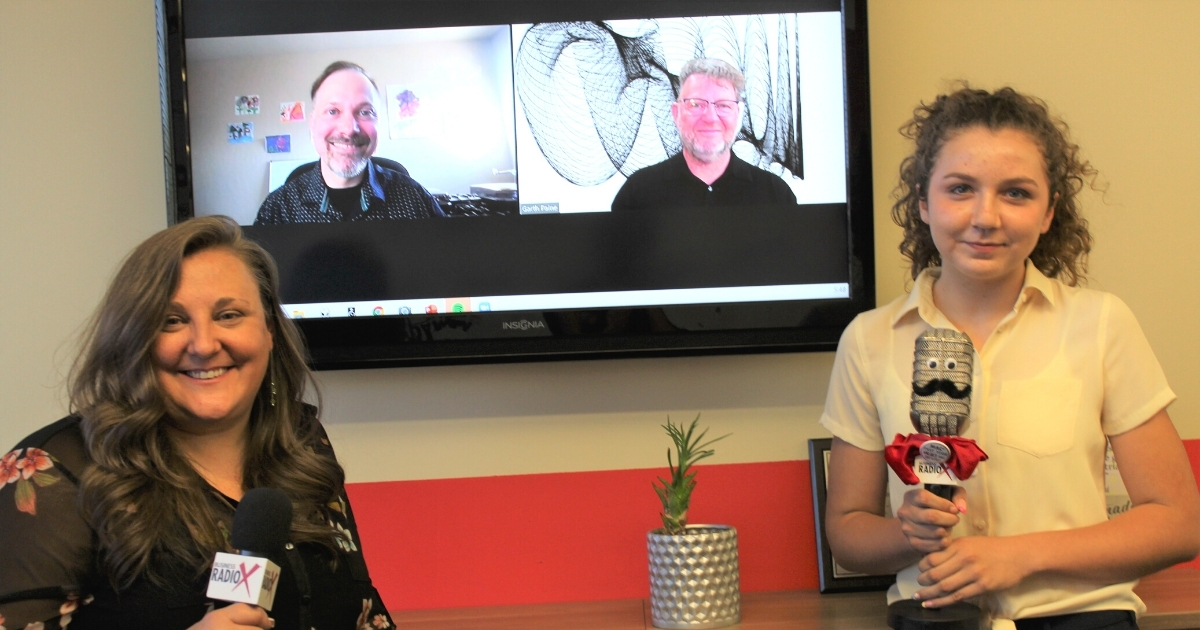
STEM Unplugged is a monthly podcast of SciTech Institute, a collaborative nonprofit organization making STEM connections in Arizona and beyond with Chief Operating Officer Kelly Greene and Arizona Chief Science Officer, Shalae. In this episode of STEM Unplugged, the topic revolves around Exploring STEAM: STEM in Music & Media.

Garth Paine, a professor of digital sound and interactive media at the School of Arts Media and Engineering at ASU and Evan Tobias, an associate professor of Music Learning and Teaching at Arizona State University’s School of Music, Dance and Theater share about ways to collaborate using music.

The School of Arts Media and Engineering at ASU is an innovative cross disciplinary school which leverages art, science, humanities and technology to drive positive change in complex social issues. The teaching, creative work, and research at Music Learning and Teaching at Arizona State University are animated by the question posed in the episode about how might we make a positive impact on society through musical engagement, learning, and inquiry. Chief Science Officer Shalae shares about her Action Plan and the use of music to enhance the media to connect with her peers at McClintock High School.

The Music Learning and Teaching program in the ASU School of Music, Dance and Theatre is one of the most innovative in the U.S. Their degree programs emphasize four core principles intended to prepare students for successful careers as leaders in music teaching and learning: Flexible musicians, Innovative Practitioners, Inquisitive Thinkers, and Community leaders. ASU music learning and teaching graduates make a difference in the lives of their students and communities.

As part of the Music Learning and Teaching program at ASU, The Consortium for Innovation and Transformation in Music Education conducts use-inspired research and collaborative initiatives to help music educators and those involved in arts, cultural, non-profit, and corporate sectors imagine and enact new possibilities for music teaching, learning, and engagement. CITME collaborates with people and organizations interested in advancing music education to develop music teaching, learning, and engagement in relation to contemporary society and the future. CITME looks to broaden and deepen how music teaching and learning can impact society and contribute to positive social transformation.

Evan-Tobias-STEM-UnpluggedEvan Tobias is Associate Professor of Music Learning and Teaching at Arizona State University where he heads the Consortium for Innovation and Transformation in Music Education (CITME). He is also Director of ArtsWork: The Kax Herberger Center for Children and the Arts, a program of the Herberger Institute for Design and the Arts that advances transformative, transdisciplinary, collaborative, and socially engaged arts and design programming, education, and research in relation to young people.

Evan’s teaching, creative work, and research are animated by the question: How might we make a positive impact on society through musical engagement, learning, and inquiry? So, he focuses on innovation and transformation in music education and how music learning and teaching might make a positive impact on people’s lives and society.

He is currently exploring the intersections of futures thinking, imagination, and curricular inquiry to help people imagine possibilities for music learning and teaching and to increase our nimbleness and flexibility in the face of change. Evan is available for consulting, professional development, and collaborative possibilities. You can engage with Evan @etobias_musiced on social media platforms and learn more about his work at http://evantobias.net

Connect with Evan on LinkedIn.

AE-Lab-Logo

The School of Arts Media and Engineering at ASU is an innovative cross disciplinary school which leverages art, science, humanities and technology to drive positive change n complex social issues. The Acoustic Ecology Lab within that school address is climate impact through community engaged workshops and the development of innovative technologies for gunshot detection in the protection of endangered species and climate tracking through the sound of environments.

Garth-Paine-STEM-UnpluggedGarth Paine (USA/AU) born 1962, is a composer, performer, scholar and acoustic ecologist. He has received several awards for his music, including Outstanding Creativity, for Escape Velocity (Company in Space) and Best new Musical Score for Dance in Australia, 2014.

In 2018, Garth was researcher-artist in residence at IRCAM/ZKM, developing Future Perfect for spatial audio, cell phones and VR. He directs the Acoustic Ecology lab at ASU and holds a patent in gun shot detection. He is also a Senior Sustainability Scientist at the Julie Ann Wrigley Global Institute for Sustainability.

Connect with Garth on LinkedIn, Facebook, Twitter and Instagram.

About Our Sponsor

SciTech Institute™ was established as the Arizona Technology Council Foundation as the conduit for collaboration among STEM industry, academia, civic, and non-profit organizations in Arizona. Now, rebranded and named the SciTech Institute™ the goal centers around aligning assets and resources to motivate individuals to pursue STEM-related educational and career paths or find a passion while engaged in community events during the SciTech Festival. SciTech-Institute-LOGO-COLOR-png
The Chief Science Officer program highlights the 6th-12th graders that have been selected as leaders in their schools and communities to receive training to build a world-class community of diverse STEM-literate workers and knowledgeable, engaged citizens. Science For All allows for tax credit donations to provide engaging experiences for students while RAIN (Rural Activation Innovation Network) focuses on resources for the rural areas of Arizona.

As a STEM Learning Ecosystem, SciTech Institute™ focuses on collaboration and connecting individuals with opportunities! STEM Professionals are encouraged to engage with the future workforce by serving as a mentor, leadership coach, panelist, keynote and session trainer during a variety of conferences hosted or sponsored by SciTech Institute™ and The Arizona Technology Council.

Teachers and Administrators are invited to connect with the resources available while activating a large network of STEM champions for student projects, judges at events, volunteers, exhibitors and more. SciTech Festival Event Coordinators are supported during the planning and execution of community STEM events around the state by the SciTech STREET Team Members and the growing network of volunteers. The possibilities are endless! SciTech Institute™ looks forward to connecting with you today. Visit SciTechInstitute.org today for more information.

Follow SciTech Institute on LinkedIn, Facebook, Twitter and Instagram.

About Your STEM Unplugged Host
STEM-Unplugged-iTunesLogoAfter grow up in rural New York and joining the United States Army, Kelly Greene learned quickly to adapt to her surroundings to be successful. She attended Wittenberg University in Springfield, Ohio to earn her Bachelor’s Degree in Elementary Education.

She also enlisted in the United States Army and after graduating from training, Kelly traveled the world with the military. While stationed in Misawa, Japan, she fell in love with learning about cultures around the world. Even as a deployed Soldier during Operation Iraqi Freedom for two tours, she found opportunities to connect with the local children to form the Victory Base Council Girl Scouts with her fellow servicemen.

In 2013, she was deployed to Afghanistan in support of Operation Enduring Freedom and traveled the country by air. During this deployment, she had the opportunity to utilize the most advanced technologies available to the tactical HUMINT operations in theater. Upon return from combat, she retired with 21 years of service and began teaching. From 6th grade Math to 7th grade STEM, Kelly used her enthusiastic nature combined with her strong classroom management to design curriculum based on the Engineering Design Process!

Now, as the Chief Operating Officer at SciTech Institute, Kelly is excited to serve the communities in Arizona and beyond to share their interest in STEM!

About Your Co-Host
Shalae-Clemens-on-Phoenix-Business-RadioXChief Science Officer (CSO) Shalae Clemens is a member of the CSO International Leadership Council and a rising junior at McClintock High School in Tempe. Originally elected at ASPIRE Academy at Connolly Middle School, Shalae is now a 5th year CSO. Her Action Plans have impacted over 5000 students! Before covid, she traveled to train Chief Science Officers from Florida, Georgia, Texas and helped host the international training events at Arizona State University with students from Kenya, Sonora and Kuwait.

Shalae has also attended the CSO International Summits in Washington, DC. During the week long events she was able to visit the White House Office of Science and Technology Policy, NASA, Defense Intelligence Agency, IREX and the National Science Foundation.

Shalae has a passion for STEM and is using her leadership skills to prepare the STEM workforce of tomorrow. She is also a volleyball player and enjoys spending time in Montana with her family on vacation!
Tagged With: Acoustic Ecology, Innovation, Music Composition, music curriculum, music education, music learning and teaching, Performer, project based learning, Spatial Audio, STEAM

E72 Understanding Design Thinking with Bruce Gay

February 9, 2021 by Karen

E72-Understanding-Design-Thinking-with-Bruce-Gay-feature
Phoenix Business Radio
E72 Understanding Design Thinking with Bruce Gay
Loading
00:00 / 58:57
RSS Feed
Share
Link
Embed

Download fileDuration: 58:57

E72-Understanding-Design-Thinking-with-Bruce-Gay

E72 Understanding Design Thinking with Bruce Gay

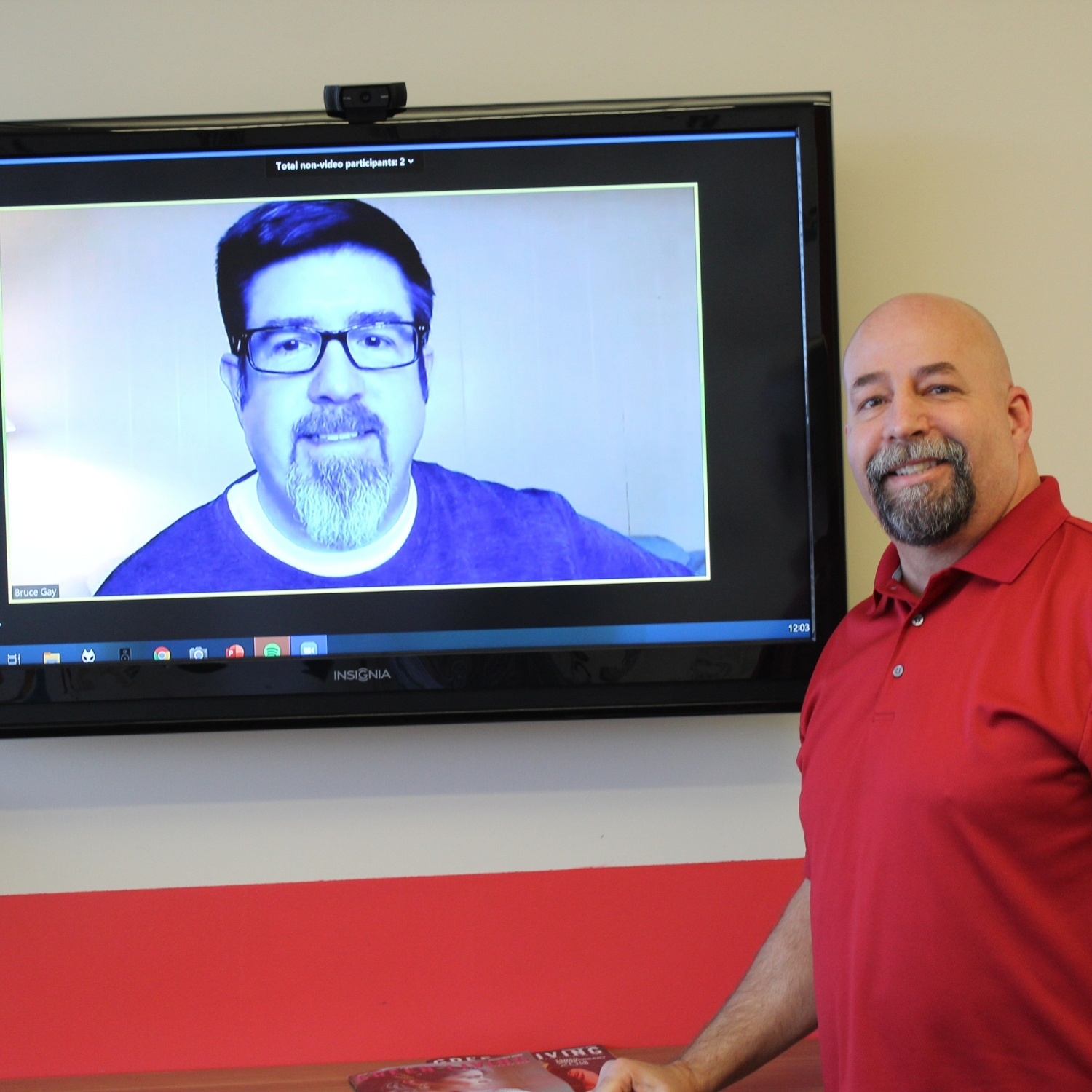
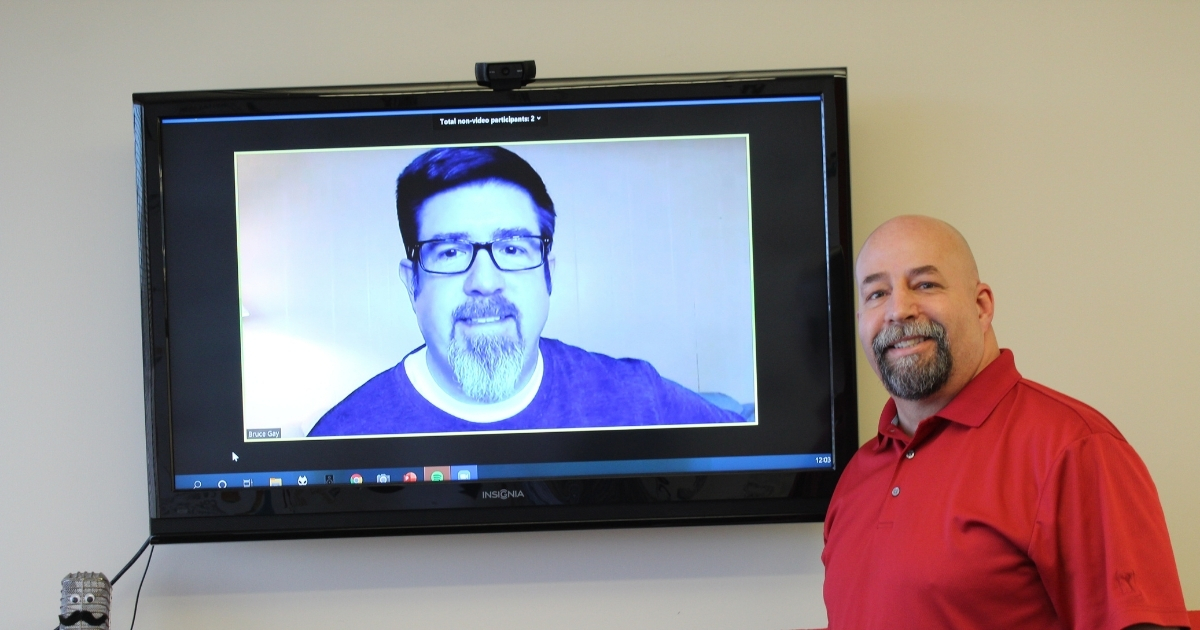
Are you familiar with Design Thinking? Are you utilizing Design Thinking to run your projects? In this episode we chat with Bruce Gay, Founder of Astrevo to understand the fundamentals and benefits of Design Thinking as well as touching on several other topics.

Bruce is a leader in the PM Industry and is an active community builder. He is a PMI Volunteer with PMI Pittsburgh, leads a Healthcare PMO, teaches part time at Norwich University and started his own firm, Astrevo. PMI-Pittsburgh-logo

In our discussion Bruce shares that Design Thinking allows groups of people to take time and look at their customers needs to deeply understand a problem and to start to brainstorm and down select solutions to solve those problems. The benefit to using Design Thinking is you get closer to your customer’s needs and pain points to help you identify defects earlier in the process which is less expensive than defects found later in the process.

We also hear Bruce’s perspective on trends in the industry and a few of his favorite books he recently read. We also learn about Bruce’s Project Management Insights monthly list of updates and insights within our industry.

To subscribe to Bruce’s Project Management Insights visit www.brucegay.com/signup.
To learn more about Astrevo visit www.astrevo.com
To connect with Bruce on LinkedIn visit – https://www.linkedin.com/in/brucegay/

​Thanks to our sponsor THE PMO SQUAD. Visit www.thepmosquad.com to learn to Empower People to Deliver Results and assist your PMO as you evolve in the new post-COVID business world.

Check out all prior episodes and upcoming guests by visiting www.projectmanagementofficehours.com.

UPMC Enterprises is the commercialization arm of UPMC, a Pittsburgh-based health care provider and insurer. As a healthcare innovation lab, UPMC Enterprises invests in two core areas: translational science (which conducts laboratory-to-human research, applying research to human subjects) and technology solutions to empower both medical professionals and patients. Since 2018, UPMC Enterprises has launched 5 companies, supported 30 internal research projects, and invested in a variety of healthcare-related companies.

——

Astrevo was formed out of a desire to share knowledge of practical problem-solving approaches that managers can deploy with their teams to better understand customer needs and achieve success. Astrevo provides training, coaching, and consultation services to help teams focus on what is important: less time managing projects, more time focusing on outcomes and customers.

What makes Astrevo unique? Its 3 key principles:

(1) Experiential Learning – Embracing a growth mindset supported in hands-on learning.
(2) Creativity – Tackling problems from different perspectives and with new techniques.
(3) Collaboration – Working with others to solve hard problems.

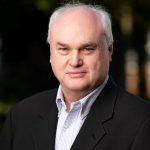
BruceGayheadshotsquareBruce Gay, PMP, helps individuals improve their project management skills, become better leaders, and achieve professional greatness. He has over two-and-a-half decades worth of experience managing large, complex programs and customer relationship across multiple industries. In his current role, Bruce manages a PMO and is responsible for operational and delivery excellence for a 100+ person R&D organization comprised of software engineers, product managers, machine learning and NLP scientists, security experts, and cloud engineers. For the past 15 years, Bruce managed product teams that incorporated UX Design and Design Thinking methodologies into their product development processes.

Bruce’s public speaking experience includes presenting at both regional and international professional conferences such as PMI Global Conference (Chicago, Los Angeles, and Philadelphia) and PMI EMEA Congress in Dublin, Ireland and LearnFest Caribbean in Jamaica. Bruce is an adjunct professor for Norwich University (Northfield, VT) teaching courses in a Project Management certificate program. Bruce creates and delivers educational courses and workshops that help students grow as leaders. Bruce received a Master’s in International Affairs from The George Washington University and has been a certified Project Management Professional (PMP) since 2005.

Currently, Bruce lives in Pittsburgh, PA with his wife, two daughters, and his dog. Bruce is an active volunteer with the PMI Pittsburgh chapter and is their Director of Corporate Sponsorship. Bruce shares his experiences and ideas around Design Thinking and project management on twitter: @brucegay and on his website: www.brucegay.com.

ABOUT PROJECT MANAGEMENT OFFICE HOURS SERIES

Project Management Office Hours is intended to provide Project Management professionals a place to drop in and discuss Success Stories, Best Practices, and Lessons Learned.  Project Management Consultant Joy Gumz has shared with us, “Operations keep the lights on, strategy provides the light at the end of the tunnel, but project management is the train engine that moves the organization forward.”

Each of us has a unique story to tell, but collectively we share a message that organizations who embrace Project Management Best Practices perform better than those which don’t.  Organizations which align Projects to Strategy perform better.  Organizations with Engage Executive Sponsors deliver better results.  Organizations which measure Project Management performance outperform those which don’t.

During our Project Management Office Hours, we hear directly from Industry leaders how to make an impact in our profession. How we, collectively, will Advance Project Management Best Practices, One Listener at a time! 

ABOUT YOUR HOST

Joe Pusz started THE PMO SQUAD to bring real world PMO Leadership experience to the consulting space and to advocate for Project Management through his blog PMOJOE.com. The old saying is “Do what you love and you’ll never work a day in your life.” Following this mindset Joe left Corporate America in 2013 to start THE PMO SQUAD and work with fellow Natural Born Project Managers to advance Project Management Best Practices.

ABOUT OUR SPONSOR

THE PMO SQUAD focuses exclusively on PMO and Project Management consulting. Corporate America is full of Accidental Project Managers running projects who haven’t been trained to be PMs. To help solve this problem THE PMO SQUAD is on the Leading Edge with PMO As a Service. PMO As a Service allows our clients to focus on their respective core competencies while THE PMO SQUAD delivers Project Management expertise. Contact Joe at 678-591-7868. Follow The PMO Squad on LinkedIn, Twitter and Facebook.

Where do PMO Leaders go for Information, Learning, Networking and Services? The PMO Leader community has “Everything You Need to Become a Great PMO Leader”. One PMO World, One Community! Learn more about The PMO Leader – www.thepmoleader.com

Tagged With: Agile, change management, collaboration, design thinking, Healthcare, Innovation, IT, Leadership, PMI, PMO, PMP, portfolio management, Program Management, project management, radiology workflow, software, training, UX design

Michael Long with Tier4 Group

August 27, 2020 by angishields

Tier4-Group-logo
Atlanta Business Radio
Michael Long with Tier4 Group
Loading
00:00 /
RSS Feed
Share
Link
Embed

Download file

OnPay-Banner

Michael-Long-Tier4-GroupMichael Long has extensive experience in information technology, infrastructure, operations, development, networking and business development.

Michael has formulated Information Technology strategies based on four objectives (1) maximize profits and efficiencies for the organization, (2) to develop “best in class” information technology solutions, (3) promote digital and organization transformation and (4) build a strong and secure IT organization in line with the business.



Prior to joining Tier4 Group, Michael performed as an interim CIO & Advisor for several corporations in Atlanta, GA; engaged to make assessments of his clients’ technology organizations and facilitate IT transformation, including mentoring other CIO’s and their respective IT leadership teams; additionally, formulating an IT vision by building stronger business relationships, and partnering with strategic IT vendors.

Prior to his CIO engagements, Michael was Chief Information Officer at the Georgia Department of Revenue responsible for enterprise wide information technology in support of several divisions. During this tenure Michael restructured the information technology division, implemented a three year Information technology roadmap, pioneered the negotiation and implementation of fraud software, moved enterprise wide contact centers from premise based solution to the cloud, consolidated Georgia tax systems from over 40 disparate tax systems applications into a single tax platform; and implemented a digital transformation strategy based on Cloud services and business analytics.

During this time, Michael Long was awarded the Georgia CIO of the year; later achieving nationwide ranking of #46 on Information Weeks “Elite 100” list, for technology and innovation.

Prior to the DOR, Michael held several executive positions for leading corporations holding titles of CTO for a major Travel Management Company, VP of Global Infrastructure & Operations, for a leading education corporation; VP of Service Delivery for a leading Healthcare Insurance provider, and CIO & SVP for a global Logistics and Security Corporation.

Connect with Michael on LinkedIn and follow Tier4 on Facebook.

What You’ll Learn in This Episode

  • What Tier4 Group does
  • What TAPP is
  • How clients can engage with TAPP
  • What makes TAPP Advisory Service different
  • How TAPP works with its clients and the types of IT advisory services it provides
  • About Tier4 CIO services

About Our Sponsor

OnPay’sOnPay-Dots payroll services and HR software give you more time to focus on what’s most important. Rated “Excellent” by PC Magazine, we make it easy to pay employees fast, we automate all payroll taxes, and we even keep all your HR and benefits organized and compliant.

Our award-winning customer service includes an accuracy guarantee, deep integrations with popular accounting software, and we’ll even enter all your employee information for you — whether you have five employees or 500. Take a closer look to see all the ways we can save you time and money in the back office.

Follow OnPay on LinkedIn, Facebook and Twitter.

Tagged With: CIO, Innovation, Leadership, service, Technology, Transformation

Mark Buffington with BIP Capital

July 8, 2020 by angishields

BIP-Capital
Atlanta Business Radio
Mark Buffington with BIP Capital
Loading
00:00 /
RSS Feed
Share
Link
Embed

Download file

OnPay-Banner

Mark-Buffington-BIP-CapitalMark Buffington is co-founder and CEO of BIP Capital, which is recognized as one of the most active and successful venture investors in the Southeast. Additionally, he has co-founded three successful companies over the course of his career.

Since founding BIP Capital in 2006, Buffington has led investment rounds in more than 25 companies in a number of market verticals, including healthcare IT, Digital Media, Ed Tech, Enterprise Software, and FinTech. Notable exits include Vendormate, Ingenious Med, and Shareholder InSite

Buffington serves on the board of directors for several companies, including AchieveIt, ConnexPay, Trella Health, mLevel, PlayOn! Sports, Nview, and UserIQ. He also serves on several nonprofit boards, including KIPP Metro Atlanta Schools, the Georgia Tech College of Computing, and the Board of Trustees for the Alexander-Tharpe Fund (Georgia Tech AthleticEndowment).

He graduated from the Georgia Institute of Technology and has an MBA from the A.B. Freeman School of Business at Tulane University.

Follow BIP Capital on LinkedIn and Twitter.

What You’ll Learn in This Episode

  • Why it was important for BIP Capital to create a Return to Office plan for its own portfolio companies and the business community at large
  • Highlights of some of the most important elements of this plan
  • Advice to companies for navigating COVID-19 from a management perspective
  • The results of a recent public survey BIP Capital conducted on how companies and their teams were returning to office
  • Advice to companies that are struggling on business growth

About Our Sponsor

OnPay’sOnPay-Dots payroll services and HR software give you more time to focus on what’s most important. Rated “Excellent” by PC Magazine, we make it easy to pay employees fast, we automate all payroll taxes, and we even keep all your HR and benefits organized and compliant.

Our award-winning customer service includes an accuracy guarantee, deep integrations with popular accounting software, and we’ll even enter all your employee information for you — whether you have five employees or 500. Take a closer look to see all the ways we can save you time and money in the back office.

Follow OnPay on LinkedIn, Facebook and Twitter.

Tagged With: BIP Capital, Innovation, Startup Advice, startup investing, venture capital

Roundtable – The State of Higher Education in Arizona E3

June 30, 2020 by Karen

AZTECHCASTDrRobertRobbinswithUADrRitaChengwithNAUandDrMichaelCrowwithASUFeature
AZ TechCast
Roundtable - The State of Higher Education in Arizona E3
Loading
00:00 /
RSS Feed
Share
Link
Embed

Download file

AZTECHCAST-Dr-Robert-Robbins-with-UA-Dr-Rita-Cheng-with-NAU-and-Dr-Michael-Crow-withASU

Roundtable – The State of Higher Education in Arizona E3

Arizona proudly boasts of having some of the best universities and educational institutions in the country, and in the world. Arizona is home to three world-class universities— Arizona State University, Northern Arizona University, and the University of Arizona.

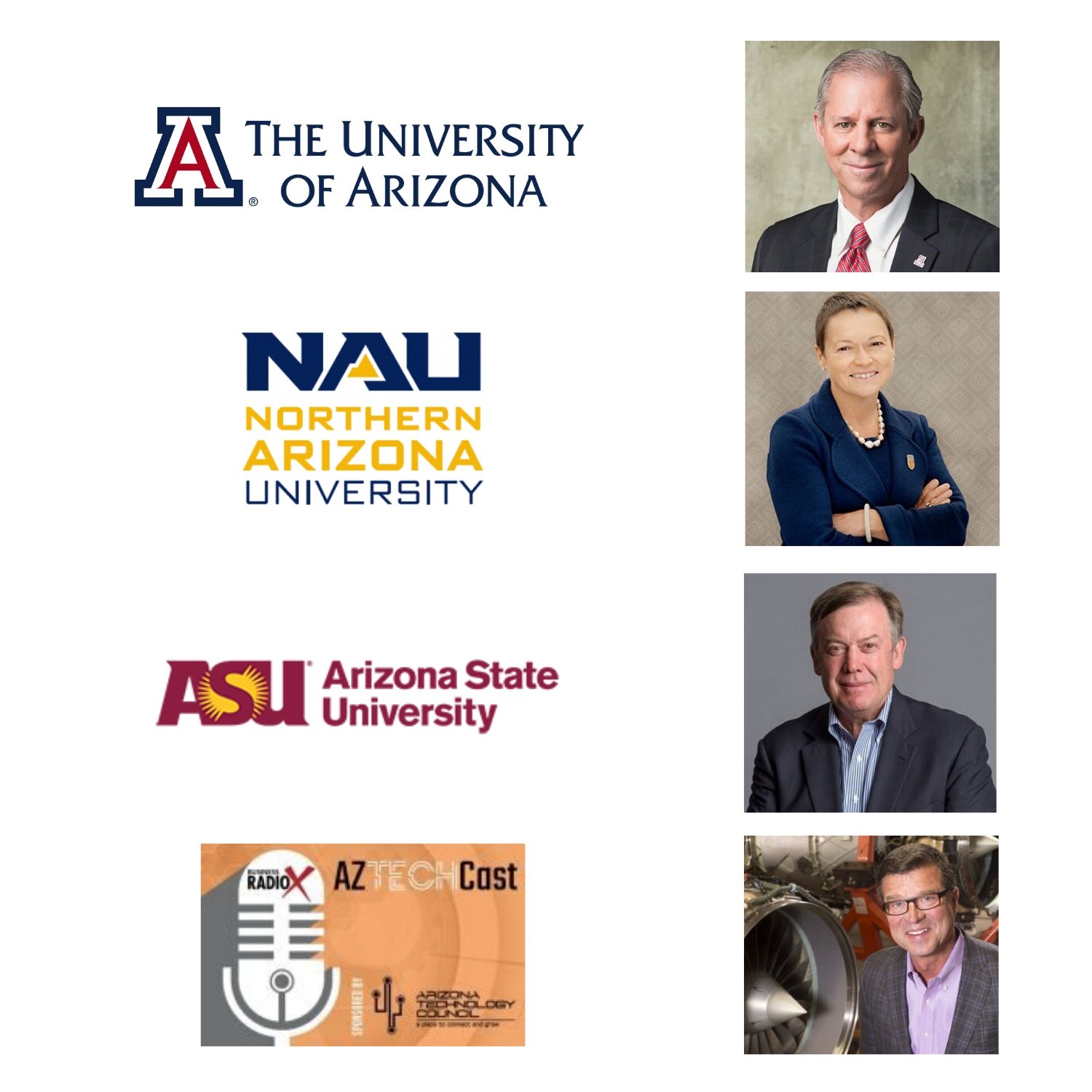
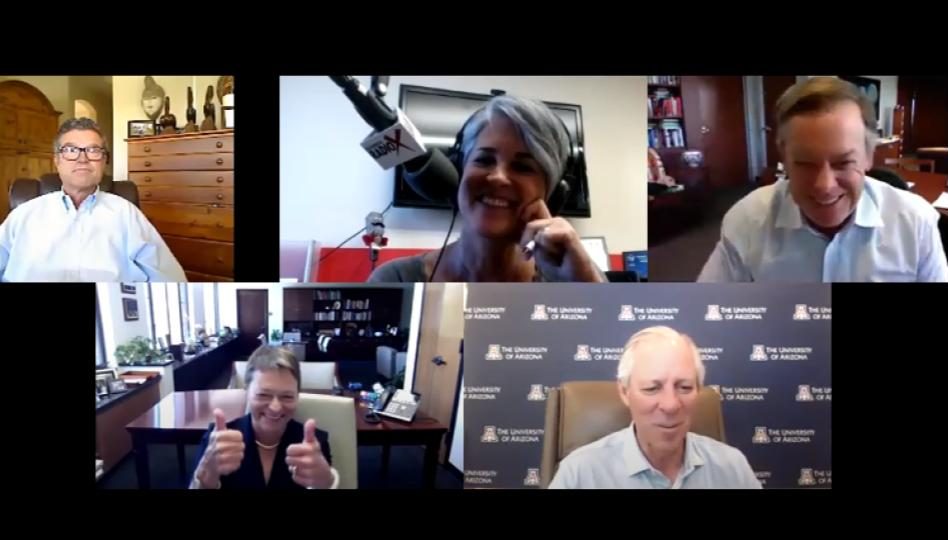
Moderated by Phoenix Business RadioX President Karen Nowicki and Arizona Technology Council CEO Steve Zylstra, the state university presidents, Dr. Rita Cheng of Northern Arizona University, Dr. Michael Crow of Arizona State University and Dr. Robert Robbins of the University of Arizona discussed the state of higher education in Arizona and how COVID-19 has shifted higher education, the university programs that are helping to create a highly skilled workforce, collaborations with the private sector, how each university is working to bring about innovation-based economic development to the state, the relationship between the tech community and the university system, as well as what challenges and opportunities are on the horizon.

Students, educational institutions and faculty have all been tossed into an unprecedented situation during the pandemic. Home to three world-class universities—Arizona State University, Northern Arizona University, and the University of Arizona—the state university presidents shared valuable insight into what the new paradigm will look like to keep students and faculty safe in the fall, as well as discussed the importance of fostering local start-ups and the exciting new innovations coming out of each university.

The University of Arizona, a land-grant university with two independently accredited medical schools, is one of the nation’s top public universities, according to U.S. News & World Report. Established in 1885, the UA is widely recognized as a student-centric university and has been designated as a Hispanic Serving Institution by the U.S. Department of Education.

The UA ranked in the top 25 in 2018 in research expenditures among all public universities, according to the National Science Foundation, and is a leading Research 1 institution with $687 million in annual research expenditures.

The UA advances the frontiers of interdisciplinary scholarship and entrepreneurial partnerships as a member of the Association of American Universities, the 62 leading public and private research universities in the U.S. It benefits the state with an estimated economic impact of $4.1 billion annually.

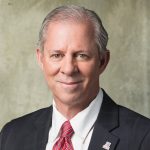
Robert-Robbins-on-Phoenix-Business-RadioXDr. Robert C. Robbins assumed his position as the 22nd president of the University of Arizona on June 1, 2017. Previously, he served as president and CEO of the Texas Medical Center (TMC) in Houston from 2012 to 2017. In this role, he significantly enhanced TMC’s commitment to collaboration, introducing five cross-institutional research initiatives centered on innovation, genomics, regenerative medicine, health policy and clinical research.

Prior to his time in Houston, Dr. Robbins served as professor and chairman of the Department of Cardiothoracic Surgery at Stanford University School of Medicine, founding director of the Stanford Cardiovascular Institute, president of the International Society of Heart and Lung Transplantation, president of the Western Thoracic Surgical Association, president of the American Heart Association Western States Affiliate, president of the Bay Area Society of Thoracic Surgeons, and chair of the American Heart Association Cardiovascular Surgery and Anesthesia Council, among other roles. In 2016 he served as president of the American Heart Association Southwest Affiliate.

An internationally recognized cardiac surgeon, Robbins has focused his clinical efforts on acquired cardiac diseases with a special expertise in the surgical treatment of congestive heart failure and cardiothoracic transplantation. His research work includes the investigation of stem cells for cardiac regeneration, cardiac transplant allograft vasculopathy, bioengineered blood vessels, and automated vascular anastomotic devices. Robbins is the author of more than 300 peer-reviewed articles and a former guest editor of the Circulation Surgical Supplement.

In addition to his role at the UA, Dr. Robbins serves on the boards of the Arizona Commerce Authority, Southern Arizona Leadership Council, Tucson Metro Chamber of Commerce, United Way of Tucson and Southern Arizona, and the Greater Phoenix Economic Council. He is also a member of the Chairman’s Circle of Sun Corridor, Inc., and a member of Greater Phoenix Leadership. While at TMC, Robbins served on the Houston branch of the Dallas Federal Reserve board, the board of directors of the Welch Foundation, and the American Heart Association Southwest Affiliate in 2016. He served on an independent blue ribbon committee to evaluate the Veterans Affairs health system, and the World Affairs Council of Greater Houston honored him as the 2016 International Citizen of the Year.

His educational background includes a B.S. in chemistry from Millsaps College, medical degree from the University of Mississippi, general surgical training at the University of Mississippi, cardiothoracic training at Stanford University, postdoctoral research at Columbia University and the National Institutes of Health, and congenital heart surgical fellowships at Emory University and Royal Children’s Hospital.

Follow UA on LinkedIn, Facebook, Twitter and Instagram.

NAUlogo

Founded in 1899, Northern Arizona University delivers world-class academic programs for a world-ready generation. In every classroom, top-flight research powers personalized teaching. With a commitment to delivering research-driven curricula and personal attention to our students, NAU provides the college experience, elevated.

NAU has much to be proud of, including nationally ranked programs, high-research status, and emergence as a leader in sustainability, science, business, green building and cultural arts.

Recognized as an institution that has thrived due to strong leadership, the devotion of alumni and faculty and community support, NAU offers more than 150 combined undergraduate and graduate degree programs, all distinguished by an ongoing commitment to close student-faculty relationships.

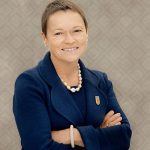
Rita-Cheng-on-Phoenix-Business-RadioXDr. Rita Cheng serves as the 16th president of Northern Arizona University. As a first-generation and non-traditional college graduate, Dr. Cheng firmly believes in making higher education accessible and affordable for all students.

Under her leadership, NAU has embarked on an aggressive agenda to thrive in the fast-changing environment of higher education. She has amplified the university’s strengths and set forth a vision of excellence in education through student-centered teaching, a robust research environment, an extensive global engagement program, and inclusive support services focused on success measured through retention and graduation rates.

Prior to NAU, Dr. Cheng served as chancellor at Southern Illinois University in Carbondale. She previously held positions on the faculty and various administrative roles including, provost and vice chancellor, at the University of Wisconsin-Milwaukee. She is internationally recognized for her research in government and nonprofit accounting.

Dr. Cheng earned a Ph.D. in management from Temple University’s Fox School of Business and Management, where she was recently recognized as one of 100 notable alumni in the school’s 100-year history. She also holds an MBA from the University of Rhode Island and a bachelor’s in business administration with honors from Bishop‘s University in Quebec. Committed to service, Dr. Cheng also serves on a variety of local and national boards.

Follow NAU on LinkedIn, Facebook, Twitter and Instagram.

ASULOGO

Arizona State University is a public research university ranked #1 in the U.S. for innovation, dedicated to accessibility and academic excellence. Commonly referred to as ASU, the university is comprised of five campuses across the Phoenix metropolitan area and four regional learning centers throughout Arizona.

One of the largest public universities by enrollment in the country, in 2019 the university had nearly 90,000 students attending classes across its metro campuses, more than 38,000 students attending online, including 83,000-plus undergraduates and more nearly 20,000 postgraduates. The university is organized into 17 colleges, featuring more than 170 cross-discipline centers and institutes.

ASU offers 350 different degree options for undergraduates students, as well as more than 400 graduate degree and certificate programs.

MichaelCrowASUonPhoenixBusinessRadioXDr. Michael M. Crow is an educator, knowledge enterprise architect, science and technology policy scholar and higher education leader. He became the sixteenth president of Arizona State University in July 2002 and has spearheaded ASU’s rapid and groundbreaking transformative evolution into one of the world’s best public metropolitan research universities. As a model “New American University,” ASU simultaneously demonstrates comprehensive excellence, inclusivity representative of the ethnic and socioeconomic diversity of the United States, and consequential societal impact.

Lauded as the ”#1 most innovative” school in the nation by U.S. News & World Report, ASU is a student-centric, technology-enabled university focused on complex global challenges related to sustainability, economic competitiveness, social embeddedness, entrepreneurship and global engagement. Under Dr, Crow’s leadership, ASU has established twenty-five new transdisciplinary schools, including the School of Earth and Space Exploration, the School for the Future of Innovation in Society and the School of Human Evolution and Social Change, and launched trailblazing multidisciplinary initiatives including the Biodesign Institute, the Julie Ann Wrigley Global Institute of Sustainability, and important initiatives in the humanities and social sciences.

Connect with Dr. Crow on LinkedIn, Facebook, Twitter and Instagram.

About the Show AZTECHCASTLOGOBRX-4-23-2020

AZ TechCast is dedicated to covering innovation and technology in Arizona and beyond.

Through the art of connected conversation, AZ TechCast’s guests will share their expertise, success stories, news and analysis about the region’s leading startups, companies and emerging technologies, as well as the latest industry trends and critical issues propelling the state’s growing technology ecosystem. 

About Your Hosts

Steven-ZylstraSteve Zylstra serves as president and CEO of the Arizona Technology Council, a role he assumed in 2007. He is responsible for strategy, operations, finance and policy development. Zylstra is a vocal spokesman for the value technology can provide in raising social and economic standards in Arizona.

Zylstra serves on numerous councils, committees and boards, was named “Leader of the Year, Technology,” by the Arizona Capitol Times, and “Most Admired Leader” by the Phoenix Business Journal. In addition, he was awarded an honorary doctorate of science in technology from the University of Advancing Technology in Tempe, Ariz.

Zylstra earned a bachelor’s degree in automotive engineering technology from Western Michigan University.

KarenNowickiv2Karen Nowicki is a successful author, speaker and the creator of Deep Impact Leadership™ and SoulMarks Coaching™. She is a two-time recipient of the prestigious national Choice Award® for her book and personal development retreat. Karen was crowned the first-ever “Mompreneur of the Year” Award in 2010 for the southwestern states. She was recognized for her leadership, business acumen, and work-life balance.

Karen has been an expert guest on regional TV and radio shows, including Fox Phoenix Morning Show, Sonoran Living, Good Morning Arizona, The Chat Room, and Mid-Day Arizona. She has been a regular contributor to many print and online magazines – publishing articles and blogs for business and education.

In addition to working with private coaching clients, Karen is also the Owner & President of Phoenix Business RadioX. The Business RadioX Network amplifies the voice of business – serving the Fortune 500,000, not just the Fortune 500. Phoenix Business RadioX helps local businesses and professional associations get the word out about the important work they’re doing to serve their market, profession, and community.

Of all the experiences Karen has had the privilege of participating in over her vast career, she shares that Phoenix Business RadioX is a pinnacle adventure!

Connect with Karen on LinkedIn and follow Phoenix Business RadioX on Facebook and Instagram.

About Our Sponsor

The Arizona Technology Council, Arizona’s only statewide organization serving the technology sector, fosters a climate of innovation to enhance technology in Arizona.

A trusted resource in strengthening Arizona’s technology industry, the Council proactively eliminates impediments that companies face, accelerates the entrepreneurial mindset in the state’s expanding innovation ecosystem, and works to create a destination for companies to be, thrive and stay.

Follow Arizona Technology Council on LinkedIn, Facebook, and Instagram.

AZTClogomainRGBPNG300DPI

Tagged With: Arizona State University, ASU, Dr. Rita Cheng, higher education, Innovation, innovative university, Michael Crow, NAU president, Northern Arizona University, President, Robert Robbins, UArizona, UArizona president, University of Arizona

Lori Brewer with LBA Ware

June 19, 2020 by angishields

LBA-Ware-Logo
Atlanta Business Radio
Lori Brewer with LBA Ware
Loading
00:00 /
RSS Feed
Share
Link
Embed

Download file

OnPay-Banner

Lori-Brewer-LBA-WareLori Brewer is an accomplished entrepreneur and technology leader who has manifested her forward-thinking visions into the development of award-winning fintech applications including CompenSafe™, the premier incentive compensation management platform, and LimeGear™, a revolutionary business intelligence platform.

As an officer in the U.S. Air Force, she designed an inaugural website for the C-130 Hercules, organizing and presenting crucial information for troops around the globe. As a civilian software developer, she was hired by a mortgage lender and found similar challenges: disorganized and disparate data, a clear need for improved processes, and the opportunity to show high returns on technology investments.

Now with over 20 years of mortgage banking experience, Brewer is an indispensable technology leader in the industry founder and CEO of LBA Ware™, an Inc. 5000 company, and recipient of the prestigious Tech All-Star award by the Mortgage Bankers Association.

Follow LBA Ware on Facebook and Twitter.

What You’ll Learn in This Episode

  • How did LBA Ware start? How much has your company grown since?
  • What current projects are you working on at LBA Ware? Why is this important to the mortgage industry?
  • What makes LBA Ware stand out against the competition?
  • What qualities in your work ethic have helped you to get this far and stay relevant?
  • How has your business been impacted by the current pandemic? What business practices will look different for your organization moving forward?
  • As a small business owner, what is one piece of advice you want to share with other individuals starting a business right now?

About Our Sponsor

OnPay’sOnPay-Dots payroll services and HR software give you more time to focus on what’s most important. Rated “Excellent” by PC Magazine, we make it easy to pay employees fast, we automate all payroll taxes, and we even keep all your HR and benefits organized and compliant.

Our award-winning customer service includes an accuracy guarantee, deep integrations with popular accounting software, and we’ll even enter all your employee information for you — whether you have five employees or 500. Take a closer look to see all the ways we can save you time and money in the back office.

Follow OnPay on LinkedIn, Facebook and Twitter.

Tagged With: business intelligence, incentive compensation management, Innovation, LO compensation, mortgage industry, mortgage lending

GWBC Radio: Ann Herrmann-Nehdi with Herrmann, Inc.

May 13, 2020 by angishields

Herrmann-Feature
GWBC Radio
GWBC Radio: Ann Herrmann-Nehdi with Herrmann, Inc.
Loading
00:00 /
RSS Feed
Share
Link
Embed

Download file

Logo-Herrrmann

Ann-Herrmann-NehdiAnn Herrmann-Nehdi is Chief Thought Leader and Chair of Herrmann, the originators of Whole Brain® Thinking and the Herrmann Brain Dominance Instrument® (HBDI®). Author, researcher and keynoter, Ann’s work is specialized on the practical application of neuroscience and cognitive diversity to human and organization development and improvement, continuing the firm’s 35+ years of research with a database of over 2 million thinkers from around the globe.

Herrmann’s research has been featured in an array of media outlets including Business Week, The Harvard Business Review, Business News Daily, Scientific American, Chief Executive Magazine, Chief Learning Officer Magazine, Investor’s Business Daily, Management Today, T+D Magazine and O (The Oprah Magazine.) Clients include 9 out of 10 of the Fortune 100, and many universities (e.g. MIT, Stanford, INSEAD), government agencies (e.g. NASA, US Dept of Energy) and professional services firms (e.g PwC, EY, BCG).

Ann’s passion and focus is on helping individuals, managers, teams and leaders drive growth and improve their impact by leveraging their untapped thinking potential: making better decisions, effectively managing change and being more agile.

Ann has worked with many hundreds of organizations around the world of all sizes and industries, helping them improve profitability, leadership, productivity, innovation, and overall business results. Her widely viewed TedX talks ( The One Thing You Need to Know About Your Brain That Will Change Your Life, and Think Like Your Future Depends On It, Because it Does) have influenced the way people approach their work and their lives and continue to capture the attention of thousands of viewers across the globe. An engaging and in-demand speaker, she has presented keynote addresses for a wide array of Fortune 100 corporations, major conferences and global associations.

The co-author of The Whole Brain Business Book–Second Edition (McGraw-Hill), current research includes the impact of AI on the future of work and how women leaders bring unique value to the workplace.

Follow Hermann on Facebook.

Show Transcript

Intro: [00:00:04] Broadcasting live from the Business RadioX studios in Atlanta, Georgia, it’s time for GWBC Radio’s Open for Business. Now, here’s your host.

Lee Kantor: [00:00:18] Lee Kantor here. Another episode of GWBC Open for Business. And this will be a fun one. I have with me today Ann Herrmann-Nehdi.. And she is with Herrmann Incorporated. Welcome, Ann.

Ann Herrmann-Nehdi: [00:00:31] Hello. Great to be here.

Lee Kantor: [00:00:33] Well, I appreciate you coming on. Before we get too far into things, tell us about your work at Herrmann. How are you serving folks?

Ann Herrmann-Nehdi: [00:00:41] Well, basically, what we do is we provide managers a much better way of understanding how they can leverage the thinking and the diversity, especially the cognitive diversity in their company. So, we have lots of tools that we use, but we have a platform that provides people with data about their thinking, and then what they can do once they understand how they think. So, we make life easier, reduce frustrations, and help managers be more effective.

Lee Kantor: [00:01:09] Now, if a manager is managing a team without this kind of intelligence, how are they doing it? Are they just kind of winging it based on … like what’s kind of the methodology they’re using if they’re not using kind of a system?

Ann Herrmann-Nehdi: [00:01:25] Lots of times, they’re just winging it. They’re, actually, in many instances, following the old adage, treat people like you would like to be treated, which doesn’t really work when people are different. So, they’ll often go with what they think is the best way to communicate, to interact, to engage those that they work with on their team. And if somebody is thinking and looking at the world very differently, that creates confusion, miscommunication, and so on, and so forth.

Ann Herrmann-Nehdi: [00:01:56] So, one of the things that I think works really well with what we provide is that we give people a common language around which to talk about those differences, and then really kind of a compass or a roadmap around, how do I behave as a manager, so that I can engage with this person, who I really appreciate because they are so different from who I am, but I don’t necessarily know how to get the best yield out of the thinking that they bring because I just think so differently, right? So, we give people an easy way to kind of decode all that and get beyond what is often kind of our own natural bias, because we think about how we think, and that’s usually kind of what we go with.

Lee Kantor: [00:02:38] Now, when you’re working with a group that isn’t familiar with this, is their instinct to think, “Well, this is how I’ve always communicated,” or does it occur to them that people might learn differently, or they might react differently when I say certain things? Is it kind of an eye-opening aha moment? Like how much kind of friction is there when you’re trying to explain this and for them to execute it?

Ann Herrmann-Nehdi: [00:03:06] Actually, I think the aha is really an interesting thing because we all have differences in our lives, right? Lots of times that’s true at home. And a lot of people in today’s environment are experiencing a lot of those differences in their families, right, that maybe they were quite aware of, but they’re kind of feeling them more. So, most people know that there are differences out there, but they don’t necessarily proactively say, “Okay, how do I reduce the frustration and the friction?” So, they just kind of react and try to do the best they can.

Ann Herrmann-Nehdi: [00:03:47] So, one of the biggest ahas that people have, believe it or not, is to say to themselves, “Oh, that person wasn’t doing that on purpose to drive me crazy. They’re just different,” right? And this can be true for spouses and partners, as well as colleagues. And that’s often a common reaction that people will have.

Lee Kantor: [00:04:07] So, instinctively they had thought that that person was bugging them on purpose, when in actuality, it was just they were communicating to each other maybe differently or using different language that they each liked the other to use?

Ann Herrmann-Nehdi: [00:04:23] Yeah, absolutely. I remember a working with a large group, and in the middle of a program that we were running, one of the direct reports to the leader, after discovering the model, and they were looking at whether our model, very simply, are you more of an analytical thinker? Are you more of a practical thinker, relational thinker, or experimental thinker? There’s a lot more to it. But this individual is very practical, very detail-oriented, loving to provide as many details as he possibly could. And his leader is a big picture thinker, more experimental, didn’t really want the details. And he looked at a leader and said, “So, that’s why it looks like you’re falling asleep every time I come in to present you with information. Like you tell me.”

Ann Herrmann-Nehdi: [00:05:08] So, I think lots of times, people don’t bring this up because they don’t exactly know how to explain it, they don’t know how to ask for what they need. And we kind of put it all out there in the forefront to sort of say, “Look, everybody’s different. Let’s kind of acknowledge that. Let’s talk about those differences. And then, let’s feel comfortable asking for what we need and being really clear when we’re not getting what that is, so that we can accelerate what it is that we’re trying to do and reduce the amount of frustration we might have.”

Lee Kantor: [00:05:39] Now, you used the phrase earlier, cognitive diversity. People understand diversity and maybe cultural diversity. And they understand if I’m in a different country, maybe I have to behave differently to acclimate myself there. It sounds like there’s also a cognitive side of that, so that the person might look like you and come from a similar background of you and similar town as you, but there could be cognitive diversity in the respect that you’re not communicating effectively with that person.

Ann Herrmann-Nehdi: [00:06:11] Absolutely. And I think cognitive diversity, which we’ve been talking about and looking at for close to 40 years, it’s interesting because, now, we’re seeing this become actually a term that’s pretty widely used. And it helps us understand that diversity isn’t just skin-deep. There are major differences in ruthlessness, ethnicity, gender, et cetera that we kind of commonly think of as diversity. But indeed, exactly as you just described, you can have somebody who kind of, on paper, looks very similar to you but thinks in totally different ways.

Ann Herrmann-Nehdi: [00:06:48] So, what cognitive diversity does is it allows you to kind of bridge the gap in different ways and find that those that you think may be similar to you actually may not be, and those that you think may be totally different from a traditional diversity perspective may actually think in similar ways. So, it provides you with a whole new platform for exploring the diversity question, which doesn’t replace the need to appreciate all of those other differences and the natural biases, but this feels very much nonjudgmental, it’s easy to use, and it explains a lot of what happens every single day in our interaction. So, it’s a great place to start when you’re having that diversity conversation is with cognitive diversity.

Lee Kantor: [00:07:35] Now, in order for an organization to take advantage of this kind of thinking, what is required of them? Is this an assessment, they take a test, or it requires someone to kind of watch them? Like how does it work in order to implement this?

Ann Herrmann-Nehdi: [00:07:50] Right. So, we actually have a platform that provides people with a diagnostic. And basically, our model is diagnostic insight and application. So, what we do is, typically, this happens through some kind of an experience that they’ve had, often, online and also with somebody else that might be their manager. It might be someone in learning development. It might be a facilitator. And they have an online learning experience that helps them get those ahas. And then, it it goes beyond that to sort of say, “Okay. What are the tools I need as a manager?”

Ann Herrmann-Nehdi: [00:08:26] So, yeah, typically, this is part of some kind of a learning initiative of some kind,  but much of what we offer in the initial phases is provided to people in a sort of super friendly, easy access online experience. And then, we’ve trained people in organizations to, then, help them execute this across the world. So, we work with 9 out of 10 of the Fortune 100 organizations, and they typically want internal experts. So, we’ll train folks and certify them, so that they can help scale this and make it very relevant to what it is they’re doing in that company.

Lee Kantor: [00:09:06] Now, the companies that-

Ann Herrmann-Nehdi: [00:09:06] So, lots of different ways to access. Sorry.

Lee Kantor: [00:09:08] The companies that have access to this kind of platform and this intelligence, do they have maybe an advantage during these uncertain times? Maybe they have some tools in their tool belt that can help relieve some stress or pressure that their team is facing during this coronavirus.

Ann Herrmann-Nehdi: [00:09:29] Absolutely. It’s really interesting, we’ve been talking to many of our clients right now about how they’re leveraging their ability, especially with a rapid shift to remote, for example. And already, that’s a big change for many, many people that the manager finds themselves with a team that is no longer face-to-face. And if they have been using what we call whole brain thinking, the application of cognitive diversity, they already have improved their ability to communicate, understand, and interact with each other, so they can deal with some of the other changes that come up, and they’re not trying to figure that out at the same time as they’re dealing with some of these other changes.

Ann Herrmann-Nehdi: [00:10:13] It also really has helped organizations that we work with. One organization, [A451], I was talking to our contact there the other day, and she said, “Our managers are much more effectively able to communicate in a way that’s going to reach everybody’s needs,” because communication is so critical right now, so that people understand what’s going on. And they’ve already got that arsenal in their tool kit rather than sort of stumbling around, and getting that communication out, and maybe not really reaching everybody in a way that they understand what’s trying to be communicated.

Ann Herrmann-Nehdi: [00:10:50] And it also helps with innovation. And so, many organizations right now are being asked to completely rethink how they go to business. And so, putting together a whole brain team when you know how to do that can really help you bring together people, so that they can think quite differently. And our research has shown that whole brain teams significantly increase the amount of innovation that you can get out of a team. So, other organizations that we’re working with are using that right now to help them sort of rethink what is it we can do, how do we solve our customers’ problems today in a way that we never even thought was possible before?

Lee Kantor: [00:11:34] Now, we’re talking a lot about using the platform for leaders. How does the platform work for the employee? Is it having that same intelligence? Does that help them become more effective when they’re trying to communicate? Like you mentioned earlier, their style of communication, it helps them have their leaders understand it more effectively.

Ann Herrmann-Nehdi: [00:11:58] Absolutely. The example I gave earlier of a direct report speaking to his manager and kind of going, “Oh gosh, now, I realize that what I was doing wasn’t serving your needs,” it really helped everybody at not only interacting with others and communicating, but also how an employee might solve a problem, make a decision. Even if we all have access to this thinking in our own head, we just tend to prefer some of the strategies more than others.

Ann Herrmann-Nehdi: [00:12:29] So, one of the things that we teach our thinkers, as we like to call them, as part of the process is how they access that cognitive diversity within themselves, so that when they’re looking at a given problem or situation, they can actually shift their thinking and be more agile as they’re solving a problem or making a decision. So, it really, really works for everybody, not only managers who have very specific things that they need to do and working with their team, but individual contributors can get great value just in terms of thinking about how they get their work done, and how they can better navigate, and be more flexible in their thinking, which in today’s environment is kind of number one on the list for everybody because they’re just being asked to change so many things in terms of how they think about their work.

Lee Kantor: [00:13:21] Now, how does empathy kind of play into this? It sounds like it would play an important role because it’s kind of requiring a view to look at things through other people’s kind of lens in order to be effective as part of the way that you’re dealing with them.

Ann Herrmann-Nehdi: [00:13:39] Oh, absolutely. You’re spot on with this notion of empathy, which I think is … I heard somebody say the other day that they’re referring to CEOs as the chief empathy officer in today’s environment because there’s such a demand for empathy.  But empathy, one of the things that this does is it gives people a roadmap to understand and not only just sort of have that … many people will say, “Well, I have empathy for that person,” but they don’t know actually how to show it. They don’t necessarily understand what the other person needs.

Ann Herrmann-Nehdi: [00:14:14] So, what this does is it allows somebody to begin to make actionable that empathy, and step into the shoes of the other person, see the world as they might see it, but also be able to say, “Okay, this is what’s going to be most helpful,” right? And so, as I’ve looked at a lot of people are struggling today with just, “How do I make changes in my work productivity?” for example, “How do I structure my day?” and managers can get really frustrated with the fact that people are maybe not approaching their workday the way they would approach it, especially in a remote environment. So, just having enough empathy to understand, “Well, okay, maybe what this person needs is a way to serve time box their day. And let me see if I can help them do that because that’s what’s going to allow them. That structure is going to free them up to feel much less overwhelmed,” right? So, by having a roadmap to understand how they’re thinking, that allows you to take that empathy and actually do something with it.

Lee Kantor: [00:15:17] Now, let’s talk a little bit about the GWBC. How has that organization helped you in your business?

Ann Herrmann-Nehdi: [00:15:26] Well, I think it’s wonderful. First of all, just being really proud to be a woman-owed business for me  is terrific. And it gives us a way to tell the world that we are a woman-owned business because otherwise, many people would not know that. So, actually having access to the certification gives us a very simple, and clear, and validated way to say that’s who we are. And of course, we’re in a business that talks about diversity and appreciating differences. So, we think that’s really important. It’s also helped us as we work with large corporations to allow them to recognize that that is something that they can take advantage of in terms of their procurement processes. And many instances, they have specific quotas and things like that that they need to meet.

Ann Herrmann-Nehdi: [00:16:18] And so, it makes it much easier for us to position ourselves as a value-added partner for them because we do fit that that qualification. And I know that they pay attention to that because every year, as we’re getting closer to the recertification process, we get notes from them saying, “Hey, we noticed that your certification’s expiring soon. We’re looking forward to seeing that.” So, it’s clearly been an advantage for us, especially in working with very large organizations.

Lee Kantor: [00:16:50] Now, for the listener out there that wants to learn more about this, I know you have a TEDx talk that you’ve done that talks about cognitive diversity. Are there any other resources that you have available to share some insight and to to explain some of the reasons why someone should kind of learn more about this?

Ann Herrmann-Nehdi: [00:17:11] Sure, absolutely. So, I do highly recommend the TEDx talk, which is The One Thing You Want to Know About Your Brain that will Change Your Life. And that kind of teaches you the model, gives you some insight. And so, that’s kind of a very quick 15-minute way to get an overview. But if you go to our website, which is thinkherrmann.com, and that’s just think, and then H-E-R-R-M-A-N-N dot com, we’ve got resources there. And recently, we have actually published quite a few resources that are specific to what’s going on right now. We’ve got a great e-book on The Shift to Remote Work and How to be Most Effective, because we actually shifted to remote two years ago. So, we learned a lot in that process and are sharing some of those insights.

Ann Herrmann-Nehdi: [00:18:03] And then, we just launched a new whitepaper on how you will adapt and how you can be more agile. And that’s a great tool to just think about, “Okay, how do I deal with all this uncertainty? And how do I function more like that tennis player who’s waiting for the serve and is ready to kind of move as needed versus just sort of standing there frozen and wondering how do I deal with it? And many people are kind of struggling with that uncertainty. So, that particular whitepaper we wrote to address what I think is a very relevant issue. But our website has got all of that info available. And you can also follow me on LinkedIn at Ann Herrmann-Nehdi. Just put me in there and a lot of those resources I talk much about, and I’d be delighted to connect with people on LinkedIn. I’m also on Twitter, @annherrmann. All of it, Herrmann is always with double R and double N, right? H-E, double R, double N.

Lee Kantor: [00:19:01] And then, you have a webinar coming up that is actually going to include the assessment. Can you talk about that?

Ann Herrmann-Nehdi: [00:19:07] Absolutely. So, we’ve got a webinar that will be on May 27th. And we’re really looking at a way to help people who feel like they need a fresh perspective on their career and their professional development based on all the things that are going on right now. This is our way of giving back, really. We’re going to offer a full HBDI Assessment, which is our assessment tool, the Herrmann Brain Dominance Instrument as pre-work to the webinar.

Ann Herrmann-Nehdi: [00:19:41] And then, I’ll be we’ll be co facilitating with Bev Kaye, who’s an author and a specialist in career development and talking to people about, “Okay. What do I do if I’ve been furloughed, and I don’t know what’s going to happen, if I have now realized that, actually, I’m not sure I want to go back,” or “I’m looking for a job, how do I best position myself?” So, we will be very specifically addressing that and as our giveback, providing people with a full assessment experience, which is worth about $400. So, it’s our way to sort of give back. And that information will be available on our website. I’ll be promoting it on my LinkedIn profile. So, that’s another great way to get access. And if people will attend. I think it’ll be great.

Lee Kantor: [00:20:27] Now, for a person that goes through this and takes a assessment, that’s going to give them an idea of like their quadrants that their strengths are, that they lean towards. Is that what you’re going to get at the end of that assessment?

Ann Herrmann-Nehdi: [00:20:42] So, what the assessment actually does. So, one of the things that differentiates us from some of the other models, because many people, there are a lot of models out there, right, is that when the research was initiated some years ago looking at the brain and trying to understand what was going on in our heads, what that revealed is that, actually, we have access to all four quadrants in our model but we have degrees of preference for each. And what that means is that we can actually go to those areas of lesser preference. So, what the assessment allows you to do is, first and foremost, begin to understand, “Okay, where are my preferences? Where might my blindspots be? And then, what do I do with that? How do I become more effective at interacting with others? What’s my roadmap as I think about better dealing with my team members, my family, my manager?

Ann Herrmann-Nehdi: [00:21:37] And then, specifically, we will add additional context to that in the webinar around thinking about your career, and your own personal development and growth, and what you can do with that. So, it gives you kind of that beginning compass that you can use to understand where your preferences are, how you might tap into those areas that you haven’t really taken full advantage of. Maybe it makes you a little uncomfortable to go there, but with some understanding of how to access that thinking, you can become much more effective and really leverage your whole brain.

Ann Herrmann-Nehdi: [00:22:17] And it’s just really what we teach is, how do you take advantage of all of that thinking that you have inside yourself, that you have in your team, or that you have in your organization? So, the first step is understanding that through the assessment, but all the experiences that you have on the platform, and then following that are really what continues to make it come alive. So, the assessment is just a means to that application end.

Lee Kantor: [00:22:45] Now, before we wrap, can you maybe give some tips or advice for people that are going through this and maybe struggling a little bit about the uncertainty and about, it seems like, this disruption that we’re in right now. Any advice to keep people staying positive and productive?

Ann Herrmann-Nehdi: [00:23:06] Sure. Okay. Well, one of the things that our research has shown, what people tend to want to do in times of uncertainty is try to predict the future, right? And they worry about it. What our brains tend to do is they will just start imagining all sorts of things. And I like to say that worrying is a terrible waste of imagination because we often imagine the worst. So, what really can help mind hack that is to just focus on your end goal. So, where do you think you want to be? And let go of the how because in many instances, you can’t figure out the how right now, and you’re probably not going to be able to figure that all out. So, if you just focus on where you think you want to land, and where you want to be, and work backwards from that, that will help you get out of all the kind of noise and talk track in your head about, “Well, we can’t do this,” or “I can’t do that.” Just focus on where you want to be. Start with the end in mind.

Ann Herrmann-Nehdi: [00:24:07] Ask yourself, what if this happens or that happens if you’re trying to kind of do a little bit of scenario planning, especially as it relates to your business, so that you can start looking at those different stories and begin to start planning against those eventualities, again, without getting too bogged down in negativity.

Ann Herrmann-Nehdi: [00:24:31] And I often invite people to tap into their own curiosity. One of the things that we know from our brain research is that the brain does really well with things that are new, and novel, and interesting. So, I would focus on the things that bring that level of interest in energy to you at this time and get more curious about those. Give your brain that breathing room to have fun with that and engage with that.

Ann Herrmann-Nehdi: [00:24:59] And finally, there’s a lot of research out there that talks about humor. And there’s a lot of humor floating out there, but just taking 5-10 minutes today to find some humor, to have some fun really gives us a breath of fresh air in terms of our thinking and helps take some of the stress away. So, those are some of the things that I would recommend that I think can be most helpful.

Lee Kantor: [00:25:24] Well, Ann, thank you so much for sharing your story today. You’re doing important work, and we appreciate you.

Ann Herrmann-Nehdi: [00:25:30] Well, thank you. Love your organization. And again, very proud to be a woman-owned business and be part of it.

Lee Kantor: [00:25:37] All right. This is Lee Kantor. We will see you all next time on GWBC Open for Business.

About Your Host

Roz-Lewis-GWBCRoz Lewis is President & CEO – Greater Women’s Business Council (GWBC®), a regional partner organization of the Women’s Business Enterprise National Council (WBENC) and a member of the WBENC Board of Directors.

Previous career roles at Delta Air Lines included Flight Attendant, In-Flight Supervisor and Program Manager, Corporate Supplier Diversity.

During her career she has received numerous awards and accolades. Most notable: Atlanta Business Chronicle’s 2018 Diversity & Inclusion award; 2017 inducted into the WBE Hall of Fame by the American Institute of Diversity and Commerce and 2010 – Women Out Front Award from Georgia Tech University.

She has written and been featured in articles on GWBC® and supplier diversity for Forbes Magazine SE, Minority Business Enterprise, The Atlanta Tribune, WE- USA, Minorities and Women in Business magazines. Her quotes are published in The Girls Guide to Building a Million Dollar Business book by Susan Wilson Solovic and Guide Coaching by Ellen M. Dotts, Monique A. Honaman and Stacy L. Sollenberger. Recently, she appeared on Atlanta Business Chronicle’s BIZ on 11Alive, WXIA to talk about the importance of mentoring for women.

In 2010, Lewis was invited to the White House for Council on Women and Girls Entrepreneur Conference for the announcement of the Small Business Administration (SBA) new Women Owned Small Business Rule approved by Congress. In 2014, she was invited to the White House to participate in sessions on small business priorities and the Affordable Care Act.

Roz Lewis received her BS degree from Florida International University, Miami, FL and has the following training/certifications: Certified Purchasing Managers (CPM); Certified Professional in Supplier Diversity (CPSD), Institute for Supply Management (ISM)of Supplier Diversity and Procurement: Diversity Leadership Academy of Atlanta (DLAA), Negotiations, Supply Management Strategies and Analytical Purchasing.

Connect with Roz on LinkedIn.

About GWBC

The Greater Women’s Business Council (GWBC®) is at the forefront of redefining women business enterprises (WBEs). An increasing focus on supplier diversity means major corporations are viewing our WBEs as innovative, flexible and competitive solutions. The number of women-owned businesses is rising to reflect an increasingly diverse consumer base of women making a majority of buying decision for herself, her family and her business. GWBC-Logo

GWBC® has partnered with dozens of major companies who are committed to providing a sustainable foundation through our guiding principles to bring education, training and the standardization of national certification to women businesses in Georgia, North Carolina and South Carolina.

Tagged With: Cognitive Diversity, Inclusive, Innovation, learning, Whole Brain Thinking

Bob Cramer with Chairman Partners

April 21, 2020 by angishields

Chairman-Partners
Atlanta Business Radio
Bob Cramer with Chairman Partners
Loading
00:00 /
RSS Feed
Share
Link
Embed

Download file

Bob-Cramer-Chairman-PartnersBob Cramer with Chairman Partners is a seasoned investor & entrepreneur with over 35+ years’ experience in building, running, and investing in technology companies. Bob was a founder, CEO and Chairman of A.D.A.M., Inc, a health and anatomical information provider, and spearheaded the company’s IPO in 1995 through its sale in 2010. Bob also co-founded ThePort Network, an early social networking platform company, which today is part of Canopy Workforce Solutions.

Bob served as the Executive Vice President of Synthio, a contact data management company, previously serving as the Board Chairman until the company raised venture capital in 2015. In addition, Bob is a founder and former Chairman of Keenly Health, the creator of a touchless health monitoring system for seniors, and the current Chairman of SmartPM, an Atlanta-based construction analytics platform. Bob also served as the Chairman of the Board of the Metro-Atlanta Task Force for the Homeless for 15 years.

Connect with Bob on LinkedIn.

What You’ll Learn in This Episode

  • The state of Atlanta startups
  • Angel money
  • Ideas for working with employees and investors
  • Marketing during COVID-19

Tagged With: Innovation, Investment Entrepreneurial Community, Technology, teleHealth

Curtis Sprung with McGriff Insurance

April 19, 2020 by angishields

McGriff-Insurance
Atlanta Business Radio
Curtis Sprung with McGriff Insurance
Loading
00:00 /
RSS Feed
Share
Link
Embed

Download file

Curtis-Sprung-McGriff-InsuranceCurtis Sprung and his team at McGriff Insurance collaborate with our clients to deliver a robust employee benefits package. Our clients enjoy access to certified HR specialists, ERISA experts, financial analysts including actuaries and underwriters. Together, with our partners and vendors, we bring customized solutions to our clients.

We inform and educate our clients concerning the latest in benefits legislation, human resources regulation, benefits technology and industry trends. Our focus is to create a healthcare ecosystem that coincides with your company’s corporate culture and long term goals. Our focus is to help clients mitigate their financial exposure while positioning them for long-term claims sustainability.

We support our clients by sharing and outlining specific, actionable steps they can take to immediately reduce their cost of employee benefits and improve their operational efficiency through optimizing risk management, technology, and health information. This enables our clients to focus on retaining, cultivating and recruiting the top talent, and focus on their business. Next, we measure the results and determine the next steps in an ongoing process that is always seeking to improve performance. This approach helps explain our long term client relationships.

Curtis is a graduate of the University of Florida. Curtis moved to Atlanta in 1991. He and his wife Melanie have three children and have been residents of Sandy Springs for more than 18 years.

Follow McGriff Insurance on LinkedIn.

What You’ll Learn in This Episode

  • What employers should do about benefits (medical, dental, vision, disability, life insurance, 401K, etc.) for their employees.
  • How insurance companies and the government are assisting employers
  • The questions you should be asking your employer about benefits
  • For employees that are furloughed or laid off,  options for business owners to let them continue to have insurance
  • Why you should pay for insurance coverage you can’t receive if your doctor’s and dentist offices have shut down for non-emergency visits
  • As an employer, the questions you should be prepared to answer for your employees

Tagged With: Benefits, Healthcare, Innovation

  • « Previous Page
  • 1
  • 2
  • 3
  • 4
  • …
  • 7
  • Next Page »

Business RadioX ® Network


Our Most Recent Episode

CONNECT WITH US

  • Email
  • Facebook
  • LinkedIn
  • Twitter
  • YouTube

Our Mission

We help local business leaders get the word out about the important work they’re doing to serve their market, their community, and their profession.

We support and celebrate business by sharing positive business stories that traditional media ignores. Some media leans left. Some media leans right. We lean business.

Sponsor a Show

Build Relationships and Grow Your Business. Click here for more details.

Partner With Us

Discover More Here

Terms and Conditions
Privacy Policy

Connect with us

Want to keep up with the latest in pro-business news across the network? Follow us on social media for the latest stories!
  • Email
  • Facebook
  • Google+
  • LinkedIn
  • Twitter
  • YouTube

Business RadioX® Headquarters
1000 Abernathy Rd. NE
Building 400, Suite L-10
Sandy Springs, GA 30328

© 2025 Business RadioX ® · Rainmaker Platform

BRXStudioCoversLA

Wait! Don’t Miss an Episode of LA Business Radio

BRXStudioCoversDENVER

Wait! Don’t Miss an Episode of Denver Business Radio

BRXStudioCoversPENSACOLA

Wait! Don’t Miss an Episode of Pensacola Business Radio

BRXStudioCoversBIRMINGHAM

Wait! Don’t Miss an Episode of Birmingham Business Radio

BRXStudioCoversTALLAHASSEE

Wait! Don’t Miss an Episode of Tallahassee Business Radio

BRXStudioCoversRALEIGH

Wait! Don’t Miss an Episode of Raleigh Business Radio

BRXStudioCoversRICHMONDNoWhite

Wait! Don’t Miss an Episode of Richmond Business Radio

BRXStudioCoversNASHVILLENoWhite

Wait! Don’t Miss an Episode of Nashville Business Radio

BRXStudioCoversDETROIT

Wait! Don’t Miss an Episode of Detroit Business Radio

BRXStudioCoversSTLOUIS

Wait! Don’t Miss an Episode of St. Louis Business Radio

BRXStudioCoversCOLUMBUS-small

Wait! Don’t Miss an Episode of Columbus Business Radio

Coachthecoach-08-08

Wait! Don’t Miss an Episode of Coach the Coach

BRXStudioCoversBAYAREA

Wait! Don’t Miss an Episode of Bay Area Business Radio

BRXStudioCoversCHICAGO

Wait! Don’t Miss an Episode of Chicago Business Radio

Wait! Don’t Miss an Episode of Atlanta Business Radio