Business RadioX ®

  • Home
  • Business RadioX ® Communities
    • Southeast
      • Alabama
        • Birmingham
      • Florida
        • Orlando
        • Pensacola
        • South Florida
        • Tampa
        • Tallahassee
      • Georgia
        • Atlanta
        • Cherokee
        • Forsyth
        • Greater Perimeter
        • Gwinnett
        • North Fulton
        • North Georgia
        • Northeast Georgia
        • Rome
        • Savannah
      • Louisiana
        • New Orleans
      • North Carolina
        • Charlotte
        • Raleigh
      • Tennessee
        • Chattanooga
        • Nashville
      • Virginia
        • Richmond
    • South Central
      • Arkansas
        • Northwest Arkansas
    • Midwest
      • Illinois
        • Chicago
      • Michigan
        • Detroit
      • Minnesota
        • Minneapolis St. Paul
      • Missouri
        • St. Louis
      • Ohio
        • Cleveland
        • Columbus
        • Dayton
    • Southwest
      • Arizona
        • Phoenix
        • Tucson
        • Valley
      • Texas
        • Austin
        • Dallas
        • Houston
    • West
      • California
        • Bay Area
        • LA
        • Pasadena
      • Colorado
        • Denver
      • Hawaii
        • Oahu
  • FAQs
  • About Us
    • Our Mission
    • Our Audience
    • Why It Works
    • What People Are Saying
    • BRX in the News
  • Resources
    • BRX Pro Tips
    • B2B Marketing: The 4Rs
    • High Velocity Selling Habits
    • Why Most B2B Media Strategies Fail
    • 9 Reasons To Sponsor A Business RadioX ® Show
  • Partner With Us
  • Veteran Business RadioX ®

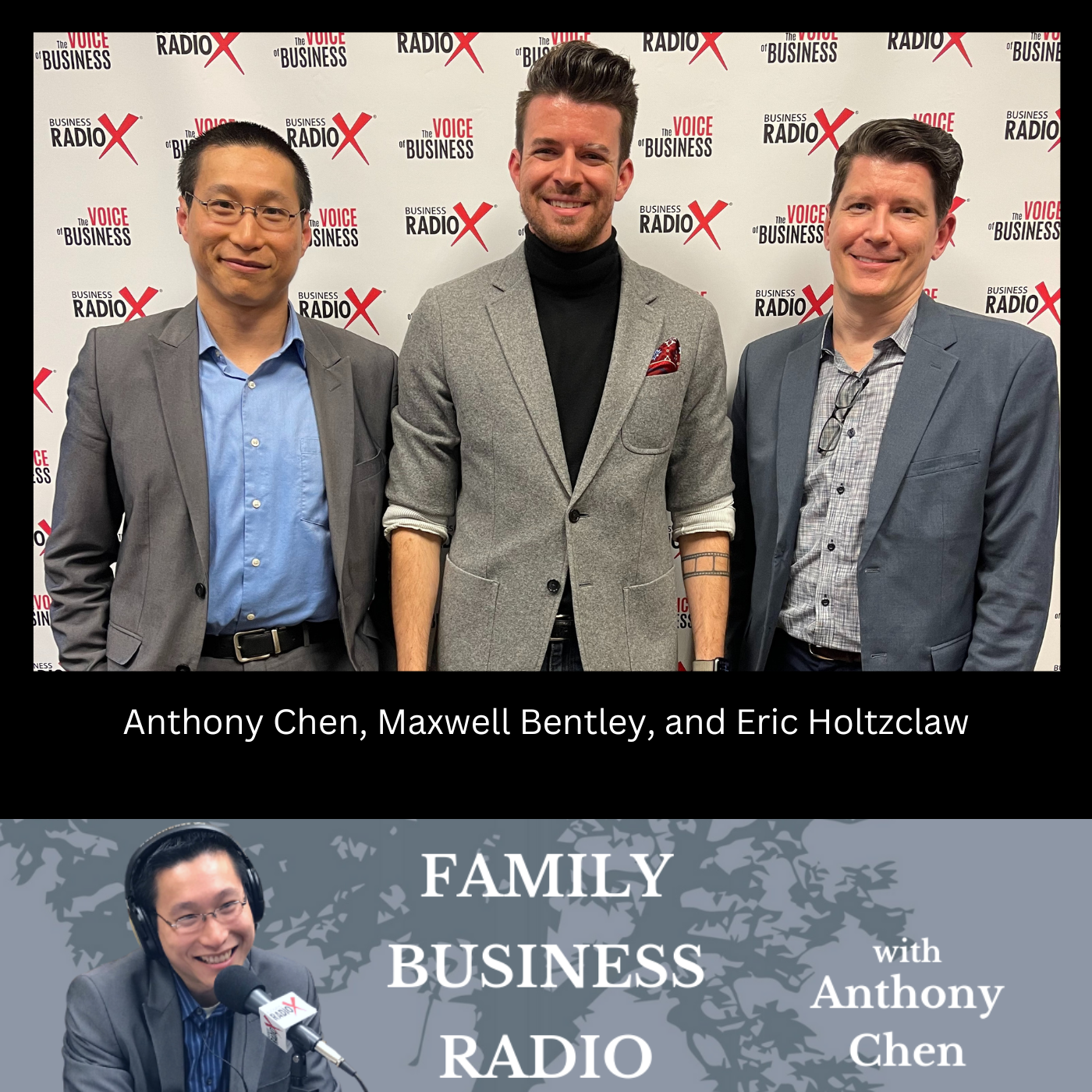
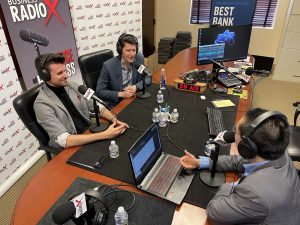
Eric Holtzclaw, Liger Partners, and Maxwell Bentley, Bentley Media

March 17, 2023 by John Ray

Eric Holtzclaw, Liger and Maxwell Bentley, Bentley Media
Family Business Radio
Eric Holtzclaw, Liger Partners, and Maxwell Bentley, Bentley Media
Loading
00:00 /
RSS Feed
Share
Link
Embed

Download file

Eric Holtzclaw, Liger and Maxwell Bentley, Bentley Media

Eric Holtzclaw, Liger Partners, and Maxwell Bentley, Bentley Media (Family Business Radio, Episode 42)

On this episode of Family Business Radio, host Anthony Chen welcomed business leaders Eric Holtzclaw and Maxwell Bentley. Eric Holtzclaw shared Liger’s work in B2B marketing, why most B2B marketing is boring and therefore indistinguishable, how a company’s marketing strategy should be affected by its succession plans, and much more. Maxwell Bentley discussed his early love of video, what inspired him to start his video agency, some of the most powerful case studies for video, and much more. Anthony closed the show with a commentary on being consistent and investing in oneself. 

Family Business Radio is underwritten and brought to you by Anthony Chen with Lighthouse Financial Network.

Liger Partners

Liger Partners is a hybrid marketing firm, the lovechild of a brand strategy consultancy and a production house that offers the full range of content and creative services. Liger will be your entire marketing department or your entire marketing department’s favorite people to work with.

Liger saves the world from boring, broken marketing by putting businesses in brand therapy so they can express their most authentic, memorable selves. They believe a brand’s story, what makes it unique, is what makes it great.

They use this truth to build a solid marketing foundation, and then they’re ready to share a healthy brand with the world. Combining an understanding of the business, the brand, and the current climate, they make relevant, bold work so a brand can really be known.

Website | Facebook | Instagram | LinkedIn | Twitter

Eric Holtzclaw, Partner and Chief Strategist, Liger Partners

Eric Holtzclaw, Partner / Chief Strategist, Liger

Eric V. Holtzclaw is a visionary, “idea guy,” and serial entrepreneur with over 25 years of experience whose tech background and experience founding and scaling businesses led him to be a sought-after expert to Fortune 500, Global 2000, and mid-sized companies for applying the best technology and techniques to support overall marketing goals. Today, Eric is a Co-Founding Partner and Chief Strategist for the full-service marketing firm, Liger, combining his three loves: business, technology, and people.

Holtzclaw has contributed to magazines and online publications and wrote the book “Laddering: Unlocking the Potential of Consumer Behavior.” He’s also a host of The Claw podcast where he interviews business owners and entrepreneurs, allowing them to share their insights and marketing expertise.

Out of all the ideas he’s brought to life, Eric says his daughter is his greatest one.

LinkedIn | Twitter

Bentley Media LLC

Bentley Media is a video marketing agency that produces nonprofit fundraising films and brand marketing videos for clients across the globe. Their “done-with-you” approach has created authentic, powerful videos for clients of all sizes.

Website | Facebook | Twitter | LinkedIn | Instagram 

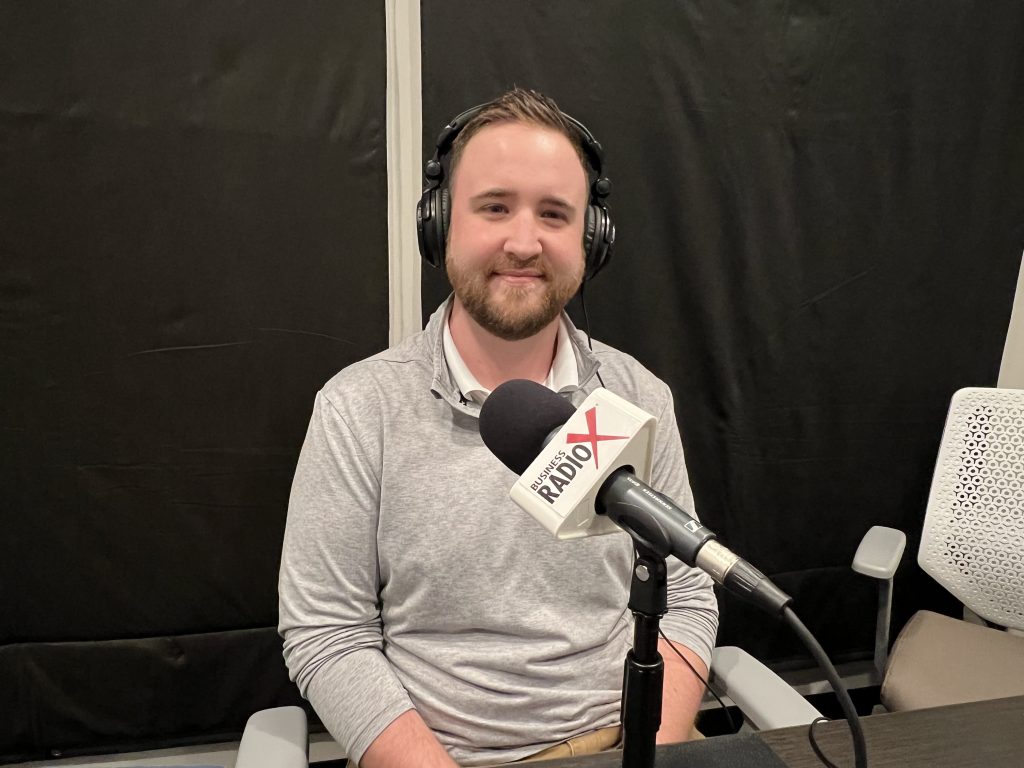
Maxwell Bentley, Founder and Chief Storyteller, Bentley Media

Maxwell Bentley, Founder & Chief Storyteller, Bentley Media

Maxwell Bentley is a video producer known for launching high-performing video marketing strategies for brands across the globe. He has partnered with Roblox, Hyundai, Quantum Bank, and an extensive clientele of nonprofits and small businesses. He is the Founder & Executive Producer at the Bentley Media Group, a video marketing agency that was named a finalist for Forsyth County Business of the Year in 2018 and 2019. His agency has generated over 100,000,000 trackable video impressions that have translated to millions of dollars in sales revenue for his clients since 2015.

In 2022, he produced a donor appeal film for Meals By Grace, a Georgia nonprofit dedicated to feeding hungry children, that helped raise over $187,000 for the organization. He was subsequently named to the University of North Georgia’s inaugural 20 Under 40 Alumni class. In 2017, he produced a trailer for the Xbox title Super Bomb Survival and served as the lead editor for the Roblox app trailer.

He serves on multiple advisory boards and has partnered with area schools to help prepare rising talent for the demands of the Georgia film and video production industry. He exists to form meaningful relationships where his clients and his staff feel successful.

LinkedIn

Anthony Chen, Host of Family Business Radio

Anthony Chen, Lighthouse Financial, and Host of “Family Business Radio”

This show is sponsored and brought to you by Anthony Chen with Lighthouse Financial Network. Securities and advisory services are offered through Royal Alliance Associates, Inc. (RAA), member FINRA/SIPC. RAA is separately owned and other entities and/or marketing names, products, or services referenced here are independent of RAA. The main office address is 575 Broadhollow Rd. Melville, NY 11747. You can reach Anthony at 631-465-9090 ext 5075 or by email at anthonychen@lfnllc.com.

Anthony Chen started his career in financial services with MetLife in Buffalo, NY in 2008. Born and raised in Elmhurst, Queens, he considers himself a full-blooded New Yorker while now enjoying his Atlanta, GA home. Specializing in family businesses and their owners, Anthony works to protect what is most important to them. From preserving to creating wealth, Anthony partners with CPAs and attorneys to help address all the concerns and help clients achieve their goals. By using a combination of financial products ranging from life, disability, and long-term care insurance to many investment options through Royal Alliance. Anthony looks to be the eyes and ears for his client’s financial foundation. In his spare time, Anthony is an avid long-distance runner.

The complete show archive of “Family Business Radio” can be found at familybusinessradioshow.com.

Tagged With: Anthony Chen, Bentley Media, Bentley Media LLC, digital marketing, Eric Holtzclaw, Family Business, Family Business Radio, financial goals, financial risks, Liger, Lighthouse Financial, Lighthouse Financial Network, marketing, Maxwell Bentley, nonprofit marketing, story-telling, succession planniing, video marketing

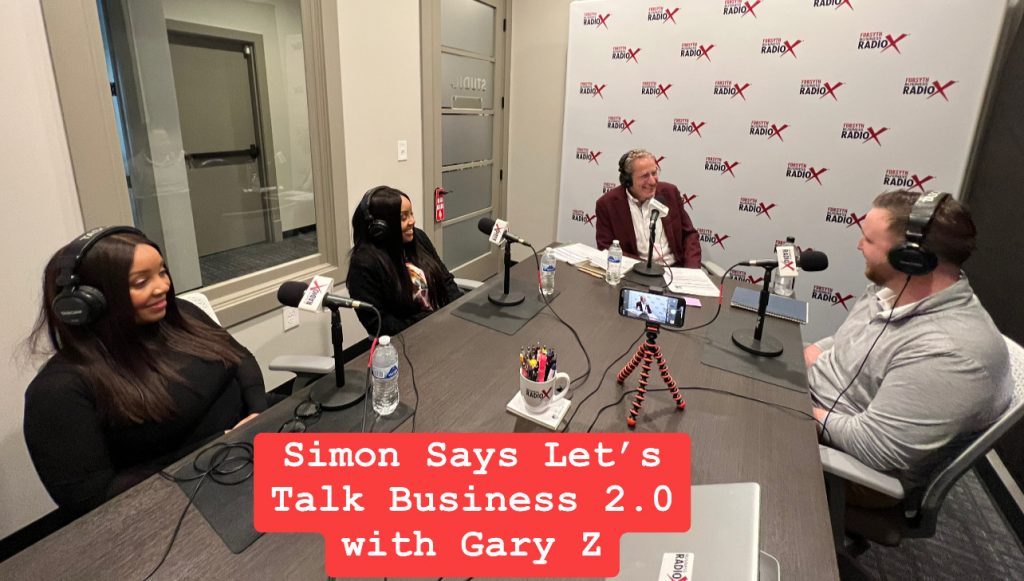
Juanita and Joanna Wright, Founders of Toronto & Atlanta Wright Spa Mobile Services and Jeff Kouns of Shingle Magic Atlanta join Gary Zermuehlen of Sandler Training, Simon INC

March 2, 2023 by Amanda Pearch

Forsyth Studio
Forsyth Studio
Juanita and Joanna Wright, Founders of Toronto & Atlanta Wright Spa Mobile Services and Jeff Kouns of Shingle Magic Atlanta join Gary Zermuehlen of Sandler Training, Simon INC
Loading
00:00 /
RSS Feed
Share
Link
Embed

Download file

Juanita and Joanna Wright, Founders of Toronto & Atlanta Wright Spa Mobile Services

Toronto & Atlanta Wright Spa Mobile Services Aims to bring tranquility and relaxation to their clients by recreating the spa experience. They come to your home, office or hotel providing luxury spa services with unsurpassed customer service. Indulge in massages, facials, manicure and pedicures,
provided by over 30 fully licensed health and beauty professionals. We are passionate about promoting relaxation and tranquility. The Wright Spa team has created an exclusive luxury line of all-natural sugar scrubs, body butters, facial moisturizer and body oils.


Jeff Kountz, Marketing Manager at Shingle Magic Atlanta

Shingle Magic Atlanta – Atlanta’s all-in-one roofing experts, the Shingle Magic team is there to help you keep a solid and secure roof over your head. Offering a wide variety of residential and commercial services, including roof installation, roof repair, roof maintenance, and roof replacements. With their training and experience working for you, it’s never been easier to keep a stable roof over your head.


Host Gary Z is a Sales Trainer & Coach at Sandler Training, Simon Inc.
Companies depend on sales force development. Gary and team equip sales professionals to drive sales revenue higher, uncover significantly more business opportunities, shorten their selling cycles, and protect their gross profit margins. Using a powerful combination of consulting, sales training, they help their client community to achieve goals and overcome challenges.

SUBSCRIBE to “Simon Says Let’s Talk Business 2.0” wherever you get your podcasts

Series proudly presented by Sandler Training, Simon Inc.

Simon-Says-Forsyth-banner.png

Podcasts by Amanda Pearch

Tagged With: al simon, Amanda Marmolejo, amanda pearch, Coaching, Forsyth Business, Gary Zermuehlen, Jeff Kouns, Joanna Wright, Juanita Wright, Leadership, marketing, roofing, Sales, Sales 1-2-3 with Gary Z, Sandler Training by Simon Inc., Shingle Magic Atlanta, Spa, training, Wright Spa Mobile Services

Finding Authenticity E137

January 5, 2023 by Karen

Finding-Authenticity-feature
Phoenix Business Radio
Finding Authenticity E137
Loading
00:00 /
RSS Feed
Share
Link
Embed

Download file

Finding-Authenticity-E137

Finding Authenticity E137

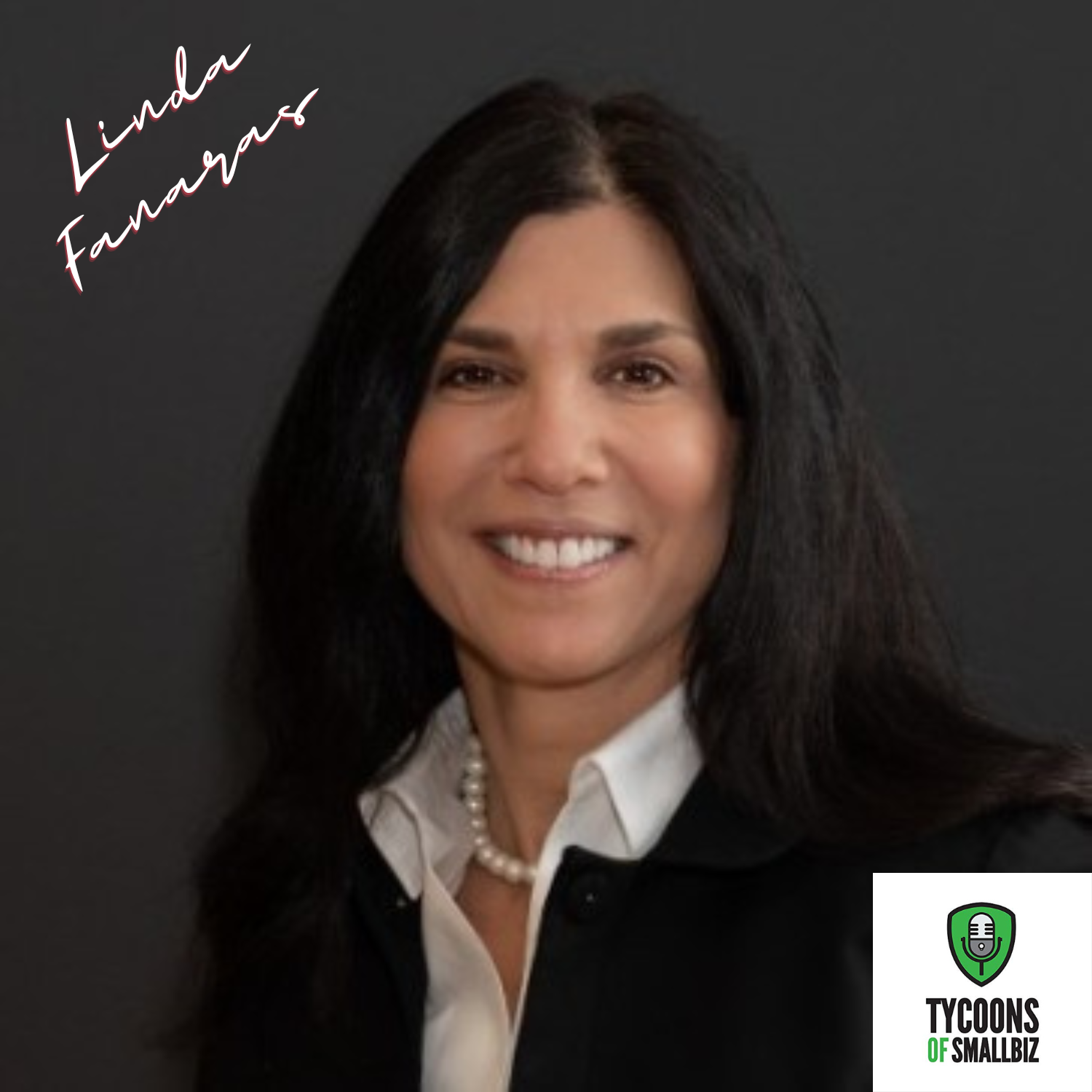
Linda Fanaras joined Tycoons and gave insight into the world of branding and marketing. She talked about the importance of authenticity, don’t force something that doesn’t fit. She touched on professionalism and making sure you don’t cut corners on what’s important.

Tune in to hear Linda share about finding the “white space” in the market. Finding the things that can set you apart from your competition. Learn more about Linda and Millennium Agency at www.mill.agency

Millennium Agency is a nationally recognized, top woman led B2B branding, positioning, and digital marketing firm who creates value that builds emotionally impactful brands that influences the customer’s buying decision, giving company’s the competitive advantage.

As an industry partner for B2B pharma/biotech, technology and manufacturing, Millennium Agency’s proprietary research-based framework makes a strong impact and accelerates brand growth. While business leaders focus on what they do best – run their business successfully – the Millennium team will build the brand, and drive leads.

Linda-Fanaras-Tycoons-of-Small-BizCEO and Strategist of Millennium Agency since 1998, Linda Fanaras is a brand, messaging and digital marketing expert specialized in branding analysis, the development of multi-channel marketing plans, and the formulation of creative strategies and digital concepts for national, regional, and statewide brands.

She is experienced in transforming brands through powerful messaging through creative campaigns, website design, and demand generation strategies, exceeding client expectations. Her unique approach includes in-depth market research, in-depth industry knowledge, and business acumen giving her the competitive advantage to develop plans from conception to completion.

Backed by strong team and strong leadership skills, she has built multi-faceted campaigns that drive leads to sales, decreasing the CPL while increasing the CLV. Linda has been in the branding, messaging, and strategy industry for 25 years, and is budget-conscious and deadline-driven, bringing results with a proven record of accomplishment achieving client objectives and exceptional results.

Follow Millennium Agency on LinkedIn, Facebook, Twitter and Instagram.

About the Show

Tycoons of Small Biz spotlights the true backbone of the American economy, the true tycoons of business in America… the owners, founders and CEO’s of small businesses. Join hosts,  Austin L Peterson, Landon Mance and the featured tycoons LIVE every Tuesday at 1 pm, right here on Business RadioX and your favorite podcast platform.

About Your Hosts

Autsin-Peterson-on-Phoenix-Business-RadioX

Austin Peterson is a Comprehensive Financial Planner and co-founder of Backbone Planning Partners in Scottsdale, AZ. Austin is a registered rep and investment advisor representative with Lincoln Financial Advisors. Prior to joining Lincoln Financial Advisors, Austin worked in a variety of roles in the financial services industry.

He began his career in financial services in the year 2000 as a personal financial advisor with Independent Capital Management in Santa Ana, CA. Austin then joined Pacific Life Insurance Company as an internal wholesaler for their variable annuity and mutual fund products. After Pacific Life, Austin formed his own financial planning company in Southern California that he built and ran for 6 years and eventually sold when he moved his family to Salt Lake City to pursue his MBA.

After he completed his MBA, Austin joined Crump Life Insurance where he filled a couple of different sales roles and eventually a management role throughout the five years he was with Crump. Most recently before joining Lincoln Financial Advisors in February 2015, Austin spent 2 years as a life insurance field wholesaler with Symetra Life Insurance Company. Austin is a Certified Financial Planner Professional and Chartered Life Underwriter. In 2021, Austin became a Certified Business Exit Consultant® (CBEC®) to help entrepreneurs plan to exit their businesses.

Austin and his wife of 23 years, Robin, have two children, AJ (21) and Ella (18) and they reside in Gilbert, Arizona. He is a graduate of California State University, Fullerton with a Bachelor of Arts in French and of Brigham Young University’s Marriott School of Management with a Master of Business Administration with an emphasis in sales and entrepreneurship.backbone-New-Logo

Connect with Austin on LinkedIn, Facebook, Twitter, and Instagram.

LandonHeadshot01

Landon Mance is a Financial Planner and co-founder of Backbone Planning Partners out of Las Vegas, Nevada. He rebranded his practice in 2020 to focus on serving small business owners after operating as Mance Wealth Management since 2015 when Landon broke off from a major bank and started his own “shop.”

Landon comes from a family of successful entrepreneurs and has a passion and excitement for serving the business community. This passion is what brought about the growth of Backbone Planning Partners to help business owners and their families. At Backbone Planning, we believe small business owners’ personal and business goals are intertwined, so we work with our clients to design a financial plan to support all aspects of their lives.

In 2019, Landon obtained the Certified Exit Planning Advisor (CEPA) designation through the Exit Planning Institute. With this certification, Backbone Planning Partners assists business owners through an ownership transition while focusing on a positive outcome for their employees and meeting the business owner’s goals. Landon is also a member of the Business Intelligence Institute (BII) which is a collaborative group that shares tools, resources and personnel, and offers advanced level training and technical support to specifically serve business owners. In 2021, Landon became a Certified Business Exit Consultant® (CBEC®) to help entrepreneurs plan to exit their businesses by counseling owners about exit options, estimating the value of the business, preparing the business for exit and tax considerations.

Landon enjoys spending time with his beautiful wife, stepson, and new baby twins. He grew up in sunny San Diego and loves visiting his family, playing a round of golf with friends, and many other outdoor activities. Landon tries to make a difference in the lives of children in Las Vegas as a part of the leadership team for a local non-profit. He regularly visits the children that we work with to remind himself of why it’s so important to, “be the change that you wish to see in the world.”

Landon received his B.S. from California State University Long Beach in business marketing and gets the rest of his education through the school of hard knocks via his business owner clients.

Connect with Landon on LinkedIn.

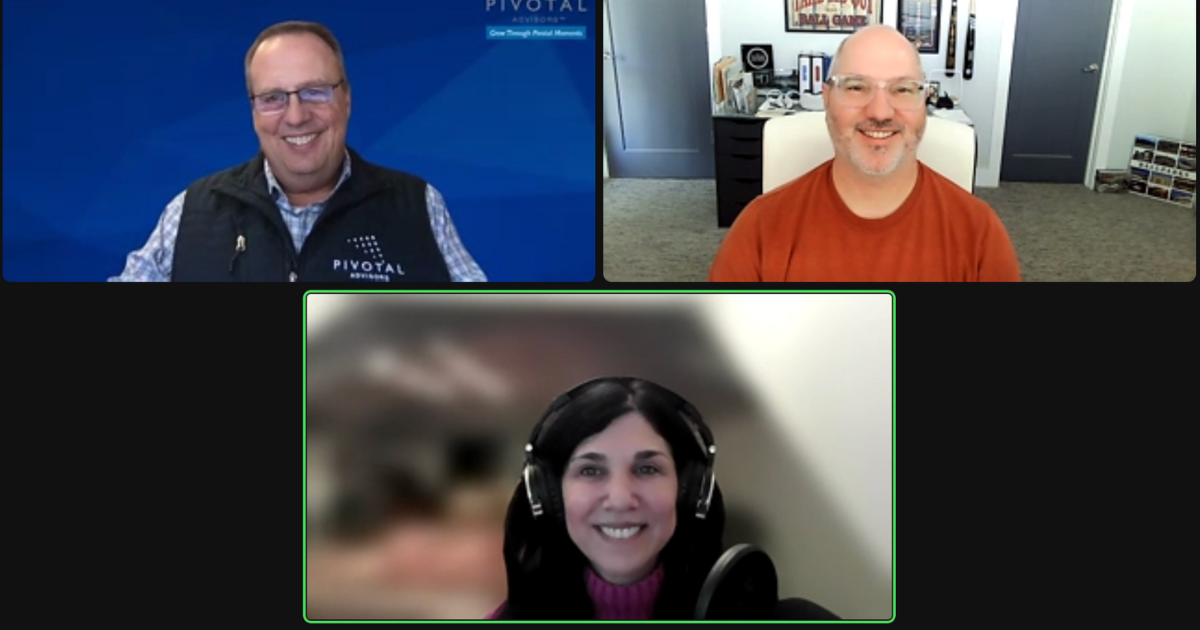
Gary-Braun-Breakthrough-the-Growth-Plateau-E52Gary Braun is a Founder and co-owner of Pivotal Advisors. In his role at Pivotal, Gary is primarily responsible for business development but, he’ll gladly take on few clients in a consulting role. Gary speaks with and partners with other firms that help drive top-line growth.

Gary, helps organizations define where growth is coming from, helps them hire and/or develop the sales team, identify ideal clients and markets, and leverage true differentiators (even in commodity markets). He also implements sales processes, targets specific KPIs, increases activity, creates and applies sales compensation plans, and develops sales leadership skills.Pivotal-Advisors-Logo1

Pivotal Advisors LLC is dedicated to creating a community of people who strive for excellence in sales and leadership. A Sales Operating System is the model for how to achieve excellence. Leadership is the First Factor of success in any sales organization. Therefore, building and developing leaders responsible for generating revenue is critical for growth.

Follow Pivotal Advisors on LinkedIn, Facebook and Twitter.

Tagged With: Branding, digital marketing strategy, lead generation, marketing, messaging

Gary Bird, SMC National

January 4, 2023 by John Ray

Gary Bird
Dental Business Radio
Gary Bird, SMC National
Loading
00:00 /
RSS Feed
Share
Link
Embed

Download file

Gary Bird

Gary Bird, SMC National (Dental Business Radio, Episode 38)

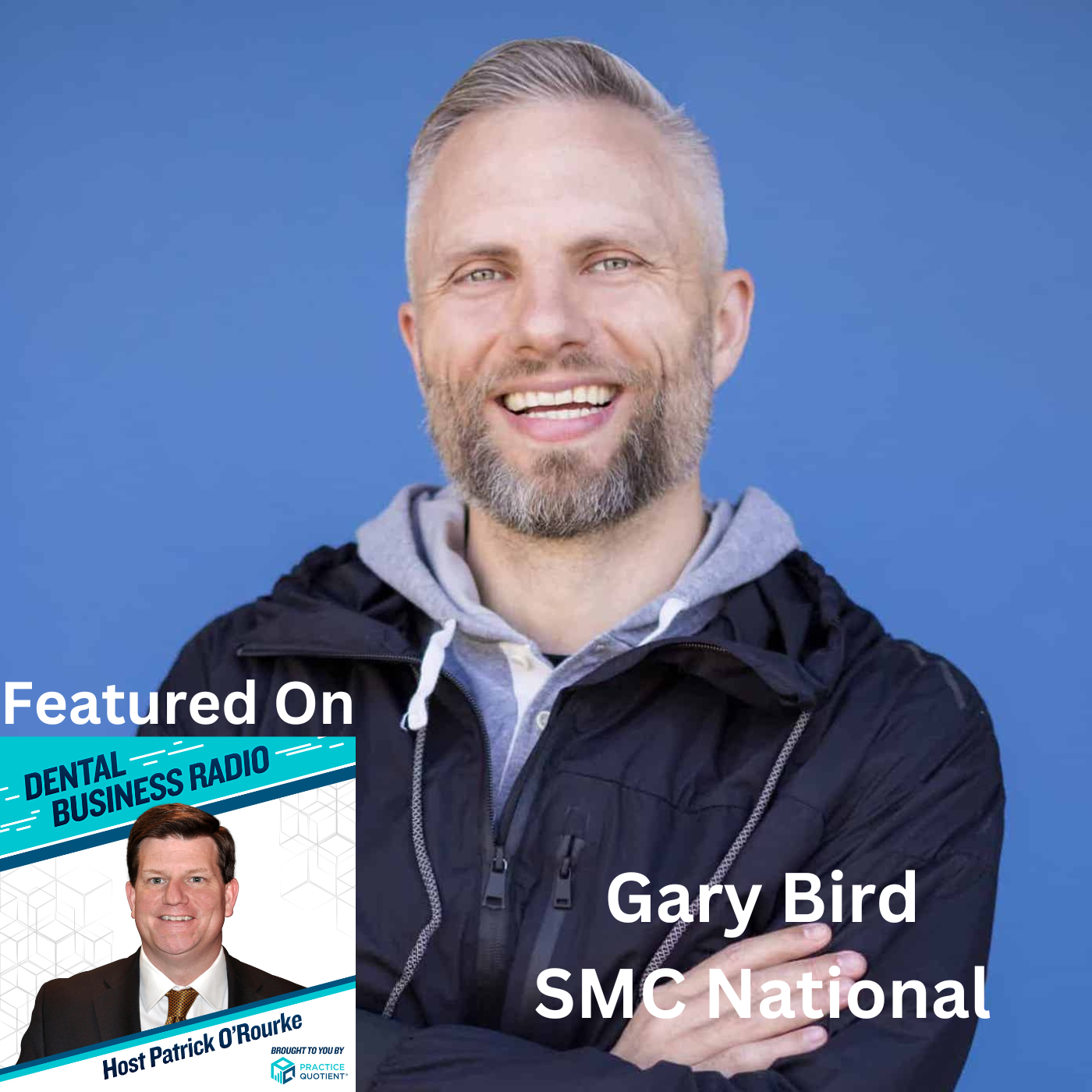
Gary Bird, Entrepreneur, Founder & CEO of SMC National, and host Patrick O’Rourke discussed marketing and business culture. Gary talked extensively about being a leader, building culture as a leader, and then talked specifics about dental marketing. The conversation also covered the cost of marketing, cost per acquisition, how SMC measures the patient journey, the need for “top of funnel” data, how they diagnose and address the practice issues in the patient journey, the nuances of structuring the practice, and much more.

Dental Business Radio is underwritten and presented by Practice Quotient: PPO Negotiations & Analysis and produced by the North Fulton studio of Business RadioX®.

SMC National

SMC uses clear, actionable data to give your dental group or DSO a predictable stream of new patients that can be adjusted monthly to meet your needs.

The team at SMC is composed of thoughtfully selected professionals who have a strong work ethic and embody their company’s core values. You’ve never met a team like theirs, and they can promise that you won’t find one as dedicated and committed to growth anywhere else.

Company website | LinkedIn | Facebook | Instagram

Gary Bird, Entrepreneur, Founder & CEO of SMC National

Gary Bird, Entrepreneur, Founder & CEO of SMC National

Gary runs a marketing company called SMC National and loves to share everything he’s learned while growing his agency from nothing to $20M in revenue.  He is committed to helping driven marketing entrepreneurs build on his success. Gary will show you how to make it BIG — by always giving more.

When Gary isn’t working, he dedicates his energy to serving his family and his church. He loves spending time with those he cares about most and helping fellow members of his church community to thrive.

LinkedIn

About Dental Business Radio

Patrick O'Rourke
Patrick O’Rourke, Host of “Dental Business Radio”

Dental Business Radio covers the business side of dentistry. Host Patrick O’Rourke and his guests cover industry trends, insights, success stories, and more in this wide-ranging show. The show’s guests include successful doctors across the spectrum of dental practice providers, as well as trusted advisors and noted industry participants. Dental Business Radio is underwritten and presented by Practice Quotient and produced by the North Fulton studio of Business RadioX®. The show can be found on all the major podcast apps and a complete show archive is here.


Practice Quotient

Dental Business Radio is sponsored by Practice Quotient. Practice Quotient, Inc. serves as a bridge between the payor and provider communities. Their clients include general dentist and dental specialty practices across the nation of all sizes, from completely fee-for-service-only to active network participation with every dental plan possible. They work with independent practices, emerging multi-practice entities, and various large ownership entities in the dental space. Their PPO negotiations and analysis projects evaluate the merits of the various in-network participation contract options specific to your Practice’s patient acquisition strategy. There is no one-size-fits-all solution.

Connect with Practice Quotient

Website | LinkedIn | Facebook | Twitter

Tagged With: Culture, dental business, Dental Business Radio, DSO, Gary Bird, insurance, Leadership, marketing, Patrick O'Rourke, Practice Quotient, SMC National

Ben Gibson, JP Morgan Chase, Jonathan Holmes, Mighty 8th Media, and John Marsh, Bristol Group

November 15, 2022 by John Ray

Ben Gibson, JP Morgan Chase, Jonathan Holmes, Mighty 8th Media LLC, and John Marsh, Bristol Group
North Fulton Studio
Ben Gibson, JP Morgan Chase, Jonathan Holmes, Mighty 8th Media, and John Marsh, Bristol Group
Loading
00:00 /
RSS Feed
Share
Link
Embed

Download file

Ben Gibson, JP Morgan Chase, Jonathan Holmes, Mighty 8th Media LLC, and John Marsh, Bristol Group

Ben Gibson, JP Morgan Chase, Jonathan Holmes, Mighty 8th Media, and John Marsh, Bristol Group (ProfitSense with Bill McDermott, Episode 37)

On this episode of ProfitSense, host Bill McDermott welcomed three distinguished business advisors. Ben Gibson, JP Morgan Chase, described the satisfaction he gets in helping business owners achieve their goals. Jonathan Holmes, Mighty 8th Media, discussed branding and marketing, while John Marsh shared how he helps business owners successfully sell their companies through his work at Bristol Group.

ProfitSense with Bill McDermott is produced and broadcast by the North Fulton Studio of Business RadioX® in Alpharetta.

JP Morgan Chase

For over 200 years, JPMorgan Chase & Co has provided innovative financial solutions for consumers, small businesses, corporations, governments and institutions around the world.

Today, they’re a leading global financial services firm with operations servicing clients in more than 100 countries.

Whether they are serving customers, helping small businesses, or putting their skills to work with partners, they strive to identify issues and propose solutions that will propel the future and strengthen both their clients and their communities.

Website | LinkedIn | Facebook 

Ben Gibson, Executive Director, JP Morgan Chase

Ben Gibson, Executive Director, JP Morgan Chase

Ben Gibson is a Relationship Executive in the Middle Market Banking Group covering the Georgia Middle Market. Ben utilizes the expansive JPMorgan Chase product platform to companies with annual revenues from $20 million to $100 million, offering cash management, credit, investment banking, international banking and wealth management and an array of other solutions.

Ben has 20+ years of banking experience and is responsible for relationship management, new business development and delivering the firm’s solutions locally with his Georgia-based clients.

Ben is a Magna Cum Laude graduate and 40 under 40 awarded alum of Georgia State University. He is married with children and his hobbies include reading, listening to music and watching movies and sports.

Ben is actively involved in the Metro Atlanta community as a member of the Executive Committee of the German American Cultural Foundation and Treasurer of OaksAtl, an affordable housing nonprofit focused in the Vine City and English communities, and serves on the finance committee of Atlanta Westside Charter School.

LinkedIn

Mighty 8th Media LLC

Headquartered in the heart of historic Buford, GA, Mighty 8th is an award-winning, nationally recognized marketing and creative agency. Founded in 2005 by industry veterans Jonathan Holmes and Bradley Sherwood, Mighty 8th has become synonymous with producing powerful campaigns that drive business and make a lasting impact. The agency provides everything from strategy and creative development to website design and broadcast production for local, national and international clients across a variety of industries, including Alta Refrigeration, ClearStar, Consolidated Banking Services, Emory University, Gwinnett County Public Schools, Hyster Company, MegaSlab, Pinnacle Bank, Porter Steel, Primus Builders and Reeves Young and State Road Tollway Authority (Peach Pass).

Website | LinkedIn | Facebook | Twitter | Instagram

Jonathan Holmes, Managing Partner, Mighty 8th Media LLC

Jonathan Holmes, Managing Partner, Mighty 8th Media LLC

Jonathan Holmes is co-founder and Managing Partner / CFO of Mighty 8th, a full-service marketing and creative agency. The agency was founded in 2005 and has grown to be an Inc 5000 –  top 50 Marketing Agencies in Atlanta, Atlanta Business Chronicle 2017 & 2018.  His agency has been awarded Best Places to Work in Atlanta, 2013, 2014, 2015 and 2019 and a Best Places to Work in Georgia, Top 10, 2010 and Top 3, 2016.

Jonathan is a highly trained professional in accounting, non-profit operations, marketing, web and strategic planning with over 35 years of hands-on experience in revenue growth, organizational development, brand repositioning and entrepreneurial start-ups.

He is a native South Carolinian and graduate from the University of South Carolina. A 2018 Graduate of Leadership Gwinnett and 2022 LG Alumni Chair, having lived in Gwinnett for 21 years, Gwinnett is his “hometown”. He is an avid supporter helping to make Gwinnett Great as a growing county to lead the Atlanta Metro Region supporting a diverse population. He currently serves as Board Chair of Artworks Gwinnett, Most recently through his leadership efforts, Artworks has undertaken a Master Plan for Gwinnett’s Creative Economy – growing the Arts, Entertainment and Technology sector as an economic engine for Gwinnett.

He is a Board Member of the Gwinnett Chamber, Board Member Gwinnett Parks Foundation, an Advisor / Investor in Partnership Gwinnett, and a Chairman’s Club member of the Gwinnett Chamber. He also serves on the Board of Visitors of Georgia Gwinnett College and the Georgia Gwinnett College Foundation Development Committee. Most recently, he was appointed as a Board member of Pinnacle Bank based in Elberton, GA.

LinkedIn

Bristol Group

John’s firm is a Mergers and Acquisitions Advisory and business brokerage practice. They assist business owners in the process of successfully transitioning business ownership. As M&A advisors, they represent the interest of their clients and guide them through the complex process of selling or buying a business.
The team overthan 75 years of experience structuring transactions for business owners, individual buyers, private equity groups, and corporate acquirers. The nationwide network produces some of the best business opportunities and investments for people looking to buy a business.
The firm is affiliated with the Bristol Group. The Bristol Group has seventeen Business Brokers and Mergers and Acquisition Advisors across the United States.
Website | Facebook | LinkedIn

John Marsh, Founder, Bristol Group

John Marsh, Founder, Bristol Group

John is a successful cross-functional executive with experience leading and strengthening finance, accounting, and operations organizations. He has held a variety of executive roles including CFO, VP of Supply Chain and Planning, and EVP of Finance and Operations during his 17-year career. In those roles, John served as an integral part of the leadership team that scaled a medical device company and sold it to a private equity firm for 161M. John led integration efforts and was a part of due diligence on all of the companies acquisitions.

John started his career with the accounting firm, Ernst and Young in Atlanta, GA, and has worked with both start-ups and a large private equity-owned medical device manufacturer. He leverages his significant mergers and acquisition experience to help entrepreneurs successfully transition business ownership.

John graduated from the University of Georgia with a BBA in Accounting and holds an MBA from Kennesaw State University. He currently lives in Sandy Springs, with his wife and two daughters.

LinkedIn

About ProfitSense and Your Host, Bill McDermott

Bill McDermott
Bill McDermott

ProfitSense with Bill McDermott dives into the stories behind some of Atlanta’s successful businesses and business owners and the professionals that advise them. This show helps local business leaders get the word out about the important work they’re doing to serve their market, their community, and their profession. The show is presented by McDermott Financial Solutions. McDermott Financial helps business owners improve cash flow and profitability, find financing, break through barriers to expansion, and financially prepare to exit their business. The show archive can be found at profitsenseradio.com.

Bill McDermott is the Founder and CEO of McDermott Financial Solutions. When business owners want to increase their profitability, they don’t have the expertise to know where to start or what to do. Bill leverages his knowledge and relationships from 32 years as a banker to identify the hurdles getting in the way and create a plan to deliver profitability they never thought possible.

Bill currently serves as Treasurer for the Atlanta Executive Forum and has held previous positions as a board member for the Kennesaw State University Entrepreneurship Center and Gwinnett Habitat for Humanity and Treasurer for CEO NetWeavers. Bill is a graduate of Wake Forest University and he and his wife, Martha have called Atlanta home for over 40 years. Outside of work, Bill enjoys golf, traveling, and gardening.

Connect with Bill on LinkedIn and Twitter and follow McDermott Financial Solutions on LinkedIn.

Tagged With: Ben Gibson, Bill McDermott, Bristol Group, business broker, buying a business, creative agency, financial advising, JP Morgan Chase, marketing, Mighty 8th Media LLC, Profit Sense, Profitability Coach Bill McDermott, ProfitSense with Bill McDermott, The Bristol Group, The Profitability Coach

Marketing with Meaning: An Interview with Pete Steege, B2B Clarity, and Author of On Purpose

October 10, 2022 by John Ray

Pete Steege
North Fulton Studio
Marketing with Meaning: An Interview with Pete Steege, B2B Clarity, and Author of On Purpose
Loading
00:00 /
RSS Feed
Share
Link
Embed

Download file

Pete Steege

Marketing with Meaning: An Interview with Pete Steege, B2B Clarity, and Author of On Purpose

If you’re the CEO of a B2B company and feel like your marketing efforts are broken, you’re not alone. Many of your peers see marketing as an overwhelming and complex field with too many solutions to choose from. Pete Steege knows this to be the case after having interviewed about 400 B2B C-Suite executives.

In this interview with host John Ray, Pete Steege discussed his newly released book, On Purpose: The CEO’s Guide to Marketing with Meaning. Pete shared the three “superpowers” of marketing: authenticity, intention, and generosity, why less is more in successful marketing, why your most powerful message isn’t about you, and much more.

The Price and Value Journey is presented by John Ray and produced by the North Fulton studio of Business RadioX®.

TRANSCRIPT

John Ray: [00:00:00] Hello again, everyone. I’m John Ray on the Price and Value Journey. And folks, I’m here today with Pete Steege. Pete is with B2B Clarity and he is also the author of a newly released book called “On Purpose: The CEO’s Guide to Marketing with Meaning”.

Pete is a 30-year marketing veteran. He’s got a wide range of B2B technology and manufacturing business experience, working from Silicon Valley startups all the way to Fortune 500 firms. And he’s got global experience as well in North America, Europe and Asia. And all that experience gives him a wide breadth of perspective and experience he’s going to bring to this interview. But certainly, in his book, which I have read, folks, I have read so, and I’m delighted to say that because it was worth every minute of it. Pete Steege, welcome to The Price and Value Journey.

Pete Steege: [00:01:04] Thanks so much, John. Really happy to be here.

John Ray: [00:01:06] Hey, I’m delighted to have you. Talk about — let’s first of all, just give everyone a quick introduction to what I missed in your business. Tell everyone how you’re serving folks at B2B Clarity, then we’ll get to the book.

Pete Steege: [00:01:21] You know, John, I think you summed it up pretty good. As you said, I’ve been a marketer for a long career. And these last two years have been a big change for me and just a great change where I’m on my own helping B2B business owners and CEOs. And it’s been — it’s just been really, really exciting and satisfying change for me. But yeah, that’s what I do now is I just — I’m able to use some of that, you know, gray hair, I guess, and help people solve problems. I really enjoy it.

John Ray: [00:01:55] One of the aspects to this book that you state right up front is that you believe that most CEOs, B2B CEOs, look at their marketing function and their marketing efforts and they see that as broken. Why?

Pete Steege: [00:02:16] It’s absolutely true. More often than not, they are not satisfied with their marketing. And it’s usually not, oh yeah, it could be better. It’s usually a pain point for them. And I think there’s a couple of things at work there. One is, I think if you’re at all in the business world, you know what a overwhelming space marketing is. I like to call it the marketing industrial complex. There’s so many businesses and agencies and consultants and software applications all fighting for your mindshare and saying that they have the greatest thing since sliced bread to solve your marketing problems.

As a matter of fact, there’s this really interesting number factoid. There’s a guy that tracks it’s called Chief MarTec is the organization, and he’s been tracking since 2011 the number of marketing technology solutions available in the market. And he creates a landscape, right? 2011, the first one, 150. 2022, 9,938 of them.

John Ray: [00:03:32] Oh, wow.

Pete Steege: [00:03:32] So, there’s this overwhelming wealth of solutions, I’ll say, right. So, that’s a problem because no one can get anywhere near to choosing. All of them are even a collection of them. You’re going to have to choose what you’re going to do. And that coupled with the fact that there’s this idea that, oh, I’m just going to choose this thing to do. Some people call it random acts of marketing. You know, hey, we need a video,

John Ray: [00:04:07] Right.

Pete Steege: [00:04:07] Hey, let’s go to the big show this year. You know, this kind of arbitrary thoughts that are emotional sometimes or that feels good, it sounds good. Maybe it sounds fun even sometimes, or your competitor is doing it, right. There’s all these reasons to do them. But you take this wealth of options and couple it with this idea that you can choose one and that it would be just as good by itself versus part of a bigger plan or strategy. And that doesn’t work. It’s like throwing stuff at the wall and your customers are getting these blips of information from you and they’re not consistent when they do get them and you cancel yourself out.

So, basically, a lot of that effort, a lot of the money you are spending is almost — is often just a waste of time because it’s not helping you get closer to your customers.

John Ray: [00:05:09] I’m curious about — I mean, CEOs of larger B2B firms in general, they certainly are — they’re the chief strategy officer, right. And so, this is really a matter of getting their attention diverted toward a tactic, a video, or whatever that tactic, whatever form that tactic takes. Instead of focusing on the strategy and executing the strategy, kind of understand it from a smaller firm point of view, you know, an entrepreneur that’s kind of overwhelmed and can easily maybe get their attention distracted. But the CEO is a bigger firm. I mean, why does this happen? What’s your view on that? You’ve talked to a lot of them, by the way, that was –.

Pete Steege: [00:05:57] I know.

John Ray: [00:05:57] Yeah. So, cite more about that, maybe first.

Pete Steege: [00:06:01] So, I like the fact that I started — when I started my business, I kept track of my meeting. I went out and wanted to talk to CEOs, right. Obviously to find customers, but also to kind of validate as a corporate marketer versus being a solution provider for a CEO, it doesn’t translate, right. So, I had, I think I say in the book, 397 meetings, right. Not all CEOs, but all CEO related people, related to this challenge. And yeah, so a lot of data points and a lot of commonality in that.

And to answer your question, why do the larger companies, strategic CEOs let’s say, ones with a big budget and maybe even a marketing team, they wouldn’t have this problem, right? Guess what? A lot of the places I worked over 30 years were those organizations and I was in those marketing teams. And there is a core problem here that I talked about before that CEOs or their marketing leader or their sales leader tend to bite off more than they can chew with marketing. For the reasons we said, there’s a lot of things you could choose to do, and they tend to try to do more than they can get done, that they can be successful with.

So, even at the larger organizations, I remember one not too long ago where I worked over a hundred marketers on this company’s team and they had big plans and they were sophisticated plans, but they often didn’t finish these sophisticated projects because they were so busy with so many plates spinning. It just scales up, whoever you are. It’s a mindset issue. It’s a problem with thinking of marketing as the more the better. And activity is good versus there’s a less is more theme here and a strategy before tactics.

It’s less important how many things you do and it’s more important why you do them and that you finish, that you finish what you — you do it well, right. That’s really an important part that translates up to — I can’t speak for multibillion dollar companies. Probably a different issue. But certainly, you know, for a wide range of company sizes, this is a challenge for those organizations and the leaders of those organizations to get focus and to follow through and thoughtfully deliver on a purposeful marketing plan.

John Ray: [00:09:00] Pete, one of the things that you talk about in the book is not just, I guess, maybe marketing overload, taking on too many tactics, too many initiatives, but you talk about mindset a lot and that the problem is a mindset of meaning. Explain what you’re talking about there.

Pete Steege: [00:09:28] Yeah. That’s the core of the book, really. What my observation is, there’s a really important hierarchy in marketing. And most businesses, most CEOs know two of the three levels, and they don’t even know the third level exists. The first level, which we all know is tactics. It’s all the stuff you do in marketing. We all know what they are. There’s website, SEO, email, PR, all these things you do. So, these are the things that have a budget line item.

As I said, often, there’s some chaos around the activities, the tactics. And the more incoherent they are, the less valuable they are because they are all out there and your customers are picking them up and they’re busy. And if they don’t hear this common story, it’s a problem, right. So, tactics can be a real and it’s hard to deliver on them. The more you get, you get overloaded, right.

So, the next level is really important, and it really helps solve that problem and that strategy, marketing strategy. Bunch of books out there. You know, we all have our favorites probably if you’re a CEO or a executive. And that helps bring order and priority to these tactics and consistency can really help rein in the chaos. Absolutely. And for a lot of people, that’s where it starts. That’s marketing. You got your tactics, and you got your strategy.

John Ray: [00:11:02] Sure.

Pete Steege: [00:11:03] I strongly believe that there’s a really important element above that, which is mindset. Strategy without mindset, without purpose, without direction — there are almost as many strategies now as there are tactics, right? And there are often multiple strategies that you need to apply to your business marketing, your marketing approach. There are strategies that have to align with your sales strategies and your customer support strategies and your product development so you can — companies that think of strategy as a means to an end that are that — if I just come up with a really smart way to look at this, it’s going to solve all my problems.

They end up with a well, maybe more ordered group of tactics, but I would say in a way they’re almost lifeless, right. They’re mercenary. Their goal is to get, get. Their goal is to get, right, to win the order, maximize profit, change mind perception. All those things are a good outcome. But if those are the destination and there’s not a tie to why you created your business or why you are getting up every day to manage this thing, what’s the vision? What’s the value of your organization.

If your marketing is cut off from that, it doesn’t work. It’s a lot more visible in activity, but it doesn’t change the hearts and minds of your crazy busy clients that are hesitant to come on board with somebody new. And it’s that mindset of meaning that says my — first, I need to start with, okay, why are we in business?

This isn’t a marketing thing. This is why we come here every day. And who is it that we’re here to help? Because a business that gets — you may say, oh, my goal is to make a lot of money. Well, you can’t make a lot of money if you’re not solving a problem for somebody. And knowing that mission is the first step to marketing that works. Because if you know that mission and then you say marketing isn’t a by itself set aside tactic, it’s actually part of us creating the bond with our relationship with our customers that make it work. And so, a little bit of a side topic here.

John Ray: [00:13:57] Yeah.

Pete Steege: [00:13:57] My definition of marketing is optimizing the relationship between your business and your customers. So, it’s relationship. One word, marketing is relationship.

John Ray: [00:14:10] Oh, wow. I love that. And you talk a lot about that in the book too, to be clear. Because those sound like two separate things, mindset and relationship. But they’re not in your world, in your mind.

Pete Steege: [00:14:32] No. And the reason why is picture yourself and your customer, right? There’s these two — it’s a company, yourself as your company, right? But it’s people in your company and then you have your customers. And if your goal is a relationship, I believe that the only way — the way you make that relationship happen, the way you spark it, the way you turn it on and activate it, is meaning. Meaning for them and meaning for you. If you’re doing things at them without a purpose, for the bigger purpose, they can tell.

John Ray: [00:15:10] Right.

Pete Steege: [00:15:11] If they are listening to you or they are interrupted by you and there’s no good reason in their mind why they should talk to you, if there’s not a purpose to that. Meaning, they’re not going to take the time to do it. So meaning back to the word, right, mindset of meaning. Meaning is what makes marketing create that relationship.

John Ray: [00:15:36] So, Pete, let’s talk about — I want to dive into relationship just a little more. You know, for smaller firms, I think they think of that as one-to-one and very personal. They’ve got the capacity to handle one-to-one relationships. As firms get bigger, it gets a little trickier because suddenly you’ve got sales forces and you’ve got layers of folks in your organization. And how are you talking? How do you talk about in the book, you talk about how to create relationships and how those relationships start and how they deepen, cover that force, if you would.

Pete Steege: [00:16:27] Sure. First thing I’ll say is that I like to call them the three superpowers of marketing. So, there are three traits that you as a CEO need to have in your culture and in your organization, that if you do, if those are there, then those relationships happen, but it’s like the essential ingredients of relationship. And what they are is the first one is authenticity. Being transparent and truthful and real with your team and your clients, right, with your world. That’s one authenticity.

The second is intention. Being intentional. We already talked about that, right. That’s having a strategy before you choose your tactics. That’s doing less but doing it better. Choosing, being purposeful, being — doing things with the end in mind. That’s intention, right. That’s the second.

And then the third is generosity. The first two I’ve heard of in a marketing sense or really authenticity, you know, that makes sense.

Pete Steege: [00:17:45] Oh, yeah.

Pete Steege: [00:17:45] Intention, Absolutely, right. Being operationally good and all that. You don’t hear generosity mentioned very often when it comes to marketing, but I am convinced that it is a total — it is absolutely a superpower. And it’s one of the three ingredients. You need all three, but it’s often the missing one.

John Ray: [00:18:07] Well, I want to get to that in a minute, because when I read your book, I had a comment for you on that, that I want to get to. But I think it’s counterintuitive for folks when you talk about the intention piece and you’re talking about let’s do less. I mean, people don’t want to do less, right.

Pete Steege: [00:18:26] Right.

John Ray: [00:18:26] I mean they want to do more because they think pressing on the accelerator is going to what — is what’s going to get them to whatever their goal is for their company. And that’s just counterintuitive and hard for anybody to get their head around.

Pete Steege: [00:18:41] It is. Let me help a little bit with that. There’s a key dynamic in marketing. And I can’t speak to other functions, but it’s absolutely true in marketing that there is a critical mass that you need to reach with a marketing program often, that until you get there, you get kind of zero results from it.

So, let’s say you decide to start posting on LinkedIn and you dabble in it, or you do a poor job of it, or it’s confusing, whatever. You spend a lot of effort on posting on LinkedIn, but it never clicks. Nobody really — it does — it’s not like the more you do, it’s incrementally more result for you and more exposure to your clients. There’s a certain level you have to get to where you reach, escape velocity, and your campaign starts to make a difference and move the needle.

Marketing is that way. A lot of things, okay. So, what often people do is they’re so — they feel so much pressure to do all these things that everybody’s doing around marketing that they — none of them have the mindshare or enough effort available to them to get to that critical mass. So, there’s lots of activity going on, but very little of it is moving the needle. If you force yourself to first say what are — what is important, right. If I had to choose three things, that three programs, tactics, campaigns, that would move the needle for my marketing, I should start with the biggest pain points, right?

So, the first step is understanding that. But when you do and if you can resist the temptation to do the other dozen things now and say, we’re going to solve these three, we’re going to launch these three things, and move the needle in these three ways and check to see if we did, right. That’s part of that intention is be thoughtful and check your work and see if it worked. Your odds of success go way up because you’re able to spend the right amount of time, your team or you or your agency, whatever it might be. You have the time and money needed to do it well, right.

So, those two things. It moves the needle, but also now you’re a brand that does things well. You start to look like you’re good at what you do. And communicating and making relationships is part of what you do, right. So, that’s — I hope that helps with the less is more.

But it’s true in so many factors, it’s true with how much content you put on your website. B2B companies, especially tech B2B, they tend to try to explain everything on their website and put a lot of acronyms on there. So, that’s another example of less is more, right.

John Ray: [00:21:40] Right.

Pete Steege: [00:21:41] Don’t try to explain it all because they don’t have time to grasp it. Another example is your priorities with your team, right? Does your team on board with what’s important right now? Are they all rowing the same direction? Often, people have multiple priorities that confuse their team.

And here’s maybe the most important one, companies need one story. I like to call it the true story, their true story. But they need one story about who they are, whom they serve, how that target benefits from them. And you tell them a lot of different ways, but you got to have that one story. So, that’s another less is more example.

John Ray: [00:22:33] Okay. Now, I’m going to get myself in trouble here. I might get you in trouble here. Let’s see where this goes, but —

Pete Steege: [00:22:40] Let’s do it.

John Ray: [00:22:40] Yeah, okay. Let’s dive into this, because this, the less is more is not where the, I’ll say a lot of the outside marketing firms and really even the inside marketing folks end up, right. I mean because —

Pete Steege: [00:23:01] Right.

John Ray: [00:23:01] And so, there’s a lot of pressure on the CEO or the owner of a business from their own marketing people on this, right. And that’s what I think is so hard for them. I mean, let’s — am I — is it just the marketing people I run into? Or do you see that out there as well?

Pete Steege: [00:23:26] Well, I do see it out there and it’s totally understandable, John.

John Ray: [00:23:31] Yeah.

Pete Steege: [00:23:33] There — you know, it’s their job, right. And more is the shorter path to looking like your progress, right. Because you can quickly point to the activity.

John Ray: [00:23:48] Right.

John Ray: [00:23:50] It’s also more budget that comes with more sometimes.

John Ray: [00:23:53] Well, yeah, that’s where I was going, right. I mean —

Pete Steege: [00:23:56] Oh, it is?

John Ray: [00:23:56] Yeah.

Pete Steege: [00:23:58] And it’s not that people are, you know, their intent isn’t good but there’s a lot of just natural impulse situation here that it’s understandable why it happens so much, right. Because it is counterintuitive and it doesn’t always — sometimes the rewards are delayed, right. This delayed gratification.

Because there’s another connection here, which I’m sure you’ve heard, which I’ve heard from a lot of CEOs, is I just need leads. I need leads and I need them now and I need more. And what can you do to get me those leads next month? Sometimes, there’s a fun, surprising little tweak that does something like that. But most of the time I think you’ve picked up, from my view at least, marketing is an ecosystem.

Marketing is a relationship building engine and it doesn’t happen overnight. And there is — to set up that right environment with your team and your customers and your prospects, it takes time for it to play out. And those leads come more organically usually. Throwing money at a Google Ads, the more you put in, doesn’t mean the more good leads you get out and the more revenue you get out.

There are — like I said, sometimes you get lucky and there’s an opportunity in the market and you want to be ready for those opportunities. But that comes after you’ve understood this — the needs here, right, and the journey your customer is on. And that’s when you see the opportunity. It doesn’t happen, which I see so often where CEOs hire a vendor to do that one tactic, one off in a vacuum, and they say you’re going to mint money with this thing. Wow. This is going to be awesome. It doesn’t happen very often for all the reasons I just said.

John Ray: [00:25:56] Okay. So, Pete, we talked about authenticity. I think we’ve covered intention. So, let’s get to my favorite part in your book, Generous Marketing. And I have to tell folks when I read Pete’s book, I wrote him a note and said you need to name this book, Generous Marketing. And to his credit, he ignored my advice. So, because he knows what he’s doing.

Pete Steege: [00:26:22] Tell me in my next book.

John Ray: [00:26:24] Okay. There you go. And I’ll read that one as well. I loved that concept. And let’s define that in your words. What is generous marketing?

Pete Steege: [00:26:39] So, for me, I like to describe it as customer centricity on steroids, right. This is — we’ve all heard about customer first, and that’s a standard platitude and obvious reasons. Of course, we want to put our customers first. Generous marketing is taking that to another level where putting your customer first isn’t a means to an end. It’s not something you do so you can make more money. It’s the paradox of really believing and wanting what’s best for your customer and changing the behavior of your organization to maximize maximize that. And in a Zen way, magically, that’s where the most success comes, because customers can tell.

And it’s organic, right? It’s deep in their bones that they can tell that you are trying to help them. And that draws them to you more than any persuasive thing you can come up with saying, right. So that’s part — that’s the essence of it. And it shows itself often in a couple of things. One is it’s not about you, right. So, when people aren’t generous, they care about their customers. Of course, they do. But they’re just so excited about what they do to help their customer that that’s what they talk about. Look at how good we are. Look, we are so — we are the best provider for you. And they sincerely — they are, they’re sincere.

But your customer doesn’t want to hear about you. They want to hear about how you can help them. So, the story needs to start with their problem and relieving it. And it just so happens that it’s that thing you do so well that does that. And it’s a subtle difference, but they notice. They notice and they will be drawn to you with your solution for their problem more than they will with your skill and your expertise.

John Ray: [00:28:58] I think it’s so important what you just said about how there’s a subtle difference to this. And it’s so subtle that I’m not sure a lot of companies and marketing gurus, marketing executives, and CEOs get the difference. I think everybody thinks their marketing is helpful, right. We’re trying to help. I think most people think that. But there is a difference that the client can see. So, dive into that a little more.

Pete Steege: [00:29:36] Yeah. So, I think I totally agree with you. It’s subtle, right, and but powerful. And just maybe a couple of other insights along the way that may help people make sense of this. Let me paint a picture.

John Ray: [00:29:51] Yeah.

Pete Steege: [00:29:54] Some things that generous marketing is not. So, persuasion is one thing. Persuasion is an interesting topic for me. When I was early in my — actually, my favorite example is I used to say I’m a marketer. I used to say, oh my gosh, I hate sales. I would never be a salesperson. And my memory is going door to door as a junior high, a 12-year-old or whatever, selling raffle tickets and having to knock on somebody’s door and interrupt their life and say, would you buy these things for me knowing that they had no, I didn’t believe in this was going to help make their life better.

And I — since then I’m realizing what I didn’t like about that wasn’t selling. What I didn’t like about that was putting myself first, right. And trying to talk them — and that’s where persuasion comes in. The best marketing doesn’t have to convince a client of something that they don’t already know or already want. The best marketing finds the people that they truly can help the people that need them and shares the good news about the solution that they have for them.

John Ray: [00:31:08] Right.

Pete Steege: [00:31:09] It’s more of an awareness and an education opportunity. Three things, awareness, education and a gift, right. It’s — do the — start giving. This is another subtle difference here. You may say, we believe it, we want our customers to succeed. I will ask you a tough — a hard question. Ask yourself this. Is your motive — in your mind, is your motive how do I maximize my revenue from this client? Or is your motive how much can I give away before I have to charge them?

Now, those are extremes. But I believe that if you truly could find a way to have that second perspective, and an example of that in the B2B tech world is thought leadership and content, where you’re an expert at what you do. Again, you’re looking for people that need how you can help them because you want to help them, right?

John Ray: [00:32:08] Right.

Pete Steege: [00:32:09] And you say, you know what, I have this service for them that someday hopefully they’ll let me do for them and they’ll pay me. But in the meantime, I have these tips, or I have this framework, or I have this how to guide that will help — as they read this, their life’s going to be better today. They’re going to solve a problem that I know they have because I’m an expert on what they — what that problem is. I can give that to them for free. And they’re going to be — that helps me eventually because they, again, they got it for free.

And if I don’t do that, if I start with rather than giving them something for free, I start with, hey, I’m going to ask you to give me something for free, maybe your email address or have a meeting with me, and my only message is, yeah, I just want you to — do me a favor almost is what it almost ends up being like, right?

John Ray: [00:33:09] Right.

Pete Steege: [00:33:10] Step back from that for a minute. Is that right? Do you really want to ask your customer to pay you first? Generous marketing gives first. And then as long as you can, and again that’s where you look at, free demo. What is it? What is it we can give? Is it free trial? And of course, the math needs to work. You can do it in such a way that it pays for itself.

And I will use an example. I’ll use an extreme example. Apple. Obviously, everyone knows the Apple story. I’m a happy Apple user and no, they’re not perfect, but and I pay a lot for their hardware, and their services, and their subscriptions. I pay more than I could for other people because I feel like I’m getting more than I’m paying. It’s — yeah, I don’t feel like I’m getting skinflint at along the way, you know.

John Ray: [00:34:12] You’re getting value.

Pete Steege: [00:34:14] Getting value consistently.

John Ray: [00:34:17] Right.

Pete Steege: [00:34:17] And it’s not like I got — I looked for a deal and I got one over on them, right. Again, it’s a trusted relationship where I know what I — that’s back to brand, right? I have an expectation of value from my provider. You have the opportunity as a generous marketer to focus first on the relationship by giving in ways that will connect them with you because you know you can help them and that’s a profitable relationship long-term. Just trust it. Make — invest in the relationship and that’s how you build that expectation, that expected value brand over time.

John Ray: [00:34:58] So, Pete, you know, I think a lot of the response a lot of folks have to what you’re talking about is if I give everything away, because I think what they hear is it’s all or nothing when you —

Pete Steege: [00:35:16] Right.

John Ray: [00:35:17] Right. When I give everything away, then why are they going to hire me? Right. I mean, so respond to that thought that I think is going around in some heads out there.

Pete Steege: [00:35:30] If everything you have to offer them, everything they need, everything they value that you can offer them, they can get it from that content or email, you probably need to rethink your product offering. I believe that if you are not this — and this doesn’t work for commodities, I’ll say it right upfront. But if you’re in the business, where you — back to that beginning, you’ve identified that your company has a unique reason to exist, something you do, nobody else can offer them, and you know who it is that has that need that only you can offer, I have found that companies that give without limit within economic reality, right. Of course, at some point you charge. But if you don’t, don’t try to hold back because maybe they won’t need you. If you’ve truly found that product market fit, they absolutely will, the ones that are going to be profitable long-term customers, they want help, right?

You’re the expert. You’ve just made the case from your help that one, you’re trusted. Two, you know your stuff because I’m using your ideas.

John Ray: [00:36:56] Right.

Pete Steege: [00:36:57] And you’re really good at this. And this is important to my business. So, I’m going to get some more of that goodness from you. I need to sign up. Tell me about what you can — how else you can help me. And back to what I said. If your answer is well, it’s pretty much what I shared with you in that spreadsheet, you haven’t thought through your value proposition and your service offering or your product offering because you have more to give them than what you can give them in a quick piece of content.

John Ray: [00:37:29] Well, let me put it a way that I’m going to let you either agree or disagree and tell me where you disagree. You know, if — let’s take your book, for example. I mean, somebody thinks, well, I can get all Pete’s secrets by reading his book, right, because you’re a generous marketer, so you’re going to put it all in the book. The problem with that line of thinking and then being, let’s call it stingy or whatever you want to term you want to give it.

The problem with that line of thinking is what it discounts is the fact that if I read your book and I’m a CEO and I agree with what you’re saying, hiring you is going to help me get there much faster. I mean, I’m going to have to you know, I buy into everything you say. Okay, you’ve laid it all out for me, but I’m going to get there much faster by hiring you and my results are much more assured, right?

Pete Steege: [00:38:36] Right. Another way to say that. Agreed. Another way to say that is I’m a CEO of a business. If you’re — if my client is a CEO of a business, they have a lot more to think about than the marketing.

John Ray: [00:38:50] Right.

Pete Steege: [00:38:50] And they’re looking — as you said, they’re looking for help that starts with some ideas in the book. Give them that. I also do videos on LinkedIn, which again, it’s a way for me to give them three or four minutes of ideas and they can quickly just, oh, okay, that’s something to think about. Both the book and the videos share what’s possible. But to your point, I’m in the business of helping CEOs transform their marketing and create an ecosystem that runs, right, that it keeps going.

John Ray: [00:39:26] Right.

Pete Steege: [00:39:26] And there may be some out there. Just to be clear, there may be some small business owners, some founders, where DIY is their solution. And you know what? I’m good with that. I believe that there’s — my market is rich enough that I can give some stuff away and nobody is going to ever need and some of those people will never need any more for me. But there’s enough CEOs and businesses out there that, as you said, they see — the idea is just plant a seed for them, right, and they need help to implement it. And that’s my opportunity to really move the needle with them.

John Ray: [00:40:07] Yeah. And B2B services provider out there, I’m using Pete as an example here. You know, look at yourself the same way. I mean it — and what you’ve got to offer the same way. That DIY as you brought up, I think it’s a great point, Pete. They’re never going to hire you, anyway, right? So, it really doesn’t matter what the message is to that particular group of clients, they’re never going to hire you. So. So don’t worry about them.

Pete Steege: [00:40:39] Can I add to that?

John Ray: [00:40:40] Please.

Pete Steege: [00:40:41] Those DIYers that may not hire you, could be a lot of them. They’re not going to hire you. But what they might do is be at a dinner party, say, I just read the most interesting book colleague of mine that’s also a business owner. It was really interesting. I got something out of it, right. So that’s — to me, that’s better marketing than anything I could, right, to that person they know at the dinner party is that their friend that they trust, suggesting that there’s value for me. And that person might be the right one that I could help.

John Ray: [00:41:20] So, I have to come back to one point that you’ve made so many great points here that it’s hard for me to keep up with them all, Pete. Sorry about that. But one — you talked about always trying to persuade and that being a problem. So, I take it that all these lead pages I see and all these posts I see that are always trying to get me to sign up for the latest webinar or the, you know, the latest sales coaching, whatever. I mean, you know, you’re not really in favor of that kind of thing.

Pete Steege: [00:41:57] I’m going to disagree with that.

John Ray: [00:41:59] Okay. I’m glad I brought it up then.

Pete Steege: [00:42:02] Yeah. If I have done — if I’ve done the work to understand the strategy as I talked about and I know what my ideal customer journey is, there’s a point on that journey where that webinar — a webinar is another way to help, right?

John Ray: [00:42:23] Mm hmm.

Pete Steege: [00:42:23] So, if there’s a point on that journey where giving them some tools or some some perspective or a case study or something about their problem is helps, then that’s a great thing to do. Maybe what you’re saying and you mentioned the persuasion thing.

John Ray: [00:42:42] Yeah.

Pete Steege: [00:42:43] It’s not tricking them into going. Again, being authentic and generous and saying, hey, people out there, wherever you can find them, maybe it is email, maybe it’s a web ad, could be. But it’s got to be value. It’s a valuable offer. It’s not clickbait, right.

John Ray: [00:43:05] Right.

Pete Steege: [00:43:05] You’re not trying to deceive them into coming and deceive them into the value of your webinar. To me, best marketing is authentically sharing the good news of I have this thing that will be valuable for you, you can come for free. Come to my webinar. Here’s a way to do it. Make it as easy as — again, it’s about them, what’s easy, what’s valuable. And then yes, so there’s a role for that.

John Ray: [00:43:31] Terrific. Now, Pete, we could go on for a while, but I probably ought to let you get back to working with the clients. But when — lets some this up, you know. I definitely encourage folks read the book. But sum it up for us, Pete. I mean, in terms of just you talked about the takeaways. The takeaways that a B2B services or product company ought to think about.

Pete Steege: [00:44:05] So, if I had to summarize it, what I would encourage CEOs and other business owners out there to do is take the time. When it comes to marketing, take the time to set aside what you’re doing and do some do some soul searching. And think about these three things. Is my marketing authentic? My marketing and my team and my culture, is it authentic? Is it intentional? o we have a reason for everything we’re doing? Is it generous? All the things we talked about there?

And if it’s not, you know, I’d encourage you to consider it. Considering it is a different approach. And, you know, in marketing, any time you can do something different than everybody else is doing, something to think about because standing out is a good thing in this world, right. So, I hope CEOs out there, you know, go to a quiet place for a couple of hours and just maybe think through those ideas and see how they apply to you. And there might be some real gems of opportunity for your business with this kind of a mindset of meaning as a reason for what you’re doing in your marketing.

John Ray: [00:45:29] Yeah. And it sounds like folks ought to think about getting some different perspective on this, right? Because their own perspective may be a little jaded. They may think they’re more generous than they really are. They think they’re more intentional or authentic than they really are. So, maybe some third-party perspective, maybe asking their employees, right.

Pete Steege: [00:45:50] Yes.

John Ray: [00:45:51] I mean, so get more ideas on this than just what you come up with over a weekend.

Pete Steege: [00:46:00] I’m going to follow up with what you said.

John Ray: [00:46:02] Please.

[00:46:03] I love what you said. Here’s an even easier than taking that introspection time. Take a little time and do a poll of your employees, as you said, ask them some open-ended questions. Why do you think we’re in business? What’s the most important? What’s our most important message? What do we tell people? Something simple like that, you might be very surprised at the variety of answers you get. Two problems there. One is they’re not the answers you want.

John Ray: [00:46:37] Right.

Pete Steege: [00:46:38] And two is everybody’s got a different answer.

John Ray: [00:46:40] Mm hmm.

Pete Steege: [00:46:40] It’s a good starting place to say I think I need to put a little effort into this purpose thing.

John Ray: [00:46:47] Wow. Lots to think about, folks from Pete Steege. He is the author of On Purpose: The CEO’s Guide to Marketing with Meaning. And he’s also the founder and CEO of his own firm, B2B Clarity.

Pete, this has been great. And I would love it if you could share some coordinates with folks because I can’t imagine there aren’t some folks that would like to be in touch.

Pete Steege: [00:47:15] Sure. And John, thanks so much for the opportunity. It was a great chat today.

John Ray: [00:47:19] Thank you.

Pete Steege: [00:47:19] People can reach me. I find the easiest way is on LinkedIn. Pete Steege, S-T-E-E-G-E, or my website B2Bclaritymarketing.com.

John Ray: [00:47:30] Terrific. And you can find the book on all the usual outlets, folks. So, again, do check it out. I’ve read it and it’s terrific. And it’s a quick read, but dense with a lot of things to take away. So, check it out, On Purpose: The CEO’s Guide to Marketing with Meaning. Pete Steege. Pete, thanks again for coming on.

Pete Steege: [00:47:55] Thank you, John.

John Ray: [00:47:56] Hey, folks, I just want to remind you that you can find previous episodes of this show, The Price and Value Journey. Just go to pricevaluejourney.com. And if you’d like to connect with me directly, just you can email me, john@johnray.co. Thank you for joining us.

B2B Clarity

B2B businesses are drowning in marketing activities that aren’t proving their worth.

Marketing effectiveness is below 50% for most organizations. By rightsizing your marketing to fit your organization and your goals, you can:

  • Rise above the noise with fewer, more impactful marketing projects

  • Connect all your marketing investments to your business purpose

  • Avoid the “bright shiny objects” that dilute your limited marketing resources

  • Create highly efficient marketing programs, sized for your business

  • Measure every marketing effort – and learn from them all

B2B Clarity’s unique fractional approach gives you the savvy and experience of a CMO for a fraction of the price. Your marketing works without your constant attention, freeing you to spend more on your most critical priorities.

Company website | LinkedIn | Twitter | YouTube

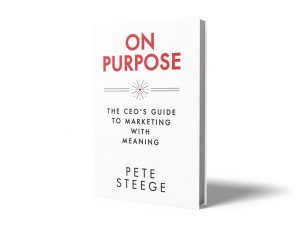
On Purpose, by Pete Steege

Many B2B CEOs carry a dark secret: their marketing is broken—and they don’t know how to fix it.

Pete Steege’s groundbreaking book, On Purpose, offers an unexpected solution: focus first on why you are marketing, and the results will follow. He reframes B2B marketing around a purposeful mindset that helps business leaders right-size their campaigns, align their teams, and have more impact with less angst and effort.

Using this accessible and usable guide, you will learn:​

  • What marketing can and can’t do for your business.

  • How much you should spend on marketing—and where.

  • Which marketing tactics are right for your company.

  • How doing less can actually deliver more results.

  • Why your most powerful message isn’t about you.

Steege shares his experience from three decades as a global marketing leader for innovative companies, ranging from Silicon Valley startups to large corporations. On Purpose will change how you think about marketing—and help you and your business achieve your boldest goals.

Amazon

Pete Steege, President, B2B Clarity

Pete Steege, President, B2B Clarity

Pete Steege is a B2B marketing expert with more than 30 years of experience in a wide range of B2B technology and manufacturing businesses, from 50-person Silicon Valley startups to Fortune 100 firms. He has lived and worked extensively in North America, Europe, and Asia.

Pete holds an MBA degree in marketing and strategic management from the Carlson School at the University of Minnesota, and a bachelor’s degree in electrical engineering from Iowa State University.

He is the founder and president of B2B Clarity, helping CEOs of B2B businesses without a marketing leader, make their marketing work.

LinkedIn | Twitter

TRANSCRIPT

John Ray: [00:00:00] Hello again, everyone. I’m John Ray on the Price and Value Journey. And folks, I’m here today with Pete Steege. Pete is with B2B Clarity and he is also the author of a newly released book called “On Purpose: The CEO’s Guide to Marketing with Meaning”.

Pete is a 30-year marketing veteran. He’s got a wide range of B2B technology and manufacturing business experience, working from Silicon Valley startups all the way to Fortune 500 firms. And he’s got global experience as well in North America, Europe and Asia. And all that experience gives him a wide breadth of perspective and experience he’s going to bring to this interview. But certainly, in his book, which I have read, folks, I have read so, and I’m delighted to say that because it was worth every minute of it. Pete Steege, welcome to The Price and Value Journey.

Pete Steege: [00:01:04] Thanks so much, John. Really happy to be here.

John Ray: [00:01:06] Hey, I’m delighted to have you. Talk about — let’s first of all, just give everyone a quick introduction to what I missed in your business. Tell everyone how you’re serving folks at B2B Clarity, then we’ll get to the book.

Pete Steege: [00:01:21] You know, John, I think you summed it up pretty good. As you said, I’ve been a marketer for a long career. And these last two years have been a big change for me and just a great change where I’m on my own helping B2B business owners and CEOs. And it’s been — it’s just been really, really exciting and satisfying change for me. But yeah, that’s what I do now is I just — I’m able to use some of that, you know, gray hair, I guess, and help people solve problems. I really enjoy it.

John Ray: [00:01:55] One of the aspects to this book that you state right up front is that you believe that most CEOs, B2B CEOs, look at their marketing function and their marketing efforts and they see that as broken. Why?

Pete Steege: [00:02:16] It’s absolutely true. More often than not, they are not satisfied with their marketing. And it’s usually not, oh yeah, it could be better. It’s usually a pain point for them. And I think there’s a couple of things at work there. One is, I think if you’re at all in the business world, you know what a overwhelming space marketing is. I like to call it the marketing industrial complex. There’s so many businesses and agencies and consultants and software applications all fighting for your mindshare and saying that they have the greatest thing since sliced bread to solve your marketing problems.

As a matter of fact, there’s this really interesting number factoid. There’s a guy that tracks it’s called Chief MarTec is the organization, and he’s been tracking since 2011 the number of marketing technology solutions available in the market. And he creates a landscape, right? 2011, the first one, 150. 2022, 9,938 of them.

John Ray: [00:03:32] Oh, wow.

Pete Steege: [00:03:32] So, there’s this overwhelming wealth of solutions, I’ll say, right. So, that’s a problem because no one can get anywhere near to choosing. All of them are even a collection of them. You’re going to have to choose what you’re going to do. And that coupled with the fact that there’s this idea that, oh, I’m just going to choose this thing to do. Some people call it random acts of marketing. You know, hey, we need a video,

John Ray: [00:04:07] Right.

Pete Steege: [00:04:07] Hey, let’s go to the big show this year. You know, this kind of arbitrary thoughts that are emotional sometimes or that feels good, it sounds good. Maybe it sounds fun even sometimes, or your competitor is doing it, right. There’s all these reasons to do them. But you take this wealth of options and couple it with this idea that you can choose one and that it would be just as good by itself versus part of a bigger plan or strategy. And that doesn’t work. It’s like throwing stuff at the wall and your customers are getting these blips of information from you and they’re not consistent when they do get them and you cancel yourself out.

So, basically, a lot of that effort, a lot of the money you are spending is almost — is often just a waste of time because it’s not helping you get closer to your customers.

John Ray: [00:05:09] I’m curious about — I mean, CEOs of larger B2B firms in general, they certainly are — they’re the chief strategy officer, right. And so, this is really a matter of getting their attention diverted toward a tactic, a video, or whatever that tactic, whatever form that tactic takes. Instead of focusing on the strategy and executing the strategy, kind of understand it from a smaller firm point of view, you know, an entrepreneur that’s kind of overwhelmed and can easily maybe get their attention distracted. But the CEO is a bigger firm. I mean, why does this happen? What’s your view on that? You’ve talked to a lot of them, by the way, that was –.

Pete Steege: [00:05:57] I know.

John Ray: [00:05:57] Yeah. So, cite more about that, maybe first.

Pete Steege: [00:06:01] So, I like the fact that I started — when I started my business, I kept track of my meeting. I went out and wanted to talk to CEOs, right. Obviously to find customers, but also to kind of validate as a corporate marketer versus being a solution provider for a CEO, it doesn’t translate, right. So, I had, I think I say in the book, 397 meetings, right. Not all CEOs, but all CEO related people, related to this challenge. And yeah, so a lot of data points and a lot of commonality in that.

And to answer your question, why do the larger companies, strategic CEOs let’s say, ones with a big budget and maybe even a marketing team, they wouldn’t have this problem, right? Guess what? A lot of the places I worked over 30 years were those organizations and I was in those marketing teams. And there is a core problem here that I talked about before that CEOs or their marketing leader or their sales leader tend to bite off more than they can chew with marketing. For the reasons we said, there’s a lot of things you could choose to do, and they tend to try to do more than they can get done, that they can be successful with.

So, even at the larger organizations, I remember one not too long ago where I worked over a hundred marketers on this company’s team and they had big plans and they were sophisticated plans, but they often didn’t finish these sophisticated projects because they were so busy with so many plates spinning. It just scales up, whoever you are. It’s a mindset issue. It’s a problem with thinking of marketing as the more the better. And activity is good versus there’s a less is more theme here and a strategy before tactics.

It’s less important how many things you do and it’s more important why you do them and that you finish, that you finish what you — you do it well, right. That’s really an important part that translates up to — I can’t speak for multibillion dollar companies. Probably a different issue. But certainly, you know, for a wide range of company sizes, this is a challenge for those organizations and the leaders of those organizations to get focus and to follow through and thoughtfully deliver on a purposeful marketing plan.

John Ray: [00:09:00] Pete, one of the things that you talk about in the book is not just, I guess, maybe marketing overload, taking on too many tactics, too many initiatives, but you talk about mindset a lot and that the problem is a mindset of meaning. Explain what you’re talking about there.

Pete Steege: [00:09:28] Yeah. That’s the core of the book, really. What my observation is, there’s a really important hierarchy in marketing. And most businesses, most CEOs know two of the three levels, and they don’t even know the third level exists. The first level, which we all know is tactics. It’s all the stuff you do in marketing. We all know what they are. There’s website, SEO, email, PR, all these things you do. So, these are the things that have a budget line item.

As I said, often, there’s some chaos around the activities, the tactics. And the more incoherent they are, the less valuable they are because they are all out there and your customers are picking them up and they’re busy. And if they don’t hear this common story, it’s a problem, right. So, tactics can be a real and it’s hard to deliver on them. The more you get, you get overloaded, right.

So, the next level is really important, and it really helps solve that problem and that strategy, marketing strategy. Bunch of books out there. You know, we all have our favorites probably if you’re a CEO or a executive. And that helps bring order and priority to these tactics and consistency can really help rein in the chaos. Absolutely. And for a lot of people, that’s where it starts. That’s marketing. You got your tactics, and you got your strategy.

John Ray: [00:11:02] Sure.

Pete Steege: [00:11:03] I strongly believe that there’s a really important element above that, which is mindset. Strategy without mindset, without purpose, without direction — there are almost as many strategies now as there are tactics, right? And there are often multiple strategies that you need to apply to your business marketing, your marketing approach. There are strategies that have to align with your sales strategies and your customer support strategies and your product development so you can — companies that think of strategy as a means to an end that are that — if I just come up with a really smart way to look at this, it’s going to solve all my problems.

They end up with a well, maybe more ordered group of tactics, but I would say in a way they’re almost lifeless, right. They’re mercenary. Their goal is to get, get. Their goal is to get, right, to win the order, maximize profit, change mind perception. All those things are a good outcome. But if those are the destination and there’s not a tie to why you created your business or why you are getting up every day to manage this thing, what’s the vision? What’s the value of your organization.

If your marketing is cut off from that, it doesn’t work. It’s a lot more visible in activity, but it doesn’t change the hearts and minds of your crazy busy clients that are hesitant to come on board with somebody new. And it’s that mindset of meaning that says my — first, I need to start with, okay, why are we in business?

This isn’t a marketing thing. This is why we come here every day. And who is it that we’re here to help? Because a business that gets — you may say, oh, my goal is to make a lot of money. Well, you can’t make a lot of money if you’re not solving a problem for somebody. And knowing that mission is the first step to marketing that works. Because if you know that mission and then you say marketing isn’t a by itself set aside tactic, it’s actually part of us creating the bond with our relationship with our customers that make it work. And so, a little bit of a side topic here.

John Ray: [00:13:57] Yeah.

Pete Steege: [00:13:57] My definition of marketing is optimizing the relationship between your business and your customers. So, it’s relationship. One word, marketing is relationship.

John Ray: [00:14:10] Oh, wow. I love that. And you talk a lot about that in the book too, to be clear. Because those sound like two separate things, mindset and relationship. But they’re not in your world, in your mind.

Pete Steege: [00:14:32] No. And the reason why is picture yourself and your customer, right? There’s these two — it’s a company, yourself as your company, right? But it’s people in your company and then you have your customers. And if your goal is a relationship, I believe that the only way — the way you make that relationship happen, the way you spark it, the way you turn it on and activate it, is meaning. Meaning for them and meaning for you. If you’re doing things at them without a purpose, for the bigger purpose, they can tell.

John Ray: [00:15:10] Right.

Pete Steege: [00:15:11] If they are listening to you or they are interrupted by you and there’s no good reason in their mind why they should talk to you, if there’s not a purpose to that. Meaning, they’re not going to take the time to do it. So meaning back to the word, right, mindset of meaning. Meaning is what makes marketing create that relationship.

John Ray: [00:15:36] So, Pete, let’s talk about — I want to dive into relationship just a little more. You know, for smaller firms, I think they think of that as one-to-one and very personal. They’ve got the capacity to handle one-to-one relationships. As firms get bigger, it gets a little trickier because suddenly you’ve got sales forces and you’ve got layers of folks in your organization. And how are you talking? How do you talk about in the book, you talk about how to create relationships and how those relationships start and how they deepen, cover that force, if you would.

Pete Steege: [00:16:27] Sure. First thing I’ll say is that I like to call them the three superpowers of marketing. So, there are three traits that you as a CEO need to have in your culture and in your organization, that if you do, if those are there, then those relationships happen, but it’s like the essential ingredients of relationship. And what they are is the first one is authenticity. Being transparent and truthful and real with your team and your clients, right, with your world. That’s one authenticity.

The second is intention. Being intentional. We already talked about that, right. That’s having a strategy before you choose your tactics. That’s doing less but doing it better. Choosing, being purposeful, being — doing things with the end in mind. That’s intention, right. That’s the second.

And then the third is generosity. The first two I’ve heard of in a marketing sense or really authenticity, you know, that makes sense.

Pete Steege: [00:17:45] Oh, yeah.

Pete Steege: [00:17:45] Intention, Absolutely, right. Being operationally good and all that. You don’t hear generosity mentioned very often when it comes to marketing, but I am convinced that it is a total — it is absolutely a superpower. And it’s one of the three ingredients. You need all three, but it’s often the missing one.

John Ray: [00:18:07] Well, I want to get to that in a minute, because when I read your book, I had a comment for you on that, that I want to get to. But I think it’s counterintuitive for folks when you talk about the intention piece and you’re talking about let’s do less. I mean, people don’t want to do less, right.

Pete Steege: [00:18:26] Right.

John Ray: [00:18:26] I mean they want to do more because they think pressing on the accelerator is going to what — is what’s going to get them to whatever their goal is for their company. And that’s just counterintuitive and hard for anybody to get their head around.

Pete Steege: [00:18:41] It is. Let me help a little bit with that. There’s a key dynamic in marketing. And I can’t speak to other functions, but it’s absolutely true in marketing that there is a critical mass that you need to reach with a marketing program often, that until you get there, you get kind of zero results from it.

So, let’s say you decide to start posting on LinkedIn and you dabble in it, or you do a poor job of it, or it’s confusing, whatever. You spend a lot of effort on posting on LinkedIn, but it never clicks. Nobody really — it does — it’s not like the more you do, it’s incrementally more result for you and more exposure to your clients. There’s a certain level you have to get to where you reach, escape velocity, and your campaign starts to make a difference and move the needle.

Marketing is that way. A lot of things, okay. So, what often people do is they’re so — they feel so much pressure to do all these things that everybody’s doing around marketing that they — none of them have the mindshare or enough effort available to them to get to that critical mass. So, there’s lots of activity going on, but very little of it is moving the needle. If you force yourself to first say what are — what is important, right. If I had to choose three things, that three programs, tactics, campaigns, that would move the needle for my marketing, I should start with the biggest pain points, right?

So, the first step is understanding that. But when you do and if you can resist the temptation to do the other dozen things now and say, we’re going to solve these three, we’re going to launch these three things, and move the needle in these three ways and check to see if we did, right. That’s part of that intention is be thoughtful and check your work and see if it worked. Your odds of success go way up because you’re able to spend the right amount of time, your team or you or your agency, whatever it might be. You have the time and money needed to do it well, right.

So, those two things. It moves the needle, but also now you’re a brand that does things well. You start to look like you’re good at what you do. And communicating and making relationships is part of what you do, right. So, that’s — I hope that helps with the less is more.

But it’s true in so many factors, it’s true with how much content you put on your website. B2B companies, especially tech B2B, they tend to try to explain everything on their website and put a lot of acronyms on there. So, that’s another example of less is more, right.

John Ray: [00:21:40] Right.

Pete Steege: [00:21:41] Don’t try to explain it all because they don’t have time to grasp it. Another example is your priorities with your team, right? Does your team on board with what’s important right now? Are they all rowing the same direction? Often, people have multiple priorities that confuse their team.

And here’s maybe the most important one, companies need one story. I like to call it the true story, their true story. But they need one story about who they are, whom they serve, how that target benefits from them. And you tell them a lot of different ways, but you got to have that one story. So, that’s another less is more example.

John Ray: [00:22:33] Okay. Now, I’m going to get myself in trouble here. I might get you in trouble here. Let’s see where this goes, but —

Pete Steege: [00:22:40] Let’s do it.

John Ray: [00:22:40] Yeah, okay. Let’s dive into this, because this, the less is more is not where the, I’ll say a lot of the outside marketing firms and really even the inside marketing folks end up, right. I mean because —

Pete Steege: [00:23:01] Right.

John Ray: [00:23:01] And so, there’s a lot of pressure on the CEO or the owner of a business from their own marketing people on this, right. And that’s what I think is so hard for them. I mean, let’s — am I — is it just the marketing people I run into? Or do you see that out there as well?

Pete Steege: [00:23:26] Well, I do see it out there and it’s totally understandable, John.

John Ray: [00:23:31] Yeah.

Pete Steege: [00:23:33] There — you know, it’s their job, right. And more is the shorter path to looking like your progress, right. Because you can quickly point to the activity.

John Ray: [00:23:48] Right.

John Ray: [00:23:50] It’s also more budget that comes with more sometimes.

John Ray: [00:23:53] Well, yeah, that’s where I was going, right. I mean —

Pete Steege: [00:23:56] Oh, it is?

John Ray: [00:23:56] Yeah.

Pete Steege: [00:23:58] And it’s not that people are, you know, their intent isn’t good but there’s a lot of just natural impulse situation here that it’s understandable why it happens so much, right. Because it is counterintuitive and it doesn’t always — sometimes the rewards are delayed, right. This delayed gratification.

Because there’s another connection here, which I’m sure you’ve heard, which I’ve heard from a lot of CEOs, is I just need leads. I need leads and I need them now and I need more. And what can you do to get me those leads next month? Sometimes, there’s a fun, surprising little tweak that does something like that. But most of the time I think you’ve picked up, from my view at least, marketing is an ecosystem.

Marketing is a relationship building engine and it doesn’t happen overnight. And there is — to set up that right environment with your team and your customers and your prospects, it takes time for it to play out. And those leads come more organically usually. Throwing money at a Google Ads, the more you put in, doesn’t mean the more good leads you get out and the more revenue you get out.

There are — like I said, sometimes you get lucky and there’s an opportunity in the market and you want to be ready for those opportunities. But that comes after you’ve understood this — the needs here, right, and the journey your customer is on. And that’s when you see the opportunity. It doesn’t happen, which I see so often where CEOs hire a vendor to do that one tactic, one off in a vacuum, and they say you’re going to mint money with this thing. Wow. This is going to be awesome. It doesn’t happen very often for all the reasons I just said.

John Ray: [00:25:56] Okay. So, Pete, we talked about authenticity. I think we’ve covered intention. So, let’s get to my favorite part in your book, Generous Marketing. And I have to tell folks when I read Pete’s book, I wrote him a note and said you need to name this book, Generous Marketing. And to his credit, he ignored my advice. So, because he knows what he’s doing.

Pete Steege: [00:26:22] Tell me in my next book.

John Ray: [00:26:24] Okay. There you go. And I’ll read that one as well. I loved that concept. And let’s define that in your words. What is generous marketing?

Pete Steege: [00:26:39] So, for me, I like to describe it as customer centricity on steroids, right. This is — we’ve all heard about customer first, and that’s a standard platitude and obvious reasons. Of course, we want to put our customers first. Generous marketing is taking that to another level where putting your customer first isn’t a means to an end. It’s not something you do so you can make more money. It’s the paradox of really believing and wanting what’s best for your customer and changing the behavior of your organization to maximize maximize that. And in a Zen way, magically, that’s where the most success comes, because customers can tell.

And it’s organic, right? It’s deep in their bones that they can tell that you are trying to help them. And that draws them to you more than any persuasive thing you can come up with saying, right. So that’s part — that’s the essence of it. And it shows itself often in a couple of things. One is it’s not about you, right. So, when people aren’t generous, they care about their customers. Of course, they do. But they’re just so excited about what they do to help their customer that that’s what they talk about. Look at how good we are. Look, we are so — we are the best provider for you. And they sincerely — they are, they’re sincere.

But your customer doesn’t want to hear about you. They want to hear about how you can help them. So, the story needs to start with their problem and relieving it. And it just so happens that it’s that thing you do so well that does that. And it’s a subtle difference, but they notice. They notice and they will be drawn to you with your solution for their problem more than they will with your skill and your expertise.

John Ray: [00:28:58] I think it’s so important what you just said about how there’s a subtle difference to this. And it’s so subtle that I’m not sure a lot of companies and marketing gurus, marketing executives, and CEOs get the difference. I think everybody thinks their marketing is helpful, right. We’re trying to help. I think most people think that. But there is a difference that the client can see. So, dive into that a little more.

Pete Steege: [00:29:36] Yeah. So, I think I totally agree with you. It’s subtle, right, and but powerful. And just maybe a couple of other insights along the way that may help people make sense of this. Let me paint a picture.

John Ray: [00:29:51] Yeah.

Pete Steege: [00:29:54] Some things that generous marketing is not. So, persuasion is one thing. Persuasion is an interesting topic for me. When I was early in my — actually, my favorite example is I used to say I’m a marketer. I used to say, oh my gosh, I hate sales. I would never be a salesperson. And my memory is going door to door as a junior high, a 12-year-old or whatever, selling raffle tickets and having to knock on somebody’s door and interrupt their life and say, would you buy these things for me knowing that they had no, I didn’t believe in this was going to help make their life better.

And I — since then I’m realizing what I didn’t like about that wasn’t selling. What I didn’t like about that was putting myself first, right. And trying to talk them — and that’s where persuasion comes in. The best marketing doesn’t have to convince a client of something that they don’t already know or already want. The best marketing finds the people that they truly can help the people that need them and shares the good news about the solution that they have for them.

John Ray: [00:31:08] Right.

Pete Steege: [00:31:09] It’s more of an awareness and an education opportunity. Three things, awareness, education and a gift, right. It’s — do the — start giving. This is another subtle difference here. You may say, we believe it, we want our customers to succeed. I will ask you a tough — a hard question. Ask yourself this. Is your motive — in your mind, is your motive how do I maximize my revenue from this client? Or is your motive how much can I give away before I have to charge them?

Now, those are extremes. But I believe that if you truly could find a way to have that second perspective, and an example of that in the B2B tech world is thought leadership and content, where you’re an expert at what you do. Again, you’re looking for people that need how you can help them because you want to help them, right?

John Ray: [00:32:08] Right.

Pete Steege: [00:32:09] And you say, you know what, I have this service for them that someday hopefully they’ll let me do for them and they’ll pay me. But in the meantime, I have these tips, or I have this framework, or I have this how to guide that will help — as they read this, their life’s going to be better today. They’re going to solve a problem that I know they have because I’m an expert on what they — what that problem is. I can give that to them for free. And they’re going to be — that helps me eventually because they, again, they got it for free.

And if I don’t do that, if I start with rather than giving them something for free, I start with, hey, I’m going to ask you to give me something for free, maybe your email address or have a meeting with me, and my only message is, yeah, I just want you to — do me a favor almost is what it almost ends up being like, right?

John Ray: [00:33:09] Right.

Pete Steege: [00:33:10] Step back from that for a minute. Is that right? Do you really want to ask your customer to pay you first? Generous marketing gives first. And then as long as you can, and again that’s where you look at, free demo. What is it? What is it we can give? Is it free trial? And of course, the math needs to work. You can do it in such a way that it pays for itself.

And I will use an example. I’ll use an extreme example. Apple. Obviously, everyone knows the Apple story. I’m a happy Apple user and no, they’re not perfect, but and I pay a lot for their hardware, and their services, and their subscriptions. I pay more than I could for other people because I feel like I’m getting more than I’m paying. It’s — yeah, I don’t feel like I’m getting skinflint at along the way, you know.

John Ray: [00:34:12] You’re getting value.

Pete Steege: [00:34:14] Getting value consistently.

John Ray: [00:34:17] Right.

Pete Steege: [00:34:17] And it’s not like I got — I looked for a deal and I got one over on them, right. Again, it’s a trusted relationship where I know what I — that’s back to brand, right? I have an expectation of value from my provider. You have the opportunity as a generous marketer to focus first on the relationship by giving in ways that will connect them with you because you know you can help them and that’s a profitable relationship long-term. Just trust it. Make — invest in the relationship and that’s how you build that expectation, that expected value brand over time.

John Ray: [00:34:58] So, Pete, you know, I think a lot of the response a lot of folks have to what you’re talking about is if I give everything away, because I think what they hear is it’s all or nothing when you —

Pete Steege: [00:35:16] Right.

John Ray: [00:35:17] Right. When I give everything away, then why are they going to hire me? Right. I mean, so respond to that thought that I think is going around in some heads out there.

Pete Steege: [00:35:30] If everything you have to offer them, everything they need, everything they value that you can offer them, they can get it from that content or email, you probably need to rethink your product offering. I believe that if you are not this — and this doesn’t work for commodities, I’ll say it right upfront. But if you’re in the business, where you — back to that beginning, you’ve identified that your company has a unique reason to exist, something you do, nobody else can offer them, and you know who it is that has that need that only you can offer, I have found that companies that give without limit within economic reality, right. Of course, at some point you charge. But if you don’t, don’t try to hold back because maybe they won’t need you. If you’ve truly found that product market fit, they absolutely will, the ones that are going to be profitable long-term customers, they want help, right?

You’re the expert. You’ve just made the case from your help that one, you’re trusted. Two, you know your stuff because I’m using your ideas.

John Ray: [00:36:56] Right.

Pete Steege: [00:36:57] And you’re really good at this. And this is important to my business. So, I’m going to get some more of that goodness from you. I need to sign up. Tell me about what you can — how else you can help me. And back to what I said. If your answer is well, it’s pretty much what I shared with you in that spreadsheet, you haven’t thought through your value proposition and your service offering or your product offering because you have more to give them than what you can give them in a quick piece of content.

John Ray: [00:37:29] Well, let me put it a way that I’m going to let you either agree or disagree and tell me where you disagree. You know, if — let’s take your book, for example. I mean, somebody thinks, well, I can get all Pete’s secrets by reading his book, right, because you’re a generous marketer, so you’re going to put it all in the book. The problem with that line of thinking and then being, let’s call it stingy or whatever you want to term you want to give it.

The problem with that line of thinking is what it discounts is the fact that if I read your book and I’m a CEO and I agree with what you’re saying, hiring you is going to help me get there much faster. I mean, I’m going to have to you know, I buy into everything you say. Okay, you’ve laid it all out for me, but I’m going to get there much faster by hiring you and my results are much more assured, right?

Pete Steege: [00:38:36] Right. Another way to say that. Agreed. Another way to say that is I’m a CEO of a business. If you’re — if my client is a CEO of a business, they have a lot more to think about than the marketing.

John Ray: [00:38:50] Right.

Pete Steege: [00:38:50] And they’re looking — as you said, they’re looking for help that starts with some ideas in the book. Give them that. I also do videos on LinkedIn, which again, it’s a way for me to give them three or four minutes of ideas and they can quickly just, oh, okay, that’s something to think about. Both the book and the videos share what’s possible. But to your point, I’m in the business of helping CEOs transform their marketing and create an ecosystem that runs, right, that it keeps going.

John Ray: [00:39:26] Right.

Pete Steege: [00:39:26] And there may be some out there. Just to be clear, there may be some small business owners, some founders, where DIY is their solution. And you know what? I’m good with that. I believe that there’s — my market is rich enough that I can give some stuff away and nobody is going to ever need and some of those people will never need any more for me. But there’s enough CEOs and businesses out there that, as you said, they see — the idea is just plant a seed for them, right, and they need help to implement it. And that’s my opportunity to really move the needle with them.

John Ray: [00:40:07] Yeah. And B2B services provider out there, I’m using Pete as an example here. You know, look at yourself the same way. I mean it — and what you’ve got to offer the same way. That DIY as you brought up, I think it’s a great point, Pete. They’re never going to hire you, anyway, right? So, it really doesn’t matter what the message is to that particular group of clients, they’re never going to hire you. So. So don’t worry about them.

Pete Steege: [00:40:39] Can I add to that?

John Ray: [00:40:40] Please.

Pete Steege: [00:40:41] Those DIYers that may not hire you, could be a lot of them. They’re not going to hire you. But what they might do is be at a dinner party, say, I just read the most interesting book colleague of mine that’s also a business owner. It was really interesting. I got something out of it, right. So that’s — to me, that’s better marketing than anything I could, right, to that person they know at the dinner party is that their friend that they trust, suggesting that there’s value for me. And that person might be the right one that I could help.

John Ray: [00:41:20] So, I have to come back to one point that you’ve made so many great points here that it’s hard for me to keep up with them all, Pete. Sorry about that. But one — you talked about always trying to persuade and that being a problem. So, I take it that all these lead pages I see and all these posts I see that are always trying to get me to sign up for the latest webinar or the, you know, the latest sales coaching, whatever. I mean, you know, you’re not really in favor of that kind of thing.

Pete Steege: [00:41:57] I’m going to disagree with that.

John Ray: [00:41:59] Okay. I’m glad I brought it up then.

Pete Steege: [00:42:02] Yeah. If I have done — if I’ve done the work to understand the strategy as I talked about and I know what my ideal customer journey is, there’s a point on that journey where that webinar — a webinar is another way to help, right?

John Ray: [00:42:23] Mm hmm.

Pete Steege: [00:42:23] So, if there’s a point on that journey where giving them some tools or some some perspective or a case study or something about their problem is helps, then that’s a great thing to do. Maybe what you’re saying and you mentioned the persuasion thing.

John Ray: [00:42:42] Yeah.

Pete Steege: [00:42:43] It’s not tricking them into going. Again, being authentic and generous and saying, hey, people out there, wherever you can find them, maybe it is email, maybe it’s a web ad, could be. But it’s got to be value. It’s a valuable offer. It’s not clickbait, right.

John Ray: [00:43:05] Right.

Pete Steege: [00:43:05] You’re not trying to deceive them into coming and deceive them into the value of your webinar. To me, best marketing is authentically sharing the good news of I have this thing that will be valuable for you, you can come for free. Come to my webinar. Here’s a way to do it. Make it as easy as — again, it’s about them, what’s easy, what’s valuable. And then yes, so there’s a role for that.

John Ray: [00:43:31] Terrific. Now, Pete, we could go on for a while, but I probably ought to let you get back to working with the clients. But when — lets some this up, you know. I definitely encourage folks read the book. But sum it up for us, Pete. I mean, in terms of just you talked about the takeaways. The takeaways that a B2B services or product company ought to think about.

Pete Steege: [00:44:05] So, if I had to summarize it, what I would encourage CEOs and other business owners out there to do is take the time. When it comes to marketing, take the time to set aside what you’re doing and do some do some soul searching. And think about these three things. Is my marketing authentic? My marketing and my team and my culture, is it authentic? Is it intentional? o we have a reason for everything we’re doing? Is it generous? All the things we talked about there?

And if it’s not, you know, I’d encourage you to consider it. Considering it is a different approach. And, you know, in marketing, any time you can do something different than everybody else is doing, something to think about because standing out is a good thing in this world, right. So, I hope CEOs out there, you know, go to a quiet place for a couple of hours and just maybe think through those ideas and see how they apply to you. And there might be some real gems of opportunity for your business with this kind of a mindset of meaning as a reason for what you’re doing in your marketing.

John Ray: [00:45:29] Yeah. And it sounds like folks ought to think about getting some different perspective on this, right? Because their own perspective may be a little jaded. They may think they’re more generous than they really are. They think they’re more intentional or authentic than they really are. So, maybe some third-party perspective, maybe asking their employees, right.

Pete Steege: [00:45:50] Yes.

John Ray: [00:45:51] I mean, so get more ideas on this than just what you come up with over a weekend.

Pete Steege: [00:46:00] I’m going to follow up with what you said.

John Ray: [00:46:02] Please.

[00:46:03] I love what you said. Here’s an even easier than taking that introspection time. Take a little time and do a poll of your employees, as you said, ask them some open-ended questions. Why do you think we’re in business? What’s the most important? What’s our most important message? What do we tell people? Something simple like that, you might be very surprised at the variety of answers you get. Two problems there. One is they’re not the answers you want.

John Ray: [00:46:37] Right.

Pete Steege: [00:46:38] And two is everybody’s got a different answer.

John Ray: [00:46:40] Mm hmm.

Pete Steege: [00:46:40] It’s a good starting place to say I think I need to put a little effort into this purpose thing.

John Ray: [00:46:47] Wow. Lots to think about, folks from Pete Steege. He is the author of On Purpose: The CEO’s Guide to Marketing with Meaning. And he’s also the founder and CEO of his own firm, B2B Clarity.

Pete, this has been great. And I would love it if you could share some coordinates with folks because I can’t imagine there aren’t some folks that would like to be in touch.

Pete Steege: [00:47:15] Sure. And John, thanks so much for the opportunity. It was a great chat today.

John Ray: [00:47:19] Thank you.

Pete Steege: [00:47:19] People can reach me. I find the easiest way is on LinkedIn. Pete Steege, S-T-E-E-G-E, or my website B2Bclaritymarketing.com.

John Ray: [00:47:30] Terrific. And you can find the book on all the usual outlets, folks. So, again, do check it out. I’ve read it and it’s terrific. And it’s a quick read, but dense with a lot of things to take away. So, check it out, On Purpose: The CEO’s Guide to Marketing with Meaning. Pete Steege. Pete, thanks again for coming on.

Pete Steege: [00:47:55] Thank you, John.

John Ray: [00:47:56] Hey, folks, I just want to remind you that you can find previous episodes of this show, The Price and Value Journey. Just go to pricevaluejourney.com. And if you’d like to connect with me directly, just you can email me, john@johnray.co. Thank you for joining us.


About The Price and Value Journey

The title of this show describes the journey all professional services providers are on:  building a services practice by seeking to convince the world of the value we offer, helping clients achieve the outcomes they desire, and trying to do all that at pricing which reflects the value we deliver.

If you feel like you’re working too hard for too little money in your solo or small firm practice, this show is for you. Even if you’re reasonably happy with your practice, you’ll hear ways to improve both your bottom line as well as the mindset you bring to your business.

The show is produced by the North Fulton studio of Business RadioX® and can be found on all the major podcast apps. The complete show archive is here.

John Ray, Host of The Price and Value Journey

John Ray The Price and Value Journey
John Ray, Host of “The Price and Value Journey”

John Ray is the host of The Price and Value Journey.

John owns Ray Business Advisors, a business advisory practice. John’s services include advising solopreneur and small professional services firms on their pricing. John is passionate about the power of pricing for business owners, as changing pricing is the fastest way to change the profitability of a business. His clients are professionals who are selling their “grey matter,” such as attorneys, CPAs, accountants and bookkeepers, consultants, marketing professionals, and other professional services practitioners.

In his other business, John a Studio Owner, Producer, and Show Host with Business RadioX®, and works with business owners who want to do their own podcast. As a veteran B2B services provider, John’s special sauce is coaching B2B professionals to use a podcast to build relationships in a non-salesy way which translate into revenue.

John is the host of North Fulton Business Radio, Minneapolis-St. Paul Business Radio, Nashville Business Radio, Alpharetta Tech Talk, and Business Leaders Radio. house shows that feature a wide range of business leaders and companies. John has hosted and/or produced over 1,100 podcast episodes.

Connect with John Ray:

Website | LinkedIn | Twitter

Business RadioX®:  LinkedIn | Twitter | Facebook | Instagram

Tagged With: authenticity, B2B Clarity, generosity, intention, John Ray, marketing, marketing with meaning, On Purpose, Pete Steege, purpose, The Price and Value Journey

Sora Baek and Camilla Ross with Emerson Theater Collaborative and Karen Loomis with No Moss Brands

September 26, 2022 by Karen

Sora-Baek-and-Camilla-Ross-with-Emerson-Theater-Collaborative-and-Karen-Loomis-with-No-Moss-Brands-feature
Phoenix Business Radio
Sora Baek and Camilla Ross with Emerson Theater Collaborative and Karen Loomis with No Moss Brands
Loading
00:00 /
RSS Feed
Share
Link
Embed

Download file

Sora-Baek-and-Camilla-Ross-with-Emerson-Theater-Collaborative-and-Karen-Loomis-with-No-Moss-Brands

Sora Baek and Camilla Ross with Emerson Theater Collaborative and Karen Loomis with No Moss Brands

Sora-Baek-Phoenix-Business-RadioSora Baek (Writer/Performer) is an award-winning actor, writer and producer from South Korea. SELL-ME-POSTER

She has been featured on News 12 NJ and Voice of America. Select acting theater credits include: SELL ME: I am from North Korea (International Human Rights Festival, NYC, Jersey City Theater Center), The Storm, A Christmas Carol, 400 Parts Per Million, and Sworn Virgin (NYC and International Tour) with Blessed Unrest, Who’s Afraid of Virginia Woolf (Calaveras Repertory Theatre), Odd Couple, and A Midsummer Night’s Dream (Curious Frog).

Sora received Best Actress at the Epidemic Film Festival in San Francisco. She works with Only Make Believe(NYC) where she creates interactive theater with children in hospitals and care facilities.

She is an associate member of an internationally acclaimed theater company, Blessed Unrest.

Connect with Sora on Facebook and Instagram.

ETC_Logo_CMYK

The Emerson Theater Collaborative’s mission is to serve youth, under-represented communities and artists with an emphasis on diversity, by producing innovative and exhilarating theater in Southeastern Connecticut and Sedona Arizona. ETC explores timely themes and issues through new, original works and modern theatrical classics. We develop and nurture both emerging and professional artists, and collaborate with area businesses,

Developing and producing innovative theater with a focus on diversity, equity and Inclusion, youth, and the under-represented with both emerging and professional artists.Our goals include reaching inner city youth through educational theatrical programming, to support our local communities by providing free admission to our performances to low-income families and donating profits to humanitarian causes.

Camilla-Ross-Phoenix-Business-RadioCamilla Ross is an award winning, producer, actor and president of the company Emerson Theater Collaborative. She is also the Executive Director of the Arts Academy of Sedona formerly known as the Sedona Arts Academy in the VOC.



A Navy and Army Veteran and an adjunct Instructor of Business Classes at Three Rivers Community College. I’ve been on a quest to create ART from a performers’ perspective. To support playwrights whose vision is to change the world by telling a story.

To see the ALL and not just the ONE. As we come into our 14th year as a company the Emerson Theater Collaborative continues its mission of allowing people to experience the human condition live, upfront and personal. By bringing you theatrical works that can change or alter the human condition is of grave importance.

Follow The Emerson Theater Collaborative on Facebook and Instagram.

No-Moss-Brands-logo

No Moss Brands is a branding, Marketing and Advertising Company in Phoenix, AZ that specializes in social change and non-profits.

Karen-Loomis-Phoenix-Business-RadioKaren Loomis left a successful corporate career where she directed the branding, marketing and advertising efforts of a major retailer and finance company with over 115 stores in 20 major markets across the U.S. Through her unique branding and marketing approach the company tripled their annual revenue ($500M to $1.5 B).

Her professional branding experiences also include a two year stint with an advertising agency where she helped both consumer and business-to business clients increase their brand awareness and sales.

Karen realized several years ago, she does her best work with small business owners and entrepreneurs who perhaps do not have the resources of large corporations, but still want to see the same kind of success…doubling or tripling their income with a “memorable” brand.

Connect with Karen on LinkedIn and follow No Moss Brands on Facebook.

Tagged With: advertising for small businesses and non-profits, Branding, Camilla Ross, Emerson Theater, marketing, North Korea theater, North Korean defectors, One woman show, Sedona Theater, Theater activism, theatre, Unforgettable Live

Eric Whitmoyer with My Biz Coaches and Jim Wilkerson with Wilkerson Consulting

September 15, 2022 by Karen

Eric-Whitmoyer-with-MyBiz-Coaches-and-Jim-Wilkerson-with-Wilkerson-Consulting-feature
Phoenix Business Radio
Eric Whitmoyer with My Biz Coaches and Jim Wilkerson with Wilkerson Consulting
Loading
00:00 /
RSS Feed
Share
Link
Embed

Download file

Eric-Whitmoyer-with-MyBiz-Coaches-and-Jim-Wilkerson-with-Wilkerson-Consulting

Eric Whitmoyer with My Biz Coaches and Jim Wilkerson with Wilkerson Consulting

MBCs-Royal

My Biz Coaches is a business consulting firm that takes a personalized approach to help our clients achieve their goals. We specialize in sales and marketing, operations, finance, and leadership and personal development.

Our team of experienced consultants provides practical solutions that get results. We understand that business owners need a sounding board to help them navigate the ever-changing landscape of business. Let My Biz Coaches be your guide to success!

At My Biz Coaches, we have garnered the knowledge and experience of many successful business people, captured their best insights and knowledge, and provided this information to our clients to help them build, re-build, scale, acquire and even sell their businesses.

Eric-WhitmoyerEric Whitmoyer is a highly accomplished “no-nonsense” executive, speaker, author, & business coach. He is an entrepreneur who has owned over a dozen different businesses and spent 20 years as an executive leader of two $100 million companies and been responsible for generating over $1.6 billion in sales during that time.

After working his way up the corporate ladder to become an executive at two $100 million companies and achieving exceptional results in sales and operations along the way, as well as starting or acquiring more than a dozen businesses of his own, Eric decided to start coaching others on what he had learned.

Eric leverages his skills and experience to lead companies to peak success. Among his many achievements, Eric is recognized as an Advanced Certified Trainer in the Success Principles, a certified instructor of the Barrett Values Centre, has certifications in multiple Sales and Leadership programs, and has authored books on Goal Setting, Time Management, & Business.

Despite his professional success, Eric is most proud of his role as a husband, father, and grandfather. Eric was also a Professional Kickboxer and held the US Light-Heavyweight title from 94 to 96. He is an avid weight lifter, strength competitor, and fitness enthusiast. A die-hard Pittsburgh Steelers fan and served in the US Army National Guard from 1989 till 1996.

Connect with Eric on LinkedIn and follow My Biz Coaches on Facebook, Twitter and Instagram.

Jim-WilkersonJim Wilkerson, Founder of Wilkerson Consulting, is a third generation Phoenix native who has a background based in financial services and education.

Jim has a 34 year tenure providing financial services and consulting to fortune 500 corporations, utilities, municipalities and business owners. These services include financial forecasting, business finance, corporate cash management, pension plan and 401-K investment management.

Jim has also worked with local businesses to scale and grow their operations through marketing and sales programs designed to get the business ready for sale, and implementing existing ownership exit strategies.

Jim has worked in the non-profit world succesfully designing and implementing donor engagement programs such as planned giving and traditional fundraising for Habitat For Humanity Central Arizona Chapter, and holds the American Fundraising Professional Certification.

Jim is married to his college sweetheart for over 42 years and has two lovely, successful daughters and 3 grandchildren. He attended Northern Arizona University on a full ride track scholarship setting both the school and conference records in the pole vault.

Post college, he worked his way into the world class vaulting arena where he eventually was invited to attend the 1980 Olynpic Trials.

Connect with Jim on LinkedIn and Facebook.

Tagged With: business coaching, business consulting, business growth, marketing, Sales

Simon Says Let’s Talk Business 2.0: Joe Huggins of Keller Williams & Virginia Bowman of Synergetic Media join Host Gary Zermuehlen of Sandler Training, Simon INC

August 6, 2022 by Amanda Pearch

Forsyth Studio
Forsyth Studio
Simon Says Let's Talk Business 2.0: Joe Huggins of Keller Williams & Virginia Bowman of Synergetic Media join Host Gary Zermuehlen of Sandler Training, Simon INC
Loading
00:00 /
RSS Feed
Share
Link
Embed

Download file

Virginia Bowman of Synergetic Media & Joe Huggins of Keller Williams 


Virginia Bowman of Synergetic Media

Synergetic Media brings together the best of both the latest technologies and design for your business. Their design team is classically trained from institutions such as Savannah College of Art and Design and Washington University while our production specialists are the envy of their peer set. With a passionate heart and creative eye and they seek to demonstrate that through storytelling. They have a hands-on collaborative approach to your business that is refreshing, valuable – and synergetic!

Joe Huggins of Keller Williams 

Joe has a background in TV/Film. Nashville, LA, Atlanta. He has been in Atlanta for over 25 years. He is focused on high level of customer satisfaction and negotiation has provided skill set now in Real Estate transactions. Joes’ motto is “I don’t Sell, I Serve clients”. Keller Willams aims to be the real estate company of choice for agents and their customers allowing them build careers worth having, businesses worth owning, lives worth living, experiences worth giving, and legacies worth leaving.

Host Gary Z is a Sales Trainer & Coach at Sandler Training, Simon Inc.
Companies depend on sales force development. Gary and team equip sales professionals to drive sales revenue higher, uncover significantly more business opportunities, shorten their selling cycles, and protect their gross profit margins. Using a powerful combination of consulting, sales training, they help their client community to achieve goals and overcome challenges.


Series proudly presented by Sandler Training, Simon Inc.

Simon-Says-Forsyth-banner.png

Broadcasted LIVE from the Forsyth Business RadioX Studio in Cumming, Georgia

Produced by Amanda Pearch

Tagged With: business, Gary Zermuehlen, Joe Huggins, Keller Williams, marketing, real estate, sales trainer, Sandler Training, Simon Inc, Synergetic Media, Virginia Bowman

  • « Previous Page
  • 1
  • 2
  • 3
  • 4
  • 5
  • 6
  • …
  • 45
  • Next Page »

Business RadioX ® Network


Our Most Recent Episode

CONNECT WITH US

  • Email
  • Facebook
  • LinkedIn
  • Twitter
  • YouTube

Our Mission

We help local business leaders get the word out about the important work they’re doing to serve their market, their community, and their profession.

We support and celebrate business by sharing positive business stories that traditional media ignores. Some media leans left. Some media leans right. We lean business.

Sponsor a Show

Build Relationships and Grow Your Business. Click here for more details.

Partner With Us

Discover More Here

Terms and Conditions
Privacy Policy

Connect with us

Want to keep up with the latest in pro-business news across the network? Follow us on social media for the latest stories!
  • Email
  • Facebook
  • Google+
  • LinkedIn
  • Twitter
  • YouTube

Business RadioX® Headquarters
1000 Abernathy Rd. NE
Building 400, Suite L-10
Sandy Springs, GA 30328

© 2025 Business RadioX ® · Rainmaker Platform

BRXStudioCoversLA

Wait! Don’t Miss an Episode of LA Business Radio

BRXStudioCoversDENVER

Wait! Don’t Miss an Episode of Denver Business Radio

BRXStudioCoversPENSACOLA

Wait! Don’t Miss an Episode of Pensacola Business Radio

BRXStudioCoversBIRMINGHAM

Wait! Don’t Miss an Episode of Birmingham Business Radio

BRXStudioCoversTALLAHASSEE

Wait! Don’t Miss an Episode of Tallahassee Business Radio

BRXStudioCoversRALEIGH

Wait! Don’t Miss an Episode of Raleigh Business Radio

BRXStudioCoversRICHMONDNoWhite

Wait! Don’t Miss an Episode of Richmond Business Radio

BRXStudioCoversNASHVILLENoWhite

Wait! Don’t Miss an Episode of Nashville Business Radio

BRXStudioCoversDETROIT

Wait! Don’t Miss an Episode of Detroit Business Radio

BRXStudioCoversSTLOUIS

Wait! Don’t Miss an Episode of St. Louis Business Radio

BRXStudioCoversCOLUMBUS-small

Wait! Don’t Miss an Episode of Columbus Business Radio

Coachthecoach-08-08

Wait! Don’t Miss an Episode of Coach the Coach

BRXStudioCoversBAYAREA

Wait! Don’t Miss an Episode of Bay Area Business Radio

BRXStudioCoversCHICAGO

Wait! Don’t Miss an Episode of Chicago Business Radio

Wait! Don’t Miss an Episode of Atlanta Business Radio