

Decision Vision Episode 112: Should I Market with Search Engine Optimization (SEO)? – An Interview with Ian Lurie, Ian Lurie, LLC
Ian Lurie nerds out, as he terms it, on SEO, considering it both an art and a science. On this edition of “Decision Vision,” Ian and host Mike Blake discussed how SEO impacts a business’s visibility and success, mistakes businesses make with SEO, why good SEO is akin to building an asset, and much more. “Decision Vision” is presented by Brady Ware & Company.
Ian Lurie, CEO of Ian Lurie, LLC
Ian Lurie, LLC provides digital strategy, content, and SEO consulting to small businesses and Fortune 500 companies alike.
Ian Lurie is a digital marketing consultant, SEO, content guy, and overall digital marketing nerd. He has 40,000+ hours of experience in internet marketing. Ian uses both sides of his brain as a content creator, search engine optimization nerd, and data addict. He is a speaker and author as well.
Ian founded Portent, a digital marketing agency, in 1995, and sold it to Clearlink in 2017. He’s now on his own, consulting for brands he loves and speaking at conferences that provide Diet Coke. He’s also trying to become a professional Dungeons & Dragons player, but it hasn’t panned out.
He has a TikTok profile, but his kids are embarrassed by it, so we’ll leave that out.
Mike Blake, Brady Ware & Company

Michael Blake is the host of the “Decision Vision” podcast series and a Director of Brady Ware & Company. Mike specializes in the valuation of intellectual property-driven firms, such as software firms, aerospace firms, and professional services firms, most frequently in the capacity as a transaction advisor, helping clients obtain great outcomes from complex transaction opportunities. He is also a specialist in the appraisal of intellectual properties as stand-alone assets, such as software, trade secrets, and patents.
Mike has been a full-time business appraiser for 13 years with public accounting firms, boutique business appraisal firms, and an owner of his own firm. Prior to that, he spent 8 years in venture capital and investment banking, including transactions in the U.S., Israel, Russia, Ukraine, and Belarus.
Brady Ware & Company
Brady Ware & Company is a regional full-service accounting and advisory firm which helps businesses and entrepreneurs make visions a reality. Brady Ware services clients nationally from its offices in Alpharetta, GA; Columbus and Dayton, OH; and Richmond, IN. The firm is growth-minded, committed to the regions in which they operate, and most importantly, they make significant investments in their people and service offerings to meet the changing financial needs of those they are privileged to serve. The firm is dedicated to providing results that make a difference for its clients.
Decision Vision Podcast Series
“Decision Vision” is a podcast covering topics and issues facing small business owners and connecting them with solutions from leading experts. This series is presented by Brady Ware & Company. If you are a decision-maker for a small business, we’d love to hear from you. Contact us at decisionvision@bradyware.com and make sure to listen to every Thursday to the “Decision Vision” podcast.
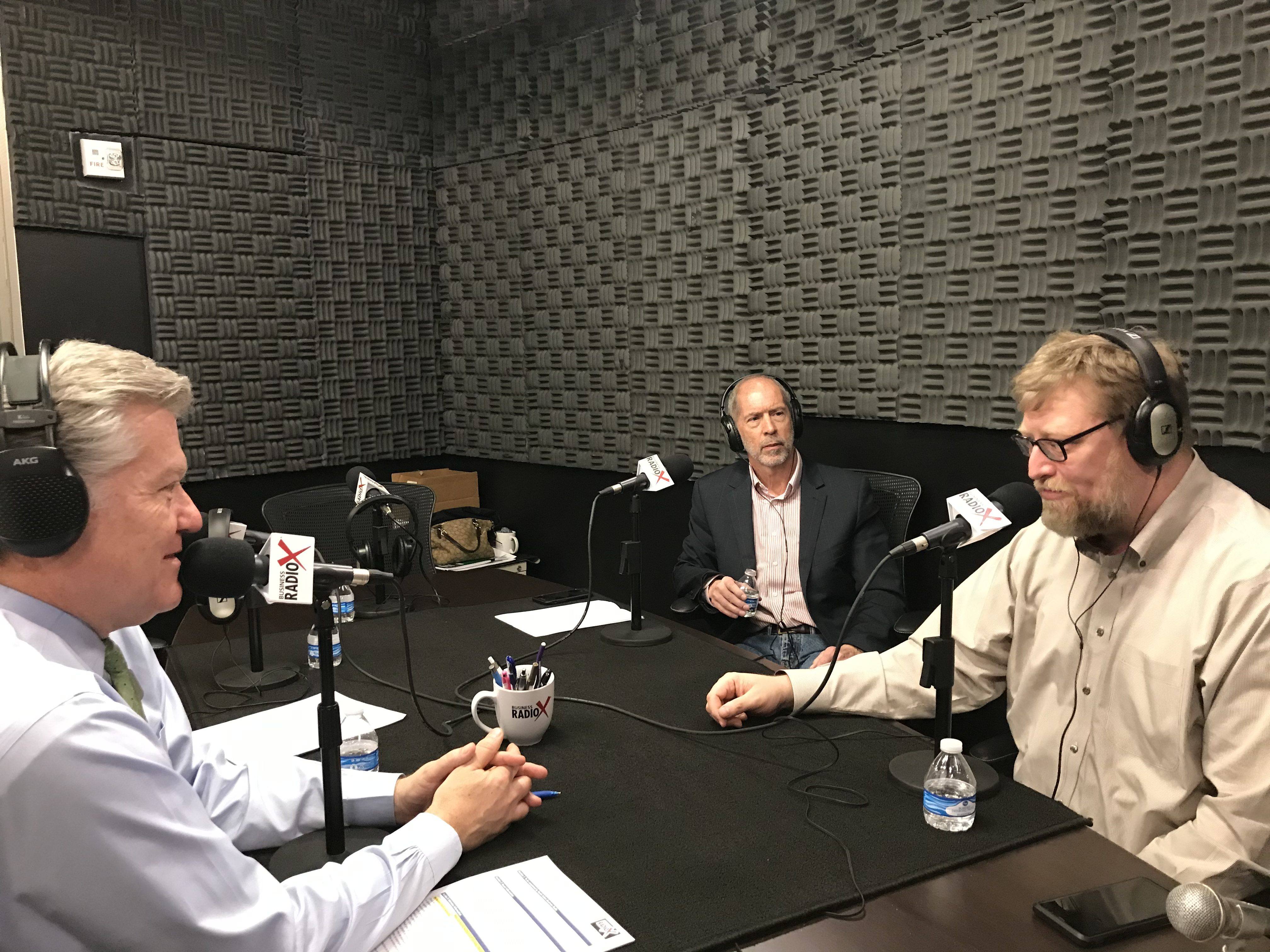
Past episodes of “Decision Vision” can be found at decisionvisionpodcast.com. “Decision Vision” is produced and broadcast by the North Fulton studio of Business RadioX®.
Connect with Brady Ware & Company:
Website | LinkedIn | Facebook | Twitter | Instagram
TRANSCRIPT
Intro: [00:00:01] Welcome to Decision Vision, a podcast series focusing on critical business decisions. Brought to you by Brady Ware & Company. Brady Ware is a regional full service accounting and advisory firm that helps businesses and entrepreneurs make visions a reality.
Mike Blake: [00:00:21] Welcome to Decision Vision, a podcast giving you, the listener, clear vision to make great decisions. In each episode, we discuss the process of decision making on a different topic from the business owners’ or executives’ perspective. We aren’t necessarily telling you what to do, but we can put you in a position to make an informed decision on your own and understand when you might need help along the way.
Mike Blake: [00:00:40] My name is Mike Blake, and I’m your host for today’s program. I’m a director at Brady Ware & Company, a full service accounting firm based in Dayton, Ohio, with offices in Dayton; Columbus, Ohio; Richmond, Indiana; and Alpharetta, Georgia. Brady Ware is sponsoring this podcast, which is being recorded in Atlanta per social distancing protocols. If you would like to engage with me on social media with my Chart of the Day and other content, I’m on LinkedIn as myself, and @unblakeable on Facebook, Twitter, Clubhouse, and Instagram. If you like this podcast, please subscribe on your favorite podcast aggregator, and please consider leaving a review of the podcast as well.
Mike Blake: [00:01:16] So, today’s topic is, Should I market with Search Engine Optimization or SEO? And before we dive into that, you may hear some pauses throughout this podcast. I came down with a touch of bronchitis yesterday. But I’m a lunch pail guy. I don’t have a lot of talent, but I play hard to make sure I stay on the team. So, I think that we’ll get through it. So, if you notice some gaps, that’s just me trying not to blow your eardrums out as I’m hacking something up. But on with the show.
Mike Blake: [00:01:47] So, I want to talk about SEO because I think SEO has sort of fallen to the background a little bit in terms of the common vernacular, and, certainly, it hasn’t gone away by any stretch of the imagination. But I think there’s a lot more chatter right now around marketing, through LinkedIn, and marketing through Facebook, and marketing through YouTube. And, of course, you know, the podcast we do does have marketing value to it. I’m not going to sit here and say that it doesn’t.
Mike Blake: [00:02:19] But, you know, before the advent of social media, really everything was about SEO. It’s all about where are you going to fall in terms and be presented in a search. And what we’re going to talk about today is that, you know, there are lots of sneaky search engines around there that, if anything, have made SEO more pervasive rather than less. But it may have changed.
Mike Blake: [00:02:44] And to be perfectly candid, I have not looked at SEO in a meaningful way, I think, in ten years. It just hasn’t been on my business radar screen personally. But I’m sure it’s on the business radar screens for you guys, at least some of you. And I may learn in this podcast that it needs to be on my radar screen. So, you know, it’s a topic that I think is sort of one of these unsung heroes and one of these topics that’s sort of in the background. And I want to give it the light of day that it deserves.
Mike Blake: [00:03:17] And joining us today is Ian Lurie, joining us from California, who is a digital marketer and with a 25 year intolerance of trendy concepts and nonsense – so a man that is near and dear to my heart. Someone told him to say no to bullshit – I can say that because this is the internet – so he’s trying really hard not to. Ian uses both sides of his brain as a content creator, search engine optimization nerd, and data addict. Ian founded Portent, a digital marketing agency in 1995, and sold it to Clearlink in 2017.
Mike Blake: [00:03:53] He’s now on his own consulting for brands he loves and speaking at conferences that provide Diet Coke. He’s also trying to become a professional Dungeons and Dragons player, but it hasn’t panned out. He has a TikTok profile, but his kids are embarrassed by it – so we’ll leave that out. Ian Lurie, welcome to the program.
Ian Lurie: [00:04:09] Thanks, Mike. If you start coughing, I never shut up so I can always fill in the gaps.
Mike Blake: [00:04:15] Well, good. You’re going to be my human cough bud, so that’s good.
Ian Lurie: [00:04:19] And the other thing is never call someone from Washington, never say that they’re from California. I’m actually based in Seattle, Washington, right now.
Mike Blake: [00:04:27] I beg your pardon.
Ian Lurie: [00:04:28] It’s okay. I just wanted to make clear that, you know –
Mike Blake: [00:04:31] No. I’m glad that you reminded me. I knew that. And you know what? I’m just going to blame it on the Sudafed and Mucinex that I’m on.
Ian Lurie: [00:04:41] Yes. Absolutely.
Mike Blake: [00:04:41] That sort of blanked out on me.
Ian Lurie: [00:04:42] The big difference is we don’t have a basketball team, so just kind of keep that in mind.
Mike Blake: [00:04:49] That is a shame, isn’t it? I’m old school enough that I remember back then they were called the Seattle SuperSonics because of only being in town. But I think you’re supposed to get a team in the next couple of years. If I’m not mistaken, you guys are going to get the next expansion team.
Ian Lurie: [00:05:05] Yeah. Yeah. We’re supposed to win a World Series, too.
Mike Blake: [00:05:07] So, before I get into this, I don’t understand why it hasn’t panned out to become a professional Dungeons and Dragons player. Just do what critical role does, become professional voice actor yourself, get five or six other professional voice actors, get your own studio, and produce a video cast of your game every week, and off you go.
Ian Lurie: [00:05:30] I shouldn’t say it hasn’t panned out. I should say it doesn’t make any money. I could be a professional Dungeons and Dragons player. I’m just not going to make any money doing it. That’s the difference.
Mike Blake: [00:05:44] Fair enough. So, Ian, thanks for coming on the program. You’re a good sport. I like to remind everybody what is exactly search engine optimization?
Ian Lurie: [00:05:56] So, SEO is about improving visibility anywhere anybody searches for anything online. And I suspect we’re going to talk more about this, but Google is the big one. The main thing is, an SEO works to ensure better visibility on any search engine.
Mike Blake: [00:06:19] And you’re right, we’re going to talk about this a little bit later so I don’t want to get ahead of myself. So, instead, what I want to do is I want to draw the line between SEO and something called search engine marketing. Is SEM still a thing? And if it is, what is the difference between the two? How are they related? How are they different?
Ian Lurie: [00:06:38] So, SEM is definitely still a thing. There used to be a big argument about whether SEO is part of SEM or not. But, now, as the accepted definition is that SEM is paid search advertising. You, actually, are paying by the click. It’s an auction of some kind where you say to Google, or Bing, or Amazon, or whoever, you’re going to pay X number of dollars every time someone clicks on your ad. And in exchange for that, you will be positioned in a certain place in those paid ads. There’s a lot of bits to it. There is an algorithm that helps.
Ian Lurie: [00:07:10] But with search engine optimization, you are not paying Google, nor can you pay Google to improve your rankings. There’s no way to influence those rankings by sending money to Google. You can send it to me. I’ll do my best. But Google will not accept money in exchange, nor will Bing, nor will Amazon, or anybody else.
Mike Blake: [00:07:34] And you say that in kind of an interesting way. So, they will not accept money, I mean, is it a matter of principle because they’re trying to keep their search engine optimization engines and the reputation clean and they just want to create that clear delineation? Or they just haven’t figured out how to monetize it that way yet?
Ian Lurie: [00:07:51] Well, paid search ads, search engine marketing, that is how they monetized it. Because the paid ads show up above and below the organic results, the unpaid results. That is why Google can now buy and sell the entire planet any time they want, is because businesses everywhere pay them by the click to occupy real estate that surrounds – what we call – the organic results. The results where you can’t pay. The results that you influence through SEO.
Ian Lurie: [00:08:21] Google won’t accept money for those, in part, because they want to maintain their credibility. And Bing is the same. They want to maintain their credibility as a search engine, in part, because the antitrust lawsuits would ramp up that much faster. And in part, because, I think they want to deliver good results. And results that are based on paying by the click can be good. And as I said, Google and Bing have algorithms that try to make sure that you place ads that will satisfy the user, but it’s not quite the same as a completely organic algorithmic search result. And, by the way, tell me if I’m nerding out too far, too fast here. Just say interesting or something and I’ll stop and I’ll rewind.
Mike Blake: [00:09:05] Well, I’ll tell you what, I’ll blink three times if that happens.
Ian Lurie: [00:09:09] Okay. All right.
Mike Blake: [00:09:09] But I think this is great because I do think that even if you’re not a tech, if you’re going to make an informed decision about this stuff, you need to have at least a remedial knowledge of how this works. Because, otherwise, you don’t really know what you’re spending money on. You don’t know if you’re spending it on the right team, on the right technology, on the right processes. And that’s no good.
Ian Lurie: [00:09:33] Another way to look at it is, if you do the right things for SEO, there’s a certain amount of a flywheel. This guy, Andy Crestodina, a colleague of mine who’s way smarter than me, talks about how SEO is a sailboat and SEM is a rowboat. So, to some extent, you still have to maintain the sails and everything. But to some extent, the wind keeps you going. You don’t have to keep pouring money into ads.
Ian Lurie: [00:10:00] SEM, you can accelerate whenever you want, you can turn whenever you want, but it requires constant energy to keep it going. So, each has an advantage. But that’s probably the biggest difference. You will always pay for SEO, but you will not pay for every single person who comes to your site. You will not pay more because you’re getting more traffic from organic search.
Mike Blake: [00:10:21] That’s really interesting. So, in the terms of a finance nerd like me might understand, SEO is more about building an asset, whereas, SEM is paying for a service.
Ian Lurie: [00:10:31] Yes. Yeah. That’s a very good way to put it. SEO, I always used to call it an annuity, which I probably just mangled it. But you’re putting money in, you’re investing in it, and you will steadily get a return. Whereas, SEM is much more you’re paying for something that you’re going to get right then and you must continue to pay for it if you want to continue to get it.
Mike Blake: [00:10:54] And of course – I shouldn’t say, of course – but it seems to me that the notion of ad retargeting on social media, that’s really just a cousin or on the family tree of SEM, correct?
Ian Lurie: [00:11:06] It’s another form of paid media. I mean, if we go back before the internet, there was earned media, which is the ability to get a cool story written about you in the newspaper or wherever. And then, there’s paid media, where you buy a T.V. ad or something like that. Paid social advertising is paid media. Getting someone to say something wonderful about you in social media is earned media. And it’s the same with search, organic search SEO is about earned media, paid search. SEM is about paid media.
Mike Blake: [00:11:35] So, the next question, which is an important question, but I think it’s hard even for somebody like you to answer, because I suspect the answer is so expansive. But what are the elements of SEO? What are the things that – I know I used to go into SEO. I don’t even know if those things are relevant anymore. But as of today, 2021, what are the elements that go into it to make it work?
Ian Lurie: [00:11:58] So, I can give you three elements that never change, and I can give you a few details about each one. So, search engines require visibility, relevance, and authority. Visibility is about ensuring that a search engine can find you and crawl your website. So, it’s just making sure that Google, Bing, whoever, can actually get through your content. If you’re on YouTube, it’s making sure that your content is rendered sufficiently well that YouTube can figure out what’s there. So, that’s visibility, it’s just making sure that computers can see “your content”.
Ian Lurie: [00:12:34] Relevance is making sure that search engines, whatever they are, can understand what you’re talking about and match you up with whatever the query is. So, visibility is making sure you’re available. Relevance makes sure that it makes sense. Authority is all about – and everyone talks about links – links are part of it, but depending on the search engine, it may also be sales per click. It may be shares and likes and plays, whatever. But authority is the measure of how important you are compared to other folks in your space.
Ian Lurie: [00:13:09] Visibility is all about technology. It’s making sure that your site – that’s where I would have to nerd out pretty deeply – but it’s about how your site is built and delivered. Relevance is about content, how you say it, how you structure your site. Authority is about how many people see and care about what you do and say. So, those are the three basics. The tactics involved, we could spend a week, so I’ll stop.
Mike Blake: [00:13:35] Okay. Maybe if we have time we’ll come back to that. But that segues nicely into the next question, which is, when we think of SEO, I think now most of us think of Google. Now, I’m of a certain age and I think you are, too, that we remember such names as Web Crawler, Lycos, AltaVista, Ask Jeeves. Google didn’t use to be a thing, right? But I think there’s a temptation to think that we only now have one, or maybe two search engines if you think Yahoo! is still relevant, I’m not sure it is. But, certainly, Google is out there. But my impression is that search engines have simply migrated into different platforms haven’t they?
Ian Lurie: [00:14:21] Yeah. I mean, Google still dominates the planet. But YouTube is the second biggest search engine on the planet. Amazon is probably number three. Bing is number four. And understand, Bing has five to ten percent of the market, but that’s five to ten percent of everything. Right? That’s a big five to ten percent.
Mike Blake: [00:14:40] I’m surprised it’s that high.
Ian Lurie: [00:14:42] This is just for me looking at client data. Some of my clients get only one percent or two percent of their traffic from Bing. Some get as much as 15 to 20 percent. But most of them are in the five percent range. Google, obviously, is still the biggest generator of traffic, and YouTube is owned by Google. If you sell a product, though, on Amazon, obviously, Amazon is the search engine that you care about. So, there’s more to it than Google. But, yeah, Google dominates the landscape.
Mike Blake: [00:15:12] Is there a search engine that you’re aware of on the Apple side of ecosystems?
Ian Lurie: [00:15:18] Apple is building a search engine. So, we’ll see. Hopefully, it goes better than Apple Maps when it launched.
Mike Blake: [00:15:25] It couldn’t go worse.
Ian Lurie: [00:15:26] Yeah, it couldn’t go worse. I am skeptical. And, again, we can do another podcast about this, but I’m skeptical about Apple’s ability to seize a large part of the market. I think that they can grab Apple users to some extent. But as much as I love to talk about it, we are a very small slice of the population.
Mike Blake: [00:15:46] Yeah, me too. I’m a Mac user and Apple mostly through our ecosystem too. But as you mentioned, I kind of wonder if they’re kind of too late to the party like they were with Homepod. Homepod could have been a player in the home automation market, but I think you’re too late. And I think they’re probably five years too late in the search engine area, unless they just come up with something that just blows you away somehow.
Ian Lurie: [00:16:16] I mean, again, this is going to sound terrible, but it can’t be Safari versus Chrome, right? They’ve got to do something better than that. So, we’ll see. I mean, Apple, in my opinion, is great at certain things. And we’ll see if they can match up with a company whose sole purpose in the universe is to build a great search engine. That’s going to be the biggest obstacle they’re going to face.
Mike Blake: [00:16:41] So, as I mentioned at the top of the program, I looked into SEO quite a bit a decade ago. I have not paid that much attention to it. You’ve been in it for pretty much your whole career in some form or fashion. How has SEO changed since the last time I looked at it, say, around 2010, to today in early 2021?
Ian Lurie: [00:17:05] So, there’s really two big changes, one nerdy and one not. The non-nerdy one is how much more complicated the search results have become. Google and Bing have a lot more search features in them now. So, if you do a search result, you’ll see like a box at the top. Sometimes it has the shortest answer to your question. Google or Bing may be pushing in some kind of scraped result or tool. So, like, if you try to do a speed test right now of your internet connection on Google, instead of just showing you speedtest.net, there’ll actually be a box that shows up that let’s you use Google to do the speed test. If you ask, “How do I cook pancakes?” You’ll actually get a recipe at the top of the page.
Mike Blake: [00:17:44] That’s true. Yeah, I hadn’t noticed that. That’s very subtle. But you’re right.
Ian Lurie: [00:17:49] And it’s a subtle way, again – hopefully, not many people from Google listen to this. I’m a fan of a lot of people at Google – that Google is attempting to become a publisher instead of a search engine and keep you on Google at all times. It’s basically the real estate dedicated to what used to be called the 10 blue links. The traditional search results has become smaller and smaller. All of those search features, like that answer box, those are still part of a search engine and you can optimize for those locations, but search has changed.
Ian Lurie: [00:18:24] Now, the nerdier side is, of course, Google and Bing have both gotten – but Google in particular – much better at understanding language. Google’s ability to understand a query, what you really mean when you search for something in the context of other searches you’ve made and other searches other people make, has grown by leaps and bounds. Their ability to figure out the true meaning of words on a page has also grown by leaps and bounds.
Mike Blake: [00:18:50] I agree. And, in fact, this show is very much a beneficiary of that. Because the reason that we retitle our shows as questions is because Google now allows and really encourage you just to simply type out a question. And that’s been a big hit. And I don’t want to steal a thunder away from our producer, it’s really John Ray who thought of it. But I think we kind of stumbled upon it. We didn’t really know that. But once we figured it out, we discovered that we were drawing a much larger audience from Google, from search engines just by that tweet.
Ian Lurie: [00:19:29] Mm-hmm. Well, you know, you remember Ask Jeeves, right?
Mike Blake: [00:19:33] I do.
Ian Lurie: [00:19:33] And their whole thing was you could just ask it a question. Well, guess what?
Mike Blake: [00:19:38] And in fact, I believe it was Google who bought Ask Jeeves, if I’m not mistaken.
Ian Lurie: [00:19:41] I think so. Yeah. I’m not sure.
Mike Blake: [00:19:43] At that time they’re ask.com, I think, or something like that.
Ian Lurie: [00:19:46] Yeah. That’s right. But the complexity of results, I think, is the most obvious change for the average person. Just how much more stuff there is that shows up on the page.
Mike Blake: [00:19:57] Yeah. And I guess getting into that, too, because it used to be that the search engines would pretty much just bring you to other web pages. Now, they’re bringing you podcasts. They’re bringing you video clips. They’re bringing you social media fragments. So, the universe of things to be searched and the format of the results is vastly expanded too. I think, suddenly, because of this conversation, I’m gaining in admiration for just how deep this technology has gotten in such a short period of time.
Ian Lurie: [00:20:31] Yeah. I have a genuine nerdy admiration for it. And as a marketer, I have a grudging admiration for it. And as a free speech advocate, I have a grudging respect for it.
Mike Blake: [00:20:47] So, my impression – and correct me if I’m wrong – and one of the reasons I kind of stepped away from SEO is that, it seems like an all or nothing game. That, you’re either at the top of a search engine results or you’re just nobody, nowhere to be found. Is that true? Was that ever true and I just didn’t get it? And if it’s not true, how can that kind of be nuanced? And I say that in this context, that, my impression of SEO is that, in many cases, it’s not just a pay to play, it’s a pay to win game. And if you don’t have a certain budget, why bother? Because if you’re a retail store and you’re in there with Walmart, you’re just not going to be able to match them dollar for dollar. So, that’s a long preamble to the question of, if you can’t match your competitors dollar for dollar for SEO, is it still worth doing?
Ian Lurie: [00:21:42] So, that’s a two part question. The first one, is it a zero sum game? And the answer is, if you look at one term, it’s a zero sum game. But smart SEO doesn’t focus on one term. It focuses at an enormous number of terms, some of which you don’t even optimize necessarily for most of the individual search phrases. That’s that visibility part. And that relevance part is, make sure that your site is visible so that Google and Bing can crawl it and find all the stuff. And then, work on relevance first to make sure that Google, Bing, YouTube, whoever, can figure out what you’re talking about in this stuff. And you will start to rank for things.
Ian Lurie: [00:22:25] Everyone can’t optimize for everything. Even Walmart can’t optimize for everything. So, if you do it right and you’re persistent, you will probably match up with them at some point because you will start to rank for terms that they simply miss.
Mike Blake: [00:22:40] Go ahead.
Ian Lurie: [00:22:40] The other real quick thing is, companies like Walmart are very good at certain kinds of SEO. But what they’re terrible at is changing and fixing things. And I have some wonderful clients that are very large, and I shouldn’t say they’re terrible at it. They are not structurally built to make rapid change. There are many things where they have to be much more deliberate.
Ian Lurie: [00:23:06] So, if you are a smaller organization, a small business, one advantage you have is that you can make changes and adjust much more quickly. If you want to become more relevant for a particular concept, you could theoretically put together stuff and publish it much more quickly. You could do a set of videos much more quickly because you don’t have to go through legal, and a marketing team, and a branding team. If you have a visibility issue on your site and you need to change something in WordPress or change something in the way your videos are done, you don’t have to go through a whole IT team. At most, you’ve got to go on Upwork and hire a developer to fix it for you. It’s a much quicker process.
Mike Blake: [00:23:47] Okay. So, that’s really interesting, and I think it gives hope to our listeners. I don’t think any of them are working for Walmart at a high level. And it leans actually nicely into the next question, which is, how much of this is art and how much of this is science? If I’ll just direct this to you, Ian Lurie, do you distinguish yourself as somebody who sort of understands SEO from a different angle, a different perspective, maybe from other SEO experts. And, therefore, there’s a potential for creative differentiation that you can find those search terms that others might be missing, or those other tags, or other SEO elements that others are missing, and, therefore, creates sort of an outsized performance for the client.
Ian Lurie: [00:24:41] So, I flatter myself by thinking that I have a foot in both the left and right brain sides of this. So, I do work on the technical stuff quite a bit on visibility, and that’s much more science. And I work on the relevance and authority side, which is much more art. There is science involved with relevance and understanding how machines process language. But, ultimately, Google and Bing do not give us a manual regarding their algorithms.
Ian Lurie: [00:25:15] So, no matter how much science you apply, at some point, you are making highly educated guesses and doing a lot of research and thinking about what your audience is going to best respond to as one way to generate a positive outcome in SEO. So, it’s a little bit of both. I’m not going to try and suggest that I’m even among the best at SEO. There are a lot of amazing SEOs out there. But that is what a lot of folks bring to SEO. It’s why I love it. Because I come from a creative background and both my parents are scientists or a liberal arts background and both my parents are scientists. Being able to put those two things together is a professional paradise for me.
Mike Blake: [00:26:03] Yeah. So, my impression and you’re starting to dispel it, but I want to drill a little bit deeper because I think this is really interesting and relevant. We had a guest on a few weeks ago, his name is Adam Houlahan, and he’s one of the top experts on LinkedIn. And he actually has a bank of people under his employ whose sole job is to understand the nature of LinkedIn algorithms so that he can then help his clients monetize their own LinkedIn presences better. Do people do something like that with search engines as well to try to understand it or glean their algorithms better or somehow reverse engineer it? And if so, is that even a useful thing?
Ian Lurie: [00:26:56] I don’t want to start a nerd fight, but when I ran my agency, I had teams of people who also did their best to understand the Google algorithm. But you can no more confirm and scientifically prove how the LinkedIn algorithm works than you can the Google algorithm. I just got to put that out there.
Mike Blake: [00:27:15] I think in fairness, you can say that he could prove it. I think just simply said that they were able to run tests that led data to ease you in a certain direction.
Ian Lurie: [00:27:25] Yeah. And you can do the same thing with Google to some extent. And it pays to chase the algorithm a little bit. But there are those three basic rules of visibility, relevance, and authority. And you don’t need to understand the algorithm to understand those. Now, knowing the algorithm can help you avoid some kind of tricks that people recommend, the tactics that don’t really work but make people think they work. And knowing the algorithm can also help you figure out that there are certain things that are more important on a page than others. You know, a good title tag, writing really well as opposed to repeating the same keyword 52 times on the page. That’s where understanding the algorithm can really, really help.
Mike Blake: [00:28:19] Now, there was a time when entrepreneurs and small businesses could effectively put into place some kind of useful SEO. And maybe I’m talking about 20 years ago or 15 years ago. Has SEO simply grown up so much that maybe that’s no longer feasible? Or are there scenarios where somebody could plausibly apply some DIY, maybe with a little bit of effort and learning, to raise the SEO effectiveness of their own web presence?
Ian Lurie: [00:28:56] I think you absolutely can. I worked with a lot of really, really small clients. A lot of it is relative, like, maybe you’re not going to compete with Walmart, but maybe you can triple your organic search traffic. SEO is DIY. No matter how big your organization is, eventually you have to look to visibility, relevance, and authority. And someone’s going to have to make those changes.
Ian Lurie: [00:29:23] So, again, you’ve got some advantages as an individual or a really small business as much as you don’t have an IT team. That also means you don’t have to worry about IT resource constraints. You know, somewhere along the way, you can find someone to help you work on that site. Creating content, you have less time, maybe you don’t have a team to do it. On the other hand, it’s going to come directly from the person who knows most about it. So, you’re probably going to create the best content on a particular topic. So, you absolutely can DIY it. And, in fact, it’s easier to compete in the SEO world than in the SEM world.
Mike Blake: [00:29:56] And I think that’s right. Before I joined Brady Ware, I guess, about three-and-a-half years ago now, I had my own company, Arpeggio Advisors. Now, I was pretty active in terms of creating content for that website. And I’m in a niche business valuation and so forth, so, fortunately, I didn’t have that many competitors online. But even with the modest amount of content that I create, I might have had like 30 pieces up there or something. I think even at least two years after I stopped using the website entirely, it’s still ranked in the top five for business valuation firms in Atlanta.
Ian Lurie: [00:30:36] Again, it’s an annuity, right? You don’t have to buy inventory. You’re not paying constantly for advertising. Stuff you write now will probably pay off later. Videos you record now will pay off later. So, yeah. No, that totally makes sense to me.
Mike Blake: [00:30:53] I’m going off script a little bit here, and I’m also sort of cornering you in a little bit of free advice while I’m doing a podcast interview, but I think others will benefit too. Is there a kind of a minimum amount of content you have to shoot for before you start getting some leverage behind your SEO?
Ian Lurie: [00:31:14] No. Usually, the biggest obstacle I find for clients is visibility, not relevance. And any content is better. Steady growth is very important. And stuff that’s truly useful for your audience. So, if you sell running shoes, writing 52 articles about the history of the running shoe is probably not as important as two really good articles on selecting and sizing the best running shoe. So, I would always look to that.
Ian Lurie: [00:31:50] Assuming you could produce great content, more is always better. But none of us have infinite resources. So, I was just going to say, you also have to remember that everything you have on your site is content, product description, service descriptions, descriptions of what you do, case studies. Everything is content, so optimize what you got first.
Mike Blake: [00:32:12] So, this brings up – and you touched on it earlier, but I think it’s such an important point, I want to underscore it – that SEO is a commitment, right? One of the things I’m curious about whenever I have these conversations is, who shouldn’t do it SEO? And it sounds like somebody who shouldn’t do SEO is somebody who isn’t willing to kind of make the commitment into the flywheel to initiate the flywheel, sort of apply at least some minimum momentum to keep it going. If you really just want a one-off step, then just go over to the SEM side.
Ian Lurie: [00:32:47] I mean, probably you already can tell I have opinions. Don’t invest in SEO if you don’t want to grow your business. And that sounds like really cheesy marketing speak, and I’m not coming at it from that direction. Again, investing in SEO starts with visibility. If you’re not willing to make the investment in a website that a search engine can easily crawl and index, then I would say you’re probably at a point where you’re not really investing in your online business. And I’m not saying that that is a choice. And I’m not saying that’s wrong. It’s all about context. But if you’re investing in a quality website and you’re spending time on quality content, including product descriptions, then you’re already investing in SEO. So, you should definitely do it.
Mike Blake: [00:33:41] So, we’ve probably covered this indirectly, but I want to make it explicit. What is the most common mistakes you see being made with SEO?
Ian Lurie: [00:33:55] Websites that are invisible in some way, especially folks who hire developers who say that they know SEO and then build a site that is completely invisible to search engines. Quantity over quality is the most common SEO issue. I see hiring someone for $5 a blog post to write 200 blog posts, Google has actually specifically put together algorithms that hammer sites like that now.
Mike Blake: [00:34:23] Oh, really?
Ian Lurie: [00:34:24] Oh, yeah. Oh, yeah. So, quantity over quality is a mistake. Attempting to manipulate lengths and gain links in manipulative ways is another common mistake. But the biggest one is that initial investment, it’s how you build your site. And this is, unfortunately, the hardest part for a business owner to understand and grasp because it requires technical expertise. And it’s not fair that a business owner should have to understand that. But there is a little bit of caution when you’re building the site. And I’m not talking about a beautiful design, which is great. I’m talking about just basic functional, useful website infrastructure.
Mike Blake: [00:35:10] I mean, does that go into the architecture of the site too? Is that SEO managing, for example, site bounces which can include just people being frustrated with a poorly functioning site and they throw their hands up and go someplace else.
Ian Lurie: [00:35:23] Yeah. I mean, bounce rate is a hard one because sometimes a high bounce rate means people are getting exactly what they want. The Portent blog, my old agency, had an 88 percent bounce rate. But that was because people found the article, got what they wanted, and left. But bounce rate is an important one of site performance. Ignoring the SEO side, just paying attention to one of the indications of quality of your site. If it takes five seconds or ten seconds for a page to load, that’s a problem. Does your site work on mobile? Does it offer really good experience on mobile? Is all the same content visible on mobile? Those are all important things as well.
Mike Blake: [00:36:05] I’m glad you mentioned those two things because I wanted to get into that just a little bit. So, you do think that mobile is important? Sort of what I’ll call mobile desktop parity is important.
Ian Lurie: [00:36:17] It is no longer a parity. Google has said that they are shifting to a mobile only index. Meaning that if content is not visible on mobile, they will not index it. We’re not accessible on mobile, they will not index it.
Mike Blake: [00:36:30] Wow. Okay.
Ian Lurie: [00:36:31] Yeah. They talked about mobile first for a long time, but there was a minor nerd riot on Twitter because it became clear that Google is actually moving to mobile only.
Mike Blake: [00:36:44] That is interesting. So, I mean that’s a big learning point for our audience, is that, you know, ignore mobile at your peril because it can effectively invalidate all your other SEO.
Ian Lurie: [00:36:59] I mean, anyone building you a reasonably good website should be building a site that offers a really good mobile experience. If it does not, then – I’m sorry this is another opinion of mine – but you should not be paying them to build your website.
Mike Blake: [00:37:15] I mean, do the the Squarespace’s and the Wix’s of the world, are those templates reasonably mobile friendly?
Ian Lurie: [00:37:23] Some of them are very mobile friendly. You need to test the templates. But, you know, it is all about the template. And, yes, some of them are great.
Mike Blake: [00:37:34] Okay. So, how long does it take to kind of see results from improved SEO performance? Is it a right of way? Do you have to kind of wait a few weeks, a few months?
Ian Lurie: [00:37:50] In the SEO industry, the going joke is the phrase, it depends. Because almost any question you ask can be answered that way. And it does depend. If your site has a technical problem, a visibility problem, it is possible that when you fix it, you will see results very quickly because Googlebot and Bingbot will suddenly be able to crawl your content. On YouTube, if there’s something that was just preventing your content from appearing, obviously, you fix it and you see results right away. If you have a different issue, if there’s a relevance challenge, something like that, it could take quite a bit longer. And there’s this subtle, messy in-between space where you’re probably looking at, you know, anywhere from weeks to months to move up. So, if you think about the sailboat analogy, it takes some time to get going.
Mike Blake: [00:38:41] Yeah. Okay. Now, in terms of web functionality, I think there are websites out there that you can basically put in your domain and they’ll issue a report that talks to you about your web functionality, accessibility, broken links, et cetera. Are those useful kind of self-help diagnostics or do you really kind of need to bring somebody in who’s an expert to test your website for you to figure that out?
Ian Lurie: [00:39:06] It depends on the tool. Most of the free diagnostics are not terrific. There are companies out there like Moz and folks like that that offer decent diagnostics. But all that stuff has to be taken in context. Those tools will give you objective measurement of things that you’re doing. And they don’t necessarily understand your industry. They don’t understand your own resource challenges. They don’t understand the history behind the building of your site.
Ian Lurie: [00:39:32] And just so you know, you can send me questions and I will not charge just to answer basic questions. I would recommend talking to someone who knows something about this stuff. And always keep in mind visibility, relevance, authority. Keep it that simple in your mind. If you’re looking at your site and you see an issue that is affecting visibility, if you think it’s very difficult to figure out what a page is about, those are problems and you need to think about them. If it’s very hard to find a piece of content on your site, that’s a problem you need to think about it. So, there’s a lot you can do. Use those tools, but be very careful when you look at their feedback.
Ian Lurie: [00:40:12] Also, the stronger the sales pitch after you run the tool, the more suspicious you should be. And if the tool requires that you register before you get the report, don’t use it. Sorry. I have a lot of friends who will get mad at me, but just don’t. Just because I’ve built those myself, and I’m telling you right now, I’m only giving you one tenth of the story.
Mike Blake: [00:40:32] Well, I mean, clearly, they’re simply lead generation funnels or something else. We’re talking with the Ian Lurie of Ian Lurie LLC. And the topic is, Should I market with Search Engine Optimization or SEO? We’ve touched on this a little bit, but I want to make this clear. And that is, my impression is that at the end of the day, if it’s my website, I still don’t really own that real estate. Google does for all intents and purposes. And, therefore, I shouldn’t necessarily expect to have 100 percent control over my SEO outcomes. It doesn’t entirely depend on what I do, is it or does it? Is there, in fact, a perfect algorithm, perfect conversation, perfect combination, perfect best practices? Or if I do everything right, that I’m just almost guaranteed success?
Ian Lurie: [00:41:30] Patience definitely makes a big difference. You know, consistent application of good tactics makes a difference. But in the end, algorithms change, Google changes. I’m always telling clients – because I don’t just do SEO – to diversify channels as much as they can, diversify search engines as much as you can, and understand applying the right tactics and strategies will help you. And it will get you consistent and consistently improving results.
Ian Lurie: [00:42:05] But in the end, it is Google’s world and we live in it. And to some extent it’s true with Bing as well. There are things you can do to perform better within those algorithms. But we will never have complete control over it.
Mike Blake: [00:42:21] Again, the boat analogy, I think, seems to apply because I can control what I do on the boat, but I can’t control the current and I can’t control the wind.
Ian Lurie: [00:42:30] Yeah. You can take best advantage and you can position yourself to take best advantage of the wind, and the currents, and the weather. And even in a rowboat, you’re still somewhat subject to them, but you can do your best to be ready and to capitalize.
Mike Blake: [00:42:48] So, let’s say that somebody in our audience – I hope somebody in our audience – is now thinking they want to up their SEO game and they feel like they need help from somebody like you to help them do that. How do you find somebody that’s really good? I guess the question is, are there any credentials, any special training, or degrees that people normally get to demonstrate their command of the SEO world? Is there anything like that? And if so, which are the ones that clients ought to be looking for?
Ian Lurie: [00:43:26] I’m a history major. I was a history major, so there’s definitely no degrees. I actually think a lot of it is about ability to explain what you’re going to do and why it matters. There is no credentialing. There is no good credential out there. There is no good certificate out there, partly because it evolves so quickly, partly because we don’t know the algorithm, and partly because I just haven’t seen a good credentialing system. And it’s been tried in our industry many, many times.
Ian Lurie: [00:43:55] But find someone who can explain what they’re going to do and why it matters. Truly explain it, like it makes sense to you. Not saying, “You need more links because”. But explain why. You know, “I would like you to make this change to WordPress because” and make it make sense. If they can’t do that, I would be concerned. And then, look at whether you’re comfortable with that person. Because you’re hiring a consultant or a consulting agency like you hire any other consultant or consulting agency. You need to be able to work with them and you need to want to work with them.
Ian Lurie: [00:44:33] Unfortunately, that’s the best I can do. The two danger signs are, if someone tells you that they know someone who used to work at Google or they have some kind of inside track, there is no such thing. And the other one – you may want to edit this one out – if they are making a big deal out of the fact that they have a credential from somewhere, that makes me a little bit nervous. And maybe they’re legit, but it makes me a little nervous because it’s impossible to be credentialed for something when there are a couple of hundred algorithm updates every single year.
Mike Blake: [00:45:15] Well, first, whenever somebody says you may want to edit this out, that guarantees we’re not going to edit it out.
Ian Lurie: [00:45:21] Well, that’s why I didn’t say it before.
Mike Blake: [00:45:23] It’s too juicy. It’s too juicy. But, I mean, look, it’s not unfair. In my industry, we do have professional credentials. And while I do think they have some meaning, I tell people that if there are people have a bunch of letters after their name that I would not trust to do a valuation of a lemonade stand. And there are people who are completely uncredentialed that are very competent business appraisers that can do a great job for you. And credentials are fine, but at the end of the day, all the credential really says is that, “I passed a series of exams and I paid to take those courses. I’m current on the annual fee. And I haven’t done something so egregious as a professional that they’re taking it away from me.”
Ian Lurie: [00:46:11] They threw me out.
Mike Blake: [00:46:12] That’s it.
Ian Lurie: [00:46:14] Yeah. A big difference with SEO and a lot of marketing is, there has never been an accepted curriculum that will make you good at SEO or really good at marketing. And that makes it even more difficult. And by the way, I have a law degree, too. I never practiced. But there is a certain set of things you must learn to be minimally qualified to be an attorney. And those things, to some extent, can be quantified because you took the bar and you passed it.
Ian Lurie: [00:46:42] With SEO, it is far more difficult. Even as a technical SEO, it’s difficult. You can look at what I know about websites and computers and how websites work. And assuming you can actually understand any of what I talk about – and I’m not saying that you don’t understand it because you’re dumb. I’m saying you don’t understand it because you actually have a life. Even assuming you could understand it all, that doesn’t mean that I’m establishing my qualifications as a consultant. So, it is very similar in a lot of ways. And in some ways, it’s even more difficult because there is no primary credentialing body for SEO and there may not be for decades.
Mike Blake: [00:47:22] I want to go back and underscore the I know a guy at Google kind of thing. You know, I would imagine the reason that cannot possibly be true is because Google will fire and then sue anybody that is disseminating information about their algorithm, because that’s a trade secret. And that person will be blackballed from their job, from that industry, and they’ll be paying Google for the rest of their lives.
Ian Lurie: [00:47:48] Yeah. I mean, there’s that. There’s also, I’m pretty sure Google plants some kind of explosive in people’s brains when they leave. People at Google don’t become SEOs. People who truly understand the ins and outs of the algorithm don’t become SEOs. Try to prove me wrong. I dare you. You will not.
Ian Lurie: [00:48:14] I can hire someone who worked at Google, but they’re not search engineers, because they’re the ones who signed the non-competes and the nondisclosures and the non-everything else. So, it’s very unlikely I’m going to find someone from Google who’s going to truly give me an advantage as an SEO.
Mike Blake: [00:48:33] Well, even if you did, how long before their knowledge becomes obsolete? Six months maybe?
Ian Lurie: [00:48:39] There’s that too. Yeah, there’s that too. You know, things evolve awfully quickly, and it might be a couple of years, but at some point their knowledge will become obsolete.
Mike Blake: [00:48:50] You want to become a professional Dungeons and Dragons player, well, what [00:48:55] edition? [00:48:56] If you’re a first edition player, your knowledge is not going to be that useful in fifth edition.
Ian Lurie: [00:49:03] Well, and then, of course, now that there’s the internet, there’s new rules and things for Dungeons and Dragons coming out on a daily basis. So, even somebody who works at Wizards of the Coast, the company that makes it, they cannot give you all the secrets of Dungeons and Dragons.
Mike Blake: [00:49:16] No. That’s right. Ian, this has been a terrific conversation. And I learned stuff and I’m very confident the audience has learned some very valuable things. If people want to contact you for more information, either to ask a question we didn’t cover or go into more depth than something that we did, how can people best contact you?
Ian Lurie: [00:49:36] So, you can reach me, just email me directly. It’s ian, I-A-N, @ianlurie.com. Or just send me a tweet just @ianlurie. Either one of those works. My last name by the way is L-U-R-I-E, I can barely spell it.
Mike Blake: [00:49:52] Very good. Well that’s going to wrap it up for today’s program. I’d like to thank Ian Lurie so much for joining us and sharing his expertise with us.
Mike Blake: [00:50:01] We’ll be exploring a new topic each week, so please tune in so that when you’re faced with your next business decision, you have clear vision when making it. If you enjoy these podcasts, please consider leaving a review with your favorite podcast aggregator. It helps people find us that we can help them. If you like to engage with me on social media with my Chart of the Day and other content, I am myself on LinkedIn, and @unblakeable on Facebook, Twitter, Clubhouse, and Instagram. Once again, this is Mike Blake. Our sponsor is Brady Ware & Company. And this has been the Decision Vision podcast.