
Business RadioX ®

  • Home
  • Business RadioX ® Communities
    • Southeast
      • Alabama
        • Birmingham
      • Florida
        • Orlando
        • Pensacola
        • South Florida
        • Tampa
        • Tallahassee
      • Georgia
        • Atlanta
        • Cherokee
        • Forsyth
        • Greater Perimeter
        • Gwinnett
        • North Fulton
        • North Georgia
        • Northeast Georgia
        • Rome
        • Savannah
      • Louisiana
        • New Orleans
      • North Carolina
        • Charlotte
        • Raleigh
      • Tennessee
        • Chattanooga
        • Nashville
      • Virginia
        • Richmond
    • South Central
      • Arkansas
        • Northwest Arkansas
    • Midwest
      • Illinois
        • Chicago
      • Michigan
        • Detroit
      • Minnesota
        • Minneapolis St. Paul
      • Missouri
        • St. Louis
      • Ohio
        • Cleveland
        • Columbus
        • Dayton
    • Southwest
      • Arizona
        • Phoenix
        • Tucson
        • Valley
      • Texas
        • Austin
        • Dallas
        • Houston
    • West
      • California
        • Bay Area
        • LA
        • Pasadena
      • Colorado
        • Denver
      • Hawaii
        • Oahu
  • FAQs
  • About Us
    • Our Mission
    • Our Audience
    • Why It Works
    • What People Are Saying
    • BRX in the News
  • Resources
    • BRX Pro Tips
    • B2B Marketing: The 4Rs
    • High Velocity Selling Habits
    • Why Most B2B Media Strategies Fail
    • 9 Reasons To Sponsor A Business RadioX ® Show
  • Partner With Us
  • Veteran Business RadioX ®

What Does It Take to Be an Inspiring Woman Leader? – An Interview with Lori Kaiser, Kaiser Consulting

September 15, 2021 by John Ray

Kaiser Consulting
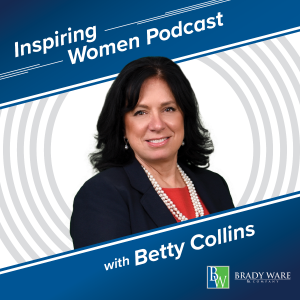
Inspiring Women PodCast with Betty Collins
What Does It Take to Be an Inspiring Woman Leader? - An Interview with Lori Kaiser, Kaiser Consulting
Loading
00:00 /
RSS Feed
Share
Link
Embed

Download file

Kaiser ConsultingWhat Does It Take to Be an Inspiring Woman Leader? – An Interview with Lori Kaiser, Kaiser Consulting (Inspiring Women, Episode 36)

To get to where you want to go, says Lori Kaiser of Kaiser Consulting, you must push out of your comfort zone and into the roles you know you need to fill to reach your goals. Lori joined host Betty Collins on this edition of Inspiring Women to discuss what it takes not just to lead and succeed but inspire others while doing so. Inspiring Women is presented by Brady Ware & Company.

Betty’s Show Notes

For me, an inspiring woman is simply a woman who can fill somebody with the desire or urge to do something worthwhile.

It’s someone who lives their life every day, based on the core of what she believes. And it influences me to be open, and maybe even change.

So, it’s someone who creates a better world. They have to live their lives on their terms. There’s something very motivating about that.

We’re all inspired differently, so take some time to think about it. How can you inspire?

I need to have others around me, who are better, and have different insights, so I can be better. I challenge you to dig deep and realize that you have a role to play in that.

You need to figure it out, and then do it.

Become that inspiring woman leader.  I assure you that someone needs to see it and be influenced by you. And by the way, you might already be influencing other women and you don’t even know it.

With me on this episode is Lori Kaiser. She is a chief executive, corporate leader, visionary, and business strategist with a proven track record in assessing risk and creating solutions for Fortune 500 Company C-Level Executives and Boards.

As CEO of Kaiser Consulting, Lori provides clients’ value-based services that allow organizations to navigate transitions and successfully execute critical projects.

Women need to take more risk and be braver in career decisions. Lori gives us insight on that. Her passion about this subject shines throughout the episode.

Her advice to women on how to become an inspired leader. Ask yourself what is YOUR version of success.  Be bold, take risks.  Be a lifelong learner.  And last, but not least, connect with interesting people.

Mentioned in the podcast was Shonda Rhymes and her book Year of Yes.

How Women Rise by Sally Helgesen and Marshall Goldsmith.

And the podcast How I Built This.

This is THE podcast that advances women toward economic, social and political achievement. Hosted by Betty Collins, CPA, and Director at Brady Ware and Company. Betty also serves as the Committee Chair for Empowering Women, and Director of the Brady Ware Women Initiative. Each episode is presented by Brady Ware and Company, committed to empowering women to go their distance in the workplace and at home.

For more information, go to the Resources page at Brady Ware and Company.

TRANSCRIPT

So, today, what does it take to be an inspiring women leader? How we need that, how women are looking for that every day, we’re looking out there to see, who can be that person? And I’ve been really fortunate, I’m in the Columbus, Ohio area, and we have so many really good women’s groups. We’re going to have a podcast on three of them tomorrow. And I’m just fortunate that I’ve seen quite a bit of women around me.

[00:00:30] Betty Collins
And who is that inspiring woman in your life? Thank them. Think on why they inspire you. Who do you inspire then? Because you have a role to play in this as well. So, women are not all the same, and what inspires you may not inspire me, but nevertheless, we all need someone who inspires us. And as a woman business owner, a leader, and and someone whose passionate; I’m passionate about the marketplace; I’m very purposeful about empowering women, and supporting the organizations that do that.

[00:01:11] Betty Collins
For me, an inspiring woman is simply a woman who can fill somebody with the desire or urge to do something worthwhile. It’s someone who lives their life every day, based on the core of what she believes. And it influences me to be open, and maybe even change. So, it is someone who creates a better world, and you just, you watch them do it. Inspiring women for me, they have to live their lives on their terms. That’s something that motivates me.

[00:01:42] Betty Collins
Again, we’re all inspired differently, so take some time to think about it. How can you inspire? And get on it and go, and who’s inspired you? And thank them. For me, I need to see other women who have been there and done that, it’s important. I need to be inspired on days when I just feel like giving up. Maybe just a little bit of affirmation. Okay, probably Betty Collins needs way too much affirmation, but sometimes just that simple nudge.

[00:02:12] Betty Collins
And I need to have others around me, who are better, and have have different insights, so I can be better. I challenge you to dig deep and realize that you have a role to play in that. You need to figure it out, and then do it. Become that inspiring woman leader. And yes, you, because I assure you that someone needs to see it and be influenced by you. And by the way, you might already be influencing and you don’t even know it. So, make it a stretch goal, that goal that stretches you.

[00:02:42] Betty Collins
It’s a pretty simple concept. So, today I have a woman who inspires anyone and everyone she knows. She certainly has done that with me. She’s extremely respected and admired, especially in Columbus, Ohio, I can tell you, and outside of that, she knows what it takes to live, and be a professional. She’s a CEO, but a wife and a mother. She’s an expert, she’s successful. She’s even a trendsetter, which we’re going to talk about, just the way she does her business plan.

[00:03:12] Betty Collins
And she’s a pilot and a speaker. That’s a pretty amazing woman in itself. You are inspiring, Lori, and you live it through starting this business, that lets people, mostly women, lead great lives, and allocate more time to get to do the things that are important to them outside of their careers. And of course, I love it, because when you tell your story about it, you talk about, “When many people told me it wouldn’t work, I was going to make sure it did.”

You’ve had things that win in the best place to work for five years award, with employee engagement, over 95 percent. That’s just huge. You have many large clients, and yet a lot of small ones. But you have Honda nationwide, Ohio State, Cardinal. These are big places, L brands, Huntington, and going on 30 years with nonprofits, donating $300,000 of services each year. And I know a lot of those are geared to women. I think this is a really big thing, you gave the commencement address at Miami’s University’s Farmer School of Business.

[00:04:22] Betty Collins
Seven thousand people were there, and I think you even thought maybe you were a little intimidated, right? Teaching at the Ohio State University in their MBA program. You’ve done things, always taking the time to meet and call a woman who reaches out to you, just like when I had this request for you to come and be on my podcast, you were right on it. And you’ve done a lot of hard work and slow work of advocating for social change for women and minorities. And you’ll talk a little bit about some of those groups that you’ve been on.

[00:04:53] Betty Collins
So, Lori Kaiser, welcome to my podcast. I am so glad that you’re here to share with my audience. We would love to get more insight from you as an inspiring woman, so I’m going to start with some questions. And the first one is, I have talked a little bit about you, but just tell me a little bit about you, your husband, those things. If you can just do that first, and then we’ll get into questions.

[00:05:18] Lori Kaiser
Well, first of all, Betty, thank you for inviting me on your podcast.

[00:05:21] Betty Collins
Sure.

[00:05:21] Lori Kaiser
That was quite an introduction, so I hope I can meet expectations. Let’s see. So, I went to Miami University for my undergrad, and then I started my career at KPMG. And I loved being an auditor. I loved, oh, going to different clients, and working on different teams, and having different bosses. And it was a great job until it wasn’t a great job, when I decided to start my family. I didn’t really want to travel more than 50 percent of the time. So, I quit my job without a plan, and I’m not sure I’d recommend that.

[00:06:01] Lori Kaiser
Freaked my husband out a little bit. But my plan was that I was going to get a plan. And while I was figuring it out, I had some former clients call and say, “Hey, will you come out and do project work for us? You can work whatever days and hours that you’ll schedule, but you know us, and we know you, and we think it’d be great.” And so, that’s really how I started my business. Shortly, thereafter, within a year, I had way more work than I could do myself.

[00:06:30] Lori Kaiser
And so, I started hiring other people that looked just like me; had had a great career, didn’t really want the high number of hours and the travel, and public accounting. And this is early ’90s. So, they pretty much quit, because back then there was full-time work, and stay at home, and really not much in between. So, that’s how I started my business. And now, we have a company of about 80 people, and everybody at our company gets to pick the days and hours they want to work, so that they can have great lives and great careers.

[00:07:09] Betty Collins
I always love hearing it when you’ve told that at NAWBO events, or the Women’s Funds, things like that. Because in the ’90s, you’re right, it was one or the other, and there wasn’t balance. 2020, it’s like, “Oh, we have balance now. We’re at home, we’re at work.” It’s like that’s not what you were talking about, but you really gave women an opportunity to have some flexibility, yet contribute, and by the way, have a great career.

[00:07:37] Betty Collins
So, it’s why when I thought about inspiring women, you were definitely on that, because I know people who work for you and love it. So, talk a little bit about, though, you said, “My husband had a little heartburn,” maybe those are my words, but because you quit your job, and the plan was to get a plan. I’d like you to talk about women and risk-taking, because that was a lot of risk. Women need to take more risk and be braver in those career decisions. Can you just give us insight on that? Because I know you’re passionate about this.

[00:08:11] Lori Kaiser
Yeah, I am passionate about it. I think one of the reasons that there’s a wage gap between men and women, is that men feel more confident raising their hands and taking on a new role, that maybe they don’t tick the box and have every skill, but they’re willing to take that risk to get ahead. And women, generally, want to be more qualified, be able to tick every box, and be 100 percent sure they’re going to be successful. And so, therefore, men are constantly stretching and reaching for higher goals, and getting there.

[00:08:47] Lori Kaiser
And so, I think women need to have more of that risk-taking, because it’s holding us back from getting the next raise or promotion. I think I always tell women that I mentor, who would you rather take a risk on? You’d rather take a risk on yourself. So, take jobs outside your comfort zone, and say yes to things you’re not 100 percent sure that you can do, but you’ll work really hard to make sure you get there.

And when you see yourself get somewhere that you never thought you would get, your confidence builds. And then you’re like, “Well, man, I can really do this.” Betty Collins is that story, when I came to Brady Ware as a CPA, an accountant, and then all of a sudden, I’m in women’s groups, I’m doing podcasts, I’m growing my business right and left, and I’m doing it in my terms, and on my way. And it was a big risk, going to a big firm, when you’re a generalist, and you’re not an expert, per se. You loved auditing, right?

[00:09:54] Lori Kaiser
I did like auditing.

[00:09:55] Betty Collins
That’s okay. I know about auditing, I know about- but it might- you just build confidence, the more risk you take, because you can see you do it.

[00:10:06] Lori Kaiser
Yeah, and I think you can start out small. I like to tell the story, when people first started asking me to speak in public, I would say, “Oh, that sounds really interesting, send me an email with all the specifics.” And then an email would come and I’d see the date, and I’d set up an internal meeting, so that I was busy, and I would email back, “Oh, my calendar is busy. I can’t make that.” Because the whole idea of speaking in public was really intimidating to me.

[00:10:36] Lori Kaiser
And so, I decided that I needed to get over that, if I wanted to grow my firm, and be a subject matter expert. So, I really started out very small. I called up my son’s high school, and I said to the accounting teacher, “Hey, do you want somebody to come and talk about careers in accounting?” And, of course, they said yes. And I thought, “Okay, first of all, it’s a high school, so they’re not going to be listening, probably. And if they are, they won’t know if what I say is right or wrong. So, that’s a very low-risk place to start.”

[00:11:10] Betty Collins
Great strategy.

[00:11:11] Lori Kaiser
And so, yeah, I built up from there, to small groups, to 100, 200. And like you said, I did 7000 people last year.

[00:11:20] Betty Collins
That’s awesome. Caroline Worley, who you know, she got me to public speak, and I was petrified, just petrified. I thought, “What would I possibly have to say?” And there was an energy to it when I started it then. I’m still nervous to this day when I public speak, but it’s something- it’s a risk every time you get out there to do it. But there’s an energy to it, and a reward.

[00:11:45] Lori Kaiser
And the more you do it, the better you get.

[00:11:48] Betty Collins
It becomes a natural thing, maybe, or it becomes something that you could do it. And I’ll go to this next question, because when you start being able to be out there, and you could be on stage, you can be those things, you can have impact in a different way in your community, besides your work, besides your profession. It definitely has a big- it’s a big deal in community, and serving in organizations. So, your community involvement with organizations has been inspiring.

[00:12:17] Betty Collins
You’ve given your time, talent and treasure, as we always talk about. And part of that’s why people do, really, inspire and look up to you, and see you as that person. So, share the ‘why’ of NAWBO and the Women’s Fund. Tell us about these two organizations, and the importance of giving. Because it’s a role of an inspiring woman, is, we want more women to do these things.

[00:12:43] Lori Kaiser
So, I first got involved in NAWBO when I knew that I needed to build more of a network and grow my firm. I was a little nervous. I didn’t really want to take on that role, I really liked just doing client work. But again, you have to push yourself out of the role you feel comfortable with, and lean toward the role that you need to grow into. So, I chose NAWBO, and I started attending meetings, and NAWBO was super welcoming to me.

[00:13:18] Lori Kaiser
From the very first meeting that I walked into, it was a group of people that were supportive, who wanted to see you succeed, who were willing to share, not only the things that had helped them be successful, but also share mistakes. And I found that that was a great way for me to start what I considered my stage of working on my business, and not in my business. And then, so, I actually joined NAWBO, pretty quickly, I went on the board there and became the treasurer, and was involved on the board for several years. And that was great.

[00:13:56] Lori Kaiser
When my board term was up, I moved on to the Women’s Fund of Central Ohio. I’m very passionate about women and girls’ leadership, making sure that they’re as economically stable. There’s a lot of families in central Ohio, where they don’t know where their next meal is coming from, and there are- women who head up those families need help. And I’m still very upset about the fact that women still only make 78 cents for every dollar a man makes. So, I wanted to be able to work on social change, and really move some of those barriers.

And it’s so important for women to understand that you just don’t go to NAWBO and become the president. You go to NAWBO, and organizations like it, or you join the Women’s Fund, and organizations like that, partially, yes, for self-development and business development. But you really do go there because we need to inspire women. And so, it’s just part of being that inspiring leader that you are and others could be. It’s a huge, important role that you played in both of those organizations, and that other women can do it, and they need you. So, who, Lori Kaiser, inspired you? Who influenced you? I’m sure there’s more than one person, but who would come to your mind?

[00:15:33] Lori Kaiser
Yeah, many people, for sure. So, my dad was an entrepreneur. He started many businesses when we were growing up. So, he’s always somebody that I saw as willing to do something that other people weren’t willing to do. And that definitely helped me when I decided to turn my consulting into a real business, and even after people told me that it wouldn’t work. And then, also, my mom; my mom was a lifelong learner. She went back and got her undergraduate degree when I was in elementary, and her Master’s when I was in high school, and she was getting her PhD when I was in college.

[00:16:10] Betty Collins
I felt like I was really the King of the Hill when I got my four-year degree and my CPA license. Never going beyond that.

[00:16:19] Lori Kaiser
But you know what? You continue to keep your CPEs up, learning new skills. I think it doesn’t matter if you’re earning a degree. There’s so many ways now that you can grow your skill set, with LinkedIn learning and all sorts of webinars. And learning and growing has never been easier with all the things that are available on the Internet.

[00:16:43] Betty Collins
And also, the whole learning aspect, and I’m sure that you find this as well. As you go to prepare a speech, or you are on a podcast, or you, Betty Collins, start a podcast, what I have learned over three years of doing this podcast, is just, all this perspective from other women that I’ve interviewed. And that in itself is, again, you’re putting yourself out there, but it’s a way you learn without getting a degree, and then you, again, just go, “I could be more. I can do more. I can have more impact.”

[00:17:17] Betty Collins
But I like, always, hearing that, when people can talk about their mom and dad, that those were definitely people that inspired you. With all the challenges of today’s world, no, we’re not going to talk about COVID, and we’re not going to talk about politics and all the things that are going on. What advice do you have to women on becoming that inspired leader?

[00:17:39] Lori Kaiser
I would just share what has worked for me, and some of my core values. But I think that each woman has to decide what her version of success is. So, that you know what you’re aiming for. Some women, it might be, “I want to make more per hour, so I can work part- time and be home with my family.” Some people, it might be, “I want to switch careers or industries,” or it might be just to get that next promotion. So, you’ve got to decide what it is that you want out of your career. And then I also think you need to be bold and take some of those risks we talked about earlier.

[00:18:17] Lori Kaiser
I think that it’s helped me to be a lifelong learner, and be curious. And also, I’m really interested in people; I always want to hear somebody’s story, how they got where they are today, where they want to go. And I would say, be open to the things that you’re most interested in, and let them guide your choices. And I always like to say that I’m super persistent. If you don’t like where you are, then you’re really not done, just keep at it. And be grateful for all the things that your life has brought you.

[00:18:55] Betty Collins
Very nice. Very good. That’s for anybody, what you just said. Whether you want to lead or not, but we all lead in a different way. So, I cannot thank you, sure, for being here today, taking time to do this, and sharing your perspective. I’m truly, truly grateful. I have two questions, one is, where can we find you on social media? Where’s the best place? We are going to have things attached to this podcast about you, but is there anywhere you would want to direct the audience in regards to your business?

[00:19:28] Lori Kaiser
So, you can find my business at kaiserconsulting.com. And we’re always looking for more talented people that like our model, the part-time flexible work model. And then I’m mostly on LinkedIn. I don’t do a whole lot of other social media, other than that. But I’m pretty active there.

[00:19:47] Betty Collins
And then what podcast or book would you recommend to my audience today?

[00:19:53] Lori Kaiser
One that’s really impacted me recently was Shonda Rhimes book; Year of Yes. It’s a very interesting book where Shonda Rhimes goes and spends Thanksgiving with her sisters, and she’s in the kitchen, and they’re all making the food, and she’s bragging about all the things that she’s been invited to do, and parties that she’s been invited to. And one of her sisters says, “Well, you need to stop bragging, because you’re never going to do any of that.” And she went home and she thought about it, and she realized that they were right, that she was letting her fear control the things that she did in her life. And so, she had a whole year where she said yes to everything. And I read that book, and I was really inspired, and I decided that I was going to have a year of yes.

I have not heard of that, I will have to definitely research that. Thank you, definitely, for sharing that. That’s the one I haven’t heard of. So, very good.

[00:20:51] Lori Kaiser
And then there’s a book that I like right now, that I’ve been talking a lot about, called, How Women Rise. And it’s basically about habits that women have that might have been helpful for getting men to where they are in their career, but might be holding them back from getting to the next level. I also like a lot of entrepreneurial podcasts, like How I Built This, and Masters of Scale.

[00:21:17] Betty Collins
I’ve heard, How I Built This. I have not used it though, or I have not listened to it. But you’ve inspired me to do that. So, great, great choices. Thank you so much.

[00:21:28] Betty Collins
Well, I am Betty Collins, and I’m so glad that you have joined me today. Inspiring women, it’s what I do and I leave this with you; being strong speaks of strength, but being courageous speaks to having a will to do more and overcome.

Automated transcription by Sonix www.sonix.ai

Betty Collins, CPA, Brady Ware & Company and Host of the “Inspiring Women” Podcast

Betty CollinsIW8-2021square is the Office Lead for Brady Ware’s Columbus office and a Shareholder in the firm. Betty joined Brady Ware & Company in 2012 through a merger with Nipps, Brown, Collins & Associates. She started her career in public accounting in 1988.

Betty is co-leader of the Long Term Care service team, which helps providers of services to Individuals with Intellectual and Developmental Disabilities and nursing centers establish effective operational models that also maximize available funding. She consults with other small businesses, helping them prosper with advice on general operations management, cash flow optimization, and tax minimization strategies.

In addition, Betty serves on the Board of Directors for Brady Ware and Company. She leads Brady Ware’s Women’s Initiative, a program designed to empower female employees, allowing them to tap into unique resources and unleash their full potential.  Betty helps her colleagues create a work/life balance while inspiring them to set and reach personal and professional goals.

The Women’s Initiative promotes women-to-women business relationships for clients and holds an annual conference that supports women business owners, women leaders, and other women who want to succeed. Betty actively participates in women-oriented conferences through speaking engagements and board activity.

Betty is a member of the National Association of Women Business Owners (NAWBO) and she is the President-elect for the Columbus Chapter. Brady Ware also partners with the Women’s Small Business Accelerator (WSBA), an organization designed to help female business owners develop and implement a strong business strategy through education and mentorship, and Betty participates in their mentor match program.

She is passionate about WSBA because she believes in their acceleration program and matching women with the right advisors to help them achieve their business ownership goals. Betty supports the WSBA and NAWBO because these organizations deliver resources that help other women-owned and managed businesses thrive.

Betty is a graduate of Mount Vernon Nazarene College, a member of the American Institute of Certified Public Accountants, and a member of the Ohio Society of Certified Public Accountants. Betty is also the Board Chairwoman for the Gahanna Area Chamber of Commerce, and she serves on the Board of the Community Improvement Corporation of Gahanna as Treasurer.

“Inspiring Women” Podcast Series

This is THE podcast that advances women toward economic, social and political achievement. The show is hosted by Betty Collins, CPA; Betty is a Director at Brady Ware & Company. Betty also serves as the Committee Chair for Empowering Women, and Director of the Brady Ware Women Initiative. Each episode is presented by Brady Ware & Company, committed to empowering women to go their distance in the workplace and at home. For more information, go to the Resources page at Brady Ware & Company.

Remember to follow this podcast on Apple Podcasts and Google Podcasts. And forward our podcast along to other Inspiring Women in your life.

The complete “Inspiring Women” show archive can be found here.

Tagged With: Betty Collins, Inspiring Woman Leader, Inspiring Women with Betty Collins, Kaiser Consulting, Lori Kaiser, Women in Business, women leaders

How I Live in Costa Rica and Work with U.S. Clients, with Maria Joyner, FounderScale

September 13, 2021 by John Ray

FounderScale
North Fulton Studio
How I Live in Costa Rica and Work with U.S. Clients, with Maria Joyner, FounderScale
Loading
00:00 /
RSS Feed
Share
Link
Embed

Download file

FounderScale

How I Live in Costa Rica and Work with U.S. Clients, with Maria Joyner, FounderScale

Maria Joyner: [00:00:00] So, I think when I first moved down here, I did. So, one of the clients I currently have, I’ve been working with since 2015, and he has been totally understanding of the internet problems, and it’s been a great working relationship. One of the clients that I had when I moved down here, they were fairly stressed with the internet issues. I got a lot of pressure from them to move to the city and try to find somewhere that had better internet. And I think that one of the benefits of consulting for so many years is it becomes really easy to know the red flags and be aware of the questions that could cause friction after contract sign and avoid that.

Maria Joyner: [00:00:43] So, one of the things that I — I’m very open and upfront with clients when I talk to them. Even though I do have great internet, I mean, there’s power outages here. I mean, there’s there’s plenty of things that are out of control in a way that may maybe wouldn’t be out of control in the States. And so, I’m very upfront with clients and I let them know, like, “Hey, I don’t always have great internet. Sometimes, we may not be able to connect via video. Sometimes, we may not be able to connect at all.” So, I give them a lot of those expectations, but then I kind of go a step further now and I’m like, “Hey, I may be out two hours a day going on a hike,” or “I may be up two hours a day surfing,” just so there’s an expectation of that I’m not always on, always available, so that’s just not an expectation.

Maria Joyner: [00:01:27] And so, living here has helped really identify like what my clients need to know to feel that they can always contact me. But more than all of that, I’ve set really freaking awesome work all the time. And then, my location is never an issue. Like that’s really the secret. I think so many people come to Costa Rica and they ask me, “How do you make it work? How do you get clients? How do you stay here?” And I mean, getting clients, fortunately, I have a great network in Atlanta that has just worked through referrals since I moved down here. So, that has been a blessing, but keeping clients is just doing awesome work. And if you do awesome work, no matter where you are, the client really isn’t going to care about your location.

Listen to Maria’s full Decision Vision interview here. 


The “One Minute Interview” series is produced by John Ray and in the North Fulton studio of Business RadioX® in Alpharetta. You can find the full archive of shows by following this link.

Renasant Bank has humble roots, starting in 1904 as a $100,000 bank in a Lee County, Mississippi, bakery. Since then, Renasant has grown to become one of the Southeast’s strongest financial institutions with over $13 billion in assets and more than 190 banking, lending, wealth management and financial services offices in Mississippi, Alabama, Tennessee, Georgia and Florida. All of Renasant’s success stems from each of their banker’s commitment to investing in their communities as a way of better understanding the people they serve. At Renasant Bank, they understand you because they work and live alongside you every day.

Tagged With: founderscale, Maria Joyner

Growing Your Practice Through Effective Leadership, with Eric Morin, Tower Leadership

September 10, 2021 by John Ray

EricMorinDLREpisode19Album
Dental Law Radio
Growing Your Practice Through Effective Leadership, with Eric Morin, Tower Leadership
Loading
00:00 /
RSS Feed
Share
Link
Embed

Download file

EricMorinDLREpisode19Album

Growing Your Practice Through Effective Leadership, with Eric Morin, Tower Leadership (Dental Law Radio, Episode 19)

In a few years, Eric Morin argues, few dental practices will have less than $1 million in revenues. In this era of consolidation, what enables a practice to acquire other practices and scale effectively? In this conversation with host Stuart Oberman, Eric argues that the answer gets down to great employees, and he discusses the management and leadership fundamentals needed to attract those people. Dental Law Radio is underwritten and presented by Oberman Law Firm and produced by the North Fulton studio of Business RadioX®.

Eric Morin, Founder and CEO, Tower Leadership

Eric J. Morin, Founder and CEO of Tower Leadership, is an MBA and an experienced successful financial and business consultant, Eric truly is an innovative thought leader and powerful dynamic speaker. His words compel you to grow your business, live optimally, and make a transformative impact on this world.

For over a decade, Eric J. Morin has left a successful track record in the dental consulting industry. Hundreds of Dental Practices are now thriving in wealth, work environment, and community impact.

Eric founded Tower Leadership with the sole purpose of keeping dentistry in the hands of dentists by equipping them with the knowledge and tools they need to run a flourishing practice where everyone on the team benefits.

Connect with Eric on LinkedIn.

DLR-2021-08-2710.52.58 DLR-2021-08-2711.22.04

TRANSCRIPT

Transcript
Intro: [00:00:02] Broadcasting from the Business RadioX Studios in Atlanta, it’s time for Dental Law Radio. Dental Law Radio is brought to you by Oberman Law Firm, a leading dental-centric law firm serving dental clients on a local, regional, and national basis. Now, here’s your host, Stuart Oberman.

Stuart Oberman: [00:00:26] Welcome, everyone, to Dental Law Radio. Usually, I’m given a couple items on a podcast, but today we’ve got an extraordinary special guest in the studio, Eric Morin, Tower Leadership. And the reason why I wanted to talk to Eric – and he and I have done some projects and clients along the way for many years now. And I know Eric has clients all the way from Washington to probably Maine, probably to Florida, and probably some internationals. Who knows? – I wanted to really get Eric’s sort of feedback, if you will, what’s going on in the industry, where things are at. I know he’s got the the pulse of the industry and what’s going on at the practices, whether you have one practice or, I think, we’re working on a project now that we’re probably going to get him to about 30 practices at some point, if we can keep him on track, keep him on track.

Eric Morin: [00:01:23] It’s a big one.

Stuart Oberman: [00:01:23] But I think, really, Eric, you did a great job getting your guys through COVID-19. I know that was a very difficult spot. And I know that you and I did a seminar together that we had to go to a very remote location in a winery because no one else with houses. And you were on the forefront of a lot of areas, and I know that if your doctors listened to you when you were giving advice in March and April, they were well on the way to succeed. But I wanted to get, you know, your conversational sauce.

Stuart Oberman: [00:01:58] We’re going to cover a couple of things today, because you’re right on the front on this. You’re way out in front of this. Everyone’s scaling, scaling, scaling. You know, the questions we have are, how do you keep associates without giving up equity? One other area we want to take a look at is where are we at on the change of the business environment as we sort of revisit COVID, if you will, and all this coming with that. We’re seeing things that are already going into the first quarter of 2022.

Stuart Oberman: [00:02:33] So then, we want to take a look at, you know, leadership. And I’ve heard you talk and I take notes when you talk and implement when you say things. And God forgive me, but you introduced me to the sigmoid curve. I couldn’t even spell sigmoid curve until I actually listened to you talk when we were giving a little seminar.

Stuart Oberman: [00:02:57] But great to be here. Thank you, my friend. You are amazing in what you do. And I will tell you and I’ll tell listeners, every time you speak and every time I hear you, I learn something. Whether it’s one thing or a handful, I learn something. So, I want to talk about, really, what Tower Leadership is doing. Then, I want to get into some very specific industry topics that I know you’re out in front of. But tell us a little about Tower Leadership and what you guys do.

Eric Morin: [00:03:24] Well, first, thank you for having me. I’m glad to be here today. This is a lot of fun. I’ve been looking forward to it. As you said, you and I have worked on a lot of projects together, a lot of conversations. We’ve dealt with a lot of clients. You know, we really experienced a lot of issues together. This is a great time to have this conversation. There are so many changes. And then, all this thing called the Delta variant comes out.

Eric Morin: [00:03:48] So, just when we think that everything is settled and we can get back to business as usual, winter comes again. We don’t know. There’s uncertainty. And I think that’s business as a whole is there’s always uncertainty in the marketplace, and I think preparing for that. And then, what do you do when that happens?

Eric Morin: [00:04:04] And I think that’s one of the conversations you had brought up, which is when COVID happens. I think in the show we’ll talk through that is what were the differences during that time? Because one of the things I’m seeing now is, when we go back and we look at the time period, some people say we won’t count 2020 and some people say 2020 was a great launching point.

Stuart Oberman: [00:04:26] Best year they ever had.

Eric Morin: [00:04:27] That’s right. So, what was the difference? I think it’s really important in this podcast to identify those things. As a company, Tower Leadership, I’ve been in the consulting dental space for approximately 20 years. I’m married to a dentist. And I was consulting for companies outside of dental. And then, she said, “Will you help me start a dental practice?” I always tell people that my best asset was that I didn’t know anything about dental. And so, I just started growing and scaling this dental practice and hiring doctors. And I thought that was normal until someone told me it wasn’t.

Eric Morin: [00:05:01] But then, my career, I ended up getting investment licenses so that I could see also the investments that doctors were making. Tower Leadership came from this idea of, after all my years of experience, you can have great management systems, you can have great training, you can have all these things in place. But if you don’t have great leadership within the business, and leadership encompasses a lot of things, and there’s certainly some great things you need in management and leadership.

Eric Morin: [00:05:31] But the idea of Tower Leadership was, let’s create a business that shows doctors that if you invest, if you grow and you scale, yes, you can have all the financial rewards, but you can also impact a lot of people, too. And as idealist as that sounds, we’ve been able to do that. And it’s a fun pursuit of passion. And we get to see the changes in our clients lives, which is a lot of fun.

Stuart Oberman: [00:05:54] So, one of the big things now is, our doctors are sort of in a quandary where they really don’t want to give up leadership or ownership, but they don’t want to work 80 hours a week. So, the question is, in today’s tight market, tight, tight associate market – and we get this question all the time. And I know you get the question. You had a big conference on this recently – how do you keep associates in today’s world where you’re only as good as your last paycheck and your last patient without giving up equity? That’s probably a 17 day topic in a four year span. But, you know, how do our doctors do that? And what are you seeing on that side? You know, how do you keep these associates without giving up equity? That’s a loaded question.

Eric Morin: [00:06:50] You’re right. I mean, we could sit here and talk about this for a long time. I think it’s very important for people to know that a lot of times that associates feel that that’s being successful. But let’s unwind it a little bit more. The idea of ownership – and a lot of it actually, believe it or not, and all the conversations, I mean, I’ve had conversations with thousands of associates – it’s always that, “I want to be able to have a say in the practice. I want to be able to have leadership.” That’s the hard part to get over, right? Because you could give somebody equity.

Eric Morin: [00:07:19] Let’s just say that you gave up 30 percent or even 40 percent or 50 percent of your practice. But if someone’s whole goal is to be able to have a leadership conversation, to be able to contribute, and they’re not able to do that, of course, then they still won’t be happy. So, I think the first thing it goes down to is, what does the person ultimately want?

Eric Morin: [00:07:38] Because I think the marketplace in the past had said to this person, let’s take an associate, highly educated, highly competitive. Dentists tend to be competitive people by nature. And we say, “Here’s what I want you to do. I want you to come in. I’m going to figure out how to pay you as little as possible. I’m going to give no say on my dental practice.” And I love it if you just stay a really, really long time and no equity. I mean, none of us would go into that conversation to go, “This sounds like a win-win long term.””

Stuart Oberman: [00:08:04] It happens every day.

Eric Morin: [00:08:05] And so, I think that if you look, this is not what happens in other industries, by the way. This is kind of a way, a paradigm, that was in the dental market space for so long. And so, I will tell you that before we even get to a financial model or talk through those types of models, I think it’s more important to say, can this person contribute to the practice? Are they allowed to contribute? Because these are intelligent people.

Eric Morin: [00:08:30] And by the way, if doctors want to pull back, I might want to pull on that part of their skill set and have them be part of the practice as far as the ability to contribute to a leadership team or contribute to the management of the practice. So, it’s really important that we talk about that first in that component because they want to be part. They want to feel like they’re part of something. Don’t we all, though? I mean, don’t we all want to feel like we’re part of something? And I think the way we’ve treated associates in the past is wrong, I’ll say that first.

Eric Morin: [00:09:04] The other part is, what does it mean to get ownership? I think we have to unwind that. What does that actually even mean? Equity. What is equity? Equity, first of all, until you sell it, it’s just something filed with the state. I mean, it doesn’t really mean anything. You can say, “Well, it means distributional equity. So, I get some distributions.” But I think what do those distribute – distributions?

Stuart Oberman: [00:09:30] You’re the financial guy. You’re asking a lawyer?

Eric Morin: [00:09:30] I know, right. I think one of those distributions will be long term. So, I think it’s one of those mean long term. And I think it’s creating an asset. You know, what we have found is, by allowing someone to be part of a leadership team, to have some say in what’s happening in the practice, and then by giving them an asset, showing them that they could have a multimillion dollar asset without having equity, then they say, “Okay. Hold on. Let me get this right. So, I could work four days a week, not deal with H.R., not have to do with marketing, not deal with all the headaches and complexities, and I could have a multimillion dollar asset?” The answer is yes.

Eric Morin: [00:10:16] And so, actually, believe it or not, I’ve had partnership agreements that the partners have unwound the agreement to do a deferred compensation or some type of other program, because they see clearly financially. I’ve had people take that type of an arrangement and put it in front of their lawyers, their accountants, their financial advisers, and they have come back and said, “Wow, this is pretty amazing. And it’s actually better financially.”

Eric Morin: [00:10:44] So, what happens is, when the associates end up in dental school, they tell them the natural progression is you’re going to get out, you’re going to work for a few years. Oftentimes and nowadays, it’s for corporate for years. And then, they’re going to go buy a dental practice. But even that market’s changing, isn’t it? I mean, we’re starting to see the complexities. And I’m shifting a little bit here, but as the marketplace changes, the complexity around owning a dental practice is getting much harder.

Stuart Oberman: [00:11:11] It’s getting harder. Individual, not when you got numbers on DSOs.

Eric Morin: [00:11:15] It is. Even in the last ten years, Stuart, I mean, we got to think about –

Stuart Oberman: [00:11:21] And days.

Eric Morin: [00:11:21] Right. So, we think about this and say, even five years ago. I argue that five years from now, there’ll be very few practices that are operating under a million dollars in revenue. Independent dentists that are thriving outside of, maybe, a small boutique type cosmetic firm. And if you look at the medical space, you’ll see the same thing. I mean, in the medical space, you’ve got dermatologists and you’ve got plastic surgeons. And for the most part, they stayed out of groups. But the vast majority of medicine, you know, MDs are now all part of groups.

Eric Morin: [00:12:00] So, when we look at the marketplace and the way it’s shifting, we say even the people who might have bought a practice, it’s going to cost you a lot more to get into them because – and we’re seeing this and you’re seeing this, too – it might cost you $2 or $3 million now to get into a practice where it would have cost you 400. And then, you’ve got to have the business acumen to be able to compete in that space.

Eric Morin: [00:12:19] So, when we’re retaining associates, what we have to think about first is the environment. Are we providing a world class environment? Are we providing a place where they can thrive? Can their career grow? Can they be excited? All those traditional things in any other industry we will look at. Let’s say you and I started to create another firm, we would want to take care of our C-suite, our top players.

Stuart Oberman: [00:12:44] We don’t sleep as it is.

Eric Morin: [00:12:47] [Inaudible]. What a side note. So, I think that we can keep unwinding this. The truth is that, no matter where you are, this marketplace is changing. And I actually think there’s a lot of it that’s good news. And the marketplace is changing and we can kick and scream, but it is. And I think that the more we adapt to that marketplace, the more we can thrive. I think if you look at large corporations, or private equity, or DSOs, or however you want to call it in this space, they are not handing over equity to these practices. And I think that people have been telling people for a long time that you need to hand over equity.

Eric Morin: [00:13:29] But in the case that you had mentioned from coast to coast, I was working with a doctor recently. And if he had given up half his practice, he would have taken a 50 percent pay cut. But that pay cut literally would have made it so he could not pay his bills, literally. And so, I sat down with the associate. I said, “Do you care about this doctor?” And the associate said, “Yeah. I’m just trying to take care of my family, but I also want him to be taken care of.” I said, “Well, if we do this deal long term, this is going to fall apart.”

Eric Morin: [00:14:03] And so, we would do the math with the associate. And we were able to put a really good agreement in place where the associate had a long term asset. Also, had some leadership say in the practice, was able to thrive. And this was a few years back, actually. And, now, I mean, they are just just doing so well together. So, I love to see that you do not have to just hand over equity. That is a paradigm that is changing. It will continue to change. And I think it’s really important in this marketplace.

Eric Morin: [00:14:37] Maybe you do want to sell back. Maybe you want a partner. I’m not saying you never should. I’m just saying that if that is not your game plan, you should not be forced into that game plan, or strategic direction maybe is a better way to say that. I think you have to think through why you’re doing this, and who it benefits, and what your long term vision is.

Stuart Oberman: [00:14:55] Does this go hand in hand when a doctor says to you, “I want to get out of the chair.” Does that go hand in hand on or is that a before conversation that would get to the associates? Is it, “I want to get out of the chair, how do you figure it out? Then, what do I need to do with an associate?” Is that a first conversation when when a doctor says that to you? How do we get out of the chair?

Eric Morin: [00:15:19] I have to tell you, this is like my happy place. Can we make this show five hours? We got to like [inaudible]. We can do this for a long time.

Stuart Oberman: [00:15:27] How do I get out of the chair? How do I get out of the chair? How many times have you heard that, how do I get out of the chair?

Eric Morin: [00:15:33] So, here’s a thought, so what happens is, is just like any other position. Sometimes we put a square peg in a round hole. Look, we oftentimes will bring in this associate that does not meet the business model. It does not meet the vision. For instance, the person who says this doctor does not want to give up equity long term, wants to build a team, wants to do some type of other business or economic model to provide an asset for the associate. And this associate walks in, stomps their feet and says, “No. I will not do anything but take ownership.” So, the doctor says, “Okay. Fine. I’ll hire many. How many?” They’ll change their mind.

Eric Morin: [00:16:16] That’s your hiring process. There’s a thought process between selection and recruitment. Selection is that you’ve sort so many candidates coming into the position that you can pick the right person and select them. We always want to select people. So, if you have multiple candidates, you get to select. Recruiting is almost that last minute thing where you’re like, we really need a body or we really need an associate right now, so we just put whoever comes into that position, we just say, “We’re going to hire you. We’ve seen this with front desk.”

Stuart Oberman: [00:16:49] Is that more prevalent in today’s market because they can’t find good associates or they’re just filling bodies?

Eric Morin: [00:16:55] See, I would push back against can’t find good associates. It’s interesting, the reason I say that is because the doctors who have built an amazing environment to work in, doctors hang out with doctors. I don’t know how many times someone has said to me, I’ve recruited two or three people from my class to come work for this doctor, because if you create an amazing environment to work where somebody can do well, can take care of their family, and have an asset, it’s going to attract other people.

Stuart Oberman: [00:17:27] Build it and they will come.

Eric Morin: [00:17:28] Yeah. Sometimes I say to people, it’s like the harsh truth. But sometimes when someone says, “I can’t find anyone.” I say, “It’s you.” And that’s kind of a harsh truth. And let me kind of back that up.

Stuart Oberman: [00:17:42] It’s true, though.

Eric Morin: [00:17:43] Sometimes it’s like I have not built the environment to attract people. Someone said to me this one time, Stuart, this person said to me, “You can’t find any good people in Atlanta.” I was like, “Wow. An entire city. I’m sure it’s the entire city.”

Stuart Oberman: [00:18:00] You can’t find one person out of six million.

Eric Morin: [00:18:02] That’s right. So, I pushed back and and said, “Well, let’s talk about the environment.” We’ve always had this idea that dental is different, but it’s not different. The business acumen, the business principles always apply is you’ve got to create an environment. No matter who you are, every study shows, people still don’t come to work for money. We say, “Well, yes, they do.” Somebody can always pay them more. There’s still all these other intangibles that you have to make it a place that’s great to work.

Eric Morin: [00:18:32] Now, obviously, somebody wants to get paid their value. They want to have the ability to increase their income. All those things are true. And I’ll give you an example of what I mean by that. There is a young doctor. She is one of the most amazing doctors that I’ve ever had the pleasure to spend time with. She took a job out of GPR residency. And what she did was she went up to Indiana. She gets up there. She gets a practice who’s going to pay her more money. And it ends up being a really bad environment for her to work in. And we’ve had a business relationship.

Eric Morin: [00:19:10] And she says, “Hey, Eric. I need some help. I’m in this practice. They pay me a lot of money, but I’m so miserable.” And here’s here’s the thing, going back to my earlier point, “They will not let me have any say. They will not let me contribute. They tell me just to shut up and see patients.”

Eric Morin: [00:19:24] And what happened was she quit there, is now working for one of my clients. She is running the entire location. This entire location she runs. She’s learning advanced procedures. And the doctor there, he goes, “She’s a unicorn. I don’t know if I’d ever find another one of her.” And yet this other doctor had her. Now, the other doctor that lost her is probably saying, “It was her. You know, you can’t find good people.”

Stuart Oberman: [00:19:49] Has an attitude. Lack clinical skills.

Eric Morin: [00:19:50] Right. All these things. It was like, “No. It was you.” And so, I do think it’s important that we all look at our business and say, “Do we have the environment to attract top talent?” All businesses have to do that. Can we attract top talent? Would they want to stay here? Do they have a say? And by the way, that’s not just doctors, it’s your entire team. Hygiene is no different, right? We are in a tough, tough market to find hygienists. Hygienists talk to hygienists. If you had a great place to work, other hygienists will say, “You got to come work for here.” So, that’s just something to consider.

Eric Morin: [00:20:26] So, yes, at Tower Leadership, we’re a financial firm in many ways and we do plans around retaining associates. But I would still argue that if you don’t have the foundations of strong business management, then it’s not going to work anyhow.

Stuart Oberman: [00:20:47] That’s why there’s one practice or 20. It’s all the same.

Eric Morin: [00:20:49] That’s right. And I say management leadership, one thing I’ll say on the show that I think it’s important. Sometimes you scroll through LinkedIn and I see some amazing post by Stuart Oberman, so I’m scrolling through.

Stuart Oberman: [00:21:04] I got good people. I got good people. I got much smarter people than me, I could tell you that.

Eric Morin: [00:21:09] Well, they’re doing great. It’s looking good. So, as I’m scrolling through, I always see these posts that pop up. And they’ll say something to the idea of, “Leadership is when you care. Management is just a number.” And it’s silly because it’s not true. Look, all great businesses need leadership and management. Management doesn’t mean that you don’t care? You have to have strong management because you can be a great leader. But if you have bad management, then the company is going to fall apart. You can train people, but if you don’t have a way to have standard operating procedures, you cannot continue to manage the business to grow. So, you do need both.

Eric Morin: [00:21:54] By the way, if you just have management but no leadership, that’s not good either. So, I think it’s important to understand, you have to have strong leadership within a business, the visionaries, the the visionary leader, the people that are driving the show and looking at direction and inspiring people. But I think there’s another side that says, “Do I have strong management?” And by the way, I think associates play a crucial role in both of those.

Stuart Oberman: [00:22:19] So, you know, it’s amazing what’s changed in the last three years, maybe 36 hours, we got scaling, we got corporate coming in, and we’ve got DSOs, we’ve got growth, we got no growth, we got COVID. I would say with COVID, it’s got to be something else. If it’s COVID today, it’s Delta tomorrow, and it’s something else down the road.

Eric Morin: [00:22:42] The Foxtrot variant.

Stuart Oberman: [00:22:44] Yeah. It just keeps going. So, from a practice standpoint, how do our doctors adapt to the change in this new business environment? And it changes, like, everyday it seems like.

Eric Morin: [00:23:02] Three words, access to capital. I’m serious. Let me tell you what I mean by that, you can look at business over business over business outside of dental as well. And you and I talked about this actually during COVID. I said, you got to have access to capital. One of the things that the federal government provided was access to capital. Had that not happened, then what would have happened? Have we not have PPP and EIDL, what would have happened to the dental market space?

Eric Morin: [00:23:32] And so, I think when we look at the future, first of all, one of the ways we insulate ourselves from those types of things is access to capital.

Stuart Oberman: [00:23:40] And what does that mean? Access to capital, what does that mean?

Eric Morin: [00:23:42] It means that either you have credit lines you can pull from. It means that you might be able to have money in the bank. You have access to be able to borrow money.

Stuart Oberman: [00:23:54] Is that what they call good debt?

Eric Morin: [00:23:56] Here’s what I always tell people, there’s two things you cannot get when you need them, credit lines and insurance. Okay? So, those things are really cheap and you could get it really easy when you don’t need them. The second you need them, they’re gone. Also, you’re about to go to bankruptcy and you’re like, “Can we get a lot of credit?” NO. It’s not happening. You get diagnosed with something, you can’t get insurance.

Eric Morin: [00:24:15] So, I think it’s important for us to know that, as businesses, we have to start projecting. We have business winters. One of the things I said before – COVID now – I certainly did not know it was going to be COVID, but I was telling people, “Listen, this is a great economic time.” Take 2021, we would argue that 2021 – I think everybody can see – it’s a great business year. We can talk about all the reasons why, and that’s maybe for another show. But it’s a great economic year for most businesses. So then, are you taking that money and are you making sure that you have capital?

Eric Morin: [00:24:45] Let’s play this Delta variant, or something changes, or the economy changes. We saw the dental marketplace change in 2008, 2009, 2010. People are doing procedures now that they weren’t doing before. They’re getting checks from the government. So, what happens if you had a 20 percent drop in revenue, I’m just saying, play that scenario out. In business, we call that pessimistic modeling. Hey, what if we weren’t to grow at this rate? Well, what if something was to happen? Do we have the ability to pay our bills for some period of time? Do we have the ability to get capital? And maybe that’s capital for expansion. It doesn’t have to be a negative thing. It doesn’t necessarily need to be something that’s going down.

Eric Morin: [00:25:22] But you always have to have access to capital. Businesses go under because they don’t have access to capital, which is the whole saying cash is king. And so, I would argue that businesses have to have that. So, the first primary thing I would say is – by the way, this is like a business school 101 – profitability doesn’t keep the lights on. Cash flow does. Do you have enough cash flow to get through or the ability to get capital to get through a difficult time? I think it’s very important that any business owner assess that at any given time.

Stuart Oberman: [00:25:54] Wow. So, the practices that want to scale, how do they get access to capital?

Eric Morin: [00:26:04] Wow. This is just so exciting. So, we can, first of all, say, right now for a dentist to get leverage – otherwise known as debt – it’s not that hard, right? I mean, as long as your financials are in pretty good order, you can go to a bank and get a loan and buy another practice, as long as the financials make sense. They’ll look at your personal, obviously, financial statement and see if you are a good, qualified buyer. But that’s only to a certain point, right?

Eric Morin: [00:26:35] There’s going to be at some point where the banks go, “We have taken enough of risk here.” And then, we start to get to the point where we go into getting capital that’s outside of a bank, which that could be bringing another partner, it could be mergers and acquisitions, it could be pulling in private equity. And that’s a good thing for you to look at in your long term vision.

Eric Morin: [00:27:00] If you have a dental practice, and let’s just play the scenario that you’re two locations and you say, “I really love to go to 30 million.” You and I were talking about this process of moving drastically. And so, we’ve seen that. But what happens is, is you have to say, what is my plan for getting capital in the future? When the banks cut me off – and they will at some point –

Stuart Oberman: [00:27:22] They will.

Eric Morin: [00:27:23] .. you have to say, “What is my plan -” you can’t wait and then start making phone calls. You have to think now – “at the point at which the banks cut me off?” So, let’s just say it was a certain revenue, or four locations, or whatever that is in your head. And by the way, your banker can help you with that. And you can –

Stuart Oberman: [00:27:41] I’m going to allow you to purchase one practice a year.

Eric Morin: [00:27:44] See. So, that’s something I wasn’t aware of. And so, I think it’s important to get that information. And then, if that’s the case, then, what is my – going back to number one thing – access to capital? What is my next step to get capital? If I can no longer get any more capital, how else will I get it? Do I want to bring in an equity partner?

Eric Morin: [00:28:07] Because there isn’t an old saying and I love this saying. When I heard it, I thought it was brilliant. Some people will say partnerships don’t work. It’s just not true. They just have to be running in the same direction. And so, do I want to own 20 percent of a watermelon or 100 percent of a grape? Depending on what your long term strategy is, it might make sense to earn 20 percent of a watermelon. You know, everyone’s situation is different.

Eric Morin: [00:28:32] But if you’re trying to become a large dental group, I think you have to understand, in business, the number one thing is, what’s my vision? Where am I going? What do I want long term? How does this impact my family? What does this do to my legacy? I think you have to write all those things out first.

Eric Morin: [00:28:48] I’ll tell you a story. Years ago – I want to say about seven years ago – I had a group come to me.

Stuart Oberman: [00:28:55] When we were young.

Eric Morin: [00:28:59] I had a group come to me, they had nine locations, has four partners. And they had flown up to see me and I sat down with them and I asked them that same question. I said, “Where are we going? What are we trying to get accomplished?” And they said, “We want to be a $100 million dental practice. And we heard you were the guy to get us there.” And I looked at them and I just said, “Why? Why do you want to be $100 million? What does that do? Why do you want that?” And their answer was, “I don’t know. It sounded good.” It sounds like a good round number.

Stuart Oberman: [00:29:33] I heard it at a seminar.

Eric Morin: [00:29:33] That’s right. I heard it at a seminar. It’s not like we couldn’t do that. So, I said, “Let’s talk through that more.” And it’s interesting, because I told them, “If I was a bank -” sometimes when I’m speaking to a doctor or any business, I would say, “Let’s play that I’m your investor. Explain to me why I should give you money.” “-if you came to me and said you were trying to grow, but you don’t know why, you just had no reason, and you didn’t have an economic model, I probably won’t give you the money.” So, believe it or not, it took about four hours to finally get to their why.

Stuart Oberman: [00:30:08] I believe it.

Eric Morin: [00:30:08] And then, when we got there, here’s what they said, “We want one location with 24 hours.” I thought, “We should have figured that out eight locations ago.” So, we just wasted time and money and energy.

Stuart Oberman: [00:30:18] Or four hours ago.

Eric Morin: [00:30:19] And interestingly enough, you know, part of the story is one of the partners was actually diagnosed with a heavy disease at the time. And I thought, “Gosh. You guys have spent so much time in the wrong direction. So, I think that the first part is always, where are we going and why?” And one of the reasons why I try to get people at the dental chair is, I think that some people love dentistry. Stay in the chair if you want to. But have the ability to pull back. Have the ability to spend time with your family and do the things you want to, which is one of the reasons why we start a business.

Stuart Oberman: [00:30:54] So, you talk about this a lot and this could probably interject into every scenario you just mentioned, leadership. You guys talk about that a lot. You groom it. You touch base on it. You figure out how to get better at it. How much of a role does leadership play in a successful practice, whether it’s one or 20 practices? And you talked about this a lot during COVID. How leadership, really, will take you through the storm and put you on top of the mountain. So, tell me about leadership and doctors and what you see what they don’t do. I know that’s a whole day’s conversation.

Eric Morin: [00:31:37] No. There’s this old saying, you find out who your friends are during the difficult times. And I think that we also saw what people were made up from a leadership standpoint during the difficult times.

Stuart Oberman: [00:31:54] And we’re not out of there yet.

Eric Morin: [00:31:56] Right. But I think what I was saying during that time is – and we have doctors that send everybody home. And when I say we, I mean the industry. Doctors not even communicate with their team for 45 days. And I said, “These people are scared.” By the way, they’re going to start looking for a job because if you don’t take care of them now – and by the way, that’s what’s happened for a lot of people, because it was a great time for people to reflect and say, “Is this where I want to work long term? Does this person actually care about me?” During that time, people were scared. Everybody was scared.

Eric Morin: [00:32:26] And I said doctors play a huge role in this. It doesn’t matter whether you’re a medical doctor or not. Not just within your own team. But what do you look like in your community? Are you communicating with your community? Are you communicating with your team? Are you talking them through it? I mean, our team started working, you know, 20 hour days just to support teams. We had team members on the phone and started having financial conversations with them. We worked through each doctor. I think we spent so much time working through that time. But so many people in that time were attracted. And that was the worst thing they could have done. I said, you know, “This is a time when they need you.”

Stuart Oberman: [00:32:58] I remember you talking about that.

Eric Morin: [00:32:59] They need you. They need their leader at this point to look at them and say, “We’re going to be okay. We’re going to make it through. I’m going to make sure we’re all taken care of.” And sometimes that didn’t happen. And we see in a lot of practices what the consequences of that, you know, ended up being. As the marketplace, by the way, let’s look at hygienists again, as it becomes more competitive, they’re like, “Do I want to work here long term?” And so, I think leadership, this is one of those ones where we have to get outside of dental marketplace and just look at business. Great business leaders attract great people, and it is difficult.

Eric Morin: [00:33:40] I want to give some knowledge-ment to the fact that, being in a chair all day long, and seeing patients all day long, and trying to lead, and trying to manage is very, very difficult. Which is why you need to lead and build an amazing team. Because you can’t do it all. But building a leadership team and building a team around you, but to get them there – one of the things I was just saying to you before we went on air was one of the reasons we do this large leadership retreat every year. And one of the reasons I do it is when they say, “Well, Eric, I don’t communicate like you communicate. So, would you tell my team what you just said.”

Stuart Oberman: [00:34:13] You send them an email.

Eric Morin: [00:34:16] That’s right. And the other thing is, “But I want to get the team inspired on my why.” When I say my why, I mean your why as a doctor, why are you there? What’s the purpose? What are you trying to get accomplished? How do you impact their lives? I think that you have to get the team to understand why they should care. Because if it’s like, I think, we get to this place where we’re always like, “Well, I’ll just pay them more money. I’ll just pay them more money.” Somebody can always pay them more. So, why should they follow you? We see it all the time.

Eric Morin: [00:34:41] One of the things I’ve done at Tower is, I’ve brought people on and I’ve asked them to come on for like, literally, a 30, 40 percent pay cut from what they were getting paid. And I’ll tell you why. That wasn’t to cut anyone out of money, by the way. It was to say, “Are you willing to commit to the vision that’s here? And if you are, actually, you’re income will increase. But I want you to buy into the vision of what Tower is trying to do.” So, the same thing I would say, is, if people aren’t inspired by you as a leader and they don’t see you as a leader or somebody they want to follow, people will take a pay cut just to be with a great leader, to be with a great organization.

Eric Morin: [00:35:14] You might say, “Well, Eric. I don’t have time to do all that.” “Okay. Then, bring in somebody who can.” If we’re trying to go to 5 locations, 10 locations, 20, you can’t do that without great leadership. You can’t do that without great management. And so, why I think it’s so crucial is, business is littered with stories of great leaders and poor leaders. And we work on leadership, and we inspire, and motivate, and drive people towards a direction. And that sounds idealistic. I know it’s like, “That sounds idealism,” but it’s just true.

Stuart Oberman: [00:35:48] It’s true though.

Eric Morin: [00:35:48] And it’s like, how much time in the last 12 months have you spent on growing your leadership skills and leadership teams, inspiring people? And I think that’s got to be a focus if you’re going to, especially if you’re going to grow and you’re going to compete in this market. Because what I am seeing is a lot of DSOs that are private equity. They’re not focused on leadership. And it gives you a competitive place in this market. I mean, it really does. It allows you to differentiate yourself. I’m not saying DSOs don’t care. That’s not what I said. But I’m saying that, if it’s all about money, you get what you measure. And if they’re focused just on money, well, then I’m telling you, they’re going to take their eye off of leadership. And that’s a place where you can dominate and attract top talent.

Stuart Oberman: [00:36:29] Amazing. Amazing. You know, again, I don’t even know where to start. I think we’ve been just about 45 minutes. I’m trying to think how much I could take back myself and say, “Okay. Here’s my office.” But as usual, it’s amazing conversation. I was looking over and trying to figure out what do we even call this. I mean, we’ve touched on so many things, but we’ll come up with a great name. So, tell me what you got going on. Do you got some events coming up? Where are you going to be at? When you sell out Phillips is what I want to know.

Eric Morin: [00:37:06] Well, we haven’t sold out our September and October foundation.

Stuart Oberman: [00:37:09] [Inaudible] Phillips.

Eric Morin: [00:37:12] We’re blessed to have some amazing doctors. We get to work with some of the best in the industry. And work with some of the best people to team up with, like yourself.

Stuart Oberman: [00:37:21] You know, you do work with the best. I mean, I could tell. We’ll also hear the guys that we work with together are at a different level. You know, the clients [inaudible]. They’re at a different level. They got a whole separate different vision where they’re going. And at times, they’re a little bit hard to corral in. Sometimes I just wanted to get to Marietta, not necessarily Nebraska.

Eric Morin: [00:37:47] I just give you the difficult stuff, Stuart. You know, you and I worked on some really complex stuff together and some great things. And that’s why it’s such an honor to work with you as well, because I know that the clients that have these sophisticated issues, the clients that need help, and need great guidance. I know you take care of them, which is why you and I have worked together on so many of these cases.

Stuart Oberman: [00:38:09] It’s like, “Why is Eric calling me at 8:30? I’m taking that call. There’s got to be a reason.”

Eric Morin: [00:38:13] I think I called you on Sunday once a week. Don’t call Stuart on Sunday.

Stuart Oberman: [00:38:18] It’s not to watch cable TV, I could tell you that. So, tell us what next event is coming up. What is it? Tell us about it?

Eric Morin: [00:38:24] What we do is an introductory – two days initially – as to what we do. And what we do is, we talk about the financial. So, it’s financial and its leadership and its management. Which is, what do I need to do if I want to build an organization that grows and scales? If I want to pull back from the chair, how do I have a business that runs without me? What does this mean financially? How do I make investments? One of the things that’s missing in this industry is people don’t know where to invest the practice. We talk about where to invest, what’s the ROI, where’s the best place to put money, how does that pay off debt. All those two days worth of concept.

Eric Morin: [00:39:00] So, we do those once a quarter. We’ve actually sold out September so we’ve added some more. And we get this leadership retreat we’re doing in November. And it’s a large, large event. We have practices from all over the country. And it’s really about that message, which is, how do we get our teams inspired? If we’re going to build scalable businesses, how do we get our teams inspired, motivated, and ready to tackle head on 2022?

Stuart Oberman: [00:39:28] If anyone got any questions, how do you get hold of you?

Eric Morin: [00:39:31] Towerleadership.com. I think it’s the best place. We’ve got a lot of information. And then, right there who wants to send email, info@towerleadership.com. And our team is ready and waiting. We’ll be more than happy to help you. They are excited to talk to you and excited to help. And, really, you know, we see the spectrum, as you know, and so it doesn’t matter where you are, it doesn’t matter if you’re just beginning this journey and you’re questioning what do I need a buyer or investor do.

Eric Morin: [00:40:00] I mean, a doctor years ago had said to me, they gave me their pro forma going into a practice. And I said, “Who gave this to you? It’s wrong. Trust me. We’re going to move all this around.” He had seven options, these seven options are going to be gone in 12 months. He said, “No way.” They were.

Eric Morin: [00:40:17] Even on the frontend or the person who’s trying to go, “We’re working with a lot of organizations that are going to 3, 4, 5, 10, 20, 30 locations.” So, no matter where someone’s at, no matter what the complexity is, we can coach you through how, where, and why.

Stuart Oberman: [00:40:36] Get there. Fantastic. Fantastic. Fantastic. I can’t even begin to write down any information. I’m going to have to listen to this myself and figure out where I’m at.

Eric Morin: [00:40:45] I appreciate the honor to be your guest, sir. This has been a great time. I literally think we could go for 18 hours nonstop. And this has been such a pleasure to be here. I really do. It means a lot. I’m glad to be part of it.

Stuart Oberman: [00:40:58] My pleasure. My pleasure. Thank you. I sure appreciate it. Eric Morin, Tower Leadership. It’s always a pleasure.

Eric Morin: [00:41:03] Thank you, sir.

Stuart Oberman: [00:41:05] For those that want to reach out Dental Law Radio, my name is Stuart Oberman. Reach us at stuart@obermanlaw.com. Thank you for listening. Please listen to this podcast multiple times because you will pick up multiple bits of information every time you do. Have a great day and we’ll talk to you soon.

About Dental Law Radio

Hosted by Stuart Oberman, a nationally recognized authority in dental law, Dental Law Radio covers legal, business, and other operating issues and topics of vital concern to dentists and dental practice owners. The show is produced by the North Fulton studio of Business RadioX® and can be found on all the major podcast apps. The complete show archive is here.

Stuart Oberman, Oberman Law Firm

Oberman Law Firm
Stuart Oberman, host of “Dental Law Radio”

Stuart Oberman is the founder and President of Oberman Law Firm. Mr. Oberman graduated from Urbana University and received his law degree from John Marshall Law School. Mr. Oberman has been practicing law for over 25 years, and before going into private practice, Mr. Oberman was in-house counsel for a Fortune 500 Company. Mr. Oberman is widely regarded as the go-to attorney in the area of Dental Law, which includes DSO formation, corporate business structures, mergers and acquisitions, regulatory compliance, advertising regulations, HIPAA, Compliance, and employment law regulations that affect dental practices.

In addition, Mr. Oberman’s expertise in the health care industry includes advising clients in the complex regulatory landscape as it relates to telehealth and telemedicine, including compliance of corporate structures, third-party reimbursement, contract negotiations, technology, health care fraud and abuse law (Anti-Kickback Statute and the State Law), professional liability risk management, federal and state regulations.

As the long-term care industry evolves, Mr. Oberman has the knowledge and experience to guide clients in the long-term care sector with respect to corporate and regulatory matters, assisted living facilities, continuing care retirement communities (CCRCs). In addition, Mr. Oberman’s practice also focuses on health care facility acquisitions and other changes of ownership, as well as related licensure and Medicare/Medicaid certification matters, CCRC registrations, long-term care/skilled nursing facility management, operating agreements, assisted living licensure matters, and health care joint ventures.

In addition to his expertise in the health care industry, Mr. Oberman has a nationwide practice that focuses on all facets of contractual disputes, including corporate governance, fiduciary duty, trade secrets, unfair competition, covenants not to compete, trademark and copyright infringement, fraud, and deceptive trade practices, and other business-related matters. Mr. Oberman also represents clients throughout the United States in a wide range of practice areas, including mergers & acquisitions, partnership agreements, commercial real estate, entity formation, employment law, commercial leasing, intellectual property, and HIPAA/OSHA compliance.

Mr. Oberman is a national lecturer and has published articles in the U.S. and Canada.

LinkedIn

Oberman Law Firm

Oberman Law Firm has a long history of civic service, noted national, regional, and local clients, and stands among the Southeast’s eminent and fast-growing full-service law firms. Oberman Law Firm’s areas of practice include Business Planning, Commercial & Technology Transactions, Corporate, Employment & Labor, Estate Planning, Health Care, Intellectual Property, Litigation, Privacy & Data Security, and Real Estate.

By meeting their client’s goals and becoming a trusted partner and advocate for our clients, their attorneys are recognized as legal go-getters who provide value-added service. Their attorneys understand that in a rapidly changing legal market, clients have new expectations, constantly evolving choices, and operate in an environment of heightened reputational and commercial risk.

Oberman Law Firm’s strength is its ability to solve complex legal problems by collaborating across borders and practice areas.

Connect with Oberman Law Firm:

Company website | LinkedIn | Twitter

Tagged With: dental law, Dental Practice, dental practice acquisitions, DSO, Eric Morin, Leadership, Oberman Law Firm, scaling the business, Stuart Oberman, Tower Leadership

Workplace MVP: Broadcasting LIVE from the 2021 SHRM Conference

September 9, 2021 by John Ray

SHRM 2021
Minneapolis St. Paul Studio
Workplace MVP: Broadcasting LIVE from the 2021 SHRM Conference
Loading
00:00 /
RSS Feed
Share
Link
Embed

Download file

SHRM 2021

Workplace MVP: Broadcasting LIVE from the 2021 SHRM Conference

Broadcasting LIVE from the SHRM 2021 Annual Conference at the Las Vegas Convention Center, Workplace MVP  host Jamie Gassmann and R3 Continuum Marketing Specialist Shane McNally discuss R3 Continuum’s presence at this year’s conference. Workplace MVP will be broadcasting live interviews with conference speakers and attendees during the conference. If you’re at #SHRM21, come on over to Booth 4076 and see us! Workplace MVP is underwritten and presented by R3 Continuum and produced by the Minneapolis-St.Paul Studio of Business RadioX®.

R3 Continuum

R3 Continuum is a global leader in workplace behavioral health and security solutions. R3c helps ensure the psychological and physical safety of organizations and their people in today’s ever-changing and often unpredictable world. Through their continuum of tailored solutions, including evaluations, crisis response, executive optimization, protective services, and more, they help organizations maintain and cultivate a workplace of wellbeing so that their people can thrive. Learn more about R3c at www.r3c.com.

Company website | LinkedIn | Facebook | Twitter

About Workplace MVP

Every day, around the world, organizations of all sizes face disruptive events and situations. Within those workplaces are everyday heroes in human resources, risk management, security, business continuity, and the C-suite. They don’t call themselves heroes though. On the contrary, they simply show up every day, laboring for the well-being of employees in their care, readying the workplace for and planning responses to disruption. This show, Workplace MVP, confers on these heroes the designation they deserve, Workplace MVP (Most Valuable Professionals), and gives them the forum to tell their story. As you hear their experiences, you will learn first-hand, real life approaches to readying the workplace, responses to crisis situations, and overcoming challenges of disruption. Visit our show archive here.

Workplace MVP Host Jamie Gassmann

In addition to serving as the host to the Workplace MVP podcast, Jamie Gassmann is the Director of Marketing at R3 Continuum (R3c). Collectively, she has more than fourteen years of marketing experience. Across her tenure, she has experience working in and with various industries including banking, real estate, retail, crisis management, insurance, business continuity, and more. She holds a Bachelor of Science Degree in Mass Communications with special interest in Advertising and Public Relations and a Master of Business Administration from Paseka School of Business, Minnesota State University.Workplace MVP:

Tagged With: Jamie Gassmann, Las Vegas, R3 Continuum, Shane McNally, SHRM 2021, Workplace MVP

Storytelling and Likeability in Professional Services Marketing, with Michael Katz, Blue Penguin Development

September 9, 2021 by John Ray

Blue Penguin Development
North Fulton Studio
Storytelling and Likeability in Professional Services Marketing, with Michael Katz, Blue Penguin Development
Loading
00:00 /
RSS Feed
Share
Link
Embed

Download file

Blue Penguin Development

Storytelling and Likeability in Professional Services Marketing, with Michael Katz, Blue Penguin Development

Michael Katz: [00:00:00] If you’re a small company, but even if you’re larger, the benefit of stories is that it — well, two things. One is they catch people’s attention. You’ll remember this story about the guy at the gym; whereas, a lot of other stuff I’ve said, yeah, just kind of floats by. Humans are hard wired to listen to stories and to remember that.

Michael Katz: [00:00:21] So, when you talk about something like, I never give a public presentation ever. I always begin with a story that seemingly has nothing to do with the presentation. But it’s like you can see back in the day when you’d go to live things, you can see the audience perk up when I go, “Let me tell you a quick start.” It’s just like you have to hear what happened. So, they’re attention-getting. So, they’re very good in podcasts, newsletters, blog posts, that kind of thing, as opposed to just information.

Michael Katz: [00:00:49] But the other thing is if you’re in a business – again, where the credentials don’t differentiate you – again, if you think about you have no idea where your doctor went to medical school, but you know, do you like him or her or not? And what I found when you sell a professional service, sort of likability and trust thing, which is very sort of squishy, that’s the differentiator. If you think about all these people you hire whose capabilities you can’t measure, including like your auto mechanic, you like him. I hate your guy. You like your guy. I hate your doctor. I mean, it’s so funny because it doesn’t sound sort of businessy, but it’s how we make these decisions. I don’t know if you’re a good accountant, but I know if I like you.

Michael Katz: [00:01:33] So, when you tell stories, you get people’s attention, but you’re also revealing a little bit about you. It’s funny, I have this discussion with clients a lot because people are concerned about, “Should I share my personal information?” I mean, if you and I sat down, John, together for coffee, and we just started talking business, it would seem kind of rude. Like it’s normal to say — I mean, we did it before we started this. “Oh, the weather. Where are you located?” That’s what people do.

John Ray: [00:02:02] Sure.

Michael Katz: [00:02:03] But in a business context, a lot of times, people are concerned that they’re not going to look professional, whatever that means, so they don’t do it. The storytelling stuff, where you reveal stuff about yourself, I mean not crazy, but enough that people can connect is very memorable and very compelling to other human beings who that’s mostly who hires you. So, it’s helpful.

Listen to Michael’s full Business Leader’s Radio interview here. 


The “One Minute Interview” series is produced by John Ray and in the North Fulton studio of Business RadioX® in Alpharetta. You can find the full archive of shows by following this link.

Renasant Bank has humble roots, starting in 1904 as a $100,000 bank in a Lee County, Mississippi, bakery. Since then, Renasant has grown to become one of the Southeast’s strongest financial institutions with over $13 billion in assets and more than 190 banking, lending, wealth management and financial services offices in Mississippi, Alabama, Tennessee, Georgia and Florida. All of Renasant’s success stems from each of their banker’s commitment to investing in their communities as a way of better understanding the people they serve. At Renasant Bank, they understand you because they work and live alongside you every day.

Tagged With: Blue Penguin Development, professional services marketing, storytelling

Workplace MVP: Jeff Gorter, R3 Continuum

September 9, 2021 by John Ray

Jeff Gorter
Minneapolis St. Paul Studio
Workplace MVP: Jeff Gorter, R3 Continuum
Loading
00:00 /
RSS Feed
Share
Link
Embed

Download file

Jeff Gorter

Workplace MVP:  Jeff Gorter, R3 Continuum

Critical incident response veteran Jeff Gorter contends that business and human responses to crisis events are not separate but interwoven. On the twentieth anniversary of the September 11th terrorist attacks, Jeff and host Jamie Gassman discussed the parallels of that event and the COVID-19 pandemic, and the importance of acknowledging 9/11 for your employees.  Workplace MVP is underwritten and presented by R3 Continuum and produced by the Minneapolis-St.Paul Studio of Business RadioX®.

Jeff Gorter, Vice President of Crisis Response Services, R3 Continuum

Jeff Gorter, Vice President of Crisis Response Services, R3 Continuum

Jeff Gorter, MSW, LCSW, is VP of Clinical Crisis Response at R3 Continuum. Mr. Gorter brings over 30 years of clinical experience including consultation and extensive on-site critical incident response to businesses and communities. He has responded directly to the Sept. 11 terrorist attacks, Hurricane Katrina, the Virginia Tech shootings, the Deepwater Horizon Oil spill, the 2011 earthquake/tsunami in Japan, the Newtown Tragedy, the Orlando Pulse Nightclub Shooting, the Las Vegas Shooting, and the breaching of the US Capitol on 1/6/21. He has conducted trainings and presented at the Employee Assistance Professionals Association Annual Conference, the American Psychological Association Annual Conference, the World Conference on Disaster Management, the International Society for Traumatic Stress Studies Annual Meeting, and at other state, national and international venues on a variety of topics.

LinkedIn

R3 Continuum

R3 Continuum is a global leader in workplace behavioral health and security solutions. R3c helps ensure the psychological and physical safety of organizations and their people in today’s ever-changing and often unpredictable world. Through their continuum of tailored solutions, including evaluations, crisis response, executive optimization, protective services, and more, they help organizations maintain and cultivate a workplace of wellbeing so that their people can thrive. Learn more about R3c at www.r3c.com.

Company website | LinkedIn | Facebook | Twitter

About Workplace MVP

Every day, around the world, organizations of all sizes face disruptive events and situations. Within those workplaces are everyday heroes in human resources, risk management, security, business continuity, and the C-suite. They don’t call themselves heroes though. On the contrary, they simply show up every day, laboring for the well-being of employees in their care, readying the workplace for and planning responses to disruption. This show, Workplace MVP, confers on these heroes the designation they deserve, Workplace MVP (Most Valuable Professionals), and gives them the forum to tell their story. As you hear their experiences, you will learn first-hand, real life approaches to readying the workplace, responses to crisis situations, and overcoming challenges of disruption. Visit our show archive here.

Workplace MVP Host Jamie Gassmann

In addition to serving as the host to the Workplace MVP podcast, Jamie Gassmann is the Director of Marketing at R3 Continuum (R3c). Collectively, she has more than fourteen years of marketing experience. Across her tenure, she has experience working in and with various industries including banking, real estate, retail, crisis management, insurance, business continuity, and more. She holds a Bachelor of Science Degree in Mass Communications with special interest in Advertising and Public Relations and a Master of Business Administration from Paseka School of Business, Minnesota State University.

TRANSCRIPT

Intro: [00:00:03] Broadcasting from the Business RadioX Studios, it’s time for Workplace MVP. Workplace MVP is brought to you by R3 Continuum, a global leader in workplace behavioral health and security solutions. Now, here’s your host, Jamie Gassmann.

Jamie Gassmann: [00:00:24] Hi, everyone. Your host, Jamie Gassmann, here. And welcome to this episode of Workplace MVP. This year marks the 20th anniversary for the 9/11 terrorist attacks. We are also halfway through the second year of the COVID-19 pandemic. Some are calling these two tragic bookends to the last two decades. Interestingly, though, while these two events are different in nature, the impact they made on businesses and employees are very similar.

Jamie Gassmann: [00:00:53] Is this a coincidence? Or is there something to be learned about the impact disruption can have on an organization and its people? What should an employer be focused on when an event like 9/11 or COVID-19 happens? Are there solutions or support options that can be leveraged to help them successfully navigate the troubled aftermath of the events?

Jamie Gassmann: [00:01:15] With us today to share his expertise and firsthand knowledge from responding to the psychological first aid needs of employers for both 9/11 and COVID-19, among other major events across our history, is Workplace MVP Jeff Gorter, Vice President of Crisis Response Services for our show sponsor, R3 Continuum. Welcome to the show, Jeff.

Jeff Gorter: [00:01:37] Thank you, Jamie. I appreciate the opportunity.

Jamie Gassmann: [00:01:40] So, we’re glad to have you here and really interested in hearing a little bit about yourself and your career journey that’s led you to R3 Continuum and to where you’re at today.

Jeff Gorter: [00:01:53] No. Thanks. And just by way of background, I am a clinical social worker, master’s level social worker. And so, I come from a clinical background and have been in the field providing services either in private practice or in a public setting for 35 years. But the last 20 years of that have been specifically focused on providing disaster response.

Jamie Gassmann: [00:02:20] And so, can you share with our audience the disaster response work that you did post-9/11? And how does that compare to the work that you’re doing today in response to the COVID-19 pandemic?

Jeff Gorter: [00:02:33] And if you caught the 20 year reference, I really look at 9/11 as sort of that was certainly my first experience in responding to a large scale event. Part of the backstory of that is that the former president of Crisis Care Network, which is now known as R3 Continuum, Bob VandePol and I were in private practice together. And he had left the practice I’d say six months before 9/11.

Jeff Gorter: [00:03:03] And when the attacks occurred on that day, I called Bob and I said, “Bob, from what I understand, based on the new position that you’re in, I guess your company is going to be involved in this. I just want to let you know I am trained in this, if there’s anything I can do to help.” To which he said, “Can you be on a plane in four hours?” And I was in New York City that evening able to provide and to begin providing response.

Jamie Gassmann: [00:03:34] And how does that compare to some of the response works? I know you’ve done some response work with the COVID-19 pandemic, a lot of that’s been done virtually. But are some of the sessions or some of the work that you’re doing with that, can you tell us a little bit about, you know, how they work and kind of what your role is that you play within that?

Jeff Gorter: [00:03:56] It’s an excellent question. Because I’ve really been wrestling with the fact that, you know, this being the 20th anniversary of 9/11, that was very much in the forefront of my mind, and yet COVID has such a dominating factor. And, as you said in your intro, it’s kind of no surprise that these two things are, you know, juxtaposed here at this moment.

Jeff Gorter: [00:04:19] So, specifically, when I went to New York City, I was deployed to assist businesses as employees were returning to work for the first time following the attacks. And that’s a key element in that, you know, businesses played a major role in helping employees feel like they were getting back to some sense of normalcy or something that they could control. And so, many of the things that they talked about were more tangible, if you will, in the sense that they talked about things like the smells, things like the grittiness of the dust that was everywhere, how a siren going off for a police or fire would create a startle response the first time. And many of us can remember that the first time we saw a plane flying again after all flights had been grounded.

Jeff Gorter: [00:05:19] And so, for many of them these were much more visceral kind of descriptions of what they were going through. And, yet, for many of them, their stories were also about how resilience, how going back to work was not just getting back to work, but was in for many of them, a patriotic act. A small but very tangible stand against the darkness, if you will. And their getting back to work meant this is something I can do in this national crisis.

Jeff Gorter: [00:05:52] Now, in juxtaposing it to COVID-19 that the swift recovery of business operations is and has been continues to be a central component to our nation’s recovery. But it’s different because 9/11 was confined to a day and we didn’t know that at the time. But it’s confined to 9/11. It was a specific point in our calendar that we can look back. And it was a moment of sharp human initiated attack.

Jeff Gorter: [00:06:24] Now, COVID has a different perspective in that it is a prolonged, ongoing, unfolding, still not done crisis, driven primarily by biology. And so, in that sense, you know, the fear and the emotions elicited are, in many ways, just as powerful. Whereas, you could point to it, you could feel it between your fingers in New York City what the attack was like. Here, it’s kind of a vague, shadowy fear creeping outside your door. It’s everywhere, and yet I can’t point to it. And so, the fear is the common factor, but it’s also different kind of fear. And so, I think that’s important to recognize.

Jamie Gassmann: [00:07:16] Absolutely. And, obviously, from a business perspective, there’s some similarities in some of the thinking. And so, looking at your perspective of business leaders – and I know we’ve talked about this and I know you’ve got an opinion and kind of some thoughts – around that balancing act between human and business and how employers need to be looking at that following a disruption in the workplace, can you share your perspective on that with us?

Jeff Gorter: [00:07:42] Yeah. Well, I begin with the assumption that many business makers or business leaders have that the human response and the business aspects are two different things. And I contend that they are not. That they are, in fact, inextricably woven. And that, typically, when a large scale disaster hits, business leaders will go to their business continuity plan. They’ll pull that three ring binder off the shelf or they’ll go to their files and they’ll look at that plan, as they should. And they’ll review that crisis plan, the policies, procedures, what the strategies were to contain the crisis and mitigate the impact. That’s a sound thinking.

Jeff Gorter: [00:08:25] The trouble is, most of those plans focused on issues like I.T. security, facilities management, supply chain integrity, things that undoubtedly are important elements in a business recovery. But these plans often forget the most essential aspect, the human element. It doesn’t matter how secure your firewalls are or how quickly you get the power restored and the computers working again, if the people aren’t reassured and ready to go back to work. So, taking care of your people is taking care of your business. And I know I think it’s a mistake when a business owner says, “Well, I’m going to do one over the other.” They have to be done simultaneously.

Jamie Gassmann: [00:09:10] And, you know, so focusing on that people side of it, when a major incident occurs such as 9/11, or when you’ve got a pandemic like COVID-19, or other types of disruptions that impact a workplace, typically, if you were going to provide recommendation, what’s that first thing that an employer should be focusing on when it comes to their people?

Jeff Gorter: [00:09:33] So, I look at it as two parts. The first part, first and foremost always is safety. I need to ensure the safety of the employees. And that means physical safety and emotional safety. I have to prepare or provide for both aspects of that. So, I need to make sure when a large-scale event happens, have all the appropriate authorities been called? Have the right people been notified? Is the site secure? Are all the employees accounted for? Have immediate steps been taken, even simple steps like providing food, water, or blankets? Have immediate steps been taken for the care and comfort of my team? And has leadership physically directly checked on the team? Have they been visible? Have they gone around? Have they checked on and ensured the safety of everybody, both physically and emotionally? So, safety is first, job one.

Jeff Gorter: [00:10:32] But then, followed up by that, there are three simple things that I would say that the leader needs to do, and that is communicate, communicate, communicate. That one safety is restored, it’s imperative that leadership starts communicating early and often. This establishes them as a credible source of verifiable information, and that is in short supply following a crisis.

Jeff Gorter: [00:11:01] And it’s a common mistake among leaders to say, “Well, you know what? I’ll send a message out.” Or, “I’ll do some communication once I know all the facts. Once I have a complete idea of what’s going on, once I know the whole ball of wax, then I’ll be able to send out a message that encompasses everything.” And then, as one hour goes by and two hours go by and four hours go by, employees in that absence are going to become increasingly anxious. And it’s human nature in the absence of real information to plug in our worst possible fears.

Jeff Gorter: [00:11:40] And so, you know, maybe they’re going to ask themselves, “Maybe leadership was hurt. I thought we would have heard by now. Maybe they’re part of the injured. Maybe they don’t know that this is going on. Maybe they’re unaware of this. Maybe they don’t care.” And you can see that in the absence of real information. By that point, a negative narrative has already begun to take root.

Jeff Gorter: [00:12:04] And it is so hard to play catch up after that and try and establish. Especially in the age of instantaneous communication through social media and other sources like that, it is absolutely essential that a leader is out there early with frequent brief updates sharing what you know, what is verifiable, and share what you don’t know, but promising to confirm it as soon as you can. Which is to say, “I’m going to be open about I don’t know. I don’t, as a leader, have to have all the answers right now.”

Jeff Gorter: [00:12:42] And doing that, sharing what you know, admitting what you don’t but saying I’ll get it as soon as I can, has an incredibly calming and reassuring effect. It will enhance a leader’s standing with their employees and lets them know, “Okay. The leaders have a plan. They know what they’re doing. They are on top of this. I can take a deep breath at this moment.”

Jeff Gorter: [00:13:08] So, again, as an example, saying something like, “Following this event, we can confirm that three employees were injured and have been transported to the hospital,” that’s verifiable. “We don’t know their status at this point, but we will share that info as soon as we get it.” That’s all you need, something as brief as that. So often, again, leaders will, “Well, until we know more, I’m not going to say anything.” Or they’ll make, “I’m sure everybody’s going to be okay.” Are you sure? Can you guarantee that? No? Don’t say it if you can’t.

Jeff Gorter: [00:13:45] Just simply say what you know, admit what you don’t know. But assure them that as soon as we can have verifiable information, we’ll get back to you. It’s amazing how comforting and calming that is for an employee group that is looking to you for leadership in the midst of this.

Jamie Gassmann: [00:14:06] Great. And, you know, as you continue to go through kind of that recovery process after these types of events, when an organization is starting to regain a sense of new normalcy, how, at that point, can business leaders help to support employees and, really, the organization as a whole in that recovery effort?

Jeff Gorter: [00:14:27] Yeah. Kind of building on what I was saying before, that the employee and organizational interplay is inextricably interwoven. The employee recovery depends on organizational recovery and vice versa. Employees are going to look to the workplace for stability, financial stability, as well as just something that I know is there, predictability, structure. They crave a return to something that feels normal, and where they feel in control, and where they know what they’re supposed to do.

Jeff Gorter: [00:15:03] When the crisis happened, I had no idea what I was supposed to do. I’d like to get back to something where I feel I am trained and where I have a sense of influence and agency. Likewise, organizations are only as strong as their employees. And they need engaged, motivated, healthy workers to weather the storm. There’s an old quote from Kipling in which he said, “The strength of the pack is the wolf. And the strength of the wolf is the pack.” Meaning, the interplay between the organization and the individual they support each other.

Jeff Gorter: [00:15:41] And so, business leaders set the tone of positive resilience and an expectation of recovery for everybody. And part of that is ensuring access to the resources that are supportive to their employees, like onsite or virtual behavioral health specialists who are able to provide immediate support, psychological first aid, and encouragement. Being able to offer 24-7 phone or text access, perhaps via their employee assistance program or through other strategic vendors who can provide that. Offering and making sure there is access to print or electronic resources for education, coping, guidance. Things like that are immediate steps that the employer can do to support the employee. And as the employees come back, they support the organization and it is a common effort.

Jamie Gassmann: [00:16:48] And so, for disruptions like with the COVID-19 pandemic where we’re kind of on this ever changing kind of evolution, if you will, for the last year-and-a-half, do some of those same initiatives apply in the context of a disruption that maybe continues to evolve as opposed to a one day event?

Jeff Gorter: [00:17:11] I think you’re absolutely right. And even more so, I think that because what we have come to realize, even though we’re 18 months into this – the words almost stick in my throat in saying that, but that’s where we are right now at this taping – almost every day, it is a changing, fluid, dynamic circumstance. Where we are now and where we were back in February 2020 are vastly different places. And we know so much more and yet we are incredibly aware of how much we don’t know.

Jeff Gorter: [00:17:48] And so, that same central concept that in the absence of real information – I’m going to plug in my fears – just highlights the need for leadership to have a constant, steady, reliable drumbeat of information, even if it’s little bits. Even if my update today is to say no new changes today, that’s worth doing. That is something that reassures them that leadership is on top of it.

Jeff Gorter: [00:18:20] Because, again, that’s one of the things that clearly has typified this prolonged, slow moving disaster is that, you know, almost no two days are the same. And yet there’s still this emotional sense of Groundhog Day of, “What? It’s still here? We’re still talking about this.” And so, yeah, for leadership to not fall into the trap of thinking, “Oh. They don’t want to hear any more updates.” No, keep doing it. It’s essential.

Jamie Gassmann: [00:18:52] Great. And, obviously, for 9/11 this is a milestone anniversary, so looking at milestone anniversaries, you know, some employees may have or may experience kind of a reaction or, like, a triggering effect to that. And just how an employee handles the disruption when it’s happening, it’s all different in terms of the different levels of resilience and how people kind of process trauma. From your experience, you know, what should an employer be looking at so that they can show support and care knowing that with an anniversary like the 20 year anniversary everyone’s going to kind of approach it differently?

Jeff Gorter: [00:19:37] Yeah. No, that’s a great question. I mean, there were some organizations, obviously those in the New York area or Pennsylvania or in D.C. that were directly impacted. But I think it would be a mistake for a business leader to assume that, “Well, I don’t think any of my people were involved. I don’t need to pay attention to that. I don’t need to mention that.” In the 20 years people have moved, people have relocated, people have taken different jobs. People who were children at that point, who may have lost a loved one at that time, have grown up, moved, taken on new jobs. Again, it would be a mistake to think, “Oh, it’s so far back, we don’t really need to worry about it.” This is a significant day.

Jeff Gorter: [00:20:21] And so, for an employer, I think it’s important for them to acknowledge the solemnity of this day, the power of this day itself, and to recognize that employees may have some challenges with it. Not everybody. Not that they have to. But some may. And so, as a leader, getting out ahead of that and simply recognizing and acknowledging that lets them know that you get it, that you understand that this day is different from other days. It has significance, which helps those employees to feel understood and validated, not isolated and alone as if something is broken or wrong with them.

Jeff Gorter: [00:21:02] And so, it’s important, too, one of the ways that an employer can do that is to remind their employee of the wide range of resources that they have. Again, the behavioral health support, either onsite or virtually, as we’ve talked about before, should they choose to use it. So, for them, again, highlighting what their EAP can do or other groups. In most cases, people just want to be able to share their experiences. And anniversaries are times where we talk about it, because that helps us when we talk about it. It helps us feel less alone. It feels connected. We feel like we’re part of something. They may or may not want to talk about it, but it’s important for a leader to create this safe space for people to do that, to be able to talk about it.

Jeff Gorter: [00:21:54] Because I think one of the things that I am sure once we get past COVID, we’re going to do this. But one of the things that happened during 9/11, if we look back on it, all of us constructed a narrative. A story of where we were when it happened. What happened next? How did it impact us? Where are we now? We developed a story. That’s human nature. It’s how we make peace with it. It’s how we wrap our minds around it. This narrative is where we begin to constrain it as a chapter in our lives. An important chapter, a significant chapter, but not the only chapter in our lives. Things happen to be for that. Things have happened since that.

Jeff Gorter: [00:22:39] And so, being able to talk about it in that narrative sense, as if it’s a chapter helps to, again, feel a sense of control. And I begin to view myself, not as a victim, as if it’s still going on today, but more as a survivor or perhaps even a thriver. Here’s how I grew from this. Here’s how I’m different because of that. Here’s where I learned some things that are important.

Jeff Gorter: [00:23:07] So, being at work on the day of an anniversary, I think is beneficial to employees impacted by any major disruptive event because, again, there’s surprising power in the mundane, comfort in the normal. I want to be around something that feels supportive and and constrained. And going about their everyday lives helps a sense of control, helps them get through that day, and it helps them to have a balanced perspective on the significance of the past. The reality of this present. And the hope for the future. We will move to the next chapter as it were.

Jamie Gassmann: [00:23:49] Great. So, if a leader were starting a conversation like that with their employees – you know, because I love that concept of creating kind of this, like, open area. This comforting, you know, feeling that it’s okay to be transparent in how you feel about that – if you were going to provide a conversation starter for how a leader could set that tone and set that stage for that conversation, how would you advise them to speak to kind of get that conversation moving?

Jeff Gorter: [00:24:25] So, I think, you know, a generalized statement to begin with saying, “As we approach this anniversary, we recognize the power it has for us as a nation, for many of us as individuals. We want to acknowledge that and here’s the things we’re going to do.” And maybe that, again, if they are aware of folks who were survivors or who had a closer context, or it is part of our organizational history that our company was impacted by that day, then I think it would be a very wise idea to have onsite or virtual counselors available to be able to provide immediate, tangible, I could point down the hall and I can see that person if I want to go talk to them, I know they’re there. That’s an immediate thing that they can do.

Jeff Gorter: [00:25:14] The other is to remind them of other resources that they may have. Their employee assistance program, 24-7 hotline that is offered. To simply say at the point of the towers collapsing, many organizations I’m aware of will have a moment of silence at the moment, perhaps, when the first plane struck the building. They will do that, and that is, again, a way of honoring the solemnity of it, a way of acknowledging the reality of it, and just simply let your employees know, “Okay. We get this. We’re taking it seriously. This means something to us. And we’re doing some things to acknowledge that.”

Jeff Gorter: [00:26:01] Other organizations may say, “You know what? Given this day -” maybe even something simple like saying “- we’re having lunch brought in as just a way to acknowledge and provide a communal opportunity for us to get together and share that experience.” You know, depending on the the structure of your work site, that is a pretty low cost way to affirm to your employee group because they will talk about that afterwards. “Wow. Our company got it and they did something substantial to help us.”

Jamie Gassmann: [00:26:44] Great advice. So, we’re going to take a quick break and hear a word from our sponsor. Workplace MVP is sponsored by R3 Continuum. R3 Continuum is a global leader in providing expert, reliable, responsive, and tailored behavioral health, crisis, and security solutions to promote workplace wellbeing and performance in the face of an ever changing and often unpredictable world. Learn more about how R3 Continuum can tailor a solution for your organization’s unique challenges by visiting r3c.com today.

Jamie Gassmann: [00:27:19] So, some feel, Jeff – and we kind of mentioned it in the introduction too – that 9/11 and COVID-19 pandemic are tragic bookend events and have various similarities in their impact on employees, you know, with mental health concerns, substance abuse, sleeping concerns. Can you share your perspective on this? You know, are there similarities? And if so, what would you say are the similarities? And do you have any context to why that might be the case?

Jeff Gorter: [00:27:56] I think that’s a great observation, because I think on the surface, it would be easy to say, “Well, my goodness. I can hardly think of two completely disparate type of events.” I mean, they are radically different and they’re separated by 20 years. But if we did that, we lose tapping into the accumulated wisdom and knowledge that we gained from how we adapted to 9/11, and how that has sustained us through so many other crises that have happened in between, and how that can inform and shape what we’re doing now in response to the current crisis.

Jeff Gorter: [00:28:35] So, some areas of similarities that occurred to me is that, you know, both 9/11 and COVID changed everything about how business is conducted. I mean, if we think back on it, I think one when cheap and easy example is – for those of us of a certain age – can you remember when you didn’t have to take your shoes off at the airport to get on a plane? You know, it changed how we travel. It changed what we define as safety. It changed what security protocols with baggage. It changed even the work environment itself, where we work, who we work with, how we work has been changed.

Jeff Gorter: [00:29:18] There was radical change after 9/11 and the same thing has been happening after COVID, that it’s created changes that are going to be likely permanent as a way of adaptations to that. And so, that’s one area of similarity in that everything’s changed.

Jeff Gorter: [00:29:38] Another is that both 9/11 and COVID-19 have required a massive expenditure of time, money, resources by companies to respond to it, to adapt to it, to restore some sense of functional operations and confidence. That happened after 9/11. The same thing happened after COVID-19. I defy you to find a company that says, “You know what? We are pretty much operating exactly the same way with exactly the same plans, policies, and procedures as we did before those events. You know, it really didn’t touch us. It didn’t change us.”

Jeff Gorter: [00:30:19] I mean, to the contrary and particularly in the midst of the pandemic, we had to initiate almost immediate changes. As I said earlier, things like we’re operating from home now where many of us who never envisioned ourselves as remote workers now find themselves with their library kingdom. And other things in which we’ve changed. We’ve made so many initiatives in response to this to try to enhance the safety while returning to operations. And we don’t know the effectiveness of many of these until later. You know, we have to make the change. We’re going to do it.

Jeff Gorter: [00:31:07] But many leaders and workers alike are saying, “Well, did we do the right thing? Did we make the right decision? Are we doing enough? Or did we do too much?” So, I mean, these questions were the same that’s an echo of 9/11. We said the same kinds of things. We wrestled with the same sort of initiatives then as we do now in determining what was the right calibration. It’s only in hindsight that we’ll know. But it did require massive amounts of time and energy.

Jeff Gorter: [00:31:41] And then, the third thing, and I think this is probably the one that is most pertinent to me as a behavioral health professional, is that, both of these events had a global emotional impact unlike any other event. And if we think back over the last 20 years, there have been many major events. We are only a few days away from the 16th anniversary of Hurricane Katrina. There have been multiple large scale mass shootings at schools or in other public locations. There has been a breach of the U.S. Capitol.

Jeff Gorter: [00:32:21] All of these things are major defining events, yet none of them had the emotional charge on a global scale. There’s almost no person on the planet that has not been aware of those events that was not emotionally moved by those events. There was a universal sense of shock, vulnerability, fear that defined 9/11 and was very similar to the pandemic. And I think, you know, those other tragedies that I said were huge and highly visible, but they were constrained to areas, regions, cities, location. Whereas, 9/11 led the whole world to know things are different and the same has happened with COVID-19.

Jamie Gassmann: [00:33:18] Interesting. And you you mentioned in a previous conversation with us and you may have have kind of touched on it a little bit here that events like 9/11 and COVID-19 pandemic are described as seminal moments that impact an individual’s view on life, which can lead to them re-evaluating what’s important. So, can you elaborate a little bit more on that?

Jeff Gorter: [00:33:45] Yeah. I think, the easiest way to understand, seminal moments are those milestones, those tragic milestones in the story of your life. As I talked about, they are unavoidable reference points in the story of our lives. You know, we will say, “Was that pre-COVID or post-COVID?” It’s the kind of thing that you immediately will recognize and you reference events as almost, you know, magnetically rotating around that.

Jeff Gorter: [00:34:19] But what I think is so important about that is that the events are the events. The events themselves are only the beginning. I think the way we responded to them is much more compelling and is much more reflective of that personal agency, that personal story that we construct, that narrative that we build following these events. So, the event happened, but the story of how we endured, what we had to let go of, where we grew, how we changed, how we adapted, how we found moments of happiness or lightness even in the midst, those kinds of things are lived experiences that I think hold tremendous value.

Jeff Gorter: [00:35:09] You know, I think that in older days that might have been called wisdom. That’s the kind of thing that you look back on and you say, “You know, I would never want to go through that again. But I learned some things about myself, about my company, about my community, or about my country.” And that is important knowledge to be able to have and to incorporate. I know that we all want to hurry by. We all want to get to the happy ending. Can I just flip through the book? Can I fast forward to the end of the show here and see the happy ending?

Jeff Gorter: [00:35:44] But the reality is, if we let this moment pass by without intentionally purposely reflecting on what this means to me as a person, what this means to me as a leader, what this means to my company, what it means to my team, I think we lose something of incredible value.

Jeff Gorter: [00:36:05] And so, again, especially with something that has been as prolonged as the pandemic, we’re just like, “Well, I just need to get through it. I just need to get through another day. I just need to keep rolling.” But I think savvy leaders have found that stepping back, intentionally reflecting on this, and what lessons I learned from it, it positions them for better success in the future when they get past this.

Jamie Gassmann: [00:36:38] Right. So, almost like attributing meaning to the event and how that is having an impact on your life, because it could be both in positive ways and negative ways. So, there could be a couple of different things that are learned from that, both professionally and personally when you’re looking at it, would you agree?

Jeff Gorter: [00:36:57] Exactly. I think, again, attributing meaning to it as part of that narrative making. It’s human nature that when we go through an event that has that kind of power that impacts us like a physical blow, we try and make sense of it. We try and reassert a sense of control. And we typically go – sorry. I’m going to go a little Psych 101 here for a moment – in one of two directions. Meaning, attribution means we either determine internal disposition, what does this say about me? About how I handle it? What does this reveal about me? Or external situation, what does this say about my context, my company, my community, my country? So, we’re going to assign a meaning to this.

Jeff Gorter: [00:37:51] And, again, the event is the event. So, the pain has occurred, the trauma has occurred, the tragedy has occurred. That doesn’t change. But my meaning will greatly influence my trajectory afterwards. And so, by that, there is a critical inflection point. There is a moment. A moment where almost all of us, whether we’re conscious of it or not, where we look at this and we say, “Wow. What I just went through, what does this say about me?”

Jeff Gorter: [00:38:24] Do I look at this and do I say, “You know what? I was in the wrong place at the wrong time. But, man, I’m just glad I got through that.” Or do I say, “You know what? This just proves once again that I am the unluckiest guy on the face of the Earth. You know, I am a soccer ball on the field of life. I just get kicked around all the time.” Do I view this as, “Wow. I am so happy to be alive following this. I am going to go home and kiss my partner and hug the kids. And I’m going to enjoy life in a different way. I’m going to value life.” Do I say that? Or do I say, “What’s the point? Why even try? Stuff like this happens. I told you it’s just one bad thing after another.”

Jeff Gorter: [00:39:13] And you know why? The event is the event. My interpretation is going to determine whether I move ahead with resilience and in a positive way. Or that I add on to the sense of negativity, the sense of pathology, something must be broken. And, you know, do I view this as, “Okay. These powerful emotions I’m experiencing are normal, understandable reactions to this really powerful event.” That makes sense. Or do I say, “I’m not handling it right. I must be doing it poorly. I think I’m not smart enough or strong enough. Maybe I’m broken. Maybe I’m losing it.” You know, the event is the event, but my interpretation is going to determine where I go from. And so, I think that how we attribute meaning is going to help us move forward.

Jamie Gassmann: [00:40:09] Interesting. And so, you know, looking at kind of moving forward and looking at leaders that might be listening in on this conversation, if you are going to give them a take away from this show, something that you wanted to leave them with that can help them to effectively support their employees when disruption occurs, what would you share with them? What would you want them to take with them?

Jeff Gorter: [00:40:35] So, I’m going to share not something that originates from me, but I want to share a quote from one of my favorite poets, Maya Angelou. She had a quote that I think I have reflected on and it has helped me in so many situations when responding to a large scale event. And the quote is, “They will never remember what you said. They will never remember what you did. But they will always remember how you made them feel.” And I find that so incredible.

Jeff Gorter: [00:41:09] Because as a leader, I urge you, I encourage you to help your team feel cared for, help them feel supported, help them feel valued. And when you do that, they will surprise you. They will inspire you. They will lift up your company in ways you can’t do alone. So, it’s not about having the magic words. It’s not about following exactly the ten point plan. It’s about keeping in mind that my goal is they will remember how I made them feel. Make them feel cared for and valued, and they will take care of the rest.

Jamie Gassmann: [00:41:49] Fantastic. So, looking out over your career, I’m always curious to ask my guests, what are you most proud of when you look out over your career?

Jeff Gorter: [00:42:01] Well, that is a challenging question. The things that are obvious particularly in the context of our conversation, being able to have responded directly to 9/11, having had an influence here during COVID, or responding to the Vegas shootings, or going to D.C., all of those events that I have done. But I don’t want to be distracted by, let’s say, the bright, shiny, big is the only thing that matters.

Jeff Gorter: [00:42:40] I think probably what I’m most proud of is that I consider it a humbling honor to be able to walk alongside somebody in what might have been one of the worst days of their lives. And it doesn’t matter whether it was a mass event that rocks the globe or whether it was the loss of a friend and co-worker who they had really come to depend on. Being able to be there and help take a little bit off their shoulders, it’s a day well spent. And so, it’s each one of those times that I’ve had an opportunity to speak into somebody’s life.

Jamie Gassmann: [00:43:20] Wonderful. So, with our listeners, if they wanted to get a hold of you, Jeff, how would they be able to do that?

Jeff Gorter: [00:43:28] Well, as I mentioned, I am with R3 Continuum, and so, certainly, being able to access that through our website. But also being able to respond to me directly, if you’d like to send an email to jeff.gorter@r3c.com, jeff.gorter@r3c.com. And I’d certainly be willing to respond to any questions.

Jamie Gassmann: [00:44:00] Fantastic. Well, thank you so much, Jeff. It was very moving, great information shared, very powerful stories, and advice. And we really do appreciate you. And thank you for letting us celebrate you on the show today. And hearing the experiences you had, the work you did in supporting workplaces at 9/11, and even with COVID, and other events within our history. So, thank you so much for being a part of our show.

Jeff Gorter: [00:44:31] Thank you so much, Jamie. And I urge all your listeners, be well, be safe.

Jamie Gassmann: [00:44:38] Great. And we also want to thank our show sponsor, R3 Continuum, for supporting the Workplace MVP podcast. And to our listeners, thank you for tuning in. If you’ve not already done so, make sure to subscribe so you get our most recent episodes and other resources. You can also follow our show on LinkedIn, Facebook, and Twitter at Workplace MVP. If you are a workplace MVP or know someone who is, we want to know. Email us at info@workplace-mvp.com. Thank you all for joining us. And have a great rest of your day.


Tagged With: COVID-19, covid-19 crisis management, Crisis Response, critical incident, Jamie Gassmann, Jeff Gorter, R3 Continuum, September 11th, workplace, Workplace MVP

Decision Vision Episode 133: Should I Engage in Lobbying? – An Interview with Jennifer Grundy Young, Technology Councils of North America (TECNA)

September 9, 2021 by John Ray

Jennifer Grundy Young
Decision Vision
Decision Vision Episode 133: Should I Engage in Lobbying? - An Interview with Jennifer Grundy Young, Technology Councils of North America (TECNA)
Loading
00:00 /
RSS Feed
Share
Link
Embed

Download file

Jennifer Grundy Young

Decision Vision Episode 133:  Should I Engage in Lobbying? – An Interview with Jennifer Grundy Young, Technology Councils of North America (TECNA)

What is lobbying and should businesses be involved in it? Jennifer Grundy Young, CEO of TECNA, helped break down lobbying with host Mike Blake, why and when it’s necessary, what makes for effective lobbying, common misconceptions, and how businesses can use it for their benefit. Decision Vision is presented by Brady Ware & Company.

Technology Councils of North America (TECNA)

TECNA represents approximately 60 IT and Technology trade organizations that, in turn, represent more than 22,000 technology-related companies in North America.

TECHNA empowers regional technology organizations and serve as their collective voice in growing the North American technology economy. They strive to deliver valuable services to member organizations fostering collaboration, innovation, and the exchange of ideas.

Company website | LinkedIn | Facebook | Twitter

Jennifer Grundy Young, CEO, TECNA

Jennifer Grundy Young, CEO, TECNA

Jennifer Grundy Young is a seasoned association executive with an extensive background in representing organizations that serve the advanced manufacturing, technology and life sciences industries.

In her current capacity, Ms. Young serves as the Chief Executive Officer of the Technology Councils of North America (TECNA). TECNA represents 66 technology trade organizations from across the United States and Canada that collectively represent more than 22,000 technology related businesses. In this role, Ms. Young is tasked with advocating on behalf of the technology industry as well as creating a platform for the members of TECNA to share best practices.
Prior to joining TECNA, Ms. Young served as the Director of Policy and Public Affairs for Life Sciences PA, which is a statewide association that advocates on behalf of Pennsylvania’s diverse medical device, pharmaceutical, and life sciences-related industries. While there, Ms. Young worked closely with the Pennsylvania General Assembly to create policies to make the Commonwealth of Pennsylvania the best place for a life sciences business to start, grow and thrive.
Ms. Young served nearly 12 years as the Director of Government Relations and Industry Networks for the Pittsburgh Technology Council. During her time with the Council, Ms. Young worked extensively with the region’s advanced manufacturing, life sciences and information technology sectors to develop pro-growth public policies to advance those fast-growing segments of Pittsburgh’s economy.
Ms. Young gained her initial public policy experience serving as an aid to U.S. Congresswoman Melissa Hart, who represented Pennsylvania’s 4th Congressional District and served on the powerful Ways and Means Committee.
In her free time, Ms. Young is an avid runner and is an active volunteer and mentor in her community. She graduated from Westminster College and lives in Upper St. Clair, Pennsylvania, with her husband and two boys.
LinkedIn

Mike Blake, Brady Ware & Company

Mike Blake, Host of the “Decision Vision” podcast series

Michael Blake is the host of the Decision Vision podcast series and a Director of Brady Ware & Company. Mike specializes in the valuation of intellectual property-driven firms, such as software firms, aerospace firms, and professional services firms, most frequently in the capacity as a transaction advisor, helping clients obtain great outcomes from complex transaction opportunities. He is also a specialist in the appraisal of intellectual properties as stand-alone assets, such as software, trade secrets, and patents.

Mike has been a full-time business appraiser for 13 years with public accounting firms, boutique business appraisal firms, and an owner of his own firm. Prior to that, he spent 8 years in venture capital and investment banking, including transactions in the U.S., Israel, Russia, Ukraine, and Belarus.

LinkedIn | Facebook | Twitter | Instagram

Brady Ware & Company

Brady Ware & Company is a regional full-service accounting and advisory firm which helps businesses and entrepreneurs make visions a reality. Brady Ware services clients nationally from its offices in Alpharetta, GA; Columbus and Dayton, OH; and Richmond, IN. The firm is growth-minded, committed to the regions in which they operate, and most importantly, they make significant investments in their people and service offerings to meet the changing financial needs of those they are privileged to serve. The firm is dedicated to providing results that make a difference for its clients.

Decision Vision Podcast Series

Decision Vision is a podcast covering topics and issues facing small business owners and connecting them with solutions from leading experts. This series is presented by Brady Ware & Company. If you are a decision-maker for a small business, we’d love to hear from you. Contact us at decisionvision@bradyware.com and make sure to listen to every Thursday to the Decision Vision podcast.

Past episodes of Decision Vision can be found at decisionvisionpodcast.com. Decision Vision is produced and broadcast by the North Fulton studio of Business RadioX®.

Connect with Brady Ware & Company:

Website | LinkedIn | Facebook | Twitter | Instagram

TRANSCRIPT

Intro: [00:00:01] Welcome to Decision Vision, a podcast series focusing on critical business decisions. Brought to you by Brady Ware & Company. Brady Ware is a regional full-service accounting and advisory firm that helps businesses and entrepreneurs make visions a reality.

Mike Blake: [00:00:21] Welcome to Decision Vision, a podcast giving you, the listener, clear vision to make great decisions. In each episode, we discuss the process of decision making on a different topic from the business owners’ or executives’ perspective. We aren’t necessarily telling you what to do, but we can put you in a position to make an informed decision on your own and understand when you might need help along the way.

Mike Blake: [00:00:42] My name is Mike Blake, and I’m your host for today’s program. I’m a director at Brady Ware & Company, a full-service accounting firm based in Dayton, Ohio, with offices in Dayton; Columbus, Ohio; Richmond, Indiana; and Alpharetta, Georgia. Brady Ware is sponsoring this podcast, which is being recorded in Atlanta per social distancing protocols. If you’d like to engage with me on social media with my chart of the day and other content, I’m on LinkedIn as myself and @unblakeable on Facebook, Twitter, Clubhouse, and Instagram. If you like this podcast, please subscribe on your favorite podcast aggregator, and please consider leaving a review of the podcast as well.

Mike Blake: [00:01:18] Today’s topic is, Should I engage in lobbying? And it might seem like a strange topic for a business podcast, but not when you look at the numbers. According to CNBC, lobbying is now a three-and-a-half billion-dollar industry. That’s a larger industry than many industries venture capitalists will put money into. So, it’s a big deal.

Mike Blake: [00:01:42] And, of course, lobbying gets a lot of attention in the political arena, generally bad. If you want to win votes, you bash lobbyists, right? That’s just sort of the way the political game goes.

Mike Blake: [00:01:55] But on the other hand, the amount of lobbying that goes on continues to grow and become ever more sophisticated, ever more pervasive. So, somebody out there must like it and must think that it serves a useful purpose, or we wouldn’t be experiencing that.

Mike Blake: [00:02:14] And so, you know, in particular, since I have a background in technology, I think lobbying is interesting because technology companies, generally speaking, have been very late into the lobbying game. I think Silicon Valley and the companies born out of that, such as Microsoft, and Apple, and Facebook, and Amazon and so forth, I think really for a long time have thought themselves, frankly, to be above lobbying. That it was simply a practice that was beneath them.

Mike Blake: [00:02:49] But we’ve seen them really pivot on that over the last ten years as there have become increasing concerns about privacy. There have been increasing concerns about monopoly market power, worker conditions, and so forth, use of foreign labor. All of a sudden, those companies as well have decided that they’re all about lobbying.

Mike Blake: [00:03:12] And, frankly, I don’t understand lobbying. I’ve never been a lobbyist. I’ve never engaged in it, at least not to my knowledge. But I think it’s something that many companies are thinking about. And, you know, I suspect there’s a surprise or two in this conversation, because there may be some companies that have dismissed lobbying, but may already be doing so indirectly and didn’t even realize it. Or realized that lobbying may be something that they should consider and maybe something that’s much more in their reach that they previously imagined.

Mike Blake: [00:03:47] And helping us out today is Jennifer Grundy Young, who is a seasoned association executive with an extensive background in representing organizations that serve the advanced manufacturing technology and life sciences industries.

Mike Blake: [00:03:59] In her current capacity, she serves as Chief Executive Officer of the Technology Council of North America or TECNA. TECNA represents 66 technology trade organizations from across the United States and Canada that collectively represent more than 22,000 technology related businesses. In this role, she is tasked with advocating on behalf of the technology industry as well as creating a platform for the members of TECNA to share best practices.

Mike Blake: [00:04:25] Prior to joining TECNA, she served as Director of Policy and Public Affairs for Life Sciences PA, which is a statewide association that advocates on behalf of Pennsylvania’s diverse medical device, pharmaceutical, and life sciences related industries. While there, Ms. Young worked closely with the Pennsylvania General Assembly to create policies and make the Commonwealth of Pennsylvania the best place for a life sciences business to start, grow, and thrive.

Mike Blake: [00:04:51] And Pennsylvania is a place that’s near and dear to my heart as a graduate of Franklin and Marshall College in Lancaster. And then, for a year in Carlisle, which is down the street.

Mike Blake: [00:05:00] Miss Young gained her initial public policy experience serving as an aid to U.S. Congresswoman Melissa Hart, who represented Pennsylvania’s 4th Congressional District and served on the powerful Ways and Means Committee. In her free time, Ms. Young is an avid runner and is an active volunteer and mentor in her community. She graduated from Westminster College and lives in Upper St. Clair, Pennsylvania with her husband and two boys. Jennifer, welcome to the program.

Jennifer Grundy Young: [00:05:23] Thanks, Mike. It’s great to be here.

Mike Blake: [00:05:26] So, I want to start very basic here, because I’m not sure that I know what lobbying is exactly. I mean, I have an idea of what I think it is, and I freely acknowledge at the start of this conversation it may be completely inaccurate. So, at a minimum, please educate me and perhaps some of our listeners out there, what is lobbying exactly and how does it work?

Jennifer Grundy Young: [00:05:50] Well, it’s a big word. I think it encompasses a lot of things. And it really is anything. It is engaging in an activity where you are seeking to influence policy by influencing the policymaker, whether that’s somebody in the administration or a legislator. So, someone who’s actually crafting or has power over policy. And so, that’s who you would be lobbying. And that’s guaranteed in our First Amendment in the Constitution to do so.

Mike Blake: [00:06:20] And so, why does it occur? What purpose does it serve? And why has it become, at least economically, such a big deal?

Jennifer Grundy Young: [00:06:31] Well, kind of taking it out to a 30,000 foot view, the Federal Government is, to start with, the largest purchaser of goods in the world. And so, a lot of times you will hear about companies or entities lobbying for government contracts or for things like that. The government typically has a say in just about everything you do. How fast you drive on the road, whether you wear a seatbelt. What time you can purchase a glass of wine in a hotel lobby. Whether you’re allowed to drive a car. Whether you’re allowed to purchase a gun. Whether you’re allowed to wear shoes in a store or not. So, there is a lot of overarching into your life and into business.

Jennifer Grundy Young: [00:07:23] And so, typically, people lobby out of an interest that they have and perhaps seeing something different that is currently happening. Or to put something on the books or in regulation or in law that would be better to make things better through their eyes.

Mike Blake: [00:07:42] Perfectly candid and I imagine you’d agree with this, at least from afar, lobbying doesn’t have necessarily the greatest reputation, right? I’ve never seen a politician speech start out with, “Won’t somebody please think of the lobbyists? What about them?” You just don’t see that, right? But, nevertheless, it persisted. And I suspect that it probably persists from the earliest days of the republic and maybe even before. Therefore, it must serve some good purpose.

Mike Blake: [00:08:12] I simply refuse to believe that after 235 or 236 years or so, depending on when you think the country started independence or constitution, we’ve had ample opportunities to get rid of it. We’ve chosen not to. What is the useful purpose that lobbying serves in our society that it is able to persist in spite of the reputation that it generally holds?

Jennifer Grundy Young: [00:08:36] That’s a great question. So, lobbying has become kind of a necessary evil. And it’s not really a necessary evil. Actually, lobbyists are very useful and when used correctly, which they more often than not are. They serve a very important purpose in the government. So, take anything that are constitutionally recognized representatives, all of our representatives are not experts in everything. They’re not experts in health care or taxation. You might have a handful that’s an expert in foreign policy or trade. Or down on the state level, even all the way to a lot of what’s going on with COVID-19, with restrictions, and with the restaurant business.

Jennifer Grundy Young: [00:09:21] And so, when they’re looking to make policy, when legislators or regulators or administration officials are looking to make policy, oftentimes, they will reach out to those bodies first and say, “Here’s what we’re thinking -” we’ll use one that everybody knows – “- we want to raise the speed limit in Pennsylvania -” I used Pennsylvania. I’m based in Pennsylvania “- from 65 to 70.”

Jennifer Grundy Young: [00:09:47] So, in that, you’re going to have the special interest groups. You might have the triple AAA saying, “Let’s do it. You know, we’re going to get more people on the road. Let’s get it up to 70. We’re going to a lot more people going.” The Restaurant Association is going to say, “Definitely. We want more people to come to Pennsylvania.” They’re going to be lobbying for it. And then, they may call the emergency responder, the EMS, and say, “Is this a good idea?” And they say, “No. Because this, this, and this. And these are the reasons why. And these are the real data points as to why.” Or they may call the car manufacturers and say, “Can the cars sustain that kind of speed over time?”

Jennifer Grundy Young: [00:10:24] A really good example of this is something our organization specifically is working on right now, which is around highly skilled immigration reform. I mean – my gosh – talk about a humongous bucket of, probably, next to the tax code, I think, the hardest policy that exists out there is immigration. And, you know, when you think of immigration, you can think of about 50 things. It could be the border. It could be people coming in to work at a vineyard. It could be people coming in to work at hotels. It could be your neighbor who came to work as a software engineer at a company down the street. So, it’s humongous.

Jennifer Grundy Young: [00:11:03] And one of the issues the United States has currently is highly skilled immigration reform. We don’t have enough software engineers in this country to fill holes that we need to fill. So, our companies can’t hire any more American software engineers because there aren’t any more. We’ve hired them all. The colleges can only produce so many. They’re all gainfully employed. So, we need to find more in the world but we can’t bring them in legally right now because there’s a cap on the H-1B visas. Well, a lot of our elected officials don’t know that.

Jennifer Grundy Young: [00:11:35] So, they require lobbyists to go and say, “Here are the data points. Let me explain to you why this is important specifically to the tech industry. And here is the debating argument.” And they’ll bring people in that talk about that. And so, oftentimes, they are very important because they are the facts. The people who are able to relay the information. They’re actually the specialists in the industry.

Jennifer Grundy Young: [00:11:59] So, they get a bad name when the opposing force is saying the opposite and somebody else wins. And so, it’s easy to make an enemy out of the very same people that you are and say, “Well, it was the lobbying. It was the outside interest group that was doing it.” Well, there was an outside interest group that was pushing it the other way, too. And so, it’s an easy target, like lawyers.

Mike Blake: [00:12:24] And business appraisers, too. So, you touched on something that I actually want to pause on and dig in deeper. Because, you know, for example, raising the speed limit – I’m dating myself. I’m old enough to remember when Ronald Reagan basically put a cap on the speed limit – no. That wasn’t the speed limit. It was something else. It was the drinking age, that’s right. He withhold federal funding in order to make sure the drinking age stayed at 21, basically.

Mike Blake: [00:12:58] But in your case, you know, there’s one side that people driving faster means they’re more likely to drive a longer distance to patronize my business, whether it’s retail or restaurants, entertainment, whatever. And then, there’s the other side, as you mentioned, the paramedics that don’t want to scrape people off the pavement. And they’re pointing out the people who drives at higher speeds are more likely to get into an accident. I’m guessing. I haven’t seen the data. And when they get into one, it’s probably worse than when it happens.

Mike Blake: [00:13:25] So, when two lobbying groups kind of square off, how do you handicap who’s going to win? Is it more charisma? Is it more persuasive an argument? Is it showing that you have more votes behind you? Is it something else and not even thinking? How does one side kind of win over the other?

Jennifer Grundy Young: [00:13:53] That’s a really good question. A lot of it is, typically, who is in the majority in the legislature. So, you’ll know when certain issues are going to get done and be taken up because they’re popular among a particular political party. And that’s the time to do certain things you want to do. If you want to lower taxes, the time to go about that is when the Republicans are in control.

Jennifer Grundy Young: [00:14:22] Immigration reform is a great example. We’re looking to do that right now. We have an audience with a lot of the chairs of the committees who are in charge of that, because that is something that the Democrats on the Federal level are more in favor of. So, you know, that plays a big part of it.

Jennifer Grundy Young: [00:14:40] Also, how much money is it going to cost? Is it going to cost money? Is it going to cost the government money? Great. If it’s going to cost money, then you better figure out how to pay for it, too, as part of your argument. And if it’s going to bring money in, typically, people are pretty excited about that. You know, in the government, they’re going to be excited. Whatever you’re proposing or advocating for is going to bring money in, that’s usually an easier win than something that’s going to cost money. So, those are, typically, handicaps right out of the gate that you have something either on your side or not on your side.

Mike Blake: [00:15:10] Now, are lobbying organizations such as yours, are you guys permitted by law to make campaign contributions?

Jennifer Grundy Young: [00:15:18] Yes.

Mike Blake: [00:15:19] You are. Okay.

Jennifer Grundy Young: [00:15:21] It’s a tax status depending on what your tax registration is. But anybody can have a political action committee, and that’s how you would do that type of thing. And those are all done, whether it’s to the State, Local, or Federal level. Those are registered Political Action Committees or PACs. And that is typically how those types of contributions are made as well as individuals. And then, you know, depending on what level of government you’re at, whether there’s limits for particular offices, one cycles are, things like that. It’s pretty heavily regulated for the most part.

Mike Blake: [00:15:58] Now, your organization, if I’m not mistaken, is something of a lobbying aggregator, for lack of a better term or a more intelligent one. You represent 66 technology trade organizations who, in turn, represent over 22,000 technology related businesses. Explain kind of what the value is of that kind of model versus a company lobbying directly. Is there a choice to be made? Are they mutually exclusive? Are there members, for example, that also lobby on their own behalf? Maybe works through other organizations? Is it a direct line of sight? Is it a web of complex relationships? Can you kind of shed some light on how that kind of pans out?

Jennifer Grundy Young: [00:16:44] Yes to all of that. But, yes. So, our organization, we’re a trade association. And so, we represent other trade associations, other technology trade associations across the United States and Canada. They represent actual member companies. So, they are the ones who represent the 22,000 collectively that rolls up to us. So, they individually – sometimes yes, sometimes no – advocate on their own or lobby on their own. We will lobby on behalf of the group as a whole and represent that voice of 22,000 based on collective issues that we’ve decided.

Jennifer Grundy Young: [00:17:27] We have a policy agenda that our policy committee has developed and approved and voted on. And there are bigger buckets of things that are important to that collective audience as a whole. Where, you know, the majority of them are small companies in nature and don’t lobby on their own. They may have individual relationships with a couple of members of Congress or their general assembly in their state. But, generally speaking, the majority of them don’t lobby on their own because there maybe isn’t necessarily a need for them themselves. But, collectively, it’s important to them because there are larger issues that a larger voice can make a bigger impact on.

Mike Blake: [00:18:06] And I’m guessing there’s an element of economies of scale, too, right? If I’m a nine person software as a service startup, now I’ve got maybe a couple hundred grand of angel funding. I’ve got code to write. I’ve got to figure out a way to get and retain customers. There isn’t going to a big line item in my budget for lobbying. And, you know, this is the nature of our economy. This is grown up talk.

Mike Blake: [00:18:34] How much money you spend on lobbying can matter. It can impact the amount of lobbying that’s done, the level of which is done, the experience and connections of the person doing the lobbying. So, it seems to me also that if I’m running that small company and I think there’s something important in terms of government policy vis-a-vis technology, the only realistic way I can have a say is to join a trade organization that’s going to amplify my voice by pooling resources, if you will. And, hopefully, at least everybody’s directionally kind of trying to push for the same things.

Jennifer Grundy Young: [00:19:09] Exactly. And it behooves a lot of smaller companies to join in like-minded trade association. I mean, there are associations out there for just about any industry you can imagine. And so, it makes sense to do that. Because, honestly, when you’re a small entrepreneur, there aren’t enough hours in the day as it is already. And spending any amount of time, whether it’s one minute or 50 minutes of your day, your week, on lobbying, it has to be pretty darn important and either is going to make or break your business to spend that kind of Time on it.

Jennifer Grundy Young: [00:19:42] So, allowing someone else to do that and maybe taking one day out of your year to go to your state capitol or your nation’s capital to talk about your individual company, and that’s it, and allow your association to do it. It’s typically a better fit because you have a business to run. And it does behoove you to do that versus spending a lot of time.

Mike Blake: [00:20:03] So, I’m going to ask you a very loaded question, but I’m going to ask it anyway. You can handle it. And that question is, how effective is lobbying? You know, is it always effective? Is it sometimes effective? And can one expect results in a fairly short period of time? Or is lobbying more for the person or the company that’s playing the long game? How would you address that question?

Jennifer Grundy Young: [00:20:35] That’s a good question. It’s not for the faint of heart. And it’s definitely, typically, not a quick turnaround. If it’s ever a quick turnaround, I think a lot that has happened with COVID within the states over the last year has been some of the fastest moving stuff I’ve ever seen go through the government because it has to. As well as the Cares Act of last spring, that amount of money to go through the Congress that fast, I don’t know if it will ever happen again. So, that was a big deal.

Jennifer Grundy Young: [00:21:05] So, it’s definitely not for the faint of heart. It takes a long time, typically. It takes a lot of groundwork. And, you know, lobbyists, it is actually a specialty. And it is something that they’re good at doing and they know how to do it. And so, they know who to talk to. They know how to steer the conversation. They will typically help companies, associations understand who they should be talking to, and when, and why, and knowing when to move the needle in a calendar year, in a fiscal year. Those types of things.

Jennifer Grundy Young: [00:21:37] And so, there’s a reason that lobbyists do it when they do. It is typically all calculated. And it isn’t just a matter of saying, we’re just going to get this done and get it done. It is actually a very strategic way of doing things. And it’s not all contrived. It’s not all planned out. There definitely are things that come up.

Jennifer Grundy Young: [00:21:56] And, you know, encouraging businesses to understand or at least pay a little bit of attention to government. And asking some questions sometimes is really helpful. Because everything, like I said, the government does, does affect your business one way or another. And at least read the paper once a week or turn on the news every now and again and just pay attention to what’s happening, because it does affect you even though you don’t think it does, it will. But it doesn’t move fast. That’s a good thing, it doesn’t move fast.

Mike Blake: [00:22:26] Right. So, you don’t just, “Hey, there’s a bill coming up. There’s policy I’d like to have changed next week.” That does not define a lobbying thing. Not a realistic objective.

Jennifer Grundy Young: [00:22:40] That’s a long term goal. Right. Right.

Mike Blake: [00:22:43] So, you touched on something I wanted to make sure to ask you. And that is, how has the pandemic changed lobbying? I mean, has the fact that the nature of human contact, certainly for a year changed, and we may or may not go back to that in this inter-pandemic kind of world that we’re in. How has that changed? I mean, are these conversations happening through Zoom calls? I mean, it’s just going to be so weird, right? Because if one network catches you with your mask on, then you’re not a patriot. If one network catches you with no mask on, then you’re an idiot and you’re trying to kill babies. And it’s so complicated to do this stuff anymore. Has your industry been impacted by the pandemic?

Jennifer Grundy Young: [00:23:35] Yes. So, like everybody else, you know, the first – I don’t know – six, eight months of this was done, a lot of it was virtual and phone calls, which, you know, the phone calls already existed. But lobbying kind of goes back – and I think a lot of lobbyists function this way and believe this way – that it is one of those things where the transparency of what’s happening behind the closed doors of government and being there in person is really important. Because it’s a lot harder for any of the elected officials to kind of look you in the eye and say one thing and do something else in person than it is to do it on the phone or over Zoom.

Jennifer Grundy Young: [00:24:20] And so, some of the conversations I had with some of my peers, it would have been last May or June, we’re wondering when the capitols are going to open back up again. It was unnerving that they were passing budgets, state budgets, and things like that were happening. And there were no government affairs people in the building. Or people, for that matter. There weren’t just Pennsylvanians or there weren’t Ohioans. I mean, they weren’t even in the building. And that was bothersome because that had never happened before.

Jennifer Grundy Young: [00:24:45] And so, that’s one of those things that the transparency part of it. You know, I think there is the the part of checks and balances that lobbyists do help with, because they want to make sure even though there might be tit or tatting in each other, they also know they’re holding a very delicate balance in place, too, by making sure that honest work is being done, as honest as it can be, at least. So, that’s been weird.

Jennifer Grundy Young: [00:25:07] And I’ll tell you even more than the pandemic, you know, what happened in Washington at the beginning of January has been odd that there have been parts of Capitol Hill that we can’t get into still as groups. Individuals can. They have to be escorted in, approved by the Capitol Police. So, that’s weird, too. Because, you know, not being able to get in front of your elected officials is something that we’re guaranteed as Americans to be able to access the people we elected. And so, that’s been interesting. And I don’t think it’s going to last forever. I think that that’s going to be a thing that’s going to have to change.

Mike Blake: [00:25:41] That’s interesting. I had not even thought of that. But now that you mention it, I mean, it makes perfect sense. There’s always this balance that one has to try to decide on between security and access. That’s not just government officials. I mean, that’s a lot of things, like it’s a bank, it’s a post office, or a house. But it hadn’t occurred to me that, you know, I’m sure the security protocols have changed. And when they’ll change back, who knows?

Mike Blake: [00:26:19] Again, going back to the September 11th, 2001 attack, we didn’t used to have those barricades in front of the White House. You could just go right up to the fence and look through and whatnot. You don’t do that anymore. That’s just a change and an acknowledgement of the fact that the world has changed.

Mike Blake: [00:26:40] So, you know, it hadn’t occurred to me that because of social instability, that that’s going to change the game as well. And, you know, it remains to be seen if we’re out of the woods on that or not. Stay tuned, I guess, for 2024. So, that says I never thought about.

Mike Blake: [00:27:03] So, my understanding is that lobbying is actually a fairly regulated activity. But I think a lot of people don’t appreciate that. Lobbyists are not allowed to just run around with, you know, a briefcase full of unmarked bills and just buy votes. That’s the impression. But I don’t think that’s allowed. It’s certainly not considered good form. So, in your mind, how strict are the regulations for lobbying? Do they have an effect on what you do? Do you think they could even be stronger? Do you think maybe they’re even too strict in cases?

Jennifer Grundy Young: [00:27:44] Well, I think it gets difficult. I understand the point of it all, because the pendulum does swing. When you’re flying a group of congressmen to the Super Bowl to sit in a box, there’s that. Or the Caribbean to enjoy a nice weekend with your spouses. You know, there are levels to where it just doesn’t even make sense. Maybe you’re concerned about nickel and diming dinner or a conversation at a coffee shop or things like that, I think that does get difficult and really does impede on freedom of speech and things like that.

Jennifer Grundy Young: [00:28:23] But, again, it’s a difficult balance to find. I mean, where is the line? I don’t really know where the line is at. I can tell you that I’ve been a pretty conservative lobbyist. I don’t have buckets of cash to give anybody. So, the best I’ve got is my word and my time. So, I’ve never really had the luxury of being able to put people on a plane. But, you know, when you’re concerned about time, and you’re concerned about little things, and making sure you’re not breaking the law, sometimes it does get a little laborious to make sure that you’re not in terms of how many hours you’re doing this and how many hours you’re not.

Jennifer Grundy Young: [00:28:58] But I do think it is something that needs to be regulated because the pendulum always swings. Someone’s always going to take it to the full extreme on one end. But, again, I don’t think it is a bad industry. I can see how they get bad names, but I think it’s a very important thing that legislators spend time with lobbyists because there’s a lot of things they don’t know.

Mike Blake: [00:29:21] Yeah. Well, I’m lucky. You seem like a nice person. I don’t think that you would be a willing participant in an industry that is doing evil, basically. You know, you serve an important function of communicating to our democracy.

Mike Blake: [00:29:41] But, yes, speaking of that, actually, I am curious – and I’m not even sure if this is a fair question. I’m going to put it out there anyway – are there any clear examples in terms of lines that somebody considered an ethical lobbyist just simply won’t cross? Even regardless of regulation. You know, my world is regulation as well and there are things that I can do that are legal, but they’re not necessarily good for them and not the right thing to do.

Mike Blake: [00:30:10] And in your world, does that exist, too? And I think it’d be educational for me, I think it’d also be educational to our audience, to understand from your perspective, you know, what are some lines that most lobbyists that would be considered Professionals, with a capital P, that they generally would not cross?

Jennifer Grundy Young: [00:30:27] I mean, really, the law is written now that if you are functioning ethically as a human being, you don’t need to worry. So, I’m saying, “Hey, I will give you this car if you vote this way on this bill.” That’s not okay. You can’t do that. And that’s pretty obvious. But you probably wouldn’t do that with your kids school teacher either. So, those are some easy lines to not cross.

Mike Blake: [00:30:56] I don’t know. We’ve had a few actors have gone to jail because they did pretty much that. But yes, you’re right. Most wouldn’t.

Jennifer Grundy Young: [00:31:01] Right. You know, the way the law is written now, it’s not hard to just do the right thing and not misbehave. But they’re absolutely like anything else are. Bad actors in terms of bribery, in terms of funding, or just advocating for generally unethical policy that might benefit pocketbooks. That’s the most popular one, I think. I mean, I can’t think of any examples off the top of my head. But I’m sure if you Google it, you’ll find some bad actors who do that.

Jennifer Grundy Young: [00:31:31] And then, the general lobbying against things for your selfish interests, even if you know it’s not right. It might just be better to sit quiet. It’s like, again, your kid’s baseball team. “Well, I don’t want Timmy to get on because my son is not going to get on. So, I’m going to work really hard so Timmy doesn’t.” Like, no. You shouldn’t do that either. You might not be pleased with it. But just do the right thing and you won’t have any issues. You don’t really need to worry. They’re not after people trying to do the right thing. They’re after the ones trying to do the wrong thing.

Mike Blake: [00:32:05] In your mind, is it easier to lobby to change something? Or is it easier to lobby on behalf of keeping the status quo? Does one side have an advantage over another in your mind?

Jennifer Grundy Young: [00:32:19] Well, typically, the status quo is easier because it doesn’t involve any change of anything. When you’re looking to make change, you have to get allies on board. And you have to prove why you need to make the change. And make sure it doesn’t cost any money or save money. Or, you know, kind of all the bells and whistles that go along with it. It typically involves a lot more work.

Jennifer Grundy Young: [00:32:42] And there’s nothing wrong with the status quo. I mean, there have been plenty of visits – and we call it, often, good government relations – going into an elected official office and saying, “Hey, this policy on R&D tax credits is terrific. It works really well for innovation community. The right people are getting rewarded. They’re expanding business in the state. Don’t do anything with it. It’s perfect as it is. Brother, thanks so much. We really appreciate it.” And, you know, legislators typically really like those types of meetings. And you don’t make them work. They jokingly will say, “Hey, this is my favorite kind, we’re doing the right thing.”

Mike Blake: [00:33:15] You’re not asking for anything.

Jennifer Grundy Young: [00:33:17] Right. I love this. And it’s good to tell them that because the squeaky wheel is the one who gets the grease. So, if you’re walking in and saying, “This is great. Don’t fix it, it’s not broken.” Awesome. But the one that’s coming in and saying, “We shouldn’t be taking money and putting it towards tax credits for research and development. We should be putting it over here.” But nobody’s coming in and saying that the R&D tax credits are good. They may think they’re only bad. So, you know, the status quo is never a bad thing. If you like something, you should tell them that you like it because that’s good, too. Nothing wrong with that.

Mike Blake: [00:33:53] Now, we’ve been talking from the perspective of lobbying at the federal level. But lobbying takes place at other levels of government, too, does it not? So, for example, I don’t know if this may or may not be part of your mandate, but I imagine there are plenty of lobbyists that are hanging out in Harrisburg that are trying to influence some sort of Pennsylvania policy.

Jennifer Grundy Young: [00:34:19] Definitely. Yeah. And in Columbus and everywhere else across the country, there’s plenty of them all the time that are there.

Mike Blake: [00:34:28] And I’m thinking, you know, even at the municipal level, there’s probably some lobbying going on. You know, I live in a suburb of Atlanta, Georgia, called Chamblee. And, you know, we’re an old town of 40,000 people and we’re spunky and everything else. And we have a mayor that gets paid, like, minimum wage or something. I think the greeters at Walmart make more than he does at this point. But, you know, we have a city council and they pass ordinances. And there are zoning issues. And real estate is going gangbusters here because people want to develop everything. And, you know, I haven’t looked into it, but I suspect in some form or fashion, there’s lobbying going on in my very town as well.

Jennifer Grundy Young: [00:35:10] Absolutely. For sure. And you touched on, probably, the biggest one that local municipalities are lobbying on, and it’s anything that’s affecting the land or the real estate market or anything like that. Because you think of it as 30,000 or 15,100 feet. So, what’s really close to you is what your local people are regulating and talking about as it gets bigger. So, they’re talking about rights of way. They’re talking about drilling rights. They’re talking about zoning, and whether they’re going to let a commercial development come in, or if they’re going to stay residential. And there’s plenty of lobbyists that are there on behalf of the real estate industry or the energy industry, or you name it.

Jennifer Grundy Young: [00:35:54] Or, you know, I’ll go back to special interest groups. Energy industry, those types of things, or it could be the Sierra Club talking about don’t put a road here because it’s near an extinct particular type of worm that’s in the ground, which happens all the time. So, there’s a lot of that that goes on, on the local level.

Mike Blake: [00:36:15] So, in that respect, in some cases, lobbying may actually be very accessible to a relatively small business..

Jennifer Grundy Young: [00:36:23] Yeah, definitely.

Mike Blake: [00:36:25] Because you’re not necessarily going to have five or six players that are pouring hundreds of thousands or millions of dollars into a lobbying effort. It’s like, “Hey, you know, if I pay a couple thousand dollars, can you kiss city councilmen,” basically.

Jennifer Grundy Young: [00:36:39] Oh, my gosh. The schools are a perfect example right now. The public schools, the math mandates and what’s being taught. Those are all school boards. Those people are all elected. And so, you know, how you’re influencing your local elected school board -goodness gracious – that’s all over the place. And so, they can get lobbied just like everyone else, for sure.

Mike Blake: [00:37:01] We’re talking with Jennifer Grundy Young. And the topic is, Should I engage in lobbying? A few more questions before we let you go. But one question I’d like to ask is, are we in an age now where if you’re a business of any size, lobbying is probably a cost of doing business because government is so pervasive? It just seems to me if your business achieves some size – I don’t know what that size is, but I suspect there’s some size – where you just sort of can’t hide from the government. The government is just going to impact what you do. Is that just going to be a budget item for a business of any size going forward?

Jennifer Grundy Young: [00:37:45] Well, yes and no. I mean, I think that you can be paying attention to it. You can vote a lot of different ways by getting the right people in office. And, again, it’s not lobbying. That might be campaign contributions. It can be kind of making sure the people you want in office are there based off of what they believe and don’t believe. And, again, that’s more campaign work than it is lobbying. But it’s kind of the other end of lobbying. It’s getting them there first before you have to lobby them.

Jennifer Grundy Young: [00:38:15] But then, on the other side of lobbying, you can do something as simple and as great as joining an association. You have chambers of commerce that are really close to you. You have trade associations. All of our tech councils, many of them are regional in nature. They’re not statewide. They are, you know, in city areas, Kansas City, they’re in Chattanooga, they’re in Nashville, they’re in Greater Virginia, Northern Virginia. So, they’re not, you know, large national associations. They’re regional. And their members are typically just like you. And they’re dealing with a lot of the same things you are.

Jennifer Grundy Young: [00:38:52] So, when you bring something up to someone who works there and saying, “This is a huge problem to my business.” We say, “Yeah. We’ve heard that from ten other companies. So, this is great. We’re working on behalf of you. Go back to work and do what you need to do.” And, typically, those costs are not very much. It’s a couple hundred dollars, maybe a couple thousand tops in a year that you can do that. And you can get active without spending a lot of time too.

Mike Blake: [00:39:19] What do you think is the most misunderstood part of lobbying? What does the public think lobbying is about that’s just not right? If you’re an insider, you just know that the public’s perception just doesn’t meet reality.

Jennifer Grundy Young: [00:39:34] Well, I think going back even a step further, I think a lot of people don’t think that their voice is going to matter, generally speaking. You talk to a lot of people, “I don’t care. It doesn’t matter. They’re going to do what they want to do anyway.” Which, yeah, in probably a lot of cases it is true. But in a lot of cases, it’s not. And so, everybody has an elected member of Congress, and you’re a voter in their district, and you matter, and you should absolutely reach out to them and your state officials and your local, you know, your commissioners, your township supervisors, you can do that.

Jennifer Grundy Young: [00:40:08] Jokingly, a former colleague of mine used to always say, “It’s always better to make a deposit before you have to make a withdrawal.” And it’s a terrible way to put it because it has nothing to do with money. It’s much more the get to know them before you have to get to know them. So, get to know them before. You know, make sure they know your name, your company, what you do before you have to call them.

Jennifer Grundy Young: [00:40:28] They’re going to take away this regulation. I have a great example of a company for the member of Congress they used to work for. It was an organic personal products store. And this was, like, before organic stuff. This is early 2000s before the USDA organic seal was a big deal and everyone had the seal. Your product has to be 95 percent organic to have that seal on it. And they were taking that seal off of their soap just because they didn’t think soap needed to have it on it. Well, there were plenty of people that had allergies to all kinds of things that were in soap. And it was a big deal to them because it gave them access to a market like Whole Foods and different places that only held the organic seal.

Jennifer Grundy Young: [00:41:09] Well, they reached out to the congresswoman’s office, and it was as simple as writing a couple letters to the USDA. The USDA had no idea. They didn’t do it because they were being malicious. They just were doing it because they thought, “Well, who needs to be organic?” “Well, here’s why.” So, the fact was, my boss had toured the facility. My boss knew exactly who they were. She’s like, “Oh, my gosh. They took their seal off.” She didn’t need to go tour them. They picked the phone up and called her. She knew their names and got right on it. It was a matter of minutes.

Jennifer Grundy Young: [00:41:36] And versus, “Let me come out and see you in a couple of weeks. When my schedule clears, let me blah, blah, blah.” So, making a deposit before you have to make a withdrawal for anybody on any level of government is not a bad thing. It’s very helpful and good for you as an American.

Mike Blake: [00:41:49] I’m going to say, frankly, it sounds a lot like professional networking. I mean, the way you describe a lobbying is really just a very highly specialized form of professional networking when it comes right down to it.

Jennifer Grundy Young: [00:42:04] And that’s more relationship building. And as I mentioned before, good government relations. But it’s good to do. It’s always better to approach things from a friendly voice than from an angry one needing quick action on things.

Mike Blake: [00:42:25] So, a couple more questions. Does anybody ever stop lobbying once they start? It seems to me that once a company starts lobbying, engaged in lobbying, particularly if they have any kind of success with it, they probably don’t stop. I would think it’s one of these things that kind of once you’re in, you’re in. And it’s sort of hard to pull the plug on that and get rid of or forgo the benefits that you were getting from that. Right?

Jennifer Grundy Young: [00:43:01] I think it probably goes back to why you would do it in the first place. So, why your company is getting involved with it. If it is for personal gain, depending on what the personal gain is, which, you know, of course, you’re going to act on behalf of your selfish interests. But, typically, if you’re part of association, it is for the greater good for the most part. And will benefit lots of people.

Jennifer Grundy Young: [00:43:24] But let’s say you’re after maybe a government contract that requires congressional approval. Well, once you’ve got the contracts, if there’s nothing else you really are looking to lobby on behalf of, you know, you might stop. And depending on what your product is, if you make pieces for a Joint Strike Fighter, you’re not probably going to be lobbying on those anymore once they’ve approved that entire contract and that’s headed through. So, it depends on what you’re actually lobbying for.

Jennifer Grundy Young: [00:43:52] If it’s one of those things that you’re in an industry that’s super heavily regulated, like financial services, life sciences, things like that, depending on the size of your business, if you are a large business, a large pharmaceutical company, you probably don’t have a lot of choice in the matter. You really have to be paying attention all the time because a small change could make a huge impact on how you do business every day for better or for worse. And it could be done by people who don’t really know the implication of what they’ve done. So, that’s the fear oftentimes. And it’s, again, through no fault of their own. They’re supposed to be a jack of all trades when they’re trained lawyers or accountants or things like that. It’s just the way our country was set up.

Mike Blake: [00:44:35] Jennifer, this has been a neat conversation. And I’m sure we haven’t uncovered some questions that somebody in our audience had or maybe there are questions are audience wish we go a bit deeper on. If somebody has a question, can they contact you for follow up? And if so, what’s the best way to do that?

Jennifer Grundy Young: [00:44:52] Sure, you can go right on our website, tecna.org, T-E-C-N-A-dot-O-R-G. And my name and email are listed there – I’m sorry. My email and my phone number are listed there. But you can reach directly out to me at J-Y-O-U-N-G@tecna, T-E-C-N-A-dot-O-R-G. And our phone number is 412-545-3493. And I might be able to direct you to one of the members that are close to you that can be more helpful to you right in your hometown.

Mike Blake: [00:45:30] Well, thank you. That’s going to wrap it up for today’s program. I’d like to thank Jennifer Grundy Young so much for sharing her expertise with us today.

Mike Blake: [00:45:38] We’ll be exploring a new topic each week, so please tune in so that when you’re faced with your next business decision, you have clear vision when making it. If you enjoy these podcasts, please consider leaving a review with your favorite podcast aggregator. It helps people find us that we can help them. If you would like to engage with me on social media with my Chart of the Day and other content, I am on LinkedIn as myself and @unblakeable on Facebook, Twitter, Clubhouse, and Instagram. Once again, this is Mike Blake. Our sponsor is Brady Ware & Company. And this has been the Decision Vision podcast.


Tagged With: Brady Ware & Company, business association, Decision Vision, Jennifer Grundy Young, Lobbying, Mike Blake, Pittsburgh Technology Council, Technology Councils of North America, TECNA, trade organizations

Lionheart Radio

September 7, 2021 by John Ray

Lionheart Radio
North Fulton Business Radio
Lionheart Radio
Loading
00:00 /
RSS Feed
Share
Link
Embed

Download file

Lionheart Radio

Lionheart Radio (North Fulton Business Radio, Episode 390)

As one piece of the Lionheart Works program of The Lionheart School, Lionheart Radio is a 24/7 internet radio station staffed by Lionheart’s students and young adults who are interested in radio as a vocation. Several members of the Lionheart Radio team, along with their mentor, Jimmy Moore, joined host John Ray in the studio to talk about their work. Lionheart’s Abigail Patel also gave an overview of the Lionheart academic program. North Fulton Business Radio is broadcast from the North Fulton studio of Business RadioX® inside Renasant Bank in Alpharetta.

The Lionheart School

The Lionheart School is a non-profit 501(c)(3) organization founded in the year 2000 by a group of parents and professionals who created a supportive and nurturing environment for children with challenges of relating and communicating.

Lionheart started in a small cottage on the grounds of the Alpharetta Presbyterian Church and worked diligently to create a model program that focused on each child’s individual differences.

In 2010, with the support of families, friends, foundations and the community, Lionheart moved into a new building that was designed specifically for the population it serves. The Lionheart School emphasizes relationships, emotional intelligence, abstract critical thinking, problem-solving, and social cognition. The academic program integrates the principles of evidence-based practices for students with learning differences while always considering their individual profiles. Each student has an individual learning plan that considers interests, strengths, and preferences, as well as strategies to address targeted challenge areas.

Website | Twitter | Facebook  | Instagram | YouTube

Lionheart Works

Lionheart WORKS is a vocational training program for young adults ages 18 and up with autism and other neurodevelopmental differences who desire an individualized, person-centered program that prepares and supports them in the workforce.

The goal of Lionheart WORKS is to secure meaningful and sustainable employment by matching participants with their ideal work site while maximizing independence and natural supports on the job. Participants entering the WORKS program begin with a discovery process to identify affinities, abilities, and work readiness. Individualized vocational instruction, social thinking, and self-advocacy skill building, as related to the work environment, occur in the training center and at work sites. The program assigns trained job coaches who are specifically paired to individual participants based on their interests and needs.

Their worksites are businesses, organizations, schools, and churches in the north metro Atlanta area that want to train and employ our participants. Each worksite makes a commitment to the growth and vocational success of participants they employ with the goal of sustainable employment. Participants’ families, Lionheart WORKS staff, vocational counselors, and worksite supervisors form a team to encourage participants to attain their highest level of independence and happiness.

Lionheart Works staff comes from a variety of backgrounds including social work, speech and language pathology, psychology, education, recreation, and political science. They are ACRE (Association of Community Rehabilitation Educators) trained and members of TASH and APSE on the national level. Our staff participates in continuing education opportunities yearly.

Interested businesses can contact the school through the website and Instagram. Heather Wagner is the Director of Lionheart Works.

Website | Instagram

Lionheart Radio

Offering a variety of music and sports, Lionheart Radio is on 24/7 and is staffed by students at Lionheart Works and is led by Jimmy Moore. Mr. Moore is a retired YMCA director who is now the volunteer and radio mentor for Lionheart Radio.

Lionheart Radio

Abigail Patel, B.S., Teacher, The Lionheart School

Abigail joined Lionheart in 2012 after graduating from Lee University with a degree in Special Education: Mild to Moderate Disabilities (K-12) and is a certified Special Education Teacher. She is the Lead Teacher for Lionheart’s middle and high school students. Abigail also serves as our Pre-Vocational Coordinator in partnership with Lionheart WORKS. She cares deeply about these teenagers and young adults and is honored to be a part of each of their stories. She is passionate about their social and emotional journeys, their academics and life skills, and about building enriching and interactive environments that develop students into their best selves.

The Lionheart School

North Fulton Business Radio is hosted by John Ray, and broadcast and produced from the North Fulton studio of Business RadioX® inside Renasant Bank in Alpharetta. You can find the full archive of shows by following this link. The show is available on all the major podcast apps, including Apple Podcasts, Spotify, Google, Amazon, iHeart Radio, Stitcher, TuneIn, and others.
RenasantBank


Renasant Bank has humble roots, starting in 1904 as a $100,000 bank in a Lee County, Mississippi, bakery. Since then, Renasant has grown to become one of the Southeast’s strongest financial institutions with over $13 billion in assets and more than 190 banking, lending, wealth management and financial services offices in Mississippi, Alabama, Tennessee, Georgia and Florida. All of Renasant’s success stems from each of their banker’s commitment to investing in their communities as a way of better understanding the people they serve. At Renasant Bank, they understand you because they work and live alongside you every day.

Special thanks to A&S Culinary Concepts for their support of this edition of North Fulton Business Radio. A&S Culinary Concepts, based in Johns Creek, is an award-winning culinary studio, celebrated for corporate catering, corporate team building, Big Green Egg Boot Camps, and private group events. They also provide oven ready, cooked from scratch meals to go they call “Let us Cook for You.” To see their menus and events, go to their website or call 678-336-9196.

Tagged With: Abigail Patel, Autism, Heather Wagner, Jimmy Moore, John Ray, Lionheart Radio, Lionheart Works, neurodevelopmental differences, North Fulton Business Radio, The Lionheart School

KnowBe4’s “Jumpstart” Program Opens Employment Opportunities for Underserved Youth, with Erika Lance, KnowBe4

September 6, 2021 by John Ray

WMVPErikaLanceAlbum
North Fulton Studio
KnowBe4's "Jumpstart" Program Opens Employment Opportunities for Underserved Youth, with Erika Lance, KnowBe4
Loading
00:00 /
RSS Feed
Share
Link
Embed

Download file

WMVPErikaLanceAlbum

KnowBe4’s “Jumpstart” Program Opens Employment Opportunities for Underserved Youth, with Erika Lance, KnowBe4

Erika Lance: [00:00:00] So I worked a lot with local high schools, helping with some of their career committees and stuff like that. And I found that a lot of times people coming out of high school, especially in underrepresented communities, they don’t always have an option. It’s not always an option to go to college. Right? It’s not free. There’s not an option. And some don’t have the availability to do it. And they have to just start working. And the moment, you know, it’s the snake eating its own tail. You want somebody to come into the area, but they can’t come into the area unless they have experience, but they can’t get experience until they’re allowed into the area. And so if you don’t go, okay wait, we have to break this cycle. This doesn’t work. So we started with, we have three programs that we’re doing, but the first one was called Jump Start. And we’re taking kids that have either graduated from high school, or have gotten their GED already, that want to move into a technical type role, but have no experience. We didn’t expect them to have any work experience at all. Instead, we got references from teachers or volunteer groups they work with, or potentially religious leaders that they had that they maybe did some work with.

Erika Lance: [00:01:15] That’s where we got our references. And we’re starting from the beginning. It was supposed to be a program of six. We had seven because our recruiter got very excited and hired more than six. But we were like, okay, let’s do this. So they’re all doing really, really well. So that’s our first program where we’re bringing them in. They’re coming in at a slightly lower salary than our tier one tech support, because we’re seeing if they can move up to that. But at the end of the program, which is within six months, is they get to apply for one of our tech support positions and they will get paid what our tier one tech support get paid, because we believe in pay banding for a position, not the person. And the other thing they get is if they stay with the program, we’re giving them a two year degree. They can get an AA or an AS, and we partner with our local college to get that to happen. And it can be in whatever they they want to be when they grow up. But we want to give them the opportunity to expand their life.

Erika Lance, Chief Human Resources Officer, KnowBe4

With over 25 years of experience and prestigious awards such as the 2021 OnCon HR Professional of the Year Award and the 2018 Tampa Bay Business Journal’s People First Award, Lance is a distinguished leader in the Human Resources field. She has been promoted to chief human resources officer at KnowBe4 where she is responsible for leading the global HR team and developing new initiatives for recruiting, retention, company culture and diversity. Under her leadership throughout the last few years, the People Operations team has grown from 10 team members to over 50 team members in 11 countries across six continents. Lance is most well known for her radical transparency and her people-centric approach to Human Resources.

The OnCon Icon Awards recognize the top HR professionals and HR vendors in the entire world. Finalists were voted on by peers to determine the winners. Voting on finalists was open to the public and was based on the following criteria:

  • Made a considerable impact on their organization and/or previous organizations.
  • Made strong contributions to their professional community through thought leadership.
  • Innovate in their role/career.
  • Exhibit exceptional leadership.

“As HR leaders we’ve dealt with a lot of changes this year, and I’m sure there are still more to come,” said Lance. “The fact that we’re talking about and awarding the successes from this year just shows that we’re doing something right. We all adjusted to working from home. We all had to get used to this new way of life and hopefully we’ve all figured out ways to keep our employees happy, healthy and engaged while working remotely.”

Lance was recognized for spearheading new employee initiatives during COVID-19 pandemic to keep energy and morale high. Her leadership has directly positively influenced KnowBe4 and its employees.

LinkedIn

Listen to Erika’s full Workplace MVP interview here.


The “One Minute Interview” series is produced by John Ray and in the North Fulton studio of Business RadioX® in Alpharetta. You can find the full archive of shows by following this link.

Renasant Bank has humble roots, starting in 1904 as a $100,000 bank in a Lee County, Mississippi, bakery. Since then, Renasant has grown to become one of the Southeast’s strongest financial institutions with over $13 billion in assets and more than 190 banking, lending, wealth management and financial services offices in Mississippi, Alabama, Tennessee, Georgia and Florida. All of Renasant’s success stems from each of their banker’s commitment to investing in their communities as a way of better understanding the people they serve. At Renasant Bank, they understand you because they work and live alongside you every day.

  • « Previous Page
  • 1
  • …
  • 175
  • 176
  • 177
  • 178
  • 179
  • …
  • 276
  • Next Page »

Business RadioX ® Network


Our Most Recent Episode

CONNECT WITH US

  • Email
  • Facebook
  • LinkedIn
  • Twitter
  • YouTube

Our Mission

We help local business leaders get the word out about the important work they’re doing to serve their market, their community, and their profession.

We support and celebrate business by sharing positive business stories that traditional media ignores. Some media leans left. Some media leans right. We lean business.

Sponsor a Show

Build Relationships and Grow Your Business. Click here for more details.

Partner With Us

Discover More Here

Terms and Conditions
Privacy Policy

Connect with us

Want to keep up with the latest in pro-business news across the network? Follow us on social media for the latest stories!
  • Email
  • Facebook
  • Google+
  • LinkedIn
  • Twitter
  • YouTube

Business RadioX® Headquarters
1000 Abernathy Rd. NE
Building 400, Suite L-10
Sandy Springs, GA 30328

© 2025 Business RadioX ® · Rainmaker Platform

BRXStudioCoversLA

Wait! Don’t Miss an Episode of LA Business Radio

BRXStudioCoversDENVER

Wait! Don’t Miss an Episode of Denver Business Radio

BRXStudioCoversPENSACOLA

Wait! Don’t Miss an Episode of Pensacola Business Radio

BRXStudioCoversBIRMINGHAM

Wait! Don’t Miss an Episode of Birmingham Business Radio

BRXStudioCoversTALLAHASSEE

Wait! Don’t Miss an Episode of Tallahassee Business Radio

BRXStudioCoversRALEIGH

Wait! Don’t Miss an Episode of Raleigh Business Radio

BRXStudioCoversRICHMONDNoWhite

Wait! Don’t Miss an Episode of Richmond Business Radio

BRXStudioCoversNASHVILLENoWhite

Wait! Don’t Miss an Episode of Nashville Business Radio

BRXStudioCoversDETROIT

Wait! Don’t Miss an Episode of Detroit Business Radio

BRXStudioCoversSTLOUIS

Wait! Don’t Miss an Episode of St. Louis Business Radio

BRXStudioCoversCOLUMBUS-small

Wait! Don’t Miss an Episode of Columbus Business Radio

Coachthecoach-08-08

Wait! Don’t Miss an Episode of Coach the Coach

BRXStudioCoversBAYAREA

Wait! Don’t Miss an Episode of Bay Area Business Radio

BRXStudioCoversCHICAGO

Wait! Don’t Miss an Episode of Chicago Business Radio

Wait! Don’t Miss an Episode of Atlanta Business Radio