Business RadioX ®

  • Home
  • Business RadioX ® Communities
    • Southeast
      • Alabama
        • Birmingham
      • Florida
        • Orlando
        • Pensacola
        • South Florida
        • Tampa
        • Tallahassee
      • Georgia
        • Atlanta
        • Cherokee
        • Forsyth
        • Greater Perimeter
        • Gwinnett
        • North Fulton
        • North Georgia
        • Northeast Georgia
        • Rome
        • Savannah
      • Louisiana
        • New Orleans
      • North Carolina
        • Charlotte
        • Raleigh
      • Tennessee
        • Chattanooga
        • Nashville
      • Virginia
        • Richmond
    • South Central
      • Arkansas
        • Northwest Arkansas
    • Midwest
      • Illinois
        • Chicago
      • Michigan
        • Detroit
      • Minnesota
        • Minneapolis St. Paul
      • Missouri
        • St. Louis
      • Ohio
        • Cleveland
        • Columbus
        • Dayton
    • Southwest
      • Arizona
        • Phoenix
        • Tucson
        • Valley
      • Texas
        • Austin
        • Dallas
        • Houston
    • West
      • California
        • Bay Area
        • LA
        • Pasadena
      • Colorado
        • Denver
      • Hawaii
        • Oahu
  • FAQs
  • About Us
    • Our Mission
    • Our Audience
    • Why It Works
    • What People Are Saying
    • BRX in the News
  • Resources
    • BRX Pro Tips
    • B2B Marketing: The 4Rs
    • High Velocity Selling Habits
    • Why Most B2B Media Strategies Fail
    • 9 Reasons To Sponsor A Business RadioX ® Show
  • Partner With Us
  • Veteran Business RadioX ®

Search Results for: kids care

Ninja Skills and Faking Your Death E4

May 23, 2022 by Karen

Ninja-Skills-and-Faking-Your-Death-feature
Phoenix Business Radio
Ninja Skills and Faking Your Death E4
Loading
00:00 /
RSS Feed
Share
Link
Embed

Download file

Ninja-Skills-and-Faking-Your-DeathNinja Skills and Faking Your Death E4

Convinced their mom only sells “creepy” real estate, Junior Wall Smashers, Sami & Katie turn the tables in the studio and interview their mom. They find out what it takes to be a mom and a professional Wall Smasher at the same time.

Carla and the girls discuss real housing costs (vs. what kids think housing costs), what the heck credit scores are and why you need them, how to fake your death on Mt. Everest, paying for college, and green belt karate with mad ninja skills.

You’ve heard Carla Magee, the #4 Commercial Real Estate Agent in her brokerage, get into the nitty gritty of all aspects of commercial real estate. In this episode, Carla takes a back seat and lets her finest work do the talking… her daughters! These Junior Wall Smashers learn more about what mom does beyond “creepy” real estate and provide some unfiltered questions & answers themselves.

About the Show

Smashing Through Walls is geared toward a guide through complex commercial real estate and finance topics while adding humor and anecdotes along the way. Discover what is going on in the valley and beyond with host Carla Magee, broker at MHG Commercial.

About Our Host

Carla-Magee-MHG-Commercial1Carla Magee’s background is designed with the investor in mind. After obtaining her finance degree from the University of Washington in Seattle, she worked for large corporations like Boeing and Microsoft. With a critical eye and flair for analytics, she was able to shave millions in lost profits, managing cross-functional teams by utilizing her Green Belt in Six Sigma and Masters Certification in Project Management.

Ultimately she realized that she couldn’t be contained in an office environment working for the corporate world. Being an investor herself, she came into real estate as an investment & multifamily property specialist, effectively applying her education & skillset. Carla excels in helping investors make sound decisions for their financial goals, in real estate negotiations, and takes deep pride in educating homebuyers and sellers.

On a personal note, Carla is a busy wife & mother to two daughters. In addition to an ever growing career and podcast, she also enjoys volunteering and being active in the community. She has a deep love for Arizona and although she travels whenever possible, she always finds her way back to the beautiful Sonoran Desert.

Connect with Carla on LinkedIn.

About Our Sponsor

MHG Commercial emerged from the highly successful and innovative residential brokerage: My Home Group. MHG Commercial’s vetted and experienced advisors have a wide range of complementary professional expertise that span over 100 years of cumulative experience.mhg-commercial-logo

Encompassing every aspect of commercial real estate from office to industrial development, raw land to luxury commercial, and multifamily to subdivision development. We excel at out of the box thinking and transactions that require a more hands-on approach and ingenuity.

No matter the property type or service need, our commercial advisors are committed to your objectives. Combined with business finesse and unsurpassed market intelligence, MHG Commercial brokers help you determine and surpass your business goals.

Follow MHG Commercial on Facebook and Instagram.

Tagged With: MHG Commercial

John Ainsworth With Data Driven Marketing

May 20, 2022 by Jacob Lapera

John
High Velocity Radio
John Ainsworth With Data Driven Marketing
Loading
00:00 /
RSS Feed
Share
Link
Embed

Download file

DataDrivenMarketing

JohnJohn Ainsworth is the CEO and founder of Data Driven Marketing. They help online course creators increase revenue by 4.86x on average.

With 20 years of experience in building funnels and a degree in Mathematics, John has conducted extensive data analysis of hundreds of millions dollars of online business to create the field of Strategic Funnel Optimisation.

Data Driven Marketing has proven this process by helping dozens of online course creators 2x – 5x their revenue, and directly drives several million a year in revenue.

He’s a guest lecturer at Greenwich Business school and has been featured on Forbes.

Connect with John on Facebook and LinkedIn.

What You’ll Learn In This Episode

  • Businesses focus on content and driving traffic and most miss a crucial element of funnel optimization that makes all that work worthwhile
  • Three key funnel optimization strategies
  • Increase revenue per sale
  • Increase percentage of email subscribers who buy each month
  • Increase email subscribers

This transcript is machine transcribed by Sonix

TRANSCRIPT

Intro: [00:00:04] Broadcasting live from the Business RadioX studios in Atlanta, Georgia. It’s time for high velocity radio.

Lee Kantor: [00:00:13] Lee Kantor here, another episode of High Velocity Radio, and this is going to be a good one. Today on the show we have John Ainsworth and he is with data driven marketing. Welcome, John.

John Ainsworth: [00:00:25] Thank you very much. Glad to be here.

Lee Kantor: [00:00:27] Well, I’m excited to learn what you’re up to. Tell us a little bit about data driven marketing. How are you serving folks?

John Ainsworth: [00:00:33] What we do is we work with course creators who’ve already built an audience online that might be SEO traffic or a YouTube audience, something like that. And we help them convert people from in their audience to buying their courses.

Lee Kantor: [00:00:46] So how did you get into this line of work? What drew you to this crowd?

John Ainsworth: [00:00:51] I used to work in fitness marketing, and what we found was that we’d fill up all of our clients so we’d have kickboxing clubs or gyms or yoga classes and we’d get them full and they wouldn’t need us anymore. So I started looking. It kind of sucked because they don’t need you. They don’t pay you anymore. So I started looking for clients who would have unlimited capacity. So if we did an amazing job, we couldn’t fill them up when we found course creators. We’re just great to work with. They’re experts in their field. They love to share. They tend to have built up an audience through years of sharing free content, but they’re no good at the marketing funnel email marketing side of it, so they’re not making as much money as they deserve.

Lee Kantor: [00:01:29] So at what stage of a course creator do you typically work with? Is it somebody that maybe just left the corporate world and heard about this course creation kind of idea and said, Hey, I can do that? And I have an audience of, you know, me and my wife and, you know, my friends and I want to do this. Is that a prospect for you or is it somebody who’s already kind of been doing this for a minute?

John Ainsworth: [00:01:53] Yeah, someone has been doing it for a little while. There’s definitely a lot of people out there who work with people who are getting started. And there’s some great ones we don’t. We work with people who tend to have been doing it for a few years. They’ve been sharing videos every day, every week on YouTube, or they’ve been writing blog posts for years trying to build up their audience, and they’ve started making courses as well. And that’s the kind of point that someone will tend to be a good fit for us.

Lee Kantor: [00:02:15] And then what audience size is that point? Is it 100? Is it a thousand? Is a 10,000?

John Ainsworth: [00:02:21] We need someone to have an email list size of like ten or 20,000 to be a really good kind of fit to work with us. Some of our clients have got a bit less than that. Some of them have got hundreds of thousands. So in order to get that, they have to have an audience size effects on their website if maybe like 30,000 visitors a month, if it’s a YouTube channel, maybe they’ve got a few hundred thousand views a month. That kind of scale is the kind of people we work with.

Lee Kantor: [00:02:48] Now, do you have any advice for the people who aren’t ready for you yet but would like to be? Is there some things they could be doing to build to get to that level?

John Ainsworth: [00:02:58] I am not an expert in building an audience, but I do know that it’s a lot of work along a long, kind of hard process. One of the things I do know about it that’s a really big deal is choose really carefully what medium you’re going to use, you know? Do you like being seen? Do you like being on camera? In which case YouTube could be fantastic? Or do you hate it? In which case definitely don’t do that. And maybe you should be better off with a podcast, or maybe you love to write, or you really like that process of hiring writers, in which case blogging could be great. So if you want to get into a SEO side of things, build up an authority site, then go to Authority Hacker. They’ve got a great course about it. So like there’s different places to kind of start based on what style is going to fit for you.

Lee Kantor: [00:03:44] Now, early in your career, you mentioned you were able to fill up fitness centers. Did they already have an audience that you were able to just maximize or were you creating this filling them up from scratch?

John Ainsworth: [00:03:55] Yeah, there we were, filling out from scratch. So they already had great classes, but they didn’t have any kind of an audience, really. So what we do is Facebook ads and when you’re running a local business like an actual in-person, honest to God, somebody turns up in a specific place and something happens kind of business. Facebook ads in that area we found to be incredibly effective. So we could manage to fill up a kickboxing club, for example, with using Facebook ads, pointing people to make an inquiry tend to be for their kids. After they made an inquiry, it was somebody would text them and it tended to be in the evening because that was the time when the mums were around to look at what time their kids could do. Then they would get them to come in for a free session and then from there they would sign up. So there it was like we’re creating the whole thing from scratch. But it’s. It’s more expensive nowadays with Facebook ads, especially for selling courses.

Lee Kantor: [00:04:48] And a lot of these courses aren’t looking for a hyperlocal solution. They’re looking for a kind of worldwide solution.

John Ainsworth: [00:04:55] Absolutely. 100%. Yeah.

Lee Kantor: [00:04:57] So then the strategies have to obviously be different.

John Ainsworth: [00:05:00] Yeah. Yeah. All the principles in marketing always stay the same, but the actual strategies, the tactics, the details of it vary enormously depending on when it is. You know, ten years ago it was different to what it’s like now. And if you’re doing it for courses, it’s completely different if you’re doing it for an in-person business. All of those things vary enormously.

Lee Kantor: [00:05:17] So now when this established course creator is out there right now and then maybe like you said, they’re great at creating courses and they have really compelling information that more and more people should be paying attention to. What’s the pain they’re having? Do they even know they’re having a pain if things seem to be progressing, are they just or is this one of those situations where they could be doing better if they knew some things and they don’t have to settle for maybe the slow kind of growth that they’re experiencing?

John Ainsworth: [00:05:46] Yeah, exactly. So a lot of these people, they don’t realize that this work around funnels and email marketing is the thing that they they could be doing that would make this enormous difference. What they what they do realize is they’re not making as much money as they feel like they should be doing. They feel like something’s not quite right. They tend to have heard of this funnel idea and they know that email marketing is the thing that you probably should do, but they don’t really get how it would work. So what we’re tending to do with these people is show them this is the potential of what you could have. And it’s it’s not generally something in our market that people are searching for. We’re kind of having to explain to them this is the possibility, this is where you could get to.

Lee Kantor: [00:06:24] So that first the first must have in these situations or you have to have an email list at with whether you’re kind of wringing out as much juice from it as possible, you have to have it. And you’re feeling that they’re kind of under utilizing it.

John Ainsworth: [00:06:42] 100%, 100% until utilizing it. Yeah. And generally so we need people to have an email list. We will even help them to build it if they’ve got a big enough audience. So if they’ve got, let’s say, a YouTube channel with a few hundred thousand views a month but they’ve never built an email list will help them with that part. But the email list is where you make the money from these things. That’s where the money’s in the list. And this is a phrase that’s been around for a long time, but not everybody really understands how true it is. And so what most people do is if they even if they have a list, is they will send out a promotion two or three times a year. And when they do, they have a big spike in sales. But they worry that if they do that too often, then they’re going to have their email subscribers unsubscribe, be annoyed and not want to hear from them again. And so the trick is how do you make great email promotions that you can send out that people love to receive, that contain useful content, that are a fabulous, a helpful people like getting them and make sales at the same time. And if you can do that, then you can send up these promotions much more often and you can make a lot more money from your business.

Lee Kantor: [00:07:43] So you help them kind of create that kind of content, or you teach them how they do it themselves.

John Ainsworth: [00:07:51] Yeah, we do both. So we, we work on, we have a group coaching program where we, it’s like a done with you service where we will teach people how to do it and then they have a go at it. They do their best shot, we review it, we give them feedback, help them to improve. And then we also have a service where for bigger businesses, generally, people who are like $1,000,000 a year or something where we will actually do the whole service for them, we’ll write the emails, we’ll write the sales pages, we’ll set up the automation, all of those kinds of things on their behalf.

Lee Kantor: [00:08:20] And like, what’s your kind of personal best success story in terms of they were at X and then we got involved and they were at X plus.

John Ainsworth: [00:08:32] So a couple that come to mind, we had somebody recently who was making a few thousand a month from her co sales, but she had already had a big audience and had a big email list but wasn’t using it. And we got her up to an average of about $60,000 a month within, I guess, four months, something along those kind of lines. And we’ve had somebody else who was doing maybe 20,000 a month and we got them up to 170,000. So the increases are quite fun. You know, it’s quite a dramatic increase from what people are at before.

Lee Kantor: [00:09:03] So it’s just a matter sometimes of just kind of leveraging what you already have. Like you already have what you need. You’re just not communicating in an effective manner to get the most out of it.

John Ainsworth: [00:09:15] Yeah. If you’ve already spent years building an audience, you’ve built trust with them, you’ve made great courses, but you’re just not doing this fundamental bit in the middle of getting the people from your audience into your email list. Get the email list too, by offering them other things that they might want to buy as well. Then you’re leaving most of the money on the table. So those people and there’s lots of them out there, have already done a vast amount of the work, but they just aren’t they aren’t making the most of it.

Lee Kantor: [00:09:39] Now are they’re in this kind of funnel strategies, are there. Kind of some things you can teach the audience right now, or there are some must do’s. Is there some low hanging fruit that anybody could do right now to kind of maximize the funnel that they already have at their disposal?

John Ainsworth: [00:09:56] 100%, absolutely. And this is true. Whether somebody is in e commerce or the selling courses or they’re doing a software business, it even works to a certain extent in service businesses, too. And that’s to use two different tactics called order bumps and upsells. And I’m going to talk about it from a course point of view, but you can kind of translate this to work for other other areas. So the order bump is a checkout page thing. So someone’s on the checkout page, they’re putting their credit card details in. And at that stage you have a tick box on that page where someone can get something additional. So if you’re selling somebody a course, a good one to have is an additional workbook that goes with the course. So let’s say your course is $99. The workbook might be $37 something along those kinds of lines. And about 30 to 60% of people will buy the order bump if you do it right, which adds about another 10 to 20% revenue. To that sale. And you can do this across all of your. All of your different products and therefore you increase revenue of the whole business by 10 to 20% just from this one tactic, which is crazy, but it’s true, and virtually nobody does this. It’s built into almost all checkout software, but nobody uses it.

Lee Kantor: [00:11:11] And that. And so this is just something it’s just literally one line of text.

John Ainsworth: [00:11:16] Yeah. Like it might be three sentences, you know, probably three sentences about the most you would need here. And what you’re just saying is this work, would you like to get the workbook that goes with this? It is on discount right now, 40% off if you buy it as a bundle with the with the course that you’re getting. Only time you can buy it at this price. Like that’s not exact copy, but like that’s the kind of thing that you would be saying something along those kind of lines, you’re going to add another 10%, 20% to your revenue.

Lee Kantor: [00:11:46] And it could be something that’s already part of your course right now that you’re just throwing in for free, that you just charge for it.

John Ainsworth: [00:11:52] Yeah, absolutely. As long as it’s not something that’s integral to getting the result, but something that maybe makes it quick or easier or is a nice accompaniment, you could take it out as being a bonus and add it in as an order bump, and that will tend to work really well. Yeah.

Lee Kantor: [00:12:05] Now, you mentioned upsells. How does that differ?

John Ainsworth: [00:12:08] So upsells is the same basic concept, but it’s done in a different way and it’s important to understand which one is which, so that when you’re setting it up, you know what you’re doing. The order bump is on the checkout page, the upsell is on the confirmation page. So somebody has already put their credit card details in. They’ve clicked submit, maybe they got the order bump, maybe they didn’t. The next page that they see that confirmation page at the top of it, you will say your order has gone through. You’re going to have a great time with this course. It’s going to really help you to get the result that you’re after. The next step after that is going to be X. So let’s say they bought the beginner course. The, the next step is then the intermediate course. Would you like to get the intermediate course now as well? And then that is going to be a discount of 40% off right now. And it’s the only time you’ll see this offer. And about another ten or 20% of people will then buy that additional course. If you have a really good sales page and you’ve set the right offer up and all of those kind of details.

Lee Kantor: [00:13:07] So then so you’re not selling them the workbook, you’re selling them access to the next part of your roadmap for your your customer journey.

John Ainsworth: [00:13:17] Yeah. If you’re selling a membership and they’ve bought one month, you might sell them three months worth. If they’ve bought the basic course, you might sell on the intermediate one. If you’ve sold them a challenge that you do, then it might be buy three more challenges. It’s like whatever the next logical step is after what they’ve already got.

Lee Kantor: [00:13:35] So now as part of your service, it’s not only just kind of maximizing the revenue that you can possibly get from what you have, but it’s also increasing the amount of subscribers because that’s at the heart of this whole thing. Right. And I think this is an important note for the listeners. Your email list, you want to capture as many emails so you can have a personal relationship with all your people. If you’re leveraging a third party app like Facebook or LinkedIn or one of those other places, YouTube even. The relationship isn’t with you, really. I mean, it’s kind of with you, but you’ve got to move them off of that platform into your own in order to really kind of maximize the revenue you can make from these people.

John Ainsworth: [00:14:23] Yeah, 100%. Because if you have it, if you just rely on Facebook, at some point, Facebook is going to change their algorithm. And you’ve seen that many times over the last ten years, the reach that you used to have, you don’t have anymore. You could get kicked off some platform. But also email is where people make purchases from. They tend not to buy from somewhere on social. So it’s not like nobody does it, but it’s it’s a much lower percentage of people who will watch your YouTube video and then go buy something straight from that. But you can get them from the YouTube video onto your email list, the email list to the sales page and going to buy. And that that converts much better now.

Lee Kantor: [00:15:02] We know that these third parties change the rules when it suits them. Do you have any data to for the listener that doesn’t really understand this? Like if I’m on Facebook and it says I have whatever, 10,000 or whatever, 1000 friends or followers or whatever it is. In actuality, when I post something, a thousand people don’t see it. Do you know, like what percent would see anything I’m doing on that platform or LinkedIn or any of the other platforms?

John Ainsworth: [00:15:33] Yeah, I went on Facebook. It reduced and reduced and reduced and it’s an enormous thing. I think it went down from like 60% of people who were following. You would see it if they were on at the right time down to like 2 to 5%. I don’t know if those are the exact numbers, but it’s something in that kind of ballpark. It really is very small.

Lee Kantor: [00:15:54] And that’s the same for pretty much all of them. Linkedin, all those like like you could think that you’re like, Oh, I have all these followers and friends or fans or whatever, but in actuality only a minuscule amount is seeing anything you’re doing unless you pay that platform to get in front of more of your own people.

John Ainsworth: [00:16:13] Yeah, 100%. What they do to begin with is they make it work really, really well to get everybody on there and build the platform and grow the platform and make everybody want to use it. And then after a while they’re like, right when we need to start making money from it and they reduce the amount of people who are going to see your content and less you pay for it. And I think that LinkedIn is is not at the extreme that Facebook is at and, you know, different platforms at different stages with this. But everybody is you know, everybody gradually does go through that process.

Lee Kantor: [00:16:43] Right. It’s one of those examples that if you’re not paying for the service, then you are the product.

John Ainsworth: [00:16:49] Right. Yeah.

Lee Kantor: [00:16:51] So then you’re going to make you pay at some point for access to the the list that you’ve built within that platform. Unless you take it offline and take control of that yourself and then communicate to these people in the manner you want to when you want to.

John Ainsworth: [00:17:08] Yeah. And the email list is the one that you own. It’s like that belongs to you and not to Facebook and not to Google and not to Microsoft or anything like this. It’s like, that’s yours. So you control that and it’s really, really important.

Lee Kantor: [00:17:19] I think it’s critically important. And I think that’s a misstep that a lot of entrepreneurs make by relying on this third party because they think they’re killing it there, when in actuality they can change the rules whenever they feel like it.

John Ainsworth: [00:17:32] Yeah. Yeah. 100% affect clients who lost massive Instagram followings over some kind of a mix up, a mistake or what have you. And they had to start again from scratch. And now what obviously we do and we’re working with them is make sure we get more of those people off onto their email list so that they have Instagram and they hear from them in email.

Lee Kantor: [00:17:53] Now, do you have any advice for people who want to increase the amount of email subscribers they have on their list? And I’m sure that this advice is good for anybody, no matter the size of their email list is today. Even if you have none, these this kind of information could help them get more. So is there some advice you have like these? Okay. These are the top tips to get more email subscribers.

John Ainsworth: [00:18:15] Yeah, 100%. So what you want to have is some kind of a lead magnet. And the lead magnet is like a compelling offer that someone gets if they subscribe to your newsletter. And so it it should be something that people can get value from very quickly. So one of the best ones that we’ve seen with any of our clients was a company called Paintball, and they teach people digital painting techniques. And what they gave away was some free brushes for in Photoshop. So if you download it, you can just upload it into Photoshop. Now you’ve got the brushes, you can use them whenever you want. You don’t have to read the e-book. You don’t have to take the course to get the value. You get it immediately. So anything that you can come up with or anything that you’ve already got that is going to be useful and valuable to your to your potential subscribers. And they would want to subscribe to our newsletter and get that kind of resource. So that’s the first step. Once you’ve got that, you want to promote that all over your website and all over social media.

John Ainsworth: [00:19:07] So let’s say you’ve got you’ve got a website that’s got a decent amount of traffic coming through already. You will put that lead magnet on the home page and you’ll put it on your blog pages. And if it’s a long blog post, you’ll put it top, middle and bottom, and you’ll put it in the sidebar as well. So you’re putting it everywhere and saying to people, This is the next step to take. This is the thing that is going to be useful to you and is, is there’s a reason why you should subscribe and then you can make a few different graphics that you would then put up. And let’s say you’ve got an Instagram following every 10th post might be promoting that free resource that you’ve got, or maybe you’ve got a few free resources and you don’t just use the same post each time to promote it, but have like different benefits or angles or have you and you make some graphics up about that as well. So put that just in lots of different places. Have a great lead magnet, tell people about it and point to it constantly.

Lee Kantor: [00:19:58] So if you do that on a regular basis, then you’re going to build your list and then maybe you’ll get to the level where you can hire the data driven marketing folks, right?

John Ainsworth: [00:20:09] Exactly. Yeah.

Lee Kantor: [00:20:10] Now, the name of your company is data driven marketing. I’m sure that’s on accident. How important is it to analyze the data that every website is kind of generating and most people are probably not paying that much attention to it? Like, is there a way to use the data to really figure out what is my ideal customer? I might think it’s this person, but the data is going to maybe tell a different story and maybe I can use that data to help me communicate more effectively to the people that are resonating with my message.

John Ainsworth: [00:20:47] Yeah, the 100% is it’s not the simplest process to go through, but it’s very important. To understand this. So one of the things that we do and you don’t even have to do this from your your website’s a little easier to do it from your email list to send out surveys to people. So surveys to customers and surveys to potential customers and to different surveys we normally do. And what we’re looking to do is understand them, you know, what are their problems? What are their pain points, what are their desires? What is it that they if they bought something where they’re happy with it, what did they like about it? Did they tell other people about it and ask all these different questions? And from that, we build something called a customer avatar. And a customer avatar is a. Like a. Simplified version of your your ideal customer of the person, the most typical customer that you have. And it’s a summary of all of those different answers you have. You’re not trying to encapsulate every answer from every survey into the customer avatar. You’re trying to just create a version that allows you to think of this as a person. And then when you’re writing your emails or you’re creating your courses or you’re doing any marketing work in the future, you can imagine you’re talking to that one person. It’s much easier to imagine talking to one person than your whole audience. But if you’ve done the customer avatar, well then by talking to that one person, it will appeal to the whole audience.

Lee Kantor: [00:22:06] Now what is. Do you have an example of maybe the biggest kind of aha moment one of your clients had? Like maybe they thought, Oh, our audience is this type of person, and then you do these kind of surveys and they’re like, Well, yeah, there are a little of those, but there’s a lot more of these over here.

John Ainsworth: [00:22:24] I generally haven’t seen that. It’s much more nuanced with the kind of way that this has tended to work. What will what we’ll do in there is we’ll find out that the pain point that somebody they might understand who their audience is, but the pain point that they solve isn’t the one that they thought it was. What happens for a lot of people who are running businesses is they’re so close to the thing that they’re doing that they understand it so well that they think other people do as well. And really, other people aren’t trying to solve problem X, they’re trying to solve a deeper, more fundamental problem. So, for example, someone’s learning languages. The whole point for them is not getting better at the language. It’s, let’s say, being comfortable in a work environment when they have to travel or it’s being able to talk to the in-laws or it’s not feeling ashamed when they go to the supermarket and actually knowing the right words to say and fitting in. And that’s then the thing that actually matters to the prospect, the reason they actually buy. And once you understand that, then you can talk to that kind of pain point. You can discuss that. You can show how what you do is going to solve it, reassure the customer that you understand the situation they’re in and that you’re going to solve that problem for them. It tends to be that kind of level of stuff that people are learning now.

Lee Kantor: [00:23:38] I bet you got a lot of that insight when you had. We’re working with fitness centers because people don’t necessarily join a fitness center for the obvious reason. There are a lot more nuance to that experience.

John Ainsworth: [00:23:51] Yeah, 100%. So when we were working with trying to fill up those kickboxing classes, for example, what we’re looking at is it’s the moms who are actually doing the marketing, too. It’s not the kids who are going Now, what is it that the mom wants out of it? Why does the mom want the kid to go well, is it because they want the kid to stay fit? Is it wanting to lose weight? Be more confident? Is it they want to get them out of their hair for a little while? Like, what’s the thing that the parents are after in that situation? And that’s what you need to focus on. Is it that it’s a safe environment, that it’s going to be comfortable, you know, and so learning all of those kinds of things allows you to actually have the right message and then and then get the right kind of results from people.

Lee Kantor: [00:24:32] And it’s not asking, like, it’s not the obvious thing. A lot of times you have to go layers and layers deep and you have to ask why a few more times to get to the heart of this.

John Ainsworth: [00:24:43] Yeah, 100%. It’s. It’s really a. All of the top level stuff matters, but you need all of the deeper levels as well. You know, one of the things that we found I’d to work with getting cancer patients into physical activity and what the the technical reason like from a doctor’s point of view of why they should become more active was because if they got more active after they had got cancer, they were more likely to do well through the treatment, through the surgery, and they were more likely to prevent the cancer from coming back. But you couldn’t use that in your marketing for it because if you said to people. If you do physical activity, it’s a chance of it stopping the cancer from coming back. Then people interpreted that as, If I don’t do it, then it’s my then it’s my fault of the cancer comes back. And so it had a really negative kind of PR effect, so you couldn’t say these things. So instead what you had to do was you had to talk about the fact that it was going to make you feel better and give you more energy and some of the slightly lighter things. But you also couldn’t talk to people about doing it during treatment, even though that was the time when it was vitally important that people were active because everyone’s so tired during cancer treatment that they refused and they wouldn’t necessarily they wouldn’t hear it. So we would have to write to them two months after treatment finished and tell them we had some free support for them to come and get active. So all of these little nuances and details about like what actually is going to work for your audience is super important to understand so that you can talk to them in the right way.

Lee Kantor: [00:26:18] Well, if somebody wants to learn more, have a more substantive conversation with you or somebody on your team, what’s a website?

John Ainsworth: [00:26:24] So the best place to go is course profit i-report.com. And there’s a form there. And you fill in a few quick questions. And what we’ll do is we’ll figure out for you a personalized plan for your course business. We’ll figure out how much extra revenue you could make, what step to work on. First, we’ll send you training on how to do it. We’ll do a loom video where we talk you through the whole plan. So it’s not an automated thing someone from my team will go through and actually do that for you. It’s totally free. And then if you look like you’re a good fit to work with us, if you have the right kind of business and the right amount of traffic, etc., then we’ll drop you an email to say, let’s jump on a call and we can talk it through some more. And our whole service is based on only paid, based on results. So we, we’re quite picky about who will work with to make sure they’ve got the right kind of audience.

Lee Kantor: [00:27:11] Well, congratulations on all the success, and thank you so much for sharing your story today.

John Ainsworth: [00:27:17] Oh, thank you very much for having me on. I really appreciate it.

Lee Kantor: [00:27:19] All right. This is Lee Kantor. We’ll see you next time on High Velocity Radio.

Tagged With: Data Driven Marketing, John Ainsworth

Gerald Griffith With Guide to 575

May 19, 2022 by Jacob Lapera

CherokeeBusinessRadio051722pic
Cherokee Business Radio
Gerald Griffith With Guide to 575
Loading
00:00 /
RSS Feed
Share
Link
Embed

Download file

This Episode was brought to you by
The Innovation SpotAlma Coffee


guideto575

Gerald GriffithGerald Griffith is the founder of Guide to 575 and has lived in Cherokee County since 2009 with his wife and kids. Since that time, he’s operated a local media services company and had the opportunity to connect with people and businesses around the community.

Gerald had the idea of starting Guide to 575 during COVID-19 as a way to connect people around the community with events, jobs, and information and he’s excited to share it with everyone.

Follow Guide to 575 on Facebook, LinkedIn, and Twitter.

This transcript is machine transcribed by Sonix

TRANSCRIPT

Intro: [00:00:07] Broadcasting live from the Business RadioX studios in Woodstock, Georgia. It’s time for Cherokee Business Radio. Now, here’s your host.

Stone Payton: [00:00:23] Welcome to another exciting and informative edition of Cherokee Business Radio Stone Payton here with you this morning. Today’s episode is brought to you in part by Alma Coffee. Sustainably grown, veteran owned and direct trade, which of course means from seed to cup. There are no middlemen. Please go check them out at my alma coffee ecom and go visit their Roastery Cafe at 3448 Holly Springs Parkway in Canton. As for Harry or the brains of the outfit Leticia and please tell them that Stone sent you. You guys are in for such a treat this morning and please join me in welcoming to the broadcast with Guide to 575 Mr. Gerald Griffith. Good morning, sir.

Gerald Griffith: [00:01:10] Good morning, stone. And how are you?

Stone Payton: [00:01:11] I am doing well. It’s a delight to finally get you in the studio any time I traipse anywhere around Cherokee County for any event that is designed to support and celebrate the business community and the community at large. I see Gerald Griffith sometimes totally equipped with all of his toys to capture the moment, and sometimes he’s just there. And every time it’s a real, real joy to to see and hang out with you. This, this guide to 575 MAN What’s mission, purpose? What are you trying to accomplish with this?

Gerald Griffith: [00:01:50] Man Oh, I’ll tell you, some days I feel like I’m trying to put myself out of misery or something. But now the exciting part is, you know, this, this whole idea about the 575 is, is stemming from, you know, a desire to actually connect more with with what’s going on in this area, not just the city where I live, which is here in Woodstock or Canton or something like that. And so I started thinking, you know, how do I find out about other things that are happening up and down what I call the corridor? And the corridor runs the entire 575. That’s what the the name is all about, the interstate that we all share and and go up and down every single day. And so the guy was really, you know, the concept of creating a platform and space where you could now begin to learn and highlight and and connect with resources all up and down this area and know that they’re either physically located in this area or that the people running the business because there may be a home business or something. So they don’t have a retail location, but that that person not only services, but they are located within the area as well.

Stone Payton: [00:03:07] Well, it sounds like a noble pursuit. It also sounds to me like a lot of work. Where do you even start with with an effort like that?

Gerald Griffith: [00:03:17] Well, that’s the proverbial how to eat an elephant, right? So, you know, it’s one of those things. So, you know, by all accounts, we’re starting with the project. You know, it’s a new idea, a new concept. Initially, I’m looking for 250 businesses to put in our listing. But beyond just having a basic listing, we actually want to truly highlight these businesses. You know, I want to put their pictures in there, put their web, all their social media stuff in there, invite them into programs like this where they can talk and have that podcast and, you know, appreciate things like being able to embed that podcast into their listing so that they have something where people can actually learn more about the business.

Stone Payton: [00:04:00] Right there in the listing. They can listen in to to a media appearance, whether it’s on Business RadioX or maybe some other Oh, fantastic.

Gerald Griffith: [00:04:08] We can drop that in there. And because, you know, thing I could ask a lot of as well, you know, isn’t that something that Google or Yelp or some of the other things already do or aren’t there local magazines and things? And to me, they they they come at two opposite ends of the spectrum, right, where the Googles and the Yelps are very broad, but they can be very impersonal. You have the local magazines and things, they are offering more articles and things like that, but they’re more on the print side and they don’t necessarily have as much of a digital presence. So God, the 575 is a little bit of both of those.

Stone Payton: [00:04:42] Yeah.

Gerald Griffith: [00:04:42] And a lot more in terms of developing content and relationships with the businesses so that they have more reach. But they know that it’s targeted is very specific to the region because most people, if you’re a plumber, you don’t just service customers in Woodstock. Sure, you don’t just service them. Most of them, if you go to their website, they’re going to say, we do Marietta, Kennesaw, Acworth, Woodstock, Ball Ground, Holly Springs, Canton. Right. So God, 575 will be a platform where they can highlight their services and know that it’s regional focus.

Stone Payton: [00:05:15] So this is a great opportunity for me to plug my buddy and a guy I’ve come to trust and a great deal just to not. No red tail plumbing. But but but let’s play that out a little bit. So let’s say Justin becomes listed right in your directory. What are some some pro tips, if you will, for him to get the most out of his listing? Like, what should he do from there? Because I’m operating under the impression just putting yourself there is good, but there’s probably some other stuff you can do to kind of boost that in some in some way, like let people know you’re there.

Gerald Griffith: [00:05:51] Absolutely. Well well, that’s part of it, right? It’s like, you know, you can buy all the gym equipment you want and park it at your house, but it doesn’t get you in shape. Right. So you buy a website, it doesn’t automatically do something for you. And that’s what, you know, the guy aims to be a little different in terms of if your plumber contact there does a listing, we want to have a dialog with them to say, Hey, what is it you want your presence to do for you? Is it simply more customers? Is it more awareness? Is it more informative in nature? Do you want to be a subject matter expert? Maybe they want they write. So they might say, Well, hey, you know what? I’d love to submit some articles about plumbing or my experience or something like that so we can look for opportunities to highlight them and their service. Because to me, if all you’re doing is trying to give out 50,000 coupons a year, then yeah, that’s going to reach some people. But people also want to know that you care about your work because quality is a big thing right now that you’re going to show up on time, that you’re insured, that you’re all these different things and not be afraid to educate them on things, to not have them have emergency service calls all the time. So I would look for opportunities in addition to things like saying, hey, you know, did you already do your Business RadioX thing with stuff so that you can have a dialog like this? So we take his podcast, plug it into his page, list all his other social media things, and then also highlight who they are as much as what they do.

Stone Payton: [00:07:17] Well, I can see already that there’s a great deal more depth and breadth in in this kind of resource than your traditional garden variety directory, for example. And look, forgive me, I have a tendency to see everything through the Business RadioX lens, right? We’re going to solve world peace. But let’s say, Justin, we’re a client of ours. And one of the deliverables were that we set him up to do some commentary or like these protests around, you know, like just some stuff to be on the lookout for at your house, how to know when you need a plumber, whatever those things are. So if we were to capture that content here and then transcribe it and all that, to some extent we could at least, if not publish it on, on, on this resource, we could at least have something there that would point to where it is published.

Gerald Griffith: [00:08:06] Absolutely. Absolutely. We can.

Stone Payton: [00:08:08] Oh, wow.

Gerald Griffith: [00:08:08] We were making the thing shareable. We’ll be doing things like, you know, firing up our YouTube feed and things. So I may do something where it’s like, hey, you know what, Justin? Let’s set up a time where you can we can do a day in the life of or something, right? So we go out with you maybe on a few jobs. You can talk to us about what you’re doing, what you’re seeing, why you’re doing it, the customer relationships and things like that, and publish that out. We can even do some live stuff. So, you know, you know me from doing the live stream of different events in the area. Yeah. Yeah. So the more you can make it about who they are, how they work, versus here’s just another listing type of thing. Or on the flip side, people think, well, you know, I’m on social media. I’m like, okay, well, that’s great. Yes, I went there looking for a plumber, but I ended up spending a half an hour watching cat videos and arguing with some guy about the latest political spill. Right. So so I didn’t leave there feeling good. I left there kind of pissed off and defending 50 people. Right. So let’s let’s realize that not everyone is on the social media platform and not everybody wants to be on a social media platform. So how do we create a resource that’s accessible to people in this area? And they know that the resources there are focused on this area.

Stone Payton: [00:09:21] So at this stage of developing a resource like that, like this, is it a little bit of a chicken and an egg thing? Like, because once you get a certain degree of momentum, then more and more people just ought to start calling you. Right. But are you kind of in the early stages where you’re doing things like this? You’re you’re explaining it and you’re talking to the Justin’s and the stones of the world. Is there a little bit of that chicken? Absolutely.

Gerald Griffith: [00:09:44] Absolutely. Absolutely. And it’s one of those challenges in a way, because on one hand, you know, you need to be defined, but on the other, you need to maintain enough flexibility that you can adjust and pivot and change and speed up and slow down and things as you learn more things. So, for instance, because God at 575 is not city based. How do you define.

Stone Payton: [00:10:09] You.

Gerald Griffith: [00:10:09] Know, things about it, right? Because when I say the corridor, what does it mean to you? Well, it doesn’t naturally mean anything to people in this area until they catch on to the fact that when I say the corridor, it means everything from ball ground to Marietta.

Stone Payton: [00:10:25] Wow. That’s a that’s a lot of ground. But it’s but it still does have some focus.

Gerald Griffith: [00:10:29] Yes, it’s still it’s still focused because we all go up and down. 575, right?

Stone Payton: [00:10:33] Oh, yeah. I’m going to be in Canton tomorrow morning for a million cups thing and. Yeah, absolutely.

Gerald Griffith: [00:10:38] Exactly. I’ll be there as well. So so then and then we start to say, well, how do you how do you hone it down a little bit more? Right. So one of the things we’re developing and conceptualizing here is that there’s there’s a there’s a south which would be, say, four exit four down through Marietta. Then there’s Central, which would be maybe from exit four to to 12 or 14 or something. And then there’s north, so maybe everything north of 14. So now even when you start to work through it, you can say, well, hey, you know, that’s 575 North or central or south, but naturally we don’t think about it that way. So in addition to trying to put this resource together, you essentially have to create an entire ecosystem in which it exists because most people are used to thinking about things in terms of town, Lake Woodstock, Cherokee, right. Whereas 575 is North Cobb and Cherokee all combined and the city and the community and everything else. So you have to create an entirely new vernacular around how to talk about the space.

Stone Payton: [00:11:44] Yeah. So what are you finding the most rewarding? What are you enjoying the most so far about? About this project, the.

Gerald Griffith: [00:11:50] Lack of sleep. Now, I think for me, I think it’s a combination of things. One, I like meeting people, I like learning about their why, like why they do what they do, how they got there, what they find exciting. You know, some of it, some of the interviews like we’re doing here, but we’re out in the street, out in the field type of thing. And really also highlighting the fact that there are a lot of things that happen in this area.

Stone Payton: [00:12:20] Yeah.

Gerald Griffith: [00:12:20] And a lot of things, unfortunately, you don’t know about until well after it’s happened.

Stone Payton: [00:12:24] No, that happens to me way too often, man. I should have been there. Or in some cases I could have even been there and helped with a live broadcast or something. But in other cases, it would have just been cool to show up and be there.

Gerald Griffith: [00:12:34] Mm hmm. Yeah. And that’s. That’s what I found. Something like, you know, even, say, on the business side, so. Well, if you want to, you know, maybe you move to the area and you say, well, I want a network with some other businesses. Where do I go for some meetings? Well, most people can tell you about one or two, but there are probably about seven or eight at least or more that happen in the area, but there’s no central place to go find it. So if you go to got the 575, we actually have a business, you know, events type thing where it’ll show you a listing of all these different businesses.

Stone Payton: [00:13:09] Oh, that’s fantastic.

Gerald Griffith: [00:13:11] Happening in the area. You could even click on the Map View and it’ll show you where along the corridor those meetings take place.

Stone Payton: [00:13:17] Nice.

Gerald Griffith: [00:13:18] So there’s there’s that web piece of it. But eventually we’ll we’re going to start off with we’ll have a digital magazine version of it and then eventually we’ll probably have a print magazine version of it as well. Because the goal is that, you know, we well, I guess I look at it that those of us of a certain age, while we like technology, we also like being able to look through something peacefully. We like being able to hold something tangibly in our hands. And so all of these things kind of play together. And there was even one idea I was floating when I first started thinking about this over a year ago of even doing like an ongoing radio type program, you know, along the lines of Sirius or something like that where there was even music and different things playing, but it was all about stuff happening in this area. Maybe there was like talk shows or or things like that where it’s all highlighting businesses and maybe there’s, you know, particular day where you’re highlighting real estate and you’re just inviting in different real estate people or different businesses. Like I said, you know, business networks, you know, invite all the different leaders in and you’re doing ongoing talk throughout the day, just highlighting different groups. And people knew that any time you turn, turn to that or tuned into it, that it’s always about things happening within the area.

Stone Payton: [00:14:37] I can feel the passion, I can hear the vision. I got to know a little bit about the back story. How did you find yourself in this arena? Have you got a background in creating companies or projects? Tell us a little bit about about your career path, if that’s even the right word or you’re just your path?

Gerald Griffith: [00:14:59] Well, I I’m very much a people person. It probably has a lot to do with growing up. The nephew of a pastor spending most of your childhood in a church setting interacting with people. So I’ve always enjoyed working with groups of people in that regard, but I’ve worked in the media space and stuff and most people in this area know me have. Running a professional conference that I ran for ten years until this one, which is when I ended it for me, at least where I started with a simple meetup group. The idea there was to have ten people get together just because I was fairly new to the area at the time and said, Well, you know, if I could find some other people who are in the space and learn from them and grow. And that thing grew like crazy. You know, my goal of ten was blown away probably in the first day. Wow. And ten years later, I wrapped that thing up with with having nearly 1000 people coming in from from like, 20 different countries. And we were booking two full hotels down by the airport. And it was a great experience. Lots of ups down and you learn a lot about event planning and the ins and outs of working with groups. And so it was exciting, but for me a lot of it just still comes back to what does it mean to be a community, you know, what does it mean to actually be able to know what’s happening in that community? And I think the more people know about what’s happening in the world around them, the better.

Stone Payton: [00:16:31] Now do you envision above and beyond having your business listed? And I love that it’s more than just, you know, Stone Payton Cherokee Business Radio. Email LinkedIn link. I love the depth and breadth of it as we were talking about before, but do you also envision opportunities for businesses to sponsor somehow have some sort of sponsorship of the resource? Is that part of the equation or.

Gerald Griffith: [00:16:57] Yeah, there’ll be plenty of advertising and sponsorship opportunities there. I’m very sensitive to that in regards of I hate going to resources where you feel like it’s so ad driven that the content is just razor thin. You know, I think there has to be a balance because to me there’s there’s no bigger turnoff than right than going to something. And you feel like, oh my God, I can’t even find what I’m looking for because there’s 500 ads before I get to the first piece of content. So we’ll have some. But the goal is to make it more strategic in nature, make sure it always is, is adding value. And again, one of the catches with us versus some of the other platforms is that the business has to have a physical presence here or the people running the business have to physically be present.

Stone Payton: [00:17:48] Okay, now, now what compelled you to kind of draw those lines?

Gerald Griffith: [00:17:53] Well, because it’s got to 575 right now. Are there opportunities for things outside of that? Yeah, we have some banner ads that that people can can purchase. I don’t really have an interest. I don’t know if our will in the Google Sense and stuff because I think it just gets a little too broad with some of it, but. If you’re if you’re an advertiser and you just want to get a banner ad, you don’t necessarily have to be here because that’s more very strategically placed and they’re fairly limited. But most of it should be driven by organizations and resources that are specifically to this area.

Stone Payton: [00:18:29] Now, with your background and experience in events, are you thinking at all about tying in some events or visual events? I mean, I knew the ads I asked.

Gerald Griffith: [00:18:39] Oh, absolutely. Absolutely. In fact, the meeting I was at earlier, we were talking there were a couple of realtors there. And I said, see, you know, for me, there’s there’s different types of engagement. There’s an engagement where maybe I just sent someone a few questions. I answered back, and then there’s just a simple post, but then there’s maybe a podcast type thing where it’s a setting where maybe they come into a setting like this or, you know, I go and sit down with them and we just record a conversation about real estate. But then for me got 575 starts to take on more value when we coordinate maybe a quarterly town hall or something. And maybe that quarter we’re talking about real estate and we invite in four or five agents or brokers or something from all up and down the corridor to talk about the real estate market in the corridor, not just in one particular community, because they’ll all bring something different to the table.

Stone Payton: [00:19:31] Yeah. So a lot of entrepreneurs, a lot of aspiring entrepreneurs tap in to the business radio network, some of them to the Cherokee business radio show. And, you know, as an entrepreneur, I, I occasionally run out of steam, you know, I get fired up, but then I get a little burned out. And so I have my ways of kind of recharging places I go for inspiration. And it’s not necessarily a physical place. You know, it might be books or people or what where do you go when it’s time to recharge? Where do you go for for inspiration?

Gerald Griffith: [00:20:11] So the beach.

Stone Payton: [00:20:13] You’re a beach guy.

Gerald Griffith: [00:20:14] I’m a I’ll be more specific to to the beach. I like watching sunrises. Oh, at the beach. I find that it’s one of those places where when you look out over the ocean and you watch the sunrise, it’s the simplicity and the beauty of it that come together that that makes you just remember that no matter how much stuff is on the shore behind you, all the buildings and stuff. Yeah, yeah. That the world is actually a very beautiful place.

Stone Payton: [00:20:47] And that’s true.

Gerald Griffith: [00:20:48] So when I when I stand at the shore and I just look out over the ocean and I see the birds, I see the sand, I see the sun come up across the horizon. It just recharges me and I get excited by that. I take a lot of pictures of it, you know, after I kind of soak it up myself. But then.

Stone Payton: [00:21:06] You can go back to it, at least in a.

Gerald Griffith: [00:21:08] Way. Yeah. And I just find that there’s. There’s something about the beach that I just find refreshing.

Stone Payton: [00:21:16] So clearly your life learner and you have learned a lot of of what you know possibly from the school of hard knocks and experience. Did you have the benefit of any mentors along the way? And have you chosen to try to fill that role for other people at this at this stage of your life?

Gerald Griffith: [00:21:41] Yes and yes.

Stone Payton: [00:21:43] All right.

Gerald Griffith: [00:21:44] I’ve I’m the last of 11, so.

Stone Payton: [00:21:47] Wow, I’m surprised you’re this big Gerald’s Gerald’s full grown boy, but I’m surprised you had space at the trough, man.

Gerald Griffith: [00:21:55] Well, we’re pretty spread out. There’s 25 years between myself and my my oldest sister in the group, but I think I’ve learned something. I try to learn something from everyone and that someone coined the phrase once they said, everybody, everybody brings joy to a room. You know, someone they enter, someone they leave. I think you can learn something from everyone about that.

Stone Payton: [00:22:19] You’re going to hear that. You’re going to hear that again. And I’ll try to credit you. That’s fantastic. I love that quote.

Gerald Griffith: [00:22:25] So I do think you can learn a lot from people. And, you know, over the years I work a lot of odd jobs. Even when I served in the Army, I still have part time job rather or something. And I just loved being around people, dealing with them in different capacities. Sometimes it’s more fun than others, but in the end you find that all these different things you do along the way come back and they can serve you well. You just didn’t realize that it was, you know, 20 years earlier that you learned that lesson, that, yeah, 20 years later, that would be the very skill that you need to apply to that situation. But I try to share anywhere I go. I talk to a lot of businesses, business owners at these different meetings that you and I find ourselves at to talk to them about what what they need, what they’re trying to do, where they’re trying to go and really understand. Kind of where they are. More so from the. Mindset part of it a lot of times, because it’s not always the things people think that are holding businesses back. A lot of times it’s just that they haven’t really thought through a concept. They they’ve surrounded themselves with people who are. Yes. People or something like that. Or they’re just focused on one aspect of the business. But when they can have that conversation and know that it’s not about judging or anything like that, it’s just a conversation to try to find ways to help them grow.

Stone Payton: [00:23:49] Well, I’ll tell you, everybody. Gerald is quite sincere when he describes trying to help people and trying to help them think for themselves. I have thoroughly enjoyed attending the million cups since since I moved to town. And I enjoy hearing the entrepreneur and all that kind of thing. But the reason I show up as often as I do is I like to listen to Nick CARBERRY. And you ask questions because your questions are the kinds of questions that open the mind of the presenter and have them think about things differently. So I’m going to like the Gerald Nick meeting, and I just happened to have the added benefit of hearing of a new business idea or something. But, but no, you, you really do you you position questions in such a way that you’re not calling their baby ugly or anything, but you’re you’re having them sort of step out of the of the path they’re on and just and just take a little a little different perspective, a little bit of a different view. And it sounds like you’re offering that opportunity everywhere you go.

Gerald Griffith: [00:24:51] That’s right. And in fact, you touched on something there. Anytime I’m having a conversation with someone, the way I measure whether that conversation was was meaningful and effective or successful, as you might say, or something, as I listen for one phrase and that one phrase is this I’ve never thought about it like that before, because if you can get a person to think about it differently, you can get them to act about it differently. And if they can act on it differently, they can get different results than what they were getting before. So if they left that conversation thinking the same way, they’re probably going to act the same way and they’re probably going to get the same results. Right?

Stone Payton: [00:25:25] Amen.

Gerald Griffith: [00:25:26] So the conversation is never about winning anything. It’s about providing a perspective that they don’t possess.

Stone Payton: [00:25:33] Wow. I think we’re going to carve that little clip out and publish that separately. All right. So with regard to got to 575, what can we do to help? What should we be doing? Letting people know, talking to you? What can we do to help?

Gerald Griffith: [00:25:48] Well, right now, because we’re in this launch phase, I’m trying to find the first 250 businesses to just sign up for free premium account. It doesn’t cost them anything. It’s an entire year. If there’s no value at it, then it’ll just downgrade to a more basic level of it. But. But the goal is to not even have it have a cost or anything like that. I think I did have one thing where I put in a thing where if you signed up, it was like a $1 setup fee or something, even on the more more basic one. And that was only because spammers, you know, they always find a way to get in. So we were spending so much time eliminating people who were signing up from UK or Canada or something else. I don’t think they’re in our area. So usually people don’t want to put a credit card in, even if it’s for $1, if they’re just a spammer. Right. So we would have something like that in there. But the 250 people that we’re trying to put in there as businesses of all different types, we want to get to know them. We want to build up a great page for them. We want to make sure it looks amazing because the more amazing they look, the more amazing the resource looks, and then the easier it is to build. When people go to something and they know it’s thought out and it’s organized and it’s functional and we build on the enterprise platform. So this isn’t something that we just build over overnight and through together. No, this is this is an actual real platform that can support hundreds of thousands of users and things like that. So anything I work on, you know, the plus is that I give it 100% and then the minus is that I give it 110%. You know, it’s no, I just try to always put my best foot forward with it and put in the work and the time. And a lot of times that involves getting up real early, staying up late. But yeah, you know.

Stone Payton: [00:27:31] All right. So let’s leave our listeners with some coordinates that they’d like to reach out, have a conversation with you or somebody on your team, or if there’s some path that they can take to go ahead and get listed or at least learn about God to 575 whatever you think is appropriate, websites, emails, phone, whatever, whatever, LinkedIn, whatever works for you.

Gerald Griffith: [00:27:49] Okay, great. Well, one thing we are looking for as well is the listings are some content providers. We want some people who are in the area who write, who have some stories that they want to share or things they want to highlight because building that network is going to be super important as well. We want to make sure things are updated, but if they’re interested in that or they want to get a listing, they can visit the site. I believe that right now I don’t have a code set up for it, but I can put one in there that says Business RadioX and then they can get a free listing through that.

Stone Payton: [00:28:20] Mm hmm.

Gerald Griffith: [00:28:21] Or they can just email Gerald. Gerald at guide to 575. com. And that’s the guy the letter t05 75. com. And they can request one there. But otherwise we’re looking forward to getting this thing going and getting it ramped up. And you know, as much as right now, I’m like, we’ve got to get this built. I also realize that at a certain point I’ll be back in here meeting with you, like we’re trying to keep up with this stuff. But but that’s when, that’s when it gets exciting. And the most fun part is we start to highlight things that are happening in this area, which is an amazing amount of things that take place around here. And I can’t wait for people to start realizing like I never knew about that, you know, like I was saying, I never thought about that. I want people to start saying I never knew that was here. I never knew all those businesses were were in my area. I never knew all those restaurants were there. I never knew how those events took place. I never knew all those meetings were available because there is a tremendous amount of things out there up and down this corridor that we just don’t know about.

Stone Payton: [00:29:23] Yeah, well, keep up the good work, man. We’re going to continue to follow the story. Please don’t be a stranger. Let’s have you come back and periodically update us on things. And maybe, I don’t know. At some point we might even decide to build out some little series where we spotlight some of your premium members. There’s all kind of cool stuff we can do to work and play together.

Gerald Griffith: [00:29:41] That’s the fun of it.

Stone Payton: [00:29:43] All right. This is Stone Payton for our guest today, Gerald Griffith with Guide to 575 and everyone here at the Business Radio X family saying We’ll see you next time on Cherokee Business Radio.
 

Tagged With: Gerald Griffith, Guide to 575

LIVE from RISKWORLD 2022: Gerry Stanley and Mark Moore, Harvard MedTech, LLC

May 19, 2022 by John Ray

Harvard Medtech
Minneapolis St. Paul Studio
LIVE from RISKWORLD 2022: Gerry Stanley and Mark Moore, Harvard MedTech, LLC
Loading
00:00 /
RSS Feed
Share
Link
Embed

Download file

Harvard Medtech

LIVE from RISKWORLD 2022: Gerry Stanley and Mark Moore, Harvard MedTech, LLC

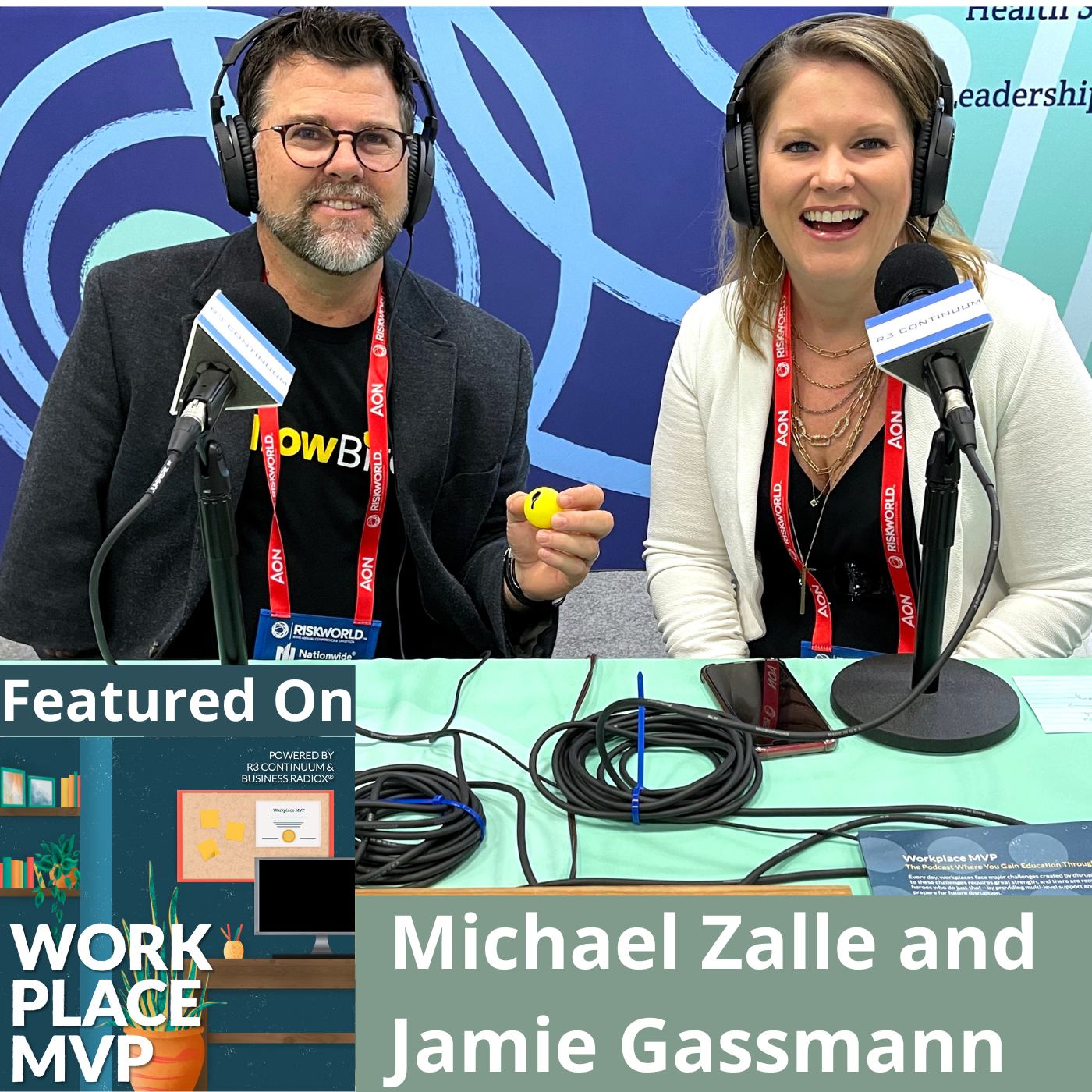
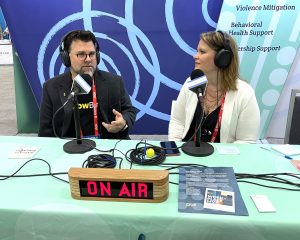
Gerry Stanley and Mark Moore with Harvard MedTech spoke with host Jamie Gassmann LIVE from RISKWORLD 2022 about their mission and the technology developed by Harvard MedTech. Their innovation involves virtual reality headsets combined with behavioral health interventions which assist claimants in dealing with workplace trauma. Gerry and Mark talked with Jamie about the specifics of how this technology works, the types of claimants that can benefit from the approach, its use in pain management, and more.

Workplace MVP is underwritten and presented by R3 Continuum and produced by the Minneapolis-St.Paul Studio of Business RadioX®.

This show was originally broadcast from the RIMS 2022 RISKWORLD Conference held at the Moscone Center in San Francisco, California.

Harvard MedTech, LLC

Gerry Stanley is Senior Vice President and Chief Medical Officer, and Mark Moore is Senior Vice President, Market Partnerships, for Harvard MedTech, LLC

Harvard MedTech is committed to Smart Device Technology for in-home patient care. Its mission is to push the frontier of capabilities and create or find the most innovative smart technologies from around the world. These technologies may be devices, systems, or elements that expand an extraordinary human experience.

They are also committed to home-based therapies to facilitate greater compliance by – and a higher quality experience for – the patient. Their dedicated behavioral health clinicians train patients on how to use smart equipment and technologies, and provide oversight, motivation and encouragement.

What most makes HMT stand apart is our unmatched ability to integrate technology with behavioral science in a way that produces faster, safer and better outcomes for patients, increased convenience for providers, and lower costs for payers.

Company website | Linkedin | Gerry LinkedIn | Mark LinkedIn

About Workplace MVP

Every day, around the world, organizations of all sizes face disruptive events and situations. Within those workplaces are everyday heroes in human resources, risk management, security, business continuity, and the C-suite. They don’t call themselves heroes though. On the contrary, they simply show up every day, laboring for the well-being of employees in their care, readying the workplace for and planning responses to disruption. This show, Workplace MVP, confers on these heroes the designation they deserve, Workplace MVP (Most Valuable Professionals), and gives them the forum to tell their story. As you hear their experiences, you will learn first-hand, real-life approaches to readying the workplace, responses to crisis situations, and overcoming challenges of disruption. Visit our show archive here.

Workplace MVP Host Jamie Gassmann

Jamie Gassmann, Host, “Workplace MVP”

In addition to serving as the host to the Workplace MVP podcast, Jamie Gassmann is the Director of Marketing at R3 Continuum (R3c). Collectively, she has more than fourteen years of marketing experience. Across her tenure, she has experience working in and with various industries including banking, real estate, retail, crisis management, insurance, business continuity, and more. She holds a Bachelor of Science Degree in Mass Communications with special interest in Advertising and Public Relations and a Master of Business Administration from Paseka School of Business, Minnesota State University.

R3 Continuum

R3 Continuum is a global leader in workplace behavioral health and security solutions. R3c helps ensure the psychological and physical safety of organizations and their people in today’s ever-changing and often unpredictable world. Through their continuum of tailored solutions, including evaluations, crisis response, executive optimization, protective services, and more, they help organizations maintain and cultivate a workplace of wellbeing so that their people can thrive. Learn more about R3c at www.r3c.com.

Company website | LinkedIn | Facebook | Twitter

TRANSCRIPT

Intro: [00:00:02] Broadcasting Live from RISKWORLD 2022 at the Moscone Center in San Francisco, it’s time for Workplace MVP. Brought to you by R3 Continuum, a global leader in helping workplaces thrive during disruptive times. Now, here’s your host.

Jamie Gassmann: [00:00:21] Hey, everyone. Your host, Jamie Gassmann here. And I’m broadcasting from RISKWORLD 2022 in the expo hall and our show sponsor’s booth, R3 Continuum. And joining me is Gerry Stanley and Mark Moore from Harvard MedTech. Welcome, gentlemen.

Gerry Stanley: [00:00:38] Hey, thanks for having us.

Mark Moore: [00:00:39] Thanks for having us.

Jamie Gassmann: [00:00:40] Yeah. So, tell me a little bit about what Harvard MedTech does.

Mark Moore: [00:00:45] Gerry’s got this.

Gerry Stanley: [00:00:47] So, we’re a virtual reality company that couples virtual reality with behavioral health interventions to treat the effects of workplace trauma. So, as opposed to looking at pain, depression, anxiety or PTSD as the actual problem itself, we really look at that as a constellation of symptoms that we want to treat to give a very holistic, biopsychosocial approach to how we’re treating patients.

Jamie Gassmann: [00:01:08] Wonderful. So, tell me a little bit about – so, like if – are you – from a risk insurance perspective, if they have a client, you know, what types of situations from a trauma perspective are you seeing most commonly that their employee would benefit from your solution?

Gerry Stanley: [00:01:23] So, we really focus on claimants that are, I would say, in the most volatile state. And if you really look at the data on that, most of those patients have some sort of an underlying psychosocial issue that’s driving it. So, it’s really not a functional biologic issue. It’s something else in their life, an underlying issue at home, a history of depression or anxiety. Those are all the things that really derail recovery for patients. What we want to do is say, “Let’s address them holistically. Let’s treat the person as a person, not just as a disease or a traumatic event.”

Jamie Gassmann: [00:01:52] So, tell me a little bit about how does that virtual reality work? Like what is that claimant experience when they’re in that virtual reality?

Gerry Stanley: [00:02:01] So, what will happen is we call the claimant; and as part of that, we’re going to do some assessments on the patient and match them with one of our personal clinicians. We, then, mail the virtual reality headset to the patient’s home, so they can engage in it as much as they’d like. From there on, every week, we have our personal clinician engage with the patient. So, every week we’re adjusting what they’re doing in the headset. We’re going to adjust when they do it, how often they do it, how long they do it, and what types of programs that they’re doing.

So, our program is designed to have four – what we call – experiences. okay? Those are the categories. So, we have knowledge, meditation, distraction and escape. And what the escape is, it’s escaping. It’s going to see the towers of London, swimming with dolphins. It’s taking an injured worker from the safety of their home to let them go transcend that and go into the world. The meditation is very basic eye control, breath control, body awareness, meditation. But because they’re in a virtual reality headset, it’s incredibly immersive. So, it’s very simple meditation done at a very high level. The knowledge pieces are much more simple. It’s education and empowerment, because most workers will say, “I really didn’t get a lot of education from my clinician. Like the doctor doesn’t tell me what’s going on.” So, we really want to empower our patients to be active participants in their care and let them know that it’s not realistic, that you’ve had an injury, that you will always have a little bit of pain. Pain is normal. That’s a normal part of the healing process. So, having zero pain is not how you get back to work. We have to get to a point to where that’s realistic.

And then, we also have a distraction phase where if we’ve got patients that are experiencing pain, we know that we can put them into these modules, and in 3 to 5 minutes, we can get a 44 to 50% reduction in their pain immediately. And that pain will last anywhere from 2 to 3 hours with a legacy pain relief. So, if you think about that in terms of pharmacology, that’s what we’re seeing with somebody takes a Percocet, or a Vicodin, or one of the opiates that people talk about, that’s what you’re hoping for is a 50% reduction in pain that’ll last 2 to 3 hours. We’re seeing that in a completely non-pharmacological way just by using virtual reality.

Jamie Gassmann: [00:03:52] Interesting. So, the ideal claimant is somebody who suffered some type of a traumatic injury that’s causing them ongoing pain. And so, this could be used as kind of a pain management tool for them basically, correct?

Gerry Stanley: [00:04:04] Definitely an adjunct for some of the pain. So, we really focus on areas where we see the greatest pain. So, we focus on shoulder surgeries, back surgeries, foot and ankle surgeries, amputations or specific injuries that we know have really the lowest return to work, highest post-operative complication, highest opioid addiction – the surgeries that are going to have the most likelihood of having a complication. But then, we also like to identify claimants based on some of their underlying psychosocial issues. So, they may have issues that are driving that. Like I said, maybe they’re caring for a child at home, maybe they’re caring for an aging adult or a parent. We’re seeing that a lot more. We have multigenerational families in the home. So, we want to make sure that we’re addressing these folks, saying, “What’s going on in your life?” So, that it’s not just give this to everybody, but let’s really identify the high risk claimants early on to give them that extra level of support, so that (1), they can get better; (2), they can be whole. And then from the insurance industry side, we really want to be able to close that claim.

Jamie Gassmann: [00:04:57] Now, I know you had an interview earlier today. So, Mark, do you want to talk a little bit about some of the things that the journalist was asking you on the interview that you had?

Mark Moore: [00:05:09] Oh, it wasn’t me that had the interview.

Jamie Gassmann: [00:05:10] Oh, okay.

Mark Moore: [00:05:11] It’s not allowed at the table.

Jamie Gassmann: [00:05:12] Yeah. Oh, wow. But you got — you were allowed at my table. So, you get to talk about it.

Mark Moore: [00:05:16] No. I was at a client meeting. So, Gerry was the one that actually was there [crosstalk].

Jamie Gassmann: [00:05:18] Oh, got it. Okay. Yeah. So, tell us a little bit about that interview because that was — you were pretty excited about that, so.

Gerry Stanley: [00:05:27] Well, it kept me from running the 5K this morning.

Jamie Gassmann: [00:05:28] I know, you missed out.

Gerry Stanley: [00:05:30] So, that is excitement in itself.

Jamie Gassmann: [00:05:30] Yeah.

Gerry Stanley: [00:05:31] They’re outside running in the cold. I’m inside on TV. So, life was good.

Jamie Gassmann: [00:05:34] But it had amazing views.

Gerry Stanley: [00:05:36] It was — you know, it was a lot of fun. It was Best TV. They were just kind of looking at different innovators in the industry. And they brought us in to talk about advances in telemedicine and some of the new –I would say we’re a little bit revolutionary bringing virtual reality into the space. So, how we’re disrupting the space and what we’re doing to really bring technology to health care or really adjust where care is received. For the most part, care has always happened in the clinic or in the hospital. Now, we want to do it in patients’ homes. Like, “Let’s actually go where the patient lives instead of having the patient go to where the care has historically lived.” So, it’s really that paradigm shift of going to where people live and meeting them where they are, so that we can really try to find the right care for the right person at the right time.

Jamie Gassmann: [00:06:16] Yeah. And you know, when you think about it like the shift over the last couple of years where telehealth and people being able to, you know, have appointments right off their phone to diagnose them, you know, this is a really prime opportunity in time where people are starting to get used to that care in the home. So, that’s great.

Gerry Stanley: [00:06:33] So, we’ve talked about telemedicine for probably a decade, but patients didn’t like it and doctors hated it. So, you’ve got this great idea that nobody wants to utilize in the pandemic. That’s really kind of the blessing of the pandemic, is it forced us to get out of that comfort zone. And now, people love it. I know doctors that have moved straight to just all virtual practices because it’s so convenient. It’s just less disruptive to everybody’s life. So, it’s-

Intro: [00:06:56] Yeah.

Gerry Stanley: [00:06:57] It’s been fun just to see that evolution in such a short period of time.

Jamie Gassmann: [00:07:00] Yeah. And what I like about, you know, your virtual reality and trying to help that pain management is that shift away from having to take a narcotic, you know, an opioid to treat a backache. You know, and you hear so much about the opioid crisis. I mean, I know I haven’t heard as much about it. I think COVID kind of silenced a little bit, but I don’t think it went away. And so, you know, this is really a great kind of alternative to those who are like, “I really don’t want to take something to handle my pain. I’d really like to have some type of a solution that allows me an alternative options.” So, that’s great.

Gerry Stanley: [00:07:34] It’s been really great. It’s a lot of fun to be doing something so innovative and still helping people.

Jamie Gassmann: [00:07:39] Yeah, that’s fantastic. And I know you guys are exhibitors here at the conference. So, you know, tell me a little bit about some of the traffic and the conversations you’ve been having. What are — how are people responding to you?

Mark Moore: [00:07:50] It’s new, it’s novel. So, for us, as an organization, it’s something that’s not been in the marketplace. Everybody’s talked about the biopsychosocial pieces that go into the claim. We’re actually putting an appliance with that, with therapy. So, it’s having a lot of, “What are you guys doing? Oh, can I try that on?” And they take it as an Oculus. They look at it as a kids’ game or something along those lines. And once they actually sit down and get immersed in the system within the VR headset, they then see the difference of what that can have for the patient. And hearing the story that goes along with that and the science has been brought to fruit, we’re having tremendous amount of traffic and a lot of people kicking the tires and saying, “There is a solution here. How do we apply this in our organization and for our claims?”

Jamie Gassmann: [00:08:30] Yeah, that’s fantastic. I can imagine. It’s always great to see something new and innovative that, you know, maybe somebody hadn’t thought of or maybe they thought it needed to have a solution there. And you guys kind of brought it to market. So, it’s fantastic.

Gerry Stanley: [00:08:43] Thank you.

Jamie Gassmann: [00:08:43] So, if somebody wanted to get a hold of you and learn a little bit more about what you’re doing, how would they do that?

Mark Moore: [00:08:49] Well, you can go to HarvardMedTech.com. There are places that you can send a referral in, ask for information.

Gerry Stanley: [00:08:56] You can go to info@harvardmedtech.com. That’s a great place. Send an e-mail to that, and we’ll be able to communicate with you directly. We also have referrals at HarvardMedTech.com if you’re an adjuster, or a patient care provider, or doctor, or nurse practitioner, PA saying, “Hey, I’d really like to try this for one of my patients,” feel free, you can send send that in directly to us.

Jamie Gassmann: [00:09:14] Wonderful. Well, it’s been great having you both on the show. Thank you so much for stopping by.

Mark Moore: [00:09:18] Hey, thank you.

Gerry Stanley: [00:09:19] Thank you.

Outro: [00:09:22] Thank you for joining us on Workplace MVP. R3 Continuum is a proud sponsor of this show and is delighted to celebrate most valuable professionals who work diligently to secure safe workplaces where employees can thrive.


Tagged With: Gerry Stanley, Harvard Medtech, Jamie Gassmann, R3 Continuum, Smart Device Technology, telemedicine, vitual reality, wearable technology, Workplace MVP

Decision Vision Episode 169: Should I Have My Business Valued Every Year? – An Interview with Doug Marshall, Marshall+Viliesis, LLC

May 19, 2022 by John Ray

Doug Marshall
Decision Vision
Decision Vision Episode 169: Should I Have My Business Valued Every Year? - An Interview with Doug Marshall, Marshall+Viliesis, LLC
Loading
00:00 /
RSS Feed
Share
Link
Embed

Download file

Doug Marshall

Decision Vision Episode 169: Should I Have My Business Valued Every Year? – An Interview with Doug Marshall, Marshall+Viliesis, LLC

Doug Marshall, Partner at Marshall+Viliesis, LLC, joined host Mike Blake to cover the process of having a business valuation done, and whether doing a valuation every year is advisable. They discussed the factors which impact a business’s value, ways it can be valued, reasons to do it annually, whether it should be done in-house or independently, and much more.

Decision Vision is presented by Brady Ware & Company and produced by the North Fulton studio of Business RadioX®.

Marshall+Viliesis, LLC

Marshall+Viliesis, LLC is a firm dedicated to helping owners Value & Protect their largest and most important asset.

Business Value Protection Planning™ is a proprietary system developed by Marshall+Viliesis to help owners through the planning process with speed and accuracy. It guides them through the four critical areas of Succession, Retirement, Estate and Key Stakeholder. Planning.

Starting with a valuation Business Value Protection Planning™ has the ultimate goal of planning which is Current, Complete and Coordinated. Business owners think differently than the wealthy affluent and deserve a better planning experience designed for them.

Company website | LinkedIn

Doug Marshall, Founding Partner, Marshall+Viliesis, LLC

Doug Marshall, Founding Partner, Marshall+Viliesis, LLC

Doug Marshall is a founding partner at Marshall+Viliesis, LLC. He is focused on helping owners get the planning they deserve to protect the wealth, income, and legacy of their business.

Along with his partner Peter Viliesis he created Business Value Protection Planning™, a system designed to deliver planning that starts with a valuation of the business. Knowing the current value of a business helps an owner make better decisions for the business. It helps the owner make better decisions for growth, decisions for protecting the business value, and decisions to help unlock business value.

Previously Doug has worked with Nationwide, Manulife/John Hancock in the Corporate Products division where he developed and marketed Corporate-Owned and Bank-Owned Life Products. He has been associated with Penn Mutual on the brokerage side as well.

He is located in Seattle Washington where the state is home to over 400 Craft Breweries. Much of his focus is working with Brewery Owners, a fascinating manufacturing industry. If you are ever in Seattle he will be more than happy to take you on a tour!

LinkedIn

Mike Blake, Brady Ware & Company

Mike Blake, Host of the “Decision Vision” podcast series

Michael Blake is the host of the Decision Vision podcast series and a Director of Brady Ware & Company. Mike specializes in the valuation of intellectual property-driven firms, such as software firms, aerospace firms, and professional services firms, most frequently in the capacity as a transaction advisor, helping clients obtain great outcomes from complex transaction opportunities. He is also a specialist in the appraisal of intellectual properties as stand-alone assets, such as software, trade secrets, and patents.

Mike has been a full-time business appraiser for 13 years with public accounting firms, boutique business appraisal firms, and an owner of his own firm. Prior to that, he spent 8 years in venture capital and investment banking, including transactions in the U.S., Israel, Russia, Ukraine, and Belarus.

LinkedIn | Facebook | Twitter | Instagram

Brady Ware & Company

Brady Ware & Company is a regional full-service accounting and advisory firm which helps businesses and entrepreneurs make visions a reality. Brady Ware services clients nationally from its offices in Alpharetta, GA; Columbus and Dayton, OH; and Richmond, IN. The firm is growth-minded, committed to the regions in which they operate, and most importantly, they make significant investments in their people and service offerings to meet the changing financial needs of those they are privileged to serve. The firm is dedicated to providing results that make a difference for its clients.

Decision Vision Podcast Series

Decision Vision is a podcast covering topics and issues facing small business owners and connecting them with solutions from leading experts. This series is presented by Brady Ware & Company. If you are a decision-maker for a small business, we’d love to hear from you. Contact us at decisionvision@bradyware.com and make sure to listen to every Thursday to the Decision Vision podcast.

Past episodes of Decision Vision can be found at decisionvisionpodcast.com. Decision Vision is produced by John Ray and the North Fulton studio of Business RadioX®.

Connect with Brady Ware & Company:

Website | LinkedIn | Facebook | Twitter | Instagram

TRANSCRIPT

Intro: [00:00:02] Welcome to Decision Vision, a podcast series focusing on critical business decisions. Brought to you by Brady Ware & Company. Brady Ware is a regional, full-service accounting and advisory firm that helps businesses and entrepreneurs make visions a reality.

Mike Blake: [00:00:21] Welcome to Decision Vision, a podcast giving you, the listener, clear vision to make great decisions. In each episode, we discuss the process of decision making on a different topic from the business owners or executives’ perspective. We aren’t necessarily telling you what to do, but we can put you in a position to make an informed decision on your own and understand when you might need help along the way.

Mike Blake: [00:00:42] My name is Mike Blake, and I’m your host for today’s program. I’m the Managing Partner of Brady Ware Arpeggio, a data-driven management consultancy, which brings clarity to owners and managers of unique businesses facing unique strategic decisions. Our parent, Brady Ware & Company is sponsoring this podcast. Brady Ware is a public accounting firm with offices in Dayton, Ohio; Alpharetta, Georgia; Columbus, Ohio; and Richmond, Indiana.

Mike Blake: [00:01:07] If you’d like to engage with me on social media with my Chart of the Day and other content, I’m on LinkedIn as myself and @unblakeable on Facebook, Twitter, Clubhouse, and Instagram. I also recently launched a new LinkedIn group called Unblakeable’s Group That Doesn’t Suck, so please join that as well if you would like to engage.

Mike Blake: [00:01:25] Today’s topic is should I have my business valued every year? And this is a topic that I have avoided. It has been suggested to me that I really should be doing more valuation stuff, because at least nominally, that’s the field that I’m in. But to be perfectly candid, I’ve been reluctant to do it, because I didn’t know how to do it in a way that just wasn’t completely self-serving. And those of you who know this podcast, who have hung around and listened to a few of these, you know that I have no interest in turning this thing into an infomercial.

Mike Blake: [00:02:04] We put information out there that we hope and believe is useful to our audience. We bring experts on that can talk about the topic and just sort of let it go at that. But the fact of the matter is that valuation of a business is important, and it’s important for a lot of reasons, whether you’re thinking of selling your business, you’re positioning it to be transferred to a family member or somebody else, there are tax planning implications, all kinds of reasons why you ought to know or at least have some idea as to the value of your business should you decide to sell it or another business should you decide to buy it.

Mike Blake: [00:02:49] But I didn’t want to get on here and basically just do a monologue, and again, be sort of Ron Popeil selling the Ronco Rotisserie Showtime grill, which, by the way, as an aside, is fantastic. I’ve had one for like 15 years. I got one as a Christmas present for my mother, and I thought, for sure, this is going to be one of these things that goes into the attic with like 25 years of fruitcake, but I’ll tell you, the damn thing works. It actually does make the best tasting chicken and turkey we’ve ever had. So, they’re not a sponsor of the show, and as far as I know, Mr. Popeil, I actually think, passed away about 10 years ago. But anyway, that’s a sort of an aside there. If you’re thinking of getting one, go ahead and get one, because I think they’re pretty neat.

Mike Blake: [00:03:34] So, helping me out here to make sure that this isn’t an infomercial, and frankly, just to sort of keep me in line is my friend joining us from Washington State, Doug Marshall, who is a founding partner in Marshall|Viliesis, LLC. He’s focused on helping owners get the planning they deserve to protect the wealth, income, and legacy of their business. Along with his partner, Peter Viliesis, he created Business Value Protection Planning, a system designed to deliver planning that starts the valuation of a business.

Mike Blake: [00:04:03] Knowing the current value of a business helps an owner make better decisions for the business and helps the owner make better decisions for growth, for protecting the business value and decisions to help unlock business value. And I think that second part is very important and is very overlooked, especially when times are good, but protecting value is so important, and I think that it’s not as sexy as growth or profit, but, boy, building resilience into your business, or as Nicholas Taleb would say, antifragility into your business, I think that it is an incredibly important concept that maybe we’ll dive more deeply in another show.

Mike Blake: [00:04:48] Previously, Doug has worked with Nationwide Manulife John Hancock in the Corporate Products Division, where he developed and marketed corporate-owned and bank-owned life products. He has been associated with Penn Mutual on the brokerage side as well. He’s located in Seattle, Washington, with a status home to over 400 craft breweries. Much of his focus is working with brewery owners, a fascinating manufacturing industry. That’s something that we have a guy in our practice who owns Sizemore, does a bunch of as well. If you’re ever in Seattle, he’ll be more than happy to take you on a tour. So, with that, I’d like to welcome Doug Marshall to the Decision Vision podcast.

Doug Marshall: [00:05:25] Thank you, Michael. It’s a pleasure to be here. Really appreciate the opportunity.

Mike Blake: [00:05:30] So, explain to our list, and of course, I know the answer to this question, but most of our listeners don’t, what is a business valuation?

Doug Marshall: [00:05:41] Well, it doesn’t come with a set of steak knives, so we definitely are not doing an infomercial here. But I think that most business owners have a notional value of what their business is worth, because they talk to other business owners, right? Yet, at the same time, very few go through the formal process of getting a valuation, of having somebody take all of their financial data, look at what the business is expected to do over the next few years, and come up with a number that says, this is what your business is worth, and having that knowledge is rather important.

Doug Marshall: [00:06:23] So, in your practice, in my practice, what we will do when we’re working with the business owner is we’ll collect three, maybe five years of historical financial data. We’ll do an interview and we’ll find out what the business owner is about and what’s going on with the business, and we’ll do a projection of what the expected cash flows are to be, and we’ll come up with a number.

Doug Marshall: [00:06:46] And there are a number of different valuation numbers. There’s equity value, and I don’t expect that we’ll go into all of this detail now, but there’s equity value, asset sale value, enterprise value, liquidation value, book value. So, there are a number of different measures and a number of different ways to look at the value of a business, but it’s important for an owner to know. Did I answer the question alright for what we wanted to do?

Mike Blake: [00:07:10] Well, I think so. So, at the end of the day, evaluation, it sounds like, is a third-party, and I think importantly, an independent view as to what the business is, at least, ostensibly worth. Let me ask this. I’m very curious to get your view on this. In your experience, do you think that more business owners are likely to think their business is more than it’s actually worth, what it would likely sell for, or less than what it would likely sell for? In other words, are business owners too optimistic or too pessimistic?

Doug Marshall: [00:07:50] I think it’s 50-50, and I think it also depends on their mood. They could have come off a crappy week, and they could say, well, I’m not that optimistic that anybody’s interested in my business, I don’t know how to transfer it, my kids aren’t interested in it. So, they don’t really know. And then, they’ll be with their buddies. I mean, business owners tend to hang with business owners, and I know this is true in the brewery business, but they’ll say, my business is worth a certain multiple of earnings or EBITDA and there will be this rule of thumb in there, but it’s not necessarily what their business is worth, and I also want to make sure that everybody understands that I can value a business for $10 million and it sells for $13 million, but that was kind of a strategic purchase, possibly.

Doug Marshall: [00:08:42] So, just because I come up with a range of value, you come up with a range of value doesn’t mean that that’s what the business is going to sell for. So, ultimately, if somebody’s looking to sell a business, which is usually why people think that they should get a valuation, they’re in a position where they may or may not get that number, but I think it’s all over the map.

Mike Blake: [00:09:05] Yeah. And I think that that point is very important, in that defining value is actually deceptively hard. And Warren Buffett would say where price is what you pay, value is what you get, we know the technical definitions of value in terms of buying and willing informed seller and buyer, and the fact of the matter is that most of the time, an asset, particularly if it’s not on a liquid public market, an asset trades for, it’s something that can be quite far from what you and I might say is fair value, and that’s because the markets aren’t all that efficient.

Doug Marshall: [00:09:51] Right. Because it’s very limited and people don’t really pay attention to that, but you also might be a minority shareholder, so your value is less. You might not have marketability of your stock, so your value is less. You might have controlling interest, so your value is more. Yeah, but lack of marketability really creates a problem to get a true value for an owner. That’s why I think it’s so important to know the value well in advance of any event that takes place so that you’re not caught off guard.

Mike Blake: [00:10:23] Now, in your practice, what is involved in a business valuation? You talked about reviewing and analyzing historical financial data up to five years, but I imagine it’s much more than that. Can you share with our audience kind of what other processes and procedures enter into a business valuation process?

Doug Marshall: [00:10:45] Well, I know that we’re going to get to this question later, but predominantly, I’m using an online algorithmic system called BizEquity. And the reason for that is that I’m trying to not have the valuation process get in the way of the answer that the business owner really, really needs. And that is approximately, how much is my business worth? And this is well in advance of when they’re looking to sell it, so that the business owner can put in three years of financial data, we can do some projections out, and we come up with a report that will give them insight into the different valuation numbers for them.

Doug Marshall: [00:11:22] And it’s important to know, because if you’re going to do a buy-sell agreement with a partner, you want to know that that business is approximately worth seven-and-a-half million dollars, and you want to know that if I need to buy out my partner, it’s going to cost me three-and-a-half, if that’s what we agreed to. So, our process is relatively simple, because we want fast, inexpensive, and non-intrusive.

Doug Marshall: [00:11:51] Typically, and a lot of the work that you do, Mike, entails a lot of time and a lot of expense, and you’re worth it, but that’s because you’re trying to grind down the numbers so that you can support it legally from a tax standpoint, or you might have a litigation matter, or you’re doing something that’s highly subjective, saying, I don’t know what the future holds, so here’s this range, if anybody knows about your practice and the things that you do.

Doug Marshall: [00:12:20] I think one of the primary reasons, that I think there are two primary reasons why business owners don’t typically get a valuation. And the first reason is time and expense. It’s just like, it’s too much time, and owners, they have drive and discipline to grow their business, they’re not looking to spend time doing this other stuff that’s not directly growing their business. And to be quite honest, since more than 90% don’t keep valuations current, 90% of business owners don’t keep valuations current, business has gotten along fine without having formal valuations done on a regular basis, right? I mean, it’s not like we’re seeing businesses collapse, because they haven’t done these valuations.

Doug Marshall: [00:13:02] You know what I mean? If they need valuations to succeed, the business would be thriving and we’d have more than 10,000 professionals doing valuations throughout the country, but that’s not the case. So, normally, and I think owners also think that the only time that I really need a valuation is when I’m contemplating doing something like a gifting program, which that’s required. Like if I’m going to sue somebody, that might be required. If I’m going to transfer ownership, that’s going to be required. So, they’re only doing it when they’re required to do it, and I think having that knowledge well in advance makes a lot of sense for them, though.

Mike Blake: [00:13:39] And you mentioned the reasons why business owners don’t do valuations, I actually think there’s a third, and I’d love to get your view on it, and that is that I think that our profession has a little bit of a credibility problem. I think that, and for some reason, our profession largely is kind of okay with this. I think we have too much of a sense of humor about it, but I think we’re too willing to cave in to the argument that value is what somebody is willing to pay for it, which I’m not going to off-ramp onto that.

Mike Blake: [00:14:13] There’s a Freudian slip there, because I could easily rant on that for an hour, but I do think that a lot of people don’t know that there are people who do what we do, and I think our profession, frankly, has done a poor job of explaining to people, to the public what goes into a business valuation or appraisal, and I think there’s a distinction there that you’re kind of illustrating very nicely, actually. And I think that our profession hasn’t done enough to say, look, actually, there is some method to the madness here, really isn’t just shaking a magic eight ball, but there is some rigor that can lead you to make better decisions if you allow it.

Doug Marshall: [00:15:03] Oh, by all means. I always talked to owners about if an unexpected opportunity comes along, how are you going to measure that opportunity if you don’t really know the value of your business, for your business? Is that going to positively or negatively impact the value of my business? And should I be keeping—sometimes, what we’ll do with owners is we’ll do what ifs.

Doug Marshall: [00:15:28] We’ll say if you change this cash flow, if you reduce this expense, if you add this payroll, how much additional revenue is that going to create? How much risk is that creating for you, the owner? How much opportunity is that creating for you with growing your wealth? And you have to be really careful with the business, because you mentioned this before, it’s an illiquid and concentrated asset, it’s unlike anything else that somebody owns on the personal side, and that creates a lot more risk. So, knowing the value does make a lot of sense.

Mike Blake: [00:16:05] So, we touched on it, but I want to make sure we hit this clearly, because I think it’s central to the conversation, and that is, what exactly are the reasons why a company would want to have a valuation of their business done on a regular basis, whether it’s annually, semi-annually, biannually? What are the reasons for that?

Doug Marshall: [00:16:27] Yeah. Even if the business is not growing, it’s just pretty steady in sales, it’s doing $10 million of sales a year, its expenses remain relatively the same, I think just the very discipline of going through the process and establishing the value for the business, which might have a little bit of variation because of external factors, the economic climate and interest rates, of course, but just being able to show that this is something you were paying attention to, I mean, it’s not too different from showing that you’ve got good books and you can account for the money over the past 5 to 10 years.

Doug Marshall: [00:17:06] That shows that you are a disciplined business person and that your business has some value based on that. You want to show that you are a well-run business. So, knowing the value also puts you in that position of just being able to make better decisions on a regular basis, and then you also understand what drives the value. Very often, we will talk about, okay, what’s your equity value and what’s your liquidation value?

Doug Marshall: [00:17:33] I think those are two important numbers for a business owner to understand when it comes to protecting the value of your business, and this is a practical matter. So, your business value might be worth $10 million as a going concern, but only 2 or $3 million if you just have to shut the doors, because you haven’t done any proper planning or you become illiquid. So, that’s the amount that’s at risk, and I think facing that risk every year motivates someone to do some planning to make sure that that’s protected.

Doug Marshall: [00:18:05] Our buddy, Chris Mercer, he talks about the 1% solution, and he talks about, you should take 1%, or thereabouts, 1% of the value of your business and carve that off as a budgeted item to pay for your attorneys, and your CPAs, and your wealth advisors, your insurance people to make sure that you are doing the planning that is protecting the wealth, helping to unlock that wealth, ultimately, of that business, and not pay more taxes. There are all sorts of ways in which you can lose money in the ultimate transaction of transferring the value, because you’re paying too much in taxes, you’re not getting as much as you should for the business, because you were disorganized in the process and you haven’t positioned the business correctly to be sold.

Mike Blake: [00:18:58] And I think one of the things you said is really smart, which is I think that in a valuation process, the why is much more important, or at least as important, but I would argue more important than the what. We’re giving you numbers in round figures—giving a client a number, I should say, your business is worth $1,000,000, the end. I mean, yeah, that’s nice, but on the other hand, your business is worth $1,000,000, but it could be worth more, because of these five—if you do these five things, which, by the way, some of them may not be very hard to do at all. That’s easily worth a multiple of the fees that were invested in the valuation in the first place.

Doug Marshall: [00:19:40] Exactly.

Mike Blake: [00:19:42] So, let me get to some of the mechanics here. I think for many people, especially if they’re approaching business valuation for the first time and they may or may not have heard of people like us that do this for a living, they probably will turn to their CPA first. And there’s a rationale to it, right? They’re financially oriented. Some CPAs are, in fact, professional business appraisers or valuation analysts. Some do it a lot, some dabble. And of course, there’s an institutional knowledge of the company, most likely, at least for some period of time. Should the first place or should a company just sort of default to turning to their CPA to do the valuation of the company for them?

Doug Marshall: [00:20:34] Well, one, if the CPA does have experience in doing valuations and has really taken the time to learn how to do it, I would say, sure, that’s not a bad place to turn, yet at the same time, I think getting a secondary objective opinion on the value of the business, the range of value on the business does make sense. Another difficult thing, and this is nothing against the CPA profession, but they’re very seasonal. And so, they go through seasons where they are 100% unavailable because of the workload. And then, there are other times when they’re available. So, it’s not really in their business model to be doing valuations. And in your firm, I mean, you’re not doing tax work anymore, right?

Mike Blake: [00:21:25] No, I never was.

Doug Marshall: [00:21:29] And Owen, so I mean, you have a different side. So, I wouldn’t object to a CPA firm that had a valuation arm in it, I don’t think that’s a problem, but here has to be that relationship and there has to be experience in doing valuations for the particular type of industries, right? So, if you’ve never done a brewery before, you’ve got a learning curve as a valuator.

Mike Blake: [00:21:56] Now, what if the company is large enough that they have a CFO or a controller, is it a good idea maybe to say, hey, you’re a CFO, I’m paying you to do finance stuff, you tell me what the business is worth?

Doug Marshall: [00:22:10] Mm-hmm. I mean, once again, they can give you a general version, the idea of what the business is worth, but then you have to look at, what is the level of objectivity here? I don’t want, as the CPA, to be the person who should be telling the owner, that you think it’s worth 20, but it’s really worth 15. I’m not sure I really want to be put in that position. And then, with people in value, people that do valuations full time, even they’re going to come with their certain set of—they’re going to have bias in how valuation should be done. They’re going to have bias toward industry.

Doug Marshall: [00:22:52] And there are the human factors that you want to get as much out of the human factor as possible. If I wake up on Monday morning and start evaluation and I did not have a very good weekend, that might color my world a little bit to where my process is going to be different. And I think the same thing can happen to a CFO, so it’s better to have somebody to come in and do something objective. I don’t think having your CFO give an estimate is a bad idea, but I also wouldn’t take the CFO off of CFO type of stuff to go through a full-blown valuation, because that is going to take time.

Mike Blake: [00:23:39] And you mentioned something that I think is really important, and that is the independence. In the CPA example, can you really trust your CPA to tell you that your baby is ugly, or are they going to be a little concerned that in doing that, that the fees for their other services might be in jeopardy, or the CFO might be concerned that his or her job might be imperiled if you come back and say, your baby is ugly, this company isn’t really worth very much?

Mike Blake: [00:24:16] And candidly, that’s something that I address here at Brady Ware. When we receive an internal referral from an existing client, one of the first questions I—the first question I ask is, is there any scenario under which the answer that we come up with would make the client mad at us? And if the answer is yes or even if it’s supposedly infinitesimally small, and it probably isn’t, it’s probably bigger than we think it is, then even I’ll refer it out, because it’s just not worth it.

Doug Marshall: [00:24:52] I hear you on that. And I’m not trying to be self-serving for the two of us saying, you shouldn’t use your CPA, you shouldn’t use your CFO, I’m saying, as is good practice, there’s a lot of reasons to look outside to get that information.

Mike Blake: [00:25:08] So, I think the most common or maybe most accessible thesis for this is to have a valuation done annually, because you’re in a mode now where this might be the year that you’re going to sell, either you just decide that you want to throw it in, or this is the year that somebody calls you on the phone and makes an offer that you don’t hang up on them on. Are there other reasons to do it annually other than just be ready for a proposal to sell?

Doug Marshall: [00:25:40] I think it’s going to be easier if you do it on an annual basis. It might not be as costly, because a lot of the information is already there, and you just have to check and see what has changed. I think the habit of it is going to make it easier if you do it every five years. It’s like, you might say, ah, we can wait another year. But doing it every year probably makes the most sense, because then, I can quickly look at a company’s financials, and say, not much has changed here, so we’re probably not going to come up with too far of a different result, but it’s good to know.

Doug Marshall: [00:26:16] And I also might want to ask, why haven’t you grown, or why did your sales fall off, or why did your expenses go higher? What’s really fascinating about a valuation is that when you look at your accounting statements, your cash flow, your net cash flow statement, your gross revenue, your balance sheet, you can kind of pick and choose what numbers you focus in on to make yourself feel better as a business owner, and we’re just human, right? But the valuation puts together all of that stuff and comes out with one number. So, it throws it all in the mix, does all the calculations, looks at the future cash flow, and it acts as a barometer. So, it doesn’t allow the owner to kind of cheat themselves by telling them a story that’s not necessarily true.

Mike Blake: [00:27:12] And you touched on something that I think is worth pausing on for a minute, which is, again, the why, and even if your business likely has remained static in value over a year or two years, whatever, in the financial markets, they have a concept called performance attribution, and I think that applies here as well, in that why the business value has changed or not changed I think is important. Is it because you did something great or not as great, or some function of your company did something great or not as great, or were you bailed out by or were you hurt by simple market movements? And that’s just something that’s environmental and it doesn’t necessarily mean that you did anything right or wrong.

Doug Marshall: [00:28:08] Mm-hmm. And I’ve had owners that have said, “How much cash should I leave in my business?” And I don’t have a specific answer for them, but they say, “If I leave this million, how does that impact the value, as opposed to taking out 750,000?” We can do a quick calculation, so they can see what happens there, and then we can kind of talk about, does it make sense to leave it in the company or take it out of the company and redeploy it in other ways? So, there are forensic things that you can do and pro forma things that you can do in valuation to do what ifs, which helps in planning for future events.

Mike Blake: [00:28:51] Now, as you’ve touched upon, sometimes, companies will need to engage a valuation or an appraisal for something that is compliance-related. It could be for a gifting event, could be for, I don’t know, stock options, 83(b) elections, something having to do with gap, take your pick. Can a client simply take a document like that or a valuation, and then rely on that as the same document for strategic positioning?

Doug Marshall: [00:29:23] Yes and no, and I don’t want to be elusive on that because every valuation has a purpose and a goal. So, if you are doing something for a state planning purposes and gifting purposes, you might want to have to be able to justify a certain value for that gifting program. That might not be the same value that you would want if you were going to go sell the company or you are going to make a strategic decision. So, I mean, the number shouldn’t be that far off, but you have to keep in mind that if you had a different purpose for the valuation, the numbers might be a little bit different.

Mike Blake: [00:30:05] Now, our term of art that we use is something you and I, meaning, and others like us is we apply what’s called a standard of value, which really just means. It’s a definition of value or a context of value. And of course, for most tax things, it’s fair market value. For most accounting things and some litigation, it’s fair value. For transactional work, it might be something called investment value or synergistic value. But when we’re talking about having a valuation done as a strategic planning document, what standard or definition of value do you typically recommend, and why?

Doug Marshall: [00:30:46] I am more going toward the neutral fair market value, because there’s a lot less baked in. Now, I mean, now, what you can do from there is you can say from the fair market value, if the valuation is 10 million, maybe there is a strategic play out there that’s 15 million, but it’s only that 15 million because there’s somebody on the other side that has a different motivation than you do possibly for keeping it.

Doug Marshall: [00:30:46] So, I just kind of stick with the fair market value, because that’s the basic. I also think that one important point that we need to keep in mind is that since there are these different standards of value in a buy-sell agreement, now, this is going a little bit off the beaten path, it is important in your legal documents to establish which standard of value you’re going to use, because those numbers can be widely varied. And if you have not defined those things, then we start to get into the litigation process between business partners, and that’s one thing that we want to avoid by doing the valuations every year.

Doug Marshall: [00:32:06] Chris Mercer talks about having a single appraiser do a—select the appraiser at the beginning of the year, value the business at the beginning of the year, and all of the partners, if there are multiple owners, agree what the price would be for a buy-sell, what the price would be if somebody wanted to get out, rather than waiting for the event, going through the process of hiring an appraiser at that point in time, and then having them come up with a number that’s a complete surprise. So, being proactive on the valuation side definitely makes a lot of sense.

Mike Blake: [00:32:43] Yeah. Let’s pause on that, and for the record, I’m a big fan of Chris Mercer’s work on that. I’ve had his book in my library for years. I’ve expanded a little bit upon what he’s written, at least in that edition, but it really is an outstanding book. And I agree, if you can agree on a single appraiser and get rid of these sort of dueling appraiser things, processes, I think that’s really a fantastic way to go. But interestingly, you bring up a scenario that I have not encountered as much, I haven’t thought of as much, frankly, and that is the business partner scenario.

Mike Blake: [00:33:23] And I want to pause on that because I’ve done my share, I’m working on my share of resolving buy-sell agreements, and as I think through a lot of those assignments, boy, a lot of them could have been resolved much more easily had there simply been a trusted party by both or more, by all stakeholders involved to perform an independent appraisal, and then that number is just sort of there, as opposed to waiting. And then, like you said, the surprise that when you get a surprise valuation that you don’t like, that’s when the next call is to the lawyers, then you’re off to the races.

Doug Marshall: [00:34:01] And now, you’re talking significant money. So, I mean, you and I own a business for $5 million. We agree that the price is 5 million. If something happens to you, I agree to buy out your spouse for two-and-a-half, and if something happens to me, you agree to buy my portion out for two-and-one-half million dollars. And so, we each have to ask ourselves the question, am I satisfied with getting two-and-a-half or having my estate get two-and-a-half million, and am I satisfied with having to pay out two-and-a-half million? But I’m dealing with that ahead of time, rather than at the time that the event occurs.

Doug Marshall: [00:34:37] So, we can—and you and I might decide, well, that’s going to be a little too rich for our blood. I constantly run into owners that do have that situation to say, “Man, our business grew fast, but I don’t think that I have the liquidity to buy out my partner.” And now, they have to plan for, what can we do? And they might structure their buyout over a period of time, because it’s going to take them a period of time. And you can go back and look at the controlling documents and save people a lot of pain if they know what the dollar number is going to be.

Mike Blake: [00:35:18] Yeah. And I also think that perhaps having an independent appraisal done or valuation done regularly on a partnership like that eliminates or greatly reduces partner arbitrage. And what I mean by that is I think, in particular, when you have buy-sell agreements that call for either a formula or a specific price at which a buyout would occur, eventually, it becomes clear to one party or the other that they would benefit very much from being on one side or the other of a buyout. And there’s at least a financial incentive, ethics aside, there’s a financial incentive to manipulate that buyout, because there’s a substantial financial benefit to you. With an independent valuation or appraisal, I think a lot of that goes away and provides for a more kind of transparent and ultimately harmonious partnership.

Doug Marshall: [00:36:24] 100% agree on that.

Mike Blake: [00:36:27] So, when you get the valuation done, who should have access to it? Right? There’s a document, a work product, usually, of some kind produced, who should have access to that?

Doug Marshall: [00:36:45] Well, I think all key stakeholders that are responsible for driving the company. And I mean, maybe that doesn’t go all the way down to the bottom, but anybody that should know and should understand that this is now being used as a strategic document to guide us forward into the future, they need to understand what that is, whether they are an owner or not. So, you could have several key people where the owner says, “I just did a valuation of my company and it’s $9 million, and my goal is to get it up to $15 million in a certain period of time, and we need to work toward that goal.” So, anybody who’s a key stakeholder in that fashion needs to understand, I think the attorney needs to understand, the accountant should have that information, family members should also have that information as well.

Mike Blake: [00:37:44] And probably, the owner’s wealth advisors as well, I would imagine.

Doug Marshall: [00:37:48] Yeah, I meant to say that. Yes, of course.

Mike Blake: [00:37:54] And that work product, is that something that the business owner should be walking these people through? Should the provider be walking people through it to make sure everybody understands? Because despite our best of intentions, some of these documents can be quite hard to read, especially if you don’t have a lot of economics and finance training. Should the owners sort of set aside time to make sure that they understand and all the other stakeholders understand them?

Doug Marshall: [00:38:30] I think it’s worth taking the time. I don’t necessarily think it is the owner’s responsibility to put that together. I don’t think it’s that hard to put together a two-page summary of the valuation, what was done, the conclusions that were drawn, and some of the major factors that influenced the valuation of that, and what it means. So, it shouldn’t be in Greek, in a difficult to explain language, but I don’t necessarily think it’s the owner’s responsibility to do that, maybe it would be the CFO’s responsibility if the company is large enough to have one.

Mike Blake: [00:39:08] Now, I don’t know if you’ve encountered this, but I encounter a number of people who already “know” at least the multiples for being paid for companies in their market. They may get that from industry associations. They may get it from bankers. They may get it from competitors who may or may not be lying to them. They may get on the golf course. With people like that. What do you say to people like that that think that they kind of know their market multiples? What’s the argument that they may want to have a valuation done anyway?

Doug Marshall: [00:39:47] Well, before I answer that question, I would say, if you’re a franchise, you probably have a pretty good idea based on how the franchise works, especially if it’s a large one. So, I think the rules of thumb multiples in those particular situations are fairly accurate. The problem that I have with general rule of thumb multiples is that they end up becoming a self-fulfilling prophecy, and that’s not good, because the valuation is still the economics of the company, how much cash flow is expected to generate, how much discretionary cash flow is available to the owner, and what’s the projected increase in the growth in that cash flow, and what’s the risk that that is not going to happen? Right?

Doug Marshall: [00:40:34] Those are the basics, right, Mike? And so, you could have a rule of thumb multiple that doesn’t make sense as it relates to the cash flow, because over time, that multiple has eroded into a self-fulfilling prophecy. And it may be to the detriment of the owner. It might say—the multiple might be telling the owner that your business is worth less, that your business is worth more. So, I think that the rule of thumb can be used after you understand the value of your company and you have something professionally done.

Mike Blake: [00:41:17] I’m talking with Doug Marshall on the topic, as should I have my business valued every year? One question I want to ask, I want to make explicit, we kind of danced around it, but I want to kind of nail it, and that is once you have a valuation in your hand, as a business owner or executive, what do you do with it? What are the next steps after you have that document?

Doug Marshall: [00:41:47] One, I would say, is, are you happy with the number? I might go to a business broker, and say, this is the valuation that I have, just in general terms, you think I could sell my company for that? That you could go to your attorney, your tax attorney, and say, hey, my business is worth this, is my estate plan in order based on the value of this business?

Doug Marshall: [00:42:19] You could go to your accountant, and say, hey, this is the value of my company, but I think that I could be a little bit more tax efficient, what could we be doing with that? So, I mean, anybody that’s going to help you make decisions about what to do for your personal planning and your business planning, you can use that document as something to stimulate some conversation and also give some insight into the conversation.

Mike Blake: [00:42:48] So, when we talk about an annual valuation, should it be treated as an update of an existing valuation or should it be considered almost a brand new blank sheet of paper kind of valuation every year? And I can see the arguments for both. The argument for one is obviously cost and efficiency, and institutional knowledge. On the other hand, the argument for sort of a de novo valuation would be to reduce the risk of bias materially impacting or influencing the valuation. Where do you fall on that?

Doug Marshall: [00:43:31] I don’t think that you have to do a brand new, clean slate every year, but maybe every five years, I would. Just say, let’s tear it all up and see what we’ve got. Let’s look at this whole thing all over again.

Mike Blake: [00:43:51] Does an annual valuation make sense for everybody? For example, are there cases where you’ve spoken to somebody and maybe they think they want an annual valuation or they’ve been told they should get one, and you sort of say, you know what, no, I don’t really think this is right for you? Has that ever happened, or what is the case—who shouldn’t necessarily have a valuation done every year?

Doug Marshall: [00:44:17] Well, if the business too much depends on one person, I don’t think that you can really get a clean, accurate valuation. And so, you’re talking about a smaller company. But I think once you get into a larger company size, where it is beyond one particular owner, I think having that knowledge is important. And I mean, I’m not trying to do the infomercial here, but I think that there is a legitimate place for the online algorithmic valuations that are kept up to date.

Doug Marshall: [00:44:47] And as long as the operator understands how these things are working and what can possibly go wrong by getting bad data into it, you can have a relatively good piece of information. I mean, you even have large accounting firms that now use independent valuation tools that are online just to confirm the stuff that they do and also to bring the cost of the valuation down for some of their clients that might not want to spend a five figure number to get a valuation on an annual basis.

Mike Blake: [00:45:21] So, here’s part of the hardest question I’m going to ask in the interview, and it’s pretty much coming at the end, if you or I do provide a valuation for a company, and then it sells for a price that’s materially different from what our conclusion was, does that mean that we are wrong?

Doug Marshall: [00:45:45] No, not in the slightest, unless you hired me to evaluate what you could sell your company for in the market conditions that exists today, but I think that’s more the role of a business broker or somebody in the M&A field, because they have connections with those people who might want to buy, who might want to pay a premium or might want to find a value in the marketplace. So, once again, our valuations are going to have a range of valuations that might differ by 20%.

Doug Marshall: [00:46:26] You might say your business is worth between 10 and $12 million. And so, if it doesn’t sell—we had one recently where the company sold for almost a third more, but a lot of that was because it had fully depreciated equipment that with the supply chain problems, they would not be able to replace that equipment. So, the equipment had significant value in addition to the company itself, the company’s ability to generate revenue. Does that make sense?

Mike Blake: [00:47:00] Yeah, it does. And it’s important, I think, and sometimes, I think it’s overlooked that nowhere in the professional standards does it say that the object of what we do is to get the right number, because as a recognition, I think one of the things our profession does well, there’s a humble recognition that there isn’t necessarily a right number to get, but one that’s credible and reliable.

Mike Blake: [00:47:29] But market conditions are idiosyncratic, and you may be selling a company under duress, for example, if it’s under a buy-sell, or there are so many things that can go wrong that aren’t—or right, frankly, that aren’t considered under the laboratory conditions of a conventional appraisal that even under the best of circumstances, I think what we do should be considered a starting point, not necessarily an ending point.

Doug Marshall: [00:47:58] And business owners deal with uncertainty all the time, so delivering them a number that is not necessarily going to be black and white, the same way that you expect their accounting to be black and white, right? I expect accounting to account for every dollar down to the penny, but we can’t do that, because there’s so much uncertainty out there in the world, but there is also a way to kind of predict what is the range of the value that is likely to be there for you at some point in time in the future or right now.

Mike Blake: [00:48:31] Doug, we’re running out of time, this has been a great conversation, but I’m sure there are questions that either some of our listeners wished that I would have asked or wish we spent more time on, if somebody wants to follow up with you about any of the topics we’ve covered today, can they do so? And if so, what’s the best way to do that?

Doug Marshall: [00:48:49] I am always happy to either have a conversation about this, answer any questions, they can email me at dougm, Doug Marshall, M is my last initial, @marshallviliesis.com, or feel free to call me on my cell, talk, text, it’s 206-605-4695.

Mike Blake: [00:49:16] That’s going to wrap it up for today’s program. I’d like to thank Doug Marshall so much for sharing his expertise with us. We will be exploring a new topic each week, so please tune in so that when you’re faced with your next business decision, you have clear vision when making it. If you enjoy these podcasts, please consider leaving a review with your favorite podcast aggregator. It helps people find us so that we can help them.

Mike Blake: [00:49:37] If you would like to engage with me on social media with my Chart of the Day and other content, I’m on LinkedIn is myself and @unblakeable on Facebook, Twitter, Clubhouse, and Instagram. Also, check out my LinkedIn group called Unblakeable’s Group That Doesn’t Suck. Once again, this is Mike Blake, our sponsor is Brady Ware & Company, and this has been the Decision Vision podcast.


Tagged With: Brady Ware & Company, business valuation, business valuations, Decision Vision, Doug Marshall, ebitda, Marshall+Viliesis, Mike Blake, valuation

Katrina Singletary, Kirsten Ford and Heidi Milton on Women In Business

May 17, 2022 by Jacob Lapera

WomenInBusiness051222pic2
Women In Business
Katrina Singletary, Kirsten Ford and Heidi Milton on Women In Business
Loading
00:00 /
RSS Feed
Share
Link
Embed

Download file

GroupPic2

This Episode is brought to you byAlpha and Omega

KatrinaSingletaryKatrina Singletary for County Commissioner

Katrina is a former candidate for State Representative House District 20. She worked with nonprofit/government organizations for most of her career. She is a professed government nerd and has always had a keen interest in how local and state government shapes a community. She loves a good long Committee meeting.

Connect with Katrina on LinkedIn.


KirstenFordKirsten Ford, Agent at Fathom Realty

There are more options than ever before for homeowners considering selling their home. Fathom Realty lays out all options so you can select the best path for your situation.

Connect with Kirsten on LinkedIn.


HeidiMiltonHeidi Milton, Owner / Professional Organizer at Operation Organization by Heidi

As a Professional Organizer based in Peachtree City, Georgia, Heidi provides practical aid and caring support to clients in pursuit of reducing clutter in their homes and offices. She helps create personalized organized systems for spaces and coaching for improved time management and general productivity. She has been organizing professionally since 2008.

Connect with Heidi on LinkedIn.


This transcript is machine transcribed by Sonix

TRANSCRIPT

Intro: [00:00:07] Broadcasting live From the Business RadioX studios In Woodstock, Georgia. Welcome to Women in Business Where we celebrate Influential women. Making a difference in our community. Now here’s your host.

Lori Kennedy: [00:00:29] Hello. This is Lori Kennedy and I’m your host today for Women in Business Powered by business Radio X Lee is our producer and he’s also in the studio with us today. And we’re grateful to have you tuned in today. Today, we are celebrating three influential women. We have Katrina Singletary, who is running for county commissioner for district four of Cherokee County. We have Kirsten Ford from Fathom Realty and we have Heidi Milton from Operation Organization by Heidi. So welcome our guests. And we’re going to start with Katrina. Katrina, why don’t you tell us about yourself and how long you’ve been in politics?


Katrina Singletary: [00:01:08] That’s a great question, because I don’t really want to be a politician, but yet here I am. I am from Woodstock, Georgia. We live in downtown Woodstock. We have three children, 16, 14 and nine high school, middle school, elementary school. So very spread out. I have been working in government for the last eight years at a staff level and the last job I held was managing the mayor’s office for the city of Roswell. So I have a bachelor’s degree in counseling and a master’s degree in public policy. So from a staffing perspective, I’ve been working in municipal government for the last eight years, but raising my hand now to run for county commission.

Lori Kennedy: [00:01:49] That is so impressive and I can’t imagine trying to fit that in with three children still wanting you around. So I’m sure that that is a topic of a discussion in your home is how to balance all that. Yeah.

Katrina Singletary: [00:02:03] Absolutely. Yes. And some days they are very excited to come with me on the campaign trail and bang doors and other days they are not. And I have to wheel and deal and bargain for their attention in time. But it’s a really wonderful opportunity to display what courage looks like, what endurance looks like, and what why hard work is just not a bad thing.

Lori Kennedy: [00:02:27] That’s awesome. I believe all generations need to know that. So that’s an amazing thing to teach for sure. Heidi, what about you? Tell us about your business, what the business name is, what you do, and how long you’ve been in business?

Heidi Milton: [00:02:39] Yes, my name. I’m Heidi Melton and my business is Operation Organization by Heidi. I work with folks in their residential homes doing professional organizing services. So what that means, as I’m helping them to declutter, to find their right size of belongings and how to manage it in an effective way if they’re living in an overwhelmed status, I’m hoping to help them find peace and productivity. If they’re living in a situation where they’re downsizing or just making a change in their life, I’m helping them make decisions for prioritizing that process as well, and sometimes just giving them that extra friend extra support to make changes in their life to hopefully make it better.

Lori Kennedy: [00:03:20] And how long have you been doing that?

Heidi Milton: [00:03:22] I started my business in 2009.

Lori Kennedy: [00:03:24] Okay. And what made you move in that direction? Like, how did you know that was what you were supposed to do?

Heidi Milton: [00:03:30] So I spent a lot of time investigating what I wanted, what I viewed to be my personal gifts and talents. And I read several books. One of them was Why You Can’t Be Anything You Want to be, but you’ll love being who God designs you to be, and that helps you identify what your motivated abilities patterns are. And came to see that I was very driven by task oriented ness, but also very relational and driven by a problem solving. So when I came across the industry, you know, I think in the Home and Garden Network, it became very clear like that is for me, I can do that.

Lori Kennedy: [00:04:04] That’s awesome. Well, Kirsten, what about you? Tell us about your business, what you do and how long you’ve been doing it.

Kirsten Ford: [00:04:11] Well, I am a realtor and I am with Fathom Realty, which is a nationwide it’s publicly traded company. It’s a wonderful place to work. It’s Internet based. We have the utmost, you know, impressive technology. You just have to kind of keep up with it all the time, which I enjoy learning new things, but I’ve been in real estate for going on my 18th year now. Absolutely love what I do. I think I was born to do this. I was a young child on the school bus looking at houses and architecture, and it’s just been a wonderful career. I can’t see me doing anything else.

Lori Kennedy: [00:04:48] Yeah, that’s awesome. Well, you’re kind of famous in the area because, you know, you’re on this big billboard right down at the corner of, what is it, Highway five and East Cherokee. Yes. Yeah. I’m like.

Kirsten Ford: [00:05:00] Oh.

Lori Kennedy: [00:05:01] There she is. That’s awesome. And so, yeah, you just always loved the housing market and and real estate and architecture and that sort of thing.

Kirsten Ford: [00:05:10] Always. Even when I travel, I try to do as much architecture tours as possible, whether I’m in, you know, like a Charleston or Savannah or even in Europe. I mean, I’m just I love architecture. I’d be an architect right now if I wasn’t a realtor.

Lori Kennedy: [00:05:25] Yeah, for sure. Well, tell us. What motivates or inspires you?

Kirsten Ford: [00:05:29] Well, I’m motivated by the people that I work with. I to me, it’s not work. It’s about building the relationships with everybody and again, being the problem solver. There’s lots of things that come up in real estate. Every transaction is different. You just have to learn how to make it a stress free as possible for your clients. And I don’t look at my clients. I look at them as friends. Everybody I work with, they’re going to get a new friend. That’s all there is to it. So I really enjoy working with people.

Lori Kennedy: [00:06:00] That’s great. Heidi, why don’t you tell us what motivates or inspires you?

Heidi Milton: [00:06:04] I get motivated by seeing people achieve their goals. And so that’s really exciting. You know, working with folks that know they want to change in their life but maybe are feeling a little stuck or intimidated or overwhelmed with how to do it. And so, you know, if I can, you know, observe them growing and lend a hand to help them get there, then that’s really exciting to me.

Lori Kennedy: [00:06:24] That’s awesome. Katrina, same question for you. Tell us what motivates or inspires you.

Katrina Singletary: [00:06:28] I am very inspired by powerful women. My biggest role model is Dolly Parton. I just love her. She’s fabulous. She’s the number one employer in Tennessee and one of the biggest philanthropists. And she is all female and all business at the same time. I also get really inspired by Nikki Haley, the former governor of South Carolina. Just women who can be themselves in their own skin but are making really positive changes for our country are just inspiring.

Lori Kennedy: [00:06:57] That’s awesome. Well, tell us. I feel like this question is like obvious, but then not so. I would like you to kind of be specific in how your the role that you’re running for affects people in this way. The question is, how do you use your influence in the community? So how I guess, how will this role influence individual people as you take it?

Katrina Singletary: [00:07:25] It’s it is that is a great question, because it’s not actually obvious how county commissioners influence our community. I think that as voters and as participants in our own community, we are always our attention is always getting people who are vying for our attention at the federal level and the state level. So we kind of are spent by the time it’s time to try to figure out who builds the roads and who builds the sidewalks and why does one corridor look like it’s designed really appropriately and beautifully in other quarters feel very sterile? And I don’t really want to live there or work there. So that’s how I’m going to leverage this influence over the community, is I’m going to be very focused on making certain that I’m being participated with the people I represent to create a picture of Cherokee County for 20 years down the road that we can all agree on. I want Cherokee to feel and to feel like home, to look like our home and to function like we want it to function in 20 years, which is going to take a lot of planning right now.

Lori Kennedy: [00:08:30] That’s awesome. Kirsten, tell us how you use your influence in the community.

Kirsten Ford: [00:08:35] Well, I’m constantly talking about real estate all the time. One thing that I do do on my off time is I am an advocate for animals, animal rescue, animals in need, that kind of thing. So I’m very involved with the animal control community and the Humane Society. I take donations constantly. Anything that might be needed at any given time, I’m just a voice for the animals.

Lori Kennedy: [00:09:04] Awesome. Heidi, what about you? How do you use your influence in the community?

Heidi Milton: [00:09:08] Well, I mean, honestly, it happens right there in my right there in my sessions because there’s really a compound effect when people are meeting a goal, even if it’s as simple in your home, it can, you know, manifest into other areas. Like some of my clients have gone on to lose a lot of weight after they’ve gotten their home in order. I have had some clients that have doubled their business because it’s a real big confidence booster. If they get, you know, accustomed to making decisions even on a very basic level, then that can grow into other areas that they, you know, just needed to build that up, that little muscle in their mind a little bit.

Lori Kennedy: [00:09:41] Feel like you need to add coach to your to your title as well. I feel like there’s some of that happening for sure.

Heidi Milton: [00:09:48] Yes, I actually do. On my on my site, I, I recognize both professional organizing and the residential realm as often also as family management coaching. So people are trying to figure out, you know, the best way to manage their home, particularly if they’re bringing new family members in that they weren’t there before, like babies or, you know, aging adults. Then things in the home need to shift.

Lori Kennedy: [00:10:10] All that makes so much sense. My 29 year old keeps moving home and every time he does, he brings more junk. And I got to figure out where to put it.

Kirsten Ford: [00:10:18] Well, I could sell my house, so.

Lori Kennedy: [00:10:20] There you go. Well, he’s a real estate agent as well, so. But he it’s not a good time to buy, so. Him anyway. Are you Kristen Kirsten or are you being mentored and are you mentoring others and what does that look like?

Kirsten Ford: [00:10:35] I am not being mentored. I have mentored new agents in the past and they have gone on to have very successful real estate careers. One of my favorite stories is a friend of mine who was my client, and now she is a top notch real estate agent. She’s been on it five years, but some people have it and some people don’t. This is not for everybody. You have to be able to a lot of disappointment, a lot of hand-holding, a lot of education. So it’s it’s been a great reward for me to be able to see other agents succeed.

Lori Kennedy: [00:11:10] Yeah. What kind of traits do you think, since you say that about, you know, it being successful for certain people, what kind of traits do you think are necessary for people to have if they want to be successful in real estate?

Kirsten Ford: [00:11:24] Well, number one, you have to be patient. You have you have to be a problem solver. You have to think all the time about the solution. And it’s always a constant coming up with a solution. Every transaction is different. People’s finances are different, the market is different. You just have to be on top of what’s going on with the market at all times. So and it’s constant evolving. It’s changing. It’s up and down every day. You just need to be able to explain it to people where they understand it and they feel comfortable with you and it not being a stressful situation. Moving can be a nightmare just in itself, you know what I’m saying? But going through the entire process of a contract too close can be stressful for people, so I try to keep it as stress free as possible. I’ll have organizer home stagers come in. Just make sure that it’s, you know, everybody is feels good about it. And, you know, we want success for everybody.

Lori Kennedy: [00:12:22] Yeah. Awesome. Heidi, tell us about mentoring for you. Are you mentoring anyone? Is anyone mentoring you like? What does that look like in your industry? Well, I.

Heidi Milton: [00:12:31] Have seen during transitionary times in my life, I’ve definitely sought out the advice or encouragement of a mentor. Like when I launched my business, I worked closely with someone who had been in the industry long before I had. And so it’s good to just bounce ideas off of her. And, you know, she gave me ideas I probably wouldn’t have thought of for myself and, you know, cheered me on when I was a little nervous about, you know, thinking about it in a different way. And then I went through a life transition and I reached out to, you know, other people in the community to kind of feel like, well, how is this going to shift, you know, my life right now. And so that was very profitable. And as far as who I’m mentoring right now, as they will allow the teenagers in my life.

Lori Kennedy: [00:13:14] As they will allow. That’s right. Keywords, for sure. Mm hmm. All right, Katrina, tell us for you, who are you mentoring and how does that look and who’s mentoring you?

Katrina Singletary: [00:13:26] I do have a couple of mentors. Well, advisors. My favorite one right now is Mr. George McClure, and he is one of the original developers of the Town Lake Community area. So he developed the town lake area and he’s just been in politics for a very long time, very blunt. And I love him. I love those voices that will just cut to the chase and say and tell you what no one else is telling you. It’s so valuable. But through this season of me running for office and us coming out of the pandemic and everything, I have had several female candidates reach out and ask for me to spend time with them and I left with my cup overflowing to be able to share my experiences, share what it’s like on a staff side and then on a non staff side. And I hope that after this chapter is over I can do more of that.

Lori Kennedy: [00:14:16] That’s awesome. Heidi, I’m going to go back to you and ask you to tell us who is in your household.

Heidi Milton: [00:14:22] So I have a blended household. We have four teenage boys under our supervision. But the the 19 year old is kind of partially launched. He’s working full time. So we’re very proud of him for that. But he still comes around a lot to get fed and visit the family dog. And then we have two in high school that are going to be a junior and senior next year. And then I have a rising freshman and he’s very excited to be on the ninth grade football team.

Lori Kennedy: [00:14:53] How do you.

Katrina Singletary: [00:14:54] Afford to feed them all?

Lori Kennedy: [00:14:57] Ways, right?

Heidi Milton: [00:14:57] Yes, we are. We are regulars at Costco. So thankfully, I have a husband who likes to go, you know, through the aisles and he’s a bargain hunter. And so together we make it work somehow. And meal planning makes a big difference.

Lori Kennedy: [00:15:10] Yeah. Kirsten, tell us about who’s in your household.

Kirsten Ford: [00:15:16] It’s just me and my husband, Mike. And we’ve been married 34 years. We have.

Lori Kennedy: [00:15:21] Two children.

Kirsten Ford: [00:15:22] Thank you. We have four dogs and a cat at home. They’re all rescued. Is I still will bring in a foster every now and again, even with our crazy schedule and, you know, the chaos of having so many animals all the time. Yeah, my children are grown and they live out of town. My son is a working musician in Nashville and my daughter is here based in Atlanta.

Lori Kennedy: [00:15:44] Okay, great. You guys have another family business, don’t you?

Kirsten Ford: [00:15:49] We do. We? My husband is in the restaurant business. He started off with some Japanese pizzas. He still has one, but he founded Keegan’s Irish Pub I it’s called Keegan’s Public House. So we currently own the one in Woodstock and then we own the Johnny’s out in Marietta.

Lori Kennedy: [00:16:08] Okay. Awesome. Awesome. Heidi, I’m going to skip to you for a second. Tell me about a mistake you’ve made in your business and what you learned from it.

Heidi Milton: [00:16:18] A mistake I’ve made in my business. I mean, there’s been a few along the way, but I think not setting strong expectations. You know, sometimes I felt myself, you know, fumbling to because every client has a different end result that they’re looking for. And, you know, so I like to go into a situation kind of knowing what their what their end result is, because some want, you know, just I want to feel like I live in a magazine. I want to feel like I’m Pinterest perfect. And, you know, some people have a very tight budget and so, you know, really asking the questions ahead of time. So I’m not in a situation where they’re like feeling like they’re not getting what they were hoping for, you know. So I’ve had, you know, just one one time I was working with a client and she had a particular vision of how it was going to go. And her husband had a completely different vision. And so, you know, if if there is a family, you know, cohesiveness going on, I try to involve everyone on the front end. So there’s not this kind of awkward well, what’s happening here? So communication, overcommunicate, if necessary, to meet what they’re looking for.

Lori Kennedy: [00:17:21] Yeah, that’s definitely good advice. Katrina, why don’t you tell us about a mistake that you have learned from in your life?

Katrina Singletary: [00:17:28] So in my twenties, I founded and started a nonprofit for teenage girls. And they all the girls went to a high school that has 60% dropout rate. And we were just trying to get them to graduate and then study the variables in which helps them graduate. So it was more of a research effort than anything else. And through that process, I just I was very sure of myself. I knew my my role and I assumed everyone else on the team were just as sure of themselves and knew their role. But I was the leader and I did not. I failed to recognize that I did not pour into them and I did not appreciate them. And I did not take the time to let them know what a great job they were doing, because we were all, you know, pounding the pavement and raising money and getting these girls across the line. I was just so focused on the goal crossing the finish line. I really was not the best leader to the other people on the team and that was very detrimental to the team. And it still haunts me today that I did not have that emotional IQ to look around the room and know that everyone wasn’t didn’t have their eyes on the goal the way I did. And that was more relational than anything. And a leadership failure for me.

Lori Kennedy: [00:18:37] Wow, I’m going through something like that right now. And so later I want to get together and and kind of like just learn from you as to how you navigated that. Because I’ve had some struggles in the same area where I’m I just want to make others feel seen. And I don’t always do that well. And I want to learn how other people have done that so that I can get better at it for sure.

Katrina Singletary: [00:19:05] I ate a lot of humble pie during that time of my life.

Lori Kennedy: [00:19:09] I hear you. So, Kirsten, tell us about a mistake that you’ve made in business and how you have what you did to correct it or learn from it.

Kirsten Ford: [00:19:19] Well, I think with any business, you have to set your boundaries for sure. Just going all in in the beginning, it’s not a very good time management solution. So what I do is I have to limit myself onto what I can say yes and what I can say. Now, if you say no, it’s okay. It’s okay to say no. People take a yes as graciously as they do it now. You know, so my thing is, is just being able to tell people what it is I do and what I can do and what I cannot do. I can’t make miracles happen. I can’t change your finances, I can’t change your credit. So I do my absolute best with what you give me and go from there. But I realized early on in my career that you have to set boundaries, you have to take care of yourself. If you don’t do that, you don’t. You’re not able to take care of other people.

Lori Kennedy: [00:20:12] Yeah, for sure. For sure. Do you have a message that’s for women specifically, Kirsten?

Kirsten Ford: [00:20:18] I would just say believe in yourself and go for your dreams. I mean, if you you know, if you have a passion for something, you’re going to be very well. To do very well. Don’t ever give up on anything. I think in this industry it’s an open territory for men and women. I see a lot of successful women in real estate. A lot? Sure. Yeah.

Lori Kennedy: [00:20:41] Heidi, do you have a message that’s for women specifically?

Heidi Milton: [00:20:44] Yeah, I would say do your best to always protect your mindset. You know, there’s going to be negative things coming at you sometimes and just circumstantial or people, you know, that are challenging and always carve out time for yourself to, you know, recenter, you know, what is most important to you?

Lori Kennedy: [00:21:04] What about you? Katrina, what’s your message for women?

Katrina Singletary: [00:21:07] I would love to encourage women to be confident with the season they’re in. Like be the best mom you can be when your kids are little and then be the best mom you can be when they’re teenagers. And then when it’s time to step back into your career, do that well, but feel confident that our season, our life is a multitude of seasons and they don’t have to all look the same. And it’s okay if you step out, it’s okay if you step in. Because the work of being a mom and a female and a wife and a homemaker is just as equally important as running for office and anything else.

Lori Kennedy: [00:21:41] Well, tell us, what are some misconceptions about running for office?

Katrina Singletary: [00:21:46] That’s such a good question. I think the misconception I personally had was that I was going to raise my hand and I was going to say out loud, Hey, can you guys tell me what it is? I don’t know. Or maybe another misconception was I was going to ask these same people, if we know I’m the better candidate, will you get behind me? And that was a complete misconception. So in politics, you are only a good investment once you win. So I have to go and knock. As of today, I have knocked on 3652 doors and I don’t have a ton of people behind me outwardly supporting me. I have a lot of people supporting me from their doorsteps, but I think that was a misconception that I was going to be able to lay out my resume and lay out all of this experience. And and people understand you’re a great candidate for this job. Thank you for stepping up to the plate. But that’s just not how it works. They’ll support you after you win.

Lori Kennedy: [00:22:39] So how how can people support you right now.

Katrina Singletary: [00:22:44] By calling their neighbors and calling their parents who live in District four? Who in District four is from downtown Woodstock all the way to 75? That encompasses Town, Lake and the Kellog Creek area. So if you know one person that is in that area, you could pick up the phone, you could shoot them an email, you could shoot them a text, remind them to vote and say, Hey, I ran into Katrina. Hey, I was hearing her speak. She would be a great candidate. People listen to other people.

Lori Kennedy: [00:23:13] Why would you be a great candidate?

Katrina Singletary: [00:23:17] That’s another great question. Thank you for asking. I think I’m going to be I am going to be a good candidate because I’ve already done this job. I managed the mayor’s office for the city of Roswell. And I was so passionate about picking up the phone and walking someone through a frustration and then finding a solution on the other side. That is exciting excitement to me. It is very the the the intersection where local government touches your life is the coolest thing for me. And I can think of no better way to spend the next four years than to work on that intersection in my own community.

Lori Kennedy: [00:23:55] Well, I will say personally that we’ve had a scenario where government is coming in and affecting one of our businesses in reference to taking some land. And you have helped tremendously me walk through that, which is going to be a long you’re going to be walking for a long time. You won’t be tired. But but I have been tremendously grateful for your insight and your wisdom and your assistance. And I’m going to cry if I look at you. So we are going to ask you, Heidi, what are some misconceptions about your industry?

Heidi Milton: [00:24:29] Misconceptions about my industry. There are few because, you know, in mainstream media right now, there is lots of different perceptions about what it means to be organized. And, you know, with the different shows that are available, you know, streaming and the magazines, it’s all about, oh, that’s so pretty. That looks so nice, you know? But it’s it’s so much more than that, you know, having an orderly space because you could you could shove a bunch of things in the cupboard and it would look nice on the outside. But on the inside, it’s still going to take you, you know, 30 minutes to cook dinner because you can’t find anything. And so it’s about, you know, creating a lifestyle more than just what’s more than just a pretty space. You know, like the phrase I’m more than just a pretty face. You know, your house is more than just a pretty space. It’s creating an environment that where you can thrive, where you can, you know, allow creativity to flow. And just, you know, just as we were talking about the different seasons of life, I mean, you have to create space for that to occur. You can get stuck. You can just hold on to things that really are not important, and then you’re causing yourself to not be able to move forward. So it’s more than just a pretty bin. It’s more than just, you know, matching canisters. You know, it’s really creating a lifestyle.

Lori Kennedy: [00:25:48] I love the concept because I think we do that in our own lives. We like, you know, shove things in the closets of our lives and slam the door and then we still have all that clutter in there. So I feel like that’s a great analogy to our hearts, you know, and to our lives and how we we live that out. Kirsten, what about you? What are some misconceptions about your industry?

Kirsten Ford: [00:26:11] Well, my industry, one of the misconceptions is that I can’t afford to buy a home. You know, it’s surprising to a lot of people and they realize that you’re paying somebody else’s mortgage and are in a rental situation and you’re not getting any equity. That’s so that’s one of the things that I would have to say about my industry. It’s very affordable to buy a house. It’s not an easy process, but I make it as easy as is possible as I can. And again, there’s certain things that the buyer and the seller would need to do in order with me to help, you know, buy the house or sell the house. So there’s.

Lori Kennedy: [00:26:55] Yeah. How has COVID impacted that?

Kirsten Ford: [00:26:57] Well, COVID. It was interesting because we sold a lot of houses. The market was really up during COVID. However, we weren’t doing a lot of open houses COVID. What we would do is we would have appointments and no back to back or overflow or people going overlapping on each other. So it was a it was very interesting. We had to prepare our clients for, you know, gloves, masks. We had to take care of everything. So it was a little scary in the beginning because we weren’t going to we weren’t sure where the market was going to go with all this. But it was surprising. It was very busy. We did a lot of sales. The market was up. So.

Lori Kennedy: [00:27:40] Wow. Okay. What about you, Heidi? What how did COVID impact what you were doing? I mean, you’re going into people’s homes and touching their things. So how did that affect you?

Heidi Milton: [00:27:51] Well, of course, early on there was no organizing happening. But then when, you know, everyone had a different threshold of being comfortable, you know, with being around people. And so I always made it my goal to just kind of meet people where they were at. You know, I always made a point to ask, you know, how protective are you in your home? You know, because I myself, you know, was very aware of how to be out in the world, you know, as far as wearing protective gear. But, you know, not everyone, you know, different people had different levels. And so, again, it goes back to that communication. So I just asked them questions and it was interesting, you know, of course. And when I wasn’t going into anyone’s home, there was no business happening. But then after people started feeling more comfortable, it was like I had a lot of interest because they had been at home staring at their walls and you know, for a long time. The excuse was if I only had more time, I would get organized. And then they’re like, If I haven’t done it now, I definitely need the help.

Lori Kennedy: [00:28:50] I think I said that about losing weight. But well, Katrina, how did Kovac how did COVID impact your race?

Katrina Singletary: [00:29:01] Well, I have only been in this race since January, but I was running a different race for office. I was running for office during COVID last time. I was running for state representative, and it impacted it completely. It shut us down. We could no longer knock on doors. I think we did a great job overcoming those obstacles. It was a five way primary open seat and we made it to the runoff. But lack of experience, lack of knowledge. And I think COVID got us in the end.

Lori Kennedy: [00:29:27] What is the difference between county commissioner and state representative?

Katrina Singletary: [00:29:32] State representative is going to affect policy on a statewide level, and that’s going to represent us at the state. And a county county seat is going to affect us very personally on a local level. We’re going to be building the roads, designing the corridors, partnering with economic forces to bring in the jobs. And at a state level, you’re kind of at the Capitol and in Atlanta representing our interests on a state level.

Lori Kennedy: [00:29:57] Quite a drive these days. Yeah, not used to that any longer. So why are you running for county commission?

Katrina Singletary: [00:30:05] I think I touched on it a little earlier. I just love public service. It’s really who I am and I really want to make a positive impact in my community over the next four years. I love where I live. Woodstock made our American dream come true, and I want my kids to feel that same excitement when they live here in 20 years. And that’s only going to happen if we put some very specific plans in place right now, which we lack at a county level.

Lori Kennedy: [00:30:34] Yeah, we’re growing pretty fast, aren’t we? Yes.

Kirsten Ford: [00:30:36] Yes, we are.

Lori Kennedy: [00:30:38] And one of the questions that I had for you, which I think you’ve touched on, but you may have some more to say about this, how do you find people to vote for you? I know you’ve you’ve knocked on, you know, the number 3005, 650.

Katrina Singletary: [00:30:51] Okay.

Lori Kennedy: [00:30:52] I had all the numbers I had. I’m out of order. I must be dyslexic. Anyway, are there other ways that you find people to vote for you besides knocking on doors or us telling our friends?

Katrina Singletary: [00:31:03] Absolutely. We put out a lot of yard signs, so we have a lot of signs. Expect more going up everywhere. We have fliers, direct mail going out. We have some lovely ladies making hundreds of phone calls every day. And I am just talking to as many people as I can get in front of for the next until May 24th. 12 more.

Lori Kennedy: [00:31:23] Days. Yeah. I was going to ask tell us what some of the deadlines are that that you have for different things like May 24th is what.

Katrina Singletary: [00:31:31] Is the is the primary. So you can go vote right now at any of the early voting locations and you’ll pull your primary. And my name will be on the Republican primary. So our county commissions are partizan races and I can see why that is. But I also might be supportive if it was a nonpartisan race as well. I could see the benefit to both. But for right now. Republican primary ticket. You can vote right now and you need to vote before May 24th or on May 24th.

Lori Kennedy: [00:32:03] And then right now, you are you are against another Republican, the incumbent.

Katrina Singletary: [00:32:10] Yes, I am challenging the incumbent.

Lori Kennedy: [00:32:12] And then once that happens, assuming you win, then what’s next?

Katrina Singletary: [00:32:17] Well, there is no democratic opposition. So whoever wins this primary will be the next county commissioner for district.

Lori Kennedy: [00:32:25] So May 24th is a big day for you.

Katrina Singletary: [00:32:28] It is. It is. And it’s exciting. We’re feeling good.

Lori Kennedy: [00:32:32] Well, how will you define success during your first term?

Katrina Singletary: [00:32:36] I personally am going to define success by implementing the plan that I would like to implement this countywide strategic comprehensive plan. It’s really going to be the the playbook in which we should be making our decisions. And that’s going to really bring a lot of transparency to how we’re making our decisions. And. To the people. And I would like to have a 100% response rate at the end of four years.

Lori Kennedy: [00:33:04] What does that mean?

Katrina Singletary: [00:33:05] That means if you reach out to me via email, text message, phone call, if you walk into my office, you will get a response from Katrina Singletary.

Lori Kennedy: [00:33:16] What are some details of that plan that you have.

Katrina Singletary: [00:33:20] Of the comprehensive plan? Well, one is design guidelines. The best way the best example I have is to the level of planning I’m trying to describe is the town light corridor was a plan to build community. So in the late eighties, early nineties, the County Commission planned all the infrastructure improvements for Town Lake. They plan the design guidelines, they plan the density. They set back the neighborhoods very far off the Town Lake Road. Our realtor is shaking her head. She knows exactly what I’m talking about and it aged really well. And it and it held its value and it’s still a great place to live. So we have to get back to that level of planning and we need to do that level of planning really on a countywide basis so that we can make certain that we’re preserving Alaska the way it needs to be preserved. And we’re developing the south area of the county the way it needs to be appropriately developed.

Lori Kennedy: [00:34:12] Okay. Awesome. What advice would you give to someone trying to get into your industry?

Kirsten Ford: [00:34:22] Kirsten My advice would be to just absorb as much information, get with a good mentor, like you said, somebody with experience. This is a textbook. Industry. It’s all by experience to of course you have a lot of continuing education. But my one thing that I would say to people is just believe that you can do it, believe that you can make a difference, and believe that you can help people and learn everything you can about your industry. Learn from other people, network. Never stop talking about it.

Lori Kennedy: [00:35:05] And tell me what. How does what who you are as a person reflect on what you do?

Kirsten Ford: [00:35:12] Well, I think me as a person I like, I’m a caretaker again, animals and humans. So again, I just want to try to make sure that everybody, you know, is is happy with where they are. And I just try to make everything as stress free as possible. And you just leave the worrying to me. I’ll take care of everything. So I just feel like being a caretaker, you know, putting other people in front of me, I tend to do that a lot, so I just make sure that everybody is well taken care of.

Lori Kennedy: [00:35:43] Awesome. Heidi, tell us what advice you would give to someone trying to get into your industry.

Heidi Milton: [00:35:49] I would say explore what your strengths are because there’s lots of different types of organizing and there’s lots of different ways of executing it. And, you know, I think, you know, there’s it’s my opinion that there’s enough business for everyone. And, you know, even if you have someone else in your same line of work, you know, one of you may be better suited for that for that particular project or that particular client and vice versa. And so just being confident in what you bring to the table for your personal strengths and not feel like you’re always looking around and wondering if you’re if you’re good enough, if you can execute the same. So I would say, you know, figure out where your strengths lie and celebrate that and continue to grow and learn. You know, there’s always something to learn for sure.

Lori Kennedy: [00:36:36] And how does who you are as a person reflect on what you do?

Heidi Milton: [00:36:40] I’m definitely a very naturally empathetic person, you know, so clients who are working with me are going to get someone who’s, you know, asking and inquiring and trying to figure out what’s going to best suit their particular lifestyle and understand, you know, where they’re coming from, like why they’re in the position they’re in. And, you know, oftentimes there’s a big life transition that’s happened, sometimes positive, sometimes negative. And Zillow’s to just having that safe space to kind of bounce ideas off of and decide, you know, sometimes they’re a sentimental clutter that you didn’t ask for that comes to you and you feel guilty and question, you know, the right thing to make. And sometimes you just need that permission. Like, I don’t need to hold on to this. It’s okay, you know? And sometimes just telling the story behind it kind of frees you to.

Lori Kennedy: [00:37:22] Yeah, for sure. Katrina, what advice would you give to someone trying to get in to politics?

Katrina Singletary: [00:37:31] I would say, well, depending on what agency. So federal, state or local, we’re just going to assume you’re saying how do you get into local politics? Because that’s my favorite.

Lori Kennedy: [00:37:40] Let’s do.

Katrina Singletary: [00:37:40] Local. And I think it’s the most important. I would say start attending your city council meetings and start attending your county commission meetings and get behind someone that resonates with you and and help them. There are many ways to get involved without actually running for office. You can support someone in a campaign. You could apply to be on a border commission. You could show up at a city council meeting and just say why you think an idea is good or bad. It is wild how little few people in our community actually do that. And I think that is so important. And I know that our elected representatives on a local level listen.

Lori Kennedy: [00:38:16] Yeah, I feel like I’ve never done that because I would be scared to do it. But you make it sound so easy just to show up. I can do that. Yeah, just show up. Well, how does who you are as a person reflect on what you do?

Katrina Singletary: [00:38:28] I am incredibly optimistic. I am super goal oriented and I my skin is very thick. So I think all of those things kind of make for a good political candidate.

Lori Kennedy: [00:38:40] Well, tell us how we can. Well, first of all, is there anything that you want to say or wrap up with and then tell us how to get in touch with you?

Katrina Singletary: [00:38:52] I am very grateful to be here. This has been a lot of fun. Being around other women is, gosh, it gets me really stirred up. I’m ready to go knock 1000 more.

Lori Kennedy: [00:39:01] Doors before the end of the day.

Katrina Singletary: [00:39:04] Before the end of the day. But what I want people to hear in my voice and what I want them to leave when I interact with them, is that I am sincerely here for the right reasons. I am not trying to be anybody else than who I am. I’m trying to be incredibly comfortable in my skin, which sometimes is hard to do in a man dominated world, wearing pants and with pockets and and ties. And there, you know, you know what I’m saying? It’s hard. And I’m a mother and I’ve got goldfish in my pockets. And I have to remember to pick my kid up at 430 from band practice. So things are different for me, but I think that is what’s resonating in other people is that I’m not trying to be anybody else but who I am.

Lori Kennedy: [00:39:47] I love that. I love that. Heidi, is there anything that you would love to leave us with and then let us know how to get in touch with you?

Heidi Milton: [00:39:53] Yes. I mean, I would always say, you know, never put yourself in a position that you feel like you can’t ask for help. You know, we are in a society that you feel like you need to pull yourself up by your bootstraps and you can figure this out and you have access to the information. You should be able to do it. You ought to be able to do it. And so, you know, wherever you’re feeling stuck, you know, whether it be in your home or whether it be in your community or, you know, trying to figure out what’s next where you live like, yeah, ask for help. Someone is there to to be able to do that for you so you don’t have to do it on your own.

Lori Kennedy: [00:40:26] And tell us how to get in touch with your business and with you.

Heidi Milton: [00:40:31] So I have a website operation organization by Heidi. And so all of the ways you can reach out to me are available on there. I’m on Facebook and Instagram. I have my email operation organization by Heidi at gmail.com. So and I’m also on Google my business, so lots of outlets to reach me.

Lori Kennedy: [00:40:52] Awesome. Okay, Kirsten, tell us, do you have anything that you would love to say to leave us with and then let us know how to get in touch with you?

Kirsten Ford: [00:41:02] Well, first off, thank you for having me. This was wonderful. And again, I feel very inspired being around a bunch of successful women. But I just want to leave with with this right now, just hanging in there with the market. It’s always evolving. It’s going up and down. If you have any questions, you can always reach out to me. You can reach me again. All the social media outlets. Kirsten Ford Realtor, Fathom Realty K Forward Homes. Or you can always email me at Kay Ford Homes at gmail.com. So you text me, call me. I still answer my phone. It’s 4045780559.

Lori Kennedy: [00:41:41] Awesome. Katrina, tell us how to get in touch with you. I skipped right over that. I’m so sorry.

Katrina Singletary: [00:41:45] That’s okay. It is. My website is Katrina for Cherokee, Macomb. I’m on Facebook, I’m on Instagram. Or you can call or text 7707010831. And that phone number is also on all of those outlets.

Lori Kennedy: [00:42:01] Awesome. Well, my name is Lori Kennedy and I am with Alpha and Omega Automotive. My husband and I own that business and we sponsor this program. We are grateful each of you have been here today, but I am going to leave us with a car care tip. I’m going to talk about cabin air filters today. Your vehicle has several types of different filters, but cabin air filters are the ones that deal specifically with the air that you breathe in your car. So the filter needs to be changed just like your filter in your HVAC system. And during this time of the year, you got a lot of pollen coming in your your into your car and it will also protect from odors and that sort of thing. So typically you would do that every 15 to 30000 miles, maybe once a year. If you are like Kirsten and you’re driving onto new job sites where you’re on gravel roads or dirt roads, you may want to look at that a little more often than once a year, but that is my car care tip for today. It may be time to check your cabin air filter. So I would just like to say thank you for joining us today on Women in Business Powered by Business RadioX. And until next time, this is Lori Kennedy reminding you to keep learning and growing.

Tagged With: Heidi Milton, Katrina Singletary, Kirsten Ford

Julie Hullett, Julie Hullett Concierge, LLC

May 17, 2022 by John Ray

Time Well Spent with Julie Hullett
Nashville Business Radio
Julie Hullett, Julie Hullett Concierge, LLC
Loading
00:00 /
RSS Feed
Share
Link
Embed

Download file

Time Well Spent with Julie Hullett

Julie Hullett, Julie Hullett Concierge, LLC (Nashville Business Radio, Episode 44)

Julie Hullett returned to the show to share her work as a personal concierge, as well as an exciting new development in her firm’s growth. She and host John Ray talked about the variety of services she offers, from vacation planning to personal shopping, to event planning and managing projects, and more. All this work helps her clients gain time for other high value activities for them and reduce their stress. Julie also announced her new podcast, Time Well Spent with Julie Hullett, which will feature interviews with people and small businesses who have mastered time management to make space for what’s most important to them. The show will debut on the Business RadioX network and on all the major podcast apps on June 6, 2022.

 Nashville Business Radio is produced virtually from the Nashville studio of Business RadioX®.

Julie Hullett Concierge, LLC

Nashville’s favorite Personal Concierge, Julie Hullett, and her experienced team offer customized concierge and personal assistant services in Nashville and beyond. Stop running errands and get your free time back!

Their Luxury Concierge and Personal Assistant Services will take care of your travel planning, shopping, and entertainment needs, providing you with only the very best. Whether it’s planning the trip of a lifetime, booking spa appointments, or dinner reservations at the best restaurants in town, they make sure all their clients enjoy a VIP experience.

They also offer a wide range of Personal Shopping Services. Whether you need help selecting the perfect outfit for an upcoming event, or a unique gift for someone that you love, they make sure you get the very best. Simply tell them what you need, and they will select and personally deliver the items right to your door.

If you consistently find yourself short on time, you’re not alone. Most people feel there aren’t enough hours in the day to fit in errands, volunteer hours, kids, work, family and culinary experiments. Julie Hullett Concierge Lifestyle Management Services will manage your to-do lists, so you have more free time to enjoy the things you love.

Company website | LinkedIn | Instagram

Julie Hullett, Owner, Julie Hullett Concierge, LLC

Julie Hullett, Owner, Julie Hullett Concierge, LLC

Julie Hullett founded Julie Hullett Concierge, LLC so that she could use her personal strengths and panache to give clients the best of life – more free time.

Professionally, her career has allowed her to become an expert at managing and executing efficient operations while developing diverse business relationships. She has established a strong reputation and network in Nashville and attributes this level of excellence to her pride in her work, her integrity, and her genuine concern for those she serves.

Nashville is her home, and for years she has dreamed of starting a business that allows her to have fun utilizing her expertise and experience to provide peace of mind and decreased stress for her clients. When she worked in a corporate environment, she consistently found herself short on time. There weren’t enough hours in the day to fit in her runs, volunteer hours, and culinary experiments so she knew it was time for a change.

They have adopted the term “concierge service with panache” because they do just that. They use our professional skills and flair to decrease your workload so you can have time to enjoy life.

LinkedIn

Questions and Topics

  • What a Personal Concierge does
  • How they can help you manage your life so you can get your time back
  • Home and Lifestyle management
  • Her new podcast, Time Well Spent with Julie Hullett

Nashville Business Radio is hosted by John Ray and produced virtually from the Nashville studio of Business RadioX®.  You can find the full archive of shows by following this link. The show is available on all the major podcast apps, including Apple Podcasts, Spotify, Google, Amazon, iHeart Radio, Stitcher, TuneIn, and others.

Tagged With: Julie Hullett, lifestyle management services, Nashville Business Radio, personal assistant, personal concierge, personal shopping, time management, Time Well Spent with Julie Hullett

Decision Vision Episode 168: Should I Adopt the Entrepreneurial Operating System (EOS)?- An Interview with Billy Potter, Snellings Walters Insurance Agency

May 12, 2022 by John Ray

Billy Potter
Decision Vision
Decision Vision Episode 168: Should I Adopt the Entrepreneurial Operating System (EOS)?- An Interview with Billy Potter, Snellings Walters Insurance Agency
Loading
00:00 /
RSS Feed
Share
Link
Embed

Download file

Billy Potter

Decision Vision Episode 168: Should I Adopt the Entrepreneurial Operating System (EOS)? – An Interview with Billy Potter, Snellings Walters Insurance Agency

Billy Potter, CEO of Snellings Walters Insurance Agency, joined host Mike Blake to discuss the successful outcomes his firm achieved after implementing the Entrepreneurial Operating System (EOS). They discussed what EOS is, the role of values, the impact of EOS not only on the bottom line but in one’s personal life, the challenges implementing such a system brings, and much more.

Decision Vision is presented by Brady Ware & Company and produced by the North Fulton studio of Business RadioX®.

Snellings Walters Insurance Agency

Snellings Walters has been providing honest advice & protecting what you value most for more than 69 years. They are the smartest way to protect your business & family. They identify the critical issues facing your company. Survival of your business requires managing risks. In today’s environment, these risks are rapidly changing and becoming more complex. They have built a customizable platform to provide you with the security you need.

Company website | LinkedIn | Twitter 

Billy Potter, CEO, Snellings Walters Insurance Agency

Billy Potter, CEO, Snellings Walters Insurance Agency

Billy Potter’s career in insurance spans more than two decades. In 2011, he joined Snellings Walters to head the Employee Benefits Division and quickly proved to be an effective consultant. His superior consultation contributed to his winning various awards within the agency, and in 2018, he was nationally recognized as “Broker of the Year” by BenefitsPRO Magazine.

His reputation as both a top consultant and engaged team leader resulted in an invitation to become an owner at Snellings Walters in 2018. As Chief Sales Officer, Potter led his team to produce record sales for the agency. The combination of his knowledge, experience, character, and passion resulted in his transition to Chief Executive Officer in 2022.

In addition to his expertise and technical know-how, Billy’s personal philosophy aligns with the core values that drive the Snellings Walters vision: engagement, accountability, curiosity, and authenticity.

By cultivating and nurturing an agency culture that allows its employees to feel empowered and supported, Billy’s mission is to inspire the next generation of successful business people at Snellings Walters and beyond.

LinkedIn

Mike Blake, Brady Ware & Company

Mike Blake, Host of the “Decision Vision” podcast series

Michael Blake is the host of the Decision Vision podcast series and a Director of Brady Ware & Company. Mike specializes in the valuation of intellectual property-driven firms, such as software firms, aerospace firms, and professional services firms, most frequently in the capacity as a transaction advisor, helping clients obtain great outcomes from complex transaction opportunities. He is also a specialist in the appraisal of intellectual properties as stand-alone assets, such as software, trade secrets, and patents.

Mike has been a full-time business appraiser for 13 years with public accounting firms, boutique business appraisal firms, and an owner of his own firm. Prior to that, he spent 8 years in venture capital and investment banking, including transactions in the U.S., Israel, Russia, Ukraine, and Belarus.

LinkedIn | Facebook | Twitter | Instagram

Brady Ware & Company

Brady Ware & Company is a regional full-service accounting and advisory firm which helps businesses and entrepreneurs make visions a reality. Brady Ware services clients nationally from its offices in Alpharetta, GA; Columbus and Dayton, OH; and Richmond, IN. The firm is growth-minded, committed to the regions in which they operate, and most importantly, they make significant investments in their people and service offerings to meet the changing financial needs of those they are privileged to serve. The firm is dedicated to providing results that make a difference for its clients.

Decision Vision Podcast Series

Decision Vision is a podcast covering topics and issues facing small business owners and connecting them with solutions from leading experts. This series is presented by Brady Ware & Company. If you are a decision-maker for a small business, we’d love to hear from you. Contact us at decisionvision@bradyware.com and make sure to listen to every Thursday to the Decision Vision podcast.

Past episodes of Decision Vision can be found at decisionvisionpodcast.com. Decision Vision is produced by John Ray and the North Fulton studio of Business RadioX®.

Connect with Brady Ware & Company:

Website | LinkedIn | Facebook | Twitter | Instagram

TRANSCRIPT

Intro: [00:00:01] Welcome to Decision Vision, a podcast series focusing on critical business decisions. Brought to you by Brady Ware & Company. Brady Ware is a regional, full-service accounting and advisory firm that helps businesses and entrepreneurs make visions a reality.

Mike Blake: [00:00:21] Welcome to Decision Vision, a podcast giving you, the listener, a clear vision to make great decisions. In each episode, we discuss the process of decision-making on a different topic from the business owners’ or executives’ perspective. We aren’t necessarily telling you what to do, but we can put you in a position to make an informed decision on your own and understand when you might need help along the way.

Mike Blake: [00:00:42] My name is Mike Blake, and I’m your host for today’s program. I’m a director at Brady Ware & Company, a full-service accounting firm based in Dayton, Ohio, with offices in Dayton; Columbus, Ohio; Richmond, Indiana; and Alpharetta, Georgia. I’m a managing partner of the Strategic Valuation and Advisory Services Practice, which brings clarity to the most important strategic decisions that business owners and executives face by presenting them with factual evidence for such decisions. Brady Ware is sponsoring this podcast.

Mike Blake: [00:01:09] If you would like to engage with me on social media with my Chart of the Day and other content, I’m on LinkedIn as myself and @unblakeable on Facebook, Twitter, Clubhouse, and Instagram. I also recently launched a new LinkedIn group called Unblakeable’s Group That Doesn’t Suck, so please join that as well if you would like to engage.

Mike Blake: [00:01:26] Today’s topic is, should I adopt the entrepreneurial operating system or EOS? And according to Wipfli, almost 9000 companies now run on the EOS system that was presented and popularized by Gino Wickman in his book called Traction. And, I have a particular interest in this discussion because you may have – if you’re a long time listeners of the show, you may have noticed there’s a subtle change in the intro of the podcast, whereby we’ve spun off my practice group into a separate company and I was named managing partner. And in doing so, when something like that happens, you are both excited for the opportunity and terrified of the responsibility.

Mike Blake: [00:02:13] And, one of the things that I realized very quickly as this was happening was that I needed to have some kind of operating system, if you will, for my company, because this is my first time in that role. I’ve managed before. I’ve led before, but I’ve never sort of been at the top of the org chart before. And candidly, that’s a very different kind of responsibility and a different kind of opportunity. And, about a year ago, I ran across Gino Wickman’s book. Somebody recommended it to me, and really have fallen in love with it, have studied it, and we’re in the initial stages of implementing EOS in this new company. So, I know a tiny bit about it.

Billy Potter: [00:02:58] And so, to talk about this, and so that I can mooch off of somebody else’s expertise, I’ve invited somebody that’s actually been living the EOS life and has been successful in doing so, also in a professional services context. So, I’m very pleased to introduce to you Billy Potter whose career in insurance spans more than two decades. In 2011, he joined Snellings Walters to head the Employee Benefits Division and quickly proved to be an effective consultant. His superior consultation contributed to his winning various awards within the agency, and in 2018 he was nationally recognized as Broker of the Year by BenefitsPRO Magazine.

Mike Blake: [00:03:37] In addition to his expertise and technical know-how, Billy has a personal philosophy that aligns with the core values that drive the Snelling Walters vision, engagement and accountability, curiosity and authenticity. I think we’re going to hear those words a lot in the next hour. By cultivating and nurturing an agency culture that allows its employees to feel empowered and supported, Billy’s mission is to inspire the next generation of successful business people at Snellings Walters and beyond.

Mike Blake: [00:04:07] Snellings Walters leads complex businesses into safety and security through commercial insurance and employee benefits and they focus on their values of core delivery of process, energy, and growth. For more than 60 years, they’ve been advising clients on business, personal, and life/health insurance. They’re the only commercial insurance and employee benefits company that energizes with a proven process. Growth is personal for them. Billy Potter, welcome to the Decision Vision podcast.

Billy Potter: [00:04:34] Thank you, Mike. Happy to be here.

Mike Blake: [00:04:36] So, not enough people know about the EOS and surely some people who are listening have never heard of it before. So, you’re a guy that’s living and having success with it. How would you describe the entrepreneurial operating system or EOS to somebody else?

Billy Potter: [00:04:51] I think the easiest way to paint a picture of what it does for your business is EOS is an assembly line for small businesses. The assembly line allowed them to be more effective and more efficient with manufacturing product. And, this has the same impact to running your business. A lot of us in small businesses we get to where we’re at because we’re good at our craft, whether it be manufacturing or offering a service. And many of the times, we don’t get an actual chance to work on our business, to make the business – allow the business to have a better impact to our product or our service. And the opposite occurs where we’re incapable of delivering our product or service because we’re so poor at developing structures to run an effective business. So, I like to look at EOS as an assembly line for your organization. And that’s been our experience. In fact, I’m a direct product of EOS. They implemented it right when I got here. So, I’m the benefactor of that efficiency.

Mike Blake: [00:06:09] So, the operating system sounds kind of cheeky maybe to somebody who’s not familiar with it. Is the name apt? Is it truly an operating system?

Billy Potter: [00:06:18] I would say yes, it is. So as, you know, it’s not a sexy term at all, EOS. We commonly refer to it as a language that we all speak, a language of efficiency and smoking out issues. That’s what we commonly refer to. In our L10 meetings is let’s smoke out the issue. So, these are the things that we speak of, or maybe that we know about that we’re not openly sharing, that the operating system has a good way of shaping your conversation so that the issue is a safe thing to address. So, from a communication perspective, which I think is the most powerful component of EOS, it sounds a little cheesy, but it’s true. It allows you to speak with one another. And it also allows you data points that should align with what you’re saying.

Mike Blake: [00:07:15] So, you know, the back story is kind of interesting in that – and if I understood correctly, you walked into EOS. It wasn’t necessarily that you were running a company and chose EOS, but rather you came from one situation, I presume, that was not an EOS organization and you walked into one. As you did so, what were some of the immediate – what were some of the differences that you might have noticed immediately or very quickly after making that transition?

Billy Potter: [00:07:45] Yeah. So, I came to this organization December 1, 2011, and the only thing I brought to the company was debt. And I had to work my tail off to get square of the house. But I would say sometime in mid to late 2012, they decided to implement EOS and we were not a young company at that point. We were 60 years old, but we had a ceiling that we couldn’t get through. And, the owners at that time thought that pursuing EOS was a fix to breaking through that ceiling.

Billy Potter: [00:08:22] The first thing that we saw, and this is going to sound a little negative, but we found people that didn’t want to be in a culture of accountability. And, I don’t know what’s worse, having people that don’t want a culture of accountability in business or not knowing that you have people that don’t want a culture of accountability. That is even worse. So, that was a big shocker.

Billy Potter: [00:08:52] The second thing that I think that really jumped out at us is I believe that this operating system, it provides an environment that protects your highly engaged employees. So, the numbers are somewhere like 30% of your organization is highly engaged. I think, if I remember correctly, 50% is disengaged and 20% is actively disengaged. So, the actively disengaged means these people are trying to ruin your business. So, you’re fighting for the 50% and you’re trying to protect the 30%. The 50% are in the boat without a paddle. The 30% are not in the boat. They’re in the water with a rope pulling the boat, swimming in the river. And then, the 20% are in the back of the boat, rowing in the other direction. That was just a very polarizing picture for us.

Billy Potter: [00:09:49] And, once we started implementing EOS and having some traction with it, we realized that all the metrics that we thought that were valuable, they quadrupled in productivity. It was unbelievable; a 60-year-old firm quadrupled in productivity. We had single people that single-handedly shaped an entire division with how we run service. And these are not like industry veterans. These are rookies just like me that came in, that were highly engaged, that were attracted to a system. And honestly, it kind of unchained them and unleashed their potential.

Mike Blake: [00:10:32] And, I’m curious about that process. How long did it take to start showing results that dramatic?

Billy Potter: [00:10:40] You know, I’m not completely – I can’t completely remember. I’d say that we had some turnover that we experienced probably within the first two years.

Mike Blake: [00:10:50] Which is by design, right?

Billy Potter: [00:10:51] Which is – well, the book said it. The book said you’re going to lose really good people that know insurance. It doesn’t say that in the book, but that know that your product or know your service, they’re industry veterans. We didn’t really believe it.

Billy Potter: [00:11:07] The second thing is, I would probably say that those productivity scores probably jumped up about 2 to 3 years as well, where we were like, holy cow. But I think the squishier, the more the subjective impact, the things that you didn’t see in the scorecard is the harmony that started to create in our leadership team. And honestly, I think that that’s what the biggest plague is in most small businesses. It arrests the ego that’s driving the business.

Billy Potter: [00:11:40] So, if Mike and I are running a company, and Mike wants to do X and Billy wants to do Y, and then your employees can’t serve two masters, and there’s a lot of end-arounds, which is what the book refers to it. It’s an actual thing. It’s like, “I know Mike told you to do this but do that.” And there started to get alignment within our leadership team of what’s your role and responsibility? What’s my role and responsibilities? Let’s be accountable to that, which fostered a greater community.

Billy Potter: [00:12:14] The word conflict is kind of funny. We were implementing Patrick Lencioni’s Five Dysfunctions of a Team at the same time of EOS, which is really a dynamic duo because – we might get into this later – healthy conflict is certainly a part of EOS. It’s not like a fight club. You know, conflict is a positive word. That’s how we look at it.

Billy Potter: [00:12:37] So, when you talk about immediate results, I’d say it opened our mind that conflict is a sign of progress, not a negative for a business if you think about conflict in your life. Probably the greatest conflict I’ve had is with family, maybe my spouse. But it’s because we have trust and we started to seeing more of that in our leadership dialogue.

Mike Blake: [00:13:03] Yeah. And, you know, there’s a thought that conflict is where ideas come from. And there’s a school of thought. I don’t remember who put this forward, but it suggests that truth only comes out of conflict, right, where at some point, there needs to be a conflict of ideas and that needs to be resolved. One of the things you’re kind of getting at, I think you’re getting at, feel free to correct me if I’m wrong, is EOS is sort of the interferon for passive aggression. Like, passive-aggressiveness just cannot survive in an EOS implementation. It’s passive-aggressive killer.

Billy Potter: [00:13:46] Yeah. And Traction, the first chapter of Traction, I believe, is titled Letting Go of the Vine.

Mike Blake: [00:13:54] Yep.

Billy Potter: [00:13:54] And so, you know, I’d like to believe that most issues of most organizations start with leadership. And, you know, we work with a guy that likes to say that you are ridiculously in charge. And I love that. That saying, it just resonates with me that we’re ridiculously in charge. We are ridiculously responsible for employing employees that don’t want to be accountable. You know, that’s on us. That’s a product of leadership.

Billy Potter: [00:14:21] And so, once you drop this model and you start fostering, “Well, Mike, what do you think is best for the business? Why do you think that’s best for the business?” That kind of conflict and that rub. You’re right. That’s what births truth, and perhaps hopefully a better process for your business, which is where we’re both aligned. We both want a successful business. And that allows kind of the ego to be, “Okay, well, maybe Mike’s not attacking me. He’s making a logical argument of the business and what we have a shared goal on.” And that’s what EOS really does a good job of not making it about the person, but making it about the company.

Mike Blake: [00:15:01] One of the things I find seductive about EOS is how it ties in to so many other ideas. And you mentioned the word conflict. I want to stop on that for a second because I think that’s really important. And it ties in with part of my introduction, which talks about how much you value curiosity. Right? And if I’m not mistaken, the EOS, EOS system is about converting the anger of conflict and the threat of conflict into curiosity. Right? Because you can still get to the same place but if you phrase the debate away from you’re an idiot for thinking that to why do you think that, right, and you really listen to the answer, that’s such a much more constructive platform for that conflict to take place.

Billy Potter: [00:15:52] I couldn’t agree more. We implemented it for two reasons. And all of our core values, which was such a fun process that EOS suggests you follow, it was fantastic. It helped bring our leadership team closer together. But we also came up with little phrases to help us be centered on what the core value means. So, for example, curious is seek to understand. And so, the reason we did –

Mike Blake: [00:16:17] [Inaudible] it’s a highly effective people. Right?

Billy Potter: [00:16:18] There you go. There you go. And honestly, that’s one of our favorite values because it’s a little unique too. You don’t see curious as a core value in many organizations but it really does two things effectively. First, it attacks ego. And, I think a lot of the times, I don’t want to listen because I know better, right? And, when I’m forced to think, okay, we’ll seek to understand. Why is Mike bringing this up? And you know what? This is the fourth time he’s brought it up in a meeting. Let’s smoke out that issue. What is the issue behind the issue?

Billy Potter: [00:16:55] And then, secondly, assumptions. How much conversations we have on a daily basis where we assume that we understand and we don’t? Is it George Shaw, George Bernard Shaw, maybe, who has a phrase something along the lines of the most challenging thing about the communication is the illusion that it’s taking place?

Mike Blake: [00:17:18] I don’t know who said it but it certainly sounds wise.

Billy Potter: [00:17:20] It’s brilliant. And it’s like once you start becoming a student of this and realizing I don’t understand, I am assuming what Mike means by that, it’s incredible the dialogue it promotes within your teams and within your community. And it makes it more about someone other than you when your focus is understanding their message. And once you do a good enough job of understanding, I think the really the solution presents itself. I don’t think it’s really hard to solve the issue once you understand the issue, but it’s understanding the right issue, which is the yeoman’s work.

Mike Blake: [00:18:00] And, to me, the flip side of that is that that also requires vulnerability to admit when you don’t understand something and going back to your discussion of ego. And now, there’s sort of – at least people are writing about it. I don’t know if people are doing it. People are writing and talking more about authentic management, vulnerable leadership, and so forth. And it strikes me that that’s really the flip side of curiosity. It has to be, right?

Billy Potter: [00:18:31] Amen. And authenticity, which is another core value. So, you are kind of striking here why are we aligned with those core values. So, curiosity, seek to understand. Authenticity. Authentic is the core value; your true self.

Billy Potter: [00:18:46] Look, we want to create an environment where you’re allowed to disagree. You’re allowed to have an opinion. It’s incredible. Like, when we onboard a new employee and we ask for their candid feedback, they’re like wounded animals. They look at us and be like, “You really want to know? Are you sure?” And, we have to literally position it to the point where if you don’t tell us – if you tell us that everything’s right, we know you’re lying. The only way you’re going to get in trouble here is if you’re a silent sufferer. That’s it. And, we need you to love us enough to tell us when we have broccoli in our teeth.

Billy Potter: [00:19:27] And, new employees are actually really critical because these are uncontaminated people. They have a fresh perspective on what we’re doing. We’re drinking the Kool-Aid, we’re making the Kool-Aid, and we’re swimming in the Kool-Aid. So, having that fresh perspective to create a more vulnerable and authentic environment, it’s crucial. It allows us to not be aspirational.

Mike Blake: [00:19:50] It sounds a lot like something of one of my philosophies for what it’s worth is that I want our frontline people, when we’re delivering work product, everybody can, anybody can stop a work product going out. It can be an intern. If they see something that isn’t right, they don’t like, they don’t understand and they see it going out, I’m not going to kill you for stopping the work product. I’m not even going to kill you if we miss a deadline, if it isn’t too critical. Right? But, boy, what I’m going to lose it over is if you saw something that was wrong and you didn’t mention it to anybody. That drives me crazy.

Billy Potter: [00:20:30] Yes.

Billy Potter: [00:20:30] And that gets to – one of my, what I hope is our core value, is honesty and integrity, not just to our clients and not just to each other but to yourself. And if you don’t have that, then you’re not going to – you’re not going to stop that blunder from going out that everybody else overlooked, even though you’ve read the report four times. Right? Somebody else is going to find some of that fifth time. But the bargain for that is you got to create the safe space for that, right?

Billy Potter: [00:21:00] Yeah. And the way that we word it for a similar reason is accountable. And the tagline is, own your part. So, we don’t want somebody saying, “Well, what was Mike’s report? Mike sent it out. Yes, I did see the flaw in it, but that was Mike’s responsibility.” No, it’s not. Own your part. What is your responsibility in that incorrect report going out?

Billy Potter: [00:21:22] The former CEO of Ritz Carlton, he allowed any employee to spend up to $2000 on the spot to fix the customer’s problem. That’s a lot of money.

Mike Blake: [00:21:35] Yeah.

Billy Potter: [00:21:36] But – I mean, how empowering that is for them to be a part of the solution on whatever they’re touching. And, I’m so thankful for EOS and just forget about the business for allowing them to allow me time to reflect on how important some of these qualities are in my own personal life, in my marriage, with the children I’m raising. What a gift this structure, this operating system has given to help me live a more fulfilling life at work.

Mike Blake: [00:22:09] So, I want to pause on that because I do think that’s a really important facet of this conversation, in that if you’re not familiar with EOS, one might be tempted to jump to a conclusion, it’s just a way to make more money or just a way to squeeze more productivity. Right? Whatever. Productivity hacks, life hacks, whatever you want. But the thing that strikes me about EOS and I think why people such as yourself who have embraced it are so passionate about it is because it’s not just about your job, right? If you do it right, it has a virtuous cycle kind of knock-on effect of every element of your life. That’s what I’ve observed from people who’ve kind of made that journey and why I’m so excited and intent on starting it for our firm.

Billy Potter: [00:23:02] I couldn’t agree more with you. Truett Cathy said if you make people better, bigger is inevitable, and, you know, the whole concept of we’re a for-profit entity. So, just to be clear, we’re in business to become more successful. We want to grow. These are reasons that we want to be held accountable to something bigger than ourselves, and it’s okay to want to make more money. But that’s a lagging indicator, not a leading one. Making more money is a result of something.

Billy Potter: [00:23:32] And it’s almost like, I think most businesses are saying, we want to get an A on the test. Let’s not talk about our preparation for the test, you know. That’s what EOS does. It allows you a study guide to make sure that you get an A. Actually, it allows you to study guide to redefine what an A is. And that’s what all the metrics are that we have.

Billy Potter: [00:23:56] And so, of course, we want to make more money in the end or be more successful. We want to pay employees more money in the end. We want to do all those things. But, you know, it came down to what makes us unique, which again is a product of EOS. And the first one that we have of three uniques is growth is personal. And so, if we are winning at work and we are not winning at home, we’ve lost. We’ve missed the point. We want your personal life to benefit with your professional life. We want both to be enhanced. And, honestly, in the end, we’re going to get a better product, a better result, a better service, a better experience because we are open to improving both. It can’t just be one or the other.

Mike Blake: [00:24:41] And, you know, the way when you say things like the money is the result not the goal, I hear Simon Sinek talking.

Billy Potter: [00:24:49] Yeah. That’s exactly right.

Mike Blake: [00:24:51] People listening to the podcast, now I’m basically a cyberstalker of his. Like, Simon, please come on the show at some point. I haven’t gotten a restraining order yet, but I probably will. But again, another tie-in where the EOS comes in. Knowing your why, I think, is critical to understanding, to successfully adopting an eOS.

Billy Potter: [00:25:08] Mike, I almost feel like you’re stalking us. When you walk into our office, you’re going to see Simon Sinek’s Golden Circle taking up an entire wall.

Mike Blake: [00:25:19] Really?

Billy Potter: [00:25:20] Yes. I swear to you.

Mike Blake: [00:25:21] I may visit. I want to see that and take a photo.

Billy Potter: [00:25:23] You’re welcome. Any time you want, buddy. In fact, part of me wants to take the Zoom call right now and show you the wall. But he says, people don’t buy what you do; they buy why you do it. So, all of these things were coming together at once for us. We had Simon Sinek. It starts with the why. Honestly, the video is really all you need to see, the TED Talk. It’s 18 minutes long. How Great Leaders Inspire Action is the name of the TED Talk. And so, that influence combined with Patrick Lencioni’s Five Dysfunction of a Team and Gino Wickman’s Traction. All of those things came together at once for our organization, which was like bottling lightning, you know,

Billy Potter: [00:26:01] And, my partner, Steve Harmon, went on a trip with other people in our industry and they said, “Why do you do what you do?” And you want to know what he was told? Man, it’s great money. Man, it’s a well-known secret, you know, this industry. It’s just great. The substance of what he was looking for wasn’t being shared by his peers. So, then he came back to us and said, “Hey, why are we getting out of bed in the morning? Why is God waking us up?”

Billy Potter: [00:26:27] His name is Steve Harmon. He’s had a phenomenal impact on our culture and was really one of the thought leaders in inspiring us to go down this journey. And, you know, we do have a why statement from EOS, and it’s “we lead to inspire confidence so we can unleash your potential.” And that’s super important, especially when you’re thinking growth is personal. You know, it has nothing to do with insurance.

Mike Blake: [00:26:54] I was going to say that noticeably absent is the word insurance.

Billy Potter: [00:26:58] Of course. Yes, Chick-fil-A. They want to become the most caring organization in the world. Where do you see chicken in there? It just doesn’t – it’s not there. It’s not Care-fil-A.

Mike Blake: [00:27:11] Yeah. Yeah.

Billy Potter: [00:27:11] So, it’s inspiring. And they were describing all of this, not even EOS. They didn’t know it exist when I was interviewing them in 2011. And as skeptical as I am, I thought, if they deliver on 20% of what they’re describing, this will be pretty cool. And we knocked it out of the park. I mean, EOS has more than quadrupled our business in a decade. We’re a 70-year-old company. It’s more than quadrupled it in a decade. That’s incredible. That’s the lagging indicator that gets everybody’s attention. And what’s powerful about this experience is like, “Oh, wait a minute. How I’m leading the company could lead to better revenue? Like, that’s amazing.”

Mike Blake: [00:27:53] Who knew?

Billy Potter: [00:27:54] Yeah. That’s crazy. I just thought I needed a longer whip.

Mike Blake: [00:27:58] Yeah. And again, another tie-in. I mean, that’s classic good to great, right? That’s classic flywheel stuff, the EOS – before I encountered EOS, I had an inkling of this but it wasn’t – I didn’t – nobody’s buying my book. I didn’t even write one. They wouldn’t buy it if I wrote one. But I did have an understanding or an idea that what really matters is not key performance indicators, but [inaudible] key performance drivers. Right? What I care about is, are you doing the things that you need to be doing consistently and faithfully? Right? And if you do those, eventually the results are going to show.

Billy Potter: [00:28:35] That’s it. You’re right.

Mike Blake: [00:28:36] It may take a while. It may take a while, but, man, if you have the mental toughness and tenacity to do that and the faith that it’s going to work out. Just like a farmer, right, you’ve got to have faith that all that work is going to result in growing things. You can’t just start yanking carrots out of the ground two days after you put the seed in. That’s where the action is, isn’t it?

Billy Potter: [00:28:57] Amen. And, the leading indicators, you know, and the leading and the lagging indicators were a gift from EOS. And it’s fun to even come up. Well, what are the leading indicators? What are the things that we need to report on a weekly basis to let you know that I’m rowing the boat, man? We’re not at the destination yet, but we are well on our way. And, that was a fun dialogue. And it constantly evolves. You know, like once it was no longer an issue anymore or once that habit is formed, we move on to a new leading indicator. And then, suddenly you look back and you’re like, “Oh, my goodness. We’ve quadrupled the business. How did this happen?”

Billy Potter: [00:28:57] When I got here, we were 21 employees and we had a lot of attrition. I mean, this is the valley of EOS. We did have a lot of attrition. Some employees said, “Hey, I love where you’re going. It’s not for me.” And so, we helped some of them find a job. We were sad to lose some of them, but that’s the truth of it. And then, the peak that followed that valley was a level of operational excellence that we didn’t really think was achievable. Our employees helped develop that. That’s what EOS creates, a ground-up movement.

Mike Blake: [00:30:16] So, we’ve talked a lot in this conversation so far about value so I want to come back to that because I think values – I think a lot of people cringe when they hear the word corporate values because they’ve often been abused, frankly, and employees have been abused in the name of so-called corporate values. How do you get – how do you sort of get past that? How did you find, identify and articulate your company values, one? And then, what did it take to establish a credibility that it wasn’t just more PR speak, but there was a real – there is a real substance and authenticity behind it?

Billy Potter: [00:31:03] This is a phenomenal process. We locked the door, the four owners locked the door. And, we said, who are the two people in your life that you could take over the world with? And then, you describe them. What are their adjectives?

Billy Potter: [00:31:20] For me, the two people that I said were my father and a lady named Jennifer Goodwin. And I enjoyed, like, just reflecting on what are all the characteristics of these individuals that I love, that I hold so precious. And everybody in the room does that in their own little space. And then, we come back together and we throw all of our adjectives up on the board, and then you group the adjectives.

Billy Potter: [00:31:47] So, for example, you say honesty and I say transparency. And we settle on a word that encompasses integrity. Okay? And so, we whittled the board down to maybe eight adjectives. So, we started with what? I mean, probably something like 60. Okay? And then, we whittled it down. We paired all the adjectives, grouped them together into maybe eight, and then you evaluate one another round. And, the evaluation of these adjectives, these core values are three grades. A plus, meaning you usually demonstrate; you mostly demonstrate that behavior. A plus-minus, you sometimes do, you sometimes don’t; or a minus, you consistently do not demonstrate that behavior.

Billy Potter: [00:32:34] So, any value that any one of our leaders had a negative in, we threw the value out. You could not do it. Because if you have an owner or a leader or whatever your group is that’s deciding the core values not defend one of those behaviors, then you’re aspirational. And far too often, I think that is what occurs within an organization. They say these things or they have 11 of them, or nobody can remember all the core values. And the truth of the matter is, you shouldn’t have to remember them. You should see them on a weekly basis from your people, and it should be modeled mostly by your leadership.

Billy Potter: [00:33:19] And that was a really fantastic experience and something that you can be proud of. You know, there’s a personal connection within our ownership to each one of those core values, and there’s a beautiful story behind it as well. So, we had fun. It was probably a full-day exercise where we say, “Hey, tell me why specifically your dad. You know, what about your experience with your dad? Did you feel like you could take over the world with?” That was a joy to share. And it brought the team closer together.

Mike Blake: [00:33:52] I want to change – I want to change gears here because I just thought of a question I want to get out because I hope it’s interesting. And that is, I’ve been reading a lot recently about return-to-office and everybody’s talking about return-to-office, but one of the features of return-to-office is that it’s bringing back – it’s bringing back sort of the Peter principle guys, the people that tend to rise to the level of incompetence, the people who tend to get by more because of the relationships they develop with their superiors more than their objective capabilities and accomplishments. There’s probably a catch-all word for those types of people. I don’t know what that is, but I think you know what I’m talking about. And it led me to wonder as I sort of think about U.S. and our organization’s entirely virtual. I mean, you can come to the office if you want, I don’t care. It’s not necessary. And, I wonder if EOS is actually potentially easier to implement in a virtual environment because by necessity you have to be so much more intentional about how you communicate. It offers more opportunities for measurement and it frankly blunts the people that are getting by, by frankly schmoozing, for lack of a more polite better term. Do you think there’s anything to that, or am I smoking something from Colorado?

Billy Potter: [00:35:25] So, I don’t think you’re smoking Twinkies, although they’re not made anymore in Colorado. So, here’s what comes to mind when you ask that question. First and foremost, throughout COVID, everything that’s meaningful in our organization peaked. Record sales year. Record operational efficiency. We monitor tasks and activities within our client management record production of that. So, again, I don’t think that has to do with necessarily like in the office or outside of the office. I think it has to do with being a talent magnet of highly engaged people. Okay? And the truth of the matter is, when you have a highly engaged person, they want to do a good job, not for you but for them. And that’s pretty special. So, that’s the first thing that comes to mind when I think about the impact of working from home and things of that nature.

Billy Potter: [00:36:18] Secondly, I would actually say that there is a negative to EOS. And, the negative is you have a 90-minute meeting that your people sit in and it’s the same day, same time every week. Okay? And, I was a meeting snob. Well, actually, hold on, I am a meeting snob now. If I’m sitting in a meeting now and it’s not an EOS meeting, all I think about is, “Oh, my gosh. This is so inefficient.” So, I’m grateful for that structure and I’m not a structure guy, so I’m more of like a caged animal when you drop a structure on me. So, the fact that I welcome those 90-minute meetings says something about how much I appreciate the process.

Billy Potter: [00:37:00] But here’s the negative, Mike. The negative is of that 90 minutes, 60 of it is spent on identifying, discussing, and solving issues. And, people in America are not welcoming of conflict. That is not something that is, like, second nature. So I do believe there’s value in having face-to-face interaction and developing rapport and trust with your team. That is, it takes longer to do it remotely unless you’re like Simon Sinek.

Billy Potter: [00:37:34] Simon Sinek with his people has a call, like, every Monday where they all get on a Zoom call and the one rule is you can’t talk about work. It’s just to build rapport. It’s that lost time we have in the workplace where I’m going to get a cup of coffee and I’m like, “Hey, Mike, how was your kid’s baptism? How did it go, you know?” It’s that interaction that we lose virtually that we have to be intentional. It’s like a long-distance relationship. You have to be intentional about making it work.

Billy Potter: [00:38:07] And so, if there’s a negative to the effectiveness of EOS, it’s not like it’s less effective. But if you’re going to have juicier meetings, you’ve got to have trust so you can have healthy conflict. And I think the remoteness means you just need to be more intentional about creating that trust. Does that make sense, Mike?

Mike Blake: [00:38:26] Yeah. It does. It does make sense. You talked about sort of a downside of EOS, and one of the things that Wickman talks about in the book is that some companies just aren’t ready for EOS yet. They need to do some work before they’re there. He’s even talked about basically firing people, firing clients that want to do EOS. But once he got in there, he just realized they weren’t ready for it yet. And, I see you’re nodding. What makes a company – what does a company need to do to be ready for EOS? Or what are they lacking when they’re not ready?

Billy Potter: [00:39:03] So, if you have a desire to build a better business, go EOS. Okay? Now, here’s the whammy. You might be thinking that you don’t have a better business because of other people, which is the problem. You’re going to eat some serious humble pie throughout EOS. But you’ll gladly eat it because, in the end, you want to build a better business. And if that’s truly at your heart, building a better business, building a better environment, attracting better talent, making your employees want to be at work, then I would say EOS is for you.

Billy Potter: [00:39:44] But the truth of the matter is if you can’t find your part in the problem, you won’t be a part of the solution. And EOS does that. It helps you identify what the problem is. And if you want to foster an environment where there’s vulnerability and people can feel open and honest in sharing where you’ve let them down or how the process can be better, many times that’s leadership’s fault. And that’s hard to do. That’s why the book starts off with letting go of the vine and delegating and elevating. And what you hope is that I will delegate a duty to somebody else and they will elevate in their seat wanting to do that task or that service or that project on my behalf. But the hard part is letting me let them do it and letting them be better than me at it or letting them fail at it. That’s hard to do. And that’s just the humble pie that comes with operating the system.

Billy Potter: [00:40:43] And I’ll tell you when you’re aligned with wanting to build a better business, it’s like a spoonful of sugar. It helps the medicine go down. But if you’re not aligned with wanting to build a better business, there’s a potential chance that you’re going to take that personally and you will refuse to let go of the vine.

Mike Blake: [00:41:06] There’s so much to unpack there. I mean, number one, it goes – it really gets down to what do you define as a better business, right? If a better business is one that delivers on its mission that delights its customers, that it’s a great platform for people’s careers, etc., EOS may be a good fit. If, on the other hand, the goal is -the definition of bigger, of a better business is to show everybody that I’m right, it’s about as effective as dragging your spouse to marriage counseling for the sole goal of having them lecture your spouse and how they’re wrong about everything.

Billy Potter: [00:41:44] That’s right. That is a great analogy. We’re here, doctor. Could you please tell my spouse everything she’s doing wrong?

Mike Blake: [00:41:51] Yeah. I wouldn’t get so mad if you weren’t just so damn stupid.

Billy Potter: [00:41:57] That’s exactly right. Yeah. You have to look internally first. And so, when you work with an implementer, most of the time, I think they have you work the process of EOS just within your leadership first. I know – I was not a shareholder at the time and they did it for maybe six to eight months. And then, they rolled it out to sales and then they rolled it out to the entire company over the course of like a year or so, but to learn the cadence and get comfortable with how the meetings should be run and really adopt and embrace, you know, implementing this system. And, you know, Gino says that. He says, “You know, even if you don’t adopt EOS, just commit, commit to doing it.” You know, that’s the key. And that means sometimes you’ve got to take your medicine.

Mike Blake: [00:42:45] Yeah. I hope I’m not being too forward with this question, but I do think it’s really important so I hope you’re willing to answer it. But if not, we’ll let it out.

Billy Potter: [00:42:45] Okay.

Mike Blake: [00:42:56] My question is, you alluded pretty heavily to how adopting the EOS not only has helped your professional life but it’s also filtered back into your personal life. Would you be willing to share a couple of examples on how it’s done that? Because I think that would be very inspiring to some of our listeners.

Billy Potter: [00:43:14] Hundred percent. So, the first one that jumps out at me is, you know, EOS has a 1310. So when you create – there’s this thing called a VTO, vision traction organizer, that EOS has you fill out and it says, “Hey, what is your business going to look like in 10 years? What is it going to look like in three years? And then, what do you have to do in the next year to be on track with those goals?”

Billy Potter: [00:43:40] I did it personally for myself. We had our sales team do it personally. How old will your kids be in 10 years? What will be your expenses? What are – what’s the life you want to be living in 10 years? What’s the life you need to be living in three years to marry that 10-year vision? What’s the life you want in one year? And when I looked at my results and I thought about what I was doing, I was like, am I going to make it? I’m recognizing right now how I will fall short on the vision that I want to create for my family. And that was – that stunk. I wasn’t doing enough. I quantified how I was falling short on the Billy I wanted to be.

Billy Potter: [00:44:22] And EOS talks a lot about putting the right people in the right seat, and they have several tools that they suggest in helping you find the right people to be in the right seat. One of the tools that we use, and it came from the book Rocket Fuel, is this system called Culture Index.

Mike Blake: [00:44:43] Yep.

Billy Potter: [00:44:44] And so, the Culture Index kind of, it tells me who I was since I was age 12. And it is unbelievably accurate. It’s incredible. So, long story short, it told me who I needed to be in my prospect engagement with some of the people I was trying to make in clients. And it let me know that I needed to be a little bit more logical. I was too emotional. I would make a sarcastic joke. I’d show a level of humor that was inappropriate to be trusted with millions of dollars worth of their investment. And I was like, “What was that matter?” Well, I listened to it. I listened to the feedback, and I applied it. And, I saw my numbers soar. I smoked my 10-year vision, smoked it. It was incredible. And, it was all because I started finding my part in the problem. And, I’m a very high – I have a high A trait, which can be a big threat to other people.

Billy Potter: [00:45:48] And, I had my wife fill out the same tool that we use in our business. And, I realized in my marriage, the way that I engage in conversation was challenging and hurtful in my marriage. I was speaking to others as I want to be spoken to. And, that’s not appropriate. The golden rule, do unto others as you would have done unto you, doesn’t work with communication. What I’ve learned as a product of this system is I have to speak so that my audience can receive it, not how I want to say it. How do I have to convey my issue or my concern so that it’s appropriately received by my audience?

Billy Potter: [00:46:29] And, when I saw my wife’s results, I said, “Honey, have I been crushing you for 15 years?” And she goes, “It’s been rough.” And I felt so bad because I had a blind eye to it. But on paper, if I looked at how she was aligned to her seat, if she worked for me, I’d have an intervention. And, I’m coming home every day and I’m thinking to myself, she didn’t ask me about my day, you know. And, that was some serious humble pie about the man I could be that I’m not being at home. Now, I would become that man at work because my work was helping me become the man that I needed to be to hit my 10-year vision. But then I would check out at home and think that none of those principles apply.

Billy Potter: [00:47:18] And, look, I have EOS to thank, but growth is personal. It has benefited every relationship in my life and I use that word with great intention, every relationship in my life, solely because I’ve learned more about who I am and who I don’t need to be. Because the way that issues work – and I think about that, IDS, identify, discuss and solve issues – when we uncover an issue about Billy at work, which we have, it’s not like I don’t take that issue in every other one of my relationships. Of course, I do. And so, once we figure that out here, I’m able to solve it everywhere. What a gift.

Mike Blake: [00:47:59] I’m talking with Billy Potter, and the topic is should I adopt the entrepreneur operating system or EOS. So, you mentioned Rocket Fuel. In fact, I got into this, the concept of EOS, backward. Somebody recommended Rocket Fuel to me first and then I figured out, “Oh, this is the sequel. I’m basically watching the Star Wars movies out of order.” I’m not even sure the order they’re supposed to be in anymore, but I guess there is one. But anyway, are you a visionary or an integrator?

Billy Potter: [00:48:28] I’m a visionary.

Mike Blake: [00:48:30] Yeah.

Billy Potter: [00:48:31] Yeah. And honestly, whoever gave you that advice, I think is brilliant. Because now after reading those books myself, I encourage people to read, well, certain people to read the Rocket Fuel first because –

Mike Blake: [00:48:45] Do you really?

Billy Potter: [00:48:46] I do. Because think if you’re speaking to the visionary and/or the integrator, they’ll have a greater appreciation of the impact they can have on their business. And Traction is a brilliant book, but it is the blueprint. It’s not as wonderful of a read as Rocket Fuel. It’s not written in a story format. But I’ll tell you, if you’re a business owner, every issue that’s identified in Traction or that blueprint addresses almost every issue you have in your business. But Rocket Fuel is just a great appetizer, I think, because the most crucial – it only names to seats in your organization, visionary and integrator. And when you look back, just like Jim Collins did, when you look back at every great business in America, more than likely they had a wonderful dance between the visionary and the integrator, just a rock-solid relationship.

Mike Blake: [00:49:36] Yeah. Well, that’s exactly what my appetite and also what it made me realize that even though I’m a visionary type, which means I tend to look much more 5 miles ahead in the road and not necessarily the road that’s 10 feet in front of me and the pothole there, it made me realize I’m not a bad person or a bad executive. It just means that I’m normal and that I need to be paired with an integrator in order to achieve that – to realize my full potential.

Billy Potter: [00:50:06] Not only that, we need to hang scores on it. So, for example, one of my scores is, have I spent 4 hours this week thinking about our business, where we need to go, and what I need to solve in order for us to get there down the road? That is crucial. It’s part of my favorite score. When I actually carve out the time each week to think about growing our business, I love it, and that is using my gifts. That’s where I want to be. And so, you’re costing your business when you’re not in that seat, when you’re not looking down the road.

Billy Potter: [00:50:39] And it’s just so clear and crisp when you see what they call the accountability chart, we define all the roles and responsibilities by seat, and then we tie each role and responsibility to a score, usually a leading indicator. And then, monthly we do, we report on lagging indicators. But I love that. And, I took the test. Are you a visionary? Are you an integrator? All that stuff. And, I’m fulfilled by the work. I’m energized by it. So, your company is benefiting when you are working more out of your strengths, and that’s the key.

Mike Blake: [00:51:13] Yeah. I think that’s right. I read a book by Gallup called Focus on Your Strengths and made a very compelling case that ideally, you’re better off focusing on what you do really well because you can – the sky’s the limit on the things you do well, but you can only overcome the things you’re lousy at to a limited extent. Right? There are just certain things on my best day I’m going to be mediocre at.

Billy Potter: [00:51:40] Yeah. That’s right.

Mike Blake: [00:51:41] That’s an important function that’s going to hold the company back.

Billy Potter: [00:51:43] And it drains your energy.

Mike Blake: [00:51:45] It does.

Billy Potter: [00:51:45] You know. And I could work, you know, not that this is the goal, but I could work twice as many hours. But if I’m working on things that I’m gifted at, I’m fulfilled. Like, I could run home, versus, you know, no offense, but I couldn’t be an accountant. I just I don’t –

Mike Blake: [00:52:03] Neither can I.

Billy Potter: [00:52:03] I don’t have the bandwidth. I don’t have the appreciation or the level of execution on details. Could I do the job? Of course. Of course, I could do the job. But would I be good at it? Would it make me want to do more? That’s not my skill set. And conversely, we have other people that would be in more of a visionary or CEO seat that would be intimidated or not want to do the job. Like, I’d be fearful of making all kinds of mistakes as an accountant. I couldn’t do it.

Mike Blake: [00:52:32] Billy, this has been a great conversation. I could go another hour with you, but that’s not fair to you or your family, for that matter. There are probably topics that either our listeners wish we would have spent more time on or wish that we’d cover we didn’t get to. If somebody wants to ask more, ask you about the EOS and your experience with it, can they, and if so, what’s the best way for them to contact you?

Billy Potter: [00:52:53] Absolutely, they can. I’ll give you my direct line. So, the number is 470-660-8880.

Mike Blake: [00:53:06] That’s going to wrap it up for today’s program. I’d like to thank Billy Potter so much for sharing his expertise with us.

Mike Blake: [00:53:13] We’ll be exploring a new topic each week, so please tune in so that when you’re faced with your next business decision, you have clear vision when making it. If you enjoy these podcasts, please consider leaving a review with your favorite podcast aggregator. It helps people find us that we can help them.

Mike Blake: [00:53:28] If you would like to engage with me on social media with my Chart of the Day and other content, I’m on LinkedIn as myself and @unblakeable on Facebook, Twitter, Clubhouse, and Instagram. Also, check out my new LinkedIn group called Unblakeable’s Group That Doesn’t Suck. Once again, this is Mike Blake. Our sponsor is Brady Ware & Company. And this has been the Decision Vision podcast.


Tagged With: Billy Potter, Brady Ware & Company, Decision Vision, EOS, Gino Wickman, Mike Blake, Snellings Walters, The Entrepreneurial Operating System, Traction, values, vision

Decision Vision Episode 167: Should I Apply for Grants? – An Interview with Jill Wood, Phoenix Nest, Inc.

May 5, 2022 by John Ray

Grants
Decision Vision
Decision Vision Episode 167: Should I Apply for Grants? - An Interview with Jill Wood, Phoenix Nest, Inc.
Loading
00:00 /
RSS Feed
Share
Link
Embed

Download file

Grants

Decision Vision Episode 167: Should I Apply for Grants? – An Interview with Jill Wood, Phoenix Nest, Inc.

Jill Wood, Co-Founder and CEO of Phoenix Nest, Inc., and Co-Founder of Jonah’s Just Begun- Foundation to Cure Sanfilippo, Inc.,  gave an overview of the process of applying for grants. She and her husband started the foundation when their son was diagnosed with Sanfilippo, Type C. With host Mike Blake, she covered the basics of applying for grants, becoming a “citizen scientist” to understand the science, where to begin, the need for help from consultants and grant writers, the strict requirements, timelines, and much more.

Decision Vision is presented by Brady Ware & Company and produced by the North Fulton studio of Business RadioX®.

Phoenix Nest, Inc.

Phoenix Nest was founded by an alliance of parents with children suffering from Sanfilippo syndrome type C.

Our management team has a built-in sense of urgency and limitless determination to bring a treatment to the families affected by Sanfilippo syndrome to market. Phoenix Nest is the proud recipient of several Small Business Innovation Research grants from the National Institute of Health. Through funding from the NIH, we have been able to facilitate the research in academic labs and licensed these programs.  With support from our Independent Scientific Advisory Board and Board of Directors, we have thus far successfully met the challenges of pioneering treatments for these ultra-rare and untreatable diseases.

Company website

Jonah’s Just Begun – Foundation to Cure Sanfilippo, Inc.

Jonah’s Just Begun-Foundation to Cure Sanfilippo Inc. is a 501(c)3. The foundation raises funds then distributes them to academic research groups focused on finding treatments for Sanfilippo Syndrome, MPS III.

JJB was formed in 2011 after parents Jill Wood and Jeremy Weishaar after their son Jonah was diagnosed with Sanfilippo Type C. Jonah’s astute pediatrician, Dr. Hai Cao MD (South Slope Pediatrics), suggested that Jonah receives an MRI based on his abnormally large head size. Jonah’s Neurologist, Dr. Romaine Schubert (New York Methodist), concurred. At the time of diagnosis, Jonah was 22 months old and asymptomatic. Upon learning that their child had a fatal genetic disease that had no treatment, Jill and Jeremy received some advice from Jonah’s Geneticist, Dr. Karen David, also from New York Methodist. Dr. David told Jonah’s Parents to make a treatment happen. It was this advice that spawned JJB.

Jill and Jeremy hit the ground running, locating the world’s few scientists that were working on Sanfilippo, and seeking the support of like-minded parents. JJB brought these parents, scientists, and clinicians to New York for a patient population in May of 2011, just one year after Jonah’s diagnosis. Together they identified the three most promising approaches to a treatment. The parents went home filled with hope and began their grassroots fundraising efforts.  The scientists went back to their labs, inspired by the parents.

Today there are half a dozen Sanfilippo research projects in progress and a knockout mouse model.  Jonah’s Just Begun works hand in hand with other International and US type C Medical Research Foundation, we call this consortium HAND.

Website

Jill Wood, Co-Founder, Chief Executive Officer, Co-Founder, Phoenix Nest and Jonah’s Just Begun – Foundation to Cure Sanfilippo, Inc. and Chief Executive Officer

Jill Wood, Co-Founder, Jonah’s Just Begun and CEO, Co-Founder, Phoenix Nestc.

Jill Wood Co-Founded Jonah’s Just Begun-Foundation to Cure Sanfilippo (JJB) with her husband in May of 2010.  After their son Jonah was diagnosed with the ultra-rare genetic disease, Sanfilippo Syndrome type C.  JJB’s mission was to foster a treatment for Sanfilippo Syndrome type C; by connecting researchers, funding science, and mobilizing the patient population.

JJB revenue came through grassroots fundraising efforts, small grants, and private donors. Funding was then distributed to researchers through grants made by JJB.  Grassroots fundraising provided the seed money to initiate pre-clinical research but was far from what was needed to develop, test, and manufacture a drug. Jill founded Phoenix Nest (PN), a for-profit bespoke biotech in 2012. PN licensed the programs that JJB kickstarted, which allowed PN to apply for National Institute of Health (NIH) Small Business Innovation Research grants (SBIR/STTR). PN won its first SBIR grant in 2012, the start of a series of grants totaling $10,750,320.

The funding has allowed PN to bring one of its treatments almost entirely through its pre-IND studies and has funded a clinical observational study, still ongoing.

LinkedIn

Mike Blake, Brady Ware & Company

Mike Blake, Host of the “Decision Vision” podcast series

Michael Blake is the host of the Decision Vision podcast series and a Director of Brady Ware & Company. Mike specializes in the valuation of intellectual property-driven firms, such as software firms, aerospace firms, and professional services firms, most frequently in the capacity as a transaction advisor, helping clients obtain great outcomes from complex transaction opportunities. He is also a specialist in the appraisal of intellectual properties as stand-alone assets, such as software, trade secrets, and patents.

Mike has been a full-time business appraiser for 13 years with public accounting firms, boutique business appraisal firms, and an owner of his own firm. Prior to that, he spent 8 years in venture capital and investment banking, including transactions in the U.S., Israel, Russia, Ukraine, and Belarus.

LinkedIn | Facebook | Twitter | Instagram

Brady Ware & Company

Brady Ware & Company is a regional full-service accounting and advisory firm which helps businesses and entrepreneurs make visions a reality. Brady Ware services clients nationally from its offices in Alpharetta, GA; Columbus and Dayton, OH; and Richmond, IN. The firm is growth-minded, committed to the regions in which they operate, and most importantly, they make significant investments in their people and service offerings to meet the changing financial needs of those they are privileged to serve. The firm is dedicated to providing results that make a difference for its clients.

Decision Vision Podcast Series

Decision Vision is a podcast covering topics and issues facing small business owners and connecting them with solutions from leading experts. This series is presented by Brady Ware & Company. If you are a decision-maker for a small business, we’d love to hear from you. Contact us at decisionvision@bradyware.com and make sure to listen to every Thursday to the Decision Vision podcast.

Past episodes of Decision Vision can be found at decisionvisionpodcast.com. Decision Vision is produced by John Ray and the North Fulton studio of Business RadioX®.

Connect with Brady Ware & Company:

Website | LinkedIn | Facebook | Twitter | Instagram

TRANSCRIPT

Intro: [00:00:02] Welcome to Decision Vision, a podcast series focusing on critical business decisions. Brought to you by Brady Ware and Company. Brady Ware is a regional, full-service accounting and advisory firm that helps businesses and entrepreneurs make visions a reality.

Mike Blake: [00:00:21] Welcome to Decision Vision, a podcast giving you, the listener, clear vision to make great decisions. In each episode, we discuss the process of decision making on a different topic from the business owners’ or executives’ perspective. We aren’t necessarily telling you what to do, but we can put you in a position to make an informed decision on your own and understand when you might need help along the way.

Mike Blake: [00:00:43] My name is Mike Blake, and I’m your host for today’s program. I’m a director at Brady Ware and Company, a full-service accounting firm based in Dayton, Ohio, with offices in Dayton; Columbus, Ohio; Richmond, Indiana; and Alpharetta, Georgia. I am Managing Partner of the Strategic Valuation and Advisory Services Practice, which brings clarity to the most important strategic decisions that business owners and executives face by presenting them with factual evidence for such decisions. Brady Ware is sponsoring this podcast.

Mike Blake: [00:01:12] If you would like to engage with me on social media with my Chart of the Day and other content, I’m on LinkedIn as myself and @unblakeable on Facebook, Twitter, Clubhouse, and Instagram. I also recently launched a new LinkedIn Group called Unblakeable’s Group That Doesn’t Suck, so please join that as well if you would like to engage.

Mike Blake: [00:01:30] Today’s topic is, Should I apply for grants? According to data from Foundation Center, there are over 86,000 grant making entities in the United States with 92 percent represented by independent foundations. According to the Instrumental Blog, there are 26 grant making agencies in the federal government. And corporations represent 17 percent of all non-government grant funding, according to Grant Station.

Mike Blake: [00:01:57] And I wanted to cover this topic separately from the discussion that we have with Lauren Cascio a couple of weeks ago on non-dilutive funding, because I do believe that grant making is its own animal. And, in fact, I don’t know that most people appreciate just how big the grant sector is in the United States, and how central the grant making sector is to supporting certain kinds of business, in particular biotechnology.

Mike Blake: [00:02:33] There’s a rule of thumb that says it takes about $100 million to get from molecule to market. And a lot of that early stage funding when you’re in that molecule phase and you’re not even sure that the molecule does anything useful yet, you’re trying to prove that (A) it might do something useful and then determine if it’s going to kill the person that you’re trying to cure. That’s what they call preclinical and phase one in clinical trials.

Mike Blake: [00:03:03] But to get to that point, that’s usually not done through venture investing. Sometimes it is, but it’s actually usually accomplished through some form of grants. And, indeed, I think this is something that my profession and the world of corporate finance has to come to grips with and really make a fundamental adjustment in how we value companies.

Mike Blake: [00:03:33] And I’m going to get a little bit technical here on that, because I think it’s really important, and then we’re going to get to the actual topic because you want to hear my guest, not me. But for those of you who are finance geeks out there – and I know that you’re out there because you send me you send me messages and emails – when we look at cost of capital to figure out the hurdle rate for a project, or a discount rate on an investment, or required rate of return, conventional wisdom says that we consider the cost of equity and the cost of debt financing, which is all well and good.

Mike Blake: [00:04:08] But conventional wisdom ignores non-dilutive financing. That is financing that has no cost of capital. There is no expectation that it’s going to generate a financial return to the investor. And, accordingly, I think that leads to a lot of companies, frankly, being undervalued – at least by people who do what I do – and explains, at least in part, some of the gap that exists between sort of academic finance and practical finance. So, I’ll put out a white paper on that. I’m not going to discuss that anymore because it really would make for a lousy podcast.

Mike Blake: [00:04:43] So, let’s go to the part that makes for a good podcast. And joining us today is Jill Wood, who co-founded Jonah’s Just Begun – Foundation to Cure Sanfilippo with her husband in May of 2010 after their son Jonah was diagnosed with the ultra rare genetic disease, Sanfilippo Syndrome Type C. Their mission was to foster treatment for Sanfilippo Syndrome Type C by connecting researchers, funding science, and mobilizing the patient population.

Mike Blake: [00:05:12] The revenue came through Grassroots Fundraising efforts, small grants, and private donors. Funding was then distributed to researchers through grants made by the foundation. Grassroots Fundraising provided the seed money to initiate pre-clinical research, but was far from what was needed to develop tests and manufacture a drug.

Mike Blake: [00:05:31] So, Jill then founded Phoenix Nest, a for-profit bespoke biotech in 2012. Phoenix Nest licensed the programs that the foundation kickstarted, which allowed them to apply for National Institute of Health, Small Business Innovation Research Grants. They won their first SBIR grant in 2012, the start of a series of grants totaling nearly $11 million. That funding has allowed Phoenix Nest to bring one of its treatments almost entirely through its pre-clinical studies and funded a clinical observation study which is still ongoing. Jill Wood, welcome to the Decision Vision podcast.

Jill Wood: [00:06:09] Thank you, Mike. Thanks for having me here.

Mike Blake: [00:06:13] So, let’s educate our audience first. We’ll talk about grants in a second. But what you do is so important and I also want to get into your origin story because I think it’s just amazing, candidly. I’m not sucking up to you. I truly believe that. What is Sanfilippo Syndrome? And so, you and I had spoken, I never heard of it, to be perfectly candid.

Jill Wood: [00:06:34] Yeah. Very few people have heard of it, and that’s one of the major problems with diagnosing this disease. So, Sanfilippo Syndrome is part of the umbrella group of syndromes called mucopolysaccaridosis, which is MPS for short. There are seven forms of MPS, and Sanfilippo Syndrome is MPS III, which breaks down to another four syndromes, MPS III A, B, C and D, or you can call it Sanfilippo Syndrome A, B, C, and D. I don’t know why they have to make this stuff so complicated, but that’s what it is.

Jill Wood: [00:07:16] So, my son, Jonah, was diagnosed with Sanfilippo Syndrome Type C about a year into his first year of life. We were really very lucky, for lack of better words, we lived in New York where we are surrounded by some really great institution, health care hospitals, who our pediatrician recognized that something was off with Jonah. And it was basically the head size, his head circumference, which a normal pediatrician would sweep under the rug, like no big deal. You know, if they’re Polish, they all have big heads, you know.

Jill Wood: [00:07:57] But he sent us over to a neurologist and that neurologists took a hard look at Jonah and saw some other things. And they sent us to an MRI that was done at NYU. And, luckily for us, the techs saw in Jonah’s brain deformities or lesions. The deformity was a skull deformity that’s pointed towards mucopolysaccharidosis. So, we were able to zero in right away into what diagnostic testing we needed to do for Jonah.

Jill Wood: [00:08:42] So, Sanfilippo Syndrome, it’s a genetic disease that has a mutation on one of the chromosomes. And a husband and a wife have a 25 percent chance of giving both of those bad genes to their child. And so, Jonah has a defect on his gene that stops an enzyme from forming. And that enzyme’s job is to break down a protein called heparan sulfate. And because that enzyme is not there or lacking, it doesn’t break down that protein. And the protein sits in the cell in every single cell.

Jill Wood: [00:09:26] This is called a lysosomal storage disease. There are numerous lysosomal storage disease out there. Gaucher, Fabry are some of the more popular ones that people might recognize. So, anyways, you could imagine what this storage must do to your cells that’s not supposed to be there, right? It has catastrophic effects. It starts with near degenerative progressive disease, a lot of behavioral issues. The symptoms are really quite diverse and it’s very hard to pick up because a lot of it in the early diagnosis is hyperactivity.

Jill Wood: [00:10:08] So, you have a two year old that’s extremely hyper. The two year old with a large head that’s extremely hyper. Then, what really sets people off to search is their speech delays and not keeping up with their peers. A lot of times, if they have older brothers, siblings, they’re like, “They’re just not like his older brother Johnny. You know, this is not the way he developed.” And so, they start on that odyssey of getting the diagnosis, and they usually get diagnosed as in the autism spectrum disorders until they start regressing.

Mike Blake: [00:10:47] And in the regression, they’ll start to lose their speech, their ability to walk, their ability to eat on their own, and they succumb to death between the ages of 10 to 30, really, depending on the severity of the syndrome.

Mike Blake: [00:11:04] So, at the time your son was diagnosed, were you already a biologist? Were you already a trained pharmaceutical researcher? What was your background?

Jill Wood: [00:11:16] No. Everybody always asks me that, Mike. They call us citizen scientist, is the term that came out. No. I was in the fashion industry. I think what gave me the ability to do what I’ve done is just being able to talk to people, not being shy. And it’s okay to not understand. And going after people and making those connections is one of my strong suits.

Mike Blake: [00:11:49] You know, and I think just aside from the story, being remarkable that you’re undertaking that challenge and you really just pivoted your life to pursue this, you’ve gone from that point to raising over $11 million of grant money. Which tells me – and I mean, this in no disrespect to you and in any way diminish your accomplishment – that you don’t necessarily have to be a “insider” to raise grant money. You don’t necessarily have to have lived that entire life, you’re part of a secret club, or anything, that there is a process, that if you muster that process, then grant money is achievable.

Jill Wood: [00:12:33] Yeah. But, Mike, I do think they were shocked. I think the people that released the funds when they talk to me that first round and they asked me who I was and what kind of financial setup I had, they were shocked. I could hear them gasp on the other line.

Jill Wood: [00:12:56] I would be curious to know how many other parents have started out. And since I’ve started doing this and telling my story – you know, the NIH brings me out all the time to campus to speak – and since I’ve started this, many families, many parents said, “Okay. I can do this too.” So, I know there’s been an uptick in that, but I would be curious to know.

Mike Blake: [00:13:19] So, walk through your first grant, if you can remember that. What was that like? How did you approach it? Was it successful?

Jill Wood: [00:13:34] You know, it took a couple of times, a couple of rounds to have our first successful grant. Obviously, I did not do this grant writing on my own. You do need to have a medical degree or a PhD – actually, you don’t. I mean, you could really educate yourself up to that point. But if you want to expedite the situation, you should probably bring some consultants in.

Jill Wood: [00:13:57] And so, I did have my colleague, my co-founder, was a PhD, and he had NIH grants under his belt. He inspired me and said, “Let’s do this.” I have really great researchers that I work with. We had preclinical work. We had efficacy. And we really had what was needed to start writing grants. So, he helped me put together our first grant application.

Jill Wood: [00:14:27] And to go back, so my major funding comes from the National Institute of Health, NINDS, as I mentioned, the Small Business Innovation Research Grants. To get these fundings, to start up, even able to apply, is a major undertaking. You can’t just go and log in and sign yourself up. There are several different agencies that you have to go through. The dance number, your cage code, all these steps that you have to go and be certified for. So, anyways, that could take you four to six months. So, if you’re going to do this, you’ve got to get started.

Jill Wood: [00:15:14] There’s very little cost that’s involved in starting up, though. I think there might just be a couple of fees, but, anyhow, it’s inexpensive to do, so – go ahead.

Mike Blake: [00:15:25] Please go ahead. No. Go ahead, please.

Jill Wood: [00:15:26] Okay. So, my researchers, with these small business grants, usually it’s a requirement. You’re working with an academic, and that academic worked with my grant writer, and we put together a strategy. There is a format to these grants. And I suggest you read the instructions over and over and over again. And you don’t throw anything in there that you think is really great. You need to follow what the FOA asks you to do.

Mike Blake: [00:16:04] FOA stands for what?

Jill Wood: [00:16:08] You put me on the spot there, and you’re going to come up –

Mike Blake: [00:16:12] I’ll look it up.

Jill Wood: [00:16:13] Yeah. Thanks. Look it up. You can call for grant FOA.

Mike Blake: [00:16:23] Funding Opportunity Announcement.

Jill Wood: [00:16:25] Thank you. There it is.

Mike Blake: [00:16:26] You’re such an expert, you’re so in it, it’s hard for you to get back to the [inaudible].

Jill Wood: [00:16:33] I was impressed that it came up with SBIR. So, anyways, you follow what the FOA is asking. And if you don’t, that is your first rejection. They’ll kick it right back at you. The NIH is not messing around. I once had a grant kicked back to me because there was a hyperlink in the page within the body of a CV. That was kicked back to me. I’ve had grants kicked back because we went over the page limit. I mean, you don’t even get reviewed. They kick it back and you can’t reapply for another six months.

Jill Wood: [00:17:13] So, you really got to take these things very, very seriously. Have other people take another eyeball on it, pass it over. I mean, bio sketches have to be in the form of an NIH bio sketch. Anyhow, so our first grants we applied had really great comments. We did not win. But you take those comments, and you take them seriously, and you go back and you address them. And you could have a chance, within time you can go and address those before your grant will go to committee for final review. But most often you have to reapply to the grant funding opportunities, which usually happen every six months.

Mike Blake: [00:18:04] Now, you’ve also received other grants from non-governmental organizations as well, correct?

Jill Wood: [00:18:14] Correct.

Mike Blake: [00:18:15] So, I guess I’m curious, why are they giving away money? I understand and our listeners will understand, government agencies, in a way, it’s sort of their job. But there are these private foundations, individuals, I guess, corporate entities, and so forth, what do you think kind of makes them tick?

Jill Wood: [00:18:39] Obviously, breast cancer awareness, you can see how that got started, because it affected people and maybe affected loved ones. A wealthy entrepreneur out there may have had a grandchild with a rare disease and somebody on a staff started up a foundation, because they want to help and maybe they don’t have the time or the resources to do what I’ve done.

Jill Wood: [00:19:11] And I’m sorry I keep regressing here, but I’m thinking back to the science. What was there ten years ago is here now. Alzheimer’s is a really good example. You know, that is a disease that’s only recently had treatments and it’s been known for 70 years. You can look that one up, Mike, as well. But some of these ultra rare diseases are easy fixes where a single gene defect and the science is finally here. You know, CRISPR gene therapy, it’s just opened up the world to us.

Jill Wood: [00:19:53] So, I’m going back to make my point is that, these large foundations that have been there for so long, they had to fund a lot of science to get to where they’re at now. I think we’re going to be seeing a lot more treatments coming out in the next couple of decades with the recent discoveries that we’ve had. So, yes, I think they have a connection. They have a connection to the community.

Mike Blake: [00:20:23] So, I’m not sure if the way to ask this question have you think back or maybe just if you’re going to start today. But, you know, I’m sure somebody who’s listening to this podcast is thinking this out, “You know, I’ve been thinking about getting a grant and this conversation with Jill is giving me the confidence to give this a shot.” Where do you start? How do you start figuring out what might be a potential source of grant money?

Jill Wood: [00:20:53] Well, you’re going to want to look at the institutions or the smaller nonprofits that are in your space. And NIH was obvious to me. But if you might have an education grants, you can go for the Department of Education. Department of Defense is a really good, huge funding opportunity. So, look within your space.

Mike Blake: [00:21:20] I imagine a lot of this can be just accomplished by Google Search, right? Because I think some organizations are very private, they don’t necessarily want a solicitation at large, but then there are some that do. But one thing I’ve read, and I’m curious if you agree with or have any experience with this, is that, it might be easier to obtain money from a smaller organization than a larger one simply because they may not have as many applicants. Any comment on that?

Jill Wood: [00:21:55] No offense, Mike, finding those is pretty dang tough. So, we can go on a tangent here, maybe there’s foundations. So, in my space you’ll have a foundation that supports MPS, but they support MPS as in the families, getting help to the families, and getting families to where they need to be. And I’m looking for foundations that are willing to fund research to bring a treatment.

Jill Wood: [00:22:30] The smaller ones are hard, I think, to find unless you know them because they’re in your space and then you have a link to them. But the larger foundations, you know, everybody always says, “Did you go for a Zuckerberg grant? Have you talked to Bill Gates?” It’s always the first thing out of people’s mouths. And it’s like, “Those are the people that are inundated with grant applications.”

Jill Wood: [00:22:56] You know, you really need to have an in, you need to have somebody you can talk to, a name, and ask for advice, what are people looking for, what’s the tone of this grant. And a lot of times you’ll look at the FOAs and it’s like, “I don’t even know they’re so all over the place.” Nothing has really zeroed in and there’s so many different ones. It’s really convoluted.

Jill Wood: [00:23:24] So, you start out doing that because that’s what everybody tells you to do. But I turned around and just walked away from it because it was all misses. You know, you could spend a lot of time putting things together and it’s just not what they’re looking for. But they don’t really tell you what they’re looking for. And the goalposts are changing all the time, whichever way the wind blows, what’s the sexy right here that I’m funding.

Mike Blake: [00:23:52] You know, the interesting thing about what you just described, I think, is that a lot of people who have had to raise venture capital would offer a very similar description. You’ve got to have an in and you’re not really sure what they want. The VCs aren’t sure what they want. It’s sort of like trying to define the difference between art and pornography. They don’t know. They can’t define exactly where it is, but they know it when they see it. And so, you get bouncing around saying, “Well, no. I’m really not into this. But maybe if you do this, I’ll take another look.”

Jill Wood: [00:24:26] And I don’t know about you, but I know that at least on the VC side of it, the funding seeker side, that can just be immensely frustrating, because it’s hard to tell the difference between being tasked to do something with a specific objective versus just sort of being frankly jerked around.

Jill Wood: [00:24:46] Yeah. Exactly. Yeah.

Mike Blake: [00:24:49] So, in your experience, what does the timeline look like for applying to a grant? I’m curious, is it fairly quick? Is it lengthy? Is it variable? What’s your experience with that?

Jill Wood: [00:25:04] It’s all lengthy. From small to large, it’s all lengthy. I mean, small operations don’t have as many people onboard looking at it. They want to vet the application. So, it might take more time to find the right eyes to look at the application. And then, large institutions, you think they’re large, but the NIH, I feel like they don’t have enough employees, The FDA, they don’t have enough employees. And there’s a lot to go through as well. So, they’re about six months rotation. And if you have a government shutdown, it’s all over, and it happens all the time.

Mike Blake: [00:25:49] When that happens, do you basically have to start over or is it sort of extended animation?

Jill Wood: [00:25:53] No. We just sit in limbo. We sit in limbo. You know, it’s happened to me a couple of times during the Obama Administration, where towards the end we had shutdowns every other day. And it was between we had won the grant and now we’re waiting for the funds to release. Well, the funds aren’t being released because nobody’s made their decision on how much funds are being released. They’re all squabbling there. So, yeah, you sit down for another three months. It’s extremely frustrating. I mean, you think you got the funds, but it could take you a year to actually get them.

Jill Wood: [00:26:33] And I should preface that, too, maybe this is obvious to most people, but maybe not. Those funds don’t hit your bank account. They’re sitting up there in the cloud somewhere – we call it the Payment Management System – and you only pull down funds when you’re paying an invoice.

Mike Blake: [00:26:51] Oh, that’s interesting. I didn’t know that and I’ll bet our listeners didn’t know that. How does that impact your operations as you try to operate your company?

Jill Wood: [00:27:02] Mike, it’s really hard. I was laughing, I could tell you all the horror stories behind this. So, you know, you have to budget so fine tuned. You need to know every penny. And when those invoices are coming, a lot of these grants are milestone driven. If you don’t get to your milestones, your grants can be frozen. If you have a researcher that changes positions or you have to move to a different site, your grant is frozen. And if you’re in between a funding cycle and they only release fundings at certain points, it’s frozen, then you have to get permission to release it, and then here the funds come another six months.

Jill Wood: [00:27:58] So, you can’t get ahead of yourself. You can’t ever overcommit. You really need to be prepared for those things to happen because it is inevitable. They will happen. And if you are living from paycheck to paycheck, it can crush you.

Mike Blake: [00:28:19] And I’m guessing also it probably creates a vendor management challenge, too.

Jill Wood: [00:28:25] Yes, it is. Yeah. I always go in. And a lot of these vendors, believe it or not, even though the money is there, they don’t take on uber rare projects. You know, it’s like $1,000,000 actually means nothing to them. You know, patient population with 15 patients, I’ve had vendors have turned me down because my projects are too small. So, you get these good ones that want to work with you, that understand the situation, and they realize this is what’s happening, but we’re going to do the right thing. And I’ve had several of those vendors.

Jill Wood: [00:29:06] But, yeah, I work with one company that has been incredibly patient where that exact same thing happened. My grant got waylaid and I owed them hundreds of thousands of dollars, and they sat there for six months. And they continued to work, they kept on working until the funds were released. But I couldn’t sleep at night. I do not like living like this.

Mike Blake: [00:29:30] No, of course. I guess, on the bright side, I have to imagine if you provide those services or vendors provide, for example, clinical research organizations, that kind of thing, many of their clients are in your position. And so, my guess, if they’re smart, is that their business model already foresees the fact that there may be a six month delay between invoicing and being paid simply because that’s the nature of the beast.

Jill Wood: [00:30:05] Yeah. It’s like the venture capitalist, you know, they’re taking a little bit of a risk helping you out.

Mike Blake: [00:30:15] So, let’s go to the NIH, because I think that’s obviously a big source for you. How important has it been to develop a personal relationship with people at the NIH? And if that was important, how did that happen?

Jill Wood: [00:30:38] You know, they have to be very careful. There cannot be any favoritism there. You can’t take these guys out for lunch or buy them a drink. That is not appropriate. And if you’re in this space, it’s a small fishbowl. And I was fortunate enough where my grant funding came from the NINDS. And there’s a representative, our program manager that runs in the same circle – her name is actually the same as mine – who I just got to know her. And she really understood the science. She understood the disease. And so, when the grant application came through, it hit her desk. We already had the rapport. She knew the people that I work with.

Jill Wood: [00:31:27] But she’s not the one who’s making the decisions on reviews. You know, when your grant goes in, she gives it to the right people. But you never see your reviewers. They give you a list of their names, but you actually don’t know which ones are looking at your grant. And it is a major no-no to ever contact these reviewers. Don’t ever say anything to them. And it’s those guys that are making the decisions on giving you the score. And those guys can tear you apart if their idea does not fit with yours.

Jill Wood: [00:32:07] But the grant managers, how they can really help you is fight for you. When they do see something that is not in sync with the guidelines, they can call a reviewer out and say, “Hey, you know, this was an unjust comment.” During those times when grant funding freezes, they can help you find other ways to get bridge funding. So, my program managers are priceless. I do have a really great relationship with them. And they are extremely helpful, and networking, and giving ideas.

Mike Blake: [00:32:46] So, you’ve indicated that you’ve in the past, and perhaps you still do, have relied on the help of outside consultants and advisors to help you prepare grants. And I’ve read the same thing, like many organizations have internal grant writers because it’s such a specialized skill. If you’re going to apply for grants such as the ones that you’ve received, how much should somebody budget in terms of the cost of applying for this “free money,” which isn’t so free?

Jill Wood: [00:33:19] It’s not free. Oh, geez. You know, I think it could probably cost you, it depends, like, are you going to hire these people and keep them on staff. That’s where I always worry about. They need to not only have the gift of writing, they need to understand your disease too. And so, it’s hard to find a consultant out there that’s going to be able to nail both of them. So, I would suggest hiring somebody and then you’re going to give them a full salary, which you want to Google it, $100,000 to 300,000.

Jill Wood: [00:34:02] If you are going to piecemeal it, I just think you get what you pay for. You’re not going to get quality work out – maybe you will, maybe you can find somebody – just saying, “Here’s my package, put it together.” I would say that probably costs you at least $10,000.

Mike Blake: [00:34:23] Have you had grant applications rejected?

Jill Wood: [00:34:27] Oh, all the time nonstop. This one grant goes to cancel May 18th. And we are sitting on the edge of our seats. We got a really great score. And that grant has gone through three times. This is its fourth time.

Mike Blake: [00:34:48] It’s fourth time being submitted?

Jill Wood: [00:34:50] Fourth time being submitted.

Mike Blake: [00:34:52] And you’re hopeful that the fourth time is the charm?

Jill Wood: [00:34:55] Yeah.

Mike Blake: [00:34:56] Okay. So, actually this is one of my questions, I was curious if you’re able to apply for grants more than once. That sounds like you are. That may even be expected.

Jill Wood: [00:35:07] Yeah. So, you’ll get your comments, and you’re not always going to have the same reviewers. And sometimes you get lucky with a reviewer that knows exactly what it is that you’re trying to convey and get across, they’ve been in this space. They’re in your space. These people are in your space. They have understanding of the disease. And then, you’ll have somebody who is like, “No. That is not the route of administration I would suggest. No.” “F.” They score you for, like, one to eight, one being good, eight all the way across. So, it’s some egos in there.

Mike Blake: [00:35:44] So, is it fair to say there’s a certain amount of luck involved? Do I get the right application in front of the right reviewer on the right day in the right mood?

Jill Wood: [00:35:55] Yeah. I think with all honesty, Mike, yes. Because we’ve resubmitted it and gotten way different comments from the previous round, so it’s extremely frustrating.

Mike Blake: [00:36:13] Now, when you receive a grant – we touched upon this in terms of how money is dispersed – what other things do you have to change about your business or build your business around in order to manage the grant? Because my understanding is when there’s a grant, there’s just usually some sort of reporting function to send to the granting organization to verify, basically, that you took the money, you didn’t go to Atlantic City and put it all in 22 black. So, what does that look like?

Jill Wood: [00:36:43] It’s hard. And that was really scary for me. And I found there’s niche companies out there that specialize in managing your funds and helping you with the accounting. Yes, there will be line item budgets for travel, for equipment, for subcontracts, yadda yadda. And you get your F&A portion of it and your fee. There’s a lot of calculation that goes into these. It’s epic. It’s quite a lot of work. And your invoices all need to be properly coded.

Jill Wood: [00:37:22] So, all that goes into – I use this company and I’ll pitch them because I think they’re fabulous – Jameson, is my company that does that for me. But I take the invoices and I code them. They manage all the backend of it for me. And then, when you hit a milestone, it’s 750,000 in funding, you’re audited. It triggers an audit. And so, these guys come in, they’re certified by the NIH, and they come in and they look at all your books and make sure you spend down to the time cards, to every single sub-award, seeing the contracts, knowing how you vetted these different contracts. It’s pretty intense and it’s extremely intimidating.

Jill Wood: [00:38:14] So, I strongly suggest you bring somebody in to help you with that. Academia, who wins a lot of these kind of grants, they have entire departments that manage this. They manage the researchers grants for them. But I did not. And so, I found a company that could manage it for me.

Mike Blake: [00:38:38] So, I’m curious, does that also mean that you have to – I’m guessing – kind of approach accounting in a separate and kind of a different way? Some companies, frankly, can be pretty loosey goosey about accounting. And if all you’re doing is you’re running a business selling peat moss out of the back of your truck, you can do that. But it sounds like for you, you probably effectively need at least a controller, if not an outright CFO, and maybe even a whole separate kind of firm even to sell off on it to make sure that you’re doing what you need to do. Because I’m guessing that’s the kind of thing where a misstep can destroy a relationship forever.

Jill Wood: [00:39:24] Yeah. So, yeah, that’s why I depend on this company, and I really want to make sure. This was a portion that I did not know. There’s always that behind the scenes stuff, and this was one of them, is the reporting of the funds, how you spend the funds. I mean, there’s stipulations on how much funds you can roll over to the next accounting period. If you come up short in one budget item and over in the other one, how much you can reallocate to different areas. You know, it’s really detailed.

Mike Blake: [00:40:05] I’m talking with Jill Wood. And the topic is, Should I apply for grants? With the time we have left one question I want to get your thoughts on here is, who shouldn’t apply for grants? I’m sure you’ve probably talked to people that have asked, you know, “Hey, this sounds great. I want to get some of this free money to do X, Y, and Z.” Have you ever talked somebody out of applying for grants or can you see a scenario under which you might talk somebody out of applying for grants? Because for whatever reason, they’re not wired for it, they’re not appropriate, not the right space. Hopefully, you get my question there.

Jill Wood: [00:40:46] Yeah. I would say not in the right space. This is not free money. Because free means it’s my time. This is a massive amount of work that you’re doing to managing these grants. So, if you think you’re going to get free money, who’s going to manage that money for you? That’s not free. So, it would be the person that I would talk out of it.

Jill Wood: [00:41:14] Like, I know where I’m at. And I only have one child. I live in New York. I have access to a large infrastructure, lots of consultants at my fingertips. I don’t want to pick on anybody, but Arkansas did not have the infrastructure that I do and have more than one child, four kids, maybe two, very sick. It’s too much. It’s too much work. I know how hard it is.

Jill Wood: [00:41:52] And you’re not just managing grants. You’re also managing your research. You’re managing the companies. You’re managing your vendors. You’re trying to understand where to go to next, the NIH, the whole landscape. You have to quit your job. And if you’re taking care of multiple sick children, that’s too much. I ask myself all the time, “Is it worth it?”

Mike Blake: [00:42:20] And I imagine it must feel sometimes like you’re working for your granting organizations.

Jill Wood: [00:42:27] Yeah. I do. I really do. I would say that’s a good portion of my time is to make sure all my books are in order, that I’m making all my milestones, planning ahead so that I’ll get the funding when my milestones are met. Yeah. It’s a lot of juggling.

Mike Blake: [00:42:52] So, one way to potentially approach applying for grants is to basically put out as many applications as you possibly can, sort of a shotgun approach as opposed to being surgical. I think I know what the answer is going to be. That’s okay. But I’m sure somebody has tried that. Is that a viable strategy or do you really have to be zeroed in and decide and bet on organizations?

Jill Wood: [00:43:20] If you have nothing better to do, if you have nothing else to lose, you could sit around and write. I mean, some of these grants are small, but some of them are 30 pages. And you’re also wasting other people’s time. If you’re not serious about your grant writing, you’re wasting other people’s time because you have to go and get quotes from all your CROs. Maybe you need to rent a space. Maybe you need to hire other people. You have to get letters of support. There’s a lot that goes into this.

Jill Wood: [00:43:54] So, that would make me mad if you did that, because you are wasting a lot of people’s time, and you are wasting reviewer’s precious time by putting something in their face that’s just worthless. So, be focused.

Mike Blake: [00:44:17] What are the most common reasons that a grant is rejected in your mind?

Jill Wood: [00:44:23] Mistake.

Mike Blake: [00:44:26] Yeah?

Jill Wood: [00:44:27] Yeah.

Mike Blake: [00:44:28] Just like a factual error or –

Jill Wood: [00:44:30] A mistake. A hyperlink, too many pages, you didn’t follow the format. This was supposed to be ten pages, you know. Or in the mistake that you missed the concept, the FOA, you misunderstood it. You should really talk to the grant managers before you apply and say, “Are my aims, does this fall under what the reviewers are expecting?”

Mike Blake: [00:45:02] Jill, we’re running out of time and there are probably questions that our listeners would have liked me to have asked, but didn’t, or would have liked us to spend more time on, or maybe they just want to find out more about Sanfilippo Syndrome and how they can help. If somebody would like to contact you, can they? And if so, what’s the best way to do that?

Jill Wood: [00:45:24] You can contact me directly at my email address. If you have a place to put that, it’s in the blog text or in a text somewhere under my bio, it’s jwood@phoenixnestbiotech.com.

Mike Blake: [00:45:41] Very good. That’s going to wrap it up for today’s program. And I’d like to thank Jill Wood so much for sharing her expertise with us.

Mike Blake: [00:45:48] We’ll be exploring a new topic each week, so please tune in so that when you’re faced with your next business decision, you have clear vision when making it. If you enjoy these podcasts, please consider leaving a review with your favorite podcast aggregator. It helps people find us so that we can help them.

Mike Blake: [00:46:05] If you would like to engage with me on social media with my Chart of the Day and other content, I’m on LinkedIn as myself and @unblakeable on Facebook, Twitter, Clubhouse, and Instagram. Also, check out my new LinkedIn Group called Unblakeable’s Group That Doesn’t Suck. Once again, this is Mike Blake. Our sponsor is Brady Ware and Company. And this has been the Decision Vision podcast.


Tagged With: Brady Ware & Company, Decision Vision, grants, Jill Wood, JJB, Jonah's Just Begun, Mike Blake, NGO grants, NIH, Phoenix Nest, Sanfilippo Syndrome

  • « Previous Page
  • 1
  • …
  • 89
  • 90
  • 91
  • 92
  • 93
  • …
  • 162
  • Next Page »

Business RadioX ® Network


Our Most Recent Episode

CONNECT WITH US

  • Email
  • Facebook
  • LinkedIn
  • Twitter
  • YouTube

Our Mission

We help local business leaders get the word out about the important work they’re doing to serve their market, their community, and their profession.

We support and celebrate business by sharing positive business stories that traditional media ignores. Some media leans left. Some media leans right. We lean business.

Sponsor a Show

Build Relationships and Grow Your Business. Click here for more details.

Partner With Us

Discover More Here

Terms and Conditions
Privacy Policy

Connect with us

Want to keep up with the latest in pro-business news across the network? Follow us on social media for the latest stories!
  • Email
  • Facebook
  • Google+
  • LinkedIn
  • Twitter
  • YouTube

Business RadioX® Headquarters
1000 Abernathy Rd. NE
Building 400, Suite L-10
Sandy Springs, GA 30328

© 2026 Business RadioX ® · Rainmaker Platform

BRXStudioCoversLA

Wait! Don’t Miss an Episode of LA Business Radio

BRXStudioCoversDENVER

Wait! Don’t Miss an Episode of Denver Business Radio

BRXStudioCoversPENSACOLA

Wait! Don’t Miss an Episode of Pensacola Business Radio

BRXStudioCoversBIRMINGHAM

Wait! Don’t Miss an Episode of Birmingham Business Radio

BRXStudioCoversTALLAHASSEE

Wait! Don’t Miss an Episode of Tallahassee Business Radio

BRXStudioCoversRALEIGH

Wait! Don’t Miss an Episode of Raleigh Business Radio

BRXStudioCoversRICHMONDNoWhite

Wait! Don’t Miss an Episode of Richmond Business Radio

BRXStudioCoversNASHVILLENoWhite

Wait! Don’t Miss an Episode of Nashville Business Radio

BRXStudioCoversDETROIT

Wait! Don’t Miss an Episode of Detroit Business Radio

BRXStudioCoversSTLOUIS

Wait! Don’t Miss an Episode of St. Louis Business Radio

BRXStudioCoversCOLUMBUS-small

Wait! Don’t Miss an Episode of Columbus Business Radio

Coachthecoach-08-08

Wait! Don’t Miss an Episode of Coach the Coach

BRXStudioCoversBAYAREA

Wait! Don’t Miss an Episode of Bay Area Business Radio

BRXStudioCoversCHICAGO

Wait! Don’t Miss an Episode of Chicago Business Radio

Wait! Don’t Miss an Episode of Atlanta Business Radio