Business RadioX ®

  • Home
  • Business RadioX ® Communities
    • Southeast
      • Alabama
        • Birmingham
      • Florida
        • Orlando
        • Pensacola
        • South Florida
        • Tampa
        • Tallahassee
      • Georgia
        • Atlanta
        • Cherokee
        • Forsyth
        • Greater Perimeter
        • Gwinnett
        • North Fulton
        • North Georgia
        • Northeast Georgia
        • Rome
        • Savannah
      • Louisiana
        • New Orleans
      • North Carolina
        • Charlotte
        • Raleigh
      • Tennessee
        • Chattanooga
        • Nashville
      • Virginia
        • Richmond
    • South Central
      • Arkansas
        • Northwest Arkansas
    • Midwest
      • Illinois
        • Chicago
      • Michigan
        • Detroit
      • Minnesota
        • Minneapolis St. Paul
      • Missouri
        • St. Louis
      • Ohio
        • Cleveland
        • Columbus
        • Dayton
    • Southwest
      • Arizona
        • Phoenix
        • Tucson
        • Valley
      • Texas
        • Austin
        • Dallas
        • Houston
    • West
      • California
        • Bay Area
        • LA
        • Pasadena
      • Colorado
        • Denver
      • Hawaii
        • Oahu
  • FAQs
  • About Us
    • Our Mission
    • Our Audience
    • Why It Works
    • What People Are Saying
    • BRX in the News
  • Resources
    • BRX Pro Tips
    • B2B Marketing: The 4Rs
    • High Velocity Selling Habits
    • Why Most B2B Media Strategies Fail
    • 9 Reasons To Sponsor A Business RadioX ® Show
  • Partner With Us
  • Veteran Business RadioX ®

Search Results for: marketing matters

Jennifer Glass With Business Growth Strategies International

April 14, 2022 by Jacob Lapera

High Velocity Radio
High Velocity Radio
Jennifer Glass With Business Growth Strategies International
Loading
00:00 /
RSS Feed
Share
Link
Embed

Download file

bgsi

Jennifer R Glass is the CEO of Business Growth Strategies International, the only company to offer business growth coaching along with smart payment processing solutions, marketing plus web hosting, and design solutions designed to increase a company’s bottom line.

Jennifer is a business growth expert who works with small to medium-sized businesses to help them find the money they are leaving on the table. She is also the author of multiple works including her “It’s the Bottom Line that Matters” series.

Connect with Jennifer on LinkedIn and follow her on Facebook and Twitter.

What You’ll Learn In This Episode

  • How businesses can add more leads and opportunities without spending money on marketing that doesn’t work
  • How to use LinkedIn to drive business
  • Success equates to happiness

This transcript is machine transcribed by Sonix

TRANSCRIPT

Intro: [00:00:04] Broadcasting live from the Business RadioX studios in Atlanta, Georgia. It’s time for high velocity radio.

Lee Kantor: [00:00:13] Lee Kantor here, another episode of High Velocity Radio, and this is going to be a good one. Today on the show, we have Jennifer Glass with Business Growth Strategies International. Welcome, Jennifer.

Jennifer Glass: [00:00:24] Thank you so much for having me. We thank you.

Lee Kantor: [00:00:27] Well, I’m excited to learn what you’re up to. Tell us a little bit about your practice. How are you serving folks?

Jennifer Glass: [00:00:32] I am all about serving people. I am a profit acceleration specialist in terms of what I do. And I work with my clients, helping them increase their leads, increase their opportunities, increase their revenues, and ultimately have more in their business that they can hire people, give back to their communities and make our communities and our nation stronger, which is really why I do what I do. It’s all about helping people continue to grow and do more for our community.

Lee Kantor: [00:01:04] Now, how prevalent is of a problem is lack of leads.

Jennifer Glass: [00:01:10] It is one of the biggest problems that small business owners have. If you talk to 100 small business owners, 99 are probably going to say they need more leads. They are relying on word of mouth solutions. They’re relying on listening to some of those gurus out there that say buy Facebook ads, buy Google ads. Now, don’t get me wrong, Facebook and Google ads and those kinds of things have their place in an individual marketing plan, as does word of mouth and referrals. But the problem is, is that if you don’t really know what you’re doing, it’s the fastest way to lose a fortune. And a lot of business owners are missing some of the basics in marketing fundamentals. And that’s one of the areas that I really work with my clients on in terms of helping them figure out what they can do to really generate more value without having to spend money on marketing. That really does not work for what they’re trying to do right now.

Lee Kantor: [00:02:12] Well, let’s dig in a little bit on that. Let’s start at what a lead is. How do you define a lead? Because, like you said, a lot of those platforms might define a lead as somebody who saw their ad or an impression or a click. Like where do you kind of draw the lines around what a lead is for one of your clients.

Jennifer Glass: [00:02:34] And that’s a great question, Lee, because so many people, like you said, have different definitions of what a lead is. A lot of people think anybody is my lead because I can talk to anybody in terms of doing business. There’s the universe as a whole in terms of, well, everybody who’s on Facebook, everybody who’s on Google is seeing my ad. That’s great. And they may be a prospective client at some point, but a lead is really somebody who is going to be moving through that buyer’s journey and is going to be somebody that may want to be doing business with you. So when you are trying to generate leads, you don’t just want to be doing branding. As some of my mentors have said, when you are a small business, we don’t do branding, branding as a happy byproduct of what we do, but it is not the core function of what we’re doing. And so when we need to get people in the door, those are the leads, the people that are realistically qualified and ready to do business with us, whether it’s today, tomorrow, three months, six months, a year down the road, that is what a lead is. A prospect is somebody that we simply speak with at a networking event maybe, or somebody that sees information about us. But it’s part of the buyer’s journey that gets people from completely uneducated about what we offer, uneducated about the problem, even that they may or may not have, and how that moves the process forward to them ultimately becoming a lead. And how do they become somebody that’s now equipped to be doing business with us?

Lee Kantor: [00:04:12] So how do you move a person through that journey from uneducated to educated, to interested, to raising their hand for creating some action that interacting with your clients.

Jennifer Glass: [00:04:28] And that’s really another great question because it’s all part of in my world anyway, we use something called a conversion equation. And the problem is that there was a UC San Diego study back a couple of years ago that said that we as a human species are bombarded with 34 gigabit of data on a daily basis. If you think about that for a second, a lot of people have smartphones that are 64 gig in terms of the storage that’s on their phone. If we’re being bombarded by 34 gigabit of data on a daily basis, that is more than half of the storage on your phone. Think about it from this morning. You woke up, maybe the school bus across the street was going off your alarm clock, kids going to school, whatever it was that woke you, that was the first piece of information that your brain absorbed. And throughout the day we have so much bombardment coming at us. So what we have done as a human species to evolve and keep our brains from losing it is we built the wall and that wall is there to prevent all of these messages from hitting us. And so we need to do is we need to enter the conversation taking place in the prospect or the lead tide in terms of there’s a problem they have and they don’t want or a result they want and don’t have.

Jennifer Glass: [00:05:46] So when we use our conversion equation, which is interrupts, engage, educate and offer the headline, subheadline what you do and ultimately the offer and I can get into more of that later. It’s really how are you going to make that messaging stand out that you can go from 20 to more than 100 touch points to get somebody to hear you? And when I was talking earlier about branding, if you think about the airlines, the sneaker companies, the restaurants, the fast food businesses, all of these are constantly needing to be doing branding because they need you to recognize their name because you may not be ready to buy right now and you need to think about them down the road. However, when you have somebody that uses that conversion equation that we talk about, it brings the touch points down to 5 to 12 touchpoints on average, which is really where about 80% of the business takes place. And so when you can bring people from, well, I’ve got something going on, I’m not really sure what it is. So typically speaking, they go online to their favorite search engine. They type in what is it that they’re dealing with? Maybe it’s their accounting system is getting too slow or they have a toothache, whatever it may be that’s going on. If somebody is a now buyer and there’s only one, two, 3% of buyers are now buyers, they’re going to be the ones that are say, I want to use you and I want to be in a position to really get what it is that you are offering me so that I can move forward.

Jennifer Glass: [00:07:13] Everybody else, we have to set up different campaigns and there’s something called the Drip campaign that sends out messages on a predetermined and automated basis that is really helping us reach that 5 to 12 touchpoint mark to really help move people along the process. What kind of information are they looking for? What is it going to help them figure out why they should buy and answer those objections to the Why shouldn’t I buy from you? And then as they move through the process, they will then eventually become those 1 to 3% and now buyers where they will want to buy from you. But it’s part of our job as business owners and marketers. And by the way, everybody is a marketer. They’re not just a business owner. You’re a dentist, you’re not a dentist, you’re a marketer of dental services. And so the more that you think about it in that regard, you see how you need to be moving people along the path and helping people get into your business, whether it’s online or physical, and how are you going to bring them there in that process?

Lee Kantor: [00:08:18] Now, do you work primarily with online clients or kind of brick and mortar in real life clients?

Jennifer Glass: [00:08:26] I have a mix of clients in those industries. So I work with service businesses like doctors, attorneys, accountants, electricians, plumbers, etc. I work with retail businesses. I do a lot with E commerce and nonprofit businesses in terms of the clients that I primarily work with.

Lee Kantor: [00:08:47] And when you’re working with an online client versus a, you know, a brick and mortar client, is the strategy foundationally similar but the execution is slightly different, or is it similar across the board?

Jennifer Glass: [00:09:03] It’s really similar in the sense that business is business fundamentals are still fundamentals. When you look at what somebody is doing, whether they’re an online business or they’re a brick and mortar business, they still need people coming into their business, whether it’s I’m creating a strategic relationship or a joint venture partnership. And that’s one of the strategies that I quickly work on with my clients, showing them how you really can make a big difference in bringing somebody into your business, whether it’s online or in the real world, where somebody is going to be coming there as an online business, you can still be having joint ventures and strategic partnerships, driving links instead of people to your business. So I may partner with a couple of affiliate partners to drive traffic to my online site. I may partner with certain organizations that are going to be sharing a link about my organization. Think about the £800 gorilla that started as a bookstore and turned into basically you go there for everything that you possibly can want when you’re looking at that business. There’s a lot of affiliates that are driving traffic there in terms of what they’re looking at. Sometimes somebody is going to think about going there. Other times it may be an affiliate link that is driving me to go to that online business in a retail environment.

Jennifer Glass: [00:10:27] I’m going to have people saying, Here’s the place that you want to go for this particular solution. I have an instance where just last night my lamp decided to fall down. I don’t know what happened, but the glass shade that was on the light broke. So I went on my favorite search engine and I typed in glass lampshade for a floor lamp and there’s a whole bunch of different links that popped up where I can possibly get that replacement for what I’m looking for, for that light. Same idea. I can go to a physical business. I ask somebody that I was on the phone with when it actually happened, where can I possibly go? And then I was also looking online to see where else might I be able to see. And so I’m in that buyer’s journey in that regard, like we talked about before. What am I doing? I’m looking for a problem. It’s a solution I want and don’t have right now. And so that’s all part of the process. Online retail really doesn’t matter. The fundamentals are still fundamentals. It’s just which strategies you want to start working with and then you change the order in terms of the implementation of online versus retail. But it’s still going to pretty much be the same idea in terms of driving business to that particular merchant.

Lee Kantor: [00:11:48] Now let’s talk about that lampshade, the lampshade brakes. And your first move was to go online to type in that there could be a lampshade business down the street from where you live that you may not have you might have seen a thousand times, but it didn’t click in your head to be the solution for this kind of urgent problem that needed to be triaged. What could that lampshade company that’s down the road from you in in real life have done to have you not go online to have thought of them?

Jennifer Glass: [00:12:24] So again, everything comes that top of mind awareness that we need to be thinking about. So if a company is local, being more community focused to a lot of people is going to help with name recognition and with the idea that you are part of the community. For me, in addition to everything else that I do, I also am the Vice President of my local Chamber of Commerce. So my name, my business name is out there all of the time. If you look at all of the companies that sponsor the Little Leagues and different organizations, there’s a reason they’re putting their name out there because it’s keeping people aware of what they’re doing. Very often I see posts on an online community board. As an example, I’m looking for a personal injury attorney. Oh, there happens to be a very large personal injury attorney office, a firm here in my town. And they do advertise. You do see. As for them on television, you do hear ads for them on the radio. And a lot of people simply forget about it because they’re not paying much attention. But they also are right on the main street in town. The thing that they need to do to connect more with the people is really where are they going to be at that moment when somebody comes in? But it’s also not just necessarily am I connecting with you individually at that moment, it’s when you have that problem.

Jennifer Glass: [00:13:59] Am I showing up online? Also, one of the very first things that we’ve been conditioned over the last 20 or so years is to go online when we have a problem and there are certain search things that you can be taking advantage of, such as geo targeting. You put in a. Personal injury firm near me or glass lampshade business near me. There’s a lot of things you can be doing on that that are going to allow you to still come up and then have people come directly to your business and shop in your store. And the best way to do that is you drive people, even if they’re looking online, you have some inventory that may not be available online, only available in the store. And that makes people want to come into your store where you’re saving whatever may be going on online, what you have there. Alternatively, you may really want people going online because you can have even more inventory when you have dropshipping services and you want to drive people to the website because you have even greater margins without having to worry about holding inventory and things along those lines. There’s a lot of options that are there, again, depending retail versus online, where whatever the business is.

Lee Kantor: [00:15:16] So now let’s shift gears a little and talk about LinkedIn. How do you what are some do’s and don’ts for LinkedIn when it comes to using LinkedIn as a channel to drive business?

Jennifer Glass: [00:15:29] Oh, and this is a really big one. And when you think about LinkedIn and there’s a couple of things you want to be thinking about, the biggest one is, remember, it’s relationships. Nobody is going. As one of my other mentors said, nobody is going to go over to a woman in a coffee shop very first time they meet and say, Marry me. So look at you like you’re growing two heads. Maybe even slap you across the face, say you’re nuts and walk away. It’s the same thing in business if you’re trying to sell someone right away on LinkedIn or Facebook, even without having a relationship first, you’re going to lose that entire value. So never, ever try and come out of the gate and try selling. What you want to do is always offer value first. See where people are going to see. You really are the expert in this particular area and this is why I should be working with you. You want to be having your profile, talk directly to your avatar or the representation of your ideal prospect? That’s what Avatar means when you look at having your profile. A lot of people design it as a resume, and unless you’re really in a job market, your LinkedIn profile is not meant to be doing that. And even if you are in the job market, it’s not meant to be doing that. If you’re in the job market, you want your LinkedIn profile to be talking to the kinds of benefits that you provided at a particular position and how you are going to be in a position to really offer that to a new provider or a new company employer.

Jennifer Glass: [00:17:13] If you are selling B to B or B to C, even a lot of people need to have what it is that you do as it relates to your avatar. So if you are helping your avatar with. Getting the right pricing for a particular widget. You need to talk all about how do you work with that avatar and securing the right pricing on those individual widgets. If that’s your avatar, if your avatar is somebody in need or if your business is a dental practice, your LinkedIn profile should be all about how do I alleviate the pain in your mouth and make all of those processes better? So there’s a lot of different things you can be doing, but you really want to target your profile to areas where you are going to be making a difference and making that process come true. And it really comes down to the systems that you have in place to really make sure also that all of these different pieces like we spoke about on the marketing side and on the LinkedIn side, how are you really controlling what you’re doing and having the right processes, the right systems is really going to allow you to ultimately have that success that you are looking for.

Lee Kantor: [00:18:27] Now, you talk a lot about systems and processes. A lot of small to midsize businesses, though, tend to be more scattershot, though. Somebody will say, Hey, try this. And they’re like, Oh, what’s that? Okay, I’ll try this. And they do that for 30 days, 60 days. Then they get frustrated. It’s not working and they jump to something else, and then they’re doing direct mail and then they’re doing whatever the flavor of the day is. They’re doing TikTok videos, whatever it is that’s hot or they read about is now that’s their, you know, marketing plan. How do you help folks kind of lean into this concept of systems and processes rather than just throw things against a wall and hope?

Jennifer Glass: [00:19:08] And it’s so funny that you say it that way because it’s the S.O.S., the shiny object syndrome, or, ooh, look, squirrel kind of idea with the idea that we have less of an attention span than a goldfish. Our the human species has an average attention span of 8 seconds, and that’s what it takes to really connect with people. If you are trying to figure out, all right, what am I doing? So like you said this month, the flavor of the month may be tick tock videos next month might be insta reels and all of these other things that are out there that we’re looking at. How do you start figuring out what you need to do? So the first thing that you really need to remember is you can’t measure when you’ve got so much going on. If you are throwing things against the wall to see what’s going to stick, that’s going to be the result that you’re having also. So when you have the right system and you need to be looking at what that system really is, there’s a couple of examples that I use. Robert Kiyosaki talks about a cashflow quadrant in his book Rich Dad, Poor Dad. And when you look at the left side of that quadrant and it’s the employed person or the self-employed person, the only thing they have is they have a job, they have a job or they own a job.

Jennifer Glass: [00:20:24] But on the right side of that quadrant is the business owner and the investor. And the reason the right side is where it’s all at is because their systems, if you think about those fast food restaurants that we all know, there’s so many of them, but we never see the owner in those fast food burger places. And the reason why is because there’s systems. We know that when people have a system in place, they are going to be following a particular recipe, if you will, of how to do A to Z with what they are doing. You don’t mess with that success when you have that nailed down, but what you really need to be doing is you need to develop those systems and you need to have processes in place that allow you to step out of your business. Also, to many people like you are saying, they’re running around trying to manage the entire business, trying to do everything. And very often they cannot even leave their business to go see a client. Because what happens is somebody comes into the business when they’re not there, then they’re losing that.

Jennifer Glass: [00:21:27] And so systems are going to allow them to have what happens when we need certain things to happen. So it means having the right kind of onboarding process, you know, exactly the kind of person that’s coming in, the training that’s going to happen, the policies that have to be in place, all of that is there to make sure how you’re hiring people. Then it’s how do you build that individual widget that you are selling or provide the service that you’re offering, whatever it is that’s fair. We need to be looking at those systems to make sure what you’re doing is going to be ultimately working for you. And when I work with my clients, the system that we develop ultimately is providing the joint ventures and strategic partnerships, sending business to them. The Upsells Cross sells and down sells, always having more transactions coming to the business owner. It’s having the people coming in because of the drip campaigns set. Your funnel is always going to be full of people coming into your business and things along those lines that people see the leads, opportunities and revenues constantly coming in the door.

Lee Kantor: [00:22:41] So now if somebody is listening and says, You know what, I am interested in Jennifer and her team, what is that first conversation you have with people like what are some of the questions you’re asking them? Or What is some of the homework they should have done before even reaching out and having the conversation with you?

Jennifer Glass: [00:23:00] The first things that I try and understand about the business is what is their most burning problem in the business? Very often it’s centered around a couple of key areas. It’s centered around leads, it’s centered around revenue generation, which again goes back to leads. It’s centered around people, especially in the world that we are living in today with the great resignation and supply chain shortages causing even more conflict in terms of where we are. So there are certain things that we need to cover from that perspective. And then we also look at numbers. One of the things that any business owner absolutely, absolutely needs to understand is their numbers. You need to understand how much your customer acquisition is. You need to understand what the lifetime value of a customer is. If you don’t know those two numbers, how do you know when you’re spending money to get a lead whether or not it’s going to be profitable? You need to understand what your profit margin is, your gross and your net profit. And there’s a very big difference between those two numbers and a difference also between how the markup is different than the profit margin, because a lot of people say, well, it cost me $50, I want to make 20%. So they sell it for 60. But that’s not the same number if you want to be making 20%.

Jennifer Glass: [00:24:25] So you need to be looking at what is it that you’re looking at with those numbers. And there’s a lot of other factors that are going into that conversation in terms of saying, well, do I really understand what it is that I am doing and where I am in my market? And the other question is also, is there a clear reason why somebody should work with you as opposed to everybody else that’s offering the same thing? At the end of the day, most business owners compete on price. It’s that £800 behemoth based out of Bentonville that right now is pretty much the leader in the lowest cost. But you can’t be that £800 gorilla and expect your margins to be where you want it to be. And so when you’re looking at what is it that you’re trying to do, you need to really understand how those factors are all playing in and set. You understand this is the reason people are coming to me. It’s not just the price, it’s the value that I’m offering. And I’m constantly innovating and putting my own product or service out of business and creating new products that the market is going to want to work with. And so it’s really important to get away from the price competition and focus on the value.

Lee Kantor: [00:25:51] Now, are your clients $100 Million Companies, $10 Million Companies, million dollar companies, $100,000 companies. Like who’s your ideal partner to work with?

Jennifer Glass: [00:26:02] So I work with a lot of startup businesses and established businesses. I would say that I primarily am working with businesses that are under the $1 million in revenue mark. However, I can work with higher businesses, but I tend to draw the line when you have about 10 million and up in revenue or about 20 to 25 people in the firm, simply because at that point you pretty much have a series of experts internally that may be in a position to help. However, that does not mean that I cannot come in and do trainings for those larger entities where that can still make a difference. And there’s also my different speaking opportunities that I do go out and I’m constantly speaking along with my keynote of the success Equate to Happiness, which is really all about finding at what point success and happiness overlap based on, of course, the generational period where you are in your life. But moving back though, to the size of a firm is really dependent on the business and the kinds of solutions that they’re looking for with what they’re doing.

Lee Kantor: [00:27:17] Now, can you share a story, maybe the most rewarding success story you have where you took a firm that was struggling or frustrated and you were able to take them to a new level?

Jennifer Glass: [00:27:27] Oh, absolutely. I mean, there’s so many of those businesses, but I’ll share with you one that you utilize primarily my joint venture strategy. And this is a really interesting one because if you look at the bridal market and the event chain that’s involved in that and a florist is involved in that being the florist at the wedding, but also possibly the florist that’s going to be providing the roses when the guy wants to propose to his girlfriend to become his fiancee. So the joint venture that we created was between this flower shop and the jeweler that be a couple of stores down. And what we did was we tie the two of them so closely in that when people came into either one of them and the florist knew that the guy was coming in because he was going to the jeweler to get the ring or vice versa, the two of them were immediately referring to each other. So that way it would be a package, right? The jeweler was actually buying the flowers and the florist was saying, look, if you’ve got the ring, the guy couple stores down is going to give you a great deal on the diamond ring and everything so that you can propose. During that process. We also then looked at the entire event chain. So we looked at the officiant, the wedding hall, the caterer, the photographer, the deejay, the wedding planner, the printer, the the cake, the dress, all of those different pieces. And then we also created a trusted vendor list. And what that did was for any of the bridezillas that are listening, or if you were Bridezilla, you know how hard it was when you were trying to figure out all of those different pieces, trying to do all of them, figure out who the right person is, and do they play nicely with the others.

Jennifer Glass: [00:29:23] But when you have that trusted vendor list, it all of a sudden started making a huge difference because now everybody on that list was getting the referrals up and down in terms of where they were. And so everybody is getting more more business, more value. You can have the referrals going both ways. You can also have financial arrangements going both ways. So if one person specifically referred someone else in that event chain, you can have them get that. But the other thing also that we threw in was the guide to avoid all of the issues that can happen on the wedding day, things like what do you do if you’ve got a stain on your dress? What do you do if you tear or pop a button? What do you do if and there’s a little guide that we came up with that shortly before the wedding, we give it to the bride and she’s got it there along with her whole party. In the event anything happens, they know how to handle it. And so all of those different ideas, we were able to take that and now everybody in that event chain was getting significantly more business and having dramatically more revenues as a result from that.

Lee Kantor: [00:30:43] When you do that or those exclusive relationships. So there’s only one florist, one jeweler, one, you know, officiant.

Jennifer Glass: [00:30:52] Typically speaking, it is one if we’re doing the vendor list. However, the vendor list is not. A requirement in that regard. It just allowed us to really make the process that much easier because if I know I got this one, this one and this one, that’s great. But if it’s not in a written format, I can have three officiant, I can have three caterers, three DJs, ten photographers, and it’s really not going to make a difference. But again, understanding that people get booked pretty quickly and things along those lines. But if you’re having that trusted vendor list, if I’ve got 20 officiant as an example or 20 caterers, those caterers may not work nicely with an individual facility because there may be certain issues with that facility. And the caterer is an example. If you have a dietary restricted caterer, as an example, a kosher caterer, but they can’t go in or non kosher caterer going to a kosher venue, you would have that problem. So that’s why on that paper, we don’t have multiple people in that regard, but we do. If you’re not looking at having that paper, you can certainly have multiple providers. So that way you can be recommending different people. And then again, it would be based on who’s above and below you that you can be either getting referrals from or giving referrals to. And how that would look in terms of the overall process and the kinds of revenue increases that you can be making in that. Event chain. And if you think about it, you didn’t have to spend marketing dollars to even do either one of those solutions. So you didn’t need the Facebook ads and the Google ads to be driving that business with what you’re trying to do.

Lee Kantor: [00:32:43] Good stuff. Well, Jennifer, thank you so much for sharing your story. Today, if somebody wants to learn more. Have a more substantive conversation with you or somebody on your team. What’s the website?

Jennifer Glass: [00:32:53] It’s going to be BGC coaching. Again, that’s beers in business G as and growth as in strategies I as International Coaching Bcom BGC Coaching AECOM.

Lee Kantor: [00:33:08] Well, thank you again for sharing your story. You’re doing important work and we appreciate you.

Jennifer Glass: [00:33:13] Thank you so much, Lee, for having me.

Lee Kantor: [00:33:15] All right. This is Lee Kantor. We’ll see you all next time on High Velocity Radio.


Tagged With: Business Growth Strategies International, Jennifer Glass

Decision Vision Episode 162: Should I Replace My Salespeople with Customer Service Representatives? – An Interview with Kristin Zhivago, Zhivago Partners

March 31, 2022 by John Ray

Zhivago Partners
Decision Vision
Decision Vision Episode 162: Should I Replace My Salespeople with Customer Service Representatives? - An Interview with Kristin Zhivago, Zhivago Partners
Loading
00:00 /
RSS Feed
Share
Link
Embed

Download file

Zhivago Partners

Decision Vision Episode 162: Should I Replace My Salespeople with Customer Service Representatives? – An Interview with Kristin Zhivago, Zhivago Partners

In an age where customers can do extensive research on their own before they buy, does a business still need a traditional sales force? Kristin Zhivago, President of Zhivago Partners, and host Mike Blake explored the shifting nature of sales from a traditional salesperson to a role of customer service. They discussed the evolving needs of the customer or client, how companies meet those needs while still being able to track results, the implications for compensation and corporate culture, and much more.  Decision Vision is presented by Brady Ware & Company and produced by the North Fulton studio of Business RadioX®.

Zhivago Partners

Kristin Zhivago is the president of Zhivago Partners, a digital marketing management company that serves both B2B and B2C clients in a variety of industries. Her digital agency is comprised of a core infrastructure team and a variety of specialists in various digital methods and media.

If any of your performance “arrows” aren’t going up, we work on them until they do. That’s what Zhivago Partners think of as the whole point of marketing and sales efforts.

Today’s successful marketing demands best-practice approaches and constant attention to the success of those approaches. We all move quickly when something isn’t working as it should, improving and experimenting until the arrows start moving in the right direction.

So many clients come to Zhivago Partners after “spending so much and not getting anything for it.” You won’t have that problem with them, because they keep working on the issue—whatever it is—until your arrows start moving in the right direction.

Company website | LinkedIn | Twitter | Facebook

Kristin Zhivago, President, Zhivago Partners

Kristin Zhivago, President, Zhivago Partners

Kristin Zhivago’s career began in the high-tech industry; she and her husband, through their high-tech agency, helped introduce and market all of the technologies we take for granted today. When the web emerged as a commercial medium, she branched out into other industries and re-invented herself to become a revenue coach, helping CEOs and entrepreneurs sell the way the customers want to buy. Her 5-star book, Roadmap to Revenue: How to Sell the Way Your Customers Want to Buy was chosen by Forbes as one of the top sales and marketing books. Zhivago speaks frequently on the subject of the customer’s buying process, which she was one of the first to identify as being key to selling to today’s customers, and about building your business to compete effectively in our fast-changing, hyper-competitive markets.

LinkedIn

Mike Blake, Brady Ware & Company

Mike Blake, Host of the “Decision Vision” podcast series

Michael Blake is the host of the Decision Vision podcast series and a Director of Brady Ware & Company. Mike specializes in the valuation of intellectual property-driven firms, such as software firms, aerospace firms, and professional services firms, most frequently in the capacity as a transaction advisor, helping clients obtain great outcomes from complex transaction opportunities. He is also a specialist in the appraisal of intellectual properties as stand-alone assets, such as software, trade secrets, and patents.

Mike has been a full-time business appraiser for 13 years with public accounting firms, boutique business appraisal firms, and an owner of his own firm. Prior to that, he spent 8 years in venture capital and investment banking, including transactions in the U.S., Israel, Russia, Ukraine, and Belarus.

LinkedIn | Facebook | Twitter | Instagram

Brady Ware & Company

Brady Ware & Company is a regional full-service accounting and advisory firm which helps businesses and entrepreneurs make visions a reality. Brady Ware services clients nationally from its offices in Alpharetta, GA; Columbus and Dayton, OH; and Richmond, IN. The firm is growth-minded, committed to the regions in which they operate, and most importantly, they make significant investments in their people and service offerings to meet the changing financial needs of those they are privileged to serve. The firm is dedicated to providing results that make a difference for its clients.

Decision Vision Podcast Series

Decision Vision is a podcast covering topics and issues facing small business owners and connecting them with solutions from leading experts. This series is presented by Brady Ware & Company. If you are a decision-maker for a small business, we’d love to hear from you. Contact us at decisionvision@bradyware.com and make sure to listen to every Thursday to the Decision Vision podcast.

Past episodes of Decision Vision can be found at decisionvisionpodcast.com. Decision Vision is produced by John Ray and the North Fulton studio of Business RadioX®.

Connect with Brady Ware & Company:

Website | LinkedIn | Facebook | Twitter | Instagram

TRANSCRIPT

Intro: [00:00:02] Welcome to Decision Vision, a podcast series focusing on critical business decisions. Brought to you by Brady Ware & Company. Brady Ware is a regional, full-service accounting and advisory firm that helps businesses and entrepreneurs make visions a reality.

Mike Blake: [00:00:21] Welcome to Decision Vision, a podcast giving you, the listener, clear vision to make great decisions. In each episode, we discuss the process of decision-making on a different topic from the business owners’ or executives’ perspective. We aren’t necessarily telling you what to do, but we can put you in a position to make an informed decision on your own and understand when you might need help along the way.

Mike Blake: [00:00:44] My name is Mike Blake, and I’m your host for today’s program. I’m a director at Brady Ware & Company, a full-service accounting firm based in Dayton, Ohio, with offices in Dayton; Columbus, Ohio; Richmond, Indiana; and Alpharetta, Georgia. My practice specializes in providing fact-based, strategic, and risk management advice to clients that are buying, selling, or growing the value of companies and their intellectual property. Brady Ware is sponsoring this podcast, which is being recorded in Atlanta for social distancing protocols.

Mike Blake: [00:01:12] If you would like to engage with me on social media with my Chart of the Day and other content, I’m on LinkedIn as myself and @unblakeable on Facebook, Twitter, clubhouse, and Instagram. I also recently launched a new LinkedIn group called Unblakeable’s Group That Doesn’t Suck. So please join that as well if you would like to engage. If you like this podcast, please subscribe on your favorite podcast aggregator, and please consider leaving a review of the podcast as well.

Mike Blake: [00:01:39] Today’s topic is, should I replace my salespeople with customer service or customer care representatives? According to the State of the Connected Customer Report, 2nd Edition, produced by salesforce.com, 84% of customers say that the key to winning their business is being treated like a person and not a number.

Mike Blake: [00:01:57] And, you know, like so many things in the last two years, I think we’ve changed our relationship with sales. It’s been very difficult, I think, for a conventional sales approach to survive in a coronavirus, trans coronavirus pandemic. Hopefully, we’re getting to the other side of this thing, but who the heck knows? And for a long time, some of the traditional sales approaches and techniques simply are not available to us.

Mike Blake: [00:02:38] You couldn’t take someone out to a ball game because they weren’t playing. You couldn’t meet people in bars and restaurants. Conferences were effectively shut down for a year. Flying out to see people was difficult at best, and the list goes on and on. And meanwhile, we’ve undergone a massive digital transformation, and traditional sales methods are being replaced. At a minimum, they’re being supplemented, but they’re largely being replaced by digital relationships, real conversations, freely providing information with no expectation of something in return, an approach to business that is about alignment with core beliefs of customers, employees, and even shareholders. You know, it’s all changing and has all changed and some of it will change back. But I don’t think that all of it will. I don’t think anybody thinks that all of it will. And sales have changed. And if we want to continue to being as successful as we have been in the past, this is simply one more of the areas in which we need to change.

Mike Blake: [00:03:59] I was having a conversation with our guest about a week and a half ago. And she brought to me this idea and this concept that she’s been advising her clients on in terms of changing a posture of sales from the traditional sales representative to a customer, a customer care representative, if you will. And I thought that was really interesting.

Mike Blake: [00:04:28] And as we continued that conversation, it got my wheels turning and thinking, you know, there’s a lot here. And I think a lot of companies may be starting to do this or they’re at least sniffing around the concept if they haven’t pulled the trigger. And that tells me it’s an opportune time to address this topic on the podcast.

Mike Blake: [00:04:48] So, joining us today is Kristin Zhivago. Kristin is the president of Zhivago Partners, a digital marketing management company that serves both business-to-business and business-to-customer clients, consumer clients in a variety of industries. Her digital agency is comprised of a core infrastructure team and a variety of specialists in the various digital methods and media.

Mike Blake: [00:05:11] Kristin’s career began in the high-tech industry. She and her husband, through their high-tech agency, helped introduce and market all the technologies we take for granted today. When the web emerged as a commercial medium, she branched out into other industries and reinvented herself to become a revenue coach, helping CEOs and entrepreneurs sell the way her customers want to buy. Her five-star book, Roadmap to Revenue: How to Sell the Way Your Customers Want to Buy, was chosen by Forbes as one of the top sales and marketing books. Kristin Zhivago, welcome to the program.

Kristin Zhivago: [00:05:43] Thank you so much. Good to be here.

Mike Blake: [00:05:46] So, I want to start off with a very basic question that may not be so basic, but it sounds basic, but the answer may not be. In your mind, what is the difference between a sales representative and a customer service or customer care representative?

Kristin Zhivago: [00:06:03] There’s a big answer, several big answers to that question. I’ll try to keep it succinct. One is the way salespeople are compensated. So, they are compensated to close sales, get to the end, make the money come in. So, there’s commission, there’s quota, there’s usual push, push, push kinds of things. The other is the type of person who enjoys working in that environment and thrives in that environment, as we used to call them hunters. And then, there are other types of people who are farmers or nurturers, and those people tended to stay out of sales because they didn’t want to work on a quota and they didn’t want to do that push, push, push stuff.

Kristin Zhivago: [00:06:49] Now, the real problem is that, and I used to call myself a recovering salesperson, but I think I’m so far beyond it now. I don’t need to worry about that anymore. But there’s a tendency among salespeople to want to be the ones in the conversation who know the most about that particular thing. It’s a point of pride where they know the product and they know the answers and so on, and they’re educating the customer.

Kristin Zhivago: [00:07:18] The problem is customers are no longer dependent on salespeople anymore for their information. And even ten years ago, when I was giving speeches in Holland to sales groups about customers, even then I was saying that the customers are getting 60 to 80% of their questions answered on the web before they ever talk to a salesperson. And they had access. And they definitely do now, even more than before, to other customers who had bought that product or service. And so, they not only knew the good, wonderful stuff that the salespeople would say but the stuff that the salesperson wouldn’t say. They find out that sort of the ugly underlying truth, if there is one.

Kristin Zhivago: [00:08:06] So, that’s changed. And the customer, by the time they get to a salesperson, they have one or two very specific questions. And, the salesperson has to be able to answer those questions. And, another problem with salespeople is that they’re often trained more for the general top-of-the-funnel types of questions. And they always have to say, oh, I have to get my technical expert in on that one or something or a subject matter expert for the bottom of the funnel.

Kristin Zhivago: [00:08:38] So, there’s a lot of disconnects going on right now in all industries. And if you ask a normal person, you know, do you like being sold to? The answer is no. So, we’ve just got a real problem with people hiring people to do things that other people that they’re selling to don’t want.

Mike Blake: [00:09:00] Yeah. And, you know, I think we even have less of a tolerance for it now, for whatever reason, whether it’s lack of patience or we just find our time to be more valuable or – it’s just a rewiring of how we as human beings approach things. I think we’re even less tolerant of being sold to now than we were, say, 2 to 3 years ago. Do you agree with that?

Kristin Zhivago: [00:09:24] Oh, yeah. I definitely agree with that. And especially because, you know, Google still owns about 95% of the search market and they’ve continued to get better and better at giving you what you want when you go to look. You might have to revise your search term a little bit, but there’s a new quality among customers now, characteristic, which, and I just wrote a blog article about this recently where they assume if they just keep trying, they’re going to find exactly what they want. So, they’re just – they have no patience.

Mike Blake: [00:10:05] Now, I’m curious. I was kind of thinking about this conversation. Can customer service representatives be confused or conflated with an inside sales position? Some inside sales being defined as somebody with whom you already have a relationship as opposed to a brand new relationship that you’re trying to convert. Is there a comparison or contrast that can be made there?

Kristin Zhivago: [00:10:34] Well, it’s an interesting question. I have a client who is the shining star example of this whole approach because I’ve been talking for years to people about making this shift because I saw it coming because I interview customers for my clients all the time. And I just – there’s no question that we’ve made this shift. But this particular client is a very good manager and he’s also an operations guy. He’s a logistics person. So, he tends to think in terms of logistics and he could see that that wholesales thing wasn’t working. He made the shift and brought his customer service people into this role of making it easy for customers to buy, which is another aspect of this. By the time they come to you, they have the money in their hand, burning a hole in their pocket, their virtual pocket, and they are ready to buy.

Kristin Zhivago: [00:11:31] So, you really have to just get out of the way, give them exactly what they need, and let them make the purchase. They’re on a quest to spend the money. So, you’re really helping them buy. You’re not selling them. You’re not trying to convince them of anything. You’re just giving them the facts. You understand – you know the product really well. And you understand how to give them what they want, maybe by doing things a little differently. If they need something right away and you’re stuck with the supply chain issue, maybe you help them rent something for a month before they get the product. This particular client makes data center equipment and they found that to work.

Kristin Zhivago: [00:12:16] These same people also go back to existing customers, people they’ve had, bought the product maybe two years ago or a year ago or whatever. And they have, as part of their job, to discuss those issues with those folks and check back with them and say, how are you doing? You bought this, how is it going? And people actually appreciate that and they’ve gotten a lot of sales out of that as well.

Kristin Zhivago: [00:12:42] I do have to say that since he did this, their sales have done that wonderful hockey stick thing that we love to see, that – I live for the hockey stick, where it just was going along, going along. And then, it zooms up. And this is a company that’s been around for a long time. And even with COVID, even with supply chain issues, they’re just – they’re going gangbusters. They can’t make them fast enough.

Mike Blake: [00:13:08] You know, that brings an interesting question, at least to me in mind, is that I think what you’re saying is that the role of the salesperson as gatekeeper to information has been made obsolete.

Kristin Zhivago: [00:13:24] Oh, absolutely.

Mike Blake: [00:13:25] By that.

Kristin Zhivago: [00:13:27] Yep.

Mike Blake: [00:13:27] Now, also, I might argue that a little knowledge can go a long way to be dangerous as well.

Kristin Zhivago: [00:13:36] Yeah.

Mike Blake: [00:13:37] A customer having done their research, but, and they may be informed, but they’re not experienced and may have in mind something, one thing, but there’s something completely different or just different, perhaps even more expensive, but is a much better fit with their actual need. And, is that something that the customer service representative is equipped to address?

Kristin Zhivago: [00:14:09] They should be. And, the trick here is they need to be humble enough and honest enough to say, “I don’t know. I’ll help you find out,” or, “let me check with my boss. Let’s get him on the phone,” or whatever they need to do to keep the conversation going, but to help the customer make the decision. And, a good customer service person if something else is better for the client will say that. And, again, because they’re not on a quota, they don’t have a commission, they’re not going to be personally penalized. Sometimes you can put them on a company-wide, if our revenue goes up a certain percentage, you get a bonus. That kind of thing is good because it’s for everybody. Everybody shares and if they help each other, they all benefit. So, I think that’s a better way to handle that kind of incentive.

Kristin Zhivago: [00:15:01] But in the individual conversation, they should be able and willing to just say, “You know what? I need to find out more.” Or, “You know what? I think this other solution might be better for you.” And what’s interesting about that is that the trust factor goes up like 1000% because now the person knows that they’re willing to help you to help them make a decision without being all biased and pushing them into something they don’t want. And they will remember that later when they’re in a position where they might want that, or if they want to recommend someone to someone else. If somebody says, do you know anybody good? And they’ll say, well, you know, I didn’t actually buy from these people, but they were so helpful and this might be what you want but they’ll tell you the truth. So if you go to them, you’ll get the straight scoop.

Mike Blake: [00:15:55] And I wonder in that context too, there’s just something about the dynamic where if the representative of the company, whatever form that takes, is willing to kind of let you go, if you will, that if they’re not the right – they’re not the right solution, you don’t have the right solution for them. But you’re not trying to hammer that square peg into a round hole. And I can tell you that some of my best and most loyal clients, for me anyway, are people that I initially said, you know what, we’re not the right people to help you.

Kristin Zhivago: [00:16:30] Yes. Happens all the time. Much more than anybody likes to admit, but that is correct. I’ve even had clients where when I first started talking to them, I kept thinking, I don’t know, I don’t know if we’re right for you. And I was saying it and they kind of had to talk me into it because we started realizing maybe I could help them. But you have to be agendaless.

Kristin Zhivago: [00:16:55] The problem with the classic salesperson is they have an agenda and that’s to close the sale. And that agenda is not the same as the customer’s. The customer wants to make the correct decision. Those are two very different agendas. So, if all you’re doing is trying to help them make the right decision and think it through, they’re actually going to be appreciative of the time you spend with them and the knowledge that you do bring to that process.

Mike Blake: [00:17:23] So, I think when most of us think of a customer service representative, myself included, I think of somebody that I’m calling when there’s an issue to be addressed or a problem that has to be solved or a failure that needs to be fixed. And, in making this switch, what we’re doing is that we’re expanding the role of existing customer service representatives to then add this responsibility to take care of potential new buyers, if you will, or new purchases. Or is there a redefining kind of both roles that creates more alignment with the descriptive vocabulary?

Kristin Zhivago: [00:18:11] I think it’s more of a realignment. I was just talking to one of the wonderful people. She’s very helpful. She’s done a fantastic job in this role. And she said something interesting. She said, you know, if her manager, the guy I’ve been talking about, had set it up just like the normal sales thing, she wasn’t interested at all. You know, she wasn’t interested in the extra money. She wasn’t interested in the whole push, push, push. But she loves helping people make these decisions.

Kristin Zhivago: [00:18:43] Now, you do still have to have customer service people and they have, in this particular company, it’s a mid-size company, they have two people handling these types of conversations and then other, a couple of other people who handle the normal customer service kinds of stuff. Because that’s more of after you buy, now you’ve got an issue you need to deal with. It’s a very different thing.

Mike Blake: [00:19:11] Yep. So, you know, making this transition – let’s talk about the mechanics of making the transition because if somebody is interested in this topic, they’re probably wondering, okay, how do I go about this? And the first question is, can an existing sales force be retrained, reconfigured, reoriented realistically to adopt a customer service posture? Or, is it more likely that you’re going to have to make some wholesale changes?

Kristin Zhivago: [00:19:50] The latter. I mean, I always laugh. I mean, I would love to say you could teach. And we tried, actually, you know, because this wonderful manager had already bought into the whole concept. And so, they had me do some coaching of their current salespeople. It didn’t work, and I’m a pretty good sales coach, but it was just – it was so contrary to what got them up in the morning. They liked being the guy who knew it all. They liked being the guy who was reaching out, talking to people. And as it turns out, they actually left the company for other reasons, but which turned out to be a good thing. So, we were able to work that out. Excuse me.

Kristin Zhivago: [00:20:34] But, when we looked back at their activity, most of what they were doing was talking to existing big customers and doing that hi, how you doing, Bob? How’s the wife and kids? And going out for golf back in the day when people did that. And they weren’t really selling anyway. They were just riding on the coattails of some large deals. So that was – but that was a separate thing, I mean, that particular group of folks.

Kristin Zhivago: [00:21:08] But they really don’t have the same kind of mindset. Now, you’re going to think, well, what are salespeople going to do if the role of the salesperson is gone? And the answer is, I don’t know. I have a lot of friends who are salespeople. I love salespeople. They are great, you know. But in a way, this is like cats and dogs. Salespeople are dogs. They jump up and greet you and they’re all happy and outgoing. And the customer service people, I don’t know, if they’re exactly cats because cats kind of turn you into a slave instead of the other way around.

Kristin Zhivago: [00:21:41] But it’s a different – it’s a nurturing thing. It’s a comforting thing. It’s a caring thing. It’s a helpful thing. It’s the only thing that matters is that you end up happy when you hang up the phone. And that’s all they care about. It’s a different kind of thing. So, at the moment, I haven’t seen that work. So, yes, you probably have to hire, at least hire somebody to start working on this even if it’s part-time from their home, which is good because you can do a virtual thing and try it out.

Mike Blake: [00:22:13] I wonder if a future role for traditional salespeople – first of all, I wonder if there are industries where that’s still going to work, for example, something that’s heavily commodity-driven, where it’s really not about information at that point because everything’s homogeneous. But also I wonder if there’s still a role for that kind of salesperson making outbound calls because it seems to me, and correct me if I’m wrong, the customer service role that you’re describing seems awkward to me in an outbound role.

Kristin Zhivago: [00:22:54] Yeah. I agree.

Mike Blake: [00:22:55] And that, it’s like calling up random people and saying, “Hey, do you need help?”

Kristin Zhivago: [00:23:00] Yeah. I’m glad you brought that up.

Mike Blake: [00:23:00] And, maybe well-intentioned but [inaudible].

Kristin Zhivago: [00:23:01] Yeah. I’m really glad you brought that up because there’s another aspect of this, another part of this, which is one of the reasons that this is working so well for this particular client, is that we happen – our company, our agency lives to bring in leads, good leads for people. And, we just keep figuring out what digital channels or what other things we need to do to make that happen. And so, they have a good flow of incoming leads. They don’t need anybody to make outgoing cold calls. So, that’s number one.

Kristin Zhivago: [00:23:36] Number two, the whole idea of cold calling doesn’t really work anymore. There’s a lot of companies that claim they can do it. I’m honestly, I keep trying to see if I can make it work somehow, and I’m just not convinced. When somebody is ready to buy, nothing will stop them from going out to Google or their friends or whatever and finding the people they should talk to and then reaching out. They’re just – they know you’re accessible. The websites are all there for them. They can go and go and find you in a nanosecond.

Kristin Zhivago: [00:24:12] So, the whole idea of calling someone who might have a need maybe because of their title or their role or whatever or the company that they’re in, it’s just – the only you can do with those folks is to nurture them over time with really good information that you keep sending to them and do kind of a cold email outreach, maybe combine it with LinkedIn or something. But until they’re ready, they’re not interested. And they’re just – it’s just going to be a very discouraging exercise for someone.

Mike Blake: [00:24:46] Yeah. And to that point, I mean, I’m not even sure. In many cases, I’m not even sure how you effectively cold call, although companies still do it right. We all still receive phone calls for extended warranties and somebody wants to buy our house. So, it’s still going on. Although, again, it’s weird that this focused on those two things.

Kristin Zhivago: [00:25:08] Yeah.

Mike Blake: [00:25:09] Presumably, it works so they wouldn’t do it.

Kristin Zhivago: [00:25:11] Well, I think the extended warranty people are playing a game of numbers. They make millions of automated calls and –

Mike Blake: [00:25:19] Yeah. That’s right.

Kristin Zhivago: [00:25:20] And then, they get enough to pay for it so they keep it up.

Mike Blake: [00:25:24] And, you know, I think that I think that’s exactly right. And that because the calls themselves are automated, the economics can kind of work. But the notion of sort of dialing for dollars, how do you get through to anybody anymore?

Kristin Zhivago: [00:25:41] Well, that’s the other thing. Everyone has caller ID.

Mike Blake: [00:25:44] Yep.

Kristin Zhivago: [00:25:44] And whether it’s on their office system or their phone, mostly their phone. And they just aren’t going to answer the phone and even says, you know, possible spam.

Mike Blake: [00:25:54] Yep.

Kristin Zhivago: [00:25:55] Or I live in Rhode Island and there’s a little island off the coast of where I live, and it’s called Block Island. And I know for sure that there is no corporation on Block Island that’s going to be calling me about anything. So, when it says it’s Block Island, I just laugh. I just – you know, so the screening aspect is, oh, golly, 100 times more effective than it used to be. And so, you just don’t get through. And if they don’t want to answer you, they just don’t – they’re not interested. People don’t return every call anymore. They’re just not going to do it.

Kristin Zhivago: [00:26:31] So, yeah, I think it is broken. You said it was totally obsolete and it really is. And to me, it’s a real shame. And this is one of the biggest problems with sales and marketing, in general, is that people will go on for decades doing the wrong thing, hoping it’s going to work because somebody sold them on the idea. And it’s very different from manufacturing or finance or any of the other areas of business where you can tell pretty soon that something’s not working, especially manufacturing, and you stop doing it. But they’re not doing that with sales and marketing. They keep beating their heads against the same wall and hoping it’s going to work. It’s very sad.

Mike Blake: [00:27:13] Yeah. And, it’s interesting because I think it speaks to how hard sales and marketing is.

Kristin Zhivago: [00:27:24] Yeah.

Mike Blake: [00:27:24] That I think to some extent, you’re almost – it’s a placebo effect, right? You’re almost happy just hiring somebody that even says that they’re capable of doing it and that they want to do it.

Kristin Zhivago: [00:27:37] Yeah.

Mike Blake: [00:27:37] Even when –

Kristin Zhivago: [00:27:39] And six months later, you spent all the money. This is the situation our clients are in when they come to us is I’ve tried this and this and this and I spent all this money and the needle didn’t move. And, that’s sad. That’s really sad.

Mike Blake: [00:27:55] I’m really glad you brought that up because that segues in another question I wanted to ask, which is, it seems to me that a key difference between traditional sales and, I’m going to call this, this new approach, if you will, or the customer service approach to sales is that that traditional sales are very easy to measure, right? Number of calls, number of conversions, etc., etc. You just go down the line. Customer service seems, to me, harder to kind of define and measure and manage KPIs over time. But you tell me, is that true?

Kristin Zhivago: [00:28:32] No, it’s not true. This manager is very logistically driven, as I mentioned. And we have KPIs. We have advertising that we do. We do content marketing for them. In fact, we started advertising some of their most popular blog articles, which is bringing in wonderful leads for us. Something we just started. And, we can track. If you have a good CRM system and you’re tying the activities of the marketing campaign, the machinery of the marketing campaign, the infrastructure, to the client’s system, you can absolutely track the outgoing or the marketing effort all the way through to a closed sale. And in fact, each month we get on with the CEO of the company and we show them the actual ROI numbers. Here’s what has come from marketing and here’s your ROI. And, it’s a really big number and it’s a wonderful thing. So, yes, you can do that. There’s really no difference, I mean. And in fact, salespeople were never that good at entering data into CRM systems anyway.

Mike Blake: [00:29:46] That’s true.

Kristin Zhivago: [00:29:46] Yeah. Yeah. So, you can’t depend on them for that anyway. You really couldn’t, ever. So, now it’s a matter of automating that process going through and having little trigger points that say, okay, this was speed it came in. The only tricky thing is when they came into an ad and then they came back three months later looking at a blog article, and then maybe they had some kind of we had an email go out to them or something, and then they buy. So, which one of those things do you then attribute that to? And, we tend to there’s this is not a perfect science that you get as close as you can get. And in that case, we would attribute it to the first touch, the ad.

Mike Blake: [00:30:33] So, I wonder, do you ever encounter that maybe there’s a little bit of a stigma here that needs to be addressed and that being that there’s a distinction in sales between the originator and the order taker? And, much of what you’re describing candidly doesn’t exactly fit. But I think you can see where I’m going. And if you look through the lens of a traditional sales role, it sounds an awful lot like an order taker. And, an order taker is sort of a dirty word because the feeling is that anybody can answer the phone, take an order and not screw it up. I think I know how you’re going to respond to that, but I’d like you to react to that. Is that stigma going away and what’s sort of happening with that belief system?

Kristin Zhivago: [00:31:26] Well, first of all, they’re not order takers. They are people who are helping the customer with their buying process. And, one of the big things I’ve been pushing for years in my book and all my speeches is that our job is not to sell the customer. Our job is to make it easy for them to buy. They want to buy. We need to make it easy for them. So, how do we do that?

Kristin Zhivago: [00:31:50] Now, I need to segue into something else for a second. In the book, I talk about the four types of products and services in the world based on the amount of scrutiny that the customer applies to the purchase. So, you’ve got light scrutiny, medium scrutiny, heavy scrutiny, and intense scrutiny. The light scrutiny products are commodities, really cheap. See it, buy it. Don’t have many questions; you know, the candy bar at the checkout counter kind of thing.

Kristin Zhivago: [00:32:16] Medium scrutiny is things like clothing on the B2C side and maybe some simple software on the B2B side. You have a few questions. It costs a little bit more than hardly anything. And there might be a few other people involved maybe. Then, there’s heavy scrutiny where you have lots of questions and there’s many people involved and there’s a salesperson who has to get involved to help you figure out how to structure the deal and all that. You have a lot of questions. On the B2C side, obviously, those are houses and cars and those kinds of big purchases. And then, intense scrutiny is all of that but you get married. It’s a long-term process or it’s a big, big deal like a Boeing airplane or something that somebody’s having Boeing make.

Kristin Zhivago: [00:33:05] So, obviously, this type of thing that I’m talking about is more in the heavy to intense scrutiny products and services that cost thousands to millions of dollars. And there needs to be somebody to answer those specific questions. Is this going to fit in my physical or virtual environment? How big is it? And honestly, even on Amazon, people don’t answer that question properly.

Kristin Zhivago: [00:33:35] And, now I need to talk about one other concept, which is something came up with a few years ago, which is the mindset of the customer when they set out to buy is more important than all the other characteristics of a customer. And, the mindset consists of their desires, their concerns, and their questions. And if you address all of those in your website and every place else, if you know what they actually are because you’ve interviewed your customers, then you’re going to make sales.

Mike Blake: [00:34:10] So, in making this change and I know you’ve shepherded at least a couple of companies in making this transition, does the change have to go beyond simply swapping out traditional salespeople for customer service representatives? Or, has it changed just sort of localized to what previously had been called the sales department and sales function?

Kristin Zhivago: [00:34:35] Well, you definitely have to get the CEO on board. CEOs love sales because, to them, it’s a very logical thing. You send people out into the world and beat the bushes and knock on doors and you get money. That’s how they see it. And, as we’ve talked about extensively in this segment here, those days are done. And so, it’s kind of sad, but they don’t have that anymore.

Kristin Zhivago: [00:35:04] So, now, you have to convince them that there’s another way, a better way. And, telling a CEO that you’re going to replace the salespeople with customer service people who are going to make it easy for the customer to buy will scare him to death, especially if you don’t have the right number of leads coming in. Because if you don’t have anybody calling out, even if it wasn’t working very well, it still felt like activity, your marketing better be working, bringing in qualified clients with content marketing and social marketing and all the stuff that we do to bring to bring customers in. So, that’s the part that is difficult. He has to be – he or she has to be on board with it or you’re going to be fighting and fighting and fighting all the way.

Mike Blake: [00:35:50] And, you know, to me, it also seems there needs to be a mindset change, even a cultural change in some respects. You know, when you – I’m, as I’ve said many times on this program, I’m a big, big fan of Simon Sinek’s Start With Why.

Kristin Zhivago: [00:36:08] Yeah.

Mike Blake: [00:36:09] Just re-read the book.

Kristin Zhivago: [00:36:10] Yeah. Good old Simon.

Mike Blake: [00:36:12] You know, one of the things, one of the lessons he teaches in that book is how so much of sales is outright manipulation.

Kristin Zhivago: [00:36:21] Yeah.

Mike Blake: [00:36:22] Right? Especially when you change price, when you lower price, for example, to land a sale, that’s just outright manipulation, which is, to me, was a brilliant observation.

Kristin Zhivago: [00:36:32] It’s true.

Mike Blake: [00:36:34] When you rely on outbound sales in a traditional sense, whether you realize it or not, whether you like it or not, you’ve basically put your chips in the middle of the table saying that we rely on manipulation to sell, right, and if you’re honest about it.

Kristin Zhivago: [00:36:54] Yeah.

Mike Blake: [00:36:54] Whereas –

Kristin Zhivago: [00:36:55] And the people at the receiving end would definitely say that for sure.

Mike Blake: [00:36:59] Yeah. I mean, the people on the offering end probably would not say that and that would be a very painful revelation to many of them. But from where I sit, that’s what’s happening. That would be my analysis. I think Simon would say the same thing.

Mike Blake: [00:37:13] So, the deeper organizational change, the deeper kind of soul shift, if you will, if I can get a little bit metaphysical here, is you have to embrace the fact that you’re going to do a lot of things for people that you don’t know, who may very well never buy from you and buy from your competitors instead and get nothing for it. But that’s now table stakes.

Kristin Zhivago: [00:37:46] Yeah.

Mike Blake: [00:37:47] Because otherwise, there’s no reason for somebody to kind of come to you.

Kristin Zhivago: [00:37:52] Yeah. That is correct. You’ve said it very well.

Mike Blake: [00:37:55] And that’s easy to say. I don’t think that that’s very easy to do.

Kristin Zhivago: [00:38:02] Yeah. And, you know, the guy who headed up Zappos had a very unfortunate end. Sorry about that. Because I did read his book and I was very impressed with what he was doing there at Zappos. But he built a whole business selling shoes and those people were instructed to do whatever they could to help a customer. And there’s a famous story in there about a woman who was on with another one, a customer, a female customer. It took them 8 hours to find the right shoe for her. And, you know, usually, a CEO would be horrified that somebody would spend eight full hours for one pair of $200 shoes or whatever.

Mike Blake: [00:38:46] Right.

Kristin Zhivago: [00:38:47] But the absolute delight. You know, that was their whole thing. We’re out to delight people. And it worked. And he became a billionaire. You know, Amazon bought the company. It wasn’t a bad result. But you really have to be willing. This takes some bravery and courage.

Kristin Zhivago: [00:39:06] You have to trust the fact that your buyers really do want to buy from you and that you really do have a good product or service and you’ve trained your people to be able to help the customer when they set out to buy and have that good, meaningful, consultative conversation, which is why I don’t like the word order taker because that’s not it. They’re not just sitting there taking orders.

Mike Blake: [00:39:30] Yep.

Kristin Zhivago: [00:39:31] They’re talking about, oh, you need this buy. Okay, we’ll have to figure that out. We can’t do it by that date. What if we do this? And what’s the basic setup of your data center, for example, and what kind of floors do you have and how high are the racks up from the floor? And, you know, so you have a lot of very specific requirements that people have.

Kristin Zhivago: [00:39:57] And by the way, this whole scrutiny model has been interesting to me in a sense where you can spend four hours on Amazon trying to find the proper $10 item. I mean, it’s gotten kind of skewed because, again, people think they’re going to be able to find exactly what they need. And, their needs are very specific. And so, your customer service people have to be able to address those needs and solve – and given the power and the knowledge to solve problems for the customer. They’re problem solvers.

Mike Blake: [00:40:35] And because they’re problem solvers, I think that the process of implementing this goes as deep as to even how you recruit.

Kristin Zhivago: [00:40:46] Oh, absolutely.

Mike Blake: [00:40:47] And onboard and compensate such people.

Kristin Zhivago: [00:40:49] Yes, of course. Absolutely. As I mentioned, you stay away from commissions and quotas and you make them very aware of the sales and where it’s going overall for the company. And you also give them bonuses, maybe quarter by quarter or at the end of the year. Let’s say the whole company went up this much and you were a big part of that so you get this percentage of that.

Mike Blake: [00:41:18] So, let me throw out kind of a radical idea. I’d like you to react to it. And if you just think that I’m crazy, please feel free to say that. You will not be the first person on the show to [inaudible]. I promise you.

Kristin Zhivago: [00:41:30] That’s fine. I’m not afraid.

Mike Blake: [00:41:31] But what about – can you even go so far as to reward somebody that make sure that you don’t get a – that you don’t acquire a bad customer? Because in a traditional sales function, you bring in the sale, you get your commission, and then it’s no longer your problem, generally. Right?

Kristin Zhivago: [00:41:55] Right. Right.

Mike Blake: [00:41:56] But it could be somebody else’s big problem, big headache. And, I’ll go back to start with why and there was an anecdote about a woman who constantly sent letters to the CEO of Southwest Airlines about how she was unhappy with the service because she expected full service on a discount service airline. And, finally, they basically responded to this person, the CEO responded to this person saying, you know, “Dear Mrs. Smith,” whatever her name was, “we’re sure going to miss you.” Because they spent so much time trying to satisfy a customer that can never be satisfied.

Kristin Zhivago: [00:42:35] Right.

Mike Blake: [00:42:36] And I don’t know about you, but I mean, I’ve had customers, clients I deeply regretted taking on. I can remember every single one of them. They can be so damaging to an organization. And, I wonder if a role also of a customer service representative is to identify a customer that in the long run, and maybe even the short run, is going to wind up costing the company money and filtering them out.

Kristin Zhivago: [00:43:08] Yeah. It’s an interesting question. For service businesses – and I am one and have been for years. I have a jerk test because I refused to work with jerks. I don’t have any jerk employees and I don’t have any jerk clients. So, we’re living in this bubble, this jerk-free bubble, which is a wonderful thing. I mean, honestly, nobody’s hurting anybody. Everybody’s helping anybody. And, I define a jerk as a person who makes life harder on other people. The good people don’t do that. They try to make life easier on everybody else. So, you live in an environment if you’re jerk-free where everybody is trying to help everybody do a good job and be happy.

Kristin Zhivago: [00:43:51] As much as you can do that in a service company, in particular, it’s a really good idea, or if you have long-term relationships with people. And just like the CEO of Southwest, you have to be willing to walk away if they are making life hard on the other people in the company.

Kristin Zhivago: [00:44:10] One of my clients right now is a big company that does benefit programs for H.R. companies. They manage the benefit programs. And so, I’ve been interviewing H.R. people lately and I’ve been asking – one of my questions when I do these interviews is, what’s your biggest problem right now? And, of course, the biggest problem is finding qualified talent.

Kristin Zhivago: [00:44:31] And, what really keeps people in companies in my experience working with hundreds of companies and thousands of customers and thousands and thousands of workers inside companies, large and small, is that management and the customers make it easier for them to do their job. They come to work. Nobody’s stopping them from doing the right thing. They have permission and full support to do a good job.

Kristin Zhivago: [00:45:01] So, that’s really what we’re talking about here and it has to be a culture in the company. And if the CEO or somebody on top is a jerk and they’re just jerking people around all day and making life hard, it poisons the well, and the good people leave. They don’t need to take it. They’ll find a job somewhere else in the blink of an eye, especially these days.

Kristin Zhivago: [00:45:24] So, I think in a way, this whole thing is about caring. That’s really what this is. It’s not about manipulating. It’s not about pushing people to get what you want. It’s caring enough about the people who are interested in what you have and the people working for you so that you make it easy for them to accomplish their goals. And then, that pays off. In my experience, it pays off big time.

Mike Blake: [00:45:52] So, what are some signs of – somebody listening to this may be thinking, oh, boy, you know, this is interesting. I got to think about it. I think very carefully about maybe moving in this direction. What are some signs that somebody listening to this show could use or try to identify in order to diagnose whether or not this is a scenario that’s hurting their own organization and this may be a change they should consider making? What are the symptoms of the disease?

Kristin Zhivago: [00:46:31] Unfortunately, they are very hidden from general management. And, I used to do sales and marketing department turnarounds, and I made sure that my office was right next to – I was, you know, at the side office with the windows. But in all the cubicles, there were salespeople. And, I could hear their conversations with customers. That’s absolutely essential if you’re managing a sales department because you want to know how they’re – what they’re doing with customers.

Kristin Zhivago: [00:47:02] Now, these days, you also usually record all the conversations and you start listening. This is where you’re going to find out if they’re pushing, if they’re trying to sell the whole presentation to the customer. You know, they want to tell the history of the company and all that.

Kristin Zhivago: [00:47:21] I was just talking to somebody recently. They said they went into a dealership to buy a car. They knew just what they wanted. They thought, okay, I could go in there and 15 minutes later, walk out with a car because I know they’ll have it and I know what I want. And, instead, the salesman tried to take them through the history of the company, and then his history working with the company and then the history of the brand that he was going to sell them. The guy was like, just give me the car. You know, just give me –

Mike Blake: [00:47:50] Right. Do you want to sell me a car or not?

Kristin Zhivago: [00:47:51] Yeah. So, top management has to listen to at least ten or 20 of the calls that a salesperson is making in a given week or whatever, and just start to realize, oh, man, if I was a customer on the other end, he didn’t hear – he or she didn’t hear what I just said. They’re pushing. They’re not answering the customers’ questions.

Kristin Zhivago: [00:48:17] And, you know, with all of this in mind, are we making it easier for them to buy? Or even not just the people, but our policies. We can’t sell it this way. We can only sell it this way. And what if the majority of your customers are saying, “Well, I want it this way.” So, this is what you find out when you get into the weeds, into those conversations because the conversation is where the sale is going to be made or lost.

Mike Blake: [00:48:49] I’m talking with Kristin Zhivago, and the topic is, should I replace my salespeople with customer service representatives?

Kristin Zhivago: [00:48:57] We don’t have much time left and I want to try to squeeze every bit of information we can out of you before you take off. Are there any industries in which this kind of transformation tends to be more effective than others? Is this shift tailor-made for specific, for some industries more than others?

Kristin Zhivago: [00:49:18] Well, I’d go back to the heavy and intense scrutiny industry. So, if your sales depend on someone being on the phone, you know, it’s not an e-commerce purchase where they can figure it all out and buy it online or clothing, the medium and light scrutiny things, this isn’t – you don’t need this kind of people, although there are some companies who use this method and are selling clothing and they do really well because customers know they can get answers. Again, we go back to Zappos as an example. But I think most of what I’m talking about here applies to B2C and B2B heavy or intense scrutiny products and services.

Mike Blake: [00:50:10] Kristin, this has been a great conversation. I’ve learned a lot, and I’m sure there are questions that somebody in the audience thought of that I didn’t or wished that we would have spent more time on one question more than we did. If somebody wants to follow up with you on this conversation, ask you questions, can they do so? And if so, what’s the best way to do that?

Kristin Zhivago: [00:50:31] Yeah. You can just Google me. I dominate the top pages, so just my name, and Google is fine. Our website is zhivagopartners.com. And in addition to the digital, the whole scale of digital marketing, the whole spectrum of digital marketing services that we provide, I also do revenue coaching. I continue to do that. I did that for decades before I opened this company. And I opened this company because I saw a lot of mid-sized companies who needed to understand digital marketing, and they had digital savvy competitors who were beating them in the marketplace. So, anyway, that’s how they can find me. And the book is on Amazon. It’s Roadmap to Revenue: How to Sell the Way Your Customers Want to Buy.
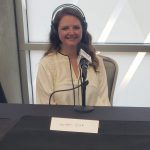
Mike Blake: [00:51:24] That’s going to wrap it up for today’s program. I’d like to thank Kristin Zhivago so much for sharing her expertise with us.

Mike Blake: [00:51:31] We’ll be exploring a new topic each week. So, Please tune in so that when you’re faced with your next business decision, you have clear vision when making it. If you enjoy these podcasts, please consider leaving a review with your favorite podcast aggregator. It helps people find us that we can help them.

Mike Blake: [00:51:48] If you would like to engage with me on social media with my Chart of the Day and other content, I’m on LinkedIn as myself and @unblakeable on Facebook, Twitter, Clubhouse, and Instagram. Also, check out my new LinkedIn group called Unblakeable’s Group That Doesn’t Suck. Once again, this is Mike Blake. Our sponsor is Brady Ware & Company. And this has been the Decision Vision podcast.


Tagged With: Brady Ware & Company, customer service, Decision Vision, Kristin Zhivago, Mike Blake, revenue coach, Sales, Zhivago Partners

Spark Stories Episode 12

March 30, 2022 by Jacob Lapera

Leslie Marie Moseley
Spark Stories
Spark Stories Episode 12
Loading
00:00 /
RSS Feed
Share
Link
Embed

Download file

Leslie Marie Moseley2

Leslie Marie Moseley is a Real Estate professional serving the Metro Atlanta area, who has fifteen years of Sales and Marketing experience. She is excited about being with eXp Realty, one of the largest independent real estate brokerage firms in the nation. Leslie is Licensed in Georgia and Virginia and specializes in working with First Time Home Buyers, New Construction, and Relocation.

Leslie has been featured as a real estate expert on the HGTV series House Hunters. Her vast professional knowledge has given her the skills to work with a variety of clients. She has a huge referral base including investors across the globe. Leslie is a dependable hard-working agent ready to go that extra mile for you.

This transcript is machine transcribed by Sonix

TRANSCRIPT

Intro: [00:00:02] Welcome to Spark Stories, where entrepreneurs and experts share their brand story and how they found their spark, the spark that started it all.

Dr. Clarissa J. Sparks: [00:00:13] Welcome to Spark Story Live Business Radio brought to you by the Atlanta Business Radio Network. Every week, entrepreneurs and experts share the stories behind the brand who they are, what they do, and why their brands matter. I’m your host, Clarissa Jae Sparks. March is Women’s History Month and we are celebrating celebrating women who own it. In our own series, we dove into the everyday operations of inspiring small business owners in our community. You can listen live on Saturdays or play the rebroadcast at WW dot Business RadioX dot com. Today we’re going to talk about clarifying your message and why it’s so important to be memorable. How to build relationships with customers. Please allow me to introduce one amazing woman entrepreneur who owns it, Lesley Marie Moseley, real estate professionals serving the metro Atlanta area who has 15 years of sales and marketing experience. She’s excited about being with Exp Realty, one of the largest independent real estate brokerage firms in the nation. Lesley is a licensed Georgia and Virginia agent and specializes in working with first time homebuyers, new construction and relocation. Lesley has been featured as a real estate expert on the HGTV series House Hunters. Her professional knowledge has given her the skills to work with a variety of clients. She has a huge referral base, including investors across the globe. Lesley is dependable, hard working agent. Ready to go the extra mile just for you. Lesley. Welcome.

Leslie Marie Moseley: [00:01:56] Thank you. Thank you so much for having me. Clarissa, this is amazing.

Dr. Clarissa J. Sparks: [00:02:01] Yes. We’re excited to have you here today. And we are again celebrating Women’s History Month. Excited to have you on the show to hear about your expertize as a realtor. And I know that you have stepped out and you’ve launched and you’ve taken that leap of faith into entrepreneurship. Why don’t you introduce yourself to the list to our listeners today?

Leslie Marie Moseley: [00:02:25] Hi, everyone. I am Lesley Marie Mosley. I am a licensed realtor and now certified mentor with XP Realty and I am originally from Richmond, Virginia. And I got to Atlanta in 2016 and absolutely love this place.

Dr. Clarissa J. Sparks: [00:02:45] Welcome to.

Leslie Marie Moseley: [00:02:45] Atlanta. Thank you. Absolutely love this place.

Dr. Clarissa J. Sparks: [00:02:52] Very good. So when did you actually start? You said you came here to Atlanta in 2016. And did you start your business then, or how did you start off as a real estate agent?

Leslie Marie Moseley: [00:03:07] Great question. So in 2009, I went to real estate school when I got laid off from my job, and then they called me back and so I went back to work. So I finished the course, went back to work, and then it was pulling on me ever since then, you know, to go back and finish out my real estate. So in 2016 I got licensed and then I had an opportunity to move to Atlanta and I couldn’t take I couldn’t like pass that up. So I got to Atlanta with a job and got my license here because there’s something called reciprocity. So I was able to move my license here to Georgia, and I’ve been here ever since.

Dr. Clarissa J. Sparks: [00:03:53] Very good. Now, I know a lot of. Business owners, they do make that major transition from corporate over into entrepreneurship other than the layoff. How did you. What made you want to take that leap?

Leslie Marie Moseley: [00:04:13] I was always entrepreneurial. Like even as a little girl, I remember my family had, like a church and like this it was the usher building. I don’t remember what the business was, but it was called Usher. And when the business went out of business, we took over the building and they had left all their business stuff. So it was like they had this huge conference room. That’s where we would have church and then it had like these breakout office spaces and I would make all the kids play business with me, all of.
Dr. Clarissa J. Sparks: [00:04:43] Them, my business. So I used to play school, so I was a schoolteacher. Then I moved up into administration and I was the principal and so I totally get it. So you are always playing the CEO?

Leslie Marie Moseley: [00:04:54] I was playing the CEO. I had my business cards. I had all this like they left everything. So I was like in heaven and all the kids worked for me while church was going on. And that was my start into knowing that one day.

Dr. Clarissa J. Sparks: [00:05:07] See, it always starts when we’re really young. So that is that is funny. Again, so you started off as the young CEO CEO.

Leslie Marie Moseley: [00:05:16] And so like most people, a lot of people with real estate. I didn’t start going straight in. I kept my job and I tried to hold on to it and it was just this pulling on me and I’m like, This is not who I am. This is not my purpose. This is not fulfill me. I’m not waking up fulfilled. And during the pandemic, I said, You know what? I can’t do this anymore. We don’t know what’s going to come. We don’t know what’s going to happen. And I cannot imagine being the person who just sits back and lets life happen to me. So I sent an email of resignation and that was it. And I just went straight into real estate and I have not one regret. It’s been amazing. I’ve been to Cabo, I’ve been to Dallas, I’ve been to Puerto Rico, all these different places with my organization in real estate and just learning and growing and just expanding myself. And I can’t see myself looking back.

Dr. Clarissa J. Sparks: [00:06:14] One of the things you just mentioned, and I think that it’s very important when starting out, is knowing your vision and knowing your purpose. Can you expand a little bit on your why?

Leslie Marie Moseley: [00:06:27] Sure. So my why and anything that I do, because they always say you have to have this big Y. And I know we always say because we want to show our children or or whatever the case may be, that’s like the safe answer. But my why is because I honestly cannot imagine being the person in the nursing home living with a life of regret, because I know that my father owns this entire universe, and for me to only penetrate just a little piece of it would be just so almost disrespectful to my Heavenly Father that I don’t take advantage of every single opportunity that He’s given me in this short period of time that I have here.

Dr. Clarissa J. Sparks: [00:07:12] I think, you know, that’s very good statement and that is recognizing opportunity. So as a realtor, what opportunities or what signs do you look for when it is a great opportunity?

Leslie Marie Moseley: [00:07:26] When it comes to real estate signs, I look at when it’s a great opportunity. Is that more so with the client or just the industry as a whole?

Dr. Clarissa J. Sparks: [00:07:38] I guess the industry as a whole. And then we can kind of go into how you build those relationships with clients through opportunity.

Leslie Marie Moseley: [00:07:45] Okay, great. So in the industry, I would say the best opportunities is now in real estate. There’s never a bad time to invest in real estate. I know a lot of people get afraid because of things that happen like in 2009 and things like that. But you’ll also know that that’s where a lot of people gain their wealth when the market crashed. So I feel like when it comes to owning land and when it comes to owning space, you always have to have somewhere to live. 100% of rental payments goes to a landlord. Like, there’s no no questioning that. So we could worry about interest rates going up or it’s one day, 3%, it’s four and a half percent or whatever the case may be. Yeah, but we know what the landlord, it’s always 100% interest rate. It’s never.

Dr. Clarissa J. Sparks: [00:08:37] Yours. So their benefit, right?

Leslie Marie Moseley: [00:08:38] So there’s a benefit to placing your money in the real estate market. So there’s always a good opportunity, in my opinion, to invest in real estate.

Dr. Clarissa J. Sparks: [00:08:47] Now, when I was reading your bio, it said that you help first time homeowners.

Leslie Marie Moseley: [00:08:51] Yes.

Dr. Clarissa J. Sparks: [00:08:52] And what is some advice that would you give? A non homeowner who’s interested but may be a little have some reservation about going into the market.

Leslie Marie Moseley: [00:09:05] Love your family and friends, but trust the professionals. I would definitely say that I have a strong heart for first time homebuyers because when I initially bought, I did not have the best experience. And from that, in my lack of knowledge, it got me to the place where when I work with a first time homebuyer, the educational piece is so important to me. I would definitely say love your family and friends, but they’re going to advise you on when they purchased, which was more than likely over five years ago, over ten years ago, over 15 years ago. And so much has changed. And every single time I’ve had a conversation about first time homebuyers since the start of this pandemic, I think about a client that came to me. He was a young man, new baby on the way, fiancee. I had taken him shopping all over the place. We had gotten at least three homes under contract during the pandemic. And you all know this market has just been bananas. And he turned down each of them and ultimately didn’t buy because he listened to his future mother in law who told him the houses were too high. Don’t buy right now. Just wait. And now he’s come back to me like a year later, once things, he’s like, okay, things are just going up and he no longer qualifies.

Dr. Clarissa J. Sparks: [00:10:24] Oh, no.

Leslie Marie Moseley: [00:10:25] He no longer qualifies. And it breaks my heart because I’m like this young man, you know, he has a child, he has a fiance. He wants to do the right thing, the right thing. Right. And now he can’t, because he listened to the advice of someone who did not know the market.

Dr. Clarissa J. Sparks: [00:10:40] So listeners, you hear that you have to trust the.

Leslie Marie Moseley: [00:10:43] Trust the.

Dr. Clarissa J. Sparks: [00:10:44] Expert. Please, the expert, because you’ll miss out on an opportunity.

Leslie Marie Moseley: [00:10:49] Missed out because guess what? He’d have equity today because housing market has it’s gone up like we’re in a time where it’s just unreal. People are buying a house like two years ago and getting like $50,000, $70,000 from something they.

Dr. Clarissa J. Sparks: [00:11:05] Bought two years ago. Wow.

Leslie Marie Moseley: [00:11:07] So had he bought just that year ago, he’d easily he could have sold it today and made money.

Dr. Clarissa J. Sparks: [00:11:13] All right. So now that he doesn’t qualify, how can he how can you turn that around for him?

Leslie Marie Moseley: [00:11:20] Well, we’re working to turn that around, of course, because I like to be results driven. I’m the resourceful realtor, so I always believe no is not right now it’s not a no. So we’re working on some things on the back end to get him repositioned so he can get back in the game.

Dr. Clarissa J. Sparks: [00:11:37] All right. Help him, Leslie.

Leslie Marie Moseley: [00:11:38] Yeah, definitely. No, is it not right now?

Dr. Clarissa J. Sparks: [00:11:41] All right. And I think you can use that same philosophy just in life. So as you’re looking at other opportunities and as you’re continuing to grow and to help your clients grow. The know or trust the process.

Leslie Marie Moseley: [00:11:58] Trust the process.

Dr. Clarissa J. Sparks: [00:11:59] Trust in perfect timing.

Leslie Marie Moseley: [00:12:01] Absolutely.

Dr. Clarissa J. Sparks: [00:12:02] And those same skills in that mindset can be applied to entrepreneurship. So I’m sure you have to use that a lot in your daily walk. So can you talk about some of maybe the challenges that you’ve had to overcome and say, you know what? I had to trust the process.

Leslie Marie Moseley: [00:12:20] Oh, gosh, that’s probably like a daily part of life because entrepreneurship isn’t easy in real estate. Definitely as a realtor is not easy, like most realtors will fail in their first three years. So every single day I’m having to make sure that I’m training my brain and training myself to know that I have to trust the process. I’m not going to see the road ahead. Like, in that moment, I just have to trust step by step so they can get to that next step.

Dr. Clarissa J. Sparks: [00:12:52] Okay, that’s good. So in trusting the process, you have to have clarity.

Leslie Marie Moseley: [00:12:57] You have to have clarity.

Dr. Clarissa J. Sparks: [00:12:58] You have to have clarity in your messaging. So how do you differentiate yourself from the other realtors within the market?

Leslie Marie Moseley: [00:13:06] The way that I differentiate myself is I stay true to who I am. We are in a time where you almost have to keep up with every single trend you have to keep up with with what’s happening next. You know, it’s one minute you should be on Instagram, next minute you should be on tick tock. One minute you should be gone. Are the days of door knocking or gone are the days of cold call. You should be an influencer. You should be this or that. So I differentiate myself by staying in my lane, doing what’s true to who I am. So that way I’m not compromising and I’m not doing anything that I’m going to regret later.

Dr. Clarissa J. Sparks: [00:13:48] How long did it take you to find your lane?

Leslie Marie Moseley: [00:13:51] Finding your lane is a lifelong job. It’s like you’re constantly trying to say, Oh, I can’t do that. The way that I’m finding my lane, honestly, is I have a branding coach that I recently took on she and I met years ago. We talked about timing, right? About perfect timing. She and I met, I want to say, in 2017 or so. Do I have time to tell? Like a funny story about.

Dr. Clarissa J. Sparks: [00:14:20] We’re listening. We’re ready to laugh.

Leslie Marie Moseley: [00:14:21] Okay. So when I met her, I met her in a mastermind. And I promise you, I’m always in rooms that I feel like I probably don’t even belong. I think I talked to you about that earlier. And I’m in here with business owners of all various fields who are hyper successful. And I remember gravitating towards her, not knowing what she did or who she was, whatever the case may be. And when I broke off her lunch, it was here in Atlanta, of all places. This mastermind just happened to be here in Atlanta. Business owners came from all over. And I had a car and it was like a breakout to go to lunch. And she didn’t have a way. So I said, You can ride with me. So we get to lunch and I learn that she wasn’t necessarily a business owner herself. She was pretty much the brain behind one of the business owners there who had gotten him to this like eight figure business status, but it wasn’t necessarily her. And so fast forward to today. We remain like Instagram friends and things like that. She reached out to me and she told me how she never forgot that day because I was the only person who did not treat her like she was. Help.

Dr. Clarissa J. Sparks: [00:15:35] Oh, Barry. So building relationships is important.

Leslie Marie Moseley: [00:15:38] Building relationships is so important.

Dr. Clarissa J. Sparks: [00:15:40] It’s treating everyone with respect.

Leslie Marie Moseley: [00:15:43] Treating everyone with respect is important. And she said she never forgot that. And from that moment forward, she wanted to help me.

Dr. Clarissa J. Sparks: [00:15:52] So yeah, I get it. So building relationships again that we talked about this a little bit earlier, you are one step away.

Leslie Marie Moseley: [00:16:01] One step away.

Dr. Clarissa J. Sparks: [00:16:02] One introduction away from your next opportunity and or expanding your network. And again, this comes from building relationships. So it is important to speak to everyone in the room, acknowledge everyone you.

Leslie Marie Moseley: [00:16:15] Never.

Dr. Clarissa J. Sparks: [00:16:15] Know because you never know.

Leslie Marie Moseley: [00:16:17] Who’s what you know. And as I mentioned to these people, she may not have been, whatever the case may be. But what’s funny is at that event after lunch, this guy was on stage and he couldn’t talk to certain things, so he had to call her up. Wow. And when he called her up after that, everyone wanted to be friends with her because they realized what she possessed. And I never knew any of this until today. Like, fast forward now a few months ago when she and I started working together and she was like. I never forgot that you talked to me before that moment. And I knew that an opportunity would come where we could work together.

Dr. Clarissa J. Sparks: [00:16:55] Yeah, that’s really good, Leslie. Where, again? Being in rooms that you do deserve to be in. Yeah, and every person that has the expertize or the knowledge is not always the keynote speaker.

Leslie Marie Moseley: [00:17:07] It’s not always the keynote speaker.

Dr. Clarissa J. Sparks: [00:17:09] So you have to be able to recognize that as you continue to go on your journey, entrepreneurial journey, because again, it’s the people who sit to your left, the people who are sitting to your right. Yeah, but sometimes we lose focus because we’re looking to who’s on stage.

Leslie Marie Moseley: [00:17:25] We’re looking to who’s on stage.

Dr. Clarissa J. Sparks: [00:17:27] Yeah. So sometimes you just have to appreciate the space that you’re in and again, embrace every moment.

Leslie Marie Moseley: [00:17:35] Absolutely.

Dr. Clarissa J. Sparks: [00:17:36] And be able to build those relationships as you should always go into any networking situation with the expectation of meeting someone.

Leslie Marie Moseley: [00:17:44] Absolutely.

Dr. Clarissa J. Sparks: [00:17:45] Who can give you your next opportunity.

Leslie Marie Moseley: [00:17:47] And all it takes is one, just one. You don’t have to try to work every single person in the room. Just make it a goal to make 2 to 3 key, you know, relationships when you go places and develop from there. Right.

Dr. Clarissa J. Sparks: [00:18:00] And because of your energy, you make yourself memorable.

Leslie Marie Moseley: [00:18:03] Memorable. And and that was just being myself. Right. You have to be authentic to who you are.

Dr. Clarissa J. Sparks: [00:18:09] Yeah. And I think that is a key takeaway in this conversation is of course, being memorable and building relationships. And that’s what it’s all about. And I know that, gosh, if I had to put it on a priority list, building a relationship as a realtor has to be number one. It has to be because you use referrals. To its business model or referral business model to get your next opportunity or your next.

Leslie Marie Moseley: [00:18:35] Base business, you absolutely have to be memorable. And something that realtors have to remember is we do a lot of focusing on marketing to new clients, but really it’s those existing relationships that are really going to be the key to getting ahead, investing in the people that already, you know, did the sale with you. Most recently, I had a client that we closed on a home, and before we even closed, she was referring a friend of hers out in California to me who I was able to assist her with over there because I am with an international brokerage, so I’m able to help anywhere in the US. I like to be recognized as a global realtor because I have partners everywhere. So from that one client, I’ve now had two sales in a matter of what, a month just with that one person. So focus on relationships with your clients and not making it transactional.

Dr. Clarissa J. Sparks: [00:19:33] Absolutely. So what has worked best for gaining traction?

Leslie Marie Moseley: [00:19:38] What’s worked best for me with gaining traction is consistency, being consistently present, constantly touching those people that are like my key people. Like, for instance, the story I just told with the client that I recently connected with staying top of mind and. I have a way with my clients of making them feel like I’m their homegirl. Like I’m their friend. You know what I mean? And I think from them feeling like we’re friends and there’s that connection. It creates this loyalty to where I have to stick with her. You know, and they’ll text me, like, random things that don’t even have anything to do with real estate, because we’ve built that level of a rapport.

Dr. Clarissa J. Sparks: [00:20:28] Very good. Very good. So in building rapport and gaining traction, what has been your biggest aha moment?

Leslie Marie Moseley: [00:20:38] My biggest Aha moment is honestly that real estate is ministry for me.

Dr. Clarissa J. Sparks: [00:20:45] Wow.

Leslie Marie Moseley: [00:20:46] Yeah. It’s not about the houses. It’s really about the people. Because I’m touching them beyond the house. Like, I’m having, like, intimate moments where it’s something that I say or something that I bring to them that’s sparking something else in their lives.

Dr. Clarissa J. Sparks: [00:21:10] I like that. You see how she sparked?

Leslie Marie Moseley: [00:21:13] I didn’t even try to do that. It worked.

Dr. Clarissa J. Sparks: [00:21:17] And it worked really well. Yes, it did. You know, I think you talked about earlier being a lifelong learner.

Leslie Marie Moseley: [00:21:25] Mm hmm.

Dr. Clarissa J. Sparks: [00:21:26] Are there any books or podcasts that you read or that you would recommend to someone who’s just starting out or need an extra push?

Leslie Marie Moseley: [00:21:38] Oh, gosh, I love books. I can never remember the names of them, but I love books when I tell you I have so many books. I would say definitely the miracle morning, the four hour work week. Oh, gosh, there’s so many good ones. Anything by John Maxwell is a John C Maxwell thought leadership.

Dr. Clarissa J. Sparks: [00:22:02] Yeah.

Leslie Marie Moseley: [00:22:03] Anything from him. Oh, gosh. There’s so many.

Dr. Clarissa J. Sparks: [00:22:07] Yeah. I think, like I said, being that lifelong learner and just constantly placing your self in a position to gain more knowledge, it will always help you to be a stronger expert within your industry. It’s going to help you. It’s going to keep you abreast of what’s going on out there. It’s going to keep you fresh. It’s going to help you to build stronger relationships.

Leslie Marie Moseley: [00:22:30] Thinking, grow rich, thinking. Oh, my absolute favorite. If you read absolutely nothing else in this world, the four agreements.

Dr. Clarissa J. Sparks: [00:22:39] The four agreement, the.

Leslie Marie Moseley: [00:22:40] Four, if you read nothing else, read the four agreements.

Dr. Clarissa J. Sparks: [00:22:43] Okay. I have to check it out. You’re going to have to probably use Google now to figure who’s the author of that short one.

Leslie Marie Moseley: [00:22:49] I can’t remember the author, but the four agreements, it’s it’s a practical living book. And when you read that, it pretty much teaches you how to take absolutely nothing personal and to really understand why people do the things they do.

Dr. Clarissa J. Sparks: [00:23:06] Let’s talk about that. Not taking things personal. And when you don’t take it personal, how does that impact your relationships?

Leslie Marie Moseley: [00:23:16] When you don’t take anything personal, it it only strengthens the relationship because you understand a lot when people speak, it’s usually out of a place of their experience, their hurt, their trauma or their happiness or however they’re feeling it more so than it has anything to do with you. It’s just sort of like a mirror, a reflection of whatever they’re feeling about themselves. And that’s what that book, you know, kind of teaches you. But when you operate from that place, it only deepens the relationship because walls can come down because your response is it’s not going to be based on it’s not going to be based on how they feel because, you know, that has nothing to do with you. Your responses are going to be genuine to what you know.

Dr. Clarissa J. Sparks: [00:23:59] Absolutely. Yeah. The Four Agreements. It is a practical guide to personal freedom and on your entrepreneurial journey, I think that freedom and finding that path really directs your steps. Do would you find that to be true?

Leslie Marie Moseley: [00:24:17] I do. And I feel like freedom is a mindset. I feel like right now we’re in such a world where entrepreneurship is pushed heavily and almost an unrealistic way. You know, everyone sold. You could do this and you’ll become a millionaire tomorrow. No, that’s that’s not how life works. That’s not how entrepreneurship work. There’s a lot of sacrifices, however. It’s it’s possible. But you always have to have hope. You always have to have hope. And you always have to know that your journey is yours.

Dr. Clarissa J. Sparks: [00:24:51] If you care to share. What has been your biggest sacrifice?

Leslie Marie Moseley: [00:24:56] My biggest sacrifice. So, gosh, which one? My. Biggest sacrifice. Hmm. Is having to relocate me and my me and my daughter like our lives. We relocated. I feel like that was a sacrifice because she doesn’t get to necessarily be raised around family every day. Like we get to go back a lot, which is nice, but she doesn’t get that every day. You know how you could just go to grandma’s house on the weekends or you could just, you know, go and hang out with cousins and things like that. She doesn’t have that. So that’s a big level of sacrifice. However, I know in my heart of hearts the sacrifice is going to be worth it for where our lives are headed. All right.

Dr. Clarissa J. Sparks: [00:25:54] And that’s that that we talked about that a little earlier about. Taking the next steps, those leaps of faith, because you know that the picture or the vision is.

Leslie Marie Moseley: [00:26:05] Bigger, it’s bigger.

Dr. Clarissa J. Sparks: [00:26:07] It’s bigger.

Leslie Marie Moseley: [00:26:07] Like the vision is for her kids, kids, you know. So those are the sacrifices we’re making today. It’s only to make sure that our legacy lives on.

Dr. Clarissa J. Sparks: [00:26:20] Legacy is so important. I think that’s probably a part of the entrepreneurial mix. Knowing that you’re going to leave something behind for the next generation to come. Yes. So I think that’s a value that differentiates you in the market as well as. Having that common interest with your customers to build that strong relationship. So just really that that freedom that we talked about, the freedom and the sacrifice, the freedom and legacy building the the freedom of generational wealth, the freedom in personal development, the freedom and leadership development, the freedom and just knowing who you are, what you do, and why it matters. I think that it’s so important for us to really to learn that mindset and so that you can, again, have a clarify, a clarifying message so that you can. I guess overall just build. For the next generation.

Leslie Marie Moseley: [00:27:34] Absolutely.

Dr. Clarissa J. Sparks: [00:27:34] It’s so important. You know, here at within my organization, she sparks, like I said, we try to do everything to support women entrepreneurs. So my question to you is, how can we support you?

Leslie Marie Moseley: [00:27:47] Oh, wow. Support me by sending all of your referrals. If you know anyone who’s in the market to buy, sell, invest in real estate, please be sure to contact me. I’m on social media. I’m here in Georgia at Leslie, at my realtor, Leslie Marie, on all of the social platforms, you can reach me and please support me in that way and drop a message. Say hello.

Dr. Clarissa J. Sparks: [00:28:18] Say hello to Miss Leslie. Like I said, we can find her on Facebook, Instagram, LinkedIn, all of the social media outlets and channels. And like you said, we can support by tagging. Yes, we can support by referrals. All of the ways, again, that we can help her to thrive. And we’re going to do our best and we need your support in doing so. So, Leslie, I really want to thank you for sharing who you are, what you do, and why it matters and being such a pillar in our community as a businesswoman. And we just love we love your story.

Leslie Marie Moseley: [00:28:56] Thank you. Love your.

Dr. Clarissa J. Sparks: [00:28:57] Story. And we just want to thank our listeners. And again, just please for support women entrepreneurs and any women small business and express your support, join their local or like share or whatever you need to do to help push their vision forward. All right. So I want everyone to create a great day again. Leslie, thank you for your expertize and we’ll talk to you soon.

Leslie Marie Moseley: [00:29:24] Thank you so much for having me. I appreciate this opportunity.

Dr. Clarissa J. Sparks: [00:29:27] No problem.

Speaker1: [00:29:30] Thank you for listening to Spark Stories. If you’re looking for more help in gaining focus, come check out our website where you can find episode show notes, browse our archives and access free resources like worksheets, trainings, events and more. It’s all at WW she.

About Your Host

sparkstories2022

Dr. Clarissa J. Sparks is a personal brand strategist, trainer, mentor, and investor for women entrepreneurs. She is the founder of She Sparks, a brand strategy design consultancy.

Using her ten-plus years of branding & marketing experience, Dr. Sparks has supported over 4,000 women entrepreneurs in gaining clarity on who they are, what they do, and how they can brand, market, and grow their businesses. Using her Brand Thinking™ Blueprint & Action Plan she gives entrepreneurs the resources and support they need to become the go-to expert in their industry.

Follow Dr. Clarissa Sparks on LinkedIn, Twitter, Instagram and Facebook.

Tagged With: Leslie Marie Moseley

Michael Eastwood (Cowboy Mike) With Pony 4 Precious

March 30, 2022 by Jacob Lapera

Pony4Precious
High Velocity Radio
Michael Eastwood (Cowboy Mike) With Pony 4 Precious
Loading
00:00 /
RSS Feed
Share
Link
Embed

Download file

MichaelEastwoodMichael Eastwood is an Author, Professional Speaker, Companies Board of Directors, and a C Level Executive poised to apply vast business ceo-storiesacumen, drive revenue & brand advancement domestically & internationally in Multi-State Equipment Dealerships, Manufacturing Companies, Retail Day – Med Spas, Non-Profits I Executive Sales & Marketing Coach, Real Estate Company, CEO of a Chamber of Commerce.

He is a trusted, long-term leader to drive and support your organization for consistent, continued future growth and success. His passion is to help a business grow and change all employees’ lives. Michael became a published author in 2020. He is passionate about guest speaking and helping leaders become more successful. Michael’s Goal is to visit hospitals and donate books to children in the hospitals.

Michael’s first book was developed based on businesses that failed over time when the children become the CEO of the family business. Michael’s second book is about a pony named Winston and the education of owning a pony in The Day in the Life of Cowboy Mike and Winston. Michale’s third book is A Day at Blue Mountain Ranch with Cowboy Mike and Winston. Michael developed a 501 C 3 charity to help children receive free scholarships. For these books that are sold on Amazon, 100% of All proceeds are donated to the charity Pony 4 Precious.

Michael Eastwood is a seasoned executive with 25 years of experience, his key area of expertise is turn around a business where he will design new, more powerful, and profitable strategies for large or small business, organizations & Non Profits (annual revenues of $2 Million – Quarter Billion) his passion is to increase sales, expand market share, and grow revenues, refine the process and develop the manager and staff to achieve the company goals.

Michael has worked with companies, signed contracts or has developed purchasing contracts over his management career partnering with John Deere, LinkedIn, Facebook, Kaiser Hospital, Google, Cisco, EA Sports, Apple, ESPN, Arnold Palmer Golf Management, Gary Player Management, Marriott- Hilton Hotels, LA Angels, LA Dodgers, Oakland A’s, Oakland Raiders, American Golf, SF 49ers, City of San Francisco, City of LA, City of Anaheim, and many others cities across the country. Michael over the years has supported over 50 PGA events, including Pebble Beach golf courses and Augusta National, TPC, and many more.

Connect with LinkedIn and follow Pony 4 Precious on Facebook and Twitter.

What You’ll Learn In This Episode

  • Why was Pony 4 Precious charity developed
  • How can people look into your Pony 4 Precious charity
  • Who is Michael Eastwood (Cowboy Mike)
  • Pony 4 Precious’s mission
  • The charities teen Ranch idea in Prescott
  • How can people support this charity

This transcript is machine transcribed by Sonix

TRANSCRIPT

Intro: [00:00:04] Broadcasting live from the Business RadioX studios in Atlanta, Georgia. It’s time for high velocity radio.

Lee Kantor: [00:00:13] Lee Kantor here, another episode of High Velocity Radio, and this is going to be a good one. Today on the show, we have Michael Eastwood, that’s Cowboy Mike, and he is with Pony 4 Precious. Welcome, Cowboy Mike.

Michael Eastwood: [00:00:28] Hey, how are you doing? Thank you very much for having me on the show.

Lee Kantor: [00:00:31] Well, I’m excited to learn what you’re up to. Tell us a little bit about Pony for Precious. How are you serving folks?

Michael Eastwood: [00:00:36] Sure. So Pony for Precious was developed. Really? So I was doing a consulting job in San Francisco for a company that was supporting the Super Bowl. And I brought up I did a marketing meeting with some Google and Salesforce executives and things like this, and they said, hey, this idea, you know, they always talk about, oh, hey, purchase a star or whatever. And I said, I got this pony I rescued. And I’m thinking about developing a program of, hey, you could purchase a share of the pony, and I’d give all this money to charity. And so that we can kind of came by was on a Friday and my marketing VP was Monday morning, says, Mike, I got to talk to you. You got to develop this program. And I said, Why is that? And he says, Why is that my daughter’s soccer game? And she’s not real very good and she doesn’t play a lot. And they had a tie. So I’m not a big soccer guy, so they actually do a kickoff and they came down where she’s the last one and he’s sitting in the sidelines. Of course, he lives in San Francisco on a high rise and he yells out his daughter’s name. He says, If you make this, daddy will buy you a pony. And she kicks the goal and she comes running off the field and says, Dad, when do I get my pony? So he looked at me Monday morning, says, We got to come up with something for you. So that’s kind of how it started. And then we opened it up as a 501 C three charity in 2017. And again, that’s where it’s kind of come it started from on the whole deal is I had a pony that I had rescued and we originally we were going to just sell these adoption shares on the website.

Lee Kantor: [00:02:04] And then the pony would just go about its life. And then a bunch of folks would be, you know, part owner of this pony, right?

Michael Eastwood: [00:02:11] It was it was one of those ones where the money, you know, they donate the money and they could say, hey, daddy, please buy me a pony. And the dad says, Yeah, I bought.

Lee Kantor: [00:02:18] It right here. Here’s a picture.

Michael Eastwood: [00:02:20] Yeah. So they get a picture and a certificate and a letter from Cowboy Mike and Winston. And of course we have a full blown website and everything, but that’s where it started at. But then from there, we’ve really involved the charity into being a true charity to have giving back to children and students.

Lee Kantor: [00:02:39] So then how how did you make that pivot? It’s one thing to have a clever idea that sounds like it would get some traction and be, you know, be a good tool to raise money. But then how did you kind of vet the different partners and then find the right charity that was the right fit for this.

Michael Eastwood: [00:02:56] Right. Well, and that’s where Pony for Precious. So we opened it up instead of ever open it as a business, we opened it as a charity and we got certified as a 501 C three. And one of the things that people want to find out about us is there’s a company called GuideStar that watches all the charities. And, you know, and if you want to, you have to put your information in to get ranked. And for five years in a row, we’ve been ranked a platinum level. So it’s the highest rating you can get. So this is a very legit charity. There’s only 1% of the charities in the United States that ever hits this level. And and it’s about putting in from your strategic plan to your board members to work your panels. The whole information is all based, and it probably takes four or 5 hours to load all this stuff up in there to hit that level every year. So so they closely watch us and modernize, but that’s kind of where it started was, hey, we want to be a charity. That’s that’s true. That’s out there were 100% volunteer board and nobody takes a paycheck. Every dollar that goes in, the money goes back out.

Lee Kantor: [00:03:56] And then how do you choose who to give the money to and the resources?

Michael Eastwood: [00:04:01] Right. So on our website, we actually have a scholarship page and students can go in and they can click on the scholarship page and then they can fill out the form. Takes about 30 seconds. Read the details in there and they can push the button and that’s on HONY for precious dot org and four is the number four for atoning for precious. And and then our board looks at the scholarships, how much we raise that year and how much we’ll give away. We’ve already awarded a scholarship this year to a student going to Yavapai College out in Prescott, Arizona, doing nursing school. We have another one that we have probably a few more that we’ll do in April because April 4th are cut off for the high schools and then anybody can apply. And one of the things that we have out there is Google actually gives us free AdWords that we can push this thing out. So we get a lot of emails. Really, the funny part is, is getting the person to fill out the form because we won’t take your application without filling out the form.

Lee Kantor: [00:05:00] And then there’s books also as part of the charity.

Michael Eastwood: [00:05:03] Yeah. So then one of the things that Cowboy Mike did is he came up with his first book and it was called A Day in the Life of Cowboy Mike and Winston. And it’s really how much work it is, say, to take care of a pony. And that’s what the first book was published it on Amazon. People loved it. We had some great success. So I’ve published two more and the second book is A Day at Blue Mountain Ranch with Cowboy Mike and Winston. And then the third one is Dr. Julie is it’s Cowboy Mike and Winston. And we actually have a fourth one in the design stage that’ll be Cowboy Mike and Winston attending Cowboy Church. And these books are really for probably 1 to 4 year olds, you know, type of deal. It’s more about the drawings and the words, but we try to keep it educational, fun, learning everything, learning about a pony and things that cowboy Mike and Winston do on a daily basis.

Lee Kantor: [00:05:57] So is there just one horse? There’s just one pony, or is this something that now you’ve got a whole bunch of ponies because people are adopting a whole bunch of ponies? Or is everybody adopting Winston over and over again?

Michael Eastwood: [00:06:09] Yeah, it’s it’s Winston’s the one. Like I said, we don’t keep any money. The money goes towards the scholarships and things like that. So Winston’s the pony. We do have two other horses, Blue and Mr. Bones, and then they all live at Blue Mountain Ranch. That’s truly a ranch in Prescott, Arizona. And in our long term goal, eventually would maybe be in a full blown horse rescue. But again, that takes more money, more land fencing, corrals, everything else. So right now we really spend our time on, like I said, awarding scholarships. And then the other thing Cowboy Mike does is he will tend events and give free books to children. So one of the events that’s on the schedule this year is July 9th at the Arizona Wranglers is arena football, and we’ll bring probably 150 books, autograph them and we donate them, like I said. And then they’re all donated by the charity and we just give them to the children to show up to the games.

Lee Kantor: [00:07:04] And then can people come and actually see Winston and the other horses?

Michael Eastwood: [00:07:10] Well, there is a program in there if you want to sponsor and come. I mean it. Guess if somebody wanted to contact us. Yeah. We would let them come out to the ranch and see us, but they would have to contact to do that, not just show up.

Lee Kantor: [00:07:22] Now on the website, there’s you got some testimonials from a couple of the Harry Potter folks. How did you pull that off?

Michael Eastwood: [00:07:30] So I, I got a website guy that it’s a marketing people that push stuff. So I don’t remember off that one how they got that one. So I apologize.

Lee Kantor: [00:07:41] Now talk about your back story. You know, obviously this is something you do, but you have a day job. Can you talk a little bit about that?

Michael Eastwood: [00:07:49] Yes. So I own a company called West USA Realty at Prescott. We’re a brokerage out in Prescott, Arizona, the tri valley, what we call it up here. And we have 85 agents that work for us. And so that’s kind of my you know, is what I do. I mean, I’m actually a seasoned veteran and I ran companies for over 30 years. I actually have a book published called CEO Stories and it’s children employed by Owners. That was my first book and it was a business book. But we take a percentage of our profits and we donate it to the charity every year. And then we have some local companies that work with us that’s starting to sponsor. We’re not heavily out knocking on doors and asking for money or a lot of the charities. We’ve more been organic and if people hear and they say, Hey, we want to help, and then we let them know about the program and everything we do. I mean, our ultimate goal is we’d love to raise $100,000 a year and give $100,000 a year scholarships out and free books. And I mean, just that’s our process of what we do.

Lee Kantor: [00:08:51] Now, any advice for other entrepreneurs that are listening that may be on the back of their mind? They’ve thought, you know, that would be nice to, you know, start a charity or some philanthropy in this manner. Can you talk about how hard or easy it is to get, you know, a charity going and how it can really help you as a person grow and maybe even your business?

Michael Eastwood: [00:09:12] Sure. So, I mean, that’s one of my passions is to give back on. And I was actually fortunate enough to work for a company in Indiana years ago called Wood Mizer. And that was one of the things that the owners was a big Christian company and they would give back and they would support missions and we’d do about $1,000,000 a year. So they’re the ones that kind of drove me into saying, Yeah, you’re right, you make a good income. How do you give back? How do you how do you change lives? I mean, one of our companies is called Below Soul Link. And where we change business, we grow, we change lives. And it’s about if we can help the owners learn to make more money, their employees make more money and everybody’s lives change. So it’s that willingness now to open one was one task, but then it’s just really getting involved. So I’ll give you an example. I used to be a CEO of a Chamber of Commerce for a while, and I had 192 charities just in this one chamber in Arizona, and there’s probably 100 chambers out there. So, you know, you always you know, how much money are you battling for and everything else and where it come.

Michael Eastwood: [00:10:14] And that’s why, like for us, you know, I took my business and said, hey, it’s this is what it’s about and what we can do and drive our own sales and then give the profits to give some back to the people. So it’s a challenge, but it’s worthwhile and it gets what gets me up every day. I mean, I carry books with me in my truck and I’ll be at the grocery store and I’ll see a little kid walking down the, you know, back to the car with their parents. And I’ll grab a book and I’ll say, Hey, my name is Cowboy Mike. I’m a local author. Would it be okay if I gave you an autograph book? I said, I don’t want to step on toes 99%. They’re going, Oh yeah. Once in a while the mom will say, Can I look at it first? And then they thank me. And it’s just that smile of that children’s face is what drives me to the next day and, you know, making everything better.

Lee Kantor: [00:10:59] And it’s so important for business owners to, I think, have that same mindset of giving back and paying it forward and and doing work that matters, you know, because a lot of the times people get in a rut, sometimes they get burnt out and they kind of lose focus of the why they got in the business to begin with. But to always have this type of an entity around you and always be looking for opportunities to help others, I think that keeps you energized and keeps you moving forward.

Michael Eastwood: [00:11:28] Right. And one of the things for us up here is we have a big teen population up here. When I say big of of that, live with their grandparents right there in and they’re looking for mentoring and everything else. And my daughter is actually the president and has like 20 teens that she works with on a weekly basis of what it is and things like that of helping them and to cope and and how to change. And that’s where our charity comes in, where we will put on an event for them to at the same time because they’re too old for the books. But we want to help teens and help them grow. And then we get them into the Port of Hay file for the scholarships and go from there. And how do we change their lives and get them directions? You know, we always say, can you imagine if you could just take one teen and change your life? What if we can take ten? What’s our what are we going to be like? What about if we can do 100 or 1000? So that’s what we focus on. Our board is, is really just trying to change people’s lives and make them for the better.

Lee Kantor: [00:12:26] That was a difficult to put a board together.

Michael Eastwood: [00:12:30] No. When I started this, it was actually I called some of my friends and we were all horse people and everyone said, Hey, I’ll do it. It’s the hard part is keeping some because we’re all in different cities, you know. It’s keeping them motivated. I mean, with Zoom and everything now, it makes it a lot easier that you can have meetings. But the challenge of when you get that board is one thing, but you have to have then the board wanting to willing to help because one person, it makes it tough if that you’re the only one ever doing everything every day.

Lee Kantor: [00:12:59] Yeah, but the impact is real. I mean, it must be very rewarding to see those books in the hands of happy children and seeing those scholarships really make an impact in that individual and their family and their community.

Michael Eastwood: [00:13:12] Right. And and it is exciting. We just, like I said, award one last month and she came to actually to our real estate office because the junior college is maybe a mile away, half a mile away. So we ordered with the check. I mean, it was a single mother made a big difference in their lives, you know, because she was, you know, just to help her pay for books and everything else. So that’s the stuff where then you go, I want to give more. I want to do more. We’ve got to go raise more. We got to donate more to, you know, to get more out. So that’s what excites me, right? It’s just like I say, seeing the smiles on their faces. I don’t even care for a thank you. It’s just knowing you’ve done something.

Lee Kantor: [00:13:50] Right, the impact is real. I mean, that is that’s going to leave a mark and that’s that’s a good thing.

Michael Eastwood: [00:13:57] Yes. It’s real exciting. And one of the projects that we’re we kind of you know, everybody I’ve kind of come from on those ones you have your day to day business and what’s a big picture project. And our goal is to build a teen horse ranch up here where we would have cabins. There’s a lot of places up. It’s called Young Life, and I think they’re all over the country, but they have little camps in in children or teens can go up and, you know, and do it. And that’s kind of what our deal is. Maybe a ten acre ranch, have some horses. They can come on on the weekends, they can spend the night. They can learn about them. They get some chores, get some skills. Maybe we put an event or two and they work a snack shop to help raise money for the charities to keep it going. But but that’s kind of our big passion is, like I said, is this horse ranch and getting these books that the children’s words coming from in our big pictures and our focuses. I mean, our goal this year is to do 2500 books.

Lee Kantor: [00:14:52] Well, congratulations on all the success. If somebody wants to support the charity, what’s the website?

Michael Eastwood: [00:14:59] So the website is WW W dot, of course, Pony Pony, the number for precious p r e c ious dot org. So it’s pony for precious dot org.

Lee Kantor: [00:15:13] Good stuff. Well, Cowboy Mike, thank you so much for sharing your story today. You’re doing such important work and we appreciate you.

Michael Eastwood: [00:15:19] Thank you very much for having me on the show. And this was exciting when you contact me. And again, we appreciate everybody out there and hope you look at our Lisa, our website and learn more about us.

Lee Kantor: [00:15:31] We’ll do well. Thank you again. This is Lee Kantor will show next time on High Velocity Radio.

Tagged With: Michael Eastwood, Pony 4 Precious

Greg Reffner With Abstrakt

March 29, 2022 by Jacob Lapera

Abstrakt-feature
Startup Showdown Podcast
Greg Reffner With Abstrakt
Loading
00:00 /
RSS Feed
Share
Link
Embed

Download file

GregReffnerGreg Reffner is the Founder and CEO at Abstrakt

As one of the very first power users of Conversational Intelligence as an Account Executive, Greg fell in love with how technology-enabled his success.

As Abstrakt’s leader, his vision and “why” is to help every sales rep and leader avoid the pain of missing their number.

Connect with Greg on LinkedIn.

What You’ll Learn In This Episode

  • Developing software for real-time
  • How to start a technical company, not being a technical founder
  • Startup showdown experience
  • Conversational Intelligence vs. Real-Time Call Coaching Software
  • Roadmap of what’s next for Abstrakt

This transcript is machine transcribed by Sonix

TRANSCRIPT

Intro: [00:00:08] Welcome back to the Startup Showdown podcast, where we discuss pitching, funding and scaling startups. Join us as we interview winners, mentors and judges of the monthly 120,000 pitch competition powered by Panoramic Ventures. We also discuss the latest updates in software Web three, health care, tech, fintech and more. Now sit tight as we interview our guest and explore their journey through entrepreneurship.

Lee Kantor: [00:00:45] Lee Kantor here another episode of Start Up Showdown Radio, and this is going to be a good one. But before we get started, it’s important to recognize our sponsor Panoramic Ventures. Without them, we couldn’t be sharing these important stories today on start up showdown radio, we have Greg Reffner with Abstrakt. Welcome, Greg.

Greg Reffner : [00:01:05] Hey, thanks for having me. Excited to be here and kind of dove into some of the details of our experience and kind of what we’ve learned along the way.

Lee Kantor: [00:01:11] Well, before we get too far into things, just tell us kind of about abstract how you serving folks?

Greg Reffner : [00:01:18] Yeah. So we are a real time coaching software that essentially is you’re always on sales coach, so imagine you’re on a sales call and an objection comes up that you’ve never heard before. Well, abstract is listening to that conversation and then in real time providing insights or recommend and responses to sales reps so they know exactly how to answer that question and don’t lose that opportunity.

Lee Kantor: [00:01:43] So this is just kind of happening in a stream on the side or something as I’m interacting with the prospect.

Greg Reffner : [00:01:50] Yeah. So imagine I’m kind of looking at my computer through a zoom call or on a phone call and yeah, based upon what’s happening in the conversation, there’s we call it our heads up display is on your desktop and it pops up and says recognizes that they said, Hey, this is too expensive or call me back later. And in about 0.2 seconds, there’s a little called a recommended response card that pops up and says, Hey, they said this, you say that.

Lee Kantor: [00:02:18] So what was the genesis of the idea?

Greg Reffner : [00:02:21] Yeah. So it kind of started about eight years or so ago when I first started my career as an SDR called Calling every single day. And back then the tools that sales managers relied upon to coach their team were largely two things. One was called Whisper and one was called Barge. And what Whisper would do is it allow a manager to tap into a phone call while it was happening and in one ear tell the sales rep what to say. While the sales rep was supposed to be paying attention to what the prospect was saying in the other ear, it was very distracting, didn’t work very well. So that’s kind of my early exposure to call coaching sales, coaching software, and that evolved into tools that most people know today as conversational intelligence tools like Gong and Chorus. And I was a very early adopter of those. I love those technologies attribute much of my success to being able to use those technologies effectively. And a couple of years ago I was using a speech to text on my iPhone, talking with my wife about what we wanted to name our first born son. And I was kind of like, Why aren’t we using this type of technology in B2B software sales? And kind of one thing led to another. And I realized that it was actually quite hard to do automated speech recognition in real time, kind of at scale. And so kind of early exposure to painful coaching tools, early adopter of technology that was coming out along with a chance kind of thought in my mind as to speech the text and how it could be applied to sales is kind of looking back the breadcrumbs that made up what an abstract is today.

Lee Kantor: [00:04:11] So you’re not a technologist, you are a practitioner?

Greg Reffner : [00:04:18] Yes, I am definitely not a technologist. I know what code looks like, but I wouldn’t be able to tell you how to write it or if it’s good code.

Lee Kantor: [00:04:26] But you were able to find kind of a a problem to be solved and you were able to communicate that with people who know the technology.

Greg Reffner : [00:04:37] Yeah. So that was it was interesting because I, I knew the problem I wanted to solve and being a non technical person, being able to take that problem and communicate it in a way to technical person that would start to paint the picture for kind of what the, how the technology could be built was a challenge. And ultimately I spent a long time in there was actually I spoke with 37 different kind of development firms before I found somebody who understood what I was trying to do. I felt like it could be done and was willing to invest the time with me to actually try to build a proof of concept. So it’s definitely a challenge being the practitioner, as you said, and not the actual technology person behind building it, because going out and finding someone to help you build is definitely a challenge.

Lee Kantor: [00:05:35] Now, any advice for other non-technical founders to kind of find that right fit? Because I’m. Sure. As you mentioned, you had to kiss a lot of frogs, right, in order to find the right fit for yourself.

Greg Reffner : [00:05:51] Yeah. So I think there’s a there’s a website called Co Founders Lab, and that’s ultimately where I found my technical cofounding team. So I think just like kind of anything today, there’s resources out there. So Co Founders Lab, there’s a couple LinkedIn groups for sales, marketing, operational type folks looking for technical co-founders. So there’s, there’s resources out there for non-technical people to find technical people because it makes sense. There’s probably technical people in the world that are looking for their their counterpart from a sales marketing operational perspective. So there’s there’s websites, there’s resources, there’s groups, there’s meetups for people that want to find those technical cofounders. You don’t have to kind of just kiss a lot of frogs. There’s actually kind of very, very, very good groups and networks out there already established. You just got to find them in your area.

Lee Kantor: [00:06:54] Yeah, it seems like there’s a platform or a marketplace for pretty much everything nowadays.

Greg Reffner : [00:06:59] I would say it’s a fair statement. Yes, sir.

Lee Kantor: [00:07:02] So now let’s talk kind of the beginning, beginning of your career. You mentioned you spent some time as an SDR, but what was when you were younger? What was your kind of dream to become? Was it always an entrepreneur, always a founder?

Greg Reffner : [00:07:17] Yes. I wanted to become a fighter pilot in high school, and it turns out my eyesight wasn’t good enough to be a fighter pilot. And they told me that I could work on planes if I went and got a mechanical or aerospace engineering degree. And so that was what my original degree was going to be. And when I went to college and it took me all of about three weeks to figure out that Friday morning classes, combined with my interest in joining the fraternity, did not make sense. They weren’t going to turn out too well for me. So I went back and forth, changed my major, I think five or six times. I ended up getting kicked out of college, believe it or not, because I didn’t go to any classes. And a couple of years later I invented a piece of exercise equipment, fell in love with the idea of inventing things and kind of taking a napkin drawing and turn it into something that people use was moderately successful at doing that, but I had no idea what I was doing from a business perspective. I ended up running out of money, running that company into the ground, and ultimately just realized that I kind of enjoyed that process. I love the idea of working for myself, but I didn’t know anything about how to run a company or even market or sell a company. And so that’s when I was like, okay, I need to get into the ground floor somewhere and start my career cold calling, building sales funnels, building pipeline. And that’s when I made my way into the world of being an SDR.

Lee Kantor: [00:08:53] So going through that process and learning other people’s systems on how to work a funnel and, and, you know, participate in the moving of prospect through the funnel that was foundational for you in terms of abstract. Like those, those learnings sound like they kind of set the stage. You had the entrepreneurial drive, but that gave you some tools maybe to to help make abstracts successful.

Greg Reffner : [00:09:17] I think so. I mean, ultimately, I think when I talk with. My peers that are kind of going through the same stage where abstract is one of the problems they have is they don’t know sales and marketing. They wouldn’t know how to tell you how to build a marketing funnel or a lead generation engine. They wouldn’t know how to sell their own software. And so I feel like I don’t have that problem. I feel very confident and comfortable in that. And I can attribute a lot of what I know today to what I learned. Being okay. Kind of stepping back and joining a company called Axon Software as an SDR. I think it was foundational to kind of laying the groundwork for where we are today.

Lee Kantor: [00:10:08] So now you got to participate in this kind of transition from conversational intelligence to real time call coaching software.

Greg Reffner : [00:10:18] Yeah. Yep. Yes, sir.

Lee Kantor: [00:10:20] So you were able to kind of see the the trade offs in each one of those, and then how abstract is maybe a better way, a better solution?

Greg Reffner : [00:10:31] Yeah. So as one of our early customers put it, he said, with conversational intelligence tools out there today, it’s like finding the black box after the plane’s already gone down. It tells you what went wrong, what broke, what you could have done better. But you only find that after you’ve already lost the opportunity. And with abstracts, I imagine autopilot kicks in when things go wrong and saves the opportunity. And so it was kind of a natural progression. When you look around as consumers, we have things in our cars that drive our cars for us. When we’re not paying attention, we have things on our phone that help us to do things when we’re maybe not organized as we should be. We have tools in our house that automate some things that we don’t want to think about anymore. And so it just it becomes like this natural progression in the B2B world to to start to think about how technology can be used in the same way to help us avoid those lost opportunities, as opposed to only waiting until to find out they were lost until after they’ve already been lost.

Lee Kantor: [00:11:49] Right. Like, instead of doing the autopsy, you’re kind of solving the problem and saving them in real life.

Greg Reffner : [00:11:56] Exactly. Absolutely.

Lee Kantor: [00:11:57] Now is how from a technology standpoint, were you able to not only kind of capture good enough content where it’s understanding the context of what’s being said? Because a lot of times their subtext during a conversation and to to bubble up the right information for that sales person that, you know, in that speed. At that speed.

Greg Reffner : [00:12:25] Oh, that’s the million dollar question if you ask. So I asked one of our first solutions architects was a guy named Josh, and I asked Josh that same question, like, how did we figure this out? And his answer still kind of sticks with me today because he said, Honestly, Greg, we didn’t know what we didn’t know. And we didn’t come in with any preconceived notions of how things should be built. And what he meant by that was there’s a lot of companies out there today that are worth billions of dollars, have more money in the bank that they know how to do it, that haven’t been able to figure out what we figured out. And so we were able to look at. Building abstract without kind of preconceived notions of how software should be built in the first place. And as a result of that, we were able to do some pretty interesting things through some algorithms changing the way in which we tapped into cloud servers using sound cards on computers. And we weren’t constrained by. The the status quo of how software is built today because the team that said yes hadn’t ever really built a B2B software application before. And so we came at this from a very creative perspective. We came at it with eyes wide open. And honestly, one of the one of the algorithms that we use, Lee, was written in 1954. We went back in time to see how the first people who are trying to diagnose audio streams and audio channels looked at using mathematical equations to understand audio. And we applied those principles into our software. And as a result, we were able to build abstract.

Lee Kantor: [00:14:24] Well, it’s an amazing story. How did you hear about Startup Showdown and Panoramic Ventures? What got them on your radar?

Greg Reffner : [00:14:33] Yeah, so I was introduced to a couple of the guys, Dustin and Faraj, back in May of 2021 through a mutual connection. I had introduced Abstract to this mutual connection. She’s like, Hey, you got to compete in this thing called Startup Showdown. And I was like, What? I don’t know anything about this. And so I reached out to the Startup Showdown guys, and submitted my deck and made it to the semifinals, actually, the first time. And after Mentor Day, I got some feedback that that the team at Panoramic didn’t really think that abstract could be built or that we could get it live kind of working in the wild. And they said, hey, come back to us when if you’ve made any progress. And I kind of took that as a challenge.

Lee Kantor: [00:15:24] And now it’s personal now.

Greg Reffner : [00:15:27] All right. Don’t tell me. And so a couple it must have been a couple of days before the semifinalists round of the last month’s competition where I saw something on LinkedIn about it. And so I reached out to the Tammy and Dustin. I was like, Hey, I already competed in this thing once. Can I compete again? Here’s the traction I’ve made. And they’re like, Absolutely, submit it. So it made the semifinalists. I made the finalist round. And I guess the rest is history. But this was actually the second time that I came back to the start up showdown.

Lee Kantor: [00:16:07] So now can you share a little bit about what you got out of this process of going through the startup shutdown process that you feel was most beneficial? You know, doing these kind of events, they’re a job unto itself. And it can be I don’t want to say a distraction, but it’s just another thing on your plate. And this is all work that has to be done. But, you know, when you’re trying to build software like you are, you’ve got a lot on your plate. How did this process help you and ultimately get to the goals that you’re aiming for?

Greg Reffner : [00:16:45] Yeah. So I think some of the when you’re going to like Mentor Day. It’s one of the valuable things there is. You’re getting kind of rapid fire feedback on your deck and. As I went through Mentor Day and then had the opportunity to sit down with Paul before and kind of go over my deck again. One of the things that I realized that hadn’t been pointed out to me before is that my deck did a really good job of selling the company, but it did nothing to emotionally draw people into the story or the vision behind the product and why I wanted to build this and what I was trying to solve for. And so thinking about what I got out of this, it was I needed to tell more of a story of how we got here and why this needed to be solved for and the impact it would have on people, not just, hey, look what we did. Look at the cool product. It’s kind of Simon Sinek is famous for his book. Start With Why I Needed to do that more in my presentation. And so when I think about what I got out of this, it was get people tapped into the story of why this matters. And the moment I did that, I realized that everybody that I talk to has felt the pain of not knowing what to say when faced with an objection. And the moment you can emotionally attach somebody to that, then it becomes something that they feel powerful they feel strongly about and buy into. So that’s what I got most out of this was don’t be afraid to get people to buy into this emotionally and get the side of the story behind why I want to do what we’re doing.

Lee Kantor: [00:18:31] And that’s a great lesson for other founders that sometimes they get so enamored with the technology and they get all that. That’s all they’re thinking about, but they’re not really looking at it through the lens of the user or the buyer and that emotional frustration that they’re dealing with. And if you can get to the heart of that and make that go away, you have a really compelling sales case for them.

Greg Reffner : [00:18:52] Absolutely. Spot on.

Lee Kantor: [00:18:55] So now what’s next for abstract? Where are you on the road map and how you plan to get there?

Greg Reffner : [00:19:01] Yeah. So next steps, we have two pretty big product releases that we’re going to be pushing out in May and June of this year that we were able to accelerate as a result of our winnings from the start up showdown. And really, we’re on our path to to raising our seed round of a couple million dollars later this year. So pipeline strong, we’ve got a great marketing engine growing. We have a very predictable engineering and product release cycle. So we’ve we’ve accelerated some things with this investment. We’re looking to hire a couple more people internally from a product perspective and raise a raise two or $3 million, hopefully middle of this year.

Lee Kantor: [00:19:45] Now, have you got clarity around your ideal sales persona or the folks that should be buying the software?

Greg Reffner : [00:19:54] Yeah. So what’s what’s been interesting about that is we have had a thesis around who that should be and it was B2B software companies, mid-market, less than 1000 employees. But what’s been fascinating is that just organically other markets, other buyers have come to us and found instant value in this. So who are we targeting? We’re targeting B2B software companies. That being said, the problems that we solve are applicable across any vertical, any market that has a sales team. So we’re going to remain hyper focused on B2B software, but our product works organically across again, anybody who needs to make a phone call and handle objections.

Lee Kantor: [00:20:41] Now, has there been a mentor or somebody either that you met in person or that maybe you read about or maybe you read their books? That has kind of left a mark in terms of inspiration or philosophy and your leadership in abstract.

Greg Reffner : [00:20:58] I think there’s probably two. I like Steve Jobs. I’ve always been a fan of Steve Jobs. I know kind of ruffled a lot of people the wrong way. Was tough to work with and work for. But. We wouldn’t have the iPhone. We wouldn’t have smartphones without him in the way some of the stories of how we push people. I know probably some folks on my team. Probably. Are frustrated with me at some times, but I think Steve Jobs is somebody that changed the world. And I think you’ve got to kind of be a little crazy to do to do that. So I relate to him. And then the other person that I really like and I think I try to live by is a gentleman by the name of Jocko Willink. He was a Navy SEAL. Talks about extreme ownership and kind of owning responsibility for everything. Because when you own the responsibility, you don’t pass the buck to somebody else. It allows you to make changes. So yeah Steve Jobs Jocko willing to people that are really. Really aspire to kind of follow in their footsteps to some degree.

Lee Kantor: [00:22:13] So what do you need more of right now and how could we help? Do you need more funding, more clients, more talent?

Greg Reffner : [00:22:22] Yeah. So right now we’re hyper focused on finding our first VP of engineering. So that’s the person that I’m on the lookout for. I have three recruiting firms actively looking for that first person to come in and be kind of our, our, my, my counterpart, our technical leader. So that’s, that’s number one, two money fundraising. That’ll come. I, I wouldn’t know how to spend $2 million today if I got $2 million. So we have some things to do, some some answers to get from a marketing perspective and a pipeline generation perspective before we know what a repeatable sales and marketing motion looks like. So really right now, hyper focus on finding a VP of engineering to bring in house and to just going out and getting new customers and delighting those customers every step of the way.

Lee Kantor: [00:23:14] Well, if somebody wants to learn more about abstract, what’s the website.

Greg Reffner : [00:23:20] Abstract dot i the abstract spelled with a K mainly because abstract with the C was way too expensive.

Lee Kantor: [00:23:26] And that’s abstract I.

Greg Reffner : [00:23:31] Yes, sir.

Lee Kantor: [00:23:32] Well, Greg, thank you so much for sharing your story today. You’re doing important work and we appreciate you.

Greg Reffner : [00:23:37] Yeah, thank you for having me, Lee. I appreciate you giving us an opportunity to share our story.

Lee Kantor: [00:23:41] All right. This is Lee Kantor. What’s our next time on Startup Showdown Radio?

Intro: [00:23:52] As always, thanks for joining us. And don’t forget to follow and subscribe to the Start Up Showdown podcast so you get the latest episode as it drops. To learn more and apply to our next startup Showdown Pitch Competition Visit Showdown DC Goodbye for now.

Tagged With: Abstrakt, Greg Reffner

Design Radio Series with Caroline Leyburn, Stacey Wyatt And Robert Mason

March 28, 2022 by Jacob Lapera

DesignRadiopic2
Cherokee Business Radio
Design Radio Series with Caroline Leyburn, Stacey Wyatt And Robert Mason
Loading
00:00 /
RSS Feed
Share
Link
Embed

Download file

Design Radio 1

CarolineLeyburnCaroline Leyburn is currently a Registered Architect in Georgia and North Carolina. She earned her bachelor’s and master’s degrees from Georgia Tech. She became a LEED AP in 2009 and started her own Architecture firm in 2007.

She was a partner in the firm HLP Architects for ten years and worked at Harrison Design Associates for five years. She spent years gaining experience in various residential construction trades.

Connect with Caroline on LinkedIn.

staceywyattStacey Wyatt is a full-time real estate sale professional committed to offering his clients the best service possible.  He is not your average agent, he is one of the top producers in Atlanta and he works tirelessly to find his buyers the best deals and provide his sellers the exposure and expertise they need to net the most money in any market.

Throughout his career, he has personally sold hundreds of homes and managed the sales and development of over 500 homes.  That is a total of over $500 Million in real estate deals.

He has always been most passionate about assisting his clients sell their current homes, find their perfect new homes, and the excitement that comes from knowing he was a part of making their dream come true.

Wyatt runs the Stacey Wyatt Group, a full-service real estate team that covers the metro Atlanta area to help people buy, sell, invest, build or renovate. Transactions range from $20,000 to $1.5 million. In 2019, Wyatt’s team completed $33 million in sales on 90 transactions.

Wyatt, who has a degree in architectural/structural engineering, is also a licensed general contractor and is quickly scaling another pillar to his business that buys, holds and flips investment properties.

Connect with Stacey on LinkedIn.

RobertMasonRobert Mason is a full-service Real Estate professional, specializing in Sales and Listings as well as Property Management. His 24 years in this business has shown him a variety of situations and He handled them all.

As a Previous Owner/Broker of RM Property Group, Currently, an Associate Broker with Keller Williams he concentrates on real estate sales. As a former Commercial agent and a 21-year residential real estate vet, he has sold and leased commercial properties, residential homes and participated as an investor and investor/portfolio services. He has been fortunate enough to have been honored as a Top Producer on many occasions and He has sold millions in real estate throughout his career. Buyers and Sellers will get his honest opinion and that in its own right, is uncommon in their arena.

In a world of uncertainty and real estate flux, your decision to work with a Pro is your choice. There are no cutting corners in today’s business environment and working with the best ensures the Best outcome.

Connect with Robert on LinkedIn.


TRANSCRIPT

Intro: [00:00:07] Broadcasting live from the Business RadioX studios in Woodstock, Georgia. It’s time for Cherokee Business Radio. Now, here’s your host.

Stone Payton: [00:00:23] Welcome to this very special edition of Cherokee Business Radio Stone Payton here producing for you this afternoon. Please join me in welcoming our host for today with Beck shot the man himself Mr. Randy Beck good afternoon, sir.

Randell Beck: [00:00:38] Hi, Stone.

Stone Payton: [00:00:39] Thanks for having me, man. Thanks for letting me sit in. It’s going to be a marvelous series. It’s really our inaugural series of design radio. It’s going to be fantastic. Take it away. Do your thing, man.

Randell Beck: [00:00:50] Well, as you know, but maybe nobody else knows. Design radio is all about the design build space. It’s about real estate, commercial and residential and every aspect. And so what I’ve done today has gotten a few Beck shot clients and other people that I know to come in to talk to us about some aspects of what’s going on in Atlanta and why realtors can have five deals going with the same person and why the house prices are doing what they’re doing and all that sort of thing.

Stone Payton: [00:01:18] Fantastic. All right, lay it on this man. Who did you bring with you?

Randell Beck: [00:01:22] So we got two people here from Stacy Wyatt exp real estate and exp is got some real advantages as a as a real estate operation. And Stacy Wyatt, the face of exp in Atlanta is here. And Robert Mason. Robert is a market leader in Roswell. And that area does a lot of work in north Georgia, mountains, investment properties and that sort of thing. He recently came over to EXP from top producer position at Keller Williams. And I have Carolyn Laban here. She’s a licensed architect in Atlanta who works the other side of the fence. She does a lot of additions and renovations and new home design for custom builds. The whole architecture scenario, she’s going to talk to some about design aspects and what she’s seeing and how this all gets put together.

Stone Payton: [00:02:15] All right.

Randell Beck: [00:02:16] Fun stuff. So I think the way to start is let each one of you guys just kind of take a second and tell us who you are and what’s so in business for you. You know, why should people work with you and in whatever you’d like to say? Well, Carolyn, you want to go first?

Caroline Leyburn: [00:02:33] Oh, okay. Yeah. I’m Caroline Rayburn of Caroline Labor Design. And I do focus on homes and home remodels with a focus on having the home be like really all about your personality, about you and supporting your lifestyle. So I guess you’d want to work with me if you want that. You know what? Same old, same old.

Randell Beck: [00:02:59] Robert.

Robert Mason: [00:03:00] Thanks for having me here, Randi. I’ve been selling real estate since 1990, came out of the University of Georgia. Did some commercial real estate. At first, all the girls on the residential side were having all the fun. So I said, You know what? I need to go over there and made that switch. And, wow, it’s been a heck of a ride. I joined Stacey about a month ago, but he and I had been running around at Keller Williams, aggravating everybody over there for a couple of years. And I was always keeping track of what Stacey was doing, and I was bird dogging some deals for Stacey, and he was making fun of me online and stuff like that. But so now, you know, I tell my clients, you, you know, we’re not all the same and you must choose wisely and you better have people with experience, because in this market is fast as the water is moving, as fast as the incomes are going up and the average price homes are going up. Now we’ve got interest rates that are soaring and we’ve got some big waves in front of us. So you need somebody that’s going to you need a good captain of the boat, not you, Randi, but Stacey Whyte.

Randell Beck: [00:04:04] And I was a captain.

Robert Mason: [00:04:05] I know. That’s why I brought it up. So. Yeah, so choose wisely, folks. And I’m here to help. And I’m glad you brought me on today.

Randell Beck: [00:04:13] Awesome. And Stacey.

Stacey Wyatt: [00:04:15] Yeah so interesting backgrounds of everybody here. I actually I’ve got an architectural engineering degree so came out and went into commercial construction until let’s say 2008 when the market decided to take tank. And the developer I was working for went belly up. Well, let’s say, do they just close their doors, handed the keys back to the banks and a lot of their deals? And so I got my real estate license in 2009. So residential real estate space started a sales team because of my background, I’m a licensed GC and have that architectural engineering. We started buying, renovating and flipping a lot of properties, which is a big passion of mine. And now I’m in the space of six white real estate. We also have our own construction company, investment company and our sales company, and a big passion on helping other agents grow their businesses. And like Robert said, he and I have been in the, you know, real estate sales space. So the EXP brokerage model, which, you know, Robert and I both have our deals brokered through, it’s allowed us to team up and you know, like you said, it’s a tough market. It’s a really tough it’s almost I think it’s a tougher market than it was in nine, ten and 11 for people. And this is the type of opportunity that agents are stronger together as we navigate these these waters. And it’s kind of an iron sharpens iron mentality where Robert has his own business. I have my own. And together we can help people buy, sell, invest in real estate.

Randell Beck: [00:05:39] So I’ve been in your office and it’s unique. I hear a lot that exp doesn’t really have offices or doesn’t need offices. And so when I came in yours, it strikes me, you know, you’ve got your back office where you work and your administration works, but then you have a meeting room. It’s sort of a gathering area and that’s really kind of all I saw. It seems like a good meeting place. Tell us more about that.

Stacey Wyatt: [00:06:02] Yeah. So the XP royalty model is very different than all the other real estate models out there, right? It’s an old traditional model that is mostly a franchise model, which let’s just hearken it to the blockbuster. Right. It’s brick and mortar. And as the the brokers don’t have access to all the information. Well, they have access to all the information, but so do we as agents. Right. So the value proposition for the broker has been reduced. And for that, the agents who are out there generating the business and bringing in the income are looking for more opportunity in the market, in my opinion, ownership and what have you. So as the market has changed or technology has changed, it is allow a new model which exp brought out which is virtual model and people think is that wow like do you guys actually have brokers and meets and you don’t have places to go? So it’s a complete mind shift and I say, yes, just think about this. All of the brokerage operations works in the virtual world. They work in a cloud, actually has a dxp had a metaverse before Facebook had metaverse. Right. Which was it’s an avatar based software system that you go on and dress up a fancy little character that looks just like you.

Stacey Wyatt: [00:07:15] You know, mine’s got this same shoes and and a jacket and jeans on that you can walk around and talk to anybody real time. If there’s a wireless connection anywhere in the world, I can walk in and talk to my broker tech support payment processing like you did in a brick and mortar. So it allows an agent to work from anywhere in the world, provided they have a wireless connection. And agents like myself may choose still to have an office. Right. Because as we still like that little bit of collaboration, I mean, I can’t imagine somebody in the architecture space or design space would be able to work with the client without seeing anything. Now, you could do it technology wise. But there is, I think just as humans in general, we do like that still getting in front and having that conversation. So. We had built a space to where we call it like our collaboration hub, where we can come in and for salespeople, for in the office all day, we’re probably not making any money, right? So we treat it more as a.

Robert Mason: [00:08:06] Be out.

Stacey Wyatt: [00:08:07] There, a collaboration hub to where we all can get together, mastermind on what’s working, what’s not working in this market and then get out and do what we always did. And the beauty of it is, is most people choose when I chose this business, I wanted the flexibility to be to work wherever I wanted to write. And it does seem every time I set a vacation and I go there, that’s when my deals go under contract. Yeah.

Robert Mason: [00:08:28] Contracts come in when you’re going out of town.

Stacey Wyatt: [00:08:29] Yeah, but the beauty of it is now my brick and mortar is still back in Atlanta, but when I’m down in Florida on Thursday, I can put my wireless connection up, walk into my broker’s office. I could do that anywhere. So the model is hard to understand until you actually get in it and and see it because I hearken expe realty to the Netflix of real estate. So that’s a little bit of the difference.

Randell Beck: [00:08:51] So it sounds like if I’m understanding this right when Robert runs off to play tactical games or he’s up on the Great Lakes sailing on a boat or whatever, you got it. All he has to do is find a wi fi connection to take care of whatever his client’s got going on. And it’s otherwise, it’s exactly. There’s no difference between him being in the office, being in Atlanta or anywhere else.

Robert Mason: [00:09:11] That’s the way it is. And my avatar looks like tatou from Fantasy Island, a really small little guy, you know, indication of.

Stacey Wyatt: [00:09:18] With big guns, though.

Robert Mason: [00:09:18] Yeah, he’s got big guns. But yeah, anywhere I go, as long as I can get online, you know, I can get help, I can write contracts. You don’t have to be in an office. It gives you a lot of flexibility, which more agents want flexibility. And the market has changed since COVID and people don’t have to go to work. So it’s a great it’s a great company and it’s going to work.

Stacey Wyatt: [00:09:40] And if I had one thing to that is I actually feel and this is going to be really weird. No, not that weird. I feel more connected on a virtual world than I ever did standing in an office next to other people.

Randell Beck: [00:09:53] Well, people say that about Facebook and stuff, too. They feel like they make real friends there when you’re not even making them in your day to day life.

Stacey Wyatt: [00:09:59] Yeah, I mean, you get there’s.

Randell Beck: [00:10:00] Some level of connection that this is enabling that people have.

Stacey Wyatt: [00:10:03] 100%.

Randell Beck: [00:10:03] It’s either new or they’ve been missing.

Stacey Wyatt: [00:10:05] Yeah. And you get to for a lot of instances, you get to choose who you like. Robert and I chose to hang out together like smart guys blown up his business and he and I can share what’s working in this market, what’s changing and keep us both ahead because it’s a little bit of an abundance play, right? Because sitting here, people could say, oh, you guys are competitors. Well, yeah.

Robert Mason: [00:10:25] I don’t feel that.

Stacey Wyatt: [00:10:26] Way. Yeah. Robert sells a lot of homes in Roswell. I sell a lot of homes in Roswell. And we’ve never, ever I don’t think that we’ve we’ve done one potential transaction together.

Robert Mason: [00:10:33] I’ve sent him homes. Yeah.

Stacey Wyatt: [00:10:35] So it was a situation where we can make each other stronger, help each other’s businesses grow, and it’s abundance mentality. Most people come at it with a little bit of a scarcity mentality.

Randell Beck: [00:10:44] Is it fair to say then that the benefit to your client is that there’s no gap in the service you provide at all?

Robert Mason: [00:10:50] None.

Stacey Wyatt: [00:10:51] There’s none. None. And I do. And I honestly believe that it’s an elevated service because we’re sharing information at a really high level. I go spend I mean, I would guess on average, I spent at least $50,000 a year on education masterminds and stuff that I go to. When I bring that back, I’m sharing it with like I consider Robert a partner. We’re not partners in the legal sense, right? We’re partners. And he has joined ISP financially invested through their brilliant model of sharing in revenue and agent ownership. I want to see him succeed, right? I mean, I like him. He’s just a nice guy anyway. And he’s going to teach me how to shoot guns way better than I already do. That’s a different story for different day. However, that’s that collaboration piece that I feel like then makes us that much sharper to serve our clients at a higher level.

Randell Beck: [00:11:38] All right. And Carolyn, you work from home, but you have staff, too, right?

Caroline Leyburn: [00:11:43] Actually, I have a drafts woman who is in India so that, you know, it’s kind of very similar, you know, virtual. So, you know, now that we have daylight saving time, she starts at 630 in the evening, works till three in the morning. I start at nine in the morning, work till 530 actually I work till about two in the morning.

Stacey Wyatt: [00:12:01] But she’s doing all the work while you’re sleeping and shows up in your email box and you look brilliant, right?

Caroline Leyburn: [00:12:06] Well, she’s working actually at the same time. And then I continue.

Stacey Wyatt: [00:12:10] Got it.

Caroline Leyburn: [00:12:11] On. Yeah. I mean, an employee. You work 8 hours. Yeah. Business owner, you work whatever. 16.

Stacey Wyatt: [00:12:17] True. You’re on all the time, right? Well, it’s interesting because I have two Vas in the Philippines. One does video editing and one does graphic design. We send them their information. And Grant, I’m kind of like you. I don’t sleep, but when I do sleep, they’re probably working on it. So in a in a big sense, we already are in a virtual world, which is amazing for for an entrepreneur or somebody that you can run a business, you need to figure out how to do these things. I call it resourcefulness.

Randell Beck: [00:12:38] Did I hear him say video editing? Yeah. We’re not even together. And he’s already cheating.

Robert Mason: [00:12:43] Yeah, he’s. He’s already cheating on you right now.

Stacey Wyatt: [00:12:44] So it’s not quality video. It’s like four reels or something.

Robert Mason: [00:12:48] Stacey. No, Randy. A better shooter than I am.

Stacey Wyatt: [00:12:50] So I was world.

Robert Mason: [00:12:51] Champion, so.

Stacey Wyatt: [00:12:52] Oh, well, I guess you’re going to be teaching me then.

Randell Beck: [00:12:56] We could work something out.

Stacey Wyatt: [00:12:57] Yeah.

Randell Beck: [00:12:57] Yeah. Let’s talk about the Atlanta market here. I saw statistics. I’ve been told that 150,000 people a year are moving into this area.

Robert Mason: [00:13:05] Last year, we had about 125,000 moved to Atlanta. We typically were getting 75,000 roughly moving to Atlanta. So we almost doubled. And, you know, I hear realtors saying that the inventories are down. Well, we averaged 100 well, we did 110,000 interactions last year through the FLS, which is how I kind of gaze everything. If you look back the last two or three years, it was about 100, 105, 110. So those numbers really didn’t get squeezed out. We’re selling the same amount of houses. There’s just a lot more competition for everything that goes online. For every house that comes online, you probably have three or four buyers if it makes sense, if it’s ready to sell, if there’s curb appeal and they haven’t overpriced it. And there are a couple of brokerage companies in Atlanta that tried to come in and buy the business, won’t mention their names, but now they’re kind of going by the wayside. So we have to be very careful on on offers that we’re throwing out there because it still has to make sense.

Randell Beck: [00:14:04] How do you have a market that active and still have low inventory?

Robert Mason: [00:14:09] There’s more competition. There’s more competition. We’re going to sell the same amount of houses.

Stacey Wyatt: [00:14:14] Yeah. And there’s some interesting stats out there as to why inventory is so low. Well, first of all, the one millennials is the largest buying segment, right? Boomers is the second. Well, most of those millennials, what did they get introduced to real estate in 0809? They saw what happened. They were coming out of college. They were living in their parents basements. Mm hmm. Well, now, fast forward. They’re in in basically family formation stage or ready to have their first child, and now they need homes. So the challenge was, in the last decade, we’ve built the fewest homes in the last, I believe, eight decades than we ever have. So we actually have the homebuilders have not kept up with the necessary supply, mainly because of the fallout from the 0809 period. And this is a really wonky stat that caught me by surprise was the oh eight or nine when we had oversupply. Right. And the lending standards and everything were, as we all know, loose. Right. They were giving dead people mortgages. If you back up 30 years before that, builders had stayed on that pace. And we’re building, building, building. Why did we have so much supply? Well. Roe v Wade was 30 years earlier.

Stacey Wyatt: [00:15:21] So the amount of actual household formations decreased massively. So you take an oversupply of houses, a smaller group of family, of family formations. That’s what created that gap in the supply at that time to where everybody was doing the LYRE loans. It was a financial crisis. That’s what people can’t get there. That was a financial crisis. People did not have. They were given loans to people that didn’t have the money. They weren’t putting anything down. Subprime, that was a financial bubble. Right. Brought on by the oversupply of housing because of that demographic shift. Now, let’s fast forward over this last decade. What has happened is builders hadn’t caught building, right? They were trying to get rid of all the supply. So the builders haven’t started. They haven’t caught up. So that’s led to what? Two things. We’re in the Sunbelt part of the country, right? So everybody’s still moving here. Since the Olympics, this place has still been growing. So add that on because of our business climate and low taxes and everything else and the fact that the builders stopped building. We just don’t have enough homes. And so competition now is just crazy.

Robert Mason: [00:16:24] And a little known fact, Randi, is the population of the United States has stayed flat relatively over the last 25, 30 years. So it’s not that we’re getting more people you know, people are having more children. It’s it’s regional. You’ve got to look things through a macro lens and a micro lens. What’s going on in California or New York that’s not going on Atlanta and Birmingham and Raleigh and.

Stacey Wyatt: [00:16:44] Places all coming here.

Robert Mason: [00:16:46] They’re coming here for a number of reasons, which is great for us. Realtors. It makes it tough for those folks who are or Atlantans trying to buy a house and move up because a lot of them are getting squeezed out, especially.

Stacey Wyatt: [00:16:58] The first time homebuyers are just getting destroyed in this market.

Randell Beck: [00:17:00] So we know that businesses are moving in here, creating a lot of jobs. That’s drawing people here, economics, 100,000 people a year or whatever it is. And so. Since the housing hasn’t kept up, there’s not enough development there bidding up prices and competing for the.

Robert Mason: [00:17:16] House and there’s not in the land. This is the.

Randell Beck: [00:17:18] Competition you were mentioning.

Robert Mason: [00:17:20] It’s difficult to find land to build on. I mean, I’ve got 13 acres in due west and the numbers have to make sense. There’s not enough land for these builders to go out and buy on them when they do. The average price home on new construction anywhere 30, 40 miles within, you know, the greater Atlanta area, you’ve got to price those homes at six, seven, 800,000 for it. To make sense, though, first time homebuyer is going to be able to buy that well.

Stacey Wyatt: [00:17:46] And if you throw that into the increased cost of land, because prices have gone up, well, now all the builders and everybody and you’re probably seeing this in people you’re consulting on the architecture side is your design stuff is inflation is crushing these builders because they’re paying high for the land. All the materials are expensive. They can barely put a price on the house. Now, a little bit of upside. Prices are continuing to move up. Right. But they’re facing challenges because the time that they actually start the house or even start developing the land, they ran a proforma on how much it’s going to cost for bricks and sticks, which that could mean now it’s changing in two weeks, even if they can get the materials. Yeah.

Randell Beck: [00:18:21] So and so you’re advising your buyers, as you told me, to step up to the plate, get in while they can make the best offers they can. They’re competing with other buyers for the houses. Yeah. And so and so I would think that sellers would be excited to sell their house for a premium price and move but then they’re having to pay the inflated price, right.

Robert Mason: [00:18:42] Yeah. But if they you’ve got to find something that you can move into and you can win the bid on. Right. So that’s where new construction comes in from somebody that’s got an existing house. He’s going to make good equity when he sells it, getting into something new, construction, if they can find it. I’ve got my mortgage guy Brad Hartman’s like that. He’s looking to step up, but there’s not a lot of inventory out there that really makes sense. There’s not a lot of inventory out there at all. And so the train is not going to slide backwards down the tracks. The prices are going up. They’re going to continue to go up. The cost of money has gone up. I think we’re priced out today at about 4.5, 4.5, six for an interest rate. And the Fed has announced that they’re going to increase that six times this year. So for people that are sitting on the on the fence and saying, I’m just going to wait for it to come back down, there’s going to be a crash. It’s not going to happen. Yeah.

Stacey Wyatt: [00:19:30] I’ve heard over the last to even today I could pull up my slack right now and my team said, Hey, can we do five or six talking points on why the market’s not going to crash? Because, you know, I think there’s little PTSD from 0809. Yeah, especially in the millennial. It’s kind of it feels like the same thing. I’m like it feels like it, but it’s completely different.

Robert Mason: [00:19:49] It is.

Randell Beck: [00:19:50] Well, the growth that’s happening in Atlanta, nobody’s going to stop moving here in the near future.

Robert Mason: [00:19:54] Right. So economics.

Randell Beck: [00:19:55] Real estate market, this is a jobs market.

Robert Mason: [00:19:58] Now, if you were talking about California, New York, New Jersey, some of those some of those places. Yeah, they’re sliding back.

Stacey Wyatt: [00:20:04] Well, at that 50% of that 150,000, roughly that move here every year, 50% of it’s from New New York, New Jersey, Connecticut and now California.

Randell Beck: [00:20:12] Including me a little over a year.

Stacey Wyatt: [00:20:13] Ago. Oh, really?

Randell Beck: [00:20:14] Yeah. Yeah. So so, Caroline, how is this affecting your business now?

Caroline Leyburn: [00:20:19] Well, in the custom, you know, it’s hard for a contractor to give a fixed fee bid. I mean, you.

Stacey Wyatt: [00:20:25] Know, it’s got to be cost.

Caroline Leyburn: [00:20:26] Plus. Yeah. Got it.

Robert Mason: [00:20:27] I mean. Caveat. Yeah.

Randell Beck: [00:20:29] So are you seeing a lot like if it’s difficult for a seller to sell something and find where they want to go next, are you seeing an increase in remodels and additions then where they where they say, okay, let me stay where I am and add on to the house?

Caroline Leyburn: [00:20:43] Uh huh. Certainly.

Stacey Wyatt: [00:20:45] I would assume you’re also seeing probably getting more work that you can shake a stick at. Right, because everybody’s.

Caroline Leyburn: [00:20:49] It’s certainly available.

Stacey Wyatt: [00:20:51] Yeah. And it’s a good problems to have, I guess.

Caroline Leyburn: [00:20:54] Mm hmm.

Randell Beck: [00:20:54] So as an architect, what do you do the most of in that world? I mean, tell us a little bit about the kind of work you’re doing.

Caroline Leyburn: [00:21:01] Yeah, it is mostly remodel, which, you know, I don’t I think when it comes to new, if they want just the same old, same old, sometimes I’m like, well, why don’t you just get a stock plan or go see a real estate agent? I mean, you know, but if you want something that’s really more about you and your personality, then that’s when you get an architect.

Randell Beck: [00:21:23] It’s very customized work. And so what is that? A lot of the people moving in? Are you getting a lot of people saying, I don’t just want to buy something else now I’m coming from New York. I sold my highly appreciated house. Now I want something really special that’s my own.

Caroline Leyburn: [00:21:38] Well, most of the people that move in need something right now. So, you know, unless they’re going to rent for a year or two, it’s really more people who are here and moving up or changing, sometimes downsizing. You know, the old fifties ranches are great for the boomers who are getting older and just remodel it and it’s perfect.

Stacey Wyatt: [00:21:58] Are you seeing on the scene a lot of California buyers come in and they want that California mod. Are you seeing a lot of that?

Caroline Leyburn: [00:22:05] Not not yet. But I certainly like the look.

Stacey Wyatt: [00:22:08] It’s coming. They come in, we get a lot of requests lately that are, you know, because the modern farmhouse has been big, right? Yeah. Oh, yeah. Now they’re wanting that California mod as well.

Robert Mason: [00:22:19] That’s on the coast.

Randell Beck: [00:22:19] Yeah. Cubes with windows.

Stacey Wyatt: [00:22:21] Yeah. Yeah, you got it.

Randell Beck: [00:22:23] Some of those, some of those are really nice. And some of them look like Frank Lloyd Wright nightmares.

Stacey Wyatt: [00:22:27] Yeah, true. They’re doing three in East Cobb over kind of where we’re Robert and our had builders moved in there and he’s building three custom like two or $3 million really modern California type houses and they all are already under contract pre build.

Robert Mason: [00:22:43] Yeah.

Randell Beck: [00:22:43] Well you guys bridged into the trends topic really nicely. They’re almost like you knew what we were going to.

Robert Mason: [00:22:47] Be talking about. I saw your notes.

Randell Beck: [00:22:50] So what are the trends? What are the hot versions besides Modern Farmhouse, which everybody knows.

Robert Mason: [00:22:56] Modern Farmhouse is really in still white with black trim, you know, that’s become a trend now. We just did it in our house.

Randell Beck: [00:23:03] That’s still the.

Robert Mason: [00:23:03] Hot. Oh, yeah, it is now.

Stacey Wyatt: [00:23:05] Yeah, yeah. I’m seeing a lot. I am definitely seeing a trend moving towards what I’d call more modern, like a little more of a mid-century. But all a lot of the California clients that are coming in really want a modern look, more gloss. You know, we’re kind of in where we’re at more traditional, right? We call joke and call five, four in a door. It’s a box. You walk in and, you know, living here in the right kitchen, in the back, so on and so forth. They’re wanting more open space, a lot more light. They want these modern homes. I mean, you think about it, they’re probably tripling down on their money moving to Atlanta, because we’ve always been I mean, nationally, average sales price like Phenix is pretty low in comparison. And so they’re bringing all this money in and they want what the what what they want. They can have get hire an architect and design these fancy modern houses. So I’m seeing a huge trend. Sandy Springs, Buckhead up into the lower part of East Cobb that are wanting these what I’m calling like the California modern vibe.

Robert Mason: [00:24:04] And another thing about it, more people are spending time in their own houses and working out of their houses. So they’re changing that space, you know, for the kids to be able to study at home, you know, because COVID changed everything. And people want their workspace and their their residential space in the same place.

Stacey Wyatt: [00:24:21] That additional bedroom. But now it’s additional office or flex space because almost all of them I mean, a lot of the big corporate like Coke and they’re just now going back. But what has happened? My buddy, he’s like, dude, I don’t want to go back. Yeah. So they’re going to be they’re going to force employers at some point. And so that’s opening up that additional flex space or additional room in the house for to work from home.

Robert Mason: [00:24:40] You’re seeing carriage houses over garages and stuff like that. You know, they’re they’re really they’re hunkering down because they don’t have a lot of choices out there. It’s competitive.

Randell Beck: [00:24:50] So, Caroline and if somebody is remodeling or adding to an existing house, they’re probably not following these same trends, right? You’re probably trying more to blend it into the existing house. Like when I looked at your website, a couple of things that I noticed were some of the additions you did. You had to kind of look two or three times to see that that wasn’t really that the photo changed. It wasn’t really part of the original house.

Caroline Leyburn: [00:25:11] And I usually do want that. Yes. So and so. So yeah. We’re talking about style. Yeah. Obviously Joanna Gaines made.

Robert Mason: [00:25:19] It’s not just HGTV change the world.

Stacey Wyatt: [00:25:22] Everybody wants to be them.

Robert Mason: [00:25:23] Everyone Chip and Joanna.

Caroline Leyburn: [00:25:25] And you know, and like you say, the midcentury modern and so forth. But, you know, for the most part, people are wanting it to blend into what was already existing, maybe upgrade a little, change a little.

Randell Beck: [00:25:36] Are there other trends that affect you, like, I don’t know, automation or intelligent house or energy efficiency, topics that are hot?

Caroline Leyburn: [00:25:45] I mean, I incorporate all that, but it doesn’t necessarily drive the design.

Stacey Wyatt: [00:25:49] The one the one that I’ve seen a little I’ll be curious from your perspective is obviously with the aging boomer population, I’m seeing a lot more multigenerational living or at least spaces like they want the basement or in the case some carriage houses for that. Are you seen that very much.

Caroline Leyburn: [00:26:04] Yeah. And that so any any life change like if you’re expecting a new child or your mother’s got to move in. That’s often the time they call an architect, you know, saying we need to either add. I mean, it’s like when mom wants to move in, maybe someone feels like the guest room is not a big effort.

Stacey Wyatt: [00:26:23] Or mom doesn’t think it’s big enough.

Caroline Leyburn: [00:26:24] Yeah, it’s like we need a little a little better boundary here, you know? So. Exactly. You make a new special space. It could be in the back. The bottom. The top, anywhere.

Stacey Wyatt: [00:26:33] Exactly. Yeah, I’ve seen a lot of.

Robert Mason: [00:26:35] That in the garage.

Randell Beck: [00:26:37] Are there other trends besides style that you guys are seeing?

Robert Mason: [00:26:40] You know, ranch houses for the older generations? I mean, they don’t want stairs. I don’t want stairs. And I’m not really there yet, but I’m getting there quickly. Yeah, the traditional four upstairs is kind of going by the wayside because the aging populations, so more people want ranches. I think with the millennial crowd, they are they’re kind of like looking at things as a throwaway, you know, kind of like cell phones. Look, I got to get a new one every year, and they’re not really interested in tying themselves down. So multi multifamily living space is big for the younger crew. People coming in from the northeast are used to living in big cities, so you’re getting a lot of that multifamily stuff being built. And when interest rates and the economy goes a little sour, you see more rental opportunities. You’ll see like the cousins properties, some of those folks coming in and and taking some office space that people aren’t using anymore and they’re going to make it in the multifamily units. You’re going to see a lot of that. You’re going to see a lot of that with malls are going to be turned into entertainment districts. So there’s going to be a big shift in these commercial real estate guys. They’re not dumb. These guys have a lot of money, got a lot of intelligence, been doing things for a while. They’re going to they’re going to shift into some other product.

Randell Beck: [00:27:53] Yeah. Many times today we’ve talked about staffing, we’ve talked about work, and we’ve talked about the XP model, and now we’re talking about shifting this office space to residential and other uses. Yep. Apparently this shift in bandwidth and technology, internet marketing and work from home revolution that’s going on is having a broad.

Robert Mason: [00:28:18] Offensive, massive change.

Randell Beck: [00:28:19] Do you feel like we’re looking at a paradigm shift here?

Robert Mason: [00:28:22] Yeah, it’s going to they’re it’s going to be a paradigm shift. There already is. I mean, people are staying home, working out of their houses and designing properties like that is going to be a big part of your future. It’s a big part of the trend for Stacy and I. And we better get our head wrapped around it and understand it and not let it just surprise us and go, Oh, I’m gonna just happen, you know?

Stacey Wyatt: [00:28:41] Yeah, I think COVID shrunk the innovation cycle shorter. It just made it a shorter. We were going to get there. Covid just put it on the fast tracked and in that same breath to other things that are happening. I don’t know if you all remember here in Atlanta. How long you been here, Randy?

Randell Beck: [00:28:57] A little over a year.

Stacey Wyatt: [00:28:57] Okay. So pre-COVID, everybody wanted to move downtown. They wanted the lifestyle and they wanted the condo and they want to walk to the restaurants. And when COVID happened, they’re like, damn, we’re all too close to each other. So I’m seeing the big shift now to where everybody wanted to be in Morningside and all the places in town. Everybody’s moving out and they want bigger properties and more land for multiple reasons. But then also it’s the flight to second property, lake properties, right? And properties since they can work from anywhere they want. The the paradigm shift is we’re in the middle of it, in my opinion, because now they can work. That’s why you can’t find a damn lake house. And if you can, it’s so expensive because people if you have a choice to work, I mean, yeah, I’d rather work for my lake house, look at my Lakeview, and as soon as I’m done, I can pop out and go on the boat.

Robert Mason: [00:29:43] I think she’s buy one.

Randell Beck: [00:29:44] Stacy So you’re saying that.

Stacey Wyatt: [00:29:45] That I have friends with boats. That’s my law.

Randell Beck: [00:29:48] So so you’re saying it’s not like it’s going to change? It is changing. It is.

Stacey Wyatt: [00:29:52] Changing.

Randell Beck: [00:29:53] And we’re just we’re just wondering what the final version is going to look like at this point.

Robert Mason: [00:29:57] Yeah, there’s going to be a lot of agents that are behind the curve. It’s going to be a lot of folks behind the curve. We’re going to see a lessening of the real estate world and the mortgage world. The average agent around the average national agent sells two houses per year. That’s not enough, you know? And so you’re going to see the guys that have been in the business that have wrap their heads around. This change, this morphing into this different thing, they’re going to be able to hang on longer than some of these new agents that are coming in. So my suggestion for the young guys, young gals, is to get educated on this as much as possible, listen to blogs, listen to all the spots like this, get as much information as you possibly can, because we’re shifting we’re shifting fast.

Randell Beck: [00:30:40] So some of what I’ve observed myself in my comings and goings in this sea change, some navy talk for you. There you go. People are working from home. Yes. The counterargument is that you need certain things that the office can provide. It’s not the same things that it used to be. It’s not a fax machine in a copier and, you know, a secretary to answer the phone and all that stuff because you don’t even need that stuff. You can scan from your cell phone.

Robert Mason: [00:31:09] Yeah, that’s so eighties.

Randell Beck: [00:31:10] Randy Yeah, exactly. So, but, but it might be collaboration and face time and, you know, coordinated input, right? From, from people working together. And so I’m seeing that companies are. Transforming their workspace to collaborative environment. And they’re making them look more like homes. The office design is is very rapidly shifting to more like a long kitchen counter, almost a breakfast bar, some tables sitting around like a big dining room and some home type feeling spaces to work in. Can you guys comment on that trend?

Robert Mason: [00:31:48] Go ahead, Stace.

Stacey Wyatt: [00:31:49] Yeah, I mean, first of all, from, you know, in talks of working from home, I mean, there’s the first thing we intel was productivity. I mean, in Atlanta traffic in the morning I know people that live in Cumming and work downtown. I mean, first of all, from an employer perspective, I would rather have them an hour and a half instead of commute working. And in the evening it’s probably 3 hours of productivity time alone. However, as we look at you know, and Robert hasn’t been plugged into this totally yet, you know, as we’re looking at to build a collaboration space here in Atlanta for the agents that join us, you know, at XP is our version is something of a house. It’s not a commercial office space. We want it to be a home because that’s actually what we do. But we want to have with social media and technology, we want to have that custom kitchen. These agents can come get their photos in and have that collaboration space and have that feel for home. It’s kind of what we do. So it’s something different. I think for us it’s more, it’s different, it’s collaboration and it is what we do.

Stacey Wyatt: [00:32:47] I will say in the commercial space, I would agree with you now it kind of came from the West Coast, right, with Google and all them having those open workspaces. And you’ve been in my office, so you see, I haven’t built it kind of like a coffee house where I just want it to be a collaboration space where agents can come in or whoever partners come in, collaborate to video, do whatever they want in that space. Because I didn’t want the boring old office. I wanted to be able to go to a space that I like. You know, if I get in trouble with the wife, I can go in and I’ve got the dartboard and I’ve got the video games and I’ve got the refrigerator and bathroom just missing the shower. But we can work on that. So you sell out, right? It’s got a full bar and a skybar cap cappuccino machine play poker in there. In any event, I wanted a fun space anyway, so I do think people are want something different.

Randell Beck: [00:33:29] Stone I think I want to go to work for him.

Stone Payton: [00:33:32] Me too. I don’t want to go to work, period. But if I do go to work, I want to go with him.

Stacey Wyatt: [00:33:37] I’ve left the the old school and date myself here. Remember in pizza you always have the sit down Ms.. Pac-man game and it’s got all the old school games on it. That’s very 80 that was going to go into my into the office, but it stayed at the house. I played one game.

Robert Mason: [00:33:50] Waka waka. Waka waka waka.

Stacey Wyatt: [00:33:52] I’ve got like 200,000 of them now.

Robert Mason: [00:33:56] Oh, my wife loves Pac-Man.

Stacey Wyatt: [00:33:57] Yeah, it’s awesome.

Robert Mason: [00:33:58] Ms.. Pac-man.

Stacey Wyatt: [00:33:59] So I do I think I think people are enjoying it. And honestly, I think a lot still want to work from home. Yeah.

Randell Beck: [00:34:05] One of the last things I worked on in New York was a multi use building that was apartments above. I think there was 49 units or something like that. And then on the ground floor there was some commercial space and a school space. And of course the school being schools being what they are, that was handled by a different interior architect, different firm. Everything was. It was its own thing. The rest of the building was built to passive house standards, which is the first it was the first one in America to do that. Passive House being a residential concept from Europe for energy efficiency, using air interchange and sometimes geothermal and a lot of a lot of solar heating and all these specific technologies and specific design considerations. And now that’s going now that’s being adapted for commercial buildings.

Robert Mason: [00:34:57] Yeah, they’re called Pods Plan Unit Developments. They’ve been in Atlanta. Peachtree Corners was one of the very first pods here in Atlanta. So that’s that’s been here for a while.

Randell Beck: [00:35:06] Okay. So these things are expensive. You know, anybody that’s worked in the business will tell you that. How are people in the middle of this sea change? We’re changing our design criteria. We’re changing the functions of our house. We’re changing the map. We’re changing the mechanics of it. How do you afford this? How do you how does somebody how does somebody get what they want and be able to buy it now?

Robert Mason: [00:35:26] Well, that’s a good question. I mean, it just depends on what is the price what are the price points? I mean, the average person the average person in America makes $85,000 a year. So they’re going to get they’re going to get topped out around 400,000 at a 4.5% interest rate. So it’s going to leave a lot of people out of that.

Randell Beck: [00:35:45] So the average price on Long Island is over half a million. That’s the average price here in Atlanta is just reached. 400 just reached. What does that say for that average income earner?

Robert Mason: [00:35:54] It’s it’s going to be a tough it’s going to be a tough road to hoe for these guys because they’re not going to be able to qualify for some of these higher five 5650s when interest rates go to 55.56. I had a gal on a conference call said that might go to seven, which that would be a not a disaster. The first mortgage I took out in 1997 was seven. So people just need to kind of calm down and just realign themselves. But in 1997, when I had a 7% interest rate, the product was $130,000. It’s going to be 550,000. So things are changing.

Stacey Wyatt: [00:36:28] And I’ll be curious to hear what you’re seeing on that that end of the zine. Also, a lot of what you’re talking if you talk about the passive design. So when I think of that, I think of like building a house, green or solar or anything like that on the residential. That’s the first thing that usually seems to get value engineered out of the deal, right? So expensive. So unless you have the money to do it, where I am seeing it at a higher level is since the commercial usually can afford it, I’m seeing it in a lot of commercial spaces. For instance, like, you know, Facebook’s building another million square foot space out in social circle. Well, they’ve got their typical back up, but then they also have solar back up. So I think the ones that have the money they’re going to spend it probably are going to spend it in a category where maybe it helps them more financially. I’m not really seeing it on the residential, especially here in Atlanta, where, you know, Earth Craft was building. Green was a big thing. And I haven’t heard as much of that lately. I mean, some of the stuff has changed, better insulation and what have you, but that’s always seems to be the first thing that goes. They want the esthetic versus, you know, any maybe potential savings they have from solar or something.

Caroline Leyburn: [00:37:29] That does seem to be the case. You know, and I’m interested in doing the energy saving stuff. I mean, I would when I was in school, that was as much the religion as being green is now totally, you know, and but you know, yes, people do insulate better now sometimes with foam and stuff, but it’s great fun. But that’s usually.

Stacey Wyatt: [00:37:50] It. Right.

Caroline Leyburn: [00:37:50] But you don’t see a lot of South facing glass and that sort of thing.

Randell Beck: [00:37:54] Yeah. You had indicated to me the other day when we were talking that there’s less incentive, less tax breaks, less incentive for the homeowners to do green green design or green building. Other other than, wow, look at my neat, energy efficient house, right? Whereas the commercial guys have tax credits that they can sell off 100%, they can monetize that in a lot of ways.

Caroline Leyburn: [00:38:17] Well, certainly like the LEED accreditation, if you’re just doing your own house, how would you do it?

Stacey Wyatt: [00:38:23] Just because I wanted to write.

Caroline Leyburn: [00:38:25] You have to want to, you know, virtue signal or whatever. You have to be able to say, you know, I got to lead platinum or whatever you got, you know, and.

Stacey Wyatt: [00:38:33] My my partner, my construction company is LEED certified. So, you know, if he wants to do his house, he just wants to do it because.

Robert Mason: [00:38:39] Yeah, so I mean, the average price to do solar on a residential houses between 15 and $25,000 back to that $85,000 wage earner, do they have a 15 to $25000 to do solar if they wanted to? If you got 20,000, redo your kitchen. You know, there’s things that you can do that can up the equity and the value of your house. And as much as you know, people would like to go solar, it’s still very expensive. You don’t get the tax credits really as a residential purchaser of that, you do a little bit, but it’s still expensive.

Stacey Wyatt: [00:39:11] Well, and from a payback period to like we’re a very transient city. Like when I lived in New York, people there was like they’ve been in their homes for 30 years and here it’s forties that we’re very transient in Atlanta. So it’s 4 to 7 years. Well, for you to make your money back on solar, it’s something like 12.

Robert Mason: [00:39:25] To 12 to.

Stacey Wyatt: [00:39:26] 15 years to make your money back on it. So it’s just not a good investment, you know, because most people have traded out. Yeah. So buy and sell a lot of houses myself. So.

Robert Mason: [00:39:35] Yeah.

Caroline Leyburn: [00:39:36] Also means you’re cutting down your trees. Yeah. I mean, so how do you want it to feel like you’re, you know, in a sheltered tree natural space or cut them down because.

Robert Mason: [00:39:46] You need that sunlight?

Randell Beck: [00:39:47] Yeah. Now it’s the green ward and there’s on solar power. Do you want to save the trees?

Stacey Wyatt: [00:39:50] There’s a lot of trees in Georgia, though. Yeah, there.

Randell Beck: [00:39:52] Are. Yeah, it’s the Sierra Club against the sell the solar people.

Robert Mason: [00:39:57] I mean, in Nevada and those open spaces, it makes a lot more sense completely when a commercial side, when you’ve got a big concrete, you know, area that your your you’re working in, it makes more sense.

Randell Beck: [00:40:09] We’re talking about affordability here. A minute ago, you mentioned Brad. Give him a quick plug.

Robert Mason: [00:40:13] Brad Hartman at Cornerstone Mortgage. Yeah, yeah. He’s fantastic. He is a very unique lender. And he got into the Airbnb space. I sold him a mountain house about two years ago. And we’ve there’s a lot of different financing options now on that Airbnb stuff. But Brad, my guy at Cornerstone, he does a tremendous amount of job with whether you’re a new your first time homebuyer or you’re an Airbnb investor. So yeah, great guy. Love him.

Randell Beck: [00:40:42] And then you also mentioned the Fed is trying to raise interest rates six times this year.

Robert Mason: [00:40:47] That’s what they said. Yeah, 6 to 7 times.

Randell Beck: [00:40:49] And if we’re already in a position where the houses are climbing out of reach of your average wage earner, then tightening the money is going to drive those prices.

Robert Mason: [00:41:00] It’s going to be.

Stacey Wyatt: [00:41:01] One one thing in the real quick, because this comes up a lot when people talking about so the Fed is talking about raising the Fed fund rate, which is not directly tied to mortgage interest rates. Right. And I think a lot of younger agents and maybe even some consumers don’t don’t know that those they’re not directly tied. However, you can’t bump the Fed funds rate multiple times without. Most likely impacting like a mortgage interest rate. So just because the Fed bumps, it does not necessarily mean that the mortgage interest rates are. However, we are seeing rates obviously climbing right now. Mainly inflation is obviously driving a lot of things also.

Randell Beck: [00:41:40] So it’s not necessarily going to bump people out of the market.

Stacey Wyatt: [00:41:43] No. I mean, most of.

Randell Beck: [00:41:45] The cost of money being cost of money, they probably should. If you’re going to get in, you should get in 100%.

Robert Mason: [00:41:50] Yeah. And the rates are climbing, the mortgage interest rates are climbing. And it is you know, they shadow each other. They’re not there. They’re not on parallel universes completely. But when the Fed bumps the rate, the Fed rate.

Stacey Wyatt: [00:42:02] Well, and as the rates are rising, if the rates and prices are rising at the same time, it’s you’re really getting crushed as a homebuyer that’s getting priced out of the market quicker and quicker every single month. It’s the fastest I’ve seen people priced out of the market. And people are saying, well, I’m going to wait for prices to drop, like most people don’t realize, other than that one small period in history where we have the bubble and then pulled back, prices don’t go backwards. They’re not. Last time I checked, they weren’t making any more land. Right? Right. And we’re still growing. So if you’re going to buy, buy now and I look at it from a buy up, like if I’m buying up, right, I’m trading in my house at 500, I’m buying eight. I’m starting to consult people in like, listen, even if you think you have to overpay for a house right now slightly. Right. It’s the law of big numbers. Well, if I buy an $800,000 house and prices are increasing, which they say in metro Atlanta at 10%, I pay 20 grand over for the house, theoretically. So I’m 820. Well, at the end of the in 12 months, it went up 10%. I made 80 grand, so I netted 60 K. So we’re having to walk people through the psychological steps of understanding. Well, really, it’s a financial lesson in how do all these things come together. And that’s where I think to Robert’s point earlier, this is the worst market, I think, for real estate agents. And I’m the guy that got in in oh nine. I think this market’s worse. I think what’s going to happen is a lot of agents that aren’t plugged in, like, you know, that aren’t plugged into understand what’s happening and can’t articulate this to a client, are going to unfortunately get pushed out of the business. And then that’s when you go hire a guy like a Robert who has not only been doing the business, but Robert stays plugged in and understands the trends. So then he can articulate and give his best guidance to his clients to win.

Robert Mason: [00:43:42] Yeah. Thanks, Jason.

Randell Beck: [00:43:43] What’s the key for those agents? If it’s a tough market, how are they going to excel?

Robert Mason: [00:43:46] There’s going to be natural selection, of course. Right. And so the agents that seek out the experienced folks like Stacy and myself, then they’re going to going to have a better chance of surviving this. And the wave is coming. You see it. So I’m hoping because I love my fellow agents, I want them to succeed. But yeah.

Randell Beck: [00:44:07] And the ones that use buckshot, right?

Robert Mason: [00:44:10] Yeah. If you don’t use buckshot, then you’re out.

Caroline Leyburn: [00:44:12] I mean, if you’re here, they.

Stacey Wyatt: [00:44:13] Talk to Robert, they have to. Right.

Randell Beck: [00:44:15] So, yeah. Carolyn, in terms of projects that you’ve done, what are your favorite projects, favorite areas of town that you’ve done this in? And in particular, what are good areas that where people might want to do this?

Caroline Leyburn: [00:44:30] Well, the one that is on the front burner now is a lake house where, you know, they’ve got the house and the 404 area code and then one up in Blairsville and during COVID, they spent more time in Blairsville than Atlanta. Yeah. And they’re saying, you know what, we need to alter this house to make it our primary because it’s, you know, well designed as a vacation over the weekend, but not so much for primary.

Robert Mason: [00:44:53] Making it their forever.

Caroline Leyburn: [00:44:54] Home. Exactly which is which is what I like because then they don’t have to worry about resale and it’s yeah. It’s all about what they want.

Robert Mason: [00:45:00] Already got.

Stacey Wyatt: [00:45:01] It. And then they don’t come to you and say oh he just drew it too nice. Think I need you to take this out. Well budget for those days, but I’d like to hear that they’re actually going to spend the money for you, so.

Caroline Leyburn: [00:45:12] And yeah. And they want to essentially live, you know, have outdoor living as much as possible. And so I’m hearing hearing that more and seeing it in magazines and stuff. So, you know, now that you can just kind of work from a laptop anywhere, I mean, you could be in a screen porch, you could be anywhere.

Stacey Wyatt: [00:45:29] On a.

Randell Beck: [00:45:30] And why not at the lake?

Caroline Leyburn: [00:45:32] Yeah, on the deck, looking down at the lake.

Stacey Wyatt: [00:45:33] Instead of staring at four.

Robert Mason: [00:45:34] Walls. And then you make the house so nice. When somebody wants to sell, they say, Well, why do we want to leave this?

Caroline Leyburn: [00:45:39] Exactly.

Robert Mason: [00:45:39] So there’s a a problem.

Randell Beck: [00:45:42] Robert. Favorite areas and hot areas that you like.

Robert Mason: [00:45:46] I like Roswell, like East Cobb, but I really like selling up in North Georgia. I do. I mean, it’s a drive, it’s a hike. But I enjoy being up there and seeing the looks on these folks faces, you know, when they’re buying these mountain properties and going into Airbnbs and. And doing things. Yeah. East Cobb.

Randell Beck: [00:46:06] Stacey.

Stacey Wyatt: [00:46:06] Yeah. You know, my office is in historic Roswell. So obviously Roswell has got a is a big home for me and I live right on. I’m technically in East Cobb, but I’ve got a Roswell address. So that’s an area it’s, you know, I just know it so well. So in buying and renovating properties. But I will say I’m I’m an outdoors guy, so I love the lake and I love the mountain properties also. So getting a little more I’ve been heavy investing in either flipping houses or holding rentals in the metro area. I’m actually enjoying getting out and wanting to get some stuff, you know, Airbnbs in the Mountains Lake And I’m not licensed in Florida so long 30.

Robert Mason: [00:46:39] A I know an agent.

Randell Beck: [00:46:41] That I know an agent that works big in Airbnb too.

Robert Mason: [00:46:44] Yeah, yeah, yeah. We got that covered.

Stacey Wyatt: [00:46:47] Other agents I know are helping other agents up in the mountains.

Robert Mason: [00:46:51] I know. Don’t cheat on me now.

Randell Beck: [00:46:53] Now, now. We’ve talked a lot about what people are looking for. The good the good aspects. What should they avoid? Are there areas to avoid techniques to avoid in the remodel? Is there certain kind of windows or doors to avoid? You know, where are my pitfalls out there?

Caroline Leyburn: [00:47:11] Gosh, that’s a good question.

Stacey Wyatt: [00:47:13] I’ll jump in there on the the building side. We’re renovating. We’re doing our first luxury remodel. Windows, depending on which windows you’re picking. 18 to 22 weeks delivery. Yeah, it’s killing things. So we can we can buy what they call shop built manufactured windows locally. But if we wanted a vinyl or certain look because we’re going more modern, right? Those profiles, especially casement stuff and they’re like 18 to 22 weeks out, glass everything. So that’s the one challenge I’m seeing on building materials. I think some other paint like glass, you can even get paint. Like I went in, I just wanted white paint. Sorry, we don’t have we don’t have super paint. We don’t have it was just because that was, you know, from the, I guess the factory in Texas. So materials, windows, I’m probably seeing I don’t know what else you are seeing, but the windows are crazy.

Randell Beck: [00:48:04] Plywood is more than double.

Stacey Wyatt: [00:48:05] Yeah, lumber.

Caroline Leyburn: [00:48:06] Oh yeah.

Stacey Wyatt: [00:48:07] And some builders actually won’t even do. They’ve got home sold but they custom builders. I’d be curious if you’ve seen this is they won’t do the start because they’re hoping lumber prices will settle because they just don’t know what the number is at the end of the day. And if they can’t make any money on it, then why go ahead and build.

Robert Mason: [00:48:24] Right. A lot of these builders, they’ll, they’ll come out with a product and it’ll be a spec home or whatever, build a suit and they’ll have a fixed price in 2020. And the homes are going to be built now in 2022, 20, 20, 23. And when they start looking at their inventory costs, they’re actually losing money when they get to the clothes table. And so a lot of these builders, a lot of these developers are saying, okay, here’s what the estimated cost is, but you buyer have to be willing to pay these extra costs and we will show those to you. And scarcity of product like granite countertops or windows, you know, we may not be able to get you what was in the design center. And so these are things that you another another agent thing that we have to to talk to our clients about. Hey, guys, what if they don’t have that granite countertop when we’re ready to put that in? What if the cost of two by fours or two by eights has increased 50% like it has over the last 12 months? So those are things when you’re looking at a builder contract, you better be in those eyes and cross those.

Stacey Wyatt: [00:49:24] Ts And to your point earlier from a custom home builder, since it seems like the world that you operate in, typically we as a builder, we’d give like a guaranteed maximum price or a fixed, you know, they’re having to do cost plus because you don’t know what materials are usually. We always had an escalated in there for lumber because that’s the one that’s always been volatile. But now since it’s everything like I don’t know that I’d sign a contract with any client now, like I’m putting my builder hat on because I don’t know what that price is going to be. And I’m not going to build a house not to make money. Yeah, right. So that’s a tough that’s a tough road.

Randell Beck: [00:49:55] So you’re saying that they’re going to build spec now?

Stacey Wyatt: [00:49:58] Is that is that. No, they won’t build at all.

Randell Beck: [00:50:00] Won’t build at.

Robert Mason: [00:50:00] All. They’re afraid to build.

Stacey Wyatt: [00:50:01] Yeah. Because what their prices are continue to go up but they’re only going to go up to so high. Right. This can only this trend can only continue so high as the amount of wages increase. At some point there’s a breaking point where prices can’t continue to go or what’s going to happen. Then you’re going to have people start moving together, living together. Now you’re going to decrease household formations that then that will may open up a little bit of supply, but that’s going to happen down the road. So I see that because look at rents too.

Robert Mason: [00:50:32] Rents are sky.

Stacey Wyatt: [00:50:33] Absurd. So at some point, unless wages increase along with it, which we’re they’re not keeping up at the same pace, household formations will have to decrease at some point because people can’t continue to pay those prices either on rent or purchase.

Robert Mason: [00:50:47] Yeah, it’s a dilemma.

Caroline Leyburn: [00:50:48] So and in the custom remodel space from the homeowner side, a lot of times they have to move out and rent something while they’re building. And then you have the timing with, you know, you get a delay, which a lot of the municipalities, their inspectors were working from home and even slower than usual and or.

Stacey Wyatt: [00:51:07] The windows didn’t show up. And now the schedule is six weeks out and those people are stuck in an Airbnb. They only thought they’re going to be there two months.

Robert Mason: [00:51:13] And the extended stay hotels, you’re seeing a lot of that pop up. So that’s a difference maker for for folks in that space for sure.

Stacey Wyatt: [00:51:22] Which is a good point. Maybe we could go buy a house in like one in each part of the area. And then you just let all these people that don’t have a house and charge them three x rent.

Robert Mason: [00:51:30] Yeah. I’ve got one in Richmond, Richmond Hills and Savannah right now. That, that, that’s what he’s going to do.

Stacey Wyatt: [00:51:36] So that scenario happens a lot more than people think. And I know we see it all the time in private Facebook traffic. They’re like, hey, I got a client that it’s got a temp occupancy before or the seller has a temp vacancy. So they got 30 days and they need a place. Well, if you had a place, you probably can charge 2x3x just because they have to have a place for their family. Yeah. And then you can just keep turning now provided the house is not in a covenant subdivision, but I see that a lot because they call it corporate housing. Who’s got corporate housing? Yeah, I don’t know what that is really existing.

Robert Mason: [00:52:05] Randy, we’ll talk off the air about that.

Randell Beck: [00:52:08] Yeah. Yeah. Landlord to the move ins I.

Stacey Wyatt: [00:52:10] Do I get a commission off?

Robert Mason: [00:52:11] No, thanks.

Randell Beck: [00:52:13] You’re in my up.

Stacey Wyatt: [00:52:14] Yeah. There you go.

Randell Beck: [00:52:15] So we mentioned lifestyle a few times here, too. Working from the deck on the lake and in the outdoor lifestyle. Let’s talk a little bit about that, because Atlanta seems to be well, I know mountain biking is huge. And all the the river and the rafting and the fishing and the lakes and all that. We seem to be very well positioned as the capital of lifestyle as well.

Robert Mason: [00:52:35] Yeah, it starts with weather, right? Weather. It’s really nice. Taxes are low. There’s a lot of corporate jobs here. So the economy is good. There’s good restaurants. You know, 30 years ago, Atlanta was not known for its restaurants. And now you could go to Alpharetta, you could go to Woodstock, you could go to Roswell and Sandy Springs and whatnot. And there’s a lot of good restaurants. And so there’s there’s a lot of play and work opportunity here in Atlanta.

Stacey Wyatt: [00:53:03] Strategically, we’re located, you know, we’re I think, still the number one airport in the world. I think China, one of the Chinese airports took over during COVID, but Atlanta were central for the business hub. Right. Very pro-business. But you also look at it, what are we 4 hours from a notion you get to Savannah or down to 30 a year to mountains. You got we have a two or three large lakes. So you pretty much get anything you want here, you know, and you’re in Sun Belt. So for all of that, that’s why I think people are going to continue. It’s a good space to be in real estate. This is the great show for Georgia, for sure.

Randell Beck: [00:53:35] I’ve also noticed, Carolyn, you can comment on this outside of San Diego in the eighties, I have never seen more design per mile than here.

Caroline Leyburn: [00:53:50] There is some, but I also see a lot of you know stamped out subdivision. So, you know, it goes both ways.

Randell Beck: [00:53:59] You know, I’ve been in places where I see cube after cube after cube. And here it seems like people are really trying to make things and maybe this is more commercial, but it does seem like they’re trying to make things really have a character and design quality, too.

Stacey Wyatt: [00:54:12] Yeah, I would say so. Most people don’t realize Georgia is the largest state east of Mississippi. And for that reason, we’re not bound by lakes and oceans and well, I guess like but not ocean like New York City or San Diego or somebody would. Right. So we’ve been sprawl. We just the whole mass homebuilders go out and they build all these things. However people want access to that lifestyle. I want to get down to a game or restaurants or whatever. So on the infill lots, right? That’s where I feel like they’re coming in and then they can pay the money to design whatever they want because you’re seeing really modern next to very traditional to. So I think with we’re such a diverse city like nobody’s from Atlanta and now I think we’re finally becoming a very international city. We are the Hollywood of the East Coast. You get all these tastes coming here like I don’t know. We’ll have to ask who’s from Georgia. I think you’re getting a lot of mixture of tastes. So.

Randell Beck: [00:55:08] I drive a lot of neighborhoods and see these very modern houses next to the old an old craftsman or an old bungalow or whatever. So clearly they’re going into these older neighborhoods and knocking a house down and putting up something new. Is that just affordability? Is it in a transitional neighborhood? Is that what’s driving that?

Caroline Leyburn: [00:55:27] Yeah. I mean, I don’t know if I’d even say necessarily transitional my my neighborhood, La Vista Park. It has all these, you know, stucco boxes with, you know, the ultra modern stuff and selling some of them. I think one recently sold for about 3 million. I mean, you know, they’re just. Wow. Yeah. It’s crazy. But I mean, and then you’ll have one a few houses away. You’re selling for four or 500, so.

Robert Mason: [00:55:49] And one of the things you’re seeing, Randi, it’s opportunity. You take some builders or some guys with money and they’ll go into these older neighborhoods with no home. I did this back in 2000 for 2005. I was buying out an entire neighborhood with some partners and there was 30 houses, no way away. And we got 15 of them before we got stomped on by 2008. So these guys go into these older neighborhoods and that it’s an opportunity they can buy something for, say, three, 75, 400,000. They can strip it down, have it professionally redone, and they can sell it for seven or live in it for seven. You know, like Indian Hills is a big example of that.

Stacey Wyatt: [00:56:28] Perfect example.

Robert Mason: [00:56:29] Yeah.

Stacey Wyatt: [00:56:30] Well, and the other thing too on that is prices have to be increasing in the locations. They’re doing that right, because they’re having to pay a price to knock a house down to build on it. So typically the two things that on its location, they want access to lifestyle hey like Brookhaven Brookhaven and Asher Park area pre right after the crash like you could get a 300,000 brick ranch then the $500,000 brick ranch was the knockdown price to build your 1.5. And they were it was access, it was location, right, for lifestyle. And the second one, typically the drivers, the schools like Robert mentioned, Indian Hills. And it’s funny because I remember a picture in the paper where it had this little wheel house in Indian Hills and then somebody came and built this massive like it just dwarfed it. But it’s in one of the few subdivisions in East Cobb that is has a golf course and all the amenities.

Robert Mason: [00:57:20] This community in Cobb.

Stacey Wyatt: [00:57:22] County and it’s inarguably one of the best school districts. It is in the best school district in the in the state of Georgia, three of the top high schools in the state of Georgia, all are in that East Cobb region. So typically the.

Robert Mason: [00:57:33] Walton Pope Lassiter.

Stacey Wyatt: [00:57:35] So that’s usually the location in the schools, usually drive that trend of knocking down that infill type product.

Randell Beck: [00:57:43] Being an analyst at heart, I’m sitting here listening to all this and it sounds like if I had to sum all this up that you’re saying, despite all the chaos going on and all the confusion and all the difficulties, that there’s really no short term end here to the prices going up and the people coming in. It’s a demand driven market, and the longer you wait, the harder it’s going to get to find what you want, essentially. So is that a fair statement?

Robert Mason: [00:58:09] That’s very fair. That’s what’s happening.

Caroline Leyburn: [00:58:12] I think even even beyond the interest rates as they keep printing more money. And as you know, Putin starts selling oil in the ruble. I mean.

Randell Beck: [00:58:20] Yeah, well, everybody knows what printing money does, except apparently the people that print it.

Robert Mason: [00:58:24] Yeah, inflation.

Caroline Leyburn: [00:58:25] So I’m like, put your money in something like real estate that it’s not going to lose the value.

Stacey Wyatt: [00:58:31] Well, obviously this too is in any market, there’s opportunity. Who’s willing to play in the game hard enough? This is where like to me that separates the average agents from the ones that you would want to hire and do a transaction with. Right. I’m always looking at the opportunity market. There’s massive opportunity in this market. And if I was advising younger, I always speak to the agent community because that’s obviously one I’m in and have a lot of heart for. If you aren’t buying real estate, doesn’t that seem a little funky? You’re advising people to buy and you don’t. But here’s the big thing in an inflationary environment, you need to own assets. I bought a house in Lawrenceville that I. I had to buy it with tenants. And three months later, things were 30 grand more than when I bought it. So in an inflationary environment, there is still an opportunity and I believe it’s in real estate. I’m not a stock guy. I still think and this is not a stock advice, but I still think the stock market’s got a ways to go downward. I’m a real estate person. There’s so much opportunity in the real estate space. If you get in, do your homework, play the game, get an agent that actually understands it, get a rental, that thing is going to grow in value. So to me, you got to own assets.

Randell Beck: [00:59:37] And I’m a I’m a fundamentals guy and I don’t see. I was trained in this, but I don’t see the justification for some of the fundamentals in the stock market lately. Ps Out of whack and there’s just so much craziness going on there that does not seem to me to be sustainable. Whereas on the other hand, the fundamentals of the real estate market support, what we’ve been talking about in here very clearly.

Stacey Wyatt: [00:59:58] I just like the three basic, you know, human needs, food, water and shelter. Sure. I’m kind of good with shelter, stock market shelter. I didn’t need my exp stock. I don’t need any other stocks. But to your point, PE ratios, don’t they? They haven’t made sense for a long time. I think finally it’s being exposed because the Fed’s having to stop printing money. Right. Or slow down the printing of money, which is going to spike rates and everything else. And then that’s where to me, that’s where stock market gets exposed. I think a lot of companies have a long way to go in the wrong direction.

Randell Beck: [01:00:29] Okay. Shift hats. But get out your crystal balls. Carolyn, what’s the future look like?

Caroline Leyburn: [01:00:38] Well, certainly, you know, the moving online is going to change the architecture. I mean, you know, people ask for the Zoom room. You know, you’ve got to have a good background, a nice little room that, you know, whether or not that’s the room you work in. But, you know, even a little office that maybe you have, maybe you have two home offices where you can alternately open and close the doors to where one person is watching the kids take turns kind of thing. But yeah, I think it seems that a little more towards outdoor living, you know, people seem to be wanting the yards and stuff, you know, and I don’t know how long that’s going to last after the COVID fear dies, but I think that’s going to last. Gosh. What else? I mean, I think some of the lifestyle changes you mentioned are probably going to happen. I don’t know.

Randell Beck: [01:01:33] Stacey Builders clearing out.

Stacey Wyatt: [01:01:37] Clearing out in terms of out of business or.

Randell Beck: [01:01:40] Yeah. And reducing inventory even further. What do you.

Stacey Wyatt: [01:01:43] Think? I don’t think so. They’re going to continue to build. The one challenge I will say is a lot of the big builders and this is an interesting trend. There’s a lot of hedge funds buying up, gobbling up residential real estate. So the builders that we were hoping building inventory for single family houses, they’re building single family houses, but then they’re selling to the hedge funds to rent out. Now, I’ve got multiple examples here in Atlanta, one in Gwinnett County, it’s like a 400 unit subdivision. They’re going to buy it or they’re building it to then just turn over to the hedge fund to rent them out. So it’s not helping the inventory. So I don’t think any builders are going anywhere anytime soon. To me, it’s just when the cost of land gets too expensive and if it’s all going to depend on inflation. So I don’t think there’s anything in the market right now for builders to be worried about because we need them. They need to build more houses and faster.

Robert Mason: [01:02:28] Yeah. And it’s anybody who says that they know where we’re headed. They’re probably not telling you the truth because of all of our experience. It’s hard to really pinpoint where we’re going to head because we’re not in control of inflation and printing money and tax codes and all that stuff. The one thing that I see is a transient lifestyle. People are going to be moving to where they want to live, and there’s a lot of equity being built and there’s a lot of wealth being created by the real estate market right now. And you’re going to see people in their fifties, 55, 60, 65, they’re going to be cashing out and they’re going to go live on their sailboat or they’re going to go live in a condo down at the beach, and they’re going to be sitting on a pile of money because they were investing in real estate. And that’s that’s a good thing for us.

Randell Beck: [01:03:15] Cool. Cool. It’s our clients listening out there. Take a minute. Each of you tell me what you would like to say to your client out there. Ready. Let’s do it, Robert.

Robert Mason: [01:03:32] Be careful who you you trust in today’s environment, in real estate environment, seek out professionals who have teams of people around them that you can look and see that their history is correct and they’ve done some really good things and you know, they can prove it to you. I just want to say, if you’re not buying real estate and you’re waiting, you’ve got to get on the speeding train. It’s going 150 miles per hour. Like Stacy said, he’d rather have something appreciating at an $800,000 house at 10% opposed to that $350,000 house that we bought when we first got married. So there’s that. So don’t wait because there’s not going to be a slide back. That’s what I would tell my folks.

Randell Beck: [01:04:13] Carolyn.

Caroline Leyburn: [01:04:15] Well, I would certainly agree. Don’t wait. I would say, you know, if some you know, with me personally, my focus is on whatever, you know, appealing to your needs. So let’s say you’re afraid. World War Three is about to start and you want a concrete underground house. That’s what I’ll do for you, you know? I mean, or. Or if you want something that’s like a tree house, that’s what we’ll go with, you know? It’s like try to go with what really supports you, you know? And if you need the security of the underground concrete house, we’ll do that. I love it.

Stacey Wyatt: [01:04:46] Yeah. And since I’m kind of in all those spaces I’m going to in this particular avatar, I’ll talk to my client, who is his fellow real estate agents. And what I would tell him is who you’re in business with matters. And you really need to get around people that are going to help you grow and a whole train of thought that was going to go. In any event, the we’re helping agents not sell more houses. We’re teaching them how to run businesses. And I think people that actually run businesses have a lot more staying power. And take your own advice. If you’re if you’re out there telling people to invest in real estate, you as an agent also should be investing in real estate. Yep.

Robert Mason: [01:05:25] And use dot.com, of course.

Randell Beck: [01:05:27] Now, actually. And on that topic, I did I did do some some real nice video for exp recently for you guys and more to come so take again take a second and and tell us what you’d like us to know about EXP.

Stacey Wyatt: [01:05:46] So EXP is the first real estate model, in my opinion, that has typically in a real estate model, they’re the owners of a franchise get paid, then the regional owners get paid and then the national international gets paid. This is the first model. They flipped it and actually made the agents, the owners of the company. So for me, actually, because again, this is getting back to owning that asset, right? If you you a company actually allows you to own a piece of it. I think typically kind of what you said, we’re working 16 hours because why we own the company. So if you want a company where you actually have true ownership in it, to me that company sky’s the limit because people act differently when you actually own a piece of the pie.

Robert Mason: [01:06:32] Good stuff.

Randell Beck: [01:06:33] All right. I’m going to flip it back to Stone here. Thank you guys for coming in. You made my head hurt with all this information, but it was good. It was excellent discussion from true subject matter experts, wouldn’t you say?

Stone Payton: [01:06:45] Well, I thoroughly enjoyed it. And of course, we were starting at rock bottom, but my knowledge base has certainly expanded from here. Before we wrap, though, I would like to make sure that we go around the horn and let’s get some points of contact for for everyone. If someone out there listening would like to have a conversation with you or someone on your team, whatever you feel like is appropriate, whether it’s a website, LinkedIn, email, and we’ll start with you, Ms.. Caroline, and go around the horn.

Caroline Leyburn: [01:07:09] Okay. So it’s Caroline Labor and Design. You can get that at S.L. Unique Home Design or Caroline at KL Unique Home Design for my email. The phone is 4049638688.

Stone Payton: [01:07:26] All right, Mr. Mason.

Robert Mason: [01:07:28] Well, I’m Robert Mason. My company is ALM property group and brokered by EXP with Stacy Hewitt and my website is Robert Mason sells hotels.com and you can find me my name’s on the back of my car I get accosted and parking lots frequently and so I’m all over that area. So if you need anything, just look me up. Robert Mason I’m there.

Stone Payton: [01:07:52] And our headliner, Stacy.

Stacey Wyatt: [01:07:54] So Stacy White, real estate broker, also broker by exp. The easiest way usually is Instagram. These days it’s Stacy White Real Estate DM or just Google Stacy White and it’s hard not to find me.

Stone Payton: [01:08:06] You’ll find him and our sponsor and host for today. Randi, working folks, get in touch. In touch with you, man.

Randell Beck: [01:08:12] I’m like, Robert, if you look for the van or the truck running around town that says big shot on it and you grab me by the elbow, I’m there. Yeah. Half camera will travel.

Stacey Wyatt: [01:08:20] And thousand hills. Two days ago I think.

Randell Beck: [01:08:23] I saw you and my website is back shot and all contact information is on there as well as a lot of samples of the photographic work and several hours worth of video to binge watch.

Stone Payton: [01:08:36] All right. Well, thank you all for coming. This has been marvelous. It’s been informative, inspiring. I’m looking forward to doing more of these episodes with you, Randi. I think we’re going to have a good time and help some folks. So until then, this is Stone Payton, your producer, our host today, Randy Beck with Big Shot, our guest and everyone here at the Business RadioX family saying we’ll see you next time on design radio.

Tagged With: Caroline Leyburn, Robert Mason, Stacey Wyatt

Workplace MVP: Soumaya Khalifa, Khalifa Consulting

March 24, 2022 by John Ray

Khalifa Consulting
Minneapolis St. Paul Studio
Workplace MVP: Soumaya Khalifa, Khalifa Consulting
Loading
00:00 /
RSS Feed
Share
Link
Embed

Download file

Khalifa Consulting

Workplace MVP: Soumaya Khalifa, Khalifa Consulting

On this episode of Workplace MVP, Soumaya Khalifa, President of Khalifa Consulting, joined Jamie Gassmann to discuss diversity, equity, and inclusion at the leadership level. Noting that diversity is now a given when hiring, Soumaya elaborated on the qualities an effective leader must have to be an inclusive leader. She and Jamie went on to discuss what diversity is, the impact when it’s missing, how leaders can uncover their unconscious bias, a culture of belonging, and much more. Workplace MVP is underwritten and presented by R3 Continuum and produced by the Minneapolis-St.Paul Studio of Business RadioX®.

Khalifa Consulting

Khalifa Consulting provides Fortune 100 companies, non-profit organizations, and governmental institutions with wide-ranging expertise and practical solutions to cross-cultural operations in the Arab world and the US.

Our team of top-level Diversity and Inclusion experts offers training and coaching services including Understanding the Diversity and Cultures of Arab Americans, Intercultural Communication, Managing a Cross-Cultural Team, Cultural Competency for Law Enforcement, and Keys to Success as a Woman Executive in the Arab World.

▪ For international business clients, we offer the specific cultural tools and information needed to successfully conduct business in the Arab World, including how to work within global/virtual teams, and crafting culturally appropriate videos and other media messages.

▪ For domestic and international business clients, we offer training workshops and individualized coaching to support diversity, equity, and inclusion initiatives.

▪ For US-based clients, we offer guidance and technical assistance on how to provide reasonable accommodations for their Muslim employees, by auditing current practices, making recommendations, and suggesting inclusive ways to support a positive work environment.

▪ For clients planning relocations to or from the Arab World, we offer general and specific direction for personal and family adjustment, practical shortcuts for managing new systems, and how-tos for everyday life.

▪ For our executive coaching clients, Khalifa Consulting offers personalized, ongoing, one-on-one high-level coaching to increase motivation, improve business skills and create work-life balance leading to thriving businesses and families.

Company website | LinkedIn | Facebook | Twitter

Soumaya Khalifa, President, Khalifa Consulting

Soumaya Khalifa, President, Khalifa Consulting

Soumaya Khalifa is the president of Khalifa Consulting, an Atlanta-based consulting firm specializing in intercultural coaching, consulting, and training. She is also an executive coach and teaches at Emory University Continuing education courses on Human Resources Management, Diversity, Equity and Inclusion, and Women in Leadership.

Soumaya is passionate about her work to build bridges of understanding and help leaders and organizations positively impact their employees and their bottom line.


LinkedIn

About Workplace MVP

Every day, around the world, organizations of all sizes face disruptive events and situations. Within those workplaces are everyday heroes in human resources, risk management, security, business continuity, and the C-suite. They don’t call themselves heroes though. On the contrary, they simply show up every day, laboring for the well-being of employees in their care, readying the workplace for and planning responses to disruption. This show, Workplace MVP, confers on these heroes the designation they deserve, Workplace MVP (Most Valuable Professionals), and gives them the forum to tell their story. As you hear their experiences, you will learn first-hand, real-life approaches to readying the workplace, responses to crisis situations, and overcoming challenges of disruption. Visit our show archive here.

Workplace MVP Host Jamie Gassmann

Jamie Gassmann, Host, “Workplace MVP”

In addition to serving as the host to the Workplace MVP podcast, Jamie Gassmann is the Director of Marketing at R3 Continuum (R3c). Collectively, she has more than fourteen years of marketing experience. Across her tenure, she has experience working in and with various industries including banking, real estate, retail, crisis management, insurance, business continuity, and more. She holds a Bachelor of Science Degree in Mass Communications with special interest in Advertising and Public Relations and a Master of Business Administration from Paseka School of Business, Minnesota State University.

TRANSCRIPT

Intro: [00:00:04] Broadcasting from the Business RadioX Studios, it’s time for Workplace MVP. Workplace MVP is brought to you by R3 Continuum, a global leader in workplace behavioral health and security solutions. Now, here’s your host, Jamie Gassman.

Jamie Gassmann: [00:00:25] Hi, everyone. Your host, Jamie Gassmann, here, and welcome to this episode of Workplace MVP. Diversity and inclusion is an area of focus for many senior leaders and H.R. executives. A great number of workplaces are re-examining their organization’s approach to ensuring diversity and inclusion and looking for how they can improve, build or implement new initiatives for their work environments. There are a lot of ways employers can take to building their diversity and inclusion program. But to aid in their ability to ensure their program is effective and successful, their efforts need to start at the top where they’re leaders embodying what is called inclusive leadership.

Jamie Gassmann: [00:01:08] As an inclusive leader, you are aware of your own biases and you are actively seeking out and considering different perspectives to inform your decision making and collaboration with others. These leaders are committed to ensuring all team members are treated equitably, feel a sense of belonging and value, and have the resources and support they need to achieve their full potential. How does an organization ensure they have inclusive leaders or how do their leaders learn to be inclusive if not already? Where does this fall within the process of establishing or reinventing an organization’s diversity and inclusion program?

Jamie Gassmann: [00:01:47] Well, joining us today to share her expertise and recommendations for workplaces looking to incorporate or reinvent their diversity and inclusion programs is workplace MVP and President and CEO of Khalifa Consulting, Soumaya Khalifa. Welcome to the show, Soumaya.

Soumaya Khalifa: [00:02:03] Thank you. It’s so wonderful to be with you today.

Jamie Gassmann: [00:02:07] Oh, we’re really happy to have you. So, I’d like to start out with you sharing with me your journey to becoming the President and CEO of Khalifa Consulting.

Soumaya Khalifa: [00:02:16] That is an incredible question. It has been a long road and it also has been a very unconventional journey. I earned my B.S. degree in Chemistry of all things and decided that I wanted to do something with people and not in labs. So, what I did is I pursued my MBA in human resources, worked in Corporate America for many years in the H.R. field, which I truly loved. Towards the end of that career in Corporate America, I was involved in a lot of diversity and inclusion work as well as organizational effectiveness, and it’s really amazing that the two really kind of complement each other. When I went out on my own, I wanted to bring all of my journey, all of my experiences to my clients. And so, that’s when I founded Khalifa Consulting, and it’s been about 12, 13 years now.

Jamie Gassmann: [00:03:01] Wow. So, talk to me a little bit about some of the work and the business that you do with Khalifa Consulting and helping your clients.

Soumaya Khalifa: [00:03:09] Khalifa Consulting is a boutique firm with a network of consultants covering the world. We specialize in executive coaching, intercultural and DEI training and consulting. I have a special interest in women and leadership and how to bring religion or faith into the DEI framework. We cater to large and mid-sized organizations and in the intercultural and DEI work, and also we do executive coaching for all sizes of organizations.

Jamie Gassmann: [00:03:41] Great. So, this topic we’re talking about is very near and dear to your heart. Share with me your opinion about workplaces having a diversity and inclusion program. Should they – is it – what’s the level of importance in making sure that they have something built-in?

Soumaya Khalifa: [00:03:59] Well, you know, diversity is a given because our population right here in the US has been diversifying over the last couple of decades. So, it is a given. If we are, as employers, looking for the best talent that there is out there, we will get diverse talent. Now, the real issue is how do we make our workplaces inviting enough for that talent, that top talent, to want to join us, but not only in joining us but to stay with us. So, inclusion needs to be very intentional. What does an employer have to do to attract and retain the talent that’s out there?

Soumaya Khalifa: [00:04:39] And, you know, it’s not only about talent. But if we have that talent, we are able to get into new markets. Because when we go into new markets, we have to understand them. And if we do have representation from them, that gives us an advantage, a competitive advantage to reach people in different markets. And, diversity is being invited to a party, and inclusion is being able to dance up the party. So, that’s the framework. So, diversity is a given, but what do we do with it in organization is the act and that is inclusion.

Jamie Gassmann: [00:05:19] Yeah. It’s such a great analogy. I’ve never heard it referred to that way, but it gives some context to how those two play together, basically. So, looking at that term inclusive, inclusive leader, you know, can you share from your expertise what that means? I know I gave a little brief definition of it at the beginning, but can you share from your perspective what that means?

Soumaya Khalifa: [00:05:43] Sure. In my opinion, an effective leader by default is an inclusive leader. And if we are to look at some of the characteristics of an inclusive leader, they have to have commitment to cultivate a diverse and inclusive workforce, and that takes really time and energy from them. And they have to believe in the business case for diversity and inclusion and how that is driving or will drive or will impact on the mission and vision of their organization.

Soumaya Khalifa: [00:05:43] They need to have courage. They need to have courage and not be afraid to challenge organizational attitudes and practices that yield homogeneity, even if their recommendations are politically or culturally unpopular within their organization. You know, they have to be very careful there.

Soumaya Khalifa: [00:06:34] They need to also display humility by acknowledging their own personal limitations and seeking contributions from others to overcome that. Some leaders, you know, as we all know, find it difficult to admit that they don’t have all the answers. So if they are, if they do have humility and reach out to others, that makes them better leaders. They need to be able to recognize that they have biases. We all do this. It’s just human nature. They need to work on identifying what their own biases are and learn ways to prevent them from influencing their talent decisions.

Soumaya Khalifa: [00:07:14] They want to also look at their policies, processes and structures to see if there are organizational biases that are undermining diversity and inclusion in their organization.

Soumaya Khalifa: [00:07:27] They have to be curious. They have to have an open mind and a passion for learning and a desire for their own exposure to different ideas. And, they have to also be culturally intelligent. By that, I mean that they have to be aware of their cultural preferences. When they are on autopilot, how do they act? What do they go to? But they also need to learn about the cultures of people that they work with, their team, their colleagues, and be able to identify if there are gaps and how can they bridge those gaps to be able to leverage the best from all their team members.

Soumaya Khalifa: [00:08:13] An inclusive leader needs to also be collaborative. They have to understand that collaboration is important for the success of their teams. And for them to be collaborative, they have to create a psychologically safe environment in which all individuals feel that they are empowered to express their opinions in the group. So, these are just some of the characteristics of an inclusive and, in my opinion, an effective leader.

Jamie Gassmann: [00:08:45] Great. And now, looking at those biases and thinking about diversity, just real quick, can you share with us when we hear the term diversity. I feel sometimes that can show up differently with different individuals. From your perspective, when you hear the term diversity, what does that include? What does that mean?

Jamie Gassmann: [00:09:07] Sure. Diversity, in my opinion, is everything that makes us different but also everything that makes us the same. So, a lot of organizations focus on race and on gender. And, within the US framework, that’s usually what is focused in on. But there are so many different layers of diversity that we need to look into if we are telling people bring your whole professional self to work in terms of, for instance, sexual orientation, in terms of religion, and many other different layers of diversity.

Soumaya Khalifa: [00:09:51] People on the outside might look the same, but when we start peeling off the different layers, there are differences amongst them. So, we need to treat diversity in the broadest sense. And, what’s really interesting is diversity, we need to look at the history of the nation that we’re looking at diversity at. We need to look at the social construct in it and many other things.

Soumaya Khalifa: [00:10:15] I was working with a client who works for a French company, and the French company’s diversity and inclusion philosophy is getting more women in and bringing more non-French people into their boards and into their leadership. So, that is how they define it in a French company. In a US company, that is defined a little bit differently. There’s more emphasis on race and on gender, of course.

Jamie Gassmann: [00:10:45] Interesting. So, looking at that inclusive leadership and looking at that work environment, why is it so important that you have inclusive leadership within that work environment? What are the consequences if you don’t? Or the impact?

Soumaya Khalifa: [00:11:00] The impact there is really huge. And some of it is a direct impact and some is an indirect impact. If the workplace is not inclusive, where employees don’t feel like they belong, if it is a hostile work environment, it’s not a friendly work environment, then the implications can be very enormous, anywhere from a turnover rate where people are not – don’t want to stay with the company or the organization. People can get depressed. The medical cost of the organization that they pick up on productivity goes down. People call out sick more often. Just a lot of negative consequences if we don’t have an inclusive environment in our workplaces.

Soumaya Khalifa: [00:11:55] I don’t feel like I belong. If I don’t feel like I belong and I could be myself, I don’t want to be there. I want to find somewhere else to go. And, I think with COVID-19 and if leaders were not intentional in diversity and inclusion because we went into more online and it was more difficult to provide that culture of inclusivity when we are online. So, leaders have to be even more intentional and organizations have to be more intentional to bring that inclusiveness culture into the workplace.

Jamie Gassmann: [00:12:31] Yeah. Interesting. I could imagine with the great resignation, if you will, if maybe some of that realization was coming through for some of those employees. Do you think that that had some contribution to it once they moved into this kind of remote work environment, feeling a little bit more isolated than before?

Soumaya Khalifa: [00:12:50] I do believe so. I do believe so. All our worlds really turned upside down. We did not think that we could work from home as much as we did, and we adapted to it. Everybody had an opportunity to pivot. And, as employees, they looked at their priorities and what’s important to them and decided is this the right organization for me to stay in, or do I look for something else where I’m happier? Because happiness is really important for individuals now.

Jamie Gassmann: [00:13:24] Yeah. Absolutely. And so, looking at a leader in a work environment, you know, how do they identify the biases that they have? How do they know they’ve got them? Like, what are some ways that they can help themselves to maybe identify ones that they might have that they weren’t even aware of? So, just we’d like to get some of your thoughts around that.

Soumaya Khalifa: [00:13:47] Well, thank you so much for the question. We all have biases and we have unconscious bias, whether – and they’re called unconscious because we don’t know about them and they could be really detrimental for us. If we don’t know about them, we can’t do anything about them.

Soumaya Khalifa: [00:14:02] So, your question of how do we find out. Well, there are so many different ways to find out. One quick way of doing it is for the individual leader to look at their circle of friends. Do they all look like them? Look at who they’re hiring. Do they all look like them? This is similar to me impact. And, you know, so that is looking in the mirror and seeing what world have I created around me.

Soumaya Khalifa: [00:14:33] I was involved with Leadership Atlanta and I went through that many years ago. And one of the things that came out of it is that we were challenged to look at our circle of friends. And many people from our class decided that, hey, I golf with all white guys or all black guys or whatever the race and gender happened to be. And they made a conscious decision that I need to diversify my circle of friends, circle of people that I go out with, circle people that I golf with, and that impacted them.

Soumaya Khalifa: [00:15:15] Now, another way to find out about our own cultural biases or unconscious biases, I’m sorry, is to ask a colleague or confidant. That would be a very sensitive conversation. But there needs to be a very high level of trust there.

Soumaya Khalifa: [00:15:32] There’s another way too and that is, there’s an online tool that is developed – that has been developed by Harvard University, and that’s an instrument to identify unconscious bias. And it’s free and it’s online. And, if one types implicit Harvard edu, then they will take that, take it to that website. And it’s really an amazing one. If you want to look at race or gender or religion or what have you, there are many different instruments there for people to identify what unconscious bias they might be playing.

Jamie Gassmann: [00:16:09] So, you kind of identified a couple of approaches that they can take by looking at their group of peers or that they’re spending a lot of their extra time with and look, you know, re-evaluating and identifying ways to kind of diversify that. But what are some other ways that they could overcome their bias, their unconscious bias, or even biases they know that they have and relearn a thinking, you know, that likely has been instilled in them from a really young age, because I think some of our biases that we have comes from how we grew up or how we, you know, life events that we’ve experienced. And so, how can one kind of relearn, if you will, how to look at people differently or how to kind of be more diverse or more inclusive?

Soumaya Khalifa: [00:17:00] Yeah. That is such a great question. And, you know, we pick up our unconscious biases as children at the dinner table, what is said at the dinner table. So, parents and grown-ups and leaders, we need to be watching what is said at the dinner table because the younger generations are picking up on the biases that we already have, spoken and unspoken. So, we don’t have to say much of anything and that’s picked up. Kids are very, very smart.

Soumaya Khalifa: [00:17:30] So, in terms of how do we get over that, I know that a client, he worked with very diverse background people. And one of the stories that he shared is they were talking about we don’t have, you know, we only have one Jewish person in the group. And to him, he looked and he said, “Who’s that?” And that Jewish person was somebody that he became friends with and he no longer saw him as Jewish. He was just Ed.

Soumaya Khalifa: [00:18:11] And so, that is how we can work around unconscious biases. First of all, identifying what unconscious bias we might have, and then be intentional in terms of expanding our experiences so that we have meaningful interactions with people from whatever background that we have the unconscious bias on. And then, when we see people as individuals, the stereotypes or the assumptions we have based on the group kind of falls out the way. And that is a very effective way to overcome our unconscious biases. But, again, it takes awareness. It takes intentionality, and it also takes a strong will of wanting to do it.

Jamie Gassmann: [00:18:56] Great. Great, great advice there. Because I imagine there’s people who are like, I don’t want to be seen as that person that’s not inclusive because they might feel internally that they are and maybe aren’t aware of what they can’t see. So, very interesting.

Soumaya Khalifa: [00:19:11] And, you know, more on that because that is a very important subject to think about. Again, unconscious, it’s not seen, it’s not felt. But knowing that the biases show up when we are in an ambiguous situation, such as if we don’t know about a person and we meet them, and all of a sudden we go to our stereotypes. So, we want to be able to minimize ambiguous situations. We you want to learn about all the situations we get into so we won’t be surprised. We won’t be able to surprise ourselves in a negative way when snap decisions need to be made right away, our hardwired stereotypes pop up. So, taking time to make decisions. And usually, it’s recommended that leaders make decisions early in the day when they have had a good night’s sleep and they’re less likely to make mental shortcuts.

Soumaya Khalifa: [00:20:09] And, you know, being able to push back against default assumptions when we put a stereotype in our mind that’s hardwired, you know, and I’m a short person. I love to give that example. If our stereotype in our mind is that short people are not very smart and we see a short person, then the way the stereotype works is that they are not very smart. And if that happens, if that person happens to be smart, then we push back through those stereotypes. Well, well, they’re the exception. They’re not really the rule.

Soumaya Khalifa: [00:20:44] So, we need, again, self-awareness to get over that. And then, being able to learn, learn and meet new people, be challenged and challenge our stereotypes and prejudices if they have gotten to that level.

Jamie Gassmann: [00:21:06] Yeah. Ask questions get to know people. Yeah. Be open to that. That’s kind of the approach that I like to take because I just love to hear people’s stories. So, which is why this show is so great because I get to hear so many leaders’ stories and expertise.

Jamie Gassmann: [00:21:19] So, real quick, we’re going to take a break and listen from our sponsor. So, Workplace MVP is sponsored by R3 Continuum. R3 Continuum is a global leader in empowering leaders to effectively support and help their employees thrive during disruptive times. Through their tailored workplace behavioral health support, disruption response and recovery, and violence mitigation solutions, they can help you create a work environment where your employees can feel psychologically and physically safe. To learn more, visit our r3c.com today.

Jamie Gassmann: [00:21:53] So, you mentioned in our previous conversation the importance of creating a culture of belonging within that work environment. Can you help kind of describe for our listeners what does a culture belonging look and feel like?

Soumaya Khalifa: [00:22:09] Sure. Belonging is a sense one gets that they are a valued member of an organization. They feel a sense of purpose. A sense of belonging brings meaning into our lives and all the circles. I mean, let’s face it, we spend more time at work than we spend with our family. And if we feel good about ourselves, good about the organizations that we work for, just think about how that’s going to impact us individually, as employees, as leaders, but also the organization.

Soumaya Khalifa: [00:22:44] So, there was a survey done in 2019 by an organization called BetterUp, and they found that workplace belonging can lead to a 56% increase in job performance. It can also lead to a 50% reduction in employee turnover. Workplace belonging can lead to 75% decrease in employee sick days. So, those numbers really give us the business case for why having a culture of belonging is very important. It adds to the bottom line.

Jamie Gassmann: [00:23:19] Wow. Sounds like – I mean, those are great statistics to show, you know, just by creating that environment that people want to be at and be a part of. Fantastic. So, looking at that, there was something when we talked before that really resonated with me in regards to religion and the symbolism around religion and certain holidays that are celebrated. And you and I were kind of discussing, in particular, the Christmas or Hanukkah and kind of that a lot of leaders have taken the approach of this broad messaging of happy holidays, and then removing certain symbolism like Christmas trees. And you talked about how not all your employees really want you to take that down, even if they don’t celebrate it.

Jamie Gassmann: [00:24:06] And so, the question I have is, you know, by taking and removing some of those symbolism, does it help to create that culture belonging, or what are some of your thoughts around how they can really handle those holiday seasons, you know, in an appropriate approach that allows all employees to feel like they belong and that their holidays are being celebrated.

Soumaya Khalifa: [00:24:32] I love that question. I super love that question. I am not in favor of somebody saying happy holidays. First of all, I am a Muslim. And, most of the time I don’t have a holiday around Christmas. And, for somebody to say happy holidays, it really doesn’t resonate with me. And that’s not only for Muslims, but you have Buddhists and you have Hindus, etc., who do not have a holiday around the holiday season.

Soumaya Khalifa: [00:25:02] I am not in favor of taking down the Christmas tree, but I am in favor of having an inclusive work environment that acknowledges and celebrates the religious holidays and traditions that are represented in the workforce. So, if we do have Jewish members, then Hanukkah, Passover, needs to be acknowledged. Holly, Ash Wednesday, Ramadan, and the list goes on. I want to be – I want to feel like I’m validated. By just saying happy holiday, I think it’s just a brush over and it alienates the Christians and it does not bring anybody into the fold.

Soumaya Khalifa: [00:25:44] But we want to be intentional. Again, we want to be knowing who’s in our workforce and what matters to them. If we have a calendar, let’s put it on there that Ramadan starts April 2nd. Ash Wednesdays on that date. Hanukkah is on that date. So, bring all those holidays, acknowledged people, validate people, and they feel like, hey, my workplace cares about me enough to wish me a Ramadan Mubarak or Happy Hanukkah or whatever the holidays.

Jamie Gassmann: [00:26:16] Yeah. Well, even to allow other employees to understand how each of those faiths practice their various holidays and what the symbolism and meanings are behind what they’re practicing so that people can learn.

Soumaya Khalifa: [00:26:30] Yes. And that’s the intention behind that. Because if I know – if I am – we have something called the iceberg. And the iceberg is where we say that what’s visible is what people see. But what’s below the waterline is what drives the visible attributes that we see.

Soumaya Khalifa: [00:26:50] So, if people know that my colleague’s religion is Muslim and when he takes or she takes a longer lunch hour on Friday, it’s because they have to go to prayer, or they’re not eating from April 2nd to May 2nd lunch and they leave early and we know it’s Ramadan. What is Ramadan like? What is Hanukkah like? What is the Passover and High Holy Days are like? Then, we get to know people at a deeper level and that goes hand-in-hand with belonging. I am accepted for who I am. I’m celebrated for who I am, and I am appreciated for who I am. And I don’t have to fit a mold to be able to be a validated person.

Jamie Gassmann: [00:27:40] Yeah. I love that. So, looking at that and looking at that validation of a person because obviously, you know, not feeling like you belong, not feeling validated can start to really impact somebody’s mental health and obviously ultimately their productivity. So, how does a workplace that’s not culturally belonging in your opinion, what do you see as the impact on that mental health and productivity of its employees?

Soumaya Khalifa: [00:28:08] There’s been a lot of research about that. And the outcome says – it was a 20-year research project. And it said that there’s increased depression of the employees, substance abuse, and health issues that kind of manifest themselves because of the stress and the pressure that they feel in that particular workplace. And, we know we’ve heard about people being disgruntled. We’ve heard people possibly committing suicide. We’ve heard people going postal. If the situation really gets out of hand and there’s a mental issue there, an employee could go back to the workplace and do horrific things, do it. So, it does have very negative implications.

Soumaya Khalifa: [00:29:00] But, you know, we’re talking about the employee and their mental health, which is really important. But the research also shows that the organizations are suffering as well. So, they’re suffering from decreased productivity, lower levels of employee commitment, increased turnover, and that doesn’t take into account the higher medical insurance premiums that the employer will be paying, the use of the employee assistance programs. So, it’s negative for all concerned, both the employees, leaders and the organization.

Jamie Gassmann: [00:29:38] Yeah. Absolutely. You know, it’s like when you want to bring your whole self to work because you’re passionate about the work that the company is doing, but yet you don’t feel like your whole self can be at work. You know, you want to – it’s like when you’re at work, it gets like you’re home away from home is kind of how I call it when you’re in the office because you spend so much of your day there. You want to feel like you’re welcome just like you are within your own home. So, I could see where that could have a huge impact on those individuals.

Soumaya Khalifa: [00:30:04] Absolutely.

Jamie Gassmann: [00:30:07] So, looking at cultural differences you shared previously that there are cultures that are relationship-oriented and then there’s cultures like the US that are very task-oriented. So, within our workplaces becoming more and more diverse, how does this show up? How does a leader strike that balance between allowing people to really congregate and socialize, you know, at the water cooler, if you will, when we get, you know, get that opportunity back to those days to really that task-oriented? How do they strike that balance?

Soumaya Khalifa: [00:30:39] Yeah. So, I want to share that I ran into a website that is a Ramsey County Minnesota website. And what struck me is that that website has been translated into languages that I had never heard of before. I mean, Somali, Hmood, Oromo, and Kara. All right. I had to Google each one of those languages to see where they’re spoken. So, this is not a hypothetical question. This is a true question that we need to be thinking about is we have people represented from all over the world working right here. Different cultures have different orientations. You mentioned that task-oriented cultures and the relationship-oriented cultures and they are on a spectrum.

Soumaya Khalifa: [00:31:36] So, the task-oriented culture is let’s get to work. We have a project to do. Let’s get down to what’s going to be done. What is it going to be done? Who’s going to be responsible? Where are the deliverables? And, relationships are really a second or third item that people will think about. Let’s just get the job done.

Soumaya Khalifa: [00:31:55] Now, the cultures that are relationship cultures and all those languages that I just named off, they are relationship cultures, which means that before I start doing work with you, I want to get to know you. I want to get to know about your family. I want to get to know where you went to school. What do you like to eat? Let’s go out to lunch together. Right?

Soumaya Khalifa: [00:32:15] So, if we have people who are on the opposite spectrums of that task orientation or relationship and we want them to work together, we need to be very, again, intentional. That word is very important for understanding who do we have in our teams. Come up with the team norms, identify what is a hybrid culture that will work for both the task-oriented people and the relationship-oriented people.

Soumaya Khalifa: [00:32:44] The task-oriented people, just an FYI, will look at the relationship people and say, “Gosh, they waste so much time. Why do they need to do all this small talk and drink tea or coffee? Let’s just get down to business.” The relationship people will look at the task people and say, “Oh, they’re just so rude and abrupt. They don’t even say hello and drink coffee with me.” So, that can be a real issue in terms of breakdown and communication. So, as leaders, we need to know who is on our team and how do we create a culture that would be understood and accepted by both.

Soumaya Khalifa: [00:33:20] When we look at a lot of data and research and looking at a homogeneous team versus a multicultural team and looking at when they are at their best and when they are very well managed, the multicultural team way outperforms the homogeneous team. So, it is a gift to have the diversity, but we have to manage it well to be able to leverage the results that we want to be able to achieve.

Jamie Gassmann: [00:33:55] Yeah. I find that there’s so much value in being able to build up some of those relationships. Even as a leader, you get to know people so differently. If you’re only focused on the day-to-day task, you’re not taking that time to get to know the people you’re working with. And so, when you think of that culture of belonging, it makes me think there’s benefit in trying to bring them closer to a balancing act. What are your thoughts around that and like how it contributes to that culture of belonging?

Soumaya Khalifa: [00:34:26] Yeah. One thing that I want to mention here is we are in a business to do business. So, let’s not lose sight of that. Right?

Jamie Gassmann: [00:34:35] Right.

Soumaya Khalifa: [00:34:35] And doing DEI is a very strong business case to do our business better. So, I don’t want us to just talk about DEI and not forget the bigger picture. We are doing DEI because of the bigger picture and we have to keep that very clear in front of our eyes. We are here to further and achieve the mission and vision of our organizations, and I’m a firm believer that DEI will help us achieve that.

Soumaya Khalifa: [00:35:04] So, let me give you an example and we touched upon that just a little bit earlier when we include religion and the DEI conversation. All right. We want to be able to leverage the organizational values and how they are very much aligned with our employee values. And they’re probably aligned in their religious beliefs values. So, when we say bring your religion into work, it does not mean that, hey, let’s bring everybody together and let’s argue about which faith tradition is the right tradition that’s going to get us to heaven or what have you. But it is to understand what’s below the waterline for our employees is to get to know them. It’s to be able to celebrate them, make them feel like they’re validated. So here is the way, as an example with DEI, when we bring faith tradition into work, the parameters that we need to build around it. There shouldn’t be a discussion about or proselytizing or what have you, but it’s about the person, about my teammate, about my leader, about everybody matters. And that part of them, which in many situations is a big part of who they are.

Jamie Gassmann: [00:36:25] Yeah. Absolutely. And there definitely is that you still have a business to run. So, I love that you brought that up and, you know, sharing that you’re focusing on the business needs while also focusing on your employee needs. So, how do you know when you’ve got it right? Like, is there a way for them to measure that? I mean, is it employee surveying? Is it pulling? Like, what can a leader do to know they’re striking that right balance and that right chord within that organization?

Soumaya Khalifa: [00:36:52] Well, yeah. Employee surveys are definitely something that many organizations look at and, you know, they’re done anonymously so people feel comfortable giving their true, honest opinions about the culture of the organization, about whether the culture has moved the needle to belonging or not.

Soumaya Khalifa: [00:37:15] There is something called the stay interview, like the exit interview but for people who do stay in the company, to get a read on how others perceive in the company. There are employee exit interviews, of course, but hopefully, we don’t get there. But if we do, then we want to understand why people left.

Soumaya Khalifa: [00:37:36] And one of my favorites is a very simple thing, and it’s just sitting down and speaking with employees and team members about how things are going. We look at performance management. A lot of organizations do at least that it’s done once a year, but we do ourselves a disservice when we do that. Managers and leaders need to have frequent check-ins with their employees to see how they’re doing, and hopefully, they have created a relationship with their employees where they’re open enough to share with them how things are going for them.

Soumaya Khalifa: [00:38:12] A leader should not wait very, very long time to have that conversation, but the more frequent the conversations are, the better off it is. So, it’s not rocket science. It’s communication, it’s caring, and it’s letting the employees know that there is a positive psychology within the organization and they can speak their mind.

Jamie Gassmann: [00:38:36] Yeah. Awesome. So, the leader is looking to evaluate, build or reinvent their diversity and inclusion program within their organization. What is your advice for how they should prioritize this initiative and where should they start?

Soumaya Khalifa: [00:38:51] Well, a couple of thoughts here is they need to be very clear on why they want to do that. They need to understand the business case for it. If an organization is doing DEI just to check the box, they need to rethink that. I believe that when just checking the box is done, it has very negative repercussions on the organization. And they can hire an outside consultant to assess the organization in terms of where they’re at with their DEI and collaborate.

Soumaya Khalifa: [00:39:30] If somebody brings in a consultant, it needs to be a collaboration. It’s not, “Here, consultant, take this. Let me know what I need to do.” It needs to be a collaboration. It needs to be a commitment of time and energy and resources and to understand that DEI is really a journey and not a destination. We don’t get there. It’s always work in progress. So, a lot of times people want to say, “Okay, we’ve arrived.” There’s no such thing. It’s always work in progress.

Jamie Gassmann: [00:40:02] Great. Well, I know I personally have learned a lot from you, and I so appreciate you being here on our episode. But if we have guests that want to hear more from you, or to get a hold of you, how can they do that?

Soumaya Khalifa: [00:40:17] I am on LinkedIn, Soumaya Khalifa. Our website is khalifa.consulting. So, K-H-A-L-I-F-A, dot consulting. Send us a message at info@khalifa.consulting, or call at 678-523-5080. I would love and appreciate hearing from you.

Jamie Gassmann: [00:40:40] Yeah. Wonderful. Well, thank you again so much for being on the show, Soumaya. It’s been such a great conversation. I truly appreciate you and all the work that you do.

Soumaya Khalifa: [00:40:48] Thank you so much. What a pleasure and honor to be with you.

Jamie Gassmann: [00:40:52] And we also want to thank our show sponsor, R3 Continuum, for supporting the Workplace MVP podcast. And to our listeners, thank you for tuning in. If you’ve not already done so, make sure to subscribe so you get our most recent episodes and other resources. You can also follow our show on LinkedIn, Facebook, and Twitter at Workplace MVP. If you are a workplace MVP or you know someone who is, we want to hear from you. Email us at info@workplace-mvp.com. Thank you all for joining us today and have a great rest of your day.


Tagged With: belonging, DEI, diversity, equity, executive coaching, inclusion, Jamie Gassmann, Khalifa Consulting, R3 Continuum, sense of belonging, Soumaya Khalifa, Workplace MVP

Amy Williams With Good-Loop

March 23, 2022 by Jacob Lapera

rita-trehanfeatureimage-1500x1500
Daring to
Amy Williams With Good-Loop
Loading
00:00 /
RSS Feed
Share
Link
Embed

Download file

AmyWilliamsAmy Williams is on a mission to convert people’s attention into funds for good causes. She co-founded Good-Loop in 2016 after stints at advertising giant Ogilvy London, and a soup-kitchen in Argentina, to make ethical behaviour easier for consumers and more profitable for companies.

Today working with the likes of Nestlé, Unilever, the Co-Op, Coca-Cola and H&M, Amy’s ‘ethical ad platform’ rewards consumers who choose to watch an ad by donating to their chosen charity, whilst delivering better ROI for advertisers. It’s Yin Yang, win-win. Amy is one of Forbes Europe’s 30 under 30, eConsultancy’s Rising Star of 2019 and a face of the United Nations #SheInnovates global campaign.

Connect with Amy on LinkedIn.

TRANSCRIPT

Rita Trehan: [00:00:02] Welcome to Daring To, a podcast that finds out how CEOs and entrepreneurs navigate today’s business world. The conventions they’re breaking, the challenges they faced, and the decisions that they’ve made, and lastly, just what makes them different.

Rita Trehan: [00:00:19] Well, joining me today is Amy Williams. And she is known as The Woman. She is impossible to ignore. So, I dare you to not ignore her, because her story around the business that she has created over the last several years is something of interest, I think, that many people won’t really even thought about.

Amy Williams: [00:00:38] So, Amy, a woman that has been recognized as A Woman To Watch 2020 by Ad Age, Forbes 30 Under 30, the face of the UN She Innovates, #sheinnovates. I could go on. You have been nominated for numerous awards. A woman that is driving the tech industry, which is fabulous within itself because we need more women in tech.

Rita Trehan: [00:01:00] And here you are. I mean, you’re like, you know, young, have created this business, have traveled around the world. Let’s just actually talk about what this business is because, you know, you have a saying that I read, which is, “Eyeballs are a value.” So, let’s talk a little bit about what does eyeballs of value got to do with the business that you’ve created, Good-Loop, started in 2016. It’s basically an ethical platform for advertising that does good. Surely that’s not possible. I mean, that just can’t be possible, can it?

Amy Williams: [00:01:37] Yeah. An ethical advertising platform is a little bit of an oxymoron, I’m aware. But I’ve always worked in the industry. I’ve always worked in advertising. I find it a fascinating, brilliant, creative, strategic, challenging industry. And, fundamentally, what every advertiser is buying and selling is our attention. And there is this implicit value exchange in our industry.

Amy Williams: [00:02:02] When you stand at a bus shelter and it’s pissing down with rain, but your head is dry, that’s because the advert on that bus shelter have paid to keep your head dry. There is this value that society creates between an advertiser and a consumer. We will give you a little bit of our attention. And in exchange, you pay for stuff. So, the bus shelter is a really lovely example because it’s so physical, so tangible.

Amy Williams: [00:02:26] But, actually, when you think about the online world, when you think about every article you read, every site you visit, that is funded by advertisers. Your eyeballs are the thing that they are buying. And this value exchange is what I am fascinated by. This moment where an advertiser and a consumer agree to spend a little bit of time and a little bit of attention. And it’s a value exchange that has been broadly quite undermined and quite undervalued.

Amy Williams: [00:02:56] When we traverse the Internet, I think it’s fair to say that advertising is, at best annoying, at worst quite fraudulent and interruptive and intrusive, and can use our data in exploitative ways. It can really be quite unpleasant. You can try and read an article and you really can’t even see the article for all the adverts. So, that’s where the value exchange, in my opinion, has broken.

Amy Williams: [00:03:21] So, my business is about creating respectful, positive online advertising. Pure and simple. We work with global advertisers. We distribute ads across really premium publishers, like The Guardian, The New York Times, The Economist, Bloomberg. And if you choose to engage – it’s always a choice. We’d never force you to watch – if you choose to give that advertiser your precious eyeballs, then you’ll unlock a donation funded by the brand and you get to give it to a charity of your choice. So, the brand gets a moment of engagement and you get to do good for free.

Rita Trehan: [00:03:55] I mean, I’ve got to say, sheer brilliance, isn’t it? I mean, in a world today where people are more discerning, where there is a need for more trust and transparency, when you could argue is advertising digital space, is any kind of media a sort of a slave or a liberator. I mean, you’re making it a liberator, aren’t you? Because you’re letting people make the choice about what they do and how they choose those adverts, but enabling them to actually kind of connect to something that we’re seeing come to the forefront.

Rita Trehan: [00:04:28] You know, if it’s been heightened, it’s been raised even more since COVID about the meaning of trying to find meaning and social impact. We’ve seen lots of companies have platitudes around what they want to do around sort of social impact. But you’re actually helping them to think this through. Why is it taking a $500 billion industry this long to actually think about something that makes perfect sense, doesn’t it?

Amy Williams: [00:04:57] Well, it’s funny. I think there are so many people in our industry that are smart, and creative, and passionate, and also a little bit jaded. Like, there was a study came out from that advertising association a couple of years ago that found that advertising is now less trusted as an industry than banking and estate agents.

Rita Trehan: [00:05:21] We’re talking the low of the low, right?

Amy Williams: [00:05:25] A good place to be, to be honest, Rita. And I think that has really affected people’s confidence in this industry. And, of course, we’re seeing a huge loss of talent of The Great Resignation. We’re just seeing this real kind of absence of pride. And I think that it’s taking a little while because it’s taking a while for us to build back our confidence. And to know that advertising, it has an important role to play in society. Advertising doesn’t have to be that annoying, interruptive thing that gets in the way of your cat videos.

Amy Williams: [00:05:55] It can be something that funds free, independent journalism. That gives you access to a free Spotify account, that makes sure that journalists get paid their salaries. I think especially with the awful war in Ukraine and the way that the Kremlin has been using disinformation as a propaganda tool within this conflict, it has exaggerated and amplified how important and how valuable are free independent presses. And that’s thanks to advertising. So, we’ve just got to get a little bit more confident our industry again and start to find our place in society. And you mentioned that –

Rita Trehan: [00:06:34] Sorry, Amy. I interrupted you. But I do want to interrupt just a little bit, because that point about Ukraine, you’ve actually just given a speech recently or part of a discussion around this about misinformation in the media. But you’re sort of vision, clearly, is much wider than the impact of advertising. It sounds like it is really about helping people to understand the impact that advertising has on world events.

Rita Trehan: [00:07:02] I mean, it sounds like a movement that you are trying to help create sort of understanding around the value of advertising and its role in shaping world events in a purposeful and, I would say, fair and transparent way. Now, that’s a lofty goal.

Amy Williams: [00:07:24] And I’m under no illusions that advertising is one of the big things that got us into this mess. Like, I’m not blind to the role that our industry has played in creating quite damaging consumerism, and really degrading mental health of young people, and creating fake beauty standards, and really shutting down and silencing a lot of diverse voices.

Amy Williams: [00:07:51] Our industry has a lot of problems and our industry has a lot to be accountable for. But at the end of the day, you mentioned already, you know, it’s a $500 billion industry. And, actually, we are in the business of shaping desire. We are in the business of shaping consumer behavior, changing society.

Amy Williams: [00:08:08] So, just as we can encourage people to smoke cigarettes and use gas cookers, we can also encourage them to eat less meat and drive electric cars. And we can champion real beauty and challenge fake beauty standards. And we can get more diverse voices into T.V. screens and on the media. So, I think that our industry has a huge role to play. It has a huge influence in society, for better or for worse. It’s a tool that can be used either way.

Rita Trehan: [00:08:36] So, let’s talk about your journey into this business and Good-Loop’s future, because you’ve managed to not only sort of bring that passion to bear about the company, but you’ve managed to grow it. You know, you’ve raised several million pounds or dollars of funding and you’re expanding internationally. But, you know, you started your career in the sort of advertising industry.

Rita Trehan: [00:08:58] And you are known for saying that you were on a workshop talking about freshness and you said, “Oh. It doesn’t sound very interesting to me. I’d much rather talk about like how we can save water.” And with one of the clients that you were working with at the time, which I think was Unilever, who are actually very passionate about sort of social impact per person. And playing a role in global issues that we face today. And from there like, “Oh. Yeah. This isn’t really interesting me,” you go off and travel around the world. I mean, that’s pretty brave.

Rita Trehan: [00:09:34] But how did you have the courage to do that? Because there’ll be lots of people that maybe are sitting in a similar position as you were then thinking like, “You know, I’ve always wanted to do something of meaning. I know that I’ve got a passion for the industry but I want to do something different.” I mean, you went off to learn. So, talk a little bit about what that was like for you.

Amy Williams: [00:09:56] Yeah. I never felt brave at the time. It’s funny, people do say that, like, “Wow. That’s so brave.” And it’s such a lovely thing to say. Thank you for saying that. But it really doesn’t feel like that at the time. It feels terrifying and stupid.

Amy Williams: [00:10:13] Honestly, I had this incredible career at an amazing agency, and I just threw it all away. And I think it’s a bit of a double-edged sword. I have this personality type who as soon as something starts to feel a bit stale or a bit boring, I just have to shake things up. I have to break everything, which can be quite self-destructive. But in that moment, I looked ten rungs up the career ladder to where I was, and I thought, “I don’t think I want to be there. I don’t think that’s interesting enough. And I don’t think that’s inspiring me.” So, I just quit.

Amy Williams: [00:10:49] And I didn’t even have a plan. I just walked into that office one day and sort of in a daze, quit. I remember going home to my partner that night and saying, “I quit my job today.” And he was like, “What? Do you want to discuss it or anything?”

Rita Trehan: [00:11:04] “Do you want to go back and see if they’ll give it back to you.

Amy Williams: [00:11:08] “Maybe go back.” I just had this feeling, like, if you don’t break something then there’s no space for new ideas to grow. I love this idea of, like, a forest fire burning through a forest. And then, the fresh sheets. This idea of fire being quite healthy and important part of nature. You know, burning it all down to see what new, fresh ideas can grow. So, that was sort of the thing in my head. That was the big grand vision was just to burn it all down and see what happens.

Amy Williams: [00:11:39] And like you say, I went traveling. I think that’s a really healthy way to kind of break out of any staleness and any routine that you have is to just put yourself in entirely new context. And, for me, that was traveling to South America. I just always fancied seeing South America.

Amy Williams: [00:11:58] And, also, Chile in particular, has a really interesting program called Start-Up Chile. It’s funded by the government. It’s really modeled on Silicon Valley and about bringing a lot of the Silicon Valley values into Latin American culture. And so, I just thought that would be a really interesting combination of my two interests.

Amy Williams: [00:12:16] So, I sort of went down there. I went on a course in entrepreneurship. I met a ton of other entrepreneurs. And when you start to meet other people that have done it, it feels so much more realistic. You know, they say you can be what you can see. And it’s so true. It is. It’s so true when you’re thinking about diversity. But it’s also just when you’re thinking about changing your life, just go out and meet people who are already doing it because suddenly it doesn’t seem so scary.

Amy Williams: [00:12:42] So, that was a kind of life changing moment, really, was being out there and having that privilege and that opportunity to meet people like that. And I came back from that trip with the beginnings of the business plan that is today Good-Loop.

Rita Trehan: [00:12:55] Let’s talk a little bit about the beginnings of the business plan, because 2016, I’m a bit of a skeptic and I go and I look at all these companies, and I’m often advising them and saying, “Please don’t tell me that you’re really into social impact and that you’re a purpose-driven company. Because, you know, I can walk in and I can look around, I can feel the culture, I can touch it.” And, yeah, you’re trying to do a lot of the right things, but actually are you really if we look at it?

Rita Trehan: [00:13:22] And I can imagine, I mean, that’s today when companies are actually – all credit to them – now, I think, stepping up more than ever to sort of recognize that they have a role to play in global challenges, not just in running their companies. And that profit and and purpose go together. They’re not two extremes. They can actually work in balance together.

Rita Trehan: [00:13:49] But 2016, I don’t know, taking that idea to people and saying, “Hey, we’ve got this idea that you’re interested in getting as many people as you can to look at your adverts because you think that that’s the way to kind of attract them in. What we’re saying is, let them choose whether they want to watch it, but actually think about what they want, not what you want. And let’s give some of that money to charity as well.” Tell me about the challenges of convincing people of that. I mean, did you find they were all like, “Yeah. Amy, let’s do it.” Or were they like, “Hmm?”

Amy Williams: [00:14:27] Oh, man. You’re so right. All kind of internal thesis is to treat people like partners, not targets. And that is quite a challenging idea because, not only is it a new way of thinking about advertising, it’s also a criticism of the existing status quo. And so, going into any industry and saying what you’re doing is wrong, is a really, really difficult place to start.

Amy Williams: [00:14:50] So, I actually really underplayed that at the beginning. And I really focused instead on the trend, that you’ve perfectly articulated there, which is every business needs to do good. And we are a really easy way for you to start on that journey. You know, it’s such a simple little switch to say you’re already running ads on T.V. or on YouTube, why don’t you just run out with Good-Loop instead? And then, every time someone watches, you will fund a charity.

Amy Williams: [00:15:16] And to your point, you know, there’s so many businesses that say they want to do good. Well, let’s put some spend behind that. Let’s put some action behind those words. How about every time someone engages, you actually fund a self-esteem workshop or you build a well? Let’s put action behind your brand purpose. So, that was a much more uplifting and much less challenging entry point into the market.

Amy Williams: [00:15:37] Like, even just learning how to articulate the proposition and learning how to say it in a way that got people inspired rather than challenged. And challenging stuff along the way, but in a much more inclusive approach. And that is the biggest challenge, I think, is learning how to articulate the value proposition of what you’re building.

Amy Williams: [00:16:00] And, again, I’m building a business that does good. I’m building a B Corporation, a carbon neutral business that funds charities from our top line. We are a very, very social business, but I hardly mention that. I hardly mention the charity donation to any investor and, certainly, to any customer. I talk about performance. I talk about growth. I talk about heightened engagement. And how the advertiser is going to get better ROI. And the investor is going to get better returns because we’re doing something different in the industry. And the social impact is nice to have, a cherry on top.

Amy Williams: [00:16:31] In my heart, it’s the reason I get up every day, but it’s not the reason someone’s going to invest. And learning that is really tough. Like, learning that the thing you care about doesn’t matter to anyone else. It’s really, really tough.

Rita Trehan: [00:16:44] Are you seeing that today? Do you see that today? Do you really think that that’s still true today? That’s an interesting thought.

Amy Williams: [00:16:51] We’re not charities. Good-Loop isn’t a charity. We don’t donate to charity out of the goodness of our hearts. We donate to charity because it gives people a meaningful reason to engage with the advertiser, which gives the advertiser better results, which means that we win over our competition, which means that we grow.

Amy Williams: [00:17:11] So, even I can’t claim that the social good is the reason I do it. Like, owning up to this gray area where you do good, but you also have selfish goals, like you say purpose and profit, driving together. There’s a lot of awkwardness around this idea of benefiting from doing good or making a profit whilst building a social business. I don’t think we should be embarrassed about that. I think that’s a great thing. [Inaudible] change.

Rita Trehan: [00:17:34] Why do you think hat is? Why do you think that is? Surely, I mean, it makes sense that the two go together. It’s not like one is good and one is bad. Or if you only do profit, therefore, it’s actually a win-win. I think you described it as a win-win. Why do you think there is this sort of unease or discomfort about saying that you can do both?

Amy Williams: [00:18:03] I don’t know. Maybe it feels a bit disingenuous. I think so much of this responsibility for so many years has been so disingenuous. You see fossil fuel companies investing in solar energy whilst also lobbying governments to increase the reliance on fossil fuels. These layers of corporate philanthropy or CSR that are so paper thin that consumers have become rightly very cynical. And I think that’s absolutely the right trend. We should hold businesses to account. We should hold individuals to account. When you say that you stand for gender equality, you should also not have a gender pay gap. And if you do, I’m going to call you out for it.

Amy Williams: [00:18:47] Did you see that Twitter bot over International Women’s Day? Every time a brand used the hashtag, the Twitter bot would retweet with their gender pay gap, which was just really nice. So, I kind of embrace the cynicism as well. I think it’s healthy to have a dose of that when we’re talking about business philanthropy, because fundamentally these businesses are there for the benefit of their shareholders. Which means that they are exclusively existing to extract value from excite from society. We can’t get around that.

Amy Williams: [00:19:21] We really need to work with NGOs and governments to solve big systemic issues. And relying on businesses is relying on an emperor in new clothes. But embracing businesses that are trying to do both and letting them learn and take steps towards more positive business action. Perfection is the enemy of progress. And if every time a corporate did something wrong, we chastise them and we show them how badly it can go. And when they do something wrong, they’re never going to try. And I just think we’ve got to get these big businesses a bit braver about doing things with a social slant.

Rita Trehan: [00:19:58] So, how do you help companies do that? Because I don’t know, but I would imagine that they will either now, particularly after COVID, be saying like, “This is fabulous.” We recognize now that trust is really important. And, actually, we see our customers, or our prospective customers, or people that we want to engage with, we recognize that they’re looking to want to work with organizations that are doing something meaningful or have some sort of social responsibility or have some impact in areas.

Rita Trehan: [00:20:31] Do they then come to you thinking that you are going to kind of deliver it all? And, therefore, their expectations are sort of way out of reach from where they are? And if so, how do you manage that? Or do they become very nervous and kind of tentative around what they should be doing? And if it’s that and maybe it’s both, so you can talk about both, what do you do to kind of, like, show them the possibilities? So, I guess two, one is think you’re going to help solve all of their problems and generate masses of growth for them – which clearly you guys are doing – and those that are too tentative. How do you deal with those different types of clients?

Amy Williams: [00:21:15] Yeah. And we do absolutely get both. And I’ll first deal with the nervous ones because that’s probably the easier challenge. We do get a lot of businesses come to us that say, “With all of the Black Lives Matter protests, we feel that we should be doing something around black empowerment, but we don’t know what.” And that is a very sensitive topic. And there is a lot of ways that brands can get it wrong. And there is a lot of ways that big businesses can contribute, and help, and amplify a really important message. So, they shouldn’t be nervous. They should be excited. And they should be cautious.

Amy Williams: [00:21:53] So, what we would say is, “Where in your business are you already showing this through your actions?” firstly, because if there’s no evidence of that, then unfortunately we can’t work with you on this particular case. So, we have an internal filter that says we need evidence that this is an internal initiative, first and foremost, before we’ll help you promote it. Once we’ve got that evidence, then it passes our sort of internal ethical review process. And then, it’s a case of looking at where this business can have an authentic impact on an issue.

Amy Williams: [00:22:27] So, always start with what your business does for consumers. What is the benefit your business offers to consumers. And then, how do you amplify that to broader society. Because that’s how you’re going to find an authentic purpose.

Amy Williams: [00:22:38] So, a great example of this recently is Airbnb. Their product is a platform to help people find homes around the world. Their benefit to consumers is that they make you feel like you belong anywhere. You can go to a completely new city and you can feel like you belong there. So, to amplify that to a social good, to a societal good, they helped refugees find safety and home at a time of crisis.

Amy Williams: [00:23:03] So, that’s a brilliant execution from product through to social impact that feels fully authentic, really meaningful, and just really, really engaging, and amplifying for their brand and their business. You know, talking about that sort of selfish lens, more people are going to book Airbnb’s because of it, frankly. So, that’s how we deal with them.

Amy Williams: [00:23:26] And, often, the NGOs play a big part with those Nervous Nellies because the NGOs are the ones of the experts. So, they’ll help them with the language. They’ll make sure they add authenticity and credibility. And they’ll make sure that the money goes to the right people, to the communities that they wish to serve. So, partnering with NGOs is a really, really big part of getting it right.

Amy Williams: [00:23:46] On the other end of the scale where you’ve got brands coming in saying, “We’re going to solve the world’s problems,” I would say great, firstly. But also not every business has to have a big ostentatious goal. Not every business can authentically change the world.

Amy Williams: [00:24:07] And a great example of this is Unilever’s brand, PG Tips. They are teabags. That’s just a teabag. They’re not going to solve the world. They can’t end racial inequality, or create social mobility, or solve climate change. They can clean up their supply chain and they can make sure that they’re an inclusive employer.

Amy Williams: [00:24:30] But as a brand, their purpose is addressing loneliness. Because when you sit with a cup of tea and you go and visit a neighbor or you talk to your elderly relative and you make a cup of tea, you connect, you get off your screens and you talk to someone with eye contact, and then a meaningful amount of emotional connection. And that is a brand purpose that is never going to change the world, but it’s really authentic to who they are and what they do. So, I kind of love that as well. Like, scaling it back and thinking about where businesses, perhaps, can do smaller things, but still a meaning.

Rita Trehan: [00:25:03] They can do some great things. I know my niece works for them and she’s started working for them. And she comes home and she’s always passionate about just what they are really doing, like, from a social impact, from the packaging that they use, that they really do mean what they say. I mean, it’s great to see companies like that.

Rita Trehan: [00:25:21] And, you know, they were one of your early clients. So, you’ve got some big name clients that, I think, credit to your organization, to your company, for actually kind of reaching out to those because the bigger multinationals are harder to change sometimes and hard to accept. But, yet, you pick some very forward thinking organizations and/or they become more forward thinking through working with you. You know, it’s probably a bit of both.

Rita Trehan: [00:25:50] So, I have a question, so we’ve talked a lot about sort of like the advertising and how it can be a force for good, if you like, of have a purpose that does good as well as make a profit. As you think about the organizations, I can’t help wondering – we were talking about the gender pay gap was just an example. I get very passionate about that too – just the value propositions or the cultures that companies have, I mean, they’re often advertising who they are as a company for prospective employees. That’s advertising. That’s branding. That’s a messaging.

Rita Trehan: [00:26:26] I mean, how do you help them think about that? And do you guys think about that and you’re helping them think about advertising generally? Or is that an area that you think is, maybe, the next area that companies need to be thinking about at all?

Amy Williams: [00:26:42] Yeah. Well, you said it yourself with your niece, she comes home proud to work for an organization because of the things they do in their marketing, and their supply chain, and in their corporate governance. To me, it is a natural outcome of some of the work that businesses have to do internally, that their employees are proud to work at that organization and become advocates and become champions for that business.

Amy Williams: [00:27:09] So, it’s not something we work on explicitly, to be honest. We’re very laser focused on advertising. And when brands come to us, they’re often coming to us with three different pressure points to want to do good. One is consumers. Consumers are four times more likely to buy from a brand if they’ve taken a stance against climate change. Another is employees. Employees are so much more likely to stay at an organization if they feel that their work has purpose. And the third is shareholders. Shareholders are looking for sustainable ESG investments. The mention of ESG in SEC filings have tripled in the past month.

Amy Williams: [00:27:47] So, this sort of triple attack on organizations from consumers, from employees, and from shareholders, means that we are one of many solutions that they’re looking to, to kind of clean up their internal processes and, therefore, placate those key stakeholders.

Rita Trehan: [00:28:05] Let’s talk about some of the solutions that you’re working on, because one of them has to do with climate change and sort of ESG. And, again, I’m totally with you on this that we’re seeing this massive sort of uptake on sustainability reporting, and sustainability index, and ESG, and diversity inclusion, and equity. And you put all of those things in the mix. We’ve kind of been looking at them through all these different angles. Nobody is necessarily connecting them together. It sounds like you guys are doing that. You’re, like, kind of connecting the dots a little bit. So, tell us a little bit about what you’re doing in the area of that to help companies.

Amy Williams: [00:28:41] So, they started about a year ago. It started as an internal question. So, I’ve always said I want Good-Loop to be carbon neutral from inception. So, finger in the air, throwing some money at some trees, and said we’re carbon neutral. But we never really interrogated it properly. And it got to a point where we were like, “Okay. Right. This isn’t really good enough. We need to know the actual carbon cost of running adverts online.”

Amy Williams: [00:29:06] Which, I sort of assumed we could find. And then, months of research go by and there really wasn’t any answer. There really wasn’t anyone with that answer. No one had done that work. So, it started as an internal project to say, “Okay. What is the carbon cost of our ads? How do we offset what we deliver?”

Amy Williams: [00:29:26] So, we created a methodology, essentially mirroring a methodology that’s internationally recognized for website calculations. If you calculate the carbon cost of a website, you use a certain data transfer methodology. And we just nicked that, basically. And we looked at how we use data transfer to deliver adverts.

Amy Williams: [00:29:44] And that meant that we could then confidently say we were carbon neutral and start going out to our clients saying to update. We’ve now got this methodology, so don’t worry. Good-Loop is fully carbon neutral. And they go, “Wow. How’d you do that then? That sounds quite good.” So, it was sort of a bit of a start up pivot moment where we said, “Oh. We’ve actually built something here that other businesses could benefit from.” So, we spun it out to its own product.

Amy Williams: [00:30:09] And really simply, it’s just like a tracking tag that you append to your digital campaigns, like a viewability tag. It’s just a one by one pixel. It tracks data transfer and then it carbon offsets in real time. So, any advertiser can use it on any digital campaign. And it will mean that the full campaign is measured and offset. And the measurement piece is really important because offsetting is obviously the absolute minimum. What we should be doing is actually reducing our carbon emissions.

Amy Williams: [00:30:38] So, buying on publishers that use carbon neutral servers, buying at times of day when the electricity grid is more renewable, using lighter file sizes to reduce the data transmission and to reduce the electricity usage. So, this is the sort of insight that our dashboard can deliver back to clients so that they can offset what they have to use, but also reduce what they spend.

Rita Trehan: [00:31:01] So, I hope that as the listeners are listening to that piece, that they go back and play that again. Because there are a number of organizations out there right now that are feeling very nervous about their commitment to hit the targets of zero emissions. And I think you’ve just given them a really cool idea of how they can at least start or accelerate their work in that area. So, let’s hope that they go back and listen and replay that bit, particularly, because it is important.

Rita Trehan: [00:31:27] So, let’s talk about you as a leader. I mean, come on, 30 Under 30, Woman to Watch, like impossible to ignore. Tell us a little bit about you as a leader.

Amy Williams: [00:31:41] Oh, wow. How do I answer that?

Rita Trehan: [00:31:43] Did you always know? Like, when you were a young girl, were you at school going like, “You know what? I’m going to lead something one day. I just know that’s what I’m going to do.”

Amy Williams: [00:31:53] No. God, no. I was bullied awfully at school. I was so shy. I was so nerdy. You can’t see it on the podcast, but I’ve got big sticky out ears, and everyone used to call me Toby Jugs.

Rita Trehan: [00:32:06] I can see your ears, and you haven’t got big sticky out ears. Well, I can show you my calves if you want. I used to get called tree trunk legs. So, there you go.

Amy Williams: [00:32:16] We’ll start a self-help group. We’ll get each other through it. And I think the thread I pulled between that nerdy kid at school and today is that I loved theater. I was always the the main character in all the school plays and all the musicals. And, today, being a CEO, so much of it is about storytelling.

Amy Williams: [00:32:39] And being a leader is about making people feel a part of your story, making people want to join it, seeing their role within a broader story, and setting a vision for your business, and talking to investors and talking to customers. It’s the same story, but you’re just pulling at different threads and amplifying different parts depending on who you’re talking to, what your audience is.

Amy Williams: [00:33:01] So, that skillset I learned back on those stages when I was Fagin and Oliver Twist. Today, that still rings true. In terms of being a leader, my philosophy on it is, especially as a young entrepreneur – I mean, I started this business at 25 – I am under no illusions that I have very little of the answers. Like, so many of the people I’m bringing into my business are more experienced, more talented, more expert in their field.

Amy Williams: [00:33:33] And my job is to just bring in the best possible people, to give them a direction, to support them, and lead them. But, actually, be humble enough to acknowledge their expertise and to kind of let them bring something to the table. So, yeah, it’s less about leadership. It’s more just about galvanizing everyone in a certain direction.

Rita Trehan: [00:33:55] And did that change over COVID, do you think? Have you changed as your organization changed? Like, that two year period where we kind of like all disappeared, and all hunkered down, and tried to find who we were and where we were, and everything else in between?

Amy Williams: [00:34:14] Oh, man. It was a tough time. But I found it really, really difficult. As a leader, you look to the answers and I had none. And so, there was a lot of sort of radical transparency during that time where I had to say, we are working to preserve everyone’s jobs, we are working to keep everyone safe, but can’t guarantee anything. And that’s a horrible thing to have to say. And to try and be vulnerable with the team and to try and show a certain level of my own real experience was sort of the way I dealt with it.

Amy Williams: [00:34:45] I always think about there’s that parable about a sailor who he knows around this next bend is the most dangerous part of the sea. And in the first voyage, he says, “It’s going to be great. Don’t worry about it. Don’t worry. We’re going to nail it.” And then, the ship wrecks. And the second time he sails it, he tells the sailors, “This next corner is going to be the hardest thing you’ve ever done. But I’m here with you and I’m scared as well.” And then, they sail through it. Like, that was the thing that kept me going in COVID, that idea, so that was sort of my approach.

Amy Williams: [00:35:19] In terms of how it changed the business, I mean, as you’ve mentioned, every business suddenly stepped up. There was this huge swell of empathy and kindness from everyone, businesses to next door neighbors. So, we’ve got a ton of brands coming to us wanting to support food banks, and homeless shelters, and hygiene banks, and medical research. And that kept us all going, I think, was feeling like we really were helping. We funded half-a-million meals to families below the poverty line over Christmas.

Amy Williams: [00:35:48] And being a part of the solution is really empowering. And to your point, when everyone sat at home finding themselves and thinking about what’s the point of it all, well, we’ve got a point. So, I think everyone in my team felt like we had a purpose. We were doing something that mattered, and we could be proud of that. We didn’t lose anyone. I’m proud to say we kept everyone’s jobs. Nobody jumped ship to continue the metaphor. And I think we’ve just come out of it so much stronger.

Rita Trehan: [00:36:15] But to your point about, you know, people that feel that they’re really connected to something, and have that kind of trust and transparency with an organization are four times more likely to stay. It sounds like you’re doing a good job within your company to actually help connect people to something that’s very meaningful, and actually helping to create a difference.

Rita Trehan: [00:36:35] So, you’ve obviously made some great strides with organizations. But the advertising industry is a massive industry within itself. How do you get to some of those people that are actually on the advertising side that are running the other platform, say, or helping them to engage with those as well as the organizations around this concept of advertising with good, with a purpose to it, of doing some good?

Amy Williams: [00:37:06] Yeah. I think I would be very happy if more platforms copied us. I don’t tell my investors that.

Rita Trehan: [00:37:15] I didn’t hear that. I didn’t hear it.

Amy Williams: [00:37:16] I mean, our competitive advantage in the market is that we approach things from a more responsible, positive, and respectful perspective. I mentioned treating consumers like partners rather than targets. I wouldn’t be that bothered if YouTube also adopted that philosophy. I wouldn’t be that bothered if YouTube also decided to donate 50 percent of their turnover to charity.

Amy Williams: [00:37:39] If I can use Good-Loop as a vehicle to lift the industry up, then that’s something I’d be very, very happy with. And I think that’s part of our mission is engaging the industry in these conversations. So, we work really closely with several of the other ad tech companies. A lot of them use our Green Ad Tag to carbon offset, for example. And we work with them on making sure we find fantastic publishers to support, making sure that we’re relying on things like that.

Amy Williams: [00:38:14] So, yeah, it’s an industry wide change. We aren’t going to have all the solutions. And, actually, rising tide lifts all boats so I’m very engaged in the industry as a broader kind of part of our mission.

Rita Trehan: [00:38:28] And I think you will find a way to create that ecosystem just from the way that you kind of talk about it and think about it. It’s about how do you kind of create almost, like, that flywheel effect. If you’re all working together, it’s not about competing. It’s about combining those efforts and just imagine what we could all do from that perspective. I think you’re on to something there that I would wholeheartedly encourage you to continue.

Rita Trehan: [00:38:56] Well, a couple of last questions. I’d love to continue, but I’m also conscious that we’re going to run out of time. So, there’s two areas that I do really want to ask about. Around that sort of connecting and treating consumers as partners, there’s a massive, massive focus right now on diversity, equity, and inclusion. Lots of companies are trying to build that bridge about what does that really mean. You raised the point about Black Lives Matters, and how sensitive that can be and how it can either go well or not, depending on how you do it.

Rita Trehan: [00:39:29] But part of this transparency is how do we get organizations to actually reflect the customer population who they are actually serving, potentially, because very often they don’t reflect people, or the client, or the consumer, or the supplier that they are. So, how can this help to do that? I guess it can in a way, right? Like, having people sort of participate in there, giving a voice in a way to what they think is important.

Amy Williams: [00:40:03] It’s something I think about a lot because I think it’s one of the biggest responsibilities of our industry. If we’re going to spend $500 million, we have a responsibility to spread that wealth and to reach a diverse audience and to reflect back to them an image of society that is inclusive. So, yes, something I’ve been thinking about a lot. And it’s something actually a lot of our clients are coming to us asking about, especially in the U.S. In the U.S., I’d say it’s the number one thing clients talk to us about, which is awesome.

Amy Williams: [00:40:35] In terms of what we’re doing, there’s sort of two layers. The first is at the brand purpose and the charity level. So, an example of this, we work with P&G. They have a brand called Pantene and Pantene do a campaign called Hair Has No Gender. It’s a beautiful piece of creative. It’s all around celebrating trans and gender nonbinary people within the beauty industry.

Amy Williams: [00:41:00] And we worked with them to deliver a campaign. Every time someone engaged with that creative and watch that ad, they unlock a donation to Gendered Intelligence, which is a wicked charity that funds the gender nonbinary community. And as the consumer, when you watch the advert, you could choose to support a helpline, a mental health helpline, or work in schools with youth programs to educate and raise awareness.

Amy Williams: [00:41:24] So, that’s the first thing we do, is just using our technology to connect brands with NGOs and with the end consumer. Above and beyond that, the second layer is how your ad dollar is actually reinforcing the thing you say you stand for. If you say that you’re a pro-trans, pro-queer, LGBTQ+ empowering brand, but then you actively don’t buy on terms like gay and lesbian because you consider it brand unsafe, then you’re not supporting that community.

Amy Williams: [00:41:56] You know, magazines like Attitude, The Pink Times, Gay News, these sites often struggle to get advertisers to run because advertisers just sort of block those keywords. And Vice found that their coverage of the Black Lives Matter movement got 57 percent lower CPMs, which is the lower price, 57 percent lower price, because so few brands were buying that space. Because brands were just saying, “Oh, that’s a bit sticky and a bit awkward, so we just don’t want our ads appearing next to it.” Which is a completely wrong thing to do.

Amy Williams: [00:42:29] If you say you’re a brand that stands for these issues and represents these communities, be in those places, fund that journalism. So, that’s the second thing we do. It’s like, actually, if you’re going to run a campaign focusing on gender nonbinary communities, then we actually buy inventory on Attitude Magazine and The Pink Times, and similarly across all different kinds of issues.

Rita Trehan: [00:42:51] That’s awesome. You just give me some things to think about, about clients that I work with, and others that I know about how we can kind of push that message across because that’s really insightful.

Amy Williams: [00:43:04] It’s quite an easy win as well. This is the thing I love about what I do, what it does is it’s really simple little wins that help move the brand forwards, the incremental steps. You don’t have to overhaul your whole diversity recruitment strategy tomorrow. This is something you can do today.

Rita Trehan: [00:43:21] I love that. And by the way, the name Good-Loop, I can’t help thinking that – and maybe you didn’t think about this – it’s kind of the loop is combining the profit with the good, and the good is the good loop together. I don’t know, that’s what came into my head when I saw the name. Probably not what you meant but –

Amy Williams: [00:43:42] Actually, it is. It’s like a virtuous cycle, sort of. Using good to fuel business benefits. That’s what we’re all about.

Rita Trehan: [00:43:48] Well, it’s been fabulous to talk to you. You are an inspirational force. And I have no doubt that you’re going to continue to have an impact around the world. So, congratulations, obviously, on the funding that you’ve secured, more funding to kind of grow the business go out there and do it, particularly in the States, because there’s a lot of big companies out there that are crying out for the help in this area.

Rita Trehan: [00:44:13] So, my last question to you is – I always ask everybody – what’s your Daring To moment? A Daring To moment could be something that you dared to do in the past, something that you’re daring to do right now, or that you daringly want to do in the future. What would yours be, do you think?

Amy Williams: [00:44:29] I suppose in the past, my Daring To moment would be daring to break everything. And daring to be vulnerable to complete failure. And the way I got around that was defining success in a really, really small incremental way. So, in my mind, when I started Good-Loop, I was so afraid of failing because you’ve told everyone like, “I’ve quit this big job. I’m starting this company.” It’s really putting yourself out there.

Amy Williams: [00:45:03] And when you go to the pub and you meet your friends, the first thing they say – and it’s a complete habit. People don’t do it on purpose – is like, “What are you up to now? How’s the job going?” It’s the first thing. And when you’re in this early stage of starting a business, it’s your most vulnerable, most soul, shy, awkward part of your life. And, like, it’s the first opening question when you meet someone. So, that was a real dare to.

Amy Williams: [00:45:28] And the thing is, as soon as I started the company, that was a success. As soon as I raised our first £100 for charity, that was a success. As soon as I hired my first person, that was a success. So, it just felt less scary because the successes were quicker and easier to retain. So, that’s something I kind of try and carry with me is that idea of success not being an end goal, but being all these little steps along the way.

Rita Trehan: [00:45:49] That’s great advice for founders, people that have been CEOs for a long time, and people that are aspiring to be senior leaders anywhere in the world. And that’s a really insightful comment about it’s the small things that make the difference. That if you focus on what those successes are and value them, then you’d be surprised how much you can achieve.

Amy Williams: [00:46:10] So, Amy, thanks so much. If people want to know more about Good-Loop, understand more about how they can be part of this movement, I would call it, and want to know more about you and the company, how can they get in contact with you? Website, LinkedIn, Twitter, what’s the best way?

Amy Williams: [00:46:25] Yeah. So, our website is good-loop.com. And if you want to connect with me on LinkedIn, Amy Williams is a painfully common name. But if you put Amy Williams Good-Loop, then it should come up. And I’m always happy to grow my network and meet new people. If anything I said today inspires you or raises more questions, then please you get in touch. Like, I’m happy to help if it’s just bouncing around ideas for a new business, or if you have questions around green and sustainable media, whether it’s Good-Loop or not, it’s something I’m really passionate about, so I’m always happy to help.

Rita Trehan: [00:47:00] Well, I know you are somebody that is impossible to ignore, without a doubt. And I hope that people continue to actually listen and take the true sort of inspiration and work that you are doing forward. So, thank you very much. If you want to know more about DARE, then obviously you can find us on our website.

Rita Trehan: [00:47:22] But if you also want to find out about some of the work that we’ve been doing around inclusivity and why it’s not just about diversity, equity, and inclusion, but how you’re inclusive right across the board and to combine the profit with purpose, let’s move forward, then check it out on our website.

Rita Trehan: [00:47:38] Thanks very much for listening. If you liked it, then please make sure that you put some comments in and share the podcast. Because more people need to hear about what Amy doing and her organization, Good-Loop. Thanks very much.

Rita Trehan: [00:47:49] Thanks for listening. Enjoyed the conversation? Make sure you subscribe so you don’t miss out on future episodes of Daring To. Also, check out our website, dareworldwide.com, for some great resources around business, in general, leadership, and how to bring about change. See you next time.

Tagged With: Amy Williams, Good-Loop

Spark Stories Episode 11

March 21, 2022 by Jacob Lapera

Spark-Stories-2022
Spark Stories
Spark Stories Episode 11
Loading
00:00 /
RSS Feed
Share
Link
Embed

Download file

Spark-Stories-KM2SparkStoriesKMKristen Madison, leader of the award-winning FASTSIGNS of Sandy Springs, a family, minority, and woman-owned sign and graphics enterprise.

Kristen is also the Founder of The Madison Coaching Collaborative, a boutique coaching firm dedicated to coaching fantastic clients who leap from Corporate 9to5 roles into small business ownership, new business owners, and seasoned business owners seeking a business and life reset.

As a coach, she helps business owners discover what feeds their soul, honors their purpose, and enables them to feel accomplished and exhilarated.

This transcript is machine transcribed by Sonix

TRANSCRIPT

Intro: [00:00:02] Welcome to Spark Stories, where entrepreneurs and experts share their brand story and how they found their spark, the spark that started it all.

Dr. Clarissa J. Sparks: [00:00:13] Good morning. Welcome to live Atlanta Business Radio with Spark Stories. I am your host Clarissa Jae Sparks. I am the founder of Sparks and company known as She Sparks, a brand strategy design consultancy at the core. I am a personal brand strategist, trainer, mentor and investor for women entrepreneurs. I’m so excited to be here today to kick off the season too, with our new series Own It. It is a series where we dove into the everyday operations of inspiring small business owners in our local community. You can listen live on Saturdays at 10 a.m. or play the rebroadcast at Business RadioX. Com. Not only are we kicking off the season with on it, we are celebrating Women’s History Month. Entrepreneurship is one of the best ways for women to create sustainability and create a strong economic future. And if history has taught us anything it says with proper support, women can help other women jump over hurdles and face and shine. Listen, let’s start this month off with a reminder to support women entrepreneurs, whether it’s with a message, sharing this page on social media, making a purchase, a partnership, investing it doesn’t even matter. Just support women. Today I’m supporting one amazing woman entrepreneur. Her name here in the studio today. Her name is Kristen Madison. Kristen Madison is a small business owner and business coach. She is a leader of the award winning fast signs here in Sandy Springs. It’s family owned, minority and women on sign and graphics enterprise. Kristen is also the founder of the Madison Coaching Collaborative, a boutique coaching agency dedicated to coaching fantastic clients who leap from corporate 9 to 5 roles into small business ownership, where there’s new business owners, seasoned business owners. Kristen has helped pave the way. Kristen, welcome.

Kristen Madison: [00:02:18] Thank you. Clarissa, happy to be here.

Dr. Clarissa J. Sparks: [00:02:20] Oh, I’m so excited for you today. Kristen, I just want to say again, thank you for being such a pillar in our community and I’m excited to have a conversation with you today. I really only have three questions.

Kristen Madison: [00:02:33] Okay, let’s.

Dr. Clarissa J. Sparks: [00:02:33] Go. We want to know who you are, what you do, and why it matters. So tell us a little bit about yourself.

Kristen Madison: [00:02:40] So Kristen Madison, small business owners, small business coach I am what I affectionately call a corporate dropout. My background is in law practice and corporate HR practice. I started out as a government auditor.

Dr. Clarissa J. Sparks: [00:02:57] Oh, wow. Those terms scare us. Audit.

Kristen Madison: [00:03:01] Oh, right, right. Well, I was the auditor and then the law firm snapped me up to actually defend the audits. So there was a I guess I redeemed myself at some point. But I you know, I have been in the in the workforce for 20 plus years and jumped from role to role and did very well in each of the roles, had great mentors and advisors, friends along the way, and decided that at one one day decided, I’m not sure that this is what I want to do, that this is what I was destined to do. So it took me a couple of years to really figure out that I didn’t believe that corporate, you know, had my best interest at heart and that it was me that was going to have my best interests at heart. And so I really started researching the idea of small business ownership along with my brother.

Dr. Clarissa J. Sparks: [00:03:50] Along with your brother. The last great I know a lot of entrepreneurs do have that conflict in the beginning. Do I leave my job or do I step out into my destiny to fulfill my vision? So again, as you’re going through this self-discovery process, what made you finally take that leap?

Kristen Madison: [00:04:08] That’s a great question. So my brother and I for years had thought about working together in a small business, and we knew we had some good funding behind us. But I think what really pushed us over the edge is at some point this was in, you know, after 2010, corporate started downsizing and laying off people, mentor started retiring, friends, you know, jumped to other companies. And when you’re with a company for so long, you know, almost ten years, people leave. And so it was a different environment. It was it wasn’t so much fun anymore. So that kind of pushed me over the edge. I decided, you know, it’s time to go.

Dr. Clarissa J. Sparks: [00:04:47] I understood. Now, in your statement you made that interesting point. You said that you had funding.

Kristen Madison: [00:04:52] Yes. So capital of the capital. So what that means is I had saved a good amount of money. Personally. And then also, you know, I’m thankful enough to have a mom and dad who really wanted to see their kids shine. And I think you said shine earlier in in the intro. That’s my word of the year. So they really want us to do well and kind of carry on their legacy and do better than they did. So, you know, my dad chipped in a couple of bucks. I’m sure he will, listening to this say it was more than a couple of bucks.

Dr. Clarissa J. Sparks: [00:05:24] Thanks, Dad. Thanks, dad. Right.

Kristen Madison: [00:05:27] So that’s that’s what I meant.

Dr. Clarissa J. Sparks: [00:05:28] Okay. Understood. Now, what recommendations would you give for coming up with an exit strategy before you actually take the leap?

Kristen Madison: [00:05:36] That’s a great question. So as timing would have it, I have developed what’s called a corporate drop out 30 day checklist challenge. And the the checklist contains 30 steps that you can take if you if you know you want to leave and start your own business, but you have nowhere to start. Here are 30 actions that you can take to get you on that path. So it’s anything from researching how SBA grants work, how SBA loans work, talking to a friend who might be a small business owner about what their day in and day out life is like. Talking with your financial advisor about how you can start to save, you know, to inject your own cash into your business because you will have to do that. And just 30, you know, common sense, but not too heavy steps that you can take to move in.

Dr. Clarissa J. Sparks: [00:06:25] All right. Yeah, I think that’s very important to recognize that you do need an exit strategy before you take the leap, because entrepreneurship, there are so many highs and there are also a lot of lows. And I like you to be prepared in order for when those lows do come, that you can support yourself again. It’s about building a building a sustainable business. And so having that the resources in place and the actions in place is very important. In the foundational start of your business, how long have you been operating?

Kristen Madison: [00:06:56] Fast since we started in March of 2014. So we’re just about eight years.

Dr. Clarissa J. Sparks: [00:07:02] Oh, wow. So you are definitely in you’re on the journey.

Kristen Madison: [00:07:06] On the journey in it. Got the battle scars. Yes.

Dr. Clarissa J. Sparks: [00:07:09] Okay. Now, from my understanding, Fast Signs is a franchise correct organization. And so that gives you a little bit more structure and support than a startup. What was what was your decision on going the franchise route versus starting from scratch?

Kristen Madison: [00:07:27] Right. So one of the one of the steps on the challenge that I just mentioned is research what kind of business you’re interested in, you know, from the ground or franchise. That was a conscious decision we made. We attended tons of franchise trade shows and we looked at existing mom and pop businesses, but when it came down to it, we wanted the stability and support of a franchise. We didn’t want to start from square one. We wanted to start with a leg up with a franchise that had great training and support, notoriety. And then, you know, Sandy Springs came about because we wanted a business that was located in a thriving city, that was existing, that wasn’t a trendy business and was already making money. So we bought an existing business very good.

Dr. Clarissa J. Sparks: [00:08:15] And I think to having brand recognition in early on does help establish your your reputation, your perception within the community. So I think franchise is a great opportunity to explore. Yeah, oftentimes we like to, you know, a small business owner, we’d like to create things from the beginning, from our passion. But there are existing business models that are out there. Again, Kristen made a very great point. Do your research, do your research.

Kristen Madison: [00:08:43] And I will say the franchise was a great reason why we were able to keep our doors open during the pandemic. They really just were there for us.

Dr. Clarissa J. Sparks: [00:08:54] 24 seven Could you dove a little bit deeper into your experiences during, I guess, the life pre pandemic, during pandemic and now that we’re slowly coming out, what has been the trend?

Kristen Madison: [00:09:08] So right before the pandemic, we were having our best sales months and years possible. We you know, the sky was the limit. The curve was straight up for us. Once the pandemic hit, we definitely took a haircut in our sales, but we relied on our long term trusted customers to keep us through. They they stuck with us because they needed us. You know, the Fast Signs model obviously is based on a lot of entities who need signs. And the city of Sandy Springs is one of our largest customers and they needed to let their citizens know what was over and what was closed, you know. And so a lot of that involves signage, right? So a lot of communication to the public kept us of the need. I would say to communicate to the public is what kept customers ordering from us for safety reasons. Really.

Dr. Clarissa J. Sparks: [00:10:01] Oh, absolutely. That makes a lot of sense. So you weren’t working from home? You were working in the office?

Kristen Madison: [00:10:06] Yeah, we we were essential workers. I mean, the beauty of fast lines is that we have a great CEO who is very involved in lobbying on Capitol Hill. And so she lobbied hard for fast signs and the sign industry to be deemed an essential business. So we stayed open. I will say the first several weeks, you know, we would leave and go home at two. Normally we’re open 9 to 530, 9 to 5, but we would take calls in the afternoons from home. So we never stopped working. We worked a little less, but we were we were still open.

Dr. Clarissa J. Sparks: [00:10:35] Oh, well, thank you for your service. Keeping us safe with signage.

Kristen Madison: [00:10:39] Thank you. You welcome.

Dr. Clarissa J. Sparks: [00:10:43] That’s very good. Kristen, again, just like I said, you’ve been in business now about eight years. You took the franchise route and you’re encouraging those who want to leap out on faith to have an exit strategy, a 30 day plan. So once they’ve made the leap, they’ve gone through your checklist. They found the business that they want. What advice would you give to them?

Kristen Madison: [00:11:06] So what I would say is, number one, the advice is trust yourself, but understand that things around you will change. Seek out your peers. You’re now a business owner. You’re now a small business owner. You’re no longer a corporate employee. So your friends will change. Your colleagues will change. Seek out those people who are going through the same things that you’re experiencing. And that’s what brought me to be so engaged with the Sandy Springs Chamber, because at some point, you know, in the beginning I wasn’t necessarily seeking out a new peer group, but I also found that the people you know around me in the business that we owned, we weren’t speaking the same language. I was the owner. They were not the owner. I needed to find people who are speaking my language. And so that’s when I joined the chamber and started networking and interacting with other small business owners.

Dr. Clarissa J. Sparks: [00:11:54] Yeah, I think that’s important about building relationships, particularly in your local community, so that you can identify other individuals or organizations who can speak your language. I think that is very important in the early stages of business building, relationship building. So who else is in your network of business networking or have you created your own board of advisors?

Kristen Madison: [00:12:21] That’s a that’s a great question. So I will say early on. The Sandy Springs perimeter, the Sandy Spring perimeter chamber has a program called the Executive Roundtable. And so in the beginning that was a monthly meeting that I attended and they were my board of advisors. I’ve since moved on from the organization, but I would say my regular board of advisors are my financial advisor. My dad, my mom is kind of the Christine whisperer for the emotional part of it, but also other regular business owners who I see day in and day out. And after a while, I realized that, okay, yes, I need a actually, let me just say this. I also network with an organization called the Women’s Success Network based out of Roswell. It’s a close networking networking group with several seats of different businesses. And yes, I’m in the group for leads, but that group really provides the emotional support that I need as a small business owner and a female small business owner. So I would, you know, and then I have my, you know, regular friends and that kind of thing. But the closest people today are really related to business day to day.

Dr. Clarissa J. Sparks: [00:13:37] I think that’s very important. Now, you mentioned a couple of times emotional support. Let’s talk about the emotional component of being an entrepreneur.

Kristen Madison: [00:13:47] Oh, yes. The highs and lows, the rollercoaster. So I think primarily, you know, having a grasp on your emotions and really. Being able to understand what you’re going through as a business owner is a big deal. I go back to the notion that if you’re a business owner and you have friends who are not or you interacting regularly with people who are not, they really have no sense of what you’re going through. They really can’t understand that the material that you may need to complete a project that’s due tomorrow is, you know, isn’t coming in. The vendor doesn’t have it in stock or the customer is just so upset with you and wants a refund and it’s threatening to give you a bad review. Or your cash flow is not great right now. You know, the checks aren’t coming in as fast as you want. That creates so much emotional, emotional stress on business owners. And it’s I think at some point, probably two or probably two or three years in, I realized I needed to learn how to manage my emotions and care for myself while all this was going on. Because these are things that happen in business every day that is not going away.

Dr. Clarissa J. Sparks: [00:14:58] Right. So self-care is important. So is yeah. So it’s great that you do have a strong support system to support you. You called it a roller coaster. I like to call it a merry go round and the merry go round. Sometimes you have to eventually jump off so that you can find your place. And I think that’s very important to, again, put systems in place so that you can jump when you need to to take a step back, because it can be overwhelming consuming and you have to find that infamous work life balance.

Kristen Madison: [00:15:33] Yeah, I hate to sound cliche, but I did discover meditation early on in our ownership Reiki, you know, energy healing, that kind of thing. Beads, whatever.

Dr. Clarissa J. Sparks: [00:15:45] Works, say whatever sins, sin, assign. Right, right, right. Well, you know, like I said, I think, you know, whatever your choice of. Stepping back to reflect. I use journaling as a way of self-care and then, like I said, still trying to find that balance with family, friends and having an outlet. And so self-care again, is very important. So I’m glad that we were able to touch on the emotional components of entrepreneurship because excuse the way to say it ain’t easy.

Kristen Madison: [00:16:22] It is not in the least.

Dr. Clarissa J. Sparks: [00:16:24] It ain’t easy and it’s not for the faint of heart. So like I said, you will have those the highs and the lows and. But as women, we are fearless, we’re confident and we make it happen. And so we just again, on our journeys, whether it doesn’t matter what state you’re in, if you’re in the beginning stages, your mid business owner, seasoned business owner, you still have to have those systems in place for that strong the strong network and support.

Kristen Madison: [00:16:54] That’s right.

Dr. Clarissa J. Sparks: [00:16:56] So Kristen, what differentiates your business or. Yeah. From any other fast sign company?

Kristen Madison: [00:17:04] Thank you for that. So yes, fast science does have multiple franchise locations worldwide. There are ten plus here in the metro Atlanta area. But what I think distinguishes fast signs of Sandy Springs from from anybody else is that it has myself and my brother. We are a brother sister team. We are. Any day you come in the shop, you’ll see us there. We are involved in the community. We love the Sandy Springs community and we’re able to work with each other eight years in. I think that’s that’s pretty.

Dr. Clarissa J. Sparks: [00:17:36] That’s longer than eight years. It’s a lifetime.

Kristen Madison: [00:17:38] It is. It is. If you walk into any fast line, you’ll you’ll get a different response. But, you know, there there is not a a brother sister team in Atlanta. And, you know, we’re thriving in a community that really took us in. There was there was a previous owner, excuse me, who owned the business for years. And so we had to really turn that tide around and let the community know that, you know, yes, there are new owners, but we’re here also to partner and serve. So there’s only one. Kristen Madison There’s only one J.R. Madison. And you only get that at first. Signs of Sandy Springs.

Dr. Clarissa J. Sparks: [00:18:17] Very good. So what challenges did you and J.R. face or are facing? Well, when we first.

Kristen Madison: [00:18:29] Started. It was really about people coming in and asking for the former owner, the previous owner, and us having to say, you know, he’s no longer owner of the business, it’s us. How can we help you? And so we were challenged also to, you know, to let it be known that we were the new owners, but also we had some challenges with retaining existing customers. You know, there were some big corporate customers that he had that stuck with us, but we had to work to keep them there. There were no guarantees. So I would say those were the early challenges. What are the current challenges are? Not working so much in the business. The you know, we.

Dr. Clarissa J. Sparks: [00:19:10] We.

Kristen Madison: [00:19:12] Went down a person during the pandemic. And so it was my brother and I working heavily, heavily and still to this day in the business. So the challenge is trying to extract ourselves right now from that so that we can work more on growing the business.

Dr. Clarissa J. Sparks: [00:19:26] Do you have employ other employees?

Kristen Madison: [00:19:28] Yes, I have a full time graphic designer, full time production and installation person as well.

Dr. Clarissa J. Sparks: [00:19:36] So good. So facing those challenges. So what have been, I guess, that out of the challenges you’ve overcome? So what has been that learning lesson that you would like to share? Who?

Kristen Madison: [00:19:53] It’s a lesson I think that I would like to share is. Just to stay in your lane, focus on you, don’t necessarily worry about the competition because if you’re worrying about somebody else, you’re taking your eye off of your own business. You know, with there being so many fast signs in the area, I could be easily consumed by what everybody else is doing, what you know, what downtown is doing, what Norcross is doing, that kind of thing. But there’s enough work for everybody. If you work hard enough, the work is there for everybody.

Dr. Clarissa J. Sparks: [00:20:26] Yeah, I kind of subscribe to that as well. There is enough out here for everyone. If you differentiate yourself in the market and you position yourself. You will win. Yeah, you will thrive. And again, you keep your eye on your vision, on your goal, and be always mission focused.

Kristen Madison: [00:20:49] Yeah, I kind of liken it to dating the dating scene. Ooh.

Dr. Clarissa J. Sparks: [00:20:55] Do compare.

Kristen Madison: [00:20:56] All right. So. So there’s a lot of competition here in Atlanta. Yes. And at some point when I moved here in 2004, I quickly realized that, you know, Kristin, whoever is meant for you will find you just keep your head down and keep doing what you’re doing. And he will come and he eventually did. But, you know, it’s like the dating scene. I mean, a customer has a choice to go anywhere else for the product that they want. But you just have to have faith in yourself and believe in yourself. Yes, you need to do the business things that will set you up, set you apart. But at the end of the day, I’m a big believer in faith.

Dr. Clarissa J. Sparks: [00:21:29] Yeah, right. Faith, definitely. I think that is one of the key components that we should embrace as business owners, because it is. Again that high, the lows, the roller coaster, the merry go round, whatever you want to compare it to. You still have to believe in what you were told or what you see. And I think that is so important to. Never forget your why. Why am I doing this? Why? What gets me out of the bed every single morning to work these 14, 16 hour days and wearing the many hats of an entrepreneur is, again, especially in the early stages where you are the visionary, you’re the graphic artist, you’re the social media specialist. You are so many things to so many different people. So that does require faith.

Kristen Madison: [00:22:28] Yeah. And you’re also the janitor.

Dr. Clarissa J. Sparks: [00:22:30] Oh, you’re the janitor. You can’t forget about that, too. You do get your hands dirty. Yeah.

Kristen Madison: [00:22:34] There’s a humbleness that you have to have as well. Yes. I’m writing a blog for some of my readers that says I think the title is No One Cares About Your Degrees at some point. You know, I’m a lawyer. I’m a you know, I have a bachelor’s degree or whatever. But at the end of the day, that sometimes doesn’t matter to customers. They want what they want. And you have to be you have to be humble. All right.

Dr. Clarissa J. Sparks: [00:22:56] Now, you bring up an interesting point about education. A lot of entrepreneurs, if they kind of get that, what we like to call the imposter syndrome or they feel like they’re always lacking a skill or set, I am a lifelong learner. I think education is important to get the skills that you need in order to continue to grow. What advice would you give to an entrepreneur who wants to? I guess maybe halt or slow down the pace of the entrepreneurial journey to pursue education.

Kristen Madison: [00:23:37] So imposter syndrome is one of those things that comes up for a lot of business owners. I think it comes up when you’re doing good, when you’re stretching yourself, when you’re beyond where you thought you might be. You’re over your skis, but you’re still doing the thing. I would say. That impostor syndrome is one of those things that never goes away. It’s just, you know, it’s always on your shoulder whispering that you can’t or that you’re not good enough. But I will also say that imposter syndrome may also bring up a need for you to rethink maybe the things that you’re doing. As far as do I really need to be doing this, or do I have enough funding to bring on somebody who can do this for me, who can do it better than me? So there’s the kind of the subbing out of certain aspects of your business to a contract or something like that. But I would say that there’s always room for education. I am a lifelong learner as well. And I think in what was it, year six or so I, I decided to go to school for coaching and I believed in myself as a business owner that, you know, fast signs was stable at that point. So I said to myself, as a seasoned business owner, what’s next for me? And and some additional education for me was not a bad thing and it brought me into coaching. So I would say if there’s a, you know, little voice in the back of your head saying, hey, if you want to pursue this, go do it, then go do it. But just put your set yourself up smartly in your business to be able to step away, have the right people and processes in place so that you can step away.

Dr. Clarissa J. Sparks: [00:25:13] That goes you know, you set the word again, processes and systems in place. I think that is essential to sustainability so that you can step away and go from that owner operator to actually just, I guess the overseer. You can wear that badge of honor of CEO and direct from afar because you have the systems and the process is in place for you to go out. Because if you’re like me and most other entrepreneurs and small business owners, you’re multi passionate, right? And there’s so many things that you want to do all at the same time. So you have to find that balance in order to. I say you can have it all, just not all at the same time.

Kristen Madison: [00:26:02] I love that. I think you’re absolutely right. And for those of us who are overachievers, we want it all at once. But I think you have to know that you can’t have it all just in in seasons, if you will, in seasons.

Dr. Clarissa J. Sparks: [00:26:12] So now, you know, you’re you’re operating fast signs. You realize that you still had a passion to serve until you decided to do coaching.

Kristen Madison: [00:26:24] Yes.

Dr. Clarissa J. Sparks: [00:26:24] Tell us about coaching.

Kristen Madison: [00:26:26] So I had a coach I hired my own coach when I was still in corporate, probably around 2011, because I wasn’t at a high enough level, quote unquote, to be given a coach by the company. But I had a new challenge in front of me. I was I had been selected for a new job. And, you know, the word was given to me that you need to, you know, knock this job out of the park or.

Dr. Clarissa J. Sparks: [00:26:49] Else or else.

Kristen Madison: [00:26:50] So I hired my own coach and I said, you know, David, I’m not going to I’m not going to fail. Right. I will not fail. So I hired a coach and so the coach stuck with me. I, I, I knocked it out of the park, I continued in the job. And then when I left corporate, my coach followed me into small business. So he was with me, you know, coaching me through what is this thing, what is this new lifestyle? And, you know, eventually. Down the path. He said to me, You know, I got to the point where I started thinking, okay, what’s my next move? And I had thought about coaching. And he said to me, I think you’d be an excellent coach. And this is a coach who has been coaching for 20, 25 years. And to hear him say those words was all the permission that I needed. And that’s essentially what a coach does, right? You have the ability to affect whatever change you want in your life. A coach is there to sit alongside you and make it happen. So he gave me that permission.

Dr. Clarissa J. Sparks: [00:27:44] Yeah. And that permission is good. And that’s again, going back to the words we’ve echoed several times today and that support. Exactly. Every business owner needs a strong support system. Even if you have to go out and hire them. You can’t always rely on your family and your friends to understand your thought process. I think we entrepreneurs, we’re wired differently. And so I think that having that guided support to give you permission and most importantly give yourself permission to pursue whatever your passion is. So it sounds like coaching is a part of your why.

Kristen Madison: [00:28:23] It is. It is. You know, I look back at my transition from corporate to small business. And he he gave me that helping hand. He extended the hand to me of understanding, of support, of compassion for what I was experiencing and vision. He gave me vision. He made me shift, you know, not made me but he allowed me to shift my mindset into this new this new realm that I was entering.

Dr. Clarissa J. Sparks: [00:28:55] Well, welcome to the wonderful world of coaching.

Kristen Madison: [00:28:58] Thank you.

Dr. Clarissa J. Sparks: [00:29:00] That’s really good, Christine. You’ve definitely given us a lot of food for thought today. A part of being that lifelong learner and. What books or podcasts or resources would you recommend for us to read so that we can continue to grow?

Kristen Madison: [00:29:21] So my favorite book, business book, I will say that I that I read a couple of years ago that just totally took the blinders off for me was the one thing.

Dr. Clarissa J. Sparks: [00:29:31] The one.

Kristen Madison: [00:29:32] Thing what’s the one thing you can do right now that will make everything else unnecessary or easier? And once I saw that, I looked at my list of, you know, 25 daily things to do.

Dr. Clarissa J. Sparks: [00:29:42] Oh, the entrepreneurial checklist. Right.

Kristen Madison: [00:29:45] And I just realized. All right, so now I employ the concept, what’s the one thing I can do right now that will make all of this easier or unnecessary? So that is that’s a big book. But I will also say that I’m, you know, I, I read I read a lot of books, but I also listen to a lot of podcasts. I will listen to Amy Porterfield podcast. She’s big in email list, building and entrepreneurship and online courses. Gosh, there’s so many. I honestly will say I’ll read a lot of fiction books to kind of turn the entrepreneurial mind off. But the one thing I’ll just give it to the one thing, okay.

Dr. Clarissa J. Sparks: [00:30:23] The one thing. And who’s the, you know, the author.

Kristen Madison: [00:30:27] I know you’re going to ask me that, but I think that one or more of the authors is the founder of Keller Williams Realty.

Dr. Clarissa J. Sparks: [00:30:36] Okay.

Kristen Madison: [00:30:37] I have a friend of mine who is a realtor, and she actually we actually had a great conversation about the book, and they use that pretty heavily with their agents. So I’m sorry, the name. Name is escaping me.

Dr. Clarissa J. Sparks: [00:30:54] Gary Keller.

Kristen Madison: [00:30:55] Gary Keller.

Dr. Clarissa J. Sparks: [00:30:56] Yeah. And Jay.

Kristen Madison: [00:30:57] Patterson. Yes.

Dr. Clarissa J. Sparks: [00:30:59] All right.

Kristen Madison: [00:30:59] Yes.

Dr. Clarissa J. Sparks: [00:31:00] So that’s the one recommended book, The One Thing by Gary Keller. So I’ll definitely have to check that out because again, I’m always looking for inspiration and a little guidance. So that’s really good. And then, you know, like you said, there are so many podcasts out there can give you the inspiration or increase your skill set and your knowledge. So I definitely encourage people to tap in again with great books and podcast. Let’s see here, what can we do as a community to better support you?

Kristen Madison: [00:31:36] Wow. That’s really that’s really a great question. Thank you so much for asking that. So I would say the way you can help us is really to think about what needs you have as far as the signage, as far as the signage needs. So if you have an event coming up, whether it’s personal or professional, if you have friends who are in the construction business, the property management business, those are heavy core industries that we serve commercial real estate. If you think about any public place, you cannot navigate it without a sign.

Dr. Clarissa J. Sparks: [00:32:13] All right.

Kristen Madison: [00:32:14] So the property managers, the operations managers, the administrative assistant who make all the signage happen in the facilities that you either work in or visit on a daily basis, or those event planners, those are ideal customers.

Dr. Clarissa J. Sparks: [00:32:30] That’s very good. So, you know, in this conversation, you’ve told us who you are, what you do, and why it matters. Can you give one piece of advice to someone who may not be as far as long on their journey and may not have the same resources that you started out with?

Kristen Madison: [00:32:51] The one piece of advice I’ll give and it’s pretty simple, but it means a lot is to keep going. When you see that obstacle, find a.

Dr. Clarissa J. Sparks: [00:33:01] Way or.

Kristen Madison: [00:33:02] Ask somebody for help to get around it. There is a way around it. A lot of a lot of people in myself included, sometimes are afraid to ask for help or hesitant because it’ll make us look a certain way or people, you know, we think people might perceive us in a different way. But it’s important to ask for help, but just keep going. The only way, you know, people will get through a marathon is to keep going one step at a time. One foot over the other. Keep going. That’s what I say.

Dr. Clarissa J. Sparks: [00:33:29] Keep going. And as you were saying, keep going. I don’t know why Dory came to my head from Finding Nemo. Yeah, just keep swimming.

Kristen Madison: [00:33:38] You swimming?

Dr. Clarissa J. Sparks: [00:33:38] Just got to keep swimming and you’ll get there.

Kristen Madison: [00:33:41] You will get there. And you mentioned the name. The name Dory. Dory Tuggle was one of my biggest mentors when I worked at when I worked in corporate. And those people who want to see when are out there, you may not recognize them on a daily basis, but they’ve been there all along wanting to see you win. So mentors are are great advice givers.

Dr. Clarissa J. Sparks: [00:34:03] Yeah. Again, that’s about building your own support system through mentorship, through education, through, you know, just again, creating those needs and those boundaries that are going to keep you on the journey.

Kristen Madison: [00:34:18] Yeah. And going back to what you said earlier about corporate and how to, you know, what to do as far as research for landing in your small business, it is just important to get you to move into your small business. But how you leave your corporate job also is important. So there are mentors that you work with now who can help you make that exit, who can give you advice on, Oh, maybe you shouldn’t leave now. Finish that big project first. Right? It’ll help your resume look even better when you leave. So the exit. The exit of your corporate job tactfully is important.

Dr. Clarissa J. Sparks: [00:34:52] Thank you. That is a great reminder, again, for those who are, you know, either. Thinking of wanting to leave their corporate and to jump or leap into entrepreneurship again, establishing and maintaining the relationships that you’ve built in the corporate world, because they do follow you over into the world of entrepreneurship.

Kristen Madison: [00:35:16] They do. I have called on several mentors since I’ve left. They’ve helped me execute projects. They’ve given me business leads. And so mentorship, I believe, is lifelong. And you’ve got to you’ve got to get the right ones and pick the right one to, you know, who drive with you, so to speak. But you can’t do it alone.

Dr. Clarissa J. Sparks: [00:35:34] You can’t do it alone. For those who are listening, how would you. What advice would you give them to selecting a good mentor?

Kristen Madison: [00:35:43] So if you’re if you’re sitting in your corporate job right now, a possible mentor for you, is that that peer or that leader above you or maybe even a different department that you’ve always admired and respected from afar because of how they move and how they operate. And and that person also may be the person that gives you that advice that you need that you may have forgotten. But if you look back, they’ve given you advice all along. They want to see you win, too. So if you sit and just become quiet about who those people are in your business, that’s your mentor. And and, you know, that’s the person that you might want to approach. Now, I will say that when you do approach them and when they say, yes, it is your responsibility to to maintain the relationship. My mentors don’t call me, I call them. And so you’ve got to be prepared to maintain it.

Dr. Clarissa J. Sparks: [00:36:32] Very good. Very good. Lastly, Kristen, how can we continue to follow you on your journey? Where are you in the World Wide Web?

Kristen Madison: [00:36:43] Thank you. So my website is Madison coaching collaborative dot com and you can find me on Facebook and Instagram at Madison Coach Collab.

Dr. Clarissa J. Sparks: [00:36:54] Very good. So thank you for sharing who you are, what you do, and why your brand matters. Listeners, please remember to support women entrepreneurs. We just really want to give our hats off today for Kristen for sharing her experience. So go out to social media, tag a woman, small business owner, and express your support on her social media platform. Again, I want everyone to create a great day. Thank you for listening to Own It, one of our new series on Spark Stories here at Atlanta Business Radio. Have a great Saturday.

Intro: [00:37:30] Thank you for listening to Spark Stories. If you’re looking for more help in gaining focus, come check out our website where you can find episode show notes, browse our archives and access free resources like worksheets, trainings, events and more. It’s all at WW sparks. Com.


About Your Host

sparkstories2022

Dr. Clarissa J. Sparks is a personal brand strategist, trainer, mentor, and investor for women entrepreneurs. She is the founder of She Sparks, a brand strategy design consultancy.

Using her ten-plus years of branding & marketing experience, Dr. Sparks has supported over 4,000 women entrepreneurs in gaining clarity on who they are, what they do, and how they can brand, market, and grow their businesses. Using her Brand Thinking™ Blueprint & Action Plan she gives entrepreneurs the resources and support they need to become the go-to expert in their industry.

Follow Dr. Clarissa Sparks on LinkedIn, Twitter, Instagram and Facebook.

Tagged With: Kristen Madison, The Madison Coaching Collaborative

  • « Previous Page
  • 1
  • …
  • 39
  • 40
  • 41
  • 42
  • 43
  • …
  • 69
  • Next Page »

Business RadioX ® Network


Our Most Recent Episode

CONNECT WITH US

  • Email
  • Facebook
  • LinkedIn
  • Twitter
  • YouTube

Our Mission

We help local business leaders get the word out about the important work they’re doing to serve their market, their community, and their profession.

We support and celebrate business by sharing positive business stories that traditional media ignores. Some media leans left. Some media leans right. We lean business.

Sponsor a Show

Build Relationships and Grow Your Business. Click here for more details.

Partner With Us

Discover More Here

Terms and Conditions
Privacy Policy

Connect with us

Want to keep up with the latest in pro-business news across the network? Follow us on social media for the latest stories!
  • Email
  • Facebook
  • Google+
  • LinkedIn
  • Twitter
  • YouTube

Business RadioX® Headquarters
1000 Abernathy Rd. NE
Building 400, Suite L-10
Sandy Springs, GA 30328

© 2026 Business RadioX ® · Rainmaker Platform

BRXStudioCoversLA

Wait! Don’t Miss an Episode of LA Business Radio

BRXStudioCoversDENVER

Wait! Don’t Miss an Episode of Denver Business Radio

BRXStudioCoversPENSACOLA

Wait! Don’t Miss an Episode of Pensacola Business Radio

BRXStudioCoversBIRMINGHAM

Wait! Don’t Miss an Episode of Birmingham Business Radio

BRXStudioCoversTALLAHASSEE

Wait! Don’t Miss an Episode of Tallahassee Business Radio

BRXStudioCoversRALEIGH

Wait! Don’t Miss an Episode of Raleigh Business Radio

BRXStudioCoversRICHMONDNoWhite

Wait! Don’t Miss an Episode of Richmond Business Radio

BRXStudioCoversNASHVILLENoWhite

Wait! Don’t Miss an Episode of Nashville Business Radio

BRXStudioCoversDETROIT

Wait! Don’t Miss an Episode of Detroit Business Radio

BRXStudioCoversSTLOUIS

Wait! Don’t Miss an Episode of St. Louis Business Radio

BRXStudioCoversCOLUMBUS-small

Wait! Don’t Miss an Episode of Columbus Business Radio

Coachthecoach-08-08

Wait! Don’t Miss an Episode of Coach the Coach

BRXStudioCoversBAYAREA

Wait! Don’t Miss an Episode of Bay Area Business Radio

BRXStudioCoversCHICAGO

Wait! Don’t Miss an Episode of Chicago Business Radio

Wait! Don’t Miss an Episode of Atlanta Business Radio