
Business RadioX ®

  • Home
  • Business RadioX ® Communities
    • Southeast
      • Alabama
        • Birmingham
      • Florida
        • Orlando
        • Pensacola
        • South Florida
        • Tampa
        • Tallahassee
      • Georgia
        • Atlanta
        • Cherokee
        • Forsyth
        • Greater Perimeter
        • Gwinnett
        • North Fulton
        • North Georgia
        • Northeast Georgia
        • Rome
        • Savannah
      • Louisiana
        • New Orleans
      • North Carolina
        • Charlotte
        • Raleigh
      • Tennessee
        • Chattanooga
        • Nashville
      • Virginia
        • Richmond
    • South Central
      • Arkansas
        • Northwest Arkansas
    • Midwest
      • Illinois
        • Chicago
      • Michigan
        • Detroit
      • Minnesota
        • Minneapolis St. Paul
      • Missouri
        • St. Louis
      • Ohio
        • Cleveland
        • Columbus
        • Dayton
    • Southwest
      • Arizona
        • Phoenix
        • Tucson
        • Valley
      • Texas
        • Austin
        • Dallas
        • Houston
    • West
      • California
        • Bay Area
        • LA
        • Pasadena
      • Colorado
        • Denver
      • Hawaii
        • Oahu
  • FAQs
  • About Us
    • Our Mission
    • Our Audience
    • Why It Works
    • What People Are Saying
    • BRX in the News
  • Resources
    • BRX Pro Tips
    • B2B Marketing: The 4Rs
    • High Velocity Selling Habits
    • Why Most B2B Media Strategies Fail
    • 9 Reasons To Sponsor A Business RadioX ® Show
  • Partner With Us
  • Veteran Business RadioX ®

Search Results for: marketing matters

Decision Vision Episode 111: Should I Retire? – An Interview with Brian Falony, Director of Marketing, Brady Ware & Company

April 8, 2021 by John Ray

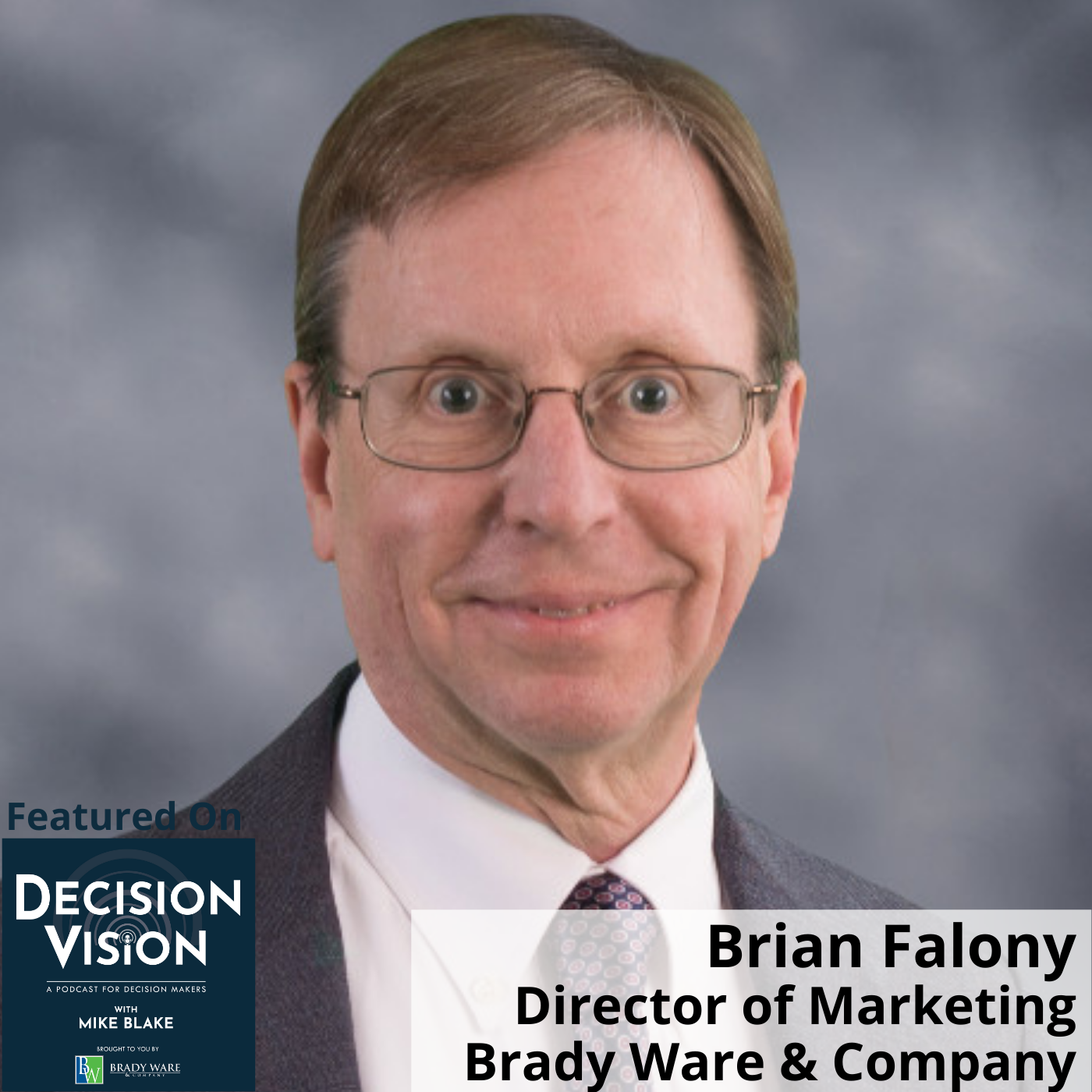
Brian Falony
Decision Vision
Decision Vision Episode 111: Should I Retire? - An Interview with Brian Falony, Director of Marketing, Brady Ware & Company
Loading
00:00 /
RSS Feed
Share
Link
Embed

Download file

Brian Falony

Decision Vision Episode 111: Should I Retire? – An Interview with Brian Falony, Director of Marketing, Brady Ware & Company

On the eve of his retirement from Brady Ware & Company, Brian Falony joined host Mike Blake to discuss the considerations he weighed as he made the decision to retire from the workforce. “Decision Vision” is presented by Brady Ware & Company.

Brian Falony, Director of Marketing, Brady Ware & Company

Brian Falony
Brian Falony, Director of Marketing, Brady Ware & Company

Brian joined Brady Ware in 2017 and has more than 25 years of experience helping accounting firms grow their practices. He led the marketing functions for two of the top 50 CPA firms in the U.S. and has consulted with firms across North America on improving their marketing programs. Brian will lead the firm’s overall marketing efforts with a focus on growth.

Brian is a member of the Association for Accounting Marketing where he has served on several committees as well as the Board of Directors. He is also a member of the Association’s Hall of Fame.

LinkedIn

Mike Blake, Brady Ware & Company

Mike Blake, Host of the “Decision Vision” podcast series

Michael Blake is the host of the “Decision Vision” podcast series and a Director of Brady Ware & Company. Mike specializes in the valuation of intellectual property-driven firms, such as software firms, aerospace firms, and professional services firms, most frequently in the capacity as a transaction advisor, helping clients obtain great outcomes from complex transaction opportunities. He is also a specialist in the appraisal of intellectual properties as stand-alone assets, such as software, trade secrets, and patents.

Mike has been a full-time business appraiser for 13 years with public accounting firms, boutique business appraisal firms, and an owner of his own firm. Prior to that, he spent 8 years in venture capital and investment banking, including transactions in the U.S., Israel, Russia, Ukraine, and Belarus.

Brady Ware & Company

Brady Ware & Company is a regional full-service accounting and advisory firm which helps businesses and entrepreneurs make visions a reality. Brady Ware services clients nationally from its offices in Alpharetta, GA; Columbus and Dayton, OH; and Richmond, IN. The firm is growth-minded, committed to the regions in which they operate, and most importantly, they make significant investments in their people and service offerings to meet the changing financial needs of those they are privileged to serve. The firm is dedicated to providing results that make a difference for its clients.

Decision Vision Podcast Series

“Decision Vision” is a podcast covering topics and issues facing small business owners and connecting them with solutions from leading experts. This series is presented by Brady Ware & Company. If you are a decision-maker for a small business, we’d love to hear from you. Contact us at decisionvision@bradyware.com and make sure to listen to every Thursday to the “Decision Vision” podcast.

Past episodes of “Decision Vision” can be found at decisionvisionpodcast.com. “Decision Vision” is produced and broadcast by the North Fulton studio of Business RadioX®.

Connect with Brady Ware & Company:

Website | LinkedIn | Facebook | Twitter | Instagram

TRANSCRIPT

Intro: [00:00:01] Welcome to Decision Vision, a podcast series focusing on critical business decisions. Brought to you by Brady Ware & Company. Brady Ware is a regional full-service accounting and advisory firm that helps businesses and entrepreneurs make visions a reality.

Mike Blake: [00:00:21] Welcome to Decision Vision, a podcast giving you, the listener, clear vision to make great decisions. In each episode, we discuss the process of decision making on a different topic from the business owners’ or executives’ perspective. We aren’t necessarily telling you what to do, but we can put you in a position to make an informed decision on your own and understand when you might need help along the way.

Mike Blake: [00:00:41] My name is Mike Blake, and I’m your host for today’s program. I’m a director at Brady Ware & Company, a full service accounting firm based in Dayton, Ohio, with offices in Dayton; Columbus, Ohio; Richmond, Indiana; and Alpharetta, Georgia. Brady Ware is sponsoring this podcast, which is being recorded in Atlanta per social distancing protocols. If you would like to engage with me on social media with my Chart of the Day and other content, I’m on LinkedIn, and also @unblakeable on Facebook, Twitter, Clubhouse, and Instagram. If you like this podcast, please subscribe on your favorite podcast aggregator, and please consider leaving a review of the podcast as well.

Mike Blake: [00:01:17] Today’s topic is, Should I retire? And our guest – that I’m going to bring on in just a minute – is a dear friend, and professional colleague, and mentor of mine, who has reached the stage of his life where he is going to retire from our firm. I don’t know if it’s been formerly announced, so I’m not going to mention it right now, but soon. It’s a known quantity by the time this thing gets published, I’m sure it’s going to be more known.

Mike Blake: [00:01:51] But, you know, it occurs to me that retirement is one of the most consequential decisions that all of us, we hope, will make in our lives. It’s consequential from a business perspective. It’s, of course, consequential from a personal perspective. And a decision to retire is so weighty and is so complex and is intertwined with the hard material discussions and considerations as well as the emotional and profound personal considerations.

Mike Blake: [00:02:30] And, you know, we’ve been thinking about retirement as a society for a while. I remember ten years ago or 15 years ago that we thought for sure there was going to be this wave of businesses that was going to be up for sale, and this wave of executives that were going to have to retire. And interestingly, they, largely, didn’t. I mean, some did, of course. But, you know, first of all, with the profound financial implications of the financial correction of 2008 and 2009, simply for many people moved the goalposts for retirement back from a financial perspective and did so in a significant way.

Mike Blake: [00:03:17] But, also, sort of a funny thing happened is that, the human lifespan and the human useful lifespan has increased significantly since World War II. And I’m not going to get into a big discussion as to why that is. There are lots of theories. But you just can’t deny the fact that more people are living into their 90s. You know, renowned children’s author, Beverly Cleary, just passed away at 104. I didn’t even know she was still alive. But when I was in my single digits and in the 70s, I was reading her books right along with everybody else. And that’s just an example. But not only are people living longer, they’re living longer in a state of greater health and in a state of greater vibrancy. And in particular, if we ever really get a handle on Alzheimer’s, watch out, because, you know, I don’t know that 65 is going to be the bogey for retirement. I don’t know that it’s necessarily economically sustainable. And again, that’s a different podcast, so maybe the Chart of the Day.

Mike Blake: [00:04:19] But coming back to where we are, you know, regardless of the social implications and the economic implications, at the end of the day, our podcast is about making critical decisions. And usually ones that are hard to reverse. And when you really get down to it, it’s hard to think of many personal decisions that are much more impactful, that have much greater and far reaching implications than should I retire. So, that’s why I want to cover this today. And I hope many of you will find this of interest and helpful.

Mike Blake: [00:04:57] And joining us today is my longtime friend and mentor, Brian Falony, who is Director of Marketing for my firm, Brady Ware & Company. We actually met when we are working with another accounting firm. I went back and checked, it’s actually about 12 years ago. And I suspect that we grew a friendship quickly because I was an accountant that actually was interested in marketing. But, ha, the joke’s on you. I’m not really an accountant. I just have to work for an accounting firm so the record is unblemished.


Mike Blake: [00:05:28] But, you know, he and I have maintained a long relationship, a great relationship now across two firms. He actually recruited me into Brady Ware. And I hope that’s not one of the reasons he’s being put into retirement. It might be, we’ll get into that. And as I said, he’s retiring soon. So, I thought, what a cool idea to get into the head of somebody who is actually in retirement, not thinking about retirement, not did it a year ago, but is actually sort of in process, kind of like watching an eclipse as it’s happening.

Mike Blake: [00:06:05] Brian has more than 30 years of experience helping accounting firms grow their practices. He led the marketing functions for two of the top 50 CPA firms in the U.S., and has consulted with firms across North America on improving their marketing programs. Brian leads the firm’s overall marketing efforts with a focus on growth – at least he will until he retires. Brian is a member of the Association for Accounting Marketing, where he has served on several committees as well as the board of directors. He is also a member of the Association’s Hall of Fame – which I did not know. And, again, this is one of these things, just like last week, you get into somebody’s bio, you find some cool things about them you didn’t know in spite of how long you knew them.

Mike Blake: [00:06:45] And I think it’s worth saying that, also, Brian has been one of the thought leaders that helped put this podcast together. It was he, in a lot of ways, helped make this possible and rallied the support of the firm behind it. And it’s a fair statement to say, this podcast would not be here, I think, without Brian’s help. And to him, I’m very grateful for that. And I hope our listeners will acknowledge that. Brian, thank you so much for coming on the program.

Brian Falony: [00:07:13] Well, thanks, Mike. That was a great introduction. I’m not sure that I’ll live up to all of it, but I’m ready to talk about it.

Mike Blake: [00:07:22] Well, you are retiring. You are retiring, right? I mean, you are qualified to talk about that because you are, in fact, retiring. You don’t reverse that decision, right?

Brian Falony: [00:07:30] That is true. That is true.

Mike Blake: [00:07:32] So, you know, talk about your career as you kind of look back and you’re talking to somebody about what you have done over the course of your business life, how would you summarize it?

Brian Falony: [00:07:44] Well, actually, I had two careers. Right out of college, I started working for the office furniture industry. My dad was actually working in that industry. And he kind of got me an entree into it. And I worked for firms like Herman Miller and Haworth for about 17 years. And then, in, I think, 1989, Herman Miller, being a public corporation, had a big cutback. And, suddenly, there I was without a job and had a family and a house and all of that. So, I started searching around, landed a job, and had to move from West Michigan down to South Bend, Indiana, sold the house, moved the family. Six months into the new job, I decided I would have been better off staying unemployed. So then, I started searching again.

Brian Falony: [00:08:29] And there was a firm called Crowe Chizek down in South Bend, Indiana. And I had an opportunity, go in and talk to them about their marketing director position. They took a chance on me and I had no idea about working in accounting, but I took a chance on them. I found out that I absolutely loved working with accountants, working in a less hierarchical structure, and working in an area where I could make a meaningful impact on the growth of a firm. I worked for them for a few years.

Brian Falony: [00:09:04] I took another job which moved me to Atlanta, consulting. I worked for an association of accounting firms and consulted with them for a number of years. And then, had a great opportunity to go back into a firm. And so, I’ve been in firms. I’ve been consulting with firms. I’ve been with a company that’s no longer in existence, Peachtree Software. They were bought up. But for the last 30 years, I’ve been working with accounting firms and have just absolutely loved what I do, helping these firms grow and helping individual accountants find new clients and develop relationships with those clients.

Mike Blake: [00:09:45] So, you’ve done all that. You’ve enjoyed and produced, you know, the success that you have. What goes into the decision to decide you’re going to retire?

Brian Falony: [00:09:59] I think there are a couple of things, and I’m going to speak for me here. But I started over the last couple of years, I started to realize that there were parts of the job that I really, really liked. But then, there were other parts of it that it just wasn’t my main interest. And my interests were changing a bit. And so, when you start to get that feeling that – gosh – it’s just not exactly what you wanted to do. And that started me thinking about it.

Brian Falony: [00:10:35] And then, the other thing that went into that decision is, I’m a relatively older person. I did not grow up with the internet. I did not grow up with a lot of the technology that we have today. And I started to think, you know, the way marketing is going within CPA firms, it may require a different skillset than what I bring to the table. And maybe it’s time for the firm to start looking for somebody that has that skillset that can take them to the next level, can take them over the next few years, and really embrace the technology that is taking over our world.

Mike Blake: [00:11:21] You know, that’s interesting, and I think there’s a very visible analogy to that, and that is in sports coaching. I know you follow sports, at least, a little bit. And I’m sure you’re cognizant of the fact that many sports, particularly baseball but has spread to others, have gone deep into data analytics in terms of how they build teams on field, decision making, and so forth. And what we saw, about, starting ten years ago in baseball and maybe five to seven years ago in the other sports, were the old school coaches retiring. Not because they had lost the ability to coach a football game and select players and train players per se, but they started to recognize that in order to be successful or to get that next job, they were going to have to embrace analytics.

Mike Blake: [00:12:19] It means going back to school for computers, which means having to go back to school for some form of data science. Which, just is not the kind of thing that say, you know, Don Shula was going to do, right? It’s not what Joe Torre was ever going to do, right? And so, rather than retool – it didn’t mean they all of a sudden become bad coaches, but it simply was a scenario in which their industry evolved in a direction where you have to make a decision. (A) You don’t want to do it. And (B) is it worth doing, given the fact that I may not necessarily have that many working lives left. Does it even make sense to do that from an ROI perspective?

Brian Falony: [00:13:03] Yeah. And I think it’s not only the internal looking that you just described. But I think if an executive is really dedicated to the firm that they work for, I think they also have to, in their mind, ask that question, is the skillset that I have what is needed to take my firm to where it needs to go?

Mike Blake: [00:13:32] Yeah. But I guess, also, the other consideration, too, I mean, you could have simply left Brady Ware and moved to another accounting firm. So, it’s not just about the need for that firm, I imagine, but it’s also sort of the needs of the market generally. And that doesn’t mean that what you bring to the table is obsolete – I’ll just call it sort of old school, if you will, or OG marketing – it’s still very valuable. And it’s going to come back with a vengeance. So, say, I’ll get vaccinated and start meeting each other again. But it’s going to be one tool as opposed to the tool.

Brian Falony: [00:14:10] Yes. I agree totally.

Mike Blake: [00:14:14] And a tool that’s more relied upon, I think, by certain demographics, one versus the other. Again, as you mentioned, just based on how people grow up and what their comfort level is with different kinds of marketing platforms.

Brian Falony: [00:14:26] Absolutely.

Mike Blake: [00:14:28] So, I’m going to quasi-out you a little bit. I know that you’re not 65. I know that you’re older than 65. I’ll let you disclose your age if you choose to. But I know you didn’t retire exactly at 65, which is our firm’s ostensible mandatory retirement age. And that’s sort of a frequent finish line for many people’s careers, I’m not sure how long term sustainable that is given the economics. But, for now, it is what it is. Why didn’t you just retire at 65, kind of like everybody else? What kept you wanting to continue?

Brian Falony: [00:15:07] Well, at the time, I was working for a company called Thomson Reuters. And I had started out working for a company called BizActions, which was then bought by Thomson Reuters. And I had the opportunity to help CPA firms use a tool, an electronic newsletter tool, to help develop their business. And when Thomson Reuters bought it, my job changed significantly and became a little bit less fun. But I wasn’t ready to hang it up yet.

Brian Falony: [00:15:39] And so, one day, I was talking with one of my customers, Brady Ware & Company. I was talking to my contact with Brady Ware. And I’d seen on LinkedIn that they were looking for a marketing director, and I said, “Gee. I see you’re looking for a marketing director.” She says, “Yeah. Do you know anybody?” And I said, “Well, as a matter of fact, I do.” And because we had developed such a good relationship, I started working for Brady Ware.

Brian Falony: [00:16:08] But, really, at the time I was 65 years old, I wasn’t ready to hang it up at that point in time. I knew that I really loved going into an accounting firm and bringing my skills into their marketing program. And getting them to the part where they’re directed, and they’re growing, and everybody is being successful in growing the firm. So, I thought this was a great opportunity. I did, however, say to the managing partner who is doing the hiring, I said, “I want you to realize I am 65 years old. I plan on retiring at age 70. So, just understand that this is a five year maximum gig. And I’ll be happy to work with you in that transition when the time comes.”

Brian Falony: [00:16:54] Well, that was a number of years ago. And, now, that I am 70 years old, it is time to actually put that in place. And so, he and I started talking, probably, about a year ago on the transition. I let him know that 70 was coming up and that we had discussed this. And so, we’ve been working on the transition for about a year.

Mike Blake: [00:17:18] So, as you approach this decision, other than the financial peace – and financial, I think, concerns everybody to some extent. Maybe not. I don’t want to put words in your mouth – but what concerns you most about the decision to retire, if anything? Was there anything that worried you, concerned you, bothered you, made you hesitate in any way?

Brian Falony: [00:17:39] Well, it’s something that I’m still having to deal with in my head. And that is for, roughly, 47 years, ever since I graduated college, I have been in marketing. I have progressed through marketing up to the director level. I have been the breadwinner for my family. I can’t tell you the last time I took more than about two weeks off from work. And so, I think there is a little bit of a loss of identity. Like, “Who am I going to be in this new career?” And I’m still working on that. I think I’ve got a solution for it. And I’m hoping that it all works out well. But that is still a concern. And I think for a lot of people that have had a good long career and really loved what they’re doing, that loss of, “Well, this defines who I am. How do I get that new definition?” can be a pretty significant issue that needs to be considered.

Mike Blake: [00:18:49] Yeah. And, you know, I spoke with a friend, that you and I both know, last week. And she retired, actually, about a year or almost a year ago. And I’m going to have another conversation with her next week. But she wasn’t overly thrilled with her retirement either. And the thing that she told me that she’s really struggling with is building that identity. You know, there’s only so many books you can read, if you’re the most voracious reader in the world. And so, like I said, I got on the phone with her and helped her brainstorm and kind of think about what might be next. And, you know, I think it is jarring.

Mike Blake: [00:19:32] My dad, he retired, I guess, about eight, nine years ago. And he’s a very good retiree. He had no desire to go back to work. He’s a little bit a nonprofit. He’s a big time bridge player, that sort of thing. But, you know, I can appreciate for a lot of people that’s not easy, especially if you’ve been sort of in an intense environment where your whole day, your week, your month, your year is structured around work. You just have that become a vacuum. It’s almost an embarrassment of riches in terms of time. It’s a different kind of time management problem.

Brian Falony: [00:20:08] Yes, it is. And we’ll see how that goes.

Mike Blake: [00:20:12] So, how would you characterize your retirement planning process? When did you start to get serious about it? Was it phased? Was it consistent? Was it, “Oh, crap. I’m behind. I got to hurry up.” And it’s probably sort of different for different aspects of retirement. But how would you characterize it in your particular case?

Brian Falony: [00:20:38] Well, it was pretty well planned. And if you ever talk to my wife, she’ll tell you that I’m very annal about process and planning and all of that. So, you know, as I alluded to earlier, I had told the managing partner of Brady Ware when he hired me that there was a limit on this. So, I had already started thinking about what does this look like. And then, I kind of put off any kind of planning until about a year ago. And when I turned 69, I said, “You know, I really have to be in a position to make this a successful and a smooth transition, so I better start planning now.”

Mike Blake: [00:21:22] And so, I talked to the managing partner, like I said, a year ago. And then, we got serious about putting a plan together, probably, starting six months ago. And we have a structured plan that laid out dates for hiring a consultant to determine what kind of a transition we wanted to make in sourcing, hiring, putting up the ads for candidates, evaluating the candidates. So, there was a pretty good plan there.

Brian Falony: [00:22:01] On the personal side, I’ve also been planning and talking to a couple of my contacts within the industry about possible consulting work and things like this. So, there’s that other side of the plan, the personal side of the plan. But I’ve been working on that for probably about the last year just to make sure that it is a good, smooth transition.

Mike Blake: [00:22:28] So, you’ve been involved, you said, in helping to choose your successor. How much involvement have you had? And do you think that involvement is likely going to be best practices for many firms? Or maybe best practice is more or less involvement?

Brian Falony: [00:22:48] That’s a really interesting question. As you said, I have been involved. I have interviewed some of the candidates. I definitely interviewed the successful candidate. But I think part of that is going to depend on the personality of the of individual retiring. I went into this with an idea that within the accounting marketing profession, most times marketing directors don’t retire. They leave and get another job, they get fired, whatever. And it’s a very difficult transition. One of the things I wanted to do in this is, try to make a smooth transition to see what goes into making that happen. So, I had the mindset that I really wanted to help with that.

Brian Falony: [00:23:46] Other people that may have a different attitude, may have the attitude that I’m the best one that’s ever been in this position, it would be a little harder for them to step back and say, “All right. Who is going to be a great person to replace me? Do some of the things that I can’t do and take the firm to the next level.”

Brian Falony: [00:24:07] So, I think going back to your original question, how involved should the person be in bringing their successor, I think if they’ve got the attitude that, this is a process that I can significantly help move my firm to the next level by doing this, then they ought to be very involved. If it’s, on the other hand, a person who thinks that they can’t be replaced, they probably ought to not be terribly involved because they’re going to look for the negative sides of anybody that’s going to come in and replace them.

Mike Blake: [00:24:39] Right. There are, in fact, the process. So, I imagine the other piece of this, too, is the circumstances under which the retirement is occurring. In your case, you know, you’re managing an orderly retirement. You’re obviously departing from the firm or separating from the firm on very good terms. Not every retirement occurs in that direction that way, right?

Brian Falony: [00:25:01] That’s true. That is true.

Mike Blake: [00:25:03] You know, you don’t necessarily want to have the person that you’re effectively booting out, trying to be involved in the successor. It’s hard to see how that would be a constructive conversation and relationship.

Brian Falony: [00:25:15] Yeah. Yeah. The plan is to have my successor in place and for me to work with him for probably about four weeks. And I’ve given this some thought and I’m thinking that, like, the first week, I’m still going to be the marketing director and he’s going to be learning from me. The second week, it might be kind of half and half. And by the third week, he’s going to be the marketing director and I’m just going to be there as a resource to him for a couple of weeks.

Mike Blake: [00:25:42] Okay. Now, you really gave the firm five years notice, when you really get down to it, right? But then, you sort of reminded our managing partner – I don’t know if I should say his name, but I guess not. I don’t know if it matters or not. People can look it up – you gave him notice saying, “Hey, look. You know, we’re sort of at the fourth quarter here. You know, we need to start acting.” So, in effect, that was a year long runway. Do you think a year is best practice in your ideal world might you have started a transition process earlier? Is it perhaps too much that maybe a year just seems so far away in retrospect? What’s your view on that?

Brian Falony: [00:26:34] I think a year is probably good. I wouldn’t make it less than six months. But then, I wouldn’t make it longer than a year either. And one of the things that I’ve noticed particularly, probably, in the last couple of months, is that, in interactions with some of the folks in the firm, I get the feeling that they’re looking at me as a lame duck. And so, I think if you start this process too soon, like more than a year out, the person could find themselves in that lame duck position a lot earlier than they need to be. So, I would say probably somewhere in the six months to one year range, at least from my experiences, is a pretty good amount of time.

Mike Blake: [00:27:25] Right. Right. And, of course, we’re talking about an executive position too. A position that’s more of a staff position. You may not necessarily need that long a transition. But the bulk of our listeners are in that executive position, so I think that answer is most relevant to them.

Mike Blake: [00:27:47] The question I’d like to ask is, a lot of people – and I’m starting to get to this age now where people are very fixated on it – have sort of a magic financial number. Where their basis is, you know, if I hit this, I’m going to retire. In government, if I hit 20 years of service, I’m out. Or, you know, for the rest of us mere mortals, if I have this much in the bank, that said, I’m out. You know, how important was that to you in terms of the timing and decision to retire?

Brian Falony: [00:28:15] It was a factor, but I don’t think it was the major factor. One of the things that I considered is – and this may change, but for right now -you’ve maxed out your Social Security at age 70. So, I knew 70 was kind of where I wanted to be. What was more important to me was having zero debt going into it, so that was a goal. But, you know, I don’t think there was a specific financial number in mind.

Brian Falony: [00:28:58] I wanted to make sure that I had enough in between my retirement savings and my Social Security that we’re not going to have to significantly downsize our lifestyle. That’s probably the biggest consideration, just having enough to enjoy the time that I have left, and provide for my wife, and just do some of the things that we have not been able to do because I’ve been tied up with work for all these years. But there wasn’t a magic number out there. There was a lot of factors that went into it. I don’t know if that helps, but that was kind of what was going in my mind.

Mike Blake: [00:29:47] Well, I think it’s interesting. This is one of those answers that I think is going to differ person to person. I know some people that they look fanatically at their brokerage accounts or savings accounts, whatever it is, their total assets, and they say, “If I hit this number, then I can basically give the world a finger. And then, my whole world changes after that time.” And, you know, of course, we all hear about government employees that the saying is, they know to the day when they’re eligible to receive full retirement.

Mike Blake: [00:30:22] And I was just curious, in your perspective – it sounds like it’s not – it doesn’t sound like you’re fixated on a number that basically was your “freedom number”. Obviously, you want to retire at a time when you can provide for yourself. That doesn’t make any sense not to do if you can help it. But at the same token, it doesn’t sound like you hit a finish line. I’ve made the number. And, therefore, I’m just going to sort of hit a switch and go into retirement mode. It’s much more holistic than that.

Brian Falony: [00:30:52] Yeah. I think that’s a fair description, Mike.

Mike Blake: [00:30:57] So, I see retirement as falling into one or two buckets. And I think I know the answer to this question, but I don’t want to assume. And one of those buckets is, retirement just simply closes a book. It’s a big ending that transitions into something just entirely different. And, again, my father was this way, my grandfather was this way for sure, my mother was this way. They just retired and just never looked back in any way, at least as far as I could tell.

Mike Blake: [00:31:39] And then, there’s another school of thought that says, “Well, this is just a different chapter where I’m still going to be around. I’m still going to be doing stuff. I’m not going to necessarily have ‘being retired’ as my identity. It’s simply a financial status,” if you will. I’m curious as to which bucket you would like to see yourself in and what’s attractive about that to you?

Brian Falony: [00:32:03] I think I would up for bucket number two as opposed to bucket number one. As I said earlier, when I fell into this career of professional services, marketing, and particularly marketing for accounting firms, I found something I really loved. And you mentioned earlier that I’m a member of the Association for Accounting Marketing and I’ve served on the board of directors and a number of committees there. And that association has been critical to my career. And I love the people in the organization. I love the organization.

Brian Falony: [00:32:42] So, I plan to stay involved with that organization even after I retire. And through that organization, I’ve met a number of people, some of whom have gone out into the consulting world. And I’ve talked to a couple of them about possibly working with them on some part time consulting engagements, things like that. Because, like I said, I love this profession and I do have, I believe, some things that I can give back to some other firms. So, I plan to keep my hand in at least a bit, not full time, but at least a bit, and just give back a little bit to this profession that has been so good to me.

Mike Blake: [00:33:24] You know, one of the things that I’ve seen some organizations do, and this is something I believe they have borrowed from academia, is, they established an emeritus role. And I think that’s actually really smart because one of the things I think that firms make a mistake on, you know, we have these well-intentioned retirement ages. And the goal mainly of the retirement age is to make room for the next generation, basically. But hitting the ejector seat on people that have potentially a-half-a-century of experience – I don’t care how much technology has changed – there’s going to be value to that half century of experience, for sure. You know, to have a role for that emeritus, whether it’s in a firm, whether it’s in an organization – hopefully AAM has something like that available for you. If not, they should – what do you think about roles like that? I mean, is that a real thing or is it just window dressing or am I making something that really isn’t a big deal? How do you kind of react to that?

Brian Falony: [00:34:28] Actually, I hadn’t thought about that until you brought it up. But I think it’s a really good idea. It’s certainly not going to be for everybody. But I think there is a lot of experience that goes out the door, and firms and individuals could benefit from that. I think there’s a tremendous opportunity for mentorship relationships within firms that could be enhanced by that person not being in a direct reporting relationship.

Brian Falony: [00:35:05] That’s one of the things that I found interesting about CPA firms, is, most of them that are at the partnership type have a defined retirement date where people have to sell back their ownership, and it’s usually 65. And there’s a lot of experience that walks out the door when that 65 hits and they have to sell their shares back. It’s experience that the firms themselves, I think, could benefit from in some fashion if they had what you call an emeritus type position. So, in hearing you talk about that, I think that’s probably not a bad idea.

Mike Blake: [00:35:48] Yeah. And maybe it’s something I’ll bring up with the other partners in the firm. So, we’re talking with Brady – I’m sorry. We’re talking with Brian Falony of Brady Ware & Company. And the topic is, Should I retire? Did the pandemic impact your decision to retire at all? And if so, how?

Brian Falony: [00:36:07] Not really. I’m one of these people that I’ve never been particularly concerned about the pandemic per se. So, I haven’t altered my work style much because of it. Now, the big change for me when the pandemic hit was, I was flying up to Dayton, Ohio usually about once a month. And I don’t think I’ve been up there since January of 2020. So, I’m not getting those Delta miles anymore. But the pandemic really didn’t have a lot to do with it. In fact, if the pandemic had had any effect, the only effect I could see is I might have postponed it another year since I won’t be able to do some of the traveling I wanted to do in retirement. But the pandemic really has not affected my decision one way or the other.

Mike Blake: [00:37:02] And that’s interesting because in considering what you said at the outset of our conversation, you talked about the approach to marketing being much more technologically focused as one of the motivations to retire. And I would have anticipated you saying that, clearly, marketing as much as anything has been forced to undergo a massive digital transformation. Because we can’t go to the conferences, and trade shows, and networking meetings, and coffees, and after dinner drinks and happy hours, all that good stuff. And I was curious if the sudden reliance on that – and I may be putting words in your mouth, so feel free to tell me to go jump in the lake – knowing the kind of person you are, how much personal contact means to you, and how much relationships means to you, you know, I wonder if kind of just the pandemic and the digital transformation for somebody like you would just take a lot of the fun out of it.

Brian Falony: [00:38:13] Maybe. But I think one of the things that the pandemic did, going back to what you just said about the change and the greater use of technology, is, it really spurred me to dig in and learn better how to use this technology that I’m not a native to and have not grown up with. It reminds me of something I got from my old aunt who just passed away, she was 98 years old. I last saw her, probably, about five years ago. And she said, one of the things that kept her going at that point in time was when she got up every day, her goal was to read something and learn something new every day. And as long as she did that, then she felt she was living well.

Brian Falony: [00:39:08] And so, when I reflected back on that, I said, “Here’s an opportunity for me to really dig in and learn something new, and see if I can enhance my skillset with it.” And so, rather than being a turn off and losing that contact – yeah, I do miss the personal contact. I do miss the face to face. I miss sitting down in your office with you and talking over your huge screen – but on the other hand, it has also spurred me to really dig in and learn new things. And so, I think there’s pluses and there’s minuses.

Mike Blake: [00:39:44] What are you looking forward to most in retirement?

Brian Falony: [00:39:50] One of the things is, as I noted before, giving back somewhat to my profession and trying to help and mentor some younger folks in the accounting marketing profession, because it can be a tough profession. But I’m also looking forward to exploring some other interests. I have a strong interest in science, and particularly astronomy and things like that. And I plan to spend some time reading and learning about that. And I might even dust off my log book and go out and go back to flying a little bit. You know, get current back so that maybe I can take my grandkids up for a flight one of these days.

Mike Blake: [00:40:34] Well, I’m sure they love that. For somebody who went to pilot training myself for a while, the navigation is a lot easier now, so you might want play with that. Brian, this has been great. I really appreciate you taking some time to talk to us. And I think our conversation is going to help a lot of people who are thinking about retirement sometime in the short to medium term. If people want to follow up on a question I didn’t ask or maybe want to go deeper on something that we talked about, can they reach out to you? And if so, what’s the best way to do so?

Brian Falony: [00:41:07] Yes, they can. And Mike, thank you. This has been a fascinating discussion. But if people need to get a hold of me, probably, since I will not be at Brady Ware for more than another few weeks, best thing would be to email me. And my personal email is F as in Frank-A-L-O-N-Y-B@earthlink.net.

Mike Blake: [00:41:33] Well, thank you, Brian. And that’s going to wrap it up for today’s program. I’d like to thank Brian Falony so much for joining us and sharing his expertise with us.

Mike Blake: [00:41:41] We’ll be exploring a new topic each week, so please tune in so that when you’re faced with your next business decision, you have clear vision when making it. If you enjoy these podcasts, please consider leaving a review with your favorite podcast aggregator. It helps people find us that we can help them. If you like to engage with me on social media with my Chart of the Day and other content, I’m on LinkedIn, and @unblakeable on Facebook, Twitter, Clubhouse, and Instagram. Once again, this is Mike Blake. Our sponsor is Brady Ware & Company. And this has been the Decision Vision podcast.


Tagged With: accounting firm, Brady Ware, Brady Ware & Company, Brian Falony, career, marketing career, Michael Blake, Mike Blake, retirement, retirement planning

Delano Massey with JacobsEye Marketing Agency

November 3, 2020 by angishields

Delano-Massey-JacobsEye-Marketing-Agency
Atlanta Business Radio
Delano Massey with JacobsEye Marketing Agency
Loading
00:00 /
RSS Feed
Share
Link
Embed

Download file

OnPay-Banner

Delano-Massey-JacobsEye-Marketing-AgencyDriven, fearless, and dynamic – are just a few of the attributes that embody the vision and passion of Delano Massey. As Chief Executive Officer of Atlanta-based JacobsEye Marketing Agency, one of the fastest-growing top 10 government marketing agencies in the U.S. with offices in Washington, D.C. and Los Angeles, Delano has become an unparalleled force as a global brand marketer and influencer.

Under his leadership, JacobsEye maintains a fundamental focus on marketing that matters. Since 2011, the agency has generated tens of millions of dollars of exposure for a celebrated client list that includes the U.S. Secret Service, the U.S. Air National Guard, the Coca-Cola Company, Centers for Disease Control and Prevention, the Home Depot, CNN, the Atlanta Falcons, and the Atlanta Hawks. For more than 20 years, Delano has produced award-winning marketing campaigns and events for some of the most venerated brands – enhancing visibility and brand equity for all of his clients.

A retired United States Army JAG Corps warrior, Delano has harnessed his military service to develop socially conscious initiatives dedicated to community development. Committed to promoting the importance of agriculture and sustainable foods in communities across the state of Georgia, Massey is the founder of The Fresh District and The Georgia Seafood Festival. The Fresh District is a movement which promotes fresh, local and sustainable food systems in urban environments and aims to inspire and cultivate the next generation of agricultural industry leaders.

Launched in 2019, The Georgia Seafood Festival is an annual event that celebrates Georgia’s burgeoning commercial seafood industry and raises awareness of the social and economic impact of the seafood industry in the State of Georgia. More than 15,000 attendees from across the metropolitan Atlanta region and state attended the inaugural event and were provided with an educational and culinary experience centered on Georgia’s coastal seafood scene.

Delano is also the creator and founder of Feed Me Fashion, an event that brings Georgia’s fiber tech industry together with Georgia student fashion designers for a discussion and fashion show aimed at increasing awareness on sustainable fashion.

Delano’s leadership and expertise has been widely recognized and celebrated. He has been named the 2020 National Contract Management Association (NCMA) Small Business Person of the Year, honored with the 2020 “Give Back” Award by Entrepreneurs’ Organization (EO) Atlanta, and 2018 Best Veteran Entrepreneur Finalist by the Atlanta Business Chronicle. In 2018, Delano was also recognized in a resolution sponsored by the Georgia State Senate acknowledging the agency for its work in managing all U.S. Air National Guard recruitment and retention marketing services

Follow JacobsEye Marketing Agency on LinkedIn.

What You’ll Learn in This Episode

  • About JacobsEye Marketing Agency
  • How Delano started the business
  • How JacobsEye became one of the top ten fastest growing government marketing agencies
  • What sets JacobsEye Marketing Agency apart
  • Some of the top tier clients the agency works with

About Our Sponsor

OnPay’sOnPay-Dots payroll services and HR software give you more time to focus on what’s most important. Rated “Excellent” by PC Magazine, we make it easy to pay employees fast, we automate all payroll taxes, and we even keep all your HR and benefits organized and compliant.

Our award-winning customer service includes an accuracy guarantee, deep integrations with popular accounting software, and we’ll even enter all your employee information for you — whether you have five employees or 500. Take a closer look to see all the ways we can save you time and money in the back office.

Follow OnPay on LinkedIn, Facebook and Twitter.

Tagged With: JacobsEye Marketing Agency

BRX Pro Tip: Who Should Be the Hero in Your Marketing… Not You

May 21, 2020 by angishields

BRXmic99
BRX Pro Tips
BRX Pro Tip: Who Should Be the Hero in Your Marketing... Not You
Loading
00:00 /
RSS Feed
Share
Link
Embed

Download file

BRX-Banner

BRX Pro Tip: Who Should Be the Hero in Your Marketing… Not You

Stone Payton: [00:00:00] Welcome back to BRX Pro Tips. Lee Kantor and Stone Payton here with you. Lee, the way that we have things framed up, the way we try to go to market, we believe that the hero in the story, at least, a hero in our marketing should be anybody but us, right? Say more about that.

Lee Kantor: [00:00:20] Right. I don’t know if it’s a strategy word, but it’s just a way of thinking that I’m kind of borrowing from Donald Miller with Story Brand. And he talks about sales and marketing material or any kind of written material. And the hero of the journey of the sale is not you. You’re not the hero. The client is the hero. You are the guy that helps the client achieve their goals. So, when you position yourself as the guide, you’re not talking about yourself anymore. You’re talking about the ways you can help the client achieve their goals. It’s not about how great you are, what you’ve done in the past. None of that matters. It’s helping guide the client from having a problem to have a success. So, that’s the difference in kind of the mindset. And that’s how you frame the conversations in terms of what’s in it for the prospect, not what’s in it for you.

Stone Payton: [00:01:17] And that is just so wholly consistent with the way that we go to market anyway and execute on the work that we do, right? We don’t try to be the personalities on the radio show. And all of our shows are designed to support and celebrate the guests and position the host as the hero that’s making that opportunity available. So, to me, everything you just said about the marketing aspect of what we do is just wholly consistent with the way we choose to execute on our mission and purpose.

Franchise Marketing Radio: Charles Internicola with The Internicola Law Firm

February 22, 2020 by angishields

Internicola-Law-Firm
Franchise Marketing Radio
Franchise Marketing Radio: Charles Internicola with The Internicola Law Firm
Loading
00:00 /
RSS Feed
Share
Link
Embed

Download file

Brought To You By SEO SAMBA . . . Comprehensive, High Performing Marketing Solutions For Mature And Emerging Franchise Brands . . . To Supercharge Your Franchise Marketing, Go To SEO SAMBA.com

Charles-InternicolaNational Business & Franchise Lawyer Charles Internicola is the managing partner and founder of The Internicola Law Firm, PC. Charles is a seasoned business attorney who has worked with and guided his clients at every stage of the business development cycle from start-up, regional expansion, franchised expansion, mergers and acquisitions, intellectual property protection and high-stakes litigation.

Charles serves as outside and general counsel to a number of franchise, manufacturing and service-based businesses throughout the nation where Charles and his team coordinate, monitor and manage all aspects of his clients’ legal matters, regulatory obligations and legal programs for the expansion and protection of their businesses.

Follow The Internicola Law Firm on Twitter and Facebook.

What You’ll Learn in This Episode

  • How Charles Internicola got into franchise consulting
  • What services The Internicola Law Firm offers and specializes in
  • Best practices in franchise consulting

Tagged With: The Internicola Law Firm

Franchise Marketing Radio: Ricky Richardson and Mike McClure with Eggs Up Grill

October 24, 2019 by angishields

FranchiseMarketing-EggsUp-Feature
Atlanta Business Radio
Franchise Marketing Radio: Ricky Richardson and Mike McClure with Eggs Up Grill
Loading
00:00 /
RSS Feed
Share
Link
Embed

Download file

FranchiseMarketing-EggsUp-Group

Brought To You By SEO SAMBA . . . Comprehensive, High Performing Marketing Solutions For Mature And Emerging Franchise Brands . . . To Supercharge Your Franchise Marketing, Go To SEO SAMBA.com

Eggs Up Grill is home to the whole neighborhood, serving smiles from sunup thru lunch. The aromas of freshly brewed coffee, savory bacon and hand-cracked, farm-fresh eggs on the griddle and warm, attentive team members will make you feel right at home. We are “neighbors serving neighbors” daily from 6 a.m. to 2 p.m.

Originally founded in Pawleys Island, S.C. in 1997 by restaurateur Chris Skodras, Eggs Up Grill has grown to more than 35 locations across the Southeast and is headquartered in Spartanburg, S.C. With strong AUVs and consistent comp sales momentum, it’s no wonder existing franchisees are reinvesting in the brand, accounting for half of its projected 40% growth in 2019.

In 2018, private equity firm WJ Partners acquired Eggs Up Grill, building the team and priming the brand to rapidly grow in more communities across the US with plans underway to reach the 100-location mark by 2022. For more information, visit https://www.eggsupgrill.com/franchise.

Ricky Richardson was tapped to lead the breakfast, brunch and lunch concept in July 2018 after private investment firm WJ Partners acquired the brand. Under Richardson’s leadership, the brand has since grown to 36 open locations, six more set to open before year-end and 18 locations slated to open in 2020. Richardson has primed Eggs Up Grill for growth with plans underway for the concept to reach the 100-location mark by mid-2022.

Richardson has over 30 years of industry experience across multi-unit and franchise operations. Prior to joining Eggs Up Grill, Richardson served as U.S. president and chief operating officer of Dallas-based TGI Fridays. Richardson’s background includes more than 20 years with TGI Fridays in both the US and International businesses. He also headed operations when Fridays’ then-parent Carlson Restaurant Group Worldwide acquired the California-based Pick Up Stix.

At Eggs Up Grill, Richardson led the development of the first company-owned and operated restaurant which opened in July 2019. It is the brand’s Training Center and innovation lab. The restaurant features a new prototype design aimed at enhancing the guest experience while testing revenue generating concepts including a coffee bar and a grab-and-go counter to drive incremental sales results. These efforts will enhance the guest experience, grow topline sales and improve franchisees’ business results. Richardson recognizes that in the restaurant business, it is always the quality of the guest experience that matters most and it takes the right team and right culture to make that happen. Eggs Up Grill is also fully focused on investing in the right resources and business insight to support franchisees and help them grow top-line sales and profitability at the local level.

Mike McClure, former IHOP executive and owner of the Roswell and Alpharetta Eggs Up Grill restaurants is coming up on his 5th anniversary with the brand – and the success he’s had that is fueling the company’s plans to add an additional 15 Eggs Up Grill restaurants in the greater Atlanta area in the next 5-10 years.

Mike and his wife, Judy, opened their Alpharetta location (near the intersection of Crabapple Road and Rucker Road) in November of 2014 and their Roswell location (not far, near the intersection of Johnson Ferry Road and Shallowford Road) in December of 2016. After graduating from Western Carolina University, Mike moved to Atlanta and started working in the restaurant business as a bartender and a bouncer. After marrying Judy, he worked with IHOP corporate serving as liaison between corporate and the franchise team and eventually overseeing 7 IHOP locations. Mike had always dreamed of owning his own breakfast restaurant and found the opportunity by leaving IHOP to become a franchisee and realize that dream with Eggs Up Grill five years ago.

Now, on the heels of acquisition by private equity and a year after Eggs Up Grill CEO Ricky Richardson took on leadership of the brand after serving as President of TGI Friday’s for years, the company is planning to build on the success Mike and Judy have driven with a plan to open 15 more Eggs Up Grill locations in the next 5-10 years.

Tagged With: Growth in Atlanta area, History of Eggs Up Grill, What's New at Eggs Up Grill, Why Eggs Up Grill, Why Now

Tim Fulton, Small Business Matters, and Anthony Chen, “Family Business Radio”

August 19, 2019 by John Ray

North Fulton Business Radio
Tim Fulton, Small Business Matters, and Anthony Chen, "Family Business Radio"
Loading
00:00 /
RSS Feed
Share
Link
Embed

Download file

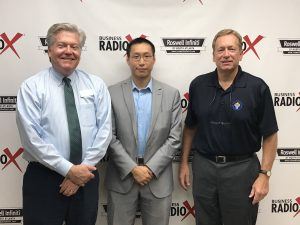
John Ray, Anthony Chen, and Tim Fulton

“North Fulton Business Radio,” Episode 156:  Tim Fulton, Small Business Matters, and Anthony Chen, “Family Business Radio”

On this edition of “North Fulton Business Radio,” host John Ray speaks with small business consultant Tim Fulton, Small Business Matters, and family business specialist Anthony Chen, host of “Family Business Radio” on Business RadioX®.

Tim Fulton, Small Business Matters

Tim Fulton, Small Business Matters

Tim Fulton is a nationally recognized small business consultant and advocate. He has been involved in entrepreneurship for the past thirty years in varying capacities as a successful business owner, a small business counselor, and as an adjunct university professor. In 1994, he started Small Business Matters, an independent management consulting and training practice. During this time he has worked with companies such as Lucent Technologies, Carlson Companies, Insignia ESG, and Georgia Power.

Tim’s past work experience also includes serving as the assistant director of the Small Business Development Center at Clayton State University and the Director of the Family Business Institute at Florida International University. He has worked with thousands of business start-ups and existing business entities as a catalyst for starting and growing their business enterprise.

Tim’s own entrepreneurial experience includes the ownership and operation of several fast-growing retail and service businesses. Each of which resulted in successful M&A opportunities. In addition, he was one of the founders of a successful Atlanta-based INC 500 internet software company.

Tim currently is a Vistage Group Chair in Atlanta, Georgia. Over the past fourteen years, Tim has facilitated over 500 executive group meetings, participated in over 3000 face-to face discussions with chief executives, and trained over 2000 small business owners.

Tim Fulton is the author of a very popular award-winning book on small business titled Small Business Matters.  This past year he published his second book Small Business Matters and All That Jazz. He has also been published and featured in numerous magazines and newspapers including the Atlanta Business Chronicle, Entrepreneur Magazine, and Catalyst Magazine. Tim also publishes his own award-winning electronic monthly newsletter, SMALL BUSINESS MATTERS, for small business owners.

Starting in 2013, Tim Fulton began hosting the Small Business Matters Conference in Atlanta. The event features twelve different speakers and over 200 small business owners and key executives in attendance.

For more information, go to the Small Business Matters website.  To contact Tim directly, you can email or call directly at 678-427-9436.

Anthony Chen, “Family Business Radio”

Anthony Chen, Host of “Family Business Radio”

Anthony Chen is a financial advisor with Lighthouse Financial Network and the host of “Family Business Radio” on Business RadioX®.

Anthony started his career in financial services with MetLife in Buffalo, NY in 2008. Born and raised in Elmhurst, Queens, he considers himself a full-blooded New Yorker while now enjoying his Atlanta, GA home. Specializing in family businesses and their owners, Anthony works to protect what is most important to them. From preserving to creating wealth, Anthony partners with CPAs and attorneys to help address all of the concerns and help clients achieve their goals. By using a combination of financial products ranging from life, disability, and long term care insurance to many investment options through Royal Alliance. Anthony looks to be the eyes and ears for his client’s financial foundation. In his spare time, Anthony is an avid long-distance runner.

Securities and advisory services offered through Royal Alliance Associates, Inc. (RAA), member FINRA/SIPC. RAA is separately owned and other entities and/or marketing names, products or services referenced here are independent of RAA. The main office address is 575 Broadhollow Rd. Melville, NY 11747. You can reach Anthony at 631-465-9090 ext 5075 or by email.


“North Fulton Business Radio” is broadcast from the North Fulton studio of Business RadioX®, located inside Renasant Bank in Alpharetta. Renasant Bank has humble roots, starting in 1904 as a $100,000 bank in a Lee County, Mississippi, bakery. Since then, Renasant has grown to become one of the Southeast’s strongest financial institutions with approximately $12.9 billion in assets and more than 190 banking, lending, wealth management and financial services offices in Mississippi, Alabama, Tennessee, Georgia and Florida. All of Renasant’s success stems from each of their banker’s commitment to investing in their communities as a way of better understanding the people they serve. At Renasant Bank, they understand you because they work and live alongside you every day.


Tagged With: emotional intelligence, EQ, Family Business, family business advisors, family business owners, Family Business Radio, family business success story, grit, growth paradox, Lighthouse Financial Network, north fulton business, North Fulton Business Radio, retirement planning, small business advice, small business advisory, small business consulting, Small Business Matters, Small Business Matters Bootcamp, Small Business Matters Conference, Tim Fulton, toughness

MASK Matters Moms Making A Difference

April 2, 2018 by Karen

MichelleCardiniLaurenDanielsandMichelleMoore-FangeronPhoenixBusinessRadioX3
Phoenix Business Radio
MASK Matters Moms Making A Difference
Loading
00:00 /
RSS Feed
Share
Link
Embed

Download file

MichelleCardiniLaurenDanielsandMichelleMoore-FangeronPhoenixBusinessRadioX1

MASK Matters Moms Making A Difference

MASK (Mothers Awareness on School-age Kids) is a nonprofit 501 (c) (3) organization created in 2007 by a group of dedicated mothers who recognized the need to consistently educate families on rapidly changing issues. The MASK mission is to engage and educate parents, children and the community on issues facing youth and to empower children to make safe, healthy choices.

MASK fulfills its mission by engaging, educating and empowering families through the MASK E3 Institute, MASK The Magazine and an informative website. The MASK E3 Institute is a comprehensive year long multi-year prevention program that teaches kindergarten through college-age students invaluable life skills and provides tools on how to cope with a number of issues including responding to peer pressure, technology-related challenges, refusal skills, self-esteem and boundaries.

MASK The Magazine is a parenting manual offering solutions to the modern-day challenges families face. It is packed with advice and will prepare and equip parents and students with knowledge, resources and skills to help strengthen parent-child bonds. MASK aims to build healthy children, strengthen parent-child bonds and improve school climate.

MichelleCardiniwithMASKMattersonPhoenixBusinessRadioXMichelle Cardini is Co-Founder and Marketing Manager at MASK (Mothers Awareness on School-age Kids). MASK began in 2007 when Michelle and Founder Kimberly Cabral were talking about their children and the concern they had for their safety and well-being. The conversation sparked a desire to learn more about the challenges and problems kids face and share that knowledge with other parents. Today, MASK is a thriving non-profit organization that distributes important information to families, schools, and communities to engage, educate and empower children to make safe, healthy choices.

Through the MASK E3 Institute, MASK The Magazine, and maskmatters.org, this information is accessible to families all over the world. Since MASK’s inception, Michelle has been involved in the development of student and parent programs, MASK The Magazine and fundraising events. She takes pride in encouraging parents to have a healthy, open dialog with their children while offering parenting solutions for today’s families. Over the past ten years Michelle has presented MASK Parent University to audiences throughout the valley and is a frequent media guest on local news stations. Michelle has been married to her high school sweetheart Joe Cardini for 26 years, and loves nothing more than being the mother of her three children Amanda, Joseph and Cristina.

Joining Michelle Cardini for this segment are two past recipients of the “Moms Making A Difference” Award: Lauren Daniels, Founder of the Happily Ever After League and Michelle Moore-Fanger, Founder of Mother’s Grace.

Connect with Michelle on LinkedIn, or by email, and follow MASK on Facebook, Twitter and Instagram.

LaurenDanielswithHappilyEverAfterLeagueonPhoenixBusinessRadioXLauren Daniels created the Happily Ever After League (HEAL) just six months into her own cancer journey. HEAL supports moms recovering from cancer in the time of their most immediate need. A mom in active cancer treatment with at least one dependent child at home receives a one time grant to help with the very expensive price tag that cancer comes with.

The grant money can be used to help pay for medical co-payments, medications and diagnostic testing. Ongoing support is offered through Healing House programs with a monthly Food Pantry, Outreach for holiday gifts and back to school supplies and backpacks as well as social support and educational events that assist families and enhance the quality of life for them as they deal with the challenges of cancer.

Connect with Lauren on LinkedIn, and follow Happily Ever After on Facebook.

MichelleMoore-FangerwithMothersGraceonPhoenixBusinessRadioXMichelle Moore-Fanger is Founder of Mother’s Grace, a foundation that is dedicated to the support of mothers and children who have endured life tragedies. By providing financial support and guidance, Mother’s Grace empowers these women to reach their goals of making a difference in their communities by helping others inflicted with similar circumstances.

Connect with Michelle on LinkedIn, and follow Mother’s Grace on Facebook and Twitter.

MichelleCardiniLaurenDanielsandMichelleMoore-FangeronPhoenixBusinessRadioX2

Tagged With: mask the magazine, maskmatters, Parenting, Prevention, self esteem, substance abuse

Marketing SuperHeroes Series Featuring Louis Gudema with revenue and associates

December 7, 2017 by angishields

LouisGudema
High Velocity Radio
Marketing SuperHeroes Series Featuring Louis Gudema with revenue and associates
Loading
00:00 /
RSS Feed
Share
Link
Embed

Download file

LouisGudema

Louis Gudema with revenue and associates has helped companies from startups to the Fortune 5 create and deploy effective marketing and revenue growth strategies. For a dozen years he headed his own marketing agency which had such clients as IBM, The Boston Globe, Cognos, Endeca, and dozens of schools and colleges. After a successful exit he was VP of Business Development for two other mid-sized agencies before returning to consulting directly with companies. In addition to speaking and blogging regularly on marketing and business matters, Louis mentors MIT startups and heads up Boston’s Sales & Marketing Innovators group.

Connect with Louis on Twitter and LinkedIn.

Tagged With: Revenue and Associates

MASK Matters and the MASKer Aide Annual Ball

October 3, 2017 by Karen

Phoenix Business Radio
MASK Matters and the MASKer Aide Annual Ball
Loading
00:00 /
RSS Feed
Share
Link
Embed

Download file

Imagine being a special guest at an elegant party with everything planned with the utmost care and attention to detail. You are surrounded by Arizona’s best and brightest business owners, executives and community leaders all decked out in their tuxes and formal gowns. The dinner is excuisite, entertainment extraordinary and the silent auction is cleary the best around.  This is what you’ll experience at the MASKer Aide Ball – the annual premiere charity event co-hosted and sponsored by Fairmont Scottsdale Princess and Valley Toyota Dealers .

Listen in as Michelle Cardini, Co- Founder and Marketing Manager at MASK, Hayley Anderson, MASK Program Facilitator & ASU Management Intern, along with Shari Weller, Executive National Vice-President and Independent Arbonne International Consultant talk about their contributions to MASK programs (in partnership with ASU) benefiting Arizona school-aged kids and their families.

As MASK reaches this decade mark, you are invited to help continue to build the MASK legacy not just for families now but for mañana, as this year’s focus is to raise funds to translate our programming for the Spanish speaking community.

This Ball is second to none when it comes to sophistication and fundraising.

Tickets to the Espana MASKer Aide Ball $200 each can be purchased at www.maskmatters.org

MASK After Dark $20 each www.maskmatters.org
480-502-5337

ABOUT MASK

MASK (Mothers Awareness on School-age Kids) is a non-profit 501 (c) (3) organization created in 2007 by  a group of dedicated mothers who recognized the need to consistently educate families on rapidly changing issues. The MASK Matters and its mission is to engage and educate parents, children and community about issues facing our youth and to empower children to make safe, healthy choices.  MASK fulfills its mission by engaging, educating and empowering families through the MASK E3 Institute, MASK the Magazine and an informative website. Through theses platforms MASK aims to build healthy children, strengthen parent-child bonds and improve school climate. MASK tackles important topics – from drugs and alcohol, to bullying, Internet safety and all of the modern-day challenges families face – and give students, parents and the community knowledge and tools to manage them. We live in a fast-paced, time deprived world and it’s not easy to keep uo with the latest information and rends affecting children. MASK helps families navigate through the school-age years by providing information and solutions about various issues before them may even arise.

https://twitter.com/mask
https://www.facebook.com/mask(mothers awareness on school-age kids)
https://www.instagram/mask
https://www.linkedin/mask

Tagged With: cyberbullying, drug and alcohol education for families, educating Arizona families on social issues, enhancing self-esteem in eleimentary school, enhancing self-esteem in teens, enhancing self-esteem in tweens, parent magazine, peer mentoring program for K-12, social issues impacting Arizona families

  • « Previous Page
  • 1
  • …
  • 5
  • 6
  • 7
  • 8
  • 9
  • …
  • 65
  • Next Page »

Business RadioX ® Network


Our Most Recent Episode

CONNECT WITH US

  • Email
  • Facebook
  • LinkedIn
  • Twitter
  • YouTube

Our Mission

We help local business leaders get the word out about the important work they’re doing to serve their market, their community, and their profession.

We support and celebrate business by sharing positive business stories that traditional media ignores. Some media leans left. Some media leans right. We lean business.

Sponsor a Show

Build Relationships and Grow Your Business. Click here for more details.

Partner With Us

Discover More Here

Terms and Conditions
Privacy Policy

Connect with us

Want to keep up with the latest in pro-business news across the network? Follow us on social media for the latest stories!
  • Email
  • Facebook
  • Google+
  • LinkedIn
  • Twitter
  • YouTube

Business RadioX® Headquarters
1000 Abernathy Rd. NE
Building 400, Suite L-10
Sandy Springs, GA 30328

© 2025 Business RadioX ® · Rainmaker Platform

BRXStudioCoversLA

Wait! Don’t Miss an Episode of LA Business Radio

BRXStudioCoversDENVER

Wait! Don’t Miss an Episode of Denver Business Radio

BRXStudioCoversPENSACOLA

Wait! Don’t Miss an Episode of Pensacola Business Radio

BRXStudioCoversBIRMINGHAM

Wait! Don’t Miss an Episode of Birmingham Business Radio

BRXStudioCoversTALLAHASSEE

Wait! Don’t Miss an Episode of Tallahassee Business Radio

BRXStudioCoversRALEIGH

Wait! Don’t Miss an Episode of Raleigh Business Radio

BRXStudioCoversRICHMONDNoWhite

Wait! Don’t Miss an Episode of Richmond Business Radio

BRXStudioCoversNASHVILLENoWhite

Wait! Don’t Miss an Episode of Nashville Business Radio

BRXStudioCoversDETROIT

Wait! Don’t Miss an Episode of Detroit Business Radio

BRXStudioCoversSTLOUIS

Wait! Don’t Miss an Episode of St. Louis Business Radio

BRXStudioCoversCOLUMBUS-small

Wait! Don’t Miss an Episode of Columbus Business Radio

Coachthecoach-08-08

Wait! Don’t Miss an Episode of Coach the Coach

BRXStudioCoversBAYAREA

Wait! Don’t Miss an Episode of Bay Area Business Radio

BRXStudioCoversCHICAGO

Wait! Don’t Miss an Episode of Chicago Business Radio

Wait! Don’t Miss an Episode of Atlanta Business Radio