
Business RadioX ®

  • Home
  • Business RadioX ® Communities
    • Southeast
      • Alabama
        • Birmingham
      • Florida
        • Orlando
        • Pensacola
        • South Florida
        • Tampa
        • Tallahassee
      • Georgia
        • Atlanta
        • Cherokee
        • Forsyth
        • Greater Perimeter
        • Gwinnett
        • North Fulton
        • North Georgia
        • Northeast Georgia
        • Rome
        • Savannah
      • Louisiana
        • New Orleans
      • North Carolina
        • Charlotte
        • Raleigh
      • Tennessee
        • Chattanooga
        • Nashville
      • Virginia
        • Richmond
    • South Central
      • Arkansas
        • Northwest Arkansas
    • Midwest
      • Illinois
        • Chicago
      • Michigan
        • Detroit
      • Minnesota
        • Minneapolis St. Paul
      • Missouri
        • St. Louis
      • Ohio
        • Cleveland
        • Columbus
        • Dayton
    • Southwest
      • Arizona
        • Phoenix
        • Tucson
        • Valley
      • Texas
        • Austin
        • Dallas
        • Houston
    • West
      • California
        • Bay Area
        • LA
        • Pasadena
      • Colorado
        • Denver
      • Hawaii
        • Oahu
  • FAQs
  • About Us
    • Our Mission
    • Our Audience
    • Why It Works
    • What People Are Saying
    • BRX in the News
  • Resources
    • BRX Pro Tips
    • B2B Marketing: The 4Rs
    • High Velocity Selling Habits
    • Why Most B2B Media Strategies Fail
    • 9 Reasons To Sponsor A Business RadioX ® Show
  • Partner With Us
  • Veteran Business RadioX ®

Decision Vision Episode 112: Should I Market with Search Engine Optimization (SEO)? – An Interview with Ian Lurie, Ian Lurie, LLC

April 15, 2021 by John Ray

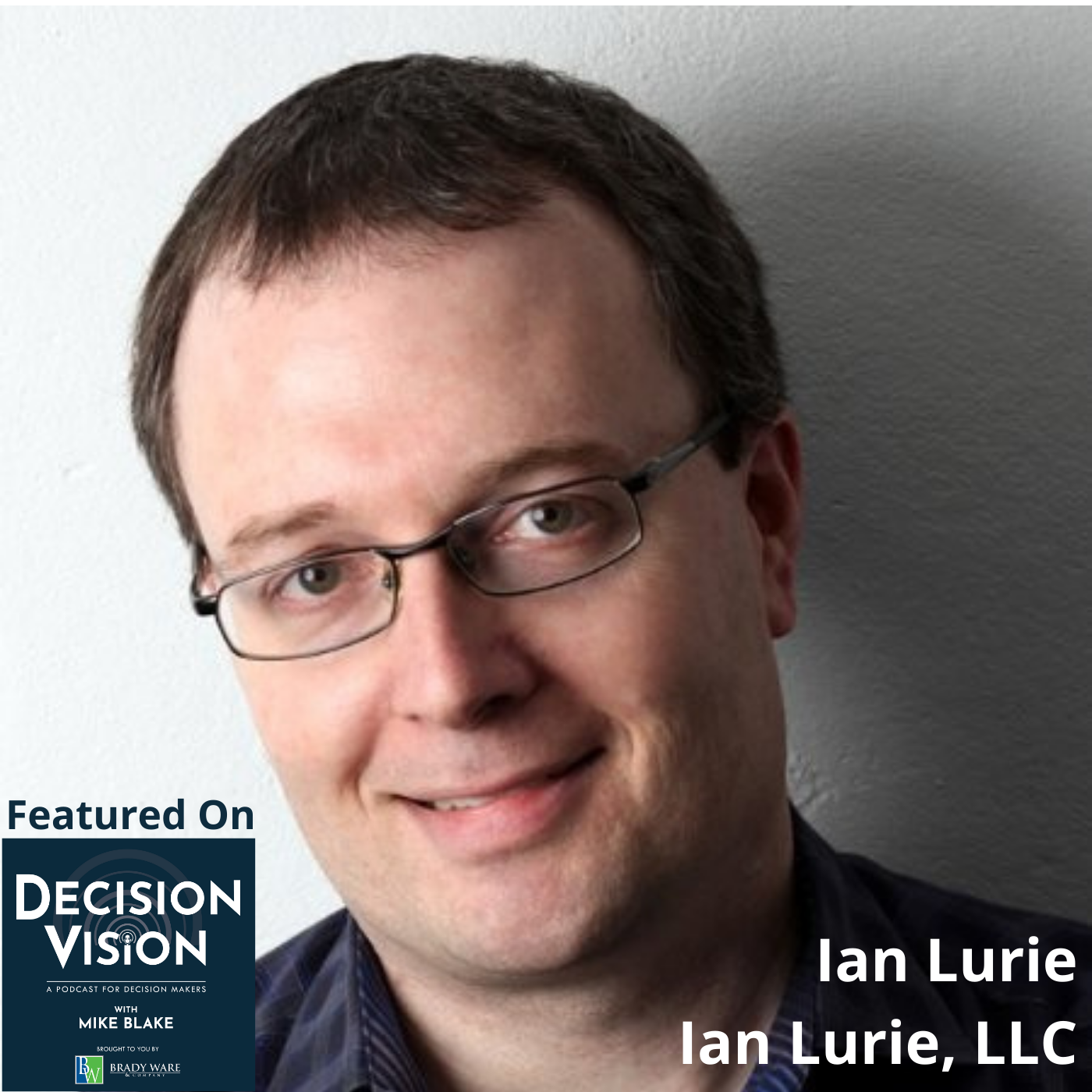
Ian Lurie
Decision Vision
Decision Vision Episode 112: Should I Market with Search Engine Optimization (SEO)? - An Interview with Ian Lurie, Ian Lurie, LLC
Loading
00:00 /
RSS Feed
Share
Link
Embed

Download file

Ian Lurie

Decision Vision Episode 112:  Should I Market with Search Engine Optimization (SEO)? – An Interview with Ian Lurie, Ian Lurie, LLC

Ian Lurie nerds out, as he terms it, on SEO, considering it both an art and a science. On this edition of “Decision Vision,” Ian and host Mike Blake discussed how SEO impacts a business’s visibility and success, mistakes businesses make with SEO, why good SEO is akin to building an asset, and much more. “Decision Vision” is presented by Brady Ware & Company.

Ian Lurie, CEO of Ian Lurie, LLC

Ian Lurie, LLC provides digital strategy, content, and SEO consulting to small businesses and Fortune 500 companies alike.

Ian Lurie is a digital marketing consultant, SEO, content guy, and overall digital marketing nerd. He has 40,000+ hours of experience in internet marketing. Ian uses both sides of his brain as a content creator, search engine optimization nerd, and data addict. He is a speaker and author as well.

Ian founded Portent, a digital marketing agency, in 1995, and sold it to Clearlink in 2017. He’s now on his own, consulting for brands he loves and speaking at conferences that provide Diet Coke. He’s also trying to become a professional Dungeons & Dragons player, but it hasn’t panned out.

He has a TikTok profile, but his kids are embarrassed by it, so we’ll leave that out.

Company website | LinkedIn

Mike Blake, Brady Ware & Company

Mike Blake, Host of the “Decision Vision” podcast series

Michael Blake is the host of the “Decision Vision” podcast series and a Director of Brady Ware & Company. Mike specializes in the valuation of intellectual property-driven firms, such as software firms, aerospace firms, and professional services firms, most frequently in the capacity as a transaction advisor, helping clients obtain great outcomes from complex transaction opportunities. He is also a specialist in the appraisal of intellectual properties as stand-alone assets, such as software, trade secrets, and patents.

Mike has been a full-time business appraiser for 13 years with public accounting firms, boutique business appraisal firms, and an owner of his own firm. Prior to that, he spent 8 years in venture capital and investment banking, including transactions in the U.S., Israel, Russia, Ukraine, and Belarus.

Brady Ware & Company

Brady Ware & Company is a regional full-service accounting and advisory firm which helps businesses and entrepreneurs make visions a reality. Brady Ware services clients nationally from its offices in Alpharetta, GA; Columbus and Dayton, OH; and Richmond, IN. The firm is growth-minded, committed to the regions in which they operate, and most importantly, they make significant investments in their people and service offerings to meet the changing financial needs of those they are privileged to serve. The firm is dedicated to providing results that make a difference for its clients.

Decision Vision Podcast Series

“Decision Vision” is a podcast covering topics and issues facing small business owners and connecting them with solutions from leading experts. This series is presented by Brady Ware & Company. If you are a decision-maker for a small business, we’d love to hear from you. Contact us at decisionvision@bradyware.com and make sure to listen to every Thursday to the “Decision Vision” podcast.

Past episodes of “Decision Vision” can be found at decisionvisionpodcast.com. “Decision Vision” is produced and broadcast by the North Fulton studio of Business RadioX®.

Connect with Brady Ware & Company:

Website | LinkedIn | Facebook | Twitter | Instagram

TRANSCRIPT

Intro: [00:00:01] Welcome to Decision Vision, a podcast series focusing on critical business decisions. Brought to you by Brady Ware & Company. Brady Ware is a regional full service accounting and advisory firm that helps businesses and entrepreneurs make visions a reality.

Mike Blake: [00:00:21] Welcome to Decision Vision, a podcast giving you, the listener, clear vision to make great decisions. In each episode, we discuss the process of decision making on a different topic from the business owners’ or executives’ perspective. We aren’t necessarily telling you what to do, but we can put you in a position to make an informed decision on your own and understand when you might need help along the way.

Mike Blake: [00:00:40] My name is Mike Blake, and I’m your host for today’s program. I’m a director at Brady Ware & Company, a full service accounting firm based in Dayton, Ohio, with offices in Dayton; Columbus, Ohio; Richmond, Indiana; and Alpharetta, Georgia. Brady Ware is sponsoring this podcast, which is being recorded in Atlanta per social distancing protocols. If you would like to engage with me on social media with my Chart of the Day and other content, I’m on LinkedIn as myself, and @unblakeable on Facebook, Twitter, Clubhouse, and Instagram. If you like this podcast, please subscribe on your favorite podcast aggregator, and please consider leaving a review of the podcast as well.

Mike Blake: [00:01:16] So, today’s topic is, Should I market with Search Engine Optimization or SEO? And before we dive into that, you may hear some pauses throughout this podcast. I came down with a touch of bronchitis yesterday. But I’m a lunch pail guy. I don’t have a lot of talent, but I play hard to make sure I stay on the team. So, I think that we’ll get through it. So, if you notice some gaps, that’s just me trying not to blow your eardrums out as I’m hacking something up. But on with the show.

Mike Blake: [00:01:47] So, I want to talk about SEO because I think SEO has sort of fallen to the background a little bit in terms of the common vernacular, and, certainly, it hasn’t gone away by any stretch of the imagination. But I think there’s a lot more chatter right now around marketing, through LinkedIn, and marketing through Facebook, and marketing through YouTube. And, of course, you know, the podcast we do does have marketing value to it. I’m not going to sit here and say that it doesn’t.

Mike Blake: [00:02:19] But, you know, before the advent of social media, really everything was about SEO. It’s all about where are you going to fall in terms and be presented in a search. And what we’re going to talk about today is that, you know, there are lots of sneaky search engines around there that, if anything, have made SEO more pervasive rather than less. But it may have changed.

Mike Blake: [00:02:44] And to be perfectly candid, I have not looked at SEO in a meaningful way, I think, in ten years. It just hasn’t been on my business radar screen personally. But I’m sure it’s on the business radar screens for you guys, at least some of you. And I may learn in this podcast that it needs to be on my radar screen. So, you know, it’s a topic that I think is sort of one of these unsung heroes and one of these topics that’s sort of in the background. And I want to give it the light of day that it deserves.

Mike Blake: [00:03:17] And joining us today is Ian Lurie, joining us from California, who is a digital marketer and with a 25 year intolerance of trendy concepts and nonsense – so a man that is near and dear to my heart. Someone told him to say no to bullshit – I can say that because this is the internet – so he’s trying really hard not to. Ian uses both sides of his brain as a content creator, search engine optimization nerd, and data addict. Ian founded Portent, a digital marketing agency in 1995, and sold it to Clearlink in 2017.

Mike Blake: [00:03:53] He’s now on his own consulting for brands he loves and speaking at conferences that provide Diet Coke. He’s also trying to become a professional Dungeons and Dragons player, but it hasn’t panned out. He has a TikTok profile, but his kids are embarrassed by it – so we’ll leave that out. Ian Lurie, welcome to the program.

Ian Lurie: [00:04:09] Thanks, Mike. If you start coughing, I never shut up so I can always fill in the gaps.

Mike Blake: [00:04:15] Well, good. You’re going to be my human cough bud, so that’s good.

Ian Lurie: [00:04:19] And the other thing is never call someone from Washington, never say that they’re from California. I’m actually based in Seattle, Washington, right now.

Mike Blake: [00:04:27] I beg your pardon.

Ian Lurie: [00:04:28] It’s okay. I just wanted to make clear that, you know –

Mike Blake: [00:04:31] No. I’m glad that you reminded me. I knew that. And you know what? I’m just going to blame it on the Sudafed and Mucinex that I’m on.

Ian Lurie: [00:04:41] Yes. Absolutely.

Mike Blake: [00:04:41] That sort of blanked out on me.

Ian Lurie: [00:04:42] The big difference is we don’t have a basketball team, so just kind of keep that in mind.

Mike Blake: [00:04:49] That is a shame, isn’t it? I’m old school enough that I remember back then they were called the Seattle SuperSonics because of only being in town. But I think you’re supposed to get a team in the next couple of years. If I’m not mistaken, you guys are going to get the next expansion team.

Ian Lurie: [00:05:05] Yeah. Yeah. We’re supposed to win a World Series, too.

Mike Blake: [00:05:07] So, before I get into this, I don’t understand why it hasn’t panned out to become a professional Dungeons and Dragons player. Just do what critical role does, become professional voice actor yourself, get five or six other professional voice actors, get your own studio, and produce a video cast of your game every week, and off you go.

Ian Lurie: [00:05:30] I shouldn’t say it hasn’t panned out. I should say it doesn’t make any money. I could be a professional Dungeons and Dragons player. I’m just not going to make any money doing it. That’s the difference.

Mike Blake: [00:05:44] Fair enough. So, Ian, thanks for coming on the program. You’re a good sport. I like to remind everybody what is exactly search engine optimization?

Ian Lurie: [00:05:56] So, SEO is about improving visibility anywhere anybody searches for anything online. And I suspect we’re going to talk more about this, but Google is the big one. The main thing is, an SEO works to ensure better visibility on any search engine.

Mike Blake: [00:06:19] And you’re right, we’re going to talk about this a little bit later so I don’t want to get ahead of myself. So, instead, what I want to do is I want to draw the line between SEO and something called search engine marketing. Is SEM still a thing? And if it is, what is the difference between the two? How are they related? How are they different?

Ian Lurie: [00:06:38] So, SEM is definitely still a thing. There used to be a big argument about whether SEO is part of SEM or not. But, now, as the accepted definition is that SEM is paid search advertising. You, actually, are paying by the click. It’s an auction of some kind where you say to Google, or Bing, or Amazon, or whoever, you’re going to pay X number of dollars every time someone clicks on your ad. And in exchange for that, you will be positioned in a certain place in those paid ads. There’s a lot of bits to it. There is an algorithm that helps.

Ian Lurie: [00:07:10] But with search engine optimization, you are not paying Google, nor can you pay Google to improve your rankings. There’s no way to influence those rankings by sending money to Google. You can send it to me. I’ll do my best. But Google will not accept money in exchange, nor will Bing, nor will Amazon, or anybody else.

Mike Blake: [00:07:34] And you say that in kind of an interesting way. So, they will not accept money, I mean, is it a matter of principle because they’re trying to keep their search engine optimization engines and the reputation clean and they just want to create that clear delineation? Or they just haven’t figured out how to monetize it that way yet?

Ian Lurie: [00:07:51] Well, paid search ads, search engine marketing, that is how they monetized it. Because the paid ads show up above and below the organic results, the unpaid results. That is why Google can now buy and sell the entire planet any time they want, is because businesses everywhere pay them by the click to occupy real estate that surrounds – what we call – the organic results. The results where you can’t pay. The results that you influence through SEO.

Ian Lurie: [00:08:21] Google won’t accept money for those, in part, because they want to maintain their credibility. And Bing is the same. They want to maintain their credibility as a search engine, in part, because the antitrust lawsuits would ramp up that much faster. And in part, because, I think they want to deliver good results. And results that are based on paying by the click can be good. And as I said, Google and Bing have algorithms that try to make sure that you place ads that will satisfy the user, but it’s not quite the same as a completely organic algorithmic search result. And, by the way, tell me if I’m nerding out too far, too fast here. Just say interesting or something and I’ll stop and I’ll rewind.

Mike Blake: [00:09:05] Well, I’ll tell you what, I’ll blink three times if that happens.

Ian Lurie: [00:09:09] Okay. All right.

Mike Blake: [00:09:09] But I think this is great because I do think that even if you’re not a tech, if you’re going to make an informed decision about this stuff, you need to have at least a remedial knowledge of how this works. Because, otherwise, you don’t really know what you’re spending money on. You don’t know if you’re spending it on the right team, on the right technology, on the right processes. And that’s no good.

Ian Lurie: [00:09:33] Another way to look at it is, if you do the right things for SEO, there’s a certain amount of a flywheel. This guy, Andy Crestodina, a colleague of mine who’s way smarter than me, talks about how SEO is a sailboat and SEM is a rowboat. So, to some extent, you still have to maintain the sails and everything. But to some extent, the wind keeps you going. You don’t have to keep pouring money into ads.

Ian Lurie: [00:10:00] SEM, you can accelerate whenever you want, you can turn whenever you want, but it requires constant energy to keep it going. So, each has an advantage. But that’s probably the biggest difference. You will always pay for SEO, but you will not pay for every single person who comes to your site. You will not pay more because you’re getting more traffic from organic search.

Mike Blake: [00:10:21] That’s really interesting. So, in the terms of a finance nerd like me might understand, SEO is more about building an asset, whereas, SEM is paying for a service.

Ian Lurie: [00:10:31] Yes. Yeah. That’s a very good way to put it. SEO, I always used to call it an annuity, which I probably just mangled it. But you’re putting money in, you’re investing in it, and you will steadily get a return. Whereas, SEM is much more you’re paying for something that you’re going to get right then and you must continue to pay for it if you want to continue to get it.

Mike Blake: [00:10:54] And of course – I shouldn’t say, of course – but it seems to me that the notion of ad retargeting on social media, that’s really just a cousin or on the family tree of SEM, correct?

Ian Lurie: [00:11:06] It’s another form of paid media. I mean, if we go back before the internet, there was earned media, which is the ability to get a cool story written about you in the newspaper or wherever. And then, there’s paid media, where you buy a T.V. ad or something like that. Paid social advertising is paid media. Getting someone to say something wonderful about you in social media is earned media. And it’s the same with search, organic search SEO is about earned media, paid search. SEM is about paid media.

Mike Blake: [00:11:35] So, the next question, which is an important question, but I think it’s hard even for somebody like you to answer, because I suspect the answer is so expansive. But what are the elements of SEO? What are the things that – I know I used to go into SEO. I don’t even know if those things are relevant anymore. But as of today, 2021, what are the elements that go into it to make it work?

Ian Lurie: [00:11:58] So, I can give you three elements that never change, and I can give you a few details about each one. So, search engines require visibility, relevance, and authority. Visibility is about ensuring that a search engine can find you and crawl your website. So, it’s just making sure that Google, Bing, whoever, can actually get through your content. If you’re on YouTube, it’s making sure that your content is rendered sufficiently well that YouTube can figure out what’s there. So, that’s visibility, it’s just making sure that computers can see “your content”.

Ian Lurie: [00:12:34] Relevance is making sure that search engines, whatever they are, can understand what you’re talking about and match you up with whatever the query is. So, visibility is making sure you’re available. Relevance makes sure that it makes sense. Authority is all about – and everyone talks about links – links are part of it, but depending on the search engine, it may also be sales per click. It may be shares and likes and plays, whatever. But authority is the measure of how important you are compared to other folks in your space.

Ian Lurie: [00:13:09] Visibility is all about technology. It’s making sure that your site – that’s where I would have to nerd out pretty deeply – but it’s about how your site is built and delivered. Relevance is about content, how you say it, how you structure your site. Authority is about how many people see and care about what you do and say. So, those are the three basics. The tactics involved, we could spend a week, so I’ll stop.

Mike Blake: [00:13:35] Okay. Maybe if we have time we’ll come back to that. But that segues nicely into the next question, which is, when we think of SEO, I think now most of us think of Google. Now, I’m of a certain age and I think you are, too, that we remember such names as Web Crawler, Lycos, AltaVista, Ask Jeeves. Google didn’t use to be a thing, right? But I think there’s a temptation to think that we only now have one, or maybe two search engines if you think Yahoo! is still relevant, I’m not sure it is. But, certainly, Google is out there. But my impression is that search engines have simply migrated into different platforms haven’t they?

Ian Lurie: [00:14:21] Yeah. I mean, Google still dominates the planet. But YouTube is the second biggest search engine on the planet. Amazon is probably number three. Bing is number four. And understand, Bing has five to ten percent of the market, but that’s five to ten percent of everything. Right? That’s a big five to ten percent.

Mike Blake: [00:14:40] I’m surprised it’s that high.

Ian Lurie: [00:14:42] This is just for me looking at client data. Some of my clients get only one percent or two percent of their traffic from Bing. Some get as much as 15 to 20 percent. But most of them are in the five percent range. Google, obviously, is still the biggest generator of traffic, and YouTube is owned by Google. If you sell a product, though, on Amazon, obviously, Amazon is the search engine that you care about. So, there’s more to it than Google. But, yeah, Google dominates the landscape.

Mike Blake: [00:15:12] Is there a search engine that you’re aware of on the Apple side of ecosystems?

Ian Lurie: [00:15:18] Apple is building a search engine. So, we’ll see. Hopefully, it goes better than Apple Maps when it launched.

Mike Blake: [00:15:25] It couldn’t go worse.

Ian Lurie: [00:15:26] Yeah, it couldn’t go worse. I am skeptical. And, again, we can do another podcast about this, but I’m skeptical about Apple’s ability to seize a large part of the market. I think that they can grab Apple users to some extent. But as much as I love to talk about it, we are a very small slice of the population.

Mike Blake: [00:15:46] Yeah, me too. I’m a Mac user and Apple mostly through our ecosystem too. But as you mentioned, I kind of wonder if they’re kind of too late to the party like they were with Homepod. Homepod could have been a player in the home automation market, but I think you’re too late. And I think they’re probably five years too late in the search engine area, unless they just come up with something that just blows you away somehow.

Ian Lurie: [00:16:16] I mean, again, this is going to sound terrible, but it can’t be Safari versus Chrome, right? They’ve got to do something better than that. So, we’ll see. I mean, Apple, in my opinion, is great at certain things. And we’ll see if they can match up with a company whose sole purpose in the universe is to build a great search engine. That’s going to be the biggest obstacle they’re going to face.

Mike Blake: [00:16:41] So, as I mentioned at the top of the program, I looked into SEO quite a bit a decade ago. I have not paid that much attention to it. You’ve been in it for pretty much your whole career in some form or fashion. How has SEO changed since the last time I looked at it, say, around 2010, to today in early 2021?

Ian Lurie: [00:17:05] So, there’s really two big changes, one nerdy and one not. The non-nerdy one is how much more complicated the search results have become. Google and Bing have a lot more search features in them now. So, if you do a search result, you’ll see like a box at the top. Sometimes it has the shortest answer to your question. Google or Bing may be pushing in some kind of scraped result or tool. So, like, if you try to do a speed test right now of your internet connection on Google, instead of just showing you speedtest.net, there’ll actually be a box that shows up that let’s you use Google to do the speed test. If you ask, “How do I cook pancakes?” You’ll actually get a recipe at the top of the page.

Mike Blake: [00:17:44] That’s true. Yeah, I hadn’t noticed that. That’s very subtle. But you’re right.

Ian Lurie: [00:17:49] And it’s a subtle way, again – hopefully, not many people from Google listen to this. I’m a fan of a lot of people at Google – that Google is attempting to become a publisher instead of a search engine and keep you on Google at all times. It’s basically the real estate dedicated to what used to be called the 10 blue links. The traditional search results has become smaller and smaller. All of those search features, like that answer box, those are still part of a search engine and you can optimize for those locations, but search has changed.

Ian Lurie: [00:18:24] Now, the nerdier side is, of course, Google and Bing have both gotten – but Google in particular – much better at understanding language. Google’s ability to understand a query, what you really mean when you search for something in the context of other searches you’ve made and other searches other people make, has grown by leaps and bounds. Their ability to figure out the true meaning of words on a page has also grown by leaps and bounds.

Mike Blake: [00:18:50] I agree. And, in fact, this show is very much a beneficiary of that. Because the reason that we retitle our shows as questions is because Google now allows and really encourage you just to simply type out a question. And that’s been a big hit. And I don’t want to steal a thunder away from our producer, it’s really John Ray who thought of it. But I think we kind of stumbled upon it. We didn’t really know that. But once we figured it out, we discovered that we were drawing a much larger audience from Google, from search engines just by that tweet.

Ian Lurie: [00:19:29] Mm-hmm. Well, you know, you remember Ask Jeeves, right?

Mike Blake: [00:19:33] I do.

Ian Lurie: [00:19:33] And their whole thing was you could just ask it a question. Well, guess what?

Mike Blake: [00:19:38] And in fact, I believe it was Google who bought Ask Jeeves, if I’m not mistaken.

Ian Lurie: [00:19:41] I think so. Yeah. I’m not sure.

Mike Blake: [00:19:43] At that time they’re ask.com, I think, or something like that.

Ian Lurie: [00:19:46] Yeah. That’s right. But the complexity of results, I think, is the most obvious change for the average person. Just how much more stuff there is that shows up on the page.

Mike Blake: [00:19:57] Yeah. And I guess getting into that, too, because it used to be that the search engines would pretty much just bring you to other web pages. Now, they’re bringing you podcasts. They’re bringing you video clips. They’re bringing you social media fragments. So, the universe of things to be searched and the format of the results is vastly expanded too. I think, suddenly, because of this conversation, I’m gaining in admiration for just how deep this technology has gotten in such a short period of time.

Ian Lurie: [00:20:31] Yeah. I have a genuine nerdy admiration for it. And as a marketer, I have a grudging admiration for it. And as a free speech advocate, I have a grudging respect for it.

Mike Blake: [00:20:47] So, my impression – and correct me if I’m wrong – and one of the reasons I kind of stepped away from SEO is that, it seems like an all or nothing game. That, you’re either at the top of a search engine results or you’re just nobody, nowhere to be found. Is that true? Was that ever true and I just didn’t get it? And if it’s not true, how can that kind of be nuanced? And I say that in this context, that, my impression of SEO is that, in many cases, it’s not just a pay to play, it’s a pay to win game. And if you don’t have a certain budget, why bother? Because if you’re a retail store and you’re in there with Walmart, you’re just not going to be able to match them dollar for dollar. So, that’s a long preamble to the question of, if you can’t match your competitors dollar for dollar for SEO, is it still worth doing?

Ian Lurie: [00:21:42] So, that’s a two part question. The first one, is it a zero sum game? And the answer is, if you look at one term, it’s a zero sum game. But smart SEO doesn’t focus on one term. It focuses at an enormous number of terms, some of which you don’t even optimize necessarily for most of the individual search phrases. That’s that visibility part. And that relevance part is, make sure that your site is visible so that Google and Bing can crawl it and find all the stuff. And then, work on relevance first to make sure that Google, Bing, YouTube, whoever, can figure out what you’re talking about in this stuff. And you will start to rank for things.

Ian Lurie: [00:22:25] Everyone can’t optimize for everything. Even Walmart can’t optimize for everything. So, if you do it right and you’re persistent, you will probably match up with them at some point because you will start to rank for terms that they simply miss.

Mike Blake: [00:22:40] Go ahead.

Ian Lurie: [00:22:40] The other real quick thing is, companies like Walmart are very good at certain kinds of SEO. But what they’re terrible at is changing and fixing things. And I have some wonderful clients that are very large, and I shouldn’t say they’re terrible at it. They are not structurally built to make rapid change. There are many things where they have to be much more deliberate.

Ian Lurie: [00:23:06] So, if you are a smaller organization, a small business, one advantage you have is that you can make changes and adjust much more quickly. If you want to become more relevant for a particular concept, you could theoretically put together stuff and publish it much more quickly. You could do a set of videos much more quickly because you don’t have to go through legal, and a marketing team, and a branding team. If you have a visibility issue on your site and you need to change something in WordPress or change something in the way your videos are done, you don’t have to go through a whole IT team. At most, you’ve got to go on Upwork and hire a developer to fix it for you. It’s a much quicker process.

Mike Blake: [00:23:47] Okay. So, that’s really interesting, and I think it gives hope to our listeners. I don’t think any of them are working for Walmart at a high level. And it leans actually nicely into the next question, which is, how much of this is art and how much of this is science? If I’ll just direct this to you, Ian Lurie, do you distinguish yourself as somebody who sort of understands SEO from a different angle, a different perspective, maybe from other SEO experts. And, therefore, there’s a potential for creative differentiation that you can find those search terms that others might be missing, or those other tags, or other SEO elements that others are missing, and, therefore, creates sort of an outsized performance for the client.

Ian Lurie: [00:24:41] So, I flatter myself by thinking that I have a foot in both the left and right brain sides of this. So, I do work on the technical stuff quite a bit on visibility, and that’s much more science. And I work on the relevance and authority side, which is much more art. There is science involved with relevance and understanding how machines process language. But, ultimately, Google and Bing do not give us a manual regarding their algorithms.

Ian Lurie: [00:25:15] So, no matter how much science you apply, at some point, you are making highly educated guesses and doing a lot of research and thinking about what your audience is going to best respond to as one way to generate a positive outcome in SEO. So, it’s a little bit of both. I’m not going to try and suggest that I’m even among the best at SEO. There are a lot of amazing SEOs out there. But that is what a lot of folks bring to SEO. It’s why I love it. Because I come from a creative background and both my parents are scientists or a liberal arts background and both my parents are scientists. Being able to put those two things together is a professional paradise for me.

Mike Blake: [00:26:03] Yeah. So, my impression and you’re starting to dispel it, but I want to drill a little bit deeper because I think this is really interesting and relevant. We had a guest on a few weeks ago, his name is Adam Houlahan, and he’s one of the top experts on LinkedIn. And he actually has a bank of people under his employ whose sole job is to understand the nature of LinkedIn algorithms so that he can then help his clients monetize their own LinkedIn presences better. Do people do something like that with search engines as well to try to understand it or glean their algorithms better or somehow reverse engineer it? And if so, is that even a useful thing?

Ian Lurie: [00:26:56] I don’t want to start a nerd fight, but when I ran my agency, I had teams of people who also did their best to understand the Google algorithm. But you can no more confirm and scientifically prove how the LinkedIn algorithm works than you can the Google algorithm. I just got to put that out there.

Mike Blake: [00:27:15] I think in fairness, you can say that he could prove it. I think just simply said that they were able to run tests that led data to ease you in a certain direction.

Ian Lurie: [00:27:25] Yeah. And you can do the same thing with Google to some extent. And it pays to chase the algorithm a little bit. But there are those three basic rules of visibility, relevance, and authority. And you don’t need to understand the algorithm to understand those. Now, knowing the algorithm can help you avoid some kind of tricks that people recommend, the tactics that don’t really work but make people think they work. And knowing the algorithm can also help you figure out that there are certain things that are more important on a page than others. You know, a good title tag, writing really well as opposed to repeating the same keyword 52 times on the page. That’s where understanding the algorithm can really, really help.

Mike Blake: [00:28:19] Now, there was a time when entrepreneurs and small businesses could effectively put into place some kind of useful SEO. And maybe I’m talking about 20 years ago or 15 years ago. Has SEO simply grown up so much that maybe that’s no longer feasible? Or are there scenarios where somebody could plausibly apply some DIY, maybe with a little bit of effort and learning, to raise the SEO effectiveness of their own web presence?

Ian Lurie: [00:28:56] I think you absolutely can. I worked with a lot of really, really small clients. A lot of it is relative, like, maybe you’re not going to compete with Walmart, but maybe you can triple your organic search traffic. SEO is DIY. No matter how big your organization is, eventually you have to look to visibility, relevance, and authority. And someone’s going to have to make those changes.

Ian Lurie: [00:29:23] So, again, you’ve got some advantages as an individual or a really small business as much as you don’t have an IT team. That also means you don’t have to worry about IT resource constraints. You know, somewhere along the way, you can find someone to help you work on that site. Creating content, you have less time, maybe you don’t have a team to do it. On the other hand, it’s going to come directly from the person who knows most about it. So, you’re probably going to create the best content on a particular topic. So, you absolutely can DIY it. And, in fact, it’s easier to compete in the SEO world than in the SEM world.

Mike Blake: [00:29:56] And I think that’s right. Before I joined Brady Ware, I guess, about three-and-a-half years ago now, I had my own company, Arpeggio Advisors. Now, I was pretty active in terms of creating content for that website. And I’m in a niche business valuation and so forth, so, fortunately, I didn’t have that many competitors online. But even with the modest amount of content that I create, I might have had like 30 pieces up there or something. I think even at least two years after I stopped using the website entirely, it’s still ranked in the top five for business valuation firms in Atlanta.

Ian Lurie: [00:30:36] Again, it’s an annuity, right? You don’t have to buy inventory. You’re not paying constantly for advertising. Stuff you write now will probably pay off later. Videos you record now will pay off later. So, yeah. No, that totally makes sense to me.

Mike Blake: [00:30:53] I’m going off script a little bit here, and I’m also sort of cornering you in a little bit of free advice while I’m doing a podcast interview, but I think others will benefit too. Is there a kind of a minimum amount of content you have to shoot for before you start getting some leverage behind your SEO?

Ian Lurie: [00:31:14] No. Usually, the biggest obstacle I find for clients is visibility, not relevance. And any content is better. Steady growth is very important. And stuff that’s truly useful for your audience. So, if you sell running shoes, writing 52 articles about the history of the running shoe is probably not as important as two really good articles on selecting and sizing the best running shoe. So, I would always look to that.

Ian Lurie: [00:31:50] Assuming you could produce great content, more is always better. But none of us have infinite resources. So, I was just going to say, you also have to remember that everything you have on your site is content, product description, service descriptions, descriptions of what you do, case studies. Everything is content, so optimize what you got first.

Mike Blake: [00:32:12] So, this brings up – and you touched on it earlier, but I think it’s such an important point, I want to underscore it – that SEO is a commitment, right? One of the things I’m curious about whenever I have these conversations is, who shouldn’t do it SEO? And it sounds like somebody who shouldn’t do SEO is somebody who isn’t willing to kind of make the commitment into the flywheel to initiate the flywheel, sort of apply at least some minimum momentum to keep it going. If you really just want a one-off step, then just go over to the SEM side.

Ian Lurie: [00:32:47] I mean, probably you already can tell I have opinions. Don’t invest in SEO if you don’t want to grow your business. And that sounds like really cheesy marketing speak, and I’m not coming at it from that direction. Again, investing in SEO starts with visibility. If you’re not willing to make the investment in a website that a search engine can easily crawl and index, then I would say you’re probably at a point where you’re not really investing in your online business. And I’m not saying that that is a choice. And I’m not saying that’s wrong. It’s all about context. But if you’re investing in a quality website and you’re spending time on quality content, including product descriptions, then you’re already investing in SEO. So, you should definitely do it.

Mike Blake: [00:33:41] So, we’ve probably covered this indirectly, but I want to make it explicit. What is the most common mistakes you see being made with SEO?

Ian Lurie: [00:33:55] Websites that are invisible in some way, especially folks who hire developers who say that they know SEO and then build a site that is completely invisible to search engines. Quantity over quality is the most common SEO issue. I see hiring someone for $5 a blog post to write 200 blog posts, Google has actually specifically put together algorithms that hammer sites like that now.

Mike Blake: [00:34:23] Oh, really?

Ian Lurie: [00:34:24] Oh, yeah. Oh, yeah. So, quantity over quality is a mistake. Attempting to manipulate lengths and gain links in manipulative ways is another common mistake. But the biggest one is that initial investment, it’s how you build your site. And this is, unfortunately, the hardest part for a business owner to understand and grasp because it requires technical expertise. And it’s not fair that a business owner should have to understand that. But there is a little bit of caution when you’re building the site. And I’m not talking about a beautiful design, which is great. I’m talking about just basic functional, useful website infrastructure.

Mike Blake: [00:35:10] I mean, does that go into the architecture of the site too? Is that SEO managing, for example, site bounces which can include just people being frustrated with a poorly functioning site and they throw their hands up and go someplace else.

Ian Lurie: [00:35:23] Yeah. I mean, bounce rate is a hard one because sometimes a high bounce rate means people are getting exactly what they want. The Portent blog, my old agency, had an 88 percent bounce rate. But that was because people found the article, got what they wanted, and left. But bounce rate is an important one of site performance. Ignoring the SEO side, just paying attention to one of the indications of quality of your site. If it takes five seconds or ten seconds for a page to load, that’s a problem. Does your site work on mobile? Does it offer really good experience on mobile? Is all the same content visible on mobile? Those are all important things as well.

Mike Blake: [00:36:05] I’m glad you mentioned those two things because I wanted to get into that just a little bit. So, you do think that mobile is important? Sort of what I’ll call mobile desktop parity is important.

Ian Lurie: [00:36:17] It is no longer a parity. Google has said that they are shifting to a mobile only index. Meaning that if content is not visible on mobile, they will not index it. We’re not accessible on mobile, they will not index it.

Mike Blake: [00:36:30] Wow. Okay.

Ian Lurie: [00:36:31] Yeah. They talked about mobile first for a long time, but there was a minor nerd riot on Twitter because it became clear that Google is actually moving to mobile only.

Mike Blake: [00:36:44] That is interesting. So, I mean that’s a big learning point for our audience, is that, you know, ignore mobile at your peril because it can effectively invalidate all your other SEO.

Ian Lurie: [00:36:59] I mean, anyone building you a reasonably good website should be building a site that offers a really good mobile experience. If it does not, then – I’m sorry this is another opinion of mine – but you should not be paying them to build your website.

Mike Blake: [00:37:15] I mean, do the the Squarespace’s and the Wix’s of the world, are those templates reasonably mobile friendly?

Ian Lurie: [00:37:23] Some of them are very mobile friendly. You need to test the templates. But, you know, it is all about the template. And, yes, some of them are great.

Mike Blake: [00:37:34] Okay. So, how long does it take to kind of see results from improved SEO performance? Is it a right of way? Do you have to kind of wait a few weeks, a few months?

Ian Lurie: [00:37:50] In the SEO industry, the going joke is the phrase, it depends. Because almost any question you ask can be answered that way. And it does depend. If your site has a technical problem, a visibility problem, it is possible that when you fix it, you will see results very quickly because Googlebot and Bingbot will suddenly be able to crawl your content. On YouTube, if there’s something that was just preventing your content from appearing, obviously, you fix it and you see results right away. If you have a different issue, if there’s a relevance challenge, something like that, it could take quite a bit longer. And there’s this subtle, messy in-between space where you’re probably looking at, you know, anywhere from weeks to months to move up. So, if you think about the sailboat analogy, it takes some time to get going.

Mike Blake: [00:38:41] Yeah. Okay. Now, in terms of web functionality, I think there are websites out there that you can basically put in your domain and they’ll issue a report that talks to you about your web functionality, accessibility, broken links, et cetera. Are those useful kind of self-help diagnostics or do you really kind of need to bring somebody in who’s an expert to test your website for you to figure that out?

Ian Lurie: [00:39:06] It depends on the tool. Most of the free diagnostics are not terrific. There are companies out there like Moz and folks like that that offer decent diagnostics. But all that stuff has to be taken in context. Those tools will give you objective measurement of things that you’re doing. And they don’t necessarily understand your industry. They don’t understand your own resource challenges. They don’t understand the history behind the building of your site.

Ian Lurie: [00:39:32] And just so you know, you can send me questions and I will not charge just to answer basic questions. I would recommend talking to someone who knows something about this stuff. And always keep in mind visibility, relevance, authority. Keep it that simple in your mind. If you’re looking at your site and you see an issue that is affecting visibility, if you think it’s very difficult to figure out what a page is about, those are problems and you need to think about them. If it’s very hard to find a piece of content on your site, that’s a problem you need to think about it. So, there’s a lot you can do. Use those tools, but be very careful when you look at their feedback.

Ian Lurie: [00:40:12] Also, the stronger the sales pitch after you run the tool, the more suspicious you should be. And if the tool requires that you register before you get the report, don’t use it. Sorry. I have a lot of friends who will get mad at me, but just don’t. Just because I’ve built those myself, and I’m telling you right now, I’m only giving you one tenth of the story.

Mike Blake: [00:40:32] Well, I mean, clearly, they’re simply lead generation funnels or something else. We’re talking with the Ian Lurie of Ian Lurie LLC. And the topic is, Should I market with Search Engine Optimization or SEO? We’ve touched on this a little bit, but I want to make this clear. And that is, my impression is that at the end of the day, if it’s my website, I still don’t really own that real estate. Google does for all intents and purposes. And, therefore, I shouldn’t necessarily expect to have 100 percent control over my SEO outcomes. It doesn’t entirely depend on what I do, is it or does it? Is there, in fact, a perfect algorithm, perfect conversation, perfect combination, perfect best practices? Or if I do everything right, that I’m just almost guaranteed success?

Ian Lurie: [00:41:30] Patience definitely makes a big difference. You know, consistent application of good tactics makes a difference. But in the end, algorithms change, Google changes. I’m always telling clients – because I don’t just do SEO – to diversify channels as much as they can, diversify search engines as much as you can, and understand applying the right tactics and strategies will help you. And it will get you consistent and consistently improving results.

Ian Lurie: [00:42:05] But in the end, it is Google’s world and we live in it. And to some extent it’s true with Bing as well. There are things you can do to perform better within those algorithms. But we will never have complete control over it.

Mike Blake: [00:42:21] Again, the boat analogy, I think, seems to apply because I can control what I do on the boat, but I can’t control the current and I can’t control the wind.

Ian Lurie: [00:42:30] Yeah. You can take best advantage and you can position yourself to take best advantage of the wind, and the currents, and the weather. And even in a rowboat, you’re still somewhat subject to them, but you can do your best to be ready and to capitalize.

Mike Blake: [00:42:48] So, let’s say that somebody in our audience – I hope somebody in our audience – is now thinking they want to up their SEO game and they feel like they need help from somebody like you to help them do that. How do you find somebody that’s really good? I guess the question is, are there any credentials, any special training, or degrees that people normally get to demonstrate their command of the SEO world? Is there anything like that? And if so, which are the ones that clients ought to be looking for?

Ian Lurie: [00:43:26] I’m a history major. I was a history major, so there’s definitely no degrees. I actually think a lot of it is about ability to explain what you’re going to do and why it matters. There is no credentialing. There is no good credential out there. There is no good certificate out there, partly because it evolves so quickly, partly because we don’t know the algorithm, and partly because I just haven’t seen a good credentialing system. And it’s been tried in our industry many, many times.

Ian Lurie: [00:43:55] But find someone who can explain what they’re going to do and why it matters. Truly explain it, like it makes sense to you. Not saying, “You need more links because”. But explain why. You know, “I would like you to make this change to WordPress because” and make it make sense. If they can’t do that, I would be concerned. And then, look at whether you’re comfortable with that person. Because you’re hiring a consultant or a consulting agency like you hire any other consultant or consulting agency. You need to be able to work with them and you need to want to work with them.

Ian Lurie: [00:44:33] Unfortunately, that’s the best I can do. The two danger signs are, if someone tells you that they know someone who used to work at Google or they have some kind of inside track, there is no such thing. And the other one – you may want to edit this one out – if they are making a big deal out of the fact that they have a credential from somewhere, that makes me a little bit nervous. And maybe they’re legit, but it makes me a little nervous because it’s impossible to be credentialed for something when there are a couple of hundred algorithm updates every single year.

Mike Blake: [00:45:15] Well, first, whenever somebody says you may want to edit this out, that guarantees we’re not going to edit it out.

Ian Lurie: [00:45:21] Well, that’s why I didn’t say it before.

Mike Blake: [00:45:23] It’s too juicy. It’s too juicy. But, I mean, look, it’s not unfair. In my industry, we do have professional credentials. And while I do think they have some meaning, I tell people that if there are people have a bunch of letters after their name that I would not trust to do a valuation of a lemonade stand. And there are people who are completely uncredentialed that are very competent business appraisers that can do a great job for you. And credentials are fine, but at the end of the day, all the credential really says is that, “I passed a series of exams and I paid to take those courses. I’m current on the annual fee. And I haven’t done something so egregious as a professional that they’re taking it away from me.”

Ian Lurie: [00:46:11] They threw me out.

Mike Blake: [00:46:12] That’s it.

Ian Lurie: [00:46:14] Yeah. A big difference with SEO and a lot of marketing is, there has never been an accepted curriculum that will make you good at SEO or really good at marketing. And that makes it even more difficult. And by the way, I have a law degree, too. I never practiced. But there is a certain set of things you must learn to be minimally qualified to be an attorney. And those things, to some extent, can be quantified because you took the bar and you passed it.

Ian Lurie: [00:46:42] With SEO, it is far more difficult. Even as a technical SEO, it’s difficult. You can look at what I know about websites and computers and how websites work. And assuming you can actually understand any of what I talk about – and I’m not saying that you don’t understand it because you’re dumb. I’m saying you don’t understand it because you actually have a life. Even assuming you could understand it all, that doesn’t mean that I’m establishing my qualifications as a consultant. So, it is very similar in a lot of ways. And in some ways, it’s even more difficult because there is no primary credentialing body for SEO and there may not be for decades.

Mike Blake: [00:47:22] I want to go back and underscore the I know a guy at Google kind of thing. You know, I would imagine the reason that cannot possibly be true is because Google will fire and then sue anybody that is disseminating information about their algorithm, because that’s a trade secret. And that person will be blackballed from their job, from that industry, and they’ll be paying Google for the rest of their lives.

Ian Lurie: [00:47:48] Yeah. I mean, there’s that. There’s also, I’m pretty sure Google plants some kind of explosive in people’s brains when they leave. People at Google don’t become SEOs. People who truly understand the ins and outs of the algorithm don’t become SEOs. Try to prove me wrong. I dare you. You will not.

Ian Lurie: [00:48:14] I can hire someone who worked at Google, but they’re not search engineers, because they’re the ones who signed the non-competes and the nondisclosures and the non-everything else. So, it’s very unlikely I’m going to find someone from Google who’s going to truly give me an advantage as an SEO.

Mike Blake: [00:48:33] Well, even if you did, how long before their knowledge becomes obsolete? Six months maybe?

Ian Lurie: [00:48:39] There’s that too. Yeah, there’s that too. You know, things evolve awfully quickly, and it might be a couple of years, but at some point their knowledge will become obsolete.

Mike Blake: [00:48:50] You want to become a professional Dungeons and Dragons player, well, what [00:48:55] edition? [00:48:56] If you’re a first edition player, your knowledge is not going to be that useful in fifth edition.

Ian Lurie: [00:49:03] Well, and then, of course, now that there’s the internet, there’s new rules and things for Dungeons and Dragons coming out on a daily basis. So, even somebody who works at Wizards of the Coast, the company that makes it, they cannot give you all the secrets of Dungeons and Dragons.

Mike Blake: [00:49:16] No. That’s right. Ian, this has been a terrific conversation. And I learned stuff and I’m very confident the audience has learned some very valuable things. If people want to contact you for more information, either to ask a question we didn’t cover or go into more depth than something that we did, how can people best contact you?

Ian Lurie: [00:49:36] So, you can reach me, just email me directly. It’s ian, I-A-N, @ianlurie.com. Or just send me a tweet just @ianlurie. Either one of those works. My last name by the way is L-U-R-I-E, I can barely spell it.

Mike Blake: [00:49:52] Very good. Well that’s going to wrap it up for today’s program. I’d like to thank Ian Lurie so much for joining us and sharing his expertise with us.

Mike Blake: [00:50:01] We’ll be exploring a new topic each week, so please tune in so that when you’re faced with your next business decision, you have clear vision when making it. If you enjoy these podcasts, please consider leaving a review with your favorite podcast aggregator. It helps people find us that we can help them. If you like to engage with me on social media with my Chart of the Day and other content, I am myself on LinkedIn, and @unblakeable on Facebook, Twitter, Clubhouse, and Instagram. Once again, this is Mike Blake. Our sponsor is Brady Ware & Company. And this has been the Decision Vision podcast.


Tagged With: Brady Ware, Brady Ware & Company, digital marketing, digital strategy, Ian Lurie, Michael Blake, Mike Blake, search engine marketing, search engine optimization, SEM, SEO, SEO consulting, seo optimization

Why You Don’t Need a Social Media Strategy, with Jennifer Koon, Michael Mackenzie Communications

November 3, 2020 by John Ray

Michael Mackenzie Communications
North Fulton Business Radio
Why You Don't Need a Social Media Strategy, with Jennifer Koon, Michael Mackenzie Communications
Loading
00:00 /
RSS Feed
Share
Link
Embed

Download file

Why You Don’t Need a Social Media Strategy, with Jennifer Koon, Michael Mackenzie Communications (North Fulton Business Radio, Episode 302)

Yes, you read that show title correctly. Jennifer Koon, Michael Mackenzie Communications, joins host John Ray to discuss the marketing and public relations strategies professional services providers should weigh and employ. “North Fulton Business Radio” is produced virtually from the North Fulton studio of Business RadioX® in Alpharetta.

Jennifer Koon, Founder and Principal, Michael Mackenzie Communications

As the founder and Principal Consultant of Michael Mackenzie Communications, Jennifer Koon is the chief strategist, business development officer, contributing copywriter and head bottle washer.

Prior to forming Michael Mackenzie Communications in 2001, Jennifer served as a PR and Field Marketing Manager for Microsoft Corporation, a role she landed because they liked the Direct Mail and Database Marketing experience she had gained working for smaller software companies and in an agency environment. In addition to developing direct marketing and sales support programs, Jennifer has produced and promoted hundreds of seminars, product launch events and trade shows as well as managed public relations and community affairs initiatives. Jennifer has an extensive copywriting repertoire – writing on average more than 50,000 words each year for clients representing a broad range of high tech and technically complex services and products.

All total, Jennifer possesses more than 25 years experience developing and deploying strategic marketing communications programs that drive image, enthusiasm and revenue. She has a bachelor’s degree in Creative Advertising from Southern Methodist University and a master’s in Marketing Communication and Information Technology from Florida State University.

She is a member of the American Marketing Association, the Public Relations Society of America, the Technology Association of Georgia and has served on the host committee for the High Tech Ministries Prayer Breakfast for 5+ years. She is also a member of the Greater North Fulton Chamber of Commerce, the Leadership North Fulton Class of 2011, a graduate of the City of Roswell Education Program (CORE 2019) and was the elected parent representative for the Local School Governance Councils for both Elkins Pointe Middle School and Roswell High School. Jennifer and her husband live in Roswell, Georgia. She has two sons who attend the University of Mississippi. She is an active member of Roswell United Methodist Church and she counts among her hobbies reading, swimming, photography, retail therapy and watching minor league baseball and college football.

Company Website

LinkedIn

Questions/Topics Discussed in this Show

  • Why you don’t need a social media strategy
  • Why business owners needs someone to think about marketing all of the time
  • How sales and marketing has changed in a pandemic environment
  • How SMBs can cost effectively participate in PR
  • Why Content Marketing might be your most important SEO strategy
  • How to improve the most important part of every email message

North Fulton Business Radio” is hosted by John Ray and produced virtually from the North Fulton studio of Business RadioX® in Alpharetta. You can find the full archive of shows by following this link. The show can be found on all the major podcast apps by searching “North Fulton Business Radio.”

Renasant Bank has humble roots, starting in 1904 as a $100,000 bank in a Lee County, Mississippi, bakery. Since then, Renasant has grown to become one of the Southeast’s strongest financial institutions with over $13 billion in assets and more than 190 banking, lending, wealth management and financial services offices in Mississippi, Alabama, Tennessee, Georgia and Florida. All of Renasant’s success stems from each of their banker’s commitment to investing in their communities as a way of better understanding the people they serve. At Renasant Bank, they understand you because they work and live alongside you every day.

Tagged With: content marketing, email marketing, Jennifer Koon, marketing, Michael Mackenzie Communications, professional services, Public Relations, SEO, Social Media

Branden Lisi, Object 9

September 8, 2020 by John Ray

Branden Lisi Object 9
North Fulton Business Radio
Branden Lisi, Object 9
Loading
00:00 /
RSS Feed
Share
Link
Embed

Download file

Branden Lisi, Object 9 (North Fulton Business Radio, Episode 280)

Branden Lisi, Object 9, joins host John Ray to discuss how digital marketing channels work in a pandemic for generating leads and revenue, success stories, and more. “North Fulton Business Radio” is produced virtually by the North Fulton studio of Business RadioX® in Alpharetta.

Branden Lisi, Partner and Brand Strategist, Object 9

Object 9 develops marketing programs that build awareness and growth through sales, public relations and advertising activities. Our brand strategists use research and experience to uncover new and unexpected customer insights. These insights, in turn, drive “campaigns” and “promotions” that are executed in traditional and digital channels by our creative team.

Company Website

LinkedIn

Questions/Topics Discussed in this Show

  • Competing for business on the internet
  • Tradeshows and other traditional channels through which salespeople generate relationships are closed right now. Their clients are growing because they have a plan.
  • Generating leads for all types of B2B; manufacturing, franchise development, professional services all need digital
  • Paid digital gets you to the front of the mind; versus SEO and content marketing which are a long, slower game.
  • Martech stack 5 layers:
    1. inbound;
    2. website, 
    3. CRM/marketing automation;
    4. Email
    5. Analytics
  • Understand your customers channels; where are they reading, listening and watching right now. Don’t assume; research, then plan accordingly.

North Fulton Business Radio” is hosted by John Ray and produced virtually from the North Fulton studio of Business RadioX® in Alpharetta. You can find the full archive of shows by following this link. The show is available on all the major podcast apps, including Apple Podcasts, Spotify, Google, iHeart Radio, Stitcher, TuneIn, and others.

Renasant Bank has humble roots, starting in 1904 as a $100,000 bank in a Lee County, Mississippi, bakery. Since then, Renasant has grown to become one of the Southeast’s strongest financial institutions with over $13 billion in assets and more than 190 banking, lending, wealth management and financial services offices in Mississippi, Alabama, Tennessee, Georgia and Florida. All of Renasant’s success stems from each of their banker’s commitment to investing in their communities as a way of better understanding the people they serve. At Renasant Bank, they understand you because they work and live alongside you every day.
Tagged With: analytics, branden lisi, content marketing, crm, digital marketing, digital marketing agency, email marketing, franchise development, inbound, John Ray, Marketing Automation, North Fulton Business Radio, Object 9, paid digital, professional services, SEO, website

Dean Robertson, Integrated Insurance Solutions, and Josh Bernstein, Josh Bernstein Media

December 18, 2019 by John Ray

Dean Robertson, Integrated Insurance Solutions
North Fulton Business Radio
Dean Robertson, Integrated Insurance Solutions, and Josh Bernstein, Josh Bernstein Media
Loading
00:00 /
RSS Feed
Share
Link
Embed

Download file

Dean Robertson, Integrated Insurance Solutions
John Ray, Dean Robertson, Josh Bernstein

North Fulton Business Radio, Episode 185: Dean Robertson, Integrated Insurance Solutions, and Josh Bernstein, Josh Bernstein Media

Unrecognized insurance needs for businesses and smart Google advertising were the topics featured on this edition of “North Fulton Business Radio” as Dean Robertson, Integrated Insurance Solutions, and Josh Bernstein, Josh Bernstein Media, joined the show. “North Fulton Business Radio” is hosted by John Ray and is broadcast from the North Fulton Business RadioX® studio inside Renasant Bank in Alpharetta.

Dean Robertson, Integrated Insurance Solutions

Dean Robertson, Integrated Insurance Solutions
Dean Robertson

Dean Robertson is President and CEO of Integrated Insurance Solutions, an independent insurance agency located in Johns Creek GA. He started the business in 2001 after an 11 year career as a PGA Professional. Integrated Insurance Solutions offers commercial insurance, providing a wide-range of protection for businesses and their subsidiaries under a single policy. Personal insurance products are offered as well, with protection for homes, automobiles and personal possessions, along with personal liability coverages. Integrated Insurance Solutions’ goal is to establish successful partnerships by understanding the needs and concerns of each client.

Dean still enjoys golf, tennis and the outdoors, his favorite times were coaching one of his three children’s sports over the years. Dean is an active Rotarian and a Paul Harris Fellow.

To learn more, go to the Integrated Insurance Solutions website, Email Dean directly, or call 770-667-3636.

Josh Bernstein, Josh Bernstein Media

Josh Bernstein

Josh Bernstein owns Josh Bernstein Media and is regarded as a leading independent Google Ads expert in Metro Atlanta. He receives annual certification as a Google Qualified Professional and is also a Google Partner. Josh has promoted an impressive list of brands including JCPenney, Bridgestone Golf, SCANA, Chick-fil-a, The Battery Atlanta/Atlanta Braves, Mitsubushi, Hooters and many others. He also specializes in Google display ads, YouTube video ads and social media advertising.

Josh has over 12 years experience primarily in the paid search space, and over 16 years in marketing, public relations and advertising.

To learn more, go to the Josh Bernstein Media website or email Josh directly.


North Fulton Business Radio” is broadcast from the North Fulton studio of Business RadioX®, located inside Renasant Bank in Alpharetta. Renasant Bank has humble roots, starting in 1904 as a $100,000 bank in a Lee County, Mississippi, bakery. Since then, Renasant has grown to become one of the Southeast’s strongest financial institutions with approximately $12.9 billion in assets and more than 190 banking, lending, wealth management and financial services offices in Mississippi, Alabama, Tennessee, Georgia and Florida. All of Renasant’s success stems from each of their banker’s commitment to investing in their communities as a way of better understanding the people they serve. At Renasant Bank, they understand you because they work and live alongside you every day.

Tagged With: Dean Robertson, Google ad account, Google ad professional, google ads expert, google ads platform, google advertising account, google certification, Google search results, Integrated Insurance Solutions, key word bid, key words, North Fulton Business Radio, North Fulton Studio, paid per click adverstising, personal insurance, search engine optimization, SEO, website results

Episode 71: Damon Burton’s Scaling with Quality Control Process

November 18, 2019 by Mike

Business Infrastructure
Episode 71: Damon Burton’s Scaling with Quality Control Process
Loading
00:00 /
RSS Feed
Share
Link
Embed

Download file

Good things come to those who wait…and persistently work toward their goal. Damon Burton knows this all too well. As the founder of SEO National, he made a conscious decision to scale and increase his company’s capacity to work with large clients. It worked! SEO National is now an Inc. 5000 company whose client list includes various NBA teams and the hit TV show Shark Tank. In this episode, Damon shares the realistic time commitment as well as the daily operational processes, people, and a robust list of tools he leverages to make it all possible.

Special Guest: Damon Burton, Founder & CEO – SEO National

Location:  Salt Lake City, UT  USA

Show Notes:

  • DamonBurton.com: Learn more about Damon on his personal website.
  • Ways2Rank.com/Facebook: Damon’s FREE facebook group to learn about all things SEO.
  • Trello: a web-based app to organize and prioritize work and projects with remote teams.
  • Acuity: online calendar and scheduling tool that syncs with multiple apps like MailChimp and QuickBooks.
  • 8×8: a cloud-based voice over internet protocol (VoIP) solution that offers voice/phone, video, chat, and contact center solutions for teams.
  • Insightly: a customer relationship management (CRM) tool.
  • Things: a personal task management app for macOS, iPadOS, iOS, and watchOS.
  • Screencast-o-matic: a web-based screencasting and video recording software.
  • E-Myth Revisited: Why Most Small Businesses Don’t Work and What to do About It: book by Michael Gerber.
  • 4-Hour Workweek: Escape the 9-5, Live Anywhere, and Join the New Rich: book by Tim Ferriss.

Tagged With: damon burton, Entrepreneurs, Radiox, search engine optimization, SEO, seo national

Family Business Radio, Episode 4: Valencia and Ozzie Giles, Lawrenceville-Suwanee School of Music, Melissa Gunderson, Morsels by Melissa, and Bonnie Mauldin, The Mauldin Group

November 12, 2019 by John Ray

Family Business Radio
Family Business Radio, Episode 4: Valencia and Ozzie Giles, Lawrenceville-Suwanee School of Music, Melissa Gunderson, Morsels by Melissa, and Bonnie Mauldin, The Mauldin Group
Loading
00:00 /
RSS Feed
Share
Link
Embed

Download file

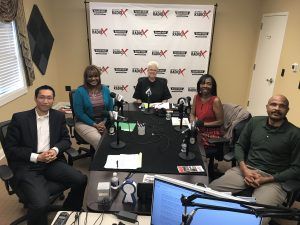
Anthony Chen, Bonnie Mauldin, Melissa Gunderson, Valencia Giles, and Ozzie Giles

Family Business Radio, Episode 4:  Valencia and Ozzie Giles, Lawrenceville-Suwanee School of Music, Melissa Gunderson, Morsels by Melissa, and Bonnie Mauldin, The Mauldin Group

On this episode of “Family Business Radio,” host Anthony Chen welcomes Valencia and Ozzie Giles, owners of Lawrenceville-Suwanee School of Music, Melissa Gunderson, chef and owner of Morsels by Melissa, and Bonnie Mauldin, founder of The Mauldin Group. “Family Business Radio” is broadcast from the North Fulton Studio of Business RadioX® inside Renasant Bank in Alpharetta.

Valencia and Ozzie Giles, Lawrenceville-Suwanee School of Music

Valencia and Ozzie Giles

Valencia and Ozzie Giles own Lawrenceville-Suwanee School of Music, a top award-winning music school in Gwinnett County where instructors teach instrument lessons to over 650 students, ages 3 to adult, from the U.S. and abroad. Lessons include voice, piano, guitar, bass guitar, ukulele, violin, viola, drums, clarinet, flute, greek instruments and more.  More than 40 instructors teach classes in Early Childhood Music Development, Special Needs, Music Theory, and Art, all under one roof.

Valencia’s love of music took root when her father gave her a piano at age 7. The music school director graduated from Alabama A&M University with a double major in flute and piano. She is a member of the Music Teachers National Association.

Ozzie, who has a Bachelor of Science degree in Special Needs Education, and a Master’s in Counseling and Ministry, works with students with special needs.

The couple highlights how Lawerenceville-Suwanee School of Music provides loving structure and support to help students not only succeed in music, but in life down the road.

For more information visit the Lawerenceville-Suwanee School of Music website. Valencia Giles can be reached by email, or call 678-376-9800.

Melissa Gunderson, Morsels by Melissa

Melissa Gunderson

Melissa Gunderson is chef and owner of Morsels by Melissa where she provides full range menu items to clients including specialty cakes and sweets. Melissa’s expertise includes the planning and implementation of corporate and private parties and events, as well as wedding receptions and intimate dinners.

At a young age Melissa loved to cook and sing. She turned down culinary school to pursue a career in opera. As a “Full Lyric Soprano” she sang professionally for 10 years. While singing full time, she honed her cooking skills in New York City with some of the top caterers there. In the end, Melissa decided cooking was her true joy in life and decided to jump into the culinary world full time.

Melissa started her culinary career in New York City. In 1996, she worked as a private chef for Four Star Chef Works and The Pavilion Agency while catering for private clients of her own. In 2000, Melissa decided to move back to Atlanta, her hometown.

Melissa started as an event chef for Bold American upon her arrival in Atlanta. She also worked with Proof of the Pudding as catering manager/party chef and The Epicurean as sous chef. While working with these premiere catering companies, she began to build her own clientele, eventually starting her own catering company, Morsels by Melissa.

For more information visit the Morsels by Melissa website. Melissa Gunderson can be reached by email,  or call 678-357-2349.

Bonnie Mauldin, The Mauldin Group

Bonnie Mauldin

Bonnie Mauldin is founder of The Mauldin Group. Her agency specializes in serving small businesses with professional web design, internet marketing and business development training. Services also include social media management, Search Engine Optimization, Linkedin profile makeover, Pay-Per-Click Management and more. Her mission is to help companies become more profitable and expand their brand to new heights.

The Mauldin Group is ranked as a Top 10 SEO and PPC Agency in Atlanta by Expertise.com.

Bonnie serves on the Marketing Council at Gwinnett Technical College and as a Diplomat with the Greater North Fulton Chamber of Commerce. Bonnie was named Business Person of Excellence this year, and has won Business of the Year by the Forsyth Chamber of Commerce.

She is dedicated to helping entrepreneurs become more profitable and expand their brand to new heights.

For more information visit The Mauldin Group website. Bonnie Mauldin can be reached by email, or call 678-846-2306.

Anthony Chen, Host of “Family Business Radio”

Anthony Chen

This show is sponsored and brought to you by Anthony Chen with Lighthouse Financial Network. Securities and advisory services offered through Royal Alliance Associates, Inc. (RAA), member FINRA/SIPC. RAA is separately owned and other entities and/or marketing names, products or services referenced here are independent of RAA. The main office address is 575 Broadhollow Rd. Melville, NY 11747. You can reach Anthony at 631-465-9090 ext 5075 or by email at anthonychen@lfnllc.com.

Anthony Chen started his career in financial services with MetLife in Buffalo, NY in 2008. Born and raised in Elmhurst, Queens, he considers himself a full-blooded New Yorker while now enjoying his Atlanta, GA home. Specializing in family businesses and their owners, Anthony works to protect what is most important to them. From preserving to creating wealth, Anthony partners with CPAs and attorneys to help address all of the concerns and help clients achieve their goals. By using a combination of financial products ranging from life, disability, and long term care insurance to many investment options through Royal Alliance. Anthony looks to be the eyes and ears for his client’s financial foundation. In his spare time, Anthony is an avid long-distance runner.

Tagged With: cook and sing, culinary, Family Business Radio, Freezer meals, full service catering, Go-to meals, Homey meals, Lawrenceville-Suwanee School of Music, Linkedin makeover, marketing consultant, Melissa Gunderson, Morsels by Melissa, North Fulton Business Radio, North Fulton Studio, Opera singer/Chef, Ozzie Giles, pay per click marketing, PPC, Private Chef, Proof of the Pudding Chef, recipes, search engine optimization, SEO, social media management, Southern Comfort Foods, Thanksgiving Menu, The Mauldin Group, top caterers, Unique food dishes, Valencia Giles, web design

Jennifer Levine Hartz with Corporate Hartz, Halley Morochnik with WebStep Design and An Tran and Nhan Dinh with Sylvan Learning Center

November 12, 2019 by angishields

ABR-Feature-11-11-19
Atlanta Business Radio
Jennifer Levine Hartz with Corporate Hartz, Halley Morochnik with WebStep Design and An Tran and Nhan Dinh with Sylvan Learning Center
Loading
00:00 /
RSS Feed
Share
Link
Embed

Download file

ABR-Group-11-11-19

The power behind Corporate Hartz, LLC is Jennifer Hartz. Her background includes in-house roles at iXL Enterprises and The Home Depot, and consulting through McKinsey & Company and Cresap (Towers Watson). She has vast non-profit knowledge through engagements with Boys & Girls Clubs of America and Habitat for Humanity International, as well as a long history of volunteer leadership.

Jennifer has an MBA with a concentration in Public Policy from Georgia Tech and a BA in Industrial Psychology from University of Pennsylvania. She is the Advisory Council Chair of Hands On Atlanta, as well as an alumna of Outstanding Atlanta, Leadership Atlanta, and the Marshall Memorial European Fellowship program.

Jennifer and her husband Eric have 4 children, ages 18 – 22, who were raised from diaper-age with articulated and reinforced family values and active volunteerism through “WhyServe?” an interfaith charity Jennifer co-founded.

Connect with Jennifer on LinkedIn.

Halley Morochnik worked full-time in marketing/advertising for TBWA/Chiat Day, helping clients like Nissan, Infiniti, and Sony reach their marketing goals. In 2014, Halley started WebStep Design to deliver web solutions to small businesses and non-profits.

Web consulting combines her love of art & design, marketing, and problem-solving.

Connect with Halley on LinkedIn.

An Tran moved from Vietnam to the United States when she was 9 and grew up in Tucker, Georgia. An graduated from Georgia State with a Psychology Degree. She is a stay at home mom with 6 kids under the age of 10 that serves as her full time job. To feed all those kids, An has two businesses. In 2018 she bought into Rhea Lana, a Children’s Consignment Franchise that has two events a year. This year An started Sylvan of Alpharetta, a Sylvan Learning Franchise.

An’s husband, Nhan Dinh, moved from Vietnam to the US when he was 10. He grew up in Roswell, Georgia and graduated from Georgia Tech with a Computer Engineering Degree. In 2005, he opened his own lawn repair shop AA Power Equipment in Roswell, Georgia. In 2012, that business expanded to selling on Amazon and now it’s one of the top 1000 sellers on Amazon in the United States.

An and Nhan have a love for children and a love for teaching them. They have been youth leaders at their church for over 15 years and believe that with the right guidance, learning can make a lifetime of difference. We see Sylvan as an opportunity to make a difference in the lives of our future leaders by helping them embrace a love of learning.

Follow Sylvan on Facebook and Twitter.

Questions and Topics In This Interview

  • Women Owned Businesses
  • How Jennifer and Halley met
  • The process of designing Jennifer’s website
  • Why An chose to become a Sylvan franchisee
  • Sylvan of Alpharetta’s grand opening in September
  • What impact do you want Sylvan Learning to have on the community and children you will be helping?
  • How Sylvan personalizes learing
  • What type of classes does Sylvan offer?
  • What makes Sylvan Learning Center different?

Tagged With: Corporate Hartz, Corporate Social Responsibility, Education Franchise, Family Philanthropy, impact, meaning, Online biz solutions, online marketing, Passionate, Personalized Learning, profit, Resourceful, SEO, sustainability, Sylvan Learning Center, tutoring, WebStep Design, Wix

Jennifer Hartz with Corporate Hartz and Halley Morochnik with WebStep Design

October 30, 2019 by angishields

Daring-to-Feature
Atlanta Business Radio
Jennifer Hartz with Corporate Hartz and Halley Morochnik with WebStep Design
Loading
00:00 /
RSS Feed
Share
Link
Embed

Download file

Daring-to-Group

Welcome to Daring To, a podcast that finds out how CEOs and entrepreneurs navigate today’s business world – the conventions they’re breaking, the challenges they’ve faced and the decisions that they’ve made, and lastly, just what makes them different.

The power behind Corporate Hartz, LLC is Jennifer Hartz.  Her background includes in-house roles at iXL Enterprises and The Home Depot, and consulting through McKinsey & Company and Cresap (Towers Watson). She has vast non-profit knowledge through engagements with Boys & Girls Clubs of America and Habitat for Humanity International, as well as a long history of volunteer leadership.

Jennifer has an MBA with a concentration in Public Policy from Georgia Tech and a BA in Industrial Psychology from University of Pennsylvania. She is the Advisory Council Chair of Hands On Atlanta, as well as an alumna of Outstanding Atlanta, Leadership Atlanta, and the Marshall Memorial European Fellowship program.

Jennifer and her husband Eric have 4 children, ages 18 – 22, who were raised from diaper-age with articulated and reinforced family values and active volunteerism through “WhyServe?” an interfaith charity Jennifer co-founded.

Connect with Jennifer on LinkedIn.

Halley Morochnik worked full-time in marketing/advertising for TBWA/Chiat Day, helping clients like Nissan, Infiniti, and Sony reach their marketing goals. In 2014, Halley started WebStep Design to deliver web solutions to small businesses and non-profits. Web consulting combines her love of art & design, marketing, and problem-solving.

Connect with Halley on LinkedIn.

Show Transcript

Intro: [00:00:02] Welcome to Daring To, a podcast that finds out how CEOs and entrepreneurs navigate today’s business world, the conventions they’re breaking, the challenges they faced, and the decisions that they’ve made. And lastly, just what makes them different?

Rita Trehan: [00:00:19] Well, hi and welcome. It may be a rainy day in Atlanta, but it’s shining bright with smiles and excitement here in the studio today. Because believe it or not, I’ve got two fantastic women joining me today, which is always great, because it’s always fabulous to actually highlight women who are doing things and standing up for businesses and helping others to see just what’s possible. But you two have a quite a unique experience. So, I’m welcoming today on my show, Jennifer from Corporate Hartz and Halley-

Halley Morochnik: [00:00:48] Morochnik.

Rita Trehan: [00:00:51] Morochnik. I’m going to—you know, I’ve been trying to say that. It’s really bad because people get my name wrong all the time, and I have to like really practice it. And so, I apologize but-

Halley Morochnik: [00:00:58] Thank you. It’s not an easy name.

Rita Trehan: [00:01:00] Yeah. And yours, obviously, is the name of your company as well.

Jennifer Hartz: [00:01:04] Yes.

Rita Trehan: [00:01:05] Right, Jennifer? So, that’s cool. Now, you have a really—both of you have really interesting backgrounds. So, I want to start. How do the two of you still—actually, not only have done work together, but have known each other for quite a long time? I don’t know that many people that have known each other from the years that you guys have known each other. Tell us a little bit about that.

Jennifer Hartz: [00:01:23] That is correct. So, we knew each other as teenagers. We both grew up here in Atlanta. And, you know, we grew up, we went to college, we got jobs, and we, you know, drifted apart, led our lives, had children. In the sixth grade, our two eldest daughters met. And essentially, it was a BFF love fest from day one, and they are now full-fledged adults. So, we have been friends and co-parents.

Rita Trehan: [00:01:52] So, it continues, right? It’s continued that they are like carrying on the tradition, shall we say?

Halley Morochnik: [00:01:56] It does. They are still best friends, and we love seeing that.

Rita Trehan: [00:02:00] And they must feel really proud of the two of you to be women—owned, like women-run businesses is still a big deal, you know. As much as we’d like to think that the world is changing and that there are more of us out there that are doing things, and daring to, and creating businesses, it’s not an easy thing to do. And both of you had children as well and having to bring up a home. So, tell me a little bit about your businesses, because they are very different, right? They’re very different. But actually, in some ways, they’re very complementary. So, Halley, like you are responsible for a company called WebStep Design-

Halley Morochnik: [00:02:33] Correct.

Rita Trehan: [00:02:33] … which he’s a web designer. So, obviously, I’m really interested in this because there’s lots of acronyms and things that I think, do I know what that means? I should know what that means. But hopefully, you can help educate our listeners as well.

Halley Morochnik: [00:02:45] Sure, sure.

Rita Trehan: [00:02:45] So, how did you get into that?

Halley Morochnik: [00:02:46] Well, actually, I’m self-taught. I originally started years ago in advertising. and I thought that this was a good fit for my background and learning how to target companies with what their needs are. So, now, I’m able to help companies with—build on their needs for their online marketing. So, I’m able to help them with their websites. And usually, I produce them using WordPress, and sometimes, I use Wix, but I’m able to help them in a manner of other ways, including SEO and email marketing to help them be seen on the web.

Rita Trehan: [00:03:36] Okay. So, we’re going to come back to SEO because some people-

Halley Morochnik: [00:03:38] Yes.

Rita Trehan: [00:03:39] … may not know what that means. And then, we’re going to talk about Mailchimp. So, if you think that you’re going to get-

Halley Morochnik: [00:03:42] Sure

Rita Trehan: [00:03:43] … educated today, trust me, guys, you are.

Halley Morochnik: [00:03:45] Right.

Rita Trehan: [00:03:45] But more interestingly is the fact that you actually helped Jen create a website. I don’t know about that.

Halley Morochnik: [00:03:50] Yes.

Rita Trehan: [00:03:50] Like you know, friends can be friends. But then, when you start to work together, that can be a whole different ballgame. So, what was that—I mean, how did you decide to like work together on that?

Jennifer Hartz: [00:03:58] Oh, it was actually because of our daughters. So, our daughters were in late college, and both of them had decided that my website was completely antiquated. Corporatehartz.com had not gotten with the program for SEO, for interactivity, for work search, for blogs. And they bullied me into-.

Rita Trehan: [00:04:21] I love it when they do that.

Jennifer Hartz: [00:04:24] … admitting that they were right. And then, Rachel Morochnik says, the daughter, says, “My mom, Halley, that’s what she does.” And I thought, “Oh, that’s perfect.”

Rita Trehan: [00:04:37] You seen that they like colluded together. So, in fact, to say, we can make some money out of this if we like—I’ll recommend your mom, right? And your mom definitely needs a website. But actually, it turned out to be a really good deal. I mean, I’ve looked at your website. It is absolutely fabulous.

Jennifer Hartz: [00:04:49] Thank you.

Rita Trehan: [00:04:50] So, kudos for the work that you have done. But actually, it’s a really important part of business today, you know. If you think that everything is digital today, that the way we interact and where we do things, we want things right here, right now. And digital is a fantastic way of reaching people. How did you—did you have an idea of what you wanted? Because I guess there’ll be lots of business owners out there that might be saying like, “Might want to look at my website, might want to change that. That sounds interesting.” Like did you have an idea about what you wanted, Jen? Like I mean-

Jennifer Hartz: [00:05:19] Yes, I definitely did have some ideas, mainly because the website is the most important piece of my business development. I live here in Atlanta. My clients are all over the planet. So, there’s no event-based marketing to be had in that situation. What I really wanted from the website was to bring my URL, corporatehartz.com from brochureware to real time. I wanted it to link with my LinkedIn. I wanted it to link with a blog. I wanted it to be able to add clients and add content and make things change.

Jennifer Hartz: [00:05:56] The main strategic thing that we were trying to accomplish with this, with the web, was I have three different lines of business. And in my brochureware, one of them, which is my traditional bread and butter, corporate social responsibility, had much more of the time and space and energy on the website than the family philanthropy LLB or the speakers, speaking engagements. And I wanted them to be more parallel with each other.

Rita Trehan: [00:06:23] We’re going to come on to some of your business, because I think that’s a really interesting field that you’re in and very, very important in today’s world, to actually be doing something that is giving back but in really responsible way. So, I do want to sort of delve into that a little bit as well. But before we get onto that, let’s talk about what was it like having Jen as a client. You know, because I know what I’m like as a client. I can be really demanding and like impossible to work with, I know. I try not to be, but I can’t be. So, was she a good client?

Halley Morochnik: [00:06:52] Well, let me tell you. Jen, because of her skill set, because of what she does, she’s very organized and she was able to push it in the direction where we could proceed and make things go quickly. Jen also, I think—you know, a lot of what I do is based on—I can’t do it by myself. I need to be able to work with the company and have them respond to me in a reasonable time. And Jen, not only was very responsive, but she also maybe pushed it to make sure that we were on target and on task and doing everything that we needed to be doing.

Rita Trehan: [00:07:33] And did you, Jen, have to like research some of that stuff? Because I mean, some of it can be quite technical, I expect. I mean, I confess, I’ve not made my own website or like. And so, you know, I kind of know how it works a little bit on the back end. And I know how to use social media. But did you have to do any research for it or was it just that like you had this vision of like these three businesses that you were really keen and sort of give equal weight to and it was more of the kind of the visual aspect that you were able to sort of convey and tell your story?

Jennifer Hartz: [00:08:00] Halley was able to do all the research, understand the technology, find tools that we could use in the website to address all of the objectives I had. So, no, I did not do any research. I am not the technician. I do research in my content but not technology.

Rita Trehan: [00:08:25] And what do your clients think about it? I mean, what’s been your client’s reaction to it? Because that’s the real proof in the pudding, right?

Jennifer Hartz: [00:08:31] Right.

Rita Trehan: [00:08:31] That you start to see people going like, “Wow”, or “Oh, we see a difference.” There’s a different image, there’s a different brand that you’re trying to convey in some ways. And that’s equally important to business these days. So, what was the reaction?

Jennifer Hartz: [00:08:45] I got a lot of wow. I got a lot of wow. I got a lot of appreciation from past clients. I got increase for current and future clients. I also have passed out Halley’s WebStep Design business card more than a few times because it was a great process and it was an excellent result.

Rita Trehan: [00:09:04] So, one of the things that I’m really interested in, it’s great that you bring it up, that you say, you know, you’ve passed on Halley’s business cards to people because you’ve had a great experience. I’m a big believer in ecosystems. I call like what we need today are more ecosystems, which is where people actually come together, where they may have different businesses or different interests, but they’re coming together to create something that’s more, that’s better, that adds more value and create some momentum.

Rita Trehan: [00:09:27] So, rather than us always seeing each other as competitors in the marketplace, whether you’re a small company or as a big company, how can we create ecosystems that’s sort of like create more purpose around both what we do and what we contribute to the world. Which, you know, it sounds like you’re doing some of that, which is great. And I don’t think that enough companies do. But I am going to bring it a little bit to your business because your business really is about sort of creating momentum around sort of social impact, social change. And it seems to spread right across from companies to families to small businesses. And, you know, that’s a lot, Halley, for you to have to convey in a website but you clearly did it very well, because, you know, I got a real good sense of it. And I was kind of eager-.

Halley Morochnik: [00:10:11] Right.

Rita Trehan: [00:10:12] … to say, “Oh, what can I get involved in? What can I do?” Because there’s almost like a pool. But what got you interested in that in the first place? I’m curious.

Halley Morochnik: [00:10:21] Wow. So, I think it goes back to even my childhood being raised in a certain way. But professionally, I was doing corporate social responsibility before anybody really knew what that was. If you hold-

Rita Trehan: [00:10:36] Some people don’t today, right? So, we need to educate them.

Halley Morochnik: [00:10:38] We’re working on that.

Rita Trehan: [00:10:40] Good.

Halley Morochnik: [00:10:41] If you said you were in CSR at the time, it meant that you were a customer service relationship.

Rita Trehan: [00:10:45] Is that right? Wow.

Halley Morochnik: [00:10:48] Which is a euphemism for sales. So, I spent a lot of time explaining to people what corporate social responsibility is, what it can provide for businesses, what it can provide for human beings, what it can provide for society. One of the best things that happened from the website was the equalizing of the three lines of business. So, the comments that I have gotten specifically have been about breadth and depth. So, I have clients, global clients in every industry. I have local clients. I’ve been in pharmaceuticals. I’ve been in manufacturing. Professional services. Name an industry, pharma. I have been at franchise, done that.

Halley Morochnik: [00:11:32] And so, it really has been able to highlight from the CSR perspective that I do diversity and inclusion, branding and employee development. All these different business needs can be addressed through for-profit, non-profit, government partnerships. The same time, I hadn’t really been public about the fact that I did corporate—excuse me, family philanthropy work as well because my clients are actually all confidential, so I can’t put their logo up on the website. So, I’ve been getting inquiries about that area of business because of the website.

Rita Trehan: [00:12:10] And do you think that you’re seeing differences between the industries, all the different kind of sectors that you work in or at the end of it, are they all really looking for the same kind of things when what—with what they’re trying to do around social responsibility and social impact?

Halley Morochnik: [00:12:25] No. Every client is completely, completely unique. There are similarities within an industry. So, an oil and gas company, they’re generally going to be investing in climate change and outdoors and planting trees-

Rita Trehan: [00:12:40] Recycling.

Halley Morochnik: [00:12:41] And recycling, right. Actually, I also work for a recycling client. So, within an industry, they can be similar, but it’s about your brand. It’s about where you’re located. It’s about what business opportunities you have and what potentially business exposures you have as well.

Rita Trehan: [00:12:58] Okay. Was that—and how did you help Jen to actually sort of like target in on clients? Because that’s often the big thing to small businesses today. You know, to actually find the clients that are interested in their services. You know, I always like think or wonder when my name will come up on Google. And you never know. I might appear like, you know, in-

Halley Morochnik: [00:13:19] Well, you know, Jen has such a great brand and she’s been working and her business has been together for a very long time. And I think really, I need to educate myself about her brand. And once I understood what she does and what she is able to provide for her clients, then I was able to talk to her a little bit better about how to put it together and how to organize her skill set so that it was effectually on her website and communicated. So-

Rita Trehan: [00:13:52] And you’ve obviously seen some, you know, traction around that. So-

Halley Morochnik: [00:13:56] Definitely. She also—WebSet Design also helped with search engine optimization. And that was really the-

Rita Trehan: [00:14:04] I don’t know what that is, that’s the SEO, I think, right?

Halley Morochnik: [00:14:04] Yes.

Rita Trehan: [00:14:08] And it’s really interesting that a lot of people don’t know about that.

Halley Morochnik: [00:14:11] Okay.

Rita Trehan: [00:14:11] And so, like—but you clearly do. And, you know, from a business perspective and obviously, from a website perspective, you do. But, you know, there’s lots of like sort of skepticism around SEO. Some people say, “Oh, I spent all this money and it’s basically like helped me, but it’s not helping me.” So, you know, how do you approach that subject?

Halley Morochnik: [00:14:07] So, really, when you get—when you have a website, people sometimes say, “Well, could you just put up a website and somebody will be able to Google me and I’ll be able to find it.” There is some people who don’t understand that there’s a lot of back information and a lot of back SEO that goes into having a website. So, Jennifer already had a lot of great content that she had with her other website. She had a great blog, a great piece called Hartz & Minds that had a content from years and years and years that we were able to build on and pinpoint and highlight different keywords and make connections with links and make sure that she was found. She already also had a fabulous URL. So, her URL had such good history that Google loved it. And so-

Rita Trehan: [00:15:23] It’s placed at the beginning of the alphabet as well, right? I hear that’s been good as well, isn’t it?

Jennifer Hartz: [00:15:27] Yeah.

Halley Morochnik: [00:15:28] Perhaps, but she already had done some good things with her website before. And so, we were able to build on that and take it to the next level.

Rita Trehan: [00:15:37] Do you think that women business owners are more reticent about what they do with like websites and how they advertise than, say, men are or do you think that there’s no difference? I mean, how would you think about that?

Halley Morochnik: [00:15:49] You know, I was talking to Jen about that the other day. And I think that women actually, I think, were a little bit more willing to listen to my advice and maybe 50 percent of my clients are women. And generally, when I talk to a man and he asks me for a website, you know, I put together whatever I can. But somebody like Jen was able to really dig deep and work with me and think about some of the questions and answers of the questions that I was asking her. And the more she was able to consider some of the things that we were talking about, the better the website became.

Rita Trehan: [00:16:34] And do you think that’s just because women think differently or just that-

Halley Morochnik: [00:16:37] I think so.

Rita Trehan: [00:16:38] You do think it’s because-.

Halley Morochnik: [00:16:38] Absolutely.

Rita Trehan: [00:16:38] So, do you think about that when you think about your clients? Does that come into play when you think about any of your clients or who you’re working with around that they may think differently to how they approach the three lines of businesses that you have? Because they’re all different, right? A family sort of trust, if you like, just trying to get money in good ways to big multinational corporates that are trying to support the local area and do things globally. And then, sort of the local community here that it’s great that you’re giving back to the community that obviously, you’ve—you know, is very much a part of your life?

Jennifer Hartz: [00:16:38] Well, the desired outcomes for corporate clients are completely different than the desired outcomes for family philanthropy clients. On the CSR side, corporate social responsibility, Corporate Hartz is trying to drive profit. Whether that profit is coming from market expansion, new products, employee retention, PR, cost savings, energy savings. The end has to be profit or when I walk out the door-

Rita Trehan: [00:17:39] Yeah.

Jennifer Hartz: [00:17:39] … they will no longer continue to do all this great stuff that we’ve just set up for them to do in the world.

Rita Trehan: [00:17:43] Yeah.

Jennifer Hartz: [00:17:45] Family philanthropy clients are much more interested in relationships, a caring and true impact on the causes that they are passionate about.

Rita Trehan: [00:17:55] Right.

Jennifer Hartz: [00:17:55] There’s no financial bottom line in that work. So, it’s very heady, cerebral work to work with corporate clients. And it’s very emotional. Really emotional at times, but positively emotional for me with family philanthropy clients. When I do speaking engagements, I just feel like it’s my turn to spread the word.

Rita Trehan: [00:18:21] And do you feel like that there are more people spreading the word around social impact, social responsibility? I feel like that maybe there is, but I don’t know. Like sometimes, I get a bit disappointed that no, there’s still not enough conversation about it going on around the world.

Jennifer Hartz: [00:18:35] Well, conversation is not what we need.

Rita Trehan: [00:18:36] Yeah, that’s true.

Jennifer Hartz: [00:18:38] Action is what we need. I find personally, of course, I am in this space all the time-

Rita Trehan: [00:18:42] Yeah.

Jennifer Hartz: [00:18:43] … in the middle of it, but I find too much conversation and too little action.

Rita Trehan: [00:18:49] Yeah.

Jennifer Hartz: [00:18:49] And that’s why I feel like having a consultant like me is a catalyst for getting an action that’s going to bring results.

Rita Trehan: [00:18:56] And if your clients, if they think about what they’ve done over the years, what would they say about some of the things that they feel that had a real impact around that, do you think?

Jennifer Hartz: [00:19:06] Clients really vary. They have, some of them have pretty good experiences with social responsibility. Some of them come out of Europe. Don’t even think of it as corporate social responsibility because it’s much more woven into the fabric there. And sometimes, this usually happens with a leadership change. They realized that what they’ve been doing has been kind of green-washing or window dressing, so that they could have sweet, nice things to say to potential employees and potential clients and government officials.

Rita Trehan: [00:19:40] Right.

Jennifer Hartz: [00:19:42] So, sometimes, when-

Rita Trehan: [00:19:43] And to quantify that, that’s like the sugar coating on the top of their cake that’s not very well made when you kind of cover it up a little bit and make it all pretty, right?

Jennifer Hartz: [00:19:49] That’s a good analogy. That is a terrific analogy. And so, sometimes, leadership change is what allows me to deliver both the profit and the impact.


Rita Trehan: [00:19:57] Well, you are really very, very passionate about this. I mean, I can feel it. I can feel like you were just sitting opposite me, but it’s like you’re like sitting right by this microphone saying like, you better hear what I’m saying, because this is really important and it’s because it’s the topic that I’m very passionate about. I think that it’s really good to hear you talk about it. How can we get more people involved in it? I mean, like clearly, we’ve got this website that’s doing a great job, but there must be other ways. I mean, I have to say, you know, my experience of Atlanta and what people in Atlanta do around sort of social causes and things that have impact is phenomenal.

Rita Trehan: [00:20:28] I mean, I don’t think I see that, you know, in London or in Australia, where I’ve lived. But you really do see this sort of community come together and people that, you know, either, that are dedicating businesses around it and/or sort of supporting. But I’m sure there’s lots more that we could do. So, to your point about action, what can people do?

Jennifer Hartz: [00:20:51] Well, I think—excuse me, when you’re talking about people to me, I think of it on two different levels—three different levels. One is an individual human. There are seven million things that you can do to get up tomorrow and make the world better in a way that you care about. They’re easy to find. Google works, handsonatlanta.org works for Atlanta. But since hopefully, we’re speaking to folks, well-

Rita Trehan: [00:21:18] Yeah. This is a global-

Jennifer Hartz: [00:21:20] … outside of Georgia. Right.

Rita Trehan: [00:21:21] … podcast. So, hopefully, they’re going to pick up some tips that they can apply in their own like towns and countries, everywhere.

Jennifer Hartz: [00:21:27] Right. So, Points of Light Foundation is all around the globe, 170-something cities. That’s a good resource. And in terms of civic groups, so if you have a group of friends, if you have a group of colleagues, there are also a million things that you guys can get together and do once, or every weekend, or every other weekend, or after work. There are a million projects and nonprofits that could use not just your hands and not just your skills, but also your hearts. Because you’ll go and you’ll talk about something that you’ve done using your skills to help a cause that you care about and that sort of has a ripple effect. And then, the third category again we mentioned was these corporations. And I feel very, very, very strongly that everybody, every company needs to make profit.

Rita Trehan: [00:22:24] So, do I. Profit is good. It’s not bad. It’s not one or the other. I don’t believe that there are extremes. You can do good and still make profit. That’s-

Jennifer Hartz: [00:22:31] And I do not believe corporations are people. So they need to make profit at it. And there are a number of levers to pull to help them achieve that goal while achieving a million other goals that they have. Some of which we’ve mentioned before, like new markets or new products or employee retention, development, branding, things like that.

Rita Trehan: [00:22:54] So, I’ve had one that I’ve always tried to solve. Maybe you can solve this conundrum around. Maybe you can do it with the website. I don’t know. But I’ve been trying for a long time to get large companies to think about their social responsibility budgets, their social impact budgets. Since with some companies, that can be millions of pounds, dollars, rands, whatever currency, francs, euros, whatever. But it can be millions of pounds. When I think—you know, I’ve worked in corporations in the past as well.

Rita Trehan: [00:23:21] And, you know, it struck me when I’ve had conversations with the senior execs, with the CEOs and some board members. And I said like, you know, “Why is it that when we’re putting like a big IT system in, like we have this massive capital discipline? Like we count every single dollar and where it’s going and making sure that we’re getting like true value for money, but yet, we’ve got millions of pounds, dollars, whatever that we put into things that we want to have real impact on. How much capital discipline? How much time do we really spend thinking about where that money’s going versus like we did the same thing that we did 20 years ago because that’s what we’ve always done?”.

Rita Trehan: [00:24:00] And that’s always concerned me. And, you know, I’ve often thought like, you know, and then, propose, why not use it as a leadership development opportunity? You know, lots of companies spend millions of pounds or dollars on sending people on training courses. Well, why not put them in charge or help them to get a mentor, coach or be coached by people within nonprofits or those organizations? I haven’t managed to convince anybody yet. Maybe you can help me because I can’t help but thinking that, you know, to your point, that there are ways to do this. And I really, truly wish. I give all CEOs a hard time around their capital discipline and when it comes to their social impact budgets.

Jennifer Hartz: [00:24:35] I’ll tell you two of my tricks. One of my tricks is when I’m working with a public company, I buy a share and I buy it for my mother. And I walk into the first meeting in the C-suite and I said, “I need you to make this worth more or I will be paying for them for the rest of my life. So, I am in this with you.”

Rita Trehan: [00:24:56] That’s great.

Jennifer Hartz: [00:24:56] “This is what I want. I also want all this good stuff that we’re talking about doing in the world.” So, that’s one of my tricks. My second trick is to ask them from the very first meeting. If it’s a manufacturing company, “How do you go about deciding whether to expand a plant or a new plant?” If it’s a retailer, “How do you decide whether you’re going to enter the Canadian market or not?” And of course, they talk all about due diligence and research, and blah, blah, blah. I’m like, “Okay, that’s what we’re going to do here.”

Rita Trehan: [00:25:27] That’s great. I think that’s really great advice for any company, whatever size actually, or small organization or even individuals that are thinking about, you know, how can I really sort of impact the world? So, there must be ways to do it through social media as well. So, you must advise people on—you know, you’ve talked highly about advising people on social media and maybe you can talk a little bit about Mailchimp, because I’m sure people think that-

Halley Morochnik: [00:25:49] Sure

Rita Trehan: [00:25:50] … you know, there’s a chimp that’s going to come deliver the mail.

Halley Morochnik: [00:25:52] Right.

Rita Trehan: [00:25:53] And that’s probably not going to happen.

Halley Morochnik: [00:25:55] Well, you know, as I mentioned before, I was in advertising and I was a broadcast media buyer. And so, the thing—the way that we used to get the word out was so much different than it has—than it is today. Things have evolved so much. And so, now, we definitely have new ways. You know, the social media, Mailchimp, Jen does a great job with her blog. And you should—actually, for people out there, you should look it up and you should read it. It’s called Hartz & Minds. And she, through Mailchimp, has a newsletter that goes out regularly. And it has all kinds of great information about things that you can do and what’s happening in the world. But the fact that we have social media is just—it’s an amazing world that we live in.

Jennifer Hartz: [00:26:51] One thing I think, Halley, maybe you can talk about is the logo, the LinkedIn, the business card that all came about from the website.

Halley Morochnik: [00:27:02] Right. So, yeah, those were three components—or several components that we came together on and they all had to be branded together. And now, I think because of that, we were able to, yeah, put together something that people will recognize and have meaning.

Rita Trehan: [00:27:23] It’s quite hard, right? To think that those things connecting together like LinkedIn, Twitter, your website. You know, like where do people go to find you. But I guess you must find ways to sort of like interweave them together so that like they actually connect behind the scenes, so that people don’t necessarily—like if somebody is a real LinkedIn user, they’re going to go to LinkedIn.

Halley Morochnik: [00:27:42] Right.

Rita Trehan: [00:27:43] But it doesn’t really matter, I guess, for the business owner, because they’re going to get that connection anyway, would they?

Halley Morochnik: [00:27:49] So all of these platforms are—it’s fabulous because they’re, for the most part, free. Mailchimp is free. It’s actually headquartered here in Atlanta. And through Mailchimp, your—Jen and whoever is using Mailchimp, you’re able to provide or to create one of the most valuable resources for your company, which is an email marketing list. And the way we set it up with Jennifer’s website is every time she puts together content, it automatically gets sent out by Mailchimp.


Halley Morochnik: [00:28:28] And the other thing is—at a certain time of the week or the month. The other thing that we put together is we put together a form on her website so that if anybody goes to her website and says that they’re interested in a certain area, that they can receive more information by entering their email address and their contact information. And it gets linked automatically to Mailchimp and their name is—automatically gets added and sent out.

Rita Trehan: [00:28:57] So what would be your advice to, say, a small business owner, who you think—who’s sitting here right now, listening to this going, looking at their website-

Halley Morochnik: [00:29:04] Yeah.

Rita Trehan: [00:29:05] … going, “Yeah. This is really not so great, is it?” But they are a bit hesitant about making that step because they may get asked questions that they really don’t know the answer to. They don’t want to look stupid. They don’t know what their budget is. How would you help them to sort of be able to kind of frame what they might be needing or looking for? How do you help people to think that through?

Halley Morochnik: [00:29:27] Sure. So, looking at a website that somebody might already have, it’s important to know that, you know, things change so quickly. You can look at a website that was constructed five years ago, 10 years ago, and you’ll say, “Oh, yeah, I know exactly when that website was created.” So-

Rita Trehan: [00:29:42] They show their age like us.

Halley Morochnik: [00:29:44] They really do.

Rita Trehan: [00:29:45] So, I hope—I like—you try to go like, “How I did?” So, doesn’t matter what we try to do with the websites.

Halley Morochnik: [00:29:48] It’s kind of like buying a dress, right? You can go back and see what it was, you know, have an idea of it based on the style of it. And also, things improve. The technology is improving constantly. So, there’s always new plugins that we can use and new resources that we can improve website. But right now, if everybody is looking at their own website, if your website is not mobile friendly, then you really need an update. Everybody should be mobile friendly, especially since Google is kind of downgrading sites that aren’t. So, that’s really the most important thing.

Rita Trehan: [00:30:22] I didn’t know that. That’s a piece of news for anyone that’s listening. Yeah.

Halley Morochnik: [00:30:26] Yeah. So, you know, Google is constantly changing their algorithm and they’re constantly deciding who needs to be promoted more. And if your website doesn’t have certain features, as I said, the most important is being mobile friendly, then you really need to make some changes.

Rita Trehan: [00:30:42] So, Jen, I mean, obviously, it’s helped you with your business hugely. It took, you know, your children to say, “You’ve got to do this, you’ve got to get in there.” And like really make the impact that they obviously felt that, you know, your daughter obviously felt that you could kick make. Where do you go from here with this now? I mean, how do you continue to sort of gain the momentum that you’ve got through using digital platforms, if you like? Because digital is the big thing. Everyone is talking about digital and analytics?

Jennifer Hartz: [00:31:11] Right.

Rita Trehan: [00:31:12] How do you envisage using it, you know, to either find your clients, work with your clients, or help your clients to understand what’s on offer and what they can do? What would you say to them?

Jennifer Hartz: [00:31:24] One thing I would say is that the catalyst of creating a new website made me think of Corporate Hartz as a brand. I don’t know if that’s a woman thing or if that’s just a me thing, but I never thought of myself as a brand. This said, yes, you are. Corporate Hartz, C-O-R-P-O-R-A-T-E-H-A-R-T-Z.com. That’s your brand. And so, that was a huge mind shift and that made it much easier for me to feel comfortable being the outreach person in a conversation. “Saw you on LinkedIn. Seems like they’re—these are the three ways I might be able to help you.”.

Jennifer Hartz: [00:32:03] So, because of the website and I redid my LinkedIn to be much more dynamic and much more appealing and easier to navigate. And so, that has been very important for me. So, I have those different avenues. In terms of the Internet in general and there are a zillion million platforms that go out worldwide or United States-wide that talk about sustainability, diversity and inclusion in branding, employer brand, social impact, metrics, tracking. And so, there is not a lack of places to put your information nor glean information back from them.

Rita Trehan: [00:32:54] And that’s a great example. I think like your own story about, you know, you perceiving, not perceiving yourself as a brand and then, sort of stepping back from it and seeing yourself as a brand, I think, is really powerful. Particularly, if you start off as a small business and, you know, you see yourself as an individual that has a passion for something or is trying to do something that has a purpose. But actually, that is a brand and not many people think about that. So, I think that’s a really good story for people to sort of resonate with and to help their businesses come to life. So, let’s talk a little bit about the two of you. So, before we finish, like three words to describe anything, yourselves, your clients, your business. What would you say? You can choose. And then, we got a tough question coming after that. This is the easy one. Go, Halley.

Halley Morochnik: [00:33:42] Okay. Sure. Okay. So, website development, design, SEO, email marketing, WordPress. That was more than three, I’m sorry.



Rita Trehan: [00:33:53] But they were good. Yeah. But they are all like capabilities that you bring.

Halley Morochnik: [00:33:58] Capabilities, right, right.

Rita Trehan: [00:33:58] That’s brilliant, right?

Halley Morochnik: [00:33:59] Right.

Rita Trehan: [00:33:59] Those are the things that like you hold dear that are like they are your brand and work, right?

Halley Morochnik: [00:34:04] Right. That’s right.

Jennifer Hartz: [00:34:05] Yeah. I think my three words for Corporate Hartz would be profit, impact, and meaning.

Rita Trehan: [00:34:13] That’s great. So last question. Because I mean, you’ve been great, I think. Really, I mean, I’ve learned so much, right? I mean, I know now, I’m going to be looking at my website going, “Oh my gosh, I’ve got to do something about this. So I may be coming to you, Halley, so watch out. But you know, a lot of this is about people that dare to. Both of you have dared to do something with your lives by, you know, creating sustainable businesses that are doing things that are helping other businesses to grow and develop and people to grow and develop. So, what would you say has been your biggest daring to moment or life event? I don’t know.

Halley Morochnik: [00:34:46] Right. So, as I said, I am self-taught. And I started my business in 2014 and many—when I started my business, I knew a lot, but there were so many things that I didn’t know. And the business that I’m in, things are just constantly changing. And so, I kind of had to dare myself to say, “I’m going to go out there. And even though I don’t know everything, I’m going to put myself out there.” And on a daily basis, I’m saying that I know a lot. And sometimes, I just have to figure it out.

Rita Trehan: [00:35:22] I love that. I love that. That’s so cool. Because often, people are just too scared to try it. And you’ve got to dip your toe in the water.

Halley Morochnik: [00:35:29] Right.

Rita Trehan: [00:35:30] And learning is quite fun.

Halley Morochnik: [00:35:31] Yeah.

Rita Trehan: [00:35:31] Yeah. So, Jen, what’s yours?

Jennifer Hartz: [00:35:33] I think my daring moment was I was working for a dot.com. I was head of what we called all relations, employee, investor, public, community and government. So, anything that wasn’t actually building our client’s work at our dot.com, that was on me.

Rita Trehan: [00:35:57] Wow.

Jennifer Hartz: [00:35:59] To fast forward the story, we all know how this ends, we get caught in the boom-bust and we get delisted from the Nasdaq and we do layoffs and we vanished into thin air. And at that point, this was 2000, I had a three-year old, a one year old, a newborn, and unbeknownst to me, one on the way.

Rita Trehan: [00:36:25] Wow.

Jennifer Hartz: [00:36:26] So-

Rita Trehan: [00:36:27] Woah.

Jennifer Hartz: [00:36:27] … there I am.

Rita Trehan: [00:36:29] Woah, that’s a daring to, guys.

Jennifer Hartz: [00:36:32] So, I actually became what I called the accidental entrepreneur. My husband is a serial entrepreneur. Ever since we left McKinsey, he’s done different industries, different businesses, loves the startup, loves the change, loves the new industry. And I have been the slow and steady wins the race guy. Well, all of a sudden, not exactly sure how I’m supposed to do that, so I accepted a project engagement with BellSouth when they called. And I accepted a long-term engagement with Deloitte when they called. And I was working with Deloitte, and I said, “So, I’m thinking maybe—should I be a company?” They said, “Yes, you should be a company.” And I really thought I was just making it up, you know, for taxes, because I had two clients and I didn’t really think about the future. I just went into it and did it. And that’s not within my nature to be entrepreneurial. When the unknown is unknown, the future is unknown. So, I think that was really a big thing that I accepted that this was going to be the right next career for me. And I’m in my 20th year now.

Rita Trehan: [00:37:48] Well, that’s fabulous. And, you know, we are actually in the world of uncertainty and uncertainty and unknown and it’s talked about a lot this past like the fourth industrial revolution that we’ve got to get comfortable of like just going out there and doing it. And I think both of you have really shown people, if they are thinking about it and they’re just thinking like, “Do I know enough or not?” And here, you both stand today as shining examples of, you know, give it a go, because you find inner strength and I think just inner belief. And we need more women. So, let’s get some more women there as well. On that note, if people want to find out more about Corporate Hartz, how do they do that, Jen?

Jennifer Hartz: [00:38:25] You can go to the web at www.corporatehartz.com, that’s C-O-R-P-O-R-H-A-R-T-Z.com or you can find me on LinkedIn, Jennifer Levine Hartz.

Rita Trehan: [00:38:42] Halley.

Halley Morochnik: [00:38:42] Yes. Same, WebStep Design. So, it’s www.webstepdesign.com or also, you can go to my LinkedIn profile.

Rita Trehan: [00:38:54] Great. And if you want to find out more about Dare, then you can find us on www.dareworldwide.com. You can find me on Twitter at Rita_Trehan. And my second edition of my book, Unleashing Capacity, is out on Amazon. Don’t miss it. It’s a great book. If you need it just to help you sleep or if you’re really interested in changing the world, it might give you some ideas. Thank you both for being a guest today. I’ve really enjoyed having you. And I’ve learnt millions of things. So, great. Thank you.

Jennifer Hartz: [00:39:20] Thank you.

Halley Morochnik: [00:39:21] Thank you.

Closing: [00:39:22] Thanks for listening. Enjoyed the conversation? Make sure you subscribe, so you don’t miss out in future episodes of Daring To. Also, check out our website, dareworldwide.com, for some great resources around business in general, leadership, and how to bring about change. See you next time.

Tagged With: Construction, Corporate Social Responsibility, design, email marketing, Family Philanthropy, impact, meaning, Non Profit, profit, SEO, small business, Webpress, website dev, Wix

Chuck Teliin with Valpak and Michael Blake with Brady Ware & Company

February 1, 2019 by John Ray

North Fulton Business Radio
Chuck Teliin with Valpak and Michael Blake with Brady Ware & Company
Loading
00:00 /
RSS Feed
Share
Link
Embed

Download file

Michael Blake and Chuck Teliin

Chuck Teliin with Valpak

Chuck Teliin is a Regional General Manager of Valpak managing 10 markets in six states. Prior to Valpak, Chuck was with AT&T Yellow Pages for over 26 years, first as a sales rep, then sales manager, and General Manager before rising to Regional Vice President. Chuck retired from AT&T in 2017.

You may have come to know Valpak as the “coupon mailer people” and you wouldn’t be wrong. Since 1968, Valpak has been mailing coupons to consumers to save them money and support small, local businesses in communities throughout North America. That’s what they were. Valpak has grown up, just as a teenager develops into a confident adult. Today, Valpak is a full-service marketing agency. We provide industry leading, traditional and digital marketing solutions to local and national businesses. With Valpak, you’ll still find the coupons that they’re known for, only now you’ll find them online and in digital apps as well as in our iconic Blue Envelope®. We mail to 38 million homes and drive over 11 million in daily online traffic. From The Blue Envelope to website design, development and everything in between, Valpak supports small businesses with a full suite of innovative marketing services.

Call Valpak at 1-866-235-0870 or visit them at www.valpak.com/advertise.

Michael Blake with Brady Ware & Company

Michael Blake is a Director of Brady Ware & Company. Mike specializes in the valuation of intellectual property-driven firms, such as software firms, aerospace firms and professional services firms, most frequently in the capacity as a transaction advisor, helping clients obtain great outcomes from complex transaction opportunities. Mike is also a specialist in the appraisal of intellectual properties as stand-alone assets, such as software, trade secrets, and patents.

He has been a full-time business appraiser for 13 years with public accounting firms, boutique business appraisal firms, and an owner of his own firm. Prior to that, he spent 8 years in venture capital and investment banking, including transactions in the U.S., Israel, Russia, Ukraine, and Belarus.

Brady Ware & Company is a regional full-service accounting and advisory firm which helps businesses and entrepreneurs make visions a reality. Brady Ware services clients nationally from its offices in Alpharetta, GA; Columbus and Dayton, OH; and Richmond, IN. The firm is growth minded, committed to the regions in which they operate, and most importantly, they make significant investments in their people and service offerings to meet the changing financial needs of those they are privileged to serve. The firm is dedicated to providing results that make a difference for its clients.

Mike is the Host of Decision Vision, a podcast series focusing on critical business decisions and brought to you by Brady Ware & Company. Decision Vision is produced and broadcast by Business RadioX®.

Tagged With: consumer intelligence, coupons, database marketing, Dayton accounting, Dayton CPA, Decision Vision, digital coupons, digital marketing, digital marketing solutions, digital marketing strategy, direct mail, direct mail marketing, direct marketing, email marketing, Franchising, intangible assets, leads tracking, mailers, Michael Blake, mobile app, online marketing, print coupons, problem solving, sales tracking, SEM, SEO, SMS, Social Media, Startup Lounge, sustainability, targeted mail, targeted marketing, uncomfortable business topics, Valpak, Valpak mobile app, valuations, variable data printing, website design

  • « Previous Page
  • 1
  • 2
  • 3
  • 4
  • Next Page »

Business RadioX ® Network


Our Most Recent Episode

CONNECT WITH US

  • Email
  • Facebook
  • LinkedIn
  • Twitter
  • YouTube

Our Mission

We help local business leaders get the word out about the important work they’re doing to serve their market, their community, and their profession.

We support and celebrate business by sharing positive business stories that traditional media ignores. Some media leans left. Some media leans right. We lean business.

Sponsor a Show

Build Relationships and Grow Your Business. Click here for more details.

Partner With Us

Discover More Here

Terms and Conditions
Privacy Policy

Connect with us

Want to keep up with the latest in pro-business news across the network? Follow us on social media for the latest stories!
  • Email
  • Facebook
  • Google+
  • LinkedIn
  • Twitter
  • YouTube

Business RadioX® Headquarters
1000 Abernathy Rd. NE
Building 400, Suite L-10
Sandy Springs, GA 30328

© 2025 Business RadioX ® · Rainmaker Platform

BRXStudioCoversLA

Wait! Don’t Miss an Episode of LA Business Radio

BRXStudioCoversDENVER

Wait! Don’t Miss an Episode of Denver Business Radio

BRXStudioCoversPENSACOLA

Wait! Don’t Miss an Episode of Pensacola Business Radio

BRXStudioCoversBIRMINGHAM

Wait! Don’t Miss an Episode of Birmingham Business Radio

BRXStudioCoversTALLAHASSEE

Wait! Don’t Miss an Episode of Tallahassee Business Radio

BRXStudioCoversRALEIGH

Wait! Don’t Miss an Episode of Raleigh Business Radio

BRXStudioCoversRICHMONDNoWhite

Wait! Don’t Miss an Episode of Richmond Business Radio

BRXStudioCoversNASHVILLENoWhite

Wait! Don’t Miss an Episode of Nashville Business Radio

BRXStudioCoversDETROIT

Wait! Don’t Miss an Episode of Detroit Business Radio

BRXStudioCoversSTLOUIS

Wait! Don’t Miss an Episode of St. Louis Business Radio

BRXStudioCoversCOLUMBUS-small

Wait! Don’t Miss an Episode of Columbus Business Radio

Coachthecoach-08-08

Wait! Don’t Miss an Episode of Coach the Coach

BRXStudioCoversBAYAREA

Wait! Don’t Miss an Episode of Bay Area Business Radio

BRXStudioCoversCHICAGO

Wait! Don’t Miss an Episode of Chicago Business Radio

Wait! Don’t Miss an Episode of Atlanta Business Radio