

Business RadioX ®

  • Home
  • Business RadioX ® Communities
    • Southeast
      • Alabama
        • Birmingham
      • Florida
        • Orlando
        • Pensacola
        • South Florida
        • Tampa
        • Tallahassee
      • Georgia
        • Atlanta
        • Cherokee
        • Forsyth
        • Greater Perimeter
        • Gwinnett
        • North Fulton
        • North Georgia
        • Northeast Georgia
        • Rome
        • Savannah
      • Louisiana
        • New Orleans
      • North Carolina
        • Charlotte
        • Raleigh
      • Tennessee
        • Chattanooga
        • Nashville
      • Virginia
        • Richmond
    • South Central
      • Arkansas
        • Northwest Arkansas
    • Midwest
      • Illinois
        • Chicago
      • Michigan
        • Detroit
      • Minnesota
        • Minneapolis St. Paul
      • Missouri
        • St. Louis
      • Ohio
        • Cleveland
        • Columbus
        • Dayton
    • Southwest
      • Arizona
        • Phoenix
        • Tucson
        • Valley
      • Texas
        • Austin
        • Dallas
        • Houston
    • West
      • California
        • Bay Area
        • LA
        • Pasadena
      • Colorado
        • Denver
      • Hawaii
        • Oahu
  • FAQs
  • About Us
    • Our Mission
    • Our Audience
    • Why It Works
    • What People Are Saying
    • BRX in the News
  • Resources
    • BRX Pro Tips
    • B2B Marketing: The 4Rs
    • High Velocity Selling Habits
    • Why Most B2B Media Strategies Fail
    • 9 Reasons To Sponsor A Business RadioX ® Show
  • Partner With Us
  • Veteran Business RadioX ®

Search Results for: kids care

Zak Omar with Atomic Wings

June 10, 2021 by angishields

Zak-Omar-Atomic-Wings
Franchise Marketing Radio
Zak Omar with Atomic Wings
Loading
00:00 /
RSS Feed
Share
Link
Embed

Download file

Brought To You By SeoSamba . . . Comprehensive, High Performing Marketing Solutions For Mature And Emerging Franchise Brands . . . To Supercharge Your Franchise Marketing, Go To seosamba.com.

Zak-Omar-Atomic-WingsZak Omar has been a lifelong entrepreneur. He first learned about being a business owner from his father, an Afghani refugee who arrived in New York city in the 1980s.

His father introduced a new food option: a mobile fried chicken truck that he would park right outside of 1 Chase Manhattan Plaza.

When his father got sick, Omar and his brother, Ray, decided to pursue their own entrepreneurial goals by becoming multi-unit franchisees with Dunkin’. In 2013, Omar fell ill himself and was diagnosed with leukemia.

He used this diagnosis as inspiration to expand his portfolio, ultimately investing in Atomic Wings and taking over as CEO in 2016.

Connect with Zak on LinkedIn.

What You’ll Learn in This Episode

  • About Zak and his path before Atomic Wings
  • How Zak’s leukemia diagnosis became the driving force in his business career
  • How Atomic Wings differs from it’s cometitors
  • How the brand navigated the pandemic
  • Lessons learned from 2020 that will help their growth in the future
  • Plans for Atomic Wings growth in 2021
  • Atomic Wings ideal franchisee

This transcript is machine transcribed by Sonix

TRANSCRIPT

Intro: [00:00:07] Welcome to Franchise Marketing Radio, brought to you by Akosombo, comprehensive, high performing marketing solutions for mature and emerging franchise brands to supercharge your franchise marketing, go to Sambar Dotcom. That’s CEO S.A.M.. Be a dotcom.

Lee Kantor: [00:00:31] Lee Kantor here, another episode of Franchise Marketing Radio, and this is going to be a good one. Today we have with us Zach Ohmar with Atomic Wings. Welcome, Zach.

Zak Omar: [00:00:41] Thank you. Thanks for having me on.

Lee Kantor: [00:00:43] Well, I’m excited to learn what you’re up to. Tell us a little bit about atomic wings, actually.

Zak Omar: [00:00:49] So Atomic Wings is a brand that was born and raised at a New York City. The brand was formed by my predecessor and founder, Adam Lipin, back in nineteen eighty nine. He actually worked out of Dove Spa, which is credited for creating the Buffalo wing. When he came to New York City, he realized there was really no good place to eat wings. So he created this awesome brand. And since then we’ve taken off and we’ve really become a cultural following here in New York City and we’re hoping to expand throughout America.

Lee Kantor: [00:01:21] So now, when he started, did he always dream of it being a franchise or did he just want it to be kind of that one shop in New York?

Zak Omar: [00:01:29] Well, when he started, he always he always he started franchising years later, so when you when he opened, it was just kind of a one shot. Yes, she opened up a bar and he started serving wings out of a bar. And then from there, he kind of took off and opened a couple locations.

Lee Kantor: [00:01:46] Now, how did you get involved with the brand?

Zak Omar: [00:01:49] So in twenty sixteen, our paths crossed, I was a franchisee of Dunkin Donuts at the time, and Adam had reached out about possibly taking about me possibly taking over territory in Maryland. And we got to talking. And Adam was in the business for about 20 plus years. At the time, I was a little burnt out and he had other things going on and. Opportunity came about where we talked and figured this was the best path forward for the brand, and he realized that with my background and the expertize that we had the best path forward for the brand and we had sold the company back in 2006.

Lee Kantor: [00:02:31] So now what did you learn from your franchisee experience that helps to make Atomic Wings franchisees?

Zak Omar: [00:02:40] So one thing I learned when school did the whole a background, did the whole Wall Street and come into franchising with Dunkin. And just in franchise world in general, I didn’t realize how Hands-On it would be and how you still have to operate your location. We still have to hire employees and you’re still in the business of customer service and employees. And at the end of the day, it’s all on you. One thing that I didn’t realize that’s helped me as a franchise owner with my franchisees is I don’t want to kill them. With construction costs, building out locations, you don’t need the high marble finishes or the high end finishes. So that’s something we’re very conscious of with our franchisees. We understand that this is their hard earned money and we definitely are sympathetic towards that. We want to make sure that they’re getting the most out of what they put in and that the return of investment happens a lot quicker than maybe some other franchises.

Lee Kantor: [00:03:49] So now you’ve talked a little bit about your back story, but can you share a little bit more about how far back that the food industry and restaurants are in your family?

Zak Omar: [00:04:00] So my father came to America as a refugee in. Nineteen eighty one, and he opened the first mobile fried chicken truck outside of one Chase Manhattan Plaza in about nineteen ninety. So I was working at that truck when I was about 12, 14 years old, and I worked until I was about 18 at the truck there in the summers and serving people fried chicken, you know, office workers, all facets. You meet all different kinds of people from the cafeteria worker to the VPE. It was really interesting. And I fell in love with that customer service aspect of it, putting smiles on people’s faces. I learned a lot from my father in terms of how he dealt with every customer and he treated everyone the same. And just it was all about delivering good hot food, fresh food and making people’s days a little bit better.

Lee Kantor: [00:04:56] So now, as a high school kid doing that work, you weren’t like, why am I doing this? You know, my friends are out hanging out, doing what teenagers do. And I’m here in this truck, you know, slinging, you know, chicken.

Zak Omar: [00:05:08] It was hot. It was hot in there. But, you know, he paid me well. So it was worth it. It was definitely worth it. I was compensated and it wasn’t working for free. But definitely, you know, summers were long and I got out about three o’clock. So still able to enjoy the rest of the day, go and play basketball and hanging out with my friends.

Lee Kantor: [00:05:30] And it did and it didn’t sour you on on getting involved in the restaurant industry. So like you

Zak Omar: [00:05:35] Did it all now

Lee Kantor: [00:05:37] And then. So when you’re when you’re telling potential franchisees because they might have to do some of that to.

Zak Omar: [00:05:45] Right. Yeah, and they have to love it, right? They have to first of all, I always tell prospective franchisees that say, listen, you need to come in. So I location try this, because if you don’t like the food, you can’t get behind this brand. You need to love the food. And thankfully, everyone that I’ve met so far and that I’ve brought on this prospect has loved the food and they’ve got tremendous things to say about the food. So that’s the first part. Second part is you have to love customer service and being able to talk to all different types of customers and be in a store. Some right now we’re at a level where we’re a growing brand, we’re an emerging brand, and we want operators are going to be hands on. We don’t want absentee owners. We want people that are going to be in their stores, care about their stores. And that’s really who we’re looking for.

Lee Kantor: [00:06:34] And then so you’re not going after kind of the professional franchisee, you’re looking at the person that wants to invest in the community and really kind of roll up their sleeves.

Zak Omar: [00:06:45] Absolutely. And it’s part of a I’m a strong believer in that foundation has to be strong. So eventually that model may change. But as of now, we’re looking for franchises that are going to be hands on. We have great story. There was a to young gentleman who used to do deliveries out of one of our franchise locations, and they’re in college and they’re about to graduate now. They love the brand so much and they deliver. They were delivery guys. They love the brand so much that they convinced their father to back them and open up a location of their own. So right now, they’re in site selection process of opening up a location. And I love stories like that. Just give them back to folks that, you know, start as delivery guys and hopefully they go on to open a hundred locations and become really successful. And that’s what we’re all about.

Lee Kantor: [00:07:38] Now, how does atomic wings differentiate themselves from the other kind of wing players out there?

Zak Omar: [00:07:45] Sure, so the biggest differentiator, in my opinion, is our product is fresh and never frozen until today, we’re still handcuffing, cutting our boneless wings and hand running them. We take pride in the fact that our food is fresh and most of our sources are gluten free. We’ve delivered this tremendous taste for over 30 years. So some of these places come in, come and go. We’ve been around for a very long time and I believe the freshness and the quality of our product speaks to that longevity additions that we have niche segments that that love the gluten free people really do appreciate the fact they don’t mind waiting 10 minutes or 12 minutes for a fresh product as opposed to something that’s under heat lamps or something that’s been in cabinet warmers.

Lee Kantor: [00:08:34] So everything’s fresh to order.

Zak Omar: [00:08:37] Everything is fresh to order, so we don’t have any heat lamps in our locations, we don’t have any worries at all locations.

Lee Kantor: [00:08:42] And then for the folks that are doing this, are they typically like targeting college towns? Like what’s the profile of a good location for you guys?

Zak Omar: [00:08:53] So it’s all over the place, I mean, we have our college kids, but our segment is mostly, I would say 16 to about forty five years old, man and woman. Everyone loves a good wedding dance for us. But it’s interesting to note that we’re busy. Monday, Sunday through Saturday, not

Lee Kantor: [00:09:15] Just game,

Zak Omar: [00:09:17] Just game day, exactly. People love wings. I was actually speaking to the VP of some of these third party apps over Eat and GrubHub, and they said that wings are the second most searched term on these websites after pizza. So that just goes to show you the strength of the wind market. And you can probably see that with guys like Pizza Hut adding links to their menus, Domino’s adding links to their menus. Yes, 7-Eleven added weights and everyone just they’re trying to just add wings just for the sake of saying to have wings on their mind.

Lee Kantor: [00:09:53] So now the menu at an atomic wings isn’t just wings, though. You have chicken sandwiches, you have burgers.

Zak Omar: [00:09:59] We have our crispy chicken sandwich. We have our tender’s, which which are great and breaded and freshly made on a daily basis. We just relaunched our tender’s in original and spicy, and we have 14 unique flavors to dip them in.

Lee Kantor: [00:10:15] And so is that kind of very region to region what’s on the menu.

Zak Omar: [00:10:23] We have some regional items that we have limited time offers on, but with our main staple, I would say eighty five percent of our business comes from our wings up almost Langsner tenders.

Lee Kantor: [00:10:36] And then the sources, are they the same in every location?

Zak Omar: [00:10:39] They are the same in every location.

Lee Kantor: [00:10:41] And so that doesn’t change. No matter the region. You might have special specialties.

Zak Omar: [00:10:46] I have a regional yes, we if we open in, you know, in a different region of America, we might open up with the regional special or a limited time offer only and and create a sauce just for that region.

Lee Kantor: [00:11:00] And then when a person opens, are they typically are they opening one just kind of checking out or are they buying like multiple units?

Zak Omar: [00:11:09] So we’re doing multiple units outside of New York area. We’re doing a three star minimum outside of New York.

Lee Kantor: [00:11:18] And then when the customer comes in, are they. Is this just for them or is there kind of a catering or a party element to it as well?

Zak Omar: [00:11:26] So they they would have to order in advance, but there is catering a lot of that in New York City. We have a lot of office workers Thursday and Friday as they place the orders ahead of time. You’re getting the underling orders to angel wings. And it’s just something that the Oval Office enjoys

Lee Kantor: [00:11:43] And is that is like the because of New York and the office density. Is that the unique thing or is like the typical atomic weapons taps into the offices as well?

Zak Omar: [00:11:54] I believe a atomically steps its offices anywhere that we go into, but our traditional, I guess, guest is, you know, young professionals that are at home and they want something really good to eat.

Lee Kantor: [00:12:09] And are they doing it to, like, pick up? Are they getting those third party deliveries? How does that how does that.

Zak Omar: [00:12:14] Mostly it’s mostly pickup and delivery. That’s where where are spaces of service. And that’s where we keep our footprint small so that we’re doing quick service type of I guess that that’s who our segment is. It’s really delivery and pickup.

Lee Kantor: [00:12:32] Now, I’ve talked to a lot of franchise folks where the pandemic really it didn’t hurt their business so much. It kind of helped him in some places that their their sales didn’t go down because they were an essential service and they were able to pivot to the curbside and to be able to kind of facilitate the ordering and the pickup. Is that how it worked for you guys?

Zak Omar: [00:12:55] Yeah, absolutely. We had so come on location, we had some locations that were up over 100 percent in sales there and covid last year, then we have a location that’s on Wall Street where, you know, there’s nobody on Wall Street, third covid. So they were they were a little less fortunate. But a lot of our locations, for the most part, had a lot higher sales in twenty twenty than they had previously.

Lee Kantor: [00:13:23] Now, are you looking to grow in certain regions of the country or is it just kind of a full court press nationwide at this point?

Zak Omar: [00:13:30] So right now it’s a full court press nationwide. We actually just signed a three star agreement out in in Texas and in the Arlington area. But where where we have a lot of people that are looking to come on board and you should see tremendous growth from our brand in the near future here.

Lee Kantor: [00:13:50] And when you go into a new market, is there a strategy that you like your franchisees to kind of do when like in terms of immersing themselves in the community, getting to know?

Zak Omar: [00:14:01] Absolutely. Absolutely. So we don’t we don’t collect advertising fees from our franchisees. And that’s done intentionally because we want them to be ingrained in their local communities and we want them to be part of the community and and spend that advertising money that they would have given us locally and helping those folks out. So that’s something that we always like to do with our franchisees. And when we go into a new market, we want to be cognizant of the fact that there’s different taste buds all over the nation. So if there’s something that we can do locally and pivot it and kind of create a local flavor for them, that’s something that we like to do.

Lee Kantor: [00:14:43] Now, fairly recently, you had a health scare. Can you talk about how that impacted you personally and how that kind of affects how you manage atomic things?

Zak Omar: [00:14:56] Capsule in twenty thirteen. I was initially diagnosed with leukemia. That was previous to me getting my tomac when I was given a clean bill of health in about twenty fifteen and then I had a relapse in twenty eighteen. I had to have a bone marrow transplant in twenty eighteen. And thank God ever since then I’ve been given a clean bill of health. But something that made me realize was I was twenty four hours a day, it was atomic weapons and I was taken on what I was doing. I was pretty much wearing 20 different hats marketing, advertising, product development, R&D, going into the stores, training. And what made me realize that I needed a team around me, a strong team that I could trust. And since then we’ve brought on quite a number of folks that have helped out with the franchise and helped us grow and have brought on great ideas.

Lee Kantor: [00:15:54] Now, can you share a little bit about how you went about creating that team and building that team, because that’s important for everybody out there that has an emerging brand. If you don’t have the right folks, it’s going to be difficult to scale.

Zak Omar: [00:16:08] Yeah, absolutely. So, you know, when looking for team members, they have to they have to share your vision. You have to share your vision with them. This is this is where I want to go. I’m open to butting heads and I’m open to different ideas. But at the end of the day, this is the path and this is where we want to be. So bringing up folks with that are going to provide something that you can’t necessarily provide that’s going to provide a different point of view that maybe you haven’t thought of and have, you know, checkmarks based on the industry that you’re in. So they have to have some sort of experience in the industry that you’re looking for or that you’re in necessarily. That experience goes a long way. And it just opened your eyes to different facets of the industry.

Lee Kantor: [00:16:55] Now, in your career, since you started out kind of with a super large brand that everybody knows, and then you’re creating this brand and you’re kind of developing the brand through your own efforts. How do you see kind of this playing out? How does the story end for you?

Zak Omar: [00:17:15] Well, I believe I’ve always been a very competitive person, and one of the things one of my goals and I shared that vision has to be the same is we want to be a name that’s known throughout the industry, all over the nation and internationally. So hopefully this story never ends for me. You know, we’re hoping that we take this thing and go throughout the world. And that’s that’s our hopes for the brand.

Lee Kantor: [00:17:47] And how many Atomic Wings units do you have right now?

Zak Omar: [00:17:50] We have 11 brick and mortar locations and another nine under construction this year, so we’ll have 20 by the end of this year. And we’re in talks with a lot of folks to double and triple that number.

Lee Kantor: [00:18:04] And then it’s right now, it’s only in the US right now.

Zak Omar: [00:18:08] We are only in the US

Lee Kantor: [00:18:09] And then any region, Europe and any region,

Zak Omar: [00:18:13] We are open to any region. Yes.

Lee Kantor: [00:18:15] And then the ideal franchisee, are they kind of second act folks like what’s your ideal franchisee look like?

Zak Omar: [00:18:22] So Atomic Wings  Franchisee is someone obviously with the financial you know, we have certain financial, I guess, requirements that they would need to be successful and to make sure that they’re healthy enough to to run an operating location but are a deal franchisee as someone that has some sort of restaurant experience that’s worked in a restaurant, knows food costs, labor costs and financially savvy in that regard, we have a lot we’re very hands on with our franchisees. We train, we have our operations manager that goes around and that’s also our franchisees on a weekly basis. But they have to have some sort of knowledge of the industry

Lee Kantor: [00:19:03] And that knowledge of the industry. It could be food truck knowledge as well, right?

Zak Omar: [00:19:07] Yeah, absolutely. Absolutely.

Lee Kantor: [00:19:09] And so they don’t necessarily have to own their own restaurant they could have worked on.

Zak Omar: [00:19:15] Yeah, I just, you know, as long as they’re familiar with what it takes.

Lee Kantor: [00:19:22] Right, exactly. Maybe manage their own restaurant is OK. And if somebody wanted to learn more, have more substantive conversation with you or somebody on the team, what’s the website to go to?

Zak Omar: [00:19:34] They could go to www.atomicwings.com or they could email us at info at atomic wings dot com.

Lee Kantor: [00:19:41] Good stuff. Well, congratulations on all the success and

Zak Omar: [00:19:45] I appreciate it. Thank you.

Lee Kantor: [00:19:47] This is Lee Kantor. We will see you all next time on Franchise Marketing Radio.


Tagged With: Atomic Wings

Brian Garrison with British Swim School

June 10, 2021 by angishields

British-Swim-School-logo
Franchise Marketing Radio
Brian Garrison with British Swim School
Loading
00:00 /
RSS Feed
Share
Link
Embed

Download file

Brought To You By SeoSamba . . . Comprehensive, High Performing Marketing Solutions For Mature And Emerging Franchise Brands . . . To Supercharge Your Franchise Marketing, Go To seosamba.com.

Brian-Garrison-British-Swim-SchoolBrian Garrison is President and Chief Operating Officer (COO) of Buzz Franchise Brands (BFB), parent company of home service franchise brands Pool Scouts and Home Clean Heroes, and President of British Swim School, acquired by BFB in April 2019.

He joined Buzz Franchise Brands in 2015 and served also as the COO of Mosquito Joe until it was sold to Neighborly in 2018. He previously worked as a management consultant for McKinsey & Company in Washington, D.C.

He is a Boston-area native who graduated from the U.S. Naval Academy and The Wharton School, and served over 20 years as a Naval officer in various leadership roles in naval aviation, including command of an F-18 squadron.

Follow British Swim School on Facebook.

What You’ll Learn in This Episode

  • About British Swim School
  • How BSS rebounded in 2021
  • The integration of Buzz Franchise Brands and British Swim School
  • Long-term outlook for BFB and BSS

This transcript is machine transcribed by Sonix

TRANSCRIPT

Intro: [00:00:07] Welcome to Franchise Marketing Radio, brought to you by SEOSamba, comprehensive, high performing marketing solutions for mature and emerging franchise brands to supercharge your franchise marketing, go to seosamba.com. That’s seosamba.com

Lee Kantor: [00:00:31] Lee Kantor here, another episode of Franchise Marketing Radio, and this is going to be a good one. Today we have with us Brian Garrison with British Swim School. Welcome, Brian.

Brian Garrison: [00:00:41] Hey, thanks so much for having me. Great to be here today.

Lee Kantor: [00:00:44] Well, I’m excited to learn what you’re up to. Tell us a little bit about British swim school.

Brian Garrison: [00:00:49] Absolutely so, British Swim school is a learn to swim provider, we cover kind of all aspects of the swim school industry. So by that I mean think of kind of a learning how to survive or water survival for young children as young as three to six months, all the way through stroke development for your basic strokes and kind of recreational swim teams into the teens. And of course, we offer adult lessons and special abilities type offering. So kind of a full scale but really focused in on those kind of preteen ages and in just a great business model where we partner with locally available commercial pools in the territories of our franchise owner. So there’s not a big capital investment, not a big time horizon to get a dedicated facility built. We’re partnering with fitness clubs and hotels and the like. So really compelling business model, a kind of rapid time to open and pretty easy to scale. So very exciting.

Lee Kantor: [00:01:46] How did it start as kind of a mom and pop and then evolved into a franchise or was it built to be franchised?

Brian Garrison: [00:01:53] So great question, it’s the former, and so in fact, the name stems from the founder was actually a competitive swimmer in the U.K., but the name of Rita Goldberg, and she actually founded the swim school in Manchester, England, when she retired from competitive swimming, and that was back in nineteen eighty one. So we’re actually celebrating our fortieth year as a swim school business this summer. But she brought it to the US southern Florida, specifically in the mid 90s when she came over, ran a number of corporate locations in New York, Chicago, D.C., Florida, started franchising about 10 years ago. So now we’re 10 years into this as a franchising concept. We’re about seventy five owners, about one hundred fifteen open territories across twenty three states. So pretty exciting.

Lee Kantor: [00:02:41] Now, how did the franchise do during covid?

Brian Garrison: [00:02:47] Yes, a great question. We were definitely impacted and as you can imagine, it’s kind of a retail, you know, close contact service business. So we we were basically shut down from the first week in March until about the first week in June and then started reopening over the course of twenty twenty, kind of depending on the local conditions. So we’re in the US and Canada. I should have mentioned that. And depending on the state and even down to the city or county, you know, we reopened at certain times over the course of the year and really had a strong rebound. And now we’re basically 100 percent open. We have a few owners. Our Canadian owners are still kind of working through the latest kind of lock down mandate up there. And we have two or three owners in the US who have kind of unique issues where they’re not able to open yet, but than that fully reopen. And I really feel like the reopening phase of the last year set the stage for really a strong recovery this year. Happy to provide some detail on that, if that’s helpful.

Lee Kantor: [00:03:51] Yeah, yeah. Let’s dove into that a little bit. And what were you doing that enabled you to kind of get this kind of momentum?

Brian Garrison: [00:04:00] Absolutely, so we were having a pretty strong year in January, February last year, we’re growing about thirty five percent year over year, which is kind of right on our budget forecast. And then, of course, everything came to kind of a screeching halt in in March, as I mentioned. So, you know, we think of three main drivers to what allowed us to reopen and rebound so quickly. And so one was we really kind of doubled down from a franchising perspective. Our corporate team here, we immediately kind of stopped all financial requirements for our franchisees. We deferred fees back into February, basically wanted to make them feel comfortable that they could manage themselves through the crisis from a cash perspective. So I think that was very well received. The second is we we really focused on helping them make the right decisions. I say to them, I mean, our franchise owners, of course, helping them make the right decisions as far as furloughing their teams, negotiating with their local vendors, thinking to kind of keeping them focused on the long term. And then the third is that we we worked pretty hard, especially through our national director of aquatics, Melissa McGarvie, really got involved with the US Swim School Association, with various local charities and governments to really make the case that we could deliver our service into the swim school business in a very covid safe environment.

Brian Garrison: [00:05:33] So we we kind of reimagine what that meant. We reduced some of our class ratios. We introduced face shields. We worked with our pool partners to kind of minimize the flow of people onto, into and out of the pool and pool deck area. And so we invested a lot of time and communication, energy, if you will, making the case know state by state, sometimes even writing letters to to the governors and whatnot to let us reopen sooner rather than later. So throughout the course of the summer, when a lot of the retail businesses were still shut down, we were starting to reopen work through the process, make sure our families were comfortable to come back to the service and to the schools. And it really kind of gave us a head start heading into the fall. And now twenty, twenty one has been supercharged for us.

Lee Kantor: [00:06:20] Now, what does that kind of ideal franchisee look like? Is there kind of a profile you develop over the years?

Brian Garrison: [00:06:29] I would say yes, I think the key differentiator, certainly you want some management experience, preferably maybe some marketing experience or at least an understanding of running a small business. But, you know, the differentiator is something where they want the independence of being a small business owner, the opportunity to grow wealth. But really, do you have a passion for making a difference in their communities? Right. So that could be maybe they come from an early childhood development background. Maybe they have an aquatics background or maybe they’re just at a point in their lives that they should have done very well. I want the flexibility of being a small business owner, but I want to do something that’s really purpose driven. And so that’s what we look for. Certainly we see a fair number of corporate transactions. We do see kind of husband, wife or business partner or some other duo where one person wants to be kind of the face of the business and the marketing and sales and brand development. The other wants to kind of run the aquatics team. So there’s got to be that one that one piece of passion around the purpose driven nature of the business.

Lee Kantor: [00:07:39] Now now is an ideal franchisee, somebody who is getting in the pool, or is this something that you can just manage a bunch of people and build the team?

Brian Garrison: [00:07:49] So great question, I would say, can be either one, there’s just a little bit different org structure. If I think of our top five to eight business owners, that top 20 percent, most of them are doing well over a million dollars in revenue. We have two or three of them that still like to get in the pool. That kind of came up as a true owner operator and bootstrapped it in the water. And then the remainder are really more corporate or other professional services types who came in with an eye towards I’m going to build a team, I’m going to know what the aquatics program should look like at its best and be able to provide better quality control than an owner needs to do. But I have no intention of getting in the water. So it really works both ways. And we coach and advise our owners on, OK, if you want to go down this path, your hiring profile and the team you want to build looks like this. You want to go down the path of being never in the water that we need to kind of think through a little differently. Who’s leading your aquatics team and making sure we’re finding the right person.

Lee Kantor: [00:08:58] Now, does this franchise work best in kind of the warm weather cities or is can it work in the, you know, kind of north in the Midwest and the upper states in the top of the country?

Brian Garrison: [00:09:10] Yeah, sure. Great question. So it works all over. And I say we’re in twenty three states. We have a real nice density in the northeast. So Massachusetts, Connecticut, New York, New Jersey, Pennsylvania. We started as corporate locations in Florida. So we have Florida, Georgia, South Carolina and then of course not, of course, but then we have a handful in the California and Arizona market as well as up in Seattle. So because we’re largely call it eighty five percent plus in indoor pools, the weather and the seasonality really doesn’t matter. We do operate or have opportunities to work in outdoor pools, but that’s really kind of that’s where it becomes more southern state or southwest state, the north.

Lee Kantor: [00:09:59] Now, in your growth, are you looking for that kind of person, they want to have their own business with their spouse and is looking just kind of have that second act maybe in their career? Are you looking for more empire builders that are either using this as a complementary business and they have a portfolio of franchises that are just trying to add this to a portfolio and they’re, you know, kind of take over the world mentality or is it kind of, you know, a lifestyle slash business, build my wealth for my family business?

Brian Garrison: [00:10:32] Sure. So we see a little bit of both. We definitely have some empire builders that are either complementing it with other, like I said, or I guess I didn’t mention, but early childhood, whether it’s like a, you know, an early childhood development center or a tutoring business or something of that respect, or maybe they have one of the two. If it’s a couple, one of them works in a school system. So they really understand the community and the people, but they want to build, you know, three, four, five, six territories. When I say territory, we’re looking at a unique set of zip codes that have at least are up to thirty five thousand kids under the age of 10. So really focusing in that target market and being able to develop the brand around that group. So we have people with three, four or five of the six territories who are looking to build an empire, maybe in conjunction with other businesses. But we also have those who feel like they can do very well with one or two territories. And as you said, there are a different point in their careers where they want something that’s a little more lifestyle and more meaningful, but still can be scaled. It in the scale is all in offering, you know, more days of the lessons that more pools. Basically, it’s a very simple model, the scale, and it’s truly a recurring revenue model because you’re building by the lesson or your invoicing on a monthly basis in advance. So, you know, the last week of June will bill for the month of July, etc..

Lee Kantor: [00:12:04] So now what what’s kind of the growth outlook for you guys? Are you looking pretty bullish now that we’re the pandemic’s kind of behind us, at least in the US?

Brian Garrison: [00:12:16] We are definitely very, very enthused, very bullish right now, we’re you know, we’re on track to exceed what we did in twenty nineteen. So when we first reopened in June of last year, our mindset was we powered through the worst of this. But there’s going to be you know, it’s probably a two year time horizon to rebound. And I think we probably cut that in half almost. And so at some high level numbers, close to sixty five percent of our owners are operating, you know, within 90 percent or higher of what they were doing in twenty nineteen. So there’s a lot of enthusiasm there. And then on the franchise development side, part of the reason that our parent company, both franchise and branch, part of the reason we acquire British film school with the aquatics program is is second to none. With Buzz. We have a really strong marketing component. And so when we looked at the ability to scale existing franchises to move more of the base towards the top performers in terms of customers and revenue and then three to four hundred unopened territories across the US and Canada, we really were pretty excited about the opportunity and what I would say even better than the rebound of our existing base is really the interest from from franchise candidates, the number of multiunit deals we’ve been able to to bring on in the first four or five months. I guess now the year has been very exciting and gives us really great confidence that twenty, twenty two is going to be even better than twenty twenty one.

Lee Kantor: [00:13:52] Now, are you finding that a lot of folks out there are looking towards franchising to kind of maintain or grow their family’s wealth because of a lot of people getting displaced or maybe frustrated with the corporate world?

Brian Garrison: [00:14:09] Sure, when I think of the group of owners we’ve brought on so far in twenty twenty one there, it’s about half and half, I would say half of them are pretty successful, pretty senior corporate types who either voluntarily left or unfortunately lost their positions because of the pandemic and felt like they’re not going to go back to an uncertain corporate environment when they had the opportunity to get into something different, more compelling. And then we have some people who are using it more as I’m going to grow this as my wife and I or my husband and I are going to grow this over the next two to three years, even as I continue with my corporate job, with the intent of stepping away in the future. So I think that’s probably pretty common, I would say, across franchising right now. But it’s definitely been our experience with British one school.

Lee Kantor: [00:15:03] And if somebody wanted to learn more, have more substantive conversation with you or somebody on the team, is there a website for prospective franchisee?

Brian Garrison: [00:15:12] Absolutely, Bruce. When school franchising dotcom, that’s where to find us. And we do a lot of the one on one calls with franchise owners or myself with interested candidates. And I’ve got a great franchise development team led by Timothy Holiday and Dave Warren. So they love talking to people and sharing the British home school story.

Lee Kantor: [00:15:34] Good stuff. Well, Brian, congratulations on all the success and thank you so much for sharing your story today.

Brian Garrison: [00:15:41] We really appreciate the time and appreciate all your listeners out there, so thanks so much for the opportunity. You got

Lee Kantor: [00:15:46] It. All right. This Lee Kantor. We’ll see you next time on Franchise Marketing Radio.


Ronald Sweatland from Orcannus Technologies, Luke Brillard from Carolina Cleaning Solution and Anna Teal from Teal Marketing

June 9, 2021 by Kelly Payton

Cherokee Business Radio
Ronald Sweatland from Orcannus Technologies, Luke Brillard from Carolina Cleaning Solution and Anna Teal from Teal Marketing
Loading
00:00 /
RSS Feed
Share
Link
Embed

Download file

InnovationSpotALMA


Ronald Sweatland, Founder and CEO of Orcannus Technologies

Follow Orcannus Technologies on LinkedIn and Facebook


Luke BrillardLuke Brillard, Managing Partner of Carolina Cleaning Solution

Born in Memphis in ’89, moved every 3-4 years after that. Settled in Charlotte, NC where Luke graduated high school and college with a Finance degree. He loves playing golf, being active. Luke has been working on building out entertainment space in his backyard.

Carolina Cleaning Solution Follow Carolina Cleaning Solution on Facebook


Teal MarketingAnna Teal, Owner of Teal Marketing

Teal Marketing, LLC started as a result of a tough journey that I never in a million years thought I’d weather. On February 6th, 2018, my husband had a massive stroke. I was two days into a new job and was hit with a life-changing event at the age of 33. I was forced to quit my new job and take care of my husband full time. Over the course of the following year, I focused primarily on getting my husband the care he needed and eventually got to a point where I was able to start working again. However, I knew I couldn’t manage a traditional 9-to-5 job at the time while being held captive by demanding therapy schedules and doctor appointments. So, with the help of a few beloved friends and God putting the right people in my life, Teal Marketing, LLC was born.

Years later, I’m happy to report that Teal Marketing, LLC is my primary focus. I feel extremely blessed to do what I love for a living while surrounded by people I greatly admire. This journey has taught me that whatever life throws your way, you can CHOOSE to be an overcomer, with God’s help, of course.

My passion for content creation and writing continues to fuel my love of storytelling. A good story sticks with you like the smell of honeysuckles on a warm summer day that brings back memories year after year. And a really good story imprints on your heart. My goal is to write stories in such a way that it leaves a lasting impression while creating the ultimate experience of brand loyalty and community engagement.

Teal MarketingFollow Teal Marketing on LinkedIn and Facebook


This transcript is machine transcribed by Sonix


TRANSCRIPT

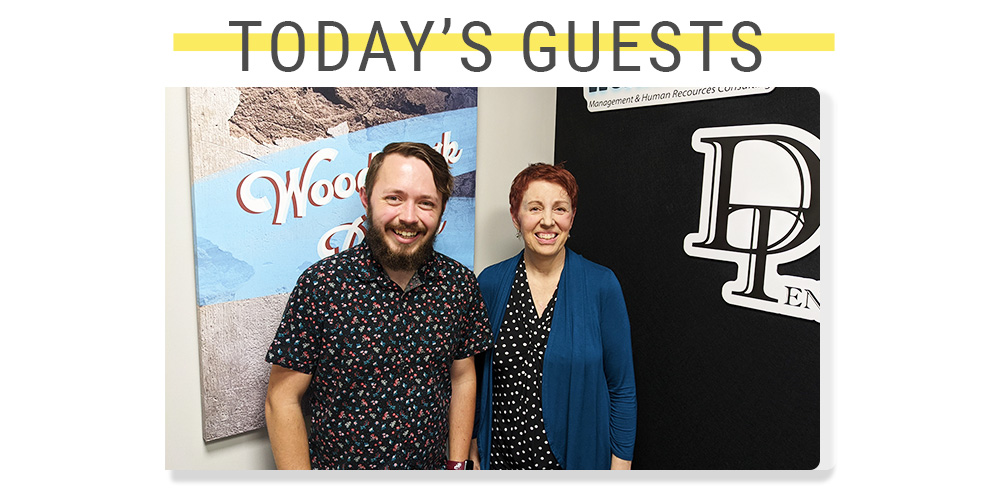
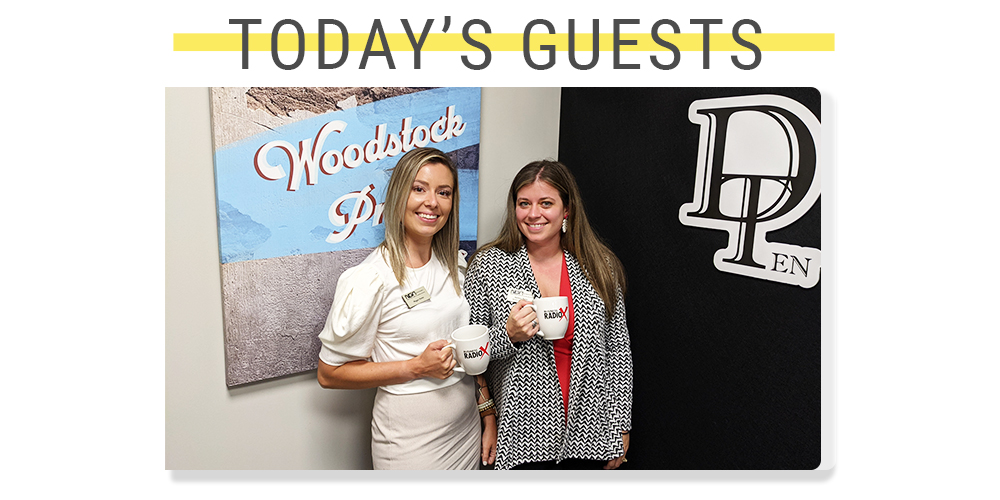
Speaker1: [00:00:07] Broadcasting live from the Business RadioX Studios in Woodstock, Georgia, it’s time for Cherokee Business Radio. Now here’s your host.

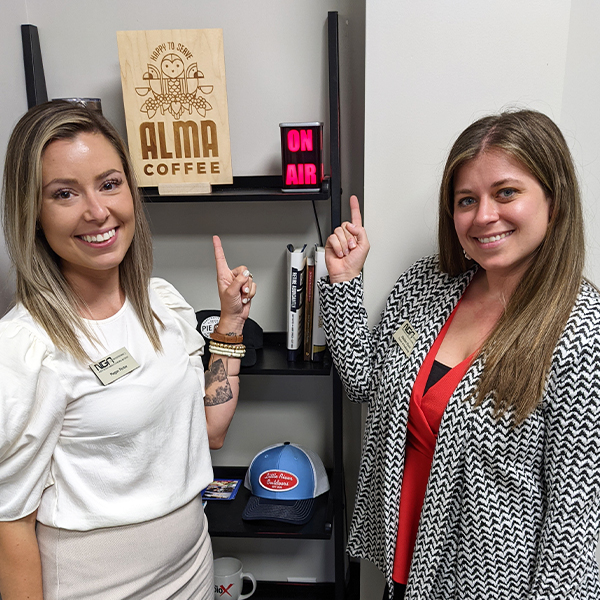
Speaker2: [00:00:23] Welcome to Cherokee Business RadioX Stone Payton here with you this morning, and we are at full capacity, we’ve got a studio full. You are in for such a real treat this morning. Today’s episode is brought to you in part by Alma Coffey, sustainably grown, veteran owned and direct trade, which means, of course, from seed to cup, there are no middlemen. Please go check them out at my Alma Coffee Dotcom and go visit their grocery café at 34 or 48. Holly Springs Parkway in Canton asked for Letitia or Haria. I did that to Harry a couple of thousand. Harry always a say Letizia and Harry. Actually, his name is Harry. He’s a fantastic person, but Letitia is the brains of the outfit. As for either one of them and please tell them that St. Sentier. All right. First up on Cherokee Business RadioX this morning, it is my distinct pleasure to introduce from Orkan this technologies Mr. Ron Sweetland. Good morning, sir.

Speaker3: [00:01:23] Good morning, Stone. How are you?

Speaker2: [00:01:24] I am doing well, man. I’ve been looking forward to this conversation. Tell us a little bit about Nishan purpose. What are you out there trying to do for folks, man?

Speaker3: [00:01:34] Well, we’re just trying to keep everybody in the community and elsewhere safe. There’s a there’s a real threat out there. Unfortunately, we only hear about the big stuff, but nobody’s immune to ransomware attacks, any kind of criminal activity, and we’re protectors by nature anyways. That comes just from upbringing, my time in the Navy. And we just want everybody to be safe. We want to bring education to the community, because that’s the last thing that you want to do, is have that phone call with me saying it’s too late, we’ve been hacked.

Speaker2: [00:02:13] So I. Yeah, yeah, I know. It’s got to be an incredible torture for large organizations, but I can’t imagine, like an organization the size of mine, we would be crippled, I would think, if we got one of these ransomware thingies. And, you know, for small business people, often we’re watching every penny. We’re taking a look at the rent, our labor costs, materials, you know, all that kind of thing. Absolutely necessary service. But I’ve got to wonder about the back story. I mean, while everybody else was playing cowboys and Indians, so you said I’m going to protect people from how did you get into this line of work?

Speaker3: [00:02:50] Well, it started actually probably when I was maybe seven, about 15 years old. My mother was actually and she’s been in the industry for a while and the computer industry and

Speaker2: [00:03:02] My mom can’t send email,

Speaker3: [00:03:06] Which is helpful with that. So a lot of times my choices either were go to Massachusetts and build houses with my grandfather or I would work in a house or I’m sorry, in a warehouse, starting to do computer work and stuff like that with one of the any of the companies that my mother was working for at the time and. You know, one of the claims to fame is that kind of shows my age is we did two projects. One of them was. Going over here to Charlotte, where we did at the time, it was called Wachovia Bank. Oh yeah, the warehouse was filled all the way to the top with computers. So that was one of the major projects that I started with, getting the computers all built up, getting them packed up and all all the software on there. And it just kind of went from there. You know, throughout my career, I’ve always been in some capacity in the computer industry. Some of the other things that I would do is, you know, I was in the Navy for a while. I was on the USS Los Angeles, which was a fast attack sub. We. It was part of the sonar division and weapons department, so we got to either listen to things under the water or go shoot big guns like Tomahawk cruise missiles,

Speaker2: [00:04:34] How mentally tough would you have to be? I mean, my entire frame of reference for this is television in the movies. But you’re in a very confined space. The stuff that you’re looking over and considering employing is very dangerous stuff. You must be incredibly mentally tough, which I’m sure serve you well in your in your work, because I would go berserk. I got a job that they would fire me on the first cruise.

Speaker3: [00:05:00] Yeah. So when you’re going through submarine school and everything else, you get tested and tested and tested. At any point in that time, they feel that you’re not going to correct. You know, they can send you to a desk job or to the surface fleet. That’s the whole thing where

Speaker2: [00:05:19] They put them up in my arms. Nobody even longer.

Speaker3: [00:05:22] Yeah, so. So like a class of 100 after that hundred go comes through, maybe 20 people come out, then what do you get that. You go to your first school, Minocin, our school, and even with that, you know of. A few people going in, you know, the you know, only of even fewer people coming out. So there’s always a cut off process the entire way they had whoever it was basically at the end when you finished your school, depending on how you ranked in the class, you got to pick where you wanted to get stationed. So I got to go to Pearl Harbor, Hawaii, if that tells you my ranking, too. And it was pretty good when I was in Pearl Harbor. I didn’t see a lot of it because we were always out to sea because of the missions that we had to do. But I did have an opportunity to go to Japan quite a bit. We were in South Korea, Australia, Tasmania. Tasmanian devils do exist, that’s the real thing, that’s a real thing. They’re not little brown guys that run around and make a lot of noise. But so basically after the Navy, you know, I went from a few different kinds of jobs, still staying, you know, partially within the computer realm at some point or the other.

Speaker3: [00:06:49] I did do a little bit of stuff because I’ve you know, some of the folks in my family were mechanics. So I’ve worked at, like, mechanics or, you know, Goodyear, Gemini type places and stuff. But I always seem to come around, you know, went got, you know, two degrees. My first one was actually pre law criminal justice. And then after that. I went to school here before Kennesaw State took over, it was Southern Poly, I got my degree there. The funny story with that was, is my senior project. They basically asked us to take this room just filled with old servers and stuff like that. And they said we need this virtualizing. Well, the project was supposed to be at six. I’m sorry. It was what was a three year project. We had it done in six months. They actually built out the data center and stuff for us. And the funny thing was, is as I’m crossing the stage, basically, they’re like, we don’t know how any of this works. Do you want a job? So, you know, staying in the virtualization field, just racking my brains with that. I’d always been in the security portion of it as well. My degree is actually in cybersecurity.

Speaker2: [00:08:13] You have a degree in cybersecurity, correct? So that that hasn’t even existed for too long? I wouldn’t think so.

Speaker3: [00:08:20] It’s about security and assurance. Yeah, so. Just kind of going from there, you know, we all had. Things where we’ve had jobs and stuff like that, where, you know, just something doesn’t work out and it’s the whole mantra there where it’s like you don’t quit a job, you quit a boss, just, you know, unfortunate circumstances. And finally, the final straw was, you know what, I can do this. I had, you know, a very wonderful support program. You know, my wife works full time.

Speaker2: [00:08:55] All right. Now, here, I got to stop you. You got you got all this job security. You got you. Things are going well. And you go home and you tell honeybunch, I’m going to I’m going to I’m going to start running my own thing. What was that conversation like?

Speaker3: [00:09:12] Actually, thinking back of it, you know, after kind of doing a lot of the job hunting and stuff and people just at that point not realizing, you know, the potential that I would be able to bring to their company. I think she was actually the one that actually said, why don’t you just start your own thing? You’ve always talked about it.

Speaker2: [00:09:30] Shout out to her. What is her name? Jennifer. You go, Jennifer. Thank you, Jennifer.

Speaker3: [00:09:36] So getting her support, she was fortunately making enough to, you know, support everything and. You know, we went from there and, you know, it was tough, was it

Speaker2: [00:09:51] Hard in the beginning? It’s hard to yeah. Yeah. Get those first few customers right.

Speaker3: [00:09:55] It was really hard to get the first customers. You know, my first customer is probably still my best customer that I have. I don’t know anybody that.

Speaker2: [00:10:04] But that says a lot. The right guys. I mean, everybody here at the table knows that. I mean, that means a lot, right? Oh, for sure.

Speaker3: [00:10:12] And. That was actually a word of mouth from another couple that you had on a few weeks ago magnetize me. Oh yeah, they take care of their website and they referred me to him to say, hey, you know, maybe you check this guy out. So me sort of circles around. So, yeah, just that that continual support that she would give to it to us. And then just it’s finally starting to, you know, get take off and stuff like that. So.

Speaker2: [00:10:45] Well, I am delighted to hear it. So let’s talk a little bit about the problem. Some of the strategies toward a solution. Help us get a good handle on what the problem is, what it looks like, how to how to look at our situation and determine if we ought to at least just have a conversation with you or somebody on your team.

Speaker3: [00:11:05] Well, the first thing is, is to. Look at your computer. Am I using a reputable. Antivirus software, is it is it monitoring me live and even going back further than that? Am I going to websites that are potentially places I shouldn’t be going?

Speaker2: [00:11:26] Was he looking at you? That’s a great question.

Speaker3: [00:11:33] You know, going from even starting from there, the biggest delivery method is through email. So I find a lot of times that’s that’s usually what it is. And it looks harmless. People get headaches and stuff all the time. Well, it’s very easy to go in, you know, for somebody with the right skill set to go in and embed things into that. So it’s like, oh, yeah, this looks like a normal PDF, but after you download it on your computer, that’s it.

Speaker2: [00:12:07] You’re done out. So is that just like a basic rule? Don’t download speeds or don’t download unless you know who you are? I mean, what are the what’s the common sense? Just general operating procedures for for just regular folks like.

Speaker3: [00:12:21] Well, you could say, you know, what downloads something from somebody that you know, however, that doesn’t always work either, because if you’re getting if that person’s account has been hacked and then they send you something, it’s like, oh, well, this is from such and such. I know you say. And then you download it and then that’s it.

Speaker2: [00:12:39] So you’re scaring the bejesus out of me. I mean,

Speaker3: [00:12:43] It’s it’s the one of the things I do try to do is is not try to. Scared? I try to educate. I’d like to say so. A good, reputable antivirus software solution is going to have something where it scans it before it even downloads.

Speaker2: [00:13:02] Ok, so that’s a good start. That’s just like table stakes. Don’t even turn this thing on without that. Right.

Speaker3: [00:13:07] Ok, so a good antivirus solution is going to serve you all day making sure that computers are up to date. I’m sorry, there’s no more support for Windows seven. So if you’re on Windows seven,

Speaker2: [00:13:21] But please call

Speaker3: [00:13:22] Me and we’ll help you or one of one of the other. You know, many great I.T. companies that are in the area can help you do that. We’re actually getting ready to try to do a huge migration with one of our customers. So it’s what happens this is when they don’t support it, then that’s the operating systems that the hackers go after. It’s like there’s no more security patches. And I already know that this is open right here. I’m just going to exploit this all day.

Speaker2: [00:13:50] Interesting.

Speaker3: [00:13:51] So, I mean, stay on top of the security patches and the updates with your computers. Make sure you’re at least on Windows 10 now. I mean, I’m not a I’m not a brand loyalist or anything. Anything that’s reputable. Just right, make sure that there are some.

Speaker2: [00:14:08] So that’s just some of the basic stuff that we all should be paying attention to. OK, so let’s shift to we’re thinking about looking at engaging you and your team. What does that look like, particularly in the early going? What does that process look like if we want to engage you?

Speaker3: [00:14:24] One of the things that we like to say is. If you look at it from a restaurant point, your cook can’t be the health food inspector, so you can’t if you go until you’re cook and say, hey, is everything all right back there, he’s going to say, oh, yeah, everything’s fine or whatever. And this your cook’s been there for years, has been doing the same thing. You have complacency and everything else. Well, he’s not ever checked, you know, to make sure that the anything’s calibrated on the refrigeration units and everything else. We’re just that second set of eyes that and

Speaker2: [00:14:59] Incidentally, this guy might not be lying. He may actually think everything’s OK. Right. That’s his that’s his lens. Right. Everything smooth is running. We’re getting the food out. But OK, go ahead. I’m sorry.

Speaker3: [00:15:10] And I mean, that’s the thing. And, you know, using another analogy, he’s been working on gasoline engines all day in your house and you burn all of a sudden you bring in a big truck with a diesel engine. He’s not going to have the tools or even the skill set because that’s a completely different thing. Right. So that’s where we can come in. Our purpose is not to make them look bad, it’s to actually make them look good. And not only, you know, do the check and everything else, but also teach them, you know what, these are the things that you’ve got to stay on top of. These are the things to look for.

Speaker2: [00:15:43] So and I would think that a professional in that capacity, internal like that, who is who is really at the top of their game would want outside perspective. They would want and you just like the, you know, the best in sports, want some coaching and some counsel and help them kind of rethink the way they’re coming out of the starting blocks. Are shooting the Frito or or what have you. Right. Yeah. All right. So you come in to offer some fresh perspective. Do you do anything in particular that you’re allowed to talk about to kind of get things going and get a good handle on what what the situation is?

Speaker3: [00:16:20] Right. Generalities.

Speaker2: [00:16:22] They don’t want you to share anything. You know, they don’t want to give the hackers a tip or anything. Right.

Speaker3: [00:16:27] So basically, we go in and we’ve got tools where we can go through and basically knock on all the doors and windows to make sure you know what’s open. What can we actually get into, what are the hackers, you know, looking to do and. Based off of that, then we can say, all right. This is OK, that it’s open, but you have to do X, Y and Z. So basically we go through and do a full blown analysis on everything and their technology infrastructure. Not only do we do that, but we go and say, who are your vendors and who has access to your network?

Speaker2: [00:17:05] Ok, so because this could be an Achilles heel, right? The vendors and however, where our relationship is over, the correct.

Speaker3: [00:17:13] So it’s you know, well, we deal with this guy who delivers corn to us all the time or something. Well, he was just hacked last week, but he still has access point. Well, guess what? He has access and to use. Well, yeah. Yeah. So it’s the continuously thing. It’s basically it’s we have to have the mindset of a criminal to go in,

Speaker2: [00:17:33] And that’s what it is. Now, this is getting fun. So you really do you sort of have to play kronemer. You got to start thinking like the criminals threat to really help me. Right. That’s got to be fun, huh?

Speaker3: [00:17:45] So we you know, so there’s that we actually go through and we have. Do analysis on their their you know, can I get into this door even, you know, that’s part of that thing. We’ve got tools. I’ve got a tool where, you know, some of these have the slide locks or whatever and, you know, key cards, ID cards to get into access. I have a thing that I can go I can be like five feet from you and activate this device. It reads, what’s on that card? Holy cow. Then I switch it and then I can put it back in and submit mode and then I can just go in the door that you just came out of.

Speaker2: [00:18:22] If I do anything at all to make you uncomfortable or piss you off during this interview, please tell me and let’s clean it up because I do not want you mad with me. So do you actually find yourself on some projects? Even I saw this in some movie, like actually hacking their system just to kind of just to see where the faults aren’t and say, hey, look, Joe, look, soon you got some real challenges here, so.

Speaker3: [00:18:48] That’s a really fine line when I graduated, just like doctors do, I had to sign a Hippocratic Oath. Basically, I’m not going to do bad things with the knowledge that I have. And, you know, most everybody that has come out of there, you know, we stand strong and behind that. Right. The laws are pretty much like this. If you think of a house, I can come and I can knock on your door. I can be even creepy and look in your windows to see if I see something. The second that I enter your door, that’s when I’m breaking the law.

Speaker2: [00:19:23] Ok, well, I’m not suggesting you do it as a marketing technique, although I can see where that would work. I mean, like with like full permission, like, come on, let’s

Speaker3: [00:19:31] Show permission,

Speaker2: [00:19:32] Ok? No, I did hear a story once where I’m from Pensacola, Florida, got sold windows, had a pickup truck with kids and it would be big guns. So anyway, yeah, I’m not suggesting we’re OK, but not with full permission.

Speaker3: [00:19:46] So full permission. We go in there, we go in and as deep as we can.

Speaker2: [00:19:50] Ok, and B, you put on this hacker persona, right? Right.

Speaker3: [00:19:54] So that’s one portion of it. There’s actually a service that we provide. It’s called red teaming and usually that is hired out. That service is activated by a CEO, usually of CFO. Yeah. Upir things. And basically that is you’re not telling your IT department that were there. And think of it as kind of a ninja type thing where we’re going to go in and infiltrate as silently as we can, go all the way and see how far we can get and then come all the way out undetected.

Speaker2: [00:20:22] So this is where the submarine training the mom and the computers, the virtual all this you like the perfect pedigree, education preparation for this work, didn’t it?

Speaker3: [00:20:32] Yeah, it certainly helps. Yeah. So I mean, and that’s kind of what the submarines go in and. Right. Remain undetected. So that’s that’s that’s called red teaming where we go in and we just we go in like ninja’s and see how far we can go and then we report back. And again, it’s. Well, the IT department get really hurt feelings, probably, but I mean, at the same time, it’s it’s it’s an eye opening experience for them. It’s like, look, right. If we do this again, we should only be able to get to this point before you have alarms and triggers and stuff going off, because that’s that’s something to a lot of these companies. No matter what size they are, they don’t even have monitoring, saying, hey, something’s not right here, or you’ll have a company that says, oh, yeah, I’ve got a firewall that I got at Wal-Mart. Well, you’re a business. You know, those are even, you know, at best something that you use for your house.

Speaker2: [00:21:32] Well, and there goes my Wal-Mart sponsorship. Thank you. They’re very good. Very good. One other thing that is a great deals on TV. Snufkin, we’re going to have to wrap here in a minute because this is fascinating to me. I could talk about this all day as much as is scaring me a little bit. But I did want to ask before we wrap this segment, what about the human factor? Like even with all these tools in place, there’s some are I get the sense that there are some things that we can do and not do that could that could keep us from shooting ourselves in the backside to. Right. Right. Don’t we as humans open some doors that we shouldn’t. Yes.

Speaker3: [00:22:10] Ok, humans are are unfortunately the weakest link. OK. All right. Well, we’re somewhat trusting and we’re very happy. And it’s like, wait, I didn’t mean to click that. Well, you can’t take that back. You can’t control.

Speaker2: [00:22:27] So I’m clicking.

Speaker3: [00:22:28] Yeah, you can’t control Zeya. But a mouse click. So there’s. There has to be a little bit of sense of slowdown, have a little bit of sense of paranoia, because it’s like there’s a lot going on right now. I get a threat feed every day and it’s just astronomical, the stuff the people don’t even know and hear about. I mean, like Chrome, for example, you constantly have to update Chrome because everybody that there a huge target. Everybody’s want to find what that vulnerability is to do. So.

Speaker2: [00:23:03] Interesting. All right. We do need to wrap this segment. You got to come back some time and it might be even fun. Maybe come back with a delighted client like a local client. OK, and we’ll talk about their business, too. But what I’d really like to do is hear about the partnership and how you got. I think that could be a lot of fun. All right. If someone out there would like to speak with you or someone on your team, let’s give them some points of contact, whatever you think is appropriate. Oh, yeah. I don’t know what’s a lot of you got to have, like, an encrypted password, but I’d love for them to be able to get to it, get in touch with what’s the best way for them to reach out usually.

Speaker3: [00:23:38] Well, I say this call me, but I actually have that rainbow color sometimes and it doesn’t go through. So you may be talking to Boris, but my number seven seven oh seven one two six six six eight emails. Always good. It’s just ah S.W. Etty and D at or cannas dot com, you know, always come check out the site if you’d like to or kind of Starcom. And you know, even if it’s something, if you’re not sure we’ll make sure as secure. So I mean we can do that.

Speaker2: [00:24:14] So fantastic. Well thanks so much for joining us this morning. And this has been informative, a little bit scary, but I think it’s an important topic and I want to stay on top of it. And I’m quite sincere. I think there’s probably some wisdom in that. And you’d come back, come back periodically. Hey, how about hanging out with us while we. Absolutely. Couple of the guests are right. Next up on Cherokee Business RadioX, we have the man managing partner, grand poobah with Carolina cleaning solution, Mr. Luke Brulard. Did you learn anything in that last segment?

Speaker4: [00:24:46] Yeah, way too much from one that we we probably don’t want to go into talking about commercial cleaning after that. But, man, that is that’s fascinating. I definitely need to probably upgrade my my computer system. Yeah. Or Canice will be getting a call from me.

Speaker2: [00:25:05] You know, we didn’t ask you, we’ll ask him off here maybe because I really do want this to be your time. And you’re saying we didn’t ask about the origin of the name. We’re Canice maybe. Maybe on the next episode we’ll jump into that. All right. So let’s talk about your outfit. Sounds pretty simple, straightforward, but my experience has been it never is what you’re doing and wineman.

Speaker4: [00:25:25] Yeah, absolutely. So, again, I’m a commercial cleaner that simple. We we handle your nightly janitorial. We will do all of the specialty flooring. What we consider specialty flooring would be stripping and waxing floors would do your carpet cleaning. We will your tile and grout clean that make sure those draglines lines are nice and white or gray again, whatever color they started. But we’ve also recently gotten into polished concrete work and then live stone polishing. So the traverse steans, the really nice tile you spent a lot of money on. Yeah, they, they dolen way over time we will grind those out, repolish them to their natural beauty.

Speaker2: [00:26:04] I think I may have seen what you’re describing. I may not have most of what I discover. Most of my new knowledge comes from either being in a winery, a craft brewery or a bar. This time it was a winery and kill a couple of weekends ago, but it was this beautiful floor that was clearly concrete under it. But somebody had done some magic. Something on top of that. Is that maybe what you’re talking. It was beautiful.

Speaker4: [00:26:29] Absolutely. A lot of people actually like epoxy or put a another kind of chemical sealant over it. OK, do is naturally polish it. You can get a concrete floor looking really shiny naturally, really

Speaker2: [00:26:41] Just by scrubbing the heck out of it with the right.

Speaker4: [00:26:43] Yeah. And it actually last a lot longer. So heavily, heavily traversed area. Right. Naturally that that ceiling is going to wear away over time by naturally polishing it and bringing that that just. No, no additional chemical you’re going to get, you know, three or four times the life out of that floor,

Speaker2: [00:27:03] So your services it the kind of thing that businesses will try to kind of do on their own up to a point. And then they said, OK, we’ve got to get some pros in here. Do you run into that lot where you’re sort of taking over from the three people on staff who are responsible for emptying the trash and all that? One hundred

Speaker4: [00:27:19] Percent. Yeah, we we do get that feedback a lot. Oh, we do that in-house. It’s like, awesome. That is great. I’m glad you have somebody doing it right. What’s been your satisfaction level? Is the the million dollar question. What is your customer satisfaction level when you walk in and you see something that it’s maybe a little unsightly, that kind of it’s a reflection on you in your business. At the end of the day, that’s where we come in. We can we can absolutely help that. But if it’s if it’s janitorial, a lot of smaller businesses will do that in-house. Not a problem. I completely understand. But those in-house folks aren’t going to be the ones to do the carpet cleaning. They don’t have the tools, the resources to do that VCT tile work, make it, you know, really shiny. Again, you walk into a hospital there, they’re usually very, very clean, very shiny. There’s a reason for that. A professional team came in and redid that floor and they do it a lot. So.

Speaker2: [00:28:13] So is that sometimes your entry point then? You know, maybe I’m a financial services company, a real estate development company, whatever. I’ve got a couple of floors over here in a commercial building and we’ve had, you know, just different people emptying the trash and every now and again. But maybe your entry point is you can come in and do a deep clean on the carpet or that. Is that how you sometimes build the new relationships?

Speaker4: [00:28:32] Absolutely, yeah. One time cleans are great for us. It’s it doesn’t have to be an ongoing relationship, but obviously we would love that. Sure. But yeah, we will come in, we’ll do a maintain clean, we will do a one time clean, we’ll do a construction clean up. So obviously either a property takeover or a brand new project just got built. We can come in and handle that.

Speaker2: [00:28:54] Absolutely so. Well, I’m always fascinated and I’m interested to get Ana’s input on this as well. In a moment, we’re going to have in NATO and in her compadre, Jessica, talk about all things marketing. But I am curious to know how the whole sales and marketing thing works for a firm like yours, because it’s B2B. It is. So it’s not like a Super Bowl commercial not going to do you much good. Plus could be a little your pockets may not be that deep anyway. How do you get to have even like conversations like this with people who ought to be seriously considering your your services? How are you how are you getting in that position?

Speaker4: [00:29:30] Yeah, absolutely. It’s it’s local community work networking. We we’ve actually sponsored a whole for a the crew Atlanta event. So that’s like women in real estate. From there. We just we got the opportunity to talk to all the people we try and we’ll call it cold call unfortunate. It’s the nature of the beast to get out there. You have to kind of cold call. Sometimes it’s not fun. So the more we can get out and be in the community and network and see you face to face, the more you get to know us and, you know, realize that it’s there is a face, there is a person, there is a soul behind, you know, that that cold calls because

Speaker2: [00:30:09] Ultimately I’m by. And Luke, right?

Speaker4: [00:30:10] Absolutely you are. You’re my me, my company, my quality,

Speaker2: [00:30:15] The whole shebang. And there’s so. And is that consistent with your experience of an outfit like Luke’s? He’s got to just get out there and build those relationships. And what’s your take on the best way for an outfit like this to do?

Speaker5: [00:30:26] Absolutely. Like face to face networking is still the number one way to go. I mean, it’s still the most viable way to get new clients. And like you said, when they see you as a person rather than, you know, even behind a phone or computer screen or an email, there’s a little bit more impactful and you can make that connection a little bit more easily. So I feel like that is definitely I mean, I’d say you’re doing all the right things.

Speaker2: [00:30:53] It’s good to hear and hear pros

Speaker5: [00:30:56] Like, you know, especially in a B2B business, because it’s very different model for marketing and immediacy. So. So I say kudos.

Speaker4: [00:31:05] Yeah. Thank you. Yeah. Three three months in and I’m already getting that praise. So that’s good. Good to know I continue.

Speaker2: [00:31:11] So what are you enjoying the most. I mean what are you finding to be the most rewarding about the work.

Speaker4: [00:31:16] Yeah, absolutely. So I came from a corporate sales job. I was a national account manager for a large bathroom and kitchen fixtures and company. And the best thing about being my own boss at this point is, is waking up knowing that any impact I have on the business was directly generated by me, directly generated for me. That is the absolute best feeling. That’s why I, you know, with my business partner started this business was I want to work for myself. I want that gratification of, you know, I get a project done, you know, pat myself on the back, so to speak. It’s it was all me. And it it’ll impact both myself and my family and my wife.

Speaker2: [00:32:01] So, yeah. OK, so three months in kind of coming into this effort, let’s because many of our listeners are entrepreneurs, sometimes even aspirational entrepreneurs, maybe they haven’t made the leap yet. Yeah. Council, if any, that you might have, I don’t know, three or three dollars, whatever you do, do this, whatever you do. For God sakes, don’t do this, this, this early in. What would you what would you say to these folks?

Speaker4: [00:32:25] Yes. So far I don’t have any don’t do this. Everything, you know, knock on wood is is worked out extremely well for us thus far. But if you’re even aspirational, you’re looking at at starting a business. I say do it. There is no such thing as a perfect time. You might be looking for that sign or that that one moment, that one thing that says it is time, it’s never going to come. You just kind of have to do it. And, you know, I have to kind of piggy back on a lot of what Ron said is the way his business started. He’s got a very supportive wife. She is able to mine is able to kind of take care of the bill, so to speak, while I’m building this up.

Speaker2: [00:33:04] And obviously so marry up. That’s step one. I think we are going to have a checklist here by the time we’re married or not. Yeah, sounds like we

Speaker4: [00:33:11] Both kicked our coverage, which. Great.

Speaker2: [00:33:13] So how do you think I get to do it my way as a great job?

Speaker4: [00:33:17] Yeah, exactly. So, yeah, my wife April, give her a little shout out here. Very, very good job in education. So she’s she’s been able to kind of hold down the fort, so to speak, while I’m out, you know, hustling as hard as I can to grow. But there there really hasn’t been a don’t do this so far for me, which is a great feeling to have. But it’s all do it. Just just go out and do it. If you want it, go make it happen.

Speaker2: [00:33:43] All right. Very tactical question. I’m asking as much for me as I am for the listeners because, you know, it is my show. Right. How do you handle the money question? Do you wait for the question to be. Answered, You go ahead and bring it up and then do you do the kind of very matter of fact, you know, some hundred thirty eight dollars and 14 cents and, you know, kind of your answer or do you do the more it depends. And the range thing and as

Speaker4: [00:34:08] Far as my pricing is, how

Speaker2: [00:34:10] Would you if you’re willing to share it, I’m just I’m curious. I think, again, I think our listeners want to hear that, you know, and that comes up for me, for people who want to underwrite or host shows. I’m you know, I’ve been doing it for 15 years and I’m still trying to figure out what is the best way to have that conversation.

Speaker4: [00:34:25] Yeah, it’s to have obviously you’re in business to make money, right?

Speaker2: [00:34:30] So don’t avoid it. Don’t avoid it. I told you, we’re getting a heck of a checklist going here, guys. We could publish this and sell it. OK, no, no.

Speaker4: [00:34:37] Yeah. Don’t avoid it. It’s that’s why you’re there. That’s right. They have you there to pay you for a service. But what I go in, I obviously will go in for free, take a look, see what exactly they want. And then from there, it’s the pricing model kind of changes depending on the space, depending on the the overall assets of the job.

Speaker2: [00:35:00] So your work really is custom. There’s no two spaces and needs exactly the same way.

Speaker4: [00:35:06] Now, right now, your office and, you know, the office down the street are going to be priced different. And that’s just, you know, none of my business janitorial. You can look anywhere from probably 10 to 12 cents a square foot, up to probably 15, 18.

Speaker2: [00:35:22] So you have some rational basis to rent to figure because it is a very tangible service.

Speaker4: [00:35:29] One hundred percent. Yeah, it’s it’s it’s not just, you know, pull it out of the hat, so to speak. There is a science, we’ll call it to it, but it’s it’s all based on the industry. Obviously, some folks are more expensive than others. Some are cheaper than others. Some just want to win the bid. So they underprice you know, that’s that’s where the almost level of quality would come into the conversation as well. You know, the cheaper we bid it, you know, unfortunately, the cheaper the jobs. You know, look, I think you could say that in almost any industry, but especially in cleaning. So it’s not that I’m going to say I’m the most expensive by any means or I’m the cheapest. But there is a kind of pricing continuum we look at depending on the the scope of the work.

Speaker2: [00:36:17] All right. So let’s talk about the people side. Yeah, recruiting, developing, keeping good folks. You have people out there right now while we’re talking, as I understand it, somebody on behalf of you and your organization, they’re out there in a persons place of business. And I mean, this is critical. I mean, they could sink. You are really elevate you. What’s the how do you crack that code? Manhattan, the right people, keep it motivated, that kind of thing.

Speaker4: [00:36:43] That is the secret sauce. But it’s it’s hard. It’s hard. It’s brand new to me. I’ve been in interviews. I’ve interviewed people. I’ve never been the person to make the final decision. And now obviously I’m I’m in that seat. I’m wearing all those hats. Right. We put a post out there actually on social media, another shout out to my wife doing a great unpaid internship, our social media.

Speaker2: [00:37:12] April, April is way to go, April. Yeah, right.

Speaker4: [00:37:15] Who’s listening right now? So I know she heard that awesome job. Yeah. We we just honestly put some posts out there saying, hey, we’re hiring for these positions. Got a lot of interest in them. And I went from their message to back, set up an interview, talk to them on the phone. If if they sound like the right fit, you don’t. This is an unskilled labor job and I’m not going to try and overcomplicate.

Speaker2: [00:37:39] So you’re not looking for skill sets as much as your personality, personality and that kind of correct.

Speaker4: [00:37:45] I want you to sound honest. I want you to sound like a hard worker. Obviously, I don’t know that until you actually get there. So it’s kind of a shot in the dark, so to speak. But so far, I’ve been very, very lucky. I’ve got two folks working right now as we speak on some properties and so far so good. I will say I do a very, very good job at it, being there and supervising especially, we’ll call it training hands on as we start out the account. That way, I’m setting the expectation the client or the customer’s setting that expectation and everybody hears it. And there’s no that kind of middle man telephone game. I’m telling you to do this. They’re telling me to do something different. So everybody hears it, you know, straight from the source. That’s kind of also help me out a lot, especially in these early days is is making sure everybody’s on the same page.

Speaker2: [00:38:38] All right. So what’s next for you? Are you going to continue to grow? You’re trying to go deeper in his existing accounts, a little bit of both. Where’s the energy going to be over the next few months?

Speaker4: [00:38:46] Yeah, it’s growth mode. One hundred percent is my big focus, I think, going forward at least the next six months. Strategic partnerships, there are a lot of companies that they don’t necessarily do what we do, but they are in the spaces that. We want to be in doing similar jobs, so for one is we work with a commercial flooring installer. In the past, they have not offered any sort of with their customers, any sort of cleaning or maintenance packages, which since I’ve been able to, you know, meet and partner with them, they’re now able to do so. They’re offering a free service on their end to their customers that I basically come in and and help them with. So interesting. It’s just a major matter I see this morning.

Speaker2: [00:39:36] And that is that is good. One of our sponsors still interiors. Yeah. You see him on the sponsor wall there. They will come in and install like they’ll do like if there’s 30, 40 of these deaths like we have in here, these kind of go up in offices and they’ll do that kind of stuff. So that’s a maybe even a potential partner for you. But yeah, because you’re not competing and they’ve already got a relationship, obviously, with the people who run the show. So, yeah, very.

Speaker4: [00:40:04] I’ve got a similar company to sounds like steel interiors I’m working with currently trying to

Speaker2: [00:40:10] Give them a shout out. That way I can send them an invoice. That’s the

Speaker4: [00:40:16] Business environment. Business environment. I say cabling.

Speaker2: [00:40:19] So it’s very cool.

Speaker4: [00:40:20] Two different entities under

Speaker2: [00:40:22] The same roof. Right. So you can help each other. You’re serving a common client. You’re genuinely helping them. And I know so well, I mean, as simple as our great guests come from our great guests. Right. And it’s I’m sure the same thing is true in your world. Well, in our world, you know, our great sponsors and underwriters and hosts and ambassadors, they come from other people and they go, oh, you ought to talk to Jill or referrals.

Speaker4: [00:40:44] Yeah. The other shot I have to give is the commercial foreign companies, Vanguard commercial flowerings, OK. They’ve been great guys to work with thus far.

Speaker2: [00:40:51] So, man, that is you’re really you’re playing three dimensional chess here instead of just trying to do my best. Fantastic. All right. If someone wants to reach out and have a conversation with you or have you come out and look at their property. Yeah. Or just anything in between, what’s the best way for them to connect with you?

Speaker4: [00:41:09] Yes. We have a website w w dot Carolina cleaning solution. No South Carolina cleaning solution.

Speaker2: [00:41:17] Dotcom, there’s only one solution. We want a lot of baby and it is ours.

Speaker4: [00:41:21] So you actually get to the pager’s the landing page, you either click on the logo for my business partner or you click on mine. Mine is the one, says Geet underneath Georgia and it has a peach. So that’s that’s where you can find all my information or our socials. We are Carolina Cleaning Solution of Georgia on Facebook and Instagram. Both my email, phone number. Everything you need to contact me is right there. I love to hear from. Yes.

Speaker2: [00:41:47] Marvelous. Well, thanks so much for coming in, man. And keep up the good work. I appreciate it. Congrats on the moment. And we’re going to keep following your story. Awesome. Thank you. All right. Next up on Cherokee Business RadioX, are you ready for the headliner? She and her buddy over here have been so patient that they’ve been taking copious notes. I don’t know if they’re going to rescue you guys and help you with your marketing or if they’re getting just some ideas from you. But no, it is such a pleasure to have this lady and now her colleague here in the studio. She was kind enough before we actually had a physical studio here in Cherokee. She was kind enough to do a phone based, a virtual interview with me, and then to kind of get me started getting me connected with some of the folks in the community. So please join me in welcoming back to the Business RadioX microphone with Tiel Marketing, Miss Anna Teal. How are you?

Speaker5: [00:42:45] I’m doing good. How are you?

Speaker2: [00:42:46] I’m doing well. I am just thrilled to actually have you in studio with us. This is going to be so much fun and what a blessing to have come into your circle some weeks ago. It’s been marvelous. Thank you so much for coming in today.

Speaker5: [00:43:04] We’re happy to be here. I’m so glad to see you face to face this time.

Speaker2: [00:43:08] It’s fun and it’s fun. I know I know you and Ron, that character, you already knew him pretty well. Yes.

Speaker5: [00:43:15] We worked together time, you know, a few times. So he’s a good friend of mine

Speaker2: [00:43:19] And then get a chance to visit with Luke. And that’s a very interesting business. And we certainly want to help him out any way we can. But tell us about till marketing what kind of work you’re doing. And I don’t know what we can do to help.

Speaker5: [00:43:32] Well, first, I want to introduce Jessica. She is actually new to the marketing team and a godsend.

Speaker2: [00:43:39] Welcome, Jessica.

Speaker5: [00:43:41] Our our team has been growing and so all good things have been happening since the last time we spoke. But Till Marketing, LLC, we are a, you know, digital marketing company pretty much. So we actually work for, you know, to help small businesses with their company. Website needs, you know, their advertising needs. If the. I want to run Google ads, Facebook ads, we can help them develop a strategic strategy around that and help with even branding or rebranding their business. So, you know, just from soup to nuts, kind of making sure their brand is consistent online, their messaging is consistent online, and they’re making sure that they’re keeping up with their interactions online, what their customers are saying and reputation management. So that’s essentially kind of what we’re doing right now.

Speaker2: [00:44:34] So when when I think of a C word associated with branding, I think, cool, that’s the first thing you want your thing to be cool. But it sounds to me like every bit as important, if not more so. You mentioned a couple of times already is consistent. Say more about that,

Speaker5: [00:44:48] If you will. Yeah. So really and my favorite part about my job and I’m not sure about Jessica, but we really enjoy working with clients to develop their brand and really get in their headspace because a lot of people, they have trouble talking about themselves. They don’t necessarily want to boast about themselves. You know, they don’t want to you know you know, it’s hard for them to wrap their head around that. So that’s where we can come in and help them develop a strategy and determine, you know, what makes them unique from all of their competition and really develop a strong message online with develop with keywords, you know, SEO potential to help them really make an impression online. So that’s that’s kind of what we what we do as far as that goes. But, yes, it all is woven together. You’ve got to have a strong website so you can funnel your your social channels to that website. You know, that’s kind of like your hub and all of these different marketing levers kind of work to fuel, you know, to your website, which will ultimately gain that lead for you. So from social media to email to traditional marketing, all these different little things are geared to support your ultimate website.

Speaker2: [00:46:01] And they do. Well, it makes sense now that you’ve kind of painted the picture for me because I can’t imagine any business B to C or B to be my world is B to be more I, I mean, as simple as me reaching out and inviting someone to participate on the show if they don’t know me or and hasn’t told them, hey, you know this stone guy, he’s really OK. You know, it’s going to be fun. There was one of the first things we’re going to do. You’re going to go look at the social profiles. We’re going to go check out Cherokee Business RadioX. Maybe they go check out Business RadioX dot com, you know, try to get a feel for the whole network. They’re going to they’re probably going to do all that even before they send me a note and say, yeah, what’s this all about? Or where you been all my life or anything in between? They’re going to they’re going to do that. You talked about unique. Really. I’d like to boil down an example, because I would think this would be a real challenge. Well, being in this business would be crazy challenge for me anyway. But let’s take a CPA. At first blush, I would think that maybe a CPA would really have a serious challenge trying to differentiate themselves from the CPA down the street. But the truth of the matter, what I’m saying this like it’s fact. I’m operating under the impression that every CPA really does kind of there are a little unique. They do have a different angle on things are different. Is that accurate? And can that be surfaced?

Speaker5: [00:47:19] And it is it is to a certain extent. You have those those crowded industries that it’s hard to find a differentiating factor. But I think that’s what we do best. Because, you know, you can’t boil down to yes, your performance is, you know, across the board, very similar to other people in your industry. But there are some little things and Problem-Solving things that you can pull out, like maybe you are best at listening to your customers and serving their pain points in a certain way or maybe getting back to them on time. You’re best at that. You know, if certain CPAs, you know, maybe they they don’t get back to you and for a week and maybe you’re like on it. Right. And that’s something that is a differentiator. And so that’s that’s definitely what we try to get with them, determine what are you the best at in your industry? And we can help weave a story to to put that out there in the digital world, you know what I mean? So we we really try to get down to the nitty gritty and develop a value proposition for them.

Speaker2: [00:48:25] Well, I think maybe you’ve just described how you are different and they are one of the ways that you’re very different in a what I would consider to be a crowded I mean, you can’t swing a dead cat without hitting a marketing person. Am I? Am I right? Wrong. So so you if anybody on the planet has to do this, you’ve got to eat your own cooking. So if you’re familiar with that phrase right. You’ve got to. So that’s got to be a challenge. But I guess if I see the behavior modeled and I see you saying, look, this is our specialty, we’re not all things to all people, this is what we do. We do it extremely well. So this is one of those special ingredients that’s helping us. On this these points of differentiation,

Speaker5: [00:49:06] Yes, absolutely, and you’re right, I mean, we are we we know we know those. We know how it is because, yeah, you’re right, there are a lot of different marketing people, you know, in our community. And so what we like to say is we’re very different in especially with Jessica or she brings such a well-rounded you know, she’s got BTB experience. I’ve got a whole bunch of experience from product management to all different types of, you know, things I’ve done in the past, in my past lives that I bring to the table so we can relate on so many different levels to businesses, especially small businesses that are our favorite really to deal with that and to help because you’re along with them, you know, in that journey. And you can counsel them and, you know, help them. And then you’re kind of being there and you see their success and it makes you so proud. So it’s just it’s a joy for us to be able to help people in our community, you know, reach that different level of growth.

Speaker2: [00:50:06] So, Jessica, are you having fun? So you’re very new, right? Very recently on board.

Speaker6: [00:50:12] Yeah, absolutely. I’ve been with Anna for the past three months and it’s been a great experience so far. I’m kind of speaking to what and as I said, what I really enjoy about with a small business environment is there’s so much low hanging fruit coming from like a large national network in my previous life. There’s a lot of hustle and a lot of huge challenges that you’re after. But when you start to meet with small businesses, a lot of them are at a place where they’re not really sure what they’re doing. And we can come in and really show them. These are some basic things that you can get started and start working. My favorite thing to say is working smarter, not harder, and kind of harder than casting a wide net and helping them to kind of fine tune what their efforts are and maximizing their time and maximizing their budget.

Speaker2: [00:50:54] Yeah. So the oil is there an onboarding structured process that you guys have or every situation so unique, you just kind of have to feel your way with a new client?

Speaker5: [00:51:06] Well, a lot of people come to us with specific dates. So if you go to our website, which is still marketing LLC dot com, you’ll see a bunch of packages that we kind of put together based off of kind of an average of what our customer clientele will want. But usually that ends up getting tweaked because, you know, some people end up having, you know, two social media channels or five social media channels or, you know, they have different needs and they have different goals, too, you know, so we try to get with them and really figure out, you know, what’s your goal this next year? Is it to grow your audiences, to create more engagement? Are you wanting to try a new social media platform and give it all you’ve got, but maybe you need some help and some guidance, you know, so so those things are, you know, developed at the point when our customer contacts us and we kind of say, OK, like we’ll brainstorm what’s best. And oftentimes I will say a lot of our clients will come to us and they’ll be on so many social media channels and they’ll be just killing themselves. And we’re like, based on your industry, let’s like look at this. You know, your customers aren’t really necessarily on all of these platforms. And let’s see if we can cut the fat, you know, because you’re wasting a lot of time and energy, you know, trying to make something work that may not work for you. It may not be where your customer is. So we we want to optimize that, like Jessica mentioned, work smarter, not harder, and help guide them and best practices and how to really, you know, work smart on the social media in the digital realm.

Speaker2: [00:52:39] So in the social media, this can sound like a self-serving statement, because I feel like this is one of the advantages of working with a Business RadioX because we’re such a content factory. Right? I mean, we’ll hang out here for an hour and we’ll generate a ton of content and we’re just chewing the fat. Right. But it’s my understanding that one of the challenges of being effective on social media is just what do you what do you do? Because you go out every time and just say, hey, look at me, I’m great, right? Oh, yeah, exactly. So you have to you have to sort of feed that beast, am I right?

Speaker5: [00:53:13] Oh, yes, you do. You have to definitely feed that beast. But it’s, you know, our biggest motto and I think Jessica would agree with this is quality, not quantity. OK, so, you know, trying to make sure that you get things that are relevant to you, not only for your business, but are also relevant to your customers and your customers. And that’s where it goes back to the branding piece, because when we work with clients to develop their brand, we also develop their kind of, you know, their customer, their target market. We give them a name. We give them, you know, what are their characteristics, where do they live? And so doing that work up front, it may seem like a lot of work and a lot of people are like, why do we need to do this? But it serves you very well, you know, and it kind of sets those guardrails when you’re doing your social media work because, you know, you don’t want to develop. That’s going to be outside of what they’re interested in, because you’re going to get low engagement, so it kind of keeps you focused and it keeps you developing content that’s relevant and that will perform well. And, you know, there are some tricks of the trade when it comes to social media getting around certain algorithms, things like that.

Speaker2: [00:54:21] And that’s where your expertize with that.

Speaker5: [00:54:24] Yes. Would help with that. But, you know, it’s a it’s a very strategic approach. Like I said, that starts with the branding. And we always ask, like, do you have a solid branding brand standards? You know what? Your target audience is up front. So we can make sure that we take all of that information into account when we when we start developing a plan for them.

Speaker2: [00:54:44] So a little while ago, in another segment, in an earlier segment, Luke with Carolina Cleaning Solution was talking about strategic partner. And I’m sure you probably if you’re not already there, you’re developing a social media presence. You have stuff out there on these platforms is Luke. And his organization will serve periodically by coming and shining the light on what was your flooring partner? Vanguard. Vanguard. Is there some wisdom in him, like in them somehow? It’s like doing a post or even a series. That’s all about how what, what, how great Vanguard is like not shining a light on themselves.

Speaker5: [00:55:21] Absolutely. OK, let’s say partnering, doing those social media posts, knowing how to tag them. You know, you tap into their network so they’ve got like a million people following them or, you know, that’s that’s great for you. So I say that I mean, the more you can do it, that that that’s going to help you get an organic boost on social media. So I definitely think that’s a smart way to go.

Speaker4: [00:55:44] Yeah, that’s awesome. Yeah.

Speaker5: [00:55:46] Just just make sure you’re tagging, though, don’t. Yeah. You got to know all the things to make it work.

Speaker2: [00:55:51] You can’t just go out. You got to do that. Yeah. Right. The right you got to. But that goes back to time immemorial. There is some just good mojo in Business RadioX shot in the line on you guys. We get to come along for the ride. Right. We’re going to publish this show in the next day or two. And you guys are going to get some great exposure. And with you being on the show, we’re all going probably get better exposure than we normally would. Oh, but Business RadioX gets to come along for the ride. I don’t have to, you know, brag about Business RadioX during the show or in the posting. Right, right. And so that’s and I mean, that’s all this time just, you know, being a good person and helping other people can be a very lucrative methodology. Well, and I

Speaker5: [00:56:33] Say you’ve got three friends who are going to share all your content, and that’s invaluable. So but, you know, it’s all everyone kind of helping each other promote business. And I think it’s great. I think that’s that’s fabulous.

Speaker2: [00:56:47] So bringing a colleague on like this, did you really have to think through beforehand? And are you probably having to evolve the division of labor? How have you attacked it now that you’re sort of expanded the team?

Speaker5: [00:57:00] Well, I have to say going from one to two is a big decision. And I was a little bit stressed out about it. But I don’t know. I just attribute it to God, worked it out. And, you know, I told Jessica I’ve known her for years. I mean, God, how long have we known each other? Ten years. Let’s not talk about that. We’re going to date ourselves, as I said, we are. But we actually knew each other from college. We were study abroad, roommates to Mexico. Cool when we went to KSC. But, yeah, she’s a dear friend of mine and I knew she was looking for an opportunity. And I said, OK, I’m listening to her text message. And, you know, if it’s meant to be, it’ll be. And it was meant to be. It was meant to be this time text message. She was like, oh my God, I’m crying. And I’m like, why are you crying? Just like, I need to be sad for me. So it just worked out, you know, and when those things happen like that, you just you’re like, oh, I guess this is meant to be. And it’s been great. We’ve had so much fun working together and helping clients and serving our community. So it’s just it’s great.

Speaker2: [00:58:01] And you take that quite seriously. This serving our community. I mean, we all say it and I and I will say Business RadioX really tries hard to do it. But you really take that’s a very serious part of your ethos, your value system, the way you guys want to go to market.

Speaker5: [00:58:17] Yeah, absolutely. I mean, community is first. And like I said, when it comes to small businesses specifically, especially in our local town, we want to see those businesses succeed and we just have a soft spot for that. And so I think, you know, we really try to work hard to get them up and running because small businesses, they’ve kind of gone through the wringer the past year or so. And so I’m

Speaker2: [00:58:41] In I’m raising money. You know, it hasn’t been an easy ride, right, guys?

Speaker5: [00:58:44] It has. And so, you know, I think that kind of fueled our passion more to help do whatever we can. And we really think of our clients as family, you know, our friends. It’s just we’re kind of partners with them and they know that we want them to succeed and we’re acting in their best interests. And, you know, we’ll never sell them in. Do you think they don’t need because we know they’re tight, you know, we sure the hard times they’ve just come through. So we really tried to say, hey, if if I was in your shoes, what would I need and what would be my top priorities? And that’s how we

Speaker2: [00:59:15] That’s a great way to approach it, in my experience has been with small business people. When they start to see and rely on that, then they will invest more with you if it makes sense and they trust you. And and so sometimes those can be very significant, lucrative accounts, but rightly so because you’re delivering on the ROI. So probably a conversation for another time, probably not even an on air conversation, although it might be fun to do it that way. But I want to plant a seed with the two of you. One of the key ingredients to getting a new studio up and running in the Business RadioX network is to one, have a house show like this that serves the general community. And then there are some specific niches, different ecosystems that we all try to serve. So I’ve been teaching people how to set up these studios and run them for years. But here, one of the next steps for us is I need and want to launch a women and business show. Oh, so I need to be thinking about the branding, the positioning. The last person on the planet that should host that show is me. I’d like very much to find a sponsor. I don’t have to get rich off the sponsor, but but, you know, I need I need it to be positive cash flow on that. But the the show concept, if you will, is to have a room full two, three, four at a time, businesses that are run by by females, by women in business. So I’ll take all the help I can get just casually, just as you know people that you think we ought to invite to be anything from guests to sponsors and hosts or whatever. But also, I think it would be unwise not to really think through. I don’t think just Business RadioX or just Business RadioX Cherki Branning is enough. I think we’ve got to go a little deeper. And really, does that make sense to you?

Speaker5: [01:01:05] Absolutely. I think that would be smart to do count as in. We’ll be glad to help with that.

Speaker2: [01:01:09] Well, thank you. But I would think that we would you know, we would want to walk through this whole process and really think that who are we trying to reach? Why are we trying to reach and where the hanging out, where they get all the stuff you marketing as the ask the good questions. So anyway, we’ll take all the help we can get on on that front. Yeah, of course. So what’s next for you guys? It’s an exciting time for you. I feel like particularly in this community, what a supportive community Cherokee is. But it’s I feel some some new energy. I don’t know, you know, with the pandemic, kind of some of those worries are subsiding. Is that influencing some of your your plans for the coming months? What’s on your radar?

Speaker5: [01:01:53] Yeah, I mean, I think we want to grow and we want to like, you know, kind of expand. And like I said, the more we can help our community, the the better we are. And so I think we’re we’re just definitely on that growth bandwagon. So we’re we’re looking for new clients. And so we’re we’re definitely we’re definitely there. So.

Speaker2: [01:02:13] Yeah, well, if there’s a way for you to leverage this platform to build relationships or serve your clients or let’s I mean, let’s think that through a little bit, because that’s a it’s a it’s a fun way to serve, right?

Speaker5: [01:02:24] Absolutely. Yeah. I love it. I love it. I’ve enjoyed hearing everyone’s stories.

Speaker2: [01:02:29] I have to it’s been a blast. And Jessica, I’m so glad that we’ve got you in the fold. This is fantastic. Welcome aboard.

Speaker6: [01:02:36] Thank you so much. So happy to be here.

Speaker2: [01:02:38] Yeah. All right. Let’s leave our listeners with a way to get in touch with you or just go whatever you feel like is appropriate. You know, LinkedIn website, Thone, whatever share.

Speaker5: [01:02:49] You can go to our website at Telemarketing LLC Dotcom. You can find our contact information there. You know, phones, emails. If you want to email me, my email is Anna at Telemarketing LLC Dotcom. If you want to email Jessica, you can flood her inbox. Jessica at Telemarketing LLC Dotcom.

Speaker2: [01:03:11] What a delight to have you two in the studio today. Let’s do it again. You know, I’m quite sincere when I say let’s swing back around. And absolutely,

Speaker5: [01:03:19] I would love to be a part of that journey to offer some insight into women in business, because

Speaker2: [01:03:25] It’s fantastic. All right. I’ll put some thought and energy into that. All right. Until next time. This is Stone Payton for our guests today and everyone here at the Business RadioX family saying we’ll see you next time on Cherokee Business RadioX.

Tagged With: Carolina Cleaning Solution, Orcannus Technologies, Teal Marketing

DSOs and Governmental Investigations

June 4, 2021 by John Ray

DSOs
Dental Law Radio
DSOs and Governmental Investigations
Loading
00:00 /
RSS Feed
Share
Link
Embed

Download file

DSO

DSOs and Governmental Investigations (Dental Law Radio, Episode 7)

As DSOs grow and scale, they are coming under serious federal government scrutiny, in part because some have developed a reputation of being non-compliant. Host Stuart Oberman offers eight compliance-related matters you must get right to scale your DSO successfully and without regulatory setbacks. Dental Law Radio is underwritten and presented by Oberman Law Firm and produced by the North Fulton studio of Business RadioX®.


TRANSCRIPT

Intro: [00:00:02] Broadcasting from the Business RadioX Studios in Atlanta, it’s time for Dental Law Radio. Dental Law Radio is brought to you by Oberman Law Firm, a leading dental-centric law firm serving dental clients on a local, regional, and national basis. Now, here’s your host, Stuart Oberman.

Stuart Oberman: [00:00:25] Hello everyone, and welcome to the show. I want to talk about one of the hottest topics in the industry today, DSOs. I can’t tell you how many calls we get as a firm, how do we grow? How do we scale? How do we get to five practices? How do we get to ten? How do we get to 20? Now, I got 20 practices, how am I going to sell? What’s my multiples? What’s my EBITDA? What’s the calculations?

Stuart Oberman: [00:00:51] But what we’re not hearing a lot about, which is a lot of undertow right now, is DSOs are coming under serious governmental scrutiny. And what’s happened is that, as DSOs grow – now, we’ve got to say what DSOs are. So, I’m going to say the middle market where you have a doctor that owns maybe five to ten practices, that’s a middle market. And they want to grow to be the grandfathers, if you will, of the DSOs.

Stuart Oberman: [00:01:21] So, the DSOs c, if you will. So, what’s happened is that we are seeing an enormous uptick in regulatory investigations, especially those that accept Medicaid and all other state and federal health care programs. So, what’s happened is that, as the governmental payers, state and federal, start auditing the payments to the practices. The OIG, Office of Inspector General, who you never, ever want to get a letter from, is also investigating these particular matters.

Stuart Oberman: [00:02:06] And what’s happening is that we’re seeing a lot of issues regarding Anti-Kickback Statute, improper payments, improper billing, coding. And as the OIG and HHS combined forces for regulatory matters, it’s made it clear that DSOs are, in fact, a target. If you have not discussed with your counsel or advisors how and what the regulatory issues are and what OIG is looking for, then I would suggest that you have a strong conversation over lunch yesterday.

Stuart Oberman: [00:02:45] So, what’s happening is that, as governmental regulatory matters are being investigated further and further by OIG, HHS, we’re seeing more and more companies, DSOs, if you will, enter into what we call CIAs. Now, that doesn’t mean it’s a criminal agency. It stands for Corporate Integrity Agreements. Again, if you are a DSO, if you are a doctor that owns multiple practices, if you are a doctor that has Medicaid or receives other state or federal health care reimbursement, I would strongly suggest you understand what the OIG does, how it tracks with it’s fellow agency, HHS, and what the CIA is, a Corporate Integrity Agreement.

Stuart Oberman: [00:03:40] So, what’s happened is that, as private equity becomes more and more prevalent. They used to say the most expensive thing to get is money. But, now, it’s the cheapest thing to get. So, there’s a huge upswing right now in Medicaid spending for dentistry. And what we’re seeing is that it’s starting to draw a lot of fire. So, what do we do? How do we do it? This conversation is probably a 90 minute conversation, if not a day long compliance conversation. But I want to run through maybe about eight things that we need to take a look at if you are, in fact, a DSO or if you are a doctor looking to scale a DSO.

Stuart Oberman: [00:04:29] So, if you have one practice, you better get your house in order as far as payments go, coding goes. Because as practices grow, they get sloppier with compliance. So, what’s happened is that, again, the first thing we got to realize is that the government is looking hard at DSOs. It’s coming under scrutiny. A DSO has to build a culture of compliance. It’s got to start from the top down.

Stuart Oberman: [00:05:02] So, what does that look like? So, you have to have – third topic – an effective compliance program to begin with in order to implement the policies and procedures that focus on both the quality of care in adherence to governmental regulations. That is a tall task.

Stuart Oberman: [00:05:25] The fourth thing we want to take a look at is – without a doubt, I don’t care if you got one practice or 800 – you have to have a chief compliance officer. And that doesn’t mean that is your front desk person. It doesn’t mean that is your hygienist who moonlights as your office manager, as your front desk, as your consultant. You have to have a chief compliance officer. There’s absolutely no way that as a doctor, you will know what the proper coding is, what the correct procedures are for payment, what the OIG is looking at as far as guidance goes, as far as what the hot buttons are as far as audits go.

Stuart Oberman: [00:06:21] So, how do you do this? So, a lot of DSOs – again, I’m going to use, you know, our DSOs between 2 to 20 practices and maybe even 30 – they have to have a training program for policies and procedures in place. And they can’t do it once. They have to have a continuous review, training, and compliance program.

Stuart Oberman: [00:06:46] Now, I will say that the large-scale DSOs really have a good overall compliance program. But what happens is, that’s a lot of trial and error, that is a lot of missteps along the way. And our middle market guys have got to learn the trials and errors. So, again, this is an ongoing process. You cannot have a one meeting for sterilization and not know what in the world is required for compliance on the payment side, which is critical.

Stuart Oberman: [00:07:28] So, the next part is that – number six – you’ve got to respond to a compliance issue timely. So, when the government says we need this, we need that, you can’t get around to it whenever you need it or whenever you feel like it. We run into so many problems where our doctors do not promptly get under control the particular letter and issues that they’re concerned about. So, how do you have a system for compliance? This is where your chief compliance officer has to come into play.

Stuart Oberman: [00:08:08] If you get a notice that OIG is now sending you I love you letter and they have a probably seven or eight page non-compliance issue, and now they’re clawing back millions of dollars, how do you respond to that? Do you give it to your front desk? Do you give it to your hygienist? Do you give to your spouse who may be your office manager? So, you’ve got to have a system in place. You can never, ever delay a governmental notice.

Stuart Oberman: [00:08:40] So, one thing that has to be a balance is that – this is number seven – all compliance programs have to be designed to ensure quality and medical necessity. So, when your audit occurs and they want to claw back millions of dollars because they’re going back five years. They’re going to want to know where is your proof, where is your documentation, where is your quality of service, where is your code, and is there a medical necessity. That is absolutely critical to your defense. They’re also going to take a look at potentially your vendor relationships. If you’ve never heard of AKS, Anti-Kickback Statute, I would strongly recommend you have a meeting yesterday with your corporate attorney.

Stuart Oberman: [00:09:45] These are just some basic things that we’re looking at. Congress is even getting involved in this, which is never a good thing. Where they’ve made it clear that they are looking at DSOs as a corporate structure. And they are looking at the compliance issue, the reimbursement issue, the quality of care issue, the medical necessity issue very, very, very closely. And when Congress comes out and says this, you know there’s a problem.

Stuart Oberman: [00:10:20] So, the last thing you want to do – and I’ll say this is number eight and probably the final topic on this. Again, I could talk, probably, for hours and days on this particular compliance topic – you have to understand AKS, Anti-Kickback Statute, and you have to understand on the compliance side, audit side, OIG side, HHS side, the safe harbor provisions.

Stuart Oberman: [00:10:45] So, now, you’re thinking, what in the world is AKS and how does that apply to my DSO? Because all I do is I treat kids all day long and I’m looking forward to maximize my revenue through aggressive coding, aggressive treatment. And how does that even come into play with my vendors, my treatment, my care, my coding, my revenue? So, you’ve got to understand all these things.

Stuart Oberman: [00:11:19] And, again, what we’re seeing is that as our offices and doctors scale, this is the last thing they’re worried about is compliance, which this should absolutely be the first. Because if you get an audit and you’re trying to scale, and scale hard and, all of a sudden, you get a nice letter from OIG that says you owe a couple million dollars and you think you’re going to be growing, your practice just stopped dead in its tracks. Because you will spend months and years trying to get this squared away and thousands and thousands and thousands of dollars on attorneys fees, costs, trying to deal with this.

Stuart Oberman: [00:12:03] So, again, we’re getting a lot, a lot of calls all the time, how do I scale how do I grow, what do I need to do, and everything. It’s revenue based. But one of the key issues is revenue is great. And what’s my multiple? That’s great. But my question is, how in the world are you going to scale? Because when you do a transition – and I had a chance to talk about this probably about a month or two ago for the American Health Law Association, I did a speech on due diligence on acquisitions. And this was a huge topic because if you are in the midst of a governmental investigation and you’re trying to even remotely sell your practice, you’re dead in the water.

Stuart Oberman: [00:12:53] Because they’re going to want to know everything about what your risk is, whether or not you’re under a CIA, Corporate Integrity Agreement, what the terms are, and you’re, essentially, going to be untouchable. So, this one particular area could set you back for years and millions of dollars. That’s the last thing you want to do.

Stuart Oberman: [00:13:14] So, again, I could talk for forever on this topic, but this is becoming a hot topic. It’s been hot for a while. It’s getting even hotter as the markets scale. There’s more money than ever flowing into private equity. Compliance is getting sloppy and Congress got its antennas up. Because any time there’s money involved, Congress has got its ears up.

Stuart Oberman: [00:13:38] So, hopefully, this has been a little bit of a refresher if you’re familiar with this. And, hopefully, this has been an eye opening podcast if you’re looking to scale or you have scaled and you’re looking to sell, and then what’s the next steps. So, I’d like to thank everyone for joining us and we’re going to continue talking about our hottest topics in the dental industry. We want everyone have a fantastic day. Thank you.


About Dental Law Radio

Hosted by Stuart Oberman, a nationally recognized authority in dental law, Dental Law Radio covers legal, business, and other operating issues and topics of vital concern to dentists and dental practice owners. The show is produced by the North Fulton studio of Business RadioX® and can be found on all the major podcast apps. The complete show archive is here.

Stuart Oberman, Oberman Law Firm

Oberman Law Firm
Stuart Oberman, host of “Dental Law Radio”

Stuart Oberman is the founder and President of Oberman Law Firm. Mr. Oberman graduated from Urbana University and received his law degree from John Marshall Law School. Mr. Oberman has been practicing law for over 25 years, and before going into private practice, Mr. Oberman was in-house counsel for a Fortune 500 Company. Mr. Oberman is widely regarded as the go-to attorney in the area of Dental Law, which includes DSO formation, corporate business structures, mergers and acquisitions, regulatory compliance, advertising regulations, HIPAA, Compliance, and employment law regulations that affect dental practices.

In addition, Mr. Oberman’s expertise in the health care industry includes advising clients in the complex regulatory landscape as it relates to telehealth and telemedicine, including compliance of corporate structures, third-party reimbursement, contract negotiations, technology, health care fraud and abuse law (Anti-Kickback Statute and the State Law), professional liability risk management, federal and state regulations.

As the long-term care industry evolves, Mr. Oberman has the knowledge and experience to guide clients in the long-term care sector with respect to corporate and regulatory matters, assisted living facilities, continuing care retirement communities (CCRCs). In addition, Mr. Oberman’s practice also focuses on health care facility acquisitions and other changes of ownership, as well as related licensure and Medicare/Medicaid certification matters, CCRC registrations, long-term care/skilled nursing facility management, operating agreements, assisted living licensure matters, and health care joint ventures.

In addition to his expertise in the health care industry, Mr. Oberman has a nationwide practice that focuses on all facets of contractual disputes, including corporate governance, fiduciary duty, trade secrets, unfair competition, covenants not to compete, trademark and copyright infringement, fraud, and deceptive trade practices, and other business-related matters. Mr. Oberman also represents clients throughout the United States in a wide range of practice areas, including mergers & acquisitions, partnership agreements, commercial real estate, entity formation, employment law, commercial leasing, intellectual property, and HIPAA/OSHA compliance.

Mr. Oberman is a national lecturer and has published articles in the U.S. and Canada.

LinkedIn

Oberman Law Firm

Oberman Law Firm has a long history of civic service, noted national, regional, and local clients, and stands among the Southeast’s eminent and fast-growing full-service law firms. Oberman Law Firm’s areas of practice include Business Planning, Commercial & Technology Transactions, Corporate, Employment & Labor, Estate Planning, Health Care, Intellectual Property, Litigation, Privacy & Data Security, and Real Estate.

By meeting their client’s goals and becoming a trusted partner and advocate for our clients, their attorneys are recognized as legal go-getters who provide value-added service. Their attorneys understand that in a rapidly changing legal market, clients have new expectations, constantly evolving choices, and operate in an environment of heightened reputational and commercial risk.

Oberman Law Firm’s strength is its ability to solve complex legal problems by collaborating across borders and practice areas.

Connect with Oberman Law Firm:

Company website | LinkedIn | Twitter

Tagged With: Dental Law Radio, dental service organization, DSO, Oberman Law Firm, Stuart Oberman

Jeremy Gustafson from Viking Strategy & Coaching and Daniel Shub from SignStream.net

June 2, 2021 by Kelly Payton

Cherokee Business Radio
Jeremy Gustafson from Viking Strategy & Coaching and Daniel Shub from SignStream.net
Loading
00:00 /
RSS Feed
Share
Link
Embed

Download file

Jeremy and Daniel

InnovationSpotALMAJeremy Gustafson


Jeremy Gustafson, Founder / CEO of Viking Strategy & Coaching

CoachingConnect with Jeremy on LinkedIn and Facebook


Daniel Shub, CEO of SignStream.net

As an entrepreneur with marketing agency and startup experience, Daniel is passionate about telling the stories and fine tuning the messages of businesses who need to reach their audiences where they are, not just in their inbox. Instead of emails or memos, Daniel works with businesses to create an online and in store presence that tells your stories and messages to your audiences. Whether it’s internal or external communication, he focuses on bringing information and technology together to help businesses, their customers, and their employees stay connected. After years of industry experience and insider knowledge Daniel co-founded SignStream.net, where he focuses on creating digital marketing campaigns for companies and brands. From the ideation of creative assets all the way through to the production, delivery, and reporting of every campaign, he strives to make your marketing efforts and business personal.

SignStream.netFollow SignStream.net on LinkedIn


This transcript is machine transcribed by Sonix


TRANSCRIPT

Speaker1: [00:00:07] Broadcasting live from the business radio studios in Woodstock, Georgia, it’s time for Cherokee Business Radio. Now here’s your host.

Speaker2: [00:00:23] Welcome to Cherokee Business Radio Stone Payton here with you this morning, and today’s episode is brought to you in part by Alma Coffee, sustainably grown, veteran owned and direct trade, which means, of course, from seed to cub, there are no middlemen. Please go check them out at my Alma Coffee Dotcom and go visit their street cafe at thirty four forty eight Holly Springs Parkway in Canton. Ask for Letitia or Harry and tell them that Stone sent to you guys are in for a real treat this morning. Please join me in welcoming to the broadcast. First up on Cherokee Business Radio this morning, founder and CEO with Viking Strategy and coaching, Mr. Jeremy Gustafson. Good morning, sir.

Speaker3: [00:01:11] Good morning, Stone. So happy to be here.

Speaker2: [00:01:13] Well, we’re delighted to have you in the studio, man. Before we get too deep, a little bit of a primer overview mission purpose. What are you and your team after trying to do for folks?

Speaker3: [00:01:24] Yeah, so, you know, after almost a year, I don’t want to date myself.

Speaker2: [00:01:28] You’re telling is a

Speaker3: [00:01:30] Multi decade career, mostly in marketing leadership’s chief strategy chief marketing officer, but also as a general manager of of several businesses, including two startups and two roll ups that were successfully recapitalized.

Speaker2: [00:01:47] You can’t keep a job. Can no,

Speaker3: [00:01:49] No, I can’t sit still. And in a what I realize is my favorite part of the whole thing was the people thing and coaching and looking for that next Jeremy, that next person who was going to do what I was doing and cultivating that. And I was so blessed and so lucky have been and still am because they’re still in my life to have so many mentors and coaches. But the people side of the business was really I didn’t like spreadsheets. I didn’t like H.R., I didn’t like finance. I did find it all those things. But it was really the people side of the business that that that got me up in the morning and made me feel fulfilled at night. And so I decided as this chapter in my career, I would dedicate it solely to coaching. And I did. I still do some strategy work for retailers and marketing agencies. But really the coaching, especially emerging leaders, is really my passion. And bringing them giving people tools that I wish I had had when I was at their stage of development. And so it’s been really it’s been a really good choice. I did this just before covid.

Speaker2: [00:03:07] Ok, interesting.

Speaker3: [00:03:09] Yeah. December of nineteen, I transitioned out of my my previous firm and took my pay out and use that money to get some certifications and coaching. And ILEC Intelligent Leadership Executive Coaching found me about six months later, and it seemed like the perfect way to. Really fulfill my career objectives financially, but also be able to give back, on the other hand, for folks that really could use some coaching’s.

Speaker2: [00:03:44] So let’s let’s go there for a moment, because I would like to get a handle on what you perceive as the virtues of investing, the time and energy of getting certified as a coach.

Speaker3: [00:03:55] Yeah, yeah. I was never the best student. I mean, I got good grades and all that, but I was bored, you know. Right. As you can tell from your previous comments, I can’t keep a job. I was bored, but I really wanted to know more. I want to know more about myself and really investigate it. Some fear, some vulnerability, some of the inner workings that we call inner core and ILEC, which is, you know, who our character is, right? Mm hmm. It’s not quantitative. It’s truly qualitative where we all have different aspects of that. We’ve got these great assessments that help bring that out. But then there’s also how we show up to others. Our outer core right in our mind is different than what people see. Right. So how you show up. And so the beautiful thing about ILEC is that we look at both and then we develop plans to develop against, not against, but with both of those things in mind.

Speaker2: [00:05:04] Now, are you finding yourself as your practice continues to evolve because this particular world has been that long? Are you finding yourself gravitating to a certain sector of the like a certain industry or a geography or.

Speaker3: [00:05:21] I do like

Speaker2: [00:05:23] My niche of some sort.

Speaker3: [00:05:25] I’ve had some in-person meetings recently here in Atlanta down and I live in the city and and we’ve had some coffees and some lunches. And it feels really good to kind of wake up, shake off the pandemic a little bit. Yeah, there’s there’s just nothing like that. But as far as I mean, the industry as I know or the marketing and advertising agencies, which I’ve run several for for many years, but also big retailers, I work with Home Depot, Bed, Bath and Beyond, Office Depot, Lowe’s, all like many big retailers. And I really have a passion for that. And I think what it came down to was the the complexity, the velocity and the volume of a big retailers, these these these complicating factors that I was really into. I studied math in college. I’m someone I know. And I had no idea. I had no idea that it would come into play 30 years later. And I just said it in my career

Speaker2: [00:06:26] And,

Speaker3: [00:06:26] You know, and so but it’s been very useful. I’ve kept a lot of the tech guys real honest. You know, they have that secrecy. Sure. The tech thing, you know, but I’ve been able to manage that and and have a lot of fun with it. And I just like very, very fast paced businesses.

Speaker2: [00:06:47] Well, that would certainly be a major descriptor of most retail, I would think.

Speaker4: [00:06:51] Know anything these

Speaker3: [00:06:53] Days. Yeah, yeah. It’s it’s competitive out there, but it’s been really fun to see some of our clients, like big lots TJX, like some of them doing really well in the pandemic.

Speaker2: [00:07:05] Interesting. Yeah. So let’s talk about the work a little bit. So you’re working with one person at a time, a cohort, a group, or do you have a some of different ways of executing the work?

Speaker3: [00:07:16] You know, I can carry about six or eight individual clients at a time. We meet kind of every other week. But there’s a lot of work that happens in between for both of us. Sure. For both me and the person I’m coaching. Right. I like group stuff, especially for emerging leaders. You get four or five guys and gals together in the room and then you kind of set the stage and you watch what happens with them.

Speaker2: [00:07:41] I bet they learn a lot from each other, too. It’s not all from the, you know, Guru Gustavsen. Right.

Speaker3: [00:07:46] I’ve got to say this, I, I might learn more in my country than the people I’m actually coaching, learn every interaction. I’ve I’ve learned something. And when I work with my there’s ten of us now. I see coaches handpicked by John Moton to carry his legacy and trained. Firsthand by him. And if you haven’t looked up from atones, the folks listening maybe to check him out, but he coach Steve Jobs.

Speaker2: [00:08:16] And that’s a pretty good pedigree

Speaker3: [00:08:18] And Steve’s last year of his job, but he’s also coached heads of states and other folks is you know, he’s got a big name in Amaia. So Europe, Middle East, Asia.

Speaker2: [00:08:30] So these folks, they’re learning for themselves. You’re guiding these you’re guiding these cohorts, these groups with the right kinds of questions and conversations and that kind of thing.

Speaker3: [00:08:41] And that’s that’s the secret of coaching. Like I was a consultant for so long. You come in, you fix a problem, you lay down the PowerPoint. You get your check and you walk out. Mm hmm. Right. And so that’s not like this. This is getting other people to do the work and guiding them. Right. So I have work to do as a coach on the backside. But really, it’s about putting the work back on these folks and having them look in the mirror.

Speaker2: [00:09:11] So are you finding I’m I’m almost certain the answer is yes. So I will say, are you finding what patterns are you finding? What kind of things are you seeing over and over? And you just you’re starting to learn the terrain a little bit. And I suspect there are some some repeating patterns at work that that’s

Speaker3: [00:09:30] That’s absolutely right, Stone. It’s it’s it’s fear and then it’s vulnerability. Those are the two keys recognizing our fears. You know, we get comfortable, we get lazy, we get really good at doing the wrong things because that’s what we’ve always done. Right. Right. But when we get vulnerable and we open ourselves up and we tell our team, I don’t have all the answers, suddenly a whole new world opens up and people want to follow you. You become a leader. There’s that that fear of loss or criticism, rejection, fear of change, even fear of success is a big problem that I see in a lot of folks.

Speaker2: [00:10:12] Isn’t that odd? Because they think that the balance of their world is going to change if they do or do we? Do I?

Speaker3: [00:10:19] I think that I think maybe we fear the responsibility that comes along with success. When you wake up to that, we all see success up on the Hill. Right. And we’re like, oh, I want that. And then you get closer and you’re like, oh, I’ve got a lot of work to do. If I if I get up on that hill and like people, the closer they get to that that leadership position, the more they know, oh, that guy that gal in the corner office has got a lot weighing on her mind every night. Right. And it’s it’s it takes that, you know, but, you know, the cost of not doing that. You know, is we we lose clients, we we lose revenue, our work culture doesn’t follow our lead. Right, or does I should say, if we’re if we’re in a negative

Speaker2: [00:11:09] And it follows, you’re actually not what you printed on the wallet card or the whole poster. They follow what the

Speaker3: [00:11:16] Real vision values. Come on. Unless you’re walking and talking like walking the walk. Right. It doesn’t it doesn’t stick. All right.

Speaker2: [00:11:25] So let’s go back a minute to I get some insight. So now I really do have a pretty good handle on what to do. And I think I’ll do that tomorrow when I have a tendency. Back when I had a home with a yard, I would mow the grass tomorrow. Tomorrow, right. Yeah. That’s a real thing, right? I’m not the only one that falls into this trap.

Speaker3: [00:11:46] Oh, no, we haven’t. And we have a 14 year old son who always is mowing the lawn tomorrow. It’s great. And he is phenomenal.

Speaker2: [00:11:57] Sorry. What’s his name? Mason. Mason. I’m sorry. I didn’t mean to hang you out to dry, buddy. I was trying to put it on me. I apologize.

Speaker3: [00:12:04] And so it’s but it’s interesting because I’m with you on that. It’s so easy to say tomorrow. And I think the work we do and the way that we dig in, we get these inner core assessments. We dig in real deep. We show it back to you. We share it, we talk about it. We do the outer core. We share it with your those that choose to do so are the ones that win big. We call it stilli that we have all these acronyms, but it’s really just all your peers, your bosses and your employees rating you on some simple scales and then six months later doing it again. And you’ve shown tremendous movement in those ratings over six months of introspective work. And once we do that, we put people through a core purpose exercise, like why are you on the planet? And it doesn’t necessarily have to do with your job, right? It doesn’t. And so do core purpose worked. And we developed these individual leadership development plans. They’re highly, highly focused on that person. You pick two or three things, Max, to focus on. We look at the gaps. We look at the strengths. I prefer to invest in strengths. I’d rather put a dollar in your strength and ten cents in your weakness. Acknowledge that weakness. And that’s not you. And so move into your strength, otherwise, we’re just, you know, it becomes moving everybody to the middle and we don’t want to do that.

Speaker2: [00:13:36] So the one that I picked on because because I know it’s a trap, I can fall into procrastination. Is that one of the more prevalent that you see or is it just happened to be one of them and there’s a whole bunch?

Speaker3: [00:13:48] Yeah, I think procrastination is just a manifestation of fear. OK, yeah, I’ve experienced it myself. I can say this personally. I’ve had to look in the mirror and the coaching business honestly has been like my own personal therapy. Right. So I, I knew I could be a better leader. I did some I did some nice things and I had some nice returns in my in my business career. But I think about when I think of a should have, could have, would, right, but I think about what it could have been if I had some of these tools. And so that’s really why I like investing in emerging leaders. Get them early. Right. Give them the tools. And no one teaches. There’s no manual for leadership, ain’t.

Speaker2: [00:14:33] So let’s talk about you talked about the returns. Let’s talk about this whole cost benefit analysis of jumping through these going through a process like yours. Yeah, if you don’t suspect a tab could get pretty high. And if you do, I suspect your experience has been the returns can get pretty high.

Speaker3: [00:14:53] Well, you’re right on the money there. And we’ve got data. We’ve over 10000 people now in our database of Enneagram, which is a nine point leadership study. So we wait everybody and in terms of their styles and their strengths, and we see across the board those that have gone through a journey of six plus months. Yeah, I think the last study we did of the last hundred was ninety eight received a positive EROI marking from their teams. Wow. In a very significant percentage. One too. And again the math guy comes out of me but is pretty remarkable how much they did that. But it’s an ongoing benefits, right, in the growth of their culture. And once a leader has been coached, they want you to come in and coach their lieutenants and like they they drink the Kool-Aid, if you will. And, you know, they really want you to come in. You guys must experience that. And at this point, because the leader did it and he was open or she was open about it, the team doesn’t feel put upon. They feel like this is a benefit and it’s actually becomes a retention thing and a leadership development thing where they feel invested in and that your company cares about them.

Speaker2: [00:16:17] It’s not framing that I have seen back in a previous career. Can you fix Bob? That’s not good for me. Yeah, but what you’re describing.

Speaker3: [00:16:29] Hey, Bob, Jeremy’s going to fix you.

Speaker2: [00:16:31] Right. But I’ve seen that that’s that’s really

Speaker3: [00:16:34] Happened and it doesn’t work. Right. Right. If you feel put upon, you know, and it’s sure it’s very interesting. We do have a lot of emerging leaders that are requesting these types of services and bringing them to the C suite. And then we end up, you know, selling is a funny word, but we end up talking with the C suite to say, look, here are the benefits. When you’ve got somebody looking for this, you’ve got a rising star. And there was this old adage from LinkedIn years ago, gosh, the CFO said, what if we train everybody and they leave and the CEO says, what if we don’t and they stay?

Speaker2: [00:17:14] That’s put it in perspective right there. That’s fantastic. Right. So you’re talking about talking to the CEOs. How does the whole sales and marketing thing work for a guy like you are coaching practice? Like, how do you get to have conversations about a perspective about someone becoming a new client?

Speaker3: [00:17:32] Yeah, that’s that’s been a learning process since probably September. I have been actively marketing the coaching the coaching services. Right. And so you call your circle of influence. And at my stage of my career, it’s it’s highly unlikely that I would coach any of my direct contacts because they’re so accomplished in their careers. But they have big teams and they work at big companies and they work at small companies and they work in emerging companies. Right. And so they’re like, yeah, like they get it because they know me. Right. And and I’ve been coaching all that time with these clients anyway. Right. And so, you know, they might be sitting up in Park City, Utah, but give me a name of the chief people officer at the Home Office and say, pick three. And, you know, Jeremy’s going to take them through through the gauntlet and and create some leadership and see what we got. And so that’s that’s been my experience. So it’s not necessarily. But you as an entrepreneur, you absolutely have to make those calls, make those emails

Speaker2: [00:18:42] And keep pumping that.

Speaker3: [00:18:43] And I called three buddies on the way up to Woodstock this morning and drive. Yeah. Just let them know I’m gay. I’m going on I’m going on the radio. Cool recording. I want to thank you for introducing me to so-and-so and going from there. But you just you, you really need to hustle and. I’d say I’m not perhaps not the best hustler, but so far so good and so.

Speaker2: [00:19:10] So what’s next for you? Are you going to grow out a team and build this into a coaching business? Or is this kind of going to be like Jeremy Shop or what’s the plan?

Speaker3: [00:19:18] Oh, no, no, no. Yes. So I’ve got a couple of cohorts on the strategy side independence. But we work together very closely as needed on the creative and marketing side. And then on the coaching side, like I said, there’s ten of us. There’s woman Christy in Nashville who I’m really, really interested in working and teaming with. Yeah, bringing her in, bringing some diversity and bringing that female point of view right into some of these organizations, especially for some group stuff. And she’s worked very hard within and among the coaches to do kind of an enterprise introduction to places like Amazon, Microsoft, Salesforce. Right. Yeah. And let ILEC become, you know, kind of get us on the map. And then several of the coaches have now hired other coaches into their business. And that has always been my plan. So I fully see this as a seven figure business, having a couple of very senior coaches and, you know, just just the few of us, you know, three, four or five building a practice and doing really fulfilling work.

Speaker2: [00:20:30] Well, it must be. And I don’t mean to suggest for one minute that you don’t have your own challenges in this line of work. But but it must be incredibly it must be incredibly rewarding work.

Speaker3: [00:20:45] In the uninterest, you’re right, Stone, in the unanticipated reward was how much I’ve learned every time I spent any time coaching with anybody. It’s it’s remarkable what you learn about yourself and about business and how you can apply that.

Speaker2: [00:21:04] But you’ve trained yourself to be you are a life learner, so you’ve got to have that foundation. In fact, maybe that’s a good place to tarab for today’s segment. And in a moment, we’re going to ask you to share some contact information for people who want to reach out to you. But for those who are maybe not quite ready to do that, but they’d like to to cover a little bit of ground. Just an individual who may be listening to this live or maybe tap into this later. Are there some kind of self-management strategies? Are there a couple of things, as they say with the exercise equipment I can do from the comfort of my own home. Are there a couple projects I guess I would ask?

Speaker3: [00:21:43] Yeah, yeah. There’s there’s a lot of things that we can do and and that I had to do to prep for this work. And I say prep. I mean, you know, months, if not years of thinking about can I be a better leader and the mirror. Is is your greatest tool, you look right back in that mirror and you ask yourself. You get vulnerable, you set the fear aside, you say, you know, what do they need to do, they being your teams, your clients, the people you’re serving, and then that service, it’s you know, you’ve heard this how many times, like, you know, get a higher power or be of service and you’re going to live a good life. Right? Right. It’s really all coming home for me, you know. And and so it’s it’s well, we certainly charge handsomely for our services and we don’t apologize for that. Right. It is it’s it’s fulfilling in a very different way. And but you’re right. It’s it’s incredibly fulfilling to see people have breakthroughs and epiphanies.

Speaker2: [00:22:46] Yeah. It would have to be. All right. Before we wrap, let’s make sure that our listeners, if they would like to have a conversation with you or someone on your team, let’s share some points of contact, whatever is appropriate, email, LinkedIn,

Speaker3: [00:22:58] Web site, whatever. Shuren So the website is Gustavsen coaching dotcom, the funky name unless you’re up and upper Midwest.

Speaker2: [00:23:09] I will spell it out for

Speaker3: [00:23:11] Us t a f as in Frank Asso in coaching dotcom, you find a lot of resources on that site, a great blog and a lot of insights about coaching and tools that you can use for yourself. Yeah. To your point where we can practice these things at home. And it’s Jeremy Gustafson at Gmail dot com. It’s real simple and I’ll leave that one out there because the other one’s a little bit more complicated. And if they want to call or text it, six, seven, eight eight seven three three seven nine two.

Speaker2: [00:23:47] Fantastic. Well, Jeremy Gusterson, thank you so much for joining us this morning. Don’t be a stranger. You know, let’s just calm down a little bit as you continue to grow. And it might be an interesting segment to have you come in with a delighted client. Like if you have any local clients that would be up for that might be fun. And we’ll talk about their work, too, but maybe talk about the relationship. That might be a fun site. Let’s put some thought into that.

Speaker3: [00:24:12] I’ve got a couple of people in mind that I think would enjoy that very much, and that would be a great experience. And then I know you guys are working on the workplace wisdom concept. Yes, sir. And I’m looking forward to that. We can talk about cultural transformation.

Speaker2: [00:24:24] That’s right. We’re going to see you back soon on Workplace Wisdom. Fun stuff. All right. Hey, can you hang out with us while we visit with our next guest? Absolutely. All right. Next up on Cherokee Business Radio, please join me in welcoming back to the business radio microphone, CEO of Sign Stream, dot net, Mr. Daniel Shub. How are you, man?

Speaker4: [00:24:45] I’m doing great. Thanks for having me.

Speaker2: [00:24:47] Oh, man. I have really been looking forward to this. I appreciate you making a drive out to our cozy little place here and in Woodstock. We’ve done some really neat stuff together. If you come to our Sandy Springs studio, one of the first things that you will see and it will jump out at you is a really large screen TV. And you’ll see Daniel’s work on there because we we’ve got other entities that we like to partner with and we want to get some exposure to. We’ve got pictures of people in the studio, but I’ll quit trying to steal your thunder.

Speaker4: [00:25:18] Not at all. That’s that’s exactly right. That’s my work. My, my, my, my, my baby. Yeah, it is.

Speaker2: [00:25:24] So so tell folks about your baby and get me updated about your baby.

Speaker4: [00:25:29] I appreciate it. So for those who are just meeting me now, I get my Daniel Shub and my marketing company, DKs Design created our own platform for digital signage or communication. And we really wanted to make it easier for small, medium sized businesses and large companies with offices that have tight, tight knit teams to communicate easier on these screens that are just usually playing the news or are off. A lot of times we found they were replacing USB ports and it was just really cumbersome. So a couple of years ago, as Smart TVs came out, we released our app and made it easy to control the content from our platforms and streamed net. And that was it. We’ve been killing it ever since and bringing on new clients and showing them how easy it is to really engage with people doing what they love doing and getting their message out, whether it’s environmental or health related offices, find all types of uses for it. And then retail stores love it, obviously, for their promotions. And recently, a lot of QR codes are popping up on all the screens, which is great with our easy, dynamic features.

Speaker4: [00:26:41] And yeah. So more recently you asked about our recent developments is we’re starting multiple networks around town, so we’re partnering with agencies like local Reetta and different chambers around town. It’s a really. Yeah, it’s we’re building a community of businesses that want to cross promote. Right. So one business will have mostly their own content on their screens, but they. Definitely want to, you know, send people next next door across the street because they’ve got a good deal going on and they keep those deals visually active on the screens and sending people around the city. And really, as people come out back out of their houses, they want to spend time outside. They want to be engaged. It’s amazing how often people look up from their phones now just to see what the world is like again. That’s awesome. So, yeah, we’ve been helping a lot of our marketing clients with that and bringing that kind of service onto their platform. And it’s really a great tool for them to add on to their already extensive services of marketing suites. But they’ve loved it. And it’s just all about how easy it is.

Speaker3: [00:27:48] Who. Who are some of your your local clients in the Atlanta area

Speaker4: [00:27:54] Ranges all the way from one shop barbershops to big offices. I’ve been asked not to name names, but there’s some larger names who just have like five or 10 TV screens not connected with any high end digital signage system, but they’re all smart TVs and connected to the Internet. So that’s really all we should need these days.

Speaker2: [00:28:16] Business radio as a client. And and we don’t have a television in the studio, as many of our listeners know. I’ve lived in the Woodstock area now with my lovely wife, Holly, for just a little over a month right on the edge of town. The studio is nine tenths of a mile from the house. And I mean, this is utopia for me. The only missing part of the puzzle is I need to buy a golf cart. I need not want I have to. It’s a capital expenditure. It’s important, but we’ll soon have to have a screen here in the studio. And I believe the way this is, I think Angie Angie is someone on our leadership team. I think she’ll customize the screen down at Sandy Springs when we have different hosts in our system. On the client side of our work, Jeremy, oftentimes our clients are actually hosting or co hosting a show. Right. Like we build these shows just for their for their niche. So it’s really cool that, you know, like if you’re the client, you’re the host or the co-host, and then your guest is coming to the studio and then they see your company up on the screen or and or pictures of you and other guests. So they see, OK, this Jeremy guy, you know, this is not his first rodeo. And Angie is able to do that from in the comfort of her own home, like in north Georgia. Right.

Speaker4: [00:29:28] That’s the beauty that still takes a couple of minutes.

Speaker2: [00:29:30] Ok, all right. So you got this local Reetta thing going. So so break down. What’s the process for for people when they start working for you or do they just get on the phone with you and talk it through? Like, what does that what’s that onboarding look like?

Speaker4: [00:29:45] Yeah. So it depends how tech savvy I always like to say we have. So we’ve got clients that have reached us from all over the country. They’ve just found our website online and uploaded some images with some graphics that they created on canvas, which is a super easy tool to create content or PowerPoint. And they upload their images and videos, hook in some social media feeds. Really, it’s all about how easy it is to organize all that content on a channel, we call it, and then display that channel on as many screens as they have at their location. So one client in San Francisco has all of their screens hooked up. And when they go on a business trip to New York, they’re controlling it still and updating their team with what they’re working on. And it’s it’s really cool to watch. And they’ll ask me sometimes, like, how do I do this or how does that? And usually it’s a really simple, simple answer. But then for the more local clients and for the local REETTA network that we’re establishing specifically, that would be you can engage us through the website at Sandström Dot Net. There’s a contact form there. A lot of times they’ll email me directly at Daniel at Sandström Dot Net and send me their ad and tell me where they want to be placed, what area around town, and I’ll help them achieve that, whether it’s on our network or another one. And yeah, it’s it’s just if you were listening the whole show, Jeremy was talking about how it’s all about where your core values are. Right. So we really strongly believe that if you want people to know about your business, you’ve got to be in the local businesses. You’ve got to be where people want to spend their time and not necessarily these big flashing ads, but like content that’s relevant with promotions of like things that people actually might be interested in doing.

Speaker3: [00:31:31] So the last thing you want to see in the waiting room at the dentist where your daughter’s in there getting her braces is another oral hygiene video, right?

Speaker2: [00:31:39] Yeah, exactly.

Speaker4: [00:31:40] That’s a commercial for Candy. As a parent, I don’t know.

Speaker3: [00:31:47] Absolutely.

Speaker4: [00:31:48] And so, yeah, the dentist would definitely want to promote, you know, oral hygiene or like in general and their tips and tricks that they’ve come up with or, you know, don’t forget to ask for your sticker or whatever the they give kids on their way out to remind them of the good experience they had. It’s all about creating that customer experience on in locations, you know, all about this and, you know, being able to do that easily so that it can be updated easily, so that it’s relevant. It all comes full circle. And then the QR codes point them back online, and then you’re creating a whole dynamic experience that spans from online to in-store, back to online again, and becoming part of people’s worlds instead of just ancillary things around that they live with.

Speaker2: [00:32:32] I I’m enamored with the network and serving others aspect of this thing, because in the business review environment we have we partner with business associations like even here locally, I’m beginning to learn how to to work and play with in Woodstock and the Woodstock Business Club and the million Cups folks and all of that. So yeah, I can pop a logo on the wall and that and that’s cool. And people like that, but it’s on the TV if it’s not all about me. Right. And then ideally, maybe when you go to a facility associated with one of those things, ideally maybe business Radio X is on their TV and that’s the way this is, that the way these local networks are describing the. That’s the experience promote.

Speaker4: [00:33:17] Yeah, exactly. It’s all about cross promoting and supporting other local businesses and giving a louder voice to smaller businesses that might not have it. And I know the big companies are interested in doing it. And obviously the small companies want that help. They just don’t quite know how to get there. So it’s one of the most interesting things that I’ve found in doing this. After having a marketing company and helping people get their message on screens and all these different ways before science stream was the types of people that were actually responsible for the communication. So a lot of times we would deal with the secretary or the H.R. representative with, you know, them asking us how to do something on their TV when they have a whole I.T. department who’s not interested in helping. So sometimes we’ll work directly with the IT team and they’ll go, yep, that’s great. Go ahead and use it, because they already know that it’s an easy solution that won’t take any extra time off their hands. And yeah, so that was something we had to learn early on.

Speaker2: [00:34:18] So the smaller screen that we had at the Sandy Springs studio that was down the street from where we now have the Sandy Springs studio, in fact, I don’t know if you’ve been to the more recent Sandy Springs studio.

Speaker4: [00:34:27] Yeah, definitely. I was there.

Speaker2: [00:34:28] Ok, all right. So we moved in. So it’s a bigger screen. Yeah, that smaller screen is in my closet in my home office right now.

Speaker4: [00:34:34] That’s what I was going to say. You should put here.

Speaker2: [00:34:36] All right. And so we could hang that puppy up here, you would do some of your magic and I can have Angie or maybe even from here, maybe it’s a whole separate thing since this is its own little deal. But whatever.

Speaker4: [00:34:47] Yeah. Either way.

Speaker2: [00:34:48] And so that’s a relatively easy I mean, yes, you said it depends on your technical savvy. So to me it’s this big hairy monster. But not if I know Daniel. Right.

Speaker4: [00:34:57] Not if you know me. And for a lot of people out there, if you know how to download an app on your TV and plug in a series of numbers, that’s it.

Speaker2: [00:35:05] I know that. I didn’t think about that. How smart does a TV have to be? But what we bought we had your material on that TV, I think, but it was not on fire stick.

Speaker4: [00:35:13] It was a twenty dollar device that plugs into the back that you can get right off the shelf at Amazon or any local computer retail store.

Speaker2: [00:35:21] And even a more recent one might not even need that. Right. But even if it’s just a modestly smart TV.

Speaker4: [00:35:27] Exactly. It still hard to find a dumb TV’s.

Speaker2: [00:35:31] All right. Well, but we’re talking I mean, in and I’ll just have my my my division ten or my steel interiors guys. One of those guys install the darn thing. Yeah, but once we get it, hang in there. You can just I mean, you ought to come out and I’ll buy you a beer, but you wouldn’t have to come out. Right. You could just probably even catch it.

Speaker4: [00:35:51] Definitely. I’ve coached lots of people across the country over the phone on helping them strategize the best type of content for their screens and what kind of engaging experience they want to provide. So a lot of times it’s not necessarily your core message, because a dentist’s going back to that example doesn’t need to say that he’s a dentist on his screen inside his store. That doesn’t already, you know. Exactly. So it’s about what’s your next message? Who do you support that you want to share with your guests?

Speaker2: [00:36:18] Yes, maybe.

Speaker4: [00:36:20] Maybe it’s the place across the street. Maybe it’s not. Maybe it’s a non-profit. Maybe you have a family member who has an unfortunate illness and you want to provide some light on that or on an organization that supports them. Sure. It’s all about, you know, your personality and who your core values support and being able to share that with the world. Right.

Speaker3: [00:36:40] Doing that core purpose work. Exactly. Why are we on the planet exactly? Can we answer that question?

Speaker2: [00:36:47] I love it and I particularly love that aspect of it. And it’s fun to you know, today we have two guests. Oftentimes sometimes we have three or four guests and they enjoy watching the screen and seeing like some because we’ll pepper it with pictures of them. I know them. Yeah. And it adds to the dynamic I.

Speaker4: [00:37:06] This is one of the best places to network. I have to say that business radio, every time I visit it, there’s the other guests are always incredible and they’re fun. I always end up meeting with them separately and talking and the conversation go on and on.

Speaker3: [00:37:20] I couldn’t agree more. Yeah, absolutely. So I think he’s been fantastic at that. And just on the social networks and connecting with you, Stone and Lee, and just seeing all the people that we have in common in this beautiful city of Atlanta. Yeah.

Speaker4: [00:37:36] And I don’t know how they always find the good people. I don’t know what it is.

Speaker2: [00:37:40] Always amazing how much some of us just

Speaker3: [00:37:43] Like the microphone.

Speaker2: [00:37:45] Just those. Right. So I got to ask because I almost always do sales and marketing. How does that work for you? Is it just eating your own cooking in this one vehicle? Do you have a team out there? Are you out there shaking trees? How does how do you get your new business?

Speaker4: [00:38:03] There’s a lot of ways. It’s it’s a very complex world we live in these days. More recently, I’m trying to focus on automating the smaller apples. We’ll call them like the online one channel users to the website, some smaller tasks on our marketing page that push like flyers or logos or business cards.

Speaker3: [00:38:23] A subscription model, almost.

Speaker4: [00:38:25] Yeah, exactly. So that’s a single one off channel. And they can always add on to that afterwards. But my time that I spend networking is mostly going after five ten channel type deals and larger. Speaking now with an organization in New York that wants to focus on a specific group. It’s it’s called Juno Ju, New York actually, and New York. New York

Speaker2: [00:38:51] Too. But a niche they want to serve that want to

Speaker4: [00:38:53] Send a message. They want to make a tour, a virtual tour for their areas. And obviously there’s a lot of my experience that can come into play from marketing and then the in-person experience. So we try to provide all those and create solutions that are working within their budget, but also give the experience that they’re trying to deliver. Right. Which is the hardest thing these days in marketing. But going back to sales, I’m still learning to be honest. I find that I’m always trying to look at a moving target.

Speaker2: [00:39:24] Right. What I work two years ago. Do you just think you’ve got a nail in the coffin heads or whatever, and you got to pivot?

Speaker4: [00:39:31] Well, that’s another reason. It’s an interesting question. I haven’t had time to do any of it because everyone’s just coming. And I need to go this online and we need to start selling online. And I need to start telling people about this online. And it’s everything online, which is great. And now the past maybe two or three weeks, we’ve started to see people, OK, how do we take what we’ve made online and bring it in store, get better use out of it now that people are coming out of the houses? And honestly, I couldn’t have planned for that with sign stream, but it’s a perfect solution.

Speaker3: [00:40:01] And let’s let’s be honest and and as a lifelong sales and marketing professional, don’t ever call me a sales person. Please. I resist that. You need a little. But the harder you work, the luckier get. How many deals have we seen that we put months of work into and ultimate like renditions of the proposal and it just dies on the vine and then something flies in the side window.

Speaker2: [00:40:25] That has been my experience my entire career

Speaker4: [00:40:28] To summon personnel gets changed and it’s not in line with their values or core. And it’s amazing that the

Speaker2: [00:40:35] Harder you work, the luckier you get to how you’ll be. Heads down over here, just like you say from the side door. So just that’s what we tell our studio partners or we try to encourage, you know, just keep suiting up and showing up and genuinely.

Speaker4: [00:40:53] Yeah.

Speaker2: [00:40:55] All right. So in the coming, want to help people? Yeah. It’s amazing. What a marvelous sales tool. Helping folks in helping people and helping people help other people can be really lucrative. Or at least that’s that’s been our fortunate experience. All right. So the focus then in the coming months for you, you’re going to work for you’re going to work toward more of these enterprise accounts and kind of in the other with the other hand, get some of this automatic small market machine going for you. Is that the plan?

Speaker4: [00:41:26] So that’s been the strategy with sign stream coming up. We’ve been working real close with local REETTA. Again, they’re a small agency up here in Alpharetta. What a cool name. Yeah, it is

Speaker2: [00:41:37] Local right there in Alpharetta,

Speaker4: [00:41:38] There in Alpharetta. Right. And they serve John’s Creek, Milton and Alpharetta. We got to

Speaker2: [00:41:42] Get them in here or maybe maybe in John Ray Shop. We have a studio in North Fulton.

Speaker4: [00:41:46] Exactly. Awesome. OK, we’ll definitely be doing that. And yeah, so they they’re going to use their constituents and their network and they really love the idea of promoting local businesses and getting deals that are really local and helping people navigate this this world and know what’s around because. I mean, it’s so sad to see all the businesses that have left, but just right on the other hand, so many have popped up. There’s so many new businesses nowadays that everyone’s excited to go and check out. So it’s all about, you know, creating that network of local businesses that people can enjoy from and get to know.

Speaker2: [00:42:22] I think you will find it. Maybe you already know this and maybe I’m just discovering it. You know, like a young child, they don’t realize what their parents already know. And I think they know everything. But the community here in the business community, they’ve been so marvelous to me, personal experience. They’re all, you know, what can we do to help businesses? Really, what can we do to help you? And I wonder if they if this isn’t a fertile ground for for your for your enterprise.

Speaker4: [00:42:49] That’s what we’ve seen. That’s what we’ve seen. The community up here is really all about helping each other out. Yeah. So, you know, I hope to be able to give them the platform to do that and the opportunity. So it’s really easy the way it works for the local channels. It’s 50 bucks a month and you’re on all the screen time on 50 bucks a month.

Speaker2: [00:43:07] That’s I mean, mathematically not a mathematician, but we’re talking five, six bucks a year here,

Speaker3: [00:43:13] Cheaper than cable.

Speaker4: [00:43:14] And all we ask is that we can put up a screen in your in-store location or your office and your ad or promotion. We ask that it’s a promotion, something people would be interested in engaging with, not just a picture of you with their business name or your logo. That unfortunately doesn’t help people. Right? Right. I mean, it does for certain regards, but we really it’s all about the engagement process, so. Right. And 50 bucks a month, you get your promo with a QR code that people can scan it and go to either a Web page or a sign up online and engage directly with your business suite for eight seconds at a time with all the rest of the community promos that are on the channel. And it’s that that’s it. You can send it directly to me or go on our website and submit it right there. Yeah, it’s we’ve try to make it real simple to get the bring the community together on screens

Speaker2: [00:44:11] And let’s hope you get some more screens here in Woodstock. Then I’ll get the fire started to

Speaker3: [00:44:16] Be fun to have some of the business radio sessions on those screens. If you get some of those local business owners in here, it would be a good marriage right now. You know,

Speaker2: [00:44:25] That’s a great idea, man. See why we do this. How much fun is this? All right. Let’s leave our listeners with points of contact for you. Best way for them to reach out and have a conversation with you or somebody on your team.

Speaker4: [00:44:36] So my website for any marketing services would be DCS Design, Dotcom, and then for sign stream dot net. It is exactly sign stream, dot net. And that is the digital signage platform where if you’re creating your own content, you can go ahead and load it on up and displayed on your TV super easy. And then if you have any issues with that, feel free to reach out to me personally at Daniel at Sign Streamed Artnet.

Speaker2: [00:45:02] All right, Daniel Shub with Sign Stream, Dot Net. Thanks for coming back and getting us caught up, man.

Speaker4: [00:45:08] Absolutely. Any time.

Speaker2: [00:45:10] What a marvelous way to invest a Tuesday morning. This has been fantastic. All right. Until next time. This is St. Peyton for our guest today, Jeremy Gusterson and Daniel Shub and everyone here at the business radio family saying we’ll see you next time on Cherokee Business Radio.

Tagged With: SignStream.net, Viking Strategy & Coaching

Ivy Slater With Slater Success

June 2, 2021 by Jacob Lapera

ivy-slater
Coach The Coach
Ivy Slater With Slater Success
Loading
00:00 /
RSS Feed
Share
Link
Embed

Download file

slater-success

ivy-slaterIvy Slater is the CEO of Slater Success, a boutique training, consulting and coaching company focused on growth strategies and leadership development for high-level, service-based businesses. Ivy is a professionally certified business coach, speaker, internationally bestselling author, and podcast host.

She’s scaled her own two businesses to multiple 6 & 7 -figures and speaks nationwide on the topics of leadership, sustainable growth, and the value of relationships. In 2020, she was a recipient of a Power Women of New York and of Long Island award, presented by Schneps Media.

Connect with Ivy on Facebook, LinkedIn, and Twitter.

What You’ll Learn in This Episode

  • Building a company that has coaching as a modality in serving clients
  • Being a coach does not a business

This transcript is machine transcribed by Sonix 

TRANSCRIPT

Intro: [00:00:02] Broadcasting live from the business radio studios in Atlanta, Georgia, it’s time for coach the coach radio brought to you by the business radio embassador program, the no cost business development strategy for coaches who want to spend more time serving local business clients and less time selling them. Go to barracks ambassador dot com to learn more. Now here’s your host.

Lee Kantor: [00:00:33] We can’t hear another episode of Coach the Coach Radio, and this is going to be a good one. Today we have with us Ivy Slater with Slater Success. Welcome, Ivy

Ivy Slater: [00:00:43] Lee, thank you for having me.

Lee Kantor: [00:00:45] Well, I’m excited to learn what you’re up to. Tell us a little bit about Slater Success, how you serve in folks

Ivy Slater: [00:00:51] So Slater Success as a coaching and consulting company. I’m a speaker, author, trainer. I help leaders really do their best. We will come into organizations and help them scale and grow. We look at a variety of things from team to financial to marketing strategies, building books, business, and truly that help that leader who’s in charge of it all work at the top of their game. So they lead to their organizations and achieve what their goals are.

Lee Kantor: [00:01:21] So now what’s your back story? How did you get into this line of work with always a coach?

Ivy Slater: [00:01:26] Oh, goodness, no. This is this I’d love to say the second it’s actually the second business I’ve owned before this. I was in the printing industry in New York City. I was where I raised my kids. I would say I grew a printing company and grew some children at the same time. I was in the industry for over 20 years. So I truly led the growth of that business. Head of sales, you know, kind of like what we’ll say is that you wash the windows, you do the sales, you do the finance, you build a seven figure company in a very male dominated world. And I was I had a great, great period of time until I reached my mid forties and I was like, when am I going to do when I grow up? Like, what’s the legacy I leave behind? I’m making a great living. I built a seven figure organization. But what about me? What am I leaving behind what’s what’s significant here? And that’s when I knew I needed to look at my next chapter.

Lee Kantor: [00:02:27] And then I of all the choices you chose coaching, what drew you to coaching?

Ivy Slater: [00:02:34] I’m going to say I don’t know if I chose it or if it was just something I did. So one hundred percent mid-life crisis at forty five. And I was with a friend of mine. We were working out, we were in court for those of New York City or New York area listeners. We were doing walking legends as one of the New York City parks and I said, I don’t know what I’m going to do next. What’s this legacy like? I’m going to I’m going to lead. I had all these bold dreams and aspirations in my younger self. I built a great organization about what happens next. And she goes, you ought to be a coach. And my response was soccer. And she laughs hysterically. I’m like, come on. You know, I can’t. I was a dancer. I have a degree in dance, a degree in communications. And I said, you know, I blew out my knee in my early twenties. You what are you talking about? And she looked at me and she said, you know what? Either you help me build my business, you help me see past what I thought was possible. You expanded my horizons. I started growing a business, reaching levels I never reached before. I said, OK, but what’s with the coaching thing? And granted, this was 07. So coaching in 07 wasn’t necessarily what coaching is today. And I went home, you know, after we finished our workout, give each other a sweaty hug. And I go home and I hit the computer and I was like, what is coaching? And of course, soccer comes up basketball, tennis. And then somewhere around page three, we got into what the the new or at that point industry of coaching was. And I said, well, what is this look like? Like what do I need to know? And I am a huge fan of market research and I think we so often forget to do it and it’s so important and so impactful.

Ivy Slater: [00:04:28] So I went to what my belief system was, is let’s let’s find things out in the marketplace. So I started mentioning it and talking to every person I knew about. Have you heard about this industry coaching? What is it? What is it mean? Do I go back to college? I’m getting a degree in therapy, psychotherapy. Explain further. Is this a business thing? I’m not really. The person is going to sit on the couch and listen to people’s problems. You know, I’m a solution oriented businesswoman. What does that mean in this field? So I truly, truly interviewed people. I spoke to my attorney. I spoke to my accountant. I spoke to other professionals in the in various different degrees of industry. And I just immersed myself in 30 days of market research. And it might not sound like a lot, but you also have to I am who I am. I’m a businesswoman. I’m a decision maker. And I was like I wanted to know enough to make a decision, to take an action, to then make my next decision. So is this an. Something I’m going to be interested in, why would it interest me? What impact can I leave, what legacy like who does it align with, Ivy Slater as a woman, as a businesswoman, as a mother, as in all the facets of Ivy? And so I did that. And then when I said, I think this makes sense. I sat down and this happened in April, started in April of 07, I’m going to tell you, by the end of May, June one, at that time I was enrolled in a certification program.

Lee Kantor: [00:06:06] Now, as a dancer, you mentioned being a dancer at the start of, I guess, your career, did you have a coach then?

Ivy Slater: [00:06:16] I we had you as a dancer during class every day, even if you’re in a show, you’re in class every day. You have to have your foundation down, and I strongly believe in mentors and teachers and coaches, you know, a dancer doesn’t look at a coach. You look at your mentor, your teacher, you might be following this specific teacher in modern dance or ballet or in this theory, in this style, or that you are immersing yourself in one hundred percent. So early on, I thought it would be really easy to build later success. I was like, I know what I’m doing. I built a business before. I know what I’m going to do. This is how I’m going to do it and be complete transparency. The first couple of years was not good and I’m being really polite. OK, if you didn’t have the answer, I’d probably put it in a much, much more harsh answer. But it really, really stunk. I was like I was used to pulling in X amount of money and running a business, a salary, a building our clients. And I was like, this is not happening. And I had to kind of stop and say. What can I do about this and how can I do it? And I said, well, I the there are things obviously, you know, and there is a ton of things you don’t know. And are you going to move your pride away and hire somebody who could show you what you don’t know? And I did

Lee Kantor: [00:07:55] Now, so as a dancer, you leaned on mentors, experts will call them whatever you want, but some sort of coaching to help you get to a new level in your dance, in your business. When you were in printing, did you have the same infrastructure? Do you have mentors and coaches or people that helped you achieve success there? Was that kind of on your back?

Ivy Slater: [00:08:20] I always, always believed myself in surrounding myself with people who were smarter than me. So there was when I got involved in printing, I was in my late 20s and there was this great, great guy who is in my world, and he he owned several different printing or printing. He owned actually two different printing company pieces of the building. He was a great businessman. And I would just say, hey, Rich, can I talk to you? Can I ask you some questions? And it would be notorious of I would be like, what are the early jobs on press in the morning? And I’d show up with, like an extra cup of coffee and like, have my eye out for him, you know? Hey, can I ask you about this? And it’s like, how do sit down, Ivy? And then it would be like, you know, who you really need to talk to. Larry outside. Larry’s going to be great with sharing this information with you. And I always believed in surrounding myself with people who know more than me. And if you want to, I look at it as coaching, I look at it as today for Slater’s success, we are in our 13th plus year and I still have a coach in my world because if I didn’t, I would be spending all the time focusing on my clients goals, their organizations, and forget to put the work into my own organization.

Lee Kantor: [00:09:52] And is that a challenge you find with other coaches? Is that sometimes it’s like the cobbler’s children, you know, they’re focused so much on their clients that they’re not kind of doing that. The blocking and tackling for their own organization.

Ivy Slater: [00:10:09] A thousand percent. True. You know, we we especially it’s so many people who go into the coaching field are givers. We were here to help. We’re here to make a difference. We’re here to help others. And you have to remember the fear about putting your oxygen mask on first. If you don’t help yourself, you can’t help others. And I think it’s important to always have somebody is holding you accountable, somebody that you have that special place that you can work on your organization, that you can work on yourself, you can work on your goals, your dreams, your desires. Because if not, we just fall into the same patterns every day.

Lee Kantor: [00:10:50] And then you probably don’t even recognize you’re in those patterns

Ivy Slater: [00:10:54] A thousand percent, and I’m going to tell you, I was recently I took a couple of days off and I went to, what, like a spa type of hotel? I don’t know, whatever retreat with my daughter. We did a mommy daughter thing for a few days and May, Mother’s Day, etc., etc.. And as a former dancer, they had this wall of photos up. And I love I love some great quotes. I’m always attracted to quotes. I have always been. And all of a sudden I didn’t even see who wrote the quote. But I looked at the quote and I said, Oh, that’s you, Ivy. It’s talking to you. And then I saw who wrote it. And I was like, Of course it is. So if you look at so he he was never my my mentor officially because I’ve never met him in my life. But he was somebody I looked up to and admired and followed my entire dance world. And the quote said, I do not try to dance better than anyone else. I only try to dance better than myself. And I saw it was written by Baryshnikov and growing up, Mikhail Baryshnikov was my idol, my, you know, my unofficial mentor, right. If I could have paid him to coach me, believe me, if I could have found a way, I would have. I so admired what he did. I admired it in his innovation. His determination, his uniqueness is willing to push boundaries. And I’ve always done the same thing for myself and not because I’m in competition with any other coaches out there, I want us all to succeed because we could all make a huge difference. But if we sit complacent and and do just what we do and we try to get another client and we don’t work on better and improving ourselves on a regular basis, we’re not being of service to every person we touch.

Lee Kantor: [00:12:48] Right, I think it’s almost kind of your duty to be kind of that lifelong learner, continuous learner and try to make yourself as good as you can be so that you can serve your clients even more.

Ivy Slater: [00:12:59] Absolutely, absolutely. Now, you been in that one hundred percent, now

Lee Kantor: [00:13:04] You bring up an excellent point of mentors and coaches can come in a lot of forms. It can be somebody, you know, you write about, saw a TED talk on it. It doesn’t have to be a formal coaching relationship. But having a relationship with some sort of coach is kind of key, I think, for people to to get out of their own way and maybe eliminate some of the self sabotage or some of the biases or kind of issues that they’ve created for themselves that they may not see in. And that’s where elevating these informal coaching through an author or inspirational quote or something like that, where you need that person that’s kind of giving fresh eyes to your organization

Ivy Slater: [00:13:48] If it’s successful. All you know, I think it’s it’s out of service to us all. There are always going to be challenging times. There’s also times of expansion in and we live in it. We live in a world of abundance. It’s so easy to get caught up in, especially in running a business. That’s one of the things I say about coaching, coaching. It’s not a business. Coaching is a modality of business delivers.

Lee Kantor: [00:14:15] So what is. Walk me through what you mean by that.

Ivy Slater: [00:14:18] Ok, so I have been brought in by various coaching coach training organizations to talk about this in theory. Being a coach is not having a business. Being a coach is a modality coaching is a modality of business delivers. Slater Success is a coaching consulting training company. One of the things we do is we do coaching, so we will help our clients create their strategy. And we will work with them, holding them accountable to the actionable steps and in that accountability, there’s always a lot of coaching in there. What obstacles are coming up? What is holding you back? Where are you hitting that brick road? Where you hitting that dead end? Right. But as a business model. Right. Remember, I’m a businesswoman. I’ve been a business woman for over twenty five years. Plus, plus. But don’t talk don’t say that to anybody, guys. It’s what is the business structure so, so many people are like, well, I coach, I was like, OK. Why do you coach, who are the people coming to you, what is the problem they have? How were you going to deliver your service? How are you going to scale that? What are you looking to achieve in the goals of your organization? So coaching is something that is a delivered piece, but it’s not the business itself is that makes sense.

Lee Kantor: [00:15:55] Yeah, that’s just one of your deliverables.

Ivy Slater: [00:15:58] Right. And any coach, we. Work with is what? What is the coaching they’re delivering? Sometimes it’s marketing, sometimes it’s sales, right? Sometimes it’s strategy, sometimes it’s inner work, sometimes it’s life work, sometimes it’s transformation. Sometimes there’s, you know, grief coaching. There’s so many things. What is the delivery of the coaching is something the business delivers, but it is not the business.

Lee Kantor: [00:16:30] Right. And so you help your clients kind of discern the difference between that and then maybe help them productize other types of deliverables.

Ivy Slater: [00:16:41] Right. Because coaching is something that can be delivered. But I’ll never say coaching is actually the business. Right. And I guess business has marketing structure, a sales structure, a financial structure, a team structure where. Right. That’s a business.

Lee Kantor: [00:16:58] And then some people probably think that, oh, I’m going to be a coach and then I’m going to and that’s my business and I’ll be doing coaching. And they don’t realize that that’s just one thing they’re delivering or even if it’s the only thing they’re delivering, it’s just they have to separate it from the business that they’re getting into.

Ivy Slater: [00:17:17] What you have to look at yourself. So if you’re a coach, are you also the CEO of that organization?

Lee Kantor: [00:17:22] Right. And the salesperson and the marketer and the correct and the service deliverer, like, you know, where does your job begin and end?

Ivy Slater: [00:17:31] And the mind set of looking at it is the CEO. So how right how are we going to deliver these services? Where are we growing this company to? Am I going to be the only coach or they are going to be other coaches? Are there going to be group programs? Are we going to be doing trainings? Are we going to be doing workshops or seminars that we’re going to be speaking or are we paid to speak or are we not paid to speak? What is the whole thing look like?

Lee Kantor: [00:17:56] And then when you’re working with your clients in this way, they’re probably these are like eye opening kind of things for them where they’re just like, oh yeah, I never looked at it that way. And all of a sudden now they have multiple revenue streams and they can really grow their business.

Ivy Slater: [00:18:10] Yeah, I don’t love building a business on only one type of revenue stream because it leaves you vulnerable. You know, in the same in the same way back when I was selling printing, I didn’t agree with just having, like, you know, just having a few big clients. It’s like, well, you lose one client or something happens with that client, they get acquired, you know, back in the day, Fairchild Publications was one of my biggest clients that acquired OK, they got acquired several times that they were my client, but. Right. What is the impact if that’s one of your main revenue streams, when you have something that could be vulnerable in going to a global pandemic this last year, are people paying for one on one coaching? Do they want group? What are the new problems they’re having? How are we rising to the occasion to listen to the problems that are occurring, occurring today? And how are we being of service in that area?

Lee Kantor: [00:19:08] Now, when you’re working with your clients, do you have kind of a sweet spot of an ideal client or is this kind of industry agnostic or do you have a specialty?

Ivy Slater: [00:19:19] I definitely work very much in the professional service area, so service based businesses in the professional area. So I work with enormous amount of law firms and attorneys in the accounting space, CPA, CFO organizations, financial organizations, a lot in the agency model area and some with some coaches and consultants who are looking to scale

Lee Kantor: [00:19:42] Now, are they what’s the pain they’re having before they hire Slater success? They plateaued or is it are you working with individual kind of workers within the firm or are you working with the firm itself so you can serve all of their employees?

Ivy Slater: [00:19:57] We come into two different areas. One, we work with the leadership team on where they’re looking to scale to next, so it could be that their leadership team has expanded and we come in and helping them now grow and expand to their next level with their leadership team sometimes, which brought in just about sales and sales teams and helping them in doing a lot of training and accountability on building a book of business. I do a lot of leadership work. And that could be from organizations that are reaching their first million to 10 million and more, so sometimes it’s it’s the C suite and the top tier leadership. Sometimes it’s within a department, within an organization, depending upon the organization.

Lee Kantor: [00:20:46] Now, you mentioned at the beginning of your career coaching was kind of it was more exclusive. Now more and more folks are kind of getting coached and believing in coaching. Are you finding that more organizations are offering coaching to their people?

Ivy Slater: [00:21:01] Well, I’m finding first thing is more organizations actually know what coaching is. So my early days, we actually had to explain what the value of bringing in a coach to an organization. Now, it is a very common term. It’s a common knowledge. So I think that’s a huge win win in it’s not unheard of if the organization brings it in. Sometimes people say, oh, I want to join this peer mentoring coach group or something like that, and organizations will cover part of it or all of that. So it’s a common conversation paid for and supported in various ways.

Lee Kantor: [00:21:43] So you’re saying that that being offered it used to be a perk only for like the highest levels of the organization. Now that’s kind of trickling down further.

Ivy Slater: [00:21:53] Yeah, it was either a perk for the highest tiers of the organization or somebody brought in or a problem in the organization. They bring the coach in to fix.

Lee Kantor: [00:22:03] The board was fixing the CEO,

Ivy Slater: [00:22:06] Fixing the CEO, this person on the you know that they can’t play nice in the bullpen. Can you come in and fix that

Lee Kantor: [00:22:15] Fix, Bob?

Ivy Slater: [00:22:16] Right. Exactly. I not work. I love to do I believe truly in elevating the whole team. And so in unless I hear a story, a story about a client in a large global organization, VPE and I was brought in to work with him, it was kind of like a perk. They threw him. But he also had some goals that he was being passed over. So it was it was a win win on both sides on OK, we’ll throw you a coach moment and. I will say after working with him for our contracted period of time, I always stay in touch with everyone. And what was really cool is it was about three to four months after we concluded. And one of my just random touch phrase, hey, just thinking about you want to check in and see how you’re doing. And the response back was not only was I promoted. But two of my people on my team were promoted on based on how we’re running this team now. And in one of my new acquisitions of what we’re managing, the review on their people has been a program they thought they were going to have to throw out is a program they’re now loving. So that’s what the long term win is about. It’s about full elevation of the team not fixing the person.

Lee Kantor: [00:23:42] Wow. And that goes to the heart of what you got into this business for, is to create that legacy and those ripple effects that must be very kind of rewarding to be to hear that

Ivy Slater: [00:23:53] That’s where the joy is.

Lee Kantor: [00:23:54] Is the joy nowadays of seeing those kind of successes where you’re seeing your clients and your clients colleagues succeed based on your coaching as much as, you know, getting that big printing deal back in the day?

Ivy Slater: [00:24:08] Exactly. It’s truly it’s the ripple effect and it’s the relationships you build now and the relationships that last from here to eternity if you put the effort in. And that’s that’s a huge, huge ripple impact. Now, seeing clients who have gone on to whether their current client or a recently passed client or a past past past client and staying in contact and them saying, oh, my goodness, I I want to let you know this happened in my world, whether it be business, personal or whatever, but they’re still owning the work that you guys did together.

Lee Kantor: [00:24:44] Now, let’s talk about the importance of relationships. I know you wrote a book about how relationships are kind of a keystone in growing a practice and a business.

Ivy Slater: [00:24:56] Absolutely, I will say relationships are the golden ticket to success. When you actually work those relationships there, somebody I had lunch with just literally in the last couple of weeks that I go back close to 20 years with when I follow the line of business we have done together from printing, through coaching, through leadership, through referral sources, through this woman, it ties to seven figures, through one relationship.

Lee Kantor: [00:25:29] Wow, that’s amazing. And that and just the fact that you track it is amazing. I mean, how many people are able to do that?

Ivy Slater: [00:25:37] I am a numbers game. I like a number one. No, truthfully, I see and think in numbers. It might be the dancer in me that I grew up in counting forward and backwards and eight. More importantly, it’s always the leading numbers tell us the story and are we actually willing to read that?

Lee Kantor: [00:25:55] But if somebody is out there that wants to learn more and take their practice, their business, their professional service agency to a new level, what is the website to get a hold of you or somebody on your team?

Ivy Slater: [00:26:08] It’s Slater success dot com. And then in the book, for you to love the book, it’s actually if you go to say the success that dot com and scroll on down, you will come to getting a free chapter from the bar to the boardroom and the bar to the boardroom. It’s choreographing business success. So authentic relationships, please grab that free chapter and then if it intrigues you, go to Amazon and grab the book.

Lee Kantor: [00:26:34] Well, congratulations on all the success and thank you so much for sharing your story today.

Ivy Slater: [00:26:41] Thank you for having me. It’s been a joy while

Lee Kantor: [00:26:43] You’re doing important work and we appreciate you. Thank you. All right. This is Lee Kanter, Rules Hero. Next time on Coach the Coach Radio.
Tagged With: Ivy Slater, Slater Success

CTWJ E25: Grace Stockdale & Raechel Larsen

May 30, 2021 by angishields

Tucson Business Radio
CTWJ E25: Grace Stockdale & Raechel Larsen
Loading
00:00 /
RSS Feed
Share
Link
Embed

Download file

Grace Stocksdale Owner 

Of More Than a Bed

Born and raised in Ohio, moved to Tucson in ’62- ‘69, attended UofA majoring in education, moved to NY City in ’69 where I was employed with British Airways, and then moved into Wall Street recruiting.   

Returned to Tucson in 2007 to care for my 87-year-old mother who just turned 101. 

Became aware of the foster care crises while heading up a group of volunteers at my church. Started talking to the foster families at my church to try and find a way to help in some way.   

I and 2 families began discussions and More Than a Bed was conceived.  After 1.5 years, the time needed to build MTaB became too much for the foster families who had 4-10 children each.  Through continuous conversations with the families and teens in foster care, my knowledge and education grew. I began talking to various DCS caseworkers to try and understand the procedures.   

I did not personally experience being a foster parent, nor did I plan this journey that I am currently on. The stories and experiences of the children broke and continues to break my heart. When I look into these children’s beautiful faces, I want to make sure that they are finally valued and safe and can see a future.             

The first 3 years we worked out of 9 storage units located at Ina and I-10.  Then someone heard us on a radio show similar to this telling the audience that we needed a building so that we could offer much more to our foster families.  

Six months later, we moved into our current warehouse which was donated and built by an anonymous donor especially for More Than a Bed to serve the children.  We have now been in the warehouse almost 4 years and are bursting at the seams. 

Website: http://morethanabed.org/  

Address:   3637 North 1st Avenue, Tucson, Arizona 85705 

Phones: (520) 428-5280 

Direct Phone:  917-612-1915  

Email: grace@morethanabed.org  


Raechel Larsen Marketing Director 

Of More Than a Bed
 

I was born and raised in southern California.  

My neighbors fostered kids throughout my whole time in California. Then I moved to Flagstaff, AZ to attend NAU where I   

earned a BA in business administration and management for nonprofits.  

Volunteered at the local animal shelter and then was hired on to create a foster program and to become the foster coordinator where I created a successful program. Later moved to Tucson, got married and became the foster coordinator at the Humane Society of Southern Arizona.  

In 2018, I was involved in a car accident which left me unable to do my current job at the animal shelter.  

A few months later I started my own business helping entrepreneurs find and create their brand, then designing a website that resonated with that brand, now known as Modern Bay Designs.  

Once I was healed, I was able to fulfil my dream of being a foster parent. My husband Shane and I became licensed in 2019 and received first placement a few days later. I met Grace because I went to MTaB with my first placement! I was so impressed with the warehouse and wanted to give back so I offered my services at a rate that MTaB could afford.  

We have now been working together for almost two years now. 

Phone: 520-904-0669 

Website: www.morethanabed.com  

Email: marketing@morethanabed.com  


About Your Host

Jaime Overturf
Farmers Agent, Entrepreneur
2555 N Campbell Ave
Tucson, AZ 85719
(520) 293-2900
joverturf@farmersagent.com

As a local Farmers® agent in Tucson, AZ, Jaime Overturf helps customers identify the insurance coverage that best fits their needs. This process is straightforward and personalized to help make them more informed about their insurance options.

Jaime has the knowledge and experience to help customers better understand their coverage options–whether that Jaime has the knowledge and experience to help customers better understand their coverage options–whether that’s auto, home, life, business insurance, and more. You can connect with Jaime on Facebook.

Tagged With: connecting Tucson with Jaime, CTWJ, Grace Stockdale, Of More Than a Bed, Raechel Larsen

Don Conklin and Brad Arnow with Pinnacle Custom Signs

May 28, 2021 by angishields

Atlanta Business Radio
Don Conklin and Brad Arnow with Pinnacle Custom Signs
Loading
00:00 /
RSS Feed
Share
Link
Embed

Download file

OnPay-Banner

Don-Conklin-Pinnacle-Custom-SignsDon Conklin and his wife Theresa are the proud owners of Pinnacle Custom Signs, a full service commercial sign company located in Buford Georgia. The company was started 10 years ago in 2011.

Prior to opening the business Don spent 25 years in the Telecom industry, mostly with Bellsouth. He has extensive experience in managing large and small operations both Domestically and Internationally. He and Theresa have 4 wonderful sons and soon to have their seventh grandchild. They reside in Flowery Branch, Georgia. Pinnacle-Custom-Signs-logo

Brad Arnow has been with Pinnacle Custom Signs for just short of one year. He came to Pinnacle Custom Signs as a former customer for a national client of Pinnacle Custom Signs, C2 Education, where he was the National Construction and Facilities Manager.

Brad has extensive prior experience in retail and restaurant ownership. He proudly attended Clemson University. He lives in Flowery Branch, GA and has 3 children ranging from 10 to 24 years, which keeps him very busy when he is not working. He enjoys spending time with his kids, attending car races and shows, and cooking.

About Your Small Business Fuel Hosts

Paul-Wilson-SBDCPaul Wilson, Area Director with SBDC, has extensive industry experience that spans leadership roles in supply chain management, procurement, marketing, supplier diversity, and small business development. His expertise includes strategic analysis, operational planning, leadership development, contract writing, video marketing, video production, training and curriculum development.

Having worked with Fortune 500 companies, small businesses, and educational institutions, Paul brings a diverse wealth of knowledge, perspective, and skills to the small business community.

Connect with Paul on LinkedIn and follow SBDC on LinkedIn, Twitter and Facebook and Instagram.

Telish-Farrow-Jackson-SBDTelisha Farrow Jackson joined serves as the Small Business Outreach Specialist for the Department of Administrative Services. She interacts with small businesses and advocates on their behalf with government contracting officers, contract specialists, and end-users. She has an extensive and varied career in multiple industries, including lending and underwriting; small business development; project management; compliance and controls.

Telisha performed cost analysis for businesses in her former role as an underwriter and a branch manager. She has also managed outreach initiatives and negotiated corporate partnerships; developed curriculum, and led multiple process improvement and best practice initiatives. Her expertise dwells in analyzing and evaluating the efficiency and effectiveness of program operations to ensure that strategies can be successfully executed.

Telisha has used her people skills to build community involvement and awareness by participating in various community outreach events and professionally moderating conferences.

Connect with Telisha on LinkedIn.

About Our Sponsor

OnPay’sOnPay-Dots payroll services and HR software give you more time to focus on what’s most important. Rated “Excellent” by PC Magazine, we make it easy to pay employees fast, we automate all payroll taxes, and we even keep all your HR and benefits organized and compliant.

Our award-winning customer service includes an accuracy guarantee, deep integrations with popular accounting software, and we’ll even enter all your employee information for you — whether you have five employees or 500. Take a closer look to see all the ways we can save you time and money in the back office.

Follow OnPay on LinkedIn, Facebook and Twitter

Tagged With: pinnacle custom signs

Spicy Learning – A Culture Conversation with Journeyage and YellowBird E11

May 27, 2021 by Karen

Spicy-Learning-A-Culture-Conversation-with-Journeyage-and-YellowBird-feature
Phoenix Business Radio
Spicy Learning - A Culture Conversation with Journeyage and YellowBird E11
Loading
00:00 /
RSS Feed
Share
Link
Embed

Download file

Spicy-Learning-A-Culture-Conversation-with-Journeyage-and-YellowBird-E10

Spicy Learning – A Culture Conversation with Journeyage and YellowBird E11

The Culture Crush Business Podcast is a podcast that we hope is for all listeners. With that being said, this is great episode to listen to if you are leading a company or working for a company that is trying to build their company culture into the onboarding and training for employees. Culture starts at the very beginning and Journeyage is helping to make that possible.

This is also a great episode for those company leaders and employees to listen to if they are wanting to find a few new tips for adding “spice” to their company culture. We want to help companies build their company culture while also showcasing the companies that have a great company culture. There are not many companies out there where you can show up to work on your first day dressed as the Easter Bunny (wink wink…. You should just listen to the show) but we are here to showcase them to the community.

This was an episode with Michael Zalle from YellowBird. Kindra, the Culture Crush Podcast host, and Michael were both attending the Behind the Mic event with PBRX and ended up in the same breakout room. After the connection and conversations, Kindra now works on the YellowBird team. Yay relationship building with PBRX!!!

yellowbird-logo-light

YellowBird is an online marketplace that simply and easily connects Environmental Health and Safety Professionals with businesses on-demand. Their vetting process ensures the deep roster of nationwide professionals are interviewed, background checked, insured, and certified so they are ready to perform when needed.

YellowBird uses technology to save companies 25% and match professionals with projects 15X faster than traditional consultants or staffing agencies.

Michael-Zalle-Phoenix-Business-RadioXMichael Zalle is the Founder and CEO of YellowBird. As a career tech entrepreneur, Board member and advisor, he has a passion for making a difference through finding ‘the better way’ to solve big problems through tech. He’s responsible for creating and building new concepts and companies, resulting in multiple successful exits over a 25-year career.

He attended San Francisco State University and Pepperdine University with a focus on Business Management. Michael enjoys traveling with his wife of 20 years and two awesome kids.

He engages in a variety of outdoor sports including golf and tennis; he ranks himself an incredibly average golfer and perhaps even worse tennis player, but remembers a day when he was competitive at both.

Follow YellowBird on LinkedIn, Facebook, Twitter and Instagram.

Journeyage-LogoWithMapCentered-BlackonTransparent

Journeyage is an enterprise training solution for onboarding remote employees. We believe that one-size training doesn’t fit all, but one platform can! People have unique personalities, roles, locations, backgrounds, preferences, and possibilities. Use our robust personalization features to simply—and automatically—tailor what every employee experiences in the training you deliver to them.

Lisa-Glenn-Nobles-Phoenix-Business-RadioX50’s housewife by interest and intersectional feminist by passion, Lisa Glenn Nobles is just as likely to be whipping up strawberry jalapeno preserves as crafting a Diversity, Equity, Inclusion, and Belonging action plan for Journeyage.

Her professional passions include building systems, creating strong cultures that value humans over profits, and making Slack a fun place to be. When she’s not working on operations at Journeyage, she can just as likely be found:

  • Hiking in the Phoenix Mountain Preserve
  • Binge-watching Queer Eye while having a good cry
  • Planning her next international trip (South America, Japan, Kazakhstan and New Zealand are on the short list)
  • Hanging out with her husband throwing the ball to labrador Clarence or cuddling with ragdoll cat Honey

Lisa came to Journeyage after a journey through the nonprofit, operations, and education sectors, finding her true home at Journeyage (where she gets to do all those things!). She volunteers regularly with ConstellateAZ, a local nonprofit dedicated to getting high risk youth involved in entrepreneurship. If you’d like to share a recipe or an idea for generosity initiatives, Lisa can be found on Twitter and LinkedIn, and by email.

Follow Journeyage on LinkedIn, Facebook, Twitter and Instagram.

About Culture Crush

Culture Crush is officially relaunched! We are thankful to Debra Caron who launched and hosted the show originally. Culture Crush is back with a new host but the same focus- highlighting what makes a great company culture and how it affects the overall success of a company.CultaureCrushKindraBanner2

Culture is not just a tag word to be thrown around. It is not something you throw in job descriptions to draw people to applying for jobs within a company.

According to Marcus Buckingham and Ashely Goodall in their book Nine Lies About Work, “Culture is the tenants of how we behave. It’s like a family creed. This is how we operate and treat each other in the family.”

On this long form podcast we will highlight companies local to Arizona and beyond that are crushing it with great culture!

We will talk with company leaders to learn about real-life experiences, tips, and best practices for creating a healthy work environment where employees are finding joy and satisfaction in their work while also striving and growing within the company.

About the Host

ABHOUTHOSTHEADSHOTKindra Maples is your new host taking the lead on the relaunch of Culture Crush! She is spartan racer, past animal trainer, previous magician’s assistant, and has a weakness for Oreo cookie shakes. Her journey working with people actually started working with animals as a teenager (don’t worry we won’t go that far back for her bio).

She worked for over 15 years in the zoo industry working with animals and the public. Her passion of working with animals shifted into working with people in education, operations and leadership roles. From there her passion of leadership and helping people develop has continued to grow.

Then came the opportunity for relaunching the Culture Crush Podcast and she jumped on it. Leadership, growth, and strong company cultures are all areas that Kindra is interested in diving into further.

Shout Outs

We want to thank a few people for their behind the scenes effort in helping this relaunch to come to life. James Johnson with Tailored Penguin Media Company LLC.– It is a small, but powerful video production company with a goal to deliver the very best by articulating the vision of your brand in a visually creative way. Gordon Murray with Flash PhotoVideo, LLC. -Flash Gordon has been photographing since high school and evolving since then with new products that will equip, encourage, engage, and enable. Renee Blundon with Renee Blundon Design – She is not only one of the best free divers (that’s not how she helped with the podcast) but she is great with graphics design and taking the direction for the vision that you have while also adding creative ideas to bring to your vision to life.

These are just a few of the folks that supported the relaunch of the podcast. If you would like to be part of the Culture Crush team or would like to support underwriting the show- please reach out: culturecrushpodcast@gmail.com

About Our Sponsor

For 23 years Catholic Education Arizona has helped serve underserved children with $268 million in scholarships. Catholic High Schools have a 99.4% graduation rate and 97% move on to higherCatholic-Educaton-Arizona-logo  education or military service.

Participating partners like APS, BBVA, and Grand Canyon University receive a dollar-for-dollar Arizona State Tax Credit. The corporate partners enjoy helping our future work force, Building the Arizona community and future leaders!

The partners also enjoy promotion in Catholic Education Arizona’s newsletter, social media channels and podcast! For more information, call 602-218-6542 or visit www.ceaz.org – they are changing lives one scholarship at a time!

Tagged With: COVID EHS Consulting, EHS Construction, EHS Construction safety, EHS Consulting Services, EHS Services, enterprise training solutions, lms, onboarding, remote employees, remote work, training

  • « Previous Page
  • 1
  • …
  • 113
  • 114
  • 115
  • 116
  • 117
  • …
  • 162
  • Next Page »

Business RadioX ® Network


Our Most Recent Episode

CONNECT WITH US

  • Email
  • Facebook
  • LinkedIn
  • Twitter
  • YouTube

Our Mission

We help local business leaders get the word out about the important work they’re doing to serve their market, their community, and their profession.

We support and celebrate business by sharing positive business stories that traditional media ignores. Some media leans left. Some media leans right. We lean business.

Sponsor a Show

Build Relationships and Grow Your Business. Click here for more details.

Partner With Us

Discover More Here

Terms and Conditions
Privacy Policy

Connect with us

Want to keep up with the latest in pro-business news across the network? Follow us on social media for the latest stories!
  • Email
  • Facebook
  • Google+
  • LinkedIn
  • Twitter
  • YouTube

Business RadioX® Headquarters
1000 Abernathy Rd. NE
Building 400, Suite L-10
Sandy Springs, GA 30328

© 2026 Business RadioX ® · Rainmaker Platform

BRXStudioCoversLA

Wait! Don’t Miss an Episode of LA Business Radio

BRXStudioCoversDENVER

Wait! Don’t Miss an Episode of Denver Business Radio

BRXStudioCoversPENSACOLA

Wait! Don’t Miss an Episode of Pensacola Business Radio

BRXStudioCoversBIRMINGHAM

Wait! Don’t Miss an Episode of Birmingham Business Radio

BRXStudioCoversTALLAHASSEE

Wait! Don’t Miss an Episode of Tallahassee Business Radio

BRXStudioCoversRALEIGH

Wait! Don’t Miss an Episode of Raleigh Business Radio

BRXStudioCoversRICHMONDNoWhite

Wait! Don’t Miss an Episode of Richmond Business Radio

BRXStudioCoversNASHVILLENoWhite

Wait! Don’t Miss an Episode of Nashville Business Radio

BRXStudioCoversDETROIT

Wait! Don’t Miss an Episode of Detroit Business Radio

BRXStudioCoversSTLOUIS

Wait! Don’t Miss an Episode of St. Louis Business Radio

BRXStudioCoversCOLUMBUS-small

Wait! Don’t Miss an Episode of Columbus Business Radio

Coachthecoach-08-08

Wait! Don’t Miss an Episode of Coach the Coach

BRXStudioCoversBAYAREA

Wait! Don’t Miss an Episode of Bay Area Business Radio

BRXStudioCoversCHICAGO

Wait! Don’t Miss an Episode of Chicago Business Radio

Wait! Don’t Miss an Episode of Atlanta Business Radio