

Business RadioX ®

  • Home
  • Business RadioX ® Communities
    • Southeast
      • Alabama
        • Birmingham
      • Florida
        • Orlando
        • Pensacola
        • South Florida
        • Tampa
        • Tallahassee
      • Georgia
        • Atlanta
        • Cherokee
        • Forsyth
        • Greater Perimeter
        • Gwinnett
        • North Fulton
        • North Georgia
        • Northeast Georgia
        • Rome
        • Savannah
      • Louisiana
        • New Orleans
      • North Carolina
        • Charlotte
        • Raleigh
      • Tennessee
        • Chattanooga
        • Nashville
      • Virginia
        • Richmond
    • South Central
      • Arkansas
        • Northwest Arkansas
    • Midwest
      • Illinois
        • Chicago
      • Michigan
        • Detroit
      • Minnesota
        • Minneapolis St. Paul
      • Missouri
        • St. Louis
      • Ohio
        • Cleveland
        • Columbus
        • Dayton
    • Southwest
      • Arizona
        • Phoenix
        • Tucson
        • Valley
      • Texas
        • Austin
        • Dallas
        • Houston
    • West
      • California
        • Bay Area
        • LA
        • Pasadena
      • Colorado
        • Denver
      • Hawaii
        • Oahu
  • FAQs
  • About Us
    • Our Mission
    • Our Audience
    • Why It Works
    • What People Are Saying
    • BRX in the News
  • Resources
    • BRX Pro Tips
    • B2B Marketing: The 4Rs
    • High Velocity Selling Habits
    • Why Most B2B Media Strategies Fail
    • 9 Reasons To Sponsor A Business RadioX ® Show
  • Partner With Us
  • Veteran Business RadioX ®

Search Results for: kids care

Decision Vision Episode 122: Should I Relocate my Business? – An Interview with Jefferson Harralson, United Community Banks, and Jan Schlueter, Darvis

June 24, 2021 by John Ray

Darvis
Decision Vision
Decision Vision Episode 122: Should I Relocate my Business? - An Interview with Jefferson Harralson, United Community Banks, and Jan Schlueter, Darvis
Loading
00:00 /
RSS Feed
Share
Link
Embed

Download file

Darvis

Decision Vision Episode 122:  Should I Relocate My Business? – An Interview with Jefferson Harralson, United Community Banks, and Jan Schlueter, Darvis

Some factors behind the choice to relocate a business or corporate headquarters are unique, yet all companies considering a move confront common decision points along the way. Bringing two entirely different perspectives, Jefferson Harralson, CFO of regional banking company United Community Banks, and Jan Schlueter, co-Founder of healthcare technology firm Darvis, joined host Mike Blake to contrast and compare their experiences in relocating their respective companies. Decision Vision is presented by Brady Ware & Company.

Jefferson Harralson, United Community Banks, Inc.

Jefferson Harralson, CFO, United Community Banks

Jefferson Harralson is Executive Vice President and Chief Financial Officer of United Community Banks Inc.  Jefferson has more than 25 years of experience in the financial services industry and has been with UCB since 2017.

United Community Banks, Inc. (NASDAQ: UCBI) (United) provides a full range of banking, wealth management and mortgage services for relationship-oriented consumers and business owners. The company, known as “The Bank That SERVICE Built,” has been recognized nationally for delivering award-winning service.

Headquartered in Greenville, South Carolina, United has $18.6 billion in assets, $2.7 billion market cap and 161 offices in Florida, Georgia, North Carolina, South Carolina and Tennessee along with a national SBA lending franchise and a national equipment lending subsidiary. In 2021, J.D. Power ranked United highest in customer satisfaction with retail banking in the Southeast, marking seven out of the last eight years United earned the coveted award. United was also named “Best Banks to Work For” by American Banker in 2020 for the fourth year in a row based on employee satisfaction.

Forbes included United in its inaugural list of the World’s Best Banks in 2019 and again in 2020. Forbes also recognized United on its 2021 list of the 100 Best Banks in America for the eighth consecutive year. United also received five Greenwich Excellence Awards in 2020 for excellence in Small Business Banking, including a national award for Overall Satisfaction.

Company website | UCBI LinkedIn | Harralson LinkedIn

Jan Schlueter, Darvis, Inc.

Darvis
Jan Schlueter, COO, Darvis, Inc.

Jan Schlueter is Co-Founder and Chief Operating Officer of Darvis Inc.  Darvis is a leading robotic process automation platform. They make organizations more efficient by simplifying and automating processes using computer vision and artificial intelligence.

By tracking situations and objects, Darvis turns the real world into useful data. Its mission is to enable continuous understanding and optimization of health care services.

Darvis, which stands for Data Analytics Real World Visual Information System, uses state of the art patented artificial intelligence-powered technology to give rooms and objects a voice, analyzing optical sensors to provide contextual insights that enable hospitals and care facilities to build and manage safe and optimal flows of medical equipment and services.

Company website | Darvis LinkedIn | Schlueter LinkedIn

Mike Blake, Brady Ware & Company

Mike Blake, Host of the “Decision Vision” podcast series

Michael Blake is the host of the Decision Vision podcast series and a Director of Brady Ware & Company. Mike specializes in the valuation of intellectual property-driven firms, such as software firms, aerospace firms, and professional services firms, most frequently in the capacity as a transaction advisor, helping clients obtain great outcomes from complex transaction opportunities. He is also a specialist in the appraisal of intellectual properties as stand-alone assets, such as software, trade secrets, and patents.

Mike has been a full-time business appraiser for 13 years with public accounting firms, boutique business appraisal firms, and an owner of his own firm. Prior to that, he spent 8 years in venture capital and investment banking, including transactions in the U.S., Israel, Russia, Ukraine, and Belarus.

LinkedIn | Facebook | Twitter | Instagram

Brady Ware & Company

Brady Ware & Company is a regional full-service accounting and advisory firm which helps businesses and entrepreneurs make visions a reality. Brady Ware services clients nationally from its offices in Alpharetta, GA; Columbus and Dayton, OH; and Richmond, IN. The firm is growth-minded, committed to the regions in which they operate, and most importantly, they make significant investments in their people and service offerings to meet the changing financial needs of those they are privileged to serve. The firm is dedicated to providing results that make a difference for its clients.

Decision Vision Podcast Series

Decision Vision is a podcast covering topics and issues facing small business owners and connecting them with solutions from leading experts. This series is presented by Brady Ware & Company. If you are a decision-maker for a small business, we’d love to hear from you. Contact us at decisionvision@bradyware.com and make sure to listen to every Thursday to the Decision Vision podcast.

Past episodes of Decision Vision can be found at decisionvisionpodcast.com. Decision Vision is produced and broadcast by the North Fulton studio of Business RadioX®.

Connect with Brady Ware & Company:

Website | LinkedIn | Facebook | Twitter | Instagram

TRANSCRIPT

Intro: [00:00:01] Welcome to Decision Vision, a podcast series focusing on critical business decisions. Brought to you by Brady Ware & Company. Brady Ware is a regional full service accounting and advisory firm that helps businesses and entrepreneurs make visions a reality.

Mike Blake: [00:00:21] Welcome to Decision Vision, a podcast giving you, the listener, clear vision to make great decisions. In each episode, we discuss the process of decision making on a different topic from the business owners’ or executives’ perspective. We aren’t necessarily telling you what to do, but we can put you in a position to make an informed decision on your own and understand when you might need help along the way.

Mike Blake: [00:00:41] My name is Mike Blake, and I’m your host for today’s program. I’m a director at Brady Ware & Company, a full service accounting firm based in Dayton, Ohio, with offices in Dayton; Columbus, Ohio; Richmond, Indiana; and Alpharetta, Georgia. Brady Ware is sponsoring this podcast, which is being recorded in Atlanta per social distancing protocols. If you’d like to engage with me on social media with my Chart of the Day and other content, I’m on LinkedIn as myself, and @unblakeable on Facebook, Twitter, Clubhouse, and Instagram. If you like this podcast, please subscribe on your favorite podcast aggregator, and please consider leaving a review of the podcast as well.

Mike Blake: [00:01:17] Today’s topic is, Should I relocate my business? And I don’t know that this topic gets talked about a lot. Actually, it’s kind of interesting as I was doing research for this program. But I think in the current period in which we find ourselves, and we’re recording this on June 22, 2021, there’s a lot of interest, I think, in relocating.

Mike Blake: [00:01:43] We’ve seen a number of American icons relocating their businesses. Notably Tesla relocating from California to Texas. Some of the big investment banks. I think it’s either J.P. Morgan or Morgan Stanley, I forget which one, one of the Morgans that is relocating or has relocated from New York to Florida. And other businesses are, of course, relocating as well.

Mike Blake: [00:02:14] And I think the pandemic is bringing this potential choice or decision much more sharply into focus, because I think one of the things the pandemic has done is it’s made many of us realize that location is important, but it’s probably important for reasons that are different than what we thought they were two years ago.

Mike Blake: [00:02:40] In some cases, you relocated to be close to town. And that’s one of the reasons Silicon Valley continues to thrive is because they have a critical mass of talent for writing code and building digital businesses and biotech as well. Or sometimes you want to relocate your headquarters because that’s where the locust of your customers is. And that’s one of the reasons, for example, that International Paper relocated from Stamford, Connecticut to Richmond, Virginia a few years back.

Mike Blake: [00:03:19] But I think we’re also seeing a lot of other reasons why companies may decide that the calculus that goes into their location is simply changing. It may be for tax reasons. It may be because they realized that they’re just as likely to have employees that are working from Montana as they are from Monterrey. It could be infrastructure. It could be something entirely different. And so, as companies are realizing that they perhaps are more mobile and workers are more mobile than we’ve come to accept them being in the past, I think more companies are encountering this decision on whether or not they should relocate. And if so, what does that relocation look like? Because I’ve never relocated a business myself. I suspect that it’s harder than simply boxing up all your China and your house, loading it onto a truck, and then moving.

Mike Blake: [00:04:18] But we have a couple of guests that have done it, and they’re going to tell us the ins and outs of what they did and why they did it. Maybe some things they would have done differently if they had to do it over again. So, we’re joined by two guests today, and in no particular order I’m going to start with introducing Jefferson Harralson, who is Executive Vice President and Chief Financial Officer of United Community Banks Inc. Jefferson has more than 25 years of experience in the financial services industry. United Community Banks is a publicly traded company. Their thicker as UCBI and the Nasdaq. They provide a full range of banking, wealth management, and mortgage services for relationship oriented customers and business owners. In fact, I think my mortgage is actually with you guys.

Mike Blake: [00:05:00] So, the company known as “The Bank That Service Built” has been recognized nationally for delivering award winning service. In 2021, J.D. Power ranks United highest in customer satisfaction of retail banking in the southeast, marking seven out of the last eight years United earned the coveted award. United was also named Best Banks to Work For by American Banker in 2020 for the fourth year in a row based on employee satisfaction. They’ve also won a bunch of other awards – I could be here all day. You want to learn more about that? Go check out their website. But they’re good.

Mike Blake: [00:05:35] Also joining us is Jan Schlueter, who is joining us actually from Germany – I think this is our first – no – it’s our second international podcast, first from Germany – who, for the last six-and-a-half years is the Co-Founder and Chief Operating Officer of Darvis Inc. And Darvis is a leading robotic process automation platform. Darvis makes organizations more efficient by simplifying and automating processes using computer vision and artificial intelligence. By tracking situations and objects, Darvis turns the real world into useful data. Their mission is to enable continuous understanding and optimization of health care services.

Mike Blake: [00:06:10] Darvis, which stands for Data Analytics Real World Visual Information System, uses state of the art patented artificial intelligence powered technology to give rooms and objects a voice, analyzing optical sensors to provide contextual insights that enable hospitals and care facilities to build and manage safe and optimal flows of medical equipment and services. Jefferson and Jan, welcome to the program.

Jan Schlueter: [00:06:33] Thank you, Mike, for having us or having me. Thanks.

Jefferson Harralson: [00:06:36] Thank you.

Mike Blake: [00:06:38] So, Jan, since you digitally traveled the farthest to be here, you’re six hours ahead of us, I like to invite you first. What is your relocation story? Where did you go? Where did you start from? And what were the drivers behind that decision for you?

Jan Schlueter: [00:06:54] So, yeah, we started as two founders from Germany in San Francisco, Silicon Valley. We did the the software play, let’s say, six-and-a-half years ago with a different approach. But we thought software and San Francisco and the Bay Area, that’s it. We have to be there. That’s why we founded Darvis with a different name in a, let’s say, segment of – what was it? – it was live streaming and virtual reality. Something completely different what you just said what Darvis is. But it has a lot of, let’s say, elements in it today.

Jan Schlueter: [00:07:39] And it was a great time. It was all good for starting a business. That’s the perfect spot to be. But as we grew in more markets like Germany, like the U.K., and of course in the U.S., we found out that it is getting, let’s say, too expensive to be bluntly here for hiring people of the skillset we need. So, we need AI engineers, engineers developers, all the people that have a really high, let’s say, compensation ask for getting onboard and just only a T-shirt and a cup of a branded coffee isn’t do the trick.

Jan Schlueter: [00:08:28] And it’s quite hard, let’s say, tier one. One of our former employers said, “Okay. This is a tier one place to be, but you also have to pay tier one salaries.” And that is quite hard when you are a thriving company and a growing company. And sometimes you need that money elsewhere than just paying the landlords in San Francisco the rent of your employees. So, that was just one big, I must say, aspect to have the decision made of relocating from San Francisco, in that respect, Nashville, Tennessee. So, that is one aspect. But, of course, we are very much business driven. So, as you might know, Nashville/Tennessee is the hotspot, the epicenter, of health care industry. That was a huge driver for us to make the decision to relocate.

Jan Schlueter: [00:09:30] And so many things on top happened. Let’s say, we were in the program of the Project Healthcare in the Nashville Entrepreneur Center. We had a very good relationship to the ambassadors of Tennessee – I don’t know the correct name right now – but there are people who are from the Chamber of Commerce, they reached out to us and said, “Hey, come to Nashville. Come to Tennessee. We love having you here.” And we got a very good talks, very good relations. And that, all in all, led to the decision. “Yeah, let’s do it in Nashville.” So, a very short story.

Mike Blake: [00:10:19] Okay. I mean, I don’t do a lot of healthcare, but I do a little bit of work in healthcare. Nashville is sort of a sneaky important healthcare hub now.

Jan Schlueter: [00:10:31] It is.

Mike Blake: [00:10:32] We think of healthcare, we often think of a place like Boston, or San Diego, or Minneapolis, or New Jersey. But Nashville has become really important in that regard. So, you’re clearly living proof of that.

Jan Schlueter: [00:10:43] Absolutely. And it was by accident that we found out that Nashville is the place to be. It’s drawing a lot of attention right now from, let’s say, the Bay Area in California. So, it’s doing a pretty damn good job of promoting itself as the place to be in terms of tech innovation and all that stuff. So, yeah, good for us.

Mike Blake: [00:11:10] So, Jefferson, how about you? You guys have also had a recent move. Tell us your move story.

Jefferson Harralson: [00:11:17] So, a smidge of history about the bank, it started in 1950 in a relatively small town, not even relatively an actual small town in North Georgia – Blairsville, Georgia. It’s a beautiful place to be. There are mountains. There’s lakes. United Community is a bank that’s in Blairsville that was growing very quickly and got to be about $6 billion in assets. And had a goal of being $20 billion in assets. And we found that if we were going to hire a head of audit or a [inaudible] team or the types of people that you need to be a $20 billion bank, you just were not going to be able to get them to come to Blairsville, Georgia and work there. So, we need lenders, we need treasury people, and it just wasn’t going to happen.

Jefferson Harralson: [00:12:11] And so, starting in 2012, ours is more gradual in a way. We hired our now CEO in 2012, he was the first person in Greenville, South Carolina. Now, we’re over 300 people in Greenville, South Carolina. And so, what we saw was a gradual growth towards Greenville. On July 1st, we will move our official headquarters to July 1st. But this has really been a six or seven year effort to move our business to the City of Greenville, South Carolina.

Jefferson Harralson: [00:12:50] If you don’t know, it is right on I85, it’s right between Atlanta and Charlotte. It’s one of the fastest growing and really nicest cities in the country, just written up in the Wall Street Journal. Clemson University is here. Other universities are here, Furman. So, it’s kind of a college formal manufacturing town that’s reinvented itself to financial services and a diverse great place to live.

Jefferson Harralson: [00:13:17] So, we found that by moving here, by moving the growth of our business here, we’re able to hire the people we need and we are indeed now just under $20 billion in assets.

Mike Blake: [00:13:28] So, I want to continue on that description, because I’m curious, you chose Greenville. There are other cities like Greenville to which you could have moved. And in effect, what you really did, you just sort of moved up the road, basically. What was it about Greenville? Why? I’m sure at least at some point discussion of Atlanta might have come up. You could have moved to a similar city like Chattanooga or maybe even Raleigh, Durham, something like that. What was it about Greenville that attracted you above other candidates?

Jefferson Harralson: [00:14:02] So, Greenville is the size of a market, especially versus Atlanta, that we believe that a $20 billion bank can come in and really make a difference. We believed that if we put our headquarters in Atlanta, where – in our bank verbiage – you need to be able to write $100 million check to be a player in Atlanta to compete with the BB&Ts, and SunTrust at the time, and the Wells Fargos. Now, we prefer cities like Chattanooga, Charleston, Raleigh, Myrtle Beach, even Orlando. We’re in Charlotte in Atlanta.

Jefferson Harralson: [00:14:40] But we really like these mid-tier cities where you can come in, know all the players in our market, and be a major player in the city. So, it kind of went hand-in-hand with where we think the strengths of our bank were. And we thought being in Atlanta would be kind of giving up that opportunity to take a great market and show a great presence in exactly the type of market that we want to be in.

Mike Blake: [00:15:06] So, Jan, I want to ask you a question, and I think you’re going to have an interesting perspective on it because you’re not a native of the United States. And that is, was there any kind of culture shock moving from San Francisco, which I speculate – I’ve only visited Germany. I have not spent much time there – San Francisco is a much more European kind of city, perhaps less culture shock. Nashville, maybe not so much. Nashville is no fooling Deep South, and it’s a big city, has a cosmopolitan element. But nobody confuses Nashville with San Francisco. And I’m curious, did you and maybe others from San Francisco, was there any kind of culture shock simply by moving from one part of the country that has a different set of social and economic and political priorities to a different part with ones that are very different?

Jan Schlueter: [00:16:04] Actually, yes. But, first, I would like to add something to Jefferson. So, I think it’s a good point to say I would like to be playing a bigger role in a smaller city than being a very small role in a huge city. And that applies basically as well to San Francisco. So, in San Francisco, there are the big ones, like, you name it, Amazon, and Facebook, and Google, and everyone. So, to grow there as a company with ambitions. And I think as for Jefferson’s company and as for Darvis, we have ambition. And I think in, let’s say, a smaller context, you can grow better like this.

Jan Schlueter: [00:16:51] And to answer your question, culture shock does not seem negative. So, there is a huge difference between the California Bay Area, San Francisco and the Tennessee, Nashville culture. But I don’t want to badmouth California. They are awesome. That’s a cool society there and it’s awesome. But it’s a little bit more familiar, more friendly, more hot welcoming in Nashville, Tennessee.

Jan Schlueter: [00:17:23] When you go to a barbershop and they are asking you, “Hey, what are you doing here? I’ve never seen you before.” When you’re telling a little bit what you’re doing, they say, “Oh. Welcome. It’s so cool that you are here.” I think it’s true meant a warm welcome from the culture in Tennessee than, the let’s say, more superficial, more I don’t care attitude in California.

Mike Blake: [00:17:51] That’s really interesting. And just to echo, it’s not necessarily one part of the country is better or worse than the other, sometimes a better fit, but they’re just different. And I think a lot of people like that element of the San Francisco culture is a go, go, go, go, go. And you’re focused on your one thing. But a place like Nashville – and I think Atlanta has this, too – is, you know, you can come to Atlanta, particularly, I think in technology. Financial services is different. I agree with Jefferson’s assessment. But in technology, it is sort of a smaller pond here. So, I get what you’re saying. Companies that have relocated to Atlanta from Silicon Valley say something very similar as to what you’re saying, Jan.

Mike Blake: [00:18:37] And, Jan, I want to ask another question, because Jefferson brought this up. He said that their planning was, in effect, seven or eight years in the making or at least there’s a lead up of seven or eight years in the making. Your company isn’t even seven or eight years old. So, I’m curious as to how long you’re planning process took.

Jan Schlueter: [00:18:58] Not that long, of course. Actually, it was within a year, I must say. So, when we applied for the Project Healthcare in Nashville and we went through this program that was, I think, outstanding, considering that it was the pandemic edition. In that case, it was 100 percent virtual. And I took all the classes from here, from Germany. And I felt connected, though. And during this year and due to, let’s say, some business aspects that arose, we made the decision within a year. And then, we executed it a couple of weeks ago.

Mike Blake: [00:19:42] So, those economic development offices from Nashville really did their job, I guess.

Jan Schlueter: [00:19:48] They did. They did. Yeah. We ran into open doors, like you say.

Jefferson Harralson: [00:19:55] Mike, I might add in there, because I’m attracted to Jan’s faster process in some ways because I just want to throw out one of the challenges of doing it gradual. So, as more and more things began coming to Greenville, it became clear, even though we had moved the headquarters here, but more and more of the tasks were coming here, the people and the employers still got sensitive sometimes to watching this task or that task move from one city or the other. And we were able to overcome that with a lot of communication. But there was just a lot of change happening and it was very gradual. And people were sensitive to very small changes, more than I would have guessed. So, I think both ways can work, but I think the faster move is probably preferable if you could do it.

Mike Blake: [00:20:51] Is it fair to say, Jefferson – and I appreciate what you’re saying -instinctively it does sound like the kind of decision that may be better started ripping off the Band-Aid than trying to take it off slowly. But on the other hand, it sounds to me, and correct me if I’m wrong, that your move almost sort of happened organically. I mean, no disrespect in the way I’m saying this, but it sounds like the momentum in a way carried the decision along for you. Is that fair to say?

Jefferson Harralson: [00:21:20] Yes. And by the time we actually “moved the headquarters”, it was really already moved. The CEO was here. I’m he CFO, I was here. Most of the team was here. So, by the time we actually – it’s actually happening on July 1st – moved the headquarters, everybody was kind of saying, “Well, it’s already been done. So, that was not a big shock. We didn’t move a lot of people. Really, the growth of the company just took us here, if you will.

Mike Blake: [00:21:51] So, my next question, I’m sure, is going to be near and dear to your heart. Well, you know, given your story, this may be a harded question to answer than I had anticipated, but I need to ask it anyway. And that is, you know, what were the costs or how large was the cost of actually making the move? But I now wonder, since it was so gradual and so organic, can you even really begin to quantify it?

Jefferson Harralson: [00:22:19] It’s really almost imperceptible because, in year one, we had one person, then we had ten, then we had 30. And a big piece of it happened in 2015, we bought a bank here called Palmetto Bank. They had more people. They had branches here. They had sort of a headquarters building here that we had moved into for a small amount of time. And so, that was a big jump that happened in 2016. But, really, had us move the headquarters – was something that Jan was just talking about, which was something you brought up, too, Mike – was taxes.

Jefferson Harralson: [00:23:00] We are planning on building a building. We had bought a lot. So, we have a headquarters building in mind. And if we were ever going to officially move the headquarters, now was the time because we can now go negotiate with the city, negotiate with the county, and negotiate with the state and say, “Hey, we’ll move our headquarters here if we have the right source of support here.” And everybody was very supportive. We’re very thankful. But that’s what kind of brought on the timing for us more than a number of people or organic growth. The building was the hurdle that kind of said, “Okay. Now, is the time.”

Mike Blake: [00:23:45] So, Jan, how about you? I suspect that your costs for moving were probably much more visible. Talk about that. We don’t have to get into round numbers. Was it very expensive? Was it moderately expensive? Maybe less expensive than you thought? How would you characterize the expense of switching locations?

Jan Schlueter: [00:24:06] It was not so expensive than expected because we are, first and foremost, a remote first company and we are already spread across the globe, Germany, UK, and the U.S. And we had not that many employees there. And one of them were leaving us because of saying, “Okay. No, I don’t want to go with you to a tier four city.” And that was the best decision ever because we got rid of someone who doesn’t appreciate the move. So, he was kind of stuck in the past of being there, need to be there. But this is a totally different story. But in the end, we started. So, if you include the costs of renting, let’s say, three-and-a-half thousand square feet AI warehouse test center, if you will, plus office space, if you include that, so it was, let’s say, over seeable. It was not that amount that is maybe with Jefferson.

Mike Blake: [00:25:20] Okay. Well, you bring something up that I want to talk about a little bit, too, and that, you know, we talked about the mobility of labor, of course, and work from anywhere, at least the United States. I can’t speak to elsewhere. But the United States, you know, I think it’s highly unlikely. We’re all just going back to offices. My team, I tell, “I don’t care. As long as you get your work done. You can do in Tahiti as far as I’m concerned.”

Mike Blake: [00:25:49] But we don’t talk about the fact that this also makes companies more mobile, doesn’t it? Because I suspect that in the past, one of the concerns about moving a company is you may lose critical talent. Because I live in San Francisco. My kids, you’re going to want to move them. So, the company moves, you have to find that new talent. But it just occurred to me, Jan, as you were saying that, that the mobility actually goes both ways is because of this. You know, companies can move more easily than they ever could as well.

Jan Schlueter: [00:26:24] Absolutely. And as I said, we are remote first company, ever been due to our philosophy that doesn’t have anything to do with the COVID pandemic. But every space that we are renting or planning to rent, it will have less space because, right now, we are offering space that the people can come and be there and meet there and do their job, but they are not obliged to do. And, therefore, we need just less space and not for everyone a certain square feet area that they need to have. And that is good for us because it is less costly and it’s the way we like to work.

Jan Schlueter: [00:27:13] So, just before we rented the office in Nashville or the whole, let’s say, warehouse/office space, we were asking the people who we are hiring – they are already there. So, we are, right now, eight people since the last six weeks. So, we are growing very much – “What do you think? Will you come frequently to the office? Or shall we make it more comfortable? You do not care.” And they said, “Yeah. I would like to show up two times max in the office.” And that’s it. And, for us, it’s fine. But it’s a good decision to do.

Mike Blake: [00:27:52] So, Jan, a follow up question – Jefferson, did you want to add something?

Jefferson Harralson: [00:27:59] Well, I’ll just add something super quick, because my story here is just so opposite of Jan. And I think it’s our businesses. The banking business, I view it as a team sport. It’s a collaboration sport. There’s a lot of mentorship. There’s a lot of apprenticeship. And we really believe that you need to be back in the office. And we’re watching our competitors to see, we don’t want to lose our employees because employees definitely want to be held more than they were before. And we’ve brought our employees back or, probably, 85 percent now working in the office. But we have a strong belief that working in the office is important and we’re trying to now balance it in the new world. But since it was so opposite to Jan, I just want to go ahead and lay that out there.

Mike Blake: [00:28:50] Yeah. It does underscore the model. The labor model is going to be different for everybody. And, clearly, in manufacturing and retail, you know, you can’t build cars from home. There are some that are just going to require physical presence, at least for the foreseeable future. And I can appreciate, Jefferson, in your world, banking is, I think, ideally a high touch process. I mean, there has been some digital transformation, but I think that can only kind of go so far.

Mike Blake: [00:29:33] And, frankly, I think that’s reflective of where you decided to move. As I understand it, you moved in a place where being a high touch kind of bank matters. As opposed to Atlanta, where I think it would matter less. It’s much more of a commodity, “I’m going to borrow from you because you’re giving me two hundredths of basis point better deal.” But everything’s exactly the same. That’s a different kind of competitive dynamic.

Jefferson Harralson: [00:30:00] Exactly.

Mike Blake: [00:30:04] One of the things that’s kind of interesting from listening to both is, neither of you have really mentioned taxes or regulation or even any kind of special incentives in the decision to move. And I’m curious about that. And maybe there’s no story to tell. But I want to ask that explicitly. So, Jefferson, let me start with you. Were there any regulations in Georgia, for example, that were irritating that you found yourselves not being constrained by in South Carolina? Were there tax incentives? Any of those kind of government regulatory dynamics that work there?

Jefferson Harralson: [00:30:44] So, there really wasn’t. Actually, we had to take a bit of a risk. Because we had very good regulatory relations with our Georgia State examiners, and to leave that to go to South Carolina, where we do not know the regulators, get to form our relationship, we don’t have a 70 year relationship with this organization. So, it was a bit of a risk for us to move. That was actually one of the reasons, I think, that kept us in Georgia longer is this great relationship we have with our regulatory bodies.

Mike Blake: [00:31:22] Now, Jan, how about you? I read a lot of stories about companies that are supposedly fleeing California because of the taxes and the regulation, et cetera. I don’t know how much of that is actually true versus just the media trying to get clicks. How big a factor was that in your decision?

Jan Schlueter: [00:31:43] Not a big factor, to be honest. Everything I told you before was the main driver. It’s business. It’s the hot spot of business we can do in Nashville, and the techs and everything that comes with it. We’re discussing with the Chamber of Commerce, and they are some nice, let’s say, incentives there. Yes. But they are just an add on, to be honest. So, it was not our main driver.

Mike Blake: [00:32:13] Well, I’m glad we covered this part because I think your responses run counter to the main narrative. Again, we hear – at least, I hear and read about – companies that are fleeing the West Coast or fleeing the northeast in order to find lower tax, lower regulation environments, particularly in the southeastern United States, to a lesser extent in the Midwest. And, you know, one of the things I advise my clients is, “Yes, go ahead and pay attention to taxes.” But I really wouldn’t make a major strategic decision based on taxes alone. That’s really wagging the dog. And I get it, taxes are irritating. But, you know, unless they’re just absurd, they really shouldn’t be driving the strategic decision, I think. It sounds like you both agree with that.

Jan Schlueter: [00:33:06] Absolutely. Yes.

Mike Blake: [00:33:08] So, Jefferson, a question I think applies more to you, when you announced that you are moving your headquarters to South Carolina, did the local authorities contact you and do anything to try to get you to stay? Because I imagine, you’re a fixture of that community for decades. And that must have gotten people’s attention when you said we’re moving headquarters. Did you get a phone call from the mayor or the local government trying to get you guys to reconsider?

Jefferson Harralson: [00:33:39] Definitely, some of the local leaders reached out. I don’t know if they really tried to had us reconsider, but they definitely reached out. I was a little surprised. I’m excited to hear Jan answer this question, too. But the State of Georgia, some of the the bigger statewide organizations, I was surprised, did not reach out to us. But we were also getting this big welcome into South Carolina and we’re getting reached out to by some very important people within the state. And I was a little surprised that we did not have the same thing in Georgia. So, no, we didn’t really get much pushback from the area that we left.

Jefferson Harralson: [00:34:27] That’s stunning to me, given how important you are in that part of the state where finance jobs don’t exactly grow on trees either. It’s stunning to me that there wasn’t some effort to kind of retain you guys in some way.

Jefferson Harralson: [00:34:44] There was not.

Mike Blake: [00:34:47] Jan, how about you? I knew you were kind of a smaller fish in a much larger pond, but I don’t want to assume your answer. So, I’ll ask the same question of you, was there any reaction trying to pull you and keep you in Northern California?

Jan Schlueter: [00:35:03] None.

Mike Blake: [00:35:04] Yeah. I mean, I would think the opposite might happen. Now that you are in Nashville, as you grow, if you ever consider relocating again, I suspect the likelihood of some kind of effort to retain you is much more likely in Nashville than it would be in San Francisco.

Jan Schlueter: [00:35:23] Absolutely. Because of the relationship, we are very much closer to the state officials than we have ever been before in California. So, there is a personal relationship on so many levels. We’ve been invited to some meetings, some events to learn more about the people who are in charge there. So, that didn’t happen ever before in California. So, I guess not.

Mike Blake: [00:35:52] Now, Jan, in your relocation thought process, did you ever consider maybe other alternatives such as, maybe simply opening a representative office, or a branch office, or a research and development facility as opposed to relocating the headquarters? Or was relocating the headquarters the only alternative that you considered?

Jan Schlueter: [00:36:15] No. Of course, we could have just opened an office there and kept the headquarters there. But it was, to be honest, kind of a contribution to their efforts to the relationship. And they are very, very thankful. It was, I don’t know, a gift that we sent them, or it was a sign, or a message, or whatever you can call it, that we made the decision to make headquarters move to Nashville. That was a move that we wanted to give them because they asked us, “Would you also consider relocating headquarters?” And for us, it was no big deal. So, yeah, to offer to build another office elsewhere in the U.S. would be then not a relocation of the headquarters. Just be then where business is, we would then considerably opened an office or branch office there.

Mike Blake: [00:37:16] So, I’m curious and I’m going to ask this question to both of you. I’ll start with Jefferson first. There are consultants out there who specialize in relocation. Did you ever use or consider using somebody like that to help you with the move?

Jefferson Harralson: [00:37:34] Not a consultant, but maybe this would fit into that box, we used our law firm to help us with this, especially to apply for the various taxes and the various grants. We didn’t know about all of them. So, that was very helpful because we also didn’t know South Carolina as well as to who, and what, and when, and how much. So, we definitely used our South Carolina law firm who knew how to maneuver around the tax issues better than we did. So, yes, we did have some helping us.

Mike Blake: [00:38:14] And Jan, how about on your end, did you have any outside advisers to help you with the relocation?

Jan Schlueter: [00:38:21] Yeah. We got advisers from the Entrepreneur Center. During the Project Healthcare on our site and through their network, we managed to do everything with them. But we had not an external relocation advisor or something like this. So, we did it with the network within the EC.

Mike Blake: [00:38:45] Now, Jan, I’ll stay with you on the next question. How important was public infrastructure to your decision to relocate to Nashville? Does it matter what condition roads and rails, airport access, Internet access? Were those things important or were they not a big factor in your decision?

Jan Schlueter: [00:39:07] They were not a big factor. Of course, we need Internet access and very big one, but everything else was not a driver for us.

Mike Blake: [00:39:17] Jefferson, how about you guys?

Jefferson Harralson: [00:39:18] I would say airport, probably, yes. Because from 2008 or ’09, our franchise was northern Georgia, western North Carolina. From 2012 on, we’ve added Charleston, Raleigh, Myrtle Beach, and now we’ve added Orlando, and most of the markets in Florida, Jacksonville. So, having access to airports, we could actually reach our franchise faster and maybe make it a day trip instead of a two day trip was important. And Greenville is also center to our franchise, where Blairsville is kind of more of the northwest side. So, we moved more center and became more mobile at the same time.

Mike Blake: [00:40:03] We’re talking to Jefferson Harralson and Jan Schlueter. And the topic is, Should I relocate my business? I’m running out of time. So, I want to make sure that I’m respectful of the things you need to get done with the rest of your day. Another question I’m curious about, when you decided to move, how big a factor was just the nature and the growth of the local economy in your decision to move? Jefferson, let me start with you on that.

Jefferson Harralson: [00:40:34] It was central to everything for us, really. I mean, a bank is really just a mirror of the economies that it serves. It’s a mirror of where the branches are. And so, to have our leadership headquartered here, I think, translates into a faster growth over time. So, it was very central to being a larger, more vibrant city for us.

Jefferson Harralson: [00:40:58] And Jan, how about you?

Jan Schlueter: [00:41:00] The same with us. So, to hire people from there, from the client’s ecosystem, healthcare industry, we need all sorts of sales, project management and developers, Tennessee itself has the resources to give it to us, if you will. It’s good.

Mike Blake: [00:41:24] So, Jan, let me start with you on this. Did anything surprise you about the relocation process? Was the only thing that came up that surprised you, either in a negative or positive way, regarding maybe how easy it was to relocate or something that may have been unexpected once you actually made the move?

Jan Schlueter: [00:41:47] The only thing that was astonishing is that you have to use the plastic card more often than you can pay with Apple Pay with your phone. That is the only thing I can recognize. Everything else was very, very smoothly, and well organized, and great.

Mike Blake: [00:42:07] Okay. Jefferson, how about you?

Jefferson Harralson: [00:42:10] Yes. I’ll go back to what I said earlier was, as ours was gradual and some parts of jobs are moving to Greenville, sometimes a whole job would move to Greenville, but it was all happening at one time. As an individual task moved over, I underestimated the sensitivity people would have to see this happening. But as it happened more and more, then it became an issue that, again, we needed to communicate more about. So, that was the only downside and the only real surprise. Besides that, it was as expected and has met all of our expectations.

Mike Blake: [00:42:52] Well, gentlemen, we’ve had, I think, a good conversation. We put out a lot of, I think, very specific and actionable information out there. If a listener wants to contact either one of you with a question, maybe to go deeper into something we talked about, or cover a topic that we didn’t cover today, you know, can they contact you with a question? And if so, what’s the best way to do that?

Jefferson Harralson: [00:43:16] So, I’ll start. Yes, absolutely. I’m at jefferson_harralson@ucbi.com,and I’ll be glad to respond to your question.

Jan Schlueter: [00:43:29] Absolutely. Here as well, so it’s js@darvis.com. That’s my email address.

Mike Blake: [00:43:37] Well, very good. That’s going to wrap it up for today’s program. I’d like to thank Jefferson Harralson and John Schlueter so much for joining us and sharing their expertise with us.

Mike Blake: [00:43:46] We’ll be exploring a new topic each week, so please tune in so that when you’re faced with your next business decision, you have clear vision when making it. If you enjoy these podcasts, please consider leaving a review with your favorite podcast aggregator. It helps people find us that we can help them. If you like to engage with me on social media with my Chart of the Day and other content, I’m on LinkedIn as myself, and @unblakeable on Facebook, Twitter, Clubhouse, and Instagram. Once again, this is Mike Blake. Our sponsor is Brady Ware & Company. And this has been the Decision Vision podcast.


Tagged With: company relocation, DARVIS, headquarters relocation, Jan Schlueter, Jefferson Harralson, relocation, United Community Bank

Justin Kier from Atlanta Challenge and Evan Roberts from Visually Sold

June 23, 2021 by Kelly Payton

Cherokee Business Radio
Justin Kier from Atlanta Challenge and Evan Roberts from Visually Sold
Loading
00:00 /
RSS Feed
Share
Link
Embed

Download file

InnovationSpotALMA


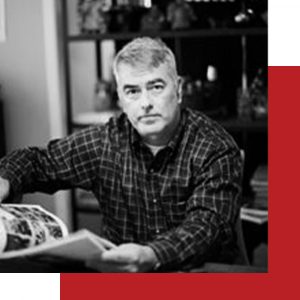
Justin KierJustin Kier, Keynote Speaker and Lead Facilitator of Atlanta Challenge

Justin Kier is an Keynote Speaker, Executive Coach, and Lead Facilitator living in Cherokee County. He has been involved in leadership development for over a decade, and spent the past 4 years as an integral part of the Atlanta Challenge team. During that time, Justin has worked with teams from many industries and companies such as Delta, LexisNexis, Control Southern, and Chick-Fil-A.

Along with Fortune 500 companies, Justin has also worked with numerous small businesses, church leadership groups, and non-profits such as Dekalb County Schools and Wounded Warrior Project. He is trained in coaching methodologies for teams and leaders, and is a Certified Life Coach. Justin is also an accomplished and dynamic speaker, including the TEDx stage. He is frequently invited to speak to audiences on collaboration and leadership, facilitate team workshops and retreats, and lead events designed to build morale and camaraderie. Drawing on his early career in the education and fitness industries, Justin brings an engaging and motivating style to the practical applications of building high performing teams and leaders.

Atlanta ChallengeConnect with Justin on LinkedIn and Facebook


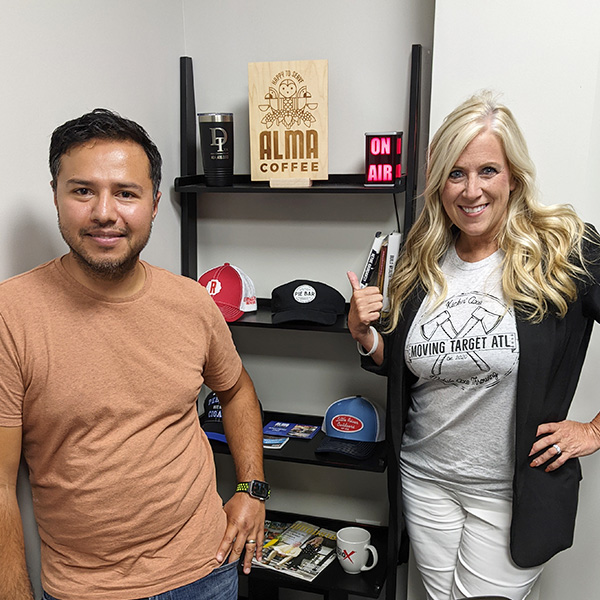
Evan Roberts, CEO of Visually Sold

Founded in 2016, our mission at Visually Sold is to be the simplest part of the home selling process. We work hard to ensure all client needs are met, to go above and beyond, and to connect on a personal level. Visually Sold believes in over-delivering, consistently bringing positivity, and honoring our customers through our words and actions.

Visually Sold Follow Visually Sold on Facebook


This transcript is machine transcribed by Sonix


TRANSCRIPT

Speaker1: [00:00:07] Broadcasting live from the Business RadioX Studios in Woodstock, Georgia, it’s time for Cherokee Business Radio. Now here’s your host.

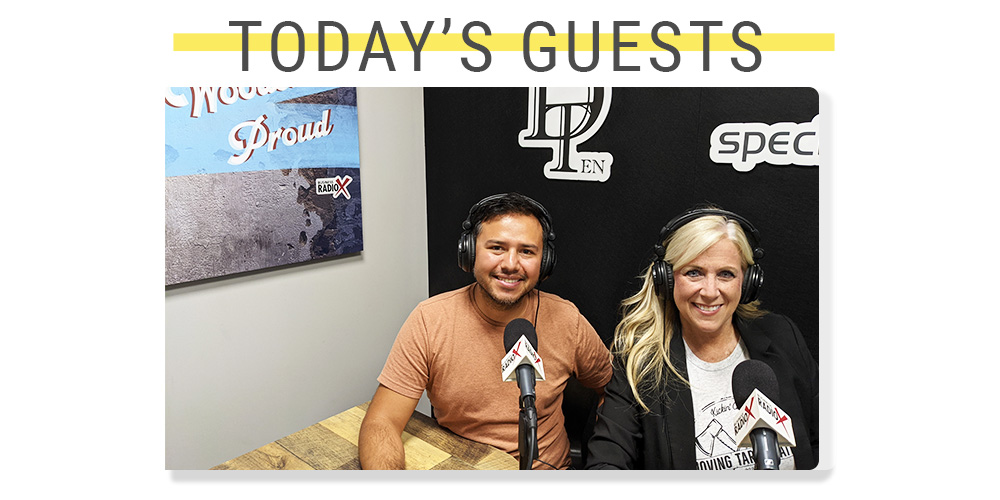
Speaker2: [00:00:22] Welcome to Cherokee Business RadioX Stone Payton here with you this morning, and you guys are in for such a treat. Today’s episode brought to you in part by Elmore Coffey, sustainably grown, veteran owned and direct trade, which means, of course, from seed to cup, there are no middlemen. Please go check them out at my Alma Coffee Dotcom and go visit their Rose Street cafe at thirty four. Forty eight, Holly Springs Parkway in Canton asked for Letitia or Harry and tell them that Stone sent you. Also, before we came on the air today, we decided that today’s episode was also brought to you in part by Alpha and Omega Automotive. I just came from there and of course the staff was great, drop the car off, got home. And by the time I got to the studio, I was I was sharing with one of our guests today just in case who were going to visit with in a moment, I had an estimate I could check it off, whether I wanted to do the whole thing or if I needed to call them. And I mean, it’s done. It’s off my plate and now we get to have fun. So we’re double sponsor, double bless this morning. So thank you to the Kennedys over there at an Alpha and Omega and also our other guests with visually sold. That’s why we got a chance to get connected, right. Because Lori Kennedy in that crowd got us here. And so we get a chance to visit with Alex and and Evan hear a little bit. But first up on Cherokee Business RadioX, please join me in welcoming to the broadcast with a Delante challenge. Mr. Justin here. How are you, man?

Speaker3: [00:01:55] Doing great. I’ve been looking forward to this.

Speaker2: [00:01:57] So have I. Among other marvelous discoveries here, now that I live in the Woodstock community, is this group, the Woodstock Business Club. So I find myself going down there on Thursday mornings. And it’s I mean, it is it’s like a four minute walk from my home now. And a couple of days ago to three, thirty years ago,

Speaker4: [00:02:19] There’s this really

Speaker2: [00:02:20] Dynamic presenter talking about the way things have have been shifting in his world, how they’ve shifted for all of us.

Speaker4: [00:02:27] And talking about

Speaker2: [00:02:28] This thing, Atlanta

Speaker4: [00:02:30] Challenge. Yeah.

Speaker2: [00:02:32] So tell us a little bit about it. Mission purpose. What are you guys that are trying to do for folks?

Speaker3: [00:02:36] So Atlanta Challenge has actually been around for a long time. It’s been around for seventeen, eighteen years now in the Southeast, and its original

Speaker4: [00:02:45] Roots came out

Speaker3: [00:02:46] Of the traditional team building style. So it was field games and ropes courses and all that. That was a little bit before my time, but over the years. And I got involved with them about four years ago, maybe a little bit longer. Now our job is just to make teams more effective. That’s it. Teams and leaders getting them more effective. And we could do that with a lot of different folks. So we have a lot of fun with it. But but but that’s it. And we we do things a little bit different because we we’ve understood over the years the effect that having a good work life has on the rest of your life and how having a good rest of your life has an effect on your work life. And I think people years

Speaker4: [00:03:27] Ago thought of those as more

Speaker3: [00:03:28] Segmented that it was one or the other, and you could go to work and come home and just shut everything else off. And that has changed over the years. And so it people just have a life and work is in there and families in there and all of it is in there together. And it’s not quite as segmented as it used to be.

Speaker2: [00:03:44] So it strikes me that teams maybe very much like the car I took in this morning without some maintenance, without some tuner’s, without some attention, things can fall off the rails with virtually any team, even if it started out really strong and cohesive. Is that accurate?

Speaker3: [00:03:59] Oh, very much so. And it’s funny that we we tend to work with. Good teams, not bad teams, which is also kind of odd, like people are kind of surprised by that sometimes, but

Speaker4: [00:04:11] We I like to think

Speaker3: [00:04:12] Of us as more or swim coaches than lifeguards. And so we are not the ones with a

Speaker2: [00:04:18] Great way to frame it.

Speaker3: [00:04:19] I love that. And we’re not the ones just coming in to save a dumpster fire of an organization that is just flailing around, usually

Speaker4: [00:04:26] Because they’re in such bad

Speaker3: [00:04:28] Shape, they don’t even know they need us.

Speaker4: [00:04:30] But we so if you put

Speaker3: [00:04:32] A scale of one to 10, it’s rare for us to work with threes and fours. We tend to work with the seven and eight that want to get to nines and tens. And so we’re working with teams that already have some things that they’re doing well

Speaker4: [00:04:46] Or

Speaker3: [00:04:46] Aspects of it. They have leaders that see a direction. They want to get everybody going there or they have a new leader that comes into a situation. They’re trying to get everybody on board. But it’s those types of teams that we tend to spend the most time working with is the ones that there are a lot of good things here. But, you know, you can be better. And when we hear that phrase from people, you know, our eyes light up and we just know, OK, yeah, we’re going to get along well.

Speaker4: [00:05:11] Are there some

Speaker2: [00:05:12] Patterns to look for? In my organization? I have the studio and I’m sort of an individual proprietor in the studio, but I’m also part of a larger team, the Business RadioX network, and we have studio partners

Speaker4: [00:05:24] Around the country.

Speaker2: [00:05:25] And I’m blessed to be part of that team as well as a leader of that type of team. Are there some signs to look for? Are there some signals that, hey, maybe we ought to start thinking about getting, you know, getting a little bit of some fresh perspective in here? Are there some patterns to look for?

Speaker3: [00:05:42] Yeah, definitely. And one of those initial ones is

Speaker4: [00:05:46] When you find yourself just

Speaker3: [00:05:47] Going back to the same old thing over and over again, no matter what situation or problem pops up, because there are always some good things that you do that have worked in the past. And then you get to a point and you try it on something and it it doesn’t work like it used to or it’s a new situation. You’re like, but this

Speaker4: [00:06:04] Worked either five years

Speaker3: [00:06:05] Ago or this worked on, you know, a year ago. But it was a completely different situation. So when you start going back to the same old tricks, in a sense, it’s always good to have you know, there are some tried and true principles, of course, but having a fresh perspective, that’s what lets us do what we what we do. And I tell people to I would be a really bad CEO. I would I don’t do a really good job at wrangling all of those things together, but I’m a really good coach because I see the things that CEOs don’t see or I see the things that team leaders don’t see because you get so caught in your own world that seeing things from an outside perspective or an outside industry. I was talking to someone not too long ago and they were talking about how they get coaching within their industry. And so they go to mastermind’s and they get coaches and all this about how to build a better. It wasn’t this, but I use this as an example, dentist’s office. So they have a dentist’s office and they just want to have a better dentist office. So they go talk to other dentists and they go to dentist conferences and they and they get some great ideas. And then we have conversations and it’s. Well, what about this? And they never heard of it because dentists don’t talk about that. And so it’s just that’s where we get to bring in our special sauce when we work with teams and leaders is seeing the things

Speaker4: [00:07:21] That you guys

Speaker3: [00:07:22] Don’t see because you’re so involved in your own world, which is natural. And it’s good to look for other dentists office that are going to make your dentist’s office better. But but getting that outside perspective is always a good thing.

Speaker2: [00:07:35] So what do you enjoy the most about the work? What do you find the most rewarding?

Speaker3: [00:07:41] And so some of that goes back to my my history even before getting into what I do now. And my background before getting into leadership coaching was actually in the fitness world. So I taught school for several years. I will never do that again, but I taught school for several years. The middle school health and P.E. was was not the career choice for me. But I went from that into fitness and did one on one training and ran a boot camp and managed to cross that gym and have my own personal training business all. But what got me from that into this was my enjoyment of seeing people

Speaker4: [00:08:16] Just get better.

Speaker3: [00:08:17] And I realized even with the fitness stuff that, well, yes, it’s great to get slightly bigger biceps or see a little weight off your waist or whatever at all. That’s great. But it was people walking out with a different level of confidence. It was people walking out and their relationship with their spouse changed because they’d been working out. And so for me, it was I want that. But without

Speaker4: [00:08:39] The sweatiness

Speaker3: [00:08:41] Of and I like this because I still like to work out. But just, you know, I was done having people do Barbizon push ups and squats all day long. Not that that’s not a great and noble thing, but it’s just there’s something next. What’s next. And so for me, that’s that’s what it was, is I want to be working with people where I can really see a difference in their lives. And that’s what we get to do. And it’s just those ripple effects. If you help somebody in there, you know, think a little bit clearer or be a little bit less stressed or a little bit less fearful in their life, and then that affects their work, which then affects when they go home and deal with their spouse and their kids because they’re not quite as stressed and fearful. And so it’s those ripple effects of having people tell me things that, hey, my life has never been better and work is a part of that. Our team dynamic is a part of

Speaker4: [00:09:28] That, but it’s everything.

Speaker3: [00:09:30] And so seeing those ripple effects in people’s lives, it started way back in the day with the fitness side. And and I get to do the same thing now, but just in a slightly different environment and one that has bigger

Speaker4: [00:09:41] Ripples, because when you affect

Speaker3: [00:09:43] The team dynamic of people’s work, that affects everything. And I think anybody that’s had a challenging and stressful job over the years knows what it’s like to go home and try to let some of that go. And it is not easy. So being able to affect that work life, which is where so many people spend most of their time, it has some of the biggest ripples.

Speaker2: [00:10:02] Well, I bet that is remarkably satisfying as a as a career as your work.

Speaker4: [00:10:08] The early part of an engagement

Speaker2: [00:10:11] Is that is is that where the hill is super steep? Like, don’t you at least initially, aren’t you trying to help people that may not even be sure they want the help, like maybe their leader said, we’re going to do this thing? I mean, do you ever run into some of that initial kind of resistance or apathy or.

Speaker4: [00:10:27] We do a little bit.

Speaker3: [00:10:28] And but at the same time, that’s one of the things that we screen for at the

Speaker4: [00:10:31] Beginning, because that’s

Speaker3: [00:10:32] One of the things that we don’t want in place. If you were going to work with us or someone to be coached, they have to be willing to be right. And so there’s even I mean, it’s a beginning of an engagement. We we do a lot of of. In a sense, consultations back and forth of making sure is the best fit for us and for you, because the last thing that we want is to be working with people that don’t want us working with

Speaker4: [00:10:55] You or people that

Speaker3: [00:10:56] Are just completely checked out and unresponsive and unwilling to look inside and look at themselves a little bit and look at things they may need to do differently. And so that’s one of the first things that we look for is people that are that are open and and turned on.

Speaker2: [00:11:12] Right now, the person you’re describing, not only might that person not grow or benefit at all, but they might impact someone else, that that could really benefit. But if you’ve got that kind of sour apple in there for sure.

Speaker3: [00:11:25] And obviously there are situations where sometimes we get into working with the team and there are a couple of people on the team that are less responsive than others. And that comes with the territory.

Speaker2: [00:11:34] That’s why you need a pro. That’s why you don’t pull a stone in there. And I’m trying to be funny or make jokes or something. You need a professional facilitator that knows how some is there some I know the answer to this is yes. So what I really want to know is tell me a little bit about to the degree you’re willing

Speaker4: [00:11:48] To, there’s

Speaker2: [00:11:50] Got to be some structure, some discipline, some rigor. It might look like all fun and games, but you’ve got this process map in your head when you’re working with a group, right?

Speaker4: [00:11:59] We do.

Speaker3: [00:12:01] We’re not just winging it when we walk in. But but at the same time, part of what we strive for is helping keep things

Speaker4: [00:12:08] Simple for what people need to

Speaker3: [00:12:10] Do moving forward. And so we may have a giant toolbelt in a sense of all the different strategies and structures and different things we can give you and processes and all that. And part of our job is figuring out which one is going to help the most and which which things we need to address that are going to affect your leadership the most. And because we see that happen with sometimes we’ll come in and work with people who have done their company has done like a 360 assessment for all their executives or leaders. And so they you know, they even show us sometimes we’ve got a big folder here of all these thirty seven things that we need to do to get better, you know, because we and and our job is to help narrow that to two or one. You know, it’s what is the one thing that we can do moving forward over the next 30 days or 60 days or 90 days, whatever it is. Let’s focus on that thing and let’s beat that thing like a drum for the next 90 days and fix that, because a lot of time, again, I mentioned ripple effects earlier. You can sometimes fix just one or two things. And it has a massive ripple effect on the entire organization. And it’s you don’t need to go in and do this giant process of things that people don’t really need. And so we definitely have a process and it’s definitely not it takes a level of courage to step up and go through the process. But part of our job is keeping it simple, because everybody has too much on their plate. Everybody has a lot going on. We talked to some people that get a thousand emails a day in there and just in the studio here shaking their head like I can’t even imagine. So the last thing we want is to throw another bunch of stuff on your plate. You want to help either take things off. And sometimes that’s what we spend a lot of time on. That’s some of our biggest

Speaker4: [00:13:57] Process is that we take

Speaker3: [00:13:58] People through is how can you delegate a little bit more? How can you time block a little bit better? And you might be surprised, but some of the executives that we see are really good at what they do. But some of the,

Speaker4: [00:14:12] You know, keeping

Speaker3: [00:14:13] Track of your schedule and delegating and some of those they kind of think is are simple things, are the things that we can come in and help with the most just to help get things off your plate. What does that look like? And so the process is definitely there. But our our job is to keep that as simple as possible.

Speaker2: [00:14:30] But there’s some real discovery. You have to be comfortable, I would think, and to with some degree of chaos. And you’ve got to meander around a little bit because what’s going to help Evan and Alex may not be at all what Lee Kantor and I need for our business. Right. The process is going to get us there, but we may be working on a completely different thing. Absolutely.

Speaker3: [00:14:49] And well, yes and no. So there’s there’s aspects to this. One thing I’ve seen over the years of working with teams from all different industries and all different sizes, because we work with everything from small small businesses, with a dozen employees that are trying to move forward all the way to the biggest names in Atlanta, Delta and Home Depot and Cox and Chick fil A and you name it, we’ve worked with the big companies to teams or teams and people or people. And so what? What teams struggle with and deal with? It’s all the same stuff, it’s all because people are people now where it differs is people are all a little bit different. And so the way they think, the way they approach situations, what drives them, what wakes them up in the morning and keeps them up at night, all those very a little bit. So that’s part of what we get to do, too, is when we look at a team, it’s what are the people like on this team? What what are their strengths? What are their weaknesses? What do they struggle with? What do they not? How can you look at someone else that has a completely different skill set from you and value that and see what they bring to the table? And that’s part of what makes a team work. But that’s where the challenge comes in for people, is understanding that that person over there who maybe we’ve butted heads a lot in the past, it’s not because we we don’t like each other. It’s because we have different ways of thinking. We have different styles. We have different personalities. We have. But when you can understand that what they do helps what you do, get to the goal, whatever output you’re trying to achieve, that’s where people really come alive. Because I tell people, one example I give people is one of the things I hate

Speaker4: [00:16:30] More than anything

Speaker3: [00:16:31] In the world is accounting. I hate it with a passion. I mean, if you put me in front of a computer with a spreadsheet and say, just sit here eight hours a day or ten hours a day or whatever it is for the rest of your life, I would go crazy.

Speaker4: [00:16:45] But one of the things

Speaker3: [00:16:46] I love more than anything else in the world. Our accountants. Because they do it and they like it and they’re good at it, and it’s just so it’s, you know, well, there’s there’s differences between how we approach things and maybe our personalities and our style and all that. But I can appreciate the heck out of them because I can go up to them and they do something that I don’t do well and they enjoy it. And when teams start seeing that, that. Oh, yeah, this person I’ve been butting heads with, they actually do something that I don’t like to do and they’re good at that. They provide something that’s a team that’s valuable. That’s where people really start to come alive.

Speaker2: [00:17:24] So how does the whole sales and marketing thing work for a firm like yours? I got to believe if you’re talking to a CEO, someone or even a team who makes this kind of decision, do we engage these Atlanta challenge? Folks, I got to believe if they have this kind of conversation with you, you probably get to work. But but how do you get to have this kind of conversation or have you just been at it long enough that the phone rings? Or how does that piece work?

Speaker3: [00:17:49] I’m a little bit of both. So and but it’s changed a little bit even over the last two years. I guess when we first started building Atlanta Challenge, it was some word of mouth. And because we were one of the few ones in the area, but everything from Google ads to pay per click and people would find us. And we did a really good job with our website of SEO and things like that of getting people to find us. Over the years, over the past couple of years especially, we’ve made a little bit of a shift to where it’s less of the the fun and games and the ropes courses and the, you know, the big let’s go play with foam foam pool noodles on a field somewhere. And it’s more of this. It’s more of the in-depth conversations. And so it tends to be more a lot of word of mouth is a lot of referrals.

Speaker4: [00:18:34] We have worked

Speaker3: [00:18:35] With so many companies in the past that we have a lot of really good connections and relationships with those companies do so when we reach out to somebody and we talk with them. And that’s part of what I get to do. And it’s even coming on a show like this is helping get the word out. And in some

Speaker4: [00:18:49] Respects, I consider

Speaker3: [00:18:50] Myself the Atlanta challenge evangelist, just letting people know about what we do because it has to resonate with people when they start having those conversations with us. And yeah, if we get to this conversation, it tends to be either very quickly one way or the other, it’s either nope, this isn’t a good fit or. Yes, let’s let’s talk more, because when we have initial conversations with people, the last thing I try to

Speaker4: [00:19:15] Do is, is sell

Speaker3: [00:19:16] Somebody something they don’t want or get them to sign up for a coaching engagement that they don’t want and don’t need or get them to do an event that doesn’t really fit what their team is looking for. And so it’s really having those kind of exploratory conversations of what are you looking to get out of this? What’s the what’s a win for you? If we did came in and did this workshop or strategic work session or an event or something like that, when we leave and people are writing on their little cards, the reviews of the session, what’s a win for you? What does it look like when we do our job and do it well and

Speaker4: [00:19:47] Really and then once we start hearing

Speaker3: [00:19:49] That it’s OK now, we can start playing with a little bit and plugging in the pieces of this would work well and this would fit and this wouldn’t work. And you don’t need to waste your time with this. And it’s so it’s having some of those conversations. But yeah, it’s it’s a different business because it’s not just the type of business where you run a bunch of ads and get the phone to ring and that’s it. So it’s it’s a lot more relational, it’s a lot more connections and referrals and, you know, work with one organization and see dramatic effects. And so he calls his buddy that’s a VP at a different company that, hey, you need call these guys.

Speaker2: [00:20:20] So the trust that you guys must have to

Speaker4: [00:20:24] Cultivate with

Speaker2: [00:20:25] Leadership in the beginning to get the business and then in executing on the work because you’re never going to get in if you don’t if you don’t cultivate that.

Speaker3: [00:20:35] And that’s that’s one of the things that sets us apart a

Speaker4: [00:20:37] Little bit, too, is there’s a

Speaker3: [00:20:39] Lot of organizations, whether it’s, you know, consulting agencies or team building firms or

Speaker4: [00:20:45] Coaching companies

Speaker3: [00:20:46] Or whatever, that that get a little lost in one end or the other. And so they either get lost in the the goals result. And that that’s just

Speaker4: [00:20:55] It just too

Speaker3: [00:20:56] Businesslike and it’s just too sterile in a sense. And it’s just here’s all your data and here’s our numbers and fix this and fix that. And that’s it. You go home and you don’t do it or don’t do it. And we tend to have a little bit more fun with it than that. And we’re not quite as corporate, even though we work with a lot of corporate corporate companies. But some people get lost on the other end. And it’s just all about we just want everybody to feel better and they lose sight of the goals and results in why we’re actually there. And so that’s one of the things that we stay very conscious of, is making sure that we’re connecting both of those. If you’ve got to take care of your people to make sure that they’re

Speaker4: [00:21:31] In a good spot, that

Speaker3: [00:21:32] They’re healthy, that they’re mentally firing on all cylinders, that they’re not overly stressed, that are not overly fearful, and we have to take care of the people. But it’s to get to the result in the output of what you actually want and and keeping the focus on both of those of the people and the output at the same time.

Speaker2: [00:21:51] Well, that’s a lot. To hold it is that’s a tall order, but let’s talk a little bit about event and process, right? Because in my experience and I’m getting a little long in the tooth, I’ve been on the periphery of some of this kind of work over over the years. Are there some things that that leadership should be taking some responsibility and accountability for to fully maximize the fact that we’ve had Justin and his crew in here to help us out? There’s some things we should be doing before you get here, some things we should be doing after the event is over or some workshop so that we really get the full measure of the return that we’re after. I sense the answer is yes, but I just want to hear more about what that might look, what that looks like.

Speaker3: [00:22:35] And that’s one of the things that we strive for to is the front end and the back end. And to some people, do they just walk in on the day of the event? And I’m here for three hours and we did our workshop and I’m walking

Speaker4: [00:22:48] Away and, you know,

Speaker2: [00:22:49] I’m a good soldier. I’m not going to give anybody trouble. I’m here. I’m doing my thing. But I got work piling up. Right. I mean, you get the right.

Speaker3: [00:22:56] And one of the things that’s helped us over the years, though, is leaders helping cultivate the mindset that

Speaker4: [00:23:02] Coaching and

Speaker3: [00:23:04] People like us and our profession aren’t just there when somebody is in trouble, because that’s something we run into a little bit to, as we call it, a team building or a team development guy in

Speaker4: [00:23:15] What we do

Speaker3: [00:23:17] To screw screwed up.

Speaker2: [00:23:18] If I was looking around like, OK,

Speaker3: [00:23:20] Who’s on the chopping block now?

Speaker4: [00:23:22] And it goes back to what

Speaker3: [00:23:23] I said earlier, that’s that’s rarely why we come in. It’s we’re coming in because you’re doing big things. And we like working with companies that are doing

Speaker4: [00:23:31] Big things,

Speaker3: [00:23:31] Too. It’s it’s not people that are just they just want to sell, you know, one hundred thousand more widgets this month. It’s people that are having an impact that are affecting. And we work with a lot of people in the kind of scientific health care space that are developing biometric devices to help people function better and building prosthetics and some of those kind of things that real world like this is impacting lives to a great degree. And so for

Speaker4: [00:24:00] That that lead up

Speaker3: [00:24:02] Of what can leaders do at the beginning, it’s fostering that environment,

Speaker4: [00:24:06] That coaching isn’t for people

Speaker3: [00:24:07] That are in trouble. You know, bringing in a coach like us to do a workshop isn’t because we’ve all screwed up, but that’s what the best of the best do. And it’s reframing that a little bit that, yeah, just because we we’re good at what we did doesn’t mean we need to just stop here. And then on the back end is stuff that we help with of what does that need to look like? Do we need to hold your hand or do you just need to give you a template of, OK, here’s what we talked about. Here’s what needs to happen. Here’s what’s going to give you the most bang for your buck. And you focus on these one or two things. How can we help with that? Can we facilitate that process on the back end and keep having conversations and and have a coaching call with your folks every two weeks for the next three months and those types of things? And that depends on the company, the organization or what they’re really looking to get out of it. But we’re very intentional about yeah, we are not just come in, swoop in, chat with you for a day. Here’s all the stuff to fix now. Good luck with that. And so having that relationship is always important for us.

Speaker2: [00:25:06] Now, you are a keynote speaker as well, or at least have been. Do you

Speaker4: [00:25:10] Continue to to do that or

Speaker2: [00:25:12] Will you continue to do the speaking workers? You’ve got to focus one hundred percent on this other.

Speaker4: [00:25:17] So one of the reasons

Speaker3: [00:25:18] I stopped doing a little bit of it is last year was kind of a weird year

Speaker2: [00:25:22] If you came here

Speaker3: [00:25:25] Only a little bit. And and so some of the whether it’s keynote speaking or even in person workshops, obviously not just

Speaker4: [00:25:31] Stopped last

Speaker3: [00:25:32] March or April or whatever it was. And so I still enjoy doing keynote speaking and still do that. I like being able to do both, which is why I like my role. I like being able to. One day I’m doing a three hour workshop with the company. The next day I’m doing a forty five minute keynote. The next day I’ve got a full slate of coaching calls that I’m doing from home and but keynote speaking is a great

Speaker4: [00:25:56] Way to bring

Speaker3: [00:25:58] Awareness to what we do and not just what we do, but helping people be better individuals within teams and helping leaders be better leaders. And so it’s a great way to build awareness

Speaker4: [00:26:10] Around our

Speaker3: [00:26:11] Processes and around our principles and the way we do things. But where people struggle with speaking is you walk in, you do your keynote speech and you walk away and you

Speaker4: [00:26:21] Don’t get that that depth

Speaker3: [00:26:23] And you don’t get that in direct action and. To see success, it tends to be 20 percent insight and about 80 percent application keynote speaking is great for the 20 percent insight. It’s great for giving people awareness of even some of the stuff we’ve talked about so far this morning is, you know, here’s some things to think about. And people really thought about that before all this really could work. And it’s great for that. But then we need the coaching engagements and the ongoing workshop series and things like that to really be able to provide the application

Speaker4: [00:26:54] For

Speaker3: [00:26:55] What needs to happen. And so I still again, it’s been slow on the speaking side, but it’s already starting to pick back up. And so it’s definitely something you’ll still do. Sometimes they’ll do some of that.

Speaker2: [00:27:05] Now, you strike me as the kind of

Speaker4: [00:27:07] Guy who

Speaker2: [00:27:08] I don’t know if the word keynote is still the right word, but I’m going to use it. You might be doing a keynote at a middle

Speaker4: [00:27:12] School to just to help some

Speaker2: [00:27:14] Kids or you have an affinity for and some genuine interest in serving the community, the broader community. Don’t you talk a little bit about that?

Speaker3: [00:27:24] I do. We don’t spend quite as much time in schools lately, and some of that’s a little bit of just our niche. And there’s only so many hours in a day. And so I definitely and again, with my education background, I’ve spoken to schools. I’ve spoken to, you know, high school groups and things like that. One of the first things I actually did with leadership development was about a decade ago with my wife, we let a teen leadership development program in Atlanta for several years with a nonprofit she was working with. And and so I definitely have a heart for that. I don’t do quite as much of the school speaking anymore. Again, just because keynote speaking especially, you kind of find your lane and your niche and there’s not always as much overlap is as people think. And so it’s still out there, but it’s just not. You have to focus on one or the other to a certain degree, and most schools, there’s some really good education speakers out there and there’s some really good people that really is their life. That is what they do and that’s their passion. And I’d support them any way that I can. And again, love still speaking with youth, but it just is not quite enough hours in the day to do a lot of it these days.

Speaker2: [00:28:33] I was just thinking to myself I would have butterflies if I were to get on the stage and do a keynote for Microsoft and Google. But I would be absolutely terrified if I had to get on stage and talk to a group of high school kids. All right. Well, that’s one of the things I tell people all the time.

Speaker3: [00:28:49] Yeah. What I do now and the people that I work with now, it is easier than middle schoolers. I mean, I don’t get cussed out nearly as much. Don’t you challenge the fight nearly as much? So it’s yeah, it’s definitely a lot easier.

Speaker2: [00:29:02] So as you do turn some of your energy and attention toward the community, the broader community, nonprofits, those kinds of things, are are there some that kind of have a bigger piece of your heart or more of your time than others do? Is there a group that you like to?

Speaker3: [00:29:19] That’s a tough question because, yeah, we do work with so many. So I don’t know if there’s just one. I do. I do appreciate local local communities and non-profits, though. And I’ve lived in Cherokee County off and on most of my life. We moved really far away for a while to Marietta, which is not that far. But we’ve been back here in Cherokee County for about four years. And whether it’s Goshen Valley Boys Home up in North Cherokee and groups that are working here, the Circle of Friends that has a new coffee shop that just opened up all over the circuit and what Pádraig is doing with Limitless. And there’s just so many good nonprofits and people that are just doing really cool things in the community here is it’s definitely hard to pick just one.

Speaker2: [00:30:04] I’ll bet. Well, no, you’re the kind of guy that’s probably plugged into service and trying to serve them. And you have some tools and some knowledge and expertize at your disposal that you can you can utilize to help them. So before we wrap up, where is your energy effort going to be in the coming months? You got anything that particular area of focus or you guys trying to grow? What’s the what’s the.

Speaker3: [00:30:27] We’re always trying to grow but grow strategically. And it’s been

Speaker4: [00:30:31] The next, I guess, three

Speaker3: [00:30:32] Months or so. Our biggest focus is just diving in deeper to the deeper programs that we offer. We kind of developed an entire suite of more leadership, strategic workstations that we’re going to be offering and rolling out in the next month or so. And it really just is our focus of spending more time on the development side than the the camaraderie side, because that is a continuum. There’s on one hand doing something where it just gets people together and it’s a scavenger hunt or a game room or or a game show or something like that where it’s kind of getting together and having a good time and laughing and smiling and learning people’s names that they haven’t seen in a while. That kind of thing is is great. And there’s a place for that. We’ve done a lot of that over the years and especially over the next three months. Our focus is going somewhat to the other end of the spectrum of now let’s get let’s get deep now. It’s a you built a pretty good culture from everybody smiles and there’s nobody slashing tires in the parking lot or anything like that. So we’re we’re doing OK. But now how do we really get better? And so that’s probably our biggest focus for the next three months is is spending more time on the deeper programs of let’s let’s spend six months with your leadership team. Let’s spend a year with your leadership team.

Speaker2: [00:31:47] Ok, really, really a deeper

Speaker3: [00:31:49] Than really a deeper dove. Or let’s not just do a workshop, but let’s do a four seminar series where we’re going to come back once a month for the next four months and really dove into some of these deeper things instead of just coming and putting a bunch of stuff in front of you up here. Good luck with this and walking out. So that’s definitely our focus for the next three months is getting deeper with with the folks that we’re working with.

Speaker2: [00:32:11] You touched on a phrase and I don’t remember if it was in that presentation or if you and I were just kind of standing around or but but the the phrase that you utilize was high character culture is that if you’re really going to pull that off, is that where you got to do this deeper work? Is that one of the. Absolutely. To talk a little bit about what you mean by that. And yeah.

Speaker3: [00:32:34] Yeah. One of the one of the most crucial things that people can do within any team organization, whatever, whether it’s a corporate leadership board or a family unit. One of the most important things you can do is, is have people that are ethical and tell the truth and be honest. Honesty goes so far. And so when we talk about a high character culture, that’s one of the first tenets of high character is being being honest. And it doesn’t have to be honest and a jerk kind of way. If I’m just going to tell you, every

Speaker2: [00:33:06] Hair looks a lot of lately.

Speaker3: [00:33:11] So let me say one thing, but but having being able to have those very real, very open, very honest conversations about what’s going on and what can we do to get better. And so high character cultures are ones that place that at the forefront of let’s have a real conversation, not just to Nitpicked, not just to be a jerk about it, not just to throw throw stones and call people names and all that. But let’s let’s talk about it.

Speaker4: [00:33:36] What’s working, what’s not working,

Speaker3: [00:33:38] What do we need to do more of? What do we need to do less of? And again, that goes for everything. So family units to corporate boardrooms, it’s all the same that having people that are willing to be honest, tell the truth and be a little less fearful, be a little less stress. That’s the starting point for everybody.

Speaker2: [00:33:56] It sounds like a lot of work is obviously very rewarding work. Please keep up the good work. I can’t thank you enough for coming in and visiting with us. If someone would like to reach out and have a conversation with you or someone on your team, let’s give them some points of contact, whatever you think is appropriate. Phone, email, LinkedIn, whatever you think is best.

Speaker3: [00:34:16] Yeah, definitely. My email is a great place to start. Justin at Atlanta Challenge Dotcom, Atlanta Challenge dot com is our website, so you can get a lot of info there. You’ll see me around on LinkedIn and Facebook and some of those places too. But yeah, probably email just an Atlanta challenge, dotcom or just go to our website and you can get a lot more info on all the the programs that we offer in the workshops and that sort of thing.

Speaker2: [00:34:39] So what a delight having you come in the studio.

Speaker3: [00:34:42] This has been so much fun.

Speaker2: [00:34:44] So much fun. Hey, how about hanging out with us while we visit with our next guest?

Speaker3: [00:34:48] Absolutely. I can’t wait to hear

Speaker4: [00:34:49] More about him. All right.

Speaker2: [00:34:50] Next up on Cherokee Business RadioX, we have with us with visually souled Alex and Evan Roberts. Good morning, gang. Good morning. Well, we’re delighted to have you. We’ll start with you, Alex. Mission purpose visually. So what are you doing for folks?

Speaker5: [00:35:09] So our mission is to provide the simplest solution for real estate photography. We just want to be ready and available for any real estate agent, really to just book excellent photos so that they can impress their clients and impress potential buyers.

Speaker2: [00:35:24] I would think that that is probably one of the most important parts of the sales and marketing process for a for a home is the pictures that people see before they even make the decision to go out and take a look, right?

Speaker5: [00:35:36] Absolutely. So more and more lately, buyers are basing their choices online based on the photos. So I think it’s like 85 percent of home buyers make a decision to go see a home based on its pictures. So you would think a lot of people don’t use cell phone pictures, but unfortunately, they do. So really, yes, our mission is to just kind of be accessible so that people are deterred from using cell phone pictures.

Speaker4: [00:36:02] So, yeah, go ahead

Speaker6: [00:36:03] To jump off of that.

Speaker4: [00:36:04] I think the way to look

Speaker6: [00:36:06] At it as a home is is the most expensive thing that that somebody will buy or sell in their lifetime. And Coca-Cola spends millions of dollars to sell a Coke can, a can of Coke. Right. So to have

Speaker4: [00:36:19] That excellent visual

Speaker6: [00:36:21] Representation of the most important asset you may buy in your lifetime, I think is is really important and more and more so now.

Speaker2: [00:36:28] So you guys are taking still pictures, video or both? Yes, well,

Speaker5: [00:36:34] All of the above.

Speaker2: [00:36:35] So you could if you have those skills and I’m making the the jump that you do, I’m sure that you do. And I can’t wait to see more more of your work. You could have chosen a lot of different ways to apply those skills, meet a variety of different segments of the market and probably build a very fruitful business. You chose to niche you chose to stay in this lane. Tell me a little bit about that choice.

Speaker6: [00:37:00] Yeah. So I started the company a little over five years ago. I originally was doing live music photography because I was I was a musician in my in my teenage years. And and that was sort of a natural progression for me and I when I was I was managing a pizza shop and in coming and when I was doing that on my breaks and everything, I would be looking at houses online, sort of just dreaming because I couldn’t afford a house. But I wanted to. So, you know, I would look on there and I would dream and I went, wow, this was great. And it’s way too often I would notice that I couldn’t see enough of to home or I or I couldn’t get a feel for what the home actually looks like because of the photos. And if I was actually buying, it would have really mattered because, you know, I typically would just skip the ones that that didn’t have great photos. So I and I notice that some did have great photos. So I said, OK, there’s seems to be a market here, like there seems to be you know, people want some people want excellent photos for their listings. So that’s how I sort of got into it. I said maybe I could do this. I did some research on. What I needed for equipment, and then I sort of snowballed from there, so the.

Speaker2: [00:38:18] Taking these pictures, what is the what is the key, is it better equipment, is it the knowledge is because you’re going to I mean, people are going to expect the same level of professionalism on their job as they saw on the last one. Well, how did you crack this girl? What’s the secret sauce?

Speaker6: [00:38:37] So I think. Obviously, cell phones take great photos right now, so

Speaker2: [00:38:43] It’s not mind so much, I’ve been trying to take you over having this conversation,

Speaker5: [00:38:47] But don’t say that.

Speaker6: [00:38:49] So so they do take great photos. So it’s not it’s not a matter of purely the equipment. Right. Obviously, having professional grade equipment matters a whole lot. So it’s not just the equipment. It really is the I. It’s the training. It’s the technique that’s used. Real estate photography is completely different from really any other kind of photography. Oh, really? It really is. It’s it’s not you know, it could be similar to to maybe product photography. But even still, it’s the the angle choices that you’re getting the lighting, because it’s it’s a space where people live. It’s a space where you’re trying to convey a feeling of of of where people live their lives and who will live their lives. So it’s a little it’s a little different than anything else.

Speaker2: [00:39:37] All right. So here’s a disclaimer. We’re broadcasting live as we speak right now. But a great many of our consumers, the people who listen, our material, listen to it on demand. If you’re listening to this on demand and you’re looking at some pictures, Evan and Alex did not take those Stone Payton those pictures. So so where does the where does the business come from? Is it is it is it the individual, the families selling the home? Or is is your business really coming from the trusted realtors in this ecosystem?

Speaker5: [00:40:10] It’s a little of both. So obviously a homeowner can book a shoot with us if they need to, because we want to be accessible to that. And we understand that for a homeowner, selling a home is really difficult. It’s a lot to take in. You know, you’re leaving a place with a bunch of memories. So part of our goal is to be easy and accessible to homeowners so that when they’re booking with us, you’ve got someone who has a comprehensive understanding of how to make this easier for you. All you have to do is go on because you you’re done. We show up. We take care of everything else. It’s one less thing for you to worry about. And, of course, you know, real estate agents as well, whether they’re an individual real estate agent just booking one off or they’re a brokerage that we’ve partnered with. So it’s really just.

Speaker2: [00:40:55] Oh, that’s smart. So you guys have partnered with entire brokers. Wow, that’s cool.

Speaker5: [00:41:00] And we have so really, it’s just anyone that needs real estate photos, they can just hop on and shoot.

Speaker2: [00:41:07] So something in this whole ecosystem. Right. There’s the stagers. So this is kind of fresh in my mind. Right. Because and it’s a little for those of you who are listening on demand and, you know, sometimes people listen our stuff five years later. But I mean, we’re in the throes of, like summer of twenty twenty one as we’re having this conversation. The real estate market here, at least locally, is nuts. And so we got into this home a little bit before it got crazy. And we sold ours a little bit before I went really nuts. But we never had to sell the house. We had a stager come in. They took some pictures, circulated them in that kind of like coming soon. Circle of realtors never went out on the market. One family came in, made a full price offer, you know, and we were out there like the blackjack dealer. Right. And I I’m almost certain having the stager there to set things up, the clutter that I’m sure that had a big impact on it. And it was.

Speaker4: [00:42:04] But what I’m getting at

Speaker2: [00:42:06] Is the the people that you need to build relationships with or choose to build relationships with. These are a variety of people in this real estate ecosystem. Yes. The stager, the real estate person. I mean, maybe anyone connected to that because you never know. Who knows, right?

Speaker5: [00:42:21] Oh, absolutely. I mean, I’m sure plenty of real estate agents would agree with this, but referrals are the lifeblood in the real estate industry. And that’s, I think one of our favorite parts about being in the real estate industry is it’s such a relationship focused business. You know, I’ve grown up in real estate. My mom’s been a real estate agent for probably like twenty three, twenty six years now. And something I always notice was she just always went the extra mile to build that relationship with someone so that they knew she was someone they could count on. I remember being in the store with her one

Speaker4: [00:42:53] Day and she was picking out like a baby outfit. I was like, What are you doing?

Speaker5: [00:42:57] All your kids are grown up. And she was like, oh, my my client just had a new baby. So I just wanted to pick something up for them. And that was just always so neat to me was that it was such a kind relationship focused business for sure.

Speaker4: [00:43:09] Well, again, we

Speaker2: [00:43:10] Just kind of Holly, my wife and I kind of lived through this, a lady by the name of Joe Heineken’s with Keller Williams Realty. She’s also a client out of a different studio, but she’s

Speaker4: [00:43:19] One of our clients.

Speaker2: [00:43:20] I’m I get a chance to visit with her later today. I mean, we just trust her implicitly. Right. And she was sort of the quarterback of the of the team. Like, I could have gone out. I’m kind of in the business community and several business communities, actually, and sourced a mortgage broker. And so, you know,

Speaker4: [00:43:37] I just trusted

Speaker2: [00:43:38] Jill. I felt like she’s got the relationship. People are going to go above and beyond for her and for a JOHANNAH

Speaker4: [00:43:44] Client, you know,

Speaker2: [00:43:46] More so than someone I just might reach out to. That was incredibly important to us. The other thing, the other part of it was almost like a you know, like when you go to the emergency room, the doctor doesn’t ask you if you want to stay over for observation. He says, OK, you check in, you’re going to stay overnight for observation. We’re going to do tests like this just right. I mean, whatever. I mean, I just trust her. So she said, OK, look, here’s

Speaker4: [00:44:08] How it’s going to work. When I’m staging

Speaker2: [00:44:10] Here on Thursday, we’re going to get some photos, you know. Right. And I didn’t I never even questioned it. Right. And so that’s the that’s the beauty of doing good work. All right. So I got to ask, you guys are

Speaker4: [00:44:20] A married couple. Yes.

Speaker2: [00:44:22] A young married couple, or at least in contrast to me and the other guests, I’m

Speaker4: [00:44:28] A little a little older

Speaker2: [00:44:30] Than the rest of the folks in the studio today. But that’s got to present it on its own set of dynamics. Right. Tell us a little bit, OK? I was going to talk bless your heart and go for it.

Speaker6: [00:44:41] But yeah, I think it absolutely does. We actually met because of

Speaker4: [00:44:45] This this company,

Speaker6: [00:44:47] You know, she she worked for one of our clients and she would book the photos, shoots from us. And so we had contact with her. And then our our two companies had a happy hour event, and that’s where we met. So. So and now and now she works for us.

Speaker5: [00:45:04] He poached me.

Speaker6: [00:45:07] So, yeah, I mean, it definitely does present its interesting dynamics and it’s definitely been a unique experience. And we’ve been married for a little over a year now. So it’s you know, it’s it’s really challenging and

Speaker4: [00:45:21] Fun and amazing to

Speaker6: [00:45:22] To sort of work through certain things together and get to

Speaker4: [00:45:26] Know each other differently

Speaker6: [00:45:27] Than maybe other couples

Speaker4: [00:45:28] Would, because we’re also trying

Speaker6: [00:45:30] To grow a business together while we’re trying

Speaker4: [00:45:32] To develop a marriage

Speaker6: [00:45:34] And a family.

Speaker4: [00:45:35] So, you know, it’s definitely, definitely interesting.

Speaker2: [00:45:39] Well done. You can run for office. All right. Let’s get the truth out here. You know, have you found or have you settled

Speaker4: [00:45:45] Into, I don’t

Speaker2: [00:45:47] Know, a division of labor and this is our roles. Are you still kind of figuring that piece

Speaker4: [00:45:51] Of it out?

Speaker5: [00:45:52] I think as a business, we’re still growing. So just kind of our roles continue to grow and expand. I’m in charge of our marketing, but at the same time, you know, I’m also trying to help plan company events so that we can all get together. I’m covering the phone sometimes for my sister in law who’s our head of operations. So it’s a lot of different roles and

Speaker4: [00:46:12] We’re just constantly growing

Speaker5: [00:46:14] In them.

Speaker6: [00:46:14] Yeah, I think the the pandemic obviously affected everybody. You know, I hear people say that all the time.

Speaker4: [00:46:20] It’s like, OK, yes, obviously.

Speaker6: [00:46:22] But it really it did impact our our culture a lot. And so it’s really trying to almost almost rebuild that culture now. And Alex has been, you know, really pivotal in that. Like, she’s really been been pushing forward to try to to try to rebuild those those relationships. So it’s really interesting to hear Justin talk about what he does. It’s kind of serendipitous almost that that you’re here

Speaker5: [00:46:44] Because the workshop is just

Speaker6: [00:46:45] Go through it. And and I really, by the way, side note, I love what you said about it’s not taking bad, you know, to good. It’s really like Jim Collins. Good to great, you know, and I’m sure I’m sure that that book probably plays a huge role in what you do. And I’m so sorry, but

Speaker5: [00:47:01] I never heard of it.

Speaker3: [00:47:03] So that is one book that I’ve heard, I’m sure.

Speaker6: [00:47:08] So. So, yeah. And I think that that’s been a huge a huge part of it right now, especially recently. Is that

Speaker2: [00:47:14] So? But this is the mindset. These are the type of people and I don’t know, maybe this firm is a little small at this point for you. I don’t know about that. But the mindset of these guys are doing good. They want to do better. They do check that box on your criteria. I just.

Speaker3: [00:47:28] Yeah, absolutely. And I think what we’re seeing, even just in this little you know, these last couple of minutes is the power of having people in leadership that see the value of taking care of their people and the connection that has. Do you guys seeing success as a company? That’s the magic, right? There is leaders that see that that, yes, it’s important to take care of our people. But it’s important to grow as a company and those are connected,

Speaker5: [00:47:54] Right, especially so because our our team members are the ones that are going out and doing shoots every day. You know, it’s not Evan sometimes, but it’s not me, because I can’t I can’t I mean, the amount of times that we get people calling in who are saying like, oh, you know, my my shoot wasn’t booked with Samantha, like, could it be booked with Samantha? She’s just so good. She knows exactly what I need. I can always count on her. Like when we get that kind of feedback about our photographers, it is just doubly so important to take care of our team because they’re the ones who go out and represent us every day and they do such a good job doing so. Like our clients are crazy about our photographers.

Speaker2: [00:48:31] So and I’m going to ask you, too, if appropriate, Justin, you have something to say on the matter and how do you recruit, develop and continue to nurture someone as Samantha? Right. And we have a Samantha, too. She runs Phenix Business RadioX out there in Phenix, Arizona, and her name is Karen Zwicky. And she’s just she’s unbelievable. She’s incredible. And and we wasn’t anything I did. I don’t think I you know, maybe I maybe I didn’t run her off. But other than that. But, ah, there’s some, you know, some dos and some don’t always do this. Don’t do that. Or at least I don’t know.

Speaker6: [00:49:09] So just to clarify. So you’re asking about the actual recruiting and interviewing

Speaker4: [00:49:13] And and finding the

Speaker2: [00:49:15] Right. I want the whole workshop right now. Yeah. Yes. And OK, now we’ll wait for care. Like what should I be doing for Karen today? You know, like sure. Because I feel like sometimes I don’t I don’t do enough to to to let Karen know how. Sure.

Speaker4: [00:49:31] Yeah. Yeah.

Speaker6: [00:49:32] I mean I think before pre pandemic we were a team of thirty three and we’re in multiple states and so we’re fairly large for four for what you know I’ve experienced what we found was really important was being able to take in, in real time almost feedback from our people and being able to, to be lean and to be able to change with that feedback. So taken to to account what what the team is saying, what the people are saying, who are actually doing, meeting the clients and really doing a lot of the the groundwork for that and being able to adapt that. So we had something

Speaker4: [00:50:10] We call and

Speaker6: [00:50:11] We haven’t done in a while since because of the pandemic. But we call Bruen Review and it was basically a monthly meeting where the whole team was invited and we’d go around and we’d ask questions. We’d say, OK, here’s how the company is doing. And it doesn’t matter what position you held in the company. We want to hear from everybody, basically. So we would have this monthly sort of meeting to make sure that we’re all we’re meeting everybody’s needs and really trying to to develop them as much as they want to be developed.

Speaker2: [00:50:36] I like it. Did you. Is this because you’re so well read or you just I mean, would you say maybe just a little wise beyond his years or absolute are you just that well read or do you just look, your

Speaker6: [00:50:50] Reading comprehension was one of the things I struggled with most in school. So it’s definitely not not that

Speaker5: [00:50:55] He listens a lot. He listens to a lot of podcasts and books and stuff. I don’t know,

Speaker4: [00:50:59] Doesn’t read a lot. And he listens

Speaker2: [00:51:01] To his people apparently and genuinely, genuinely listen. So this is very tactical. But I mean, I’ve run into this, you know, I’m not a professional coach, but I find myself sometimes wearing a coach hat with our studio partners and that kind of thing. When people do give you feedback and input, sometimes they have creative new ideas.

Speaker4: [00:51:20] And for whatever

Speaker2: [00:51:21] Reason, maybe because of my lack of foresight or because it’s really not the right time to make that move, we’re not going to implement that idea. But I don’t want to shut that down. Like, if I haven’t came up with that idea, I wanted to feel good about coming up with the idea. And I don’t want him to not come up with an idea next time we get together. Is there some mojo that we can use on that any any of the three of you that’ll help?

Speaker3: [00:51:44] Yeah, not shut them down? I definitely have something on that because it’s true. And there are some people that all it takes is you telling them that their idea is awesome and they’re like, yeah, it is. And then they walk away. We can’t do it right now. OK, but at least they thought it was awesome. And so there is some validity to that. OK, and and I’m kind of that way too. And Sean Clark, the founder of Atlanta, challenged that he and I are working together all the time and we’re both similar in that regard. If like sometimes it’s just. Yes, that is an awesome idea. Doesn’t fit for right now. But the for us, the benchmark is that’s why it’s so important to have clearly defined goals and not just big overall, you know, five year goals or whatever, but like what is the focus right now. And so that way, if an idea is awesome,

Speaker4: [00:52:29] But it doesn’t

Speaker3: [00:52:30] Line up with what the current focus and defined vision and goal is for what you’re trying to accomplish now.

Speaker4: [00:52:37] It’s it gives

Speaker3: [00:52:39] A clarity to the reason of why we can’t do it now, because if that’s not defined, then it’s just we can’t do it now. Well, why do you just not like it?

Speaker2: [00:52:47] It’s not like.

Speaker3: [00:52:49] Right. Like. And it gets it can go off the rails fast. So not being able to say, yeah, that’s a great idea, either maybe we tweak it or we use it for this, or maybe we show that we do it later. But having clearly defined this is what we’re focusing on right now gives a reason for why we maybe can’t do that idea right now.

Speaker2: [00:53:06] Got it. Now, that’s helpful. I’m glad because I really I’m kind of getting inspired and sort of invigorated here a little bit. I want to go back and try to apply some of these some of these ideas. So do you guys have the bandwidth? And if so, do you decide do you want to meet more realtors? I bring more realtors into your circle or have you got enough already? Leave us alone.

Speaker5: [00:53:30] There’s never enough or enough.

Speaker2: [00:53:31] So but that’s that’s a group. That’s a group. The realtors are the folks that.

Speaker5: [00:53:36] Absolutely. I mean, we could never stop growing. The goal is world domination. We want to make sure we want to make sure everybody has consistently beautiful and excellent real estate photos. So, I mean, never enough. It’s just a matter of hire more people if we need to, but we want everyone to

Speaker4: [00:53:52] Feel

Speaker5: [00:53:54] Trusted and a vendor that they can come to and know that they can shoot very easily and that everyone who’s working with them knows exactly what they’re doing and knows how to provide extra help if needed.

Speaker4: [00:54:04] Yeah, yeah. I’ve done my I’ve done just to

Speaker6: [00:54:07] Sort of tag off of that. I’ve done my research on on other companies to do this. And I have to say, without a doubt, we have the simplest way to book a photo shoot. If you’re a real estate agent or or a homeowner,

Speaker4: [00:54:20] The we

Speaker6: [00:54:21] Get the absolute necessary information that we need to be able to come out there. But it’s also real time booking. All of our photographers are actually, you know, team members. They’re not just contracted out and we give them all the equipment to do the job. So all of the photo shoots are going to look the same. Right. And if something breaks, we know exactly what to replace it with. And they don’t have to worry about putting wear and tear on their equipment. So because of that, we have a real time booking. So if you see Friday at two o’clock is available on the website, you click book, that’s when we’re going to show up. So it’s it’s things like that. I think that

Speaker4: [00:54:53] It’s going to do really well to that.

Speaker6: [00:54:55] What Alex said we’ll do

Speaker5: [00:54:56] That honestly used to be the worst thing as someone who had to book food, photo shoots, like not being able to just see a real time availability and lock it in, it would be like, OK, well, I have to call the contact and I’ve got the contact and they have to call and see who’s available, OK? They have to call and see what people they don’t have that day that you requested, but they have another day. Would you want to do that day? OK, well, now let me call the client because I need to see if the client can do that. OK, let me call the guy again. I’m sorry we ran out of that time. Someone else. But can you do this dance that just constant back and forth and it is so stressful and especially for real estate agents or if they have someone who’s helping them book shoots. That’s a lot to ask of them. That’s a lot that’s taking up their bandwidth. That’s a lot of calls to make.

Speaker4: [00:55:34] It should just you really should

Speaker5: [00:55:36] Just be able to go and be like, OK, I want Friday at two o’clock,

Speaker4: [00:55:39] Lockton. Yeah.

Speaker6: [00:55:41] And we’ve even built, you know, private booking pages for larger brokerages that the book, all of the photo shoots. That way they can send it to the homeowner and say, look, choose a date in time that works

Speaker4: [00:55:51] For you

Speaker6: [00:55:52] And book the photo shoot. And so the the brokerage or the agent doesn’t even have to do the booking. So and yeah, I think I think the simplicity of the booking system is really what what are sort of competitive advantages.

Speaker2: [00:56:05] That is really interesting because. Well, and you have the advantage of you do the the good work that you’ve done is published. People can see it. And so they get they see the quality of it. And then the ease of the the booking, though, is the real secret sauce.

Speaker4: [00:56:19] So far. That’s how we get you. Definitely.

Speaker6: [00:56:21] I see. I see I see so many, so many different different websites with like a few samples, maybe five to ten different pictures of the best of the best of the best pictures that they’ve taken. So that’s why that’s one thing that I

Speaker4: [00:56:34] Wanted to do differently was

Speaker6: [00:56:35] On our website, I’m like, let’s put tens and tens and tens and maybe hundreds of different samples of our work, because just to sort of prove the point like this is consistent. This is what you’re going to get when you book.

Speaker2: [00:56:45] So so does the sale. I don’t know if that’s the right word. Does the relationship often start through that website interaction or do you find yourself trying to have an initial conversation with a with a realtor that you don’t know you can?

Speaker5: [00:57:02] Absolutely. We, you know, of course, go through, you know, Google ads and Instagram and Facebook and people can just search us and start on the website. But more often than not, we just get referrals from a lot of agents. And that is honestly the highest praise for us is when, you know, it’s cool, like, oh, cool. Someone came in from Instagram. That’s neat. But like when someone’s calling in and saying, like, oh, well, you know, so-and-so recommended you and they just gave you such high praise. I just I need a photographer, so I figured I’d give you guys a shot. That’s honestly the most gratifying, gratifying thing for us.

Speaker6: [00:57:35] Yeah, absolutely. I mean, I think the website is definitely crucial, right. Because so many, you know, real estate agents especially are out and about all the time. So they either need to have something really accessible and really quick to be able to access or they need to. Have somebody to call, like right away as soon as they can, because they’re in the car or whatever,

Speaker4: [00:57:54] So

Speaker6: [00:57:55] Having somebody to answer the phone as soon as you call somebody

Speaker4: [00:57:58] That that knows

Speaker6: [00:57:59] You, some of the you’ve talked to before

Speaker4: [00:58:01] And really that could even

Speaker6: [00:58:02] Be the same person on the website. Live chat. You know, it could be you know, it’s really somebody

Speaker4: [00:58:07] Here that’s local

Speaker6: [00:58:10] That knows you, that knows your colleagues. So, yeah, I think that’s that’s crucial, too.

Speaker2: [00:58:14] So before we wrap, let’s see if we can help out some young aspiring entrepreneurs. Maybe they have a, you know, like a regular job right now and they’re thinking, you know, I’m going to take a shot at this. I’m going to

Speaker4: [00:58:29] Pursue setting up

Speaker2: [00:58:30] A business. I got to get some customers. I got to think through the culture. I’m trying to build it. Actually, I like both of you maybe to take a swing at that with an idea or two. And I’ll start with you, Alex, if we could just. Yeah, you know, I don’t know any counsel. You might have something to be thinking about, some

Speaker4: [00:58:47] Dos and don’ts,

Speaker2: [00:58:50] Because I think our our listeners would would really profit from the exposure. I was going to say scar tissue is there as well. But, yeah, anything you might offer that that that new aspiring entrepreneurs, they they think about making this move.

Speaker4: [00:59:08] Yeah. I was very

Speaker5: [00:59:10] Blessed to not have to take the plunge like Evan did. He was already, you know, four or five years in before I came on. So and I didn’t have to do anything quite as dramatic as, you know, quitting my job and starting something from the ground up. But I would say anyone looking to do that, I would say, listen to Dave Ramsey. I know that was a big stepping stone for Evan was just constantly listening to Dave Ramsey. And I would say find a mentor, someone who can coach you and kind of understand what you’re going through when you come up with a hardship or encounter a roadblock. Just find someone who’s willing to coach you and who understands what you’re going through and can provide counsel. That’s something other than, well, you know, just pick yourself up. It’ll be OK as long as you stick to it. Someone who can give you very concrete advice.

Speaker2: [00:59:57] Fantastic.

Speaker4: [00:59:58] Evan, I would say

Speaker6: [01:00:00] I want to sort of reiterate what Justin said earlier about

Speaker4: [01:00:03] The 20 percent knowing and

Speaker6: [01:00:05] Learning and 80 percent

Speaker4: [01:00:06] Doing. I would say

Speaker6: [01:00:08] When you’re starting out, it’s like ninety nine percent doing because so many people, so many people have a hard time just taking the first step

Speaker4: [01:00:16] And just doing the initial. Let me let me set something up.

Speaker6: [01:00:21] Let me actually try to get that first dollar of sale. Let me just try to make one dollar from what you want to try to do or I just do it. Just start. And once you start, that’s that’s where, you know, you never know where it’s going to go from there. So I would say as far as like advice goes and learning from my mistakes is do not hire too fast. That is that is a very, very common mistake. And and it’s actually something that I called into Dave Ramsey and he told me when I first started the business and and I know I’m speaking about one of your competitions is also calling on Cherokee Business RadioX. But but he told me he’s like a be very careful about payroll because that’s what kills so many businesses. It’s payroll.

Speaker4: [01:01:06] And I did make that mistake.

Speaker6: [01:01:07] And, you know, I hired like I said, we were a team of over 30 people. And I just I liked having people I liked having people in the office and talking to people and interacting and having a great environment. And that’s something that that will, once you do take that first step later down the road, will be very important to

Speaker4: [01:01:26] Do so try to try to be as

Speaker6: [01:01:28] Lean as possible in the beginning.

Speaker2: [01:01:29] I am so glad that I asked. And for the record, I am a huge Dave Ramsey, not even just a fan disciple. I’m fifty seven years old now. My wife’s going to retire in a year. We’ve been very blessed and we’ve made a comfortable living for some time. We still live out of envelopes. We have cash envelopes in our bureau. It’s amazing. And I think that’s one of the reasons. And and that came from Hill. And I know I’m a huge fan, so I don’t consider competition at all. I think he’s I think that the work that gentleman doing is just marvelous. Well, this has been fantastic. I know realtors who do hear this, senator are going to want to talk to you guys. What’s the best way for him, for them to connect with you?

Speaker5: [01:02:14] I would say anyway, you can always go on our website. We’ve got live chat. We’ve got a phone number to call. If you’re into calling, we have our email, which is Contact Visually, Soul dot com. Or you can chat with us on social media websites like Facebook and Instagram. We we’re pretty available. We love answering questions and talking to people.

Speaker6: [01:02:34] I would say we’ve made it a point to try to make it as informative as possible to just visit the website. You’ll you know, you’ll have everything that you need there. So the website is visually souled dot com,

Speaker4: [01:02:45] And you can really go start from there or

Speaker6: [01:02:47] Follow us on social media visually souled.

Speaker2: [01:02:49] Well, thank you both for coming in the studio and and hanging out with us and, you know, maybe let’s do this again, maybe you guys come back some time to check in with us.

Speaker4: [01:03:00] One idea

Speaker2: [01:03:01] That could be fun, if

Speaker4: [01:03:02] You’re up for maybe a

Speaker2: [01:03:04] Local realtor client, come in. We’ll spotlight their business, but maybe talk about the relationship. We’d love that. Yeah, that would be great fun segment. All right. Well, this has been marvelous. Thank you both.

Speaker4: [01:03:14] Thank you. All right.

Speaker2: [01:03:16] Until next time. This is Stone Payton for our guests this morning and everyone here at the Business RadioX family saying we’ll see you next time on Cherokee Business RadioX.

Tagged With: Atlanta Challenge, Visually Sold

Robin Wright from Silverton Mortgage

June 21, 2021 by Kelly Payton

Woodstock Proud
Woodstock Proud
Robin Wright from Silverton Mortgage
Loading
00:00 /
RSS Feed
Share
Link
Embed

Download file

InnovationSpotALMARobin WrightRobin Wright, Silverton Mortgage

Robin has lived in Woodstock, Georgia with his lovely wife and their two children since 2003. As a loan originator with over 20 years of mortgage lending experience, Robin believes that every family deserves to close their loan on time, with great communication from start to finish, and no unwanted surprises. He is proud to be a part of a team of dedicated professionals who work tirelessly to make sure their client’s loan process is a smooth one. Throughout the years, Robin has become very familiar with the underwriting guidelines for all Conventional, FHA, VA, USDA, and non-traditional loan products. As a mortgage expert, he makes it his responsibility to attend multiple training courses each year in order to be as knowledgeable as possible for both his clients and referral partners. Robin is confident that after working with him, he will be your mortgage professional for life.

Silverton MortgageConnect with Robin on LinkedIn and Facebook and Follow Best Possible Mortgage on Facebook


This transcript is machine transcribed by Sonix


TRANSCRIPT

Speaker1: [00:00:02] Broadcasting live from the Business RadioX Studios in Woodstock, Georgia, this is Woodstock proud, spotlighting the individuals, businesses and organizations that make Woodstock one of the premiere destinations in metro Atlanta to live, work and play. Now, here’s your host.

Speaker2: [00:00:28] Hello and welcome to Woodstock, proud here on Business RadioX, I’m your host, Jim Bulger, and if you’ve been with us before, it’s great to have you back again. If you’re joining us for the first time, we appreciate you spending a few minutes with us as we get better acquainted with some of the individuals and businesses and organizations that are making a daily difference here in the Woodstock community. Today’s guest is Robin Wright, another proud resident of Woodstock and a mortgage loan originator with Silverton Mortgage. Now, Robin is also one of the most active and effective business networkers in the Woodstock area. And we’re going to talk to Robin about the current mortgage landscape and a little later, get his thoughts about how networking can really make a difference in your business. So, Robin, welcome to Woodstock. Proud.

Speaker3: [00:01:18] Well, thank you very much for having me. I’m really glad to be here. Looking forward to it.

Speaker2: [00:01:21] Now, also joining Robin and me in the studio today is Stone Payton, the managing partner of Business RadioX and Stone. The reason I’m so glad you’re sitting in is that, first off, he recently opened this new Business RadioX studio here in Woodstock and just a few months ago also became one of our newest neighbors when you and your wife bought a home here in Woodstock. Plus, you’re another proven relationship builder who recently has gotten very active in many of the networking opportunities in the area. So Stone, so glad to have you sitting in.

Speaker4: [00:01:57] Well, thanks for inviting me to play. Man, I’ve really been looking forward to this one.

Speaker2: [00:02:01] Now we’re going to have a good time. So, Robin, let’s let’s start talking about home mortgages. I mean, as we sit here in June of 2021, we’re in an amazing time for home purchases here in the Woodstock area and really throughout Cherokee County. But over the past few months, I mean, Woodstock has enjoyed some impressive and exciting array of awards as Money magazine’s number 17 best place to live in the U.S. Home magazine just a couple of months ago, named as the third best suburb to move to in the U.S.. Yep. And people are starting to discover what we’ve known for a long time, and that’s at Woodstock is a great place to live. Yet housing prices remain affordable, mortgage rates have remained low, but with all this new attention, I’m hearing, a lot of people say that homes are only on the market for a few days and there’s a lot of action going on. So you spent over 20 years in the mortgage business. How does this compare to what you’ve seen in the past?

Speaker3: [00:03:06] It’s a very good question. This this is something that we’ve a market that we’ve never seen before. And there’s a lot of variables that that are attribute that are attributed to it. You know, one of them being what you mentioned, there’s, you know, with yet with covid a lot of folks. Found out because the technology and the way that their jobs are working, that they could work remotely from home. Sure. And be just as productive as they always have been. So their employers have also realized that and as a result, there are a lot of folks that maybe had previously lived in possibly more expensive areas of the country that see the opportunity that exist to to move to such a vibrant place. I mean, we’ve got, you know, some of the best fire employees in the state, you know, a great school system throughout the county and and everything else that Woodstock brings from a business and a personal perspective. Great trails, the arts concert series. The list goes on and on and on. So people see these things and and with rates being as low as they are on mortgages, even though inventory is low, it’s really still a great time to to to buy for those people who are relocating or or possibly moving up or moving down, depending on what’s going on with their families. But in regards to the level of inventory that we’re seeing on the market, it is fairly and I hate to use the word unprecedented because we’ve heard it so much over the last little while.

Speaker3: [00:04:41] But homes are seeing multiple offers, oftentimes over list we’re having to and working with our real estate partners. We’re having to, you know, find creative ways to have these buyers win offers. We’re seeing some some some really interesting tactics when it comes to negotiating contracts. I actually, you know, have a transaction. It’s in Florida. It’s not it’s not a Woodstock deal. But I’ve got a Florida deal that that I boarded yesterday that in order for them to win, they had to do a 10 day due diligence and waive every other contingency. So no appraisal contingency, no financing contingency in the financing contingency was fine because we already had them fully approved and we could talk about that. But, you know, when a seller puts a house on, it seems and I’m not a real estate realtor, you know, I don’t hold a realtor’s license. But based on what I’m seeing in the current market, it you know, if a buyer wants to win an offer, they definitely need to be prepared. And sellers are are usually seeing multiple offers in most instances with a lot of cases where they’re seeing offers over list, which is something that is is not typical in any fashion.

Speaker2: [00:05:57] So for someone who’s looking to buy a home. Knowing that they have to move fast in this market because the homes are only on the market for a few days. What are some of the steps they can take to ensure that they can secure a mortgage loan quickly?

Speaker3: [00:06:15] I would suggest that my my dad was a big fan of he had a saying it was the five P’s, which is prior planning prevents poor performance. So I would I would suggest that I would suggest that any potential buyer be extremely prepared in this environment. It’s kind of a joke in my house is kind of funny and a little bit I guess it relates, but it’s kind of a joke in my house that I could almost set my clock to every Friday between five and seven p.m., where I’ll get a call from someone that says, hey, the perfect house just hit the market. I know I’ve never talked to you before, but I need a letter in 15 minutes so I can make an offer, OK? And and, you know, I love that. I’m glad that they’re calling. I appreciate the person that told them about me and I appreciate the opportunity. I’m certainly not not pooh poohing that, you know, but at the end of the day, when it comes to purchasing what is largely probably going to be an individual’s largest asset in their lifetime, being extremely prepared is not a bad idea. So, you know, there are some things that an individual could do to be prepared and even to stand out from other buyers in this marketplace one way. Well, let’s say, for example, the typical real estate contract will have three different contingency periods, right? It’ll have a due diligence period where an individual can wake up in the middle of the night and say, I don’t like that shade of blue in the bathroom and I’m going to cancel the contract and they walk away and they get their earnest money back. Right. And then you’ve got a financing contingency and then you have an appraisal contingency.

Speaker3: [00:07:43] You know, the appraisal contingency is there to protect the buyer in case the house doesn’t appraise for the purchase price because the lender is only going to lend on the lesser of the purchase price of the appraisal. So that’s there to protect them in case the house appraises for less than the agreed upon purchase price. And then you have the financing contingency, which is there in place to protect the buyer in an instance where something happens and their loan gets denied, then they get their earnest money back. OK, so one thing that an individual could do is get fully approved for their mortgage in regards to fully vetting their income and assets and employment and, you know, credit and all the back office, IRS reports and everything that we have to pull to comply with all the federal regulations and whatnot, get all that stuff done on the front end. Right. And then be able to make an offer without a financing contingency. So if a seller is looking at three different offers and let’s say there’s static in regards to purchase price and closing costs and everything else, the numbers are the same. But they’ve got one person that’s got a generic prequel letter from ABC Mortgage. And then you’ve got, you know, a preapproval from a loan officer at, you know, X, Y, Z mortgage. And then you’ve got a letter from Silverton that says, we have fully vetted this borrower. And, you know, if we can close this loan in 14 days, if you go under contract and all we need is an appraisal, a title, reverify your employment and get a homeowner’s insurance policy that separates that buyer from other buyers in the market.

Speaker2: [00:09:20] Well, and don’t you have some special programs at Silverton, too, where someone can get a lot of the preliminary qualifying done even before they’ve decided on a home?

Speaker3: [00:09:30] Exactly. We actually have a program. And, you know, a lot of lenders do it, you know, but it’s something that we really specialize in is what we call our Silverton Secure Plus. And it’s really neat because, you know, it takes a lot of resources from an operational standpoint to underwrite and process a loan. OK, I mean, you’ve got we’ve got underwriters that, you know, are working 12, 14 hour days in this environment. You know, I mean, they’re just constantly cranking out files, processing and operations. I mean, there’s a lot of back office stuff that happens with the mortgage, much as like everybody and all the commercials that you might see on TV might lead you to believe it’s not as simple as just pressing a button. But that being said, you know, Silverton is because we truly value our our our realtor partners and our relationships with our clients. We have made a promise and we have developed a program. And it was around Silverton long before I joined Silverton, you know, clearly. But it’s the secure plus. And what it allows us to do is before a client has identified a property, we will fully vet them, will send out the state and federal disclosures. We will gather all their income and asset documentation, pull all the back office report, spend all the money, have an underwriter underwrite the file and then say, Mr. Borrower, Mrs. Borrower, this is what you’re good for. And and then we will guarantee a two week close in that scenario. And if we miss that close date, then we will pay the buyer and the seller a thousand dollars.

Speaker2: [00:11:04] Wow. OK. Helstone, you just went through this process a couple of months ago.

Speaker4: [00:11:10] Well, I did, and I feel so blessed that the realtor that we had and her name is Jill Heinicke and she’s a she’s a Business RadioX client as well. So I had a relationship with her and her show is on customer experience. So she takes that very seriously. Right. And she was so great at getting us connected with someone in the mortgage business that helped us think through all this. And we did very I think we did something very similar to what you’re describing right out of the box. And in this environment, we wanted to separate ourselves. We did not have enough cash to just go buy the house outright. We needed to sell our house eventually. But we had the assets and the credit that where we could borrow enough cash. And then we’re in the process right now and in the last little bit of recasting the loan. But all of that stuff was taken care. I don’t know. We didn’t understand half of it. And we were OK because we trusted Jill and we trusted the person to Jill got us connected with. But you talk about the peace of mind when you go out into the marketplace and your wife, who let’s admit it, that’s she’s the boss decides she wants that house. We can make an offer with or without that. Is that a contingency to like it wasn’t based on? If we sell our house, we’ll buy yours. Right. And the peace of mind that comes with that. But but yeah, I can’t I cannot overstate how how good it felt. The security the peace of mind that Holly and I had during the very brief time that we went out and looked at homes and found what we wanted.

Speaker3: [00:12:47] Well, it allowed you to shop with confidence. Oh, yeah, right. I mean, there wasn’t, you know, sometimes in and buying a house is kind of like a life experience, you know? I mean, it’s not like a divorce or a death in the family or something like that. But you’re really going through a lot. I mean, you’re getting put through the paces. You’re stroking a big check. Yeah, right. I mean, anytime you stroke a check with a comma in it, there’s a little bit,

Speaker4: [00:13:09] You know, so it was pretty nice out there.

Speaker3: [00:13:12] And then you’re committing yourself to this obligation for, you know, 15, 20, 30 years and all the upkeep. And you know what? If something goes wrong and this and that, this this is where, like I am in this market, there’s a lot of buyers in the marketplace. Right? There’s there’s not as many sellers as as we would like. And so what I’m trying to really advise a lot of these buyers to do is make sure that they’re working with a good realtor. They can you can protect them, can make sure that they’re not getting into a situation where they’re exposing themselves to to any undue risk because of real estate contract is a contract. I mean, there are ramifications to not fulfilling the obligations related to it in a first time homebuyer that doesn’t hasn’t done it before or has never been down that road, really needs someone to help guide them. And working with a licensed realtor is an important component of that.

Speaker4: [00:14:03] Well, so let me ask you about that. In our scenario, Joe Heinicke was our quarterback, right? She connected us with, you know, and we trusted her implicitly. I’ve known her for a long time. And, you know, like I said, she’s just a wonderful person. In our case, she was the quarterback. Is that typically the case for her? Sometimes Silverton, the quarterback, can you help coordinate all the other?

Speaker3: [00:14:25] It depends on the scenario. I mean, you know, because

Speaker4: [00:14:28] We need a quarterback, right, Jim, for for me and Jim to go out and build six, eight relationships with the appraiser and the realtor. No, I need someone I can trust.

Speaker3: [00:14:37] Well, you need you need a team. Right. Right. You need you need people that have relationships that do it every day. I mean, if I have a leaky faucet, I’m going to maybe try to tighten one or two things and see if I can fix it. But if I can’t fix it, I’m calling a plumber, Amy.

Speaker4: [00:14:52] Okay.

Speaker3: [00:14:53] You know, so I mean, with that being the case, it’s really important. And that’s we’re having a team like having a a good insurance partner, having a good, you know, having a good realtor partner. You know, it maybe it depends on where the client comes from. I mean, maybe it’s a client that’s a referral from a previous client for me. And they’re not being represented by a realtor. And then I can say, OK, here’s a realtor partner that I feel is a good fit for you.

Speaker4: [00:15:18] And you have those, right? You have some go to people that you trust. You know that they’re going to work hard for you and your clients. I mean, that’s got to be key in your business. It is,

Speaker3: [00:15:26] Absolutely. And I really try to I value those relationships tremendously, you know, because having a partner that you can count on and you know what you get and the expectations are so I don’t have to worry about it, you know, is is huge because, you know, put guiding someone through the mortgage in the real estate process. Much as you know, the lay person might think that it’s not I mean, it’s not stressful. It is stressful. I mean, we know I know that there are many lives that hang in the balance of this transaction. And if I did a calculation wrong or if a partner doesn’t turn something in on time or if we miss a contingency date. Someone’s earned his money, you know, that’s why we have processes in place and like, for example, when when we on board a new purchase contract client, we set calendar reminders so that I’m being reminded seven, five and three days before contingencies, making sure that everything is in line and communicating with our partners as we go through every step so people know, you know, what to expect and when to expect it. It’s really important because they have so many often times people may maybe relocating or starting a new job. It’s you know, there’s many there’s many instances where people have multiple things going on at the same time while they’re buying a house. Sure. Right.

Speaker2: [00:16:47] Well, let me I want to take advantage of 20 years experience that you’re bringing to us today. Let’s say someone’s planning to buy a house a year from now. What can they do in the next 12 months as far as their personal finances go to better position themselves to qualify for the mortgage when they need it in a year?

Speaker3: [00:17:09] Ok, there’s a there’s quite a few things that they could do. I mean, the first thing that I would advise them to do is to to meet with a mortgage professional and and sit down and. Well, let me let me rewind. I guess the first thing that I would suggest that they do is they sit down and they do their own good personal budget and they figure out how much money do they want to spend on housing when that time comes, OK? And when I say housing, you know, it’s it’s not just the principal and interest that you pay on the mortgage. Right? You’ve got property taxes. You’ve got homeowner’s insurance. If you’re not putting 20 percent down, you’ve got my mortgage insurance. You know, if you’re living in a in a in a place that has a homeowner’s association, you’ve got adieus. Right. So how much do you want to spend on that? You know? And then how much money do you feel like you’re going to have in 12 months for a down payment and then, you know, try to get an idea of those items and then. You know, meet with a mortgage professional and prepare a general analysis, we use you till I use a utility called the Mortgage Coach, which is a really cool utility that allows me to show people up to four scenarios in a side by side format.

Speaker3: [00:18:26] And, you know, generally people will have an idea of about where their credit score is, you know, the credit karmas and, you know, the those different utilities and whatnot. So generally, if they’re a euro, you know, I’m going to suggest like give me an idea of where your score is. Give me an idea of how much you want to put down or and how and where you want the payment to be. And then we’ll structure an analysis so that I can show them it. OK, at the end of the day, if you find a house that’s 250000 dollars and you put three percent down and it’s in, you know, Egle, watch, right? This is a this is what it’s going to cost you. Principal interest taxes, insurance, mortgage, insurance. Here’s a good, solid bird’s eye view of what it’s going to look like at the end of the day and then show them, OK, here’s 250. Here’s 275, here’s 300. Because invariably what happens, you know, it’s just like, you know, when I was a kid and I walked on to a car lot, you know, I walked into the car, Carlotto, I’m only going to spend ten thousand dollars on this car. Right. And then that one car’s there and I’m like, man, that was 13 grand. I really like that car,

Speaker4: [00:19:33] You

Speaker3: [00:19:33] Know, so that, you know, that happens a lot. It’s like people say, OK, I want it to be for this. And then they had the perfect house at the market and it’s two eighty. So I always think it’s a good idea to to well, be prepared for that. So when it comes to the planning stage, when we’re a year out for a client, I’m not advising at that instance that we would pull their credit yet. OK, because the credit reports are only good for 120 days. I have to fund the transaction within that 120 day time frame. And so, you know, in an instance where they know what their credit is, right. Then we can budget in plan and help them, you know, save for their down payment. And this is how much you’ve got to have ready and this is how much you have to have in reserves and whatnot right now in an instance where someone didn’t know about their credit or they thought that maybe, hey, maybe my credit’s a little wonky, you know, I don’t really know for sure, but I think it could be this. But Credit Karma says it’s that and whatever, then I would go ahead and yank it. I would say just go ahead and let’s do a quick prequel. There’s no there’s no fee. There’s no cost to that. We have a very easy online application that somebody you know, can hammer out in five or ten minutes. It actually is really kind of cool because even allows the borrowers to sink their accounts with our applications so that we don’t have to hassle them for bank statements and stuff like that. It just automatically pulls the data in. Technology is an amazing thing.

Speaker2: [00:20:56] Well, and as you said earlier, I mean, this is all part of the preparation to get ready for. One for most of us is the biggest single investment we’re going to make in our life, and it’s a traumatic time for people. I mean, you understand all the ins and outs of it. But for the rest of us, I mean, there’s a lot of different types of loans available. There’s a lot of legal paperwork that has to be signed. There’s a lot of jargon we’re unfamiliar with. We’re writing a big check, as you said earlier, and people just don’t totally understand the process that they know they have to go through to get that great house they just saw. So as you work with your customers. How do you make that process more comfortable, more understandable for them?

Speaker3: [00:21:49] Well, the first thing that we do is we start with every client. We start with just a general on boarding call, as you know, to give them a little bit of background on well, on me, a little bit of background on my team, and then a bird’s eye view of how the process is going to work. So, you know, it’s typically, you know, there’s you know, someone will send me a text and say, so-and-so told me to call you. I’m looking, you know, I’m looking to buy or I’m looking to verify or whatever it is. And I’ll say, OK, let’s call, let’s meet, let’s talk at this time. And it’s a 10 or 15 minute call. And depending on their scenario, we’ll ask a couple of questions. No, I won’t be taking an application at that instance or whatever, just kind of getting a bird’s eye view and then they’ll kind of step them through the first couple of steps. You know, does it make sense to even apply and have your credit pulled? You know, are you too far out or are you just budgeting and planning? And let’s do an analysis for you and we’ll kind of figure that out.

Speaker3: [00:22:44] And then once if it makes sense for an individual to apply, depending on their scenario, time frame, refinance purchase transaction, at that point, once I get the application, I just walk them through the next steps, like, OK, this is just the disclosure step. Once I get these back, my assistant Emma is going to move it into processing and underwriting. And in addition to that, we do weekly videos that we send out to all our clients there that are in process to update them in regards to the milestones that they are. So like when an appraisal gets ordered, a client will get an email from from us saying, hey, this is the appraisal step. The praise is going to go out there, do some measure and turn the reporter and underwriters got to. So it’s the communication aspect. You know, you kind of set the table early, right, by saying giving them a bird’s eye view of the process. And then as you’re approaching each milestone, you remind them of that.

Speaker2: [00:23:39] Well, I think that’s where people tend to get the most twitchy is when they’re not hearing anything and they don’t understand the process, they’re kind of putting their trust into people who they hope know the process right there.

Speaker3: [00:23:54] But our CEO, not just because you touched on it, our CEO has a saying that I remember very, very vividly. And it says he said, in the absence of communication, people make up their own story.

Speaker2: [00:24:07] Exactly.

Speaker4: [00:24:08] That is so true. It was true in the change management consulting world that I came from. Right. In the absence of that information, they’ll they’ll fill in their own gaps.

Speaker3: [00:24:17] I would rather I would rather communicate like, you know, I asked I asked my boss. I’m like, wait, I’m sending him a text message. I’m I’m sending them an email. And they’re getting a video telling them, you know, because I mean, I believe you were thorough, OK?

Speaker4: [00:24:31] And you sent a video. Yeah. How cool is that? I mean, to get you off track now, it’s a

Speaker3: [00:24:35] Little animated, little animated video. So I’m actually working with the guy to contract a series of like ten or 12 personalized where I’m going to do it myself. Yeah, I think I have a better voice than I do a favor.

Speaker4: [00:24:46] By the way, stay after class. I do want him to stay and do some voiceover work. And you’re listening to this as I interrupted you anyway about this thing of communication. Yeah.

Speaker3: [00:24:55] Overcommunicate Well, yeah, I would rather overcommunicate. So like I was talking with my boss a couple of months ago and and I’m like, well, you know, is this overboard? And he said, man, they can always hit the unsubscribe button at the bottom if it’s like if they don’t want the video, you know, they’d like that text or whatever he said. But why not hit him on several different mediums? Because maybe they’re not checking their email or, you know, maybe it went to a spammer. Juncker I would rather air on the side of caution. And I think that’s just when it comes to this isn’t you know, we’re not going down and buying the TV from Best Buy. Right. You know, I mean, this is a serious deal.

Speaker4: [00:25:27] There goes my Best Buy sponsors.

Speaker2: [00:25:30] Ok, well well, we talked about I mean, that communication is so important and you’ve both talked about the trust that needs to be present to really kind of be the foundation for all this. And obviously, I mean, the relationships you’ve built with your mortgage customers are a testament to the trust they have in your guidance and the sincere way that you focus on their needs. And the way you’re able to build those relationships also carries over to your interaction in the business community with other business professionals in our community. You’re a very active presence. I see you everywhere. So let’s talk a little bit about business networking and the numerous opportunities that business owners and business people have to connect in the Woodstock area. Probably too many individual organizations to list, but you’re so good at it. Talk a little bit about the types of groups that you found to be beneficial.

Speaker3: [00:26:34] Ok, I’ll be glad to. I really enjoy this aspect of what I do for a living. I mean, it’s, you know, those types of interactions and those relationships, you know, are great. You know, some of our best friends are people that we’ve met through networking groups over over the last few years, you know, which is really, really awesome. We really do live in an amazing community, a place that people really do truly care about each other. It’s not it’s not a cut throat cut throat mercenary crowd, you know, if you will, so that that breeds its own culture, if you will. But in regards to I do get around a little bit. I’m not going to lie. But, you know, the thing that nobody knows is I’m actually a twin.

Speaker4: [00:27:21] There’s no way you can pull it off. I know that. You know, it makes sense.

Speaker3: [00:27:25] You’ve got good Robin today. Bad Robin is locked away someplace else. But no, I mean, there was a time a couple of years ago when I had a little bit of a different gig, you know, where I was working for a company that was a little bit more lead based and not didn’t allow for as much freedom for me to get out and kind of do my thing, if you will. And, you know, unbeknownst to me, I wasn’t I mean, we were doing OK. I mean, we were close and loans and, you know, the production was there and all that stuff. But I had lunch with a buddy of mine and he was like, dude, you’re miserable. You know, this is not for you. You know, you need to look for something different. And then a door opened and one thing led to another. It wasn’t anything. It just happened. I wasn’t looking at that time. But in any event, it led to an opportunity that allowed me to really kind of sink my teeth into some of the different networking opportunities that exist here in Cherokee County. And, you know, being a Woodstock resident for the last 20 years, you know, I’d had my finger on the pulse a little bit and been involved in some groups. I had done close contact networking groups, you know, for I was in a close contact group for about seven years, started two different chapters

Speaker4: [00:28:31] For just saying, when you say close contact, is that one of those were only one person from a certain field. Like once you had someone from the financial services that said, that’s our financial services.

Speaker3: [00:28:41] Exactly. You’ve got like each profession has a seat, if you will. Got it. And then now there could be, you know, maybe you’ve got an insurance person and one person focuses on health insurance and the other person focuses on P and C. Got it. But only like one mortgage guy, one realtor kind of thing. OK, and that was great. I mean, again, some of my best friends in the world today are people that I met through those types of groups. But I did find that it was a little bit of a captive audience. Right. So one of the things that I learned, though, was that it’s important similar to like a golf bag. Right? You don’t just have a nine iron and a putter. You usually have a couple of clubs in your bag. Right. So I look at a table when it comes to networking. I look at a table, a networking, like a table, OK, a table. You can make a table level and and put something on it. If it has three legs, I mean, you just have to like kind of maneuver the three legs in a manner to make it so it’s stable. Right. So if you want to go with just a minimum of three legs, maybe you have like an open networking group, like for example, like a YPO Young Professionals of Woodstock, which is an offshoot of the in Woodstock organization here in town. OK, they meet every Thursday at seven a.m. at the circuit is when the meeting starts. Networking starts at seven, 15 or so. So maybe you’ve got like an open networking group like in like YPO or in Woodstock, the greater group.

Speaker3: [00:30:05] And then you’ve got maybe a community service organization of sorts. Maybe it’s a Rotary Club of which I’m a part of, or maybe it’s an optimist club. There’s several there’s several Rotary Clubs here in the county. There’s several optimist clubs. The Optimist Club is similar to a Rotary Club or a Kiwanis Club. Lyons, you know, there’s there’s many, many different community service organizations. And then maybe you do something with your church or you do something with your neighborhood, you get involved in the HSA or or whatever. So you’ve got three different legs. Right. And and what you do is you invest, you invest your time, a sweat equity. You show up early, you stay late. If there’s a committee or something, somebody somebody says that a meeting, hey, we need somebody to show up early and carry the tables from point A to point B, be that guy, you know, be consistent, you know, and that’s that’s the key. And that that right there, that that touches on something which I speak to people about, you know, often, which is you can’t start networking and show up at an event and just expect that business is just going to just kind of like just start flowing from it. Right. It’s not like you can show up at an event and throw business cards at people and then walk away and then the balloons are going to fall from the sky. OK, that’s not how it works when I typically go into a new networking scenario, which I’m fairly seasoned in the networking thing.

Speaker3: [00:31:30] Now, after a couple of years and really committing to it, it’s about getting the flywheel moving, OK, like you get when you get that flywheel moving and then you get consistency. But, you know, whenever I entered into a new opportunity, which is how every group or every interaction really should be seen as an opportunity, whether an opportunity to to delight in somebody’s day or maybe make a new friend or bring, you know, bring some positive energy to somebody. I mean, everything that we do this this radio is opportunity is awesome, for example. Right. So, you know what I what I tell people is if you’re going into a new opportunity like that, you have to expect that you’re probably going to be around for six to nine months before you realize really anything other than maybe building a you know, from a business, you know, profitability standpoint. And if you show up and you’re willing to give first and give of your time and then be consistent and and, you know, do so with a positive attitude and maybe bring an idea or two, you know, maybe invite a friend, maybe a little. It’s amazing how, you know, one new teammate can make such a big difference sometimes. And you look at things from that perspective and you’re not looking to take instead, what you’re trying to do is give and give value. Because when you do that and you do it consistently, eventually it will come back. You just have to be patient.

Speaker2: [00:32:48] Well, and I’ve seen some people who have gone into a networking event and they start talking to people and they say, well, this isn’t really my audience, but I think what they don’t get in that is that you’re building partnerships, you’re building relationships. And a lot of times those relationships will turn into referrals down the road because that person knows somebody who knows somebody who maybe will need you in the future, but they get to know you. They get to trust you. They know the kind of person you are. And, you know, I think the business community and Woodstock, from what I’ve seen and tell me if you agree, is a real reflection of kind of the overall charm of Woodstock. I mean, people want to help each other. There’s a lot of concern for the other guy.

Speaker3: [00:33:35] Absolutely. And it’s a reflection of the leadership of our of our city. Absolutely. And our county, you know, Mayor Dony and, you know, our city city managers. And, you know, I mean, they just do a tremendous job, you know, so it really starts from the top down. But Woodstock is built an amazing community. And, you know, there’s there’s multiple groups, you know, like the for example, just talking about a Thursday morning, you know, you’ve got white people that meets at 7:00 and then immediately following white, you’ve got the Woodstock business club that meets at Reformation. And that’s a very energetic group that’s been around for about a year and a half or so, maybe two years. And just an amazing group of people that really all they care about is energizing each other and helping each other. And, you know, I

Speaker4: [00:34:22] Got to break in here because let me give you some experience from a guy who’s lived here, all of like maybe 10 weeks. Right. So when I get to town, I’m a little bit spoiled because from a networking standpoint, a lot of people come to me because people want to be on the radio show. It’s part of the attraction. It’s part of our business model works, you know, putting accent. So I’ve been a little bit spoiled over the years, but I knew when I got to Woodstock, I really want to immerse myself into the business community. So one of the things that I did right out of the box, I knew Jim Bulger. I didn’t know you lived in Woodstock. You suggested I start getting involved with in Woodstock, which has been. Oh, my goodness, what a blessing. I’ve met so many wonderful people with and through that. And great organization. Oh, man. Absolutely. And then but I thought, you know what? I’m really going to pull out all the stops. And so I started looking at some different networking groups on the computer and I found this Woodstock business club. And so I just reach out with a few emails inviting people to be on the show.

Speaker4: [00:35:18] A guy by the name of David Jackson with Heritage Financial, David Gregory, right back out to me. And usually when they when I have those conversations, those people want to talk about themselves and see if they can get on the show. Now, they was talking about this great group he was part of. He says, you got to come, man. You got to I went first morning. I brought my kid with Kelly, who’s in the studio today. And so she witnessed this. I walk into the room. I meet this guy who I now know. His name is Rudy Garcia. Rudy Rudy is great, too. We did this little exercise where you introduced the other guy. I got the name wrong. I called him Steve. But, you know, we really, really never talked about Rudy. Rudy was all about how can I introduce Stone around, how can I get him? And he introduced me to a guy named Steve. I got to confuse. This group has been so and it’s really true. Both of these groups, they have been so embracing and welcoming.

Speaker3: [00:36:15] They’re very

Speaker4: [00:36:15] Welcoming. They’re very in their relationship. I’m attracted to I think the whole ethos of Business RadioX is much more we’re attracted. And I think that that we draw people who are more relationship oriented and less transactional, and my experience over the years, maybe I’m a little bit jaded, has been that some networking things are far more transactional. Oh, my goodness. I swear to you, and I don’t know when and how clients may or may not come from that group of referrals. I bet they do. They do. But everybody in that room right now and they they haven’t known me. You know, I’ve been to the four meetings or whatever, I they’re going to try to help me any way they can. They’re going to take my call. I mean, I really believe I could call really and tell them I got a flat tire I need to come home. I mean, it’s just it’s just completely different.

Speaker3: [00:37:00] Rudi’s that kind of guy. You’d help you.

Speaker4: [00:37:02] I know. And I think a lot of people in this group are. And I do have a little I got a tip for single guys. I don’t know. So I announced to come out, be good. Now, this is great. You know, look, I’m off the market and I’m no prize anyway, but I just I still think this is a valid tip. I was telling Kelly about this on the wall down, not this last minute, the one before I shared with the group. Hey, I’m here in the in the Cherokee Business RadioX studio. We’re going to launch a women in business show. Right. So if you’re interested, you know, I do eventually need a sponsor. But right now I’m looking for a lead host. I’m looking for good, compelling stories to share about women in business and how many women in business I’ve met in the last week and quite a few. Even if you don’t do it for business guys, if you don’t get yourself a women in Business RadioX but know the groups are fantastic, they really are.

Speaker3: [00:37:50] I mean, and, you know, it is about the relationship as as as Jim mentioned, you know, I mean, when when an individual, like, goes into a room is like, OK, let’s say that there was another mortgage guy and they go in there and they go, there’s 70 people in this room. There’s only three realtors like I mean, like, you know, I don’t look, I personally, you know, this is just my opinion. And if you ask Mrs. Right. I’ve been wrong about many, many things over the years. OK, but, you know, my opinion is that people do business with people that they like and people that like them. OK, so my job is at the end of the day to just make as many friends as I can, OK? And you do that by just being genuine and and sharing and asking questions like Rudy, you know, like Rudy does. You know, he was

Speaker4: [00:38:38] All about me. That’s, you know, that’s that’s so weird. The other three people in a group, they were all members and it was it was all about me. What can we do to help trying to

Speaker3: [00:38:45] Find a way to create a connection. Right. Because when you create that connection and this is this is a this could be a technique, if you will, you know, but when you when you create a triangular connection between two people and it has absolutely no benefit to you.

Speaker4: [00:39:01] Right.

Speaker3: [00:39:02] Those two people tend to think a little bit more highly of you.

Speaker4: [00:39:06] Sure. Yeah. You know, you’re the hero in the story, right? You’re that mega.

Speaker3: [00:39:09] You got nothing. You got nothing in it. Right. So every now and then, I’ll have an opportunity to either address a crowd, you know, talk a little bit about my history as a kid and some of the things that tied into like the mortgage business and stuff like that. But I usually finish with kind of a thought, which is, you know, the single best thing that we can do is human beings is to help someone else without the expectation of recompense. So apply that to your life and your networking, your business, you know, just everything. And in my in my experience, it’s not not that the road isn’t sometimes rocky, but usually if you if you live it that way, I think things tend to fall in place.

Speaker2: [00:39:47] Well, you’re so good at it. Let me let me ask you this. Let’s kind of look at the other side of the coin as you go to these events. What mistakes do you see people making where because of the way they’re interacting or because of the intent they have going into the event, they’re not going to get the full benefit of those interactions.

Speaker3: [00:40:08] I think the most common mistake that people make is they try to interact with too many people instead of going in to instead of going into a setting and having the mindset of if I have one or two meaningful interactions in this environment, then that’s a win for me, because then you’re really giving more value to the other person. I’ve seen it happen many times where I’ll be sitting at it. I’ll be talking to someone at a networking event and I can see their eyes

Speaker4: [00:40:40] And they’re looking over your shoulder

Speaker3: [00:40:42] To see who’s the next person. They’re going to talk to me. Oh, my goodness. So that that’s that’s a major faux pas for me and not necessarily at the event. So, like, you have the events which the event you’re not really going to, like, develop a huge relationship at the event. I mean, you’re going to like get to know the person a little. Right. What’s the weather like? What do you do? You know, do you have kids? Well, where the rubber meets the road is when you schedule that one on one point appointment with that individual to truly sit down, maybe you break bread, maybe have a cup of coffee, but it really gives

Speaker4: [00:41:14] You an idea. But, well, that works, too. We’re on the same page. Yeah, totally.

Speaker3: [00:41:17] Totally. You got a good brewery right down the road. That’s right. You know, so it’s amazing. To me, how many times I could have a coffee or a lunch meeting with someone, and that is, you know, they’re not a realtor, they’re not a CPA, they’re not a financial planner, they’re not my typical gate opener, OK, if you will. Right. But we met at an event and we, you know, hit it off a little bit and, hey, let’s get together and have a beer or, you know, sit it real and have a drink or or go to, you know, copper coin and have a coffee. And two or three days later, my phone would ring and be like, Hey, so-and-so. Stone told me to call you, you know, and that’s organic and organic, methodical. Consistent growth is sustainable if you do it right, I think

Speaker2: [00:42:05] Well, I guess two other things I’ve seen happen that I think take away from the effectiveness for people is unless it’s a social event, a lot of these will have some kind of presentation or some kind of guest speaker or something else. And I see people that will arrive just before the presentation. They’ll leave right after the presentation. And they’ve really missed that networking time before the meeting and after the meeting where you can really meet people, where you can really have those kind of conversations you’re talking about. The other thing is I see people who will go into a networking event and they’ll immediately gravitate towards the people they know rather than the people they don’t know.

Speaker3: [00:42:49] Yep. And I think, like I think it’s important. One of the things that I try to do is when I walk into a room and I’ve been at a lot of these networking events for quite a few years, so I know the feels right. OK, so I know when somebody is relatively new, I really do try to make it a point. I think that’s where somebody can win is walk up to that. Maybe they have been around for a while, maybe, you know, maybe they’ve never been there before. It can be really intimidating when you’re like a new guy and you roll into this environment and there’s a room of 30 people there and they’re all like chatting it up and they’ll know each other, you know what I mean? So if somebody walks up to them and says, oh, hey, Jim, you know, you’re maybe wearing a name badge, maybe you’re not. But, you know, hey, how are you doing? How’d you find out about this? And then what I what I personally try to do is I try to give them a rundown of how the meeting is going to work. You know, if I can if there’s enough time, I’ll say, like, hey, if you’ve never been here before, like four Wipeout, for example, I’ll say you’ve never been here before. You know, we’re going to network and have coffee for ten or fifteen minutes and kind of hang out and chit chat and whatnot. And then we’re all going to sit over here. All he’s going to ask a question. It’s going to be it’s going to be short. It’s going to go around and then there’ll be some time for announcements, you know, so so people know that it helps them feel a little bit more comfortable. And, you know, and I really it’s really neat for me, you know, because I love seeing, you know, we have had a lot of influx of new people into the into the county, into the city. You know, Stone, welcome. You know, glad to have

Speaker4: [00:44:19] You and your brother. I certainly feel welcome. I got to say,

Speaker3: [00:44:23] It’s an amazing place. It really is. You know, so it’s what I what I really dig is seeing the evolution of some of these folks, like, you know, the first time somebody stands up in a meeting and they say, like, I’m just I mean, sometimes, you know, I’m just terrified. I don’t like public speaking, you know, and this is, you know, like I’m outside my comfort zone. And then to pull them aside and say, like, hey, you did a really good job. Remember, when you go outside your comfort zone, that’s where the magic happens. And it’s going to get more comfortable as you as you progress. And then you see them evolve and you see their business growing. I mean, it’s very rewarding. You know, I mean, the mortgages is what we do to keep the light on, you know, to keep the lights on. But I think, like the networking, the community involvement, the rotary, you know, what we do up in battleground the association, those are the things that truly those are the things that help fill my cup.

Speaker2: [00:45:11] Well, and you mentioned ground. And I guess one thing I, I want to mention here is that while there’s a lot of networking opportunities within Woodstock, a lot of the surrounding area has started to build their own business, networking groups and business associations like ball ground. I think there’s one in Holly Springs. Obviously, we have the Cherokee Chamber. And with some of the larger groups like the chamber, a lot of that relationship building is going to happen in the smaller committees. Right. And in the smaller groups within those larger groups. But, you know, for a business person in Woodstock. There’s a lot of opportunities just outside of our city, too, as well as within totally and you know, you talk about relationships. I mean, part of the fun for me when I go to these is connecting people, just like you said, that triangulation. I mean, when Stone first got to town, I spent most of my time and networking groups bringing people over and saying, Stone, you got me.

Speaker3: [00:46:10] You got to meet this guy.

Speaker4: [00:46:11] Jim is the poster child for this triangle thing you’ve described. I mean, that’s what he did. And he really you did do that. And I love doing it well. And I should do more of that on purpose. I don’t guess I’ve intentionally it in my in my business. I guess we organically do that, right? Yeah, because because I get to be the host and some of these shows are connecting people and I’m connecting people and they get to meet each other inside the studio. So I guess that’s happening. But I will confess and this has been really helpful for me, this has been very instructional for me. I think I’m going to work harder as I go to these things to and now that I do know a few people right around me, you know, I’m meeting Darren in a meeting Ellen and I can and I’m going to start doing this intentionally. And, you know, just I think I’ll wear one of those bracelets, like, what would Jim do? There you go, kids. Get one of those. I mean, like Jade readily available. You know, I

Speaker2: [00:47:05] Think Robin said it best when he said that, you know, you can go to one of these events and you can pass out 50 business cards and you can shake 50 hands. And at the end of the night, nobody really knows you or what you do.

Speaker3: [00:47:16] Your business card ends up in file 13. Exactly.

Speaker2: [00:47:18] I’m sure. Or you can go and you can have two, three, five really good conversations with people learning about their business, even if you don’t talk about yours. But it’s that relationship and that and you’ll you’ll have time to talk about your business at some future meeting because they’re going

Speaker4: [00:47:37] Over that beer, over that coffee.

Speaker3: [00:47:38] If you if you do it the right way, people will ask you what you do instead of you telling them what you do. You know, I mean, like, that’s really my intent. And I’m this is something that I’m bad about. I know that there are some protocols like in the networking codex. You know, it says that, like, you’re supposed to wear a nametag. So, you know, people that forgot your name don’t don’t get embarrassed when they don’t remember your name, OK? I mean, but I’m terrible, but wear name badges and I’m terrible about carrying business cards around. I just I’m bad about it, OK, because I don’t go to the events for that.

Speaker4: [00:48:15] Right. Besides, you’re Robin Wright. Everybody knows Robin Wright. Mr. Right.

Speaker2: [00:48:21] And we should mention that whether you’re an established business or whether it’s a new business or whether it’s a new concept, getting ready to be a business, these kind of relationships can be very beneficial. I mean, they can build visibility for your business. They can definitely build those resource partners for you down the road.

Speaker3: [00:48:41] We’ll look at Eden in Woodstock that just recently opened. OK, they were participated. They’re members of the woods in Woodstock and also the WBC. And, you know, WBC helped out with their kick. A lot of people from WC helped out with their Kickstarter. The painter is a guy that’s a member of the business club. I mean, you know, there’s you know, when you’re starting a new business, you need a good CPA, you need a good, you know, insurance guy. You need you know, everybody needs a coach. Right? I mean, Larry Bird had a coach. You know, Phil Jackson had a coach. So, you know, everybody needs and there’s and the thing is, in the in in almost all of these settings, there are multiple people in multiple categories and we all work together. Darren Hunter, who is the the lead at the Woodstock Business Club. He and I are good friends. You know, we work in a very similar business, in the same business, you know, and but there’s a lot of business out there and it doesn’t have to be cutthroat. You know, we’re here to we’re here to to build up the community, to build each other up. And really, that’s the I mean, that’s the the pulse of this awesome place that we call Woodstock.

Speaker2: [00:49:51] So if you haven’t been networking and you want to learn about what groups are available, I mean, it can be as simple as doing a Google search of Woodstock business networking and I’m sure a list of groups will come up. But I think one of the easiest things is when you go to these networking events and you’re talking to people, a lot of people like you, Rob, and now like Houston are involved in multiple groups. And just ask them, say, what other groups are you a part of? I’m trying to get more active in networking in the community.

Speaker3: [00:50:24] Well, the benefit to that is, you know, when you start seeing cross pollination, OK, where whereas like, oh, I saw you at the chamber thing and you were doing this and you showed up and you were there and you didn’t leave early. And then then I saw you at the end Woodstock thing, and you’re a member of a committee and you help out and and then, you know, you know, so that that that cross polymerization is very important if. But I will make this offer if anybody wants to get involved, I think that they still sell those things where the toddler gets attached to the parent, where they have to follow them along or whatever. The if anybody wants one of those, they could just follow me around for a week or two and I’ll get plugged in pretty quick.

Speaker2: [00:51:04] Nobody can keep up with you. I’m sorry. But so, again, I mean, we could talk about this for hours. And, you know, it’s I think the keys here are get involved, go out there. And I don’t want to end this session without talking about how much you have contributed to the leadership of some of these groups and the way these groups operate, because obviously there’s groups out there that have multiple intends to and sometimes they don’t allow some of that relationship just because of the way the programs are built or the agendas built for some of the meetings. True. But I mean, you know, you’ve I know you’ve been very involved with the Rotary you’re on the board for in Woodstock. Yes, sir. And you are are you currently leading the ball ground?

Speaker3: [00:51:57] And the current president of the Battleground Business and Community Association next month, they’ll be VPE in the summer.

Speaker4: [00:52:04] So I. So how did these things happen? Did it naturally unfold or did you actively pursued like did you sort of accelerate the process to be on committees in that kind of thing, or do they just sort of organically happen or a little bit of both?

Speaker3: [00:52:17] A little bit of both. You know, it was one of those things where, you know, OK, so I when I got in when I get involved in a group, what I do is I take that group’s calendar for the year and I put every event on my calendar that they do. And then I start going to them and I go to every one that I can. And then as I’m there consistently, you know, what happened was sometimes someone would say something at a meeting like, hey, we need help with this. I’d be like, I’ll help. And then sometimes maybe someone in a leadership role would approach me and say, hey, we’ve got a vacancy coming up and you’ve been fairly active and we’d like you to consider this. And sometimes, you know you know, I asked, like they would say broadly in a meeting like this opening is happening and I would throw my hat in the ring. There’s been a couple of times where I’ve been nominated by my peers as what is what happened with the Woodstock board, which is a real privilege to be nominated. Yeah, the background group. You know, I just started going to the meetings, you know. You know, so just a quick synopsis like the background group is a is a is a community organization made up of community individuals, entrepreneurs, small, medium and large businesses, nonprofits.

Speaker3: [00:53:32] But one hundred and forty members in the group dues are fifty bucks a year. We meet monthly for a lunch and learn and we do a couple of fundraisers a year typically. And we’re we’re a five or Wannsee three. So we turn around and donate the money to other nonprofits in the county. We actually have a casino night coming up, which is pretty, pretty cool. But so that’s a really neat group, really laid back battlegrounds, a really cool town. You know, you got in Woodstock, which is the in Woodstock group in Woodstock, dawg, we typically do about 85 to 90 networking events a year between YPO mingles evening and power events, which are really great for personal or business development and other lunch, and learns dues for that organization. Very. But you can get in for as little as 100 bucks a year. You know, you’ve got the town like Business Association Rotary. You know, I’m fortunate. I’m on the board for Rotary. Incoming president tickled, very honored to be considered to be able to lead this this group in the upcoming year. We had our Rotary Club of town.

Speaker3: [00:54:37] Lake had a tremendous year last year navigating the challenges due to the just great leadership of of our current president, Phil Jackson, and the support of his wife, Debbie, and the whole leadership team all the way around. So really, really excited about that. And, you know, folks will sometimes ask me, you know, like, you know, because I do get around a little bit, you know, like, how do you have time to do these things? And, you know, the first thing is I’m never too busy to help somebody is what I try to first thing I try to remind people about is, yes, I do stay pretty busy. But, you know, my kids are older. You know, Robert and Claire have both graduated high school. You know, I’m not that cool anymore. They don’t want to hang out with me, you know, so I’ve got a little bit more time, you know, and I’ve got an amazing support team behind me in the Silverton operations team so that I can, you know, they allow me the flexibility and the freedom to build these relationships. And, you know, I’m I’m really thankful for the opportunity and I like to be involved. You know, it I’m a social animal. I can’t help it.

Speaker2: [00:55:39] Well, thank you for everything you’re doing out there. I mean, it means a lot to all of us and it means a lot to the community.

Speaker3: [00:55:46] I appreciate that, Jim. Very much.

Speaker2: [00:55:48] Stone in. The other thoughts or questions you want to add,

Speaker4: [00:55:51] I got a ton of questions, but I think we ought to ask them over that beer, over that cup of coffee. I did want to mention because I thought I thought I uncovered this before we went on air, because, again, I am just so enamored with within Wittstock, for example. Totally. I have not gone to a wide panel it meets. But, you know, you can throw a rock from where you guys me to my home. So I’d love to go. I have not been going to that because of the why. Because I am not a white. Understood. Understood.

Speaker3: [00:56:20] The joke that I use is I’m neither young or professional, but they let me hang out with them anyway. You know,

Speaker2: [00:56:26] The our part of the

Speaker4: [00:56:27] House at this point, I really could walk over there early, hang out with you guys, get to know some of those folks and then walk over to Woodside. Business Club is absolutely accurate.

Speaker3: [00:56:36] Absolutely. Yeah. Yeah. It’s not you don’t have to be young to go to Wipeout. You just have to be young at heart.

Speaker4: [00:56:41] Well, well, and I would like to find a way if there are some young people there and maybe there are, I would like to find that say that is a real passion for me is to help young people in business. I mean, I would really enjoy that if I

Speaker3: [00:56:57] Got to say this. It’s a little bit of a tangent. OK, but like we’ve all heard the M word, right. You know, like people have oh, unfortunately, here in the last little while, people have a tendency to sometimes bash the millennial crowd. Right. OK, if you ever want to get energized and motivated and inspired by the millennial generation, come to a wipeout meeting. OK, OK. These are these are very energetic, smart, driven, kind. It’s just an amazing group of people.

Speaker4: [00:57:28] All right. So, yeah, that’s you know, I know that was all about me, but I know this about things which which

Speaker3: [00:57:34] Ypo is really a reflection of the culture that that Woodstock itself has created. You know, if you look at, you know, you know, friends, you know, friend Fris, you know, the groups will just get together and hang out at reformation. And, you know, there’s a playground across the field. You’ll see people throwing a Frisbee over at the Elm Street green. I mean, this is a very I’ve lived all over the place from, you know, the South Pacific to Hawaii to Canada to New Zealand. And I’ve never lived in a place that is community minded and caring and welcoming as Woodstock.

Speaker2: [00:58:10] Yeah, well, Robin, thank you so much for sharing your time. It’s my pleasure. Your expertize, your advice, we wish you and your team at Silverton Mortgage continued success. And I know we’ll be seeing you at about another business event around town real soon. Stone, thank you again for sitting in. Thanks for sharing your experience to the conversation. So, Robin, if someone listening would like to know more about the services at Silverton or would like to talk to you more about networking, how can they best get in contact with you?

Speaker3: [00:58:46] The best way would be to either shoot me an email or send me a text. You know, my phone number is 404 four or five six two, three, one, seven. And my emails, Robin Wright at Silverton Mortgage Dotcom, find me on Facebook, come to a networking event.

Speaker2: [00:59:04] You’ll be there.

Speaker3: [00:59:05] You’ll probably find me.

Speaker4: [00:59:07] So we’ll start from this point forward, I think

Speaker3: [00:59:10] Is really great. I really appreciate the opportunity. Guys, this is a lot of fun. Thank you.

Speaker2: [00:59:14] Oh, thank you. And thank you for listening to Woodstock. Proud until next time. This is Jim Bulger saying take good care of yourself. Stay safe, and we will talk with you again real soon.

Tagged With: Silverton Mortgage

Decision Vision Episode 121: Should I Pitch on Shark Tank? – An Interview with Katy Mallory and Lou Childs, SlumberPod

June 17, 2021 by John Ray

SlumberPod
Decision Vision
Decision Vision Episode 121: Should I Pitch on Shark Tank? - An Interview with Katy Mallory and Lou Childs, SlumberPod
Loading
00:00 /
RSS Feed
Share
Link
Embed

Download file

SlumberPod

Decision Vision Episode 121:  Should I Pitch on Shark Tank? – An Interview with Katy Mallory and Lou Childs, SlumberPod

Mother-daughter duo and Shark Tank contestants Katy Mallory and Lou Childs talked with host Mike Blake about why and how they invented the SlumberPod and what makes them a great business team. They also offered a behind the scenes perspective on the popular business reality television show, including what it takes to get on the show and how they prepared for their appearance. Decision Vision is presented by Brady Ware & Company.

SlumberPod

The idea for SlumberPod started in December 2014 when Katy and her husband and baby were visiting Katy’s mother (Lou) for the winter holidays. Because it was a packed house, the three had to share a room. The baby woke up two nights in a row—seeing her parents across the room—and refused to go back to sleep. Sleep-deprived and frustrated, Katy and her family went home a day early. Thing was … their baby was rarely a bad sleeper at home.

Katy scoured the internet for something she could bring on trips to provide her baby a private, dark place to sleep. When she didn’t find anything that fit the bill, she (like many others) resorted to homemade solutions to provide a visual barrier between her and her baby. The homemade solution worked but wasn’t safe, especially private or easy to set up.

While Katy was on maternity leave with twins in the spring of 2016, she and Lou decided it was time to create a safe, easy and portable solution to help make vacations more restful and fun for everyone—and SlumberPod was born!

They’ve had a ton of support and encouragement by way of friends and family, product designers, fellow entrepreneurs, advisors, and are proud to bring SlumberPod to market.

Between the two of them, Katy and Lou have nine children and lots of experience traveling with them.

Company website | Katy Mallory LinkedIn | Lou Childs LinkedIn

(You can find a clip of Katy and Lou’s Shark Tank pitch here.)

Mike Blake, Brady Ware & Company

Mike Blake, Host of the “Decision Vision” podcast series

Michael Blake is the host of the Decision Vision podcast series and a Director of Brady Ware & Company. Mike specializes in the valuation of intellectual property-driven firms, such as software firms, aerospace firms, and professional services firms, most frequently in the capacity as a transaction advisor, helping clients obtain great outcomes from complex transaction opportunities. He is also a specialist in the appraisal of intellectual properties as stand-alone assets, such as software, trade secrets, and patents.

Mike has been a full-time business appraiser for 13 years with public accounting firms, boutique business appraisal firms, and an owner of his own firm. Prior to that, he spent 8 years in venture capital and investment banking, including transactions in the U.S., Israel, Russia, Ukraine, and Belarus.

LinkedIn | Facebook | Twitter | Instagram

Brady Ware & Company

Brady Ware & Company is a regional full-service accounting and advisory firm which helps businesses and entrepreneurs make visions a reality. Brady Ware services clients nationally from its offices in Alpharetta, GA; Columbus and Dayton, OH; and Richmond, IN. The firm is growth-minded, committed to the regions in which they operate, and most importantly, they make significant investments in their people and service offerings to meet the changing financial needs of those they are privileged to serve. The firm is dedicated to providing results that make a difference for its clients.

Decision Vision Podcast Series

Decision Vision is a podcast covering topics and issues facing small business owners and connecting them with solutions from leading experts. This series is presented by Brady Ware & Company. If you are a decision-maker for a small business, we’d love to hear from you. Contact us at decisionvision@bradyware.com and make sure to listen to every Thursday to the Decision Vision podcast.

Past episodes of Decision Vision can be found at decisionvisionpodcast.com. Decision Vision is produced and broadcast by the North Fulton studio of Business RadioX®.

Connect with Brady Ware & Company:

Website | LinkedIn | Facebook | Twitter | Instagram

TRANSCRIPT

Intro: [00:00:02] Welcome to Decision Vision, a podcast series focusing on critical business decisions. Brought to you by Brady Ware & Company. Brady Ware is a regional, full-service accounting and advisory firm that helps businesses and entrepreneurs make vision a reality.

Mike Blake: [00:00:21] Welcome to Decision Vision, a podcast giving you, the listener, a clear vision to make great decisions. In each episode, we discuss the process of decision making on a different topic from the business owners’ or executives’ perspective. We aren’t necessarily telling you what to do, but we can put you in a position to make an informed decision on your own and understand when you might need help along the way.

Mike Blake: [00:00:39] My name is Mike Blake, and I’m your host for today’s program. I’m a director at Brady Ware & Company, a full-service accounting firm based in Dayton, Ohio, with offices in Dayton; Columbus, Ohio; Richmond, Indiana; and Alpharetta, Georgia. Brady Ware are sponsoring this podcast, which is being recorded in Atlanta per social distancing protocols. If you like to engage with me on social media with my chart of the day and other content, I’m on LinkedIn as myself and @unblakeable on Facebook, Twitter, Clubhouse and Instagram. If you like this podcast, please subscribe to your favorite podcast aggregator and please consider leaving a review of the podcast as well.

Mike Blake: [00:01:13] Today’s topic is, should I pitch on Shark Tank? And this is a cool episode to do for a lot of reasons. Obviously, Shark Tank is a fascinating phenomenon. It’s an attempt to put the American entrepreneurial dream on stage in a microcosm in sort of a miniaturized format. And I’m going to speak very vaguely about that because I’ve actually never watched the show start to finish. Maybe I watched five minutes or so, and I’ve watched the recording of the pitch of our guests that are coming on today.

Mike Blake: [00:01:51] But searching around, I looked it up, and Shark Tank has been around since 2009, which is a remarkable run for a television show and a remarkable run for a television show of the type that it is. But I think one of the things that really gives it its legs, if you will, is the fact that it does encapsulate something that we, as Americans, really romanticize, which is the one big shot, right? It’s Hollywood meets Silicon Valley. And just as entertainers want to be discovered, so do entrepreneurs want to be discovered.

Mike Blake: [00:02:30] And it’s an interesting form in the respect that most companies that get funded with venture capital are either software-based or they’re trying to cure a disease, for the most part. And neither of those things is bad, I’m not going to criticize either one, but the fact of the matter is, then, if you have a business where somebody has, for example, a consumer product, as we’re going to talk about today, the channels to go find that investment are frankly less clear. And so, it’s a fascinating phenomenon.

Mike Blake: [00:03:10] And our guests are a couple of folks I’ve known for a number of years. They’ve come to my office hours back in the days when we had office hours in person. I think I’m going to resume those back in August or so. And they ultimately took it all the way, which is just fantastic. And they’re such nice, humble people. You never know that they’ve produced the success that they have, but you’re going to feel the same way after you hear them. As I do, you’re going to be thrilled for every bit of success that they have.

Mike Blake: [00:03:46] And joining us today are Kate Mallory and Lou Childs, who are a mother-daughter team, who are co-founders of SlumberPod. They appeared on Shark Tank in 2020 – this is last year – and received an investment offer. And I’m putting it that way for a reason because I know a little bit about how the show works and we’ll learn more about that. But SlumberPod is the first portable privacy sleep nook that allows babies to sleep in their safe and familiar play yard or travel crib with room to sit up or stand up inside.

Mike Blake: [00:04:12] The patent-pending SlumberPod solves the age-old problem of getting a good night’s sleep while sharing a room with your little one. And I’ve been there. We’ve had two little ones, and we had some bloodshot eyes in those days. Babies and toddlers can easily nap in bright or distracting conditions approved for indoor use only.

Mike Blake: [00:04:28] Now, the other interesting thing is this is almost, really, if we’re honest about it, a kind of a side gig. Katy is also Director of Internal Communications, and Sales and Marketing at Cox Automotive here in Atlanta, and Lou is an adjunct professor of marketing at La Grange College. Kate and Lou, welcome to the program.

Lou Childs: [00:04:47] Thank you, Mike.

Kate Mallory: [00:04:49] Thank you, Mike.

Lou Childs: [00:04:49] So good to be here.

Mike Blake: [00:04:51] Yeah. And thanks for coming on. I know you have a lot of demands on your time. And also, I’m sure a lot of people want to talk to you because you’re, now, big stars. So, for the audience that has not heard of SlumberPod, what exactly is it beyond what I said? And how did you come up with the idea?

Kate Mallory: [00:05:12] Sure. So, you talked a little bit about the challenge we solve for, and that is the story of our product’s inception. So, my husband, Dan – who Mike happens to know, which is how Mike and I originally met – and I were visiting my mom for Christmas – what would that be – seven years ago? And our daughter, who was a great sleeper at home in her own private room with blackout shades, she slept so well at home, but we had to share a room at my mom’s house because it was filled with a lot of other family members, and there were blinds on the windows, but they didn’t really keep out the flood light that was right outside the window. And our daughter kept waking up, and seeing us across the room, and not being able to go back to sleep. So, we were thinking this would be a magical time of being together with family with our year-and-a-half-old daughter, and it turned out to be anything but that because we were miserable, and sleep-deprived, and we ended up going home a day early because we slept for two or three hours a night for those two nights that we were there.

Kate Mallory: [00:06:19] And as we were leaving and swearing off traveling any time soon, my mom said, “Gosh, there’s got to be something out there that you could buy that would help with this problem. Surely, you’re not the only one who deals with this.” So, I looked online for some kind of privacy barrier that goes over a crib, or a pack and play, or a play yard, and I couldn’t find anything. So, for a little while, when we finally were comfortable traveling again, we started bringing to cheap camera tripods with us, and a sheet, and ponytail holders or twist ties to attach the sheet to the tripods. And that created a temporary wall that kept our daughter from being able to see us and hotel rooms, but it didn’t solve for keeping her entire sleeping space dark. So, light was coming in through the shades or the curtains. She was still up at 5:30 or 6:00 in the morning. If she had to take a nap, it wasn’t dark in there. We were still tiptoeing around, looking at our phones under our covers or hiding in the bathroom. So, that certainly helped, but it was cumbersome to set up. It didn’t solve all the problems.

Kate Mallory: [00:07:27] So, flash forward to summer of 2016, when I was on maternity leave with twins, my mom very generously offered to spend a few months with us, helping us get on our feet as a family of five. And it was during that time that she said, “Katy, we’ve got this time together. You and I are both really industrious. We’re going to be watching these babies take naps. Why don’t we get serious about inventing a solution?” And so, we did. We filed for an LLC, I believe, in June 2016. And that’s when we got really serious about making what is now known today as SlumberPod.

Mike Blake: [00:08:03] Now, the other neat part of this, and I could make it a second show, but we won’t get into that today, but I mean, the dynamic mother-daughter working together. Mothers and daughters don’t always necessarily get along that well that you can start an entrepreneurial company together and be successful. And I know I’m going off the script here, but I think that’s okay. I am curious as to what is it about your relationship that’s made you be able to work together so successfully?

Lou Childs: [00:08:32] That is a really great question. And Katy and I have had what we found out now to be a unique mother-daughter relationship in that we have always gotten along. Katy’s a little bit of an old soul. So, in her teenage years, there weren’t a lot of rebellion. I’m also a pretty open person. I don’t typically overreact when something happens. I try and understand things from everybody’s point of view. So, she felt real good about bringing me issues, or problems or things that we talked through. So, we actually are really good friends.

Lou Childs: [00:09:21] I felt no, I guess, hesitation in getting a business together, because we know each other’s strengths and weaknesses. We know how each other reacts under stress or when the chips are down. And we both are really resilient. We have a lot of energy. We’re very determined. We do speak our mind, but we do so in a way that is respectful and loving. So, I can only think of maybe one time when maybe I was tired or Katy was that we just had to say, “Okay, we we need to go to bed, and we’ll reconvene on this topic tomorrow.” Otherwise, we talk things through really well. It’s been a great journey together, honestly. And the wonderful thing is I thought we were close before, but we’re really close now. So, it’s been a blessing.

Kate Mallory: [00:10:22] I was just about to say that that I feel incredibly fortunate that I get even more time with my mom than my siblings because of this business and what we’ve started together. And I have to brag on my mom too because one could think like, “Oh, what’s your mom going to bring to the table? She’s getting closer to retirement age.” And that could be nothing further from the truth. She’s one of the most technologically savvy people I know. She is a problem solver. She’s like, “Oh, the code needs to be updated on the website. I can do that, or I can implement this new piece of software, or I’ll research which review platforms will work the best and which integrate with our other systems the best.” She’s a dynamo.

Lou Childs: [00:11:03] Thank you. I enjoy it.

Mike Blake: [00:11:04] Well, I have a feeling I’ll get a lot of emails from people asking for your email address, Lou because people will want to be adopted. So, good for you, guys.

Intro: [00:11:13] What’s with more at this point?

Mike Blake: [00:11:16] So, what gave you the idea? I mean, you went through that process, what was a leap from starting the business and developing the product? Why go on Shark Tank? I mean, I haven’t really seen the show, but you probably have. And I know that not every entrepreneur’s experience on the show is awesome. What motivated you to think about that and try that?

Lou Childs: [00:11:42] So, first off, getting on the show is like a needle in a haystack. So, 40,000 people apply every year.

Mike Blake: [00:11:51] 40,000, wow!

Lou Childs: [00:11:53] Yes, every year. So, when we realized when we went on Amazon and after the first five months of being on the market, we had $150,000 in sales and we said, “Why not? We’re crazy. We really do love to have a lot of fun.” As those of you who have seen our pitch can see that we’re in pink pajamas with shark slippers. But we just said, “Hey, what the heck? We’ve got Delta miles. Let’s pick a spot and go stand in line and be in the casting call.” And that’s exactly what we did.

Lou Childs: [00:12:36] Katy is so good at public speaking. I’m a great sidekick and I’m a lot of fun. Of course, during the pitch, I forget my lines and the producers thought that was hilarious. But I think we’re endearing. I think that people kind of feel once they get to know us that they want to be our friend. So, it was easy. It was easy to just say, “Hey, what have we got to lose? We’ve got a great story, and let’s go have some fun.” And that’s what we did. And I think it really paid off that we had that attitude.

Kate Mallory: [00:13:16] My mom mentioned, Mike, that we had some sales, and I wanted to expand on that a little bit because from watching the show, which I think we both seen every single episode over the last 11 years, we’ve seen that when companies have no revenue or their only revenue is Kickstarter or Indiegogo campaigns, they really get the the ninth degree from the Sharks because the Sharks don’t feel like there’s enough to go on to feel confident investing. So, having that revenue and not just $5000 of revenue, but I think when we applied, what would you say, mom, it was more than $200,000 or $150,000 or something like that when we first applied? And then, by the time we recorded, we had $600,000 or $650,000 in revenue in just a couple of months. So, that made us feel confident.

Kate Mallory: [00:14:10] Of course, there is the exception of The Comfy, which is a brand that Barbara Corcoran invested in that was pre-revenue, but she just really felt like those entrepreneurs were magnetic and she went out on a limb and invested in them. But historically, that’s not the case.

Mike Blake: [00:14:27] And what’s interesting about that is in Atlanta, and really I think throughout the southeast among entrepreneurs, there’s a frustration among many entrepreneurs that angel investors really want companies that already have revenue, right? And I think, somehow, that a lot of them think that they’re kind of being picked on or the south is just a lousy place for investment. And what you’re talking about on Shark Tank, and those are very accomplished investors, right, they know what they’re talking about, it’s interesting that even they, when they’re on television and it’s as much entertainment and for them, brand building as it is making an actual investment, they’re still wanting to see that there’s some sort of customer validation out there.

Kate Mallory: [00:15:09] Absolutely. And another little disclaimer is that we had two private investors invest in us before we even had, really, a minimum viable product. And that is a result of maybe personality, but also some some privilege and connections as well. So, that helped us get off the ground because it is really challenging, especially with a product that has a pretty high manufacturing cost to do all the safety testing, and the marketing, and the market research and the product development. So, I feel where we feel for entrepreneurs who can’t get that seed money to get started. And we look forward to being able to get back.

Mike Blake: [00:15:48] It really is tough to get that money. And you’re right, those connections really help because I think – well, you tell me, but in my experience, when I’ve seen those pre-revenue investments happen, as much as anything that I think the investor is doing it because they want to just give you a chance to succeed. And then, if they get their money back, they’re thrilled, but they’re not looking at it like they’re JPMorgan saying, “I’m going to make a gazillion dollars out of this,” right? And that’s just the kind of way that capital works. Silicon Valley is an exception. It’s just that, right? You can get a few million dollars for a vaporware kind of thing but, man, it’s exception rather than a rule. You guys built it. You built it the right way. And I think you were clearly acknowledged for that.

Lou Childs: [00:16:36] Thank you.

Kate Mallory: [00:16:37] Thank you.

Mike Blake: [00:16:38] So, I’ve got to ask you because I did watch your pitch, I actually watched it a couple of times. And you had them rolling in the aisles when you were showing them kind of how people were trying to create dark spaces for their kids, right? And the canopy that you’re putting on the playpen with the jumper cables, and then that poor woman was trying to put tin foil over the window. I mean, it was just hilarious. Did you make those up, or are those kind of urban legends, or did you actually hear of somebody you know, somebody who actually tried to do those things?

Kate Mallory: [00:17:15] Seriously, people try, or do, have done those things. The jumper cable I’ve only heard once. But seriously, somebody did tell us that. I’m in a lot of mom groups, so that I can monitor for people mentioning SlumberPod. And I’ve seen people say, “Hey, I don’t want to buy a SlumberPod. It’s really expensive. What do I do?” And you’d be surprised how many people say, “Oh, we just drape a blanket over the pack and play,” which that doesn’t sound safe, or “We bring trash bags and we tape them to the windows,” or “We ask for a wheelchair-compliant hotel room,” which that’s kind of sketchy, “big enough to set up the pack and play inside. And then, we go down to the lobby in the night to use the bathroom.” So, the stories are are wild.

Lou Childs: [00:17:58] Oh wow!

Kate Mallory: [00:17:59] It really is crazy. And one little aside about the lady who was on Shark Tank with us, she actually was a customer, and we’d never met her, but she was such an enthusiast of our product that we invited her to come on the show with us.

Lou Childs: [00:18:12] And her son sleeps – and still does to this day, and he’s over three years old – he slept in a SlumberPod every night and every nap. So, I mean, even that day, he had napped in SlumberPod. But we filmed mid or late afternoon – I can’t remember exactly what time – and for him to be put inside a SlumberPod at a time when it wasn’t nap time, and who are all these people, and what are all these lights, of course, he was upset, he couldn’t figure it out, but the the pack and play was might. So, his little cries were a lot louder on TV than they were in reality.

Lou Childs: [00:18:55] But yeah, I mean, it was a challenge to keep going, but you’re given one take. So, we were in front of them almost an hour. And then, of course, they edited it down to seven minutes that you see on TV, but there were also a lot more laughter that you missed. So, one of the things that people that watched our episode missed was Laurie and Robert got inside a SlumberPod together and were talking about how dark it was. And Katy said something about this being an HR violation, and everybody just howled. So, we had a lot of fun taping that shed.

Mike Blake: [00:19:37] Well, you know, and I think it shows because I cannot – I mean, I did not realize it for first seven minutes of video. I guess it makes sense, but for seven minutes of video, you had an hour of actual material. I mean, I’d pay money into a Kickstarter to get whatever didn’t make the edit. I mean, that’s just got to be hilarious. And then, you have a crying child, which given what you’ve described, is predictable, right? It would have been surprising if you didn’t have a crying child in the background kind of in retrospect. And I’m curious, did you have that plan? Did you sort of think about, “Okay, what if he’s screaming his head off during the entire thing? How are we going to handle it? Or do we push through it?” Or was that was that just something that just came up and you had to deal with?

Lou Childs: [00:20:28] We thought about it, but didn’t really think that it would be a big deal if he whimpered or made some noise. I guess I didn’t realize that. Like Robert said, “Those are real tears. Damn it.” I didn’t realize that he would get that upset, but I think we handled it pretty well. Elizabeth, his mom was right there with them, scooped him right up, settled him down. I think he was just perplexed by the whole situation, but you just have to keep on going and no harm.

Kate Mallory: [00:21:12] That brings us to another key takeaway about the experience, especially for your listeners who might be interested in applying, is that being entertaining is critically important. So, if you go out there, and you’re low energy, and you’re boring, they might not take your episode to television because they record well more than how many they need. And we know people who went all the way out there, bought all the things for their set, taped it, and then it never ended up showing. So, while that crying baby may have hurt some of our ability to sell product, some people say, “Oh, that’s kind of scary. I don’t want my baby in that,” it certainly helped us make it to television because entertainment level is key.

Mike Blake: [00:22:00] Well, I think it’s just authenticity too. I mean, if you’re a parent for more than 10 seconds, you just realize that crying babies are a part of life. And sometimes, as a cause, you can address. And sometimes, there just isn’t. A baby just sometimes going to cry, and that’s just what there is to it, right? So, let’s walk it back a little bit. I’m really curious about what the process is. After you sent in an application, they tell you somehow, “Congratulations, we’d like you to be on Shark Tank, or go through some process,” what is that like? Were there are a lot of phases? What were the phases like? What did you have to do? How long did that? Can you to take us kind of through that timeline?

Kate Mallory: [00:22:42] Sure. So, some of it we’re under NDA about, of course, but we can still tell you quite a bit about what the experience was like. So, right now, I believe you can only apply for Shark Tank through video submissions, they might bring back the live auditions at some point, but we have the choice of submitting a video or doing a live audition. And we thought that we would have more of a chance of moving forward if we did the live audition because if we could really capture their hearts and minds in that one-minute opportunity, that would be much more telling than if a company re-records their pitched 300 times in order to get the perfect cut. So, that was one thing that we did.

Kate Mallory: [00:23:25] And it took, I don’t know, two weeks or so to hear back with, “Hey, you’re proceeding to the next step,” but with every step, they want you to submit either some paperwork or some other materials that tell more of your story. And then, of course, you’ve also got all the background checks and things like that that go along with it because they want to make sure that they’re investing their time and resources in people who don’t have criminal records or who haven’t been sketchy in some other way in the past.

Kate Mallory: [00:23:54] But the whole process took about four months from interviewing or auditioning, to being flown out there, but they do record for several months. We happened to be one of the first companies of that season to go out and interview. But you’re assigned producers, who were incredibly helpful in helping us put together like a storyline for our pitch. And since my mom and I are marketers by background, we blended their recommendations with some things that we thought would work well. But overall, it was a really neat experience.

Kate Mallory: [00:24:31] But to be honest, we kept asking ourselves, “When is this going to fall apart?” because certainly with how many people apply for this opportunity every year, are we really going to make it all the way to the end? And even once we taped, we had to say, “Okay, let’s not get too excited because it’s possible that it won’t end up happening, and they could pull us off the air at any point in time.” And with that, we had a lot of nondisclosures we had to sign. In fact, that’s a funny story that my mom could share real quick, if we have a second.

Mike Blake: [00:25:05] Yeah, please.

Lou Childs: [00:25:05] So, one of the steps in the process along the way, you have to send additional videos, but we had to script our pitch. And so I happened to be on an anniversary cruise with my husband, and the next video was due. So, in the NDA, it says you can’t tell anybody that you have gone beyond the casting call. So, I had not told my husband that we were doing this-

Mike Blake: [00:25:36] Wow!

Lou Childs: [00:25:36] … and we were on our way. I love my husband, but he can’t keep a secret. So, I mean that it would be on the next billboard in downtown Atlanta if I mentioned it. So, I had to send him on an excursion while Katy and I taped a Zoom call of us doing this pitch together. And then, we go out and we film in June. So, we still don’t know, are we going to be on the show or not. So, season 11 started that night during the season premiere. I said, “Oh, Tripp, let’s watch the season premiere. Shark Tank is going to be on.” The intro video has me and Katie running out of the set with our pink pajamas on. So, I’m looking at Tripp, and he’s looking at the TV, and then he looks at me, and he’s mad at first, and he’s like, “Oh, my God. You’re going to be on Shark Tank.” So, that’s how he found out.

Mike Blake: [00:26:39] That is funny. So, you must have had to go so far as to tell him you’re flying out to California and make up something like this.

Lou Childs: [00:26:48] I did. And I made up a story.

Mike Blake: [00:26:50] How did you sound, you think?

Kate Mallory: [00:26:50] But to meet with investors. We were going to meet with investors, which we were.

Mike Blake: [00:26:55] Okay. Well, that’s true.

Lou Childs: [00:26:55] I think I told him I was going to a conference.

Kate Mallory: [00:26:58] Oh, yeah. Yeah, maybe that. I told some people I was going to meet with investors.

Lou Childs: [00:27:03] There was a little bit of a white lie.

Mike Blake: [00:27:03] That is a howl. So, okay. So, this brings me then to a very natural question because I know that you’re – as I recall watching the video, you received two offers to invest in the company, right? You selected one because you liked it better. Was it by Lorie Greiner? Is that who? Who was it, the one you ultimately selected?

Lou Childs: [00:27:25] Barbara is the one we selected.

Mike Blake: [00:27:25] Barbara, that’s right. Barbara. See, I don’t watch the show.

Lou Childs: [00:27:29] And [crosstalk] gave us a licensing deal after he called it Slumber Prison.

Mike Blake: [00:27:38] Well, look, I would imagine they also have a specific persona they want to perpetuate to stay on the program. I wonder if they’re a little different in person than they are kind of on TV.

Lou Childs: [00:27:50] I loved it. It was funny.

Mike Blake: [00:27:50] So, even – I mean, I would have thought that after you’d agreed to accept an investment that you would have thought you’d still be on TV. But even then, there’s no guarantee, I guess.

Kate Mallory: [00:28:03] There is none.

Mike Blake: [00:28:05] So, now, from what I read, the investment part, the offer part is a little bit theatrical, right? Because it’s not a binding commitment to make an investment. Really just sort of as an effect. In my world, we just call that a letter of interest. Basically, a letter of intent. And then, they had to kind of do what they were going to do to be comfortable with the investment. So, are you under NDA for that or can you talk about what that process was like after offer to ultimately getting a deal done?

Kate Mallory: [00:28:37] So, actually, you have picked great timing for recording this podcast because we were under NDA until, I think, last month on how that all panned out. As you alluded to, Mike, what happens on TV, there’s more to it than what you see. And it’s true that when we went out there and presented that not one of those sharks knew anything about our company. So, they had blank pieces of paper. They don’t get a lineup of who’s going to come out there. And everything that we shared, we represented ourselves accurately. We memorized our answers, we had flash cards, we decided in advance who would answer which questions. We really worked hard to be buttoned up and got some good help in order to do that.

Kate Mallory: [00:29:25] But after that, that’s when the due diligence starts. And we worked with somebody from Barbara’s team, a guy named Mike Stevens, who was really lovely. And he met with us, at least, once a week for several months to go over any questions that he had to get our feedback on things. He requested documents, meeting notes, and financial projections and things like that. And he told us that while we were one of the most buttoned-up pair of entrepreneurs that he’d ever met, and he was very impressed by us, and Barbara was very impressed by us, and how they expected that we had a really bright future, ultimately, they decided not to move forward with investing in us because they hoped that we were already on retail shelves.

Kate Mallory: [00:30:11] We never said we were. We were one hundred percent honest and saying we’re on Amazon and on our own website, but we’re in discussions with retailers, but that was their rationale. So, they backed out, but that meant that we got all the exposure and didn’t have to give away any additional equity. And we didn’t need the money at that point. We were cash positive. So, really, it worked out the best way it could. I suspect that it’s something like 30 percent or less of the deals that go through on TV end up going through in real life because of the things that I just mentioned, but it’s sure still was a wonderful experience that we feel was worthwhile.

Mike Blake: [00:30:53] You know, and you bring up an interesting point that I don’t think is appreciated as investors are not infallible. And investors, when they get excited about a story, they can sometimes fill in gaps that they don’t realize they’re filling in gaps, right? And then, they hear, for example, that you’re selling $150,000 of product, and they therefore assume that either you’re already on store shelves or you have that in your plan. They just didn’t bother to ask that question.

Lou Childs: [00:31:23] No, they did. They did ask that question. So, that’s an even more fascinating part of it. And the other funny thing, for people who do watch the show that are listening, is you hear different reasons for why they want to not move forward. And sometimes, “We wish you were only online because the margins are better.” And other times, it’s “We wish you were in with retailers.” So, which is it? Because certainly, our online sales do really well for us, especially those on our website but-

Kate Mallory: [00:31:23] It might that the investors have a certain number that they strive to go through with and a certain percentage. And they say yes on TV knowing that a certain percentage of them are going to turn to nets.

Lou Childs: [00:32:10] Cast a wide net.

Mike Blake: [00:32:12] Yeah. Well, I think that’s interesting in terms of the inside baseball because I think if you’re not paying attention, you think that that’s an actual deal that’s happening in real time. And it’s a little bit of a deal, it’s happening, but not the deal, deal with the capital deals happening.

Lou Childs: [00:32:30] My only regret is that we didn’t get to go on Barbara’s trips because I really think she is an amazing businesswoman and such fun to be around. If you follow her on social, she is a hoot. And I would have loved to have gotten to know her personally.

Mike Blake: [00:32:50] Now, did you have a patent? Or I guess, you have a patent pending? Was your patent pending by the time you’re on Shark Tank?

Kate Mallory: [00:32:57] We were patent pending by that point. We filed for a provisional patent in the fall of 2016, and we converted that to a utility patent application about a year later. If you could believe it, we actually are still pending. We’ve had my numerous-

Mike Blake: [00:33:17] I believe it.

Kate Mallory: [00:33:17] … request for additional extensions. They call them RCEs. What does an RCE stand for? I should know this as an inventor but office actions, and appeals, and things like that. But we’re still working through that, but are confident that we’ll be able to come up with a few explanations for our claims that will allow us to be unique enough to receive that patent. But that’s something that definitely creates a little bit of stress and anxiety for us because we want our product to have that intellectual property protection, and it really is a moat that is hard to dig without it.

Mike Blake: [00:34:00] We’re talking with Katy Mallory and Lou Childs from SlumberPod. And the topic is, should I pitch on on Shark Tank? So, you weren’t allowed to tell anybody about the outcome until the thing actually was on air? How hard was that?

Lou Childs: [00:34:18] It was especially hard after we were in that intro video and people started coming up to me who watch Shark Tank and say, “I saw you on the Internet radio. You’re going to be on Shark Tank.” And I was like, “Oh, I don’t know for sure.” And we were so scared. But it was not hard to tell the outcome because that was easy to keep a secret because people know you can’t share that. But once the cat was a little bit out of the bag, it was really hard to hold back talking just about being on the show in general.

Kate Mallory: [00:34:58] I am-

Mike Blake: [00:34:59] [Crosstalk].

Kate Mallory: [00:34:59] Go ahead, Mike.

Mike Blake: [00:35:00] No, please go ahead.

Kate Mallory: [00:35:02] I was going to say I’m such an open book, it was hard to keep a secret because I just share everything. I think I had a co-worker asked me what I’d done lately, and I was like, “Oh, we just went to California. My mom and I did. And that was fun.” And I wasn’t even thinking. And he said, “What were you doing in California?” I said, “Oh, we were meeting with some investors.” And he said, “You weren’t on Shark Tank, were you?” And I was like, “Ah.” I wasn’t-

Mike Blake: [00:35:26] Why on earth would you say that?

Kate Mallory: [00:35:28] Yeah, I wasn’t expecting to get asked that. But I was really relieved, like my mom, once we showed up on that promo and then eventually got an air date because then we could talk about it a lot more. But it was tough to maintain or keep the excitement inside. And that is a memory that will hold on to forever how much fun everything was.

Lou Childs: [00:35:54] We’re in groups with other entrepreneurs. We’re in a Facebook group with – how many are in there? Like 40, Katy? – that are baby products. And several of those companies have applied and been on Shark Tank. So, it’s really fun to watch other people’s journeys. I have actually encouraged several people that I know that are entrepreneurs, and a couple of them are in the pipeline right now. So, I think it’s fun to be on this side and be a cheerleader for other people who are going through the same process. Now, we can’t help them because of the NDA process where we’re not allowed to be a part of whatever they’re doing, but I certainly encourage people to just go do it. Why not?

Kate Mallory: [00:36:49] I do have to add, though, that there’s been one time where somebody called me and was asking about going on the show, and I had to be very diplomatic but say, “I don’t think it’s going to be successful for you.” It’s a company that had no revenue, a Kickstarter campaign that didn’t end up meeting its goal. And she said, “Well, what if somebody just really believes in me?” And I said, “Well, there’s about a one percent chance of that, maybe five percent. And I don’t want to discourage you, but maybe this isn’t the right timing. Maybe you need to try again with a smaller goal on one of those fundraising things. And then, get product in people’s hands. But otherwise, I’m just afraid you’re going to get torn apart. And I hate to tell you that, but that’s also, I think why you called was to get my honest take.”

Lou Childs: [00:37:38] Yeah, good point.

Mike Blake: [00:37:40] Look at you now. You’re having office hours of your own.

Kate Mallory: [00:37:42] Hilarious. But she said, “Well, maybe another investor will see me on the show, and call, and want to invest even if I don’t get a deal on the show.” And it doesn’t often work like that, unfortunately. But most of the companies we talked to, we’re able to encourage them, especially if they have revenue, to go for it.

Mike Blake: [00:38:04] Yeah. The reality is that getting somebody to invest in a startup is hard, and it’s supposed to be hard, right? There’s just a lot more ideas out there and companies than there are dollars to fund them. There’s a scarcity. And for what it’s worth, I think, not only to think about the company, but I think you gave them good advice is that there’s always a chance you can get something funded. Bad deals get funded all the time. Is that a good thing or not? Who’s to say? But if you hang around long enough, you may run into that one person that finishes your sentences, and they just totally get it. You don’t have to explain. The next thing you know, you got $100,000 or a quarter of a million dollars in the bank.

Mike Blake: [00:38:46] You’ve mentioned a couple of times along the way that you had people help prep you for the Shark Tank experience. You can mention names or not, it doesn’t matter to me, but I’m just curious, what kinds of advices? What advice were you seeking? How did you work with them?

Lou Childs: [00:39:05] One of the things that they really require a lot of due diligence on are financials. So, we worked with a contract CFO to do projections and just help us with all of our financials. We also took the opportunity to get our books cleaned up because, boy, were they a mess and we didn’t know it. So, it was really a great wakeup call for us on the financial side, which is not one of Katy and my strong suits. So, it was really great timing for us to have that happen. Katy, what else can you think of?

Kate Mallory: [00:39:49] I was going to just add that that contract CFO, we literally asked her to pull about 20 different numbers out, so that when they said, “What’s your-” We know our landing costs but other margin numbers, we had all those memorized. And I wouldn’t have trusted myself to go and look at the spreadsheets and make those calculations myself. So, yeah, that was a huge, huge, huge help, I’d say for Shark Tank, those were the biggest pieces. And there, obviously, had been a lot of other vendor partners along the way who helped us with things like product development and manufacturing as well, because it takes a village, especially for a small company.

Mike Blake: [00:40:27] I think that what you talk about, as you described the financials, I think that’s so underrated. Accounting is just not sexy. I get it. I’m doing this. I’m a partner with a CPA firm. Accounting is not sexy, but boy, when you don’t have it right, you miss it. And I do think and this is underappreciated, “When people ask me what can I do to make my company more saleable?” have great accounting records, haven’t be bulletproof, have financials somebody can look at and they just know that they’re right and that you know they’re right. It gives you a lot of confidence. So, I did not expect you to spend so much time describing working on that, but I’m glad that you did. And I am very confident that’s why you received that comment that your “So buttoned up.”

Lou Childs: [00:41:16] I believe you’re right, because we had it all clean. And anything they ask us, we had an answer for whether it was during the taping or during due diligence.

Kate Mallory: [00:41:28] The only numbers thing I was really worried about was having to do math on the fly for our evaluation because I know that a lot of times, we went in asking for $400,000 in exchange for 20 percent of our company, and I was afraid they would ask, like, “Hey, we’ll do $400,000 , but I want 30 percent of your company,” and that I would have to then calculate what that made our valuation. And I’m a journalist by background. I am so comfortable looking at graphic design and writing articles, but oh, I would not have done well in accounting classes or finance classes. So, that terrified me and actually almost brought with me a little index card that had a cheat sheet of if they say this and this and it means this. But I ended up leaving it in our trailer at the last minute thinking they probably wouldn’t like me relying on something that was in my pocket. So, that was another reason why I was thrilled that they offered us our original request because I didn’t have to do the math.

Mike Blake: [00:42:33] Yeah, it was interesting. I think the comment was that they thought you were selling yourselves too short.

Lou Childs: [00:42:40] Yes, they spent a lot of time telling us that we really didn’t need an investor, but then Barbara’s comment was, “I’m going to take advantage of you.”

Mike Blake: [00:42:50] Yeah, and you know what? I think too. I think to an extent, that may have been right. So when did the program air, and when did you learn that you were going to be on Shark Tank?

Lou Childs: [00:43:07] That’s an interesting story, and dovetails with what Katy said earlier about some companies never make it to TV. So, we were originally slated for very early November. So, they give you two or three weeks in advance of your air date. And because we were on the intro video, we kind of suspected that we were going to air, but most entrepreneurs don’t have any idea until they get that email three weeks in advance that says, “Okay, here’s your air date, and you can start talking about it.”

Lou Childs: [00:43:43] So, we got that email, and we immediately started blasting social media that we were going to be on Shark Tank. Well, about five days later, we get another email saying, “Oops, no. Your date has changed. You are now the first.” I think, was it Sunday night then or Friday night? I can’t remember. Anyway, the first week of January 2020. And come to find out, one of the companies that was slated to be in our episode was ditched.

Mike Blake: [00:44:16] Oh, really?

Lou Childs: [00:44:16] So, it was replaced by another company and those people never aired.

Kate Mallory: [00:44:21] And the episode – so we tried out in February, early February. We recorded in early-ish June, was going to air in November, but then got pushed out to early January. So, more than six months past after we recorded. But we also know a company that recorded our same day, and she ended up finding out her episode wasn’t going to air. But then, during COVID, they pulled some of those cut segments out of the archives, and she did end up airing about a year and a half later after recording. So, you never know what’s going to happen.

Mike Blake: [00:44:55] That’s TV, I guess.

Lou Childs: [00:44:56] But we had the luxury that a lot of Shark Tank entrepreneurs don’t have in knowing for many weeks that we were going to be on Shark Tank. So, we started promoting it when they told us in late October, all the way through to January. We really felt that that boosted our November and December sales on top of it being holidays. People were like, “Well, when they get on Shark Tank, their inventory is going to sell out. So, we better order it now.”

Mike Blake: [00:45:33] So, now, you’ve had some distance. I don’t want to have you reveal proprietary data, but where is the company now? And how much did your Shark Tank experience impact your success?

Kate Mallory: [00:45:48] That’s a great question. So, we don’t know for sure. I’ll start with the latter part of the question. So, we don’t know for sure what our sales would have been like if we had aired in November, but we have a feeling they would have been a little bit higher following our appearance because that was in advance of Thanksgiving and other winter holiday travel. So, with the new air date, that was after people had bought Christmas gifts, Hanukkah gifts, then doing all their traveling. And so, with less money available, had already done their traveling, they probably thought to themselves, like, “Oh, I’m going to earmark this for a later date, but I might not purchase right now.” Our website traffic was up like 20x, but sales were only, I don’t know, two and a half or three times more than usual for that day and a half or two days following the show.

Kate Mallory: [00:46:42] So, I took off work. We cleared our calendars, so that we could answer any social media questions and the barrage of emails that would come in, and we didn’t get as much of that as we expected at that time, which felt a little disappointing in the moment. But we now recognize that it’s all about the long tail. It’s not just about how you’re going to do immediately following your airing. So, we are able to have “As seen on Shark Tank,” on our website. It mentions it on our Amazon listing where members of these, I don’t want to say elite, but exclusive communities of people who were on Shark Tank where we can share best practices and network, and you’re only in because of that opportunity.

Kate Mallory: [00:47:29] So, even with it not being quite the sales boom that we expected, we recognized that it all worked out really well. And we went on after – let’s see, when we recorded, we’d done about $600,000 in sales, mostly in that calendar year. And then, we ended up almost – let’s see, we did $1.5 million for the back half the year.

Mike Blake: [00:47:56] Okay.

Kate Mallory: [00:47:56] So, we did really well. And then, we doubled that in 2020. And then we’re looking like we’ll probably double that again this year.

Lou Childs: [00:48:04] Or more.

Mike Blake: [00:48:05] I would think so, especially now that people are going back to traveling if you’re able to grow when travel is at a standstill.

Lou Childs: [00:48:12] That’s right.

Mike Blake: [00:48:13] Right. I mean, now, the gloves are off. Well good for you guys. Ladies, this has been, really, just a fun talk. Learned a lot of things I did not expect to learn today. And other people may want to kind of get your advice, maybe a thing about Shark Tank or a similar program like, I don’t know, Dragons Den or whatever it is. If they want to get your advice like you’ve been able kind enough to give out, can they contact you? And if so, what’s the best way to do that?

Lou Childs: [00:48:42] I think the easiest way for people to remember how to get in touch with us is just to email our customer service. It’s contact@slumberpod.com. And then, our customer service team can forward it either to me or Katy. And we’ll get back to them as soon as possible.

Mike Blake: [00:49:02] All right. So, just mention to them that you heard them on the Decision Vision Podcast. They know that you’re not Riff-Raff trying to get in. And I’m sure they’ll be happy to take care of you. So, this is awesome.

Mike Blake: [00:49:14] That’s going to wrap it up for today’s program. I’d like to thank Katy Mallory and Lou Childs so much for joining us and sharing their expertise with us. We’ll be exploring a topic each week, so please tune in, so that when you’re faced with your next business decision, you have clear vision when making it. If you enjoy this podcast, please consider leaving a review of your favorite podcast aggregator. It helps people find us, so that we can help them. If you like to engage with me on social media, with my chart of the day and other content, I’m on LinkedIn as myself and @unblakeable on Facebook, Twitter, Clubhouse and Instagram. Once again, this is Mike Blake. Our sponsor is Brady Ware & Company. And this has been the Decision Vision Podcast.


Tagged With: Brady Ware & Company, Katy Mallory, Lou Childs, Mike Blake, Shark Tank, SlumberPod

Nadya Zhexembayeva With Reinvention Academy

June 16, 2021 by Jacob Lapera

Nadya-Zhexembayeva
Coach The Coach
Nadya Zhexembayeva With Reinvention Academy
Loading
00:00 /
RSS Feed
Share
Link
Embed

Download file

In Ventures magazine calls her “The Reinvention Guru.” TEDx Navasink calls her “The Queen of Reinvention.” Dr. Nadya Zhexembayeva, the founder of Reinvention Academy, is a scientist, entrepreneur, and author specializing in resilience and reinvention.

As a consultant and an educator, Nadya helped such companies as Coca-Cola, IBM, Cisco, L’Oreal Group, Danone, Kohler, Erste Bank, Henkel, Knauf Insulation, and Vienna Insurance Group reinvent their products, leadership practices, and business models to meet new market demands and prepare for incoming disruptions. Until 2016, she served as the Coca-Cola Chaired Professor of Sustainable Development at IEDC-Bled School of Management, an executive education center based in Slovenia, where she teaches courses in leadership, organizational behavior, strategy, change management, design thinking, and sustainability.

As a speaker, she delivered keynotes to more than 100,000 executives – including four TEDx talks in Slovenia, Austria, Romania, and the USA.

Nadya is the author of a number of books, including “Overfished Ocean Strategy: Powering Up Innovation for a Resource-Deprived World”, which was named Best Book of 2014 by Soundview Executive Book Summaries, and “Embedded Sustainability: The Next Big Competitive Advantage”, which was selected as one of the Best Sustainability Books of All Times by BookAuthority.

Nadya’s latest book, “The Chief Reinvention Officer Handbook: How to Thrive in Chaos” is the a finalist in the American Book Fest Awards, the winner of the 2021 Axiom Business Books Awards, and the winner of the Kirkus Star, “one of the most coveted designations in the book industry, which marks books of exceptional merit.”

Nadya earned her PhD in Organizational Behavior at the Weatherhead School of Management, Case Western Reserve University, USA, where she also served as an Associate Director at the Center for Business as an Agent of World Benefit, now Fowler Center for Sustainable Value, until 2008.

Connect  with Nadya on Facebook, and LinkedIn.

What You’ll Learn in This Episode

  • Why reinventing your business and career is more important today than ever
  • How often do you need to reinvent to survive and thrive
  • Where do you start and how do you know you chose the right direction

This transcript is machine transcribed by Sonix

TRANSCRIPT

Intro: [00:00:02] Broadcasting live from the Business RadioX Studios in Atlanta, Georgia, it’s time for Coach the Coach Radio brought to you by the Business RadioX ambassador program, the no cost business development strategy for coaches who want to spend more time serving local business clients and less time selling them. Go to Barak’s Ambassador Dotcom to learn more. Now, here’s your host.

Lee Kantor: [00:00:33] Lee Kantor here, another episode of Coach the Coach Radio, and this is going to be a fun one today, we have with us Nadya Zhexembayeva. Welcome, Nadya.

Nadya Zhexembayeva: [00:00:43] Thank you for having me.

Lee Kantor: [00:00:45] I’m excited to learn what you’re up to. You are the founder and chief reinvention officer with Reinvention Academy.

Nadya Zhexembayeva: [00:00:52] Absolutely.

Lee Kantor: [00:00:54] So tell us a little bit about that. How does one start a reinvention academy, which by definition, I would think is always reinventing itself?

Nadya Zhexembayeva: [00:01:04] It is. It was a complete accident. So I’ve reinvented a few times in my life. I was in business then. I was a doctor and I was a full time chaired professor at the business school and one of my students, an executive in a retail company, said things you say are fun and interesting and I almost believe you, but you don’t have enough business experience to speak about this. So come to work with us, do real work and real companies, and then you will be much better as educators. So in 2007, my husband and I started a consulting company working inside businesses that needed help to deal with some form of disruption. Sometimes it would be a technology competitor regulator and sometimes it would be an economic crisis or what we have now covid-19 disruption. And slowly we realized there is more demand that we can handle. And we decided to teach people how to fish rather than fishing for them. And that’s how Prevention Academy was born.

Lee Kantor: [00:02:11] So now is there a rhythm to reinvention or is this something that is just is evolution just another name for reinvention?

Nadya Zhexembayeva: [00:02:21] I love that question. So there’s two elements of the answer. It’s a very deep question. There’s absolutely everything to reinvention that has to do with the life cycles. And the life cycles for specific industry are different. But we do have averages for the world. In the 20th century, just about 30 or 40 years ago, average and the average and average life cycle for a company would be around seventy five years. That means you can run pretty much the same business model, the same portfolio of products and the same processes for very long period of time. For decades, you can milk that cow nonstop without any significant change for decades. And if you were to guess, what is the average life cycle today? Twenty, twenty one, I’m sure you would name it far, far from seventy five years on average. We did this research. We do it every two years. And this latest study we had was September twenty twenty. Today, on average, companies reinvent every three years or less to survive. So there is a rhythm you have to match your industry. Some companies like telecom, high tech, it’s actually less than 12 months and some companies like manufacturing, mining, metals, it’s closer to seven to 10 years. But the average right now is between two and three years for any industry, any size of company around the world.

Lee Kantor: [00:03:53] Now, do you find that those statistics hold true globally?

Nadya Zhexembayeva: [00:03:58] Oh, yes. So we do studies globally and they absolutely do hold they are more specific to industry than they are to geography. And it has to do with the how globally connected the world is right now. So one thing is the rhythm and the second thing in terms of reinvention versus evolution in our research and practice, working with companies, we discover that there are nine different types of reinvention and one of them is very incremental, close to evolution type of change, and others are radical innovation and a good, good approach. As safe and sound approach in our volatile and uncertain times is actually having a portfolio of very diverse reinvention projects. Some are more radical and more in the innovation than dimension and some better in that incremental improvements, evolution, stuff like that.

Lee Kantor: [00:04:54] So now how are humans adjusting to this faster pace? Because humans tend to be security oriented or a lot of them and are always looking for the safe, the safe path. And in order to reinvent yourself at that kind of velocity, you’re going to need to be taking risks and to be thinking of things that hadn’t been thought of in the past and really putting your neck on the line personally in terms of putting political capital in your own career at risk at times in order to be right where the odds are you’re not going to be right anywhere near the at the rate you were maybe when a. Life-cycle was 75 years,

Nadya Zhexembayeva: [00:05:33] 100 percent, you’re right on the money, so for very long period of time, when the cycles were long, we would do a lot of testing and experimentation behind closed doors. Our failed attempts would never see the light of day and nobody would know that we are not performing at the highest level. It would be in labs, it would be in focus groups that we would test products and we would only bring products to the market when they were already perfect. Right now we simply don’t have the luxury to do so. So we have to change our mindset and we have to change our beliefs around what it means to be professional today in a reinvention academy. We have executives, coaches and we have business owners. And we just had this discussion about a week ago at the Deep Dove session where one of the consultants, coach in New Zealand, asked me. She said, how come it seems like all of my clients are doing more and more, pedaling harder and harder, and there’s absolutely no result. And the answer is you cannot do perfection now. You have to prioritize speed to market. You have to bring half cooked, low hanging fruit, the minimal viable products to the market for be relevant to survive the past year. And then you’re absolutely right. So currently, the research shows us that very small number of people are open to change and are open to risk.

Nadya Zhexembayeva: [00:07:06] There was a recent study by the University of Toronto that was looking at American and Canadian knowledge workers. So all college degrees, all employed and in in terms of their openness to risk, it was anywhere between 11 and 19 percent. The highest was 19 percent. So you can imagine that these are knowledge workers. They are all employed and they are really risk averse. Imagine what happens in that in other populations that are less open to innovation and new things. So on one end, we have this risk aversion, but on the other end, those of us who are parents my daughter was 17 when I remember her being born and she was not risk averse. She was not afraid of change. She didn’t need the bonus to reinvent. She was OK to start walking and trying and falling and so on. So we have more of an education. We need to educate people rather than educate them when it comes to change and reinvention. Because in today’s world, we have to rethink our approach to what change is, what it means to be a professional, what it means to fail. If you’re not failing that much today means you’re not doing something worth of even being in business today. Anyone who is a real professional and expert in business is the one who fails quite a lot, fails fast, fails very efficiently.

Lee Kantor: [00:08:36] Now, are you finding that I mean, that makes perfect sense in a in a laboratory that we should all do that, but when it’s my time and I have to risk something and I might get fired or historically in the culture of this business, I haven’t seen many people who have failed two times in a row keep their job or three times in a row that keep their job. How do you and especially and that doesn’t even count some cultures. I mean, some cultures are more entrepreneurial and open to taking chances and failing, and that’s OK. But some cultures aren’t, you know, that could bring shame that, you know, could have a negative impact. And not just you, but it could your family. So how do how do people make this kind of adjustment and change the culture of their kind of their company, number one, to allow and tolerate failure at a more frequency? And also, as some countries have to adjust how historically they might have spent thousands of years not being fans of sailing.

Nadya Zhexembayeva: [00:09:41] Absolutely, so the good news is that we can now rely on quite a lot of developed and very advanced tools that can help you deal with both the cultural and mindset issues and also more hard issues. For example, even when you have an open minded organization and the culture is open to change and the failure is not punished, if the systems in the company, for example, the budgeting system is simply not allowing for flexibility, you will not match the speed of the market. So good news that we now have plenty of tools that would allow you to deal with all of these elements. For example, in our community, one of the most beloved exercises that is done again and again is Fear to Action exercise, which is a very simple three steps worksheet that you can do with your team work and you can do yourself, you can do in your family if your family is facing some sort of disruption. And it will bring you from the moment of fear and resistance all the way into action. There are other tools, canvasses, all kinds of exercises that can help you develop the pathway towards a new way of working. And for example, in the last year since the covid started, because it was such a painful moment around the world, we have work with more than three solid executives, business owners around the world using the tools. We have this free event happening every few months called easy reinvention. Lapin in five days, all of them come to results and all of them are able to start the journey in changing the culture in the company. So five, 10 years ago, I would be scrambling to give you an answer. But today there’s plenty of tools that can help us deal with all of this elements, whether it’s a soft issue like mindset and culture or hard issues such as systems and processes.

Lee Kantor: [00:11:43] But if this is just the reality of today, if this is something that, you know, that that as my business partner says, that train has sailed, that no longer is the life cycle of a business. Seventy five years. It’s changing more rapidly. And in some cases, it’s changing annually where it’s virtually impossible to stay. You have to be reinventing or else it’s impossible to even have your business in that in that industry. In order to do this and change that rapidly, you have to have trust that you’re not that it’s OK to fail at that rate. And if that was if people are really trusting this, the case of failing more frequently, then why is it that the highest levels of companies that they’re firing the like the life span of a CEO or a chief marketing officer are just a year, just a few years? It’s not something that they’re willing to just stay the course for five or 10 years. So in one hand, they’re saying it’s OK to fail, but on the other hand, we’re firing people left and right. So how do you kind of reconcile that?

Nadya Zhexembayeva: [00:12:56] The way I see it is that our business operating system is not catching up with the reality yet. So as I said, I was a professor at the business school teaching an executive MBA in the executive programs. And it’s remarkable how behind the theory and the practice of management behind the reality on the market. If you think about most of the things we teach in business schools and most of the things that we expect to happen in the corporate or small business environment, all of the tools or almost all of the tools were created full on cycles, strategic planning. It’s a great tool for long cycles, just in time, inventory and supply chain management. Great idea for stable nonvolatile markets, high debt, excellent idea. And in certain nonvolatile environments, most of the things we take for granted are designed for very long cycles and for very stable, competitive environment. So what’s happening today is that we have lived in new rules, but we keep trying to survive in those new rules with old tools and we are just not catching on. And it is a quite a drastic transformation that is happening in both academic circles and the practice of top management. But unfortunately, it’s not happening fast enough. So we see mass die off of companies. The predictions for the next five years, right before covid-19 Boston Consulting Group was doing research and therefore site is about thirty three percent of all companies will not survive in the next five years. And Innosight, another research company, was predicting that about half of fortune, not fortune standard and poor five hundred will be gone within the next six to seven years. So we’re seeing mass mass death of companies that are pretty much killing themselves because they’re not able to adapt to change and live in new environments. I call it titanic syndrome because the behavior of this company is just so, so remarkably similar to what you saw on Titanic. When a company or an organization or even an individual kills their own company, kills their own career because they’re not ready to adapt to change now.

Lee Kantor: [00:15:20] And I think it’s worse than that because I think it trickles down to even kind of primary education for children. Like you mentioned earlier, when your child was young, she wasn’t afraid to take risks and and try new things. But as they as the kid gets older, they get less and less thrilled with going putting their neck on the line 100 percent.

Nadya Zhexembayeva: [00:15:45] And again, I don’t want to make our schools, our business community, our academic community, the villains. It’s not that they were wrong. Those were right approaches for the right times. What we do in middle schools and high schools, even in elementary schools, was designed for long cycles. The concept of education, publicly accessible education is very new and just over one hundred years old. And it was designed specifically for this very predictable conveyor kind of nonvolatile, very certain business environment. So it was not in the interest of a young child to be creative, to be questioning, to be testing new things, because in the long cycle you find the winning formula, you find the product portfolio, you create standard operating procedures and you stick to them for many, many years. So they innovative, inquisitive mind. The child is simply a disruptor in that case. And we had to educate children out of their native ability to adapt, grow and reinvent. So currently we not so much need to discover or learn how to reinvent. We simply need to claim our birthright to educate ourselves and educate our children as well.

Lee Kantor: [00:17:07] Now, do you are we there yet or is this something that we’re just at the very beginning of the beginning where this is just that we’re at the just opening the minds of enough people for them to believe that we’re going to have to make some drastic changes because these are drastic changes?

Nadya Zhexembayeva: [00:17:23] Oh, this is very, very new. So I started speaking on the subject of reinvention and life cycles and how we need ministers of reinvention and so on in 2015. And I was very happy to see that a couple of years later, the other scientists, for example, the amazing best selling author, you all know, right? You probably all heard and read his book, The Sapience he was famously pronouncing in Wired magazine. Forget programing. You must teach your kids reinvention. So it’s coming along. More scientists, business leaders like the CEO of Netflix just had a book out, Netflix and a Culture of reinvention. So it’s picking up, but it’s very, very early. We now see the first American state, the state of North Dakota, that now has chief reinvention officer as a full time position under the governor. We see certain companies who now instituting reinvention officers. But we’re very, very early. And of course, because we’re shaking the boat and rocking the boat, we’re getting a lot of backlash for our work.

Lee Kantor: [00:18:35] So now where does a company start? Where does an education system start, where does the government start?

Nadya Zhexembayeva: [00:18:43] You start with low hanging fruit. The issue with reinvention is that we need to address two things confidence and competence. And the easiest way to build both is to deal with low hanging fruit. Almost everyone can name at least one, two or three things they can easily reinvent in their environment with relatively low cost, sometimes zero costs other than time and effort, but no financial investment and get a relatively quick results. So once we start with a portfolio of low hanging fruit, two things happen. We get confidence because we see results relatively quickly and we also gain very valuable competence. We learn the technicality of the process because the process is very repetitive. It’s very much like playing different music on the same instrument. I’m shocked to see how many companies think they need to invent a new instrument. We have a digital reinvention. We invent a new process. We have a covid-19 disruption. We invent the new process. We have a competitor who just entered our marketplace. We invent a new process. The reality is exact same reinvention process works for literally any kind of problems. We had people with our toolkit who are reinventing churches because it’s a massive issue that so many churches are closing up, reinventing non-profits, reinventing different functional areas, reinventing different products with the exact same toolset and reinventing their own lives and careers. So that’s where you start. You start with low hanging fruit. You start with quickly gaining a bit of confidence and basic competence. And from there you go towards a very crucial shift. You stop thinking about reinvention as a one time project, as a thing you do once, and then you sleep on and start thinking of reinvention as a process, as is as taking a regular shower. It’s like that’s the metaphor I use all the time. If you don’t wash yourself, if you don’t take a shower on a regular basis, you begin to stink. Same with reinvention. If you don’t reinvent your products, your processes, your business models on a regular basis, your company will begin to stink.

Lee Kantor: [00:20:56] And like you said, that this is not a set it and forget it. This is a this is now just part of your day.

Nadya Zhexembayeva: [00:21:04] Yes, very much so. So you need to build a process just the way you have a routine around brushing your teeth in the morning or food or whatever else you need a process around reinvention as well.

Lee Kantor: [00:21:18] So now who in an organization is the one that typically hires your firm?

Nadya Zhexembayeva: [00:21:24] We are we are unique in the sense that we work with mainly board members, executives or owners. But when it comes to education, the Reinvention Academy, of course, we come through a variety of doors. Sometimes we have a chief strategy officer. So this year we worked with a wonderful organizations. We worked with Ben and Jerry’s. That was the CEO of Ben and Jerry’s. We worked with a an amazing tech company in the UK and that was chief strategy officer who hired us. Occasionally we are asked by Chief a charge of people officers, but we are more often asked by CEO seat or or strategy head.

Lee Kantor: [00:22:05] And you have a book out that talks about this.

Nadya Zhexembayeva: [00:22:08] Yes, just just a miracle happened during covid-19 because we didn’t need to fly on location as much in the rest time. Our community of just over 3000 executives and practitioners and coaches around the world put together helped me put together a book with nine different tools that you can use in any industry and any disruption. It’s called the Chief Reinvention Officer Handbook How to Thrive in Chaos. And it’s literally a handbook. It has worksheets. It has twenty five business model reinvention cards you can tear out of the book that they’re ready for you to be used. It has cases, it has cost. It tested tools that you can use in your life right now. And I’m happy to see that the book is already gaining quite a few rewards in the industry, including the best business book of the year.

Lee Kantor: [00:23:06] Well, congratulations on all your success and thank you so much for fighting the good fight and trying to help people just kind of be the best them by looking inside and really just trusting their feeling that something is amiss and they should be changing and that they really should kind of lean into that and not fight it.

Nadya Zhexembayeva: [00:23:27] Absolutely. The remarkable thing, we are born inventors. We are born open to change. We’re just educated out of it. And it’s time for us to claim it back and actually change transform our view of change into a. Opportunity, that is. Stop thinking of change as a threat and start milking it for the opportunity that it is.

Lee Kantor: [00:23:53] So if somebody wanted to learn more about what you’re up to or get a hold of the book or just get to learn more about the academy, what’s the website

Nadya Zhexembayeva: [00:24:01] Learn to reinvent dot com. That too is a is a no numerics. You’ll learn no to reinvent dot com and you can download the eighty five page preview of the book on that website right now. Learn to reinvent dotcom.

Lee Kantor: [00:24:18] Well, Nadya, thank you so much for sharing your story today. You’re doing such important work and we appreciate you.

Nadya Zhexembayeva: [00:24:24] Thank you so much for having me.

Lee Kantor: [00:24:25] All right. This is Lee Kantor We’ll see you next time on Coach the Coach Radio.
Tagged With: Nadya Zhexembayeva, Reinvention Academy

Jon Kidwell With The Kidwell Team

June 15, 2021 by Jacob Lapera

TheKidwellTeam
Coach The Coach
Jon Kidwell With The Kidwell Team
Loading
00:00 /
RSS Feed
Share
Link
Embed

Download file

JonKidwellJon Kidwell is on a mission to strengthen the nonprofit sector. He believes a better world exists through stronger nonprofits. He is a Leadership & Business Coach for nonprofits.

He focuses on helping nonprofits earn more money and serve people well by applying a servant heart and business mind.

For over 15 years, Jon served nonprofits as a board member, volunteer, and part-time or full-time team member.

Over the course of six years, he grew from an entry-level leader to Vice President of Innovation & Operations, leading 1,100 people in 12 areas of business for a $140 million nonprofit located in Houston, TX. Now, he owns and leads The Kidwell Team on its mission to serve and strengthen nonprofits.

He is married to Meghan and father to Anna and William.

Connect with Jon on Facebook, Instagram, and LinkedIn.

This transcript is machine transcribed by Sonix

TRANSCRIPT

Intro: [00:00:02] Broadcasting live from the Business RadioX Studios in Atlanta, Georgia, it’s time for Coach the Coach Radio brought to you by the Business RadioX ambassador program, the no cost business development strategy for coaches who want to spend more time serving local business clients and less time selling them. Go to our Ambassador Dotcom to learn more. Now, here’s your host.

Lee Kantor: [00:00:33] Lee Kantor here, another episode of Coach the Coach Radio, and this is going to be a fun one. Today we have with us Jon Kidwell with the Kidwell team. Welcome, John.

Jon Kidwell: [00:00:42] Thanks for having me.

Lee Kantor: [00:00:43] Well, I’m excited to learn what you’re up to. Tell us a little bit about Kedwell team. How are you certain folks?

Jon Kidwell: [00:00:50] Yeah, so the Kedwell team is the business that my wife and I own and that I operate and run. And what we do is we work with non-profits. I’m a nonprofit leadership and business coach, so I work with nonprofit executives, leaders, pastors and and really help them serve people well, earn money in the process so that they can have a really big impact through their mission.

Lee Kantor: [00:01:15] So now what’s your back story? How did you get involved in the nonprofit space?

Jon Kidwell: [00:01:19] Great question. It’s a fund when it goes back all the way to my very first job at 16 years old, I’ve always been in the nonprofit space in some way or form. So I started off camp counselor day care after school. I was a professional teacher and thought I’d be a principal and I just felt this call to be in a different space and so got into more of a nonprofit business organization and really started testing. What is it like to serve people but to do it while also paying attention to selling programs, selling memberships, fundraising, going after grants. And and I did that for six years, actually entered into the YMCA of Greater Houston as an entry level leader and in six years grew to be our vice president of innovation and operations. And that had me leading about 1100 people, 12 areas of our business and responsible for about a fifth of our 140 million dollar nonprofit organization in Houston.

Lee Kantor: [00:02:24] Now, being a nonprofit doesn’t mean you don’t need money, and I think that’s one of the misconceptions that no matter what kind of organization you you’re part of selling is part of this, you have to kind of have revenue somewhere. Is this kind of a mindset shift that you have to help your leaders work through, like to feel good about the money exchange part?

Jon Kidwell: [00:02:49] Yeah, it is this interesting thing, right. And I think for those of us that have that heart of service where we care about people, we always want to make sure we’re on that side of the fence. Right. And maybe it’s just me, but I’ll play out the the the Madoff story or the Enron story. And you think if you just even tiptoe close to that cliff of being too muddy minded, you’re going to fall over. And and that’s often not the case. But but working through that mindset is often part of it. About half of the folks that I work with don’t yet have organizations that earn money. So they do grants and they fundraise. And as you said, so well, they’re selling involved in both of those. Right. And in donations, I am connecting a donor with an impact that that they’re seeking to make. And in the grant world, you are selling the fact that you’re going to deliver on what the government or an organization wants to see happen.

Lee Kantor: [00:03:45] And then once you kind of help them understand that it’s OK to ask for money and in fact we can’t help people unless we really get this part figured out because it’s a you’re kind of limiting yourself if you’re only relying on that one revenue stream of, you know, government grants. Right. There’s a whole lot of other more impact you can be making if you kind of broadened the people that you’re asking money for and serving.

Jon Kidwell: [00:04:12] Absolutely. So I’ll ask you a question, if I may. If you were looking to give a thousand dollars and I said your thousand dollars is going to put 400 meals out to hungry children or your thousand dollars can support my R&D where I get to get better food or figure out a better delivery mechanism, where are you more likely to put that money?

Lee Kantor: [00:04:37] Right. So when you tell me and especially if you show me 400 people’s faces, that’s pretty persuasive. But if you show me the R&D part and show me 10000 people’s faces, that’s pretty persuasive, too. So and I guess it has to align with everybody’s individual kind of desires on what type of impact they want to kind of have.

Jon Kidwell: [00:04:59] Absolutely. Absolutely. And and you you said something really powerful, right? When I see the faces, when I see the hungry kids, that’s usually the more immediate need. And they usually take precedent, usually in grants. You can’t ask for some of those other things. And in fundraising, it’s much more what’s the need in front of you? Where when when we develop our programs and services, products or goods that we can sell as a part of our service. You and I both know that we can build in a margin inside of there where we can look for ways to pay living wages to our team, where we can put money into retained earnings instead of having to fundraise for that. All of it in service of the mission and the people that that we aim to to impact. But like you said, it’s a different avenue. And not only does it give us the extra bandwidth, as you were talking about, it also diversifies if I lose. And here’s a quick story for you. 2016, we kind of had a perfect storm in our organization. We would raise about half a million dollars a year.

Jon Kidwell: [00:06:03] And in the matter of weeks, we had two grants and four major donors, about one hundred and fifty thousand dollars. So 30 percent roughly of what we raised every year just vanish, gone. They were just stopping their support for our organization. And that would have left us devastated. We would have had to choose which programs we weren’t going to do, which kids aren’t going to get the meals right. We had earned revenue programs and we said, OK, we have a way to serve people. We also have a way to make money. We also know that we’re not at our capacity. What if we intentionally went after serving more people through our earned revenue programs? What kind of stirring the pot, looking for more funders and grants? But we said this is a focus of ours and we did. And we earned one hundred and ten thousand dollars over budget, which meant instead of 30 percent of our programs, we looking at about eight percent that we said, hey, we just really can’t do this this year.

Lee Kantor: [00:07:03] And that’s just by kind of looking at it a little differently.

Jon Kidwell: [00:07:06] Yeah, absolutely. The the kind of phrasing and words that I use are servant heart and and business mind. And in my head, what that is and what I share with folks is that this is that leader that is absolutely passionate and devoted to the mission to making sure that people are taking care of and can also focus on making and managing money so that the mission, taking care of people and furthering it gets to continue and that it doesn’t stop. They walk that hard line of balancing people and money and how we make them work together for a greater good.

Lee Kantor: [00:07:48] Now, I think that some of the challenges in nonprofits are the same challenges that for profit companies have, is that in the in the general population, the word profit is kind of a bad word. And that’s something that is in people’s mind. For whatever reason, they connected with greed or exploitation or, you know, taking advantage of one group. And I think that we as leaders of both nonprofit and for profit, we really have to take that word back because without profit, you really don’t have a business.

Jon Kidwell: [00:08:25] Yeah, it’s simply margin, right. If if I need to spend five dollars in terms of my people and my cost in my delivery and my tech, if if I make five dollars or less, there’s there’s no room for doing anything outside of that ever. Right. And. So if, in fact, we make ten dollars on something that costs us five now we have five dollars of margin. And so here’s the thing with nonprofits that is is different than a for profit entity. They have rules that say that I as an individual, see you as a board member. We don’t get disbursements of that profit, that five dollar gap there. We get to use that to do whatever we can to further the mission, the explicit mission of the organization. But we don’t pay out individual shareholders based on that.

Lee Kantor: [00:09:19] Right, and that and that’s a big difference, because then the mission is aligned with the cause, which is aligned with the money coming in, like there’s more kind of the incentives are all aligned.

Jon Kidwell: [00:09:33] You got it. Absolutely.

Lee Kantor: [00:09:35] So now when a nonprofit, are they hesitant to invest in a coach? Because like you said, this is the margin. So they’re taking some of their margin and investing it in a coach with the expectation that that’s going to increase the amount of revenue and they increase the amount of margin.

Jon Kidwell: [00:09:53] Yeah, and, you know, I can’t answer for all of them, I would say that that it depends. And so in my experience, working with executives, talking about how we look at coaching and what that return should be. Right. If you pay me X amount, your leadership, your program offerings, what we work on, whether it’s developing products, whether it’s your leadership style, whether it’s looking at finances, those should return more than that to the organization. And that’s part of that conversation. And there’s also different needs. And so one of the things that that I do in that we do is look at how do we take a principle that’s powerful for all of us in terms of community and bring that into coaching through group coaching, where we can bring executives from different organizations, kind of same stage in their executive leadership in life, but bring them together to lower the cost for nonprofits. But then also, as you said, talk to and speak through. Here are the tangible benefits and the ahli that working with a coach can bring back to your organization in terms of leadership to people and to the bottom line.

Lee Kantor: [00:11:04] Now, for that leader of a nonprofit out there, is there some low hanging fruit that they can be attacking on their own before they invest in a service like yours, that they can help them at least open their mind to the different opportunities that are out there?

Jon Kidwell: [00:11:20] Yeah, absolutely. And so I had shared earlier that about half of nonprofits that I work with don’t yet have earned revenue. They do grants and donations. And and I would tell and I do tell for anyone that will listen that nonprofits can and should earn money as a way to further the mission. And so if someone was listening or asking, I would say that you are doing something, you have a program, you have a service that is a good a product, whatever that may be, that is likely similar to a for profit business that does the same thing or something very similar. And you have an opportunity to sell that as a way to serve people and fund the mission. And I would encourage people to look at that. What problems are they solving? What limitations are they putting on themselves, saying this always has to be free because we’re a nonprofit. Typically, there are people that need problems solved at all ranges of ability to pay or ability to engage with your organization in various ways. And so I would encourage them to to look at at what programs service they can offer charge for and fund the mission through that.

Lee Kantor: [00:12:41] So now how does like how does that kind of brainstorming session work when you’re working with these folks? Like, are you just kind of whiteboarding out, OK, what are all the services we do right now and just start listing them and then just seeing which ones you can project, productize or monetize?

Jon Kidwell: [00:12:57] Yeah, absolutely, that is a great way to start, is inventory, what do we do, just looking at what is it in fact that that you do that matches and similar. And so I’ll tell you a quick story here. It was back with the Y and we had what we knew to be a game changing program. We were going to watch something new. This was a group coaching health and well being program. So think Weight Watchers. So we kind of saw an external business that was doing this and doing this fairly well. And and we said that this is somewhere that we can go. And so just we just went for it right away. We started planning. We invested in training coaches in our team. We invested heavily in marketing. We made sure to plan that this thing was going to launch in January and we signed up 11 people. We have one hundred and fifty thousand organizations and we signed up 11 people, so, you know, we usually learn the most after we fail something. And that was the case for me here. And so now outside of that whiteboarding, what would I do and what I work through with non-profits and what I would tell them to do with me or on their own is that you have to test your idea and what you plan to sell for purpose for people and for promise. If it does not land squarely in the triangle of that three part Venn diagram, it is not as likely to be successful as something that lands inside of purpose people and promise.

Lee Kantor: [00:14:34] So now, in the case of that, if you were to kind of do an autopsy on that at that test, where did it go wrong? Was it something that people weren’t interested because they already had another solution was a lack of clarity of not that they didn’t understand the value.

Jon Kidwell: [00:14:51] Yeah, excellent question, are 11 people total bomb on this program, right? Where did it go wrong? So if we look at purpose I described, purpose is doing the right thing for the right reason. And I would tell you that that’s a it’s a really introspective heart matter. So first and foremost, we launched that program to make money and we did not have the reverse in our mind when we went out. So that was kind of one inside a purpose. It should be mission oriented. That one was. But then you and I both know that anything that we start is is going to take longer, be harder and will be more frustrating than we planned. And we didn’t have team members that were passionate about it. And then beyond that, in that people, buckett, we didn’t have the capacity to deliver. We had three main team leaders. And I would tell you that all of us were carrying 10 pound sacks that had 20 pounds worth of stuff in it. And and we didn’t have any bandwidth to make sure that this got anywhere. So did the program have tremendous promise? Yeah, it did. Right. Like there’s a funding model in place that worked. We knew that the audience was out there because we could see it elsewhere and people were telling us this. We really missed out on doing something for the right reason and making sure that the team was equipped and in a place where they could do it with good intention and just run full speed into the unknown.

Lee Kantor: [00:16:19] So then maybe looking back, doing it a different way, maybe the same concept, but finding that super fan that really believed in this and testing it only in their one location to get some traction and learn in this pilot program with a small group of people. And seeing actual success from it might have been an easier way to kind of ease into this or get more escape velocity.

Jon Kidwell: [00:16:43] That is exactly what it is, we use that concept inside a promise. Call it a test and see that it is good. And so get your small, small group of people, ask people for feedback, find out like, hey, this is different than Weight Watchers. Did this work and feel and sound the same as this program. Right. This is a little different than this, but run some people through the program, get some tests, tweak along the way. The key there is making sure that you’re not just asking a whole bunch of people pleasers for yourself, but really testing and seeing how people are going to respond to that. And when you do that, then then, you know, OK, this has promised, right. We’ve had both good and bad feedback. We’ve tested it a couple of times. We have great results. People are ready to give us reviews. We’ve also built some brand ambassadors.

Lee Kantor: [00:17:32] And that’s an important I think that I think that this is people in both for profit and nonprofit forget this part of it, that they’re looking to scale too quickly. They got to kind of earn their way to scale. And you earn it by I think Seth Godin calls it the minimum viable audience that you have to kind of master this small, get all the bugs out and then organically scale. It isn’t something like, hey, we got this idea. We have access to 100000 people. Let’s just spewed it out there and see what happens. I think that people are looking for shortcuts. And then you really got you can’t do that. You got to earn your way up the ladder.

Jon Kidwell: [00:18:14] You’re absolutely right. And if we think about the people in that smallest viable audience that that you were talking about, that’s the group that it should be for. That’s the group whose problem you are aiming to solve. And if it is extremely successful, as you said, that group grows because others then see, oh, maybe that is a problem that I want solved or it’s working for these people. What are they doing in that smallest viable audience should be paired with the size of funding model that you’re planning on, right? If my smallest viable audience is 50 people, it should match the return that I need to make sure I can keep delivering the program for those people or whomever else comes in. So that’s kind of testing, right? If if my smallest viable audience for that program launch was going to be twenty five hundred people and we never served more than two hundred either, didn’t test that audience well enough or I didn’t build a funding model that keeps us serving those two hundred people properly.

Lee Kantor: [00:19:15] Now is there a typical kind of point of entry for you and your work? Is the nonprofit struggling with something or you coming in in a crisis where they’re like, hey, we got to do something, we better call John and his team? Or is it something that there are leaders out there that are being proactive that say, you know what, we’re plateauing, we want to get to a new level, let’s let’s call John in this team?

Jon Kidwell: [00:19:39] Yeah. So that was. Where I am now in terms of where I enter nonprofits, is it’s typically in an executive transition. So someone has coming in and they’re looking at, OK, we either need to improve some of our programs or we need to launch new. And right now is one of those times, kind of as we exit out of the covid pandemic and people are re reimagining and re engaging and we’re not quite fully here yet. We’re kind of in this limbo and they’re saying, what what is it going to look like for us on the backside of this? We changed everything and now we might have to change everything again. So executive transition or crisis and then also just when they’re doing innervating dreaming and thinking about what’s possible, it usually is tied to some sort of change in terms of leadership money or kind of the stability of the organization.

Lee Kantor: [00:20:41] Well, if somebody wanted to learn more and have a conversation with you or somebody on the team, what’s the website?

Jon Kidwell: [00:20:47] So the website is my name, John Kidwell Dotcom. And it’s Jon without an H. I figure you can’t hear it, so I don’t need it. So Jon Kidwell, dot com. And for anyone that goes there, you know, a volunteer, a board member, nonprofit leader, we have a free resource I would love to give away to them. And it’s seven powerful reasons why non-profits need to earn money. They can get that just by sharing their email with us. And for those nonprofit leaders, they get it or board members that want to take something back to their nonprofit. We do put in some ideas, money making services that are available and really popular inside the non-profits.

Lee Kantor: [00:21:26] Good stuff. Well, Jon, thank you so much for sharing your story today. You’re doing such important work and we appreciate you.

Jon Kidwell: [00:21:33] Thank you. Thanks for having me.

Lee Kantor: [00:21:34] All right, this is Lee Kantor. We’ll see you next time on Coach the Coach Radio.
 

What You’ll Learn in This Episode

  • Importance of having a servant heart and business mind for nonprofit leaders today
  • Why is it important for nonprofits to earn money
  • Where should they start if a nonprofit does not have a program or services that they charge for
  • Service that lands in the middle of Purpose, People, Promise

Tagged With: Jon Kidwell, The Kidwell Team

Lori Kennedy from Alpha & Omega Automotive

June 11, 2021 by Kelly Payton

Cherokee Business Radio
Lori Kennedy from Alpha & Omega Automotive
Loading
00:00 /
RSS Feed
Share
Link
Embed

Download file

InnovationSpotALMA


Lori Kennedy, Owner of Alpha & Omega Automotive

Alpha & Omega Automotive is a family-owned, customer-driven auto repair shop committed to quality, honesty, and integrity. Our first location in Marietta opened in 2001 when Billy Kennedy decided to start a neighborhood auto repair shop with a more personal feel than the dealerships and franchise auto service centers. He had worked at both and even co-owned a Goodyear shop, but there just wasn’t the friendly, local vibe he was looking for—and that he knew other folks appreciate as well.

You see, Billy started working on cars with his dad when he was just eight years old, and with his own auto repair shop, Billy’s goal was to create a legacy in honor of his dad by running a shop with high integrity and family values. So, Alpha & Omega Automotive was born. The quality ASE (Automotive Service Excellence) certified technicians at Alpha & Omega Automotive employ today’s latest automotive technology and are equipped to handle all major and minor repairs on foreign and domestic vehicles.

Alpha & Omega AutomotiveFollow Alpha & Omega Automotive on Facebook and Instagram


This transcript is machine transcribed by Sonix


TRANSCRIPT

Speaker1: [00:00:07] Broadcasting live from the Business RadioX Studios in Woodstock, Georgia, it’s time for Cherokee Business Radio. Now here’s

Speaker2: [00:00:18] Your host.

Speaker3: [00:00:23] Welcome to Cherokee Business RadioX Stone Payton here with you this afternoon, and today’s episode is brought to you in part by Alma Coffey, sustainably grown, veteran owned and direct trade, which means, of course, from seed to cup, there are no middlemen. Please go check them out at my Alma Coffee Dotcom and go visit their Rosary Cafe at thirty four forty eight Holly Springs Parkway in Canton. As for Lutetia or Harry and tell them that Stone sent you a little extra bonus promotion for these guys. I was telling our guest today that one of the first things I would do after the intro music cued up is do a live read what we call I read for my coffee. I began to ask her if she if she knew about those guys. And she immediately said, Oh, I love that coffee. We love the idea. I just had coffee today. So the Jerky Business RadioX is not the only fan base for the work that Harry Lattes and family are doing out there. So please support them. Go check them out. All right. You guys are in for a real treat. First up on Cherokee Business RadioX today, it is my distinct pleasure to introduce with Alpha and Omega Automotive Miss Lori Kennedy. How are you?

Speaker2: [00:01:38] Hi, Stone. I’m great. How are you? Thanks for having me.

Speaker3: [00:01:41] Well, it’s absolutely our pleasure. I’ve been looking forward to this for some time. We have to do a little juggling to work it out normally. A tricky business. Radio broadcast live on Tuesday mornings, but you are out playing for a few days and you’re busy when you’re not out playing it. I’m so glad that we got it that we got it worked out. I know there’s a very specific event that we want to make sure that we let our folks know about here in a little while. But before we go there and before we dove too deep, could you share just a little bit about the organization and what you’re really trying to do for folks and why?

Speaker2: [00:02:19] Ok, absolutely. Yes. My husband and I, we just a side note have been married. Thirty one years.

Speaker3: [00:02:25] Oh, yeah. Congratulations.

Speaker2: [00:02:27] Thanks. But we he’s always worked in automotive. His dad had a repair shop out of their, you know, their home and around where he lived. And so from the age of eight, he would go to work on, you know, Saturdays or whatever with his dad. And so he always worked on cars. And so at one point he decided that he wanted to do that for himself. And we were part of a good year for a while. But ultimately, in two thousand and one, he opened Alpha and Omega Automotive and his first location. And then in 2006, we opened a second location. And so we’ve been in business as Alpha and Omega Automotive since 2001.

Speaker3: [00:03:07] So it might work out right. And see how you guys might have this thing kind of figured out.

Speaker2: [00:03:14] Yeah, we’ve been doing it twenty years and then, of course, I’m not going to tell you how old he is, but if we’ve been married thirty one, you know, he’s been on he’s been working on cars for a little while.

Speaker3: [00:03:23] Yeah. So when you made the shift from the from the being affiliated with Goodyear kind of into totally going, was that did it feel risky? Was it scary? Were you both just ready? What was what do you remember what were things like when you were making that decision?

Speaker2: [00:03:40] Yeah, it was absolutely scary. We had a partner and my husband just wanted to be his own boss because even with a partner, there’s, you know, still things that that you have to work out and figure out. Sure. And it’s another marriage. Yeah, it is. It is. And in that case, it wasn’t necessarily a healthy marriage. So he decided he wanted to go out on his own. And so we actually interestingly enough, he kept working as a mechanic while we owned the shop and hired people over there. So we are paying part of his paycheck to pay people for working over there because we just didn’t have the clientele yet to to really, you know, we had to build that from scratch and

Speaker3: [00:04:25] Have this big treasure chest of working capital back in the closet either.

Speaker2: [00:04:29] I know we truly started this company, you know, from ground up. We didn’t have loans or anything. We went and bought lists that were used from places that had closed down. And we started it totally from scratch. And he would go at night and he would, you know, finish up things. And I would go I would on I was full. I worked full time as well. So my my salary was helping pay our bills. And when I got off work, I would go and balance the checkbook or write checks for the day like it was it was a lot. And our kids were younger than two, but we paid the dues and we’ve been doing it for a long time and we’re grateful to serve our community. We’ve been in Woodstock, our kids went to Sequoia, so we’ve been in Woodstock for years and we’re family owned, locally owned. And, you know, we just are here to we’re live. And here, you know, we have to we have to face you tomorrow, too, and so we want to do everything the right way.

Speaker3: [00:05:27] You work on a person’s car. You might see him at IPPs or one of the restaurants or something tomorrow. Right.

Speaker2: [00:05:32] Right, right. Absolutely. So we want customers for life. They’re really part of our extended family.

Speaker3: [00:05:38] So going back again, I’m always fascinated at the in the early stages of an entrepreneurial journey, and I think many of our listeners are as well. Was there a sign, a set of signs, a catalytic event, anything that you kind of said to each other? OK, honey, we’ve we’ve we’ve made this is this is going to work. Was there like was it a point of revenue or was it a kind of a just a breathing point? Like how did you how did or are you still like I don’t know if we’re going to make it or not?

Speaker2: [00:06:08] Yeah, that’s that’s a great question. Stone. I feel like it is kind of a journey. I mean, I think we just kind of settle in to where we are. And I think that if you ever sit back and think that you’ve made it, then that’s exactly when you want out.

Speaker3: [00:06:25] Well, that’s good counsel right there. Yeah. So husband and wife team running this business. I don’t know how much you have a wrench in your hand. I assume there’s some division of labor here. Can you speak to that a little bit? I want to know about the division of labor or more importantly, I want to know about the process for arriving at the division of labor.

Speaker2: [00:06:49] Well, we haven’t killed each other yet, so that’s good. That’s always positive. I actually have worked in another industry for years and he’s run this 100 percent on his own. Oh, wow. And then when covid hit, I was in live events. So that obviously changed my name

Speaker3: [00:07:07] Over or at least for a while. Right.

Speaker2: [00:07:09] Right, right. Yeah. Yeah. And so I just jumped in and started helping. And we’re still trying to really figure out, like, I know I can’t even screw in a light bulb. So we know that the mechanic stuff is all his right. But I just tend to look at things a little differently than he does in reference to just the marketing side. The advertising side is something that he’s always wanted to do but hasn’t had the time really to tackle that because he’s he’s really a hands on let’s fix this. And so I’ve been able to just strategically take it, take apart each part of the business and make sure that we’re doing things as wise as possible. But most of my input has to do with computer administratively, that sort of thing, like I’m helping with, you know, accounting and H.R. and advertising and marketing and that side of it more so than he’s, you know, still pulling an engine out of a car because that’s just what makes him alive.

Speaker3: [00:08:09] Right. Sounds to me like you’re pulling more than your weight. Well, we I’m sure he feels the same way.

Speaker2: [00:08:17] It’s just been amazing because it’s you know, it’s been a little over a year now, but we’re really starting to see some differences from from, you know, just a different side of the business being focused on. One of the main one of the really amazing things we did was just change our our point of sale system. And we went to a system that’s on the cloud where we can log in and we can just manage our business better and we can communicate with our customers better. And so that’s been so amazingly helpful. But it just takes a while for all that stuff to show up.

Speaker3: [00:08:51] So how does the whole sales and marketing thing work for, um, from the training consulting world where I’m selling something that doesn’t really quite exist and then we go back to the shop and build it. It just seems like a very different world than the one I came from. So I’m curious how the whole sales and marketing thing works for a business like yours, like how you get the new customers.

Speaker2: [00:09:13] Well, let’s see. I have no idea because I’m not a marketing expert. I’m just learning it as I go. But we’ve been focusing on social media. We obviously the main way that we keep business is to keep our customers happy. Like that’s our goal is to keep the customers we currently have happy in the least expensive way to get more customers is to have them tell others about it.

Speaker3: [00:09:37] There is a protip to do. Good work, good work, great sales tool, right?

Speaker2: [00:09:42] Yeah. I mean, that’s our goal. I mean, obviously we have people employed with us that we’re all human and so we’re going to make mistakes. But but ultimately we’re we’re going to stand behind our work. We’re going to fix our mistakes and we are going to try to provide you the best service possible. We do try to communicate with our customers in such a way that we give them a way to plan these things. You you need to get done today or you’re not going to stop at the next light. You know, your breaks down today or or it’s going to be a problem. But, you know, you’re about at 100000 miles. You may need to get this done in three to six months. You may need to look at. This in about nine months to a year, so we try to give them kind of an action plan.

Speaker3: [00:10:27] I would find that meaningful. I don’t drive expensive cars. I drive a twenty three F one fifty. And one of the reasons is I like to hunt and fish. I know I’m starting to hear a little squeak. I know that before hunting season gets cranked and I don’t drive it much. I live a mile from the studio now, but before I drive down to Tallahassee and spend some time with my brother and hunt and fish, I know, you know, we’ve got to get the all change. We got to get things. But if but if I could go in and if someone were willing to spend the time with me and say, OK, Stone, you don’t have to do all this today. But if you if you want to get ready for October, you know, here’s what here’s what you need to do. I personally, I would find that incredibly valuable because I don’t know the first I don’t know anything about it. And I need someone I can trust. But I also I would really like to have that plan you’re describing.

Speaker2: [00:11:15] Yeah, I well, we’re still I’m still kind of trying to get everybody on board to think like I do and, you know, help so that we can do that. That’s our goal. I don’t know that we’re doing it one hundred percent right now, but that’s what we want to

Speaker3: [00:11:27] Look at, is the intent. And I love that. That’s so for whatever, you know, one potential, because I think I’m in your demographic. I live right here in Woodstock. I have two tools at home, telephone and a checkbook. You know, I’m not a handy person. I think I’m your I think I’m your potential client base, right?

Speaker2: [00:11:45] Yeah, absolutely. I just I think I feel like if you have a car that has that’s not no longer under factory warranty or dealer warranty, that generally speaking, you should plan on a certain amount that you set aside for repairs each month, just like you would a car payment, like you’ve chosen to not have a car payment, which is amazing. But to have an expectation of no repairs is not reasonable. I do think that we are not like I would love for us to be Chick fil A in reference to everybody who comes in is always happy. But when people come in, they’re not necessarily excited to be there. And so even if we provide Chick fil A type service to you, that doesn’t mean that you’re happy that your car’s not working. So I think our people have to overcome people, customers coming in that are already unhappy. And I think that makes it harder for us, you know?

Speaker3: [00:12:43] Well, I’ll bet it does. I bet it is. All right. So as this thing evolved and it grew and I know that you were working part time probably during this shift or maybe not. So I’ll just ask instead of making assumptions here. But another inflection point for your business is you had the thing in Marietta and then you opened a second shop. You talk about that transition a little bit and what prompted that?

Speaker2: [00:13:03] And my husband is he’s an amazing man, but he has always he’s forward looking and he always I just help him follow his dreams, because if we were to go to Vegas, I would be Payne playing the penny slots and he would be challenging me to play the quarter slots. I don’t know. I don’t think either of us are really gamblers, but he’s always getting more high risk than I have. And he’s always pushed me to do my best. But I’ve always tried to stand behind him wanting to move forward. So that was something he did at the time. I was working full time. I was working in homebuilding because it was before the market crash. And so I was working full time. And so, again, we went back to. My salary paying our bills while we built a business from nothing and he did not take, you know, a salary at the time because we couldn’t afford it yet. Right.

Speaker3: [00:13:55] So what did you find the most rewarding? What are you enjoying the most at this point?

Speaker2: [00:14:01] I think my personality style is the kind that likes to create things and get them running and then let people take them from there. Mm hmm. And so I’m always thinking about the next project that I can put together and get off the ground and then give it to somebody to let them run with it. And so that’s kind of how I operate. And so the fun thing for me has been to start seeing people come in that I know are coming in because of something that I was part of, whether it be going to the Woodstock business club on a Thursday morning, or whether it be a advertising campaign that somebody said they came in because they saw that somewhere, you know, whatever that is, it makes me happy to know that I’ve created something that’s now happening. And I don’t know, I’m just always looking for the next thing. So I just take each piece of the business and look at it and see if, you know, it’s most effective.

Speaker3: [00:15:04] I would think that that a very important part of that whole equation would be the people that you recruit and develop and work so hard to keep so that you could so that they can kind of take the the mantle or take the ball and run with it. Talk a little bit, if you would, about this, your approach and your your thoughts, your observations, your joys and concerns, as we say in church, about people giving people and leading people. What’s what’s that been like for you?

Speaker2: [00:15:39] Well, I haven’t I mean, I’ve led tons of people not in automotive before. So this is all new for me. And I feel sorry for our guys because they’re trying to figure out, like, OK, he tells us, you know, he my husband tells us something and then she comes along and tells us either the same thing again. Hello. Do we need to really hear this twice or something different now? And what do I do? So he and I are still trying to figure out, like, you know, what he communicates with them about and what I communicate with them about. But I will say the good thing about it is we are a family owned business and they definitely feel like they’re part of the family. All right. Dad came and did something, and now here mom comes and does something, you know? So it’s real, right? You know, it’s real. It’s like there are there are children. And then our customers are like the cousins and nephews and nieces. And so it’s it it’s really like a family and we like that.

Speaker3: [00:16:31] So this family of yours, if you will, very involved in the community, quite, quite sincere, quite serious about investing in the community. I mean, it means a lot to you to be part of this part of this community to speak to that a little bit.

Speaker2: [00:16:48] Well, I think, again, after I was in homebuilding, I was in live events and my live events were national and even international. And so my focus on the local community has not I haven’t always understood that the same way. And so I’ve really loved getting plugged in to our local community during this last year. We have an amazing community here in Woodstock, amazing people that just want to do things for each other and be helpful. And I think one of the ways that we want to go into that community is to help people with their vehicles, not only to repair them, but what we’re wanting to do is a free car care clinic. And we’re wanting to have these twice a year, a set of them in the spring and a set of them in the fall and want to do one on a Saturday morning and then one on a Tuesday evening so that we can kind of capture more people that way. And some of the things that we’re going to talk about in that, those would be things like, you know, how to how to check your oil, how to check your tire pressure, why your tire pressure being correct is important, why it’s important to change your oil.

Speaker2: [00:17:55] What are some things that you need to have in your car? And we’re also going to show people how to change the tire. And we just do some conversations with them, like, you know, what can you what questions should you ask about your car when you take it in to get it repaired, to make sure that you understand? Like we want you to understand what your I know car places get a bad rap. But in most I think a lot of cases I know at least in ours, you know, we’re wanting to do what’s best for you. We’re not wanting to take advantage. But a lot of times people don’t understand. And so we are doing this free car care clinic. And the one that we have coming up is going to be on June 15th. And it’s going to be at our Woodstock location, which is sixty seven, thirty nine Bells, Ferry Road and Woodstock. And it’s going to be from six thirty to eight thirty. And I do have a link for you to sign up, and it’s it’s car care clinic, Woodstock dot Eventbrite dot com. That’s car care clinic Woodstock altogether, dot Eventbrite, Brighty, Dotcom. And incidentally, just so you know,

Speaker3: [00:19:07] We’ll make sure that we publish that link. Well, this show we’re broadcasting live, obviously, as you and I are talking, but we’re recording this. We’ll get it published in pretty short order and we’ll include that link there so that people can click on it.

Speaker2: [00:19:18] Ok, that’s awesome. And also, if you go to our website, we have some you know, when you first go and we have like splash screens. And so there’s also if you click on the one that has the car care clinic, you can register there as well.

Speaker3: [00:19:30] So so an informed customer really is that that’s that’s everybody wins when you have it. When I say informed, look, I’m never going to learn much about fixing a car, but if I know when to think about all the tire pressure and why it’s important and you mentioned a moment ago you there are some things you should you should always have in your car. Never even crossed my mind. And I mean, sometimes I’m in the woods with my truck. It’s it’s really important. I probably ought to put more thought into that kind of thing.

Speaker2: [00:19:58] Well, one of them is a blanket. If your car breaks down and you can’t start it and you’re out somewhere in the middle of one of them as a flashlight, you’re out somewhere at night and it’s cold. Right. You know, until somebody can get to you, you need to be able to stay warm. What if it was warm during the day and cold at night? You didn’t have a jacket in your car. Just just things like

Speaker3: [00:20:19] Warm to you right now. And again, we don’t drive big fancy cars. Holly drives a twenty seven Lexus, but it’s our nice car, right? That’s our nice car. And it is nice. I’ll tell you right now, we don’t have a flashlight or a blanket, but we will by two o’clock this afternoon. But no, this I mean these are things you don’t like. If you wanted to if you wanted to learn some things about doing a radio show, maybe I’d have a few tips. OK, but I mean, this is really meaningful to me, right? I mean, I’m going to go home right now because we have three or four flashlights. I know right where they were. I’m will grab one them, put fresh batteries in it, find a blanket and throw it in the back of that. That’s really I mean, just stuff like that’s meaningful. It’s important.

Speaker2: [00:20:58] Yeah. I think I think about all the people I know it was several years ago, but they had the ice storm and people got stuck all night on the road, you know, and and at some point you might run out of gas if you don’t stop your car. So anyway, I just think, you know, so we’re going through those. But ultimately, one of the things I really think that people don’t understand about automotive, the automotive industry is, for example, if your car if your engine blew and you took your car in to get it repaired, they can’t tell you what caused your engine to blow until they get your car running. I mean, it might be something that’s obvious, but what happens is people go in and they get this big bill or this big quote for an engine, and then after the engine’s fixed, then they get another bill or quote for, you know, a radiator or a thermostat or a fan or whatever. It could be multitude of things.

Speaker3: [00:21:54] But that’s the root cause of the right.

Speaker2: [00:21:57] See, people don’t necessarily understand it. If you think about your health, like your stress is what caused all these other things. But if you you know, if you you have to go back to whatever that root is and and sometimes that would mean that you have to correct the first problem before you can even tell what the next problem is. I think communication is important and sometimes people don’t know what they don’t know. And people who work in the industry are like making assumptions that, oh, well, they’ll know that.

Speaker3: [00:22:30] But well, that’s what makes me think it would be so valuable and so important to have a relationship with your with your mechanic so that you’re starting in a place of trust where, you know, this person is not going to gouge me. I mean, that you get properly compensated for their work, but you’re starting in a place of trust and you communicate so that you don’t have your your your sales guard up so high that you’re not letting them properly serve you.

Speaker2: [00:22:56] Yeah, and it’s interesting because you do have some people who come in for an oil change and they’re like, well, I really want to get a report card on my car. And then you have some people that come in for an oil change and they’re like, if you tell me anything else I have to do, I’m going to feel like you’re ripping you off. So it’s hard to know for sure how to communicate with people in ways that are going to be effective for them.

Speaker3: [00:23:18] Right. I’d like you to look at my brakes and then I would like you to tell me that I don’t need to do anything. That’s what that’s what I want right now. Can I actually, I’ve heard him squeak lately and I’m thinking, OK, you know, I don’t drive it that much. But before I get going, you know, I got to get I got to get down and haven’t looked at. Now, is there any wisdom at all I’m not this guy because I’m not going to invest the time and energy. But I wonder, is there any wisdom at all like me going, let’s say I do need breaks in? Are you going to get an apartment and bring them to you? Is that a way to save money and time and energy? Is that is that a good thing or is that makes zero sense?

Speaker2: [00:23:52] Or I was in the shop yesterday and a man came in and he said, hey, my brakes are squeaking, my friend did for me. Can you figure out why they’re squeaking? So now he had his friend do him, but now he’s going to have to, you know, have them looked at. Right. I there’s a couple of things that we also had somebody who wanted to put in their own alternator. They brought it and it didn’t work. So then they had to pay us to put it in. Then they had to pay us to take it out. And then they went and switched it out and they had to pay us to put it in again. So ultimately, ultimate and it doesn’t have a warranty from us, right. Because they brought the part. So they ended up spending more and didn’t have a warranty. So, I mean, you wouldn’t go to Kroger and buy a steak and then take it to Longhorn and ask to look out for

Speaker3: [00:24:40] You, which is great point, right? I know you

Speaker2: [00:24:43] Would. And you don’t expect to spend what you would spend at Kroger for a steak at Longhorn. Right. Right. So and ultimately, Kroger is making money on the steak, even if you buy it there. So it’s the same concept like you could go buy your parts in the parts place. Is making money or. And then you could bring him to us, but you’re not going to have a warranty and if something’s wrong, you’ve got to pay to take it out and then put another one in, or you can pay a little more because we’re warranty, because we’re paying for that warranty or we’re covering that warranty for you in case there’s something wrong with the part.

Speaker3: [00:25:18] Well, I’m glad I asked. I wasn’t going to do it, but now I’m definitely not going to do that. But matter what you’re saying, it makes perfect sense. Before we wrap, I would like to kind of talk to the other entrepreneurs out there, maybe even particularly the budding entrepreneurs. Maybe they are working a regular, full time job, but they’ve got this side hustle or, you know, their spouse or partner. Somebody is trying to get something, something going. Two things I’d like to chat about just for a moment or two before we wrap. What is your experience in trying to get that done in this community? I’ll tell you my experience real quick, and I have every reason to believe this is not unique. I’ve been in town. I’ve lived here for a little over 30 days. I started poking around maybe four months ago. This community has just embraced me like a long lost son. Everybody like Start Business Club or in Woodstock. I mean, they do. I just they want to help. They’re trying to help me find sponsors. They help me find great guest. I mean, they really the I just I can’t I’m just blown away at the at the the way that the Woodstock community has chosen to welcome me into the circle. Is that consistent with your experience?

Speaker2: [00:26:33] It absolutely is. I think if I’m being honest, I’ve taken it for granted because I’ve been here so long. Yeah, but I’ve also again, my job hasn’t had me focus in locally until, you know, until the last year when I was helping my husband. And so as that’s happened, I’ve really come to see all of the all of the camaraderie and the Samaritan ism and all of the amazing things about our community. We do have a great community of people, and I’m just honored and humbled to be part of it.

Speaker3: [00:27:06] I mean, I, I really don’t want to take it for granted. Living right here on the edge of town, the Woodstock Business Club, we meet on Thursdays at Reformation Brewery. I mean, we’re talking about a five minute walk from my back door. So I feel just so forth. I can’t wait to get up on Thursday morning and walk down there and listen to listen to the folks. So the other part of that question or conversation that I’d like to at least get going, I will probably continue the conversation as we get to know each other better. I don’t want to take it for granted. So some tips, some ideas, some counsel to people to fully leverage that opportunity, take advantage in it. What are some some tips to make sure that you take full advantage of the fact that we have that kind of business community here? Have you found yourself like just, you know, really trying to help the other person? The only tip I could come up with while I’m talking out loud and just, you know, if you if you get a you’ve heard like see something, say something, I’m like, well, if you can help somebody go heard him go do it, you know, swing back around you somehow, right. Yeah.

Speaker2: [00:28:12] I think I mean, ultimately, I need I’m wanting to get better at making sure that my thoughts are of others instead of of myself. That’s that’s something that I’m working on and want to continue to work on. But I think the more that you do for others, it’ll it’ll come back. I mean, it’ll come back. It’s not insane. It’s not it’s not a waste. Like we we as a community, if we reach out and we try to raise others up, then sooner or later we’re going to be raised up as well. And there’s there’s no there’s no reason to do it for that purpose. It will just happen.

Speaker3: [00:28:50] And it’s rarely, if ever, a straight line, right. Because it swings back around in the side window. I will call one person out just because it’s very fresh in my mind. And in it, it’s so emblazoned for me. My first experience at Woodstock, there’s a guy there by the name of Rudy Garza, and I think maybe his wife is part of that organization. I think she’s in the travel business. I believe she’s in the insurance business of some kind. Let me tell you, I don’t know that much about Rudy’s business. Rudy never talks about Rudy. He’s always trying to help you meet somebody else. Oh, you got to meet Stone Payton. You got to meet Jill. Hey, you really ought to talk to Bob. I think really, at least in my experience, is not about Rudy. And I want to be more like that.

Speaker2: [00:29:32] Right. And that’s Elyse. Yes. He is somebody that I look up to. He’s he’s awesome. He is actually on now doing some quotes for me because I trust him. Well, there you go through life with people and they trust you. And he also asked to be part of this car care clinic as well. So he’s been he’s been kind of sponsoring us on that as well.

Speaker3: [00:29:54] Oh, fun stuff. That is fantastic. All right. So before we go, let’s make sure that our listeners have all the appropriate. Points of contact, whatever you think is is appropriate, whether it’s LinkedIn or email, phone number that and then let’s swing back around and let’s leave them with some some specific details again about this upcoming upcoming clinic.

Speaker2: [00:30:14] Ok, our website is Alpha Dash, Omega Dash Auto Dotcom. We have two locations. One is at forty, thirty five, Canton Road and Marietta and one is at sixty seven thirty nine. El’s Ferry Road and Woodstock are Marietta locations. Phone number is seven seven zero nine two eight zero zero zero six. And our Woodstock’s phone number is six seven eight four eight three five nine nine five. We have some amazing people in place that would love to take care of you.

Speaker3: [00:30:51] Fantastic. All right. Let’s talk about this upcoming event one last time.

Speaker2: [00:30:55] Yeah, it’s June 15th, which is next Tuesday night, and it’s from six thirty eight thirty at our Woodstock location. And it’s totally free. And we’re just going to show you how to do some things on your car, check your oil and why some of these things are important. Check your tire pressure and that sort of thing.

Speaker3: [00:31:16] Marvelous. Well, this has been such a delight. Thank you so much for coming by and hanging out with us and insurance. Some of these ideas with this. I have thoroughly enjoyed the conversation. I hope you’ll come back some time and get us caught up on what you’re doing. Maybe, you know, recap one of these clinics as you as you do them. It may be it would be fun for you to come in the studio with a delighted client. And it maybe maybe they have a business for talk about their business. But we’ll also talk about the relationship like, well, like even how you were talking about you and Rudy and Rudy wanting to support this clinic. You up for that sometime?

Speaker2: [00:31:51] Yeah, absolutely. Thank you for having me. I appreciate it, Stone.

Speaker3: [00:31:54] Absolutely. All right. Until next time. This is Stone Payton for our guest today, Lori Kennedy with Alpha and Omega Automotive and everyone here at the Business RadioX family saying we’ll see you next time on Cherokee Business Radio

Mijo Alanis with Beyond Juicery + Eatery

June 10, 2021 by angishields

Beyond-Juicery-andEatery-logo
Franchise Marketing Radio
Mijo Alanis with Beyond Juicery + Eatery
Loading
00:00 /
RSS Feed
Share
Link
Embed

Download file

Brought To You By SeoSamba . . . Comprehensive, High Performing Marketing Solutions For Mature And Emerging Franchise Brands . . . To Supercharge Your Franchise Marketing, Go To seosamba.com.

Mijo-Alanis-Beyond-JuiceryMijo Alanis opened the first Beyond Juicery + Eatery in 2005 alongside his wife, Pam Vivio, after working in the restaurant industry for many years.

The couple founded the fast-casual concept in response to seeing how customers’ needs were changing. They noticed that people began to trade fries for salads and knew they could create a business to fill the void of healthy food options in Michigan.

With more than 25 restaurants open across the Midwest, Mijo is committed to growing the Beyond Juicery + Eatery brand while maintaining the brand’s commitment to “be the best part of someone’s day.”

Follow Beyond Juicery + Eatery on LinkedIn and Instagram.

What You’ll Learn in This Episode

  • Brand overview for Beyond Juicery + Eatery
  • How Mijo came up with the concept
  • The major brand differentiators for Beyond Juicery + Eatery
  • How Mijo encourages Beyond locations to get involved with the community
  • Beyond Eatery’s  culture and how it plays a role in the day-to-day operations at each restaurant and when deciding if a franchisee is the right fit
  • The ideal franchise candidate and target markets
  • What’s next for Beyond

This transcript is machine transcribed by Sonix

TRANSCRIPT

Intro: [00:00:07] Welcome to Franchise Marketing Radio, brought to you by CEO Sambor comprehensive high performing marketing solutions for mature and emerging franchise brands. To supercharge your franchise marketing, go to CEO Sambar Dotcom. That’s CEO, S.A.M. Bay Dotcom.

Lee Kantor: [00:00:32] Lee Kantor here, another episode of Franchise Marketing Radio, and this is going to be a good one today, we have with us Mijo Alanis with Beyond Juicery and Eatery. Welcome. Hello. I’m excited to learn what you’re up to tell us about Beyond and Eatery. What are you doing for folks?

Mijo Alanis: [00:00:53] Well, we’re a smoothie juice cell in a rap franchise. We started back in two thousand and five, gain some traction right around 2014. We started building the franchise model and in twenty eighteen we opened our first franchise. We have five corporate locations and we’ve doubled in size for the last three years. And yesterday we opened our twenty ninth location. We have 12 more under construction.

Lee Kantor: [00:01:28] Now what’s the how’d you come up with the concept.

Mijo Alanis: [00:01:31] Boy that’s a, that’s a, that’s a story that started way back when I first started for started working. I started off washing dishes when I was 15 years old and I quickly learned what people did and did not like to eat. I would see it in the bus stops. Fast forward a. Throughout my career, I always wanted the next guy’s job from prep, cook to cook to manager to GM, worked every aspect of the restaurant business, bartenders, server, the guy that came in and cleaned. But I. I started noticing around twenty five to right around nineteen ninety nine, two thousand, I started seeing people throwing away their hamburger buns and French fries. I noticed it in the bus stops. And I went to the customer and I asked, why are you throwing it away? Because back then we were filling the plate with French fries. I was in the bar industry and they wanted to substitute a salad or they were just trying to eat healthier. And that concept didn’t really hit me until I was taking a mountain. And we’ve come down from the mountain and I would go we’d go to a juice bar. We were in Arizona at the time and I would we’d go to the juice bar and I thought it was fantastic. I like the way it made me feel. And I come back home to Michigan and I’m driving up one of the major arteries. And I realized there wasn’t a place to buy a banana. There wasn’t a place that if I wanted a quick salad for lunch or a banana or a smoothie or juice was not available. And that’s when the idea was born.

Lee Kantor: [00:03:10] So now a lot of kind of healthy eating places and drinking places are popping up, what what is separating you guys?

Mijo Alanis: [00:03:19] So for for us, we we work every day on clean products, we make our own salad dressings, we manufacture our own juice, we don’t have any preservatives in it, were clean as we possibly can get.

Lee Kantor: [00:03:38] Now, is is that a kind of a corporate culture thing? Is that you personally? Is that how you live?

Mijo Alanis: [00:03:46] Yes, well, so that’s funny you should say that I think it’s the way that a lot of us want to live, that they want to have those options. And when I have two young kids and when it’s time to eat and we want to decide where we want to go, it’s not always to where we want to go. But there’s always that option. And that’s what we consider ourselves as having that option for people when they want to eat better. You can go to our place and have something that’s not so healthy, you something in our world where healthy food meets quality.

Lee Kantor: [00:04:23] And then so the menu is it changes every season based on what’s available, like how do you manage the kind of availability of fresh and clean ingredients,

Mijo Alanis: [00:04:34] Kale, that that is a challenge. We have a quarterly offering that comes out. Our core menu stays the same. But we we run a new a new seasonal item every quarter.

Lee Kantor: [00:04:48] Now, are you finding that the public is actually kind of investing in their own health in this way? Or is it something that people say, yeah, I want to eat healthy, but they never really end up eating healthy?

Mijo Alanis: [00:05:01] I think that’s two fold. I think when we look at our kids today from the ages of 10 to 15, I think that they’re more conscious of looking at the label more conscious. And I think in the next five years we’re going to see that what’s in our foods is going to be has to be more transparent than ever.

Lee Kantor: [00:05:24] And what’s an example of something that isn’t as transparent as maybe people think it is?

Mijo Alanis: [00:05:32] When you’re talking like salad dressings, how how are they manufactured, what’s inside the salad dressing? Is it clean? Are they using preservatives?

Lee Kantor: [00:05:47] And that is that something that you find that maybe is frustrating for you, since you are kind of going this extra step of trying to be as clean as you can? Is that a lot of maybe bigger brands that have more resources are trying to pretend to be kind of healthy and clean, but in actuality, they may not be really living up to that standard.

Mijo Alanis: [00:06:09] Yeah, so, you know. I believe that once you try the product, you taste it, they don’t know they don’t know why they come back, they just know that they like it because there’s this fresh taste. There’s a fresh feel from the design of the restaurant to your experience inside the store. And they don’t know why, but they can they can tell the difference once they eat it.

Lee Kantor: [00:06:36] Now, is the prospective franchisee, is it somebody who is this kind of fitness person that’s living a healthy, wellness oriented life?

Mijo Alanis: [00:06:45] That’s a plus, but not necessarily what they do. Our franchisees recognize it, and like I said, I think that majority of the people here want the opportunity to live a healthier lifestyle. And that’s where it came from for me, was I was in the bar restaurant industry. And when I wanted something unhealthy, it just wasn’t there, you know, so I made something more as a hobby in the beginning that when I got done working out, there was a place that I could go to and get a smoothie or get a juice or have a salad for lunch. Fast food. Back then, nobody had a nobody had a salad on the menu, I think right around twenty three to twenty five as when Wendy’s came out with their salad. It was the first time that I actually saw salad on a fast food menu.

Lee Kantor: [00:07:37] And then where did you start. Where was this kind of born.

Mijo Alanis: [00:07:41] Birmingham, Michigan.

Lee Kantor: [00:07:42] So it was born and Michigan. And there wasn’t a lot of kind of healthy choices around you. Like you were kind of.

Mijo Alanis: [00:07:49] Oh, so when I opened, it was I think I had 20 customers coming in and I thought I made the biggest mistake in my life because that came from the restaurant bar industry where people come in and they don’t have one, they have one after another. And when they come to eat, they order an appetizer. They bring four people. So imagine my sales when somebody comes in about four dollars smoothie back then and I only had 20 customers throughout the entire day, I made the biggest mistake of my life. What I did realize was I had to get the product into people’s mouths in order to get the product in your mouth. Did anything and everything I possibly could. I put in a frame out on the sidewalk and I killed it, twisted it. So the only way that they could turn was towards the door. So as they were walking down, they had to actually turn towards the door and as they turned towards the door, we were there with samples. Give it a try. Here you go. Before, you know, we started getting the kids and we call them soccer moms and then the business people and they’d be walking in and it was it was something new that you haven’t actually had anywhere else at that time, especially in our area. It was it was busy in the Sunshine State and on the coast, but not in the Midwest.

Lee Kantor: [00:09:09] Now, do you partner with other businesses in the community or other organizations in the community? Is that part of how you go to market?

Mijo Alanis: [00:09:19] So that is a strategic plan of ours. We love partnering with established businesses. Back in the beginning, we had smoothies on our menu named after the businesses that were patronizing us.

Lee Kantor: [00:09:36] So is that part of the kind of standard operating procedure for a franchisee is you tell them to kind of immerse themselves in the local community, maybe partner with some fitness organizations or some schools or high schools or teams you got?

Mijo Alanis: [00:09:52] There shouldn’t be a reason why any kid that goes to school in your territory doesn’t get a free smoothie when school starts. There shouldn’t be a gym membership that doesn’t get a free society for signing up. There shouldn’t be a kids swim club, soccer team, baseball team. That’s that you’re not part of. I tell the franchisees, tell your intel you can’t answer your phone anymore. You should be giving out your cell phone to everybody. That’s I think that’s the number one thing that actually differentiates us from other brands, is that we want you to be part of the community and you need to be part of the community. And when it comes time like there is no other choice, it is us.

Lee Kantor: [00:10:35] Now, is that prospective franchisee or are they kind of is this their main business or is this kind of a complementary brand and a portfolio of brands?

Mijo Alanis: [00:10:47] So we have a mix and match that. We have some that’s actually exited other brands and started building. Building their business inside of ours, we have one offs that they bought, they love the brand and they bought it, and they’re the person that’s actually behind the counter. We have we sold Ohio. Ohio was 20 stores and they were a big company and they’re building the brand and five stores per year, actually opening one tomorrow. Green, Green, Ohio.

Lee Kantor: [00:11:24] And so it’s a combination, so you don’t have a preference, you just need somebody that really kind of believes in the culture and the mission and really wants to serve healthy food and drinks to their community.

Mijo Alanis: [00:11:36] It’s it’s being there and being the face of the business and having a good operator that is going to smile. We’ve I like to say that we’ve we’ve done it over the past 15 years. We’ve done all the work to make sure the menus correct. The flavor profiles are correct. The pricing is correct. We’ve got the labor in line. And your job is to execute the plan and take care of the guests.

Lee Kantor: [00:12:08] And how do you see kind of growth coming now as we come out of this pandemic? Is it are you guys pretty aggressively expanding?

Mijo Alanis: [00:12:18] So when the when the pandemic kills? I remember sitting in the office and by the way, that I can describe it is we were on a seven forty seven and it was heading straight to the ground and. We were debating on cutting labor, cutting corporate overhead, cutting like we could see, couldn’t see the other side, and my director of operations came in and said, Hey, model, that goes completely against our core values, like we do what others won’t. And we should be thinking in the opposite way. And I said, you’re absolutely right. We didn’t cut anybody. We we broke up into groups, we broke up into pots and we weathered the storm. I took a look at before we cast every single Sunday and decided to guarantee the employees their their wage for that time, set up meetings, got closer with our vendors. I remember I remember at one point my mainline distributor came in and I said, how is everybody else doing? He said, there is nobody else. Migiro, you’re my only client. Same thing with the produce company. We were able to pivot and switch. We moved app usage completely through the roof. We created we listen to the customer. I have people calling customers the top 10 percent of our customers every day, asking them what they want, what they need, if there’s anything we can do for them. We expanded our delivery. We created curbside for us. We actually put a little grocery store because we had all the products from lemons to oranges to tortillas, cheeses, meats.

Mijo Alanis: [00:14:09] At one point we actually had toilet paper. We realized that people were at home and the kids were driving him crazy. So we actually made we call them Kizzire in home smoothie kits where they can pick them up from the store. We’ll deliver them to your house. And you gave your kid an activity to do. There was coloring books we sell sold. We realize the moms were stressed out so we actually created a charcuterie kit. We had eleven versions of that circulatory kit that we sold over the course of the year was probably our grand slam that Friday nights. The moms going to have it delivered to their house or family because we were all in pods at that time. And I also have somebody else call the franchisee’s every day, and we had somebody else call in our employees and our general managers walking them through a. Situation that none of us have been through, but just let them know that we’re there for them and if there’s anything that they need, that we we would do it. And I knew that we get to the other side of this. We’re going to have more opportunity than we can handle. And that’s where we’re at right now, is we have opportunity and we’re building the infrastructure that we’re in. Two states now just left the meeting where they’ll be a third state here shortly. And our three year goal is to be in eight states. And it’s not if it’s it is going to happen.

Lee Kantor: [00:15:40] So now, if somebody wants to learn more, have a more substantive conversation about this opportunity with you or somebody on the team with the website

Mijo Alanis: [00:15:47] Of the judiciary and eatery Dotcom.

Lee Kantor: [00:15:51] Good stuff. Well, congratulations on all the success. You’re doing important work and we appreciate you.

Mijo Alanis: [00:15:56] Thank you. Thank you very much.

Lee Kantor: [00:15:58] All right. This is Lee Kantor rules here next time on Franchise Marketing Radio.


Tagged With: Beyond Juicery + Eatery, franchise

Workplace MVP: Dr. George Vergolias, R3 Continuum

June 10, 2021 by John Ray

Dr. George Vergolias
Minneapolis St. Paul Studio
Workplace MVP: Dr. George Vergolias, R3 Continuum
Loading
00:00 /
RSS Feed
Share
Link
Embed

Download file

Dr. George Vergolias

Workplace MVP: Dr. George Vergolias, Medical Director, R3 Continuum

Dr. George Vergolias joined host Jamie Gassmann on this edition of Workplace MVP to share his career journey, what he’s learned in working with hospital nurses, doctors, and other staff, pandemic-related behavioral shifts in other industries, the psychology of an active shooter, and much more. You’ll definitely want to listen to this episode if you’d like a better understanding of what healthcare professionals, especially those in emergency and urgent triage situations, have been dealing with over the past year and a half. Workplace MVP is underwritten and presented by R3 Continuum and produced by the Minneapolis-St.Paul Studio of Business RadioX®.

Dr. George Vergolias, Vice President and Medical Director, R3 Continuum

Dr. George Vergolias
Dr. George Vergolias, Medical Director, R3 Continuum

George Vergolias, PsyD, LP is a forensic psychologist and threat management expert serving as Vice President and Medical Director for the R3 Continuum. As part of his role of Vice President and Medical Director of R3 Continuum, he leads their Threat of violence and workplace violence programs. Dr. Vergolias is also the founder and President of TelePsych Supports, a tele-mental health company providing involuntary commitment and crisis risk evaluations for hospitals and emergency departments. He has over 20 years of forensic experience with expertise in the following areas: violence risk and threat management, psychological dynamics of stalking, sexual offending, emotional trauma, civil and involuntary commitment, suicide and self-harm, occupational disability, law enforcement consultation, expert witness testimony, and tele-mental health. Dr. Vergolias has directly assessed or managed over one thousand cases related to elevated risk for violence or self-harm, sexual assault, stalking, and communicated threats. He has consulted with regional, state, and federal law enforcement agencies, including the FBI, Secret Service, and Bureau of Prisons. He has worked for and consulted with Fortune 500 companies, major insurance carriers, government agencies, and large healthcare systems on issues related to work absence management, workplace violence, medical necessity reviews, and expert witness consultation.

LinkedIn

R3 Continuum

R3 Continuum is a global leader in workplace behavioral health and security solutions. R3c helps ensure the psychological and physical safety of organizations and their people in today’s ever-changing and often unpredictable world. Through their continuum of tailored solutions, including evaluations, crisis response, executive optimization, protective services, and more, they help organizations maintain and cultivate a workplace of wellbeing so that their people can thrive. Learn more about R3c at www.r3c.com.

Company website | LinkedIn | Facebook | Twitter

About Workplace MVP

Every day, around the world, organizations of all sizes face disruptive events and situations. Within those workplaces are everyday heroes in human resources, risk management, security, business continuity, and the C-suite. They don’t call themselves heroes though. On the contrary, they simply show up every day, laboring for the well-being of employees in their care, readying the workplace for and planning responses to disruption. This show, Workplace MVP, confers on these heroes the designation they deserve, Workplace MVP (Most Valuable Professionals), and gives them the forum to tell their story. As you hear their experiences, you will learn first-hand, real life approaches to readying the workplace, responses to crisis situations, and overcoming challenges of disruption. Visit our show archive here.

Workplace MVP Host Jamie Gassmann

In addition to serving as the host to the Workplace MVP podcast, Jamie Gassmann is the Director of Marketing at R3 Continuum (R3c). Collectively, she has more than fourteen years of marketing experience. Across her tenure, she has experience working in and with various industries including banking, real estate, retail, crisis management, insurance, business continuity, and more. She holds a Bachelor of Science Degree in Mass Communications with special interest in Advertising and Public Relations and a Master of Business Administration from Paseka School of Business, Minnesota State University.

 

TRANSCRIPT

Intro: [00:00:06] Broadcasting from the Business RadioX Studios, it’s time for Workplace MVP. Workplace MVP is brought to you by R3 Continuum, a global leader in workplace behavioral health, crisis, and security solutions. Now, here’s your host, Jamie Gassmann.

Jamie Gassmann: [00:00:27] Hello, everyone. Your host, Jamie Gassmann here. And welcome to this edition of Workplace MVP. Work environments are still experiencing residual shifts and turns as they continue to work towards the next normal. Some workplaces are in the process of bringing employees back to the office after a prolonged time working remote. Others are experiencing an increase in workplace violence. And, collectively, there is a heightened awareness and responsibility of employee mental health.

Jamie Gassmann: [00:00:59] There’s so much that organizational leadership needs to consider and be aware of in today’s current work environment. It begs the question, where do you begin with navigating this environment of constant change? And how do you make sure your people remain protected and supported through it all?

Jamie Gassmann: [00:01:16] With us today to help provide the answers to those questions and more is Workplace MVP, Dr. George Vergolias, Medical Director for our show sponsor, R3 Continuum, and Chief Clinical Officer for TelePsych Supports. Welcome to the show, Dr. Vergolias.

George Vergolias: [00:01:33] Thank you, Jamie. It’s a pleasure to be here.

Jamie Gassmann: [00:01:35] So, let’s just start off with you telling me a little bit about yourself and your career journey.

George Vergolias: [00:01:41] Certainly. My career journey was really a bit haphazard. I admire people that have a North Star in their career, and they pursue that, and they just hit those goals. Mine, I certainly had goals, but other opportunities came up that diverted. I actually went to undergrad at Marquette University for engineering. And about a year into it, I took a class called Differential Equations as well as Organic Chemistry, and it completely kicked my butt, and I decided that is not the route I wanted to go.

George Vergolias: [00:02:11] I then pivoted to philosophy for about a year, Eastern Philosophy, and then realized that I wouldn’t have a job when I get out of school. And that was a natural extension into psychology, understanding the human brain, what makes people think the way they do and act the way they do. And I continued on that trajectory, got into a doctoral program at the Chicago School, and actually had a neuropsych track, neuropsychology, and actually finished. And I did a neuropsychology and an inpatient rotation at Duke. And I graduated and I couldn’t find a job.

George Vergolias: [00:02:50] And I was a bit frustrated. And an old mentor of mine called and said, “Hey, would you be interested in doing a postdoc at Notre Dame in forensic psychology?” And I’ve taken one class before, but I was interested generally. And I jumped on it and I fell in love. I fell in love with it.

George Vergolias: [00:03:06] And so, what happened from there is I began working in the forensic field, both in a private practice setting, consulting with courts, jails, prisons, and working with county mental health systems. And I did that for about ten years. And in that process, I began consulting with law enforcement and emergency departments around imminent risk, suicide risk, homicide risk, people that were psychotic and paranoid. And that also, at one point, brought me into the workplace violence sector. Because when you’re a threat on violence in the community, you also have some expertise and a whole range of violence risks.

George Vergolias: [00:03:43] And so, at that point, my career took two trajectories. I started consulting with EAPs and, eventually, joined R3 Continuum about ten years ago. And at the same time, my work with the emergency departments as an individual ballooned into developing a practice and then a company that staffs emergency departments with doctoral psychologists and forensic psychologists to do imminent risk, involuntary commitment, and other types of crisis assessments. And some 20 years later, here I am. So, that’s a general view of that trajectory.

Jamie Gassmann: [00:04:17] Great. And so, through TelePsych Supports you work within regional emergency departments in hospitals. So, tell me what are some of the common challenges that you have seen surface over this last year?

George Vergolias: [00:04:31] That’s a great question, because there have been many. So, what happened is when COVID hit or the pandemic hit, and it really started gaining traction in terms of awareness of the seriousness of it, one of the biggest things that hospitals needed to do – and I live in Raleigh, North Carolina, so we were a little bit fortunate. And that New York State was well ahead, they were the early curve. So, we were able to learn for some of the difficulties that Europe and New York State encountered.

George Vergolias: [00:05:00] The biggest priority was we need to free up beds. And the way we needed to do that is that we needed to maximize getting every behavioral health patient out the door that was able to get out the door. So, unless they were absolutely needing to be in the hospital, we needed to get them out because we needed to free up hospital resources. And that put a lot of pressure on staff in the emergency department, on doctors, on nurses, on the psychologists to really tell a very fine line of deciding who stays and who do we think is safe enough to go out into the community.

George Vergolias: [00:05:34] And there were moments in many hospitals – for a short period of time in ours – where we had to go to what we almost called battle triage, where there would be – you know, in 2019 or in six months from now, even now, if you came into the hospital and said you were suicidal and you had some pretty severe intent and we believed you, there’s no way we would let you leave. There was some windows of time where we simply had nowhere to put you. So, unless you came in and you were literally having acted on it, or cut yourself, or made an attempt to hang yourself, or took pills, we couldn’t keep you.

George Vergolias: [00:06:12] And in a way, it’s analogous to what some of the Vegas hospitals dealt with after the Las Vegas mass shooting involving the Mandalay Bay. There were times where, normally, someone would easily be admitted and acted on quickly with a gunshot wound to the leg. That person became a third priority relative to all the other injuries. So, in behavioral healthy, we had to do that. We had to get into some of that very tough decision making.

George Vergolias: [00:06:41] The other thing that happened is, the community safety net for behavioral health – and what I mean by that is, public sector clinics that take Medicare and Medicaid, nonprofit organizations, both practices and clinics and even partial hospitalization programs, and even individual private practices that were seeing patients that were on the verge of breakdown, all of that markedly slowed down with COVID. People weren’t going into the office. We were all pivoting to telemental health, which for many was helpful. But that’s not helpful for the person that’s having rapid manic episodes every other day.

George Vergolias: [00:07:18] Going to their apartment, engaging them in person, talking them down is a critical component. And when that was all taken away in the early stages of the pandemic, that means that safety net eroded and more and more of those people were starting to come into the emergency departments because they were decompensating and they didn’t have anywhere else to go. So, those were the big things that kind of created a pressure vacuum in those settings.

Jamie Gassmann: [00:07:42] So, what kind of impact did that have on the staff? And has it lingered, you know, as we’ve come in 2021?

George Vergolias: [00:07:51] Yeah. I mean, it had a massive impact in that it was like a two-fold punch. On the one hand, you had medical staff in particular just dealing with COVID. And when you’re talking particularly about emergency department nurses and techs and physicians, that’s difficult because they live in the space where they save lives. That’s what they do for a living. They don’t necessarily bring somebody fully to recovery, but their goal is to stabilize the life, save it, and then move it upstairs to one of the other units.

George Vergolias: [00:08:27] And when COVID hit and they were overrun, and there were people literally sleeping in cots in the hallways – and in some hospital, sleeping on the floor and in the hallways – and putting people on ventilators, they reached the limit of what their medical expertise could do. And all you had to do is wait and see is their body able to fight through with the help of the ventilator, in many cases, and make it through.

George Vergolias: [00:08:51] So, what I found is a bit anecdotal, but what I found is there was a great deal of learned helplessness in emergency department staff, both nursing and physicians. Because they’re used to working in a high stress environment, but with a great deal of control and a great deal of ability within the limits of medical science and practice to save people. But COVID changed that. I mean, there were a lot of times where we’ve done what we can do. Now, we just got to wait for this person’s body to make it through the fight or not – make it through the fight. So, that was one thing that hit.

George Vergolias: [00:09:27] On top of that, what we saw is that influx of severe and persistent mentally ill people coming to the emergency department, which added another layer of difficulty. And it increased hostile interactions. Because you had patients – and I want to be clear, in general, people with mental illness are not more violent than the rest of the community. But people with severe and persistent mental illness, who have command hallucinations, who have paranoia, who have been living on the street, who have comorbid substance abuse disorders, they do have a tendency to be more violent, particularly amidst modes of crisis. And so, what we saw is a spike in those individuals coming in and being agitated, being hostile.

George Vergolias: [00:10:11] In fact, there’s a recent study of nurses and they reported a 20 percent increase of physical violence against them during the pandemic. And this is the group that was already at high risk for exposure to physical and verbal violence. So, those were some of the big things that we saw that was really tough to deal with when you’re working in those environments.

Jamie Gassmann: [00:10:34] Yeah. And looking at the different organizational levels within a hospital, doctors, nurses, maybe nurse managers, and there’s obviously the administration level, there’s this variance in how they handle and respond to certain things like compassion fatigue, burnout, or is there a variance in how they respond to those different areas? Because I can imagine after, you know, this full year of all the kind of emotional rollercoaster that health care staff has been on, you know, is there a variance in how they’re navigating compassion fatigue, burnout, stress, and overall PTSD?

George Vergolias: [00:11:08] I would say there is – I think some of the research supports this as well – certainly in my 20 years of experience in those settings. And what I’ve noticed – and, again, I’m speaking in generalities here because we’re talking in the aggregate. But what we have seen is, for those staff that work on the floors, internal medicine, post-surgery, cardiac, there’s a lot of stressors there, right? They see death. They see suffering. They see grief. For me, one of the toughest floors would be the NICU, the Neonatal Intensive Care Units.

George Vergolias: [00:11:45] But there is a certain amount of stability in those environments. People are admitted, they’re treated, the course of treatment is worked on, and then they’re discharged. The rapid turnaround you see in the ED, the function of an ED, is to get somebody in, stabilize them, and move them out because they need the next bed. Move them up to the floor or move them back into the community. And so, when COVID hit, people cannot easily be moved because there was nowhere to move them to.

George Vergolias: [00:12:14] On top of the fact that hospitals had to do their own self-quarantine. The ED was never a fully quarantined location. Many hospitals put up tents in the parking lot where they would screen people. But moving someone from the ED up to a floor that was COVID-safe or deemed, you know, not at risk, that was a big decision. So, there were often times when people just couldn’t be moved. And that was really tough for ED staff.

George Vergolias: [00:12:41] And so, that rapid turnaround, I think, really impacted ED staff in a way because that’s what they’re used to. That was a little less impactful. I’m not saying impactful. But less impactful for people that were working on floors. That doesn’t mean there weren’t stressors. Because one of the things that people working on floors is they tended to see a lot of death related to COVID, especially at high volume hospitals during the pandemic.

George Vergolias: [00:13:08] The other thing I find is, these roles are self-selective. You know, if I was a counselor that works with – I’m a therapist doing marital therapy – which, by the way, to me is very difficult. I used to do consulting with divorce attorneys. And I quit after, like, two years because that was worse than all the forensic work I’ve done. It’s just tough some of those situations and how ugly people can be. What’s interesting, though, is these roles are self-selective. People pick emergency medicine, forensic psychology, emergency nursing because they have a drive. To me, it’s almost a certain adrenaline. It’s a certain interest. I actually think there’s a predisposition to ADHD because that attention span of moving from one patient to the next, to the next is very well suited.

George Vergolias: [00:14:02] And these are the same people that, to me, are very much like sharks. And I kind of fit this category. We just don’t slow down. We’re always looking for the next challenge. And the problem with not slowing down is, it’s hard to take emotional inventory to how am I doing? How am I coping? Let me do an emotional check in. And I think that’s difficult. Again, I’m not saying that other physicians and nurses don’t experience that, but they select other areas of expertise that doesn’t demand that kind of mindset.

George Vergolias: [00:14:33] And so, when you enter kind of that heightened battle zone, if you will, it’s very hard for emergency physicians, EMS, other types of doctors and nurses in that setting to slow down and do a self-check in. Because there really is a sense of, “I don’t have time for this. Somebody is coding in the next bay, I got to get over there. And when I go home after a 12, or 16, or 20 hour shift, I just want to eat a quick meal and go to sleep, or watch Netflix for an hour and hug my kids. I don’t have time to emotionally process.” So, that is something I’ve noticed that was always there in medicine and psychology, but exacerbated by those stressors I already talked about that impact, particularly that point – what I call the point of the spear – that emergency department setting.

Jamie Gassmann: [00:15:20] Interesting. And you shared when we talked before the show about a scenario that kind of demonstrates that in a way, you know, with an active shooter training drill that you did at a hospital in terms of how the different, you know, maybe roles within the organization responded to that scenario. Can you share a little bit about that? Because it was just so interesting to really kind of have a demonstration of how their thinking is very much reactive. It’s just kind of staying in kind of that mode versus protecting themselves or taking care of themselves. Can you share a little bit about that scenario?

George Vergolias: [00:15:59] Yeah. I’m happy too. And this was fascinating for me as well because I didn’t expect it. I was at least 15 years into my career as a forensic psychologist, and this really surprised me, which it was a pleasant surprise, but very interesting. So, what we did is, we did a full simulation active shooter exercise for a hospital setting. This was about five, six years ago. And we were fortunate that the hospital had just built a new wing that was finished, but they had not moved in yet. So, we were able to run this simulation in a full hospital environment.

George Vergolias: [00:16:33] And we had law enforcement involved. They were using blanks. We did a pre-briefing and a debriefing with all the staff. We had a number of actors acting like assailants and we had a few other actors acting as victims. And then, we had the hospital staff in their normal roles. So, we had a small section of internal medicine, a small section of OBGYN delivering births. And then, certainly, we had an emergency department section and a few other makeshift units.

George Vergolias: [00:17:02] And what was fascinating is, once the exercise took off – by the way, and everyone was educated on the general protocol of the hospital, which was pull people into a room, barricade the room, and then treat them as best you can, or just barricade. Run, hide, fight, run if you can, hide if you can. We really didn’t talk much about fight for this particular organization. And what happened is, where the people came through, the assailants, is we found on all the medical units, that’s exactly what they did. They pulled people in, they barricaded rooms, they hid. And even if there were victims out in the hallway, they would try to triage them until the assailants came nearby, and then they would go hide as they were directed to do.

George Vergolias: [00:17:48] What’s interesting is what we found in the emergency department is those staff never hid. They stayed triaging people out in the open in harm’s way. Now, I’m not judging one physician or nurse against another. No one did. It wasn’t a judgment call. Because the truth is, if you are able to hide, you’re actually probably saving more lives because there’s some evidence to show that the more an assailant can find victims, the more they’re going to keep looking as opposed to turning the gun finally on himself or exiting. So, there is some real logic to run, then hide, then fight.

George Vergolias: [00:18:24] But what’s interesting is what we simply found was the emergency personnel, it just wasn’t in their DNA. It just wasn’t in their DNA to let somebody lie there and not try to treat them. And so, what that did is it allowed the hospital to have insights that, you know, it’s like you can’t teach a dog to meow and you can’t teach a cat to bark. So, what they actually did is, they had slightly different protocols and they actually rearranged some of the design of the emergency department unit that allowed them to shut down corridors in a way that you can still triage people out in the hallway, but you could actually shut down the corridor so an assailant can’t get through with barricaded kind of moving walls and shut down doors.

George Vergolias: [00:19:09] But it was a really interesting insight that allowed us to to get a better understanding of the behavioral side of how people respond. And that’s exactly why we go through these exercises, especially live simulations. So, it really was interesting.

Jamie Gassmann: [00:19:24] Yeah. What an interesting learning just to see how the variance in your staff is thinking and reacting. I’m sure military probably has similar – you know, when you talk about Medals of Valor and all of those where somebody has stepped in to help their fellow soldier even though there is active, you know, bullets or anything coming at them. So, very interesting. So, in talking workplace violence in the hospital setting, do you think that it has changed, or increased, or has it shown up in different ways over this last year? Or is it about the same but maybe just increased? What are your thoughts on that?

George Vergolias: [00:20:01] I think it has increased. In fact, again, I mentioned that one study, 20 percent of nurses reported an increase in physical violence during the pandemic. And, again, this is an already at risk workplace group, significantly at risk. In fact, what’s interesting, I saw another study from Forbes, I think, about two or three years ago, nursing is one of the most admired professions and it’s also one of the single biggest risk of workplace violence professions.

George Vergolias: [00:20:32] What I think based on some of the factors we’ve already discussed is that, yes, workplace violence risk has increased. I think it’s increased across the board in health care settings. But in particular, at that tip of the spear, at that emergency department, EMS, first contact kind of role, I think we’ve clearly seen an uptick. And most of that violence – and it might be helpful for me to go into just a couple of minutes describing this – is what we call effective or reactive violence.

George Vergolias: [00:21:03] So, a little quick primer on that. What we know from studies that go back now almost 80 years is that, there’s basically two biological modes or physiobiological modes of violence in the human brain. And, sadly, we know this because we used to study cats 90 years ago. They put electrodes inside cats and they expose them to different scenarios. And what they found is a cornered cat versus a cat who’s stalking maybe a bird in the backyard, they have very different neurochemical and neuroanatomical processes in the brain.

George Vergolias: [00:21:34] The corner cat, of course, is in a fight or flight environment. They’re hissing. Their claws are out. They’re showing their teeth. Their back is arched. And if you went to pick up a cornered cat, you’re probably going to get scratched or bit. And I would not recommend that.

George Vergolias: [00:21:50] A cat that stalking is the opposite. It’s very subdued. It’s very focused. It’s claws and its teeth are not out because it’s not ready to pounce yet. It’s in a very covert mode. And what’s interesting is, you could pick up a stalking cat and you could walk five feet before the cat even realizes it’s been picked up because it’s locked on that prey.

George Vergolias: [00:22:11] Well, they have since study that in humans. And what they have found is very similar correlates. So, effective reactive violence is emotional, it’s reactive, it’s often spurred on by substance abuse or intoxication. Most violence is effective. It’s emotional. It’s relationship-based. It’s crimes of passion or violence of passion.

George Vergolias: [00:22:32] And then, of course, you have predatory violence, which is your mass shooter, cold, calculated. When you hear about cases just like San Jose recently, Columbine, the Vegas shooter, these people aren’t agitated. They’re not worked up emotionally. They’re cold and calculated.

George Vergolias: [00:22:49] What’s interesting is we’ve seen a market uptick in emotional reactive or effective violence in workplace. People are coming in more agitated, more hostile. From a mental health perspective, they’re more decompensated. And just average normative people that don’t have mental illness are frustrated because they’re waiting much longer than they ever used to. And they’re waiting because of conditions that, a year prior, they would have been seen within 30 minutes or less. And, now, they’re waiting six hours. And on top of it, they’re stressed about the pandemic.

George Vergolias: [00:23:25] Just now we’re starting to reclaim our lives. Things are opening up. People are going out to dinner. There’s a little uptick in people returning back to work. So, hopefully, that emotionality will be alleviated a bit. But, certainly, up until a month or two ago, that was all heightened by all of those factors. That’s a great question.

Jamie Gassmann: [00:23:44] Interesting. So, looking at those factors, looking at the increase in workplace violence, obviously you’ve heard from other conversations, burnout and mental health concerns within that hospital industry. What are some of the suggestions that you have for a hospital administration and helping their people to continue with remaining resilient and start to thrive again?

George Vergolias: [00:24:10] One of the key things is, I think, it’s important to be aware of the problem. It starts with awareness, right? I think another key issue is communicate clearly with teams around what is the administration’s perspective of the problem, understanding of the problem, and what are they doing. I say this a lot in trainings and webinars, it’s important for leaders to know that employees and other stakeholders don’t expect us to all have the answers or to have all the answers. People are really gracious to knowing no one alive has been through this before. Or if they were alive, they’re 100 and some years old and they don’t remember it. Certainly, they weren’t leaders in any organization.

George Vergolias: [00:24:59] But what is important is that we are asking the right questions. And we’re conveying to our stakeholders and our employees that we’re asking the right questions. And we’re trying to get the right answers. So, I think that’s important as well. Back to my active shooter exercise example, understand that different groups within your organization may respond differently to different stress points.

George Vergolias: [00:25:25] If you go to the neonatal wellness group, or in some cases the post-operative group or the post-cardiac group or the recovery group, and you talk about meditation, and wellbeing, and the importance of eating well, and massage, that’s probably going to hit home. You talk about that to a group of hardened emergency department physicians, good luck. Now, I’m not saying that physicians aren’t going to meditate in the ED or who work in the ED. But this is more of a hardened group, so you need your metaphors, your images of growth to be different.

George Vergolias: [00:26:04] Almost, to me, what has worked well is I use the analogy of them being athletes. As an emergency physician, most of them would understand that Tiger Woods or Serena Williams or Lionel Messi, they don’t get a massage for wellbeing. They get a massage so they can perform at their peak. Physicians get those metaphors in those settings. And so, it’s important to understand what is going to work for these different groups in terms of getting buy-in to the programs and the resources that they’re trying to promote. So, I would say off the top of my head, those are the big things that are important to keep in mind.

Jamie Gassmann: [00:26:39] Right. Great. So, right now, we’re going to get a word from our sponsor. So, Workplace MVP is sponsored by R3 Continuum. R3 Continuum is a global leader in providing expert, reliable, responsive, and tailored behavioral health, crisis, and security solutions to promote workplace wellbeing and performance in the face of an ever changing and often unpredictable world. Learn more about how R3 Continuum can tailor a solution for your organization’s unique challenges by visiting www.r3c.com today.

Jamie Gassmann: [00:27:15] So, now, we’ve been discussing the health care industry and the work environment within that quite a bit in the first half of the show. So, I’m just curious, are there other industry work environments seeing some of the same challenges that the hospital industry has been seeing?

George Vergolias: [00:27:33] Yeah. Certainly. Now, they have different pain points from what we’ve been talking about, but certainly they’re seeing increased pressures to perform, reduced resources, and other kind of exacerbating stressors going on. A few is the trucking industry has been significantly impacted in terms of – I mean, as if Amazon and other shipping wasn’t big enough – we all went to that in a massive way. And for many of us, we’re not going back.

George Vergolias: [00:28:08] I was a big fan of going into grocery stores before the pandemic. I like to walk around. I like to pick my produce. Once we started using Instacart – which is not exactly trucking – but once we started moving to using Instacart, now we’re stuck – it’s not we’re stuck. We have a habit now and it’s convenient and now we use Instacart to deliver our groceries. I still will go in and pick certain things out if we’re having a big event.

George Vergolias: [00:28:33] So, there’s been a behavioral shift where trucking and shipping delivery services – again, like Amazon, FedEx, UPS – they’ve been significantly impacted. Railyards, again, we saw shooting at the San Jose railyard. And there’s a lot of indication that this individual, the assailant, had long standing anger and resentment and felt untreated fairly and whatnot. But, to me, there’s no doubt that the pandemic and the additional stressors that were probably on those staff further exacerbated him to a tipping point.

George Vergolias: [00:29:11] Now, I’m not blaming the workplace, I want to be clear here. But in that Psychgeist of stressors, those are the kind of things that move people from a pre-contemplative stage, to a stage of maybe I can do this, to a stage of I’m going to do this, I’m going to take a severe action like this.

George Vergolias: [00:29:29] Manufacturing is another one. A lot of pressure in that environment. First responders, police, EMS, even firefighters, all of these are situations that have increased stress. So, I think all of those are kind of heightened industries off the top of my head. But what I think we’re going to see as well is return to work is going to also heighten that for many people who are just going back to the workplace, and have various questions around safety related to COVID or second variance and so on.

Jamie Gassmann: [00:30:06] Definitely. And then, looking at those various environments and the organizational leadership trying to support the people within it, are there similar recommendations you would make for them that you did for the hospital industry or does it change based on that industry?

George Vergolias: [00:30:25] Yeah. Great question. I would say they are similar recommendations. I remember an old – I can’t remember the movie. It was a movie where Nick Nolte was a basketball coach and he was kind of a Bobby Knight type style, yelling at his players. And he basically said at halftime that he’s going to take their plan for the second half and he’s going to give it to the other team because it’s not what you do, it’s how you do it. You know, the movie was interesting, but I always love that statement.

George Vergolias: [00:30:55] Because in this case, what I’ve already said are the things that I would recommend. So, what you do are going to be pretty similar. Start with those high points that we’ve talked about. But the way in which you do it, you’ve got to cater the messaging to your culture and to your people. And that’s going to be very different for a trucking company as opposed to a yoga studio, as opposed to an Amazon warehouse, or some other location. So, it’s important as leaders to know what is kind of the culture that we’re working with, and what is the messaging, and the resources that are going to hit home to that culture.

Jamie Gassmann: [00:31:35] Great. So, with workplaces that have employees who have been in a remote environment that are now returning to the workplace, do you feel there will be an increase in these challenges that they need to consider?

George Vergolias: [00:31:48] I do. I do. Now, I’m not sure there will be an uptick in violence from the perspective of an average workplace. But I think there will be an uptick in emotionality. And with that comes an uptick in hostility. Hopefully, a lot of that will be on the verbal side and it will be able to be mitigated fairly quickly with good leadership. Some may, though, trip over into violence.

George Vergolias: [00:32:10] But I think what we’re going to see is a lot of people still have anxiety around return to work. Is it safe? The variance that we’re seeing in other countries such as India or other areas, certainly, eventually those will get here. They’re starting to get here. How is that going to impact us? How good are the current vaccines going to be? What’s the workplace policy in allowing non-vaccinated people to come back into the workplace?

George Vergolias: [00:32:38] Interestingly enough, my 13 year old just got her first shot for vaccination. My 11 year old isn’t eligible. So, it’s interesting, my wife is working at a hotel, she has some concern. She’s vaccinated. She’s probably very limited risk for getting sick. What if she brings it back to my son who can’t be vaccinated yet, because that hasn’t rolled out for the under 12 or 13 year olds.

George Vergolias: [00:32:59] These are all going to be concerns that different people will have to different degrees. And they’ll be exacerbated by the way different workplaces are laid out. Are you all going back to individual offices or are you all going back to cubicles or open floor planning type of workplaces? So, these are things that I think leaders have to be very proactive about and on top of ahead of time.

George Vergolias: [00:33:21] And, again, the goal isn’t to have all the answers. But to convey we’re asking the right questions and we’re open to your questions as employees. And we’re going to work with you to find the right solutions that help you feel safe and secure. So, I think that would be kind of the single biggest concern for us as we return to work.

Jamie Gassmann: [00:33:41] Right. So, thinking over some of the things you’ve discussed today and then just things from your expertise and trainings if you were going to be consulting with an employer, if there were three things that you wanted our listeners to be aware of and take away from this episode for how they should be supporting their work environment with these challenges, what would they be?

George Vergolias: [00:34:04] I’m going to answer this at a high level, because we talked about some details. And I think sometimes the high level can be useful. The first is, awareness and understanding are key. I mean, many of us probably have heard the saying, “Everyone is fighting a battle you know nothing about.” I think it’s important to understand that even the people that look strongest in our work forces may be struggling with things that they’re adjusting to, whether it’s home schooling, nervous about acclimating, maybe they feel safe coming back to work but they have a spouse that has an entirely different workplace scenario and they’re freaking out about it understandably. So, that’s the first.

George Vergolias: [00:34:46] The other is a saying I heard that I love and that is, “You don’t drown by falling in the river. You drown by staying submerged under the water.” And I love that saying because I use it to say, leadership needs to model strength through vulnerability. As leaders, if all we ever do is act strong and put a strong face up, we have two messages to our constituents, to our stakeholders, and to our employees. One is, it’s not okay to not be okay. And that’s not a good message. And two is, we don’t model for them the ability to say, you might fall down, but you have the ability to get back up. And when you get back up, you’re going to be stronger. So, yeah, things are tough, but you’re getting tougher. So, that’s another key message that I think is important.

George Vergolias: [00:35:36] Now, that doesn’t mean leaders need to be crying on a town hall meeting for an hour. But the ability to be a little vulnerable and demonstrate that as a leader, I can show vulnerability and I can still tap into my resilience, that is a very powerful message for employees to have.

George Vergolias: [00:35:54] And then, I would say the third is communication. I mentioned this before, communicating to them often, proactively, frequently, and bidirectionally. Don’t just communicate to them, but have a channel by which employees can communicate back and share what is working, what isn’t working, what concerns and anxieties do they have. And then, respond quickly back to them on those. And, again, with the idea that we may not have all the answers, but we’re asking the right questions. And we’re open to them bringing the questions to the table. So, those are the three things that I would say at a pretty high level, really, are going to drive effective leadership as we return to work.

Jamie Gassmann: [00:36:35] Great. So, now, back to you. Looking over your career, if you were going to pick one thing that you’re most proud of, what would that be?

George Vergolias: [00:36:48] That’s tough. It’s tough for two reasons, because I’m proud of a lot of things. But, again, back to that shark analogy, I don’t dwell on what I’ve accomplished. I finish it. And I go, “What’s my next challenge?” And this is going to sound self-serving. But my tenure with R3, you know, when we started, we were doing 800 or 900 crisis responses a month. We are now responding to 2,000 plus crises a month in the workplace across a range of industries and a range of problems. And each of those isn’t just an individual contact. That’s a life you’re helping. You’re contacting. You’re helping make better. You’re helping make more resilient.

George Vergolias: [00:37:35] Who then makes their coworkers, and their children, and their spouses, and their neighbors more resilient. And when you do the math, we have helped millions and millions of lives deepen their sense of resilience in the world. And that is a force multiplier that is absolutely amazing. So, I would say it’s that work that we do at R3 every day, every month, week in, week out, that probably is what I’m most proud of. Being at the clinical helm, if you will, of that is amazing.

Jamie Gassmann: [00:38:07] Great. And if our listeners wanted to get a hold of you, how can they do that?

George Vergolias: [00:38:12] So, the best way to contact me is through, probably, email at my R3. And that is george – G-E-O-R-G-E- -.vergolias – V as in Victor-E-R-G-O-L-I-A-S as in Sam – @R – capital R – the number 3C – as in cat or Charlie – .com would be the best way to reach me.

Jamie Gassmann: [00:38:37] Wonderful. Well, thank you so much for being on our show today, Dr. Vergolias, and for letting us celebrate you, for sharing your stories, and the wonderful advice that you have provided to our listeners. There’s no doubt that they were able to get something from your information and expertise today. We appreciate you. And I’m sure your organizations and staff that you work with do as well.

Jamie Gassmann: [00:39:00] And we also want to thank our show sponsor, R3 Continuum, for supporting the Workplace MVP podcast. And to our listeners, thank you for tuning in. If you have not already done so, make sure to subscribe so you get our most recent episodes and other resources. You can also follow our show on LinkedIn, Facebook, and Twitter @workplacemvp. If you are a workplace MVP or know someone who is, we want to know. Email us at info@workplace-mvp.com. And thank you all for joining us and have a great rest of your day.


Tagged With: Dr. George Vergolias, Jamie Gassmann, R3 Continuum, Workplace MVP

  • « Previous Page
  • 1
  • …
  • 112
  • 113
  • 114
  • 115
  • 116
  • …
  • 162
  • Next Page »

Business RadioX ® Network


Our Most Recent Episode

CONNECT WITH US

  • Email
  • Facebook
  • LinkedIn
  • Twitter
  • YouTube

Our Mission

We help local business leaders get the word out about the important work they’re doing to serve their market, their community, and their profession.

We support and celebrate business by sharing positive business stories that traditional media ignores. Some media leans left. Some media leans right. We lean business.

Sponsor a Show

Build Relationships and Grow Your Business. Click here for more details.

Partner With Us

Discover More Here

Terms and Conditions
Privacy Policy

Connect with us

Want to keep up with the latest in pro-business news across the network? Follow us on social media for the latest stories!
  • Email
  • Facebook
  • Google+
  • LinkedIn
  • Twitter
  • YouTube

Business RadioX® Headquarters
1000 Abernathy Rd. NE
Building 400, Suite L-10
Sandy Springs, GA 30328

© 2026 Business RadioX ® · Rainmaker Platform

BRXStudioCoversLA

Wait! Don’t Miss an Episode of LA Business Radio

BRXStudioCoversDENVER

Wait! Don’t Miss an Episode of Denver Business Radio

BRXStudioCoversPENSACOLA

Wait! Don’t Miss an Episode of Pensacola Business Radio

BRXStudioCoversBIRMINGHAM

Wait! Don’t Miss an Episode of Birmingham Business Radio

BRXStudioCoversTALLAHASSEE

Wait! Don’t Miss an Episode of Tallahassee Business Radio

BRXStudioCoversRALEIGH

Wait! Don’t Miss an Episode of Raleigh Business Radio

BRXStudioCoversRICHMONDNoWhite

Wait! Don’t Miss an Episode of Richmond Business Radio

BRXStudioCoversNASHVILLENoWhite

Wait! Don’t Miss an Episode of Nashville Business Radio

BRXStudioCoversDETROIT

Wait! Don’t Miss an Episode of Detroit Business Radio

BRXStudioCoversSTLOUIS

Wait! Don’t Miss an Episode of St. Louis Business Radio

BRXStudioCoversCOLUMBUS-small

Wait! Don’t Miss an Episode of Columbus Business Radio

Coachthecoach-08-08

Wait! Don’t Miss an Episode of Coach the Coach

BRXStudioCoversBAYAREA

Wait! Don’t Miss an Episode of Bay Area Business Radio

BRXStudioCoversCHICAGO

Wait! Don’t Miss an Episode of Chicago Business Radio

Wait! Don’t Miss an Episode of Atlanta Business Radio