Business RadioX ®

  • Home
  • Business RadioX ® Communities
    • Southeast
      • Alabama
        • Birmingham
      • Florida
        • Orlando
        • Pensacola
        • South Florida
        • Tampa
        • Tallahassee
      • Georgia
        • Atlanta
        • Cherokee
        • Forsyth
        • Greater Perimeter
        • Gwinnett
        • North Fulton
        • North Georgia
        • Northeast Georgia
        • Rome
        • Savannah
      • Louisiana
        • New Orleans
      • North Carolina
        • Charlotte
        • Raleigh
      • Tennessee
        • Chattanooga
        • Nashville
      • Virginia
        • Richmond
    • South Central
      • Arkansas
        • Northwest Arkansas
    • Midwest
      • Illinois
        • Chicago
      • Michigan
        • Detroit
      • Minnesota
        • Minneapolis St. Paul
      • Missouri
        • St. Louis
      • Ohio
        • Cleveland
        • Columbus
        • Dayton
    • Southwest
      • Arizona
        • Phoenix
        • Tucson
        • Valley
      • Texas
        • Austin
        • Dallas
        • Houston
    • West
      • California
        • Bay Area
        • LA
        • Pasadena
      • Colorado
        • Denver
      • Hawaii
        • Oahu
  • FAQs
  • About Us
    • Our Mission
    • Our Audience
    • Why It Works
    • What People Are Saying
    • BRX in the News
  • Resources
    • BRX Pro Tips
    • B2B Marketing: The 4Rs
    • High Velocity Selling Habits
    • Why Most B2B Media Strategies Fail
    • 9 Reasons To Sponsor A Business RadioX ® Show
  • Partner With Us
  • Veteran Business RadioX ®

Search Results for: kids care

Reviving a Legacy Brand: An Interview with Stephanie Stuckey, Stuckey’s Corporation

July 30, 2021 by John Ray

Stephanie-Stuckey-DLR-Album
Dental Law Radio
Reviving a Legacy Brand: An Interview with Stephanie Stuckey, Stuckey's Corporation
Loading
00:00 /
RSS Feed
Share
Link
Embed

Download file

Stephanie-Stuckey-DLR-Album

Reviving a Legacy Brand: An Interview with Stephanie Stuckey, Stuckey’s Corporation (Dental Law Radio, Episode 14)

How do you revive a brand name which the world has left for dead? CEO Stephanie Stuckey joined host Stuart Oberman to share the compelling story of how she and her team are resurrecting Stuckey’s Corp. Stephanie discusses why she plunged into this rebuild even when she was discouraged by others, the importance of having a management team which balances each other’s skills, the power of sharing not just victories but setbacks, and much more. It’s must listening, not just for dentists thinking of acquiring practices, but any entrepreneur considering a brand reconstruction of their own. Dental Law Radio is underwritten and presented by Oberman Law Firm and produced by the North Fulton studio of Business RadioX®.

Stephanie Stuckey, CEO, Stuckey’s Corporation

Stephanie Stuckey is CEO of Stuckey’s, the roadside oasis famous for its pecan log rolls. The Company was founded by Stephanie’s grandfather, W.S. Stuckey, Sr. as a pecan stand in Eastman, Georgia in 1937 and grew into over 350 stores by the 1970’s. The company was sold in 1964 but is now back in family hands and poised for a comeback.

Billy Stuckey, son of the founder and former U.S. Congressman, reacquired Stuckey’s in 1985. Stephanie took over in November of 2019 and, under her leadership, Stuckey’s has purchased a healthy pecan snack company, undergone a rebranding, added three new franchised stores, expanded its B2B retail customer base, ramped up its online sales with a new website and will soon acquire a pecan processing and candy manufacturing plant.

Stephanie received both her undergraduate and law degrees from the University of Georgia. She has worked as a trial lawyer, elected to seven terms as a state representative, run an environmental nonprofit law firm that settled the largest Clean Water Act case in Georgia history, served as Director of Sustainability and Resilience for the City of Atlanta, and taught as an Adjunct Professor at the University of Georgia School of Law.

Stephanie’s achievements include being named one of the 100 Most Influential Georgians by Georgia Trend Magazine and a graduate of Leadership Atlanta. She is active in her community and serves on many nonprofit boards, including the National Sierra Club Foundation, EarthShare of Georgia, and her local zoning review board.

Connect with Stephanie on LinkedIn and follow Stuckey’s on Facebook, Twitter and Instagram.

Stephanie Stuckey and Stuart ObermanStuart Oberman and Stephanie Stuckey


TRANSCRIPT

Intro: [00:00:01] Broadcasting from the Business RadioX Studios in Atlanta, it’s time for Dental Law Radio. Dental Law Radio is brought to you by Oberman Law Firm, a leading dental-centric law firm serving dental clients on a local, regional, and national basis. Now, here’s your host, Stuart Oberman.

Stuart Oberman: [00:00:26] Welcome everyone to Dental Law Radio. I know usually we’re talking about dental law, and employment law, and compliance. But, today, we have an absolute amazing guest in-studio, Stephanie Stuckey, the CEO of the famous world-renowned Stuckey’s Corporation. Stephanie, it is an honor, honor, to have you in here.

Stephanie Stuckey: [00:00:48] Well, thank you. The honor is all mine. I’m delighted.

Stuart Oberman: [00:00:51] You know, being the CEO of Stuckey’s, you have now reached the pinnacle of your career being on Dental Law Radio, right?

Stephanie Stuckey: [00:00:57] I absolutely think so. And the irony is not lost on me that a candy company is being featured on a dental radio show. I think it actually makes a lot of sense because we have sent you a lot of customers over the years.

Stuart Oberman: [00:01:12] Our clients love that. Thank you.

Stephanie Stuckey: [00:01:14] Right. You should be serving pecan log rolls in every dental office in this country because we are giving you a fair amount of clientele.

Stuart Oberman: [00:01:22] I appreciate that. It sort of keeps us paying the rent. So, you know, you are amazingly busy, amazingly. First of all, thank you. I know we scheduled this about two months ago to get you into studio here. So, I know how busy you are and your schedule. But, you know, the interesting part is, I think this says a lot about you and what you’re doing with Stuckey’s.

Stuart Oberman: [00:01:45] So, I remember one Saturday, I’m just playing around on LinkedIn and I pinged you. And I was going to introduce you to a client of ours that is in the industry that you’re in, in the pecan industry. And then, you, almost immediately, sent me a message back like, “You know, hey. [Inaudible].” And then, we’ve kept in touch a little bit. And then, you know, I’ve watched you take this brand, this iconic brand, that was almost on the brink of failure, I guess would be a good word.

Stephanie Stuckey: [00:02:19] Oh, yeah. Absolutely. I thought it’s generous.

Stuart Oberman: [00:02:21] Yeah. It was not doing well.

Stephanie Stuckey: [00:02:25] Not well.

Stuart Oberman: [00:02:26] And then, you know, this sort of American dream is you became CEO – and I want you to get into this little bit later – but you’ve taken this brand to a whole another level. This not only applies to our dental guys, but in the podcast, we have construction companies, all the way from a $1,000 a year to 500 million, that are listening to the podcast. And we’re very fortunate we have clients in about 35 states. I thought, “You know what? Really, this is a story that anyone who has any ups and downs in business that wants to rebrand can really benefit from hearing your story.” So, I’m just very, very grateful that you’re on the show.

Stephanie Stuckey: [00:03:11] Well, thank you.

Stuart Oberman: [00:03:12] And then, you know, Stuckey’s is a roadside iconic brand. I mean, I just stopped at one from Florida. You know, I bought a pecan roll and got a picture, and I’ll send that to you.

Stephanie Stuckey: [00:03:23] So appreciate that. Yes. Please stop.

Stuart Oberman: [00:03:26] And that’s what’s it really all about. So, we wanted to bring you in and talk to you really about a few things of what you’re doing. You got an amazing background, what I want you to get into a little bit. And then, how you got to rebrand and bring this company back. You’re a CEO, you graduated from UGA Law School, and House of Representatives, and you were recently named 100 Most Influential Georgians by Georgia Trend Magazine. That is an amazing, amazing accomplishment.

Stephanie Stuckey: [00:03:57] You know, that was actually not for Stuckey’s. That was related to my work with Sustainability.

Stuart Oberman: [00:04:03] Really?

Stephanie Stuckey: [00:04:04] Yes. So, that was only a couple of years ago. But I’ve only been running Stuckey’s for a-year-and-a-half. But prior to this, I was Head of Sustainability for City of Atlanta, and got that acknowledgment as part of my work with the City of Atlanta. So, I feel like I share that honor also with all the work that we were doing in Sustainability and Resilience. My position was actually Chief Resilience Officer. By the time I left the city, it had advanced to include a lot more functionality. But, anyway, it was a fun ride working for the City of Atlanta.

Stuart Oberman: [00:04:37] So, tell us a little bit about you and then how you became the CEO of Stuckey’s.

Stephanie Stuckey: [00:04:43] That’s a crazy journey. Yes.

Stuart Oberman: [00:04:45] I know. We can talk about it for like five days. I assure that –

Stephanie Stuckey: [00:04:49] I’ll condense it. Yeah. Yeah. So, I think the important takeaway – and I’m very mindful that this is a diverse group of people listening, so I’m going to try to make sure my comments are relevant – I was literally sitting at my desk one day happily in Sustainability world, which is what I had been doing for two decades, practicing environmental law and working on sustainability initiatives not only with Atlanta, but had advanced to working with cities throughout the southeast.

Stephanie Stuckey: [00:05:19] And I was at my desk and I got an email from one of my dad’s former business partners asking me if I wanted to buy their shares of Stuckey’s stock. And that’s how it began. It was initially just a financial transaction, “Do you want to buy stock?” And I asked to look at the financials, which is what any of us would do if you’re given an opportunity to add to your business portfolio. Or, in my case, I had no business portfolio.

Stuart Oberman: [00:05:50] Now, what did you think when you saw that message? What was your initial reaction? Did you fall off the chair? Or you thought, “No way.”

Stephanie Stuckey: [00:05:57] I was not surprised. And I’ll give a very quick recap of the Stuckey’s history, because it puts this into context. Stuckey’s was founded by my grandfather in 1937 as a roadside pecan stand in Eastman, Georgia. And from those incredibly humble beginnings, he grew it with my grandmother to 368 stores and 40 states, all over the nation’s Interstate Highway System.

Stephanie Stuckey: [00:06:22] We owned a candy plant. He owned a trucking company. Had a sign company. And he built that and sold it in 1964, which is not uncommon for a lot of entrepreneurs of that era. Howard Johnson’s, Holiday, and Kentucky Fried Chicken, all these entrepreneurs that we know that were household names, they sold. And that was sort of what you did, you build this company and you sold it and you made a lot of money. And he was a product of the depression, so he sold.

Stephanie Stuckey: [00:06:50] It was out of family hands for decades. There was a series of corporate takeovers. The company was really floundering. My father got the company back in 1985. He was already running several other companies at the time. So, Stuckey’s was a bit of a side hustle for my dad. He owned and operated Dairy Queen franchises on the Interstate Highway System. He had the exclusive rights to Dairy Queens within a half mile radius of a highway exit.

Stuart Oberman: [00:07:19] That’s a heck of a side hustle.

Stephanie Stuckey: [00:07:20] Heck of a side hustle. So, dentists should totally love my family because we are sending you all sorts of patients.

Stuart Oberman: [00:07:27] That is one side hustle.

Stephanie Stuckey: [00:07:27] Right? So, no, no. Stuckey’s was his side hustle.

Stuart Oberman: [00:07:31] Yeah. That’s what I mean.

Stephanie Stuckey: [00:07:31] His main business was Dairy Queen. And when he got Stuckey’s, it was in bad shape. And it was a little over 100 stores at that time. So, he just combined the Stuckey’s with the Dairy Queen, and so built on the Dairy Queen. And he also started putting Stuckey’s in other travel plazas, a store within a store cobranding concept, and that proved to work for decades.

Stephanie Stuckey: [00:07:59] And then, my dad and his business partners sold their Dairy Queen business to Warren Buffett – some of the listeners may have heard of him – in 2014 – 2012 – I should know the exact date – like, about a decade ago. And they all retired. So, they went home. They left only a very small skeleton crew, basically two people running Stuckey’s. It didn’t have a CEO. It didn’t have a marketing budget. There was really no franchise system to speak of. Most of the remaining locations were the store within a store concept. We had a rented distribution facility and that’s it.

Stephanie Stuckey: [00:08:43] So, I knew that the business had been floundering. What I didn’t know was how much it had been floundering. And so, when I pulled these financials, and I consulted some financial experts, and they were looking at the books. And I talked to three experts, two said, “Do not do this. The company had been losing money steadily for several years.” And the third person said – and I kept the third person because I kept shopping it around. I wanted a different answer, right?

Stuart Oberman: [00:09:13] You want the right answer. My clients do that.

Stephanie Stuckey: [00:09:14] They’re like economists, they have a different opinion. So, you keep going until you get the one who will tell you, “Yes. You should do this. It’s a good idea.” The one who said do it said, “I know what’s not on the balance sheet, which is the value of the brand,” which is what I knew, too.

Stephanie Stuckey: [00:09:30] And even though my entire childhood, Stuckey’s was no longer owned by our family, I knew and loved my grandfather. I vacation like everyone else and stopped at Stuckey’s. I knew innately that this was something really special. And that it would take a Stuckey, frankly, to bring it back. It needed that special touch. And with a little love, I figured we could bring it back.

Stephanie Stuckey: [00:09:53] The fact that it was not bankrupt, despite all the ups and downs over the year also told me it had some sticking power. So, you know, that’s what I thought. Like, I wasn’t surprised. I immediately also knew that I was not the first choice. I’m number four of five kids, they went through the roster and I was the only one. I’m like Mikey in the Life cereal commercial. The one kid who will try it. I was the only one who said yes.

Stuart Oberman: [00:10:19] So, here’s a key point, because as a firm, we do a lot of mergers and acquisitions in our dental clients and all those things. So, who did you consult with before you made the decision to go, the CPAs, the lawyers? Who were your advisors? Because that’s key in any transaction. And our guys have got to know that.

Stephanie Stuckey: [00:10:39] I went with people I knew and trusted. So, I think often what’s overlooked in business is the value of relationships and relationship building. And throughout my career, even though I never worked in business, I served on boards and I had colleagues on the nonprofit boards that I served on who had financial backgrounds. So, I went to some CPAs who served on boards with me, and I really respected their opinions.

Stuart Oberman: [00:11:10] So, what did you have to do? Obviously, was this a huge learning curve for you.

Stephanie Stuckey: [00:11:14] Yes. Absolutely.

Stuart Oberman: [00:11:16] What did you do to get through that learning curve?

Stephanie Stuckey: [00:11:17] A huge learning curve.

Stuart Oberman: [00:11:18] What did you do?

Stephanie Stuckey: [00:11:19] I surrounded myself with really smart people who understood areas where I lacked expertise. And I also spent a ton of time, which I still do, learning. I read Harvard Business, magazine, books.

Stuart Oberman: [00:11:34] I was going to ask you about that. I read that somewhere.

Stephanie Stuckey: [00:11:38] Yeah. Harvard Business School has a whole series of books, basically entrepreneurship 101. They have a book on mergers and acquisitions, and I read that several times. I also watched webinars. So, much of this is available, basically, for free. There’s a ton of webinars available. And so, I watched webinars. And, honestly, this is how big my learning curve is, I didn’t even know what EBITDA was. Somebody used that in a sentence and I’m Googling it during the conversation. Thankful that it was a phone call so they wouldn’t see me having to look up basic financial terms. So, I had a huge learning curve.

Stephanie Stuckey: [00:12:19] But at the same time, I also sought out people who knew what they were doing. So, I knew what I could do well. So, that’s the other thing, you fill your gaps and then you really double down on what you know you’re good at. So, what I knew was this brand. I’ll never forget when I first decided I was going to do this – well, frankly, it’s my father who said this, he asked me why I thought I could run Stuckey’s when, he said, “You can’t even run a lemonade stand.” And I thought for a minute and I said, “Well, you’re right. I can’t run a lemonade stand. But I can run Stuckey’s.” And it occurred to me what I knew about Stuckey’s was the brand. And I could tell the story of Stuckey’s unlike anyone else. I have that personal emotional connection.

Stephanie Stuckey: [00:13:08] And so, I just started going online and learning, how do you do social media? How do you do storytelling? And I just started practicing. That’s the other thing, you can learn and then you practice. And I made a vow to myself that every single day I would post on LinkedIn. I figured that’s where I need to be. That’s the business network. And I just started posting my story every day on LinkedIn. And I went from a handful of likes to, now, my posts routinely get a 1,000 plus likes, engagements, comments. My followers grew. I think I started with a couple hundred and I think it’s 36,000 in a year. And it’s just posting every day. It’s having personal discipline and having focus, which I constantly work on. I tend to be one of those people who has 50 things going at any given time. And I throw it against the wall and see what sticks. So, that’s more my personality.

Stephanie Stuckey: [00:14:11] So, it’s really important to surround yourself who, not only fill in your gaps with your skills and expertise, but also emotionally. So, I tend to be very high energy and a little high strung. And I have since gotten a business partner, and he is pretty chill. I mean, he’s a hard worker, but he’s unflappable.

Stuart Oberman: [00:14:34] Would you say your type A?

Stephanie Stuckey: [00:14:35] I am type A. But I think there’s different type A’s. Like, you can be really ambitious and a go-getter type, but also not easily excitable. And I do tend to get really – you know, like something will happen that’s really great and I am just on the moon. Like, “This is the best thing. We’re going to totally be like a $20 million in sales company this year.” And then, something bad will happen, I’m like, “Oh, my God. We’re going to go bankrupt.”

Stephanie Stuckey: [00:15:06] And my business partner just set nice, even keeled influence on me. So, he’s very financially savvy and he also knows the pecan market inside and out, which is very important with what we do.

Stuart Oberman: [00:15:18] So, you surround yourself with people that know more than you, which is key.

Stephanie Stuckey: [00:15:23] Yes. And balance my personality. If our leadership team are a bunch of people who are super high energy, I think our heads would all pop off. So, you to have the chill people with the energy folks. And I’m an eternal optimist, even though I do occasionally have these, “Oh, no. Everything’s falling.” But I am very, very optimistic. And one of our key team leaders is – I’ll just say if he hears this, he’ll agree – he’s a curmudgeon. And any time I have an idea, he will literally come up with 20 ways that it won’t work. And I need someone like that around me because it forces me to think through all the details. And I’m not a detail person. So, I’ve got this person who’s, like, overly detailed and that will say, “Oh, that will never happen. You are overthinking this.” But I need that. I need that balance.

Stuart Oberman: [00:16:20] So, you’ve got a variety of personal experiences. You’re practicing law. You’re a state representative.

Stephanie Stuckey: [00:16:25] I’m still practicing law. I am in-house counsel for Stuckey’s. I do a lot of – I’m serious.

Stuart Oberman: [00:16:32] General counsel, CEO.

Stephanie Stuckey: [00:16:32] Welcome to being an entrepreneur. You know, you wear 21 hats. I’m Chief Brand Officer. I was Chief Sales Officer, and it got to be overwhelming so my business partner and I have split up those duties. He does a large retail accounts and I do the small sort of mom and pop, which is really what I thrive at. And I do the marketing. And I’m Chief Storyteller. Yeah. I love it. I’ve got a lot of roles.

Stuart Oberman: [00:16:59] Welcome to Business.

Stephanie Stuckey: [00:17:03] Yes. Yes.

Stuart Oberman: [00:17:04] Then, you have been running Sustainability for City of Atlanta. So, you know, what lessons – and I know it’s been a long, long journey being in the family and then becoming CEO. So, what roles helped you for this new CEO position? I mean, what have you learned? What previous roles helped?

Stephanie Stuckey: [00:17:24] Politics and –

Stuart Oberman: [00:17:27] That’s a blood sport.

Stephanie Stuckey: [00:17:29] Right. And being an attorney. I started out actually as a public defender in Fulton County, Georgia. So, City of Atlanta, that was overwhelming. I had 200 clients at any given time, which is welcome to the world of being a public defender. So, I learned not only the ability to manage a lot and perform under pressure. And know it’s not the end of the world if something goes wrong. Like, the ability to just put things in perspective has been critical.

Stephanie Stuckey: [00:18:01] One of my favorite sayings since I’ve taken over – and I stole it from another candy maker, Goo Goo Cluster. I stole those comments from their chief marketing officer. But she said, “When I get stressed out, I think it’s just candy.” So, that’s what I think. When I get overwhelmed with running Stuckey’s, like, “It’s just candy.” But having managed politics and running my own campaigns and working the City of Atlanta, which can be a blood sport. Just being able to roll with the punches and not get easily overwhelmed is critical.

Stephanie Stuckey: [00:18:35] The other thing I learned was almost all of my roles, I was fighting for the underdog. As a public defender, I would represent some really hard to represent individuals. As a politician, I was very active in environmental issues, which isn’t always the most popular, the Georgia General Assembly. And then, as an attorney, I practice environmental law representing Riverkeeper, Sierra Club. So, I represented environmental groups against large corporations. Many of the corporations with whom I now partner. So, it’s interesting turnabout.

Stephanie Stuckey: [00:19:08] But what I learned was the ability to persuade. If you can stand up for a tough cause – and that’s what you learn in law school – whether you believe in the cause or not, although it certainly helps if you believe in the cause, you’ve got to believe in something fundamental about the cause in order to really have it be a compelling case. So, like when I was a public defender, I may not have thought that my client’s case was the best case, but I believed in the justice system. So, you have to have a core set of values and beliefs that stabilizes you. But being able to stand up and persuade is a critical skill.

Stephanie Stuckey: [00:19:45] And everything I’ve done, and most critically in Stuckey’s, because I am trying to persuade financial investors, potential financial investors, potential large retailers who are used to doing business with established brands. And, yes, Stuckey’s has sticking power. We’ve been around for 80 years, but we’re a dusty brand. We’ve been losing money. We don’t have market share. And so, here I am trying to make the case to large, big box retailers, “You need to carry Stuckey’s products.” That’s a tough sell sometimes. So, just the ability to persuade and connect with people, it’s, I think, the most valuable skill you can have.

Stuart Oberman: [00:20:27] So, you had taken this audacious challenge of reviving this family brand. Most people that have had your experience are not even looking for a second career. They’re winding down their career. They’re like, “You know what? I’m just going to ride it out. I’m good.” And you’ve done a total career pivot. It’s this whole another world. Why?

Stephanie Stuckey: [00:20:48] Well, it’s interesting. I really think that this is what I was always meant to do. I just finally figured it out and it was later in life.

Stuart Oberman: [00:20:56] So, the message is, you know, from a goal standpoint, no matter what you do, who you are, it is never too late to start what you love.

Stephanie Stuckey: [00:21:05] Absolutely. And there’s so many great examples in business. I look at Harland Sanders with Kentucky Fried Chicken, he was in his 60s when he started that chain. I was the exact same age, age 53, as Ray Kroc when he bought the McDonald’s franchise from the McDonald’s brothers.

Stuart Oberman: [00:21:22] I wasn’t going to ask you your age.

Stephanie Stuckey: [00:21:23] Well, I don’t mind. Like, I know. I’m a Southern woman. My mom has cautioned me, “You got to watch what you say your age is, because suddenly I’m going to be ten when you were born.” So, I am very mindful that that is a fine Southern tradition, that we like to maybe not broadcast our age. But it’s relevant for this, because 53 was when I made that pivot. And I think it’s an excellent age.

Stephanie Stuckey: [00:21:52] And here’s why, especially for business. When you’re starting something that’s entrepreneurial – and I consider ourselves an 80 year old startup. I could not have gotten the financing to buy a manufacturing facility. And I got a business partner. I’ve mentioned him, but his name is RG Lamar. He’s a pecan farmer. He’s 17 years younger than me. Great age gap there, where we really do complement each other well. And he and I jointly acquired a pecan shelling and a candy plant in January of this year, so about six months ago.

Stuart Oberman: [00:22:25] So, not only are you reviving, you’re expanding out even more, taking more risk.

Stephanie Stuckey: [00:22:31] That’s right. Well, I’m getting back to our roots, which is we started as a pecan stand on the side of the road. And my grandfather had a candy plant. And I realized the way we were making our profit was through the sale of our product. Eighty percent of our profit is being driven by product sales. So, you double down on what’s working. That’s the other lesson, especially if you’re buying a distressed company, look at what does move the needle financially. And then, you hunker down on that.

Stephanie Stuckey: [00:23:01] So, the point I was getting to as far as my age, though, with buying this candy plant, which was a multimillion dollar acquisition, I could have never done that earlier in my life. It’s because I had a strong credit rating. It’s because I had some financial assets that I had acquired over the year that, actually, age 53 was the perfect year. Because at age 40, I would have never gotten a bank to approve a loan of this size. So, I think 50 plus is the best time to start a new venture. Financially, you are in a good position to be able to do that.

Stuart Oberman: [00:23:38] So, it’s taken you 30 years to be an overnight success.

Stephanie Stuckey: [00:23:41] Absolutely. And we’re not even done yet. Like, we’re just starting. The brand – I know I’m an optimist – we’re on the brink, really, of hitting it.

Stuart Oberman: [00:23:50] That’s a great point, because the roadside competition on the highways is brutal. Retail is brutal. I don’t have to tell you that. What’s sort of the plan going forward? What’s the growth plan? And I know certain things are obviously trade secrets and you don’t want to reveal, but what’s sort of the position going forward? How do you revive that?

Stephanie Stuckey: [00:24:12] Well, that’s why I take a lesson from politics. Because when you’re running for office, people frequently say, “Well, who else is running and tell us about your competition. How are you different from your competition?” And I learned pretty quickly to say, “I’m not here to talk about my competition. I’m here to talk about me. And more importantly, I’m here to talk about you. What can I do for you if you vote for me? What’s important to this community? What can I bring to the table that’s going to align with what you want?”

Stephanie Stuckey: [00:24:43] And so, yes, I’m very aware of the competitive market landscape on the Interstate Highway System. But at the same time, I’m more focused on what is the unique differentiator that Stuckey’s bring that will add value to customers. Having said that, I shop all the time at every roadside establishment. And I actually posted on LinkedIn the other day – I throw stuff out there on LinkedIn and I never know if it’s going to resonate or not. I put posts up that literally get, you know, 20 comments or likes. And then, I’ll put one up and it gets 3,000. So, this is one that really did resonate. And I put up that I was shopping at Bucky’s.

Stephanie Stuckey: [00:25:25] People always ask me, “Have you ever heard of Bucky’s?” And I try to be polite but I really want to scream. It’s like asking Pepsi if they heard of Coke. I mean, not that I have any pretense that Stuckey’s is at that level. But, you know, of course, I am aware of the competition on the highway. And not only am I aware of it, I stop all the time at Bucky’s. I stop all the time at T.A. I stop all the time at Pilot. And I’m taking notes. I’m paying attention. I’m looking at the customers and seeing what they’re interested in. I study the cars in the parking lot. Where are the cars coming from? What states are they coming from?

Stuart Oberman: [00:26:00] So, you’re doing your homework.

Stuart Oberman: [00:26:00] Are these families? Are these motorcycles? Are these people on a vacation, because you can see all the luggage? I study retail, and that’s exactly what my grandfather did. And I’m less concerned with beating the competition as I am with winning the customer. What is it that the customer wants? And I look at what is the competition offering where there’s a gap? Where is there a gap in what they are providing? Now, that’s where it’s trade secret. I have a whole list I compiled.

Stephanie Stuckey: [00:26:33] The other thing I do, I think, you got to use what you have as an advantage, even if others may see it as a vulnerability. We don’t have a big budget. We don’t have a big marketing team. In fact, I do the marketing for Stuckey’s, by and large. I have a few outsource 1099s who help me, but I pretty much do it myself. So, I use that to my advantage. I do my own LinkedIn post, and guess what? People respond because it’s real and it’s honest. And I don’t have the money to do market research to find out who’s stopping at Bucky’s and what do they think of that? Or what do they think of Pilot? So, I do my own research. I go on to Yelp. I go on to Google reviews. I read what people are posting. Now, some of that I think is fabricated, but some of it is authentic.

Stephanie Stuckey: [00:27:23] So, you do your own research and you pay attention. And you know what the market trends are and you read the industry publications. And I have a whole plan for how Stuckey’s is different. But more importantly, how we’re growing the brand right now is selling our product, because we do not own or operate any of our stores.

Stuart Oberman: [00:27:40] Did I [inaudible] that your growth is, like, 550 percent?

Stephanie Stuckey: [00:27:44] Oh, that was on the Internet. Our e-commerce.

Stuart Oberman: [00:27:47] Got it. Okay. Which is huge.

Stephanie Stuckey: [00:27:50] It’s huge. Yes. Because when I started we, basically, just had a Bare Bones website. And even then, we have done so little with the e-commerce because we just don’t have the capacity. We’re actually having a big confab this afternoon with our team trying to figure out how we’re going to prep for Q4, because we don’t have the capacity right now to make sure we can fulfill orders. But we will. We’ll have it together.

Stuart Oberman: [00:28:15] So, you bought a shelling and a candy plant in Wrens.

Stephanie Stuckey: [00:28:18] Yes.

Stuart Oberman: [00:28:19] Why? Because that was an enormous step for where you guys are at now. Why? What was the purpose of doing that? And from a CEO standpoint, what are your thoughts on manufacturing in America right now?

Stephanie Stuckey: [00:28:31] Well, there’s two questions here.

Stuart Oberman: [00:28:32] At least two.

Stephanie Stuckey: [00:28:33] Right. We could talk for an hour. But it gets back to the point I raised earlier, look at where the money is coming from. And Michael Coles taught me that. It’s a very basic concept but, still, having someone on the outside with that different perspective advising you. Michael Coles founded the Great American Cookie Company. He went on to run Caribou. And is just such an incredible businessman. And gave me a lot of advice, and he said, “Stephanie, you need to really look at where your money is coming from.”

Stephanie Stuckey: [00:29:03] And so, I put it in buckets and I realized the bucket that was sale of our product, not only to branded Stuckey’s locations, because there’s only 65 of them. And of those, only 20 are standalone stores. And of those, we don’t own or operate any of them. So, we have very limited control over that line. I realized that the biggest potential for growth was selling our product to third party retailers. So, Ace Hardware stores, tourism’s gift shops, you name it. High end gift shops is really what I’m looking for, and we’re getting a lot of those accounts.

Stephanie Stuckey: [00:29:41] And then, I was thinking we could get into big box retail. Well, we couldn’t get into big box retail because we couldn’t make the margins, because we’re not producing our product ourselves. They run their margins so tight, especially if you want to get into like a Walmart or Costco, and that’s a whole other conversation about whether or not you should get into those markets.

Stephanie Stuckey: [00:30:03] Because there’s two sides to getting into Walmart, right? They have low prices for a reason. And I don’t blame them, they want to offer that value to the consumer. But it’s not always a good deal for the business and their vendors. It depends on whether it’s a good fit for you or not.

Stephanie Stuckey: [00:30:22] But we couldn’t even play in that space unless we were making the product ourselves. So, we had to manufacture. The other thing is you can control the quality better. You can control the margins. And you can play with the big box retailers.

Stuart Oberman: [00:30:38] How was the quality before you became CEO? And where is it today?

Stephanie Stuckey: [00:30:42] It was okay. I would give it a C. Where it is today, is an A. It is the absolute best ingredients you can find at this facility that we have acquired. And that’s really been the differentiator. We’re not changing the recipe. This is not New Coke. But we’re getting the best ingredients. We’re getting the absolute most premium quality pecans that we are shelling onsite and going right next door and putting it into the candy, literally, as soon as it’s shelled. You can’t get fresher or better tasting.

Stephanie Stuckey: [00:31:15] We’re using real chocolate. I don’t think people always realize that if you buy a candy bar and the chocolate’s not melting, guess what? It’s not chocolate. So, we’re using real chocolate. We’re using real vanilla, not imitation vanilla. And you can absolutely taste the difference. And a lot of our product is made by hand. And I swear, you can taste the difference if it’s been made by hand versus going through an extruder, or any of the enrober, or some of the other. And we do use some of that machinery. But a lot of the process – and I filmed that and I put this up online – is done by hand.

Stuart Oberman: [00:31:54] So, you took a whole quality control overview. No matter what business you’re in, services, products, you took that overview and said, “This quality is a C. I want to get it to an A.” So, you just drilled down on the whole process on how to improve that. Which every business owner should do from a services or products standpoint.

Stephanie Stuckey: [00:32:14] That’s how we’re making our profit, is the sale of product. So, what can we do to improve the profit, and improve the quality, and improve the quantity of the product? And that all gets down to you have to control it. You have to do it yourself. And so, I knew I needed support with that. I got a business partner who could help me with the financing and help me with the negotiations. And RG negotiated the sale of buying an existing candy plant, existing pecan plants that was turnkey ready. And we are really turning the company around with that. And we’re expanding our market. So, we’re now exporting product. We exported three container loads of pecans to the Taiwanese.

Stuart Oberman: [00:32:59] Wow. Yeah. So, you’re taking a small little company, and now we’re doing exports.

Stephanie Stuckey: [00:33:03] Yeah. Yeah. So, I mean, you realize, like, so once you get into that market then you think – so your other question was about manufacturing. So, we’re manufacturing, so that opens up this whole world where we can offer direct to our customers. Most of our customers are other businesses. So, we’re more B2B, even though the front facing is what a lot of people remember about Stuckey’s. The way I’m rebuilding the brand is this B2B piece, and it’s by making it ourselves.

Stephanie Stuckey: [00:33:35] So, manufacturing, I really believe, is the key to turning our economy around, not just the key to turning Stuckey’s around. Making stuff ourselves, controlling the supply chain, not having to ship things from abroad. And even though the labor is cheap, the shipping costs are astronomical. And the delays are incredible. And you don’t have these relationships like you have if you are producing things domestically. And I try as much as possible not only to have vendors and partners, like who’s making our packaging, have them be U.S. I prefer Southeastern and even Georgia.

Stephanie Stuckey: [00:34:16] Because you can build those relationships. And it’s those relationships that if you’re in a bind, they’re going to back you up. They’re going to help you out. You’re going to say, “Oh, my gosh. I’m in a rut. I need packaging for a big order to fill. Can you provide it for me?” If you’ve got that relationship, they’re going to deliver, and vice versa.

Stuart Oberman: [00:34:37] You said bind, so if my research is correct, after you bought the company, you had a massive fire in one of your locations.

Stephanie Stuckey: [00:34:47] That’s right. Day two. Day two of ownership

Stuart Oberman: [00:34:50] And then, you had to work through the pandemic. So, tell us, as a business owner, head of this company, how did you get through those struggles?

Stephanie Stuckey: [00:35:01] Well, like I said, we do not own or operate any of the stores. So, that store burning, we did not own that store. But it was a big account for us, so we were losing the income from that account. They not only purchased product from us, but they paid a franchise fee and we waived the franchise fee for them the entire time. They were just building.

Stuart Oberman: [00:35:21] Which is another hit as soon as [inaudible].

Stephanie Stuckey: [00:35:23] Yes. Yes. And we just had to think about where else can we get revenue. And that fire made me look closely at how our branded locations were being run. And you’re a lawyer, this is lawyer show, so not to get too much in the weeds, but I realized that what we were doing was not running a franchise. We were licensing because we don’t have an operations program. We don’t have an operations manual. We don’t have a point of sale system. We don’t charge a percentage of sales. We don’t do any of the traditional indicia of owning and operating a franchise. We don’t even meet the legal definition. And so, that process of figuring out how we were going to deal with this one location that had closed turned into an opportunity for me to really hunker down and try to understand.

Stuart Oberman: [00:36:12] So, you took a failure into an absolute success.

Stephanie Stuckey: [00:36:15] Yeah. And I realized we really aren’t making our money through – and I’ve got air quotes here – the “franchising”. Because we’re not franchising and we don’t have the capacity financially or logistically staffing-wise to be running what’s a franchise system, either legally or realistically. So, we are transitioning all that to a flat out licensing program. And what we’re doing to make our money is we are selling product. So, that got me to reorient.

Stephanie Stuckey: [00:36:46] And I think the hardest thing when you are taking on an established venture like this is being able to let go of what that venture was. And in order to move it forward, you have to change things.

Stuart Oberman: [00:37:01] Dramatically.

Stephanie Stuckey: [00:37:01] And I had this total emotional attachment to Stuckey’s as this roadside store. Because, like so many of us, especially a certain era, I pulled over. I had that experience. And I want that again. But we’re not there yet. We don’t have the money to do that. You have to take a cold bath of reality and realize, “If I’m going to turn this company around, I have to let go of things to bring on new things that are going to grow the company.” I had to let go of that emotional and financial attachment that was weighing us down of we’re going to build back the stores. I still want to do it. I’m putting it on a shelf. But we’re making our money from selling our product. So, I got to do that. And not only just say I’m going to do it, I’ve got to go all in, hunker down on what’s working. And so, we bought a candy plant.

Stuart Oberman: [00:37:48] So, you’ve had to gut and rebuild, essentially, from square one.

Stephanie Stuckey: [00:37:53] Yes. Yeah.

Stuart Oberman: [00:37:54] Now, how did you get through the pandemic? Not that we’re out of it, but how did you get –

Stephanie Stuckey: [00:37:57] Online sales.

Stuart Oberman: [00:38:00] You had a whole different strategy, a regroup?

Stephanie Stuckey: [00:38:02] Online sales and getting new accounts with retailers who were thriving during the pandemic. So, I had to take a hard look at there are some businesses that did very well during the pandemic. Hardware stores is a great example. So, I mentioned Ace earlier, we got into over 250 Ace Hardware stores. So, you start going after the businesses that are doing well in a pandemic that are continuing to have their doors open.

Stephanie Stuckey: [00:38:35] Now, especially that we own manufacturing, have more opportunity to get into grocery channels for grocery stores who did well in the pandemic. So, we started opening up into more grocery channels. So, we’re in some food lines, not in all of them. And then, I started learning the grocery store business, which, frankly, the main thing I did in the grocery store business is to get a business partner who knows a grocery store business and let him do it.

Stuart Oberman: [00:38:58] Again, surround yourself.

Stephanie Stuckey: [00:38:59] My business partner, R.G., knows grocery channels. He understands slotting fees. He understands how they do their different pricing. He gets the promotional schedule. And so, he is running with that. And it’s amazing. You will soon see us in quite a few grocery store chains. I can’t wait.

Stuart Oberman: [00:39:18] I really can’t wait until the interview is over because there’s a lot of notes I need to make for myself.

Stephanie Stuckey: [00:39:24] Yeah. Thank you. I’m glad. I’m hopeful that, you know, this has some lessons.

Stuart Oberman: [00:39:28] It’s an amazing story. I mean, you started out in a very difficult spot growing, you know, 550 percent in this area. You took a risk. You bought a new plant, growth. I mean, it is truly a success story. It really, really is. And that’s why I wanted you to come in, because you had so much to offer, not only to our dentist, but, again, we’re talking about bankers that came up to us at the conference, “Hey, we’re now following Stuckey’s. What a great story.” So, it’s truly, truly a great story.

Stephanie Stuckey: [00:40:04] I love it. Tell them to get us some capital so we can actually rebuild the stores. But, you know, one thing I’ll add about that, because, yes, I did face a lot of challenges and I still do every single day. I heard Ralph Nader speak once – and you may love him or hate him, whatever, but this was good advice – he said, “It takes a certain amount of naivete to be a success were you don’t realize how hard it is or how rough it is.”

Stephanie Stuckey: [00:40:27] And he said when he took on the Big Three Automakers with his Unsafe at Any Speed book, he had no idea the immensity of what he was taking on. Because he was a really young Harvard grad, full of all this venom vigor, and he just went and did it. And he said, “Looking back on it, I realized how naïve I was and that was actually my strength.”

Stephanie Stuckey: [00:40:50] So, that’s when you take what may be a vulnerability and you turn it into your superpower. It probably was good that I didn’t have a business background. Because if I’d had a business background, I wouldn’t be sitting here today talking to you. I would be working on my sustainability initiatives

Stuart Oberman: [00:41:06] As we close, is there anything that you want to add that we haven’t covered, or what’s the future plans, or anything else we could add?

Stephanie Stuckey: [00:41:17] I think one of the the most important things I want to highlight – and this gets back to LinkedIn – because I scroll through LinkedIn all the time and I look and see what other people –

Stuart Oberman: [00:41:27] I was actually surprised. I have to say so, I was surprised you even got back to me. I can be honest with you, I’m like, “Okay, [inaudible].” So, here’s where I was even more surprised about, so I said, “You know what? This is a story I want our guys who listen to know this.” And I thought, “I want to invite her on the show.” I will tell you never in a million years that I think you’d even respond to my email.

Stephanie Stuckey: [00:41:48] Well, thank you. Yeah. I try to be accessible, and that is something I learned from politics. I remember when I first ran, I did this mail piece, and it went to, what seemed at the time, like an immense number of households. It was like 10,000 homes. And it gave my personal number. This was back when we had home phones. I gave my home phone number. And I remember my mother just being appalled and she said, “Honey, you can’t do that. You’re going to just be overwhelmed.” And I said, “Well, I want people to know that I’m accessible.”

Stephanie Stuckey: [00:42:15] And, you know, I didn’t get overwhelmed with calls even after I got elected. People will call you when they need you. And so, that gets back to the LinkedIn. I try to be accessible. I will say I am so overwhelmed with the sheer volume of LinkedIn messages. I’m getting now about 100 a day. It’s not personal if I don’t respond. And what I did was I put an auto response that says, “Please email me. I’m better at managing my email.” But I think I’m going to have to hire someone to help me manage the email.

Stuart Oberman: [00:42:45] You’re going to need people soon.

Stephanie Stuckey: [00:42:47] If I’m not responding, just try again maybe or email me. My email information is in my profile for a reason. A lot of people don’t put their email. You can actually email me. I will respond.

Stuart Oberman: [00:43:00] So, LinkedIn, how can they reach you on LinkedIn? And do you want to give us your email address?

Stephanie Stuckey: [00:43:05] I would rather people email me. So, it’s sstuckey@stuckeys.com. And you know, I took a page. I’m nowhere near anywhere even in the stratosphere of these men, but Jeff Bezos and Mark Cuban both post their email addresses, and they will sometimes respond. And, actually, Mark Cuban and I had a really nice exchange. I emailed him and asked him for some advice and he responded, and it was just amazing.

Stephanie Stuckey: [00:43:29] But I did have a final point. Sorry, we’re kind of all over the place. But you asked if I had a parting thought, and I was going to say, scrolling through LinkedIn, what we often see – and I do this too – is accomplishments. I won this award. We opened a new store. We were named best at blah, blah, blah, whatever, which is good. We should all celebrate those wins. But what you don’t see as much are the losses, are the hard times, are the missteps.

Stephanie Stuckey: [00:43:58] And so, I posted that the other day. I posted about how I’d gotten rejected from Tractor Supply. And I didn’t say that to shame Tractor Supply. I absolutely love Tractor Supply. If anyone’s listening, I would love to do business with you. Give us a second chance. I put it up more to say, you don’t always win them. We just don’t talk about that. And that we actually should be talking about that more. Because I think if you’re being hit with these rejections and all you see out there is people who are winning, winning, winning, it gives you this false sense of success.

Stuart Oberman: [00:44:32] It’s easy. Right.

Stephanie Stuckey: [00:44:32] Or yes, that it’s easy. It’s not. For every yes I get, I get nine no’s. I can’t tell you how many private equity investors have turned me down. I had one that said, “Well, we would be interested in Stuckey’s, but we would need to put in a real CEO.” Like, they basically said they were going to replace me. And I literally got off that call and cried. I had myself a good old fashioned cry. So, you get that every single day.

Stephanie Stuckey: [00:45:00] And I guess that’s what I want to leave with, is, you just have to keep going and you have to not let the successes get to your head. And you can’t let the losses bring you down. Otherwise, you’re just not going to move forward. I always say, I’m two steps forward, one step back. I really feel like I’m overall moving forward, and I just focus. Every single one of us has down days, every single one. It’s just your turn. So, you just accept it like, “Yeah. It’s my turn. It’s my turn to have a bad day.” But it doesn’t have to be because you learn from it.

Stephanie Stuckey: [00:45:40] And so, I’m just like such a huge advocate of – the Marines call it – embrace the suck. Just embrace the suck. Like, that is part of the learning. We should celebrate those losses. You celebrate them because you learn from them. If you don’t learn from them, then you just wasted a good loss.

Stuart Oberman: [00:45:57] Well, I mean, again, I can’t even thank you enough for coming on.

Stephanie Stuckey: [00:46:01] This is fun.

Stuart Oberman: [00:46:03] Literally, I learned something. You know, every time I talk, I learn something. I can’t even begin to start writing stuff down. I just can’t.

Stephanie Stuckey: [00:46:11] Thank you.

Stuart Oberman: [00:46:13] So, it’s an absolute pleasure. I know you’re extremely busy. So, I can’t really thank you enough for being on here. And I know that this will benefit to our listeners. There’s no doubt about it.

Stephanie Stuckey: [00:46:23] Well, I’m grateful to you for giving me the opportunity to to tell our story. Because that’s what it’s all about is getting the story out. So, thank you.

Stuart Oberman: [00:46:30] Yeah. My pleasure. Well, thank you for joining us on the Dental Law Radio podcast. And we’ll look forward to seeing you on air. If you need anything, any comments, concerns, anything we need to pass on to Stephanie, please feel free to email us at stuart@obermanlaw.com. Thank you and have a fantastic day.

About Dental Law Radio

Hosted by Stuart Oberman, a nationally recognized authority in dental law, Dental Law Radio covers legal, business, and other operating issues and topics of vital concern to dentists and dental practice owners. The show is produced by the North Fulton studio of Business RadioX® and can be found on all the major podcast apps. The complete show archive is here.

Stuart Oberman, Oberman Law Firm

Stuart Oberman, Dental Law RadioStuart Oberman is the founder and President of Oberman Law Firm. Mr. Oberman graduated from Urbana University and received his law degree from John Marshall Law School. Mr. Oberman has been practicing law for over 25 years, and before going into private practice, Mr. Oberman was in-house counsel for a Fortune 500 Company. Mr. Oberman is widely regarded as the go-to attorney in the area of Dental Law, which includes DSO formation, corporate business structures, mergers and acquisitions, regulatory compliance, advertising regulations, HIPAA, Compliance, and employment law regulations that affect dental practices.

In addition, Mr. Oberman’s expertise in the health care industry includes advising clients in the complex regulatory landscape as it relates to telehealth and telemedicine, including compliance of corporate structures, third-party reimbursement, contract negotiations, technology, health care fraud and abuse law (Anti-Kickback Statute and the State Law), professional liability risk management, federal and state regulations.

As the long-term care industry evolves, Mr. Oberman has the knowledge and experience to guide clients in the long-term care sector with respect to corporate and regulatory matters, assisted living facilities, continuing care retirement communities (CCRCs). In addition, Mr. Oberman’s practice also focuses on health care facility acquisitions and other changes of ownership, as well as related licensure and Medicare/Medicaid certification matters, CCRC registrations, long-term care/skilled nursing facility management, operating agreements, assisted living licensure matters, and health care joint ventures.

In addition to his expertise in the health care industry, Mr. Oberman has a nationwide practice that focuses on all facets of contractual disputes, including corporate governance, fiduciary duty, trade secrets, unfair competition, covenants not to compete, trademark and copyright infringement, fraud, and deceptive trade practices, and other business-related matters. Mr. Oberman also represents clients throughout the United States in a wide range of practice areas, including mergers & acquisitions, partnership agreements, commercial real estate, entity formation, employment law, commercial leasing, intellectual property, and HIPAA/OSHA compliance.

Mr. Oberman is a national lecturer and has published articles in the U.S. and Canada.

LinkedIn

Oberman Law Firm

Oberman Law Firm has a long history of civic service, noted national, regional, and local clients, and stands among the Southeast’s eminent and fast-growing full-service law firms. Oberman Law Firm’s areas of practice include Business Planning, Commercial & Technology Transactions, Corporate, Employment & Labor, Estate Planning, Health Care, Intellectual Property, Litigation, Privacy & Data Security, and Real Estate.

By meeting their client’s goals and becoming a trusted partner and advocate for our clients, their attorneys are recognized as legal go-getters who provide value-added service. Their attorneys understand that in a rapidly changing legal market, clients have new expectations, constantly evolving choices, and operate in an environment of heightened reputational and commercial risk.

Oberman Law Firm’s strength is its ability to solve complex legal problems by collaborating across borders and practice areas.

Connect with Oberman Law Firm:

Company website | LinkedIn | Twitter

Tagged With: acquisitions, Brand name, Branding, candy, Oberman Law Firm, reviving a brand, Stephanie Stuckey, Stuart Oberman, Stuckey's

Randell Beck from Beckshot and Aria Taboada from Aria Music Studios

July 28, 2021 by Kelly Payton

Cherokee Business Radio
Randell Beck from Beckshot and Aria Taboada from Aria Music Studios
Loading
00:00 /
RSS Feed
Share
Link
Embed

Download file

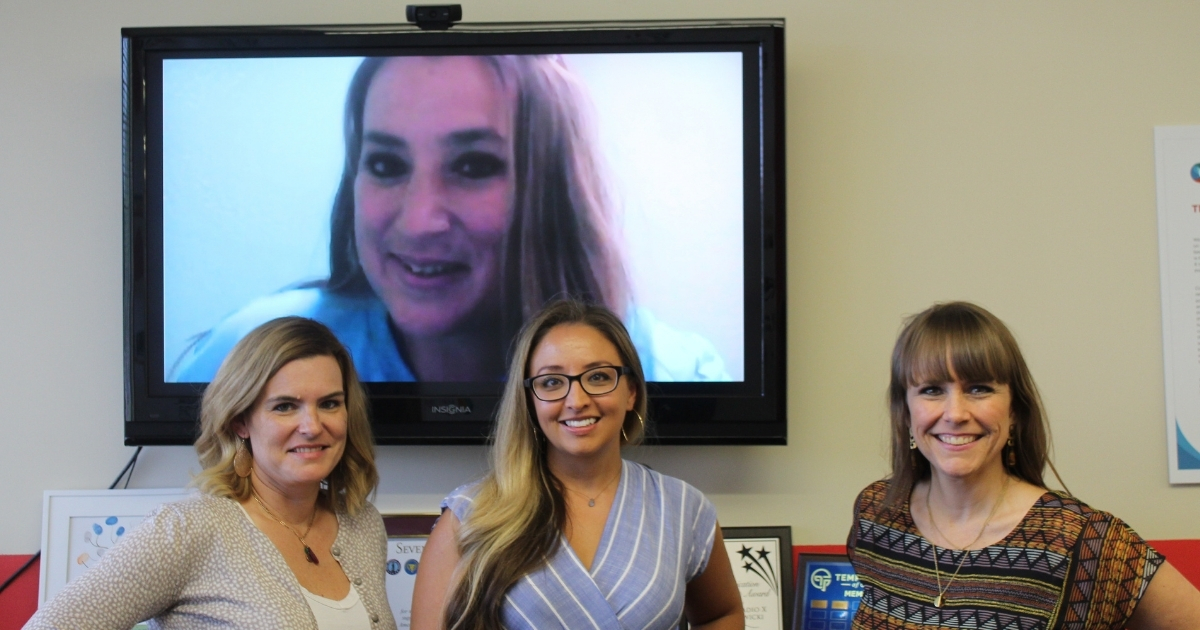
Aria and RandellThe Innovation SpotAlma Coffee


Randell BeckRandell Beck, Photographer – Cinematographer–and Post-Production at Beckshot

Randell is a former Naval Commander with a background in engineering and special operations. A lifelong outdoorsman and photographer, he also holds an MBA from the University of Texas in Community Planning (joint program between the school of architecture and real estate programs), and extensive experience in logistics and team building.

He applies his business expertise, operational planning background, and award-winning photographic talent to the challenge of producing exquisite marketing materials for his clients. His extensive real estate career spans over 25 years in every aspect of real estate: development, construction, marketing, operations, and design.

He is a member of the Board of Directors of Lutheran Social Services of New York and an accomplished guitarist.

BeckshotFollow Beckshot Media on Instagram and Facebook


Aria Taboada, Owner of Aria Music Studios

Aria Taboada has been passionately engaged in music since she was nine years old, when she picked up the violin for the first time. She spent many hours practicing her craft as well as learning piano. She played as a member of the Atlanta Youth Symphony as well as the Georgia All State Orchestra in high school, and later attended Georgia State university as a violin performance major, studying under Dr. Christos Galileas. She has been featured in multiple artists recordings, including Latin Artists Seich Music and country artist Alison Nichols. Although she enjoys performing, her true passion lies in educating and inspiring young musicians. She believes that the fine arts are a very important part of the community.

Aria Music StudiosFollow Aria Music Studios on Facebook and LinkedIn


This transcript is machine transcribed by Sonix


TRANSCRIPT

Speaker1: [00:00:07] Broadcasting live from the Business RadioX Studios in Woodstock, Georgia, it’s time for Cherokee Business Radio. Now here’s your host.

Speaker2: [00:00:22] Welcome to Turkey, Business RadioX Stone Payton here with you this morning, and today’s episode is brought to you in part by Alma Coffee, sustainably grown, veteran owned and direct trade, which of course means from seed to cup, there are no middlemen. Please go check them out at my Alma Coffee Dotcom and go visit their grocery café over at thirty four forty eight Holly Springs Parkway in Canton. Ask for Harry or the brains of the outfit Letitia and please tell them that Stone sent you. You guys are in for a real treat this morning. A little bit later in the broadcast, we’re going to get a chance to visit with Aria and I’m going to try to pronounce her last name, but we’ll get a handle on that. And she runs a school where she teaches folks how to make beautiful music. But first up on Cherokee Business RadioX this morning, please join me in welcoming to the broadcast with best shot Mr. Randall Beck. Good morning, sir.

Speaker3: [00:01:23] Good morning, Stone.

Speaker2: [00:01:24] How are you? I am doing well. It’s a delight to have you here in the studio. You and I have talked about this idea of having you come in and visit and talk to us about your work. It’s finally happening. Thanks for coming down. Tell us a little bit about mission purpose. What are you out there trying to do for folks, man?

Speaker3: [00:01:45] In the corporate world, there’s this thing in the instilled it in us in business school back when I was getting my degree right, and you you ask somebody, what do I what do you do? And so it bigshot that they would ask me that. And I might say, you know, I subvert dominant paradigms by leveraging industry best practices through accentuated technology, what you know, and so, so big shot is about messaging. Right. And what we try to do, what we’re trying to do is transform business messaging and really grab people. We help the business tell their story about why they do what they do and what makes them different than their competitors in a way that has impact through video and high quality photography. And we put the impact on the story so that they can reach their clients and, you know, generate a better client experience.

Speaker2: [00:02:34] Well, I tell you, I can’t think of anything that is more important and would have a larger impact faster than getting that messaging crystal clear. And I think I suspect you tell me there’s probably a tremendous advantage in having third party perspective come in and help you think through articulating that message. Because I can tell you this, my business partner, Lee Kantor, I mean, he and I can talk we can tell each other what we do. And it all sounds great. But like if you have a third party, there’s some value just from that third party perspective, isn’t there?

Speaker3: [00:03:11] Clarity is everything. Yeah. And particularly in today’s marketing world, the Internet marketing and social media, explosive growth there has kind of transformed the marketing equation. Now, I’m a big Simon Sinek disciple, and so it’s all about why

Speaker2: [00:03:29] He’s the why guy. As I’ve seen a little YouTube, I got to confess, I didn’t read the book. I should probably read the book and read the book.

Speaker3: [00:03:35] It’s really good. Yeah, it’s called Start With Why? And I’m not going to try to recap the book, but the central message for him is, is that the research shows that nowadays people aren’t buying what you sell, they’re buying why you do it. Yeah. And so to communicate that why is the most important thing and the best way to do that is is through. High impact, direct communication. Forget the business, speak like I was joking about a minute ago. Right, right. Talk simply and directly to people in ways that engage them. And of course, with social media and the Internet, the best way to do that is video. The video revolution is is in full swing. If you if you’re not doing video. Five years ago, you’re already behind, so.

Speaker2: [00:04:24] Right. Right. Well, that’s where we come in. One of the things that I think I like about the idea of video, interesting in some respects, audio, but certainly you’ve got once you get it nailed and the pros like you, piece it all together properly and we’re all happy with what we’re going to place out there. I got this I got this stone out there. I think I don’t know. I don’t have one, but I’ve got this stone out there working for me 24/7 while I’m doing other things. That’s got to be a tremendous advantage. And he gets it right every time

Speaker3: [00:04:56] He gets it right every time. And it’s a consistent message if you if you. If you orient your narrative so that each piece that you put out is is really hitting on your core values, your core message, your HWI, right, then he is getting it right every time. And of course, nobody likes to be sold to. And so when you’re having a conversation with somebody, if you start coming across like a salesman, they start tuning you out. Right. But it’s a better approach to be able to say, yeah, you know, I do Business RadioX and hey, check out my website. There’s a bunch of stuff on there for you to look at and you can see what it is we do. And then you just have a conversation with them where they can get your they can get your pitch and your differentiation and your messaging from that website that’s getting it right every time. Right. So that’s the that’s the social media revolution.

Speaker2: [00:05:44] So these I think I heard you say this is is your council typically to do more like and rather than do a 15 minute ditty, you would do five, three minutes, you would do multiple pieces with little different angles on them.

Speaker3: [00:05:58] They call it the three second world that we live in, you know, three seconds to grab somebody’s attention. That’s spans are really short. So you start with a bang, right? Yes. And, you know, one minute, maybe two sometimes is is really as long as you want to go in that environment. And, you know, marketing in general tells you to always, always be putting your key message out. Right. Nike, Nike says just do it on everything. Yeah. They want you to understand what they’re about. We work with champions. We open doors for you to achieve your potential. Just do it. You get that on everything you see from Nike.

Speaker2: [00:06:32] Ok, so let’s walk it through a minute. So let’s say so. I understand that you probably have a wide variety of the kinds of people you could service for for the moment. Just purely hypothetically, let’s talk about me for a minute. I mean, it is my show, let’s say when it was my as soon as the check clears, Randall, as soon as the check clears. If we were doing this and I were the subject, like what? Walk us through the engagement, especially like the early steps. How do we how do we do a certain set of videos or a Cherokee Business RadioX? Yeah, Walkerston, we would start

Speaker3: [00:07:09] Off with the idea of what is Business RadioX? What is Cherokee Business RadioX? What’s what’s this about?

Speaker2: [00:07:16] And this is me and you just talking casually, just trying to get out. Just I was trying to

Speaker3: [00:07:21] Find out what you’re about. Right. And then I want to explain what I’ve just explained to you about about proper marketing and the way way to get your messaging out. So now you decide, OK, this is this is really for me. I really want to do, you know, maximize my impact. Right. And do this. So then we sit down on camera and we do a structured interview where I’m going to elicit from you during the interview

Speaker2: [00:07:47] The you’re probably a lot better than I am. I don’t know about that. You’re going to give me a report card after. I don’t know about that. I interrupted you. Go ahead. All right. So so you’re a structured kind of interviewer structured interview. You’re pulling you’re pulling the best of me out of me.

Speaker3: [00:08:01] I guess you’re getting your why and you’re how wrong. What makes you different. Right. And that’s all on camera. So I can edit that video and audio together once we’re done to to craft the narrative that you’re wanting to put out there, you know, in a very concise and powerful way.

Speaker2: [00:08:18] And that’s encouraging that you can that you can just clean it up a little bit.

Speaker3: [00:08:23] You know, we’re talking business messaging here. We don’t need

Speaker2: [00:08:27] Nice, you know, is

Speaker3: [00:08:29] Like like like you

Speaker2: [00:08:30] Can I think you tell me. I think maybe you can get away with a little bit more that kind of thing, like in this format where you’re just sort of chewing the fat, as my dad would say, but not in a professional messaging piece. That’s a different animal. That’s right.

Speaker3: [00:08:44] Yeah. Because you only have that one minute to run before they’re turning you back out. And so then once we have their narrative crafted, right, we edit in what we call Berel, which is, you know, you’re cutting away from your smiling face and showing what you do, showing in this context, we’d be showing you doing some interviews, show your facility like, oh, you

Speaker2: [00:09:04] Were just some faces, get more big role than others. You why do I get the feeling that there would be a lot of money

Speaker3: [00:09:13] That’s up to you. We edit all that in there, too. So still getting your message, you know, you’re still hearing your voice. But this is almost like a documentary, right? You’re hearing your voice. You’re narrating your story. But we’re seeing aspects of what you do, too, in a very impactful way. And then that is that goes to color correction in the whole editing process we call post-production. Right. Just like you do. Right.

Speaker2: [00:09:34] And you make me six foot three with the blast and

Speaker3: [00:09:37] We make you look like Clark Gable. And then and then we distribute.

Speaker2: [00:09:41] Ok, well, OK, let’s talk about that, because that’s nothing to gloss over. When you say distribute, the last thing we want to do is based on my little tiny circle of knowledge. You don’t want me making major decisions about when to distribute what how to frame it. So I’m going to get some direction from you on that, too, right?

Speaker3: [00:09:58] Not for me personally, but. I’m no marketer, OK, but part of the package can be that we bring in a marketing person to help do that campaign. OK, or if you already have that marketing person we give you, we give them your deliverables. Right. You know, execute your marketing strategy. Right. Whether that’s Facebook or Instagram or both or, you know, website or blog or whatever it is. And so we work we work together with your team to come up with that.

Speaker2: [00:10:24] Well, I like that idea. I like the flexibility of it. If I’ve got someone who I really have gotten to know and trust and really respect their their professionalism and their expertize on on how to fully leverage that kind of content, you’re flexible. Find Stone. Here it is. Run with it. And if not, sounds like you have relationships with best in class folks that have that knowledge and expertize. And I can I can team up with them. Or do you just build it into my whole

Speaker3: [00:10:49] Package, build it into your package. That’s right. And the bigger we go, the bigger the company are. Sometimes they have their own agency. Right. And in that case, the agencies will be given us delivery specifications. So we’re just working to the specs then. Right. They already have the campaign defined and at that point we’re giving them the content.

Speaker2: [00:11:07] So talk about that a little bit, because I think, you know, a lot of our listeners are some of them are aspiring entrepreneurs, but a great many of them have a little something going, even if it’s a side hustle and they’re trying to figure out different aspects of their business. And a big piece of it is this whole sales and marketing piece. How does the whole sales and marketing thing work for for a guy like you? Like we were talking about, like an individual you and I met at a at Woodstock business club function on in stock in Woodstock thing. So I think I have a feel for how you might meet people like me or Oria. But how do you how does all sales and marketing thing work when you’re trying to build relationships with people that own, you know, large firms? That cannot be easy, I wouldn’t think.

Speaker3: [00:11:54] No mystery to networking. Right. The introduction is always the best. A good referral is the next best.

Speaker2: [00:12:01] So you get referred in a lot of time. Doing good work is a heck of a sales tool in that area. Yeah, you’re right. I mean, if you taught my kid how to play the violin and they couldn’t walk and chew gum before I brought them to you and then I tell my neighbor, did get your kid over there. Are you straight about right?

Speaker3: [00:12:16] Definitely not the drums or the trumpet.

Speaker2: [00:12:19] Right. Right. So so your business, I mean, you you have to have a tremendous amount of trust. It’s not just the money. I mean, OK, I mean, I’ve spent money on stuff that didn’t work. But to trust you, to put me in the best light, that’s the that’s

Speaker3: [00:12:38] The key factor in this business. And yeah. And so we make a real point that we are always loyal to the project and to our client, you know, whatever it takes to get it done, right. That’s right. And and, you know, there’s never a time that I want them to be surprised by anything that’s happening. Yeah, communication’s critical because once you lose the trust in this kind of business, it’s all relationship. When she loses the trust,

Speaker2: [00:13:05] That’s better and better, I suspect. I mean, I think better to overcommunicate and have them cry uncle on that and then not communicate and then over deliver.

Speaker3: [00:13:16] You know, if you’re in a real estate shoot for a brokerage and they contract for twenty photos, we might give them twenty five because, you know, it’s just better we don’t nickel and dime and we overdelivered.

Speaker2: [00:13:28] Ok, so I wanted to ask industry sectors, are you fine because you just mentioned real estate. I chose myself. I thought it might be fun to do something for someone like an already small business people that we know. But are you finding that your business over the years has sort of gravitated toward certain sectors, certain industries, certain types of businesses?

Speaker3: [00:13:47] Yes. You know, in the broad sense, it’s professionals, right? It’s businesses of any size, but in a professional environment, the need to differentiate themselves. But there are sweet spots that. Right. We’ve developed. Real estate’s obviously a big one in the photography.

Speaker2: [00:14:02] Well, it wasn’t obvious to me. Why is that? Why is that?

Speaker3: [00:14:05] Because my photographs all the time on their listings and they need videos about why you should work with me. And, you know, here’s what my process is, OK? And related businesses to them, to mortgages and people like that need to do the same

Speaker2: [00:14:16] Because those are crowded arenas, right? I mean, you can’t swing a dead cat without hitting a mortgage broker or a realtor, right?

Speaker3: [00:14:22] That’s right. And they need to differentiate themselves in a big way. Right. But then there are other industries related to that. Commercial real estate is one commercial buildings. The property managers that are leasing apartments and office space, you know, are starting to discover out there that that showing their operation in their properties in the best light is going to be very critical post covered with all the downsizing and shuffling going on. Right. Leasing is going to get very competitive

Speaker2: [00:14:50] And I’m going to look at it. Will you tell me, is this right? I’m going to look at that space, look at shots, videos of anything around this on a computer long before I ever try to set up any visit. I’m not going to drive all the way to wherever, right? That’s right.

Speaker3: [00:15:06] And in a real sense, you know, you want that buyer that’s seen those photos to come in prepared to make an offer. Right. The better, the better. The presentation online that’s your first showing in the better that presentation is, the more likely they are to to do that. Transaction and in a bigger sense than that, you know, in other related industries, architects, engineers, property developers, construction contractors that need to show a portfolio, our approach is really well for them. Now, that’s some high level involvement on those issues. They’re really looking to express a design concept and really show it in its best light. Some of those shoots are very involved and are our secret to this is we shoot everything we do as if it’s for publication for an architect. Right. So even even a real estate agent says, just shoot. My listing gets the same approach with some standardization and some things that we do to make that efficient for them. Right. We have we have standard pingle, standard shots, you know, some standard settings and things like that. And so they get that same approach as is the architectural shoot would be if they’re going to be featured in residential design. Right. Wow. So it’s a it’s a good way to make their business advertise their business.

Speaker2: [00:16:23] So then you get a chance. I would think you get a chance to build relationships and genuinely serve. I don’t know the the people who run the building. Right. Or run the the marketing of the can be. Do you enjoy. You must you must enjoy seeing all the different architecture and have a real appreciation for design,

Speaker3: [00:16:41] Something I thought about doing in my life and didn’t do. And maybe that was a good decision and maybe it was so, so I’m fascinated by it. But because I’ve been involved in it, you know, even back in the Navy, I built team buildings for the SEAL teams. And so,

Speaker2: [00:16:55] Ok, we got back involved with they just got sort of I built training for the SEAL teams. I got to hold my breath for an hour and a half. Well, let’s back let’s get the back story on this thing. Although as far back as you’re willing to go, how does one, you know, land where you have what’s the what’s the Randall big back story? Oh, no. We call it the back story. Oh, I like that. See?

Speaker3: [00:17:17] Ok, how do I get to where I am? A long series of miscalculation and error. So, no, I. I was a naval officer out of college for 14 out of school, 14 years total. And about 10 of that I spent in, you know, some various capacities in the SEAL teams or the special bone units. And my last job in the Navy was on the on the staff of the commander in chief Atlantic Fleet as the special warfare liaison. Oh, my. So I was in big involved in R&D and acquisition budgets. You know, new things. Right. Like my favorite project was we were developing a wave piercing speedboat, combat speedboat. Oh, my. So things like that that were very interesting. But one of one of the projects was building a team building with some very specialized electronics and security features and things like that was a fascinating process. And and post Navy, I got into the real estate world development and construction operations world. And so I’ve learned to speak, engineer, architect, city planner, all those languages. Right.

Speaker2: [00:18:24] Do you feel. I’m sure the answer is yes. So maybe I should say, why do you feel how do you feel that having that that background in the military and in this case even highly specialized, you know, elite pocket of the military, how do you feel like that has served you in the business world?

Speaker3: [00:18:44] Mission focus, true leadership, an orientation towards results.

Speaker2: [00:18:51] So do you get frustrated occasionally so you can you can tell me it’s just us girls here, just it’s just me and Ariah. Do you get frustrated sometimes when you see people that are less than driven or less than disciplined or a little bit lazy? Is that frustrating to a Navy SEAL?

Speaker3: [00:19:10] No, never.

Speaker2: [00:19:12] I don’t think I’m buying that. You have to find a way to work with those folks. But but I’m sure you do run into most people must seem a little less disciplined, a little less on point than you would prefer, I would think at times. OK, maybe at times. OK, so you also learn diplomacy and all that, as I say, less timely.

Speaker3: [00:19:36] Maybe sometimes you just you just want people to hurry up, you know.

Speaker2: [00:19:40] So but you’re just like the people, some of the constituencies you serve your go.

Speaker3: [00:19:46] Before we go on talk about constituency, we kind of talked a lot about real estate and architecture, which are lovely, sweet spots. I enjoy that tremendously. But we’re also in the art world where we’re currently working on a five part documentary for Cousins Properties. Speaking of developers, I’ve heard

Speaker2: [00:20:01] Them nice little cute little cottage

Speaker3: [00:20:03] Industry. But they are they are doing a four sculpture installation in their renovation of Buckhead Plaza, OK. And so we are filming. We’re videoing the creation and the installation of these sculptures, which represent intersections around the Atlanta area. And of course, by that, you’re automatically drawing in some historic and cultural context. Right. Cousins is a company that’s made a real commitment towards art in public spaces and impacting the culture in ways other than just don’t we have a pretty building lease in it right now, a very unique company among developers out there. So we’re doing a five part documentary series on that, which puts us we’re working with an art consultant and the sculptor himself. We’re in his studio doing the creation, as well as in the Plaza for the installation in the finished product. So that’s an interesting one. We’ve done health care and, you know, health allied health services.

Speaker2: [00:20:57] Now, why that would not have thought. I wouldn’t I’m not getting a good visual on health care.

Speaker3: [00:21:02] Remember that our thing is differentiation, right? Writing anybody, any professional that needs to differentiate themselves from the others is is a good client and they have need of what we do.

Speaker2: [00:21:14] Well, and I guess there’s a pocket there’s a there’s a a sandbox in the health care world that is that has medical devices and stuff. And I bet design and that kind of things like visual is important in that regard. I bet.

Speaker3: [00:21:27] I don’t know. But design always reveals intent. Right.

Speaker2: [00:21:30] And if somebody write that down and

Speaker3: [00:21:32] Design is design, it’s fascinating to me, no matter what form it takes, one of my friends from up in New York City is works for a company that does packaging design. They package products for their clients, while a strange. You wouldn’t believe how technical that that is. You know, there’s a science to product design and packaging and

Speaker2: [00:21:58] The packaging, I mean, it’s the kind of thing I don’t even think about the

Speaker3: [00:22:02] Shape of the grip on the skill. So it’s not an accident

Speaker2: [00:22:06] And neither is the box that it comes in. Maybe that’s it.

Speaker3: [00:22:11] So design is fascinating. Right. So in any aspect and I personally really like design.

Speaker2: [00:22:17] Yeah. And it’s and you get the joy of capturing it and putting it in its best light and then helping them think through how to get that message out there. We touched on it a little bit, but is there anything else that comes to your mind when maybe we’ll get it? We’ll ask in the form of getting some counsel for for some of the the folks in our tribe. What advice, if any, do you have with regard to to those of us who might be in an arena that that is kind of noisy, kind of crowded? What advice do you have for us to try to achieve a little bit of differentiation, to just separate ourselves a little bit from the from the crowd?

Speaker3: [00:22:52] I would say inspiration is the key, and so you need to find a way to inspire people to do business with people that inspire them. Right. And that’s that’s the challenge when I talk about impact, when I talk about differentiation, that’s really what we’re trying to do, is give them your your big why in a way that inspires them to participate with you.

Speaker2: [00:23:14] Know this whole Y thing for you, it’s not a parlor trick. I mean, I think you take this very seriously. This is the core of what you do, isn’t it?

Speaker3: [00:23:22] How many businesses say you’ve got the best price? Right. How many of them say we’ve got the best product? Right.

Speaker2: [00:23:30] Do they? I don’t know. All right.

Speaker3: [00:23:34] On any given day, that can change. Right, right, right. And if your customer is coming to you because you’re. Your convenience store and you’ve got the cheapest price on gasoline today, they’re going to buy their gas from you, but tomorrow when the other guy undercuts you by a nickel where they’re going to buy their gasoline. Right, right, well, that’s a simplistic example, but you want to inspire loyalty and continued. Continued commitment from your client. All right, so now you’re in the white world. Yeah. Why are we doing this?

Speaker2: [00:24:04] I must start asking why more like that. Yeah, that’s it. I enjoyed the video when I watched it. This Simon guy, Simon. Yeah, but I don’t know. I don’t feel like I’ve applied enough. I should just I should be I should ask you more like if people think they might want to sponsor a show or a host of serial, maybe I should say. Well why. Well, I mean, maybe there are other maybe I have come up with some other phrases besides why or, you know, what makes you feel that way or something, but kind of just keep poking. Right.

Speaker3: [00:24:32] Said you hadn’t read the book, but in the book he tells you how to do that.

Speaker2: [00:24:35] Oh, he does.

Speaker3: [00:24:35] It’s a process, not a destination.

Speaker2: [00:24:37] And so since I’m on an invoice, we’re giving him quite a little poker. He doesn’t believe

Speaker3: [00:24:43] The world is talking about him. It’s just, you know, it’s a good framework.

Speaker2: [00:24:49] So, yeah, before we before we wrap, I want to make sure that our listeners know how to get in touch with you. So whatever you think is appropriate in terms of contact info, whether it’s a phone number or email address, maybe a website, maybe there’s a cool place to go. Look at some of your work or whatever you think is appropriate. Let’s make sure we let them.

Speaker3: [00:25:09] So a part of why is is a contact, contact, communication and commitment. So at best shot when you need to get hold of us, you’re getting hold of me. And whatever needs to happen, I will take care of with our crew or our suppliers or whatever you can get. You can reach me through the website. It’s bigshot shot dotcom. Beck shot singular dotcom. There is a big shots that’s plural and that’s not us. My email and phone number are on the website. Phone numbers five one six five oh nine six nine four three. Email is Rendel L.L. at Bigshot Dotcom and we’re on Instagram and Facebook as well. Just type in best shot and up will come.

Speaker2: [00:25:59] Well, and I do. I think maybe that’s even a point of differentiation. If I pick up the phone or even if I sent you an email, the next contact, probably I’m going to look you in the eye or talk to you on the phone. Yes. I mean, not to me, that seems like a real point of differentiation right there. No, it is. Well, thank you so much for coming to visit. And I hope you’ll come back. I’ll tell you an idea that might be worth pursuing. I think it be fun. Might be fun if if you have a local client to maybe have them come in. We’ll spotlight their business, too, because I love learning about other other businesses. But maybe it would be fun to talk about this a little bit about the relationship, how you guys work together and or if that’s do that, or maybe one of these trusted market partners, these best in class, somebody that handles the other part of the engagement. If someone needs like to have someone that does, you know, the the distribution work. So if you’re up for that, we’ll do that sometime.

Speaker3: [00:26:56] Yeah, that would be fun. I can think of several good local clients that might really enjoy that.

Speaker2: [00:27:01] Yeah, I’d love it. Hey, listen, how about hanging out with us while we visit with our next guest?

Speaker3: [00:27:06] Sure. It’s a great studio. I’d love to hang out with you guys for a little bit.

Speaker2: [00:27:10] All right. Next up on Cherokee Business RadioX, we have with us from us Aria. Armelle, take a swing. I should have asked before we went on air, would have been the last sort of professional interviewer would have done right to both of you.

Speaker1: [00:27:23] Got it. That’s exactly right.

Speaker2: [00:27:24] Are you all that built up or not? She just took a swing. Right. So, Aria, the the name of your outfit. Am I saying that right? Aria, Aria, Aria, Music Studios, Music studio. Clever. All right. Music Studios, you’re teaching folks how to play music. What are you doing?

Speaker1: [00:27:43] So I personally teach violin. That’s my main instrument that I teach. And also piano, ukulele and viola. We also have a bunch of other or a few other instructors that teach other instruments, such as saxophone, recorder, bass guitar, guitar, drums, beginning voice. I hope I’m not leaving any out there. There have been several that have been added recently, which is a great thing.

Speaker2: [00:28:09] So I’m going to tell them myself and my my supreme lack of musical knowledge or talent. When my oldest was in the third grade, I had I wasn’t very long in this business of running studios for the Business RadioX network. And one of the things on the list was you had to have a recorder and Holly was going to the store to get a recorder. I said, Holly, I got more recording equipment and you can take a look at what do they need? It’s a little flute, etc.. So that was my education that they have. What a recorder that I

Speaker3: [00:28:42] Think Stone should come to your school.

Speaker2: [00:28:45] Maybe, you know, maybe you should have just a class for parents to just like just basic terms. And I want to say and not to say, because I don’t know in third grade, though, and actually in third grade, you’re still kind of a smart guy. You’re like Daddy, the hero. I was at seventh, eighth grade where you got to be really stupid. I don’t know, somewhere. I don’t

Speaker1: [00:29:03] Remember. I was a big nerd the whole way, so who knows?

Speaker2: [00:29:07] All right. So you’ve got a you’ve got a physical location that people come to. We do, yeah.

Speaker1: [00:29:13] So we recently opened our brick and mortar location in the beginning of March. We have been around for a long time, though, probably about ten years. We were previously located in Kennesaw actually at my home studio. So I just moved it now to a brick and mortar because we wanted to have some more instructors and also to be able to do a little bit more in the community, in the Woodstock community. So I was really lucky to land that new that new office that we can actually be in Woodstock and kind of, you know, do some outreach and stuff like that.

Speaker2: [00:29:48] Well, congratulations on that. I think that’s fantastic. So the the the end user profile, probably not the person writing the check, but the ah, most of the students, young people,

Speaker1: [00:29:59] We have a wide range of students. The ages range from anywhere from four years old to eighty, just however old. We have some adult students that actually take with their kids, which I think is really good.

Speaker2: [00:30:13] That’s cool. That’s the way we do it. Right.

Speaker1: [00:30:16] And I have several adult students. They tend to not be as they’re a little bit more shy about performing. But I’m trying to get some more performance opportunities that they would be comfortable with so that they can kind of get their music out there.

Speaker2: [00:30:30] So we should just bring them to the studio and be like, OK, it’s time for the. The area, our show us what you heard last week, Bill,

Speaker1: [00:30:38] So I have a few for you.

Speaker2: [00:30:39] Yes, but like the four year olds, a six year old, I bet they’re probably less inhibited. Right. And they don’t have it right or willing to stand and strong string or blow the thing or whatever, Netley.

Speaker1: [00:30:50] Well, I do have some shy ones. I will say I have some kids that I, I haven’t really heard a peep from, you know, for the duration of their lesson. And sometimes they’ll open up. But, you know, after a year of teaching and they’ll just start talking, I’m like, wow, I’ve never heard you talk before. But for the most part, yeah, the kids are a little bit more free and bold.

Speaker2: [00:31:11] So the hats that you must have to wear, the all the the disciplines that you must be able to exercise because you have this highly specialized knowledge from in the music world and talent in the music world. But you’re also running a business, a big piece of which I suspect is, you know, getting the business, the sales and marketing and all that kind of stuff. And you got to sort of know how to how to run a class, even though there’s a lot of your work, one on one or some group.

Speaker1: [00:31:43] So it’s actually all one on one up until this point. But we are opening a mommy and me type class that taught its toddler music, baby music, and we’re calling it baby rock stars. And it’s going to be opening in September. So we’re hoping to get a couple people for that, for the group class. That will be kind of a new avenue for us.

Speaker2: [00:32:04] But having a child that you don’t know initially come in. I mean, to me, it was I mean, I my kids were wonderful, but still they were I mean, that was a handful. And then try to get them focused on learning something. Do you have did you just learn that by trial and error or you just have a knack for that? Or is there like formal education? And here’s how you handle a kid for an hour and a half. Right.

Speaker1: [00:32:28] I mean, really what we focus on is the individual. So everybody’s different in their learning style. I’ll have some parents that will bring their children in like we want them to do competitions. We want them to, you know, be a little Mozart. And then I have other parents that come in. There’s just like, you know, just let them have fun, just explore what they want to do with music. So it really depends on the individual. And I just try to make that individual comfortable when they come in for lessons by trying to figure out what their individual goals are, what they want to do. And if it’s a kid or an adult, I’ll ask them, what is the song that you really want to play? Like something that you’ve heard on the radio, just your favorite song. And even if it’s something that they can’t do for a year or more, will work towards that so that they have a goal to work towards.

Speaker2: [00:33:19] Now, are there some instruments that are easier in general to pick up and do a pretty good job over other? I mean, because I have zero musical talent, there’s no one no one in my family on my side, no one sings, dances, plays any music. My wife says that I’m tone deaf. I maintain that I am tone mute. I can hear you just fine. I just can’t I just can’t produce it. But are some instruments you have little if you’re going to get if you’re going to have a stone style studio, let’s get him on. I don’t know. Maybe it’s that recorder thing.

Speaker1: [00:33:53] I would say recorder is a really good instrument to start with. That’s the reason that a lot of schools use that instrument to kind of get kids acclimated to learning music. Also, I do have some students that want to learn stringed instruments right off the bat, and I wouldn’t recommend that if they’re below a certain age, I would recommend starting with piano. It’s a little bit more instant gratification to play piano because you don’t have to, though. There is technique involved. There’s no screeching sounds or anything like that. When you play piano as opposed to violin. There’s just so much to think about when you’re playing a stringed instrument. And that can frustrate a lot of the younger musicians.

Speaker2: [00:34:34] Ok, is the violin and the fiddle the same thing? Is it the same instrument?

Speaker1: [00:34:39] It is the same instrument. It’s just the style that it’s played. There is an argument, though, that there were old time fiddles that were shaped a little bit differently, the bridge that holds the strings up so that fiddle players could play more strings at the same time. But I think in general, it’s just a violin. Yeah.

Speaker2: [00:34:59] Randall, you I remember now, if it was during during our conversation or before we went on air, but you play something in your room.

Speaker3: [00:35:08] I’ve played a number of instruments in my life, but. But guitar is the one that stuck.

Speaker2: [00:35:12] Yeah. And did you learn from a really early age like like she’s talking about her? I started about

Speaker3: [00:35:18] Six years old or so I said, oh wow,

Speaker2: [00:35:21] That’s awesome.

Speaker3: [00:35:21] It got a little songbook with a bunch of old, you know, bluegrass songs and Johnny Cash songs and John Denver songs in it. Right.

Speaker2: [00:35:28] Learn them. Oh what fun. So it out in the community. You obviously find yourself working with parents to provide them and their child a great experience, you get to the 80 year old who says, I always wanted to play guitar or whatever. Do you find yourself collaborating with community organizations, associations, other businesses in some way to either on the business side of things or just to try to be a visible, vibrant part of the local community?

Speaker1: [00:36:04] Yes, of course, when we open the studio and of course, I know covid is still kind of a thing. It’s still kind of going on now. But, you know, covid has really kind of inhibited us from doing community stuff. So we are looking forward to doing a little bit more out in the community. I really would like to get the kids especially and the adults out, you know, playing at different locations, maybe for children’s hospitals or retirement homes or anything like that. We are going to be doing or I say we I mean, me and some of the other teachers are going to be doing a benefit concert, a charity event for Circle of Friends. You might have heard of them.

Speaker2: [00:36:44] Oh, yeah. I get my coffee there on Thursday morning.

Speaker1: [00:36:48] Thursday morning. I see you there every Thursday, too. So, yeah, we are planning on doing a Valentine’s Day concert. I know that super far away, but I’ve already started practicing for it. So I will be playing the Vivaldi Four Seasons, All Four Seasons. And one of my coworkers are employees, Lanard. He’s going to be doing piano and I’m not sure what he’s going to do yet, but I’m hoping that something kind of jazz related, I think that would really balance it out well. So unfortunately, I don’t have the venue get the information, but it is going to happen. It’s in sometime in February. So if you follow the social media links, we will definitely announce that.

Speaker2: [00:37:27] Well, that is fun. You can call it the Business RadioX folks there. But I have

Speaker3: [00:37:32] A question for you is if that’s OK. Absolutely. You know, listening to this and with my perspective on the world, I’m interested in what you do that’s different and all the music stores that give lessons, right? Yes. Why would there’s that question? Why would somebody

Speaker2: [00:37:49] And you’re getting all those for free, are or are you going to send us a bill?

Speaker3: [00:37:56] Size matters. You get a big bill. You know, why would somebody come to your school instead of those lessons or, you know, what is it that you do different?

Speaker1: [00:38:05] I think one thing that differentiates us is our focus more on the individual during the lesson, as I said, just figuring out what their goals are and trying to focus on them instead of just having a core curriculum that we do. So whereas some people might do better with a curriculum, other people do better with just learning individual songs, just kind of, you know, piddling around a little bit. Playing by ear is a big one, too, like some people read music better, some people play by ear better and just, ah, you know, just being able to perform as well. We have to recital’s a year currently that we do. So the students really get to show off what they’ve learned during the year. And also we have other you know, we help we help students out with competitions that they want to do, all state orchestra, stuff like that, to to just inspire them. You know, I think that’s our main our main thing is to inspire musicians.

Speaker2: [00:39:04] There’s that word again where you were on to something, you

Speaker3: [00:39:07] Know, that resonates with me, though, because when I was a kid and taking piano lessons, the thing that frustrated me about it was the structure of it. You know, it was all exercises and these little songs you wanted me to learn. And they weren’t at all what I was wanting to play. And ultimately I stopped doing that and moved over in the guitar direction. So I didn’t play the things that I was interested in. Yes. Like she was saying,

Speaker1: [00:39:27] I think it’s important for us as teachers to communicate well with our students because sometimes you can tell if they’re not having a good time, you know, after a while and I’ll just stop and ask, like, hey, sweetie, you know, or buddy can are you enjoying this? Like, are you do you like the song? Is there something else that you want to do? And that’s more effective because more often than not, students will not communicate with you and then they’ll just end up quitting. So it’s better to communicate them from the get go to see what they want to do, what their goals are.

Speaker2: [00:40:00] So how about what about recruiting other team members? Because you want them to have that same love for the craft. You want them to have that same presence with the kids? Have you have you kind of got it dialed in and crack the code on how to recruit good people and keep them on board?

Speaker1: [00:40:21] Well, so far I’ve been very lucky with the staff that I have. I know I don’t I don’t think I’ve cracked the code yet because we just really started. And so this is my. First time having employees or having, you know, people, there’s

Speaker2: [00:40:37] Another hand, I mean, when you run into you, can you wear all these hats?

Speaker1: [00:40:40] Yeah, well, you know what one thing? My husband was a marketing major, so he helps me a lot. And I definitely wouldn’t be able to do that kind of stuff is not my cup of tea, but I’m learning a lot more through him and also through the Woodstock Business Club where I met you guys as well.

Speaker2: [00:40:58] So your husband’s name, if you don’t mind, Taylor.

Speaker1: [00:41:01] Taylor.

Speaker2: [00:41:02] All right. Shout out for Taylor. Make it happen. Behind us is Taylor’s musical at all.

Speaker1: [00:41:07] He’s not. No, but he supports music, though.

Speaker2: [00:41:13] That’s fantastic.

Speaker1: [00:41:14] It’s the radio

Speaker2: [00:41:15] You give me, too. So talk a little bit about Woodstock Business Club specifically, but also just the the the the I don’t even know what to call it. The collegial, supportive environment. At least I have found it that way since I’ve come here. That’s been your experience to apparently, yes.

Speaker1: [00:41:34] I was pleasantly surprised because I’m definitely an introvert. I don’t really put myself out there very much as far as talking to people. Playing music is fine. That’s that’s kind of odd, I’m sure. But but I just I’ve made so many great contacts and great friends, and it’s amazing how one thing will kind of lead to another. You know, you meet someone that you don’t really think is going to to help Persay, you know. But I think just putting yourself out there and just being getting to know everybody and kind of helping collaborating with them, I really enjoy that a lot more than just trying to recruit people to help my business, you know, so so I found a lot of it’s been great to kind of get to know people and also just to drive around Woodstock and be like, oh, wow, I know the owner of that business is kind of cool where, you know, I would have never met all of these people otherwise.

Speaker2: [00:42:28] So I’m that experiences that. That’s what I’m finding as well. The other thing that I did not anticipate, although I have run another studio and my day job is trying to find other people across the country to run studios, I’ve run another studio in Sandy Springs for years, but it wasn’t as intimate because they might be from, you know, the east side of Atlanta or whatever. Now, on the client side of our work, I mean, it’s they’re going to be a client of mine. I might see them at church. I might see them at Reformation. I might run into him at the piebald. I kind of I got to live with he’s going to look them in the eye. So I feel like there’s this I don’t know, I’m feeling even a higher obligation of making sure that I can I can give them whatever type of result they’re seeking if they’re going to write me a check to be part of this team.

Speaker1: [00:43:17] Right. Right.

Speaker2: [00:43:18] Do you feel like this higher sense of obligation? I certainly

Speaker1: [00:43:21] Do. I do. Yeah. I definitely want to help out anybody that I can if I if I can, you know, and give them give them some business and just kind of collaborate with them. That’s that’s that’s my favorite word. I guess lately it’s just collaborating.

Speaker2: [00:43:36] I can’t even spell it, but I walk away from the and I get energized when I go over here. My new routine is just to walk across the street to the circuit and I really enjoy the Ypersele. I don’t know. We may need an opower crusty

Speaker3: [00:43:50] Old

Speaker2: [00:43:51] Curmudgeon’s what

Speaker1: [00:43:52] I’m getting there too,

Speaker2: [00:43:53] But I’m really I’m enjoying that. And it’s a little different flavor and it’s a it’s a it’s some of the same folks but other folks. And then I try to time it so I can get over to the Reformation and enjoy the Woodstock business. So that’s that’s kind of my get to know people day. And there are a lot of people for whom I might not be a good client for, and they are probably not a good client for me. But I swear to you, I really am. After I got a chance to sit down, this was my intellect is kind of up, you know, if there’s a way for me to help someone. So I’m going to, you know, I keep it. So I feel like I’ve got all these I call market mates. Yes. Like, I get all these, you know, market mates. And I’m going to try to help. And I feel like they are the same. Yes. That they’re going to try to help me. So I don’t maybe that happens in other communities, but it’s all new to me.

Speaker1: [00:44:40] Yes. Yeah. And I never go in there with the intention of I’m going to get some business today. I’m going to drum up some business. Yeah.

Speaker2: [00:44:45] That’s not the right frame. Right.

Speaker1: [00:44:47] I think that people can sense that too, if you feel that way, you know. So I think it’s it’s great just to just to make new friends, you know,

Speaker2: [00:44:55] That’s probably what maybe turned me away from years ago, investing much time or energy in that kind of activity, because I can remember going to a to a thing. And I swear to you, the some of the people to have a conversation with me. And as soon as they put me in whatever box they wanted to put me in, I probably wasn’t answering the question properly. Randall thought I had some training from you. I probably answered, you know, what do you do? I probably got. But I swear to you, I could I could tell they were looking right over my shoulder like, who’s my next victim? Who’s my name? This is I’m not. Yeah, but that is not been my experience at all for this.

Speaker3: [00:45:32] That’s tell them that you subvert leveraging industry best

Speaker2: [00:45:37] Practices and then they’ll just move right along. So what’s next for for for you and mastermind Taylor? What do you guys got some world domination plans for this thing?

Speaker1: [00:45:47] Well, I don’t know about that. I mean, you know, I haven’t thought about that, though. So maybe that’s a that’s a good idea, but not for right now. I mean, we’re we’re just focusing on filling up our studio with awesome students and awesome teachers. We currently have five studios open, but we’re really only utilizing two of them.

Speaker2: [00:46:05] So we got some capacity.

Speaker1: [00:46:07] Yes. Yes. So we we definitely want some of our students. And I think for us, we we definitely want to get out in the community more. That’s our main focus right now, is to have more performance opportunities for the students, which creates, you know, just inspiration in them to learn music as well as retention.

Speaker2: [00:46:28] So, yeah. So how can we help the most? I mean, obviously, you know, maybe this will help you get a little something. You can get out there to the to the masses and share and that kind of thing. But yeah. How how can people like Randall and me and our listeners, what can we do to support what you’re what you’re trying to accomplish?

Speaker1: [00:46:47] I mean, you know, if you can make it out to the performances, that’s great. Just support us. And and then if you know anybody that needs lessons, you know, you might want to come by and check us out first. I don’t know if you’ll feel like us or not. I’m sure we will. But but yeah, that’s pretty much it.

Speaker2: [00:47:07] Fantastic. Do you have any great pictures of you anyway? Didn’t you want me to ask her that? Really great

Speaker1: [00:47:12] Pictures. Actually, I was I was thinking about that during this whole thing. Like, I need some headshots. And and then I also learned from Randall about I need to be making more videos and maybe I need someone to make them for me.

Speaker2: [00:47:24] But no, I would think that, gee, I wonder who could do that. We’ll find somebody for you. We’ll we’ll go on for you. But no, I could see if I were looking for lessons for Katie or Kelly, my too. And if I went to your website and I saw a beautiful picture of you on a cello or I mean, to me the instruments are so gorgeous, the cello and the fiddle, the two instruments that you should be in every song. No, I could see that, you know, really making an impact. So. All right. Well, we’ll keep our our eyes open and our our ears open for for some opportunities. It’s been a lot of fun having, you know,

Speaker1: [00:48:03] Thank you for having me.

Speaker2: [00:48:04] Yeah, well, I hope you do. And I’m quite sincere with this. I hope you’ll think about coming back and letting us know how things proceed. Definitely. For sure. And maybe when you’re getting the next event that your thing is February,

Speaker1: [00:48:19] February, it’s going to be around Valentine’s Day. And we’re hoping to have kind of like a romantic setting, like some y, you know, whether you’re single or in a couple, you can enjoy some wine. Yeah. Enjoy some music.

Speaker2: [00:48:32] All right. So, I mean, I’ll I’ll definitely participate by the ticket or whatever. And me and my roommate of thirty plus years, Holly, will come on down. So but what I was going to say is, if you like, as we get closer to that event, anything you’ve got going or if you’re doing something kind of connected to one of these causes, because I know you’re great about trying to support these causes. Let me know even if you can just swing by the studio for a quick segment just to get people caught up. I mean, the platforms at your disposal, I’m happy to help and we’re happy to help in any way we can. Thank you. Yeah. All right. So before we wrap, let’s make sure folks know where you are, OK? So let’s make sure we tell them that again and then how to how to get to you and have a conversation with you or someone else on the team or have a kid, have them in their kid, come see whatever whatever works for you.

Speaker1: [00:49:17] All right. So we are located basically in downtown Woodstock. It is off of Highway Ninety two in the Creekstone office, Creekstone Ridge sorry, office complex. And it’s right behind that Dairy Queen on off of Highway 92. And if you want to look at our website, it’s our music studios dot com, and you can also reach us on pretty much any form of social media. So if you look us up on Instagram at our music studios and also on Facebook at the same address, and we are also on LinkedIn and I’m missing something, but we’re we’re we’re definitely on those news websites. So you can check us out just type in area music studios on any of those platforms.

Speaker2: [00:50:04] Sounds to me like you’re incredibly accessible. Yes, I know. Randle would support. Well, thank you, Aria. Thank you, Randall. This has been an absolute delight. What a fantastic way to to invest a Tuesday morning. Thanks so much. Thanks for having me. You all right. Until next time. This is Stone Payton for our guest this morning and everyone here at the Business RadioX family saying we’ll see you next time on Cherokee Business RadioX.

Tagged With: Aria Music Studios, Beckshot

Kara Frenkel from Moving Target ATL- Mobile Axe Throwing and Oscar Velez from Three Brothers Painting, Inc.

July 22, 2021 by Kelly Payton

Kara Frenkel and Oscar Velez
Cherokee Business Radio
Kara Frenkel from Moving Target ATL- Mobile Axe Throwing and Oscar Velez from Three Brothers Painting, Inc.
Loading
00:00 /
RSS Feed
Share
Link
Embed

Download file

InnovationSpotALMA

Kara FrenkelKara Frenkel, Owner of Moving Target ATL- Mobile Axe Throwing

Kara Frenkel is a mom of 2 adult kids and has 2 grandboys. Kara’s partner is her husband and he does all the hard stuff in the business, (the driving). Kara has over 25 years in direct customer service management and almost 4 years in the entertainment world including axe throwing. Covid ceased her executive management role and made her reinvent herself. Kara wanted to do something that brought fun and excitement to people and allow them an escape from the crazy world and release their stresses while have a kick AXE time.

Moving Target ATLFollow Moving Target ATL on Facebook


Oscar VelezOscar Velez, Chief Estimator / Project Manager of Three Brothers Painting, Inc.

Oscar has grown up in Woodstock and was one of the first graduating classes of Woodstock High School. He has worked for his family’s painting business, Three Brothers Painting, for over twenty years. As a teenager, he began his career prepping for new construction projects. Now, he oversees and leads the sales and project management teams. He’s deeply passionate about connecting with people and building strong relationships with his customers. In 2021, Three Brothers Painting will celebrate thirty years of serving the metro Atlanta community for their interior and exterior painting needs. Oscar is married with two boys and lives in Towne Lake. In his spare time, he loves to play music, grill, and watch movies.

Three Brothers PaintingFollow Three Brothers Painting on Facebook


This transcript is machine transcribed by Sonix


TRANSCRIPT

Speaker1: [00:00:07] Broadcasting live from the Business RadioX Studios in Woodstock, Georgia, it’s time for Cherokee Business Radio.

Speaker2: [00:00:17] Now here’s your host.

Speaker3: [00:00:23] Welcome to Cherokee Business RadioX Stone Payton here with you this morning, and today’s episode is brought to you in part by Alma Coffey, sustainably grown, veteran owned and direct trade, which of course means from Seed to cup, there are no middlemen. Please go check them out at my Alma Coffee Dotcom and go visit their Roastery cafe at thirty four or forty eight, Holly Springs Parkway in Canton. As for Harry or the brains of the outfit Letitia and tell them that Stone sent you. You guys are in for a real treat this morning. A little bit later in the broadcast, we’re going to get a chance to visit with Oscar Vélez with three brothers painting. But first up on Cherokee Business RadioX this morning, please join me in welcoming to the broadcast with moving target at Ole Miss. Kara Frankel.

Speaker2: [00:01:15] Good morning. Good morning. Glad to be here.

Speaker3: [00:01:18] I am so delighted to have you in the studio. It’s been this has been a while in the making, a while in the planning. Did we first meet maybe over here at the at Reformation at the Woodstock Business Club, or was

Speaker2: [00:01:31] It was it Woodstock Business Club?

Speaker3: [00:01:32] How many people have begun relationships with at a bar or brewery?

Speaker1: [00:01:39] So I

Speaker3: [00:01:40] Don’t know. But for all of you folks out there trying to grow your business, get something going, put some serious consideration into the bar strategy or the brewery strategy,

Speaker1: [00:01:50] Right

Speaker2: [00:01:52] Now, the cool people hang out.

Speaker3: [00:01:53] So moving target at all. Mission purpose. Tell us a little bit about the about the business and what you’re trying to what you’re trying to create for folks, what you’re trying to do for people.

Speaker2: [00:02:03] Ok, absolutely. Moving Target ATL is an entertainment

Speaker4: [00:02:07] Company that

Speaker2: [00:02:08] Comes to you. So we are 100 percent mobile. We get that often. Where is your location and moving target at all is one hundred percent on the road. So we are an ax throwing business and serving company, which brings a lot of camaraderie, a lot of stress relief, basically Catholicism, whatever you want to call it. And it brings people together and we do any type of event you can think of. We’ve probably already done it or already booked it. So we’ve been on the road since November the 1st and I’m still in our first year of a business, which is pretty exciting.

Speaker3: [00:02:43] Wow. So it’s early for you. So lessons learned so far. Anything surprised you in this last, what is it, eight, ten months?

Speaker4: [00:02:52] A lot has surprised us.

Speaker2: [00:02:54] I’m sure we’ll get into the background of how we got to this point. But the biggest thing is that how many people I mean, it’s a good time also after the pandemic and in covid, but a lot of people just excited to get back together and be able to do something fun. And probably what surprised us the most is how many people were having to turn away. So that supply and demand thing is really has really there’s only so many days on a calendar month to be able to hold events. So that does limit you. Absolutely.

Speaker3: [00:03:21] Well, I hadn’t thought about what a great problem to have.

Speaker1: [00:03:24] Right. Probably three months out. Happy birthday then. I had no right. Exactly.

Speaker3: [00:03:31] But and

Speaker4: [00:03:32] It’s a way to solve

Speaker3: [00:03:33] The problem or mitigate the problem or address the opportunity however you want to frame it. So are you considering maybe having more units? That’s right. We’re going yeah.

Speaker2: [00:03:44] We actually have some things to announce today.

Speaker3: [00:03:46] Oh, OK. All right. OK, so before we still all that thunder. Yes, please. Back story. How did we get here?

Speaker2: [00:03:53] How did we get here. Because at fifty two years old, I never thought I’d be throwing axes for a living, that’s for sure. So how we got here, my history and my background is over. I said twenty five years on the on the website. But honestly now that I look at it it’s probably more like thirty years which is really aged me since I just told you my age too. But what I’ve always done in my past was executive management, mainly in retail. So some big brands and it makes perfect sense.

Speaker1: [00:04:20] Executive absolutely unbelievable skills. Absolutely. Yes.

Speaker2: [00:04:26] So I did big box gems. I did a long time with limited brands, Godiva chocolates, pretty much you name it. And I either ran a district or region and traveled a lot and raised two kids, two amazing children, and got to the point of about four years ago, a little over being an empty nester and trying to figure out what’s next for me. And in doing so, I got a great opportunity with a entertainment company that was locally, locally housed here in Atlanta, but was nationwide. And one of the brands I did multi brands for them across the country, but one of the brands was a ACSA throwing business with I at that point, probably twenty three locations across the country, and it was brick and mortar, one hundred percent and had a great time with it. I mean in all honesty, being able to go from being selling clothing or anything else did. Of course people are happy to buy clothes, but when people are going to you for fun and in our. It I mean, what better place to work than that, right? So had a lot of fun with that and spent a lot of my time on the road traveling and just a different day every day, a different week, every week, which was really fun. And then, as probably most people at this point is that whole thing covid happened almost like right now. Right? One of our brands was escape rooms. So if you think about what an escape room is, you’re touching everything and you’re encouraging them to touch everything. A lot of times. So entertainment took a big hit with that, along with everything else.

Speaker4: [00:05:55] But where you’re in close

Speaker2: [00:05:57] Proximity with a lot of people in closed circumstances and it really did change things. And being across the country, some things, some states open sooner than others and some didn’t. And I was the sole man standing in the entire company other than the owners and the entrepreneur team. And with that said, that lasted a few more months. And then it was time to figure out what’s going to happen after that. And I didn’t really know. I mean, I was starting to look for jobs again and knowing I didn’t want to go back into the corporate world, but knowing it’s what I was good at, that’s where I started looking. And sure, I was fortunate enough to have my business partner slash husband. One night at dinner, we saw a drawing of something that was on a trailer and he said, you know what, we could put extra. We can do it that way. And I thought I was a little bit crazy, which I know I still do.

Speaker3: [00:06:44] I think I still think he’s probably a little

Speaker1: [00:06:46] Crazy, a little crazy.

Speaker2: [00:06:48] But he did it. And I say I’m not the risk taker. And he is. And I’m thankful that he took the risk in me and said, you run businesses before other people do it for yourself. And that’s kind of what led us to what we’re doing right now. So I knew the business model very well. I’ve been in it for over four years in the industry. That’s nice. So that’s very helpful because you learn a lot of the what ifs and what could happens. But then I’ve never done a mobile business, so trying to figure that out. And I’d say we’re still on the cusp of figuring that out because that comes with its own challenges for sure.

Speaker3: [00:07:17] So it’s just the first and only time that you and he have run something together, a business together lately.

Speaker2: [00:07:23] Yes, it is.

Speaker3: [00:07:24] Probably learn a few things on that.

Speaker2: [00:07:25] We have he works what we in the beginning, what I joked, joked about is saying he has a real job. But now that this has gone so well, I said now he has two real jobs and I have a real job too, because our initial introduction to this was, you know what? Let’s just offset your salary. That’s really all we were looking for. Nothing big. You know, we’re in we’re in our mid 50s and we were just ready to do something that, you know, I didn’t know what I wanted to do. And it’s turned into a lot more than that. So now I have a real job to do. And we have we’ve learned a lot about each other and we balance each other extremely well. And we’ve learned more than anything we couldn’t do it without the other. So that’s a that’s a good partnership.

Speaker3: [00:08:05] So did you find some some division of labor? Some like you do this. I do that

Speaker2: [00:08:11] One hundred percent division of labor.

Speaker3: [00:08:13] Yeah. You just don’t have to.

Speaker2: [00:08:15] Well, he is for for the people around my age. McGyver, everybody knows who McGyver is. I know he’s always been that that’s what he’s been called by a lot of people. You can troubleshoot and figure out and solve anything. Right. Very handy. So he is the overall the operations management, I would say. So he does everything from he designed our unit. We had very clear and concise thing that we wanted to build. It had to be a certain quality. And he designed it. He built it. He did everything that the welding and made sure it’s going to run efficiently and take care of all of those. If this happens, what would we do? And we’re still learning that as we go. But he’s mainly our driver. So our unit is extremely large and very difficult to drive.

Speaker3: [00:09:01] Just anybody just happened

Speaker2: [00:09:02] To take it to I would never even attempt to. So that is definitely his role. So he is the driver and the set up the take down the breakdown. And if anything goes wrong on site, he’s going to be able to fix it without anybody on the customer side knowing about that.

Speaker3: [00:09:15] Ok, this is a very tactical question, a very self-serving question. Purely hypothetically, if my brother were coming to town around Christmas and renting a place nearby, but the driveway is sloped, is there is there some way to accommodate that stuff?

Speaker2: [00:09:29] All the time? We do. We always do a site visit. And well, let me say and you figure out if you 99 percent of the time we do a site visit and after this past week, it should be one hundred percent of the time from now. Sort of. But we do we also can use Google Earth to be able to see what we’re what we’re contemplating to be driving up to. But there are some things we can have it. It has to be mainly level, clearly balancing abilities.

Speaker3: [00:09:53] So in our case, maybe we should to the Christmas house when we lived in Cobb County, now we’ve moved here, as most of our listeners know, we live right on the edge of town. We’re still the Christmas house. But we live in a patio home now, right? Yeah. And so but people we’re still the Christmas house, at least for this year and probably next. So people are not going to not come. Right. They’re just renting places all over town. But maybe I can talk to Tom and Lori, maybe having having your unit here at the information department somewhere in one of these parking lots, probably.

Speaker2: [00:10:22] Ironically, I just got had somebody from the innovation spot reach out yesterday.

Speaker1: [00:10:25] Ok. OK, but

Speaker3: [00:10:27] That is one of the things that you guys have to think about. And here again, we’re dealing with professionals. We’re not dealing with Cleatus. Yeah. What are you offering? Do extra cinderblocks.

Speaker2: [00:10:37] Right now we know. We know before we get there if it can happen. And the really cool thing about what we do, the majority of our business now is is going to be your corporate business. So everybody usually has a parking lot that’s pretty, pretty level when you go. So it’s really great because we can just drive up during lunch time. They cater a lunch, they provide something for their staff or some type of appreciation from client appreciation. And it’s always easy if they have a parking lot, we can pretty much make anything happen.

Speaker3: [00:11:02] Ok, so how how does the whole sales and marketing thing work for a company like yours? Like, do you advertise? Do you have to get out there and and shake the bushes, or is it the kind of thing where they see your trailer and you’re getting phone calls or.

Speaker2: [00:11:16] Yeah, well, a little bit of both. We don’t do any marketing, which is really kind of crazy. We and I think I’ve probably had to close some doors on some of the networking friendships about marketing because we can’t we can’t support any more business right now as we are.

Speaker1: [00:11:30] Let’s you hear this as a problem to have.

Speaker3: [00:11:34] I got we’re definitely going to engage you to for the Christmas house and probably for something for Business RadioX. But I think I want to hire you as my marketing consultant.

Speaker1: [00:11:42] Don’t you ask? I would say that

Speaker5: [00:11:45] That would be a great

Speaker1: [00:11:45] Place to go right

Speaker2: [00:11:48] Now, and it’s very hard to say no do so. I it I can make us burn that candle at both ends most days too. But what we drive is a huge billboard anywhere we go. So it’s kind of fun. We do it in tandem. If we’re going on a long distance. I follow my husband in my vehicle and I’m kind of that wide load car behind the behind. Right, right. But what’s funny about it, I told him one time I had I called him and said, you’re about to be pulled over. This cop is hanging back with me. He doesn’t realize we’re together. You’re about to be pulled over. And he’s going, of course, through what have I done wrong, like what’s going on? And then I look over at the cop and at the stoplight, he’s taking pictures of it. So it’s

Speaker1: [00:12:27] Like people are

Speaker2: [00:12:29] Our target wall fold down. So we’re going down the road. You’re not really sure what this thing is that’s going. And signs it’s a moving target, mobile ax throwing. People can’t really figure it out. So it’s a little intriguing when you do see us parked somewhere driving down the road. But on top of that, it is one hundred percent word of mouth. And social media like what we do is beautiful on social media. We take a lot of photos, a lot of videos, and then people just having a great time. And that’s a really great thing because we’ve seen well over four thousand people that have played with us since we started and we haven’t had one single person that didn’t leave happy. So that’s you

Speaker1: [00:13:04] All that

Speaker2: [00:13:06] Doesn’t happen. That didn’t happen in brick and mortar, I can tell you that. So I’m doing it. Mobley’s we’re doing something right.

Speaker3: [00:13:11] Ok, can’t all be rainbows and unicorns. Surely you have some challenges you’re trying to address in your in your business. Do you still have some challenges or is latest challenge trying to meet the need right now?

Speaker2: [00:13:23] That’s our biggest challenge. But no, there’s definitely challenges. I’d say one of them is we have what we have built is extremely quality unit. So that’s one thing that is we knew if we were going to do it, we weren’t going to try to get in as inexpensively as possible. We were going to do with the investment and do it right. So we didn’t have to tweak or

Speaker3: [00:13:41] And that was hubbies. Influence was part of that. He really good quality.

Speaker2: [00:13:45] We both wanted the quality. His name, by the way, his name is Bill. I’ll give him a

Speaker1: [00:13:49] Shout out to go Bill. Right. I know you

Speaker3: [00:13:52] Both wanted quality companies.

Speaker2: [00:13:53] That was the one thing we didn’t want to have to do something and try to make it better down the road. We wanted to do it. If we were going to invest in it and take the risk, we were going to take the risk all the way. And the reason that that even comes about, there were some other takeoff’s of what we were doing out there across the country. And when we looked at it, we’re like, wow, you know, that’s I don’t know that I’d pay to have that drive up to my house with chicken wire or, you know, chain link fence and some would and hoping it’s going to make it to your place.

Speaker3: [00:14:20] There really is a guy

Speaker1: [00:14:21] Out there named Cleatus who’s doing this.

Speaker2: [00:14:25] So when we when we started back in November, there were some out there. But they just we looked at it and were like, oh, we can definitely do something better than that, but it’s going to cost us to do so. We needed to do that. So with that said, again, I don’t even know where those questions started, but a challenge that we have is in talking to our insurance agent that that right. Sergeant reliability this week, they said, you know, every Tom, Dick and Harry goes out and throws axes somewhere on a Friday night and says they’re going to quit their job and put it on wheels and we will insure them. So that’s one of our challenges in the I guess the mobile industry is making sure that we try. I try to help people along the way that are trying to get into this business because I want them to do it in the same quality or a similar quality and not just try to get into it to think they can make money and learn the industry overnight, because that does hurt the quality. If something pulls up to somebody’s house and they think that’s what mobile access is in, it’s not to the level that we expect.

Speaker2: [00:15:22] Then will they even ever know that we’re out there or will they expect more? Right. And that’s one thing that the challenge of the industry, I think, in mobile is anybody trying to just put it up or try to figure out, hey, will come just build some really fast on your property, and that’s not going to be something that’s safe. And that’s one of our our three characteristics that we really believe in is safety first. And then I guess other challenges would be today we had an event at Emory University and we’re going to have to postpone it. Our unit is completely covered. You can play in the rain. We’ve got a two tiered roof and it’s very solid. But it’s not as much fun for the participants in the spectators at our Hechler bars to be able to to be able to enjoy the event as much. So we try to work with people and I talk to them this morning and they made the judgment that we’re going to schedule it for another day. So Mother Nature is going to be sometimes a factor. So that’s something that’s a challenge.

Speaker3: [00:16:16] So let’s talk about recruiting, developing, retaining good help people on the team. Even in my business, which is not high risk, the worst thing that’s going to happen in

Speaker4: [00:16:27] Here is people won’t enjoy being on the show

Speaker3: [00:16:30] Or listening to the show, which fortunately doesn’t happen. But we have a good time in here and people seem to enjoy our programing. But I’m not worried about anybody getting hurt today. You’ve got to have you have to have tremendous trust. You’ve got to work with. Yeah. Tell me about the people that you bring into your circle and trust with your brand.

Speaker2: [00:16:52] Yeah, and that’s the big thing with my history overall. I get in twenty five to thirty years. Branding is is part of everything I’ve done. And I’ve only wanted to associate myself with certain quality brands and with what we do. That’s the first thing is we can teach anybody the skill, but they have to have the personality that’s going to fit. What we want to sell and what we want to sell is fun, energetic, exciting, engaging team building. Just some good camaraderie all together. And with that, you need somebody with a coaching spirit, but somebody that’s more than that cheerleading background. They want to see somebody succeed. And my husband is the best expert that we have.

Speaker1: [00:17:33] So that’s what we call them. Expert experts. Are you really good branding thing? Right.

Speaker2: [00:17:39] Well, it’s kind of become who we are. So we eat, we eat, sleep and breathe, exercise now. So he’s the lead expert. And where I think in the beginning I can teach. I’m I’m an excellent trainer and I can teach everything. But now, after nine months, he’s been on the trail or coaching a lot more than I have. So he’s become better than I am, which is a challenge for me. But he’s also better at the coaching aspect. So when we find somebody, we’re looking for somebody on our team, our experts are our personality and are kind of like the host or the the personality on the trailer that’s going to be they’re in charge of their safety, but they’re also just making sure they have a great time at the same point. So if we find somebody out and about, we’ll bring them on our team. If they’ve got the right personality, we’ll train everything else. They just have to be able to love what they love. To play can be a little snarky and be sarcastic in a fun way with our guests, because that’s part of what we do are very edgy and then we teach them everything else. So right now we have on our unit other than myself, my husband and I, and again, him being the lead expert, we have six other experts that work with us. And that’s a combination of when we started thinking about this, we went to our very favorite fine dining server that has the best personality we’ve ever known. And we said this is what we’re going to do. We want you to be a part of it. And she said, I just learned how to throw X’s last weekend, I want to do this. And she’s phenomenal. And then she has a friend of hers that was also a fine dining server. So they work a full time job and they work with us part time

Speaker3: [00:19:11] And they know what service they already have that

Speaker2: [00:19:14] We we already love them for their personality. And then one of my former management managers of a escape room here in town, he was between jobs and going with the police or fire department and he joined us. Phenomenal. Got us through the holiday season, had a great time. And then right now we’ve got our three newest, ah, college students. And they were working all three working at a gym full time and going to school. And now they’re just working with us and going to school. And they all have the personalities and the fun and the drive to to do what we do. And they can do it in short spurts, two to four hours instead of working an eight hour shift at a gym.

Speaker3: [00:19:47] So and how cool are they when they’re hanging out with her buds? What do you do? You know, I work here. I work there. Oh, I’m an expert. Yeah, exactly. Just like really the coolest person in the crowd.

Speaker2: [00:19:58] And how bad is the job when you’re either hanging out at a Bruriah vineyard or a party with cool people? I mean, it’s a lot of fun and you’re playing games, so it’s fun. And we are currently recruiting because we’re going to need some more people as well.

Speaker3: [00:20:10] So tell me about this. Acts of service, counseling service.

Speaker2: [00:20:13] Yeah, that is that’s our take off on fundraising.

Speaker3: [00:20:17] So this lady could be a copywriter, a marketing consultant. You need copyrights, she’ll come up with something with three brothers. This is a group

Speaker2: [00:20:26] Going right are active service is our fundraising campaign and this is kind of the heart of where we are. We like to give back. We like to be involved. And we do so through what we call our acts of service. So instead of having a car wash or whatever it may be, be at a nonprofit, five or one three five oh one C three.

Speaker4: [00:20:45] One of those

Speaker2: [00:20:46] Is. Yeah. Or any other any other.

Speaker3: [00:20:49] Business RadioX Cherki Business RadioX was a nonprofit in February, but we’ve been making money since.

Speaker1: [00:20:54] Ok, that’s.

Speaker2: [00:20:57] Yeah but then we could do for other organizations as well. And we have different options where we can set up at a discounted rate and then share the proceeds that come in. And it’s just a lot of fun because people tend to give back a lot more when they’re having a good time. Right. So we’ve been lucky and fortunate to be able to work with some really great organizations around town.

Speaker3: [00:21:15] Ok, OK, so. So what? Like if Business RadioX. So let’s talk to some of these applications of your service. So if Business RadioX the network

Speaker4: [00:21:24] Or just turkey

Speaker3: [00:21:25] Business, we have five Business RadioX studios here in metro Atlanta. But if it was all of us or maybe it was just Cherokee Business RadioX X, if we had you come out to the parking lot. But what if

Speaker4: [00:21:36] We could somehow?

Speaker3: [00:21:37] Is there some way we could use it, raise the money and then give it to

Speaker2: [00:21:43] One that did recently in Cherokee County was with Goshen Valley. So that was up. And we we positioned ourselves we’re at Canton Reformation, yet Canton and Thrive. It actually was the sponsor. So they purchased us out. And then they the organization actually sold tickets and they sell tickets. And they made a really nice little donation to the cause. I think it was like thirty five thousand seven hundred dollars oh nine people to come out and throw axes. So it was a lot of fun.

Speaker3: [00:22:11] So so the the sponsoring organization or whoever Business RadioX or what good could play, it could pay your fee. Right. So, so now, so now you’re whole. And then we could set up for to buy tickets for the business community. You can buy tickets and we could give that money to whomever.

Speaker2: [00:22:28] Absolutely. So what they did is I think they did like twenty five dollars for a they’d have an X throwing training session, a mini game, and then they had a swag bag of a lot of giveaways from either Goshen Valley, Thrivent Reformation, oh, drink ticket or a partner sometimes with food trucks. And they’ll do a food truck ticket as well. And they just come out and have a great time.

Speaker3: [00:22:47] Oh, man. My mind is friends. I remember visiting like the food truck. Right, though that sounds like so much fun. You’ve already accomplished so much. You get so much going. But I don’t know what’s next. Do you think in the coming months

Speaker2: [00:23:02] We’ve got a lot of things that are next so happy and excited to share today that we’re actually launching our second unit on October the 1st. So we’re going to be having a north side Georgia and a south side Georgia location. And that’s going to be really great to have to be able to do a big business partnership with some young guys down in the South Side area. And we’ve also started working with a franchising mentor and coach, and they’re helping us get ready for Q1 and Q2 of twenty twenty two to be able to start franchising out. Oh my goodness. Now we’re learning a lot and we’re on

Speaker4: [00:23:37] The very early cusp of

Speaker1: [00:23:38] That.

Speaker3: [00:23:41] So when you get ready to do a franchise, it’s my understanding that one of the the key sets of activities is just bottling everything you do. Right, like standard operating procedures. That would be a larger jump for for the people who run the Business RadioX network. I know that because I’m one of them, but I get the sense that you’ve already got a lot of your stuff bottled, standardized. So you’re probably further along than than the typical pre franchise or.

Speaker2: [00:24:13] I’m actually I had it I did it all from my prior company.

Speaker3: [00:24:16] Although, you know,

Speaker2: [00:24:18] I again, I have four years of experience in this industry. So I already have all of the operations manuals, the training manuals, all of that done for brick and mortar. So all I had to do was change it and kind of tweak it for our mobile unit.

Speaker4: [00:24:32] So that part’s done well. So, I mean,

Speaker3: [00:24:34] If they outlawed ax throwing, you could be like a franchise consultant, a marketing consultant, a copywriter. You’re amazing.

Speaker1: [00:24:40] I don’t know about that. But we’ll stick with what we do best right now.

Speaker5: [00:24:44] That’s incredible, though. What a great Head Start experience.

Speaker2: [00:24:47] Yeah, well, it really helps because I tell you what I really enjoyed, there’s a couple of Facebook groups and I’ve really enjoyed getting to know people. I work with somebody that started one a few months ago in San Diego and somebody in Florida. And being able to just if it took me four or five months to figure out something about insurance that I wanted to do differently and be able to save them that time and be able to partner with other other brands out there that are trying to get going. I love that part. Yeah, there’s a lot of fun.

Speaker3: [00:25:15] Well, how can we help the Business RadioX community, the Woodstock business community, which incidentally. Wow. I just I haven’t lived here that long. Don’t you just love the the business landscaping, which

Speaker2: [00:25:29] Is just fantastic. So we were actually right here offor Arnold is where we house our unit here. Oh really. Yes. So but it’s just Cherokee County is is our is our home. So we’re really we want to be as involved here as we can.

Speaker3: [00:25:42] And when people say how can I help, they mean it. And I do too. But what can we do to help just continue to get the word out about what you’re.

Speaker2: [00:25:50] Absolutely. I mean, I think that’s the great thing is although it’s exploring is actually an ESPN sport. I don’t know if you knew that or not. It’s not. Yeah, it’s a worldwide sport. So there’s world championships once a year and it’s on ESPN. So that’s that’s the cool part. What just happened is that although to me it’s old news. I’ve been doing this for four years and I’m like, how could you not know about this? But but that’s what that’s just the truth. A lot of people just don’t know that that sports out there. And then then they go like, you’re going to do what? You’re going to hand us a weapon and then you’re going to let us do it. But we have three really key areas of our business, and one of them is quality and professionalism, because obviously what we do is very relaxed and very comfortable. But on top of that, we want to know from the very first time you even look at our website, you know, we’re different. Like, you know, we’ve got we’ve got knowledge behind us. It wasn’t somebody that we paid to do that. I did all of the content of our of our website, and that’s important to me and all the way through from the time we don’t let anybody book us online because I want to have that personal connection with them so they know me before they even book our our location or book us to come to their location. So that’s very important. And we want that quality to be all the way through the follow up afterwards. Even if I haven’t been able to service someone, which there was one time a lady that I, I wasn’t able to service because we were already booked. But I got her in touch with somebody that had a version of what we do, and she was happy, but she was devastated that she couldn’t get us. And following up

Speaker1: [00:27:19] Words, well,

Speaker2: [00:27:19] Afterwards, I just said, did it go well? Did you have a good time? She said, we did, but I can’t believe you’re calling me when you did not even work with us. And I said, yeah, I want to make sure it went well in those things does mean a lot. So that’s one of our characteristics that are very important, kind of our three tiered focus. And then on top of that, it would be the customer experience start to finish and then safety we’ve got our general liability is not one that everybody that does mobile access are in can get, because that came along with a resume of having some time behind us in the industry and we make sure that the safety is of utmost importance. We never wanted it to be how many people can we service? We wanted to service them the best quality and the safest way possible. So our first thought when we were going to build this is how do we add additional units off the side, more targets, more people. But when you do that, we found that you also lose a lot of control. So control of the access control of other people’s actions, which is never able you’re never able to control.

Speaker2: [00:28:17] So we determined we wanted to make it the safest unit possible with the best coverage possible and take the risk away from anybody, any location or landowner that we’re going to position this at. And by doing that, we run a very efficient ship so we can we can service quite a few people. I think it goes Goshen. It was like one hundred and eight places and one to one event. So we can do it very well and very we can make people tired throwing axes. But we didn’t have to do it by saying, hey, you know what? Now we’re going to add some more off the side and we’re going to because when you let an ax be able to walk off your unit and go to another another self built or land throw right lane, then what happens is you’ve lost that control. So we didn’t want to take that chance and we wanted everybody to know that they were they were safe. You always have an expert, right, between you. You never have somebody that is left alone to their own ax. So safety is very important to us.

Speaker3: [00:29:10] When I was going to ask her for, like, how are you guys different? And then you just, like, gave me like ten minutes of how you’re different. I mean, really, really are you are different. Wow. What a delight it has been to have you come in and talk. You are working and our listeners can’t see this, but they certainly will when they get a chance to meet you personally. The glint in your eye when you talk about serving people. Thank you. As you just

Speaker1: [00:29:39] Mentioned, Susan Larcker, I want to give people over here, though, right?

Speaker2: [00:29:43] I mean, I want to give people an experience that they’re not even expecting when they pay for us. And that’s what I would want to pay for. So I always say, if I wouldn’t buy it, if I wouldn’t pay for it or I wouldn’t be happy to have invite my guest to it. And we don’t want to provide that.

Speaker3: [00:29:56] Oh, my greatest. All right. So those who are listening, who would like to reach out and have a conversation with you or someone on your team, points of contact, best way to reach out, whatever you’re comfortable with and feel like it’s appropriate from a website, a number of LinkedIn, whatever.

Speaker2: [00:30:12] Ok, so our website is w w w dot moving target attell dot com. Our contact number is seven said. One zero seven five six to nine three seven, which also spells axes a yes, yes.

Speaker1: [00:30:30] Have you not thought of anything?

Speaker2: [00:30:32] Well, I’ll tell you, my husband worked hard to get that phone number. I can tell you that part. He gets full credit for that. And then our email address is info at moving target atle dot com. And if you go to our website, it has everything you need. Fake news all the way down to an easy quote, a lot of photos and a lot of videos. And then if you’ll check us out on Facebook and Instagram at Moving Target ATLE, you’ll see the fun that we provide and then some.

Speaker3: [00:30:59] Well, thank you so much for joining us. And let’s let’s have you come back in. Maybe when you

Speaker4: [00:31:06] When

Speaker3: [00:31:06] You launched that second unit, if you like. Sure. And make it and make that announcement or just any time you’ve got something really cool going well or maybe as you continue to profit, as you continue to partner with some of these nonprofits. Absolutely. And we’ve got something where you want to get a little extra notoriety around an effort to raise some money for a good cause. The platforms at your disposal come on in and we’ll we’ll have you talk about what’s coming if you’re left to.

Speaker2: [00:31:32] Absolutely. Thank you for having me.

Speaker4: [00:31:33] Yeah. Hey, listen, how

Speaker3: [00:31:35] About hanging out with us while we visit with our next guest?

Speaker2: [00:31:37] Absolutely. We’d love to.

Speaker3: [00:31:39] I am so sorry that you have to follow that act. I don’t know.

Speaker1: [00:31:42] Yeah, I don’t know. Think this has been a huge mistake. Oh, my. Good for the show.

Speaker5: [00:31:49] You said it. She’s going to set the tone. No, she was going to raise the bar

Speaker1: [00:31:54] To guide

Speaker5: [00:31:56] Us.

Speaker4: [00:31:56] All right. Well, all right.

Speaker1: [00:31:58] Bring it down.

Speaker3: [00:32:00] Next up on Turkey Business RadioX, please join me in welcoming to the show with three brothers painting Mr. Oscar Vélez. Good morning, sir.

Speaker5: [00:32:10] Hey, Stone, how are you?

Speaker3: [00:32:11] I’m doing well, man. You learn anything in that last segment?

Speaker5: [00:32:14] I more than I’m able to process.

Speaker3: [00:32:19] Well, you know, that that that camera and team are going to make it fun. But let’s talk about three brothers. What do they know? I want to know. I don’t know if it’s appropriate for an on air conversation. At some point. I’d like to know how in the world you were able to find Ashley the list,

Speaker1: [00:32:39] Because that is a story that is not going to be told on. Oh, my goodness.

Speaker3: [00:32:44] Is Ashley. I mean, I just I just think the world of Ashley. But but no, let’s talk about three brothers painting what you and your team are out there trying to do for folks. Yeah. Mission purpose. Tell us a little bit about the company and how you’re trying to serve.

Speaker5: [00:32:59] Man So three brothers painting started in nineteen ninety one. It was my dad and two of my uncles. Now I’m thirty eight years old and I do our sales, our lead sales person. And I often get the question, which brother are you with. What people don’t know our history. Right. And my, my go joke is always well I was eight years old when the company started so unfortunately I didn’t make it into the name and were too long established now to change it to three brothers and son. But no, we have been doing this for about 30 something years. My my actually just at thirty years, my pops, you know, we came to this country and he was working for another paint outfit here in the Atlanta area, and he was just the day to day manager, if you will, of his paint team while he had somebody above them that owned the business and were doing reconstruction strictly at the time when that person’s contract came up for renewal. The gentleman that was working day to day with my dad said, I want to keep working with you, but with you, you know, and well, what’s the name of your business? And my dad, my

Speaker1: [00:34:05] Uncle, I guess, is three brothers painting, you know, and

Speaker5: [00:34:08] Started from there. So used to do a lot of new construction work for John Wieland back in the day, back in the early 90s, even go into like mid 2000s, thankfully, right before the crash in 2008. You know, we had already started kind of weaning ourselves out of being in the new construction phase and mainly focusing on residential, because you can bring such a much higher level of quality and service to a residential property than you can. That new construction.

Speaker3: [00:34:41] I thought about that would not have occurred to me. I don’t know, care, would you with that

Speaker5: [00:34:45] Its higher level of materials, high quality rather than you just you have a much more personal relationship with that actual individual client than you do. You know, just a homeowner that you’re doing touch ups for from a house that you painted, you know, from the ground up and you never even met them. You just show up X and Y over at whatever construction sent me over to take care of this. Right. And you’re just a face doing work. But when you’re on the residential side, you know, you start building that relationship with that client and, you know, then sometimes it’s been generation. You know, I’ve been doing this for sale site for about 16 years, even though I grew up in the business and used to do, you know, some of the paint, more like getting in the way and

Speaker1: [00:35:29] Let’s be real, you know, but learning

Speaker5: [00:35:32] The trade from the ground up. And some of these folks have seen me, you know, grow up from when I was a teenager. And now I’ve got my own kids and their kids are hiring me now to come out and do work. And they’re like, oh, yeah, I used to paint my bedroom and now, like, I’ve got my kids, you know, so it’s just super cool being able to see families grow. Families, you know, tell us about their friends that need something else done. And then a much like you were saying earlier, we also don’t advertise except for the sense that, you know, our vans are my personal vehicle is actually not even I live in a neighborhood that doesn’t allow it. And I have a personal car in the garage. But we’re just like you guys, you just word of mouth. And the CEO, my my wonderful wife that you mentioned earlier, that’s her. That’s what she does. She she is fantastic at all of the CEO and content and and everything. And she has helped us in the past with that. And folks will ask me, much like you were saying earlier, about those, you know, business relationships that want to get you to advertise in their magazines or billboards or what have you.

Speaker5: [00:36:40] And it’s like, you know. I don’t want to spend two grand on something a month that I know like we’re already getting because, like the war speaks for itself, you know, those those review sites. And for anybody listening, if you ever hire any sort of trade and you’re happy with them, please take the time to write those reviews. They all really, really take stock at those. You know, I have an initial meeting with somebody that, you know, they don’t know me from Adam. And one of the first things that they might say is, you know, our Facebook neighborhood group recommended you. And then I look guys up and you guys have fantastic reviews. I’m like, oh, thank you. We I don’t look at them. I don’t want to get in my own head one way or the other, but I’m told that they’re pretty good, you know, five stars and which is awesome,

Speaker1: [00:37:30] You know,

Speaker5: [00:37:31] But by my very trying to be humble thing is always we try really hard, you know, just to make sure that everybody is as happy as you can make them. You know, we obviously are not going to be able to please everybody. We’re all human. And and we work better with some folks and maybe with a couple of others. But that’s going to happen when you’re 30 years. And, you know, and I think, again, the reviews and the fact that we really only have that CEO and really the word of mouth says a lot.

Speaker3: [00:38:02] So but your business strikes me as an incredibly competitive arena.

Speaker4: [00:38:08] It absolutely

Speaker3: [00:38:08] Is. Like, yeah, if I had not gotten connected to you through in Woodstock and having met actually in that kind

Speaker4: [00:38:16] Of thing and I needed

Speaker3: [00:38:17] Painting services, I don’t even know where I would start. I guess now that I’m in this business community, I would have probably asked Kara or whoever I saw Thursday at the thing. Right. Right. So I would ask someone I’d like to think I wouldn’t I would no longer go to the ER, quote, Yellow Pages. Right, right. But at any rate, you’re your business strikes me as incredibly competitive. So so you do have to be very diligent about being different or doing a great job for the work you do get.

Speaker5: [00:38:47] So that is a fantastic question. And follow up to what I just said in the sense that, you know, we we don’t have that print media and whatnot, but following back into, you know, relationships. Right. We much like hair. You know, I like to go to those networking things. You know what stock is as chock full of business owners. And I was very fortunate as having, you know, a lot of them be our friends, you know, because we have met through these small groups that have grown into big groups. You know, years ago, my wife and I started going to wipe out, which is young professionals of Woodstock, even though I’m a spring chicken anymore.

Speaker1: [00:39:28] I’ve been going through and getting to I’ve been going there, too. It’s fantastic the way I think you’re the

Speaker5: [00:39:36] It’s young at heart professionals at Woodstock and, you know, just building those relationships. And I specifically like that one because I was part of another networking thing years and years ago. That was a very referrals driven, like you have to bring stuff every week and if you don’t, you’re penalized and you have to pay for it and whatnot. And it’s just very nerve racking, like, oh, I didn’t meet anybody that needs pest control this week or what have you. Right. But with young professionals or a lot of the other things that we’re doing, it’s more about the relationships of people that are going to be able to tell people about you because. Yes, Don, you’ve heard about us

Speaker4: [00:40:16] Because you into the same

Speaker5: [00:40:18] Groups that I frequent. And so you need something. Then you go to your people. Right. And go to the people that you know, know, the people that do the thing.

Speaker3: [00:40:28] What I like to be, the guy that knows the guy that we

Speaker5: [00:40:32] All do in this room,

Speaker1: [00:40:33] I think there’s a reason

Speaker5: [00:40:34] We’re all in the

Speaker3: [00:40:36] Army to know, even if I don’t have any painting needs or don’t I don’t perceive any painting needs for another year or two years. I mean, nothing would thrill me more than for someone to shoot me a text today or an email. Still, we’re going to paint the inside of how do you know? How do you know? And I love being able to, you know, send you a note and be that. And I think a lot of people in this community, in this community do. So talk to us a little bit about the dynamics of of a family owned business, because there’s got to be some tremendous pluses to that, some tremendous events. And I wonder if there are some unique challenges, too, though. Oh, of

Speaker1: [00:41:14] Course. And be careful. Yeah, absolutely.

Speaker5: [00:41:17] Like I said, you working with you, you’re working with your husband as your business.

Speaker3: [00:41:21] We are broadcasting live and recording. So, you know, between the dangers of

Speaker5: [00:41:26] Working with family has is it’s definitely a double edged sword. It’s nothing that I don’t have to tell anybody here in the sense that, you know, if there is some sort of emergency or whatever, of course, everybody’s extra understanding. You know, if a kid is sick and I have to. Move a couple of appointments or whatever, it’s not even a question of all you’ve got to make up your hours or whatever, right, because we’re family at the same time. You know, I don’t want to be having Sunday dinner. You know, we have a standing Sunday dinner. I live six doors from my parents and my brother lives a three minute drive, you know, in the same neighborhood. I’ve been in the run for twenty one years, you know, and that was by design. In fact, when my wife moved into my I’m a. Like I said, third home there moved into my second place, she was like, is this going to be in Everybody Loves Raymond situation where like the over like all the time. We had a couple of years, she was like, we need to move closer. I was like, are you serious? So we did know. Now we’re just around the corner. All that to say, you know, we have that standing Sunday dinner. Oh, we we make it a point. Not really to discuss business. Well, that’s

Speaker3: [00:42:30] What was going to be my next question. Do you and it’s not we

Speaker5: [00:42:34] Don’t discuss business, you know, during family time, because I like to keep that separate. You know, there’s there’s so much, you know, for the first about to be, you know, hit in 13 years of marriage. And, you know, the first eleven, twelve years, you know, I worked steady six days a week. You know, Saturdays are usually a habit that usually they are a half day for me because I have kids and I want to be home for them. But I’ve just really made it a point that if I’m home, I’m home and home because I’ve put so much time into it over the last couple of years that I need to focus on this chapter of my life because everything that I can do, I can get done during my work day. And there’s, of course, going to be those after hours, you know, client call calling me, hey, are we still on for tomorrow? You know, it might be six thirty or seven or they have a question and they just got off work. So they’re calling me. Of course, I’ll answer the phone, you know, and my guys might be running a project a little bit later. You need to purchase materials. I get calls early and late in the evening. Just ask me to run the credit card for them because we control that at the office to make sure that spending is, you know, where we need it to be and keep track of all our materials, costs and whatnot.

Speaker5: [00:43:46] But I used to tell people, you know, if I’m awake, I’m at work and I still folks like my real estate hours. And then a certain point, you know, that burnout happens and it’s like, you know what? We are in an age where we really have to figure out our work life balance. And that’s actually something that I really learned from my wife, is, you know, we can’t be defined by our work. You know, we also are human beings that, you know, require that social aspect and or make these groups like, you know, young professionals. And I’m actually going to go to a business club tomorrow, which I’ve never been to. Those for me are the social and business aspect. It’s a good blend of the two to be able to grow your business in an organic manner because you spend three grand on fliers and, you know, they had four thousand houses or whatever. How many of those that are actually going to call on, you just don’t know. But if you keep intending to build these relationships, really just going to hang out and meet like minded people. And then, like you said, maybe three months later, somebody calls you and says, hey, Stone, who do you know? Have you met anybody in these groups that you go to or whatever? Because we’re there to be a resource, right? Absolutely. So that’s my approach to where I am now in the business.

Speaker3: [00:45:05] Well, for what it’s worth, that’s sort of the the evolution for me. We Holly and I, we sold our home and we’ve downsized material on the edge of town. Historically, I’ve not been very active in, like, this networking kind of thing. I’m a little bit spoiled in that. When you have your own radio show, if you want to meet someone, you just invite them to come on show. And so for years, fifteen plus years of doing, you know, people would come to me if I want to, but here’s what I’m finding. I’m finding that I’m getting to to meet people more people faster and then I’m meeting them outside of the studio and just getting a chance to really build a really deep relationship with people in my my book of those folks that I know that I that I’ve started to really like and trust, like, I feel very confident putting people in touch with each other. I’ve always been that way, like within the industry. Like if it had to do with marketing or media, sometimes I was even a little almost like a quarterback of the team. Right. Do you find yourself in that position sometimes because of your world, like our will someone because they’re working with you, particularly ask you about, I don’t know, you know, roofing, you know, like house related stuff, horse like like I would ask like if I needed to get a roof, I would ask Carol because I because I know her. I like her. I trust

Speaker4: [00:46:34] Her. But I’m thinking

Speaker3: [00:46:35] Now I would really ask Oscar like I was the

Speaker5: [00:46:38] First people ask me all the time for first off, they ask, what else do you do? Because a lot of these guys will go out there and they’re they’re a painting company, but they also might start doing remodels or know or something like that. And for me, you know, I grew up in this business. I know a lot about pain. If you had told, you know, sixteen year old me, I’d be excited about researching a new coding. I been like, you were in say,

Speaker1: [00:47:03] Oh, but,

Speaker5: [00:47:04] You know, for me, it’s interesting. And I know you know enough about it. Convince people that I’m knowledgeable in it

Speaker1: [00:47:10] Right now,

Speaker5: [00:47:12] But I know what I’m good at and it’s our niche, you know, so I always tell people, what do we do aside from painting, what we stain? You know, with you, that’s fine. And we do minor repairs, you know, paint and paint adjacent. You know, if you’ve got wood rod, absolutely. We can come in and replace bruddah brick walls and those silsby’s the soft fascia side, your chimney or whatever. Are we going to reside to your house? No, you know, that’s a different you know,

Speaker3: [00:47:39] But you probably know who you would consider best in class.

Speaker5: [00:47:43] And that’s, you know, from years of building up relationships with other guys that hire out subs for these types of projects. You know, that’s really about the only type of new construction, quote unquote, that we might do is of somebody finishing out their basement. And we have to come in and, of course, do that initial coding or if somebody’s adding an addition to their home, you know, they got to paint the inside and outside of it. It’s not all coming finished. You know, of course, you know where we’re happy to have those relationships and then be able to pass on that name. Can you build me a portico? Nobody I know who can, you know, stuff like that, because we have a very specific place where I want to be. You know, we have 10 crews running for a very long time that’s been with us. At least amount of time is going on, I think five years actually closer to six. And, you know, we just we retain our people by treating them well. You know, we’ll

Speaker3: [00:48:41] Talk about that a little bit in our system. It’s a little more loosely constructed. Most of the people in the Business RadioX system are entrepreneurs of their own, and they may run a studio in North Fulton, in Phenix or Tucson. So they’re not really reporting to me. And I have my corporate hat on. But I, I mean, I am in all or even intimidated by the idea of someone actually reporting to me and them and me not doing a very good job of leading them or even recruiting the right people know for sure.

Speaker5: [00:49:14] Well, in the recruiting sense, to be quite frank, I just don’t have a lot of experience with that because we just don’t really have to.

Speaker1: [00:49:21] Because you retain where, where,

Speaker5: [00:49:23] Where super fall. You know, we will have people call me all the time and say, hey, you know, Sherwin-Williams RPGs or what? Have you told me to give you a call? Are you guys hiring painters? You know, they might have their their full crew ready to go. And, you know, I feel terrible and I’m sorry we. Or full up, you know. But the times that we have added people, it’s actually, you know, my my father is still a little bit involved with with the business. He’s still the the principal owner, but he runs a handful of other businesses as well. So I do along with my sister, we do the day to day managing and running.

Speaker4: [00:49:59] You know, I do sales

Speaker5: [00:50:00] And then project management making sure that I’m on top of the project so that they’re getting done the way that I said that we’re going to be done. Right. So I got guys calling me all day saying, hey, we can’t find this particular product. What’s going to be the closest equivalent? So I have to find it and source it and stuff like that. Aside from sales, that eats up a lot of my days just making sure that, you know, the guys have what they need right now. We are having a lot of supply chain issues with just paint not being painted. Yeah, no, there’s a lot of products that just aren’t available right now. So I’ve told my guys, hey, instead of you driving to for Sherwin-Williams stores, which is a waste of time and call me, I will call our rep and find out where it is, have it presented for you. So by the time you get there, you know, it’s ready to pick up and go, you know, so that’s been, you know, one of our challenges lately is just making sure that we got materials. I mean, yesterday, not that we would have been able to start it anyways because of the rain, but I had a client text me. His color was ahead of time last week, early last week. And I said, great, you know, we’ve got some time to start looking around for it. It’s two very specific coatings that just have not been available for months. One of them specifically, it’s agency Cool Field. It’s a pool patio paint that makes the surface of the pool deck feel about 20 degrees lower than if it was just low. And it’s awesome. My dad has it on his place and you can walk on that and then walk on the tracks right next to it. And it’s like night and day difference, like frying an egg versus, oh, I’m comfortable. You know, however, the manufacturer is not making it right now because they don’t have the raw materials for with everything that’s going on.

Speaker3: [00:51:50] So everything affects everything else because, you know, supply chain all the way.

Speaker5: [00:51:54] Yeah, it’s definitely hit us a little bit later than some of the other industries. Of course, we all heard about lumber and how scarce and how expensive it was. Yeah.

Speaker1: [00:52:03] Yeah, right. Yeah it yeah. For sure.

Speaker5: [00:52:07] And you know, I’ve got guys calling me all the time, hey, you know, we can’t find, you know, super paint. They only have emerald, which is like twice the cost of OK, let me make a call, see if Sherman Williams can do a substitution because instead of paying fifty five dollars for a gallon when we should have been paying thirty something dollars for this other product mix and match the price because they were just out of stock, you know. So if these guys are just going out and just paying for it, then that’s money loss is profit loss, you know, so it’s a whole lot of juggling, you know, to make sure that these guys are getting what they need and that ultimately the client is getting what they need. Because I always tell clients or my guys, you know, if you can’t find a specific product, get the next one up. You know, we can’t go down, right?

Speaker3: [00:52:54] Always go up. So that’s one of those core operational disciplines that you and you probably have dozens. But yeah, for sure, that’s just one of those things. You go up, you don’t go.

Speaker5: [00:53:04] Yeah, yeah, yeah. And and in this particular instance with this project, we couldn’t start yesterday. So, you know, we we don’t want to use these other coatings

Speaker4: [00:53:13] Because they’re

Speaker5: [00:53:13] Not as good, so. There’s none in Georgia.

Speaker1: [00:53:18] I think we just

Speaker5: [00:53:20] Can’t we will see it when we see,

Speaker3: [00:53:21] You know, but I know Oscar was going to tell me the truth and tell me right. Again, because of the relationship. Because of the reputation. Yeah. So where are you going to take this thing? Like, is this puppy going to be like are you going to be running the whole thing at some point?

Speaker5: [00:53:36] Yeah, that’s that’s probably when the next year and a half my plus one.

Speaker3: [00:53:40] Yeah. So this is going to be your baby.

Speaker5: [00:53:44] It absolutely is. You know, I’ve been working I think I started doing the sales side of it when I was 20 years old, maybe twenty one and I’m thirty eight now. You know, my guy has been like getting old.

Speaker1: [00:53:58] Yeah. Yeah I know that bank.

Speaker5: [00:54:01] I’m thirty six thirty seven. They’re married

Speaker1: [00:54:05] Here. I can look at real quick but that’s

Speaker3: [00:54:07] Got to feel intimidating. Might not be the right word but that’s a. I mean you’re filling some big shoes. I mean absolutely. This is not the first time that I’ve heard stories, very marvelous stories about your father.

Speaker5: [00:54:20] So yeah, I know his reputation certainly precedes him. You know you know, certain people here in Wittstock, he certainly has his fingers in a lot of pies, does a lot of, you know, rental properties that that he owns and runs out. He started building last year, you know, building custom homes because, of course, he did.

Speaker1: [00:54:38] You know everything else to do.

Speaker3: [00:54:41] Right.

Speaker1: [00:54:42] You’re doing too good of a job.

Speaker5: [00:54:43] Absolutely right. So, no, I definitely have some big shoes to fill, but I feel that, you know, I’m up to the challenge. I absolutely you know, if I if I don’t take us, I think I did.

Speaker1: [00:54:53] All right. Well, not it.

Speaker5: [00:54:56] And in all honesty, you know, my sister Cindy, who was our office manager, does a great job. You know, when I essentially have been running the business for the last couple of years, my mom was still, you know, he runs it kind of just keeps track of where the money’s going and whatnot. But from day to day operations and making sure, you know, clients are happy, crews are happy and jobs are getting done on time, on schedule. I mean, that’s all that’s all been us, you know, so. Intimidated. Sure, it’s a word to throw out there, but am I actually scared of it? No, no, it’s going to be awesome.

Speaker1: [00:55:33] Well, no, you’re

Speaker3: [00:55:34] The kind of guy that will embrace that. Now, I heard on the grapevine through the grapevine that you really enjoy music. Are you a musician?

Speaker1: [00:55:43] Yeah.

Speaker5: [00:55:44] So I actually it’s funny how I started working in Three Brothers, because when I was 13 years old, I started wanting to play guitar and I told my dad I was like, hey, I want to get this. You know, I had like a cheap little lotus. It’s a Fender Stratocaster copy. And the action was so terrible that the strings were about an inch off of the fretboard. And, you know, so I told my dad I was like, hey, I want to get this Ibanez. It’s about five hundred dollars or whatever. And he goes, OK, we’ll earn half of it, you know? And so he sent me out in the summer, did that to earn money. That’s why I was joking about essentially getting in the way. This was when I was still doing a lot of new construction. So I would go out to these job sites. And if you have ever had to, putting nail holes on Treme from new construction,

Speaker4: [00:56:28] You know, there’s thousands

Speaker5: [00:56:29] Of them in every room. And that was my

Speaker1: [00:56:30] Job, you know, going out there and back, putting all these. I know not very

Speaker5: [00:56:35] Much, you know, and then caulking. And I literally started from the ground up, you know, sweeping the job sites, caulking, putting, you know, doing all the grunt work, cleaning brushes, you know, all of that. And, yeah, sort of playing guitar, jumped on base and then started playing in bands with my friends. You know, I love punk rock music. If it’s fast and melodic and loud, I absolutely love it. I still go to my punk rock shows of my late 30s friends dress and like we’re 80

Speaker1: [00:57:09] Leaves, you know, like

Speaker5: [00:57:11] But yeah, no, I’ve been doing it on and off. And I always joke as far as my skill level goes, I’m very fortunate that I love punk rock because it’s like it’s right in my wheelhouse, you know. So yeah, no, I’ve got a handful of records out on Spotify from over the years and, you know, some projects that are going on and off. But and when

Speaker3: [00:57:31] You play venues with your. But sometimes, you know.

Speaker5: [00:57:34] Yeah, I was I used to tour all the time back in like twenty three. Twenty four. I was on the road all the time. We were you know, there’s one band that I joined, they had lost their bass player and my buddy Joe called me one time while I was hanging with my other band mates from my main band at the time and goes, Hey, you want to play bass for us? Sure. Aren’t you about to go on tour? Yeah.

Speaker1: [00:58:01] All right. And so I

Speaker5: [00:58:03] Learned about, you know, 12, 15 of their songs and hit the road. We were gone for two weeks, you know, hits, you know, Florida and then going on the East Coast under the New York and then came back. And then that essentially was my next, you know, two and a half years is going out of town almost every weekend playing neighboring states. You know, we drive to Myrtle Beach and back the longest we ever drove for one show. We would we did it multiple times. We used to play this. It was called the temple, but it was actually the basement of a while, a Jewish temple up in Brooklyn. And they used to rent it out as just the venue on the. And we would leave on Saturday morning. Drive through the day. Actually, no, we leave Friday, drive overnight, get there,

Speaker4: [00:58:50] Play the show and then leave,

Speaker5: [00:58:52] You know, so and we did that for Miami a handful of times. So it wasn’t out of the question. I wasn’t living at home anymore. I had had my apartment for a little bit. What I mean, this was when I was 19, mind you, you know, going out of town. And I would call my mom and be like, Hey, Mom, no, I’m not going to be there this weekend. I’m going to Miami or like, oh, sorry, we got a show in Birmingham. So, you know, there was a spell there. I missed out on a lot of family stuff. So I think that’s one of the reasons why it’s so important for me to have that starting Sunday dinner now, because I miss so much when I was, you know, in my late teens. But you kind of supposed to you

Speaker1: [00:59:26] Know, you’re making up for it. Exactly.

Speaker5: [00:59:29] The we we had a ton of fun. And, you know, the music world is a very small community. And we actually because at that point, there wasn’t really a lot of places for small local bands to play like, you know, teenage kids, you know, making their own bands in their garages also need a place to play. They can’t sell out a hundred tickets to the masquerade, you know, so my friends and I, we opened the venue on in Powder Springs and then moved from that one to Bell’s Ferry and Barrett Parkway. That was there for about fifteen, sixteen years. So we would practice our my my band would practice there. We just kept all of our equipment there. But that was like my hangout spot. I’d be at shows, you know, local shows and touring bands coming through five, six nights a week or a couple of years. So it was awesome. I made incredible. You know, from all over the country, from being on the road, yes, they’ll keep in touch with a couple of them.

Speaker3: [01:00:31] I am so glad I asked.

Speaker1: [01:00:32] Yeah, there is

Speaker2: [01:00:34] A lot of layers.

Speaker3: [01:00:36] I should have asked you what instrument

Speaker1: [01:00:38] You play you should not have. I can make something up.

Speaker3: [01:00:43] So before we wrap up,

Speaker4: [01:00:45] Walk us through

Speaker3: [01:00:46] Kind of the three brothers customer experience, if you will. Yeah, someone does

Speaker4: [01:00:51] Need some

Speaker3: [01:00:52] Painting. They’ve been has put them in touch with you. Sure.

Speaker5: [01:00:56] Yeah. What they’re going to do is they’re going to call the office and speak to you know, he’s usually my sister Cindy that’s going to take their info or other call at the office. Mariola, who can, you know, take all your info. We just need your address, phone number, you know, first last name and an email address so we can actually email Jacquot. We don’t you written estimates like with paper anymore. We’ve gone the green route and just kind of shoot everything via email for the last five or six years. And it’s usually only a couple of days turn around because my one of my uncles, one of the original brothers, also helps with sales. It used to be when I was the only one doing our sales calls, I would be a week, week and a half out before even being able to do an estimate for somebody. And a lot of that mean that talk about a pain point. You know, that’s just not something that people are really willing to wait, not even to do the job, but to do that estimate right. Then get the job. So we decided to transition, as you know, crew leader slash, you know, estimates of the certain days of the week

Speaker4: [01:01:59] Where he helps kind of pick up

Speaker5: [01:02:01] Or I’m not able to get to these to these quotes. But, you know, within the next couple of days, I’m going to go out there and meet the person, you know, on site and talk to them about what their needs are. Actually, some of my concerns I had one yesterday comment on. I used to do my quotes on a giant laptop with an air card sticking out of it because it folded over to a tablet. And we have a server set up where, as I’m putting stuff up, you know, in our system, like on on my device, it’s updating lie about our office. Oh, that’s you know, so thankfully, we were able to get a mobile app version of our database, which, you know, they just released or free as long as they had the license, which we do. And for a long time, I was doing quotes on my iPad. Now, as iPhones have gotten bigger and bigger, I carry around a twelve pro Macs because of the larger screen size. So, you know, it’s funny when at this client I hadn’t seen in a while, I pulled up and walked in. He goes, oh, what happened to the laptop or the tablet? You’re doing it on your phone. I was like, it’s like the same size, you

Speaker1: [01:03:04] Know,

Speaker5: [01:03:06] So it’s just that much easier to do. So, you know, I ask them, you know, what, what are you exactly needing? And I’ll tell you what you don’t need. A lot of times folks will think, oh, I need to do walls, treb and ceiling because you’re going to be here. And I’m like, well, what’s wrong with your ceilings? Are you changing color? Are you going to be painting them to the shade of the wall or whatever? No. And I’m like, then why are we looking to do them? They look fantastic, you know, unless you’ve got a bunch of nail pops, water stains, you know, a bunch of cracks happening then. Right. Let’s take a look at them because we itemize everything. You know, I give my clients, you know, for entier specifically, it’s very, very broken down. I always joke and I say I shoot you a menu and then you pick from there because instead of sending out a bid for show, you know, in the stay at home, that might have thirty five forty thousand dollars worth of paint. You know, I break it down by room wallström sealing closet and they’re able to kind of pick and choose what they want to do from there because. We all have budgets, you know, I don’t like getting a bill that says, hey, it’s 5000 to do this project, I’m like, cool, I have thirty eight hundred.

Speaker5: [01:04:10] Like, let’s break this down. So we give folks that flexibility, whether extrudes is a little bit tougher to break it up because it’s like, OK, my front side of my house, right side of my house, my and I’m like well we already have all the equipment out and by the time you’re done doing this, you pay like twice what you should have, you know. But interior, there’s a lot more flexibility, you know, with being able to break things out. So, you know, we meet the client, usually try to have the quote over to them within, you know, a couple of days just because things take time to put together sometimes. Sure. And usually will be able to get them on schedule within three weeks or so. At the height of our busiest time. I will usually give us give us a month’s notice just to be on the safe side. But that’s very common for really any of the trades. I mean, I’ve got another a guy that I recommend all the time. And, you know, I’ve had calls from clients saying, hey, do you know anybody else who’s three months out? Oh, well, good for him, you know.

Speaker1: [01:05:10] Yes.

Speaker5: [01:05:10] I’ve also got this other guy, but he’s the one that mainly work with.

Speaker1: [01:05:14] But yeah. Also know a great

Speaker5: [01:05:17] Problem to have.

Speaker3: [01:05:18] Well, the important thing, I think for most people, certainly for me, is just tell me the truth. And whatever you tell me, do that. If you look will show up next Thursday, you know, around two o’clock, show up next Thursday, around two o’clock, not next Friday.

Speaker5: [01:05:32] And that’s absolutely something that I pride myself on for sure. I you know, Latino folks are very, very famous for not running on time. We have, you know, family parties were like, hey, if they said started, you know, be there at four.

Speaker1: [01:05:48] So there’s a little something to that.

Speaker5: [01:05:49] But seven oh one hundred

Speaker1: [01:05:51] Percent daughter’s Latino that it is a

Speaker5: [01:05:55] Thousand percent, you know, running joke in my family that if there’s any sort of family party show up at least two hours after the start date. And there are many examples of what I have been frustrated because I want to be there on time and then like I’m there as a caterer is showing up,

Speaker1: [01:06:12] You know, or whatever.

Speaker5: [01:06:14] So I take that very much to heart. And if we have an appointment at 11:00, then I’m going to be there at like 11:00 01, you know, or as close to 11:00 as possible. I set myself timers on my phone all the time, like, OK, I’ve got eight minutes, you know, of catch up on something before I got to start driving again to get this appointment and give myself an extra five minutes, you know, for traffic buildup or whatever, because it really does make a great impression. I can’t tell you how many times a day to tell me thanks for showing up on time, because unfortunately, contractors have a very, very in a lot of times well-deserved reputation for not showing up on time right

Speaker1: [01:06:56] Now or answering a

Speaker5: [01:06:58] Car, answering a call all the

Speaker2: [01:06:59] Time, like, thank you for calling. Yeah.

Speaker5: [01:07:01] Yeah, I’ve actually had that as well. Like, what I’ve had is folks, tell me thank you for answering a number you don’t recognize and much like you, it’s like, well, you know, for us a call is money, you know.

Speaker1: [01:07:15] Right. Sorry about that. We’ll figure that out quickly.

Speaker5: [01:07:18] Well, you know, it’s funny you say that because I have unfortunately, in the last couple of months, you know, if somebody got an out of town or out of state, I sometimes do have to screen those until I unless I recognize it right away because I get like fifteen, eighteen spam calls a day because I’m no one is answering my phone, you know, so I don’t know if that tells them that

Speaker1: [01:07:40] Database they track

Speaker5: [01:07:42] This eighty eight actually answers. Let’s add them to all these

Speaker1: [01:07:44] Other lists, you know.

Speaker3: [01:07:46] So it’s a good point that’s surfacing in both of you. Obviously it really take this customer experience thing very seriously. And it’s not like you have to. I think the lesson for us listening in or is you don’t

Speaker4: [01:08:00] Have to do heroic

Speaker3: [01:08:02] Things. They don’t they don’t have to be way crazy over the top

Speaker4: [01:08:06] Things just good, solid human.

Speaker3: [01:08:10] Absolutely.

Speaker2: [01:08:10] Services things use integrity in your business. And it goes a long way.

Speaker3: [01:08:15] Yeah, for sure. Absolutely. All right. We’re can our listeners get in touch with you? What’s the best way for them to reach out and learn more?

Speaker5: [01:08:21] The best way is going to be three brothers. Panting Dotcom that’s going to take you straight to our website. You can learn a little bit more about our history. We have the About US page. I think we still have a couple of videos up there. Were shot about twelve years ago, I think so much different than probably about thirty pounds ago for being real. And we have a you know, I’m narrating our history. Essentially, there are only about two and a half minutes each video, but one of them walks you through the entire interior painting process. Another is going to walk you through the entire exterior painting process. And we shot, you know, a handful of the scenes like on site, like showing the guys actually doing the work. But then we’ve also done a little bit more of an updated one, this was actually in HD, so I apologize for that again,

Speaker1: [01:09:13] But

Speaker5: [01:09:15] That one’s a little bit more updated. And again, just kind of tells you where we’ve been, you know, a little bit more recently, supercool. And, you know, I do have a pull up and folks are like, oh, you’re the guy

Speaker1: [01:09:25] From the video. I’m like, yeah, it’s our family business. And we thought you were not there. I’m like, that’s nice of you to lie to me. You know, you kind

Speaker3: [01:09:35] Of sort of sort of are

Speaker1: [01:09:37] Right.

Speaker3: [01:09:39] All this has been so much fun. Thanks for coming in and hanging out with the office.

Speaker5: [01:09:44] No, real quick is just one seven seven zero nine two eight three six six seven. If you guys here in the local Wittstock and really the metro Atlanta area, I mean, we go as high as far north as Dawsonville is, as far south as like the midtown Buckhead area. So we’ve got a pretty wide, you know, area of coverage. You know, a lot of my, you know, other G.S. and tradespeople really only like to stick to a small room. Good for them if they can stick to a smaller territory. But we believe in going where folks want us, you know, so within a certain limit, we’ve had to turn down jobs like in Tucker and the Lonigan as a bit of a pain to get through. But I tell myself it’s the same as if I was driving in traffic to Atlanta. You know, it’s just no traffic, you know. But yeah, no, we’re just grateful for the opportunity to be here today to let people know a little bit more about us and yeah, hopefully can come back in a year and tell you that I haven’t thanked us, you know,

Speaker1: [01:10:47] So I think that might be

Speaker3: [01:10:48] Fun. Right. Like when you when when the baton gets passed or gets close, why don’t you let’s do that with love that’s planned on doing that. The three brothers painting Dotcom’s is the number three. Are you

Speaker5: [01:11:00] Three brothers? Great. Great question. It’s called our three brothers painting dotcom. I think both. We’ll get you there, to be honest. But I know that in all of our business

Speaker3: [01:11:07] Actually probably bought the other. You are for

Speaker1: [01:11:09] Your sheet at least,

Speaker5: [01:11:11] Troye, smarter than us.

Speaker3: [01:11:14] Well, it’s been so much fun. Oscar, thank you so much for joining us. Absolutely.

Speaker4: [01:11:18] Thanks for having me. All right.

Speaker3: [01:11:20] Until next time, this is Stone Payton for our guests this morning, Cara Frankel and Oscar Vélez and everyone here at the Business RadioX family saying we’ll see you next

Speaker4: [01:11:29] Time on Cherokee

Speaker3: [01:11:31] Business Radio.

Tagged With: Moving Target ATL, Three Brothers Painting

Workplace MVP: Erika Lance, Chief Human Resources Officer, KnowBe4

July 22, 2021 by John Ray

WMVPErikaLanceAlbum
Minneapolis St. Paul Studio
Workplace MVP: Erika Lance, Chief Human Resources Officer, KnowBe4
Loading
00:00 /
RSS Feed
Share
Link
Embed

Download file

KnowBe4

Workplace MVP: Erika Lance, Chief Human Resources Officer, KnowBe4

Recently named 2021 OnCon HR Professional of the Year, Erika Lane, Chief Human Resources Officer for KnowBe4, joined host Jamie Gassmann to discuss her career journey and share her experiences and ideas on hiring the right person for the job and the culture, holding the hiring individuals responsible for the quality and fit of that hire, and how KnowBe4 retains and supports their “Knowsters.” Erika also explains KnowBe4 initiatives like Project Restart, for workers stuck in careers they don’t enjoy, and Project New Start, for veterans and first responders who are changing careers. Workplace MVP is underwritten and presented by R3 Continuum and produced by the Minneapolis-St.Paul Studio of Business RadioX®.

KnowBe4

KnowBe4, the provider of the world’s largest security awareness training and simulated phishing platform, is used by more than 35,000 organizations around the globe. Founded by IT and data security specialist Stu Sjouwerman, KnowBe4 helps organizations address the human element of security by raising awareness about ransomware, CEO fraud and other social engineering tactics through a new-school approach to awareness training on security.

Kevin Mitnick, an internationally recognized cybersecurity specialist and KnowBe4’s Chief Hacking Officer, helped design the KnowBe4 training based on his well-documented social engineering tactics. Tens of thousands of organizations rely on KnowBe4 to mobilize their end users as the last line of defense.

Forrester Research has named KnowBe4 a Leader in the 2020 Forrester Wave for Security Awareness and Training Solutions. KnowBe4 received the highest scores possible in 17 of the 23 evaluation criteria, including learner content and go-to-market approach.

The KnowBe4 platform is user-friendly and intuitive. It was built to scale for busy IT pros that have 16 other fires to put out. Our goal was to design the most powerful, yet easy-to-use platform available.

Customers of all sizes can get the KnowBe4 platform deployed into production twice as fast as our competitors. Their Customer Success team gets you going in no time, without the need for consulting hours.

They are proud of the fact that more than 50% of their team are women, where the average in cybersecurity is just 20% of employees.

Company website | LinkedIn | Facebook | Twitter

Erika Lance, Chief Human Resources Officer, KnowBe4

Erika Lance, Chief Human Resources Officer, KnowBe4

With over 25 years of experience and prestigious awards such as the 2021 OnCon HR Professional of the Year Award and the 2018 Tampa Bay Business Journal’s People First Award, Lance is a distinguished leader in the Human Resources field. She has been promoted to chief human resources officer at KnowBe4 where she is responsible for leading the global HR team and developing new initiatives for recruiting, retention, company culture and diversity. Under her leadership throughout the last few years, the People Operations team has grown from 10 team members to over 50 team members in 11 countries across six continents. Lance is most well known for her radical transparency and her people-centric approach to Human Resources.

The OnCon Icon Awards recognize the top HR professionals and HR vendors in the entire world. Finalists were voted on by peers to determine the winners. Voting on finalists was open to the public and was based on the following criteria:

  • Made a considerable impact on their organization and/or previous organizations.
  • Made strong contributions to their professional community through thought leadership.
  • Innovate in their role/career.
  • Exhibit exceptional leadership.

“As HR leaders we’ve dealt with a lot of changes this year, and I’m sure there are still more to come,” said Lance. “The fact that we’re talking about and awarding the successes from this year just shows that we’re doing something right. We all adjusted to working from home. We all had to get used to this new way of life and hopefully we’ve all figured out ways to keep our employees happy, healthy and engaged while working remotely.”

Lance was recognized for spearheading new employee initiatives during COVID-19 pandemic to keep energy and morale high. Her leadership has directly positively influenced KnowBe4 and its employees.

LinkedIn

R3 Continuum

R3 Continuum is a global leader in workplace behavioral health and security solutions. R3c helps ensure the psychological and physical safety of organizations and their people in today’s ever-changing and often unpredictable world. Through their continuum of tailored solutions, including evaluations, crisis response, executive optimization, protective services, and more, they help organizations maintain and cultivate a workplace of wellbeing so that their people can thrive. Learn more about R3c at www.r3c.com.

Company website | LinkedIn | Facebook | Twitter

About Workplace MVP

Every day, around the world, organizations of all sizes face disruptive events and situations. Within those workplaces are everyday heroes in human resources, risk management, security, business continuity, and the C-suite. They don’t call themselves heroes though. On the contrary, they simply show up every day, laboring for the well-being of employees in their care, readying the workplace for and planning responses to disruption. This show, Workplace MVP, confers on these heroes the designation they deserve, Workplace MVP (Most Valuable Professionals), and gives them the forum to tell their story. As you hear their experiences, you will learn first-hand, real life approaches to readying the workplace, responses to crisis situations, and overcoming challenges of disruption. Visit our show archive here.

Workplace MVP Host Jamie Gassmann

In addition to serving as the host to the Workplace MVP podcast, Jamie Gassmann is the Director of Marketing at R3 Continuum (R3c). Collectively, she has more than fourteen years of marketing experience. Across her tenure, she has experience working in and with various industries including banking, real estate, retail, crisis management, insurance, business continuity, and more. She holds a Bachelor of Science Degree in Mass Communications with special interest in Advertising and Public Relations and a Master of Business Administration from Paseka School of Business, Minnesota State University

TRANSCRIPT

Intro: [00:00:03] Broadcasting from the Business RadioX Studios, it’s time for Workplace MVP. Workplace MVP is brought to you by R3 Continuum, a global leader in workplace behavioral health, crisis, and security solutions. Now, here’s your host, Jamie Gassmann.

Jamie Gassmann: [00:00:24] Hi, everyone. Your host, Jamie Gassmann, here and welcome to this episode of Workplace MVP. So, picture this, you have an open position, you’ve crafted what you believe to be the best written job description you could possibly write, and you’re now navigating the various candidates who have applied. As you comb through the numerous resumes, looking at the talent pool options who have expressed interest in your position, you identify some standout candidates that on paper seem to have most of the skills and experience you are seeking. The interview is scheduled and it’s time to meet the candidate in person.

Jamie Gassmann: [00:01:02] But how do you ensure you are asking the right questions to truly gauge if they are a cultural fit within, not just your organization, but the team they will be working with? Also, they may not have 100 percent of the skills and experience you are seeking. How much of the job description are you willing to accept as enough? Or which of the skills and experience are non-negotiables, they have to have them? These are questions that leaders likely face every time they venture into the hiring process. How can they create an approach to hiring or promoting within that not only ensures they make better hiring decisions, but that they are setting the employee and the organization up for a better chance at success.

Jamie Gassmann: [00:01:46] With us today to share her approaches that have delivered proven results to her organization is award winning Workplace MVP Erika Lance, Chief Human Resources Officer for KnowBe4. Welcome to the show, Erika.

Erika Lance: [00:02:00] Wow. Thank you for having me. That was an amazing intro. I appreciate it.

Jamie Gassmann: [00:02:05] And congratulations to you on your recent promotion to Chief Human Resources Officer. What an incredible honor. And I really like to have you walk me through your career journey and tell us a little bit about how you got to this role.

Erika Lance: [00:02:18] Well, I have a very interesting career journey. I will say it actually goes back to when I was very young. I’m not going to mention my age because of my fabulousness. But when I was younger, I had a job working in administration at a stock brokerage firm, and I had helped come through a couple resumes with them with no training. I do tell people this story that I actually got my GED. I didn’t finish high school. I just start working for my family when I was about 14 years old and didn’t go to college for this. So, I had an administrative job and did that.

Erika Lance: [00:02:54] So, when I was looking for my next job, I put on there that I did some recruitment. And that next job saw that and they’re like, “Oh, you know how to do hiring? You know how to do H.R.?” And, of course, I was like, “Yeah. Absolutely. I did all of those things,” which I had not. So, it was a little bit of trial by fire to do that. But I’m a firm believer that you can take on any challenge you want if you’re willing to do the learning and the research necessary to do that.

Erika Lance: [00:03:22] So, I’ve had a very interesting career that has then taken me from that moment of, maybe, overstating my resume a little bit to where I am today, which has been very, very fortunate. And I consider kind of an exception to the rule, generally, when you have that kind of background. But I was fortunate that they believed me and that I was able to rapidly compensate for that lack of knowledge to be able to move forward.

Jamie Gassmann: [00:03:51] It’s very impressive. And in addition to the promotion, you recently were awarded the 2021 OnCon HR Professional of the Year Award. So, tell me a little bit about receiving that honor.

Erika Lance: [00:04:02] That was super exciting. Why it was most exciting to me is, it’s voted on. People have to vote for you. Obviously, any award is voted on. But I mean, it’s not like a committee vote. Like, people sign in and vote for you. So, when I got nominated, I was super excited, so I let my Knowsters – that’s what we call our KnowBe4 employees – know that I was nominated, if they felt like they wanted to put in a vote. And then, I posted it on LinkedIn and also on Facebook.

Erika Lance: [00:04:35] And when it came time, they asked for us to have some speeches ready and I’m like, “Why are they asking me to have a speech ready?” So, I had a speech ready. And then, I went in there, like, they’re going through the categories, and I kept thinking I missed my name because they were listing a lot of people. And no, no, I received it. And, to me, it was just such an honor because it was voted on by people for me. And so, they think that I’m good enough to receive that award, which is really the difference you want to make as an H.R. person, is, you want to have that impact on employees, whether it’s current employees or former employees.

Erika Lance: [00:05:16] And a lot of the messages I got on LinkedIn and stuff when I had posted it was like, “I voted. You’re fantastic. Thank you for everything.” And there are people I don’t work with anymore, like they were at previous jobs and they were saying that. And as an H.R. professional, that’s the impact you want to have, is that, you’ve made enough of a difference in people’s lives. That something like this comes up and they’re like, “Absolutely. I’m putting your name in.” So, that was wonderful to me.

Jamie Gassmann: [00:05:43] Very amazing and validating that taking on that role so many years ago has really paid off and kind of created this incredible journey and opened doors and opportunities for you. That’s fantastic.

Erika Lance: [00:05:54] Absolutely.

Jamie Gassmann: [00:05:56] So, now, since you’ve been at KnowBe4, you’ve really grown your H.R. team quite a bit. And how have you supported your employees as you’ve gone through that growth? Because, obviously, growing departments and that change that can take place can kind of sometimes create challenging environments or challenging times. So, talk me through a little bit about how you navigated that.

Erika Lance: [00:06:21] Absolutely. One of the things that I’m a firm believer in is you have to build people to what they want to do when they decide what they want to be when they grow up again. Everybody talks about decide what you want to be when you grow up. I think we get to decide that a hundred times in our lives. We get to keep changing what we want to be when we grow up again.

Erika Lance: [00:06:41] And so, when I bring on people to the team – and I know we’re going to talk a little bit about this culture adds – is I find people that have backgrounds that can add to what the team already has, but really, really make sure my team is getting trained and certified, any mentoring or coaching that they need, so that I can grow people to grow up within the team. Because the institutional knowledge your team members get is so vital that they can just help with that.

Intro: [00:07:15] And I’ve been growing in 11 different countries, so we’re a global group. But that, along with radical honesty and radical transparency and making it super safe for employees to communicate. And when there are problems, if you make it safe for employees to communicate, they tell the problems instead of hoping nobody finds the problem. Which, unfortunately, some companies foster that, that you can’t put your arm up and say, “Hey, I created this problem and sometimes I don’t know how to solve it.” Because if they do that, they could get fired or something like that versus realizing everybody’s going to make mistakes. So, I really foster that environment.

Erika Lance: [00:07:59] And a lot of the people that worked for me, not only at KnowBe4, but in other jobs have been promoted up. And some have moved into other areas of the company to be successful there. I had one gentleman who moved from our employee relations and he’s now in our HRIS area because he loved the technology, love that, had all the H.R. experience. That worked out for me because, now, the person is working on our HRIS and IT knows H.R. instead of just an I.T. person who doesn’t know H.R. So, that’s what I do, is, I grow people because I want them to continue to expand and move up. But, yeah, we started with around eight, I think, and now I have over 60 in three-and-a-half years.

Jamie Gassmann: [00:08:46] That’s incredible growth. That’s a lot of hiring. And I’m going to touch on kind of your hiring process and kind of the approach that you use, but quick question on creating that culture of allowing people to own when they’ve made a mistake or create a problem. How do you approach that? How do you create that environment with your individuals? Do you do that by being transparent when you yourself make an error? Or is it through conversations you have with them to create that comfort level? How do you go about that?

Erika Lance: [00:09:24] Well, first of all, anything like that has to start at the very top of the organization. I’m very, very fortunate that Stu Sjouwerman, who’s the CEO of KnowBe4 and who I report to, does the same thing. If he makes a mistake, we have a morning meeting every morning with all employees, and he’ll own up right on the morning meeting if something happened and then it wasn’t correct. And we use the term extreme ownership.

Erika Lance: [00:09:50] We have a reading list of books for our company, and there’s one called Extreme Ownership that was written by two Navy SEALs. Amazing. And it talks about just taking ownership. If you’re over an area, you never throw your employees under the bus even if a mistake is made. It’s your area, you’re responsible for it. So, any mistake made beneath you, you have to own that mistake and resolve it correctly. So, we say extreme ownership there.

Erika Lance: [00:10:18] And the book, Powerful, by Patty McCord talks about radical honesty and radical transparency in your workplace. And so, we tell people that we start with that when they’re onboarding. We have a whole onboarding process that has a Welcome to KnowBe4. It used to be in-person. Obviously, COVID changed things. But we have a video now of all of us that they met in person giving our little tidbits of advice on things.

Erika Lance: [00:10:45] And I find the employees are waiting for another shoe to drop when they start at KnowBe4, because you say, “We have this. It’s safe. You can talk.” And their immediate thing is, “I’m not saying a word. I’m not going to say anything.” Because you’re so used to people going, “Oh, yeah. We have an open door.” But then, there’s another open door behind the person, and you go right out the open door, and you don’t have a job anymore. So, we show them by the actions that we take that it’s safe. We let it come up. We let it come up naturally.

Erika Lance: [00:11:16] Even if something happens and you go, “Hey, did this happen?” And they’re maybe a little skittish and going, “Yeah. But -” and they try to explain that. I always tell, “Stop. Stop defending. Just explain what happened. Okay. Cool. Do you have a solution for it or do you want some advice?” And then, the first time it happens, they aren’t fired and they aren’t on a disciplinary warning for something silly. Because we’re all going to make mistakes. I make mistakes. I started with, “Hi. I have a ton of major experience. I know what mistakes are.” But you have to be willing to go, “Okay. That happened. Let’s see if we can prevent it from happening again.” If it’s the same mistake over and over, that’s a different situation. But, you know, it’s Jurassic Park, we’ve got to make all new mistakes.

Jamie Gassmann: [00:12:02] Yeah. Absolutely. You learn from them is kind of some of the advice I give to my employees who are afraid to make that mistake. So, looking at your hiring practices, you have some best practice approaches that you use in navigating that process that helps you, especially within this level of expansion that you had. Can you share those with our listeners?

Erika Lance: [00:12:27] No. They’re top secret. Nobody can know anything. Just kidding. Of course. I believe in sharing knowledge. It’s a huge thing for me, because the more we share successful things in H.R., the more we can help each other expand an organization. So, how it works at KnowBe4 before is, we have, obviously, our expansion team, which are our recruiters. So, I’ll say the term recruiter, even though we call it something different, just so that everybody understands. And we also have the hiring managers.

Erika Lance: [00:12:53] The biggest thing is we created training for hiring managers that explain what their duties, what their role is in this. And one of the key components for both the recruiters and the hiring manager is that – I stated it and this is my firm belief – both of those people are 100 percent responsible for the human that they hire. So, if they hire them and something goes wrong or is off, we do a lot of look backs to go, “Was there something we missed in the hiring process? Was there something we missed in the onboarding? Was there something we missed in training? Like, how do we avoid not having that situation happen?” Obviously, if somebody had a family emergency and their mom was terribly sick and they had to leave, there’s no look back. Like, you can’t know that the mom was going to get sick. We’re not quite to that stage of Jedi mind powers yet.

Erika Lance: [00:13:44] But we could say that, if something goes wrong and the employee doesn’t work out, both of these guys are 100 percent responsible and they should be defending their choice to hire this. So, if either one of them don’t feel like this person is a good fit, they’re allowed to say no during the process. Either side, both the hiring manager and the recruiter, are both allowed to do that.

Erika Lance: [00:14:07] We also firmly believe in using – I call it – Spidey senses, because Spider-Man talks about it when his hair stands up on him. But if you get a gut feeling during the interview process, either in a positive way or a negative way, you can utilize that because sometimes that’s all you get. You can’t exactly pinpoint what the problem is, but you know there’s something wrong. The agreement is we stop the process and you just have to go, “I don’t feel like they’re the right candidate.” And it’s okay, we don’t have to justify the reason they don’t feel like it’s the right candidate.

Erika Lance: [00:14:41] But we go through a series of things, like, for a lot of the positions. First of all, we do not let our ATS filter for us. I think ATSs, which is Applicant Tracking System, is filtering your prospects based on 25 key words or phrases. You lose the humans in that. You completely lose the humans because a lot of people don’t know you have to write your resume to that. Or they go in and they write their resume to that, but they still might not be a qualified candidate. They just figured out the the glitch in the ATS matrix, so to speak.

Erika Lance: [00:15:17] So, we have them reviewed. We have sample questions – that’s usually the first step – about their experience in that particular kind of role to ask back. They have a phone interview with the recruiter to see how how they answer a series of questions and how the recruiter feels about them. And then, the recruiter will move them on to the hiring manager. And the next would be, potentially, a series of tests depending on the role. Like, our developers do a whiteboard test on some development skills just to see.

Erika Lance: [00:15:51] Because, obviously, resumes can say anything. I mean that evident by my resume previously. They can say anything, it’s just what is the actual experience that that person has. And maybe they’re not even saying enough about their experience on the resume because we’re not the greatest at teaching people how to write resumes in the world. I know there’s classes and people who write them for you, but this is an art form that isn’t always done correctly.

Erika Lance: [00:16:18] But they get a chance to do that, do a face-to-face, depending on the level of the employee. They might do a few more if they’re an executive and stuff. But we have key questions around being a manager. We have some trick questions about being a manager and stuff. But it allows the person to go through the process. And we also talk a lot about what the company culture is like.

Erika Lance: [00:16:41] One of the things at KnowBe4, for instance, is Halloween is a really big deal. Like, everybody almost dresses up for Halloween. We dress up areas. Like, this is a huge deal. So, we ask every applicant what their favorite Halloween costume is or what do they think of Halloween and stuff like that. And if somebody is like, “Oh, my gosh. It’s the worst holiday in the world. I think it’s so dumb, blah, blah, blah.” Regardless of anything else, they are probably not going to be a fit for KnowBe4. For them as well, because we do so many things that are like that, that are inspired by things and are fun and party like.

Erika Lance: [00:17:20] We used to do quarterly mingles before COVID, and we had a bowl, and a rock climb. Like, do you want to participate in these things if you seem to want to be very conservative or something? Maybe you won’t be a great fit for that or that team if that team is really playful. And I think it’s both the company and what is the culture of that team like? What do they like to do? We all have different managers. Some are, like, the very Care Bears kind of managers. And some are the very, like, let’s do a team sport kind of managers. And will they fit in with that as well?

Erika Lance: [00:18:00] So, I think you have to find people that our culture adds and culture fits, but you have to be very good at telling them this is what it’s actually like. Every one of our interviews, too, is, we’ll explain what the day-to-day is like for the person instead of very generalities. And the worst question I think you can say to an employee is, “We move really fast here. This is a fast-paced environment,” without defining what that means. Because if they go, “Oh, yeah, no. I’m really good in fast-paced environments.” And, say, you want them to do data entry and you go, “Well, you have to enter 200 files a day.” And to them, fast-paced is 50 files a day, you’re not going to have a fit for an employee. But you’re not going to know that because you didn’t ask them what that means, like what is it actually like.

Jamie Gassmann: [00:18:49] So, you’re kind of touching on it a little bit, that cultural fit. Can you define for the audience what you mean by that? Like, when you’re in that hiring process, what is culture fit?

Erika Lance: [00:19:03] For us, cultural fit is somebody who is looking for more than just a job. They’re looking for a place that they can grow and expand in, that they can be their own self in. And that they want to be a part of the team. And that’s a key part, does a person really want to be part of the team? Because all of our activity center are around a team.

Erika Lance: [00:19:30] Another thing is, we have metrics for every single position within the company. We do metrics on it, so we keep numbers. Are they fine with that? Are they fine with having the numbers thing? Are they fine with a very open work environment? Meaning, we have an open floor plan. Obviously, COVID, a lot of people have worked from home. But we have an open floor plan, are they comfortable with that? Are they comfortable with being held to a certain standard? Or how do they feel about, like, the fun part of the atmosphere? How do they feel about some of the activities? We do a ton of team building activities, whether it’s on a small team itself or on the larger sector area division of it.

Erika Lance: [00:20:17] And then, just kind of finding out where they feel they fit from a job standpoint or career standpoint within a company. Are they just there to punch a clock? They’re not going to be a very good Knowster. And some people can want to do that and it’s totally fine, but they’re not going to do well because the teams going to want to rally the teamness and they’re going to want to stand out, which can create in individuation for them.

Erika Lance: [00:20:43] And even if they don’t want the team thing, then the rest of the team goes, “Why does this person not want to be on the team?” And it can create a weirdness. And you avoid that by defining what that team is like and what are the fun things that you do and what is expected. And you’re expected to learn a lot. We’re constantly learning. We’re constantly reading books. Like, how do you feel about that sort of thing? Because if you’re going to be upset every time a new training course comes out, well, you’re not going to be a good cultural fit. This is going to be very stressful for you when these things come up. We have to do these courses.

Erika Lance: [00:21:20] “There’s another book to read? Waah.” Well, it sounds silly. I mentioned two books already. We have a reading list of about 20 books that are recommended. Not everybody has to read them, but some team do. Like, there’s a book called Never Split the Difference that was written by an FBI negotiator. And that’s something our sales team has to read. Well, if you’re like, “No, I hate reading. I’m not going to read.” You may have a problem when we have these books. So, it’s little things like that that can create great divides between areas.

Erika Lance: [00:21:57] And sales, we have goals every month. And you have to want to play that game of getting that goal. We have lots of fun things around that. But if you’re not into that, you’re going to not be a cultural fit or a cultural add.

Jamie Gassmann: [00:22:08] I love that you guys have very defined kind of cultural nuances that are important to the overall success of the organization. So, for other organizations, is there a way that they can train or empower their leaders to understand their own culture to be able to leverage cultural fit when they’re doing their interview process? If you were going to give recommendation for that, what would you give?

Erika Lance: [00:22:37] I would say get it defined from the top of the organization what the culture needs to be. Then, secondarily, train every single person in an executive or management capacity on what that is and how you do that. Meaning, if you have a process, like we have a process where our managers are responsible for their humans. H.R. does not do disciplinary actions. We assist and guide on how a warning needs to be written or said just because there are so many nuances, as we all know in H.R., about what is right versus what is correct for an area to be in.

Erika Lance: [00:23:15] But we have the managers for the discipline. They’re fully responsible. They get all the good and the bad with the people. But they have to understand how the overall management philosophy, aka culture, needs to run. How do we all agree and define those cultural points and then make sure everyone is adhering to them?

Erika Lance: [00:23:37] Like, we have a policy called Say It To Your Face. If you have a problem with somebody, you don’t get to go complain to somebody else. You have to say it to them. Now, if you don’t feel comfortable, you can ask for assistance to do that. But we really hold our employees responsible. We’re adults. And it’s very different, obviously, if you’re being sexually harassed or something like that, please report that correctly. But if somebody just said something to you the wrong way or sent an email that seemed snarky, go over to them and go, “Hey, Bob. Listen, I got your email and I don’t know if you’re upset or what, but can we talk about whatever this is?” If you don’t do that, it creates separation.

Erika Lance: [00:24:18] So, that’s like a philosophy we have. So, every manager, if somebody comes and goes, “I’m really mad. Sally said blah to me.” They’ll go, “Okay. Did you say it to Sally’s face?” That will come out of every single manager’s mouth because that’s how we operate. And if they don’t have the strength to do it themselves, we go, “If you want some help, we can help you. But if you just choose not to do it, then that’s on you.”

Erika Lance: [00:24:43] I think a lot of organizations have forgotten somehow that all of the people that work for them, besides when they’re certain, are adults. They’re adults and you should treat them like adults, but they should be responsible for themselves. And H.R. shouldn’t be this really scary thing that has to come thundering in to solve all these problems that can be solved with open communication. And so, we started at the top and then we filtered it all the way down through our training and everything, so that’s all the case. And it’s defined for the employees what’s expected. And if you treat them all the same way, you get sort of a lot.

Erika Lance: [00:25:20] I’m going to use the analogy of a beehive. If something tries to go into a beehive that will mess up the beehive, the rest of the bees will solve that problem. So, it’s not H.R. or manager that has to solve the problem. Because if somebody goes to somebody else and goes, “Sally said blah, blah, blah to me today.” They’ll go, “Well, did you tell it to her?” Because they know that that’s the Say It To Your Face mentality that the whole company has. So, you get less problems.

Erika Lance: [00:25:46] We have less than a one percent situation rate with employees at our company, which, to me, is unheard of to have that. A lot of companies have up to a 20 percent issue rate, whether it’s investigations or disciplinary actions and stuff like that. And I think it’s because they’re not putting the responsibility from the top of the organization down that everybody’s operating with a set of defined guidelines – not rules. People don’t like rules – and guidelines as to how the company is to operate. So, they can get in trouble even unknowingly because stuff can fester.

Jamie Gassmann: [00:26:23] Absolutely. Especially when you’ve got those conflicts that aren’t resolved directly with the parties that are involved in those conflicts. So, in looking at, you know, gauging somebody as a culture fit, why is that so important? You’ve kind of touched on this a little bit, but diving into it a little bit deeper, you know, what can happen to an organization when they aren’t hiring somebody who is a fit to that company? Productivity wise or financially, what might be some of the things that they may be experiencing now as challenges that they need to think about?

Erika Lance: [00:27:04] Well, I think the more a positions open, the more desperate a hiring manager or a manager of that area gets. I make the joke sometimes, it gets to the point where they’re like, “Can you breathe on a mirror? Okay. You’re qualified. Let’s go. Let’s do it. We just don’t want zombies.” The problem with that is that, if you bring somebody in to the company that is not a fit for the company, not a fit for that team, they’re not going to work out. So, depending on how long it takes us all to come to this realization or the great “I told you so they’re not going to work out,” you’re losing money. You’re not getting the correct fit for that position. So, you’re losing money with every second that person’s on the team.

Erika Lance: [00:27:45] Then, when they leave, with all the institutional knowledge or effort you put into them, you’ve literally just lost potentially tens of thousands to millions, depending on the position. Like, you take somebody who’s an enterprise level salesperson for your organization bringing in millions of dollars. And you’ve had that open and they’ve established relationships with consumers that somebody has to start again from scratch to do. That’s potentially millions of dollars out the door because you did not make sure that person was a fit for the team. Because a person who is not a fit for the team will eventually not want to be there.

Erika Lance: [00:28:23] They can also cause problems if there are personality conflicts. Because certain personalities – and not everybody has to be the same. This isn’t a lemming thing – will not work well with other personalities. It is just hello, human nature. And we all have that in even our family lives. As much as we all love family, there are certain family members that you’re like, “Do not sit next to Joe and talk about politics because it will end badly.” So, if you don’t find those personalities that it will go well and have the right view of how work should be, then, eventually, they won’t be there anymore. They won’t be happy.

Erika Lance: [00:29:08] You have to hope they do not create a huge problem on their way out in the form of investigations or whatever. Because if somebody feels slighted – and we’re talking a little bit about this earlier when we were talking about the conflicts with people – the moment somebody has a conflict with somebody or think somebody is bad, they put on a different color glasses and they’re not rose colored in the nice pretty way. They are different. Every communication then received by that person is in that vein.

Erika Lance: [00:29:34] So, even if it’s not intended to be snarky or mean or whatever they think, they’re going to be defensive and think it’s there and a problem can build and build and build. And if it builds in a certain way and the manager doesn’t realize what’s happening and all of this stuff, then you could potentially have a lawsuit on your hands because nobody knew that this cultural fit problem was occurring. And the person ends up saying they felt harassed or singled out or whatever. And by default they were because they weren’t part of the team to begin with.

Erika Lance: [00:30:11] So, it is so important that you have that piece, but that that piece is so defined for your organization. But you have to sort of put the rules. We have a policy we have in our handbook, which is the Welcome to KnowBe4. It was written by Stu on his whole, like, how KnowBe4 came into being, this is what it is. And then, I wrote one called The Common Sense Guide to KnowBe4. Like, here are the little things that you need to know to be a Knowster at KnowBe4 and to get you out of trouble. Those are the first steps to how to agree with things.

Jamie Gassmann: [00:30:45] Great. Great information. So, in talking about, like, they get desperate for hiring, as you’re probably aware, that some industries right now are really having difficulty in hiring employees for various types of roles, you know, trying to get that right level of experience, maybe that right of level of education based around how they’ve crafted that job description for who they feel is the ideal candidate. Are there things that they maybe should be looking at or considering maybe changing in that job description that might open up possibilities for a different channel of candidates or a different level of candidates that maybe they hadn’t originally thought would be the right fit, but maybe opens up opportunity for them to expand that candidate pool?

Erika Lance: [00:31:37] Yes. I feel a lot of times people write job descriptions like they write perfect dating apps, where you’re looking for this perfect person and they need to be X tall, and this built, and this kind of career, and you have chiseled jaw, and dark hair, and blue eyes. And like you’re writing a job description as if you’re looking for a unicorn. And fantastic for all the humans out there that write a job description or a dating profile and get that unicorn to show up.

Erika Lance: [00:32:06] But the problem is, you have candidates out there that are looking at this job description and go, “I don’t qualify.” Well, do you actually need all those things? Because if you don’t need the level of education, there are a lot of people that have experience that don’t have the education. And no offense to everybody who went to school, but sometimes those people are better than the people that have the education because they’ve been there, they’ve done it, and they have all the t-shirts from doing it. So, if you limit your pool to where you’re looking for only Pegasus’ and unicorns or whatever, dragons and unicorns – I can make a lot of fantasy analogies – if you’re only looking for that, then you’re going to have a hard time finding the person.

Erika Lance: [00:32:53] Also, you need to go look at hiring managers. You need to go on LinkedIn. You need to go out there and go to the different – like, there’s a lot of, for instance, developer meetups or salespeople meetups. There’s all these meet ups in the communities, H.R. meetups. Like, if you’re an H.R. professional, trust me, you can find eight million meet ups to go to, to be the H.R. professional. But you need to go as the hiring manager and find some people and look for your own humans. You know what you’re looking for, so go look for them as well. But you got to lower your expectations, not for what you genuinely need, but go what would lead to a good candidate.

Erika Lance: [00:33:32] And I’ll give an example. I have hired several people into H.R. that have done retail management experience. They’re not H.R. professionals at all. But guess what? When you do retail, like all of us who have been lucky enough to also do fast food and stuff, you get a level of patience and understanding with the weirdest things that can happen. And in your retail, especially if you’re a retail store manager – which they escalate a lot of people interior to the retail store managers – you have had experience dealing with pretty much anything an employee can do and come up with – you know what I mean? – to be a part of it. So, do you want to be an H.R.? Do you want to train? Because you’ve got the experience of being calm, cool, collective in dealing with some of the stuff that comes up from an employee relations standpoint.

Erika Lance: [00:34:24] It’s been wildly successful for me to have that because I was willing to go, “Let me look beyond what I’m looking for, for that person who does good customer relations, who does customer service.” What are other professions that do that where the person maybe didn’t have the chance, but you have this much experience dealing with customers. Are they a good fit? And here’s the thing, too, is you help somebody advance and change their career path. They are going to be some of the most loyal employees you ever have because of what the company has done for them to help them out. And it’s the right view. So, if you can take something different, do that.

Erika Lance: [00:35:09] And go look, part of your responsibility as an executive or manager is to go find your own people. Go find them, meet them, get them to apply, get them in the door because you’ll meet them and see if they’re qualified. You get to do a pre-screening with them.

Jamie Gassmann: [00:35:24] Right. Kind of looking for those transferable skills, maybe not necessarily the experience background, but experience around areas that could be applicable in that role. Very interesting.

Jamie Gassmann: [00:35:37] So, real quick, we’re going to just get a word from our sponsor. Workplace MVP is sponsored by R3 Continuum. R3 Continuum is a global leader in providing expert, reliable, responsive, and tailored behavioral health, crisis, and security solutions to promote workplace wellbeing and performance in the face of an ever changing and often unpredictable world. Learn more about how R3 Continuum can tailor a solution for your organization’s unique challenges by visiting r3c.com today.

Jamie Gassmann: [00:36:09] So, you had mentioned in a previous conversation that employers need to also look within the organization that there may be employees with strong institutional knowledge who might be afraid to speak up about movements and career advancement. So, what kind of tips or advice would you give to leaders to help them in identifying employees that are probably sitting there waiting to be asked to move up or waiting to be asked about their career and maybe aren’t quite as confident to bring that up in a conversation. What advice would you give?

Erika Lance: [00:36:44] I think it’s very important for managers to have one-on-ones around what the career path for the employees that are working for them is and what they want to do. And make it very safe that maybe they want to do something in another part of the organization. Another thing is, we have a dedicated career team. Team employee gets to interact with them. They get to meet the career person on onboarding. We have the career person has an entire part of our intranet that they talk about things. They have different seminars. They have also gotten with every leader and mapped out the career tracks for the person and where they end up needing to go and stuff like that.

Erika Lance: [00:37:22] So, like, what steps do they need to take? What knowledge base do they need to have in order to move up into roles? And we have a tuition reimbursement and a certification policy where we help pay for the certifications that the employees need. And we have training courses so they can train. And we believe employees should have about five hours a week to train, whether it’s on their own position or other things. And they can train so they can be ready to move into maybe the junior role in that area they want to move into. Or we have manager training. So, maybe they weren’t a manager before, but they want to move up into leadership, here’s a manager training and this is how you do it.

Erika Lance: [00:38:01] I think that we promote from within between 20 and 30 percent every year of people. We do that because those are Knowsters – that’s what we call them – that want to be a part of something bigger and help the organization. And because of all the knowledge they have, they just bring that to the next area. Like, my story in the beginning about the person who moved from my employee relations over to I.T, they took all that H.R. and KnowBe4 knowledge, so when it comes up to why does H.R. need this program this way? We don’t have to go through a back and forth. He is just going to go, “They need a program this way because A, B, and C, this is what they do with it.” That’s invaluable.

Erika Lance: [00:38:45] But guess what? I couldn’t hire that because nobody has done the H.R. in my H.R. area to know the answer to that question. And that happens over and over again. Plus, that loyalty thing, if you bring somebody up within your ranks of your organization, they know there’s a loyalty. Gone are the days where people are staying at companies to get the gold watch and the retirement fund and stuff like that. I say that all the time to younger people and they have no idea what I’m talking about when I say the gold watch thing, but it’s very funny to me. It was in the movie Speed. That’s gone.

Erika Lance: [00:39:20] We don’t have that anymore where people want to stay to retire at a company. If they want to continue to grow, they’re going to leave and then potentially leave and then apply back at your company. And they’re going to come back at a much higher rate and whatever, where you could have had them this whole time growing them up into that thing. It always makes me sad when I see somebody leave a company for another job that you have within the company. You’re just not willing to give them a shot and they’re super successful. It’s silly to me to lose that talent.

Erika Lance: [00:39:52] So, I think you have to remember to put those things in because every person who walks out the door, if you only even just lose their annual salary, that’s tens of thousands of dollars that walk out the door. Just pay somebody to help get them to a higher spot within your organization.

Jamie Gassmann: [00:40:11] Yeah. I imagine this approach that you’re describing about helping them with that career growth. It impacts retention in a very positive way within an organization. Well, in even just knowing that the support that you’re providing, even if they just want to have education but maybe are comfortable where they’re at, I can imagine that also can create some retention benefits, too.

Erika Lance: [00:40:38] Oh, absolutely. Yeah. You have to want to have those people be there, and it shows the employees. And then, they refer their friends that are very qualified. Like, they talk about it. How do you get a great place to work? Like, all the awards and everything like that, we’ve gotten a ton of awards. And I really love that we’ve gotten a ton of awards. But it’s because our employees were surveyed and they love working for us. We don’t get those awards just because anybody believes that. You can’t nominate yourself and somebody just look and go, “Oh, KnowBe4 is cool. We’re going to give them an award.” It’s based 100 percent on what your employees are saying and thinking about you. That’s how you create that part of the culture and that they want to work there. And then, you’re a best place to work and then you get more employees that want to work there.

Erika Lance: [00:41:29] You’re talking about earlier recruitment things, well, how about creating an environment that is so amazing that people are beating down the door to be a part of your company. That helps solve some of the recruitment things, not all of them. Trust me, there are still unicorns you got to find out there. But it makes a huge difference.

Jamie Gassmann: [00:41:49] Definitely. And so, you mentioned the advantages in creating a foundation that feeds future success of the organization. I think you’re probably touching on it a little bit. But can you share about how that works within the organization? And I think maybe you’ve already touched on that a little bit. But if there’s anything additional that you can provide around that foundation that you’ve created.

Erika Lance: [00:42:17] I think it’s, again, creating the foundation from the top. The very top of the organization has to have the same belief and understanding that the rest does. And then, define it and promote it, and promote it constantly. And constantly remind employees about the different parts. You can do word walls, you can do meetings, however you do that, letters from the CEO. I know at some points having an all company meeting is out of the question. You have one hundred thousand employees, you probably will have a hard time doing that. But you have it filtered through the managers. You make it so it’s scalable. But you keep it going and you do not change it. You enhance it.

Erika Lance: [00:43:02] Don’t change the rules on the employees unless you’re giving them a benefit. Because if you make it harder to do something, you’re going to lose some of that feeling that the company is on their side during the process. And, remember, it’s a team activity. I don’t care if you’re at the very top of an organization, you’re built on every single person that works for you and every single thing they’re doing.

Erika Lance: [00:43:28] I worked at a company previously that had a huge mailroom. And it was a document processing company for mortgages. And people would say derogatory things about the mail room. And I was like, “Hey, so the documents don’t go in or out of this organization without the mailroom doing their job correctly and on time. We don’t meet any deadlines without this part of the organization. So, before you berate or think less of this part of the organization, it doesn’t matter how many files you produce, if they don’t ship them, it means absolutely nothing.” And it was very eye opening when that actually got circulated what each of the areas do that contribute to the overall product.

Erika Lance: [00:44:19] And that’s true even in a company that, say, makes computers. If the place isn’t shipping them out correctly and the mailroom doesn’t want to do their job or they don’t care, well, it doesn’t work out. I mean, look, in the airline field, when all the mechanics go on strike, for instance, guess what? There is not a single plane flying because the pilots aren’t going to fly a plane that the mechanics haven’t done. Or if the baggage handlers say they’re not participating anymore, they’re going on strike. A baggage handler will stop the entire airline thing from going. It stops all flights from happening. And you can go, “Well, they just move the luggage around.” Well, guess what? Your plane is not taking off now because they just move the luggage around. So, it starts from the top, but has to filter to the bottom. And everybody has to understand that.

Jamie Gassmann: [00:45:07] I love that. Everybody plays a vital role. It might be a different role, but they are definitely key to the overall success of that organization.

Erika Lance: [00:45:15] Exactly.

Jamie Gassmann: [00:45:16] So, you mentioned in a previous conversation and I just wanted to share, it was just such a creative approach that for the diversity and inclusion, you have a program that you utilize where you are providing or creating opportunities for individuals. Where, maybe on paper they may not have the experience or the skills that are needed for the job. But through this program, you provide them with education and training that builds on those skills and experience. I think you mentioned something with kind of like a smart start or like a restart. Can you talk a little bit about that structure? Because I just thought it was so innovative and a great way to identify candidates that maybe would, typically, get overlooked or maybe not considered for a role.

Erika Lance: [00:46:04] Absolutely. So, I worked a lot with local high schools, helping with some of their career committees and stuff like that. And I found that a lot of times people coming out of high school, especially in underrepresented communities, they don’t always have an option. It’s not always an option to go to college. It’s not free. There’s not an option. And some don’t have the availability to do it. And they have to just start working. It’s the the snake eating its own tail. You want somebody to come into the area, but they can’t come into the area unless they have experience, but they can’t get experience until they’re let into the area.

Erika Lance: [00:46:44] And so, if you don’t go, “Okay. Wait. We have to break this cycle. This doesn’t work.” So, we have three programs that we’re doing, but the first one was called Jumpstart. And we’re taking kids that have either graduated from high school or gotten their GED that want to move into a technical type role but have no experience. And we didn’t expect them to have any work experience at all. Instead, we got references from teachers or volunteer groups they worked with or potentially religious leaders that they had that they maybe did some work with, that’s where we got our references.

Erika Lance: [00:47:23] And we’re starting from the beginning. It was supposed to be a program of six, we had seven because our recorder got very excited and hired more than six. But we were like, “Okay. Let’s do this.” So, they’re all doing really, really well. So, that’s our first program, where we’re bringing them in. They’re coming in at a slightly lower salary than our tier one tech support because we’re seeing if they can move up to that. But at the end of the program, which is within six months, is, they get to apply for one of our tech support positions. And they will get paid what our tier one tech support get paid, because we believe in pay banding for a position, not the person.

Erika Lance: [00:47:57] And the other thing they get is, if they stay with the program, we’re giving them a two year degree. They can get an AA or an AS. And we partnered with our local college to get that to happen. And it can be in whatever they want to be when they grow up. But we want to give them the opportunity to expand their life.

Erika Lance: [00:48:15] Similarly, we had a bunch of people that applied for this program that we’re doing things like trucking all their life or cashier or something. And I went, “We should have a project Restart,” which is people who have been stuck in careers that they don’t love, but they’ve just been stuck there because they don’t look like they can do anything else. And we’re going to bring them in similarly and move them through the system to give them a different type of career path if they want to. And that’s going to be in our technical area, our customer success area, or our sales area.

Erika Lance: [00:48:45] And we’re doing a project New Start, which is for people coming out of the military or first responders. Because the military – my daughter is a combat medic. She’s very fortunate. She got her degree in health care and a bachelor’s in science. But her husband, for instance, was an MP and he came out and he could go be a police officer or work in security. That’s all they trained him to do. They have friends that work in artillery. They can fire bombs and stuff like that, which is not a transferable skill, generally – unless you’re an action movie star – to the real life.

Erika Lance: [00:49:21] So, it’s an opportunity for them to, again, come into the workforce because they have valuable skills. They have a lot of stuff that they can present. They show that they can get education and they can meet with work requirements, but they walk out and go, “Okay. What do I do next?” And we feel that this is how you are able to increase diversity in your organization.

Erika Lance: [00:49:45] Because if you’re like, “I’m okay. I’ll hire a diverse college graduate,” that, unfortunately and very sadly, is not the biggest pool of diverse candidates that you’re going to get. It’s terrible that I can say that. I don’t like having to say that, but it’s true. So, we need to open it up and companies need to go, “How do I grow my talent? And how do I grow my diverse talent to move up within the organization?” Because you cannot effectively make a change in an organization unless you’re willing to go, “Where does the problem begin?”

Erika Lance: [00:50:21] And we’re also doing a lot of education initiatives in schools and partnering with schools, so that kids growing up know that there are alternative options to being a doctor, or a lawyer, or a nurse, or whatever you’re taught in school. Like, “Hi. This is cybersecurity. This is a whole field. Here are the options. This is what you can do to get into that field. Here are the steps.” Kind of like we talked about with the career path, give kids the steps so they know what to do. Because if you only go, “Well, you can go to college.” Well, if they can’t, you know, “Okay. What’s option B? Is there an option B for them?”

Jamie Gassmann: [00:51:01] Or go to college and not really quite know what to major in, and maybe get a degree in something that, when you get done, isn’t really what you want to do, which you see that happen too.

Erika Lance: [00:51:12] A lot. And a lot of people get degrees and things, that doesn’t mean you’re going to get hired. That’s a double edged sword. I had a lot of people that work for me in data entry that had business degrees and architect degrees and stuff. Because what do you do? Just because you have a business degree doesn’t mean you know how to do business stuff. Unfortunately, it doesn’t necessarily translate.

Erika Lance: [00:51:37] Some degrees are luckier, like medical. Like, you go to business school, they don’t have a practical application set like you do when you go to medical school. They make you go do the things they’re teaching you. But business doesn’t do that. They’re like, “Here’s the thing. You’ve learned the things. Now, go. Fly. Be a bird.” And, you know, there’s a lot of falling out of the nest kind of situations that happen there.

Jamie Gassmann: [00:52:03] Definitely. So, thanks for sharing that about that program, because it just sounds like such a great innovative way of kind of thinking about the hiring process from a different perspective. And taking a different approach to getting potentially some long standing employees that can grow within your organization based on just being given that opportunity.

Erika Lance: [00:52:23] Absolutely.

Jamie Gassmann: [00:52:24] So, if you were going to give one piece of advice or piece of information that you want the listeners to be left with today, what would that be?

Erika Lance: [00:52:35] I think my main piece of advice I like to tell anybody is, you need to take ten steps back and actually look at every situation from a panoramic view. Because if you’re stuck in it and you can’t really see out of it, you’re never going to find the right solution to it. And you need to encourage others to take steps back, really look at the situation, and look at how you solve it. Not on an immediate basis, but how you come up with a long term scalable solution for the problem. And you have to be willing to put the effort in to make whatever that solution you come up with occur. And that’s part of being in H.R. It’s part of being a manager. It’s part of being anything.

Erika Lance: [00:53:22] Like the Jumpstart program we talked about, for example, we had to dedicate resources to make that happen. Well then, you need to do that, and be willing to do that, and be willing to put the effort into the one side for the positivity on the other. But I think if you don’t take steps back from a situation and look at what the best results will be, and the best result for six months, a year, five years from now, you do yourself an injustice by trying to do a quick solve to a situation or saying it absolutely has to be this way or else, because very little in life has to be absolutely to a solid.

Jamie Gassmann: [00:54:01] Great advice. So, you’ve shared a lot of great information. If our listeners wanted to connect with you further, what would be the best way that you would want them to connect with you?

Erika Lance: [00:54:08] LinkedIn is a great way to connect with me. I respond to my things. Please link with me. I won’t say put a friend request, but that’s not right. Different app. But do link with me on LinkedIn, Erika Lance, E-R-I-K-A L-A-N-C-E. And I’m at KnowBe4, and you’ll see that in my profile. So, please feel free to connect with me. I love helping people. So, if you have questions or need advice on anything or want to share something successful you guys have done out there, please do that. Because I think we all learn from each other. I didn’t just think of all this stuff. A lot of it is stuff over years of seeing people do things has caused me to be able to go, “Oh, that’s how you do that correctly.”

Jamie Gassmann: [00:54:53] That’s wonderful advice and exactly why we have you on the show today, because that’s what Workplace MVP is all about, is showcasing Workplace MVPs like yourself and the great work that you do. And thank you so much for being a part of our show and letting us celebrate you and your successes that you’ve had, for sharing your stories, and all of your great advice with our listeners. We really do appreciate you. And I’m sure your organization does as well, as well as your staff. So, thank you. Thank you.

Erika Lance: [00:55:21] Thank you.

Jamie Gassmann: [00:55:21] And we also want to thank our show sponsor, R3 Continuum, for supporting the Workplace MVP podcast. And to our listeners, thank you for tuning in. If you have not already done so, make sure to subscribe so you get our most recent episodes and other resources. You can also follow our show on LinkedIn, Facebook, and Twitter at Workplace MVP. If you are a workplace MVP or know someone who is, we want to know. Email us at info@workplace-mvp.com. Thank you all for joining us and have a great rest of your day.


Tagged With: Erika Lance, Human Resources, Jamie Gassmann, KnowBe4, OnCon HR Professional of the Year 2021, Project New Start, Project Restart, R3 Continuum

Steve Beagelman with SMB Franchise Advisors

July 22, 2021 by angishields

SMB-Franchise-Advisors
Franchise Marketing Radio
Steve Beagelman with SMB Franchise Advisors
Loading
00:00 /
RSS Feed
Share
Link
Embed

Download file

Brought To You By SeoSamba . . . Comprehensive, High Performing Marketing Solutions For Mature And Emerging Franchise Brands . . . To Supercharge Your Franchise Marketing, Go To seosamba.com.

Steve-FMRSteve Beagelman is CEO and Founder of SMB Franchise Advisors, a franchise consulting company that has assisted over 200 companies in growing their business through franchising.

Steve is a senior level franchise executive with over 30 years of experience in the franchise industry from start-ups (founder of own business in 1991) to large franchise systems.

A frequent speaker at the International Franchise Association conferences as well as a speaker for annual franchise conventions for different franchisors. A contributor to franchise industry publications and a recent contributor to a new book, So You Want to Franchise Your Business.

Follow SMB Franchise Advisors on LinkedIn and Facebook.

This transcript is machine transcribed by Sonix 

TRANSCRIPT

Intro: [00:00:07] Welcome to Franchise Marketing Radio, brought to you by SEOSamba comprehensive high performing marketing solutions for mature and emerging franchise brands. To supercharge your franchise marketing, go to seosamba.com. That’s seosamba.com

Lee Kantor: [00:00:32] Lee Kantor here. Another episode of Franchise Marketing Radio, and this is going to be a good one today, have with us Steve Beagelman with SMB Franchise Advisors. Welcome, Steve.

Steve Beagelman: [00:00:43] Hi. How are you today?

Lee Kantor: [00:00:44] I am doing great. We’ve had you on the show in the past, but I’m excited to get updated about the folks that hadn’t heard. Tell us a little bit about some big franchise advisers. How are you serving folks?

Steve Beagelman: [00:00:56] So we’re a franchise consulting firm. We help people franchise their business so they have an existing business, one location to concept thinking about expanding how to expand. So we help people franchise their business and then we help existing franchise owners put better systems and processes in place to grow their business. Our company has helped over three hundred brands through franchising over the last 10 years and we’re real excited about what we do and excited about the brands that we represent.

Lee Kantor: [00:01:30] Well, let’s kind of dig in from the standpoint of there’s a kind of a mom and pop out there that maybe have thought about franchising, that maybe they’re doing gangbusters. But what are some dos and don’ts when you’re getting started going on the franchising path for folks who have not done that in the past?

Steve Beagelman: [00:01:49] Yeah, you know, we spent a lot of time talking to people about whether they’re ready to franchise their business and what are the right steps they should take and what are the right systems that they should have in place. And, you know, for us, we talk to them about several things. One is how involved they are in the day to day operations of their current business. So are they willing to work on the business and not just in the business? And some people that’s a tough transition for, you know, for for them to make that transition. Others say, OK, yes, I’ve been doing junk removal for the last five years. I’ve been dealing with the hourly crew. I’ve been dealing with the trucks breaking down. I’ve been dealing with the customer service. I really want something more. I want to see my business really grow and blossom into other markets. I see the potential and I want to work on my business, not in my business. Fitness industry concepts, restaurant concepts, child care, home services. I mean, you name it, we do it all. And when we talk to people, you know, again, working on your business, that in your business the company is increasing in revenues.

Steve Beagelman: [00:03:04] So the sales have been growing. Typically, when a company has had three straight years of decline in sales, that’s not the time to franchise your business. Right. You need to concentrate on fixing your business first. So you want to be moving with the trend. You want to be on the upswing. You want to be able to devote some time to franchising because franchising your business really is a totally separate business than the business that you’re running. Again, whether it’s junk removal, whether it’s child care, whether it’s a pizza restaurant, whatever it is, you’re now in the franchising business and supporting franchisees and helping them find the right locations and and helping them hire the right staff and helping train them and helping them service customers in their market for your great brand. So that’s really what franchising is about. And we want to make sure that people understand that, you know, again, your brand needs to have great customer service. It needs to be well received by the consumers. All of those things are really important. Before you take the leap and then jump into franchising your business

Lee Kantor: [00:04:09] Now is something to take into consideration. And I don’t know if a lot of owners look at it through this lens, but through the lens of that potential franchisee, what is kind of a reasonable expectation if you’re thinking about franchising, what should the kind of the net be for that franchisee and not like the rock star franchisee, but kind of the average franchisee? Don’t you have to kind of really build systems that help kind of the the middle of the road franchise be successful, not just the person that’s not going out of the park?

Steve Beagelman: [00:04:42] Yeah, it’s really important that any franchise or build the right systems and processes and we help a lot of our new emerging franchise owners do that. It’s one of the things that we do as a franchise consulting firm is help them with their operations manuals and their sales processes and their marketing and all of those things that they need to put in place to help the franchisees become successful. Because you’re right, you know, as a franchise owner, you’re only going to be as successful as your franchisees being successful. I’ve been doing this for well over 30 years now. I’ve been in this industry and seen companies grow to three and four hundred and five hundred locations. And I’ve seen franchise get stuck at five or ten. And what’s the difference? Well, the difference is the franchise laws that got stuck at five or. And didn’t have strong franchise validation because the franchisees weren’t making money. It all comes down to strong unit economics, good relationships with your franchisees and helping your franchisees become successful. And the successful franchise owners are the ones that focus on that. And that’s really, really important.

Lee Kantor: [00:05:53] So now how do you help that emerging franchise kind of first recognize, hey, I don’t know if you have it or not, because the only way that I’m validated validating is if the CEO kind of goes on the sales call or like you’re not you don’t have it’s not really is replicable as you think your business. Do you have to have those kind of conversations with some folks?

Steve Beagelman: [00:06:17] Yeah, it’s interesting, there is a difference in the 30 plus years I’ve been doing this and building brands, there is a difference between a franchise that becomes the first franchisee or the second or third in an emerging brand versus somebody who’s buying a five guys or a McDonald’s today. Right. So those are much more established brands been around for, you know, for a long time, very successful. Lots of locations. Now you’re going to pay more in a franchise fee. You’re going to pay more in an investment. A lot of times they’re going to tell you your territory sold out and you have to go to Iowa or Texas or somewhere where there may be a territory open. And you say, well, I live in the Northeast, that doesn’t work. So, you know, with an emerging brand, you typically get the choice of territory. You’re the first one in you have a little more say in the brand is the brand evolves and grows with helping put systems and processes in place because an emerging franchise or with one location or two, it’s not going to have it all figured out. They’ll have a lot of systems down, but they’re not going to have everything figured out. So so there is a big difference with being an early in franchisee. And you’re right, the only validation that they typically have is with the corporate territory, the corporate location, the founding location, whatever it may be. So you want to look at, obviously, the social media to see how the brand is well received. You obviously want to know a lot of times it’s a customer, a lot of our brands that go into franchising the first franchisees or customers of that brand and, you know, brand ambassadors, they were loyalists. They love the brand. They want to be part of the brand. They’re super excited about it. They want to see it expand and they want to be a part of that. So that typically happens a lot with emerging brands as they expand into franchising.

Lee Kantor: [00:08:10] So now when you’re working with folks, let’s talk a little bit about the they’ve gotten past emerging, but maybe they’ve plateaued at, say, fifty to one hundred units. What are the conversations you’re having with those folks that it seemed like they got that escape velocity they needed, but they’ve kind of hit a hurdle or maybe the pandemic kind of threw them for a loop. How do you help those folks kind of get their bearings and get to a new level?

Steve Beagelman: [00:08:37] Yeah, again, every brand’s a little bit different, clearly. So some brands. It’s OK. You’ve plateaued. How do you reenergize the brand? Do you do potentially an acquisition of a competing company in your industry? Do you double down and focus and reinvest in the development side of the business, relook at the team you have in place, your website, the marketing that you’re putting out there, and maybe you need to change that up because what work three and five years ago clearly doesn’t work today. I mean, again, I’ve been in this business 30 years. You know, when I started this industry, there was no Internet. So it a very, very different business. And the businesses evolve. And today we have franchises that award franchises through Facebook. So because of their marketing and it’s just that kind of brand that people get super excited about through through one of the channels, through social media. So it’s again, it really depends on the concept. Sometimes we have to really get to know the franchisees and understand, you know, what the system signifies and what they need to be continue to be successful again, because down to the franchisees, if they’re making money and they’re validating, franchise typically can grow their business and continue to grow from that 50 to 100 location to one hundred fifty to two hundred to three hundred, et cetera, et cetera. And then a lot of franchisors. We helped through a private equity exit. Several of our clients that we’ve launched seven, eight, nine years ago have had a private equity exit, either fully or partially as they continue to grow their brand, which is super exciting for us and super exciting for our clients. I mean, that’s a lot of people get into franchising and franchising their business because they want to see it grow beyond their location or multiple locations, from regional to eventually a bigger presence regionally to eventually nationally and then some internationally. And then a lot of times they’re excited about that private equity exit. Our endgame is a lot of them like to refer to it as that’s out there. And private equity is is very, very big in the franchise space today.

Lee Kantor: [00:10:52] Now, you mentioned you’ve been doing this for a minute. What trends do you see moving forward as we come out of this pandemic? Are you seeing kind of more home based franchises as we come out of the pandemic? A lot more folks are working from home. Are you seeing more of these? What I like to call clusters, where one franchisor has a several brands around like. KB Home Services, more things like that. What is your crystal ball tell you as we move into the end of twenty twenty one?

Steve Beagelman: [00:11:28] So two parts to that question. I guess so. Franchisees are definitely buying homes, service brands. There’s no doubt about it. They can acquire a concept, be trained a month later and opened a month after that. So, you know, the whole the whole process is 90 days, 120 days. They’re in business. They’re operating, you know, person in a van or a couple of vans, a couple of cars, that sort of thing. And home services, hot industry. Right. We all spent during during the pandemic, you know, doing stuff to our houses, painting our porches, redoing our kitchens, expanding things, doing stuff outside our homes with outdoor living. So everybody was doing stuff. So those businesses are continuing to grow and I would even say explode over the last year and a half to two years. On top of that, we are seeing, you know, concepts in retail that are smaller footprints that are still doing well. Some of the fast casual concepts are doing very well. Some of the the retail concepts that are fifteen hundred square feet in personal care services still doing very well. So all of those things doing real well in the franchise. Space Fitness continues to obviously everybody wants to to be healthy and fit.

Steve Beagelman: [00:12:50] As far as franchisors go, what am I seeing? I’m definitely seeing some consolidation, like you said. So whereas a lot of brands are under one umbrella by the franchisor. So the neighborly model where they may have, you know, five brands, 10 brands they’re doing, whether it’s painting or it’s, you know, you know, restoration or it’s, you know, air dryer, vent cleaning all under one umbrella. So you’re seeing a lot of that in the franchisor space. And again, you know, franchisors get into the business, private equity gets into the business, but you’re seeing more and more big private equity that acquires a franchise or if they have the right management team in place and they feel real confident about that team and it continues to grow the first investment, then they’re looking to diversify and acquire other brands under that umbrella and run them with a lot of the same team, whether it’s the marketing team, whether it’s the franchise development team, the accounting team, you know, they can leverage some of that support. And I’m seeing that more and more in the in the franchise space these days.

Lee Kantor: [00:14:02] So now you think it’s a good time to be a franchise owner franchisee? Is this are we getting into kind of a golden age?

Steve Beagelman: [00:14:10] Yeah, I think I think that obviously with the pandemic, more and more people became franchisees. They didn’t either want to go back to corporate America. They decided that this was a a life changing time for so many people that went through really, really tough times and a horrible, horrible time in our in our country. But a lot of people made decisions personally that I’m not going to go back into corporate America. I want to own my own business and I’m going to do something or I’m going to do something, a business with my family, my kids, my spouse. So you saw a lot of that. And franchising really, although probably took a little bit of a hit in in March and April of last year, really rebounded by the summer and started to really pick up steam. And franchisors just had a great second half, especially last quarter of the year. And the first half of this year has been the same. It’s been it’s been terrific. Our businesses is exploding. You know, very, very happy to see how many people want to franchise their business and existing franchise owners that want to continue to grow. So our business grows in leaps and bounds, double digits every year, including last year. So we’re very, very happy with our clients. We’re happy to see our clients continue to grow. And the franchise industry is is alive and well, which is which is great.

Lee Kantor: [00:15:39] So what do you need more of? How can we help you?

Steve Beagelman: [00:15:42] Well, we always want great clients and we always want our clients to be successful with with the right franchise partners to grow their brands. So for us, it’s always getting our name out there and letting people know that we’re here as an option for them to help them. And, you know, listen, one of the things that I do is I spend as much time telling people that they shouldn’t franchise their business, yet they’re not ready versus that they are. You know, one of the brands that we launched into franchising is in personal fitness in people’s. Holmes and I remember the first time that I talked to the founder of the business, I told him he wasn’t ready to franchise his business and he said, What are you talking about? I’m ready to pay you. I have your fee. And I said, it’s not just about paying us our fee. It’s about being ready to support franchisees. You’re just not ready to do that yet. He said, well, what do I have to do? I gave him a list of things to work on.

Steve Beagelman: [00:16:36] Called me up. A year and a half later. He said, Steve, I did everything you told me. I said, OK, let’s go through the list we did. An hour and a half later. I said, You know what? You are ready to franchise. And today he’s in two hundred markets across the country, so and he started his parents dining room table. So stories like that are what makes me excited to get up and go to work every single day and and do what I love, which is help people franchise their business and help existing franchise owners continue to grow with the right partners. But know franchising has been a love of mine for 30 plus years, started a family business 30 plus years ago and packaging and shipping then got into the food delivery industry before GrubHub and Door Dash and all those businesses even existed in the early 90s while I was in college and then franchised that business. So I’ve been a franchise guy for for my whole life. I love franchising. It’s really a great industry for so many people.

Lee Kantor: [00:17:30] So if somebody wants to learn more, have a more substantive conversation with you or somebody on the team, what’s the website?

Steve Beagelman: [00:17:36] The website is is SMB my initials or you could say small medium business, SMB franchising dotcom or SMB franchise advisors dot com. Either one will get you to talk to us and then either myself or somebody else from the team will be happy to have a conversation with you about your business and how we may be able to help you either franchise it or grow your franchise system to the next level.

Lee Kantor: [00:18:04] Good for you, Steve. Thank you so much for sharing your story today.

Steve Beagelman: [00:18:08] Lee, my pleasure. Hope you have a great day. And I wish everybody the best of luck out there.

Lee Kantor: [00:18:13] All right. This is Lee Kantor Rousselle. Next time on Franchise Marketing Radio.


Decision Vision Episode 126: How Do I Choose a Manufacturer? – An Interview with Susan Dudas, My Day Screen

July 22, 2021 by John Ray

choose a manufacturer
Decision Vision
Decision Vision Episode 126: How Do I Choose a Manufacturer? - An Interview with Susan Dudas, My Day Screen
Loading
00:00 /
RSS Feed
Share
Link
Embed

Download file

My Day Screen

Decision Vision Episode 126: How Do I Choose a Manufacturer? – An Interview with Susan Dudas, My Day Screen

Inspired by her husband’s skin cancer diagnosis to create line of natural sunscreen products, Susan Dudas was confronted by the dilemma of how to choose a manufacturer for her products. Susan joined host Mike Blake to share what she’s learned from her experiences, including how to search for the right manufacturer, the types of questions to ask, managing the relationship, product liability, and much more. Decision Vision is presented by Brady Ware & Company.

Make2Give LLC dba My Day Screen

After her husband was diagnosed with skin cancer in 2018 and a search for natural, mineral sunscreen was unfulfilled, Founder Susan Dudas decided to create a mineral sunscreen brand that offers products she would want to wear daily. She launched the My Day Screen™ brand in October 2020.

My Day Screen™ offers natural, mineral sunscreen products that feel and look good on your skin. My Day Screen™ is defined by four pillars:
1. Plant-based, natural ingredients.
2. Holistic Light Protection – protection against UVA, UVB and Blue Light.
3. Eco-friendly packaging; and
4. Donation of $2 to nonprofits on every qualifying sale. My Day Screen™ products are sold online at www.mydayscreen.com and on Amazon.

Company website | Facebook | Twitter | Instagram

Susan Dudas, Founder, Make2Give, LLC

My Day Screen
Susan Dudas, Founder, Make2Give, LLC

For over 20 years, Susan Dudas has served as a business consultant to multinational companies in a variety of industries. Susan designed and facilitated organization effectiveness initiatives for her domestic and international clients. She’s also an entrepreneur, having co-founded and operated a mobility transportation company, co-founded two charter schools for low-income students, and founded the My Day Screen natural sunscreen brand.

Susan is also an avid volunteer and supporter of non-profit organizations that help foster care youth, homeless youth, and adoptive families. After her husband was diagnosed with skin cancer in 2018, and a search for natural mineral sunscreen was unfulfilled, Susan decided to create a mineral sunscreen brand that offers products she would want to wear daily. She launched the My Day Screen brand in October 2020. My Day Screen products are sold online at www.mydayscreen.com and on Amazon.

LinkedIn

Mike Blake, Brady Ware & Company

Mike Blake, Host of the “Decision Vision” podcast series

Michael Blake is the host of the Decision Vision podcast series and a Director of Brady Ware & Company. Mike specializes in the valuation of intellectual property-driven firms, such as software firms, aerospace firms, and professional services firms, most frequently in the capacity as a transaction advisor, helping clients obtain great outcomes from complex transaction opportunities. He is also a specialist in the appraisal of intellectual properties as stand-alone assets, such as software, trade secrets, and patents.

Mike has been a full-time business appraiser for 13 years with public accounting firms, boutique business appraisal firms, and an owner of his own firm. Prior to that, he spent 8 years in venture capital and investment banking, including transactions in the U.S., Israel, Russia, Ukraine, and Belarus.

LinkedIn | Facebook | Twitter | Instagram

Brady Ware & Company

Brady Ware & Company is a regional full-service accounting and advisory firm which helps businesses and entrepreneurs make visions a reality. Brady Ware services clients nationally from its offices in Alpharetta, GA; Columbus and Dayton, OH; and Richmond, IN. The firm is growth-minded, committed to the regions in which they operate, and most importantly, they make significant investments in their people and service offerings to meet the changing financial needs of those they are privileged to serve. The firm is dedicated to providing results that make a difference for its clients.

Decision Vision Podcast Series

Decision Vision is a podcast covering topics and issues facing small business owners and connecting them with solutions from leading experts. This series is presented by Brady Ware & Company. If you are a decision-maker for a small business, we’d love to hear from you. Contact us at decisionvision@bradyware.com and make sure to listen to every Thursday to the Decision Vision podcast.

Past episodes of Decision Vision can be found at decisionvisionpodcast.com. Decision Vision is produced and broadcast by the North Fulton studio of Business RadioX®.

Connect with Brady Ware & Company:

Website | LinkedIn | Facebook | Twitter | Instagram

TRANSCRIPT

Intro: [00:00:02] Welcome to Decision Vision, a podcast series focusing on critical business decisions. Brought to you by Brady Ware & Company. Brady Ware is a regional full service accounting and advisory firm that helps businesses and entrepreneurs make visions a reality.

Mike Blake: [00:00:22] Welcome to Decision Vision, a podcast giving you, the listener, clear vision to make great decisions. In each episode, we discuss the process of decision making on a different topic from the business owners’ or executives’ perspective. We aren’t necessarily telling you what to do, but we can put you in a position to make an informed decision on your own and understand when you might need help along the way.

Mike Blake: [00:00:42] My name is Mike Blake, and I’m your host for today’s program. I’m a director at Brady Ware & Company, a full service accounting firm based in Dayton, Ohio, with offices in Dayton; Columbus, Ohio; Richmond, Indiana; and Alpharetta, Georgia. Brady Ware is sponsoring this podcast, which is being recorded in Atlanta per social distancing protocols. If you like to engage with me on social media with my Chart of the Day and other content, I’m on LinkedIn as myself and @unblakeable on Facebook, Twitter, Clubhouse, and Instagram. If you like this podcast, please subscribe on your favorite podcast aggregator and please consider leaving a review of the podcast as well.

Mike Blake: [00:01:16] So, today’s topic is, How do I choose a manufacturer? And I’m particularly excited about this topic for two reasons. Number one, I’m not a manufacturing guy. I don’t know anything about it. I’m a professional services guy, and most of my clients are in the tech space. And so, I do a little bit of work with manufacturing clients, but I’m certainly not going to sit here and try to be any kind of expert in it.

Mike Blake: [00:01:43] I’m also excited because this is an experiment or, I think, more likely the start of an evolution of the program. Throughout the first 125 episodes or so, our decision content has been positioned as a binary question, should I do X? Should I fire my client? Should I sue my partner? Should I have a business partner? Should I raise angel capital? And so, forth.

Mike Blake: [00:02:14] And with this topic, we’re going in a different direction because there’s another kind of choice that we really haven’t addressed and, I think, will be helpful to the listeners that we do address that in various cases, which is not a choice to act or not act, but rather a choice that is borne out of selection. Many decisions that we have to make as business people or executives are of a nature where it’s not that we’re deciding whether to do something or not. But we’re deciding, maybe, on the right way to do something or the right path, the right advisor, the right resource, the right company, the right model. All kinds of decisions which, again, are not binary. They’re simply choices.

Mike Blake: [00:02:59] And so, today’s topic is, How do I choose a manufacturer? Which would be sort of the maiden voyage of this new kind of topic. And I hope you’ll like it as much as I think that we’re all going to find enjoyable. And joining us today is Susan Dudas, who is founder of Make2Give LLC, which does business as My Day Screen.

Mike Blake: [00:03:20] For over 20 years, Susan Dudas has served as a business consultant to multinational companies in a variety of industries. Susan designed and facilitated organization effectiveness initiatives for her domestic and international clients. She’s also an entrepreneur, having co-founded and operated a mobility transportation company, co-founded two charter schools for low income students, and founded the My Day Screen natural sunscreen brand. Susan is also an avid volunteer and supporter of non-profit organizations that help foster care youth, homeless youth, and adoptive families.

Mike Blake: [00:03:53] After her husband was diagnosed with skin cancer in 2018, and a search for natural mineral sunscreen was unfulfilled, Susan decided to create a mineral sunscreen brand that offers products she would want to wear daily. She launched the My Day Screen brand in October 2020. My Day Screen products are sold online at www.mydayscreen.com and on Amazon. Susan, welcome to the program.

Susan Dudas: [00:04:18] Great to be here, Mike. Thanks a lot for having me.

Mike Blake: [00:04:21] So, My Day Screen, was that the first time that you ever had to select a manufacturing company?

Susan Dudas: [00:04:32] Actually, it was. It was. I was in manufacturing prior to this. I’ve also been involved in education and consulting. But this was really my first venture into having to seriously select a manufacturer.

Mike Blake: [00:04:48] And how much did your background consulted with manufacturers? Did that help you a lot? Or do you find that there’s a big difference of advising on the choice, maybe advising how to work with them versus actually making the choice yourself?

Susan Dudas: [00:05:03] It really did help me in the preparation. Early on in my career, I was an H.R. Manager in a production plant. It was a clean plant, circuit board design and assembly. So, I was aware of quality. I was aware of a lot of the compliance. So, there were a lot of things that were top of mind as I was going through this process. But that was a very different process than formulating and manufacturing mineral sunscreen. So, I would say it helped in terms of framing the kinds of questions that I needed to have and what I need to be aware of. But it didn’t prepare me for the world that I was entering.

Mike Blake: [00:05:43] So, I’m always interested in kind of the language of business because every industry, I think, has, if not their own language, certainly their own dialect. If you’re somebody like me that’s used to communicating with people like accountants or attorneys, is that different? Is the way that you communicate different from communicating with, say, manufacturers?

Susan Dudas: [00:06:06] It’s same in many ways. I mean, you’re talking about deliverables with service providers, you’re talking about your goals, what you want to accomplish. You’re going to have a contract. You’re going to have service agreements. You’re going to talk about that. You’re going to talk about compliance. But it’s different in many ways because, most likely, you’re talking about a finished product. You’re talking about a tangible product. You also are able to negotiate your terms with manufacturers, which maybe not so much so with service providers, the fixed fees. So, yeah, you’re definitely having different conversations about quality, about shipping, about the product design, different conversations.

Mike Blake: [00:06:50] So, once you decided that you need to define a manufacturer for My Day Screen, what was the first step? How did you find or identify potential candidates to become your manufacturer?

Susan Dudas: [00:07:02] I love this question because it’s my natural nature to prepare, and that served me well. Because, absolutely, the first step in any advice I would give to someone, maybe on the doorstep of this process, is to prepare. Because the more that you know going into these conversations while you’re looking for manufactures, the better you’re going to be positioned. Because if you think about it, they’re going to ask you questions. So, why not have those questions prepared ahead of time? It gives you an advantage.

Susan Dudas: [00:07:35] And for instance, the very first question that I learned I had to ask myself was, do I have a design? And in my case, it was a formulation, so I didn’t have a formulation. So, if the answer is yes to that, you’re going to go down one path. If the answer is no to that, you’re going to go down maybe a couple of different paths. So, I can elaborate on that if you like me to.

Mike Blake: [00:08:00] I want to come back to that part. But what I what I like to sort of stand for the segment and clarify, you know, is finding a list of potential manufacturing candidates as simple as doing a Google search? Or are there specific places that you went to sort of look to give yourself a leg up on the search?

Susan Dudas: [00:08:22] Sure. Sure. Obviously, I did the Google search and I Thomasnet, and that got me nowhere. I mean, it gave me names. But in my particular case, mineral sunscreen is a subset of the sunscreen market. So, I was looking for specific manufacturers that manufactured mineral sunscreen, and a lot of them don’t. And a lot of beauty manufacturers don’t even get into sunscreens because it’s an over-the-counter drug.

Susan Dudas: [00:08:51] So, where I found that I got the most mileage was to look within the industry, our industry of indie beauty, within the beauty community, and there’s directories within that. I also talked to people. Now, within the beauty industry, sunscreen included, we don’t talk about who we use as manufacturers. We hold our kids close, but we hold our manufacturer’s names closer. So, we just don’t discuss this. However, you can get enough information from your peers in this peer group – and I did – that was able to open some doors and at least get me started. And along the way, I was much more fruitful to talk within the industry than to just do a general online search.

Mike Blake: [00:09:36] So, that’s interesting. I’m going to go off the script a little bit, but I think that’s a really interesting observation I would not have expected. Why do you suppose that people keep the identity of their manufacturer such a secret? For example, I wouldn’t keep my CPA a secret. I wouldn’t keep my lawyer a secret. But I guess manufacturing is a different animal. So, why do you think that that’s such important and sensitive information that people are reluctant to reveal it?

Susan Dudas: [00:10:07] Well, I can’t speak across industries. But within the beauty industry, you don’t see patented formulations. We are over-the-counter drug, FDA regulated, we have to put all of our ingredients out there. So, we publish our ingredients list and it’s required, which is a wonderful thing, that transparency is beautiful. So, that takes some of the mystique away of what’s in this. I guess, you don’t see a lot of patents within the beauty industry. They might patent a process or a function within a formulation, but you’re not going to see that. So, you don’t have those protections there around. “Oh, what are they using?” Because we publish that.

Susan Dudas: [00:10:51] So, there are protections then about who’s going to make it. Because you’re going to see a lot of similarities and formulations, so who is making it? That might change up your raw materials. That might do things a little bit different. Process might be a little different. So, that’s the way I look at it, is, we’re an open book in terms of our ingredients. So, we do protect our manufacturers because we don’t want some pirating. We don’t want someone to necessarily mimic our formulation.

Mike Blake: [00:11:24] Interesting. So, the fact that you’re in an FDA regulated sector and the fact that your value proposition is using all natural mineral products, do those two features make it more difficult for you to find a manufacturer?

Susan Dudas: [00:11:45] Absolutely. Absolutely. Yes. Because a lot of people don’t want to touch OTC, over-the-counter. There’s a variety of costs involved. There’s testing. The facilities we look for are FDA regulated. We want to get current good manufacturing process certifications with our manufacturers. So, there’s a lot of hoops to jump through for manufacturers that manufacture over-the-counter products, over-the-counter drugs, and some of the beauty products. If you’re making eyelashes, you necessarily want to go through the pain of having to get the FDA auditing and regulating you on a regular basis.

Mike Blake: [00:12:30] And, you know, the natural part is kind of intriguing, too, because in a way – I’m probably totally off on this – I almost wonder if it’s like kosher rules. I wonder if a manufacturer kind of has to have a certain outlook or a certain culture, if you will, to properly apply manufacturing processes with all natural products or inputs as opposed to another manufacturer that really just doesn’t care. “Just give me the formulation and I’ll do it.” Am I making more of that than it is? Or does it take a special kind of manufacturer, a special kind of owner, and a plant manager to do that effectively and kind of stay true to what you want to accomplish?

Susan Dudas: [00:13:16] Yes. No, I think you’re right on point, Mike. Especially when you talk about organics, because there is a certification process with organics. So, when you have naturals, you have the organics. Now, natural, there’s not a certification process for naturals, but you do want to find a manufacturer or I want to find a manufacturer that embraces that. They understand it. And maybe from the sourcing standpoint, you want that manufacturer to source those raw materials that are totally aligned with your brand and where you’re taking it, and they are natural. And I was very, very careful about that.

Mike Blake: [00:13:58] Of course, we hold the worst of the coronavirus pandemic. We’re in this trans-pandemic phase right now. I don’t know if you’re still active in maybe finding alternative manufacturers, but even if you’re not, I mean, how do you suppose that the coronavirus has changed the way we even search for manufacturers? Maybe the way the questions you ask, the due diligence. Of course, we’re all familiar with the supply chain disruptions that have been prevalent in every place, from semiconductors to porkchops, basically. Does that change, do you think, in any way the approach or at least tweak the approach in trying to find the right manufacturer?

Susan Dudas: [00:14:41] I would think that anyone that lived through COVID – in my case, I was trying to launch during COVID – I would think would have a very different perspective and more careful perspective on preparation when it comes to the manufacturing process, preparation in terms of, you mentioned, supply chains disruption. Initially when things were shutting down in March of 2020, everyone was trying to gobble up components, you know, their packaging components. It felt like almost a free for all of what can you get, when can you get it, and how can you secure it.

Susan Dudas: [00:15:24] Interestingly, we were not only competing against other beauty manufacturers, but we were competing against our own manufacturers who were completely changing their lines over to manufacture hand sanitizer, because that’s where the margins where. Everyone wanted hand sanitizer. So, obviously, not only impacted our lead times and our ability to get the attention of our manufacturer, but it also impacted the supply chain components. Trying to get bottles and pumps at a time when everyone was trying to fill bottles with hand sanitizer was a real challenge.

Susan Dudas: [00:16:06] So, you know, my take away from that is, I really can expect longer lead times. It is definitely impacting lead times. I need to be prepared. I need to keep track of my inventory. Especially in my business, because I can’t turn on the faucet tomorrow. There’s a lot of testing with over-the-counter drugs. It takes a good year – for me anyway – to bring a product to market because of all the testing involved. So, with a long lead times with the manufacturers that I think just will be there, I really sense will continue to be there post-COVID, that you have to really be more careful with your planning.

Mike Blake: [00:16:50] And I haven’t thought about what you just described, that all up and down the supply chain you’d be fighting not just for the resources for the manufactured product, but the packaging as well. In your case, the dispensing packaging. Did you have any recourse? I mean, do manufacturers make any commitment they’re going to allocate X amount of production with you? Or do they have more or less complete power in terms of where you are in the queue?

Susan Dudas: [00:17:19] I think it’s also where you fit in the food chain, right? As a small indie startup, they have MOQs, Minimum Order Quantities. And as a startup, my quantities are going to be small relative to their larger customers that can keep their lines going for a long time. So, it depends on where you are in, like I say, the food chain as to how much negotiating power you have. I realized that having heated conversations about lead times were getting me nowhere. Because I suspect that every time they picked up the phone, they were having those very similar conversations with their other customers.

Susan Dudas: [00:18:01] And manufacturers were at low capacity. At some point, they were below 50 percent in terms of their ability to operate. So, it wasn’t just their lines. They were cleaning all the time. In particular clean industries that are going to be shut down for cleaning. They have protocols they had to have in place. And to your earlier point, I think some of those protocols will continue on because of just good manufacturing practices. But, yeah, it was definitely more challenging, and I think those things will continue on. And I realized that as a small startup, I didn’t have a lot of leverage.

Mike Blake: [00:18:45] So, you and I were having a conversation yesterday in preparing for this one, in which I learned a lot just having a preliminary. And one of the things that came up that I’d love you to talk about a little bit is, the role of the manufacturer often is not, I guess, just, “Hey, make me some stuff.” They provide other services. Many of them, it sounds like, provide many other services to help move the product from idea into production. And can you talk about what some of those are and how you’ve availed yourself of some of those support services?

Susan Dudas: [00:19:25] Sure. The first question, I need to ask myself and anyone, again, about ready to embark upon this journey is, do you have a design? Now, that’s critical. So, that’s going to determine which direction you go. If you already have a design, then you’re going to look for a contract manufacturer. If you don’t have a design, then you have some questions to ask yourself. Do I want a custom design? Do I want my manufacturer to do some R&D, create my design, a custom design, and make it? Or is it so special that you need to find a specialist to create your design or formulation and then come back to manufacture and have them make it?

Susan Dudas: [00:20:06] Or are you such that you just want to get your product to market, you’ve got a phenomenal marketing distribution strategy and you’ll do private label? Meaning, I don’t need to own this design. I just need you to make it. Pull some stock design off the shelf, make it for me. I’ll put my fabulous label or packaging on it and away I go.

Susan Dudas: [00:20:33] So, upfront, the design question and the ownership, which is closely coupled to that, is really, really critical. It was critical for me. I wanted custom formulation and I went through that process. So, I found a great manufacturer that had a phenomenal R&D team and we worked together to create some great products.

Mike Blake: [00:21:03] Now, since you’re an Amazon seller and my wife is an Amazon seller. She’s been on the program before, I think it was episode 49. And one of the things that is always on your mind, especially with Amazon, I think, is product liability. And I understand from my conversations with Cordelia, anything that’s FDA regulated, Amazon, some justification watches like a hawk, and they have low to zero tolerance policies for mess ups. And, again, one of the things you and I were talking about that I haven’t thought about before was handling liability. If a product is bad and then gets released into the wild and then hurts the customer, it’s going to move back up the supply chain or somebody else has to take responsibility.

Mike Blake: [00:21:53] And the question I’d like to ask you is, if something goes wrong, is it going to be somebody like you that’s actually ultimately paying the manufacturer? Or does the manufacturer have responsibility, where if they do something wrong that they’re the ones that pay the price as opposed to you, or is it shared, or some entirely different kind of model?

Susan Dudas: [00:22:14] So, I do want to look for shared responsibility. And I have walked away from contracts. As we discussed yesterday and prepped for this show, I have walked away from manufacturers that were not willing to look at a shared responsibility. And those things that they control, I believe they should have responsibility for. If they use the wrong ingredients or they use the wrong processes, and they’re out of compliance, there needs to be some liability capability and a risk falls on that. If I take ownership of the product and I mishandle it, placed it in conditions that are going to affect its effectiveness, then I should have a liability.

Susan Dudas: [00:23:00] So, I look for shared responsibility and I’m willing to spend the money for attorneys to make sure that we get that right. And as I said, I walked away from very much one sided risk contracts, where the burden is on me and not on that manufacturer. It was so important, because something is going to happen. There’s going to be some type of claim. It’s going to happen. So, you really need to negotiate that upfront before you become a partner or married to a manufacturer.

Mike Blake: [00:23:40] So, at the start of our conversation, you emphasized pretty heavily the need to be prepared. What does that look like? How do you prepare for a conversation with a manufacturer, particularly for the first one?

Susan Dudas: [00:23:53] Right. Yeah. I think it’s easy as anticipating what you think they’re going to ask you. So, they’re going to ask you, do you have the design? I went over that. They’re going to ask you what capabilities does this design require? You need to know that. Do you need extruding? Do you need molding? Do you need clean manufacturing for printed circuit board design or if you’re manufacturing food. Is it stamping? Is it an assembly line? Is it batch? So, you need to know that, what those capabilities are that are required. And then, you need to know what else you want them to do for you.

Susan Dudas: [00:24:37] One of your questions before, they do an array. Many manufacturers can offer an array of functions, filling, labeling, packaging, testing if required. Some of them do fulfillment. Some will do a full turnkey. I mean, they’ll offer marketing services and design your packaging for you. I’m not sure I’d recommend that. You’re not their core business. So, knowing what you need from the manufacturer is really key.

Susan Dudas: [00:25:12] A couple of things that are really important, know what your costs are, what are your target costs. Go into that conversation knowing what’s your retail costs, what margins you need to get, and then you’re talking to them about that per unit target cost. That’s going to weed out some manufacturers right there. Quantities, your MOQs, that’s going to weed out some manufacturers. If you’re a startup and their MOQ is, maybe, 100,000 and you’re like, “No. I can’t order 100,000 for my initial order.” Well then, you need to walk somewhere else.

Susan Dudas: [00:25:45] And then, of course, you want to know about lead times. Given your particular design, your product, how long is it going to take, not only for that first order, but how long is it going to take for successive orders so that you can plan for your inventory so that you’re not out of stock at a very important critical time, maybe in the year, the selling cycle. And then, the contract, knowing what you need to have in a contract, is it ownership, is it liability? The compliance.

Mike Blake: [00:26:16] That’s good. So, let’s say we’ve identified some manufacturers. We’ve done our homework. Who do you contact? Is it a plant manager? Is it the owner? What’s the title of the job function? The person you need to talk to that can have that conversation and represent the manufacturer to you so that you don’t have to have the same conversation three or four times?

Susan Dudas: [00:26:43] I think it depends on the size of the manufacturer. My experience has been sales reps, account managers typically are your initial contact. That’s typically who you’re going to have that rapport with. Most manufacturers in the sides I’ve dealt with have had that function within the organization. So, you’re dealing with a sales organization, an account manager function. But I wouldn’t stop there as you move through. That’s going to be your initial.

Susan Dudas: [00:27:12] But as you move through the relationship, and you’re vetting, and you’re narrowing down your list, you really want to start having additional conversations up the hierarchy. And here’s why, as I mentioned before, you’re going to have problems. You’re going to run into problems, whether they’re external problems or internal manufacturing problems. And you really don’t want that first conversation that you’re having the escalated conversation. You don’t really want that first conversation with that director of engineering or director of operations to be a heated discussion. You want to have some relationship points in the bank so that if you’re negotiating with them, it’s not your first time discussion.

Mike Blake: [00:28:06] So, as you then move into that process, what are you looking for from, I guess, how the manufacturer’s present themselves? How are you vetting them then to make sure that they can do what they say that they can do?

Susan Dudas: [00:28:23] I use a spreadsheet, so I list my options along the left hand side and I list my criterion across the top and I just start keeping track, whether it’s a rating number or check mark – I’ve done both. But I keep my spreadsheet. And as I talk to manufacture and move through the process, I’m seeing how many checks I have or how their score is. That’s how I really vet and move through. And, obviously, you can prioritize those. If their costs are too high, off the list. Or if they’re quantities are the threshold, quantities are too high, off the list. So, I think it’s keeping that spreadsheet, continuing those conversations. As I said, the contract that was key for me. I actually vetted down to a few on a couple of occasions. And I was surprised and saddened that I had to remove them from the list.

Mike Blake: [00:29:28] Do you ever have an opportunity to talk to some of the manufacturers or other customers, get kind of a testimony or review?

Susan Dudas: [00:29:36] I have not. Not in my industry. We just don’t really talk about the manufacturers. Maybe I’m in the wrong circles. Maybe I got to get in better circles. But, no. In terms of references, I have. But that’s very, very, very few because they keep their customers very, very close. In fact, very rarely would they release a customer name. Maybe at a trade show or something, I might have a little bit of exposure to that. But, typically, it’s a good manufacturer that does not release their customers names. They’re very careful about that.

Mike Blake: [00:30:21] And in your process, did you make any site visits? Did you actually go there and walk the floor?

Susan Dudas: [00:30:26] Absolutely. Absolutely. That’s a key criterion for me. And I’ve done it twice. Typically two visits for the ones that I’m seriously considering. Two visits, because the first visit your eyes are wide open. It’s a good exchange. They’re on their best behavior. After that, you’re going to have a lot of questions. As you go back and you get those questions answered, you definitely see things differently, hopefully not too differently, but it’s a deeper dive that second time. I would clearly recommend that.

Mike Blake: [00:31:06] And when you walk the floor, I’m curious, what are some of the things that you’re looking for?

Susan Dudas: [00:31:11] Well, I’m looking for quality. I’m asking about maintenance of their equipment, asking about their testing procedures. I love seeing their testing room. Sometimes they leave you out of there if they have anything that’s proprietary going on. But, typically they don’t. Their customers names are not visible. But I love going into their labs and their testing facilities to see that I’m looking for safety. Safety, not only employee safety precautions, but product safety, people wearing nets, their shoes covered, what kind of environment does that look like. So, eyes wide open. And am I being introduced to different people in the different organizations, touch points that I would have if I was a customer of them.

Mike Blake: [00:32:08] Now, over the course of your selection process, did you find yourself developing a relationship with the manufacturers management? A chance to really talk with them and see how much they really seemed to care about you or your idea? Did that ever factor into your decision or no?

Susan Dudas: [00:32:30] Yes, it did. It was important for me to meet the R&D manager because we were looking at custom manufacturing. I wasn’t pulling a stock formulation off the shelf. I wanted something custom. I wanted to be right there. I wanted to show them samples of what I was looking for. And I wanted them to see it. I wanted them to try it. I want to touch it, put it on, tell them what I liked about it and didn’t. That was the R&D director – that was really important – because he was overseeing the customization, the formulation process. So, that was critical.

Susan Dudas: [00:33:07] I did not meet and I have a regret that I didn’t meet the sales executive, the sales director. Because we had had some conversations during COVID that were not always pleasant with lead times and such. And this is something I would recommend to your audience, as I mentioned before, you really don’t want that first conversation to be that heated conversation. So, the extent that on your visits or even post-visit that you can make contact with the head of sales or head of account management, other leaders, I would recommend that build some rapport, it could be helpful in your negotiations.

Mike Blake: [00:33:51] So, in your particular search, how long did it take you to find a manufacturer from the time you said, “Hey, I need to find a manufacturer,” to the time when you said, “Okay. I’ve got one, and they’re going to be my primary source.”

Susan Dudas: [00:34:05] About six months.

Mike Blake: [00:34:07] And do you think that’s typical? Do you think that it takes most people that amount of time in your experience?

Susan Dudas: [00:34:13] I think the question, it depends. I hate to say that, but it really does depend on the complexity of your product. It depends on the industry that you’re in. It depends on the amount of labor you put into the search. If you still got your day job and you can only do this at certain hours, it might prolong your search. But I think that’s probably a good standard. And, also, it depends if you’re going to private label, just pull a stock item off the shelf or design off the shelf and you’re going to label that yourself. That’s going to be a rather quick process. Most of that time is going to be around, you know, getting your packaging ready and making sure that your contract is in place.

Mike Blake: [00:35:01] And in your search, how many manufacturers did you talk to before finally settling on one?

Susan Dudas: [00:35:07] Oh, wow. At least 20.

Mike Blake: [00:35:10] Really, 20?

Susan Dudas: [00:35:11] Oh, my gosh, yes. At least 20.

Mike Blake: [00:35:14] Yes. And I assume just calling them up or emailing them and having your initial conversations. I’m sure you didn’t visit all 20. Your probably narrowed —

Susan Dudas: [00:35:23] No, I did not. That first call, because I knew what to ask, “Do you manufacture mineral sunscreen?” “Sorry. We don’t do over-the-counter drugs.” Or, “No. We don’t do mineral. We’ll do chemical,” which is very different. So, I was able to eliminate maybe 40 percent just with those first two questions. And then, after that, we get into the MOQs and locations and lead times. And in my industry, the demand is greater than the supply of manufactures. So, there’s long lead times.

Mike Blake: [00:36:08] We’re talking with Susan Dudas, founder of Make2Give LLC, which is also known as My Day Screen. And the topic is, How do I choose a manufacturer? So, I’m curious also, did you only consider domestic manufacturers or were you inclined to explore, perhaps, foreign manufacturing?

Susan Dudas: [00:36:28] Yeah. I love that question. I was only looking for domestic, not only the made in America, but just very practical. I mean, that was primarily why I wanted the products made in America. But, also, I think about the time zone, that was very much a consideration for me. As well as you think you take possession of product, you’ve got the whole shipping. Do they store it then? Or do they bring it back here then I have to find storage over here? It was actually something I didn’t put a lot of thought into international, but I’m aware that there would be a lot of considerations if you’re considering that. Fortunately, I was able to find a great manufacturer that we could arrive on a lot of the terms within the contract, and have had great success with them.

Mike Blake: [00:37:21] So, do you have or have you given thought to having backup manufacturers in case the first one, for whatever reason, isn’t able to fulfill an order, you get shoved to the back of the queue because you’re the small fry in the pile? Have you thought about or maybe do you even have a backup manufacturer? And if so, how many do you have? And what do those agreements look like?

Susan Dudas: [00:37:46] Right. I would say, just in general, that’s really wonderful. That’s where the spreadsheet helps out as you’re narrowing down your choices. You’re looking at those that meet most of your criteria that could be considered a backup. I think that’s critically important because you don’t want to be caught with not having inventory. Or if they have a problem, maybe they’ve got some compliance issues that come up. That wasn’t my case. But, you know, if they have some audit issues or something comes up, you need a backup. You really don’t want to keep your customers hanging or your employees hanging as well.

Susan Dudas: [00:38:28] So, in my case, in my situation, I am looking for another manufacturer for a very specific process and product, because my current manufacturer does not use that particular process. And I don’t have a good sense from the industry state on this, but you’re not going to find a manufacturer necessarily that’s going to be able to do all of your line, the current and future line. There might be some processes that they’re not able to do. So, that’s the situation and so I am looking for another manufacturer. And it is very, very challenging. Quite honestly, I think it’s because of the demand and supply. It’s hard to get their attention, hard to get them to reply back on the phone. So, it is a challenge.

Mike Blake: [00:39:21] And, you know, finding the first manufacturer is hard enough. I’m guessing the second manufacturer where you’re basically saying, “Hey, I basically just need you on standby, but I’m not necessarily sending you a lot of business right now.” Not as exciting a conversation from their perspective, if we’re honest about it.

Susan Dudas: [00:39:38] That’s very true. Very true. Or this other product that I want to manufacture, maybe, it’s not going to have the yield, the volume, that would be exciting. So, absolutely to your point, yes.

Mike Blake: [00:39:54] Susan, this has been a great conversation. I want to be respectful of your time and we’re running out of time. If there’s somebody in our audience that wants to ask you a question that we didn’t discuss, somebody who wants to go deeper into something that we did, would you be willing to kind of take their question? And if so, what’s the best way for them to contact you?

Susan Dudas: [00:40:16] Oh, I’d absolutely love to help. Anybody that’s been through this journey knows it’s not an easy one. So, I’d like to make it easier for someone else. I can be reached at dudas, D-U-D-A-S, @mydayscreen, S-C-R-E-E-N, .com. That’s dudas@mydayscreen.com.

Mike Blake: [00:40:38] Well, thank you, Susan.

Susan Dudas: [00:40:39] Thank you, Mike.

Mike Blake: [00:40:39] That’s going to wrap it up for this program. I’d like to thank Susan Dudas so much for sharing her expertise with us.

Mike Blake: [00:40:45] We’ll be exploring a new topic each week, so please tune in so that when you’re faced with your next business decision, you have clear vision when making it. If you enjoy these podcasts, please consider leaving a review with your favorite podcast aggregator. It helps people find us that we can help them. If you like to engage with me on social media with my Chart of the Day and other content, I’m on LinkedIn as myself and @unblakeable on Facebook, Twitter, Clubhouse, and Instagram. Once again, this is Mike Blake. Our sponsor is Brady Ware & Company. And this has been the Decision Vision podcast.


Tagged With: Brady Ware & Company, choose a manufacturer, contract manufacturing, Decision Vision podcast, Make2Give, Manufacturing, Mike Blake, My Day Screen, outsourced manufacturing, Susan Dudas

Jeff Martin With Company Growth Academy

July 19, 2021 by Jacob Lapera

Jeff-martin
Coach The Coach
Jeff Martin With Company Growth Academy
Loading
00:00 /
RSS Feed
Share
Link
Embed

Download file

company-growth-academy

Jeff-martinJeff Martin is the Founder of Company Growth Academy.

After seeing so many people struggle because their businesses required them to be there, he knew he had to do something. Jeff began installing systems that reduce the dependency on the owners and help them move from Service Providers to Confident Entrepreneurs.

After spending 30 years of developing systems and creating efficiencies Jeff is helping free the owners up to explore ideas, entertain opportunities, and even take time off.

Connect with Jeff on Facebook, and LinkedIn.

What You’ll Learn In This Episode

  • Start enjoying true business freedom

This transcript is machine transcribed by Sonix

TRANSCRIPT

Intro: [00:00:02] Broadcasting live from the Business RadioX Studios in Atlanta, Georgia, it’s time for Coach the Coach Radio brought to you by the Business RadioX ambassador program, the no cost business development strategy for coaches who want to spend more time serving local business clients and less time selling them. Go to brxambassador.com to learn more. Now here’s your host.

Lee Kantor: [00:00:33] Lee Kantor here, another episode of Coach the Coach Radio, and this is going to be a good one. Today we have with us Jeff Martin with Company Growth Academy. Welcome, Jeff.

Jeff Martin: [00:00:43] Hey, thanks for having me.

Lee Kantor: [00:00:44] Well, I’m excited to learn what you’re up to. Tell us a little bit about Company Growth Academy, how you serve seven folks.

Jeff Martin: [00:00:50] Yeah, well, for the most part, it’s about introducing frameworks or systems into your business that create enough efficiency, that it frees the owner up to do what they really want to do. And most often that’s, you know, spending time with family or growing their company through different means. So it’s really about giving these owners freedom to do the things they want to do.

Lee Kantor: [00:01:18] But you built it around kind of creating systems and processes that are replicable. That can be you know, I don’t want to say set it and forget it, but it can at least give you a framework to run your business and the day to day basis.

Jeff Martin: [00:01:30] That’s right. And, you know, I believe that the simpler the better, because, you know, if you have employees, they have to get around this. And if you put something in your business that’s too complicated, it’s not going to go well. So simple is not always easy, but simple frameworks that when all coupled together give you an operating system that provides freedom.

Lee Kantor: [00:01:56] And then if you do it right, your life becomes a lot easier and a lot less stressful.

Jeff Martin: [00:02:02] Yeah, no doubt about it. And again, it’s to me, we go into business for particular reasons. Most often it’s to have freedom, business decision, freedom, geographical freedom, financial freedom. What we lose, though, is time, freedom and opportunity, freedom. And so you take a typical service provider. They are the service. And so it makes perfect sense that when they start their business out, most of their systems are are revolved around them. And so they’re their employees and their customers really become overly reliant on them being there. And so it really takes away from the time and opportunity for you to you need to grow your company.

Lee Kantor: [00:02:53] Yeah, I mean, you’re talking my language. I am a big proponent of systems and processes, and it’s something that can be game changing if you really invest the time and do the kind of work up front to really put those in place. I am with you 100 percent. Now, talk about your back story. How did you kind of arrive at that kind of conclusion that teaching people how to implement systems are the way for growth?

Jeff Martin: [00:03:22] If I’m being perfectly honest, it’s because I got trapped in in a business outside of four years in the military, I’ve been 100 percent sole proprietor, business operator and entrepreneur. I I basically grew a company so fast and got so I didn’t have a healthy position, you know, you want to be on top of the company and controlling it, but when the company takes control of you and every decision you make, it really takes away from the power that you can you can have. And so I was able to regain my control and came back some freedom by implementing systems and frameworks and basically fighting and struggling. So so to tell you, it’s because I it happened to me and I broke through it.

Lee Kantor: [00:04:23] So you were struggling and then you almost had to put these systems in place. Are your business, which is kind of run run you over? Pretty much,

Jeff Martin: [00:04:32] Yeah, 100 percent. You know, and it was a really good thing because my company was growing so quickly. It just it just had control of every decision I made, every thing. And, you know, you probably heard this a thousand times. You might be at a party or you might be at a baseball game with your kids, but your minds are back at the office and there’s there’s just nothing worse now.

Lee Kantor: [00:04:59] So you come to this conclusion like I mean. Well, first of all, let me step back a little. You were fortunate enough to have a business that was growing rapidly. I mean, a lot of people think that. What are you complaining about? That’s what we’re all trying to do. But that is kind of a double edged sword. I mean, it can overwhelm you and it can really be destructive if it isn’t managed. Right. So people wishing for lots of business can quickly, if they don’t have the systems in place, be overrun by it and it can turn negative pretty quickly.

Jeff Martin: [00:05:28] Yeah. And I don’t want to get too negative myself, but growth doesn’t necessarily mean profit. And so what I’m about is growing a profitable business and one that you can sustain that growth. You know, as long as you’re in the gate,

Lee Kantor: [00:05:45] So now so you have this kind of moment of reflection and say, hey, I got to get this under control. Did you just start breaking things down into systems like at some point you were trying to, I’m sure, fire yourself from certain jobs?

Jeff Martin: [00:05:59] Yeah, and that’s exactly what I had to do. Again, I talk about my typical client, their service providers, and so you could be a plumber, you could be a chiropractor, a flight instructor. My customers, they are the service. And like I said, it makes sense when you’re starting out. Just think of the plumber, you know? He’s a one man show until he brings somebody in to answer the phone and then his dream is to get multiple trucks. Well, I mean, it’s really hard to do it when you are working in the business. You have to rely on other folks. And so as that growth happens, most of the time they’re creating systems on the fly. You know that they’re creating systems. The worst part about it is they’re all in their head. They’re all in the owner’s head. Right. And so documentation is wildly important, but ensuring that you have a really simple system or process or framework that other people can follow. That is that is the only thing that’s really going to help remove you or transition you from the role of service provider to an entrepreneur who has the freedom to go out and do the things they want, like stop passing up opportunities to start. Looking at ideas and fleshing them out to see if they might make sense, rather to have another location or whatever and maybe even take a vacation, you know, and spend time with your family, it’s there’s there’s nothing worse than being away and thinking your whole business is about to fall apart.

Lee Kantor: [00:07:47] Right. And that’s a clue that you really don’t have a business. You have a job if that’s the case

Jeff Martin: [00:07:52] In a bad job.

Lee Kantor: [00:07:54] Now, what we do here, and I don’t know how you feel about this is the rule is if you do something twice, then write it down. It goes in the manual.

Jeff Martin: [00:08:03] I love it. It sounds great

Lee Kantor: [00:08:05] Because that’s what we find is that we end up doing the same task over and over, like it’s the first time we’ve ever done this. And if you just write it down, then you have a chance to even write it down poorly. You have a chance to delegate it to somebody else.

Jeff Martin: [00:08:19] I love that I make still that formula is absolutely.

Lee Kantor: [00:08:24] But so that’s the mentality, though, to be thinking, right, that everything should go into some sort of a manual of some kind, whether it’s digital or an actual, you know, pieces of paper. But you want to get some of these systems down on some form so that you can hand it to somebody else to give them at least a running start when they start.

Jeff Martin: [00:08:43] That’s right. You know, I already have ready-Made frameworks that that when you plug them into your system, it allows you to begin to operate and to pull back from that that service provider role. And it gives you tools to train your folks so they can repeat and and replicate what what you’re doing. And so I but but you’re 100 percent right. Even writing it down badly or writing a checklist. And truly, I don’t care if it’s a checklist or a video of the step by step process, but the thing you want to avoid if you don’t I was a franchisor at one point in my life, and that’s the business that I talked about that grew so quickly. So with a franchise model, you have to have standard operating procedures or, you know, operations manual. The challenge is getting people to follow them, you know, because if you don’t if it’s not one to done and if, you know, the last thing is to lock up and turn the lights off, trust me, one day, if you don’t have it documented, you’re going to drive by and the lights are going to be on. Right. And so you just you just have to document. Well, so I love that you all do that.

Lee Kantor: [00:10:00] So now walk me through kind of what an engagement with your firm looks like. What is my struggle? Am I sound like I’m a service provider? I’m a solo partner? First, I would imagine. And I’m just so I’m getting too busy. And it’s one of those a lot of solar panels or suffer from feast or famine. You know, when I got a job, I’m working on the job, so I’m not marketing. And when I don’t have a job now I’m marketing and I don’t because I don’t have a job. So it’s you know, I’m either on water, I’m on a higher or low, depending on, you know, the time of the month.

Jeff Martin: [00:10:32] You’re right. So the first part, like like anybody would say the first part of a cure is if you have a problem with business owners are sometimes control freaks, we want to do it our way because that’s the proven way. And we prove to ourselves that we like that. So you first have to seek help once you reach out to me. What I would do is I would sit down with you and do a business assessment. It generally takes about two hours, but it’s designed to get to know you. I think it’s fair that you should get to know me and, you know, a prospect would get to know me and how I might be able to help him. And then then I go into a real structured interview where I look at the separate parts of your business to find out what systems you have in place and to see what’s working. We didn’t look at see what’s what’s where we have room to improve. And then we look and I create a roadmap for you and a 90 day execution roadmap. What I like to do, Leigh, is is work in 90 day cycles.

Jeff Martin: [00:11:39] And so we’ll put our heads down and we’ll start implementing, you know, one or two or three frameworks depending on what we get done in 90 days. Then we come up for air and look at what we need to do next. Celebrate victories, continually improving things, and then, you know, could put our head down and get to work again. And so that’s that’s how it is. I am I’m there’s some teaching that goes on to teach the frameworks. There’s some coaching that will always be going on to ensure that you’re on the right track and then sometimes facilitating. Sometimes I’ll work with my customers, clients. One of the things that I found out early on, because I had a great desire to work with the owner, the owner himself or herself. And I found that oftentimes the way to help the owner most is to help bring up the team and grow the team, and that really does help them, you know, make that transition to a confident entrepreneur with with time to do what they need to do.

Lee Kantor: [00:12:47] So now. So when they’re working with you, are they working with you one on one, or is it a group format? Like what is the engagement look like from the customer standpoint?

Jeff Martin: [00:12:58] Both. You know, I say it’s one on one, but what I mean is one me two one you is the business, you know. So I will work with the owner, I will work with the leadership management team or I’ll work with the different departments. I’ll go in and work with somebody, the sales department and the sales team. I’ll work with the marketing team. So where are we where we have an opportunity to improve something? Typically will will add in a framework and then will we’ll teach that will coach it and we’ll make it happen. So one of my engagements might be a one to one coaching session with a client face to face or bazoo. Another session might be a small workshop where I bring in the whole company or a different department and we do a, you know, two hour workshop to get something installed. And then I work it with small groups and either either I have several business owners or I’ll have their team and work as a small group only. So it’s the same. Product, if you will, service providing the frameworks and coaching them through it, but I offer different mediums to to make it happen. I just want to see you grow and free up the owner to do what they really, truly want to do and need to do for the company.

Lee Kantor: [00:14:24] Now, can you share a story where you were working with somebody and maybe share what don’t name the name, but the pain they were going through and how then they started working with you and how you were able to help them get to the next level?

Jeff Martin: [00:14:35] Yeah, sure. I have a a client. I can tell you tell you several I’m thinking about which wanted to talk about. I have a client though, that is who owns physical therapy clinics. He started out as a solo partner and started in that growth phase. After several years, he realized, I have to back out a little bit, but I just don’t know how to do it. And so he began, you know, replacing himself, if you will. Today he has four locations in our area. He’s in a leadership role rather than the day to day operations. He still does day to day, but he’s got it in a situation now where each one of his physical therapy locations has a clinic director. They’re fully staffed and he does some oversight. He does some coaching. He does leadership. So what’s funny is, you know, I’ve I’ve been coaching for 30 years in every business I’ve ever owned. It’s so nice to see these owners really become coaches and leaders rather than service providers.

Lee Kantor: [00:15:53] Yeah, I’ll tell you, and I’ve talked to a lot of coaches doing this show, the coaches seem to get more kind of joy and satisfaction from their client’s success than even from them getting another client.

Jeff Martin: [00:16:06] It’s so true. In fact, rather than market, I would rather work with somebody, you know, so we coaches can find it’s feast or famine sometimes, too. We may have this influx of clients and we start working with them and then we forget the market for a little while. It’s because we love coaching, you know, and seeing success of our clients. And so maybe that’s a lesson there.

Lee Kantor: [00:16:32] I think it is. Well, Jeff, congratulations on all the success and thank you so much for sharing your story today. Is there a website people can go to to learn more, connect with you again on your calendar?

Jeff Martin: [00:16:43] Yeah, sure. Thank you. Go to Company Growth Academy Dotcom or just visit with Jeff Dotcom. Visit with Jeff Dotcom.

Lee Kantor: [00:16:54] Good stuff. Well, thank you again for sharing your story. Jeff, you’re doing important work and we appreciate you, Lee.

Jeff Martin: [00:16:59] Thanks for having me. I sure have had fun.

Lee Kantor: [00:17:01] All right. This is Lee Kantor. We’ll see next time on Coach the Coach Radio.


Decision Vision Episode 125:  Should I Take Over the Family Business? – An Interview with Dan Erling, Accountants One, Inc.

July 16, 2021 by John Ray

Accountants One
Decision Vision
Decision Vision Episode 125:  Should I Take Over the Family Business? - An Interview with Dan Erling, Accountants One, Inc.
Loading
00:00 /
RSS Feed
Share
Link
Embed

Download file

Accountants One

Decision Vision Episode 125:  Should I Take Over the Family Business? – An Interview with Dan Erling, Accountants One, Inc.

Dan Erling became CEO of Accountants One suddenly when his father died in 2010. As the sales director, Dan was embedded in the business but without a plan to take over. He and host Mike Blake chart the course of Accountants One from that point, and Dan shares his insights on what it takes to inherit a business, lucky breaks, things he would have done differently, how the business eventually flourished, and much more. Decision Vision is presented by Brady Ware & Company.

Accountants One, Inc.

Accountants One is a full-service accounting and finance recruiting firm specializing in direct hire and contract placements.Accountants One

Since 1973, they have been recognized as industry experts who align as trusted staffing partners with the organizations we serve. Their relationship-driven focus consistently leads to the highest rate of placement success in the industry. Headquartered in Atlanta, Georgia, Accountants One has the infrastructure in place to serve clients across the Southeast.

The CEO of Accountants One, Dan Erling, wrote the book on hiring – literally.  The book is called MATCH: A Systematic, Sane Process for Hiring the Right Person Every Time. The book details uniqueness of our approach.

Key points include:
Recognizing that a great hire is 75% culture fit, 25% skill fit. What this means for you: they get to know you and the unique culture of your company. They find candidates who not only have the right skills, they are also the right fit for your department and company.

Finding the right person requires a coordinated project management team. What this means for you: evaluating stacks of resumes, interviewing candidates, testing them, checking references, preparing them, following up – they utilize an entire team to work on your job order.

Understanding that mis-hire can cost a company up to 15 times their salary. What this means for you: they’re objective. They get to know you, and they know their candidates. They’ve interviewed thousands of people. They’re not fooled by someone who is great at interviewing but doesn’t have what it takes to work for your company. They have the highest success rate in the industry for a reason: they have the tools to match candidates with clients.

Working a consistent, proven process ensures success. What this means for you: the right process allows them to move forward methodically and ensures that all the angles are covered, so by the time the candidate gets to you, there are no surprises. No one ‘slips through the cracks.’

Developing meaningful long-term relationships with both clients and candidates makes the difference. What this means for you: They invest in getting to know you so that they can understand the intangibles – those qualities that go beyond an email or job write-up. They are your partner. They are with you for the long haul.  They develop the same deep relationships with our candidates; they have access to excellent people who work with them exclusively and confidentially on their job search.

Company website | LinkedIn | MATCH

Dan Erling, President, Accountants One

Dan Erling is the President of Accountants One. He is in the Georgia Association of Personnel Services (GAPS) Million Dollar Hall of Fame and was recognized as one of Atlanta’s Up and Comers by the Atlanta Business Chronicle. Under Dan’s leadership, Accountants One was named one of Atlanta’s Best Places to Work. Dan is the creator of the Search for the South’s Funniest Accountant. This combination fundraiser/stereotype debunker has become an annual favorite in the accounting community – consistently bringing in over 800 people to cheer for Funny Accountants. Through the Search Accountants One has helped raise over a quarter of a million dollars for Junior Achievement of Georgia.

He earned a Bachelor of Science in Mathematics from Georgia State University and his Masters from Emory University. Before joining Accountants One, Dan was an inner-city math teacher for 8 years. In 1996, he was named the Academic Achievement Incentive Teacher of the Year for Middle Schools. In 1998, Dan had the opportunity to join his father, Bert Erling, at Accountants One. This followed several summers of working as an IT Project Manager for the firm. While Dan unexpectedly lost his dad on May 2, 2010, he considered the opportunity to work with his dad as one of the highlights of his life.

Dan’s wife, Michelle, is an art educator and painter (she painted the two pieces that hang in the lobby of the main office). He has two sons that he is very proud of. Dan’s personal interests include abstract art and music. While dedicated to working a recruiting desk, Dan spends a great deal of time consulting with companies on Hiring Best Practices. The result of this work led to his book: MATCH, A Systematic, Sane Process for Hiring the Right Person Every Time. The book was published in December 2010 by Wiley Publishing and is available wherever books and ebooks are sold. You can learn more about Dan’s philosophy of hiring as well as read his blog by visiting www.danerling.com.

Dan is on the board of Junior Achievement of Georgia. Through this non-profit, he is able to be part of making a difference in the lives of children. Something that remains incredibly important to him. Dan is also on the board of the Georgia State Panther Athletic Committee. As a Georgia State University alum, he is incredibly proud of what is going on with Panther Sports. The impact of the sports community on the downtown area also inspires him. The opportunity to serve people and bring value in an authentic way continues to motivate and inspire Dan every day. He truly loves his job.

LinkedIn

Mike Blake, Brady Ware & Company

Mike Blake, Host of the “Decision Vision” podcast series

Michael Blake is the host of the Decision Vision podcast series and a Director of Brady Ware & Company. Mike specializes in the valuation of intellectual property-driven firms, such as software firms, aerospace firms, and professional services firms, most frequently in the capacity as a transaction advisor, helping clients obtain great outcomes from complex transaction opportunities. He is also a specialist in the appraisal of intellectual properties as stand-alone assets, such as software, trade secrets, and patents.

Mike has been a full-time business appraiser for 13 years with public accounting firms, boutique business appraisal firms, and an owner of his own firm. Prior to that, he spent 8 years in venture capital and investment banking, including transactions in the U.S., Israel, Russia, Ukraine, and Belarus.

LinkedIn | Facebook | Twitter | Instagram

Brady Ware & Company

Brady Ware & Company is a regional full-service accounting and advisory firm which helps businesses and entrepreneurs make visions a reality. Brady Ware services clients nationally from its offices in Alpharetta, GA; Columbus and Dayton, OH; and Richmond, IN. The firm is growth-minded, committed to the regions in which they operate, and most importantly, they make significant investments in their people and service offerings to meet the changing financial needs of those they are privileged to serve. The firm is dedicated to providing results that make a difference for its clients.

Decision Vision Podcast Series

Decision Vision is a podcast covering topics and issues facing small business owners and connecting them with solutions from leading experts. This series is presented by Brady Ware & Company. If you are a decision-maker for a small business, we’d love to hear from you. Contact us at decisionvision@bradyware.com and make sure to listen to every Thursday to the Decision Vision podcast.

Past episodes of Decision Vision can be found at decisionvisionpodcast.com. Decision Vision is produced and broadcast by the North Fulton studio of Business RadioX®.

Connect with Brady Ware & Company:

Website | LinkedIn | Facebook | Twitter | Instagram

TRANSCRIPT

Intro: [00:00:01] Welcome to Decision Vision, a podcast series focusing on critical business decisions. Brought to you by Brady Ware & Company. Brady Ware is a regional full service accounting and advisory firm that helps businesses and entrepreneurs make visions a reality.

Mike Blake: [00:00:21] Welcome to Decision Vision, a podcast giving you, the listener, clear vision to make great decisions. In each episode, we discuss the process of decision making on a different topic from the business owners’ or executives’ perspective. We aren’t necessarily telling you what to do, but we can put you in a position to make an informed decision on your own and understand when you might need help along the way.

Mike Blake: [00:00:42] My name is Mike Blake and I’m your host for today’s program. I’m a director at Brady Ware & Company, a full service accounting firm based in Dayton, Ohio, with offices in Dayton; Columbus, Ohio; Richmond, Indiana; and Alpharetta, Georgia. Brady Ware is sponsoring this podcast, which is being recorded in Atlanta per social distancing protocols. If you would like to engage with me in social media with my Chart of the Day and other content, I’m on LinkedIn as myself and @unblakeable on Facebook, Twitter, Clubhouse, and Instagram. If you like this podcast, please subscribe on your favorite podcast aggregator and please consider leaving a review of the podcast as well.

Mike Blake: [00:01:18] So, today’s topic is, Should I take over the family business? And before I get into this, I apologize for publishing this a day later than we normally do. Just some, frankly, scheduling difficulties. Now, that everybody is allowed to go back on vacation, I took for granted the fact that people basically had nothing better to do – literally, nothing better to do than to come on my podcast. And I got into a habit of not being aggressive enough in scheduling. And so, this is coming out a day later than we normally do. I would normally just blame it on technical difficulties, but I’m just going to own it and say I got into some bad habits. But this should be the only one that gets published late. It’s only a day late, so I’m sure everybody survived.

Mike Blake: [00:02:02] But today’s topic is, Should I take over the family business? And, you know, this topic is kind of interesting from a timing standpoint. About 15 years ago, we read all over the place that there was going to be a massive wave of baby boomers handing off their businesses to Generation X and – gasp – millennials. And we thought for sure that that was going to happen. And everybody said business brokers, M&A people, investment bankers, they’re going to make a killing. Business appraisers – like myself – are going to make a killing. There was going to be this massive transfer of wealth.

Mike Blake: [00:02:45] And kind of something interesting happened was really that nothing happened. I mean, it’s still happening on an ad hoc basis. But this wave of businesses that are being transferred just really has not happened 15 years later. And I think that’s happening for a lot of reasons. I think it’s happening, one, because people had a lot of ground to make up after the wealth they lost in the ’08, ’09 recession. And I think the other thing that’s happened is because healthcare and nutrition have become so good, is that a lot of people, frankly, have a lot of juice, they have a lot of gas left in the tank at age 65. And they don’t necessarily want to go off into the sunset unless their health just starts to prevent it.

Mike Blake: [00:03:33] But the reality is – and I’m a big advocate for this – you know, this notion of retiring at 65, if you want to do it, can do it, great. But our healthcare technology and nutrition is able to keep people viable for much longer. And that’s happening with businesses. And so, the transfer of a business from one generation to another, I think, is still a very special event and it’s an important event. It’s an important event because, you know, companies that are multigenerational, they’re hard to come by because they’re hard to do. And the track record of multigenerational businesses, frankly, is not all that awesome.

Mike Blake: [00:04:17] There’s a term called shirtsleeves to shirtsleeves, that wealth that’s transferred in generation one is 90 percent gone on average by generation three. And so, the numbers are really stacked against generational wealth really being successful. And that’s why when I see a scenario under which generational transfer is somewhat successful, I think that’s something to be highlighted because there are probably lessons that we can learn from it.

Mike Blake: [00:04:49] And joining us today is a friend of mine who I’ve known a lot of years before he took over his company, actually, is Dan Erling of Accountants One, which is a full service accounting and finance recruiting firm specializing in direct hiring and contract placements. Since 1973, they have been recognized as industry experts who aligns trust and staffing partners with the organizations they serve. Their relationship driven focus consistently leads to the highest rate of placement success in the industry.

Mike Blake: [00:05:21] Headquartered in Atlanta, Georgia, Accountants One has the infrastructure in place to serve clients across the southeast. Dan Erling is the President of Accountants One. He is the Georgia Association of Personnel Services Million Dollar Hall of Fame, and was recognized as one of Atlanta’s Up and Comers by the Atlanta Business Chronicle. Under Dan’s leadership, Accountants One was named one of Atlanta’s best places to work.

Mike Blake: [00:05:44] And I can see that. The things I observe him doing with his company are so fascinating, and groundbreaking, and authentic. I’m not surprised. In fact, I steal a lot of his ideas.

Mike Blake: [00:05:56] Dan is the creator for the Search for the Souths Funniest Accountant. This combination fundraiser stereotype debunker has become an annual favorite in the accounting community, consistently bringing in over 800 people to cheer for funny accountants. So, the Search for Accountants One has helped raise over a-quarter-of-a-million dollars for junior achievement of Georgia.

Mike Blake: [00:06:16] I’ve got to do that one year. I’m not technically an accountant, but I’m sort of accounting adjacent. And the funny thing is, by the way, for those of you who are listening, you think accountants to be funny. Well, Bob Newhart started as an accountant, actually. He was a CPA before he moved over into that. Bob Newhart, even today, is still a laugh. I mean, when he’s on the Big Bang Theory, I sit up and take notice.

Mike Blake: [00:06:37] Dan wrote the book on hiring, literally. The book is called Match: A Systematic, Sane Process for Hiring the Right Person Every Time. The book details the uniqueness of their approach. And, finally, Dan is a member with me of the Swedish American Chamber of Commerce. I think he’s a Swedish descent. I am not. I’m just an interloper, but I like meatballs. Dan, welcome to the program.

Dan Erling: [00:06:58] Oh, my gosh. Thank you so much. What an honor to be here today. I feel very, very lucky to be talking with one of Atlanta’s cultural icons, the legend, Mike Blake.

Mike Blake: [00:07:15] Well, we’ll change your mind halfway through the podcast.

Dan Erling: [00:07:17] All right. You got it.

Mike Blake: [00:07:17] But I don’t think you’re too much of a flight risk. So, Accountants One was founded in 1973. I didn’t realize it was that old. Tell me the origin story. What’s the lore of the history of Accountants One?

Dan Erling: [00:07:33] All right. Quick story, my dad’s a jazz musician. He has me, he says, “Boy, I need to do something where I can make money.” And so, he becomes an accountant. Rides up the org chart, really works for mostly the same company as he went from senior accountant to regional controller. And then, said, “You know, I really am an entrepreneur at heart. I am that jazz musician.” So, when I was in high school, he bought a two person bookkeeping search firm, started doing controller searches, and ran it for years. So, there’s your origin story of Accountants One.

Mike Blake: [00:08:22] And I forgot that your father was a jazz musician. I can see that. Typically jazz musician is not the fast way to wealth. What did he play? Was it saxophone?

Dan Erling: [00:08:34] No. His stand up bass. He was a bass player.

Mike Blake: [00:08:36] Stand up bass, okay. The upright bass. Yeah. And bass players don’t make a lot in any event.

Dan Erling: [00:08:42] Oh. No. No.

Mike Blake: [00:08:43] Unless you’re Getty Lee of Rush. That’s pretty much the only one I think so.

Dan Erling: [00:08:48] That’s a good one. Sure.

Mike Blake: [00:08:48] When did you start to work in the business?

Dan Erling: [00:08:50] All right. So, in my previous life, I’ve had two jobs. I was an inner city math teacher. I was the middle school teacher of the year at APS, and loved the kids, loved that experience. I was there for eight years. But along the way, I recognized that I belonged in an entrepreneurial world, and was working summers with my dad at the three person recruiting staffing firm.

Dan Erling: [00:09:24] And one summer, when I knew it was starting to become time where I went out and established myself, I went to him and said, “Hey, Dad. You know, I’d like to join you. Can I come to Accountants One next year after I finish this group of children I had promised that I would come back?” And he said, “Yeah. But there’ll be no nepotism here.”

Dan Erling: [00:09:49] And so, in 1998 with a two year old and a four year old, I joined Accountants One. And I’ve been here ever since. It’s been a great experience. And I quickly became our top sales guy. And, now, I’m very lucky that I’m the CEO.

Mike Blake: [00:10:13] I’m fascinated by the transition. I can see why you’d be a teacher who would resonate with kids and, of course, that explains your junior achievement.

Dan Erling: [00:10:21] Yes. Oh, absolutely. I still want to give back, especially we’ve created a fund or a nonprofit to serve inner city youth. Yes.

Mike Blake: [00:10:32] I mean, that’s a big change, from APS into accounting and recruiting firm. What was it that you saw from outside and said, “You know what? I want to do that. I want to drop what I’m doing,” that clearly had a lot of meaning for you. You’re clearly very dedicated, I can tell by your voice. I just don’t know how you’re wired. What did you see from afar that made you want to get involved in that?

Dan Erling: [00:11:01] I’ve never looked at sales as trying to control people. I don’t like the manipulative aspect of sales. But I did think, “You know, if I can sell inner city kids on math and coming in here and being excited about doing math and that’s fulfilling, what can I do from a sales standpoint in terms of bringing value to people as they change jobs?” And so, it was that sales aspect and the best use of sales in terms of motivating people and helping them to achieve more and bringing true value that motivated me.

Mike Blake: [00:11:53] So, I’m going to go off the script here because I think that’s so fascinating. I speculate – and you tell me if I’m wrong – I think when you’re going to teach math to kids in APS, unless they’re unusually motivated, I mean, isn’t there a sales job in there somewhere, too, to get them engaged and get one to do the work and do hard things and grow nerve endings?

Dan Erling: [00:12:16] Yeah. Oh, this job is a lot easier than the job at APS. I mean, selling math to inner city kids, that’s a lifetime achievement. And I really, really respect teachers and always want to give back, because trying to make that happen is not only so important for our society, but it’s also so difficult and hard to do on a day to day basis. So, bless those teachers that do it. I only did it for eight years.

Mike Blake: [00:12:50] Now, most people I know who do what you do, that is recruiting and accounting, have an accounting background, I think, anyway. Is that accurate? And if so, was it hard for you to kind of get in and learn the vocabulary? Or maybe being an outsider made it easy? I don’t know. You tell me.

Dan Erling: [00:13:08] So, we’re about half and half. We’ve got Big Four CPAs on the team and we’ve got people who really never did accounting or finance. But in my case, I grew up with it, listening to my dad, understanding what he did. And, you know, if you do this long enough – I mean, you do not want me to do your books, but we probably can have a pretty deep conversation about mergers and acquisitions, and we play CFOs all the time – you learn about how it all fits together, even though you’re probably not an expert in doing.

Mike Blake: [00:13:52] So, how long did you work in the business until you started to have thoughts of, “You know what? I’d like to make a go of this when it’s my dad’s time to hang them up and move on?”

Dan Erling: [00:14:05] All right. So, I thought a lot about this interview, and I decided that if people were going to get value out of this, I needed to come clean and to tell the real story. So, I hope that I don’t later on regret anything that I’m about to say. Because if I can be of help to anybody that’s listening to this, I would be delighted.

Dan Erling: [00:14:34] So, the answer to your question as to how did I make that decision was, I absolutely did not. And if I can help anybody to be prepared for that decision, then I would feel great. And I’d be delighted to talk to anybody who’s in this space. So, in 2010, I became the CEO for the worst reason, and that is that my dad passed away. I mean, he was mowing the grass, he had a heart attack, and the paramedic said he was dead in 30 seconds.

Dan Erling: [00:15:12] So, I went from sales manager to CEO in a day. With, we had just landed a major, major account, which had a hundred contractors. And my dad was working with a bank on how to figure that out. And this is 2010, which, things were upside down economically, we just had a collapse, the banks were falling apart, they were trying to figure out how to hold themselves together. And I wound up inheriting the company at just the worst time that one could ask for.

Mike Blake: [00:16:01] And so, I want to come back to that, because I knew part of that story, I didn’t know he literally just passing away mowing the lawn. With the reason I should never mow my lawn again.

Dan Erling: [00:16:16] It’s a great reason to not mow your lawn, definitely love that.

Mike Blake: [00:16:19] Especially in the Atlanta heat. But if you’d had to do over differently, what might you have done in terms of planning? Or what did you wish might have been done in advance that would have saved headaches down the road?

Dan Erling: [00:16:37] So, the timing for this was perfect, because what I am doing right now is what I wish that I would have done back then with my dad, which is clarifying everything. It is working with a lawyer. It is working with a CPA firm. It is discussing how the transaction should happen, the tax implications, getting people that are much smarter than I. And right now, I’m working with a financial coach. My goal is that, by the end of the year – and we’re in a transition right now. Let me explain that in a moment, because I think this is important. It’s important to do it now and it’s important to do it in three years because the company will be in a much different spot.

Dan Erling: [00:17:35] But I have set a goal of delivering to my financial coach, my CPA firm, my lawyer, and key people on the Accounts One team so that they’re hearing what exactly our wishes are, how things are going to be turned over if I happen to pass away mowing my grass. This is what I wish that my dad and I would have done. I wish we would have been more disciplined to have gone through that process so that we had a documentation in place. So that it was clear, instead of me inheriting all of these problems, all of these questions on top of the stress of losing your dad.

Dan Erling: [00:18:26] And I just wanted to add that, we also have plans for doing this in three more years, because if your company is growing – I mean, if my company wasn’t growing, I probably would be fine for a ten year plan. But we’ve already put into place some things where we know where we are now. We’re going to have to relook at this again in three years as the company changes.

Mike Blake: [00:18:55] So, knowing that story, I kind of reorganized my thoughts here a little bit. Was it clear that you would be the one taking it over when that happened? In other words, was there anybody else in the company who thought, “I mean, Dan’s great, but he’s just in sales. And I’m the one who has been here for 30 years or something. I really should be running the firm. I should be the obvious successor. I’ve been the number two.” Frankly, were there other pretenders to the throne?

Dan Erling: [00:19:30] No. No.

Mike Blake: [00:19:33] Good. That made it easier then.

Dan Erling: [00:19:33] Well, in this case, because nobody would have wanted that responsibility. And I told you, I was going to tell the truth. My dad was an awesome businessman. He died at the wrong spot. Again, I went into this saying I’m going to share some things that are embarrassing. But if somebody can learn from them, I’m fine with it. Because I’m just going to say my dad was a guru businessman. I love my dad. He was an excellent dad and a great business partner. But because of the time that he died, and he was the sole owner of the company, he had some real estate that was underwater because of 2010 – it didn’t have anything to do with him – that was connected to the business.

Dan Erling: [00:20:38] So, what I wound up inheriting – isn’t this a wonderful inheritance? – is a major debt. Because it’s just like concrete galoshes here that are pulling you down. But I think it is funny, the one disagreement that my dad and I ever had in business was, “I don’t want to be an owner of property. If you want to do it, go ahead.” We did not think through the fact that if he died, what was going to happen was if those buildings were underwater, they would start to sink the company. My lawyer, my wonderful lawyer said, “Dan, you should declare bankruptcy.”

Mike Blake: [00:21:22] No kidding.

Dan Erling: [00:21:23] “Because this isn’t your fault. This is just the way things are. It’s tied to those buildings.” So, the answer to your question is, nobody else would have been crazy enough to have wanted to inherit that organization at that time.

Dan Erling: [00:21:41] Which, by the way, I’m going to throw this out here right now, my dad would be incredibly proud of us. In fact, I would say that I was very honored – I’m going to say this because I want you to know where we started. And I’m a modest person, I won the award for Most Admired CEO in Atlanta in Accounting through the Atlanta Business Chronicle. And I say that because I want you to know where we’ve come from, to where we’ve gone to, and how proud my dad would be of that change.

Dan Erling: [00:22:22] I don’t know many scenarios that could have been worse than the one that I’m painting. And if you fight through them, then you can make it. But we would have been so much better off if we would have had more planning in place for the loss of my dad.

Mike Blake: [00:22:43] So, that brings me to something I really want to get into with you, and that is that, I suspect and other clients I’ve advised, they feel sort of a push and pull of how much do you want to keep out of respect for the traditions of the firm? And how much do you want to make change, because I’m younger, I’m closer to the younger generation, I have new ideas that maybe the older generation was either reluctant to implement or really didn’t even think about? Did you have that tug of war? And if so, how did you make peace with that?

Dan Erling: [00:23:24] I think that it is critical that best idea wins whether you’re the son of the owner or not. And I think that that’s the rule of our firm. And I think that as a leader in the firm, whether you’re the CEO or not, that it is imperative in a family business to make it clear that the one rule of the business is that even the son or the daughter can be fired if they’re not good at their job. And if that’s not in place, then you wind up with a weaker organization that can be dragged down by dumb ideas that are owned by somebody who has clout because they’re a family member versus a great idea that brings value regardless of who you are.

Mike Blake: [00:24:28] So, I just thought of the question I should have asked, so I’m going to ask it now, which is, you paint a pretty bleak picture of the business when you had it fall in your lap for better or worse, right?

Dan Erling: [00:24:41] Right.

Mike Blake: [00:24:44] Why did you take it over? Was there an alternative of declaring bankruptcy, trying to sell it, doing something else with it? Why did you take it over? What was in your decision calculus to get you to that point?

Dan Erling: [00:24:57] There’s two reasons. Number one, I love the job. Now, in fairness to me, I was the sales manager. That was the responsibility that I wanted. I had two kids that I wanted to spend time with. I didn’t want to be the CEO. So, I love the job. I just didn’t have all of that responsibility. That was my dad’s thing. So, there was never any reluctance in terms of loving the job.

Dan Erling: [00:25:29] And then, the thing that really motivated me to want to keep it going was the people that this organization serves. And as I looked at myself and the others, I knew it was the right thing to do to keep it going. So, passion for the job and then love of people motivated me to keep it going. And, gosh, there’s very few people that were here then that aren’t here now.

Mike Blake: [00:26:05] So, what were some of the changes that you’ve made as a result of you taking this over and running it? Did you resist making changes? First of all, was it hard to make changes?

Dan Erling: [00:26:25] Well, especially when you didn’t have any money, yes, yes. It’s a lot easier to make changes when you’ve got some money in the bank. It’s so much easier, because you can afford to make mistakes, too, right? That is one of the benefits of having some money in the bank. But, I mean, this was a wonderful, flexible job that had great earning potential and the ability to be flexible, to match with my my schedule as I was taking care of my family.

Dan Erling: [00:27:04] What happened after I became the CEO was, I realized that in order to scale it up, it needed more processes. So, we added a COO, we added structure to the organization, we added a controller, we have a director of recruitment now. So, a lot of structural changes. The biggest change would be the addition of a COO. That was our first executive that wasn’t a salesperson.

Dan Erling: [00:27:36] And the impact that Tom Kapish, our COO, has had on the organization has been huge. And he’s been just a great partner. And the reason that over the past five years, we’ve increased three fold. We’re now up to 40 people on the team. All of that has to do with Tom in some of the structures that he’s put into place. But then, also, just adding great people to support the organization as a whole.

Dan Erling: [00:28:06] I’ll give you one one cool thing that we’ve added to the organization as you’ve had to get more sophisticated. Back in the day, when we would get a job, it would be a nice siloed recruiter working on that role. Now, we have a whole project management system, where multiple people, you have marketing, and sourcing, and a junior recruiter, and a senior recruiter, how all of those people are interconnected. We have daily scrum meetings on our searches so that we can identify where we are. That was unheard of in 2010, it wasn’t because we were unsophisticated. It was just a simple system of an individual recruiter being able to meet the needs of multiple clients. We’ve come a long way because of the growth.

Mike Blake: [00:29:12] So, you know, again, going back to the circumstances under which you literally inherited the company, did you have any kind of mental fights with yourself in terms of, you know, can I do this? Should I do this? Because I think you were so unprepared for it mentally. How could you have been otherwise? Was it hard to mentally wrap your head around the magnitude of the responsibility you are now taking on and the learning curve that you had in front of you?

Dan Erling: [00:29:47] You know, I think I’m not a very smart person, which helps a lot in situations like this. You have no idea what you’re getting yourself into. So, I think that was one of my strengths. If I would have known what I was doing, I would never have done it. But it did. I will tell you this, I now am such a better business leader because of all of the lessons that were learned through this and embracing those lessons. And I’m just going to say, wonderful team that I could rely on when things got really tough, wonderful family situation.

Dan Erling: [00:30:33] My wife was very, very supportive. I, to this day, remember her saying, “Well, the worst thing that could happen is we would lose the house and we’d have to move into some kind of an apartment somewhere, but we’d still be together.” When your wife says that, man, that gives you all of the intestinal fortitude needed to go fight the battle the next day.

Dan Erling: [00:30:57] And I learned a lot about deep breathing exercises. I’m serious, that saved my butt. So many times I’m like, I’ve got the bank calling me. I’ve got clients calling me. I’ve got problems. All of these things, what do you work on? I learned how to do some deep breathing exercises that would get me through that and then emerge from that exercise and know, “Okay. Let’s just go solve this one problem.”

Mike Blake: [00:31:35] So, when you took over the business, did you feel like it was your business right away? Or did you go through any kind of period where you felt like, you know, “I’m sort of a caretaker.” And if there was that sort of transition, how long did it take for you to really feel like the business was yours?

Dan Erling: [00:31:56] It took me five years to rid myself of the debt. After the five years, I felt it was mine. Because I knew how to read a financial, kind of, when I inherited the business. I sure do know how to read a financial now. And just big shoutout to my CPA firm who really came in. CPA firms are so much help in cases like this. This guy just really, really helped me to organize myself and run the business from an accounting standpoint.

Mike Blake: [00:32:37] So, you know, you mentioned that you changed some things, the team oriented process. What about things like branding? And actually more to the point, here’s the right question to ask, how long did it take for people to get comfortable looking at you as the face of Accountants One CEO and not kind of referencing your father?

Dan Erling: [00:33:04] Yeah. That’s a good one. I hope this doesn’t sound like I’m bragging, but I was the sales leader of the organization already.

Mike Blake: [00:33:18] That probably helped a lot.

Dan Erling: [00:33:19] It helped a lot. Exactly. Because I’m not a one dimensional sales CEO by any means. Meaning that, some CEOs, it’s all about sales. For us, it’s about many things. And sales is critical. I mean, you can’t run a business without sales. But coming out of the loss of my dad, sales was the most important thing. That was the thing that was going to keep our payroll running. It was going to keep us moving forward. So, the fact that I was an expert in sales really helped with that transition from my dad being the CEO to me now being a CEO, because I knew what buttons to push on the sales side.

Mike Blake: [00:34:17] Yeah. And I don’t want to use the term – it sounds lucky, but that’s not quite the right term. I think that somewhere along the line there is just a good match that you happen to be what your company needed most because it was underwater from a debt standpoint. Revenue is the most important thing. That wouldn’t be the case in every scenario. If you’ve been a manufacturing company, operations might have been much more paramount. Or in some other area, like if you’re running a software company, it’s writing code or might be writing code that’s paramount.

Mike Blake: [00:34:59] And I don’t know if this is by design or by fate or maybe just a subconscious match, but it sounds like, I mean, a lot of ways you have the right skillset in the right place at the right time. Whereas, maybe if you’ve been a CEO as opposed to a market facing person, it might have been a much more difficult path.

Dan Erling: [00:35:20] So, you said it. I’m going to just agree with you wholeheartedly. Complete luck.

Mike Blake: [00:35:27] That’s why you’re my favorite guest, but thank you.

Dan Erling: [00:35:30] But luck, I can’t believe how lucky we were. So many times, there could have been things that happened that would have taken us down. I have no idea how we made it through. There was several lucky things that all came together. But, you know, I talked to a lot of people in business that have been through tough times. Luck matters. I think Jim Collins talks about this all the time, the fortitude of luck. And I happen to be the right guy with the right amount of energy to get us through. And we’ve become an incredibly strong true organization now because of what we’ve been through.

Mike Blake: [00:36:18] You know, I like that. And I’ve been a big proponent of the role of luck in business as well. In fact, Scientific American published a great blog about two years ago that talked about an Italian research paper that talks about the role of luck in business and economic outcomes. That doesn’t absolve you of the responsibility to try to manufacture a better outcome. But the reality is, is that, who you’re born to may give you a head start or not. The country you’re born in, are you born in a stable economy that respects the rule of law and capitalism versus – I don’t know – Somalia, the war zone. There’s luck involved in that. You can’t deny there’s luck involved in that.

Dan Erling: [00:37:06] So, I really like the fact that you acknowledge that because I think, candidly, it shows a lot of self-awareness. And I think that’s probably a big reason why you’ve become the – not to suck up to you but that’s documented – admired CEO that you are is an acknowledgement that it’s really not about you and your brilliance. And, you know, by sheer force of will, with my bare hands, like Paul Bunyan, I took the thing. I think that humility of the limitations of all our abilities, you know, I think that probably played a big role.

Dan Erling: [00:37:44] Thank you.

Mike Blake: [00:37:47] Let me ask you this, I mean, you know, since your father had run that business – I’m doing the math in my head – 37 years, were there any clients, were there any people resources that simply couldn’t accept you as the new CEO and decided that they needed to change their relationship with the firm?

Dan Erling: [00:38:10] You know, you asked earlier what changes we made at Accountants One. One change that we never have made is this is a relationship driven firm. And so, the good thing, again, probably in the luck category, is that, we still have clients today that I knew when I was in high school because of the way my dad treated his clients and his candidates. So, I don’t think we lost a single client during that transition. Because most of my friends, they watched me grow up. So, that was the benefit of my dad, and that is still the culture. And the thing that we talk about all the time, we still have Bert’s office here, we still remember Bert, we still talk about the way he did business.

Dan Erling: [00:39:06] We’ve just added some levels of sophistication in how we deal with people, but we never forget that this is the people business. This is about connecting individuals and making a difference in their lives. And that was what my dad brought every day. And I was just lucky enough to be around. And so, when it came time to me inheriting those relationships, it was really easy because I knew him and they were my friends.

Mike Blake: [00:39:35] So, I mean, first of all, it’s really cool you still actually maintain his office.

Dan Erling: [00:39:39] Oh, yeah.

Mike Blake: [00:39:40] That’s great. You know, I think it’s helpful. I’ve been to other offices where they’ve maintained the founder’s office even after he’s left, either retirement or passing away. And I think that’s important to sort of maintain that continuity. That’s a good decision for what it’s worth.

Dan Erling: [00:39:59] Thank you.

Mike Blake: [00:40:06] You said something a couple of times, and I’m going to go back and I’m going to offer an alternative viewpoint, because you said that you’d done no preparation, you weren’t prepared to take over the business. But as you described your experience leading up to it, I actually disagree with you. You may not have had, “In case my dad dies of a heart attack, mowing the lawn, break glass plan.” Number one, I’m sure he made good on his promise that he was not going to be easy on you because you’re his kid. But number two, because he gave you the role or because you assumed the role that you did, you are getting on the job training for that role. You probably just didn’t necessarily realize it as such at that point.

Dan Erling: [00:40:51] I’m going to agree with you. I am not going to be a difficult host. I’m going to agree with you whole heartedly and say you are right. And probably the most important thing is, preparing you for – look, I’ve seen a lot of companies where the son inherits the company and is a terrible leader. Gosh, I didn’t mean to paint myself as different than that. But I’m just going to say, I think that the thing that my dad taught me day to day the important parts of business.

Dan Erling: [00:41:31] And, certainly, my message to anybody listening is, work with an organization like Brady Ware, work with professionals like Mike, to help prepare. Because it’s already hard enough when that inheritance happens, so the documentation, the tax implications, how the entity moves through the loss, and how that succession planning works, it’s so important to talk through with professionals and it will just make the job easier. So, even somebody who is prepared as I was in the nuts and bolts of the business, I had a very difficult time working through that because those pieces, the documentation, the clarity was not there. Does that make sense? Did I make my point well?

Mike Blake: [00:42:29] Yeah. It does. It does. And a much different outcome, I mean, they don’t really have mailrooms anymore, but if they did, if you’ve been working in the mailroom just to give you a job, you really would not have had any preparation and probably a different outcome.

Dan Erling: [00:42:49] We’re talking with Dan Erling, who is President of Accountants One. And the topic is, Should I take over the family business? And I want to ask you something about your title. Because I noticed that it’s not CEO. I noticed that it’s not managing partner, whatever, grand poobah. Is your dad still the CEO in your mind and you’re president? Or am I getting too psychological here?

Dan Erling: [00:43:15] I think, yes. I think I’m the president and the CEO. And I think Bert would be extremely, extremely proud that I’m wearing that.

Mike Blake: [00:43:26] So, given what you’ve learned, I know you’re doing some long term strategic planning, so good for you. And your firm, obviously, will, of course, benefit from that. In your strategic planning, are you thinking now about your children potentially being involved in the family business and paving the way or a path for them to assume your role as owner, co-owners, what have you, when that time comes?

Dan Erling: [00:43:54] That’s a great question. My philosophy with my kids was to allow them the space to make their own decisions. And they’ve both done just an exceptional job, one is a nuclear engineer and the other one is an underwater welder. And so, I don’t see them coming back, which is fine. I love them dearly, and I just wish them the best, and want them to establish themselves as they want to define themselves. So, I’ve never given them any pressure and never have I expected them to want to be part of the organization.

Mike Blake: [00:44:48] Dan, this has been a great conversation, but I want to be respectful of your time. In case somebody wants to ask a question that we didn’t ask or go deeper on something that we did, would you be willing to make yourself available if they want to follow up with you? And if so, what’s the best way for them to contact you?

Dan Erling: [00:45:05] Probably the best way to get in touch with me is through LinkedIn, and it’s just Dan Erling. I enjoy the LinkedIn format and I will certainly respond. And I would be delighted to start conversations there. Or you can reach me at dan@accountantsone.com or call me at the office, 770-395-6969.

Mike Blake: [00:45:30] Thank you, Dan. That’s going to wrap it up for today’s program. And I’d like to thank Dan Erling so much for sharing his expertise with us today.

Mike Blake: [00:45:37] We’ll be exploring a new topic each week, so please tune in so that when you’re faced with your next business decision, you have clear vision when making it. If you enjoy these podcasts, please consider leaving a review with your favorite podcast aggregator. It helps people find us that we can help them. If you would like to engage with me on social media with my Chart of the Day and other content, I’m on LinkedIn as myself and @unblakeable on Facebook, Twitter, Clubhouse, and Instagram. Once again, this is Mike Blake. Our sponsor is Brady Ware & Company. And this has been the Decision Vision podcast.


Tagged With: Accountants One, Brady Ware & Company, Dan Erling, Family Business, family business transition, family run business, MATCH: A Systematic Sane Process for Hiring the Right Person Every Time, Mike Blake

Bipolar Disorder in the Workplace, with Jacqui Chew, iFusion, and Colton Mulligan, FoxFuel Creative

July 15, 2021 by John Ray

Mental Health
Minneapolis St. Paul Studio
Bipolar Disorder in the Workplace, with Jacqui Chew, iFusion, and Colton Mulligan, FoxFuel Creative
Loading
00:00 /
RSS Feed
Share
Link
Embed

Download file

Mental Health

Workplace MVP:  Bipolar Disorder in the Workplace, with Jacqui Chew, iFusion, and Colton Mulligan, FoxFuel Creative

On this edition of Workplace MVP, Jacqui Chew, iFusion, and Colton Mulligan, FoxFuel Creative, each share their stories on working with a bipolar disorder with host Jamie Gassmann. Jacqui and Colton discuss how leaders can foster psychological safety in the workplace so that employees can be open about their mental health. It’s essential listening for HR and other workplace leaders. Workplace MVP is underwritten and presented by R3 Continuum and produced by the Minneapolis-St.Paul Studio of Business RadioX®.

Jacqui Chew, Managing Director, iFusion, and Licensee, Curator at TEDxAtlanta

Mental Health
Jackie Chew, Managing Partner, iFusion, TEDxAtlanta

iFusion is a storytelling consultancy that deploys the power of narrative design to create brand stories for companies and social impact initiatives that resonate and inspire action.

Jacqui works at the intersection of storytelling, innovation and business. She deploys the power of narrative design in reframing an organization’s brand story for resonance and to inspire action.

Described as a “Lara Croft of Problem-solving,” Jacqui is a seasoned business operator with a passion for building inclusive teams, and working cross-functionally to bring disparate groups together toward a common goal.

As the curator and licensee of TEDxAtlanta, Jacqui is always on the lookout for change-makers and innovations that are solving for the challenges of today and those just around the corner. Under her leadership, first of TEDxPeachtree from 2009 to 2018 and presently of TEDxAtlanta, Atlanta has grown in recognition within the global TEDx community as an innovation hub for technology, healthcare and social impact initiatives.

She is resourceful, tenacious and well networked in the Atlanta business, social impact and technology communities.

Website | LinkedIn | Jacqui’s TEDx video | Brain Babel

Colton Mulligan, CEO, FoxFuel Creative

Colton Mulligan, CEO, FoxFuel Creative

FoxFuel Creative produces effective outcomes for brands and people through design, content, and technology. The company helps consumer goods and products, healthcare, music and entertainment, finance, and real estate brands speak genuinely and effectively to their audience.

Their specialties include brand and marketing strategy, consumer insights, content development, creative ideation and execution, advertising concepts, and website development.

At FoxFuel, Colton Mulligan serves as CEO and is responsible for client relationships, guiding the discovery process through brand strategy into early creative concepting.

With 15+ years of branding and marketing experience, Colton has worked to develop brand and marketing strategies for TSA Pre-Check, Hilton Hotels/Home2Suites, Ben Folds, Fiesta Grande, Chip and Joanna Gaines, Pinnacle Bank, HarperCollins, Narus Health, Lifepoint, HCA, and Community Health Systems.

He also speaks at various events on Digital Marketing, Healthcare Marketing, Entrepreneurship, and the relationship between mental health and creativity. He lives in Nashville with his lovely wife Aly, and Goldendoodle JT.

Company website | LinkedIn

R3 Continuum

R3 Continuum is a global leader in workplace behavioral health and security solutions. R3c helps ensure the psychological and physical safety of organizations and their people in today’s ever-changing and often unpredictable world. Through their continuum of tailored solutions, including evaluations, crisis response, executive optimization, protective services, and more, they help organizations maintain and cultivate a workplace of wellbeing so that their people can thrive. Learn more about R3c at www.r3c.com.

Company website | LinkedIn | Facebook | Twitter

About Workplace MVP

Every day, around the world, organizations of all sizes face disruptive events and situations. Within those workplaces are everyday heroes in human resources, risk management, security, business continuity, and the C-suite. They don’t call themselves heroes though. On the contrary, they simply show up every day, laboring for the well-being of employees in their care, readying the workplace for and planning responses to disruption. This show, Workplace MVP, confers on these heroes the designation they deserve, Workplace MVP (Most Valuable Professionals), and gives them the forum to tell their story. As you hear their experiences, you will learn first-hand, real life approaches to readying the workplace, responses to crisis situations, and overcoming challenges of disruption. Visit our show archive here.

Workplace MVP Host Jamie Gassmann

In addition to serving as the host to the Workplace MVP podcast, Jamie Gassmann is the Director of Marketing at R3 Continuum (R3c). Collectively, she has more than fourteen years of marketing experience. Across her tenure, she has experience working in and with various industries including banking, real estate, retail, crisis management, insurance, business continuity, and more. She holds a Bachelor of Science Degree in Mass Communications with special interest in Advertising and Public Relations and a Master of Business Administration from Paseka School of Business, Minnesota State University.

TRANSCRIPT

Intro: [00:00:04] Broadcasting from the Business RadioX Studios, it’s time for Workplace MVP. Workplace MVP is brought to you by R3 Continuum, a global leader in workplace behavioral health and security solutions. Now, here’s your host, Jamie Gassmann.
Jamie Gassmann: [00:00:25] Hi, everyone. Your host, Jamie Gassmann, here. And welcome to this episode of Workplace MVP. According to a recent study performed by Mental Health America, only five percent of employees surveyed indicated that they strongly agree that their employer provides a safe environment for employees who live with mental illness.

Jamie Gassmann: [00:00:44] With the increased availability of workplace resources and tools for ensuring the psychological safety of their employees, along with the increase in conversations globally about reducing the stigma of mental health, particularly in the workplace, this stat seems to indicate that there’s still a level of discomfort with employees being open and honest with their employers about their mental health in a large majority of workplaces.

Jamie Gassmann: [00:01:08] Which leads to the question of how can leaders within organizations help their employees to feel psychologically safe and to create work environments that invite open dialogue about how employees are truly feeling. Are there ways to create an environment that invites vulnerability, creates a feeling of safety for being open and honest with leadership, breaking down those walls of fear that so many employees are likely still having?

Jamie Gassmann: [00:01:33] Well, today, we have two wonderful MVP’s that will share from their perspective, personal experiences and approaches for how organizational leadership can create a psychologically safe work environment. And with that, the benefits it can have on the employee, leader, and organization overall. With us is Colton Mulligan, CEO of FoxFuel Creative, and Jacqui Chew, Entrepreneur and Mental Health Advocate. Welcome to the show, Jacqui and Colton.

Jacqui Chew: [00:02:03] Thanks for having us.

Colton Mulligan: [00:02:04] Glad to be here.

Jamie Gassmann: [00:02:06] So, we’ll start off with our first Workplace MVP, who is Jacqui Chew, Entrepreneur and Mental Health Advocate. Share with us, Jacqui, a bit about your background and how you came to be a mental health advocate.

Jacqui Chew: [00:02:20] Thank you, Jamie, for having me. I have been on this journey since being diagnosed in 2005, it’s been a long time. And so, I was diagnosed at a time where mental health/mental illness was not discussed. There was still a heavy, heavy stigma around it. For the first few years, I’ve lived in silence, and in fear, and in shame with what I had. I was diagnosed with bipolar disorder in 2005.

Jacqui Chew: [00:03:03] And at the time, I owned my own business. I had a marketing consultancy. And my main clientele were and they still are high growth startups that are either angel backed or venture capital backed. And those cultures tend to have a very hard charging, high performance base type culture. And I didn’t realize it at the time, but those are definitely stressors. They are conditions that exacerbate my illness.

Jacqui Chew: [00:03:49] So, today, though, happily after years of psychotherapy and I continue my treatment protocol, I am managing my condition quite a bit better. And here I am.

Jamie Gassmann: [00:04:06] Great. Yeah. Great to hear kind of some personal experience that you’ve worked through. So, from your perspective, taking that personal experience into account, when you look at the stat that only five percent of employees strongly agree that their workplace is a safe environment for those with a mental illness. What are your thoughts on that?

Jacqui Chew: [00:04:27] You know, sadly, the stigma behind mental health and just the dialogue around it, I mean, there’s still such shame. I recently had a conversation, actually, just a-week-and-a-half ago with a young professional who was very concerning. She had an anxiety, she felt anxious, she had already been diagnosed with depression, and she was very, very afraid of losing her job. And there were so many stresses going on with her job that it sort of exacerbated her symptoms and she had no one to talk to.

Jacqui Chew: [00:05:16] And her situation is really very common. It’s still really difficult to talk about, say, your depression, or your bipolar disorder, or your recent manic episode, and how it’s affecting your job to your supervisors, your managers, because there’s this fear that, “Oh, my gosh. I don’t want to tell my manager about it, but yet I know I’m not performing to my usual level. And I know I’m going to be evaluated. My quarterly MBOs are coming up.” And all of this just builds and it’s a cumulative effect that just exacerbates all the symptoms of someone with bipolar disorder or depression.

Jacqui Chew: [00:06:09] And it is very common, unfortunately. And it’s quite unfortunate, with COVID and the isolation that we have all had to go through, of being alone, of being locked down, even for those of us who don’t have a chemical brain imbalance, there are many everyday folks who are being diagnosed with clinical depression. So, this sort of thing is more and more common.

Jacqui Chew: [00:06:46] But, unfortunately, the sense of safety that we can talk about it at work, just as we could talk about our blood pressure or our heart condition, or how we’re doing better now because our blood pressure is better, because we’re taking better care of ourselves, we’re exercising, and so on and so forth. We can talk about that but, yet, we still can’t talk about our mental wellness or the lack thereof. And that’s a real issue.

Jacqui Chew: [00:07:14] And that’s what that five percent statistic is all about, is, there is so much misinformation, disinformation, and misconception around mental illness. And workplaces, I don’t believe are doing enough to bring their managers and their supervisors to detect symptoms or signs of distress in an employee, which is unfortunate.

Jamie Gassmann: [00:07:49] Yeah. And, you know, you bring up a good point about kind of leaders doing enough. And when we connected previously, you mentioned that it was important that leaders educate themselves on mental illness. Can you talk a little bit about how that would be helpful in a work environment? And particularly on some of the things that you brought up, like with rising diagnoses from the COVID, working remote last year, how would that education be able to help these leaders to create more of an open environment for their employees?

Jacqui Chew: [00:08:27] That’s a really good question. I think, you know, this pandemic has really created an interesting dynamic, because depression or diagnosis of depression and anxiety is so widespread now that the managers themselves are being diagnosed. And so, not only are the folks who are individual contributors who may have been diagnosed prior to the pandemic, but the managers who may be fine prior to that, but because of the pandemic – depression being one of the effects or anxiety being one of the after effects of the lockdown – they’re being diagnosed.

Jacqui Chew: [00:09:13] I think that it has increased the sensitivity to want to understand. Because when you are a manager and you are all of a sudden diagnosed with something that you do not have to think about or not have to even be basically be educated on, you, all of a sudden, are faced with a whole range of symptoms yourself and you’re getting the treatment protocols and et cetera, et cetera. And I think that makes you more empathetic to folks at the workplace, to the people that you manage, the people on your team.

Jacqui Chew: [00:09:58] And, I mean, perhaps this is rather Pollyanna-ish of me, but I would hope that this would make leaders, managers, supervisors more empathetic and more sensitive to the signs and the symptoms because they themselves are going through treatment. They themselves are wrestling with the many challenges that come their way as someone who had been diagnosed with depression or bipolar disorder or anxiety disorder.

Jacqui Chew: [00:10:29] So, I truly believe that people in that power dynamic who are themselves going through treatment and are being educated because they have to be are going to be leading the way at work in creating a safer workplace, if you would, for these kinds of issues to be discussed. Just as you would discuss teamwork and team collaboration, you think about your work team is your support team for the project. Well, part of that support system could be key members that are understanding the person who is perhaps not having a good day, not having a good week, and being more empathetic and understanding about that.

Jamie Gassmann: [00:11:27] And I suppose with a leader who has their own diagnosis, they can be a lot more open with their team as well, which can create some of that breakdown, some of that vulnerability, or create that environment to be more vulnerable, and allow people to feel like they can be more open and bring things to their leader that maybe they wouldn’t have before because there’s a level of understanding. Would you agree with that?

Jacqui Chew: [00:11:54] Yes. Absolutely. There’s a heightened awareness, I believe, because more and more people are getting their diagnosis. They’re being diagnosed. And so, that is, certainly, I think, raising the level of conversation around mental illness.

Jamie Gassmann: [00:12:13] So, you also shared in that previous conversation that we had that it was important that a leader not assume that every person with a mood disorder is going to have the same cognitive disability. Can you talk through the impacts that that could have if an employer just assumed that it was like a one size fits all with the diagnosis and why they should be looking at it more kind of on an individual basis?

Jacqui Chew: [00:12:39] Certainly. So, it’s not a project, but we actually know more about space and getting into space or extra space than we know about the way the brain works, unfortunately. Two people could be diagnosed with bipolar disorder – there are two versions, bipolar 1 and bipolar 2. And they could both be diagnosed with bipolar disorder 2, but they could exhibit very, very different symptoms. And the severity could be very, very different as well.

Jacqui Chew: [00:13:29] So, for myself, I am the bipolar 1, that is my diagnosis. But, generally, I’m really high performing. I can perform at a very high level so long as I get my sleep and I am eating well and exercising, I am fine. But then, there are others who have a really tough time managing the symptoms, even with the exercise and the diet and the sleep. And so, it affects people very differently. And, once again, I’m not a doctor, but I do know that this is a chemical imbalance in the brain that causes at least bipolar disorder. And it affects people very differently because everyone’s physiology is just a little different.

Jacqui Chew: [00:14:31] And so, for a manager to assume that, say, if two people on their team have, say, anxiety disorders or depression, that they are going to be the same way, they’re going to have the same symptoms, and such, would just be, really, sort of a bad assumption. And it could lead to very inaccurate type of assessment of a person’s performance, or a person’s behavior, or attitude, or things like that.

Jamie Gassmann: [00:15:07] And we’re talking a lot about, you know, creating that open dialogue and showing that empathy to employees who may have a mental health diagnosis. There’s going to be probably some listeners going, “Yeah. But we can’t ask those questions. We’ve got regulations we have to follow. There’s certain H.R. rules that are applied here. We can’t discuss their medical condition.” So, from your perspective, how can a leader show support for their employee that has been open about their mental illness without violating those H.R. rules and regulations so that they can show that empathy, create that open environment, but do so in a way where they’re not putting that employer at risk?

Jacqui Chew: [00:15:53] Sure. That’s always a tricky scenario. As a manager, what I had done is, when someone is struggling, say, at work, just as a rule of thumb, regardless of their diagnosis, regardless of whether they’ve been diagnosed or they’ve disclosed, I basically say, “Hey, it seems like you’re really having a tough day. How about taking a long weekend?” So, sometimes just being human and being empathetic to someone who’s clearly having a tough day or a tough week, and we all have those regardless of whether we’ve been diagnosed or not. Just letting them know that they’re allowed, that they can take a day off, take a weekend, take a long weekend.

Jacqui Chew: [00:16:59] The other thing is, you know, most companies – the companies that I’ve been a part of – have as part of the healthcare benefits, employees have access to talk therapies as part of the package. And so, for instance, if someone has disclosed that they’ve just lost a close family member, it’s really, really common for someone with a traumatic life experience to experience clinical depression, I mean, that is a trigger or a known trigger. And so, for something like that, I mean, there’s no H.R. rule – you wouldn’t be violating any rule to say, “Hey, we have available this particular benefit. And I just want to make sure that you are aware that it’s available to you should you need it.” And that is a caring and a responsible thing for a leader or a manager to do.

Jamie Gassmann: [00:18:11] And that also is a great way to show that empathy and that support. And through education and understanding, what might be a trigger for that employee helps you to be able to spot that when you need to pull some of those other approaches that could be helpful in that moment without bringing up the actual diagnosis. That’s great feedback and approaches to use.

Jamie Gassmann: [00:18:37] So, looking at your career, what is something that you would say you were just most proud of within your career overall?

Jacqui Chew: [00:18:48] Gosh. Well, apart from the obvious, since I work with startups, it’s always fantastic when the startups that I work with thrive – more than survive but thrive – and they grow and they scale. But, actually, this might sound a little strange, but I am most proud of feeling empowered and strong enough to fire asshole clients. I have no asshole rule – and I’m not sure if I’m supposed to say that on a podcast, but I’m sure y’all can bleep that out.

Jacqui Chew: [00:19:32] But I think drawing boundaries, and having boundaries, and learning to identify as someone with a bipolar disorder diagnosis, working with all kinds of personalities is a trigger. Certain kinds of behaviors are triggers. And certain kinds of situations that these types of personalities tend to create are stressors. And over time, they can bring on some very, very severe episodes for me. And I had that happen. And so, I have essentially a no asshole rule. Whereby, there are certain types of personalities that I will not work with. And if a client exhibits those behaviors and continues to exhibit those behaviors, despite my conversation with them, I just won’t work with them anymore. And I see it as self-preservation.

Jamie Gassmann: [00:20:45] And it probably took you a little bit to get there, but I could see where that could be a really proud moment for yourself to have that empowerment and strength to be able to say what you’re willing to put up with or put yourself through. So, great example. So, if our listeners wanted to connect with you, what is the best way for them to do that?

Jacqui Chew: [00:21:10] So, you can reach me at jacquichew.com, that’s an easy way. And I have started a community driven organization called Brain Babel, B-A-B-E-L. It’s in its infancy. So, I’m on Instagram as Brain Babel, so that is where I’ll be sharing tips and I’ll be sharing the latest research and trends sort of demystified and in layman’s terms for caregivers as well as folks who are dealing with mental illness, and as well as parents who are taking care of children who’ve been diagnosed with a variety of mood disorders.

Jamie Gassmann: [00:22:04] Great. So, we’re now going to move to our next Workplace MVP, so joining us is Colton Mulligan. He’s the CEO of FoxFuel Creative. Colton, can you share a little background with us in how you came to be the CEO of FoxFuel?

Colton Mulligan: [00:22:22] Sure thing. In 2014, I was working at another agency with two people that had basically become my best friends. We looked around and realized there was an opportunity to leave the agency because we were the ones effectively managing half of the agency on the creative services marketing side. So, we went to the owners of the business and we want to buy out our non-compete contracts, start our own agency, and ask some clients to go with us. They said okay, and threw out a number that was way more than the three of us had. So, I took a second mortgage out of my house. I cleaned out my investments. I borrowed money from my grandmother, doctor friend, and dad, and the partners all scraped money together.

Colton Mulligan: [00:23:06] And so, we bought out our contracts, and on January 1st, 2015, we started FoxFuel Creative in my basement. And, yeah, that was the beginning of it. So, I was the CEO and I had two business partners that manage the digital side and then also the creative side of the business. And that same month, I was diagnosed with type 1 bipolar disorder.

Jamie Gassmann: [00:23:27] Was it difficult to get that diagnosis in that first month? Or did it answer questions? Or how did you feel in that moment?

Colton Mulligan: [00:23:41] I mean, it definitely answered a lot of questions. And kind of in my little story there, I skipped past a lot of the events of 2014 that led me to that point. But, yeah, I think it was relieving. Almost exactly one year prior, I’d been diagnosed with generalized anxiety disorder, ADHD, and major depressive disorder. Bipolar is commonly misdiagnosed in the first or second pass. So, it was definitely relieving.

Colton Mulligan: [00:24:06] It was a fun dinner with my two partners when I was like, “Hey, update. I know we just formed an LLC and bought a whole bunch of money and we’re starting this new thing. Update, I’ve got bipolar disorder.” I mean, my two business partners, unbelievably supportive, said, “Hey, you know, understanding the symptoms kind of tracks out with your manic energy and all that stuff.” I was pretty good at hiding the downside. But it’s damn near impossible to hide the upside, the energy, just all the passion that comes with that.

Jamie Gassmann: [00:24:36] And it’s great that they took it very much with open arms and probably helped to answer some questions that they had as well. And just love that support that they provided to you from the story that you’ve told me or that I have seen on some of the documentaries that you’ve done. So, from your perspective, why do so many employees still lack a feeling of psychological safety in their work environment?

Colton Mulligan: [00:25:03] I think it’s probably a couple of factors. Thing one, is probably, like, it’s just awkward for most people. And, you know, we’re not a super corporate environment. But thing two, I would assume that there’s all these gray areas within ADA compliance and H.R. regulations and, “Oh, no. Once they disclosed, is there a whole bunch of new protocols I have to have?” So, I would almost say there’s one, like, the lack of clarity for a lot of professionals in the H.R. space what you’re supposed to do.

Colton Mulligan: [00:25:33] And then, there’s also, like, the personal side of it. It’s just, you know, among just humans in general, it’s a weighty thing a lot of folks just aren’t prepared for. Like, how do I go through that conversation saying something beyond, “Oh, I’m so sorry. Let me know how I can help and I’ll pray for you.” Outside of those two things, most people are just like, “I don’t know what to say.”

Jamie Gassmann: [00:25:55] So, if you were in that situation, like, what would you have them say? From your perspective, like with your two partners, if you could have the ideal response from somebody, what would that sound like?

Colton Mulligan: [00:26:15] I mean, that’s an interesting question and it’s one that I get asked commonly. Like, I wind up doing a lot of coffees and meet ups with folks where they just ask, “Hey, my brother got diagnosed, or I have this employee, or whatever, what should I do?” And there’s an odd way to say it, which is like, if you don’t have a framework or sandbox or an ongoing conversation/relationship with that person where you have regular check ins on headspace or a depth in your relationship, you’re kind of behind the eight ball on that. So, you can start fostering that.

Colton Mulligan: [00:26:49] But like with our employees, I’m in a comfortable space, like, I’ve had employees disclose to me, “Hey, Colton. I want to let you know I’m trying a new antidepressant.” “Hey, I’m going back to my therapist. I haven’t seen him in three years, but I’m going through some stuff personally, et cetera.” Fortunately, we already have a regular cadence and rhythm where as part of our check ins on their career goals and stuff like that. There’s space where they go, “I just want to know, like as you enter this week -” it’s like Monday, Tuesday “- what’s your headspace? Are you a five? Are you an eight? What’s going on?” And that provides the employee the space where like I’m not saying, “Hey, do you have a recent mental health diagnosis? Quick question. Just wanted to throw that out there.”

Colton Mulligan: [00:27:26] But it gives them the opportunity to share what they want, and they don’t have to. I can read between the lines. But I know, hey, there are five this week and that gives me space to I don’t have to ask personal questions, but I can say, “Hey, what do you need from me?” Rather than saying, “Hey, let me know if you need anything.” That’s a really crap answer. A really great answer is, “What do you need from me? Can I be like a support and kind of a listening ear right now? Do you want to talk through some of your brain space? And maybe I can help sort priorities and share from my own experience. Hey, I know when I’m overwhelmed. Or if I feel anxious or if I do whatever, I know and I just speak from personal experience.”

Colton Mulligan: [00:28:04] Sometimes if I just talk through what I got to do the day or this week, I can kind of figure out what’s important and what I should focus on, you know. And, normally, I can try and share in that way. It’s not always perfect. But for me, personally, I love it when somebody gives me the options, “Do you need advice right now? I’m happy to help. But likewise, I can be a sounding board.” Or, “Let’s just sort through what you got going on.” I love that.

Jamie Gassmann: [00:28:26] Yeah. A little bit more, probably, natural feeling and kind of true response in that regard as opposed to just kind of, “Oh, can I help you with something or let me know?” I think it’s probably like a default maybe that they don’t know what to say, so they go to that.

Jamie Gassmann: [00:28:43] So, at FoxFuel – and you were kind of getting to this, too – you have a great approach to ensuring that your employees feel psychologically safe. Can you share how you have created a culture that welcomes vulnerability and openness? And I know you kind of touched on it a little bit, but you have, like, a specific meeting that you’re doing with your team and individuals each week and doing different approaches. So, can you kind of dive into that a little bit and share kind of some of those approaches that you’ve done?

Colton Mulligan: [00:29:13] One hundred percent. I just feel the need to disclose upfront, I am not an H.R. professional. And don’t get me wrong, there are probably past employees or people, like, “Colton was terrible at this. I can’t believe you’re talking about culture.” I like to think that over time we’ve cultivated, it’s by no means perfect.

Colton Mulligan: [00:29:29] But at least I feel better when I explain this by talking about the fact that we’ve been around seven years, and in year four, maybe five, our longest running employee that have been with us from the beginning, like, we were on a road trip and we were talking about something that came up. She was like, “You’re a really crap manager.” And she was great. She was just like, “I’ve been looking for a mentor and I had all the stuff. And you were clear that you don’t like to micromanage or manage. You just want to lead, which was great for a while, but like, we need more.”

Colton Mulligan: [00:29:57] And so, then from that, we went to StrengthsFinder conferences and I read The One Minute Manager and It’s The Manager from StrengthsFinder and Gallup and all them. And we went to emotional intelligence workshops and we had a consultant come through, so all of that. And then, I would find the threads that I noticed a lot of different areas picked up on. And one of those was a very personal check in that went hand in hand with the other times you check in with employees.

Colton Mulligan: [00:30:26] And so, as part of that, a regular cadence we have now that, at least, I think it bears fruit. Every Tuesday with my team, we manage accounts and we would normally say, “Hey, what are you looking at this week? What do you need to prioritize, like professional things?” And then, there’s always a question in there that said, “Hey, you know, how ever much you want to share with your headspace, what’s going on with you now?” And that has created a space that has helped me, I like to think, as a manager because someone can say, “I had a really rough conversation with my mom this weekend and I do not feel real confident just being honest going into this week.”

Colton Mulligan: [00:31:02] And that would let me take pause throughout the week if we left a client meeting, or there was feedback I had to share, or I realized, “Man, this person needs a win.” And I’m not always great about praising folks. And so, that would always give me a prompt, it’s like, “This week I’ve got to look for something to let a Cathy or a Lauren, you know, let them really feel accomplished and celebrated by the team.” I’m making up these names real quick because I want to scrub it. So, we’ve never employed a Cathy, but I’m just throwing these things out there.

Jamie Gassmann: [00:31:32] And I love your share of that, which is why I brought it up, because I think you touched on a little bit of what Jacqui was sharing earlier in the show about the human side of that employee leader relationship. You know, you’re really getting to know those employees at a level that they feel comfortable being able to come to you with what they might be going through and vice versa. You’re able to pick up on maybe some of those cues. I think it was just such a great example of just a tactic that’s clearly worked for you in your leadership style.

Jamie Gassmann: [00:32:06] And so, we talked a little bit about the focus internally on supporting employee wellbeing and trying to, you know, be aware of when they might need that when or when they might need that little bit of extra support. You also shared an example where FoxFuel helped its clients to do the same, I think it was regarding over the last year with COVID. Can you share that example with the audience about what you did and kind of some of the unique approaches that you took that kind of bared fruit for them?

Colton Mulligan: [00:32:43] We have a healthcare client across, basically, 22 counties. They’ve got 10,000 or 11,000 employees. They’ve got ten hospitals. And when COVID hit, you can imagine how slammed all these hospitals were. You’re terrified. You have no idea how deadly this disease is. Yet they’ve got to show up to work. They’ve got to wear all this new equipment. There are pieces of their facility that are locked down and taped over with plaster. It was terrifying. And on top of that, you have a staffing shortage, and those that are showing up are overworked, they’re working a long time. Like, you want to talk about an incredibly negative impact on culture. And then, you know, with the economy tanks and people are then worried about their jobs. And this company did so much to try and help.

Colton Mulligan: [00:33:36] So, during that time, what was great, we’d spun up a video series because a lot of these employees don’t check email, et cetera. But we tried to make a really accessible way where every week we would release one of two kinds of videos. One, a video from leadership. So, from the CEO that was looking and speaking directly to all of his employees, not with, like, platitudes, but just saying, “I appreciate you. I appreciate the effort that you’re putting in.” And we would get him on the video to name specific things, “I know at home, you’re dealing with kids trying to do, you know, virtual learning. And I know that it’s scary.” And I think he was just very honest in just saying, “I appreciate so much what you’re doing in the impact on patients.”

Colton Mulligan: [00:34:27] So, we did that and we would produce these videos, put them out via email, put them on Facebook, all that stuff. And then, likewise, just inspiring stories. So, we would come through and don all the PPE equipment. And I would interview folks off camera and we would try to highlight the inspiring stories of what was going on. So, folks of, like, excellent care that was happening, people that had best friends on their team that they still got to show up to work with. So, I don’t like to think that it was silver lining everything. It was just reminders of what you do matters and hearing from leadership that I appreciate what you’re doing and what you’re going through.

Jamie Gassmann: [00:35:03] Yeah. It’s a great example. And sometimes those little reminders can go such a long way. So, in your opinion, what are some ways that organizations can better connect with their employees? And are there some out of the box or alternative approaches you feel can make a difference in helping to better connect with employees? Because you mentioned email, that is tough, I think, in any organization. If you think of the mass amount of email that most employees get, you know, there’s got to be different approaches that a leader can consider when trying to get important communication. Like, “Here’s where support is accessible to you.” Or, you know, “Here’s a quick update on how this person did this really well.” But just that other ways of being able to connect.

Colton Mulligan: [00:35:49] People connect via story, that’s something true long before companies and technology and all the stuff, right? And that’s what FoxFuel tries to lean into with our clients or whatever. Hey, there’s email, but, now more than ever with our clients, I try to focus on the fact that story is your driver. And whether you are trying to get your employee to feel something or your prospect or client or whatever it is, I now don’t think of email or Facebook or anything as the solution. I think of it is like the medium or the conduit where you can take these stories. So, whether they’re written stories or whatever, and we’re pushing video just because it’s accessible. By and large in any community you’re in now, you got your phone, you’re surrounded by screens.

Colton Mulligan: [00:36:33] So, if you can move to video, you can tell someone a story that will actually move them with everything that you can do there in two to three minutes versus a five page blog. And it’s very accessible. And like what you guys are doing here with podcasts and stuff, making it accessible where it doesn’t interrupt their day. So, that’s thing one that I would say things that folks can do.

Colton Mulligan: [00:36:55] And then, the second thing is a much longer burn, but it’s just investing, I think, in the management styles of your folks. The leaders are the ones that really hold the power at signaling what is psychologically safe. And so, for me, I like to think that our team feels more comfortable when they hear me say, “It’s a five. And I’m not going to go into it, but, you know, I had this fight or this incident.” Or, “I had this thing.” Or, “I’m low energy this week.” And things like that signal that it’s A-OK for you to share the same, thing one, encouraging folks to do that.

Colton Mulligan: [00:37:33] And then, thing two, is just equipping everybody with common language, I think. So, we’ve used all kinds of stuff. But, you know, the common language that we’ve used is things like radical candor or letting people use an Enneagram or StrengthFinder or Myers-Briggs. All of that just gives people common language where they can admit, “Hey, one of my strengths is not presenting. One of my strengths is not working in data.” And then, it gives people some more psychological safety that they can own what they’re bad at and then share that with a manager, so they don’t have to pretend to be a jack of all trades without a weakness. And displaying and naming weakness is like the definition of vulnerability, which creates psychological safety.

Jamie Gassmann: [00:38:20] Great. And so, similar to what I asked Jacqui, what is something that when you look at your career, what are you most proud of?

Colton Mulligan: [00:38:34] I’ll try to rattle off because Jacqui gave a great answer and I loved it. And so, I didn’t want to, like, say, “Yeah. Me too.” But to go through some real quick because I’m trying to think about this, but we just had most recently a recent thing, like, we had an employee that just left because, you know, she’s ready for the next chapter in her career and we’re excited for her. And when she left, she cried in telling clients in meetings about it. She cried in her exit interview and all that stuff. Because what she wants to do professionally is great and managing teams like that. Like, FoxFuel kind of has an intentional angle to stay a small entrepreneurial group of 9, 10, 11 folks.

Colton Mulligan: [00:39:14] But what was great was in the exit interview and some words that we exchanged via email, et cetera, she talked about she went through a rough time in her life and she said, “I came in and I am leaving FoxFuel an entirely different person, how confident I am, my approach to life, my approach to relationships, standing up for myself.” To me, there’s a lot of stuff you can look back.

Colton Mulligan: [00:39:34] But when I think about the kinds of impact that we have on folks, I like the idea that people won’t say, “Oh, yeah. I was an AE at FoxFuel and then I did this.” But on the inside, I love to think that we have folks come through our doors that may be with us for a couple of years or however long – you know, don’t get me wrong, you got your ups and downs. And I’m far from a perfect manager. I’m probably a crap manager on some days – that someone that leaves overall and says, “Man, it was a time where I felt supported and I grew personally in that time,” that means the world to me.

Jamie Gassmann: [00:40:08] That’s a great example. It’s always great that you know that you had that positive mark on somebody’s life and career. So, if our listeners wanted to connect with you, what’s the best way for them to do that?

Colton Mulligan: [00:40:20] You can email me, colton@foxfuelcreative.com, or hit me up on LinkedIn, or whatever. Or if you go to our website, foxfuelcreative.com, there’s a thing that’s going to pop up and say, “Hey, quit snooping. Grab drinks with Colton,” or something like that. So, yeah, any of those.

Jamie Gassmann: [00:40:35] Great. So, now, we’re going to hear a word from our sponsor. Workplace MVP is sponsored by R3 Continuum. R3 Continuum is a global leader in providing expert, reliable, responsive, and tailored behavioral health crisis and security solutions to promote workplace wellbeing and performance in the face of an ever changing and often unpredictable world. Learn more about how R3 Continuum can tailor a solution for your organization’s unique challenges by visiting our r3c.com today.

Jamie Gassmann: [00:41:06] So, now, I’m going to bring both of our MVP’s together and ask some questions to the both of you. So, the first question is, how can leaders create a work environment that is psychologically safe? Now, I know you both have touched on a few different components of that. But if there was one particular way, what would you say? And let’s go ahead and start with you, Colton.

Colton Mulligan: [00:41:31] I’d go back to what I said before, hands down, leaders can find spaces to (A) make it clear that they can share their vulnerabilities and share their headspace. And then, (2) create the regular rhythm of an ongoing conversation. Not like, “Hey, can I check in on your mental health diagnosis.” But instead, “Hey, can you share with me, like, what’s your headspace like this week? How confident do you feel? I’d love to talk about that to see how I can support you.”

Jamie Gassmann: [00:41:58] Perfect. And how about you, Jacqui?

Jacqui Chew: [00:42:00] Sure. There are, believe it or not, H.R. modules now, where – and I’m forgetting the name of it, gosh – basically, it incorporates this sentiment aspect of performance of work, sort of a touch base, if you would. And so, I agree with Colton this idea of a cadence, so that if you’ve established a cadence of meetings where the discussion is around the work as well as sentiment, so, how are you feeling, how are you feeling about work, about your work, it’s more accessible than, to Colton’s point, “how’s your mental health”.

Jacqui Chew: [00:42:56] And so, there are actually sort of like – gosh, I forget. Gosh. I was actually a part of an organization that had this that was quite interesting because it was a weekly check in. And as a manager, we check in with each member of my team every week where, as part, they would complete a module or web module that basically says what their five priorities were or their four priorities were for the week, how they felt about themselves and their priorities. And then, we would talk about it.

Jacqui Chew: [00:43:37] So, there was this confluence of the work as well as the self. And I thought that was really helpful and useful to them because, say, if they had a bad week, they could talk about it from the perspective of these were things that I didn’t think that I felt that I did very well at all. I had a couple of nights where my baby was crying or kept me up all night or whatever. So, it just allowed for more human conversation to happen in a corporate environment.

Jacqui Chew: [00:44:19] Now, Colton, your wonderful because you have a workplace that is accessible, it’s friendly, it’s safe. In a large organization of even 50 or 100 people, when you start having department heads and when there is a talent organization, when there’s an employee handbook – that’s basically my litmus test. When a company has an employee handbook, then, I think, that managing and leading becomes a little less human and a little more robotic. But it doesn’t have to be so. And I think and I hope that we will, as a workplace, as businesses, be more like yours, Colton, than the large sort of thousand person corporations that are out there.

Colton Mulligan: [00:45:22] Thank you very much. That’s very sweet. I don’t know that all my employees would say that, but I like to think so. So, that’s great.

Jamie Gassmann: [00:45:31] So, looking at these employers and kind of to your point, it’s almost like what you’re saying, Jacqui, when the employer gets a little bit bigger, they almost have to be more intentional about making that a cultural priority with their organization. As opposed to, you know, like it has to be kind of embedded in their handbook of how they’re going to approach that.

Jamie Gassmann: [00:45:53] So, if you were looking at employers, what do you want them to know when it comes to mental health with their employees? Like, what would be kind of, you know, the message you would want them to be aware of? If they haven’t educated themselves, if they’re being told by an employee they have this diagnosis, what message would you send to them?

Jacqui Chew: [00:46:15] Gosh. Be less afraid of litigation and more concerned about the person. I didn’t mean to rhyme, that was not intentional. But large companies, they’re about risk mitigation. I mean, I hate to say this, but every H.R. department that I’ve come into contact with has been about risk mitigation, and liability, and managing liability. At the end of the day, we are people, we are humans. And if we led and managed by just being human with compassion and empathy, I truly believe that those activities, those behaviors will naturally fall into place. It’s the humane thing to do.

Jacqui Chew: [00:47:15] If you see someone in distress, what do you do? You want to help. What makes being at the workplace any different? Well, it’s the fear of a lawsuit. So, I truly believe that if corporations can slowly retreat from this fear of litigation mindset and more of a compassion mindset of a positive versus subtractive mindset, I think we we will see more healthy workplaces. We will see healthier employees all around.

Jamie Gassmann: [00:47:55] How about you, Colton?

Colton Mulligan: [00:47:58] I’d lean into one of the things that Jacqui said, I would say a very clear and intentional investment into emotional intelligence, that umbrella. She used the word empathy, which, to me, is the largest thing more than finding just the right curriculum or mental health check in, et cetera. Investing in that at the individual level is the ongoing effort to keep finding the resources and things and spot the small elements.

Colton Mulligan: [00:48:24] To give an example, I spun up a small group that I ran for seven years on mental health where folks would get together. And there were ridiculous things I realized now that H.R. was rolling out all these wellness programs and things. And I realized that for those with eating disorders, all of the wellness campaigns right now that healthcare companies push that do weight loss challenges and stuff, are ridiculously triggering. Where you manage as a team, and you’re losing weight and pounds, and the language, and the things that are celebrated, there’s no real clear curriculum that would do that. That’s a checklist.

Colton Mulligan: [00:48:56] The biggest thing is if you invest in emotional intelligence, your team and your folks, it’s the ability to dynamically look at things in an ongoing way and exercise a greater degree of empathy, which, to me, is the solve more so than a book everybody reads together, whatever. It’s a continual emotional intelligence improvement.

Jamie Gassmann: [00:49:16] Those are both great points. I hadn’t even thought about that with the weight loss challenge, and you see that quite often, especially after The Biggest Loser came out. The biggest loser challenge is everywhere. That’s very interesting.

Jacqui Chew: [00:49:27] Sorry, Jamie. I do want to add – I completely forgot and they’re so important – there’s another whole group of people or population, they would be Founders of Color. So, startup Founders of Color faced a whole new layer of stressors, especially when they are raising funds. There was trauma for Founders of Color when they’re raising funds. This may not be the case this year or the last, maybe, two years, but I can tell you, so we have a startup circle, sort of a wellness circle where founders – primarily Founders of Color – would come together to talk about more of their personal and health issues.

Jacqui Chew: [00:50:26] But what services often is, it’s the microaggressions that happen on a daily basis when they’re raising funds from primarily non-person-of-color venture capitalists. And the questions are different, the tone is different, the assumptions that these venture capitalists make are different.

Jacqui Chew: [00:51:03] I’ll give you an example. There is this now prominent African-American female founder of a startup that also has a social group, social good sort of mission. And one of her investors actually said to her thinking that he was being so nice, he said, “Wow. I’m really glad I listened to my wife who suggested that I invested in your startup to ensure that we were being inclusive. I’m so glad that your startup is doing so well and I just wasn’t expecting the return.” I’m paraphrasing. But that is the microaggression and it caused her to doubt herself. Like, “Did my startup get funded because it was a good idea and we have a strong team and there’s a business here? Or did we get funded because I’m Black?” And so, that’s the good story.

Jacqui Chew: [00:52:19] But the bad story, this happened at TechCrunch. TechCrunch, they used to have twice a year this huge confab where they would have a startup alley of sorts. And the founders, a whole bunch of Black founders that I know of who’s ever been to those wherein the investors were primarily non-African-American, non-persons-of-color would actually physically avoid the booths of this Founders of Color. And there’s no reason for this, except for it is pure discrimination and this is what they have to deal with.

Jacqui Chew: [00:53:08] So, we, in these conversations in the support circles – we call them – I mean, these are the additional stressors that Founders of Color go through that are quite different. And to exacerbate the issue there, the percentage of psychologists/psychiatrists who look like them, a very small percentage, which is difficult as well. So, that is one of those little known challenges and issues that still plague sort of the mental health specter and category.

Jamie Gassmann: [00:53:49] So, it sounds like there could be a lot of different kind of triggering events and different things that might lead to some of those mental health concerns in all varieties of different businesses, whether startup or – it’s a very interesting point.

Jamie Gassmann: [00:54:04] So, if you were going to leave one advice on the table for a leader who’s listened to this podcast that you want them to just take with them – and if they do something with it, fantastic – but if there’s just one thing that you could leave that would help to make a difference in their work environment – and we’ll start with Colton – what would that be? What would that one piece of advice that you want to leave to that leader?

Colton Mulligan: [00:54:30] No pressure, right? What’s the one way to improve mental health in your thousand person organization? I am torn between, like, the one that’s really tactical and easy is, just go create your cost center line item, whatever for emotional intelligence training, is thing one. The other thing that’s harder is, just the idea of encouraging vulnerability between your leaders and those that they’re supporting.

Jamie Gassmann: [00:55:02] Great. And how about you, Jacqui, if there was one piece of advice?

Jacqui Chew: [00:55:06] Sure. It was a thing that I had my husband do. So, I figured if it’s good enough for him, it’s good enough for the rest of us. Pick up Mental Health for Dummies, the book. Get educated.

Jamie Gassmann: [00:55:23] Yeah. Get educated. I love it. So, thank you both for being on the show, for sharing your personal experiences, sharing approaches you’ve used, your expertise around this topic, and for letting us celebrate you by being on the show. And we really appreciate the advice and suggestions you left the listeners. We appreciate you, and I’m sure your organizations, and staff, and co-workers, and friends, and everyone else involved into your lives do, too.

Jamie Gassmann: [00:55:55] We also want to thank our show sponsor, R3 Continuum, for supporting the Workplace MVP podcast. And to our listeners, thank you for tuning in. If you’ve not already done so, make sure to subscribe so you get our most recent episodes and other resources. You can also follow our show on LinkedIn, Facebook, and Twitter at Workplace MVP. If you are a workplace MVP or know someone who is, we want to know, email us at info@workplace-mvp.com. Thank you all for joining us and have a great rest of your day.


Tagged With: Bipolar disorder, Brain Babel, Colton Mulligan, FoxFuel Creative, iFusion, jacqui chew, Jamie Gassmann, mental health, Nashville, R3 Continuum, TEDxAtlanta, workplace mental health, Workplace MVP

  • « Previous Page
  • 1
  • …
  • 110
  • 111
  • 112
  • 113
  • 114
  • …
  • 162
  • Next Page »

Business RadioX ® Network


Our Most Recent Episode

CONNECT WITH US

  • Email
  • Facebook
  • LinkedIn
  • Twitter
  • YouTube

Our Mission

We help local business leaders get the word out about the important work they’re doing to serve their market, their community, and their profession.

We support and celebrate business by sharing positive business stories that traditional media ignores. Some media leans left. Some media leans right. We lean business.

Sponsor a Show

Build Relationships and Grow Your Business. Click here for more details.

Partner With Us

Discover More Here

Terms and Conditions
Privacy Policy

Connect with us

Want to keep up with the latest in pro-business news across the network? Follow us on social media for the latest stories!
  • Email
  • Facebook
  • Google+
  • LinkedIn
  • Twitter
  • YouTube

Business RadioX® Headquarters
1000 Abernathy Rd. NE
Building 400, Suite L-10
Sandy Springs, GA 30328

© 2026 Business RadioX ® · Rainmaker Platform

BRXStudioCoversLA

Wait! Don’t Miss an Episode of LA Business Radio

BRXStudioCoversDENVER

Wait! Don’t Miss an Episode of Denver Business Radio

BRXStudioCoversPENSACOLA

Wait! Don’t Miss an Episode of Pensacola Business Radio

BRXStudioCoversBIRMINGHAM

Wait! Don’t Miss an Episode of Birmingham Business Radio

BRXStudioCoversTALLAHASSEE

Wait! Don’t Miss an Episode of Tallahassee Business Radio

BRXStudioCoversRALEIGH

Wait! Don’t Miss an Episode of Raleigh Business Radio

BRXStudioCoversRICHMONDNoWhite

Wait! Don’t Miss an Episode of Richmond Business Radio

BRXStudioCoversNASHVILLENoWhite

Wait! Don’t Miss an Episode of Nashville Business Radio

BRXStudioCoversDETROIT

Wait! Don’t Miss an Episode of Detroit Business Radio

BRXStudioCoversSTLOUIS

Wait! Don’t Miss an Episode of St. Louis Business Radio

BRXStudioCoversCOLUMBUS-small

Wait! Don’t Miss an Episode of Columbus Business Radio

Coachthecoach-08-08

Wait! Don’t Miss an Episode of Coach the Coach

BRXStudioCoversBAYAREA

Wait! Don’t Miss an Episode of Bay Area Business Radio

BRXStudioCoversCHICAGO

Wait! Don’t Miss an Episode of Chicago Business Radio

Wait! Don’t Miss an Episode of Atlanta Business Radio