Business RadioX ®

  • Home
  • Business RadioX ® Communities
    • Southeast
      • Alabama
        • Birmingham
      • Florida
        • Orlando
        • Pensacola
        • South Florida
        • Tampa
        • Tallahassee
      • Georgia
        • Atlanta
        • Cherokee
        • Forsyth
        • Greater Perimeter
        • Gwinnett
        • North Fulton
        • North Georgia
        • Northeast Georgia
        • Rome
        • Savannah
      • Louisiana
        • New Orleans
      • North Carolina
        • Charlotte
        • Raleigh
      • Tennessee
        • Chattanooga
        • Nashville
      • Virginia
        • Richmond
    • South Central
      • Arkansas
        • Northwest Arkansas
    • Midwest
      • Illinois
        • Chicago
      • Michigan
        • Detroit
      • Minnesota
        • Minneapolis St. Paul
      • Missouri
        • St. Louis
      • Ohio
        • Cleveland
        • Columbus
        • Dayton
    • Southwest
      • Arizona
        • Phoenix
        • Tucson
        • Valley
      • Texas
        • Austin
        • Dallas
        • Houston
    • West
      • California
        • Bay Area
        • LA
        • Pasadena
      • Colorado
        • Denver
      • Hawaii
        • Oahu
  • FAQs
  • About Us
    • Our Mission
    • Our Audience
    • Why It Works
    • What People Are Saying
    • BRX in the News
  • Resources
    • BRX Pro Tips
    • B2B Marketing: The 4Rs
    • High Velocity Selling Habits
    • Why Most B2B Media Strategies Fail
    • 9 Reasons To Sponsor A Business RadioX ® Show
  • Partner With Us
  • Veteran Business RadioX ®

Search Results for: kids care

Decision Vision Episode 131: Should I Set up a Trust? – An Interview with Richard Morgan, Morgan and DiSalvo, P.C.

August 26, 2021 by John Ray

Richard Morgan
Decision Vision
Decision Vision Episode 131: Should I Set up a Trust? - An Interview with Richard Morgan, Morgan and DiSalvo, P.C.
Loading
00:00 /
RSS Feed
Share
Link
Embed

Download file

Richard MorganDecision Vision Episode 131: Should I Set up a Trust? – An Interview with Richard Morgan, Morgan and DiSalvo, P.C.

Trusts are not just for the wealthy, says Richard Morgan, an attorney with decades of estate and tax planning experience. He joined Decision Vision host Mike Blake to break down the basics of trusts, when and how they are formed, how they serve the desires of those who create them, and much more. Decision Vision is presented by Brady Ware & Company.

Morgan and DiSalvo, P.C.

Morgan and DiSalvo is a full service, high-end, estate and tax planning law firm. Their planning is individualized for their clients and clients are not shoved into pre-existing form documents. Service is a high priority, and they treat clients like family. Life changes, and Morgan and DiSalvo helps clients plan for it.

Their areas of specialty are estate planning, special needs planning, probate and administration, and dispute resolution.

Company website | LinkedIn | Facebook

Richard Morgan, Attorney, Morgan and DiSalvo

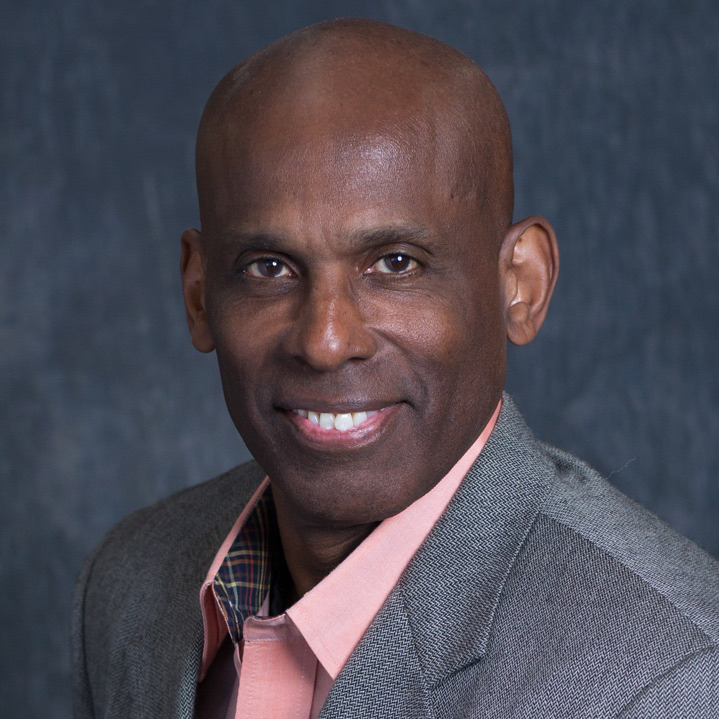
Richard Morgan
Richard Morgan, Attorney, Morgan and DiSalvo

Richard M. Morgan has been practicing law in Georgia since 1987. Richard founded the award-winning Alpharetta law firm of Morgan & DiSalvo, P.C. in 1995 to help individuals and families plan and prepare for the many changes that life brings. Morgan & DiSalvo is recognized as a U.S. News & World Report and Best Lawyers.com “Best Law Firm” since 2013. Morgan & DiSalvo received the highest “Tier 1” rating in Trusts and Estates Law, a distinction held by only 23 law firms in Georgia.

Richard prides himself on bringing peace of mind to individuals and families by helping them prepare for significant life events. In addition to the primary practice areas of the firm, Richard also specializes in finding creative solutions for clients in the areas of estate & tax planning, estate & trust dispute resolution, business succession planning, planning for special needs beneficiaries, creditor protection, charitable gift planning and tax controversies.

Richard’s work is differentiated by his level of service and attention to detail. His technical and analytical capabilities and problem-solving approach are unique among attorneys. A leader in his field, Richard is past president of the Taxation Sections of both the Georgia and Atlanta Bar Associations, the Estate Planning & Probate Section of the Atlanta Bar Association, the North Georgia Estate Planning Council and the Georgia Planned Giving Council. Richard serves on the Executive, Legislative and Georgia Trust Code Revision committees of the Fiduciary law section of the Georgia Bar Association. Richard also serves on a two member sub-committee of the Fiduciary Law Section to propose a Technical Corrections Bill to improve the 2017 Georgia Uniform Power of Attorney Act.

In 2014, Richard was elected as a Fellow in The American College of Trust and Estate Counsel (ACTEC). This is the most prestigious group of Trusts and Estates attorneys in the country, with only 59 Fellows in the State of Georgia. ACTEC membership is only offered to those who have provided substantial contributions to the field of trusts and estates law. Richard has used his charitable gift planning expertise over the years by serving as the chairman or member of professional advisory committees of several large Atlanta organizations including the Jewish Federation of Greater Atlanta, Jewish Family & Career Services, the Community Foundation of Greater Atlanta and YMCA of Metropolitan Atlanta.

Richard received his B.B.A. in Accounting, cum laude, and his J.D. degree, cum laude, from the University of Georgia. He received his LL.M. in Taxation from Emory University. Richard is a frequent speaker on estate and tax planning, charitable gift planning, and other tax-related topics.

Richard loves life and all that it has to offer, but his greatest accomplishments have all related to his wonderful and loving family, including his incredible wife and three children, and of course, now two Goldendoodles.

LinkedIn

Mike Blake, Brady Ware & Company

Mike Blake, Host of the “Decision Vision” podcast series

Michael Blake is the host of the Decision Vision podcast series and a Director of Brady Ware & Company. Mike specializes in the valuation of intellectual property-driven firms, such as software firms, aerospace firms, and professional services firms, most frequently in the capacity as a transaction advisor, helping clients obtain great outcomes from complex transaction opportunities. He is also a specialist in the appraisal of intellectual properties as stand-alone assets, such as software, trade secrets, and patents.

Mike has been a full-time business appraiser for 13 years with public accounting firms, boutique business appraisal firms, and an owner of his own firm. Prior to that, he spent 8 years in venture capital and investment banking, including transactions in the U.S., Israel, Russia, Ukraine, and Belarus.

LinkedIn | Facebook | Twitter | Instagram

Brady Ware & Company

Brady Ware & Company is a regional full-service accounting and advisory firm which helps businesses and entrepreneurs make visions a reality. Brady Ware services clients nationally from its offices in Alpharetta, GA; Columbus and Dayton, OH; and Richmond, IN. The firm is growth-minded, committed to the regions in which they operate, and most importantly, they make significant investments in their people and service offerings to meet the changing financial needs of those they are privileged to serve. The firm is dedicated to providing results that make a difference for its clients.

Decision Vision Podcast Series

Decision Vision is a podcast covering topics and issues facing small business owners and connecting them with solutions from leading experts. This series is presented by Brady Ware & Company. If you are a decision-maker for a small business, we’d love to hear from you. Contact us at decisionvision@bradyware.com and make sure to listen to every Thursday to the Decision Vision podcast.

Past episodes of Decision Vision can be found at decisionvisionpodcast.com. Decision Vision is produced and broadcast by the North Fulton studio of Business RadioX®.

Connect with Brady Ware & Company:

Website | LinkedIn | Facebook | Twitter | Instagram

TRANSCRIPT

Intro: [00:00:01] Welcome to Decision Vision, a podcast series focusing on critical business decisions. Brought to you by Brady Ware & Company. Brady Ware is a regional full service accounting and advisory firm that helps businesses and entrepreneurs make visions a reality.

Mike Blake: [00:00:22] Welcome to Decision Vision, a podcast giving you, the listener, clear vision to make great decisions. In each episode, we discuss the process of decision making on a different topic from the business owners’ or executives’ perspective. We aren’t necessarily telling you what to do, but we can put you in a position to make an informed decision on your own and understand when you might need help along the way.

Mike Blake: [00:00:42] My name is Mike Blake, and I’m your host for today’s program. I’m a director at Brady Ware & Company, a full service accounting firm based in Dayton, Ohio, with offices in Dayton; Columbus, Ohio; Richmond, Indiana; and Alpharetta, Georgia. Brady Ware is sponsoring this podcast which is being recorded in Atlanta per social distancing protocols. If you’d like to engage with me on social media for my Chart of the Day and other content, I’m on LinkedIn as myself and @unblakeable on Facebook, Twitter, Clubhouse, and Instagram. If you like this podcast, please subscribe on your favorite podcast aggregator, and please consider leaving a review of the podcast as well.

Mike Blake: [00:01:19] So, before we get started, I want to apologize to the audience. We’ve had some technical difficulties that prevent us from using our primary sound system. So, we’re doing this over telephone. But by the next time we publish an episode, we should be back to normal. And I’m sure it’ll be entirely audible. It just won’t have that same FM radio, NPR quality that I know that you guys are used to. But the content is going to be great, so hang in there.

Mike Blake: [00:01:47] And the topic for today is, Should I set up a trust? And the reason I’m bringing this topic up is, I think, trusts are not all that well understood. In fact, I’m pretty confident it’s all not well understood. And in light of the victory of the Democrats at the ballot box, at least at the Federal level in the 2020 election, there has been an increased interest in forming trusts as a mechanism for asset and wealth protection. Because there has been at least a prevailing feeling that taxes are on estates and gifts are going to increase above what they historically have been, certainly, in recent years. Whether that will actually happen, nobody can say. But people, I know they’re acting proactively in that regard.

Mike Blake: [00:02:54] But trust go a long way beyond or are a much wider topic than simply rich people stashing money away so they don’t have to pay as much estate and gift tax. There are numerous kinds of trusts available. And I think one of the things we’re going to learn about today is, although, maybe we associate trust with ultra high net worth individuals, and ultra high net worth individuals would be somebody with $20 million of net assets, something like that, because, you know, you don’t even start to have a taxable estate until you’re around $10-1/2 million dollars or so if you’re a married couple.

Mike Blake: [00:03:32] But I think we’re going to learn today that trust actually can be a very useful mechanism for many other different purposes beyond the blast of protection. And you may very well benefit if you don’t fall into that category of the ultra high net worth individual.

Mike Blake: [00:03:52] And joining us today to help us talk about this topic is Richard Morgan of Morgan & DiSalvo. Richard Morgan has been practicing law in Georgia since 1987. I just learned from our conversation prior to the show, he actually comes from Virginia and I got married in Virginia, which is actually a great town. I really enjoyed being there. I’d go back in a heartbeat. Richard founded the award-winning Alpharetta law firm of Morgan & DiSalvo, P.C. in 1995 to help individuals and families plan and prepare for the many changes that life brings.

Mike Blake: [00:04:21] Richard prides himself on bringing peace of mind to individuals and families by helping them prepare for significant life events. In addition to the primary practice areas of the firm, Richard also specializes in finding creative solutions for clients in the areas of estate and tax planning, estate and trust dispute resolution, business succession planning, planning for special needs beneficiaries, creditor protection, charitable gift planning, and tax controversies.

Mike Blake: [00:04:46] A leader in his field, Richard is past president of the Taxation Sections of both Georgia and Atlanta Bar Associations, the Estate Planning and Probate Section of the Atlanta Bar Association, the North Georgia Estate Planning Council, and the Georgia Planned Giving Council. Richard serves on the Executive, Legislative and Georgia Trust Code Revision Committees of the Fiduciary law section of the Georgia Bar Association. And he serves on a two member subcommittee of the Fiduciary Law Section to propose a Technical Corrections Bill to improve on the 2017 Georgia Uniform Power of Attorney Act.

Mike Blake: [00:05:20] Morgan & DiSalvo is recognized as a U.S. News and World Report and bestlawyers.com Best Law Firm of 2013. They’ve receive the highest Tier 1 rating in Trust and Estates Law, a distinction held by only 23 law firms in Georgia. Richard, welcome to the program.

Richard Morgan: [00:05:35] Thank you very much. Glad to be here.

Mike Blake: [00:05:38] So, Richard, let’s start at the very foundation. What is a trust?

Richard Morgan: [00:05:42] Great question. So, trusts are what estate planners use kind of like a Swiss Army knife. You can think about them in different ways. Legally, it’s a fiduciary relationship. Someone is in charge of assets and they follow the terms of the trust on behalf of the beneficiaries.

Richard Morgan: [00:06:08] What I think about it also is a three-party contract. You have one party can set this thing up. This entity, think like an LLC or other business entity, just a different kind of entity called a trust. So, you have someone set it up, and they’re the ones who put the assets into the trial. They actually give them to the person who will be in charge, who is called the trustee. The trustee is required to follow the terms of the trust on behalf of the third-party, who’s the beneficiaries.

Richard Morgan: [00:06:36] So, someone gives someone else assets, and they hold them, and handle them, and invest them, and take care of them all on behalf of the beneficiaries. And those three parties can all be the same person. They can all be different. You can mix and match. It’s all about what you’re trying to achieve. And, basically, we use this structure in different ways to achieve different benefits.

Mike Blake: [00:07:01] And, you know, I think when many of us think of trust, myself included, candidly, we think of a trust as a place where rich people stash money to protect them from taxes and sometimes creditors. But there are different kinds of trust and not necessarily for that purpose, aren’t there?

Richard Morgan: [00:07:20] Yes. So, the main trust that people will come across is as the primary estate planning document. The document says what happens to my stuff when I die. Also, it can handle or manage your affairs while you’re alive if you need assistance. And so, that type of trust is revocable. You can change it anytime you want. You can amend it anytime you want. You can move assets in and out of it. It has no tax implications. It uses your Social Security number as the tax ID number. But it serves as your primary estate planning document to say what happens if incapacity, death, that type of thing.

Richard Morgan: [00:07:58] The other types of trusts are primarily irrevocable. Irrevocable trusts are used for asset protection, for gifting. And for basic tax reasons, wealth transfer tax reasons, gift tax, estate tax, that kind of thing. Sometimes for income tax reasons at the state income tax level, like Georgia or wherever you live state tax level. But they don’t normally give you any significant income tax benefits at the federal level.

Mike Blake: [00:08:34] So, I like to bring up sort of current events here, because I think there’s an opportunity to make an important distinction. You know, I’m sure you’re familiar with the Britney Spears ongoing conservatorship battle. It looks like it may be finally having some kind of resolution. From afar, conservatorships like that appear to have some element, some things that look trust-like in nature. And I was hoping you kind of draw a distinction, if there is a distinction, maybe there’s not. Is there a distinction between the conservatorship and a trust? If so, what are the key differences?

Richard Morgan: [00:09:16] All right. That’s a great question. Let’s go through some basics. What is estate planning? Estate planning is the following: Right now, you control all aspects of your life. You can do whatever you want. As long as you don’t you hurt anyone else or break the law, do whatever you want. But what if you can’t? Incapacity or death. There is a court-based system for to deal with all those issues. The problem is that court-based system is not very pleasant.

Richard Morgan: [00:09:45] As you could see with the Britney Spears situation, which I’m really familiar with. And it kind of freaked me out about how this is working. It would not happen like that in Georgia. I can tell you that right now. But in, I believe, California or wherever she’s at, I guess their system is a little different. And it is state law based. But, basically, if you do not have your own estate plan, then the court-based process is what kicks in. If you become incapacitated, then there’s a conservatorship of your property. There is a guardian of the person. And then, when you die, there is a estate law will, which is the rules of intestacy.

Richard Morgan: [00:10:24] And all of those processes are basically set up under the assumption that the court needs to oversight. They need to appoint someone to be in-charge and then oversight them. Because you didn’t do it, the court did it. And they don’t know who all these people are. So, they’re going to figure out a way that they can court oversight, get accountings and returns. And have this court oversight a process that’s not very exciting. It’s not very pleasant.

Richard Morgan: [00:10:45] But what the law allows us to do is to privatize almost the entire thing. So, if you do your estate planning properly, there is no need for a guardianship, almost always. There is no need for conservatorship, almost always. There is no need for the intestacy process, almost always. What you do is you create, for example, everyone needs, what I would call, a estate plan, basic documents everyone needs. There are two agency documents. One is for financial matters. So, instead of having a conservatorship over your property, you have a financial power of attorney and you appoint an agent – you do, not the court – to handle your affairs for you if you need assistance.

Richard Morgan: [00:11:30] Then, you have – in Georgia it’s called – the advance directive for healthcare. In different states, it’s called different things. But you appoint an agent to assist you with medical related matters, and it’s your HIPAA representative, instead of a guardianship that the court-appointed. So, for everything the court would do, you can privatize it. And then, instead of having the intestacy process, if you have no will, you have your own will that says what happens to your property when you pass. And revoke the living trust based structure, it’s just a different way of handling your affairs during your life and at your passing.

Mike Blake: [00:12:05] So, you mentioned something about the differential between California and Georgia. And I’m curious about two things. Number one, which state is more representative nationwide? Is Georgia the outlier or is California the outlier, maybe both of them are outliers, to your knowledge?

Richard Morgan: [00:12:23] So, I am not a California lawyer, so I can only look from afar. There was a movie that came out recently – I don’t remember the name of it – where a woman was basically taking advantage of people getting them committed, and then she would then manage their affairs, and they couldn’t get out of it, didn’t have a lawyer representing their interests. I was cringing.

Richard Morgan: [00:12:43] In Georgia, it’s the opposite. In Georgia, the courts do not favor someone taking over your life involuntarily. So, they try to limit to what extent they take it over. So, I do not believe what is happening in California would happen in Georgia, because they tend away from doing it. In the first place, they need their own – let me give you an example.

Richard Morgan: [00:13:10] So, I have a client and my client is starting to suffer incapacity issues. And I can see they’re getting taken advantage of. Let’s say, the agent who they chose is not a good person and taking advantage of them. So, they need a court to come in and protect them. I can’t even do it. I have to get them a different lawyer because they need their own lawyer. The court needs some independent person. It’s a very protective process in Georgia. They don’t take lightly taking away people’s rights.

Richard Morgan: [00:13:46] Because when you do a conservatorship or guardianship, you are literally taking away their human rights, rights to their property, rights to their body. And they’re giving them to someone else. And then, the court oversights that other person. So, they just take it very seriously in Georgia. And I would say that in most states, they take it very seriously. Some states, they don’t take it as seriously or as protective. And I’m assuming California is like that, which is why it’s happening.

Mike Blake: [00:14:16] So, are trusts just for estate planning and wealth protection? Are there other reasons to set one up?

Richard Morgan: [00:14:28] I guess the question is, what else is there? If you give me an example of what you’re thinking about, I may be able to come up with a reason why.

Mike Blake: [00:14:35] So, are there trust that are set up, for example, to manage somebody’s health care? Right. For example, you just talked about somebody whose health is deteriorating. And over time, they may lose capacity. A trust might be set up for their benefit just to maintain their health care, for example. Is that a thing or not?

Richard Morgan: [00:14:57] I’ve never heard of that thing. So, basically, [inaudible] –

Mike Blake: [00:15:03] I might be wrong, I’m not a lawyer.

Richard Morgan: [00:15:03] The trust deals with property, asset, income. It deals with wealth, whether it’s a dollar or a billion. It deals with asset. Health care is a personal thing to your own body. And so, if you had someone who needed assistance or becoming incapacitated, the combination of a power of attorney with revocable trust is by far the best vehicle to help manage someone’s affairs with little hassle. It’s more powerful, less hassle that you can make someone’s life easier to help you.

Richard Morgan: [00:15:40] When it comes to the health care aspect, though, not the trustee or the power of attorney agent who’s dealing with that. You need to represent your body, your body right, your health care right. And that would be an agent under health care power of attorney or advanced directive health care. Or you go to the court system, which is the guardianship. There’s also a profession that exists – and I don’t remember the name off the top of my head – they will act as health care advocate so you can hire them like a service provider, like you hire an accountant or a lawyer. You can hire one of these health care advocates who will assist you with your health care on your behalf.

Mike Blake: [00:16:24] Okay. And so, how does a trust fit into an overall estate plan? For example, does it replace a will? Does it operate alongside a will? Is there other pieces of systems here? How does that fit within the overall jigsaw puzzle?

Richard Morgan: [00:16:42] So, the way I would say it is, your base plan includes the financial power of attorney, the health care document – what you call the Advance Directive for Health Care in Georgia – and then a will. You may or may not need a revocable living trust. If you have a revocable living trust as your main estate planning document, then you would still have a will.

Richard Morgan: [00:17:05] But instead of it being a big kind of all encompassing document that says what happens to your stuff when you die, it instead is just a coordinating document. It just says, appoint the executor to be in charge. And the executor to, please, transfer or pay my debts. And then, transfer any remaining assets over to my revocable trust, because that’s where my primary plan is located.

Richard Morgan: [00:17:28] So, either the will is your primary document or just a coordinating document, along with the revocable trust, which would be your primary document. And that revocable trust would say, “While I’m alive and I’m in good shape, I’m the trustee. I’ll take care of myself with the assets that can move assets in and out. I can do whatever I want. If I become incapacitated, my co-trustee or backup successor trustee will take over, and manage the assets for my benefit. And then, at my death, it acts like a will but outside the probate process.” It just says whatever you want it to happen at your death, that’s what will happen.

Mike Blake: [00:18:05] And I read recently that that’s actually a benefit of a trust. Is that trust – if I read correctly – generally, if there’s some kind of dispute or, generally, not handled the probate court but elsewhere. Is that right?

Richard Morgan: [00:18:17] Yeah. So, in a good number of states, we would call them bad probate states. We’re in Georgia, the closest state to us that is a bad probate state is the State of Florida. It’s a horror show. I don’t know what they’re doing, but lawyers changed the law and it’s really, really bad. And so, you’re required to hire a lawyer with the administration process, probate process. In Georgia, you do not have to, but you can. We recommend you do, you do not have to.

Richard Morgan: [00:18:51] In Florida, they have the lawyers compensation in the code, of which is a percentage of your estate, approximately three percent if I am correct. So, literally, Florida law requires you to make a lawyer a part of your estate. That is insane. So, everyone who has a decent lawyer, a decent amount of assets will put all their assets or all they can put into a revocable trust while they’re alive. So, they’ll set up a revocable trust, put all their assets into it which they can put into it without causing tax problems. And then, when they die, they don’t go to the probate process. They avoid those laws.

Richard Morgan: [00:19:30] And then, Florida went ahead and made other cockamamy laws. Because everyone was avoiding probate, they came up with all new stuff that augmented estates, all kinds of crazy stuff.

Richard Morgan: [00:19:40] Georgia is the polar opposite. And I would say most states are kind of between the two. Georgia is what I would call a simple probate state. It is purely administrative. You never see a judge. You purely go into the clerk, which is going like to the DMV, like driver’s license kind of stuff. It’s just administrative. You fill out some documents that are on the probate courts website. As long as everyone is an adult who is an heir or closest living relative, you file this document with the original will, the heirs all sign off saying, “Yep. That’s the original will. I have no problem with that.” It’s purely administrative.

Richard Morgan: [00:20:18] The clerk says, “Raise your right hand. Do you agree to follow the terms of the will?” The proposed executor says, “Yes, I do.” And then, the clerk gives the executor a document called Letters of Testamentary, it says they’re the executor, and they’re off. And if you have a good will – you need a good will – it waives everything else. You never go to the probate court again. So, in Georgia, it’s very simple. But in states like Florida, California, New York, New Jersey, Illinois, and others, it can be a pretty painful and expensive process that you’d like to avoid. Here, we just don’t care.

Mike Blake: [00:20:56] And are there restrictions in which state that you can set up a trust? For example, do I have to be a Georgia resident to set up a Georgia trust? Or can I do it from out of state and I want to have it set up under the laws of Georgia?

Richard Morgan: [00:21:07] Well, good question. Okay. So, why would you want to do that? Is the reason you would want to do that because you want the easier probate process? Is that what you’re asking?

Mike Blake: [00:21:20] Well, it could be for whatever reason. I like one state over the other. And one of the things that brings that to mind is that, I’ve noticed that in recent years, setting up certain kinds of trust in Wyoming have gained in popularity. And I’m pretty sure they don’t actually live in Wyoming.

Richard Morgan: [00:21:37] Got it. So, this came up beginning with the State of Alaska starting to make really creative trust law. And which then went to Delaware, Tennessee, Nevada, South Dakota, Wyoming. They have created more and more liberal, flexible trust law. And so, the question becomes, can someone who doesn’t live in those states – because pretty much all of those states, but Tennessee, is what I would call a low population density state. There aren’t many people who live in Delaware. There aren’t many people who live in Nevada, except for maybe going gambling. There aren’t that many people in these states with these really aggressive laws. They’re making their laws more beneficial, more liberal to get economic activity.

Richard Morgan: [00:22:31] So, the question is, most people in this country don’t live in those states. So, can they get the benefit of these more liberalized, potentially more beneficial trust law? And the answer is maybe. So, number one, you got to follow their law to get access to their law. That normally means you need to know a person, an individual in that state, a resident of that state to be the trustee. Or more likely, you will hire a trust company in the other states. That puts the stick in the dirt and gives you nexus to that state. But then, you have to do things like have some administration or some activities in that state trying to get you to have sufficient contact to that state to be able to use their law.

Richard Morgan: [00:23:18] And so, if you do that, we believe that you can get access to all of their law, except – there’s an exception. And this is the unknown. The exception is, is the law in that state against a strong public policy of the forum state where you live? And this came up, we’ve seen Con law in the last 10 years, the last 15, 20 years like crazy.

Richard Morgan: [00:23:46] So, if we saw same sex marriage – this happened in real time – you had states that allowed same sex marriage and you had some states that didn’t. Let’s say, Georgia did not. So, if someone leaves the State of Georgia – I think Nevada did – you went to Nevada, you got married, same sex marriage, you came back to Georgia. The question is, are you married in Georgia? And the answer was, they said, “No. You’re not married here because you got married in a state where it was allowed. That’s fine. But we don’t allow it because it’s against a strong public policy of our state.” Now, on that issue, Supreme Court came back and said, “You don’t have that choice. It’s a Federal Constitutional issue. You have no choice, same sex marriage is okay.” But we saw it in action.

Richard Morgan: [00:24:33] Now, go to what’s happening right now. You have what’s called self-settled, and that was the main reason people are going to these other states. And the main reason they’re going, is you can set up a trust for your own benefit and not have creditors get to it. And in theory, get the same estate planning or estate tax benefits as if you give up all the rights.

Richard Morgan: [00:25:01] So, normally, for you to have a completed gifting transfer to, say, the estate taxes and/or to avoid creditor claims with those assets, you have to cut away all the rights that you had in the property. So, you’re the person who sets the trust up. You give away the asset and put it into trust. You can have no rights. You have no technical right. You cannot be the trustee. You cannot be a beneficiary.

Richard Morgan: [00:25:28] In those states, they allow you to be a fully discretionary beneficiary with an independent trustee. So, you would put in a trust company, primarily, and then you could have other unrelated parties. But you cannot be a trustee. But you can be a beneficiary. So, if you ever need access to those assets, the trustee can make a distribution to you. You can’t do that in Georgia and get the benefits they’re trying to achieve, either asset protection, avoiding creditors, or getting state tax benefits, and the like. But in the other states, you can.

Richard Morgan: [00:26:02] So, the question is, can I be in a state that does not allow self-settled asset protection trust? Can I put a stick in the dirt in the other states? I hire a trust company, I set up a trust in another state, I follow their rules, can I use their rules in Georgia?

Richard Morgan: [00:26:20] And it comes up when someone wants to sue you. So, you owe money. And the creditor says, “Where are your assets?” “Well, I got some assets in a trust, but they’re not mine. I can’t touch them.” And that’s where the tire hits the road. Can the creditor get into that trust? And the answer is, if the other state law applies, the creditor cannot get in. If Georgia law applies, you can get in because Georgia law says, a self-settled trust is a trust where you put assets in, and retain a benefit, gives you zero asset protection. None. Which a creditor just slides right through it.

Richard Morgan: [00:26:58] So, the question was, what law applies? And the answer is, we don’t know. That’s the unknown. You have two camps. One says, “Yeah. It works.” One says, “We’re not sure it works. There haven’t been any good cases on point. All the ones that have been on point have been bad fact cases, and they all say it doesn’t work.” But the people that believe in it, believe when they get good facts it will work. And/or even if it doesn’t work, that the cost of breaking the trust is so high, it’s such a pain and so costly to go through the legal system to break it, that it will be protected just from creditors not wanting to go through the hassle factor.

Mike Blake: [00:27:46] So, in part then, I mean, what may govern the law then is many business contracts have some clause that indicate that this contract is to be subject to the laws of state X or state Y. And if you’re putting your trust in a protection-friendly state, then that probably needs to be part of an overall comprehensive strategy where whatever business agreements into which you are entering and you think you may want to have your assets protected from that for whatever reason, you want to make sure that agreement says it’s going to be governed by the laws of that state.

Richard Morgan: [00:28:26] Yeah. So, historically, business agreements, a lot of companies will incorporate – we don’t do that – in Delaware. Delaware is a very company-favorable state. So, they will incorporate there. Let’s say, if you have a dispute, you got to sue there, all that kind of stuff. That law is tried and true and it worked. It’s not against public policy. So, for business contracts, as long as there’s a nexus to that state and they get to Delaware because they incorporate in Delaware. So, there you are, they have nexus in Delaware. It’s all good from their perspective.

Richard Morgan: [00:29:04] On the trust world, not quite the same thing. There’s no, like, incorporation. You can set your trust up there. But the question is, what provisions of the state law are at issue? And if there is a particular state law, like this self-settled asset protection trust legislation, if it is not permissible in Georgia, and is permissible in the other state. If it is against a strong public policy in Georgia if they’re getting sued in Georgia. And that’s where the issue is. It’s not just in general. It’s on specific issues of concern.

Mike Blake: [00:29:44] Okay. So, let’s draw back a little bit here to a higher altitude in a broader perspective. Is there a minimum amount of assets in terms of monetary value that it makes sense to go to the trouble, the expense, et cetera, of setting up a trust? Or is a trust potentially a vehicle that almost anybody might want to use?

Richard Morgan: [00:30:09] So, let’s talk about what kind of trust, and then I’ll tell you about kind of where it makes sense. If we’re talking about an irrevocable trust, that is only normally done by wealthier individuals or families, usually, for tax purposes or they have more significant asset protection concerns. And then, it’s a whole another rabbit hole you go down on asset protection. So, that is for more significant assets. We’re trying to deal with taxes or added protection or combo.

Richard Morgan: [00:30:41] The revocable trust, that is a primary state planning document. And that one can be done by pretty much anyone. The way I look at it is this, from dealing with a lawyer and creating these documents, a will is less money and a little bit less hassle. They revoke the living trust pay structure, a little bit more money, a little bit more hassle. And so, the question is, well, why would I want to pay more money and have more hassle if I can just go with a will and a simple probate state like Georgia, assuming you’re in a state like Georgia? And the answer is, that only makes sense if the benefits of the revocable trust decently outweigh the cost and the hassle.

Richard Morgan: [00:31:28] We do a monthly newsletter in our law practice. And the last one I did, which was last month, a few weeks ago, was on that exact issue. Should you go with the will or revoke a living trust based structure? And when I ended up doing it, I came up with 11 different benefits that a revocable trust could provide. And so, the way I think about it, is, you kind of go through 11 benefits and you say, “Do I like these or not?” I don’t care about them. You just go with the will. Simple, at least if you’re in a state like Georgia. If you don’t really care about them, well, then revoke the will. If you care about them, then you go with revocable trust.

Richard Morgan: [00:32:04] And one of the benefits is, if you live in a bad probates state, like Florida, it is a must. But then, everything else against the other ten benefits are kind of like it all depends on you and do you care or not.

Mike Blake: [00:32:19] Okay. So, is there a limit as to the nature of assets that can go into a trust? For example, can I chug anything in there, stocks, securities, real estate, Bitcoin? Or are there limits to the kind of assets that can be placed into a trust?

Richard Morgan: [00:32:37] You can put in any asset you can fathom with the following exceptions: You do not want to transfer an IRA or a qualified retirement plan and, normally, you don’t really want to do annuities either into a trust while you’re alive. The annuities is a question, we’ll hold off on that one.

Richard Morgan: [00:32:59] IRAs and qualified plans, you can change them from one custodian to another, like a Fidelity to Schwab. You cannot change the title on the account. If you change the title on the account, it’s an income taxable event. So, if you go from yourself to your trust, you change title, we believe that that is an income taxable event, and that is a horror show. You do not want to do that. Whoever helped you do that, you’re going to be really upset when you get that massive tax bill. So, anything else you can put in the trust, but not that.

Richard Morgan: [00:33:33] The other exception would be – and, again, I’m not a Florida lawyer – under Florida law, there is something called homestead. And the question is whether or not you should put your primary residence in the revocable trust. And that’s something I will leave to Florida lawyers. So, those are the only two things that I would worry about.

Mike Blake: [00:33:58] Okay. Once you set a trust up and you get it going, do you have to do anything else? I mean, is it a fairly self-maintained thing or is there any ongoing maintenance that you have to perform to keep it active?

Richard Morgan: [00:34:12] Great question. All right. So, you’re the creator, while you’re alive, it is considered a grantor trust for income tax purposes. That means that the grantor, the creator, you, the creator are the taxpayer. The trust will use your Social Security number as its tax ID number. All of the income, deductions, all that stuff that happens inside the trust will be on your IRS Form 1040, your personal income tax return. It is not a separate taxpayer.

Richard Morgan: [00:34:47] So, while you’re alive, the only issues are title. You want to make sure that you want the assets in the trust. You need to put title in the trustee of the trust, and that puts it in the trust. Anything else happens, you can do whatever you want. You can access it and do whatever you want. So, while you’re alive, there isn’t a whole lot at all. Any assets you want, you got to own in the right name. Other than that, it’s all self-executing. Nothing else really needs to be done. You can just treat it like you own the asset. Invest it how you want, use it how you want, that kind of thing.

Richard Morgan: [00:35:24] However, after you die, after the grantor, the creator dies, it now becomes a non-grantor trust because the grantor is now deceased. He can’t be the taxpayer. So, now, the trust is a separate income taxpayer. So, there’s three things after death or a non-grantor trust – which, in theory, you could have a non-grantor trust while you’re alive. And that would normally be for income tax reasons. Most trusts that are non-grantor trusts are created after someone dies. Because the creator is now deceased.

Richard Morgan: [00:36:00] And that trust, because they separate income taxpayer, use a separate EIN number, Employee Identification Number or Tax ID number, and so you care about, one, you will file an annual income tax return. That’s additional hassle. Number two, you have to own the assets the right name. That’s just to set up the issue, just like while you’re alive, just get the title in the right name. That’s no big deal. And number three, there is usually a little – not a lot – income tax planning. And the reason is because you now have a choice as to who the taxpayer is going to be.

Richard Morgan: [00:36:37] If the assets were just in the name of the beneficiaries that you were choosing, your spouse, your kids, whoever, and it was in their name, they’re the taxpayer. There was no choice. If you put it in a trust for their benefit, now, who’s the choice? Basically, the tax return that is filed, the IRS Form 1041, it’s just an informational tax return. And it says how much income was earned during the year, how much expenses were incurred during the year, what’s the net taxable income.

Richard Morgan: [00:37:07] And then, it says this thing called Distributable Net Income or DNI – let’s not talk about that. It’s a little technical. But the fact is, it says who got the income. So, if the income is accumulated in the trust, the trust pays the tax on the income at its rate. If the income was distributed to a beneficiary, it carries out the taxable income with it, and the beneficiary will pay the tax. It doesn’t create income. It allocates income to whoever got it. So, that’s the hassle factor. Own assets to the right name, file annual income tax return. And you may have to have a little bit of tax planning to decide who you want to pay tax on the earnings that year.

Mike Blake: [00:37:53] Now, let’s say that this question may self-answer, but I’ll ask it anyway. And that is, if we’ve changed our mind and we don’t want to have the trust anymore, how easy are they to dissolve? And I guess I’m going to focus on the distinction between revocable versus irrevocable. When we’re saying irrevocable, how irrevocable is that?

Richard Morgan: [00:38:18] That’s a great question.

Mike Blake: [00:38:22] Is that impossible? Or is that really hard? Or what does that all mean?

Richard Morgan: [00:38:23] It used to be harder. So, let’s start with the easy one. Revocable trust, you can revoke them, change, and terminate anytime you want, take the assets in, take the assets out. If you want to get rid of it for good, you do a piece of paper and you say, “Based on the power given to me under this provision of the trust, I hereby terminate the agreement.” Sign it and date it and you’re done.

Richard Morgan: [00:38:47] Now, let’s go to irrevocable. With irrevocable, it is irrevocable. Which means, in general, you cannot change it. Now, a couple exceptions. Number one, you still can use the provisions in the trust. Hence, the reason to use a good trust agreement. Hence, you need a good attorney to draft a very flexible trust agreement because you have to live with this thing. You or your beneficiary have to live with this thing over, potentially, a long period of time. And you want it as flexible as possible. It’s legally possible because things will happen.

Richard Morgan: [00:39:28] So, a buddy of mine told me that decades ago – this probably could be ever since – he read it somewhere else and that is, the only thing constant in life is change. So, I just assumed everything is going to change. I know what the facts are today. I have no idea what they’re going to be tomorrow. I can make an educated guess. But beyond that, good luck.

Richard Morgan: [00:39:46] So, we want the trust to be as flexible as possible. So, you can actually use the terms of the trust to terminate it, to distribute assets, to distribute in further trust, do all kinds of stuff. So, the ability to change, for the most part, is built into the document itself. If you have an irrevocable trust that is not flexible, it’s inflexible, then that’s not a pleasant place to be.

Richard Morgan: [00:40:13] And I’ve had a lot of people come to my offices who are not happy with their trustee. The document doesn’t allow them to change them. They’re not happy with the terms. They’re to change them and they’re not happy. We don’t have those issues. Good lawyers don’t have those issues. They draft for maximum flexibility. Now, that’s the law that’s been around well-before I became a lawyer in 1987.

Richard Morgan: [00:40:38] The new law, which Georgia got as of July 1, 2018, and other states are starting to start to get through the country, is a new power. And the new power is the power to amend one way or another – there’s different ways to do it – an otherwise irrevocable trust. And so, that would include one of the following. Number one, a judicial court-based modification. That’s number one. They have to reach certain requirements, and you do it for certain reasons. Number two, you can have a trust distributed in further trust. So, if you want to change the terms – there are technical rules with it – you may be able to distribute the trust assets into another trust with desired changes to the terms.

Richard Morgan: [00:41:37] You can also do what’s called, at least in Georgia, a nonjudicial settlement. So, instead of filing a lawsuit, fighting it out, and then settling, agreeing to legitimate concern about the trust, you can now – within certain parameters, with certain parties involved and you got to follow all the rules – go to change the trust agreement by agreement of all the beneficiaries. And there’s different ways to get everyone to agree. And so, it’s still being fleshed out. It’s still a pretty new law. But, now, the big picture is we now have potential options to modify an otherwise irrevocable trust that did not exist before.

Mike Blake: [00:42:26] So, what are the risks involved with setting up a trust? What can go wrong? How could it cause harm?

Richard Morgan: [00:42:35] All right. This is the most obvious one. I’ll give you a real live example. 2012, more assets were gifted than in the history of Earth. And the reason was, the exemption from the estate tax was going to go from five million to one million on January 1, 2013, unless they changed the law. So, if you had a decent amount of wealth, you’re like, “Wait a second. Me and my wife or me and my spouse are going to lose $4 million of exemption each.”

Richard Morgan: [00:43:10] The exemption at that time was low, but, historically, 55 cents on the dollar. So, that’s, potentially for a married couple, $8 million; for a single person, $4 million, of exemption, potentially 50 plus percent rate. We’re talking millions of dollars of tax that could be avoided if we could somehow lock in that exemption before it went away on January 1, 2013.

Richard Morgan: [00:43:36] So, we had tried, a lot of advisers had tried, to get their clients to do taxable gifting to lock in this benefit. But, of course, to lock in the benefit, you’ve got to give assets away. If you give them outright, you literally gave them away. If you do a flexible trust, then you give legally, but not practically. But there is something you’re giving up. No matter how you slice it, you’re giving up some direct rights if you do a taxable gift to get the exemption locked in.

Richard Morgan: [00:44:10] So, the people that really didn’t want to do it, but had a lot of assets, waited until the last very minute. We, basically, balked and said we don’t have time, you need to go somewhere else. But a bunch of lawyers, at the last very minute, were just popping out these trusts with very few questions being asked, no analysis being done. So, they got all these trusts in the last very minute and then they put all these assets in. And then, within two weeks, Congress changes the law and makes the 2012 law potentially permanent, with a couple of exceptions. And that was the 2012 Tax Act that occurred beginning of 2013.

Richard Morgan: [00:44:49] So, guess what happened? Massive numbers of people who did those gifts in trust wanted their money back. We’ve never had that problem. We went through the analysis, properly drafted the document, very flexible, all that stuff. But they made a big mistake. They wanted their money back. It’s not so easy to get your money back. So, they went through a lot of angst about that. I don’t know how it went because we didn’t deal with any of those.

Richard Morgan: [00:45:17] But if you do revocable trust, you can undo it. It’s not a problem. But if you do irrevocable trust, you are actually doing something irrevocably. You need to go with your eyes wide open as to what you’re doing. You’re either okay with it or you’re not. If you’re not okay with it, don’t do it. Period. If you’re okay with it, fine. Move forward. But you need to think through it. And that’s what we help our clients go through. And make sure they understand when we draft for back to flexibility so they don’t ever have second thoughts about it. But the other is, we want to make sure their eyes are wide open as to what they’re actually doing and what it means.

Mike Blake: [00:45:53] One of the risks that a trust may be challenged and effectively dissolved without consent by either, say, a government entity or even a beneficiary that doesn’t like the way the terms are set up. How common an occurrence is that? Is that a real risk?

Richard Morgan: [00:46:18] I would say the bigger risk is the fight, so litigation. I think divorce but as bad or worse. So, when you get to a trust and estate dispute, it gets nasty, really nasty. There are no winners. It’s nasty. So, our goal, a good lawyer’s goal, is to avoid the fight from ever happening. And so, you do that in the following way.

Richard Morgan: [00:46:48] Well, let me back up. How could they challenge? So, they could challenge based on it was a forgery that really wasn’t your document. You didn’t sign it or didn’t sign it properly. Number two, it was direct. Someone had a gun to your head, undue influence. They were overtaking your mental state so much that it really wasn’t your desire. It was their desire that, you know, you could be losing your mental state, either incapacitated or you’re in that kind of transitional phase, you’re being taken advantage of.

Richard Morgan: [00:47:22] There’s all kinds of stuff in there where, yeah, this trust agreement exists. It’s not really what you wanted. That’s what someone else wanted and got you to do. Or they just came up with it from scratch. You don’t know anything about it because it’s a fraud. So, there’s those kinds of legal positions that could be taken. Claims could be made.

Richard Morgan: [00:47:42] And the goal is to think through the plan well and then make sure that it cannot be challenged. One of the ways that you can make sure it cannot be challenged is that the document will include an in terrorem clause. That is a provision. Not all states allow it. Georgia does. Florida does not, as far as I’m aware. I think California does not. There’s a theme: Florida and California.

Richard Morgan: [00:48:13] So, in Georgia, it absolutely works. And it basically says – and this is my kind of common way of talking about it – you spent a lot of time and a lot of money doing this plan. We want it to work and we don’t want to fight about it. And so, if you fight about it, you get nothing. So, technically, what it says is, if you do something to dispute the terms of the plan, not the administration of the plan, but the terms of the plan, then you can get nothing. And the only way – and this is a hot topic in Georgia – we know of not to have it apply in a state like Georgia is to be able to go to court and prove that the entire document is void.

Richard Morgan: [00:49:05] Actually, this is not good. There’s a Georgia Court of Appeals case that just came out, and this was sad and pathetic. And, basically, said that even though the jury held that the trust was obtained through undue influence, it should not be valid. They said the in terrorem clause still worked and the people who challenged it didn’t get anything. That is an insane analysis. It makes no sense.

Richard Morgan: [00:49:41] And so, the Supreme Court, hopefully, will take that up. This is brand new. It just came out. The Supreme Court of Georgia will, hopefully, take that up and overrule that decision, which is insane, my personal opinion and the position of many others. Otherwise, criminals will just take over. We don’t want criminals to take over.

Richard Morgan: [00:49:59] So, if you go about doing this properly, spend the time, the resources, do it properly, think through it, add an in terrorem clause, the chances of it being challenged is close to zero for normal estate planning documents. There is one exception, and that would be someone is defrauding someone else. And this is the asset protection arena where someone is avoiding the government, someone is avoiding a spouse, or someone is avoiding a creditor, and they are taking actions behind everyone’s back to basically do, what we refer to as, a fraudulent or voidable transfer. Which is a transfer with the intent to avoid, delay, or defeat a potential creditor claim.

Richard Morgan: [00:50:45] And those could be challenged because someone is trying to abuse somebody else. And their only way to get what they’re supposed to get is to fight about it. In that case, you’re not fighting with someone to do something good. You’re fighting with someone who is a bad actor, who’s trying to abuse somebody else. Assuming they were bad actors. Now, it could be everything is totally proper. And so, we’re just getting aggressive with them and they’re just doing the best they can. But I hope that answers your question.

Mike Blake: [00:51:19] It does. We’re talking with Richard Morgan. And the topic is, Should I set up a trust? Are there any restrictions on who the beneficiaries of a trust could be?

Richard Morgan: [00:51:33] They have to be human beings. So, any human being, anyone, can be beneficiaries.

Mike Blake: [00:51:40] So, the story of a millionaire making a cat a beneficiary, those are just that, a story.

Richard Morgan: [00:51:45] I was going to bring that one up. Well, it has to a human being. There is an exception if state law allows it. There is an exception for a pet trust. So, I think it was Leona Helmsley who went to jail for tax evasion. I believe it was her that she left millions of dollars, I think, or a huge amount of money in trust for her pet. You can now create a pet trust in Georgia. And the reason you do that is if there’s a lot of money involved, not normal money, but big money involved to take care of pets over the life of the pets. And you want to separate the person taking care of the pet from the one managing the money. But most people don’t do pet trusts. But, yes, that is an exception. Otherwise, it has to be human beings.

Mike Blake: [00:52:44] Okay. And what about selecting a trustee? Are there any restrictions as to who a trustee can or cannot be for a given trust?

Richard Morgan: [00:52:52] Yes. So, at least under Georgia law, State law specific, and the Georgia law and I think most states, it has to be an individual. If it’s a company, it has to be a trust company. There is one exception in Georgia and Georgia might be a little bit conservative on this stuff. I don’t know about other states. So, in Georgia, if an individual, a qualified trust company, or I think all of them are bank type trust companies, except one called Reliance Trust Company, which came in a few decades ago. Then, they changed the law on them so no one else could do it.

Richard Morgan: [00:53:34] But, also, a bunch of trust companies that work in Georgia that service Georgia clients, they actually come from Tennessee or other states, and they are able to do business in Georgia. And I don’t know that all of them are banks. So, some of them are just trust companies that are not banks.

Mike Blake: [00:53:55] Richard, this has been a great conversation. We’ve covered so much ground here and you’ve been so generous with your time and expertise. I think we’ve only scratched the surface of what there is for people to know about trust as they think about this decision. If there are questions that we either didn’t cover or we didn’t cover in enough depth for one of our listeners, can somebody contact you with a question? And if so, what’s the best way to do that?

Richard Morgan: [00:54:19] Yes. Thank you. So, I would say a couple things. Number one, our law firm has kind of a whole theme of education base. So, we are always happy to educate. And one of the ways we do that is to put out a monthly newsletter. Right now, we have, I think, 2,000 or 3,000 people on the newsletter and, probably, over half of them are professional advisers of some type.

Richard Morgan: [00:54:45] So, we kind of take it upon ourselves to educate, not only our clients, potential clients, other people in the community, but also other advisors, our peer lawyers, CPAs, financial advisors of all types, business appraisers, everyone out there. We’re happy for them to get educated. And so, we do monthly newsletters and news alerts, if something big comes out, tax law comes out, or something like that.

Richard Morgan: [00:55:10] If you go to our website www.morgan, M-O-R-G-A-N, disalvo, D-I-S-A-L-V-O, .com, on our website is all of the stuff that we put out. If you go to the top, put your cursor on the top – we talked about news and articles – the first dropdown menu right there will be, basically, our one-stop-shop. It makes you go to a page called the Estate Planning Journey or something like that. And it has a one-stop-shop of all of our newsletters done by different substantive areas.

Richard Morgan: [00:55:52] So, for example, should you use a will or irrevocable living trust? We have newsletters and videos and all that kind of stuff. So, all the issues that come up. So, if you want to learn, go to the website. We also offer a free estate planning meeting. We’re happy to help anyone who wants assistance. If they want to set that up, they just call our offices at 678-720-0750, and just ask to set up an initial estate planning meeting and we’ll go from there. Always happy to help.

Mike Blake: [00:56:25] That’s going to wrap it up for today’s program. I’d like to thank Richard Morgan so much for sharing his expertise with us.

Mike Blake: [00:56:31] We will be exploring a new topic each week. So, please tune is so that when you’re faced with your next business decision, you have clear vision when making it. If you enjoy this podcast, please consider leaving a review with your favorite podcast aggregator. That helps people find us so we can help them. If you would like to engage with me on social media with My Chart of the Day and other content, I’m on LinkedIn as myself and @unblakeable on Facebook, Twitter, Clubhouse, and Instagram. Once again, this is Mike Blake. And our sponsor is Brady Ware & Company. And this has been the Decision Vision podcast.


Tagged With: Brady Ware & Company, Decision Vision, estates, Mike Blake, Morgan DiSalvo, richard morgan, trusts

Passion and Connection E23

August 25, 2021 by Karen

Passion and Connection feature
Phoenix Business Radio
Passion and Connection E23
Loading
00:00 /
RSS Feed
Share
Link
Embed

Download file

Passion-and-Connection-E23

Passion and Connection E23

The guests on this month’s episode of Collaborative Connections Radio Show and Podcast shared inspiring and passionate stories of entrepreneurship, community, purpose, and connection.

Host, Kelly Lorenzen, was joined on-air by special guests Jennifer Burwell, owner of Mother & Founder Co, Lisa Heath co-owner of Intentional Foods, and Alyssa Leon, owner of Cherry Blossom Doula Services, LLC.

If you are a business owner, Arizona resident, parent, suffer from food allergies, or soon-to-be new parent, you won’t want to miss this episode. These amazing women-business owners tell all!

Collaborative Connections Radio Show and Podcast is sponsored by KLM Consulting, Marketing, and Project management.

Mother-and-Founder-co

Mother & Founder Co specializes in helping small business owners & busy women go from overwhelmed & stuck to focused & free. We offer business strategy, workshops, 1:1 coaching, and trauma integration services. Helping women own who they are and define all of their “ands” to build a life well lived is our passion.

Jen-Burwell-8Phoenix-Business-RadioXJennifer Burwell has been helping small business owners build healthy teams and create winning strategies for nearly a decade. As a mother to 3 kids under the age of 6, Jennifer knows the challenges that come with being a mother and an entrepreneur.

Her passion is helping women and small businesses thrive in order to create solutions to the world’s greatest challenges. She firmly believes that mothers possess an enormous amount of creativity, resilience and innovation…all the things that make up a great entrepreneur.

The challenge in tapping this potential is overcoming the obstacles that make balancing motherhood and a professional career so overwhelming and difficult.

Jennifer was awarded the Business Woman of the Year award in 2020 by the Tempe Chamber of Commerce. She also served proudly as the 2020-2021 Chair of the Women In Business Council. In addition, she volunteers as a PATHS Program Facilitator for the Televerde Foundation. A program for incarcerated women to gain professional skills to obtain employment upon release.

In her free time she enjoys running alongside a great audio book, spending time with her husband, 3 kids and 2 dogs and vacationing in warm & sandy beach locations.

Follow Mother & Founder Co on LinkedIn, Facebook and Instagram.

Cherry Blossom Doula Services was founded in 2013 and has supported thousands of families in the greater Phoenix area. CBD-Logo-Web

They are a collective of doulas that believe in empowering women by providing a balanced holistic and evidence based approach to support real, raw motherhood in all birth settings. They are dedicated to educating and caring for the families they support with exceptional service, communication and empathy so they have positive and empowering birth and postpartum experiences.

They offer personalized labor and ayurvedic postpartum doula support and care, placenta encapsulation, birth photography, maternity, fresh 48 and newborn lifestyle photography, curated postpartum boxes and products, postpartum meal support, free bi-weekly postpartum mom support group and bi-monthly group education meet ups.

Alyssa-Leon-Phoenix-Business-RadioXAlyssa Leon founded Cherry Blossom Doula Services in 2013 and has built her 6 figure business from the ground up.

Her solo adventure has evolved into a strong team of 10 and is continuing to grow!

Her favorite part of birth work and supporting others in her community is witnessing women stepping into their power! Releasing fear, tapping into their full potential and watching them thrive.

Building community and a strong support system for other birth workers makes her heart sing!

Alyssa is commited to making education, resources and support more accesible, regardless of financial abilities.

Connect with Alyssa on LinkedIn and follow Cherry Blossom Doula Services on Facebook and Instagram.

Intentional Foods Cafe and Market is a safe haven for those that struggle with life threatening food allergies. Intentional-Foods-logo

Founders Brendan and Lisa Heath created Intentional Foods after experiencing the need themselves for a place safe to eat with family and friends. IF Cafe and Market is located in Mesa, Az and is free from the top 9 most common allergens. Peanut, treenut, wheat, dairy, egg, soy, seafood, shellfish, and sesame.

Lisa-Heath-Phoenix-Business-RadioXLisa Heath, affectionately known as “Mama Lisa”, is the owner of Intentional Foods and was recently nominated by Spokin as one of the top 100 women in food allergies created the Intentional Foods Cafe and Market in December 2018. Lisa has been a force in the food allergy community since her daughter Sarah suffered her first life threatening reaction to nuts.

Prior to founding Intentional Foods, Lisa had spent many years in the restaurant business as well as creating Mission Beach Rentals and Real Estate , a successful vacation rental business in San Diego, Ca for the for the last 17 years.

Currently, Lisa and her husband focus on making safe food convenient and easily accessible and spreading food allergy awareness through various organizations, including their own Intentional Foods Foundation.

Mama Lisa and Chef Ned have three daughters; Madelyn, Sarah and Ruby, and live in Mesa, Az.

Follow Intentional Foods Cafe and Market on Facebook.

About Collaborative Connections

Kelly Lorenzen started the “Collaborative Connections” show to bring her clients and favorite charities together to meet each other, connect and collaborate in life and business.  She hopes to build a stronger community one show at a time. KLM Consulting

About Our Sponsor

KLM Consulting is a business concierge and project management firm. They help small business owners and non-profits build, brand and brag about their businesses.

About Your Host

Kelly-Lorenzen-on-Phoenix-Business-RadioXKelly Lorenzen, CEO of KLM Consulting, is an award-winning entrepreneur with over 15 years of business-ownership experience. She is also a certified project management professional.

Kelly’s expertise is in business development, customer service, marketing, and sales.

Connect with Kelly on LinkedIn, and follow KLM Consulting on Facebook.

Tagged With: ayurvedic postpartum doula, birth photography, business strategy, celiac disease, cherry blossom doulas, Clarity Course, dairy free, egg free, food allergy families, free from foods, gluten free, inclusive dining, labor coach, nut free, postpartum doula phoenix, sesame free, soy free, top 9 allergen free restaurant, Trauma Integration Practitioner, woman owned

Chuck Burge from Airaoke

August 25, 2021 by Kelly Payton

Cherokee Business Radio
Chuck Burge from Airaoke
Loading
00:00 /
RSS Feed
Share
Link
Embed

Download file

This Episode was brought to you by

The Innovation SpotAlma Coffee


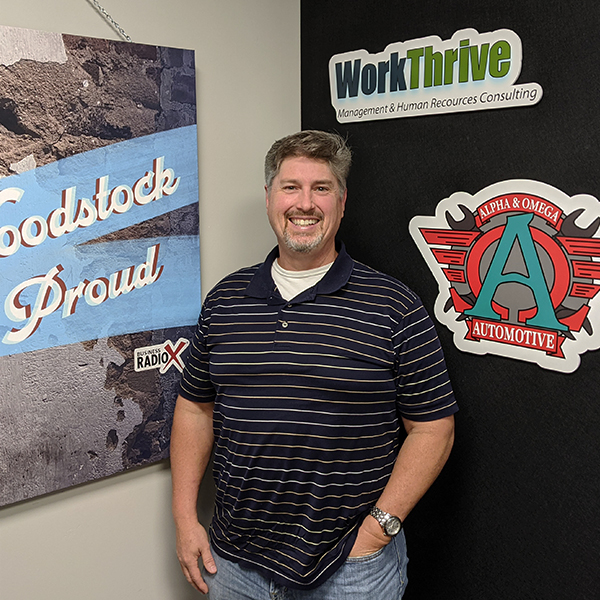
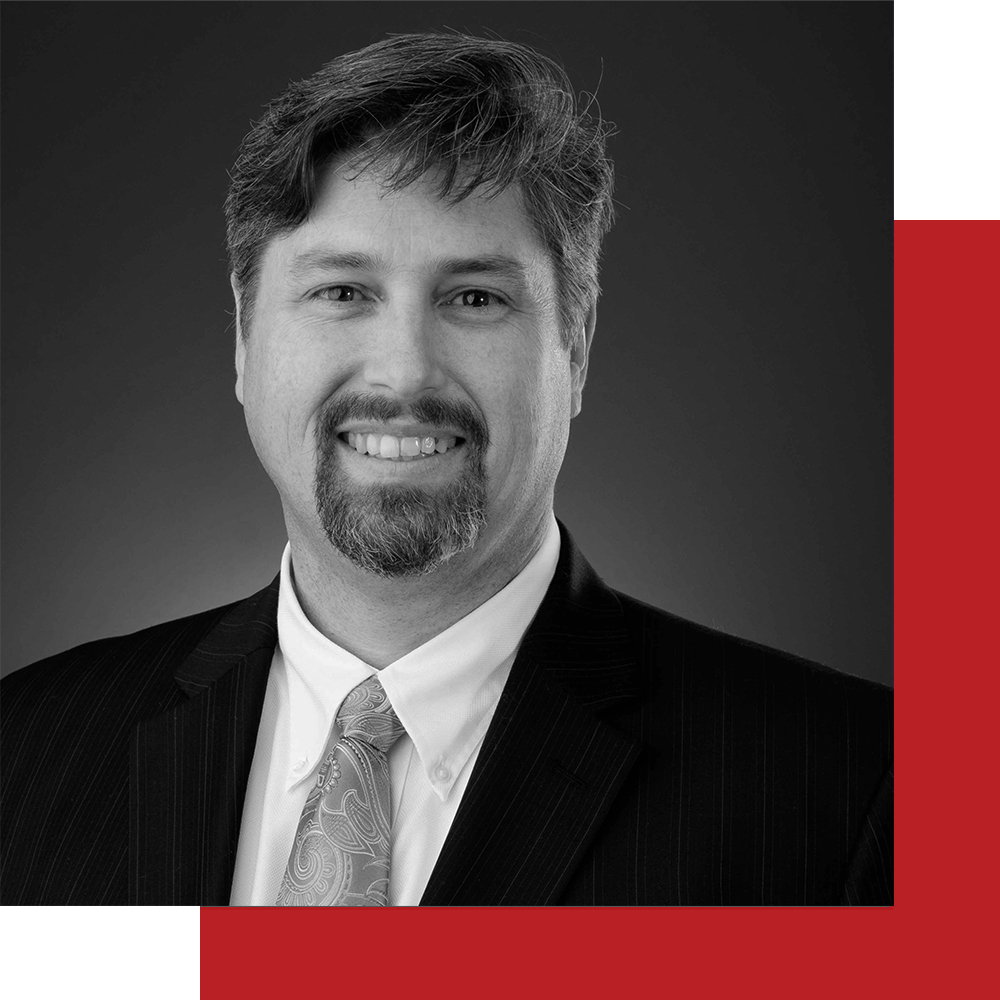
Chuck BurgeChuck Burge, CEO / Producer of Airaoke

Native of Marietta, GA McEachern High School Associates Degree from KSU in Business Admin, BBA in Marketing from Ga Southern 0ver 35 years in the Event/Marketing Business with 2 sons.


AiraokeConnect with Chuck on LinkedIn and follow Airaoke on Facebook


This transcript is machine transcribed by Sonix


TRANSCRIPT

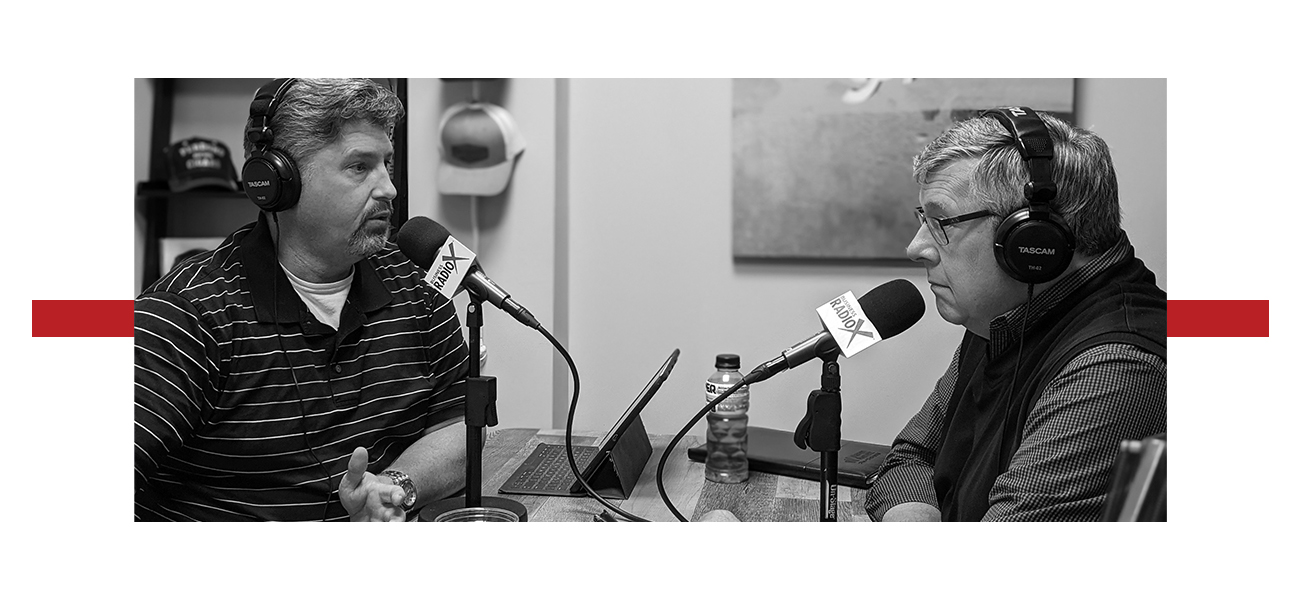
Speaker1: [00:00:07] Broadcasting live from the Business RadioX studios in Woodstock, Georgia. It’s time for Cherokee Business Radio. Now here’s your host.

Speaker2: [00:00:22] Welcome to Cherokee Business RadioX Stone Payton here with you this morning. And today’s episode is brought to you in part by Alma Coffey, sustainably grown, veteran, owned and direct trade, which means, of course, from seed to cup. There are no middlemen. Please go check them out at my alma coffee dot com and go visit their Rotary Café at thirty four or forty eight, Holly Springs Parkway in Canton. As for Harry or the brains of the outfit, Leticia and tell them that Stone sent you. You guys are in for a real treat this morning. Please join me in welcoming to the broadcast with Airaoke Mr. Chuck Burge. Good morning,

Speaker3: [00:01:05] Sir. Good morning. Stone, thanks for having me on.

Speaker2: [00:01:08] Oh, what a delight. Man, I think you and I got a chance to connect at some sort of business event networking kind of thing. Where did where did we. Do you remember

Speaker3: [00:01:16] Was the Woodstock business group at Reformation? Oh, Thursday mornings ago.

Speaker2: [00:01:22] Yeah, that’s a fun crowd and just a very collaborative crowd. Know you’ve got people in that and that group even from the same industry. They really do everything they can to try to help each other. I really I’ve enjoyed that about Woodstock Business Club. I’ve enjoyed that just all over town. Is that been your sense since you’ve been in this community that people genuinely try to help each other, even those that theoretically should be competing?

Speaker3: [00:01:50] Yeah, I don’t think it’s it’s a bad thing to have same people with same businesses and in the same meetings, everybody’s been helpful. I’m very involved in other business associations. Kenesaw and Marietta. Oh, okay. Wiscon. So, yeah. So it’s a it’s a great way to get out and meet people. I mean, there’s nothing better than face to face marketing.

Speaker2: [00:02:11] Hey, man. Well, that was a lot of fun, getting a chance to know you a little bit there. But I’ve really been looking forward to this conversation. Ereo GI mission purpose. What are you trying to accomplish with this thing?

Speaker3: [00:02:24] Well, you know, it’s funny. I came up with this idea about three years ago. I’ve been involved in the karaoke business for a long, long time, got out of it for a while. But I was literally one of the first karaoke shows in the country, probably one of the first 25 in America when it first came here in the early 90s. But a couple of years ago, it came out with this concept to have Ariyoshi, and we were supposed to have it last year, but unfortunately, Covid put an end to that. And when I saw that 9/11 was coming up on the 20th anniversary and it was on a Saturday night, I said, wow, you know what? What a great thing to do, to maybe honor firefighters and and have some fun at the same time. So I contacted the Cobb County Fire Department and they said we can’t take money directly. And they directed me to the Terry Farrell Firefighters Fund and Mike Korsh. Mike is the first fire run out of New York that contracted cancer from being on side at 9/11. And Mike Live, Mike and his wife, Susan, live here in Acworth now. And so I partnered with them. And we’ve been working on this for about four or five months. Pretty hard. And they’re great people. Might used to be a pretty good public speaker around town, but due to his cancer, he’s kind of lost his way a little bit. So it’s kind of taking over the role. But I just wanted to help. I mean, I remember where I was, you know, on 9/11 when it happened and everything that went through my mind. And these are just people because they haven’t been able to have their stair climb for the last two years due to Covid restrictions. I really wanted to help them. So that’s that’s kind of brought us to this day in time.

Speaker2: [00:04:06] All right. So this is a specific event and a major objective is to to raise some money

Speaker3: [00:04:12] For the firefighters to help for the firefighters of Georgia, even though it seems Terry Farrell, firefighter son, and Terry Farrell was a gentleman that was killed in in the attack on 9/11. And Mike was a very good friend of his. And once Mike retired, he wanted to give back some time and effort to raising money for the firefighters. And that’s how the Terry Ferrell firefighters fund came about. They have offices or I guess, you know, offices all over the country. But Micron’s in Atlanta, Georgia. So.

Speaker2: [00:04:42] All right. So the event itself, when, where, how?

Speaker3: [00:04:45] Let’s see. The event is September the 11th, which is coming up two weeks from Saturday, obviously the 20th anniversary of Bert Brown with Governors Gun Club is going to sing the national anthem to kick us off around five o’clock. Very cool. It’s a friend. And and then we’re going to bring 40 singers up. Basically, we’re going to empty a hangar at Atlanta Air Charters Hangar and Municipal Auditorium at Cobban National Auditorium. Jim Cook is allowing us to use this hangar for fun. Rattus so great, great guy. So we’re back in all the planes out of the hangar. One of the planes is going to. Face the hangar. We’re going to wrap a stage around the nose of the plane and then we’re going to randomly call up 40 people to sing karaoke or Aereo key in this case, and then four of them will be brought back up for the finals. And somebody is going to win a thousand dollars. Somebody is going to win a recliner from American signature family. And I got to mention, Charlie Darion, Charlie’s the owner of Charlie’s Angels mover’s. She is our title sponsor. So the whole tagline is, can you sing like an angel? Oh, wow. Yeah. So it’s really, really cool. As well as the karaoke contest. We’re going to do a little honor honorarium or a commemorative moment for 9/11 at nine o’clock while we’re while we’re tallying the votes for the finals. We’re going to be God bless the USA. And I think I think Charlie son is going to do that. He’s about to go on the voice. So it’s based on his availability. But if if if he can’t if he’s not doing that, he’s going to be doing that. Otherwise, we’ll get someone else to sing it.

Speaker2: [00:06:21] But can you go and distinctly not sing like on purpose saying, look, I am happy to be there, I’m happy to write a check, I’m happy to eat a hot dog. Whatever you got going on, I don’t want to sing. Are you allowed to do that, too? Absolutely.

Speaker3: [00:06:34] We have. We have. When you register at Aereo dot org, that’s HRA oky Torg. You register is either a singer or you register as in the ten day. If you register as a singer, you have to list five songs that you would sing, because we don’t want 40 people singing The Greatest Love of All by Whitney Houston, you know. So we’re going to separate those and make sure that everyone’s singing a different song. But if you register as an attendee, you just come and vote. The one cool thing about this, the secret to this is if you want to win a thousand bucks, you need to come sing and bring all your friends with you because you’ll be able to vote by phone at the event.

Speaker2: [00:07:14] Oh, there you go. So, yeah, I’m a. I was going to say conscientious objector, but that’s not it. I’m just I’m on a 10 day. Oh, that sounds like so much fun. And it’s it’s the date again, though, is on the list

Speaker3: [00:07:28] September the 11th. It’s a Friday and Friday evening from five to 10. Oh, neat. Yeah, it’s really cool. The numbers are really coming up in terms of attendees. Like I said, the secret to winning is come saying and bring all your friends with

Speaker2: [00:07:40] You to vote for you. And a real shout out to Charlie. I do not know her. I know of her. One of the reasons we’ve recently launched a Women in business series and one of the host has expressed to me that she wants to invite Charlie to come on that show. And I can see why. I mean, there are two or three different people who have mentioned her to me, but shout out to her and thank her and thank all the sponsors for for their generosity and their willingness to be part of this is. That’s fantastic.

Speaker3: [00:08:11] Oh, absolutely. We’ve got some fabulous people. Naomi gets on at Georgia Rouf advisor Stephen Nessen. It’s Store Square. Lot of people Dako hitting their fantastic Publix is even giving this 250 dollar gift certificate for the silent auction, which is something we all will accept items for the sale and launched right up to the day of the event. But we having a lot of success raising money for the firefighters because that’s what it’s all about. I mean, they’re going to be food trucks there. There’s going to be alcohol, I guess I can say that on air. And all all the proceeds from the food and from the drink will go directly to the firefighters. Oh, that is fantastic. Yeah.

Speaker2: [00:08:55] So tell me a little bit what it must be like, because I really don’t have a good feel for it. I, I have been to quite a number of fundraisers, I guess you would say. And I’ve always enjoyed the food truck, the alcohol, the silent auction. I really haven’t been very involved on on getting one put together. It must be a lot of moving parts. What is that like trying to herd all the cats and pull something like this off?

Speaker3: [00:09:22] Oh, it’s a lot of fun because it’s what I enjoy doing. I’ve been putting together grassroot marketing campaigns in events for years and years and years. But it is a lot of tedious minutia involved. But, you know, parking, security, things like that. Make sure everybody is the right place at the right time. Yeah, but I have a pretty good support crew with me that’s working with me, Larry blockI, Jay Man. And like I said, Susan in my course from there, Terry Ferar Firefighters Fund and Charlie herself has been attending the meetings and just trying to get things underway. Jim Cook actually just called me the owner of L.A. City. Yeah, but he like I said, he’s donating his hanga, which is way, way cool because that’s that we thought that was going to be a major expense. And Jim’s has been very, very courteous to do that for us.

Speaker2: [00:10:14] So what what kind of crowd are you expecting at this point? You have a pretty good read on it.

Speaker3: [00:10:18] 250, 300.

Speaker2: [00:10:20] Oh, wow.

Speaker3: [00:10:20] Yeah, I. Friends tell me that if if you offer a thousand dollars out here for somebody to win as a prize, you’re going to get some

Speaker2: [00:10:27] Say you going to get some. Yeah. Yeah. And some of them are probably going to be pretty good and some of them probably won’t. And that’ll be fun, too. Well, yeah, that’s true. All right.

Speaker3: [00:10:37] You know, and I mentioned earlier that you bring your friends with you. But we do have five judges, actual judges that are going to be there on site as well. Man made my name. My judge. Oh, please, sir. Joliette Holmes, former district attorney of Cobb County. Andy Gaines, the general manager of the Strand Theater in Marietta. Abit with the Myriad Daily Journal Fontayne Lewis. He owns Jazz Jokes in Marietta, and he’s very well-connected in the music industry. So fontanel in some expertize to that. And then Angie Blank, who is Arthur Blank’s last wife, and she’s a very good friend of mine. We went to the same high school and she’s actually a sponsor of the event as well. So it was very, very nice to get some a diverse group as our as our judges. And what’s really cool is Americans saying that your family has given us five recliners for the event for my JudgeI maple sirup. And I was just sitting in the hardback fold up chairs for five hours. So we’re very appreciative for that.

Speaker2: [00:11:37] And this is a recliner, one of the things that a person can win in a silent auction.

Speaker3: [00:11:42] Now, that’s the second place prize. That’s the second place prize is like an eight hundred dollar recliner. Very nice. Very leather. I’ve actually sat and it’s very comfortable.

Speaker2: [00:11:50] I don’t know what the appropriate prize would be, but it just occurred to me that maybe you should have a prize for the for the worst singer. I don’t know what the right prize would be.

Speaker3: [00:12:00] We’ll have to get back to you on that stone.

Speaker2: [00:12:02] Well, I think it’s obviously I don’t have much experience organizing the events, but I love attending them. And it feels good to do something good. But it’s neat that you can do something good and have a good time at the same time, right? Yeah.

Speaker3: [00:12:17] You know, that’s kind of what my life has been about. I had about I had about as fine a 20 year run as anybody could ever have, like and I think I’ve told you personally that I was the one of the emcees for the Diet Pepsi, all hung girls when they did the National. You got the right one baby on the campaign. I mean, not being bat shit backstage with the Doobie Brothers, a couple of Super Bowls and see double basketball championships ran the Mall of America for five days. So this event and planning and marketing thing is just kind of made in my blood since it’s probably the early 90s.

Speaker2: [00:12:45] It’s right in your wheelhouse. But let’s do talk a little bit about your back story from a couple of different perspectives. What what causes what? Bring someone like you to a point where they invest considerable time, energy, effort, talent in a cause like like this. And and what what about your background caused you to express all of that in this way, which I think you started to touch on here? Yeah, well,

Speaker3: [00:13:12] You know, that’s a good question. You know, I

Speaker2: [00:13:15] Mean, hey, it took me a minute to get it out, but I thought I was a damn fine questions. I actually just

Speaker3: [00:13:20] I’m very passionate about anything that I do. I’ve got yeah, I’ve got two great sons and very passionate about them. And if I wanted to spend time with anybody more than anything else in the world, it’s my two sons. And like I said, I got into this cause marketing. I’ve served on a couple of boards here around Cobb County, and I just have a heart for people that that do good things for the community, the firefighters, policemen, anybody, EMT people, any first responders. I just I think they get such a bad rap in the mainstream media, and I want to support them. And I’ll try to do this without getting choked up. But it’s it’s important for me to take care of these people.

Speaker2: [00:14:06] Well, amen to that, at least from my purse. But I cannot imagine what it must take in terms of attribute, mindset, discipline, ethos for a person to to get up every morning and do that with their life and career. And when I say that, I mean these first responders, the firefighter, firefighters, the police officers, I mean, they do they do put their safety, their life on the line for us every day. And I am with you. I don’t feel like they’re properly recognized, rewarded. I suspect they’re underfunded. I don’t know enough about how money works to to know that. So I just I think I just think the world of what you’re doing, man.

Speaker3: [00:14:48] Well, I appreciate that. Like I said, that’s the main reason I’m doing it, because I want to help. I’ve always been a giver, a nurturer, if you would. But it’s just something I’m passionate about. And it doesn’t matter what I’m doing, whether it’s playing poker or the things that I love to do, I’m always passionate about what I’m doing. So I’m going to do something. It’s all about attitude and effort, you know, and if you’ve got the right attitude and you put the effort into it, it’s going to be successful. And that’s kind of my mantra. I love Jimmy Valvano was saying, you know, if you wake up and cry and laugh every. You’ve had a good day in that. Yeah, that’s kind of the way I believe.

Speaker2: [00:15:25] I like that, too. So with all of this, do you find any time to to engage in a day job you get or is it hunting, fishing in this?

Speaker3: [00:15:34] Well, it’s poker. And this right now, I’ve been playing poker once a month for 38 years or with a bunch of guys. So I have a great group of friends. But I do have kind of a side job now, but I’m more of a full time job after after Ariel selling alcoholic ice pops.

Speaker2: [00:15:53] Now, that sounds fun. Do you do anything that’s not fun? You don’t. If it’s not fun, you don’t do it. No, it’s

Speaker3: [00:15:58] It was funny. I had I had lunch with a lady named Kathy Camela from CBS 46 television the other day and her son Michael. And I said, Michael, if I could give you two pieces of my piece of advice, here’s what they are. Number one, never shake a man’s hand sitting down. And number two, never do something you don’t love because life’s too short.

Speaker2: [00:16:19] So so you really do have a bit of a day job. It’s a fun hustle for you. But it’s it’s alcoholic popsicle. Ice pops, would you? Yeah.

Speaker3: [00:16:27] Yeah. We just sold a million. Our company sold a million to Budweiser of lime. Rita Sweets, a very good product. All right. But I’m talking to a lot of the local breweries about maybe expanding, extending their brand to grocery stores and maybe the liquor stores and just have something up at the counter to people who take home and throw in a phrase related phrase. And you can’t get a DUI sitting at home drinking and eating alcohol or lightbox.

Speaker2: [00:16:53] So does a does a beer or some beer make the transition? I know you talked about the Lambretta some some beer yet.

Speaker3: [00:17:01] Yeah, well, we have some samples. I might try to get you some water. Absolutely. Yeah.

Speaker2: [00:17:07] They’re like we’re earned media here at Business RadioX, but we will take compensation in the form of alcohol.

Speaker3: [00:17:13] There you go. So I’m just trying you we had like a pina colada and a apple bourbon or something, right?

Speaker2: [00:17:22] I bet Bertolli. Fantastic. Yeah. And of course, you know, as many people I’ve only lived there for four months, but I know every bartender in town.

Speaker3: [00:17:30] So you’ve only lived in Woodstock performance?

Speaker2: [00:17:32] I’ve lived in Woodstock. I raised two marvelous young ladies in East Covid, and we had two. And we had a great place there in the Pope school district. And Greyhound’s. Yeah, it was a fantastic place to raise the kids. But my wife and I, we downsized. We moved here right on the edge of town. And I mean, this is utopia for me because I walk every I walk to the studio. I’m I’m sitting here talking to you a mile from the house. It’s all time. And, you know, I enjoy you know, I enjoy a cocktail now. And again, nothing wrong with some of my buddies with you, but I bet that’s. But I bet that’s a fun word. But it’s in requires a degree of creativity that I think has got it’s got to be a guy like you with your kind of background to really pull it off and make it and make it home.

Speaker3: [00:18:20] Well, you know, back in the day before I got into the marketing, I was actually the assistant general agent for mass mutual insurance company in the early 90s. And I told these sales agents that I trained. One thing I said, the only reason you’re not going to be successful is you’re not telling the people your story. You tell enough people your story and you’re going to be successful if you’re not making enough phone calls. You’re not seeing enough people. If you’re not seeing enough people, you’re not making enough sales. So it was a 10 three one ratio. I’ll never forget. For every 10 calls you make, you’ll set three appointments, you make one sale. There wasn’t much to manage that. It’s just me. So you tell people what you do, you’ll be excited about it. You know, like I said, attitude and effort will get you a long way.

Speaker2: [00:19:04] Right? Right. All right. Before we wrap, let’s make sure that we cover any additional details that I may have neglected to ask about regarding the event. But let’s kind of recover what the events are going to be about, what people can expect, and let’s make sure they know how to get there, get tickets, whatever is appropriate.

Speaker3: [00:19:23] Ok. All right. Saturday, September the 11th, from five to 10, we will be having ereo give the Cobb International Airport in Kennesaw. Many of you may know that is McCollom Field, which has been for many, many years. But at five o’clock, we will sing the national anthem. We will be having 40 people out of the audience come up and sing karaoke, or in this case, Area Okee for them will be brought back for the finals. Somebody is going to win a thousand dollars. So, again, the secret is to. Come saying, bring all your friends with you to vote for you and you got a good shot at winning something pretty cool. Like I said, there will be food trucks there. There will be a silent auction for the Terry Farrell Firefighters Fund, and we have some great items already. Angie Blanc was very instrumental in giving us an autograph. Matt Ryan Jersey. We just got a set of Cutco Knives donated this morning for the silent auction. So the main thing is we want to come out and support these firefighters who do what you said earlier. They walk into danger every day without even blinking an eye. And we need to be appreciative of those people, men and women.

Speaker2: [00:20:31] Fantastic. All right. So is this something that they can go online and purchase anything for? Or you just show up and that’s where the money’s going to get raised?

Speaker3: [00:20:41] No, you need to go to ereo keyboard as Tom UWW, APRA oky dot org, ereo keyboard and you can buy your tickets at fifteen dollars. That will also get you to drinks. So we’ll get you admission into the event and we’ll get you to free drinks.

Speaker2: [00:20:56] Look, I can tell you as an experienced drinker to

Speaker3: [00:20:59] Drink 2015, but

Speaker2: [00:21:00] That’s a deal right there.

Speaker3: [00:21:02] And plus, Red Hair Brewery is donating alcohol for so there another sponsor. I wish I could list all the sponsors, but there’s so many. I don’t want to take all of your time, so.

Speaker2: [00:21:12] Well, well, kudos to you for for going out and engaging all these sponsors. And you got to feel good about the business community here in in Georgia, in the greater Atlanta area here in Cherokee County, Cobb County, Fulton County. I mean, it’s the business community is, I suspect, head and shoulders above many in this regard wanting to contribute to the to the community at large. Now, speaking of the community at large, our medium is such that sometimes oftentimes people are listening to our shows on demand down the road. So it’s entirely possible someone may trip over this interview well beyond the date. It could be six months from now, could be a year from now. So they may very well miss this event. And if they do, they still, though, may want to contribute to get involved in some way. Where should they turn their attention? Yeah, they need to

Speaker3: [00:22:10] Go to the Terry Farrell firefighter fund. OK, that’s the right place. Reach out decision course or my course. And they will be glad to help you and accept anything. I mean, I understand what you’re saying about community. I’m one of those rare individuals. I’ve never lived further than five miles from the Marietta Square. So I am very involved in my community and very proud to be a myriad in a Cobb County. And I appreciate this approach of my territory up to Cherokee County to be on your show, this one.

Speaker2: [00:22:42] That’s great. But you have your own pie bar over there. We’ve got to make

Speaker3: [00:22:45] Absolutely

Speaker2: [00:22:46] Sure they’ve got the fiber. But you got your own over there. Yeah. Yeah. Are we fortunate? OK, one more time before we clock out here. Website contact and general and phone and we’ll call

Speaker3: [00:22:59] It will wrap awesome things down to be able to attend area. OK, you go to WW W dot area. OK, dawg, that’s HRA Aoki dot org or you can reach out to me or my email at Dot Birju BRG at Gmail acom or you can reach me by phone at seven seven zero four to eight nine nine three. Oh. Anything short of my address? I think that’s enough.

Speaker2: [00:23:25] That sounds like Bleaney. Thank you so much for coming by. Keep up the good work. We’ll continue to follow this story. Don’t be a stranger as you continue to engage in these kind of efforts. We had to Business RadioX network and Cherokee Business RadioX specifically. We want to support your efforts and do anything that we can stop.

Speaker3: [00:23:44] God bless you. Thanks for having me on.

Speaker2: [00:23:45] My pleasure, buddy. All right. Until next time, this is Stone Payton for Chuck Birju and everyone here at the Business RadioX family saying we’ll see you next time on Cherokee Business Radio.

Tagged With: Airaoke

Doug Brown With Summit Success

August 24, 2021 by Jacob Lapera

Coach The Coach
Coach The Coach
Doug Brown With Summit Success
Loading
00:00 /
RSS Feed
Share
Link
Embed

Download file

DougBrownDoug Brown is a coach and guide to lawyers, entrepreneurs, and C-Level executives who are determined to get more done and make more money in less time and grow profitable businesses.

He is the Chief Learning Officer & Executive Coach at Summit Success.

He is a lawyer turned entrepreneur, educator, business builder, and fixer. Over the last 25 years, he helped create and turn around multiple 7 and 8 figure businesses, from law practices to not-for-profits and international companies.

His clients appreciate how he draws on his real-world experience to help them learn all of the disciplines they need to succeed, and get into action and build a business that supports their whole life.

Connect with Doug on Facebook, LinkedIn, and Twitter.

What You’ll Learn In This Episode

  • Change Management
  • Getting Unstuck
  • Lessons Learned

This transcript is machine transcribed by Sonix 

TRANSCRIPT

Intro: [00:00:02] Broadcasting live from the Business RadioX Studios in Atlanta, Georgia. It’s time for Coach the Coach radio brought to you by the Business RadioX Ambassador Program, the no-cost business development strategy for coaches who want to spend more time serving local business clients and less time selling them. Go to BRXAmbassador.com To learn more. Now here’s your host.

Lee Kantor: [00:00:33] Lee Kantor here, another episode of Coach the Coach Radio, and this is going to be a good one. Today we have Doug Brown on the show and he is with Summit Success LLC. Welcome, Doug.

Doug Brown: [00:00:45] Hi, good. Good to be here.

Lee Kantor: [00:00:46] Lee, thank you. Well, I’m excited to learn what you’re up to. Tell us about some of the success. How are you serving, folks?

Doug Brown: [00:00:52] Yeah. Summit Success is a consulting organization run by Walt Hampton and Shabani and myself, and our mission is to inspire and empower business executives to achieve their highest potential and live the life of their dreams. We work with attorneys and high performing business professionals who are determined to make their life in their practice better, and with coaches, consultants and speakers who don’t really have all day to play around because they’re running a demanding business and it’s getting bigger and they want to be the very best they can be, and we have programs and strategies to help them do that.

Lee Kantor: [00:01:25] Now when you work kind of developing this concept, why did you choose to go the route of both coach and consultant? Sometimes people pick one or the other.

Doug Brown: [00:01:37] It’s a good question, you know, I I describe the coaches and consultants know what the difference is between coaches and consultants. The market often does not. What they have is they have a problem they want to have solved and they want somebody to help them solve it. And and so when we think about the labels that we apply to ourselves, I try to think about the audience. So in this audience, I can say coach and consultant. Ninety five percent of my work is executive and business coaching with owners of businesses and people who want to transition like I did from being successful in one area of their life and turn it into a successful coaching business.

Lee Kantor: [00:02:17] Now, so you’re finding that the folks you’re serving, they’re just trying to solve a problem. Or maybe they’re stuck and they want to get unstuck and what you’re doing, whether it be coaching and asking them questions for them to come up with a solution or consulting where you’re actually kind of rolling up your sleeves and helping do the work, that’s kind of a blurred line.

Doug Brown: [00:02:38] Well, it really we focus on what the individual needs to get them, where they want to go, and in most cases, what they need is they need somebody to be a trusted guide and to an advisor and to give them a framework so they can do the work and create what they want to create. And so we call that coaching and we have a program called the Consultants Success Formula, which combines the the curriculum of what you need to do step by step with live coaching and group coaching to not only teach but help our people move through the program and actually accomplish their goal. We’re not that interested in selling programs if unless the people are going to get the results.

Lee Kantor: [00:03:28] Right, so you’re focused on the outcome and the result and whatever anybody calls anything is not really relevant. Maybe it is just for this kind of conversation, but in real life, people are just trying to solve problems.

Doug Brown: [00:03:42] Yeah. And it’s so easy when you’re inside baseball, whether you’re a coach or a consultant or a lawyer or an accountant, you forget that your clients are coming to you to solve a problem or take care of an opportunity. They don’t care what you call yourself. They want the transformation. They want the outcome.

Lee Kantor: [00:03:59] So now some of your work is on this kind of transformation or change. What are you seeing out there now as we come out of this pandemic, when a lot of people are on overwhelm and they’re just kind of getting their sea legs back? How are you helping people through this chaos?

Doug Brown: [00:04:17] Boy, this is such a transformational time. The whole world is turned upside down. But as a result, there’s tremendous opportunities. And part of the work that we’re doing is helping our people get really clear on what their vision of the future is, what they want to accomplish and and what are the first steps in the structure to get there. Because even when you’re disrupted, you’re you’re your resistance to change is very high, especially when you’re stuck in this freeze fight or flee fear cycle. So if we can focus on exactly what’s wrong, what is the dissatisfaction? What is the vision for the future and what are the first steps and the change equation? We can overcome resistance to change and get people building momentum in a direction where they feel like they’re having the control they they lost, you know, in the last 18 months.

Lee Kantor: [00:05:11] Now you’re finding that coming out of the pandemic that people’s why has changed that they’re maybe at one point there was like, Hey, take the hill, we’re going boldly forward and I got these financial goals financial, financial, financial. And now when they’ve had this kind of big pause, they’re like, You know what? There’s some things that are more important. I’d rather kind of shift at least some of my energy into this other kind of more meaningful direction.

Doug Brown: [00:05:37] Yeah, I think this is a whether you call it why or you call it your purpose. There’s a great alignment between opportunity, I guess, for alignment between all the activities that you’re doing and and do they align with what you really want to do with your purpose of what you want to create and to have a plan to get there and people are waking up? I think in a good way that the old I’m going to just get through the day, I’m going to just get through the week. And next thing you know, a year has gone by or two years or five years or 10 years, and you’re just wondering, well, what if? And the good news today is, even if you’ve done that for five or 10 or more years, there are people reinventing themselves in their 50s and 60s and older, using all of their knowledge to turn it into a successful consulting or coaching business.

Lee Kantor: [00:06:26] So now when you’re having those conversations, what does that look like like? Are they kind of that self-aware where they can say that that’s at the heart of the problem? Or do you have to kind of go layers deep to really get them to be vulnerable enough to share that?

Doug Brown: [00:06:42] Some people are self-aware and say, I’ve got the disconnect, but most people just have this general dissatisfaction. This general idea that, hey, I’d like to do something different than I’m doing now, I’m looking for a roadmap to follow. And there, you know, if you want to go as deep as y or purpose, you’ve got to have a pretty good trusting relationship with someone. The the depth of the ask is directly proportional to the depth of the trust. So we’re starting by helping people understand and articulate, what’s your vision? What do you want to create and then why do you want to create it? And then what does that mean to you? And that’s when we get, you know, into, well, it means I have more time with my kids or I can help my grandchildren. Or maybe I just can travel the way I want to. Or maybe I still want to work, but I don’t want to work anywhere near as much. And once they get clear on that, then we can connect that to the purpose. And that’s really the rocket fuel. That’s the power that that moves them forward through the roadmap to do the work.

Lee Kantor: [00:07:48] And part of your work is kind of, I guess, you use the word unstuck. Are there people? Are the are people more stuck now? Or I would think there’s some kind of epiphanies happening out there.

Doug Brown: [00:08:01] Well, I think. There’s both. There are people who if you’re stuck, it’s you’re stuck in a way of thinking and stuck by yourself. I mean, it’s being an entrepreneur, you know, is is a pretty lonely job and there’s an easy to get yourself stuck and you need that community around you, those group of trusted advisers to help you to pull you out because sometimes you don’t even know that you’re stuck. You might be working on marketing copy. You might be writing the same copy 10 ways and just can’t find your way out of it. You might be trying to evaluate what’s my business model? How should I go to market and having a group around you to help you answer that question and find the answer is critically important. Or you might be stuck because you might be thinking you’ve got we call imposter syndrome. Maybe I’m not good enough. Maybe I’m not enough. Maybe I’m not ready. What if the people don’t want what I’m selling? And that’s almost always head trash. And if we can help them take out the head trash, then they can get unstuck and move forward.

Lee Kantor: [00:09:12] Do you find that people are kind of searching for this sense of community, maybe more now than they were a few years ago?

Doug Brown: [00:09:19] Yeah, I think so. And there are a lot of communities out there and it’s the power of community. And honestly, the power of coaching is is like never been more clear than it is right now. And in my in my life and my transformations, some of the most important moments I’ve had are with communities of people who will build you up and pull you forward, who will tell you the truth when you’re lying to yourself and you often it’s you’re not. You’ve got a lot more going for you and you’re much closer than you think. Just keep going. And yeah, they give you constructive feedback and you’re all pulling together because this is a team sport.

Lee Kantor: [00:10:03] Now, do you find that in the corporate world, in those clients that you’re dealing with, that they’re more open to coaching for more folks, not just the highest level of leadership or the high performers that they’re kind of buying into this, you know, everybody needs a coach and let’s get more of our people. It becomes more of a a must have than a perk for only a select few.

Doug Brown: [00:10:27] You know, Leigh, I’d like to believe that we’re going in that direction. I think we’re in the place where corporations and business owners are finally starting to see that you’re getting a coach because you’re because you’re doing well and you want to do better as opposed to a remedial coach. And so I think as that goes on, the executives and the business owners who have that experience will see the value and will be open to being better at coaching themselves and bringing in coaches for their for their people. It really depends. In my world. I’m working very much with business professionals and attorneys who are pretty unhappy, but they’re really busy. They want to find out how to get more done faster so they can actually, you know, go play golf on the weekend without answering their cell phone all the time or be to the kids ballgame without having their nose in their text messages.

Lee Kantor: [00:11:24] So now in your career, when you transition from law into being an entrepreneur, or you might have been an entrepreneur as a lawyer, but in this kind of more coaching wearing this coaching hat, did you go through that that imposter syndrome? Like, who am I to be giving advice to these people? You know, I was here, I was this person. Did you go through that?

Doug Brown: [00:11:45] I, yeah, you know, I think yes is the answer and multiple times, and I think it’s a natural part of the human condition, especially when you’re trying to push yourself. When I went from being in the I spent 13 years in a corporation where I did start ups and turnarounds. And then when that ended, I had the opportunity to teach in an MBA program and help build the MBA program and innovation and entrepreneurship. And so I had a lot of that like, well, I know this stuff, but who am I to to be teaching other adults and and, you know, having a community around you to help you talk through that and get to the truth of it and and get some simple first steps is critical because if you’re aware enough to to wonder the question, you know, who am I? Am I enough? And the answer is you probably are. You just need to get untangled. You just need to unlock a little bit of that courage.

Lee Kantor: [00:12:40] And did you have a coach when you were younger, are you?

Doug Brown: [00:12:45] You know, when so I’ve had I have a coach, I’ve had coaches. When I was a younger version of me, coaching wasn’t even really a thing. It was more the old school traditional mentors. You know, I remember back when I was evaluating what I wanted to do when I was moving out of the law early on, I went to a career coach and he said, there’s this thing called business coaching, and I’m like, That’s not a real job. Fast forward 20 years. I finally took him out to lunch or dinner one time, and I said, Bruce, this is the you can say. I told you so dinner because I was doing coaching and because it had become a thing.

Lee Kantor: [00:13:24] And then is it what you dreamed it would be? Is this more rewarding for you?

Doug Brown: [00:13:30] You know, I am blessed to do exactly the work that I was meant to do, I have time freedom, I have location freedom. I’m spending the summer in Orleans, Massachusetts, and I live in Bluffton, South Carolina, on a golf course. I get time to spend with my kids, and I know that when I’m working with my clients, I’m making a difference. And that was the dream for myself. I pinch myself sometimes. I’ve actually got there. And so my mission is to help other other people transition and do whatever their version of of of their dream or their successes.

Lee Kantor: [00:14:05] Now you mentioned working with lawyers and executives. Is there a sweet spot? Are you kind of you mentioned turnaround? Is that is that kind of your sweet spot like struggling or people that are looking for, you know, in the midst of change or lawyers that are have these challenges or you kind of industry agnostic or problem agnostic?

Doug Brown: [00:14:25] Well, there’s there’s two things. There’s two general groups. The first one are successful professionals that are looking to pivot and do something different. And that’s why we have the consultant success formula, which walks people through that. And so I get to to work in that program, working one on one with people. And that’s a group that’s a group and individual coaching. My private coaching is with attorneys. They’re generally about 20 years out of law school. They have tried lots of things before. They’ve got a successful practice. They’re busy. They just need to figure out how can I get it done better and faster so that I can grow without having to burn myself out? And so I can actually have a life I’ve been working for. And so they’re already successful and they they they get that the fastest way to success is to have one on one support of a trusted advisor and an expert that will help them get where they need to go. Just like a top golfer will have the golf coach to help them see what they can’t see. Give them the strategies and and help them improve their game.

Lee Kantor: [00:15:29] So if somebody wants to learn more, have more substantive conversation with you or somebody on the team, what’s the website?

Doug Brown: [00:15:36] The website is summit success. That’s assuming success. And if you put a forward slash Coach the Coach after that, then there’ll be a document to download to learn about the consultant success formula. And my email address is Doug. That’s DWG at Summit. That’s the little sign of success.

Lee Kantor: [00:16:04] Good. Well, congratulations on all the success, Doug. You’re doing important work and we appreciate you.

Doug Brown: [00:16:09] Lee, thanks for the opportunity to get out here and share my story and thank you for the work that you’re doing to help the coaching community.

Lee Kantor: [00:16:15] All right, this is Lee Kantor. We’ll see you next time on Coach the Coach radio.
 

Tagged With: Doug Brown, Summit Success

The R3 Continuum Playbook: Understanding Your Employee’s Fears About a Return to the Workplace

August 19, 2021 by John Ray

return to the workplace
Minneapolis St. Paul Studio
The R3 Continuum Playbook: Understanding Your Employee's Fears About a Return to the Workplace
Loading
00:00 /
RSS Feed
Share
Link
Embed

Download file

return to the workplaceThe R3 Continuum Playbook: Understanding Your Employee’s Fears About a Return to the Workplace

As employers make decisions about requiring employees to return to the workplace and what form that takes, Dr. Tyler Arvig says they need to consider the concerns and fears employees are having about it as well.  He offers ways employers can approach this decision and support their employees’ wellbeing.  The R3 Continuum Playbook is presented by R3 Continuum and is produced by the Minneapolis-St.Paul Studio of Business RadioX®. R3 Continuum is the underwriter of Workplace MVP, the show which celebrates heroes in the workplace.

TRANSCRIPT

Intro: [00:00:00] Broadcasting from the Business RadioX studios, here is your R3 Continuum Playbook. Brought to you by Workplace MVP sponsor R3 Continuum, a global leader in workplace behavioral health, crisis and security solutions.

Dr. Tyler Arvig: [00:00:15] Hello. My name is Dr. Tyler Arvig, the Associate Medical Director at R3 Continuum. As many organizations are beginning to make decisions about going back into the workplace or even deciding if they should return to remote work, I want to provide some information on how to handle the fears that some employees might be feeling at this time. It’s been nearly two years since we heard of the COVID-19 outbreak across the world, and it’s continuing to impact the lives of all of us.

Dr. Tyler Arvig: [00:00:50] While it’s tough to think about now, certain aspects of pre-pandemic life that seemed unimaginable when the virus struck now seemed possible again. As the world continues to evolve and change, businesses are beginning to think about making decisions regarding return to work in the office, going for a hybrid approach or utilizing work-from-home environments. When pondering these decisions, leaders should take a step back and think from the mindset of your typical employee. How are they feeling about their current situation? Are they feeling anxious or distressed? Are they concerned for their safety? What can they expect when they return to the office? And ask yourself if you asked your employees any of these questions or heard their concerns.

Dr. Tyler Arvig: [00:01:49] Over the past 16 months or really more, everything has changed. Most people have transitioned to working from home; and if not, the workplace has drastically changed over that time with health and safety measures being put in place. Those who are parents have had to work through having kids at home and helping teach them in some capacity. As changes in your work, personal and likely financial situations have occurred, this has probably also led to increases in stress. A study done by the Centers for Disease Control in 2020 mentioned that the rate of depression in adults increased almost four times, and the rate of anxiety increased almost three times since the start of the pandemic. Therefore, the pandemic and everything that’s taken place in between has definitely taken its toll.

Dr. Tyler Arvig: [00:02:52] While this may change over time, we are currently seeing a new world or rather a new old world. In most places in the US, masks are no longer required. You might be walking into your convenience store not wearing a mask, while some folks still are. That’s the new old world. For a lot of people, wearing a mask has become part of their day-to-day life. On the topic of walking into a convenience store, we are beginning to see more organizations remaining open again, flights being fully booked, concerts are happening and more. While we are seeing things like this changing back, everyone continues to be hopeful, but also somewhat tentative. As we are getting near the end of summer and vaccination has become more widely available, many employees are starting to think about returning to the office; while, some have already made their decisions and are needing to reanalyze those decisions.

Dr. Tyler Arvig: [00:04:01] As an employee, there are a lot of questions that remain. From the personal side of things they may be asking themselves, how will going back into the office affect my children? What will need to be adjusted in order for me to take care of my family? How’s the commute going to be? And how will it impact my day-to-day life again? Will I be able to maintain a work-life balance. And from a work perspective, a lot of employees are wanting to know things like, will my employer care about my challenges? How will the transition back to work even go? And will it be successful after working from home for so long? Lastly, and not insignificantly, will I be safe at work?

Dr. Tyler Arvig: [00:04:56] As a leader, making this decision for your employees isn’t easy. Whether you decide to have employees returned to the office, go back to working remotely, or continue working remotely, here are some good tips to be sure that you’re providing to your people. To start, be sure to utilize the employee assistance program that you might have. A lot of employees are unaware that they have access to an EAP. Make sure you’re communicating to your employees how they can access your EAP and let them know more information about it. Explore some applications that could potentially help with mental health. There are numerous smartphone apps that can be used to help with things like stress management, anxiety and depression. Do some research and maybe provide some options to your employees. In fact, your EAP might even have something like this. This is something you can do over email, or with links or employees can really access this in whatever way meets their needs. It’s something that you may not have thought of that you can provide.

Dr. Tyler Arvig: [00:06:14] Provide employees with resources from your HR department. HR departments often have different resources they can provide to help employees to support their well-being. Utilize what you already have and be sure to communicate and reach out to your employees about those things. Communication is really key in all of this. While this might seem like a daunting task, I’m reminded of something that’s attributed to Dr. Martin Luther King, the saying that goes, “You don’t need to see the whole staircase. Just take the first step.” The quote is powerful in this day and age as we move forward to the next normal, one step at a time.

Dr. Tyler Arvig: [00:07:02] While there are likely a lot of questions about the future, it’s important for leaders to not only feel prepared to help your employees through these difficult times, but also to support yourself. R3 Continuum can help by providing proactive efforts to maintain the psychological and physical support for your organization. R3C’s tailored solutions can help your organization with crisis prevention and preparedness, crisis response and recovery, proactive employee wellbeing outreach and more. Learn more about our custom solutions and contact us at www.r3c.com or contact us directly by email at info@r3c.com Thank you very much.


Show Underwriter

R3 Continuum (R3c) is a global leader in workplace behavioral health and security solutions. R3c helps ensure the psychological and physical safety of organizations and their people in today’s ever-changing and often unpredictable world. Through their continuum of tailored solutions, including evaluations, crisis response, executive optimization, protective services, and more, they help organizations maintain and cultivate a workplace of wellbeing so that their people can thrive. Learn more about R3c at www.r3c.com.

R3 Continuum is the underwriter of Workplace MVP, a show which celebrates the everyday heroes–Workplace Most Valuable Professionals–in human resources, risk management, security, business continuity, and the C-suite who resolutely labor for the well-being of employees in their care, readying the workplace for and planning responses to disruption.

Connect with R3 Continuum:  Website | LinkedIn | Facebook | Twitter

Tagged With: COVID-19, covid-19 crisis management, Dr. Tyler Arvig, empathy in the workplace, playbook, R3 Continuum, workplace culture, Workplace MVP

Decision Vision Episode 130: Should I Forgive? – An Interview with Brandon Lee, FunnelAmplified

August 19, 2021 by John Ray

FunnelAmplified
Decision Vision
Decision Vision Episode 130: Should I Forgive? - An Interview with Brandon Lee, FunnelAmplified
Loading
00:00 /
RSS Feed
Share
Link
Embed

Download file

FunnelAmplified

Decision Vision Episode 130:  Should I Forgive? – An Interview with Brandon Lee, FunnelAmplified

Shouldn’t this question be addressed in a personal or spiritual context instead of on a business podcast? No, says Brandon Lee, CEO of FunnelAmplified, because forgiveness is integral and essential not just to our personal lives but in business as well. In a riveting conversation, Brandon and Decision Vision host Mike Blake discussed Brandon’s own stories of forgiveness, what forgiveness is and isn’t, the impact on his professional and personal life, and much more.  Decision Vision is presented by Brady Ware & Company.

FunnelAmplified

FunnelAmplified is the first digital and social engagement platform for sales teams.

It was built for the enterprises designed to work with your existing tools to amplify sales and marketing efforts for your organization by enabling and facilitating social selling. The system amplifies social selling content, reach buyer enablement, and it does it with today’s modern buyer journey in mind.

Company website | LinkedIn

Brandon Lee,  Founder &. CEO, FunnelAmplified

FunnelAmplified
Brandon Lee, Founder & CEO, FunnelAmplified

Brandon’s passion is helping sales reps and teams use their digital presence and behavior on social media to build influence, establish trust, generate a large network, and use all of that to create conversations that lead to business opportunities.

When he is not working, Brandon is chasing his wife, Megan, around. They’ve been married for 22 years and have five children. Their kids are growing into young adults and it’s been an amazing time of life. Their fifth is a bit younger than the others so they will truly never be empty nesters. That’s okay. Brandon’s family is some of his favorite people in the world.

LinkedIn

Mike Blake, Brady Ware & Company

Mike Blake, Host of the “Decision Vision” podcast series

Michael Blake is the host of the Decision Vision podcast series and a Director of Brady Ware & Company. Mike specializes in the valuation of intellectual property-driven firms, such as software firms, aerospace firms, and professional services firms, most frequently in the capacity as a transaction advisor, helping clients obtain great outcomes from complex transaction opportunities. He is also a specialist in the appraisal of intellectual properties as stand-alone assets, such as software, trade secrets, and patents.

Mike has been a full-time business appraiser for 13 years with public accounting firms, boutique business appraisal firms, and an owner of his own firm. Prior to that, he spent 8 years in venture capital and investment banking, including transactions in the U.S., Israel, Russia, Ukraine, and Belarus.

LinkedIn | Facebook | Twitter | Instagram

Brady Ware & Company

Brady Ware & Company is a regional full-service accounting and advisory firm which helps businesses and entrepreneurs make visions a reality. Brady Ware services clients nationally from its offices in Alpharetta, GA; Columbus and Dayton, OH; and Richmond, IN. The firm is growth-minded, committed to the regions in which they operate, and most importantly, they make significant investments in their people and service offerings to meet the changing financial needs of those they are privileged to serve. The firm is dedicated to providing results that make a difference for its clients.

Decision Vision Podcast Series

Decision Vision is a podcast covering topics and issues facing small business owners and connecting them with solutions from leading experts. This series is presented by Brady Ware & Company. If you are a decision-maker for a small business, we’d love to hear from you. Contact us at decisionvision@bradyware.com and make sure to listen to every Thursday to the Decision Vision podcast.

Past episodes of Decision Vision can be found at decisionvisionpodcast.com. Decision Vision is produced and broadcast by the North Fulton studio of Business RadioX®.

Connect with Brady Ware & Company:

Website | LinkedIn | Facebook | Twitter | Instagram

TRANSCRIPT

Intro: [00:00:01] Welcome to Decision Vision, a podcast series focusing on critical business decisions. Brought to you by Brady Ware & Company. Brady Ware is a regional full service accounting and advisory firm that helps businesses and entrepreneurs make visions a reality.

Mike Blake: [00:00:21] Welcome to Decision Vision, a podcast giving you, the listener, clear vision to make great decisions. In each episode, we discuss the process of decision making on a different topic from the business owners’ or executives’ perspective. We aren’t necessarily telling you what to do, but we can put you in a position to make an informed decision on your own and understand when you might need help along the way.

Mike Blake: [00:00:42] My name is Mike Blake, and I’m your host for today’s program. I’m a director at Brady Ware & Company, a full service accounting firm based in Dayton, Ohio, with offices in Dayton; Columbus, Ohio; Richmond, Indiana; and Alpharetta, Georgia. Brady Ware is sponsoring this podcast, which is being recorded in Atlanta per social distancing protocols. If you would like to engage with me on social media with my Chart of the Day and other content, I’m on LinkedIn as myself and @unblakeable on Facebook, Twitter, Clubhouse, and Instagram. If you like this podcast, please subscribe on your favorite podcast aggregator, and please consider leaving a review of the podcast as well.


Mike Blake: [00:01:18] Today’s topic is, Should I forgive? A simple topic to state, not an easy one to cover. And you might be thinking, “Why are we covering something like this? This doesn’t sound like a hard core business topic.” And, you know, maybe you’re right. And trust me, I’m not turning this into the spiritual karma podcast. There are plenty out there that do a much better job than I’ll ever do. And, honestly, if I’m the least, I’m not that overly a spiritual person.

Mike Blake: [00:01:55] But, you know, I do sort of have a personal mantra, which I’ve had for a long time, which is care, serve, and forgive. And I found that if I do those three things, then not only does that help me be successful, it helps other human beings be successful, it helps me be centered and feel good about what I’m doing at any given point in time, particularly when things get tough.

Mike Blake: [00:02:21] And forgive is in there and it’s on this podcast because unless you’ve been in business for a grand total of 6 minutes and 19 seconds, something has happened to you and your professional career for which you have an opportunity to forgive someone. Somebody may have wronged you intentionally. Somebody may have wronged you unintentionally. Somebody may have given you their perception that they’ve wronged you, and that may or may not ultimately be true and you may or may not have closure on that.

Mike Blake: [00:02:58] But as somebody in my position where I don’t do litigation, but I do dispute resolution, I mediate disputes, I can’t tell you how many companies are broken up, how many families are broken up simply because one or multiple parties we’re just unable to find it in themselves to forgive. And often things that, to me, sounded really in the greater scheme of things relatively trivial. And I don’t want to trivialize anybody’s pain, that’s not the point. But, also, when a third party examines a fact pattern, there’s a different perception of the fact pattern, and the impact of that fact pattern than if you’re sort of in there and living it in the moment.

Mike Blake: [00:03:55] And I think that’s why forgiveness is so difficult. There’s the saying, to err is human, to forgive divine. For a long time, humanity has understood that the act of forgiveness is one of the most important and one of the most difficult and challenging things that we can do. And, you know, as I think our guest will touch on, I think – I have some idea of how this conversation is going to go, but I can’t tell you that I know exactly we’re going to talk about how and when.

Mike Blake: [00:04:24] But one thing that I think is going to come out is that there is a cost to not forgiving. I mean, there’s a cost to forgiving, too. But it’s a different kind of cost and the cost, frankly, is front loaded. But there’s a cost to not forgiving. And, frankly, I’m not sure if the younger you are, the greater the cost is or the older you are, the greater the cost is. I think you can make a case for either one. But the point is, is that, chances are, somebody in your business life has given rise to an opportunity for forgiveness.

Mike Blake: [00:05:04] And there’s a very good chance that something like that has occurred in the last 18 months as we’re in this – I used to call it the trans-pandemic period. I now call it the inter-pandemic period because it looks like we’ve left one or entering at least one more, unfortunately. Times are tough. People are not necessarily at their level best all the time. I’m certainly not. I’ve certainly done and said things that I wish I could take back and I’ve sought forgiveness. And other people have done the same with me. But it is not easy.

Mike Blake: [00:05:34] And, you know, I just hope that a conversation like this and talking to our guest, who really has just such a compelling story, and such an air of class about how he tells it, and his willingness to kind of not filter, and kind of really be raw about it is going to help gain more insight than I could ever provide or even attempt to provide on my own.

Mike Blake: [00:05:59] And so, joining us to help us with this topic is Brandon Lee, who’s Founder and CEO of FunnelAmplified, also a bunch of other companies. But I know he doesn’t want me to do a big intro. But I will say that FunnelAmplified is the first digital and social engagement platform for sales teams. It was built for the enterprises designed to work with your existing tools to amplify sales and marketing efforts for your organization by enabling and facilitating social selling. The system amplifies social selling content, reach buyer enablement, and it does it with today’s modern buyer journey in mind.

Mike Blake: [00:06:35] Brandon’s passion – I think he has multiple ones – is helping sales reps and teams use their digital presence and behavior on social media to build influence, establish trust, generate a large network, and use all of that to create conversations that lead to business opportunities. When he is not working, Brandon is chasing – and he used that in his LinkedIn profile, so I think I have implicit permission – his wife, Megan, around. I assume in a positive way. They’ve been married for 22 years and have five children. Their kids are growing into young adults and it’s been an amazing time of life. Their fifth is a bit younger than the others so they will truly never be empty nesters. That’s okay. Brandon’s family is some of his favorite people in the world.

Mike Blake: [00:07:18] When you connect with Brandon, just mention anything about parenting, awesome marriages, the English Premier League, Oregon Pinot Noir – so I guess he’s a big Erath fan – or great cigars and you will capture his attention for a fun conversation. He is also a man that seeks to love God and be loved by God. And he’s cohost of the Social Your Sales podcast. Brandon Lee, welcome to the program.

Brandon Lee: [00:07:43] Mike, thank you so much for having me. I appreciate being here.

Mike Blake: [00:07:47] So, you know, let’s dive into it. I asked you to be on this podcast because you posted such an awesome story about forgiveness on LinkedIn. Not Facebook, but on LinkedIn. We normally don’t see that stuff. We’re not supposed to really open the emotional kimono to show people who we are. It’s all supposed to be buttoned up and sterile. You don’t talk about politics, religion, any of that stuff. And you put it on LinkedIn. But I can’t do justice to it. Can you tell us about your forgiveness story, please?

Brandon Lee: [00:08:24] Yeah. Absolutely. And before I jump into that, I’ll tell you that that post has been my most engaged post in the past month. It’s, you know, up over 15,000 views. It’s like 100 and almost 200 likes and pushing to a hundred comments. And I think it’s because there’s a big need for this conversation. And I do find that it is a hard conversation. It is a hard topic. And I’ve had so many direct messages from people that want to share their own story, and deal with it, and parent issues, and whatnot. And it just shows me that, you know, social media is a great place for us to be able to have complete conversations, not just, you know, put our title out there, but to actually be a human being.

Brandon Lee: [00:09:20] So, my forgiveness story started young and, you know, I’m very careful the way that I explain this, because I do start it with my dad had a harder dad relationship than I did. And so, this isn’t a point fingers blame and be a victim. For me, over time, it just became the reality that there was a lot of pain. There was a lot of hurt. There was a lot of brokenness. There was a lot of just crap, to be honest, that I picked up, I adopted, I incorporated into my life. And the way that I was going to get rid of those things that affected me and made me be a person I didn’t always want to be started with forgiveness.

Mike Blake: [00:10:18] So, I like to delve into that, because, you know, you highlighted something that I passed on very briefly. You know, the cost of not forgiving can be pretty insidious, can’t it? Because it creates this burden. And I get the sense from you that it carried a very powerful burden on you, and then by extension, maybe on people that you cared about.

Brandon Lee: [00:10:45] Yeah. I mean, it affected all areas of my life. It affected the way I showed up with my wife in our marriage, and with my kids, and, of course, in business, and with my team, with customers, with the industry. I didn’t realize for so long because I just thought, “Oh, you know, this is just the way life is. This is the way I am.” That I had a choice. I didn’t have to be that way. And I had some hardness. I had some walls. I had some hardness. I had some areas that I didn’t like the way I reacted or I didn’t like the way I showed up. I didn’t like how defensive I got and how defensiveness turned me into more aggressive. And there’s never been physical abuse or anything with my wife and I.

Brandon Lee: [00:11:38] It was just attitude for my part and a lack of forgiveness and taking things personal. And, you know, when people behave in a certain way – and it doesn’t matter if it’s a customer, if it’s a vendor, if it’s a spouse, if it’s children – my tendency, because of the stuff that I carried, adopted, and lead me, I took a lot of stuff personal. Like, they were personal attacks, or personally making decisions to harm me, to whatever against me. And the reality is it’s just not true.

Brandon Lee: [00:12:17] Like, everybody carries their own stuff in life and they make decisions for their different reasons. And, you know, 99.9 percent of the time people make decisions. Yeah, they may influence me and they may influence me negatively, but they’re not making it to be negative to me. But that was something that I carried for a lot of years. And I know that it influenced, as I say, the way I showed up.

Brandon Lee: [00:12:43] And, you know, I’m a technology guy. And so, when I became aware of this, I started looking at Brandon 1.0 needed an upgrade. And I wanted to take a look at what did I need to do to create that upgrade and continual upgrades. And when I unpeeled and got into a lot of things, I realized that there was a lot of anger, there was a lot of bitterness, there was a lot of frustration, there was some victim thinking. And these were all things that didn’t serve me well. And they were, if you will, pieces of code that couldn’t go into 2.0. Like, they had to be stripped out because 2.0 wasn’t going to function the way I wanted it to function with that garbage code in there.

Mike Blake: [00:13:32] So, I mean, that’s a fascinating way to put it. One, I noticed you said it’s 2.0, not 1.1.

Brandon Lee: [00:13:38] Good jumps. You have to take good jumps.

Mike Blake: [00:13:38] That implies a wholesale version change, not simply a series of upgrades and DLC. But, also, my experience with scenarios such as yours is, you know, people who do grow up in an abusive environment naturally do have those psychological outcomes. It’s a natural way that your brain is wired because of fear, because of the lack of validation that we need from our parents, at least from time to time. I do agree there’s a line between validation and enabling, but that’s a different podcast. But you can also be very clearly on one side of the line or the other. Not every case is grey. Some cases are clearly, you know, black and white.

Mike Blake: [00:14:38] And the question I want to ask you is this, which is, in some cases, some people deal with that through spirituality, right? They find it in God, they find a new universe, nature, whatever their belief system is. Some people find it through, frankly, self-medication of some kind. Some people find it through self-help or psychological therapy. And I don’t know to what extent any of those were involved in your life, and you can choose to share that or not.

Mike Blake: [00:15:18] But you took a path of, I think, confronting. Confronting the root cause, which is, I think, extremely hard, because you’re not just forgiving, but you’re actually also confronting something which historically have been very threatening. And being able to do that ain’t easy. And there are probably other options – I’m not a professional psychologist – available to you to kind of address or rewrite that code to Brandon 2.0. Why did you choose the path of forgiveness versus others? Or did you choose others as well? Was it sort of a package deal?

Brandon Lee: [00:16:04] Yeah. That’s a great question. So, it was definitely a package deal for me. But forgiveness, for me, I feel like it was the door that led to the other areas for me. I have a friend of mine who has a nonprofit on forgiveness. And I’ve been on his board and I’ve learned a lot from him. You know, I encountered him later after I was in this journey. And that’s why I was drawn to it, because I had already experienced the value of forgiveness for myself.

Brandon Lee: [00:16:44] But he’s got this great story that he tells, which is, when you don’t forgive, you’re walking around with a backpack that’s filled with crap, like stinky, smelly, rotten crap. And it affects every conversation that you have. Because when you walk up, there’s a stench, if you will. And when we don’t deal with our own forgiveness, it influences the way that we show up, the way that we respond, the things that we say, the willingness to give people the benefit of the doubt, so many things like that.

Brandon Lee: [00:17:26] So, for me, forgiveness was a door that had to be opened. And then, once I opened it, I started to realize a lot of the things that I say I adopted through the situations that I was in as a kid. And those things that I adopted were, you know, you’ve got to defend yourself. I mean, I did. I grew up with a lot of fear. And so, when things felt attacking, my response was to attack back. And it didn’t lead to great decisions. A lot of times that response hurt me more than it could help me. And it added a bunch of emotion. It added a bunch of anger, and frustration, and stress, and things that don’t serve anybody well.

Brandon Lee: [00:18:19] So, you know, the root of mine was spiritual. I do consider myself a man of faith. I do consider myself somebody who tries to do my best to first let God love me, because I think that’s really hard for a lot of people to even think about being worthy of that. And then, secondly, to respond to that by being a forgiving, loving, kind, supportive, encouraging person to other people. And that’s all rooted in my faith in Christ.

Brandon Lee: [00:18:54] And I don’t mean to downplay my faith as much as it didn’t end there. You know, it’s not like you become a believer in some whatever religion and all of a sudden it’s all hunky dory. It’s just not true. It took a lot of digging. It took a lot of work. It took a lot of reflection. And that’s, where you’re saying, the hard work. And it sucks. It’s freaking hard.

Brandon Lee: [00:19:18] Like, looking at things and going, “Okay. Why do I respond this way?” And when you start unveiling things like, “Well, it makes me angry.” “Okay. Why does it make you angry?” And you go, “Well, it feels like a personal attack. It feels this way. It feels that way.” And when I came to the conclusion and realized that I can choose my feelings, that was a big eye opener for me that I didn’t have to choose. There’s a lot of responses I could have. And I could choose joy. I could choose peace. I could choose encouragement and loving. I could be kind to people. I didn’t have to choose those negative responses.

Brandon Lee: [00:20:02] It started to change the way I saw things first. And then, it put me on a path of going, “Okay. Now, I’ve got to rework my go-to behaviours.” Our human brain wants to be efficient. And we learn how to respond to things. That’s like stereotypes and just learned behavior, “If this happens, I do this.” And it’s really hard to take a step back and go, “I don’t want to respond that way anymore. So, how do I do this?” And there’s a lot of failure in that. There’s got to be a lot of forgiveness with yourself. There’s got to be a lot of grace with yourself. And realize that there’s a lot of times I’ve had to go up to people in my family, especially, and outside my family and say, “You know what? I really screwed up.” And not I’m sorry, but the humility of saying, “Will you forgive me?” took it to a level for me that had a ton of changes.

Mike Blake: [00:21:05] What a fascinatingly powerful thing to say. On a superficial level, the difference between I apologize and will you forgive me is conveying the same sentiment. But on the other hand, one is a much more vulnerable position. I apologize takes ownership, which is fine. In some cases, that may be sufficient. But then, asking for forgiveness, that’s really interesting. That’s a fascinating spiritual question we could talk a whole hour on. I just want to point that out, because I think that’s a really important sort of bullet point here.

Brandon Lee: [00:21:50] Yeah. And you know why I think it’s important, and maybe I’m getting too philosophical here, but this is what I thought through, when you ask someone for forgiveness, there’s a humility to it and there’s a respect for the other person. And I feel like respect has gotten pushed to the side in our culture. There’s actually a lot of disrespect. If I disagree with you, it gives me a right to disrespect you. And, unfortunately, it’s one of the downsides of social media and the Internet.

Brandon Lee: [00:22:25] But to humble ourselves to a point of saying, “Hey, I wronged you.” and to say, “Will you forgive me?” And, you know, we have a rule in our family, and the rule was, “Don’t say yes unless you really mean it.” And if you need more time, that’s okay. You can say, “I hear you. I understand. And I’m just not ready to forgive you yet.” And to be okay with that because everybody’s got a process and deal with this stuff in their own way. And, you know, what I’ve learned inside my family is that I can be okay with letting it sit until they’re ready to forgive me, because I know it’s going to happen. But it may not happen right now. And I used to take it as, “Well, if you’re not going to forgive me, then I’m going to go back on the attack.”

Mike Blake: [00:23:18] Right. Which is, I mean, when you sort of step back, that’s a very selfish position to take, right? If you’re not going to give me instant gratification, I don’t want it anyway. I mean, it completely undermines the genuineness of the request.

Brandon Lee: [00:23:37] Sorry. Go ahead.

Mike Blake: [00:23:37] No. Go ahead. I want you to talk. Not me.

Brandon Lee: [00:23:40] No. I was going to say that I talk a lot about in my personal life with my wife, my kids, close friends. But it has a direct impact in our business life and how we respond to people in business. You don’t act one way at home and then act totally different at work. You can act somewhat different, but the roots are the same. And when you want to respond by feeling attacked or you want to attack when attacked, it’s going to play out in other areas of our lives.

Brandon Lee: [00:24:14] And it doesn’t serve us well in that environment either, especially where you’re around people that are less likely to forgive you because they’re not your family. They don’t have to live with you every day. They can say, “You know what? Forget you, write you off, and you’re done.” Or you’re the one that says, “You know what? Forget you, write them off, and you’re done.” And that doesn’t do anyone any good.

Brandon Lee: [00:24:35] I mean, the core of our businesses is our influence, our network, the quality of that network and the influence. And if we have a path of destruction behind us, it means we’re limiting our own network, our own influence, our own ability to go back to somebody in three years or two years or six months and go, “Hey, we had a great experience together and now I’m doing this.” You know, either, (A) Will you introduce me to this person? Or (B), Would you take a look at it and give me feedback? Or whatever it may be. You blew that bridge up.

Brandon Lee: [00:25:14] And if you blow that bridge up, it hurts your business. And it all hurt because you’re carrying hurts and pains and tendencies to act in a certain way because you haven’t dealt with the underlying stuff, which is, “You know what? I got dealt bad cards. It sucked. Now, I have a choice of either getting a new deck and showing up differently or letting the hand that I was dealt continue to cause destruction in my life.”

Mike Blake: [00:25:45] When you approach this forgiveness plan – after this question, we’re going to get into some of the specifics that, I think, the timeline is really important – I am curious, I want to ask this before I forget. And that is, can you make a habit of forgiveness? Does forgiving once on something make it easier to forgive things that are completely unrelated just because you start to adopt a forgiveness mindset that that’s just now on the table?

Brandon Lee: [00:26:13] That’s a really good question. I think it does. I mean, it’s not always a one plus one equals two world, right? It’s two steps forward, one back; Two forward, three back. You know, there’s different triggers. There’s different places of our persona that we want to protect, that when they’re attacked, we respond differently. But I do think that what I’ve noticed is, once I started to be aware of taking that backpack off and not showing up with the stench of attack when attacked that so many different situations just played out better.

Brandon Lee: [00:27:06] I mean, a lot of times people act in a certain way because of their own brokenness. And they don’t even realize or see the influence it had on you or the effect that it had on you. And if you respond in attack mode, all of a sudden, you’re both duked up protecting yourself and neither one of you really know what the heck started it in the first place. I mean, if you want, you can go down that path of like, “Oh, well. He did -” But it just doesn’t do any good. And I mean, I’m going to throw this curveball out there because this is probably going to be – and maybe I’m just cutting you to the chase, and I’m sorry if I do that. Will you forgive me, Mike?

Mike Blake: [00:27:49] I will. There’s nothing to forgive. Just keep talking. You’re saying awesome things. Just keep talking, man.

Brandon Lee: [00:27:54] Yeah. I have a business partner now, who in a previous business 15 years ago had embezzled from me.

Mike Blake: [00:28:07] No kidding.

Brandon Lee: [00:28:09] And over time, as we both went down our own paths separately and came to a place of – and what I realized was there was a lot of stuff that was driving his behavior, and his decisions, and his own insecurities, and his own stuff that it wasn’t about money. It was about other things. And I don’t want to get too deep and tell someone else’s story. But, you know, years later, it started with an ask of, “Hey, I screwed up. I did you wrong. Will you forgive me?” And it was, “Absolutely. What’s happened in your life? What’s going on?”

Brandon Lee: [00:28:59] And there was a share of these are some of the things that I’ve learned about myself, and some of the behavior that I had, and what I did, and how it played out. And it wasn’t, like, immediately. We didn’t just jump right into it. But about three years later, after working on restoring the relationship, rebuilding trust, getting to know each other as a new, you know, I’m working on 2.0 version, I got to the point where I thought, “You know what? We did good together before. Yes. I know I’m opening myself up to a potential issue again. Fool me once, shame on you. Fool me twice, shame on me.” But you know what? I think that life and people calls for second chances.

Brandon Lee: [00:29:47] And, you know, he is one of my partners in a current business, and I’m excited. I’m really excited when this business gets to a point that has, you know, maybe more popularity, more recognition, that one of the stories we’re going to share is about our own story of forgiveness. Because here’s the thing, I had to ask him for forgiveness, too, because my response to his behavior wasn’t good either. And I had to own my response to it no matter what he did. I wasn’t proud of my response, my behavior, my attack, my attacking his character, and other things because that’s not who I want to be. And so, I’m excited for that.

Brandon Lee: [00:30:35] And I’m sure there’s a lot of people shaking their heads. There’s a lot of people thinking that’s really unwise, stupid, ignorant, whatever. But you know what? I guess part of being an innovative technology guy means I can be innovative with forgiveness, too. And, you know, so far it’s been a good five, six years and things are going well.

Mike Blake: [00:30:59] Well, I mean, what a fascinating story. I did not know any of that until you just said it. But it’s illustrative of why I wanted to talk about this in the podcast, because you do have opportunities to forgive people in a business context that can be very meaningful to your career. And it sounds like you’re very happy with that partnership 2.0, and the cost of being unable to forgive, and I guess seek forgiveness as well would have been the missed opportunity to enter into that partnership. And both you and I have been around the block once or twice. We both know that finding a good business partner is not easy. It is not a commodity.

Brandon Lee: [00:31:43] Right. Well, I mean, here’s the other thing we all got to think about, do you, as an individual – and I’m speaking to myself as well – do you want to be known for the worst decision you made, for the worst behavior you made? Or would you appreciate and be grateful for people to forgive you because you recognized later that it was a bad decision. You shouldn’t have done it. And a genuine sense of remorse or a genuine sense of, “I want to grow from this.” Not just a, “Hey. I’m sorry. Can we move on?” You know, there’s a difference there. And that’s why, I mean, it was three years of rebuilding, rebuilding trust and other relational debt.

Brandon Lee: [00:32:36] And when I thought about it for me, like, I made some stupid decisions in life. I’ve done some stupid things. And I don’t want to be remembered for those things. And I hope that people don’t hold those things against me for the rest of my life because maybe I was a different person back then or I hadn’t grown up yet, I wasn’t as mature, whatever it may be.

Mike Blake: [00:32:59] Well, don’t we also want to be remembered and known as somebody who offers forgiveness. You know, sort of the hard headed one and done kind of mentality plays well, I think, on TV and Hollywood. And I think it plays well because in those stories, actors are basically avatars for the aggressions of the people watching. But when it comes right down to it, don’t the best people want to work for somebody like you in that regard, that you have the space to screw up, basically. And there’s some reasonable path to redemption as opposed to one and done.

Mike Blake: [00:33:52] And don’t you want that person having your back? Don’t you want that person being your vendor, your supporter, your adviser, whatever it is? And I suspect this wasn’t really explicit in your mindset. This is more of an internal conversation. But there’s nothing wrong with forgiveness also having sort of collateral benefits elsewhere, right?

Brandon Lee: [00:34:20] Yeah. Absolutely. I mean, life is integral, right? None of this stuff sits in its own little compartment.

Mike Blake: [00:34:33] It’s integral. And to that extent, it’s also nonlinear. That’s the other part that’s really important.

Brandon Lee: [00:34:40] Yeah. And, you know, I’ve got a story with somebody that worked for me years ago. A good guy. You know, this is pre-social media days. And he was responsible for marketing. And we had a brochure that we were creating. And it went through all the editing routes and, you know, grammar check and spell check and all that. And the first go around, we get the printed brochures and there were two big typos. And the original final file didn’t have the typos. He had sent the wrong file. And go through it all, printer didn’t do a mistake. It was our mistake.

Brandon Lee: [00:35:27] So, you know, we owned it and we had a conversation. He wasn’t fired. It was an expensive mistake. But we said, “Okay. What do we need to do operationally to make sure this doesn’t take place again and blah, blah, blah.” And I think he was really, really nervous I was just going to come in and go, “You’re fired. Get the hell out of here.” And then, you know, six, seven months later, we went to reprint and, unfortunately, he sent the wrong file again. And that time I did fire him. But it wasn’t, “Get the hell out of here.” It was, “Hey, we put operations in place. This is the second time. You’re not paying attention to detail. We’re now 40 grand into mistakes and there’s just no room for it.” And, of course, nobody likes to get fired and say, “Oh, I get it. You’re right, I’m wrong.” There was frustration. There was fear. There was, you know, how am I going to provide for my family type stuff going on.

Brandon Lee: [00:36:34] But several years later, I got a message from him on LinkedIn and said, “Hey, would you be willing to jump on a call with me?” I said, “Absolutely.” We had a great conversation. He just said, “Hey, you know, I want you to know when I left, I was pissed. But I also want you to know now that you did the right thing. I totally get it. And that situation helped me become a better person. And here’s some things that have taken place in my work life, blah, blah, blah.” And he’s like, “I just want to thank you for that, for how you handled it. Not for firing me, but how you handled it.”

Brandon Lee: [00:37:09] And you know what? This may sound very cheesy. This may sound very Pollyanna. But I carry that conversation with him a lot, especially on hard days. And, you know, being an entrepreneur, being a business owner, it’s freaking hard and frustrating and all those things. But it’s some of those life experiences I have that make me proud, to be honest. They make me keep moving forward, keep wanting to treat people well, because you never know what is going on in their lives and you never know what impact you’re going to have on them. And then, therefore, their relationships and their family. It’s like that, you know, throwing the rock in the lake and watching all the the waves go out.

Mike Blake: [00:38:00] So, I think an interesting object lesson from that anecdote – and by the way, I think it’s really fascinating. I’m guessing in a way with some distance, he probably thought you did him a favor in the long run.

Brandon Lee: [00:38:19] And that was the conversation. Yeah.

Mike Blake: [00:38:21] Yeah. But there’s a difference between forgiveness and absence of consequence.

Brandon Lee: [00:38:29] Absolutely.

Mike Blake: [00:38:31] And just because you impose a necessary consequence, that doesn’t preclude forgiveness. You can still say I forgive you, but this isn’t about forgiveness. It’s about my business cannot afford to sustain this kind of error because it has a real monetary cost that imperils the business for everybody, and nonmonetary.

Brandon Lee: [00:38:57] Right. And nonmonetary. But, I mean, here’s the other thing, if we get back to forgiveness at the core, is, I’ve heard this said before, I mean, not forgiving somebody is like taking poison yourself and hoping that it hurts them. It festers inside of us. I mean, there’s a lot of data, there’s a lot of science around the lack of forgiveness, and bitterness, and anger, and what it does to our bodies and our life expectancy. I mean, all those things, they’re not doing us any good.

Brandon Lee: [00:39:34] So, if we don’t learn and figure out a way of forgiving – doesn’t mean forgetting – there’s still consequences, there’s still boundaries of things. You know, people don’t just, “Oh, yeah. Okay. You said I’m sorry. Let’s get back to normal.” Because they’re probably going to do it again in that circumstance. But, you know, forgiveness is as much for us and even more for us, I think, than it is for the other person.



Mike Blake: [00:40:03] I think that’s right. You know, I think you’re apt of sort of the manure laden backpack. The only thing I would add to it is, it also probably contains about 75 pounds of lead in addition to everything else. It is toxic because, to some extent, when you’re not ready to forgive, it’s a necessary defense mechanism. So, necessarily, it’s a protection from continuing to allow yourself to be injured to some extent. But then, you do reach a point at which that that protection is no longer necessary.

Mike Blake: [00:40:44] And, now, you’re simply, as you’ve described, sort of carrying this burden around that’s only costing you. That person that you let go has already moved on. They found another job. They’ve learned a lesson. Maybe they found a new job or a job they’re just better at that maybe is less detail oriented, whatever it is. But you’re still carrying that. And then, as you said, when you carry something like that that’s emotional, it’s very rare that it doesn’t leak out and impact other people because very few human beings can compartmentalize themselves to that extent.

Brandon Lee: [00:41:27] Yeah. Yeah. I think that’s well said, Mike.

Mike Blake: [00:41:32] So, we’ve completely gone off the script, which is fine. So, I’m just sort of carrying this conversation as we go on, which is great. In your mind, is there such a thing as conditional forgiveness? Or does all forgiveness have to be just unconditional?

Brandon Lee: [00:41:57] Well, I think there’s some semantics there that would need to be unpacked a little bit. Because I think there’s a process in forgiveness, too. And, I mean, there’s some really horrible things that have happened to people in the world that make it extremely difficult for them to forgive. And I’m not trying to make it light that, “Oh, everybody just go out and forgive the people who have done the most horrible, horrific things to you by any means.”

Mike Blake: [00:42:32] And if you don’t do that work, by the way, you’re not really forgiving, you’re just suppressing.

Brandon Lee: [00:42:36] Right. Absolutely. So, I think there is a process that people will go through. Some may go through it faster than others. Man, Mike, I don’t know how to answer that conditional versus unconditional. I do believe in boundaries. I do believe in protecting ourselves from repeat harm. Absolutely. I don’t think that forgiveness means people are right back where they were by any means. I think it’s the internal process of a person to say, “What am I still holding on to? How is it influencing my life?” Because at that point, it’s about you being healthy, not worried about them. It’s about you healing and moving forward in the best version of yourself possible. Because life throws some really crappy stuff at us.

Mike Blake: [00:43:49] We’re talking with Brandon Lee. And the topic is, Should I forgive? Let me ask you this, is there a downside to forgiveness?

Brandon Lee: [00:44:02] You know, I think there can be. I think forgiveness is, in my opinion, improperly defined is forgive, forget, and move forward. I think there can be a big downside to that. Man, it’s such a complex topic in everybody’s situation and where they came from, what circumstances, what was done to them, what’s their own ownership in it. It makes it extremely complex. You know, Mike, I don’t know if I’m qualified to answer that question. It would really make me worry to answer that question.

Mike Blake: [00:44:54] Well, yeah. I’m definitely not qualified. But this is the Internet, so that’s not going to stop me. Let me offer your position and I’ll just ask you to react to it.

Brandon Lee: [00:45:08] Okay.

Mike Blake: [00:45:08] I think that forgiveness can be harmful when it’s actually cloaking something else. For example, if forgiveness is really just a way of suppressing something, then I think that that does come. I think that may even be more harmful in certain cases. Or if forgiveness is attempting to trivialize a meaningful transgression or a meaningful crime, not from a civil code, but just a crime that somebody has inflicted upon you, a real harm, that if somebody trivializes that and attempts to make excuses for it in the name of helping you cope, I think that kind of forgiveness can be very damaging because I think that’s what sets you up for exploitation over time.

Brandon Lee: [00:46:10] Yeah. I think there’s a lot of wisdom in that, Mike. I think that, you know, I guess the question for me would be, is that truly forgiveness? Or is that, as you said, kind of masking what else is there? I think we, as humans, we make a lot of decisions to go the easiest route. And sometimes it’s easier just to say we forgive to try and get life back to where it was before or believe it’s where it was before. And I guess in that case, it’s not truly forgiveness, but it’s pretend forgiveness and that can be very harmful. I agree with you.

Mike Blake: [00:46:57] And then, to me, I think there is a risk to forgiveness. I mean, talk about your business partner, forgiveness could expose you to, basically, having the same thing happen to you again.

Brandon Lee: [00:47:12] Yeah. Yeah. It definitely can be played,

Mike Blake: [00:47:16] Yeah. As a finance guy, of course, I express everything in terms of that because it’s all I know. And the universal law of finance is that return potentially comes with high risk. And if you want that return, that’s just a risk that you have to take. And if you’re not willing to take that risk, you’re just not going to get that return.

Brandon Lee: [00:47:39] Yeah. Yeah. And there’s also wisdom in putting systems in place that have checks and balances and things like that. In my case, you know, more on the financial side. But in all circumstances, there’s the ability to forgive and move forward. And, also, to have it, you know, some cautiousness there. And then, I think a lot of that has to lead to ability to have a more honest, direct conversations. Because I think a lot of things that go bad start with – and, again, there’s so many things that people need to look at of whether they’re willing to forgive. And so, this is hard to make it a blanketed statement.

Brandon Lee: [00:48:25] But in a lot of relationships, there may have been behavior that wasn’t great, that wasn’t horrible, that somebody didn’t like, but they let it continue because they didn’t have the courage or the security to take it head on and say, “Okay. This isn’t inappropriate,” because they have their own fears or “If I say this, what would happen?” You know, there’s so many layers to it that it’s so hard, I can really share from my own experiences, but getting into some of those things, I just worry that I’m going to say something that sounds like, “Well, in my circumstance, it doesn’t make sense.” And they’re probably right.

Mike Blake: [00:49:11] Well, you know, it could be. I think our listeners understand at the end of the day, this is two guys talking and we may not know a darn thing. But I do think we have –

Brandon Lee: [00:49:21] I have a degree in this.

Mike Blake: [00:49:23] But I do think we’ve covered some interesting ground. And so, the last comment I’ll make, I’ll ask you to respond to and then we’ll let you go. We really put you through the intellectual wringer here. But, you know, you mentioned a system in your last response, and I think over time I’ve developed in a way a forgiveness system coming from Stephen Covey in The 7 Habits of Highly Effective People. Is it habit two? Whatever it is. One of the habits is, first seek to understand. And that whole concept changed my relationship with forgiveness.

Mike Blake: [00:50:09] Because, for me, only when I could put myself in the position of the transgressor and truly empathize with them, it’s really hard for me to forgive without that. But then, getting into the habit of that or having a system where I say, “Why did this happen? Was it truly personal? What might have been going on to let them do this?” It could be as simple as being in Atlanta and somebody cuts you off. You don’t know if that person just had a fight with her husband and just stormed out. Or if she’s late for work for six minutes and she’s going to lose her job. Or just a lousy driver. Not everybody can be at the far end of the bell curve when you’re a great driver. So, for me, that sort of became my forgiveness system.

Brandon Lee: [00:51:02] You know, a little anecdote on that, when I was in grad school and I was in Texas, I was actually out on a date. And I got off the highway and as I came up to the red light, I looked over and there’s this guy in a car next to me just going nuts. And, you know, I don’t know if I was thinking or what. I rolled my window down and he’s like, “You, blah, blah, blah. You cut me off, blah, blah, blah.” Like, “Oh, I am so sorry. I didn’t realize I did that.” And he keeps yelling and saying all this stuff. And I finally just stopped and I said, “Dude, I said I’m sorry. I didn’t see you. It wasn’t intentional. What do you want?” And he just kind of stopped and looked at me and left a final kind of eff you and rolled up his window and left.

Brandon Lee: [00:51:52] Then, I remember sitting there thinking, going, “I didn’t do it on purpose. I didn’t even realize. Like, I must have made a mistake. I didn’t see him. I cut him off. You know, I was on a date. I was probably distracted. Sorry, other driver.” But that had a big impact on me moving forward. And realizing that there’s a lot of times that people do things they don’t even realize they’re doing. And I have a big emotional response. And they’re oblivious to the fact that their behavior caused or was the cause of my response.

Mike Blake: [00:52:30] Yeah. And for all you know, that person years after reflecting says, “You know, I really overreacted. I wish I could say sorry to that guy.” For all you know, right?

Brandon Lee: [00:52:40] Yeah. Yeah. Exactly.

Mike Blake: [00:52:43] Brandon, this has been a fascinating conversation. I will say it is by far the most metaphysical one we’ve had on the show. And that’s not a criticism, by the way. It’s just a distinguishing feature. So, in the keywords, we’ll just put hash tag metaphysics, I guess.

Brandon Lee: [00:53:00] There you go.

Mike Blake: [00:53:00] But, you know, I think you have so much to teach people here. I suspect we’ve only scratched the surface. If there’s a part of this discussion that we didn’t touch upon, it didn’t go deep enough, can somebody contact you if they want to start a conversation with you? And if so, what’s the best way to do that?

Brandon Lee: [00:53:19] Yeah. Absolutely. So, LinkedIn is probably the best way. You can find me – and I want to change this – it’s Brandon Lee Social Selling is my LinkedIn handle. And as I’ve told you before, I hate the term social selling. But it’s been there for a while.

Mike Blake: [00:53:38] But there it is. Okay. Well, that’s going to wrap it up for today’s program. And I’d like to thank Brandon Lee so much for sharing his expertise with us.

Mike Blake: [00:53:46] We’ll be exploring a new topic each week, so please tune in so that when you’re faced with your next business decision, you have clear vision when making it. If you enjoy these podcasts, please consider leaving a review with your favorite podcast aggregator. It helps people find us that we can help them. If you like to engage with me on social media with my Chart of the Day and other content, I’m on LinkedIn as myself and @unblakeable on Facebook, Twitter, Clubhouse, and Instagram. Once again, this is Mike Blake. And our sponsor is Brady Ware & Company. And this has been the Decision Vision podcast.


Tagged With: Brady Ware, Brady Ware & Company, Brandon Lee, Decision Vision, forgiveness, FunnelAmplified, Mike Blake, power of forgiveness

Executive Leadership Coach Brooke Dinse McCarrison

August 18, 2021 by Jacob Lapera

BrookeDinseMcCarrison
Coach The Coach
Executive Leadership Coach Brooke Dinse McCarrison
Loading
00:00 /
RSS Feed
Share
Link
Embed

Download file

BrookeDinseMcCarrisonBrooke Dinse McCarrison is a leadership professional with over a decade of management, training and team building experience.

Her experience includes teaching English and Spanish classes to factory workers, working with foster children and their families, supporting lawyers at a mid-sized law firm, and administering insurance policies, managing teams, and leading operations at a global insurance company.

She is the founder and coach of Brooke Dinse McCarrison Coaching.

Her coaching programs aim to help emerging leaders and experienced executives reconnect with their purpose to inspire teams, achieve success with meaningful impact, and find fulfillment at work and in life. Brooke earned her CPC through iPEC and is also a certified ELI-MP.

Connect with Brooke on LinkedIn.

What You’ll Learn In This Episode

  • Performance reviews
  • Hiring the right people
  • Keeping the right people
  • Having the right mindset
  • Perspective in the workplace

This transcript is machine transcribed by Sonix

TRANSCRIPT

Intro: [00:00:02] Broadcasting live from the Business RadioX Studios in Atlanta, Georgia, it’s time for Coach the Coach Radio brought to you by the Business RadioX ambassador program, the no cost business development strategy for coaches who want to spend more time serving local business clients and less time selling them. Go to BRXAmbassador.com to learn more. Now here’s your host.

Lee Kantor: [00:00:33] Lee Kantor here, another episode of Coach the Coach Radio, and this is going to be a fun one. Today we have with us Brooke Dinse McCarrison with Brooke Brooke Dinse McCarrison coaching. Welcome, Brooke

Brooke Dinse McCarrison: [00:00:45] Haley. Thank you so much for having me on today.

Lee Kantor: [00:00:48] Well, I’m excited to learn what you’re up to tell us about your coaching practice. I know you focus on executive leadership. Talk about that a little bit.

Brooke Dinse McCarrison: [00:00:57] Yeah. Thank you. Yes. I help both emerging leaders and seasoned executives really just connect in with their true purpose so that they can find their real spark and use that to have the impact they want to have to help their teams grow in meaningful ways. And just really, you know, have a have a career that’s that’s fulfilling and a life that’s fulfilling as well.

Lee Kantor: [00:01:24] So what’s your back story? Were you always a coach or is this something you got into a little later in your career?

Brooke Dinse McCarrison: [00:01:31] Yeah, definitely. Definitely something I got into later in my career. I have a bit of a winding road when it comes to my career journey. I, I taught factory workers for a while, English and Spanish language courses, and through that experience, really got to see firsthand how frustrating it can be when you can’t communicate effectively as a team. And then I work with foster kids in Chicago for a while and helping their families navigate through crisis situations and through that system was extremely Eye-Opening for me. And then I worked at a law firm and and helped paralegals and legal assistance and lawyers move through high stress situations there, and then eventually found myself as working for an insurance company and moving into led a team of operations folks at that insurance company through a lot of change and a lot of growth. So, yeah, it was a winding road, but ultimately the thread that ran through it for me was the difference between what can happen when a team of people is led by a really inspirational and purposeful leader and when they’re not. And so knowing that difference and getting to be in that seat for a while, I really I really learned that I that that’s where my my genius’s I want to help leaders grow into the best version of the leader they could possibly be so that they can lift everybody up around them.

Lee Kantor: [00:03:12] Now, on this journey. Did you have an opportunity to be coached yourself?

Brooke Dinse McCarrison: [00:03:18] Yes, definitely. So I I was coached really quite a bit. I found coaching to be extremely helpful to me in my own personal development and my development specifically as a leader. And it was actually crucial for me to really have that kind of support in order to develop the skill set that I really needed to be an effective and inspirational leader. So not only did I receive the help through coaching in that regard, it also helped me to come to realize that that coaching was really the work I’m meant to do in my life as well. And so it helped me make that that transition, too.

Lee Kantor: [00:04:01] So for the folks who have never been coached before, what is some of the kind of unexpected benefits of working with a coach that you found that might help persuade them to try coaching?

Brooke Dinse McCarrison: [00:04:13] Yeah, I love that question. So I think a lot of people, they have familiarity with coaching around, say, maybe a sports coach, which I was an athlete in high school and college. So I definitely know what that’s all about. Or or they think of it as something. Once you get into the professional development space, they think of it as something that maybe only really top level executives have access to or should take advantage of. And I think I think the most unexpected thing that I found in the power of coaching is that really it can help you amplify what you’re already doing and what you’re already experiencing to a level you never even thought possible. And so I think it comes in it comes in to be this extremely helpful thing at whatever stage of your career you’re in, but also whatever stage of fulfillment you’re in as well, because it can help you when you’re really in quite a bit of challenge and struggle and maybe moving into something new for the very first time, like your very first leadership role, for example. It can help you there, but it can also help you at times when you’re kind of just coasting. Right. You’ve got kind of got this thing down. You’ve figured out what’s going on, but, you know, you’re not operating at your optimal level. And and that’s the. Driving you crazy to some extent, right, you’re not getting the kind of level of joy and happiness and fulfillment out of your life that you really know you’re you’re capable of and you want more of. And so coaching can really help in those situations, too.

Lee Kantor: [00:05:47] Now, do you think coaching is better suited for that kind of achiever mindset person that people that want more that aren’t satisfied with where they’re at as opposed to that kind of remedial way of dealing with people and saying, hey, I need you to fix these things to really up level something from basic to, you know, better rather than from good to great.

Brooke Dinse McCarrison: [00:06:12] Yeah, that’s such a great question. I love it. So I think that I think they’re both good places to receive coaching and coaching can really help you benefit. The critical piece. Is the person seeking out the coaching really wanting to make a change? Right. So so whether you are feeling like you’re at just the very beginning base level of your skills in a certain area or your understanding or your clarity or your knowing in a certain area or whether you think you’ve moved quite a ways along, but you want to just amplify it and get better, get even better. The critical pieces, you wanting to make a change. And I think if if if that commitment and that dedication is there, it doesn’t really matter what level you’re at. It just matters that you’re ready to show up and you’re ready to be open to looking at things differently and trying different things to find what your next best step is to take that that step toward raising your bar right to the next to the next point.

Lee Kantor: [00:07:21] Now, when you’re working with leaders, do you find that a lot of times the leader has that kind of. Special, something within themselves, but sometimes they get bogged down with some of the I don’t want to downplay it in terms of calling it minutia, but some of the kind of the nuts and bolts of the job and less of the inspirational kind of classic leadership that you would see in movies, part of the job.

Brooke Dinse McCarrison: [00:07:49] Yes, absolutely. You have me laughing on that one because that one rings very true for me. Right. I am remembering when I first stepped into a leadership position and I had so much hopeful optimism and so much of my own momentum built up, wanting to be the leader that I’d seen in movies are the leaders I’ve been lucky enough to have in real life, too. And I wanted to be like those people. Right. I wanted to give that gift really to my team. And it does not take long once you step into that role and it doesn’t really matter what level it’s at, whether it’s your first time being a leader, whether you’ve been doing it for years, but your role has shifted or you’ve changed companies, it does not take long for those feelings to come to spiral into the overwhelm the because there is so much, especially as you move your way up the ladder, so to speak, there’s so much to pay attention to. And and depending on where your team is at, depending on where your companies that depending on what resources you have available to you, what level of talent you have on your team, all of those things come into play to really equate to a leader is responsible for a lot of things and the buck stops with you. And so it needs to get done one way or the other. And so I think a lot of leaders find themselves taking on a lot of, like you said, the minutia or the the to do list just gets longer and longer and longer. The the number of emails they need to respond to in their email just becomes crushingly overwhelming. And it can be so easy to lose sight of those things that you were once focused on in order to bring that inspiration and motivation both to yourself and to your team.

Lee Kantor: [00:09:39] Now, do you find that most people have kind of that leadership quality within them and they just need to have it coaxed out? Or do you believe some people are just kind of born with the charisma and the skills of the leader?

Brooke Dinse McCarrison: [00:09:54] I love that question so much. So I I definitely think that there are folks who are born with the quote unquote leadership qualities. But I truly believe that there is a leader inside of all of us and we’re actually always leading all the time. It’s just whether we’re leading actively or whether we’re leading passively. And so gaining self awareness around how you’re currently showing up, how you’re being perceived, how that’s affecting the way in which you move through the world and the people who you interact with move through the world and then really taking that self-awareness and making intentional choices about how you move forward from there. I think anyone has the ability to do that. And I also think that leadership in large part is a learned skill set and it’s oftentimes a skill set that is not so. It’s not taught in the same kind of way that teaching someone how to do a job well is taught right. And so a lot of times people find themselves just quote unquote, falling into leadership roles or getting promoted into them because they’ve been in a company for a long time or they’ve been an exceptional performer in in the role that they were responsible for before. And then they’re kind of just left to figure it out as a leader. And I think that’s where it’s really important to find the right kind of support, to be able to have someone in the ring with you to help you develop that skill set based on where you are right now and what your next best steps forward are, because I think anybody has the ability to be an amazing leader. It’s just about what how you want to lead.

Lee Kantor: [00:11:43] Now, let’s talk about your specific practice. What is the typical kind of point of entry for a client of yours? What’s the pain that they’re having? Where it’s the right move is to call Brooke in her team.

Brooke Dinse McCarrison: [00:11:56] Yeah, thank you for that question. So it’s a couple of things. I have folks who come to me who are first time leaders, right. They’re moving from being that exceptional individual contributor and they’re taking on their first leadership role. And they’re either anticipating starting doing that or they’ve gotten into it and they’re realizing, whoa, hold on a minute, this is a different pool and the water is a lot deeper over here. So I got to figure this out. And they and they realize that having someone in their corner to help them. Troubleshoot their help, guide them through that and help them work through it is exactly what they need, right? Right at that time. So that’s that’s some of the folks. The other I would say the majority of the other folks who come to me, it’s actually two things. One is they they know they are capable of so much more as a leader. They they’ve proven that to themselves and to other people in other roles that they’ve had or at other companies that they’ve been at. But they find themselves in a truly toxic work situation. And it’s just not the right fit. It’s not working. And so they’ve been they’ve really been through the fire. Right. Just and really gone into survival mode, trying to make sure that they can salvage something out of the situation. And that’s a really hard place to try to figure stuff out from and to motivate yourself from. And so they seek out the coaching in order to help them do that, in order to help them move through it and move move past it. And then I’d say the third group is folks who are our leaders. They know they’re good at it. They’re getting by. Their team is doing OK, they’re doing OK, but OK is not good enough for them. And they just really want to magnify the the impact that they’re having and show up in a in a more purposeful way.

Lee Kantor: [00:13:52] So now you mentioned working with emerging leaders or even experienced leaders that are having some difficulty. Is there an industry that you work in that you feel more comfortable in or the kind of industry agnostic?

Brooke Dinse McCarrison: [00:14:07] Yeah, great question. So I think my most recent and and longest tenure experience before becoming a coach was in the insurance industry. And I definitely had a lot of clients who coach and clients who who are in the insurance industry as well. So I’m really well versed in that and feel comfortable there. But my client base really spans all industries and it spans nonprofit and and corporate environment. There’s there’s leaders in every realm. Right. And so it really just the details are less important than the experience that the leader is going through at that time. And we can quickly get up to speed related to the specifics and then just spend our time diving deep into exactly what’s going on for that individual. And then I can customize a plan for them from there based on what they most want and what they know, how quickly they want to get there.

Lee Kantor: [00:15:10] Now, are you finding that the corporations that you’re working with are more open to coaching number one for themselves, but also to deploying it for their other employees, like maybe deeper in their bench than they had previously, that maybe, like you said earlier, that at one time this was only for a select handful of, you know, high performers to get even better. But now it’s becoming accepted as a this is a nice kind of part of our corporate culture to really upscale as many people as we can.

Brooke Dinse McCarrison: [00:15:44] Yes, I think I think the answer to that question is, is both is true. Right. I have seen a lot more examples recently of companies wanting to invest more, seeing the benefit that coaching can bring to everyone within their organization at all levels, not just at those really high senior levels or the emerging leader levels. And so the organizations that recognize it as a benefit are starting to build it in to more more concretely into their offerings. And then they’ve also got other other spaces where it still hasn’t permeated yet. Right. And I think the. Either way, whether it’s something that’s offered through someone’s company or organization or it’s it’s opt or it’s someone saying, OK, this isn’t offered through my company or organization, I’m going to go seek it out myself. I think that more and more individuals are finding that they they’re getting more nuanced in what exactly and being able to tell what exactly it what kind of support they really need at that time. And so I think more and more we’re going to see the employees and the leaders within companies kind of pushing for a more customization when it comes to the support that they’re receiving. Because I can’t tell you how many times I went on training sessions when I was in my leadership roles. And they were amazing and they were wonderful. I learned so much. I came out of there so invigorated and ready to go. And then within 20 minutes of getting back to my desk and reading all of the emails that I needed to catch up on or being informed of fire, I needed to be put out. It’s like all of that just went out the window. Right. And so I think that more and more we’re starting to see kind of driven by the individuals within companies saying we need some ability to customize this year for ourselves and pick the things, the kind of support that works best for us.

Lee Kantor: [00:17:41] Now, any advice for that new coach that’s trying to transition from maybe a corporate gig to coaching? Is there any kind of dos and don’ts that you can share?

Brooke Dinse McCarrison: [00:17:52] Oh, good question. Well, I think. I would say, you know, the first thing that comes up is just just follow your heart, right? And that sounds, I think, kind of high level and easy. But when it comes to when to do it, the right time to do it, how you do it, who you most want to work with, I think it really comes down to getting very clear in your heart and in your gut because you’re going to do a really good job of figuring out all the mundane stuff, going through all the thoughts and all the strategy and all the planning and all of that. But but really stay connected with your heart and with your gut around, you know, timing when when the right timing is for you to transition from one to the other and who you most want to work with and what you most want to help them with. Because I think at the end of the day, that’s what it will really come down to, is that’s where your passion is going to lie. That’s where your genius is going to lie and everything else, all the technical and practical pieces you can lay on top of that great advice.

Lee Kantor: [00:19:00] Now, if somebody wants to learn more about you and your team and your practice, what is the website? What’s the best way to get a hold of you?

Brooke Dinse McCarrison: [00:19:08] Yeah, so they can get a hold of me at my website. It’s Brooke Demsey McCrossin dot com. And that’s d i n s e m c c a r r s o n dot com. And then and it’s Brooke with an E or you can find me on LinkedIn. Same place, Brookton, Zema, Kerrison.

Lee Kantor: [00:19:30] Well, Brooke, thank you so much for sharing your story today. You’re doing such important work and we appreciate you.

Brooke Dinse McCarrison: [00:19:36] Thank you so much. It’s been such a pleasure getting to talk with you. And yeah, I really appreciate the time.

Lee Kantor: [00:19:42] All right. This is Lee Kantor. We’ll see you next time on Coach the Coach Radio.

Tagged With: Brooke Dinse McCarrison, Executive Leadership Coach

Dan Rothfeld With Mainland

August 18, 2021 by Jacob Lapera

Franchise Marketing Radio
Dan Rothfeld With Mainland
Loading
00:00 /
RSS Feed
Share
Link
Embed

Download file

Brought To You By SeoSamba . . . Comprehensive, High Performing Marketing Solutions For Mature And Emerging Franchise Brands . . . To Supercharge Your Franchise Marketing, Go To seosamba.com.

DanRothfeldBusiness growth expert Dan Rothfeld was just appointed president of Mainland, a 100+ brand, franchise-focused content marketing agency, to help the fast-growing agency expand into new segments, including personal finance, real estate, travel, restaurant tech and education tech.

Rothfeld is bringing his wealth of experience in business growth to Mainland, where he hopes to leverage the agency’s unique content marketing strategy and technologies to scale the company rapidly over the next five years.

Rothfeld first made a name for himself in the business world at Spherion, a pioneer in the staffing- and workforce-solutions industry, where he established a global network of professional niche staffing businesses, including IT, legal, finance and accounting.

In the years that followed, Rothfeld became one of the most sought-after business-growth experts in any industry, helping lead two businesses, including the massive hospitality franchise Choice Hotels International, to successful IPOs. Rothfeld has also helped lead businesses in different verticals to successful private equity exits.

Rothfeld has also helped brands in segments as diverse as legal services (US Legal Support) and drone technology and software (Measure UAS), reinvigorate their development strategies and dramatically increase their revenues. Rothfeld is an accomplished investor in franchising, real estate and even Broadway musicals.

Connect with Dan on LinkedIn.

This transcript is machine transcribed by Sonix

TRANSCRIPT

Intro: [00:00:07] Welcome to Franchise Marketing Radio, brought to you by SEO Samba, comprehensive, high performing marketing solutions for mature and emerging franchise brands. To supercharge your franchise marketing, go to seosambo.com. That’s seosamba.com.

Lee Kantor: [00:00:32] Lee Kantor here, another episode of Franchise Marketing Radio, and this is going to be a fun one. Today we have with us Dan Rothfeld with Mainland. Welcome.

Dan Rothfeld: [00:00:40] Hi Lee, thanks so much. Pleasure to be here.

Lee Kantor: [00:00:44] Well, I’m excited to hear what you’re up to. Tell us a little bit about mainland, how you serve in folks.

Dan Rothfeld: [00:00:49] So Mainland initially started out about close to about 15 years ago. Now, gentlemen, founder of the company is a gentleman by the name of Nick Powles and their original kind of focus area was in Franchise Marketing Radio. And today we serve about 120 different franchise brands and virtually every business vertical that you can possibly imagine. And essentially we’re providing them with digital marketing, services, media. We leverage technology, particularly through a couple of digital channels that we have created that allow us to be able to provide much more targeted type of a result back to our clientele, leveraging off the digital channel, as well as the data and analytics that we can generate as well.

Lee Kantor: [00:01:48] So now so since its inception, it was always focused on serving franchise clients.

Dan Rothfeld: [00:01:54] Yep, the last 14 years have been predominantly focused, actually entirely focused on service servicing the franchise community. And now with the advent of some of these digital channels that I mentioned, we’re now starting to branch out into areas like real estate, personal finance, restaurant technology and a couple of other business verticals as well, including travel, the travel industry as well.

Lee Kantor: [00:02:24] Now, by specializing primarily on franchises as your work helping that franchisor get found by potential franchisees, is it helping the local franchisees get more local businesses? The combination of all of that,

Dan Rothfeld: [00:02:39] Let’s see all the above. The primary focus has always started out in the development arena. So it is, as you mentioned, trying to connect up prospects that might be interested in that franchise concept. And then also, as that franchisee becomes part of that system and gets on board and working along with the franchise store and the franchisee to provide, you know, certain certain marketing tactics to make that franchisee much more successful.

Lee Kantor: [00:03:14] Now, is there anything that you could share with our listener that maybe there is an emerging franchise that is just getting started? Maybe they got some traction locally. Now they’re saying, hey, I think that this can scale. I think we can do this in other markets. Is there kind of some dos and don’ts that you’ve learned over, you know, dealing with hundreds of brands?

Dan Rothfeld: [00:03:36] Well, predominantly, what you want to be focused on is make sure that your efforts to have an up and coming franchise are part it’s essentially leveraging the founder’s story. Why did the founder think that this was an interesting business to develop on their own? And then as that business grew and evolved and became something that could be created into more of a franchise concept in which that business, you know, basically becomes almost business in a box, all the the issues that a prospective franchisee might face entering into that type of a business or that industry have already sort of been factored in. And, you know, there’s a very high success rate, which is obviously what people want when they’re buying into a franchise. We want to leverage the fact of why the founder decided to enter into that business and whether it’s lifestyle or whether it’s, you know, as a result of a particular opportunity and leverage that franchise story, because that will resonate with prospective franchisees that might have an interest in that type of a business.

Lee Kantor: [00:04:55] Now, that’s an interesting tact, my background in marketing. So that to me really is at the heart of of marketing and advertising is you have to kind of attack the heart first before the brain. And it sounds like that you are an agreement from that standpoint that the Y has to be there, the mission, whatever kind of the overarching emotional goal was, has to maybe be at the forefront and then still back it up by the facts of its replicable and it scales. And we have everything in a box that that’s secondary. I mean, those are must haves, but they’re secondary in the storytelling of the brand.

Dan Rothfeld: [00:05:31] Yes. So, you know, within mainland, one of the primary premises that we always talk about internally with our staff and we certainly talk about it with the franchise franchise or is that we work with is it’s called, you know, why? Why you why now? And it is, you know, building upon that story of why that person decided to get involved in that business, you know, what was happening in that person’s life, because at the end of the day, people sell brands, brands that don’t sell brands. So it really does start, in fact, with the person story or the founders story. And then, yes, to your point, you know, clearly the the investment, the franchise investment obviously has to be there. But what drives people to get into a business or to get into a franchise is always there’s always something beyond the dollars and cents as to why a person decides to make that type of an investment.

Lee Kantor: [00:06:44] Now, having done this for a minute or so, has the reasons people buy a franchise kind of changed, you know, as we enter hopefully a post pandemic era?

Dan Rothfeld: [00:06:57] I would say that, you know, generally speaking, I think well, I’ll say this as it relates to our current dynamics, is people are are, you know, looking for an opportunity to control the agenda as opposed to letting the agenda control them. And I think that there is certainly a fair amount of frustration out there and just a a potential interest in doing something besides, you know, more of a nine to five or a traditional corporate type of a role. And certainly the pandemic has, if anything, just increased that desire and that feeling out there, generally speaking. So it’s just, you know, really about the individual and their ability of being able to control their life and wanting to do something that they get fulfillment out of and perhaps change the balance of their lifestyle. Those are generally where people start out in their look to is to, you know, to ask the question, is there something else out there in life besides just, you know, punching in at night and clocking out at 5:00.

Lee Kantor: [00:08:21] Now, do you think that any of that is also coming from the fact that, like, interest rates are so low and that traditional retirement, some of the things that you would invest in a traditional retirement aren’t there? And you’re going to have to add some more level of risk into your kind of financial future as you exit maybe that that corporate gig or that enterprise career that you had for a period of time, that now you have to kind of take more of these kind of swings in order to maintain a lifestyle.

Dan Rothfeld: [00:08:53] I think for a certainly there’s a certain type of demographic where that resonates for sure. And I also think that once again, that’s looking at things in a very opportunistic type of way, coming off of something that kind of certainly has started off to be and maybe even still is to a certain extent a negative in terms of the pandemic. But leveraging the fact of, you know, current economics and current situations to look at it in a very, you know, business or financial type of a way that, you know, this perhaps to something for us to take advantage of because of how things have essentially set themselves up right now as it relates to economics and finances for sure.

Lee Kantor: [00:09:45] Now, is there any are you seeing kind of the demographic of a potential franchisee getting younger, our younger folks kind of choosing this path as opposed to, you know, maybe, like you said, get that nine to five or I’m just a cog in the machine and then I work my way up. And if they go with the franchise rather than they have a little more say in control of their destiny,

Dan Rothfeld: [00:10:09] You know, certainly, you know, if you go back and you look at the research as it relates to, you know, GenZE and the millennial generation, they’re certainly much more focused in on lifestyle. And so, once again, franchising as an opportunity is something that may appeal more to that demographic for certain reasons than than other generations.

Lee Kantor: [00:10:37] So you are are you seeing, like, more like parent child kind of combos where maybe the parents funding some of this for the kids to get them going in a career rather than them kind of going out and getting that corporate gig?

Dan Rothfeld: [00:10:51] Yes. And actually, to be honest, that’s something that I’ve personally seen, you know, throughout my franchising career. At one time, I was chief operating officer and chief revenue officer for a company called Choice Hotels International. And there was a lot of generational, you know, tie in where, you know, the older generation made the initial investment. And then it became very much of a sort of a, you know, family type of a business where they were, you know, originally investing in one property and then cultivated that business and ultimately allowed them the flexibility of being able to purchase and or build other hotels. And then as their children came of age and expressed an interest and they would bring them into the business as well.

Lee Kantor: [00:11:53] Now, are you seeing more? A professional franchise owners were they’re building kind of portfolios of complementary brands and they’re kind of looking at a market a little differently because once they have that customer acquired, then they can kind of share them among several brands. Or is that a trend that you’re seeing?

Dan Rothfeld: [00:12:14] Yes. And again, it’s it’s a trend for sure, but it’s been a trend that’s actually played out for quite some time, particularly, again, if I look back into the hotel industry and a choice, we have or had 15 different brands that we, you know, operated and sold and, you know, the part of the business model in that type of industry saturation. So particularly a choice where it was, you know, a limited service, limited service type of a hotel product. Investors and developers would buy a piece of property, let’s say, right off of cloverleaf of an interstate, and they would build that property and then they might choose to open up maybe even one or two or in some cases even three other properties on the other parts of that cloverleaf that were all different brands, but yet still owned by the same ownership and developer.

Lee Kantor: [00:13:26] So you’re seeing some of that. The evolution of that is that’s now trickling into other kind of sectors,

Dan Rothfeld: [00:13:33] Home services, the restaurant industry. That’s definitely something that you’re seeing out there

Lee Kantor: [00:13:41] Now when an emerging firm or franchise partners with mainland, what does that look like? Are they coming to you with maybe they got burned before they weren’t happy with their previous kind of marketing help? Or are they coming to you as saying, hey, look, we this is our best guess on how this is working and we need an expert to help shape our direction. Like what is kind of your relationship with your clients?

Dan Rothfeld: [00:14:05] Yeah, it really it’s very dependent upon the franchise laws. So in some instances it’s an upstart and they’re looking for that type of relationship. They didn’t have to have that when they were just kind of a standalone, you know, operating unit. Now that they’re are starting to explore the franchise concept, they need somebody that they can work with that will assist them in creating market generation for prospects that might be interested in that brand, or it could be a inexperienced or a, you know, existing brand that may have had a previous relationship. And that relationship has not evolved. And, you know, that’s one of the things that we definitely strive for in our business, is to make sure that we’re not standing still because business doesn’t stand still. So the ability of being able to, you know, understand how demographics are changing, how technology is changing, how storytelling because, you know, at the at its crux, that’s what marketing is all about, storytelling. How is that changing and how can we help that brand tell its story, you know, in a more constructive or better way that’s going to resonate with the demographics that that they’re trying to capture. And, you know, once again, I think for us as our own brand, we’re we tend to look at things as one. We are telling a story, but we’re trying to to try to create a emotional attachment with that prospect versus just strictly looking at this as a franchise business investment and an economic investment. And that’s what we try and center our messaging around.

Lee Kantor: [00:16:11] Can you share a story? Don’t name the name of the brand, but maybe give the back story of they were struggling with this, they started working with Mainland and then we helped them get to this new level.

Dan Rothfeld: [00:16:24] Well, there’s quite a few, right,

Lee Kantor: [00:16:26] But I want to talk about one that’s memorable in the sense that they had a hard problem and that they really were kind of, you know, they were had a real challenge and we were able to be creative and solve their problem.

Dan Rothfeld: [00:16:39] Yeah, well, one that just kind of comes to mind because it’s a conversation we were just having recently, which is once again, the messaging that their current marketing firm was using was much more focused in on the numbers of the franchise, you know, the the franchise investment that a, you know, prospective owner would make, not necessarily focusing on the value and the story behind that franchise. And we had the ability of being able to change that messaging, not only that, that almost immediately have an impact on the quality of the prospect that we were able to provide to that franchise, but also the sheer numbers of people who were interested in it, as well as I think telling it, telling the story better so that people understood what the franchise opportunity was and then consequently having the ability of being able to create an environment in which that franchise owner could be much more successful at selling that franchise concept internally or organically versus having to leverage a, you know, a broker type relationship or the broker community to do that. And also, you know, trying to leverage the resources that that franchise or kind of already brought to the table, but might not have been communicated where where people, you know, totally understood that.

Lee Kantor: [00:18:30] So do you see a lot where the franchise owner kind of has gold right around it and they don’t see it? Like maybe they take it for granted or they don’t see the value that maybe something on your team could see and say, oh, man, that’s right in front of you. Why aren’t they doing more of this

Dan Rothfeld: [00:18:44] All the time? We do. We do. We just in this past week, we did three different brand assessments. And what you find out and I think this is the case, whether you’re a mom and pop business or whether you’re a portfolio company like, you know, like a choice or, you know, some of the other larger portfolio companies out there that have multiple brands. Sometimes you get so busy in working in your business, you don’t really take the time to step back and work on your business because you’re so focused in on sort of the day to day. You don’t kind of take account or do an inventory of what you may already have that you’re really not taking advantage of. And particularly that’s where the brand assessment process is that we do with our clients is incredibly beneficial.

Lee Kantor: [00:19:38] Well, Dan, thank you so much for sharing your story today. If somebody wants to get a hold of you and have a conversation with you or somebody on the team, what is the website

Dan Rothfeld: [00:19:48] You can go to? It’s Hello, Mainland Dotcom, and certainly feel free to reach out to me or Nick, and we’d be happy to have a conversation with you.

Lee Kantor: [00:19:59] Good stuff. Thank you again for sharing your story. You’re doing important work and we appreciate you.

Dan Rothfeld: [00:20:03] Hey, you bet. Thanks so much for the time. I appreciate

Lee Kantor: [00:20:05] It. All right. This is Lee Kantor Wilson. Next time on Franchise Marketing Radio.


Tagged With: Business growth expert, Dan Rothfeld, Mainland

Patty Ponder, Candi Hannigan, and Jennifer Coleman from Aroundabout Local Media

August 13, 2021 by Kelly Payton

Women In Business
Women In Business
Patty Ponder, Candi Hannigan, and Jennifer Coleman from Aroundabout Local Media
Loading
00:00 /
RSS Feed
Share
Link
Embed

Download file

This episode was brought to you by

Alpha and Omega

Patty PonderPatty Ponder, President of Aroundabout Local Media

Patty has responsibility for the day-to-day operations, strategic planning, marketing and sales for ALM. She joined ALM after a 20-year career with AT&T, where she spent most of her time as a program manager in various AT&T companies on many different projects and had responsibility for customer service training for small business, mid-market and large business sales. Her experience includes participation in a five-year leadership program, and extensive sales and customer service training that gives Patty the qualifications to drive our company’s philosophy of focusing on the customer, and going above and beyond to satisfy our customer’s needs.

Patty has lived in Towne Lake since 1991 with her husband Mark, and children Ansley and Daniel. She is engaged in the community as an active member of the Cherokee County Chamber of Commerce, a chair for a Downtown Woodstock committee and serves in her church. You will see her often in our community enjoying concerts, art festivals, dining in local restaurants and promoting our local businesses.

Connect with Patty on LinkedIn


Candi HanniganCandi Hannigan, Executive Editor of Aroundabout Local Media
A Cherokee County resident since 1987, has more than 30 years journalism experience as a page designer, copy editor and writer. After earning a journalism degree from the University of South Carolina, she worked at the St. Petersburg Times and Evening Independent, and The Charlotte Observer before moving to Atlanta to join the Atlanta Journal-Constitution staff. Candi spent more than a dozen years as a freelance writer covering the community of faith for the AJC, and started a monthly publication called The Cherokee Vine before joining the Aroundabout Local Media staff in 2012. In addition to her professional background, Candi volunteers in many capacities which led to her co-founding Give a Kid a Chance – Cherokee in 2006. She also serves on the board of Cherokee FOCUS. Candi and husband Glenn, a local United Methodist pastor, have three children.
Connect with Candi on LinkedIn


Jennifer ColemanJennifer Coleman

Jennifer Coleman is a graduate of Georgia Southern University with extensive advertising experience on both the local and national levels. She has excelled in creating integrated marketing packages inclusive of print, digital and content marketing for clients nationwide and parts of Canada. With over 20 years of sales and marketing experience, part of her expertise stems from managing luxury lease-up apartment communities where she created strategic sales and marketing goals along with building and training strong leasing teams. She was on the buyer’s end of advertising for her properties which has given her a realistic and empathetic understanding for the businesses she serves. She enjoys promoting the heartbeat of her clients and continues to share her passion by helping local businesses thrive with effective, affordable advertising plans.

Jennifer attends Woodstock City Church with her husband Mike and their daughter Abigail. A few of her favorite things: spending quality time at the barn with her daughter and their horse Amberjack, hiking in the area with their dog Flynn and shopping locally to support small businesses. She considers it a privilege to live, work and play in the communities she serves!
Connect with Jennifer on LinkedIn
AroundaboutlocalmediaFollow with Aroundabout Local Media on LinkedIn


This transcript is machine transcribed by Sonix


TRANSCRIPT

Speaker1: [00:00:07] Broadcasting live from the Business RadioX Studios in Woodstock, Georgia. Welcome to Women in Business, where we celebrate influential women making a difference in our community.

Speaker2: [00:00:22] Now here’s your host.

Speaker3: [00:00:29] Welcome to Women in Business, powered by Business RadioX, where we support and celebrate influential women making a difference in our community. I’m live in the studio, Lori Kennedy here. And we also have Stone as our producer. First, I want to introduce Patti Ponder, who is the president of Roundabout Local Media, and she is going to tell you a little about herself and what she does. And then we have some other guests that she is going to introduce us to. So, Patty, why don’t you let us know a little about you?

Speaker4: [00:00:58] Well, thank you so much. Well, I’m Patti Ponder and I’ve been with the company for 11 years this past June. And we as a as a present company, I do run operations of the company and try to oversee everything that we do and make sure that we are cohesive from from sales to operations. Look and feel of the magazine content, which is actually handled by our executive editor, Andy Hanigan, who is here with us. We also have our director of marketing, which is Jennifer Coleman. She’s here with us today. And we are all here and hope to share with you exactly what we do at around about local media and why we call this local media.

Speaker3: [00:01:41] Well, I am looking here at your around about local media team, and I see a lot of beautiful faces on here. And I do notice that many of them are female. Is that by design or is that something that has just naturally occurred or what does that how does that play out in your business?

Speaker4: [00:02:02] Well, it’s not really by design. It just seems to have have occurred over the years. We when we interview, we you interview all all types of people and all candidates that apply with us. We’ve just it’s just gravitated that way. We definitely have diversity among age in our organization. We have young women with small children, young women who have just gotten married. Some of us are more seasoned, experienced. We like to use the word seasoned organization yet so we have that diversity. We definitely have the diversity through our photographers. We have women and men of all different ages and races through the organization, and we make sure that our magazine definitely addresses all demographics is very, very important to us.

Speaker3: [00:02:51] Yeah, I think that’s great. Why don’t you tell us exactly what it is that around about local media does?

Speaker4: [00:02:58] Well, we have a couple of different missions we’d like to look at. One is our altruistic mission, which we’re most proud of and we are altruistic. Mission is to build stronger communities by sharing positive, uplifting and relevant information about our neighborhoods and our communities to our readers. So with that mission, we share local information. I always share things when I talk to other people outside of our magazine or could be our clients or readers that we like to share. Information going on in the community could be that we have two rival football games and you might see a spread of two high schools in the magazine, or there might be a Little League Baseball team who’s won a championship, or there might just be local news, which our executive editor, who is she’s very experienced and she looks for what might be coming next in the community. For example, when we built the amphitheater, she was able to find a schematic and share that in the magazine. And I can’t say that other magazines have that ability and that talent. So that’s our altruistic mission. And we also have a commercial mission, which we’re very proud of, and that is helping small businesses grow to small businesses. We like to focus on them, help them work with them to select the correct marketing, the best marketing plan for them. Our we have a very consultative approach. And you’ll find that when you meet Jennifer Coleman, she’s very warm and friendly, really works with the customer to find out their needs and designs, marketing plan to work well with them as well as I do myself. We care about the customer, their business and their growth.

Speaker3: [00:04:35] You mentioned a couple of people that are here, and then you also mentioned a little about what they do. Jennifer, we’ll start with you. How did you come to this company? What brought you here? And what do you enjoy most about what you do? How do you support the community?

Speaker5: [00:04:50] You’re so excitingly. This is my third publishing company that I’ve worked for. And I started with hyper local community magazines in Houston, Texas, and I absolutely loved it. Transitioned to national media sales several years ago in the Atlanta area when we relocated. This is home for us. So we’re back home, but met Patty Pinder a few years ago, fell in love with her. There happened to be an opportunity available, jumped on board. And ever since then, it’s just been a perfect fit. So and like Patty said, I work with our advertisers on a consultative approach. I really like to have one on ones and find out what makes the most sense for. Their business, what’s going to fit their budget, what type of presence can we create for them? There’s so many options that we offer. We have content, writing opportunities. We have thought leadership, editorial writing opportunities, multiple sizes of print advertising, you know, to fit their needs as well. So it’s exciting to work one on one with these local businesses and and partner together to help their business thrive.

Speaker3: [00:05:53] And Candy, where what is your history? What brought you to this place?

Speaker2: [00:05:57] Well, I moved to Cherokee County 34 years ago, I guess, as a newlywed. So we have been here for quite some time now. And before that, I have a journalism degree and I work for three newspapers in the Southeast and then came to the AJC. Then I left the AJC, raised our children, and then when it was time to go back into the working environment, I started doing freelance work for the newspaper out of the Cherokee bureau. So I started my hyper local experience there. And I see how that’s kind of built over the years into what I’m doing now through the magazines.

Speaker3: [00:06:38] Who actually founded the magazine?

Speaker4: [00:06:42] Well, that was Gina Carr and Don Kyle, and it’s been 25 years ago, this past June, so they were local, their realtors, Gina was a realtor in our community. And in fact, I used to live I lived in the neighborhood with them. They were neighbors not too far from me. And their son went to school. My daughters, they were local community residents as well.

Speaker3: [00:07:06] Ok, so then how did it come to where it is right now? Like who got involved first?

Speaker4: [00:07:12] Here they were the past owners, and then they turned it over to John Flagg, who is our owner now. And John has the wonderful man in the community that I always admired and respected and wanted to work for. And so John has a multitude of businesses. He’s an entrepreneur, and he jumped in the business at the appropriate time when Gina and Don left the business and took over and just did some amazing things. So to stabilize the business, I guess, is the best term to use. And then he went kind of back on the road and he has a lot of, as I said, different businesses. But one of them is building homes and custom luxury homes. And so he was back doing that. And that’s when he asked me to take over to run the business. And that’s kind of when we started building this team. I, I have to say, Candy’s not giving herself near enough credit. I always tell people I said, do you remember the Dixie living sections of Journal Constitution? That’s what Candy did. So she she would of course she wouldn’t, because she’s just a personality. She’s just not giving herself credit for what she’s done. And she was really working in the background with this magazine before she came on and became the editor of our Around Canton magazine. I believe first and through changes in the company, we asked her to become the executive editor, since she’s become the executive editor of this magazine has just flourished more and more and grown. The content has just grown. And people tell us all the time how much they love our publication, how they read it, cover to cover. And I attribute that to Candy with her content because we wouldn’t be able to market this magazine if it didn’t have the robust content that it has. And she’s now building a wonderful editorial team of some younger people coming up, which we needed. And so I just I just had to give a little shout out to Candy because she won’t give it to herself.

Speaker3: [00:09:13] Well, I love it. And I do. I mean, y’all what you guys are doing is so encompassing of so many areas, like there are stories that have to be written well. But there are also, you know, your companies that you support and from a marketing standpoint that you have to support well and make sure that they’re seen in the community and you are doing all of those things with such excellence. Can you tell me how many magazines that you have and what their reach is?

Speaker4: [00:09:40] Well, I’ll I’ll let Jennifer jump in on this, too. I’ll just start off saying that we have five are really proud to say we just launched around Kenesaw and since I was Jennifer’s territorial, let her expand on our distribution numbers and so forth.

Speaker5: [00:09:55] So we have five hyper local community magazines with having just added Kenesaw. So we’re so excited. And each magazine respectively is around seventeen thousand in total distribution. So if you put that together, but we’re very specific with our targeted demographics. As far as the carrier routes in the neighborhoods, we put a lot of focus into that for each of our magazines just to make sure that it benefits the reader and that it also benefits the advertiser. Gosh, I’m trying to think, Patty, what else I could add to that?

Speaker4: [00:10:26] Well, our I’d love Candy to share really about the content and how she makes those magazines fit each community.

Speaker2: [00:10:35] It’s it’s a lot of fun, honestly. And I think over the years I’ve started to work a little more with our marketing team to blend the editorial in the businesses, the local businesses. But but from my perspective, I I love it when I have a three page calendar because then I’m sharing everything possible in the community with the readers. So they aren’t going to miss anything exciting because there’s so much happening in each of the areas that we serve. And then for larger stories, because we’re a monthly magazine, I get a lot of press releases with news, but I always try to look to the next level and say, OK, by the time the magazine comes out, people will know this already. So what can we do to provide an interesting story still? And sometimes that involves going to the person, the stories about and getting a personal reflections from that person or just looking at things from a different aspect to make the content unique.

Speaker4: [00:11:32] Would you say, Candy, that like having a mayor write in the magazine? People like that is one of the things that makes our magazines unique or local.

Speaker2: [00:11:43] No, absolutely, absolutely. Some of the port city councilors, I’m bugged and so much like what you write about this and this is coming, but you were the person behind getting this project off the ground and moving into the community. You write about how that happened and let’s send some photos to and we’ll just kind of share everything. So, yeah, we rely a lot on our local leaders for information.

Speaker4: [00:12:08] And don’t we rely on them on recipes sometimes?

Speaker2: [00:12:13] Absolutely. Well, you know, you got to have faith. And honestly, if we happen to leave out an ingredient in a recipe, oh, my goodness, the phone calls come in because people are reading and they’re trying these recipes for something even as small as that is to do

Speaker3: [00:12:28] That on purpose, just to see if they’re looking. Well, that’s a good idea.

Speaker4: [00:12:32] Well, we know they’re engaging with us. I love

Speaker3: [00:12:35] It. Yeah, well, I do notice that the articles are very positive. Like, I really appreciate being able to pick up the magazine and know that I’m going to find it, get information and leave with with more knowledge, but not feel like, oh, my goodness, the world is going crazy because we all already know that. Right.

Speaker2: [00:12:59] That’s intentional for sure. We we definitely and that’s kind of a personal goal of mine. I have kind of a mission minded focus to to share good news and to let people know the good things that are happening in the community and also to help them to know how they can plug in and get involved and and participate themselves and the different ministries and missions that are going on out there.

Speaker3: [00:13:22] Yeah, that’s great. So there are so many things that you’ve already shared about what makes your publications unique. Is there anything in addition that you would like to add to that?

Speaker4: [00:13:32] I mean, I have to say our people make it unique.

Speaker3: [00:13:35] I agree.

Speaker4: [00:13:36] Really. We’re we are you know, I want to start crying here, right here, because it’s really emotional. They can’t see

Speaker3: [00:13:42] You

Speaker4: [00:13:43] Yet. But we were just so extremely fortunate with the quality people we have in this team and the new people that have come on I candesartan, just a fabulous job interview and bringing on her new people. I would so, you know, it didn’t just happen when I met Jennifer because I can’t look at her because we you know, she saw me we saw each other really in the community. And then we met at our local copper coin. And, you know, just so she kept sending me messages and I thought, who is this kind of person that wants to meet with me? And finally I saw her. Finally, I thought I better be with her. But golly, I always say, you know, we met and we it’s just such a a marriage. A blended family is what our team is. It’s it’s more of somebody hurt somebody doesn’t you know, we help each other. We jump in. It’s amazing. And I think that shows when we work with our clients and our clients help us out. We just had a situation where we had a client, you know, still recovering from covid and just couldn’t handle a commitment. And we had another client who jumped in and was able to, you know, to help. We were able to help each other. And that’s really what it’s about.

Speaker3: [00:15:08] What are some different marketing options that you offer local advertisers? Jennifer?

Speaker5: [00:15:13] Yes, and one thing that I love and Candy and I work together a lot on this is the content marketing opportunities, which are essentially advertorials. We have full and half page advertorials, and it’s where a client can tell their story. And we found people love to be able to tell their story. And it just pianism beyond the print ad to tell a little bit more about the company, how they got started, something new and new and unique. And that’s one thing that advice tell advertisers is, you know, what is your unique value proposition? What makes you different from other businesses? And we all have a story to tell. So this content marketing pieces are invaluable. Love that. Another thing that’s very unique that we offer is for a regular advertiser that does what, say, a half page ad for 12 issues. You know, we will really take it to heart and consider it. That will offer them a writing opportunity. This is more what I call thought leadership, where it’s educational versus non self promoting. And it might be, you know, three tips to consider when renovating your kitchen, that type of thing. So and we found that advertisers love that opportunity and that exposure.

Speaker5: [00:16:20] So, you know, those are just a few things. And again, with our print advertising, we have anything from a quarter page ad, third half full. So really, you know, it’s very important to consider what type of presence do they want to you know, how much do they want to dominate the market? Do they want to just have a little bit of brand awareness and have a quarter page ads? Do they want to dominate the market and have that full page ad or a cover issue with a two page spread? We do sell our covers and we found to that advertisers love those covers and love the two page spread. So one thing, too, I just want to note is all of our magazines are online. They’re all digital. And with that, their ad has a live link that would take a reader directly to their website. So we have that. And lastly, so I don’t talk too much, but each of our magazines have a dedicated Facebook and Instagram page. We have a strong presence online, a lot of engagement, a lot of followers. And then each magazine has its own dedicated website as well.

Speaker3: [00:17:17] I do find that we are on the cover this month, Alpha and Omega Automotive is the town liquor, and I do find that people want to know who you are. They want to know your heart. They want to know what drives you. They want to know your story. They want to know who you are. And that is an opportunity to allow people to get behind the curtain, so to speak, and and get to know whether you’re somebody that they want to do business with. And so that opportunity is greatly appreciated. And we have truly seen an increase in customers through this. We’ve done it twice now in two different of your publications. And both times I tried to be prepared with enough staffing to keep everybody happy. And I just keep not measuring up there because it’s just the demand is so great. You guys have a great influence in the community. And I do think part of that is the opportunity to let people know who we are. Like, I think they like that.

Speaker2: [00:18:19] That kind of is part of the way I approach writing covers and advertorials because of my background as a journalist is I’m more of a storyteller is more so than a marketing person. So my goal with each article is to have the reader go to you and say, hey, I’ve read about you. I feel like I know you. And they know your business and your your values and all the things you offer. But but more importantly, just in a you as a person.

Speaker3: [00:18:44] Well, I feel like a celebrity because a couple people have come in and asked my husband to sign the magazines. It’s not

Speaker4: [00:18:52] Great. It’s been great.

Speaker3: [00:18:55] So what are the benefits of a consistent monthly print ad versus just one time? Like what? What is that look like for you guys as far as how many times before you see a difference and that sort of thing?

Speaker5: [00:19:12] Sir, I’ll jump in. Well, there is a marketing role that is the marketing role of seven. And typically research shows that an ad has to be viewed five to seven times before somebody makes a purchasing decision. So in order for the advertisers to get a fair return on their investment, we encourage that because it’s for their benefit. So you want to stay top of mind. You want that repetition that’s very, very important in a marketing plan because marketing takes time. Just because somebody sees your ad does not mean they’re ready to buy. And so when they see you over and over repeatedly, it sinks in. It builds that awareness and it can help lead to that decision.

Speaker3: [00:19:52] Awesome. All right, I’m going to ask Patty first, what motivates or inspires you, and I’m going to ask all of you this. So let’s start with you, Patty.

Speaker4: [00:20:04] In business or personally or just

Speaker3: [00:20:07] However you feel need to share. I would like to know you just like just like the articles in the magazine, like knowing us personally makes people want to do life with us. I want to know you personally.

Speaker4: [00:20:20] I think what what motivates me is when I walk away from a person, a person has a good feeling leaving somebody feeling like they trust me, like they like me, like they have a good feeling when I leave, whether it’s a client or an individual.

Speaker2: [00:20:38] I’d love to say this about Patti, too, because Patti is not she makes sure that she gets to know the client and really understands their needs. So she. She picks just the right marketing campaign for that person. She’s not going to oversell, she’s going to find just the right thing and that makes them more successful.

Speaker3: [00:21:01] That’s great. What about you, Candy?

Speaker2: [00:21:04] I love to connect people. And I love to share stories, the good news stories in the community, because we have so many of them and and we’re a perfect way to kind of get that out. So that motivates me the most.

Speaker3: [00:21:21] Jennifer?

Speaker5: [00:21:22] Yes. Well, one thing that motivates me is building relationships in the communities we serve. And I had read a quote recently, it was in a book I had read that it said, you know, when you’re in sales, which essentially, you know, part of my job is advertising sales. But when you’re in that you’re not closing a sale, you’re opening a relationship. And that just stuck with me because I thought, that’s it. That’s what matters. People see that they can tell when you care. And so with every interaction I have, I look at it is a new window of opportunity to build a relationship and hopefully keep those long term clients.

Speaker4: [00:21:56] That’s I think that’s the commonality with our team, is building relationships really. We’ve never been driven by I’ve never met a customer and thought, oh, this means X number of dollars, ever. Never. Exactly. And and I think everybody on our team, you know, everybody will meet somebody and they’ll know about their kids, their husband, their dog, their you know, that’s just a common theme throughout our company.

Speaker3: [00:22:24] I believe I’ve seen that a lot in our community and specifically more recently. But I feel like that so many people that I’ve met are in the business to help you be the best version of you that you can be to help you become successful. And then as you become successful, then automatically the light shines back on them, too. And I just feel like we are such a community of lifting each other up. And I love how you guys do that in the community so dramatically. Why don’t you tell me a little bit of how you how you use that influence in the community? How do you use the influence of the magazine specifically in the community?

Speaker4: [00:23:08] And Candy’s probably best to answer that from the content.

Speaker2: [00:23:13] I think that having a platform to offer folks a way to tell their stories and not just your. Not just your leaders in the community. I mean, that’s very important, too, but just off thugs of all walks of life. But to offer to come alongside our city leaders, the mayor and council people and and our county commissioners, chairman of the board, he writes for us. So just I think allowing them a voice through us is a good way to use our influence.

Speaker4: [00:23:48] And you have Candy does some things noteworthy playing with that.

Speaker2: [00:23:53] Oh, it’s all those cute little

Speaker4: [00:23:54] Stories that were the the stories

Speaker2: [00:23:56] That you won’t see in the newspaper or anywhere else. And it could be just, you know, a little Girl Scout troop that that got five hundred books donated for a cause. And and they’re so proud. So, you know, we’ll run a photo and make an announcement about it. And Rob’s

Speaker4: [00:24:13] Rescues

Speaker2: [00:24:14] Held. Oh, my goodness. He started he was in Rob McMillan was in like third grade. And he’s probably about six feet tall now. But he he sent an email and he said he wants to help shelter animals. Could he write an article monthly, an article and feature a dog and a cat from the shelter? I’m like, yeah, oh, well,

Speaker3: [00:24:33] Heard of

Speaker2: [00:24:33] That. And so now it’s expanded to include an interview with a nonprofit leader. And he’s done so many of them. He’s run out of once in Cherokee. So we we break a little bit of the hyper local ruling, let him interview other nonprofit leaders, because it still impacts us here. But but it’s something generated totally by him. I’ve got pictures of him at the shelter with his notebook in his lap, with the cats climbing all over him as he’s writing. So is genuine good? Yeah, it’s very sweet.

Speaker3: [00:25:06] Then the next question, how do you handle mistakes in your business and give me an example of it feels like an interview, doesn’t it? Yeah. Oh, I guess it is an interview, but it feels like a job interview. Tell me about your time to time.

Speaker4: [00:25:21] No one is very open and honest. We have made mistakes. Jennifer and I look at each other because we know of things that have happened with the client and we’ve made a mistake and we’re up front with the client. We tell them exactly what happened and then we usually offer them some type of compensation. And I can’t think of, I believe 100 percent of the time they feel better. They appreciate that we’ve offered some type of compensation and they appreciate that we’ve been upfront there. There’s some mistakes we can’t help or or put in a magazine. Client calls their ads not in the magazine because they left out a couple of pages, the printer. It’s just a weird, flukey thing that happens to the printer that’s happened. You know, we still offered a compensation, even though it’s not our fault. But our number one focus is a client. You ask, you know, salespeople, Jennifer and I are marketing consultants. Really a client is gold for us. And everybody in our ad on our team knows a client is gold for us and we want to keep that client happy. I don’t care if it was a client’s mistake. I don’t care if the client sent you the wrong picture for the cover and they’re mad. I don’t care. We want that client to be happy.

Speaker3: [00:26:38] Yeah, I feel like on some level that when I was young, I thought I wasn’t supposed to make any mistakes. But the older I get, the more I realize obviously we all make mistakes. I think I’ve heard it said that if you have, you know, on Google reviews, if you’re a complete 5.0 or whatever, that nobody believes that because somebody is going to get mad sooner or later about something even unreasonably. And so I do feel like what you’re saying, you know, you just you say, I’m sorry that happened. Let’s figure out how we can fix it. You know, I feel like that’s the best way to deal with anything like that. So, Candy, tell me who’s in your house or who was in your tell me about your family. Want to hear about your pets, your kids, your husband. Tell me about your family. Oh, my

Speaker2: [00:27:26] Goodness. OK. Well, I’m not a grandparent yet, I’ll just say that up front. Are you

Speaker3: [00:27:31] Jealous? A little bit.

Speaker2: [00:27:34] A little bit. I have to admit, but

Speaker3: [00:27:37] Kids are a little older than yours.

Speaker2: [00:27:39] Well, now, let me tell you, my oldest is third 32. I probably shouldn’t even be saying anxious because, you know, I started when I was 10. Right. Right. Let’s just say they’re adults now. The three children, Julie, Drew and Rebecca, and they’re all out on their own doing great things. My husband, Glenn, is a local pastor and. We just because of the grandparent thing, we just adopted two puppies because we thought that would fill our lives, so we figured,

Speaker3: [00:28:11] Oh, I think I’ve seen pictures. What kind of puppies are they?

Speaker2: [00:28:14] They are part Australian Shepherd, part blue heeler.

Speaker3: [00:28:17] And what are their names there?

Speaker2: [00:28:19] Ellie and Bertie now are two cats at home named Barney and John Henry aren’t quite sure. And I think they’re ganging up and about to revolt. So if I don’t show up some place someday, I just know it’s probably the cats that we love our animals. So it’s a good thing.

Speaker3: [00:28:36] I’ve heard that cats are always you can just look in their eyes and tell that they’re always trying to figure out their next move, which they’re going to do to their to their adult.

Speaker2: [00:28:45] Oh, yeah, for sure. Yeah.

Speaker3: [00:28:47] What about you, Paddy?

Speaker4: [00:28:48] I have two children, Daniel, who’s soon to be 25. He explained that his frontal lobe will be in five. I can’t always share that because it’s so hilarious. He lives in Florida and my daughter, Anjali’s twenty seven. She lives in Atlanta, works at Ponseti market. If she ever goes back in the office and then at home, we have little Zoe. She’s my also pseudo grandchild and I have Millie, the Cat’s Calico, and my husband Marc, who’s now working at his home office, which is lucky but lucky to home and round about local media is a home.

Speaker3: [00:29:29] Awesome. Jennifer, who’s in your family?

Speaker5: [00:29:33] So my husband, he is a pilot, so he flies the friendly skies for a living and goes all over the place. And I kind of live vicariously through him. He goes to some very interesting places and I think, wow, tell me about, you know, everything you did on this trip. Truly, he could write a coffee table book. Some of the experiences have in the places he’s gone. It he just in some of the pictures he’s gotten out of the cockpit or just beautiful. But so that’s his his deal. And then I have a sixteen year old daughter that attends Wittstock High School. She is the apple of my eye. She’s our only child. I could cry thinking about it right now because I can’t believe in two years I’ll be headed to college. But she loves horses. Is she? Art and horses? Those are her things. And so we bought a horse for her 16th birthday last year and we just love him to pieces. I mean, I sneak a little right here in there and she’ll give me little lessons. Haven’t done anything crazy, but I’ve gotten on him and I haven’t fallen off. So that’s the good news. But when we do have three dogs, so got that going home to you.

Speaker2: [00:30:37] But we love our pets. Let me ask you something.

Speaker3: [00:30:44] You should have some sort of party where everybody brings their pets and see if they all get along with each other.

Speaker4: [00:30:49] Should I had a party for Zoe’s first birthday,

Speaker2: [00:30:52] We could have met at Brewsters. Well, I can get Glenn to do a blessing of the animals. We’re actually talking about that at our church. So now that would be sweet.

Speaker3: [00:31:00] Now, doesn’t Brewsters have a pup?

Speaker2: [00:31:02] Oh, yeah.

Speaker3: [00:31:04] Hops or whatever. Ice cream. Ice cream. Yeah. Oh, I think that’s a grand idea. I’ll bring my pets. OK, so yeah I think we should do it. Well there is somebody else besides Stone in our studio today. Would you like to talk a little about what you have coming up?

Speaker4: [00:31:19] Very excited to introduce Kelly Black, and she’s sitting here. She’s a chief strategist that’s going to join us very soon, like Monday. But we’ve I’ve been sending her emails. We’ve been talking and she comes to us with experience of growing businesses. Say, hi, Kelly. Hello. Hello. So we just experienced the growth of adding around Kenesaw and we want to grow this company. So Kelly has experience doing that and we’re excited to have her join us. And she’s been people are going to be so surprised when we put that on social media Monday because she’s been out and about in Kenesaw. And Jennifer actually told me about her and I said I’d like to go meet her. Little did she know what we did and none of us knew what was going to happen. But here she is and we’re really excited that she’s going to be on our team.

Speaker3: [00:32:12] Wow, that’s awesome. OK, we are getting ready to start winding down. So before we do that, I want to make sure that you have had a chance to tell me everything that you want to tell me. So I’m going to start with you, Miss Jennifer. Is there anything else that was on that was on your list of things that you wanted people to know for sure?

Speaker5: [00:32:31] Well, one thing. So I’m a nerd. I’ll have to research, marketing, advertising. You know, it’s just fun to me to read articles and keep up with with what’s current and trendy. But I also like to just kind of look at facts and figures. And I found some interesting things I just wanted to share about print media and just a few things that the Small Business Chronicle had shared. An article is that one of the advantages of print media is that it has staying power. So you have to think about it. It’s. Something that isn’t just quick, like an ad that pops up, it has a longer shelf life, and especially with our community magazines in the home, that’s our goal. And with the engaging content that Candy helps provide, that makes it where people it sticks around. So another thing, it’s viewed as credible. And again, these are statistics that multiple reports and research has shown, but very, very credible. And overall consumer consumers view print media is more trustworthy than the Internet and then it’s non interruptive. So the fact that you’re not interrupted when you’re looking at it, you have more it’s more leisurely, you know, as far as the time that you take with it. And with that, a lot of times the ad is viewed for a longer period of time. So I thought those were kind of neat things, just little tidbits of information that are fun to know about.

Speaker2: [00:33:54] So that’s so true about the staying power. Not long ago, I received a phone call or an email from someone. It was referring to an article that actually ran like two years ago. And I said, gosh, I could not figure out what they were talking about. And then we finally nailed it down to it’s an old copy that they still had in their home. So that felt good to know. Oh, yeah. You know, that was that staying power is really true.

Speaker5: [00:34:18] I have had that same thing. Interestingly, there was somebody that had called it was for around Dagworth magazine and they had no copy. And it was a question. But the point being is that it was still in their home. And I thought, yeah, it’s still there. So I was

Speaker3: [00:34:32] Crazy. I mean, the recipes alone are what’s right. Absolutely right. Anything else, Candy, from you specifically that you want to make sure that people know?

Speaker2: [00:34:43] I want people to know that they can contact me, they can email me or call me because I couldn’t get all that amazing content without hearing from folks in the community. So don’t ever hesitate to give us a call, shoot an email, put us up, put something on social media, on our Facebook pages, and we’d love to hear from you. Any kind of story, ideas, sharing anything awesome that someone did, even if it’s your you know, your daughter, you know, raised one hundred dollars in a lemonade stand. That’s great. So anything we’re interested in hearing about and sharing.

Speaker3: [00:35:15] Ok, awesome. Well, before I go to you, Patty, let me go back to you, Jennifer, for a second. And can you share all that contact information with us like Instagram and Facebook and how to get in touch with you guys?

Speaker5: [00:35:28] Oh, yeah. So you mean in other words, if somebody wanted to reach out to us, how could they reach out to us? So basically in each of our magazines and the very friendly magazine for Woodstock in town, L.A., Patty’s contact information, her email and phone number is right there. And then same for me with Canton, Acworth and Kenesaw. So if you have a magazine and you want to reach out to us, there we are. And another great way is just to send a message through either our Facebook or direct messages on Instagram that be a great way to reach out to us as well.

Speaker4: [00:36:01] And if you go to a roundabout local media dot com, you can access any of our publications online. And really all I want to do is think the loyal readers and advertisers and without y’all, we couldn’t be who we are.

Speaker3: [00:36:16] And he thinks, Stone, that you can think of

Speaker6: [00:36:18] No, but I really appreciate you guys letting me play. I’ve enjoyed this because I didn’t have any real responsibility to ask or answer questions so I could just listen. And I just as you might imagine, I really, really resonate with the whole idea of wanting to share stories and celebrate all the great stuff that’s happening in our community. And I I love what you’re doing. I am just absolutely enamored with your mission. And I know this is women in business, but I certainly want to do anything that I can or the network can to support your efforts. So I hope you won’t hesitate to ask us as well. And thank you, Lori, for for letting me be a part of it.

Speaker3: [00:36:57] Awesome. Well, thank you for joining us. Joining us today on Women in Business, powered by Business RadioX until next time, this is Lori Kennedy reminding you to keep learning and growing.

Tagged With: Aroundabout Local Media

  • « Previous Page
  • 1
  • …
  • 108
  • 109
  • 110
  • 111
  • 112
  • …
  • 162
  • Next Page »

Business RadioX ® Network


Our Most Recent Episode

CONNECT WITH US

  • Email
  • Facebook
  • LinkedIn
  • Twitter
  • YouTube

Our Mission

We help local business leaders get the word out about the important work they’re doing to serve their market, their community, and their profession.

We support and celebrate business by sharing positive business stories that traditional media ignores. Some media leans left. Some media leans right. We lean business.

Sponsor a Show

Build Relationships and Grow Your Business. Click here for more details.

Partner With Us

Discover More Here

Terms and Conditions
Privacy Policy

Connect with us

Want to keep up with the latest in pro-business news across the network? Follow us on social media for the latest stories!
  • Email
  • Facebook
  • Google+
  • LinkedIn
  • Twitter
  • YouTube

Business RadioX® Headquarters
1000 Abernathy Rd. NE
Building 400, Suite L-10
Sandy Springs, GA 30328

© 2026 Business RadioX ® · Rainmaker Platform

BRXStudioCoversLA

Wait! Don’t Miss an Episode of LA Business Radio

BRXStudioCoversDENVER

Wait! Don’t Miss an Episode of Denver Business Radio

BRXStudioCoversPENSACOLA

Wait! Don’t Miss an Episode of Pensacola Business Radio

BRXStudioCoversBIRMINGHAM

Wait! Don’t Miss an Episode of Birmingham Business Radio

BRXStudioCoversTALLAHASSEE

Wait! Don’t Miss an Episode of Tallahassee Business Radio

BRXStudioCoversRALEIGH

Wait! Don’t Miss an Episode of Raleigh Business Radio

BRXStudioCoversRICHMONDNoWhite

Wait! Don’t Miss an Episode of Richmond Business Radio

BRXStudioCoversNASHVILLENoWhite

Wait! Don’t Miss an Episode of Nashville Business Radio

BRXStudioCoversDETROIT

Wait! Don’t Miss an Episode of Detroit Business Radio

BRXStudioCoversSTLOUIS

Wait! Don’t Miss an Episode of St. Louis Business Radio

BRXStudioCoversCOLUMBUS-small

Wait! Don’t Miss an Episode of Columbus Business Radio

Coachthecoach-08-08

Wait! Don’t Miss an Episode of Coach the Coach

BRXStudioCoversBAYAREA

Wait! Don’t Miss an Episode of Bay Area Business Radio

BRXStudioCoversCHICAGO

Wait! Don’t Miss an Episode of Chicago Business Radio

Wait! Don’t Miss an Episode of Atlanta Business Radio