Business RadioX ®

  • Home
  • Business RadioX ® Communities
    • Southeast
      • Alabama
        • Birmingham
      • Florida
        • Orlando
        • Pensacola
        • South Florida
        • Tampa
        • Tallahassee
      • Georgia
        • Atlanta
        • Cherokee
        • Forsyth
        • Greater Perimeter
        • Gwinnett
        • North Fulton
        • North Georgia
        • Northeast Georgia
        • Rome
        • Savannah
      • Louisiana
        • New Orleans
      • North Carolina
        • Charlotte
        • Raleigh
      • Tennessee
        • Chattanooga
        • Nashville
      • Virginia
        • Richmond
    • South Central
      • Arkansas
        • Northwest Arkansas
    • Midwest
      • Illinois
        • Chicago
      • Michigan
        • Detroit
      • Minnesota
        • Minneapolis St. Paul
      • Missouri
        • St. Louis
      • Ohio
        • Cleveland
        • Columbus
        • Dayton
    • Southwest
      • Arizona
        • Phoenix
        • Tucson
        • Valley
      • Texas
        • Austin
        • Dallas
        • Houston
    • West
      • California
        • Bay Area
        • LA
        • Pasadena
      • Colorado
        • Denver
      • Hawaii
        • Oahu
  • FAQs
  • About Us
    • Our Mission
    • Our Audience
    • Why It Works
    • What People Are Saying
    • BRX in the News
  • Resources
    • BRX Pro Tips
    • B2B Marketing: The 4Rs
    • High Velocity Selling Habits
    • Why Most B2B Media Strategies Fail
    • 9 Reasons To Sponsor A Business RadioX ® Show
  • Partner With Us
  • Veteran Business RadioX ®

Decision Vision Episode 137:  Should I Form a Company Advisory Board? – An Interview with Karen Robinson Cope, Mara6

October 7, 2021 by John Ray

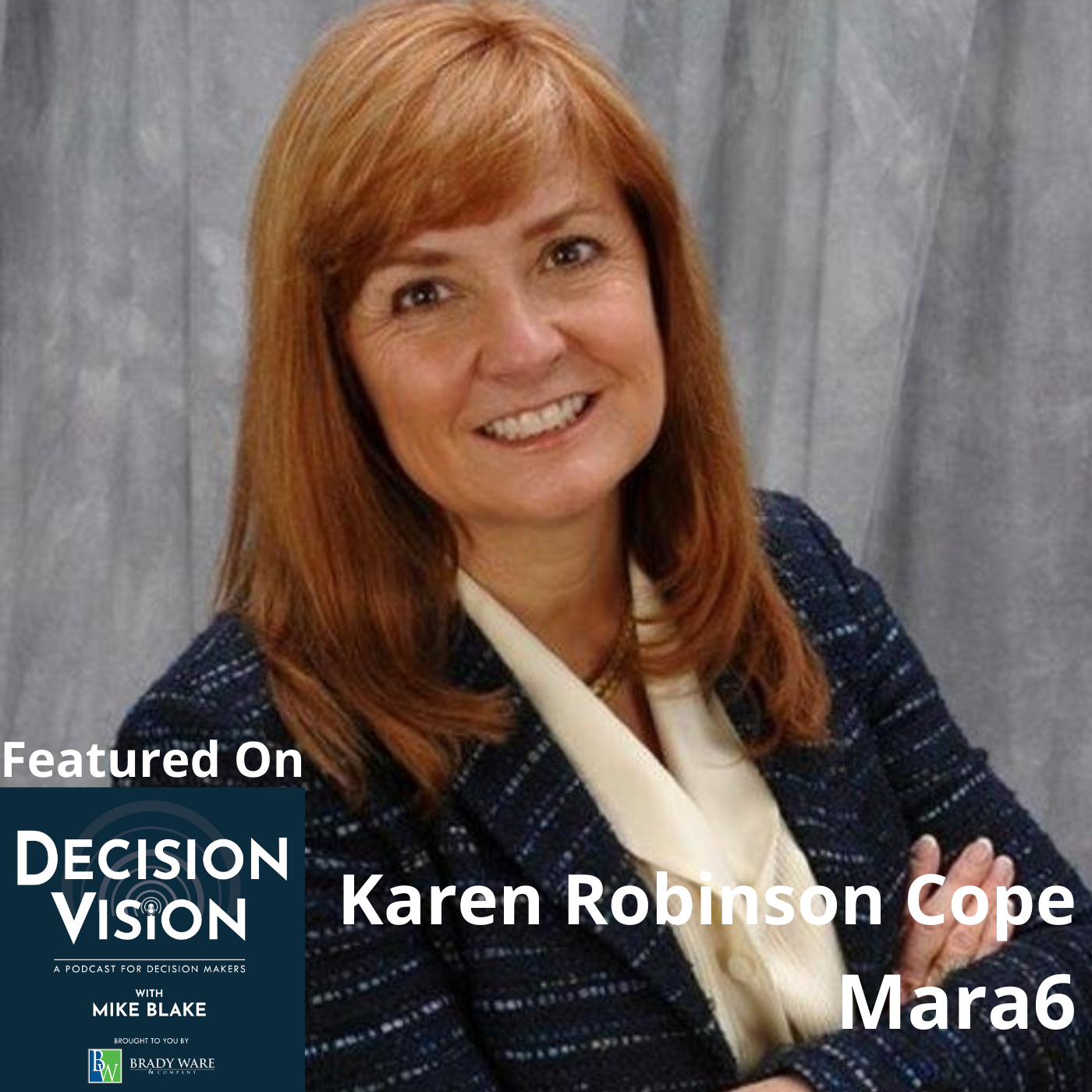
Karen Robinson Cope
Decision Vision
Decision Vision Episode 137:  Should I Form a Company Advisory Board? - An Interview with Karen Robinson Cope, Mara6
Loading
00:00 /
RSS Feed
Share
Link
Embed

Download file

Karen Robinson CopeDecision Vision Episode 137:  Should I Form a Company Advisory Board? – An Interview with Karen Robinson Cope, Mara6

What’s the function of an advisory board, and how does it differ from a board of directors? Should you have both, and why? Who should you have on your advisory board? In this conversation with Decision Vision host Mike Blake, Karen Robinson Cope, Managing Director of Mara6, answers these questions and much more. Decision Vision is presented by Brady Ware & Company.

Mara6

Mara6 is an advisory and consulting firm that helps young companies and entrepreneurs identify needs, develop scalable business models and drive innovation, strategy, and revenue.

LinkedIn

Karen Robinson Cope, Managing Director, Mara6

Karen Robinson Cope, Managing Director, Mara6

Karen Robinson Cope is a visionary and inspirational leader who takes ideas and disparate teams and builds great companies. As evidenced by her successes as a CEO of multiple early-stage, fast-growth companies, and numerous boards, she can identify a new market opportunity and then develop a clear strategy to quickly become a market leader. She is a decisive leader who is not afraid to take risks, appropriately utilizing strategic financing partners and developing sound financial metrics to keep new initiatives on track. She has been recognized numerous times over the last twenty years by multiple
organizations for her excellent leadership skills.

In a variety of industries and companies, Karen has joined an existing leadership team where she has developed the vision, rallied the existing team as well as recruited star performers, and executed a bold strategy that resulted in market leadership as well as strong financial performance.

She is exceptionally able to motivate marquis clients to embrace new companies or new business models because of her authenticity, servant leadership, and superior communications skills. In three prior companies where she was CEO or a board member, she was able to successfully build great companies generating tens of millions in revenue, drive new markets and industries and provide shareholder, employee, and customer value.

Karen holds a BS in Political Science and Economics from the University of Redlands. She serves on several Boards of Directors where she is helping to identify new opportunities, drive innovation, and expand businesses globally. In her spare time, she and her husband Rick, also a CEO, like to travel to out-of-the-way places, experience wild adventures, and mentor young entrepreneurs.

LinkedIn

Mike Blake, Brady Ware & Company

Mike Blake, Host of the “Decision Vision” podcast series

Michael Blake is the host of the Decision Vision podcast series and a Director of Brady Ware & Company. Mike specializes in the valuation of intellectual property-driven firms, such as software firms, aerospace firms, and professional services firms, most frequently in the capacity as a transaction advisor, helping clients obtain great outcomes from complex transaction opportunities. He is also a specialist in the appraisal of intellectual properties as stand-alone assets, such as software, trade secrets, and patents.

Mike has been a full-time business appraiser for 13 years with public accounting firms, boutique business appraisal firms, and an owner of his own firm. Prior to that, he spent 8 years in venture capital and investment banking, including transactions in the U.S., Israel, Russia, Ukraine, and Belarus.

LinkedIn | Facebook | Twitter | Instagram

Brady Ware & Company

Brady Ware & Company is a regional full-service accounting and advisory firm which helps businesses and entrepreneurs make visions a reality. Brady Ware services clients nationally from its offices in Alpharetta, GA; Columbus and Dayton, OH; and Richmond, IN. The firm is growth-minded, committed to the regions in which they operate, and most importantly, they make significant investments in their people and service offerings to meet the changing financial needs of those they are privileged to serve. The firm is dedicated to providing results that make a difference for its clients.

Decision Vision Podcast Series

Decision Vision is a podcast covering topics and issues facing small business owners and connecting them with solutions from leading experts. This series is presented by Brady Ware & Company. If you are a decision-maker for a small business, we’d love to hear from you. Contact us at decisionvision@bradyware.com and make sure to listen to every Thursday to the Decision Vision podcast.

Past episodes of Decision Vision can be found at decisionvisionpodcast.com. Decision Vision is produced and broadcast by the North Fulton studio of Business RadioX®.

Connect with Brady Ware & Company:

Website | LinkedIn | Facebook | Twitter | Instagram

TRANSCRIPT

Intro: [00:00:01] Welcome to Decision Vision, a podcast series focusing on critical business decisions. Brought to you by Brady Ware & Company. Brady Ware is a regional full-service accounting and advisory firm that helps businesses and entrepreneurs make visions a reality.

Mike Blake: [00:00:21] Welcome to Decision Vision, a podcast giving you, the listener, clear vision to make great decisions. In each episode, we discuss the process of decision making on a different topic from the business owners’ or executives’ perspective. We aren’t necessarily telling you what to do, but we can put you in a position to make an informed decision on your own and understand when you might need help along the way.

Mike Blake: [00:00:42] My name is Mike Blake, and I’m your host for today’s program. I am a director at Brady Ware & Company, a full-service accounting firm based in Dayton, Ohio, with offices in Dayton; Columbus, Ohio; Richmond, Indiana; and Alpharetta, Georgia. My practice specializes in providing fact-based strategic and risk management advice to clients that are buying, selling, or growing the value of companies and their intellectual property. Brady Ware is sponsoring this podcast, which is being recorded in Atlanta per social distancing protocols.

Mike Blake: [00:01:11] If you would like to engage with me on social media with my Chart of the Day and other content, I’m on LinkedIn as myself and @unblakeable on Facebook, Twitter, Clubhouse, and Instagram. If you like this podcast, please subscribe on your favorite podcast aggregator and please consider leaving a review of the podcast as well.

Mike Blake: [00:01:29] Our topic today is, Should I form a company advisory board? The Business Development Bank of Canada did a neat study a while ago showing the companies with advisory boards enjoy stronger growth than those without. And you can look that study up on the internet.

Mike Blake: [00:01:44] Interestingly enough, there’s actually not a lot of empirical study that’s been done on the impact of advisory boards, yet there’s a lot of interest in them as well. In addition, I’ve learned over the years that I’ve been doing this, whatever this is, that a lot of people have a misunderstanding of what it is that an advisory board does. But I think it’s something that’s on people’s minds.

Mike Blake: [00:02:15] I know of companies that have never considered advisory boards that are now exploring that question because the world simply, as we all know, has changed so much from what it was nearly two years ago now. That companies need an outside perspective or at least feel that they would benefit from outside perspective to understand how to survive and thrive in this new normal.

Mike Blake: [00:02:42] And so, joining us today is Karen Robinson Cope of Mara6. Mara6 is an advisory and consulting firm that helps young companies and entrepreneurs identify needs, develop scalable business models, and drive innovation strategy and revenue. She especially enjoys driving customer and shareholder value.

Mike Blake: [00:03:00] Karen Robinson Cope is a visionary and inspirational leader who takes ideas and disparate teams and builds great companies. As evidenced by her successes as a CEO of multiple early stage fast growth companies and numerous boards, she can identify a new market opportunity and then develop a clear strategy to quickly become a market leader. She is a decisive leader who is not afraid to take risks, appropriately utilizing strategic financing partners, and developing sound financial metrics to keep new initiatives on track. She’s been recognized numerous times over the last 20 years by multiple organizations for her excellent leadership skills.

Mike Blake: [00:03:38] In three prior companies where she was CEO or board member, Karen was able to successfully build great companies generating tens of millions of dollars in annual revenue, drive new markets and industries, and provide shareholder, employee, and customer value.

Mike Blake: [00:03:52] Karen holds a Bachelor of Science in Political Science and Economics from the University of Redlands. And she serves on several boards of directors where she is helping to identify new opportunities, drive innovation, and expand businesses globally. In her spare time, she and her husband, Rick, also a CEO, like to travel to out-of-the-way places, experience wild adventures, and mentor young entrepreneurs. Karen Robinson Cope, welcome to the Decision Vision podcast.

Karen Robinson Cope: [00:04:19] Mike, it’s so good to hear from you.

Mike Blake: [00:04:22] So, before we get started, I have to share with you something that I don’t think that I’ve ever told you, but I’ve told numerous other people, and you need to be let in on it. You actually taught me one of the best lessons I ever learned about valuation. And it was years ago when you and I were sitting on a panel together and somebody asked about valuation. I chimed in and I said something, I don’t know if was smart, dumb, or somewhere in between.

Mike Blake: [00:04:51] But you said something which I’ve never forgotten, and I don’t know if this is your original thought or not, but I attribute it to you happily. And that is that, “You can name any valuation that you want as long as I get to name the terms.” And someday I’m going to do a podcast on that topic exclusively and maybe try to cajole you back in. But I now use that all the time when I teach classes, advise clients, whatever the context, it comes up all the time, and I make sure to give you full attribution for that.

Mike Blake: [00:05:23] So, before I get started, I want to, on this public forum, to thank you for that bit of wisdom because it really has made me a better advisor and better practitioner.

Karen Robinson Cope: [00:05:32] Well, I appreciate your kind words. You know, as many years as I’ve been doing this, and you and I have been doing this together for many years, I’m more convinced than ever that terms are so critical. And I’ve had some great successes where the valuation made may have been really great but the terms were not and, vice versa, where the valuation was off the charts and yet the terms weren’t. And I can tell you that it’s all about the T, the terms, the terms, the terms. So, I’m glad you’ve been able to use that because I find it so valuable.

Mike Blake: [00:06:02] Well, it just comes up all the time. And I promise everybody in the audience, actually, we’ll cover the promised topic today. But in particular, as I see unicorns come to market, and one of the things you recognize and I suspect you sense this as well, not all unicorns are created alike. And some unicorns are legit unicorns and some unicorns got there because the founders felt like they wanted or needed that headline number, and they gave away the store in terms of terms so they could go to market with that headline number.

Karen Robinson Cope: [00:06:37] You are so correct. And, again, you see this more and more. Quite often, again, it’s very exciting – and, Mike, you and I, I think even met back then – when I was first raising money in my first company and our first valuation was a couple of hundred million and then it got to a billion dollars and we were so excited. And I got to tell you that the terms is what it’s all about. And I’ve seen it again and again. If you don’t fully understand what that cap table looks like in those contractual terms, you can be blown away when you’re thinking about a great exit. And by the time the founders are counting their pennies, it’s only pennies because they’ve given it all away through the term.

Karen Robinson Cope: [00:07:15] So, you’re exactly correct. It’s a great topic, and you and I should have that conversation again, definitely over drinks or on a podcast.

Mike Blake: [00:07:22] Maybe both. I mean, we’re not FCC regulated.

Karen Robinson Cope: [00:07:26] It sounds like a great idea.

Mike Blake: [00:07:29] All right. So, let’s dive into it because our audience is expecting us to cover advisory boards. And so, let’s start off as I do with most shows, provide us, please, with a definition of what an advisory board is and how is an advisory board different from other kinds of boards, such as a board of directors?

Karen Robinson Cope: [00:07:49] What a great question. I get asked this all the time. Let me start by saying, a board of directors, contrary to what you may have read or heard, it’s got a legal and a fiduciary responsibility. It literally is responsible for representing all of the shareholders interest. Compare that to a board of advisors, and a board of advisers has no legal, has no fiduciary. They’re really there to advise. And I think it’s important to recognize, if you’ve got investors that are expecting a return, that it’s important that you legally and from a fiduciary perspective, make sure that you have directors that are representing the interest of all your shareholders.

Karen Robinson Cope: [00:08:33] However, if you own the company 100 percent or it’s a tightly controlled company, then a board of advisers may be the appropriate direction for you. And this is another one, I think, Mike, you’ll enjoy this – I like to say that a board of advisors can help you opine. You ask the big questions. They talk about esoteric. They talk about the big picture. They talk about strategy. But when it comes right down to it, all they’re doing is giving advice. Compare that to a board of directors when they literally have a fiduciary and a legal responsibility to ensure that the shareholders interests are protected. So, they’re very different, and I would suggest, have a very different role.

Mike Blake: [00:09:16] So, I’d like to riff on this. I’m going to kind of tear up the script here a little earlier than I normally do, because I think that distinction you just made is really important. Because my observation – and please correct me if you think I’m wrong – is that, because of its nature, a board of directors in many ways is going to have an incentive structure that is fairly defensive in nature.

Mike Blake: [00:09:46] Whereas, a board of advisors might be able to encourage more risk, encourage more of an expansive offensive nature. Because there is no fiduciary responsibility, you can afford to dream a little bit bigger, if you will, and encourage more risk taking. Whereas, perhaps a board of directors, because of that fiduciary responsibility, and nobody ever gets sued for taking too much money, but you sure can be sued if you lose a lot. Is there that kind of dynamic there between the two? Is there that kind of different personality, if you will?

Karen Robinson Cope: [00:10:22] Absolutely. And we’ll talk a little bit later about the program that I actually developed is a nonprofit organization to help companies develop board of advisors. I think you said it so well. Think about of a board of advisors, it’s almost like spitballing. You can kind of sit around, brainstorm a little bit. Their job is – I literally mean this word – opine. To think about the big picture, think about what could, what couldn’t, why, why not. It’s not to ensure that you do it. It’s really to get you to thinking about, where the board of directors has a very defined legal set of responsibilities. And part of that is to make sure that you manage risk.

Mike Blake: [00:11:04] So, I think another distinction is kind of the relationship with the founder and the CEO, right? And I think we’re just kind of expanding upon that last part of the discussion, which is, an advisory board might be thought of as a resource, but a board of directors could very easily be simply defined as the boss of the CEO.

Karen Robinson Cope: [00:11:26] I think that is so well said and that is exactly correct. When you own your company 100 percent or it’s a tightly controlled company, you might want some advice, but bottom line you’re responsible for those decisions. Conversely, when you have a board of directors, the CEO reports to the board of directors. And they, therefore, in most cases or many cases, have the ability to actually fire the CEO, even if you’re one of the largest shareholders.

Karen Robinson Cope: [00:11:53] So, it’s a very different mentality. And you’re correct and I think you said it really well, Mike. One way is to kind of think big and one way is to think of all the things that could go wrong and let’s make sure we manage against them. Very different perspectives.

Mike Blake: [00:12:09] Yeah. And from my vintage, anyway, maybe the best example of a board firing a CEO is Apple’s board firing Steve Jobs.

Karen Robinson Cope: [00:12:19] A hundred percent correct.

Mike Blake: [00:12:20] Which he said – by the way, interestingly – he thought that was actually one of the best things that ever happened to him because it made him a much more mature leader when he came back.

Karen Robinson Cope: [00:12:29] Absolutely. Because, as you know, once you take on shareholders, it doesn’t really matter what you want. It matters what’s best for all the shareholders. And especially when you have multiple rounds of funding and in each subsequent round, as you said, we talked about earlier in the conversation, there’s different terms for each one of those. And you as a CEO, if you have outside investors, it’s incumbent upon the board to make sure that every one of those shareholder groups and shareholders is being treated fairly.

Karen Robinson Cope: [00:13:01] Whereas, if you own your own company, you can make decisions. And with a board of advisors, you can make decisions that are in your best interest that may not be in your employee’s best interests, it may not be in your customer’s best interests. But, again, if you don’t have outside investors and you don’t have that outside board, you have tremendous flexibility. And like Steve said, as a board of directors, I think that it really helped him to, again, not only be a more mature leader, but obviously helped him to, unbelievable, what has happened to Apple over the last 20 plus years. An amazing story. And part of it, I think, was because Steve came back as a much more thoughtful leader.

Mike Blake: [00:13:46] Yeah. And he realized that he had friction and he realized that Apple is no longer sort of his personal playground. And that does force you to think in a different way. And, frankly, that’s what a board of directors is supposed to do, too.

Karen Robinson Cope: [00:13:59] Absolutely correct. Whereas, the board of advisors, again, I don’t want to say it encourages the CEO in their worst proclivities, but I think providing advice allows you to really think outside the box and do some what ifs.

Mike Blake: [00:14:14] So, since we’ve identified now that a board of directors and a board of advisors serve two different purposes and really have two different personalities and responsibilities, is it out of the question that a company might have both?

Karen Robinson Cope: [00:14:29] Absolutely. And I think that’s a great question. Again, part of it is the legal and the fiduciary responsibilities. Part of it is – and I think you said it’s so well, your question a few moments ago – about risk management. But also think of it as almost like the advisory board is there, as you think about your dreams, how might you be able to do that. Which is, again, a board of directors would take that same topic and say, “Okay. What could go wrong? How do we mitigate against that? How does this improve overall shareholder value?”

Karen Robinson Cope: [00:15:05] The board of advisors almost gives the CEO or the executive team a chance to almost role play or do a trial pitch, if you will, and think about what might happen. Remember, when an executive team or CEO is presenting to the board, they’re literally being evaluated, potentially for compensation, potentially for other opportunities. Whereas, an advisory board is really there to help you dream about that, help you think about it, and bring in that necessary expertise that you might not have in your executive team.

Mike Blake: [00:15:40] So, let’s drill a little bit down to this, because I think in some cases it may seem strange that a CEO, founder, and executive team that maybe one of the reasons they founded the company in the first place was not to have to be answerable to anybody, would suddenly choose to give up, if not their independence, but at least sort of share the wheel, if you will, a little bit or share the sandbox with somebody else. So, what are the benefits that you typically see that advisory boards offer that are attractive to companies?

Karen Robinson Cope: [00:16:16] Great question. Again, you and I have both been entrepreneurs and both CEOs and so forth. When you think about it, you’re running so hard, you’re so involved in the business, you’re thinking about, How do I sell? How do I collect? How do I build? How do I deliver? How do I manage my supply chain? You’re so focused on so many things, especially early on in the company’s lifecycle.

Karen Robinson Cope: [00:16:43] Typically, what a board of advisers can do is they’ll literally step outside. You almost think you have your own little bubble as you’re the CEO, and you’re the executive team, and you’re running 24 hours, or 28 hours a day nonstop. And I like to say you focus on the urgent, because that’s what you have to do. You have to worry about how am I getting my customer to pay so I can pay my employees? And that’s an urgent issue. Long term, is that an important issue? Probably shouldn’t be. And so, I like to say that an advisory board can help you think about the important, not just the urgent. Does that make sense?

Mike Blake: [00:17:18] Yeah. It does. And it’s something I’ve mentioned on other podcast before, there’s a third dimension to that now – at least that I’ve heard of that I learned through a TED talk a while ago – which is impact. And I think one of the things that a board can do also is help guide an entrepreneur or a team to ensure that whatever time or investment they’re making in X, that X is also not only addressing something important, but also impactful.

Karen Robinson Cope: [00:17:50] Absolutely. Great comment.

Mike Blake: [00:17:51] It has not just a long term outlook, but long term and sort of fundamental implications.

Karen Robinson Cope: [00:18:00] Absolutely. Great. And that’s a great comment. The other thing – and, again, we think about entrepreneurs as young. And you and I both know that’s not the case. Entrepreneurs can be any age – quite often, especially in an early stage company, they can’t afford to get the best. Potentially, they can’t afford to get the best talent out there. If you’re in a software company, you might be able to get some good software, but you may not be able to get the best person in cybersecurity or the best person at e-commerce.

Karen Robinson Cope: [00:18:32] And quite often what an advisory board member can do is bring in that really kernel of information or expertise that you need that you couldn’t afford to get. And what you’ll find, especially in a city like Atlanta – and you and I’ve talked about this before, Mike – successful people really do want to give back. They really do want to help this next generation. They really do want to help entrepreneurs succeed. And I think you’ll be very surprised to see so many successful entrepreneurs or corporate executives that are more than happy to give back, especially in an advisory board role, because they don’t have the legal and the fiduciary responsibilities and the headaches that come with being a board of director.

Mike Blake: [00:19:16] I mean, I think this will be the case, somebody who is going to be listening to this in a couple of weeks when we publish it is sort of taking inventory about maybe themselves, or company, their team. What are some signs that a company might benefit from an advisory board? What are some triggers that might get a wise founder to start thinking in that direction?

Karen Robinson Cope: [00:19:42] Great question. So, I think the first one is you’re kind of stuck and you’re trying to figure out what to do next. And, again, one of the things that I will say, and, again, I look at it from both being an advisor as well as a board of directors, but being an adviser, but also coaching companies on this, you’ve got to be a CEO who’s willing to listen and learn.

Karen Robinson Cope: [00:20:06] If you’re in a position where you think you know all the answers, if you’re in a position that you don’t think you need any help and you’re just adding a board of advisors to check off a box, wrong answer. For you to get a really good board of advisors, you need to be coachable and you need a position where you say, “Here’s what I need. You know, I’m kind of stuck here. What do I need to do to go to the next level?”

Karen Robinson Cope: [00:20:28] The second thing, I think, is when you’re thinking about going into a new market or kind of changing direction, again, if you’ve got both an advisory board and a board of directors, it’s almost like the advisory board is an opportunity to kind of brainstorm – I call it spitballing – to think about what could happen, and kind of think through the ramifications, and help you to solidify your plan before you actually present it to your employees, your shareholders, et cetera, your board of directors.

Karen Robinson Cope: [00:20:57] I think the third thing would be, if there’s some regulatory – and in this world that we live in, there’s so many new regulations coming on, on a regular basis. It’s hard to keep up with them – if you want to understand – again, I’m not talking about replacing your counsel. That is not what we’re talking about. This is not expensive advice that you’re trying to get free. It’s really about that word I use, opine.

Karen Robinson Cope: [00:21:21] A very dear friend of mine is the CEO of a very large real estate firm. And she and I were together just a couple of years ago and we were kind of brainstorming about the impact that regulatory could have on her. And, again, her lawyer gave her all the issues. Her lawyer told her, here’s the legal issues that are coming, here’s the regulatory issues, here’s what the law and the regulations says. Our job was to brainstorm about it and say, “Well, what could that mean? What might that mean for agents? What might that mean for contracts? So, does that make sense as a kind of a different approach than your paid advisers will give you?”

Mike Blake: [00:22:04] And, you know, that actually segues nicely into the next question, which is that – in fact, I think this is true because I think I’ve observed it – some founders struggle with the distinction between an advisory board and paid advisers, and what you can expect of one versus the other. And I wonder if you see that too. And if so, can you help the listeners understand where is the distinction? Where do you draw the line where you might be either asking too little or asking something that your professional advisers maybe ought to defer to the advisory board and vice versa?

Karen Robinson Cope: [00:22:50] Great question. And I know I’ve said this word now twice, and I promise I won’t say it again, Mike. And my friend, Fran Dramis is the one that told me about this word opine. I just think that really goes right to the heart of what it is an advisory board. Their job, again, is to opine and think about the what ifs. I like to say that a good advisory board is probably going to ask you more questions than give you answers.

Karen Robinson Cope: [00:23:20] Again, like my girl friend, we were sitting down and talking about the impact of regulations on real estate. And, again, her lawyer gave her all the specifics. What we did is she and I said, “Well, what if this happened? Okay? What would happen if this happened?” Whereas, a paid adviser’s job is really to get it, roll up their sleeves, and help you get the job done. Again, typically, because there’s a financial transaction that’s occurred, there’s probably more of a tactical or an implementation. Not always, because clearly you can hire a strategic advisory company. But, again, I think the difference is more of thought provoking questioning and an advisor is more of an answering. Does that make sense?

Mike Blake: [00:24:10] Yes, it does. So, what are some things that might be unreasonable to expect of an advisory board? What might be trying to ask too much of them or taking it too far?

Karen Robinson Cope: [00:24:23] Great question. And a lot of that goes back to kind of the agreed upon terms, if you will, the compensation. There’s a lot that goes into it. And if I could just digress for a minute. One of the things that’s so important if you’re thinking about advisory board is – two things. The first one is, Why do you want that? And I like to say, write it down. And the reason I say write it down is because it forces you to be very specific.

Karen Robinson Cope: [00:24:51] So, an example would be, “I need an advisory board because there’s so much going on with sustainability. I need to better understand how that impacts my business. Therefore, I want to bring in some experts from both ESG. I want to bring in some experts on these various things to help me better understand that.” Go ahead.

Mike Blake: [00:25:13] So, you know, I’m curious if you’ve seen the same thing. I think some entrepreneurs, or managers, executives have been disappointed in the past with some of their experiences with advisory board simply because, I think, they are hoping an advisory board could fill a gap left by a fundamental weakness or hole in the company’s management or in their professional advisers, for that matter. And, consequently, they’re asking people to fill a role where they might hire and fire them. But that’s not the role for an advisory board to fill, is it?

Karen Robinson Cope: [00:26:02] And that’s exactly the point, I think, for a couple of reasons. Number one, again, it’s unrealistic. And to be frank, it’s disrespectful to go to someone like you. If I were to go to you and say, “Mike, I really want you to be on my advisory board.” And the first thing I do is say, “Mike, can you do a full blown evaluation for me?” It’s disrespectful. It’s kind of like when you have a party and your neighbor comes over and they’re a dentist and you say, “Hey, what do I need to do with my teeth?” It’s disrespectful.

Karen Robinson Cope: [00:26:32] I think that part of it is defining exactly what you’re looking for, but recognizing that the adviser’s role is really to advise. And, again, I’m going to keep going back to this point, ask questions. The advisor’s role is to say, “Have you thought about X? Have you thought about Y?” Not, “Here is the answer to X or here’s the answer to Y.” If you want the answer to that and you want someone to go through – I don’t want to say the heavy lifting – and roll up your sleeves, you need to hire someone for that role.

Karen Robinson Cope: [00:27:09] And, again, I’m sure you go to parties and people say, “So, Mike, what do you think my company is worth?” And it’s fun over a cocktail to maybe spitball. But if they say, “No. No. Give me specifically what it’s worth,” that’s disrespectful.

Karen Robinson Cope: [00:27:23] And whether you’re an advisor or someone to want that from you, they need to be prepared to pay you for that service. And so, to me, part of it is understanding exactly why you want the advisory board, recognizing that these are probably people. In many cases, your advisors are people you probably couldn’t pay to get on your board. In many cases, when I try to match advisors with companies, they are people, typically the CEO, even if they ever knew them, would never be able to get them on their board.

Karen Robinson Cope: [00:27:55] And part of it’s because we have a very specific definition of – what I call – the rules of engagement. And again, to the extent you can define those upfront, agree on those up front, and even go so far to say, “Hey, Mike. I really want you on my advisory board because you’ve seen a lot about how the financial markets react to X, Y, Z. I’m thinking about next steps and I’d love to have your guidance as we kind of think through the questions I should be asking.” To me, that’s a perfect role for an advisory board, which is very different from, “Hey, Mike. I really need you to tell me exactly what my company is worth and what are the three things I need to do to make it more valuable?” Is that distinction kind of clear?

Mike Blake: [00:28:41] Well, it does. I’m also amused at the the image of somebody asking me for advice and what their company might be worth, as I’m literally holding a martini with three olives in my hand. If you really want to make a $20 million decision with me in that state and you’re not even paying me, I don’t know that you really want to go in that direction.

Karen Robinson Cope: [00:29:07] That’s a great comment. I hear you.

Mike Blake: [00:29:09] So, let me ask this, 44would it be crazy for a company to even have multiple advisory boards if, maybe, boards that have a specific discipline in which they’re experts and you may just need separate resources?

Karen Robinson Cope: [00:29:28] It’s a great question. I don’t know if I have got a very good answer. Let me give you my initial thought of that. On the surface, I say absolutely. Because you see this quite often with health care companies, they might want a technical board, which again helps them with, really, the technical – again, I’m going to go back to questions. It’s very different than like a customer advisory board. Many people have successfully brought in their customers. It’s a chance to hear firsthand what customers think about not so much current product, but about the future product roadmap.

Karen Robinson Cope: [00:30:05] And it’s very possible that you could have multiple advisory boards. The thing that I would caution a CEO, especially a younger – and I don’t mean younger in age – but younger in tenure of the company to pull together is to really make an advisory board work, you’ve got to be prepared to spend some time on it. And let me tell you what I mean by that, and I’m not sure you could do that if you have multiple advisory boards. Does that make sense?

Mike Blake: [00:30:32] It does. And let’s go into that because I didn’t want to ask that question. What are the best practices to maximize the value out of the advisory board?

Karen Robinson Cope: [00:30:42] I think that’s probably one of the most important questions, if not the most. The first thing is, again, clearly define what you’re looking for, and that includes wanting to solve these couple of issues. And I usually think it’s the big issues that you don’t have time to solve on a day-to-day basis of the company. Figure out the term, how long?

Karen Robinson Cope: [00:31:03] I’m going to try to get together once a quarter – I’m not going to try. We’re going to have a meeting once a quarter. Here’s the meeting. Let’s go ahead and get the calendar set up at the first meeting. It’s going to last for two years or your term is for two years. What I’m looking for you, Mike, to bring to the table is I want you to bring X, Y, Z to the table in terms of your thought process. That’s what I’m looking for you to bring. Which, by the way, I’m asking Karen to bring a different set of expertise, if you will.

Karen Robinson Cope: [00:31:32] Then, when you put that together, the most important thing is to make sure that you use the time diligently. That involves two things. The first thing it involve is get information to the company directors or the advisers in advance. This nonprofit that I’ve started, we put together a binder which, basically, you have to provide some financial information, some customer information. There’s a set of legal questions. Basically, you put together your planning, if you will. You get that to your advisors in advance and then you say, “These are the things I want to cover. I want to cover these two questions.”

Karen Robinson Cope: [00:32:14] Typically what I like to say is, the things that keep the CEO up late at night especially in your first meeting. What are the things CEO that you really have a hard time sleeping because you were thinking about that? Get that meeting, get the board presentation put together in advance, and run it as if it’s truly a board of directors meeting. And by that, I mean you make sure that you start at a certain time, there’s a formality to it, and then you follow up with action items.

Karen Robinson Cope: [00:32:46] And so, that’s important for two reasons. The first reason is, it helps the CEO and the management team learn how to work with the board. Quite often, I use advisory boards as almost an intro before they get a fiduciary board. We teach the discipline, the cadence of that. Again, especially if you own the company or its closely held, it teaches you some accountability. Because even though the board can’t fire you – I don’t know about you, Mike – but when I’ve been in advisory board meetings and somebody asked me a question and I have a bad answer, I feel accountable. So, I think the board of advisors, if you can run it in that way, it teaches tremendous accountability.

Karen Robinson Cope: [00:33:30] And then, I think the other thing is, even when your board advisors have left the board and moving on to other things, keep them abreast of what they’ve done and how they’ve helped you. I so appreciate you starting this call today saying, “You know, Karen, something you told me years ago has really stuck with me.” I can’t tell you how good that makes me feel. And you’ll find that your advisors – again, people that you didn’t think you could ever get as an advisor – you can get them and keep them if you are diligent about keeping in track with them. Don’t just call them when you need them. Have that formalized meeting schedule. Follow up with meetings.

Karen Robinson Cope: [00:34:13] And even after they’ve gone onto other things, say, “Hey, one of my favorite ones is I was able to get the CIO of the Southern Company, again, a very high position, into a company that was literally $20 million in revenue. This person would have never joined that. To this day, they still speak positively about it because, to this day, the CEO continued to give them updates.”

Karen Robinson Cope: [00:34:36] So, that’s kind of, I think, the right way to structure advisory board. It’s the right way to get the most value from it. And it’s the right way truly – and back to the Steve Jobs comment – it really helps that CEO in the executive team grow, and grow into their next level, it helps them grow to be a better executive. And then, hopefully, at some point they’ll be in a position to give that expertise back to a younger, if you will, CEO or executive team.

Mike Blake: [00:35:06] So, there’s so much to unpack there, and there are two things I do want to unpack. One, the thing you just mentioned, which I hadn’t really thought of, but it makes all the sense in the world now that you articulate it. And that is that there’s a long tail element to an advisory board if done right, particularly if the company is successful. If it’s not, it’s not so great. But there is this unique opportunity to develop relationships that could theoretically help you for the life of your company, even over the life of your career.

Karen Robinson Cope: [00:35:42] So well said. And I love the word long tail, that is so correct. And I’ve seen it again and again when you watch these relationships that form. And quite often, if you’re one of the companies that got a huge amount of money at a ridiculous valuation, you may not have the challenges to get that A-plus team. And you and I might know, most entrepreneurs don’t end up with that $100 million out of the gate cash infusion. And so, for them to be able to get great talent, sometimes the best way to get it is an advisory board.

Karen Robinson Cope: [00:36:15] And if you go in there and say, “Mike, this is what I need. I would be honored if you would consider to be on my advisory board. I’m only going to ask you to sit in on four meetings a year. I’m going to bring in two or three other great people. And here’s who I’m thinking about bringing in, Mike. I know you like those people. And oh, by the way, I’m only going to ask 25 hours or 30 hours of your time per year because each board meeting is going to be four hours. I’m going to give you four hours to prepare for it.” Wow. Who’s going to say no to that?

Mike Blake: [00:36:44] And that leads into the other part of this that I wanted to unpack, because you said one thing which I’m going to take slight issue with and I think you’re going to agree with it the way I frame it. I actually think an advisory board can fire a CEO because you can just decide, “Look, this person doesn’t have their stuff together. And I’m not making an impact. And I’m going to put my time someplace else.”

Mike Blake: [00:37:09] And I don’t know about you, but there have been a couple of boards that have agreed to be on that I wound up regretting because the founder simply didn’t use us very well. They didn’t give us information in advance. Or the things they said they were going to do between meeting one and meeting two never seem to get done. And, again, if that’s happening and why are we doing this, right? And so, I do think there is a need for a founder or a CEO to be mindful that that advisory board, even if you’re compensating them, they’re not making so much money on that board that they’re going to stick around just for the money.

Karen Robinson Cope: [00:37:53] Exactly. Correct.

Mike Blake: [00:37:55] They are going to walk away if you don’t sort of have your stuff together and take that seriously.

Karen Robinson Cope: [00:38:00] You’re right. I absolutely agree with you on that one. And, again, especially in a city like Atlanta, which I think is just very friendly, the folks that have been there, done that. I find so many cases are willing to give back. But they’re only willing to give back if, as you said, they’re respected, their time is respected, and the CEO is truly learning and becoming a better CEO because of the advisory board.

Mike Blake: [00:38:31] And I think that takes a certain kind of mindset. You know, in my experience, I’ve walked into a couple of boards where, to me, it became clear the CEO is looking more for validation than they were for guidance. And some people maybe want to do that, that is not my bailiwick to just provide validation for no reason whatsoever for just gratuitous validation. I don’t think you’re really about that either.

Karen Robinson Cope: [00:39:00] No, I’m not.

Mike Blake: [00:39:01] I know you can dish out the tough love.

Karen Robinson Cope: [00:39:04] You could just put some cool thing on social media and get millions of likes, and that’s the validation you need, 100 percent agree. If you really want to use an advisory board, you’ve got to use them, and you’ve got to respect them. And, again, part of what I think is so good about starting with an advisory board is it really teaches you the process.

Karen Robinson Cope: [00:39:25] So, it’s the process of thinking about spending some amount of time. Because if you know you’re going to have your advisory board meeting next Tuesday, then you’re thinking, “Okay. What are the big issues?” It causes you to get outside of the urgent. It causes you to think about the important. It causes you to get prepared. And being prepared for somebody else means you’re prepared for yourself.

Karen Robinson Cope: [00:39:48] So, when I think about all the positives, again, I am surprised people don’t use, I’m surprised every company doesn’t use advisory board. Because if you really want to get better and you’re coachable, to me, it makes all the sense in the world.

Mike Blake: [00:40:02] And you think about it, there’s some business models out there or some companies pay quite handsomely to have a board of some kind. For example, these peer advisory boards – and I’m not saying anything against them, by the way. I think in certain cases, they had quite a bit of value. But there are companies that pay $100,000 a year to have a peer advisory board. But in some cases, I wonder if they need to actually do that. If they were a little bit more diligent about their networking or simply willing to make the ask they might be able to have a very competent board advise them for a lot less than they’re paying.

Karen Robinson Cope: [00:40:40] That’s a great comment. And, again, I think there’s a great role and a great application for peer advisory. You and I are both visual people, so you’ll get this. I think a peer advisory board is a bunch of little baby sparrows in the nest and the moms trying to feed them all. And they’re all saying, “Feed me. Feed me.” Because everybody wants attention. And it’s difficult. Again, it’s very valuable because you and I are both CEOs, we’re struggling, there’s camaraderie. And for that, I think it’s a brilliant idea.

Karen Robinson Cope: [00:41:17] But I think I will go on record to say, a peer advisory group, in my estimation, if you’re trying to really grow as a CEO with an external board, it’s best for the board to be focused on you as opposed to you and all your 10 or 11 or 15 other baby birds that are trying to be set at the same time. It’s not in any way suggesting that CEOs are that way, but you can get the picture of everybody saying, “Feed me. Feed me.” Whereas, if you’ve got your own advisory board, they’re all about, “How can I feed Mike? What can I do to make sure Mike’s healthy?”

Mike Blake: [00:41:55] I like the sound of that. So, I think we made a pretty compelling case for the value of an advisory board. And some of our listeners now are thinking, “Well, how do I start to put this together?” In your mind, what’s a good process for starting to recruit and assemble this advisory board?

Karen Robinson Cope: [00:42:21] Great. So, I think first off, the first thing I would do is, again, in your quiet time, in you’re quiet space, what exactly am I trying to accomplish? And you need to get real with yourself, because if you’re fortunate enough to be able to pull together an advisory board that really is top notch executives, people that you really admire, very quickly you’re going to get tired if all it is, is about reaffirm how smart I am or reaffirm how cool I am because I got Mike Blake to join my board. That’s not what is it.

Karen Robinson Cope: [00:42:51] Think about, really, what you’re trying to accomplish. Make sure you’re prepared to commit the time. Again, I can give you example after example of companies that I’ve watched that bring on advisory board and I’ve watched just the growth, the progress, and even the CEO themselves. But make sure that you really know what you’re trying to accomplish. Make sure you’re prepared to spend the time for it. And then, based on that, say, “Okay. What then are the skillsets I’m looking for?”

Karen Robinson Cope: [00:43:25] And, again, when I’m being asked to be an adviser, when someone comes to me and says, “Hey, Karen. I need you to be an adviser because I know that you’re pretty open about talking about your failure as a CEO and what you would have done differently. I want to learn from that.” That’s very different example than somebody says, “Hey, Karen. I’ve read about you in the press. I want you to be in my advisory board.” You see, it’s very different.

Karen Robinson Cope: [00:43:51] So, when I can come to you and say, “Mike, I would ask you to consider being on my advisory board. I’m trying to accomplish this. I’m looking for X amount of hours per year. And, by the way, the reason I want you, Mike, specifically is because of the experience you’ve had with X, Y or Z.” That’s, to me, a compelling argument. Then, you need to think about, “Okay. How do I compensate them?”

Karen Robinson Cope: [00:44:20] Now, everybody thinks if I’m going to get, you know, a C-Suite executive or successful entrepreneur, I’ll have to pay them a lot of money. But as you said yourself very well, Mike, they don’t need your money. You cannot pay a person enough, someone of that caliber, to make it worth their while. Most times people will give to the advisory boards will be available to be an advisor is because they really want to see the CEO or the company succeed. Maybe they believe in the mission. Maybe they just believe that I want to hang around with other really cool people like Mike, because it’d be fun for Mike and I did together to strategize about this company.

Karen Robinson Cope: [00:45:05] So, once you’ve got those and you’ve identified who you want, the skills you’re looking for, what you’re trying to accomplish, then, I think, absolutely either through a third party or reach out to that person and say, “Hey, I’d really love for you to consider to be an advisor. Here’s why? How much money?” Typically, early stage companies, you’re going to pay some equity. And, again, I’m not a lawyer, so I don’t want to go down the the legal issues. But, typically, there’s some warrants or some options that are based on some sort of timing or performance.

Karen Robinson Cope: [00:45:42] Sometimes it’s cash, and quite often what I’ll do is say, “Hey, give some money to a certain charity,” and that makes everybody feel good. Sometimes it’s just going to and having a board meeting at a really cool place. And, you know, whether it’s a round of golf, or a sailing adventure, or fishing for the day, whatever it might be, quite often a board member will agree to be an advisor just for that fun experience.

Karen Robinson Cope: [00:46:16] But, again, the most important thing, I think, is being very clear with yourself, your executive team, and the board member of the expectations on both sides. And that, of course, includes compensation.

Mike Blake: [00:46:32] Is there an optimum size in your mind for how many members a board might have?

Karen Robinson Cope: [00:46:37] That’s a great question. I think it should be an odd number.

Mike Blake: [00:46:43] I agree.

Karen Robinson Cope: [00:46:43] And it can’t be no more than, probably, seven at the most. If you’re an early stage company, probably, no more than three. And I think part of that is, again, your purpose in doing this is just to get some vigorous discussion going, some debate going, some strategizing. And I think when it’s too big, especially when you’ve got some high profile people, they kind of want their voice to be heard. And I’m not sure that if you had chief sales officers or CIOs or even established executives that they’re going to want to be in a meeting where there’s six other people that are chirping for their comment. So, I think for a couple of reasons, it’s easier to manage, probably, three to five is what I think is probably the best.

Mike Blake: [00:47:31] And how often do most advisory boards meet in your experience?

Karen Robinson Cope: [00:47:37] Well, I think once a quarter. I’ve heard people say once a month. But, again, at some point, it feels like I’m trying to get your expertise free. If I have a meeting every single month, then part of me feels like, “Wait a second, you know, if you want to pay me to do consulting for you, I’m happy to do that.” That’s why I feel once a quarter feels right. I’ve heard some people do it once every six months. But I think once a quarter just feels right to me. Again, a three to four hour meeting with either a dinner or a lunch, maybe an afternoon of golf, or whatever, just feels right. And most executives say, “You know what? I’m prepared to commit that amount of time to a young entrepreneur that I believe in.”

Mike Blake: [00:48:25] I’m talking with Karen Robinson Cope. And the topic is, Should I form a company advisory board? Just a couple more questions before we let you go and help some other companies I know that you’re advising. But one question I have is, let’s say, somebody out there – in fact, it’s a certainty. Somebody in our audience is listening right now and maybe they have an advisory board, but they don’t feel like it’s working that well. It’s not clicking. They’d like to have one, but for whatever reason, they’re just not getting the value out of it. What questions would you ask that person to diagnose kind of what may or may not be wrong or dysfunctional with that advisory board?

Karen Robinson Cope: [00:49:10] Great question. And, boy, let me think about that. I think one thing is, if the CEO or the executive team is not seeing the results, then my guess is you probably have some frustrated board members as well. And so, I think that’s a good sign. I would go back to, again, hopefully it’s been written down what the goal of the advisory board is. And I would go back and say, “Let’s talk about this.” Why or why not? Is it the wrong goal? Is it the wrong people? Is it the wrong subtopics we’re talking about?

Karen Robinson Cope: [00:49:48] I think going back to the preparation, again, if, in fact, you’re running your advisory board meeting just as if you would a true fiduciary board, at the preparation for the meeting, you’re going to have notes at the meeting, they’re going to follow up. And if the follow up is not occurring, then, again, you need to say why or why not? So, I think those are a couple of things.

Karen Robinson Cope: [00:50:12] It’s funny – if I could just take just a moment to digress, Mike -I started something called Council of Board Advisors, which is, again, a 501(c)(3). I was a judge for the Ernst and Young Entrepreneur of the Year for a number of years, and I was surprised because part of the process – and this is, again, the gold standard for entrepreneurial business companies and so forth success. And one of the first ones – every year, literally, get to sit down and talk to the management team. And I was surprised again and again when I’d see these great companies that look so good on paper. But then, you start to drill down and you realize, “Wow. There’s really some cracks underneath this veneer,” if you will.

Karen Robinson Cope: [00:51:00] And let me give you an example. One company I remember in particular, they were an entrepreneur, they were a finalist, and we were talking to them. And then, afterwards they said, “Karen, can you help me? I’m having some cash flow problems. I think I just need a short term note. A short term loan would fix this.” Again, not telling them anything, just asking them questions, it was clear. It was not a cash flow issue. They had a strategy issue. They had no customer diversification. I mean, their products became obsolete quickly. So, there was just a number of strategy issues.

Karen Robinson Cope: [00:51:33] But this great company on the surface had thought they had a cash flow problem. That got me thinking and I said, “Boy, I don’t even know anything about this industry. But I was able to help this company just asking some questions.” So, I started something called Council of Board Advisors.

Karen Robinson Cope: [00:51:48] At the same time, I had a group of my executive friends who, once they sold their company or retired with their big pension, they would go to Florida, because Florida has no taxes and Florida has great weather. And I said, “We need to somehow figure out a way to keep these executives engaged.” They didn’t want to give full time. They did not want to be in a startup company. They didn’t want to be hit up for money all the time. The CEO said, “Boy, I’d like to get some help, but I don’t know what to do.”

Karen Robinson Cope: [00:52:17] So, I put this process together where we get great companies that are coachable, typically 5 million to 150 million, which is a pretty big range. But they were coachable CEOs, profitable companies that were kind of at a stalemate. And I’d match them, talking to them and say, “Hey, what are the things that keep you up at night?” And then, find advisors for them that really fit their needs.

Karen Robinson Cope: [00:52:40] And, again, we were able to get one of my favorite advisors, which is one of a well-known executive here in town, who was the president of one of the fastest growing companies in America. He had sold a company. He was tired of playing golf. And he said, “I don’t want to get involved, so I’m doing the business, but I’d sure like to get in and opine.” And it’s just been a great experience. We’ve probably helped – I don’t want to guess how many companies. But that’s what got me so excited about this whole advisory board because it is coming into view. It is becoming more important. And I think people are realizing the real need for it.

Mike Blake: [00:53:14] Karen, I was going to give you an opportunity to mention your nonprofit, so I’m glad you did that. Because it’s important that people know there’s resources out there and what you’re doing. We could have easily had another hour in this conversation, but, unfortunately, our time is running out. There are probably questions we either didn’t cover or might have covered in more depth for somebody. If somebody is listening and has as a question they like to ask you to follow up, can they do so? And if so, what’s the best way for them to contact you?

Karen Robinson Cope: [00:53:43] Well, thank you. Again, I appreciate it. And I always love to talk with you. And I just kind of hit myself because we’ve let too much time pass. But I’d be delighted to help in any way. There’s a number of some good organizations. I actually put my nonprofit under TiE, The IndUS Entrepreneur, which is a great worldwide entrepreneur organization. And we’ve got a very successful program where we work with these great companies.

Karen Robinson Cope: [00:54:12] If someone wants to call me, I’m more than happy. krobinson, K-R-O-B-I-N-S-O-N, @mara6. By the way, Mara after the Maasai Mara, and our daughter’s middle name, Alexandra Mara Cope. So, it’s krobinson@mara, M-A-R-A, the number 6.com. And I’m more than happy to opine, give some free advice. And, again, anything I can do to help because I really do believe that the Atlanta community is becoming so fulsome and so exciting. But we clearly need to make sure that we can give guidance to these entrepreneurs and these companies as they go to the next level.

Mike Blake: [00:54:53] Yeah. We need to send the elevator back down. But I think the good news is – at least as long as I’ve been here about 20 years or so – I think Atlanta’s been a town that does that. And, hopefully, for our listeners that are in other areas of the country or the world, really, that can find communities like that as well.

Karen Robinson Cope: [00:55:11] Absolutely.

Mike Blake: [00:55:12] That’s going to wrap it up for today’s program. I’d like to thank Karen Robinson Cope so much for sharing her expertise with us today.

Mike Blake: [00:55:18] We’ll be exploring a new topic each week, so please tune in so that when you’re faced with your next business decision, you have clear vision when making it. If you enjoy these podcasts, please consider leaving a review with your favorite podcast aggregator. It helps people find us that we can help them. If you’d like to engage with me on social media with my Chart of the Day and other content, I’m on LinkedIn as myself and @unblakeable on Facebook, Twitter, Clubhouse, and Instagram. Once again, this is Mike Blake. Our sponsor is Brady Ware & Company. And this has been the Decision Vision podcast.
 

Tagged With: Advisory Board, board of directors, Brady Ware & Company, Decision Vision podcast, Karen Robinson Cope, Mara6, Mike Blake

Decision Vision Episode 136: Should I Hire a Finder to Raise Capital? – An Interview with Karen Rands, Kugarand Capital Holdings, LLC

September 30, 2021 by John Ray

Kugarand Capital Holdings
Decision Vision
Decision Vision Episode 136: Should I Hire a Finder to Raise Capital? - An Interview with Karen Rands, Kugarand Capital Holdings, LLC
Loading
00:00 /
RSS Feed
Share
Link
Embed

Download file

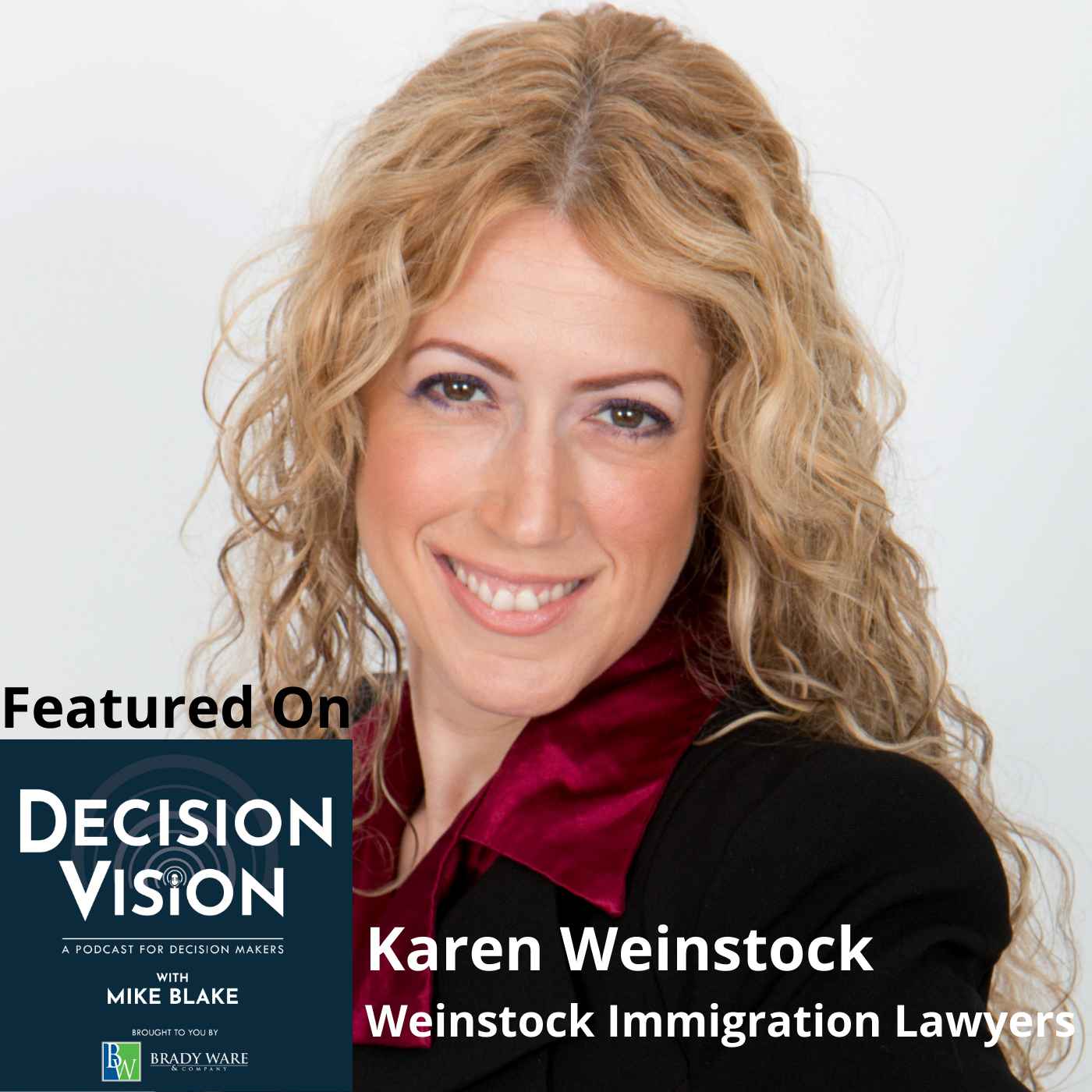
Karen Rands

Decision Vision Episode 136:  Should I Hire a Finder to Raise Capital? – An Interview with Karen Rands, Kugarand Capital Holdings, LLC

The task of raising capital for a startup is challenging at best, and outsourcing to a finder is often one avenue founders consider to attract investors. Host Mike Blake is joined by Karen Rands, President of Kugarand Capital Holdings and host of The Compassionate Capitalist Show, to cover how to find and evaluate a finder, regulations, fees, contracts, and much more. Decision Vision is presented by Brady Ware & Company.

Kugarand Capital Holdings, LLC

Karen is the President of Kugarand Capital Holdings where her extended team offers coaching and services to entrepreneurs help companies with capital strategy and investor acquisition through the Launch Funding Network and investors education, screening, due diligence, and syndication services through the National Network of Angel Investors.

Register at the contact page on the website to receive her Compassionate Capitalist Coffee Break mini video tutorials and have an opportunity to schedule a time to chat with Karen directly.

Company website | LinkedIn | Facebook | Twitter

Karen Rands, President, Kugarand Capital Holdings, LLC

Karen Rands, the leader of the Compassionate Capitalist Movement, is an authority on creating wealth through investing and building successful businesses that can scale and exit rich.

Karen turned the knowledge she gained from her corporate experience of working with startups and innovation at IBM, and the 12 years she spent managing the Network of Business Angels & Investors, one of the top 50 angel groups in the US at its peak, into the best-selling primer “Inside Secrets to Angel Investing.” Her book and the accompanying resource portal teach savvy investors how to diversify their investment portfolio to include private equity ownership in entrepreneur endeavors.Karen Rands
Karen hosts the popular business podcast: The Compassionate Capitalist Show. The weekly show is available on all the major platforms, with a library of over 240 episodes. Her chats with angel investors, VCs, business industry leaders have been downloaded over 145,000 times.

Karen also speaks to economic development, community, and corporate groups to spread the word about Compassionate Capitalism as a way to strengthen and grow our economy. Economics is a passion for Karen having received her Bachelor’s in Economics & English from Emory University before earning her MBA in Marketing from the University of Florida.

LinkedIn

Mike Blake, Brady Ware & Company

Mike Blake, Host of the “Decision Vision” podcast series

Michael Blake is the host of the Decision Vision podcast series and a Director of Brady Ware & Company. Mike specializes in the valuation of intellectual property-driven firms, such as software firms, aerospace firms, and professional services firms, most frequently in the capacity as a transaction advisor, helping clients obtain great outcomes from complex transaction opportunities. He is also a specialist in the appraisal of intellectual properties as stand-alone assets, such as software, trade secrets, and patents.

Mike has been a full-time business appraiser for 13 years with public accounting firms, boutique business appraisal firms, and an owner of his own firm. Prior to that, he spent 8 years in venture capital and investment banking, including transactions in the U.S., Israel, Russia, Ukraine, and Belarus.

LinkedIn | Facebook | Twitter | Instagram

Brady Ware & Company

Brady Ware & Company is a regional full-service accounting and advisory firm which helps businesses and entrepreneurs make visions a reality. Brady Ware services clients nationally from its offices in Alpharetta, GA; Columbus and Dayton, OH; and Richmond, IN. The firm is growth-minded, committed to the regions in which they operate, and most importantly, they make significant investments in their people and service offerings to meet the changing financial needs of those they are privileged to serve. The firm is dedicated to providing results that make a difference for its clients.

Decision Vision Podcast Series

Decision Vision is a podcast covering topics and issues facing small business owners and connecting them with solutions from leading experts. This series is presented by Brady Ware & Company. If you are a decision-maker for a small business, we’d love to hear from you. Contact us at decisionvision@bradyware.com and make sure to listen to every Thursday to the Decision Vision podcast.

Past episodes of Decision Vision can be found at decisionvisionpodcast.com. Decision Vision is produced and broadcast by the North Fulton studio of Business RadioX®.

Connect with Brady Ware & Company:

Website | LinkedIn | Facebook | Twitter | Instagram

TRANSCRIPT

Intro: [00:00:02] Welcome to Decision Vision, a podcast series focusing on critical business decisions. Brought to you by Brady Ware & Company. Brady Ware is a regional full-service accounting and advisory firm that helps businesses and entrepreneurs make visions a reality.

Mike Blake: [00:00:36] Welcome to Decision Vision, a podcast giving you, the listener, clear vision to make great decisions. In each episode, we discuss the process of decision making on a different topic for the business owners’ or executives’ perspective. We aren’t necessarily telling you what to do, but we can put you in a position to make an informed decision on your own and understand when you might need help along the way.

Mike Blake: [00:00:58] My name is Mike Blake, and I’m your host for today’s program. I’m a director at Brady Ware & Company, a full-service accounting firm based in Dayton, Ohio, with offices in Dayton; Columbus, Ohio; Richmond, Indiana; and Alpharetta, Georgia. My practice specializes in providing fact-based strategic and risk management advice to clients that are buying, selling, or growing the value of companies and intellectual property. Brady Ware is sponsoring this podcast, which is being recorded in Atlanta per social distancing protocols.

Mike Blake: [00:01:26] If you like to engage with me on social media with My Chart of the Day and other content, I am on LinkedIn as myself and @unblakeable on Facebook, Twitter, Clubhouse, and Instagram. If you like this podcast, please subscribe on your favorite podcast aggregator and please consider leaving a review of the podcast as well.

Mike Blake: [00:01:44] Our topic today is, Should I hire a finder to raise money? And according to Carta, it takes about two years on average to secure funding for a startup. And according to the corporate finances to the chances of being funded by a bulge bracket venture capital fund, are less than one percent, and that’s probably being generous.

Mike Blake: [00:02:04] So, I’ve been around the startup world a little bit. And our guest who’s coming on today has really been around the startup world a lot, more than I have. And, you know, raising money for a startup is not easy and it’s not fun. Raising money for a startup means a lot of rejection, means a lot of unsolicited advice, some of which is good, some of which isn’t very good. And, you know, I think for many startups CEOs, it’s probably the part of the job that most of them like the least.

Mike Blake: [00:02:41] And, therefore, it’s not unexpected that one might anticipate that it would be tempting to outsource that task to somebody, and that somebody is typically called a finder. And we’re going to talk about specifically what a finder is. But if you’re in the startup world, you already know what a finder is. If you’re not in the startup world, but will be at some point, this conversation is going to come up, I promise, because a finder can perform, not just a very important, but actually an existentially important service for a startup. But the choice is not without its pitfalls.

Mike Blake: [00:03:20] And joining us today in this conversation is Karen Rands, who is President of Kugarand Capital Holdings. Karen’s extended team offers coaching and services to entrepreneurs to help companies with capital strategy and investor acquisition through the Launch Funding Network in investors education, screening due diligence, and syndication services through the National Network of Angel Investors. Karen Rands is the leader of the Compassionate Capitalist Movement, is an authority on creating wealth through investing and building successful businesses that can scale and exit rich.

Mike Blake: [00:03:52] Karen turned the knowledge she gained from her corporate experience of working with startups and innovation at IBM and the 12 year she spent managing the Network of Business Angels and Investors, one of the top 50 angel groups in the U.S. at its peak, into the best selling primer Inside Secrets to Angel Investing. Her book and the accompanying resource panel teaches savvy investors how to diversify their investment portfolio to include private equity ownership into entrepreneur endeavors.

Mike Blake: [00:04:21] Karen hosts the popular business podcast, The Compassionate Capitalist Show. The weekly show is available on all the major platforms with a library of over 240 episodes. Her chats with angel investors, venture capitalists, business industry leaders have been downloaded over 145,000 times. Karen also speaks to economic development community and corporate groups to spread the word about compassionate capitalism as a way to strengthen and grow our economy.

Mike Blake: [00:04:50] Economics is a passion for Karen, having received her Bachelor’s in Economics and English from Emory University before earning her MBA in Marketing from University of Florida. Karen Rands, welcome to the Decision Vision podcast.

Karen Rands: [00:05:03] Thank you, Mike. Great to be here.

Mike Blake: [00:05:05] And I’m going to try to not study here. I don’t know what the heck is wrong with me. I probably need another sip of my Earl Grey tea, but we will [inaudible]. So, Karen, again, thanks for coming on the show. I think our listeners are going to get a lot out of this. And and I want to start, for those in our audience who maybe don’t know exactly what we’re talking about so they have a shot of hanging into the conversation, what is a capital or a money finder?

Karen Rands: [00:05:31] So, typically, the finder will offer to locate investors for a company in exchange for a success fee, and that’s the commission based on what they’re able to raise. They’re most often not registered with the SEC, and that’s where it becomes a problem. But finders are also used for angel investors in startups and raising capital, but also could be a part of reverse mergers and also with merger acquisitions, trying to find people to buy a company or fund an acquisition of a company.

Mike Blake: [00:06:07] And why do companies find it attractive to work with a money finder?

Karen Rands: [00:06:12] Okay. Well, you know, the common perception, particularly with startups, is that finders are a cheap way to find capital. Because, you know, actually, if you’re only paying for a success, then it doesn’t actually cost the entrepreneur anything, right? The traditional type of finder that’s in this context, they don’t have the same types of retainers and fees like broker dealers, and the percentage that they charge on the money they raise is a lot less than a licensed broker dealer.

Karen Rands: [00:06:39] They also have the idea that multiple finders working on their deal because, since they have no skin in the game for that entrepreneur, why not have a bunch of people trying to find its capital. But the risk in this is this false sense of expectation that those finders are actually doing the work. But what can happen on the investor side, particularly in a community like Atlanta where we live in, if there’s a lot of finders working it, it might pass an investor’s desk a couple of times or they see it someplace. And they start to think, “Well, what’s wrong with this deal? This deal must stink because so many people are shopping it.” So, you know, that’s always the way that you should consider it. There’s a different way to approach it and we’ll get into talking about, but most often it doesn’t work out near as well as entrepreneurs think it will.

Mike Blake: [00:07:30] Yes. I want to pause on both those points you raised because I think they’re both interesting. And one of them, frankly, I hadn’t thought of. The first point being that, you know, it can be tempting to wish your problems away because you hire a consultant, right? And that was a lesson that my first full time boss, John Noel, taught me was never let a consultant wish your problems away. And it’s easy to let a finder wish your problems away, right? I mean, you know the deal. Raising capital is not hard and it is not typically self-esteem building either.

Karen Rands: [00:08:05] Right. Yeah. It’s very hard. And you got to have Teflon in order to deal with all the nodes and rejection that you get in the process. Exactly.

Mike Blake: [00:08:15] Right. So, I mean, it’s tempting to say, “Well, who needs it? And you’re going to take this off my plate. Yes, please. And thank you.” Now, the other part I hadn’t thought about, but I think makes perfect sense – I love you to elaborate on it, if you can – is that if you do have multiple finders in the market – and I agree with you, that’s a strategy you should do – if everybody’s on contingency, it’s all about from the finder standpoint, which is the deal that’s closest to getting close and therefore my fee. So, you want to have it out there.

Mike Blake: [00:08:49] And we both know the deals that are circulating in the marketplace and we both know instances of “those entrepreneurs who seem like they’ve been raising money for 19 years and they’re still a startup”. And there’s that deal staleness. But I hadn’t thought of the fact that finders can actually create that as well if you have the same deal coming from different angles.

Karen Rands: [00:09:12] Yeah. Right. Right. Because, you know, sometimes what ends up happening, to your point about the paid advice, if a company goes through an incubator and accelerator and they get some information, and through that process of doing that, because of the mentors, the kind of finder you want is the person that loves your deal, is mentoring you on the deal, and is happy to share it with other people because they like your deal. They like you and they’re considering investing themselves in it. So, that’s not the finder that we’re talking about.

Karen Rands: [00:09:47] The finder that we’re talking about is, oftentimes – and I, myself, have been in this position back when I was running the angel group and working with screening deals and working with entrepreneurs and investors – is that you tell them that they have to do X, Y, and Z to be investable. They might have to pivot. They might have to do more research on their marketplace, their go-to market, how they’re going to scale. They might have something fundamentally wrong, but they don’t want to hear that.

Karen Rands: [00:10:14] So, it’s much easier to go to a finder that says, “Hey, I can raise you that capital. I know these guys. I’ll put it together at lunch or at dinner or this or that. Give me five grand or pay for the big hoo ha this stuff and five percent.” And then, when that finder doesn’t raise the capital, they get to blame the finder. And the finder is just doing a side gig because, come on, if you’re not really paying them, you’re not paying the 5,000 and you’re just doing the percentage of, well, how are they paying their bills? It’s not their core thing. And they will work with the ones that are paying them.

Karen Rands: [00:10:50] And you just become the one, if I come across an investor that didn’t like the deal that I’m getting paid for and they’re in your industry, then I might introduce you because I’m not leaving everything on the table. I might get a little something, something.

Mike Blake: [00:11:02] So, that brings up so many points here. We could probably make a whole podcast just out of that last two minutes. But one thing you bring up that I think is important – and correct me if I’m wrong – my impression of the finder market is that it’s very informal. We both know it’s unregulated or quasi-regulated by the SEC, and we’ll get to that in a little while, I think. But there isn’t, like, some storefront that says finders are us.

Karen Rands: [00:11:34] No.

Mike Blake: [00:11:34] If you do a Google search, you’re not going to find, like, capital finder generally. It’s often somebody that’s doing something else kind of for their living, isn’t it?

Karen Rands: [00:11:44] Yes.

Mike Blake: [00:11:45] It could be an attorney. It could be an accountant. It could be somebody else. Or, like you said, somebody that is genuinely interested in the deal, but they want to be paid for helping to close out the round. And so, how does that change the dynamic of the relationship as opposed to most service providers where you kind of own them after you pay the fee. I perform a service as a consultant. My client, to a certain extent, owns me rightfully so. That relationship with a finder is going to be a little different, isn’t it?

Karen Rands: [00:12:19] Oh, yes. Oh, yes. Because there’s really no skin in the game on the entrepreneur side. The only skin in the game is on the finder’s side because they’re the one that’s doing all the work. And for finders that have kind of played in that space, because I’ll come across young people that haven’t been burned by any of this stuff and they think, “Oh, I know people. I was a participant in X, Y, Z incubator. I met these investors. Now, I’m going to turn around and go and help you connect it, and you’re going to give me a percentage.” And so, they have a little bit of skin in the game.

Karen Rands: [00:13:00] But if they don’t get a hit in the first half-a-dozen conversations, then they will just not keep working on it. They’re looking for a low hanging fruit. And you don’t know that they’re not working on it because they think, “Well, maybe this guy will get back to me,” or maybe whatever kind of a thing. And so, you get a false sense of stuff getting done as an entrepreneur that don’t get done.

Mike Blake: [00:13:26] You know, that’s interesting. It approaches that sort of a different angle. Something I say a lot, whereas, in a way, a deal pitch is like a joke. If the person doesn’t get it right away, no amount of explaining after that makes the joke funny. It just never happens, right? Nobody says, “Now, I get it” and just hyperventilating. I mean, they may laugh politely, so a golf applies kind of thing or people will laugh, but they’re not really laughing.

Mike Blake: [00:13:47] And deals are kind of the same way, right? And I guess from a finder’s perspective, when a finder takes that on, they probably have in mind some small group of a handful of people they think would have an interest if it’s all knows. They’re not going to make it their life’s mission, like Indiana Jones to the jungle, to find those investors. Because that’s just not their thing.

Karen Rands: [00:14:17] Right. You know, the exception is if they have to have a vested interest. Somehow there’s got to be a vested interest. And I guess we’ll get into that and how that works.

Mike Blake: [00:14:27] Now, I think a lot of people, initially, if they don’t understand the finder market, they’re often turned on to or find themselves – what we would call – broker dealers of some kind, business brokers, investment bankers, and so forth. They don’t generally like to take on fundraising deals, which is a reason I think that finders have the niche that they do. Is that also your experience? And if so, why do you think that is?

Karen Rands: [00:14:55] Okay. So, this one is one to unpack because broker dealers have historically been the only people that were licensed to be able to raise capital for projects, deals, whatever. And there’s a bunch of licenses. It’s not just one license. But they not only have the ability to find investors but handle the transaction, structure the transaction, and the exchange of capital money for the stock. They can do all of that stuff.

Karen Rands: [00:15:31] And so, sometimes when a finder or a person acts as a finder and they’re not licensed, there’s this term that they were acting as a broker dealer, or acting as an investment banker that is licensed, or acting as a business broker when they really weren’t. And so, because they weren’t licensed to do that, so they can’t act as something that they should be licensed for. That’s illegal. And that’s where you get into who goes to jail and who pays fines and those kind of things when things like this blow up, which oftentimes they don’t because it’s not really something that the SEC is chasing after.

Karen Rands: [00:16:07] So, you know, it really happens when the company doesn’t perform the way the investor expected it to perform and they file a complaint with the broker dealer. The FINRA – which is a quasi not quite a government agency bureaucracy that I’m not a big fan of because I think they’ve done more harm to the financial markets than they’ve done to protect investors – they then go in and investigate, so the broker dealer is held accountable for all of that stuff.

Karen Rands: [00:16:39] And there’s a couple of different things that broker dealers are beholden to. One is what they call, it’s basically a fair – I forget the exact terms, but it’s like a fair disposition. So, that means that they have to make that opportunity available to all of their clients and all of their dealers. So, the deal has to be big in order to get spread out, particularly if you’re dealing with a giant company like Ameritrade or Raymond James or something like that, that a wire houses. Even a small, independent broker dealer who probably has a thousand clients that they manage money for. And so, they have to make it available. It has to be fair and equitable. So, if it’s not big enough to make available to everybody, then it’s not worth doing.

Karen Rands: [00:17:36] And the fees associated with that, they usually will have between $5,000 to 10,000 a month plus fees to do their offering documents, plus big percentages. They’re allowed to charge up to 15 percent. So, if a company is needing to raise capital, a startup that raises a million, 2 million, 3 million, maybe another series A round of 5 million or something like that, that’s all still small for broker dealers. So, broker dealers just won’t really touch it.

Karen Rands: [00:18:02] And because of the regulatory investigation environment of FINRA, it’s really easy if a deal goes south and they take on the responsibility of that due diligence and an investor, “Oh. You put it into my mom’s stuff.” The son says, “She should never have invested in that deal.” Then, they can say, “Well, it was too risky for that particular investor.” And, therefore, it’s a violation of their broker dealer, there’s another rule for that.

Karen Rands: [00:18:32] And then, one of the things that an independent broker dealer or independent financial planner that just has their license hanging with somebody, there’s this fear, uncertainty, and doubt, the FUD, that comes along with what FINRA can do and not do. There’s real rules.

Karen Rands: [00:18:52] And then, there’s this idea – they call it – selling away. So, where that financial planner that has clients that might want to be angel investors gets into a bind is that even if they’re not taking a commission on that transaction – unlike real estate, because a broker dealer doesn’t do buy and sell real estate – they can disclose that they helped this investor do a commercial investment in real estate that’s part of their portfolio, and it’s not considered selling away.

Karen Rands: [00:19:24] But if they help this person do an angel investment deal put 50 grand into some startup, then it might be considered selling away because technically the broker dealer could have – even though they wouldn’t have – handled that transaction. And that independent can lose their license. And so, they steer away from it. So, there’s really no way for companies to really go to the people in the financial services sector to get that. And that’s one of the big reasons why the Jobs Act was passed bipartisanly.

Mike Blake: [00:19:59] So, you touched upon this – this is a great segue into the next question, which is that, there are risks to hiring a finder and they go beyond simply sort of the stale deal syndrome, don’t they? I mean, there are instances where a finder deal could potentially blow up if things aren’t done correctly, right?

Karen Rands: [00:20:21] Right. Absolutely. So, the SEC has these rules that, as I mentioned, if a deal has milestones and they expect and say they went through a regular or private placement memorandum, which is the document that entrepreneurs prepare to disclose the risks of their offering. And in that, it doesn’t fully disclose, let’s say. And that investor thinks that they asked all the questions, but they don’t ask all the questions.

Karen Rands: [00:20:51] And they think that this company is going to get that big deal with Microsoft. And, therefore, they’re going to make all of those projections. And in reality, they never actually had a real deal with Microsoft. They just had a conversation at a trade show, let’s say. And so, they don’t get that deal, the deal fails or the deal stumbles. And they don’t raise the next round of capital or they don’t do their stuff and they don’t fully reach the objectives.

Karen Rands: [00:21:17] And that investor can sue because they can say, “That was fraud. They said they were going to get this deal. They didn’t get this deal.” And then, under those terms, when the SEC investigates, they’ll say, “Oh, that person did commit fraud. They didn’t fully disclose the risks of that investment.” Or they used their money in a wrong way, or they used a finder that wasn’t licensed.

Karen Rands: [00:21:43] And when the SEC finds out that they used a finder, they might also find this out when that company goes to sell to a public company and the public company has to do the disclosure, or they go to go public and the SEC is looking at all their stuff and they find that. In any of those circumstances, the deal can go south and the investors have the right of rescission – they call it – where they can get all their money back that they put into the company at whatever they put it in. They don’t make any money on that.

Karen Rands: [00:22:11] But that is a recipe for the company to go out of business because they have to pay back this money that they don’t have that they spent. And that founder or that executive office that did that has the potential to go to jail, too, depending on how serious the nondisclosure are or the fraud is. And they get labeled a bad actor. And so, a bad actor is one of those things that is now in all of the Jobs Act offerings, is that, you cannot have a bad actor in that company that owns more than ten percent of the company and that kind of stuff.

Karen Rands: [00:22:46] And so, those are all kinds of things that is all new language to people that are investing in some of these companies. But that’s what happens. So, the finder usually gets a slap on the wrist unless they’ve been doing it a lot and a lot. And I got some horror stories of people that have defrauded people all over in Georgia but never got held accountable because of the fragmentation of security laws when it comes down to a state level. But then, also, the big thing is that it really hurts the company when they use finders and it gets found out.

Mike Blake: [00:23:15] So, when typically do companies use finders? In your mind, do they typically find them at the pre-seed level, or the seed level, or when they get into more institutional capital? What stage of the company’s development do they typically engage with finders?

Karen Rands: [00:23:36] It’s usually when they don’t know how to go raise with friends and family round, or when they’re raising their first seed round outside of a friends and family round. So, it’s still really early on. Because once you have real investors in your deal, because you raise money from an angel investor group and stuff like that, if you maintain good communications with those people, those investors have a vested interest to help you find other capital. Because, otherwise, their investment doesn’t grow the way they expect it to grow.

Karen Rands: [00:24:06] And so, it’s really before there are real serious accredited angel investors involved in a deal. And that an entrepreneur doesn’t know where to go, and they’ve not been able to qualify to get to an angel investor group, for lots and lots of different reasons. It doesn’t necessarily mean that the deal is not meritable. It could just be the industry that that local angel investor invests in, and they’re not in that same industry. So, they get desperate to try to find investors. And then, they’ll go and they’ll ask people and they’ll say, “Hey, I need you to go help me find investors and I’ll pay you a commission.” I mean, that’s the conversation. And they really ask that.

Karen Rands: [00:24:45] The difference is that somebody that’s professional, such as myself, that knows investors, that knows how to structure what makes an entrepreneur investable, we’re professionals. And just like a lawyer or an accountant is professional, they rarely will go file patents and do all that stuff hoping that Wednesday you’ll raise capital and then be able to pay me. They don’t do that work thinking that they might get paid in the future. They do the work for the work they’re doing right now.

Mike Blake: [00:25:15] So, we talked about some of the pitfalls here. How do you mitigate those risks? I mean, the risks are obviously out there. You still want to use a finder. I mean, do you just have to sort of accept those risks? Or are there things you can do to lessen the probability that those things will happen to you?

Karen Rands: [00:25:33] So, part of it is really validating doing your own due diligence on a finder, if you’re going to be serious. Now, first of all, you’re not going to want to do it on 100 percent commission, we already covered that. You’re not going to want to have a whole bunch of people shopping your deal, we covered that. So, what you want to do is find somebody that really has relationships with funding sources, whether they’re angel investors, private equity funds, family offices, VCs, whatever it is. They’ve got relationships with people and know how to talk the talk of investors.

Karen Rands: [00:26:06] And the second thing is that you want to compensate them for the work that they’re doing. You need to put a contract in place. And the best way to avoid the pitfalls of what the SEC might do is to be able to give them some kind of equity ownership in the company, give them a title in the company, have some kind of compensation plan, that’s based, or come up with a fixed fee, “This is what it’s worth if you raise this amount of money” so it’s not a percentage. And then, you pay them for the work they’re doing and they’re reporting to you just like a consultant does, just like anybody else does.

Karen Rands: [00:26:40] They have a Google Doc spreadsheet where they’re listing the investors that they’re talking to, the status, the meetings, and all that stuff. And that unlicensed person isn’t acting like a broker dealer. So, they’re not selling the deal. They’re making the introduction. The founder has to sell the deal. The founder has to create the documents that one of the things that that person might be, that investor acquirer, the investor introducer rather than a finder, is, they know what kind of documents those investors are expecting to see to market the deal.

Karen Rands: [00:27:16] So, the entrepreneur has created it under the guidance of this person. And then, that person takes that document. And the document sells the company to have a conversation with the founder. Or to go to a due diligence portal. So, all that information and directing it back to the entrepreneur. And that person that’s helping you will validate their level of being accredited or validate their level of interest. And then, give them access to this portal to do due diligence and keep driving, overcome the objections of the company. But, really, it’s ultimately up to the founder, that entrepreneur.

Karen Rands: [00:28:01] But the entrepreneur should have people that are in their board, people that are in their company that all have a vested interest in the success of the company. So, in that situation, everybody in the company is acting as a finder. Because everybody in the company is trying to find the capital to help the company go to that next level. And somebody you might bring on is a board of advisor, because you want to hire them. They’re a top gun in an industry that’s really going to open up doors for other capital. So, what you want to tell that person to do is say, “Look, I’m going to hire you for 100 grand -” or whatever that is “- plus stock. But you’ve got to go find an investor that’s going to put a hundred grand in this company to pay your salary.”

Mike Blake: [00:28:45] Actually, before I go on, there’s one comment I want to make because I think that’s really important. I think it’s really smart. People are surprised when I tell sometimes my clients that, “You’re actually better off, I think, paying somebody like a finder, a retainer, or at least a modest retainer in addition to their finder’s fee.” And they say why? And my answer to that is, “Well, because if you fire them, you want it to hurt them, basically.” If you fire somebody that’s on 100 percent contingency, it really doesn’t matter. And, again, whichever deal is at the top of the pile, they’re going to serve a little nibble on the line. That’s what the finder is going to go after, right?

Mike Blake: [00:29:31] But that retainer gives you a little bit of skin in the game. If I’m that finder, if I want to keep that gravy train going to keep paying some of the bills in addition to that bonus I get at the end in terms of raising capital, then I need to be doing something every month to show that I’m earning that money. And I think that you do get and are entitled to more sustained, focused effort on your deal if you do pay a retainer.

Karen Rands: [00:29:59] Yeah. It’s shared risk. It’s a shared risk model. That company is risking some capital, some of their cash flow, or something for that. And the finder is risking not getting the money that it’s really worth for their time, and knowledge, and resources, if they don’t perform, if they’re not able to do that. And it becomes a really shared value model because you want that entrepreneur to fully disclose.

Karen Rands: [00:30:28] Because if you bring a real investor to the table and the deal gets blown because of something silly, or stupid, or something that wasn’t disclosed, then all that work that that finder did is for naught because the founder couldn’t close it, it’s a term structure, all kinds of stuff, your documents, everything about it becomes more of a win-win and a collaborative approach to finding the capital.

Karen Rands: [00:30:55] Because the SEC is really clear on what finders should not be doing. And that’s the stuff that gets in trouble when you have them do that stuff purely on commission and acting at stuff. And somebody that isn’t familiar with those rules can jeopardize the company in the long run.

Mike Blake: [00:31:13] Yeah. And those things include, for example, don’t talk about valuation, right? Don’t go around with a securities price because that’ll make something look like an offering, for sure.

Karen Rands: [00:31:24] Yeah. I mean, you can share the offerings, because that’s through due diligence. You know, you’re doing the introduction and once they’re qualified that they have an interest and they have the ability to invest, then you give them the offering memorandum that the lawyer developed or somebody else developed for that company to do.

Mike Blake: [00:31:46] So, we’ve talked about finder compensation, and it’s probably an unfair question but I’m going to ask it anyway because I think you can handle it. And that unfair question is, when you’ve encountered, or maybe worked with finders, or maybe you’ve been a finder yourself at some point in the past, what sort of fee should I expect to pay? You know, typically if it’s a percentage of the deal, what percentage of the deal is going to that finder typically?

Karen Rands: [00:32:14] So, the formula that they usually use is called a Lehman Formula – I’m not even exactly sure how you spell that.

Mike Blake: [00:32:24] Lehman Scale.

Karen Rands: [00:32:24] Lehman. Lehman. There you go. So, it’s typically the same sort of thing that says it’s five percent on the first million, four percent on the next one to two million, three percent on the next two to three, and two percent on everything above that.

Mike Blake: [00:32:38] Okay. And you find that’s fairly consistent in the marketplace?

Karen Rands: [00:32:42] Yeah. Because most finders don’t raise more than a million dollars. And so, they’re going for the five percent. And most entrepreneurs that are hiring a finder, they balk at a large amount. So, sometimes a finder, some of the quasi-angel groups that let companies pitch for a a success fee, they will have a straight up five percent kind of a thing.

Mike Blake: [00:33:11] You know, that’s interesting. I just haven’t followed that market enough, so I wasn’t aware. But what’s interesting is that, that’s actually cheaper than paying a broker dealer to sell an existing business, right? They’ll charge between eight to ten percent for a business with a value of about a million dollars. So, interesting. I would argue that being a finder isn’t actually harder but the fee is lower, so I’m surprised to hear that.

Karen Rands: [00:33:39] And the other thing about it is that, if that entrepreneur chooses not to pay the finder, there’s really no recourse. Because technically the finder, if they were operating as a broker dealer and trying to sell the deal, not under some of the ways that we couched it before, then they’re going to go to court and try to get their money. Particularly if there’s not a real contract of here’s a services that were being offered and why I’m being compensated other than finding capital, then they don’t really have it.

Karen Rands: [00:34:16] And then, they also have to judge if their fee was going to be like, say, they were going to collect, you know, $5,000. Well, is it worth going and hiring a lawyer to try to go get that? So, it’s a risky world for finders out there if they don’t have the right structure or they’re trying to really fly underneath the radar of what’s legal and not legal and in the gray area.

Mike Blake: [00:34:40] Yeah. And that brings up my next question, actually, which on the surface sounds weird, but given what you just described, I think it’s very apt. Are finder’s agreements typically in writing?

Karen Rands: [00:34:55] Yes. Yeah.

Mike Blake: [00:34:57] They are. Okay.

Karen Rands: [00:34:57] I mean, there’s some. Like, if you’re doing this to test the waters, then you’ll say, “I’ll put an agreement in place with you when I find this investor that wants to invest.” And you have a verbal agreement on the fees and stuff like that. And then, you’re really involved. But like in the case of, you know, if you’ve worked with them and you did do investments and it’s 60 days or 90 days is the minimum engagement for an exclusive on that. And an entrepreneur is willing to do an exclusive because they’re going to have this committed focus and compensation on these three months with that person that’s going to acquire investors for them.

Karen Rands: [00:35:46] At the end of that, you want to have something that’s a non- circumvent because deals take time. So, if somebody you invested that you introduced them to in month two, invest month six, you still want to get paid because it happened as a result of that, even if you weren’t getting paid in month four or five and six. And so, that’s where that nonpayment comes because they might continue to work with them.

Karen Rands: [00:36:09] And if you’re not staying in touch with both the investor and the entrepreneur – because the investor doesn’t know. The investor, you know, isn’t expecting that. And investors don’t like to pay finder’s fees. And that becomes a big problem on the investor side if a finder doesn’t disclose, that’s one of the no-no’s at the SEC. If you don’t disclose that you’re collecting a fee for that introduction, then that’s a no-no.

Mike Blake: [00:36:32] So, I’m glad you brought that up. That segues right into another question I want to make sure to ask, which was, my experience is that, at least angel investors don’t love finders, don’t love paying finder’s fees. You know, you have lot more experience, much broader experience, than I do. How do investors react to finder’s fees? You do have to disclose them, as is often the case in finance. You can do almost anything you want as long as you disclose it. How do investors react to this?

Karen Rands: [00:37:08] I mean, because it’s their money, and so it’s not disclosed as a use of funds and it’s five percent of their money. Then, that’s a big chunk out of that pie chart of whatever they said, you know, is their thing. Or they’ve got it on there, say, even when they do their performance. A line item, consulting fees – you know what I mean? If it’s not in there as a use of funds, then they are in effect. It’s no different than – well, it’s a little different, but it’s almost like buying a sailboat with the money. Five percent of their money because I feel like I’m going to take a tiki vacation or something, right?

Karen Rands: [00:37:42] And so, they don’t like it. Now, if that person is bringing value to the company, like we described where they’re helping them create their documents, they’re helping them figure out what their go-to market strategy is going to be, what their capital needs are going to be over time based on their cash flow, validating the cash flow, they’re doing all that stuff and helping find capital, they have no problem paying the fees. Because it made the deal more investable and it’s helping them get that deal scalable so that the investment that they put in is most likely to produce a return on investment.

Mike Blake: [00:38:22] So, we’ve talked about kind of the regulation around this, and under the best of circumstances, financial regulation is Byzantine around finders. It’s borderline maddening. But I guess the SEC has proposed a limited exemption for finders starting last year. Where is that? Is that still under consideration? And are you familiar with this limited exemption? And if so, can you comment on what might be the impact on capital finding if it is in fact enacted?

Karen Rands: [00:38:55] So, I think it’d be terrific. I think there’s still rules, they’re still gathering info on that. They usually take a while to do that. They took a long time on the Jobs Act to work all that stuff out. And I think in some states, they’ve gone ahead and said that people can work with finders in those state, particularly on intrastate exemptions, which is one of the offerings with the Jobs Act.

Karen Rands: [00:39:26] And most lawyers and accountants and those kind of people, because they’re licensed in a different area, they may do introductions, but they don’t take any compensation because it would jeopardize their license and their field of choice. But they have relationships. And people, for whatever reason, because they’ve been around in these areas. They’ve been somebody that has mentored folks because they’re successful business person and they’ve mentored this. Or they exited out of a deal and they have a bunch of investors that they had originally raised money for and all of that stuff.

Karen Rands: [00:40:09] So, I think it would really help to open up Rolodexes for people to register as a finder. So, you would be able to know who those people are, and probably at a state level. And then, you know, it would remove that additional barrier between companies and potential investors, and it becomes a two-way street for those investor people to find deals that they may not get through their limited funnel of how they they get access to deals now based on that. So, I think it is really good and I’m hoping it gets official here soon. If it hasn’t already. I haven’t heard that it is, and I think I would have heard, but I also haven’t gone out searching to see if I could legally become a finder in such a way.

Mike Blake: [00:40:57] Yeah. I don’t think it has. I had a false start. There’s one law firm that posted some sort of blog that implied that it was. But since I couldn’t verify with a second source, I did some more digging and it was just either I’m just going to give them the benefit of the doubt to say it was a badly written blog. I think it’s all out there.

Karen Rands: [00:41:17] So, like, I know Florida, their financial commissioner – I forget the official title – he is trying to rewrite legislation down there because of these limits that their interstate has. And for your listeners, an interstate exemption is when a company in a state can generally solicit to investors within that state, accredited and unaccredited. Usually, every state has their specific rules. But the SEC modified the Reg D504 exemption to allow companies to raise up to $5 million in their state. And that works really well for established businesses that want to franchise or want to do this stuff and reach out to people that may not be traditional angel investors.

Karen Rands: [00:41:58] And the way sometimes it’s written, because legislators don’t often understand business, they may have put rules in place that really cause more of a barrier than it. And one of the things is, like, requirements of certain financials, and requirements of certain history, and requirements of certain people in the business. And so, he’s trying to fix that and then also enable people to use finders, because that way it’s a low cost way without going through a broker dealer to get access to capitals on people’s Rolodex’s legally.

Mike Blake: [00:42:38] I’m talking with Karen Rands. And the topic is, Should I use a finder to raise capital? Let me pull a 180 here. Who shouldn’t use a finder? Who’s not a good candidate to use a finder or work with a finder?

Karen Rands: [00:42:52] Yeah. I really think it is the people that do. So, there’s this thing that happens a lot of times with entrepreneurs where they’ll go, “Those investors, they just don’t get it.” And the problem is, is that the reason why the investors don’t get it is because that entrepreneur doesn’t know how to communicate their unique value proposition. Or they have real gaps that an experienced investor sees as a red flag that’s going to not have that company be successful.

Karen Rands: [00:43:31] And if the attitude of the founder is, “I know everything. So, it’s just these stupid investors that don’t get it, I’m going to go get a finder to find me the the investors that do get it.” And the investors that do get it are ending up going to be people that don’t have that same knowledge and level and skill of those sophisticated investors that know to avoid that deal. So, those are the ones that then, when it goes south, are going to be the ones most impatient about getting their money back and most likely to cause a legal action against that company.

Karen Rands: [00:44:06] So, it all kind of centers around if a company is struggling to raise capital, then there’s something that they’re not doing right within their business, or the way that they’re approaching their capital, the way they’re not doing a license. Because you get general solicit investors. You could be your own finder and find investors just by advertising legally that you’re raising capital. And so, you need a finder if you do that, but that costs money, too. So, it’s people that are trying to avoid paying money for the knowledge and the experience and the effort it takes to raise capital. And it doesn’t usually work out that way in the long run very well.

Mike Blake: [00:44:48] So, not all of these stories end well, right? You may retain one or more finders who are ultimately not successful in raising capital. How easy or hard is it to terminate the relationship with that finder?

Karen Rands: [00:45:06] Well, if you don’t have an agreement, there’s nothing. Nothing gets done. There’s no skin on either side, so it really doesn’t matter. You can just forget them. If you have a contract, then there’s usually terms. There should be terms in the contract of how you would in that contract based on non-performance. And then, if the finder is savvy, they’ll have a provision for a non-circumvent on the ones that they did find it in there. And you just would go through the procedure, that might be a 30 day cure period or something like that.

Karen Rands: [00:45:49] You might need to unravel to reach out to the investors that they talked to, to make sure that finder doesn’t say something bad about you. You know, that would be a good thing to do to make sure you now established that relationship because you’re not going to be able to depend on that finder from following up with them. And so, that’s a big thing that you need to make sure you’ve got the relationship.

Karen Rands: [00:46:11] I mean, the entrepreneurs that make mistakes are the ones that are naive about the process of raising capital, the time and materials and effort it takes to do that. And they’re trying to outsource that. Or they don’t have the skills to talk to investors. So, you could hire a coach to help you with that stuff. I mean, I offer programming and I have offered programs for that. You know, you can learn how to raise capital and talk about your business. That’s the beauty of these incubators and accelerators. And there’s a gazillion of them. There’s like over 35 of them in Atlanta. So, you could go get help on learning how to raise capital and find investors yourself.

Karen Rands: [00:46:52] And then, just accept that it’s going to take time, like you said, two years. It’s going to take time to do that. So, do what you have to do. It’s really difficult sometimes to build a business and find capital. That’s why it becomes something that all of your team can work on as part of their assignments and be in the company vested in the company, finding capital, but not operating as an unlicensed finder.

Mike Blake: [00:47:19] You mentioned all the accelerators. Now, we go back long enough where there’s basically one accelerator in town. And it’s like the new state bird of Georgia, right? It’s the business accelerator, basically. This isn’t criticism by the way. It’s awesome.

Karen Rands: [00:47:35] Well, they’re not all created equal. So, you got to, also, as an entrepreneur, do a little due diligence to make sure that they’ve got the right skillset and community that’s right for your business.

Mike Blake: [00:47:48] So, a couple more questions before we let you go. I know you’re busy. I want to be respectful of your time. But can finders be used to find capital other than seed capital? Are finders ever used to find debt or SBA lending or a purchase order financing anything of that less conventional financing form?

Karen Rands: [00:48:10] Yes. They are. So, it’s interesting about that, because I actually asked the SEC about finders through VCs. And they came back in a noncommittal sort of way that VCs are [inaudible]. But, you know, it’s all capital that regulated by FINRA rules. Well, broker dealers are the only ones. VCs are not regulated by broker dealers. And there is no investor interest. Like, there’s no harm to investors because the investors that invest the VC funds, you’re not finding investors for the VC. You’re finding a VC for the company. So, the only thing that the SEC and FINRA care about are those investors and what they put their money in.

Karen Rands: [00:49:05] So, technically, you can use a finder to go find VCs and VCs oftentimes will have a core group of people they trust to source deals that they’ve worked with. They might have been entrepreneurs and residents. They might be companies that they previously invested in. Or they got to know professional as a result of that particular company that they had invested in so they have a relationship with them. And they will pay a fee to that person that brought them the deal. And they have an agreement on that.

Karen Rands: [00:49:40] So, finders can go to VCs, also SBA. You can go find loans for entrepreneurs because, again, it’s not investor capital. It’s not regulated by the SEC. You could go to family offices. You can go to private equity funds. You can go to all of those other types of capital and find capital for an entrepreneur and it not be subject to SEC regulations.

Mike Blake: [00:50:09] I’m glad I made time to ask that question, because I didn’t know any of that, so that’s awesome. Karen, we’re out of time and I’m sure there are questions that either our listeners wish we had gone into more depth with or questions we didn’t ask at all and they wish we had asked. If somebody wants to contact you to talk more about this, can they do so? And what’s the best way to do that?

Karen Rands: [00:50:31] Well, a best way to have a live conversation like this would be to go to my website, karenrands.co, I think it’s in your show notes. And on the contact page, fill out and you say I’m an entrepreneur, I’m an investor, whatever. And it will send you a confirmation email with a link to my calendar. And you can set up a half-hour call. If you want to just ask a question, you can hit me up on Twitter, @karen_rands. Everything’s Karen Rands. On Facebook, the best way would be @TheKarenRands. That’s my public business profile. And you can just put in a comment there or send me a message.

Karen Rands: [00:51:06] And I’m happy to have a conversation or a dialogue with anybody that has questions about this topic or any other topic when it comes to raising capital, or doing due diligence for trying to validate a deal because you don’t have time, you’re not part of an angel group, and you want to validate a deal, any of those kind of things. I’m all about the compassionate capitalism of getting more companies funded, more people educated, and how to do that so our economy becomes bulletproof.

Mike Blake: [00:51:33] Well, that’s going to wrap it up for today’s program, I’d like to thank Karen Rands so much for sharing her expertise with us.

Mike Blake: [00:51:40] We will be exploring a new topic each week, so please tune in so that when you’re faced with your next business decision, you have clear vision when making it. If you enjoy these podcasts, please consider leaving a review with your favorite podcast aggregator. It helps people find us that we can help them. If you like to engage with me on social media with My Chart of the Day and other content, I’m on LinkedIn as myself and @unblakeable on Facebook, Twitter, Clubhouse, and Instagram. Once again, this is Mike Blake. Our sponsor is Brady Ware & Company. And this has been the Decision Vision podcast.



Tagged With: Angel Investing, Brady Ware & Company, Decision Vision, finders, Inside Secrets to Angel Investing, investors, Karen Rands, Kugarand Capital Holdings, Mike Blake, obtaining investors, raising capital

Decision Vision Episode 135: Should I Create an Email Newsletter? – An Interview with Michael Katz, Blue Penguin Development

September 23, 2021 by John Ray

Miichael Katz
Decision Vision
Decision Vision Episode 135: Should I Create an Email Newsletter? - An Interview with Michael Katz, Blue Penguin Development
Loading
00:00 /
RSS Feed
Share
Link
Embed

Download file

Miichael Katz

Decision Vision Episode 135:  Should I Create an Email Newsletter? – An Interview with Michael Katz, Blue Penguin Development

Do you need an email newsletter? How long should it be? What should you write about? Although written off quite a few times, email is still not dead. Mike Blake’s guest Michael Katz, email newsletter authority with Blue Penguin Development, discusses the strategy of email newsletters, how to make them effective, how to make the most of the content, and much more. Decision Vision is presented by Brady Ware & Company.

Michael Katz, Chief Penguin, Blue Penguin Development

Michael Katz, Chief Penguin, Blue Penguin Development

Blue Penguin Development Inc is a marketing and advertising company based out of Hopkinton, Massachusetts.

An award-winning humorist and former corporate marketer, Blue Penguin founder and Chief Penguin, Michael Katz, specializes in helping professional service firms and solos talk and write about their work in a way that is clear and compelling.

Since launching Blue Penguin in 2000, Michael has been quoted in The Wall Street Journal, The New York Times, Business Week Online, Bloomberg TV, Forbes.com, Inc.com, USA Today, and other national and local media.

He is the author of four books and over the past 20 years has published more than 500 issues of “The Likeable Expert Gazette,” a twice-monthly email newsletter and podcast with 6,000 passionate subscribers in over 40 countries around the world.

Michael has an MBA from Boston University and a BA in Psychology from McGill University in Montreal. He is a past winner of the New England Press Association award for “Best Humor Columnist.”

Company website | LinkedIn

Mike Blake, Brady Ware & Company

Mike Blake, Host of the “Decision Vision” podcast series

Michael Blake is the host of the Decision Vision podcast series and a Director of Brady Ware & Company. Mike specializes in the valuation of intellectual property-driven firms, such as software firms, aerospace firms, and professional services firms, most frequently in the capacity as a transaction advisor, helping clients obtain great outcomes from complex transaction opportunities. He is also a specialist in the appraisal of intellectual properties as stand-alone assets, such as software, trade secrets, and patents.

Mike has been a full-time business appraiser for 13 years with public accounting firms, boutique business appraisal firms, and an owner of his own firm. Prior to that, he spent 8 years in venture capital and investment banking, including transactions in the U.S., Israel, Russia, Ukraine, and Belarus.

LinkedIn | Facebook | Twitter | Instagram

Brady Ware & Company

Brady Ware & Company is a regional full-service accounting and advisory firm which helps businesses and entrepreneurs make visions a reality. Brady Ware services clients nationally from its offices in Alpharetta, GA; Columbus and Dayton, OH; and Richmond, IN. The firm is growth-minded, committed to the regions in which they operate, and most importantly, they make significant investments in their people and service offerings to meet the changing financial needs of those they are privileged to serve. The firm is dedicated to providing results that make a difference for its clients.

Decision Vision Podcast Series

Decision Vision is a podcast covering topics and issues facing small business owners and connecting them with solutions from leading experts. This series is presented by Brady Ware & Company. If you are a decision-maker for a small business, we’d love to hear from you. Contact us at decisionvision@bradyware.com and make sure to listen to every Thursday to the Decision Vision podcast.

Past episodes of Decision Vision can be found at decisionvisionpodcast.com. Decision Vision is produced and broadcast by the North Fulton studio of Business RadioX®.

Connect with Brady Ware & Company:

Website | LinkedIn | Facebook | Twitter | Instagram

TRANSCRIPT

Intro: [00:00:02] Welcome to Decision Vision, a podcast series focusing on critical business decisions. Brought to you by Brady Ware & Company. Brady Ware is a regional full-service accounting and advisory firm that helps businesses and entrepreneurs make visions a reality.

Mike Blake: [00:00:21] Welcome to Decision Vision, a podcast giving you, the listener, clear vision to make great decisions. In each episode, we discuss the process of decision making on a different topic from the business owners’ or executives’ perspective. We aren’t necessarily telling you what to do, but we can put you in a position to make an informed decision on your own and understand when you might need help along the way.

Mike Blake: [00:00:42] My name is Mike Blake, and I’m your host for today’s program. I’m a director at Brady Ware & Company, a full-service accounting firm based in Dayton, Ohio, with offices in Dayton; Columbus, Ohio; Richmond, Indiana; and Alpharetta, Georgia. My practice specializes in providing fact-based, strategic, and risk management advice to clients that are buying, selling, or growing the value of companies and intellectual property. Brady Ware is sponsoring this podcast, which is being recorded in Atlanta per social distancing protocols.

Mike Blake: [00:01:09] If you like to engage with me on social media with my Chart of the Day and other content, I’m on LinkedIn as myself and @unblakeable on Facebook, Twitter, Clubhouse, and Instagram. If you like this podcast, please subscribe on your favorite podcast aggregator and please consider leaving a review of the podcast as well.

Mike Blake: [00:01:27] Our topic today is, Should I create an email newsletter? And in doing this topic, I almost think like what’s old is new again, back to the future, retro, however you want to call it. Email newsletters, I think, have been declared dead more times than your typical cat or Rasputin, take either one.

Mike Blake: [00:01:52] First, it was spam blockers. And the next was social media. Of course, social media was going to obviate the need for email newsletters. And then, of course, everybody told us, if we don’t send people things in the analogue world and handwrite them, then nobody’s ever going to read it. And the list goes on and on.

Mike Blake: [00:02:12] And to coin a phrase from, about, five years ago, “And yet they persist”. And I think they persist for very good reason, is that, they’ve taken all kind of all comers. And in spite of that, in spite of many attempts and ongoing attempts to disrupt that world, email newsletters continue to thrive. And perhaps the best indicator of that is the fact that Atlanta’s own homegrown startup Mailchimp was just bought by Intuit for $12 billion. Mailchimp basically exists to help people and companies publish email newsletters.

Mike Blake: [00:02:53] Now, why does a tax company want a newsletter company? I’m not sure. I was going to say I’m not in that business. But I guess working for a CPA firm, I technically am, but I’m not. And I don’t even do my own taxes although I’m a CPA. And I don’t understand the strategic rationale for that deal or the price that they paid. But, you know, good for Ben Chesnut and his team, they’ve worked hard on that company for a very long time. They certainly deserve to see the fruits of that labor. And that’s a big feather in the cap for those of us who believe in the Atlanta startup ecosystem as I do.

Mike Blake: [00:03:33] And so, you know, I think that this is a topic that requires and I think many of us will benefit from this discussion. And helping us with this is is Michael Katz, who’s an award-winning humorist and former corporate marketer and Founder and Chief Penguin of Blue Penguin. And he specializes in helping professional services firms and solos talk and write about their work in a way that is clear and compelling.

Mike Blake: [00:04:01] Since launching Blue Penguin in 2000, Michael has been quoted in The Wall Street Journal, The New York Times, BusinessWeek Online, Bloomberg TV, Forbes.com, Inc.com, USA Today, and other national and local media. And you can tell that he had nothing to do with my introductory comments. He is the author of four books. And over the past 20 years has published more than 500 issues of The Likeable Expert Gazette, a twice monthly email newsletter and podcast with 6,000 passionate subscribers in over 40 countries around the world.

Mike Blake: [00:04:33] Michael has an MBA from Boston University – I grew up in Boston. A B.A. in Psychology from McGill University in Montreal – home of my favorite actor and yours, William Shatner, or at least birthplace. He is a past winner of the New England Press Association Award for Best Humor Columnists. Michael, welcome to the program.

Michael Katz: [00:04:52] Great to be here. Thanks for having me.

Mike Blake: [00:04:55] So, you know, there’s so many ways to communicate in the written word now with our intended audiences. And I actually think it is helpful, it may sound like the most inane question in the world, but I do think that the definitions have been blurred and it is important. In your mind what makes a newsletter a newsletter? And what separates it from other forms of written – I’m going to say – mass communication. I probably cringe at saying that, but it is sort of a one-to-many kind of communication model. What makes a newsletter a newsletter?

Michael Katz: [00:05:31] Well, I think it is pretty blurry. I mean, I always think of it, it’s just a glorified email sent to more than one person. Maybe the email that Target sends to you telling you you’ve got 30 percent off and the email that your accounting firm sends with useful information, they’re both technically newsletters and people pretty much use them interchangeably. So, you know, the definition really hasn’t gotten any clearer over the years. It sort of depends what business you’re in, but I think it applies when you send it by email to a number of people and generally not personalized beyond, you know, dear name.

Mike Blake: [00:06:12] You know, it’s interesting, even I would not have thought of the Target virtual flyer being a newsletter. But I guess it is, right? And that definition between advertisement, newsletter, blog post, something else, I think, has been blurred. And I guess I’ll follow up with this question, is that distinction even meaningful?

Michael Katz: [00:06:41] I think the distinction is, is this a thing that lands in your inbox or is it somewhere else, social media, video, all that? So, you know, I think as you were saying, Mike, earlier, it’s written and it shows up in your email. And so, that then becomes the question. So, is that still valuable or not? But I think all those things, I suppose, are the same species, email and newsletter.

Mike Blake: [00:07:05] Okay. So, those of us who are listening to this podcast, they may well be hearing newsletter and wondering, “Oh, my gosh. Do I have to basically now become a professional writer? I didn’t like writing five page essays in school. And, now, I got to do something every week or maybe more than that.” Is there an ideal length in your mind for a newsletter? Can newsletters be short? Do they need to be long form? They need be very long form? What’s best practices in determining just how much content goes into a newsletter?

Michael Katz: [00:07:41] Yeah. I always say one word is perfect. However, you have to get over two bars at least, again, in the world that I live in. So, again, I’m not doing the Target 30 percent off. I work exclusively with small professional service firms, financial planners, consultants, recruiters, coaches. So, these are all people who are selling themselves or their small firm, essentially. And so, those kind of newsletters are information-based. They’re not about an event. They’re not click to buy kinds of things, like click here and buy it. They’re really about – and we’ll talk more about it – getting in front of a group of people. So, yes, shorter is better because I can get your stuff sooner.

Michael Katz: [00:08:26] However, two things. One is, you have to tell me something that I will read it and have learned something. So, I’m always saying, you’re looking for me to read it and go, “Oh, there’s something I just learned about accounting, legal, management, consulting, whatever.” The second thing is, I think you want your newsletter to be long enough that you include some of your personal voice story experience. Because if it’s just information, well, I can get information by Googling it.

Michael Katz: [00:08:56] So, if you can say something that includes something useful and enough story – which I know we’ll talk about – then I think that’s good. I would say that for most people then, you’re talking 500 to 800 words to get that in there. But even among my own clients, there’s variations there.

Mike Blake: [00:09:18] So, how do you decide what goes in? And I’ll preface this with kind of my experience with this podcast, and you’ve done a lot more of these things than I have, so God bless you, I don’t know how you do it. But the question I’m asked most frequently is, how do you decide on the topics and how do you kind of keep it fresh? And my answer to them is, “Well, for me, I just keep a running note in every note. And every time something pops in my head, I write it down. And then, if I’m really stuck, I’m not afraid to revisit something if I think somebody else can bring a different voice to the same topic.” How do you decide what goes into your newsletter?

Michael Katz: [00:10:06] So, my point of view is, I’m trying to help my readers not need to hire me, which sounds counterintuitive. But what I mean is that – and this is true for any profession that I’m working with – help them learn not to need you. So, if you took a very simple example, suppose you’re a carpenter. Your newsletter should be about how to use a hammer, how to buy wood, how to climb a ladder. It’s very simple stuff. And, yes, if I got and received and retained a thousand newsletters like that, I suppose I would know as much as my carpenter.

Michael Katz: [00:10:42] But the truth is, you’ll never give away your business with those 500 or 700 word tidbits. But it has to be useful so that I read it like everybody thinks about what do I say to promote my business. Which is fine, that’s why we’re doing it. But your readers don’t care about your business. They are only going to read it, and stay with you, and tell other people about it if they find it useful.

Michael Katz: [00:11:06] So, that’s the sort of basis of it always, you have to match up to the audience that presumably would hire you by giving them something that will make them live their lives better or do their jobs better instead of running out of information. I mean, I’ve written 500 newsletters. I have, like, 30 ideas. So, it’s funny, I mean, I don’t republish them. And, by the way, that’s where stories come in.

Michael Katz: [00:11:30] But I’ll address a similar topic with a slightly different angle or something. Nobody says, “Wait a second. Four years ago in April, you said the same thing.” It’s sort of like, you know, if you have a personal trainer at the gym, the guys told you a thousand times to keep your back straight when you do pushups. You don’t say, “Wait a second. You already told me that.” So, people need repetition anyway. That’s fine.

Michael Katz: [00:11:56] The other thing is, even your most loyal readers will probably read every other one, so it’s fine. You’re trying to be out in front of a particular population over and over again with useful information and some personality because, again, your goal is that they refer you or maybe they hire you. So, it’s sort of easier than you think. I always say, if you know enough to be in a profession, you’ll never run out of content. My longest running client, an attorney, we’ve been doing a newsletter for 18 years and still publishing.

Mike Blake: [00:12:29] You know, you bring up that topic of what’s the likelihood that somebody’s going to remember a topic? I guess that’s right. In fact, I would love it if somebody has actually listened to this podcast with enough intentionality and frequency that they could spot any kind of repetitive material. And, frankly, I think I might actually buy a steak dinner if you sort of organically did that. Because I don’t think I have the kind of following like somebody, a dragon con, who shows up and questions one of the actors like, “In episode 192, how do the physics work when the spaceship went from galaxy to galaxy?” I don’t think I have that kind of following.

Mike Blake: [00:13:09] So, it probably is okay to kind of recycle stuff. And if you put a slant on it, so much the better. But you’re right, the portion of the population that’s going to have encyclopedic recall of all of your newsletters is a pretty small one. And if they are, you’ve probably already got them hooked anyway.

Michael Katz: [00:13:27] Right. I agree.

Mike Blake: [00:13:29] So, I’m going to go off script a little bit because your narrative brings to mind what I think is a really innocent question. And that is, can you recall the most memorable newsletter you either received or published? Either one you’re really proud of, or one you helped somebody publish because I know that’s what you do, or one that you received that maybe you said, “I really got something great out of that newsletter that I still use. I got it ten years ago. I still use that today.”

Michael Katz: [00:14:01] That’s a good question. And my answer is no, but here’s why. Because the value of a newsletter is a cumulative event. It’s like if I said to you, “Can you remember the best work you ever had?” You’re like, “How do I know?” Like, “Oh, yeah. It was like a Tuesday five years ago.” It’s the same thing. And I often have to talk people down from this, even people who are thinking of hiring me to say, “Look. It’s not a Super Bowl ad. You’re not going to publish a newsletter and have your phone ringing off the hook.”

Michael Katz: [00:14:34] And I do always use the exercise metaphor, that, exercising five times, you may as well not do it at all. But without question, if you exercise regularly for six months, you’ll get results. The same thing, it’s an ongoing event where people start to know you. They start to remember what you’re writing about. And then, one day, somebody needs what you’re selling. So, one important thing about a newsletter in its regularity is, it takes timing out of the equation.

Michael Katz: [00:15:04] So, the problem with advertising is you have to keep doing it. Because if you see a car ad today and you just bought a car last week, you have zero interest. Or if you’re planning to buy it in a year, zero interest. So, the reason that car people, for example, have to advertise constantly is because there’s always a slice of the population that’s ready to buy a car. So, they waste a ton of money on everyone else who isn’t.

Michael Katz: [00:15:26] Well, the newsletter, and particularly if you’re a small professional service firm, you don’t have advertising money, this is putting you in front of people over and over again. And so, one day they’re tired of their financial planner, their accountant doesn’t return their phone calls, whatever. They say, “Do you know anybody who could help me with this?” The newsletter acts as that constant prompt in front of them. So, visibility is a big part of what’s going on.

Mike Blake: [00:15:53] I think that’s really smart. And I actually kind of want to pause a little bit on that, because I’ve talked to many people, for example, in the podcast – I don’t have a newsletter. I eventually have to come out with one, but I don’t have one yet. But I think with the podcast it’s the same – I’m frequently asked, “How much business have you gotten out of it?” And my answer is, “Frankly, I have no earthly idea.” Because nobody is going to listen to my podcast and then pick up the phone and say, “Hey, I need you to do an appraisal of my company.” It’s just not going to happen. And podcasts, in particular, really don’t work that way.

Mike Blake: [00:16:32] But it’s the cumulative reminding people that you’re out there, that you have this expertise, you have that service so that it’s much more likely that that need is going to meet availability. And so, it’s about impact. It’s not so much about it’s important and it’s urgent. But there’s a third dimension out there about impact. And when you do a newsletter consistently, I think there’s a very similar philosophical ingredient to it or foundation to it that it’s not about the newsletter that you published today. It’s the aggregate of newsletters that you have published and continue to publish over an extended length of time.

Michael Katz: [00:17:13] Right. In fact, I’d even say, the person who calls you because they heard one podcast is suspect. That’s not a good client. That’s like, “What can I say to a woman in a bar to get her to marry me?” Nothing. Anyone who would say yes is bad. You want someone who’s listened to your podcast for a year. Because, first of all, you’ve screened out all the people who would actually hate you if they hired you. Because they’re like, “I like this guy.” And the people who don’t, go away.

Michael Katz: [00:17:46] Because my entire business is based on my own newsletter. No one ever gets in touch with me who isn’t kind of pre-qualified. So, it’s very effective in that way. And the best clients are the ones who’ve been listening for a while and finally say, “Hey, we’re ready to hire you.” I mean, it’s the easiest sales call you’ll ever get, an inbound call like that.

Mike Blake: [00:18:08] So, as I said in my introduction, newsletters, they’ve been declared dead a lot. And they’re still here and you’re still here. You don’t look dead to me. You don’t sound dead. So, why have they survived? Why do they continue to thrive? And I think they thrive, see if you agree with me. Why do they continue to thrive where there’s so much competition now for our attention?

Michael Katz: [00:18:38] Yeah. Well, you’re right. I mean, it’s so interesting how much it’s changed. So, I started doing newsletters in 2001. And the biggest objection I received from potential clients was that not enough of their clients and customers had email. And, like, blogs came out. That was going to kill it. Then, it was the whole spam thing. I mean, it’s amazing to think that Congress got together and passed a CAN-SPAM Act. That spam was so bad that there was a law passed about it. And then, social media came.

Michael Katz: [00:19:14] And I have to say about, maybe, whatever it was, ten years ago when social media sort of started, I was concerned. Like, you know, I don’t want to be so selling this thing that’s like a dinosaur. And so, paying very close attention what’s the next thing, looking around. And I think a couple of things. One is, nobody is in charge of email.

Michael Katz: [00:19:37] So, the problem with social media – and there have even been some very high profile examples – they can kick you off if they want. They run the whole thing. Like, nobody knows what the algorithm on LinkedIn is or Facebook to get you in front of different people. It’s a secret. So, you could be very popular on LinkedIn, and tomorrow they change the algorithm, and now it drops.

Michael Katz: [00:19:59] So, you don’t own the real estate if you build a business on any of the social media platforms. There’s somebody in between you and the recipient. Email is a completely distributed system. Nobody is in charge of email. So, the only people who decide whether my newsletter is read and opened are the people on the list. So, that’s very powerful.

Michael Katz: [00:20:21] Secondly, it shows up in your inbox. So, it’s funny, sometimes if I’m talking to you a live group, I’ll say, “Okay. Raise your hand if you’ve checked LinkedIn today.” And you get, like, half the group. “Raise your hand if you’ve checked email.” Everybody. So, as much as email is dead, it’s sort of like the day you can sign up for a social media account without an email address, I believe it’s dead. It still is the default in our life. It’s not even do you have email anymore. There’s things you can’t do. I can’t make a doctor’s appointment anymore without an email address. So, even though I’ve been wondering will it die, it still continues to be very compelling.

Michael Katz: [00:21:05] And, again, because my newsletter will sit in your inbox until you delete it, I think that’s also more powerful than a post on LinkedIn, which in the time we’ve been talking, if somebody posted, it’s already gone. You know, it’s pushed down. So, it’s funny, it’s like skinny ties – for no good reason, but if you wait long enough, I guess – I don’t know if something will replace it. But I’ve never found anything that says effective in all the ways we’ve been talking about is email, so still a lot.

Mike Blake: [00:21:39] Yeah. That’s a really interesting description. I hadn’t thought of either of those things. But it’s right to me. Social media, we don’t own the real estate. We don’t control who sees our thing, who sees our content. And we try to read the tea leaves in terms of what’s going to to gather the most, first of all, visibility, and then engagement, which is entirely a different animal. But then, this notion that, in a way, email has become like broadcast television. The way that you described it, I think that’s so smart.

Mike Blake: [00:22:26] And I guess it resonates to me because several years ago we cut the cord. No cable T.V. But we still do subscribe to the Netflix, Hulu. I have no idea if we’re saving money. We’re probably not, if I’m totally honest about it. But one of the the reason we still do that is because you can’t just sort of turn on Netflix and a program appears. You have to be with the modern television model. You have to be intentional about what you want to watch. Unless you do cable and then you can do that. That’s what we want to do.

Mike Blake: [00:23:02] Email is kind of the same thing, right? It’s so ingrained. Like you said, you cannot make a doctor’s appointment, you can’t do almost anything you want to do in life. The phone book has been replaced by email in some regard. And so, if you’re a functional adult in the society, you are actively managing and looking at an email account. And that’s the way in to everybody is through that channel. And I had not thought about that until you raised that before. That’s really interesting and that’s really important.

Michael Katz: [00:23:33] I think it does somewhat depend on the population, too. So, you know, everyone I work with is – I don’t know – 40 or older. Whereas, you know, I have a 22 year old son, I have to text him to tell him to check his email, even though he has an email account. It is possible if you’re talking to that audience – and who knows the sort of next generation that it moves on – at least for now, you know, my people are the middle aged and older, we’re still very much tied to email.

Mike Blake: [00:24:06] Yeah. I’m with you. I’m on the older side of Gen X myself. So, email is going to be my primary conduit. And I have a teenager and I kind of do the same thing. But what he’s finding is that texting amongst themselves and his friends is fine. But for the really important stuff, he misses a lot if he doesn’t check email. For what it’s worth for now, you and I are still controlling the world. In 20 years, it maybe different, but we still rule the world with an iron fist.

Mike Blake: [00:24:39] So, let me switch gears here, and it’s a little bit more the how. So, there are services out there, as you know, where you can send out a newsletter that’s basically canned content. Somebody writes it for you and then you put your name on it, you say that it’s yours. What do you think of those? Is there any value to those in your mind? Is there a value case to a certain kind of customer? Are they really valuable? What’s your view there?

Michael Katz: [00:25:08] I think there’s value there. I mean, again, because the option of not doing that is you’re invisible. So, even if I never open your email, but you show up once a month or whenever, and I, for whatever reason, don’t unsubscribe, at least I know you’re alive. So, that’s better than nothing.

Michael Katz: [00:25:33] There’s a few things missing, though. The problem is, you know, back in the day when it was print emails, and the insurance industry was famous for this, where you could get your photo and your contact information onto something they mailed. Well, back then, it was valuable to have someone give you some information about buying insurance, for example. Today, I can get any piece of information I want on anything in a minute with Google. So, if all you’re sending me is canned information, number one, it’s not unusual in any way. And number two, it’s not even your point of view.

Michael Katz: [00:26:10] So, this sort of funny thing going on, people sign up for your newsletter because they want the information. But what I’m trying to do is get them to know who I am or who my clients are. Because if you’re selling a professional service, the problem is the people who are your prospects and even your clients cannot tell how good you are relative to the other options.

Michael Katz: [00:26:31] It’s like you don’t have the slightest idea how medically capable your own doctor is. You don’t even know where he or she went to medical school. You’re like, “I don’t know.” And if I said, “Do you like your doctor?” So, again, I often will say to an audience, “Raise your hand if you like your doctor.” You get a lot of hands going up. “Keep your hand up if you know where your doctor went to medical school.” Nobody. So, why do you like your doctor then, or your accountant, or your auto mechanic? “I like the way they talk to me. I like their point of view. I like their personality.”

Michael Katz: [00:26:59] It has nothing to do with their capability. Yes, you have to be capable. But everybody who’s worth worrying about is capable. In fact, if you’re in an industry like yours, Mike, that’s where certification is required, CPA, medical school, you know, whatever. It’s actually harder to distinguish yourself because I know as long as I hire a CPA, I got somebody who’s over the bar. So, the differentiator is not capability. Again, you have to be good enough. It’s all this soft, squishy, non-professional business stuff.

Michael Katz: [00:27:35] And so, to me, what a newsletter ought to be is story and personality wrapped around useful information. Because over time, people get to know you. What’s funny is when I write a newsletter, let’s say, for myself, I’ll write about my family just took a trip to Colorado. Nine out of ten of the comments I get relates to someone else who went to Colorado. It’s not about the business thing. If I only wrote a newsletter and just told you about a family trip, you don’t subscribe.

Michael Katz: [00:28:05] But when I wrap this around the useful information, the soft stuff is what they notice. And, ultimately, I think that’s why you hire me versus somebody else or don’t hire me because you don’t like me. But again, I’m happy about that. You’re better off if we wouldn’t get along to go elsewhere.

Michael Katz: [00:28:24] So, it’s a really weird thing, but it’s extremely powerful because that’s really how word of mouth works anyway. People just passing other people around. And the newsletter done this way is just a very scalable way to do this, you know, to network, essentially.

Mike Blake: [00:28:43] And, you know, that’s interesting how you bring the individual voice into that, and I agree with that. And you’re right, it is in the accounting industry very challenging for people to separate themselves. And you ought to be really careful and say I’m the best accountant in the world. That’s a hard position to sustain or quantify. But you can always make yourself different. But you can’t make yourself different unless you’re actually communicating with somebody that they can see how you’re different. And I don’t think it’s all that effective to just say, “Well, I’m different.” You have to lead people to their own conclusion that you’re different by acting differently.

Mike Blake: [00:29:30] So, I want to get to creating a content in a second, but I do want to cover another model for newsletters, which is not a canned service per se, but maybe a newsletter that’s based on curating somebody else’s content. Like, you’re a big reader and you’re doing a service for your readers who don’t have as much time to read and gather information as much as you do. So, you’re going to kind of aggregate information on behalf of somebody else. In your mind, how effective is that kind of newsletter content strategy?

Michael Katz: [00:30:05] So, I think of it as a long a continuum. So, all the way to one side is, I never publish anything. As far as you know, I’m dead. Next step is, here’s a newsletter where it’s got my picture on it and my contact information, but it’s totally candid and I had nothing to do with it. But way better than nothing. I mean, because, I think half the game is showing up.

Michael Katz: [00:30:25] The curated one is one step further because, now, at least you’ve had input into what you decided is important. The downside is, you’re hosting other experts, essentially. So, I don’t know anything about how you think. I don’t know anything about your voice, your story, your personality. I just know, “Okay. He or she said these things matter.” What I want to get to is one step beyond that, which is, this is my point of view.

Michael Katz: [00:30:48] Again, if you’ve been a CPA for 20 years, you know a lot of stuff. And the other thing is people will think, “Oh, so I have to write something that’s never been said before in the world of accounting? I mean, we all have one or two things, maybe, and that’s it.” You got to remember your audience. If I’m a reader of your newsletter, I don’t know anything about accounting. I don’t want to know a lot about accounting. I just want a little insight that goes, “Blah, blah, blah. Here’s what you need to do.” It’s accounting 101. It’s embarrassingly simple.

Michael Katz: [00:31:21] Again, in that carpentry example, how to buy wood. Another carpenter would be like, “Well, no kidding.” But to me, as a homeowner, I don’t know. So, super simple. A little nugget that makes me go, “Oh. Okay. I just learned something. I’ll come back next month.” And, again, if you include that with some personal story, which, by the way, the only unique thing you have in terms of information is your story. Like, nobody can tell the story I told about going to Colorado with my family. I’m the only one on Earth who can do it. Anyone could have told the insight – whatever it was, I don’t really remember – that came with it.

Michael Katz: [00:31:56] So, it’s the more custom, I think, the better. Because, again, you’re trying to not just be known as an accountant. You’re trying to be known as that guy, Mike, that I like. And maybe one day I will hire him because I’m kind of sick of our accounting for whatever reason.

Mike Blake: [00:32:12] So, when I think of newsletters – this probably reveals my age. Again, I’m a Gen Xer. That’s the way it is – I think of newsletters that have maybe three or four articles in them and they have sort of a professional publishing format and so forth. Is that best practices now? Does a newsletter have to talk about three or four different things to kind of be worthy of the name? Or can you send out a newsletter that, in effect, is one message?

Michael Katz: [00:32:46] So, now, we’re getting into stuff where it’s like I don’t think there’s a must be this way or must be that way. As long as you satisfy useful information wrapped inside personality, I think you’re there. Because the other question is, should I make them click to read it or should I put the whole thing in the email? Pluses and minuses on both sides. It’s funny how in the same breath people will say, “Nobody has time to read anything. Should I have five articles?”

Michael Katz: [00:33:15] I mean, I wasn’t kidding when I said one word is the best. Because although I don’t think length equals quality, there’s reality that if your newsletter is too long, I think people stockpile them, which kind of adds up to never read them.

Michael Katz: [00:33:30] I have a friend/client, the only person I’ve ever met who can satisfy the useful information and personality in 300 words. I don’t know how he does it. But his newsletter is so short that when it arrives, I read it right away because I know it’s going to be short.

Michael Katz: [00:33:47] So, I think it’s okay to have the several stories. But, again, my goal isn’t to be a publisher. It’s to generate business. So, I just want to make sure I tick the box of useful and story. And so, I’m inclined towards the main article. There’ll be some tidbits like, “Hey, you know, we just won this award.” Or, you know, again, with my clients, that might be another section. Or I have someone who does, like, a book of the month that she reads, she’s an attorney. But there’s that one main article, and I find that works pretty well and it gets read as a result.

Mike Blake: [00:34:27] So, you talked about – and I agree – that it’s important for a newsletter, if possible, to reveal as much of the voice of the creator of the newsletter as possible. What do you do if you’re not a particularly good writer? Some people are good at math, some people are good at writing, some people want to be good at writing, and others couldn’t care less. Are newsletter just sort of closed off to you? Or is it a massively hard slog if you just don’t fancy yourself as a writer?

Michael Katz: [00:35:04] Okay. So, I’m going to use another exercise analogy.

Mike Blake: [00:35:09] Please.

Michael Katz: [00:35:09] So, like, ten years ago, I had knee surgery. I had my ACL replaced. And afterwards the physical therapist said, “Okay. You’ve got to go to the gym and get on an elliptical machine because you can’t run for a while.” And I never used an elliptical machine but I did belong to a gym. So, I go in there and I looked, and there’s, like, four different kinds of elliptical machines.

Michael Katz: [00:35:31] And so, I go up to the front desk and there’s the guy, and it’s huge muscle guy with just tiny little T-shirt reading a muscle magazine. He doesn’t even look up at me. And I go, “Hey. Which of these elliptical machines is the best one?” And he said what I believe is, like, the most wisdom I’ve ever heard, without looking up, he goes, “Whichever one you’ll stay on the longest.” The reason we have multiple machines is because some people like this one and some people like that one. The point of exercise is more of it too.

Michael Katz: [00:36:05] It’s sort of the same thing that you’re trying to do something you don’t hate. So, I can talk all day about why newsletters are great. But if you’re going to do it yourself without help and you hate writing, you’re not going to do it. So, find something else. Maybe you’re a good talker and so podcasts is better for you. Maybe you’re good on camera and video or social media, whatever. You have to pick marketing tactics that you, at least, can tolerate – the same thing, some people hate running, some people like swimming – or you’ll never do it.

Michael Katz: [00:36:41] Because the rest is really sort of nuance. Is a podcast better than a newsletter? I don’t know. The point is, keep showing up. Keep doing it. I don’t think you have to be a great writer, though, as long as you’re willing to do it. It’s funny, I’ve had so many people over the years say, “I’m a terrible writer.” No one has ever said to me, “I can’t talk to other people. What do I do?” It’s sort of the same thing. This isn’t like you’ve got to be Stephen King here.

Michael Katz: [00:37:08] In fact, I spent a lot of time unteaching people to stop writing like they’re writing marketing. Like, they get into this mode of it’s either a super formal or it’s like, “Hey, dude. Let’s kill it,” and the guy is, like, 60. I think your newsletter – because, again, it is an email – it’s inherently informal. So, your newsletter, I think, should sound like you speaking, as close as that as you can get. And since most people can speak coherently, if you do that, you’re good. Now, you may need an editor because you don’t want it to look unprofessional with punctuation or misused words, but that’s okay.

Michael Katz: [00:37:52] Most of my clients, the arrangement is some people I interviewed them and they never touched a keyboard, that’s fine. But I have other people where after we’ve figured out all this voice and, you know, it’s the design and the Mailchimp set up and all that, every month we talk about, “Okay. What’s the topic going to be?” We’ve already identified a bunch of areas. We go back and forth on, “Well, yeah, I think that sounds like three topics. What if you did this one?”

Michael Katz: [00:38:19] They write the first draft badly. I always say, “I don’t need you to write it well. I just need the raw material. Give me enough information that I can do it.” I don’t do any research. And, by the way, neither do they. Because, again, you don’t need to do accounting research. You could talk forever. And then, I fix it. So, I’m essentially a writer.

Michael Katz: [00:38:40] But as long as they just give me the blah, I then take it and fix it. But, again, whereas there’s other professionals I know who do the whole thing themselves. So, you can do it. But you’ve got to do it. It’s like you can’t go to the gym twice. You’ve got to keep going.

Mike Blake: [00:38:57] Has the advent of mobile devices changed at all how you do, or how you create, or think about newsletters as a medium?

Michael Katz: [00:39:05] Yeah. I mean, you know, when it starts to become a thing – I don’t know – five or six years ago, we had to get rid of the newsletters with the side column, which was sort of the standard, because it has to look good on a phone. And then, there’s this term responsive, meaning your newsletter response to whatever device it’s on. So, the same newsletter will work on a computer or a tablet or a phone. And, you know, the Mailchimps of the world have made that automatic, so you don’t have to worry about it.

Michael Katz: [00:39:35] But half of the world, at least, is opening email on a phone. I don’t know what percent will actually read it there. But you have to make sure you know the font is big enough, that you don’t have graphics that don’t work on a phone, so you just test it. But it’s not a problem, but you certainly have to account for it.

Mike Blake: [00:39:56] So, I want to switch gears here. An important driver of success in a newsletter, I would imagine, is having an audience to send it to. And it seems to me that building an email list – well, I’m getting ahead of myself. I’m sure there are listeners who are listening to this right now that think, “You know what? Newsletter sounds great. I don’t know who I’m going to send it to.” Is there a special order of operations? Or how do you come up with a mailing list? Or are there tips? Do you think about building a mailing list really quickly? And then, how you do that? Any content? I mean, is the newsletter only a game, I guess, for somebody that already has a big mailing list?

Michael Katz: [00:40:46] No. Because, again, I’m working with professional service providers. No. None of those people have mailing lists. But you’re mailing lists are the people you know. I define people you know as, if you call them up, you wouldn’t have to introduce yourself. So, it’s not everybody you went to college with. It’s not the membership list of your professional organization. That’s spam. But it’s the humans on Earth you know. I find like the average middle aged person knows, like, 400 or 500 people. They always say, “Oh, I only know 50”. But now we sit down, it’s your college roommate, it’s your brother-in- law, it’s former clients. We’ll talk about what’s the value of your brother-in-law here?

Michael Katz: [00:41:26] So, people make two mistakes. One is, they just get every email they can get and now they’re seen as a spammer. Don’t do that. The other is they think, “Who might hire me? They only have, like, 15 people.” It’s a word of mouth game. So, the way I get hired as a marketing consultant, yes, sometimes it’s a potential client. But more often than not, you know, four out of five, it’s somebody else. My brother-in-law who reads my newsletter and finally knows what I do for a living after how many years, and a friend.

Michael Katz: [00:41:58] If you think about how word of mouth works, it’s two people sitting in Starbucks and somebody goes, “I’m just so sick of my accountant. He never calls me back, blah, blah, blah.” And then, the other guy goes, “Look at this guy’s newsletter, call him.” What’s funny is when people refer professionals like that, they don’t even necessarily know how the professional works, what they charge, how good they are. If I said, “I need a guitar teacher,” your brain goes, “Who do I know? Call this guy.”

Michael Katz: [00:42:27] So, if you take those 500 people, your brother-in-law, your college roommate, colleagues, more business people, and you’re in front of them every month, talking, whatever it is you do, what happens is they refer you. So, when I start a newsletter with a new client, I’m like, “Give me those people. Again, only people you know.” The first time you publish, out of 500, 50 of those people are going to unsubscribe. And, yes, you’ll get one person maybe.

Michael Katz: [00:42:51] Although, it doesn’t even happen anymore, who’s angry that they’re on the list. It happened ten years ago and when everybody was like, “Spam. Don’t spam me.” Now, for whatever reason, like when was the last time you heard somebody complain about spam? It’s not even a thing anymore. But, now, you’re off and running with your 450 people. And, yes, it’s good to add people because it’s a leaky bucket. Every month, people move or whatever. But you don’t need to, like, aggressively grow your list. In fact, I don’t know a way to do that that isn’t spam.

Michael Katz: [00:43:19] But I practice what I call aggressive opt in. When I meet somebody, I go, “Hey, can I do my list?” And we connect. So, I’m adding onesies, twosies all the time. You will get some people who wandered over to your website and sign up. But not a lot if you’re the average professional person. So, you have to kind of work it intentionally. But what’s amazing is, you only need, like, 500 people you know. Yes, if you’re selling products, you need 50,000 people. If you’re selling professional services, I mean, if I get 20 new clients a year, it’s all I can handle.

Michael Katz: [00:43:54] So, the numbers are small. And, again, it works very well for this population, which is different than if your target needs to do all kinds of stuff like this. It’s really not a list size thing. It’s a quality thing. Quality of the list.

Mike Blake: [00:44:09] Is there an optimal frequency for publishing newsletters?

Michael Katz: [00:44:12] Everyday. I think, again, for a professional service newsletter – once again, just to say – it varies. If you owned a bar, it’s probably once a week on a Thursday afternoon. But in my world, almost everybody I work with, it’s once a month. So, it’s only 12 times a year. And I say only, because it has to be manageable. I publish my newsletter every two weeks, which I think is perfect in terms of effectiveness. But most people can’t sustain that because they have real jobs. Once a month is a nice rhythm to that. It gives you time to get it ready, publish it, and then get some breathing room for a couple of weeks and start again.

Michael Katz: [00:44:57] It’s funny, like, 18 years ago, I would say to people, “Once a month, and your troubles are over.” Now, I say, “The least you can do it, I think, is once a month because there’s so many other things out there that you’ll be invisible if you back up to the default, which is quarterly.” I don’t think that’s enough anymore. But it’s more than enough – well, it’s enough. I mean, again, all my clients do it that way, mostly. And they all regularly, because people share their success stories, like, “Hey, I just got a new client. They read some of my newsletter.” You know, it happens all the time. So, it’s a good pace.

Mike Blake: [00:45:30] So, we’ve talked a little bit about, in effect, a long tail of newsletters and how you measure performance. But it also seems to me that one of the benefits of newsletters is that, unlike podcasts, for example, there’s a lot of data out there that can give you insight in terms of who’s opening it and who’s reading it, that sort of thing. Are those metrics that you follow? Do they matter to you? And if so, what do you really pay attention to? What do you use? And maybe what’s overhyped too?

Michael Katz: [00:46:02] Well, I think newsletter data is overhyped, because the only thing you can measure is opens and clicks and bounces. So, because that’s the only thing you can measure, that’s what we measure. But the truth is, if I’m not selling sneakers or something, what’s the difference how many clicks there were? It doesn’t matter. What matters is, has anyone ever said, “I called you because of your newsletter”? And I’d say even there, yes, you get these direct connects, which are great. I love when a client tells me that or I get that. My favorite call is somebody goes, “Hi. We’ve been reading your newsletter for two years and want to talk to you.” That’s a client coming up right there.

Michael Katz: [00:46:47] But people like to measure stuff. The thing is, with opens is, first of all, it’s inaccurate in many ways. And, by the way, Apple just made a change to their privacy policy. So, every Apple device is going to look like it opened your newsletter, so everybody is going to become even more irrelevant. But we’re not in a click to buy world. We’re in a relationship building world. So, it’s almost like if you went to a networking event and measured how many hands you shook, it kind of relates to did you make your way around the room. But it’s not really what you’re measuring.

Michael Katz: [00:47:21] So, although I do provide data to my clients, and people ask about it often or usually before they hire me, I’m not even sure they even look at it after they’re up and running. There’s a certain leap of faith, though, because it’s relationship building. It’s hard to connect A to B.

Michael Katz: [00:47:40] Part of the reason I work only with small firms now – I used to work with big companies – is because I got tired of having to defend it. Because if you’re the marketing guy in a big company – because I used to be – you got to defend everything you spent to the CFO. If you owned the business, I don’t need to explain to you the value of relationship building. So, I’d much rather work with someone who goes, “Yeah, I get it.”

Mike Blake: [00:48:03] So, we’re talking with Michael Katz. And the topic is, Should I create an email newsletter? Does the time of day that you send an email newsletter out matter?

Michael Katz: [00:48:19] Not anymore. I mean, back in the day when we all closed our computers at 5:00 on Friday and didn’t look at them until Monday morning, I think so. But it’s very much a 7 by 24 thing now. I try and avoid the times people are in heavy delete mode. So, even though it’s 7/24, people do sleep. So, you wouldn’t want to send a newsletter overnight.

Michael Katz: [00:48:40] Like, my wife wakes up, reaches for her phone, and starts deleting. She’s trying to clear the day so when she gets in front of her desk, she’s got less stuff. You don’t want to be in that pile because the bar is higher. I also avoid Mondays, because even though, yes, it’s 7/24, we do sort of slow down.

Michael Katz: [00:48:57] So, to me, a newsletter, any time between, like, 9:00 in the morning or 8:00 in the morning, I try to do in the morning rather than in the afternoon. But I have no data for that. And then, you know, Tuesday through Friday, again, for a business newsletter. But I have never found a difference in any measurable way that says, you know, middle of the week, middle of the day is better. But this kind of stuff, I don’t think matters.

Mike Blake: [00:49:26] One piece of advice you hear pretty frequently when engaging in digital marketing is to reuse that content if you can. If you’ve got a newsletter article, make it into a YouTube video, podcast, whatever, do you – no pun intended – subscribe to that theory? Or do you think that content needs to be more kind of siloed?

Michael Katz: [00:49:49] I totally agree. In fact, the best thing that happened to email newsletters is social media. I mean, when I first started doing a newsletter, you’d send the thing out and then it evaporated, it was email. So, if you subscribed to my newsletter 30 seconds after I sent it out, not only did you not get that one, you didn’t get any of the other ones because it was in the days before WordPress, where you could easily put the thing on your website. So, initially ,it was just email, send it, gone.

Michael Katz: [00:50:18] Then, the blog is invented. Now, you could send it, but also post it on your website, same content, though. But the nice thing is it now lives on your website, Google likes it, people can check it out after the fact. So, that was the state of the world for another five or six years.

Michael Katz: [00:50:34] Now, in social media, for example, with my newsletter. I put it on my website before I send it, now it’s a blog. Then, I send it, then I record it, now it’s a podcast. I don’t interview people like you’re doing, I just record it. But there’s a lot of sight impaired people, people who prefer to listen. What do I care? It adds 30 minutes to the process. So, now, I have a podcast. It’s on my website. It’s on iTunes. Then, I take it and I chop up little pieces of it.

Michael Katz: [00:50:59] And for the next year, I cycle it through my social media – which, for me, is almost entirely LinkedIn – with all my other newsletters. And then, it expires in a year. It’s just a little bit of a segment of it, an image, and I link it back to the thing on my website. So, I’m getting people who missed the first one. I mean, even your best readers, you know, if you’re open rate is north of 35 percent, you’re doing well. So, that means two out of three people don’t read each one at best. So, they see it on social media. I published a book, it was just 29 slightly changed newsletters.

Michael Katz: [00:51:38] So, it’s great. The hard part is writing it once. Then, how many different ways can you just spray this around over and over again? And, yes, I suppose – as I was joking earlier – there are some people who are like, “Hey, wait a second. I read this before.” But most people don’t. And this way you get way more mileage for your hard work of writing it once.

Mike Blake: [00:52:01] Michael, this has been a great conversation. We’re running out of time and I want to be respectful of yours. There are probably questions that we didn’t cover that somebody would have asked or didn’t go as deeply as somebody would have liked. If someone wants to contact you for more information about this topic, can they do so? And if so, what’s the best way to do that?

Michael Katz: [00:52:19] My website is just michaelkatz.com, and they can subscribe to my newsletter or contact me there.

Mike Blake: [00:52:27] Well, great. That’s going to wrap it up for today’s program. I’d like to thank Michael Katz so much for sharing his expertise with us.

Mike Blake: [00:52:35] We’ll be exploring a new topic each week, so please tune in so that when you’re faced with your next business decision, you have clear vision when making it. If you enjoy these podcasts, please consider leaving a review with your favorite podcast aggregator. It helps people find us that we can help them. If you’d like to engage with me on social media, with my Chart of the Day and other content, I’m on, LinkedIn as myself and @unblakeable on Facebook, Twitter, Clubhouse, and Instagram. Once again, this is Mike Blake. Our sponsor is Brady Ware & Company. And this has been the Decision Vision podcast.
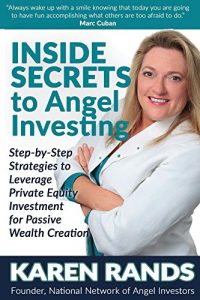
 

Tagged With: Blue Penguin Development, Brady Ware & Company, Decision Vision podcast, email marketing, email newsletter, marketing, Michael Katz, Mike Blake, professional services marketing

Decision Vision Episode 134: Should I Sell to a SPAC? – An Interview with David Panton, Navigation Capital Partners

September 16, 2021 by John Ray

SPAC
Decision Vision
Decision Vision Episode 134: Should I Sell to a SPAC? - An Interview with David Panton, Navigation Capital Partners
Loading
00:00 /
RSS Feed
Share
Link
Embed

Download file

SPAC

Decision Vision Episode 134: Should I Sell to a SPAC? – An Interview with David Panton, Navigation Capital Partners

In 2020, roughly half of all companies which went public did so through a SPAC, or a Special Purpose Acquisition Company. How does a SPAC work, and what are the pros and cons of going public through a SPAC as opposed to the traditional IPO route? How risky are SPACs? David Panton, whose firm invests exclusively in SPACs, joined Decision Vision host Mike Blake to answer these questions and much more. Decision Vision is presented by Brady Ware & Company.

Navigation Capital Partners

Navigation Capital Partners (NCP) is an Atlanta-based private equity firm focused exclusively on investing in a diverse portfolio of Special Purpose Acquisition Companies (SPACs). The principals of NCP formerly founded and managed Mellon Ventures, the private equity investment partnership of Mellon Financial Corporation. With the backing of Goldman Sachs Private Equity Opportunities Fund LP, NCP acquired the private equity portfolio of Mellon Ventures in December 2006.

In 2019, NCP launched its SPAC Operations Group which builds on the NCP legacy of transforming relatively small, high-growth companies into medium-sized ones and selling them to larger private equity firms to take them to the next level. In the 15 years since its inception, NCP has invested $399 million in 51 portfolio companies, including nine SPACs.

Company website | LinkedIn | Twitter

David Panton, Managing Partner, Navigation Capital Partners

David Panton, Managing Partner, Navigation Capital Partners

David Panton is a Managing Partner of Navigation Capital’s SPAC Operations Group, which makes equity investments in Special Purpose Acquisition Companies (SPACs).

David is also a co-founder of Navigation Capital Partners LP, an Atlanta-based private equity firm that has made growth and buyout investments in middle-market operating companies. In partnership with Goldman Sachs, its portfolio has included investments in 40+ operating companies representing equity investments (including co-investments) of approximately $800 million.

David is also the Chairman of Panton Equity Partners, a private family office, which he founded in 2012, and is an Adjunct Professor in the Faculty of Finance at Emory University’s Goizueta Business School. David has served as a Board Member on over 15 companies, including Brand Bank (sold to Renasant Bank), Track Utilities (sold to CIVC Partners), SecureWorks (sold to Dell Technologies), and Exeter Finance (sold to Blackstone).

David is a co-founder and former Chief Strategy Officer of American Virtual Cloud Technologies (Nasdaq: AVCT), which previously raised $310 million in July 2017 as Pensare Acquisition Corp., and completed an acquisition of Computex Technology Solutions in April 2020. AVCT is a portfolio company of SPAC Opportunity Partners LP.

Between 2003 and 2006, David was a Vice President at Mellon Ventures (now Navigation Capital Partners), a $1.4 billion private equity firm, where he focused on growth capital and buyout investments. Previously, he co-founded and served as Managing Director of Caribbean Equity Partners, a private equity firm focused on investments in the Caribbean and Latin America. Prior to that, he was an Associate at Morgan Stanley in New York City, where he focused on mergers and acquisitions in Latin America and the Caribbean.

David also served as CEO of CMP Industries, a publicly traded company in Kingston, Jamaica, and is a former Senator in the Upper House of Parliament in Jamaica. David was named by Buyouts Magazine as “One of Eight Buyout Pros Under 40 to Watch” in 2009 and by the Atlanta Business Chronicle as one of the “40 Under 40” Rising Stars in 2011. He is a member of the Atlanta Chapter of the Young Presidents Organization (YPO) and is a former member of the Atlanta Group of Tiger 21 and Leadership Atlanta (Class of 2012). He is Chairman of the Jamaican-American Chamber of Commerce of Atlanta, a former member of the Board of the Michael C. Carlos Museum of the Arts, and is a former Trustee of Holy Innocents’ Episcopal School in Atlanta, GA.

David holds a Master Professional Director Certification from the American College of Corporate Directors. David received a Doctorate in Management Studies from Oxford University, where he was a Rhodes Scholar, a J.D. (with honors) from Harvard Law School, where he was elected President of the Harvard Law Review, and an A.B. (with high honors) in Public Policy from Princeton University.

Born and raised in Jamaica, he resides in Atlanta, GA.

LinkedIn

Mike Blake, Brady Ware & Company

Mike Blake, Host of the “Decision Vision” podcast series

Michael Blake is the host of the Decision Vision podcast series and a Director of Brady Ware & Company. Mike specializes in the valuation of intellectual property-driven firms, such as software firms, aerospace firms, and professional services firms, most frequently in the capacity as a transaction advisor, helping clients obtain great outcomes from complex transaction opportunities. He is also a specialist in the appraisal of intellectual properties as stand-alone assets, such as software, trade secrets, and patents.

Mike has been a full-time business appraiser for 13 years with public accounting firms, boutique business appraisal firms, and an owner of his own firm. Prior to that, he spent 8 years in venture capital and investment banking, including transactions in the U.S., Israel, Russia, Ukraine, and Belarus.

LinkedIn | Facebook | Twitter | Instagram

Brady Ware & Company

Brady Ware & Company is a regional full-service accounting and advisory firm which helps businesses and entrepreneurs make visions a reality. Brady Ware services clients nationally from its offices in Alpharetta, GA; Columbus and Dayton, OH; and Richmond, IN. The firm is growth-minded, committed to the regions in which they operate, and most importantly, they make significant investments in their people and service offerings to meet the changing financial needs of those they are privileged to serve. The firm is dedicated to providing results that make a difference for its clients.

Decision Vision Podcast Series

Decision Vision is a podcast covering topics and issues facing small business owners and connecting them with solutions from leading experts. This series is presented by Brady Ware & Company. If you are a decision-maker for a small business, we’d love to hear from you. Contact us at decisionvision@bradyware.com and make sure to listen to every Thursday to the Decision Vision podcast.

Past episodes of Decision Vision can be found at decisionvisionpodcast.com. Decision Vision is produced and broadcast by the North Fulton studio of Business RadioX®.

Connect with Brady Ware & Company:

Website | LinkedIn | Facebook | Twitter | Instagram

TRANSCRIPT

Intro: [00:00:01] Welcome to Decision Vision, a podcast series focusing on critical business decisions. Brought to you by Brady Ware & Company. Brady Ware is a regional full-service accounting and advisory firm that helps businesses and entrepreneurs make visions a reality.

Mike Blake: [00:00:22] Welcome to Decision Vision, a podcast giving you, the listener, clear vision to make great decisions. In each episode, we discuss the process of decision making on a different topic from the business owners’ or executives’ perspective. We aren’t necessarily telling you what to do, but we can put you in a position to make an informed decision on your own and understand when you might need help along the way.

Mike Blake: [00:00:43] My name is Mike Blake, and I’m your host for today’s program. I’m a director at Brady Ware & Company, a full -service accounting firm based in Dayton, Ohio, with offices in Dayton; Columbus, Ohio; Richmond, Indiana; and Alpharetta, Georgia. Brady Ware is sponsoring this podcast, which is being recorded in Atlanta per social distancing protocols. If you like to engage with me on social media with my Chart of the Day and other content, I’m on LinkedIn as myself and at @unblakeable on Facebook, Twitter, Clubhouse, and Instagram. If you like this podcast, please subscribe on your favorite podcast aggregator, and please consider leaving a review of the podcast as well.

Mike Blake: [00:01:23] And before we start on that note, I’d like to take this opportunity to thank all of you who are listening to the program and are clearly telling other people about this program so that we can, frankly, help other people. I was delighted to learn last week that we have passed 27 million cumulative downloads of this program since launching it 30 months ago. And we’ve also actually passed a very important milestone a while ago, we’re at 40,000 downloads for each new episode within the 30 days of publishing a new episode, which puts us firmly in the top one percent of all business related podcasts.

Mike Blake: [00:02:03] And I cannot thank you enough, not just for downloading, but clearly you’re listening, clearly you’re telling other people that they would benefit from listening to this program. And this is why I do it. You know, we don’t have commercials on this. I’m not monetizing this in any way. This is just a way that we, as the Decision Vision team, give back and try to share some wisdom, and some advice, and counsel, maybe even some infotainment along the way to help you become better or more confident in the decisions that you’re making. And so, I just like to take a moment to thank you for all your support of the program, and I hope that we’ll justify your support in the future.

Mike Blake: [00:02:45] I’d like to thank Brady Ware, who has given me the time and resources to do this podcast. I could not do it without them. I could not do it without Business RadioX. And, of course, we couldn’t do it without all of our guests. Because if I were doing this podcast by myself, it would be two episodes, probably the intro and then the final episode, because I don’t know enough to carry a show on my own. So, without the guests who donate their time and expertise throughout the program, this really wouldn’t be much of a program at all.

Mike Blake: [00:03:14] So, without further ado, I’ll introduce today’s topic, which is, Should I sell or form to a Special Purpose Acquisition Company or SPAC? And you may be familiar with SPACs or you may not, it really depends on how tied you are with the financial markets. And we don’t do a lot of hardcore finance on the program. But every once in a while we do because there will be something that comes up that, I think, warrants us covering it. If nothing else that you’re aware of what that financial vehicle, that financial decision is out there, and you may find yourself with that decision.

Mike Blake: [00:03:52] And so, our guest will come on and tell us exactly what a SPAC is. But if you found that you’ve been hearing about them a lot, it’s not by accident. You know, a SPAC is, in effect, a poor person’s IPO. Some people say a rich person’s IPO. But our guest will talk about that. But in 2016, there are about 20 SPACs, Special Purpose Acquisition Companies, that were formed in 2016. And in 2020, there are over 400, with an average size of $300 million in capital raised per transaction.

Mike Blake: [00:04:24] That’s a big deal, right? Four hundred times $200 million will be $12 billion of capital. That’s a lot of capital out there. And that’s why you’re hearing a lot about it. And even if you’re not necessarily going to be taking a company into an exit, into a public liquidity event or quasi public liquidity event, you probably still want to know what a SPAC is. And you may find yourself in the position of asking yourself, “Is this something that we could do with our company?” And finding out whether or not that’s a realistic or desirable path is what we’re all about here on the Decision Vision program, is to help you understand what it is and what kind of decision might you have to make, and what is a good framework in which you might make that decision.

Mike Blake: [00:05:08] So, joining me today is our guest, David Panton, who is a Cofounder of Navigation Capital Partners LP. They’re long standing, one of the premier investment banking, private equity, and merchant banking houses in Atlanta. They’ve been around since I’ve been in Atlanta, which is at least 20 years. And they’ve made growth and buyout investments in middle market and operating companies. In partnership with Goldman Sachs, their portfolio has included investments in over 40 operating companies representing equity investments of approximately $800 million.

Mike Blake: [00:05:39] David is a managing partner of Navigation Capital SPAC Operations Group, which makes equity investments in the special purpose acquisition companies. In 2019, Navigation Capital Partners or NCP launched their SPAC Operations Group, which builds on their legacy of transforming relatively small, high growth companies in the medium sized ones and selling them to larger private equity firms to take them to the next level. In the 15 years since its inception, NCP has invested $399 million dollars in 51 portfolio companies, including nine SPACs. And for more information, you can visit navigationcapital.com.

Mike Blake: [00:06:18] In addition to his professional roles, David is a former senator in the Upper House of the Parliament in Jamaica. He was named by Buyouts Magazine as one of the Eight Buyout Pros of Under 40 to Watch in 2009 and by the Atlanta Business Chronicle as one of its 40 Under 40 Rising Stars in 2011. He is a member of the Atlanta Chapter of the Young Presidents’ Organization and is a former member of the Atlanta Group TIGER 21 and Leadership Atlanta Class of 2012. The second best class ever, second only to the Class of 2014. And if you’re in the Leadership Atlanta Group – he’s laughing – you know exactly what that means.

Mike Blake: [00:06:53] David received a Doctorate in Management Studies from Oxford University, where he was a Rhodes Scholar; a JD with Honors from Harvard Law School, where he was elected president of the Harvard Law Review; and an AB with High Honors in Public Policy from Princeton University. David, welcome to the program.

David Panton: [00:07:09] Thank you so much, Mike. Great to be here.

Mike Blake: [00:07:11] So, David, SPAC is a fairly technical concept. And in some ways, I think kind of a subtle one. So, I’d like to ease our audience in a little bit. Can you describe what a SPAC is?

David Panton: [00:07:25] Sure. So, let’s start with the acronym SPAC, it stands for Special Purpose Acquisition Company. And that describes in broad part, so let’s just break it down. Well, let’s start with the company part. So, the first is it’s a company. So, it’s not any newfangled instrument. It’s not an NFT. It’s not bitcoin. It’s just a company. And it’s a company that is publicly traded.

David Panton: [00:07:55] So, typically, you will have a sponsor for a SPAC, Special Purpose Acquisition Company. They will form a company. That company will be taken public. And through the traditional process, known as the IPO process, Initial Public Offering. So, a sponsor pay for the costs of taking a company public. The company is now public. But unlike traditional public companies which have operations, SPAC has one asset, and that asset is cash. So, it raises capital. As you said, the average amount raised in SPAC so far this year is around 300 million.

David Panton: [00:08:35] And by the way, let me just correct you on the math there. You mentioned 400 SPACs, 300 million. It’s not 12 billion. It’s 120 billion.

Mike Blake: [00:08:43] I knew it. I thought it was off by a zero and I couldn’t do a lot of talking in the microphone. So, thank you for bailing me out there.

David Panton: [00:08:49] So, there is 120 billion raised in SPAC. So, these are public offerings by these companies, which raise so far this year $120 billion. So, they have one asset which is cash. Then, the SPAC sponsor has a certain time period, which is usually 24 months, but it could be 18 months, it could be 12 months, in which to find an operating company. So, think of a SPAC as a blank check company, it’s what it’s known as, or a special purpose vehicle with cash, whose objective is to find an operating company that can acquire or merge into within a certain period of time, typically 24 months or two years.

David Panton: [00:09:31] At the end of that two year period, if the sponsor has not found a company, then this is a very unique element of SPAC, which really doesn’t exist in any other investment category that I know of. The sponsors have to give the money that was invested by the investors in the IPO back to the investors. That’s known as a redemption. So, there’s a redemption rite that investors in SPAC IPOs have.

David Panton: [00:09:57] When the company is found, the sponsors have to go back to the investors and get it approved by the investors in the SPAC IPO or whoever the shareholders are in the company at that time. And when that is done, if the shareholders approve the deal – and the good news is that happens almost all of the time – then the operating company, which is now merged into the SPAC becomes the new publicly traded company.

David Panton: [00:10:24] So, the last thing I’ll say on this is that, effectively what a SPAC is, is a company with cash with a certain time period in which to merge with an operating company, typically a private company, that makes that private company public. So, it’s a mechanism of doing effectively a reverse merger of a private company into the public SPAC that was raised. And then, after that, that company is straight way public company.

David Panton: [00:10:55] So, Hostess, as an example – we’ve all seen Hostess Twinkies – was a company owned by a private equity firm. Someone set up a SPAC, another firm called Gores. That SPAC approached Hostess and said, “Hostess, we want to effectively take you public.” They negotiated a transaction, and Hostess did a reverse merger into the special purpose acquisition company. They changed the name to Hostess. And today, Hostess is just a publicly traded company. It was a mechanism for Hostess to go public.

Mike Blake: [00:11:27] I knew some of the Hostess story. I guess they must have been effectively bought out of bankruptcy to get into a SPAC?

David Panton: [00:11:35] So, I want to be clear on that. In fact, I don’t think a single SPAC has bought a company out of bankruptcy. So, I don’t want people to think that this is just a mechanism to buy companies out of bankruptcy. In fact, SPACs are not good for that. Hostess did go through a bankruptcy. They were bought by a private equity firm, actually two private equity firms. Those private equity firms are growing the company, and they were trying to exit from their investment. And a SPAC approached them and said, “Why don’t you merge your now rehabilitated company and growing company with less debt into a public vehicle?” And that’s what they did. And it’s actually even a very good investment.

David Panton: [00:12:15] Burger King, by the way, was also a SPAC. It didn’t go through a bankruptcy. Just a good company owned by a private equity firm. It was seeking a mechanism to exit or, actually, to facilitate liquidity.

David Panton: [00:12:28] And one important thing – and I think this may be important for your listeners who are all entrepreneurs, executives – the vast majority of SPACs, the shareholders of the company, the private company, become the majority shareholders of the public company. So, it really is largely a mechanism if you are the owners of a private company and want to go public, it’s just a mechanism of going public.

David Panton: [00:12:54] So, you have options if you’re a private owner. You could sell to private equity. You could go public in the traditional IPO process. Or if you want to exit, you could use a SPAC route. So, think of it as a mechanism if you’re the owner of a company of taking your company public, but through a SPAC, not through the traditional IPO process.

Mike Blake: [00:13:18] So, the way you described it is interesting. Let me come back to you. First of all, I guess one of the object lessons, any time you think of a Twinkie now you can think of a SPAC. It’s, “I’m eating Twinkies. Remember a SPAC is making that possible.”

David Panton: [00:13:29] Or if you’re eating a Whopper, that was a SPAC.

Mike Blake: [00:13:32] Or a Whopper. Exactly. You know, Whopper. Exactly. But the fact that the owners of the company themselves are providing the capital, is it fair to say in a way this is a mechanism for a company to kind of take itself public as opposed to making an offering to external shareholders and hoping that they buy?

David Panton: [00:13:53] Yes and no. And I do want to clarify one thing that you said. You said the owners of the company are providing capital. The SPAC is providing the capital. So, if you were an owner of a company, why would you choose a SPAC over a traditional IPO? Maybe that’s one way of thinking about it. And there are reasons why some companies go public through SPACs and there are reasons why they go through the traditional process.

David Panton: [00:14:18] Last year, in 2020, half of the IPOs in America or more than half were SPAC IPO. So, half of the cases, owners of companies chose the SPAC process over the traditional IPO process. And there are pros and cons of each, and let’s just go through them quickly.

David Panton: [00:14:35] The biggest advantage of a SPAC, number one, you actually are merging into an entity which, typically, has a board and has individuals in place who typically know that industry. So, most SPACs are industry focused. And there isn’t just an advantage, especially if you’re a smaller company that’s growing, and just having a strategic partner, and a board of directors or people who can add value to you.

David Panton: [00:14:59] That doesn’t apply in a traditional IPO. If you’re doing a traditional IPO, you’re just going public. I mean, you could add people to your board, but you don’t really have a strategic partner. That’s one advantage of a SPAC.

David Panton: [00:15:10] The second advantage is you have built in capital. And that capital is typically the capital that was raised in the IPO. Now, there’s a risk that that capital can go away. So, that’s a negative of a SPAC, which is the capital may be there or it may not be there. But the SPAC market has effectively created a way to ensure that the capital is there. And that mechanism is something known as a PIPE. So, when you think of SPACs – I know there’s lots of acronyms – Special Purpose Acquisition Companies, don’t think of SPAC without a PIPE. SPAC is on the front end, PIPE on the back end.

David Panton: [00:15:44] What does a PIPE stand for? PIPE stands for Private Investment in a Public Entity. And all that is, is a private placement at the time that the SPAC has identified a target company with which it wants to merge. And then, they go to investors, typically long term fundamental investors, in public companies to say, “Listen, why don’t you participate in this company and give us additional capital?” Or if not new capital, a backstop against the redemptions from the capital that was raised in the initial IPO.

David Panton: [00:16:16] And so, that gives some certainty because that capital is fully committed capital that the company which is going public through this SPAC process will actually have capital that’s needed. So, it is a mechanism for the owners of the company to either take some cash off the table because they want to get some cash and/or to have new cash going into the company on the balance sheet, which is more likely in most recent SPACs and most of the SPAC transactions that have occurred this year. So, it provides capital.

David Panton: [00:16:51] And then, the third advantage is certainty, more certainty than an IPO. In an IPO, you may or may not go public. It may or may not work. In a SPAC transaction, you’re negotiating a merger. And once you’ve negotiated that merger, and especially if you put a PIPE in place, there’s a very, very high likelihood the deal is going to get done. In the IPO market, it may happen, it may not happen.

David Panton: [00:17:18] And one of the reasons actually that SPACs boomed last year is that the IPO market, because of what happened with COVID, et cetera, sort of declined. The market was jittery. But because SPACs have committed capital or have a pool of capital available to them and they do these mergers, it made it easier for SPAC transactions to get done.

David Panton: [00:17:42] And then, the final advantage, I would say, about a SPAC IPO versus a traditional IPO – and there are several others, but these are the primary ones. I mean, speed is another reason. You can probably do a SPAC IPO in a much shorter time than the traditional IPO – the last one I would focus on is the ability to set the valuation of the company.

David Panton: [00:18:10] And what I mean by that is, you’ve probably seen that when other companies have gone public, you’ve seen that they go public and save $10 a share. And then, you hear that there was a big pop and it went from 10 to 20, or 30, or 40. And that sounds great for the investor, but it’s actually terrible for the owners of the company. Because if they could have gone public at 40, then they should have gone public at 40.

Mike Blake: [00:18:33] The last 30 bucks a share on the table.

David Panton: [00:18:35] They left 30 bucks a share on the table. And that is a huge, huge issue. In a SPAC transaction, you basically value it at, say, 40 or 30 or whatever the number is, and that’s the price. It’s very, very rare that you see this big pop. So, you’re able to maximize the valuation of a company in a SPAC transaction because it’s a negotiated transaction with another party and a merger as opposed to just going to the market.

David Panton: [00:19:01] And, you know, listen, I work with investment banks. I love investment banks. I don’t want to say anything negative about investment banks. But investment banks are in the business of making money and they’re in the business of helping their friends. And the investment banks were the underwriters of IPOs and SPACs. So, we work with investment banks all the time.

David Panton: [00:19:19] They have, historically, gone and given IPO allocations to their friends and institutional investors that they like and said, “Hey, we’ll get you in at a certain price.” They’ll typically negotiate the price that’s relatively low because everyone wants the price to go up. And, therefore, the investors do very well. But the actual owners of the company, typically, leave a lot of money on the table in a traditional IPO, and SPAC IPOs avoid that. And that amount, by the way, billions and billions of dollars, so it’s not an insignificant consideration.

Mike Blake: [00:19:54] Yeah. I’ve been in the investment banking business and I know exactly what you’re talking about. I don’t disagree with it. I could easily divert the podcast that way, but maybe we’ll have you back on, we’ll talk about that in another episode.

David Panton: [00:20:06] That’s a different story.

Mike Blake: [00:20:08] But, you know, you brought something up that I want to make sure that I covered, which is, we’re hearing a lot about SPACs now, but they’ve actually been around for quite some time. They’re actually not a new vehicle. They’re just new to a lot of people. And granted, COVID has, perhaps as so many things, given a lot of momentum to things that are already taking place. But why have SPACs suddenly become so popular in the last few years?

David Panton: [00:20:36] Well, that’s a great question. My view – and this is just my view – is that it really came down to one transaction. And that one transaction was a SPAC raised by two of the legends in the SPAC world, a guy named Jeff Sagansky and Harry Sloan. And they raised the SPAC called Diamond Eagle Acquisition Corp. Almost every SPAC has the name acquisition corp. at the end. They raised it in May of 2019, and they raised $400 million. Their underwriter was Goldman Sachs, where Goldman Sachs helped raise $400 million from a large number of institutional shareholders.

David Panton: [00:21:16] The investors in Diamond Eagle, who invested the $400 million received units. Those units – which is one of the differences between a traditional IPO and a SPAC IPO. You’ll see units rather than just shares – include a bundle of securities, which includes typically one share. And then, very importantly, they received a warrant or a-half-a-warrant or a-third-of-a-warrant. That warrant is another security like a share, which gives them a right to buy shares in the future.

Mike Blake: [00:21:51] It’s an option effectively.

David Panton: [00:21:52] It’s an option. That’s exactly right. So, an option to participate if the price goes up in the future. And, typically, almost all SPACs go public at $10 per share. And the options are typically priced at 11.50. So, that’s what’s known as the strike price of the option. So, if the stock goes up to 11.50, then the warrant/option is valuable. And if the price goes down, it doesn’t have value.

David Panton: [00:22:16] But because there’s potential value, these options/warrants trade. They trade separately from the shares. There’s an option market. You can buy these options. A lot of hedge funds invest in these options. And they have a value, and they’re typically around $0.50. So, $0.50 on a $10 investments by the investors in the IPO works out to be a five percent return. It’s pretty good, actually, especially in a market where interest rates are relatively low. And you still have the shares if the price goes up.

David Panton: [00:22:48] And, by the way, the vast majority of investors – which you should know and your listeners should know – in SPAC IPOs are hedge funds because this is a financial instrument. It’s not an operating company. And hedge funds love financial instruments.

Mike Blake: [00:23:05] Yes, they do.

David Panton: [00:23:07] Downside protection and upside potential. So, the investor is invested in Diamond Eagle. Majority of the investors were, in fact, hedge funds. They gave $400 million to Diamond Eagle. And within a very short period of time, they identified not one, but two companies that they could put together to take public. The two companies, one of them you would know probably fairly well, the other one you probably wouldn’t know. The one you would know is called DraftKings, and DraftKings is an online gaming company.

Mike Blake: [00:23:42] Daily fantasy sports.

David Panton: [00:23:44] Exactly right. Fantasy sports, et cetera. And as you know, many states are decriminalizing online gaming. It used to be illegal, now less so. And there was a Supreme Court case which has made it almost impossible to ban online gaming. They’re a huge, huge business. Unprofitable business, by the way, but fast growing. It wasn’t that large. We’re talking about 300 million in revenues. They wanted to put it together with another company. And the name of that company is called SBTech, which actually was an Israeli company, which provided the technology platform for gaming, not just for DraftKings, but for other companies as well.

David Panton: [00:24:25] The combined two companies had about 400 million in revenues, maybe a little less. And were valued at $3 billion, a very high multiple of revenues. They’re both unprofitable. But the reason they have that valuation is because of the growth rate. They announced the deal in December of 2019. And the price didn’t move much from $10. As most announcements, price moves a little bit but not much. They then went onto the market and went out to long term investors and said, “You should invest in DraftKings.” And a lot of people were interested in it.

David Panton: [00:25:04] And they had an analyst day, which very few companies have done and then they did something. And one huge difference between SPACs and a traditional IPO – I should have said this earlier actually – is that in a SPAC IPO, you are able to provide forward looking projections, which you cannot do in a traditional IPO. So, in the case of DraftKings, even though the company was unprofitable today, they could say, “We are planning to grow the company to a billion dollars of EBITDA in the future.” And that’s what they said. Now, if you did that in a traditional IPO, the SEC would say, “No, no, no. You can’t do that. You can’t say what you’re going to do in the future.

Mike Blake: [00:25:46] Which is bizarre, by the way.

David Panton: [00:25:48] It’s little bit bizarre.

Mike Blake: [00:25:50] It’s bizarre they’re not likely to do that, by the way. But go ahead.

David Panton: [00:25:52] You know, you’re right, it is a little bit bizarre and it really is just a result of a loophole, right? And the loophole is that, a SPAC is really a merger, not an IPO. And if you’re doing a merger, you have to show the numbers that you are basing the merger on to all the investors. So, you’re right, it is a little bit unusual.

David Panton: [00:26:12] So, anyway, they put these projections and the deal closed in April of 2020. Now, understand, in January 2020, there was no huge upswing in SPACs. It didn’t happen in February. It didn’t happen in March. It didn’t happen in April. When DraftKings was announced and closed, the deal closed in April – so it was announced in December of 2019, closed in April of 2020 – the stock price doubled from $10 to $20. It was the first time that a SPAC at close had doubled in price. It never happened before because of that certainty issue I spoke about.

David Panton: [00:26:49] So, all the investors who had invested less than a year before, who had warrants, saw that the value of their investment, $10, was worth almost $30 because of the warrant. So, the price went from 10 to 20, so the shares were worth two times. And then, you add the warrants, they were worth close to $10 dollars. That’s another $10, almost $30. So, in less than a year, investors in a public security made three times their money.

David Panton: [00:27:14] And if it had not done well, they would have gotten their money back plus a return. And a lot of investors woke up to the fact that, hold on a second, there is an instrument out there where you can make three times your money in less than a year with basically no or very little downside risk. Where do we get into this game?

David Panton: [00:27:36] And in May and then in June, you saw an uptick, a number of people getting into the space. And so, you saw a very significant growth. And so, we went from in 2019 only about 14 billion raised, to 2020 over 80 billion or close to 80. And then, in 2021, this year, in the first quarter we did over 100 billion and we’re now at 120. Now, I should point out this was too much money, too fast, too soon.

David Panton: [00:28:09] And there’s been a significant correction over the past few months. And so, the amount of new offerings in SPACs has diminished quite significantly. Last week, there were about six. So, the number has come down, but they’re still, as you pointed out, over 400 SPACs that have gone public this year that have raised over $120 billion. And so, lots of SPACs are out there. But I think it’s because of DraftKings, ultimately, where people saw that value.

Mike Blake: [00:28:39] So, you know, what you’re describing, I think, probably has a lot of people interested in a SPAC. They’re learning about it. They’re learning about the benefits. If I’m in a company right now, I own the company or I’m in the C-suite, I’m a CFO, how can I tell if my company is a good or viable SPAC candidate or not?

David Panton: [00:29:02] Now, that’s a great question. And I do want to be clear because most of what I’ve said is very positive. Like, the SBTech, actually, the majority owner today is a billionaire who just joined the Forbes list. The stock has gone significantly, I don’t know where it is today, but it went as high as $60 from $10.

Mike Blake: [00:29:23] I promise I’ll give you a chance to talk about risk. I have that question coming up. So, don’t worry.

David Panton: [00:29:27] Okay. We’ll talk about it. All right. So, the question is, how do you know whether you’re viable? Here is the best way to think about viability. The best way to think about viability, first issue is size. The reality is not everyone should be a public company. Small companies should not be public.

David Panton: [00:29:41] So, unfortunately, I’m sure a lot of your listeners who are entrepreneurs or executives in companies that are below a certain amount of revenue are unlikely to be good targets for a public company. You need a certain size, and that size typically is around $100 million of revenues or more. And the higher the better. Some people would argue that even a 100 million is too small. You need 200 million. You need 500 million. You need a billion.

David Panton: [00:30:09] Now, I do want to caveat that with one thing, which is that, there were many companies that have emerged into SPACs that had zero revenue at all. And why did that happen? And how did that happen? It happened because of the second reason after size, which is size of industry, what’s known as TAM. There are lots of acronyms in the SPAC world, so SPAC and PIPE, the next one is TAM. TAM stands for Total Addressable Market size.

David Panton: [00:30:40] So, there are certain industries which are very large and growing. Like, for example, the electric vehicle industry. We all know that at some point in the future, the vast majority of cars are going to be electric cars. That’s one of the reasons Tesla has a valuation that it does, which is staggering. It’s like bigger than all the major car companies, because they’re in the right industry, which is huge.

David Panton: [00:31:03] And there are EV companies, for example, that went public because people figured at some point they will grow. So, even though they don’t have the size to be, this is a bet on the future. And remember, I said that SPACs can show projections into the future, which traditional IPOs can’t. If you can show in five years or six years, you’re going to be a billion dollar company then people are willing to pay for that value today. So, the second is TAM.

David Panton: [00:31:28] The third is growth. You’ve got to show a high growth rate. So, if you’re in a traditional state industry, not such a great thing. You know, you want to be in an industry which is growing or your company within that industry is growing.

David Panton: [00:31:41] The fourth is margins. You want to show that you have attractive margins. And by margins, I mean gross profit margins and EBITDA margins, Earnings Before Interest, Taxes, Depreciation and Amortization, which is the most common metric that public companies trade on. Although many of these companies trade on revenues because they don’t have EBITDA.

David Panton: [00:32:01] So, if you’re thinking about going public, do you have a size either today in terms of revenues or visibility into revenues? If you’re in a large TAM, large Total Addressable Market, that you have growth historically or you think will happen in the future. And you have pretty decent margins today or you expect to have decent margins in the future. Those are the main elements sort of threshold questions.

David Panton: [00:32:27] And then, if you meet those threshold questions, you think you have the size and the growth rate to be attractive to public company investors because that’s what you need to have, then the most important variable is, do you have the numbers? Because you have to actually have the financial system in a SPAC. You have to do what’s known as – here’s another acronym. This is the longest one – PCAOB audit.

David Panton: [00:32:55] So, every private company that merges into a SPAC has to have, typically, two and oftentimes three years of PCAOB audits. What does PCAOB stand for? Well, you’re an auditor so you probably know or you’re in the space. It stands for Public Company Accounting Oversight Board. So, after the 2008 issues, the government set up, basically, a public-private partnership which is an oversight organization, the Public Company Accounting Oversight Board, which provides certain metrics on how accounting firms should audit publicly traded companies. And there are certain things that they have to do or cannot do. They have to be independent, et cetera. And they have to have certain financial systems in place in a company. And not all companies can meet the PCAOB requirements.

David Panton: [00:33:51] So, the final thing I’d say, you know, for especially the CFOs who are listening, is you’ve got to make sure that your systems are strong and your reporting system, the financial system, so that when you do an audit, which is required, that you can meet the PCAOB standards.

Mike Blake: [00:34:10] And generally speaking, PCAOB means that it’s going to be a national accounting firm. It’s not going to be your local two person CPA shop. And it’s going to be expensive and it’s going to be involved. Like, even my firm, we have 150 people, we don’t do PCAOB audits. It’s just a different skill set. It requires a different, different scale of personnel in order to do that competently.

David Panton: [00:34:33] That’s right. You’re absolutely right. It’s more expensive and there are only a few people who do it. And it’s a long difficult process.

Mike Blake: [00:34:42] So, I hinted on this a second, but I do want to give you a chance because I know you don’t want to oversell SPACs. What are the risks? Where can SPACs go wrong? Maybe you know of some cases where they have gone wrong and why?

David Panton: [00:34:57] Yeah. So, you know, the biggest negative of SPACs – and SPACs have critics. There are many people who don’t like SPACs – the biggest sort of criticism is related to what is known as the sponsor promote. So, people who invest in SPACs – and we invest in SPACs – we receive a very lucrative promote. And that promote is, typically, 25 percent of the amount of money raised. So, if you do a $100 million dollar IPO, you get 25 million in stock. And if you add the 25 million in stock to the 100 million, then that becomes 25 of 125, so it’s now 20 percent. So, it’s 25 percent pre-money, 20 percent post-money, so 20 percent fully diluted.

David Panton: [00:35:53] And that’s a very [inaudible] dilution to everyone. It’s a dilution to the company that you merge with, because there is these extra shares out there. It’s a dilution to public company investors as you go forward. And so, that dilution creates a misalignment of incentives, which is the second problem. So, there is a cost to SPACs, which is that you’re giving up a large percentage of shares to the sponsor, which is dilutive to the original owners. They don’t like it.

David Panton: [00:36:26] There are ways to fix that. You can negotiate to get some of those sponsor shares, which has happened in transaction. You can get the sponsor to give up some of those shares, which has happened. You can get the sponsor to put those shares into an earn out, which has also happened. In the vast majority of cases, there are some modification to that SPAC sponsor promote, which is quite significant. So, the biggest negative is the dilution associated with the sponsor promote.

David Panton: [00:36:50] And then, the second is this misalignment of interests. Because the sponsor is, basically, coming into a $10 stock at a fairly low price, around a-buck or a-buck-50, and it’s at $10. So, if the stock price falls from 10 to 6 or 7, they’re still making a lot of money. But for new investors who want to come in the company, they want the stock to go above 10, typically, if they come in at 10 or PIPE investors. And so, it does create a little bit of a misalignment of interest.

David Panton: [00:37:22] And so, understanding that is important. And so, the issue is not that it’s a bad thing per se. If you can get alignment of interest, if you can negotiate correct terms, if you’re an owner or an entrepreneur, then it’s a good deal. And that has happened many times, which is why, you know, half the time that has occurred.

David Panton: [00:37:43] The last thing I would say is that, there is an inherent challenge associated with SPACs in terms of investor participation. Remember I said that the vast majority of investors in SPACs are hedge funds. Hedge funds, for the most part, are short term oriented, financial metric driven. They’re not really interested for the most part in long term growth companies.

Mike Blake: [00:38:06] They’re overgrown day traders. Brought us about it, right? They’re overgrown day traders.

David Panton: [00:38:12] You said it. I didn’t. So, there is a real challenge in that your shareholder base, you know, SPAC is not the shareholder base you want for a company for the long term. You actually want long term fundamental investors. You want people like Fidelity, and Wellington, and T. Rowe Price, and Neuberger, and long term fundamental investors.

David Panton: [00:38:34] And there’s a challenge in shifting your investor base from the short term hedge fund oriented financial arbitrage guys into longer term players. And that process can be hard, difficult, complicated. And it can affect your price. One of the reasons that recently the number of SPAC exit transactions has declined is because of this very issue, which is that, the stock price of SPACs has not been that high because a lot of these hedge funds are dumping stocks in SPACs across the board, regardless of what it did.

David Panton: [00:39:11] So, even good companies, there’s dump in stock. Which is great for people like me who are like, “We’ll buy them.” But not so good for the owners of the company, et cetera. So, that third issue of the transition from short term investors to longer term investors is oftentimes a challenge.

Mike Blake: [00:39:28] Yeah. And I guess that also does create some short term volatility that may or may not be connected to the fundamentals of the company.

David Panton: [00:39:35] Correct. That’s exactly right. Whereas, if you do a traditional IPO, you’re almost 100 percent certain that the participants in that stock, the vast majority of participants, are long term fundamental. Not always. And we’ve seen – which is worth mentioning since you mentioned day traders – this Robin Hood effect. And I should also add that that Robin Hood effect was a part of the explanation for the increase in 2020.

David Panton: [00:40:00] So, Robin Hood, as you know, it’s an online site, effectively an app, I guess, where people can invest. People who typically didn’t have access to traditional brokerage accounts could invest easily online. And these are people who invested in GameStop, et cetera.

David Panton: [00:40:17] And what happened is a lot of people invested in SPACs. It became very hot. A lot of them lost money and they went away. So, easy come, easy go. And so, retail participation or the lack of retail participation then pulling back from the market has also contributed to some of the decline in the market. And, you know, do you want to be associated with that necessarily?

David Panton: [00:40:42] And, by the way, that doesn’t necessarily happen with SPACs only. It could happen with traditional IPOs. But because SPACs are already trading, you know, SPACs were more likely to be recipients of – what I call – hot money from retail investors under that Robin Hood effect. And that’s another issue that people should know.

Mike Blake: [00:41:05] So, I’ve been reading and hearing that the government, the U.S. government in particular, the SEC, is taking a hard look at SPACs and evaluating whether or not they require their own set of regulations, more stringent oversight or some combination of the two. Are you hearing the same thing? And if so, do you think that’s likely to actually happen? And if so, do you think that’s going to take sort of some of the momentum out of the SPAC movement?

David Panton: [00:41:37] Well, you know, the SEC has expressed concerns about SPACs and the rapid increase in SPACs. And the single biggest reason that SPACs declined in volume is because of an action taken by the SEC earlier this year, where they questioned how the SPACs were pricing their warrants, how they were treating their warrants from an accounting perspective. So, this is something you and I very eagerly can talk about.

David Panton: [00:42:05] But are these warrants equity or debt is basically the question. The vast majority of SPACs have treated those warrants as equity. Which sort of makes sense because they are, in fact, an equity instrument. But as a technical matter, they can be treated as debt because they are an obligation of the company that the company may have to pay for in cash. So, there’s very arcane rules around that.

David Panton: [00:42:30] And I actually don’t think the SEC cared very much. The SEC just wanted a mechanism to stop the rapid increase in SPAC IPOs. And by saying to every single SPAC out there, “You have to tell us how you’re treating your warrants, every single person.” It led to a chilling effect, where it slowed it down. It slowed the market down. And there are some people who said, “I just too much headache.” And maybe the SEC doesn’t like SPACs.

David Panton: [00:43:02] I have a very different view. I actually think SEC participation and regulation SPAC is a great thing. In fact, the example that I use is that, before 2015, SPACs were not really accepted by many law firms, by many investment banks. Goldman Sachs as an example, which is a very large underwriter of SPACs today, wouldn’t touch SPAC with a ten foot pole before 2015.

David Panton: [00:43:30] The SEC, basically, changed the rule. And that rule was that the right to get your money back before 2015 was tied to the vote on the transaction. So, if you wanted to get your money out of the trust account, if you’re an investor in the IPO or SPAC IPO, you have to vote against the transaction. If you voted no, you got your money back. So, that resulted in a lot of SPACs failing because people wanted their money back. And they were like, “I don’t care about the deal.” A lot of hedge funds got the money back.

David Panton: [00:43:58] The SEC said, “You should be able to get your money back no matter what, whether you vote yes or no.” And so, by separating the vote from the right to redeem, several things happened. One is the percentage of SPAC transactions that were approved shot up to 100 percent, and it’s been 100 percent since 2015. There’s not been a single transaction which has not been approved, which makes sense because whether you think it’s a good deal or a bad deal, you want it to happen just to have the option if the price does go up.

David Panton: [00:44:30] Two is the failure rate has fallen. So, the number of SPACs which have failed has dropped dramatically. In fact, in the last two years, it’s been zero percent. Now, that’s going to increase. And I want to be clear on that, and that’s a risk in the future because there’s too many SPACs and too many people who should not be doing SPACs that are not going to find a deal in two years and they’re going to fail. So, the failure rate is going to increase. But for the past two years, it’s been very low. And since 2015 it’s under four percent.

David Panton: [00:44:55] The third thing that happened is that new people came into the space, people like Goldman Sachs and others who wouldn’t touch SPACs. So, today, SPACs are a well-established class. The SEC is responsible for that, in my mind. And I think protecting investors is a good thing. There have been a couple SEC actions this year. One was a finding of a SPAC who was a cannabis SPAC that I know they’re going to buy a space company owned by some Russians. The the U.S. Government didn’t approve Russians owning a space company. And the the SEC said, “You got to be diligent. You should have known this was a risk.” The nationality, which is like, “Duh. Of course, you should have.” And they were appropriately fine.

David Panton: [00:45:41] And so, the SEC is acting against bad actors, in my mind. And that’s a good thing because they’re acting against bad actors. It takes out the bad actors and leaves good quality people. So, there is a flight to quality. So, I believe that, yes, the SEC regulation oversight is going to happen and will continue to happen, and they’re going to ask for greater disclosure. But I think that’s all a good thing because by protecting investors, if you have high quality management teams buying high quality companies, that is a good thing. You shouldn’t have to be worried. The people who should be worried are the ones who are not doing the right thing.

Mike Blake: [00:46:17] I think we can see examples where the government stepping in to regulate actually does add legitimacy to a particular transaction or asset class. I think the government paying a lot more attention is starting to regulate cryptocurrency, and nonfungible tokens, and so forth, I think, has actually helped those two asset classes, again, if you bother to regulate it, then it must be real.

David Panton: [00:46:47] I will say one very quick thing, just a factual point. So, there is a firm called Pershing Square, which did the largest SPAC app. They raised the $4 billion SPAC. And they were recently sued by a former commissioner of the SEC and a very well-known law professor, who said that SPACs effectively – I mean, this is my jargon here – is a violation of an act known as the Investment Company Act. That a SPAC really should be regulated under the Investment Company Act. And they’ve filed the action against Pershing Square saying that he was effectively engaged in fraud.

David Panton: [00:47:28] For the first time that I’ve ever heard of, almost 50 law firms got together and wrote a letter to the SEC to say that that argument was nonsense. It was balderdash. It doesn’t make any sense that SPACs are a different investment category, are a separate investment category, they do not fall under the Investment Company Act, and that the legal theory behind that was unacceptable. And these almost 50 law firms are the largest law firms in the world and, certainly, the largest in the United States.

David Panton: [00:48:04] And what that did was, that reaffirms, in my mind, the institutionalization and establishmentization of SPACs. Almost every major investment bank in the United States – in fact, every major investment bank, I don’t think of any – has a SPAC desk. Every major law firm represent SPACs in some capacity. I mean, SPACs are here and they’re here to stay. They’re a very real and valuable mechanism for helping private companies go public. Can they be improved? Sure. Can we improve investor protection? Sure. Can we improve disclosure? Sure. Will that happen? Absolutely. Am I glad it’s going to happen? Yes, because it strengthens it.

David Panton: [00:48:48] But SPACs are not bitcoin. Which sort of like, what’s the backing? And they’re not NFTs. They’re not cryptocurrency. This isn’t some unique, weird thing. This is just a publicly traded company that’s helping a private company go public.

Mike Blake: [00:49:05] We’re talking with David Panton, and the topic is, Should I form or sell my company to a Special Purpose Acquisition Company or SPAC? David, we’re very grateful for the time that you’ve given us. I just have time for just a couple more questions and I’ll let you get back to helping other people with SPACs and other transactions.

David Panton: [00:49:24] One question I wanted to make sure to get to is, what is the timeline for a SPAC looks like? If I’m leading a company, I decide that I want to go down the road, and I think that my company qualifies in terms of revenue and TAM and so forth, what does a timeline look like from deciding I want to do a SPAC to actually executing one?

David Panton: [00:49:45] Oh, that’s a great question. So, one of the advantages that I mentioned earlier about SPAC versus a traditional IPO is the speed. That you can actually do a SPAC in a shorter time period than a traditional IPO.

David Panton: [00:49:58] There is a company here in Atlanta called Intercontinental Exchange, ICE. They own a company, actually a crypto company, I guess, or a crypto exchange called Bakkt, B-A-K-K-T. And it was a subsidiary. They’ve had investments from all the folks. And they’re trying to decide what to do with it. And a SPAC approached them and said, “Let’s take it public.” And they said, “Oh, that’s interesting.” And from the day they were approached to the day when they announced a deal was less than three months.

David Panton: [00:50:25] So, in three months, they were able to do their PCAOB audits. They were able to negotiate the deal, structure the deal, get it done, which is unheard of in the traditional IPO world. Traditional IPOs take a year or two years from beginning to end. Now, three months is on the the shortest end of the spectrum. I can’t imagine a SPAC deal from beginning to end being done less –

Mike Blake: [00:50:52] Well, the result is not typical.

David Panton: [00:50:54] That’s right. Not at all typical. What is more typical is four months, five months, six months, seven months. It could take as much as a year. But in SPACs, I would say three to six months is a reasonable time in order to get everything done. Because, remember, they’re on a clock. They typically have 24 months in which to do a deal. So, there’s a huge incentive to move quickly. And as a result, that is one of the advantages. And so, timing, I’d say, minimum three months. It could be as much as a year, more likely six to eight months.

David Panton: [00:51:25] And in terms of activity, what needs to be done, is really focus on making sure that these PCAOB audits are done is the most important element. But, also, putting together your projections and, you know, being able to tell the story of the business.

Mike Blake: [00:51:44] So, one question I’m very curious about is, celebrities and high profile investors seem to like SPACs. Why is that? Is that a fashion thing? Is it particularly well suited to very high net worth individuals? Why is that?

David Panton: [00:51:59] It’s a great question. I can’t say for sure why that is. But here is my answer. One is that, actually, SPACs are a relatively easy way to get into the capital markets. With a relatively small amount of money, the sponsor capital can be $100 million, $2 or $3 million. You’re able to be the CEO of a publicly traded company, which is $100 hundred million or $200 million dollars to invest.

David Panton: [00:52:35] And let me tell you what’s wrong with having $200 million to invest. Not a single thing. So, if you can afford to do it, you know, that makes a lot of sense. And a lot of celebrities have a few million dollars, which they can leverage. So, they like the leverage ability. They like the relatively low cash. And then, of course, the return is huge. You’re investing a few million dollars and you’re getting a huge chunk, so returns make sense.

David Panton: [00:53:00] And then, I’d say the final thing is that, there is a proven track record of wealth creation in public companies through celebrity participation. So, in the DraftKings example I told you earlier, one of the things they did was after they went public, they brought on as an advisor a guy by the name of Michael Jordan. Who, if you think about sports and gambling, the best known spokesperson who’s really known for gambling, it’s Michael Jordan. So, Michael Jordan being associated with the stock literally went up 20 or 30 percent by his announcement.

David Panton: [00:53:40] So, celebrities actually do add value. And there are other examples, Weight Watchers brought on Oprah Winfrey, stock went up. You know, there have been a number of celebrities associated with brand. Maybe look at people like Rihanna who has Fenty, the value of Fenty is very high because of her celebrity status. P. Diddy has Ciroc vodka, which used to be number 10 or 15 vodka. Now, it’s a top three vodka because of P. Diddy’s celebrity status.

David Panton: [00:54:11] So, celebrity status does actually add significant value or can add significant value to certain products and certain companies. And there is value in that. So, you’re able to not just get the financial returns because investing relatively little and getting the upside of the sponsor promote, but you’re also able to leverage your status to, in theory, generate even more returns because of the celebrity status. So, that’s my thesis.

Mike Blake: [00:54:42] David, we could go on a long time. SPACs are obviously very complicated. They’re very in depth. But there’s only so much free advice I can impose on you to give to our listeners. You know, there are probably questions we didn’t get to or questions that we could have gone into more depth on, if one of our listeners wants to contact you for more information about this, maybe they’re interested in selling imto a SPAC, can they contact you? And if so, what’s the best way to do so?

David Panton: [00:55:09] Yeah. Absolutely. And the best way to contact me is by email. And it’s dpanton, D as in David-P-A-N-T-O-N, P as in powerful-A as in athletic-N as in nice-T as in tall-O as in outstanding-N as in nice, dpanton@navigationcapital.com.

Mike Blake: [00:55:28] I like that. That’s going to wrap it up for today’s program. And I’d like to thank David Panton so much for sharing his expertise with us.

Mike Blake: [00:55:35] We’ll be exploring a new topic each week, so please tune in so that when you’re faced with your next business decision, you have clear vision when making it. If you enjoy these podcasts, please consider leaving a review with your favorite podcast aggregator. It helps people find us that we can help them. If you’d like to engage with me on social media and with my Chart of the Day and other content, I’m on LinkedIn as myself and @unblakeable on Facebook, Twitter, Clubhouse, and Instagram. Once again, this is Mike Blake. Our sponsor is Brady Ware & Company. And this has been the Decision Vision podcast.


Tagged With: Brady Ware & Company, David Panton, Decision Vision, going public, IPO, Mike Blake, Navigation Capital Partners, Panton Equity Partners, private equity, SPAC

Decision Vision Episode 133: Should I Engage in Lobbying? – An Interview with Jennifer Grundy Young, Technology Councils of North America (TECNA)

September 9, 2021 by John Ray

Jennifer Grundy Young
Decision Vision
Decision Vision Episode 133: Should I Engage in Lobbying? - An Interview with Jennifer Grundy Young, Technology Councils of North America (TECNA)
Loading
00:00 /
RSS Feed
Share
Link
Embed

Download file

Jennifer Grundy Young

Decision Vision Episode 133:  Should I Engage in Lobbying? – An Interview with Jennifer Grundy Young, Technology Councils of North America (TECNA)

What is lobbying and should businesses be involved in it? Jennifer Grundy Young, CEO of TECNA, helped break down lobbying with host Mike Blake, why and when it’s necessary, what makes for effective lobbying, common misconceptions, and how businesses can use it for their benefit. Decision Vision is presented by Brady Ware & Company.

Technology Councils of North America (TECNA)

TECNA represents approximately 60 IT and Technology trade organizations that, in turn, represent more than 22,000 technology-related companies in North America.

TECHNA empowers regional technology organizations and serve as their collective voice in growing the North American technology economy. They strive to deliver valuable services to member organizations fostering collaboration, innovation, and the exchange of ideas.

Company website | LinkedIn | Facebook | Twitter

Jennifer Grundy Young, CEO, TECNA

Jennifer Grundy Young, CEO, TECNA

Jennifer Grundy Young is a seasoned association executive with an extensive background in representing organizations that serve the advanced manufacturing, technology and life sciences industries.

In her current capacity, Ms. Young serves as the Chief Executive Officer of the Technology Councils of North America (TECNA). TECNA represents 66 technology trade organizations from across the United States and Canada that collectively represent more than 22,000 technology related businesses. In this role, Ms. Young is tasked with advocating on behalf of the technology industry as well as creating a platform for the members of TECNA to share best practices.
Prior to joining TECNA, Ms. Young served as the Director of Policy and Public Affairs for Life Sciences PA, which is a statewide association that advocates on behalf of Pennsylvania’s diverse medical device, pharmaceutical, and life sciences-related industries. While there, Ms. Young worked closely with the Pennsylvania General Assembly to create policies to make the Commonwealth of Pennsylvania the best place for a life sciences business to start, grow and thrive.
Ms. Young served nearly 12 years as the Director of Government Relations and Industry Networks for the Pittsburgh Technology Council. During her time with the Council, Ms. Young worked extensively with the region’s advanced manufacturing, life sciences and information technology sectors to develop pro-growth public policies to advance those fast-growing segments of Pittsburgh’s economy.
Ms. Young gained her initial public policy experience serving as an aid to U.S. Congresswoman Melissa Hart, who represented Pennsylvania’s 4th Congressional District and served on the powerful Ways and Means Committee.
In her free time, Ms. Young is an avid runner and is an active volunteer and mentor in her community. She graduated from Westminster College and lives in Upper St. Clair, Pennsylvania, with her husband and two boys.
LinkedIn

Mike Blake, Brady Ware & Company

Mike Blake, Host of the “Decision Vision” podcast series

Michael Blake is the host of the Decision Vision podcast series and a Director of Brady Ware & Company. Mike specializes in the valuation of intellectual property-driven firms, such as software firms, aerospace firms, and professional services firms, most frequently in the capacity as a transaction advisor, helping clients obtain great outcomes from complex transaction opportunities. He is also a specialist in the appraisal of intellectual properties as stand-alone assets, such as software, trade secrets, and patents.

Mike has been a full-time business appraiser for 13 years with public accounting firms, boutique business appraisal firms, and an owner of his own firm. Prior to that, he spent 8 years in venture capital and investment banking, including transactions in the U.S., Israel, Russia, Ukraine, and Belarus.

LinkedIn | Facebook | Twitter | Instagram

Brady Ware & Company

Brady Ware & Company is a regional full-service accounting and advisory firm which helps businesses and entrepreneurs make visions a reality. Brady Ware services clients nationally from its offices in Alpharetta, GA; Columbus and Dayton, OH; and Richmond, IN. The firm is growth-minded, committed to the regions in which they operate, and most importantly, they make significant investments in their people and service offerings to meet the changing financial needs of those they are privileged to serve. The firm is dedicated to providing results that make a difference for its clients.

Decision Vision Podcast Series

Decision Vision is a podcast covering topics and issues facing small business owners and connecting them with solutions from leading experts. This series is presented by Brady Ware & Company. If you are a decision-maker for a small business, we’d love to hear from you. Contact us at decisionvision@bradyware.com and make sure to listen to every Thursday to the Decision Vision podcast.

Past episodes of Decision Vision can be found at decisionvisionpodcast.com. Decision Vision is produced and broadcast by the North Fulton studio of Business RadioX®.

Connect with Brady Ware & Company:

Website | LinkedIn | Facebook | Twitter | Instagram

TRANSCRIPT

Intro: [00:00:01] Welcome to Decision Vision, a podcast series focusing on critical business decisions. Brought to you by Brady Ware & Company. Brady Ware is a regional full-service accounting and advisory firm that helps businesses and entrepreneurs make visions a reality.

Mike Blake: [00:00:21] Welcome to Decision Vision, a podcast giving you, the listener, clear vision to make great decisions. In each episode, we discuss the process of decision making on a different topic from the business owners’ or executives’ perspective. We aren’t necessarily telling you what to do, but we can put you in a position to make an informed decision on your own and understand when you might need help along the way.

Mike Blake: [00:00:42] My name is Mike Blake, and I’m your host for today’s program. I’m a director at Brady Ware & Company, a full-service accounting firm based in Dayton, Ohio, with offices in Dayton; Columbus, Ohio; Richmond, Indiana; and Alpharetta, Georgia. Brady Ware is sponsoring this podcast, which is being recorded in Atlanta per social distancing protocols. If you’d like to engage with me on social media with my chart of the day and other content, I’m on LinkedIn as myself and @unblakeable on Facebook, Twitter, Clubhouse, and Instagram. If you like this podcast, please subscribe on your favorite podcast aggregator, and please consider leaving a review of the podcast as well.

Mike Blake: [00:01:18] Today’s topic is, Should I engage in lobbying? And it might seem like a strange topic for a business podcast, but not when you look at the numbers. According to CNBC, lobbying is now a three-and-a-half billion-dollar industry. That’s a larger industry than many industries venture capitalists will put money into. So, it’s a big deal.

Mike Blake: [00:01:42] And, of course, lobbying gets a lot of attention in the political arena, generally bad. If you want to win votes, you bash lobbyists, right? That’s just sort of the way the political game goes.

Mike Blake: [00:01:55] But on the other hand, the amount of lobbying that goes on continues to grow and become ever more sophisticated, ever more pervasive. So, somebody out there must like it and must think that it serves a useful purpose, or we wouldn’t be experiencing that.

Mike Blake: [00:02:14] And so, you know, in particular, since I have a background in technology, I think lobbying is interesting because technology companies, generally speaking, have been very late into the lobbying game. I think Silicon Valley and the companies born out of that, such as Microsoft, and Apple, and Facebook, and Amazon and so forth, I think really for a long time have thought themselves, frankly, to be above lobbying. That it was simply a practice that was beneath them.

Mike Blake: [00:02:49] But we’ve seen them really pivot on that over the last ten years as there have become increasing concerns about privacy. There have been increasing concerns about monopoly market power, worker conditions, and so forth, use of foreign labor. All of a sudden, those companies as well have decided that they’re all about lobbying.

Mike Blake: [00:03:12] And, frankly, I don’t understand lobbying. I’ve never been a lobbyist. I’ve never engaged in it, at least not to my knowledge. But I think it’s something that many companies are thinking about. And, you know, I suspect there’s a surprise or two in this conversation, because there may be some companies that have dismissed lobbying, but may already be doing so indirectly and didn’t even realize it. Or realized that lobbying may be something that they should consider and maybe something that’s much more in their reach that they previously imagined.

Mike Blake: [00:03:47] And helping us out today is Jennifer Grundy Young, who is a seasoned association executive with an extensive background in representing organizations that serve the advanced manufacturing technology and life sciences industries.

Mike Blake: [00:03:59] In her current capacity, she serves as Chief Executive Officer of the Technology Council of North America or TECNA. TECNA represents 66 technology trade organizations from across the United States and Canada that collectively represent more than 22,000 technology related businesses. In this role, she is tasked with advocating on behalf of the technology industry as well as creating a platform for the members of TECNA to share best practices.

Mike Blake: [00:04:25] Prior to joining TECNA, she served as Director of Policy and Public Affairs for Life Sciences PA, which is a statewide association that advocates on behalf of Pennsylvania’s diverse medical device, pharmaceutical, and life sciences related industries. While there, Ms. Young worked closely with the Pennsylvania General Assembly to create policies and make the Commonwealth of Pennsylvania the best place for a life sciences business to start, grow, and thrive.

Mike Blake: [00:04:51] And Pennsylvania is a place that’s near and dear to my heart as a graduate of Franklin and Marshall College in Lancaster. And then, for a year in Carlisle, which is down the street.

Mike Blake: [00:05:00] Miss Young gained her initial public policy experience serving as an aid to U.S. Congresswoman Melissa Hart, who represented Pennsylvania’s 4th Congressional District and served on the powerful Ways and Means Committee. In her free time, Ms. Young is an avid runner and is an active volunteer and mentor in her community. She graduated from Westminster College and lives in Upper St. Clair, Pennsylvania with her husband and two boys. Jennifer, welcome to the program.

Jennifer Grundy Young: [00:05:23] Thanks, Mike. It’s great to be here.

Mike Blake: [00:05:26] So, I want to start very basic here, because I’m not sure that I know what lobbying is exactly. I mean, I have an idea of what I think it is, and I freely acknowledge at the start of this conversation it may be completely inaccurate. So, at a minimum, please educate me and perhaps some of our listeners out there, what is lobbying exactly and how does it work?

Jennifer Grundy Young: [00:05:50] Well, it’s a big word. I think it encompasses a lot of things. And it really is anything. It is engaging in an activity where you are seeking to influence policy by influencing the policymaker, whether that’s somebody in the administration or a legislator. So, someone who’s actually crafting or has power over policy. And so, that’s who you would be lobbying. And that’s guaranteed in our First Amendment in the Constitution to do so.

Mike Blake: [00:06:20] And so, why does it occur? What purpose does it serve? And why has it become, at least economically, such a big deal?

Jennifer Grundy Young: [00:06:31] Well, kind of taking it out to a 30,000 foot view, the Federal Government is, to start with, the largest purchaser of goods in the world. And so, a lot of times you will hear about companies or entities lobbying for government contracts or for things like that. The government typically has a say in just about everything you do. How fast you drive on the road, whether you wear a seatbelt. What time you can purchase a glass of wine in a hotel lobby. Whether you’re allowed to drive a car. Whether you’re allowed to purchase a gun. Whether you’re allowed to wear shoes in a store or not. So, there is a lot of overarching into your life and into business.

Jennifer Grundy Young: [00:07:23] And so, typically, people lobby out of an interest that they have and perhaps seeing something different that is currently happening. Or to put something on the books or in regulation or in law that would be better to make things better through their eyes.

Mike Blake: [00:07:42] Perfectly candid and I imagine you’d agree with this, at least from afar, lobbying doesn’t have necessarily the greatest reputation, right? I’ve never seen a politician speech start out with, “Won’t somebody please think of the lobbyists? What about them?” You just don’t see that, right? But, nevertheless, it persisted. And I suspect that it probably persists from the earliest days of the republic and maybe even before. Therefore, it must serve some good purpose.

Mike Blake: [00:08:12] I simply refuse to believe that after 235 or 236 years or so, depending on when you think the country started independence or constitution, we’ve had ample opportunities to get rid of it. We’ve chosen not to. What is the useful purpose that lobbying serves in our society that it is able to persist in spite of the reputation that it generally holds?

Jennifer Grundy Young: [00:08:36] That’s a great question. So, lobbying has become kind of a necessary evil. And it’s not really a necessary evil. Actually, lobbyists are very useful and when used correctly, which they more often than not are. They serve a very important purpose in the government. So, take anything that are constitutionally recognized representatives, all of our representatives are not experts in everything. They’re not experts in health care or taxation. You might have a handful that’s an expert in foreign policy or trade. Or down on the state level, even all the way to a lot of what’s going on with COVID-19, with restrictions, and with the restaurant business.

Jennifer Grundy Young: [00:09:21] And so, when they’re looking to make policy, when legislators or regulators or administration officials are looking to make policy, oftentimes, they will reach out to those bodies first and say, “Here’s what we’re thinking -” we’ll use one that everybody knows – “- we want to raise the speed limit in Pennsylvania -” I used Pennsylvania. I’m based in Pennsylvania “- from 65 to 70.”

Jennifer Grundy Young: [00:09:47] So, in that, you’re going to have the special interest groups. You might have the triple AAA saying, “Let’s do it. You know, we’re going to get more people on the road. Let’s get it up to 70. We’re going to a lot more people going.” The Restaurant Association is going to say, “Definitely. We want more people to come to Pennsylvania.” They’re going to be lobbying for it. And then, they may call the emergency responder, the EMS, and say, “Is this a good idea?” And they say, “No. Because this, this, and this. And these are the reasons why. And these are the real data points as to why.” Or they may call the car manufacturers and say, “Can the cars sustain that kind of speed over time?”

Jennifer Grundy Young: [00:10:24] A really good example of this is something our organization specifically is working on right now, which is around highly skilled immigration reform. I mean – my gosh – talk about a humongous bucket of, probably, next to the tax code, I think, the hardest policy that exists out there is immigration. And, you know, when you think of immigration, you can think of about 50 things. It could be the border. It could be people coming in to work at a vineyard. It could be people coming in to work at hotels. It could be your neighbor who came to work as a software engineer at a company down the street. So, it’s humongous.

Jennifer Grundy Young: [00:11:03] And one of the issues the United States has currently is highly skilled immigration reform. We don’t have enough software engineers in this country to fill holes that we need to fill. So, our companies can’t hire any more American software engineers because there aren’t any more. We’ve hired them all. The colleges can only produce so many. They’re all gainfully employed. So, we need to find more in the world but we can’t bring them in legally right now because there’s a cap on the H-1B visas. Well, a lot of our elected officials don’t know that.

Jennifer Grundy Young: [00:11:35] So, they require lobbyists to go and say, “Here are the data points. Let me explain to you why this is important specifically to the tech industry. And here is the debating argument.” And they’ll bring people in that talk about that. And so, oftentimes, they are very important because they are the facts. The people who are able to relay the information. They’re actually the specialists in the industry.

Jennifer Grundy Young: [00:11:59] So, they get a bad name when the opposing force is saying the opposite and somebody else wins. And so, it’s easy to make an enemy out of the very same people that you are and say, “Well, it was the lobbying. It was the outside interest group that was doing it.” Well, there was an outside interest group that was pushing it the other way, too. And so, it’s an easy target, like lawyers.

Mike Blake: [00:12:24] And business appraisers, too. So, you touched on something that I actually want to pause on and dig in deeper. Because, you know, for example, raising the speed limit – I’m dating myself. I’m old enough to remember when Ronald Reagan basically put a cap on the speed limit – no. That wasn’t the speed limit. It was something else. It was the drinking age, that’s right. He withhold federal funding in order to make sure the drinking age stayed at 21, basically.

Mike Blake: [00:12:58] But in your case, you know, there’s one side that people driving faster means they’re more likely to drive a longer distance to patronize my business, whether it’s retail or restaurants, entertainment, whatever. And then, there’s the other side, as you mentioned, the paramedics that don’t want to scrape people off the pavement. And they’re pointing out the people who drives at higher speeds are more likely to get into an accident. I’m guessing. I haven’t seen the data. And when they get into one, it’s probably worse than when it happens.

Mike Blake: [00:13:25] So, when two lobbying groups kind of square off, how do you handicap who’s going to win? Is it more charisma? Is it more persuasive an argument? Is it showing that you have more votes behind you? Is it something else and not even thinking? How does one side kind of win over the other?

Jennifer Grundy Young: [00:13:53] That’s a really good question. A lot of it is, typically, who is in the majority in the legislature. So, you’ll know when certain issues are going to get done and be taken up because they’re popular among a particular political party. And that’s the time to do certain things you want to do. If you want to lower taxes, the time to go about that is when the Republicans are in control.

Jennifer Grundy Young: [00:14:22] Immigration reform is a great example. We’re looking to do that right now. We have an audience with a lot of the chairs of the committees who are in charge of that, because that is something that the Democrats on the Federal level are more in favor of. So, you know, that plays a big part of it.

Jennifer Grundy Young: [00:14:40] Also, how much money is it going to cost? Is it going to cost money? Is it going to cost the government money? Great. If it’s going to cost money, then you better figure out how to pay for it, too, as part of your argument. And if it’s going to bring money in, typically, people are pretty excited about that. You know, in the government, they’re going to be excited. Whatever you’re proposing or advocating for is going to bring money in, that’s usually an easier win than something that’s going to cost money. So, those are, typically, handicaps right out of the gate that you have something either on your side or not on your side.

Mike Blake: [00:15:10] Now, are lobbying organizations such as yours, are you guys permitted by law to make campaign contributions?

Jennifer Grundy Young: [00:15:18] Yes.

Mike Blake: [00:15:19] You are. Okay.

Jennifer Grundy Young: [00:15:21] It’s a tax status depending on what your tax registration is. But anybody can have a political action committee, and that’s how you would do that type of thing. And those are all done, whether it’s to the State, Local, or Federal level. Those are registered Political Action Committees or PACs. And that is typically how those types of contributions are made as well as individuals. And then, you know, depending on what level of government you’re at, whether there’s limits for particular offices, one cycles are, things like that. It’s pretty heavily regulated for the most part.

Mike Blake: [00:15:58] Now, your organization, if I’m not mistaken, is something of a lobbying aggregator, for lack of a better term or a more intelligent one. You represent 66 technology trade organizations who, in turn, represent over 22,000 technology related businesses. Explain kind of what the value is of that kind of model versus a company lobbying directly. Is there a choice to be made? Are they mutually exclusive? Are there members, for example, that also lobby on their own behalf? Maybe works through other organizations? Is it a direct line of sight? Is it a web of complex relationships? Can you kind of shed some light on how that kind of pans out?

Jennifer Grundy Young: [00:16:44] Yes to all of that. But, yes. So, our organization, we’re a trade association. And so, we represent other trade associations, other technology trade associations across the United States and Canada. They represent actual member companies. So, they are the ones who represent the 22,000 collectively that rolls up to us. So, they individually – sometimes yes, sometimes no – advocate on their own or lobby on their own. We will lobby on behalf of the group as a whole and represent that voice of 22,000 based on collective issues that we’ve decided.

Jennifer Grundy Young: [00:17:27] We have a policy agenda that our policy committee has developed and approved and voted on. And there are bigger buckets of things that are important to that collective audience as a whole. Where, you know, the majority of them are small companies in nature and don’t lobby on their own. They may have individual relationships with a couple of members of Congress or their general assembly in their state. But, generally speaking, the majority of them don’t lobby on their own because there maybe isn’t necessarily a need for them themselves. But, collectively, it’s important to them because there are larger issues that a larger voice can make a bigger impact on.

Mike Blake: [00:18:06] And I’m guessing there’s an element of economies of scale, too, right? If I’m a nine person software as a service startup, now I’ve got maybe a couple hundred grand of angel funding. I’ve got code to write. I’ve got to figure out a way to get and retain customers. There isn’t going to a big line item in my budget for lobbying. And, you know, this is the nature of our economy. This is grown up talk.

Mike Blake: [00:18:34] How much money you spend on lobbying can matter. It can impact the amount of lobbying that’s done, the level of which is done, the experience and connections of the person doing the lobbying. So, it seems to me also that if I’m running that small company and I think there’s something important in terms of government policy vis-a-vis technology, the only realistic way I can have a say is to join a trade organization that’s going to amplify my voice by pooling resources, if you will. And, hopefully, at least everybody’s directionally kind of trying to push for the same things.

Jennifer Grundy Young: [00:19:09] Exactly. And it behooves a lot of smaller companies to join in like-minded trade association. I mean, there are associations out there for just about any industry you can imagine. And so, it makes sense to do that. Because, honestly, when you’re a small entrepreneur, there aren’t enough hours in the day as it is already. And spending any amount of time, whether it’s one minute or 50 minutes of your day, your week, on lobbying, it has to be pretty darn important and either is going to make or break your business to spend that kind of Time on it.

Jennifer Grundy Young: [00:19:42] So, allowing someone else to do that and maybe taking one day out of your year to go to your state capitol or your nation’s capital to talk about your individual company, and that’s it, and allow your association to do it. It’s typically a better fit because you have a business to run. And it does behoove you to do that versus spending a lot of time.

Mike Blake: [00:20:03] So, I’m going to ask you a very loaded question, but I’m going to ask it anyway. You can handle it. And that question is, how effective is lobbying? You know, is it always effective? Is it sometimes effective? And can one expect results in a fairly short period of time? Or is lobbying more for the person or the company that’s playing the long game? How would you address that question?

Jennifer Grundy Young: [00:20:35] That’s a good question. It’s not for the faint of heart. And it’s definitely, typically, not a quick turnaround. If it’s ever a quick turnaround, I think a lot that has happened with COVID within the states over the last year has been some of the fastest moving stuff I’ve ever seen go through the government because it has to. As well as the Cares Act of last spring, that amount of money to go through the Congress that fast, I don’t know if it will ever happen again. So, that was a big deal.

Jennifer Grundy Young: [00:21:05] So, it’s definitely not for the faint of heart. It takes a long time, typically. It takes a lot of groundwork. And, you know, lobbyists, it is actually a specialty. And it is something that they’re good at doing and they know how to do it. And so, they know who to talk to. They know how to steer the conversation. They will typically help companies, associations understand who they should be talking to, and when, and why, and knowing when to move the needle in a calendar year, in a fiscal year. Those types of things.

Jennifer Grundy Young: [00:21:37] And so, there’s a reason that lobbyists do it when they do. It is typically all calculated. And it isn’t just a matter of saying, we’re just going to get this done and get it done. It is actually a very strategic way of doing things. And it’s not all contrived. It’s not all planned out. There definitely are things that come up.

Jennifer Grundy Young: [00:21:56] And, you know, encouraging businesses to understand or at least pay a little bit of attention to government. And asking some questions sometimes is really helpful. Because everything, like I said, the government does, does affect your business one way or another. And at least read the paper once a week or turn on the news every now and again and just pay attention to what’s happening, because it does affect you even though you don’t think it does, it will. But it doesn’t move fast. That’s a good thing, it doesn’t move fast.

Mike Blake: [00:22:26] Right. So, you don’t just, “Hey, there’s a bill coming up. There’s policy I’d like to have changed next week.” That does not define a lobbying thing. Not a realistic objective.

Jennifer Grundy Young: [00:22:40] That’s a long term goal. Right. Right.

Mike Blake: [00:22:43] So, you touched on something I wanted to make sure to ask you. And that is, how has the pandemic changed lobbying? I mean, has the fact that the nature of human contact, certainly for a year changed, and we may or may not go back to that in this inter-pandemic kind of world that we’re in. How has that changed? I mean, are these conversations happening through Zoom calls? I mean, it’s just going to be so weird, right? Because if one network catches you with your mask on, then you’re not a patriot. If one network catches you with no mask on, then you’re an idiot and you’re trying to kill babies. And it’s so complicated to do this stuff anymore. Has your industry been impacted by the pandemic?

Jennifer Grundy Young: [00:23:35] Yes. So, like everybody else, you know, the first – I don’t know – six, eight months of this was done, a lot of it was virtual and phone calls, which, you know, the phone calls already existed. But lobbying kind of goes back – and I think a lot of lobbyists function this way and believe this way – that it is one of those things where the transparency of what’s happening behind the closed doors of government and being there in person is really important. Because it’s a lot harder for any of the elected officials to kind of look you in the eye and say one thing and do something else in person than it is to do it on the phone or over Zoom.

Jennifer Grundy Young: [00:24:20] And so, some of the conversations I had with some of my peers, it would have been last May or June, we’re wondering when the capitols are going to open back up again. It was unnerving that they were passing budgets, state budgets, and things like that were happening. And there were no government affairs people in the building. Or people, for that matter. There weren’t just Pennsylvanians or there weren’t Ohioans. I mean, they weren’t even in the building. And that was bothersome because that had never happened before.

Jennifer Grundy Young: [00:24:45] And so, that’s one of those things that the transparency part of it. You know, I think there is the the part of checks and balances that lobbyists do help with, because they want to make sure even though there might be tit or tatting in each other, they also know they’re holding a very delicate balance in place, too, by making sure that honest work is being done, as honest as it can be, at least. So, that’s been weird.

Jennifer Grundy Young: [00:25:07] And I’ll tell you even more than the pandemic, you know, what happened in Washington at the beginning of January has been odd that there have been parts of Capitol Hill that we can’t get into still as groups. Individuals can. They have to be escorted in, approved by the Capitol Police. So, that’s weird, too. Because, you know, not being able to get in front of your elected officials is something that we’re guaranteed as Americans to be able to access the people we elected. And so, that’s been interesting. And I don’t think it’s going to last forever. I think that that’s going to be a thing that’s going to have to change.

Mike Blake: [00:25:41] That’s interesting. I had not even thought of that. But now that you mention it, I mean, it makes perfect sense. There’s always this balance that one has to try to decide on between security and access. That’s not just government officials. I mean, that’s a lot of things, like it’s a bank, it’s a post office, or a house. But it hadn’t occurred to me that, you know, I’m sure the security protocols have changed. And when they’ll change back, who knows?

Mike Blake: [00:26:19] Again, going back to the September 11th, 2001 attack, we didn’t used to have those barricades in front of the White House. You could just go right up to the fence and look through and whatnot. You don’t do that anymore. That’s just a change and an acknowledgement of the fact that the world has changed.

Mike Blake: [00:26:40] So, you know, it hadn’t occurred to me that because of social instability, that that’s going to change the game as well. And, you know, it remains to be seen if we’re out of the woods on that or not. Stay tuned, I guess, for 2024. So, that says I never thought about.

Mike Blake: [00:27:03] So, my understanding is that lobbying is actually a fairly regulated activity. But I think a lot of people don’t appreciate that. Lobbyists are not allowed to just run around with, you know, a briefcase full of unmarked bills and just buy votes. That’s the impression. But I don’t think that’s allowed. It’s certainly not considered good form. So, in your mind, how strict are the regulations for lobbying? Do they have an effect on what you do? Do you think they could even be stronger? Do you think maybe they’re even too strict in cases?

Jennifer Grundy Young: [00:27:44] Well, I think it gets difficult. I understand the point of it all, because the pendulum does swing. When you’re flying a group of congressmen to the Super Bowl to sit in a box, there’s that. Or the Caribbean to enjoy a nice weekend with your spouses. You know, there are levels to where it just doesn’t even make sense. Maybe you’re concerned about nickel and diming dinner or a conversation at a coffee shop or things like that, I think that does get difficult and really does impede on freedom of speech and things like that.

Jennifer Grundy Young: [00:28:23] But, again, it’s a difficult balance to find. I mean, where is the line? I don’t really know where the line is at. I can tell you that I’ve been a pretty conservative lobbyist. I don’t have buckets of cash to give anybody. So, the best I’ve got is my word and my time. So, I’ve never really had the luxury of being able to put people on a plane. But, you know, when you’re concerned about time, and you’re concerned about little things, and making sure you’re not breaking the law, sometimes it does get a little laborious to make sure that you’re not in terms of how many hours you’re doing this and how many hours you’re not.

Jennifer Grundy Young: [00:28:58] But I do think it is something that needs to be regulated because the pendulum always swings. Someone’s always going to take it to the full extreme on one end. But, again, I don’t think it is a bad industry. I can see how they get bad names, but I think it’s a very important thing that legislators spend time with lobbyists because there’s a lot of things they don’t know.

Mike Blake: [00:29:21] Yeah. Well, I’m lucky. You seem like a nice person. I don’t think that you would be a willing participant in an industry that is doing evil, basically. You know, you serve an important function of communicating to our democracy.

Mike Blake: [00:29:41] But, yes, speaking of that, actually, I am curious – and I’m not even sure if this is a fair question. I’m going to put it out there anyway – are there any clear examples in terms of lines that somebody considered an ethical lobbyist just simply won’t cross? Even regardless of regulation. You know, my world is regulation as well and there are things that I can do that are legal, but they’re not necessarily good for them and not the right thing to do.

Mike Blake: [00:30:10] And in your world, does that exist, too? And I think it’d be educational for me, I think it’d also be educational to our audience, to understand from your perspective, you know, what are some lines that most lobbyists that would be considered Professionals, with a capital P, that they generally would not cross?

Jennifer Grundy Young: [00:30:27] I mean, really, the law is written now that if you are functioning ethically as a human being, you don’t need to worry. So, I’m saying, “Hey, I will give you this car if you vote this way on this bill.” That’s not okay. You can’t do that. And that’s pretty obvious. But you probably wouldn’t do that with your kids school teacher either. So, those are some easy lines to not cross.

Mike Blake: [00:30:56] I don’t know. We’ve had a few actors have gone to jail because they did pretty much that. But yes, you’re right. Most wouldn’t.

Jennifer Grundy Young: [00:31:01] Right. You know, the way the law is written now, it’s not hard to just do the right thing and not misbehave. But they’re absolutely like anything else are. Bad actors in terms of bribery, in terms of funding, or just advocating for generally unethical policy that might benefit pocketbooks. That’s the most popular one, I think. I mean, I can’t think of any examples off the top of my head. But I’m sure if you Google it, you’ll find some bad actors who do that.

Jennifer Grundy Young: [00:31:31] And then, the general lobbying against things for your selfish interests, even if you know it’s not right. It might just be better to sit quiet. It’s like, again, your kid’s baseball team. “Well, I don’t want Timmy to get on because my son is not going to get on. So, I’m going to work really hard so Timmy doesn’t.” Like, no. You shouldn’t do that either. You might not be pleased with it. But just do the right thing and you won’t have any issues. You don’t really need to worry. They’re not after people trying to do the right thing. They’re after the ones trying to do the wrong thing.

Mike Blake: [00:32:05] In your mind, is it easier to lobby to change something? Or is it easier to lobby on behalf of keeping the status quo? Does one side have an advantage over another in your mind?

Jennifer Grundy Young: [00:32:19] Well, typically, the status quo is easier because it doesn’t involve any change of anything. When you’re looking to make change, you have to get allies on board. And you have to prove why you need to make the change. And make sure it doesn’t cost any money or save money. Or, you know, kind of all the bells and whistles that go along with it. It typically involves a lot more work.

Jennifer Grundy Young: [00:32:42] And there’s nothing wrong with the status quo. I mean, there have been plenty of visits – and we call it, often, good government relations – going into an elected official office and saying, “Hey, this policy on R&D tax credits is terrific. It works really well for innovation community. The right people are getting rewarded. They’re expanding business in the state. Don’t do anything with it. It’s perfect as it is. Brother, thanks so much. We really appreciate it.” And, you know, legislators typically really like those types of meetings. And you don’t make them work. They jokingly will say, “Hey, this is my favorite kind, we’re doing the right thing.”

Mike Blake: [00:33:15] You’re not asking for anything.

Jennifer Grundy Young: [00:33:17] Right. I love this. And it’s good to tell them that because the squeaky wheel is the one who gets the grease. So, if you’re walking in and saying, “This is great. Don’t fix it, it’s not broken.” Awesome. But the one that’s coming in and saying, “We shouldn’t be taking money and putting it towards tax credits for research and development. We should be putting it over here.” But nobody’s coming in and saying that the R&D tax credits are good. They may think they’re only bad. So, you know, the status quo is never a bad thing. If you like something, you should tell them that you like it because that’s good, too. Nothing wrong with that.

Mike Blake: [00:33:53] Now, we’ve been talking from the perspective of lobbying at the federal level. But lobbying takes place at other levels of government, too, does it not? So, for example, I don’t know if this may or may not be part of your mandate, but I imagine there are plenty of lobbyists that are hanging out in Harrisburg that are trying to influence some sort of Pennsylvania policy.

Jennifer Grundy Young: [00:34:19] Definitely. Yeah. And in Columbus and everywhere else across the country, there’s plenty of them all the time that are there.

Mike Blake: [00:34:28] And I’m thinking, you know, even at the municipal level, there’s probably some lobbying going on. You know, I live in a suburb of Atlanta, Georgia, called Chamblee. And, you know, we’re an old town of 40,000 people and we’re spunky and everything else. And we have a mayor that gets paid, like, minimum wage or something. I think the greeters at Walmart make more than he does at this point. But, you know, we have a city council and they pass ordinances. And there are zoning issues. And real estate is going gangbusters here because people want to develop everything. And, you know, I haven’t looked into it, but I suspect in some form or fashion, there’s lobbying going on in my very town as well.

Jennifer Grundy Young: [00:35:10] Absolutely. For sure. And you touched on, probably, the biggest one that local municipalities are lobbying on, and it’s anything that’s affecting the land or the real estate market or anything like that. Because you think of it as 30,000 or 15,100 feet. So, what’s really close to you is what your local people are regulating and talking about as it gets bigger. So, they’re talking about rights of way. They’re talking about drilling rights. They’re talking about zoning, and whether they’re going to let a commercial development come in, or if they’re going to stay residential. And there’s plenty of lobbyists that are there on behalf of the real estate industry or the energy industry, or you name it.

Jennifer Grundy Young: [00:35:54] Or, you know, I’ll go back to special interest groups. Energy industry, those types of things, or it could be the Sierra Club talking about don’t put a road here because it’s near an extinct particular type of worm that’s in the ground, which happens all the time. So, there’s a lot of that that goes on, on the local level.

Mike Blake: [00:36:15] So, in that respect, in some cases, lobbying may actually be very accessible to a relatively small business..

Jennifer Grundy Young: [00:36:23] Yeah, definitely.

Mike Blake: [00:36:25] Because you’re not necessarily going to have five or six players that are pouring hundreds of thousands or millions of dollars into a lobbying effort. It’s like, “Hey, you know, if I pay a couple thousand dollars, can you kiss city councilmen,” basically.

Jennifer Grundy Young: [00:36:39] Oh, my gosh. The schools are a perfect example right now. The public schools, the math mandates and what’s being taught. Those are all school boards. Those people are all elected. And so, you know, how you’re influencing your local elected school board -goodness gracious – that’s all over the place. And so, they can get lobbied just like everyone else, for sure.

Mike Blake: [00:37:01] We’re talking with Jennifer Grundy Young. And the topic is, Should I engage in lobbying? A few more questions before we let you go. But one question I’d like to ask is, are we in an age now where if you’re a business of any size, lobbying is probably a cost of doing business because government is so pervasive? It just seems to me if your business achieves some size – I don’t know what that size is, but I suspect there’s some size – where you just sort of can’t hide from the government. The government is just going to impact what you do. Is that just going to be a budget item for a business of any size going forward?

Jennifer Grundy Young: [00:37:45] Well, yes and no. I mean, I think that you can be paying attention to it. You can vote a lot of different ways by getting the right people in office. And, again, it’s not lobbying. That might be campaign contributions. It can be kind of making sure the people you want in office are there based off of what they believe and don’t believe. And, again, that’s more campaign work than it is lobbying. But it’s kind of the other end of lobbying. It’s getting them there first before you have to lobby them.

Jennifer Grundy Young: [00:38:15] But then, on the other side of lobbying, you can do something as simple and as great as joining an association. You have chambers of commerce that are really close to you. You have trade associations. All of our tech councils, many of them are regional in nature. They’re not statewide. They are, you know, in city areas, Kansas City, they’re in Chattanooga, they’re in Nashville, they’re in Greater Virginia, Northern Virginia. So, they’re not, you know, large national associations. They’re regional. And their members are typically just like you. And they’re dealing with a lot of the same things you are.

Jennifer Grundy Young: [00:38:52] So, when you bring something up to someone who works there and saying, “This is a huge problem to my business.” We say, “Yeah. We’ve heard that from ten other companies. So, this is great. We’re working on behalf of you. Go back to work and do what you need to do.” And, typically, those costs are not very much. It’s a couple hundred dollars, maybe a couple thousand tops in a year that you can do that. And you can get active without spending a lot of time too.

Mike Blake: [00:39:19] What do you think is the most misunderstood part of lobbying? What does the public think lobbying is about that’s just not right? If you’re an insider, you just know that the public’s perception just doesn’t meet reality.

Jennifer Grundy Young: [00:39:34] Well, I think going back even a step further, I think a lot of people don’t think that their voice is going to matter, generally speaking. You talk to a lot of people, “I don’t care. It doesn’t matter. They’re going to do what they want to do anyway.” Which, yeah, in probably a lot of cases it is true. But in a lot of cases, it’s not. And so, everybody has an elected member of Congress, and you’re a voter in their district, and you matter, and you should absolutely reach out to them and your state officials and your local, you know, your commissioners, your township supervisors, you can do that.

Jennifer Grundy Young: [00:40:08] Jokingly, a former colleague of mine used to always say, “It’s always better to make a deposit before you have to make a withdrawal.” And it’s a terrible way to put it because it has nothing to do with money. It’s much more the get to know them before you have to get to know them. So, get to know them before. You know, make sure they know your name, your company, what you do before you have to call them.

Jennifer Grundy Young: [00:40:28] They’re going to take away this regulation. I have a great example of a company for the member of Congress they used to work for. It was an organic personal products store. And this was, like, before organic stuff. This is early 2000s before the USDA organic seal was a big deal and everyone had the seal. Your product has to be 95 percent organic to have that seal on it. And they were taking that seal off of their soap just because they didn’t think soap needed to have it on it. Well, there were plenty of people that had allergies to all kinds of things that were in soap. And it was a big deal to them because it gave them access to a market like Whole Foods and different places that only held the organic seal.

Jennifer Grundy Young: [00:41:09] Well, they reached out to the congresswoman’s office, and it was as simple as writing a couple letters to the USDA. The USDA had no idea. They didn’t do it because they were being malicious. They just were doing it because they thought, “Well, who needs to be organic?” “Well, here’s why.” So, the fact was, my boss had toured the facility. My boss knew exactly who they were. She’s like, “Oh, my gosh. They took their seal off.” She didn’t need to go tour them. They picked the phone up and called her. She knew their names and got right on it. It was a matter of minutes.

Jennifer Grundy Young: [00:41:36] And versus, “Let me come out and see you in a couple of weeks. When my schedule clears, let me blah, blah, blah.” So, making a deposit before you have to make a withdrawal for anybody on any level of government is not a bad thing. It’s very helpful and good for you as an American.

Mike Blake: [00:41:49] I’m going to say, frankly, it sounds a lot like professional networking. I mean, the way you describe a lobbying is really just a very highly specialized form of professional networking when it comes right down to it.

Jennifer Grundy Young: [00:42:04] And that’s more relationship building. And as I mentioned before, good government relations. But it’s good to do. It’s always better to approach things from a friendly voice than from an angry one needing quick action on things.

Mike Blake: [00:42:25] So, a couple more questions. Does anybody ever stop lobbying once they start? It seems to me that once a company starts lobbying, engaged in lobbying, particularly if they have any kind of success with it, they probably don’t stop. I would think it’s one of these things that kind of once you’re in, you’re in. And it’s sort of hard to pull the plug on that and get rid of or forgo the benefits that you were getting from that. Right?

Jennifer Grundy Young: [00:43:01] I think it probably goes back to why you would do it in the first place. So, why your company is getting involved with it. If it is for personal gain, depending on what the personal gain is, which, you know, of course, you’re going to act on behalf of your selfish interests. But, typically, if you’re part of association, it is for the greater good for the most part. And will benefit lots of people.

Jennifer Grundy Young: [00:43:24] But let’s say you’re after maybe a government contract that requires congressional approval. Well, once you’ve got the contracts, if there’s nothing else you really are looking to lobby on behalf of, you know, you might stop. And depending on what your product is, if you make pieces for a Joint Strike Fighter, you’re not probably going to be lobbying on those anymore once they’ve approved that entire contract and that’s headed through. So, it depends on what you’re actually lobbying for.

Jennifer Grundy Young: [00:43:52] If it’s one of those things that you’re in an industry that’s super heavily regulated, like financial services, life sciences, things like that, depending on the size of your business, if you are a large business, a large pharmaceutical company, you probably don’t have a lot of choice in the matter. You really have to be paying attention all the time because a small change could make a huge impact on how you do business every day for better or for worse. And it could be done by people who don’t really know the implication of what they’ve done. So, that’s the fear oftentimes. And it’s, again, through no fault of their own. They’re supposed to be a jack of all trades when they’re trained lawyers or accountants or things like that. It’s just the way our country was set up.

Mike Blake: [00:44:35] Jennifer, this has been a neat conversation. And I’m sure we haven’t uncovered some questions that somebody in our audience had or maybe there are questions are audience wish we go a bit deeper on. If somebody has a question, can they contact you for follow up? And if so, what’s the best way to do that?

Jennifer Grundy Young: [00:44:52] Sure, you can go right on our website, tecna.org, T-E-C-N-A-dot-O-R-G. And my name and email are listed there – I’m sorry. My email and my phone number are listed there. But you can reach directly out to me at J-Y-O-U-N-G@tecna, T-E-C-N-A-dot-O-R-G. And our phone number is 412-545-3493. And I might be able to direct you to one of the members that are close to you that can be more helpful to you right in your hometown.

Mike Blake: [00:45:30] Well, thank you. That’s going to wrap it up for today’s program. I’d like to thank Jennifer Grundy Young so much for sharing her expertise with us today.

Mike Blake: [00:45:38] We’ll be exploring a new topic each week, so please tune in so that when you’re faced with your next business decision, you have clear vision when making it. If you enjoy these podcasts, please consider leaving a review with your favorite podcast aggregator. It helps people find us that we can help them. If you would like to engage with me on social media with my Chart of the Day and other content, I am on LinkedIn as myself and @unblakeable on Facebook, Twitter, Clubhouse, and Instagram. Once again, this is Mike Blake. Our sponsor is Brady Ware & Company. And this has been the Decision Vision podcast.

 

Tagged With: Brady Ware & Company, business association, Decision Vision, Jennifer Grundy Young, Lobbying, Mike Blake, Pittsburgh Technology Council, Technology Councils of North America, TECNA, trade organizations

Decision Vision Episode 132: Should I Experiment with My Business? – An Interview with Marti Konstant, Konstant Change

September 2, 2021 by John Ray

Marti Konstant
Decision Vision
Decision Vision Episode 132: Should I Experiment with My Business? - An Interview with Marti Konstant, Konstant Change
Loading
00:00 /
RSS Feed
Share
Link
Embed

Download file

Marti Konstant

Decision Vision Episode 132: Should I Experiment with My Business? – An Interview with Marti Konstant, Konstant Change

For many business owners, the pandemic raised fresh questions about diversifying revenue and pivoting into new business lines. Workplace agility authority Marti Konstant joined host Mike Blake to discuss how and when a business should experiment, how experimentation keeps a company agile and responsive, and much more. Decision Vision is presented by Brady Ware & Company.

Konstant Change

Konstant Change provides a simple yet powerful agility model, training, and tools to help individuals and organizations adapt to change and build powerful and relevant futures. The company also offers a career decoder framework for mid-career job seekers so they can uncover right fit roles in the next stage of their careers.

Company website | LinkedIn | Twitter

Marti Konstant, Workplace Futurist, Konstant Change

Marti Konstant
Marti Konstant, Workplace Futurist, Konstant Change

Marti Konstant is a workplace futurist with an agile mindset. She is a career growth analyst, author, speaker, and founder of the Happy Profitable Employee Project™.

An early adopter of workplace trends and technology change, her career path includes artist, designer, entrepreneur, technology marketing executive, business advisor, and investor. Starting her profession in the tech sector launched a style of deliberate career growth, guided by personal preferences.

As a marketing professional, Marti managed marketing programs for companies like Samsung Mobile, Apple, Tellabs, Platinum Technology, Clear Communications, and Open Kernel Labs (OK Labs). As a chief marketer in the mobile security space, her digital demand generation and market awareness strategies resulted in the acquisition of OK Labs by General Dynamics

What started out as a quest to fine-tune her evolving career sparked a research project, workshops, and book, where future of work and career agility are central themes. Her story-driven book, Activate Your Agile Career: How Responding to Change Will Inspire Your Life’s work, is the result of 120 interviews and custom research.

She earned a Bachelor of Fine Arts in Graphic Design from the University of Illinois and holds a Master of Business Administration from the University of Chicago Booth School of Business. A persistent optimist and prolific photographer, she lives in Chicago with her husband.

LinkedIn

Mike Blake, Brady Ware & Company

Mike Blake, Host of the “Decision Vision” podcast series

Michael Blake is the host of the Decision Vision podcast series and a Director of Brady Ware & Company. Mike specializes in the valuation of intellectual property-driven firms, such as software firms, aerospace firms, and professional services firms, most frequently in the capacity as a transaction advisor, helping clients obtain great outcomes from complex transaction opportunities. He is also a specialist in the appraisal of intellectual properties as stand-alone assets, such as software, trade secrets, and patents.

Mike has been a full-time business appraiser for 13 years with public accounting firms, boutique business appraisal firms, and an owner of his own firm. Prior to that, he spent 8 years in venture capital and investment banking, including transactions in the U.S., Israel, Russia, Ukraine, and Belarus.

LinkedIn | Facebook | Twitter | Instagram

Brady Ware & Company

Brady Ware & Company is a regional full-service accounting and advisory firm which helps businesses and entrepreneurs make visions a reality. Brady Ware services clients nationally from its offices in Alpharetta, GA; Columbus and Dayton, OH; and Richmond, IN. The firm is growth-minded, committed to the regions in which they operate, and most importantly, they make significant investments in their people and service offerings to meet the changing financial needs of those they are privileged to serve. The firm is dedicated to providing results that make a difference for its clients.

Decision Vision Podcast Series

Decision Vision is a podcast covering topics and issues facing small business owners and connecting them with solutions from leading experts. This series is presented by Brady Ware & Company. If you are a decision-maker for a small business, we’d love to hear from you. Contact us at decisionvision@bradyware.com and make sure to listen to every Thursday to the Decision Vision podcast.

Past episodes of Decision Vision can be found at decisionvisionpodcast.com. Decision Vision is produced and broadcast by the North Fulton studio of Business RadioX®.

Connect with Brady Ware & Company:

Website | LinkedIn | Facebook | Twitter | Instagram

TRANSCRIPT

Intro: [00:00:01] Welcome to Decision Vision, a podcast series focusing on critical business decisions. Brought to you by Brady Ware & Company. Brady Ware is a regional full-service accounting and advisory firm that helps businesses and entrepreneurs make visions a reality.

Mike Blake: [00:00:21] Welcome to Decision Vision, a podcast giving you, the listener, clear vision to make great decisions. In each episode, we discuss the process of decision making on a different topic from the business owners’ or executives’ perspective. We aren’t necessarily telling you what to do, but we can put you in a position to make an informed decision on your own and understand when you might need help along the way.

Mike Blake: [00:00:42] My name is Mike Blake, and I’m your host for today’s program. I’m a director at Brady Ware & Company, a full-service accounting firm based in Dayton, Ohio, with offices in Dayton; Columbus, Ohio; Richmond, Indiana; and Alpharetta, Georgia. Brady Ware is sponsoring this podcast, which is being recorded in Atlanta per social distancing protocols. If you’d like to engage with me on social media with my Chart of the Day and other content, I’m on LinkedIn as myself and @unblakeable on Facebook, Twitter, Clubhouse, and Instagram. If you like this podcast, please subscribe on your favorite podcast aggregator, and please consider leaving a review of the podcast as well.

Mike Blake: [00:01:18] So, today’s topic is, Should I experiment with my business? And, frankly, I think we’re in a period right now where there’s a lot of experimentation with businesses going on, much of it shoved down our throat. As we record this now on August 30th, and, now, I’m calling this the inter-pandemic period. No longer trans-pandemic because I’m not sure we’re emerging from anything. We’re just going from one pandemic into another, unfortunately.

Mike Blake: [00:01:47] You know, those of us who remember the before time remember that we had businesses that were operating kind of the same way that they had for the last few years. And things are going however they were going but we didn’t have massive social and economic upheaval changing our environment around us radically overnight. And as a consequence, I think many companies have been forced to, whether they want to or not, to experiment with their businesses in order to survive.

Mike Blake: [00:02:18] We’ve had one guest, David Audrain, who came on and talked about how adding new revenue streams, although he didn’t do it necessarily in reaction to the pandemic, most likely saved his business. And Lauren Fernandez, who’s been on the show a couple of times now, I know that she’s very big into advising her restaurant clients in how they can diversify their revenue streams. Because it’s hard to make it in a restaurant if people either aren’t allowed to be in it or don’t want to be in it because they’re concerned about, you know, contracting a potentially deadly virus. And that’s just sort of the tip of the iceberg.

Mike Blake: [00:02:58] So, what I would like to do and what I’m going to do, whether you like it or not, it’s happening, what we’re going to do in today’s show is we’re going to talk about the process of experimenting with the business or should I experiment with my business? Because even though coronavirus, in effect, has forced many of us to experiment with our business, I imagine our guest is going to come on and tell us that experimenting with a business has always been under the right circumstances, a pretty good idea to consider. Again, we’re just now forced to think of things differently. Because if we think of things the same, for most of us, it’s just not going to work out.

Mike Blake: [00:03:41] So, joining us to help us talk about this and think about this issue is Marti Konstant, who is a workplace futurist and the bestselling author of Activate Your Agile Career. She holds an MBA from the University of Chicago Booth School of Business and is a former technology executive that has worked in Silicon Valley. As a top career influencer, she has been featured in media outlets such as NBC, Forbes, the Muse. And has worked in companies like Samsung, Dow Jones, and Apple – you might have heard of them.

Mike Blake: [00:04:10] Konstant Change provides a simple yet powerful agility model, training, and tools to help individuals and organizations adapt to change and build powerful and relevant futures. The company also offers a career decoder framework for mid-career job seekers that they can uncover right fit roles in the next stage of their careers. Marti Konstant, welcome to the program.

Marti Konstant: [00:04:31] I’m so happy to be here, Mike. Thanks for the intro.

Mike Blake: [00:04:36] So, Marti, as we often do with the podcast, I want to make sure that everybody understands kind of where we’re coming from here. When we say experiment with a business, in your mind, what does that mean?

Marti Konstant: [00:04:51] Well, just to provide context to my answers, all of my answers, Mike, is I am two things. I am a futurist and I am an optimist. So, you are going to hear optimistic points of view. So, what does it mean to experiment? It’s actually testing out an idea or a concept that enables you to make your business better. That is mainly what it is. And why does someone experiment? They experiment because something isn’t working or there’s a massive amount of change going on in the world. And it begs the question, “Oh, my goodness. I have to do something to keep up with this, to fix this, to change this.”

Mike Blake: [00:05:46] So, certainly, when I think of the term experiment, and I suspect many of our listeners do as well, they think of science experiments. The old vinegar and the baking soda things, you make your playdough volcano erupt, that sort of thing, we think of those kinds of experiments. What, if any, are the similarities between a scientific experiment or a scientific experiment process and a business experiment?

Marti Konstant: [00:06:13] Well, there’s lots of different types of scientific experiments. You can look at scientific experiments that collect a lot of data over a period of time that looks backward as well as forward. And you could look at, you know, the difference between a scientific experiment and maybe one that we might do in our business would be something where you don’t worry so much about legions of data. And you worry more about doing something in an incremental fashion, doing a modest A/B test versus worrying about statistically significant.

Marti Konstant: [00:06:55] If we all waited for statistically significant situations – and I’m so proud that I could say that without stuttering here – is we wouldn’t be able to do any experimentation or pivoting at all. There is a bit of educated guessing and lean product testing. If any one of your listeners is in sync with doing lean product test, those could be done with smaller groups of people.

Mike Blake: [00:07:28] So, let me go back, you said one thing I want to make sure that I understand. What exactly is an A/B test?

Marti Konstant: [00:07:36] A/B test is a term that’s used in statistics. I first learned about it in marketing, when I was trying to test what was going to work to make a change. I also learned about it in business school. So, in doing regression analysis and doing like, does this test work better or does this test work better? So, in marketing, the simplest example is, I’m doing an email marketing campaign. And I’ve got five different headlines. And I’ve got a lot resting on the open rate. So, what you do is you conduct a smaller test.

Marti Konstant: [00:08:17] So, say, your big test, your big email campaign is tens of thousands. You conduct a smaller test. You’re doing A test with this headline, a B test with this headline, a C test with another headline. And then, you take the highest open rate as a result of that smaller sample and then run it on your big, large program. Because sometimes a tenth or two-tenths of an amount is going to make a difference on your rate of return.

Mike Blake: [00:08:47] You know, you bring up some really interesting points there, and I want to go back to your prior comment first before I ask about the A/B test, because I think that’s really important. And that is this notion of statistical significance. Statistical significance is important for some areas, because if you don’t do that, it’s literally a life or death discussion. There are statistical significance for FDA testing. There are statistical significance for engineering, such as airworthiness and seaworthiness of aircraft and seacraft. You kind of want to do that, right?

Marti Konstant: [00:09:27] But, you know, dealing with 95 percent confidence intervals and significance test – now, we get to really geek out here, which is awesome. That’s fine – you know, for a lot of small businesses, even maybe larger ones, it just isn’t realistic. And then, it goes back to the adage that done is better than perfect, I guess. Right?

Marti Konstant: [00:09:51] That’s correct. And it’s all about the size of the company, too. Like, you were talking about, you know, I would want my airplane parts to be really be tested very well. Whereas, you know, something that I’m going to make an adjustment in my business, it’s not as critical.

Marti Konstant: [00:10:11] Now, let’s get to the point of big companies versus little companies. The big companies, the consumer packaged goods companies, those that make the food that we have on our shelves in the grocery store, they can do really large tests and they could be significant about testing. “Well, is this packaging going to work or is this packaging going to work?” Or the tasting of a food product. They can afford to do that. You know, we all want our chocolate to taste good, right? So, they have the luxury to do that.

Marti Konstant: [00:10:47] Whereas, a smaller business, a lot of the businesses that I’ve worked in were smaller and they might only have the budget to work with a market research firm. Even if they’re going to do some market research, they might research the entire sample size of 200 versus 25,000 or 50,000. Is it statistically significant? No. But it is important and it does tell you something.

Marti Konstant: [00:11:16] And you can do the same thing. I do it when I’m doing a speech or a presentation. I’ll say, by a show of hands in this room of 200 people or 300 people, I ask them a question and I see the show of hands. I can guess whether it’s roughly 30 or 40 or 50 percent that have raised their hand to a particular question. It’s important to know that because it’s going to make my content more relevant knowing what their answer to that question was.

Mike Blake: [00:11:47] And, you know, I guess one thing that occurs to me as you were explaining that is, I think experimentation has become much more popularized now, not just because of coronavirus, but because of the way technology has evolved in the last 20 years. Not just communication, but fundamental business models, that the entry cost of experimentation now is so much lower than it once was. That it’s no longer, for example, the purview of Coca-Cola, who I might argue ran one of the most disastrous experiments of all time, new Coke, basically. And with all their resources, they still didn’t get that right.

Mike Blake: [00:12:35] But, now, because of what people are buying and selling virtual product software as a service, the virtually no marginal cost of email, social media, and so forth, you know, almost anybody can run an experiment of some kind. Whereas, that would have been unthinkable a generation ago.

Marti Konstant: [00:12:54] It’s the experiment itself, but it’s also the size of the experiment. So, let’s go back to when Netflix first changed their model and then they changed their model again and again. It was incremental to now we have it streaming. There was a point when it wasn’t streaming. It was a lot of different things prior to being streaming. And then, you would go to their website over a certain time period of how they would serve up choices for you and give you the things that you wanted that you didn’t even know that you wanted. How great is that?

Marti Konstant: [00:13:29] So, those were tests and incremental changes that weren’t really risky. They were small tests. And then, they would change their website, not the entire revamp of their business model all at once, but it was incremental over time. So, there’s an incrementalism piece of it, too. And let’s not get this confused with making mistakes. This isn’t the same as, like, let’s fail fast and all that. We can have a totally different discussion about the value of an experiment and the value of giving people the opportunity to really take big bets on risks and fail.

Mike Blake: [00:14:15] So, you touched on something, too, and we’ve completely gone off script. Our listeners know we probably seen a script longer than we normally do, but that’s all right. You know, that incrementalism is so important, I think. And I love your reaction to this, hopefully, it’s favorable. Otherwise, my whole business thesis goes out the window, but no pressure.

Mike Blake: [00:14:39] But, you know, I’m in the business of helping my clients become better decision makers over time. And I tell them, I believe, that even if you just become a one percent better decision maker over time, that, over that period of time, has a massive impact. So, even if an experiment gives you information that makes your decision even just slightly better than a coin flip or, even better, you create a culture of experimentation that habitually makes all your decisions slightly better than a coin flip, yeah, you’re still going to lose your share of bets. But because of those one percent additional bets that you win that you ordinarily would not have, there’s massive value isn’t there? Sort of deceptively high value on that.

Marti Konstant: [00:15:28] Right. Right. And, to me, it’s a much lower risk to make a small tweak in your offering or to make a small price adjustment in your offering. It’s a bigger risk when you do things.

Marti Konstant: [00:15:44] I was in a company that we were a mobile security company before mobile security was even needed, before the iPhone was invented. Like, nobody wanted it. And we were trying to figure out our footing back before 2007, before the iPhone was invented. And then, when the iPhone was invented, we were still struggling with the market. And it wasn’t until we narrowed and we went to the government entities to market this secure solution. Because we realized that it was the governmental bodies that were going to invest in this first.

Marti Konstant: [00:16:26] So, it was kind of a big risk in a way for us to totally abandon our enterprise strategy. We didn’t do, you know, small-medium businesses. It was enterprise and then it was government, and it eventually became both. So, it’s a little bit more of a risk for a company to put all of its resources into government only. We had a totally different sales strategy. So, that’s a big deal. Whereas, saying, you know, I’m going to charge 20 percent more, or I’m going to do an introductory discounted fee for buy it to try it for my services. That’s much less of a risk.

Mike Blake: [00:17:10] So, let me change gears here, because I’m curious about something. Does every company has the capacity to competently conduct these business experiments? Or are there certain skill sets and maybe even mindsets and culture that a company must have in order to realistically undertake these kinds of experiments and do so meaningfully?

Marti Konstant: [00:17:42] It’s a loaded question. I think the more critical the information that’s the result of this experiment, you’re probably going to want to work with a professional. Similar to how when I was customizing my salesforce database, when I was working at Samsung, I worked with a professional to help me design the customized version of the software. So, it depends on what it is that you’re trying to accomplish.

Marti Konstant: [00:18:14] I think everyone can conduct an experiment. And I think I’m going to back off and say put forth the soft skills that are necessary. I’m going to say it takes a lot of curiosity that’s involved. And it takes some patience and some impatience for setting it up, what is the length of time to run these tests and to figure out if it works or doesn’t work.

Marti Konstant: [00:18:41] I think as a small business person, I think that’s probably the biggest problem is when to jump ship on the test and to say, “You know, this isn’t achieving. Do I need to do it, like, two months longer to really run this test? Or do I need to cut bait and go forward?”

Marti Konstant: [00:19:03] I’ve answered a lot of different aspects of your question. But, again, it all has to do with size. I was running smaller experiments when I was working at the world’s largest electronics company in the world. So, I was running small experiences because – guess what? – every big company has smaller divisions. We were working in the business security division of Samsung versus the big electronics consumer products division, which would be their devices themselves and equipment themselves.

Mike Blake: [00:19:37] So, if somebody listening to this podcast says, “You know, this makes sense. We got to do some experiment to kind of help us establish some kind of direction in some fashion.” But they look sort of internally in their own companies. I don’t know that we necessarily checked those boxes so we can do it ourselves. Are there people out there? Is this what you do? I mean, frankly, I’m not sure. But are there people out there on the outside that can be brought in to help companies design, and run, and interpret the results of these business experiments?

Marti Konstant: [00:20:16] I think the answer is yes to all the above. I mean, I worked in the space of technology most of my career, and we would hire the analyst in the space to help us understand our market so that we could reasonably decide what we were going to go after. That’s a pretty steep investment. You know, if you’re hiring Gartner, for instance, just to go to their conference, you’re paying $3,000 a head just for people to attend. And then, for you to have an analyst that would come in and take a look at your business and ask you 20 questions and to help you strategize. So, that’s really in the form of a strategy session.

Marti Konstant: [00:21:05] So, I think it just depends on how you want to do it. I don’t know, it could be, you know, if you wanted to set up – I’ve worked with people that set up regression analysis. That’s not my business. But I know people that do that so that you can help companies make a decision that they’re a little bit more comfortable with because they have more data, that they have bigger data sets, and they’re running the regression analysis. You’re dependent variable, your independent variable, all those kinds of things. So, you can just have somebody that’s a geek that can help set up. Someone that’s a geek that also understands setting up a business strategy.

Mike Blake: [00:21:51] Well, let me take a drawback here and tackle a more fundamental issue. It seems to me that businesses are undertaking a risk somewhat in experimenting with their business. And not necessarily betting the company, but, I say, they’re taking on risk because they are making a commitment of some resources in order to produce an unknown result. And so, my question is, to your mind, how do you make the argument that it’s worth taking that risk to get into the business of undertaking business experiments?

Marti Konstant: [00:22:40] So, the opportunity cost of not keeping your business fresh and current is huge. It’s death. You know, we’ve seen it in Kodak. We’ve seen it in BlackBerry. We’ve seen it in companies that didn’t make those decisions. Those are big companies. But let’s come back to the smaller company size. And I’ve studied branding a lot, you know, personal branding, business branding. And one of the huge risks in not keeping yourself current from a branding perspective is you get stale.

Marti Konstant: [00:23:22] So, let’s not talk about the product. Let’s just talk about how you market the product. So, if you’re not keeping it fresh and current and people don’t feel that you’re responding to market needs – just like we responded to market needs with the restaurant, you know, takeout and stuff like that – if those companies weren’t adapting to what was going on in the market, they were going to get left behind.

Marti Konstant: [00:23:47] But I think what you’re talking about is, you know, maybe it’s not a pandemic. Maybe it’s just, you know, garden variety change and maybe it’s just technology change. Well, I would suggest and really argue the point that we’re going to have more change in the next ten years than we’ve had in the last 100. So, really, take a look at what is it that you are doing to keep your business current.

Marti Konstant: [00:24:12] It’s like the beauty of a river that keeps flowing. That’s a beautiful thing. The stagnant pond doesn’t smell so great and it’s not as interesting. It’s like the clarity of the river and the brook that’s going forward is much more interesting.

Marti Konstant: [00:24:34] And as I said earlier, I’m a fairly optimistic person. I’m inclined toward agility and flexibility, and test and experimentation is just a part of that. And I think if you looked at the successes of companies that did experiment like Amazon, as it evolved and eventually took over what Sears had in a catalog business, their ability to experiment and take the buying process to the desktop is just a beautiful example of what it took to create something new, part disruption, part what the customer needs.

Marti Konstant: [00:25:22] It’s like, what did we need during COVID? We needed really good takeout food. We suggested to ourselves, “Well, we’re just helping the restaurants out.” But guess what? Everyone is now doing more takeout than they ever did before. Do they really need it? I think they found that they really liked it. So, it’s been a very good thing for the restaurant takeout business.

Mike Blake: [00:25:47] So, this may be a dumb question, but I’m going to put it out there anyway. And that dumb question is, is it always obvious if an experiment succeeds or fails? And if it’s not obvious, how do you make sure you even interpret the results of the experiment correctly?

Marti Konstant: [00:26:11] It depends on the experiment. Let’s just say, for the sake of our example, that we wanted to accomplish something, we wanted to grow, or we wanted to change consumer buying behavior, or something like that. And the result is going to be, what are we trying to do? Was the goal met? You know, I deal with job seekers. That’s just a one-on-one, like a job seeker is a business of one. And when they achieve not just any job, but they achieve a target company with reasonable compensation, they’ve achieved that goal. It, of course, is a success. And these are people that are employed maybe somewhere else, but take the risk to get employed in a new opportunity.

Marti Konstant: [00:27:06] I find it’s always easier to look at, like, a simple example and then work upwards. And so, if growth is what you’re looking for, then you’re measuring revenues at the beginning of the year and the end of the year or revenues per employee. That’s one way of doing it.

Marti Konstant: [00:27:25] A lot of things that’s happening right now on businesses, we have this great resignation going on, we have the employee experience. So, people are leaving companies, certain companies, and going to other companies. Their experiment might be like, “Well, what is it that we can do?” And they might be spending some investment on their employee experience, a better onboarding process, a better recruitment process. They get back to the people that they didn’t choose to hire and they communicate to them. And so, they don’t get bad reviews on Glassdoor.

Marti Konstant: [00:28:05] There’s all kinds of things you could do that you could measure was this a successful initiative. You could do it with training. You know, you could have soft skills training or technical training. You invest for a certain segment of time and then figure out if that impacted your revenues or your retention rate. Whatever you choose to decide to measure what’s important to you.

Mike Blake: [00:28:37] Are there any kinds of businesses that lend themselves well or better to experimentation than others?

Marti Konstant: [00:28:48] That’s a really good question. I find sometimes, like, really big banks will choose where they want to experiment. They might not be as risky with some of their offerings, yet they are going to have to be because of block chain and because of all of the alternative currency that’s happening in getting rid of the middle person, the middleman. So, even the institutions that maybe don’t want to experiment are going to have to experiment. So, yes, I think some people are more risk averse in what they don’t want to change.

Marti Konstant: [00:29:39] But I think it’s just a matter – I don’t think that any business is necessarily immune. I haven’t studied all businesses. I don’t know as much about the energy business, and the oil business, and businesses that I haven’t spent much time in. So, it will be hard for me to respond. I can just tell you, I’ve spent most of my career in technology and now in the career development and agility research space. So, I’m more biased towards the flexible businesses that I’ve worked in and I’ve studied. And I’ve worked in businesses that have failed. So, I had bad experience as well.

Mike Blake: [00:30:24] That may be a separate podcast. So, you know, it occurs to me, as you talked through this one common thread, I think – and, you know, please tell me if I’m wrong – is that, in order for a business to be a successful experimenter, the one thing they must have, they must have a willingness and a capacity to measure. They must have a willingness to actually collect data and a willingness to kind of look at it and measure performance. Because I think if they don’t have that, how do you experiment if you don’t measure things?

Marti Konstant: [00:31:04] Yeah. It’s the measurement piece and it’s also the quest for innovation. We know that if you don’t innovate it becomes stale. So, it’s a combination of this willingness to measure and really set up the test of some sort to determine if this is going to be successful. But I think it has more to do with the requirement for you to innovate and become relevant and viable over the long haul. If you’re not in some state of invention/reinvention, all data will tell you the companies that we thought would never fail have failed. They eventually go.

Marti Konstant: [00:31:59] Someone told me ten years ago, “You know, eventually, Apple’s going to fail, Marti.” They will. IBM was a certain way back in the 60s and the 70s, and they’re different now. They’re associated more with, you know, services, and they’re not doing the same thing they were before. So, some companies become maybe different.

Marti Konstant: [00:32:27] Some companies become less than – uh, Nokia, you know, owned the feature phone market before smartphones came out. And they decided not to get into smartphones. I mean, we could go down the line of companies that were dominant in their space. Does Nokia exist right now? Yeah. They’re into network management and they do a lot of telecom network stuff and they do exist, but they don’t exist in the same space that they existed. So, in a way, they were forced into adjacent industries. It’s not necessarily that they said, “Oh, we’re going to do this to expand.” They were forced to either isolate and make make themselves smaller and not enter into the hype. They were the largest, fastest-growing handset market in the world at one time.

Mike Blake: [00:33:20] Hard to believe how much that landscape has changed. Do companies tend to gravitate towards experimentation in one particular discipline or another? For example, marketing or product development or manufacturing finance. Are there some kind of business functions where experimentation seems to either be more prevalent or seems to work better than others?

Marti Konstant: [00:33:50] Well, I can speak to marketing because I spent so much time. I think there’s been a willingness all along to experiment and become, you know, the digitization of the universe. To be able to work with the digital market has really been, I guess, a big reason why marketers have been willing to experiment. I will say there was a batch of marketers, that I knew back in business school, that went into consumer packaged goods, and they didn’t see themselves as marketing technologists and digital. And their careers were harmed somewhat, so they thought, “Well, I have people for that.” And I said, “No. I know you’re not pressing the button, but I always felt that you should know all this stuff.”

Marti Konstant: [00:34:45] And some of these big companies, they said, “Digital marketers after the dot com thing need not apply.” Well, they were totally missing the mark where innovation hit. So, there’s a segment with every, you know, assumption that you make about a profession, so that’s marketing.

Marti Konstant: [00:35:02] I will say that if you look at medtech, fintech, everything that has the tech on the end of it now, which has been on the end of it for quite some time, they have had an appetite for getting themselves into a digital arena. And the next arena is going to be in the VR/AR arena. I mean, we don’t yet have a clue what that’s going to feel like and look like in the third dimension. How we’re going to experience the work around us? Right now, we’re sitting in front of computers, what is it going to look like in the future? So, I think fintech, medtech, marketing tech, all the items, scientific technology, anything that we had a tech to it, which is pretty much across the board.

Marti Konstant: [00:35:55] So, the minute you add tech on it, it becomes experimental. It becomes the future. In finance when they start to add the block chain and all of the Bitcoin to this, there’s going to be more experimentation.

Mike Blake: [00:36:19] Are there any ethical boundaries around business experimentation that you’re aware of? Is that a conversation that’s being had at all?

Marti Konstant: [00:36:37] That’s not one that I’ve been exposed to personally. But I got to think it’s out there. I mean, there’s lots of ethics going around everywhere. I mean, look at the ethical dilemmas we’ve been going through in the past year-and-a-half since the pandemic and unrest across the country. So, there’s lots of ethical dilemmas that are in existence today that have bubbled to the surface more dramatically than ever before.

Marti Konstant: [00:37:07] So, yeah, I mean just anything to do with technology, I think of implantable devices. There’s doctors across the country that are implanting devices inside themselves because they can’t do FDA experiments. So, that’s happening. I mean, this is a thing. I don’t know how I’d feel about implanting chips inside of my body, but it is going to be a thing. Is that an ethical dilemma? I think if you read anything about Harari, who wrote Sapiens and the book about the future, he talks about a lot of these types of dilemmas in his book about the future. So, anyone that’s writing about the future right now is talking about dilemmas.

Marti Konstant: [00:38:01] We’re across the line. You know, like have we injured our children? Have we rewired their brains to the point that there’s just no attention span left? You know, do we long for a simpler time because of these ethical dilemmas that we’ve crossed the line with humanity?

Mike Blake: [00:38:23] Yeah. You know, by the time you factor in privacy, and social media is teaching us now some really important lessons that, I think as a society, we kind of already knew, but had forgotten about manipulation and influence. That there probably are some ethical walls now that that are being addressed at least implicitly.

Mike Blake: [00:38:47] For example, I’m a company. I gather customer data. I told the customers that it’s going to be used for this. Now, I want to go back and kind of mine that data for other information. Is that unethical? Do I just try to be compensating the providers of that data for that use? I don’t know. Is it unethical to – I don’t know – run a lottery saying, you know, if you participate in the survey, you’ll get $100 Amazon gift card, but nobody’s going to win it. That’s clearly kind of unethical.

Mike Blake: [00:39:22] And, you know, it’s just opening up this whole new vista just as there are ethics in terms in terms of scientific experiments. I think there must be and will be conversations around what constitutes ethical behavior when it comes to a business experiment. There has to be, right?

Marti Konstant: [00:39:37] Yeah. I mean, there has to be. You’ve just, you know, remarked on a lot of problems we have with big tech today, is, the data is being collected and it’s really not with our permission. It really isn’t. It might be buried somewhere in there, but who knows what they’re going to do with it? Who knows how elections will happen in our future? Things that are manipulated by data, who knows what countries are going to have the influence in the way that we live and the way that we want to live? So, there are a lot of concerns.

Marti Konstant: [00:40:19] So, I think it’s not so much experimenting as much as that it’s data manipulation, which is the word that you used, the phrase that you used. So, the experiment is one thing, but data manipulation is an insidious type of thing. Like, we do the research because we want the result. And then, we tell the people what we want them to hear. We used to think like, “Other countries did this. Not our country.” But, you know, what do you think? What do you think, Mike? Do you think we’re not so different than any other country that we thought, you know, manipulated?

Mike Blake: [00:41:07] We’re absolutely not. I mean, the case in point, I spent the early part of my career in the Former Soviet Union. So, I lived in Minsk for two years and I lived in Kiev for two years in the early 90s. And I had a shortwave radio, and so one of the things that I would do – because I’d studied Russian in school, but it’s different to being dropped in the country having to use it every day and survive and work and stuff. So, at the end of the day, I was exhausted – I needed to listen to some of the English language for my brain to recover. And, you know, you listen to Voice of America.

Mike Blake: [00:41:42] And we didn’t beam Voice of America into the Middle East and to the USSR because we’re nice guys. We did that because that’s a propaganda arm. There is a specific agenda. I’m not even saying it’s a wrong thing to do. But the idea that we did, just because we’re such nice guys and we were just going to spend all those tax dollars to do that, it’s just not realistic. Now, the information may be more true than, say, what Radio Moscow was. But at the same time, they are trying to achieve the same end.

Mike Blake: [00:42:22] What’s interesting now is that the line now between propaganda and business experimentation is really blurred, because the technology has allowed it to be blurred. Whereas, radio is a one way medium. Now, you can have conversations with millions of people. And there may be bots on the other side. And probably in some comical kind of circular piece of technology, there are probably bots trying to manipulate bots. And the bots don’t know each other are bots, basically. I’m sure that’s happening.

Mike Blake: [00:43:00] And so, unfortunately, the rewards are too great to not at least be tempted to manipulate. And experiments can take on a manipulative effect. And, although, the value of the experiment itself is diminished significantly, if not obviated, if on the other hand you’re manipulating behavior in your favor, who needs the experiment? Just make them do what you want them to do.

Marti Konstant: [00:43:28] I mentioned something earlier at the beginning of the episode, and that is that I’m just an optimistic person. And I tend to look at all that and think, “Okay. This is true. There’s lots of manipulation.” But experimentation, and data, and the future of technology is just utterly exciting and fantastic. We are living in an incredible time to do a lot of great things.

Marti Konstant: [00:44:02] So, I always end up, regardless of anything sinister, that we could look back at our history of military and politics and all that kind of stuff, I always twist it back to like, “Well, what’s the cost of focusing on that versus what we can be doing?” So, it’s always about how can we do it for good? And to assume the part that the 50 percent of human nature – that’s really good – to assume that will be better on the positive side of that and that we’ll use it wisely.

Marti Konstant: [00:44:41] I mean, even back to the 2001: Space Odyssey, which was the movie that kind of like where the computer took over. It was a scary thought that the computer could override human beings. However, you know, yes, they are getting smarter. And, yes, these things are going to happen. But we have it in ourselves to make positive use of this. And to fix things like climate change. And to do the things that are hurting right now and to say, “Okay. We went too far in this direction, let’s do something about it.”

Mike Blake: [00:45:21] We’re talking with Marti Konstant. And the topic is, Should I experiment with my business? I just have time for a few more questions before we let you go back to your day. But one question I wanted to make sure to ask is, are you familiar with any kind of widely accepted system or set of best practices for conducting these business experiments? Is there a a model out there that you’re familiar? Is it something that you like? Or is there somebody who’s a really good author on this? If I want to really start digging into the how and adopt best practices, how would I go about doing that?

Marti Konstant: [00:45:54] Well, I mean, you work with organizations with helping them make better decisions. So, certainly, you know, that would be where I would look to it. Are there large organizations or big organizations that have used entities that have helped them? Absolutely. There’s consultants. There’s, I guess, very smart people that have figured out how to do things and use the technology in the proper way.

Marti Konstant: [00:46:25] But I don’t have any insights into that, Mike, except that I know in my work, both work as a corporate person and as an individual business person now, I’ve always used consultants. I’ve always used specialist. Even when I was working in a compact team of the company that we built and we sold to a Fortune 100 company, even then, I had at least seven to ten consultants that I was working with at any given time. Yet we were a small company of, like, 100 people. And I was working with seven discrete consultants. It was a lot of work to manage them, but I knew that we couldn’t do it on our own. So, this is available.

Marti Konstant: [00:47:14] Just like I hired a market research firm when I wrote my book. I had a smaller sample size, but I wasn’t going to write a book that was an opinion book. I was going to write a book that actually looked at some data. And then, I also interviewed 120 people as well. So, absolutely, I know they’re out there. I know people like you are out there that understand the power of profitable decision making and wanting to mitigate risk and all that.

Marti Konstant: [00:47:46] I have to tell you, Mike, I keep looking at you. You know, people can’t see what I see. But that Packman piece of equipment that’s behind you just brings up just absolutely wonderful, wonderful images of just pure fun. I know this is a deviation from your decision, but I just had to say it.

Mike Blake: [00:48:07] Thank you. Maybe that’ll be another title of a podcast, Should I have a fun background? Well, since we’re already off ramping here, I’ll follow up on it. Our former marketing director was very nervous that I would have this in the background, because he said that nobody wants to buy serious professional services from a child. And I told them, “You know what? In a time of global pandemic, social upheaval, and murder hornets, I think everybody wants to buy professional services from a child. Maybe a smart child who knows how to take out the trash every once in a while, but still a child.”

Mike Blake: [00:48:55] And when everybody – including today, I got a call with somebody from out of the country – when they see these for the first time, their eyes light up, their faces light up. And these are never going away. I did not expect that positive reaction. Everybody loves them.

Marti Konstant: [00:49:15] Well, I hope they don’t go away. I mean, what’s hard not to like about Star Wars? This is our history, right? This is our history. This is our history of innovation. That’s our history of play. It’s our history of fun. It’s the systemic way that we were able to use certain aspects of video technology and move it up to the next level, family engagement. There’s a lot of good stuff about that.

Marti Konstant: [00:49:44] I’ve worked in a lot of tech companies and there’s been a lot of toys that I’ve seen at the desk of people. And it always gave me pure joy to be working with tech people that had all of these little elements and stickers and everything sitting on their computers. It was delightful to do that rather than walking through a sterile environment. This, to me, it’s pure creativity.

Mike Blake: [00:50:15] Well, once this whole thing is over, when and if it’s over, we’ll have to have you over. And then, you can get the full tour. You’re seeing a fraction of what’s actually here. Marti, we’ve covered a lot of ground today, and there are other questions we can ask, but I’m sure there are questions that either we didn’t get to or questions that our listeners would have liked us to have gone in more deeply, but we didn’t. If somebody wants to contact you to, like, explore this topic more, can they do so? And if so, what’s the best way to do that?

Marti Konstant: [00:50:47] Two places, martikonstant.com, M-A-R-T-I-K-O-N-S-T-A-N-T, Konstant with a K, dot com. Lots of information there. And then, I have an AgilityThink newsletter on LinkedIn that has 30,000 subscribers. There’s a lot of information. I write about agility. I write about the future. I write about some of the content that we’ve been talking about today. I write about creativity. So, those are two areas that I do most of my content. And the content engine is through my website.

Mike Blake: [00:51:29] Well, very good. Thank you so much. And that’s going to wrap it up for today’s program. I’d like to thank Marti Konstant so much for sharing her expertise with us.

Mike Blake: [00:51:39] We’ll be exploring a new topic each week, so please tune in so that when you’re faced with your next business decision, you have clear vision when making it. If you enjoy these podcasts, please consider leaving a review with your favorite podcast aggregator. It helps people find us that we can help them. If you would like to engage with me on social media with my Chart of the Day and other content, I’m on LinkedIn as myself and @unblakeable on Facebook, Twitter, Clubhouse, and Instagram. Once again, this is Mike Blake. Our sponsor is Brady Ware & Company. And this has been the Decision Vision podcast.

 

Tagged With: Agile Coach, agile management, Brady Ware & Company, Decision Vision, experimenting, Konstant Change, Marti Konstant, Mike Blake, workplace trends

Decision Vision Episode 131: Should I Set up a Trust? – An Interview with Richard Morgan, Morgan and DiSalvo, P.C.

August 26, 2021 by John Ray

Richard Morgan
Decision Vision
Decision Vision Episode 131: Should I Set up a Trust? - An Interview with Richard Morgan, Morgan and DiSalvo, P.C.
Loading
00:00 /
RSS Feed
Share
Link
Embed

Download file

Richard MorganDecision Vision Episode 131: Should I Set up a Trust? – An Interview with Richard Morgan, Morgan and DiSalvo, P.C.

Trusts are not just for the wealthy, says Richard Morgan, an attorney with decades of estate and tax planning experience. He joined Decision Vision host Mike Blake to break down the basics of trusts, when and how they are formed, how they serve the desires of those who create them, and much more. Decision Vision is presented by Brady Ware & Company.

Morgan and DiSalvo, P.C.

Morgan and DiSalvo is a full service, high-end, estate and tax planning law firm. Their planning is individualized for their clients and clients are not shoved into pre-existing form documents. Service is a high priority, and they treat clients like family. Life changes, and Morgan and DiSalvo helps clients plan for it.

Their areas of specialty are estate planning, special needs planning, probate and administration, and dispute resolution.

Company website | LinkedIn | Facebook

Richard Morgan, Attorney, Morgan and DiSalvo

Richard Morgan
Richard Morgan, Attorney, Morgan and DiSalvo

Richard M. Morgan has been practicing law in Georgia since 1987. Richard founded the award-winning Alpharetta law firm of Morgan & DiSalvo, P.C. in 1995 to help individuals and families plan and prepare for the many changes that life brings. Morgan & DiSalvo is recognized as a U.S. News & World Report and Best Lawyers.com “Best Law Firm” since 2013. Morgan & DiSalvo received the highest “Tier 1” rating in Trusts and Estates Law, a distinction held by only 23 law firms in Georgia.

Richard prides himself on bringing peace of mind to individuals and families by helping them prepare for significant life events. In addition to the primary practice areas of the firm, Richard also specializes in finding creative solutions for clients in the areas of estate & tax planning, estate & trust dispute resolution, business succession planning, planning for special needs beneficiaries, creditor protection, charitable gift planning and tax controversies.

Richard’s work is differentiated by his level of service and attention to detail. His technical and analytical capabilities and problem-solving approach are unique among attorneys. A leader in his field, Richard is past president of the Taxation Sections of both the Georgia and Atlanta Bar Associations, the Estate Planning & Probate Section of the Atlanta Bar Association, the North Georgia Estate Planning Council and the Georgia Planned Giving Council. Richard serves on the Executive, Legislative and Georgia Trust Code Revision committees of the Fiduciary law section of the Georgia Bar Association. Richard also serves on a two member sub-committee of the Fiduciary Law Section to propose a Technical Corrections Bill to improve the 2017 Georgia Uniform Power of Attorney Act.

In 2014, Richard was elected as a Fellow in The American College of Trust and Estate Counsel (ACTEC). This is the most prestigious group of Trusts and Estates attorneys in the country, with only 59 Fellows in the State of Georgia. ACTEC membership is only offered to those who have provided substantial contributions to the field of trusts and estates law. Richard has used his charitable gift planning expertise over the years by serving as the chairman or member of professional advisory committees of several large Atlanta organizations including the Jewish Federation of Greater Atlanta, Jewish Family & Career Services, the Community Foundation of Greater Atlanta and YMCA of Metropolitan Atlanta.

Richard received his B.B.A. in Accounting, cum laude, and his J.D. degree, cum laude, from the University of Georgia. He received his LL.M. in Taxation from Emory University. Richard is a frequent speaker on estate and tax planning, charitable gift planning, and other tax-related topics.

Richard loves life and all that it has to offer, but his greatest accomplishments have all related to his wonderful and loving family, including his incredible wife and three children, and of course, now two Goldendoodles.

LinkedIn

Mike Blake, Brady Ware & Company

Mike Blake, Host of the “Decision Vision” podcast series

Michael Blake is the host of the Decision Vision podcast series and a Director of Brady Ware & Company. Mike specializes in the valuation of intellectual property-driven firms, such as software firms, aerospace firms, and professional services firms, most frequently in the capacity as a transaction advisor, helping clients obtain great outcomes from complex transaction opportunities. He is also a specialist in the appraisal of intellectual properties as stand-alone assets, such as software, trade secrets, and patents.

Mike has been a full-time business appraiser for 13 years with public accounting firms, boutique business appraisal firms, and an owner of his own firm. Prior to that, he spent 8 years in venture capital and investment banking, including transactions in the U.S., Israel, Russia, Ukraine, and Belarus.

LinkedIn | Facebook | Twitter | Instagram

Brady Ware & Company

Brady Ware & Company is a regional full-service accounting and advisory firm which helps businesses and entrepreneurs make visions a reality. Brady Ware services clients nationally from its offices in Alpharetta, GA; Columbus and Dayton, OH; and Richmond, IN. The firm is growth-minded, committed to the regions in which they operate, and most importantly, they make significant investments in their people and service offerings to meet the changing financial needs of those they are privileged to serve. The firm is dedicated to providing results that make a difference for its clients.

Decision Vision Podcast Series

Decision Vision is a podcast covering topics and issues facing small business owners and connecting them with solutions from leading experts. This series is presented by Brady Ware & Company. If you are a decision-maker for a small business, we’d love to hear from you. Contact us at decisionvision@bradyware.com and make sure to listen to every Thursday to the Decision Vision podcast.

Past episodes of Decision Vision can be found at decisionvisionpodcast.com. Decision Vision is produced and broadcast by the North Fulton studio of Business RadioX®.

Connect with Brady Ware & Company:

Website | LinkedIn | Facebook | Twitter | Instagram

TRANSCRIPT

Intro: [00:00:01] Welcome to Decision Vision, a podcast series focusing on critical business decisions. Brought to you by Brady Ware & Company. Brady Ware is a regional full service accounting and advisory firm that helps businesses and entrepreneurs make visions a reality.

Mike Blake: [00:00:22] Welcome to Decision Vision, a podcast giving you, the listener, clear vision to make great decisions. In each episode, we discuss the process of decision making on a different topic from the business owners’ or executives’ perspective. We aren’t necessarily telling you what to do, but we can put you in a position to make an informed decision on your own and understand when you might need help along the way.

Mike Blake: [00:00:42] My name is Mike Blake, and I’m your host for today’s program. I’m a director at Brady Ware & Company, a full service accounting firm based in Dayton, Ohio, with offices in Dayton; Columbus, Ohio; Richmond, Indiana; and Alpharetta, Georgia. Brady Ware is sponsoring this podcast which is being recorded in Atlanta per social distancing protocols. If you’d like to engage with me on social media for my Chart of the Day and other content, I’m on LinkedIn as myself and @unblakeable on Facebook, Twitter, Clubhouse, and Instagram. If you like this podcast, please subscribe on your favorite podcast aggregator, and please consider leaving a review of the podcast as well.

Mike Blake: [00:01:19] So, before we get started, I want to apologize to the audience. We’ve had some technical difficulties that prevent us from using our primary sound system. So, we’re doing this over telephone. But by the next time we publish an episode, we should be back to normal. And I’m sure it’ll be entirely audible. It just won’t have that same FM radio, NPR quality that I know that you guys are used to. But the content is going to be great, so hang in there.

Mike Blake: [00:01:47] And the topic for today is, Should I set up a trust? And the reason I’m bringing this topic up is, I think, trusts are not all that well understood. In fact, I’m pretty confident it’s all not well understood. And in light of the victory of the Democrats at the ballot box, at least at the Federal level in the 2020 election, there has been an increased interest in forming trusts as a mechanism for asset and wealth protection. Because there has been at least a prevailing feeling that taxes are on estates and gifts are going to increase above what they historically have been, certainly, in recent years. Whether that will actually happen, nobody can say. But people, I know they’re acting proactively in that regard.

Mike Blake: [00:02:54] But trust go a long way beyond or are a much wider topic than simply rich people stashing money away so they don’t have to pay as much estate and gift tax. There are numerous kinds of trusts available. And I think one of the things we’re going to learn about today is, although, maybe we associate trust with ultra high net worth individuals, and ultra high net worth individuals would be somebody with $20 million of net assets, something like that, because, you know, you don’t even start to have a taxable estate until you’re around $10-1/2 million dollars or so if you’re a married couple.

Mike Blake: [00:03:32] But I think we’re going to learn today that trust actually can be a very useful mechanism for many other different purposes beyond the blast of protection. And you may very well benefit if you don’t fall into that category of the ultra high net worth individual.

Mike Blake: [00:03:52] And joining us today to help us talk about this topic is Richard Morgan of Morgan & DiSalvo. Richard Morgan has been practicing law in Georgia since 1987. I just learned from our conversation prior to the show, he actually comes from Virginia and I got married in Virginia, which is actually a great town. I really enjoyed being there. I’d go back in a heartbeat. Richard founded the award-winning Alpharetta law firm of Morgan & DiSalvo, P.C. in 1995 to help individuals and families plan and prepare for the many changes that life brings.

Mike Blake: [00:04:21] Richard prides himself on bringing peace of mind to individuals and families by helping them prepare for significant life events. In addition to the primary practice areas of the firm, Richard also specializes in finding creative solutions for clients in the areas of estate and tax planning, estate and trust dispute resolution, business succession planning, planning for special needs beneficiaries, creditor protection, charitable gift planning, and tax controversies.

Mike Blake: [00:04:46] A leader in his field, Richard is past president of the Taxation Sections of both Georgia and Atlanta Bar Associations, the Estate Planning and Probate Section of the Atlanta Bar Association, the North Georgia Estate Planning Council, and the Georgia Planned Giving Council. Richard serves on the Executive, Legislative and Georgia Trust Code Revision Committees of the Fiduciary law section of the Georgia Bar Association. And he serves on a two member subcommittee of the Fiduciary Law Section to propose a Technical Corrections Bill to improve on the 2017 Georgia Uniform Power of Attorney Act.

Mike Blake: [00:05:20] Morgan & DiSalvo is recognized as a U.S. News and World Report and bestlawyers.com Best Law Firm of 2013. They’ve receive the highest Tier 1 rating in Trust and Estates Law, a distinction held by only 23 law firms in Georgia. Richard, welcome to the program.

Richard Morgan: [00:05:35] Thank you very much. Glad to be here.

Mike Blake: [00:05:38] So, Richard, let’s start at the very foundation. What is a trust?

Richard Morgan: [00:05:42] Great question. So, trusts are what estate planners use kind of like a Swiss Army knife. You can think about them in different ways. Legally, it’s a fiduciary relationship. Someone is in charge of assets and they follow the terms of the trust on behalf of the beneficiaries.

Richard Morgan: [00:06:08] What I think about it also is a three-party contract. You have one party can set this thing up. This entity, think like an LLC or other business entity, just a different kind of entity called a trust. So, you have someone set it up, and they’re the ones who put the assets into the trial. They actually give them to the person who will be in charge, who is called the trustee. The trustee is required to follow the terms of the trust on behalf of the third-party, who’s the beneficiaries.

Richard Morgan: [00:06:36] So, someone gives someone else assets, and they hold them, and handle them, and invest them, and take care of them all on behalf of the beneficiaries. And those three parties can all be the same person. They can all be different. You can mix and match. It’s all about what you’re trying to achieve. And, basically, we use this structure in different ways to achieve different benefits.

Mike Blake: [00:07:01] And, you know, I think when many of us think of trust, myself included, candidly, we think of a trust as a place where rich people stash money to protect them from taxes and sometimes creditors. But there are different kinds of trust and not necessarily for that purpose, aren’t there?

Richard Morgan: [00:07:20] Yes. So, the main trust that people will come across is as the primary estate planning document. The document says what happens to my stuff when I die. Also, it can handle or manage your affairs while you’re alive if you need assistance. And so, that type of trust is revocable. You can change it anytime you want. You can amend it anytime you want. You can move assets in and out of it. It has no tax implications. It uses your Social Security number as the tax ID number. But it serves as your primary estate planning document to say what happens if incapacity, death, that type of thing.

Richard Morgan: [00:07:58] The other types of trusts are primarily irrevocable. Irrevocable trusts are used for asset protection, for gifting. And for basic tax reasons, wealth transfer tax reasons, gift tax, estate tax, that kind of thing. Sometimes for income tax reasons at the state income tax level, like Georgia or wherever you live state tax level. But they don’t normally give you any significant income tax benefits at the federal level.

Mike Blake: [00:08:34] So, I like to bring up sort of current events here, because I think there’s an opportunity to make an important distinction. You know, I’m sure you’re familiar with the Britney Spears ongoing conservatorship battle. It looks like it may be finally having some kind of resolution. From afar, conservatorships like that appear to have some element, some things that look trust-like in nature. And I was hoping you kind of draw a distinction, if there is a distinction, maybe there’s not. Is there a distinction between the conservatorship and a trust? If so, what are the key differences?

Richard Morgan: [00:09:16] All right. That’s a great question. Let’s go through some basics. What is estate planning? Estate planning is the following: Right now, you control all aspects of your life. You can do whatever you want. As long as you don’t you hurt anyone else or break the law, do whatever you want. But what if you can’t? Incapacity or death. There is a court-based system for to deal with all those issues. The problem is that court-based system is not very pleasant.

Richard Morgan: [00:09:45] As you could see with the Britney Spears situation, which I’m really familiar with. And it kind of freaked me out about how this is working. It would not happen like that in Georgia. I can tell you that right now. But in, I believe, California or wherever she’s at, I guess their system is a little different. And it is state law based. But, basically, if you do not have your own estate plan, then the court-based process is what kicks in. If you become incapacitated, then there’s a conservatorship of your property. There is a guardian of the person. And then, when you die, there is a estate law will, which is the rules of intestacy.

Richard Morgan: [00:10:24] And all of those processes are basically set up under the assumption that the court needs to oversight. They need to appoint someone to be in-charge and then oversight them. Because you didn’t do it, the court did it. And they don’t know who all these people are. So, they’re going to figure out a way that they can court oversight, get accountings and returns. And have this court oversight a process that’s not very exciting. It’s not very pleasant.

Richard Morgan: [00:10:45] But what the law allows us to do is to privatize almost the entire thing. So, if you do your estate planning properly, there is no need for a guardianship, almost always. There is no need for conservatorship, almost always. There is no need for the intestacy process, almost always. What you do is you create, for example, everyone needs, what I would call, a estate plan, basic documents everyone needs. There are two agency documents. One is for financial matters. So, instead of having a conservatorship over your property, you have a financial power of attorney and you appoint an agent – you do, not the court – to handle your affairs for you if you need assistance.

Richard Morgan: [00:11:30] Then, you have – in Georgia it’s called – the advance directive for healthcare. In different states, it’s called different things. But you appoint an agent to assist you with medical related matters, and it’s your HIPAA representative, instead of a guardianship that the court-appointed. So, for everything the court would do, you can privatize it. And then, instead of having the intestacy process, if you have no will, you have your own will that says what happens to your property when you pass. And revoke the living trust based structure, it’s just a different way of handling your affairs during your life and at your passing.

Mike Blake: [00:12:05] So, you mentioned something about the differential between California and Georgia. And I’m curious about two things. Number one, which state is more representative nationwide? Is Georgia the outlier or is California the outlier, maybe both of them are outliers, to your knowledge?

Richard Morgan: [00:12:23] So, I am not a California lawyer, so I can only look from afar. There was a movie that came out recently – I don’t remember the name of it – where a woman was basically taking advantage of people getting them committed, and then she would then manage their affairs, and they couldn’t get out of it, didn’t have a lawyer representing their interests. I was cringing.

Richard Morgan: [00:12:43] In Georgia, it’s the opposite. In Georgia, the courts do not favor someone taking over your life involuntarily. So, they try to limit to what extent they take it over. So, I do not believe what is happening in California would happen in Georgia, because they tend away from doing it. In the first place, they need their own – let me give you an example.

Richard Morgan: [00:13:10] So, I have a client and my client is starting to suffer incapacity issues. And I can see they’re getting taken advantage of. Let’s say, the agent who they chose is not a good person and taking advantage of them. So, they need a court to come in and protect them. I can’t even do it. I have to get them a different lawyer because they need their own lawyer. The court needs some independent person. It’s a very protective process in Georgia. They don’t take lightly taking away people’s rights.

Richard Morgan: [00:13:46] Because when you do a conservatorship or guardianship, you are literally taking away their human rights, rights to their property, rights to their body. And they’re giving them to someone else. And then, the court oversights that other person. So, they just take it very seriously in Georgia. And I would say that in most states, they take it very seriously. Some states, they don’t take it as seriously or as protective. And I’m assuming California is like that, which is why it’s happening.

Mike Blake: [00:14:16] So, are trusts just for estate planning and wealth protection? Are there other reasons to set one up?

Richard Morgan: [00:14:28] I guess the question is, what else is there? If you give me an example of what you’re thinking about, I may be able to come up with a reason why.

Mike Blake: [00:14:35] So, are there trust that are set up, for example, to manage somebody’s health care? Right. For example, you just talked about somebody whose health is deteriorating. And over time, they may lose capacity. A trust might be set up for their benefit just to maintain their health care, for example. Is that a thing or not?

Richard Morgan: [00:14:57] I’ve never heard of that thing. So, basically, [inaudible] –

Mike Blake: [00:15:03] I might be wrong, I’m not a lawyer.

Richard Morgan: [00:15:03] The trust deals with property, asset, income. It deals with wealth, whether it’s a dollar or a billion. It deals with asset. Health care is a personal thing to your own body. And so, if you had someone who needed assistance or becoming incapacitated, the combination of a power of attorney with revocable trust is by far the best vehicle to help manage someone’s affairs with little hassle. It’s more powerful, less hassle that you can make someone’s life easier to help you.

Richard Morgan: [00:15:40] When it comes to the health care aspect, though, not the trustee or the power of attorney agent who’s dealing with that. You need to represent your body, your body right, your health care right. And that would be an agent under health care power of attorney or advanced directive health care. Or you go to the court system, which is the guardianship. There’s also a profession that exists – and I don’t remember the name off the top of my head – they will act as health care advocate so you can hire them like a service provider, like you hire an accountant or a lawyer. You can hire one of these health care advocates who will assist you with your health care on your behalf.

Mike Blake: [00:16:24] Okay. And so, how does a trust fit into an overall estate plan? For example, does it replace a will? Does it operate alongside a will? Is there other pieces of systems here? How does that fit within the overall jigsaw puzzle?

Richard Morgan: [00:16:42] So, the way I would say it is, your base plan includes the financial power of attorney, the health care document – what you call the Advance Directive for Health Care in Georgia – and then a will. You may or may not need a revocable living trust. If you have a revocable living trust as your main estate planning document, then you would still have a will.

Richard Morgan: [00:17:05] But instead of it being a big kind of all encompassing document that says what happens to your stuff when you die, it instead is just a coordinating document. It just says, appoint the executor to be in charge. And the executor to, please, transfer or pay my debts. And then, transfer any remaining assets over to my revocable trust, because that’s where my primary plan is located.

Richard Morgan: [00:17:28] So, either the will is your primary document or just a coordinating document, along with the revocable trust, which would be your primary document. And that revocable trust would say, “While I’m alive and I’m in good shape, I’m the trustee. I’ll take care of myself with the assets that can move assets in and out. I can do whatever I want. If I become incapacitated, my co-trustee or backup successor trustee will take over, and manage the assets for my benefit. And then, at my death, it acts like a will but outside the probate process.” It just says whatever you want it to happen at your death, that’s what will happen.

Mike Blake: [00:18:05] And I read recently that that’s actually a benefit of a trust. Is that trust – if I read correctly – generally, if there’s some kind of dispute or, generally, not handled the probate court but elsewhere. Is that right?

Richard Morgan: [00:18:17] Yeah. So, in a good number of states, we would call them bad probate states. We’re in Georgia, the closest state to us that is a bad probate state is the State of Florida. It’s a horror show. I don’t know what they’re doing, but lawyers changed the law and it’s really, really bad. And so, you’re required to hire a lawyer with the administration process, probate process. In Georgia, you do not have to, but you can. We recommend you do, you do not have to.

Richard Morgan: [00:18:51] In Florida, they have the lawyers compensation in the code, of which is a percentage of your estate, approximately three percent if I am correct. So, literally, Florida law requires you to make a lawyer a part of your estate. That is insane. So, everyone who has a decent lawyer, a decent amount of assets will put all their assets or all they can put into a revocable trust while they’re alive. So, they’ll set up a revocable trust, put all their assets into it which they can put into it without causing tax problems. And then, when they die, they don’t go to the probate process. They avoid those laws.

Richard Morgan: [00:19:30] And then, Florida went ahead and made other cockamamy laws. Because everyone was avoiding probate, they came up with all new stuff that augmented estates, all kinds of crazy stuff.

Richard Morgan: [00:19:40] Georgia is the polar opposite. And I would say most states are kind of between the two. Georgia is what I would call a simple probate state. It is purely administrative. You never see a judge. You purely go into the clerk, which is going like to the DMV, like driver’s license kind of stuff. It’s just administrative. You fill out some documents that are on the probate courts website. As long as everyone is an adult who is an heir or closest living relative, you file this document with the original will, the heirs all sign off saying, “Yep. That’s the original will. I have no problem with that.” It’s purely administrative.

Richard Morgan: [00:20:18] The clerk says, “Raise your right hand. Do you agree to follow the terms of the will?” The proposed executor says, “Yes, I do.” And then, the clerk gives the executor a document called Letters of Testamentary, it says they’re the executor, and they’re off. And if you have a good will – you need a good will – it waives everything else. You never go to the probate court again. So, in Georgia, it’s very simple. But in states like Florida, California, New York, New Jersey, Illinois, and others, it can be a pretty painful and expensive process that you’d like to avoid. Here, we just don’t care.

Mike Blake: [00:20:56] And are there restrictions in which state that you can set up a trust? For example, do I have to be a Georgia resident to set up a Georgia trust? Or can I do it from out of state and I want to have it set up under the laws of Georgia?

Richard Morgan: [00:21:07] Well, good question. Okay. So, why would you want to do that? Is the reason you would want to do that because you want the easier probate process? Is that what you’re asking?

Mike Blake: [00:21:20] Well, it could be for whatever reason. I like one state over the other. And one of the things that brings that to mind is that, I’ve noticed that in recent years, setting up certain kinds of trust in Wyoming have gained in popularity. And I’m pretty sure they don’t actually live in Wyoming.

Richard Morgan: [00:21:37] Got it. So, this came up beginning with the State of Alaska starting to make really creative trust law. And which then went to Delaware, Tennessee, Nevada, South Dakota, Wyoming. They have created more and more liberal, flexible trust law. And so, the question becomes, can someone who doesn’t live in those states – because pretty much all of those states, but Tennessee, is what I would call a low population density state. There aren’t many people who live in Delaware. There aren’t many people who live in Nevada, except for maybe going gambling. There aren’t that many people in these states with these really aggressive laws. They’re making their laws more beneficial, more liberal to get economic activity.

Richard Morgan: [00:22:31] So, the question is, most people in this country don’t live in those states. So, can they get the benefit of these more liberalized, potentially more beneficial trust law? And the answer is maybe. So, number one, you got to follow their law to get access to their law. That normally means you need to know a person, an individual in that state, a resident of that state to be the trustee. Or more likely, you will hire a trust company in the other states. That puts the stick in the dirt and gives you nexus to that state. But then, you have to do things like have some administration or some activities in that state trying to get you to have sufficient contact to that state to be able to use their law.

Richard Morgan: [00:23:18] And so, if you do that, we believe that you can get access to all of their law, except – there’s an exception. And this is the unknown. The exception is, is the law in that state against a strong public policy of the forum state where you live? And this came up, we’ve seen Con law in the last 10 years, the last 15, 20 years like crazy.

Richard Morgan: [00:23:46] So, if we saw same sex marriage – this happened in real time – you had states that allowed same sex marriage and you had some states that didn’t. Let’s say, Georgia did not. So, if someone leaves the State of Georgia – I think Nevada did – you went to Nevada, you got married, same sex marriage, you came back to Georgia. The question is, are you married in Georgia? And the answer was, they said, “No. You’re not married here because you got married in a state where it was allowed. That’s fine. But we don’t allow it because it’s against a strong public policy of our state.” Now, on that issue, Supreme Court came back and said, “You don’t have that choice. It’s a Federal Constitutional issue. You have no choice, same sex marriage is okay.” But we saw it in action.

Richard Morgan: [00:24:33] Now, go to what’s happening right now. You have what’s called self-settled, and that was the main reason people are going to these other states. And the main reason they’re going, is you can set up a trust for your own benefit and not have creditors get to it. And in theory, get the same estate planning or estate tax benefits as if you give up all the rights.

Richard Morgan: [00:25:01] So, normally, for you to have a completed gifting transfer to, say, the estate taxes and/or to avoid creditor claims with those assets, you have to cut away all the rights that you had in the property. So, you’re the person who sets the trust up. You give away the asset and put it into trust. You can have no rights. You have no technical right. You cannot be the trustee. You cannot be a beneficiary.

Richard Morgan: [00:25:28] In those states, they allow you to be a fully discretionary beneficiary with an independent trustee. So, you would put in a trust company, primarily, and then you could have other unrelated parties. But you cannot be a trustee. But you can be a beneficiary. So, if you ever need access to those assets, the trustee can make a distribution to you. You can’t do that in Georgia and get the benefits they’re trying to achieve, either asset protection, avoiding creditors, or getting state tax benefits, and the like. But in the other states, you can.

Richard Morgan: [00:26:02] So, the question is, can I be in a state that does not allow self-settled asset protection trust? Can I put a stick in the dirt in the other states? I hire a trust company, I set up a trust in another state, I follow their rules, can I use their rules in Georgia?

Richard Morgan: [00:26:20] And it comes up when someone wants to sue you. So, you owe money. And the creditor says, “Where are your assets?” “Well, I got some assets in a trust, but they’re not mine. I can’t touch them.” And that’s where the tire hits the road. Can the creditor get into that trust? And the answer is, if the other state law applies, the creditor cannot get in. If Georgia law applies, you can get in because Georgia law says, a self-settled trust is a trust where you put assets in, and retain a benefit, gives you zero asset protection. None. Which a creditor just slides right through it.

Richard Morgan: [00:26:58] So, the question was, what law applies? And the answer is, we don’t know. That’s the unknown. You have two camps. One says, “Yeah. It works.” One says, “We’re not sure it works. There haven’t been any good cases on point. All the ones that have been on point have been bad fact cases, and they all say it doesn’t work.” But the people that believe in it, believe when they get good facts it will work. And/or even if it doesn’t work, that the cost of breaking the trust is so high, it’s such a pain and so costly to go through the legal system to break it, that it will be protected just from creditors not wanting to go through the hassle factor.

Mike Blake: [00:27:46] So, in part then, I mean, what may govern the law then is many business contracts have some clause that indicate that this contract is to be subject to the laws of state X or state Y. And if you’re putting your trust in a protection-friendly state, then that probably needs to be part of an overall comprehensive strategy where whatever business agreements into which you are entering and you think you may want to have your assets protected from that for whatever reason, you want to make sure that agreement says it’s going to be governed by the laws of that state.

Richard Morgan: [00:28:26] Yeah. So, historically, business agreements, a lot of companies will incorporate – we don’t do that – in Delaware. Delaware is a very company-favorable state. So, they will incorporate there. Let’s say, if you have a dispute, you got to sue there, all that kind of stuff. That law is tried and true and it worked. It’s not against public policy. So, for business contracts, as long as there’s a nexus to that state and they get to Delaware because they incorporate in Delaware. So, there you are, they have nexus in Delaware. It’s all good from their perspective.

Richard Morgan: [00:29:04] On the trust world, not quite the same thing. There’s no, like, incorporation. You can set your trust up there. But the question is, what provisions of the state law are at issue? And if there is a particular state law, like this self-settled asset protection trust legislation, if it is not permissible in Georgia, and is permissible in the other state. If it is against a strong public policy in Georgia if they’re getting sued in Georgia. And that’s where the issue is. It’s not just in general. It’s on specific issues of concern.

Mike Blake: [00:29:44] Okay. So, let’s draw back a little bit here to a higher altitude in a broader perspective. Is there a minimum amount of assets in terms of monetary value that it makes sense to go to the trouble, the expense, et cetera, of setting up a trust? Or is a trust potentially a vehicle that almost anybody might want to use?

Richard Morgan: [00:30:09] So, let’s talk about what kind of trust, and then I’ll tell you about kind of where it makes sense. If we’re talking about an irrevocable trust, that is only normally done by wealthier individuals or families, usually, for tax purposes or they have more significant asset protection concerns. And then, it’s a whole another rabbit hole you go down on asset protection. So, that is for more significant assets. We’re trying to deal with taxes or added protection or combo.

Richard Morgan: [00:30:41] The revocable trust, that is a primary state planning document. And that one can be done by pretty much anyone. The way I look at it is this, from dealing with a lawyer and creating these documents, a will is less money and a little bit less hassle. They revoke the living trust pay structure, a little bit more money, a little bit more hassle. And so, the question is, well, why would I want to pay more money and have more hassle if I can just go with a will and a simple probate state like Georgia, assuming you’re in a state like Georgia? And the answer is, that only makes sense if the benefits of the revocable trust decently outweigh the cost and the hassle.

Richard Morgan: [00:31:28] We do a monthly newsletter in our law practice. And the last one I did, which was last month, a few weeks ago, was on that exact issue. Should you go with the will or revoke a living trust based structure? And when I ended up doing it, I came up with 11 different benefits that a revocable trust could provide. And so, the way I think about it, is, you kind of go through 11 benefits and you say, “Do I like these or not?” I don’t care about them. You just go with the will. Simple, at least if you’re in a state like Georgia. If you don’t really care about them, well, then revoke the will. If you care about them, then you go with revocable trust.

Richard Morgan: [00:32:04] And one of the benefits is, if you live in a bad probates state, like Florida, it is a must. But then, everything else against the other ten benefits are kind of like it all depends on you and do you care or not.

Mike Blake: [00:32:19] Okay. So, is there a limit as to the nature of assets that can go into a trust? For example, can I chug anything in there, stocks, securities, real estate, Bitcoin? Or are there limits to the kind of assets that can be placed into a trust?

Richard Morgan: [00:32:37] You can put in any asset you can fathom with the following exceptions: You do not want to transfer an IRA or a qualified retirement plan and, normally, you don’t really want to do annuities either into a trust while you’re alive. The annuities is a question, we’ll hold off on that one.

Richard Morgan: [00:32:59] IRAs and qualified plans, you can change them from one custodian to another, like a Fidelity to Schwab. You cannot change the title on the account. If you change the title on the account, it’s an income taxable event. So, if you go from yourself to your trust, you change title, we believe that that is an income taxable event, and that is a horror show. You do not want to do that. Whoever helped you do that, you’re going to be really upset when you get that massive tax bill. So, anything else you can put in the trust, but not that.

Richard Morgan: [00:33:33] The other exception would be – and, again, I’m not a Florida lawyer – under Florida law, there is something called homestead. And the question is whether or not you should put your primary residence in the revocable trust. And that’s something I will leave to Florida lawyers. So, those are the only two things that I would worry about.

Mike Blake: [00:33:58] Okay. Once you set a trust up and you get it going, do you have to do anything else? I mean, is it a fairly self-maintained thing or is there any ongoing maintenance that you have to perform to keep it active?

Richard Morgan: [00:34:12] Great question. All right. So, you’re the creator, while you’re alive, it is considered a grantor trust for income tax purposes. That means that the grantor, the creator, you, the creator are the taxpayer. The trust will use your Social Security number as its tax ID number. All of the income, deductions, all that stuff that happens inside the trust will be on your IRS Form 1040, your personal income tax return. It is not a separate taxpayer.

Richard Morgan: [00:34:47] So, while you’re alive, the only issues are title. You want to make sure that you want the assets in the trust. You need to put title in the trustee of the trust, and that puts it in the trust. Anything else happens, you can do whatever you want. You can access it and do whatever you want. So, while you’re alive, there isn’t a whole lot at all. Any assets you want, you got to own in the right name. Other than that, it’s all self-executing. Nothing else really needs to be done. You can just treat it like you own the asset. Invest it how you want, use it how you want, that kind of thing.

Richard Morgan: [00:35:24] However, after you die, after the grantor, the creator dies, it now becomes a non-grantor trust because the grantor is now deceased. He can’t be the taxpayer. So, now, the trust is a separate income taxpayer. So, there’s three things after death or a non-grantor trust – which, in theory, you could have a non-grantor trust while you’re alive. And that would normally be for income tax reasons. Most trusts that are non-grantor trusts are created after someone dies. Because the creator is now deceased.

Richard Morgan: [00:36:00] And that trust, because they separate income taxpayer, use a separate EIN number, Employee Identification Number or Tax ID number, and so you care about, one, you will file an annual income tax return. That’s additional hassle. Number two, you have to own the assets the right name. That’s just to set up the issue, just like while you’re alive, just get the title in the right name. That’s no big deal. And number three, there is usually a little – not a lot – income tax planning. And the reason is because you now have a choice as to who the taxpayer is going to be.

Richard Morgan: [00:36:37] If the assets were just in the name of the beneficiaries that you were choosing, your spouse, your kids, whoever, and it was in their name, they’re the taxpayer. There was no choice. If you put it in a trust for their benefit, now, who’s the choice? Basically, the tax return that is filed, the IRS Form 1041, it’s just an informational tax return. And it says how much income was earned during the year, how much expenses were incurred during the year, what’s the net taxable income.

Richard Morgan: [00:37:07] And then, it says this thing called Distributable Net Income or DNI – let’s not talk about that. It’s a little technical. But the fact is, it says who got the income. So, if the income is accumulated in the trust, the trust pays the tax on the income at its rate. If the income was distributed to a beneficiary, it carries out the taxable income with it, and the beneficiary will pay the tax. It doesn’t create income. It allocates income to whoever got it. So, that’s the hassle factor. Own assets to the right name, file annual income tax return. And you may have to have a little bit of tax planning to decide who you want to pay tax on the earnings that year.

Mike Blake: [00:37:53] Now, let’s say that this question may self-answer, but I’ll ask it anyway. And that is, if we’ve changed our mind and we don’t want to have the trust anymore, how easy are they to dissolve? And I guess I’m going to focus on the distinction between revocable versus irrevocable. When we’re saying irrevocable, how irrevocable is that?

Richard Morgan: [00:38:18] That’s a great question.

Mike Blake: [00:38:22] Is that impossible? Or is that really hard? Or what does that all mean?

Richard Morgan: [00:38:23] It used to be harder. So, let’s start with the easy one. Revocable trust, you can revoke them, change, and terminate anytime you want, take the assets in, take the assets out. If you want to get rid of it for good, you do a piece of paper and you say, “Based on the power given to me under this provision of the trust, I hereby terminate the agreement.” Sign it and date it and you’re done.

Richard Morgan: [00:38:47] Now, let’s go to irrevocable. With irrevocable, it is irrevocable. Which means, in general, you cannot change it. Now, a couple exceptions. Number one, you still can use the provisions in the trust. Hence, the reason to use a good trust agreement. Hence, you need a good attorney to draft a very flexible trust agreement because you have to live with this thing. You or your beneficiary have to live with this thing over, potentially, a long period of time. And you want it as flexible as possible. It’s legally possible because things will happen.

Richard Morgan: [00:39:28] So, a buddy of mine told me that decades ago – this probably could be ever since – he read it somewhere else and that is, the only thing constant in life is change. So, I just assumed everything is going to change. I know what the facts are today. I have no idea what they’re going to be tomorrow. I can make an educated guess. But beyond that, good luck.

Richard Morgan: [00:39:46] So, we want the trust to be as flexible as possible. So, you can actually use the terms of the trust to terminate it, to distribute assets, to distribute in further trust, do all kinds of stuff. So, the ability to change, for the most part, is built into the document itself. If you have an irrevocable trust that is not flexible, it’s inflexible, then that’s not a pleasant place to be.

Richard Morgan: [00:40:13] And I’ve had a lot of people come to my offices who are not happy with their trustee. The document doesn’t allow them to change them. They’re not happy with the terms. They’re to change them and they’re not happy. We don’t have those issues. Good lawyers don’t have those issues. They draft for maximum flexibility. Now, that’s the law that’s been around well-before I became a lawyer in 1987.

Richard Morgan: [00:40:38] The new law, which Georgia got as of July 1, 2018, and other states are starting to start to get through the country, is a new power. And the new power is the power to amend one way or another – there’s different ways to do it – an otherwise irrevocable trust. And so, that would include one of the following. Number one, a judicial court-based modification. That’s number one. They have to reach certain requirements, and you do it for certain reasons. Number two, you can have a trust distributed in further trust. So, if you want to change the terms – there are technical rules with it – you may be able to distribute the trust assets into another trust with desired changes to the terms.

Richard Morgan: [00:41:37] You can also do what’s called, at least in Georgia, a nonjudicial settlement. So, instead of filing a lawsuit, fighting it out, and then settling, agreeing to legitimate concern about the trust, you can now – within certain parameters, with certain parties involved and you got to follow all the rules – go to change the trust agreement by agreement of all the beneficiaries. And there’s different ways to get everyone to agree. And so, it’s still being fleshed out. It’s still a pretty new law. But, now, the big picture is we now have potential options to modify an otherwise irrevocable trust that did not exist before.

Mike Blake: [00:42:26] So, what are the risks involved with setting up a trust? What can go wrong? How could it cause harm?

Richard Morgan: [00:42:35] All right. This is the most obvious one. I’ll give you a real live example. 2012, more assets were gifted than in the history of Earth. And the reason was, the exemption from the estate tax was going to go from five million to one million on January 1, 2013, unless they changed the law. So, if you had a decent amount of wealth, you’re like, “Wait a second. Me and my wife or me and my spouse are going to lose $4 million of exemption each.”

Richard Morgan: [00:43:10] The exemption at that time was low, but, historically, 55 cents on the dollar. So, that’s, potentially for a married couple, $8 million; for a single person, $4 million, of exemption, potentially 50 plus percent rate. We’re talking millions of dollars of tax that could be avoided if we could somehow lock in that exemption before it went away on January 1, 2013.

Richard Morgan: [00:43:36] So, we had tried, a lot of advisers had tried, to get their clients to do taxable gifting to lock in this benefit. But, of course, to lock in the benefit, you’ve got to give assets away. If you give them outright, you literally gave them away. If you do a flexible trust, then you give legally, but not practically. But there is something you’re giving up. No matter how you slice it, you’re giving up some direct rights if you do a taxable gift to get the exemption locked in.

Richard Morgan: [00:44:10] So, the people that really didn’t want to do it, but had a lot of assets, waited until the last very minute. We, basically, balked and said we don’t have time, you need to go somewhere else. But a bunch of lawyers, at the last very minute, were just popping out these trusts with very few questions being asked, no analysis being done. So, they got all these trusts in the last very minute and then they put all these assets in. And then, within two weeks, Congress changes the law and makes the 2012 law potentially permanent, with a couple of exceptions. And that was the 2012 Tax Act that occurred beginning of 2013.

Richard Morgan: [00:44:49] So, guess what happened? Massive numbers of people who did those gifts in trust wanted their money back. We’ve never had that problem. We went through the analysis, properly drafted the document, very flexible, all that stuff. But they made a big mistake. They wanted their money back. It’s not so easy to get your money back. So, they went through a lot of angst about that. I don’t know how it went because we didn’t deal with any of those.

Richard Morgan: [00:45:17] But if you do revocable trust, you can undo it. It’s not a problem. But if you do irrevocable trust, you are actually doing something irrevocably. You need to go with your eyes wide open as to what you’re doing. You’re either okay with it or you’re not. If you’re not okay with it, don’t do it. Period. If you’re okay with it, fine. Move forward. But you need to think through it. And that’s what we help our clients go through. And make sure they understand when we draft for back to flexibility so they don’t ever have second thoughts about it. But the other is, we want to make sure their eyes are wide open as to what they’re actually doing and what it means.

Mike Blake: [00:45:53] One of the risks that a trust may be challenged and effectively dissolved without consent by either, say, a government entity or even a beneficiary that doesn’t like the way the terms are set up. How common an occurrence is that? Is that a real risk?

Richard Morgan: [00:46:18] I would say the bigger risk is the fight, so litigation. I think divorce but as bad or worse. So, when you get to a trust and estate dispute, it gets nasty, really nasty. There are no winners. It’s nasty. So, our goal, a good lawyer’s goal, is to avoid the fight from ever happening. And so, you do that in the following way.

Richard Morgan: [00:46:48] Well, let me back up. How could they challenge? So, they could challenge based on it was a forgery that really wasn’t your document. You didn’t sign it or didn’t sign it properly. Number two, it was direct. Someone had a gun to your head, undue influence. They were overtaking your mental state so much that it really wasn’t your desire. It was their desire that, you know, you could be losing your mental state, either incapacitated or you’re in that kind of transitional phase, you’re being taken advantage of.

Richard Morgan: [00:47:22] There’s all kinds of stuff in there where, yeah, this trust agreement exists. It’s not really what you wanted. That’s what someone else wanted and got you to do. Or they just came up with it from scratch. You don’t know anything about it because it’s a fraud. So, there’s those kinds of legal positions that could be taken. Claims could be made.

Richard Morgan: [00:47:42] And the goal is to think through the plan well and then make sure that it cannot be challenged. One of the ways that you can make sure it cannot be challenged is that the document will include an in terrorem clause. That is a provision. Not all states allow it. Georgia does. Florida does not, as far as I’m aware. I think California does not. There’s a theme: Florida and California.

Richard Morgan: [00:48:13] So, in Georgia, it absolutely works. And it basically says – and this is my kind of common way of talking about it – you spent a lot of time and a lot of money doing this plan. We want it to work and we don’t want to fight about it. And so, if you fight about it, you get nothing. So, technically, what it says is, if you do something to dispute the terms of the plan, not the administration of the plan, but the terms of the plan, then you can get nothing. And the only way – and this is a hot topic in Georgia – we know of not to have it apply in a state like Georgia is to be able to go to court and prove that the entire document is void.

Richard Morgan: [00:49:05] Actually, this is not good. There’s a Georgia Court of Appeals case that just came out, and this was sad and pathetic. And, basically, said that even though the jury held that the trust was obtained through undue influence, it should not be valid. They said the in terrorem clause still worked and the people who challenged it didn’t get anything. That is an insane analysis. It makes no sense.

Richard Morgan: [00:49:41] And so, the Supreme Court, hopefully, will take that up. This is brand new. It just came out. The Supreme Court of Georgia will, hopefully, take that up and overrule that decision, which is insane, my personal opinion and the position of many others. Otherwise, criminals will just take over. We don’t want criminals to take over.

Richard Morgan: [00:49:59] So, if you go about doing this properly, spend the time, the resources, do it properly, think through it, add an in terrorem clause, the chances of it being challenged is close to zero for normal estate planning documents. There is one exception, and that would be someone is defrauding someone else. And this is the asset protection arena where someone is avoiding the government, someone is avoiding a spouse, or someone is avoiding a creditor, and they are taking actions behind everyone’s back to basically do, what we refer to as, a fraudulent or voidable transfer. Which is a transfer with the intent to avoid, delay, or defeat a potential creditor claim.

Richard Morgan: [00:50:45] And those could be challenged because someone is trying to abuse somebody else. And their only way to get what they’re supposed to get is to fight about it. In that case, you’re not fighting with someone to do something good. You’re fighting with someone who is a bad actor, who’s trying to abuse somebody else. Assuming they were bad actors. Now, it could be everything is totally proper. And so, we’re just getting aggressive with them and they’re just doing the best they can. But I hope that answers your question.

Mike Blake: [00:51:19] It does. We’re talking with Richard Morgan. And the topic is, Should I set up a trust? Are there any restrictions on who the beneficiaries of a trust could be?

Richard Morgan: [00:51:33] They have to be human beings. So, any human being, anyone, can be beneficiaries.

Mike Blake: [00:51:40] So, the story of a millionaire making a cat a beneficiary, those are just that, a story.

Richard Morgan: [00:51:45] I was going to bring that one up. Well, it has to a human being. There is an exception if state law allows it. There is an exception for a pet trust. So, I think it was Leona Helmsley who went to jail for tax evasion. I believe it was her that she left millions of dollars, I think, or a huge amount of money in trust for her pet. You can now create a pet trust in Georgia. And the reason you do that is if there’s a lot of money involved, not normal money, but big money involved to take care of pets over the life of the pets. And you want to separate the person taking care of the pet from the one managing the money. But most people don’t do pet trusts. But, yes, that is an exception. Otherwise, it has to be human beings.

Mike Blake: [00:52:44] Okay. And what about selecting a trustee? Are there any restrictions as to who a trustee can or cannot be for a given trust?

Richard Morgan: [00:52:52] Yes. So, at least under Georgia law, State law specific, and the Georgia law and I think most states, it has to be an individual. If it’s a company, it has to be a trust company. There is one exception in Georgia and Georgia might be a little bit conservative on this stuff. I don’t know about other states. So, in Georgia, if an individual, a qualified trust company, or I think all of them are bank type trust companies, except one called Reliance Trust Company, which came in a few decades ago. Then, they changed the law on them so no one else could do it.

Richard Morgan: [00:53:34] But, also, a bunch of trust companies that work in Georgia that service Georgia clients, they actually come from Tennessee or other states, and they are able to do business in Georgia. And I don’t know that all of them are banks. So, some of them are just trust companies that are not banks.

Mike Blake: [00:53:55] Richard, this has been a great conversation. We’ve covered so much ground here and you’ve been so generous with your time and expertise. I think we’ve only scratched the surface of what there is for people to know about trust as they think about this decision. If there are questions that we either didn’t cover or we didn’t cover in enough depth for one of our listeners, can somebody contact you with a question? And if so, what’s the best way to do that?

Richard Morgan: [00:54:19] Yes. Thank you. So, I would say a couple things. Number one, our law firm has kind of a whole theme of education base. So, we are always happy to educate. And one of the ways we do that is to put out a monthly newsletter. Right now, we have, I think, 2,000 or 3,000 people on the newsletter and, probably, over half of them are professional advisers of some type.

Richard Morgan: [00:54:45] So, we kind of take it upon ourselves to educate, not only our clients, potential clients, other people in the community, but also other advisors, our peer lawyers, CPAs, financial advisors of all types, business appraisers, everyone out there. We’re happy for them to get educated. And so, we do monthly newsletters and news alerts, if something big comes out, tax law comes out, or something like that.

Richard Morgan: [00:55:10] If you go to our website www.morgan, M-O-R-G-A-N, disalvo, D-I-S-A-L-V-O, .com, on our website is all of the stuff that we put out. If you go to the top, put your cursor on the top – we talked about news and articles – the first dropdown menu right there will be, basically, our one-stop-shop. It makes you go to a page called the Estate Planning Journey or something like that. And it has a one-stop-shop of all of our newsletters done by different substantive areas.

Richard Morgan: [00:55:52] So, for example, should you use a will or irrevocable living trust? We have newsletters and videos and all that kind of stuff. So, all the issues that come up. So, if you want to learn, go to the website. We also offer a free estate planning meeting. We’re happy to help anyone who wants assistance. If they want to set that up, they just call our offices at 678-720-0750, and just ask to set up an initial estate planning meeting and we’ll go from there. Always happy to help.

Mike Blake: [00:56:25] That’s going to wrap it up for today’s program. I’d like to thank Richard Morgan so much for sharing his expertise with us.

Mike Blake: [00:56:31] We will be exploring a new topic each week. So, please tune is so that when you’re faced with your next business decision, you have clear vision when making it. If you enjoy this podcast, please consider leaving a review with your favorite podcast aggregator. That helps people find us so we can help them. If you would like to engage with me on social media with My Chart of the Day and other content, I’m on LinkedIn as myself and @unblakeable on Facebook, Twitter, Clubhouse, and Instagram. Once again, this is Mike Blake. And our sponsor is Brady Ware & Company. And this has been the Decision Vision podcast.


Tagged With: Brady Ware & Company, Decision Vision, estates, Mike Blake, Morgan DiSalvo, richard morgan, trusts

Decision Vision Episode 130: Should I Forgive? – An Interview with Brandon Lee, FunnelAmplified

August 19, 2021 by John Ray

FunnelAmplified
Decision Vision
Decision Vision Episode 130: Should I Forgive? - An Interview with Brandon Lee, FunnelAmplified
Loading
00:00 /
RSS Feed
Share
Link
Embed

Download file

FunnelAmplified

Decision Vision Episode 130:  Should I Forgive? – An Interview with Brandon Lee, FunnelAmplified

Shouldn’t this question be addressed in a personal or spiritual context instead of on a business podcast? No, says Brandon Lee, CEO of FunnelAmplified, because forgiveness is integral and essential not just to our personal lives but in business as well. In a riveting conversation, Brandon and Decision Vision host Mike Blake discussed Brandon’s own stories of forgiveness, what forgiveness is and isn’t, the impact on his professional and personal life, and much more.  Decision Vision is presented by Brady Ware & Company.

FunnelAmplified

FunnelAmplified is the first digital and social engagement platform for sales teams.

It was built for the enterprises designed to work with your existing tools to amplify sales and marketing efforts for your organization by enabling and facilitating social selling. The system amplifies social selling content, reach buyer enablement, and it does it with today’s modern buyer journey in mind.

Company website | LinkedIn

Brandon Lee,  Founder &. CEO, FunnelAmplified

FunnelAmplified
Brandon Lee, Founder & CEO, FunnelAmplified

Brandon’s passion is helping sales reps and teams use their digital presence and behavior on social media to build influence, establish trust, generate a large network, and use all of that to create conversations that lead to business opportunities.

When he is not working, Brandon is chasing his wife, Megan, around. They’ve been married for 22 years and have five children. Their kids are growing into young adults and it’s been an amazing time of life. Their fifth is a bit younger than the others so they will truly never be empty nesters. That’s okay. Brandon’s family is some of his favorite people in the world.

LinkedIn

Mike Blake, Brady Ware & Company

Mike Blake, Host of the “Decision Vision” podcast series

Michael Blake is the host of the Decision Vision podcast series and a Director of Brady Ware & Company. Mike specializes in the valuation of intellectual property-driven firms, such as software firms, aerospace firms, and professional services firms, most frequently in the capacity as a transaction advisor, helping clients obtain great outcomes from complex transaction opportunities. He is also a specialist in the appraisal of intellectual properties as stand-alone assets, such as software, trade secrets, and patents.

Mike has been a full-time business appraiser for 13 years with public accounting firms, boutique business appraisal firms, and an owner of his own firm. Prior to that, he spent 8 years in venture capital and investment banking, including transactions in the U.S., Israel, Russia, Ukraine, and Belarus.

LinkedIn | Facebook | Twitter | Instagram

Brady Ware & Company

Brady Ware & Company is a regional full-service accounting and advisory firm which helps businesses and entrepreneurs make visions a reality. Brady Ware services clients nationally from its offices in Alpharetta, GA; Columbus and Dayton, OH; and Richmond, IN. The firm is growth-minded, committed to the regions in which they operate, and most importantly, they make significant investments in their people and service offerings to meet the changing financial needs of those they are privileged to serve. The firm is dedicated to providing results that make a difference for its clients.

Decision Vision Podcast Series

Decision Vision is a podcast covering topics and issues facing small business owners and connecting them with solutions from leading experts. This series is presented by Brady Ware & Company. If you are a decision-maker for a small business, we’d love to hear from you. Contact us at decisionvision@bradyware.com and make sure to listen to every Thursday to the Decision Vision podcast.

Past episodes of Decision Vision can be found at decisionvisionpodcast.com. Decision Vision is produced and broadcast by the North Fulton studio of Business RadioX®.

Connect with Brady Ware & Company:

Website | LinkedIn | Facebook | Twitter | Instagram

TRANSCRIPT

Intro: [00:00:01] Welcome to Decision Vision, a podcast series focusing on critical business decisions. Brought to you by Brady Ware & Company. Brady Ware is a regional full service accounting and advisory firm that helps businesses and entrepreneurs make visions a reality.

Mike Blake: [00:00:21] Welcome to Decision Vision, a podcast giving you, the listener, clear vision to make great decisions. In each episode, we discuss the process of decision making on a different topic from the business owners’ or executives’ perspective. We aren’t necessarily telling you what to do, but we can put you in a position to make an informed decision on your own and understand when you might need help along the way.

Mike Blake: [00:00:42] My name is Mike Blake, and I’m your host for today’s program. I’m a director at Brady Ware & Company, a full service accounting firm based in Dayton, Ohio, with offices in Dayton; Columbus, Ohio; Richmond, Indiana; and Alpharetta, Georgia. Brady Ware is sponsoring this podcast, which is being recorded in Atlanta per social distancing protocols. If you would like to engage with me on social media with my Chart of the Day and other content, I’m on LinkedIn as myself and @unblakeable on Facebook, Twitter, Clubhouse, and Instagram. If you like this podcast, please subscribe on your favorite podcast aggregator, and please consider leaving a review of the podcast as well.

Mike Blake: [00:01:18] Today’s topic is, Should I forgive? A simple topic to state, not an easy one to cover. And you might be thinking, “Why are we covering something like this? This doesn’t sound like a hard core business topic.” And, you know, maybe you’re right. And trust me, I’m not turning this into the spiritual karma podcast. There are plenty out there that do a much better job than I’ll ever do. And, honestly, if I’m the least, I’m not that overly a spiritual person.

Mike Blake: [00:01:55] But, you know, I do sort of have a personal mantra, which I’ve had for a long time, which is care, serve, and forgive. And I found that if I do those three things, then not only does that help me be successful, it helps other human beings be successful, it helps me be centered and feel good about what I’m doing at any given point in time, particularly when things get tough.

Mike Blake: [00:02:21] And forgive is in there and it’s on this podcast because unless you’ve been in business for a grand total of 6 minutes and 19 seconds, something has happened to you and your professional career for which you have an opportunity to forgive someone. Somebody may have wronged you intentionally. Somebody may have wronged you unintentionally. Somebody may have given you their perception that they’ve wronged you, and that may or may not ultimately be true and you may or may not have closure on that.

Mike Blake: [00:02:58] But as somebody in my position where I don’t do litigation, but I do dispute resolution, I mediate disputes, I can’t tell you how many companies are broken up, how many families are broken up simply because one or multiple parties we’re just unable to find it in themselves to forgive. And often things that, to me, sounded really in the greater scheme of things relatively trivial. And I don’t want to trivialize anybody’s pain, that’s not the point. But, also, when a third party examines a fact pattern, there’s a different perception of the fact pattern, and the impact of that fact pattern than if you’re sort of in there and living it in the moment.

Mike Blake: [00:03:55] And I think that’s why forgiveness is so difficult. There’s the saying, to err is human, to forgive divine. For a long time, humanity has understood that the act of forgiveness is one of the most important and one of the most difficult and challenging things that we can do. And, you know, as I think our guest will touch on, I think – I have some idea of how this conversation is going to go, but I can’t tell you that I know exactly we’re going to talk about how and when.

Mike Blake: [00:04:24] But one thing that I think is going to come out is that there is a cost to not forgiving. I mean, there’s a cost to forgiving, too. But it’s a different kind of cost and the cost, frankly, is front loaded. But there’s a cost to not forgiving. And, frankly, I’m not sure if the younger you are, the greater the cost is or the older you are, the greater the cost is. I think you can make a case for either one. But the point is, is that, chances are, somebody in your business life has given rise to an opportunity for forgiveness.

Mike Blake: [00:05:04] And there’s a very good chance that something like that has occurred in the last 18 months as we’re in this – I used to call it the trans-pandemic period. I now call it the inter-pandemic period because it looks like we’ve left one or entering at least one more, unfortunately. Times are tough. People are not necessarily at their level best all the time. I’m certainly not. I’ve certainly done and said things that I wish I could take back and I’ve sought forgiveness. And other people have done the same with me. But it is not easy.

Mike Blake: [00:05:34] And, you know, I just hope that a conversation like this and talking to our guest, who really has just such a compelling story, and such an air of class about how he tells it, and his willingness to kind of not filter, and kind of really be raw about it is going to help gain more insight than I could ever provide or even attempt to provide on my own.

Mike Blake: [00:05:59] And so, joining us to help us with this topic is Brandon Lee, who’s Founder and CEO of FunnelAmplified, also a bunch of other companies. But I know he doesn’t want me to do a big intro. But I will say that FunnelAmplified is the first digital and social engagement platform for sales teams. It was built for the enterprises designed to work with your existing tools to amplify sales and marketing efforts for your organization by enabling and facilitating social selling. The system amplifies social selling content, reach buyer enablement, and it does it with today’s modern buyer journey in mind.

Mike Blake: [00:06:35] Brandon’s passion – I think he has multiple ones – is helping sales reps and teams use their digital presence and behavior on social media to build influence, establish trust, generate a large network, and use all of that to create conversations that lead to business opportunities. When he is not working, Brandon is chasing – and he used that in his LinkedIn profile, so I think I have implicit permission – his wife, Megan, around. I assume in a positive way. They’ve been married for 22 years and have five children. Their kids are growing into young adults and it’s been an amazing time of life. Their fifth is a bit younger than the others so they will truly never be empty nesters. That’s okay. Brandon’s family is some of his favorite people in the world.

Mike Blake: [00:07:18] When you connect with Brandon, just mention anything about parenting, awesome marriages, the English Premier League, Oregon Pinot Noir – so I guess he’s a big Erath fan – or great cigars and you will capture his attention for a fun conversation. He is also a man that seeks to love God and be loved by God. And he’s cohost of the Social Your Sales podcast. Brandon Lee, welcome to the program.

Brandon Lee: [00:07:43] Mike, thank you so much for having me. I appreciate being here.

Mike Blake: [00:07:47] So, you know, let’s dive into it. I asked you to be on this podcast because you posted such an awesome story about forgiveness on LinkedIn. Not Facebook, but on LinkedIn. We normally don’t see that stuff. We’re not supposed to really open the emotional kimono to show people who we are. It’s all supposed to be buttoned up and sterile. You don’t talk about politics, religion, any of that stuff. And you put it on LinkedIn. But I can’t do justice to it. Can you tell us about your forgiveness story, please?

Brandon Lee: [00:08:24] Yeah. Absolutely. And before I jump into that, I’ll tell you that that post has been my most engaged post in the past month. It’s, you know, up over 15,000 views. It’s like 100 and almost 200 likes and pushing to a hundred comments. And I think it’s because there’s a big need for this conversation. And I do find that it is a hard conversation. It is a hard topic. And I’ve had so many direct messages from people that want to share their own story, and deal with it, and parent issues, and whatnot. And it just shows me that, you know, social media is a great place for us to be able to have complete conversations, not just, you know, put our title out there, but to actually be a human being.

Brandon Lee: [00:09:20] So, my forgiveness story started young and, you know, I’m very careful the way that I explain this, because I do start it with my dad had a harder dad relationship than I did. And so, this isn’t a point fingers blame and be a victim. For me, over time, it just became the reality that there was a lot of pain. There was a lot of hurt. There was a lot of brokenness. There was a lot of just crap, to be honest, that I picked up, I adopted, I incorporated into my life. And the way that I was going to get rid of those things that affected me and made me be a person I didn’t always want to be started with forgiveness.

Mike Blake: [00:10:18] So, I like to delve into that, because, you know, you highlighted something that I passed on very briefly. You know, the cost of not forgiving can be pretty insidious, can’t it? Because it creates this burden. And I get the sense from you that it carried a very powerful burden on you, and then by extension, maybe on people that you cared about.

Brandon Lee: [00:10:45] Yeah. I mean, it affected all areas of my life. It affected the way I showed up with my wife in our marriage, and with my kids, and, of course, in business, and with my team, with customers, with the industry. I didn’t realize for so long because I just thought, “Oh, you know, this is just the way life is. This is the way I am.” That I had a choice. I didn’t have to be that way. And I had some hardness. I had some walls. I had some hardness. I had some areas that I didn’t like the way I reacted or I didn’t like the way I showed up. I didn’t like how defensive I got and how defensiveness turned me into more aggressive. And there’s never been physical abuse or anything with my wife and I.

Brandon Lee: [00:11:38] It was just attitude for my part and a lack of forgiveness and taking things personal. And, you know, when people behave in a certain way – and it doesn’t matter if it’s a customer, if it’s a vendor, if it’s a spouse, if it’s children – my tendency, because of the stuff that I carried, adopted, and lead me, I took a lot of stuff personal. Like, they were personal attacks, or personally making decisions to harm me, to whatever against me. And the reality is it’s just not true.

Brandon Lee: [00:12:17] Like, everybody carries their own stuff in life and they make decisions for their different reasons. And, you know, 99.9 percent of the time people make decisions. Yeah, they may influence me and they may influence me negatively, but they’re not making it to be negative to me. But that was something that I carried for a lot of years. And I know that it influenced, as I say, the way I showed up.

Brandon Lee: [00:12:43] And, you know, I’m a technology guy. And so, when I became aware of this, I started looking at Brandon 1.0 needed an upgrade. And I wanted to take a look at what did I need to do to create that upgrade and continual upgrades. And when I unpeeled and got into a lot of things, I realized that there was a lot of anger, there was a lot of bitterness, there was a lot of frustration, there was some victim thinking. And these were all things that didn’t serve me well. And they were, if you will, pieces of code that couldn’t go into 2.0. Like, they had to be stripped out because 2.0 wasn’t going to function the way I wanted it to function with that garbage code in there.

Mike Blake: [00:13:32] So, I mean, that’s a fascinating way to put it. One, I noticed you said it’s 2.0, not 1.1.

Brandon Lee: [00:13:38] Good jumps. You have to take good jumps.

Mike Blake: [00:13:38] That implies a wholesale version change, not simply a series of upgrades and DLC. But, also, my experience with scenarios such as yours is, you know, people who do grow up in an abusive environment naturally do have those psychological outcomes. It’s a natural way that your brain is wired because of fear, because of the lack of validation that we need from our parents, at least from time to time. I do agree there’s a line between validation and enabling, but that’s a different podcast. But you can also be very clearly on one side of the line or the other. Not every case is grey. Some cases are clearly, you know, black and white.

Mike Blake: [00:14:38] And the question I want to ask you is this, which is, in some cases, some people deal with that through spirituality, right? They find it in God, they find a new universe, nature, whatever their belief system is. Some people find it through, frankly, self-medication of some kind. Some people find it through self-help or psychological therapy. And I don’t know to what extent any of those were involved in your life, and you can choose to share that or not.

Mike Blake: [00:15:18] But you took a path of, I think, confronting. Confronting the root cause, which is, I think, extremely hard, because you’re not just forgiving, but you’re actually also confronting something which historically have been very threatening. And being able to do that ain’t easy. And there are probably other options – I’m not a professional psychologist – available to you to kind of address or rewrite that code to Brandon 2.0. Why did you choose the path of forgiveness versus others? Or did you choose others as well? Was it sort of a package deal?

Brandon Lee: [00:16:04] Yeah. That’s a great question. So, it was definitely a package deal for me. But forgiveness, for me, I feel like it was the door that led to the other areas for me. I have a friend of mine who has a nonprofit on forgiveness. And I’ve been on his board and I’ve learned a lot from him. You know, I encountered him later after I was in this journey. And that’s why I was drawn to it, because I had already experienced the value of forgiveness for myself.

Brandon Lee: [00:16:44] But he’s got this great story that he tells, which is, when you don’t forgive, you’re walking around with a backpack that’s filled with crap, like stinky, smelly, rotten crap. And it affects every conversation that you have. Because when you walk up, there’s a stench, if you will. And when we don’t deal with our own forgiveness, it influences the way that we show up, the way that we respond, the things that we say, the willingness to give people the benefit of the doubt, so many things like that.

Brandon Lee: [00:17:26] So, for me, forgiveness was a door that had to be opened. And then, once I opened it, I started to realize a lot of the things that I say I adopted through the situations that I was in as a kid. And those things that I adopted were, you know, you’ve got to defend yourself. I mean, I did. I grew up with a lot of fear. And so, when things felt attacking, my response was to attack back. And it didn’t lead to great decisions. A lot of times that response hurt me more than it could help me. And it added a bunch of emotion. It added a bunch of anger, and frustration, and stress, and things that don’t serve anybody well.

Brandon Lee: [00:18:19] So, you know, the root of mine was spiritual. I do consider myself a man of faith. I do consider myself somebody who tries to do my best to first let God love me, because I think that’s really hard for a lot of people to even think about being worthy of that. And then, secondly, to respond to that by being a forgiving, loving, kind, supportive, encouraging person to other people. And that’s all rooted in my faith in Christ.

Brandon Lee: [00:18:54] And I don’t mean to downplay my faith as much as it didn’t end there. You know, it’s not like you become a believer in some whatever religion and all of a sudden it’s all hunky dory. It’s just not true. It took a lot of digging. It took a lot of work. It took a lot of reflection. And that’s, where you’re saying, the hard work. And it sucks. It’s freaking hard.

Brandon Lee: [00:19:18] Like, looking at things and going, “Okay. Why do I respond this way?” And when you start unveiling things like, “Well, it makes me angry.” “Okay. Why does it make you angry?” And you go, “Well, it feels like a personal attack. It feels this way. It feels that way.” And when I came to the conclusion and realized that I can choose my feelings, that was a big eye opener for me that I didn’t have to choose. There’s a lot of responses I could have. And I could choose joy. I could choose peace. I could choose encouragement and loving. I could be kind to people. I didn’t have to choose those negative responses.

Brandon Lee: [00:20:02] It started to change the way I saw things first. And then, it put me on a path of going, “Okay. Now, I’ve got to rework my go-to behaviours.” Our human brain wants to be efficient. And we learn how to respond to things. That’s like stereotypes and just learned behavior, “If this happens, I do this.” And it’s really hard to take a step back and go, “I don’t want to respond that way anymore. So, how do I do this?” And there’s a lot of failure in that. There’s got to be a lot of forgiveness with yourself. There’s got to be a lot of grace with yourself. And realize that there’s a lot of times I’ve had to go up to people in my family, especially, and outside my family and say, “You know what? I really screwed up.” And not I’m sorry, but the humility of saying, “Will you forgive me?” took it to a level for me that had a ton of changes.

Mike Blake: [00:21:05] What a fascinatingly powerful thing to say. On a superficial level, the difference between I apologize and will you forgive me is conveying the same sentiment. But on the other hand, one is a much more vulnerable position. I apologize takes ownership, which is fine. In some cases, that may be sufficient. But then, asking for forgiveness, that’s really interesting. That’s a fascinating spiritual question we could talk a whole hour on. I just want to point that out, because I think that’s a really important sort of bullet point here.

Brandon Lee: [00:21:50] Yeah. And you know why I think it’s important, and maybe I’m getting too philosophical here, but this is what I thought through, when you ask someone for forgiveness, there’s a humility to it and there’s a respect for the other person. And I feel like respect has gotten pushed to the side in our culture. There’s actually a lot of disrespect. If I disagree with you, it gives me a right to disrespect you. And, unfortunately, it’s one of the downsides of social media and the Internet.

Brandon Lee: [00:22:25] But to humble ourselves to a point of saying, “Hey, I wronged you.” and to say, “Will you forgive me?” And, you know, we have a rule in our family, and the rule was, “Don’t say yes unless you really mean it.” And if you need more time, that’s okay. You can say, “I hear you. I understand. And I’m just not ready to forgive you yet.” And to be okay with that because everybody’s got a process and deal with this stuff in their own way. And, you know, what I’ve learned inside my family is that I can be okay with letting it sit until they’re ready to forgive me, because I know it’s going to happen. But it may not happen right now. And I used to take it as, “Well, if you’re not going to forgive me, then I’m going to go back on the attack.”

Mike Blake: [00:23:18] Right. Which is, I mean, when you sort of step back, that’s a very selfish position to take, right? If you’re not going to give me instant gratification, I don’t want it anyway. I mean, it completely undermines the genuineness of the request.

Brandon Lee: [00:23:37] Sorry. Go ahead.

Mike Blake: [00:23:37] No. Go ahead. I want you to talk. Not me.

Brandon Lee: [00:23:40] No. I was going to say that I talk a lot about in my personal life with my wife, my kids, close friends. But it has a direct impact in our business life and how we respond to people in business. You don’t act one way at home and then act totally different at work. You can act somewhat different, but the roots are the same. And when you want to respond by feeling attacked or you want to attack when attacked, it’s going to play out in other areas of our lives.

Brandon Lee: [00:24:14] And it doesn’t serve us well in that environment either, especially where you’re around people that are less likely to forgive you because they’re not your family. They don’t have to live with you every day. They can say, “You know what? Forget you, write you off, and you’re done.” Or you’re the one that says, “You know what? Forget you, write them off, and you’re done.” And that doesn’t do anyone any good.

Brandon Lee: [00:24:35] I mean, the core of our businesses is our influence, our network, the quality of that network and the influence. And if we have a path of destruction behind us, it means we’re limiting our own network, our own influence, our own ability to go back to somebody in three years or two years or six months and go, “Hey, we had a great experience together and now I’m doing this.” You know, either, (A) Will you introduce me to this person? Or (B), Would you take a look at it and give me feedback? Or whatever it may be. You blew that bridge up.

Brandon Lee: [00:25:14] And if you blow that bridge up, it hurts your business. And it all hurt because you’re carrying hurts and pains and tendencies to act in a certain way because you haven’t dealt with the underlying stuff, which is, “You know what? I got dealt bad cards. It sucked. Now, I have a choice of either getting a new deck and showing up differently or letting the hand that I was dealt continue to cause destruction in my life.”

Mike Blake: [00:25:45] When you approach this forgiveness plan – after this question, we’re going to get into some of the specifics that, I think, the timeline is really important – I am curious, I want to ask this before I forget. And that is, can you make a habit of forgiveness? Does forgiving once on something make it easier to forgive things that are completely unrelated just because you start to adopt a forgiveness mindset that that’s just now on the table?

Brandon Lee: [00:26:13] That’s a really good question. I think it does. I mean, it’s not always a one plus one equals two world, right? It’s two steps forward, one back; Two forward, three back. You know, there’s different triggers. There’s different places of our persona that we want to protect, that when they’re attacked, we respond differently. But I do think that what I’ve noticed is, once I started to be aware of taking that backpack off and not showing up with the stench of attack when attacked that so many different situations just played out better.

Brandon Lee: [00:27:06] I mean, a lot of times people act in a certain way because of their own brokenness. And they don’t even realize or see the influence it had on you or the effect that it had on you. And if you respond in attack mode, all of a sudden, you’re both duked up protecting yourself and neither one of you really know what the heck started it in the first place. I mean, if you want, you can go down that path of like, “Oh, well. He did -” But it just doesn’t do any good. And I mean, I’m going to throw this curveball out there because this is probably going to be – and maybe I’m just cutting you to the chase, and I’m sorry if I do that. Will you forgive me, Mike?

Mike Blake: [00:27:49] I will. There’s nothing to forgive. Just keep talking. You’re saying awesome things. Just keep talking, man.

Brandon Lee: [00:27:54] Yeah. I have a business partner now, who in a previous business 15 years ago had embezzled from me.

Mike Blake: [00:28:07] No kidding.

Brandon Lee: [00:28:09] And over time, as we both went down our own paths separately and came to a place of – and what I realized was there was a lot of stuff that was driving his behavior, and his decisions, and his own insecurities, and his own stuff that it wasn’t about money. It was about other things. And I don’t want to get too deep and tell someone else’s story. But, you know, years later, it started with an ask of, “Hey, I screwed up. I did you wrong. Will you forgive me?” And it was, “Absolutely. What’s happened in your life? What’s going on?”

Brandon Lee: [00:28:59] And there was a share of these are some of the things that I’ve learned about myself, and some of the behavior that I had, and what I did, and how it played out. And it wasn’t, like, immediately. We didn’t just jump right into it. But about three years later, after working on restoring the relationship, rebuilding trust, getting to know each other as a new, you know, I’m working on 2.0 version, I got to the point where I thought, “You know what? We did good together before. Yes. I know I’m opening myself up to a potential issue again. Fool me once, shame on you. Fool me twice, shame on me.” But you know what? I think that life and people calls for second chances.

Brandon Lee: [00:29:47] And, you know, he is one of my partners in a current business, and I’m excited. I’m really excited when this business gets to a point that has, you know, maybe more popularity, more recognition, that one of the stories we’re going to share is about our own story of forgiveness. Because here’s the thing, I had to ask him for forgiveness, too, because my response to his behavior wasn’t good either. And I had to own my response to it no matter what he did. I wasn’t proud of my response, my behavior, my attack, my attacking his character, and other things because that’s not who I want to be. And so, I’m excited for that.

Brandon Lee: [00:30:35] And I’m sure there’s a lot of people shaking their heads. There’s a lot of people thinking that’s really unwise, stupid, ignorant, whatever. But you know what? I guess part of being an innovative technology guy means I can be innovative with forgiveness, too. And, you know, so far it’s been a good five, six years and things are going well.

Mike Blake: [00:30:59] Well, I mean, what a fascinating story. I did not know any of that until you just said it. But it’s illustrative of why I wanted to talk about this in the podcast, because you do have opportunities to forgive people in a business context that can be very meaningful to your career. And it sounds like you’re very happy with that partnership 2.0, and the cost of being unable to forgive, and I guess seek forgiveness as well would have been the missed opportunity to enter into that partnership. And both you and I have been around the block once or twice. We both know that finding a good business partner is not easy. It is not a commodity.

Brandon Lee: [00:31:43] Right. Well, I mean, here’s the other thing we all got to think about, do you, as an individual – and I’m speaking to myself as well – do you want to be known for the worst decision you made, for the worst behavior you made? Or would you appreciate and be grateful for people to forgive you because you recognized later that it was a bad decision. You shouldn’t have done it. And a genuine sense of remorse or a genuine sense of, “I want to grow from this.” Not just a, “Hey. I’m sorry. Can we move on?” You know, there’s a difference there. And that’s why, I mean, it was three years of rebuilding, rebuilding trust and other relational debt.

Brandon Lee: [00:32:36] And when I thought about it for me, like, I made some stupid decisions in life. I’ve done some stupid things. And I don’t want to be remembered for those things. And I hope that people don’t hold those things against me for the rest of my life because maybe I was a different person back then or I hadn’t grown up yet, I wasn’t as mature, whatever it may be.

Mike Blake: [00:32:59] Well, don’t we also want to be remembered and known as somebody who offers forgiveness. You know, sort of the hard headed one and done kind of mentality plays well, I think, on TV and Hollywood. And I think it plays well because in those stories, actors are basically avatars for the aggressions of the people watching. But when it comes right down to it, don’t the best people want to work for somebody like you in that regard, that you have the space to screw up, basically. And there’s some reasonable path to redemption as opposed to one and done.

Mike Blake: [00:33:52] And don’t you want that person having your back? Don’t you want that person being your vendor, your supporter, your adviser, whatever it is? And I suspect this wasn’t really explicit in your mindset. This is more of an internal conversation. But there’s nothing wrong with forgiveness also having sort of collateral benefits elsewhere, right?

Brandon Lee: [00:34:20] Yeah. Absolutely. I mean, life is integral, right? None of this stuff sits in its own little compartment.

Mike Blake: [00:34:33] It’s integral. And to that extent, it’s also nonlinear. That’s the other part that’s really important.

Brandon Lee: [00:34:40] Yeah. And, you know, I’ve got a story with somebody that worked for me years ago. A good guy. You know, this is pre-social media days. And he was responsible for marketing. And we had a brochure that we were creating. And it went through all the editing routes and, you know, grammar check and spell check and all that. And the first go around, we get the printed brochures and there were two big typos. And the original final file didn’t have the typos. He had sent the wrong file. And go through it all, printer didn’t do a mistake. It was our mistake.

Brandon Lee: [00:35:27] So, you know, we owned it and we had a conversation. He wasn’t fired. It was an expensive mistake. But we said, “Okay. What do we need to do operationally to make sure this doesn’t take place again and blah, blah, blah.” And I think he was really, really nervous I was just going to come in and go, “You’re fired. Get the hell out of here.” And then, you know, six, seven months later, we went to reprint and, unfortunately, he sent the wrong file again. And that time I did fire him. But it wasn’t, “Get the hell out of here.” It was, “Hey, we put operations in place. This is the second time. You’re not paying attention to detail. We’re now 40 grand into mistakes and there’s just no room for it.” And, of course, nobody likes to get fired and say, “Oh, I get it. You’re right, I’m wrong.” There was frustration. There was fear. There was, you know, how am I going to provide for my family type stuff going on.

Brandon Lee: [00:36:34] But several years later, I got a message from him on LinkedIn and said, “Hey, would you be willing to jump on a call with me?” I said, “Absolutely.” We had a great conversation. He just said, “Hey, you know, I want you to know when I left, I was pissed. But I also want you to know now that you did the right thing. I totally get it. And that situation helped me become a better person. And here’s some things that have taken place in my work life, blah, blah, blah.” And he’s like, “I just want to thank you for that, for how you handled it. Not for firing me, but how you handled it.”

Brandon Lee: [00:37:09] And you know what? This may sound very cheesy. This may sound very Pollyanna. But I carry that conversation with him a lot, especially on hard days. And, you know, being an entrepreneur, being a business owner, it’s freaking hard and frustrating and all those things. But it’s some of those life experiences I have that make me proud, to be honest. They make me keep moving forward, keep wanting to treat people well, because you never know what is going on in their lives and you never know what impact you’re going to have on them. And then, therefore, their relationships and their family. It’s like that, you know, throwing the rock in the lake and watching all the the waves go out.

Mike Blake: [00:38:00] So, I think an interesting object lesson from that anecdote – and by the way, I think it’s really fascinating. I’m guessing in a way with some distance, he probably thought you did him a favor in the long run.

Brandon Lee: [00:38:19] And that was the conversation. Yeah.

Mike Blake: [00:38:21] Yeah. But there’s a difference between forgiveness and absence of consequence.

Brandon Lee: [00:38:29] Absolutely.

Mike Blake: [00:38:31] And just because you impose a necessary consequence, that doesn’t preclude forgiveness. You can still say I forgive you, but this isn’t about forgiveness. It’s about my business cannot afford to sustain this kind of error because it has a real monetary cost that imperils the business for everybody, and nonmonetary.

Brandon Lee: [00:38:57] Right. And nonmonetary. But, I mean, here’s the other thing, if we get back to forgiveness at the core, is, I’ve heard this said before, I mean, not forgiving somebody is like taking poison yourself and hoping that it hurts them. It festers inside of us. I mean, there’s a lot of data, there’s a lot of science around the lack of forgiveness, and bitterness, and anger, and what it does to our bodies and our life expectancy. I mean, all those things, they’re not doing us any good.

Brandon Lee: [00:39:34] So, if we don’t learn and figure out a way of forgiving – doesn’t mean forgetting – there’s still consequences, there’s still boundaries of things. You know, people don’t just, “Oh, yeah. Okay. You said I’m sorry. Let’s get back to normal.” Because they’re probably going to do it again in that circumstance. But, you know, forgiveness is as much for us and even more for us, I think, than it is for the other person.

Mike Blake: [00:40:03] I think that’s right. You know, I think you’re apt of sort of the manure laden backpack. The only thing I would add to it is, it also probably contains about 75 pounds of lead in addition to everything else. It is toxic because, to some extent, when you’re not ready to forgive, it’s a necessary defense mechanism. So, necessarily, it’s a protection from continuing to allow yourself to be injured to some extent. But then, you do reach a point at which that that protection is no longer necessary.

Mike Blake: [00:40:44] And, now, you’re simply, as you’ve described, sort of carrying this burden around that’s only costing you. That person that you let go has already moved on. They found another job. They’ve learned a lesson. Maybe they found a new job or a job they’re just better at that maybe is less detail oriented, whatever it is. But you’re still carrying that. And then, as you said, when you carry something like that that’s emotional, it’s very rare that it doesn’t leak out and impact other people because very few human beings can compartmentalize themselves to that extent.

Brandon Lee: [00:41:27] Yeah. Yeah. I think that’s well said, Mike.

Mike Blake: [00:41:32] So, we’ve completely gone off the script, which is fine. So, I’m just sort of carrying this conversation as we go on, which is great. In your mind, is there such a thing as conditional forgiveness? Or does all forgiveness have to be just unconditional?

Brandon Lee: [00:41:57] Well, I think there’s some semantics there that would need to be unpacked a little bit. Because I think there’s a process in forgiveness, too. And, I mean, there’s some really horrible things that have happened to people in the world that make it extremely difficult for them to forgive. And I’m not trying to make it light that, “Oh, everybody just go out and forgive the people who have done the most horrible, horrific things to you by any means.”

Mike Blake: [00:42:32] And if you don’t do that work, by the way, you’re not really forgiving, you’re just suppressing.

Brandon Lee: [00:42:36] Right. Absolutely. So, I think there is a process that people will go through. Some may go through it faster than others. Man, Mike, I don’t know how to answer that conditional versus unconditional. I do believe in boundaries. I do believe in protecting ourselves from repeat harm. Absolutely. I don’t think that forgiveness means people are right back where they were by any means. I think it’s the internal process of a person to say, “What am I still holding on to? How is it influencing my life?” Because at that point, it’s about you being healthy, not worried about them. It’s about you healing and moving forward in the best version of yourself possible. Because life throws some really crappy stuff at us.

Mike Blake: [00:43:49] We’re talking with Brandon Lee. And the topic is, Should I forgive? Let me ask you this, is there a downside to forgiveness?

Brandon Lee: [00:44:02] You know, I think there can be. I think forgiveness is, in my opinion, improperly defined is forgive, forget, and move forward. I think there can be a big downside to that. Man, it’s such a complex topic in everybody’s situation and where they came from, what circumstances, what was done to them, what’s their own ownership in it. It makes it extremely complex. You know, Mike, I don’t know if I’m qualified to answer that question. It would really make me worry to answer that question.

Mike Blake: [00:44:54] Well, yeah. I’m definitely not qualified. But this is the Internet, so that’s not going to stop me. Let me offer your position and I’ll just ask you to react to it.

Brandon Lee: [00:45:08] Okay.

Mike Blake: [00:45:08] I think that forgiveness can be harmful when it’s actually cloaking something else. For example, if forgiveness is really just a way of suppressing something, then I think that that does come. I think that may even be more harmful in certain cases. Or if forgiveness is attempting to trivialize a meaningful transgression or a meaningful crime, not from a civil code, but just a crime that somebody has inflicted upon you, a real harm, that if somebody trivializes that and attempts to make excuses for it in the name of helping you cope, I think that kind of forgiveness can be very damaging because I think that’s what sets you up for exploitation over time.

Brandon Lee: [00:46:10] Yeah. I think there’s a lot of wisdom in that, Mike. I think that, you know, I guess the question for me would be, is that truly forgiveness? Or is that, as you said, kind of masking what else is there? I think we, as humans, we make a lot of decisions to go the easiest route. And sometimes it’s easier just to say we forgive to try and get life back to where it was before or believe it’s where it was before. And I guess in that case, it’s not truly forgiveness, but it’s pretend forgiveness and that can be very harmful. I agree with you.

Mike Blake: [00:46:57] And then, to me, I think there is a risk to forgiveness. I mean, talk about your business partner, forgiveness could expose you to, basically, having the same thing happen to you again.

Brandon Lee: [00:47:12] Yeah. Yeah. It definitely can be played,

Mike Blake: [00:47:16] Yeah. As a finance guy, of course, I express everything in terms of that because it’s all I know. And the universal law of finance is that return potentially comes with high risk. And if you want that return, that’s just a risk that you have to take. And if you’re not willing to take that risk, you’re just not going to get that return.

Brandon Lee: [00:47:39] Yeah. Yeah. And there’s also wisdom in putting systems in place that have checks and balances and things like that. In my case, you know, more on the financial side. But in all circumstances, there’s the ability to forgive and move forward. And, also, to have it, you know, some cautiousness there. And then, I think a lot of that has to lead to ability to have a more honest, direct conversations. Because I think a lot of things that go bad start with – and, again, there’s so many things that people need to look at of whether they’re willing to forgive. And so, this is hard to make it a blanketed statement.

Brandon Lee: [00:48:25] But in a lot of relationships, there may have been behavior that wasn’t great, that wasn’t horrible, that somebody didn’t like, but they let it continue because they didn’t have the courage or the security to take it head on and say, “Okay. This isn’t inappropriate,” because they have their own fears or “If I say this, what would happen?” You know, there’s so many layers to it that it’s so hard, I can really share from my own experiences, but getting into some of those things, I just worry that I’m going to say something that sounds like, “Well, in my circumstance, it doesn’t make sense.” And they’re probably right.

Mike Blake: [00:49:11] Well, you know, it could be. I think our listeners understand at the end of the day, this is two guys talking and we may not know a darn thing. But I do think we have –

Brandon Lee: [00:49:21] I have a degree in this.

Mike Blake: [00:49:23] But I do think we’ve covered some interesting ground. And so, the last comment I’ll make, I’ll ask you to respond to and then we’ll let you go. We really put you through the intellectual wringer here. But, you know, you mentioned a system in your last response, and I think over time I’ve developed in a way a forgiveness system coming from Stephen Covey in The 7 Habits of Highly Effective People. Is it habit two? Whatever it is. One of the habits is, first seek to understand. And that whole concept changed my relationship with forgiveness.

Mike Blake: [00:50:09] Because, for me, only when I could put myself in the position of the transgressor and truly empathize with them, it’s really hard for me to forgive without that. But then, getting into the habit of that or having a system where I say, “Why did this happen? Was it truly personal? What might have been going on to let them do this?” It could be as simple as being in Atlanta and somebody cuts you off. You don’t know if that person just had a fight with her husband and just stormed out. Or if she’s late for work for six minutes and she’s going to lose her job. Or just a lousy driver. Not everybody can be at the far end of the bell curve when you’re a great driver. So, for me, that sort of became my forgiveness system.

Brandon Lee: [00:51:02] You know, a little anecdote on that, when I was in grad school and I was in Texas, I was actually out on a date. And I got off the highway and as I came up to the red light, I looked over and there’s this guy in a car next to me just going nuts. And, you know, I don’t know if I was thinking or what. I rolled my window down and he’s like, “You, blah, blah, blah. You cut me off, blah, blah, blah.” Like, “Oh, I am so sorry. I didn’t realize I did that.” And he keeps yelling and saying all this stuff. And I finally just stopped and I said, “Dude, I said I’m sorry. I didn’t see you. It wasn’t intentional. What do you want?” And he just kind of stopped and looked at me and left a final kind of eff you and rolled up his window and left.

Brandon Lee: [00:51:52] Then, I remember sitting there thinking, going, “I didn’t do it on purpose. I didn’t even realize. Like, I must have made a mistake. I didn’t see him. I cut him off. You know, I was on a date. I was probably distracted. Sorry, other driver.” But that had a big impact on me moving forward. And realizing that there’s a lot of times that people do things they don’t even realize they’re doing. And I have a big emotional response. And they’re oblivious to the fact that their behavior caused or was the cause of my response.

Mike Blake: [00:52:30] Yeah. And for all you know, that person years after reflecting says, “You know, I really overreacted. I wish I could say sorry to that guy.” For all you know, right?

Brandon Lee: [00:52:40] Yeah. Yeah. Exactly.

Mike Blake: [00:52:43] Brandon, this has been a fascinating conversation. I will say it is by far the most metaphysical one we’ve had on the show. And that’s not a criticism, by the way. It’s just a distinguishing feature. So, in the keywords, we’ll just put hash tag metaphysics, I guess.

Brandon Lee: [00:53:00] There you go.

Mike Blake: [00:53:00] But, you know, I think you have so much to teach people here. I suspect we’ve only scratched the surface. If there’s a part of this discussion that we didn’t touch upon, it didn’t go deep enough, can somebody contact you if they want to start a conversation with you? And if so, what’s the best way to do that?

Brandon Lee: [00:53:19] Yeah. Absolutely. So, LinkedIn is probably the best way. You can find me – and I want to change this – it’s Brandon Lee Social Selling is my LinkedIn handle. And as I’ve told you before, I hate the term social selling. But it’s been there for a while.

Mike Blake: [00:53:38] But there it is. Okay. Well, that’s going to wrap it up for today’s program. And I’d like to thank Brandon Lee so much for sharing his expertise with us.

Mike Blake: [00:53:46] We’ll be exploring a new topic each week, so please tune in so that when you’re faced with your next business decision, you have clear vision when making it. If you enjoy these podcasts, please consider leaving a review with your favorite podcast aggregator. It helps people find us that we can help them. If you like to engage with me on social media with my Chart of the Day and other content, I’m on LinkedIn as myself and @unblakeable on Facebook, Twitter, Clubhouse, and Instagram. Once again, this is Mike Blake. And our sponsor is Brady Ware & Company. And this has been the Decision Vision podcast.


Tagged With: Brady Ware, Brady Ware & Company, Brandon Lee, Decision Vision, forgiveness, FunnelAmplified, Mike Blake, power of forgiveness

Decision Vision Episode 129: Should I Sponsor a Foreign Employee for a Work Visa? – An Interview with Karen Weinstock, Weinstock Immigration Lawyers

August 12, 2021 by John Ray

Weinstock Immigration Lawyers
Decision Vision
Decision Vision Episode 129: Should I Sponsor a Foreign Employee for a Work Visa? - An Interview with Karen Weinstock, Weinstock Immigration Lawyers
Loading
00:00 /
RSS Feed
Share
Link
Embed

Download file

Weinstock Immigration Lawyers

Decision Vision Episode 129: Should I Sponsor a Foreign Employee for a Work Visa? – An Interview with Karen Weinstock, Weinstock Immigration Lawyers

When a business has an opportunity and need to hire a foreign employee and sponsor them for a work visa, what issues and obligations does that decision raise?  Having immigrated from Israel over twenty years ago herself, Karen Weinstock of Weinstock Immigration Lawyers not only has personal experience with this question, but over two decades of experience assisting companies with the complexities of sponsoring and hiring an employee from outside the U.S. Decision Vision is presented by Brady Ware & Company.

Weinstock Immigration Lawyers

Weinstock Immigration Lawyers is a premier immigration law firm, helping immigrants achieve their American dream by securing work visas and green cards to the USA.Weinstock Immigration Lawyers Weinstock Immigration Lawyers offer legal services to companies and individuals to obtain all their immigration needs to the USA, including all work and family visas, green cards, citizenship, and defense from deportation.

Company website | LinkedIn | Facebook | Twitter

Karen Weinstock, Managing Attorney, Weinstock Immigration Lawyers

Weinstock Immigration Lawyers
Karen Weinstock, Managing Attorney, Weinstock Immigration Lawyers

Karen Weinstock is the Managing Attorney of Weinstock Immigration Lawyers, one of the best immigration law firms in Atlanta, Georgia. With over two decades of experience, she has substantial expertise representing U.S. and international companies to secure global talent and ensure a successful transition for foreign employees and their families. Karen has represented Fortune 500 and publicly traded companies in both the U.S. and abroad. Indeed, she has helped many European, Asian, and Latin American enterprises and international investors achieve their American Dream. As such, she is also a sought-after speaker on immigration law in forums, conferences, and the media.

Born and raised in Israel, Karen immigrated to the United States in 2000. Her passion for immigration law is a direct result of her personal experience. Karen’s compassion for clients and commitment to excellence distinguishes her as one of the best immigration attorneys in the nation. Karen is trusted not only by her clients. Atlanta’s largest corporate law firms and other immigration attorneys consult her for advice in complex immigration matters on a regular basis. Legal and business communities across the country regard Karen as a true leader in immigration and a role model among women entrepreneurs.

LinkedIn

Mike Blake, Brady Ware & Company

Mike Blake, Host of the “Decision Vision” podcast series

Michael Blake is the host of the Decision Vision podcast series and a Director of Brady Ware & Company. Mike specializes in the valuation of intellectual property-driven firms, such as software firms, aerospace firms, and professional services firms, most frequently in the capacity as a transaction advisor, helping clients obtain great outcomes from complex transaction opportunities. He is also a specialist in the appraisal of intellectual properties as stand-alone assets, such as software, trade secrets, and patents.

Mike has been a full-time business appraiser for 13 years with public accounting firms, boutique business appraisal firms, and an owner of his own firm. Prior to that, he spent 8 years in venture capital and investment banking, including transactions in the U.S., Israel, Russia, Ukraine, and Belarus.

LinkedIn | Facebook | Twitter | Instagram

Brady Ware & Company

Brady Ware & Company is a regional full-service accounting and advisory firm which helps businesses and entrepreneurs make visions a reality. Brady Ware services clients nationally from its offices in Alpharetta, GA; Columbus and Dayton, OH; and Richmond, IN. The firm is growth-minded, committed to the regions in which they operate, and most importantly, they make significant investments in their people and service offerings to meet the changing financial needs of those they are privileged to serve. The firm is dedicated to providing results that make a difference for its clients.

Decision Vision Podcast Series

Decision Vision is a podcast covering topics and issues facing small business owners and connecting them with solutions from leading experts. This series is presented by Brady Ware & Company. If you are a decision-maker for a small business, we’d love to hear from you. Contact us at decisionvision@bradyware.com and make sure to listen to every Thursday to the Decision Vision podcast.

Past episodes of Decision Vision can be found at decisionvisionpodcast.com. Decision Vision is produced and broadcast by the North Fulton studio of Business RadioX®.

Connect with Brady Ware & Company:

Website | LinkedIn | Facebook | Twitter | Instagram

TRANSCRIPT

Intro: [00:00:01] Welcome to Decision Vision, a podcast series focusing on critical business decisions. Brought to you by Brady Ware & Company. Brady Ware is a regional full service accounting and advisory firm that helps businesses and entrepreneurs make visions a reality.

Mike Blake: [00:00:21] Welcome to Decision Vision, a podcast giving you, the listener, clear vision to make great decisions. In each episode, we discuss the process of decision making on a different topic from the business owners’ or executives’ perspective. We aren’t necessarily telling you what to do, but we can put you in a position to make an informed decision on your own and understand when you might need help along the way.

Mike Blake: [00:00:40] My name is Mike Blake, and I’m your host for today’s program. I’m a director at Brady Ware & Company, a full service accounting firm based in Dayton, Ohio, with offices in Dayton; Columbus, Ohio; Richmond, Indiana; and Alpharetta, Georgia. Brady Ware is sponsoring this podcast, which is being recorded in Atlanta per social distancing protocols. If you would like to engage with me on social media with my Chart of the Day and other content, I’m on LinkedIn as myself and @unblakeable on Facebook, Twitter, Clubhouse, and Instagram. If you like this podcast, please subscribe on your favorite podcast aggregator and please consider leaving a review of the podcast as well.

Mike Blake: [00:01:17] Today’s topic is, Should I sponsor a foreign employee for a work visa? And in the last few months, we’ve had a couple of topics on alternative sources to employees. We’ve had a conversation about using or hiring people with criminal records. We’ve had a conversation about hiring the handicapped and disabled. And another source now might be employees that do not currently have authorization to work in the United States.

Mike Blake: [00:01:52] And just as before, when we covered these topics a couple of months ago, we remain in an unprecedented economic scenario in the United States, at least in my lifetime because I was born in 1970 so I go back as far as the gas shortages. And, you know, I think the same concept applies that, you know, as we need workers, frankly, we can’t afford to leave any stone unturned in the search for talent. And I understand that immigration is a very politically and ideologically charged topic. I’m not going to engage in that discussion today.

Mike Blake: [00:02:39] All we’re going to do is address the situation, or the question, the decision, of when one has an opportunity or a need to hire a foreign employee for a work visa. What goes into the decision to actually moving forward with that? Because I’ve only seen it from afar. I don’t get the sense that it’s easy. Of course, every government prefers that we hire or that employers hire their own citizens and permanent residents first, because they’re taxpayers, they are, at least from a citizens perspective, voters, and that’s their obligation.

Mike Blake: [00:03:32] But America has been in a place for a long time where we have, in many cases, relied on foreign workers in one form or another to get jobs done. And one thing I don’t see talked about a lot – which is kind of interesting – with all the discussion of shortages of labor, for example, in the hospitality industry, is that, many of those jobs have historically been filled by people who have come from abroad. And now that we have been more vigilant in our enforcement of immigration policy, I think it’s hard to argue that that hasn’t reduced the supply of available labor in that particular sector.

Mike Blake: [00:04:14] And, of course, now that we’re seeing employment extended or enhanced employment benefits start to expire, it remains to be seen what impact that’s going to have on the labor market. And as I counsel people a lot or frequently, economics is a slow science. You cannot just take a couple of weeks or a couple of months of economic data and draw meaningfully intellectually driven conclusion. It takes six months or a year for that to happen. But I can say this, that, one data point as of recording this podcast on August 9th, 2021, we had on historic jobs report last year – I’m sorry – last week where roughly 915,000 jobs were filled in the United States.

Mike Blake: [00:04:59] So, there’s job availability and labor is coming back. But, again, it’s one data point. I’m just not going to draw a conclusion. But even in good times, we have needs and desires to hire foreign workers, not just because there’s a broad labor shortage, because there is a mismatch of skillsets in the available labor pool versus skillsets in the labor demand.

Mike Blake: [00:05:29] And coming on to speak with us is my friend, Karen Weinstock, who is managing attorney of Weinstock Immigration Lawyers. With over two decades of experience, Karen has substantial expertise representing the U.S. and international companies to secure global talent and ensure a successful transition for foreign employees and their families. Karen has represented Fortune 500 and publicly traded companies both in the United States and abroad. Indeed, she has helped many European, Asian, and Latin American enterprises, and international investors achieve their American dream. As such, she is a sought after speaker in immigration law in forums, conferences, and the media.

Mike Blake: [00:06:05] Born and raised in Israel, Karen immigrated to the United States in 2000. Her passion for immigration law is a direct result of her personal experience. Karen’s compassion for clients, a commitment to excellence, distinguishes her as one of the best immigration attorneys in the nation. Karen is trusted, not only by her clients, but the largest corporate law firms and other immigration attorneys consult her for advice and complex immigration matters on a regular basis.

Mike Blake: [00:06:31] Weinstock Immigration Lawyers is the premier immigration law firm helping immigrants achieve their American dream by securing work visas and green cards to the United States. Karen Weinstock is also the author of Matched: From Dating Disasters to Dream Relationships. So, if you’re looking, go buy that book on Amazon, or maybe there’s an audible version as well. Karen Weinstock, welcome to the program.

Karen Weinstock: [00:06:52] Thank you, Mike. It’s a pleasure to be here.

Mike Blake: [00:06:56] So, Karen, you’ve been doing this a long time. You’ve been in the situation of immigrating here, which I think gives you a unique perspective, even among your cohort. Why do companies sponsor workers for a work visa? And is that even the right term?

Karen Weinstock: [00:07:16] Yes, it is the right term. Because it does require sponsorship from a company to sponsor an individual for a work visa. So, you can’t just come and say, “Hey. My name is Mike. I really want to work here,” and just come in. It doesn’t happen like that in the most part. Unless you are somebody of extraordinary ability in the arts or the sciences or the business, then you can self-sponsor. So, if you are a Russell Crowe, for example, and you’re this world famous actor, you can say, “Hey, I’ve been nominated, or I won the Academy Award, or I’m so renowned and I can just self-sponsor for a green card.” That can happen. But for the most part, you do need a sponsorship to come in and either get a temporary work visa to the United States or to get a green card or permanent residency here.

Mike Blake: [00:08:13] So, you know, we’ll get into the nuts and bolts, but my impression is that, it’s not easy to sponsor somebody for a work visa. Why do companies do it? In your experience, why do they go through the hassle?

Karen Weinstock: [00:08:29] So, there are mainly two reasons why they do that. The first reason is that, really, there is a labor shortage and they can’t find talent in the United States for that. And the most common ones are I.T., technology workers in the past 20 years. In other, engineering, math, sciences, there’s just not enough U.S. graduates in these programs to cover the labor that is needed from various companies and various projects in various industries. So, they, basically, sponsor visas for immigrants.

Karen Weinstock: [00:09:15] The second reason is, a lot of people, a lot of foreign nationals, come and study in U.S. universities for bachelor degrees, masters, PhD programs. So, when those people graduate, they get a one year work card in the United States to basically work in their field of study and get the practical training based on their education. So, a lot of times they’ll enter a company with that work card. And then, a year later, they have all the skills, all the knowledge that the company is giving them and trained them on, and they want to sponsor them because they want them to stay. They’re good employees, and they have all the knowledge, and skills and they want to stay here, and the company wants them to stay. So, that’s usually one of the two main reasons.

Mike Blake: [00:10:13] So, I think it’s important to make, at least, I think was a distinction – you’ll correct me if I’m wrong, of course. And that is the distinction between a residency permit and a work permit. For example, just because somebody is here, even if they’re here legally, does not mean they’re necessarily legally allowed to work here and vice versa, I think. So, is that right? And if so, what are the differences between the two?

Karen Weinstock: [00:10:43] Yes. Correct. So, basically, if you are anybody else except a U.S. citizen or a permanent resident or called a green card holder, in both of these cases, you are basically free to work for whomever you want. Everybody else who is a foreign national needs a special permission, either a work authorization, a visa, or some type of document allowing them to work in the United States.

Mike Blake: [00:11:11] So, for example, somebody can’t come from, you know – I don’t know -Netherlands, they can’t come in and do sightseeing and then say, “Hey, I like to work in the United States, I think I’ll walk in to some place and grab a job.” It doesn’t work like that, right?

Karen Weinstock: [00:11:25] No. No. And that’s a very common misconception that people have and businesses have. Well, why can’t these people work here? Because they don’t have a work authorization. They don’t have a work visa.

Mike Blake: [00:11:38] So, let’s dive into it. I was with a firm that sponsored somebody who worked on my group for a work visa – and I’m glad we did. She was a fantastic employee. I’d love to get her back at some point. But, anyway, what’s involved in sponsoring somebody for a work visa? What are the steps?

Karen Weinstock: [00:12:01] So, most commonly the businesses will sponsor professionals in an H-1B work visa scenario. So, they would basically have to prove that the position itself is professional and requires at least a bachelor degree or higher, of course. And then, after that, they would have to prove that the company has the need for that employee. So, obviously, accounting, auditing, a lot of other occupations, like I mentioned before, I.T. and doctors. So then, you also have to prove that the individual has the qualifications. And if a license is necessary, they would have to have a license. And then, you file an immigration petition with the U.S. Citizenship and Immigration Services in the United States. And assuming everything is well, the person qualifies, the company qualifies, et cetera, then you can get the work visa.

Mike Blake: [00:13:11] So, my understanding is that, at least at one point, part of that process was that, an employer had to demonstrate they could not find that talent domestically. Is that still true?

Karen Weinstock: [00:13:25] So, that’s another misconception. And so, there’s a difference between sponsoring somebody for a work visa, which is temporary. That is not required to prove that they’ve recruited and tried to find U.S. citizens or U.S. workers. That is not required for a temporary sponsorship for a work visa. However, for a permanent sponsorship for a green card or permanent residency, yes, the company would have to do recruiting in a bona fide way, try to recruit U.S. workers for that job. And if they don’t find a U.S. worker, then they can go ahead and sponsor the person that’s immigrating.

Mike Blake: [00:14:06] Oh, that’s really interesting. So, candidly, I did not know that. So, I’m learning something right alongside the listeners. And that is, a company can also sponsor somebody for a green card.

Karen Weinstock: [00:14:18] Yes, that’s true. Absolutely.

Mike Blake: [00:14:20] So, I’m going to tear up the script here because I think this is really interesting. In your mind, in what case would a company want to sponsor somebody just for a work permit? And in what case would a company want to sponsor somebody for residency?

Karen Weinstock: [00:14:40] Well, in most cases, the company would actually prefer to sponsor somebody for a work visa because it’s a less expensive process, it’s a less involved process because they don’t have to run advertisements in the newspapers, and recruit U.S. workers, and all of that, because the green card process, obviously, requires a lot more. But the difference is that, if you sponsor somebody permanently, you have them permanently.

Karen Weinstock: [00:15:10] And the other challenge that companies have been having, a lot of companies basically have had this challenge for a long time, is the H-1B visa cap. So, Congress capped, 30 years ago, the H-1B numbers to 65,000 for the entire U.S. per year. And it’s really a drop in the bucket compared to how many professionals the U.S. really needs on an annual basis. I’m not even talking about right now where the economy is robust, and it’s bursting at the seams, and there’s really a lot of occupations that are in shortage, and it’s really an employee market that they can shop around different offers and get higher pay when they get higher than companies are really struggling to find talent.

Karen Weinstock: [00:16:00] But even in a situation where the economy is not doing so great, maybe earlier in 2020 with COVID, still, there were really not enough positions for U.S. workers to fulfill, for example, in a lot of technology companies or a lot of health care occupations that were needed. So, in those situations, obviously, companies would sponsor because they have the need and they can’t serve their customers or clients if they don’t have employees to do the job.

Mike Blake: [00:16:37] So, in that regard, let me ask you a question. This is a little bit of a tricky question to ask and even answer, but I think it has to be asked. And that is, you know, under the Donald Trump Administration, he and his supporters, his voters, clearly had a view to restricting immigration. Whether you think that’s right or wrong, how they do it is right or wrong, I think that that is inarguable. I don’t think that they would argue that. How did that policy or how did that overarching approach to immigration impact the opportunity or the capacity for companies to sponsor either workers or permanent residents? And those changes that were made during the prior administration, are they starting to be undone during the current administration?

Karen Weinstock: [00:17:44] So, the Trump Administration made it a lot more difficult for companies to hire or bring over foreign national employees. There’s no question about it. They really had an anti-immigration agenda. And a lot of it was basically focused towards the legal immigration. Ironically, people with H-1B visas, permanent residents that were waiting in line for years to get their permanent residency legally, and also L-1 visas.

Karen Weinstock: [00:18:25] So, if you are an international company, for example, Apple. And you have, basically, offices throughout the world, and you wanted to bring an executive or manager or a highly technical person, let’s say, from your subsidiary in France over to the United States. You have this L-1 visa option that if you prove all those requirements and the relationship between the companies, you can get somebody in here fairly quickly.

Karen Weinstock: [00:19:00] And the administration, basically, significantly hindered the abilities of these companies to bring employees by just basically interpreting the regulations very harshly and denying a higher percentage of cases, delays. Then, the travel bans started. If you were in a specific country or coming from a specific country, there was a travel ban that you couldn’t get in, period.

Karen Weinstock: [00:19:29] And so, now, with a Biden Administration, they started to undo some of those travel bans, and some of those restrictions, and things of that nature. But, still, there are COVID related travel bans that are in effect that do not make sense in a lot of ways. For example, if somebody, let’s say, is in Germany right now. And, let’s say, Germany is part of the area that has a travel ban. But if you are a vaccinated person with a visa from Germany, why should you still be subject to the travel ban? That’s the question and it’s unanswered.

Mike Blake: [00:20:14] Right. And I think, immigration is just not a problem that we can solve. Congress not being able to solve it for 30 years. But you’re right, I mean, I wonder if that confusion around the perceived or actual complexity and, even sometimes arbitrariness or capriciousness, around immigration decisions discourages companies from even making the attempt.

Karen Weinstock: [00:20:49] I think mostly it’s a misconception that companies have. Like the one that you had, “I’m to advertise position and I need to interview U.S. workers to sponsor somebody temporarily,” that’s incorrect. And for the temporary sponsorship, it’s not required. But a lot of companies actually would sponsor somebody for permanent residence if they can’t find a U.S. worker for the position. So, you have a lot of companies that are willing to do that. And sometimes they will even sponsor somebody for a green card or permanent residence because they can’t get a temporary work visa.

Karen Weinstock: [00:21:25] In some situations, for example, if somebody doesn’t have a degree or the position doesn’t require a degree, for example, a nurse. Then, a lot of hospitals would sponsor nurses for permanent residency because nurses now only need an ASN or associate’s degree, and not a bachelor. So, there’s a lot of occupations that are definitely in shortage, but don’t qualify for a temporary work visa. So, companies would sponsor them for permanent residency. And sometimes because of the cap of the H-1B caps, sometimes it’s actually faster just to sponsor somebody for permanent residency than it is for a temporary visa. So, the permanent is faster than waiting 18 months to be sponsored for a temporary visa if the visas run out.

Mike Blake: [00:22:17] So, that’s really interesting. It brings to mind sort of the law of unintended consequences. I’m sure you’re aware that many companies now are reconfiguring their own job descriptions and job requirements so that fewer of them require an advanced college degree or higher. And at least on the surface, they say that they’re doing that because they’re starting to realize that one college degree aren’t the be all and end all. And number two, that they’re realizing some of their positions that not only require a college degree, really don’t. But in the process, if they want to bring in foreign workers, they’re making it harder on themselves because they’re designating some of their own positions as no longer having that college degree requirement.

Karen Weinstock: [00:23:11] Yes. It’s actually very true. But on the flip side, for permanent residents or for a green card sponsorship, you don’t necessarily need a college degree. That’s one route to go. And the other route is just straight work experience. So, if somebody has that specialized work experience of two years, they could still qualify to get a green card instead of a temporary visa.

Mike Blake: [00:23:35] So, I’m curious, is the work permit, is it akin to something we hear about in Europe? The Europeans have something called guest worker programs. Germany has been doing it for years. In particular, people from Turkey have been filling a lot of jobs that the Germans said they don’t want. Scandinavia has been bringing people in from the Middle East, most notably Syria and Iraq and Jordan on guest worker programs. I remember during the first George Bush, Jr. Administration, he talked about having a guest worker program mainly for agricultural purposes. I think that ultimately didn’t go anywhere. But is the work visa effectively our guest worker program? Is that kind of the intent?

Karen Weinstock: [00:24:24] No. And that’s a big hole in the U.S. Immigration system that remains unfulfilled to this day. There is a seasonal worker program that was established decades ago with caps that are, again, a drop in the bucket, 66,000 a year for the entire U.S. Just the State of Florida with Disney and all the parks and the hotels and all of those, they need half-a-million people a year on this guest worker program. Just imagine, so for the entire U.S. you have 66,000. So, it’s not really utilized other than the very large companies. And, still, you have to advertise for U.S. jobs, you have to file things with Department of Labor. If you are the average, let’s say, landscaping company, small construction company, you do have a seasonal need, for example. Good luck finding these workers and getting them sponsored because it’s almost literally impossible.

Karen Weinstock: [00:25:33] So, the guest worker program is something that has been pushed for years, politically, and it hasn’t happened. And if political forces at this juncture can actually push for it, it’s going to be a great, great way to bring, legally, people from Mexico, Latin America, other countries where a lot of people are happy for any job, including jobs that Americans don’t want to do, agriculture and a lot of construction jobs, and hotel cleaning, and things like that, that are really necessary. And we really don’t have the U.S. workers to do them because they don’t want to do them.

Mike Blake: [00:26:22] So, if I’m a company or I work for a company that’s considering sponsoring somebody for either a work permit or a residency permit, how long, approximately, does the process for each one take? You know, assuming a fairly clean fact pattern. You’re not having to work through, you know, getting somebody’s birth certificate from South Sudan or something like that. What kind of timeframe are we looking at?

Karen Weinstock: [00:26:51] So, basically, the temporary visa really depends on the cap, because with the H-1B visa, you have to figure out when to apply for the cap. So, usually the application period is between January and March. And then, the start date is October. So, you have to remember those dates.

Karen Weinstock: [00:27:13] But with all the other work visas, it can take anywhere from three to six months to apply. And in case of urgency, then the company can pay the Immigration Service another $2,500 – it’s called the premium processing fee – and they’ll adjudicate the petition in two weeks. So, a lot of the L-visas, visas for investors, visa for essential workers, those could be expedited. And so, you can get an employee here fairly quickly outside of the cap part with the temporary visas.

Karen Weinstock: [00:27:51] For the green card sponsorship, it’s a longer process. It’s between a year, in some cases, to two years, and even multiple years, depending on the situations. Because there are backlogs for immigrant visas for Chinese and Indian nationals specifically, and those can take years.

Mike Blake: [00:28:10] And it’s interesting, you mentioned a couple of nationalities, so are there different lines for people from different parts of the world? Is there a faster line for somebody, say, from Belgium than it is for somebody from India or are they all on the same line?

Karen Weinstock: [00:28:27] So, for the most part, it’s all the same line. So, on the temporary visas, it’s everybody’s the same line. For the permanent visas, for the green cards, there is a provision in the law that basically says that you need to have diversity and one country cannot hog all of the immigrant visas. So, there’s a limit of up to seven percent of the worldwide numbers per country. And then, if there’s over numbers, then that country can get the over numbers.

Karen Weinstock: [00:28:59] But just imagine countries like India and China with over a billion people in each and a lot of highly educated professionals coming from India and China to work in the United States. So, obviously, the line for them would be much, much longer than somebody coming from Belgium, for example. And we don’t have that many immigrants from Belgium and the country itself doesn’t have that many people. So, the lines are just because of the number of applicants that we have from both of those countries and the sheer number of people from India and China.

Mike Blake: [00:29:38] Okay. So, now, we have a handle on the timeframe. Now, what about the cost? If a company is to sponsor somebody – and talk about all end costs, not just the application fee, but hiring somebody like you, and assembling any other documentation that’s required – how much can a company expect to pay to sponsor somebody for a work visa? How much can a company expect to pay to sponsor someone for a green card?

Karen Weinstock: [00:30:04] So, it really depends on the type of position and the type of work visa that is involved because there’s more work in others. But as a general rule, it’s several thousand dollars for attorney fees. And then, there’s immigration fees that also differ depending on the type of positions that you sponsor for. And so, several thousand dollars at the minimum.

Karen Weinstock: [00:30:34] For the permanent residency, it’s a much more complicated process because you have three different steps and three different applications. So, it’s probably north of $10,000 for green card sponsorship. And so, obviously, it’s a higher cost and it’s a lengthier process. But for those businesses that need those people, they’re happy to pay it, especially for highly paid individuals like I.T. workers, physicians, for example. There’s just not enough here. So, even if you pay the attorney fees for that, it’s actually less than you would pay a recruiter to find somebody in that position.

Mike Blake: [00:31:18] And I’ve noticed that several countries, specifically, make it easier for people from certain sectors to immigrate. I know, for example, my understanding in Europe, if you’re a health care practitioner, very easy to immigrate. If you’re if you’re an I.T., particularly if you’re a software engineer, very easy to immigrate. If you’re a block head account, like me, not so much. Does America also have preferential sectors like that?

Karen Weinstock: [00:31:50] Unfortunately not.

Mike Blake: [00:31:52] Okay. So, you just stay in the line.

Karen Weinstock: [00:31:54] You’re just in the line. So, the line for, let’s say, a nurse or a physician that may save lives is the same as somebody who graduated with an art history degree and going to work in a museum, for example. It’s just one line.

Mike Blake: [00:32:13] So, I think you’d agree with me, but if you don’t, please speak up and I know you will, sponsoring somebody for a work visa or a green card is not something you should take lightly. To me, it sounds like a pretty significant financial commitment by a company, particularly on the permanent residency side just because of the time involved.

Mike Blake: [00:32:38] Now, as somebody myself, as a business owner or at least a partial business owner, I think it’s reasonable to at least ask the question, how do I protect that investment? Once somebody has their work authorization, now, I’ve basically plowed the way for them to go work for somebody else, even potentially competitor. Are there ways, as the employer, that I can protect that investment? Can I, for example, make sponsorship for a visa contingent upon signing some sort of restrictive covenant that you’re going to agree to work here for three years or at least not compete, something like that? Is that legal? Is that an ethical gray line? How do you react to that?

Karen Weinstock: [00:33:27] So, generally, restrictive covenants are okay depending on the state of employment. So, for example, if you’re in California, California generally does not permit restrictive covenants. If you’re in Georgia, probably, yes. So, it just depends on the type of occupation and also on the state where you’re actually hiring the person. For example, as a lawyer, you can’t have a restrictive covenant on a lawyer because that’s my job. So, I can go work for another law firm even if I’m competing with you. So, there’s just different occupations and different requirements for them.

Karen Weinstock: [00:34:11] The good thing about temporary visa sponsorship is that, a lot of companies are still wary of sponsoring somebody for a work visa. So, even if they have a sponsor and, let’s say, they get a work visa, to go from one company to a second company, the second company will have to take over the sponsorship and apply for the work visa for them also, because the work visa is restricted to the same employer and the same job. So, once they move, they would need a new visa sponsorship. So, the new employer would be more wary to sponsor them for a work visa.

Karen Weinstock: [00:34:49] So, generally – not all the time, but generally – you would get somebody who would stay with you at least for the three years or the duration of the visa, because it’s not going to be easy for them to find another employer to take in the sponsorship.

Mike Blake: [00:35:08] So, it sounds like in terms of restrictive covenants, it has nothing to do with immigration. It simply has to do with the legal framework of the state in which the employee is being hired.

Karen Weinstock: [00:35:18] Yes, that is correct.

Mike Blake: [00:35:21] Okay. So, what are the risks? I mean, other than sort of the cash and time outlay, when I hear the term sponsor somebody for a visa, that implies some level of responsibility. Like, I’m sponsoring somebody for a membership. And that may or may not be true, which is why I want to ask the question. And that question ultimately is, as an employer, am I taking a risk? Am I assuming any implied responsibility or liability for that person’s conduct as a resident in some form of the United States, because I’ve sponsored them for that visa? Or is it limited entirely to their job relationship?

Karen Weinstock: [00:36:14] So, the sponsorship really is limited to the job relationship. And the main thing for the sponsorship is that you, as the employer, has to treat them like any other U.S. workers that you may have. So, you cannot discriminate, you cannot pay them less. You just have to give them the same working conditions and terms as you would any other U.S. worker that you have.

Karen Weinstock: [00:36:40] And then, also, you cannot furlough. So, specifically on the H-1B visa, you cannot furlough. So, if you don’t have any work for them anymore, then you would have to basically just terminate and notify the immigration agency that the employment has been terminated. And for the H-1B specifically, you are responsible to pay a return plane ticket home upon termination if the employee wishes to go home. In the majority of cases, the employee wants to stay here and they usually find another employment, another sponsor, who will employ them and take over the sponsorship in that situation.

Mike Blake: [00:37:29] So, you know, what happens to someone’s work visa status if they’re terminated from that job? Do they have to walk out of the office then head back to their country that day? Do they have a certain amount of time to try to find another job? I imagine for permanent residence, once you’re here, you’re here. But on a work visa, what happens in that case?

Karen Weinstock: [00:37:56] So, there is a 60 day grace period that the government will give you to find another employment or to leave upon termination. And it’s not in a regulatory language, but it’s really a grace period that the immigration agency will give you. So, if you find another sponsor or another employment within that time frame, then they are most likely to approve you for that transfer, that change of employer.

Mike Blake: [00:38:34] We’re talking with Karen Weinstock. And the topic is, Should I sponsor a foreign employee for a work visa? Does it make any difference if you’re attempting to sponsor somebody for a work visa, if that person is already in-country versus applying from abroad? Does the immigration process care?

Karen Weinstock: [00:38:56] It depends on the circumstance. But, usually, it’s faster to do it from the United States because you don’t have to go through the consulate or the embassy abroad to get a visa stamp to get into the country. And so, in normal days, getting a visa from abroad, it’s not a huge deal. But, now, with COVID, a lot of the consulates and embassies are closed, either completely shut down or minimal operations. And they just don’t issue visas or they only issue them in emergency cases. So, it’s much, much longer now to apply for somebody from abroad. But in normal cases, normal days outside of COVID, they’re just that one additional step to go to the embassy and apply for the visa to get into the country because the visa is your admission ticket into the country.

Mike Blake: [00:39:52] And that’s interesting to me, because, as I understand immigration rules and many European countries, not all of them, but I think many of them, if you’re going to apply for a work visa, you actually have to do it outside of the country. So, my understanding is that if you’re in-country, say, on an existing visa, it could be a tourist visa, they don’t even want you interviewing for jobs. They want you to be doing that entire thing from overseas or from across the border. It sounds like at least in that regard, the United States is a little bit more forgiving.

Karen Weinstock: [00:40:27] Yes. And, really, the majority of people who will apply for work visas are here already as students. So, they have student visas to a college or university, and they’re just completing the process from here, most of the time, not always.

Mike Blake: [00:40:46] So, in your experience, work visas, permanent residences, are they often rejected or are they most often accepted, maybe with various delays in that acceptance process? I guess if you go through that process, what is the risk of rejection?

Karen Weinstock: [00:41:08] Well, it really depends on the position and it also depends on who you hire to represent you.

Mike Blake: [00:41:15] Okay. Clear it up.

Karen Weinstock: [00:41:15] So, I mean, we have close to 100 percent approval rate on permanent residency applications.

Mike Blake: [00:41:22] Okay. I’ll let you plug that, that’s fine. So, let’s say, it doesn’t happen to you because you’re batting nearly a thousand. But for somebody else who made the mistake of hiring a different immigration attorney because I haven’t met you yet, if there’s a rejection, is there any kind of appeal process?

Karen Weinstock: [00:41:46] Yes. You have an option to appeal in certain circumstances. If you are applying in the United States with a U.S. agency, yes, you have a chance to appeal. If you are applying for a visa at a consulate or embassy, unfortunately, there is no appeal option there because of Department of State and diplomatic relations and all of that. Basically, they’re immune from most civil lawsuits and most of the appeal options.

Mike Blake: [00:42:18] Oh, that’s interesting.

Karen Weinstock: [00:42:19] Yeah. Yeah. It’s called consular nonreviewability. It’s a great little thing that they hang their hat on, especially when they make bad decisions.

Mike Blake: [00:42:31] Now, we’re running out of time, but there are a couple of questions I want to make sure that I get to. And, again. This is off script. But I imagine this happens, so I’m going to ask you. And that is, what if I, as an employer – and I’ll be very clear about this, I have not encountered this. But somebody, I’m sure, has. I don’t think our firm has ever encountered this – if I encounter somebody who is not in the country legally, maybe their student visas expired, for example, or they’re on a expired tourist visa, and they’ve decided that they would like to work for me and I would like to have them work for me. Is there a path by which we can kind of get them legal or by virtue of overstaying their welcome, so to speak, does that mean that that’s off the table?

Karen Weinstock: [00:43:26] In most situations, yes. So, in most situations, if somebody overstays their visa or their stay by more than 180 days, they are barred from changing their status again in the United States. And if they overstay by more than a year, they usually are subject to a ten year reentry bar. So, if they leave, they cannot come back for ten years. There are very significant re-entry bars and penalties for overstaying somebody’s visa.

Karen Weinstock: [00:44:02] So, for employment sponsorship, usually that’s not going to be approvable. With a small exception of people who are students and exchange visitors, they come in for a duration of status type of situation and they don’t have a set expiration date on their visa. So, with that exception, you won’t be able to help them,

Mike Blake: [00:44:32] So, I infer from what you said that if they’ve overstayed by less than 180 days, there may be something that you could do for them.

Karen Weinstock: [00:44:39] Yes. Correct.

Mike Blake: [00:44:40] Okay. So, the timing matters. So, if they’ve overstayed their visa by 30 days, there may still be an opportunity for them to, for lack of a better term, basically come clean and go legit.

Karen Weinstock: [00:44:54] Right. Right. And remember the 60 day grace period also. So, if somebody is terminated, they usually have 60 days to apply for another job. So, that’s also allowed.

Mike Blake: [00:45:05] Okay. Karen, this has been a great conversation. We’ve covered a ton of ground, probably the equivalent of $10,000 of free consulting. So, I really appreciate you sharing that with our audience. I’m sure there are questions we either haven’t covered or ones we did but didn’t go into as much depth that somebody would have liked. If that’s the case, can somebody contact you for more information? And if so, what’s the best way to do that?

Karen Weinstock: [00:45:27] Yeah. Absolutely. The best way is to email me or go to the website and get additional information. The website is visa-pros, visa like a visa card-dash-pros like professionals, .com. And we’ll be happy to hear from people feedback or any questions. We have a great team that’s eager to help other people.

Mike Blake: [00:45:56] That’s going to wrap it up for today’s program. I’d like to thank Karen Weinstock and her 100 percent batting average so much for sharing her expertise with us today.

Mike Blake: [00:46:04] We’ll be exploring a new topic each week. So, please tune in so that when you’re faced with your next business decision, you have clear vision when making it. If you enjoy these podcasts, please consider leaving a review with your favorite podcast aggregator. It helps people find us that we can help them. If you like to engage with me on social media with my Chart of the Day and other content, I’m on LinkedIn as myself and @unblakeable on Facebook, Twitter, Clubhouse, and Instagram. Once again, this is Mike Blake. Our sponsor is Brady Ware & Company. And this has been the Decision Vision podcast.
 

Tagged With: Brady Ware & Company, citizenship, Decision Vision, employment based immigration, green cards, immigration, Karen Weinstock, Mike Blake, Visa Pros, Weinstock Immigration Lawyers, work visas

  • « Previous Page
  • 1
  • …
  • 4
  • 5
  • 6
  • 7
  • 8
  • …
  • 15
  • Next Page »

Business RadioX ® Network


Our Most Recent Episode

CONNECT WITH US

  • Email
  • Facebook
  • LinkedIn
  • Twitter
  • YouTube

Our Mission

We help local business leaders get the word out about the important work they’re doing to serve their market, their community, and their profession.

We support and celebrate business by sharing positive business stories that traditional media ignores. Some media leans left. Some media leans right. We lean business.


Sponsor a Show

Build Relationships and Grow Your Business. Click here for more details.

Partner With Us

Discover More Here

Terms and Conditions
Privacy Policy

Connect with us

Want to keep up with the latest in pro-business news across the network? Follow us on social media for the latest stories!
  • Email
  • Facebook
  • Google+
  • LinkedIn
  • Twitter
  • YouTube

Business RadioX® Headquarters
1000 Abernathy Rd. NE
Building 400, Suite L-10
Sandy Springs, GA 30328

© 2025 Business RadioX ® · Rainmaker Platform

BRXStudioCoversLA

Wait! Don’t Miss an Episode of LA Business Radio

BRXStudioCoversDENVER

Wait! Don’t Miss an Episode of Denver Business Radio

BRXStudioCoversPENSACOLA

Wait! Don’t Miss an Episode of Pensacola Business Radio

BRXStudioCoversBIRMINGHAM

Wait! Don’t Miss an Episode of Birmingham Business Radio

BRXStudioCoversTALLAHASSEE

Wait! Don’t Miss an Episode of Tallahassee Business Radio

BRXStudioCoversRALEIGH

Wait! Don’t Miss an Episode of Raleigh Business Radio

BRXStudioCoversRICHMONDNoWhite

Wait! Don’t Miss an Episode of Richmond Business Radio

BRXStudioCoversNASHVILLENoWhite

Wait! Don’t Miss an Episode of Nashville Business Radio

BRXStudioCoversDETROIT

Wait! Don’t Miss an Episode of Detroit Business Radio

BRXStudioCoversSTLOUIS

Wait! Don’t Miss an Episode of St. Louis Business Radio

BRXStudioCoversCOLUMBUS-small

Wait! Don’t Miss an Episode of Columbus Business Radio

Coachthecoach-08-08

Wait! Don’t Miss an Episode of Coach the Coach

BRXStudioCoversBAYAREA

Wait! Don’t Miss an Episode of Bay Area Business Radio

BRXStudioCoversCHICAGO

Wait! Don’t Miss an Episode of Chicago Business Radio

Wait! Don’t Miss an Episode of Atlanta Business Radio