Business RadioX ®

  • Home
  • Business RadioX ® Communities
    • Southeast
      • Alabama
        • Birmingham
      • Florida
        • Orlando
        • Pensacola
        • South Florida
        • Tampa
        • Tallahassee
      • Georgia
        • Atlanta
        • Cherokee
        • Forsyth
        • Greater Perimeter
        • Gwinnett
        • North Fulton
        • North Georgia
        • Northeast Georgia
        • Rome
        • Savannah
      • Louisiana
        • New Orleans
      • North Carolina
        • Charlotte
        • Raleigh
      • Tennessee
        • Chattanooga
        • Nashville
      • Virginia
        • Richmond
    • South Central
      • Arkansas
        • Northwest Arkansas
    • Midwest
      • Illinois
        • Chicago
      • Michigan
        • Detroit
      • Minnesota
        • Minneapolis St. Paul
      • Missouri
        • St. Louis
      • Ohio
        • Cleveland
        • Columbus
        • Dayton
    • Southwest
      • Arizona
        • Phoenix
        • Tucson
        • Valley
      • Texas
        • Austin
        • Dallas
        • Houston
    • West
      • California
        • Bay Area
        • LA
        • Pasadena
      • Colorado
        • Denver
      • Hawaii
        • Oahu
  • FAQs
  • About Us
    • Our Mission
    • Our Audience
    • Why It Works
    • What People Are Saying
    • BRX in the News
  • Resources
    • BRX Pro Tips
    • B2B Marketing: The 4Rs
    • High Velocity Selling Habits
    • Why Most B2B Media Strategies Fail
    • 9 Reasons To Sponsor A Business RadioX ® Show
  • Partner With Us
  • Veteran Business RadioX ®

Sarah-Anne Wildgoose, SAW Design Studio, Richard Rimer, Initiating Protection, and Scott Whitten, Proforma OnePoint

October 21, 2022 by John Ray

SAW Design Studio
Family Business Radio
Sarah-Anne Wildgoose, SAW Design Studio, Richard Rimer, Initiating Protection, and Scott Whitten, Proforma OnePoint
Loading
00:00 /
RSS Feed
Share
Link
Embed

Download file

SAW Design Studio

Sarah-Anne Wildgoose, SAW Design Studio, Richard Rimer, Initiating Protection, and Scott Whitten, Proforma OnePoint (Family Business Radio, Episode 37)

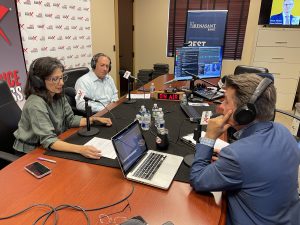
Branding was an overarching theme in this edition of Family Business Radio, as business leaders Sarah-Anne Wildgoose, Richard Rimer, and Scott Whitten joined host Anthony Chen. Sarah-Anne discussed how she helps her clients tell stories through compelling graphic design. Richard Rimer discussed how he works with business owners to safeguard their branding through trademark protection. Scott Whitten shared how his firm solves brand marketing needs with branded merchandise, printing, apparel, and more.

Family Business Radio is underwritten and brought to you by Anthony Chen with Lighthouse Financial Network.

SAW Design Studio, LLC

Visual Storytellers designing “Custom Graphics and Imagery” for digital and print media. Partnering with businesses to understand goals, and budgets. Blending Marketing Research, Branding, and Strategic Targeting ensure clients are reaching their customers. Specializing in logos, brochures, infographics, postcards, packaging, tradeshows, newsletters, e-books, sales playbooks including PowerPoint. Full campaigns provide clients with maximum exposure positioning them for a ROI. We focus on building client relationships to understand their mission, vision, and value, so custom designs reflect the business communicating their message clearly, concisely and consistently.

Website | Instagram

Sarah-Anne Wildgoose, Owner & Head Designer, SAW Design Studio, LLC

Sarah-Anne Wildgoose, Owner & Head Designer, SAW Design Studio, LLC

After completing her Bachelor of Science in Industrial Design from the University of Cincinnati, Sarah-Anne started her design career in the medical field with Johnson & Johnson. After moving to New England, she worked for Tupperware and Johnson & Johnson Orthopaedic earning two patents for her surgical instrumentation designs.

For 10 years she ran her Design Firm creating work for companies that included Schick, Georgia Pacific, and many others. This consulting business led her to step into the Manager of Marketing position for the Kochek Company designing for print, and digital assets improving their Brand recognition in their industry.

She started teaching in the Industrial Design department at the Rhode Island School of Design in 1998. Classes have included a diverse combination of studios and presentation courses blending her passion for design and industry knowledge. She focuses on Design Thinking and the utilization of best design practices.

As Digital Arts Department Head at Pomfret School in Pomfret, CT, she developed a course series of making and technological skills encouraging students to discover their passion for exploring, creating, and designing. She taught in the Digital Modeling and Fabrication Department at IYRS School of Technology & Trades instructing Design Principles, CAD software, 3D printing, and laser cutting.

Moving to the Atlanta area 2 years ago she relaunched her Graphic Design, Branding, and Marketing business, SAW Design Studio, offering custom design solutions for digital and print media positioning clients for growth through increased market share.

LinkedIn

Initiating Protection

Initiating Protection provides brand protection services to businesses of all sizes, and during all portions of a brand’s life cycle. They accomplish this by creating a personal connection with clients, using both modern software and old-fashioned relationships. Initiating Protection recognizes that each brand is unique, as are the needs of each brand owner.

They do not offer a “one size fits all” plan. Instead, they begin every relationship with a free 30-minute consultation to understand the pain-points and goals of the client. At the end of the meeting, they can present customized options along with pricing for those options.

One unique product offered by Initiating Protection is its Brand Health Assessment. This product allows businesses to understand three crucial things about their brands: how much risk does their brand pose to their business; how strong are the company’s rights in their brand; and what steps could the company take to enhance its rights in the brand. In summary, this assessment highlights the risks and opportunities associated with their brand, and Initiating Protection is currently charging only $275 to help small businesses get this important information.

Company website | LinkedIn

Richard Rimer, Managing Partner, Initiating Protection

Richard Rimer, Managing Partner, Initiating Protection

Richard is a husband and father of four daughters. He also lives with his two female dogs and his mother-in-law. Yes, he is used to being outnumbered. Think of Richard next time you need hair braided or a good dad joke. Richard is a proud alum of the University of Georgia. The Bulldogs are his second favorite team, only behind the Braves. Yes, it’s been a good 12 months for him.

Richard loves solving puzzles and helping people through challenging situations. These two passions helped him coach over 30 girls’ soccer teams and serve him well in his role as brand counsel.

Richard helps businesses protect their brands. He has a broad-based IP practice that includes consultation, implementation and strategic planning for domestic and international trademark and domain name registration and enforcement. Richard regularly assists clients with trademark clearance, investigation, and enforcement of branding rights, gaining rights before both the US Patent and Trademark Office, defending rights before the Trademark Trials and Appeal Board, and general problem-solving for advertising, copyright, branding and trademark issues. Additionally, he has advised clients in the preparation and implementation of trademark manuals, licenses, purchase and sale of intellectual properties, internal processes for the capture and creation of IP rights, and intracompany agreements.

LinkedIn

Proforma OnePoint

Proforma OnePoint is based out of Marietta, Georgia, and is a part of Proforma, a leader in the Printing and Promotional Products Industry. Proforma is a $550 million dollar global marketing solutions provider and an award-winning industry leader since 1978 with more than 750 member offices and 50,000 clients worldwide. Proforma partners with an extensive network of Print, Promotional and Apparel manufacturers and suppliers, which creates buying power that’s second to none, making them the One Source for all your brand marketing and graphic communications needs.

Proforma OnePoint has assembled a complete offering of services and products to handle all of your business needs. They are your one point of access to the top marketing solutions, products, innovators and manufacturers across the country and globally. Imagine how many solutions and ideas you will have at your disposal. No matter the project or the budget, they are your full-service marketing products resource.

Proforma OnePoint applies creativity and innovation to your business challenges, from the development of brochures and promotional items to the execution of marketing campaigns and eCommerce solutions, making them the One Source for all your brand marketing and graphic communications needs.

Company website | LinkedIn | Facebook

Scott Whitten, CEO, Proforma OnePoint

Scott Whitten, CEO, Proforma OnePoint

Scott Whitten helps businesses put their brand and message into the daily lives of their customers through Graphic Design, Printed Materials, Signage, Promotional Items, Uniforms, Apparel and Online Corporate stores.

OnePoint simplifies the purchasing of these products and services by offering a “one point” of contact to create, produce, and execute endless possibilities for customers to engage with your brand. Clients save time and money not having to manage multiple vendors and get the most competitive prices in the industry with our $500 million buying power of the Proforma network we are part of.

With over 25 years in design, print, and branded products, Scott welcomes the opportunity to share ideas and solutions with you.

LinkedIn

Anthony Chen, Host of Family Business Radio

Anthony Chen, Lighthouse Financial, and Host of “Family Business Radio”

This show is sponsored and brought to you by Anthony Chen with Lighthouse Financial Network. Securities and advisory services offered through Royal Alliance Associates, Inc. (RAA), member FINRA/SIPC. RAA is separately owned and other entities and/or marketing names, products or services referenced here are independent of RAA. The main office address is 575 Broadhollow Rd. Melville, NY 11747. You can reach Anthony at 631-465-9090 ext 5075 or by email at anthonychen@lfnllc.com.

Anthony Chen started his career in financial services with MetLife in Buffalo, NY in 2008. Born and raised in Elmhurst, Queens, he considers himself a full-blooded New Yorker while now enjoying his Atlanta, GA home. Specializing in family businesses and their owners, Anthony works to protect what is most important to them. From preserving to creating wealth, Anthony partners with CPAs and attorneys to help address all the concerns and help clients achieve their goals. By using a combination of financial products ranging from life, disability, and long-term care insurance to many investment options through Royal Alliance. Anthony looks to be the eyes and ears for his client’s financial foundation. In his spare time, Anthony is an avid long-distance runner.

The complete show archive of “Family Business Radio” can be found at familybusinessradioshow.com.

Tagged With: Anthony Chen, Branding, Family Business Radio, graphic design, Initiating Protection, Lighthouse Financial Network, OnePoint Proforma, print products, Proforma OnePoint, Richard Rimer, Sarah-Anne Wildgoose, SAW Design Studio, Scott Whitten, swag

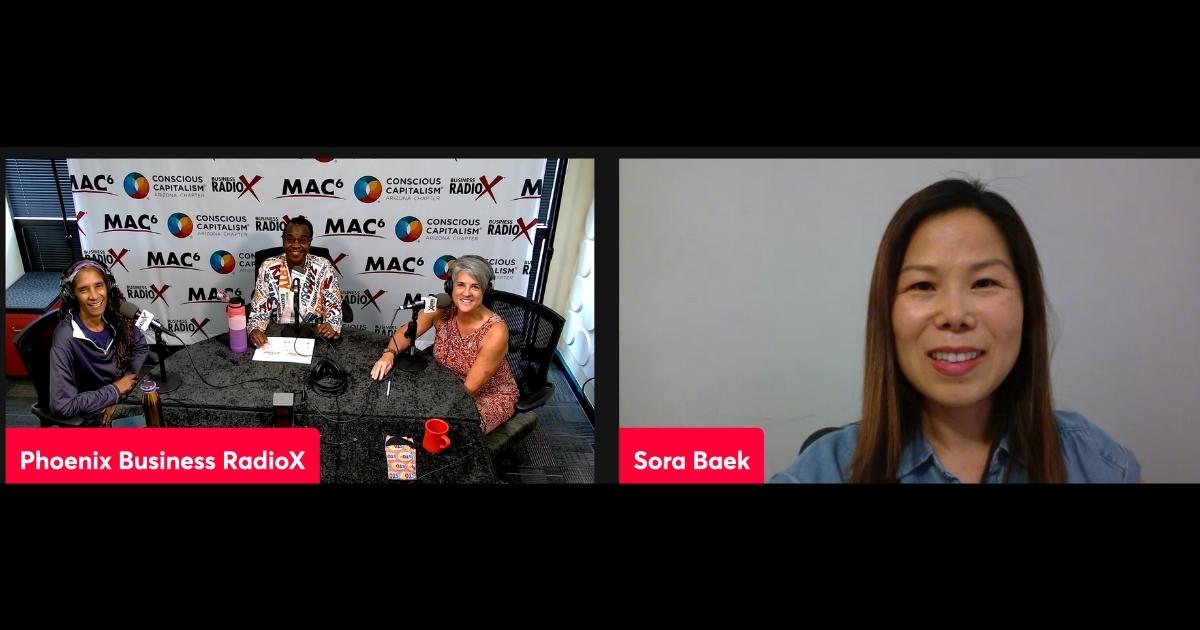
Sora Baek and Camilla Ross with Emerson Theater Collaborative and Karen Loomis with No Moss Brands

September 26, 2022 by Karen

Sora-Baek-and-Camilla-Ross-with-Emerson-Theater-Collaborative-and-Karen-Loomis-with-No-Moss-Brands-feature
Phoenix Business Radio
Sora Baek and Camilla Ross with Emerson Theater Collaborative and Karen Loomis with No Moss Brands
Loading
00:00 /
RSS Feed
Share
Link
Embed

Download file

Sora-Baek-and-Camilla-Ross-with-Emerson-Theater-Collaborative-and-Karen-Loomis-with-No-Moss-Brands

Sora Baek and Camilla Ross with Emerson Theater Collaborative and Karen Loomis with No Moss Brands

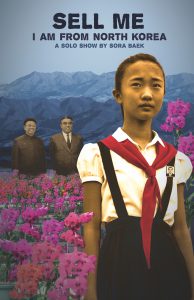
Sora-Baek-Phoenix-Business-RadioSora Baek (Writer/Performer) is an award-winning actor, writer and producer from South Korea. SELL-ME-POSTER

She has been featured on News 12 NJ and Voice of America. Select acting theater credits include: SELL ME: I am from North Korea (International Human Rights Festival, NYC, Jersey City Theater Center), The Storm, A Christmas Carol, 400 Parts Per Million, and Sworn Virgin (NYC and International Tour) with Blessed Unrest, Who’s Afraid of Virginia Woolf (Calaveras Repertory Theatre), Odd Couple, and A Midsummer Night’s Dream (Curious Frog).

Sora received Best Actress at the Epidemic Film Festival in San Francisco. She works with Only Make Believe(NYC) where she creates interactive theater with children in hospitals and care facilities.

She is an associate member of an internationally acclaimed theater company, Blessed Unrest.

Connect with Sora on Facebook and Instagram.

ETC_Logo_CMYK

The Emerson Theater Collaborative’s mission is to serve youth, under-represented communities and artists with an emphasis on diversity, by producing innovative and exhilarating theater in Southeastern Connecticut and Sedona Arizona. ETC explores timely themes and issues through new, original works and modern theatrical classics. We develop and nurture both emerging and professional artists, and collaborate with area businesses,

Developing and producing innovative theater with a focus on diversity, equity and Inclusion, youth, and the under-represented with both emerging and professional artists.Our goals include reaching inner city youth through educational theatrical programming, to support our local communities by providing free admission to our performances to low-income families and donating profits to humanitarian causes.

Camilla-Ross-Phoenix-Business-RadioCamilla Ross is an award winning, producer, actor and president of the company Emerson Theater Collaborative. She is also the Executive Director of the Arts Academy of Sedona formerly known as the Sedona Arts Academy in the VOC.

A Navy and Army Veteran and an adjunct Instructor of Business Classes at Three Rivers Community College. I’ve been on a quest to create ART from a performers’ perspective. To support playwrights whose vision is to change the world by telling a story.

To see the ALL and not just the ONE. As we come into our 14th year as a company the Emerson Theater Collaborative continues its mission of allowing people to experience the human condition live, upfront and personal. By bringing you theatrical works that can change or alter the human condition is of grave importance.

Follow The Emerson Theater Collaborative on Facebook and Instagram.

No-Moss-Brands-logo

No Moss Brands is a branding, Marketing and Advertising Company in Phoenix, AZ that specializes in social change and non-profits.

Karen-Loomis-Phoenix-Business-RadioKaren Loomis left a successful corporate career where she directed the branding, marketing and advertising efforts of a major retailer and finance company with over 115 stores in 20 major markets across the U.S. Through her unique branding and marketing approach the company tripled their annual revenue ($500M to $1.5 B).

Her professional branding experiences also include a two year stint with an advertising agency where she helped both consumer and business-to business clients increase their brand awareness and sales.

Karen realized several years ago, she does her best work with small business owners and entrepreneurs who perhaps do not have the resources of large corporations, but still want to see the same kind of success…doubling or tripling their income with a “memorable” brand.

Connect with Karen on LinkedIn and follow No Moss Brands on Facebook.

Tagged With: advertising for small businesses and non-profits, Branding, Camilla Ross, Emerson Theater, marketing, North Korea theater, North Korean defectors, One woman show, Sedona Theater, Theater activism, theatre, Unforgettable Live

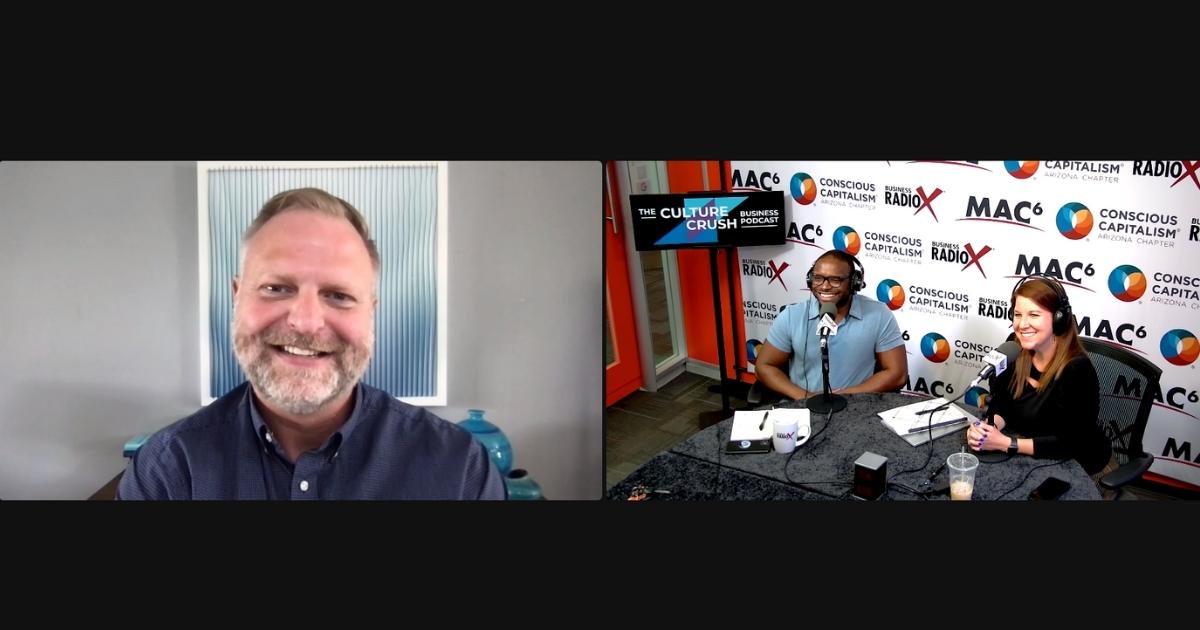
Humanity and Mental Health in the Workplace E26

August 25, 2022 by Karen

E26-Humanity-and-Mental-Health-in-the-Workplace-feature
Phoenix Business Radio
Humanity and Mental Health in the Workplace E26
Loading
00:00 /
RSS Feed
Share
Link
Embed

Download file

E26-Humanity-and-Mental-Health-in-the-Workplace

Humanity and Mental Health in the Workplace E26

Authenticity, humanity, and integrity are just a few of the words to describe the two gentlemen on this show and the direction that the conversation went in.

When it comes to pairing guests for the Culture Crush Business Podcast, we pair strategically. We tend to pair a company that has a great culture with a company that offers resources to improve culture. For this show, each of the two companies that were on the show fit into both of these categories. BOTH companies are growing a great culture while ALSO supporting companies with improving their company culture.

This conversation started strongly in the direction and importance of DEI in the workplace and supporting individuals in being their authentic selves in a psychologically safe work environment. Psychological safety is a shared belief held by members of a team that the team is safe for interpersonal risk taking. It gives the employees the opportunity to disagree and still be supported in the workplace.

This was part of the bigger conversation of things that leaders and companies can do to support the mental health of their employees. Companies can’t just talk about supporting mental health- they actually need to take action on it.

We walked away with tons of examples on how to do this!!

  • Ask the right questions
  • What am I doing and what is the company doing that can be improved on?
  • How are you doing professionally?
  • How are you doing personally?
  • Have open visibility to what goes on the calendar
  • Therapy sessions
  • Dentist Appointments
  • Doctor appointments
  • A block on the calendar for self care
  • Support from leadership to the staff in being their own authentic self
  • Provide a stipend that allows them additional mental health support
  • Allowing them the time for self care during the work day
  • Letter from the CEO articulating the importance of mental health
  • Putting in boundaries for when emails can be sent to the staff

When trying to find out more info about Hummingbird Humany, head to their website www.hummingbirdhumanity.com and go to the resources tab where they offer free resources to the Hummingbird community. From the website, visitors can also sign-up for their weekly newsletter or follow their social media accounts.

evolvedMD has a variety of resources listed at their website as well. Head to their main page, https://www.evolvedmd.com/ and then head over to their resources and news tab.

Both Sentari and Brian are on podcasts out there as well! Make sure to find them and follow them!

Let’s just say this conversation will definitely have to have a Part B to it!

HHM-KLogo-TextOnlyv1

Hummingbird Humanity is committed to amplifying the voices of the unheard.

Hummingbird’s offerings include a consulting practice which partners with companies to build human-centered workplace cultures through assessment, strategy, and implementation; a speakers bureau featuring diverse voices who share about their lived experiences and offer suggestions for tangible action in their message; a growing collection of children’s books and resources for grown-ups to have age-appropriate diversity conversations with kids; and a soon to be launched practice for coaching and facilitation helping leaders develop their skills to be inclusive and people-centered.

Brian-McComak-HeadshotBrian McComak is a consultant, speaker, author, and facilitator with over 20 years of experience in Diversity, Equity, & Inclusion, HR, company culture, change management, internal communications, and employee experience.

He is the founder and CEO of Hummingbird Humanity, a consulting firm that cultivates and champions inclusive workplace cultures and human-centered leadership.

Connect with Brian on LinkedIn and Instagram.

evolvedMD-logo

evolvedMD is leading the integration of behavioral health services in modern primary care. Uniquely upfront and ongoing, our distinctive model not only places but embeds behavioral health specialists onsite at your practice. We offer an economically viable and better way to integrate behavioral health that ultimately drives improved patient outcomes.

Sentari-Minor-Headshot-CroppedSentari Minor is most passionate about bringing the best out of individuals and entities.

His love languages are strategy, storytelling, and social impact. As Head of Strategy for evolvedMD, Mr. Minor is at the forefront of healthcare innovation with a scope of work that includes strategy, corporate development, growth, branding, culture, and coaching.

Prior to evolvedMD, he worked with some of the Nation’s most prominent and curious CEOs and entrepreneurs advising on philanthropy, policy, and everything social good as Regional Director of Alder (formerly Gen Next) [PHX + DAL + SFO] and strengthened social enterprises as Director at venture philanthropy firm, Social Venture Partners.

A Phoenix native, Mr. Minor continued his education in the Midwest and is an alumnus of DePauw University in Greencastle, Indiana where he studied English with an emphasis in Creative Writing. He is also a member of Class IV of the American Express Leadership Academy through the Arizona State University Lodestar Center. If you want to profile him: he’s an ENTJ (Myers Briggs), a Maverick (Predictive Index), and trimodal Blue/Green/Red (Emergenetics).

Where does he shine? In high-touch stakeholder engagement, capital raising, public relations, and strategic planning. With his background, Mr. Minor serves on the board of directors for a diverse set of social impact organizations, as a venture mentor for socially conscious companies nationwide, and as a facilitator for businesses who want organizational clarity.

Committed to strengthening brands doing good in the world, Mr. Minor speaks nationally and publishes often on strategy, marketing, leadership, capacity building, social entrepreneurship, and engaging high-profile leaders in the dialogue of today. For his impact on business and community, he was honored among the Phoenix Business Journal’s “40 Under 40” class of 2022.

When he’s not busy changing the world, self-care to him looks like working out, stirring the pot on social media, being an amateur author, and spending time with the people who make him smile.

Connect with Sentari on LinkedIn and Instagram.

About Culture Crush

Culture is not just a tag word to be thrown around. It is not something you throw in job descriptions to draw people to applying for jobs within a company.

According to Marcus Buckingham and Ashely Goodall in their book Nine Lies About Work, “Culture is the tenants of how we behave. It’s like a family creed. This is how we operate and treat each other in the family.”CultaureCrushKindraBanner2

As a growing company- Culture Crush Business Podcast is THE culture improvement resource that supports companies and leaders.  Our Mission is to improve company cultures so people WANT to go to work. Employees and leaders should like where they work and we think this is possible.

Within the company: Culture Crush has Vetted Resources and Partnerships with the right people and resources that can help improve your company culture.

On this podcast:  We focus on everything surrounding businesses with good company culture. We will talk with company leaders to learn about real-life experiences, tips, and best practices for creating a healthy work environment where employees are finding joy and satisfaction in their work while also striving and growing within the company.  We also find the companies that offer resources to help improve company culture and showcase them on the show to share their tips and tricks for growing culture.

About the Host

ABHOUTHOSTHEADSHOT

Kindra Maples  is spartan racer, past animal trainer, previous magician’s assistant, and has a weakness for Oreo cookie shakes. Her journey working with people actually started working with animals as a teenager (don’t worry we won’t go that far back for her bio).

She worked for over 15 years in the zoo industry working with animals and the public. Her passion of working with animals shifted into working with people in education, operations and leadership roles. From there her passion of leadership and helping people develop has continued to grow.

Then came the opportunity for leading  the Culture Crush Business Podcast and she jumped on it. Leadership, growth, and strong company cultures are all areas that Kindra is interested in diving into further.

Shout Outs

We want to thank a few people for their behind the scenes effort in helping this relaunch to come to life. James Johnson with Tailored Penguin Media Company LLC.– It is a small, but powerful video production company with a goal to deliver the very best by articulating the vision of your brand in a visually creative way. Gordon Murray with Flash PhotoVideo, LLC. -Flash Gordon has been photographing since high school and evolving since then with new products that will equip, encourage, engage, and enable. Renee Blundon with Renee Blundon Design – She is not only one of the best free divers (that’s not how she helped with the podcast) but she is great with graphics design and taking the direction for the vision that you have while also adding creative ideas to bring to your vision to life.

These are just a few of the folks that supported the relaunch of the podcast. If you would like to be part of the Culture Crush team or would like to support underwriting the show- please reach out: info@culturecrushbusiness.com

Tagged With: Behavioral Health Integration, Branding, Culture, diversity, employee experience, Human-Centered, inclusion, mental health, workplace wellness

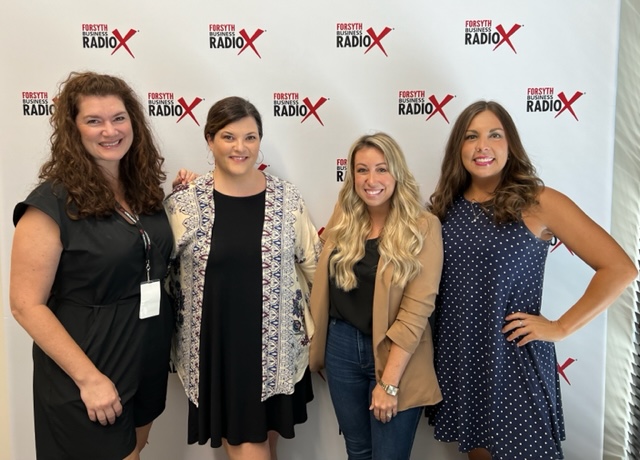
“FOCO Talks” Digital Marketing Discussion featuring Lindsey Wilkes of Orange 142, Margaret Buell- D’Ambrosi of Buell Productions & Amanda Pearch of Forsyth Business RadioX with host Michelle Daniels

July 28, 2022 by Amanda Pearch

FoCo Talks
FoCo Talks
"FOCO Talks" Digital Marketing Discussion featuring Lindsey Wilkes of Orange 142, Margaret Buell- D'Ambrosi of Buell Productions & Amanda Pearch of Forsyth Business RadioX with host Michelle Daniels
Loading
00:00 /
RSS Feed
Share
Link
Embed

Download file

Digital Marketing Discussion

FOCO TALKS, the official #Chambercast of the Forsyth County Chamber of CommerceSUBSCRIBE to “FOCO Talks” to enjoy past and future episodes. 


Lindsey Wilkes Sr. Digital Sales Manager at Orange 142 

Utilizing their marketing intelligence platforms, the team at Orange142 has one goal: create bottom-line results. With organic and paid media experience in tourism, wealth management, hospitality, e-commerce, automotive, higher education, economic development, aviation and more – Lindsey and Team develop custom programs that fit the needs of every brand.


Margaret Buell-D’Ambrosi is an Award Winning 20 year video production veteran and owner/operator of Buell Productions. She is passionate about video production and Real Estate Photography and has found success as a woman producer, director, writer, shooter and editor. In 2016, she stepped out to open her own video production company, Buell Productions & Services, LLC. She operates from the suburbs of Atlanta, GA. 


Amanda Pearch Principal & CEO of Forsyth Business RadioX

An experienced, enthusiastic speaker, radio show host and podcaster, Amanda has interviewed hundreds of community leaders and dignitaries. With a passion for connecting, Amanda teaches people how to strategically develop business & relationships, using podcasting as a catalyst. Business RadioX is a community focused company that produces, promotes, distributes, and markets online radio shows and podcasts for businesses of all sizes.


Host, Michelle Daniells is the VP of Business Development at the Forsyth County Chamber of Commerce. They are the voice of business, providing community leadership, information and solutions to foster a strong economic environment and a superior quality of life in Forsyth County. Michelle and team take great pride in creating events centered around connectivity and growth. To learn more about membership and Chamber offerings, visit www.focochamber.org. Check out their YouTube channel.


Visit Digital Marketing Academy – Year 2 (focochamber.org) to register

SERIES PRESENTED BY:


“FOCO Talks” is presented by the Forsyth County Chamber of Commerce

Broadcasted LIVE from the Forsyth Business RadioX Studio in Cumming, Georgia

Produced by Amanda Pearch

Tagged With: amanda pearch, Branding, content creation, Digital Learning, eCommerce Photography, FOCO Talks, forsyth business radiox, Forsyth County Chamber of Commerce, Lindsey Wilkes, Margaret Buell-D'Ambrosi, marketing, Michelle Daniels, Orange 142

Jeff Armacost, Whole Brain Creative

July 21, 2022 by John Ray

Jeff Armacost
North Fulton Studio
Jeff Armacost, Whole Brain Creative
Loading
00:00 /
RSS Feed
Share
Link
Embed

Download file

Jeff Armacost

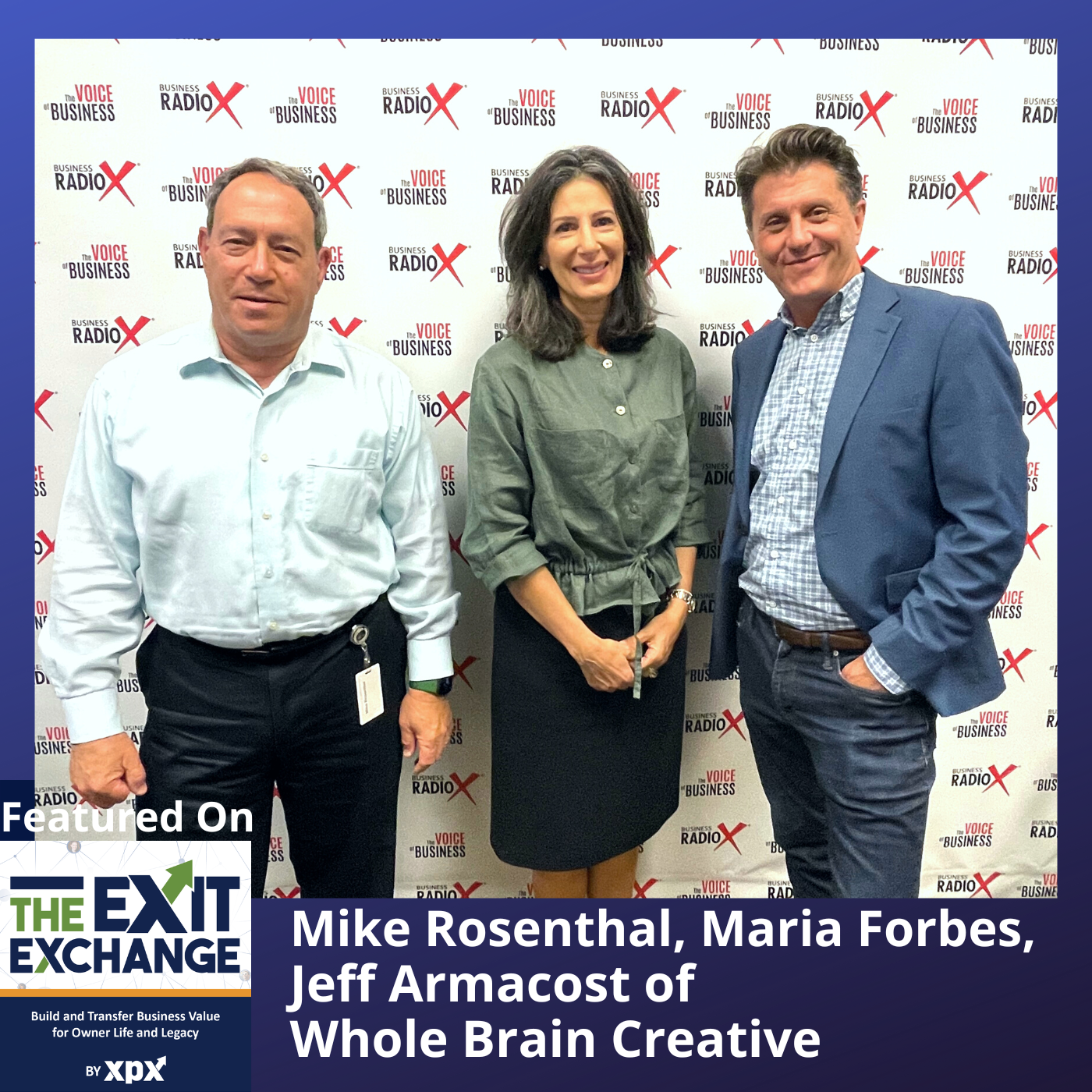
Jeff Armacost, Whole Brain Creative (The Exit Exchange, Episode 15)

Branding is foundational for all businesses, says Jeff Armacost. Jeff joined this edition of The Exit Exchange to discuss several different aspects of branding, including defining what branding is and what makes a brand successful, the role of branding in building and maintaining the value of a business, and much more.

This episode of The Exit Exchange was co-hosted by Maria Forbes and Mike Rosenthal and was produced in the North Fulton studio of Business RadioX® in Alpharetta.

Whole Brain Creative

Whole Brain Creative empowers ambitious entrepreneurs and visionary leaders.

They help them create, build, and grow brands for B2B, Higher Education, Medical and Medical Technology, Technology, Organizations, Visionary start-ups, Non-profits, Entrepreneurs, and much more. They love the work they do and love collaborating with an outstanding group of clients.

Each year Whole Brain serves a diverse group of clients. But always with one thing in common: to create brands that differentiate, connect, and stand out.

KEY SERVICES • Naming and Logo • Brand Launch and Rebrand • Internal Branding Initiatives • Breakthrough Brand Messaging – Tagline, Headlines, Elevator Speech, Core Content • Brand-Powered Websites • Killer Concepts and Campaigns

Company website | LinkedIn | Facebook

Jeff Armacost, Chief Brand Guy, Whole Brain Creative

For 20+ years Jeff Armacost has guided successful, standout brand development for over 100 companies and organizations of all kinds. Jeff gets in close with his clients, gets up to speed fast, listens well, and distills the powerfully simple story and branding that presents them in the best possible way.

Business owners and CEOs call on him as a thinking partner in building their brand, and a cost-effective solution for ongoing branding, brand launches, and key internal branding initiatives. Fast-growing small businesses call on him when it’s time for a serious rebrand or on-the-fly brand refresh that positions them to reach big goals and outpace their competition.

Experienced business advisors pull Jeff in – and if needed, his team of graphic design and web development – to add big-time brand power to their client’s marketing campaigns, new website projects, and more.

LinkedIn

The Exit Planning Exchange Atlanta

The Exit Planning Exchange Atlanta (XPX) is a diverse group of professionals with a common goal: working collaboratively to assist business owners with a sale or business transition. XPX Atlanta is an association of advisors who provide professionalism, principles, and education to the heart of the middle market. Our members work with business owners through all stages of the private company life cycle: business value growth, business value transfer, and owner life and legacy. Our Vision: To fundamentally changing the trajectory of exit planning services in the Southeast United States. XPX Atlanta delivers a collaborative-based networking exchange with broad representation of exit planning competencies. Learn more about XPX Atlanta and why you should consider joining our community: https://exitplanningexchange.com/atlanta.

The Exit Exchange is produced by John Ray in the North Fulton studio of Business RadioX® in Alpharetta. The show archive can be found at xpxatlantaradio.com.

John Ray and Business RadioX are Platinum Sponsors of XPX Atlanta.

Tagged With: Branding, Jeff Armacost, Maria Forbes, marketing, Mike Rosenthal, The Exit Exchange, Whole Brain Creative, XPX Atlanta

Jamie Cox, Brand Strategist and Designer

March 31, 2022 by John Ray

Jamie Cox
Nashville Business Radio
Jamie Cox, Brand Strategist and Designer
Loading
00:00 /
RSS Feed
Share
Link
Embed

Download file

Jamie Cox

Jamie Cox, Brand Strategist and Designer (Nashville Business Radio, Episode 40)

With a breadth of experience in the branding and marketing space, brand strategist and designer Jamie Cox took the leap in early 2020 to open her own business. Acknowledging that the timing wasn’t ideal, Jamie discussed her journey with host John Ray and shared how she made it work. She also talked about her approach to working with solopreneurs, the need for clients to keep an open mind, content creation, spin classes(!), and much more.  Nashville Business Radio is produced virtually from the Nashville studio of Business RadioX®.

Jamie Cox, Brand Strategist and Designer

Jamie Cox, Brand Strategist and Designer

Jamie Cox is a brand strategist and designer in Nashville, TN.

She works one-on-one with business owners and entrepreneurs to help them identify their brand purpose and share it with their target customers.

Jamie began her career as the Creative Services Manager at Visit Franklin. She started her business in what she thought was the middle of the COVID-19 pandemic, in May of 2020. She bet on herself—leaving her corporate career as a Creative Director to pursue something that would make her happy.

Named one of Destinations International’s 2017 30 Under 30, she graduated from Indiana University – Bloomington with a BS in Arts Management and a focus in Studio Art. She’s had the pleasure of speaking at conferences like Destinations International and the Wyoming Governor’s Conference on Tourism.

This isn’t her first business venture. From 2017 to 2019, Jamie ran a cookie company, The Ruby Cookie. Jamie has a lot of hobbies to keep her busy. In addition to her work as a consultant, she coaches spin classes at KrankFIT in Nashville. Always one to dabble in something new, Jamie’s latest project is restoring a 1920’s Chandler & Price Craftsman Press.

When she’s not working, spinning, or sleeping, Jamie can be found traveling with her husband, Cory, and cuddling with her rescue pups, Georgia and Snoop.

Company Website | LinkedIn | Instagram

Questions and Topics Discussed in this Episode

  • What is brand strategy and why it’s important for every business
  •  What it’s like to work with a brand strategist
  • Content creation and marketing to build a brand.
  • Leaving a corporate job and moving into consulting
  • What else are you up to?

Nashville Business Radio is hosted by John Ray and produced virtually from the Nashville studio of Business RadioX®.  You can find the full archive of shows by following this link. The show is available on all the major podcast apps, including Apple Podcasts, Spotify, Google, Amazon, iHeart Radio, Stitcher, TuneIn, and others.

Tagged With: Brand Strategist, Branding, Jamie Cox, marketing, Nashville Business Radio, Solopreneur, spin class

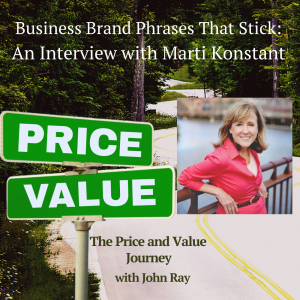
Business Brand Phrases That Stick: An Interview with Marti Konstant

March 16, 2022 by John Ray

Marti Konstant
North Fulton Studio
Business Brand Phrases That Stick: An Interview with Marti Konstant
Loading
00:00 /
RSS Feed
Share
Link
Embed

Download file

Marti Konstant

Business Brand Phrases That Stick: An Interview with Marti Konstant

How should we as professional services providers address our business branding? How can we develop branding which is memorable? Marti Konstant, noted speaker, coach, and best-selling author, joined John Ray to address these questions and much more. Marti recounted her own journey, from teenage years in a full body brace to Silicon Valley marketing executive, to running her own successful services practice, and how that career arc shaped her business branding. She spoke from her own experience on how to handle a branding process that can be overwhelming, examples of compelling brand phrases and the professionals who developed them, how effective branding affects pricing, and much more. The Price and Value Journey is presented by John Ray and produced by the North Fulton studio of Business RadioX®.

Marti Konstant, Workplace Futurist

Marti Konstant, Workplace Futurist

Marti Konstant is a workplace futurist with an agile mindset. She is a career growth analyst, author, speaker, and founder of the Happy Profitable Employee Project™.

An early adopter of workplace trends and technology change, her career path includes artist, designer, entrepreneur, technology marketing executive, business advisor, and investor. Starting her profession in the tech sector launched a style of deliberate career growth, guided by personal preferences.

As a marketing professional, Marti managed marketing programs for companies like Samsung Mobile, Apple, Tellabs, Platinum Technology, Clear Communications, and Open Kernel Labs (OK Labs). As a chief marketer in the mobile security space, her digital demand generation and market awareness strategies resulted in the acquisition of OK Labs by General Dynamics

What started out as a quest to fine-tune her evolving career sparked a research project, workshops, and book, where future of work and career agility are central themes. Her story-driven book, Activate Your Agile Career: How Responding to Change Will Inspire Your Life’s Work, is the result of 120 interviews and custom research.

She earned a Bachelor of Fine Arts in Graphic Design from the University of Illinois and holds a Master of Business Administration from the University of Chicago Booth School of Business. A persistent optimist and prolific photographer, she lives in Chicago with her husband.

Website | LinkedIn| Twitter

TRANSCRIPT

John Ray: [00:00:00] And hello again, everyone. I’m John Ray on the Price and Value Journey. Today, we’re going to chat with Marti Konstant, and Marti is a friend of mine who – we were having a conversation that resulted in this topic, and I’ll talk about the topic in a minute. But first, let me introduce Marti.

John Ray: [00:00:18] Marti is a workplace futurist. She’s the best-selling author of Activate Your Agile Career, which is a great book, by the way. She has an MBA from the University of Chicago Booth School of Business. She’s a former technology executive from Silicon Valley. I want to say more about that in just one second. She’s been featured in a variety of media outlets and has been named a top career influencer to watch. She’s worked with companies like Samsung, Dow Jones, and Apple. And her areas of expertise include the future of work, career development, the workplace, personal branding, workplace trends and ideas, agility, and I’m sure there’s some other things we could talk about. It makes me tired to read that list, Marti. You’re awesome. Congratulations on all that great work.

Mari Konstant: [00:01:12] Thanks so much for that, John. I am so psyched about this conversation because I’ve been following your work for quite some time now.

John Ray: [00:01:19] Well, thank you. I’m honored to have you on the show. Now, one of the things we just need to point out here is that Marti has tremendous experience that a former technology executive from Silicon Valley, all that experience really relates to branding and specifically B2B branding. And that’s where some of our recent chat, we were talking about business brand phrases for professional services firms. And that’s the whole notion here of this conversation is to talk about that as it relates to professional services providers. So, let’s start, Marti, by maybe talking about your own branding journey when you went out on your own and started your practice.

Mari Konstant: [00:02:08] Sure. It really starts long before that. When I was 12 years old, I was immobilized. I was in a full-body brace through my high school years and I was constricted. I couldn’t move and I couldn’t do sports and it was hard to get around. And what I learned from that experience is, well, first of all, I learned how to dream about mobility, agility, flexibility, all the things that I wanted to be doing. And I learned what it was like to go from constriction to unrestricted access to the world. And this was a very powerful backdrop for the type of work that I did. I started out in the creative field, got into branding, got my MBA, got into marketing management, and was managing growth-stage tech company brands as well as certain aspects of large company brands at that time. And right now, how has this affected my brand? Well, I invented the word career agility 10 years ago. It was a term that did not exist. So that is one way. And the phrase that I often used during that time and throughout the book is, if you don’t, it’s adapt or die. It’s flex or fade. It’s the contrast. It’s stagnation or it is growth. Why wouldn’t you want to grow?

John Ray: [00:03:47] For sure. So, this may seem like an obvious question, but I find that sometimes obvious questions give unexpected answers. So, I mean, how do you define a business brand phrase?

Mari Konstant: [00:04:05] I coined the business brand phrase terminology because people were getting stuck in making it a big, long initiative that a lot of small businesses can’t even fathom doing. They can’t fathom doing something for six to 12 months or even three to six months. And I noticed when I was managing brands in the tech space, and as I formed my own brand as a workplace futurist and as a career decoder, I noticed that things that I thought were really easy, coining phrases that didn’t exist, talking about yourself in a way that’s memorable. I just thought that everybody did that. And I realized that if you can just use a phrase and you don’t have to come up with the whole perfect elevator pitch, you can be memorable because that’s all branding is. It’s about being top of mind. It’s about being memorable when someone else wants to work with you for your services or your product.

John Ray: [00:05:22] So, I’m curious about – it just strikes me about the workplace agility phrase that you invented combines something about your life. You described your teenage years and the pain and development, I guess, that you went through because of that, right, and then, your expertise, the workplace. It combines those two things. Talk – say more about that. Is there something significant in that?

Mari Konstant: [00:05:59] Yeah. I think this idea of agility. I just thought, you know, as one who was prevented from moving for a few years, I just thought, you know, if you are agile and you are flexible, anything is possible. So, all of those self-help books like you can if you think you can are true. And you can’t do if you think you can’t, that’s also true. And I think the idea of agility has really resonated well in this area of pandemic and post-pandemic that if you are able to adapt and be agile in your thinking, you are going to future proof just about anything you’re doing because every business, every industry will be reinvented in the next 10 years. That is my futurist self stating this.

John Ray: [00:07:08] Got it. So, I can hear – so, you know, our audience here is solopreneurs, small professional services firms. You’ve got your own practice. I can hear folks saying, you know, look, I do wills and trusts or as an attorney or, you know, I do social media for other clients. I mean, what – you know, I’m a professional services provider here, Marti, not a can of green beans. So, I mean, how, how – why do I need to worry about a business brand phrase per se?

Mari Konstant: [00:07:44] Well, when you’re networking and you say something like I’m a trusted advisor, how many other businesses do you think have that as their tagline? I mean, let’s just guess. Let’s just guess, John.

John Ray: [00:07:59] Oh, 50 million. I don’t know.

Mari Konstant: [00:08:02] Yeah. It’s – I don’t even have the number. What I do know is, it starts to sound trite, and then I ask myself, well, what do people really mean when they say that? Well, sometimes they mean that they are an unapologetic truth-teller. Sometimes they mean that they have your back. Sometimes they mean that they have vision in a way that they can see through things that you can’t, and I think about taking these types of phrases. And if you’re at a networking event or at a dinner event and you make that tangible is what you do for people. People will remember that. They’ll remember things. Like, I’ll use the idea of my surgeon. He was working on my shoulder and I said, “You know, I got to know. Like, is this going to work?” And he could have said, “You know, I’m a surgeon. I’m a really good surgeon.” But what he told me, he told me something quantitative and exciting, and he said, “Marti, I have 100% confidence that you will have a full recovery. I have done 9000 shoulder surgeries.”

John Ray: [00:09:17] Oh, wow.

Mari Konstant: [00:09:18] Now I felt going into that surgery, I didn’t even have a doubt in my mind, and they tell you so much is about mindset. So, who wouldn’t want to have a doctor like that that exhibits such confidence gave me a metric. So, sometimes it’s a metric that you could put out there. That could be part of your branding phrase. It doesn’t have to be a tagline, and I’ve got lots and lots of examples. Like, a nonprofit executive that says that they do all these wonderful things. And, oh, by the way, they’re able to turn red into black. Everything is hemorrhaging right now in the nonprofit sector in, say, things like, you know, the creative arenas like orchestras and plays and things like that. Who wouldn’t want somebody that knows how to turn red into black? They could just say, “Well, I’m a CFO,” or, “I am a bean counter and I can keep things organized for you.” Well, that’s not selling me confidence.

John Ray: [00:10:20] And it’s not very memorable.

Mari Konstant: [00:10:23] No. And it’s – part of it is it’s just that confident piece of it that seems when you use something trite when you use a phrase that’s trite like the trusted advisor or there’s a number of them. I mean, maybe you can come up – maybe – what do you think people say that’s like – like they say, “Well, you know, on time, on target, on budget.” Those are good things, right?

John Ray: [00:10:52] Right.

Mari Konstant: [00:10:53] But it’s not memorable.

John Ray: [00:10:55] Yeah, for sure. You know, the interesting thing here is, I think for some people is how do I come up with something that’s memorable, but I’m not sure I’m as inventive as Marti, I mean, because workplace agility is something that – you Google workplace agility, folks, you find Marti. The question is if I’m a financial adviser, let’s say, and I’m one of a bazillion financial advisers, how do I come up with something that really is unique that makes me stand out?

Mari Konstant: [00:11:31] I think you work with a person that you know you trust that can help you do that. You could also create your own group and do some brainstorming exercises. You can learn how to do some of this. I think there’s so many consultants. And I think of things that can translate to others.

Mari Konstant: [00:11:49] Like, I often run into people in the IT space and they go, “Well, you know, I integrate this and that and it doesn’t sound all that interesting.” Yet, when they tell me, well, I’m able to translate and then they say, “Well, I translate.” And I go, “Well, tell me more about that.” And then, you come up with something like the digital fluency. Like, I am multilingual. I speak tech and I speak tech translation. That’s better than saying I translate text so that everyone can understand it. Now, you can say that other phrase I translate text so everyone can understand it after you’ve said the thing about I’m multilingual and I take digital fluency to another level. You could substitute words like financial fluency in there. You can take other words and other phrases.

Mari Konstant: [00:12:23] I thought about management consulting. There’s a lot of people that do small business management consulting, how to make your businesses more profitable and more effective. And if you said something in a networking program, you said, “You know, I’m like a master chess player.” I process if-then scenarios quickly helping you and your team to focus on a decision when every second counts, or something like that. Some sort of story –

John Ray: [00:13:14] Sure.

Mari Konstant: [00:13:14] That makes it interesting and tangible. Like, what happens when small businesses have an eruption of some sort? What do they do? What is that scenario? What does it feel like? How do they make a decision? And so, you go through a series of questions like this, figure out how that feels. And the way that you can make an effective branding phrase is to put your brain and your shoes and your feet in the shoes of your customer. You have to be an outsider looking in. You have to be a beginner. You can’t be the perfect practitioner that you already are. You have to go back to the beginning and say, “Why the heck did you start this business in the first place?” Something was broken, right? You wanted to make it better. That’s the kind of stuff that needs to come out.

John Ray: [00:14:06] I’m glad you went there because that’s where I wanted to go in terms of, again, I’m going to showcase you. I mean, your business brand that sticks is really about the client. I mean, workplace agility. It’s about the client. It’s not about your expertise. It’s about what you help affect on behalf of the client. And that’s what’s I think striking about, and the difference maybe, in the effective business brands versus the non-effective ones. Don’t you, don’t you – does that make sense?

Mari Konstant: [00:14:44] Exactly. Yeah. And I have a little acronym that I use for this. It’s called mode, M-O-D-E. And it is speaking like a media, a media professional, number one, speaking like a great PR professional, being able to talk, and then actually looking from the outside, and that’s the O. And D is being able to be different, and then E, being able to look at the world with an empathetic brain. So, that’s a little bit of part of the outside looking in.

Mari Konstant: [00:15:27] If you can do those things if you can apply mode to that, and I can go into why being like a media pro is so important, but it’s just as important as being different. I think Sally Hogshead has a book coming out, Why Different Is Better Than Better. And I’ve heard numerous branding executives say this. It’s such a smart phrase because the reason it’s better than better, you know, we all talk about in tech, smarter, faster, cheaper, that kind of thing, but really different is what makes you memorable.

John Ray: [00:16:06] I love it. Folks, we’re here chatting with Marti Konstant and we’re speaking about creating business brand phrases that stick. So, we talked about clients and our prospects and how coming up with our branding from their perspective is so crucial. How did you involve your clients’ prospects in your branding or did you? How did that work for you?

Mari Konstant: [00:16:38] Okay. So, how did I get some of the phrases that I got? I will offer you a phrase that I’m using now because I also work with job seekers and right now my phrase for them is I help mid-career job seekers, that’s the target audience, mid-career job seekers, translate their experience into a visible in-demand portfolio of skills so they can find that right fit role. And how you get to that, I think what you’re getting at, John, is understanding, looking from the outside in, wearing the shoes of who it is that you’re serving, and understanding their pain and being able to approach that with empathy.

Mari Konstant: [00:17:27] So, if for the job seeker, for instance, we all know what that’s like, and I’ve coached enough people to know how painful some of these feelings are. So, being – when people don’t know where to start, like portfolio, I’m not a creative person, why do I need a portfolio of skills? Doesn’t even make sense to them? Right? So, they don’t know where to start. They don’t even know – I was on a call this morning with some mid-career folks in between roles, and they didn’t really know how to look into the camera and to be themselves and be part of that confident brand. The lighting was poor. One-half of their face was dark. I mean, you can go on and on about how this impacts your brand.

John Ray: [00:18:24] So, let me ask you this, and, again, I’m getting back to the, I guess, the perspective and it’s – I guess the reason why we would bring in a third-party consultant or someone to help us with this is because they give us that outside view. But when you developed your branding around mid-career job seekers, did you talk to some of them about this is the branding I’m considering? Or, how did you – did you involve them?

Mari Konstant: [00:19:02] Well, I started a little bit further back than that.

John Ray: [00:19:06] Okay.

Mari Konstant: [00:19:06] So, even though I’ve studied branding, I’ve been a creative person my entire career, any time, even when I was a chief marketer, I hired outside help. So, I, as a solopreneur, have probably invested more in personal branding than most small businesses, and I do it gladly because they hold the mirror up to me so that I can see myself better. And absolutely as a marketing thinker or because I’ve done market research as well, I never want a product ever without knowing what the customer is thinking about it and whether or not they buy it.

Mari Konstant: [00:19:49] Too many entrepreneurs put products out that they think is really cool, but they don’t – they’ve not consulted with a marketer and they are not a marketer at heart, so they are not understanding the value proposition. They haven’t done the types of testing, market validation we call it. What – you know, are you doing the market validation testing for your products to say, “Gee, does this look like a problem you have?” And even better yet, what problems do you have? And we will create a product for that.

John Ray: [00:20:27] Yeah. And so – I guess the question is, how do I know if I’ve got it right? I mean, you know, if I do all this work, how do I know – beyond getting a third party to really help me soundcheck it, how do I know I’ve got it right?

Mari Konstant: [00:20:46] I will tell you. When you get it right, it feels right. Even if you have one word that describes what you do, you know it in your heart and your gut and you inhabit it like no other. And the other way that you notice when you are in front of a customer and when they are shaking their heads or smiling, now we get to see people not just online but in person at times, when you can see something land, it’s palpable. It is visible. If that is not – I mean, I’m a professional speaker, too. So if people aren’t nodding their heads, they’re not smiling, they’re not interested, they’re not even looking up from their devices, I know I have lost them. And so, it’s the same thing as a business person.

Mari Konstant: [00:21:37] And that’s why when I was working in tech, market validation was so important. We wanted to know that we were solving a problem that people wanted. And then if it was a positioning piece that was more marketing-centric, you could do the same thing. You could test that – you could do the market validation for the messaging as well. You don’t just have to do it for a product.

John Ray: [00:22:04] Does going through this exercise, does it help me – as a professional services provider, does it help me better clarify my niche, or is it the other way around? Do I have to have that segment identified and then do the branding?

Mari Konstant: [00:22:23] This is such a great question. It’s like probably the most favorite question I’ve ever gotten, and the answer is it is definitely a clarifying process. When you go through a branding process, as I have with other professionals, sometimes for like two or three days straight I’m working with an outside professional, you start to think about your business differently.

Mari Konstant: [00:22:52] I have a business that I work for corporations and I do this professional speaking, bringing the future to the present. So I have a couple of different channels of services that I deliver. One might say, “Oh, my gosh, that’s all over the place,” but many of us deliver a few services and I think a lot of entrepreneurs can relate to that.

Mari Konstant: [00:23:18] So, it absolutely is a – it’s a lightning rod, I think, for understanding who you are, what you do, why it’s important, and is this solving a problem. I mean, Sara Blakely solved the problem with Spanx. It wasn’t so much that she had these nylons, but she wanted to get rid of the lines that existed underneath skirts and pants for women. She wanted to erase those so that they weren’t so distracting. So, she knew her problem really well. And, of course, I’m sure the way that she named it and all of that, I mean, there’s we could talk a whole lot about names. I mean, right now, we’re – aren’t we in the middle of March Madness or – yeah.

John Ray: [00:24:06] Yeah.

Mari Konstant: [00:24:06] March. Isn’t that a great phrase?

John Ray: [00:24:09] For sure.

Mari Konstant: [00:24:10] I mean, isn’t that just the greatest phrase ever?

John Ray: [00:24:13] Yeah.

Mari Konstant: [00:24:13] Or just do it on Nike. But you can categorize something as simple as a theme and make it – you can generate a lot of enthusiasm around your brand, and it could just be over one of your offerings. It doesn’t even have to be the name of your company.

John Ray: [00:24:32] And I guess what you’re getting at, correct me if I’m wrong, but what I hear you saying is, is that it really doesn’t even have to cover everything I do. I mean, let’s use the March Madness, for example. The madness occurs really the first weekend of the tournament when all these Davids beat up on Goliaths, and that’s the fun part. But eventually, the Goliaths normally went out after three weeks. So, the madness only occurs, let’s say, in the first part of the tournament. So, if you want to productize that, that’s really only part of the tournament, right? The March Madness, if you will.

Mari Konstant: [00:25:10] You could say that. You could look at it that way or you can look at it in a bigger thing that this is the time period of the tournament, right? It’s something that has legs and it’s scalable beyond those few parts of the tournament. And I think I’d like to get back to what you said, you know, branding phrases. It could be a word, it could be a phrase, it could be your positioning, it could be your tagline. And the reason I’ve been expressing it this way is because a lot of people don’t get in the game and they don’t get their feet wet because they’re overwhelmed by this exhaustive branding process.

Mari Konstant: [00:25:52] I mean, I’ve gone through the branding process a few times. It’s definitely worthwhile. It’s definitely worth the investment. But if you don’t understand it and you want to dip your toes in, you can take the template of what is it that you do and what is it that is different about what you’re offering and what is that pain point that you’re getting at. Or, you could do two out of the three of those. You don’t have to do all of them, but the template is easy. Like, describing what you do in a creative way is really more memorable than not doing it that way.

John Ray: [00:26:37] How important is it that an effective business branding phrase brings up a visual? Because it’s hard for me – let’s just use workplace agility. It’s hard for me to visualize that. Yet, it’s such an effective – it makes me lean in and want to know more. Like, what do you mean by that, Marti? Which makes it for me effective. But it’s not really a visual. So, talk about that.

Mari Konstant: [00:27:07] Well, what’s interesting that you say, like five years ago, I invented this term 10 years ago, so I didn’t have a brand for it. But when I – before I launched the book and when I was – it took me five years to write this book. I did come up with a whole logo for Agile Career, and it’s got some movement to it. It’s chrome yellow and black. It’s really beautiful. I had business cards. And I knew just having been in branding for so long, I knew that that was going to be a placeholder that worked for my book at the time. But I knew that Agility Think was going to be much more expansive than that. And the name of my business is Konstant Change. It has been for 20 years. It was always my side business.

Mari Konstant: [00:27:59] So in a way, I considered the agility piece a subbrand. So, now I’m getting to my branding hierarchy. So, Konstant Change is also part of the brand. Marti Konstant is my brand for my speaking, for my keynote speaking, right? And then, the agility piece is a consulting and an offering.

Mari Konstant: [00:28:22] So you could brand it in – they call it House of Brands or a branded house. There’s all different ways of doing it. But to do it in a smart way that’s methodical makes sense. So, I actually thought that out. I thought that out, like seven years ago. So I do have business cards with Konstant Change on it. And I also have, if you go to my LinkedIn profile, Konstant Change is the logo that it pulls in to what it is that I’m doing now. It looks like I’ve been doing it for 20 years. I haven’t been doing it for 20 years. It’s just that I started my side gig of Konstant Change 20 years ago.

John Ray: [00:29:02] So, you don’t have to answer with numbers, but I’m just curious, I want to get back to the – you said you’ve spent, and I don’t remember the adjective, but I’ll just say enormous amount of time and resources on your own branding journey with third-party experts. What’s the ROI of that been for you?

Mari Konstant: [00:29:30] If I had to classify that, I could give you some anecdotal. I now am attracting five-figure speaking engagements. So, that’s 10,000 and above for keynote speaking engagements. I wasn’t eligible for that before. I’m a big believer in contact marketing and branding, so putting all of that out there contributes to the ROI. So can you say, Oh, because I had a logo or because I had these branding phrases. No, I am an integrated marketing thinker. It is your PR. It’s how you deliver on your services. It’s your personality. It’s everything about that that contributes to your brand. That’s why the investment is just a part of it.

Mari Konstant: [00:30:24] I mean, I’m even working with- for keynote speaking – I’m working with hiring a stylist, a clothing stylist. I mean, I’m sure a lot of women do this. I had never done it. But I’m just like I’m open to it because I know it’s important to package myself in a way that’s believable and credible. So, it’s just another thing that I am investing in besides the whole other part of the branding.

Mari Konstant: [00:30:51] And as I told you before, we said before we talked, I actually work with large companies and help their executives with personal branding so that they can talk to each other in a way that lets others know what their strong points are, what they’re good at, and what they’re better at than anyone else not so much what they’re really good at, but where the overlap is for what they really want to be doing because there’s a lot of people that are mismatched in organizations. And if they are better equipped to talk about what they do, it’s going to be better for the organization. It’s going to be better for the executives and better for employee retention and beyond.

John Ray: [00:31:36] For sure. So, in terms of, and maybe you can give some advice to folks, there’s a lot of branding experts out there, a lot of folks that they could hire that, you know, have got a lot of claims on what they can do for us and help transform us. Give some advice on how to find the right person.

Mari Konstant: [00:32:01] Well, it depends on what you want to do. I just mentioned I was working with a styling person. That’s her part of branding. Some people may just want to dip their toe in the water and work with somebody like Gregg Burkhalter. He’s called the LinkedIn guy.

John Ray: [00:32:17] I know that guy.

Mari Konstant: [00:32:18] Yeah. That’s his brand, right?

John Ray: [00:32:18] Yup.

Mari Konstant: [00:32:20] So, he helps individuals and businesses understand how they can better manage their content marketing program on LinkedIn, how they can better engage. I mean, he just -he came up with this idea. It’s not a new idea, but he reinforced it for me last week. I’m doing an article and he offered this, and he said, “You know, Marti, when you comment on a really popular topic on LinkedIn,” and he has a hashtag strategy. So, like, say, you know, you can go to the hashtag of your business or something and look at it. And when you can start commenting on the stream and interacting with people that have bigger businesses than you do, you are going to start to cultivate a network and an ecosystem of people that will help your business go bigger. I mean, if that’s not branding, I don’t know what it is, but it’s a different type of branding, right?

John Ray: [00:33:22] For sure.

Mari Konstant: [00:33:23] It’s not exactly phrases. But he’s got lots of ideas about how just to use – it’s the platform branding, right? So, he’s the LinkedIn guy.

John Ray: [00:33:32] Right.

Mari Konstant: [00:33:33] And then, there’s other people. I know other people that deal with small businesses. And, in fact, one of them – she’ll probably laugh when I say her name but her name is Michelle Heath. She’s out of Boston and she works with small businesses. And one of the things she did when she got hired as a marketer, she crafted one of these branding phrases about how she helps not just do the marketing stuff, but she actually brings the content to the customer at the point at which they’re willing to buy.

Mari Konstant: [00:34:13] So, you might not think, “Oh, well, that’s not that clever.” But it is. Like, how do you find how to get to that person? So, she did that. And then at the end of it, she said, and this isn’t an interview, she said, “You know, I bring the giddy-up.”

John Ray: [00:34:25] I love that.

Mari Konstant: [00:34:26] And this is a Kramer phrase, right, from Seinfeld.

John Ray: [00:34:28] Yeah.

Mari Konstant: [00:34:29] And she said I bring the giddy-up. And she was really animated. That guy hired her on the spot. Right? But she’s a person now that has her own business and works, and she’s all about branding.

Mari Konstant: [00:34:42] So there’s – you know, it’s about talking within your network and saying what type of business are you. There are specialists that only – you know, we all, you know Harry Beckwith wrote the book, Selling the Invisible, all about services about 25 years ago. A phenomenal little book.

John Ray: [00:35:00] Yup.

Mari Konstant: [00:35:01] That was the first book that really acknowledged that services were like – they’re not like – they’re not like products. And so, 25 years ago, that was an innovative thought, but it’s a timeless book. But, yeah, so there are people that specialize in services. You know, I’m working with a person right now in job search that works, you know, is an engineer and a product manager, and it’s like, I know all about this stuff. So, people like that gravitate to me because I’ve worked in tech my whole career. So, that’s my world. That and marketing. So, people like that gravitate towards me.

Mari Konstant: [00:35:40] So, yeah, there’s specialists for all different types. There’s people that do it across types of businesses. I’ve spoken at manufacturing firms. And manufacturing firms have a whole aura of their own as well.

John Ray: [00:35:55] Yeah, for sure. So, I’ve got to ask the money question, which you would expect me to ask. It’s about pricing. How does an effective business brand phrase improve your pricing? You already talked about speaker’s fees, but just address that question generally.

Mari Konstant: [00:36:15] Yeah. So, I would say the way that I would answer it is, is it enables you to close the deal? Because they remembered. So if you don’t have that deal, you’re at zero. And so, the way to quantify that is you go from zero to whatever it is that you charge for your services and you become more valuable the more people that know you and talk about you.

Mari Konstant: [00:36:44] So, I’ve got 30,000 subscribers to my Agility Think newsletter on LinkedIn. I am known in certain segments of the world, you know, as the agility person. I’ve spoken at three global agility conferences about mindset agility, and that’s worth something. And that all comes from the phrases and the positioning within LinkedIn and other places. I also use a couple of the channels, but mainly it’s, you know, you only have time for one depending on your business.

John Ray: [00:37:24] Yup.

Mari Konstant: [00:37:24] LinkedIn is probably the one for you.

John Ray: [00:37:26] Yup. I think for most of our listeners, that’s – you’ve got it. You’re right about that.

Mari Konstant: [00:37:32] But it’s worth more now. I mean, I used to do everything for free. And that’s when you know, our mutual friend Gregg said, you know, you got to talk to John. Like, you shouldn’t be doing things for free anymore.

Mari Konstant: [00:37:45] You know, it’s like it takes a while for us to get into the mindset of what our time is worth. You know, you can say a keynote that’s an hour time. No, it’s 40 hours. It’s customized.

John Ray: [00:38:00] Right.

Mari Konstant: [00:38:00] You know, it’s out of market for two days. It’s so much more than what you think it is. If you’re doing a one-hour webinar, you’ve spent 20 hours customizing it to that audience and you make certain that you deliver on the goods of the expectations. So, it’s worth more. So, it’s not, you know – I think to some – I think I had a mindset issue that probably wasn’t as healthy where I thought, “Well, I’ve got to do it for free. I’ve got to prove myself first.” And I don’t necessarily think that that’s accurate, but it’s the way that I was wired since I was a young person. You know, you got to go to college. You got to get your MBA. You got – like, you’ve got to be a manager, then you’ve got to be a director, then you’ve got to be a VP. You’ve got to prove yourself and you just have to keep on going. And in the end, I realized it was just a story I was telling myself.

John Ray: [00:38:59] Well and I think that’s a common experience most people have, right? I mean, it comes from their time in corporate. It comes from their childhood. What they’re maybe parents or whoever, you know, raised them might have put in their head or what have you. It comes from the competition, right? So, it comes from a variety of places. We get bombarded by it.

Mari Konstant: [00:39:20] Yeah. And, I mean, I know when, and this is your business, but I know that when you price things in a certain way, you have less customers, but you make more and –

John Ray: [00:39:34] Isn’t it that magic?

Mari Konstant: [00:39:36] And I honestly didn’t – I didn’t mind having a lot of clients and making less. I didn’t mind it. I mean, I was learning so much. It’s part of the game. I only want to call it a game. It’s part of learning. But I have to say when you get to a point where you know your value, it’s more fun. I wished I could have been here sooner. And I will say that getting your name out there and being the best media PR person you can for yourself.

Mari Konstant: [00:40:13] I’ll give you an example. Five years ago or six years ago, I was trying to get press opportunities for myself. I thought I’ve done this for organizations. How hard can it be for myself? I couldn’t get any traction. I hired somebody on the side to help pitch and, like, I couldn’t even get free. I mean, I got some free speeches and then I thought, “Well, you know, what the hell? I’m just going to do my own keynote speech and I’m going to film it. I’m going to pay people to put it out there, and I’m going to put it on YouTube, and I’m going to get it out there. I’m going to make my own speaker real. I’m not going to let this stop me.”

Mari Konstant: [00:40:48] But when you’re starting from zero or from a little bit above zero, it just takes a while to gain that traction. Now, I get inquiries every week. In the past, I would have just loved to have gotten an inquiry from a credible global conference. I would have loved that, but they were just – I couldn’t get in free because they didn’t know me. They didn’t know my name. They didn’t know what I stood for.

Mari Konstant: [00:41:21] I got a call from a university on the West Coast and they used my book for their curriculum. It’s called the LEAD Curriculum. It’s a very common curriculum within universities and part of it is to prepare students for the world of work. And I said, “How did you find me?” And they said, “Well, simple. I just looked up, you know, what is career agility. I knew that that was a thing.”

Mari Konstant: [00:41:52] So, any of the listeners that would type in what is career agility, you’re going to find me as the number one result. And that’s then – that’s another type of branding that exists for content. And I owe that to LinkedIn, and I owe that to people that have written articles about me in Forbes.

John Ray: [00:42:13] Wow! Great conversation with Marti Konstant. Marti, I could keep going with you, but we got to let you get on to some of the other work that you’re doing. And I want to give a proviso to listeners. Marti does not do branding work. We’re talking about her own practice and her own perspective. So, she doesn’t do branding work, but she said she’s willing to talk and give folks some general direction if they want to be in touch. Did I get that right, Marti?

Mari Konstant: [00:42:49] Yes, yes.

John Ray: [00:42:50] Awesome.

Mari Konstant: [00:42:51] And absolutely I can be a conduit to resources.

John Ray: [00:42:55] There you go.

Mari Konstant: [00:42:56] And I’ve definitely used resources myself. And the type of branding I do is on the speaking realm. You know, so there’s a speaking engagement that – or a workshop. I do three-hour workshops.

John Ray: [00:43:10] Got it. So, how can folks that would like to be in touch, how can they find you?

Mari Konstant: [00:43:15] There’s two ways. And if you go on to LinkedIn, I’m an open networker. I am the only Marti, with an I, Konstant, with a K, in the world. And so, I’m open networking. And then the other way is by subscribing to the Agility Think newsletter, which is expansive. It’s mindset agility. It’s beyond career agility. You can learn about what I’m publishing on a daily, not on a daily but on a weekly and monthly basis. And then, I guess there’s really three. It’s martikonstant.com and that’s M-A-R-T-I, the same thing, konstant.com, where the repository of my speaking engagements and speaker reels and other blog posts and things of that nature. I need to update – I need to update some of my positioning on it. I have to admit, so.

John Ray: [00:44:13] Well, I was going to say –

Mari Konstant: [00:44:15] Hopefully, you’ll understand that.

John Ray: [00:44:18] Hey, I understand that. You’re way ahead of me, Marti. In fact, I have to say, and just, folks, you really need to go to Marti’s website just to get an idea of what somebody that’s really got a tight personal brand. You say you need work on it. I think it looks fantastic. And it gives folks an idea of what they ought to do. And I told you this when Gregg first put the two of us together, you’re like the most tightly wrapped up personal brand that I’ve ever seen in a solopreneur and the work you do. So, congratulations on that.

Mari Konstant: [00:44:54] That’s so nice of you to say and I’ll – people can’t see this that I’m drinking out of a branded mug. Is this radio, you know, x? Like really wonderful. And it’s like the biggest mug I own that I have from John. And it’s like things like this, brands extend themselves in a variety of ways. It’s not just in one area. You know, we used to think, “Oh, handing out pens and mugs, is that going to be enough?” Well, yeah. I mean, it’s something that I’m going to remember. I got a T-shirt from somebody that I was on a podcast on in their manufacturing arena, and it was a really, really nice T-shirt about women in manufacturing with the woman with her fist up in the air like this.

John Ray: [00:45:42] Right.

Mari Konstant: [00:45:43] Really super fun. And I’m starting to work on that, too. So, you’re ahead of me on that, John.

John Ray: [00:45:50] Well, you know, you said a word and I’m going to let you go. But you said a great word there that we hadn’t used in this conversation. Fun. That’s – you know, fun is an important word here, folks, right? Right, Marti?

Mari Konstant: [00:46:04] Absolutely. To me, and, you know, John, you can see my face when I start talking about this topic I’ve been and this is fun. This is my world. And, you know, as a creative being and a business being, when things manifest themselves in a visual and contextual way, it’s just really thrilling and a lot of fun.

John Ray: [00:46:31] For sure. Marti Konstant has been our guest today, folks, on the Price and Value Journey. Marti, it’s been a delight. I’m so glad we were able to do this.

Mari Konstant: [00:46:40] Thank you.

John Ray: [00:46:41] Thank you. And just a quick reminder as we wrap up here, if you are listening to this show for the first time and you want to hear other episodes of the Price and Value Journey, go to pricevaluejourney.com or search Price Value Journey on your favorite podcast app. You can email me directly if you’d like, john@johnray.co. Thank you for joining us.


About The Price and Value Journey

The title of this show describes the journey all professional services providers are on:  building a services practice by seeking to convince the world of the value we offer, helping clients achieve the outcomes they desire, and trying to do all that at pricing which reflects the value we deliver.

If you feel like you’re working too hard for too little money in your solo or small firm practice, this show is for you. Even if you’re reasonably happy with your practice, you’ll hear ways to improve both your bottom line as well as the mindset you bring to your business.

The show is produced by the North Fulton studio of Business RadioX® and can be found on all the major podcast apps. The complete show archive is here.

John Ray, Host of The Price and Value Journey

John Ray The Price and Value Journey
John Ray, Host of “The Price and Value Journey”

John Ray is the host of The Price and Value Journey.

John owns Ray Business Advisors, a business advisory practice. John’s services include advising solopreneur and small professional services firms on their pricing. John is passionate about the power of pricing for business owners, as changing pricing is the fastest way to change the profitability of a business. His clients are professionals who are selling their “grey matter,” such as attorneys, CPAs, accountants and bookkeepers, consultants, marketing professionals, and other professional services practitioners.

In his other business, John a Studio Owner, Producer, and Show Host with Business RadioX®, and works with business owners who want to do their own podcast. As a veteran B2B services provider, John’s special sauce is coaching B2B professionals to use a podcast to build relationships in a non-salesy way which translate into revenue.

John is the host of North Fulton Business Radio, Minneapolis-St. Paul Business Radio, Nashville Business Radio, Alpharetta Tech Talk, and Business Leaders Radio. house shows that feature a wide range of business leaders and companies. John has hosted and/or produced over 1,100 podcast episodes.

Connect with John Ray:

Website | LinkedIn | Twitter

Business RadioX®:  LinkedIn | Twitter | Facebook | Instagram

Tagged With: Branding, branding professional services, Business Brand Phrases, futurist, Happy Profitable Employee Project, John Ray, marketing, Marti Konstant, pricing, professional services providers, solopreneurs, The Price and Value Journey, value

Peter Carpenter, Thoroughbred Design Group

February 16, 2022 by John Ray

Thoroughbred Design Group
North Fulton Business Radio
Peter Carpenter, Thoroughbred Design Group
Loading
00:00 /
RSS Feed
Share
Link
Embed

Download file

Thoroughbred Design Group

Peter Carpenter, Thoroughbred Design Group (North Fulton Business Radio, Episode 433)

Peter Carpenter, Owner and Creative Director at Thoroughbred Design Group, was in the studio with host John Ray to discuss branding and design. He talked about how to create impactful branding, how he works with schools and school systems to take the seed of their ideas to branding which connects with the community, the unique branding challenges of educational institutions, his work with the FoCAL Center, his thoughts on work and life balance, and much more. North Fulton Business Radio is broadcast from the North Fulton studio of Business RadioX® inside Renasant Bank in Alpharetta.

Thoroughbred Design Group

Thoroughbred Design Group is a creative agency headquartered in Alpharetta, GA.Thoroughbred Design Group

They provide award-winning graphic design for their clients, and help take their marketing efforts to the next level.

Whether your needs range from direct mail and advertisement or identity development and annual report design, Thoroughbred Design Group will provide creative options to satisfy the most discriminating tastes. Working together with their clients, they produce winning results.

Company website | LinkedIn | Facebook | Instagram

Peter Carpenter, Creative Director, Thoroughbred Design Group

Peter Carpenter, Creative Director, Thoroughbred Design Group

Peter Carpenter is the owner and creative director at Thoroughbred Design Group. His dream of building a branding and creative agency stems back to high school when he worked for the various industry-related businesses in Milwaukee, Wisconsin.

His time spent at an ad agency fueled his fire. Looking over the shoulders of art directors and photographers as they designed ads for Harley-Davidson and seeing the finished work of art in print was his Disney World! Peter worked for 8 years after college in corporate and small agency settings when in 1998 decided to break out on his own!

Thoroughbred Design Group had designed for almost every industry and collected several national awards for their work. Peter has 2 daughters. One in the marketing field and the other recently graduated from Georgia! Go Dawgs! She is about to enter some post-graduate education in order to become a nurse anesthetist.

In his free time, Peter enjoys music, good company, and football!

LinkedIn 

Questions and Topics in this Interview:

  • FoCAL Center opening (design of various elements to help brand and market the grand opening)
  • Supply chain issues related to Covid
  • Focus on the educational industry as we grow.
  • Embrace eNewsletter and Social Media presence for TDG – Engage/Inform/have fun!
  • Work/Life Balance – Continuing to hone the ideal balance
  • Branding and visual development of the Wellness Program within the Forsyth County school system.

North Fulton Business Radio is hosted by John Ray and broadcast and produced from the North Fulton studio of Business RadioX® inside Renasant Bank in Alpharetta. You can find the full archive of shows by following this link. The show is available on all the major podcast apps, including Apple Podcasts, Spotify, Google, Amazon, iHeart Radio, Stitcher, TuneIn, and others.

RenasantBank


Renasant Bank has humble roots, starting in 1904 as a $100,000 bank in a Lee County, Mississippi, bakery. Since then, Renasant has grown to become one of the Southeast’s strongest financial institutions with over $13 billion in assets and more than 190 banking, lending, wealth management and financial services offices in Mississippi, Alabama, Tennessee, Georgia and Florida. All of Renasant’s success stems from each of their banker’s commitment to investing in their communities as a way of better understanding the people they serve. At Renasant Bank, they understand you because they work and live alongside you every day.


Special thanks to A&S Culinary Concepts for their support of this edition of North Fulton Business Radio. A&S Culinary Concepts, based in Johns Creek, is an award-winning culinary studio, celebrated for corporate catering, corporate team building, Big Green Egg Boot Camps, and private group events. They also provide oven-ready, cooked from scratch meals to go they call “Let Us Cook for You.” To see their menus and events, go to their website or call 678-336-9196.


Tagged With: A&S Culinary Concepts, ad agency, Branding, branding and marketing, FoCAL Center, marketing, North Fulton Business Radio, Peter Carpenter, renasant bank, Thoroughbred Design Group

Decision Vision Episode 151: Should I Rebrand My Company? – An Interview with Stephanie Stuckey, Stuckey’s Corporation

January 13, 2022 by John Ray

Stuckey's
Decision Vision
Decision Vision Episode 151: Should I Rebrand My Company? - An Interview with Stephanie Stuckey, Stuckey's Corporation
Loading
00:00 /
RSS Feed
Share
Link
Embed

Download file

Stuckey's

Decision Vision Episode 151:  Should I Rebrand My Company? – An Interview with Stephanie Stuckey, Stuckey’s Corporation

When Stephanie Stuckey bought Stuckey’s Corporation in 2019, she knew it was a struggling brand, but she was determined to reclaim the business with the trademark family name. She got to work rebuilding the company, drawing on all her legal, political and leadership experience. In this conversation with host Mike Blake, Stephanie shares the challenges of rebranding her company, updating its focus while maintaining the founder’s vision, why she calls Stuckey’s a startup, and much more. Decision Vision is presented by Brady Ware & Company.

Stuckey’s Corporation

W.S. “Sylvester” Stuckey, Sr. founded Stuckey’s as a roadside pecan stand along Highway 23 in Eastman, GA in 1937. With a truck and the loan (from his grandmother), W.S. drove around the countryside and bought pecans from local farmers to sell at his stand, along with local honey and souvenirs. His wife, Ethel, added her delicious homemade candies – southern delicacies like pralines, Divinities, and our iconic Pecan Log Rolls.

Through grit and determination, the Stuckeys grew the stores from these humble beginnings to a roadside empire. At its peak in the 1960s, the little pecan company had become an integral part of the American road trip. It boasted 368 stores in over 30 states, each offering kitschy souvenirs, clean restrooms, Texaco gas, and of course, our famous candies.

The company was sold in 1964 but is now back in family hands and poised for a comeback.

Billy Stuckey, son of the founder and former U.S. Congressman, reacquired Stuckey’s in 1985. Stephanie took over in November of 2019 and, under her leadership, Stuckey’s has purchased a healthy pecan snack company, undergone a rebranding, added three new franchised stores, expanded its B2B retail customer base, ramped up its online sales with a new website and will soon acquire a pecan processing and candy manufacturing plant.

Company website | Facebook | Instagram | LinkedIn

Stephanie Stuckey, CEO, Stuckey’s Corporation

Stuckey's
Stephanie Stuckey, CEO, Stuckey’s Corporation

Stephanie Stuckey is CEO of Stuckey’s, the roadside oasis famous for its pecan log rolls.  Stephanie aims to continue the legacy started by her grandparents by providing a fun and quality experience for the roadside traveler through our brick-and-mortar locations, as well as expanding markets for Stuckey’s pecan products via e-commerce and other outlets.

Stephanie received both her undergraduate and law degrees from the University of Georgia. She has worked as a trial lawyer, elected to seven terms as a state representative, run an environmental nonprofit law firm that settled the largest Clean Water Act case in Georgia history, served as Director of Sustainability and Resilience for the City of Atlanta, and taught as an Adjunct Professor at the University of Georgia School of Law.

Stephanie’s achievements include being named one of the 100 Most Influential Georgians by Georgia Trend Magazine and a graduate of Leadership Atlanta. She is active in her community and serves on many nonprofit boards, including the National Sierra Club Foundation, EarthShare of Georgia, and her local zoning review board.

LinkedIn

Mike Blake, Brady Ware & Company

Mike Blake, Host of the “Decision Vision” podcast series

Michael Blake is the host of the Decision Vision podcast series and a Director of Brady Ware & Company. Mike specializes in the valuation of intellectual property-driven firms, such as software firms, aerospace firms, and professional services firms, most frequently in the capacity as a transaction advisor, helping clients obtain great outcomes from complex transaction opportunities. He is also a specialist in the appraisal of intellectual properties as stand-alone assets, such as software, trade secrets, and patents.

Mike has been a full-time business appraiser for 13 years with public accounting firms, boutique business appraisal firms, and an owner of his own firm. Prior to that, he spent 8 years in venture capital and investment banking, including transactions in the U.S., Israel, Russia, Ukraine, and Belarus.

LinkedIn | Facebook | Twitter | Instagram

Brady Ware & Company

Brady Ware & Company is a regional full-service accounting and advisory firm which helps businesses and entrepreneurs make visions a reality. Brady Ware services clients nationally from its offices in Alpharetta, GA; Columbus and Dayton, OH; and Richmond, IN. The firm is growth-minded, committed to the regions in which they operate, and most importantly, they make significant investments in their people and service offerings to meet the changing financial needs of those they are privileged to serve. The firm is dedicated to providing results that make a difference for its clients.

Decision Vision Podcast Series

Decision Vision is a podcast covering topics and issues facing small business owners and connecting them with solutions from leading experts. This series is presented by Brady Ware & Company. If you are a decision-maker for a small business, we’d love to hear from you. Contact us at decisionvision@bradyware.com and make sure to listen to every Thursday to the Decision Vision podcast.

Past episodes of Decision Vision can be found at decisionvisionpodcast.com. Decision Vision is produced and broadcast by the North Fulton studio of Business RadioX®.

Connect with Brady Ware & Company:

Website | LinkedIn | Facebook | Twitter | Instagram

TRANSCRIPT

Intro: [00:00:02] Welcome to Decision Vision, a podcast series focusing on critical business decisions. Brought to you by Brady Ware & Company. Brady Ware is a regional, full-service, accounting and advisory firm that helps businesses and entrepreneurs make visions a reality.

Mike Blake: [00:00:22] Welcome to Decision Vision, a podcast giving you, the listener, clear vision to make great decisions. In each episode, we discuss the process of decision making on a different topic from the business owners’ or executives’ perspective. We aren’t necessarily telling you what to do, but we can put you in a position to make an informed decision on your own and understand when you might need help along the way.

Mike Blake: [00:00:43] My name is Mike Blake, and I’m your host for today’s program. I’m a director at Brady Ware & Company, a full-service accounting firm based in Dayton, Ohio, with offices in Dayton; Columbus, Ohio; Richmond, Indiana; and Alpharetta, Georgia. My practice specializes in providing fact-based strategic and risk management advice to clients that are buying, selling or growing the value of companies and intellectual property. Brady Ware is sponsoring this podcast, which is being recorded in Atlanta per social distancing protocols. If you’d like to engage with me on social media, with my chart of the day and other content, I’m on LinkedIn as myself and @unblakeable on Facebook, Twitter, Clubhouse and Instagram. I also recently launched a new LinkedIn group called A Group That Doesn’t Suck, so please join that as well if you’d like to engage. If you like this podcast, please subscribe on your favorite podcast aggregator, and please consider leaving a review of the podcast as well.
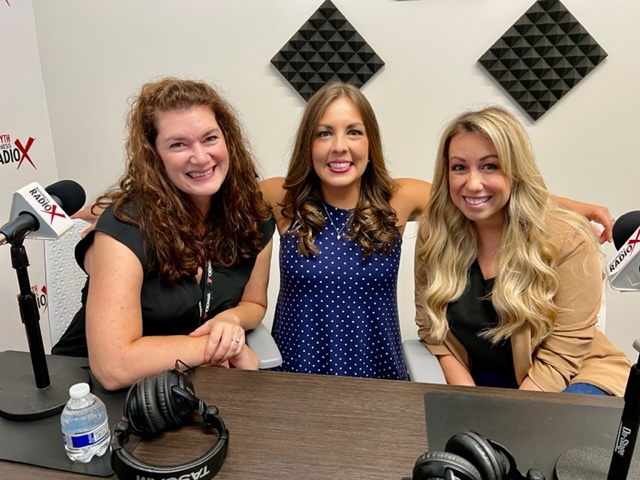
Mike Blake: [00:01:41] So, the topic today is “Should I Rebrand My Company?” And I think this is probably on people’s consciousness because we’ve had one of the biggest rebranding, certainly in my memory, which is the company formerly known as Facebook now would like to be known as Meta. I think that’s going to be a tough rebrand until they actually change their platform to something other than Facebook, but they didn’t ask me for advice. And what do I know, I’m just a finance guy anyway.

Mike Blake: [00:02:13] But branding is extremely important. And according to Forbes, presenting a brand consistently across all platforms can increase company revenue by 23 percent. And there’s a HubSpot statistic out there that suggests that 86 percent of consumers prefer an authentic and honest brand personality of social networks. And our guest today, I think, does that frankly exceptionally. And according to Facebook, the aforementioned now Meta, the top four qualities people use to describe why they are loyal to a brand are cost, quality, experience, and consistency.

Mike Blake: [00:02:52] And joining us today, and I’m very grateful because I have some idea of how busy she is because I suspect we only see on social media the tip of the iceberg, but joining us today is Stephanie Stuckey, who is the third generation CEO of Stuckey’s Corporation. She started her career as a lawyer building her own practice before serving in the Georgia House of Representatives from 1999 through 2013. I did not know that. She and I served on a board together years and years ago, and I never knew that she was in the Georgia House of Representatives.

Mike Blake: [00:03:25] After that, Stephanie became the Executive Director of Green Law, an environmentally-focused law resource center. In 2015, she was appointed the City of Atlanta’s Director of Sustainability, and then to the position of Chief Resilience Officer, which is something near and dear to my heart. She’s a Georgia bulldog, having earned a degree in French, just like I did, as an undergraduate and then earning her law degree there as well, too. I’m deeply disappointed that Cincinnati did not beat Alabama, nothing against Alabama, but since we have an office in Dayton, it would have been really cool to have a Cincinnati UGA College Football Championship, but there you have it.

Mike Blake: [00:04:01] Stuckey’s was founded by W.S. “Sylvester” Stuckey Sr. As a pecan stand along Highway 1 in Eastman, Georgia in 1937. Through hard work and grit, Stuckey’s grew into a roadside empire that numbered over 300 stores in the 1970s with the familiar teal sloped roof and Refresh, Relax, Refuel billboards dotting the nation’s highways. The stores fell out of family hands for decades, but were reacquired by Billy Stuckey, son of the founder and former US Congressman in 1980 — I’m sorry, in 1985. Stephanie took over in November of 2019 after a career in public service that we already discussed. And under Stephanie’s leadership, Stuckey’s has undergone a rebranding, added three new franchise stores, expanded B2B retail customer base, and ramped up its online sales with a brand new website. Stephanie Stuckey, thank you for joining the program.

Stephanie Stuckey: [00:04:54] Thank you. Wow, what an amazing intro! I didn’t know Facebook was switching to Meta.

Mike Blake: [00:05:01] Well, you’ve been busy doing other stuff.

Stephanie Stuckey: [00:05:03] That’s crazy. They should consult us on that because I have an opinion.

Mike Blake: [00:05:09] Well, that’s good. We like people on the show who have opinions. Otherwise, it’s a very boring show. But yeah, they’ve decided to really jump into this thing that some people are calling the metaverse; others are calling Web 3.0. Not sure what that means, but yeah, they felt that a rebranding was appropriate. So, they are in the process of doing that. But I want to talk about your rebranding. I want to talk about your rebranding because you’re here and Mark Zuckerberg’s not.

Stephanie Stuckey: [00:05:38] He is not.

Mike Blake: [00:05:38] You’re probably more interesting anyway, so-

Stephanie Stuckey: [00:05:39] He’s not consulting us. And also, let me just say go Dogs!

Mike Blake: [00:05:44] There. There you go.

Stephanie Stuckey: [00:05:46] I’m kind of looking forward to us playing Bama.

Mike Blake: [00:05:52] Why is that? I mean, obviously, you’re playing for the national championship. But Alabama, they’ve done well against the Bulldogs.

Stephanie Stuckey: [00:05:59] Exactly. It’s been this psychological block for us at this point. And I think you really have to conquer the 800-pound gorilla in the room if you’re going to move forward. I don’t think that Georgia will feel like a true national champs unless we get the Championship by beating Bama. I know you didn’t have me on the show to talk football, but take [crosstalk] away.

Mike Blake: [00:06:26] Well. look, you can’t avoid it in Georgia, especially this time of year.

Stephanie Stuckey: [00:06:31] I am just obsessed right now, yeah.

Mike Blake: [00:06:31] And I think what — I’ll go ahead and continue that. We’ll go off script, tThat’s fine. I mean, it’s our show, it’s the internet. Like, what the heck? So-

Stephanie Stuckey: [00:06:38] Hey, we can brand football too. That’s a big brand.

Mike Blake: [00:06:42] It certainly is.

Stephanie Stuckey: [00:06:44] Big brand. There’s lots of [crosstalk].

Mike Blake: [00:06:44] I grew up in Boston, so I’ve been a lifelong Red Sox fan. And if you follow baseball, if you followed it for any amount of time, they had something called the Curse of the Bambino, which stems from a Red Sox selling Babe Ruths to New York Yankees, and they had not won a World Series since. And they wound up winning the series by a historic comeback over the Yankees, which wasn’t even possible because of the way divisions were aligned for so long. But it was only after beating the Yankees that they then broke through and won the World Series. They’ve won three cents. And I think there’s something to what you said. I think the only way the Red Sox could really win the World Series was to drive a stake through the heart of the vampire New York Yankee.

Stephanie Stuckey: [00:07:29] Exactly.

Mike Blake: [00:07:29] Any other way, just God wasn’t going to allow that to happen.

Stephanie Stuckey: [00:07:33] And since we’re talking branding, there are so many great branding lessons to learn from sports. And especially that whole comeback idea, to me, the greatest story ever told was the comeback. And you see that quite often in sports, not only real life, but some of the best movies that we love like Rocky, they’re all about a comeback. And so, that translates into business as well. People love to root for the underdog. They want to see the underdog come out on top and win. I think coming into this national championship, Georgia is the underdog because we have consistently been wooped by Bama. So, I would like to think there’s a lot of people out there who haven’t been following either one of these teams, but they’re going to root for the Bulldogs because we’re the underdog. So, that translates to Stuckey’s. We’re an underdog.

Mike Blake: [00:08:28] I think that’s right. And there is a comeback story there, isn’t it?

Stephanie Stuckey: [00:08:31] Absolutely. We are a comeback brand. I like to say that all the time, not only because it’s true, but psychologically, we want to see people come from all sorts of adversity and persevere, come out on top.

Mike Blake: [00:08:47] So, yeah. And frankly, I think that’s why I reached out to you, because I do follow you on social media. You do a fantastic job of transmitting your story on social media. Again, finance guy, what do I know?

Stephanie Stuckey: [00:09:01] Thank you.

Mike Blake: [00:09:01] But I do think it’s helping your brand. I do think it’s bringing your brand into a sense of awareness to the younger generations.

Stephanie Stuckey: [00:09:11] Yeah.

Mike Blake: [00:09:11] Right? Because they’re not watching billboards, and half of them don’t even drive anymore, right?

Stephanie Stuckey: [00:09:14] I know, it’s crazy. So many don’t drive.

Mike Blake: [00:09:19] Yeah. Well, yeah. It’s the new world out there, right? So, I’ve been fascinated to kind of watch your brand. And interestingly, I follow. I think you know that my wife, who does e-commerce for a long time, she carried Stuckey’s for catalogs as a flagship brand in her e-commerce site and really only stopped because Amazon-

Stephanie Stuckey: [00:09:43] Yeah. Billy and I caught up on that.

Mike Blake: [00:09:43] Really only stopped because Amazon made the rules for selling food just so draconian that she couldn’t — as a small business person, that just wasn’t worth it anymore, unfortunately, but they’re a great seller for her. So, I’ve been following the brand actually from afar for quite some time and in a way, was sort of invested in it.

Stephanie Stuckey: [00:10:01] Thank you.

Mike Blake: [00:10:01] Tell us at a high level — we’ll get into the details of the rebranding, but tell us at the high level kind of — you walked in at 2019, and I want to hear about the origin story, but before we even hear about how you got there, what did you walk into? November 2019, you walked into Stuckey’s, you take the CEO’s office or wherever you worked, what did you walk into?

Stephanie Stuckey: [00:10:24] The office was a rundown, double wide trailer that we were renting.

Mike Blake: [00:10:29] Okay.

Stephanie Stuckey: [00:10:29] I swear to God.

Mike Blake: [00:10:31] All right, keep going. So-.

Stephanie Stuckey: [00:10:33] If I did not have the last name Stuckey, I not only would not have bought the company, I would have run screaming from the prospect of buying the company. So, I bought a struggling business. What I bought was a trademark, which I think was the most valuable thing I purchased and a rented warehouse in Eastman, Georgia, with a lot of dead inventory that hadn’t moved in years. And I knew nothing about business. I knew something about budgets having worked in government, which you may or may not think is valuable budgeting lessons, but-

Mike Blake: [00:11:17] I think it’s very valuable.

Stephanie Stuckey: [00:11:19] … the one thing the Georgia Legislature constitutionally had to accomplish every single session was to pass a balanced budget. So, I did know about budgeting. I had a budget running a nonprofit and a law firm, and I had the budget running the Office of Sustainability for the City of Atlanta. So, I understood base level finances. So, I did have that understanding, but I had never run a warehouse or, now, we’re in the manufacturing world that was all new to me. But I did know innately that if you have inventory that’s sitting around for several years, that’s not good. You should be having a turn rate of a lot faster than that. So, I inherited a lot of dead inventory like Britney Spears t-shirts and ashtrays shaped like toilets and say, “Put your butts here.” We had some John Wayne bobbleheads. We just had all sorts of random shtick.

Mike Blake: [00:12:05] John Wayne bobbleheads?

Stephanie Stuckey: [00:12:07] Yeah.

Mike Blake: [00:12:08] Wow!

Stephanie Stuckey: [00:12:09] Yeah, but random. Like they were miscounts and slotted wrong, and there were three out of a case of 10. So, no store is going to buy three random items.

Mike Blake: [00:12:23] Yeah.

Stephanie Stuckey: [00:12:24] And it just — the company had, frankly, just gone somewhat on autopilot and had a very small skeleton crew. We had two main people running it and they are terrific. We’ve kept them on. They’re fabulous. This is no fault of theirs. But if you don’t have financing, if you don’t have a structural support, if you don’t have all the basics to run a successful company, it doesn’t matter how hardworking or smart you are, you can’t turn it around. And so, we had a company that had been on autopilot for about a decade.

Stephanie Stuckey: [00:13:00] My dad and his business partners had sold off the most profitable part of their business. We don’t need to get into all that, but they owned a profitable business, Interstate Dairy Queen corporation. That had largely propped up Stuckey’s. And then, when they sold Interstate Dairy Queen Corporation, they retired, they left a skeleton crew in charge managing what was left of Stuckey’s. And what was left was a rented warehouse that is a distribution facility and the trademark. But none of the stores are owned or operated by us. They’re not even franchised at this point. They’re all licensed. So, very little revenue generated from the stores, very little control over the store. So, that revenue is slowly declining and we started losing some accounts.

Stephanie Stuckey: [00:13:44] So, yeah, it was a double wide trailer, run down. And I remember, I visited the stores, and I sat in the parking lot of one store, and it looked so bad, it was completely rundown, I could not even bring myself to walk in, and I started to cry. Now, I do cry pretty easily. I cry with Hallmark commercials and-

Mike Blake: [00:14:08] Okay.

Stephanie Stuckey: [00:14:09] … when I see college fund ads, I always cry, but I’m an easy crier. But I am in the parking lot crying, and I call my vice president, and I said, “This is just horrible.” He didn’t skip a beat, he said, “Welcome to your kingdom.”

Mike Blake: [00:14:25] Interesting. Interesting response.

Stephanie Stuckey: [00:14:28] Welcome to your kingdom. Like this is your roadside mess. So, you have to have a sense of humor, you have to laugh, and you have to be able to see the potential. And I saw the potential because not only do I have the last name Stuckey, but I was around when the business was profitable, when my grandfather was still involved. He had sold the company the year before I was born, but he remained involved on the board of the company that acquired it for some years after he sold. So, I knew what it could be, I knew what it was capable of, and I believed in my heart that we could bring that back.

Mike Blake: [00:15:01] So, we didn’t come on to talk about this, but I’m so curious, I think it will come back to the topic, and that is, what do you remember that your grandfather did with the business that seemed to have stopped going on when he left? What was missing?

Stephanie Stuckey: [00:15:20] So, I didn’t remember anything about him actually running the company directly. I just remember being around the company.

Mike Blake: [00:15:27] Yeah.

Stephanie Stuckey: [00:15:28] Well, being around the stores, visiting the stores because we road trip just like everyone else. What was interesting to me was one of the most important things I acquired when I bought the company was not only the trademark but his papers. My mother gave me several boxes of his archives that no one had even touched since the 1960s. It was like opening a time capsule. So, I spent those first couple of months after acquiring the company reading through all his papers. Every single night, I would just sit down, and I just start reading, and I took notes. And he went from being my grandfather, who I call Big Daddy, he went from being Big Daddy, and I had these warm, fuzzy memories of of a granddaughter-grandfather relationship. He was not a businessman to me, but he became Stuckey. He became the businessman. I learned about how he ran the company, and that made all the difference.

Stephanie Stuckey: [00:16:29] Honestly, so much of what I’m doing is following his basic business principles. And he didn’t get an MBA. He had to drop out of the University of Georgia because it was during the Great Depression, but he had a strong understanding of people. He was a gifted salesperson, just naturally gifted, and he really firmly believed in the power of branding. He put 20 percent of everything he made into branding and marketing, even during the tough times.

Mike Blake: [00:17:04] Interesting and-

Stephanie Stuckey: [00:17:05] Especially the tough times. I realized, that’s what you need to do. You have to brand. And I’ve learned that from him, but not until many, many years later, when I got his papers did I learn that.

Mike Blake: [00:17:17] So, you bought a virtual memoir, basically. Or you bought a virtual mentor, actually, is the best way to put it.

Stephanie Stuckey: [00:17:23] Yeah. If I can only get some sort of psychic to channel him for me, that would be awesome. But unfortunately, I’ve got his papers, not him.

Mike Blake: [00:17:31] I have a feeling somebody’s going to listen to this podcast, they’re going to come to you and ask if they could publish them because if they’ve been that valuable to you, given the progress that you’ve made with the company, they’re going to be valuable to somebody else too.

Stephanie Stuckey: [00:17:44] Yeah, it’s been fascinating. But the interesting thing, there’s not a lot of his personal correspondence, it’s mostly interviews and magazine articles, original articles. A lot of these are small town papers. They’re not really going to exist anywhere else. So, it’s a lot of hard copies of original firsthand accounts. And Mercer University Press actually did a self-publish. My aunt, to her credit, got a lot of first-person narratives recorded and publish this book called Stuckey. I think five people have read it and they’re all family members, but I read that book three times, and took notes in the margins and really studied that. It’s kind of dry and clunky as far as like reading, but just the material was so helpful to me. So, I felt like an archivist.

Mike Blake: [00:18:34] Well, that’s — I’ve got to be careful because I do so much work with multigenerational businesses, it’s such a treasure trove, but I want to get back on topic the. So, from what I’m from what I’m inferring, and you tell me if I’m wrong, please, because you’re the expert, I’m not, but it sounds like maybe when you walked in, Stuckey’s didn’t necessarily have a brand at all. Or did it? I mean, how would you characterize it?

Stephanie Stuckey: [00:19:03] It did.

Mike Blake: [00:19:03] Okay. What was the brand?

Stephanie Stuckey: [00:19:04] So, that’s the great thing. I firmly believe I started on first base or second base, how far along you want to say I am, to continue with this sports theme, but there are still a lot of people out there in 2019 when I bought the company and they’re, albeit older forties, fifties, sixties and up, who rode tripped in the ’50s, ’60s, ’70s, early ’80s, and remember stopping at Stuckey’s. They remember us when we had 368 teal stores with the slope roofs, and these exact carports, and the red and yellow beautiful, iconic billboards that dotted the nation’s highways. They remember that. They remember stopping at our stores and the wonderful memories.

Stephanie Stuckey: [00:19:50] And I kid you not, I get easily ten or more messages a day from people sharing very personal stories about our business, about their road trips. When I say “about our business,” it’s not; it’s about them, it’s about their families, it’s about their road trips, and their vacations, and their memories and how we are entwined with that. So, I tapped into that, and I hunkered down on the people who knew us already. And I pulled on my experience in politics, which is you go to your base first. Don’t go chasing out after these — if you’re a Democrat, don’t go chasing after a bunch of Republican voters who are probably not going to support you. Those aren’t your people. And you go after your base, you shore up your base, and then you target those undecideds who could be persuadable.

Stephanie Stuckey: [00:20:52] So, you figure out like, who are those people? So, for us, our peeps initially were the people who actually remembered the brand. So, that was 40 and up, and I was totally okay focusing on that. I wasn’t going to start chasing after millennials right out the bat because we needed to get the people who remembered us to know we were still alive. And then, you start looking beyond that, and you look at what are the things that really define us as a brand. And that’s road tripping. And to me, road tripping defies age categorization. It defies sex or ethnicity, anything, I mean, nationality, people all over the world like to road trip. And so, I’ve expanded to talking more about the road trip, but initially it was just drawing on, “Hey, remember us? We’re still around. Here’s our story. Let’s tell you what happened to us, but we’re still here. Where’ve you been? Come back.”

Mike Blake: [00:21:49] So, that’s a very interesting, I think, distinction because some brands rebrand to get away from something or to move to something new, right? The aforementioned Facebook is trying to get away from the bad reputation they’ve accumulated over the last couple of years because of social media basically. And so, they need a reboot. In your case, you’re going the other way. You’re doubling down on what you already had.

Stephanie Stuckey: [00:22:19] Yes, exactly.

Mike Blake: [00:22:20] Almost going retro. But I think that’s maybe unfair and that sounds old fashioned, but you’re definitely doubling down on the base, as you said.

Stephanie Stuckey: [00:22:28] Exactly. And I think where you modernize, or at least for our brand, is how you communicate. What are the mediums that you use? So, we started with Facebook because that’s where the older demographic is. And then, we added Linkedin. It has been incredible for us, especially if you’re looking in the B2B space, which is how we’re growing the brand with more retail partners. So, I started with the obvious, the traditional social media forums and Twitter. Twitter’s a little harder. It’s kind of sarcastic and has an attitude, a lot of the brands that do well on Twitter. So, Twitter has not been as strong a platform for us. And Pinterest, but we’re on Instagram. And now, we’re on Tik Tok. And I’m trying to get more on YouTube and Clubhouse. You mentioned Clubhouse. I need to get more into Clubhouse, but I am on Clubhouse. So, it’s not so much the message to me that’s modernizing. It’s how we approach people, how we meet people, how we communicate in a language that they can connect with us, but the core authentic what our brand is, which is about the road trip, that’s not changed.
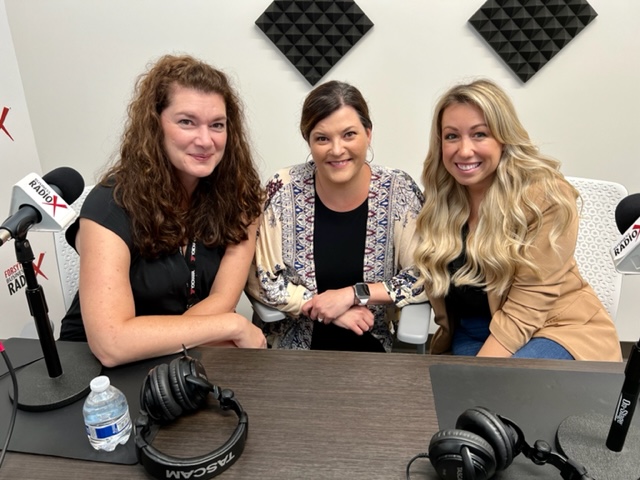
Mike Blake: [00:23:54] And it’s interesting, you mentioned sort of the teal roof, and that kind of reminds me of Howard Johnson’s. And I wonder if this was deliberate, right? Howard Johnson’s always had that hunter orange roof that you could see from a mile and a half away driving 70 miles an hour, right? And I wonder if-

Stephanie Stuckey: [00:24:12] What a simple sign in [crosstalk]-

Mike Blake: [00:24:15] Yeah.

Stephanie Stuckey: [00:24:17] When?

Mike Blake: [00:24:17] Yeah, and it was that part-

Stephanie Stuckey: [00:24:17] [Crosstalk].

Mike Blake: [00:24:17] Was that the thinking behind the teal roof for Stuckey’s as well?

Stephanie Stuckey: [00:24:24] So, I don’t know if my grandfather was inspired by Howard Johnson’s or not. I do know the genesis of the teal roof was when the interstate highway system came in; and suddenly, the roads that we had been located on, we were on Route 66, and the Lincoln Highway, and the Old Dixie Highway, and some of these older interstate roads, and then the National Interstate Highway System, Eisenhower starts that initiative in 1956. And so, we’re bypassing these state roads and these other roads that we are on, and we had to make a very strategic decision to survive. I say we like I was around then.

Stephanie Stuckey: [00:25:04] But to survive, my grandfather had to make a move, and he had to literally not only move how his strategy was, but he had to move his stores. And so, he used that as an opportunity to brand. And before, his stores had been sort of a mishmash of architectural styles, and there was no consistency in the color. He did have a consistent logo, but he used the move as an opportunity to get a consistent color, to get a consistent store design, to get consistent motifs.

Stephanie Stuckey: [00:25:41] So, my father for some reason came up with a carriage design. I’ve told him I’ve never been a fan of the carriage design because it does not speak to our brand. To me, it’s kind of like this old South notation. So, that, I did dismiss with, and I called my dad and I said, “No disrespect, but I’m doing away with carriage.” And we put a we put a cool little — I call it the happy car family image, which is an original advertising image of Stuckey’s from the ’60s. So, it was a retro image, but it was more aligned with our brand. But he had all these distinctive elements, and that’s when he put that blue teal color in.

Stephanie Stuckey: [00:26:18] I do know he was friends with Howard Johnson’s. No, I’m sorry he was friends with Kemmons Wilson, the founder of Holiday Inn. They were contemporaries, they were friends, they were on the interstate. It’s quite possible that he knew Howard Johnson. I don’t know that, though. I did not find that in any of his paperwork.

Mike Blake: [00:26:38] Yeah. Well, and Holiday Inn also has a trademark color scheme that makes it easy to see, right?

Stephanie Stuckey: [00:26:43] Yeah.

Mike Blake: [00:26:43] You can’t miss that yellow and green.

Stephanie Stuckey: [00:26:45] Yeah, I think he was definitely inspired by them. I’ve not found any paperwork to confirm that. And I think he just came up with the blue because it was different, nobody else was using it and you could see it from far off. And then, a lot of people did the yellow and red and their signage because of the visibility.

Mike Blake: [00:27:06] So, you touched on something that I didn’t think we’d be going in today. I hadn’t thought of it. But now that you bring it up, I think it’s really important. The south, I think, is undergoing a difficult cultural and identity transition, right?

Stephanie Stuckey: [00:27:26] Yeah.

Mike Blake: [00:27:28] As the country comes to terms with reacquainting itself with its history, how we teach it, race relations, I think, are changing, certainly in the most radical way that I can remember, I was born in 1970, so I was after the Civil Rights Movement, was Stuckey’s being sort of an old school old South brand? Is that something that you’ve had to confront and really think about? How does it fit into the millennial or post-millennium vision of the South while still staying true to the core values? Is that something you’ve had to kind of wrestle with? And if so, how have you done that?

Stephanie Stuckey: [00:28:10] Certainly. I think any southern brand that’s been around as long as we have has some racial history that you have to come to terms with and you have to address. And our history, just like our region, is messy and complicated when it comes to race.

Mike Blake: [00:28:29] Yeah.

Stephanie Stuckey: [00:28:30] Stuckey’s has an interesting story in that we were never segregated in a time when many places were-

Mike Blake: [00:28:41] Interesting

Stephanie Stuckey: [00:28:41] … especially in the south. We never had a whites only sign on anything. We were always opening.

Mike Blake: [00:28:46] Good for you.

Stephanie Stuckey: [00:28:46] My grandfather had a saying, “Every traveler is a friend.” And so, he wanted Stuckey’s to be known as a hospitality brand, as a welcoming place, and that really reflected his core values. He was a Christian, he was very philanthropic, he was a quiet donor, he was not very flashy in how he contributed to different charities he supported. And in fact, I have yet to track down the actual people, but I do know from my aunt that my grandfather actually paid to have several African-Americans from our hometown go to college. But I don’t have any specific records. I don’t have names. He did it quietly. But I say that to reflect that’s who he was. He was just a a caring person.

Stephanie Stuckey: [00:29:41] And so, we were never segregated. And if you’ve seen the movie The Green Book, there’s actually a scene in the movie where they shop at a Stuckey’s for that very reason that we were not segregated. And I do have a lot of African-Americans of a certain age who told me that they remember stopping at Stuckey’s, and they also remember driving for long stretches and needing to stop, and their parents would say, “We’ve got to wait for Stuckey’s. We’ve got to wait for Stuckey’s.” And they said, “Well, we just thought our parents loved Stuckey’s, and they did,” but one of the people told me they realized many years later they had to stop at Stuckey’s, that was the only place they could stop.

Stephanie Stuckey: [00:30:27] So, we’ve got that part of our history, but we also have a history where, frankly, we have sold Confederate flag memorabilia. We’ve sold — I’m not proud of it, but it’s part of our past, we’ve sold some of those black mammy’s little figurines. I’ve seen them in pictures of the stores. So, I know that is part of our past. I would like to think my grandfather didn’t mean any ill by that, but that is what he sold. We don’t sell it anymore.

Mike Blake: [00:31:07] Yeah, of course, you don’t sell them anymore. And look-

Stephanie Stuckey: [00:31:08] But I will say, when I took over the company, there were two stores that were selling Confederate flag stuff, and I stopped that. I said we will de-brand you, take that out of the store, that is not what we represent this day and age.

Mike Blake: [00:31:28] Yeah.

Stephanie Stuckey: [00:31:28] And I just don’t want to get in the whole debate. I recognize there are people out there who feel very strongly that this is heritage, and I respect that, but that doesn’t mean we have to sell it in our souvenir store. You can buy that in a museum shop. So, I felt very strongly that we needed to really be a — For me, it comes down to being hospitable. Are we offering products, are we recreating an experience that is going to be welcoming to everyone? So, if there is a product that we sell that is going to alienate people, that is going to make people feel divided, I don’t want to sell it.

Stephanie Stuckey: [00:32:10] And I get upset when I find out that our stores are selling Trump stuff. Frankly, that’s what I’ve heard. It’s not the other party, but Trump stuff. And I’m like, “I don’t want you selling Biden or Trump. Don’t sell it. Don’t sell anything that divides people. Don’t sell anything that antagonizes people.” Even with my background in politics, I always struggled with being a consensus builder. Like that’s what I wanted to be, and it was hard doing that in a highly charged partisan environment like Georgia politics.

Mike Blake: [00:32:46] Yeah. And someday, you’ll never have time for me to do this, but I would love to get your take on on politics generally because I’m sure you have such an informed view, but-

Stephanie Stuckey: [00:32:56] Yeah, I mean, I [crosstalk]-

Mike Blake: [00:32:58] … it makes no sense to align — Sorry?

Stephanie Stuckey: [00:33:00] I walked away. I said I will not run again. This was not — I mean, no shame if you ran and got defeated, but I didn’t get defeated. I left.

Mike Blake: [00:33:09] Yeah.

Stephanie Stuckey: [00:33:10] I did not seek re-election. I said, I’m done.

Mike Blake: [00:33:14] Yeah. Well, I think there are a lot of people that are doing that. But it’s interesting how you bring that up because you really are sort of sticking your fork in a toaster if you’re going to turn your company into a political platform, aren’t you?

Stephanie Stuckey: [00:33:32] Yeah

Mike Blake: [00:33:32] Right? And especially now where things are so volatile, you can easily see a scenario where you have customers in your parking lot fighting each other under the right — Right? Because we see that in our society. And that sounds very antithetical to the brand that you have, right? So, why even approach it, right?

Stephanie Stuckey: [00:33:57] Exactly. But I will say, I think there were some brands where that is entirely consistent with what they represent. And so, some brands-

Mike Blake: [00:34:06] For sure.

Stephanie Stuckey: [00:34:07] … it’s good to be edgy, it’s good to be out there. I think of Nike doing the whole Colin Kaepernick commercial. I think that was a hundred percent aligned with what they represent. And so, it works for them. That’s not so much political, but it is something that was highly charged, right? I mean, they’re [crosstalk]-

Mike Blake: [00:34:29] For sure. I thought it was very risky for Nike to do that.

Stephanie Stuckey: [00:34:32] It was risky and it wasn’t risky because when it came out, I thought not only was it just a beautiful ad, it’s so well done. But to me, it was just embracing their brand. And these people who were out there burning Nike sneakers, I thought, “Well, Nike’s making money off of that because people are out burning Nike sneakers for people who weren’t wearing Nike.” Those weren’t their peeps. So, they probably went out and bought some. They didn’t have them.

Mike Blake: [00:35:00] Well, and the data suggests you’re right because their stock price did go up, so.

Stephanie Stuckey: [00:35:04] Yeah, it worked for their brand. So, just know what your brand is, and your brand may be political. That may be a hundred percent where you want to be. So, go in on it. That’s not us. And you also have to accept you cannot – and it’s hard sometimes, especially like me having been in politics, a lot of times, if you’re in politics, you’re a pleaser or you’re a people pleaser, you can’t be a people pleaser in branding. You cannot be all things to all people. What is your brand? We’re a road trip brand.

Stephanie Stuckey: [00:35:40] I talked to this guy about six months ago and he said, “I’m not a road tripper. Tell me why I should stop at Stuckey’s.” I said, “You shouldn’t stop at Stuckey’s. You’re not our person. You’re not-”

Mike Blake: [00:35:50] Right.

Stephanie Stuckey: [00:35:51] I mean, I would love for you to try our product, but if you don’t enjoy road tripping, we’re really not your brand.

Mike Blake: [00:35:59] Right, you have to drive 30 miles to get to our store, right, which is-

Stephanie Stuckey: [00:36:02] We’re on the interstate. And yes, we are branching out, we are getting in more venues, but even though we’re pushing the product, and we’re promoting the delicious pecan snacks and candies that we make, it’s all wrapped up in the story of the road trip. So, know what your brand is, and hunker down on that, and don’t try to be something that you’re not, don’t try to appeal to people that really aren’t going to connect with your brand. Not everyone’s going to like your brand. If you hate sugar, if you hate candy, then I would never try to sell you a pecan log roll.

Mike Blake: [00:36:42] Sure. Yeah. Well, I mean, a brand is about — push brands don’t work, right?

Stephanie Stuckey: [00:36:48] Yes.

Mike Blake: [00:36:48] And brand is a poll asset, and you’re rallying people towards your banner for something, right? People who believe what you believe. I’m crazy a fan of Simon Sinek and all his thing about Star Wars.

Stephanie Stuckey: [00:37:03] Oh, my gosh. Yes, I love Simon Sinek.

Mike Blake: [00:37:06] Yeah. Well, if you know him, tell him I want him on the program, but nobody’s been able to provide that yet, but-

Stephanie Stuckey: [00:37:13] I don’t know him. No, I’m just a total fan girl. I watch his YouTube videos every morning. I’ve got a cynic for video on Simon Sinek, Gary Vee.

Mike Blake: [00:37:22] Yeah.

Stephanie Stuckey: [00:37:23] I’m a big Oprah fan. They all have just such great content that they put out. I listen to sort of an eclectic mix. I like Russell Brand. He’s got some philosophical side to him. But there’s some really great people out there that give wonderful perspectives, but Simon, yeah, Simon Sinek, like the whole getting to the why? Businesses know what they do. A lot of times, you may know how you do it, what your formula is, what your process is, but why are you doing it?

Mike Blake: [00:37:57] So, you walked in, you walked into that double wide trailer, realized that you had maybe not a brand change, but certainly a brand rehabilitation or reinforcement to do.

Stephanie Stuckey: [00:38:08] Yeah.

Mike Blake: [00:38:08] Maybe that’s a better way to put it.

Stephanie Stuckey: [00:38:12] That’s the patient.

Mike Blake: [00:38:13] What did that to-do list ultimately look like? If you could boil it down, what are some of the key steps you had to take in order to do that?

Stephanie Stuckey: [00:38:20] Well, you said it in the very beginning, in the intro, the quote from Forbes about consistency. Branding is consistency. And I knew something about branding because I’ve been in politics. And so, you have to brand yourself, and I had a brand that was my family. So, in a way, it was easier for me because the brand was so personal to me. It was tied in with my own brand, so I had a good sense of what my brand was, and I understood the company, I understood my grandfather, and I knew the stories. I had great stories. And I had even more stories than I thought I have had having read all my grandfather’s papers. So, my playbook was really watching what Gary Vee advises you to do, which is every single day, you get out there and post on social media. It’s just that consistency, and it’s the storytelling.

Stephanie Stuckey: [00:39:24] And it’s not just posting for post’s sake. It’s not just like, “All right, I’ve got to get something out there.” It’s got to have sticking power, and it’s got to have a higher purpose. It’s not about selling a pecan log roll; it’s about building a community. And you’re building a community around people that share an interest that you share. They care passionately about what you care about. I would rather have a small group of rabid fans that absolutely love our brand. There are a ton of people who buy our product because it’s cheap or easy to get, and they’re not loyal. There’s no sticking power there. So, the way you get that rabid fan base is you share something in common.

Stephanie Stuckey: [00:40:15] So, I just started putting out their content that was long-form narrative storytelling about what we believed in. And I wrote down our brand attributes, and I made sure every time I did a post, it touched on those attributes. And the attributes are family-friendly, hospitable, pecans because we’re all about the pecan, Georgia-grown pecans, that sense of place, small-town America, road trips, vintage/retro, Americana, celebrating all things, small-town America. So, I kind of knew those themes. I had them written down. Sort of, I have this sheet, I have a visual. It’s a diamond. And the different facets of the diamond have different words on them for the brand attributes. It’s my brand diamond. You can use whatever works for you, but I look at that all the time and I think, “Am I being brand-forward? Is this family-friendly? Is this promoting the road trip?” It’s got to hit on some of those brand’s attributes.

Stephanie Stuckey: [00:41:23] And it’s a slog. It is a slog. Every single person out there who’s got a million followers, they started with one. And you just keep at it. Somebody asked me yesterday because I didn’t know I was up this high, but it’s very gratifying, they said I had 72,000 LinkedIn followers. And when I started on LinkedIn, I think I had a thousand, which is a very respectable number to begin with, and that was from being a state rep and being head of sustainability for City of Atlanta, but I didn’t have 72,000. and I didn’t get 72,000 overnight. I got maybe a dozen a day, but you get a dozen a day over a couple of years, it adds up.

Mike Blake: [00:42:09] And this gets to a point that I think is important, I want to make sure that we get to because I think a common perception of changing or, in your case, rehabilitating a brand, but in this case, the difference is not material, and that is that, well, all you have to do is change your name, or a logo, or something; and therefore, you have a brain change, right? And to me, what you’re describing is exemplary of, at least, my view, and I may be completely wrong, but in a way, those are the two least important things. The brand is who you are every day, and the brand is what you will do every day. And most importantly, and this is why I think it’s so important, we go back to phasing out or wiping out kind of the Dixie, if you will, type memorabilia, Dixie type products in your product line, you define yourself by what you won’t do, right? You draw a line someplace.

Stephanie Stuckey: [00:43:11] Sure.

Mike Blake: [00:43:12] And I think that’s why there’s a lot of cynicism – at least I sense cynicism and I have cynicism about Facebook/Meta’s brand change is that it occurred only after Mark Zuckerberg had his rear end hauled before Congress to testify. And there started to be some talk about antitrust action, et cetera that it doesn’t seem like there’s a genuine change in the mission of the company, but rather it’s really just sort of a coat of paint; whereas, what you’re doing is by getting out there and being the lead cheerleader from the brand. And I remember the stories, I didn’t do the homework for this when I had you on the program, I love the story about you going out to Arkansas and seeing a hole in the roof of one of your stores. As a CEO, I cannot imagine how that must have impacted you. Or on the Christmas rush, you’re there with a picture of yourself on the line packaging stuff, right?

Stephanie Stuckey: [00:44:13] I got so much grief from some of my team, though. They’re like, “Do you know how much it’s costing us for these boxes to have the CEO on the line?”

Mike Blake: [00:44:21] Well, you know what, it costs you a lot more for people to want to buy Stuckey’s products and they can’t get it.

Stephanie Stuckey: [00:44:26] I’m like, “It’s branding too. It’s like showing that we are rolling up our sleeves and is all hands on deck.” And I absolutely needed to be there because we had to build a hundred boxes in a day, and we did 120.

Mike Blake: [00:44:41] Yeah. I mean, don’t we all want to work for somebody that will get down in the trenches with us?

Stephanie Stuckey: [00:44:51] Yeah, [crosstalk].

Mike Blake: [00:44:51] Not just telling us what to do from from the corner office, but geez, I just got to get in there and do it, right? And I think that, what a boost for morale. I’ll bet you probably got a lot of resumes from people after that of people just want to work for you because of that.

Stephanie Stuckey: [00:45:09] I did actually. And we can’t hire anyone because we don’t have enough money.

Mike Blake: [00:45:13] Right.

Stephanie Stuckey: [00:45:15] We are scrappy. We are still a scrappy startup. I joke, we’re an 85-year-old startup. We are. And I think it’s really good to have that edge to be in that hungry space, that startup space. I think there’s something about it that really keeps you on your toes. But you’re right about the logo. You can’t just slap on a fresh coat of paint and say, “That’s a new brand.” But I do think one of the first things I did was bring the logo back to our original logo. But for me, that was an outward manifestation of an interchange.

Mike Blake: [00:45:56] Yeah.

Stephanie Stuckey: [00:45:57] So, I think as long as what you’re doing externally is reflective of an internal shift, then it makes sense to have that name change, it makes sense to have that new design work done, but like you said, it has to be authentic and there has to be this message from the top that this is more than just we’re changing the logo.

Mike Blake: [00:46:24] So, a lot of companies doing what you’re doing, they bring in outside help – consultants and PR firms and branding experts and such. Did you avail yourself of that expertise as well? Or did you primarily make this an internal project?

Stephanie Stuckey: [00:46:38] Both. So, initially — and this is just me, and I don’t want to give consultants a hard time because there’s a lot of really good ones out there, but there are also a lot that frankly will take your money.

Mike Blake: [00:46:52] Yeah.

Stephanie Stuckey: [00:46:53] And rack up those billable hours.

Mike Blake: [00:46:56] They don’t have clients, they have victims.

Stephanie Stuckey: [00:46:59] Yeah. So, I’m not trying to say I didn’t have good consultants because I think I did have some good help, but it did not make financial sense for us. We had a very small budget when I bought the company. Like I said, we were six figures in debt. And a little bit of money we had available was money that I frankly had invested. When I bought the company, I negotiated to invest a very small amount in the company to have some upfront capital to brand and to also work on a strategic plan. And so, I paid some consultants for that. And they were good. But we had such limited dollars, and we ran through that money in a matter of months. And so, then, I had to figure out how to do it myself. And that’s when I started watching Gary Vee and some of these other resources.

Stephanie Stuckey: [00:47:58] And I think the lesson here is if you’re small, if you are scrappy, don’t think that you can’t try it yourself because a lot of the stuff, you really can do yourself, especially if you know your brand. Nobody knows the Stuckey’s story better than I do except my father and my aunt. No one. And so, that puts me in a unique position. And so, a lot of the stuff, you can do yourself. I just think too often we think, “Oh, we’ve got to hire this digital firm to run these digital ads.” And Lord knows I spent money on digital ads. And then, I went online and watched a couple of YouTube videos, and I do the ads myself.

Stephanie Stuckey: [00:48:45] What I can’t do is the creative design work, and I do have an excellent — I have two graphic designers who are amazing, and I use them. And I do have a guy who helps me with copy who’s really, really good at helping me do the e-blast, and he helps with speechwriting. So, I do have a very good writer who supports me, and we work really well together, we have similar styles. But I cut back dramatically because I just didn’t have the funding for it. So, I still do it myself. We don’t have a marketing firm.

Mike Blake: [00:49:19] I’m talking with Stephanie Stuckey, and the topic is, Should I Rebrand My Company? I have so many questions. We’re not going to get to them all, and that’s my loss. But a couple I want to get to before we let you get back to – hopefully you’re not in a double wide trailer anymore, but if you are, that’s fine, but get back to your work day.

Stephanie Stuckey: [00:49:38] That’s my home. I’m recovering from COVID.

Mike Blake: [00:49:40] Yeah, okay. Oh, really? Okay. Well, you sound great.

Stephanie Stuckey: [00:49:44] Yeah, I got [crosstalk] cases. I think Atlanta is super spiking right now, and that’s [crosstalk].

Mike Blake: [00:49:48] Yeah, for sure.

Stephanie Stuckey: [00:49:49] Yeah.

Mike Blake: [00:49:50] So, how would you describe your your brand resurrection or resuscitation effort? Do you think it’s been successful? Is it still a work in process? How do you evaluate it at this point?

Stephanie Stuckey: [00:50:04] Work in progress.

Mike Blake: [00:50:06] Okay.

Stephanie Stuckey: [00:50:06] And I’m still figuring out how to evaluate it because, obviously, you want metrics. My board especially wants metrics. So, I’m doing my best to hunker down and try to figure out what is the return on the investment that we have made with branding. And I think sometimes, that’s hard, because there’s too — I mean, generating sales comes from branding and in part. And there’s also just brand awareness. And it’s hard to measure, sometimes, that brand awareness piece if you don’t have the budget to go out and do some sort of market survey to say, “What’s your name recognition?” We don’t have that. We don’t have that budget.

Mike Blake: [00:50:54] So, it’s a work in progress, and I’m still trying to — I think for me, what I really hope moving forward is, can I figure out better ways to measure. And we are measuring conversion rate, and click rates and all the typical things that people measure. But it’s just, what is the value of people knowing your story? What is the value of people recognizing your name? But to me, that’s really hard to put in a spreadsheet.

Mike Blake: [00:51:28] It is. Stephanie, you’ve been so not only generous with your time, but really generous with your with your authenticity and revealing sort of the thought processes and emotional processes you’ve had to go through during this journey of yours. I’m sure there are questions that our listeners wish that I would have asked or wish that we would have spent more time on. We just didn’t have the time. If one of our listeners wants to follow up with you, would you be willing to share with them maybe some of your brand knowledge? And if so, what’s the best way to do that?

Stephanie Stuckey: [00:52:06] The best way is to send me an email. Linkedin messages are sporadic for me. I do my best to answer them, but I get a lot of LinkedIn messages and quite a fair amount of it is just out and out solicitation. So, sorting through all of the clutter to find the real genuine request to reach out to me is, sometimes, daunting when I’m running a company. But email, I get, and I look at, and I respond. If it’s a pure solicitation as a service that is not aligned with me, I’ll be honest, I started hitting just the delete button because I used to write polite replies, and I realize I was literally spending 40 minutes a day writing polite replies to people who are offering services that we didn’t need.

Mike Blake: [00:53:00] Okay.

Stephanie Stuckey: [00:53:00] If it’s something aligned with our brand, I will forward along to the appropriate person. But if you’re asking for advice, yes, I will respond. And it’s sstuckey@stuckeys.com. So, it’s sstuckey@stuckeys.com. And I can give that to you to put in your show notes.

Mike Blake: [00:53:17] Great, that’d be terrific. And you’re also on social media, and I would encourage our listeners, before you reach out to Stephanie, just simply watch what she does. She’s probably just going to tell you about what she’s doing anyway, but she sets a great example for how to reposition a brand, how to modernize a brand. And then, if you still have questions, go ahead and use it. And Stephanie is very generous with giving back to the community. But I would encourage you to do that homework first.

Mike Blake: [00:53:47] That’s going to wrap it up for today’s program. And I’d like to thank Stephanie Stuckey so much for sharing her expertise with us today. We’ll be exploring a new topic each week, so please tune in, so that when you’re faced with your next business decision, you have clear vision when making it. If you enjoy this podcasts, please consider leaving a review with your favorite podcast aggregator. It helps people find us, so that we can help them. If you would like to engage with me on social media with my chart of the day and other content, I’m on LinkedIn is myself and at @unblakeable on Facebook, Twitter, Clubhouse and Instagram. Also check out my new LinkedIn group called A Group That Doesn’t Suck. Once again, this is Mike Blake. Our sponsor is Brady Ware & Company. And this has been the Decision Vision Podcast.

 

Tagged With: Brady Ware & Company, Branding, Decision Vision podcast, Mike Blake, rebrand, rebranding, Stephanie Stuckey, Stuckey's

  • « Previous Page
  • 1
  • 2
  • 3
  • 4
  • …
  • 6
  • Next Page »

Business RadioX ® Network


Our Most Recent Episode

CONNECT WITH US

  • Email
  • Facebook
  • LinkedIn
  • Twitter
  • YouTube

Our Mission

We help local business leaders get the word out about the important work they’re doing to serve their market, their community, and their profession.

We support and celebrate business by sharing positive business stories that traditional media ignores. Some media leans left. Some media leans right. We lean business.

Sponsor a Show

Build Relationships and Grow Your Business. Click here for more details.

Partner With Us

Discover More Here

Terms and Conditions
Privacy Policy

Connect with us

Want to keep up with the latest in pro-business news across the network? Follow us on social media for the latest stories!
  • Email
  • Facebook
  • Google+
  • LinkedIn
  • Twitter
  • YouTube

Business RadioX® Headquarters
1000 Abernathy Rd. NE
Building 400, Suite L-10
Sandy Springs, GA 30328

© 2025 Business RadioX ® · Rainmaker Platform

BRXStudioCoversLA

Wait! Don’t Miss an Episode of LA Business Radio

BRXStudioCoversDENVER

Wait! Don’t Miss an Episode of Denver Business Radio

BRXStudioCoversPENSACOLA

Wait! Don’t Miss an Episode of Pensacola Business Radio

BRXStudioCoversBIRMINGHAM

Wait! Don’t Miss an Episode of Birmingham Business Radio

BRXStudioCoversTALLAHASSEE

Wait! Don’t Miss an Episode of Tallahassee Business Radio

BRXStudioCoversRALEIGH

Wait! Don’t Miss an Episode of Raleigh Business Radio

BRXStudioCoversRICHMONDNoWhite

Wait! Don’t Miss an Episode of Richmond Business Radio

BRXStudioCoversNASHVILLENoWhite

Wait! Don’t Miss an Episode of Nashville Business Radio

BRXStudioCoversDETROIT

Wait! Don’t Miss an Episode of Detroit Business Radio

BRXStudioCoversSTLOUIS

Wait! Don’t Miss an Episode of St. Louis Business Radio

BRXStudioCoversCOLUMBUS-small

Wait! Don’t Miss an Episode of Columbus Business Radio

Coachthecoach-08-08

Wait! Don’t Miss an Episode of Coach the Coach

BRXStudioCoversBAYAREA

Wait! Don’t Miss an Episode of Bay Area Business Radio

BRXStudioCoversCHICAGO

Wait! Don’t Miss an Episode of Chicago Business Radio

Wait! Don’t Miss an Episode of Atlanta Business Radio