Business RadioX ®

  • Home
  • Business RadioX ® Communities
    • Southeast
      • Alabama
        • Birmingham
      • Florida
        • Orlando
        • Pensacola
        • South Florida
        • Tampa
        • Tallahassee
      • Georgia
        • Atlanta
        • Cherokee
        • Forsyth
        • Greater Perimeter
        • Gwinnett
        • North Fulton
        • North Georgia
        • Northeast Georgia
        • Rome
        • Savannah
      • Louisiana
        • New Orleans
      • North Carolina
        • Charlotte
        • Raleigh
      • Tennessee
        • Chattanooga
        • Nashville
      • Virginia
        • Richmond
    • South Central
      • Arkansas
        • Northwest Arkansas
    • Midwest
      • Illinois
        • Chicago
      • Michigan
        • Detroit
      • Minnesota
        • Minneapolis St. Paul
      • Missouri
        • St. Louis
      • Ohio
        • Cleveland
        • Columbus
        • Dayton
    • Southwest
      • Arizona
        • Phoenix
        • Tucson
        • Valley
      • Texas
        • Austin
        • Dallas
        • Houston
    • West
      • California
        • Bay Area
        • LA
        • Pasadena
      • Colorado
        • Denver
      • Hawaii
        • Oahu
  • FAQs
  • About Us
    • Our Mission
    • Our Audience
    • Why It Works
    • What People Are Saying
    • BRX in the News
  • Resources
    • BRX Pro Tips
    • B2B Marketing: The 4Rs
    • High Velocity Selling Habits
    • Why Most B2B Media Strategies Fail
    • 9 Reasons To Sponsor A Business RadioX ® Show
  • Partner With Us
  • Veteran Business RadioX ®

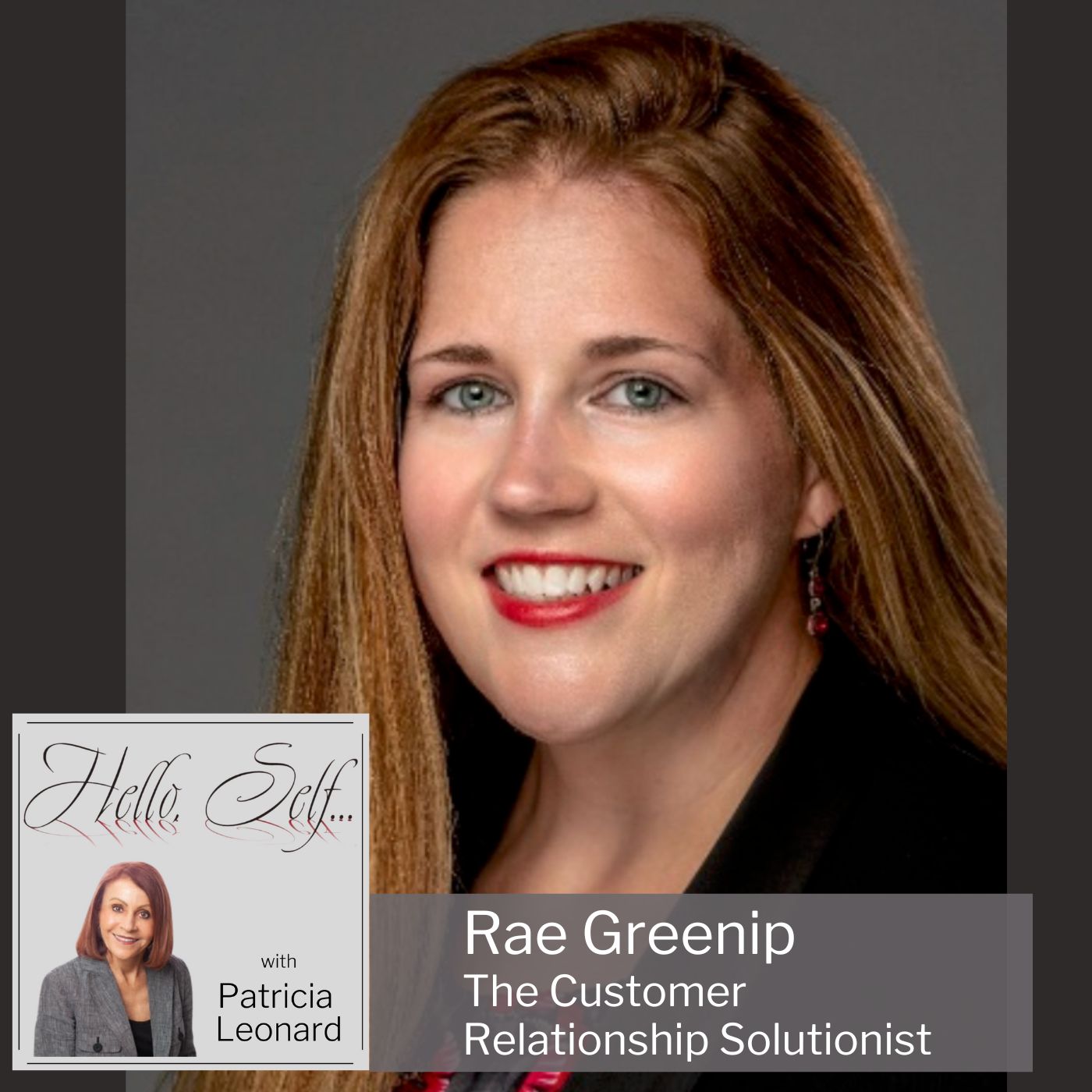
Rae Greenip, The Customer Relationship Solutionist

January 4, 2023 by John Ray

Rae Greenip
Hello, Self . . .
Rae Greenip, The Customer Relationship Solutionist
Loading
00:00 /
RSS Feed
Share
Link
Embed

Download file

Rae Greenip

Rae Greenip, The Customer Relationship Solutionist (Hello, Self… Episode 10)

Rae Greenip, The Customer Relationship Solutionist, talked with host Patricia Leonard about being a successful entrepreneur. She and Patricia discussed how she began the business, challenges and lessons she’s learned along the way about herself, and advice for other entrepreneurs about using social media and honoring your own gifts.

Hello, Self… is presented by Patricia Leonard & Associates  and produced by Arlia Hoffman in association with the North Fulton studio of Business RadioX®.

Rae Greenip, The Customer Relationship Solutionist

Rae Greenip, The Customer Relationship Solutionist

Rae has owned her own business since October 2018. After a twelve-year corporate career based in international business creating, developing, and sustaining lasting mutually beneficial partnerships, she re-located to the Nashville area from New Jersey and transferred her skills to helping service-based business with websites, content and customer relationship management.

Since April, 2020 Rae has also been the Chief Experience and Marketing Officer for a Boutique LinkedIn Marketing SAAS company called Amptek Growth. In her tenure there, she has optimized LinkedIn Profiles and implemented business development strategies for 300+ professionals.

Rae’s calling is to create experiences for people that evoke inspiration and/or positive emotion. She shares her innate gifts and the knowledge and skills developed over 20+ years managing business relationships to benefit service-based businesses by implementing the tools and strategies needed to never leave money on the table again.

As The Customer Relationship Solutionist, Rae combines elements of marketing, service design and customer experience to customize solutions in the following areas:
*Customer Relationship Management (CRM) tools, processes, automations and integrations
*Websites
*LinkedIn expertise & optimization
*Social media strategy & management
*Email retention sequences, list management and campaigns
*Process design, management and training for client and staff
*Ongoing support and CRM administration services

Rae’s website | LinkedIn

About Hello, Self…

Hello, Self… is a biweekly podcast focused on inspiring stories of turning dreams into reality. Join coach and author Patricia Leonard and her guests as they share life-changing Hello, Self… moments.

Hello, Self… is brought to you by Patricia Leonard & Associates and is based on the new book by Patricia Leonard, Hello, Self.., available here.

The show is produced by Arlia Hoffman in association with Business RadioX®. You can find this show on all the major podcast apps. The complete show archive is here.

Patricia Leonard, Host of Hello, Self…

Patricia Leonard, Host of Hello, Self…

Patricia Leonard is President of RUNWAY TO SUCCESS, a division of Patricia Leonard & Associates located in Nashville, TN.  She is a MESSAGE ARTIST speaker, career & business coach, author and magazine columnist.  Patricia consults with clients on leadership, empowerment, career management, entrepreneurship and the power of language.  Her work is focused on helping clients find their runway to success!

She has a professional background in management, human resources, corporate training, business consulting and talent development.   Patricia has worked with companies in the service, music, banking, manufacturing, publishing, warehousing, healthcare, academic, retail and financial industries, and has taught management classes as an adjunct professor.

Patricia has a degree in Human Resource Management, is certified as a Career Coach and Consulting Hypnotist and is MBTI qualified.

Her volunteer energies are focused on Women in Film and Television-Nashville, where she is a Board Vice President; Dress for Success as the Advisory Board President; and International Coaching Federation-Nashville where she held Board roles for several years.

Patricia is the author of Wearing High Heels in a Flip Flop World, BECOMING WOMAN…a journal of personal discovery, THE NOW, HOW & WOW of Success, Happenings, a full year calendar of inspirational messages and a spoken word album titled, I AM…

She enjoys songwriting, creating poetry and has written a one-woman show and artistic speech she performs titled Hello, Self…, about a woman in midlife reinventing herself, which led to her new book by the same name, available here.

On the personal side, Patricia, describes herself as a woman, lover of life, mother, grandmother, career professional and message artist; AND in that order!  Her goal is to continue inspiring others, of any age, to START NOW creating and expanding their Runway to Success.

She believes that life is a gift, the way we wrap it is our choice.
Connect with Patricia:

Website| LinkedIn | Facebook | Twitter | Instagram

Tagged With: crm, email lists, email marketing, Entrepeneur, Hello Self Moments, Hello Self Podcast, Hello Self..., LinkedIn, Patricia Leonard, Patricia Leonard & Associates, personal awareness, Rae Greenip, social media strategy, The Customer Relationship Solutionist, websites

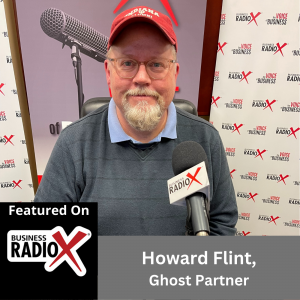
Howard Flint, Ghost Partner

December 19, 2022 by John Ray

Howard Flint, Ghost Partner
North Fulton Business Radio
Howard Flint, Ghost Partner
Loading
00:00 /
RSS Feed
Share
Link
Embed

Download file

Howard Flint, Ghost Partner

Howard Flint, Ghost Partner (North Fulton Business Radio, Episode 591)

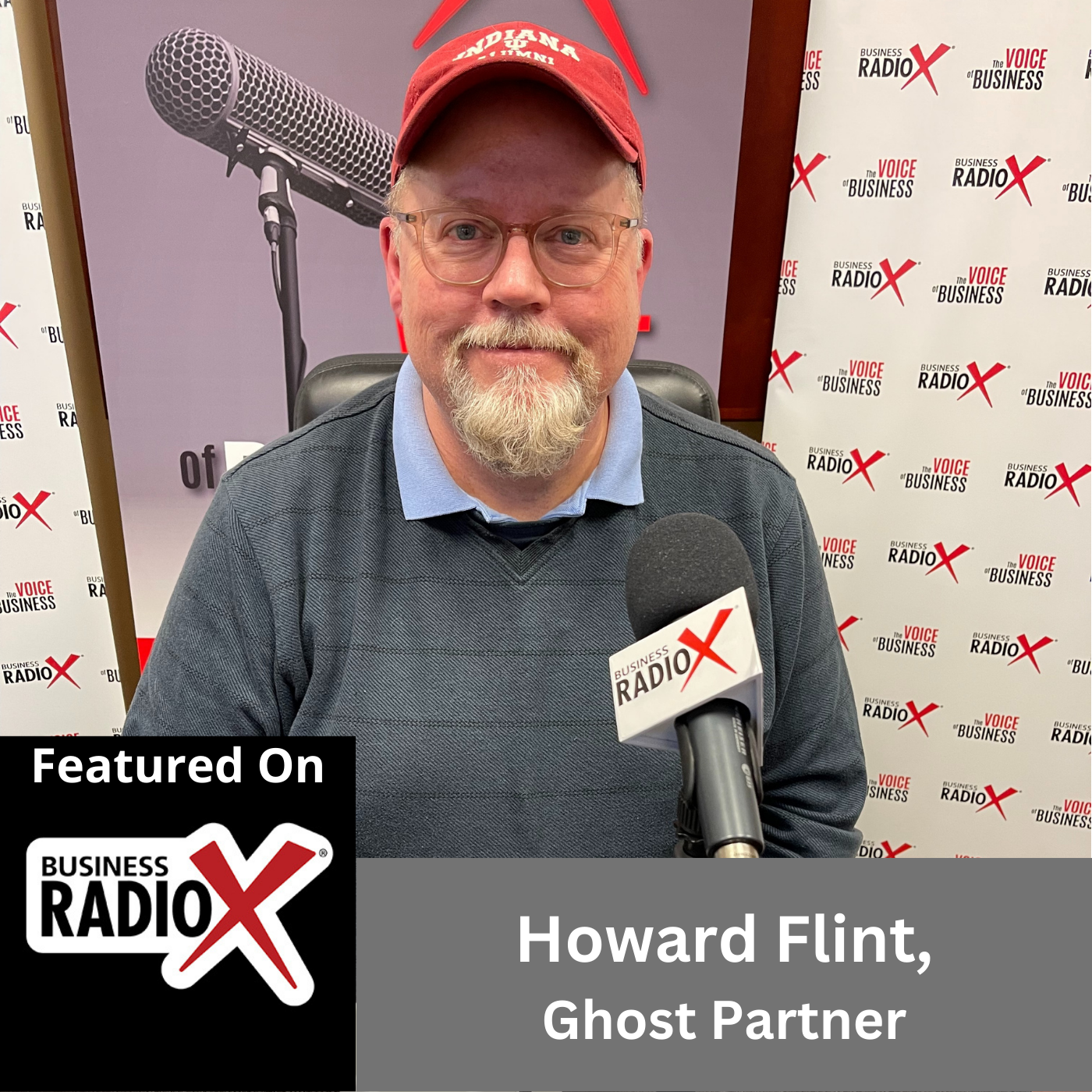
Howard Flint, CEO of Ghost Partner joined host John Ray on this episode of North Fulton Business Radio. He discussed why companies need clear messaging to gather leads and to close sales, how most companies are doing email marketing wrong, content which resonates with potential clients, and much more.

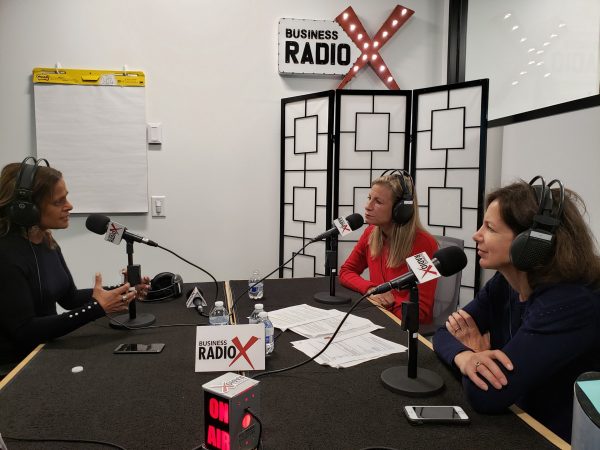
North Fulton Business Radio is produced and broadcast by the North Fulton studio of Business RadioX® inside Renasant Bank in Alpharetta.

Ghost Partner

If you have an email customer database, you are sitting on unrealized revenue opportunities. In other words, MORE SALES!

Your current and past customers are your best source for more revenue and increased profitability. When you stay engaged with them through regular email and content marketing, they become REPEAT customers, they buy MORE services from you, and best of all: they REFER you to other customers.

Ghost Partner becomes your CUSTOMER MARKETING partner. We will help you create a strategy that works. Then the Ghost team will execute that strategy every month with success.

Website | LinkedIn | Facebook | Twitter

Howard Flint, CEO, Ghost Partner

Howard Flint, CEO, Ghost Partner

Howard Flint is the owner of Ghost Partner. Howard started Ghost Partner in 2007 after he sold his first company, BUZZ Publishing. The Ghost Partner team specializes in custom content, clear messaging for brands, email, marketing, social, and search advertising.

Howard has been married to Canita of I Canita Cake for 33 years and they have three unruly children.

LinkedIn


Questions and Topics in this Interview

  • Clear Messaging
  • Leads and Sales
  • Email Marketing
  • Good Content

North Fulton Business Radio is hosted by John Ray and broadcast and produced from the North Fulton studio of Business RadioX® inside Renasant Bank in Alpharetta. You can find the full archive of shows by following this link. The show is available on all the major podcast apps, including Apple Podcasts, Spotify, Google, Amazon, iHeart Radio, Stitcher, TuneIn, and others.

RenasantBank

Renasant Bank has humble roots, starting in 1904 as a $100,000 bank in a Lee County, Mississippi, bakery. Since then, Renasant has grown to become one of the Southeast’s strongest financial institutions with over $13 billion in assets and more than 190 banking, lending, wealth management and financial services offices in Mississippi, Alabama, Tennessee, Georgia and Florida. All of Renasant’s success stems from each of their banker’s commitment to investing in their communities as a way of better understanding the people they serve. At Renasant Bank, they understand you because they work and live alongside you every day.

Since 2000, Office Angels® has been restoring joy to the life of small business owners, enabling them to focus on what they do best. At the same time, we honor and support at-home experts who wish to continue working on an as-needed basis. Not a temp firm or a placement service, Office Angels matches a business owner’s support needs with Angels who have the talent and experience necessary to handle work that is essential to creating and maintaining a successful small business. Need help with administrative tasks, bookkeeping, marketing, presentations, workshops, speaking engagements, and more? Visit us at https://officeangels.us/.

Tagged With: conversion copywriting, copywriting, digital marketing strategy, effective email marketing, email marketing, Ghost Partner, Howard Flint, John Ray, leads, marketing strategy, North Fulton Business Radio, Office Angels, renasant bank, Sales

Decision Vision Episode 135: Should I Create an Email Newsletter? – An Interview with Michael Katz, Blue Penguin Development

September 23, 2021 by John Ray

Miichael Katz
Decision Vision
Decision Vision Episode 135: Should I Create an Email Newsletter? - An Interview with Michael Katz, Blue Penguin Development
Loading
00:00 /
RSS Feed
Share
Link
Embed

Download file

Miichael Katz

Decision Vision Episode 135:  Should I Create an Email Newsletter? – An Interview with Michael Katz, Blue Penguin Development

Do you need an email newsletter? How long should it be? What should you write about? Although written off quite a few times, email is still not dead. Mike Blake’s guest Michael Katz, email newsletter authority with Blue Penguin Development, discusses the strategy of email newsletters, how to make them effective, how to make the most of the content, and much more. Decision Vision is presented by Brady Ware & Company.

Michael Katz, Chief Penguin, Blue Penguin Development

Michael Katz, Chief Penguin, Blue Penguin Development

Blue Penguin Development Inc is a marketing and advertising company based out of Hopkinton, Massachusetts.

An award-winning humorist and former corporate marketer, Blue Penguin founder and Chief Penguin, Michael Katz, specializes in helping professional service firms and solos talk and write about their work in a way that is clear and compelling.

Since launching Blue Penguin in 2000, Michael has been quoted in The Wall Street Journal, The New York Times, Business Week Online, Bloomberg TV, Forbes.com, Inc.com, USA Today, and other national and local media.

He is the author of four books and over the past 20 years has published more than 500 issues of “The Likeable Expert Gazette,” a twice-monthly email newsletter and podcast with 6,000 passionate subscribers in over 40 countries around the world.

Michael has an MBA from Boston University and a BA in Psychology from McGill University in Montreal. He is a past winner of the New England Press Association award for “Best Humor Columnist.”

Company website | LinkedIn

Mike Blake, Brady Ware & Company

Mike Blake, Host of the “Decision Vision” podcast series

Michael Blake is the host of the Decision Vision podcast series and a Director of Brady Ware & Company. Mike specializes in the valuation of intellectual property-driven firms, such as software firms, aerospace firms, and professional services firms, most frequently in the capacity as a transaction advisor, helping clients obtain great outcomes from complex transaction opportunities. He is also a specialist in the appraisal of intellectual properties as stand-alone assets, such as software, trade secrets, and patents.

Mike has been a full-time business appraiser for 13 years with public accounting firms, boutique business appraisal firms, and an owner of his own firm. Prior to that, he spent 8 years in venture capital and investment banking, including transactions in the U.S., Israel, Russia, Ukraine, and Belarus.

LinkedIn | Facebook | Twitter | Instagram

Brady Ware & Company

Brady Ware & Company is a regional full-service accounting and advisory firm which helps businesses and entrepreneurs make visions a reality. Brady Ware services clients nationally from its offices in Alpharetta, GA; Columbus and Dayton, OH; and Richmond, IN. The firm is growth-minded, committed to the regions in which they operate, and most importantly, they make significant investments in their people and service offerings to meet the changing financial needs of those they are privileged to serve. The firm is dedicated to providing results that make a difference for its clients.

Decision Vision Podcast Series

Decision Vision is a podcast covering topics and issues facing small business owners and connecting them with solutions from leading experts. This series is presented by Brady Ware & Company. If you are a decision-maker for a small business, we’d love to hear from you. Contact us at decisionvision@bradyware.com and make sure to listen to every Thursday to the Decision Vision podcast.

Past episodes of Decision Vision can be found at decisionvisionpodcast.com. Decision Vision is produced and broadcast by the North Fulton studio of Business RadioX®.

Connect with Brady Ware & Company:

Website | LinkedIn | Facebook | Twitter | Instagram

TRANSCRIPT

Intro: [00:00:02] Welcome to Decision Vision, a podcast series focusing on critical business decisions. Brought to you by Brady Ware & Company. Brady Ware is a regional full-service accounting and advisory firm that helps businesses and entrepreneurs make visions a reality.

Mike Blake: [00:00:21] Welcome to Decision Vision, a podcast giving you, the listener, clear vision to make great decisions. In each episode, we discuss the process of decision making on a different topic from the business owners’ or executives’ perspective. We aren’t necessarily telling you what to do, but we can put you in a position to make an informed decision on your own and understand when you might need help along the way.

Mike Blake: [00:00:42] My name is Mike Blake, and I’m your host for today’s program. I’m a director at Brady Ware & Company, a full-service accounting firm based in Dayton, Ohio, with offices in Dayton; Columbus, Ohio; Richmond, Indiana; and Alpharetta, Georgia. My practice specializes in providing fact-based, strategic, and risk management advice to clients that are buying, selling, or growing the value of companies and intellectual property. Brady Ware is sponsoring this podcast, which is being recorded in Atlanta per social distancing protocols.

Mike Blake: [00:01:09] If you like to engage with me on social media with my Chart of the Day and other content, I’m on LinkedIn as myself and @unblakeable on Facebook, Twitter, Clubhouse, and Instagram. If you like this podcast, please subscribe on your favorite podcast aggregator and please consider leaving a review of the podcast as well.

Mike Blake: [00:01:27] Our topic today is, Should I create an email newsletter? And in doing this topic, I almost think like what’s old is new again, back to the future, retro, however you want to call it. Email newsletters, I think, have been declared dead more times than your typical cat or Rasputin, take either one.

Mike Blake: [00:01:52] First, it was spam blockers. And the next was social media. Of course, social media was going to obviate the need for email newsletters. And then, of course, everybody told us, if we don’t send people things in the analogue world and handwrite them, then nobody’s ever going to read it. And the list goes on and on.

Mike Blake: [00:02:12] And to coin a phrase from, about, five years ago, “And yet they persist”. And I think they persist for very good reason, is that, they’ve taken all kind of all comers. And in spite of that, in spite of many attempts and ongoing attempts to disrupt that world, email newsletters continue to thrive. And perhaps the best indicator of that is the fact that Atlanta’s own homegrown startup Mailchimp was just bought by Intuit for $12 billion. Mailchimp basically exists to help people and companies publish email newsletters.

Mike Blake: [00:02:53] Now, why does a tax company want a newsletter company? I’m not sure. I was going to say I’m not in that business. But I guess working for a CPA firm, I technically am, but I’m not. And I don’t even do my own taxes although I’m a CPA. And I don’t understand the strategic rationale for that deal or the price that they paid. But, you know, good for Ben Chesnut and his team, they’ve worked hard on that company for a very long time. They certainly deserve to see the fruits of that labor. And that’s a big feather in the cap for those of us who believe in the Atlanta startup ecosystem as I do.

Mike Blake: [00:03:33] And so, you know, I think that this is a topic that requires and I think many of us will benefit from this discussion. And helping us with this is is Michael Katz, who’s an award-winning humorist and former corporate marketer and Founder and Chief Penguin of Blue Penguin. And he specializes in helping professional services firms and solos talk and write about their work in a way that is clear and compelling.

Mike Blake: [00:04:01] Since launching Blue Penguin in 2000, Michael has been quoted in The Wall Street Journal, The New York Times, BusinessWeek Online, Bloomberg TV, Forbes.com, Inc.com, USA Today, and other national and local media. And you can tell that he had nothing to do with my introductory comments. He is the author of four books. And over the past 20 years has published more than 500 issues of The Likeable Expert Gazette, a twice monthly email newsletter and podcast with 6,000 passionate subscribers in over 40 countries around the world.

Mike Blake: [00:04:33] Michael has an MBA from Boston University – I grew up in Boston. A B.A. in Psychology from McGill University in Montreal – home of my favorite actor and yours, William Shatner, or at least birthplace. He is a past winner of the New England Press Association Award for Best Humor Columnists. Michael, welcome to the program.

Michael Katz: [00:04:52] Great to be here. Thanks for having me.

Mike Blake: [00:04:55] So, you know, there’s so many ways to communicate in the written word now with our intended audiences. And I actually think it is helpful, it may sound like the most inane question in the world, but I do think that the definitions have been blurred and it is important. In your mind what makes a newsletter a newsletter? And what separates it from other forms of written – I’m going to say – mass communication. I probably cringe at saying that, but it is sort of a one-to-many kind of communication model. What makes a newsletter a newsletter?

Michael Katz: [00:05:31] Well, I think it is pretty blurry. I mean, I always think of it, it’s just a glorified email sent to more than one person. Maybe the email that Target sends to you telling you you’ve got 30 percent off and the email that your accounting firm sends with useful information, they’re both technically newsletters and people pretty much use them interchangeably. So, you know, the definition really hasn’t gotten any clearer over the years. It sort of depends what business you’re in, but I think it applies when you send it by email to a number of people and generally not personalized beyond, you know, dear name.

Mike Blake: [00:06:12] You know, it’s interesting, even I would not have thought of the Target virtual flyer being a newsletter. But I guess it is, right? And that definition between advertisement, newsletter, blog post, something else, I think, has been blurred. And I guess I’ll follow up with this question, is that distinction even meaningful?

Michael Katz: [00:06:41] I think the distinction is, is this a thing that lands in your inbox or is it somewhere else, social media, video, all that? So, you know, I think as you were saying, Mike, earlier, it’s written and it shows up in your email. And so, that then becomes the question. So, is that still valuable or not? But I think all those things, I suppose, are the same species, email and newsletter.

Mike Blake: [00:07:05] Okay. So, those of us who are listening to this podcast, they may well be hearing newsletter and wondering, “Oh, my gosh. Do I have to basically now become a professional writer? I didn’t like writing five page essays in school. And, now, I got to do something every week or maybe more than that.” Is there an ideal length in your mind for a newsletter? Can newsletters be short? Do they need to be long form? They need be very long form? What’s best practices in determining just how much content goes into a newsletter?

Michael Katz: [00:07:41] Yeah. I always say one word is perfect. However, you have to get over two bars at least, again, in the world that I live in. So, again, I’m not doing the Target 30 percent off. I work exclusively with small professional service firms, financial planners, consultants, recruiters, coaches. So, these are all people who are selling themselves or their small firm, essentially. And so, those kind of newsletters are information-based. They’re not about an event. They’re not click to buy kinds of things, like click here and buy it. They’re really about – and we’ll talk more about it – getting in front of a group of people. So, yes, shorter is better because I can get your stuff sooner.

Michael Katz: [00:08:26] However, two things. One is, you have to tell me something that I will read it and have learned something. So, I’m always saying, you’re looking for me to read it and go, “Oh, there’s something I just learned about accounting, legal, management, consulting, whatever.” The second thing is, I think you want your newsletter to be long enough that you include some of your personal voice story experience. Because if it’s just information, well, I can get information by Googling it.

Michael Katz: [00:08:56] So, if you can say something that includes something useful and enough story – which I know we’ll talk about – then I think that’s good. I would say that for most people then, you’re talking 500 to 800 words to get that in there. But even among my own clients, there’s variations there.

Mike Blake: [00:09:18] So, how do you decide what goes in? And I’ll preface this with kind of my experience with this podcast, and you’ve done a lot more of these things than I have, so God bless you, I don’t know how you do it. But the question I’m asked most frequently is, how do you decide on the topics and how do you kind of keep it fresh? And my answer to them is, “Well, for me, I just keep a running note in every note. And every time something pops in my head, I write it down. And then, if I’m really stuck, I’m not afraid to revisit something if I think somebody else can bring a different voice to the same topic.” How do you decide what goes into your newsletter?

Michael Katz: [00:10:06] So, my point of view is, I’m trying to help my readers not need to hire me, which sounds counterintuitive. But what I mean is that – and this is true for any profession that I’m working with – help them learn not to need you. So, if you took a very simple example, suppose you’re a carpenter. Your newsletter should be about how to use a hammer, how to buy wood, how to climb a ladder. It’s very simple stuff. And, yes, if I got and received and retained a thousand newsletters like that, I suppose I would know as much as my carpenter.

Michael Katz: [00:10:42] But the truth is, you’ll never give away your business with those 500 or 700 word tidbits. But it has to be useful so that I read it like everybody thinks about what do I say to promote my business. Which is fine, that’s why we’re doing it. But your readers don’t care about your business. They are only going to read it, and stay with you, and tell other people about it if they find it useful.

Michael Katz: [00:11:06] So, that’s the sort of basis of it always, you have to match up to the audience that presumably would hire you by giving them something that will make them live their lives better or do their jobs better instead of running out of information. I mean, I’ve written 500 newsletters. I have, like, 30 ideas. So, it’s funny, I mean, I don’t republish them. And, by the way, that’s where stories come in.

Michael Katz: [00:11:30] But I’ll address a similar topic with a slightly different angle or something. Nobody says, “Wait a second. Four years ago in April, you said the same thing.” It’s sort of like, you know, if you have a personal trainer at the gym, the guys told you a thousand times to keep your back straight when you do pushups. You don’t say, “Wait a second. You already told me that.” So, people need repetition anyway. That’s fine.

Michael Katz: [00:11:56] The other thing is, even your most loyal readers will probably read every other one, so it’s fine. You’re trying to be out in front of a particular population over and over again with useful information and some personality because, again, your goal is that they refer you or maybe they hire you. So, it’s sort of easier than you think. I always say, if you know enough to be in a profession, you’ll never run out of content. My longest running client, an attorney, we’ve been doing a newsletter for 18 years and still publishing.

Mike Blake: [00:12:29] You know, you bring up that topic of what’s the likelihood that somebody’s going to remember a topic? I guess that’s right. In fact, I would love it if somebody has actually listened to this podcast with enough intentionality and frequency that they could spot any kind of repetitive material. And, frankly, I think I might actually buy a steak dinner if you sort of organically did that. Because I don’t think I have the kind of following like somebody, a dragon con, who shows up and questions one of the actors like, “In episode 192, how do the physics work when the spaceship went from galaxy to galaxy?” I don’t think I have that kind of following.

Mike Blake: [00:13:09] So, it probably is okay to kind of recycle stuff. And if you put a slant on it, so much the better. But you’re right, the portion of the population that’s going to have encyclopedic recall of all of your newsletters is a pretty small one. And if they are, you’ve probably already got them hooked anyway.

Michael Katz: [00:13:27] Right. I agree.

Mike Blake: [00:13:29] So, I’m going to go off script a little bit because your narrative brings to mind what I think is a really innocent question. And that is, can you recall the most memorable newsletter you either received or published? Either one you’re really proud of, or one you helped somebody publish because I know that’s what you do, or one that you received that maybe you said, “I really got something great out of that newsletter that I still use. I got it ten years ago. I still use that today.”

Michael Katz: [00:14:01] That’s a good question. And my answer is no, but here’s why. Because the value of a newsletter is a cumulative event. It’s like if I said to you, “Can you remember the best work you ever had?” You’re like, “How do I know?” Like, “Oh, yeah. It was like a Tuesday five years ago.” It’s the same thing. And I often have to talk people down from this, even people who are thinking of hiring me to say, “Look. It’s not a Super Bowl ad. You’re not going to publish a newsletter and have your phone ringing off the hook.”

Michael Katz: [00:14:34] And I do always use the exercise metaphor, that, exercising five times, you may as well not do it at all. But without question, if you exercise regularly for six months, you’ll get results. The same thing, it’s an ongoing event where people start to know you. They start to remember what you’re writing about. And then, one day, somebody needs what you’re selling. So, one important thing about a newsletter in its regularity is, it takes timing out of the equation.

Michael Katz: [00:15:04] So, the problem with advertising is you have to keep doing it. Because if you see a car ad today and you just bought a car last week, you have zero interest. Or if you’re planning to buy it in a year, zero interest. So, the reason that car people, for example, have to advertise constantly is because there’s always a slice of the population that’s ready to buy a car. So, they waste a ton of money on everyone else who isn’t.

Michael Katz: [00:15:26] Well, the newsletter, and particularly if you’re a small professional service firm, you don’t have advertising money, this is putting you in front of people over and over again. And so, one day they’re tired of their financial planner, their accountant doesn’t return their phone calls, whatever. They say, “Do you know anybody who could help me with this?” The newsletter acts as that constant prompt in front of them. So, visibility is a big part of what’s going on.

Mike Blake: [00:15:53] I think that’s really smart. And I actually kind of want to pause a little bit on that, because I’ve talked to many people, for example, in the podcast – I don’t have a newsletter. I eventually have to come out with one, but I don’t have one yet. But I think with the podcast it’s the same – I’m frequently asked, “How much business have you gotten out of it?” And my answer is, “Frankly, I have no earthly idea.” Because nobody is going to listen to my podcast and then pick up the phone and say, “Hey, I need you to do an appraisal of my company.” It’s just not going to happen. And podcasts, in particular, really don’t work that way.

Mike Blake: [00:16:32] But it’s the cumulative reminding people that you’re out there, that you have this expertise, you have that service so that it’s much more likely that that need is going to meet availability. And so, it’s about impact. It’s not so much about it’s important and it’s urgent. But there’s a third dimension out there about impact. And when you do a newsletter consistently, I think there’s a very similar philosophical ingredient to it or foundation to it that it’s not about the newsletter that you published today. It’s the aggregate of newsletters that you have published and continue to publish over an extended length of time.

Michael Katz: [00:17:13] Right. In fact, I’d even say, the person who calls you because they heard one podcast is suspect. That’s not a good client. That’s like, “What can I say to a woman in a bar to get her to marry me?” Nothing. Anyone who would say yes is bad. You want someone who’s listened to your podcast for a year. Because, first of all, you’ve screened out all the people who would actually hate you if they hired you. Because they’re like, “I like this guy.” And the people who don’t, go away.

Michael Katz: [00:17:46] Because my entire business is based on my own newsletter. No one ever gets in touch with me who isn’t kind of pre-qualified. So, it’s very effective in that way. And the best clients are the ones who’ve been listening for a while and finally say, “Hey, we’re ready to hire you.” I mean, it’s the easiest sales call you’ll ever get, an inbound call like that.

Mike Blake: [00:18:08] So, as I said in my introduction, newsletters, they’ve been declared dead a lot. And they’re still here and you’re still here. You don’t look dead to me. You don’t sound dead. So, why have they survived? Why do they continue to thrive? And I think they thrive, see if you agree with me. Why do they continue to thrive where there’s so much competition now for our attention?

Michael Katz: [00:18:38] Yeah. Well, you’re right. I mean, it’s so interesting how much it’s changed. So, I started doing newsletters in 2001. And the biggest objection I received from potential clients was that not enough of their clients and customers had email. And, like, blogs came out. That was going to kill it. Then, it was the whole spam thing. I mean, it’s amazing to think that Congress got together and passed a CAN-SPAM Act. That spam was so bad that there was a law passed about it. And then, social media came.

Michael Katz: [00:19:14] And I have to say about, maybe, whatever it was, ten years ago when social media sort of started, I was concerned. Like, you know, I don’t want to be so selling this thing that’s like a dinosaur. And so, paying very close attention what’s the next thing, looking around. And I think a couple of things. One is, nobody is in charge of email.

Michael Katz: [00:19:37] So, the problem with social media – and there have even been some very high profile examples – they can kick you off if they want. They run the whole thing. Like, nobody knows what the algorithm on LinkedIn is or Facebook to get you in front of different people. It’s a secret. So, you could be very popular on LinkedIn, and tomorrow they change the algorithm, and now it drops.

Michael Katz: [00:19:59] So, you don’t own the real estate if you build a business on any of the social media platforms. There’s somebody in between you and the recipient. Email is a completely distributed system. Nobody is in charge of email. So, the only people who decide whether my newsletter is read and opened are the people on the list. So, that’s very powerful.

Michael Katz: [00:20:21] Secondly, it shows up in your inbox. So, it’s funny, sometimes if I’m talking to you a live group, I’ll say, “Okay. Raise your hand if you’ve checked LinkedIn today.” And you get, like, half the group. “Raise your hand if you’ve checked email.” Everybody. So, as much as email is dead, it’s sort of like the day you can sign up for a social media account without an email address, I believe it’s dead. It still is the default in our life. It’s not even do you have email anymore. There’s things you can’t do. I can’t make a doctor’s appointment anymore without an email address. So, even though I’ve been wondering will it die, it still continues to be very compelling.

Michael Katz: [00:21:05] And, again, because my newsletter will sit in your inbox until you delete it, I think that’s also more powerful than a post on LinkedIn, which in the time we’ve been talking, if somebody posted, it’s already gone. You know, it’s pushed down. So, it’s funny, it’s like skinny ties – for no good reason, but if you wait long enough, I guess – I don’t know if something will replace it. But I’ve never found anything that says effective in all the ways we’ve been talking about is email, so still a lot.

Mike Blake: [00:21:39] Yeah. That’s a really interesting description. I hadn’t thought of either of those things. But it’s right to me. Social media, we don’t own the real estate. We don’t control who sees our thing, who sees our content. And we try to read the tea leaves in terms of what’s going to to gather the most, first of all, visibility, and then engagement, which is entirely a different animal. But then, this notion that, in a way, email has become like broadcast television. The way that you described it, I think that’s so smart.

Mike Blake: [00:22:26] And I guess it resonates to me because several years ago we cut the cord. No cable T.V. But we still do subscribe to the Netflix, Hulu. I have no idea if we’re saving money. We’re probably not, if I’m totally honest about it. But one of the the reason we still do that is because you can’t just sort of turn on Netflix and a program appears. You have to be with the modern television model. You have to be intentional about what you want to watch. Unless you do cable and then you can do that. That’s what we want to do.

Mike Blake: [00:23:02] Email is kind of the same thing, right? It’s so ingrained. Like you said, you cannot make a doctor’s appointment, you can’t do almost anything you want to do in life. The phone book has been replaced by email in some regard. And so, if you’re a functional adult in the society, you are actively managing and looking at an email account. And that’s the way in to everybody is through that channel. And I had not thought about that until you raised that before. That’s really interesting and that’s really important.

Michael Katz: [00:23:33] I think it does somewhat depend on the population, too. So, you know, everyone I work with is – I don’t know – 40 or older. Whereas, you know, I have a 22 year old son, I have to text him to tell him to check his email, even though he has an email account. It is possible if you’re talking to that audience – and who knows the sort of next generation that it moves on – at least for now, you know, my people are the middle aged and older, we’re still very much tied to email.

Mike Blake: [00:24:06] Yeah. I’m with you. I’m on the older side of Gen X myself. So, email is going to be my primary conduit. And I have a teenager and I kind of do the same thing. But what he’s finding is that texting amongst themselves and his friends is fine. But for the really important stuff, he misses a lot if he doesn’t check email. For what it’s worth for now, you and I are still controlling the world. In 20 years, it maybe different, but we still rule the world with an iron fist.

Mike Blake: [00:24:39] So, let me switch gears here, and it’s a little bit more the how. So, there are services out there, as you know, where you can send out a newsletter that’s basically canned content. Somebody writes it for you and then you put your name on it, you say that it’s yours. What do you think of those? Is there any value to those in your mind? Is there a value case to a certain kind of customer? Are they really valuable? What’s your view there?

Michael Katz: [00:25:08] I think there’s value there. I mean, again, because the option of not doing that is you’re invisible. So, even if I never open your email, but you show up once a month or whenever, and I, for whatever reason, don’t unsubscribe, at least I know you’re alive. So, that’s better than nothing.

Michael Katz: [00:25:33] There’s a few things missing, though. The problem is, you know, back in the day when it was print emails, and the insurance industry was famous for this, where you could get your photo and your contact information onto something they mailed. Well, back then, it was valuable to have someone give you some information about buying insurance, for example. Today, I can get any piece of information I want on anything in a minute with Google. So, if all you’re sending me is canned information, number one, it’s not unusual in any way. And number two, it’s not even your point of view.

Michael Katz: [00:26:10] So, this sort of funny thing going on, people sign up for your newsletter because they want the information. But what I’m trying to do is get them to know who I am or who my clients are. Because if you’re selling a professional service, the problem is the people who are your prospects and even your clients cannot tell how good you are relative to the other options.

Michael Katz: [00:26:31] It’s like you don’t have the slightest idea how medically capable your own doctor is. You don’t even know where he or she went to medical school. You’re like, “I don’t know.” And if I said, “Do you like your doctor?” So, again, I often will say to an audience, “Raise your hand if you like your doctor.” You get a lot of hands going up. “Keep your hand up if you know where your doctor went to medical school.” Nobody. So, why do you like your doctor then, or your accountant, or your auto mechanic? “I like the way they talk to me. I like their point of view. I like their personality.”

Michael Katz: [00:26:59] It has nothing to do with their capability. Yes, you have to be capable. But everybody who’s worth worrying about is capable. In fact, if you’re in an industry like yours, Mike, that’s where certification is required, CPA, medical school, you know, whatever. It’s actually harder to distinguish yourself because I know as long as I hire a CPA, I got somebody who’s over the bar. So, the differentiator is not capability. Again, you have to be good enough. It’s all this soft, squishy, non-professional business stuff.

Michael Katz: [00:27:35] And so, to me, what a newsletter ought to be is story and personality wrapped around useful information. Because over time, people get to know you. What’s funny is when I write a newsletter, let’s say, for myself, I’ll write about my family just took a trip to Colorado. Nine out of ten of the comments I get relates to someone else who went to Colorado. It’s not about the business thing. If I only wrote a newsletter and just told you about a family trip, you don’t subscribe.

Michael Katz: [00:28:05] But when I wrap this around the useful information, the soft stuff is what they notice. And, ultimately, I think that’s why you hire me versus somebody else or don’t hire me because you don’t like me. But again, I’m happy about that. You’re better off if we wouldn’t get along to go elsewhere.

Michael Katz: [00:28:24] So, it’s a really weird thing, but it’s extremely powerful because that’s really how word of mouth works anyway. People just passing other people around. And the newsletter done this way is just a very scalable way to do this, you know, to network, essentially.

Mike Blake: [00:28:43] And, you know, that’s interesting how you bring the individual voice into that, and I agree with that. And you’re right, it is in the accounting industry very challenging for people to separate themselves. And you ought to be really careful and say I’m the best accountant in the world. That’s a hard position to sustain or quantify. But you can always make yourself different. But you can’t make yourself different unless you’re actually communicating with somebody that they can see how you’re different. And I don’t think it’s all that effective to just say, “Well, I’m different.” You have to lead people to their own conclusion that you’re different by acting differently.

Mike Blake: [00:29:30] So, I want to get to creating a content in a second, but I do want to cover another model for newsletters, which is not a canned service per se, but maybe a newsletter that’s based on curating somebody else’s content. Like, you’re a big reader and you’re doing a service for your readers who don’t have as much time to read and gather information as much as you do. So, you’re going to kind of aggregate information on behalf of somebody else. In your mind, how effective is that kind of newsletter content strategy?

Michael Katz: [00:30:05] So, I think of it as a long a continuum. So, all the way to one side is, I never publish anything. As far as you know, I’m dead. Next step is, here’s a newsletter where it’s got my picture on it and my contact information, but it’s totally candid and I had nothing to do with it. But way better than nothing. I mean, because, I think half the game is showing up.

Michael Katz: [00:30:25] The curated one is one step further because, now, at least you’ve had input into what you decided is important. The downside is, you’re hosting other experts, essentially. So, I don’t know anything about how you think. I don’t know anything about your voice, your story, your personality. I just know, “Okay. He or she said these things matter.” What I want to get to is one step beyond that, which is, this is my point of view.

Michael Katz: [00:30:48] Again, if you’ve been a CPA for 20 years, you know a lot of stuff. And the other thing is people will think, “Oh, so I have to write something that’s never been said before in the world of accounting? I mean, we all have one or two things, maybe, and that’s it.” You got to remember your audience. If I’m a reader of your newsletter, I don’t know anything about accounting. I don’t want to know a lot about accounting. I just want a little insight that goes, “Blah, blah, blah. Here’s what you need to do.” It’s accounting 101. It’s embarrassingly simple.


Michael Katz: [00:31:21] Again, in that carpentry example, how to buy wood. Another carpenter would be like, “Well, no kidding.” But to me, as a homeowner, I don’t know. So, super simple. A little nugget that makes me go, “Oh. Okay. I just learned something. I’ll come back next month.” And, again, if you include that with some personal story, which, by the way, the only unique thing you have in terms of information is your story. Like, nobody can tell the story I told about going to Colorado with my family. I’m the only one on Earth who can do it. Anyone could have told the insight – whatever it was, I don’t really remember – that came with it.

Michael Katz: [00:31:56] So, it’s the more custom, I think, the better. Because, again, you’re trying to not just be known as an accountant. You’re trying to be known as that guy, Mike, that I like. And maybe one day I will hire him because I’m kind of sick of our accounting for whatever reason.

Mike Blake: [00:32:12] So, when I think of newsletters – this probably reveals my age. Again, I’m a Gen Xer. That’s the way it is – I think of newsletters that have maybe three or four articles in them and they have sort of a professional publishing format and so forth. Is that best practices now? Does a newsletter have to talk about three or four different things to kind of be worthy of the name? Or can you send out a newsletter that, in effect, is one message?

Michael Katz: [00:32:46] So, now, we’re getting into stuff where it’s like I don’t think there’s a must be this way or must be that way. As long as you satisfy useful information wrapped inside personality, I think you’re there. Because the other question is, should I make them click to read it or should I put the whole thing in the email? Pluses and minuses on both sides. It’s funny how in the same breath people will say, “Nobody has time to read anything. Should I have five articles?”

Michael Katz: [00:33:15] I mean, I wasn’t kidding when I said one word is the best. Because although I don’t think length equals quality, there’s reality that if your newsletter is too long, I think people stockpile them, which kind of adds up to never read them.

Michael Katz: [00:33:30] I have a friend/client, the only person I’ve ever met who can satisfy the useful information and personality in 300 words. I don’t know how he does it. But his newsletter is so short that when it arrives, I read it right away because I know it’s going to be short.

Michael Katz: [00:33:47] So, I think it’s okay to have the several stories. But, again, my goal isn’t to be a publisher. It’s to generate business. So, I just want to make sure I tick the box of useful and story. And so, I’m inclined towards the main article. There’ll be some tidbits like, “Hey, you know, we just won this award.” Or, you know, again, with my clients, that might be another section. Or I have someone who does, like, a book of the month that she reads, she’s an attorney. But there’s that one main article, and I find that works pretty well and it gets read as a result.

Mike Blake: [00:34:27] So, you talked about – and I agree – that it’s important for a newsletter, if possible, to reveal as much of the voice of the creator of the newsletter as possible. What do you do if you’re not a particularly good writer? Some people are good at math, some people are good at writing, some people want to be good at writing, and others couldn’t care less. Are newsletter just sort of closed off to you? Or is it a massively hard slog if you just don’t fancy yourself as a writer?

Michael Katz: [00:35:04] Okay. So, I’m going to use another exercise analogy.

Mike Blake: [00:35:09] Please.

Michael Katz: [00:35:09] So, like, ten years ago, I had knee surgery. I had my ACL replaced. And afterwards the physical therapist said, “Okay. You’ve got to go to the gym and get on an elliptical machine because you can’t run for a while.” And I never used an elliptical machine but I did belong to a gym. So, I go in there and I looked, and there’s, like, four different kinds of elliptical machines.

Michael Katz: [00:35:31] And so, I go up to the front desk and there’s the guy, and it’s huge muscle guy with just tiny little T-shirt reading a muscle magazine. He doesn’t even look up at me. And I go, “Hey. Which of these elliptical machines is the best one?” And he said what I believe is, like, the most wisdom I’ve ever heard, without looking up, he goes, “Whichever one you’ll stay on the longest.” The reason we have multiple machines is because some people like this one and some people like that one. The point of exercise is more of it too.

Michael Katz: [00:36:05] It’s sort of the same thing that you’re trying to do something you don’t hate. So, I can talk all day about why newsletters are great. But if you’re going to do it yourself without help and you hate writing, you’re not going to do it. So, find something else. Maybe you’re a good talker and so podcasts is better for you. Maybe you’re good on camera and video or social media, whatever. You have to pick marketing tactics that you, at least, can tolerate – the same thing, some people hate running, some people like swimming – or you’ll never do it.

Michael Katz: [00:36:41] Because the rest is really sort of nuance. Is a podcast better than a newsletter? I don’t know. The point is, keep showing up. Keep doing it. I don’t think you have to be a great writer, though, as long as you’re willing to do it. It’s funny, I’ve had so many people over the years say, “I’m a terrible writer.” No one has ever said to me, “I can’t talk to other people. What do I do?” It’s sort of the same thing. This isn’t like you’ve got to be Stephen King here.

Michael Katz: [00:37:08] In fact, I spent a lot of time unteaching people to stop writing like they’re writing marketing. Like, they get into this mode of it’s either a super formal or it’s like, “Hey, dude. Let’s kill it,” and the guy is, like, 60. I think your newsletter – because, again, it is an email – it’s inherently informal. So, your newsletter, I think, should sound like you speaking, as close as that as you can get. And since most people can speak coherently, if you do that, you’re good. Now, you may need an editor because you don’t want it to look unprofessional with punctuation or misused words, but that’s okay.

Michael Katz: [00:37:52] Most of my clients, the arrangement is some people I interviewed them and they never touched a keyboard, that’s fine. But I have other people where after we’ve figured out all this voice and, you know, it’s the design and the Mailchimp set up and all that, every month we talk about, “Okay. What’s the topic going to be?” We’ve already identified a bunch of areas. We go back and forth on, “Well, yeah, I think that sounds like three topics. What if you did this one?”

Michael Katz: [00:38:19] They write the first draft badly. I always say, “I don’t need you to write it well. I just need the raw material. Give me enough information that I can do it.” I don’t do any research. And, by the way, neither do they. Because, again, you don’t need to do accounting research. You could talk forever. And then, I fix it. So, I’m essentially a writer.

Michael Katz: [00:38:40] But as long as they just give me the blah, I then take it and fix it. But, again, whereas there’s other professionals I know who do the whole thing themselves. So, you can do it. But you’ve got to do it. It’s like you can’t go to the gym twice. You’ve got to keep going.

Mike Blake: [00:38:57] Has the advent of mobile devices changed at all how you do, or how you create, or think about newsletters as a medium?

Michael Katz: [00:39:05] Yeah. I mean, you know, when it starts to become a thing – I don’t know – five or six years ago, we had to get rid of the newsletters with the side column, which was sort of the standard, because it has to look good on a phone. And then, there’s this term responsive, meaning your newsletter response to whatever device it’s on. So, the same newsletter will work on a computer or a tablet or a phone. And, you know, the Mailchimps of the world have made that automatic, so you don’t have to worry about it.

Michael Katz: [00:39:35] But half of the world, at least, is opening email on a phone. I don’t know what percent will actually read it there. But you have to make sure you know the font is big enough, that you don’t have graphics that don’t work on a phone, so you just test it. But it’s not a problem, but you certainly have to account for it.

Mike Blake: [00:39:56] So, I want to switch gears here. An important driver of success in a newsletter, I would imagine, is having an audience to send it to. And it seems to me that building an email list – well, I’m getting ahead of myself. I’m sure there are listeners who are listening to this right now that think, “You know what? Newsletter sounds great. I don’t know who I’m going to send it to.” Is there a special order of operations? Or how do you come up with a mailing list? Or are there tips? Do you think about building a mailing list really quickly? And then, how you do that? Any content? I mean, is the newsletter only a game, I guess, for somebody that already has a big mailing list?

Michael Katz: [00:40:46] No. Because, again, I’m working with professional service providers. No. None of those people have mailing lists. But you’re mailing lists are the people you know. I define people you know as, if you call them up, you wouldn’t have to introduce yourself. So, it’s not everybody you went to college with. It’s not the membership list of your professional organization. That’s spam. But it’s the humans on Earth you know. I find like the average middle aged person knows, like, 400 or 500 people. They always say, “Oh, I only know 50”. But now we sit down, it’s your college roommate, it’s your brother-in- law, it’s former clients. We’ll talk about what’s the value of your brother-in-law here?

Michael Katz: [00:41:26] So, people make two mistakes. One is, they just get every email they can get and now they’re seen as a spammer. Don’t do that. The other is they think, “Who might hire me? They only have, like, 15 people.” It’s a word of mouth game. So, the way I get hired as a marketing consultant, yes, sometimes it’s a potential client. But more often than not, you know, four out of five, it’s somebody else. My brother-in-law who reads my newsletter and finally knows what I do for a living after how many years, and a friend.

Michael Katz: [00:41:58] If you think about how word of mouth works, it’s two people sitting in Starbucks and somebody goes, “I’m just so sick of my accountant. He never calls me back, blah, blah, blah.” And then, the other guy goes, “Look at this guy’s newsletter, call him.” What’s funny is when people refer professionals like that, they don’t even necessarily know how the professional works, what they charge, how good they are. If I said, “I need a guitar teacher,” your brain goes, “Who do I know? Call this guy.”

Michael Katz: [00:42:27] So, if you take those 500 people, your brother-in-law, your college roommate, colleagues, more business people, and you’re in front of them every month, talking, whatever it is you do, what happens is they refer you. So, when I start a newsletter with a new client, I’m like, “Give me those people. Again, only people you know.” The first time you publish, out of 500, 50 of those people are going to unsubscribe. And, yes, you’ll get one person maybe.

Michael Katz: [00:42:51] Although, it doesn’t even happen anymore, who’s angry that they’re on the list. It happened ten years ago and when everybody was like, “Spam. Don’t spam me.” Now, for whatever reason, like when was the last time you heard somebody complain about spam? It’s not even a thing anymore. But, now, you’re off and running with your 450 people. And, yes, it’s good to add people because it’s a leaky bucket. Every month, people move or whatever. But you don’t need to, like, aggressively grow your list. In fact, I don’t know a way to do that that isn’t spam.

Michael Katz: [00:43:19] But I practice what I call aggressive opt in. When I meet somebody, I go, “Hey, can I do my list?” And we connect. So, I’m adding onesies, twosies all the time. You will get some people who wandered over to your website and sign up. But not a lot if you’re the average professional person. So, you have to kind of work it intentionally. But what’s amazing is, you only need, like, 500 people you know. Yes, if you’re selling products, you need 50,000 people. If you’re selling professional services, I mean, if I get 20 new clients a year, it’s all I can handle.

Michael Katz: [00:43:54] So, the numbers are small. And, again, it works very well for this population, which is different than if your target needs to do all kinds of stuff like this. It’s really not a list size thing. It’s a quality thing. Quality of the list.

Mike Blake: [00:44:09] Is there an optimal frequency for publishing newsletters?

Michael Katz: [00:44:12] Everyday. I think, again, for a professional service newsletter – once again, just to say – it varies. If you owned a bar, it’s probably once a week on a Thursday afternoon. But in my world, almost everybody I work with, it’s once a month. So, it’s only 12 times a year. And I say only, because it has to be manageable. I publish my newsletter every two weeks, which I think is perfect in terms of effectiveness. But most people can’t sustain that because they have real jobs. Once a month is a nice rhythm to that. It gives you time to get it ready, publish it, and then get some breathing room for a couple of weeks and start again.

Michael Katz: [00:44:57] It’s funny, like, 18 years ago, I would say to people, “Once a month, and your troubles are over.” Now, I say, “The least you can do it, I think, is once a month because there’s so many other things out there that you’ll be invisible if you back up to the default, which is quarterly.” I don’t think that’s enough anymore. But it’s more than enough – well, it’s enough. I mean, again, all my clients do it that way, mostly. And they all regularly, because people share their success stories, like, “Hey, I just got a new client. They read some of my newsletter.” You know, it happens all the time. So, it’s a good pace.

Mike Blake: [00:45:30] So, we’ve talked a little bit about, in effect, a long tail of newsletters and how you measure performance. But it also seems to me that one of the benefits of newsletters is that, unlike podcasts, for example, there’s a lot of data out there that can give you insight in terms of who’s opening it and who’s reading it, that sort of thing. Are those metrics that you follow? Do they matter to you? And if so, what do you really pay attention to? What do you use? And maybe what’s overhyped too?

Michael Katz: [00:46:02] Well, I think newsletter data is overhyped, because the only thing you can measure is opens and clicks and bounces. So, because that’s the only thing you can measure, that’s what we measure. But the truth is, if I’m not selling sneakers or something, what’s the difference how many clicks there were? It doesn’t matter. What matters is, has anyone ever said, “I called you because of your newsletter”? And I’d say even there, yes, you get these direct connects, which are great. I love when a client tells me that or I get that. My favorite call is somebody goes, “Hi. We’ve been reading your newsletter for two years and want to talk to you.” That’s a client coming up right there.

Michael Katz: [00:46:47] But people like to measure stuff. The thing is, with opens is, first of all, it’s inaccurate in many ways. And, by the way, Apple just made a change to their privacy policy. So, every Apple device is going to look like it opened your newsletter, so everybody is going to become even more irrelevant. But we’re not in a click to buy world. We’re in a relationship building world. So, it’s almost like if you went to a networking event and measured how many hands you shook, it kind of relates to did you make your way around the room. But it’s not really what you’re measuring.

Michael Katz: [00:47:21] So, although I do provide data to my clients, and people ask about it often or usually before they hire me, I’m not even sure they even look at it after they’re up and running. There’s a certain leap of faith, though, because it’s relationship building. It’s hard to connect A to B.

Michael Katz: [00:47:40] Part of the reason I work only with small firms now – I used to work with big companies – is because I got tired of having to defend it. Because if you’re the marketing guy in a big company – because I used to be – you got to defend everything you spent to the CFO. If you owned the business, I don’t need to explain to you the value of relationship building. So, I’d much rather work with someone who goes, “Yeah, I get it.”

Mike Blake: [00:48:03] So, we’re talking with Michael Katz. And the topic is, Should I create an email newsletter? Does the time of day that you send an email newsletter out matter?

Michael Katz: [00:48:19] Not anymore. I mean, back in the day when we all closed our computers at 5:00 on Friday and didn’t look at them until Monday morning, I think so. But it’s very much a 7 by 24 thing now. I try and avoid the times people are in heavy delete mode. So, even though it’s 7/24, people do sleep. So, you wouldn’t want to send a newsletter overnight.

Michael Katz: [00:48:40] Like, my wife wakes up, reaches for her phone, and starts deleting. She’s trying to clear the day so when she gets in front of her desk, she’s got less stuff. You don’t want to be in that pile because the bar is higher. I also avoid Mondays, because even though, yes, it’s 7/24, we do sort of slow down.

Michael Katz: [00:48:57] So, to me, a newsletter, any time between, like, 9:00 in the morning or 8:00 in the morning, I try to do in the morning rather than in the afternoon. But I have no data for that. And then, you know, Tuesday through Friday, again, for a business newsletter. But I have never found a difference in any measurable way that says, you know, middle of the week, middle of the day is better. But this kind of stuff, I don’t think matters.

Mike Blake: [00:49:26] One piece of advice you hear pretty frequently when engaging in digital marketing is to reuse that content if you can. If you’ve got a newsletter article, make it into a YouTube video, podcast, whatever, do you – no pun intended – subscribe to that theory? Or do you think that content needs to be more kind of siloed?

Michael Katz: [00:49:49] I totally agree. In fact, the best thing that happened to email newsletters is social media. I mean, when I first started doing a newsletter, you’d send the thing out and then it evaporated, it was email. So, if you subscribed to my newsletter 30 seconds after I sent it out, not only did you not get that one, you didn’t get any of the other ones because it was in the days before WordPress, where you could easily put the thing on your website. So, initially ,it was just email, send it, gone.

Michael Katz: [00:50:18] Then, the blog is invented. Now, you could send it, but also post it on your website, same content, though. But the nice thing is it now lives on your website, Google likes it, people can check it out after the fact. So, that was the state of the world for another five or six years.

Michael Katz: [00:50:34] Now, in social media, for example, with my newsletter. I put it on my website before I send it, now it’s a blog. Then, I send it, then I record it, now it’s a podcast. I don’t interview people like you’re doing, I just record it. But there’s a lot of sight impaired people, people who prefer to listen. What do I care? It adds 30 minutes to the process. So, now, I have a podcast. It’s on my website. It’s on iTunes. Then, I take it and I chop up little pieces of it.

Michael Katz: [00:50:59] And for the next year, I cycle it through my social media – which, for me, is almost entirely LinkedIn – with all my other newsletters. And then, it expires in a year. It’s just a little bit of a segment of it, an image, and I link it back to the thing on my website. So, I’m getting people who missed the first one. I mean, even your best readers, you know, if you’re open rate is north of 35 percent, you’re doing well. So, that means two out of three people don’t read each one at best. So, they see it on social media. I published a book, it was just 29 slightly changed newsletters.

Michael Katz: [00:51:38] So, it’s great. The hard part is writing it once. Then, how many different ways can you just spray this around over and over again? And, yes, I suppose – as I was joking earlier – there are some people who are like, “Hey, wait a second. I read this before.” But most people don’t. And this way you get way more mileage for your hard work of writing it once.

Mike Blake: [00:52:01] Michael, this has been a great conversation. We’re running out of time and I want to be respectful of yours. There are probably questions that we didn’t cover that somebody would have asked or didn’t go as deeply as somebody would have liked. If someone wants to contact you for more information about this topic, can they do so? And if so, what’s the best way to do that?

Michael Katz: [00:52:19] My website is just michaelkatz.com, and they can subscribe to my newsletter or contact me there.

Mike Blake: [00:52:27] Well, great. That’s going to wrap it up for today’s program. I’d like to thank Michael Katz so much for sharing his expertise with us.

Mike Blake: [00:52:35] We’ll be exploring a new topic each week, so please tune in so that when you’re faced with your next business decision, you have clear vision when making it. If you enjoy these podcasts, please consider leaving a review with your favorite podcast aggregator. It helps people find us that we can help them. If you’d like to engage with me on social media, with my Chart of the Day and other content, I’m on, LinkedIn as myself and @unblakeable on Facebook, Twitter, Clubhouse, and Instagram. Once again, this is Mike Blake. Our sponsor is Brady Ware & Company. And this has been the Decision Vision podcast.


Tagged With: Blue Penguin Development, Brady Ware & Company, Decision Vision podcast, email marketing, email newsletter, marketing, Michael Katz, Mike Blake, professional services marketing

Michael Katz, Blue Penguin Development

July 23, 2021 by John Ray

Blue Penguin Development
Business Leaders Radio
Michael Katz, Blue Penguin Development
Loading
00:00 /
RSS Feed
Share
Link
Embed

Download file

Blue Penguin Development

Michael Katz, Blue Penguin Development

Michael Katz is an authority on email newsletter marketing for small professional services firms and solopreneurs.  Michael shared with host John Ray how he got into his work, the power of story, why email marketing still works, how to decide where to place your marketing emphasis, and much more. Business Leaders Radio is produced virtually from the Business RadioX® studios in Atlanta.

Michael Katz, Chief Penguin, Blue Penguin Development

Blue Penguin Development Inc is a marketing and advertising company based out of Hopkinton, Massachusetts.

An award-winning humorist and former corporate marketer, Blue Penguin founder and Chief Penguin, Michael Katz, specializes in helping professional service firms and solos develop effective email newsletters.Blue Penguin Development

Since launching Blue Penguin in 2000, Michael has been quoted in The Wall Street Journal, The New York Times, Business Week Online, Bloomberg TV, Forbes.com, Inc.com, USA Today, and other national and local media.

He is the author of four books and over the past 20 years has published more than 500 issues of “The Likeable Expert Gazette,” a twice-monthly email newsletter and podcast with 6,000 passionate subscribers in over 40 countries around the world.

Michael has an MBA from Boston University and a BA in Psychology from McGill University in Montreal. He is a past winner of the New England Press Association award for “Best Humor Columnist.”

Company website | LinkedIn

Questions/Topics Discussed in this Show

  • Why is having a niche so important?
  • What are some of the biggest mistakes professionals make in marketing themselves?
  • How can small business owners benefit from “storytelling” in their marketing?
  • With so many marketing/visibility options, it can feel overwhelming. How does a business owner decide where to put their energy?
  • How does one balance “making a personal connection” with not being seen as “unprofessional?”
  • Are email newsletters still effective marketing tools?

Business Leaders Radio is hosted by John Ray and produced virtually from the North Fulton studio of Business RadioX® in Alpharetta.  The show can be found on all the major podcast apps and a full archive can be found here.

Renasant Bank has humble roots, starting in 1904 as a $100,000 bank in a Lee County, Mississippi, bakery. Since then, Renasant has grown to become one of the Southeast’s strongest financial institutions with over $13 billion in assets and more than 190 banking, lending, wealth management and financial services offices in Mississippi, Alabama, Tennessee, Georgia and Florida. All of Renasant’s success stems from each of their banker’s commitment to investing in their communities as a way of better understanding the people they serve. At Renasant Bank, they understand you because they work and live alongside you every day.

Tagged With: Blue Penguin Development, Business Leaders Radio, email marketing, John Ray, marketing, Michael Katz, professional services firms, professional services marketing, Solopreneur

Why You Don’t Need a Social Media Strategy, with Jennifer Koon, Michael Mackenzie Communications

November 3, 2020 by John Ray

Michael Mackenzie Communications
North Fulton Business Radio
Why You Don't Need a Social Media Strategy, with Jennifer Koon, Michael Mackenzie Communications
Loading
00:00 /
RSS Feed
Share
Link
Embed

Download file

Why You Don’t Need a Social Media Strategy, with Jennifer Koon, Michael Mackenzie Communications (North Fulton Business Radio, Episode 302)

Yes, you read that show title correctly. Jennifer Koon, Michael Mackenzie Communications, joins host John Ray to discuss the marketing and public relations strategies professional services providers should weigh and employ. “North Fulton Business Radio” is produced virtually from the North Fulton studio of Business RadioX® in Alpharetta.

Jennifer Koon, Founder and Principal, Michael Mackenzie Communications

As the founder and Principal Consultant of Michael Mackenzie Communications, Jennifer Koon is the chief strategist, business development officer, contributing copywriter and head bottle washer.

Prior to forming Michael Mackenzie Communications in 2001, Jennifer served as a PR and Field Marketing Manager for Microsoft Corporation, a role she landed because they liked the Direct Mail and Database Marketing experience she had gained working for smaller software companies and in an agency environment. In addition to developing direct marketing and sales support programs, Jennifer has produced and promoted hundreds of seminars, product launch events and trade shows as well as managed public relations and community affairs initiatives. Jennifer has an extensive copywriting repertoire – writing on average more than 50,000 words each year for clients representing a broad range of high tech and technically complex services and products.

All total, Jennifer possesses more than 25 years experience developing and deploying strategic marketing communications programs that drive image, enthusiasm and revenue. She has a bachelor’s degree in Creative Advertising from Southern Methodist University and a master’s in Marketing Communication and Information Technology from Florida State University.

She is a member of the American Marketing Association, the Public Relations Society of America, the Technology Association of Georgia and has served on the host committee for the High Tech Ministries Prayer Breakfast for 5+ years. She is also a member of the Greater North Fulton Chamber of Commerce, the Leadership North Fulton Class of 2011, a graduate of the City of Roswell Education Program (CORE 2019) and was the elected parent representative for the Local School Governance Councils for both Elkins Pointe Middle School and Roswell High School. Jennifer and her husband live in Roswell, Georgia. She has two sons who attend the University of Mississippi. She is an active member of Roswell United Methodist Church and she counts among her hobbies reading, swimming, photography, retail therapy and watching minor league baseball and college football.

Company Website

LinkedIn

Questions/Topics Discussed in this Show

  • Why you don’t need a social media strategy
  • Why business owners needs someone to think about marketing all of the time
  • How sales and marketing has changed in a pandemic environment
  • How SMBs can cost effectively participate in PR
  • Why Content Marketing might be your most important SEO strategy
  • How to improve the most important part of every email message

North Fulton Business Radio” is hosted by John Ray and produced virtually from the North Fulton studio of Business RadioX® in Alpharetta. You can find the full archive of shows by following this link. The show can be found on all the major podcast apps by searching “North Fulton Business Radio.”

Renasant Bank has humble roots, starting in 1904 as a $100,000 bank in a Lee County, Mississippi, bakery. Since then, Renasant has grown to become one of the Southeast’s strongest financial institutions with over $13 billion in assets and more than 190 banking, lending, wealth management and financial services offices in Mississippi, Alabama, Tennessee, Georgia and Florida. All of Renasant’s success stems from each of their banker’s commitment to investing in their communities as a way of better understanding the people they serve. At Renasant Bank, they understand you because they work and live alongside you every day.

Tagged With: content marketing, email marketing, Jennifer Koon, marketing, Michael Mackenzie Communications, professional services, Public Relations, SEO, Social Media

Branden Lisi, Object 9

September 8, 2020 by John Ray

Branden Lisi Object 9
North Fulton Business Radio
Branden Lisi, Object 9
Loading
00:00 /
RSS Feed
Share
Link
Embed

Download file

Branden Lisi, Object 9 (North Fulton Business Radio, Episode 280)

Branden Lisi, Object 9, joins host John Ray to discuss how digital marketing channels work in a pandemic for generating leads and revenue, success stories, and more. “North Fulton Business Radio” is produced virtually by the North Fulton studio of Business RadioX® in Alpharetta.

Branden Lisi, Partner and Brand Strategist, Object 9

Object 9 develops marketing programs that build awareness and growth through sales, public relations and advertising activities. Our brand strategists use research and experience to uncover new and unexpected customer insights. These insights, in turn, drive “campaigns” and “promotions” that are executed in traditional and digital channels by our creative team.

Company Website

LinkedIn

Questions/Topics Discussed in this Show

  • Competing for business on the internet
  • Tradeshows and other traditional channels through which salespeople generate relationships are closed right now. Their clients are growing because they have a plan.
  • Generating leads for all types of B2B; manufacturing, franchise development, professional services all need digital
  • Paid digital gets you to the front of the mind; versus SEO and content marketing which are a long, slower game.
  • Martech stack 5 layers:
    1. inbound;
    2. website, 
    3. CRM/marketing automation;
    4. Email
    5. Analytics
  • Understand your customers channels; where are they reading, listening and watching right now. Don’t assume; research, then plan accordingly.

North Fulton Business Radio” is hosted by John Ray and produced virtually from the North Fulton studio of Business RadioX® in Alpharetta. You can find the full archive of shows by following this link. The show is available on all the major podcast apps, including Apple Podcasts, Spotify, Google, iHeart Radio, Stitcher, TuneIn, and others.

Renasant Bank has humble roots, starting in 1904 as a $100,000 bank in a Lee County, Mississippi, bakery. Since then, Renasant has grown to become one of the Southeast’s strongest financial institutions with over $13 billion in assets and more than 190 banking, lending, wealth management and financial services offices in Mississippi, Alabama, Tennessee, Georgia and Florida. All of Renasant’s success stems from each of their banker’s commitment to investing in their communities as a way of better understanding the people they serve. At Renasant Bank, they understand you because they work and live alongside you every day.

Tagged With: analytics, branden lisi, content marketing, crm, digital marketing, digital marketing agency, email marketing, franchise development, inbound, John Ray, Marketing Automation, North Fulton Business Radio, Object 9, paid digital, professional services, SEO, website

Jennifer Hartz with Corporate Hartz and Halley Morochnik with WebStep Design

October 30, 2019 by angishields

Daring-to-Feature
Atlanta Business Radio
Jennifer Hartz with Corporate Hartz and Halley Morochnik with WebStep Design
Loading
00:00 /
RSS Feed
Share
Link
Embed

Download file

Daring-to-Group

Welcome to Daring To, a podcast that finds out how CEOs and entrepreneurs navigate today’s business world – the conventions they’re breaking, the challenges they’ve faced and the decisions that they’ve made, and lastly, just what makes them different.

The power behind Corporate Hartz, LLC is Jennifer Hartz.  Her background includes in-house roles at iXL Enterprises and The Home Depot, and consulting through McKinsey & Company and Cresap (Towers Watson). She has vast non-profit knowledge through engagements with Boys & Girls Clubs of America and Habitat for Humanity International, as well as a long history of volunteer leadership.

Jennifer has an MBA with a concentration in Public Policy from Georgia Tech and a BA in Industrial Psychology from University of Pennsylvania. She is the Advisory Council Chair of Hands On Atlanta, as well as an alumna of Outstanding Atlanta, Leadership Atlanta, and the Marshall Memorial European Fellowship program.

Jennifer and her husband Eric have 4 children, ages 18 – 22, who were raised from diaper-age with articulated and reinforced family values and active volunteerism through “WhyServe?” an interfaith charity Jennifer co-founded.

Connect with Jennifer on LinkedIn.

Halley Morochnik worked full-time in marketing/advertising for TBWA/Chiat Day, helping clients like Nissan, Infiniti, and Sony reach their marketing goals. In 2014, Halley started WebStep Design to deliver web solutions to small businesses and non-profits. Web consulting combines her love of art & design, marketing, and problem-solving.

Connect with Halley on LinkedIn.

Show Transcript

Intro: [00:00:02] Welcome to Daring To, a podcast that finds out how CEOs and entrepreneurs navigate today’s business world, the conventions they’re breaking, the challenges they faced, and the decisions that they’ve made. And lastly, just what makes them different?

Rita Trehan: [00:00:19] Well, hi and welcome. It may be a rainy day in Atlanta, but it’s shining bright with smiles and excitement here in the studio today. Because believe it or not, I’ve got two fantastic women joining me today, which is always great, because it’s always fabulous to actually highlight women who are doing things and standing up for businesses and helping others to see just what’s possible. But you two have a quite a unique experience. So, I’m welcoming today on my show, Jennifer from Corporate Hartz and Halley-

Halley Morochnik: [00:00:48] Morochnik.

Rita Trehan: [00:00:51] Morochnik. I’m going to—you know, I’ve been trying to say that. It’s really bad because people get my name wrong all the time, and I have to like really practice it. And so, I apologize but-

Halley Morochnik: [00:00:58] Thank you. It’s not an easy name.

Rita Trehan: [00:01:00] Yeah. And yours, obviously, is the name of your company as well.

Jennifer Hartz: [00:01:04] Yes.

Rita Trehan: [00:01:05] Right, Jennifer? So, that’s cool. Now, you have a really—both of you have really interesting backgrounds. So, I want to start. How do the two of you still—actually, not only have done work together, but have known each other for quite a long time? I don’t know that many people that have known each other from the years that you guys have known each other. Tell us a little bit about that.

Jennifer Hartz: [00:01:23] That is correct. So, we knew each other as teenagers. We both grew up here in Atlanta. And, you know, we grew up, we went to college, we got jobs, and we, you know, drifted apart, led our lives, had children. In the sixth grade, our two eldest daughters met. And essentially, it was a BFF love fest from day one, and they are now full-fledged adults. So, we have been friends and co-parents.

Rita Trehan: [00:01:52] So, it continues, right? It’s continued that they are like carrying on the tradition, shall we say?

Halley Morochnik: [00:01:56] It does. They are still best friends, and we love seeing that.

Rita Trehan: [00:02:00] And they must feel really proud of the two of you to be women—owned, like women-run businesses is still a big deal, you know. As much as we’d like to think that the world is changing and that there are more of us out there that are doing things, and daring to, and creating businesses, it’s not an easy thing to do. And both of you had children as well and having to bring up a home. So, tell me a little bit about your businesses, because they are very different, right? They’re very different. But actually, in some ways, they’re very complementary. So, Halley, like you are responsible for a company called WebStep Design-

Halley Morochnik: [00:02:33] Correct.

Rita Trehan: [00:02:33] … which he’s a web designer. So, obviously, I’m really interested in this because there’s lots of acronyms and things that I think, do I know what that means? I should know what that means. But hopefully, you can help educate our listeners as well.

Halley Morochnik: [00:02:45] Sure, sure.

Rita Trehan: [00:02:45] So, how did you get into that?

Halley Morochnik: [00:02:46] Well, actually, I’m self-taught. I originally started years ago in advertising. and I thought that this was a good fit for my background and learning how to target companies with what their needs are. So, now, I’m able to help companies with—build on their needs for their online marketing. So, I’m able to help them with their websites. And usually, I produce them using WordPress, and sometimes, I use Wix, but I’m able to help them in a manner of other ways, including SEO and email marketing to help them be seen on the web.

Rita Trehan: [00:03:36] Okay. So, we’re going to come back to SEO because some people-

Halley Morochnik: [00:03:38] Yes.

Rita Trehan: [00:03:39] … may not know what that means. And then, we’re going to talk about Mailchimp. So, if you think that you’re going to get-

Halley Morochnik: [00:03:42] Sure

Rita Trehan: [00:03:43] … educated today, trust me, guys, you are.

Halley Morochnik: [00:03:45] Right.

Rita Trehan: [00:03:45] But more interestingly is the fact that you actually helped Jen create a website. I don’t know about that.

Halley Morochnik: [00:03:50] Yes.

Rita Trehan: [00:03:50] Like you know, friends can be friends. But then, when you start to work together, that can be a whole different ballgame. So, what was that—I mean, how did you decide to like work together on that?

Jennifer Hartz: [00:03:58] Oh, it was actually because of our daughters. So, our daughters were in late college, and both of them had decided that my website was completely antiquated. Corporatehartz.com had not gotten with the program for SEO, for interactivity, for work search, for blogs. And they bullied me into-.

Rita Trehan: [00:04:21] I love it when they do that.

Jennifer Hartz: [00:04:24] … admitting that they were right. And then, Rachel Morochnik says, the daughter, says, “My mom, Halley, that’s what she does.” And I thought, “Oh, that’s perfect.”

Rita Trehan: [00:04:37] You seen that they like colluded together. So, in fact, to say, we can make some money out of this if we like—I’ll recommend your mom, right? And your mom definitely needs a website. But actually, it turned out to be a really good deal. I mean, I’ve looked at your website. It is absolutely fabulous.

Jennifer Hartz: [00:04:49] Thank you.

Rita Trehan: [00:04:50] So, kudos for the work that you have done. But actually, it’s a really important part of business today, you know. If you think that everything is digital today, that the way we interact and where we do things, we want things right here, right now. And digital is a fantastic way of reaching people. How did you—did you have an idea of what you wanted? Because I guess there’ll be lots of business owners out there that might be saying like, “Might want to look at my website, might want to change that. That sounds interesting.” Like did you have an idea about what you wanted, Jen? Like I mean-

Jennifer Hartz: [00:05:19] Yes, I definitely did have some ideas, mainly because the website is the most important piece of my business development. I live here in Atlanta. My clients are all over the planet. So, there’s no event-based marketing to be had in that situation. What I really wanted from the website was to bring my URL, corporatehartz.com from brochureware to real time. I wanted it to link with my LinkedIn. I wanted it to link with a blog. I wanted it to be able to add clients and add content and make things change.

Jennifer Hartz: [00:05:56] The main strategic thing that we were trying to accomplish with this, with the web, was I have three different lines of business. And in my brochureware, one of them, which is my traditional bread and butter, corporate social responsibility, had much more of the time and space and energy on the website than the family philanthropy LLB or the speakers, speaking engagements. And I wanted them to be more parallel with each other.

Rita Trehan: [00:06:23] We’re going to come on to some of your business, because I think that’s a really interesting field that you’re in and very, very important in today’s world, to actually be doing something that is giving back but in really responsible way. So, I do want to sort of delve into that a little bit as well. But before we get onto that, let’s talk about what was it like having Jen as a client. You know, because I know what I’m like as a client. I can be really demanding and like impossible to work with, I know. I try not to be, but I can’t be. So, was she a good client?

Halley Morochnik: [00:06:52] Well, let me tell you. Jen, because of her skill set, because of what she does, she’s very organized and she was able to push it in the direction where we could proceed and make things go quickly. Jen also, I think—you know, a lot of what I do is based on—I can’t do it by myself. I need to be able to work with the company and have them respond to me in a reasonable time. And Jen, not only was very responsive, but she also maybe pushed it to make sure that we were on target and on task and doing everything that we needed to be doing.

Rita Trehan: [00:07:33] And did you, Jen, have to like research some of that stuff? Because I mean, some of it can be quite technical, I expect. I mean, I confess, I’ve not made my own website or like. And so, you know, I kind of know how it works a little bit on the back end. And I know how to use social media. But did you have to do any research for it or was it just that like you had this vision of like these three businesses that you were really keen and sort of give equal weight to and it was more of the kind of the visual aspect that you were able to sort of convey and tell your story?

Jennifer Hartz: [00:08:00] Halley was able to do all the research, understand the technology, find tools that we could use in the website to address all of the objectives I had. So, no, I did not do any research. I am not the technician. I do research in my content but not technology.

Rita Trehan: [00:08:25] And what do your clients think about it? I mean, what’s been your client’s reaction to it? Because that’s the real proof in the pudding, right?

Jennifer Hartz: [00:08:31] Right.

Rita Trehan: [00:08:31] That you start to see people going like, “Wow”, or “Oh, we see a difference.” There’s a different image, there’s a different brand that you’re trying to convey in some ways. And that’s equally important to business these days. So, what was the reaction?

Jennifer Hartz: [00:08:45] I got a lot of wow. I got a lot of wow. I got a lot of appreciation from past clients. I got increase for current and future clients. I also have passed out Halley’s WebStep Design business card more than a few times because it was a great process and it was an excellent result.

Rita Trehan: [00:09:04] So, one of the things that I’m really interested in, it’s great that you bring it up, that you say, you know, you’ve passed on Halley’s business cards to people because you’ve had a great experience. I’m a big believer in ecosystems. I call like what we need today are more ecosystems, which is where people actually come together, where they may have different businesses or different interests, but they’re coming together to create something that’s more, that’s better, that adds more value and create some momentum.

Rita Trehan: [00:09:27] So, rather than us always seeing each other as competitors in the marketplace, whether you’re a small company or as a big company, how can we create ecosystems that’s sort of like create more purpose around both what we do and what we contribute to the world. Which, you know, it sounds like you’re doing some of that, which is great. And I don’t think that enough companies do. But I am going to bring it a little bit to your business because your business really is about sort of creating momentum around sort of social impact, social change. And it seems to spread right across from companies to families to small businesses. And, you know, that’s a lot, Halley, for you to have to convey in a website but you clearly did it very well, because, you know, I got a real good sense of it. And I was kind of eager-.

Halley Morochnik: [00:10:11] Right.

Rita Trehan: [00:10:12] … to say, “Oh, what can I get involved in? What can I do?” Because there’s almost like a pool. But what got you interested in that in the first place? I’m curious.

Halley Morochnik: [00:10:21] Wow. So, I think it goes back to even my childhood being raised in a certain way. But professionally, I was doing corporate social responsibility before anybody really knew what that was. If you hold-

Rita Trehan: [00:10:36] Some people don’t today, right? So, we need to educate them.

Halley Morochnik: [00:10:38] We’re working on that.

Rita Trehan: [00:10:40] Good.

Halley Morochnik: [00:10:41] If you said you were in CSR at the time, it meant that you were a customer service relationship.

Rita Trehan: [00:10:45] Is that right? Wow.

Halley Morochnik: [00:10:48] Which is a euphemism for sales. So, I spent a lot of time explaining to people what corporate social responsibility is, what it can provide for businesses, what it can provide for human beings, what it can provide for society. One of the best things that happened from the website was the equalizing of the three lines of business. So, the comments that I have gotten specifically have been about breadth and depth. So, I have clients, global clients in every industry. I have local clients. I’ve been in pharmaceuticals. I’ve been in manufacturing. Professional services. Name an industry, pharma. I have been at franchise, done that.

Halley Morochnik: [00:11:32] And so, it really has been able to highlight from the CSR perspective that I do diversity and inclusion, branding and employee development. All these different business needs can be addressed through for-profit, non-profit, government partnerships. The same time, I hadn’t really been public about the fact that I did corporate—excuse me, family philanthropy work as well because my clients are actually all confidential, so I can’t put their logo up on the website. So, I’ve been getting inquiries about that area of business because of the website.

Rita Trehan: [00:12:10] And do you think that you’re seeing differences between the industries, all the different kind of sectors that you work in or at the end of it, are they all really looking for the same kind of things when what—with what they’re trying to do around social responsibility and social impact?

Halley Morochnik: [00:12:25] No. Every client is completely, completely unique. There are similarities within an industry. So, an oil and gas company, they’re generally going to be investing in climate change and outdoors and planting trees-

Rita Trehan: [00:12:40] Recycling.

Halley Morochnik: [00:12:41] And recycling, right. Actually, I also work for a recycling client. So, within an industry, they can be similar, but it’s about your brand. It’s about where you’re located. It’s about what business opportunities you have and what potentially business exposures you have as well.

Rita Trehan: [00:12:58] Okay. Was that—and how did you help Jen to actually sort of like target in on clients? Because that’s often the big thing to small businesses today. You know, to actually find the clients that are interested in their services. You know, I always like think or wonder when my name will come up on Google. And you never know. I might appear like, you know, in-

Halley Morochnik: [00:13:19] Well, you know, Jen has such a great brand and she’s been working and her business has been together for a very long time. And I think really, I need to educate myself about her brand. And once I understood what she does and what she is able to provide for her clients, then I was able to talk to her a little bit better about how to put it together and how to organize her skill set so that it was effectually on her website and communicated. So-

Rita Trehan: [00:13:52] And you’ve obviously seen some, you know, traction around that. So-

Halley Morochnik: [00:13:56] Definitely. She also—WebSet Design also helped with search engine optimization. And that was really the-

Rita Trehan: [00:14:04] I don’t know what that is, that’s the SEO, I think, right?

Halley Morochnik: [00:14:04] Yes.

Rita Trehan: [00:14:08] And it’s really interesting that a lot of people don’t know about that.

Halley Morochnik: [00:14:11] Okay.

Rita Trehan: [00:14:11] And so, like—but you clearly do. And, you know, from a business perspective and obviously, from a website perspective, you do. But, you know, there’s lots of like sort of skepticism around SEO. Some people say, “Oh, I spent all this money and it’s basically like helped me, but it’s not helping me.” So, you know, how do you approach that subject?

Halley Morochnik: [00:14:07] So, really, when you get—when you have a website, people sometimes say, “Well, could you just put up a website and somebody will be able to Google me and I’ll be able to find it.” There is some people who don’t understand that there’s a lot of back information and a lot of back SEO that goes into having a website. So, Jennifer already had a lot of great content that she had with her other website. She had a great blog, a great piece called Hartz & Minds that had a content from years and years and years that we were able to build on and pinpoint and highlight different keywords and make connections with links and make sure that she was found. She already also had a fabulous URL. So, her URL had such good history that Google loved it. And so-

Rita Trehan: [00:15:23] It’s placed at the beginning of the alphabet as well, right? I hear that’s been good as well, isn’t it?

Jennifer Hartz: [00:15:27] Yeah.

Halley Morochnik: [00:15:28] Perhaps, but she already had done some good things with her website before. And so, we were able to build on that and take it to the next level.

Rita Trehan: [00:15:37] Do you think that women business owners are more reticent about what they do with like websites and how they advertise than, say, men are or do you think that there’s no difference? I mean, how would you think about that?

Halley Morochnik: [00:15:49] You know, I was talking to Jen about that the other day. And I think that women actually, I think, were a little bit more willing to listen to my advice and maybe 50 percent of my clients are women. And generally, when I talk to a man and he asks me for a website, you know, I put together whatever I can. But somebody like Jen was able to really dig deep and work with me and think about some of the questions and answers of the questions that I was asking her. And the more she was able to consider some of the things that we were talking about, the better the website became.

Rita Trehan: [00:16:34] And do you think that’s just because women think differently or just that-

Halley Morochnik: [00:16:37] I think so.

Rita Trehan: [00:16:38] You do think it’s because-.

Halley Morochnik: [00:16:38] Absolutely.

Rita Trehan: [00:16:38] So, do you think about that when you think about your clients? Does that come into play when you think about any of your clients or who you’re working with around that they may think differently to how they approach the three lines of businesses that you have? Because they’re all different, right? A family sort of trust, if you like, just trying to get money in good ways to big multinational corporates that are trying to support the local area and do things globally. And then, sort of the local community here that it’s great that you’re giving back to the community that obviously, you’ve—you know, is very much a part of your life?

Jennifer Hartz: [00:16:38] Well, the desired outcomes for corporate clients are completely different than the desired outcomes for family philanthropy clients. On the CSR side, corporate social responsibility, Corporate Hartz is trying to drive profit. Whether that profit is coming from market expansion, new products, employee retention, PR, cost savings, energy savings. The end has to be profit or when I walk out the door-

Rita Trehan: [00:17:39] Yeah.

Jennifer Hartz: [00:17:39] … they will no longer continue to do all this great stuff that we’ve just set up for them to do in the world.

Rita Trehan: [00:17:43] Yeah.

Jennifer Hartz: [00:17:45] Family philanthropy clients are much more interested in relationships, a caring and true impact on the causes that they are passionate about.

Rita Trehan: [00:17:55] Right.

Jennifer Hartz: [00:17:55] There’s no financial bottom line in that work. So, it’s very heady, cerebral work to work with corporate clients. And it’s very emotional. Really emotional at times, but positively emotional for me with family philanthropy clients. When I do speaking engagements, I just feel like it’s my turn to spread the word.

Rita Trehan: [00:18:21] And do you feel like that there are more people spreading the word around social impact, social responsibility? I feel like that maybe there is, but I don’t know. Like sometimes, I get a bit disappointed that no, there’s still not enough conversation about it going on around the world.

Jennifer Hartz: [00:18:35] Well, conversation is not what we need.

Rita Trehan: [00:18:36] Yeah, that’s true.

Jennifer Hartz: [00:18:38] Action is what we need. I find personally, of course, I am in this space all the time-

Rita Trehan: [00:18:42] Yeah.

Jennifer Hartz: [00:18:43] … in the middle of it, but I find too much conversation and too little action.

Rita Trehan: [00:18:49] Yeah.

Jennifer Hartz: [00:18:49] And that’s why I feel like having a consultant like me is a catalyst for getting an action that’s going to bring results.

Rita Trehan: [00:18:56] And if your clients, if they think about what they’ve done over the years, what would they say about some of the things that they feel that had a real impact around that, do you think?

Jennifer Hartz: [00:19:06] Clients really vary. They have, some of them have pretty good experiences with social responsibility. Some of them come out of Europe. Don’t even think of it as corporate social responsibility because it’s much more woven into the fabric there. And sometimes, this usually happens with a leadership change. They realized that what they’ve been doing has been kind of green-washing or window dressing, so that they could have sweet, nice things to say to potential employees and potential clients and government officials.

Rita Trehan: [00:19:40] Right.

Jennifer Hartz: [00:19:42] So, sometimes, when-

Rita Trehan: [00:19:43] And to quantify that, that’s like the sugar coating on the top of their cake that’s not very well made when you kind of cover it up a little bit and make it all pretty, right?

Jennifer Hartz: [00:19:49] That’s a good analogy. That is a terrific analogy. And so, sometimes, leadership change is what allows me to deliver both the profit and the impact.


Rita Trehan: [00:19:57] Well, you are really very, very passionate about this. I mean, I can feel it. I can feel like you were just sitting opposite me, but it’s like you’re like sitting right by this microphone saying like, you better hear what I’m saying, because this is really important and it’s because it’s the topic that I’m very passionate about. I think that it’s really good to hear you talk about it. How can we get more people involved in it? I mean, like clearly, we’ve got this website that’s doing a great job, but there must be other ways. I mean, I have to say, you know, my experience of Atlanta and what people in Atlanta do around sort of social causes and things that have impact is phenomenal.

Rita Trehan: [00:20:28] I mean, I don’t think I see that, you know, in London or in Australia, where I’ve lived. But you really do see this sort of community come together and people that, you know, either, that are dedicating businesses around it and/or sort of supporting. But I’m sure there’s lots more that we could do. So, to your point about action, what can people do?

Jennifer Hartz: [00:20:51] Well, I think—excuse me, when you’re talking about people to me, I think of it on two different levels—three different levels. One is an individual human. There are seven million things that you can do to get up tomorrow and make the world better in a way that you care about. They’re easy to find. Google works, handsonatlanta.org works for Atlanta. But since hopefully, we’re speaking to folks, well-

Rita Trehan: [00:21:18] Yeah. This is a global-

Jennifer Hartz: [00:21:20] … outside of Georgia. Right.

Rita Trehan: [00:21:21] … podcast. So, hopefully, they’re going to pick up some tips that they can apply in their own like towns and countries, everywhere.

Jennifer Hartz: [00:21:27] Right. So, Points of Light Foundation is all around the globe, 170-something cities. That’s a good resource. And in terms of civic groups, so if you have a group of friends, if you have a group of colleagues, there are also a million things that you guys can get together and do once, or every weekend, or every other weekend, or after work. There are a million projects and nonprofits that could use not just your hands and not just your skills, but also your hearts. Because you’ll go and you’ll talk about something that you’ve done using your skills to help a cause that you care about and that sort of has a ripple effect. And then, the third category again we mentioned was these corporations. And I feel very, very, very strongly that everybody, every company needs to make profit.

Rita Trehan: [00:22:24] So, do I. Profit is good. It’s not bad. It’s not one or the other. I don’t believe that there are extremes. You can do good and still make profit. That’s-

Jennifer Hartz: [00:22:31] And I do not believe corporations are people. So they need to make profit at it. And there are a number of levers to pull to help them achieve that goal while achieving a million other goals that they have. Some of which we’ve mentioned before, like new markets or new products or employee retention, development, branding, things like that.

Rita Trehan: [00:22:54] So, I’ve had one that I’ve always tried to solve. Maybe you can solve this conundrum around. Maybe you can do it with the website. I don’t know. But I’ve been trying for a long time to get large companies to think about their social responsibility budgets, their social impact budgets. Since with some companies, that can be millions of pounds, dollars, rands, whatever currency, francs, euros, whatever. But it can be millions of pounds. When I think—you know, I’ve worked in corporations in the past as well.

Rita Trehan: [00:23:21] And, you know, it struck me when I’ve had conversations with the senior execs, with the CEOs and some board members. And I said like, you know, “Why is it that when we’re putting like a big IT system in, like we have this massive capital discipline? Like we count every single dollar and where it’s going and making sure that we’re getting like true value for money, but yet, we’ve got millions of pounds, dollars, whatever that we put into things that we want to have real impact on. How much capital discipline? How much time do we really spend thinking about where that money’s going versus like we did the same thing that we did 20 years ago because that’s what we’ve always done?”.

Rita Trehan: [00:24:00] And that’s always concerned me. And, you know, I’ve often thought like, you know, and then, propose, why not use it as a leadership development opportunity? You know, lots of companies spend millions of pounds or dollars on sending people on training courses. Well, why not put them in charge or help them to get a mentor, coach or be coached by people within nonprofits or those organizations? I haven’t managed to convince anybody yet. Maybe you can help me because I can’t help but thinking that, you know, to your point, that there are ways to do this. And I really, truly wish. I give all CEOs a hard time around their capital discipline and when it comes to their social impact budgets.

Jennifer Hartz: [00:24:35] I’ll tell you two of my tricks. One of my tricks is when I’m working with a public company, I buy a share and I buy it for my mother. And I walk into the first meeting in the C-suite and I said, “I need you to make this worth more or I will be paying for them for the rest of my life. So, I am in this with you.”

Rita Trehan: [00:24:56] That’s great.

Jennifer Hartz: [00:24:56] “This is what I want. I also want all this good stuff that we’re talking about doing in the world.” So, that’s one of my tricks. My second trick is to ask them from the very first meeting. If it’s a manufacturing company, “How do you go about deciding whether to expand a plant or a new plant?” If it’s a retailer, “How do you decide whether you’re going to enter the Canadian market or not?” And of course, they talk all about due diligence and research, and blah, blah, blah. I’m like, “Okay, that’s what we’re going to do here.”

Rita Trehan: [00:25:27] That’s great. I think that’s really great advice for any company, whatever size actually, or small organization or even individuals that are thinking about, you know, how can I really sort of impact the world? So, there must be ways to do it through social media as well. So, you must advise people on—you know, you’ve talked highly about advising people on social media and maybe you can talk a little bit about Mailchimp, because I’m sure people think that-

Halley Morochnik: [00:25:49] Sure

Rita Trehan: [00:25:50] … you know, there’s a chimp that’s going to come deliver the mail.

Halley Morochnik: [00:25:52] Right.

Rita Trehan: [00:25:53] And that’s probably not going to happen.

Halley Morochnik: [00:25:55] Well, you know, as I mentioned before, I was in advertising and I was a broadcast media buyer. And so, the thing—the way that we used to get the word out was so much different than it has—than it is today. Things have evolved so much. And so, now, we definitely have new ways. You know, the social media, Mailchimp, Jen does a great job with her blog. And you should—actually, for people out there, you should look it up and you should read it. It’s called Hartz & Minds. And she, through Mailchimp, has a newsletter that goes out regularly. And it has all kinds of great information about things that you can do and what’s happening in the world. But the fact that we have social media is just—it’s an amazing world that we live in.

Jennifer Hartz: [00:26:51] One thing I think, Halley, maybe you can talk about is the logo, the LinkedIn, the business card that all came about from the website.

Halley Morochnik: [00:27:02] Right. So, yeah, those were three components—or several components that we came together on and they all had to be branded together. And now, I think because of that, we were able to, yeah, put together something that people will recognize and have meaning.

Rita Trehan: [00:27:23] It’s quite hard, right? To think that those things connecting together like LinkedIn, Twitter, your website. You know, like where do people go to find you. But I guess you must find ways to sort of like interweave them together so that like they actually connect behind the scenes, so that people don’t necessarily—like if somebody is a real LinkedIn user, they’re going to go to LinkedIn.

Halley Morochnik: [00:27:42] Right.

Rita Trehan: [00:27:43] But it doesn’t really matter, I guess, for the business owner, because they’re going to get that connection anyway, would they?

Halley Morochnik: [00:27:49] So all of these platforms are—it’s fabulous because they’re, for the most part, free. Mailchimp is free. It’s actually headquartered here in Atlanta. And through Mailchimp, your—Jen and whoever is using Mailchimp, you’re able to provide or to create one of the most valuable resources for your company, which is an email marketing list. And the way we set it up with Jennifer’s website is every time she puts together content, it automatically gets sent out by Mailchimp.


Halley Morochnik: [00:28:28] And the other thing is—at a certain time of the week or the month. The other thing that we put together is we put together a form on her website so that if anybody goes to her website and says that they’re interested in a certain area, that they can receive more information by entering their email address and their contact information. And it gets linked automatically to Mailchimp and their name is—automatically gets added and sent out.

Rita Trehan: [00:28:57] So what would be your advice to, say, a small business owner, who you think—who’s sitting here right now, listening to this going, looking at their website-

Halley Morochnik: [00:29:04] Yeah.

Rita Trehan: [00:29:05] … going, “Yeah. This is really not so great, is it?” But they are a bit hesitant about making that step because they may get asked questions that they really don’t know the answer to. They don’t want to look stupid. They don’t know what their budget is. How would you help them to sort of be able to kind of frame what they might be needing or looking for? How do you help people to think that through?

Halley Morochnik: [00:29:27] Sure. So, looking at a website that somebody might already have, it’s important to know that, you know, things change so quickly. You can look at a website that was constructed five years ago, 10 years ago, and you’ll say, “Oh, yeah, I know exactly when that website was created.” So-

Rita Trehan: [00:29:42] They show their age like us.

Halley Morochnik: [00:29:44] They really do.

Rita Trehan: [00:29:45] So, I hope—I like—you try to go like, “How I did?” So, doesn’t matter what we try to do with the websites.

Halley Morochnik: [00:29:48] It’s kind of like buying a dress, right? You can go back and see what it was, you know, have an idea of it based on the style of it. And also, things improve. The technology is improving constantly. So, there’s always new plugins that we can use and new resources that we can improve website. But right now, if everybody is looking at their own website, if your website is not mobile friendly, then you really need an update. Everybody should be mobile friendly, especially since Google is kind of downgrading sites that aren’t. So, that’s really the most important thing.

Rita Trehan: [00:30:22] I didn’t know that. That’s a piece of news for anyone that’s listening. Yeah.

Halley Morochnik: [00:30:26] Yeah. So, you know, Google is constantly changing their algorithm and they’re constantly deciding who needs to be promoted more. And if your website doesn’t have certain features, as I said, the most important is being mobile friendly, then you really need to make some changes.

Rita Trehan: [00:30:42] So, Jen, I mean, obviously, it’s helped you with your business hugely. It took, you know, your children to say, “You’ve got to do this, you’ve got to get in there.” And like really make the impact that they obviously felt that, you know, your daughter obviously felt that you could kick make. Where do you go from here with this now? I mean, how do you continue to sort of gain the momentum that you’ve got through using digital platforms, if you like? Because digital is the big thing. Everyone is talking about digital and analytics?

Jennifer Hartz: [00:31:11] Right.

Rita Trehan: [00:31:12] How do you envisage using it, you know, to either find your clients, work with your clients, or help your clients to understand what’s on offer and what they can do? What would you say to them?

Jennifer Hartz: [00:31:24] One thing I would say is that the catalyst of creating a new website made me think of Corporate Hartz as a brand. I don’t know if that’s a woman thing or if that’s just a me thing, but I never thought of myself as a brand. This said, yes, you are. Corporate Hartz, C-O-R-P-O-R-A-T-E-H-A-R-T-Z.com. That’s your brand. And so, that was a huge mind shift and that made it much easier for me to feel comfortable being the outreach person in a conversation. “Saw you on LinkedIn. Seems like they’re—these are the three ways I might be able to help you.”.

Jennifer Hartz: [00:32:03] So, because of the website and I redid my LinkedIn to be much more dynamic and much more appealing and easier to navigate. And so, that has been very important for me. So, I have those different avenues. In terms of the Internet in general and there are a zillion million platforms that go out worldwide or United States-wide that talk about sustainability, diversity and inclusion in branding, employer brand, social impact, metrics, tracking. And so, there is not a lack of places to put your information nor glean information back from them.

Rita Trehan: [00:32:54] And that’s a great example. I think like your own story about, you know, you perceiving, not perceiving yourself as a brand and then, sort of stepping back from it and seeing yourself as a brand, I think, is really powerful. Particularly, if you start off as a small business and, you know, you see yourself as an individual that has a passion for something or is trying to do something that has a purpose. But actually, that is a brand and not many people think about that. So, I think that’s a really good story for people to sort of resonate with and to help their businesses come to life. So, let’s talk a little bit about the two of you. So, before we finish, like three words to describe anything, yourselves, your clients, your business. What would you say? You can choose. And then, we got a tough question coming after that. This is the easy one. Go, Halley.

Halley Morochnik: [00:33:42] Okay. Sure. Okay. So, website development, design, SEO, email marketing, WordPress. That was more than three, I’m sorry.

Rita Trehan: [00:33:53] But they were good. Yeah. But they are all like capabilities that you bring.

Halley Morochnik: [00:33:58] Capabilities, right, right.

Rita Trehan: [00:33:58] That’s brilliant, right?

Halley Morochnik: [00:33:59] Right.

Rita Trehan: [00:33:59] Those are the things that like you hold dear that are like they are your brand and work, right?

Halley Morochnik: [00:34:04] Right. That’s right.

Jennifer Hartz: [00:34:05] Yeah. I think my three words for Corporate Hartz would be profit, impact, and meaning.

Rita Trehan: [00:34:13] That’s great. So last question. Because I mean, you’ve been great, I think. Really, I mean, I’ve learned so much, right? I mean, I know now, I’m going to be looking at my website going, “Oh my gosh, I’ve got to do something about this. So I may be coming to you, Halley, so watch out. But you know, a lot of this is about people that dare to. Both of you have dared to do something with your lives by, you know, creating sustainable businesses that are doing things that are helping other businesses to grow and develop and people to grow and develop. So, what would you say has been your biggest daring to moment or life event? I don’t know.

Halley Morochnik: [00:34:46] Right. So, as I said, I am self-taught. And I started my business in 2014 and many—when I started my business, I knew a lot, but there were so many things that I didn’t know. And the business that I’m in, things are just constantly changing. And so, I kind of had to dare myself to say, “I’m going to go out there. And even though I don’t know everything, I’m going to put myself out there.” And on a daily basis, I’m saying that I know a lot. And sometimes, I just have to figure it out.

Rita Trehan: [00:35:22] I love that. I love that. That’s so cool. Because often, people are just too scared to try it. And you’ve got to dip your toe in the water.

Halley Morochnik: [00:35:29] Right.

Rita Trehan: [00:35:30] And learning is quite fun.

Halley Morochnik: [00:35:31] Yeah.

Rita Trehan: [00:35:31] Yeah. So, Jen, what’s yours?

Jennifer Hartz: [00:35:33] I think my daring moment was I was working for a dot.com. I was head of what we called all relations, employee, investor, public, community and government. So, anything that wasn’t actually building our client’s work at our dot.com, that was on me.

Rita Trehan: [00:35:57] Wow.

Jennifer Hartz: [00:35:59] To fast forward the story, we all know how this ends, we get caught in the boom-bust and we get delisted from the Nasdaq and we do layoffs and we vanished into thin air. And at that point, this was 2000, I had a three-year old, a one year old, a newborn, and unbeknownst to me, one on the way.

Rita Trehan: [00:36:25] Wow.

Jennifer Hartz: [00:36:26] So-

Rita Trehan: [00:36:27] Woah.

Jennifer Hartz: [00:36:27] … there I am.

Rita Trehan: [00:36:29] Woah, that’s a daring to, guys.

Jennifer Hartz: [00:36:32] So, I actually became what I called the accidental entrepreneur. My husband is a serial entrepreneur. Ever since we left McKinsey, he’s done different industries, different businesses, loves the startup, loves the change, loves the new industry. And I have been the slow and steady wins the race guy. Well, all of a sudden, not exactly sure how I’m supposed to do that, so I accepted a project engagement with BellSouth when they called. And I accepted a long-term engagement with Deloitte when they called. And I was working with Deloitte, and I said, “So, I’m thinking maybe—should I be a company?” They said, “Yes, you should be a company.” And I really thought I was just making it up, you know, for taxes, because I had two clients and I didn’t really think about the future. I just went into it and did it. And that’s not within my nature to be entrepreneurial. When the unknown is unknown, the future is unknown. So, I think that was really a big thing that I accepted that this was going to be the right next career for me. And I’m in my 20th year now.

Rita Trehan: [00:37:48] Well, that’s fabulous. And, you know, we are actually in the world of uncertainty and uncertainty and unknown and it’s talked about a lot this past like the fourth industrial revolution that we’ve got to get comfortable of like just going out there and doing it. And I think both of you have really shown people, if they are thinking about it and they’re just thinking like, “Do I know enough or not?” And here, you both stand today as shining examples of, you know, give it a go, because you find inner strength and I think just inner belief. And we need more women. So, let’s get some more women there as well. On that note, if people want to find out more about Corporate Hartz, how do they do that, Jen?

Jennifer Hartz: [00:38:25] You can go to the web at www.corporatehartz.com, that’s C-O-R-P-O-R-H-A-R-T-Z.com or you can find me on LinkedIn, Jennifer Levine Hartz.

Rita Trehan: [00:38:42] Halley.

Halley Morochnik: [00:38:42] Yes. Same, WebStep Design. So, it’s www.webstepdesign.com or also, you can go to my LinkedIn profile.

Rita Trehan: [00:38:54] Great. And if you want to find out more about Dare, then you can find us on www.dareworldwide.com. You can find me on Twitter at Rita_Trehan. And my second edition of my book, Unleashing Capacity, is out on Amazon. Don’t miss it. It’s a great book. If you need it just to help you sleep or if you’re really interested in changing the world, it might give you some ideas. Thank you both for being a guest today. I’ve really enjoyed having you. And I’ve learnt millions of things. So, great. Thank you.

Jennifer Hartz: [00:39:20] Thank you.

Halley Morochnik: [00:39:21] Thank you.

Closing: [00:39:22] Thanks for listening. Enjoyed the conversation? Make sure you subscribe, so you don’t miss out in future episodes of Daring To. Also, check out our website, dareworldwide.com, for some great resources around business in general, leadership, and how to bring about change. See you next time.

Tagged With: Construction, Corporate Social Responsibility, design, email marketing, Family Philanthropy, impact, meaning, Non Profit, profit, SEO, small business, Webpress, website dev, Wix

Stephanie Sokenis, SmallBiz Ally

April 30, 2019 by John Ray

North Fulton Business Radio
Stephanie Sokenis, SmallBiz Ally
Loading
00:00 /
RSS Feed
Share
Link
Embed

Download file

John Ray and Stephanie Sokenis, SmallBiz Ally

Stephanie Sokenis, SmallBiz Ally

Stephanie Sokenis, SmallBiz Ally

Stephanie Sokenis is the Founder and Owner of SmallBiz Ally. Specializing in assisting new businesses with starting properly, and existing businesses with proactive strategies for remarkable growth, SmallBiz Ally is a small businesses new best friend.

As Accredited Small Business Consultants, their services are reliable and effective, and with the experience of hundreds of consultations, their efforts are always focused on providing a customized strategic road map for clients to meet their objectives and reach their goals.

Dedicated to demonstrating the highest levels of professional integrity, while understanding both the needs and budget of a small business, SmallBiz Ally works to help meet one without exceeding the other.

Whether you are already up and running and unsure what to do next or considering a launch of a new business and feeling overwhelmed, take advantage of a complimentary call to discuss how SmallBiz Ally can help!

For further information, go to https://www.smallbizally.com/ or call (678) 822-3959. For their event calendar, go to https://www.smallbizally.com/events.


Tagged With: consultation, effective email marketing, email marketing, growth impediments, marketing consultation, north fulton business, North Fulton Business Radio, outsourced services for small business, outsourcing, SCORE, small business advice, small business advisory, small business consultant, small business financials, small business owner, small business owners, small business problems, small business resources, SmallBiz Ally, starting a business, startups, Stephanie Sokenis, strategic plan

Spiritual Life Coach Pastor Chon Pugh Your Computer Lady Pamela Bir and Karen Camblin with Guild Mortgage

April 9, 2019 by Karen

Spiritual-Life-Coach-Pastor-Chon-Pugh-Your-Computer-Lady-Pamela-Bir-and-Karen-Camblin-with-Guild-Mortgage
Phoenix Business Radio
Spiritual Life Coach Pastor Chon Pugh Your Computer Lady Pamela Bir and Karen Camblin with Guild Mortgage
Loading
00:00 /
RSS Feed
Share
Link
Embed

Download file

Spiritual-Life-Coach-Pastor-Chon-Pugh-Your-Computer-Lady-Pamela-Bir-and-Karen-Camblin-with-Guild-Mortgage

Spiritual Life Coach Pastor Chon Pugh Your Computer Lady Pamela Bir and Karen Camblin with Guild Mortgage

Spirit Led Life Coach is owned and operated by Chon (Shawn) Pugh M. Div.. Pastor Pugh specializes in relationships and grief. Through the use of a Myers Briggs personality inventory she can assist client’s in identifying their unique personality and how they interact in the world.

The client’s unique personality presents to the world through their relationships. At Spirit Led Life Coach each client is treated as an individual and their relationships with their significant other, friends, family, work and God are processed as needed creating a safe environment for the client to process and ask questions.

Pastor Pugh’s office is often referred to as the Kleenex Vortex. It is a safe place for all emotions. It is a place to be who you were created to be. It is a place where you can seek, search, soar and succeed.

hdr-logo

Pastor-Chon-Pugh-on-Phoenix-Business-RadioXPastor Chon (Shawn) Pugh is a spiritual life coach (10 years) and pastor of Bethlehem Lutheran Church in Mesa, AZ. ( 9 years). She attended Wake Tech as a undergrad and directed and taught preschools for ten years. She attended University of Houston Continuing Education in Substance Abuse Counseling (1989). She was consecrated a Lutheran Deaconess by the Lutheran Deaconess Association (1998).

She completed her Associate in Ministry though the Evangelical Lutheran Church in America (1998). She received her Masters of Divinity from Trinity Lutheran Seminary (2004) and her life coaching certification from Southwest Institute of the Healing Arts (2008).

For over twenty years she has been spiritually assisting people in becoming the unique persons they are. Pastor Pugh has been married to her high school sweetheart, Danny Pugh, for 42 years. They have four grown married children and seventeen grandchildren. They have resided in the Phoenix area for 17 years.

Prior to that they have lived in Raleigh, NC, Houston, TX., and Little Rock, AR. She loves people, is creative, nurturing and an exceptional preacher. She helps people becoming the best they can be.

Follow Bethlehem Lutheran Church on Facebook.

Pamela-Bir-on-Phoenix-Business-RadioXPamela Bir is President of  Your Computer Lady, which provides marketing support for small businesses. We do the jobs you don’t have the time or know-how to do or we can train you to do the job more effectively if you want to do it yourself.

We minimize frustration and headaches to give you time to do what you do best. In other words, we “Create Marketing Solutions From Chaos!”

Connect with Pamela on LinkedIn, Facebook and Twitter.

Guild Mortgage Company is a Residential Mortgage Banker offering Conventional, FHA, VA, Down Payment Assistant Grant Programs, Doctor Programs, Bank Statement Programs, 5% down Jumbo, first time homebuyer programs and many others.

Our current spotlight / portfolio program is our Guild 3-2-1 for first time homebuyers – 3% down payment, $2000 home depot gift card at closing and a $1500 lender credit from Guild toward your closing costs. 

Guild Mortgage is a mortgage banker that has been in business for almost 60 years. Guild Mortgage services approximately 90% of their loans providing them a high level of customer retention and customer service.  

The number one focus for Guild Mortgage is High Tech High Touch and never losing sight of their high level and commitment to Customer Service! As an employer Guild Mortgage strives for their employees to work as a team, continue to grow and do what they can to ensure all their employees have work / life balance.

GuildLogo1

Karen-Camblin-on-Phoenix-Business-RadioXKaren Camblin is a Senior Loan Officer with Guild Mortgage Company. Karen has been in the mortgage business as a loan officer for 16 years, spending her last 3 1/2 years at Guild. Karen is the wife of a City of Phoenix Police Officer and the mother of 2 beautiful daughters Samantha (19) and Grace (17).

Networking and referral marketing are a huge part of Karen’s career and how she builds her business by building relationships. Karen works with all buyers to set up their home buying plan, educating her borrowers and putting together the puzzle that best fits their situation now and in the future.

Being your lender for life and doing what’s in the best interest of her clients is always at the forefront of Karen’s business.

Connect with Karen on LinkedIn and Facebook.

Tagged With: Down Payment Assistant Programs, email marketing, First Time Home buyer, grief, marketing support, Myers Briggs Personality Inventory, relationships, residential mortgages, Search, Seek, Soar and Succeed, social media support, Spiritual Life Coach, VA Mortgages, website development, website maintenance

  • 1
  • 2
  • Next Page »

Business RadioX ® Network


Our Most Recent Episode

CONNECT WITH US

  • Email
  • Facebook
  • LinkedIn
  • Twitter
  • YouTube

Our Mission

We help local business leaders get the word out about the important work they’re doing to serve their market, their community, and their profession.

We support and celebrate business by sharing positive business stories that traditional media ignores. Some media leans left. Some media leans right. We lean business.

Sponsor a Show

Build Relationships and Grow Your Business. Click here for more details.

Partner With Us

Discover More Here

Terms and Conditions
Privacy Policy

Connect with us

Want to keep up with the latest in pro-business news across the network? Follow us on social media for the latest stories!
  • Email
  • Facebook
  • Google+
  • LinkedIn
  • Twitter
  • YouTube

Business RadioX® Headquarters
1000 Abernathy Rd. NE
Building 400, Suite L-10
Sandy Springs, GA 30328

© 2025 Business RadioX ® · Rainmaker Platform

BRXStudioCoversLA

Wait! Don’t Miss an Episode of LA Business Radio

BRXStudioCoversDENVER

Wait! Don’t Miss an Episode of Denver Business Radio

BRXStudioCoversPENSACOLA

Wait! Don’t Miss an Episode of Pensacola Business Radio

BRXStudioCoversBIRMINGHAM

Wait! Don’t Miss an Episode of Birmingham Business Radio

BRXStudioCoversTALLAHASSEE

Wait! Don’t Miss an Episode of Tallahassee Business Radio

BRXStudioCoversRALEIGH

Wait! Don’t Miss an Episode of Raleigh Business Radio

BRXStudioCoversRICHMONDNoWhite

Wait! Don’t Miss an Episode of Richmond Business Radio

BRXStudioCoversNASHVILLENoWhite

Wait! Don’t Miss an Episode of Nashville Business Radio

BRXStudioCoversDETROIT

Wait! Don’t Miss an Episode of Detroit Business Radio

BRXStudioCoversSTLOUIS

Wait! Don’t Miss an Episode of St. Louis Business Radio

BRXStudioCoversCOLUMBUS-small

Wait! Don’t Miss an Episode of Columbus Business Radio

Coachthecoach-08-08

Wait! Don’t Miss an Episode of Coach the Coach

BRXStudioCoversBAYAREA

Wait! Don’t Miss an Episode of Bay Area Business Radio

BRXStudioCoversCHICAGO

Wait! Don’t Miss an Episode of Chicago Business Radio

Wait! Don’t Miss an Episode of Atlanta Business Radio